



Most women do not need stranger exercises. They need better basics.
A solid workout built around classic exercises for women tends to do three jobs at once: it loads the big muscle groups, teaches cleaner movement, and gives the whole session some shape instead of random effort. Squats, hinges, presses, rows, carries — plain names, useful jobs.
I like routines that earn their place. If a move looks flashy but falls apart under load, it does not stay in my notebook for long. The exercises below are the opposite: they scale well, they work with dumbbells or barbells or cables, and they still matter when your goal shifts from learning the ropes to getting noticeably stronger.
A women’s workout does not need a special category of softer exercises. It needs movements that let you push, pull, squat, hinge, brace, and carry with purpose. That’s where the real progress shows up. Not in the trickiest move in the room. In the one you can do well, load honestly, and repeat next week with a little more control.
1. Goblet Squat for a Strong Women’s Workout
If you only had room for one lower-body move, this would be in the conversation.
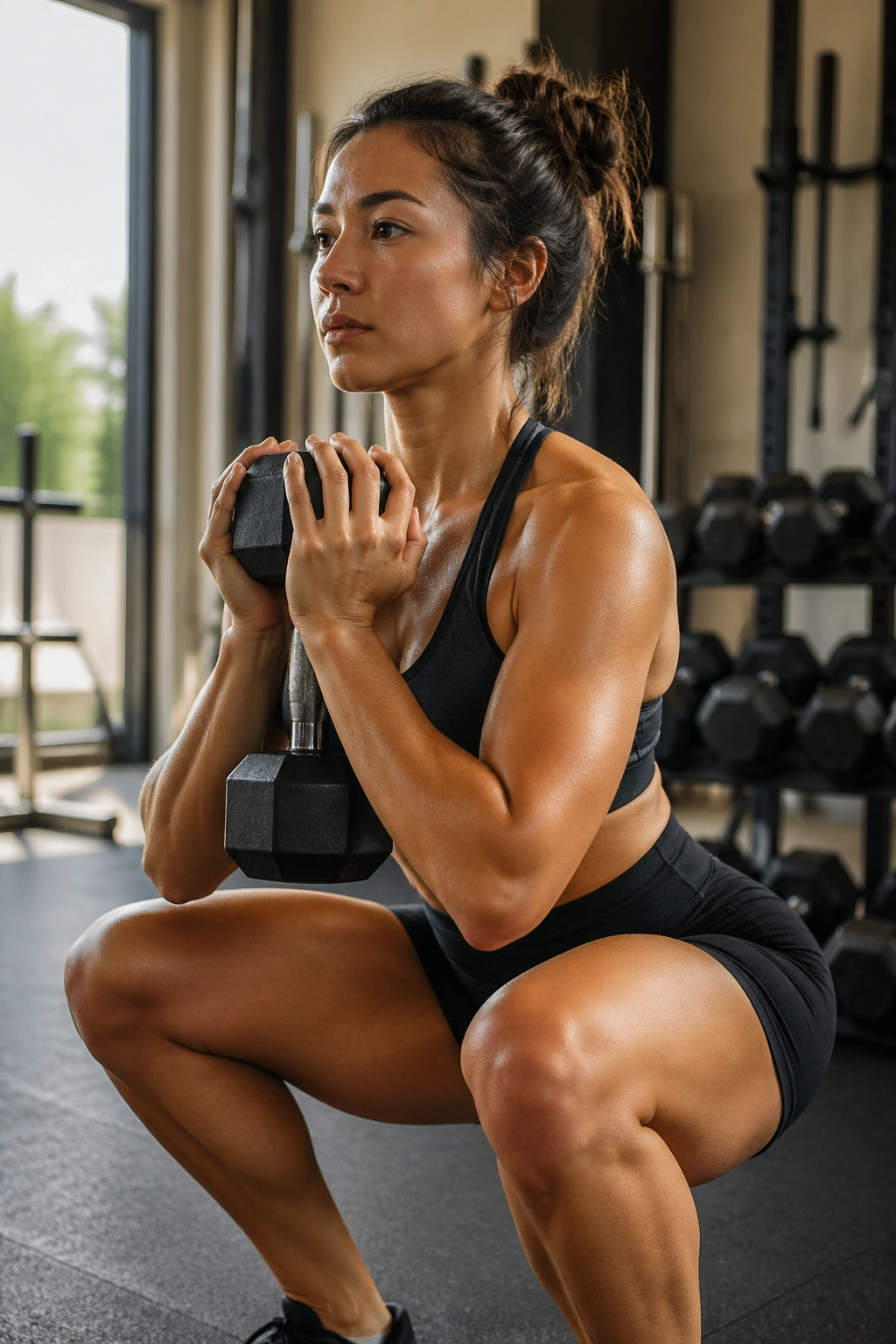
The goblet squat is one of those classic exercises that looks plain until you actually use it. Holding the weight in front of your chest helps you stay upright, which makes it easier to learn good squat depth, keep your heels down, and brace your core without overthinking it. It’s friendly for beginners, but it does not stay “easy” for long once you start using a real dumbbell.
A clean goblet squat usually works the quads, glutes, and upper back at the same time. That front-loaded position asks your trunk to stay tight while your hips and knees move together. If your torso folds forward every time you squat, this is a smarter place to start than jumping straight to a barbell on your back.
A simple rep pattern works well: 3 sets of 8 to 12 reps, with enough weight that the last 2 reps feel deliberate. You want the descent to stay smooth, not rushed.
- Feet about shoulder-width apart.
- Hold the dumbbell close to your chest.
- Sit down between your knees, not straight back.
- Keep your chest tall and your heels heavy.
- Stand up by driving through the whole foot.
Tiny caveat. Don’t turn this into a half-squat because the weight feels awkward. Drop until your thighs are at least parallel if your mobility allows it, then come up with control. If your knees cave inward, the load is too heavy or your stance is too narrow.
2. Romanian Deadlift
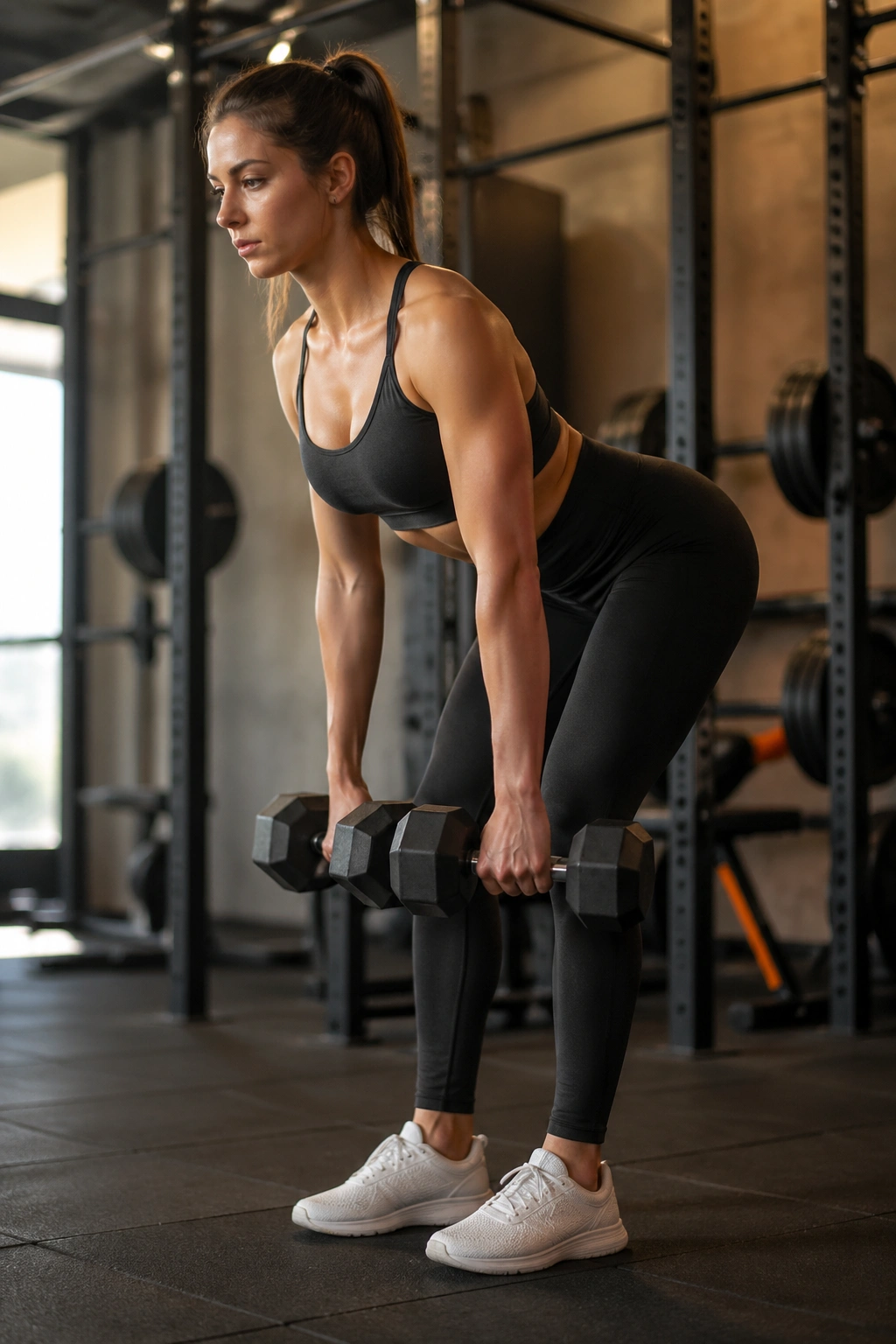
Why do so many strong leg programs keep a hinge in them? Because squats and deadlifts do different jobs.
The Romanian deadlift, or RDL, is the one that teaches your hamstrings and glutes how to load under stretch. You keep a soft bend in the knees, push your hips back, and lower the weight until your hamstrings get tight without your lower back rounding. That stretch is the point. It’s not a race to the floor.
How to Feel the Right Muscles
A good RDL feels like tension, not strain. You should feel your hips moving back, your shins staying close to vertical, and the dumbbells or bar sliding close to your legs. When the weight drifts away from you, your back ends up doing more work than it should.
- Start with dumbbells at your thighs.
- Unlock the knees slightly.
- Hinge back until the hamstrings pull.
- Stop before your back wants to round.
- Stand up by driving the hips forward, not by yanking with the spine.
That’s the whole move.
For most people, 3 sets of 6 to 10 reps is a smart place to start. If your grip gives out before your legs do, use straps or go a little lighter and keep the form clean. And if you feel the movement mostly in your lower back, shorten the range and slow the lowering phase. A one-second pause near the bottom can help you learn where the tension belongs.
3. Push-Up
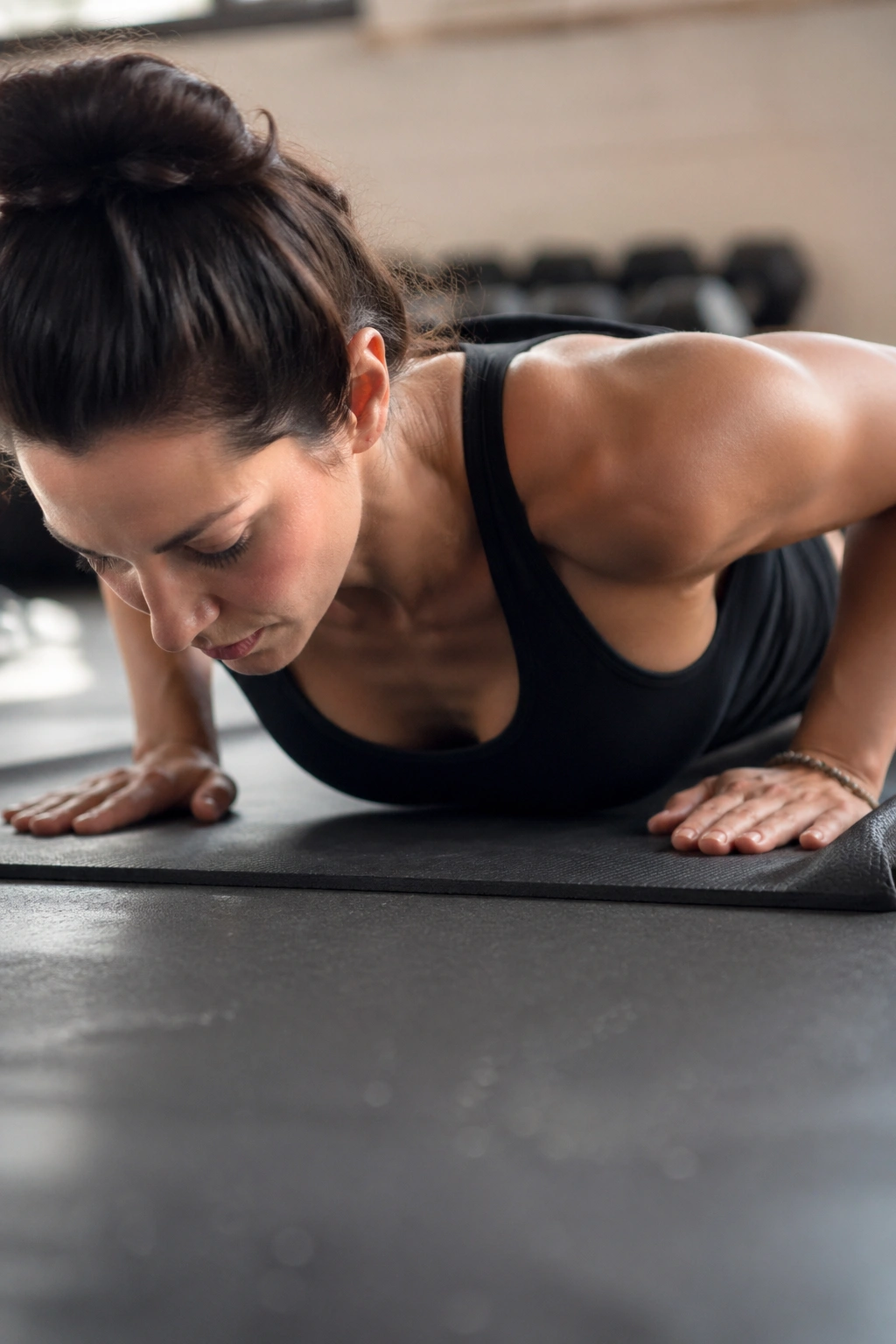
A lot of people write push-ups off after one ugly set. That’s too soon.
The push-up is still one of the best bodyweight strength moves around because it trains the chest, triceps, shoulders, and core in one shot. It also tells the truth. If your midsection sags or your elbows flare wildly, the rep exposes it right away. That’s not a flaw. That’s useful feedback.
Build the Rep First
Start where you can keep the body rigid. A bench, a sturdy box, or a Smith bar can give you the right angle while you build strength. Once those reps feel crisp, lower the incline. Then lower it again.
- Hands just wider than shoulder-width.
- Body in one straight line from head to heels.
- Lower until the chest nearly touches the floor or bench.
- Press the floor away on the way up.
- Keep your neck long and your ribs tucked.
A lot of sloppy push-ups come from rushing the lowering phase. Slow down. Three seconds down, one second up is a perfectly good place to begin. Sagging hips waste the rep.
For strength work, 2 to 4 sets of 5 to 12 reps is a useful range, depending on how hard the variation is. Full push-ups, knee push-ups, incline push-ups — they all count if the body line stays honest. No medal for pretending a half-rep is a full one.
4. One-Arm Dumbbell Row
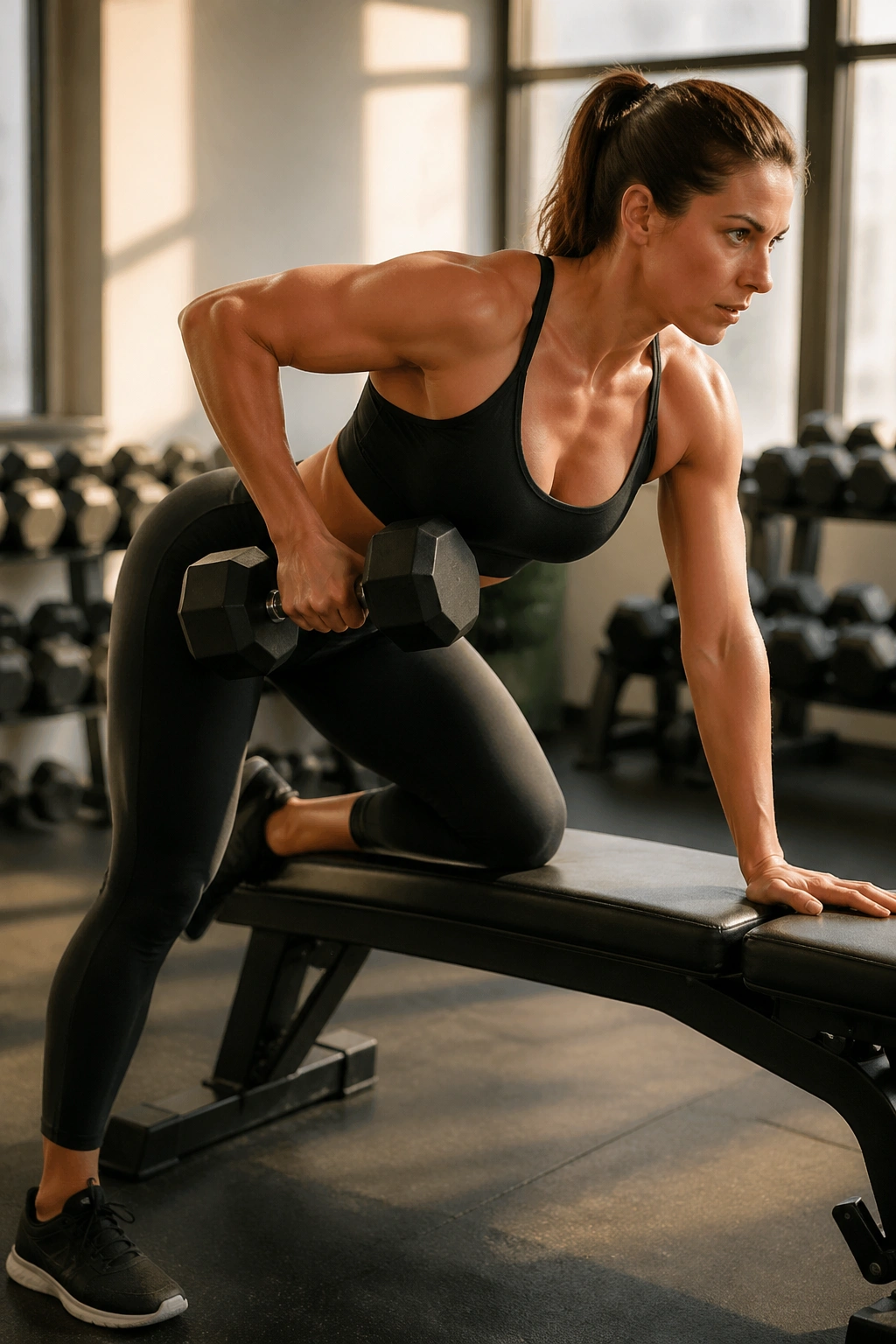
Pressing is easy to love. Rows are the move that keeps your shoulders honest.
The one-arm dumbbell row is a quiet workhorse. It builds the lats, rhomboids, rear delts, and the muscles that help your shoulder blades move well. It also lets you work one side at a time, which makes it easier to spot a weak side that likes to bail out early. You feel that kind of thing fast when one dumbbell is in your hand and the other side is supporting you on a bench.
The best version is boring in the nicest way. One hand and one knee on a bench, spine long, weight hanging straight down, then pull the dumbbell toward your hip. Not your chest. Your hip. That angle tends to hit the lats better and keeps the shoulder from shrugging up into your ear.
No twisting. That’s the big one.
If your torso spins every time you row, the weight is too heavy or you’re using momentum to cheat the last few inches. Keep the ribs quiet, pull hard, and lower the dumbbell under control. 3 sets of 8 to 12 per side is plenty for most workouts. You’ll know it’s working when the upper back feels warm and your grip starts to complain before your ego does.
5. Reverse Lunge
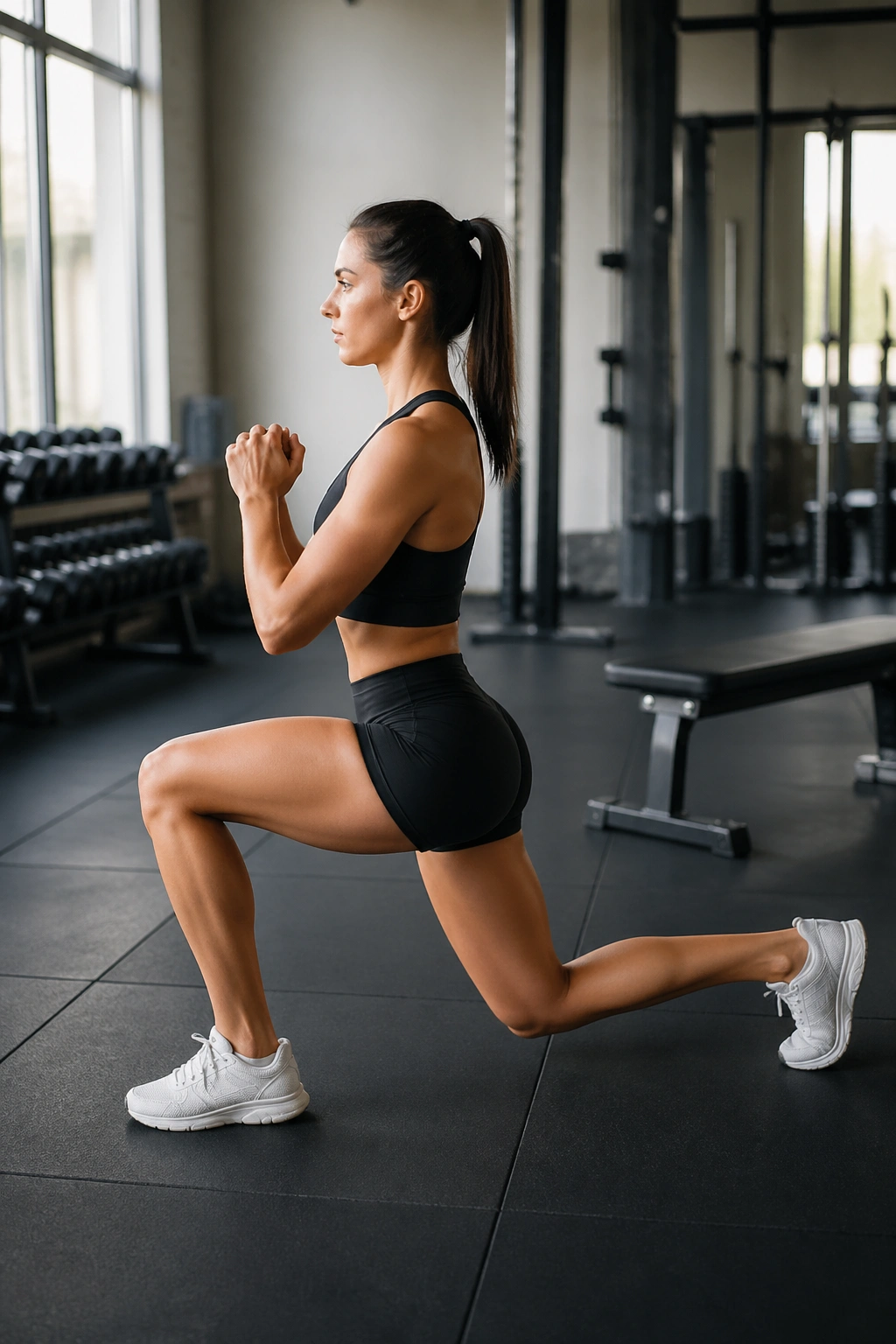
If forward lunges feel like a fight for balance, step back instead.
The reverse lunge is friendlier than it looks. You step one leg back, lower under control, and let the front leg do most of the work on the way up. That small change usually makes the movement easier on the knees and a little less wobbly for people who are still learning single-leg work. It still burns. It just burns in a more useful way.
What a Clean Reverse Lunge Looks Like
A good reverse lunge should feel stable from the start. The front foot stays planted, the torso stays tall, and the back knee drops near the floor without crashing into it. If the front heel keeps popping up, take a shorter step back. If you feel jammed in the front hip, take a longer one.
- Step back, not down.
- Keep most of your weight on the front leg.
- Lower until the back knee hovers just above the floor.
- Drive through the front heel and midfoot.
- Keep your chest stacked over your hips.
You can start with bodyweight, then add dumbbells once the motion stops wobbling. 2 to 3 sets of 8 reps per leg is enough to make the quads and glutes wake up fast. I like reverse lunges because they show you things. Weak balance? There it is. A side that collapses? That shows up too. Useful, even if it stings a little.
6. Hip Thrust
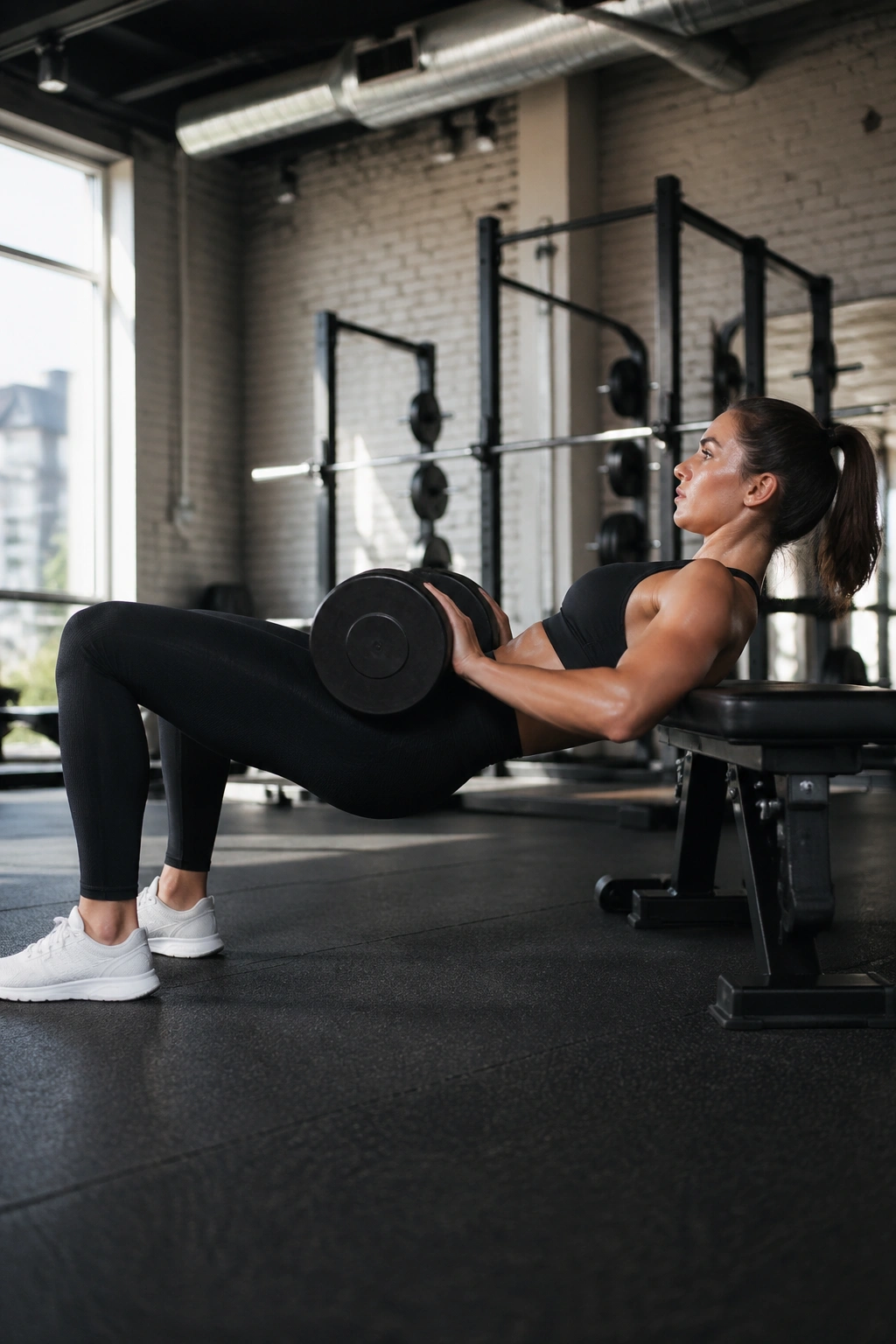
This is a classic for a reason: it lets the glutes do the work without the lower back stealing the show.
The hip thrust is one of the simplest ways to load the glutes hard through full hip extension. You set your upper back on a bench, place the weight across your hips, and drive until your torso and thighs line up. Done well, it feels powerful right in the glutes — not in the lower back, not in the neck, not in the feet.
The Rep Should Feel Like This
The bottom position is where most people get sloppy. Your feet should be far enough away that your shins are close to vertical at the top. If your feet are too close, you feel crammed. Too far, and the hamstrings take over. A one-second squeeze at the top helps keep the work where it belongs.
- Chin slightly tucked.
- Ribs down.
- Drive through the heels and midfoot.
- Pause at the top for 1 second.
- Lower under control instead of dropping fast.
A barbell is common, but a dumbbell or Smith machine works too. 3 to 4 sets of 8 to 12 reps is a solid target. If your lower back arches hard at the top, you’re probably chasing height instead of hip extension. Finish with the glutes, not the spine. That’s the difference between a good thrust and a messy one.
7. Dumbbell Shoulder Press for a Balanced Women’s Workout
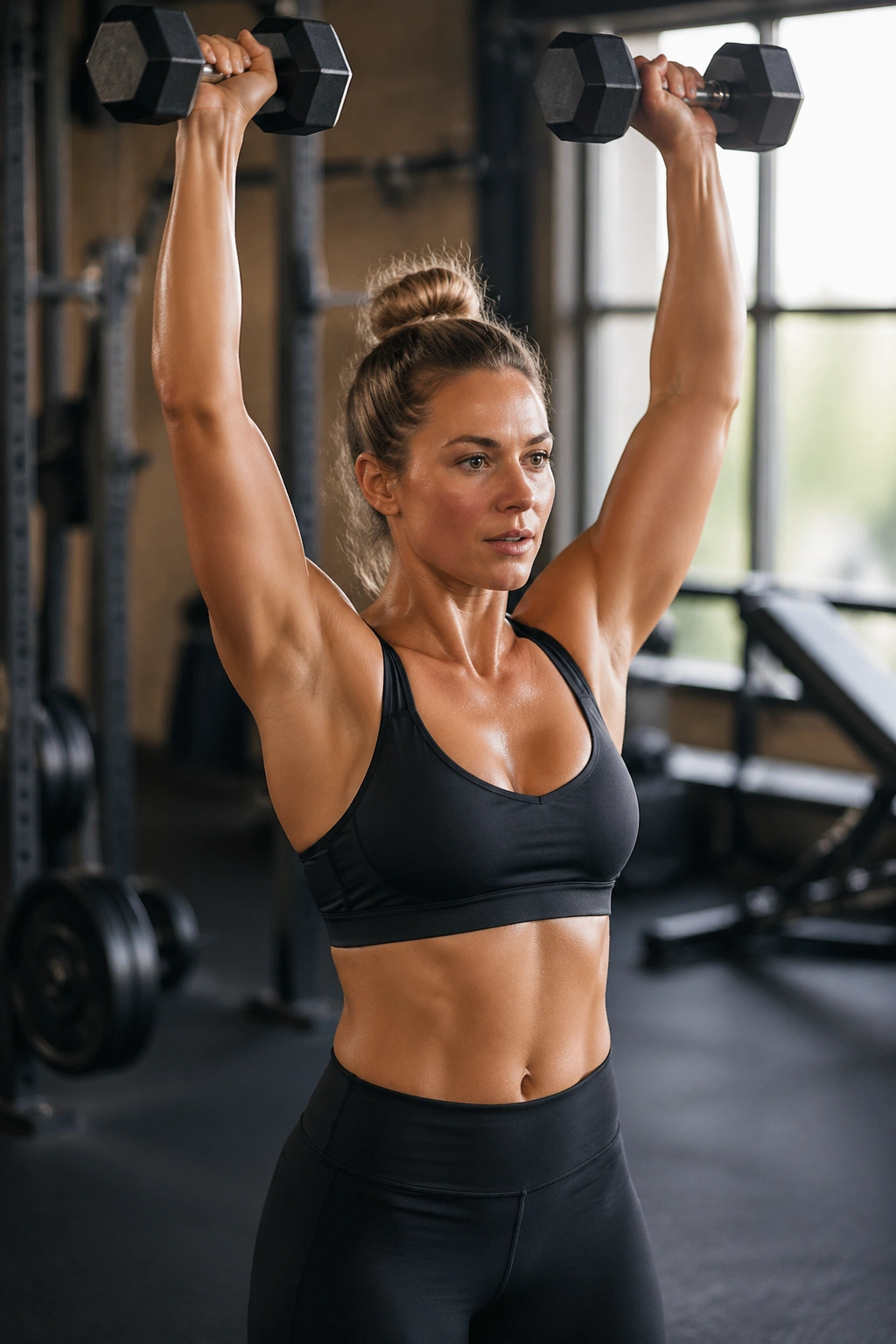
A strong overhead press changes more than your shoulders.
The dumbbell shoulder press trains the delts, triceps, and upper chest while asking the core to stay braced. It also pays off in everyday life. Reaching into an overhead cabinet, lifting a suitcase, putting something on a shelf — all of that is easier when your body knows how to press overhead without wobbling. The standing version asks even more from your trunk. The seated version strips away a little of that and lets you focus on the press itself.
Stay Stacked
The phrase I use most here is simple: stay stacked. Keep the ribs over the pelvis, the glutes lightly tight, and the wrists directly over the elbows as you press. The weight should travel up in a clean line, not swing forward like you’re trying to dodge the work.
- Start with dumbbells at shoulder height.
- Press up until the arms are near straight.
- Lower slowly to the starting point.
- Keep the neck relaxed and the chin out of the way.
- Use a neutral grip if your shoulders like that better.
2 to 4 sets of 6 to 10 reps is a useful range. If your lower back arches hard, the load is too much or your ribs are flaring. Drop the weight and keep the torso quiet. The press should feel strong, not circus-y. There’s a difference.
8. Lat Pulldown or Assisted Pull-Up
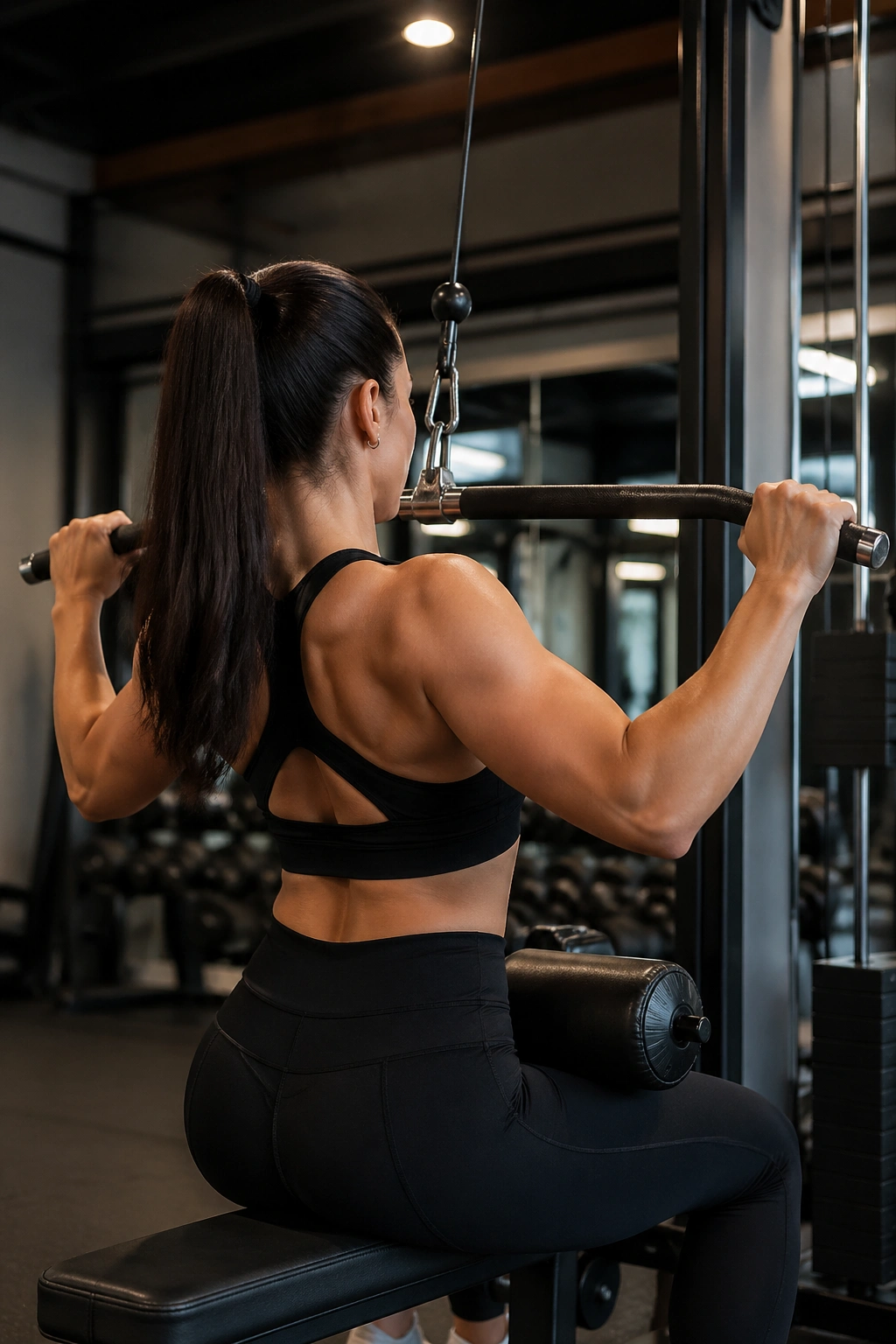
Why does your back still feel unfinished if you only row? Because rows and vertical pulls are not the same thing.
A lat pulldown or assisted pull-up gives the lats a different job. Instead of pulling a weight toward your torso, you’re pulling your body down toward the bar or handle. That movement builds width through the upper back and helps balance all the pressing most people do. It also makes the shoulder joint happier when the surrounding muscles know how to work through a fuller range.
Pick the Version You Can Control
If a full pull-up is too much right now, that’s fine. Use the assisted machine, a band, or a standard lat pulldown. The goal is not to fake a pull-up. The goal is to train the same pattern with enough control that the muscles actually get stronger.
- Sit tall with your chest lifted.
- Pull the elbows down and slightly in.
- Bring the bar to the upper chest on pulldowns.
- Lower slowly until the arms fully extend.
- Avoid yanking behind the neck.
That behind-the-neck version gets floated around a lot, and I’d skip it unless you have a very specific reason and very good shoulder mobility. 3 sets of 8 to 12 reps is a strong baseline. If your shoulders creep up toward your ears, reset and try again. The lats work better when the shoulders stay down.
9. Plank
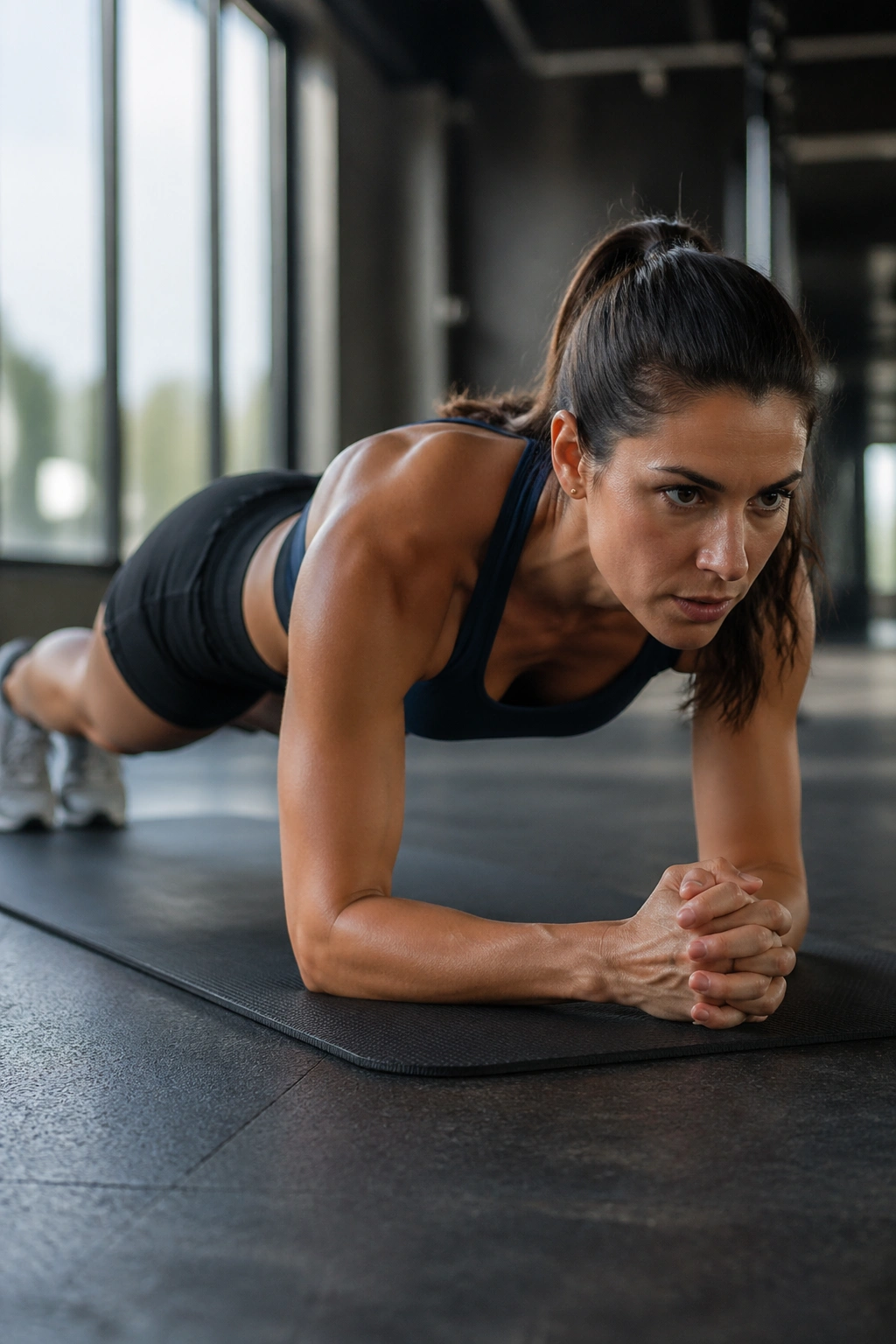
A plank is not about suffering longer.
It’s about holding your torso still while your limbs and breath do their own thing. That sounds simple until you try to keep your lower back from sagging or your hips from piking. A real plank teaches bracing, which carries over into squats, deadlifts, presses, and even carry work. If your core collapses under light load, those bigger lifts feel messy fast.
The clean version is shorter than most people expect. 20 to 40 seconds with perfect position beats a 90-second hold that turns into a hammock. Forearms under the shoulders, feet together or slightly apart, glutes squeezed, and ribs pulled down. You should feel the front of the core working, not the low back pinching.
- Forearms flat on the floor.
- Squeeze the glutes.
- Breathe behind the brace.
- Keep the neck long.
- Stop when the low back starts to dip.
One sentence matters here: quality beats duration every time. If you want more challenge, add a plate, lift one foot for a few seconds, or move to a long-lever plank. The point is not to win a plank contest. The point is to build a torso that holds shape when the load gets real.
10. Step-Up
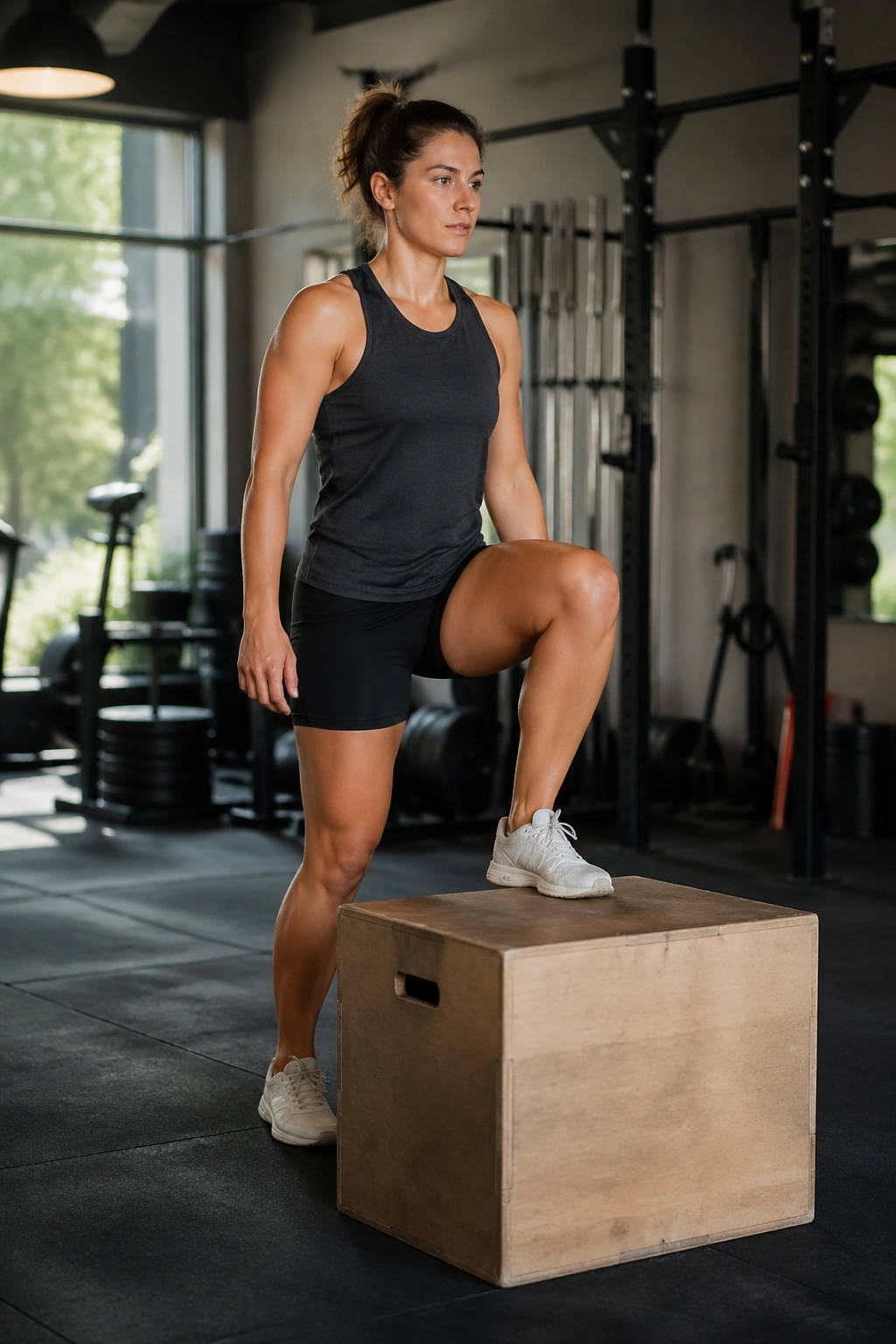
A box step-up looks easy right up until it starts exposing the weak side.
This is one of those classic exercises that teaches single-leg strength without the same amount of awkwardness some people feel in split squats. You step onto a box or bench, stand tall on the working leg, then lower back down under control. It lights up the glutes and quads, and it also gives you a blunt look at balance, knee control, and foot strength.
Set the Box Lower Than You Think
A lot of people choose a box that is too high. Start with something around mid-shin to knee height. If you have to lean a lot or bounce off the back leg, the height is wrong. The working leg should do the lift. The back foot is just there for the ride.
- Plant the whole working foot on the box.
- Keep the torso tall.
- Drive through the heel and midfoot.
- Stand all the way up before stepping down.
- Lower slowly instead of dropping.
Once the bodyweight version feels steady, hold dumbbells at your sides. 2 to 3 sets of 8 reps per leg is a smart starting point. I like step-ups because they tell the truth about asymmetry. One side always feels easier first. That’s normal. Train the weaker side with care, not shame.
11. Dumbbell Bench Press
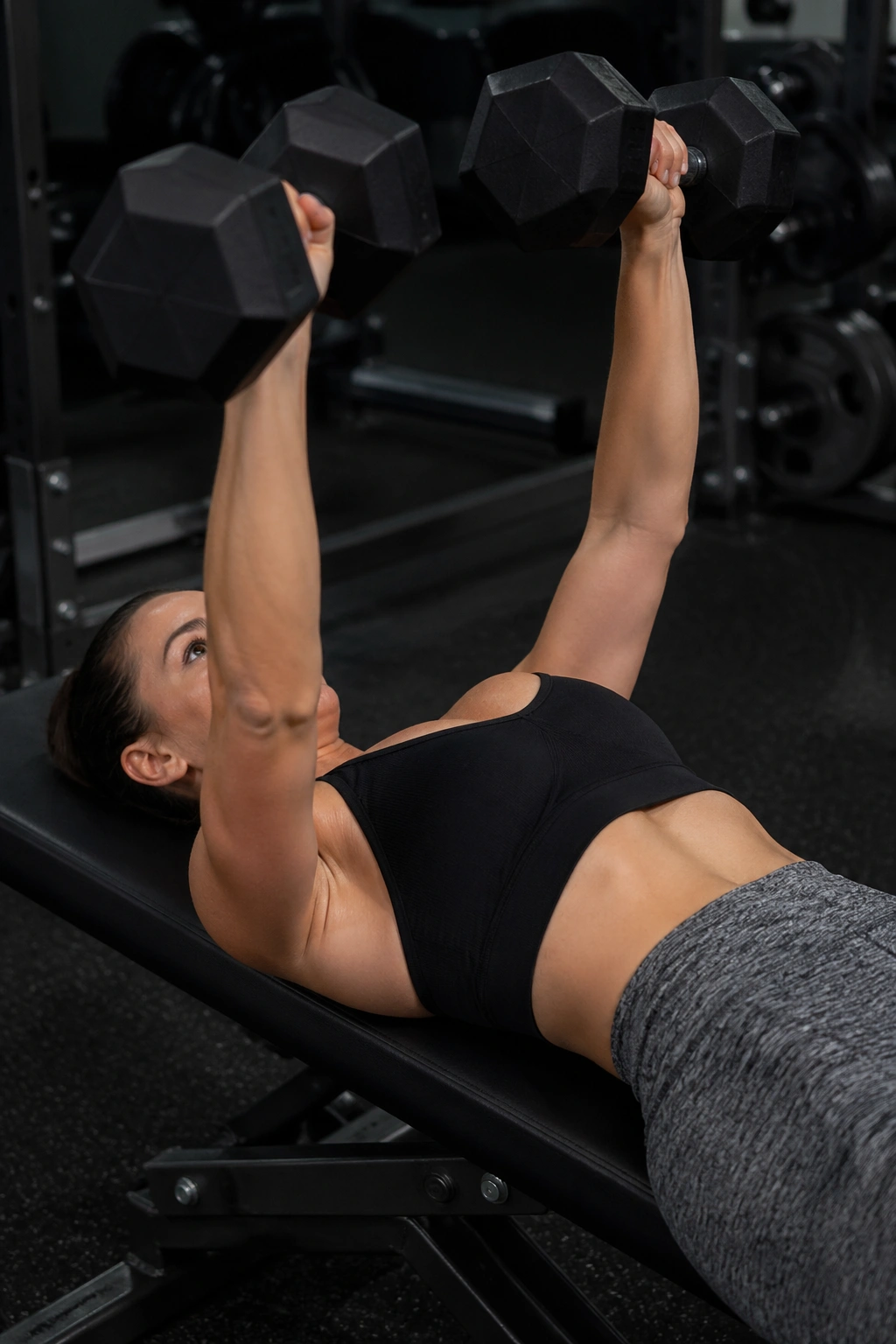
Unlike push-ups, a dumbbell bench press lets you add load in smaller jumps.
That matters. A lot of people hit a wall with bodyweight pressing because the next progression feels too big. Dumbbells solve that problem neatly. You can move up by 2.5 or 5 pounds, keep one side from taking over, and press through a fuller range without the wrists and shoulders feeling pinned to a fixed bar path.
The dumbbell bench press trains the chest, triceps, and front delts, but the setup matters almost as much as the lift itself. Lie back with your feet planted, shoulders pulled gently back and down, and wrists stacked over elbows. Lower the dumbbells with control until your upper arms lightly touch or dip just below bench level, then press them back up without smashing them together at the top.
A Shoulder-Friendly Setup
A neutral grip — palms facing each other — often feels kinder on the shoulders than a straight palm-forward grip. It’s worth trying if your joints complain. A small arch in the low back is fine; a giant arch is not. You’re pressing, not performing a bridge.
- Feet flat on the floor.
- Shoulder blades set on the bench.
- Dumbbells lowered with control.
- Press without locking the elbows hard.
- Keep the head relaxed against the bench.
3 to 4 sets of 6 to 10 reps works well for strength-focused training. The movement looks ordinary. That’s part of the charm. Ordinary work adds up.
12. Farmer’s Carry to Finish a Women’s Strength Session
If I had to keep one carry in a program, this is near the top.
The farmer’s carry is brutally simple: pick up two heavy weights and walk. That simplicity hides how much it asks of you. Your grip tightens. Your core braces. Your shoulders settle. Your breathing gets louder. If you’ve ever seen someone waddle through a carry with their ribs flared and shoulders shrugged to their ears, you already know what not to do.
Walk It Like You Mean It
The goal is tall posture under load. That means no leaning to one side, no letting the weights bang against your legs, and no rushed steps. Keep the neck long, the ribs stacked, and the hands crushed around the handles. Heavy enough to matter. Light enough that your stride still looks like a walk, not a survival drill.
- Stand tall before you move.
- Keep the weights at your sides.
- Take short, controlled steps.
- Breathe without losing posture.
- Set the weights down before your grip turns sloppy.
A strong carry distance is usually 20 to 40 meters per round, for 3 to 5 rounds, depending on the load. If you only feel it in your traps and nowhere else, you’re shrugging. If you sway side to side, the weight is too uneven or too heavy. Clean carries train the whole body without the noise. That’s why they belong here.
Put a few of these classics together in one week and the workout starts to make sense fast: a squat, a hinge, one push, one pull, a single-leg move, and a carry. Nothing fancy. Just the kind of training that keeps paying off when the novelty wears off, which it usually does.
