



A stronger posture does not come from trying to sit up straight every minute of the day. It comes from back exercises for a stronger posture that teach your upper back, lats, glutes, and spinal stabilizers to hold you up when you stop thinking about it.
If your shoulders round forward after a long day, the problem is usually not laziness. It is fatigue. Your mid-back tires out, your rib cage drifts, and your neck starts doing work that belongs to the shoulder blades and the muscles around them.
Rigid posture is the wrong target anyway. A useful posture can bend, reach, carry, and reset without turning into a slump the second you move. That takes a mix of thoracic mobility, scapular control, row strength, hinge work, and a little loaded carrying — which sounds like a lot, but it’s mostly a matter of choosing the right handful of exercises and doing them well.
Start with the moves you can own, then earn the harder ones.
1. Wall Angels Against a Flat Wall
Wall angels look harmless. Then you try them with your ribs down, your lower back quiet, and your hands flat against the wall, and the whole thing turns into a truth-telling machine.
They’re one of the cleanest ways to check whether your shoulders can move overhead without borrowing motion from your spine. If your arms hit the wall but your low back arches like a bridge, you’re not getting better posture — you’re just hiding the problem.
Why they help your posture
Wall angels train shoulder flexion, thoracic extension, and scapular control at the same time. That matters because a slouched upper body usually isn’t one weak muscle; it’s a cluster of small faults. The wall gives you feedback immediately.
Keep your feet about 6 to 8 inches from the wall. Press the back of your head, upper back, and pelvis toward the surface without jamming yourself into it. Slide up slowly, then lower with the same care. If the range is tiny, fine. Tiny and clean beats big and sloppy.
Good starting dose: 2 sets of 6 to 8 slow reps.
What to watch for
- Ribs flaring up as the arms rise
- Neck tightening before the shoulders do
- Hands leaving the wall by a mile
- Speed. Always speed.
Useful cue: think “reach long” instead of “force the arms higher.”
2. Band Pull-Aparts for Upper-Back Endurance
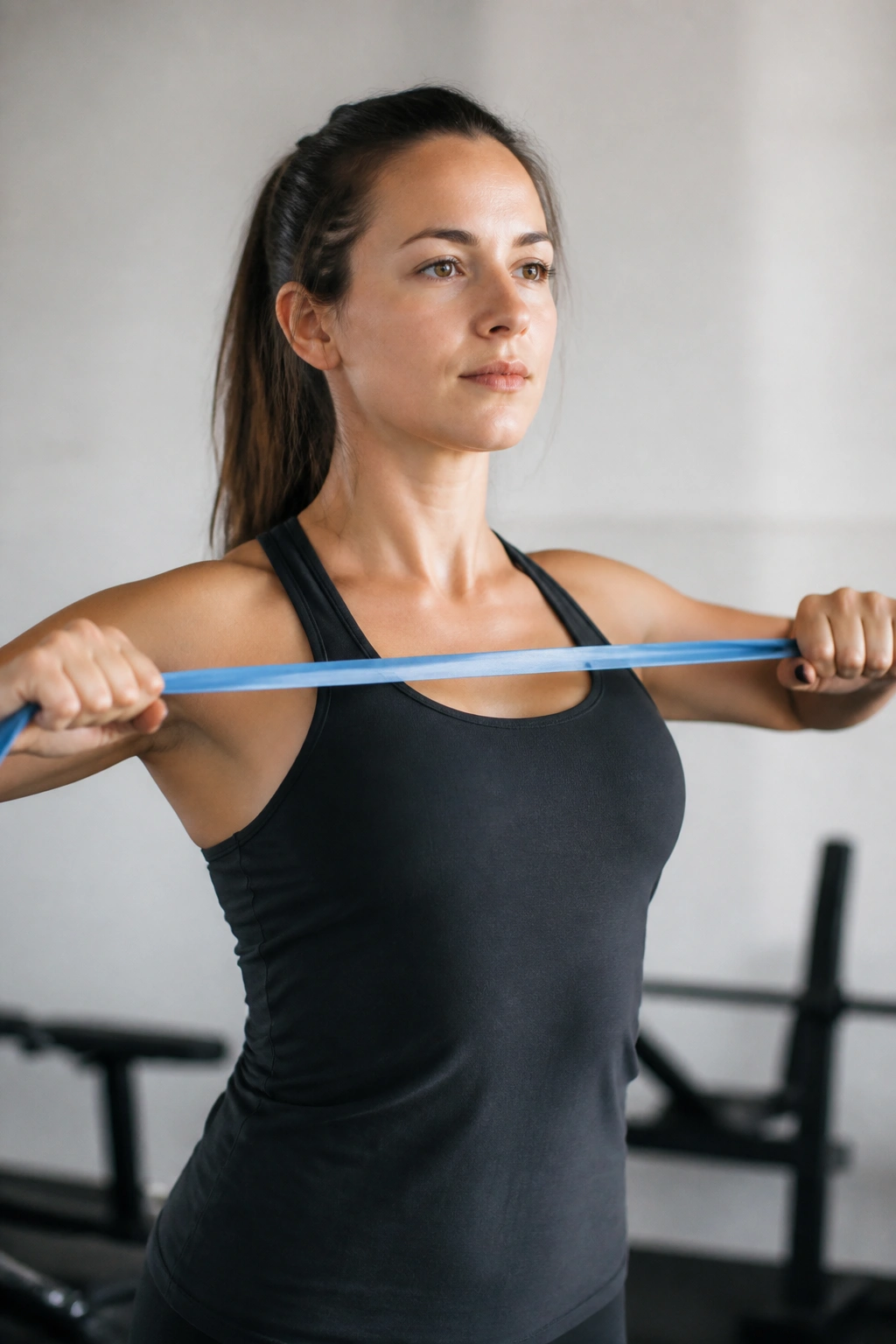
Why do band pull-aparts show up in so many posture routines? Because they give your upper back a job it can do anywhere, with almost no setup.
A light resistance band is enough. Hold it at chest height, spread your hands apart until the band touches your chest or your arms open wide, then return under control. The point is not to rip the band in half. The point is to make the rear delts, rhomboids, and mid traps work without the lower back stealing the show.
I like these as a warm-up because they wake up the muscles that keep the shoulders from living in front of your chest all day. Done badly, they turn into a shrug-fest. Done well, they leave the upper back feeling awake and a little warm. That’s the feeling you want.
Small changes that matter
- Palms down shifts the load a bit more to the rear delts.
- Thumbs up often feels friendlier on the shoulders.
- Hands slightly below shoulder height usually keeps the neck calmer.
Do 2 to 4 sets of 12 to 20 controlled reps. If the band snaps you backward on the return, it’s too heavy.
3. Face Pulls That Train Real Shoulder Position
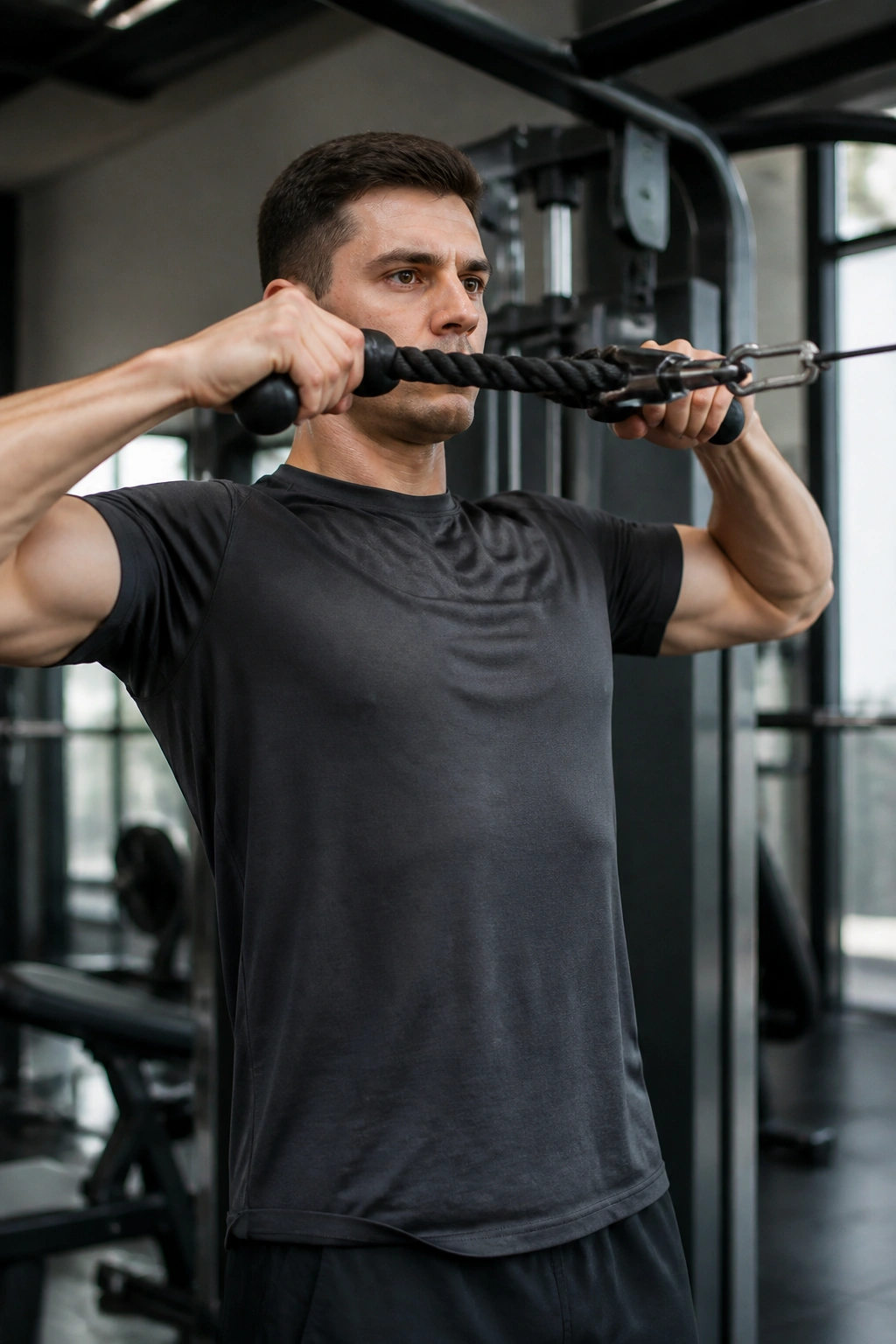
A person yanking a cable rope to their forehead with their torso leaning back is not doing a face pull. They’re performing a very expensive row with bad manners.
Proper face pulls help the upper back hold the shoulders in a better place. You’re aiming for a cable or band set around face height, pulling toward the bridge of the nose or eyebrows, and finishing with elbows slightly high while the shoulder blades move back and down.
What makes them useful
Face pulls train the rear delts, external rotators, and mid traps in a pattern that supports better shoulder alignment. That’s a big deal if you spend hours reaching forward, typing, driving, or carrying a bag on one side. The shoulders get pulled forward all day. Face pulls help teach them to come back without drama.
How to set them up
- Use a rope attachment or a sturdy band.
- Step back enough to create tension before the first rep.
- Pull toward the face, not the chest.
- Pause for one second when the elbows are wide and the shoulder blades feel set.
Keep this rule: if your lower back is bending into the movement, the load is too heavy.
A clean set of 10 to 15 reps is usually enough. Heavy face pulls tend to get ugly fast.
4. Bird Dogs for Spinal Stability
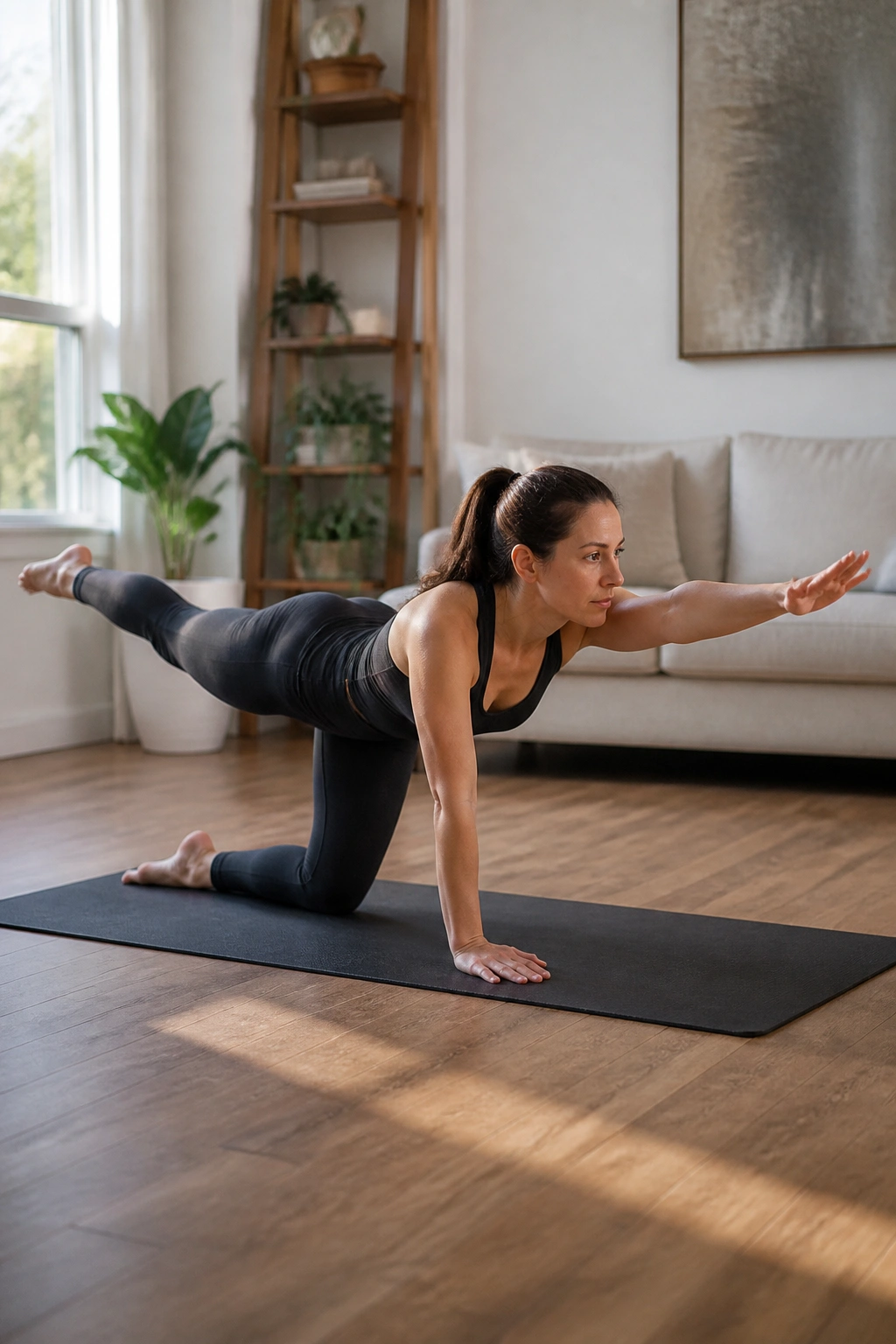
The bird dog is not flashy, and that’s exactly why it deserves a spot here.
You get on hands and knees, brace your trunk, extend one arm and the opposite leg, and hold without letting your hips twist or your ribs swing open. Nothing fancy. Just control. That control is part of posture, whether people like hearing it or not.
A lot of rounded posture problems are not just about the upper back. They show up when the pelvis gets lazy, the trunk loses shape, and the spine starts doing too much of everything. Bird dogs help you keep the middle of the body calm while the limbs move.
What a good rep feels like
- Your spine stays long
- The low back does not arch hard
- The hips stay level
- The reaching arm and leg feel long, not frantic
Try a 2 to 3 second hold on each rep. Eight controlled reps per side is enough for most people. If full extension feels shaky, shorten the lever. Lift only the leg or only the arm until the pattern looks clean.
One rep with the pelvis steady is worth five sloppy ones. Every time.
5. Prone Y-T-W Raises on the Floor or Bench
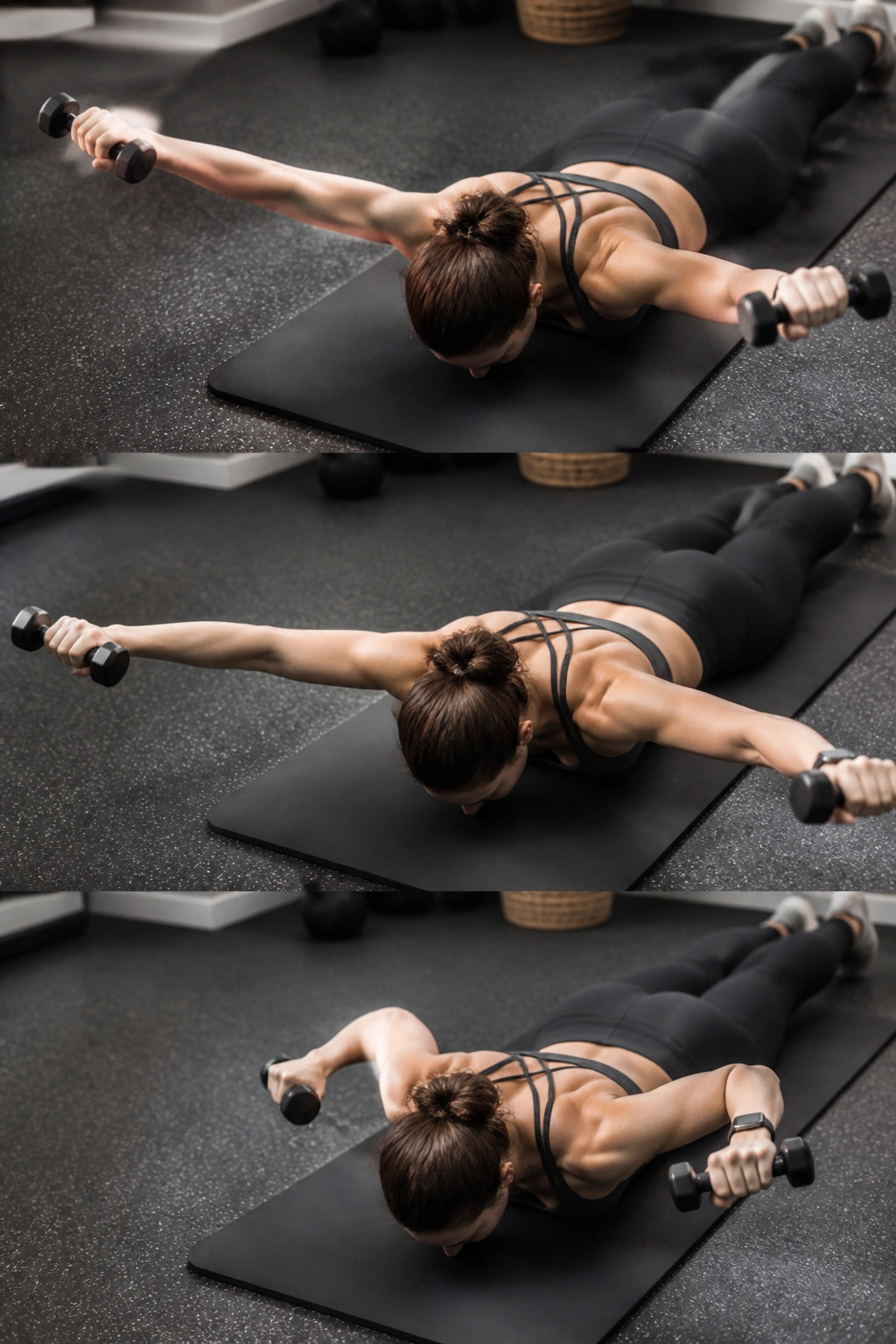
The first time you do Y-T-W raises, the burn usually lands between the shoulder blades and along the back of the shoulders. That’s the good kind. If you feel your neck taking over, something is off.
This drill uses three arm positions — a Y, a T, and a W — to hit the lower traps, mid traps, and rhomboids from slightly different angles. You can do them on the floor, an incline bench, or even a very low bench if the setup is comfortable. Keep the head neutral and the hands light. Heavy weights make this exercise worse, not better.
Y, T, and W made simple
- Y: arms angled overhead, thumbs up, shoulders set down
- T: arms out to the side, squeezing the shoulder blades gently
- W: elbows bent, pulling the shoulder blades back without shrugging
What to aim for
Use bodyweight first. Add tiny dumbbells only if the movement stays smooth. One to two pounds is plenty for many people; even that can feel sneaky-hard after a few reps.
Do 6 to 8 reps in each position. Slow is the point here. If you race through them, the neck starts helping, and then the whole exercise loses its punch.
6. Chest-Supported Row for Clean Upper-Back Strength
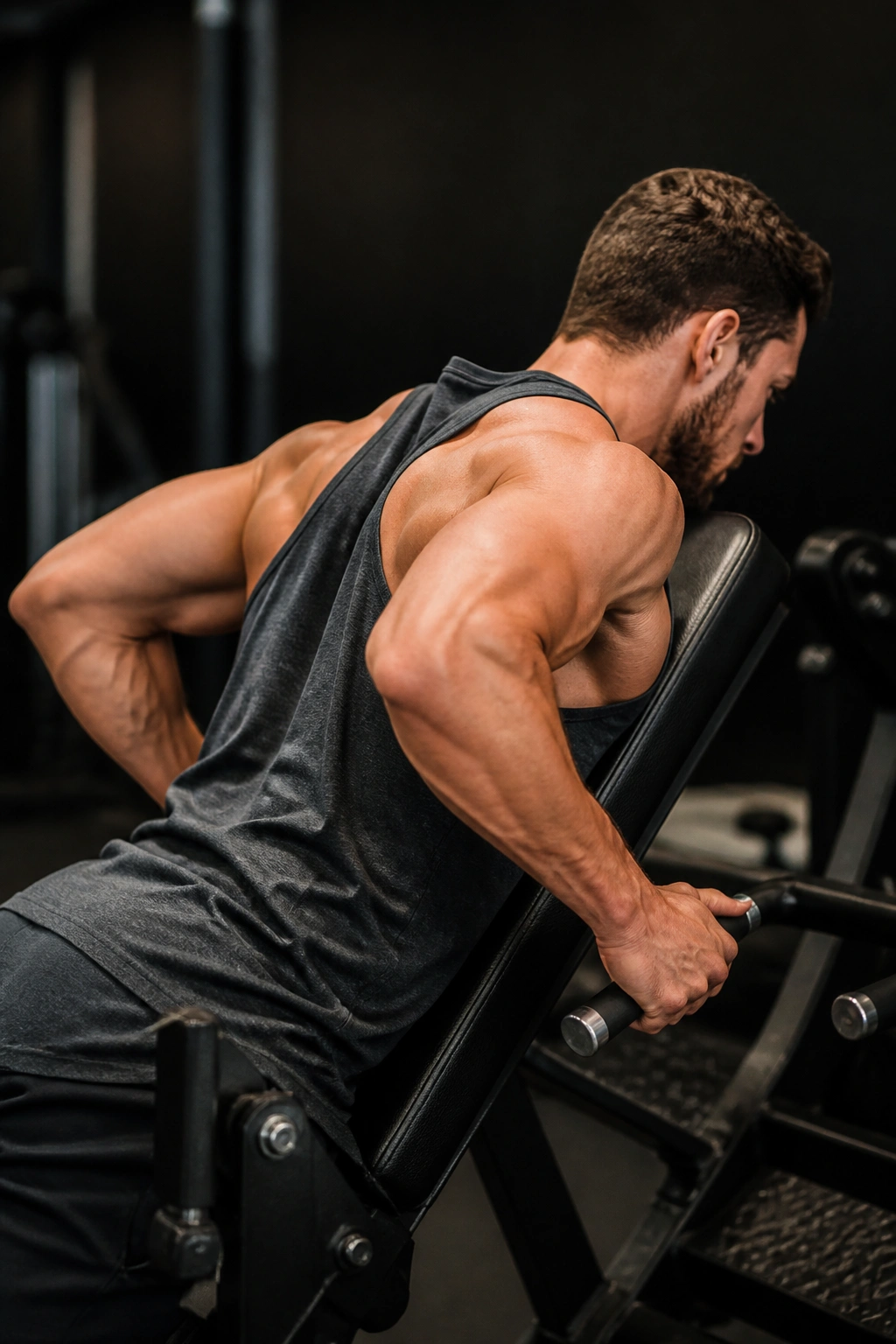
No cheating. That’s the beauty of the chest-supported row.
With your chest on an incline bench or machine pad, your lower back gets a break and your upper back has to do the actual work. That makes this one of the best back exercises for a stronger posture, especially if bent-over rows turn into a hip-hinge contest you never meant to start.
The fixed torso changes everything. You can row with more honesty, more range, and less bouncing. The shoulder blades can move, the lats can fire, and the mid-back can build strength without the lower back stealing the rep.
How I’d program it
Use dumbbells, a barbell setup, or a chest-supported machine. Pull the elbows back at about a 30 to 45 degree angle from the body, then lower until the shoulders stretch without popping forward. Two seconds down is a nice pace.
Best range: 3 sets of 8 to 12 reps.
If you want upright posture, this is one of the least fussy places to put your energy. It builds the muscles you can feel holding you together when you sit, stand, and carry things.
7. Single-Arm Dumbbell Rows to Fix Side-to-Side Gaps
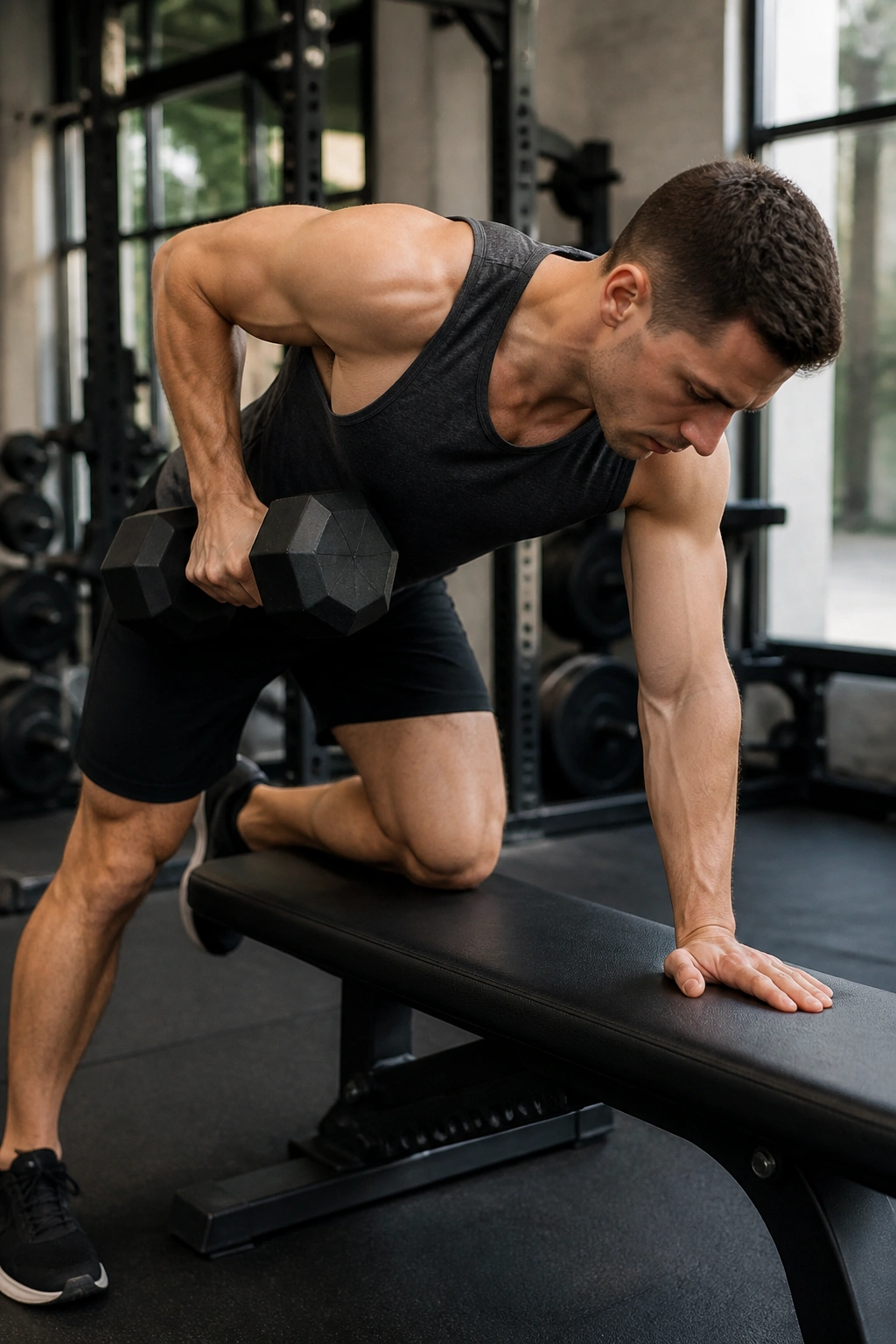
One side usually moves better than the other. That’s normal, and it shows up fast in a one-arm row.
Set one hand and knee on a bench, or brace yourself on a sturdy surface, then pull the dumbbell toward your hip without letting the torso twist open. The whole point is to make the back work one side at a time so a stronger side can’t steal from the weaker side.
Keep the rib cage quiet
A lot of people turn this into a twisting row. Don’t. If your torso rotates to finish the rep, the load is too heavy or the pull is too wild. Keep your chest pointed down, your neck long, and your shoulder blade moving first. The elbow follows.
Quick cues that help
- Pull toward the back pocket, not the armpit
- Pause for half a second at the top
- Lower slowly and let the shoulder stretch
- Match both sides, even if one feels awkward
I like this move because it exposes the weak side without making a big scene about it. Do 3 sets of 8 to 12 per side. Start with the side that feels less stable, then match that quality on the stronger side.
8. Romanian Deadlifts for a Stronger Posterior Chain
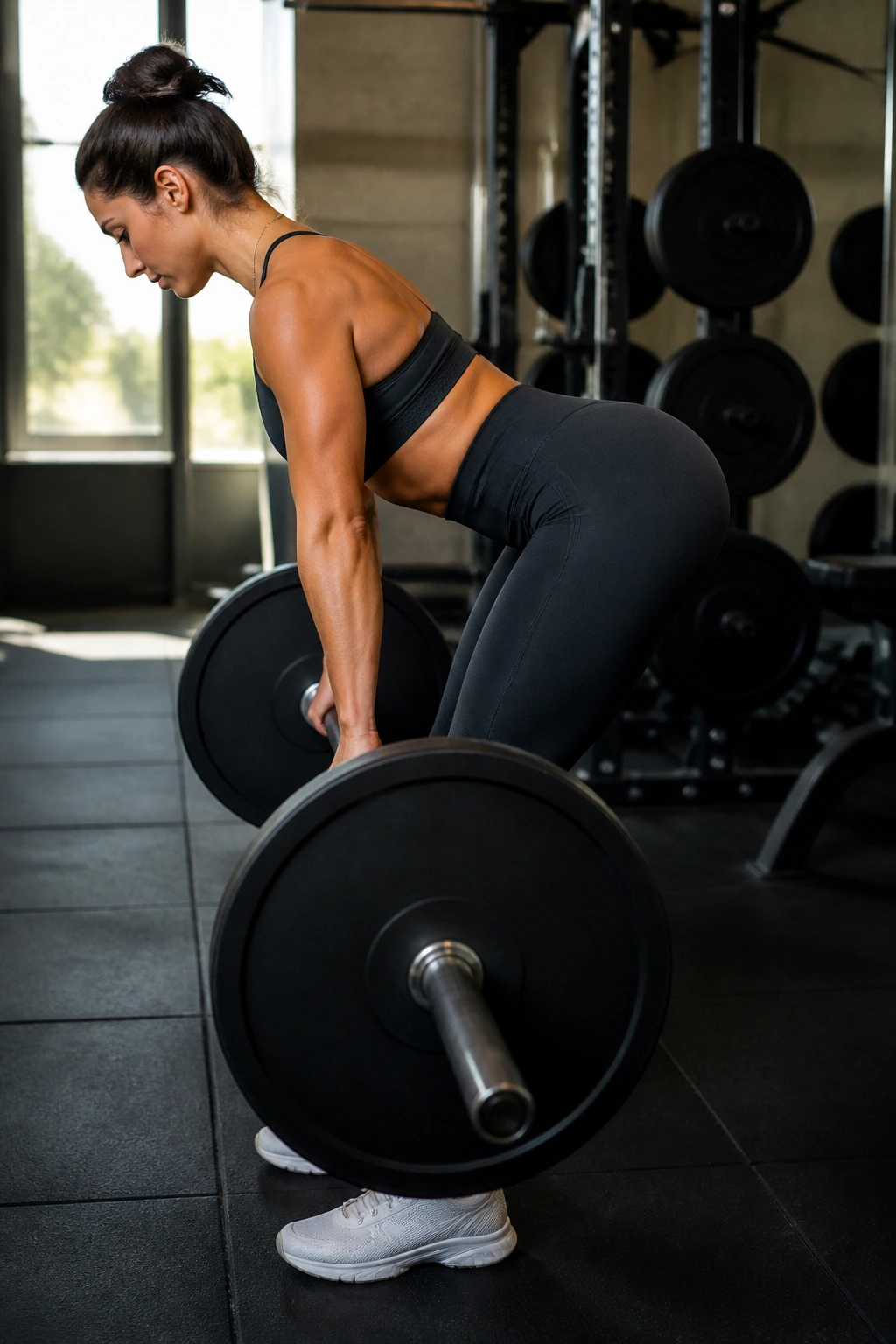
If your goal is a tall, easy posture, the Romanian deadlift belongs in the plan.
It sounds like a hamstring exercise, and it is. But it also teaches the entire backside — glutes, hamstrings, spinal erectors — to hold shape under load. That matters because posture isn’t just a shoulder-blade problem. A weak back end often shows up as a slump in the front.
The magic here is the hinge. Hips move back, knees stay slightly bent, spine stays long, and the weight slides close to the legs. You should feel a stretch in the hamstrings before the bar or dumbbells get anywhere near the floor. If you don’t feel that, the movement is probably turning into a squat or a back bend.
How to hinge without turning it into chaos
- Keep the weight close to the thighs
- Push the hips straight back
- Stop when the hamstrings say “enough”
- Stand by driving the floor away, not by yanking your shoulders up
A clean RDL done for 6 to 10 reps builds the kind of back support that shows up in real life. Picking up boxes. Standing for a long stretch. Walking with less collapse at the waist.
9. Farmer’s Carries for Upright Body Control
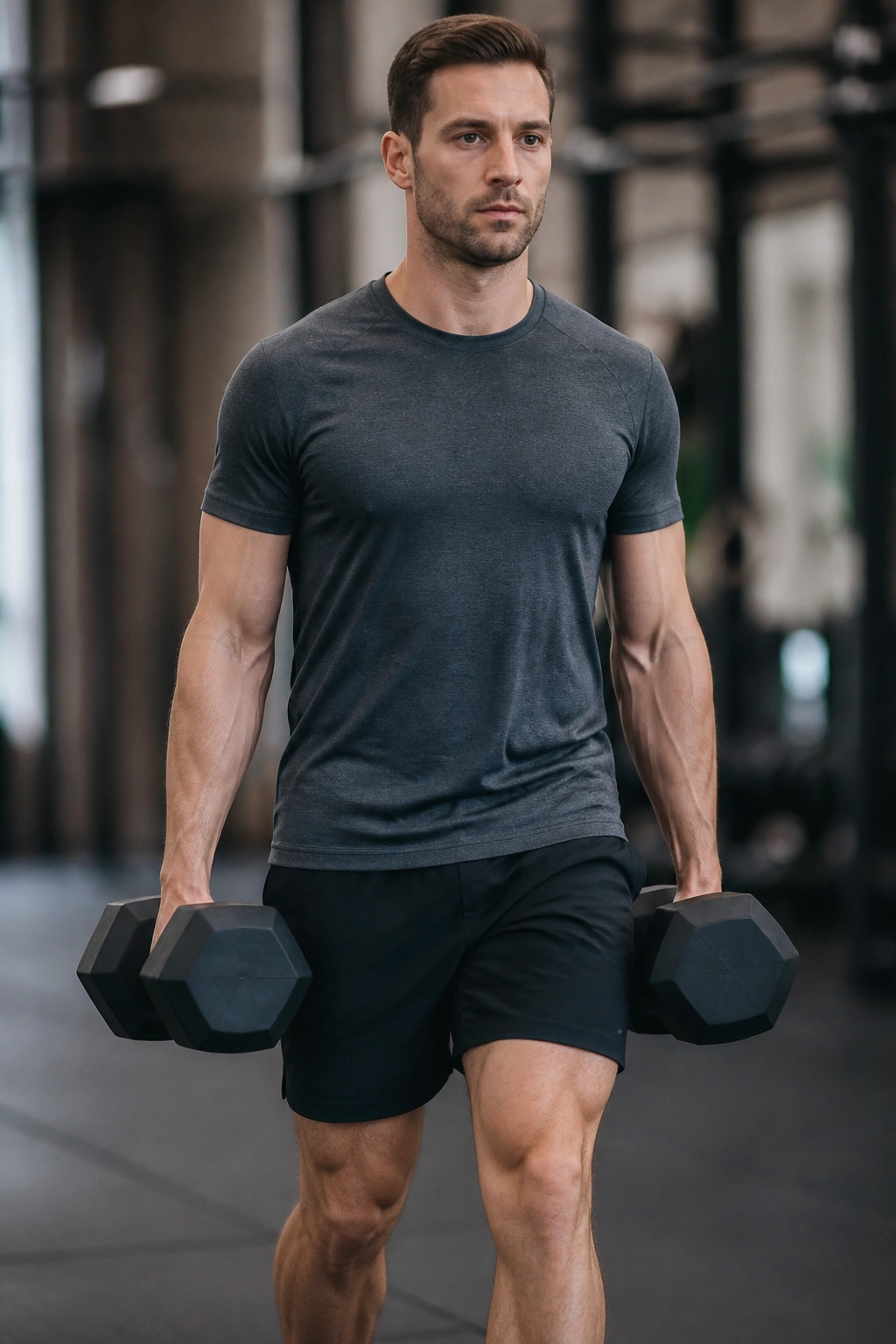
Can you stand tall under load? That’s the whole question behind a farmer’s carry.
Grab a pair of dumbbells or kettlebells, hold them at your sides, and walk with a quiet torso for 20 to 40 meters or 30 to 60 seconds. No leaning. No shrugging into your ears. No lunging forward like the weights are dragging you home.
This is one of those drills that looks simple and feels very honest. The grip works. The traps work. The core works. The feet work. Even the small postural muscles around the spine have to stay switched on so the whole shape doesn’t collapse under the load.
Carry cues that matter
- Keep the chin level, not poked forward
- Let the shoulders stay down and broad
- Walk with shorter, steadier steps
- Stop before the torso starts swaying
Heavy enough to challenge you, light enough to keep you tall. That’s the sweet spot. Two to four carries per workout is usually enough, and they fit nicely after rows or hinges.
10. Lat Pulldowns with a Tall Chest
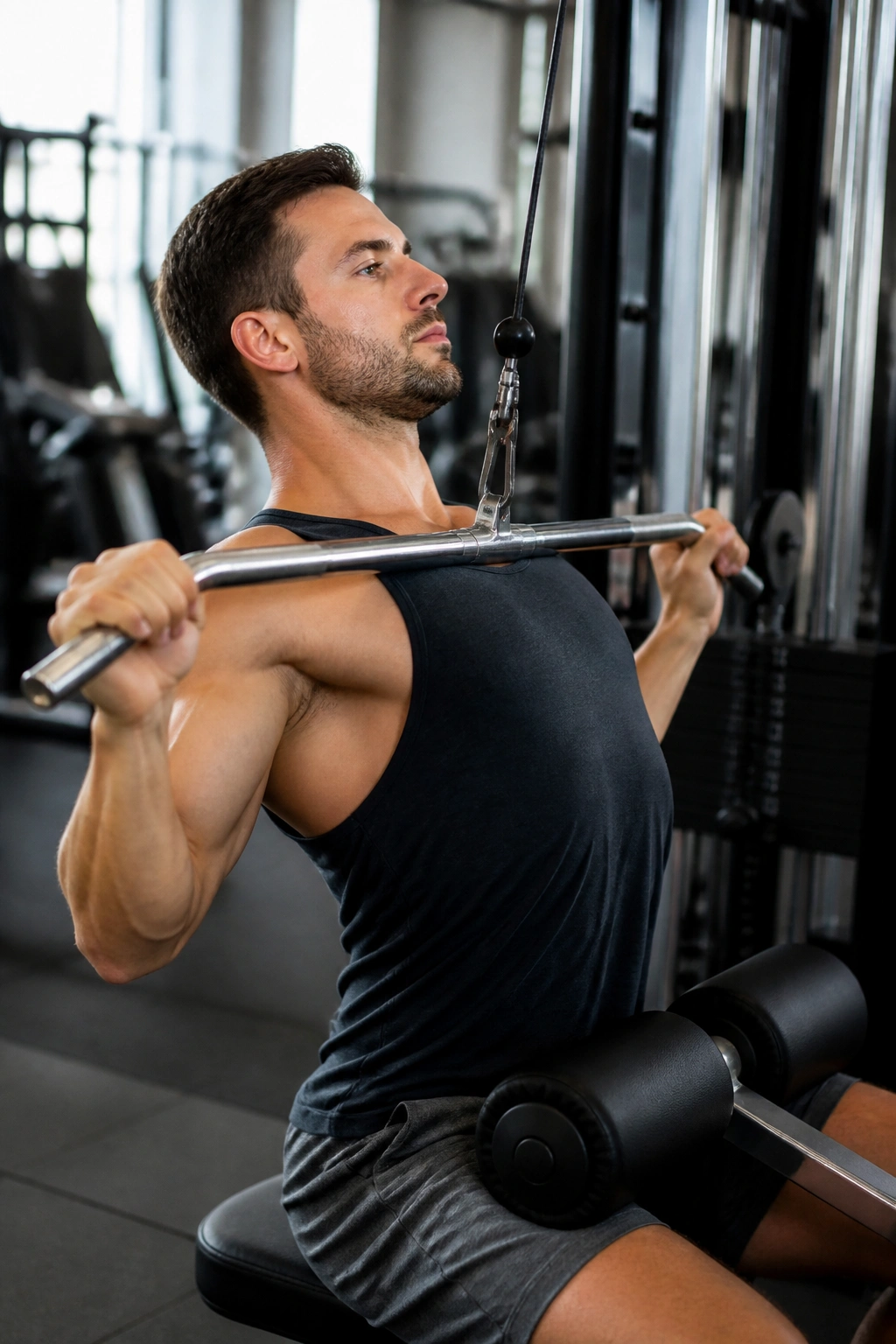
Picture the gym-goer who leans back six inches, jerks the bar to the sternum, and calls it a lat pulldown. That’s not posture work. That’s momentum wearing a fake mustache.
A better pulldown keeps the chest proud without flaring the ribs, the neck relaxed, and the shoulders moving down before the elbows drive toward the sides. The lats matter here because they connect the upper body to the pelvis and help keep the rib cage from living in a flared, sloppy position.
A cleaner way to do it
Use a grip that lets the shoulders feel natural — usually medium-width or neutral. Pull the bar to the upper chest, then let it rise under control until the arms are almost straight. The top position matters. If you cut the stretch short every rep, the lats lose part of the job.
What to avoid
- Pulling behind the neck
- Cranking the neck forward
- Turning the rep into a half-row
- Letting the shoulders shrug up at the top
Three sets of 8 to 12 is a solid place to start. You want to feel the sides of the back, not the front of the shoulder.
11. Superman Holds for Spinal Extensor Endurance
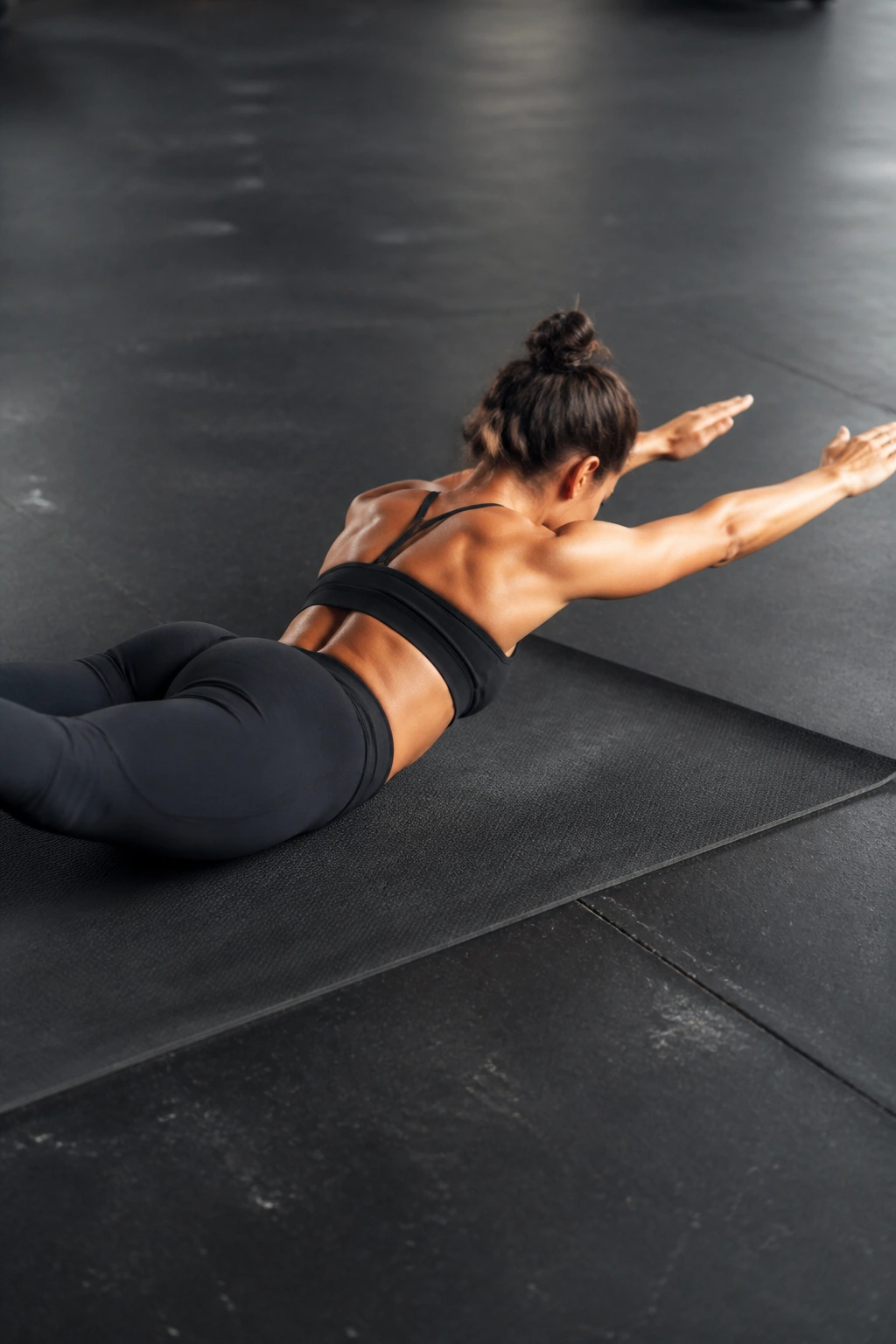
More back extension is not better here. Better control is better.
The superman hold gets a bad reputation when people throw themselves off the floor and crank their low back. Done gently, though, it can train the spinal extensors to stay engaged without collapsing. That kind of endurance matters if you want to sit taller, walk taller, or stand for longer without feeling folded in the middle.
Lie face down, lift the chest and legs only a few inches, and keep the neck neutral. You do not need a giant arch. A small lift is enough to wake up the back without creating a sore lower spine the next day.
Keep it honest
- Lift only as high as you can control
- Think “long” instead of “high”
- Hold for 10 to 20 seconds
- Rest fully between holds
If your low back pinches, reduce the lift or swap to a bird dog or back extension with a smaller range. There’s no prize for forcing this one. Clean tension is the point.
12. Scapular Wall Slides for Shoulder Blade Control
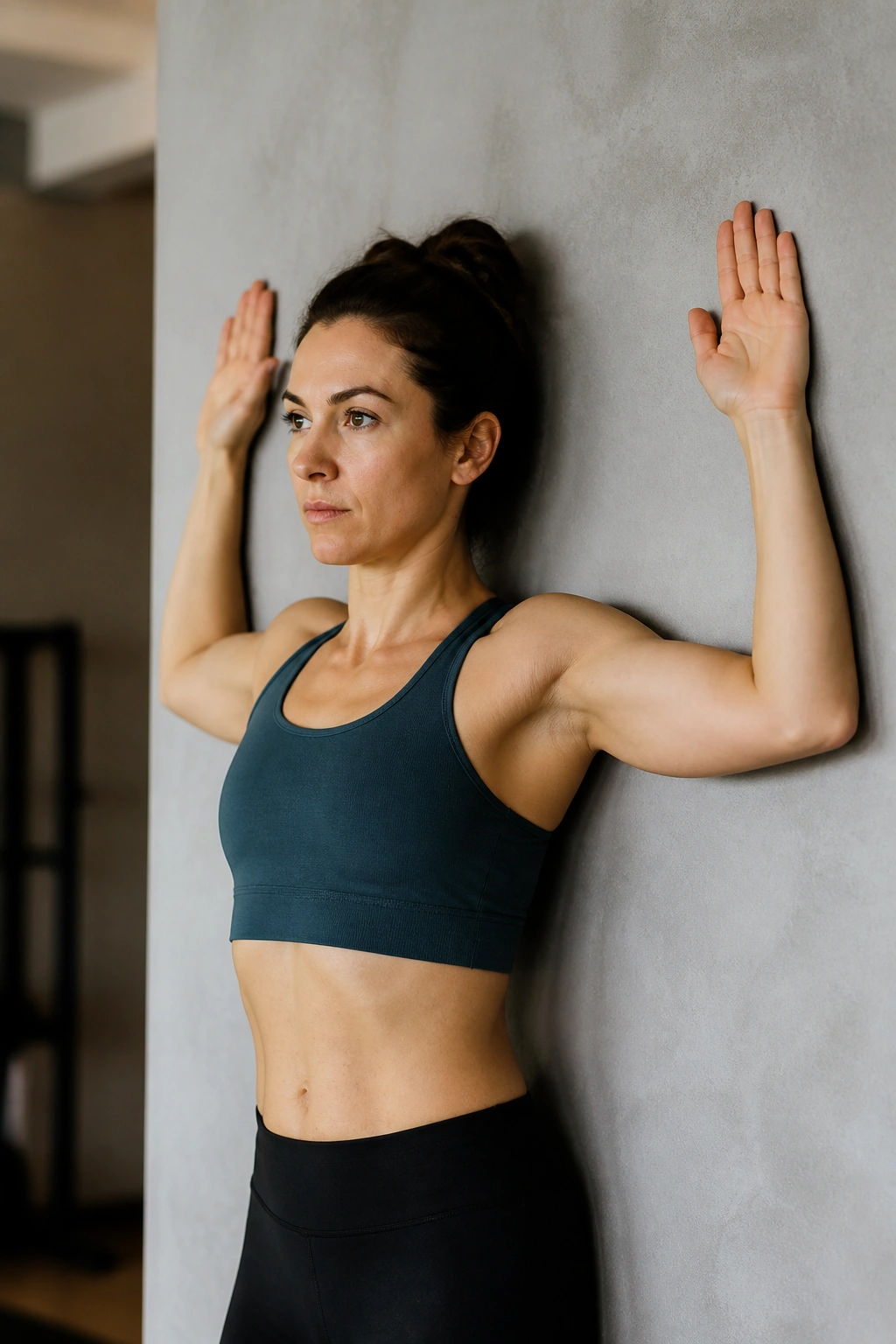
Why does a simple wall slide show up in posture routines so often? Because it teaches the shoulder blades to move upward without the ribs flying open underneath them.
Stand with your back to a wall, forearms against it, elbows bent, and slide the arms upward while keeping as much contact as you can. If the low back arches or the wrists peel away, the range is too much right now. That’s not failure. That’s information.
The real value here is the coordination. The serratus anterior, lower traps, and upper back have to share the job so the shoulders can move smoothly. For people who sit a lot or live with tight pecs, this drill often feels awkward at first. Good. Awkward is honest.
How to make it work
- Keep the ribs down before the slide starts.
- Press lightly into the wall through the forearms.
- Move slowly enough to notice where the compensation begins.
- Stop the rep before the lower back takes over.
Two sets of 8 to 10 controlled reps is plenty. If you want a stronger posture, the goal is not to look graceful. The goal is to own the position.
13. Reverse Flys to Wake Up the Rear Shoulders
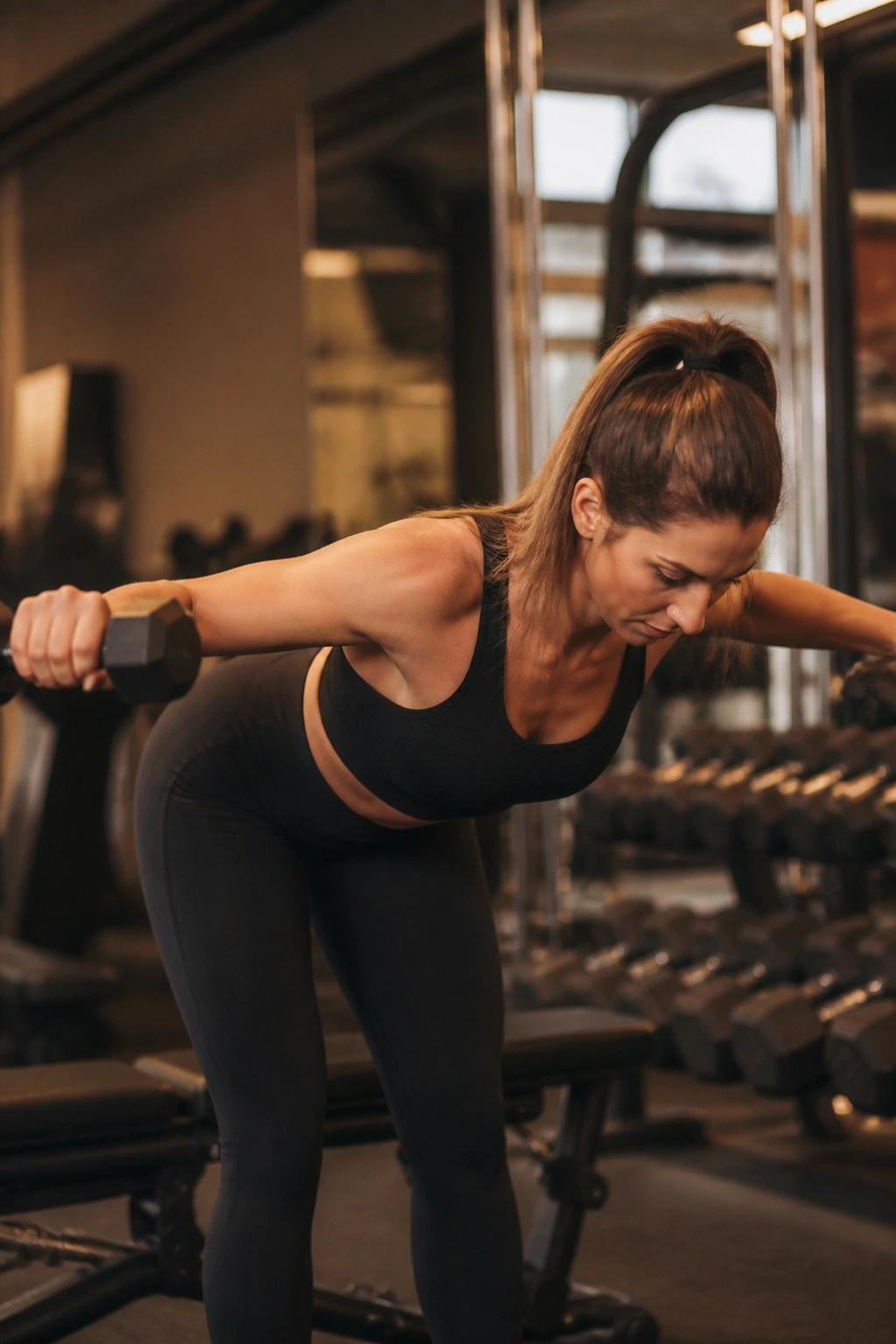
A light pair of dumbbells can do more for your upper back than a heavy row if the row turns sloppy. Reverse flys are a good example.
Bend over with a flat back or use a chest-supported bench, then open the arms out to the sides with a slight bend in the elbows. Think about moving the upper arms, not swinging the hands. The rear delts and the muscles between the shoulder blades should do the work. If the traps climb toward the ears, the weight is too heavy.
Why they earn a spot
Reverse flys hit the rear shoulder area in a way that rows sometimes miss. Rows are great, but they also invite the lats and bigger pulling muscles to take over. Reverse flys are more direct. Less glamorous. More precise.
The boring but useful details
- Use a light load
- Pause near the top for one count
- Lower slowly instead of letting the arms drop
- Stop if the neck starts tightening
Try 2 to 3 sets of 12 to 15 reps. The burn shows up fast. That’s normal, and in this case, a good sign.
14. Back Extensions on a Roman Chair
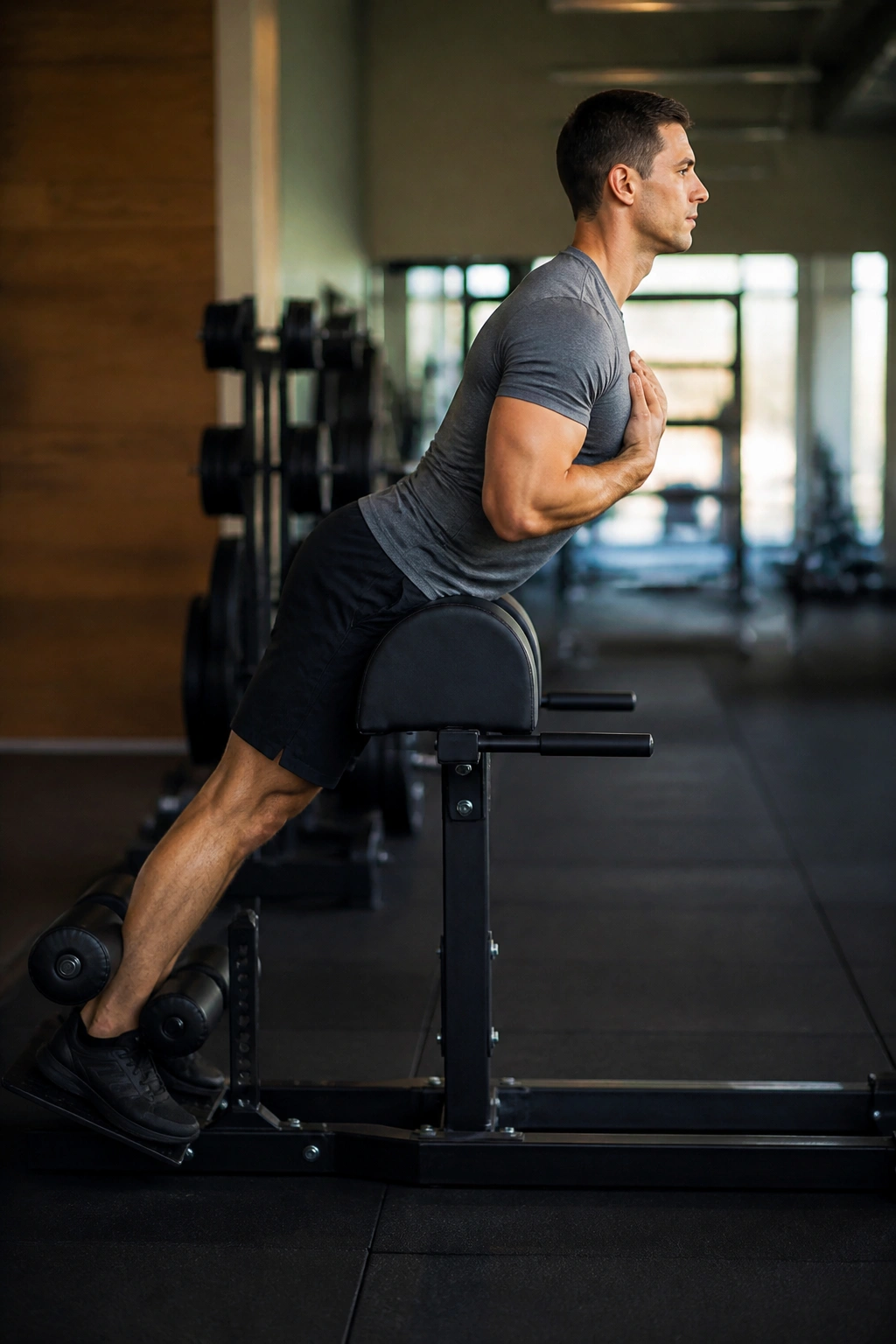
A controlled back extension is one of the most honest ways to build the lower back for posture.
On a Roman chair or 45-degree back extension bench, set your hips so you can hinge cleanly, then lower your torso with control and rise until your body is in a straight line. You are not trying to hyperextend into a big arch. You’re training the erectors, glutes, and hamstrings to work together without dumping stress into one spot.
That matters because a lot of posture complaints start with a tired lower back. People think of posture as an upper-back issue, and sure, that’s part of it. But if the lower back has no endurance, the whole stack gets wobbly.
Where people go wrong
- Going too high at the top
- Bouncing out of the bottom
- Using momentum instead of muscle
- Holding the breath the entire time
Start with bodyweight. Eight to 12 reps is usually enough. If that feels easy and the form is solid, you can hold a light plate at the chest. Not a giant one. A modest load keeps the movement useful and honest.
15. Prone Cobra Holds for Postural Endurance
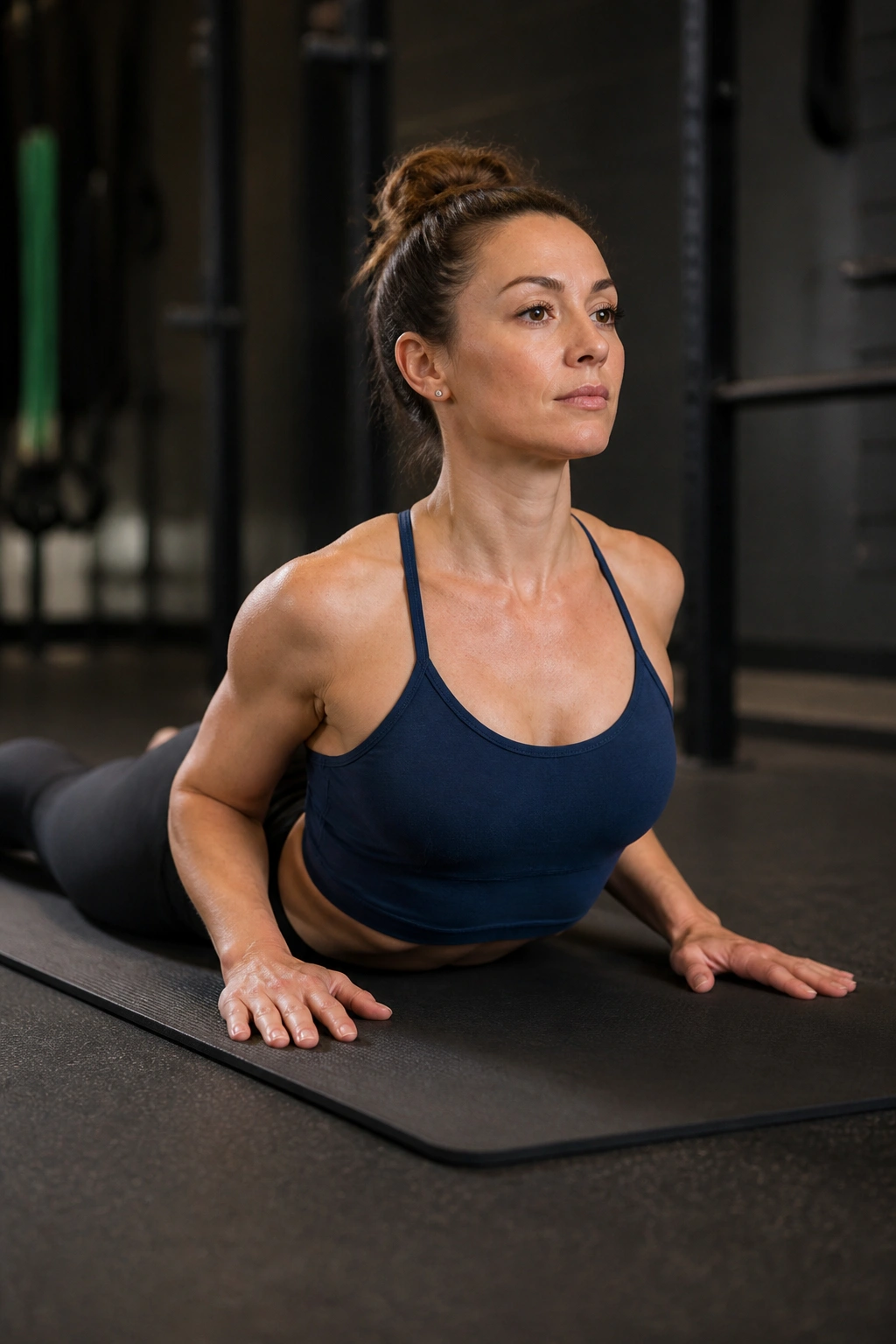
At the end of a workout, this is the kind of drill that looks small and feels oddly stubborn.
Lie face down, arms by your sides, thumbs turned out, and lift the chest just enough to engage the upper back while keeping the neck long. The shoulders should feel set down and back, but not pinned so hard that the whole thing turns into a cramp. It is more of a posture hold than a strength move, and that’s why it works so well as a finisher.
The prone cobra teaches the body what “tall” feels like when the chest is not collapsing forward. It also asks the lower traps and deep spinal muscles to stay on without a lot of fuss. If wall angels are the clean check-in, this is the one that teaches the position to last.
A good hold has these signs
- The neck stays relaxed
- The shoulders do not creep up
- The ribs stay mostly quiet
- You can breathe without losing the shape
Hold for 10 to 20 seconds, rest, then repeat 3 to 5 times. Short, crisp holds beat long sloppy ones. If the low back starts to complain, make the lift smaller.
Final Thoughts
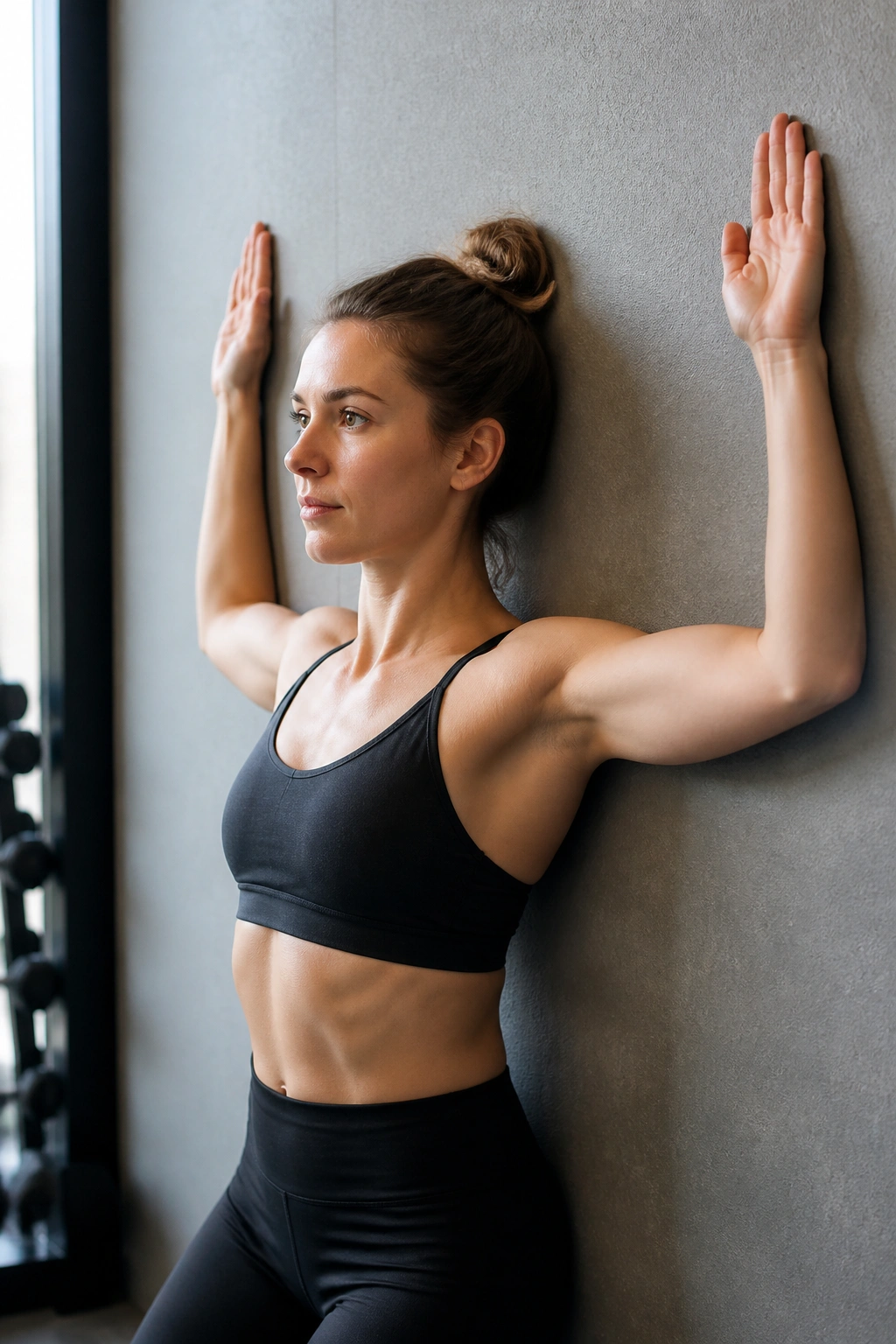
The best back exercises for a stronger posture are the ones you can repeat without your form falling apart. A few well-chosen drills done cleanly will do more than a pile of random movements you half-remember from a video.
If I had to keep it simple, I’d pair one mobility drill, one row, one hinge, and one carry. Wall slides or wall angels for position. A chest-supported row or face pull for upper-back strength. Romanian deadlifts or back extensions for the back side of the body. Then farmer’s carries to make the whole thing hold together when you’re standing, walking, or just trying to stay upright at the end of a long day.
Posture responds to practice. Not pep talks.
