



The sound of a heavy iron kettlebell hitting the floor is unmistakable. It is a distinct, resonant thud that signals the end of a hard-fought set and the beginning of a short, gasping rest. For anyone who has traded a crowded commercial gym membership for the quiet efficiency of home training, that sound is the soundtrack of progress. Kettlebells are not just weights; they are offset, unstable, and unforgiving, making them the most effective tools for building lower body strength without needing a squat rack or a garage full of bumper plates. You can get a brutal leg workout in the footprint of a yoga mat, provided you know exactly how to manipulate the weight to keep your muscles under tension.
It is easy to get caught up in the idea that you need heavy barbells to build functional leg strength. That is simply not true. By shifting the center of gravity and utilizing unilateral movements, a single medium-weight kettlebell can challenge your glutes, quads, and hamstrings more effectively than a standard machine circuit. These workouts are designed to be completed at home, requiring minimal space and equipment, yet they offer enough intensity to keep your legs burning long after you have finished. Focus on the tension in the handle, the stability of your feet, and the rhythm of your breathing. Let’s look at the specific ways you can turn a basic kettlebell into a comprehensive leg-day weapon.
1. Mastering the Kettlebell Goblet Squat AMRAP
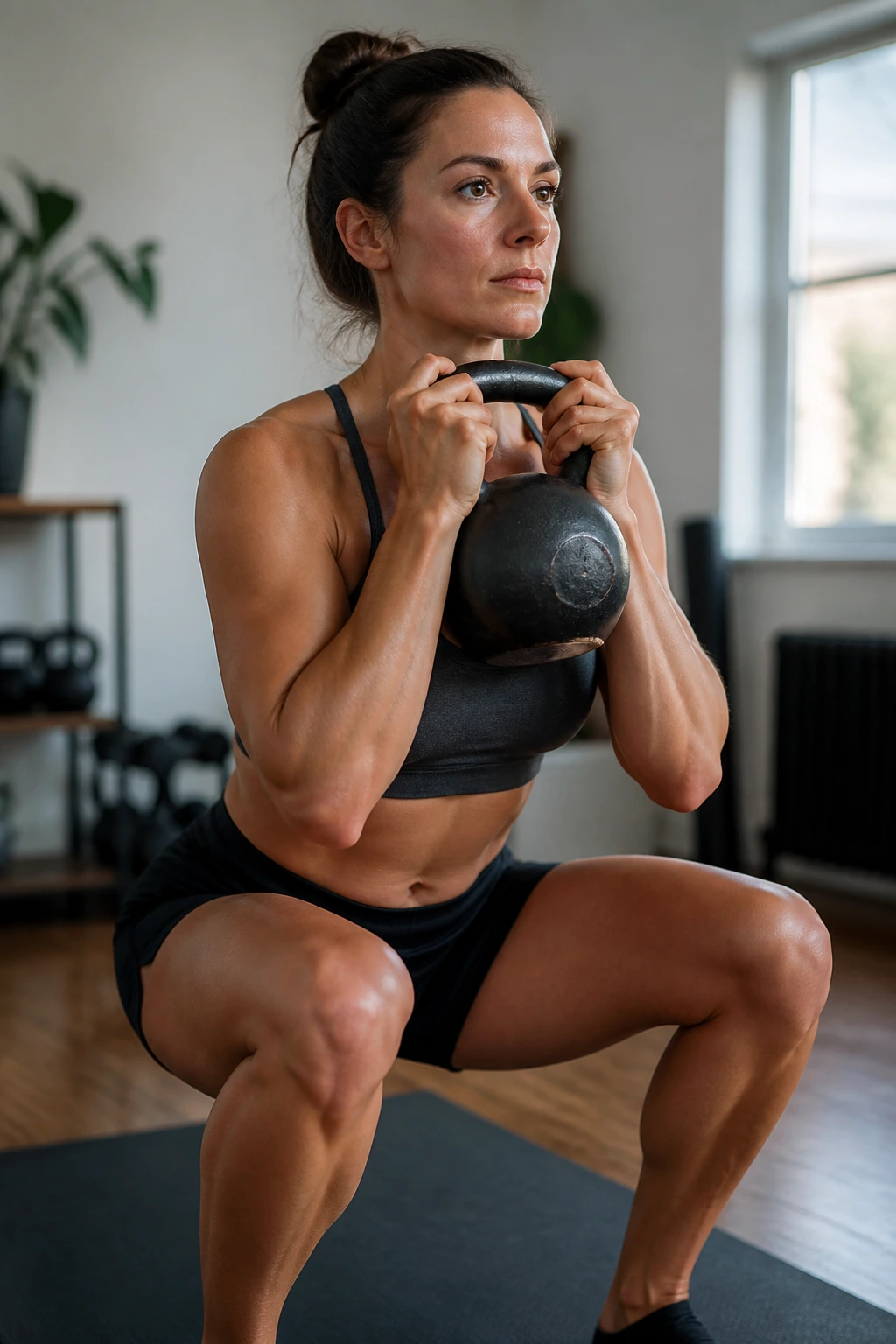
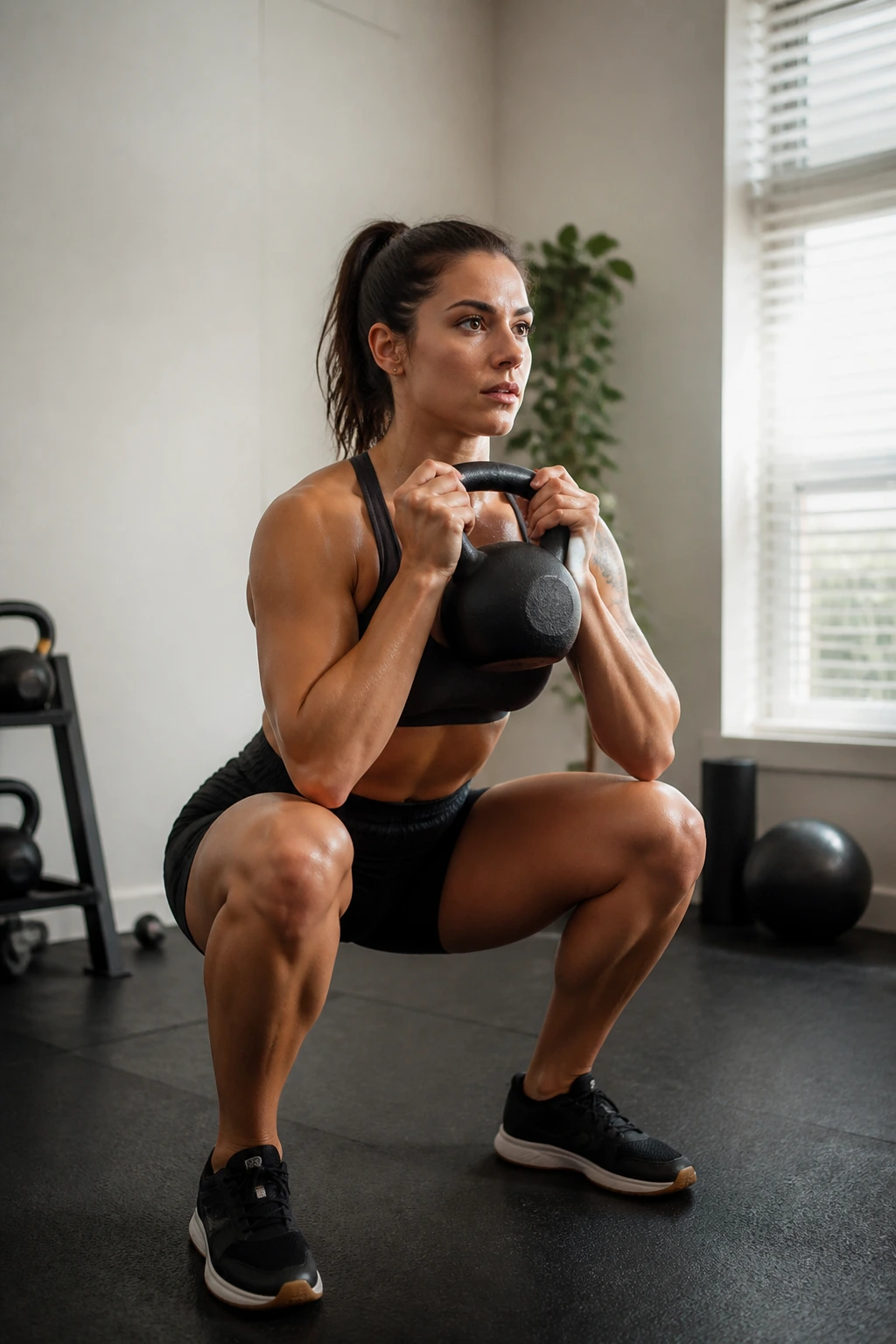
The goblet squat is the foundational movement for kettlebell training. It forces you to maintain an upright torso, which is critical for hitting the quadriceps effectively. To perform an AMRAP—As Many Reps As Possible—session, you need a weight that is challenging but manageable for high volume. Hold the kettlebell by the horns, close to your chest, with your elbows tucked inward.
Proper Form and Tempo
Focus on sinking your hips straight down between your heels. Do not lean forward, or you will lose the tension on your quads. Lower yourself over three seconds, pause at the bottom for one second to eliminate momentum, and drive up through your mid-foot. If your heels lift, your stance is likely too narrow. Adjust your feet until you can stay grounded throughout the entire rep.
Keeping the Intensity
Set a timer for ten minutes. Your goal is not to sprint through the reps but to maintain perfect form until you physically cannot complete another repetition without compromising your technique. If you find your form breaking down at minute five, put the bell down, rest for thirty seconds, and jump back in. The objective is to accumulate as much volume as possible while keeping the bell glued to your chest. The burn in your quads should be intense by the halfway mark.
2. The Kettlebell Swing and Reverse Lunge Superset
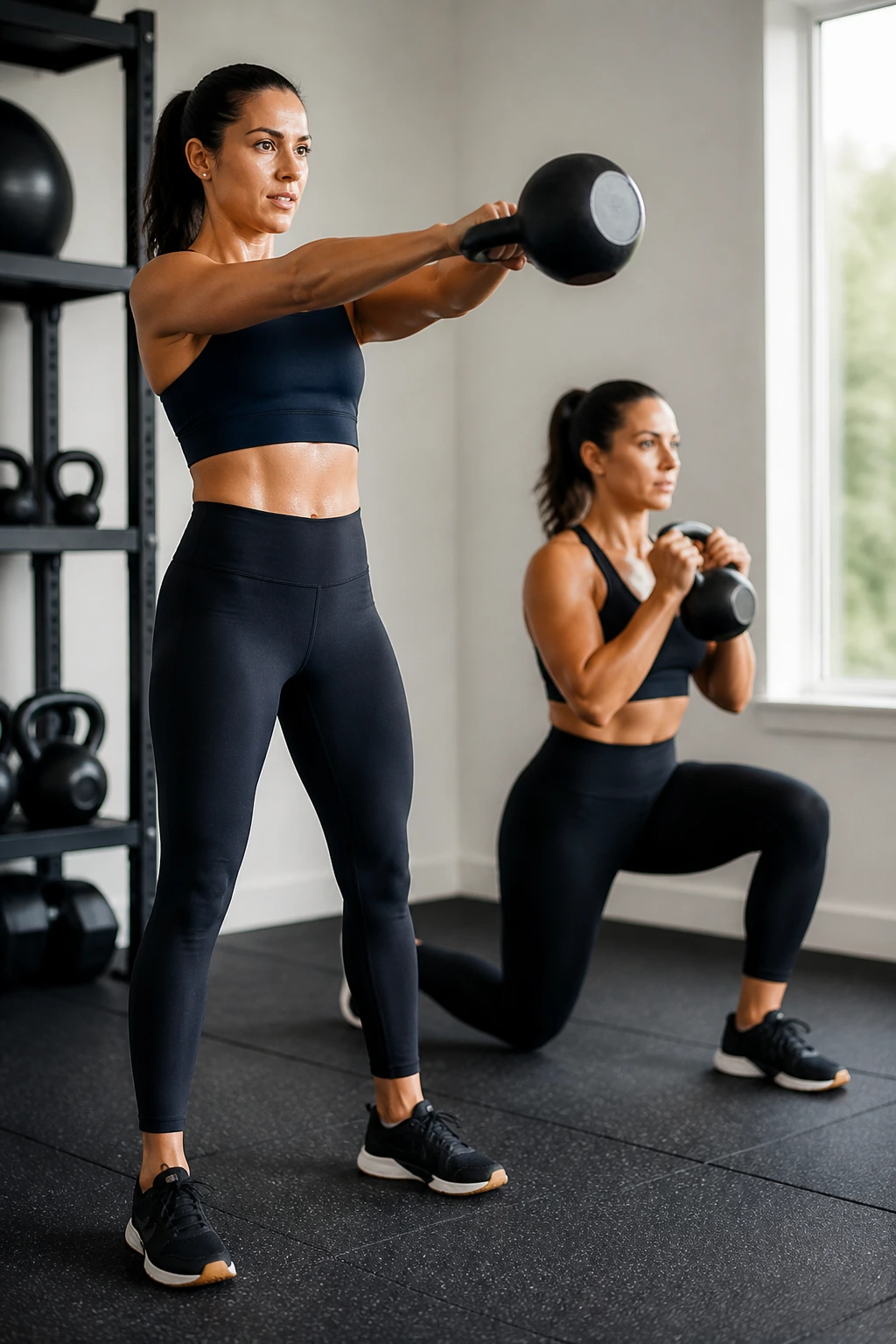
This pairing hits the posterior chain—the hamstrings and glutes—while simultaneously demanding unilateral stability. It is a classic move that balances explosive power with controlled, decelerated movement.
The Execution
Start with 20 kettlebell swings. Hinge at the hips, not the waist, and let the kettlebell float to chest height using the power generated from your glutes. Immediately after the final swing, rack the kettlebell on one side and perform 10 reverse lunges with the same leg. Repeat for the other side. Do not put the weight down until you have completed both legs.
Why This Combination Works
Swings build explosive force, while the reverse lunge requires constant engagement of your core to stop you from wobbling. You are effectively training your legs to handle power in a dynamic environment.
- Swing Cues: Keep your lats engaged to protect your lower back.
- Lunge Cues: Step back far enough so your front shin stays vertical.
- Transition: Keep the bell in the rack position during the lunges to challenge your balance.
3. Single-Leg Romanian Deadlift Precision
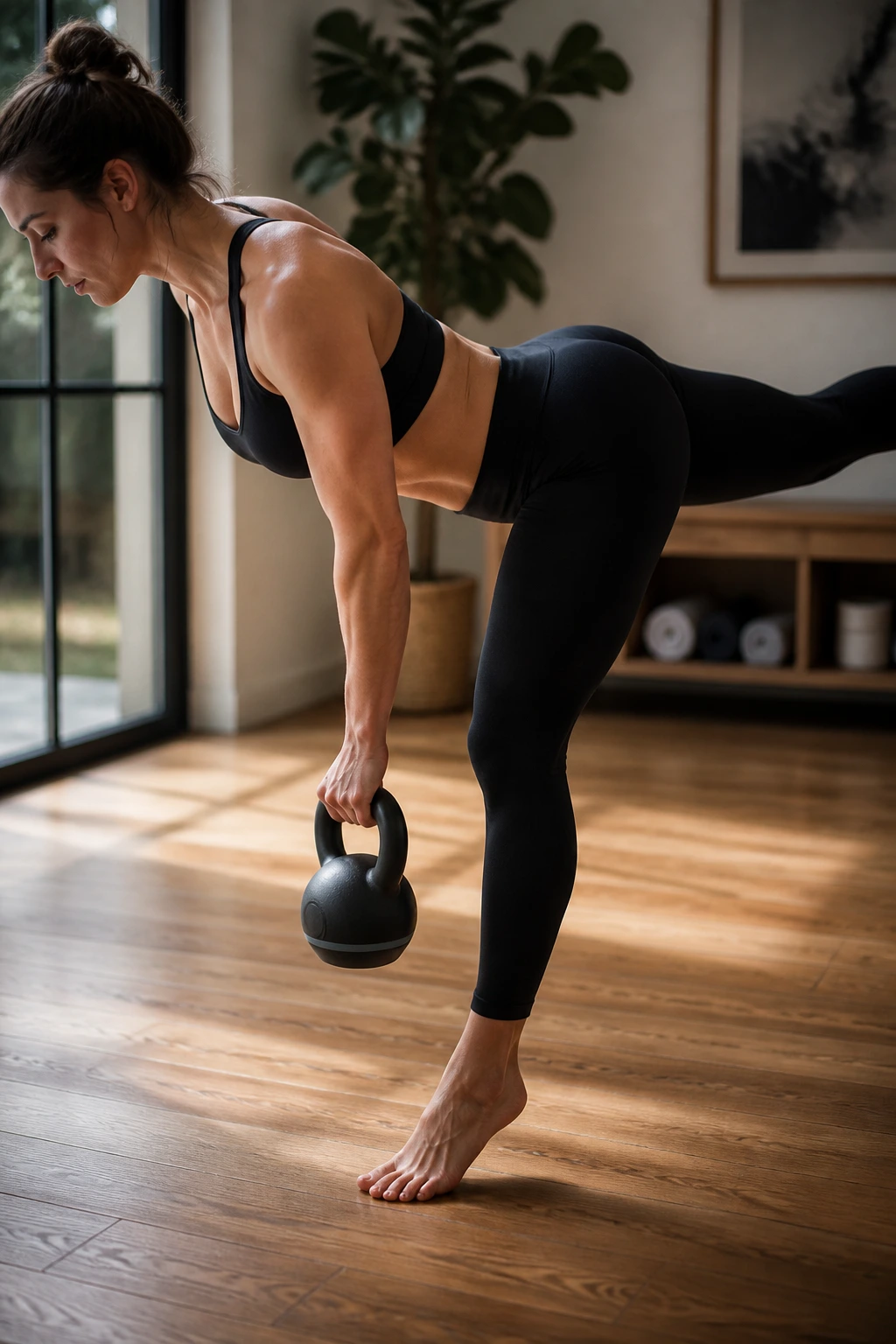
The single-leg Romanian deadlift, or RDL, is the ultimate test of hip stability and hamstring isolation. It is a slow, methodical movement that requires complete focus. Many people try to rush this exercise, but doing so destroys the benefit of the balance challenge.
Developing Stability
Hold the kettlebell in the hand opposite to the working leg. This cross-body loading forces your glute medius—the small muscle on the side of your hip—to fire rapidly to keep your pelvis level. As you hinge forward, keep your back flat and your non-working leg straight behind you. It should feel like a seesaw, with your body acting as the lever.
Avoiding Common Errors
Do not rotate your hips open toward the side of the raised leg. Keep your toes pointed directly at the floor throughout the entire movement. If you feel like you are tipping over, reduce the weight. A lighter bell will allow you to perfect the movement pattern, which is far more beneficial than struggling with a heavy weight and poor form. Your hamstrings should feel a deep, controlled stretch at the bottom of the movement.
4. Sumo Squat and Calf Raise Burnout
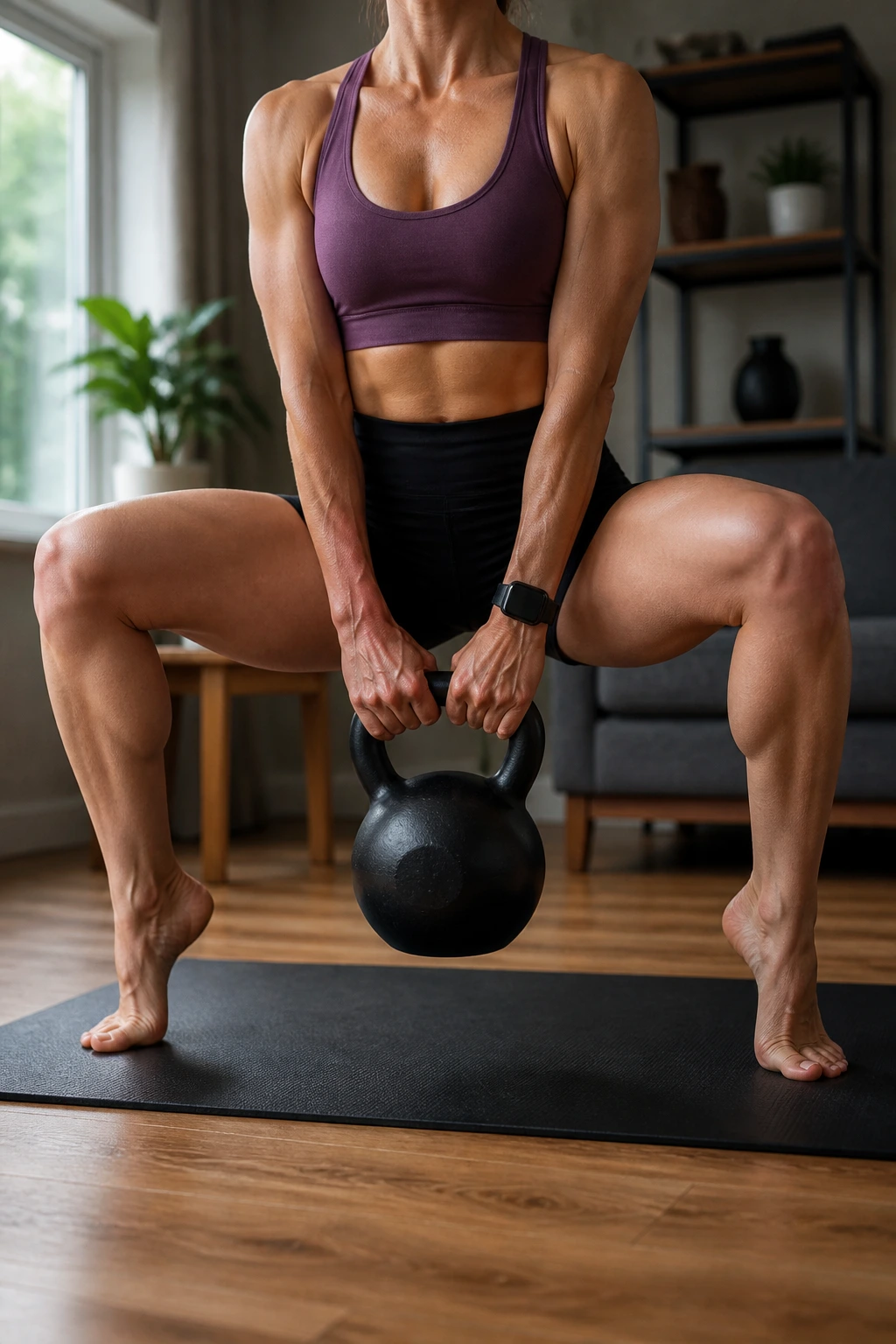
The wide-stance sumo squat targets the inner thighs and adductors, areas often neglected in standard squat variations. Adding calf raises at the end of each squat adds an extra layer of fatigue to the lower leg.
The Stance and Depth
Set your feet wider than shoulder-width apart and turn your toes out at a 45-degree angle. Hold the kettlebell by the handle between your legs, letting it hang straight down. As you squat, push your knees outward so they track directly over your toes. This alignment protects the knee joint while maximizing the stretch in the adductors.
Adding the Burn
At the bottom of each rep, perform a calf raise while holding the squat position. Push onto your toes, squeeze your calves, and lower your heels before you stand up. Do five sets of fifteen repetitions. The combination of the deep squat and the isometric calf contraction will make your legs feel heavy and tired by the end of the first set.
5. Lateral Lunge and Clean Complex
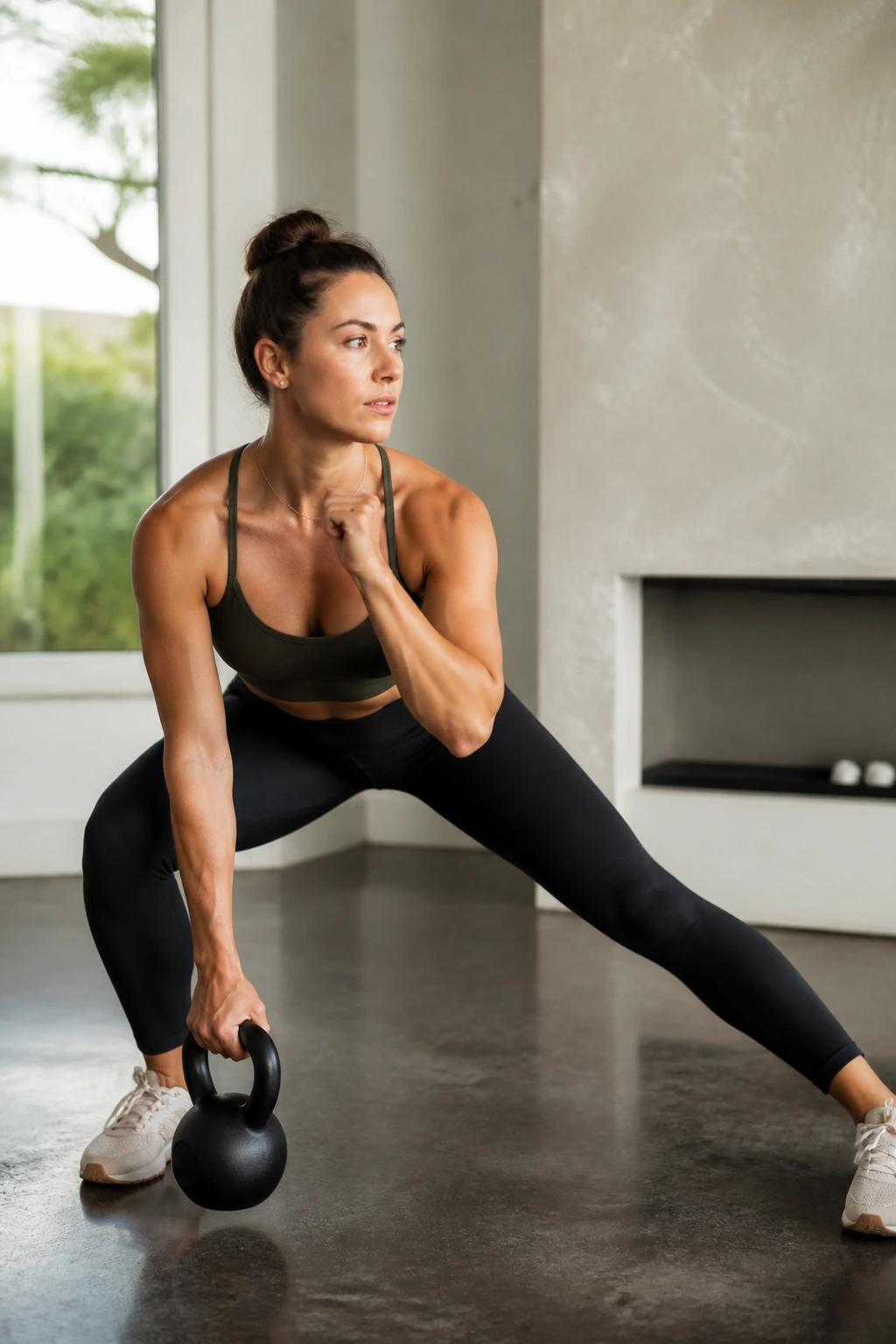
Lateral movement is essential for athleticism, yet most people spend their entire workout life moving forward and backward. The lateral lunge, combined with a kettlebell clean, forces your legs to work in the frontal plane, improving mobility and lateral strength.
Executing the Move
Hold the kettlebell in one hand. Step wide to the side with the opposite leg, keeping the other leg straight. As you sink into the lunge, bring the kettlebell down toward the floor, tapping it near your arch. As you push off the side to return to center, perform a clean, pulling the bell up to your shoulder.
Strategic Benefits
The lunge works the inner thigh and glute, while the clean integrates the movement, requiring core activation to catch the bell smoothly. This is a rhythmic, flowing exercise that feels more like a dance than a grind. Focus on smooth transitions rather than raw speed. The goal is to move fluidly, catching the weight without jerking your shoulder.
6. The Bulgarian Split Squat Challenge
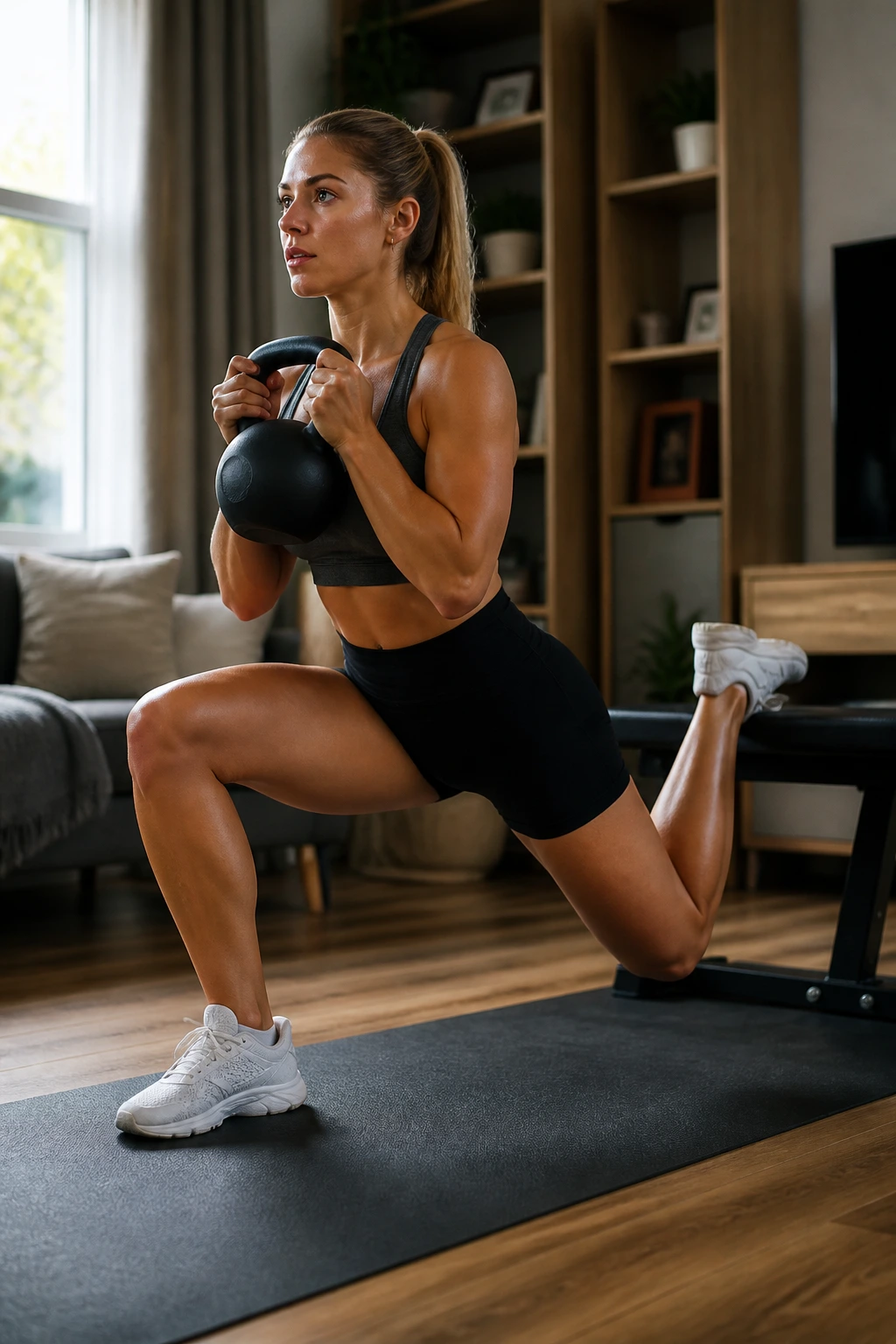
If you want to know what real leg pain feels like, look no further than the Bulgarian split squat. By elevating your back foot, you shift a significant amount of the load onto the front leg, forcing the quad and glute to work in isolation.
Setting Up the Station
Find a couch, a sturdy chair, or a bed frame to prop your back foot on. Hold the kettlebell in the goblet position or hanging at your side. The depth is the secret here; you must sink low enough for your back knee to nearly touch the floor. If you do not go deep, you are missing out on the primary benefit of the exercise.
Troubleshooting Your Balance
Keep your torso slightly forward to bias the glutes, or keep it vertical to focus on the quads. Experiment with both angles during your workout. If your front foot is too close to the bench, you will feel it in your knee; if it is too far, you will feel it more in your hip flexors. Find the sweet spot where you feel the tension primarily in the mid-thigh and glute of the front leg. Three sets of ten reps per leg is more than enough to humble even the strongest athlete.
7. Kettlebell Thrusters for Full-Body Fatigue
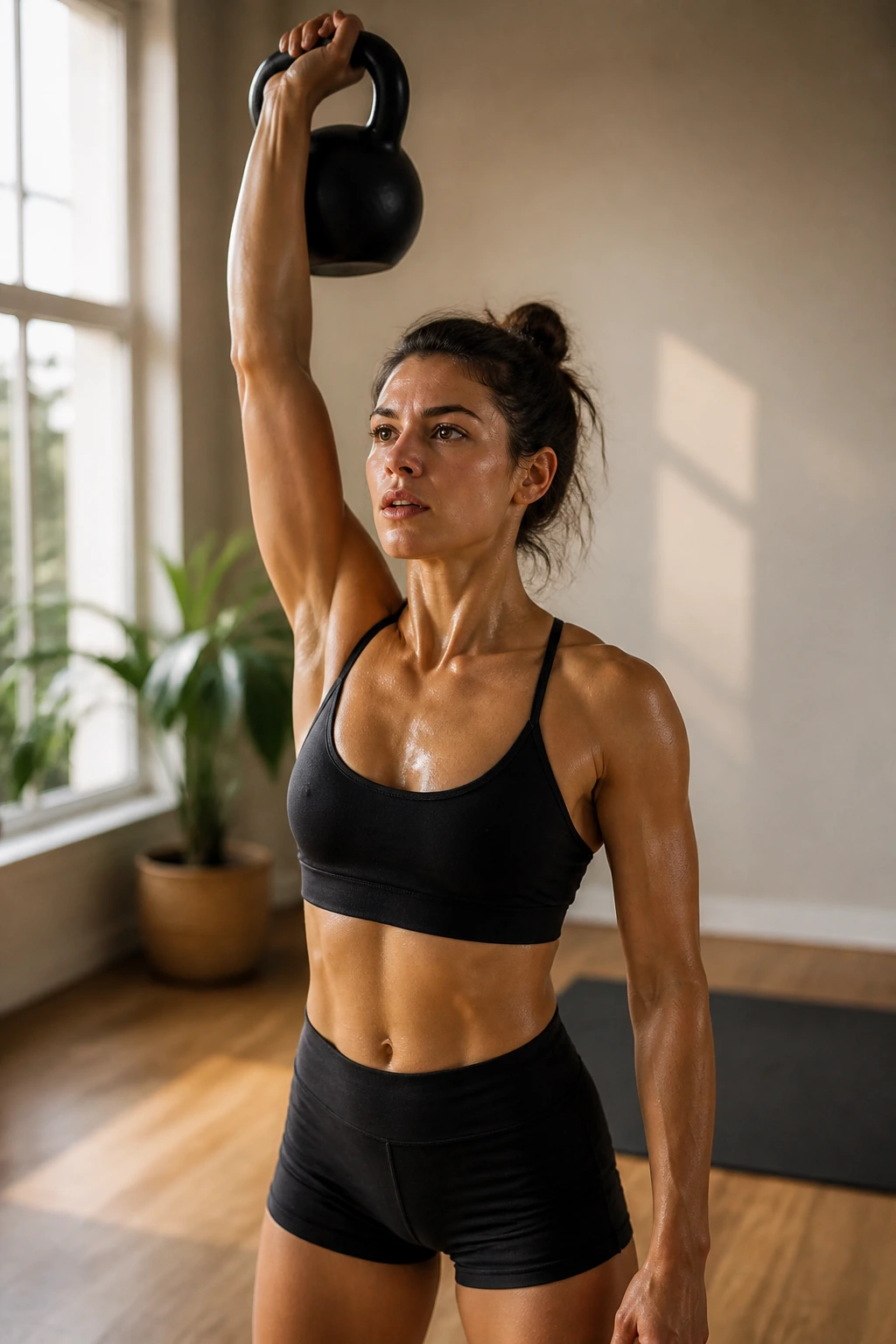
The thruster is a compound move that combines a squat with an overhead press. While the press works your shoulders, the heavy leg drive required to push the weight from a squat to overhead makes this a powerhouse for the lower body.
Coordination is Key
Hold the kettlebell at your shoulder. Squat down, and as you stand, use the momentum of your legs to drive the bell overhead. Do not stop the movement halfway. It should be one fluid motion—down into the squat, up, and press. The transition happens at the point of explosion from the bottom of the squat.
Scaling the Effort
Because this move requires full-body coordination, it is easy to get winded. Take short rests between sets to keep the quality of the squat high. If the weight is too heavy to press, use two hands to press or switch to a lighter bell. The goal here is high-volume, continuous movement that taxes both your heart and your legs.
8. Weighted Step-Ups for Glute Activation
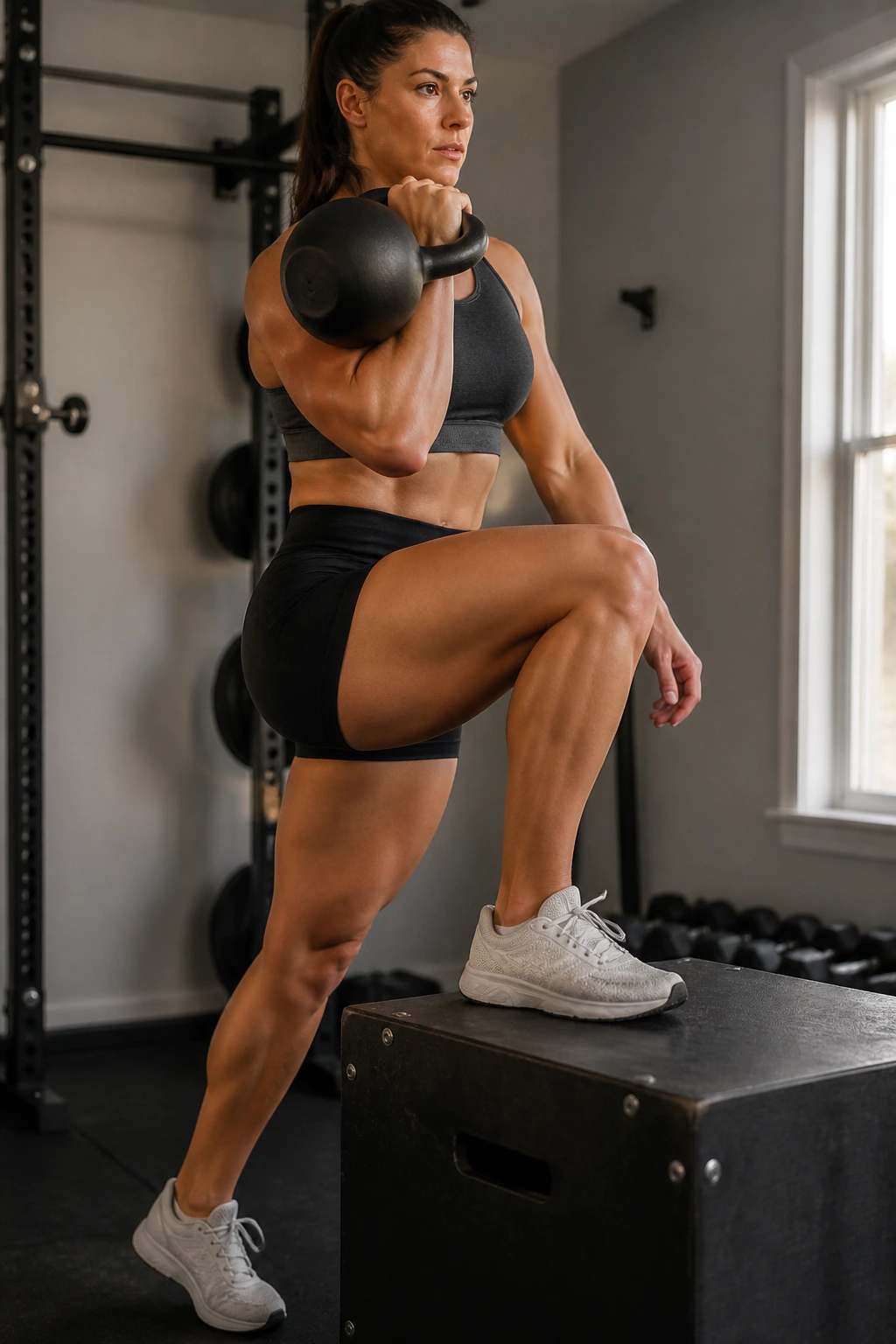
Step-ups are often dismissed as a “beginner” move, but that is only because people do them without weight or focus. When performed with a heavy kettlebell and a slow, controlled tempo, they are one of the most effective ways to build glute strength.
The Technique
Use a sturdy chair or box. Hold the kettlebell in the rack position on the side of the working leg. Step up, driving through your heel, and stand tall on the box. The key is the descent—lower yourself as slowly as possible, taking three seconds to touch your other foot back to the floor.
Maximizing Engagement
Do not push off with the bottom foot. The entire lift should be performed by the leg on the box. Think about pulling yourself up to the box rather than jumping. By controlling the descent, you create significant time under tension, which is the primary driver for muscle growth in the legs. Keep your core tight to prevent your body from leaning into the side of the working leg.
9. Cossack Squats for Mobility and Strength
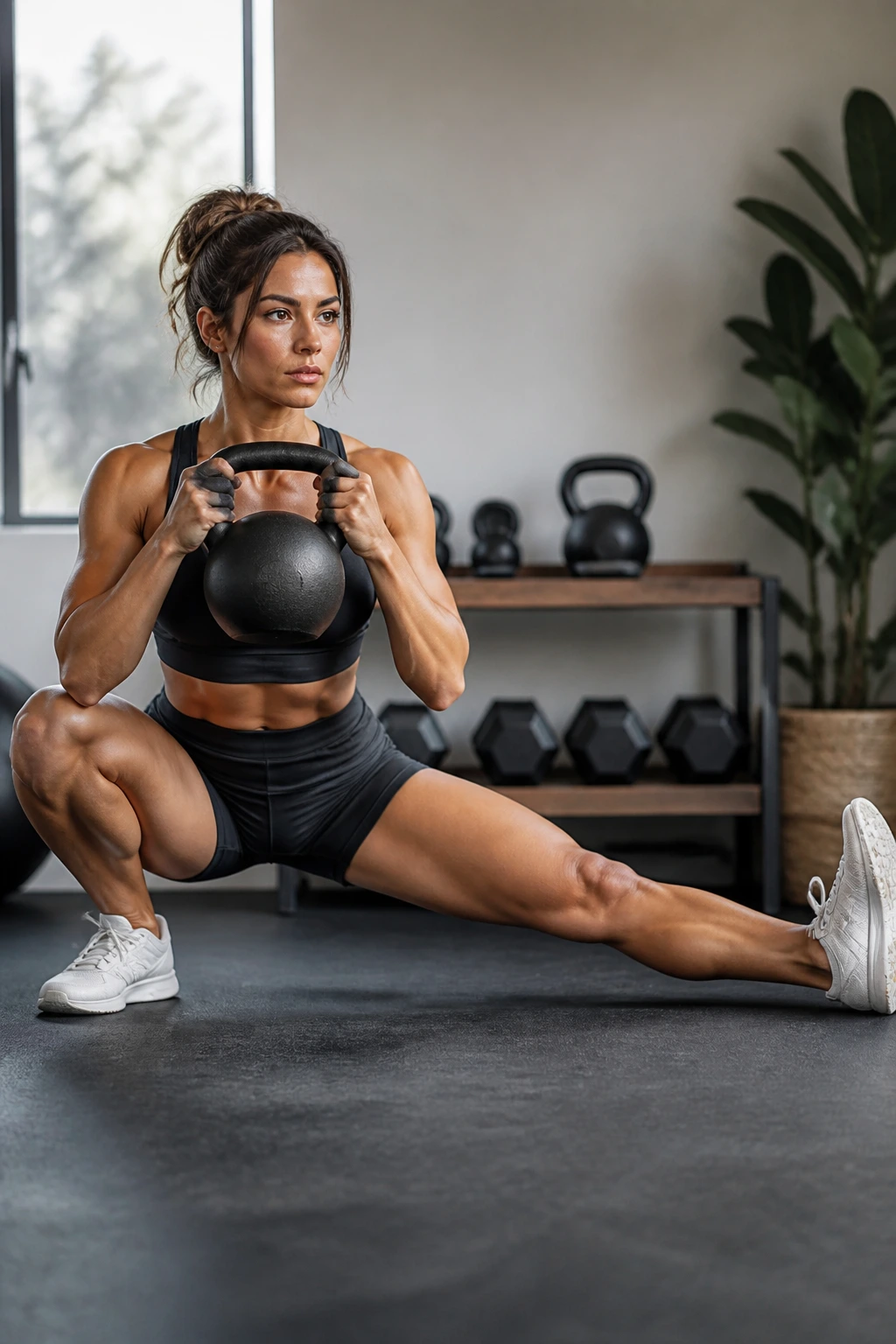
Cossack squats are a sophisticated move that requires significant hip mobility. It is essentially a side lunge with an extreme range of motion, where you sit all the way down on your heel.
How to Perform
Stand with a very wide stance. Hold the kettlebell in front of your chest. Shift your weight to one side, squatting down as deep as possible while keeping your other leg straight and the heel planted. The straight leg’s toes should point toward the ceiling. Stand back up by driving through the heel of the bent leg and return to the start.
Why They Are Unique
This exercise develops the ability to produce force from a very deep, vulnerable position. It stretches the inner thighs while strengthening the quads. If you cannot go all the way down, just go as far as your mobility allows. Over time, you will find your hips loosening up, allowing for greater depth and a more effective workout.
10. Curtsy Lunges and Kettlebell Pass-Throughs
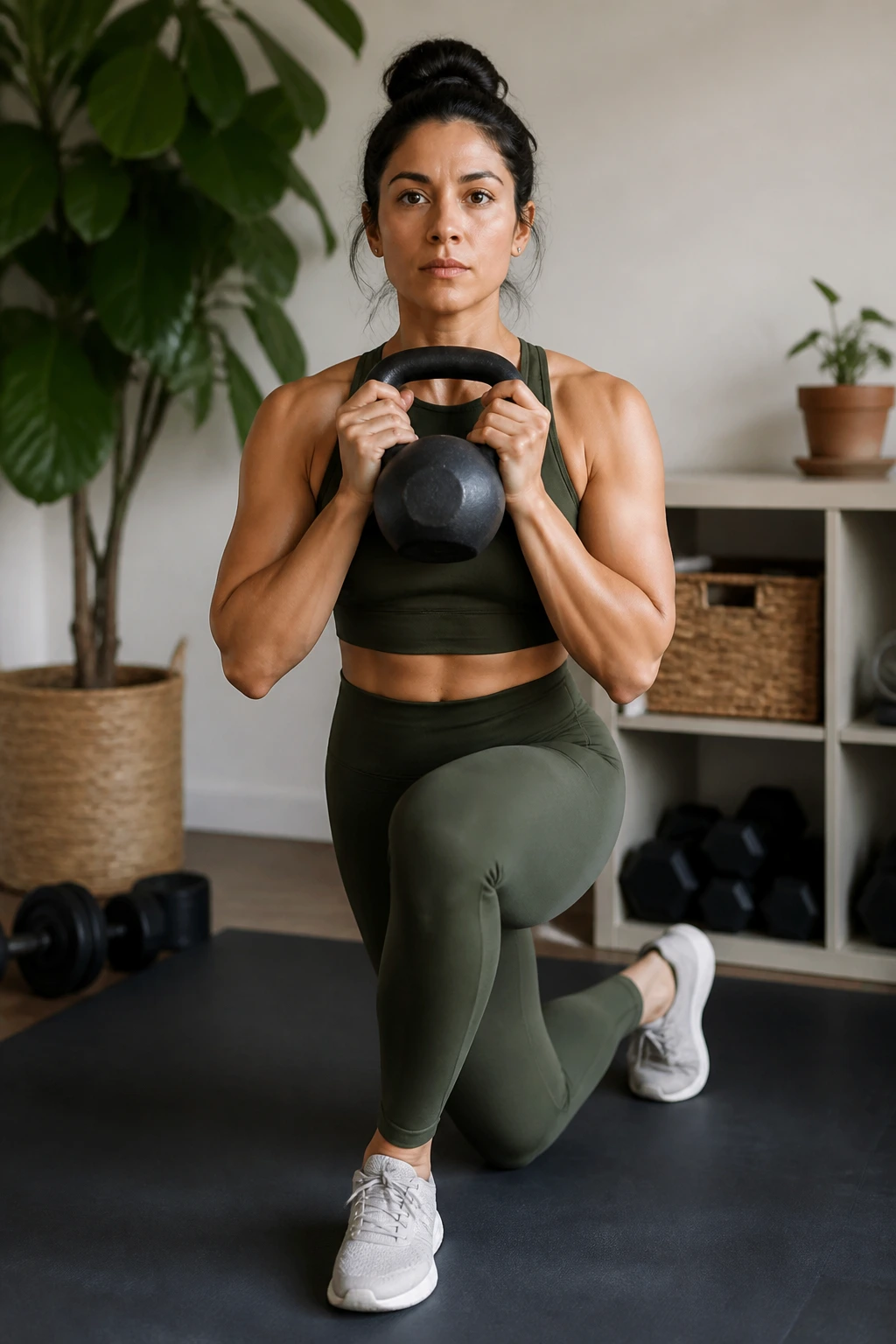
The curtsy lunge targets the glute medius and minimus, the muscles responsible for stabilizing the hip and giving the side of your glutes that rounded shape. Adding a pass-through adds a core and coordination element that keeps the heart rate up.
The Movement
Start standing, then step one leg behind and across the other, as if you are doing a curtsy. Keep your hips square to the front. As you dip down, pass the kettlebell from your front hand to the hand behind your back—or simply hold it in the goblet position for extra weight. Step back to the starting position and repeat on the other side.
Why It Works
By crossing the midline, you are forcing the hips to work in a way that standard lunges do not. This variation is particularly effective for correcting imbalances between the left and right sides of your body. Focus on keeping the front knee aligned with your ankle to protect the joint.
11. The Heavy Deadlift Volume Session
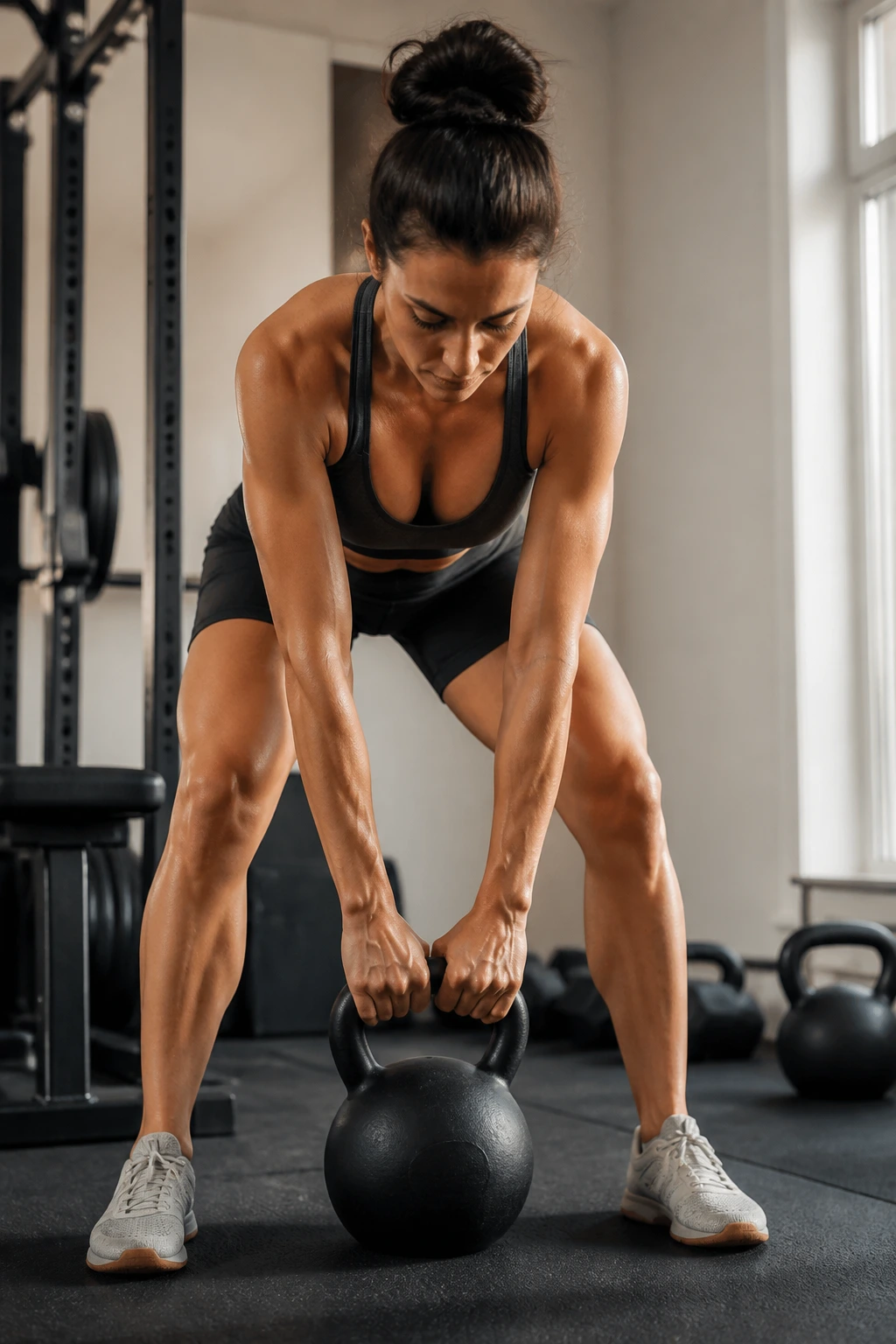
Nothing builds the posterior chain quite like a heavy deadlift. Using a kettlebell allows you to mimic the movement pattern of a conventional deadlift while keeping the weight centered between your feet.
Setting the Hinge
Place the kettlebell on the floor between your heels. Hinge your hips back, keep your back perfectly flat, and reach down to grab the handle. Your shins should be relatively vertical. Before you lift, take a deep breath into your stomach to brace your core.
The Drive
Push the floor away with your feet. Think of the movement as a leg press rather than a back lift. Squeeze your glutes hard at the top of the movement to lock out. Perform five sets of eight reps. Keep the tempo controlled—down in three seconds, explosive up. The focus is on feeling the hamstrings stretch under the load.
12. Kettlebell Deck Squats
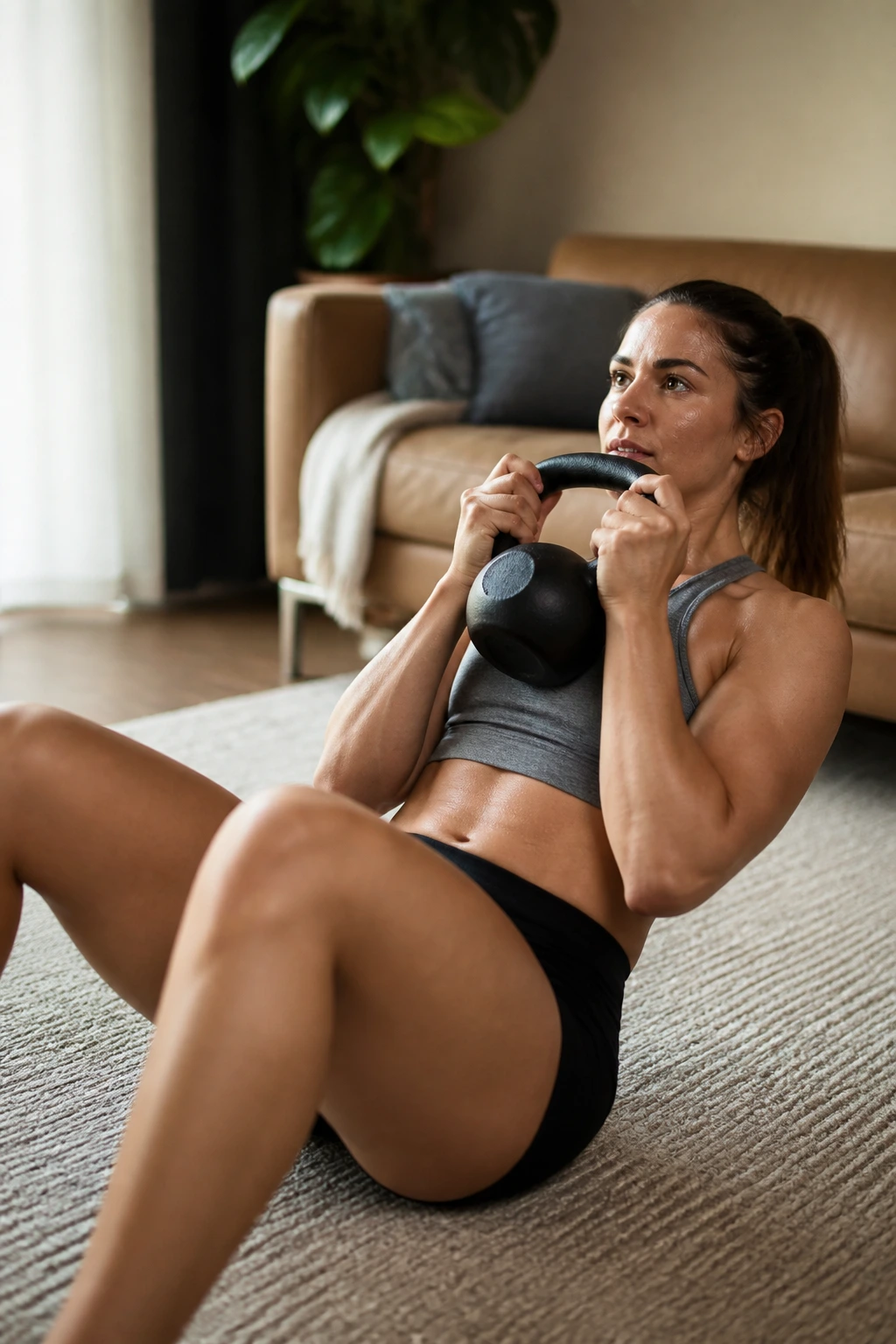
Deck squats are a dynamic movement that combines a sit-up or roll-back with a squat. It is a fantastic way to train the legs while integrating core power and hip flexibility.
The Sequence
Sit on the floor with the kettlebell held close to your chest. Roll backward, bringing your legs over your head, then use the momentum to rock forward and plant your feet firmly on the ground. Immediately explode upward into a standing squat position.
Safety Considerations
This move requires a bit of practice to find your rhythm. Do not use a weight that is too heavy for your first few attempts. The goal is to use the momentum of the roll to get into the squat position. If you find yourself unable to stand up, practice the roll-back to sitting position first, then add the standing component once you have mastered the transition.
13. Glute Bridges with Kettlebell Placement
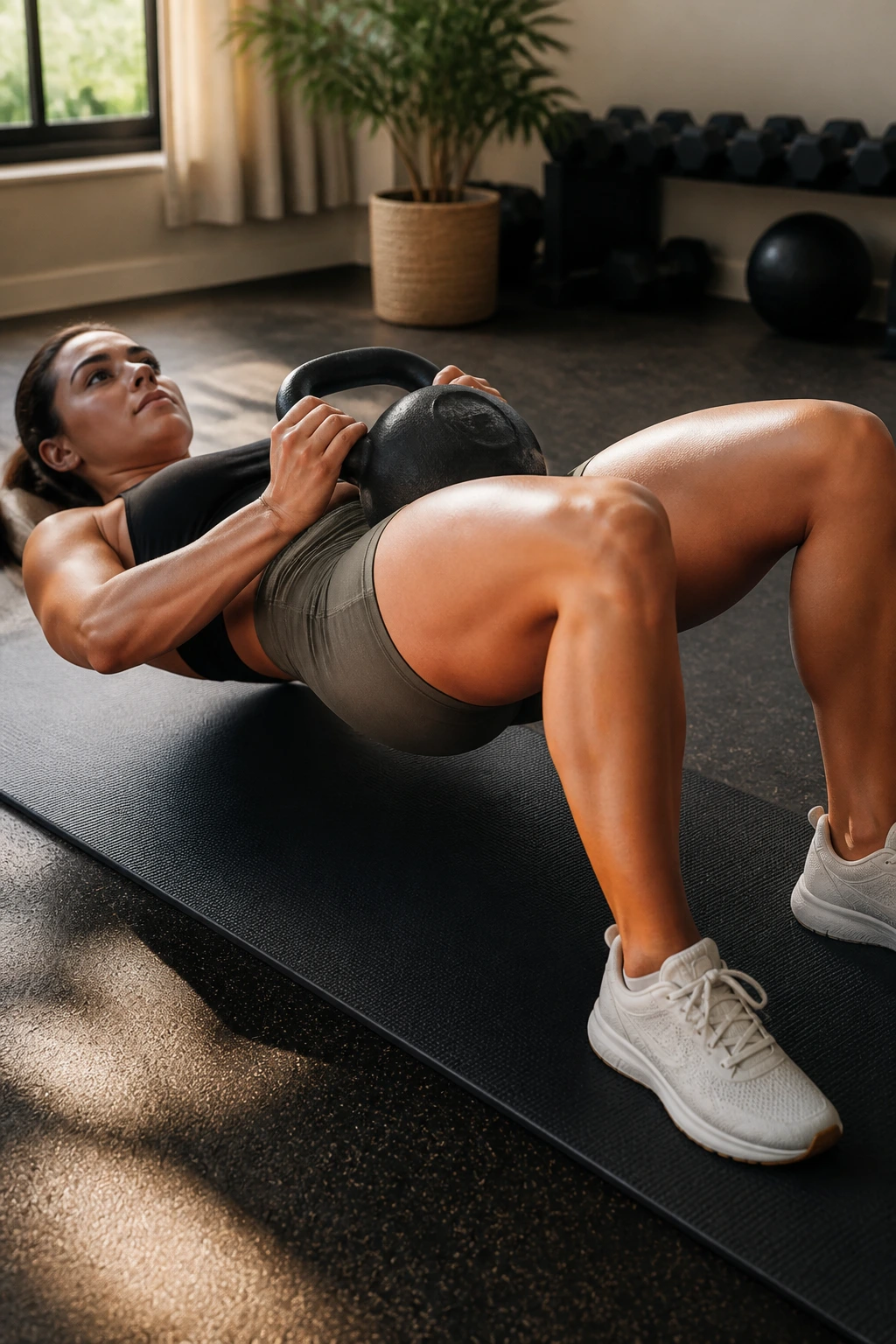
Glute bridges are the gold standard for isolating the glutes without stressing the lower back. By adding a kettlebell, you create significant resistance that can be easily adjusted.
The Setup
Lie on your back with your knees bent and feet flat on the floor. Place the kettlebell across your hips. Hold it with both hands to keep it from rolling. Drive through your heels to lift your hips toward the ceiling.
The Squeeze
At the top of the movement, pause for two seconds. Squeeze your glutes as hard as you can—pretend you are holding a coin between your cheeks. Lower yourself down slowly, just grazing the floor before driving back up. Because this is an isolation move, you can perform higher reps, such as sets of twenty, to really induce a localized burn. You should feel your glutes working significantly harder than your hamstrings.
14. Windmills and Lunge Combo
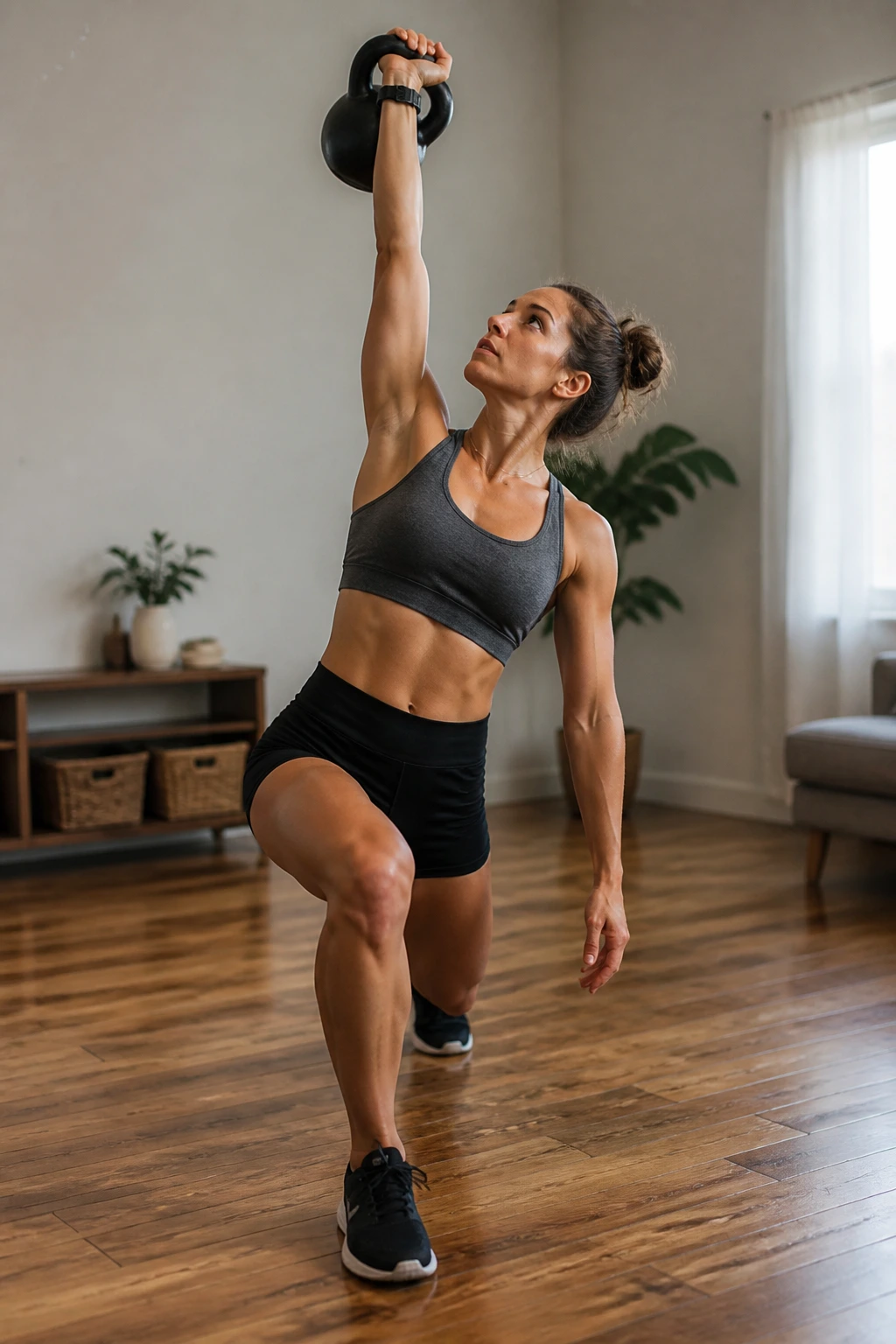
The kettlebell windmill is primarily a core and shoulder stability move, but when paired with a lunge, it becomes a total-body challenge that demands immense hip control.
Integrating the Movement
Start with the kettlebell pressed overhead in one hand. Maintain a wide stance. Hinge your hips to the side, looking up at the bell, and lower your free hand toward the floor. Stand back up, then immediately perform a lunge on the same side, keeping the bell pressed high throughout.
Why This Matters
This combination teaches you to maintain upper-body stability while your lower body moves through different planes of motion. It is an advanced exercise, so prioritize control over speed. If the bell feels shaky overhead, stop and reset. Your legs will be working to stabilize your body while your core manages the overhead load.
15. The “Death by” Kettlebell Squat Protocol
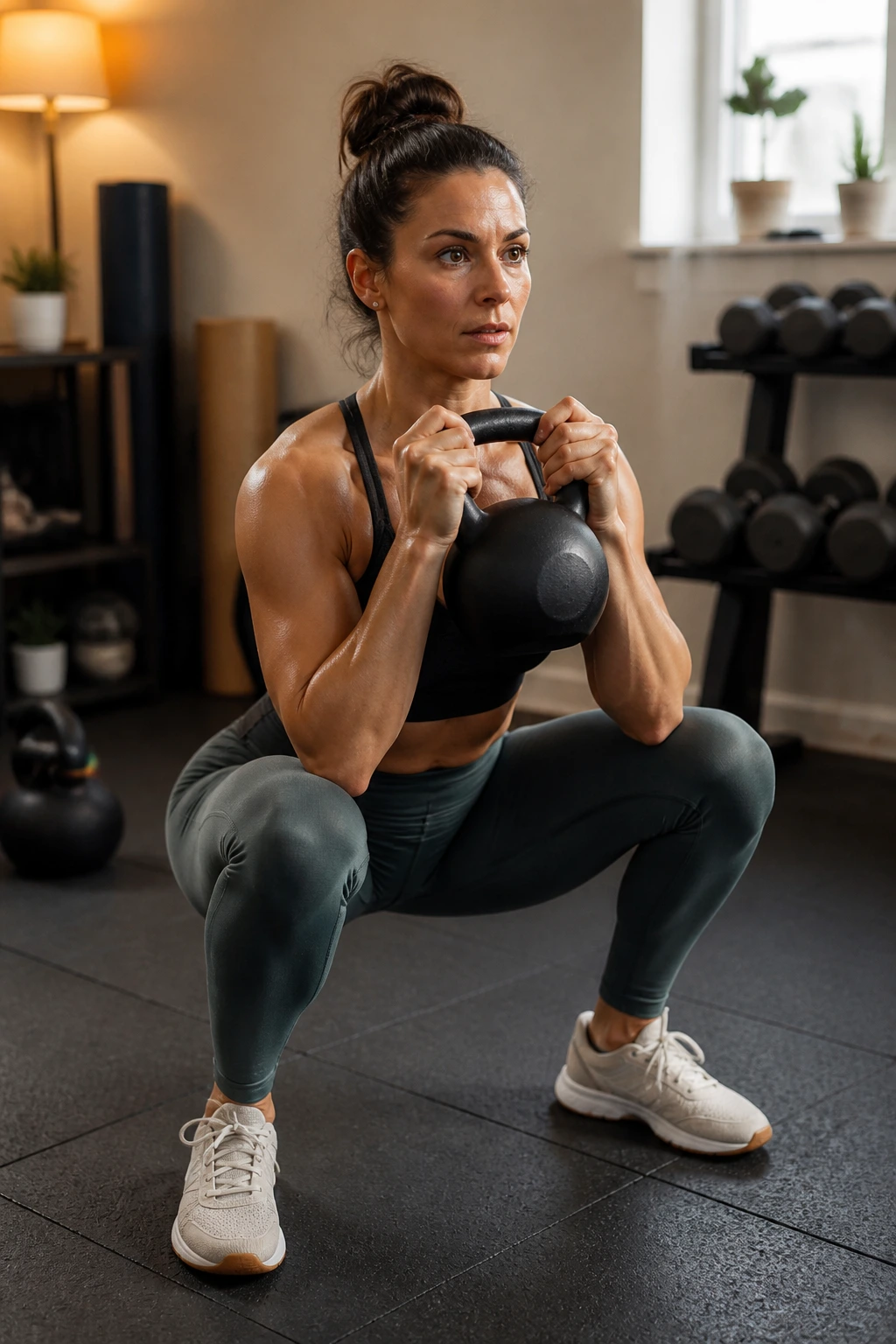
“Death by” workouts are a brutal test of endurance. The structure is simple: perform one rep in the first minute, two in the second, three in the third, and so on. You keep going until you can no longer complete the required number of reps within the minute.
Maintaining the Intensity
Use a kettlebell weight that you can comfortably squat for ten reps. As the minutes go by, your rest time shrinks. By minute six or seven, you will be gasping for air. This format forces you to optimize your movement and manage your fatigue.
Pacing Yourself
Do not try to move as fast as possible in the first few minutes. Stay consistent. Keep your form crisp, even when your heart rate is high. The moment you fail to complete the reps in the allotted time, the workout ends. It is an honest, objective way to measure your leg endurance.
16. Unilateral Kettlebell Front Rack Squats
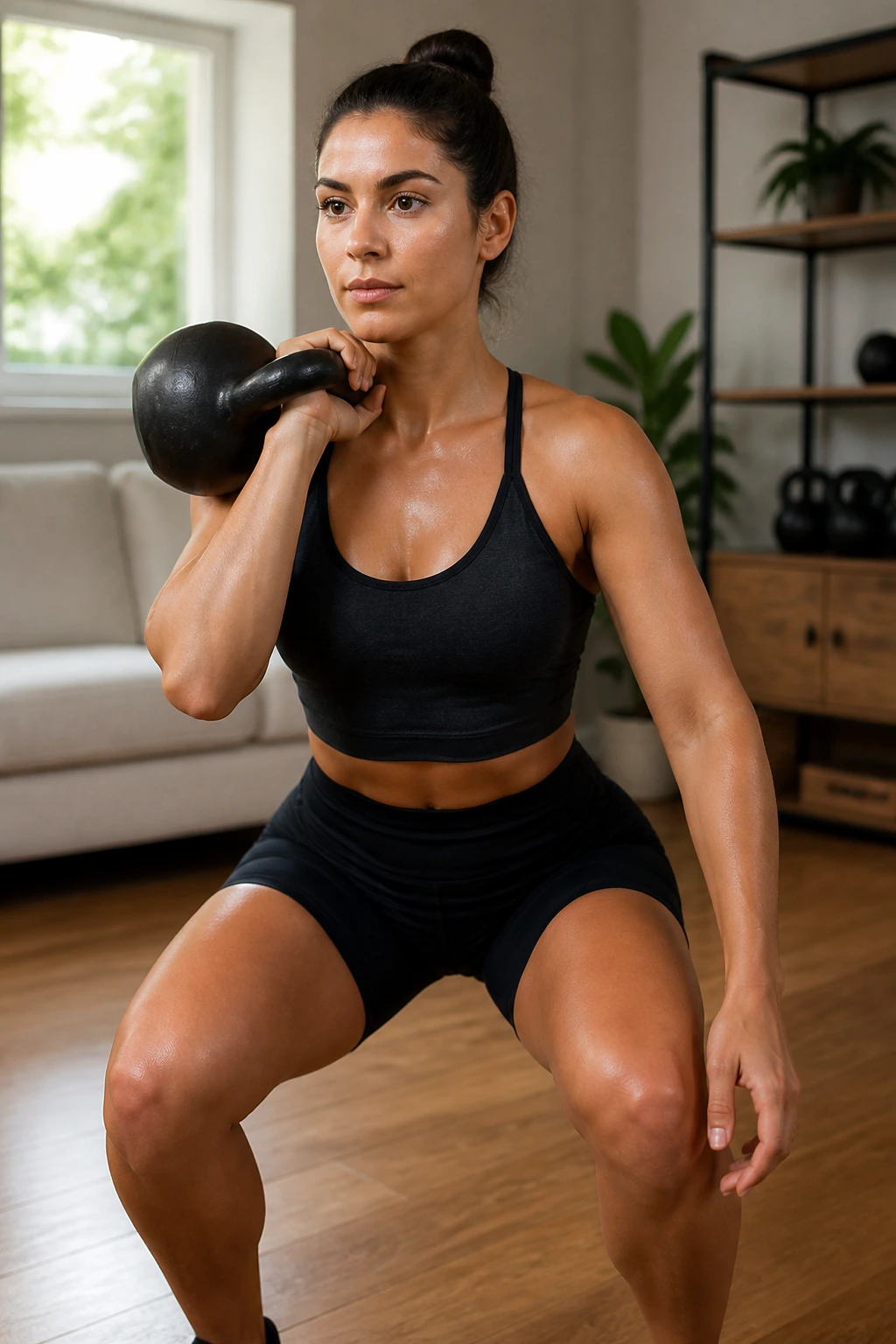
Holding the kettlebell in the front rack position on only one side creates a significant uneven load, forcing your core to fight against rotation while your legs work to squat the weight.
Balancing the Load
Rack the kettlebell on your right shoulder. Squat down. Your body will naturally want to twist toward the side without the weight. Fight this. Keep your torso perfectly square, engaging your obliques to maintain balance.
Switching Sides
Perform all your reps on one side, then switch. This unilateral approach is excellent for identifying and correcting strength imbalances between your legs. Often, one side will feel significantly more stable than the other. Use this feedback to focus on strengthening your weaker side by perhaps adding one or two extra sets.
17. Kettlebell Plank Drag and Lunge Circuit
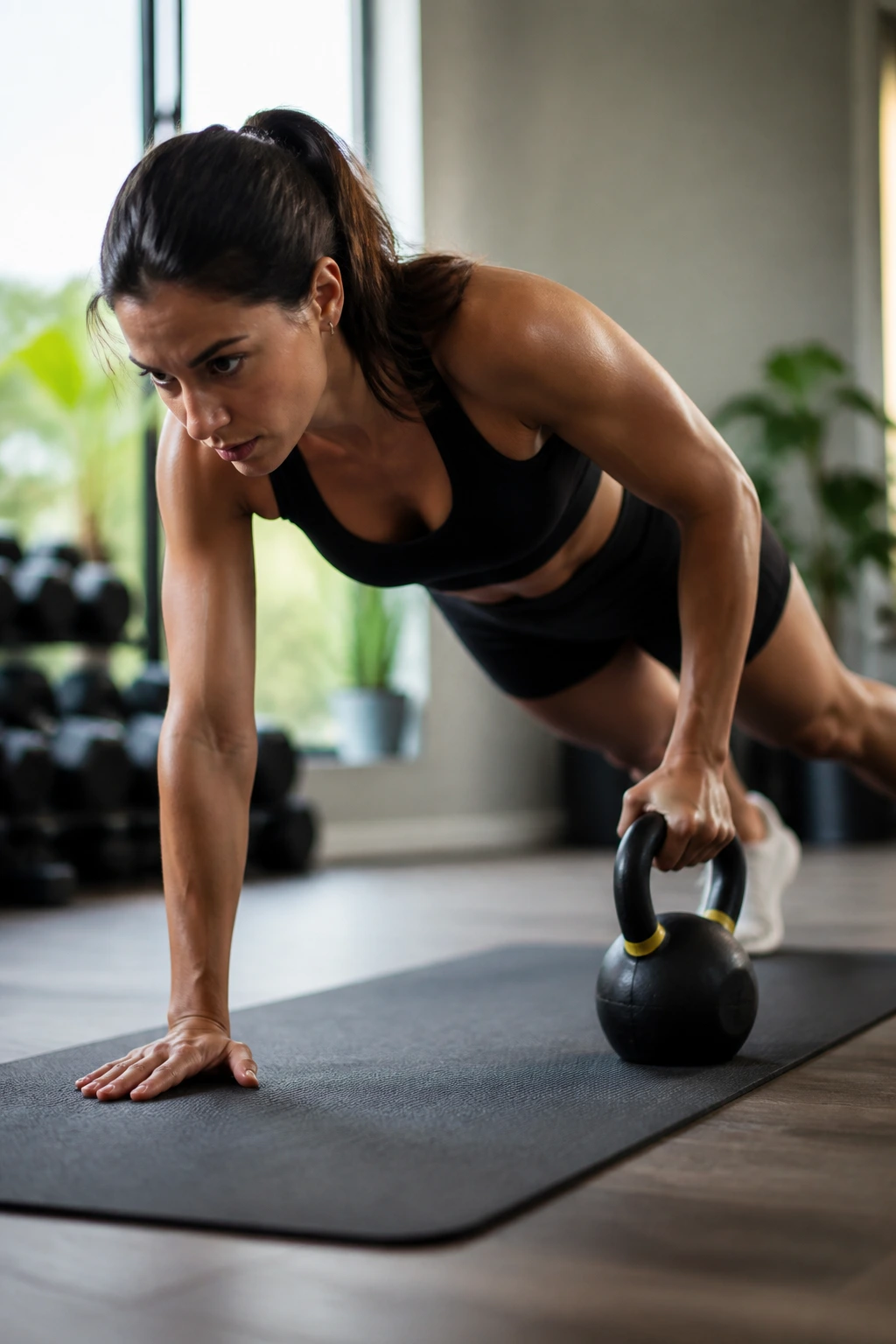
This circuit combines static stability with active lunge movement. It hits your legs, glutes, and core, and is an excellent finisher for any leg day.
The Circuit Steps
Start in a high plank position with the kettlebell outside your hand. Drag the bell across your body to the other side using your opposite hand. Then, stand up and perform five lunges on each leg. Return to the floor and repeat.
Why it Works
The drag forces your hips to remain level, while the lunges demand dynamic lower-body force. By moving between the plank and the lunge, you are constantly changing the demand on your muscles. It keeps the heart rate elevated and prevents the monotony of standard strength training sets. Three rounds of this circuit will leave your legs and core completely fried.
18. The Kettlebell Leg Pyramid Finisher
Finish your workout with a pyramid. This is designed to exhaust the last bit of energy in your muscles. Choose one compound movement, like the goblet squat or the kettlebell swing.
The Pyramid Structure
Perform 2 reps, then 4, then 6, 8, 10, and back down 8, 6, 4, 2. Keep the rest periods to thirty seconds between sets. The rising volume at the start builds fatigue, while the descending volume tests your ability to maintain form under exhaustion.
Final Effort
This is not the time to go heavy. Use a light to moderate weight. The goal is to empty the tank safely. By the time you reach the peak of the pyramid, your legs should feel shaky and exhausted. This feeling is exactly what you want after a dedicated lower-body session. It is the physical proof that you pushed your limits.
Final Thoughts
The key to home training is not having a massive rack of equipment, but rather understanding how to leverage the equipment you do have. With a single kettlebell and these eighteen protocols, you have enough variety to train for months without repeating the same session twice. Success in leg training comes down to intensity and consistency—not how much gym equipment you possess.
Listen to your body. If a movement causes sharp pain, stop immediately and assess your form or swap the exercise for something that feels more natural for your physiology. Remember, the goal is long-term progress, which only comes when you stay injury-free. Keep your movements controlled, keep your core engaged, and keep that bell swinging. Your results will follow the effort you put into every single rep.
