



A toddler workout does not need dumbbells, timers, or a spotless gym corner. It needs a little floor space, a sense of play, and a grown-up willing to look slightly ridiculous for five minutes.
That is the whole trick.
Toddlers do not care about reps or perfect form. They care about chasing, balancing, carrying, jumping, stopping, spinning, and pretending to be an animal for the twelfth time in a row. The best toddler workouts build gross motor skills without turning the room into a boot camp, and they burn off that restless energy that seems to arrive the second a child has been still for too long.
Keep the rounds short. Five to ten minutes is plenty, especially if you want your child to ask for another round later instead of melting into a floor protest. A soft rug helps, a clear path helps, and if your child has pain, balance trouble, or a medical condition, a pediatric clinician should be part of the conversation before you add new movement games.
Start with the moves below. The silly part does most of the work.
1. Animal Walk Parade for Toddler Workouts
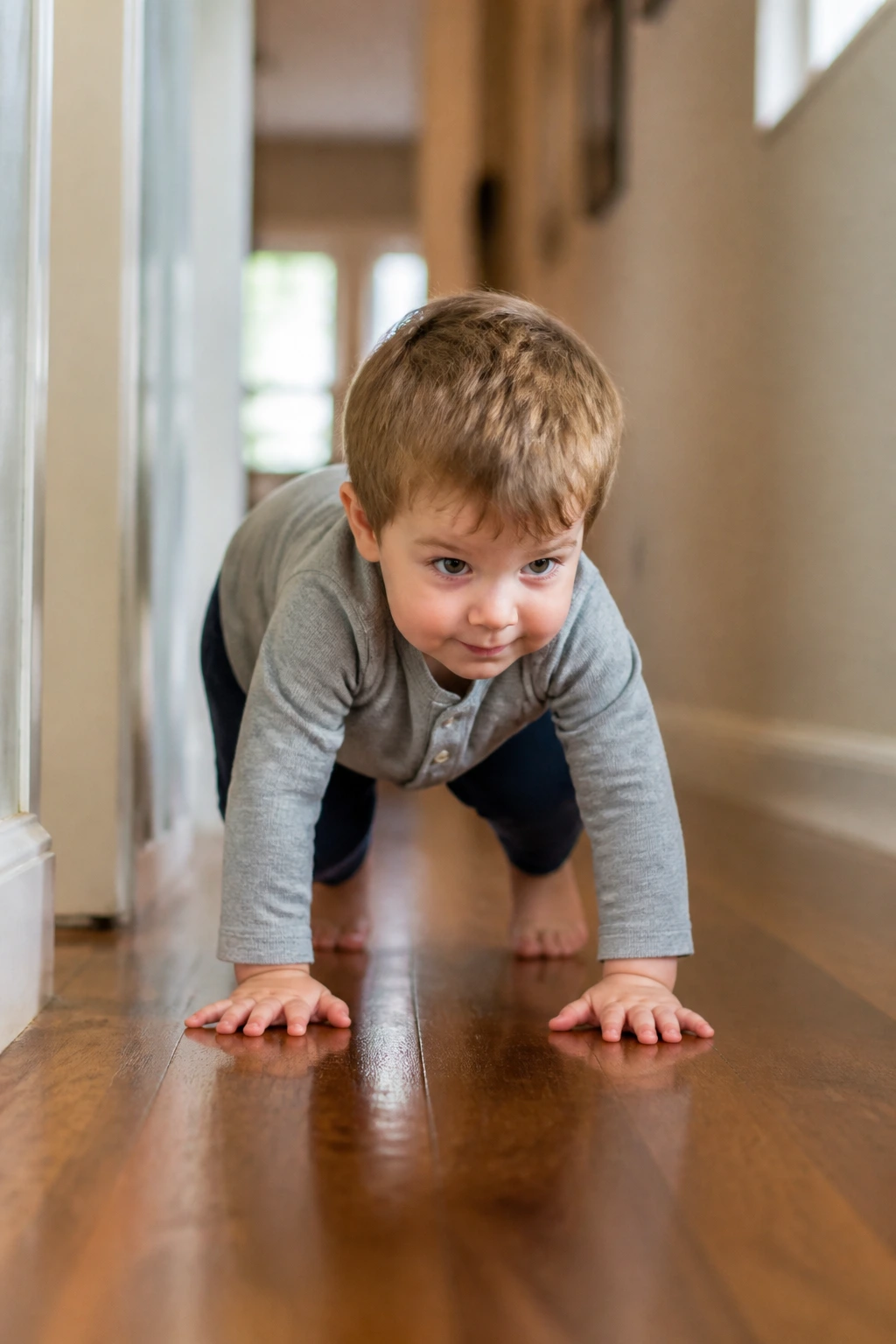
Bear crawls, crab walks, and frog hops look silly on purpose. Toddlers lean into silly, which is why an animal walk parade is one of the easiest toddler workouts to pull off without a battle.
What little bodies are learning here
Animal walks ask for shoulder stability, core control, and leg strength all at once. That sounds formal, but to a toddler it feels like being a bear with a mission. The trick is to keep the path short — maybe 6 to 10 feet — so the movement stays playful instead of turning into a slow march of complaints.
Mix three animals into one round. A bear crawl down the hall, a crab walk back, then two frog hops to finish. That tiny switch keeps kids alert, and it also gives different muscles a turn without anyone noticing they are exercising.
- Bear crawl: hands and feet on the floor, hips up.
- Crab walk: hands behind, belly facing up, knees bent.
- Frog hop: squat low, then jump forward with two feet.
- Round length: 30 to 45 seconds is enough for most toddlers.
Pro tip: praise the shape more than the speed. A slow, solid bear crawl beats a fast, floppy one every time.
2. Laundry Basket Push Across the Hall
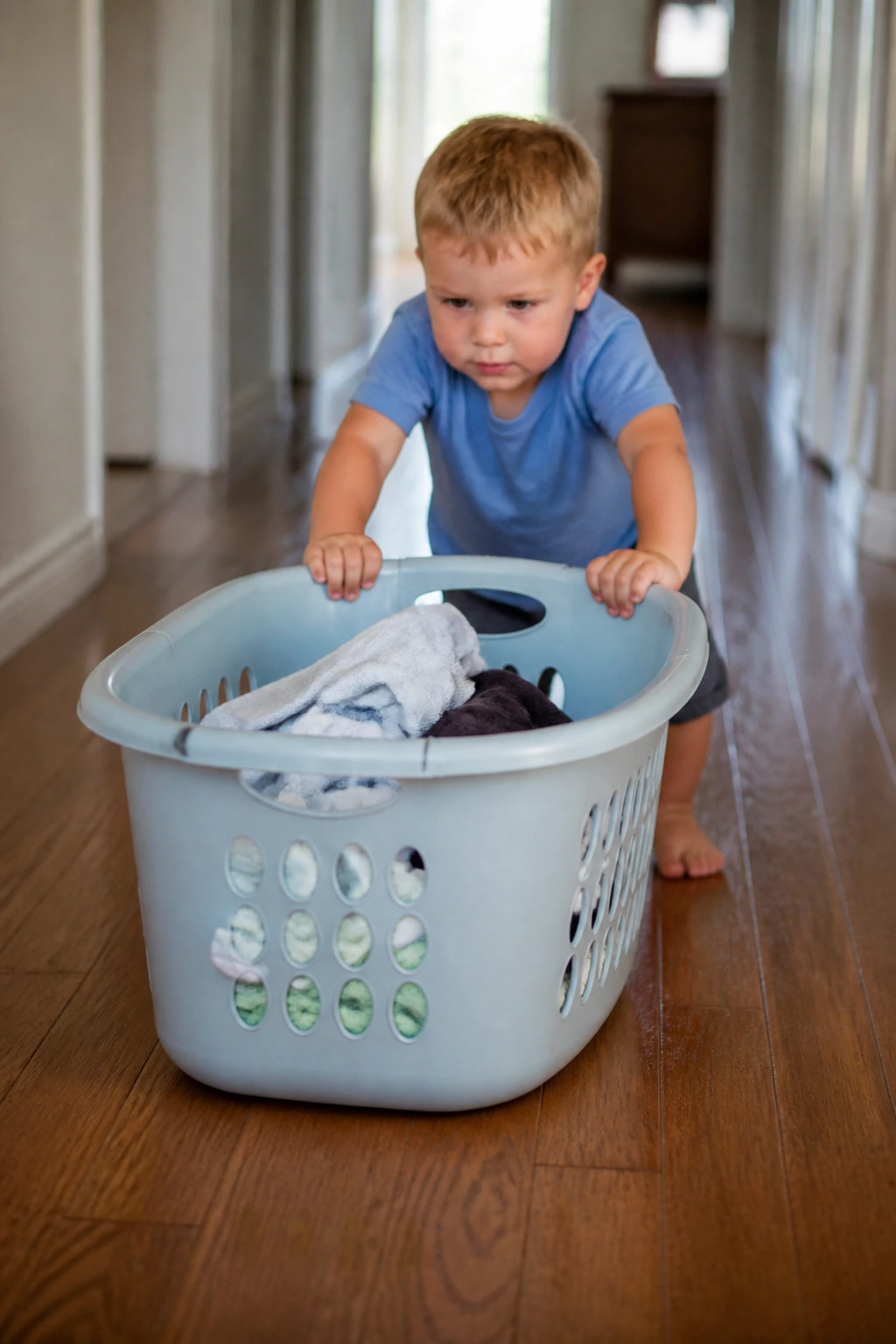
A laundry basket is a better gym tool than most toy bins. Fill it with a couple of towels or stuffed animals, and you have a push-and-go game that looks like helping out while secretly building leg drive and upper-body control.
Push the basket from one wall to another over 8 to 12 feet, then let your child turn it around and bring it back. Keep the load light enough that the basket moves without jerking or tipping. If it skids away too fast, it is too empty; if it barely moves, it is too heavy. That sweet middle zone matters more than people think.
What I like about this one is the built-in purpose. Toddlers love carrying things that feel important, and a basket full of “deliveries” gives the movement a job. You can call it mail delivery, snack transport, blanket patrol, whatever lands with your kid.
Let them use both hands on the rim at first. Later, you can ask for one-hand pushes on the way down and two-hand pulls on the way back. Small change. Big payoff.
3. Balloon Tap Reach Overhead
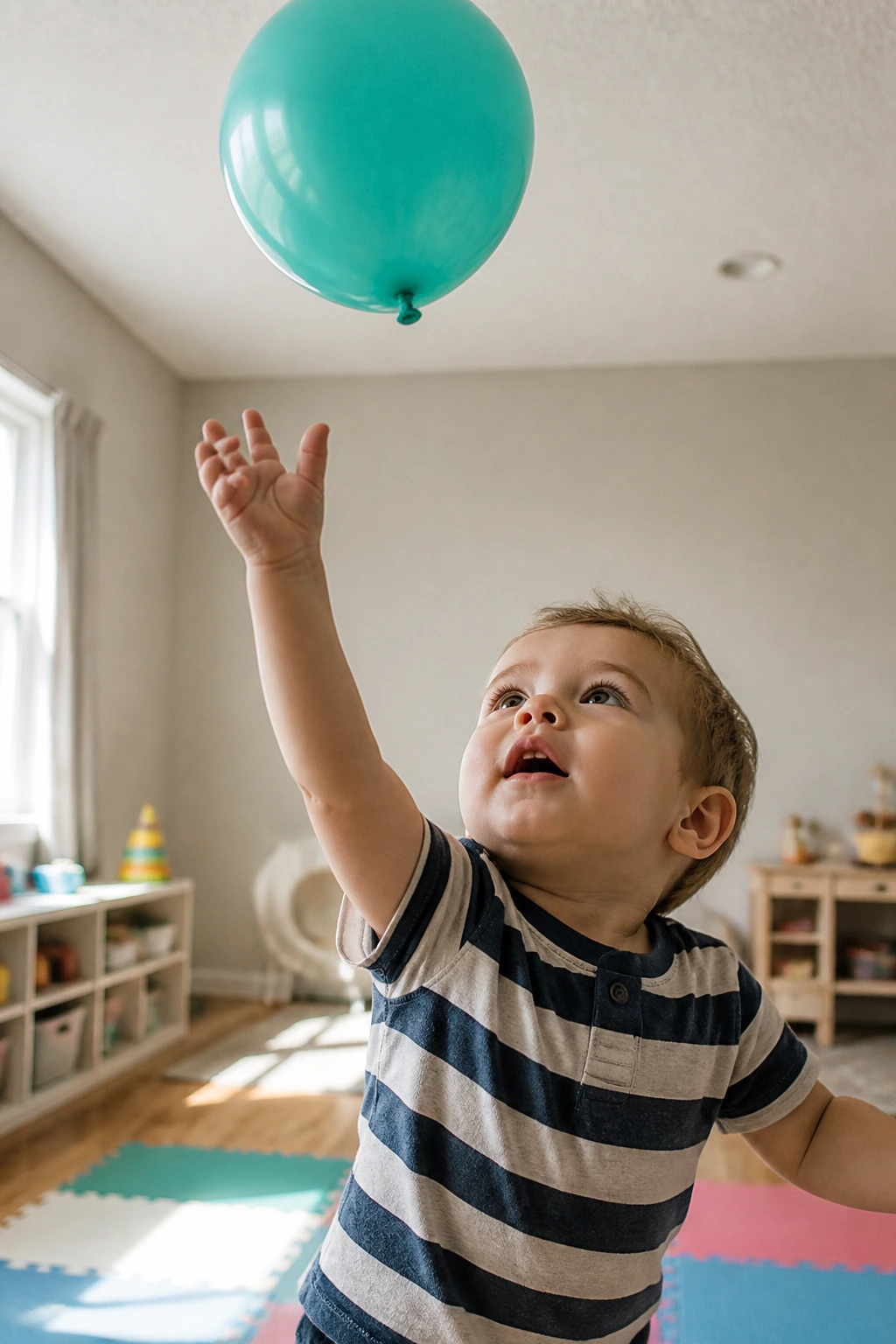
What happens when you slow a toddler down without making them sit still? You get a balloon game that quietly teaches reach, timing, and balance.
A balloon hangs in the air long enough for young kids to think, adjust, and try again. That extra hang time is gold. Instead of frantic swatting, they have to stretch, bend, and step under control. Set a timer for 30 seconds and ask for taps with one hand, two hands, or a gentle knee lift if the balloon drops low.
How to use it without losing the fun
Set the rule before the balloon goes up. One tap, then back away. Two taps, then a squat. Three taps, then a spin. Tiny cue, tiny response. That rhythm keeps the game organized enough to feel like a workout, but loose enough that no one feels bossed around.
- Use one balloon only.
- Keep the ceiling clear.
- Aim for 3 to 5 rounds.
- Add high taps, low taps, and side taps.
Watch for: toddlers who start whacking too hard. The balloon should drift, not rocket into a lamp.
4. Red Light, Green Light With Tiny Starts and Stops
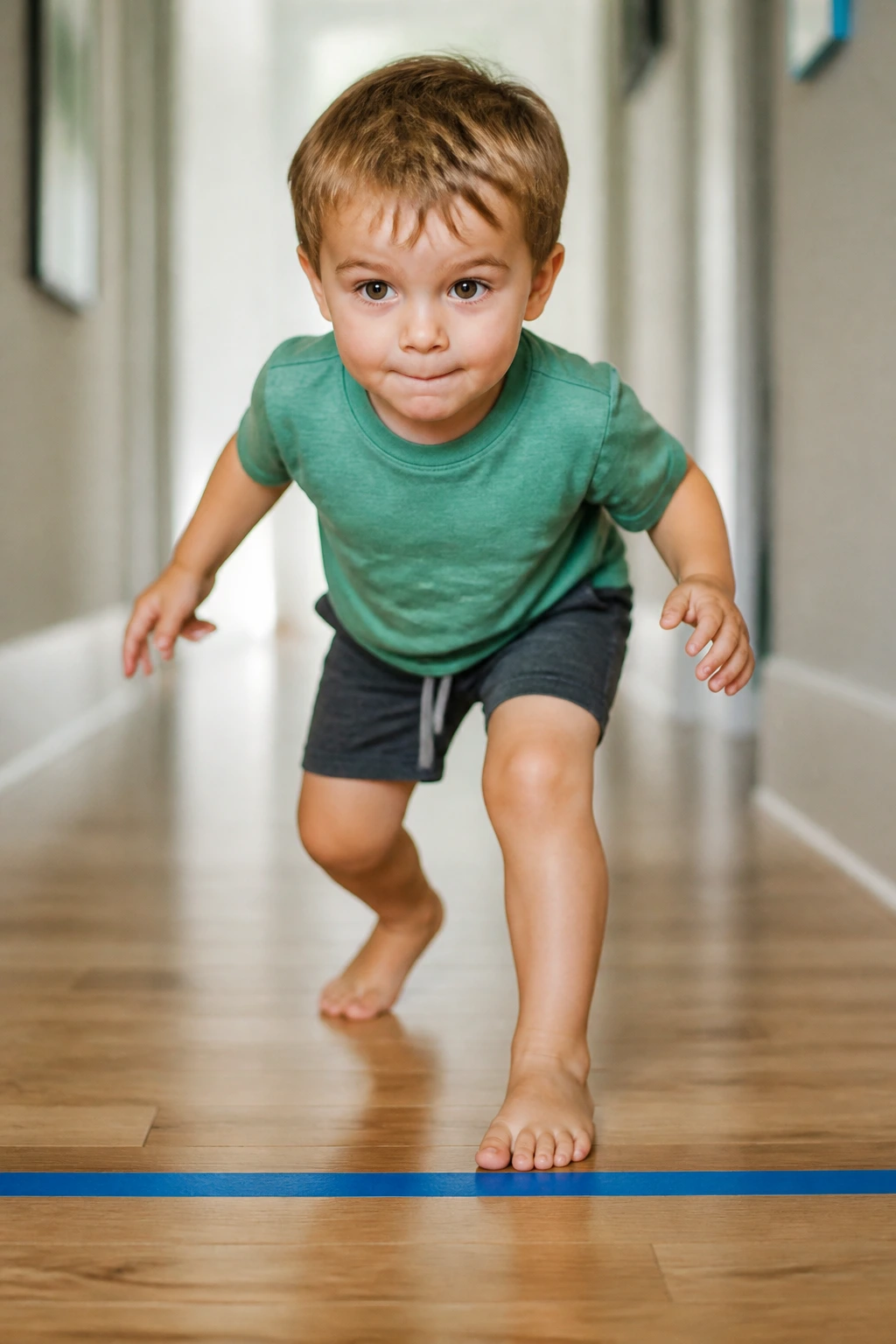
A hallway, a strip of painter’s tape, and one child who cannot wait to hear “green light” again. That is enough to make red light, green light into a real movement session.
This game trains stop-and-start control, which is a big deal for toddlers. A child may sprint beautifully but still struggle to freeze when you ask. Red light gives them practice with listening and body brakes, and green light lets them burn energy in bursts instead of all at once. That burst pattern is much easier for little attention spans.
Keep the distance short. Ten to 15 feet is enough. Start with walking instead of running if your child tends to crash into furniture or get too wild. Then add tiptoe steps, hops, or giant dinosaur stomps when they understand the rules.
A small twist makes the game fresher: red light means freeze like a statue, green light means march, and yellow light means slow-motion steps. Kids like the drama, and you get control practice without repeating the same move until it turns flat.
5. Pillow Island Jumps
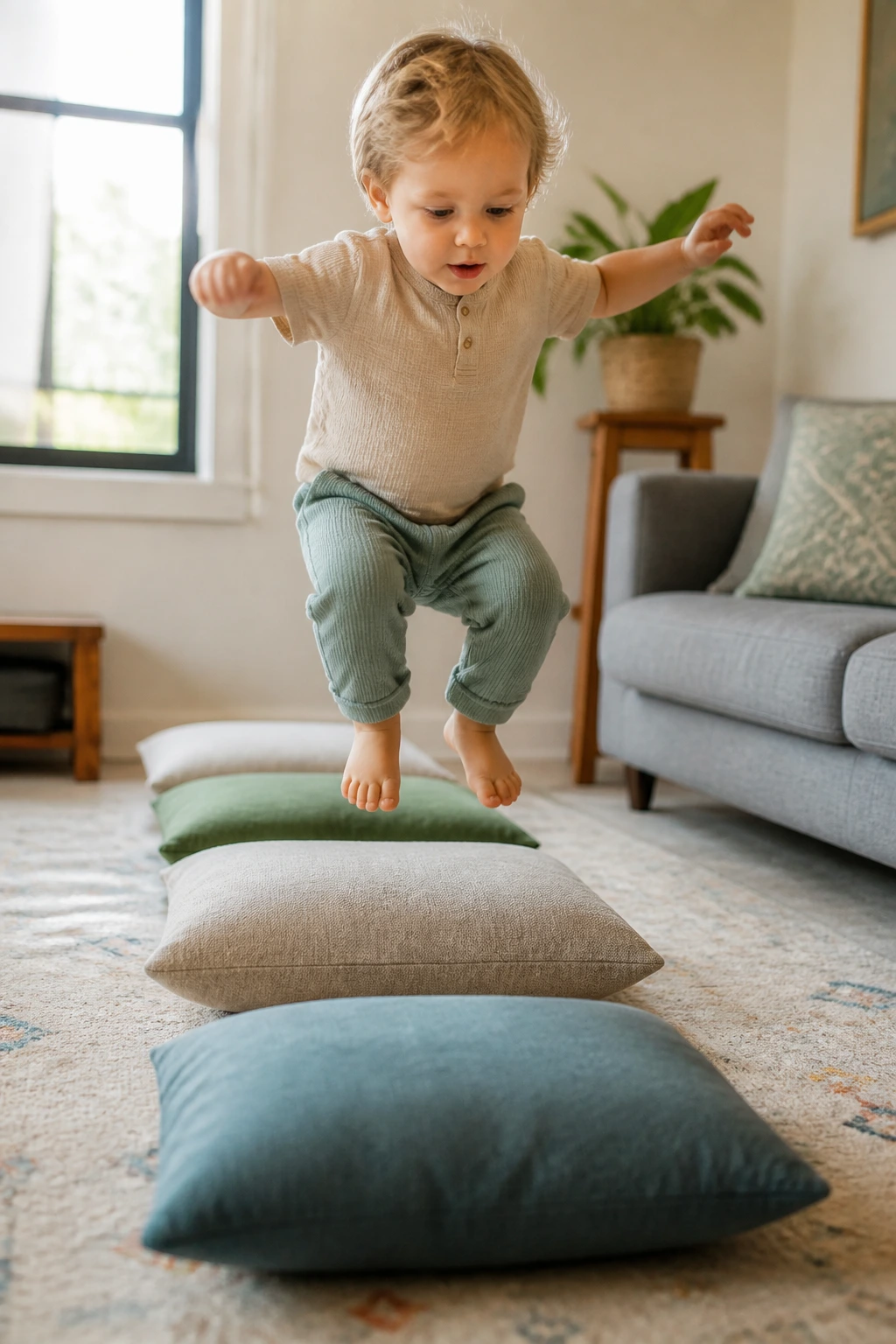
Pillow islands are chaos in the best way. Stack three or four couch cushions or floor pillows across a clear patch of floor, then tell your child the floor has become lava, water, or sleepy alligators.
The spacing matters. Put the pillows about 12 to 18 inches apart for smaller toddlers, a little farther for taller kids who already jump with both feet together. You want a distance that asks for a clear two-foot takeoff and a soft landing, not a desperate leap or a faceplant. That is the line you are trying to stay on.
I like this one because it looks like play but quietly hits jumping mechanics hard. Your child bends the knees, swings the arms, lands, regains balance, and does it again. That is a lot of work hidden inside a game about not touching the carpet.
Use 4 to 6 islands and go around the course twice. If your child starts stepping instead of jumping, that is fine for the first round. The movement still counts, and honestly, some toddlers need one lap just to understand the shape of the game.
6. Crawl Tunnel Adventure
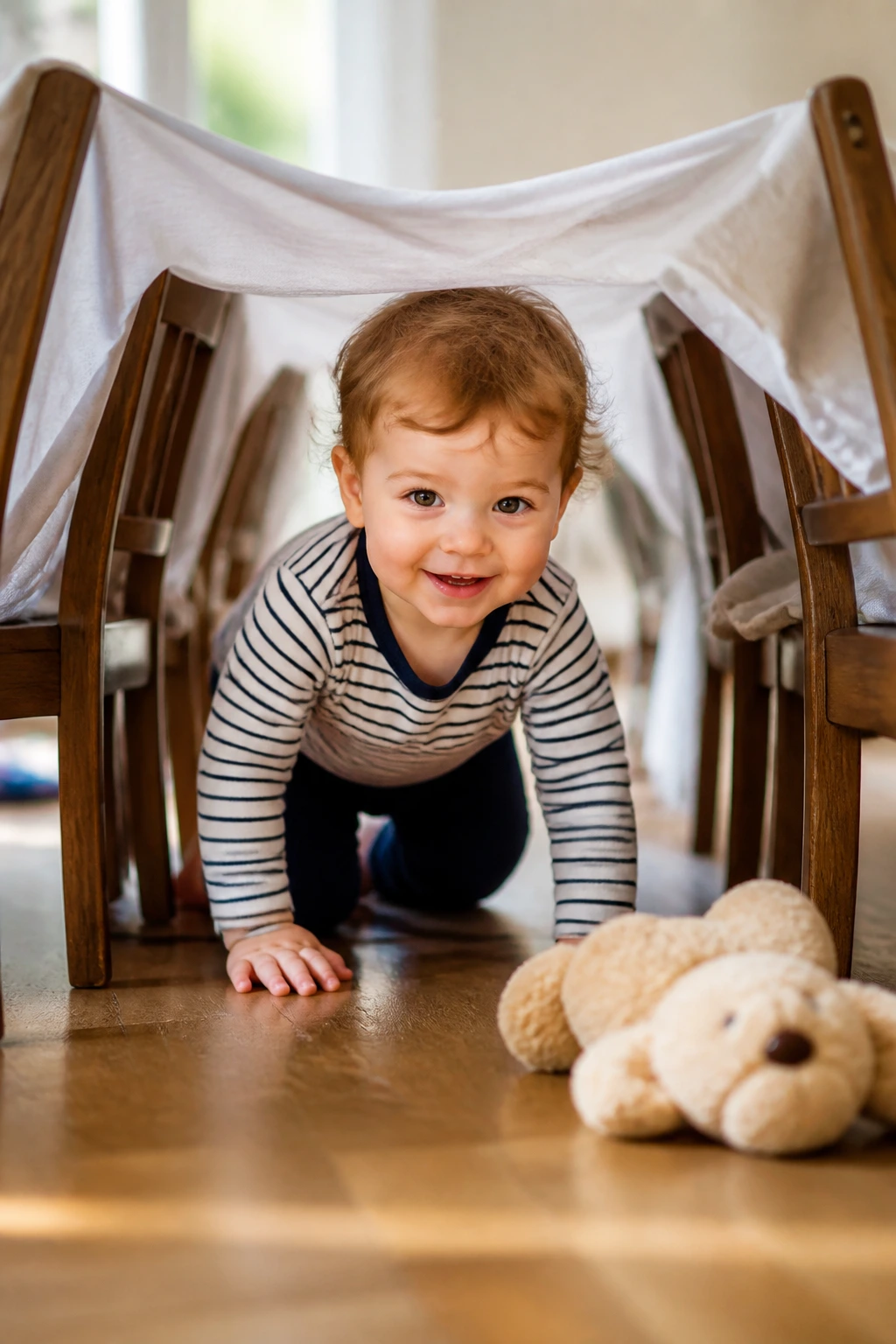
Unlike straight marching, crawling asks for the shoulders, trunk, and hips to work together at the same time. That makes a tunnel crawl one of the best indoor toddler workouts when a child needs a full-body reset.
Build the tunnel from chairs, a table draped with a sheet, or a cardboard box bridge if that is what you have. The exact setup does not matter much. What matters is the feeling of going under, through, and out the other side. Toddlers love a destination, so put a stuffed animal, toy car, or snack cup at the exit.
This is the one I reach for when a child is either shy or overexcited. Crawling slows the whole system down just enough to make attention possible again. It also gives kids a chance to work their core without asking them to stand still and “focus,” which is usually a terrible bargain.
Best use case? Short races. Send them through the tunnel, stand up, then run back around the room to the start. Two to four passes is plenty before the novelty wears thin.
7. Freeze Dance With Squats and Reaches
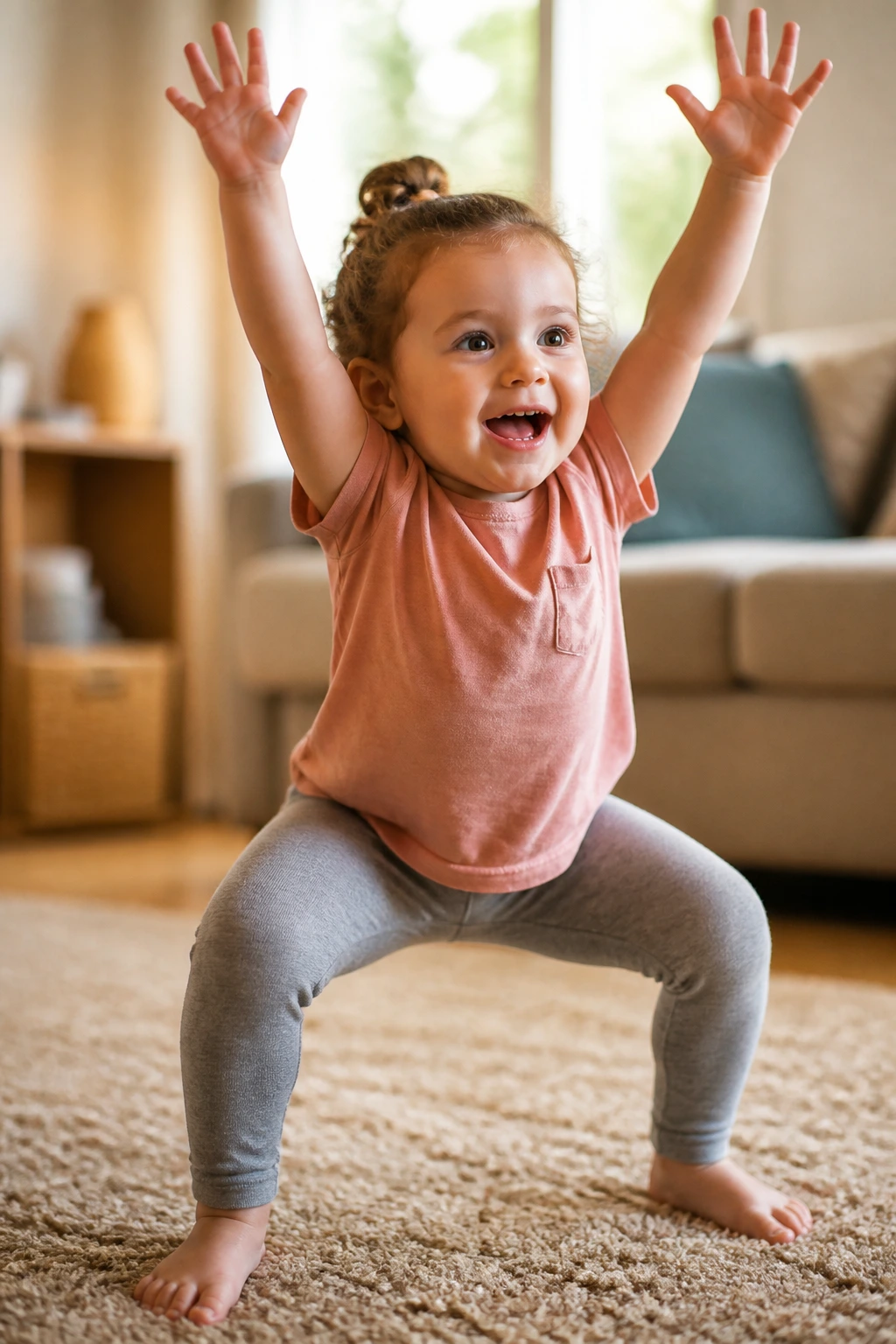
Freeze dance works because the music does half the coaching. Kids move harder when the beat is on, then stop on a dime when the sound cuts out.
Start with a song they already like. Let them dance for 20 to 30 seconds, then pause the music and call out a move: squat, reach to the ceiling, march in place, or touch toes. That keeps the game from becoming random jumping with no shape. The pauses are where the workout sneaks in.
How to add a little more challenge
- Use one move per pause.
- Keep the pauses short, around 5 seconds.
- Ask for low reaches, high reaches, and side bends.
- Repeat the same song 2 to 3 times if they want it.
One nice side effect here: toddlers start hearing changes in rhythm and matching their bodies to those changes. That sounds small. It isn’t. Listening and moving at the same time is a real skill, and this game gives it to them without sounding like a lesson.
8. Tape Line Balance Walk
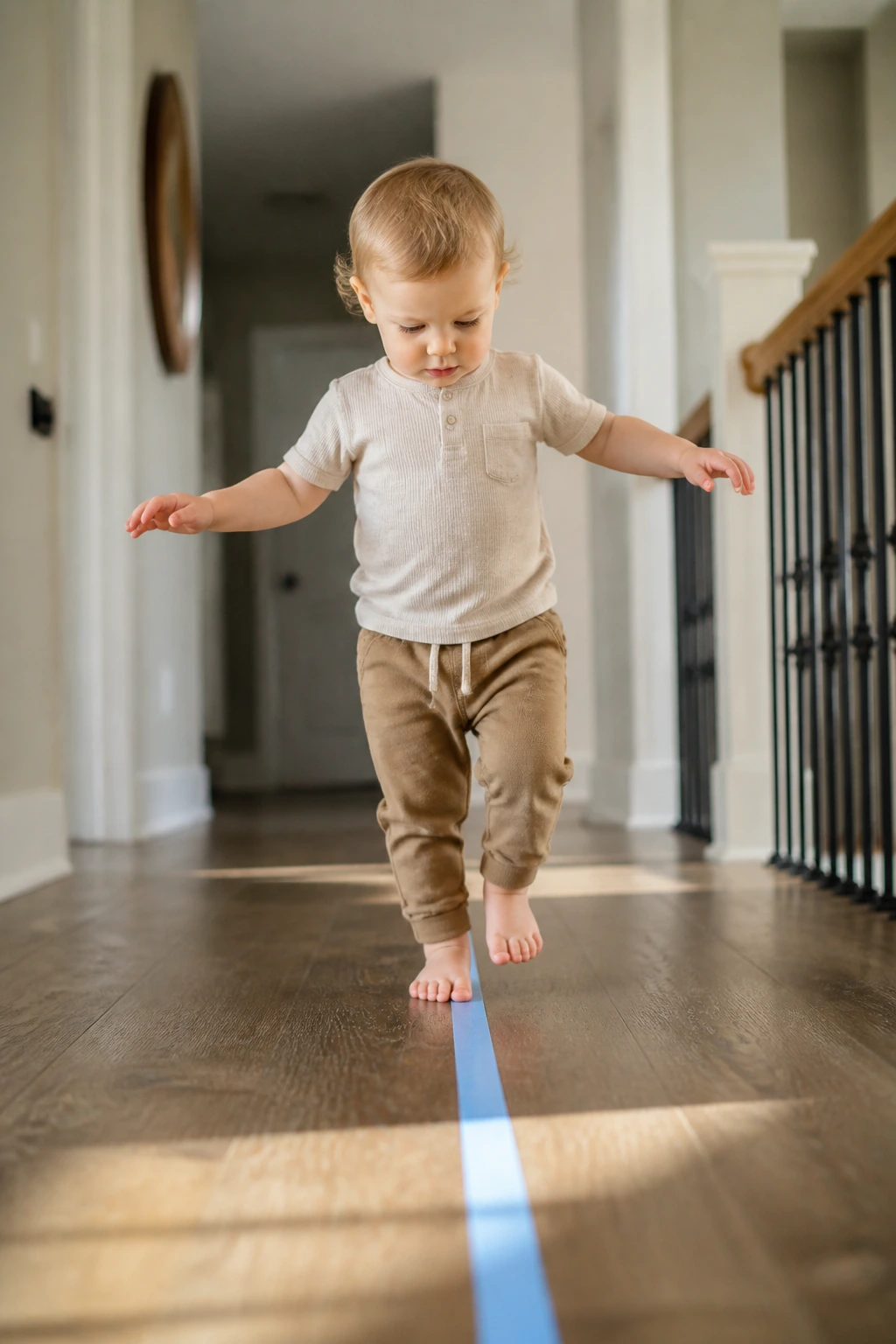
Can a strip of painter’s tape turn a hallway into balance practice? Yes, and the tape does most of the hard work.
Run a long strip down the floor and ask your child to walk on it like a tightrope, then step off and do it again with side steps or heel-to-toe steps. You do not need a perfect line. Wobbles are part of the point, and a little wobble tells you the body is making tiny corrections.
Make the line more interesting
H3: Ways to keep it from getting boring
- Walk forward on the line.
- Walk backward for 3 to 4 steps only.
- Hold hands the first time, then let go.
- Place a toy at the end as a finish marker.
A few toddlers will step off every second step just to see what happens. Fine. That is still balance practice. The goal is not perfection; it is repeated attempts with a clear target. If your child likes counting, mark the line with tape every foot or so and let them stop on each mark before moving again.
9. Bear Crawl Chases
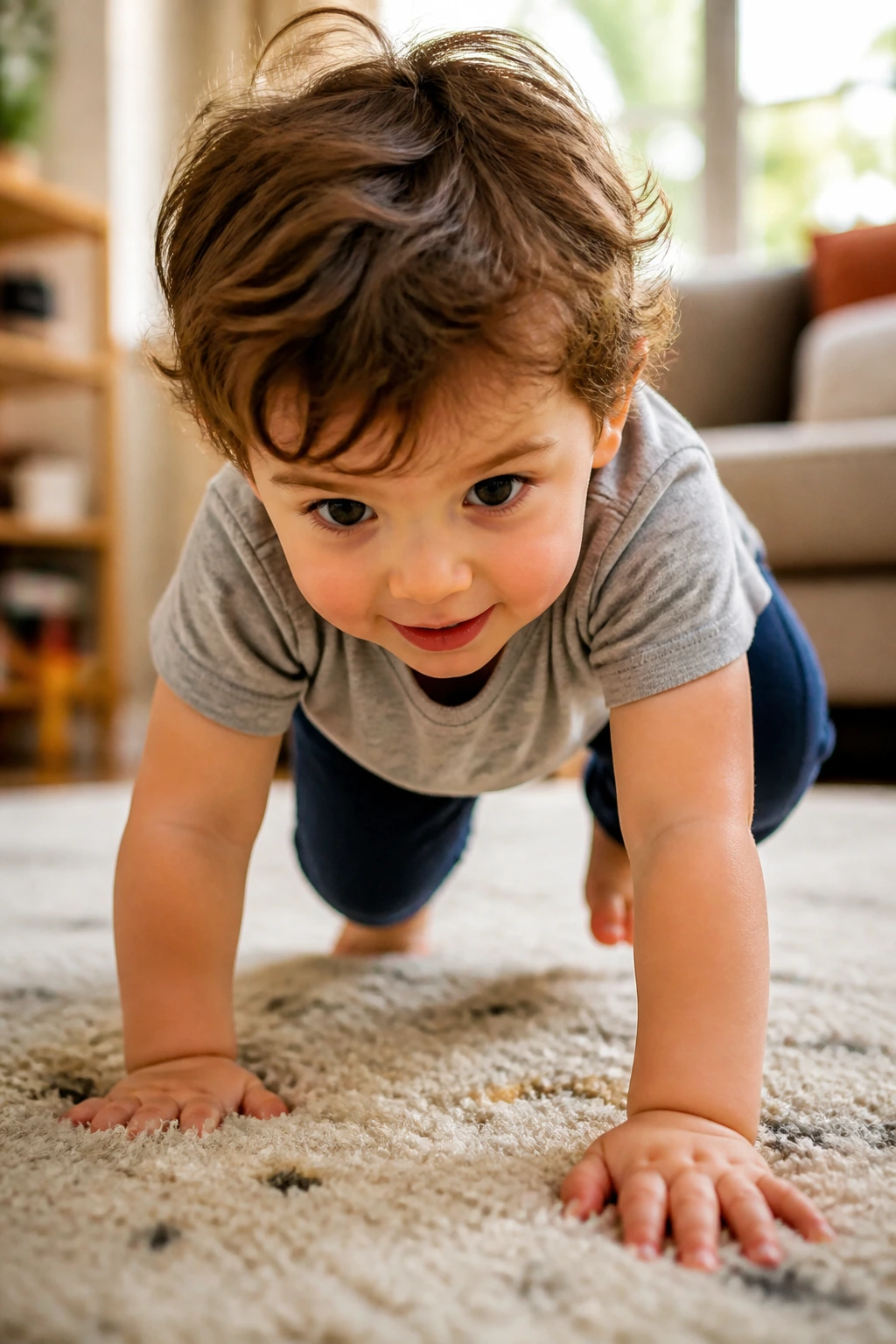
A bear crawl chase looks like pure chaos, but it teaches more than it seems at first glance. The child has to keep hands and feet planted while moving forward, which works the shoulders, core, and hips in one messy bundle.
Set a short distance — 5 to 8 feet is enough — and crawl away from each other, not toward furniture. If your child is very new to the movement, let them do a “baby bear” with knees hovering lower. If they are more confident, ask for a big-hip bear with the knees higher and the steps slower.
- Keep the chase short.
- Use soft flooring if you can.
- Switch who leads after each round.
- End before anyone gets sloppy.
What makes this one work is the chase. Toddlers like being pursued, and they like pursuit even more when there is a clear finish line. You can make it into “catch the parent,” “get to the couch,” or “rescue the stuffed bear,” which sounds more fun than exercise because it is.
10. Frog Jumps Over Paper Puddles
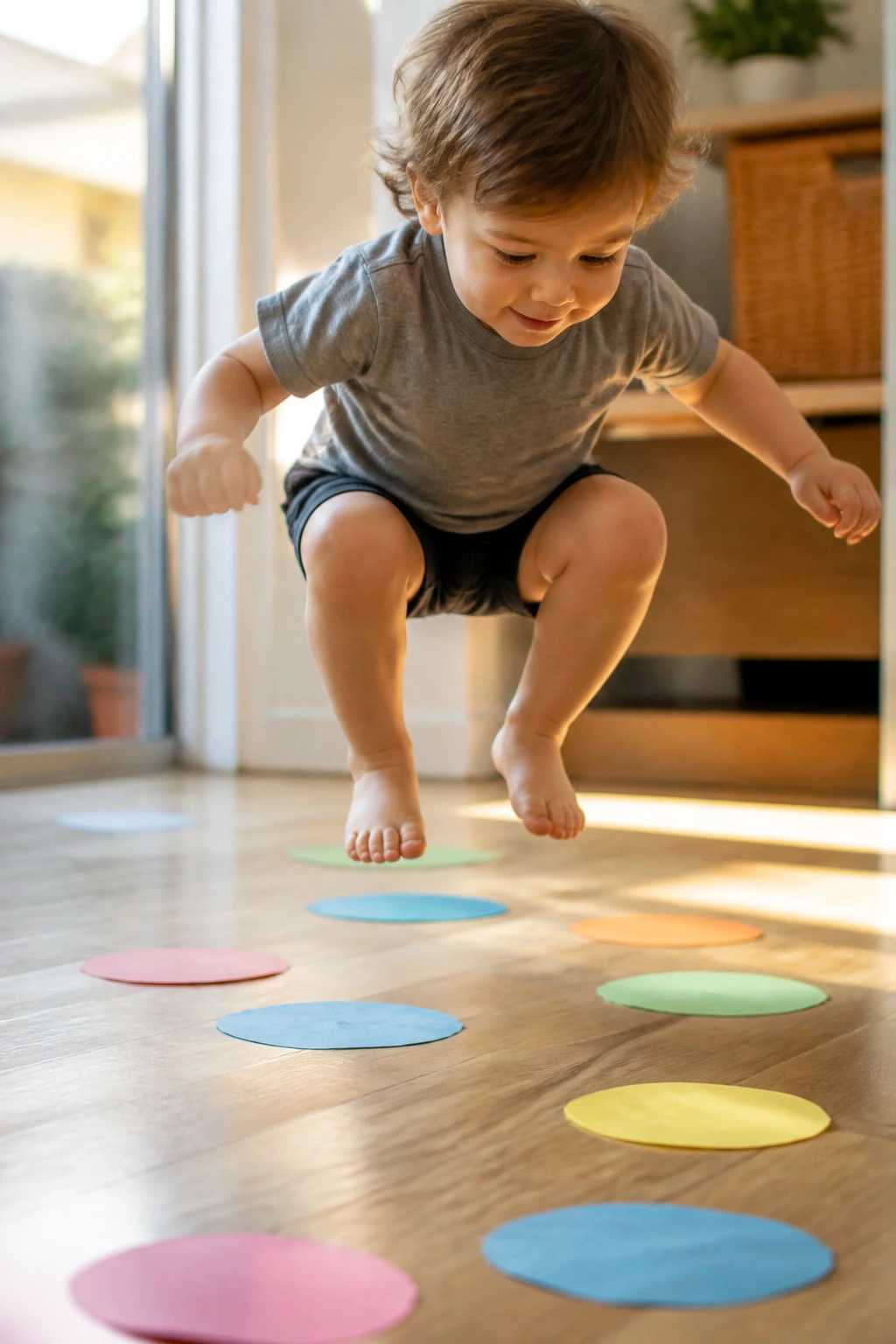
Frog jumps are one of those toddler workouts that look easy until you ask a child to land quietly. That quiet landing is the whole lesson.
Cut or place a few paper circles, towels, or foam squares on the floor and call them puddles. Have your child squat low, swing the arms, jump with two feet, and land on the next puddle. Put the puddles about 10 to 14 inches apart for small legs, then adjust if the jumps get too easy or too messy.
The best part is the squat before the jump. Toddlers often want to spring from a stiff body, which sends them flying in a way that does not help their balance. A frog jump asks for bend, load, push, and a soft landing. That is a neat little package.
I also like using frog noises here. Not because it improves form. It doesn’t. It just keeps the mood light enough that the kid wants another round.
11. Airplane Holds and Walking Flights
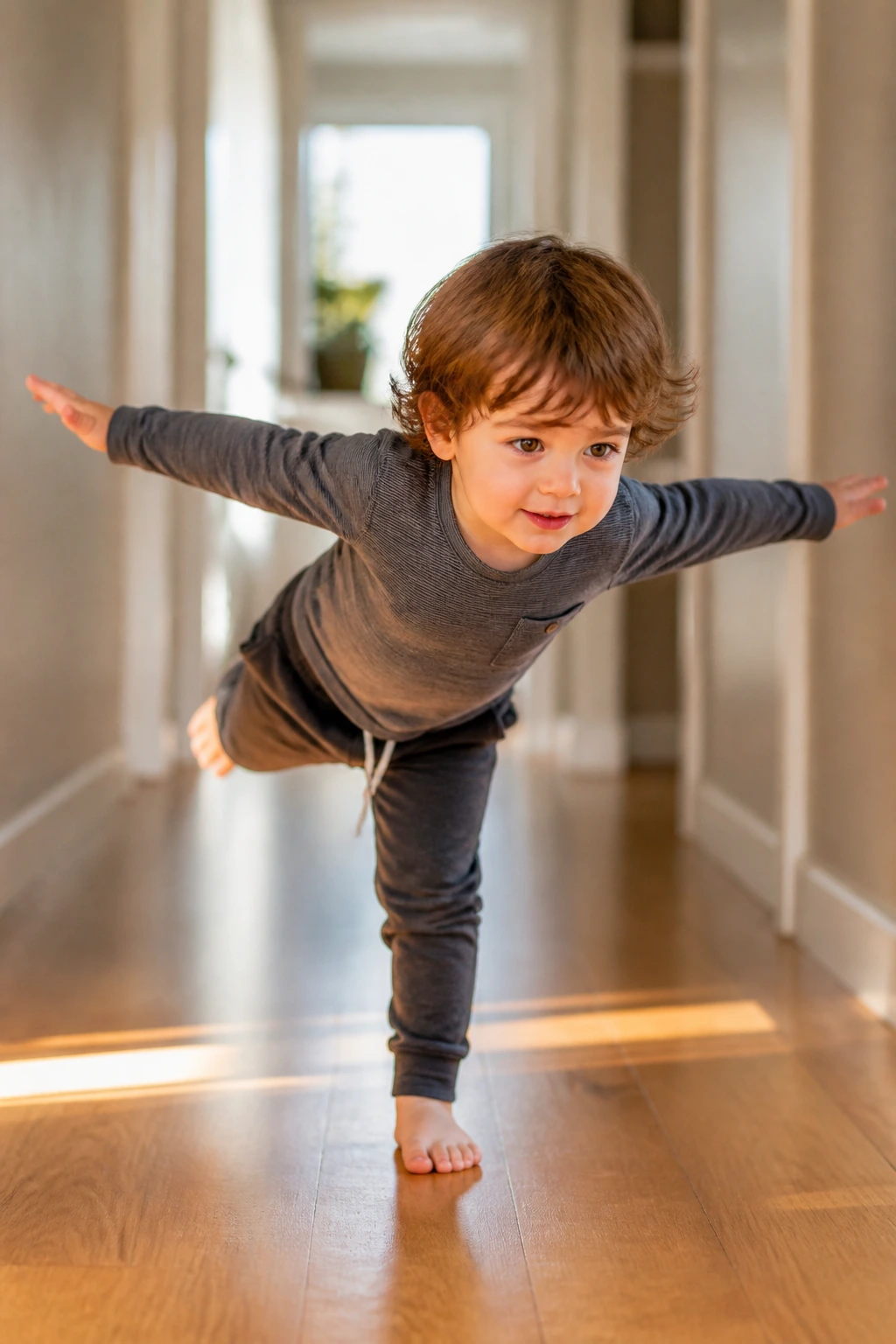
This looks calmer than a race, but it sneaks in more balance work than most parents expect. If running is all gas, airplane walking is brakes and balance.
Ask your child to stretch both arms out like wings, lean slightly forward, and take slow steps across the room. Older toddlers can hold one leg back for a second or two; younger ones may keep both feet down and simply lean into the shape. That still counts. You are teaching body control, not performing a gymnastics routine.
The comparison matters here. A fast game gets energy out. Airplane walking teaches a child how to slow down while staying engaged. That is useful after a burst of noisy play, and it is also nice before bedtime when you want movement without a full-on house parade.
Try 2 or 3 “flights” across a hallway. Then switch arms, or pretend the airplane is banking left and right. Keep the direction changes gentle so the whole thing stays steady instead of wobbly and dramatic.
12. Wall Sit High-Fives
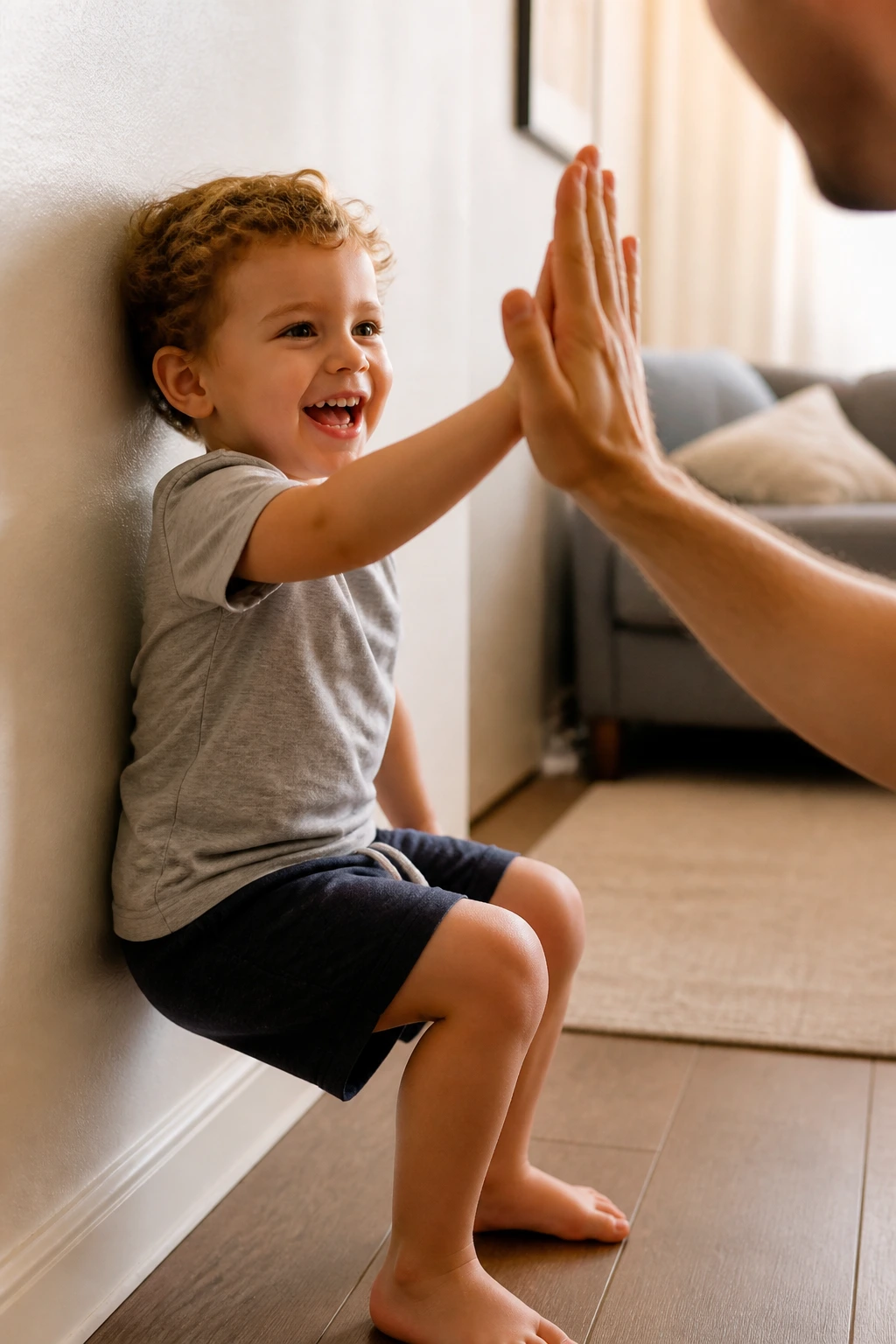
Wall sits are harder on toddlers than adults think. That is why a tiny version works so well — the wall gives structure, and the high-five gives a reason not to quit after three seconds.
Slide down the wall until your child’s knees are bent about halfway, not all the way into a deep squat. Hold for 5 to 10 seconds at first, then stand up and high-five the parent before the next round. If the child sinks too low or the knees collapse inward, bring the hold higher. A shallow sit is safer and easier to repeat.
This game is a sneaky thigh burner. Toddlers do not care about that phrase, of course, but they do care that the wall makes them feel like they are sitting in a superhero pose. Add a count to five, then a high-five, and the whole thing feels like a challenge instead of a chore.
A few rounds are enough. Four short holds beat one long one every time with a toddler, because long holds turn into wiggles fast.
13. Star Jumps That Open the Whole Body
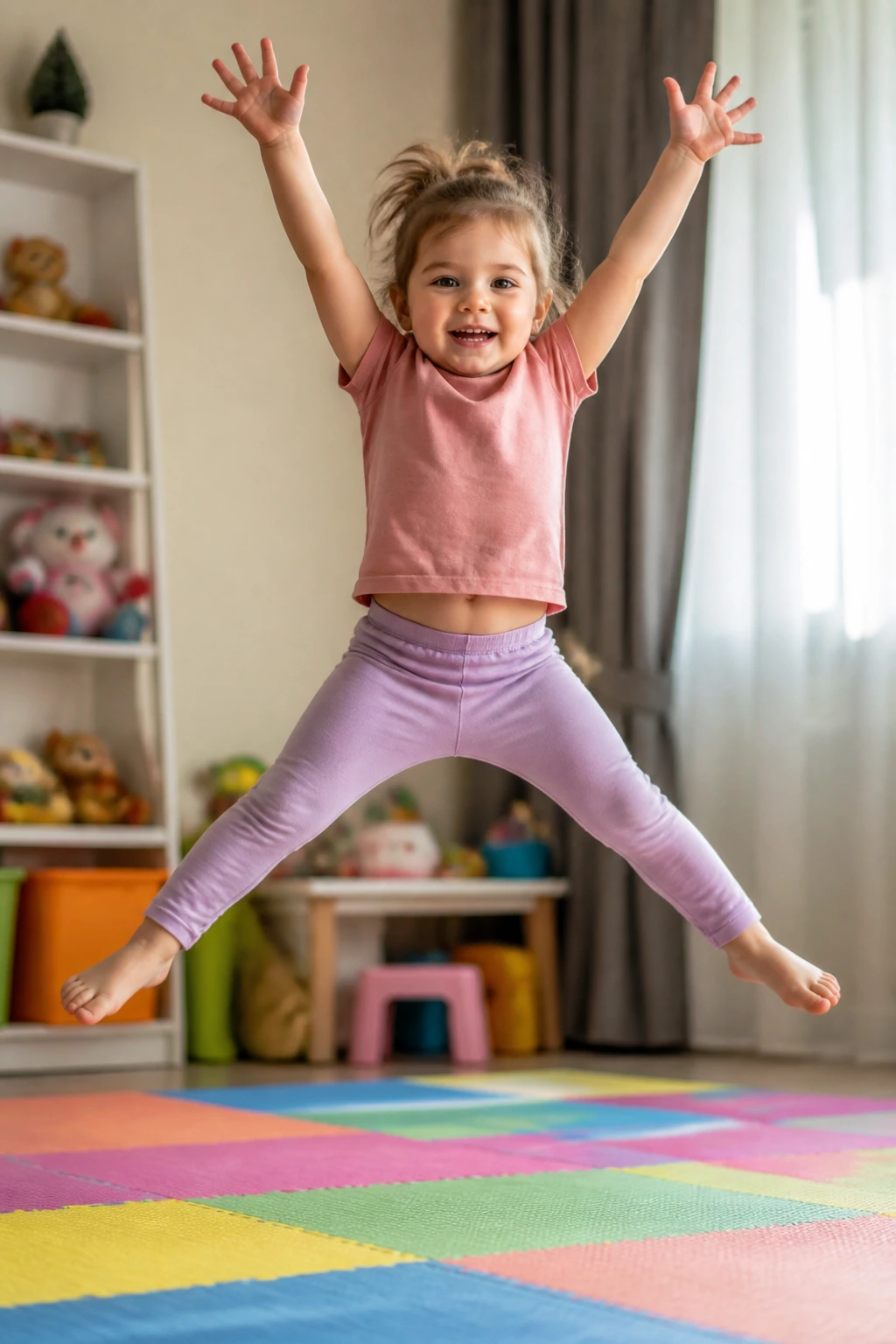
Why do kids love star jumps? Because they feel like a burst, not a lecture.
Start with feet together and hands by the sides. Jump out into a star shape — legs apart, arms high — then come back to the middle. That single move works coordination, foot placement, and rhythm, and it gives toddlers a clean shape they can copy without much explaining.
How to make star jumps toddler-sized
H3: Keep the cue short
- Say “star” for the open shape.
- Say “close” when they come back in.
- Use 3 to 5 jumps per round.
- Pause between jumps if they rush.
Some kids naturally turn this into a noisy celebration. Fine. Others barely leave the ground at first, which is also fine. The important part is that both feet leave and return together, with soft knees on landing. If your child is new to jumping, practice the arm shape on its own before adding the leap. That tiny prep makes the whole move less chaotic.
14. Sock Slide Skaters on a Smooth Floor
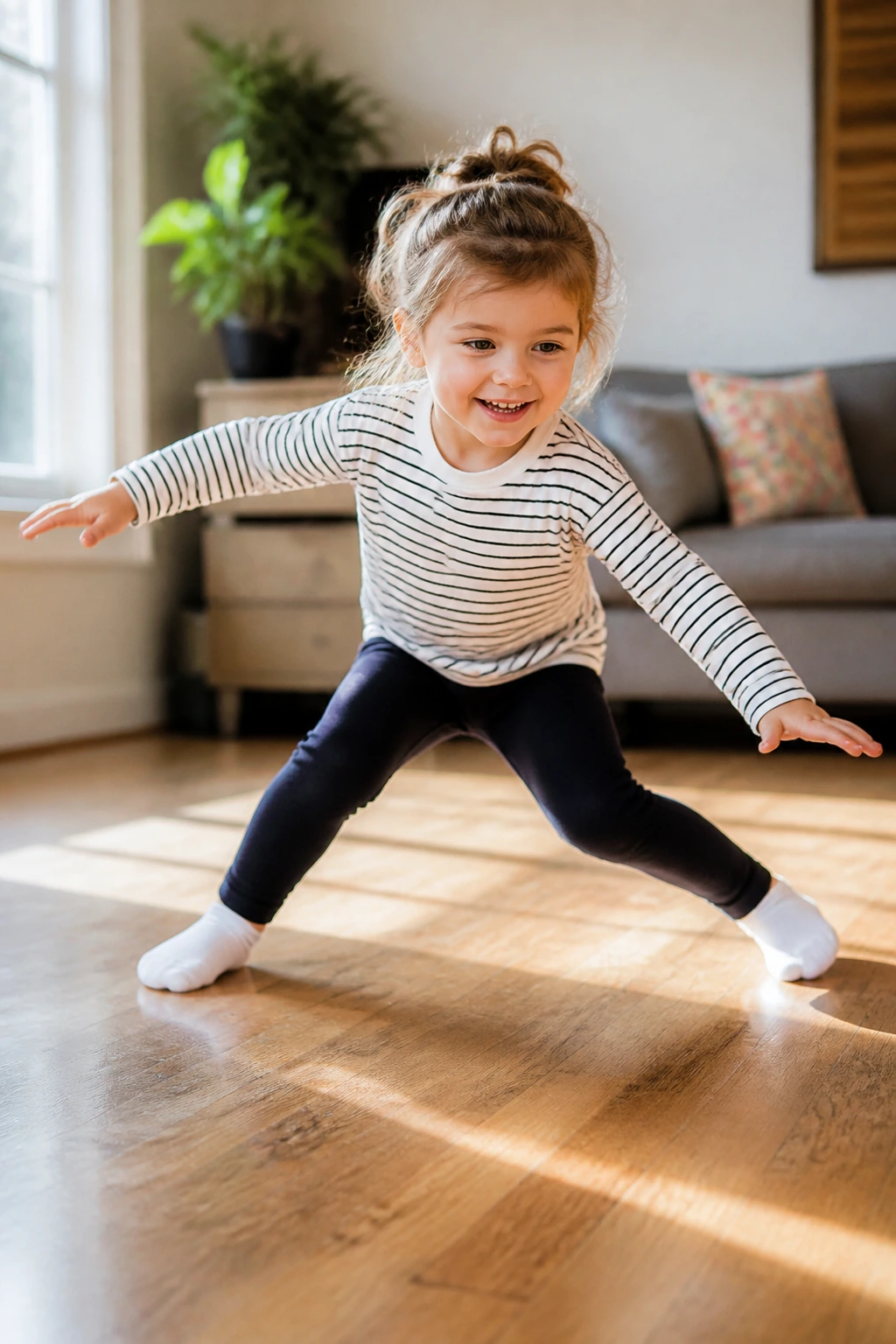
A smooth kitchen floor and a pair of socks can turn a room into a tiny skating rink. That is either genius or trouble, depending on how much space you give it.
Use this one only on a surface that lets socks slide without catching. Hardwood or tile works; thick carpet does not. Have your child step side to side in a gentle glide, then bend the knee on the supporting leg and reach the other leg behind or across. It will not look like figure skating, and that is not the goal. The goal is side-to-side movement with control.
What to watch for
- Keep the glide short.
- Stay away from furniture edges.
- Use bare feet if the floor grabs too much.
- Stop if the child starts slipping instead of sliding.
This move works the inner thighs, hips, and ankles in a way that straight-line walking never does. It also wakes up body awareness, because kids have to feel where one foot is landing before the other moves. A couple of minutes is enough before the game starts turning into giggles and skids.
15. March and Clap Count
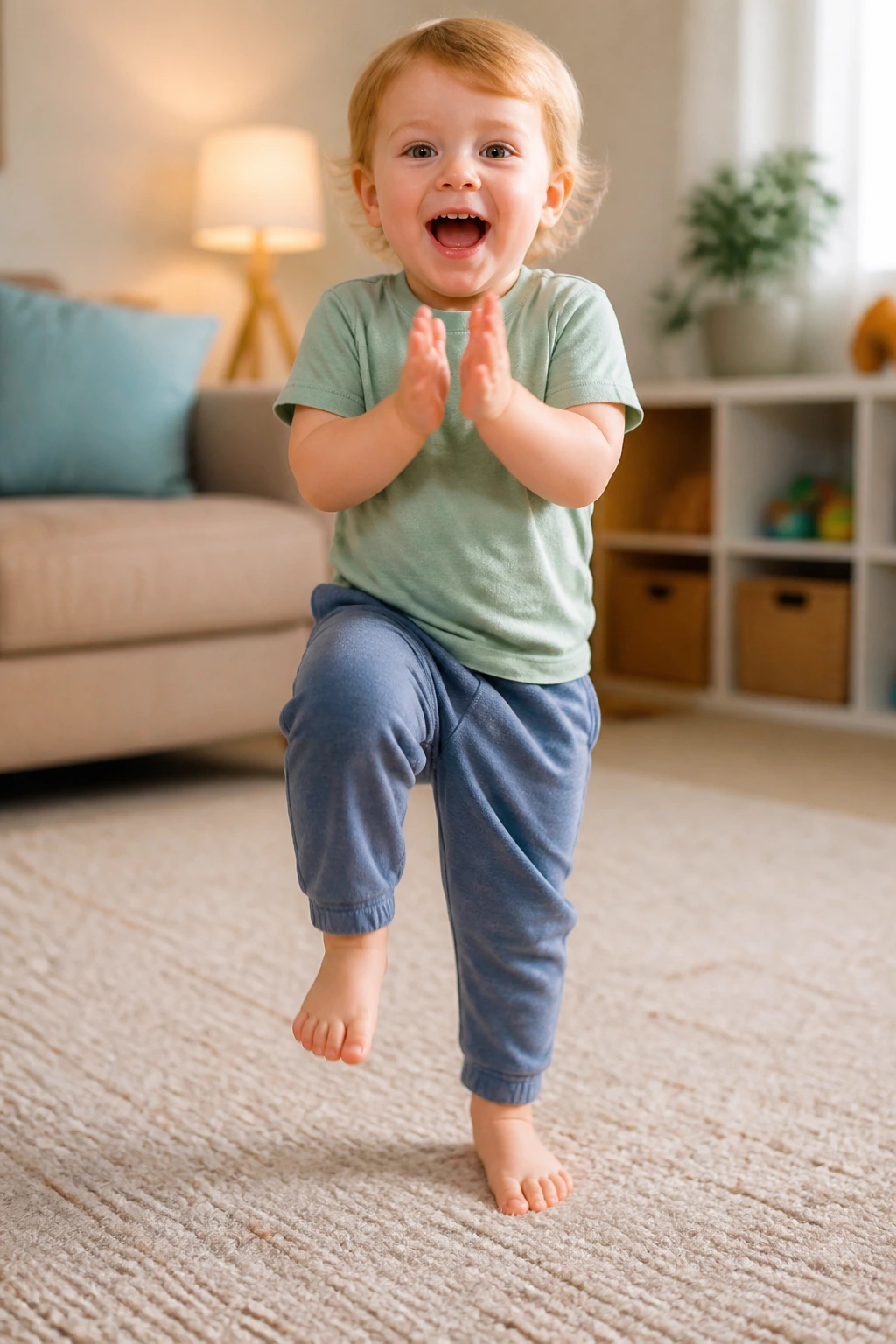
Marching looks plain. It isn’t.
When you add claps, counts, or simple call-and-response patterns, a march becomes coordination work disguised as a song. Ask your child to march for four steps, clap twice, then march again. Or call out a number and have them clap that many times before moving. The mix of rhythm and movement keeps the brain awake while the legs keep going.
This is a nice one for kids who like predictability. The beat gives them a structure they can lean on, and the counting adds a tiny bit of mental effort without making the room feel academic. A toddler who marches and claps is practicing timing, listening, and body control all at once.
I also like using this as a reset between bigger games. After jumping or crawling, marching with claps helps bring the energy back into a line. It is not flashy. It is just useful, and sometimes useful is what saves the whole session.
16. Tiny Yoga Poses for a Calm Movement Reset
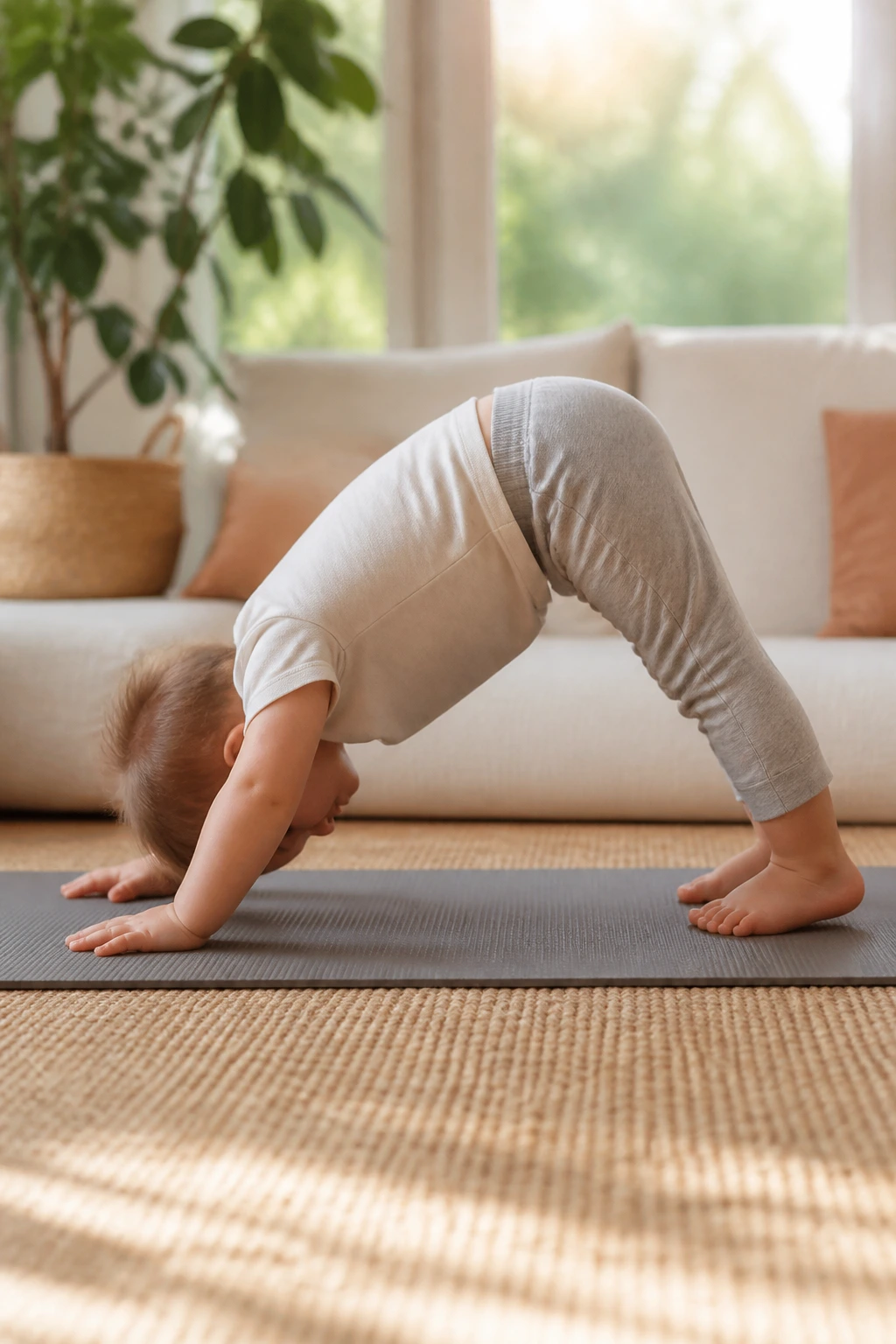
Tiny yoga isn’t about perfect shapes. It is about giving a restless body a slower lane after louder games.
A short sequence can look like this: cat-cow on hands and knees for 4 rounds, downward dog for 5 seconds, child’s pose for a breath or two, then a wobbly tree pose with one foot down and one hand out. That is enough. You do not need a long flow, and you definitely do not need to keep correcting every little wobble.
Who this works best for
This is the move I reach for when a toddler is wound up but not ready to stop. The stretching and reaching help the body settle, and the slower pace gives a child a chance to notice where their hands and feet are. That matters more than the pose names.
It also works well for kids who like copying a grown-up. If you get down on the floor and do the shapes beside them, they will usually last longer and laugh more. That is the sweet spot.
17. Ball Roll Squats and Pick-Ups
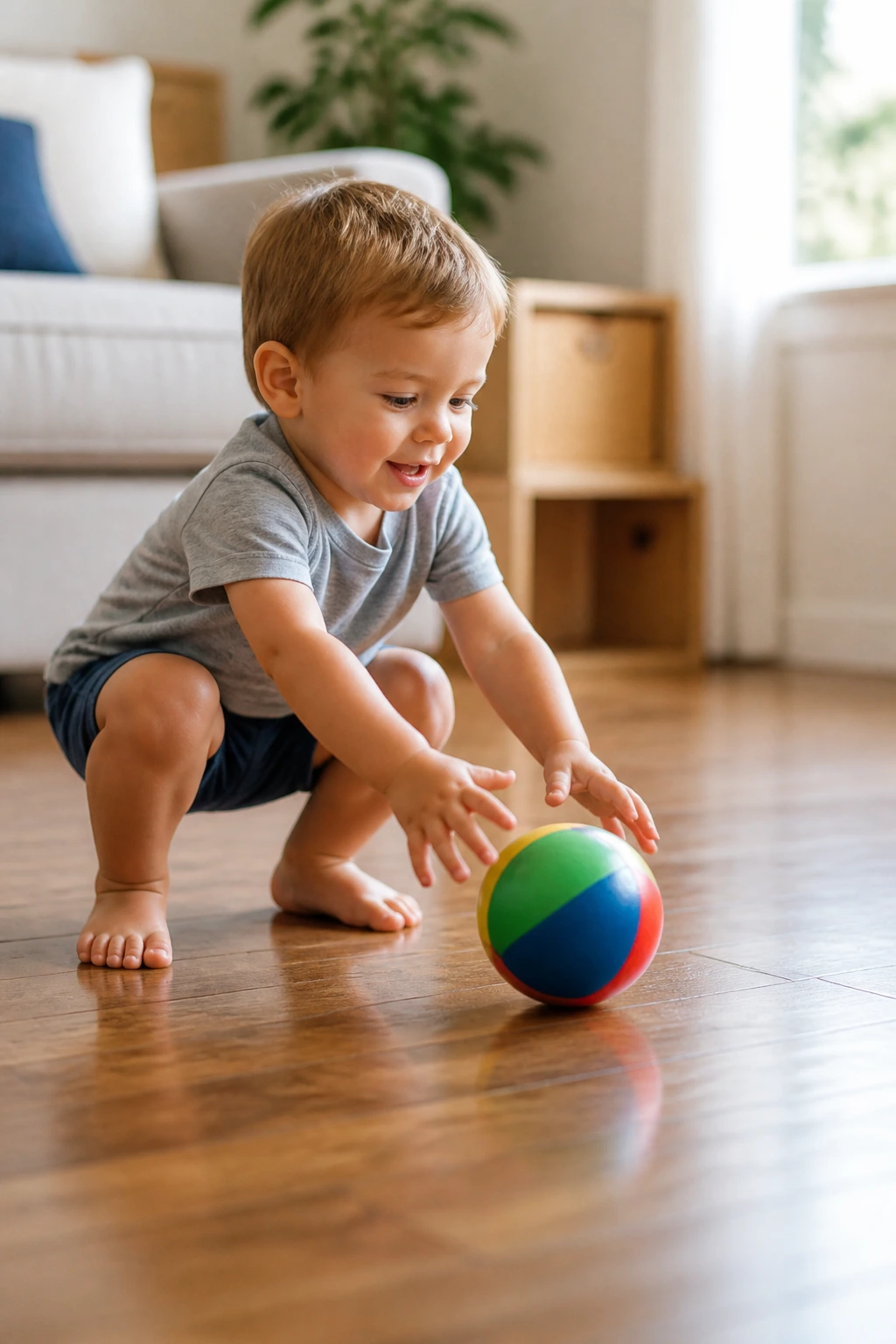
A soft ball turns squats into a game of give and take. Roll it out, squat to pick it up, stand tall, then roll it back with two hands.
Use a light ball about the size of a small playground ball. A heavy ball is overkill here. Have your child bend the knees, keep the chest lifted, and lower the ball toward the floor before standing up again. That up-and-down pattern gives you leg work without asking for a formal exercise posture, which is exactly why toddlers can stick with it.
You can also make this a “deliver the ball” game. Place a basket 4 to 6 feet away and have your child squat, lift, and place the ball in the basket, then bring it back. It sounds tiny, but the repeated bend and stand is doing a lot for hip strength and balance.
If your child starts rounding the back too much, shorten the range. A shallow squat with a clean pick-up is better than a dramatic bend with wobbly knees.
18. Stair Step Touches With One Safe Step
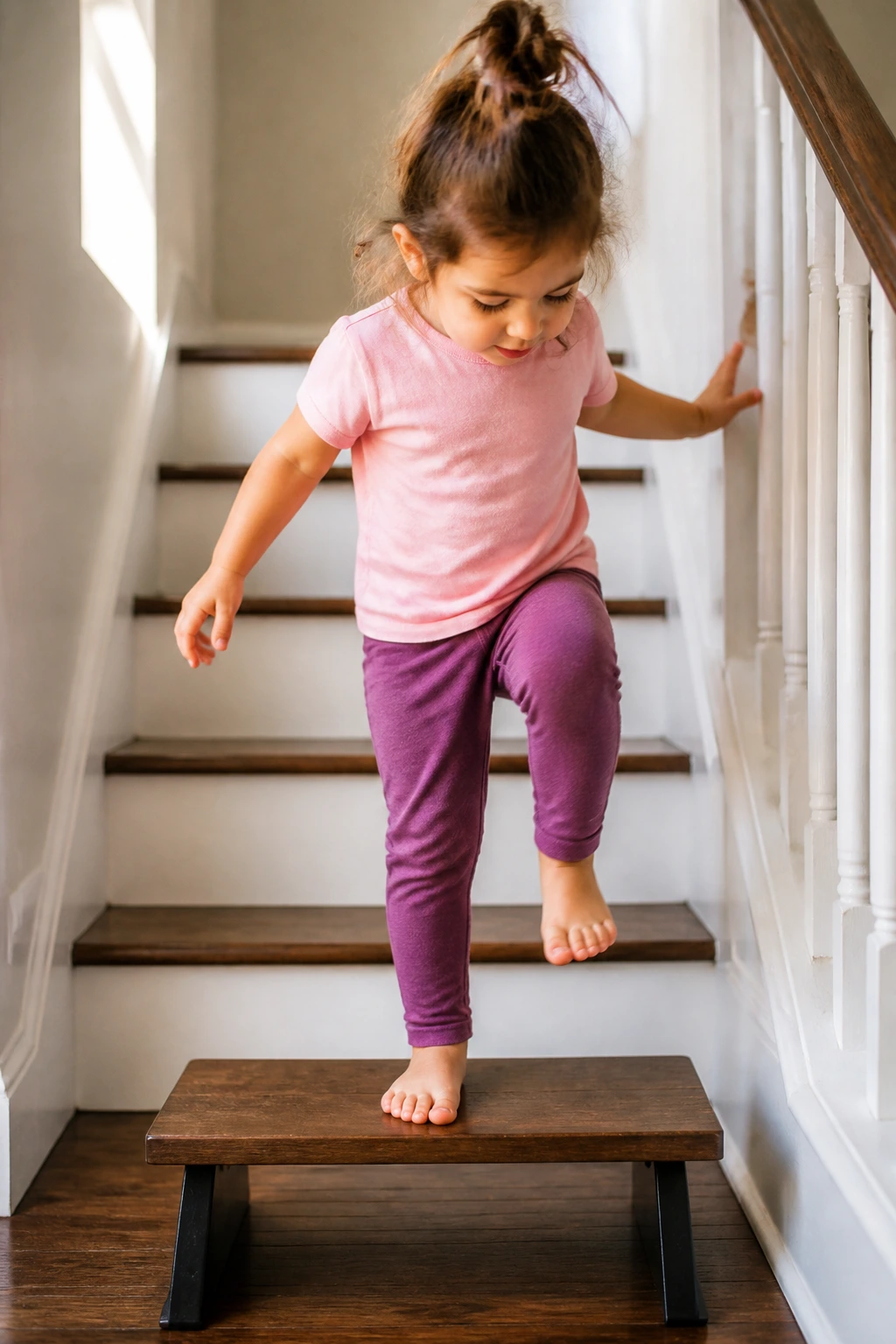
Can one low step be enough? Yes, if you treat it like a practice platform and not a climbing contest.
Use the bottom step only, or a sturdy step stool with adult supervision, and have your child step up, tap the top, step down, then switch feet. One set can be 6 to 8 touches total. If the movement gets messy, slow it down. Toddler workouts do not need speed to count.
What to watch for
H3: Safety is the whole game here
- Stay on one step.
- Keep a hand nearby if balance is shaky.
- Clear the area around the step.
- Stop if the child starts jumping off instead of stepping down.
The reason this works is simple: step-ups ask for balance, leg strength, and controlled weight shift. A toddler learns to put weight onto one leg while moving the other. That is a big deal for walking, climbing, and all the other movements that make up a kid’s day.
19. Dance Party Circuits
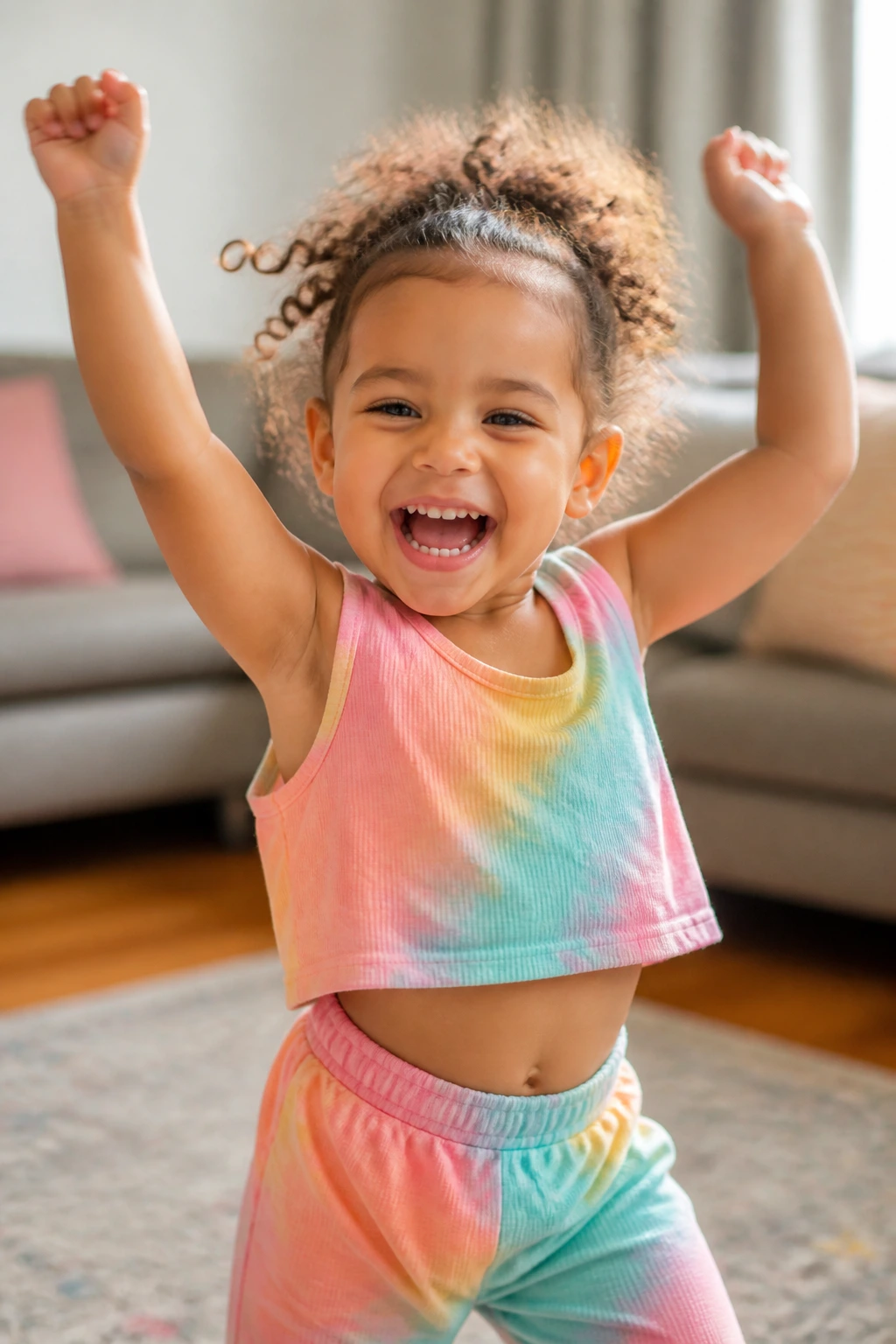
Three songs, four moves, zero perfection. That is the sweet spot for a dance circuit with a toddler.
Pick a song and build a tiny routine around it: 20 seconds of free dance, 10 seconds of big stomps, 10 seconds of tiptoe walks, 10 seconds of spinning, then back to dancing. You can repeat the same sequence or change it on the fly if your child gets a favorite move and refuses to let it go. That happens a lot.
A simple circuit layout
- 20 seconds dance.
- 10 seconds stomp.
- 10 seconds reach high.
- 10 seconds freeze.
- Repeat 2 to 4 times.
What makes this better than plain dancing is the mix of movement qualities. Stomps are grounding. Tiptoes ask for balance. Reaches open the body. Freezing teaches control. Put together, they make a short, lively toddler workout that does not feel like exercise until everyone is slightly winded and grinning.
20. Family Obstacle Course in the Living Room
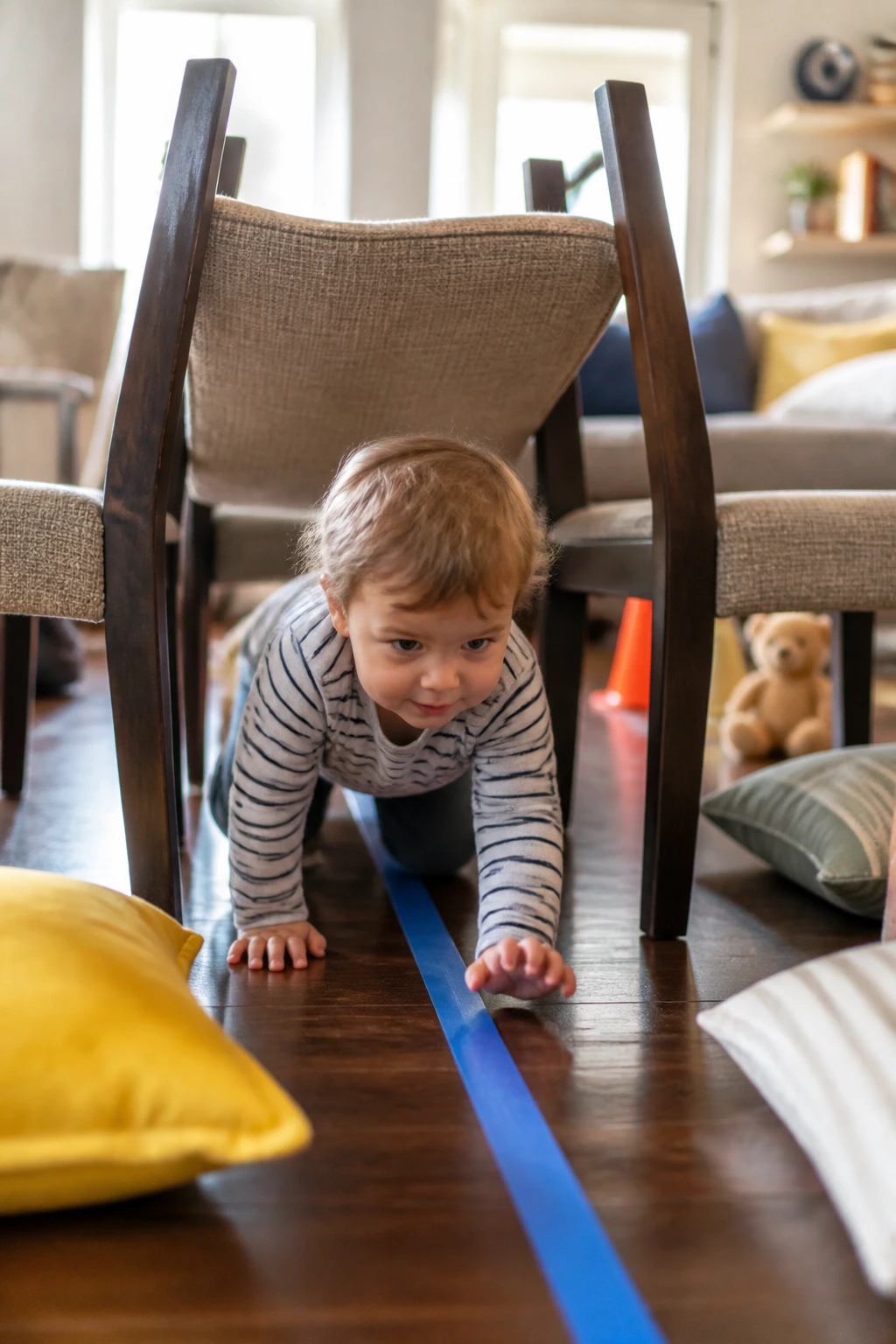
The best home course is the one you can rebuild in 60 seconds. A chair tunnel, a pillow jump, a tape line, and a stuffed animal to carry will do more than a fancy setup stuffed with gear.
Make it a loop. Crawl under the chair, step over a cushion, walk the tape line, then carry the stuffed toy back to the start. That mix of crawling, climbing, balancing, and carrying hits a lot of movement patterns without needing any special equipment. Toddlers usually love knowing where the start and finish are, so keep the path obvious and repeat it twice before changing anything.
The other reason this works: it lets you tune the difficulty on the fly. If your child gets stuck at one station, shorten the distance or take out the hardest part. If they breeze through it, add one more pillow or ask for a bear crawl instead of a walk.
I like obstacle courses because they feel a little improvised, and that makes them easier to keep fresh. The room does not need to be perfect. It just needs to be playable.
Final Thoughts
A good toddler workout feels like a game first and exercise second. That is not a compromise. It is the whole point.
The moves that last are the ones you can repeat without a big setup: a tape line, a balloon, a basket, a pile of pillows, a song. Short rounds work better than long lectures, and children usually respond to clear, playful rules far more than complicated instructions.
Pick two or three favorites and keep them in rotation. On a day when the energy inside the house starts bouncing off the walls, having a few ready-made movement games saves everyone a headache, and it gives your child a place to put all that motion that has nowhere else to go.
