



Steady body tone comes from repeated work that you can actually keep doing. Not punishing yourself once, not chasing a sweat-soaked miracle, and not treating every workout like a test of moral character.
The people who look firm, strong, and put together usually aren’t doing one magic session. They’re mixing resistance training, low-impact cardio, a little core work, and enough recovery to come back and do it again. That mix matters more than the flashy parts. It matters a lot.
Body tone is basically the visible result of muscle shape, consistent tension, and enough movement to keep body fat from drifting upward. If you skip strength work, the shape softens. If you skip conditioning, the work feels harder than it should. If you skip recovery, everything starts feeling flat and cranky. Simple. Not easy, but simple.
The routines below cover that whole picture without turning your week into a second job. Some are heavy-ish and honest. Some are quieter and easier on the joints. Some will leave your lungs doing most of the talking. That variety is the point.
1. Dumbbell Full-Body Circuit for Steady Body Tone

A dumbbell circuit is still one of the cleanest ways to build steady body tone because it asks several big muscle groups to work at once. That means your legs, back, shoulders, and core all get a reason to stay awake instead of coasting.
How to Run It
Start with 3 rounds of 5 movements: goblet squat, one-arm row, push press, Romanian deadlift, and suitcase carry. Aim for 8 to 12 reps on the first four moves, then carry each side for 30 to 40 seconds. Rest 45 to 75 seconds between rounds.
Keep the weight honest. The last 2 reps should feel hard, but your form should stay clean. If your back starts rounding on the deadlift or your shoulders shrug up around your ears, the dumbbells are too heavy.
What Makes It Work
This kind of circuit works because it trains both muscle and muscle endurance. You are not just building force; you are teaching your body to hold shape while tired. That shows up in posture, in how clothes hang, and in the way a climb up the stairs stops feeling like a crisis.
A Few Things I’d Watch
- Use a slow 2- to 3-second lowering phase on squats and deadlifts.
- Keep the carry tall; don’t lean away from the weight.
- Leave one rep in the tank on each round if you want to repeat this twice a week.
- Start with a pair of dumbbells you can control for all 3 rounds, not the pair that looks good on the rack.
Pro tip: If you only have 20 minutes, cut the rest to 30 seconds and keep the same exercises.
2. Bodyweight Squat, Lunge, and Plank Ladder
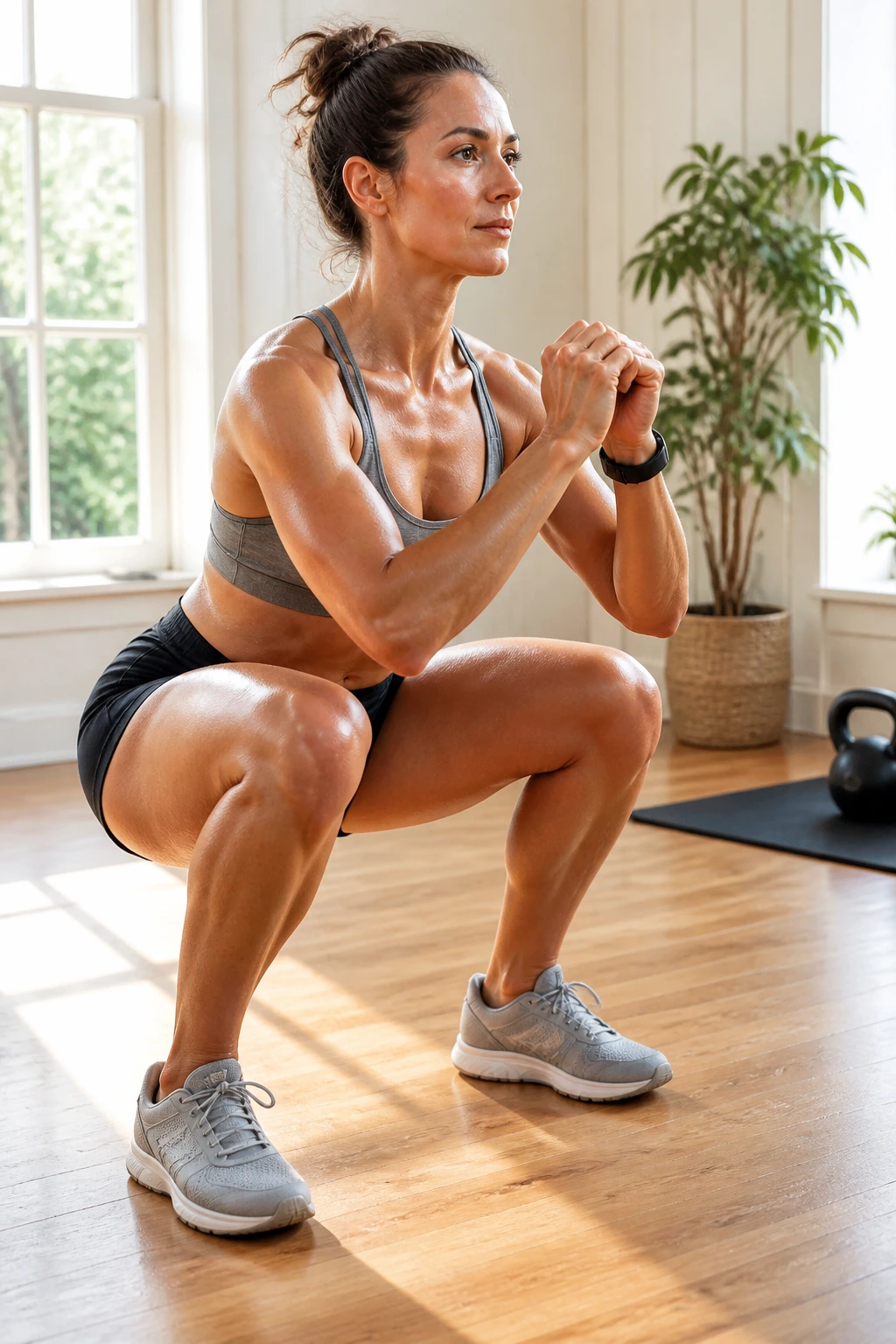
Can bodyweight work on its own? Yes—if you stop treating it like a warm-up. A smart bodyweight ladder can create plenty of tension, especially when you slow the tempo and keep the rest short.
A simple version looks like this: 10 squats, 8 reverse lunges each leg, 6 push-ups, 20-second plank. Repeat it for 4 to 6 rounds, and rest only long enough to breathe through your nose again. The ladder format keeps the pace moving, which is useful when you want tone without turning the session into a grind.
The real trick is range. Sink the squat to a depth you can control. Step the lunge back far enough that the front shin stays fairly stable. Lock the plank in with your ribs down and your glutes lightly on. That last part sounds small. It is not.
How to Scale It
If push-ups are rough, put your hands on a bench or sturdy table. If lunges bother your knees, shorten the step and slow the lowering phase. If the plank feels like a back exercise instead of a core exercise, stop and reset your pelvis.
This routine is best when you want a home workout that doesn’t need equipment and still leaves your legs a little heavy by the end. No drama. Just work.
3. Incline Walk Intervals on Hills or a Treadmill
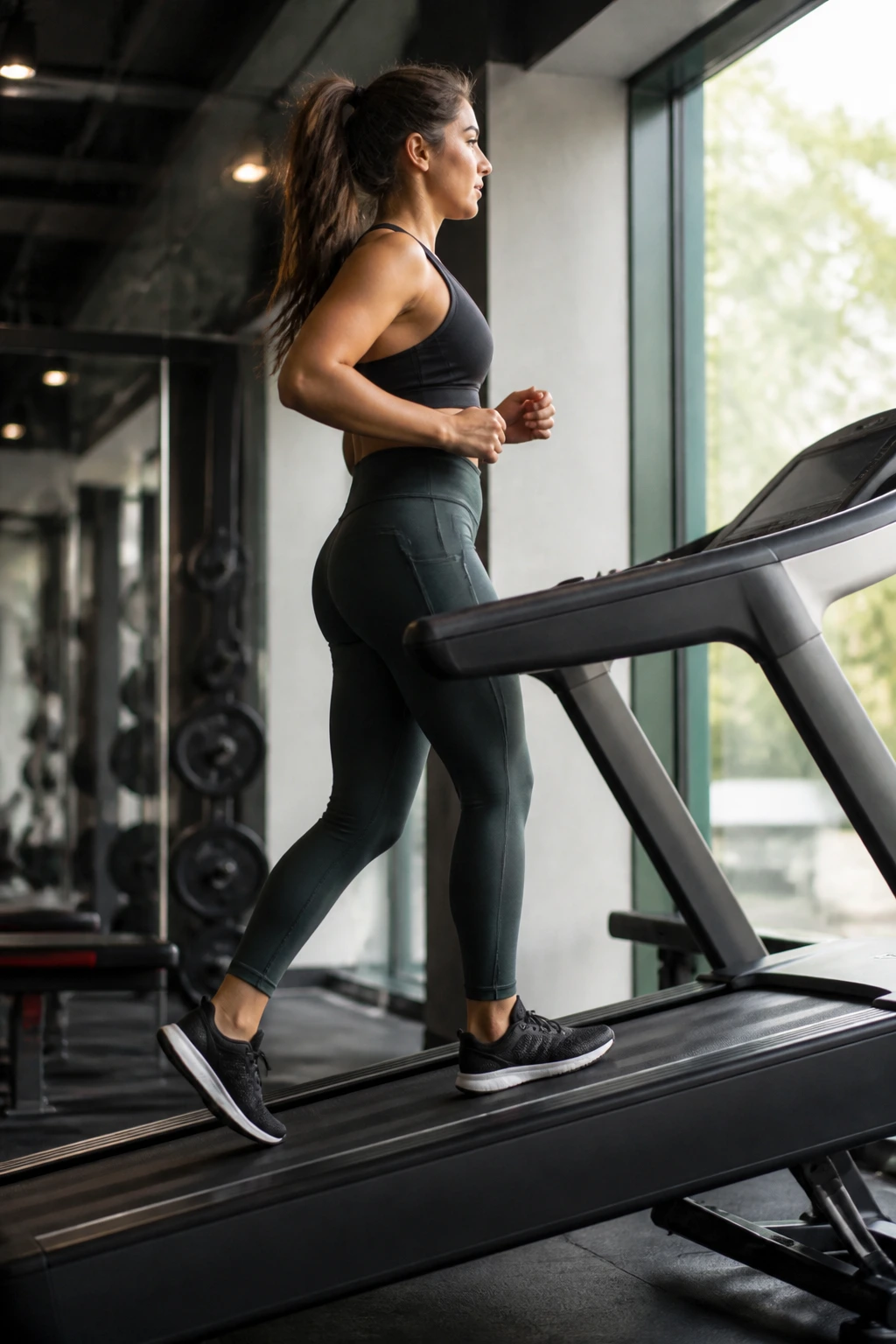
A 12 percent incline for 2 minutes will humble almost anyone. That is part of the charm.
Incline walking builds lower-body tone without the pounding that comes with all-out running. Your glutes, calves, and hamstrings do the work, but the joints usually get a friendlier deal. On a treadmill, try 5 minutes easy, then 6 rounds of 2 minutes brisk incline / 2 minutes flat recovery, then finish with 5 minutes easy.
Why It’s Better Than People Think
Walking uphill forces the back side of the body to stay active through the whole stride. You feel it in the glutes first, then in the calves if the grade is steep enough. The pace can look almost boring from the outside, and that is fine. Boring is often what you can repeat.
What to Notice
- Keep your stride short. Long steps turn into hip flexing and slouching.
- Stand tall with a slight lean from the ankles, not a bend at the waist.
- Use the handrails only if the incline gets steep enough that balance becomes an issue.
- Pick a pace that leaves you breathing hard but still able to speak in short phrases.
Outside on a hill, the same idea works with repeated climbs and easy walks down. Either way, this is a routine I like for people who want a leaner, more energized feel without punishing their knees.
4. Kettlebell Swing-and-Carry Complex

Kettlebells are not magic. They’re just efficient.
That efficiency matters. A swing-and-carry complex teaches the hips to snap, the core to brace, and the grip to stay alive under fatigue. If your body tone needs a routine that feels athletic instead of decorative, this one earns its place.
Why It Works
The swing is a hinge, not a squat. That means the glutes and hamstrings take the lead, while the back stays braced and the shoulders stay quiet. Add carries, and you get posture, grip strength, and trunk stability in the same session.
A clean version: 10 two-hand swings, 8 goblet squats, 6 presses per side, 30 meters of farmer carries. Repeat for 4 rounds, with 60 to 90 seconds between rounds. Keep the kettlebell close on the swing; don’t lift with your arms.
What to Watch For
H3: Hinge First, Arms Second
The bell should float from hip power, not shoulder effort. If the swing looks like a front raise, stop and reset.
H3: Carry Like You Mean It
Rib cage down. Neck long. Slow steps. The carry looks simple, but it tells you whether the whole trunk is working.
This routine is one of my favorites for people who want shape through the legs and midsection without needing a long session.
5. Pilates Mat Flow for Steady Body Tone
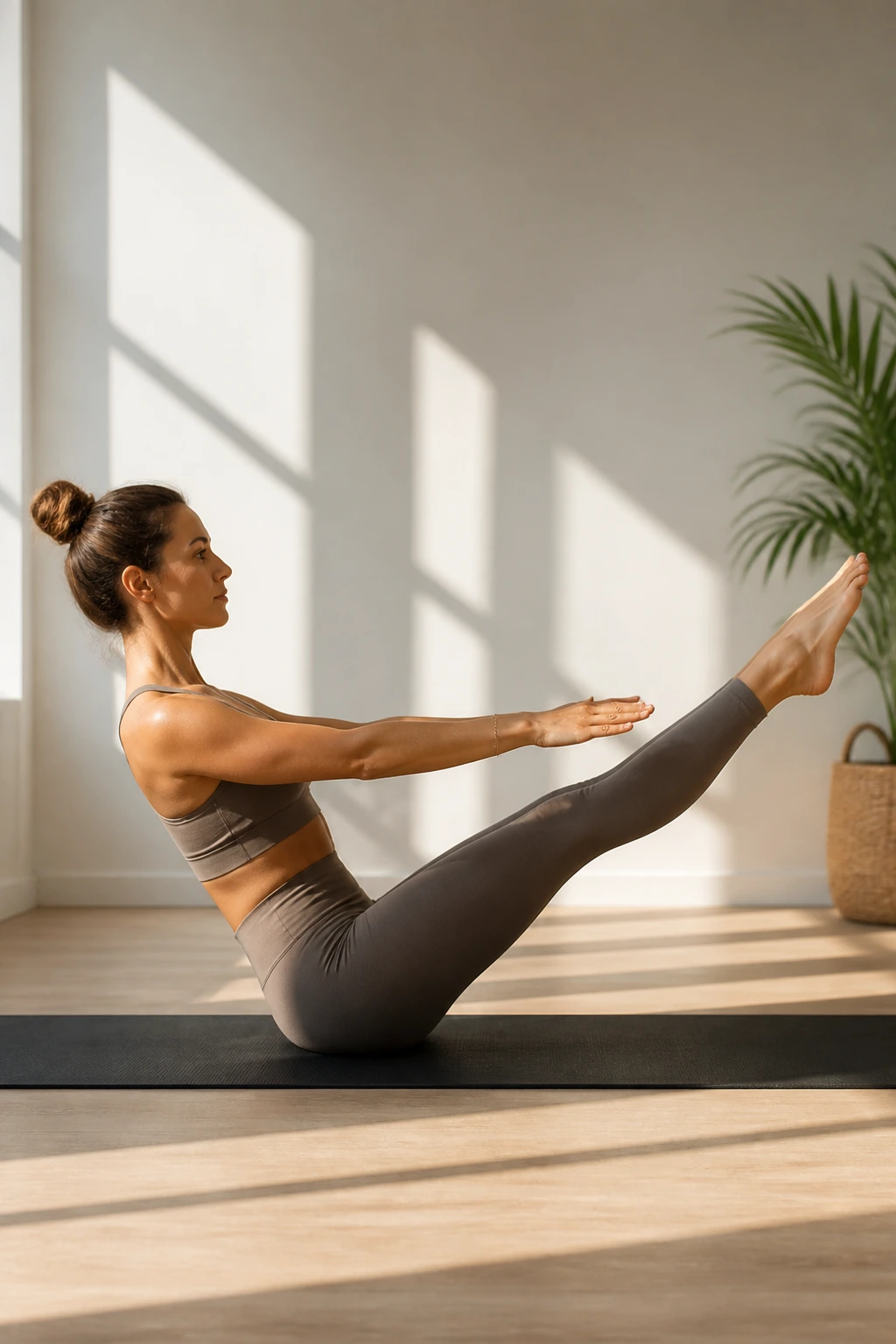
Pilates has a sneaky reputation problem. People hear “Pilates” and picture something easy, and then the hundred, the hollow hold, or a set of slow leg lowers shows up and changes their mind.
The feel is different from lifting. Muscles get warm, long, and almost buzzy by the end of a good mat flow. There’s less blunt force and more control. That makes it especially useful if your goal is body tone that looks clean and feels coordinated, not just tired.
A useful sequence might include the hundred, single-leg stretch, dead bug variations, glute bridge holds, side-lying leg lifts, and a forearm plank with knee taps. Spend 30 to 45 seconds on each move, then repeat the flow 2 to 4 times.
The real win here is posture. Pilates teaches the ribs to stay stacked, the pelvis to stop flopping around, and the core to do its job without holding your breath. That changes how you move all day, not just during the workout.
If you like controlled work that leaves your center feeling switched on rather than smashed, this is a strong choice.
6. Resistance Band Upper-Body Sculpt Circuit
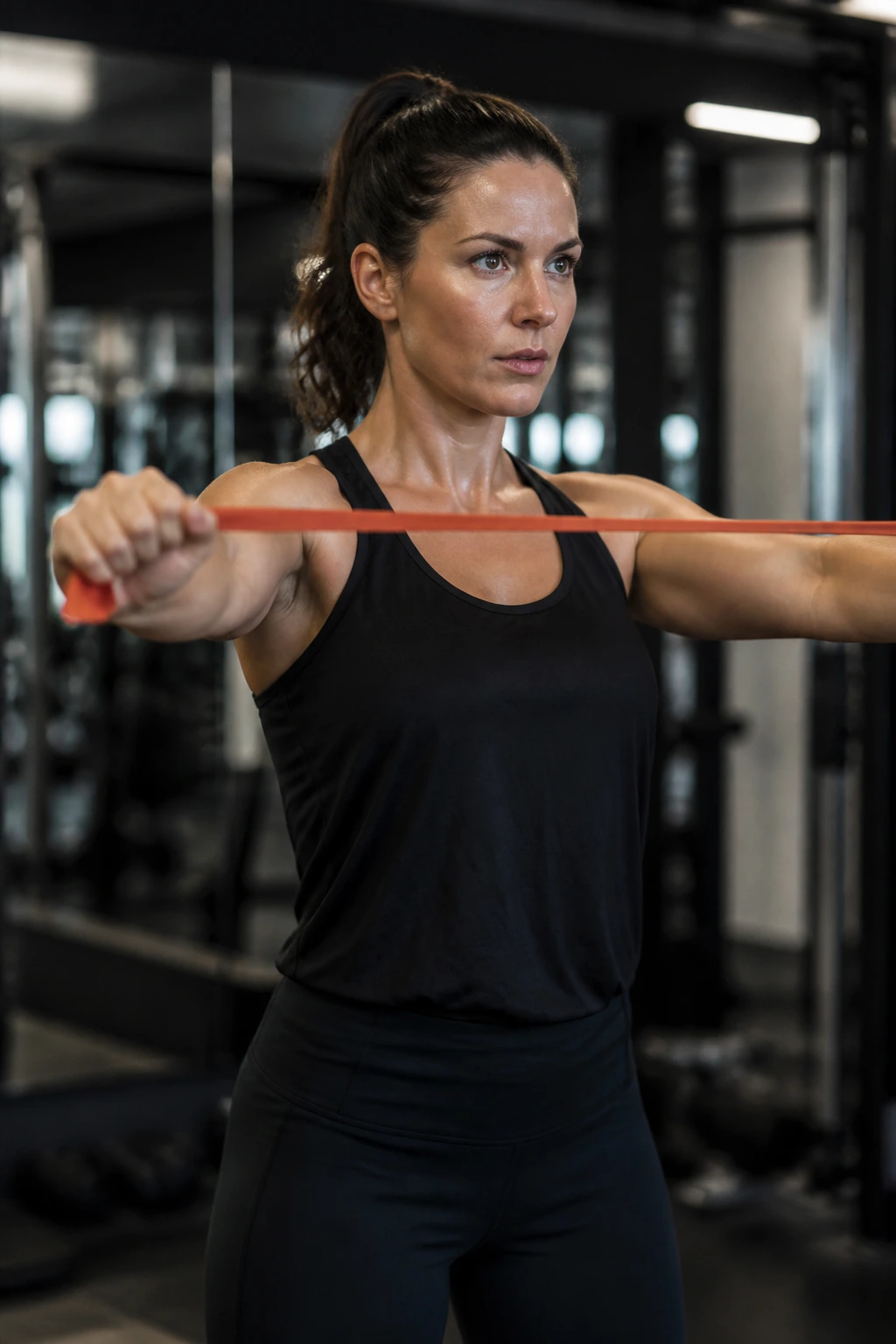
Bands look harmless.
Then you finish a set of rows, pull-aparts, and overhead presses, and your shoulders start asking questions.
Bands are excellent for steady body tone because they keep tension on the muscle the whole time, especially near the top of the movement where dumbbells sometimes feel too easy. Use a medium band and run 3 rounds of 15 pull-aparts, 12 rows, 10 chest presses, 10 overhead presses, and 12 triceps pressdowns. Rest about 45 seconds between rounds.
What Makes the Band Work Different
Bands are best when you want shape through the upper back, rear shoulders, chest, and arms without hauling around heavy equipment. They’re also easy to pack, which means there’s no excuse to skip the session when you’re short on space.
The catch is anchoring. A door anchor or sturdy post needs to be secure. If it feels sketchy, it is sketchy. Don’t improvise with weak hardware.
Quick Setup Notes
- Use a band that lets you finish each set with the last 2 reps slowing down.
- Step farther from the anchor if the band feels too light.
- Keep your ribs down during presses so your lower back does not take over.
- Pull apart with your hands at chest height, not up by your ears.
This is a tidy upper-body day, especially if you want better shoulder shape and posture without pounding your joints.
7. Rowing Machine Intervals for All-Over Conditioning
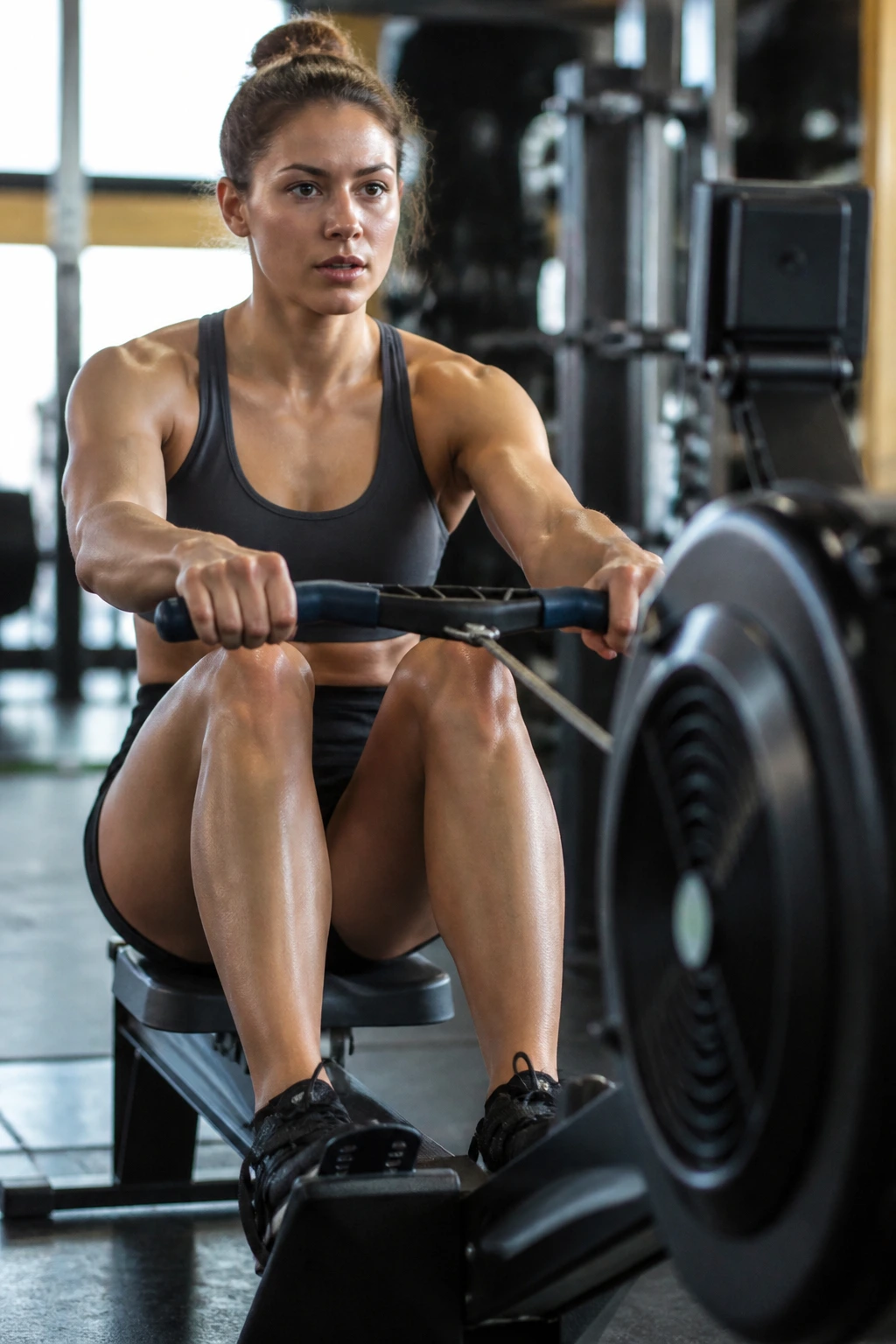
Eight minutes of rowing can expose sloppy technique fast.
That is why it works. A rower asks the legs to drive, the back to stay organized, and the arms to finish the stroke without turning the whole thing into a yank-fest. It trains the body as a unit, which is exactly what you want when tone needs to look balanced from head to toe.
Try 6 to 8 rounds of 250 meters hard / 250 meters easy, or go with 30 seconds fast / 90 seconds smooth if your machine uses time better than distance. Warm up for 5 to 8 minutes before the first hard effort.
The stroke matters more than the monitor number. Push with the legs first, then swing the torso, then draw the handle in. On the recovery, reverse the order and let the seat glide forward under control. Messy rowing is noisy and expensive in energy. Clean rowing is quieter.
If you have ever wanted a conditioning session that doesn’t beat up your joints the way sprinting sometimes can, this is a solid answer.
8. Stair-Climbing Ladder Workout
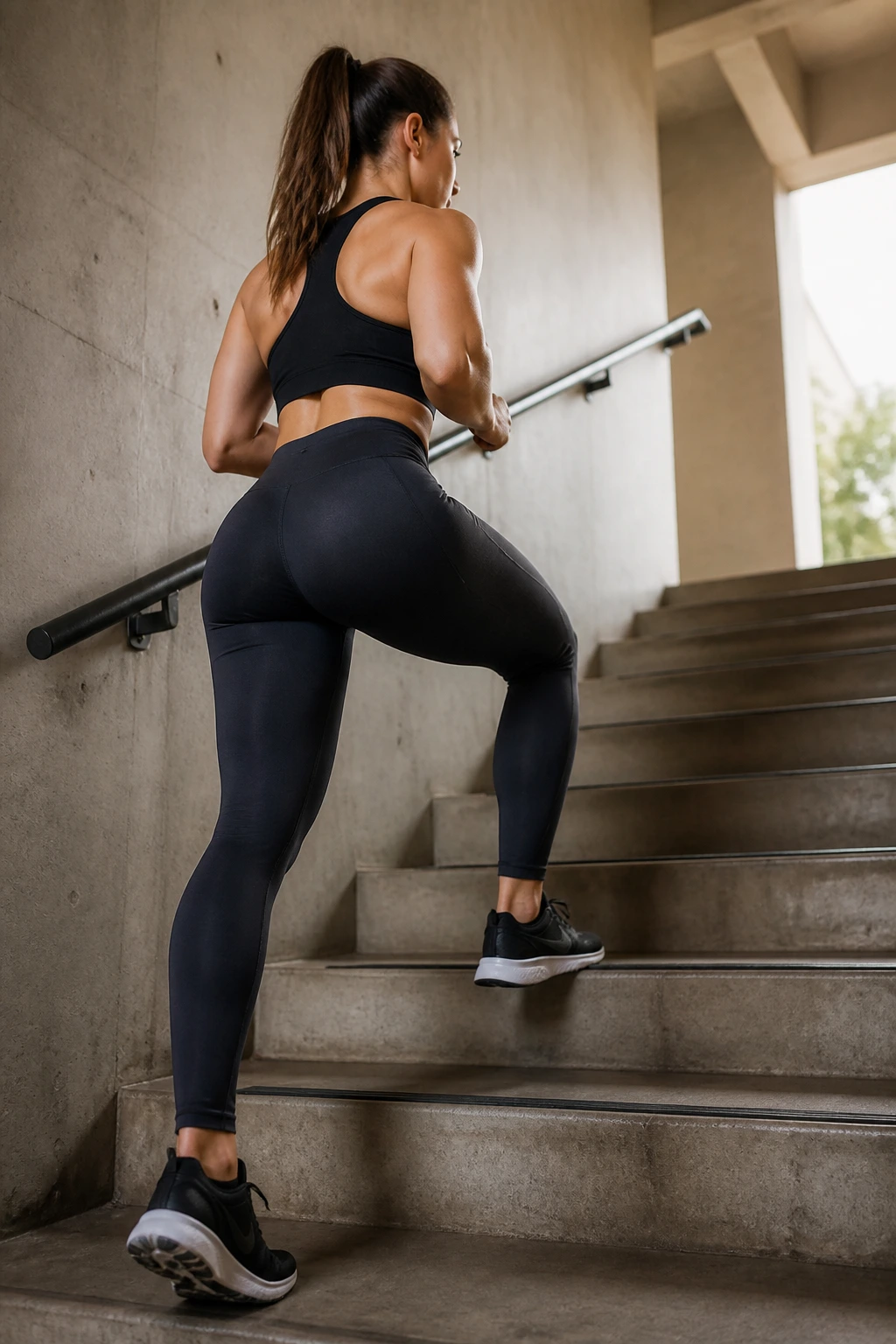
Stairs have a rude way of showing you whether your glutes are doing their job.
A stair ladder is brutally simple: climb 1 flight hard, walk down, climb 2 flights, walk down, then 3 flights, and keep going up to whatever number you can handle cleanly. Repeat the ladder once if you still have decent form. If you have access to a stair machine, use 30 to 60 seconds up / 30 seconds easy.
Why It Feels So Effective
The step-up pattern loads the glutes, quads, and calves in a very direct way. Because each step has to support your full body weight, the muscles stay under tension longer than they do during flat walking. That creates the kind of fatigue that makes legs feel firmer over time.
A few small details matter here:
- Keep your torso tall.
- Press through the whole foot, not just the toes.
- Don’t race the descent; that’s where sloppy knees show up.
- If your breathing gets ragged, shorten the ladder instead of forcing it.
Stairs are not fancy. They don’t need to be. They just work, and that is usually enough.
9. Yoga Strength Flow with Holds and Transitions
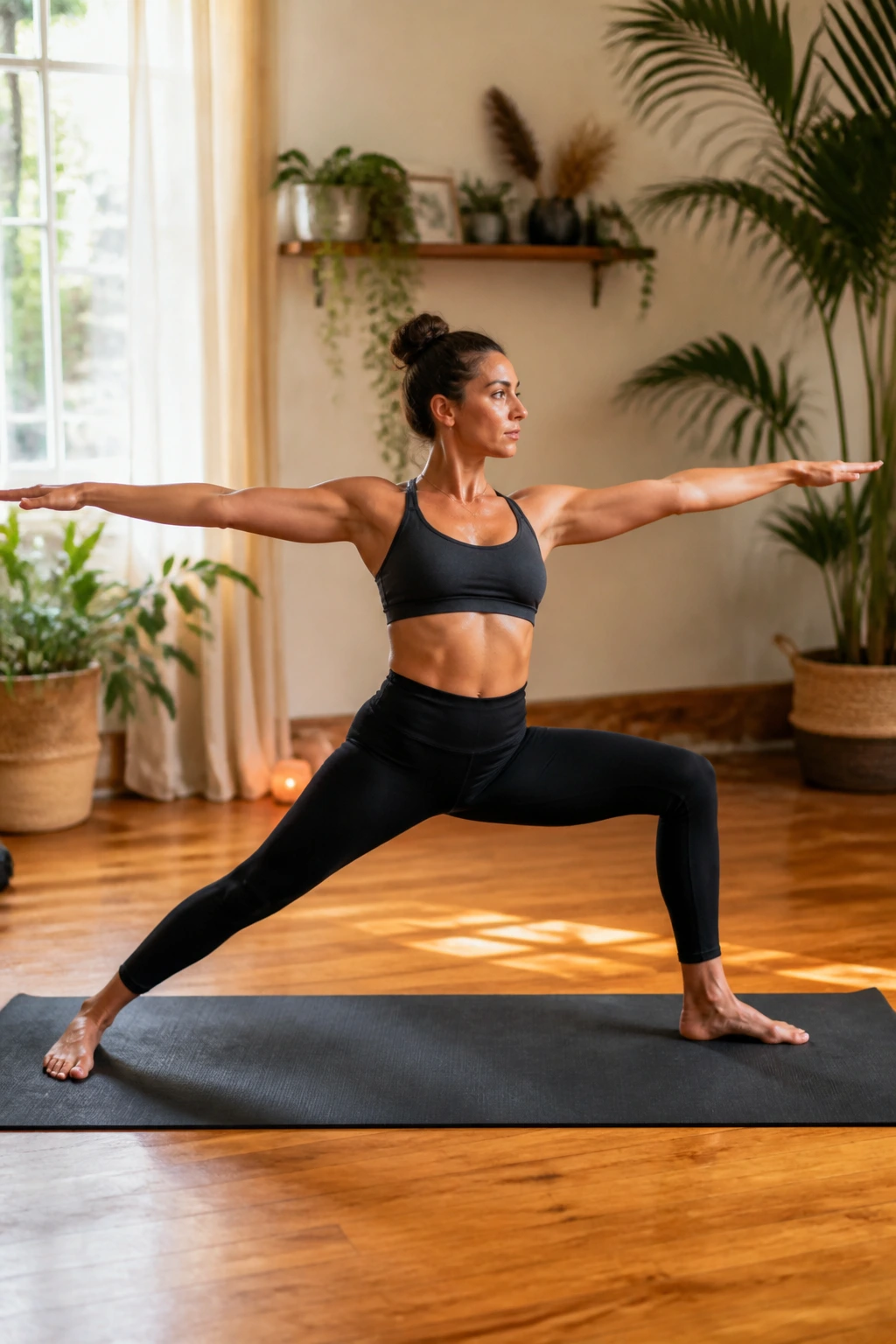
Yoga is not always gentle, and that misconception costs people a good workout.
A strength-focused flow can leave your shoulders, hips, and core working hard for the whole session. Think chair pose holds, warrior II, side angle, high plank, downward dog, low lunge, locust, and bridge pose. Hold the stronger shapes for 3 to 5 breaths each, then move with control instead of rushing.
H3: Where the Tone Comes From
The shape changes are doing a lot of the work. Moving from plank to down dog to lunge forces the core to stay connected while the limbs shift. That is useful training, not just stretching.
H3: The Parts People Skip
Locust pose and bridge are worth keeping. They wake up the back side of the body, which matters more than people admit. A lot of “tone” routines focus on abs and thighs while letting the upper back and glutes fall asleep.
The nice thing about this kind of flow is that you can keep it low-impact and still feel challenged. If you like training that leaves you calmer at the end than when you started, this hits a nice middle ground.
10. Sprint-Walk Intervals on Track or Road

Want a routine that burns energy fast without living on a treadmill? This is the one that usually gets people’s attention.
Use 6 to 10 rounds of 15 to 20 seconds fast run followed by 60 to 90 seconds walking. Warm up for 10 minutes first with easy walking, leg swings, and a few shorter pick-ups. The fast parts should feel sharp, not sloppy. If your stride falls apart, slow down.
How to Keep It Safe
Sprint work is not a place to prove anything. Start with a fast run that feels like 8 out of 10 effort, not a full redline. On the first few rounds, you should finish feeling like you could have done two more. That restraint keeps the session useful instead of wrecking you.
If you do not run often, swap the sprint for a fast incline walk, a bike burst, or a hill power walk. The tone benefit still shows up because the intervals drive the heart rate up and ask the legs to produce force in short, clean bursts.
This is the routine for days when you want to feel athletic. Brief. Hard. Then done.
11. Split-Squat and Glute Bridge Lower-Body Day
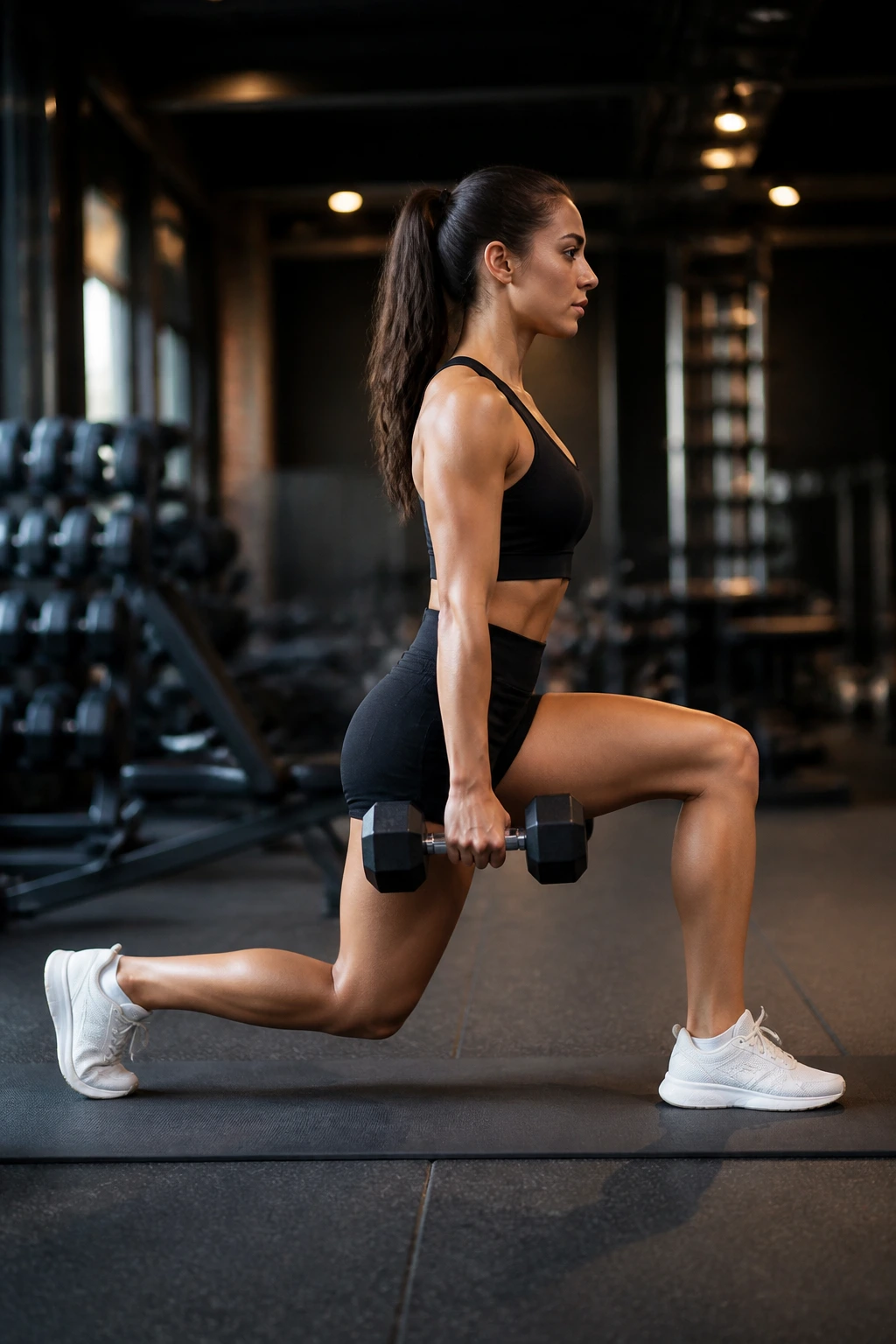
A split squat exposes weaknesses that two-legged moves hide. That’s why I like it so much.
Work one leg at a time, and the body stops cheating. The front leg has to stabilize, the back leg has to stay out of the way, and the hips have to stay square instead of twisting around to save effort. For body tone, unilateral work like this is gold because it shapes the legs and glutes while also fixing side-to-side gaps.
A practical session: 3 sets of 8 to 10 split squats per leg, 3 sets of 12 glute bridges, 2 sets of 10 step-ups per leg, and 2 sets of 15 calf raises. Rest about 60 seconds between sets. Add dumbbells only after the movement feels steady.
The glute bridge is easy to rush, so slow it down. Squeeze at the top for 2 seconds and keep your ribs from flaring. On the split squat, lower under control and let the front heel stay heavy.
This day does a lot for leg shape without requiring fancy gear. It also tends to make walking feel more organized, which is a nice side effect.
12. Suspension Trainer Routine for Total-Body Control

A suspension trainer looks a little ridiculous until you start rowing, pressing, and squatting with your body at an angle.
Then it gets serious fast.
Why the Angle Matters
TRX-style work forces the core to stabilize every rep because the straps keep shifting your center of mass. That makes even familiar moves feel new. A bodyweight row at a steep angle can challenge the upper back as much as a light dumbbell set, and a suspended squat asks the hips to stay neat instead of collapsing inward.
Run 3 rounds of 12 rows, 10 chest presses, 12 assisted squats, 8 body saws, and 10 hamstring curls. Rest 45 to 60 seconds between rounds. Adjust your foot position to control difficulty: the farther your feet are from the anchor, the harder the set.
H3: Start Easier Than You Think
A lot of people lean too far and turn the session into a fight. Shorten the angle first. Build control, then build effort.
H3: The Moves Worth Keeping
Rows and hamstring curls usually give the best return. They hit the upper back and posterior chain in a way that plays nicely with tone, posture, and overall body balance.
This is one of those routines that looks clean on paper and still makes you work for every rep.
13. Dance Cardio with Light Dumbbells
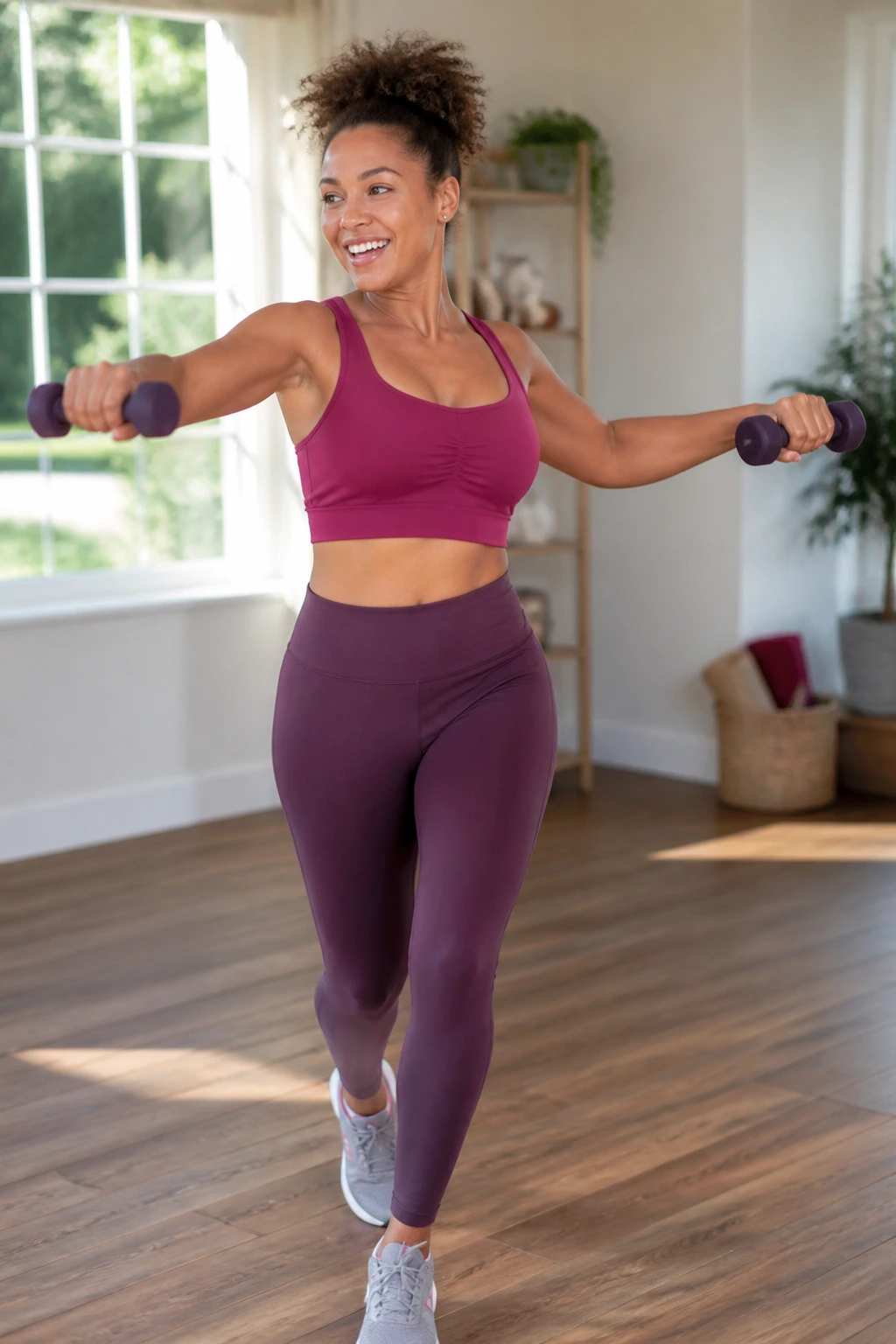
Yes, this counts.
A dance-style cardio session with 1- to 3-pound dumbbells is not about looking polished. It is about moving continuously, keeping the heart rate up, and giving the shoulders and arms a little extra load while the feet keep dancing. Use it for 20 to 30 minutes, with simple patterns: march, step-touch, grapevine, side reach, punch, overhead press, repeat.
The lighter weights matter. Heavy dumbbells turn choreography into a mess. Small weights keep the movement smooth and let you stay loose enough to keep going. That steady rhythm is where the conditioning benefit lives.
A Simple Way to Run It
- 2 minutes marching and stepping side to side
- 1 minute of arm punches with light weights
- 1 minute of overhead reaches
- 1 minute of knee lifts
- 30 seconds of rest
- Repeat the block 4 to 5 times
You do not need perfect coordination. You need a pace you can repeat without tripping over yourself. That makes the workout more useful and a lot less annoying.
14. Low-Impact Recovery Circuit with Isometrics
Rest days do not have to mean doing nothing.
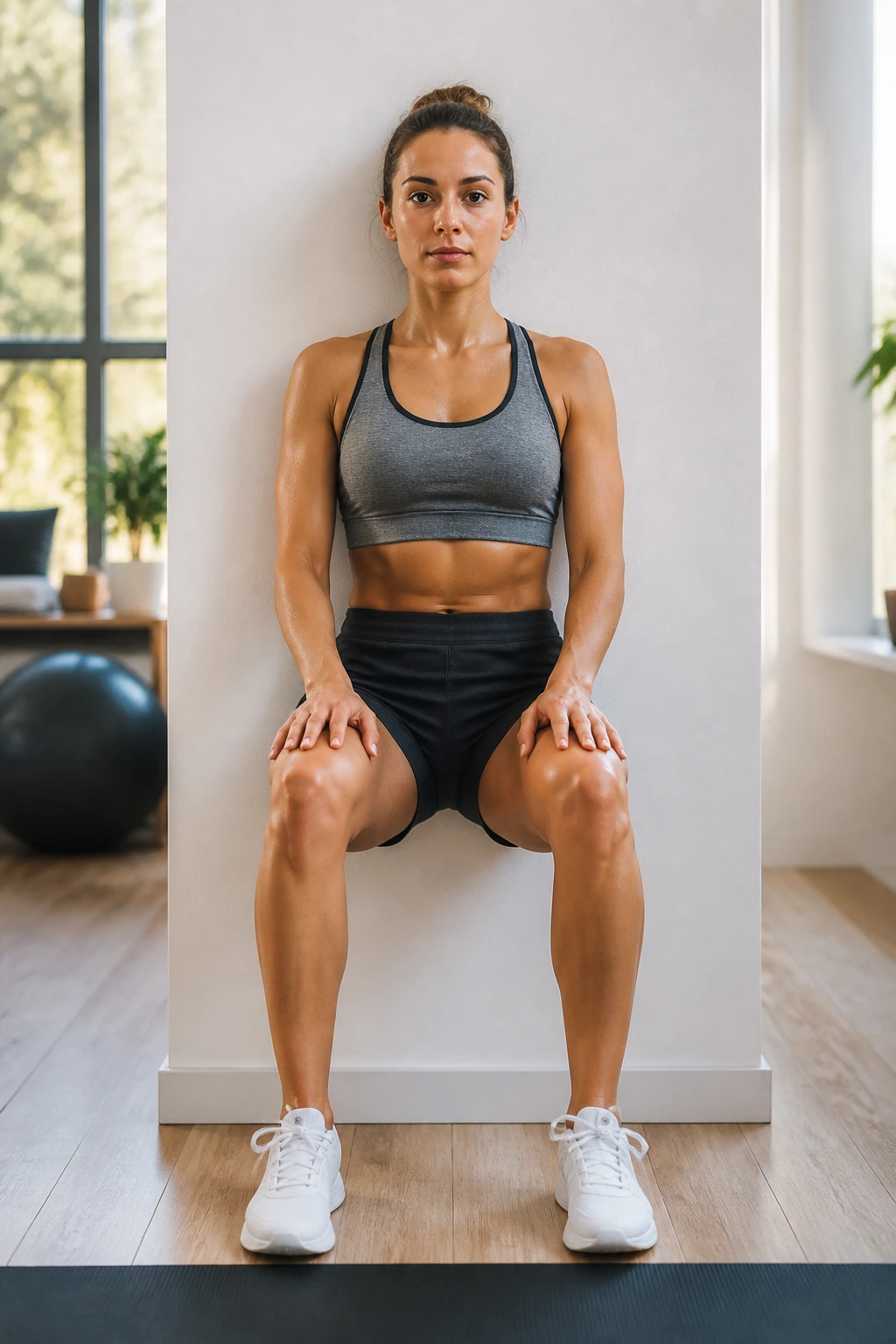
A low-impact recovery circuit can keep your body tone moving in the right direction while giving joints a break from pounding. Isometric holds are the quiet heroes here: wall sits, plank holds, glute bridge holds, side planks, bird dogs, and calf raises with a pause at the top. None of it looks dramatic. All of it matters.
Try 30 seconds on, 15 seconds off for each move, then run 2 to 4 rounds. Keep the effort moderate. The point is to feel switched on, not destroyed. If you finish sweaty and wobbly, you probably went too hard for a recovery day.
The best part of isometrics is that they train strength at specific joint angles. That helps with stability, which makes your other workouts cleaner. Wall sits teach the quads to hold. Side planks teach the waist not to collapse. Glute bridges remind the hips that they still have a job.
This is the session I reach for when I want to stay active without dragging myself into the ground.
15. Mixed-Modal Pyramid Workout for Steady Body Tone
What if you want one routine that borrows a little from all the others?
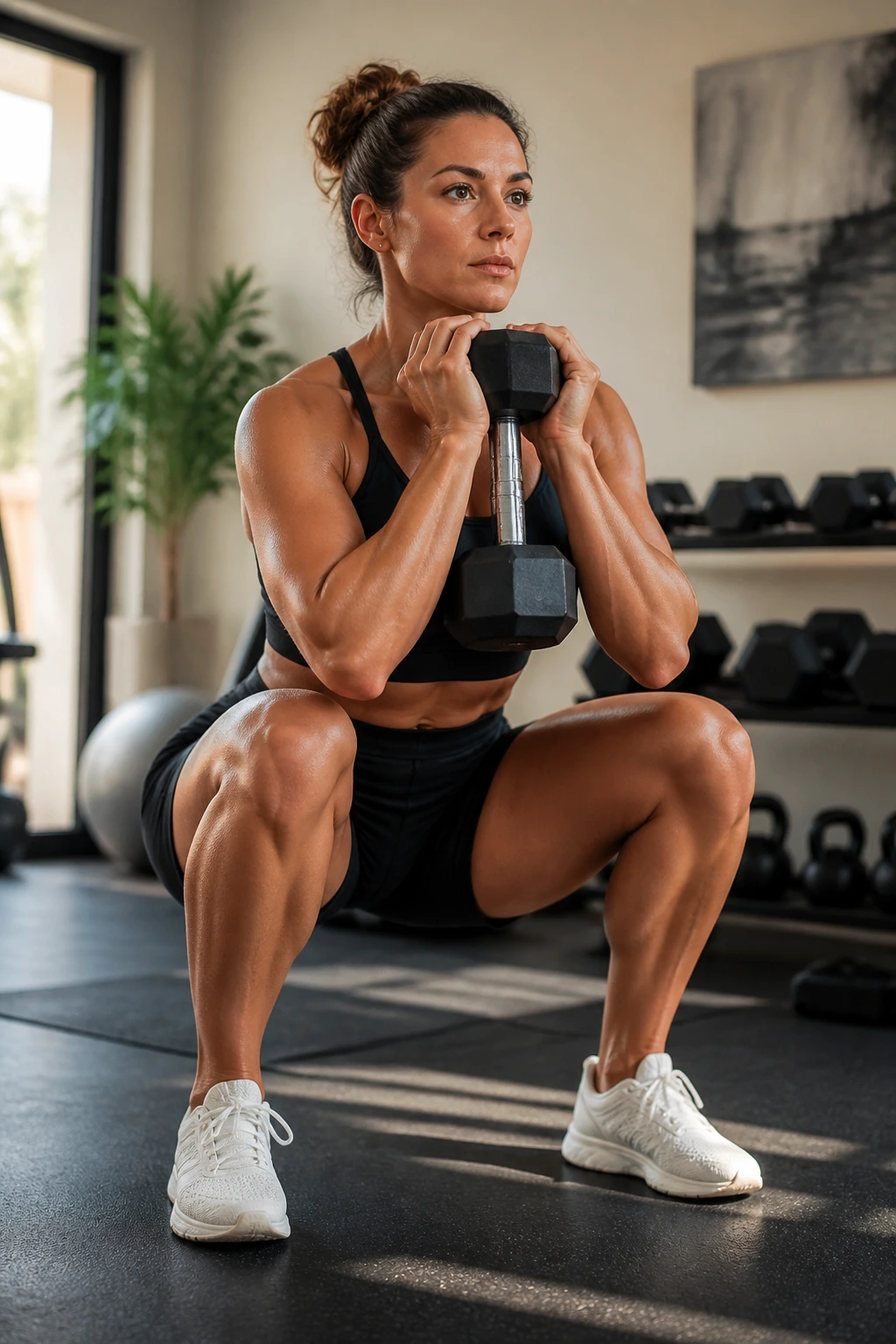
Use a pyramid. It keeps things interesting and gives the body a nice blend of strength, conditioning, and control. A simple version looks like this: 10 reps of each move, then 8, then 6, then back up to 8 and 10. Pick 4 moves—say squat, push-up, row, and dead bug—or use timed work: 30 seconds, 40 seconds, 50 seconds, 40 seconds, 30 seconds.
H3: How to Choose the Exercises
Choose one lower-body move, one upper-body push, one upper-body pull, and one core move. That gives you balance without overthinking it. If you want more conditioning, make the transitions brisk. If you want more strength, slow the lowering phase.
H3: What Good Looks Like
The first round should feel manageable. The middle round should ask for focus. The last round should make you glad you didn’t start too heavy.
A sample mix:
- Goblet squat
- Push-up
- Dumbbell row
- Dead bug or plank tap
This is the routine I’d hand to someone who wants a single session to repeat each week while everything else stays flexible.
Final Thoughts
Steady body tone comes from repetition that does not break you. That means enough resistance to keep muscle shape, enough cardio to keep your engine honest, and enough recovery to show up again without dreading the next session.
The trick is not to collect workouts like trophies. Pick three or four that fit your body, your equipment, and your tolerance for sweat, then keep rotating them. A strength day, a conditioning day, and a low-impact day will take you a lot farther than a random pile of half-finished routines.
And if one session starts feeling stale, that is usually a sign to change the format, not abandon the habit. Swap dumbbells for bands, stairs for incline walking, or sprint intervals for rowing. The shape stays; the scenery changes.
