



You can build stronger arms at home without turning your living room into a tiny gym. A pair of dumbbells, a resistance band, or even a sturdy backpack is enough to get real work done, and the best arm workouts for women at home are usually the ones that look plain on paper but force clean form.
A lot of home plans overfeed the biceps and ignore the triceps, which are the bigger part of the upper arm. That leaves the back of the arm underworked and the shoulders slouched forward, which is no one’s idea of a win.
The useful part is that you do not need fancy gear. You do need tension, control, and a plan that lets you progress: one more rep, a slower lowering phase, a heavier backpack, a tighter band. The CDC and the American College of Sports Medicine both back regular muscle-strengthening work each week, and this is exactly the kind of thing they mean.
Start with the moves below, and build the routine around the space you actually have.
1. Wall Push-Up Ladder for Triceps and Chest
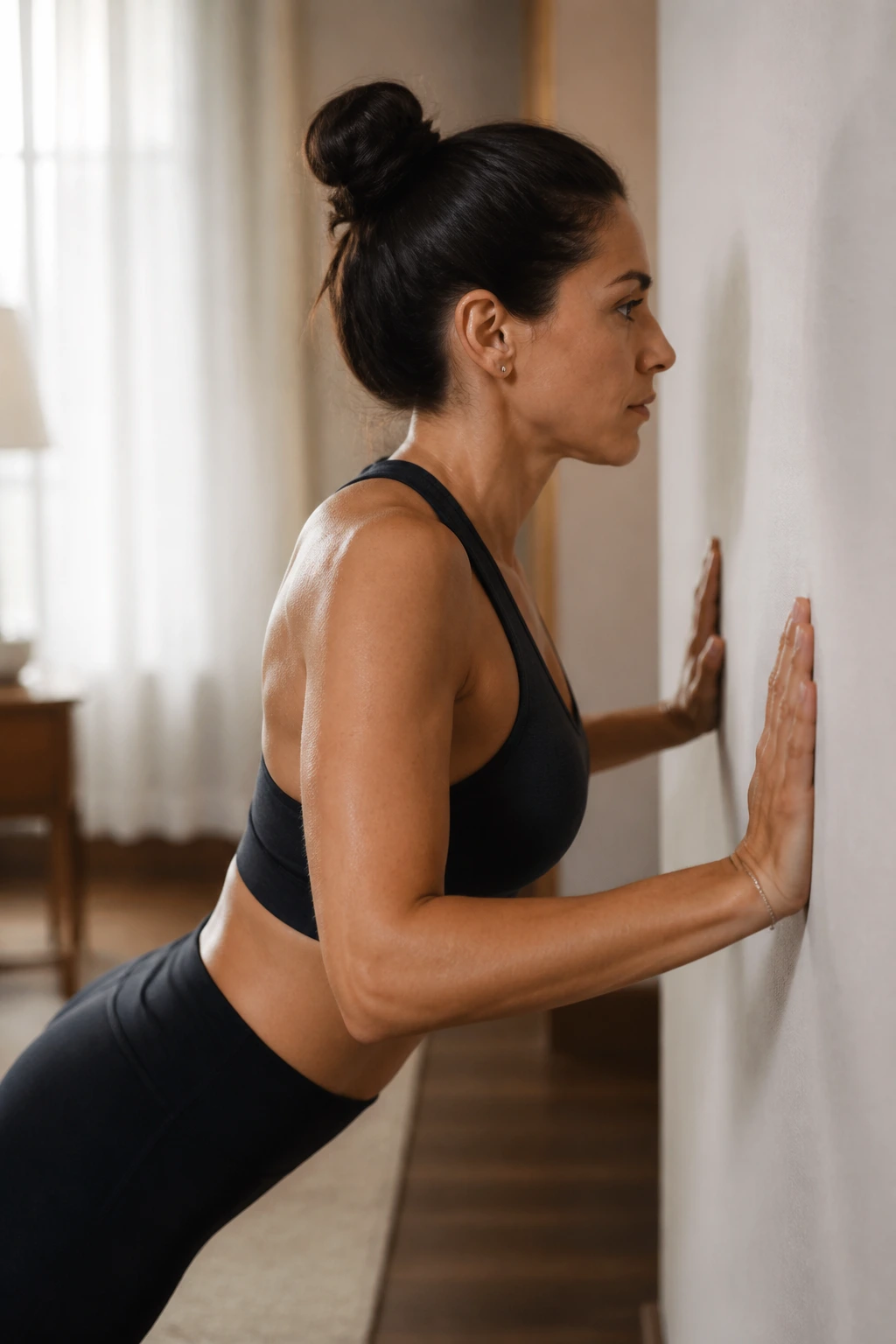
Wall push-ups look gentle, and that is the point. They teach your arms and shoulders to work together without asking your wrists or lower back to do anything dramatic.
Why It Works
The angle changes the load fast. Stand closer to the wall for an easier version, then step your feet back 6 to 8 inches when 12 to 15 clean reps start feeling routine. Keep your hands at chest height, your elbows at about a 30- to 45-degree angle, and your body in one straight line.
- Do 3 rounds of 12 to 15 reps.
- Rest 30 seconds between rounds.
- Lower until your nose or chest nearly touches the wall.
- Press through the middle of your palms, not your fingertips.
One good rule: if your shoulders shrug up toward your ears, step closer and make it easier.
This is one of those workouts that seems too simple until you do it slowly. Then the triceps show up.
2. Incline Push-Up and Shoulder Tap Combo
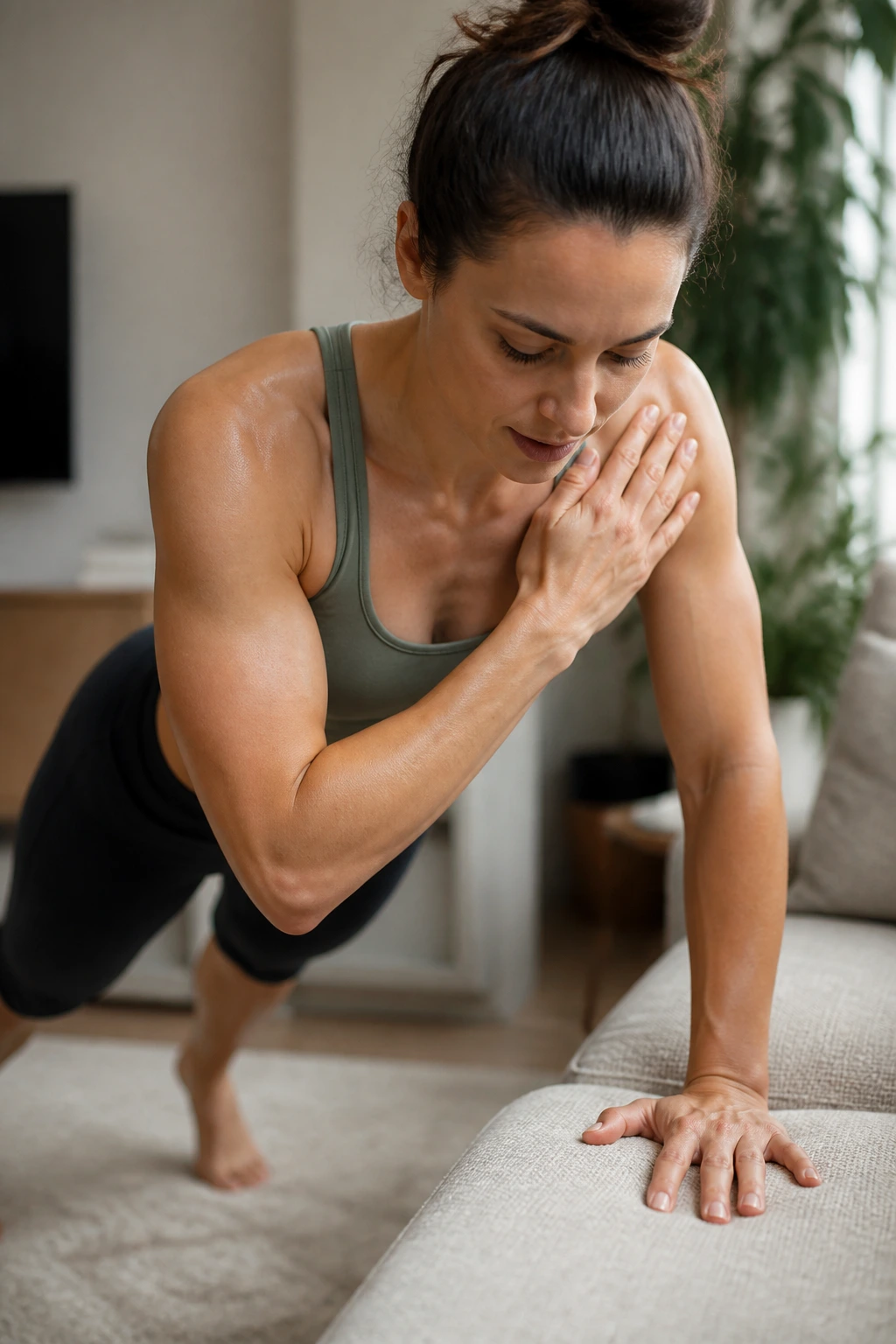
Want a step up from the wall without dropping straight to the floor? Use the edge of a couch, bench, or sturdy table and pair each push-up set with shoulder taps.
The push-up gives you pressing strength. The tap part asks your core to stay quiet while one arm lifts, and that little bit of anti-rotation work is doing more than it looks like. Three rounds of 6 to 10 incline push-ups followed by 10 shoulder taps per side is a solid place to begin.
Keep your hands planted under your shoulders, and do not race the taps. Slow feet and quiet hips matter more than speed.
One extra note: if your low back starts sagging, raise the incline. That is not a failure. That is smart training.
3. Chair Triceps Dip Series
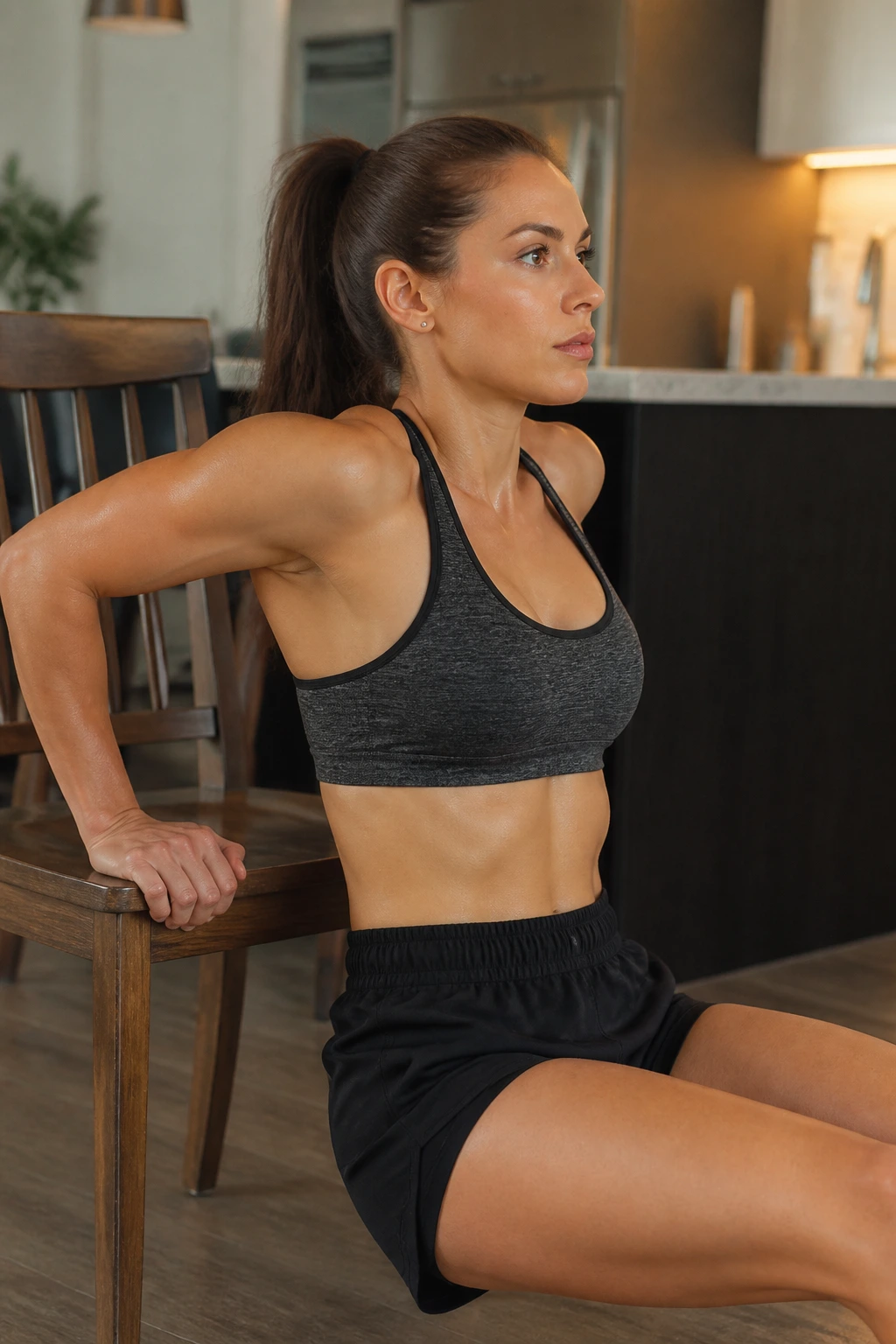
A sturdy kitchen chair can be enough, but only if it does not move. I like this move when someone wants the back of the arm to work hard without a lot of setup.
Setup Cues
Sit on the edge, place your hands beside your hips, and slide forward so your weight is supported by your arms. Bend the elbows to lower only until the upper arms are roughly parallel to the floor. Deeper is not better here.
- Use 2 to 3 sets of 8 to 12 reps.
- Keep your shoulders down.
- Stay close to the chair so the movement feels controlled.
- Stop if the front of the shoulder pinches.
A short range is fine. In fact, it usually works better than trying to sink as low as possible.
If chair dips bother your shoulders, skip them and move to floor triceps extensions later in the list. No drama. Just a different tool.
4. Dumbbell Biceps Curl Burnout
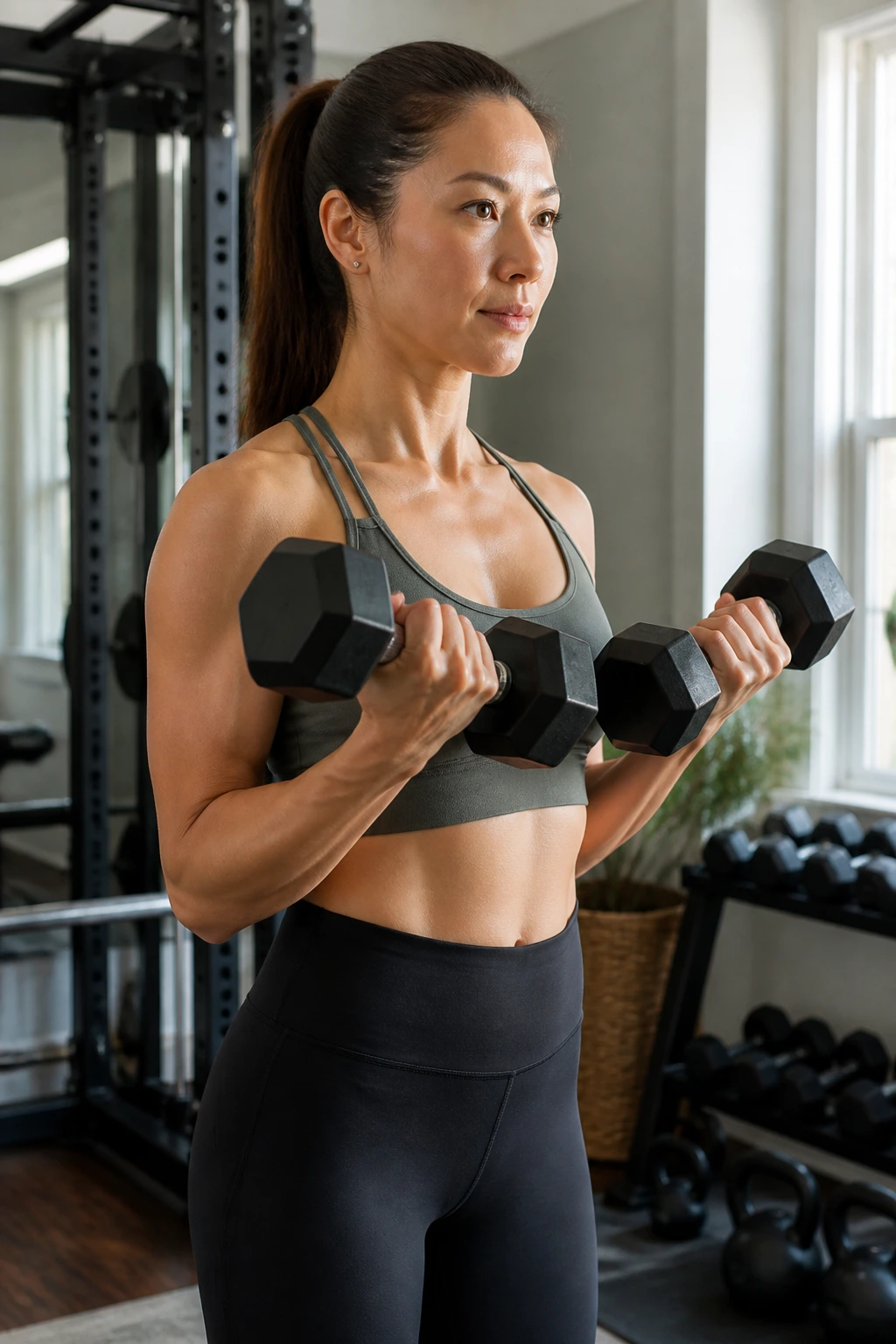
A dumbbell curl looks plain until the last three reps. That is where cheating starts to sound tempting, and that is exactly when the exercise gets useful.
Stand tall, pinch your elbows close to your ribs, and curl the weights up with a 3-second lower and a normal lift. The slower descent matters. It keeps the biceps under tension longer, and the burn comes on without needing heavy weights. Two to four rounds of 10 to 12 reps is enough for most home sessions.
If your wrists feel cranky, switch to hammer curls. Palms face each other, grip stays neutral, and the movement often feels friendlier.
Do not swing the weights. If your torso starts rocking, the dumbbells are too heavy or the set is too long.
The best curl work feels tidy. Not flashy. Tidy.
5. Hammer Curl to Press
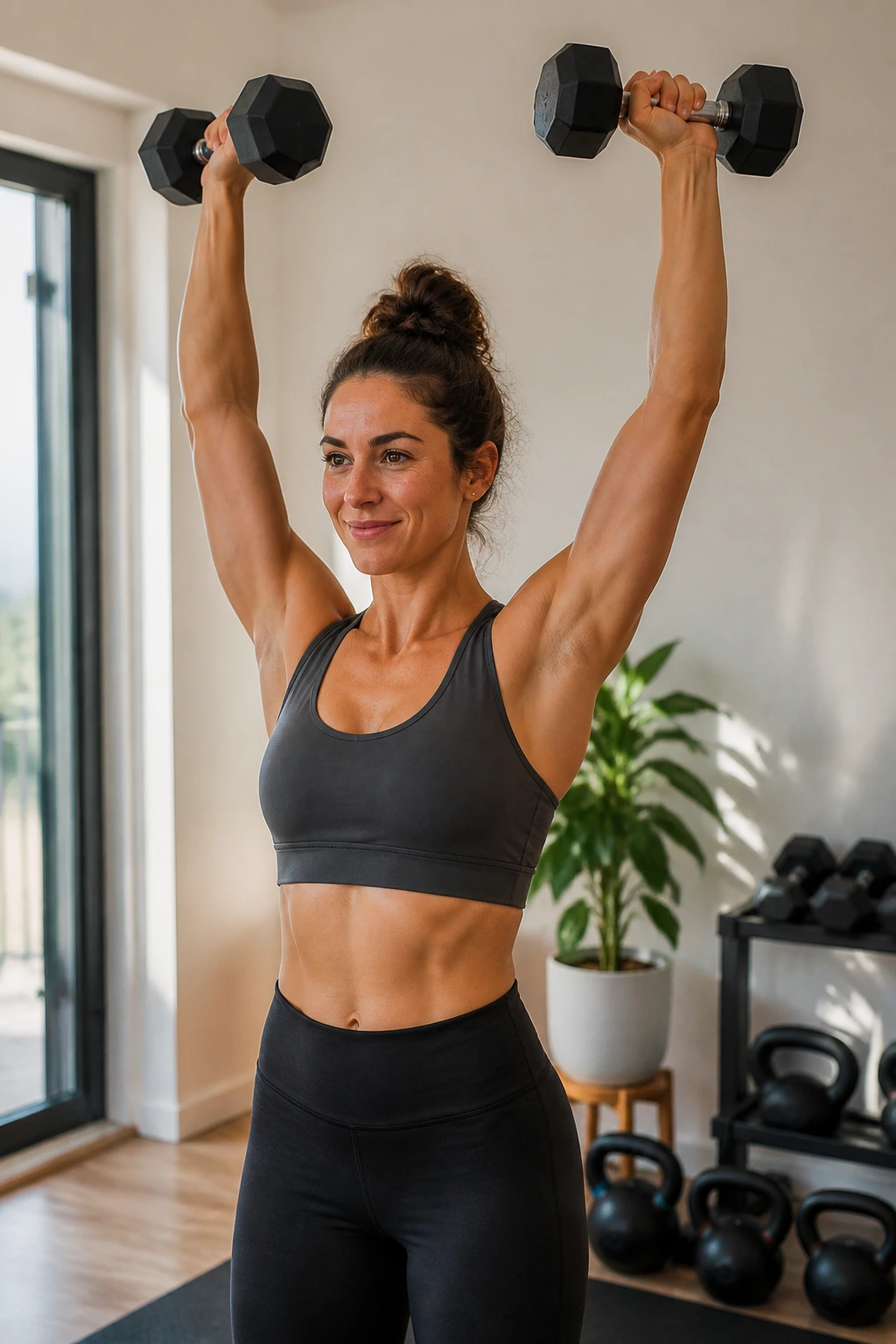
Why keep the curl and the shoulder press separate when you can link them into one clean sequence? A hammer curl to press saves time and lights up the biceps, front delts, and triceps in one shot.
How to Use It
Curl the dumbbells with your palms facing in, stop near shoulder height, then press them overhead with control. Lower them back to your shoulders before letting the weights return to the starting point. That pause at the top keeps the movement from turning sloppy.
- Try 3 sets of 8 reps.
- Use a weight you can control without leaning back.
- Keep your ribs down when the arms go overhead.
- If your lower back arches, stop the press at eye level.
This one fits best when you want a compact arm day and do not want to stand around restlessly between moves.
It also feels more athletic than a straight curl. A little less salon mirror, a little more real work.
6. Resistance Band Row and Curl Flow
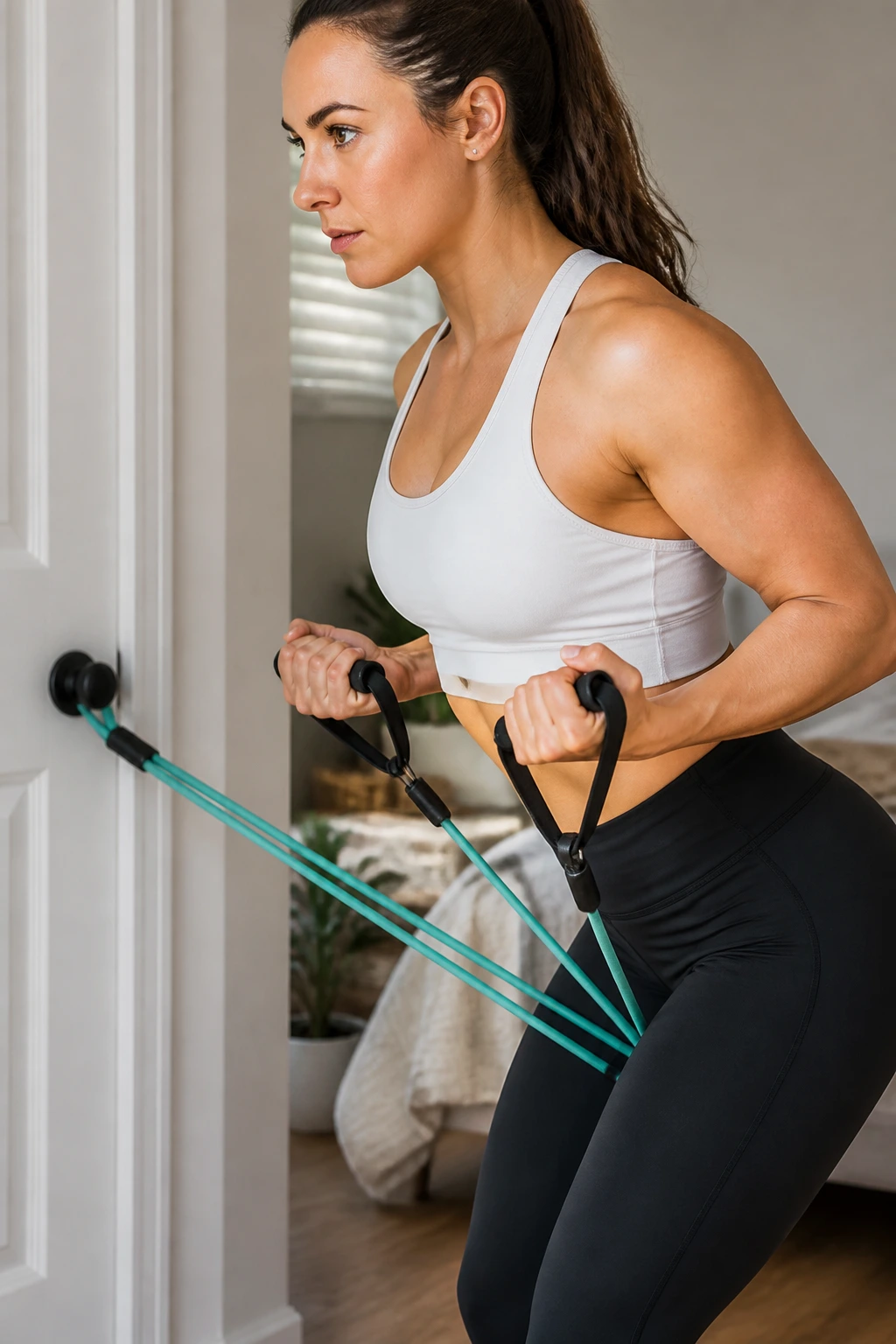
Unlike curls alone, this one works the biceps and pulls the shoulders back at the same time. That matters more than people think, especially if you spend a lot of the day with your chest rounded forward.
Anchor a resistance band around a door handle, sturdy post, or heavy table leg. Row the band toward your ribs, squeeze your shoulder blades for a second, then finish with a curl. You get back work, arm work, and a little posture correction without needing a machine.
What Makes It Worth Keeping
- Use 3 rounds of 10 rows and 10 curls.
- Keep the elbows close on the curl.
- Pull the row straight back, not upward.
- Step farther from the anchor if the band feels too light.
This is a smart choice if your arms look fine from the front but your upper back feels neglected. That combination is common.
Strong arms look better when the upper back helps hold them up.
7. Lateral Raise and Front Raise Circuit
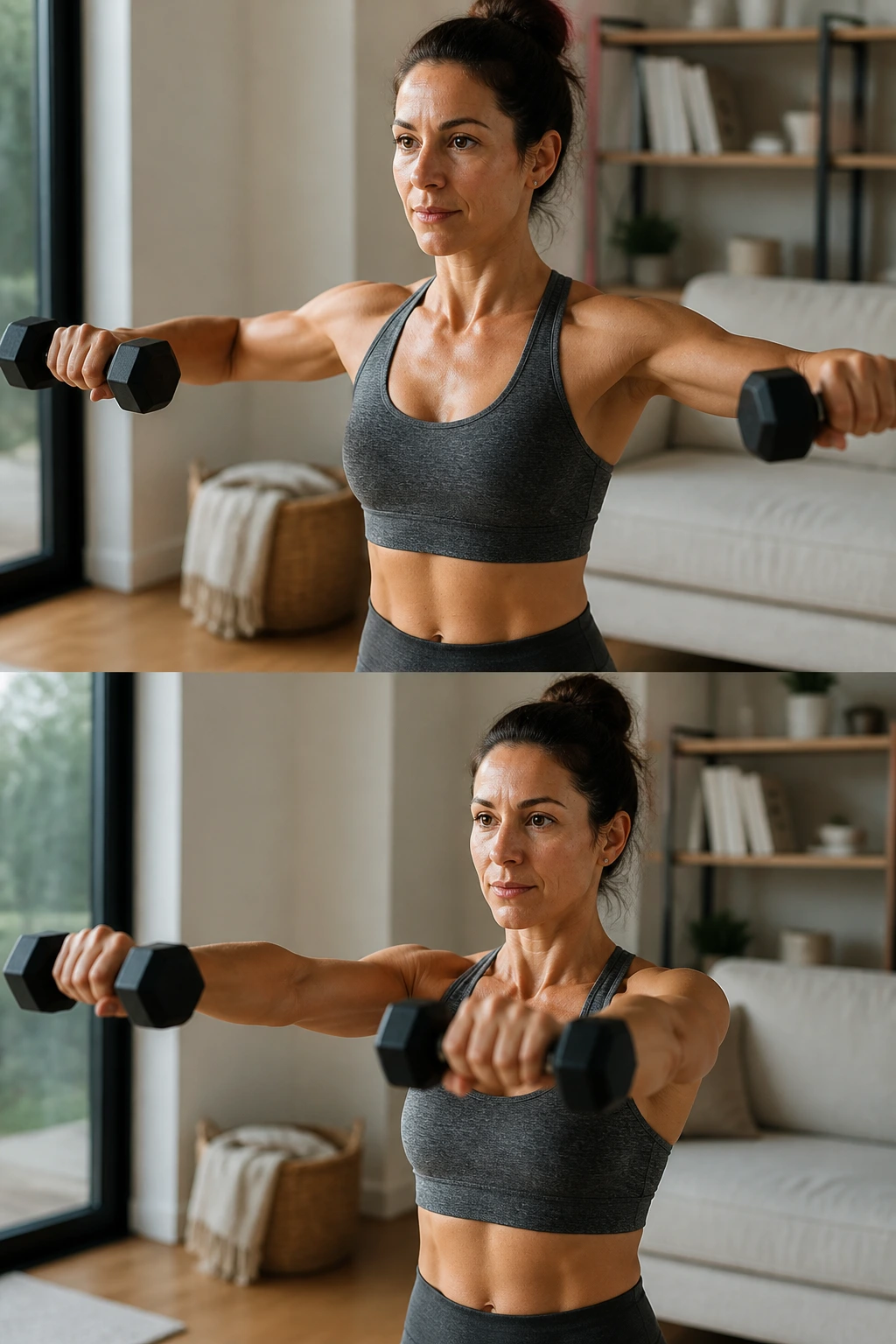
Shoulder work should not be the last thing left in the workout. It is the part that gives the arm line shape from the side, and it also helps with everyday lifting like carrying bags or putting dishes on a shelf.
Use light dumbbells here. Very light. One- to five-pound weights are enough for plenty of people, and if you start swinging, the weight is too heavy. Do 10 lateral raises, 10 front raises, then 10 tiny partial reps to finish each round.
Form Check
Keep a soft bend in the elbows and lift only to shoulder height. Higher than that usually turns into neck tension. Breathe out on the lift, and lower the dumbbells slowly enough that you can still feel your shoulders working.
One round can feel easy. Three rounds will not.
If your neck takes over, drop the weight and restart. The shoulders should do the work, not your traps.
8. Floor Triceps Extension Routine
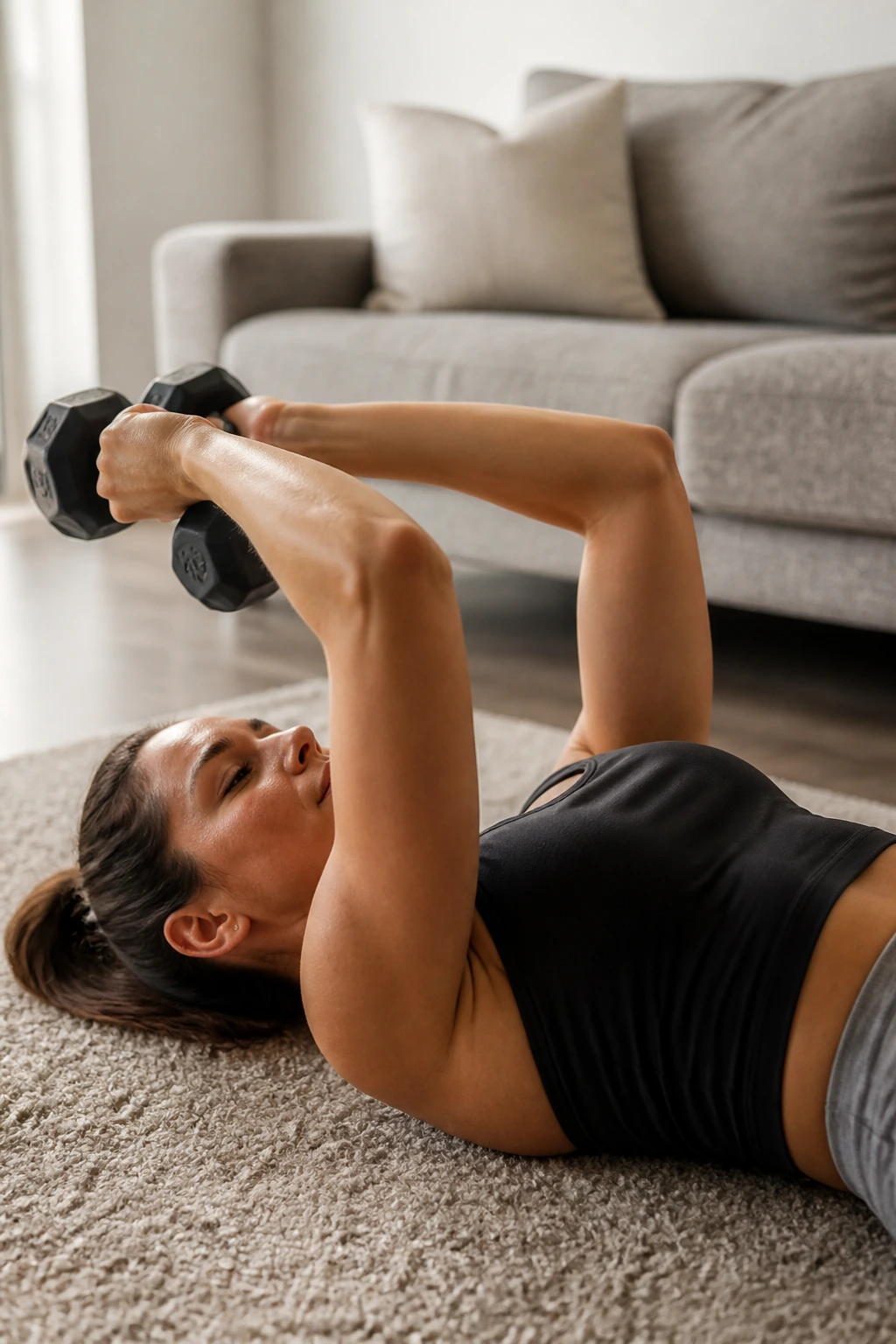
No bench? Fine. A floor triceps extension is one of the cleaner ways to work the back of the arm without asking the shoulder to go too far overhead.
Lie on your back, hold a pair of light dumbbells or one dumbbell with both hands, and bend only at the elbows so the weights travel toward the sides of your head. The floor limits the range, which is useful. It keeps the movement honest and usually feels kinder on cranky shoulders than overhead work.
A good starting point is 3 sets of 10 to 12 reps with a controlled lower. Keep your elbows pointed mostly up, not flaring all over the place.
If the weight bangs the floor, it is too heavy or your range is too deep. Shorten the motion.
This is the kind of triceps exercise I like when the goal is clean tension, not a circus trick.
9. Plank Shoulder Tap and Reach Sequence
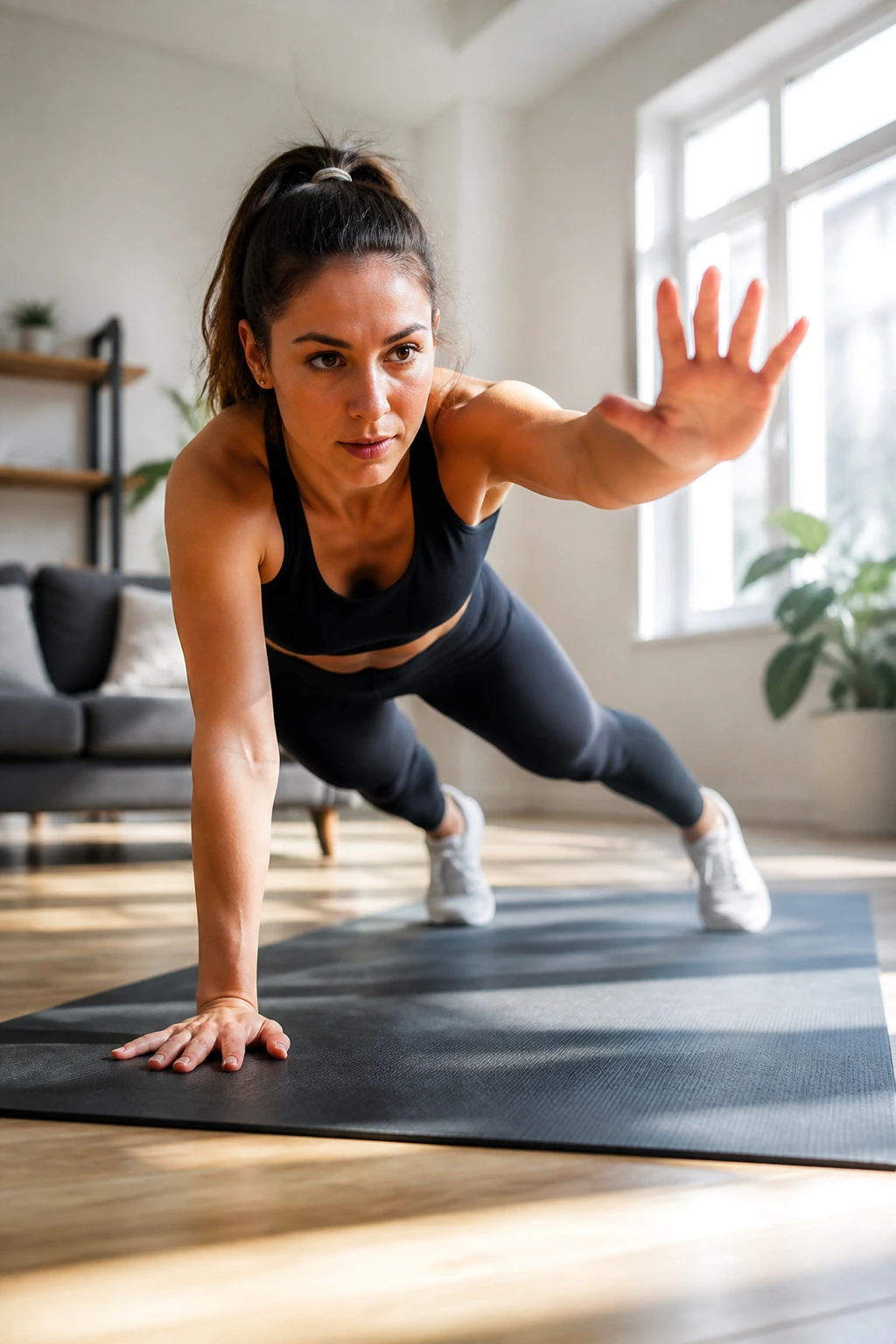
Put yourself in a high plank and you will find out fast whether your shoulders are awake. The tap-and-reach sequence makes the arms stabilize your body while the core tries not to wobble.
Start with shoulder taps: right hand touches left shoulder, left hand touches right shoulder. Then add a reach, extending one arm forward for a second before setting it back down. Keep the feet wider than hip-width if you need more balance. Narrow feet make it harder.
- Do 20 taps total.
- Add 10 forward reaches per side.
- Rest 20 to 30 seconds between rounds.
- Keep the hips as still as possible.
This is one of those home workouts that quietly improves a lot of things at once.
If your lower back starts sagging, move to an incline plank with hands on a couch or bench. Same pattern. Less strain.
10. Isometric Towel Curl Hold
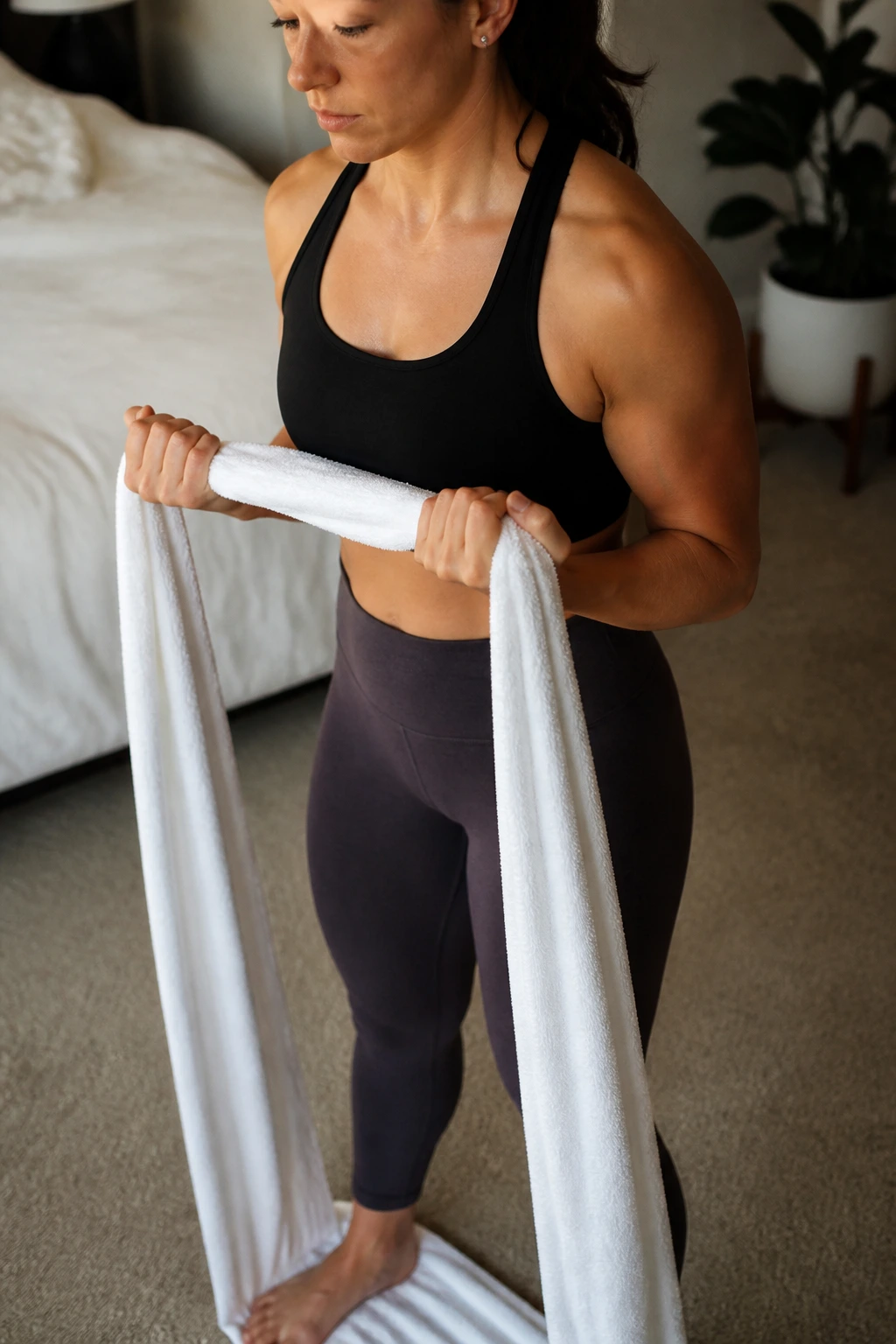
A towel can make your biceps work harder than you expect. Seriously.
Stand on the middle of a long bath towel, grab both ends, and curl upward against your own foot pressure. The legs anchor the towel while the arms try to bend the elbows. Instead of moving fast, hold the curl at about halfway up for 20 to 30 seconds. Then relax and repeat.
What to Watch For
- Keep the elbows pinned to your sides.
- Pull evenly with both hands.
- Hold the breath only if you enjoy feeling awful; otherwise keep it smooth.
- Use 3 to 5 holds per arm.
This is a good no-equipment option when travel, clutter, or a missed dumbbell day gets in the way. The tension is awkward in a good way.
And awkward is useful here. The biceps cannot fake much during an isometric hold.
11. Shadow Boxing Arm Blast
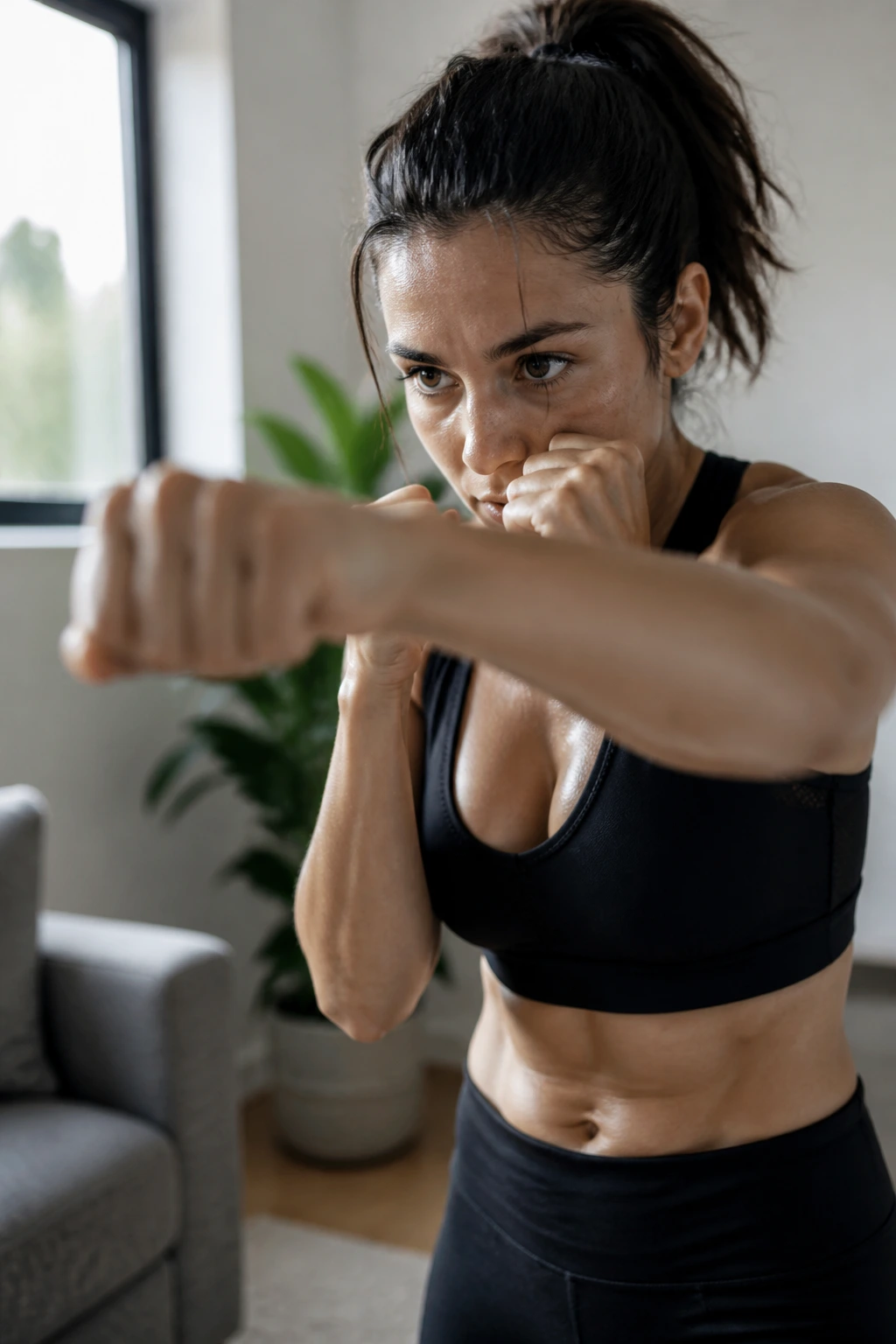
Can shadow boxing count as an arm workout? Yes, if you keep the hands up, punch with intent, and do not drift into a lazy flail.
Use quick jab-cross combinations, then throw a hook or uppercut every few punches. Keep the shoulders relaxed but active, and snap the punches back to guard. A round of 30 seconds on, 30 seconds off for 6 to 8 rounds works well. You will feel the shoulders, upper arms, and upper back before long.
How to Make It Count
Breathe through your nose if you can. Wrap the core around each punch. And keep your wrists straight when the fist lands in the air, because bent wrists turn a simple drill into a dumb ache.
This is the one to pick when you want your arm work to feel less like lifting and more like moving.
It also sneaks in a bit of cardio, which is handy when your energy is low and you want one session to do more than one job.
12. Pilates Arm Pulse Routine
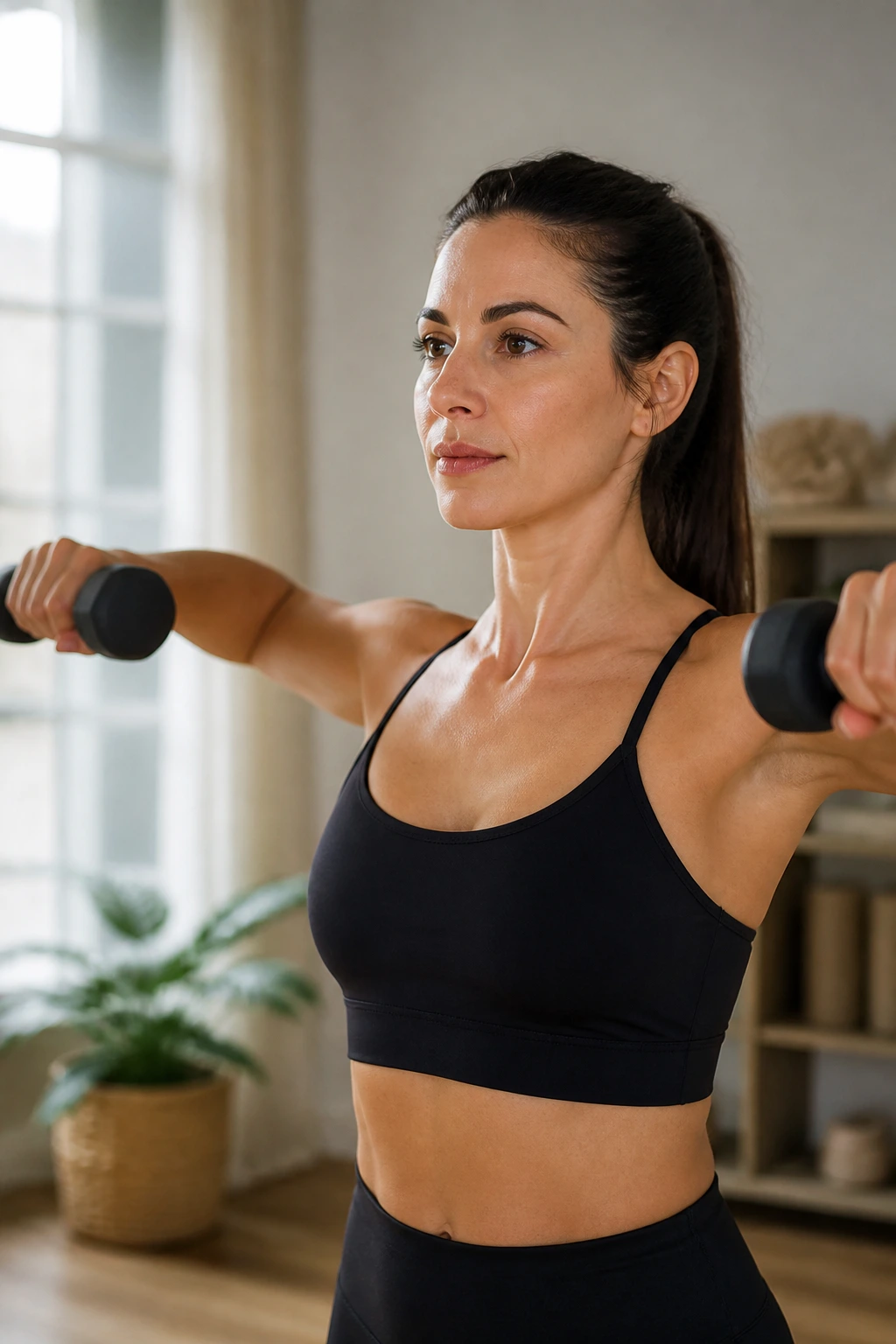
If heavy dumbbells feel like too much on tired days, tiny pulses still build a real burn. Pilates-style arm work is not about loading the muscle hard. It is about holding the muscle under tension long enough that it has to stay switched on.
Use 1- to 3-pound weights, or even water bottles, and lift the arms to shoulder height. From there, pulse the arms up and down a few inches for 20 to 40 reps. Add circles, overhead holds, or a narrow “goalpost” shape if you want more shoulder endurance.
The surprise is how fast the shoulders tire when the range stays small and the tension never drops. That is the whole point.
Best for days when you want to move well, sweat a little, and avoid the heavier work that can feel like too much. It looks modest. It is not.
13. Prone Y-T-W Shoulder Combo
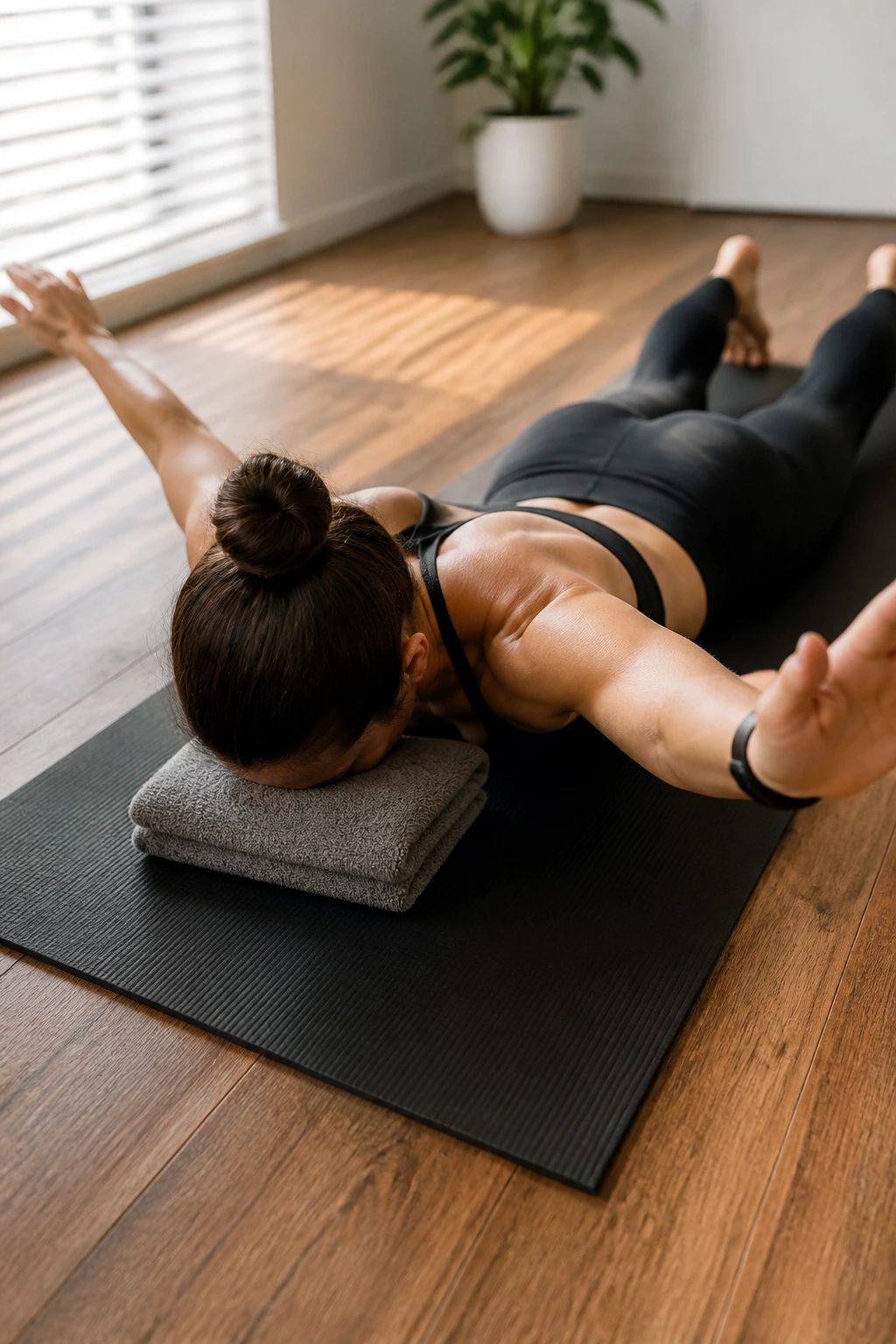
Lying face-down on a mat, with your arms spelling out a Y, then a T, then a W, looks almost too calm to matter. Then your upper back starts waking up.
Lift the arms an inch or two off the floor, pause, and lower slowly. The goal is not height. The goal is control. The shoulders should move without the neck grabbing everything. I like 6 to 8 reps of each shape, done slowly enough that you can feel the shoulder blades slide.
The Small Details Matter
- Keep the forehead on a folded towel.
- Reach long through the fingertips.
- Pause for 1 second at the top.
- Stop if the low back arches hard.
This is a sneaky good choice for posture and rear-delt work. It also pairs well with pressing exercises, because the back side of the shoulder finally gets a turn.
A lot of arm routines ignore this part completely. Bad trade.
14. Backpack Curl and Press Workout
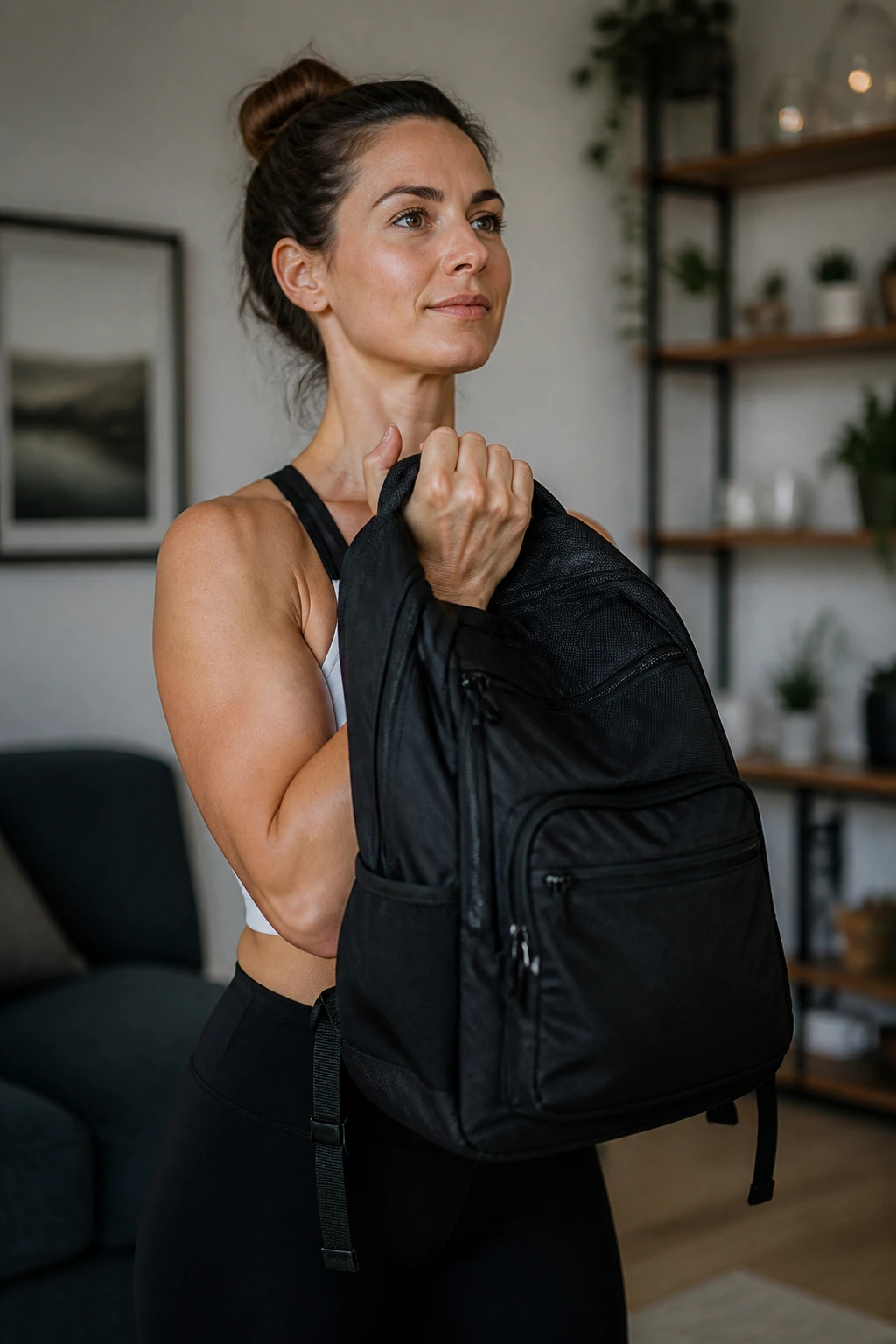
A backpack filled with books, canned goods, or water bottles can do a decent dumbbell impression if you pack it right. Keep the weight low in the bag and zip it closed so nothing shifts around on you.
Hold the top handle for curls, or grab the sides for a press. Do 3 rounds of 10 curls and 8 presses. If the bag is awkward, that is normal. Awkward is sometimes the whole point because your grip and stabilizers have to work harder to keep the load steady.
A Few Rules
- Test the straps before you start.
- Keep the bag close to your body on the curl.
- Press in a straight line, not behind your head.
- Stop if the fabric digs into your wrists.
This works well when you are between equipment options and want something heavier than a water bottle but cheaper than a full set of weights.
It is also plain practical, which I always like in a home workout.
15. Triceps Kickback Circuit
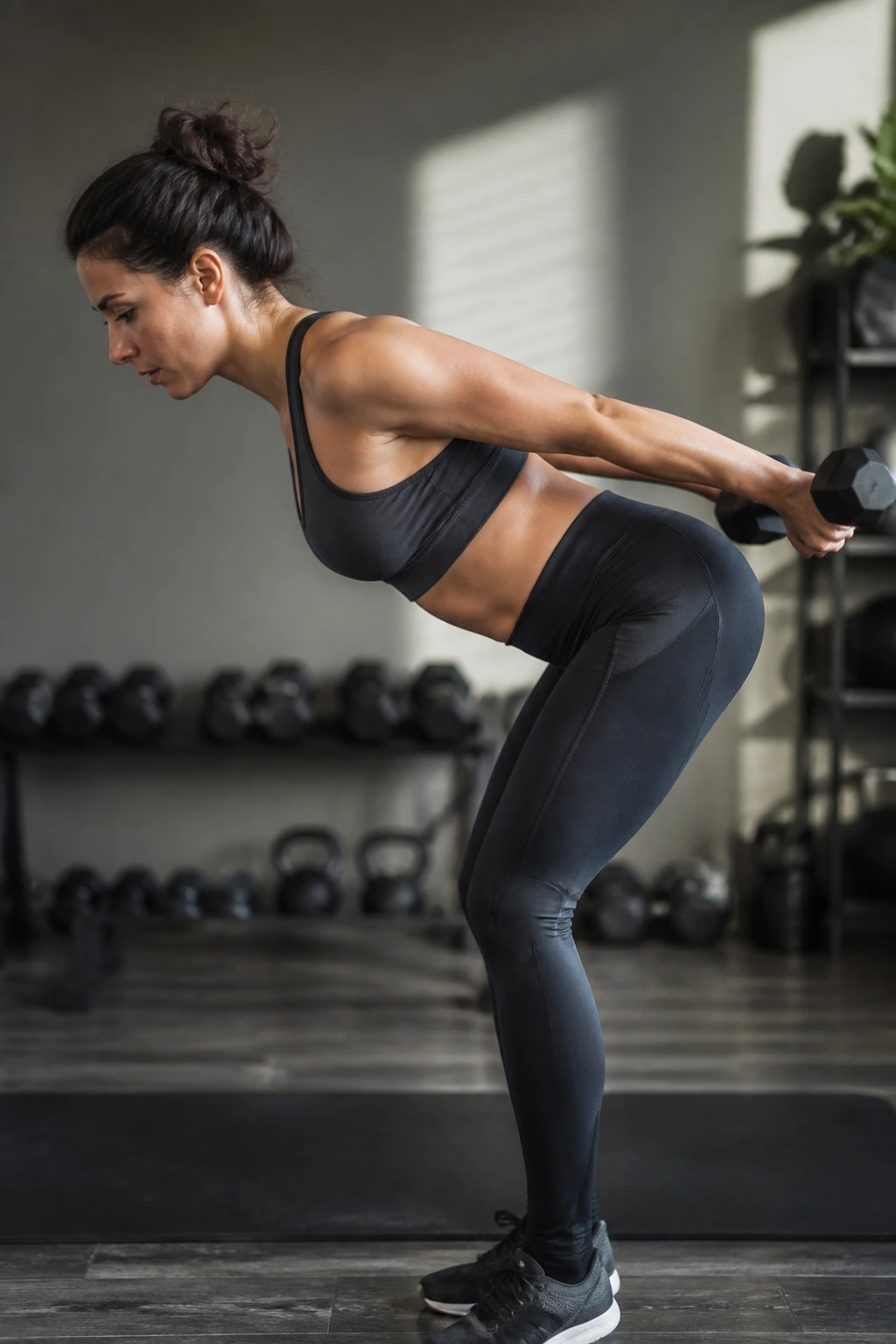
Triceps kickbacks have a bad reputation because people swing them like they are trying to swat a fly. Done properly, they are quiet, focused, and hard in the right spot.
Hinge forward at the hips, keep the upper arm parallel to the floor, and extend only the forearm back until the elbow straightens. That fixed upper-arm position matters. If the elbow swings, the triceps lose the job. Use a light weight and aim for 12 to 15 reps per side.
Quick Form Notes
- Keep your chest long, not rounded.
- Squeeze hard at the top for 1 second.
- Lower with control.
- Use a lighter dumbbell than you think you need.
This move is best when you want a triceps-only finisher after pressing or pushing work. It is not the main event. It is the clean extra set that finishes the job.
Light weight, strict form, and no body English. That’s the whole deal.
16. Slow Tempo Push-Up Challenge
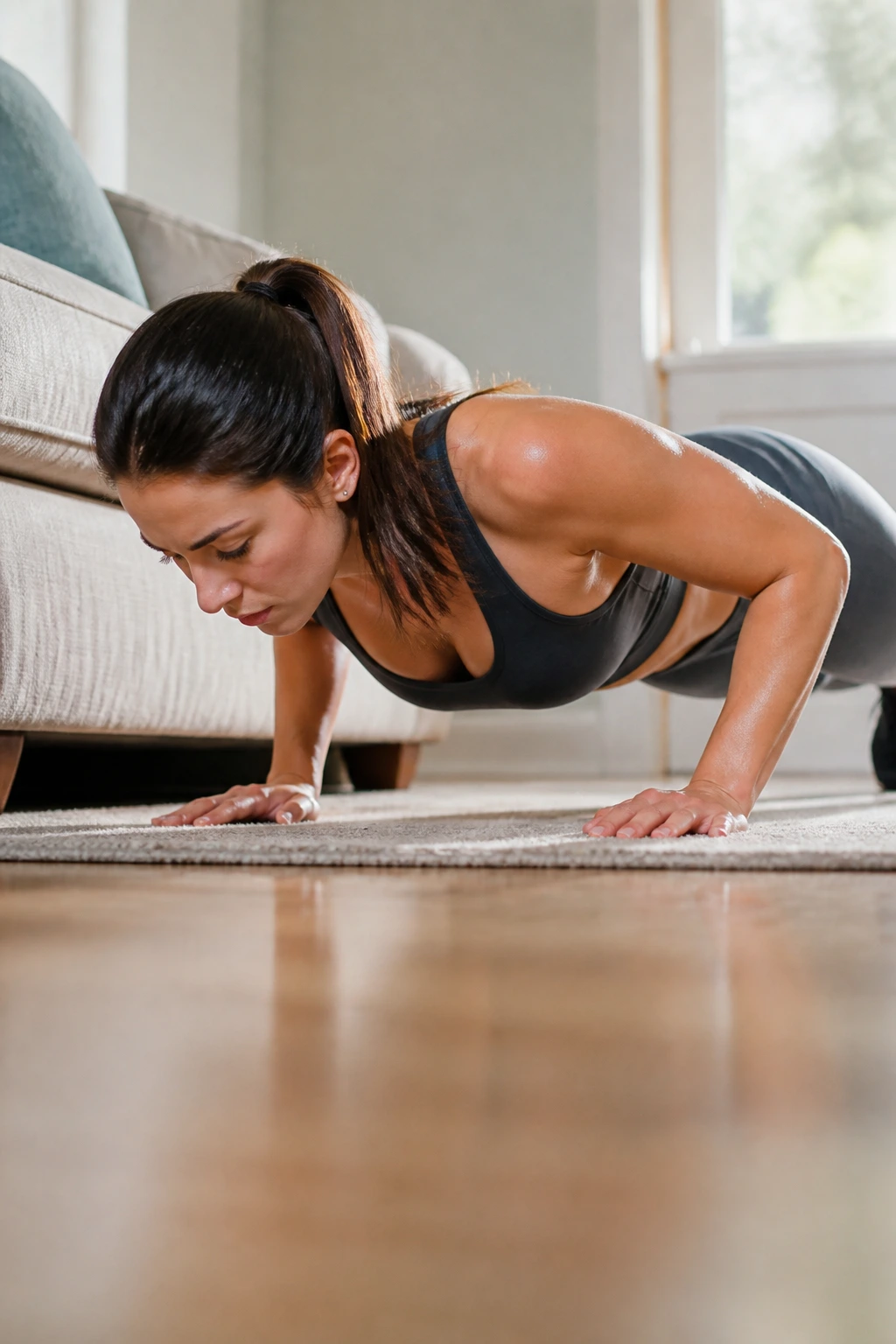
A slow push-up is mean in the nicest possible way. Lowering for 4 seconds, pausing for 1 second, and pressing up for 2 seconds turns a familiar move into a real test of control.
Start on the floor or an incline if needed. Keep the elbows from flaring straight out, and focus on a smooth line from head to heels. If you get halfway down and collapse, the version is too hard. Use a couch, a sturdy table, or your knees and keep the tempo strict.
A good target is 3 sets of 5 to 8 reps. That may not sound like much. It will when you actually count the seconds.
This is one of my favorites for people who want stronger arms without endless reps. Slow work exposes weak spots fast, and that is useful information.
If the last rep looks ugly, stop at the clean one before it. That is the rep that counts.
17. Wall Angels and Reverse Fly Combo
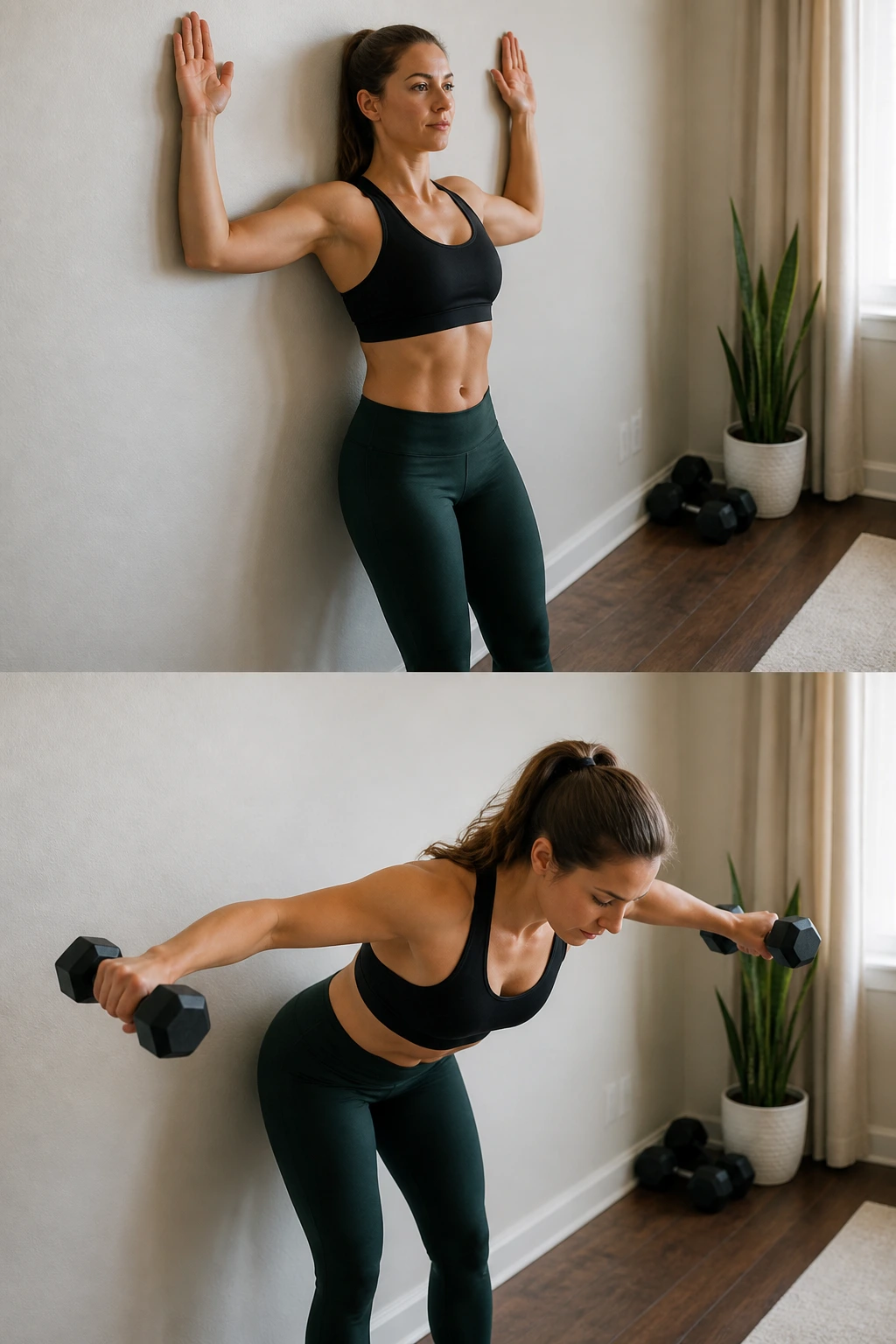
Some arm work should feel like opening a tight jacket after sitting too long. Wall angels do that. Reverse flys take the feeling and add a little strength behind it.
Stand with your back to a wall, ribs tucked, and slide the arms up and down in a snow-angel shape. Then hinge forward slightly and open the arms out to the sides for reverse flys with light dumbbells. Together, they help the shoulders move better and teach the rear delts to do their share.
- Do 2 rounds of 8 wall angels.
- Follow with 12 reverse flys.
- Keep the motions slow.
- Use light weight, or none at all.
This combo is especially useful if your shoulders live near your ears all day. It gives the front of the body a break and reminds the upper back how to help.
Boring-looking moves often age better than the flashy ones.
18. Farmer Carry Around the House
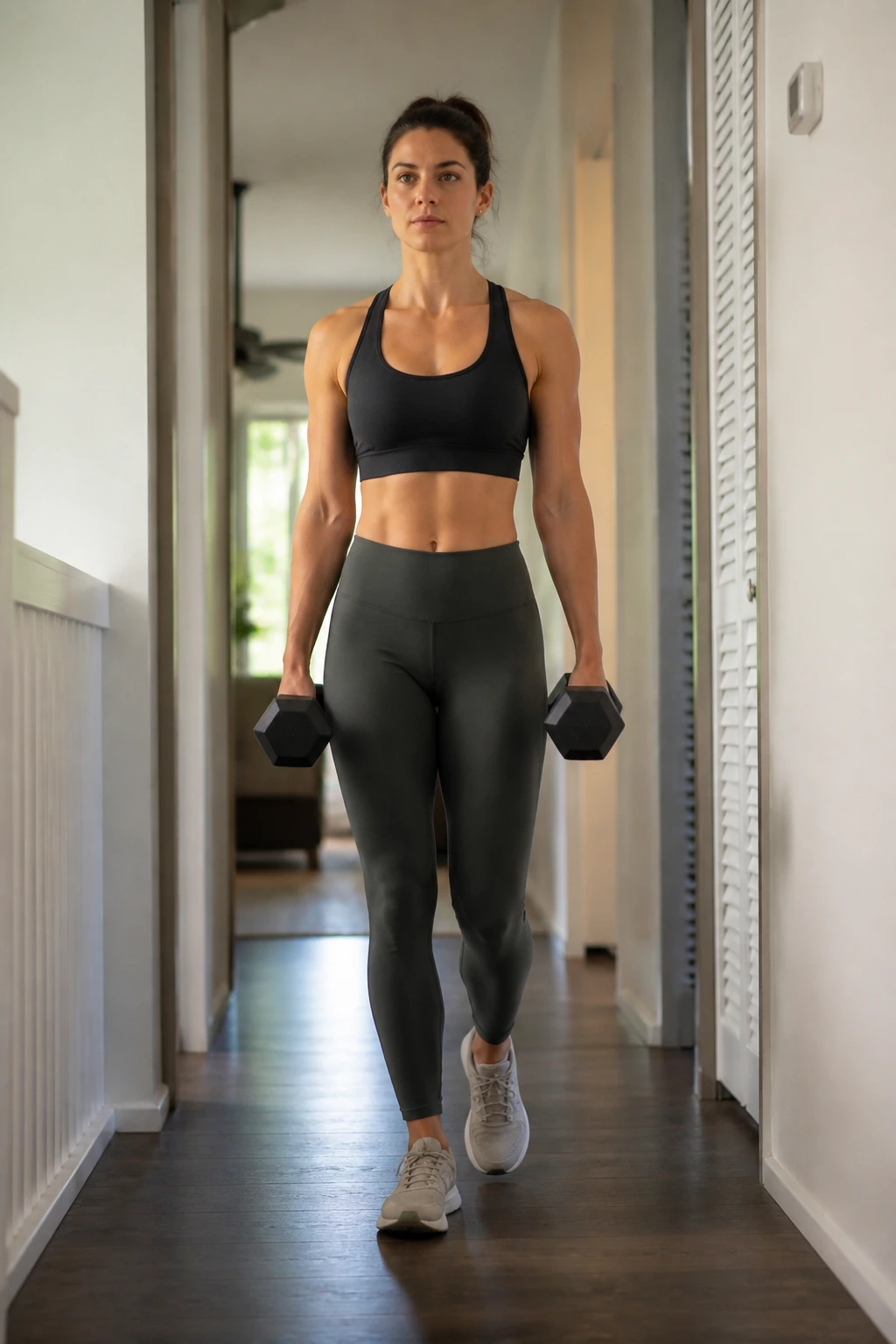
Carrying heavy bags across a room sounds simple because it is simple. That is why it works.
Grab two equal weights — dumbbells, grocery bags, water jugs — and walk for 30 to 45 seconds with your ribs stacked, shoulders level, and hands clenched hard around the handles. The forearms, grip, upper back, and even the triceps have to stay engaged to keep everything from wobbling.
Unlike curls, this one does not isolate anything. It trains the whole arm to hold on, which is a skill people use all day without thinking about it. It is also nice when you want a workout that feels less like repetition and more like carrying life with better posture.
Do 3 to 5 carries down a hallway or around the kitchen island.
If one side drops faster, the load is uneven. Fix the load before you fix your posture.
19. Boxed Interval Upper-Body Circuit
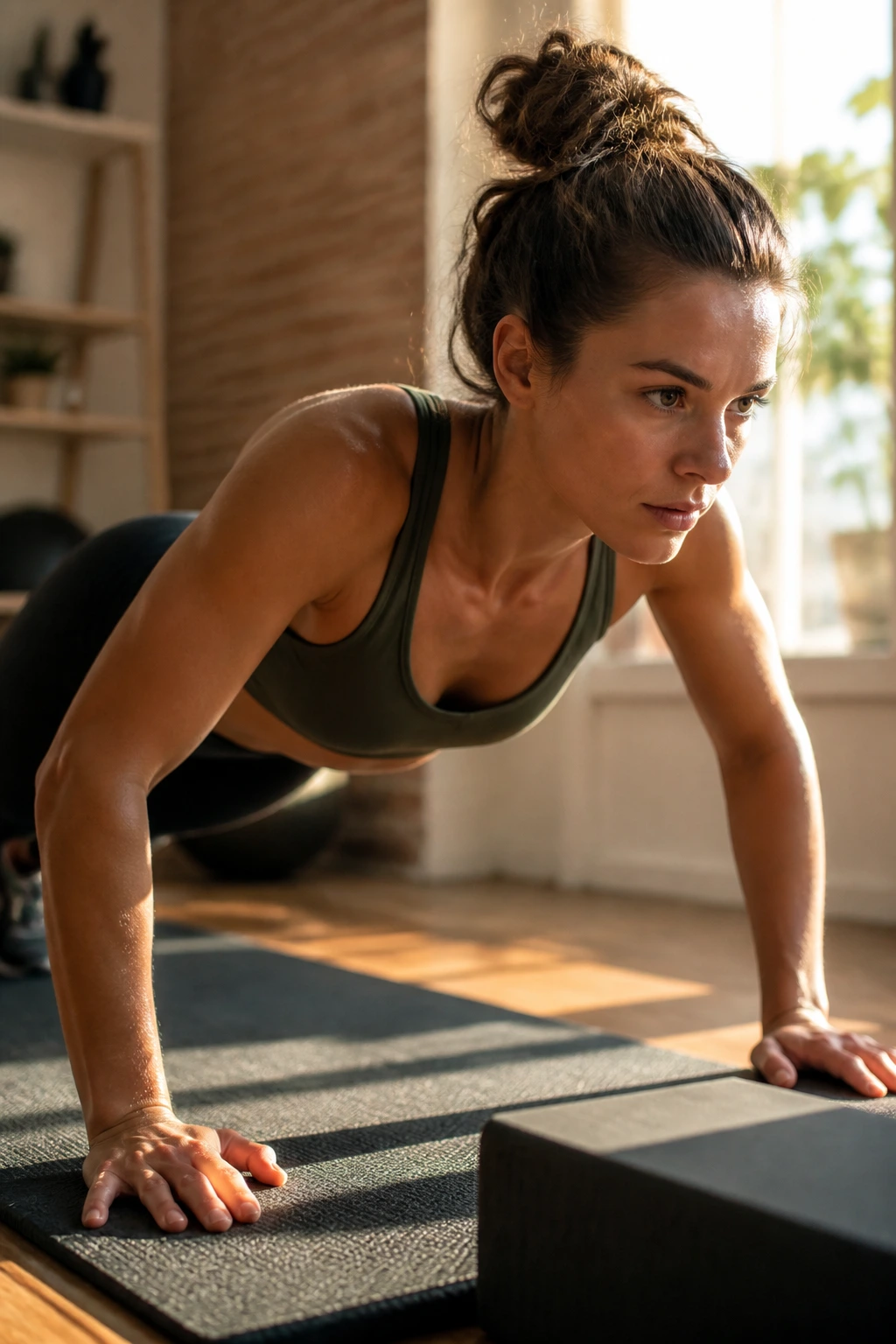
A boxed circuit is the one I would pick when you want to get sweaty, hit the arms from different angles, and avoid the “what should I do next?” problem. Pick four moves, give each one a fixed slot, and do not wander.
Try this layout:
- 30 seconds push-ups or incline push-ups
- 30 seconds biceps curls
- 30 seconds lateral raises
- 30 seconds triceps kickbacks
- 15 to 30 seconds rest
Repeat for 4 rounds.
The beauty of a timer-based circuit is that you stop making decisions halfway through. You just work. That sounds minor, but it’s one of the reasons people actually finish timer workouts at home instead of quitting after two exercises.
Use light to moderate weights, because the point is to keep moving with decent form, not to grind every rep. If the last round turns sloppy, shorten the intervals and keep the quality up.
20. The Five-Minute Arm Finisher That Ties It All Together
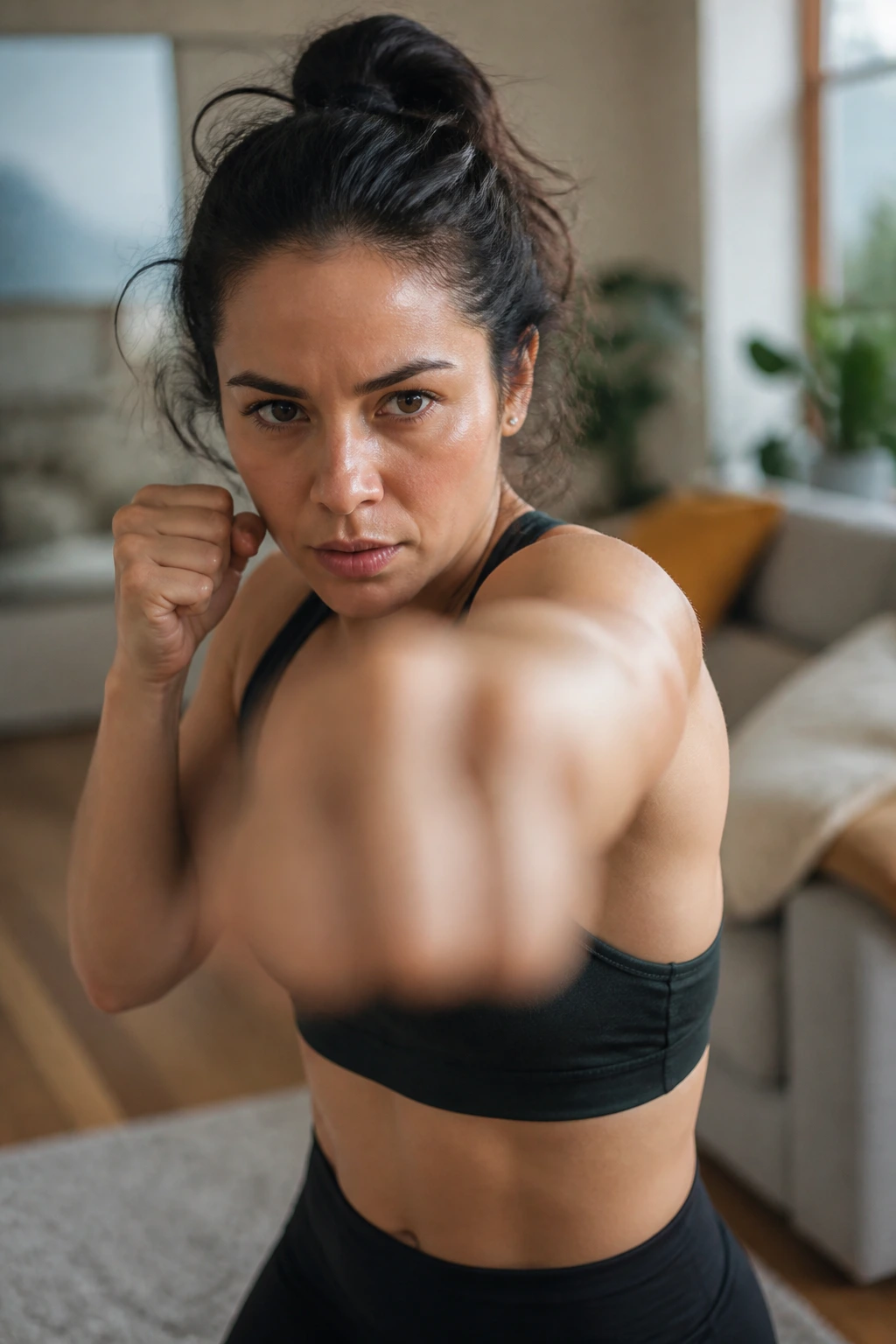
If you only have five minutes, this is the one I would keep. It hits the arms fast, and it does not need much space.
Set a timer for 5 rounds of 45 seconds work, 15 seconds rest. Rotate through shadow punches, plank shoulder taps, curl holds, and triceps pulses. The punches wake up the shoulders, the plank taps keep the core honest, the curl hold sets the biceps on fire, and the triceps pulses finish the back of the arm without a lot of drama.
Easy Way to Run It
- 45 seconds shadow punches
- 45 seconds plank shoulder taps
- 45 seconds isometric curl hold
- 45 seconds triceps pulses
- 15 seconds rest, then repeat
Keep the movements clean and stop before your form turns messy. A short finisher should sharpen the workout, not turn it into a flail.
That is the part a lot of home plans miss. They try to do too much, too hard, all at once. A cleaner plan, repeated two or three times a week, usually beats a random pile of exercises.
Pick four or five of these arm workouts, repeat them often, and make the weights or the tempo a little harder when the reps start to feel smooth. That is where the change comes from.
