



AMRAP workouts at home work best when the first round feels almost too easy. That sounds backward until you’ve tried to race a timer in a living room, on a rug that slides, with a chair acting as your only piece of equipment and your own pacing doing half the work.
AMRAP means as many rounds as possible in a set amount of time. The trick is not going out like a wild person in the first minute. The trick is finding a pace you can hold while your breathing climbs, your legs start to complain, and your form stays clean enough that you’re still getting training instead of making noise.
A good home AMRAP usually mixes squat, push, hinge, and core patterns, with a little cardio layered in if the space allows. That balance matters. A circuit built only from jumping moves can leave your knees and ankles grumpy. A circuit built only from push-ups can fry your shoulders and miss the point.
The workouts below are built for real homes: small rooms, low ceilings, upstairs neighbors, kids underfoot, and the occasional day when a backpack is the heaviest thing in reach. Some are beginner-friendly. Some are nasty in the best way. All of them can be run with a timer and enough floor space to lie down for a second after.
1. The 10-Minute Starter AMRAP
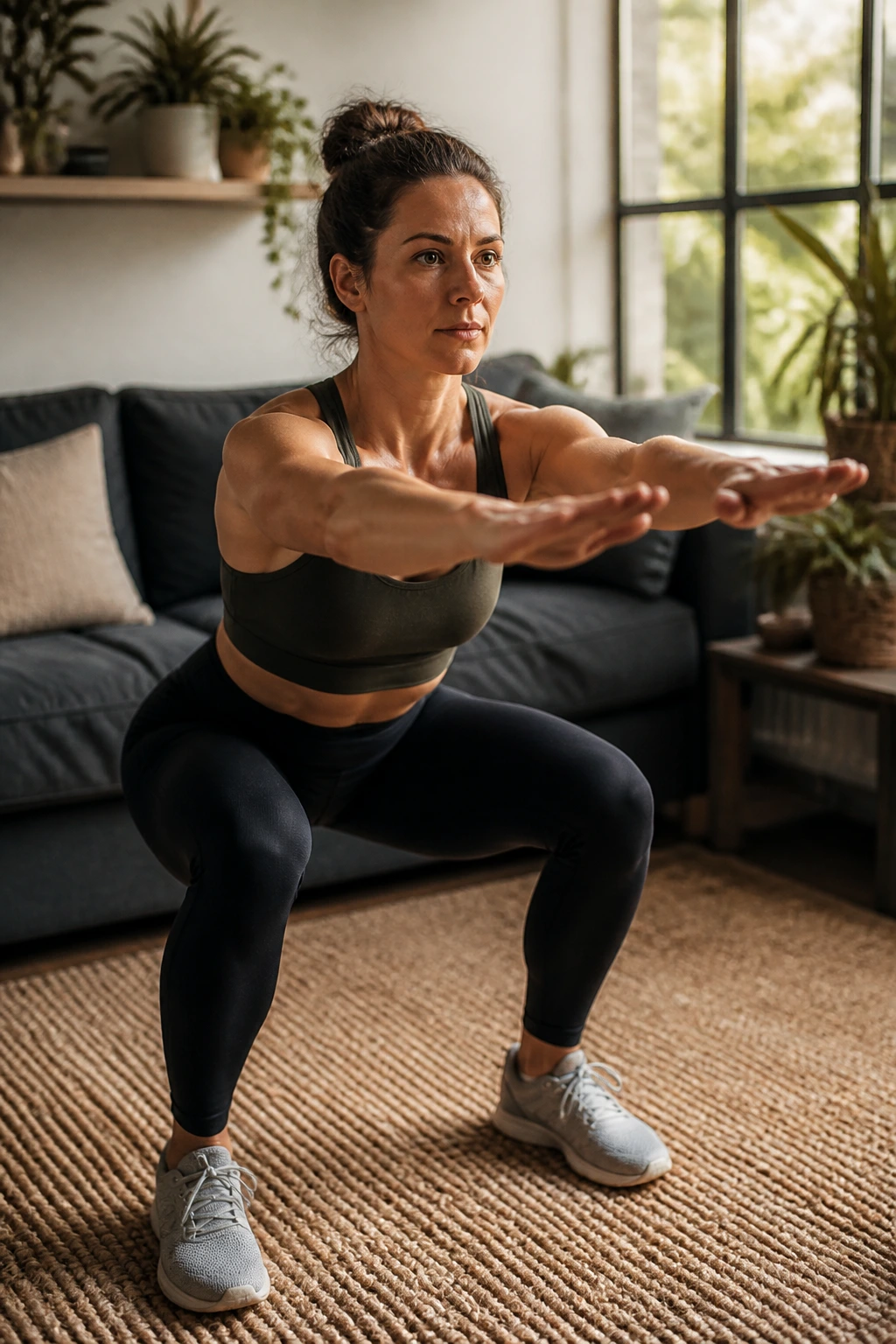
Start here if you want a clean, no-drama entry point.
Four moves. Ten minutes. Nothing fancy.
- 8 air squats
- 6 incline push-ups on a couch, table, or sturdy chair
- 10 mountain climbers per side
- 12 glute bridges
Run those four movements in order for as many rounds as you can in 10 minutes. Keep the first round calm. You should finish it thinking, that was fine, not I’m already cooked. That feeling matters because a starter AMRAP should teach pacing, not punish enthusiasm.
How to pace it
Squats first, always. They wake up the legs without spiking your heart rate too hard. Push-ups go second because your upper body is fresher there, and the incline makes the reps honest without turning them into a shoulder test.
Mountain climbers are the sneaky part. Don’t race them. A fast, sloppy set is useless. The goal is a steady knee drive and a braced trunk, not a blur of shoes on the floor.
Glute bridges finish the round by giving your lower back a break while keeping tension in the hips. Simple. Clean. Good practice.
Tip: If your form breaks before minute 6, drop the squats to 6 reps and the climbers to 6 per side. The workout should stretch you, not make you guess what went wrong.
2. The No-Jump Living-Room Burner
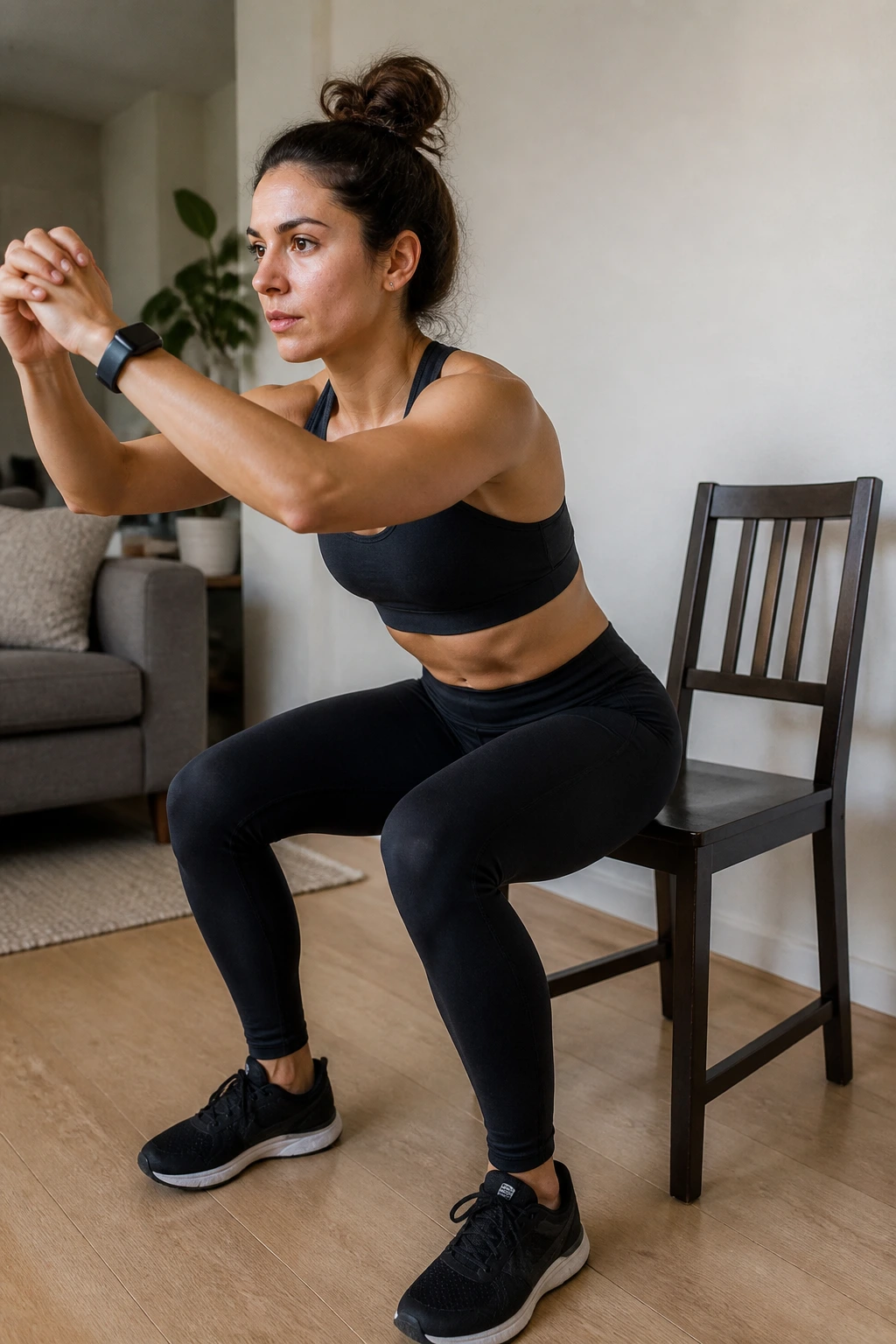
You do not need burpees to get sweaty.
That’s the nice thing about this one. It works in an apartment, on a creaky floor, or in a room where the ceiling fan is the only thing moving faster than you are. Set a timer for 12 minutes and repeat this circuit:
- 10 chair squats
- 8 wall push-ups
- 12 alternating reverse lunges
- 20 fast marches in place
The chair squats keep your depth honest. Touch the seat lightly, stand back up, and don’t collapse into it. Wall push-ups look easy until your chest and triceps start doing the real work. Reverse lunges are better than forward lunges here because they’re kinder to the knees and easier to control when you’re tired.
This workout is a favorite of mine for days when I want movement without the pounding. There’s still plenty of breathless effort. There just isn’t the thump-thump-thump of jumping across the floor.
If you want more heat, speed up the marches instead of making the reps sloppy. That’s the better trade.
3. The Push-Pull Backpack Circuit

Why use a backpack instead of chasing fancy equipment? Because a backpack is free, adjustable, and a little awkward in exactly the right way.
Fill it with books, a water bottle, or a towel so the load stops shifting too much. Then run a 15-minute AMRAP of:
How to run it
- 10 backpack bent-over rows
- 8 push-ups
- 10 backpack goblet squats
- 8 backpack floor presses
- 20-second plank
The rows and presses turn a simple home circuit into something that actually hits the upper body from more than one angle. That matters. A lot of home workouts lean so hard into pressing that the upper back gets ignored, and then posture starts to fold when fatigue shows up.
What makes it different
The backpack goblet squat changes the feel of the squat because the weight sits close to your chest. That makes the torso work harder to stay upright. The floor press is useful too. You do not need a bench. Lie down, press the bag or a pair of dumbbells from the floor, and stop when your elbows touch lightly.
Keep the rows strict. No yanking. If the bag swings, it’s too heavy or too loose.
Best for: anyone who wants a little more strength work inside an AMRAP without leaving the house.
4. The Lower-Body Chair Round
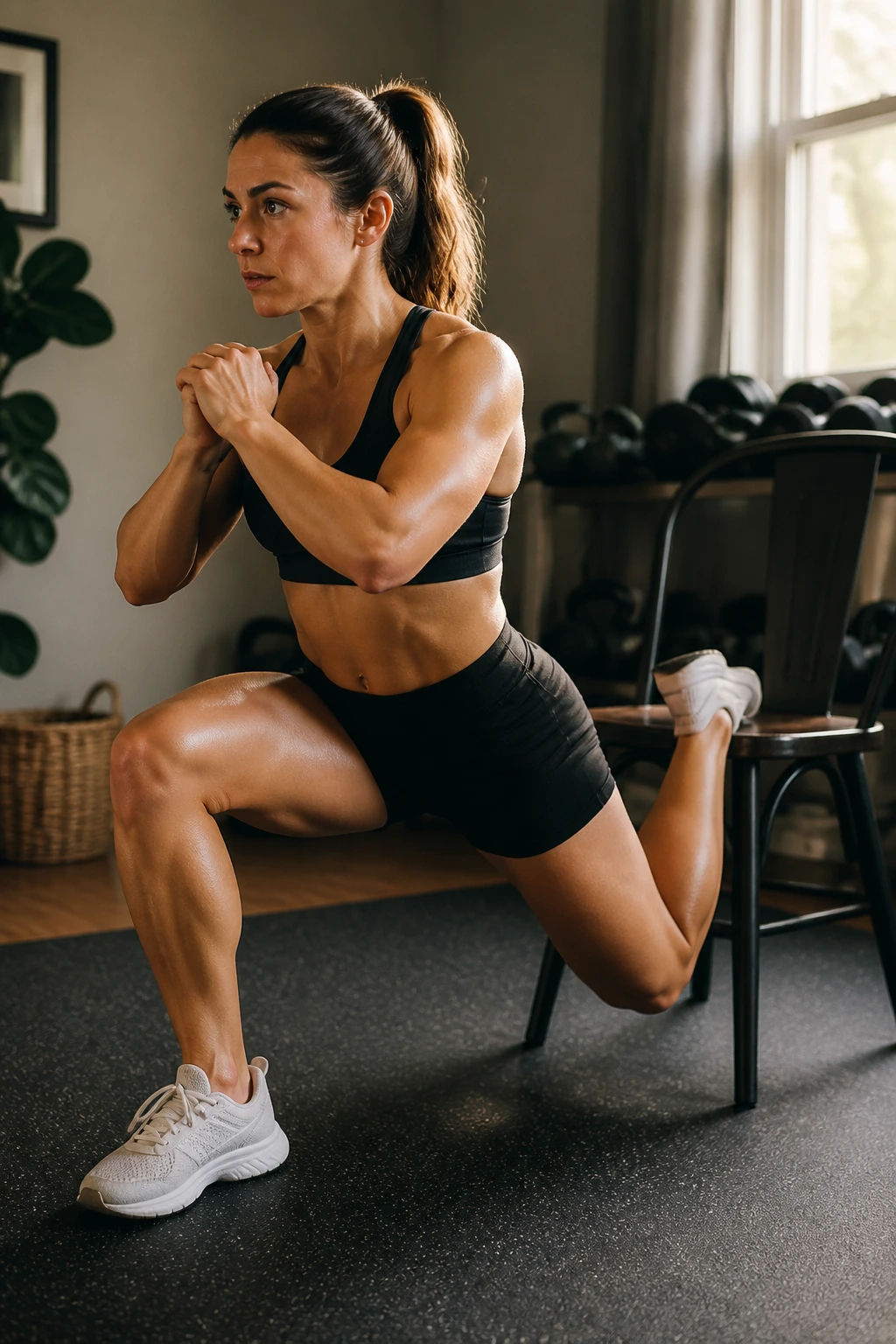
Picture a workout that makes your legs hate stairs for the next hour.
That’s this one.
Set a timer for 12 minutes and cycle through:
- 8 split squats on the right side
- 8 split squats on the left side
- 10 step-ups per leg on a sturdy chair or step
- 15 calf raises
- 20-second wall sit
The chair is the star here, but only if it’s stable. Put it against a wall. Test it before you load a single rep onto it. Falling off furniture is not a training method.
Split squats are the main event because they expose weak spots fast. If one leg is doing the work while the other just rides along, you’ll feel it within two rounds. Step-ups make you drive through the whole foot instead of bouncing off the toes. Calf raises sound tiny. They aren’t. By round four, they start biting.
Watch the wall sit
Do not sink and relax. Stay tall, ribs down, and knees tracking over the toes. That one position will tell you a lot about your leg endurance.
If you want a more brutal version, hold a pair of dumbbells or the backpack during the split squats. If you want a gentler version, cut the step-ups to 6 per leg and keep moving.
5. The Core-Control AMRAP
Most “core workouts” turn into neck strain and fast hip flexors. That’s not what this is.
Core work at home gets better when the movements force you to resist motion instead of just crunching hard. Set the clock for 10 minutes and repeat:
- 6 dead bugs per side
- 20-second side plank per side
- 8 bird dogs per side
- 15-second hollow hold
Slow is hard here.
The dead bug teaches you to keep your lower back heavy against the floor while the opposite arm and leg reach away. Bird dogs do something similar from hands and knees, but they add a little balance challenge. Side planks load the obliques and the tiny stabilizers that keep your torso from twisting around. The hollow hold is the honest finisher; if your lower back pops off the floor, shorten the hold and keep the shape tight.
One clean round is worth more than two ugly ones. That’s the whole point.
If your hip flexors take over, stop pretending and shorten the lever. Bend the knees a little more. Keep the ribs pulled down. Breathe.
6. The Dumbbell Complex That Feels Like One Long Set
This one is sneaky. It looks modest on paper and starts getting rude by round three.
Unlike a random mix of exercises, a dumbbell complex keeps the same pair of weights in your hands the whole time. You do not set them down until the round ends. That constant grip tension is part of the challenge, and it’s why this style works so well for home AMRAPs.
Run 12 to 15 minutes of:
- 6 dumbbell Romanian deadlifts
- 6 hang cleans
- 6 front squats
- 6 push presses
- 6 bent-over rows
Use light-to-moderate dumbbells. If the clean gets messy, the weight is too heavy. If the rows turn into jerking, same story.
The deadlift and front squat cover the legs. The push press adds power. The row keeps the upper back in the mix so the shoulders don’t get all the attention. A complex like this is best for people who want the feel of strength training without hopping between exercises or setting up a bunch of gear.
A pair of dumbbells is enough. One adjustable kettlebell can work too, though the rack position changes the rhythm a little. Either way, your breathing will tell you when the set is becoming real.
7. The Apartment-Safe Cardio Circuit
Sweat does not require jumping.
That’s the whole pitch. If you live above somebody, if your knees get cranky, or if you hate the sound of landing hard on a hardwood floor, this one gives you the heartbeat spike without the noise.
Set a timer for 14 minutes and keep moving through:
What to do
- 20 step jacks
- 20 skater steps, side to side
- 30 alternating punches in place
- 10 squat-to-reach reps
The step jacks replace jumping jacks without making the movement dull. Skater steps mimic lateral drive, which gets the hips involved. Punches sound simple until you keep them moving for several minutes; the shoulders burn, the heart rate climbs, and your midsection has to stay braced. Squat-to-reach adds a little full-body extension and keeps the rhythm from flattening out.
Do not sprint the punches in the first two rounds. That’s the trap. Smooth rhythm wins here.
If you want to make it harder, hold very light hand weights during the punches. If your shoulders start shrugging up toward your ears, drop the load and keep the speed. Ugly shoulders are not a badge of honor.
8. The Posterior-Chain Builder
Why does your lower back complain when your glutes are supposed to be doing the work? Usually because the hamstrings and hips never got enough attention in the first place.
This AMRAP fixes that pattern with 12 minutes of controlled work:
How to use it
- 8 single-leg Romanian deadlifts per side
- 12 glute bridge marches
- 8 towel hamstring curls
- 15-second superman hold
The single-leg hinge is the hardest move here, and it’s the one that matters most. Stand on one leg, reach the other leg back, and keep your hips square. A backpack or one dumbbell makes it harder, but bodyweight alone is plenty if you move slowly.
Towel hamstring curls need a smooth floor. Slide your heels out and back while your hips stay lifted. That movement lights up the back of the legs fast. Supermans finish the round by asking the low back to work without turning it into a crutch.
What to watch for
If your standing foot feels wobbly, slow down. If your hips twist open, shorten the range. If your hamstrings cramp on the curls, your bridge is dropping too low.
This is one of those workouts that feels almost gentle in the first round and then gets very specific. That’s not a flaw. That’s the whole point.
9. The Beginner Bodyweight Checkpoint
Some days, the right workout is the one that tells you exactly where you stand.
Use this 10-minute AMRAP when you want a simple bodyweight circuit with clean movement and no equipment.
- 10 chair squats
- 6 incline push-ups
- 8 reverse lunges per leg
- 20-second front plank
That’s it. Four moves. Easy to remember. Hard enough to matter.
If a full push-up is still too much, keep your hands on a countertop or sturdy table. If reverse lunges feel wobbly, hold onto a wall with one hand while you learn the groove. The point is not to hide the hard parts. The point is to make them repeatable.
A beginner AMRAP should leave you a little tired and a little more certain about what needs work. Maybe your legs are fine and your pushing strength is lagging. Maybe planks reveal that your breathing collapses when your core gets tired. That kind of feedback is useful.
Good sign: you can finish round one and still move with control.
Bad sign: you’re losing balance before the timer gets interesting.
10. The Full-Body Kettlebell or Backpack Grinder
A single piece of weight can carry a whole workout if you pick the right movements.
This 15-minute AMRAP is built around one kettlebell, one dumbbell, or a heavy backpack. If you have all three, fine, but you do not need them. The pattern matters more than the gear.
Move through:
- 10 goblet squats
- 8 one-arm rows per side
- 10 kettlebell or backpack deadlifts
- 8 floor presses per side
- 20-meter suitcase carry or 30-second march in place with the weight in one hand
The suitcase carry is the part people underestimate. Holding a load on one side forces your torso to resist tipping. That’s core training in a plain shirt and sneakers. The rows and floor presses balance the front-side work so your shoulders don’t get stuck doing all the heavy lifting.
Carries matter.
If you’re in a tight space, march slowly in place with the weight in one hand. Keep the ribs down and the body tall. No leaning. No shrugging. If your grip gives out before your legs do, that’s useful information too.
This workout is best for anyone who wants a harder strength session without setting up a lot of equipment around the room.
11. The Jump-Rope-Free Conditioning Block
A rope is nice. It’s also optional.
If you like the breathing pattern of jump rope but don’t want the impact or noise, this AMRAP is a cleaner fit. Set a timer for 12 minutes and repeat:
- 20 boxer shuffle steps
- 10 squat thrusts
- 20 alternating knee drives
- 10 plank shoulder taps
The boxer shuffle keeps your feet light without the sharp landing of rope jumps. Squat thrusts give you the burpee feel without the jump at the top. Knee drives and shoulder taps keep the heart rate moving while asking the trunk to stay steady.
Unlike jump rope, this circuit doesn’t punish you if your ceiling is low or your ceiling light is hanging right where a rope would clip it. That sounds small until you try to train in a real home and realize the room itself can be the obstacle.
Best for people who want a conditioning block that feels athletic but stays quiet. If you miss the rope, you can add quick wrist circles between rounds and keep the rhythm in your hands. The speed comes from your feet anyway.
Keep the reps crisp. Sloppy fast is still sloppy.
12. The Mobility-Heavy Recovery AMRAP
Slow work can still bite.
That surprises people. A mobility-focused AMRAP doesn’t chase exhaustion through jumping or heavy weights. It gets difficult because your joints have to move through awkward positions while your breathing stays calm and your control stays honest.
Set 10 minutes and cycle through:
What makes it work
- 4 inchworms
- 6 cossack squats, alternating sides
- 4 world’s greatest stretch reps per side
- 20 seconds of bear crawl hold or slow crawl steps
Inchworms wake up the shoulders and hamstrings while gently loading the spine. Cossack squats open the hips and inner thighs in a way that basic squats never touch. The world’s greatest stretch is a mouthful, but the movement is useful: step into a lunge, rotate, and feel the ribs and hips untwist. Bear crawl work ties it together by asking the shoulders, core, and hips to stay organized at once.
This is a smart AMRAP for the day after hard training, long sitting, or a stiff lower back that wants movement more than punishment. The pace should stay smooth enough that you can breathe through your nose for most of it. If you can’t, slow down.
Not every good workout leaves you wrecked. Some leave you moving better, and that counts.
13. The Shoulder-and-Posture Reset Circuit
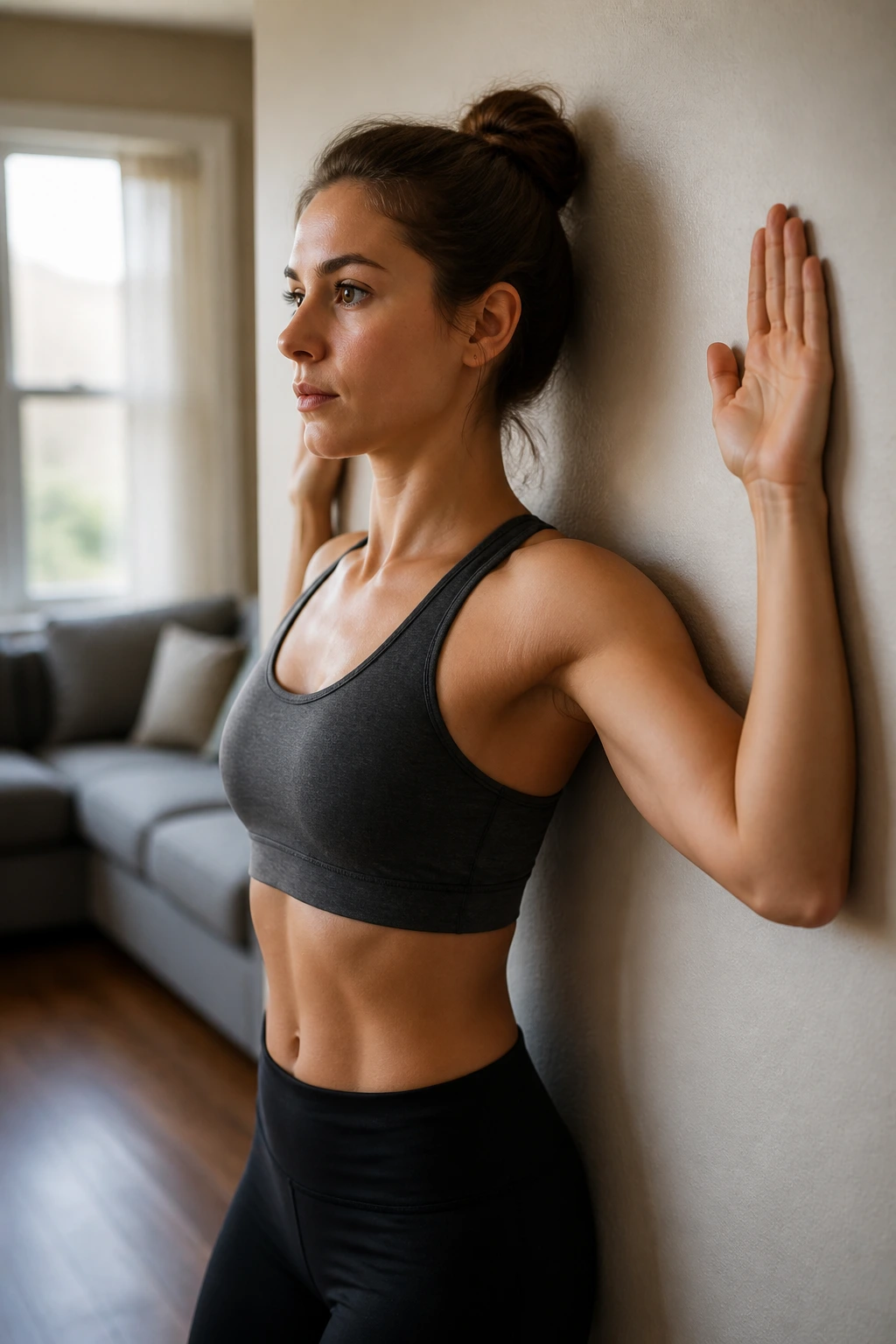
Can a home AMRAP make your upper back feel better instead of just tired? Yes. If you pick the right moves.
This 12-minute circuit puts attention on the rear delts, mid-back, and shoulder control:
How to run it
- 10 scapular push-ups
- 8 prone Y raises
- 8 prone T raises
- 10 backpack rows
- 20-second wall slide hold
Scapular push-ups are tiny and annoying, which is why they work. Keep your arms straight and let only the shoulder blades move. Prone Y and T raises can be done on the floor, face down, with no weight or very light water bottles. Backpack rows add a little load without turning the whole thing into a strength session.
The wall slide hold is where people usually cheat. Ribs flare. Chin juts forward. Hands drift away from the wall. Don’t let it happen. Keep the lower back long and the neck quiet.
What to watch for
If your shoulders pinch on the raises, shorten the range and slow down.
If your neck starts doing the job of your upper back, you’ve gone too fast.
This is the kind of workout that feels boring for the first round and then suddenly matters a lot.
14. The Glutes and Abs Pairing
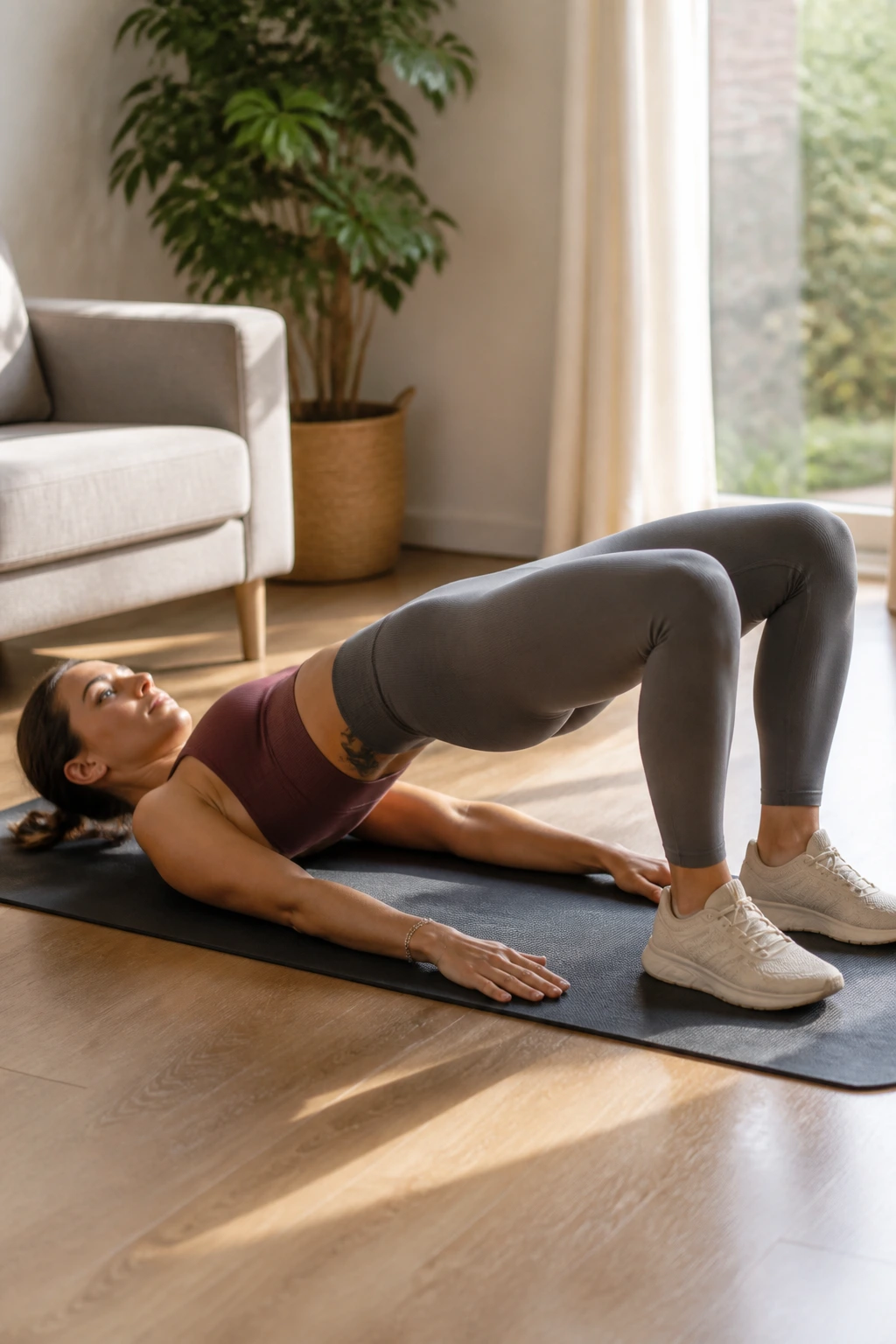
A lot of home circuits forget that the hips and trunk work as a team.
This one does not. It keeps the glutes firing while the abs brace around them, which is a nicer pairing than it sounds. Set 12 minutes on the clock and run:
- 12 frog pumps
- 8 reverse lunges per leg
- 12 bicycle crunches per side
- 20-second side plank per side
Frog pumps are ugly in the best way. Feet together, knees open, hips driving up in short pulses. They hit the glutes fast, especially if you keep the lower back from arching. Reverse lunges add single-leg control. Bicycle crunches bring the trunk into the mix, but don’t yank your neck. Side planks finish the job by forcing the obliques and glute medius to keep the pelvis steady.
The nice thing about this pairing is that the moves feed each other. Better hip control helps the core. Better core control keeps the lunge cleaner. That’s real home training, not just random fatigue.
If the bicycle crunch feels sloppy, swap it for dead bugs. Same slot. Less neck. Better quality.
15. The Speedy 5-Move Home Test
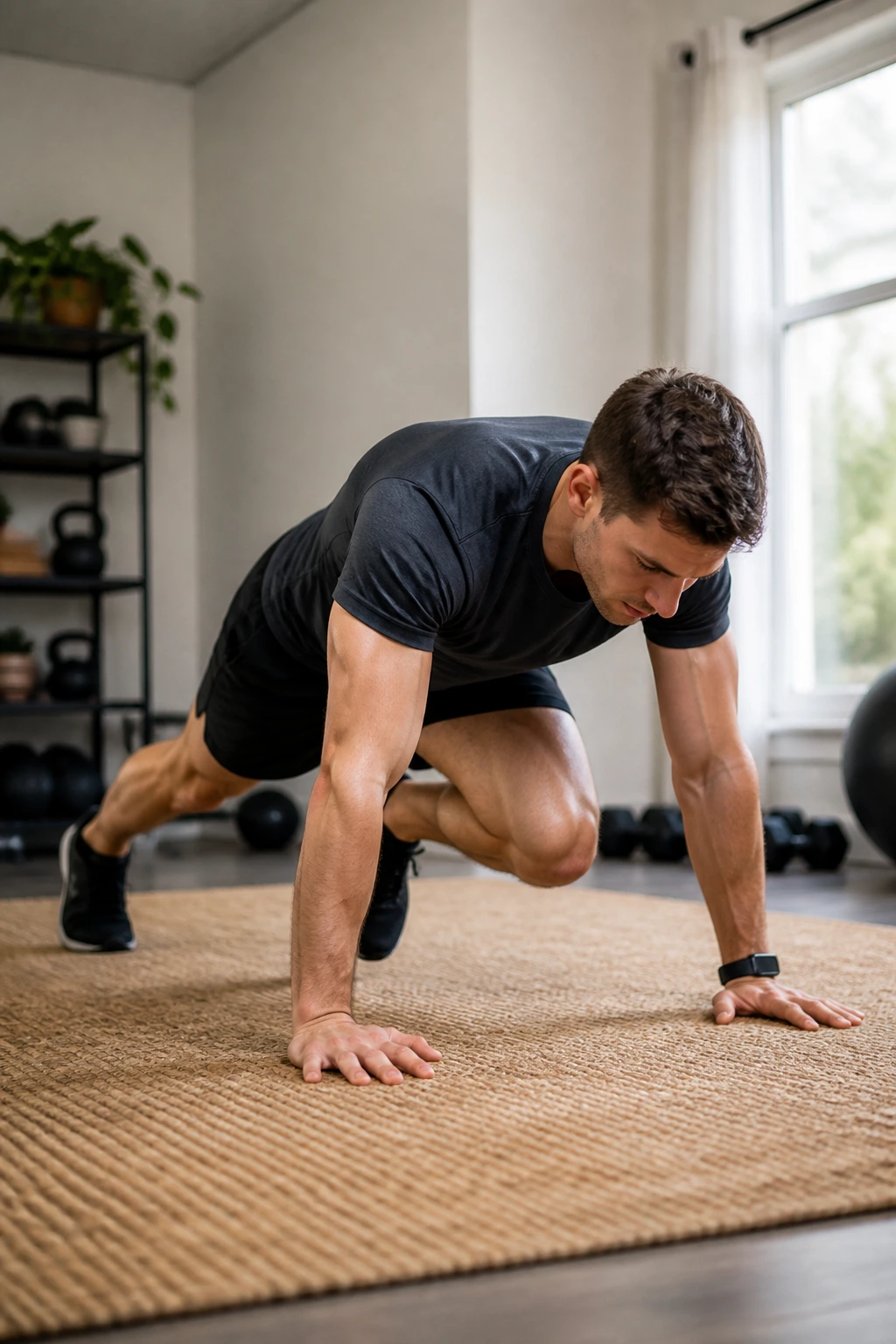
Some workouts are about seeing how quickly you can move without falling apart.
This one is short, sharp, and easy to set up. Use an 8- to 10-minute AMRAP with these five moves:
- 8 push-ups
- 10 air squats
- 12 alternating lunges
- 16 mountain climbers per side
- 8 sit-ups or dead bugs per side
That mix gives you a little bit of everything: upper body, legs, cardio, and trunk work. It also tells the truth fast. If you start flying and your reps turn ugly by round three, the pacing was wrong. If you settle into a steady rhythm and keep it there, the workout pays off cleanly.
A quick test like this works best when you treat the first round as a sample, not a race. Get a read on how the lungs feel. Get a read on how the push-ups feel after squats. Then make small adjustments. That’s the part most people skip.
The winner here is control under speed.
Not chaos. Control.
16. The Low-Impact Fatigue Builder
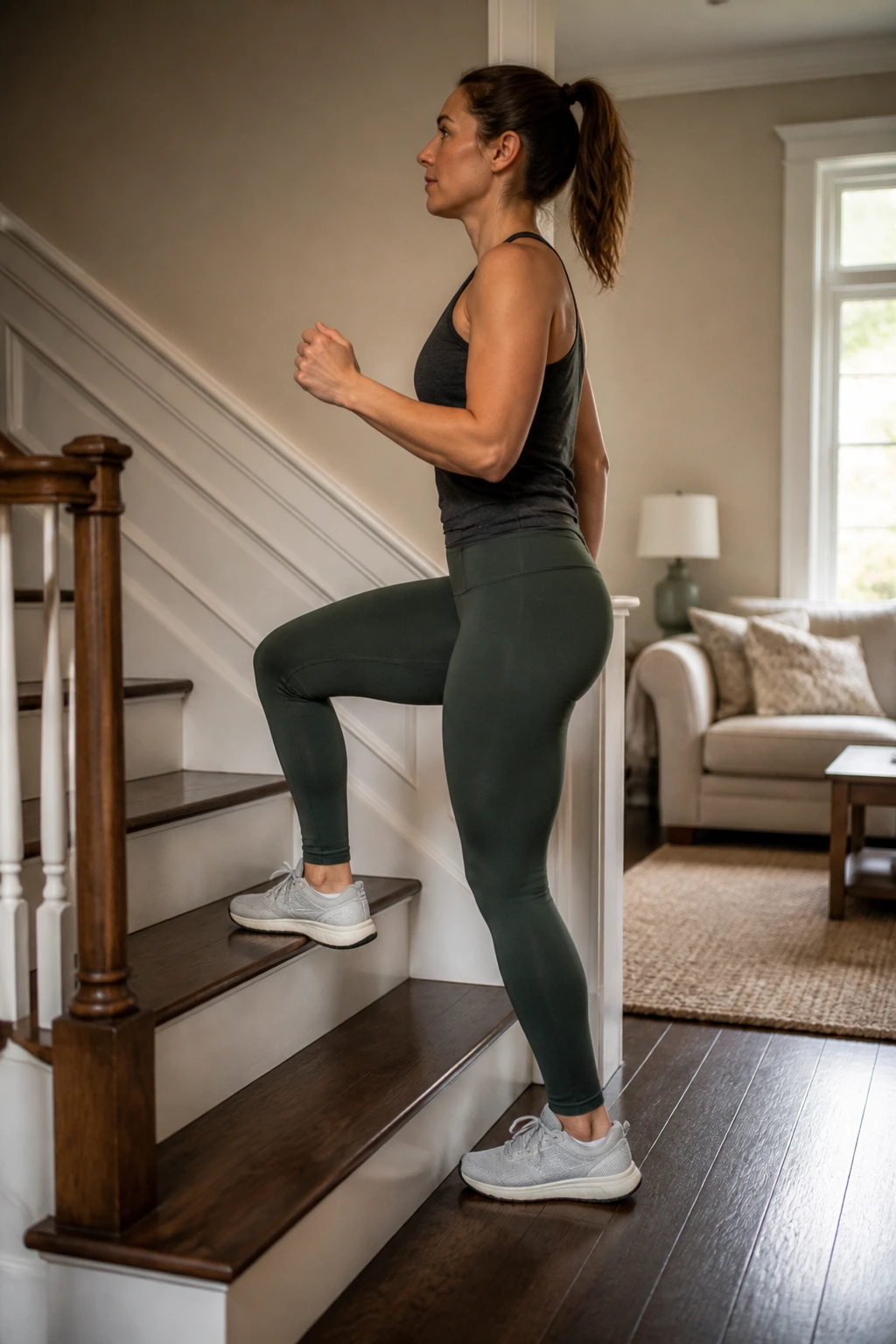
Low-impact does not mean low effort.
That idea needs to die already.
Set 14 minutes and repeat:
- 12 step-ups per leg
- 20 marching glute bridges
- 10 squat pulses
- 8 dead bugs per side
- 30-second wall sit
This workout looks gentle until the second half. Step-ups make your heart rate climb without the pounding of jumps. Marching glute bridges keep the hips honest while the legs burn. Squat pulses lock you into a shallow burn that feels tiny for about twelve seconds and then stops being tiny. Wall sits are wall sits. You know what they do.
Compared with a jump-heavy circuit, this one is kinder to joints and still nasty on the muscles. It’s a better choice if your space is small, your floor is slippery, or your body has been asking for less impact and more steadiness.
Use a sturdy step or the bottom stair. Keep your weight through the whole foot, not the toes. If the step-ups get noisy, slow the lowering phase. Quiet feet usually mean better control anyway.
17. The Total-Body Strength-Endurance AMRAP
This is the one for days when you want to feel like you lifted and did cardio at the same time.
Run 15 minutes of:
- 8 goblet squats
- 8 floor presses
- 8 bent-over rows
- 8 hip hinges or Romanian deadlifts
- 20-second bear crawl hold
The goblet squat sets the tone. The floor press keeps the chest and triceps active without needing a bench. Rows pull the upper back into the session, which helps keep the shoulders from rounding forward. Hip hinges load the backside. The bear crawl hold finishes by making the whole trunk work together under pressure.
If you have dumbbells, use them. If you only have a backpack, that works. If you only have bodyweight, the same structure still functions, though the bear crawl hold gets much more serious when you stay low and breathe hard.
This kind of AMRAP is useful because it does not lean too far in any direction. It’s not just legs. Not just push work. Not just cardio. That balance makes it easier to repeat week after week without feeling beat up in one place.
Keep the reps honest. If the rows start turning into shrugs, you’re done adding value.
18. The Family-Friendly All-Rounder
Can one home workout fit a teenager, a parent, and someone who hates burpees? Pretty close, yes.
This 10-minute AMRAP keeps the moves simple and the setup minimal:
The circuit
- 10 sit-to-stands from a chair
- 8 countertop push-ups
- 12 marching steps per leg
- 20-second farmer carry with grocery bags, water jugs, or a backpack
Sit-to-stands are easier to teach than squats and still load the legs well. Countertop push-ups reduce the angle enough for beginners without turning the move into a shrug. Marching steps keep the heart rate moving without jumping. Carries are the wild card; they teach posture, grip, and trunk control in one shot.
This is the workout I’d use if I had to get several people moving in the same room without turning it into a circus. The moves are familiar. The pace is adjustable. Nobody needs to be good at exercise to start.
If you want to make it more competitive, have everyone keep their own round count and try to beat it next time. If you want it calmer, turn it into a quality challenge: same reps, slower movement, cleaner posture.
Either way, the session stays useful.
19. The 20-Minute Pacing Test
Longer AMRAPs expose the stuff shorter ones hide.
That can be annoying. It can also be useful. A 20-minute clock asks you to manage breathing, grip, and ego all at once. The circuit below is simple enough to remember and hard enough to test your pacing:
- 6 squats
- 6 push-ups
- 8 reverse lunges per leg
- 10 backpack rows
- 12 mountain climbers per side
How to make it work
Start the first 5 minutes at about 70 percent effort. Not 90. Not a sprint. You should feel controlled and a little under-challenged on purpose. The middle 10 minutes are where the work lives, and the last 5 are where you decide whether your pacing was smart or messy.
A long AMRAP like this is less about one brutal round and more about staying tidy when fatigue stacks up. That means smoother transitions, shorter pauses, and no wasted motion. Put the backpack where you can grab it fast. Set up enough floor space so you do not have to think about where your feet are landing.
What to watch for
If push-ups start collapsing, switch to incline push-ups before your form gets ugly. If rows feel rushed, keep the torso quiet and lower the rep count by two. If the lunges become balance drills, slow down and own the step.
A long clock rewards restraint more than bravado. Strange, but true.
20. The Hard-Easy Hybrid Finisher
This is the one I’d use on a day when I want a workout that ends with heavy breathing but doesn’t leave me flattened.
Set 8 to 12 minutes and cycle through:
- 8 squat-to-press reps with dumbbells or a backpack
- 10 skater steps
- 12 glute bridges
- 8 dead bugs per side
The squat-to-press is the hardest move here. It ties the lower body and shoulders together, which makes the heart rate climb fast. Skater steps keep the pace lively without a jump. Glute bridges give the legs a short reset while the backside stays on. Dead bugs pull the core back under control before the next round starts.
That little up-and-down rhythm is the point. Hard move, easier move, floor work, repeat. It lets you keep moving longer than a pure sprint circuit would, and it feels more like real conditioning than random chaos.
If you want one workout to keep in rotation, this style is a good bet. It works with dumbbells, a loaded backpack, or bodyweight only. It fits a small room. It can be scaled up fast by adding load or slowing the lowering phase. And if you only have one chance to train that day, it gives you a full-body hit without asking for much setup.
A cheap timer. A few square feet of floor. That’s enough.
