



Ten minutes can be enough to make you breathe hard, sweat through your shirt, and feel like you actually trained. The catch is that the ten minutes have to earn their keep. Half-speed marching while thinking about email does not count, and neither does pausing every forty seconds to stare at the timer like it personally offended you.
Home cardio works best when the plan is tight: clear intervals, enough muscle involved to raise the heart rate, and moves that don’t require a garage full of gear. Jumping, stepping, punching, squatting, and fast footwork all do the job in different ways. Mix them well and you get a workout that fits between meetings, before dinner, or in the tiny patch of floor between the couch and the bookcase.
No treadmill. No bike. No drama. A pair of sneakers, a bit of space, and a willingness to get out of breath are enough.
Some of these workouts are noisy and sweaty. Some are quiet enough for an apartment with thin walls. A few are kinder to knees and ankles, which matters more than most people admit. Pick the one that matches your space, your joints, and your mood, then move with purpose.
1. Shadow Jump Rope Without the Rope

Skip the rope and keep the rhythm. That sounds like a cheat, but it isn’t. Shadow jump rope still asks for quick feet, springy calves, and steady arms, so your heart gets the same signal without the tangle.
Why it works
The move is simple: keep a light bounce, turn your wrists as if you’re spinning an invisible rope, and stay on the balls of your feet. It lights up your calves and front of your shins fast, which is exactly why your breathing changes so quickly.
Do 2 rounds of this 5-minute block:
- 45 seconds light bounce with invisible rope
- 15 seconds rest
- 45 seconds alternating-foot hop
- 15 seconds rest
- 45 seconds boxer step
- 15 seconds rest
- 45 seconds high-knee skip
- 15 seconds rest
- 45 seconds fast feet in place
- 15 seconds rest
Keep the bounce small. Big jumps waste energy and beat up your ankles. Small, quick hops feel cleaner and last longer.
2. Low-Impact March and Drive
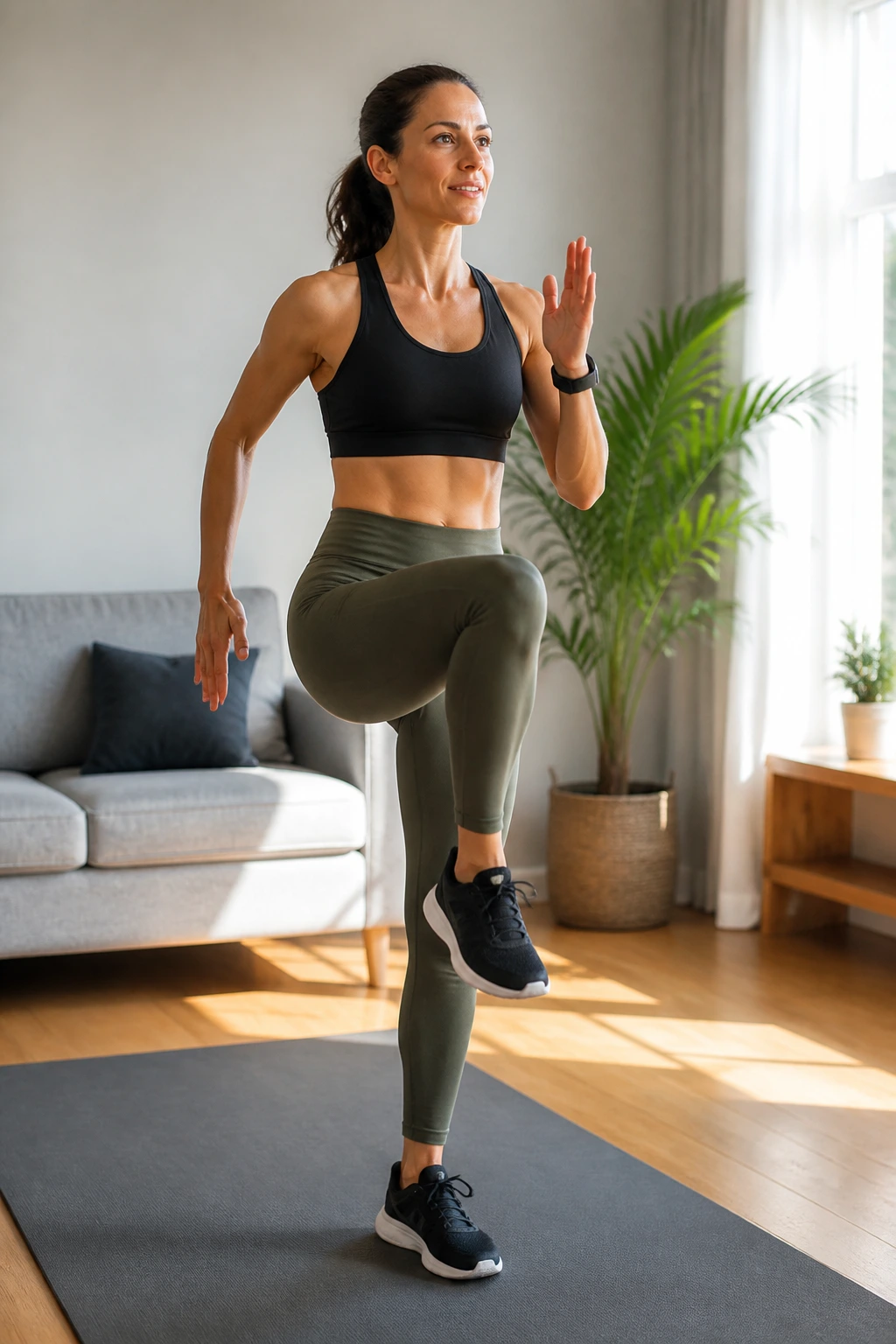
Low-impact cardio can still be hard cardio. That’s the part people miss. If your arms drive hard, your knees lift with intent, and your pace stays brisk, a marching workout can leave you breathing like you ran stairs.
Start with a strong march in place, not a lazy walk. Pull one knee up to hip height, swing the opposite arm, and land softly through the whole foot. Then layer in side steps, heel digs, and knee lifts so your body never settles into a single rhythm.
A clean 10-minute version looks like this:
- 1 minute brisk march with arm drive
- 1 minute side step-touch with overhead reaches
- 1 minute alternating knee lifts
- 1 minute heel digs with strong punches
- 1 minute march with torso twists
- Repeat the whole block once
This one is excellent on days when jumping feels like too much. It also works well if you need a workout you can do in normal clothes without shaking the whole apartment. If you want more challenge, wear light hand weights for the final two minutes, but keep them tiny—1 to 3 pounds is enough.
3. Shadow Boxing Rounds

Can cardio feel like a fight drill without becoming chaos? Yes, if you keep the punches crisp and the footwork busy. Shadow boxing is one of the best ten-minute home cardio workouts because the upper body and lower body work together instead of taking turns.
How to use it
Set a timer for 10 rounds of 45 seconds on, 15 seconds off. That gives you five minutes of work and five minutes of reset built in, which is ideal when you want intensity without turning the session into punishment.
Use this pattern:
- Round 1: jab-cross
- Round 2: jab-cross-hook
- Round 3: jab-cross-slip-slip
- Round 4: uppercut-cross-hook
- Round 5: jab while stepping forward and back
- Round 6: repeat your favorite combo
- Round 7: add fast feet between punches
- Round 8: add knees after every third combo
- Round 9: move around the room
- Round 10: punch fast, finish hard
Keep your shoulders loose. Tight shoulders make everything clunky. A good shadowboxing round feels sharp, not stiff, and your hands should come back to guard after every punch.
4. Stair Climb Intervals
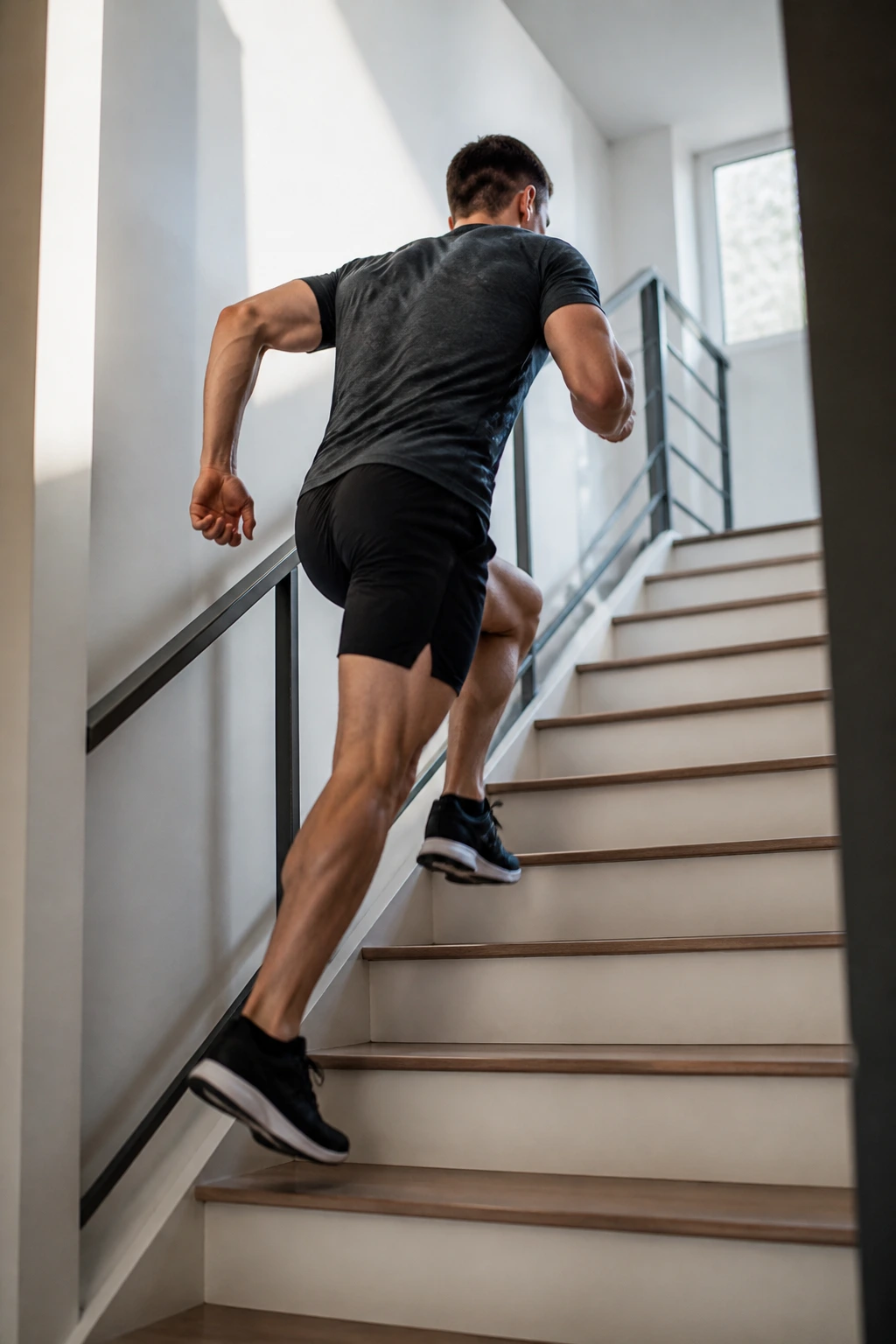
A hallway stair or a short flight of steps can turn into a brutal little cardio station. The best part is that you do not need a fancy setup, just stairs that are clear and dry. The downside is obvious: careless footing is a dumb way to ruin a ten-minute workout, so pay attention.
Picture this: you sprint up, walk down, breathe, then go again. Simple. Mean, too.
Key details
- 30 seconds fast walk or light run up the stairs
- Walk down slowly and recover for 30 seconds
- 30 seconds step-up power drive
- 30 seconds recovery
- 30 seconds two-step climb, if the stairs are wide enough
- 30 seconds recovery
- Repeat the whole sequence once
Use the handrail if you need it. That is not weakness. It is smart balance. Keep your chest tall and lean slightly from the ankles, not the waist. If stairs are noisy or you share the space, move to single-step step-ups on the bottom step and drive one knee up on each rep. That version is quieter and still gets the lungs working.
5. Tabata Bodyweight Blast

Tabata is short, sharp, and not very polite. Twenty seconds of work followed by ten seconds of rest does not leave much room for daydreaming, which is exactly why it works so well in a ten-minute home cardio workout.
The trick is choosing moves you can hit hard without falling apart. Burpees are fine if you love them. Most people do not, and that’s okay. Squat jacks, mountain climbers, skaters, and high knees usually hold up better.
A clean structure looks like this:
- 20 seconds squat jacks
- 10 seconds rest
- 20 seconds mountain climbers
- 10 seconds rest
- 20 seconds skaters
- 10 seconds rest
- 20 seconds high knees
- 10 seconds rest
Repeat that four-move block twice. Ten minutes disappears fast when the rest periods are this short.
The work should feel hard by the middle of round two. If you can talk in full sentences, you’re coasting. If your form collapses, slow the pace a little and keep the shape tidy. Bad reps are expensive.
6. Dance Cardio Freestyle
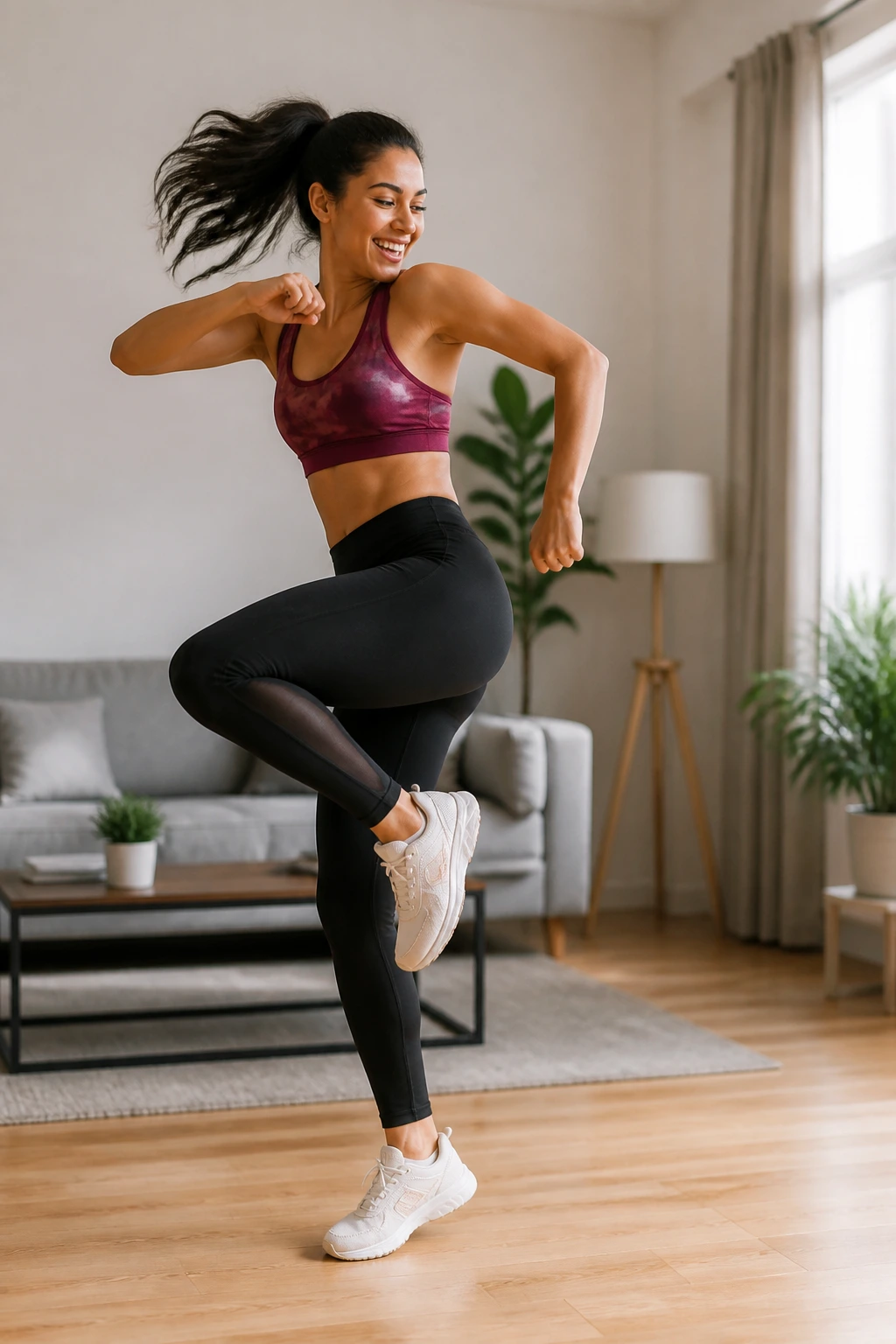
Dance cardio is the sneaky one. It looks playful, and it can be, but if you keep the steps quick and the arms active, it turns into a real sweat session. It also has the rare advantage of being hard to hate, which counts for a lot.
Unlike rigid interval work, dance cardio gives you room to move. That makes it useful for people who freeze up when they see a stopwatch. Put on a timer and switch moves every minute: grapevine, side step with reach, knee lift with a clap, step-back with a knee drive, then repeat. Don’t worry about looking polished. Worry about staying in motion.
This one is best when you want energy more than punishment. It works well before dinner, after a long day at a desk, or any time you need to shake off the stiff, glued-to-the-chair feeling. If music helps you keep pace, use a song with a steady beat around 120 to 140 beats per minute. If not, count the minute blocks and keep your feet busy.
7. Mountain Climber Ladder
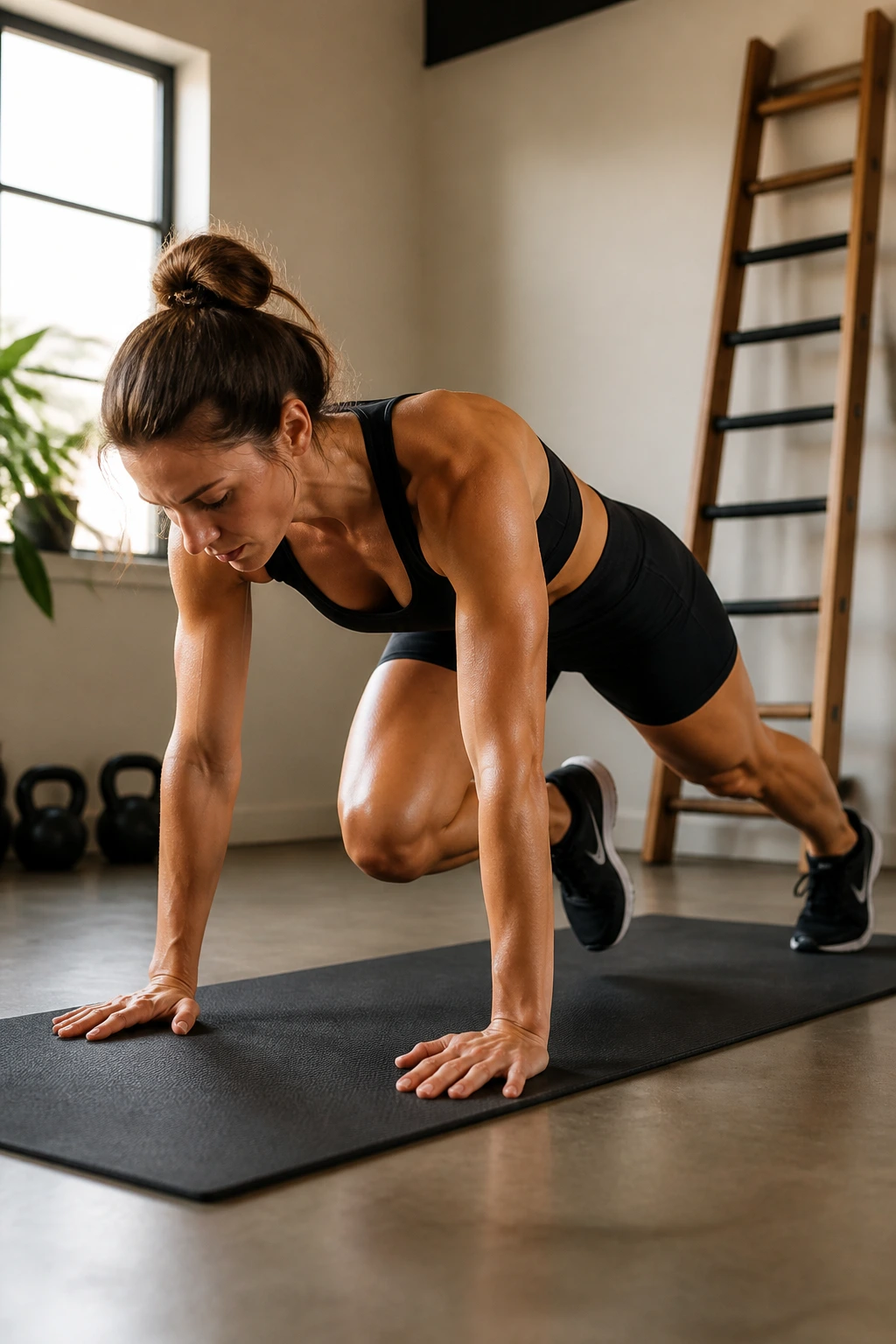
Mountain climbers can get ugly fast if you rush the setup and lose your shoulders. Done well, though, they’re a compact, nasty little cardio tool that fits almost anywhere. Done badly, they become a pile of wobbling hips and sore wrists.
The ladder
- 20 seconds mountain climbers
- 20 seconds rest
- 30 seconds mountain climbers
- 20 seconds rest
- 40 seconds mountain climbers
- 20 seconds rest
- 30 seconds mountain climbers
- 20 seconds rest
- 20 seconds mountain climbers
That uses just over eight minutes. Spend the remaining time on a brisk walk around the room and a final 30-second plank hold if you want a full ten.
What to watch for
Keep your shoulders stacked over your wrists. Letting your hips shoot too high steals the work from your core and turns the drill into a messy hop. Drive one knee at a time toward the chest, land softly, and try to keep the feet light.
If floor work bothers your wrists, put your hands on a sturdy couch cushion or a low bench. That small change can make the whole exercise usable.
8. High-Knee and Step-Out Combo
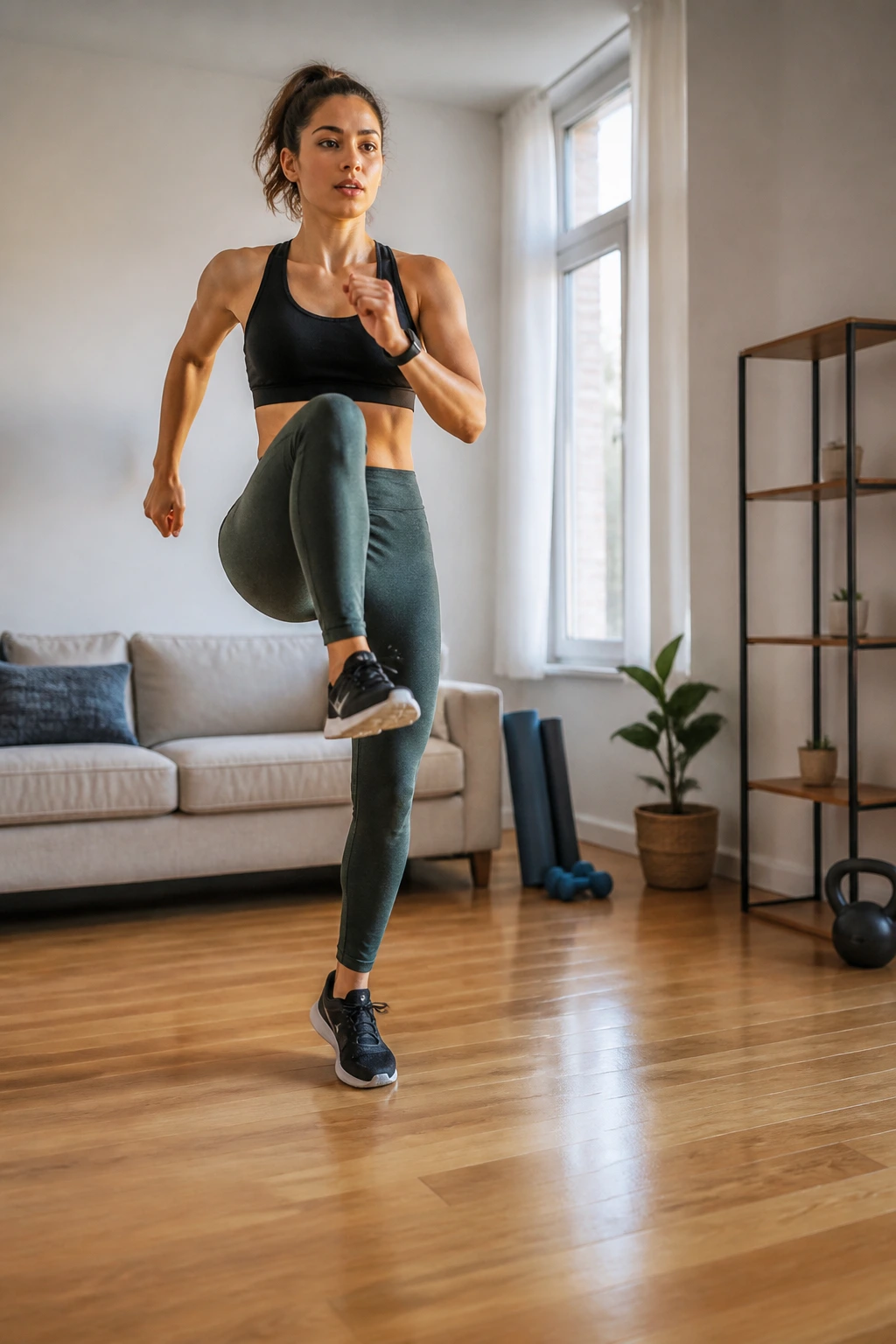
This is one of those workouts that looks almost too plain to matter. Then ten minutes passes and your lungs are angry in the best possible way. The mix of high knees and lateral step-outs keeps the lower body busy in two planes, which feels more complete than just marching in place forever.
Start with 30 seconds of fast high knees, then 30 seconds of squat step-outs. High knees bring up the heart rate. Step-outs reset your legs without letting the effort drop too far. Alternate those two moves for ten total minutes, or split them into five rounds of one minute each if you prefer less counting.
Keep the hands moving as well. Pump the arms during high knees, then reach forward on the step-outs or hold them in guard position like a boxer. That extra upper-body work matters. It makes the session feel bigger than a leg drill.
If you’re short on space, stay almost in place and just tap the feet out wide. You’ll still get the pulse lift, and your downstairs neighbor will thank you.
9. Quiet Apartment Cardio
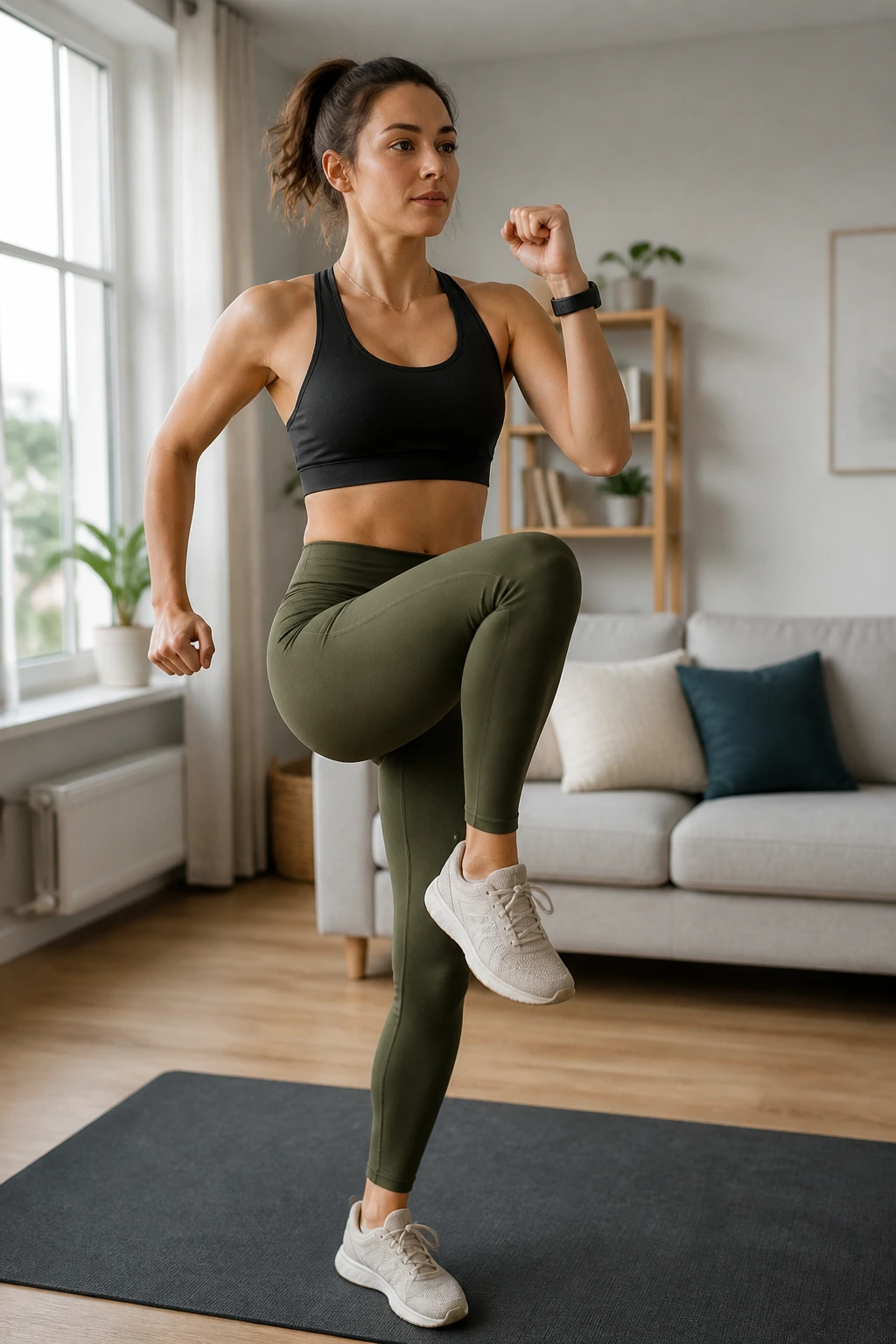
Can cardio stay quiet and still do its job? Absolutely. The secret is to remove the bounce, keep the tempo up, and use controlled movement that never turns into stomping.
This version is built around low-noise work: marching, side steps, knee drives, standing punches, and controlled squat pulses. No jumping. No pounding. You can do it barefoot on a mat if that feels better, though sneakers still help if your feet get cranky.
Try this sequence:
- 1 minute brisk march
- 1 minute side step-touch with arm reaches
- 1 minute standing punches
- 1 minute alternating knee drives
- 1 minute mini squat pulses with overhead reaches
- Repeat once
The workout feels softer than jump-heavy cardio, but it can still make your legs burn if you keep the pace honest. Keep the knees bent a little, land quietly, and don’t let the effort leak out. Slow, lazy movement is not the same thing as low impact. That difference matters more than people think.
10. Bodyweight Kickboxing Flow
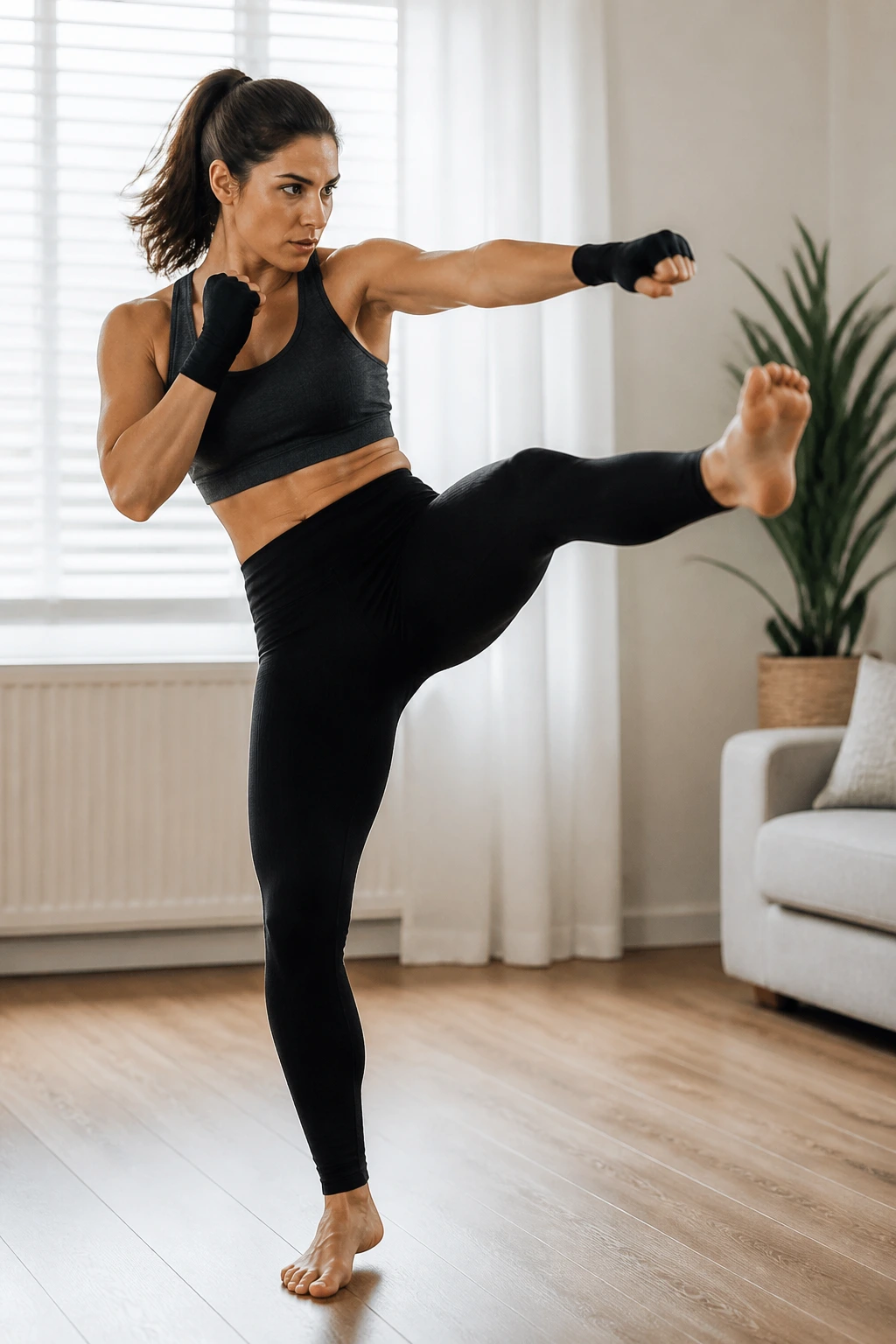
A kickboxing flow gives you more than a sweat. It gives you rhythm, which is why it holds your attention better than some plain interval sets. Punches, kicks, and knee drives move fast enough to raise the pulse, while the flowing transitions keep the workout from feeling chopped up.
Use a 5-move circuit for two rounds:
- Jab-cross for 45 seconds
- Front kicks alternating legs for 45 seconds
- Hook-cross-hook for 45 seconds
- Knee drives with a small hop for 45 seconds
- Fast shadow boxing freestyle for 45 seconds
Rest 15 seconds between moves.
Keep your punches snappy and your kicks controlled. The goal is not to kick high. The goal is to kick with balance and return to stance cleanly. A medium-height front kick, aimed around waist level, is enough for most people and much safer than flinging the leg upward just to look dramatic.
If you want more challenge, add a quarter turn after every fourth combo. That little pivot wakes up the hips and keeps your feet from getting lazy.
11. Cardio Core Circuit
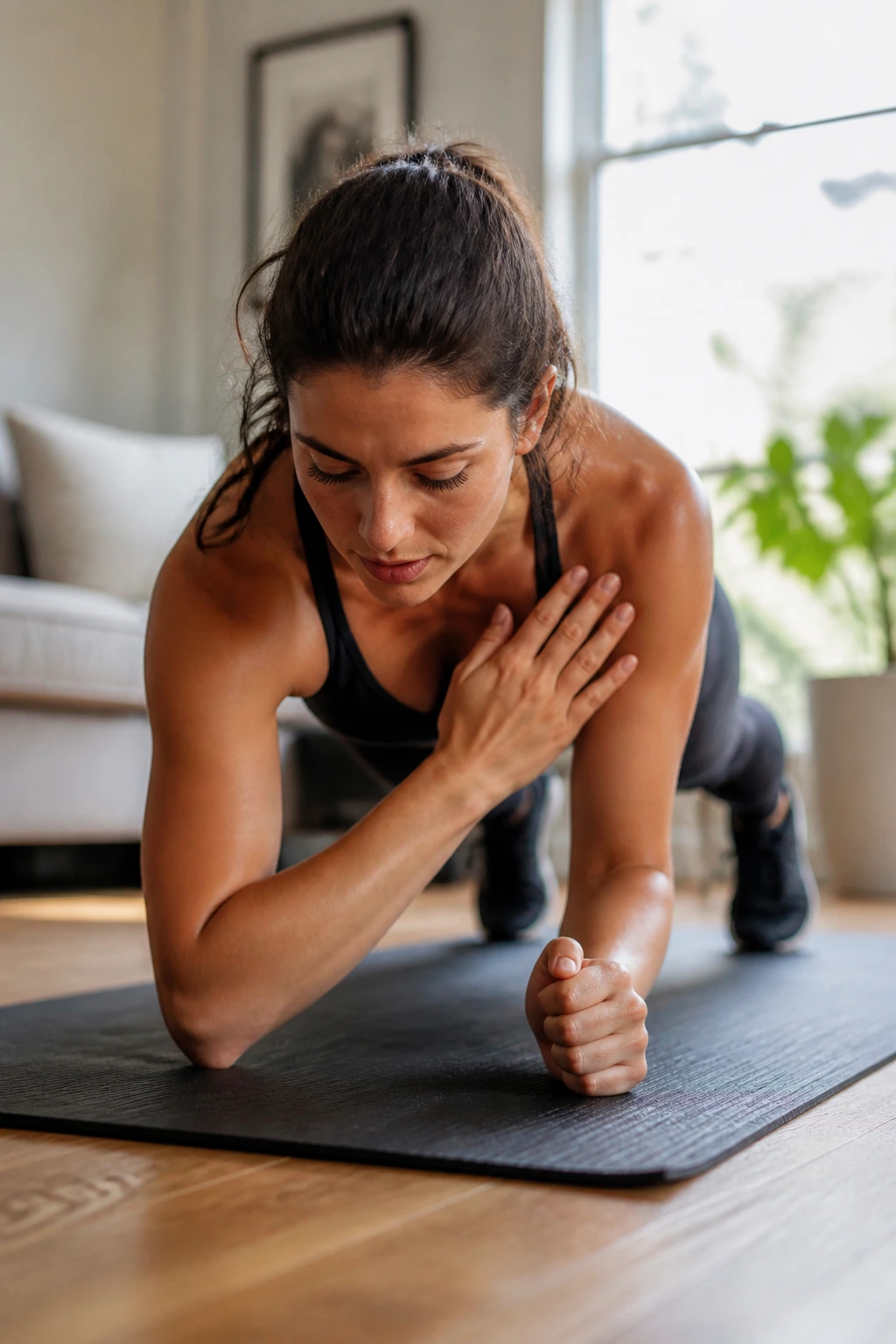
Core work gets a bad reputation because people think it means slow, endless planks. Not here. A cardio core circuit asks your midsection to stabilize while your whole body keeps moving, which is a much better use of ten minutes.
Why it feels different
The heart rate climbs because the transitions are fast. The core works because every move asks you to resist rotation, resist collapse, or pull the knees in while balancing on your hands. That mix gets tiring in a sneaky way.
Use this circuit:
- 40 seconds plank shoulder taps
- 20 seconds rest
- 40 seconds dead bug march
- 20 seconds rest
- 40 seconds bear crawl hold with knee taps
- 20 seconds rest
- 40 seconds standing cross-body knee drives
- 20 seconds rest
Repeat once.
Keep the pelvis steady during plank taps. If your hips sway side to side, slow down. That tiny correction makes the exercise more useful and protects the lower back. A lot of people race through core drills and miss the point. Don’t be that person.
12. Towel Slide Speed Set
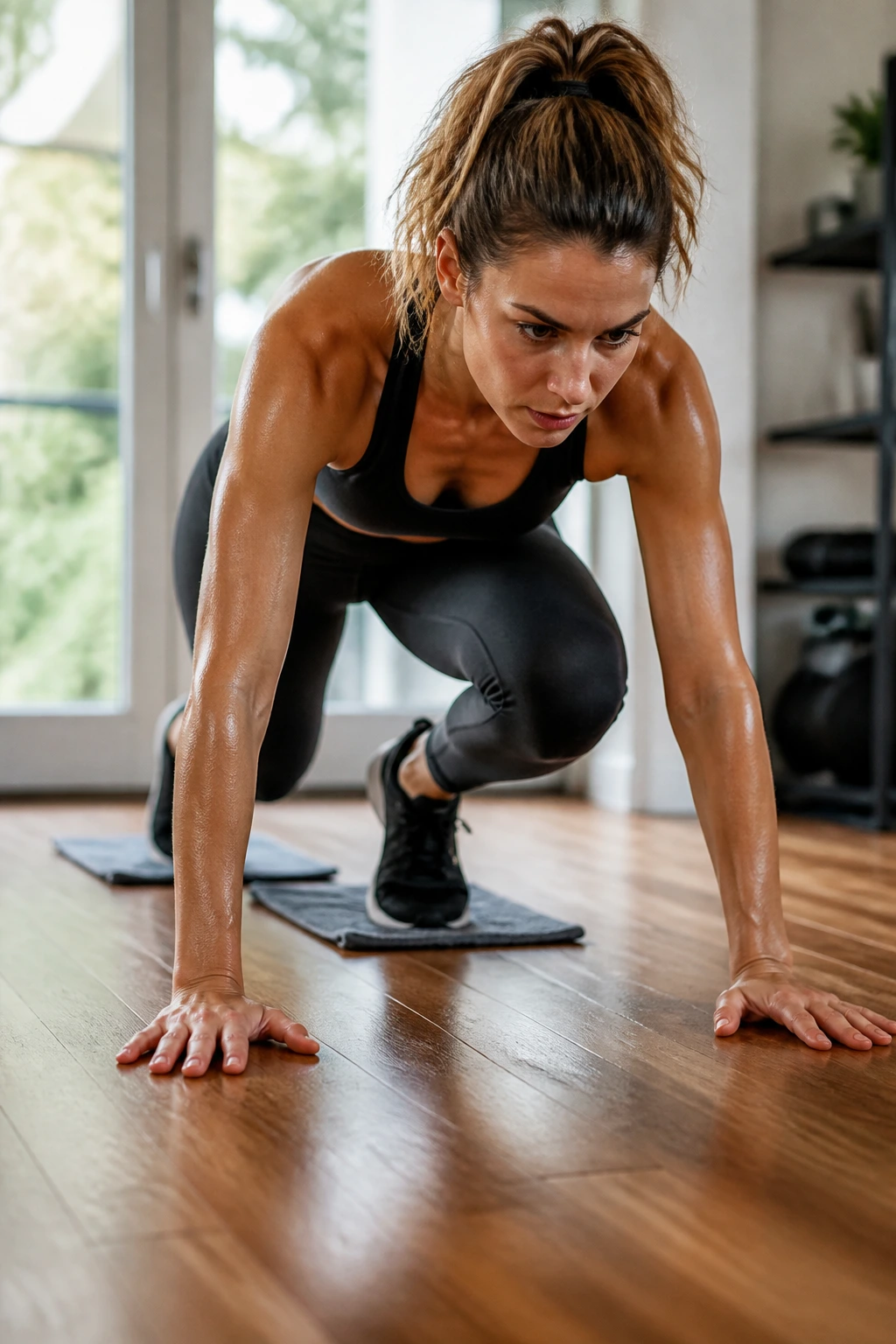
A towel and a smooth floor can create a surprisingly nasty cardio session. Put each foot on a towel and you suddenly have sliders, which open the door to quick hamstring curls, skaters, and plank drives that feel much harder than they look.
This workout works best on hardwood, tile, or another slick surface. Carpet won’t give you much glide, and that changes the exercise completely. Start with 30-second blocks and keep the range short until you know how the floor behaves.
Try this
- 30 seconds towel mountain climbers
- 30 seconds rest
- 30 seconds sliding skaters
- 30 seconds rest
- 30 seconds hamstring curls from a bridge
- 30 seconds rest
- 30 seconds sliding plank knee tucks
- 30 seconds rest
- Repeat once
The first round usually feels playful. The second round gets mean. That’s normal. Keep your shoulders packed, move under control, and stop if the towels skid unpredictably. Home workouts should be hard, not sloppy.
13. Squat-Jack Pyramid
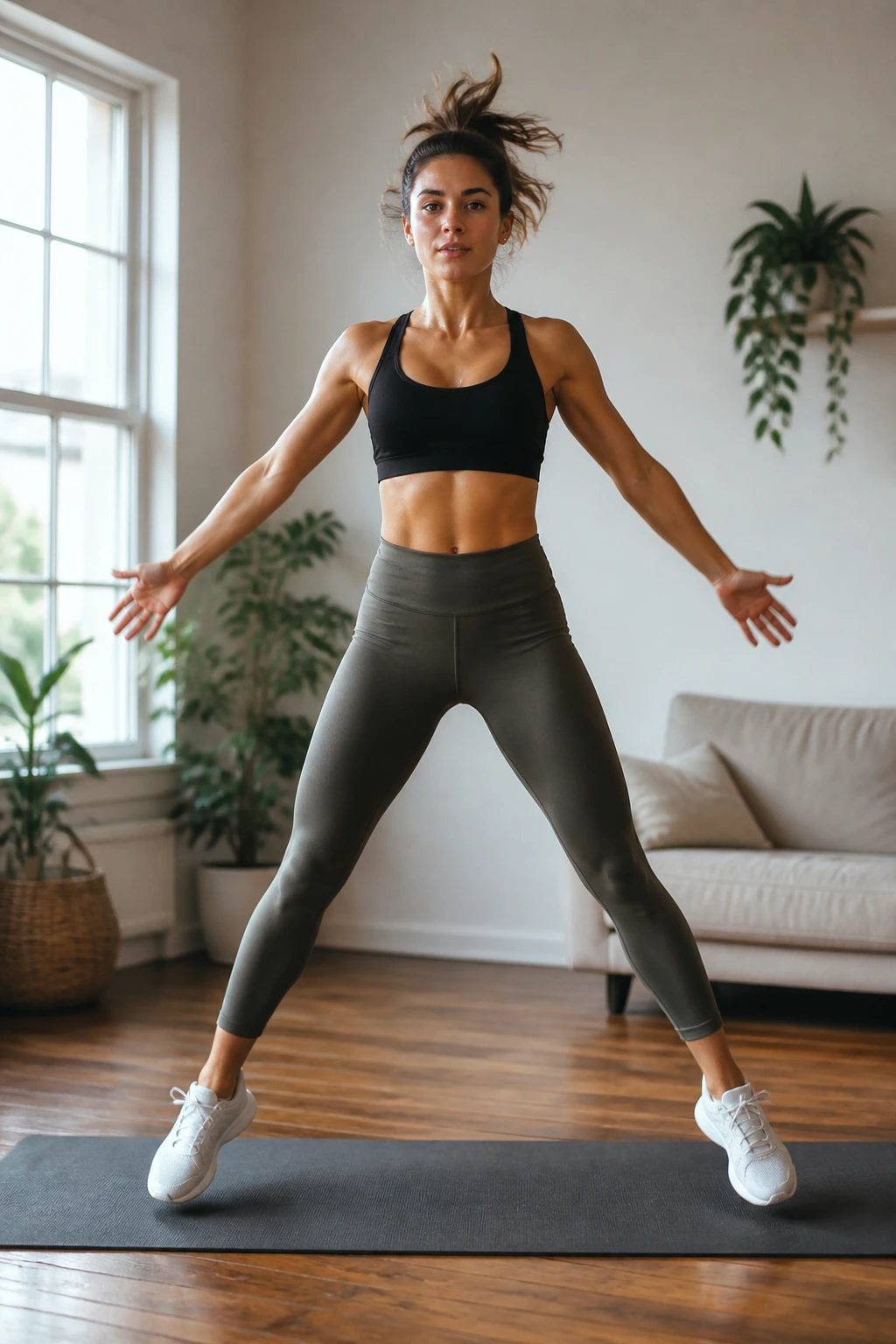
Squat jacks are ugly in the best way. They combine the leg load of a squat with the constant motion of a jumping jack, so the heart rate shoots up fast and the legs start talking back before long.
This pyramid version gives you structure without much thinking. Start at 10 reps, then 12, then 14, then 12, then 10. Rest as needed between rounds, but keep the breaks short—20 to 30 seconds is usually enough. If you prefer time over counting, do 30 seconds on, 15 seconds off, then repeat the pattern until you hit ten minutes.
The move itself is straightforward: lower into a shallow squat as the feet step or hop wide, then return to standing as the feet come together. The squat does not need to be deep. A quarter squat is fine. What matters is keeping the chest lifted and the pace steady.
If jumping bothers your knees, step one foot out at a time instead of hopping. It feels calmer, but it still works.
14. March-Run Hybrid
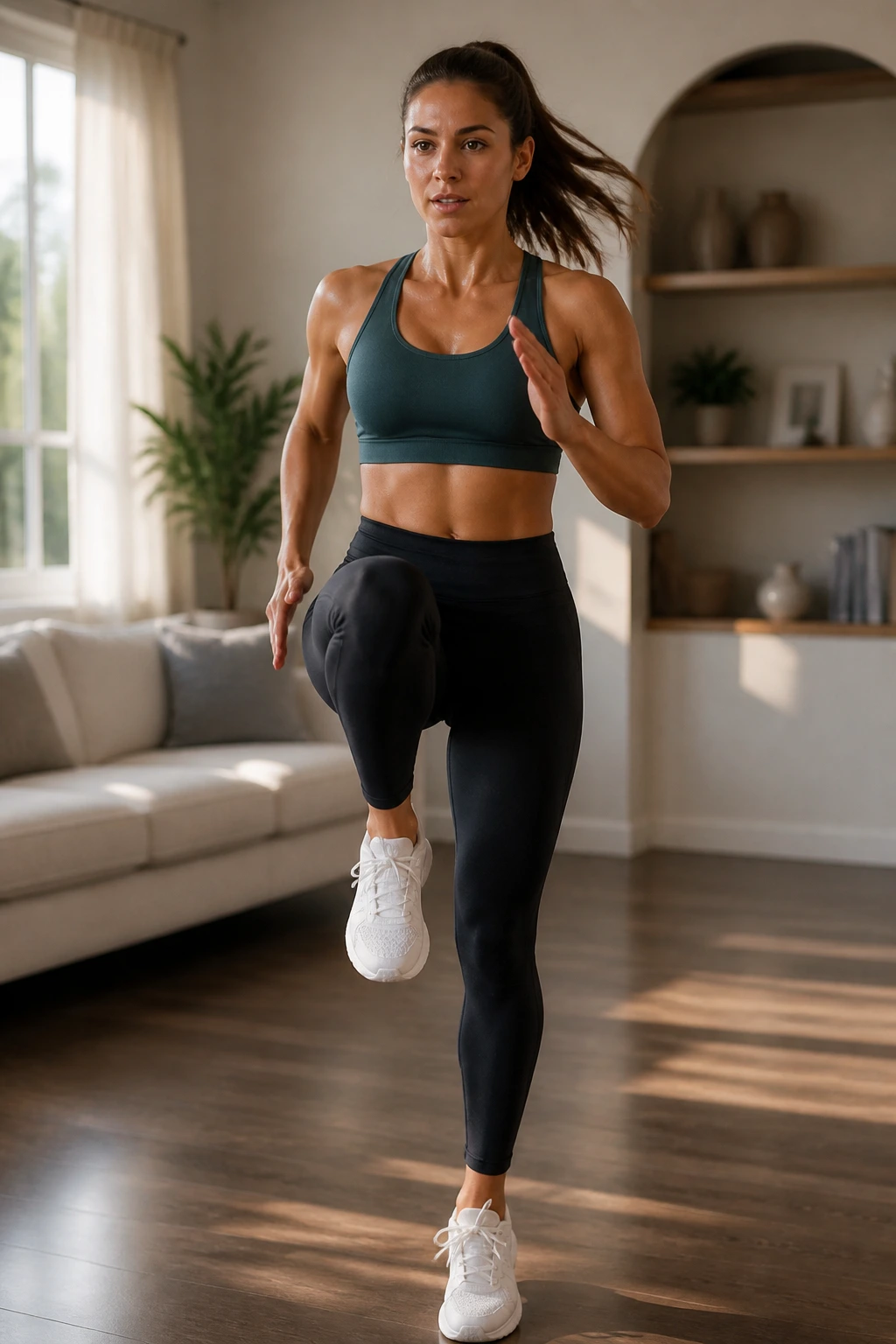
A march-run hybrid is the cardio equivalent of turning the volume knob instead of switching songs. You ease up, push harder, back off, then push again. That pattern is useful for beginners, for busy days, and for anyone who wants a workout without a lot of impact.
Start with one minute of fast march, then one minute of light jog in place. Repeat that pair five times. During the jog blocks, swing the arms more aggressively and land softly with quick feet. During the march blocks, keep the posture tall and let the pace recover without becoming sluggish.
This workout is a nice bridge between low-impact and higher-effort cardio. It teaches you how to change gears instead of locking into one effort forever. That matters if you plan to do more intense sessions later.
A small warning: the jog should stay light. If you stomp, the workout gets noisy and your shins may complain. Quiet feet usually mean better form.
15. Chair Step-Up Intervals
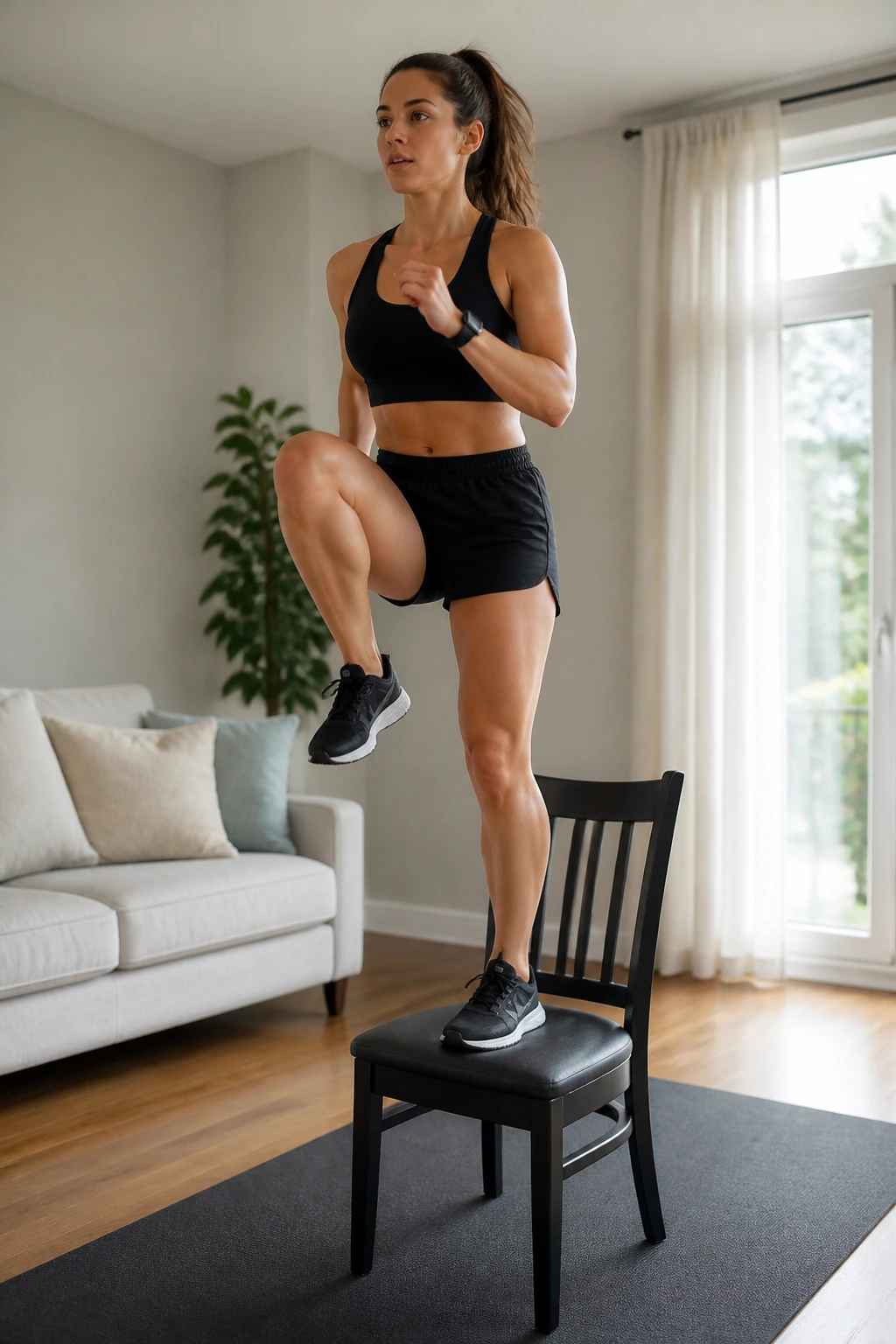
A sturdy chair or bench can carry more cardio value than people expect. Step-ups are simple, but they hit the legs hard and keep the heart rate climbing, especially when you add knee drives and quicker foot switches.
How to set it up
Use a stable chair, a bench, or the bottom stair if that feels safer. Step one foot up, press through the heel, bring the other knee up, then step back down with control. Alternate legs or work one side for 30 seconds at a time.
A good ten-minute format:
- 30 seconds right-leg step-ups
- 30 seconds left-leg step-ups
- 30 seconds alternating step-ups with knee drive
- 30 seconds rest
- Repeat twice
If the surface is slippery or the chair wobbles, do not force it. Pick a lower step or skip this one entirely. Safety beats bravado. Also, keep the torso upright. Leaning forward too much turns the move into a lunge-ish mess and takes away some of the clean cardio rhythm.
16. Full-Body Cardio EMOM
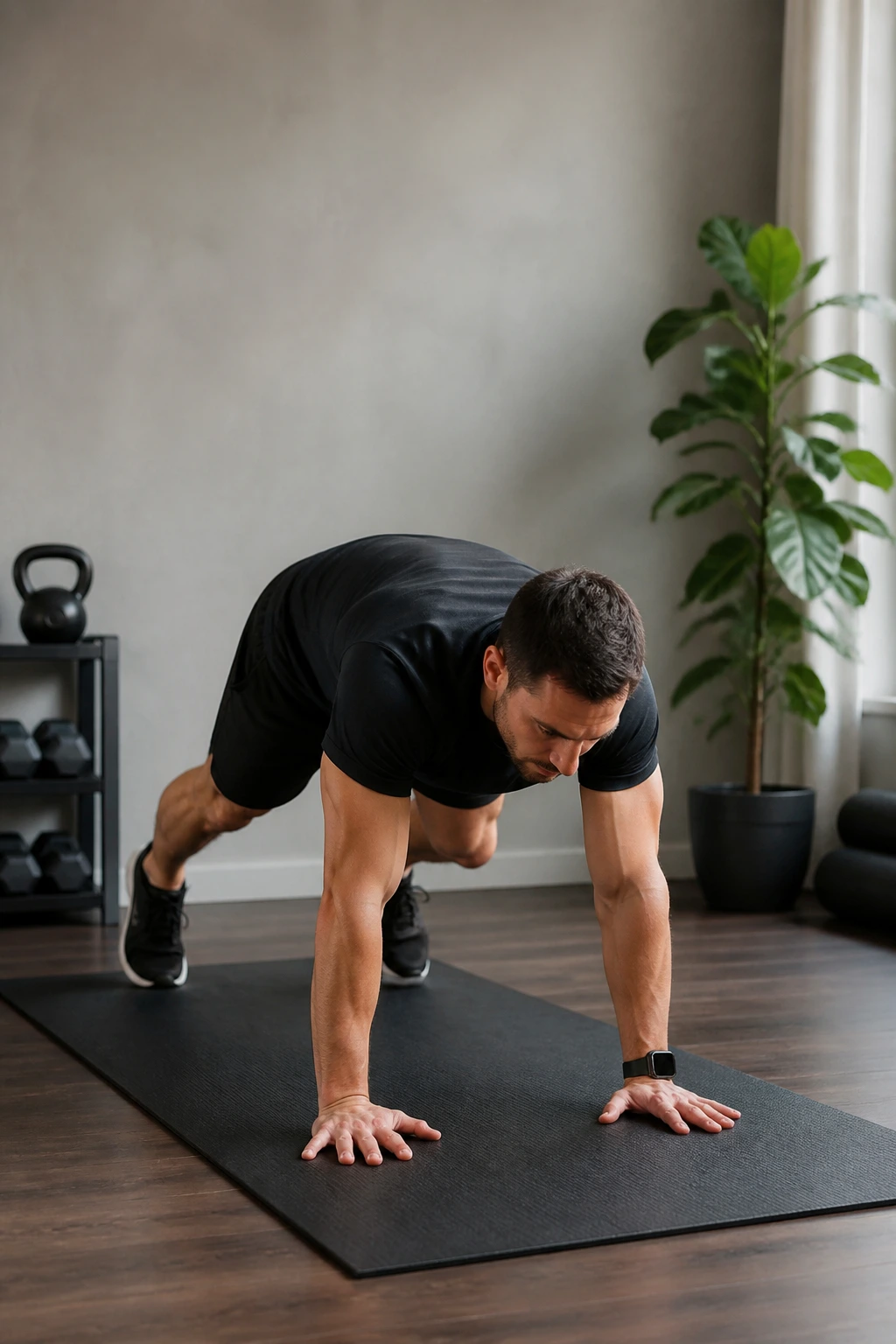
EMOM means “every minute on the minute,” and it’s one of the easiest ways to fill ten minutes without overthinking the pace. You start a move at the top of the minute, finish your reps, and rest for the remainder of that minute. If you work fast, the rest gets longer. If you drift, the rest disappears. Nice little built-in honesty test.
Use 10 minutes and cycle through these four moves:
- Minute 1: 12 squat thrusts
- Minute 2: 20 high knees per side
- Minute 3: 12 skaters each side
- Minute 4: 10 push-up walkouts
- Minute 5: repeat Minute 1
- Minute 6: repeat Minute 2
- Minute 7: repeat Minute 3
- Minute 8: repeat Minute 4
- Minute 9: 30 seconds fast feet, 30 seconds walk
- Minute 10: 30 seconds burpee step-backs, 30 seconds walk
The exact numbers can shift a little, but the minute structure should stay firm. That’s what makes EMOM work. You know exactly what’s next, and you never get too comfortable.
17. Lateral Skater Circuit
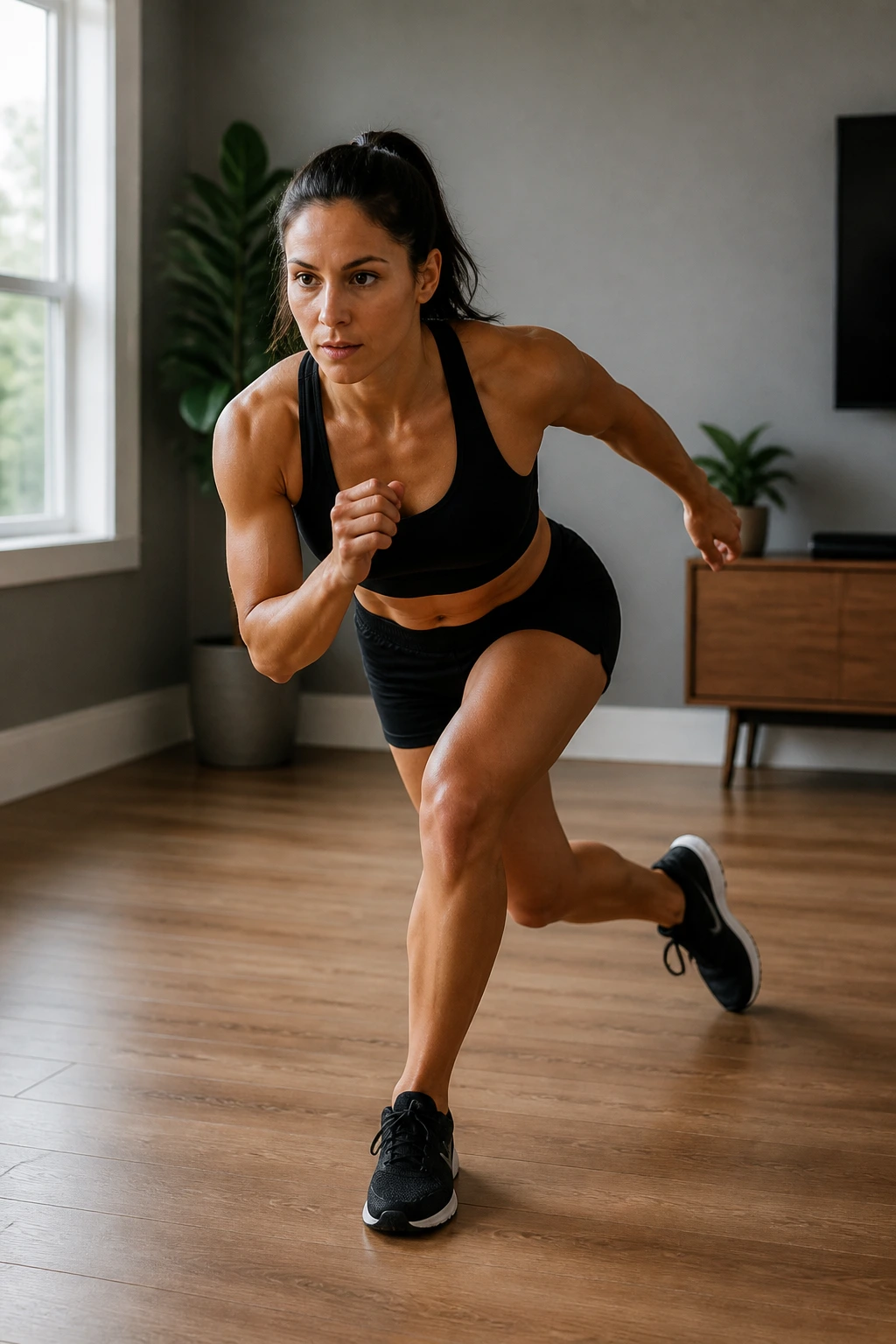
Side-to-side motion gets neglected in home cardio, which is a shame because the hips, glutes, and outer thighs come alive when you move laterally. Skaters are the obvious star here, but side shuffles and curtsy lunges help fill the ten-minute window with enough variety to keep the legs awake.
This workout is more athletic than it looks. The body has to catch itself each time you land, and that tiny stabilization work adds up fast. Keep the chest over the hips, reach the back leg behind you, and let the arms swing naturally as you move.
Try two rounds of this:
- 45 seconds skaters
- 15 seconds rest
- 45 seconds side shuffle in place
- 15 seconds rest
- 45 seconds curtsy lunge pulses
- 15 seconds rest
- 45 seconds skater hops with a hold on the landing
- 15 seconds rest
- 45 seconds fast lateral steps
If the jumps feel rough, turn the skaters into stepping skaters. Same shape. Less impact. Still useful. The workout becomes calmer, not weak.
18. Mobility Cardio Reset
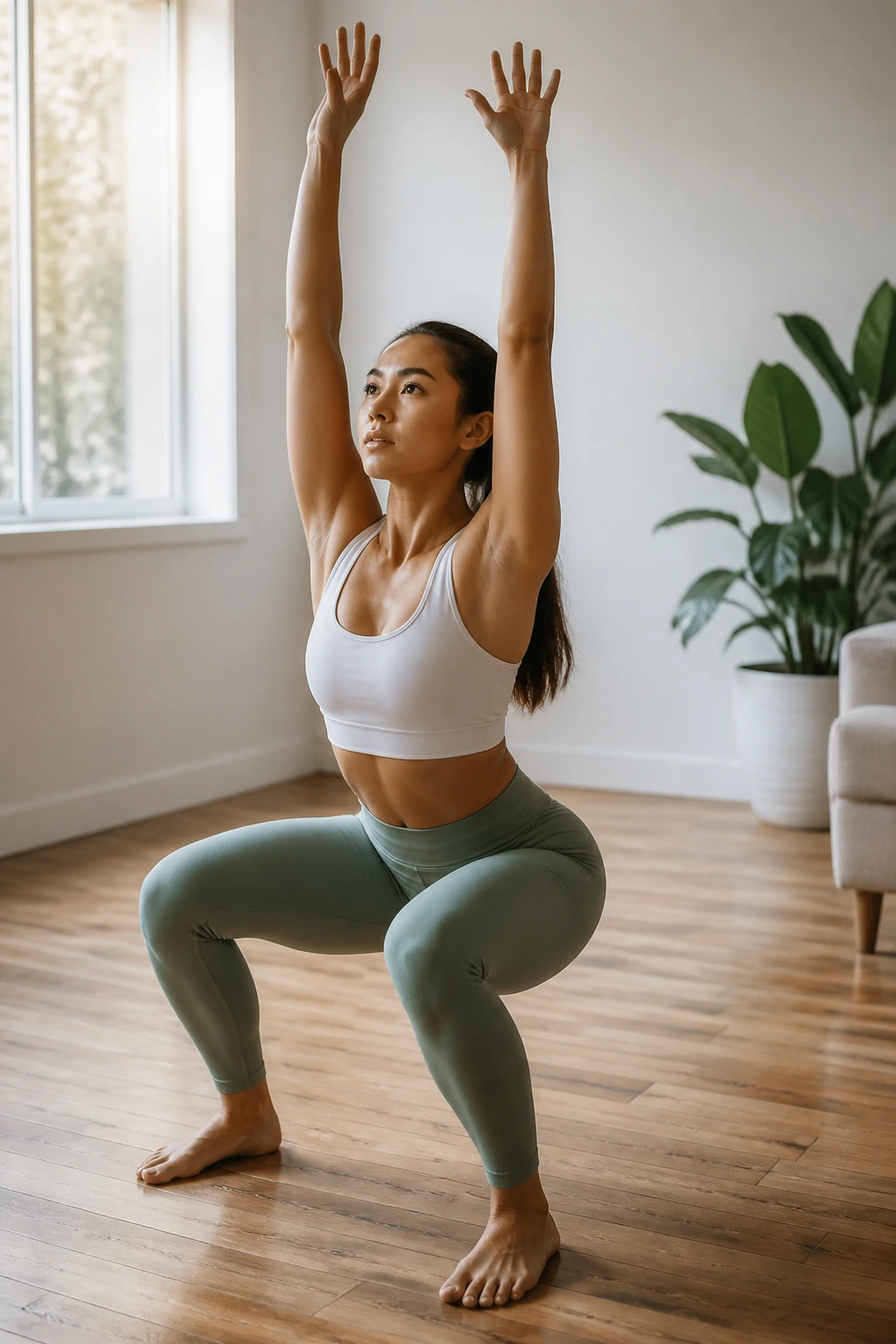
Not every ten-minute cardio workout needs to feel like a sprint out of a bad decision. Sometimes your body wants motion, heat, and a bit of breathing work without the sharp edge. That is where a mobility cardio reset earns its keep.
Use big, flowing movements that keep you moving while also opening the hips, spine, and shoulders. Squat to reach. Lunge with rotation. Inchworm walkouts. Standing knee drives. Nothing fancy. Just enough control to keep the movement smooth and the pulse up.
A clean sequence looks like this:
- 1 minute squat to overhead reach
- 1 minute alternating reverse lunge with twist
- 1 minute inchworm to plank walkout
- 1 minute standing knee drive with arm reach
- 1 minute lateral lunge to center
- Repeat once
This is the session I’d send to someone who feels stiff, not lazy. The goal is to leave with warmer muscles and looser joints, not collapsed on the mat. And yes, it still counts as cardio if you keep the pace up.
19. Family-Friendly Cardio Game
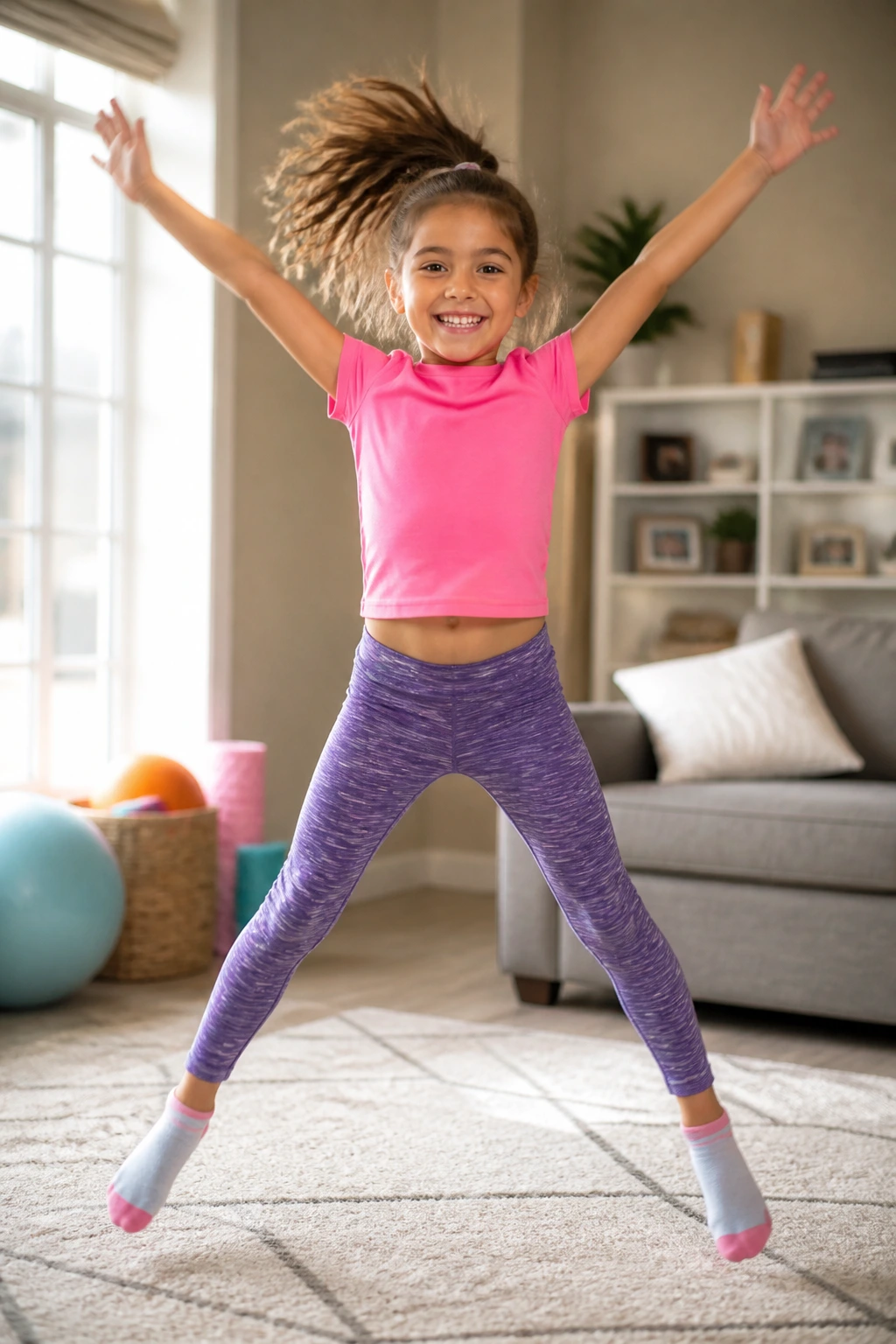
Some workouts work better when they stop looking like workouts. If you’ve got kids, a partner, or even a roommate willing to join in for ten minutes, a simple game format keeps everyone moving without turning the room into a boot camp.
Set a timer and call out movements every 30 seconds: jumping jacks, fast feet, squat reaches, marching knees, shadow punches, side steps. Or write six moves on slips of paper and draw one every half minute. The point is to keep the next move a surprise, because surprise makes people move harder than they planned.
A fun ten-minute setup might look like this:
- 30 seconds jumping jacks
- 30 seconds march and clap
- 30 seconds squat reach
- 30 seconds shadow boxing
- 30 seconds side shuffle
- 30 seconds rest
- Repeat the sequence
Keep the instructions short. The less talking, the better. A game like this is useful because nobody has to “feel ready.” They just have to show up and copy the move. That lowers the barrier in a way solo workouts sometimes don’t.
20. Pick-Your-Own Ten-Minute Finisher
Some days you want noise and sweat. Other days you want control. A good home cardio plan should cover both, which is why the smartest ten-minute workout may be the one you build on the spot.
How to choose fast
Pick one lane based on the room you have and the mood you’re in:
- Need quiet? Do the low-impact march and drive or the mobility cardio reset.
- Want more sweat? Use shadow boxing, Tabata, or the stair climb interval.
- Short on space? Pick mountain climbers, fast feet, or the EMOM.
- Feeling stiff? Start with mobility, then finish with step-ups or march-run blocks.
- Need to blow off steam? Shadow boxing or skater circuits usually hit the mark.
The best ten-minute cardio workout at home is not the one that sounds hardest on paper. It’s the one you can repeat three times a week without dreading it. That’s the part people skip over when they chase the flashier option. Consistency beats drama every time.
If you keep one rule in mind, make it this: pick a workout, set the timer, and start before your brain negotiates you out of it. Ten minutes is short. Use it well.
