



A runner can log miles for months and still fold at the hips on a steep hill. That is the annoying part about running: it exposes weak links with almost rude honesty. The best strength workouts for runners do not try to turn you into a bodybuilder. They teach your legs, hips, calves, and trunk to stay organized when fatigue starts nibbling at your form.
That usually means less flashy work than people expect. A few solid squats. Some single-leg hinges. Calf work that makes your lower legs pay attention. Carries, jumps, and core drills that stop your torso from twisting into a mess when your stride gets long and sloppy. Not fancy. Useful.
And the pay-off shows up in plain ways. You climb hills with less wobble. Your knees stop collapsing inward on tired reps. Your stride feels steadier late in a long run, which is a much nicer feeling than that awkward, shuffling “please let this be over” pace that sneaks in near the end. You do not need a marathon-length gym session to get there. You need the right patterns, done with enough load and enough control to matter.
1. Goblet Squat and Calf Raise Ladder
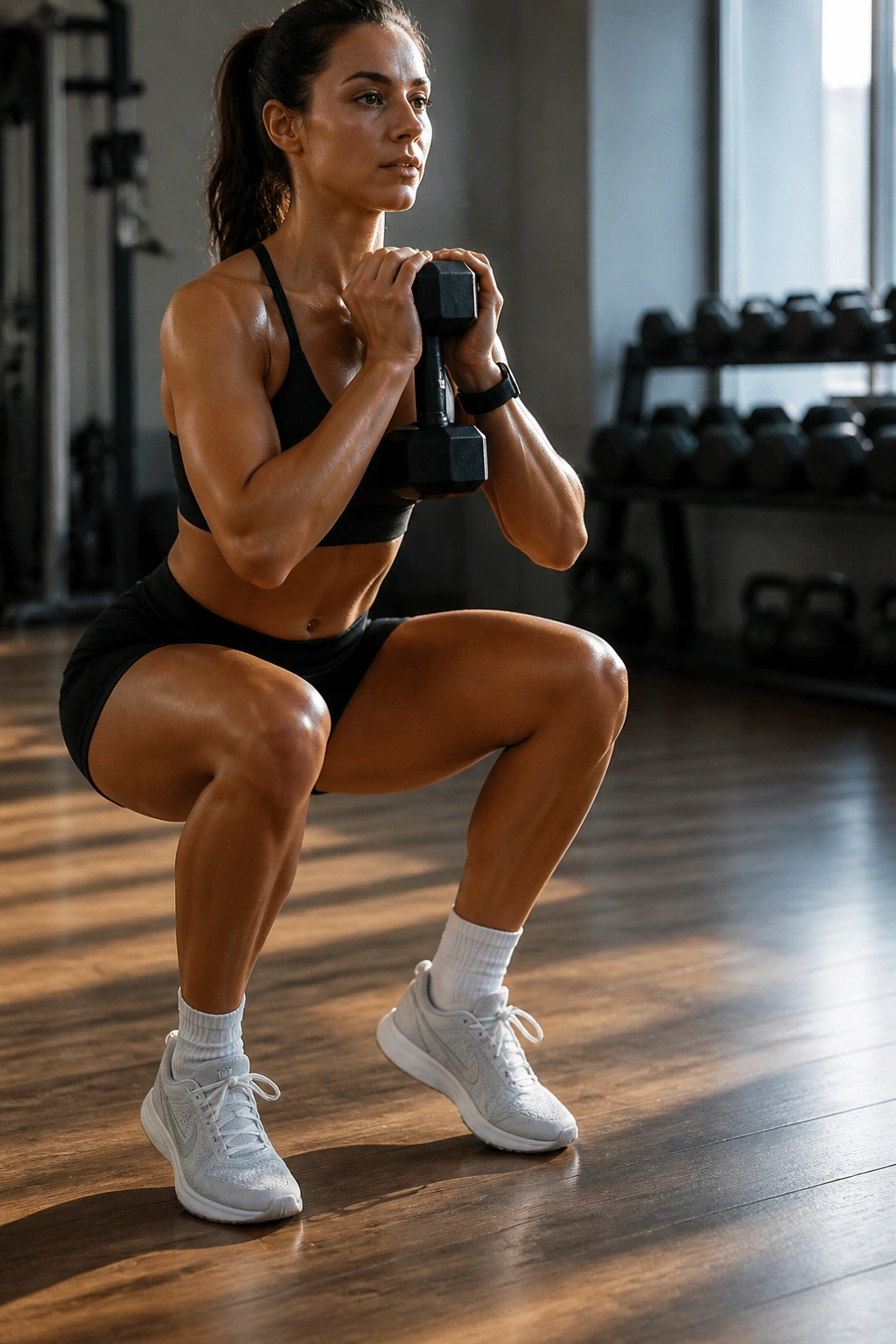
If a runner had to pick one lower-body strength workout, this would be near the top of my list. It covers the big pieces that matter most: knee bend, hip load, ankle stiffness, and push-off strength. A goblet squat is simple enough to learn fast, but it still asks your trunk to stay braced while your legs do the work.
The calf raises are not an afterthought. They are the point. Runners spend a huge amount of time asking the calves and Achilles tendon to absorb force and send it back, step after step after step. If those tissues are weak or sleepy, your stride gets noisy fast.
Try this:
- 3 rounds of 6 goblet squats with a 3-second lower
- 10 standing calf raises with a 2-second pause at the top
- 10 tibialis raises against a wall
- Rest 60 to 90 seconds between rounds
Keep the dumbbell or kettlebell close to your chest. Sit down between your heels on the squat, then stand up with a smooth push through the whole foot. On the calf raises, do not bounce. Pause at the top until you can feel the calf tighten, then lower under control. That slow lower is where a lot of the value lives.
A small warning: if your squat depth turns into a butt-wink mess or your heels pop up early, the weight is too heavy or your mobility is not ready for that range. Use a lighter load and own the motion first. Clean reps beat heavy ugly ones every time.
2. Rear-Foot Elevated Split Squat Session
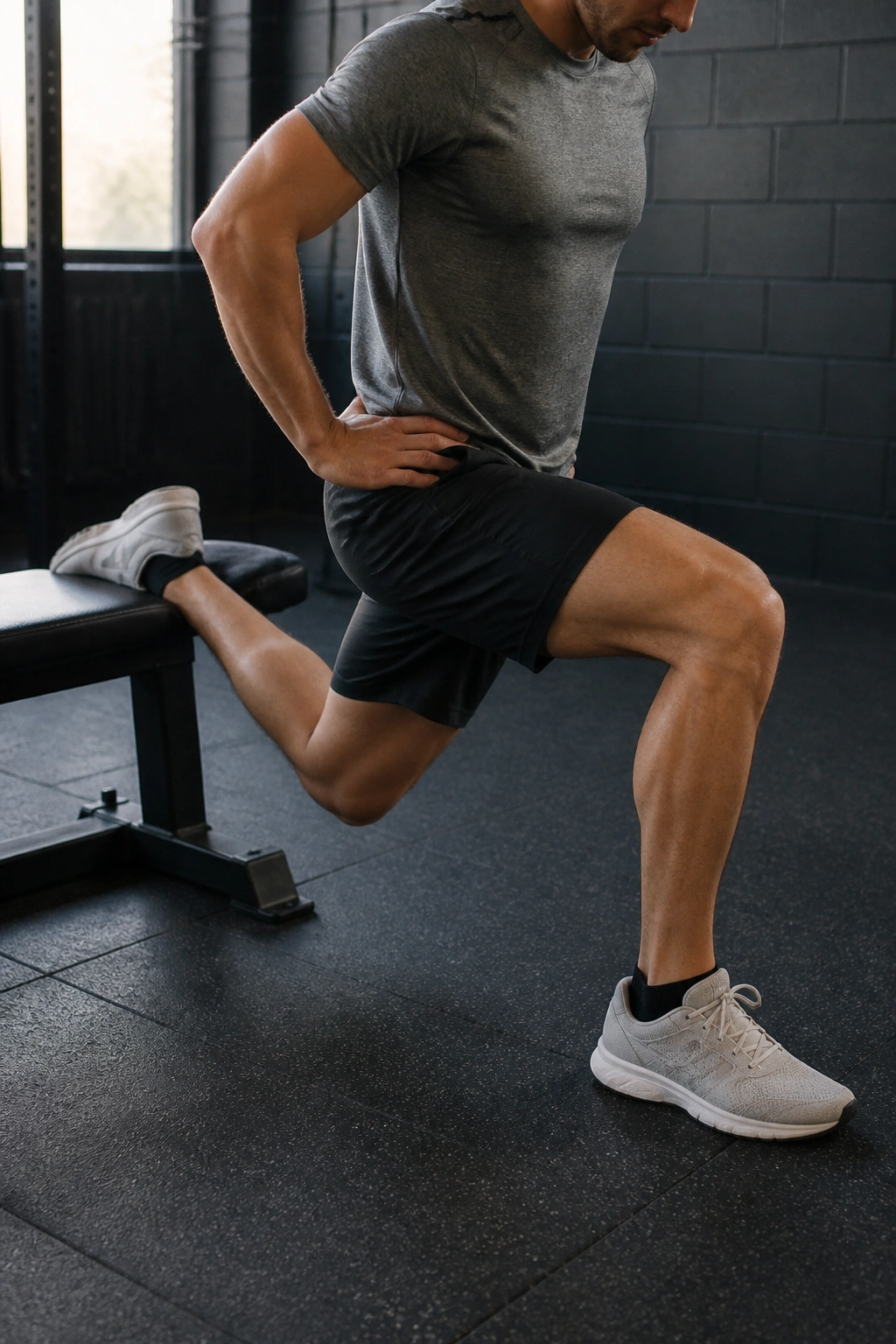
Why do runners keep coming back to split squats? Because running is basically a long series of one-legged stabs at the ground, and this move trains that exact shape without the pounding.
Why It Works
The rear-foot elevated split squat, often called a Bulgarian split squat, loads one leg at a time while the back leg acts as balance. That matters. Most runners have a stronger side, a sloppier side, and a hidden list of small imbalances that only show up when a workout gets hard. This move brings those differences to the surface fast.
You do not need to chase a deep split if your hip flexors or ankles hate it. A modest stance with the back foot on a bench, step, or low box is enough. Keep the front foot flat, let the knee travel forward as far as it can without pain, and think about dropping straight down rather than lunging all over the room.
How to Run the Workout
- 3 sets of 6 to 8 reps per leg
- Rest 75 to 90 seconds between legs
- Use dumbbells at your sides or a goblet hold
- Lower for 2 to 3 seconds, then drive up hard
A little forward torso lean is fine. It actually helps runners more than standing bolt upright, because it shifts work toward the glutes and keeps the move honest. If you feel it mostly in the back knee or low back, something’s off. Shorten the stance, lighten the load, and try again.
This is one of those workouts that pays back in quiet ways. Your stride becomes more even. Hills stop feeling like a leg lottery.
3. Single-Leg Romanian Deadlift with Row
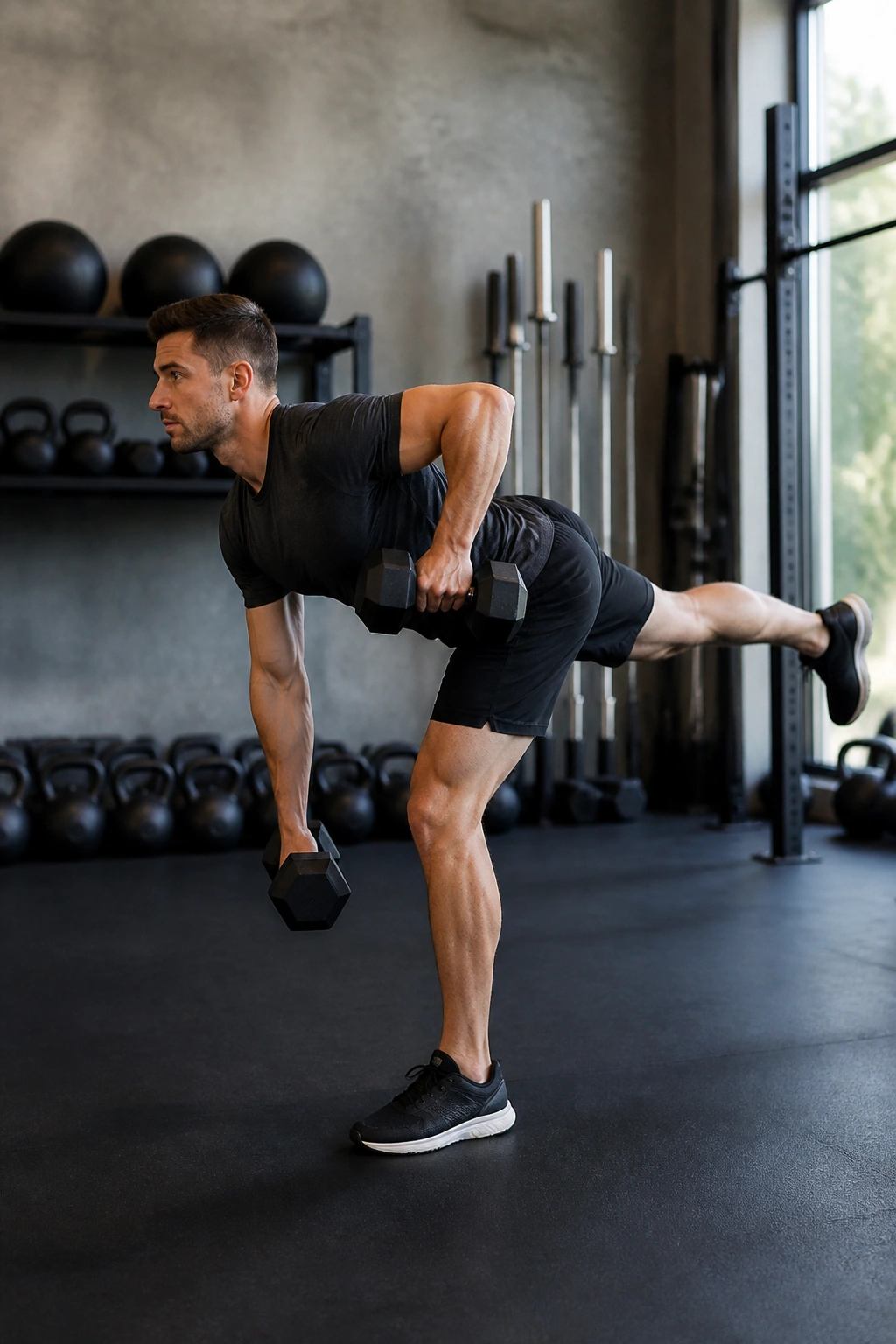
A runner with weak hinges leaks speed. That sounds dramatic, but the basic idea is simple: if your glutes and hamstrings can’t hold your pelvis steady, your stride turns into a little energy leak with every step. The single-leg Romanian deadlift fixes that while also training balance, which is useful even if you think you already have “good balance.”
The row on the other side keeps the upper body from turning into an afterthought. Runners need a back that can stay tall, relaxed, and slightly active. A slumped chest and loose shoulders are expensive late in a run.
Key Details
- 3 sets of 6 to 8 reps per side
- Hold one dumbbell or kettlebell in the opposite hand from the standing leg
- Row at the top, then lower the weight slowly
- Rest 60 seconds between sides
What should you feel? Hamstring stretch on the standing leg. Glute tension on the way up. A quiet, level pelvis. If your free leg swings like a door or your hips open toward the wall, slow down. Pick a lighter weight and keep your foot tripod planted: big toe, little toe, heel.
One good trick is to keep your back hand on a rack or wall for the first week or two. No shame there. It lets you learn the hinge pattern without turning the workout into a wobble contest.
This one is especially useful for runners who live on roads with camber, trails with uneven footing, or tracks where one side always feels a little off.
4. Step-Up Strength and Knee Drive Circuit
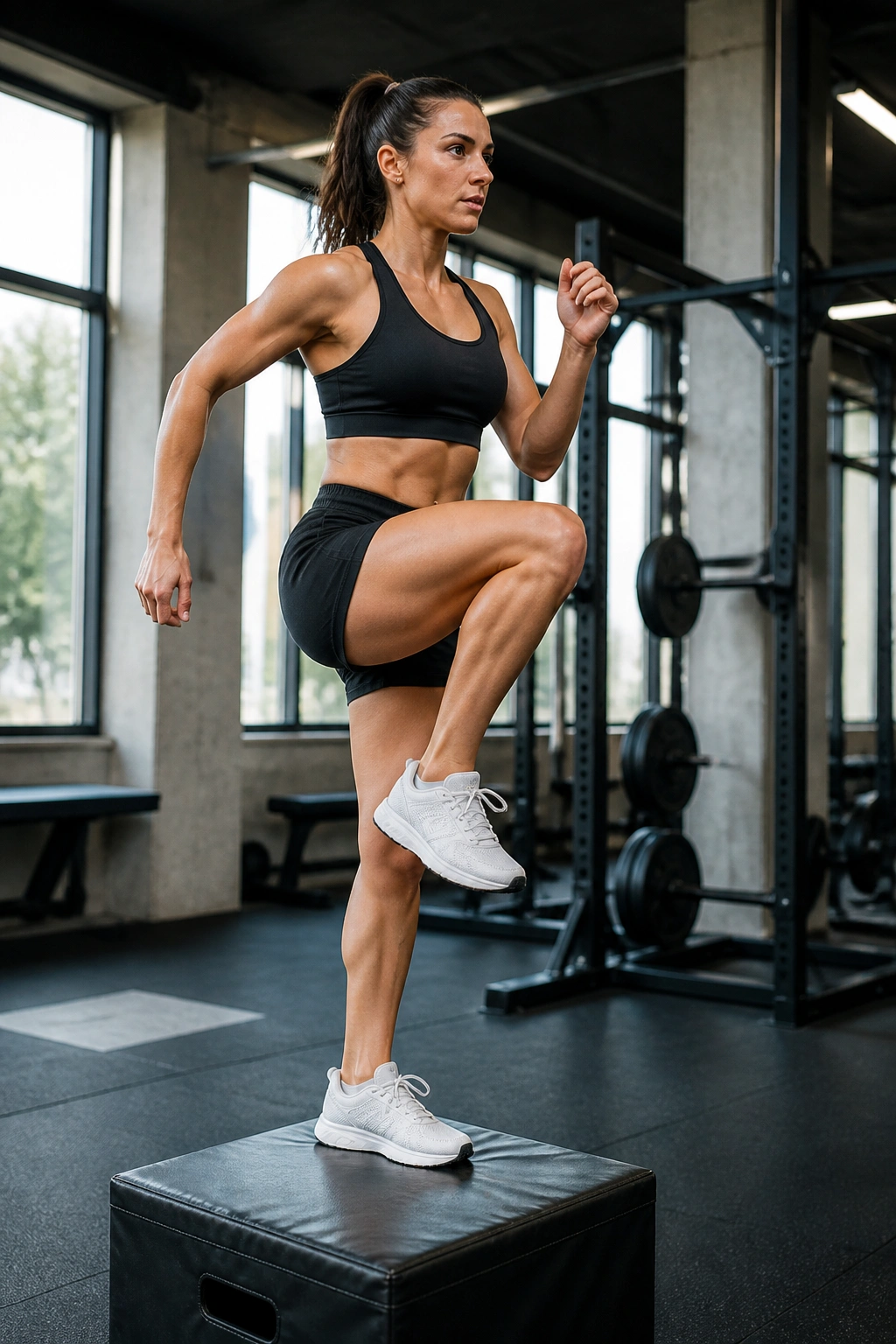
A box, a bench, or even the bottom stair in your house can become a decent runner’s gym if you use it well. Step-ups teach force transfer in a way that feels close to climbing, bounding, and the drive phase of running, but without the shock of repeated ground contact.
The move works best when the box is not absurdly high. Aim for a surface around knee height or a little below. Too tall, and you start heaving yourself up with the back leg. Too low, and you lose the training effect.
What Makes It Runner-Specific
The real job here is not standing on the box. It is driving the opposite knee up with purpose while the working leg finishes the push. That knee drive helps clean up hip extension, which many runners lose when fatigue rolls in.
The Workout
- 3 sets of 8 reps per leg
- Hold dumbbells at your sides if bodyweight gets too easy
- Lower for 2 to 3 seconds on the way down
- Rest 60 to 90 seconds
Stay tall through the chest, but do not lock yourself into a stiff statue. A slight forward lean is fine. Use the whole foot on the box, press through the heel and midfoot, and avoid bouncing off the trailing leg. If you can barely control the descent, the box is too high or the load is too much.
I like this workout for runners who say hills “blow up” their quads. That usually means the stepping pattern needs more strength, not more suffering.
5. Lateral Band Walk and Side Plank Hip Stability Circuit
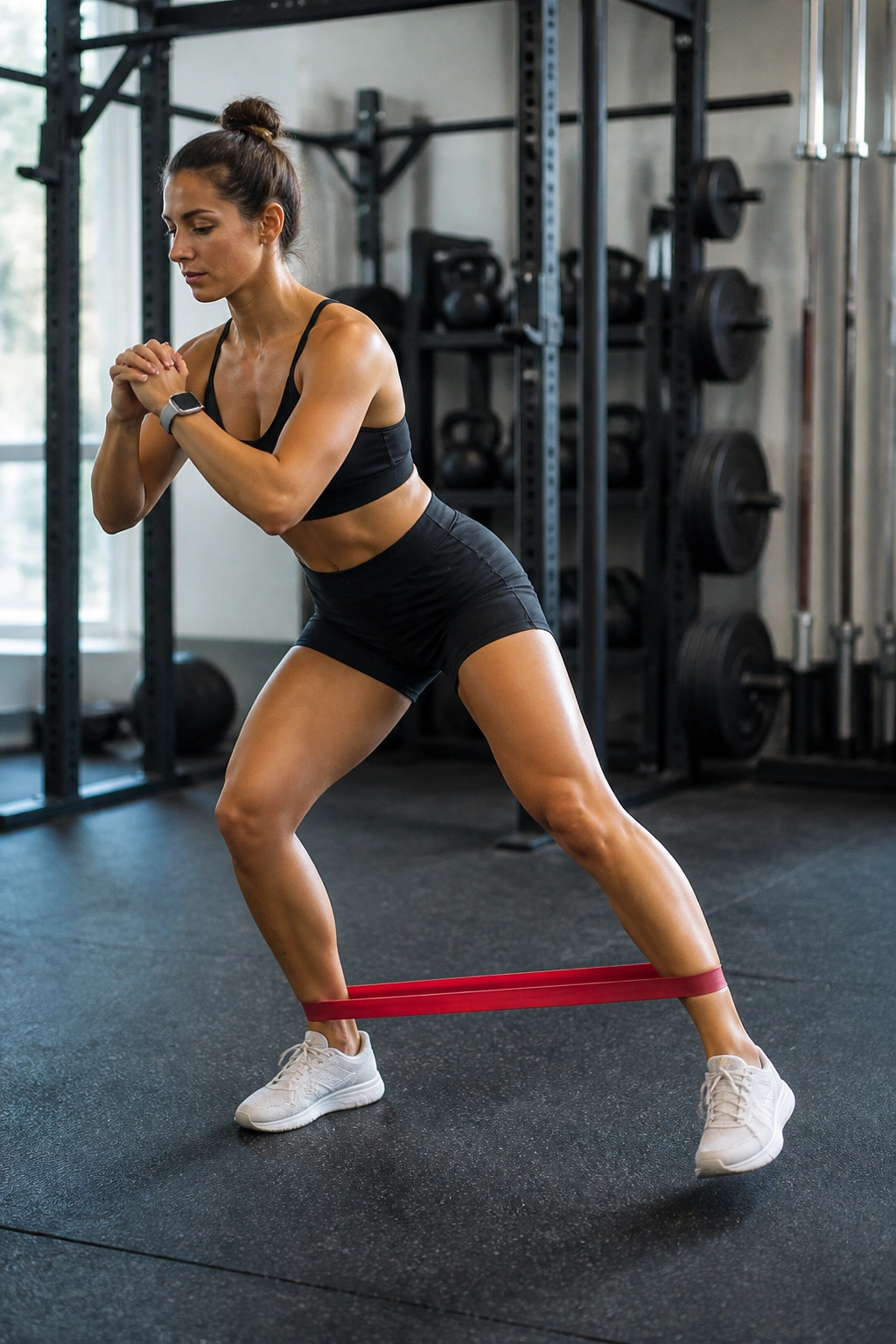
Why train sideways if you run straight? Because your body never actually moves in a neat straight line. Every stride asks your hips to keep the pelvis from dropping and the knee from drifting all over the place. Side-to-side strength is the difference between a clean stride and a messy one.
How to Feel the Right Muscles
The outer hip should light up, not the lower back. That is the big clue. If your low back starts doing the work, the band is probably too heavy or your stance is too wide. Keep the movement small and controlled. It does not need to look dramatic to work.
The Circuit
- 10 steps right and 10 steps left with a mini-band above the ankles or just above the knees
- 20 to 30 seconds side plank on each side
- 8 slow standing hip abductions per side
- Repeat for 2 to 4 rounds
Keep your feet parallel and your toes pointed forward. On the side plank, squeeze the glute of the lower leg and keep the body in one clean line from shoulder to ankle. If your hip sags, shorten the hold and build from there.
This is not the workout that makes people crowd around the rack. Fine. It still helps when one knee wants to cave inward on the last mile of a tempo run. And that problem is usually more annoying than glamorous strength work, which is part of why people skip it.
6. Trap-Bar Deadlift and Walking Carry Session
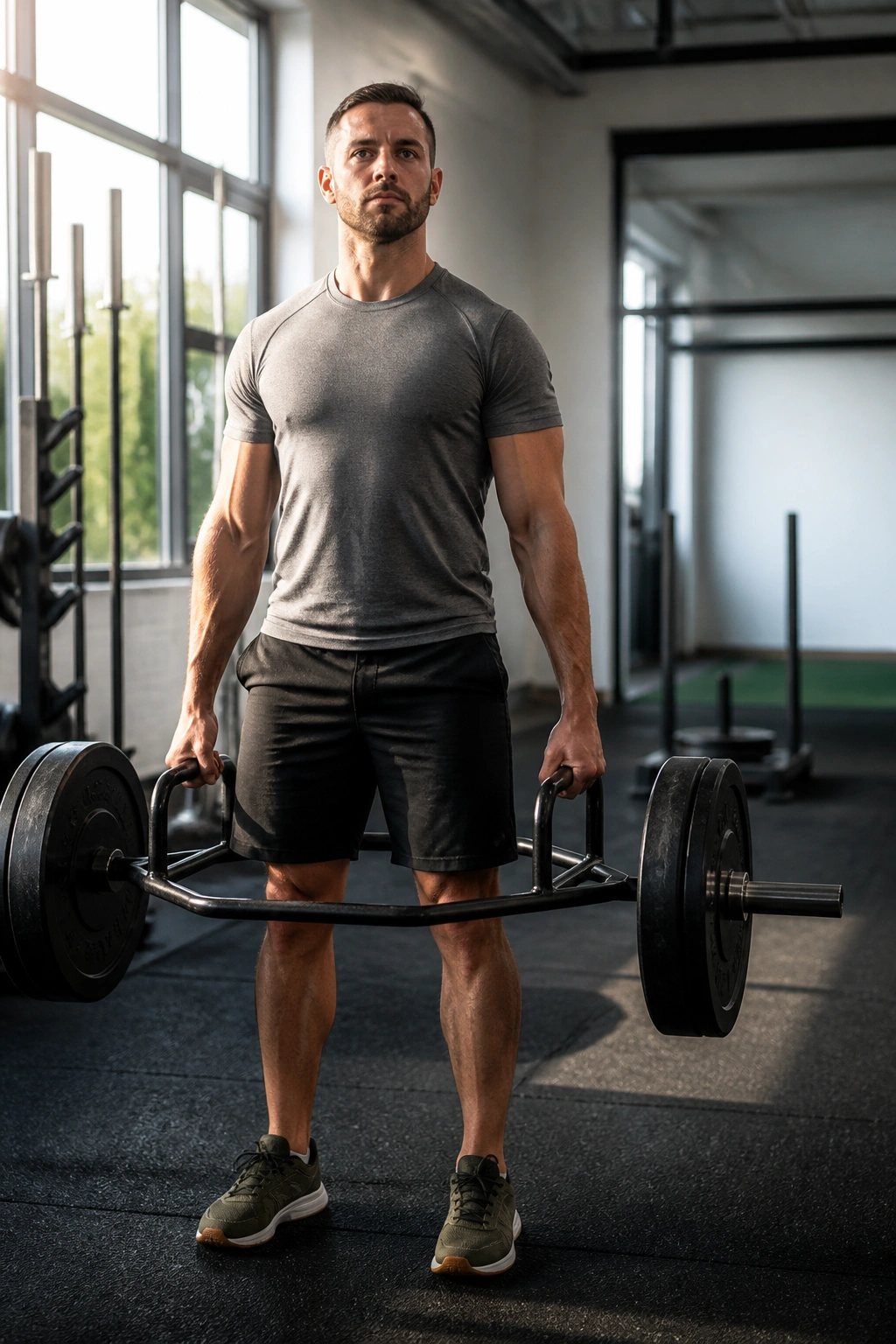
Heavy deadlifts are not the enemy of distance runners. Reckless deadlifts are. The trap-bar version gives you a more upright torso, a friendlier learning curve, and enough load to matter without demanding perfect powerlifting technique.
I like this one because it teaches you to push hard into the floor without turning your back into a question mark. Runners who live on hills, trails, or fast intervals often need more total-body strength than they think.
The Setup
- 4 sets of 3 to 5 reps on the trap bar
- Use a load that feels challenging but still crisp
- Finish each set with a 30 to 40 meter farmer walk or a short walk across the room if space is tight
- Rest 90 to 120 seconds
Brace before you pull. Not after. Take a breath into the belly and sides of the trunk, then stand up as if the floor owes you money. If the last rep turns into a slow grind with a rounded back, stop there. Two good reps left in the tank is a sensible place to live.
The carry afterward matters more than people think. It locks in the bracing and forces your hips to keep you upright while your grip and shoulders stay honest. If your shoulders creep toward your ears, lower the load and reset.
Use this on a day that is not already crowded with hard running. Pairing it with intervals and then wondering why your legs feel trashed is not a mystery.
7. Sliding Hamstring Curl and Glute Bridge Workout
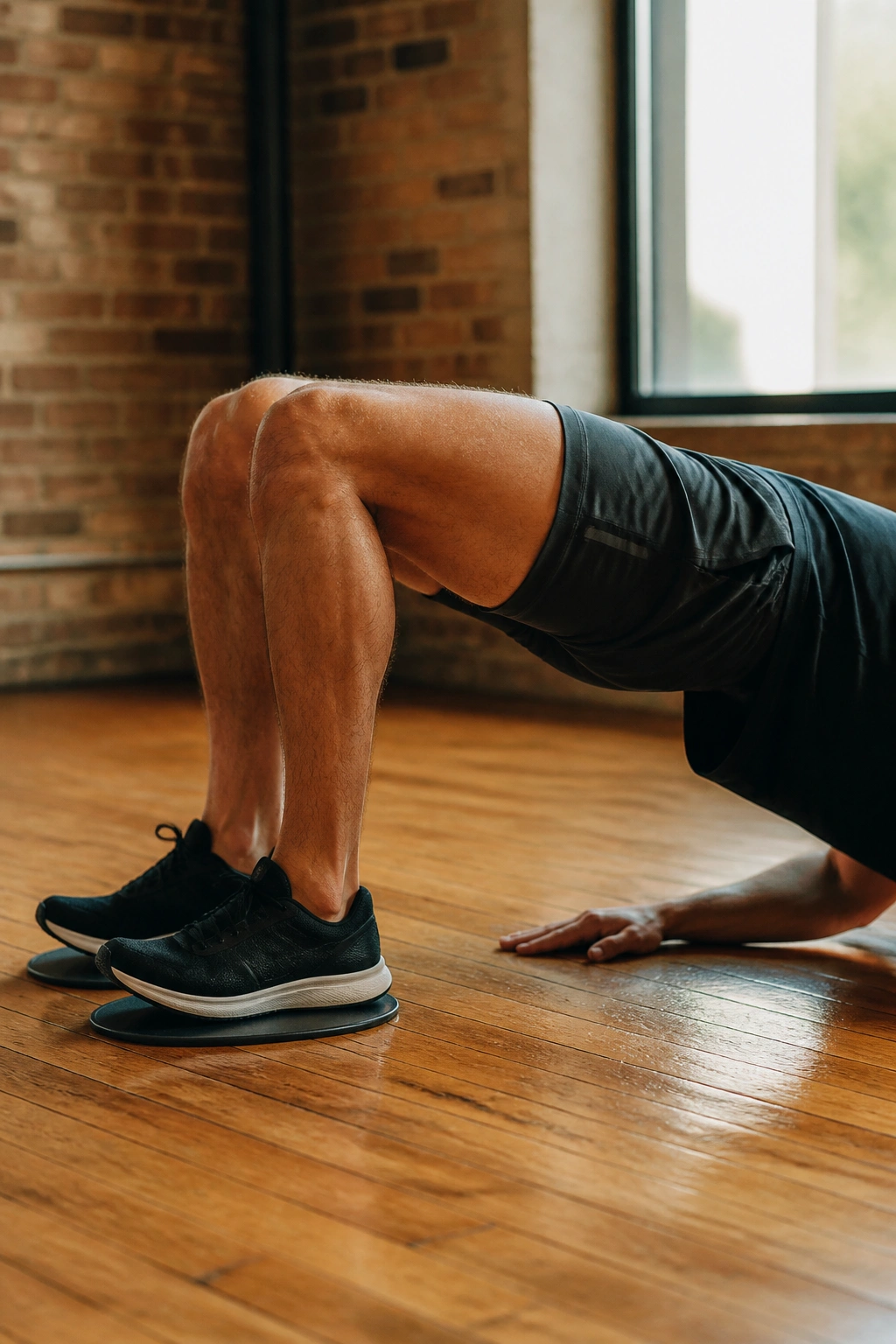
The floor tells the truth here. Put your heels on sliders, towels, or furniture movers on a smooth surface, and your hamstrings will either hold up or complain loudly.
Why Runners Should Care
Hamstrings do two jobs in running: they help extend the hip and they help control the lower leg as the foot swings through. A sliding curl loads both ends of that chain. Add glute bridges, and you get a cleaner bridge between hip power and lower-leg control.
The Work
- 3 sets of 8 to 12 sliding hamstring curls
- 3 sets of 10 glute bridges with a 3-second squeeze at the top
- 2 sets of 6 single-leg glute bridges per side
- Rest 45 to 75 seconds between sets
Lift your hips before you slide the heels out. That part matters. If your hips drop halfway through the curl, shorten the range and own the tension you can control. On the bridge, ribs stay down, chin stays relaxed, and the squeeze at the top should feel like the glutes are doing their actual job instead of freeloading.
Socks on hardwood work better than socks on carpet. Little detail, big difference.
If cramping shows up, it usually means you’re going too long, too fast, or with too much hip drop. Shorten the movement, slow the pace, and let the hamstrings work without panicking. They usually settle down when you stop bullying them.
8. Nordic Hamstring Eccentric Session
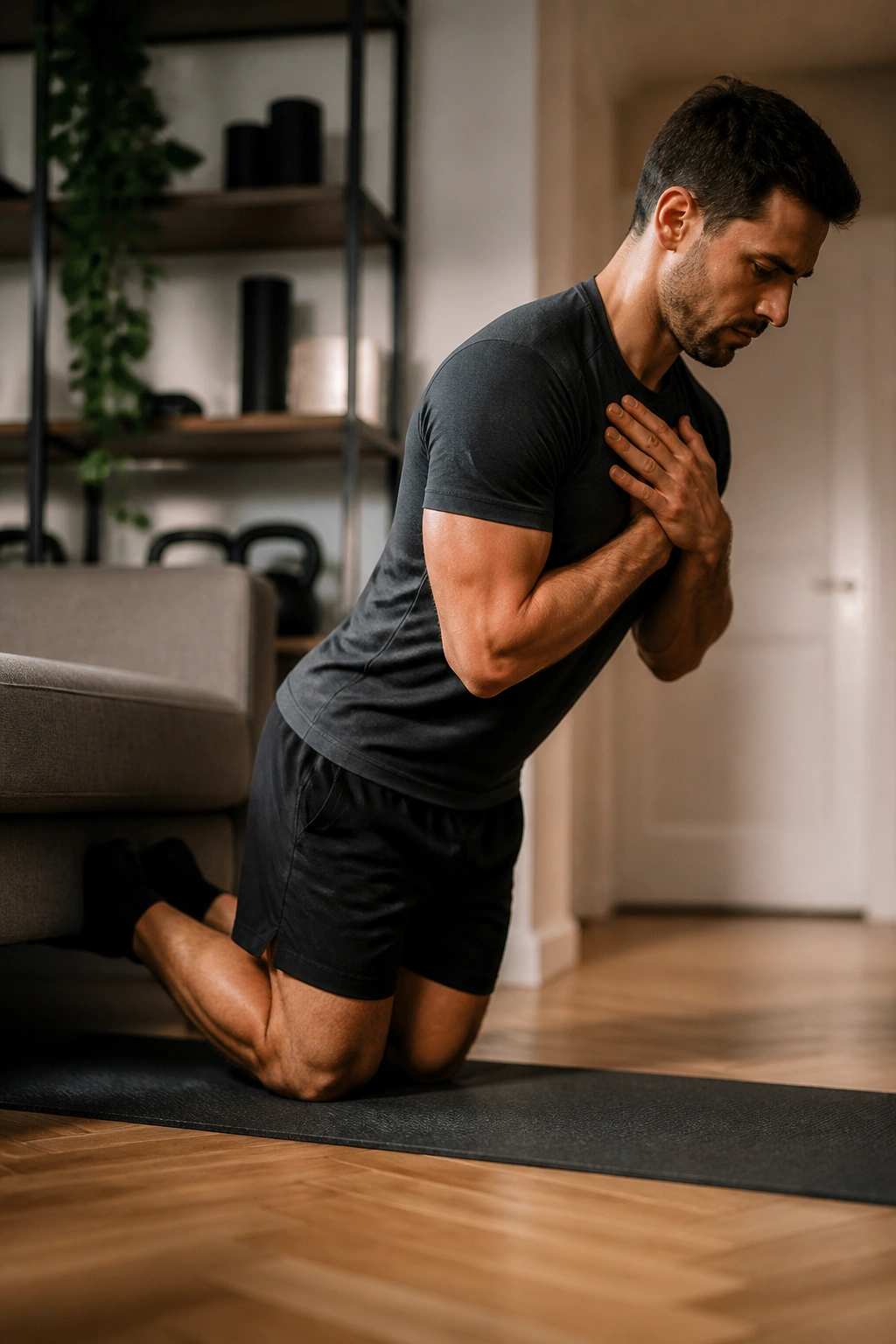
The first time most runners lower into a Nordic hamstring curl, they find out that bodyweight is not a joke. Good. That’s the point.
Nordics are ugly in the best sense. They train the hamstrings to resist lengthening under load, which is exactly the kind of strength that helps when your stride opens up late in a race or when a fast stride asks the backside of the leg to stay controlled.
How to Do It Without Turning It Into a Disaster
- 2 to 4 sets of 3 to 5 slow lowers
- Lower for 3 to 5 seconds
- Catch yourself with your hands near the floor
- Use a partner, heavy anchor, or padded couch to secure the ankles
- Rest 90 to 120 seconds
Do not try to force a full rep on day one if your hamstrings are not ready. Use a band, shorten the range, or lower only halfway. The goal is controlled tension, not a spectacular faceplant.
A good Nordic rep should feel smooth at first, then heavy, then a little ugly near the end of the lowering phase. That is normal. What is not normal is a pinch in the back of the knee or a sharp tug near the sit bone. Stop there and regress.
I would keep this workout away from your hardest speed session. The soreness can be sneaky, and no one enjoys discovering it on the stairs the next morning. Small doses work best.
9. Push-Up, Row, and Reverse Fly Posture Circuit
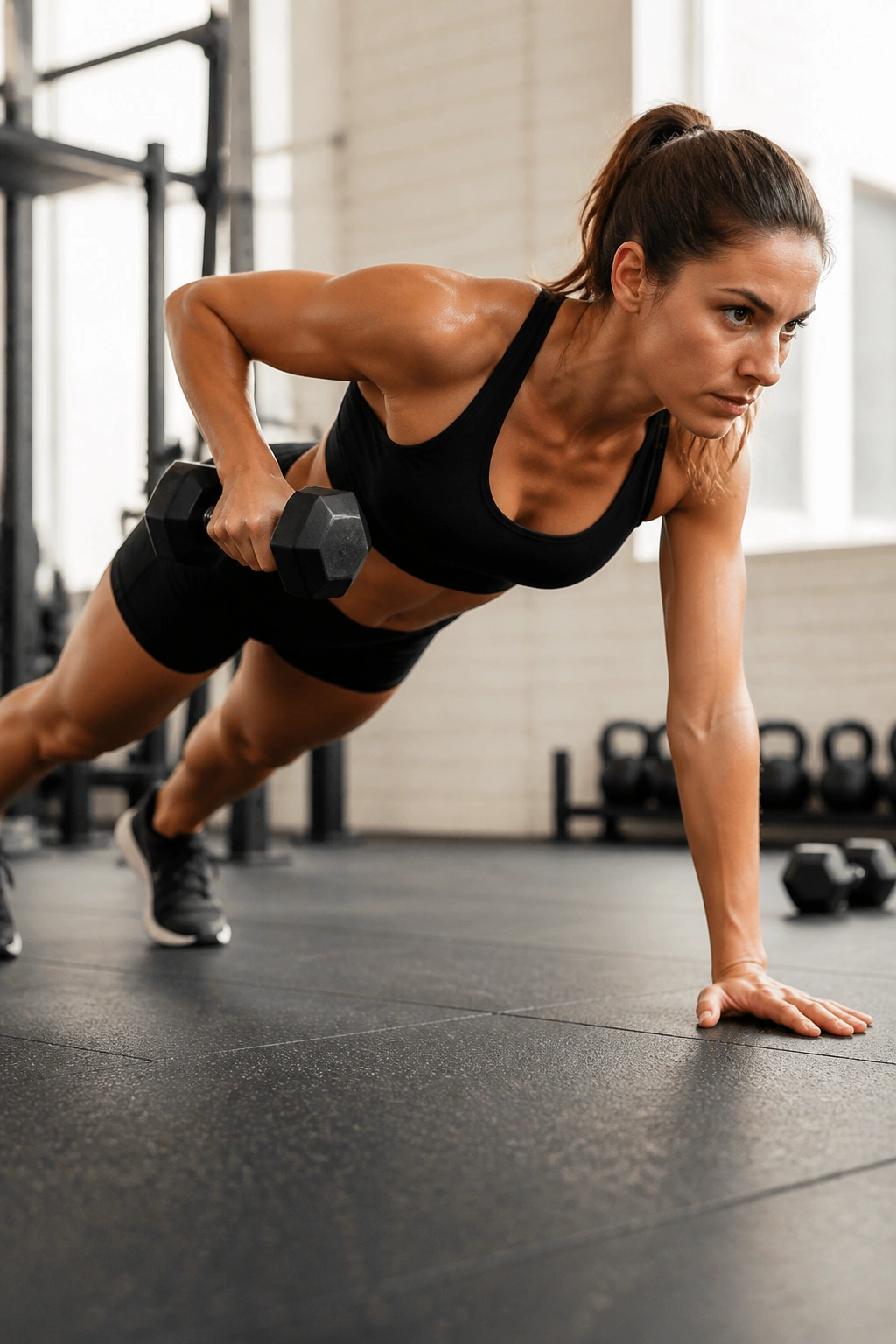
Runners often treat the upper body like dead weight with shoes on. That is a mistake. A slumped chest changes breathing mechanics, shortens arm swing, and makes the whole run feel heavier than it should.
Unlike leg-only lifting, this circuit keeps the torso from caving in when the miles build. The push-up gives you a simple pressing pattern. The row keeps the shoulder blades moving well. The reverse fly teaches the upper back to stay awake without turning the workout into a gym selfie.
The Circuit
- 8 to 15 push-ups
- 8 to 12 one-arm dumbbell rows per side
- 10 to 15 light reverse flys
- 3 rounds total
- Rest 45 to 60 seconds between rounds
You want the push-up to look clean, not heroic. Hands under shoulders, ribs tucked, body moving as one piece. On the row, think elbow to back pocket, not yank and shrug. The reverse fly should feel small and controlled. If you need to swing the weights, they’re too heavy.
What to Watch For
- Neck creeping forward
- Lower back sagging on push-ups
- Shoulder shrugging on rows
- Using momentum instead of muscle
This workout is especially handy for runners who arm-fight every run. You know the look: fists clenching, shoulders up, chest tight. The fix is not “relax” shouted at yourself. It’s building enough upper-body strength that relaxed actually feels possible.
10. Pallof Press and Dead Bug Anti-Rotation Core Day
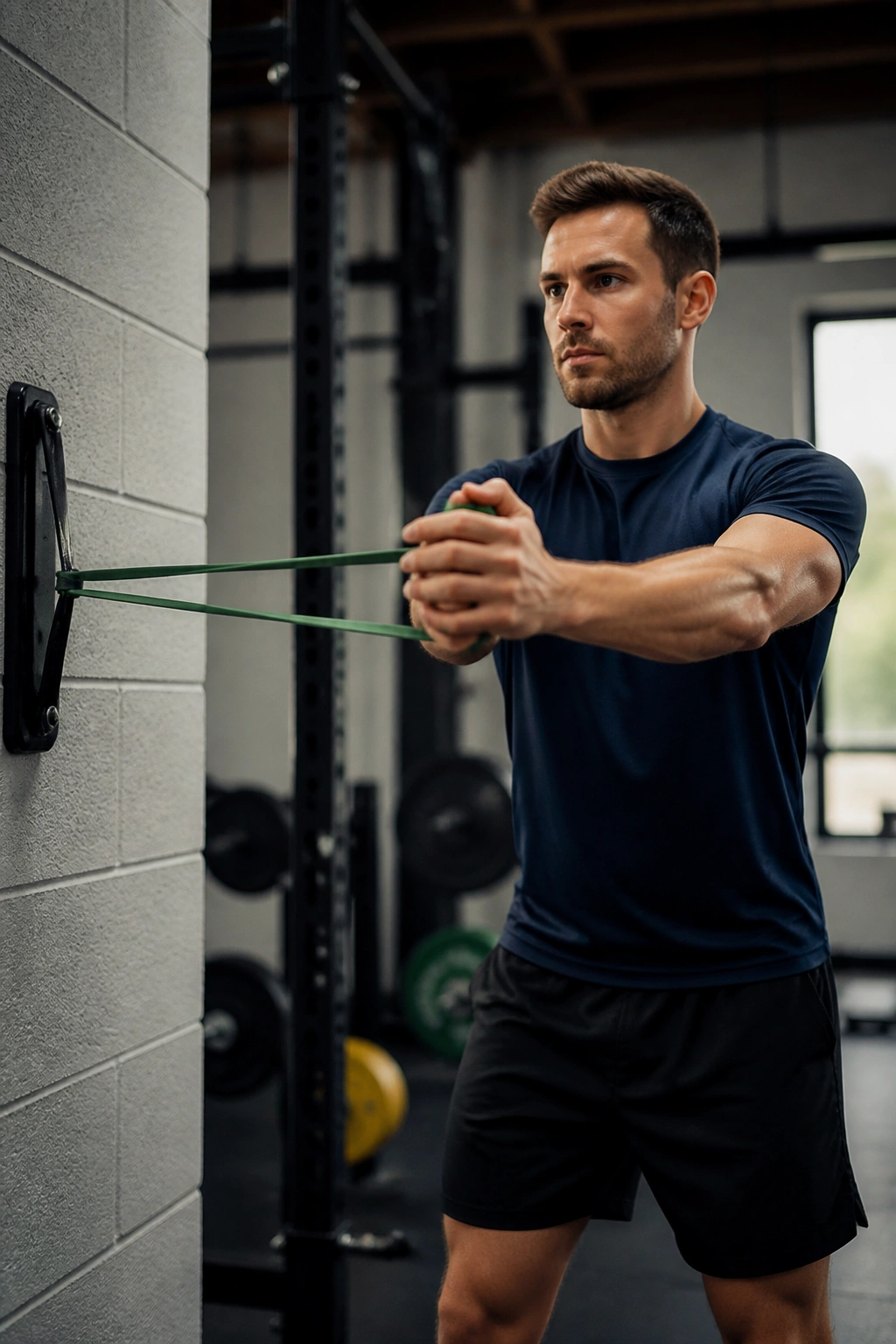
Runners do not need 200 sit-ups. They need a trunk that resists twisting when one foot is on the ground and the other foot is swinging through. That is a different job, and it deserves different training.
Brace Before You Move
The Pallof press is one of the cleanest anti-rotation drills around. Set a band or cable at chest height, stand sideways to the anchor, and press the handle straight out without letting your torso rotate. That simple motion teaches your core to stay quiet while your arms move.
Dead bugs take the same idea and add coordination. One arm and the opposite leg extend while the lower back stays pinned to the floor. If the back arches, the range is too big.
The Workout
- 3 sets of 8 to 10 Pallof presses per side, with a 2-second hold
- 3 sets of 6 dead bugs per side
- 2 sets of 6 bird dogs per side, slow and controlled
- Rest 30 to 45 seconds between drills
A good core workout for runners should leave your midsection feeling awake, not demolished. If your neck or hip flexors are taking over, reduce the range and slow down. Exhale on the hard part. That tiny breath cue keeps the ribs from flaring and makes the whole thing cleaner.
This is a useful session when your lower back gets cranky after longer runs or when your stride starts looking like it belongs to someone carrying groceries.
11. Walking Lunge, Reverse Lunge, and Split-Squat Ladder
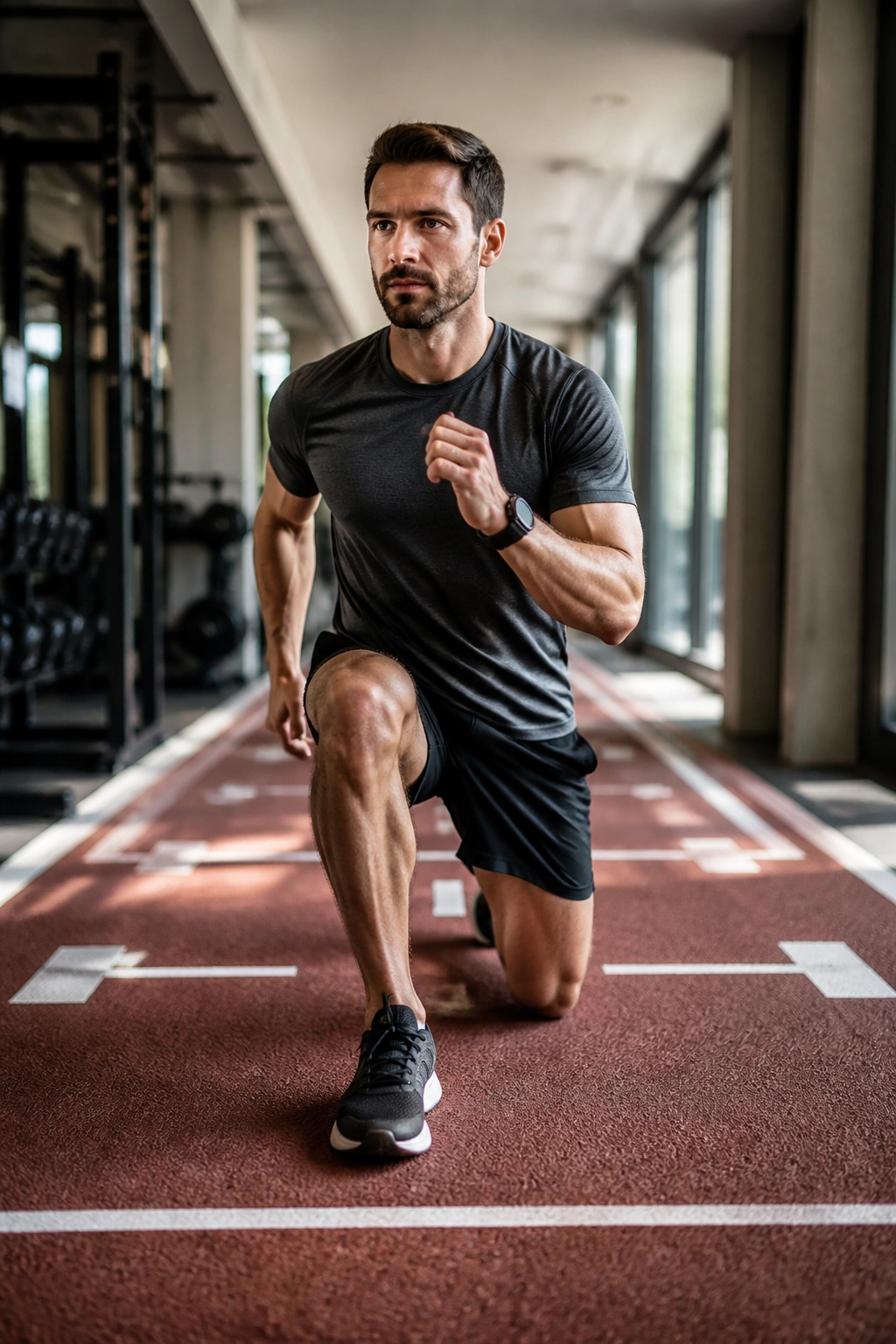
Some workouts feel like running practice in disguise. This is one of them.
Walking lunges add a little rhythm. Reverse lunges are gentler on the knees and easy to control. Split squats slow everything down and force each leg to do its share. Put them together and you get a very honest one-leg strength session.
The Ladder
- 8 walking lunges per leg
- 8 reverse lunges per leg
- 8 split squats per leg
- Then 6 of each
- Then 4 of each
- Rest 60 to 90 seconds between rounds
Use bodyweight first. Add dumbbells only after the pattern stays smooth. Keep the front knee tracking in line with the second toe, and avoid letting the torso fold forward like a folding chair.
A few runners hate walking lunges because they feel awkward. Fair enough. They are awkward. That awkwardness is part of why they work. They challenge balance, hip control, and coordination in a way that straight sets on a machine never will.
If your knees are touchy, bias the reverse lunge and split squat. If you’re feeling strong and stable, the walking version can come last as a fatigue test. Either way, the legs will know they did something.
12. Pogo Hops and Box Jump Power Session
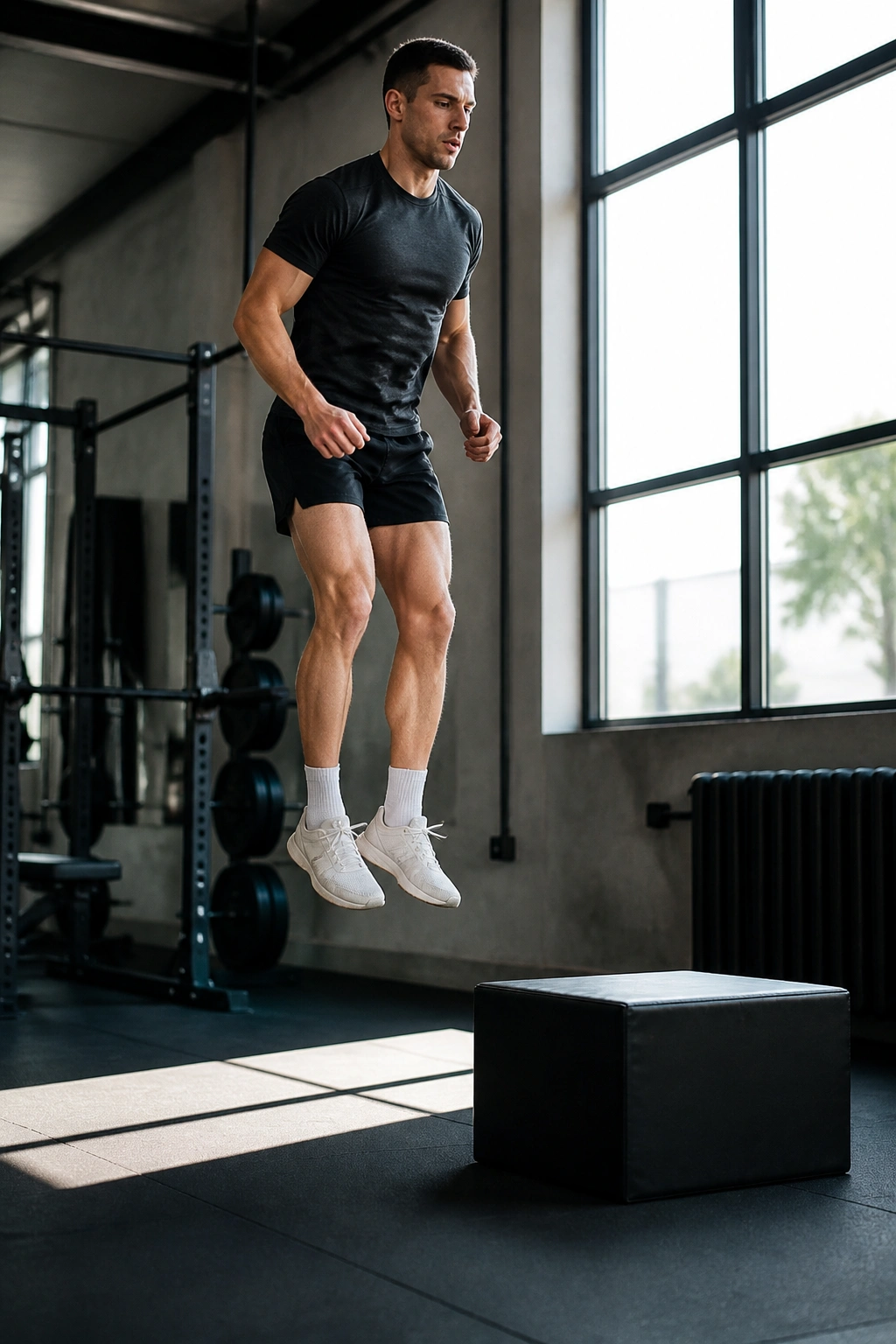
Explosive work is not just for sprinters. Runners who live at steady paces can get stiff, flat, and a little sleepy in the lower legs. A small dose of jumping wakes that system up.
Pogo hops are tiny, quick ankle-driven jumps. The knees stay soft, the contact with the floor stays short, and the calves and feet learn to react fast. Box jumps add a bit more power without forcing you to land from a huge height.
Keep It Small and Clean
- 3 sets of 20 pogo hops
- 3 sets of 5 box jumps onto a low box, about 12 to 24 inches
- 60 to 90 seconds rest between sets
- Stop the set the moment the landing gets loud or sloppy
Land softly. That is the whole trick. If the box jump turns into a max-effort leap with a messy landing, the box is too high or you’re too tired. A clean jump onto a modest platform is better than a heroic one onto something silly.
Use It When
- You want more spring in the stride
- You have been doing only slow strength work
- Your calves and ankles feel flat, not bouncy
- You are fresh enough to move fast
Do not pile this on top of fatigue. Jumps are high quality or they are not worth much. A short, sharp session once a week is plenty for most runners.
13. Heavy Farmer Carry and Suitcase Carry Workout
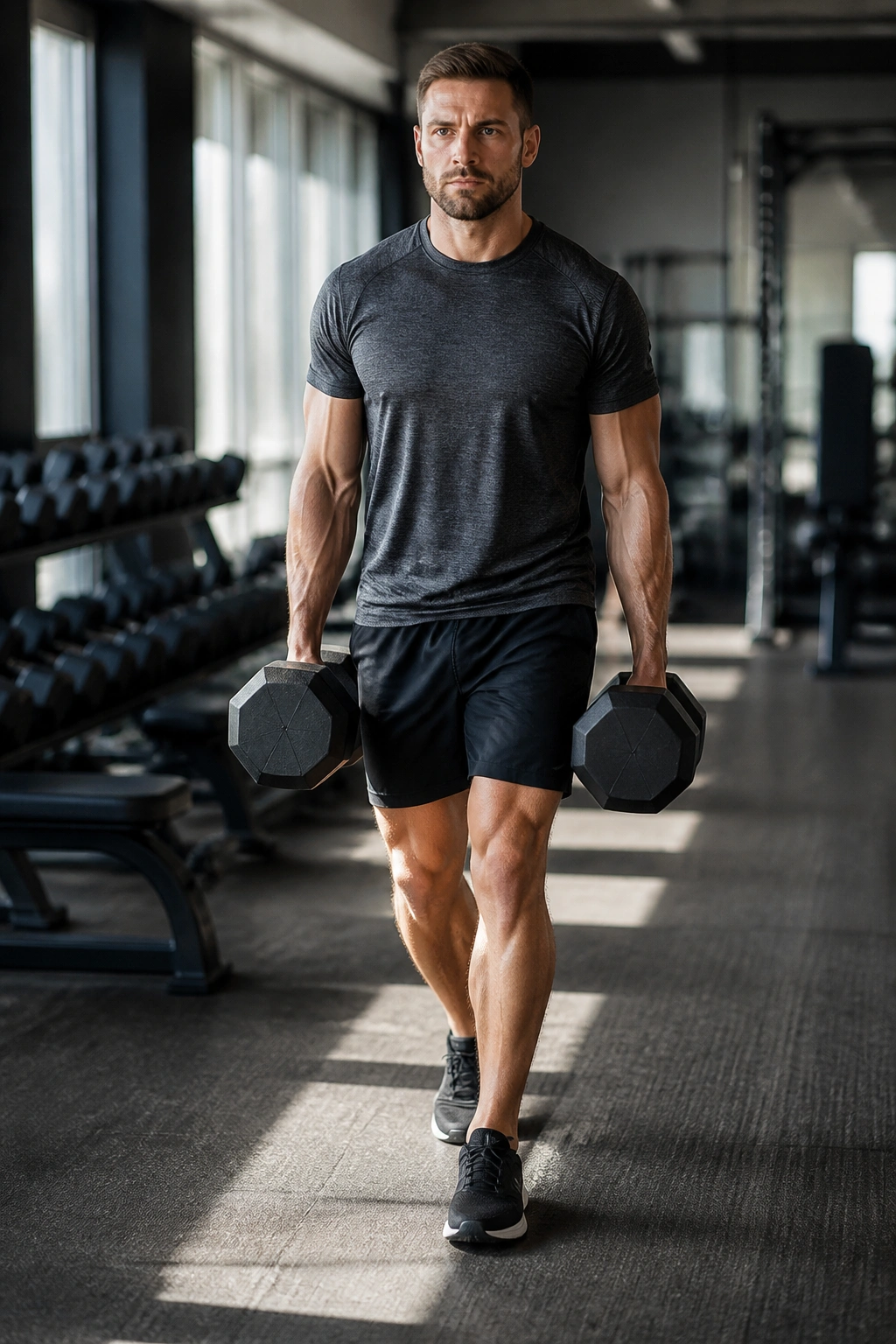
What does carrying heavy weights have to do with running? More than people think. Every stride asks your trunk to keep you from swaying, collapsing, and wasting force. Carries train that without needing complicated setup.
Heavy but Clean
The farmer carry is simple: grab two heavy dumbbells or kettlebells and walk. The suitcase carry is the same idea with one weight, which forces the opposite side of the torso to resist bending.
The Session
- 4 carries of 30 to 40 meters with two weights
- 3 carries of 20 to 30 meters per side with one weight
- 60 to 90 seconds rest between carries
- Choose a load that makes your grip work before your posture falls apart
Stand tall, ribs down, chin level, and walk like you mean it. No leaning. No shrugging. No stomping. If the weight is so heavy that you have to sway just to keep moving, it’s too much. The carry should challenge your ability to stay organized, not punish it.
I like this workout for runners who lose posture on long descents or late in marathon training. It also does a sneaky good job with grip strength, which sounds unimportant until you realize how often weak grip shows up as sloppy upper body tension.
A nice side effect: you finish carries feeling taller. That feeling matters.
14. Hip Thrust and Single-Leg Bridge Power Session
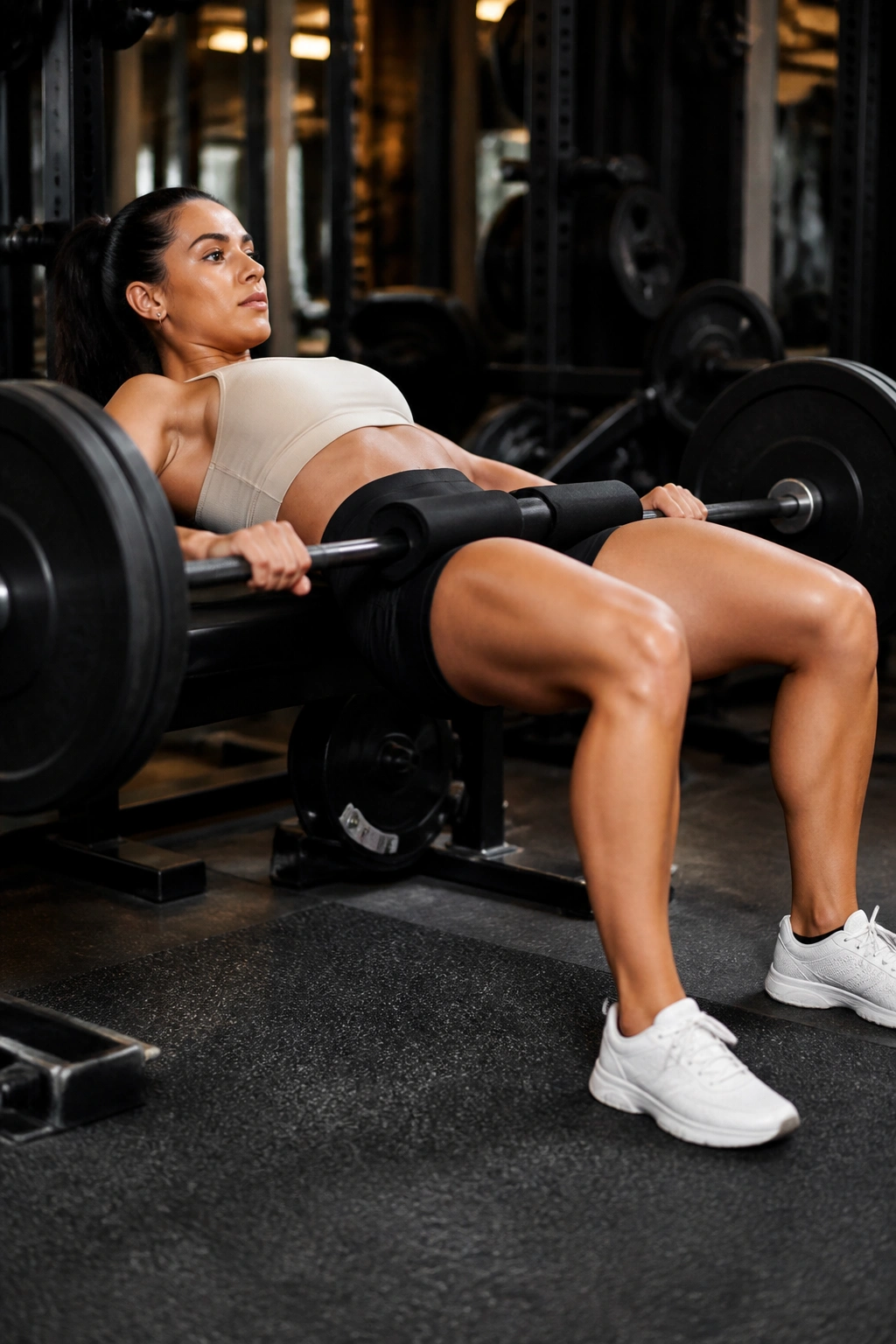
Glutes matter. Not in the vague fitness-influencer way. In the practical, keep-your-stride-from-drifting-backward way.
Hip thrusts load hip extension hard, which is useful for runners who need more power in toe-off and better support when fatigue starts taking space away from the stride. Single-leg bridges clean up the side-to-side difference and teach each hip to work without help from the other one.
How to Run It
- 4 sets of 6 hip thrusts with a 2-second squeeze at the top
- 2 sets of 10 single-leg glute bridges per side
- Rest 60 to 90 seconds between sets
- Use a barbell, dumbbell, or a loaded plate across the hips
The top position should feel like a hard glute squeeze, not a lower-back arch. Keep the ribs down. If your neck feels strained, tuck the chin a little and look at the ceiling instead of trying to force extra range.
When to Pick This Workout
- Your stride feels short and flat
- Hills make your glutes disappear
- You want a lower-leg-friendly strength day
- You need power without a lot of knee stress
This session pairs well with easy run days or as a main lift when you want to keep the lower body fresh. It is not the most exciting workout in the room, but it works.
And that counts.
15. The 20-Minute Maintenance Circuit
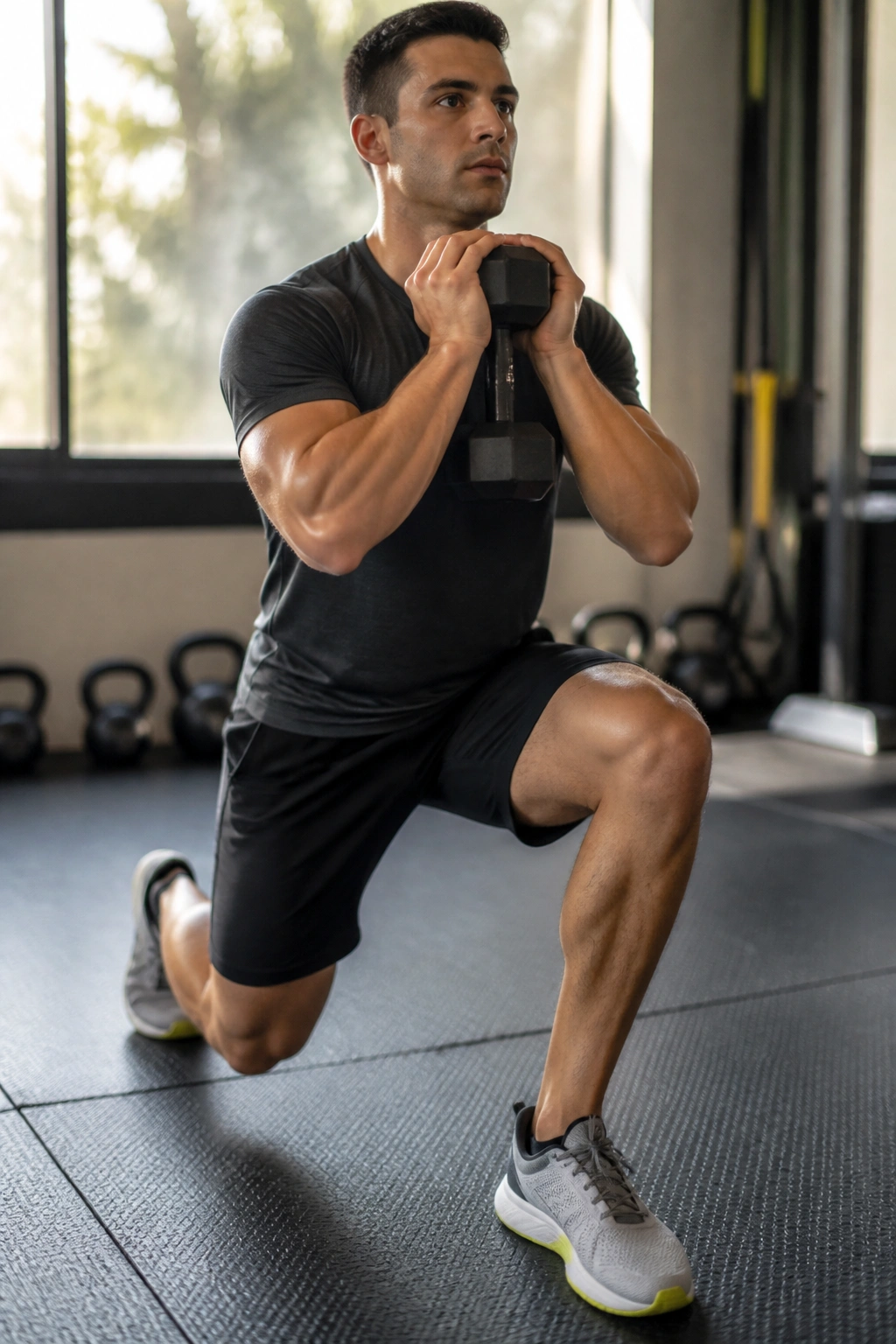
If your week gets messy, this is the session to keep. Not because it is magical. Because it touches the main patterns runners need without eating half your day.
The Circuit
Do 4 rounds of the following:
- 8 goblet squats
- 8 one-arm rows per side
- 10 push-ups
- 15 standing calf raises
- 20-second side plank per side
Move from one exercise to the next with just enough rest to keep form clean. The full circuit should take about 20 minutes if you stay honest with the pace.
This works as a maintenance day when mileage is high and your legs feel a little stale. It also works as a bridge session between harder lifts. Keep the loads moderate. You should finish feeling better organized, not crushed.
A runner’s strength plan does not need to be chaotic. It needs a few clear patterns repeated often enough to matter. Squat. Hinge. Step. Push. Pull. Carry. Jump a little. Hold your trunk steady. That is the meat of it, and it does not need to be dressed up.
If you only remember one thing, remember this: the best strength work for runners leaves you sturdier, not slower the next day. That is the test. Not how sore you are, and not how heroic it looked in the gym.
Pick two of these sessions each week, keep the loads clean, and let the workouts support your running instead of competing with it. That’s the whole deal, really.
