



Lean leg workouts do not need a gym full of machines. A chair, a wall, and a little patience can do more than people expect.
The word lean gets tossed around like it means tiny legs, and that is not how training works. Strong quads, hamstrings, glutes, and calves change the shape of the whole lower body, even before fat loss enters the picture. No move trims only one spot, not inner thighs and not the backs of the knees.
A slow lower on a squat. A one-second squeeze at the top of a bridge. A long pause in a wall sit. Those small choices turn plain exercises into serious lower-body work.
You do not need fancy gear to make your legs work. A good home leg day usually lives somewhere between 8 and 20 reps per move, or 30 to 45 seconds on holds, with enough rest to keep form clean. Start with the squat, then build out from there.
1. Bodyweight Squat Ladder
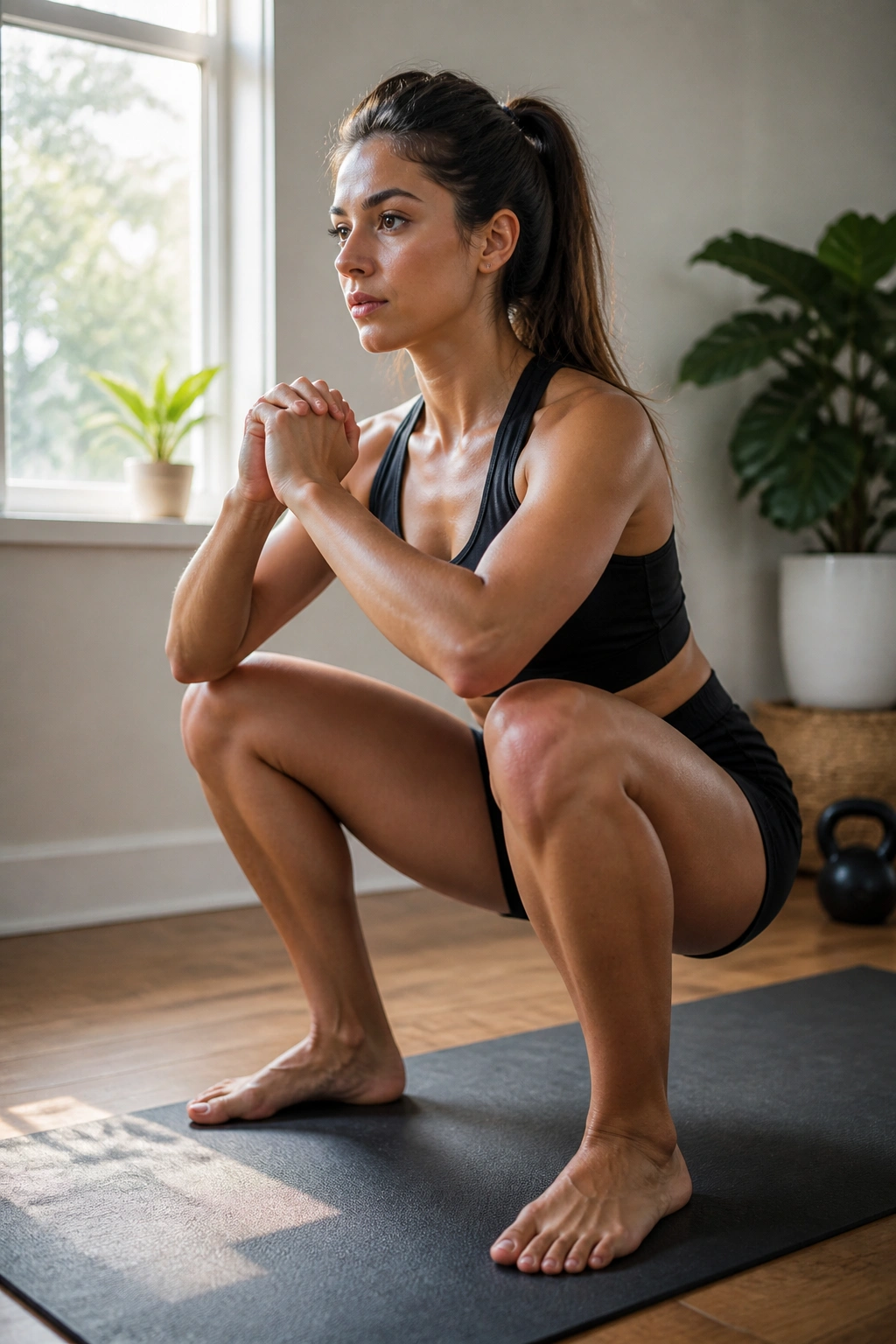
If you only had one lower-body move, the squat would still earn its place. The trick is not to rush through it. A squat ladder keeps the muscles under tension long enough to matter, and it feels far harder than a lazy set of random reps.
Do a ladder like 15 reps, 12 reps, 10 reps, then 8 reps. Rest for 20 to 40 seconds between rounds, and keep the lowering phase at about 3 seconds down. That slower descent makes your legs do the work instead of your momentum.
- Stand with feet just wider than hip-width.
- Sit back and down until your thighs are at least parallel to the floor, or as close as your hips allow.
- Keep the whole foot planted, especially the heel.
- Drive up through the midfoot, not the toes.
Pro tip: Put a backpack on your chest for the last two rounds if bodyweight squats start to feel too polite. A few books, a water bottle, and a towel for padding are enough.
2. Reverse Lunge to Knee Drive
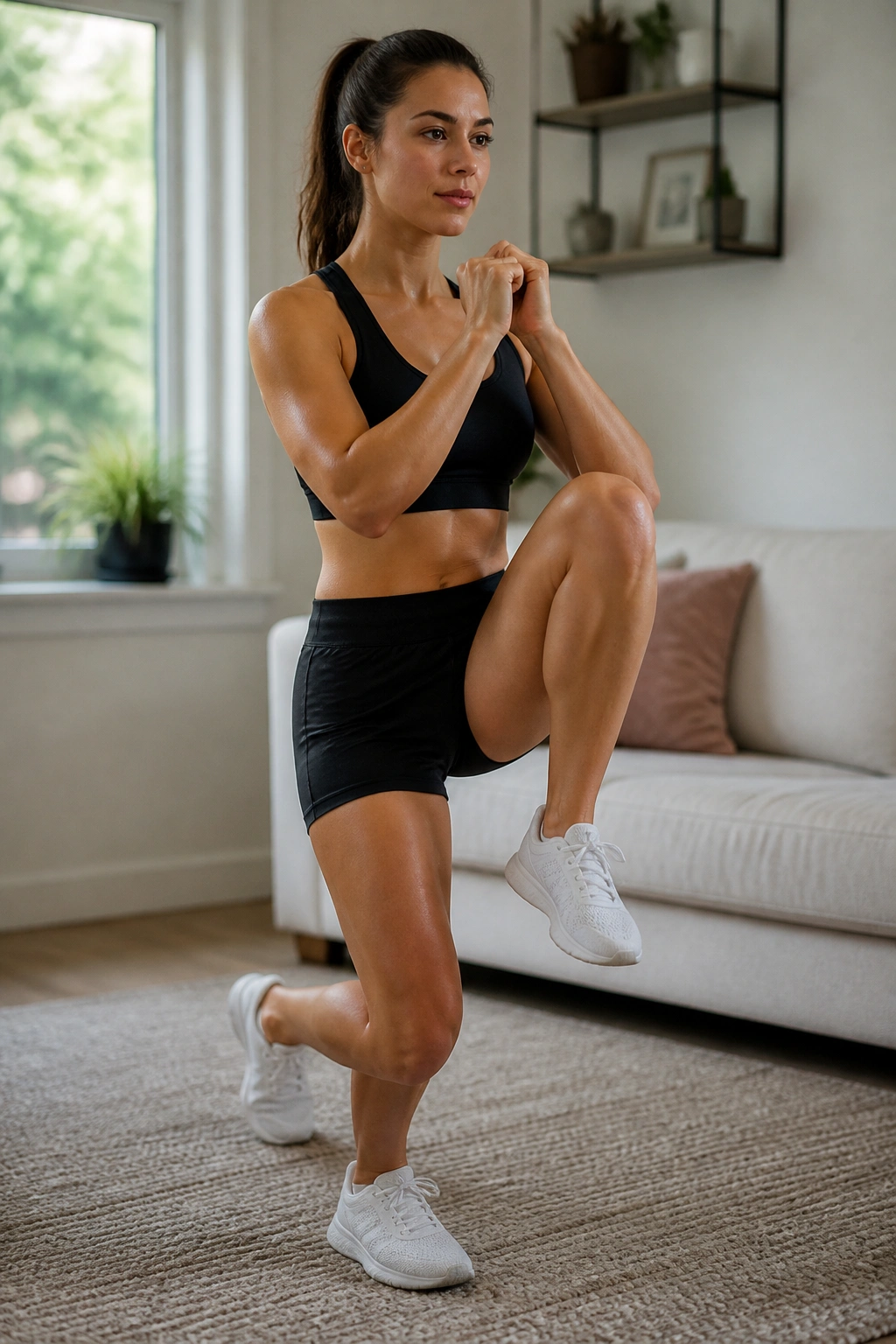
Why reverse instead of forward? Because stepping back usually feels kinder on the knees, and the return drive gives you a cleaner push from the front leg. You also get a little balance challenge without turning the whole thing into a circus act.
Step back with one leg, lower until both knees are bent, then drive up and bring the back knee forward into a controlled knee lift. That knee drive matters. It forces the front glute to finish the rep instead of just falling back to standing.
How to use it
Start with 3 sets of 8 to 10 reps per side. Pause for one second at the bottom, then stand tall before the knee drive. If your torso starts swaying all over the place, shorten the step and slow down the tempo. The working leg should feel loaded in the glute and quad, not jammed at the knee.
A nice bonus: this pattern teaches balance in a way a machine never will. Small room. Big payoff.
3. Split Squat Hold and Pulse
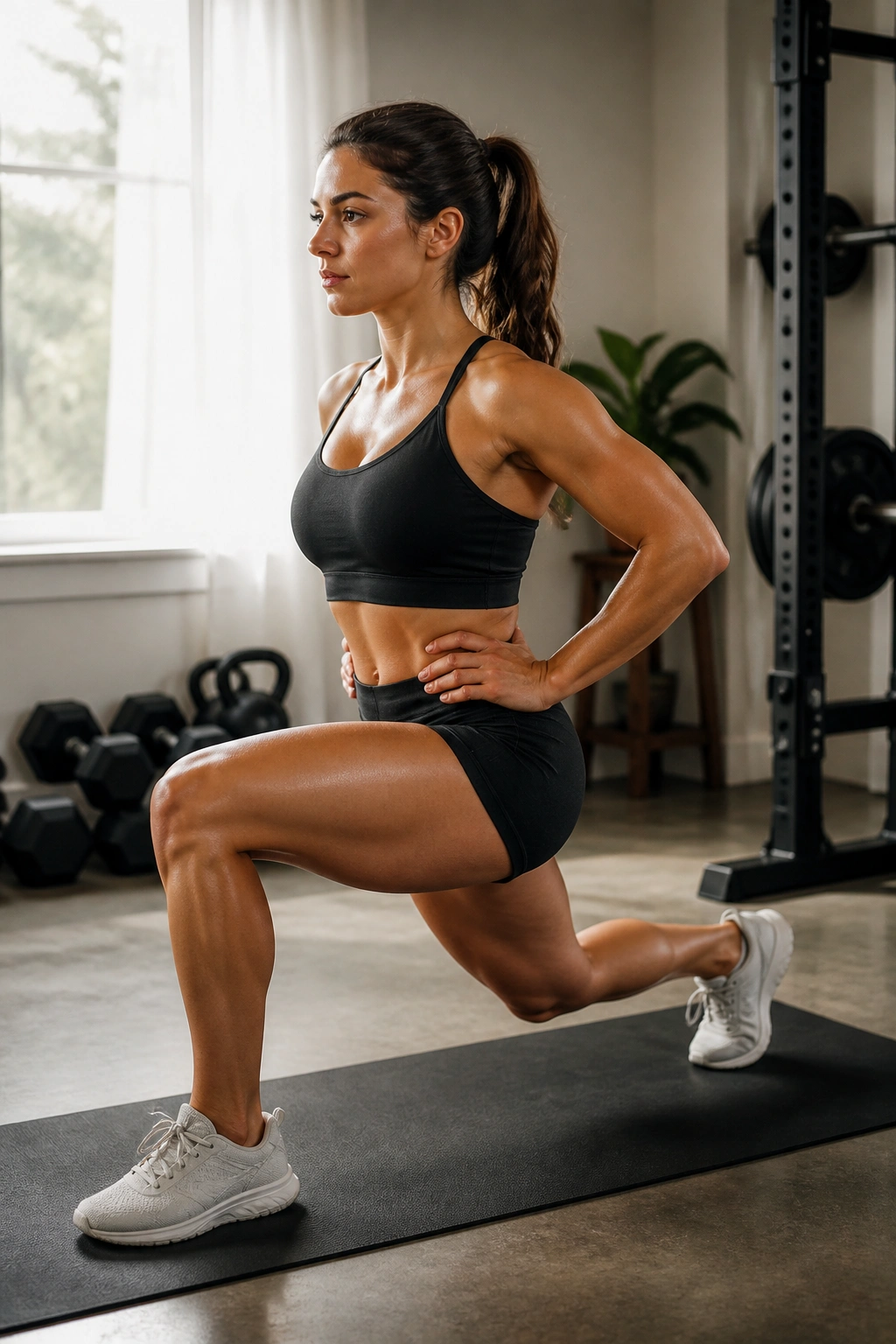
Your quads will hate this one in the best way. A split squat hold locks the legs in place, and the pulses turn that isometric burn into a full-on burn. It looks simple from across the room. It is not.
Set up in a split stance, drop into the bottom position, and hold for 20 to 30 seconds. Then add 8 to 12 tiny pulses before standing up and switching sides. Keep the movement small. Two inches is plenty.
The magic here is the pause. Once you stop bouncing out of the bottom, the muscles have to keep you there themselves. That is where the shake starts.
If you want more quad work, keep your torso more upright and your front knee traveling forward over the toes. If you want more glute work, lean your torso slightly forward and keep the front heel heavy. Both are useful. Both sting.
4. Curtsy Lunge for the Glutes
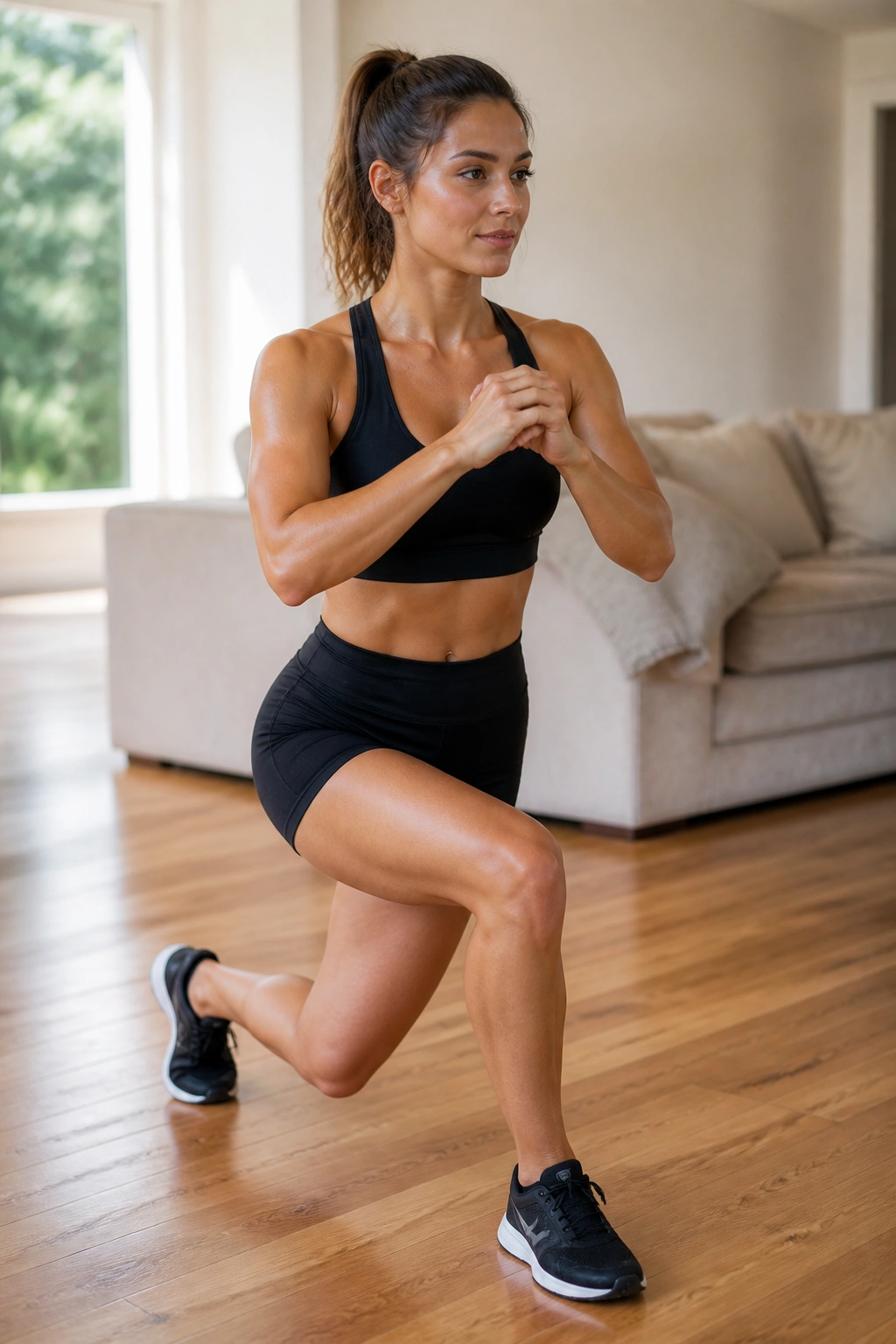
Curtsy lunges get a bad reputation because people cross too far behind and twist the knee like they are auditioning for trouble. Done well, though, they hit the side glutes and outer hips in a way regular forward lunges do not.
Step one leg back and across behind the standing leg, then lower into a shallow diagonal lunge. Think controlled arc, not giant cross-over. The front foot stays rooted, and the hips stay mostly square to the front.
Small range. Big burn.
I like this move when someone says their glutes never seem to wake up. The curtsy pattern lights up the glute medius and the upper outer hip, which is the area that helps your pelvis stay steady when you walk, climb stairs, or stand on one leg. That stability matters more than people think.
Take it easy at first. Two sets of 10 per side is enough. If the front knee feels pinchy, shrink the cross-behind step and keep your chest taller.
5. Lateral Lunge for Inner Thighs
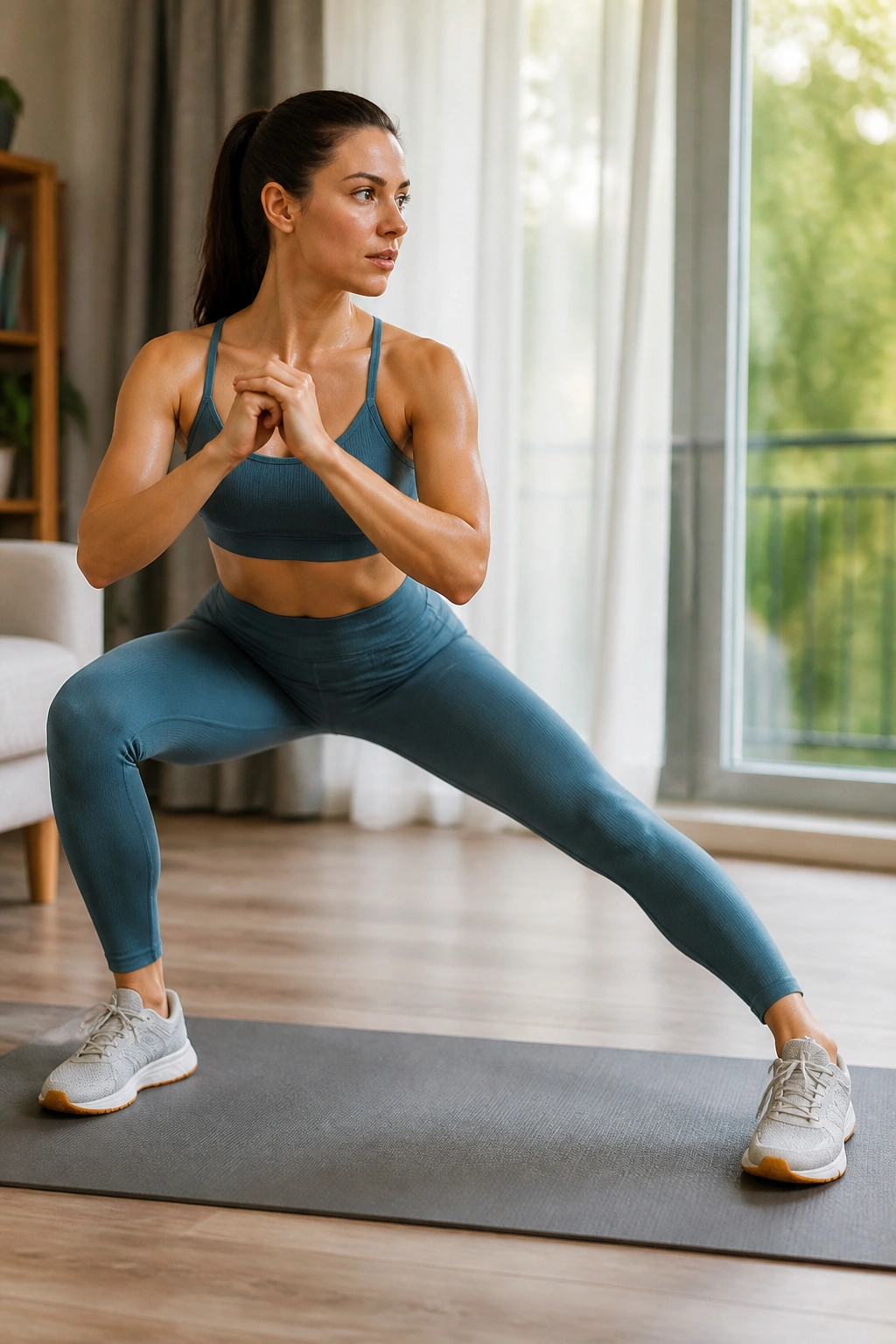
A forward lunge works one line. A lateral lunge works another. That sideways step puts the adductors, glutes, and hip stabilizers under a stretch that most people miss in home workouts, and it feels especially good if you sit a lot.
Step out to one side, sit the hips back, and keep the opposite leg straight while the working knee bends. The foot that steps out should stay flat. No rolling to the edge of the shoe. No collapsing inward.
Unlike a regular squat, this one asks your inner thigh to lengthen while still helping you stand back up. That stretch-under-load feeling is the whole point.
What to watch for
- Keep the chest proud, not folded in half.
- Push the hips back before bending the knee too much.
- Let the non-working leg stay long, with the toes pointing forward.
- Use a short pause at the bottom so you don’t bounce out of the rep.
Three sets of 8 reps per side is a good place to start. If you want a tougher version, hold a backpack in front of your chest and keep the descent slow.
6. Step-Ups on a Sturdy Chair
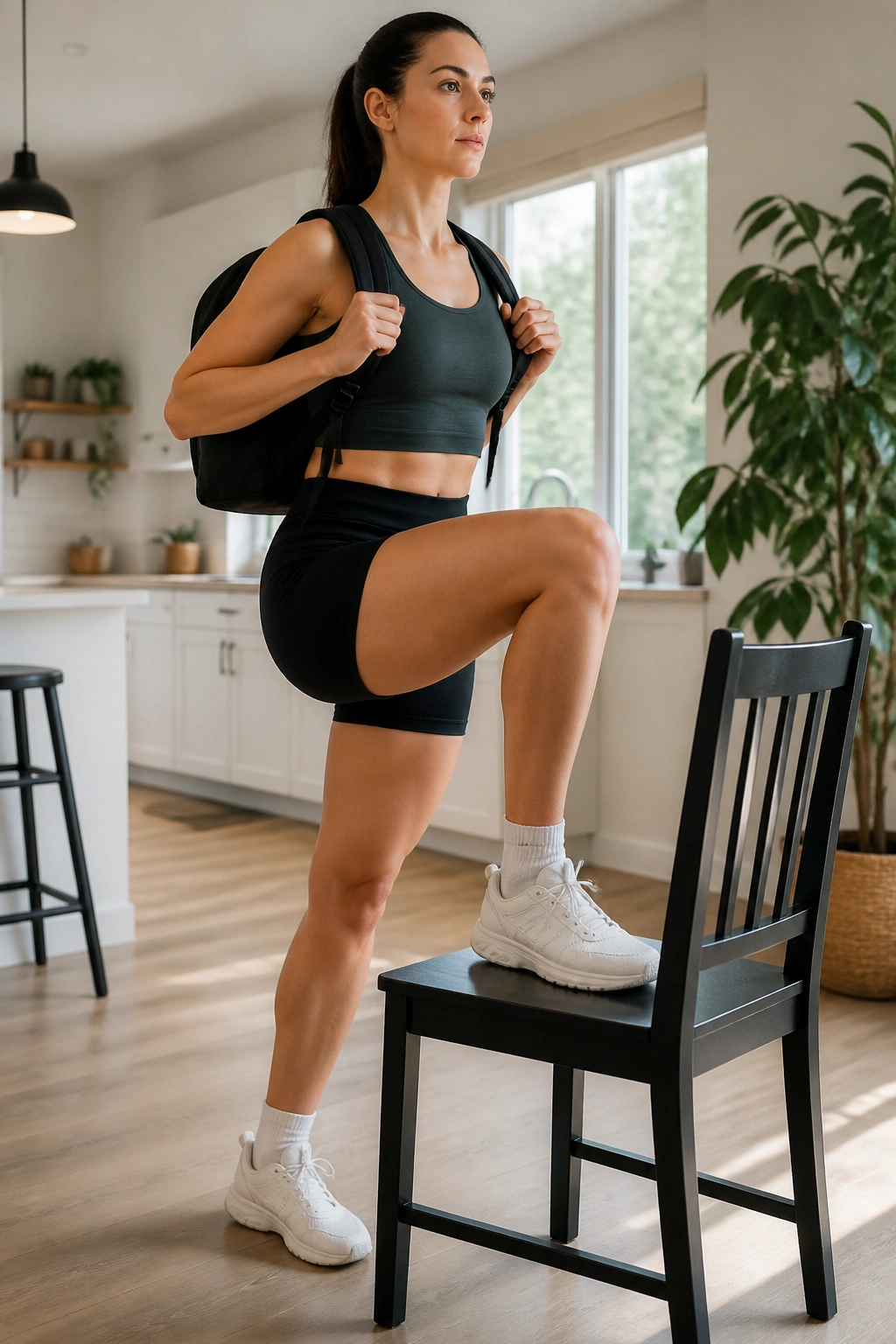
A chair, a sturdy step, or a low bench can turn into a pretty nasty leg workout if you use it right. Step-ups look friendly until the third or fourth round, when the standing leg starts to complain and the non-working leg has to stay out of the way.
Why the height matters
Use a surface that lands somewhere around knee height or lower. Too high, and you start cheating with your lower back and hip flexors. Too low, and the move turns into a warm-up. The sweet spot is a height that makes the working leg do a real climb.
Step one foot on the chair, lean slightly forward, and press through the whole foot to stand. The trailing leg should help only a little. If you have to launch off the floor with it, the chair is too high or you’re rushing.
A controlled step-up works beautifully for glutes and quads, and it also exposes side-to-side weakness fast. 3 sets of 8 to 12 reps per leg is plenty. Hold a backpack at your sides if bodyweight starts feeling easy.
7. Single-Leg Romanian Deadlift
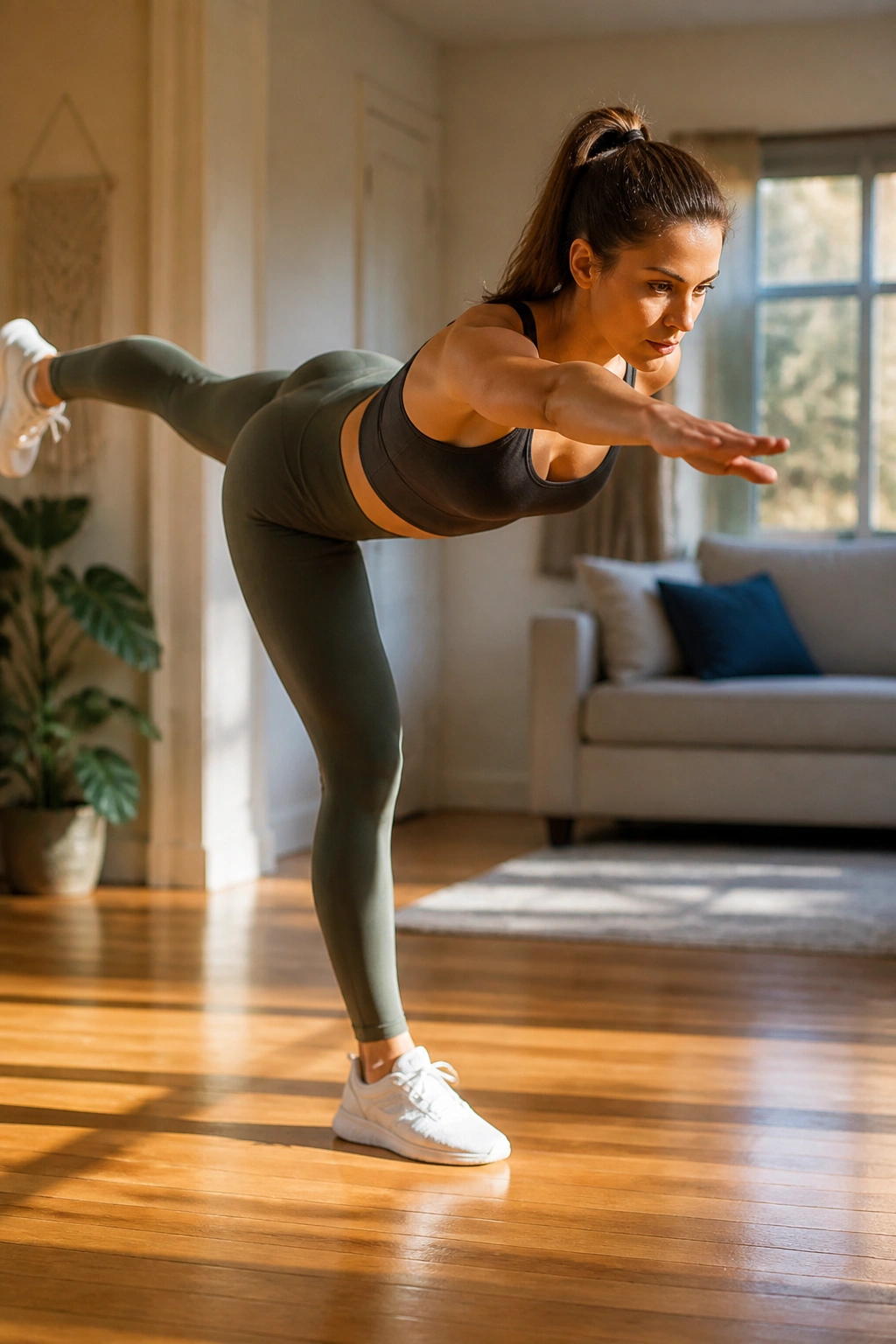
A single-leg Romanian deadlift is not a squat with balance issues. It’s a hinge. That difference matters. Your hips move back, your spine stays long, and the hamstring on the standing leg gets stretched under control.
Reach one leg behind you while you tip forward from the hips, keeping a soft bend in the standing knee. The back leg should feel long, almost like it is pulling you in a straight line from heel to head. You should feel a stretch through the hamstring, not a pinch in the low back.
This one rewards patience. Go slow enough to notice when your pelvis starts opening to the side. If that happens, shorten the reach and keep your hips facing the floor.
A good rhythm is 3 sets of 6 to 8 reps per side with a 2-second pause at the bottom. If balance is rough, keep one hand lightly on a wall or countertop. That is not cheating. That is smart setup.
8. Glute Bridge March
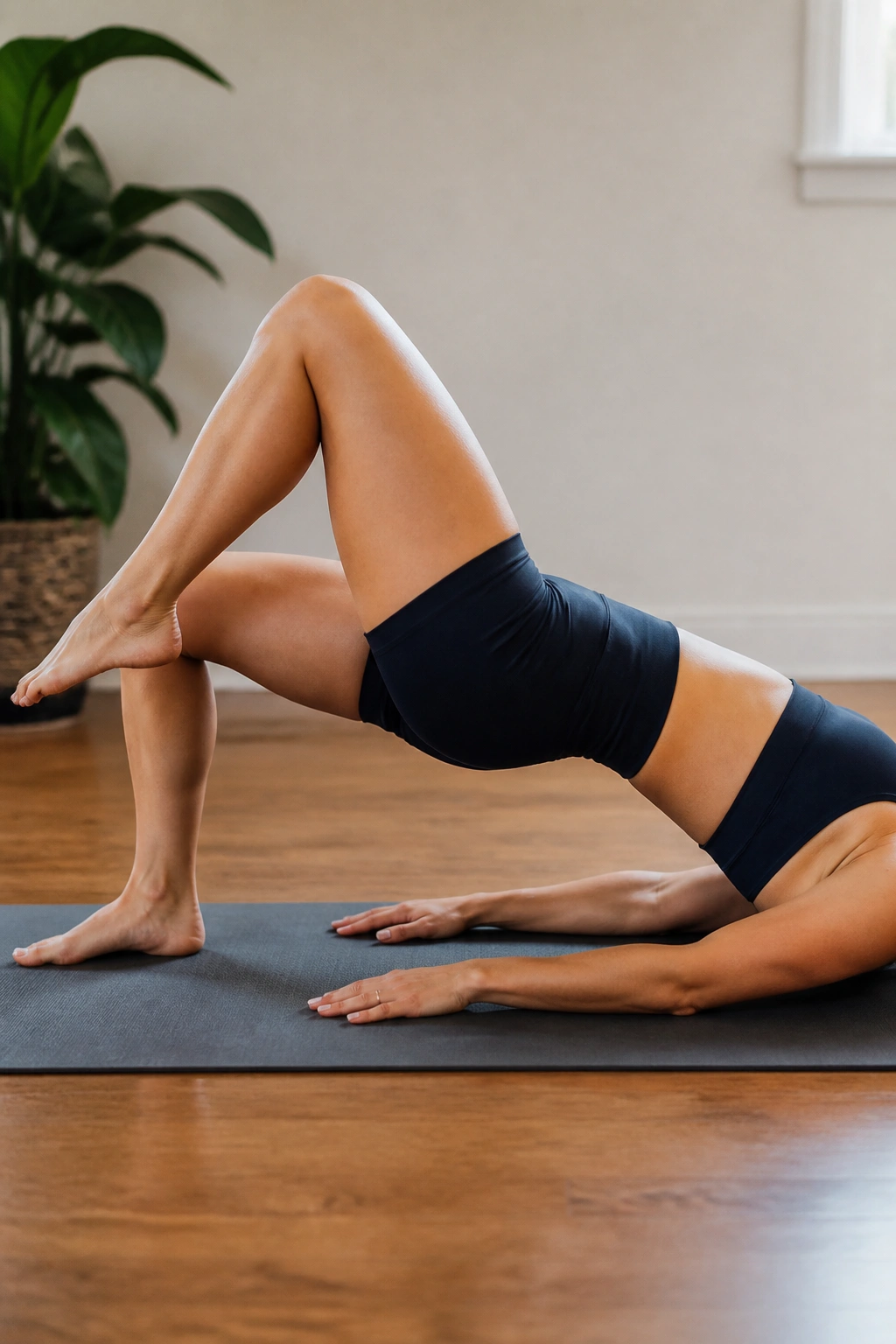
Can a bridge be a workout? Absolutely, if you make each leg work while the hips stay level. The march version turns a basic glute bridge into a stability drill that lights up the lower abs and glutes at the same time.
Start in a bridge position with knees bent and feet flat. Lift one foot a few inches off the floor, set it back down, then switch sides without letting the hips drop. The body should look almost boring from above. That stillness is the challenge.
How to keep your hips from rocking
Press through both heels before you start. Lift only one foot at a time. If your pelvis twists side to side, shorten the range and keep the march small.
You can do 10 marches per side for 2 or 3 rounds, or work for 30 seconds if you prefer timed intervals. A mini-band above the knees makes the glutes work harder, but the move already earns its keep without one.
9. Hip Thrust off a Couch
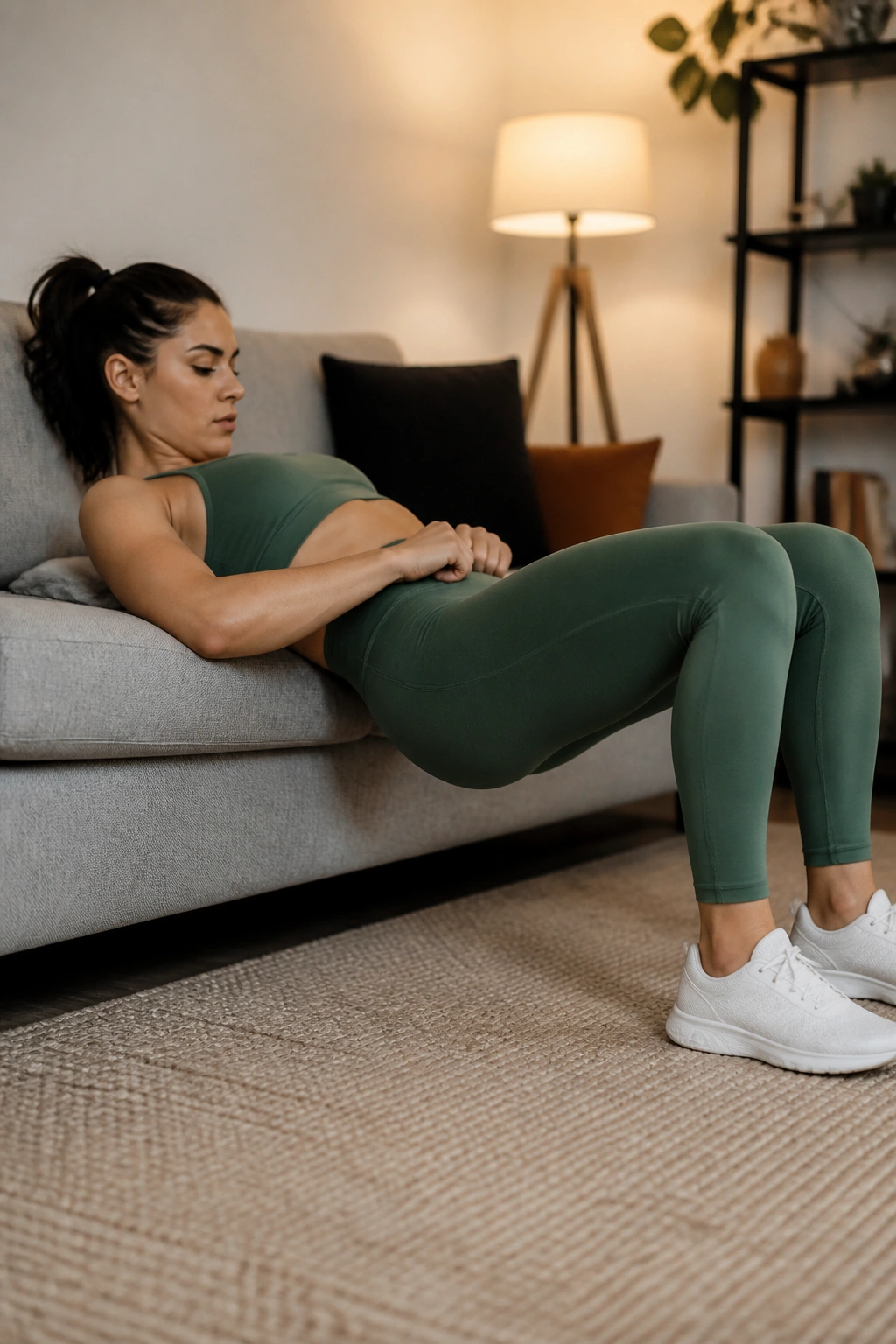
A couch, a bench, or a very sturdy ottoman gives you enough height for a proper hip thrust at home. This is one of those moves that looks a little awkward the first time and then becomes a favorite because it hits the glutes hard without loading the spine the way heavy squats can.
Set your upper back on the edge of the couch, feet flat on the floor, shins close to vertical at the top. Tuck the chin slightly, brace the ribs, and drive the hips up until the torso is almost level with the thighs. The top squeeze should feel like a hard glute contraction, not a lower-back arch.
- Use a backpack across the hips if bodyweight is too easy.
- Hold the top for 2 seconds on every rep.
- Keep the chin tucked so your neck doesn’t crane back.
- Stop short if your lower back takes over.
Twelve to 15 reps per set is a sweet spot. You want to feel the glutes working by rep 8 or 9, not by the next day.
10. Sumo Squat Pulses
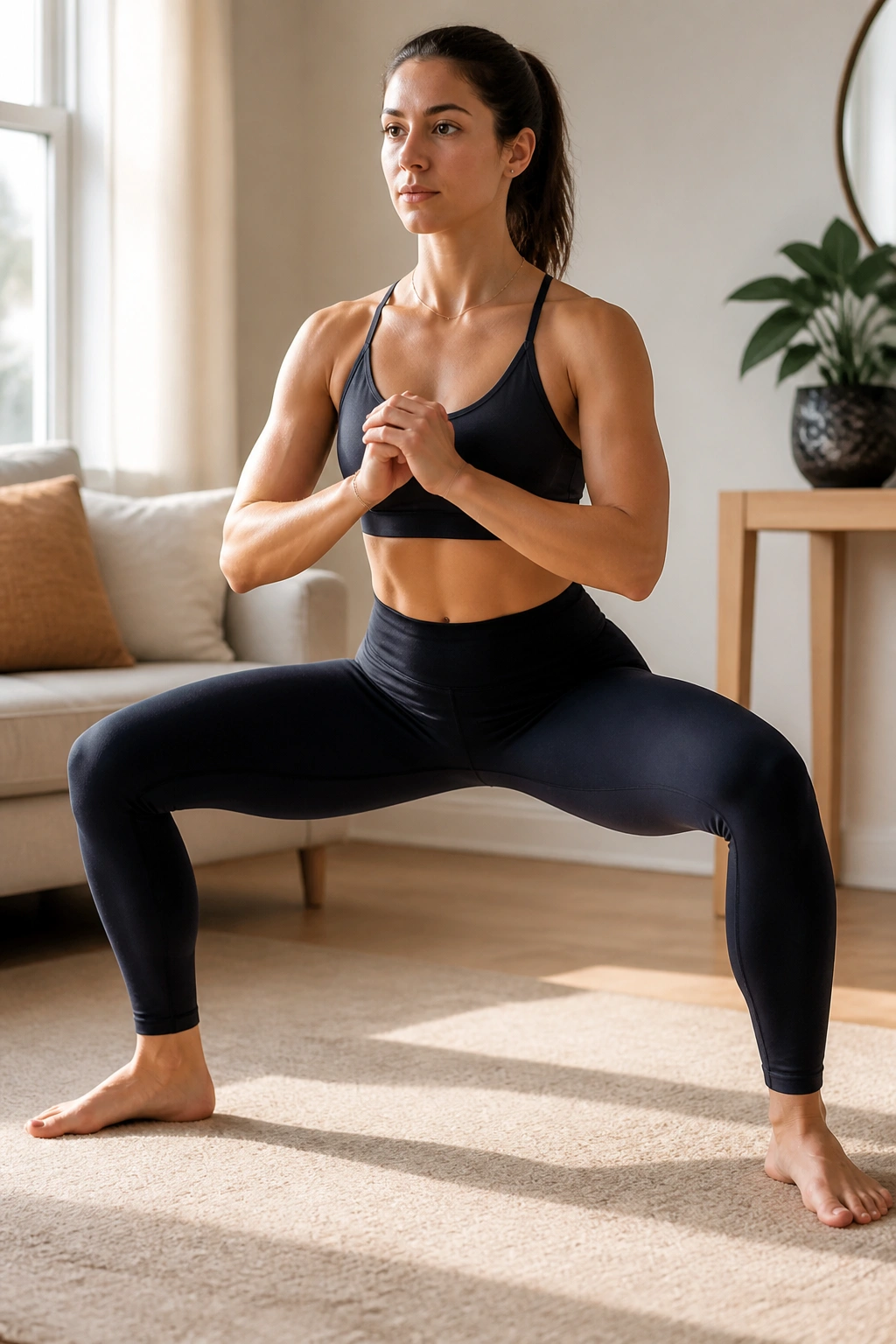
Wide stance, toes turned out a little, and a tiny pulse near the bottom. That is the whole idea. Sumo squat pulses are not glamorous, but they torch the inner thighs and glutes fast because the muscles stay loaded in a shortened position.
Drop into a wide squat, then pulse in the bottom third of the rep for 20 to 30 pulses. Keep the knees tracking over the toes, and keep the chest from collapsing forward. The pulse should be small enough that you could still talk if you had to, though you probably won’t want to.
The wide stance shifts the load toward the inner thighs more than a standard squat does. That’s the draw. It also gives your hips a different feel, which is useful if regular squats start to feel stale.
Try 12 full sumo squats, then finish with 20 pulses. Or run the pulses alone for 40 seconds at the end of a leg circuit. Both options are rude in a useful way.
11. Skater Squat to Box
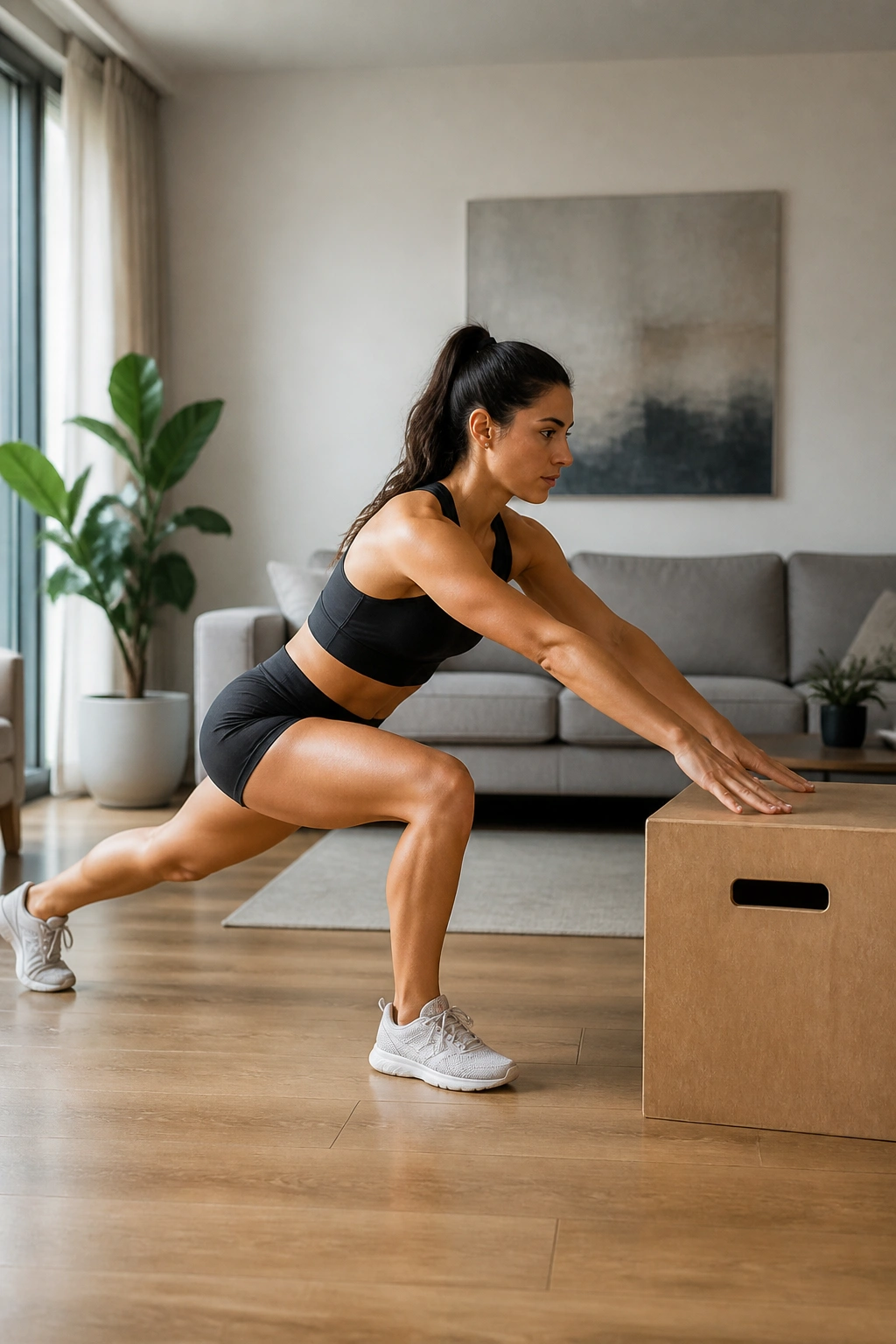
A skater squat to box is a cleaner single-leg move than a full pistol squat, and I like it better for most people because the box gives you a target. You still train balance, knee control, and glute strength, but the movement stays honest.
Stand on one leg in front of a low chair or box. Reach the free leg back and lower the hips until you lightly tap the box, then drive back up without dumping weight into the other foot. Think of it as a controlled sit-back, not a collapse.
Unlike a full pistol squat, this version lets you keep the motion repeatable. That means better reps and fewer weird compensations.
Best use? 3 sets of 5 to 6 reps per side, slow enough that the descent takes about 4 seconds. If the ankle gets wobbly, keep one fingertip on a wall. The goal is control, not drama.
12. Calf Raise Ladder
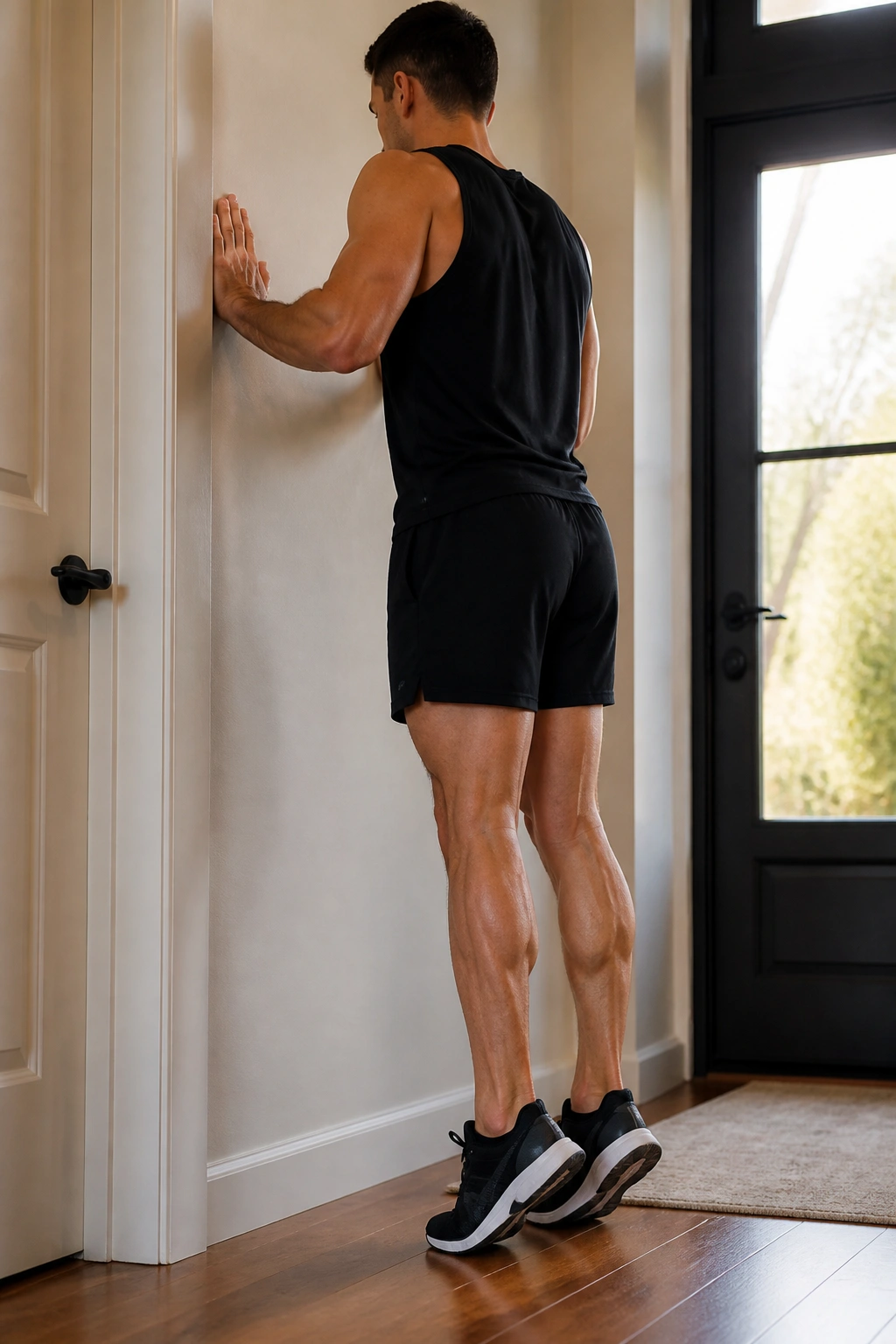
Can calves respond to bodyweight alone? Yes, if you stop bouncing through them like they’re a hallway exercise. Calves like range, pauses, and high reps. They also love being ignored until they suddenly don’t.
Start with a straight-knee calf raise to hit the gastrocnemius, then bend the knees slightly for a bent-knee version that brings in the deeper calf muscle. Raise up onto the balls of the feet, hold for 1 to 2 seconds, then lower under control for 3 seconds.
How to use it
- Do 25 reps straight-knee.
- Rest 15 seconds.
- Do 20 reps bent-knee.
- Rest 15 seconds.
- Finish with 15 slow single-leg raises each side.
That ladder makes the muscle work in more than one way, which matters if your calves are stubborn. It also means you don’t need much floor space or any equipment. Just a wall or counter for balance, and a little patience.
13. Wall Sit Burner
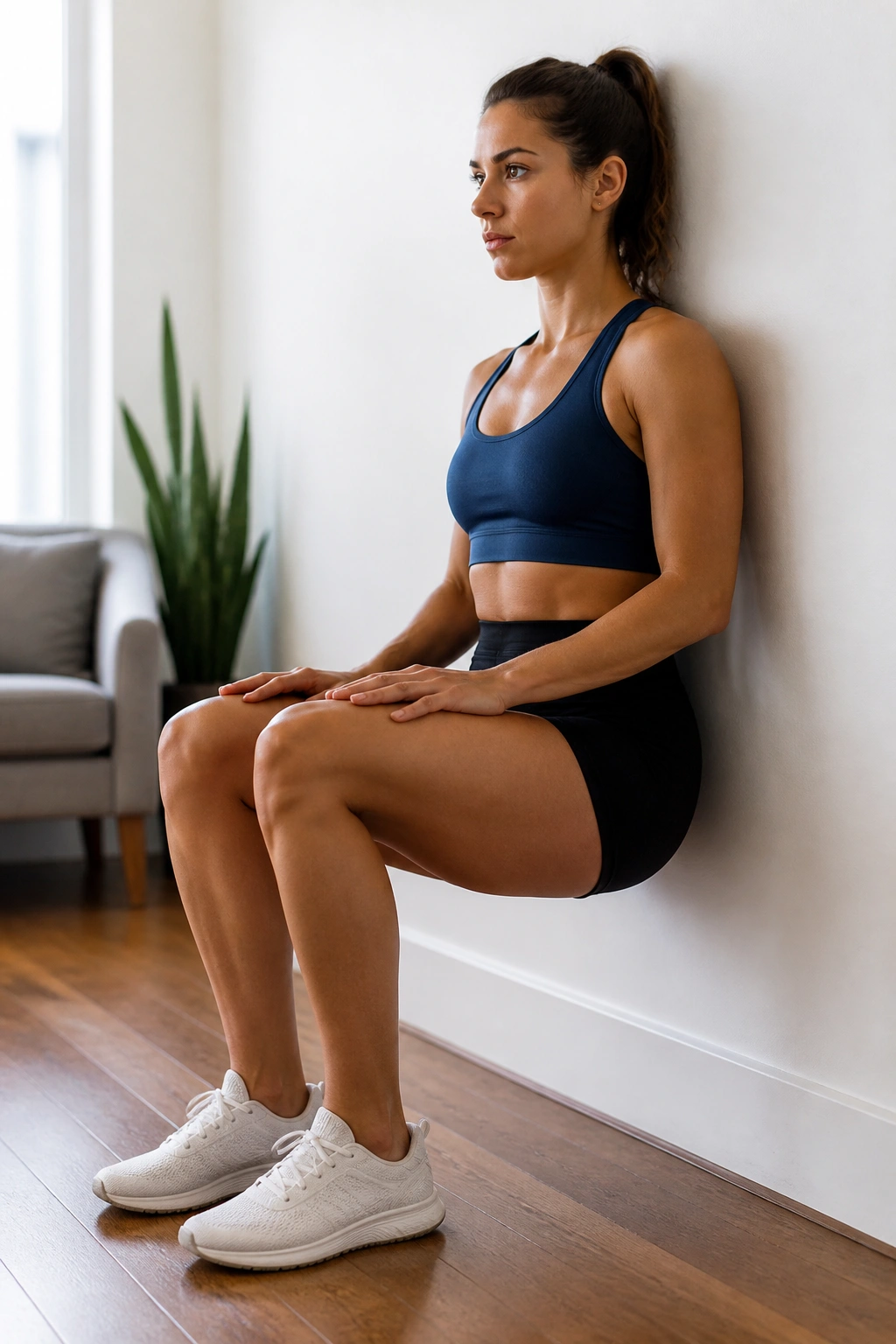
Boring? Yes. Effective? Also yes. A wall sit is one of those old-school lower-body holds that never gets old because your quads don’t care about your opinion once the timer starts.
Slide down the wall until your knees are about 90 degrees, keep your back flat, and plant your feet far enough forward that your shins stay close to vertical. Hold for 30 to 60 seconds. If your lower back arches off the wall, you’ve gone too low.
The burn comes from the fact that the muscles are working without moving. No break from gravity. No swing. No help.
- Keep the weight in the heels.
- Breathe steadily instead of holding your breath.
- Stop if the knees cave inward.
- Squeeze a yoga block or folded towel between the knees if you want a little inner-thigh work.
One round is easy to underestimate. Three rounds will change your mind.
14. Frog Pumps
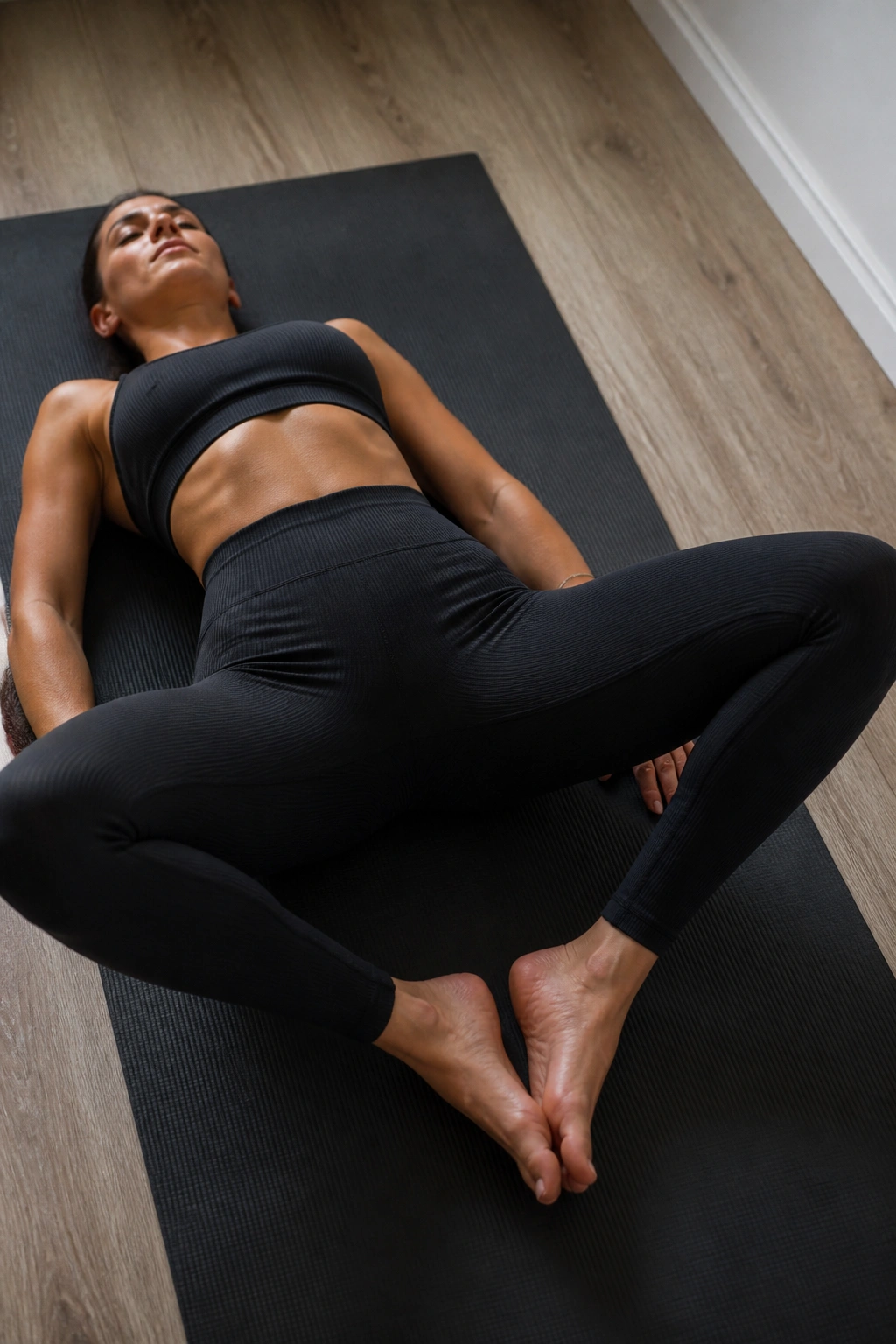
This one looks a little silly right up until rep 20. Frog pumps place the glutes in a shortened position, and that makes them light up fast even though the range of motion is tiny.
Lie on your back, press the soles of your feet together, let the knees fall out wide, and drive the hips up in short, quick reps. The top of the movement is only a few inches off the floor, but the glute squeeze should feel strong and deliberate.
The reason it works is simple: the hips stay in a position where the glutes can contract hard without much help from the quads. That makes it a nice finisher after squats or split squats.
Try 25 to 40 reps for 2 or 3 rounds. If you want a harder version, place a mini-band above the knees and press out gently as you lift. Don’t turn it into a back bend. The pelvis should do the work, not the ribs.
15. Bulgarian Split Squat
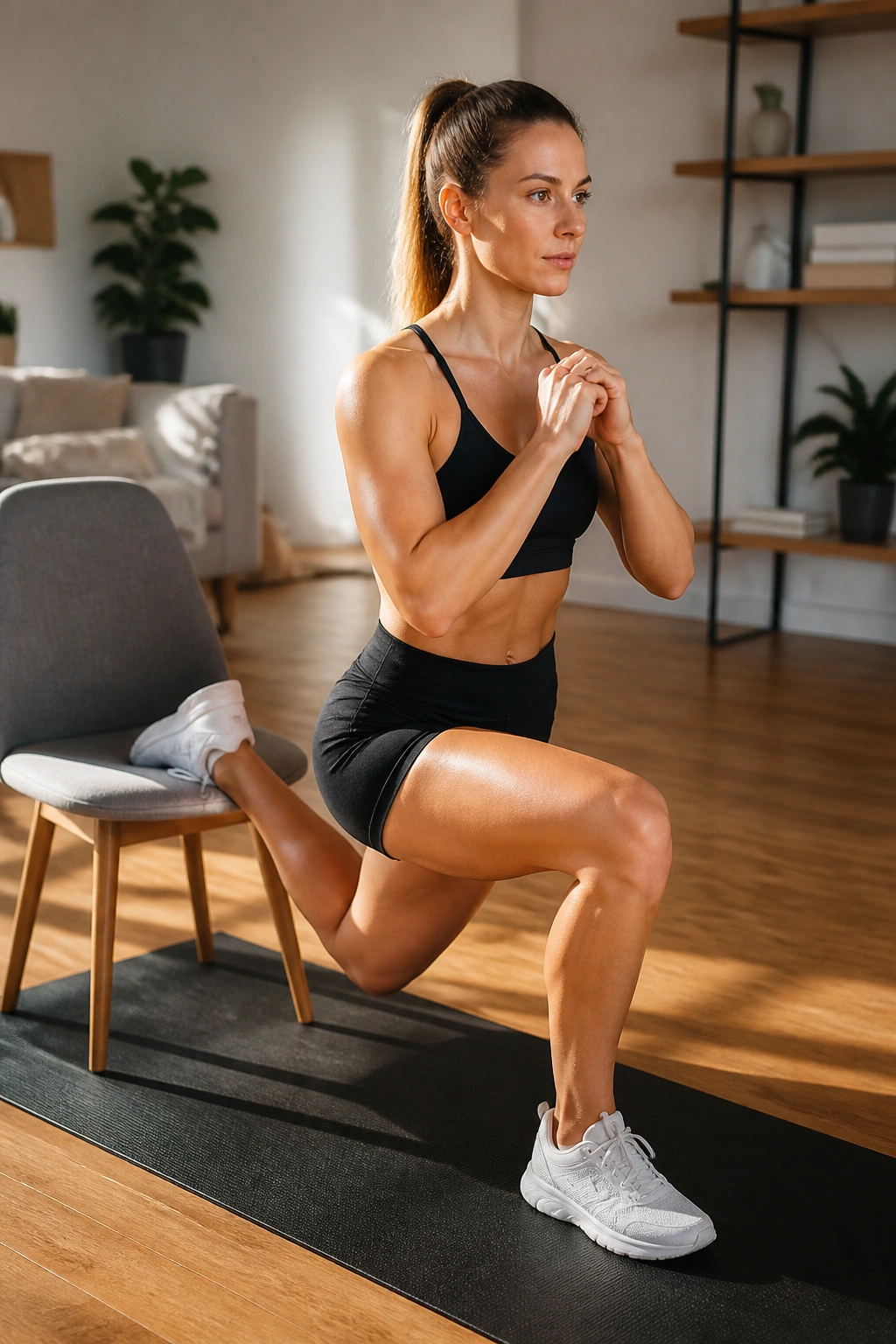
A Bulgarian split squat is the move you use when ordinary lunges stop feeling serious. Back foot on a chair or couch, front foot planted on the floor, and the front leg does nearly all the work. It’s blunt, honest, and a little bit humbling.
Set the rear foot on a low couch cushion or sturdy chair, then step the front foot far enough forward that you can lower straight down without the front heel peeling up. If the front foot is too close, the knee gets jammed forward. Too far, and the glute takes over so much that the quad misses the party.
Setup details that matter
- Keep the front foot flat from heel to toe.
- Lower until the rear knee is close to the floor, or as low as control allows.
- Use a slow 3-second descent.
- Hold the bottom for 1 second before standing.
Three sets of 8 reps per leg is a solid start. Bodyweight is enough. The move gets hard fast, and that is the whole point.
16. Hamstring Walkout
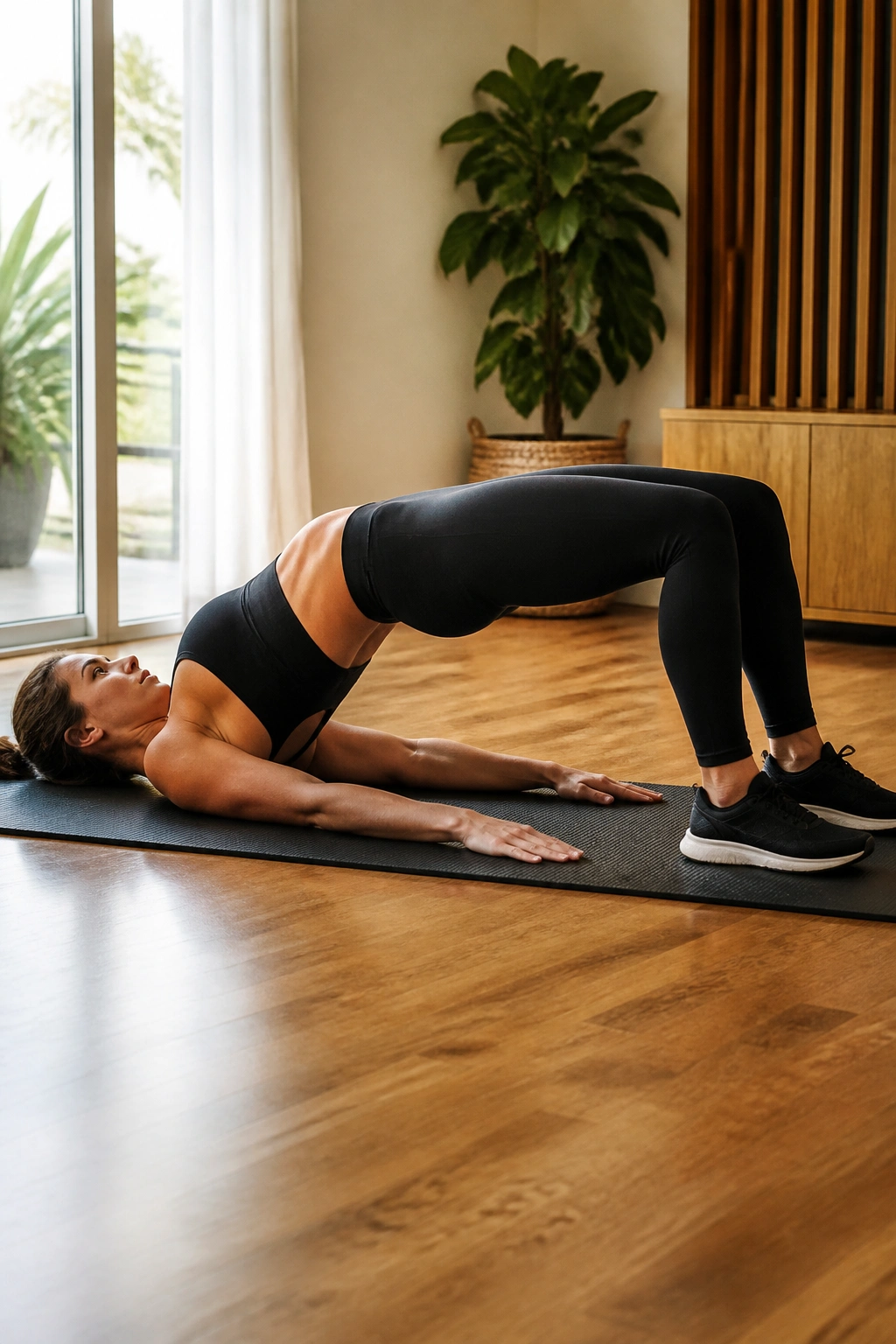
Can you train hamstrings without a machine or one of those sliders people use on smooth floors? Yes. The walkout bridge does the job, and it does it with a lot less setup.
Start in a glute bridge. Walk your heels away from your body one small step at a time, keeping the hips lifted as long as you can. Then walk them back in. The moment your hips sag, the hamstrings lose some of the load, so keep the pelvis high and controlled.
How to keep them from cramping
If the hamstrings seize up early, shorten the walkout and rest for a few seconds between reps. That crampy feeling is common when people rush the movement or try to make the steps too large.
Run 6 to 10 walkouts for 2 or 3 rounds. A towel under the heels on a smooth floor can make the movement easier if your surface grips too much. On carpet, tiny steps work better.
This one is sneaky. It starts with a bridge and ends with your legs feeling like they’ve been through a proper session.
17. Side-Lying Leg Lift Series
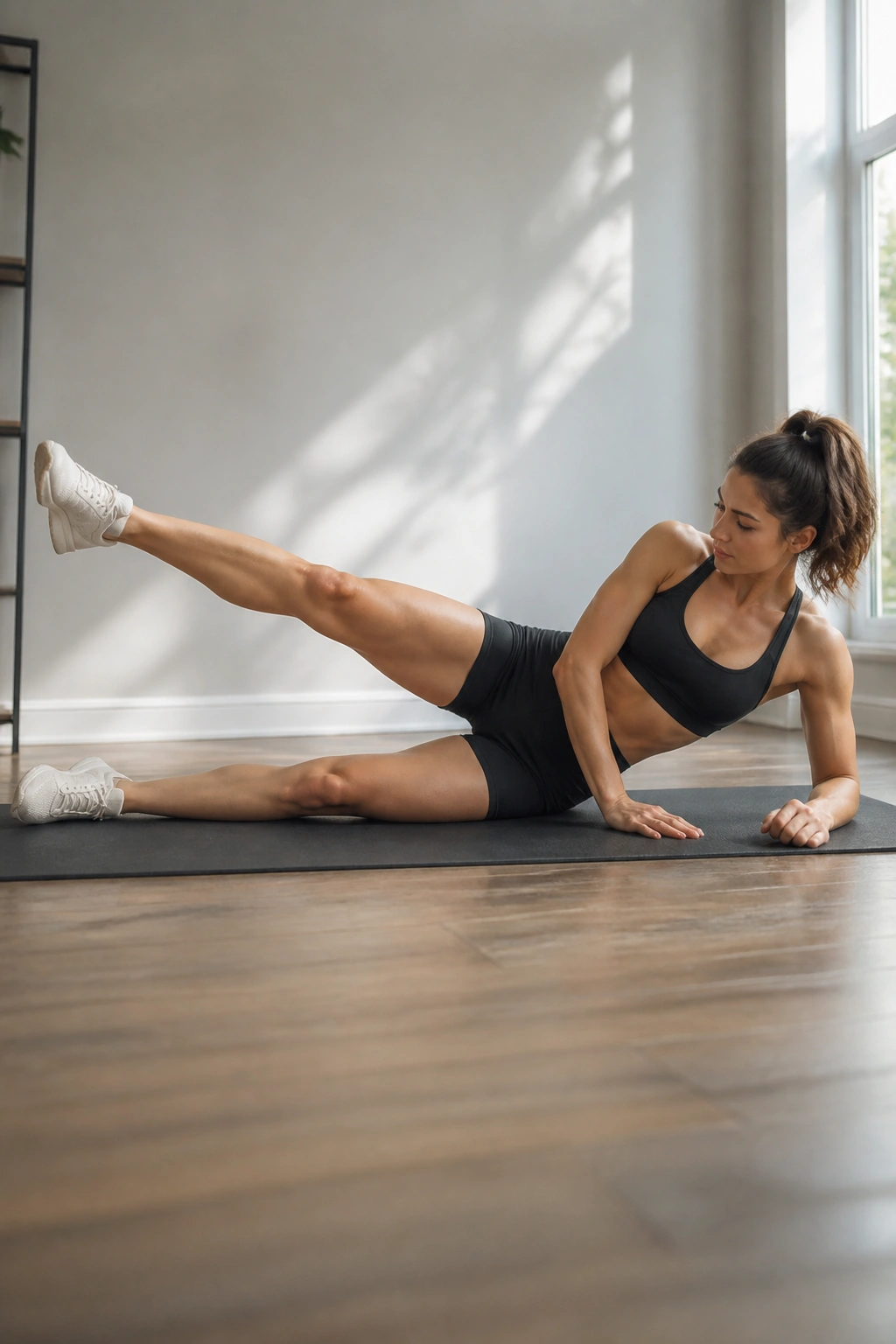
Unlike squats and lunges, side-lying leg lifts go straight after the outer hip. That makes them handy for people who want better pelvic stability, stronger glute medius work, or a cleaner finish after the bigger moves.
Lie on one side with the bottom leg bent and the top leg straight. Lift the top leg to about hip height, lower it with control, then add small pulses at the top. A little toe-down position often helps you feel the side glute more clearly than turning the toes up.
This series works best when you stack a few patterns together:
- 12 straight lifts
- 12 small pulses
- 10 slow circles each direction
That gives the muscle work in multiple angles without needing much room or equipment. If your hip flexor starts taking over, move the leg slightly behind the body line. It’s a tiny adjustment, but it matters.
18. Banded Lateral Walks
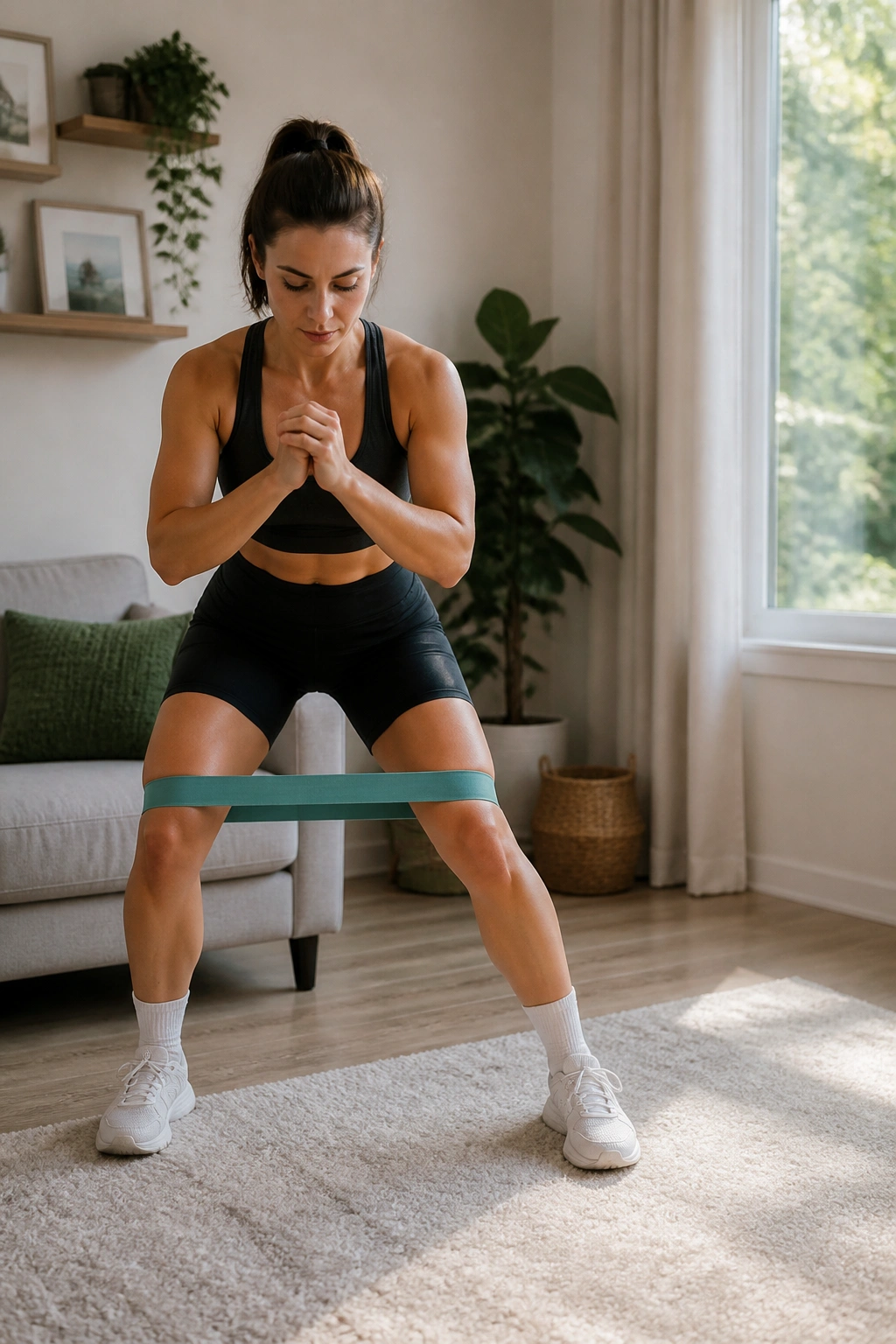
A mini-band can make a humble leg day feel much tighter and more focused. Banded lateral walks are one of the fastest ways to wake up the glutes before heavier work, and they also make a smart finisher when you want the side hips to light up.
Place the band above the knees or around the ankles, sink into a shallow athletic stance, and step side to side without letting the knees collapse inward. The feet should stay pointed mostly forward, and the pelvis should stay level. If you sway from side to side, the band is too low or the stance is too deep.
- Take 8 to 12 steps in one direction.
- Take the same number back.
- Keep the tension on the band the whole time.
- Stop if your feet start snapping together instead of moving with control.
Two or three rounds is usually enough. This is not a move you need to keep chasing for long. Quality steps matter more than distance.
19. Chair-Assisted Pistol Squat to Box
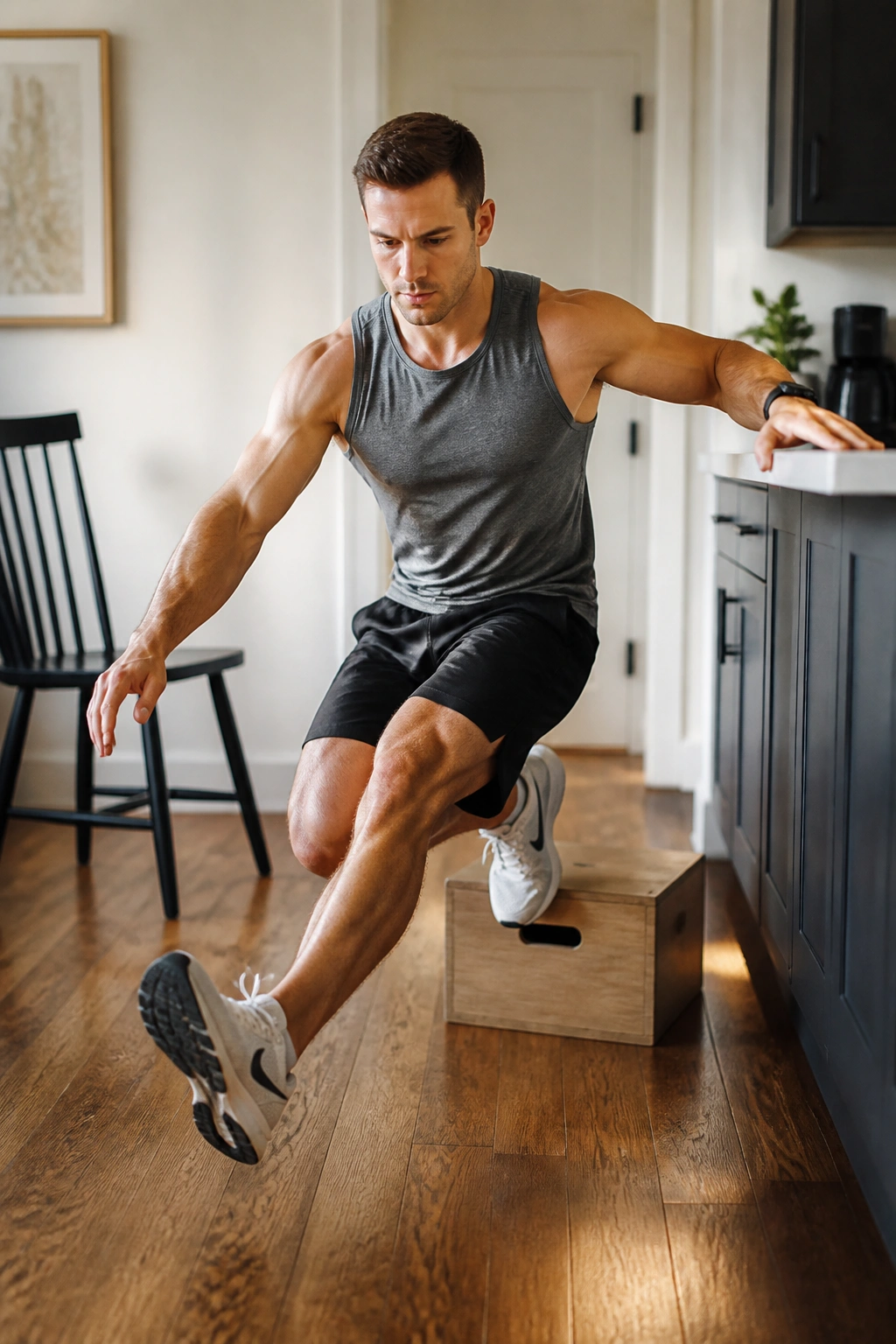
A full pistol squat is a pain in the ankle for most people, which is why I prefer the chair-assisted version to a box. You still get the single-leg challenge, but the box keeps the target clear and the range honest.
Stand near a sturdy chair or low box and hold a countertop or doorframe lightly with one hand. Lift one leg in front, sit the hips back on the standing leg, and lower until you touch the box softly. Stand back up without bouncing off the seat. The working foot should stay rooted through the heel and forefoot.
This move asks for ankle mobility, hip control, and patience. It also exposes side-to-side differences fast. One side will usually feel smooth while the other side wobbles like it’s late for a meeting.
Start with 3 sets of 5 reps per side, using a higher box at first. Lower the height only when you can touch down without collapsing at the bottom. Chasing depth too soon is a bad trade.
20. Wall Sit With Heel Lifts
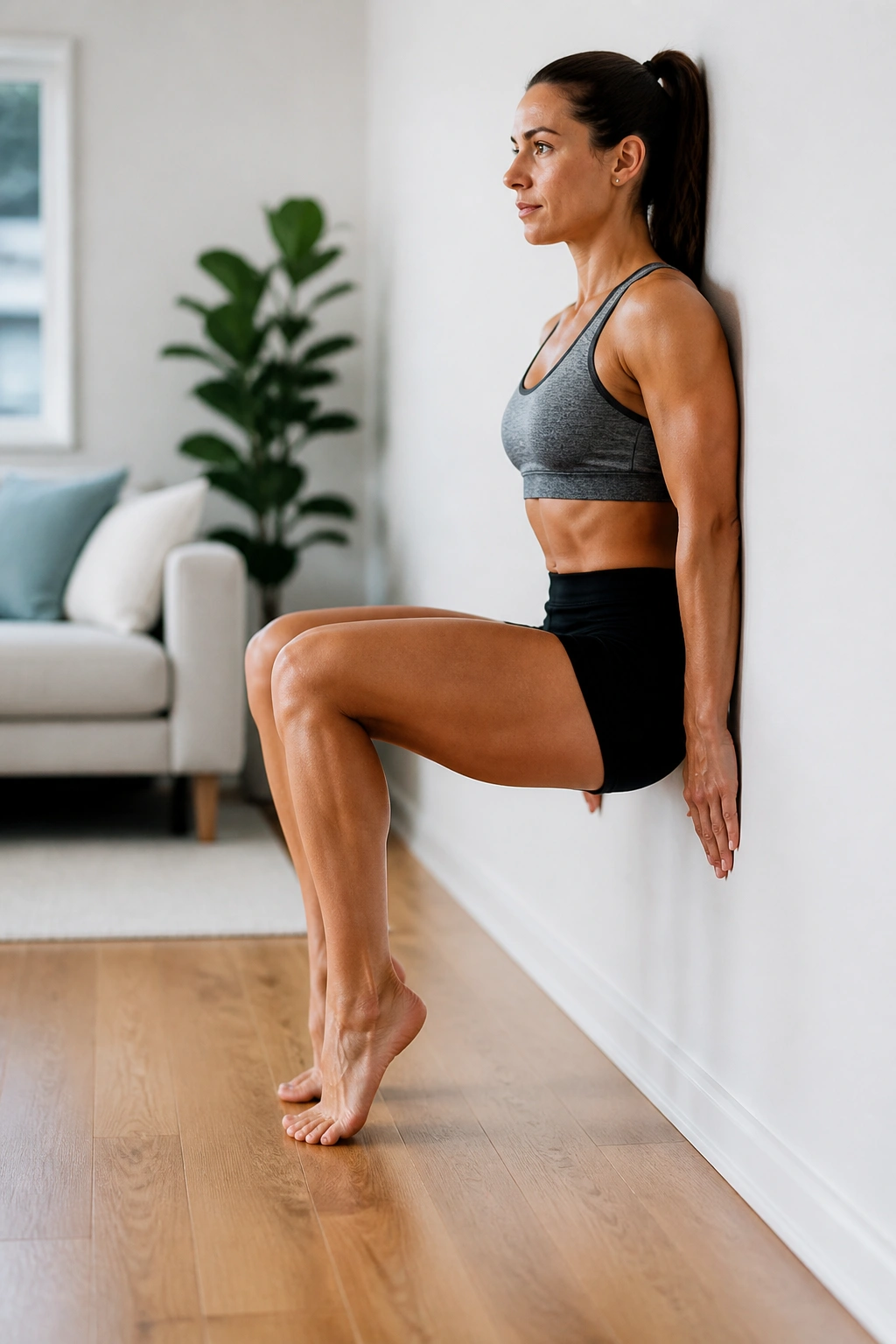
A plain wall sit is already rough. Add heel lifts, and suddenly the calves join the complaint. The move is small, but that’s exactly why it hurts in a useful way.
Set up a normal wall sit with the knees near 90 degrees. From there, lift the heels about an inch, lower them slowly, and repeat for 15 to 20 reps while staying in the hold. The quads keep working, the calves start screaming, and your breathing gets louder than you planned.
This one is great when you want a short finisher that doesn’t need any gear and still feels earned. The tiny heel lift makes you stabilize through the whole lower leg, which is one reason it leaves the calves twitchy afterward.
Three rounds with 20 to 30 seconds of rest is plenty. If the legs tremble on the last few reps, good. That’s the point.
