



Most home glute exercises for women fail for one dull reason: the movement gets rushed long before the glutes do any real work. A few fast reps of bridges or lunges can leave your quads burning, your lower back tired, and your butt basically untouched.
You do not need a full gym to train your glutes well. A couch, a sturdy chair, a loop band, and a pair of dumbbells are enough for a serious lower-body session if the exercise choices are smart and the form is honest. The gluteus maximus does the big hip-extension job, while the glute medius and minimus help steady the pelvis when you stand on one leg, step sideways, or keep your knees from collapsing inward.
That part gets ignored a lot. People chase the burn, then wonder why their hips feel cranky and their progress stalls.
The better approach is a mix of bridges, hinges, squats, lunges, and side-lying work, with enough control to make the muscles do the job instead of the joints. A few of these moves look simple. That’s the trick. Simple is not the same as easy when you slow them down and do them right.
1. Glute Bridge
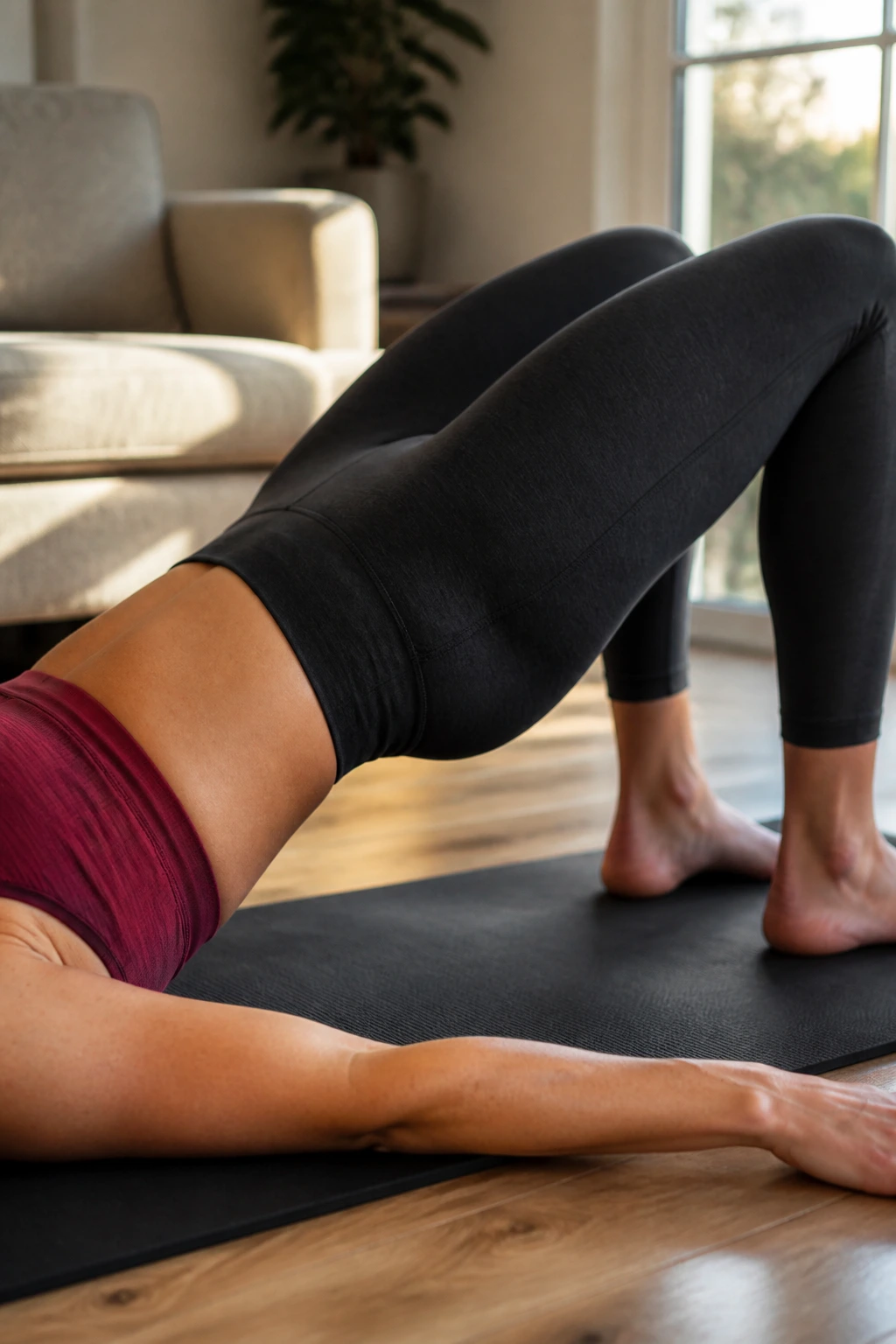
The glute bridge is the one exercise that looks too plain to matter, and that’s exactly why it works so well. If you set your feet where they belong and stop arching your lower back, the glutes have nowhere to hide.
Why It Works
Lie on your back with your knees bent and feet flat. Drive through your heels, lift your hips, and pause for a hard squeeze at the top. The top position should feel like your ribs are stacked over your pelvis, not like you’re trying to show the ceiling your waistband.
What to Watch For
- Keep your feet about hip-width apart.
- Don’t push so high that your back takes over.
- Hold the top for 2 full seconds.
- Lower slowly until your hips are just above the floor.
Best cue: think “tuck, lift, squeeze.” That little posterior pelvic tilt keeps the movement in the glutes instead of the lower back.
If you only have room for one floor exercise, this is the safest bet. It teaches the body what glute contraction actually feels like, and that skill carries into squats, lunges, and hinging work later.
2. Single-Leg Glute Bridge
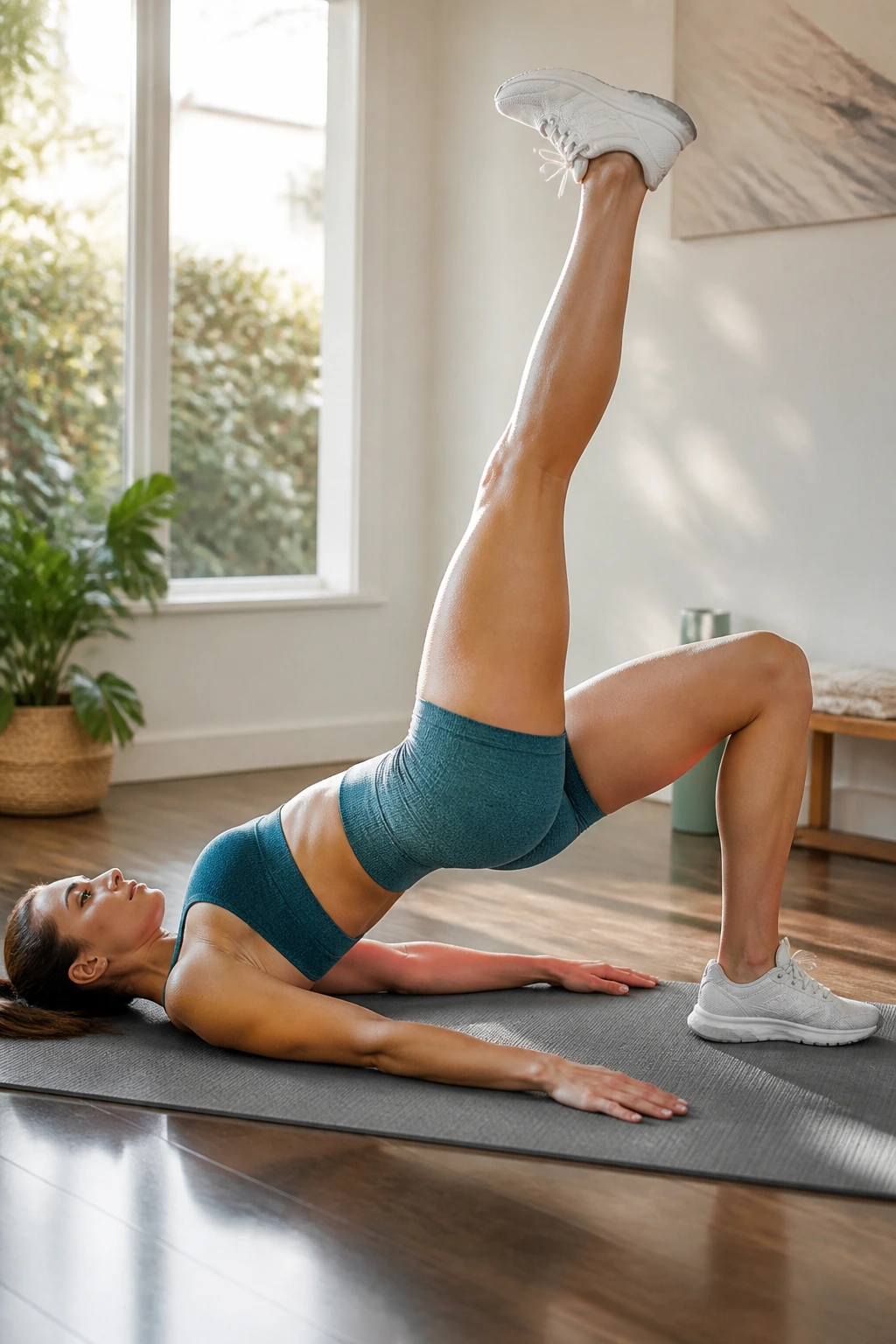
One leg off the floor changes everything. The working side has to do more, and the stabilizers stop getting a free ride.
That extra demand shows up fast. You’ll feel the hamstring want to help, which is normal, but the goal is still the same: lift the hips by driving through the heel of the working leg, not by yanking with your low back.
Keep the non-working knee bent toward your chest or extended toward the ceiling if that feels better on your hips. A small range is fine here. Big swings usually turn into sloppy reps.
How to make it count: lower under control for 3 seconds, pause briefly at the bottom, then lift with intention. The pause removes momentum, which is where a lot of “easy” reps sneak in.
This one is excellent if your regular bridge has started feeling too simple. It also tends to expose side-to-side differences quickly, which is useful even if it’s mildly annoying.
3. Hip Thrust on a Couch
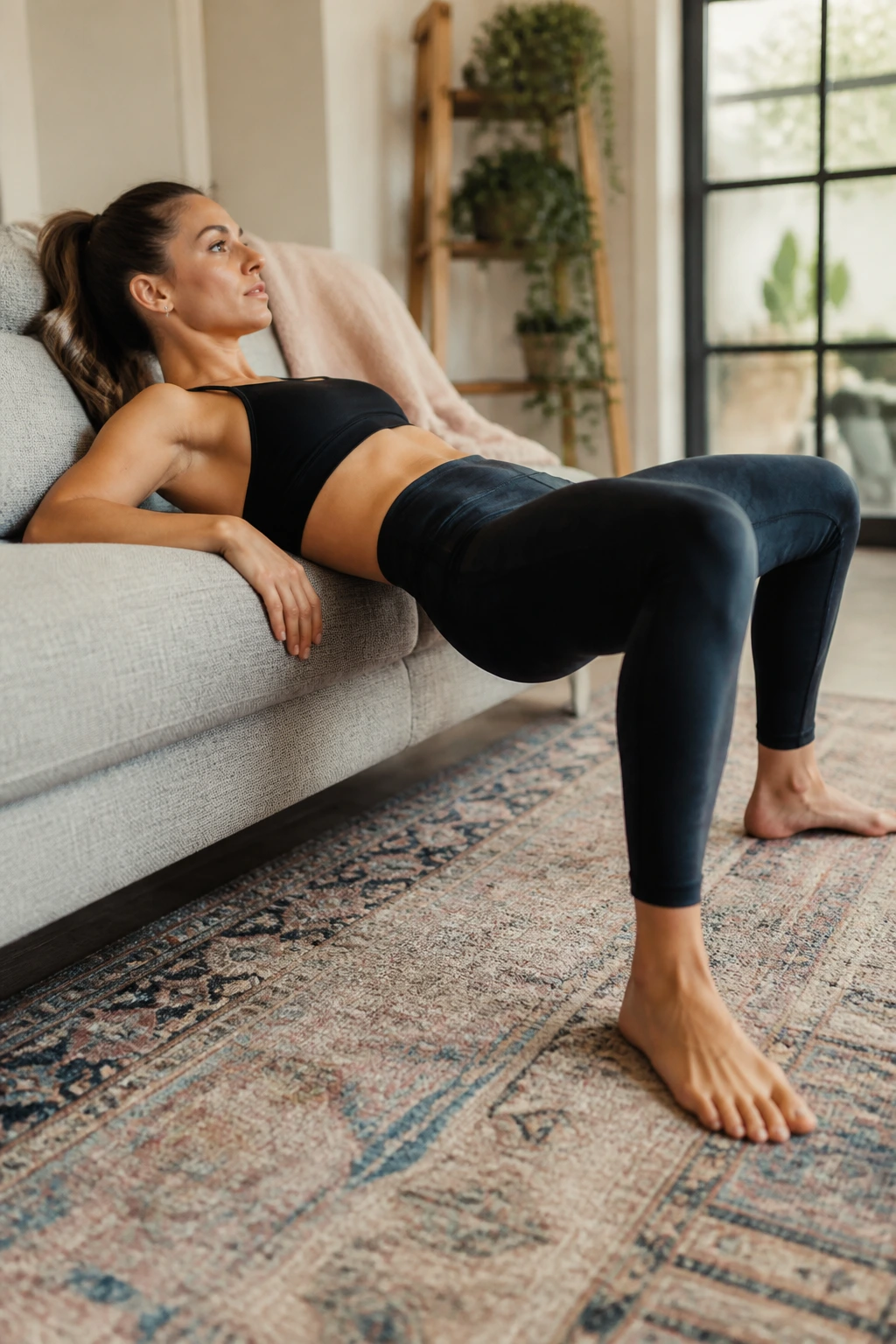
A couch hip thrust gives you a bigger range of motion than a floor bridge, so the glutes have more work to do at the top. That’s the whole appeal.
Set your shoulder blades on the edge of a firm couch, bench, or ottoman that will not move. Plant your feet, drop your hips, then drive upward until your thighs are roughly parallel to the floor. At the top, your shins should be close to vertical. If your feet are too far away, the hamstrings tend to hog the work.
Setup Matters
The setup is the exercise. If the couch is soft and your upper back sinks, the movement gets messy fast. Use a firm surface and place a folded towel or mat across the edge if it digs into your shoulder blades.
A dumbbell or heavy book can sit across the hips, but only if you can control it. No wobbling. No shifting around.
A good rep feels like: strong glutes at lockout, quiet lower back, and a brief pause where you can actually feel the squeeze. That pause matters more than people think. It turns a flailing lift into a real muscle exercise.
4. Frog Pumps
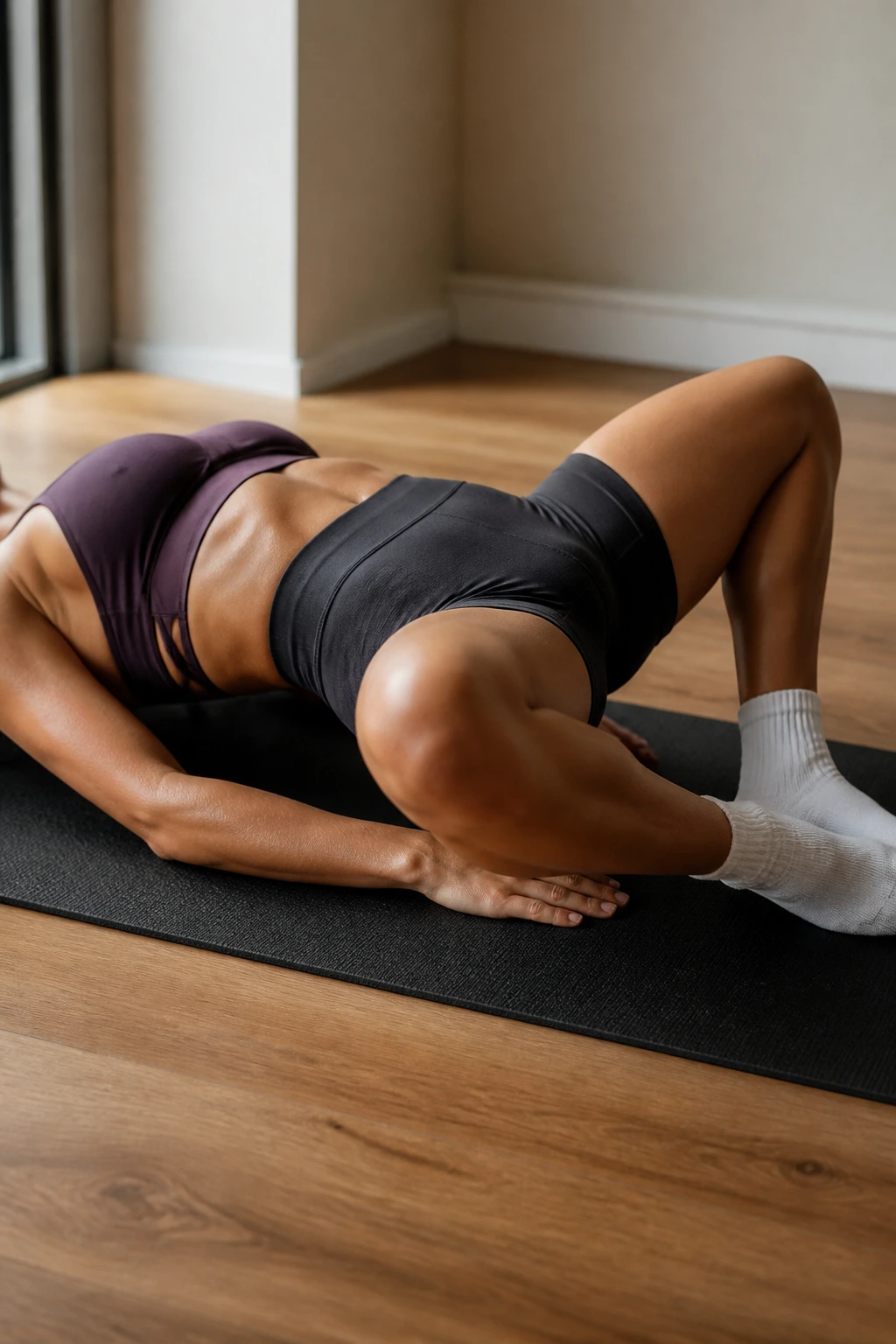
Frog pumps look odd. They also light up the glutes in a way that catches people off guard, especially when they’re done for higher reps.
Bring the soles of your feet together, let your knees fall open, and lie back with your upper body on the floor. From there, lift your hips in a short range while keeping the feet pressed together. The movement is small, but the tension adds up quickly.
A lot of people make the mistake of chasing height here. Don’t. The sweet spot is a short, crisp pulse where the glutes stay loaded the whole time. If your lower back starts to arch, stop lifting so high.
- Try 20 to 30 reps.
- Add a 10-second hold at the end.
- Use a mini band above the knees if bodyweight stops being enough.
They’re useful as a finisher after bridges or squats, especially on days when you want more glute fatigue without beating up your joints.
5. Donkey Kick
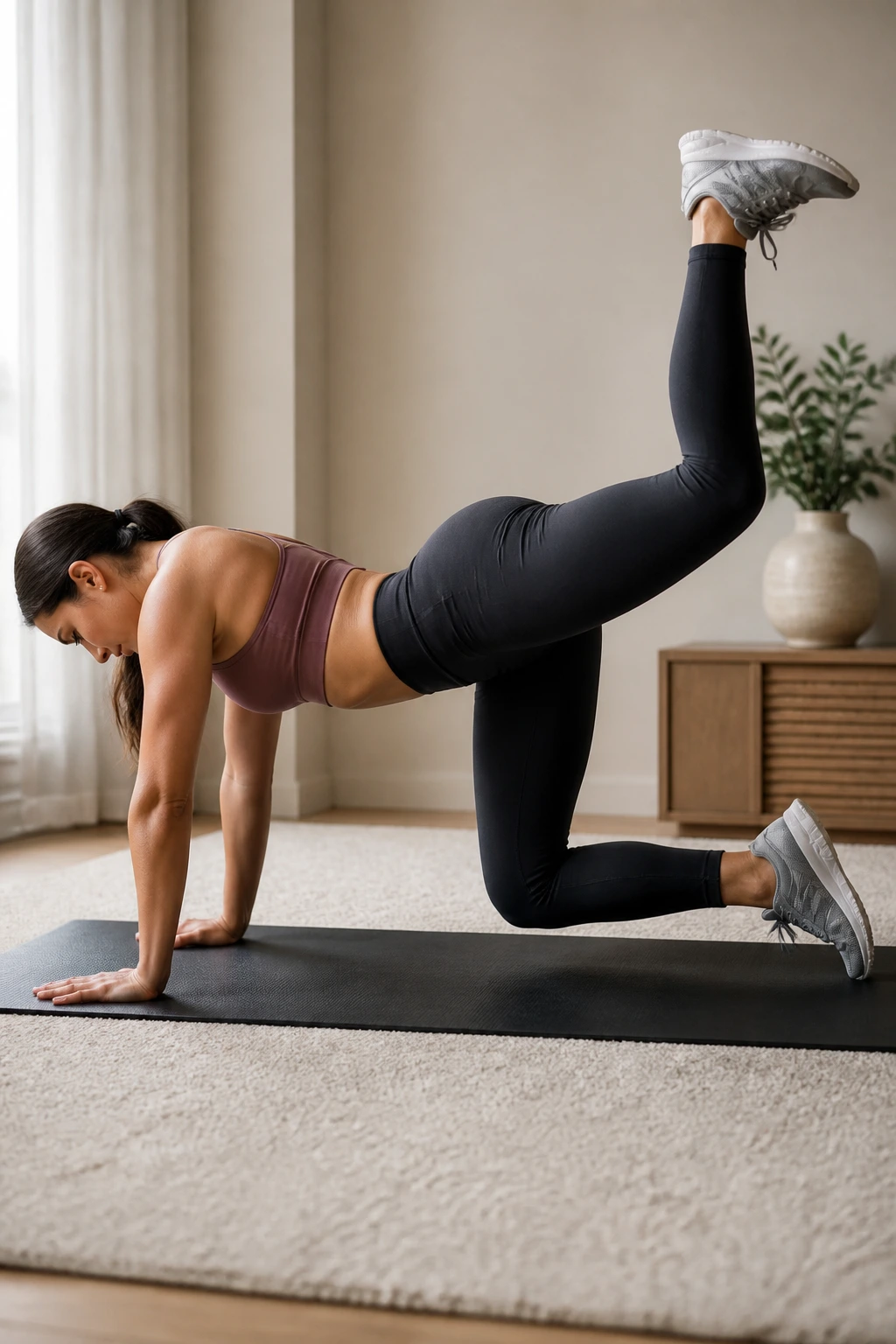
A donkey kick is tiny if you do it honestly, and that’s what makes it useful. The second you start swinging the leg up with momentum, the lower back gets involved and the glute work drops off.
Start on all fours with hands under shoulders and knees under hips. Keep one knee bent at about 90 degrees, then press the foot up toward the ceiling until the thigh lines up with your torso or just slightly above it. The pelvis should stay mostly square to the floor.
That’s the hard part. No rocking. No twisting open. No dramatic arch.
The best version has a brief squeeze at the top and a controlled return to the start. If you want more challenge, add a light ankle weight or a loop band around the thighs. If your wrists complain, lower onto your forearms. Same exercise, less annoyance.
One clean set of donkey kicks teaches a useful lesson: small range does not mean small effort. The glutes can burn plenty in these short lifts, especially if you slow the lowering phase.
6. Fire Hydrant
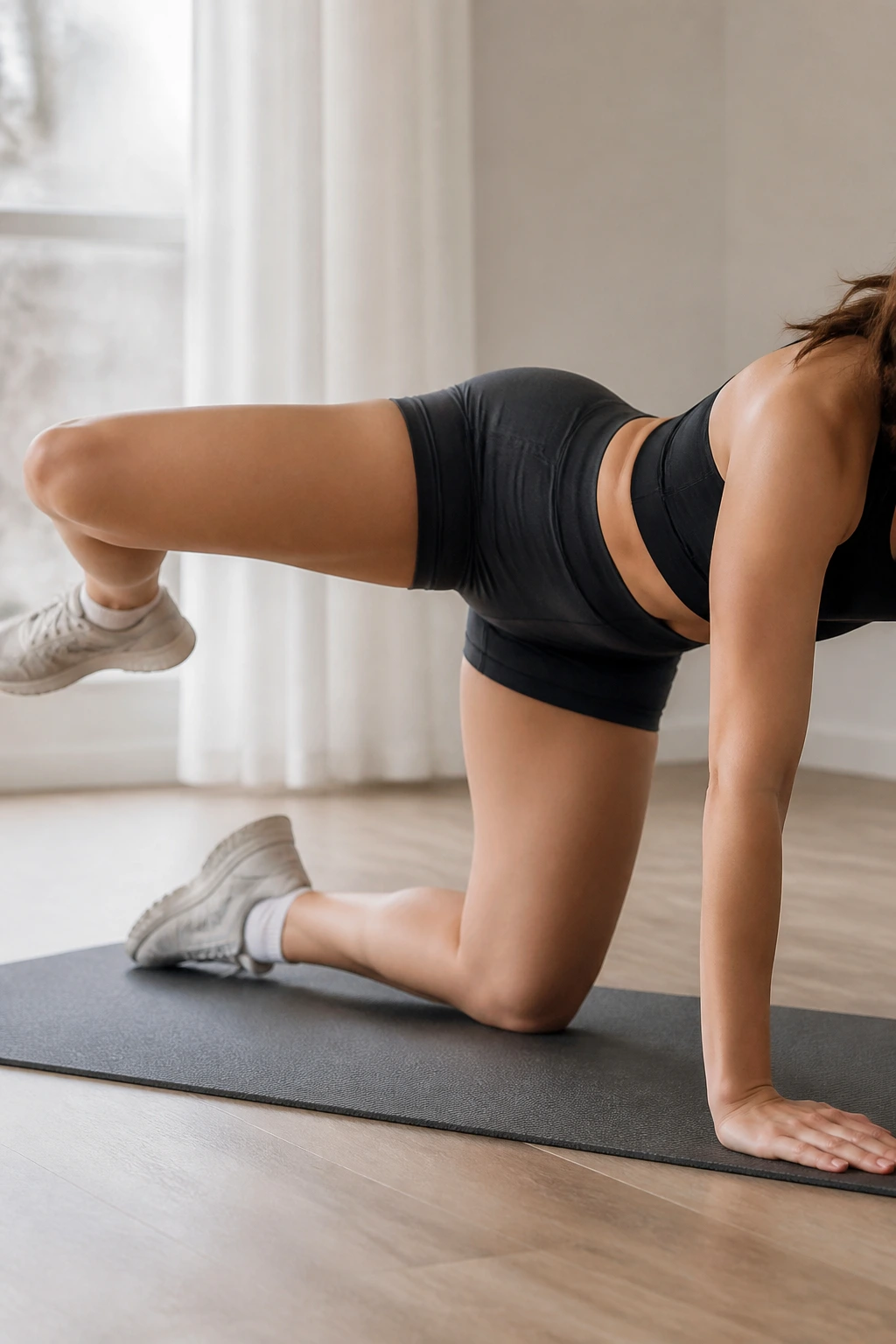
Fire hydrants target the side glutes in a way straight-back kickbacks do not. That matters, because the glute medius is the muscle that helps keep your hips from dipping when you walk, climb, or stand on one leg.
Think of this as a side-opening move. On hands and knees, keep the knee bent and lift one thigh out to the side without shifting your shoulders. The pelvis should stay level. If your torso rotates just to get the leg higher, the rep is cheating.
What Makes It Different
Unlike donkey kicks, which focus more on hip extension, fire hydrants ask for hip abduction. That’s a fancy way of saying the leg moves away from the midline. Simple movement, useful result.
Use a smaller range than you think you need. A clean rep to hip height beats a sloppy rep that twists your spine.
Best for: women who feel squats and lunges mostly in the front of the legs. Fire hydrants help wake up the side glutes before bigger lower-body work, and they’re easy to pair with bridges or bands.
7. Quadruped Hip Extension with a Pause
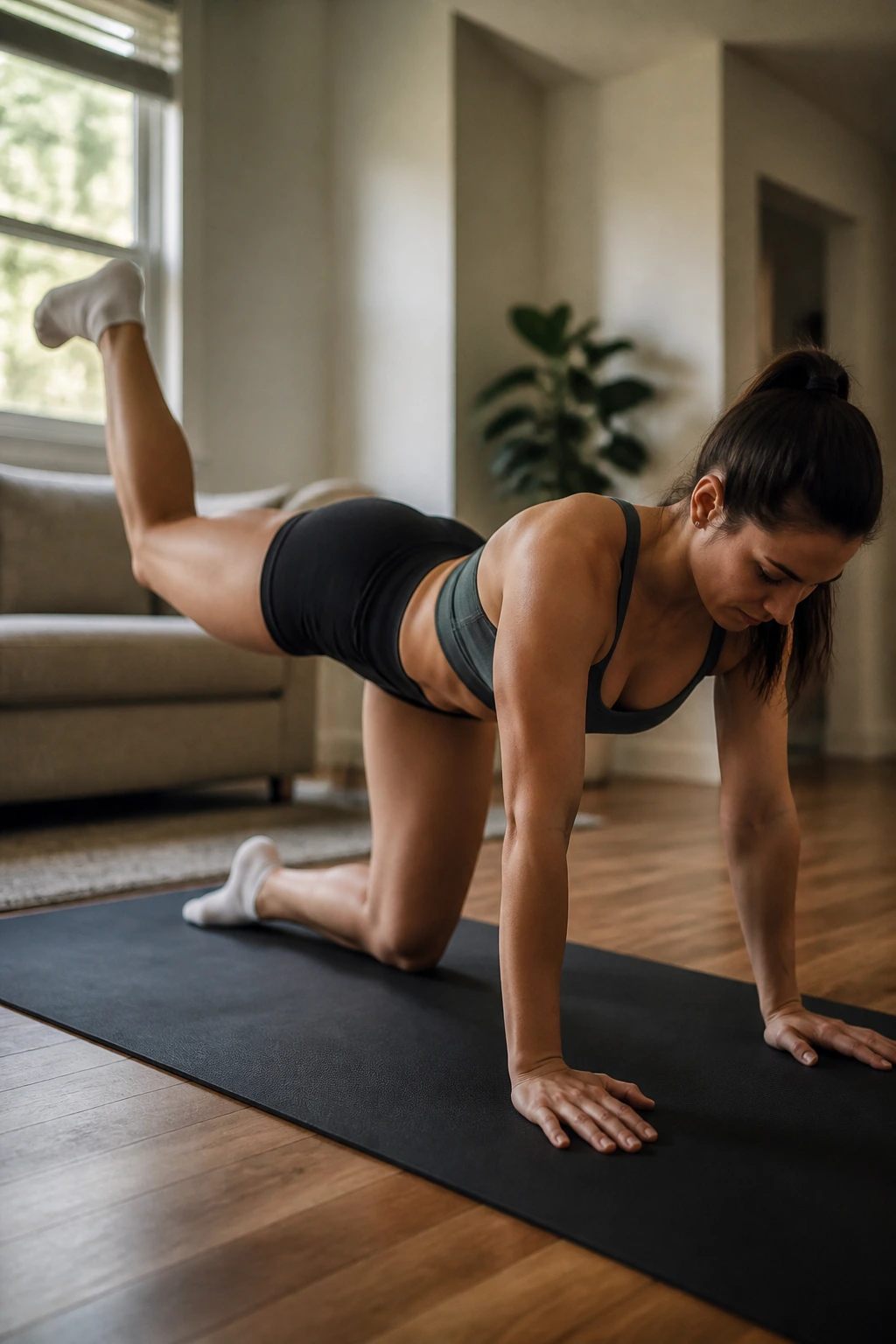
A paused quadruped kickback is one of those exercises people skip because it looks basic. Then they try it with a real pause and realize how little control they had.
The setup is the same all-fours position, but the emphasis is different. Lift one bent knee back and up, stop for 1 to 2 seconds at the top, then return without letting the torso sway. That pause forces the glute to hold the hip extended instead of riding momentum.
Tempo is the Point
Slow reps matter here. A three-count lift, a two-count squeeze, and a controlled three-count return can make bodyweight work hard enough for a real session.
If you want to feel this in the glutes instead of the lower back, imagine pressing the heel toward the ceiling and keeping the ribs pulled in. Don’t let the abdomen collapse. Don’t let the pelvis twist.
Add a loop band behind the knees or around the feet if the exercise feels too easy. Or keep it bodyweight and chase quality. Either route works.
8. Bodyweight Romanian Deadlift
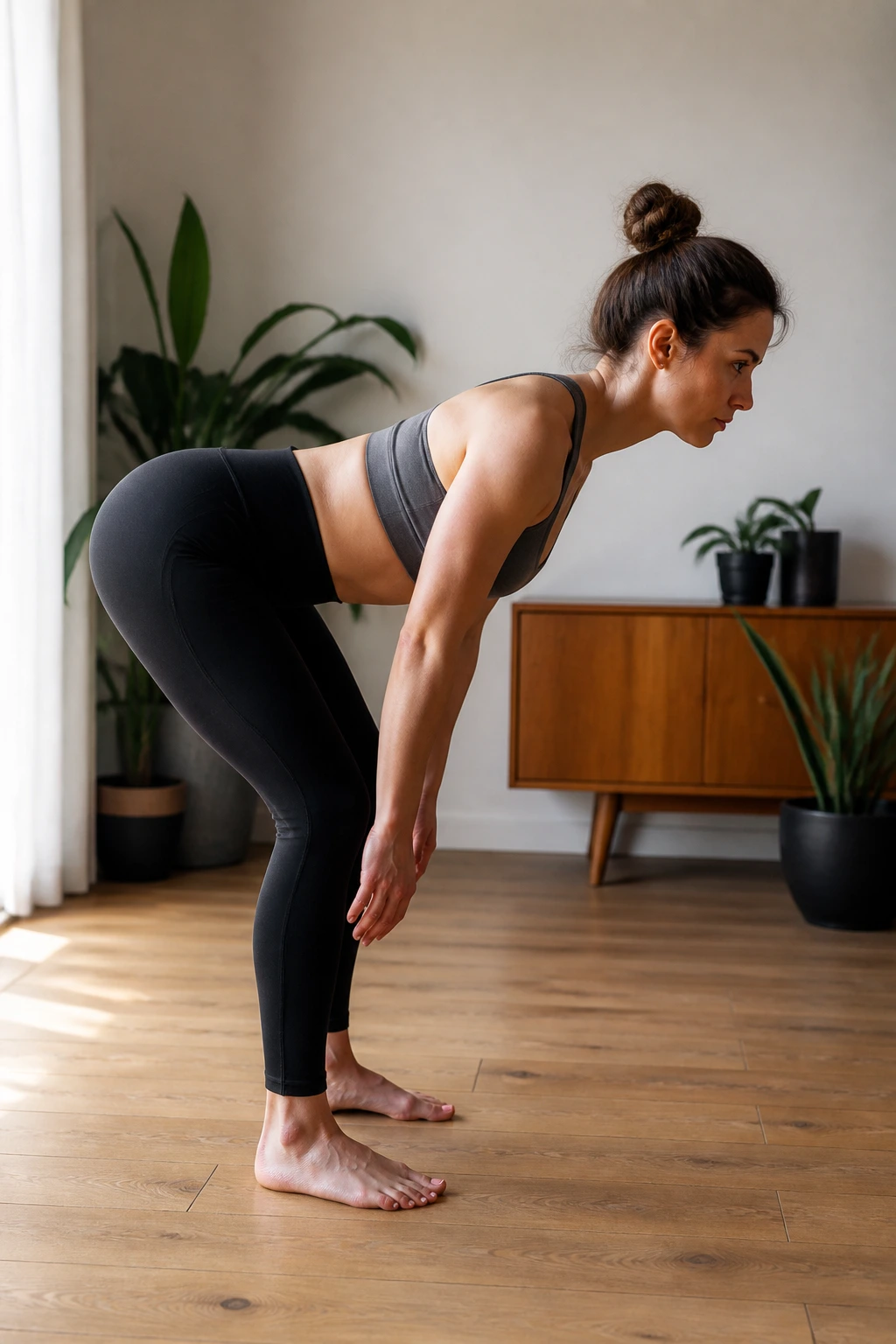
The Romanian deadlift is a hinge, not a squat, and that difference changes where the work lands. The glutes and hamstrings share the load when the hips move back and the spine stays long.
Stand tall, soften the knees, and push your hips behind you as if closing a car door with your glutes. The torso tips forward while the shins stay mostly vertical. Then stand back up by driving the hips forward, not by leaning your shoulders back.
A lot of home workouts miss this pattern completely. They squat everything, then wonder why the back of the body feels undertrained. The hinge is where you teach the glutes to work with length under tension.
If you have dumbbells, hold them at your sides and keep them close to the legs. If you don’t, use slow tempo and a pause at the bottom where the hamstrings feel stretched but the back still feels neutral.
Do not round forward. That turns a useful glute move into a bad back habit.
9. Single-Leg Romanian Deadlift
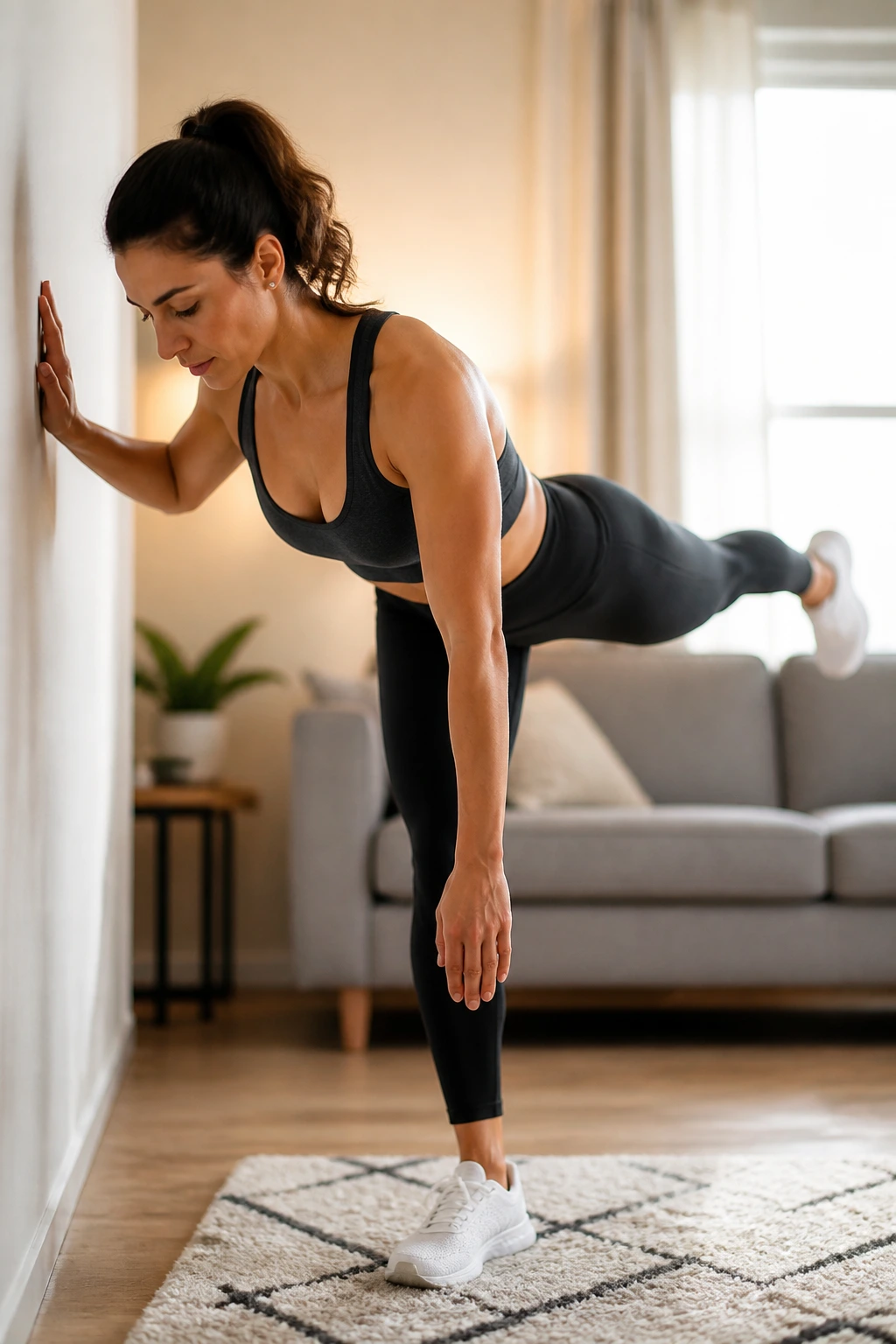
Balance, hamstrings, glutes. That’s the whole story, and it’s a good one.
Stand on one leg with a soft knee, then hinge at the hip as the free leg reaches back like a counterweight. Your hips should stay square to the floor. If the pelvis opens toward the wall, shorten the range and slow down.
How to Get the Most From It
The standing leg should feel loaded from the heel through the glute. The free leg does not need to lift high. It only needs to help you stay long and steady.
Use one hand on a wall or chair at first if balance is the limiter. That is not cheating. It lets the working glute do its job instead of wasting energy on wobbling.
- Keep a soft bend in the standing knee.
- Reach the back leg long, not high.
- Pause for 1 second at the bottom.
- Return by squeezing the glute, not by jerking upright.
This is one of the best home glute exercises for women who want stronger hips and better control on stairs, hills, and single-leg movements.
10. Reverse Lunge
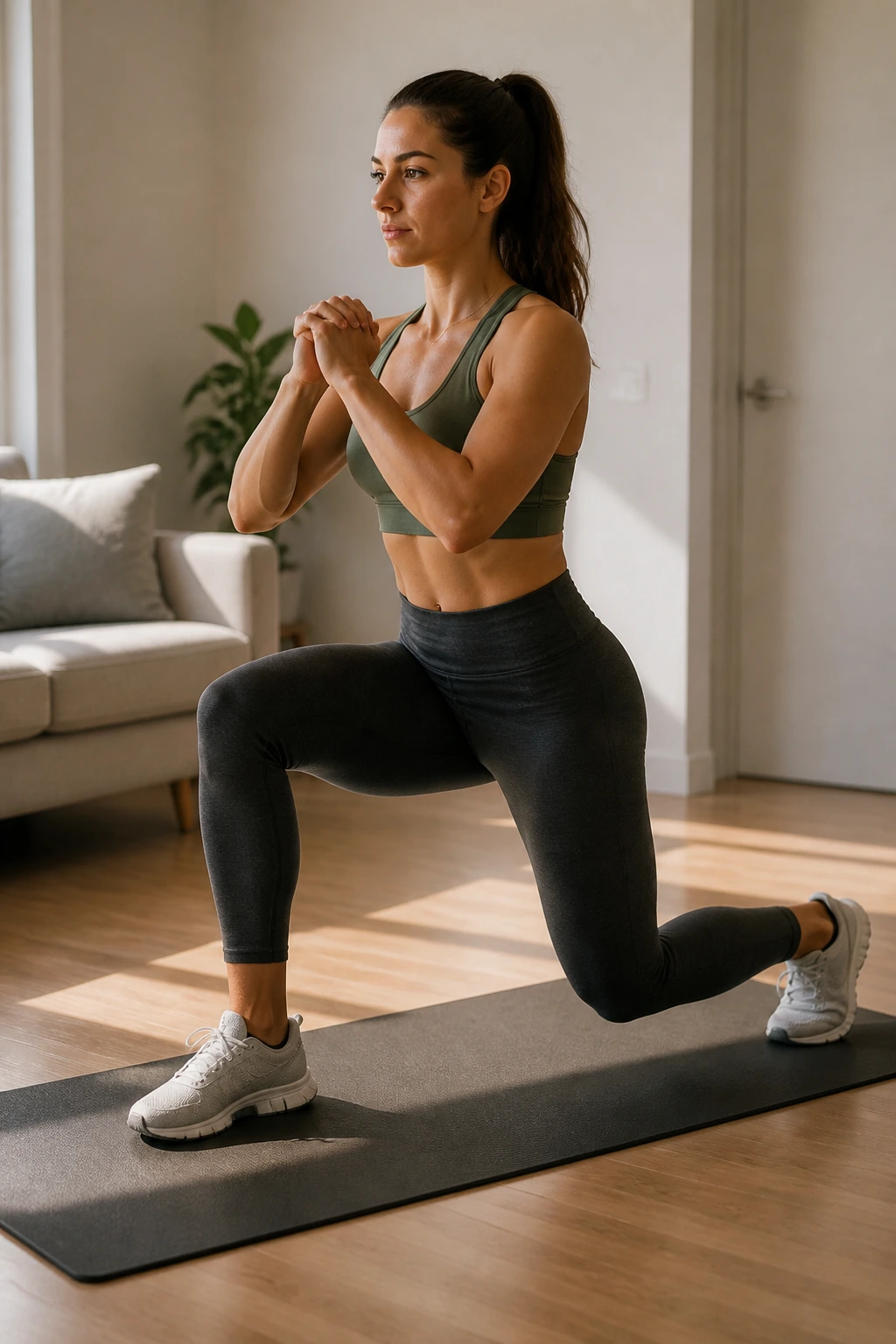
A reverse lunge tends to feel kinder on the knees than a forward lunge, and it usually gives the glutes a cleaner job. Step back, drop down, then push the floor away to stand.
The long step backward matters. Too short, and the front knee drifts too far forward while the quads take over. Too long, and you may lose balance. Aim for a stride that lets both knees bend comfortably while the front heel stays planted.
Reverse lunges are good when you want strength without needing a lot of equipment. They also expose asymmetries fast. One side may feel smooth, the other clunky. That’s useful information, even if it’s a little humbling.
If balance is rough, hold onto a wall, chair, or countertop with one hand. If the movement feels too easy, slow the lowering phase to 3 seconds or hold dumbbells at your sides.
Small detail. Big difference.
11. Bulgarian Split Squat
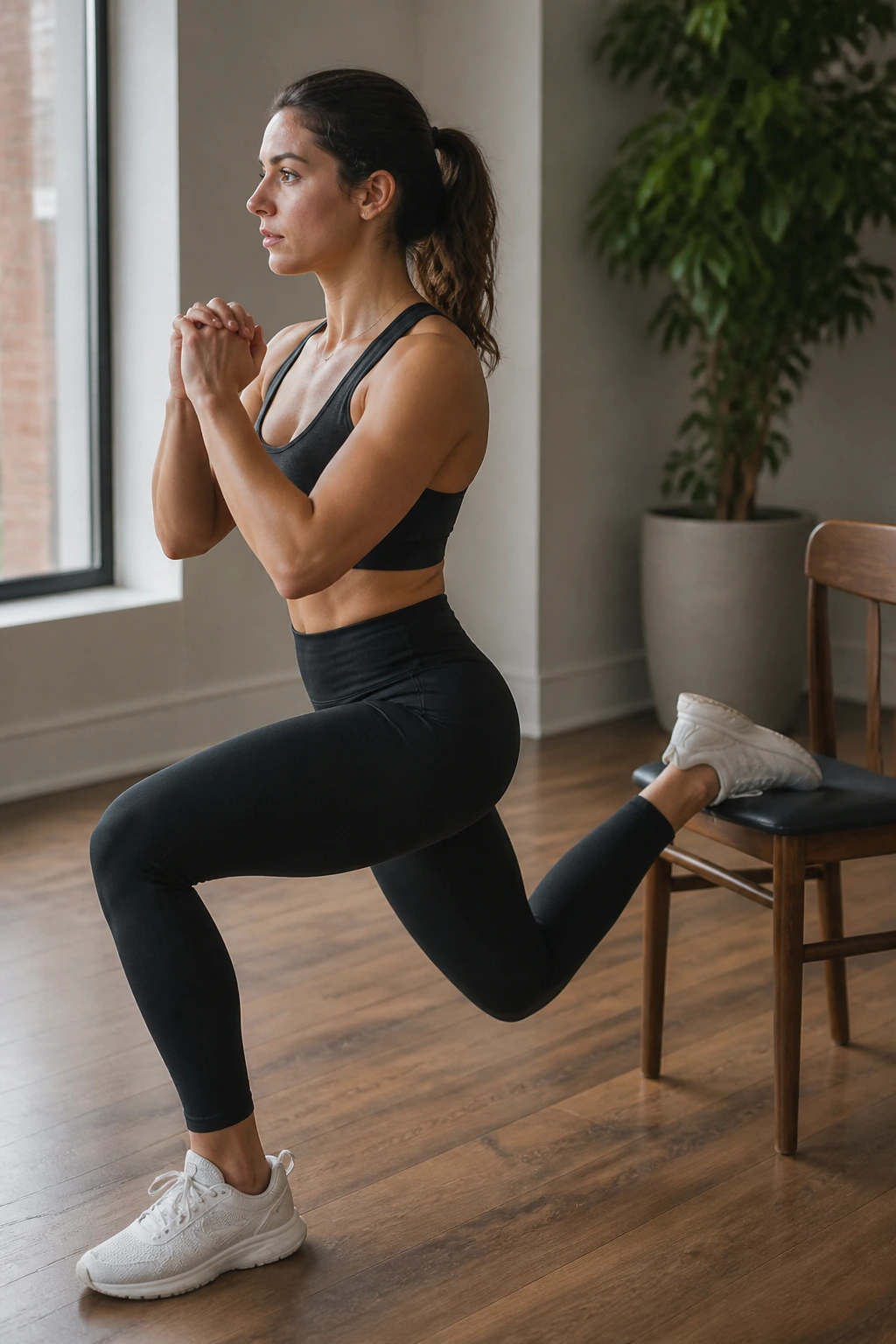
This is the exercise people respect after they do it once. The rear foot on a couch or chair looks harmless, then the front leg starts shaking halfway through the set.
Place the back foot on a sturdy elevated surface and step the front foot far enough forward that you can lower straight down without the front heel popping up. The torso can lean slightly forward, which helps shift work toward the glutes instead of leaving it all to the quads.
The key is control. Drop under control, pause at the bottom, and drive up through the front heel. If the step is too short, the front knee gets jammed forward. If it’s too long, you turn the exercise into a clumsy stretch. There’s a sweet spot.
Bulgarian split squats are not subtle. They load the legs hard, build balance, and expose any weakness in the hips fast. They’re also one of the best no-machine glute builders for home use because the rear foot elevation gives you a bigger range than a basic split squat.
12. Step-Up
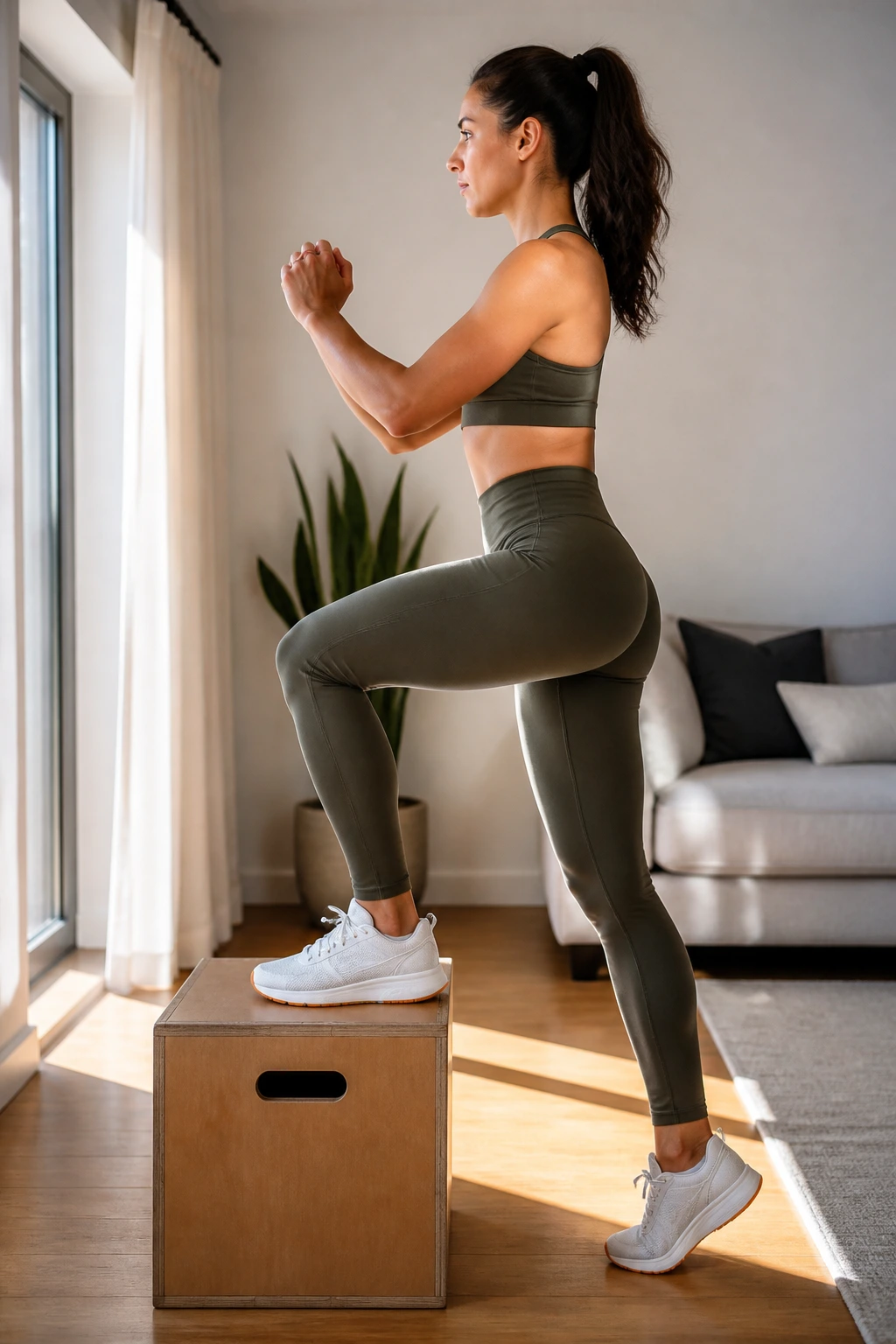
A step-up is boring in the best possible way. A sturdy chair, a stair, or a low platform is enough, and the movement teaches the glutes to drive your body upward in a straight line.
Put one foot fully on the box, lean slightly forward, and stand up by pressing through the whole foot on the working leg. The back leg should help as little as possible. If you push off the floor with the trailing foot, the set gets easier and less useful.
What to Feel
You should feel the glute of the working leg doing the main push, especially if the box is high enough that the hip has to open hard at the top. A knee that caves inward means the hip stabilizers are dropping the ball.
Use a lower step than you think at first. Height is not the prize. Control is. A clean, sturdy step-up beats a wobbly climb every time.
Best use: pairing step-ups with a hinge move like Romanian deadlifts. That gives the glutes both a vertical drive and a hip-hinge pattern in the same session.
13. Sumo Squat
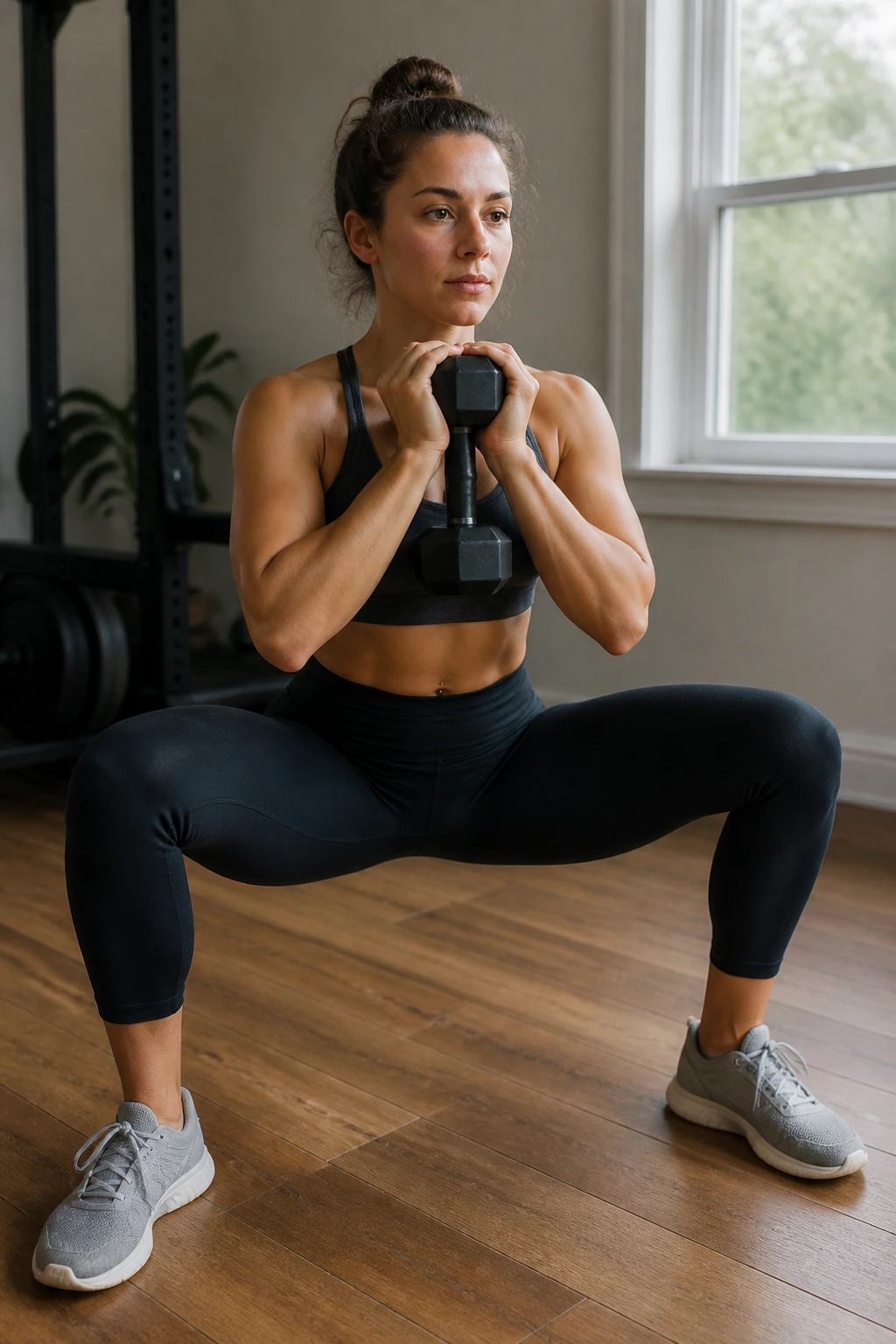
Wider stance, toes slightly out, chest proud. The sumo squat shifts the load in a way that often feels friendlier to the inner thighs and side glutes than a narrow squat.
Drop straight down between your legs, then stand by driving through the heels and the middle of the foot. Keep the knees tracking in the same direction as the toes. If they collapse inward, the glutes are losing the steering wheel.
A lot of people squat too shallow here and call it done. Go deep enough to challenge the glutes, but only as far as your hips and ankles allow without rounding the back. Depth is useful only if it stays clean.
How to Feel It Better
- Hold a dumbbell at chest level.
- Pause for 2 seconds at the bottom.
- Keep the feet flat.
- Think about spreading the floor apart as you stand.
That last cue helps more than it sounds like it should. It turns on the hips and keeps the knees from collapsing toward each other.
14. Curtsy Lunge
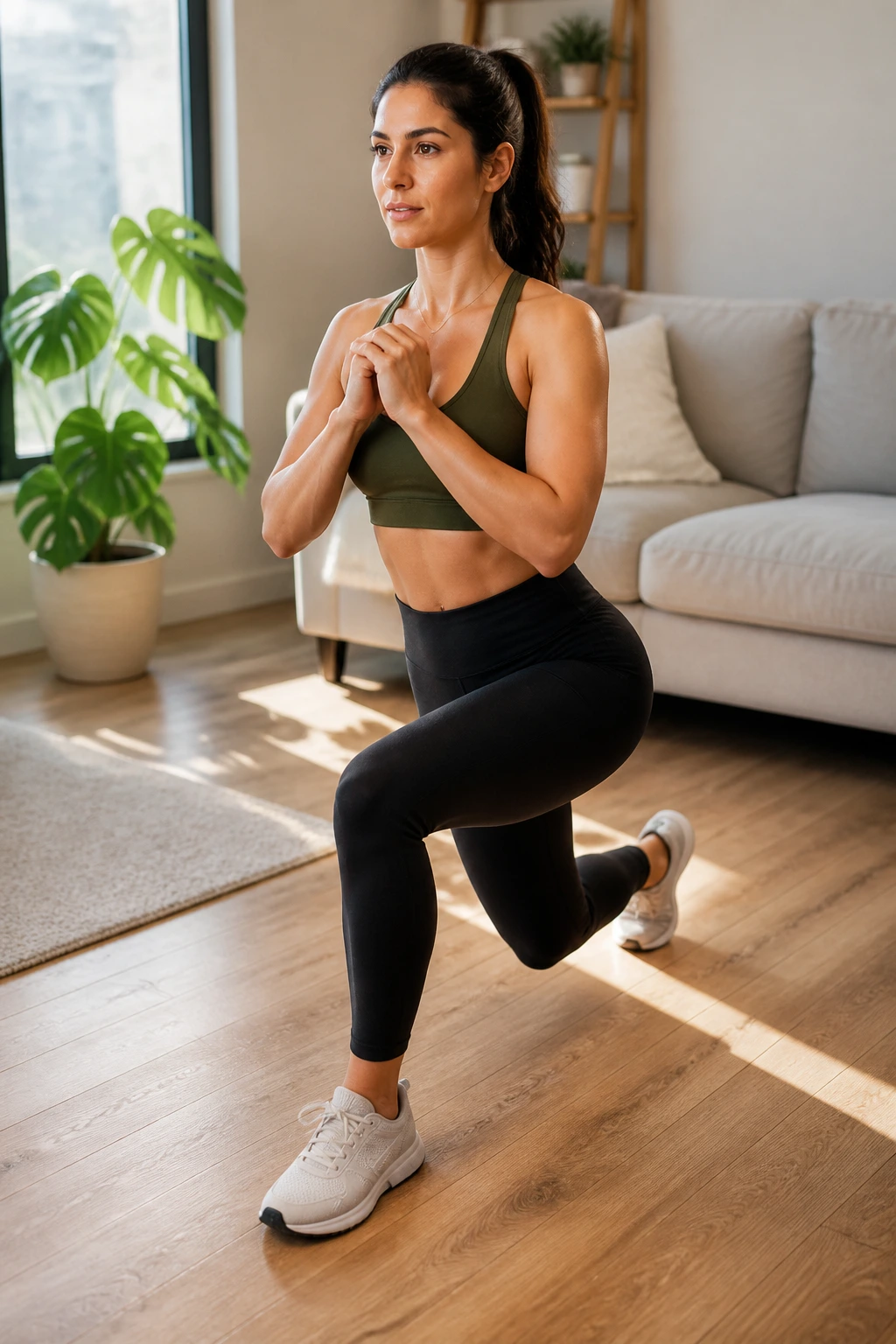
A curtsy lunge is the one people argue about, and honestly, the criticism is fair. Done carelessly, it can irritate the knees. Done with a controlled step and a modest range, it can hit the side glutes and outer hip nicely.
Step one leg back and across behind you, then lower with control. The front knee should track steadily over the foot. Keep the torso tall enough that the movement does not become a sideways collapse.
Because the path is diagonal, the glute medius gets asked to stabilize harder than in a straight backward lunge. That’s the useful part. The movement can also show you whether your hips like crossing patterns or hate them. Some people feel great here. Others do not. That’s normal.
If your knees are touchy, shorten the crossover step or skip this one and use lateral band walks instead. There is no prize for forcing a pattern that feels wrong.
15. Lateral Band Walk
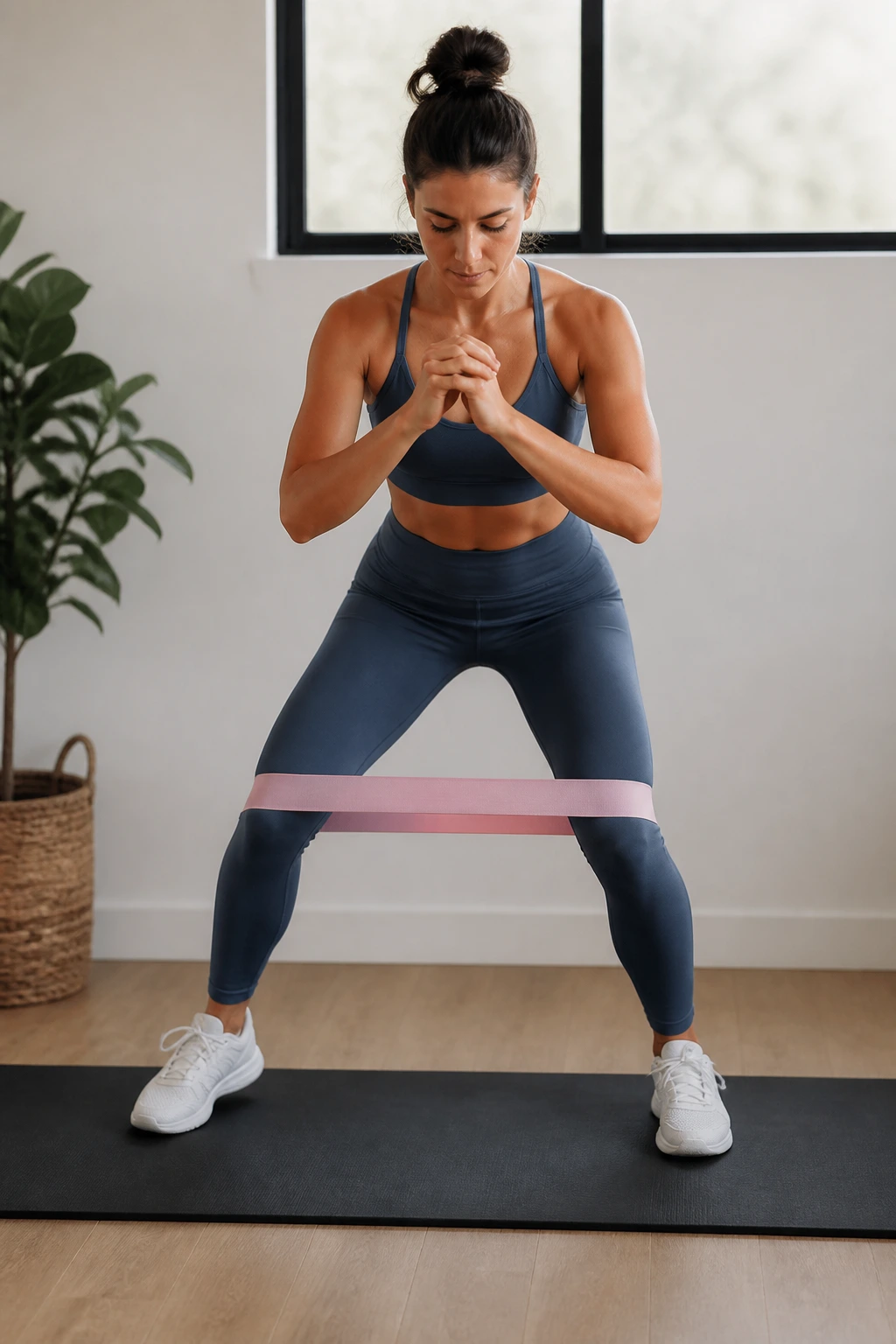
Put a loop band above the knees or around the ankles, bend into a slight athletic stance, and start stepping sideways. That’s it. It looks almost too easy until the outer hips start complaining.
The glute medius works hard to keep tension in the band while the feet move out and back in. Tiny steps are enough. Big steps usually look flashy and produce sloppy form.
Why It Feels Different
This is one of the best warm-up drills before squats, lunges, and step-ups because it wakes up the hip stabilizers before the bigger lifts. It also teaches your knees to stay out instead of folding inward under load.
Try 10 to 15 steps each direction, then reset and repeat for 2 or 3 rounds. Stay low. Keep the chest quiet. If the band rolls up your legs, widen your stance a little or use a thicker band.
It is not glamorous. It works.
16. Clamshell
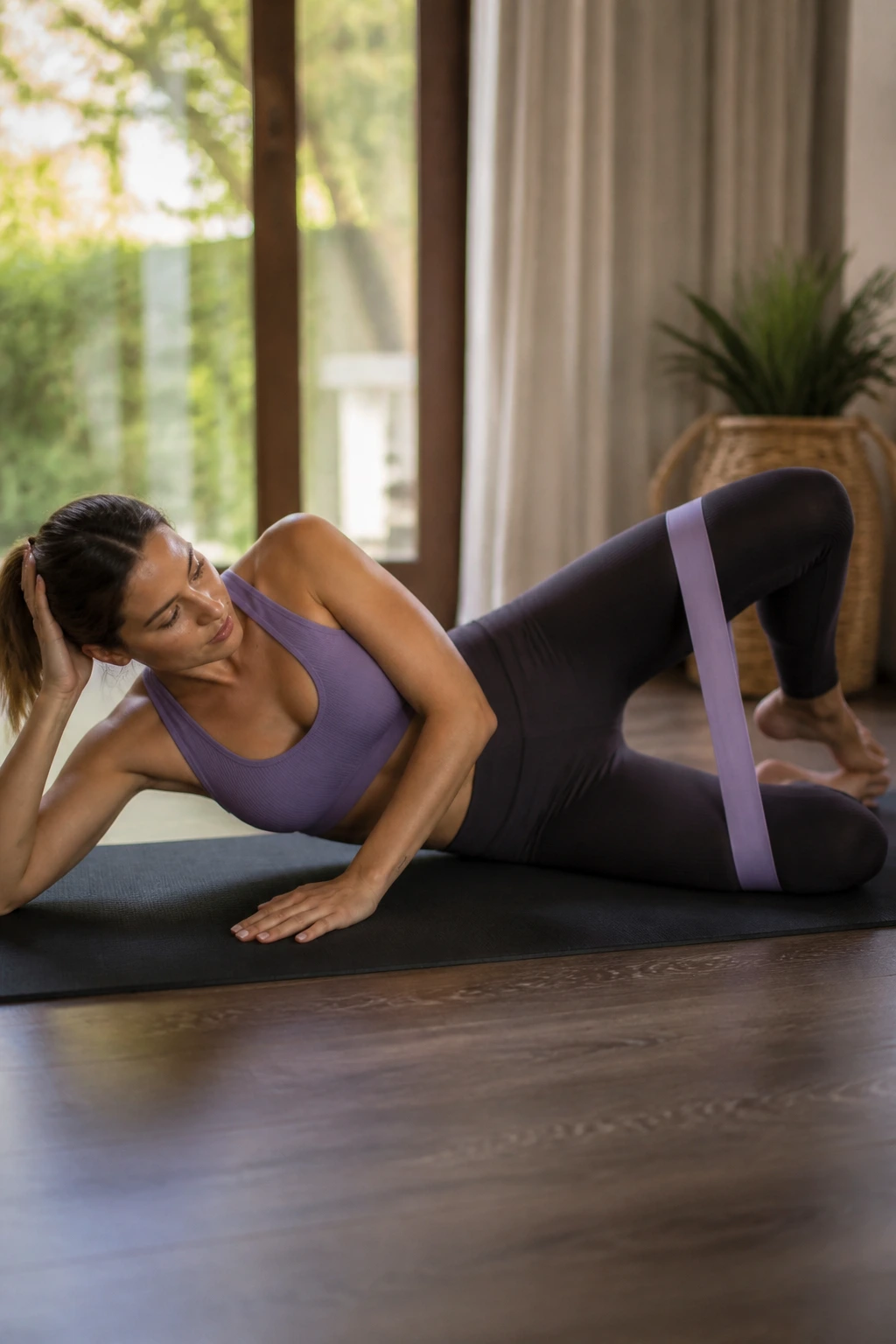
Clamshells are easy to dismiss because they look tiny, but the small range is the point. You are training the hips to open without the pelvis rolling backward.
Lie on your side, bend your knees, stack your feet, and open the top knee like a clamshell while keeping the feet together. The movement comes from the hip, not from rocking the whole pelvis open.
Unlike side-lying leg raises, clamshells keep the knee bent, which changes the angle and makes the external rotators do more of the work. That’s useful if your side glutes need waking up before bigger work. It’s also a nice choice when you want something gentle on the joints.
If the exercise feels pointless, add a mini band above the knees or hold the top position for 3 seconds. That usually changes the story fast.
A small move can still be a real workout. This one proves it.
17. Side-Lying Hip Abduction
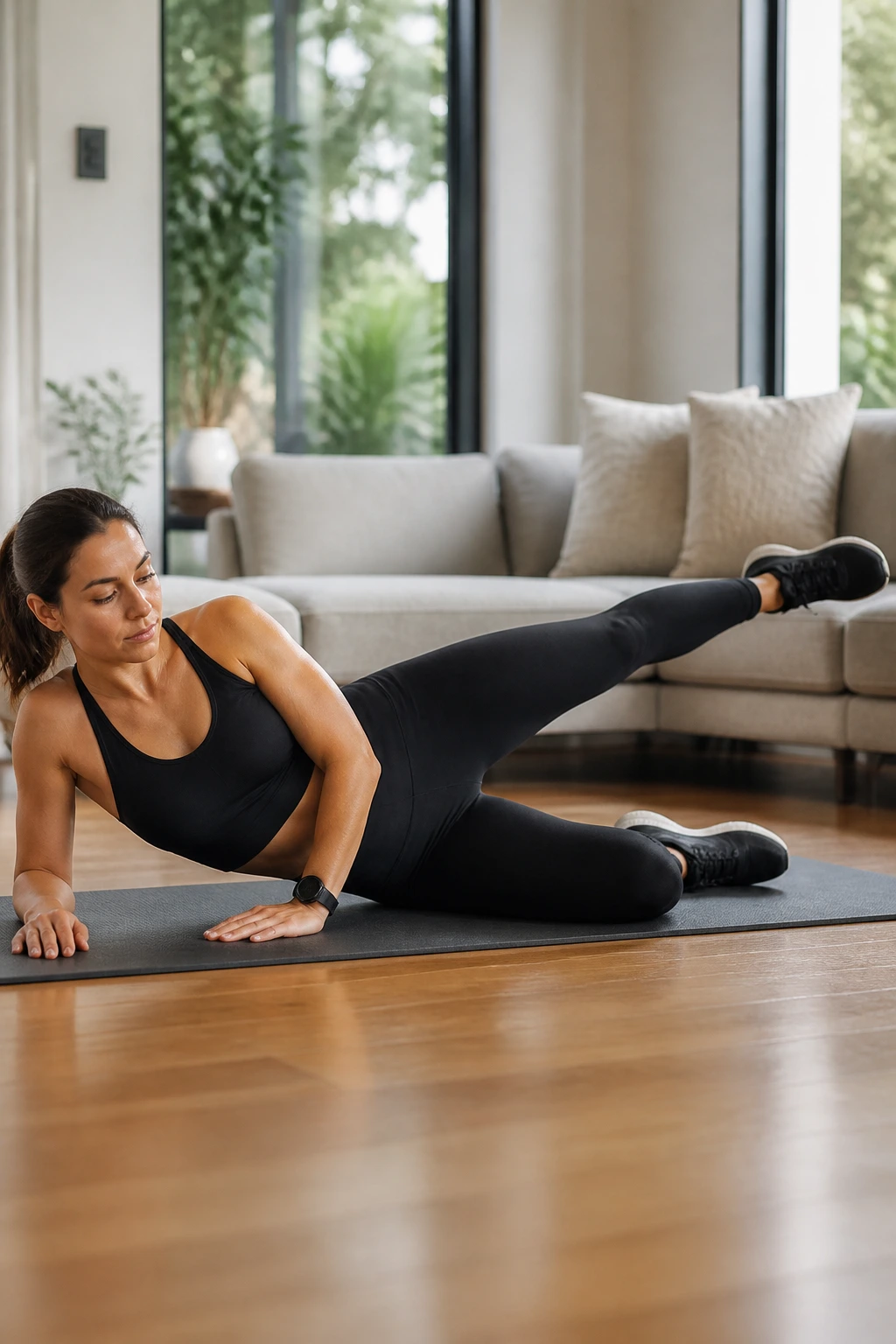
Straight-leg side lifts are simple, but they punish bad form fast. Lift the top leg without rolling the hips backward, and the side of the glute starts working in a way that’s hard to fake.
Lie on your side with the bottom knee bent for support and the top leg straight. Turn the top toes slightly down, then raise the leg to about hip height or just a little below. If the foot turns up and the hip rolls open, the front of the hip takes over.
Stop the Hip Roll
That little internal rotation cue — toes angled slightly down — often helps the glute medius light up better. It keeps the movement honest. It also keeps you from turning the lift into a hip-flexor demo.
- Lift slowly for 2 seconds.
- Hold at the top for 1 second.
- Lower for 3 seconds.
- Keep the waist long, not crunched.
This is one of the best home glute exercises for women who want the side of the hip to do more of the work, especially if one side tends to feel weaker or less stable.
18. Banded Squat
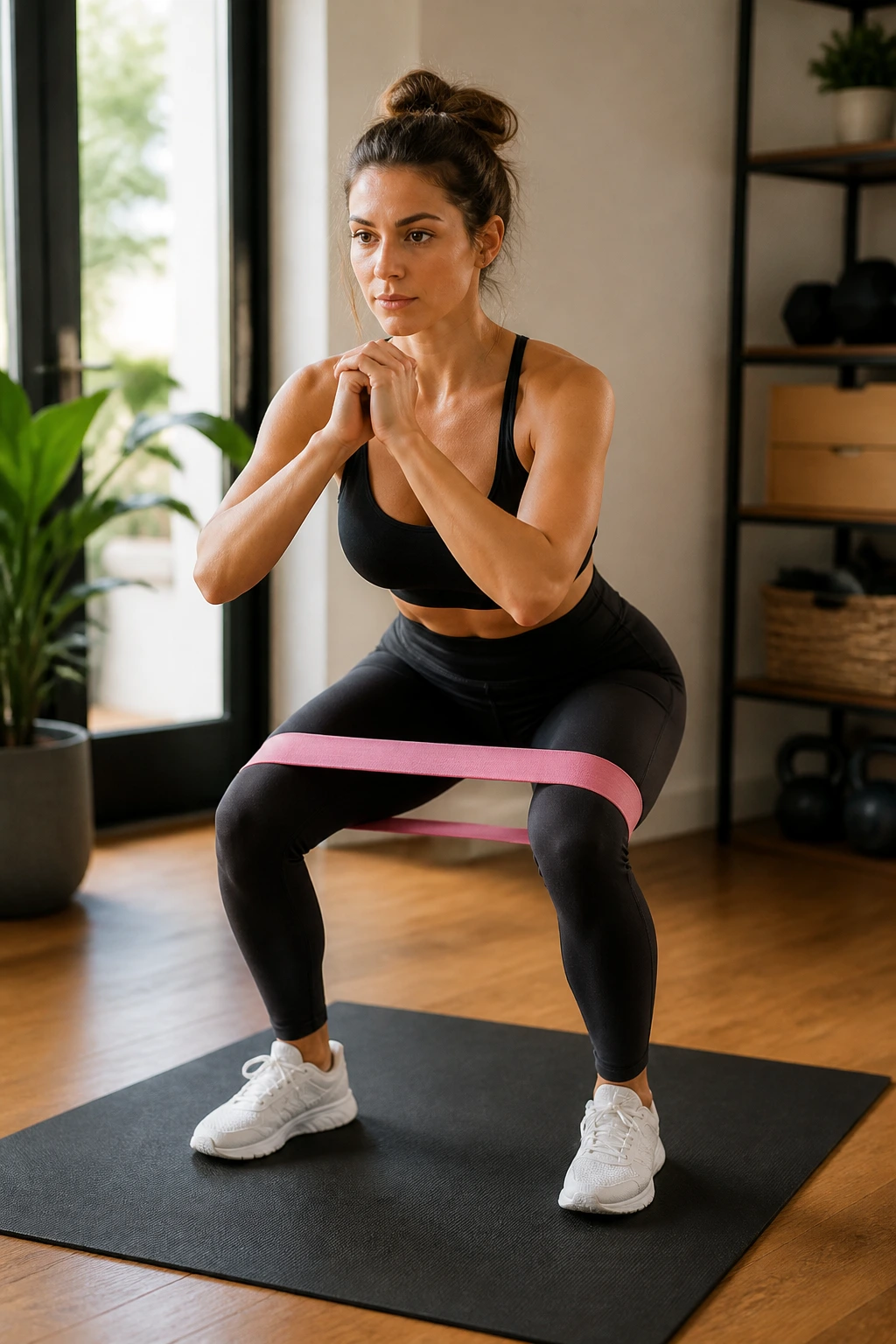
Add a mini band above the knees, take a squat stance, and sit down with control while pressing the knees gently outward into the band. That outward pressure keeps the hips active and stops the knees from drifting inward.
The magic here is not the band itself. It is the feedback the band gives you. Every rep reminds you where the knees should be, which makes the squat cleaner even after the band comes off.
You do not need to squat to a dramatic depth to get value from this. A controlled, moderate-depth squat with good foot pressure can work the glutes well, especially if you add a pause at the bottom. Keep the weight in the middle of the foot and heel. If the toes lift, you’ve gone too far forward.
This version is easy to slot into a home workout because it needs almost nothing. A light band, a pair of dumbbells if you have them, and some patience. That’s enough.
19. Bridge March
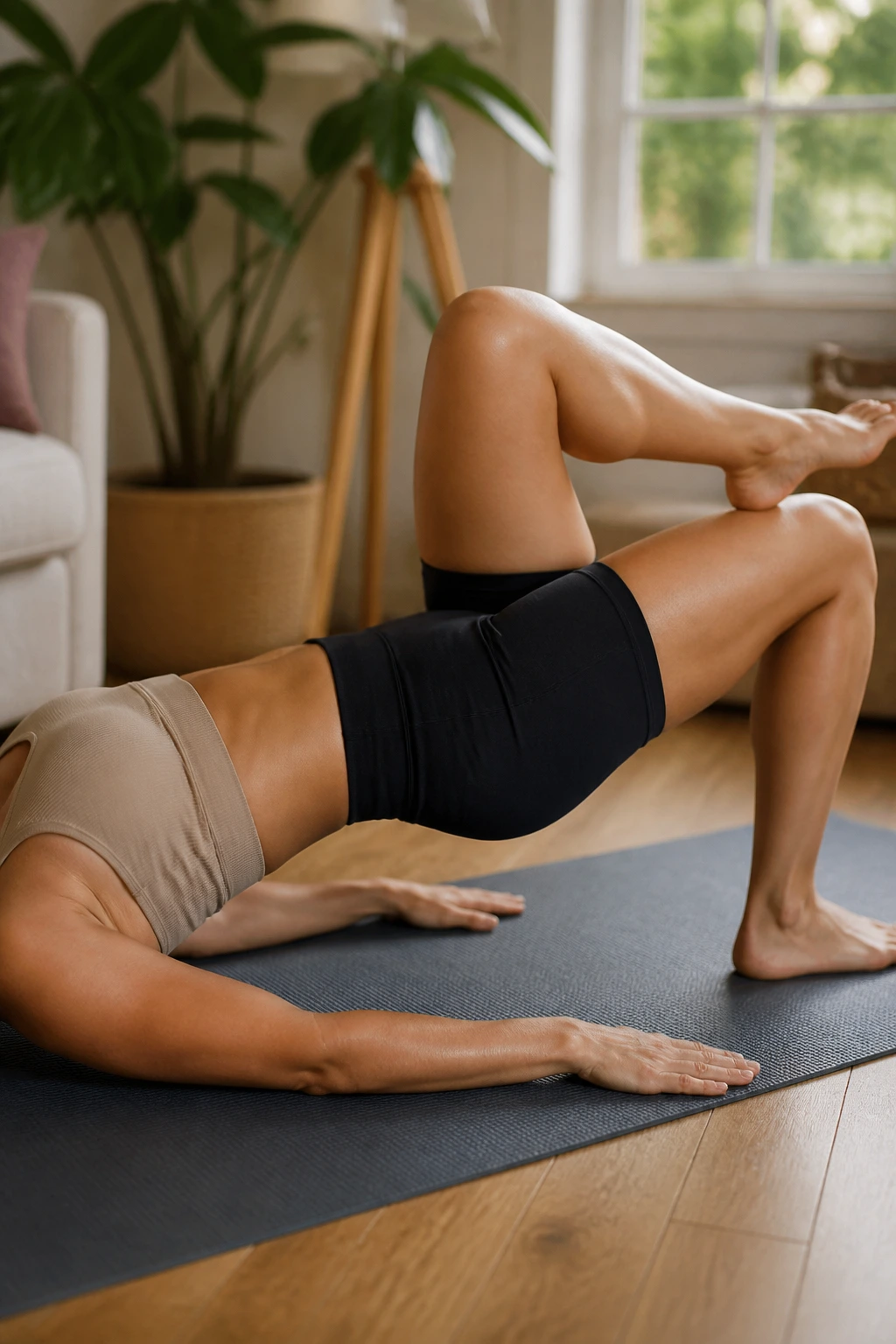
A bridge march takes the regular glute bridge and adds a balance test. One knee lifts at a time while the hips stay level, which forces the glutes to stabilize instead of just lift.
Set up in a bridge, hold the top position, then slowly lift one foot a few inches off the floor without letting the pelvis drop. Return it, switch sides, and keep the hips steady the whole time. If the pelvis rocks side to side, shorten the lift and slow down.
What Makes It Harder
The base leg has to hold the bridge while the moving leg leaves the floor. That means the standing glute works harder than it does in a regular bridge, and the core has to help keep everything from wobbling.
Use 6 to 10 marches per side. If that feels easy, add a band around the thighs or hold the top bridge for a full second between each march. If it feels too hard, go back to two-leg bridges and clean up the position first.
This one sneaks up on people. It should.
20. Standing Band Kickback
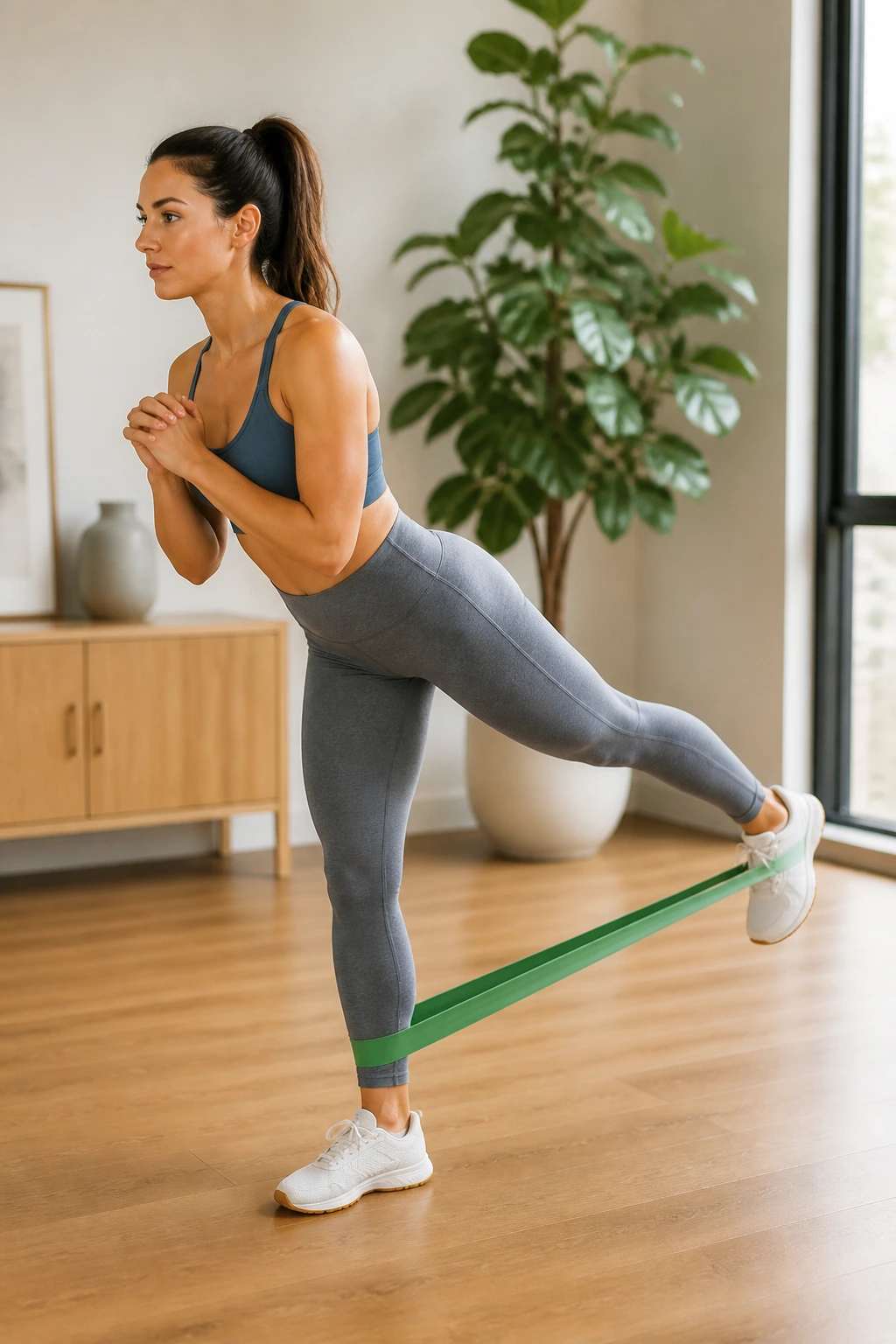
Stand tall with a loop band around the ankles or a cable-style band anchored low, then kick one leg straight back without leaning forward or arching the lower back. The torso stays quiet. The glute does the work.
A standing version changes the angle enough to feel different from donkey kicks on the floor. It is especially useful when you want glute work without getting down on the mat for another round. Some days, that matters more than people admit.
The lift does not need to be big. A compact extension with a hard squeeze at the end is the goal. If the leg swings back from momentum, the band has already won. Keep the ribs down, hold the standing leg steady, and move the working leg through a controlled path.
If you want a simple way to finish a home glute session, this is a solid one. High tension, low setup, and easy to pair with bridges, lunges, or band walks. And that’s usually enough.
