



The floor of your living room might not look like a gym, but that is exactly where the most effective fat-burning happens. When you strip away the commute to a facility, the waiting for equipment, and the social pressure of a locker room, you are left with the only variable that truly matters: your effort. Real, measurable change happens when you stop thinking about fitness as a two-hour production and start seeing it as a series of intense, high-output movements that demand everything you have for a shorter window of time.
Burning fat isn’t about logging hours on a stationary bike while reading a magazine. It is about metabolic demand. You want movements that recruit as many muscle groups as possible simultaneously. By choosing exercises that force your heart rate to spike quickly and stay elevated, you create an oxygen debt. Your body then spends the next several hours—long after you have finished your shower—working to pay that debt back. That recovery process is where the heavy lifting of fat metabolism actually occurs.
The secret isn’t in a piece of equipment you need to buy. It is in the way you structure your time. A high-intensity circuit at home, performed with minimal rest, can outperform an hour of steady-state cardio in terms of caloric expenditure and muscle retention. You do not need a lot of space. You just need a firm patch of floor and the willingness to be uncomfortable for twenty minutes.
1. Burpees
The burpee is the gold standard for full-body conditioning, and there is a reason it is universally loathed by anyone who has ever tried to get in shape. It forces your entire body to transition from a vertical position to the floor and back up again in a fluid, explosive motion. You are effectively performing a squat, a plank, a push-up, and a jump all in one repetition.
Why It Works for Fat Loss
Because you are moving your center of gravity so aggressively, your heart has to work overtime to keep blood pumping to your extremities. This is a total-body movement that engages the quads, hamstrings, glutes, core, chest, and shoulders. You cannot cheat a burpee; the effort required to get back to your feet is non-negotiable.
The Technique
- Stand with feet shoulder-width apart.
- Drop into a squat, placing your hands firmly on the floor.
- Kick your feet back into a push-up position and perform one controlled push-up.
- Snap your feet back under your hips and explode upward into a jump.
- Land softly, and immediately begin the next rep.
Pro tip: Do not pause at the bottom of the movement. The flow is where the metabolic magic happens, so keep the momentum moving from the floor to the ceiling without stopping to catch your breath.
2. Mountain Climbers
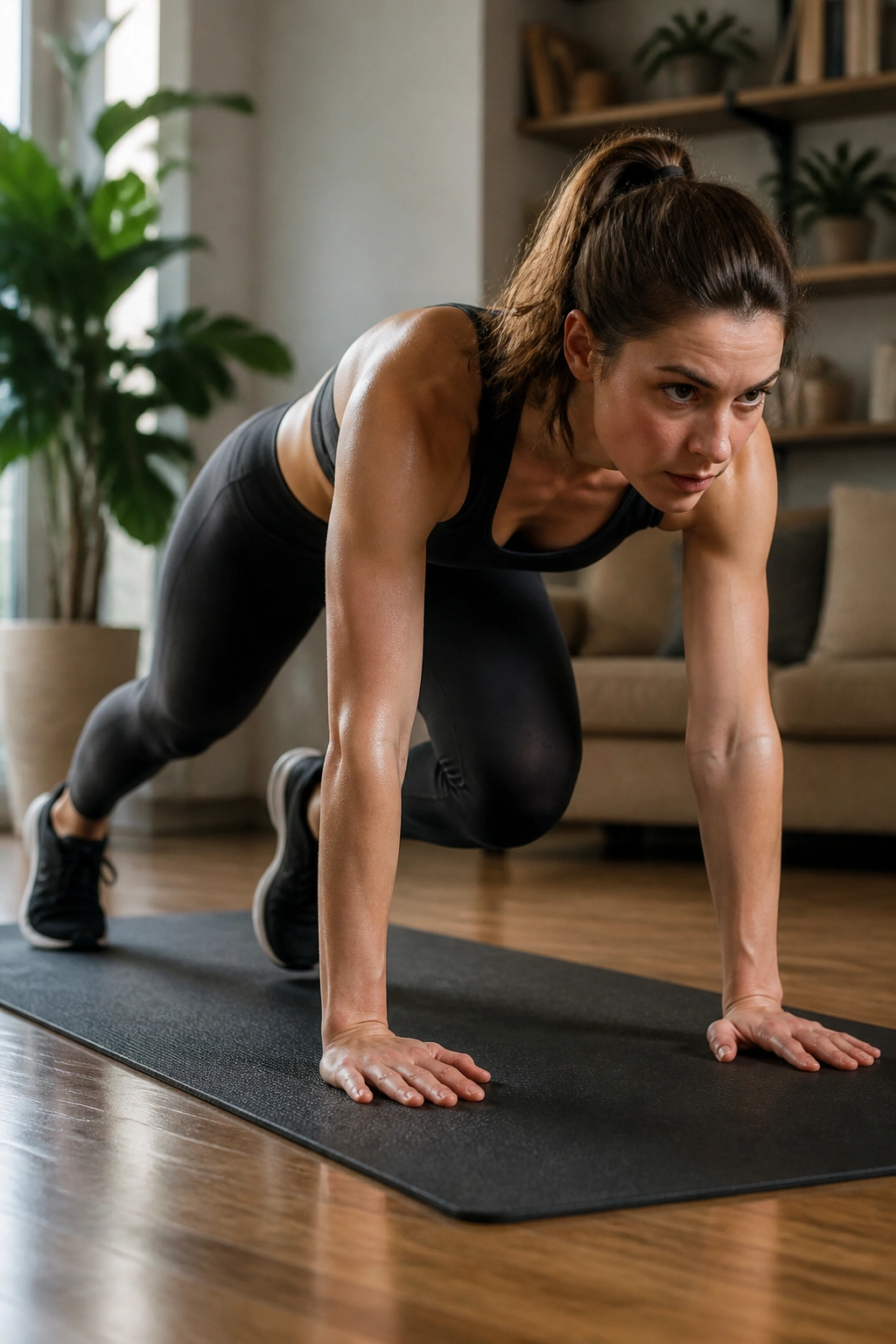
Mountain climbers turn the simple act of holding a plank into a cardio nightmare. You are essentially sprinting while lying on your stomach, which puts your core through a brutal test of stability and endurance. The key here is not speed, but the quality of the knee drive toward your chest.
Maintaining the Core Tension
The most common mistake people make is letting their hips bounce up and down like a pogo stick. Keep your glutes squeezed tight and your back flat, as if you were balancing a plate on it. If your hips are moving, you aren’t engaging your deep abdominal muscles properly. The movement should be strictly driven by the hip flexors and the core.
How to Execute
- Start in a high-plank position with your hands directly under your shoulders.
- Drive your right knee toward your chest, then quickly switch to the left.
- Imagine you are trying to touch your knee to your elbow with each drive.
- Keep a fast, rhythmic pace for 45 seconds.
3. Shadow Jump Rope
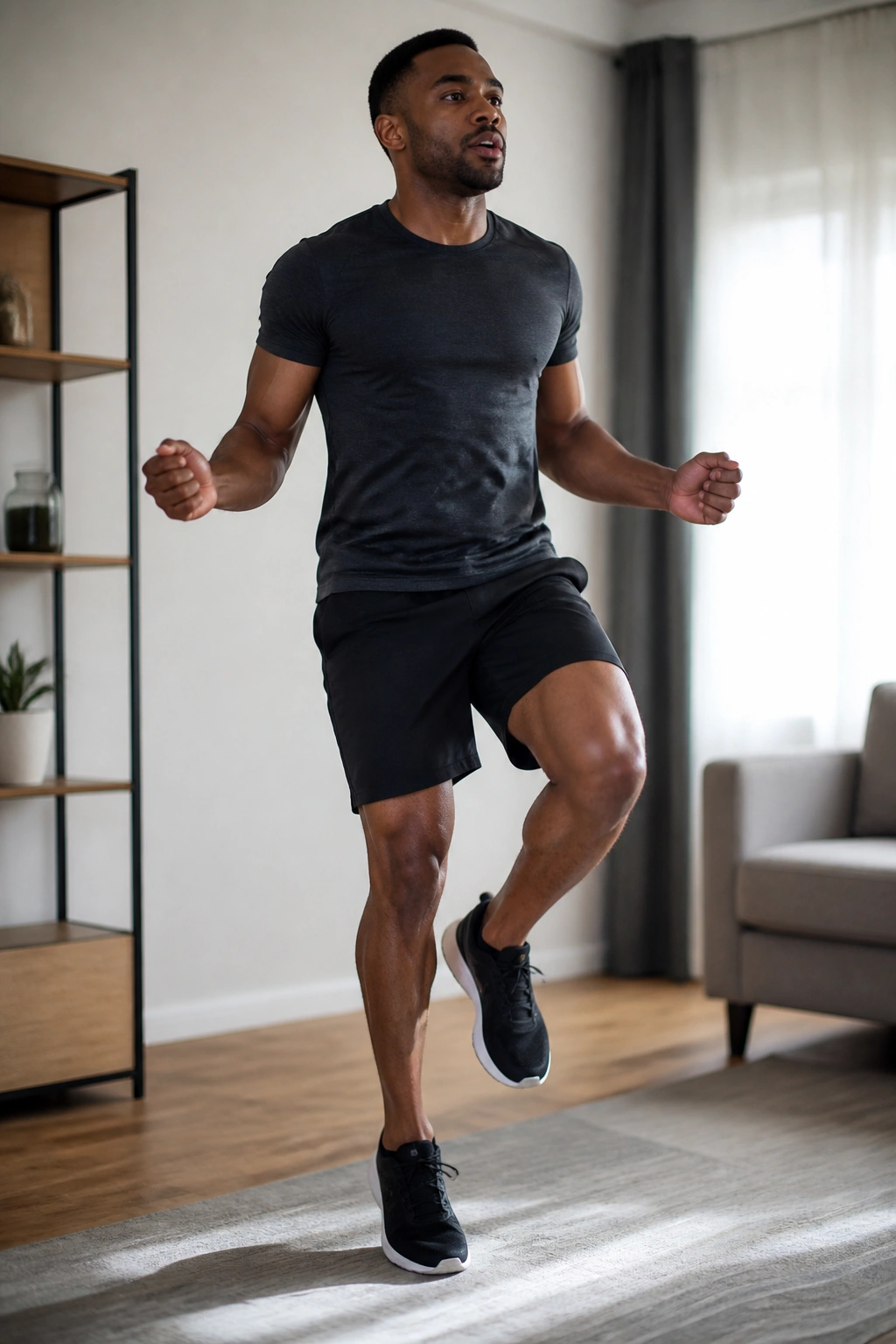
You do not need an actual rope to get the benefits of jumping rope. In fact, if you are working out in a small apartment with a low ceiling, a physical rope is often more of a hazard than a tool. The “shadow” version requires you to maintain the rhythm and the bounce without the aid of the gear, which actually makes it harder because you have to be more deliberate with your footwork.
The Athletic Advantage
Jumping rope creates a high degree of calf and ankle fatigue while forcing your shoulders to remain active. When you remove the rope, you have to exaggerate the movement to get the same heart rate response. Stay on the balls of your feet. If your heels are hitting the ground, you are not burning calories efficiently.
Adding Intensity
- Hop with both feet together at a steady pace.
- After 30 seconds, switch to alternating feet, like you are running in place.
- Keep your elbows pinned to your ribs, mimicking the motion of turning a rope.
- If you want to make it harder, bring your knees up higher with each hop.
4. High Knees
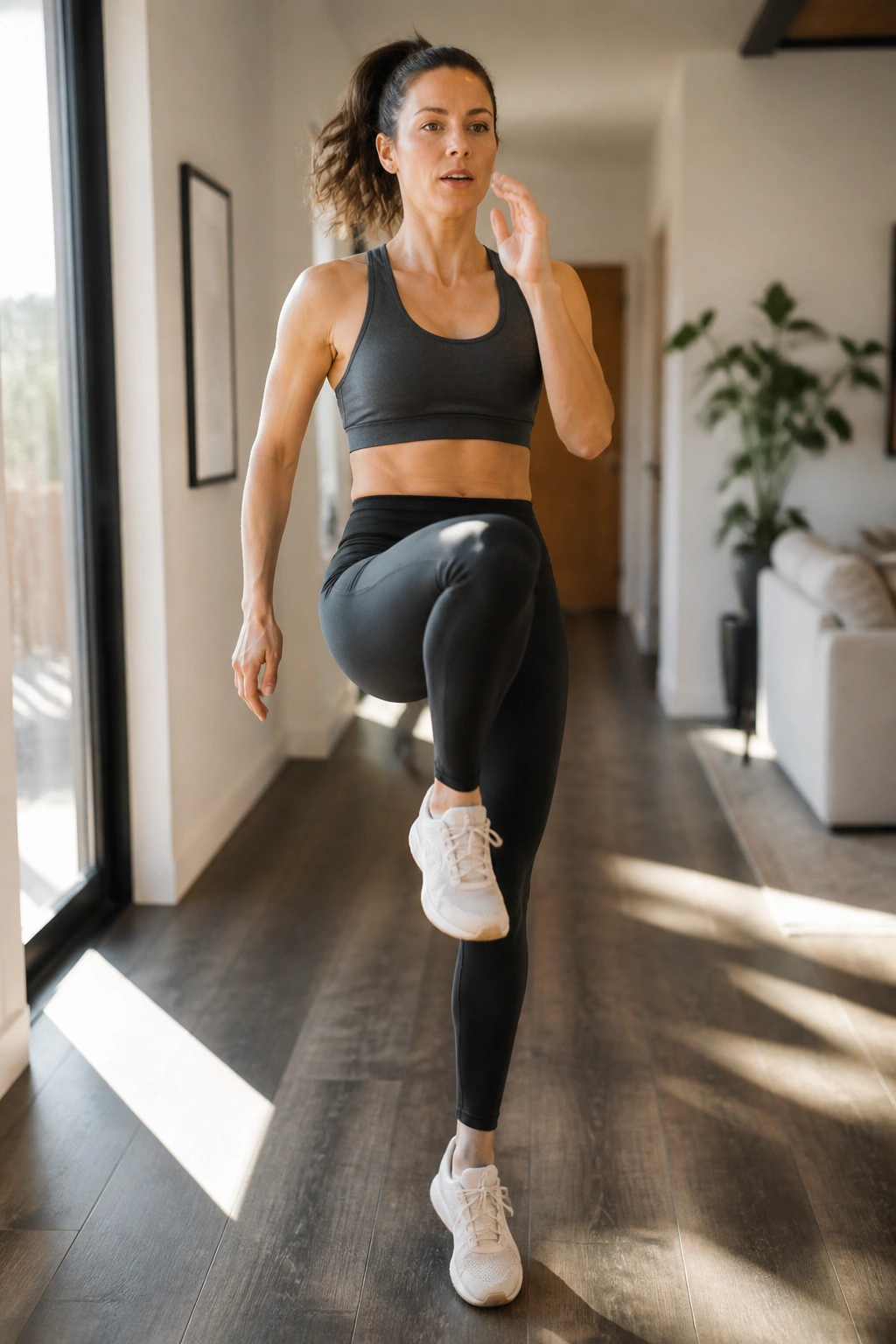
This is a pure cardio incinerator. High knees force you to engage your lower abdominals repeatedly to pull your legs up, while the quick foot strikes maintain a high heart rate. It is a simple move, but if you do it for sixty seconds, you will feel the burn in your lungs long before you feel it in your legs.
The Focus
Many people perform high knees as a slow march. That is not what we are doing here. The goal is rapid-fire repetition. Your feet should barely touch the ground before you lift them back up. The noise your feet make against the floor should sound like a rhythmic drumroll.
Execution Details
- Stand tall and engage your core.
- Alternate bringing your knees up to hip height as quickly as you can.
- Pump your arms in opposition to your legs to maintain balance and speed.
- Focus on staying light on your toes—do not stomp.
5. Plank Jacks
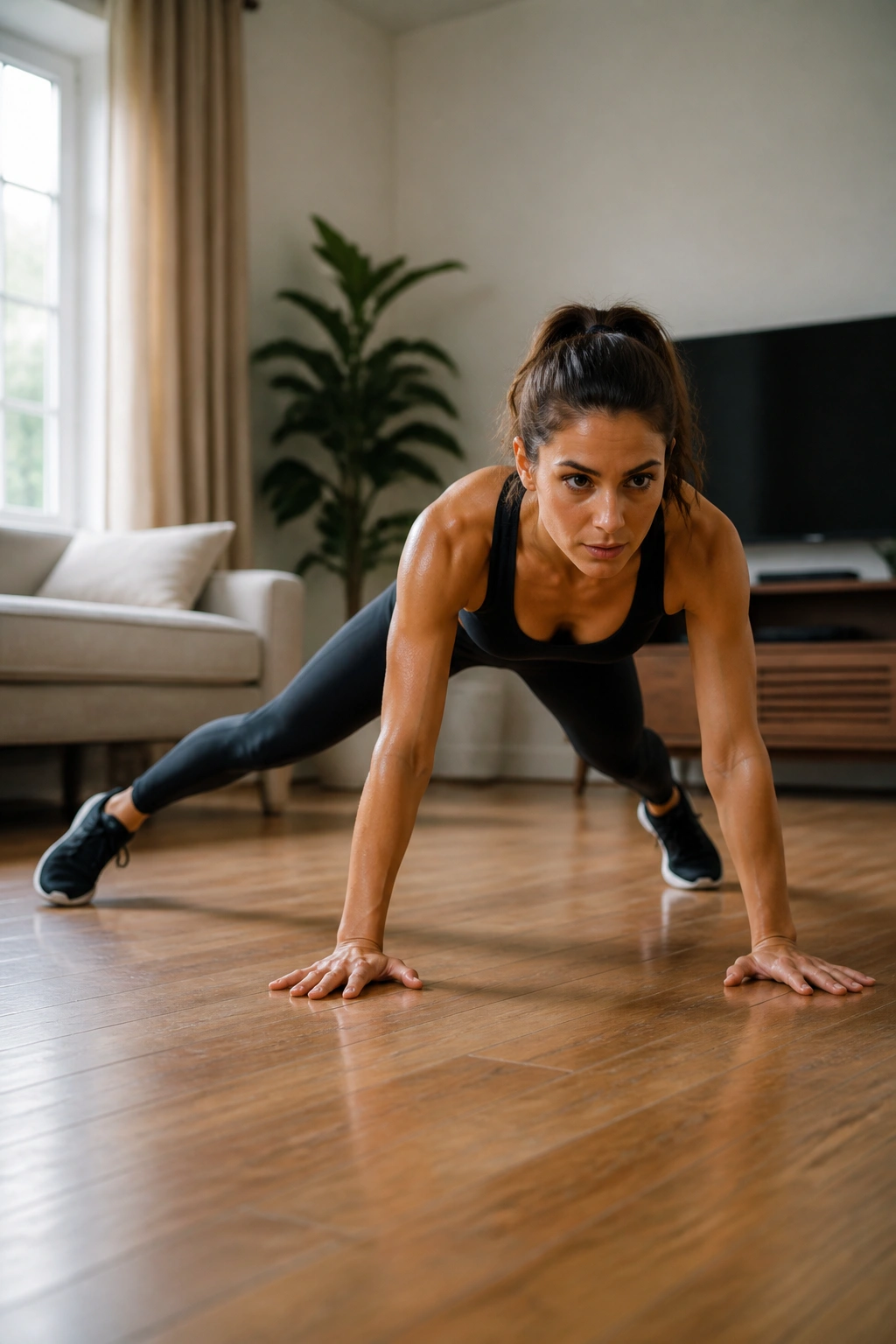
Plank jacks are essentially jumping jacks performed in a plank position. You are combining the stability requirements of a static core hold with the cardiovascular demands of a lateral movement. This hits the obliques, shoulders, and cardiovascular system simultaneously.
Why the Obliques Love This Move
Every time your feet land wide, your core has to fire instantly to stabilize your spine so your hips don’t sag. This constant firing and re-firing of the lateral core muscles is what helps tighten that “love handle” area that so many people struggle with.
The Routine
- Get into a strong high-plank position.
- Jump both feet out to the sides, wider than shoulder-width.
- Jump them back together in one motion.
- Keep your upper body rock-solid; only your legs should be moving.
- If this feels too easy, move your hands closer together to reduce your base of support.
6. Skaters
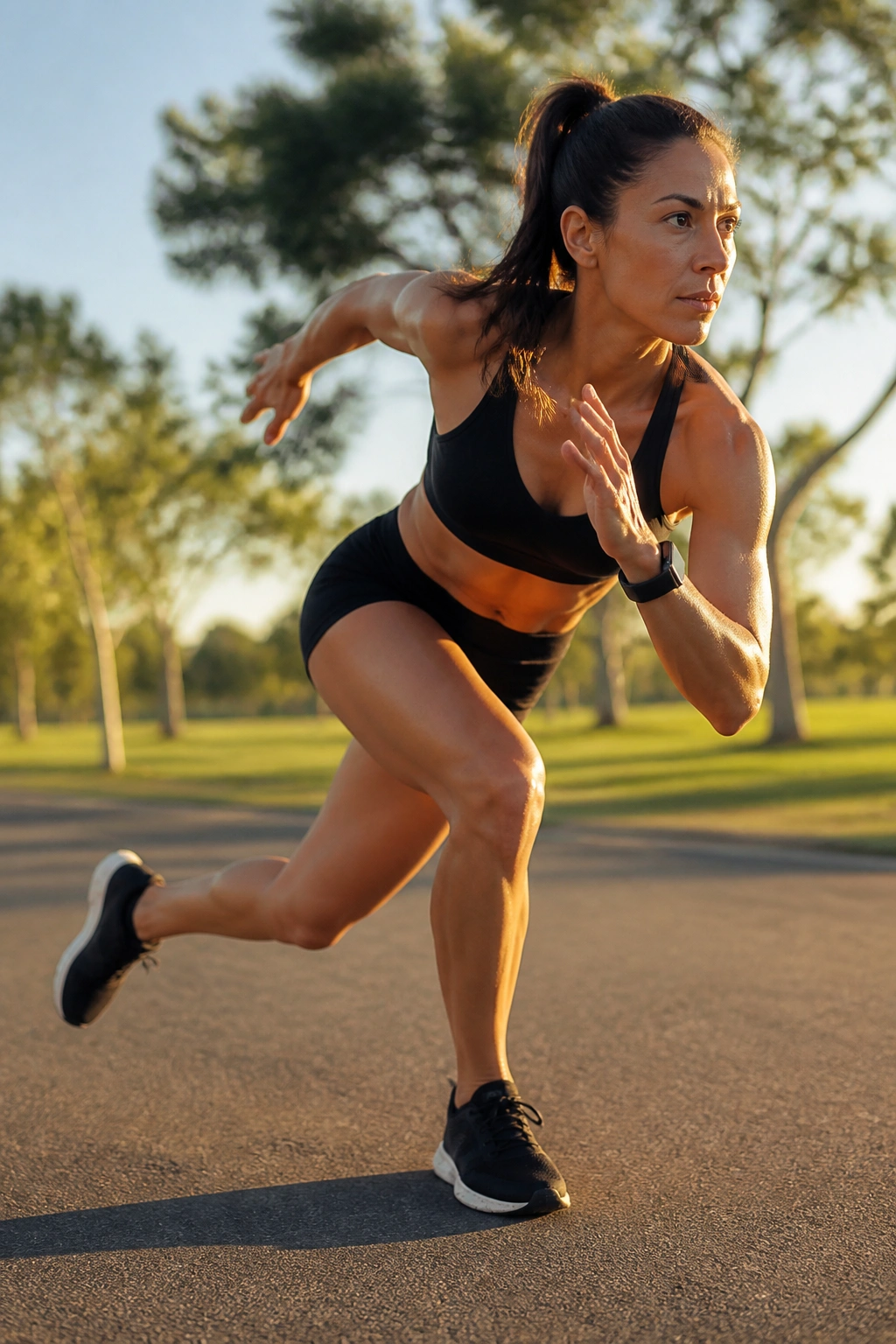
Skaters are a fantastic lateral movement, which is something most traditional cardio routines completely ignore. We usually move forward and backward, but moving side-to-side forces your body to recruit stabilizer muscles in the hips and glutes that are often neglected.
The Power of Lateral Hops
You are essentially mimicking a speed skater. You push off one foot, glide through the air, and land on the other, sinking into a slight squat to absorb the impact. This landing phase is where the eccentric muscle contraction happens, which is great for building strength and endurance in the legs.
Key Performance Cues
- Start with a wide stance.
- Push off your left foot to jump to the right.
- Land on your right foot, bringing your left leg behind you in a curtsy motion.
- Keep your chest up and your gaze forward.
- Swing your arms with the jump to generate more power and momentum.
7. Bicycle Crunches
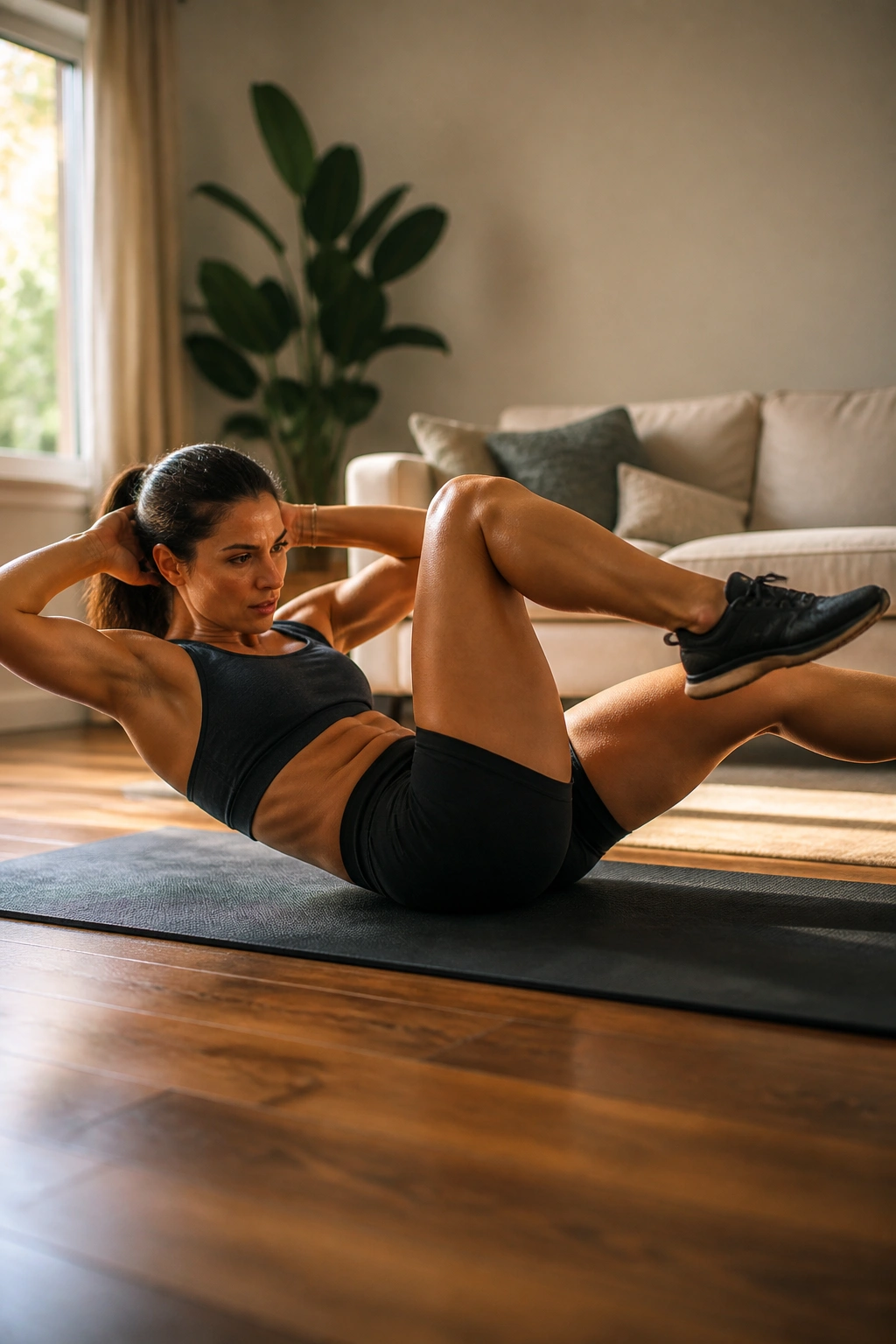
Bicycle crunches are often cited as one of the most effective movements for abdominal recruitment. The combination of rotation and knee-to-elbow contact hits the rectus abdominis and the obliques at the same time. The trick to getting the most out of this is slow, controlled movement rather than frantic, useless wiggling.
Why Speed Is the Enemy
Most people do these far too fast. When you rush, you use momentum. When you slow down, you use muscle. Aim for a three-second tempo per repetition. Think about trying to bring your armpit toward your knee, not just your elbow.
Proper Execution
- Lie on your back with hands behind your head.
- Bring your knees up to a tabletop position.
- Extend one leg out straight while bringing the opposite elbow toward the bent knee.
- Twist your torso—do not just pull your neck.
- Switch sides in a smooth, continuous motion.
8. Squat Jumps
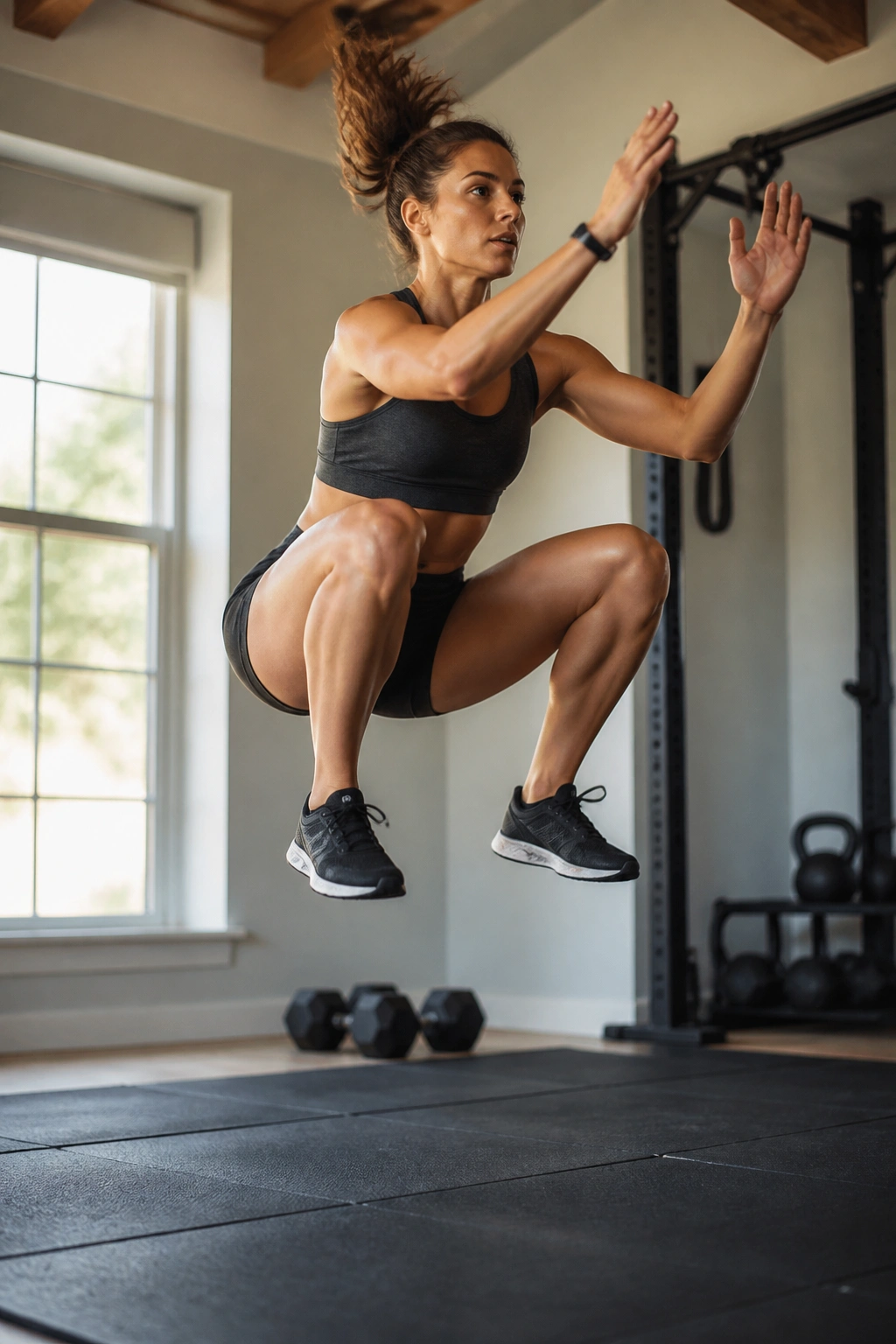
Squat jumps introduce an explosive, plyometric element to your lower body work. By adding a jump to a standard air squat, you are forcing your muscles to transition from a lengthening phase to a rapid, shortening phase. This is the definition of power training.
The Impact Factor
Your heart rate will jump instantly. The act of jumping requires the body to recruit fast-twitch muscle fibers, which are more metabolically active than slow-twitch fibers. You will burn more energy in a short burst of squat jumps than you will in several minutes of slow walking.
Execution
- Squat down until your thighs are parallel to the floor.
- Explode upward, driving through your heels to jump off the ground.
- Land softly, immediately transitioning into the next squat.
- Keep your knees aligned with your toes—do not let them cave inward.
9. Push-ups with T-Rotation
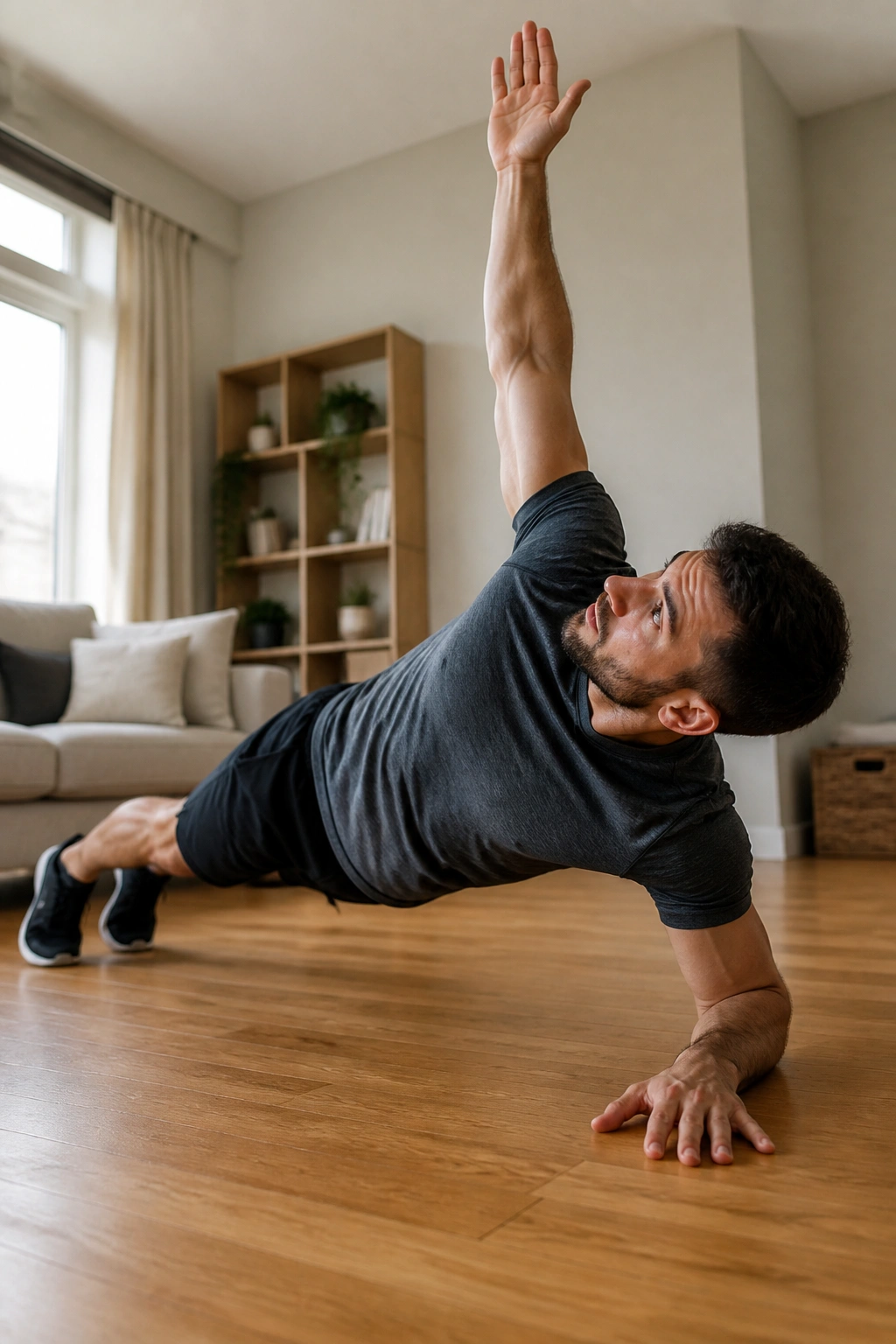
A standard push-up is great, but adding a T-rotation transforms it into a full-body challenge that forces your core to work against gravity from a lateral perspective. This variation works your chest and shoulders while demanding significant spinal stability.
Balancing Strength and Stability
As you rotate, you are transferring your entire body weight onto one arm. This is a massive test of shoulder stability. If you feel shaky, slow the movement down. The pause at the top of the rotation is where the core activation is highest.
Step-by-Step
- Start in a standard push-up position.
- Lower your chest to the floor.
- Push back up, and as you reach the top, lift your right hand toward the ceiling.
- Pivot your feet so you are balancing on the outside edge of your left foot.
- Return to the push-up position and repeat on the other side.
10. Bear Crawls
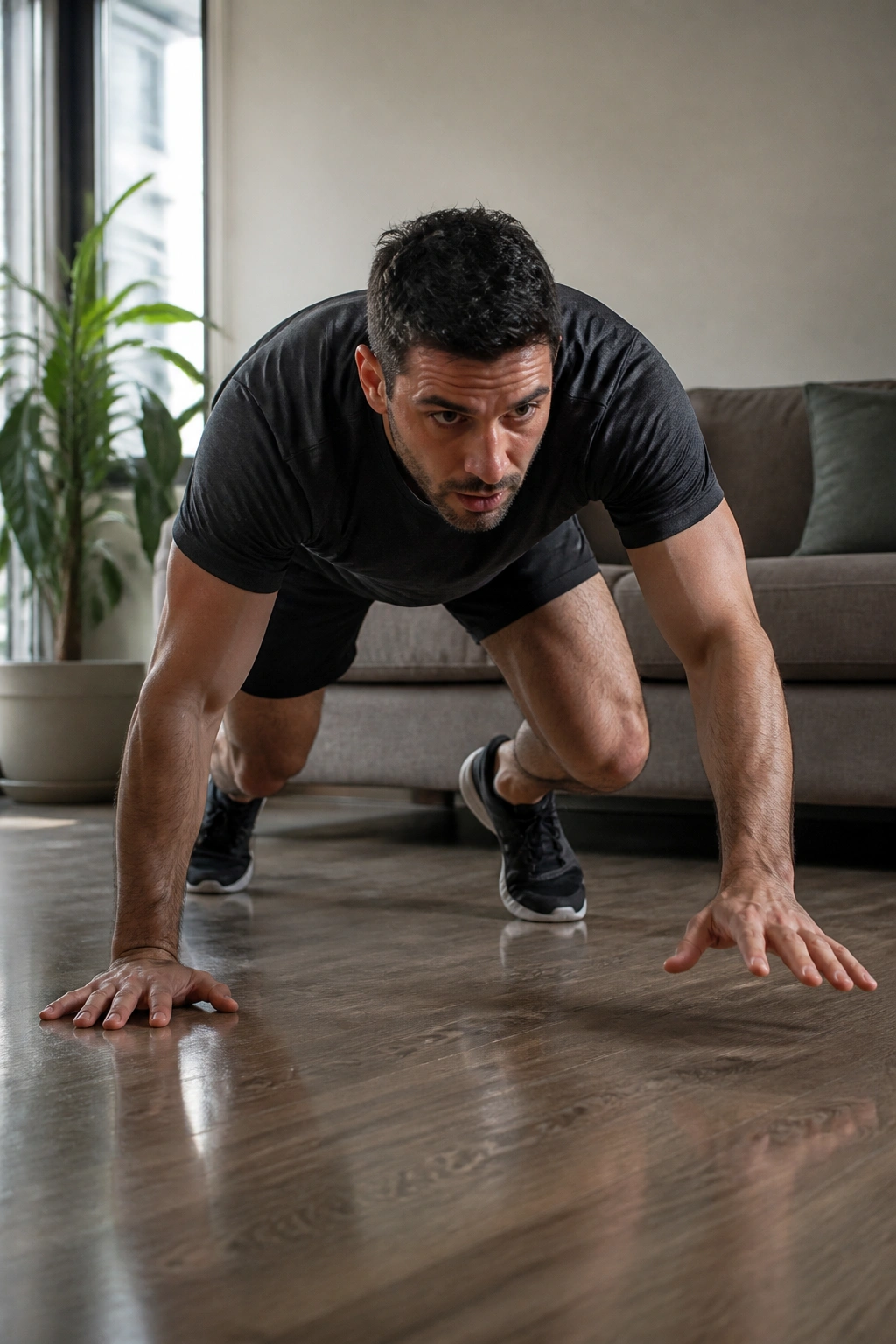
Bear crawls are deceptive. They look like a playground game, but they are actually one of the most taxing movements you can do in a small space. By keeping your knees low to the ground, you force your core to stay under constant tension while your shoulders and quads do the heavy lifting.
The Mechanics of the Crawl
This movement pattern relies on contralateral coordination—moving the opposite arm and leg at the same time. This is a fundamental movement pattern that builds functional strength and coordination, which carries over into every other physical activity you do.
Performance Strategy
- Get on all fours, then lift your knees an inch or two off the ground.
- Keep your back flat and your hips stable.
- Move your right hand and left foot forward at the same time, then switch.
- Keep the crawl low and controlled.
- Do this for distance or for a set time, keeping your core tight the entire time.
11. Inchworms
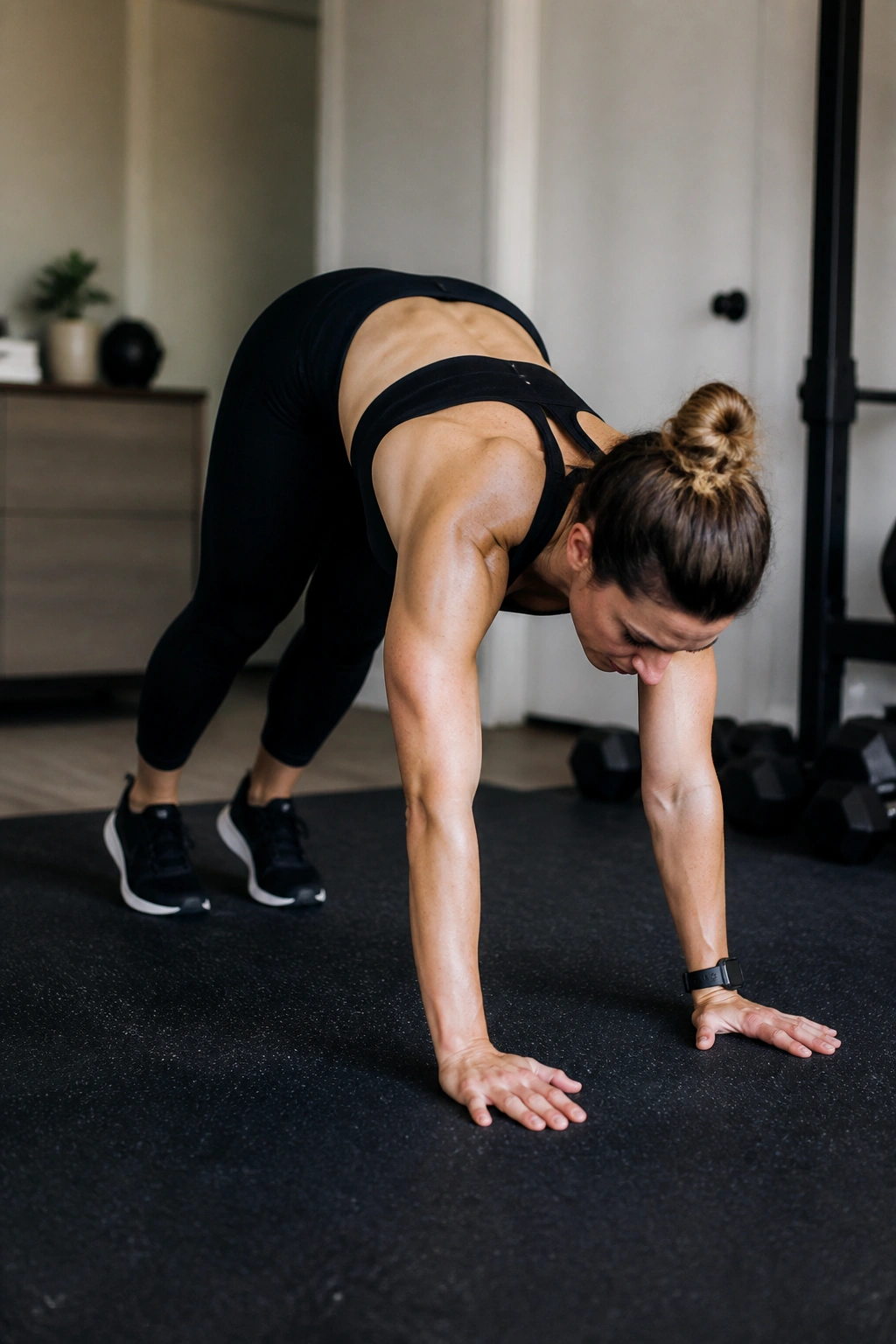
Inchworms are a fantastic way to warm up the entire posterior chain and get the heart rate up without high-impact jumping. They combine a deep stretch with an active plank, making them a dual-purpose movement for mobility and strength.
Why They Burn
You are essentially performing a slow-motion walk-out and walk-back. By keeping your legs as straight as possible, you lengthen your hamstrings while demanding your shoulders and core stabilize your torso as you extend. It is a slow burn that hits deep.
How to Move
- Stand with your feet hip-width apart.
- Hinge at the hips and place your hands on the floor in front of you.
- Walk your hands out until you are in a high-plank position.
- Pause for a second, feeling the tension in your abs.
- Walk your hands back to your feet and stand up.
12. Lunges with Knee Drive
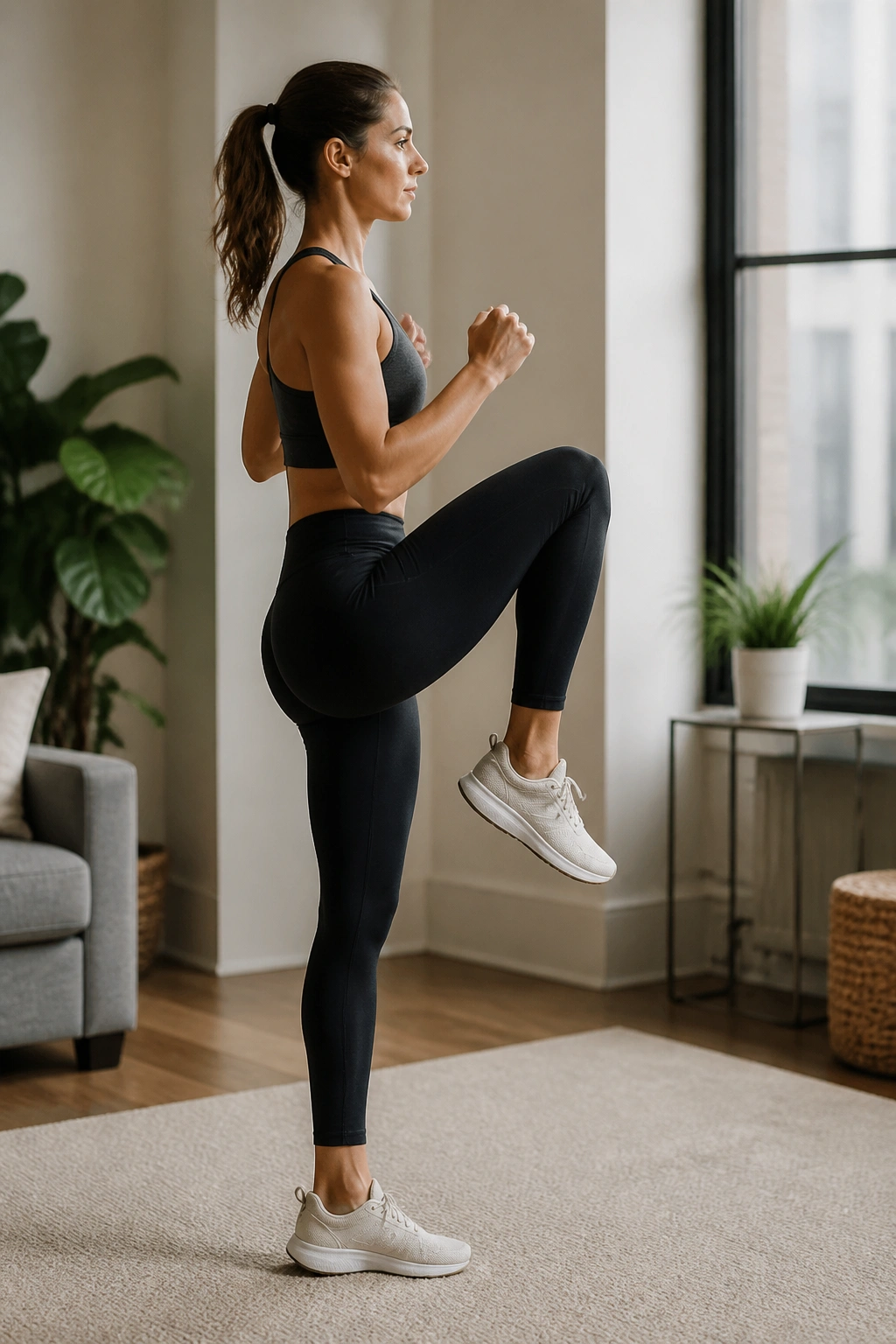
Lunges are a staple for a reason, but adding a knee drive turns them into an explosive, heart-pumping exercise. This is a single-leg movement that challenges your balance while working the glutes and quads. The added knee drive at the top increases the cardiovascular demand significantly.
Focusing on Balance
Every time you drive the knee up, you are challenging your core to stabilize your body on one leg. If you are wobbling, slow down. Focus on engaging your glute on the standing leg to keep your pelvis level. This is where the real strength is built.
The Sequence
- Step back into a reverse lunge.
- As you bring your back leg forward, drive that knee up toward your chest.
- Squeeze your core as you bring the knee up.
- Immediately step back into the next lunge.
- Keep your torso upright—do not lean forward.
13. Plank to Push-up
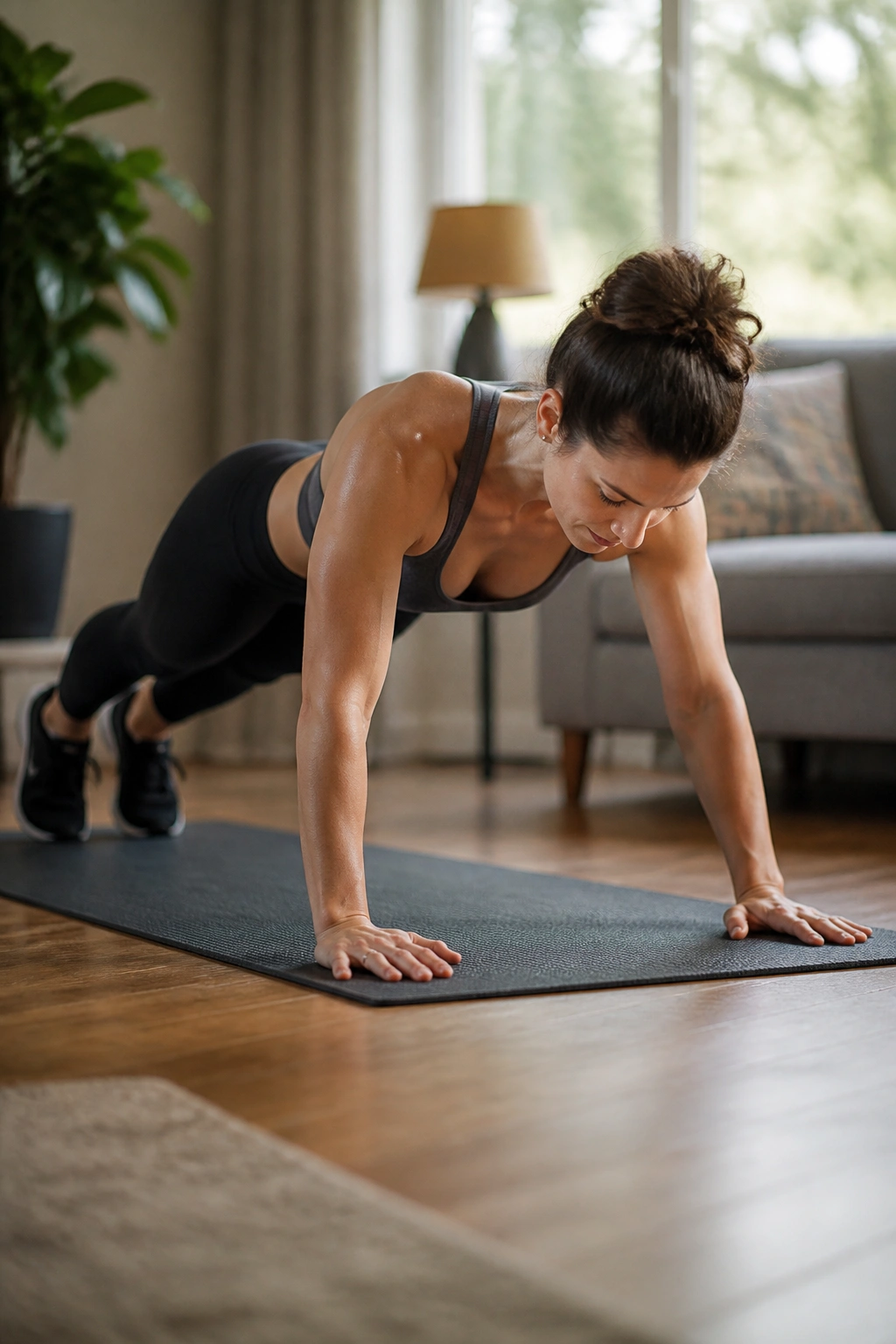
This movement is all about the transition. Moving from your elbows to your hands and back down to your elbows requires a significant amount of shoulder stability and core control. It is essentially an “up-down” that keeps you in a planking state the entire time.
The Value of Time Under Tension
Because you are never truly standing up, your core never gets a break. Your abs are engaged for the entire duration of the set. This is constant time under tension, which is a powerful driver for muscle growth and fat oxidation.
Execution
- Start in a forearm plank.
- Push yourself up onto your right hand, then your left, into a high-plank position.
- Lower back down to your right forearm, then your left.
- Keep your hips perfectly still—don’t let them sway side to side.
- Keep a steady rhythm and try not to rock your torso.
14. Flutter Kicks
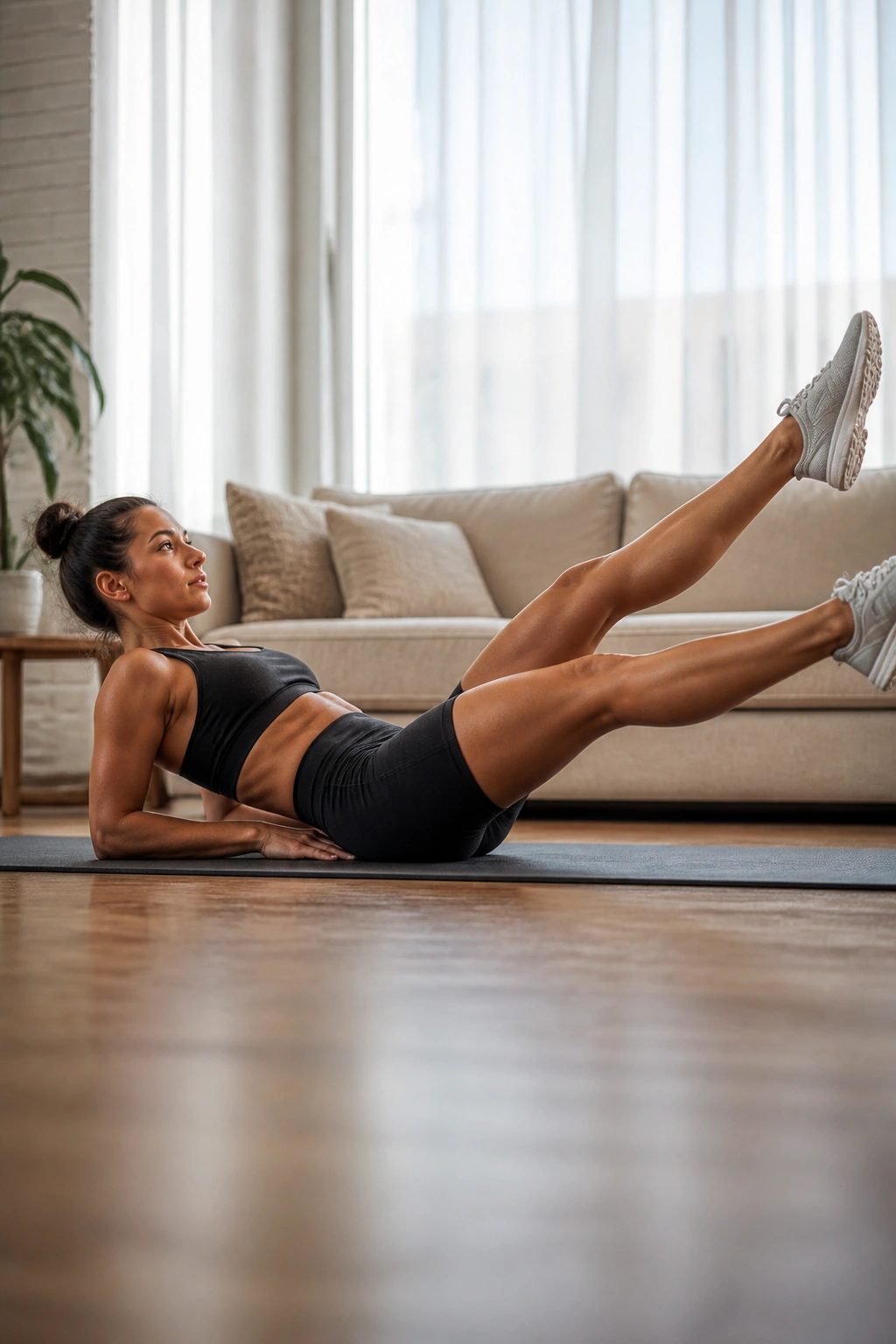
Flutter kicks are the ultimate lower-abdominal burn. Because your legs are heavy levers, keeping them straight and hovering just off the ground requires immense effort from the lower abs. This is a classic move that never loses its effectiveness, provided you do it correctly.
Eliminating Lower Back Pain
The biggest mistake is letting your lower back arch off the floor. Your spine should be pressed firmly into the ground at all times. If you feel your back arching, lift your legs higher—the closer they are to the ceiling, the less pressure there is on your lower back.
Tips for Success
- Lie on your back, hands under your glutes for support.
- Lift your head and shoulders slightly off the ground to engage the abs.
- Lift your legs a few inches off the floor and flutter them in small, quick motions.
- Breathe steadily; do not hold your breath.
- Keep the kicks small and controlled—don’t throw your legs around.
15. Russian Twists
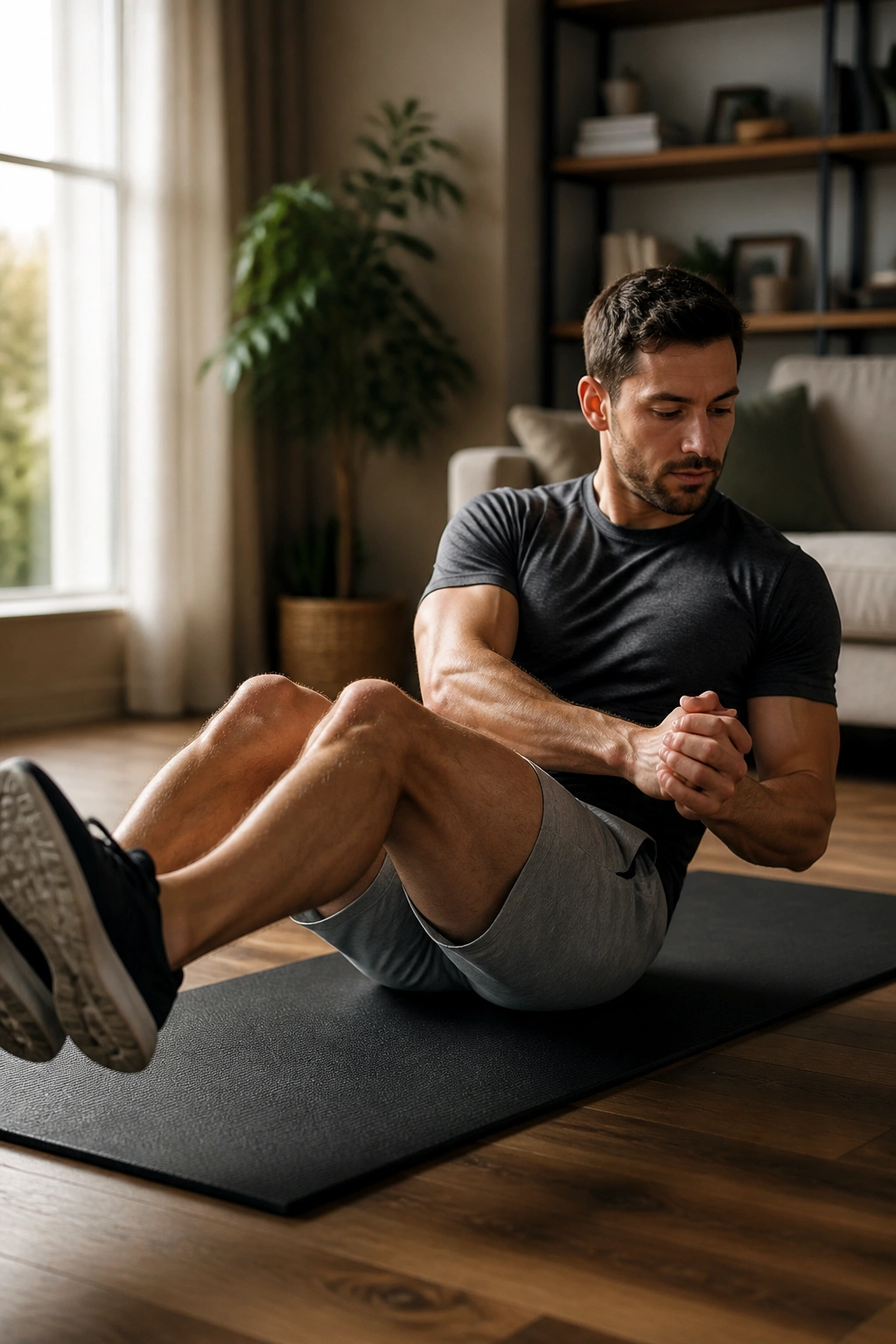
Russian twists are the best way to target the obliques and improve rotational strength. Whether you hold a water bottle or just your clasped hands, the rotation is what matters. This move is essential for anyone looking to build a tighter, more defined midsection.
The Importance of the Rotation
Your obliques are designed for rotation. If you are just doing crunches, you are neglecting the muscles that provide the “corset” effect for your waist. You must twist through the torso, not just move your arms from side to side.
How to Do It
- Sit on the floor, lean back slightly, and lift your feet off the ground.
- Keep your knees bent.
- Clasp your hands together and rotate your torso to touch the floor on your right side.
- Rotate back to the left side.
- Keep your gaze following your hands to ensure you are actually twisting your spine.
16. Sprawls
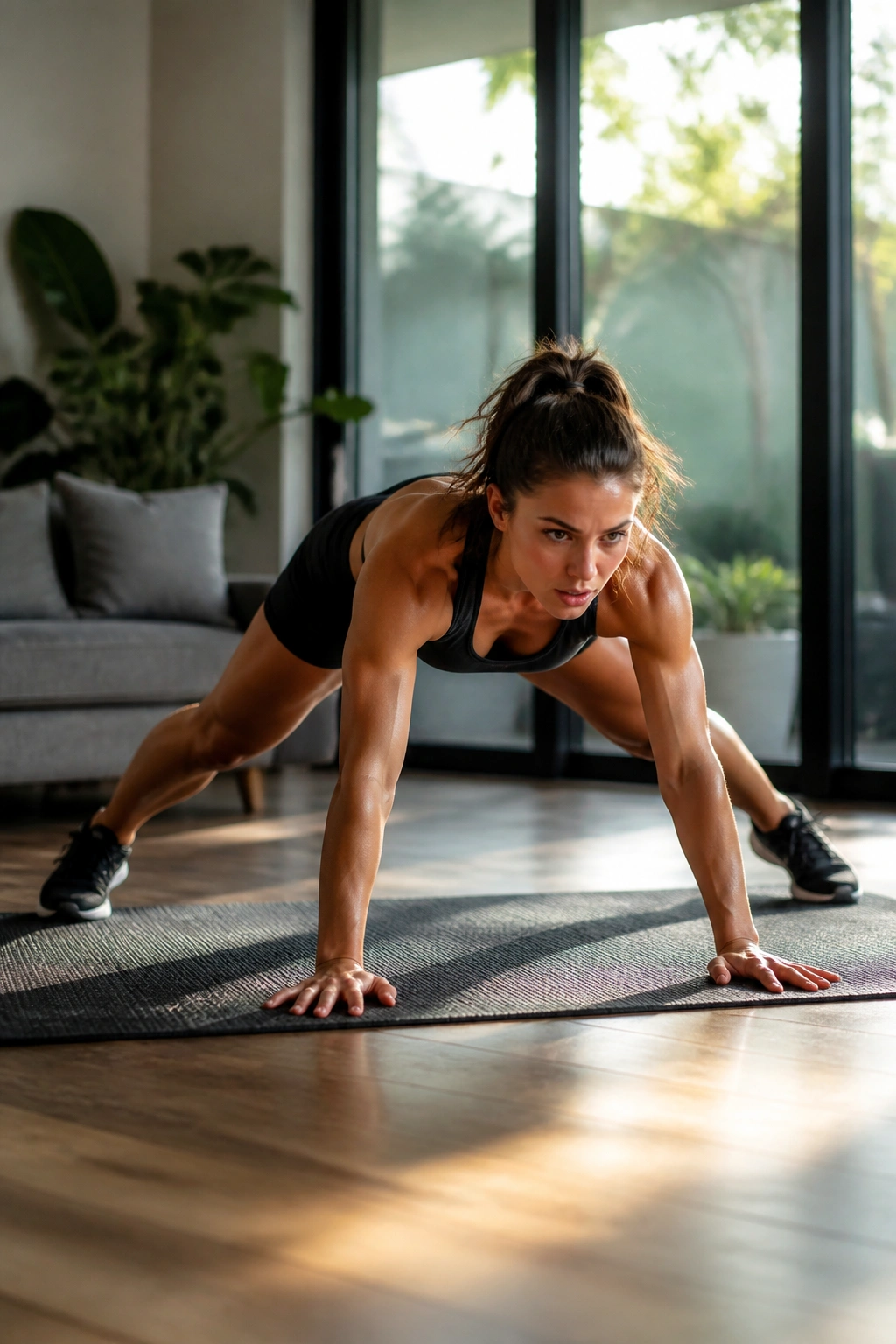
A sprawl is like a burpee, but without the push-up and the jump. It is essentially dropping into a wide plank and springing back up. Because you remove the push-up, you can go much faster. It is a fantastic metabolic conditioning tool that leaves you gasping for air.
Why Speed Matters Here
Since the move is simplified, the goal is volume. How many can you do in 60 seconds? This is a great finisher for a workout when you are already tired but want to squeeze out one last bit of caloric expenditure.
The Motion
- Start standing, feet wide.
- Drop your hands to the floor and kick both feet back into a wide-stance plank.
- Immediately snap your feet back to the outside of your hands.
- Stand up explosively.
- Repeat as fast as your lungs will allow.
17. Jumping Jacks
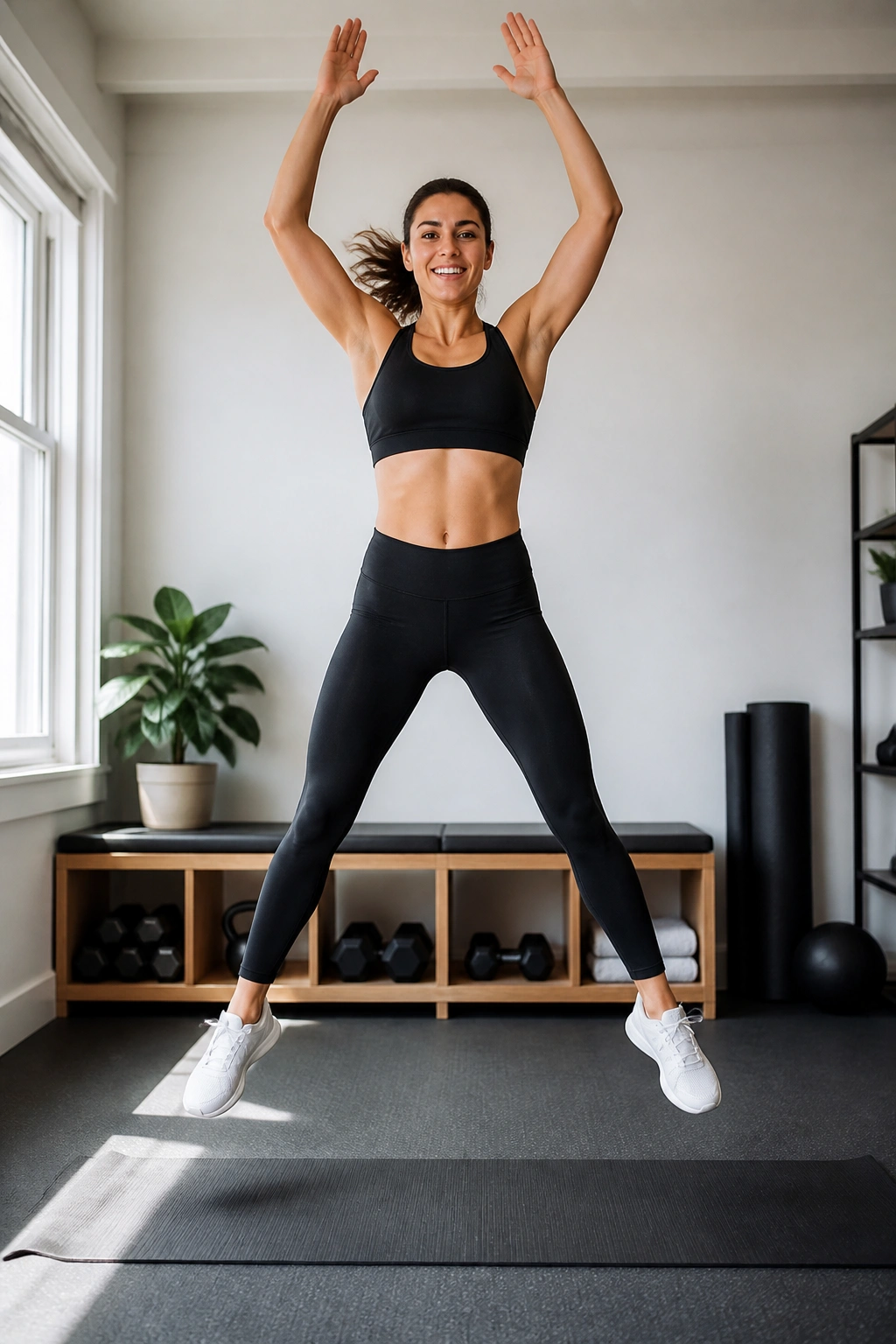
We all learned jumping jacks in grade school, but they remain a highly effective cardio tool for a reason. They get the heart rate up immediately, and they are easy to perform in a small space. The key to making them a workout move rather than a warm-up is intensity.
Turning a Warm-up Into a Workout
Most people treat jumping jacks as a throwaway move. If you treat them as a high-intensity interval move, they change. Jump higher, move your arms faster, and do not stop between repetitions.
Performance Cues
- Maintain a fast, steady pace.
- Ensure your hands touch above your head on every rep.
- Keep your legs straight on the jump out.
- Land lightly on the balls of your feet to protect your knees.
18. Reverse Lunges with Twist
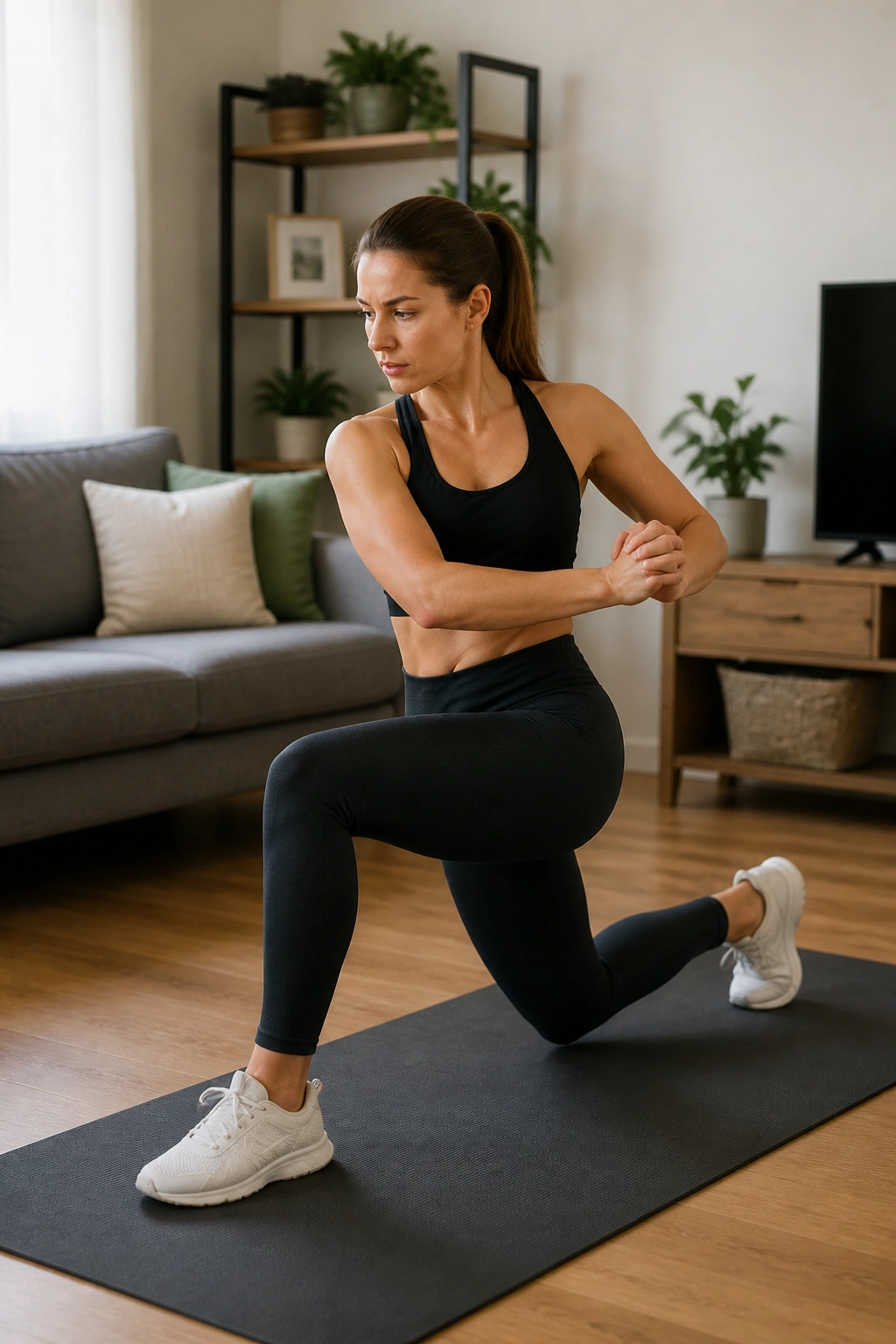
Adding a twist to a reverse lunge engages the core and improves balance significantly. By rotating over the lead leg, you are forcing the obliques to contract while the legs are already under load. This is a complex move that builds functional stability.
Balancing Strength and Coordination
This is a move that requires focus. If you go too fast, you will lose your balance. Take the time to step back, stabilize, and then twist. The control is where the muscle development happens.
How to Perform
- Step back into a reverse lunge.
- As you settle into the lunge, rotate your torso toward the front leg.
- Return to center.
- Push back up to the starting position.
- Switch legs and repeat, ensuring you twist in both directions.
19. Plank Shoulder Taps
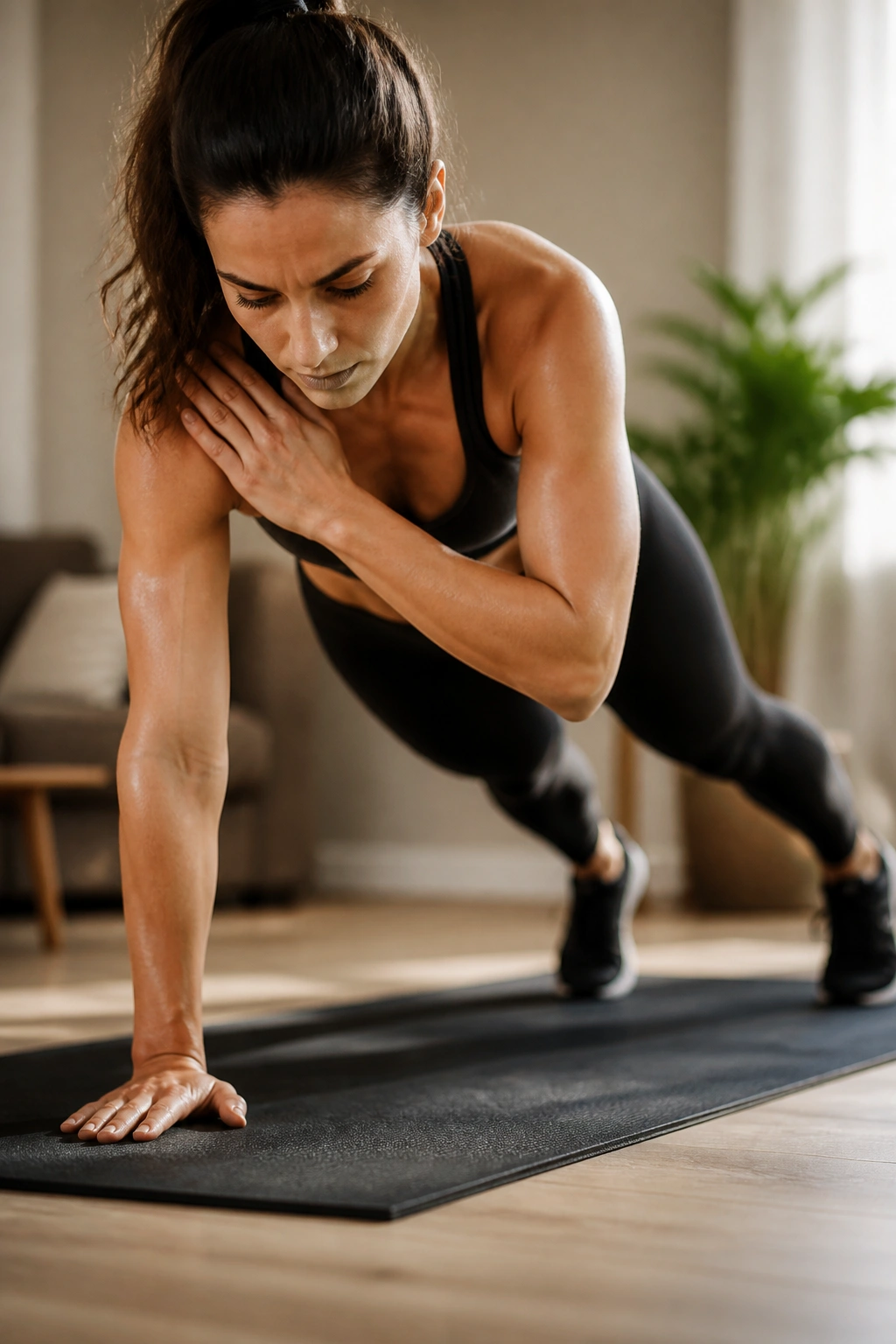
This move is the ultimate test of hip stability. As you lift one hand to touch the opposite shoulder, your body is going to want to tip over. Your job is to keep your hips perfectly level. This requires massive recruitment of the deep abdominal muscles.
Eliminating the Hip Sway
If your hips are rotating like a disco ball, you are doing it wrong. The narrower you place your feet, the harder this becomes. If you are struggling, widen your stance. As you get stronger, bring your feet closer together.
Step-by-Step
- Get into a high-plank position, feet slightly wider than shoulder-width.
- Reach your right hand up to touch your left shoulder.
- Place it back down and repeat with the left hand to the right shoulder.
- Keep your core braced as if someone is about to punch you in the gut.
- Move slowly—there is no need for speed here.
20. Squat Thrusters (Bodyweight)
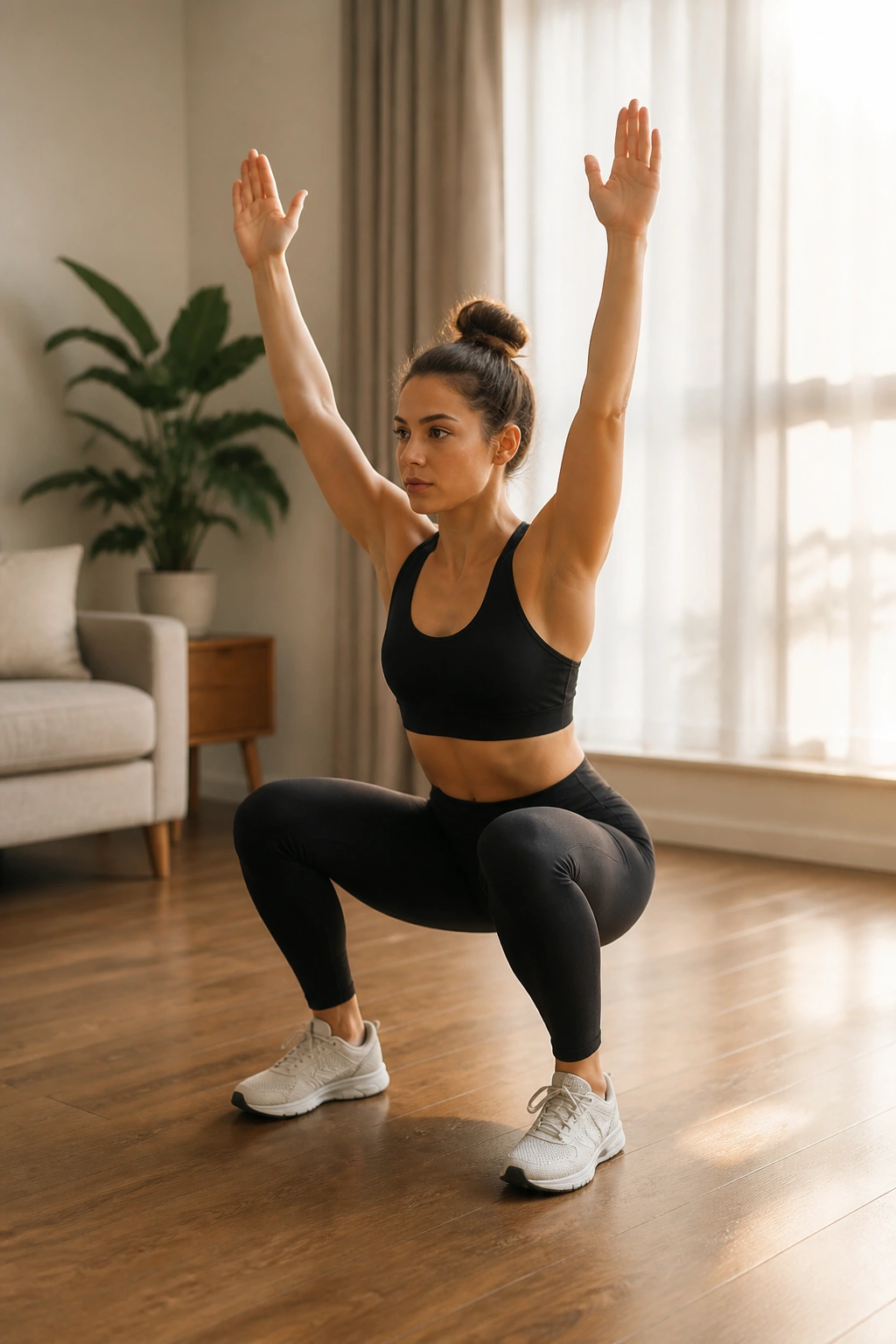
Squat thrusters without weights are still incredibly taxing. By combining a squat with an overhead reach, you are using the largest muscles in your body—the quads and glutes—to drive your heart rate up, while the overhead movement demands shoulder and upper-back engagement.
The Cardiovascular Demand
Moving your arms above your head requires more oxygen than keeping them at your sides. When you pair this with a squat, you force your heart to pump blood against gravity to reach your extremities. It is a full-body burner that is incredibly efficient for fat loss.
Proper Execution
- Stand with feet shoulder-width apart.
- Squat down until your thighs are parallel to the floor.
- As you stand up, extend your arms straight up above your head.
- Squeeze your glutes at the top.
- Keep the movement continuous and rhythmic.
Final Thoughts
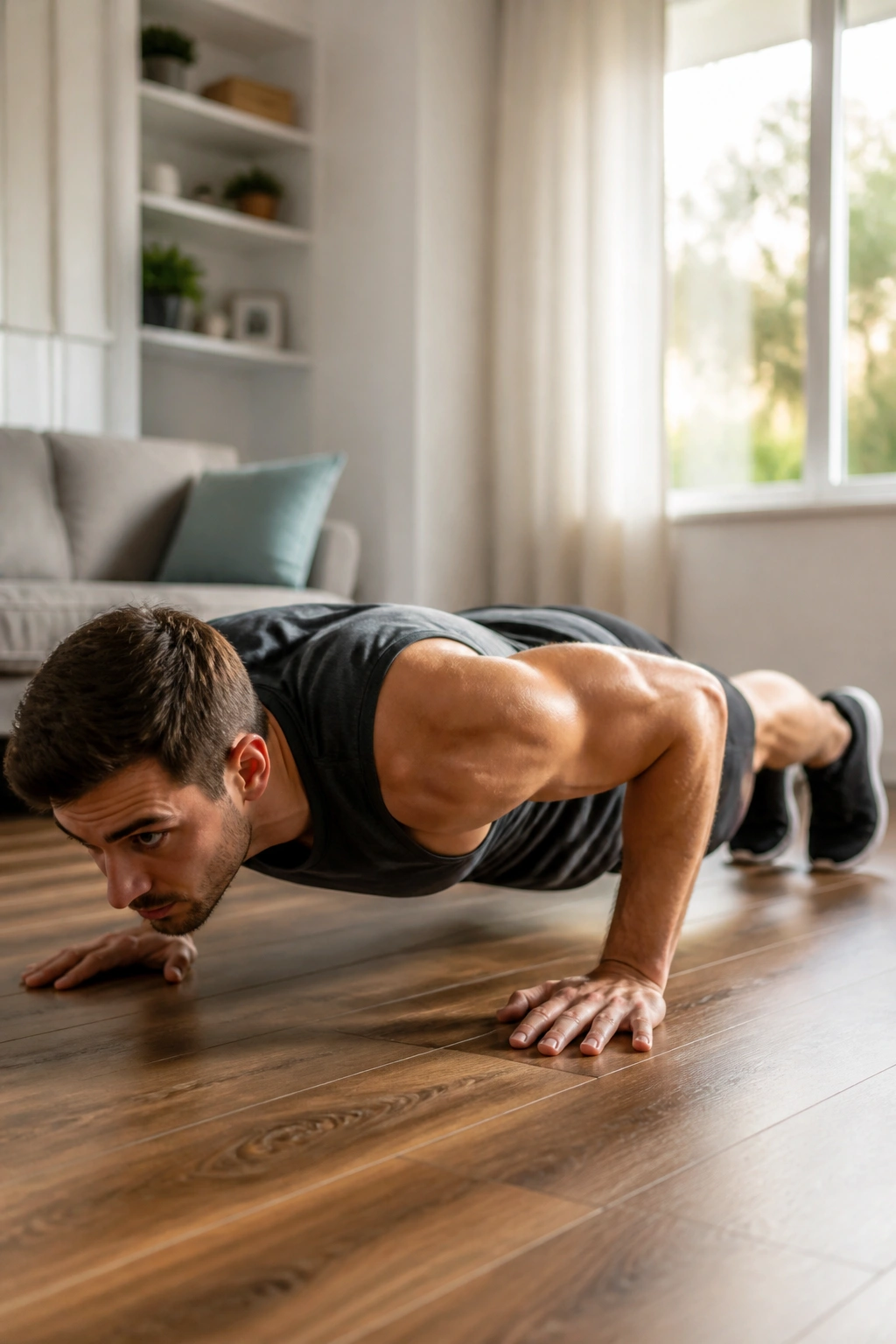
Fat loss is rarely about doing the “perfect” exercise; it is about finding the ones you can do with high intensity and consistency. You do not need to do all twenty of these workouts in one session. Pick four or five, string them together into a circuit, and work through them with minimal rest. The most important tool in your arsenal is your own bodyweight, because it is always there, and it is always available.
Stop overthinking your fitness. The best workout is the one you actually finish. Focus on keeping your heart rate up, moving through a full range of motion, and pushing yourself just a little bit further than you did the last time. Your living room is waiting—all you have to do is show up.
