



There is a specific, unmistakable sound that happens when a perfectly thrown punch connects with a heavy bag. It isn’t just a thud; it’s a sharp, clean snap that vibrates through your arms, shoulders, and into your core. That feeling is addictive. For many people, cardio kickboxing serves as the perfect antidote to the monotony of staring at the wall while jogging on a treadmill or counting down the seconds on an elliptical machine. You are not just moving your body; you are fighting. You are engaging muscles that usually sit dormant during steady-state cardio, and you are sharpening your mind in the process.
This style of training sits at a unique intersection of high-intensity interval training, resistance work, and mental conditioning. When done with intention, it forces your body to recruit everything from your calves up to your obliques. It demands explosive power, stability, and endurance, all while keeping your heart rate in a range that torches calories. People often assume that kickboxing is just about arm flailing, but that is a mistake that limits your progress. The real burn—the kind that leaves you drenched in sweat and feeling like you truly accomplished something—comes from the hips and the core.
Getting the most out of these workouts requires more than just showing up. It requires precision. If you are throwing punches with your shoulders instead of rotating your torso, you are missing out on the primary calorie-burning engine of the sport. Every movement, whether it is a jab or a roundhouse kick, should be fueled by a solid base and a braced midsection. The following list outlines twenty distinct ways to approach a kickboxing session, focusing on specific movements and drills that maximize intensity. Use these to structure your training, mix them into your existing routine, or build a full workout session by selecting a few that target the areas you want to improve.
1. Shadowboxing Basics
Shadowboxing is the foundation of every great fighter, and it is the most honest way to train. Without a bag or a partner to provide feedback, you have to rely entirely on your own balance, form, and internal tension to keep the movement effective. Start by standing in your fighting stance, feet hip-width apart, knees soft. Throw straight punches—jabs and crosses—at eye level.
Why This Matters
When you throw punches into thin air, you have to work twice as hard to decelerate your limbs so you do not hyperextend your joints. This eccentric control builds stabilizer muscles that heavy bag training often skips. Focus on snapping the punch back to your face immediately. If your hands linger out in the air, you are vulnerable. Keep them high.
How to Practice
Set a timer for three minutes. Move your feet constantly—circle to the left, circle to the right, and step forward and backward. Do not stand still. If you are not sweating by the end of the first round, you are likely too relaxed. Tighten your core every time a punch lands.
2. Jab-Cross Intervals

This is the bread and butter of the sport. The jab-cross combination is simple, but its effectiveness depends entirely on speed and weight transfer. In this drill, you are performing a rapid “one-two” punch combination. The jab comes from the lead hand, quick and snappy, followed immediately by the cross from the rear hand, which carries the weight of your entire body behind it.
Focusing on Weight Transfer
The cross is where the calorie burn happens. As you throw the cross, pivot your rear foot inward. This forces your hip to rotate forward, turning your torso into a spring. If you do not pivot that back foot, you are just arm-punching, and you will eventually burn out your shoulders without getting much out of the movement.
The Interval Pattern
Perform the 1-2 combination as fast as possible for 20 seconds. Rest for 10 seconds. Repeat this for eight rounds. This mimics a Tabata-style protocol, which is excellent for spiking your heart rate. By the time you reach the fourth round, your arms will feel heavy. Do not drop your hands. Keep that same speed and intensity until the timer hits zero.
3. The Hook and Uppercut Burner

Hooks and uppercuts require a different kind of engagement than straight punches. They are short-range weapons. To throw a hook, you have to load your weight into the lead leg, rotate your core, and keep your elbow at a 90-degree angle. It is an oblique-heavy movement.
Engaging the Obliques
Think of the hook as a torso-twisting move rather than a swinging arm move. If you only move your arm, you lose the power and the core activation. Use your legs to drive the rotation. The uppercut is similar; it is a scoop from the legs, driving upward. You should feel this in the muscles that wrap around your waist.
Training Strategy
Focus on a 4-punch combo: Left Hook, Right Hook, Left Uppercut, Right Uppercut. Do this for 30-second bursts. Because these movements require more rotation, they are significantly more demanding on your core than straight punches. Keep your core braced as if you are preparing for someone to punch you in the stomach.
4. Roundhouse Kick Circuit
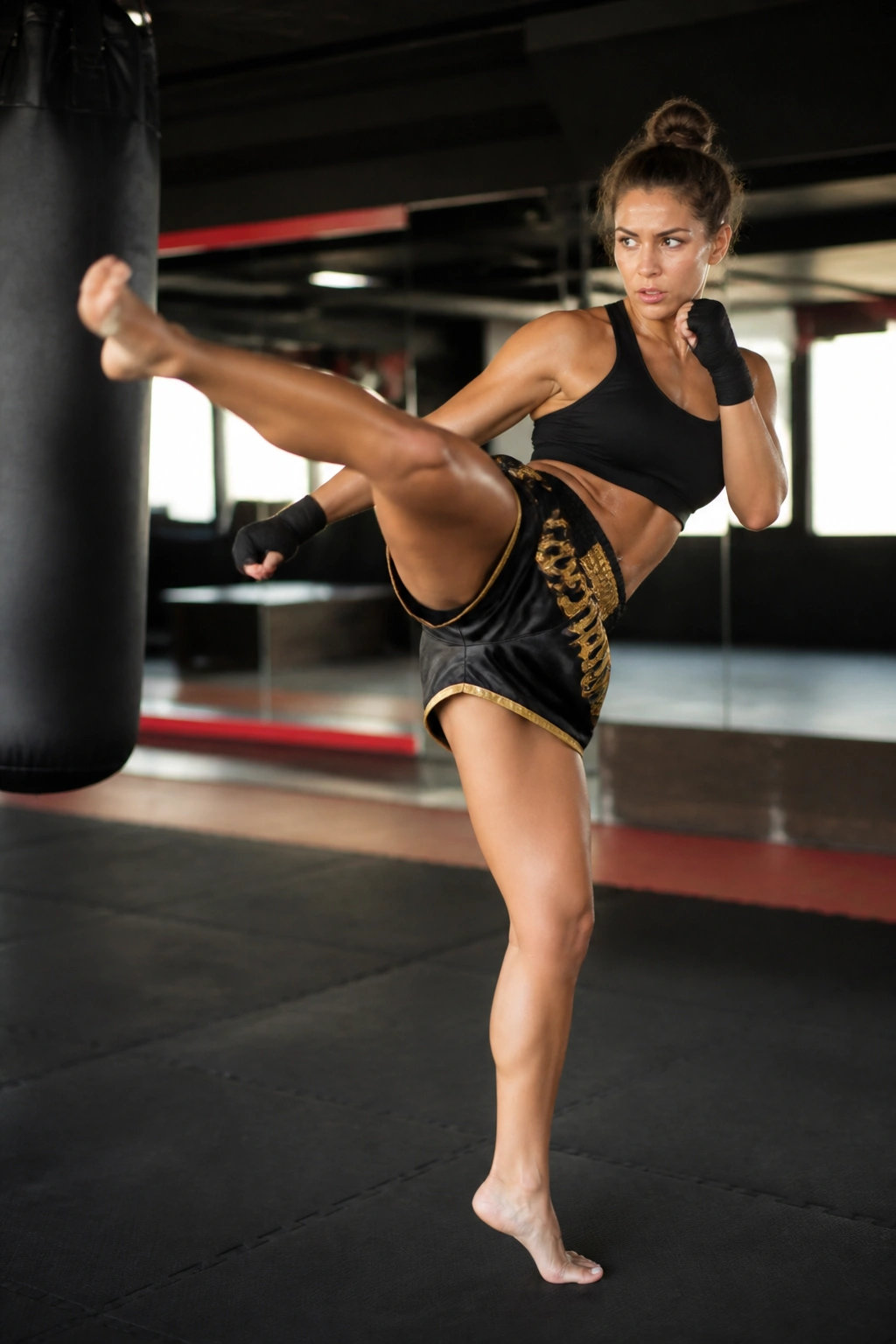
Kicking is the ultimate equalizer in caloric expenditure. It requires lifting your heavy legs against gravity and generating enough force to snap through a target. A roundhouse kick begins with the chamber—lifting the knee—then pivoting the standing foot, and finally snapping the lower leg to strike with the shin.
Finding Your Balance
You cannot kick well if you are falling over. The key is the standing leg. As you kick, turn the toes of your standing foot away from the target. This opens up your hip and allows you to kick higher and with more power. If you try to kick with your standing foot flat and facing forward, you will strain your hip and knee.
The Drill
Perform 15 roundhouse kicks on the right side, then immediately switch to the left. Do not pause between sides. Keep your hands up by your chin the entire time. A common mistake is dropping your hands when you kick; that is a bad habit that leaves your face exposed. Keep them tucked tight.
5. The 30-Second Sprint Drill
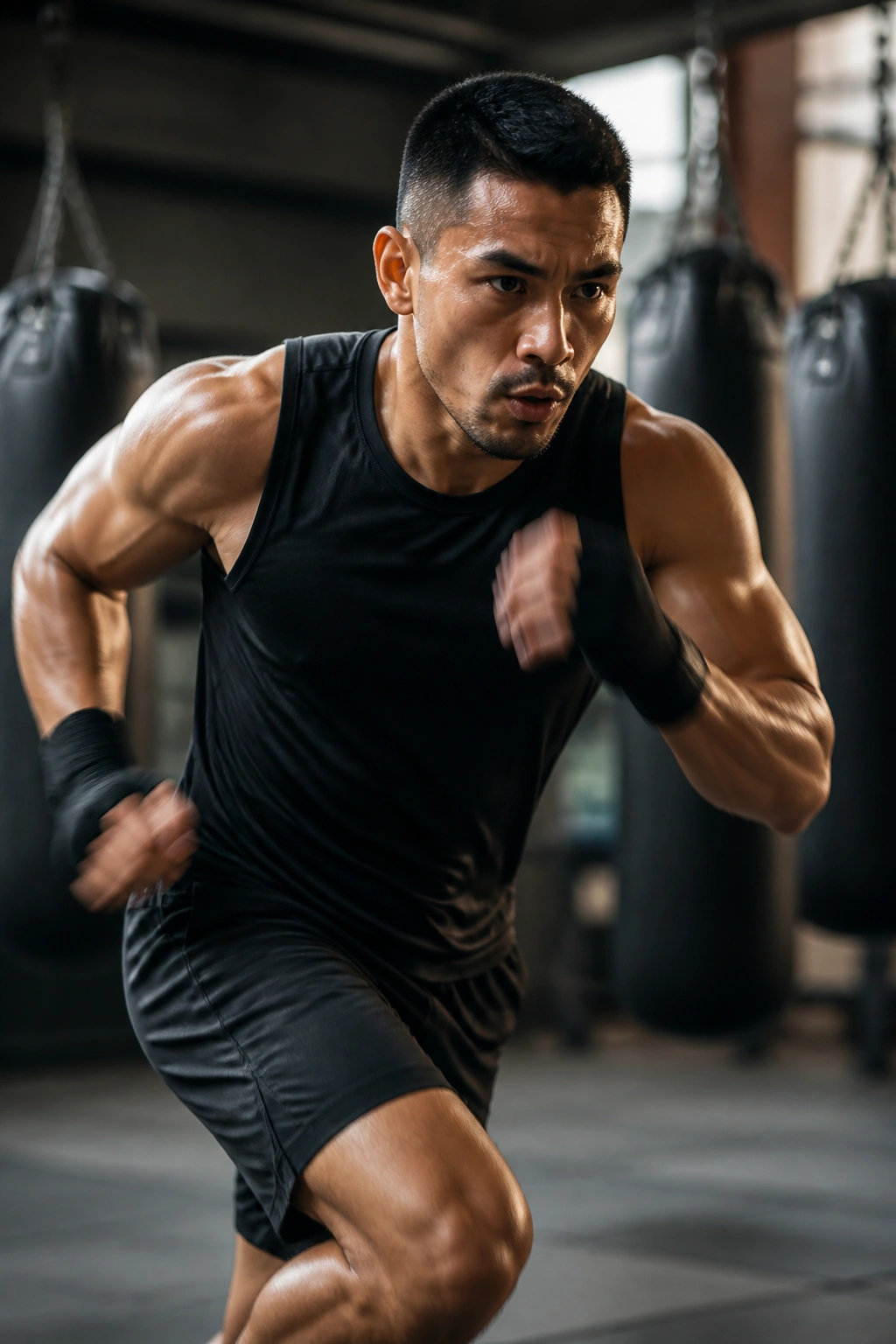
High-intensity intervals are non-negotiable if you want to burn fat efficiently. This drill is about sheer output. For 30 seconds, you are going to go at 95% of your maximum effort. This isn’t a technique day; this is a “how many punches can I throw before I can’t breathe” day.
Why Speed Counts
When you move at maximum velocity, your body enters an anaerobic state. You are consuming oxygen faster than you can take it in, which triggers an “afterburn” effect. You continue to burn calories long after the workout stops.
Execution
Choose three punches—jab, cross, hook. Throw them in a non-stop, rhythmic sequence. If you have a heavy bag, hit it. If you are shadowboxing, punch the air. The key is to never stop moving. The moment the 30 seconds are up, take a full minute of active recovery—walking around, shaking out your arms, keeping the blood flowing. Do not sit down.
6. Knee Strike Focus
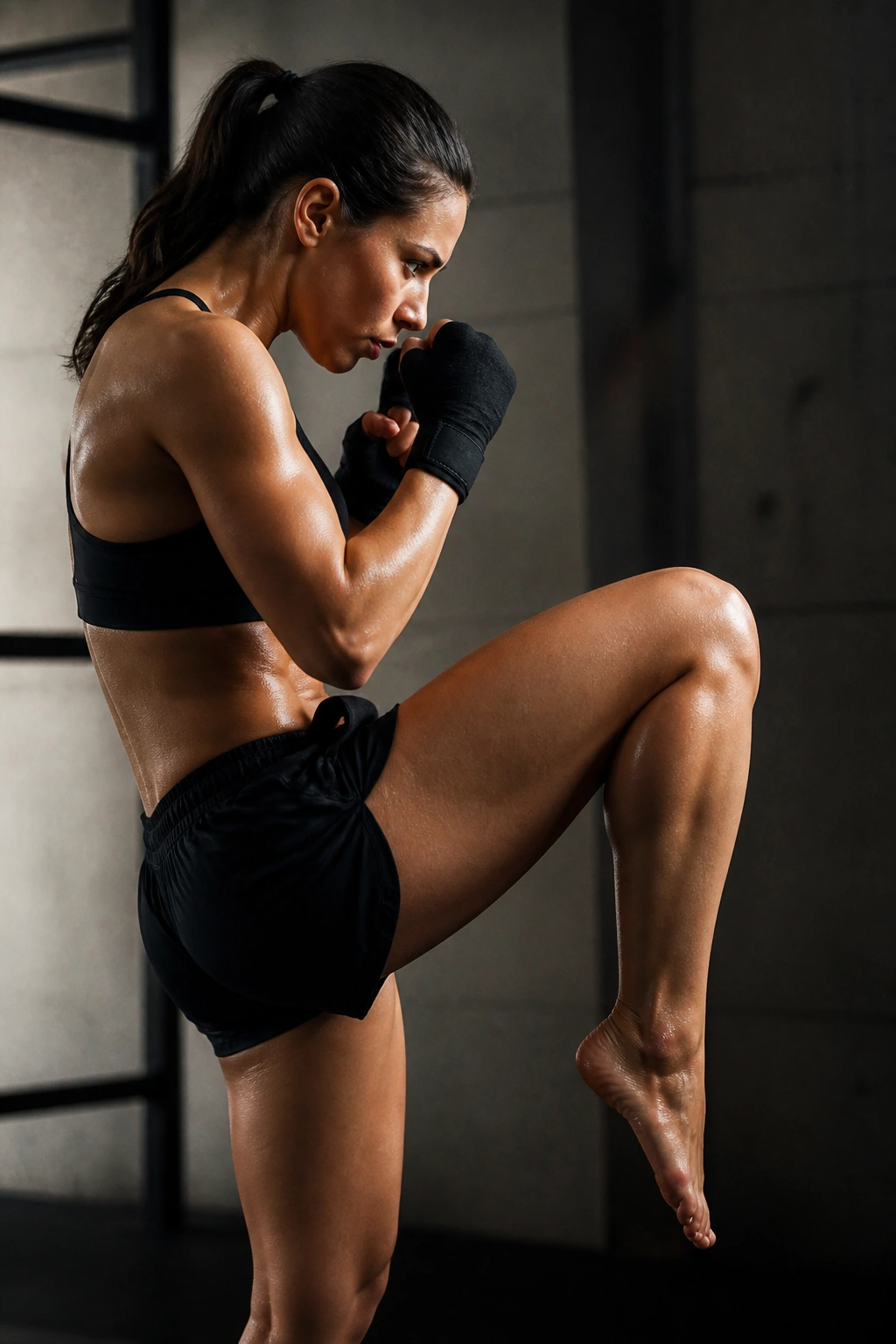
Knee strikes are devastating, close-range tools that engage the lower abs and the hip flexors. To perform these correctly, imagine grabbing your opponent by the back of the neck and pulling them into your knee. You are crunching your upper body down toward your knee as you drive it upward.
The Crunch Mechanic
It is not just a leg lift. It is a full-body contraction. As the knee rises, pull your elbows down sharply toward your hips. This engages the rectus abdominis and the obliques. You are essentially doing a standing crunch with resistance.
Incorporating Them
Alternate knee strikes between the left and right legs. Drive the knee diagonally across your body to engage the obliques more intensely. Perform 20 knee strikes total, 10 per side. Move with purpose—pretend you are actually kneeing a target. The more force you put into the “crunch” motion, the more you will feel it in your abs the next day.
7. Speed Bag Mimicry
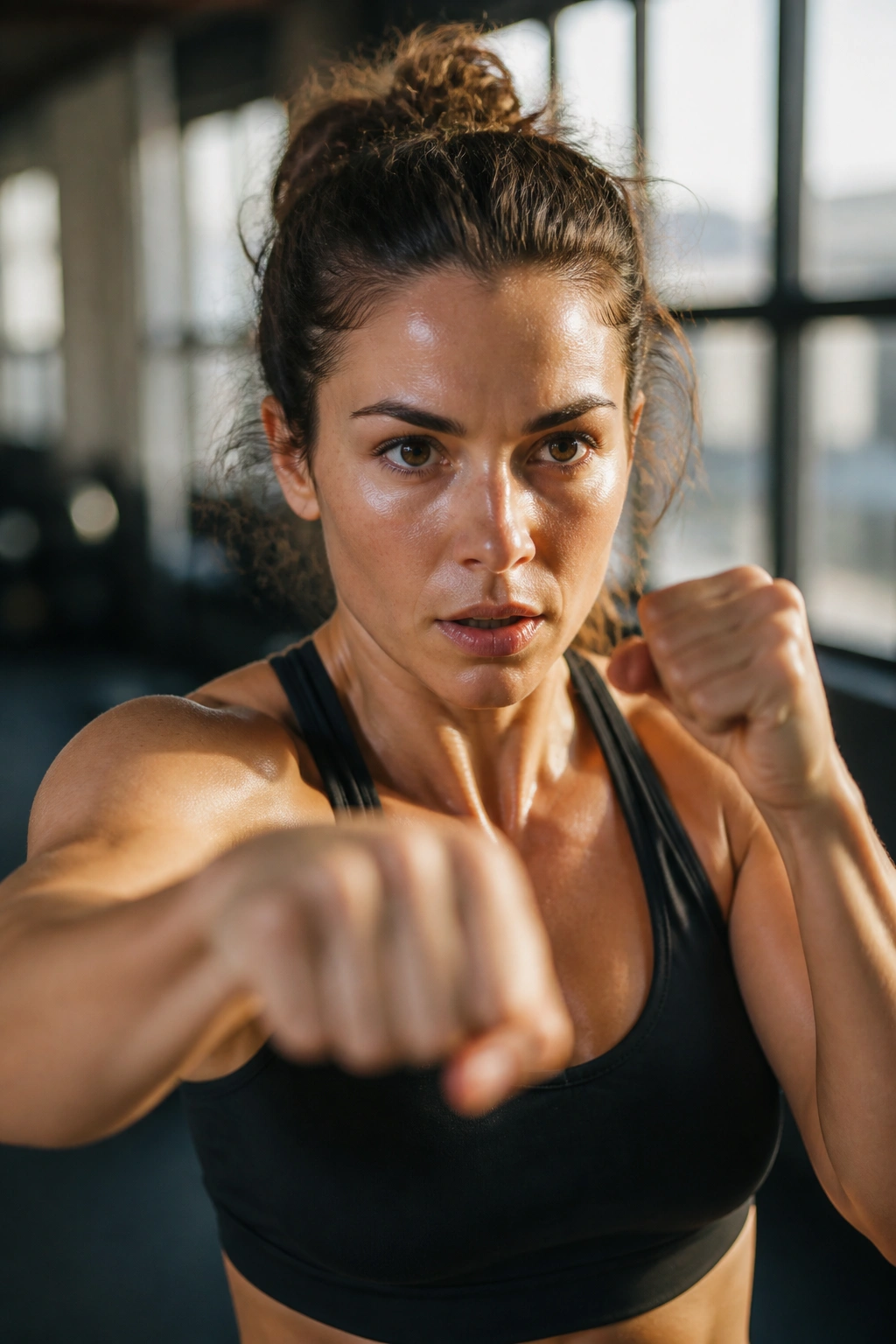
Professional boxers use speed bags to build hand-eye coordination and shoulder endurance. You can replicate this effect without the equipment. Hold your hands up at eye level and perform small, rapid, circular punches. You are not hitting a target; you are tracing small circles in the air.
Shoulder Endurance
This drill targets the deltoids. It is a burn-out exercise. You will feel a deep, throbbing sensation in your shoulders within 60 seconds. Do not let your hands drop. Keep them right at face level.
Tips for Success
Keep the circles small—about the size of a grapefruit. Change directions every 10 seconds. Go clockwise, then counter-clockwise. This engages the stabilizer muscles differently and prevents one part of the shoulder from doing all the work. If your shoulders feel like they are on fire, you are doing it exactly right. Push through that discomfort for another 30 seconds.
8. Defensive Weaving Patterns
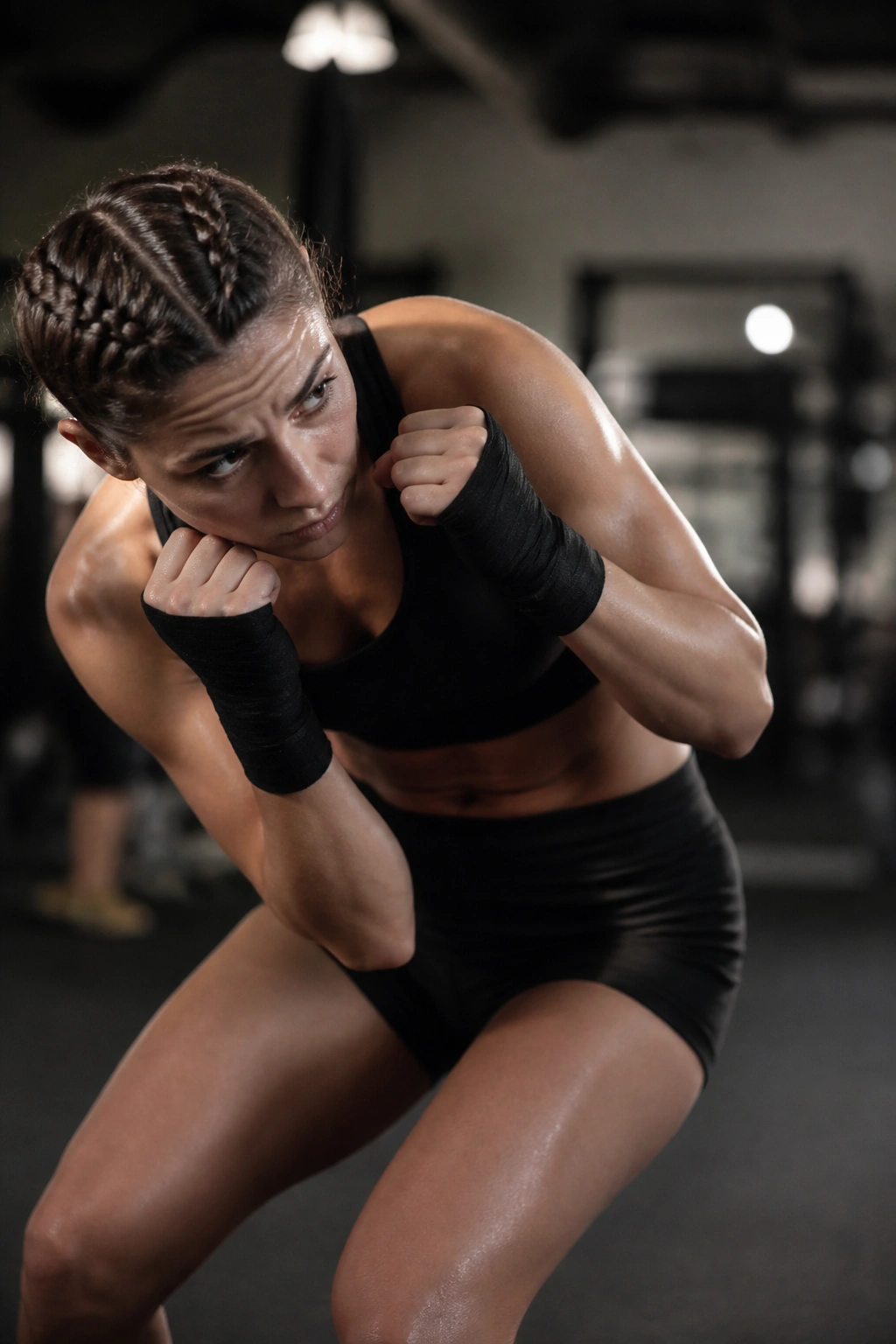
Kickboxing is not just offense. If you cannot defend, you cannot stay in the ring. The “slip” and the “weave” are essential defensive moves that also happen to be incredible for your obliques and lower back. A weave involves bending your knees and moving your torso in a “U” shape to avoid a punch.
Engaging the Back
When you weave, you are doing a deep squat combined with a lateral torso flexion. You are lowering your center of gravity and then popping back up. This constant up-and-down motion is essentially a dynamic squat variation.
The Drill
Perform a 1-2 combo, then immediately perform a weave to the left, followed by a weave to the right. Reset and repeat. The weave needs to be controlled. Do not just flop your torso from side to side. Use your legs to lower yourself. If you do this with speed, you will see your heart rate climb almost instantly.
9. Combination Flow

Flow drills are about linking movements together so they feel like a dance. A stagnant fighter is an easy target, and a stagnant workout is boring. Create a combination: Jab, Cross, Hook, Slip, Slip, Uppercut.
Why This Works
The mental engagement is the secret sauce here. When you have to think about the order of the punches, you focus less on how tired your legs are. It distracts you from the fatigue, allowing you to train harder for longer.
Developing Your Flow
Memorize the combination so you don’t have to think about it. Close your eyes for a moment and visualize the sequence. Once you have it, practice it until it becomes muscle memory. Then, add a kick to the end of the combo. For example: Jab, Cross, Hook, Roundhouse Kick. This sequence works the entire body—shoulders for the punches, core for the rotation, and legs for the kick.
10. Bodyweight Integration
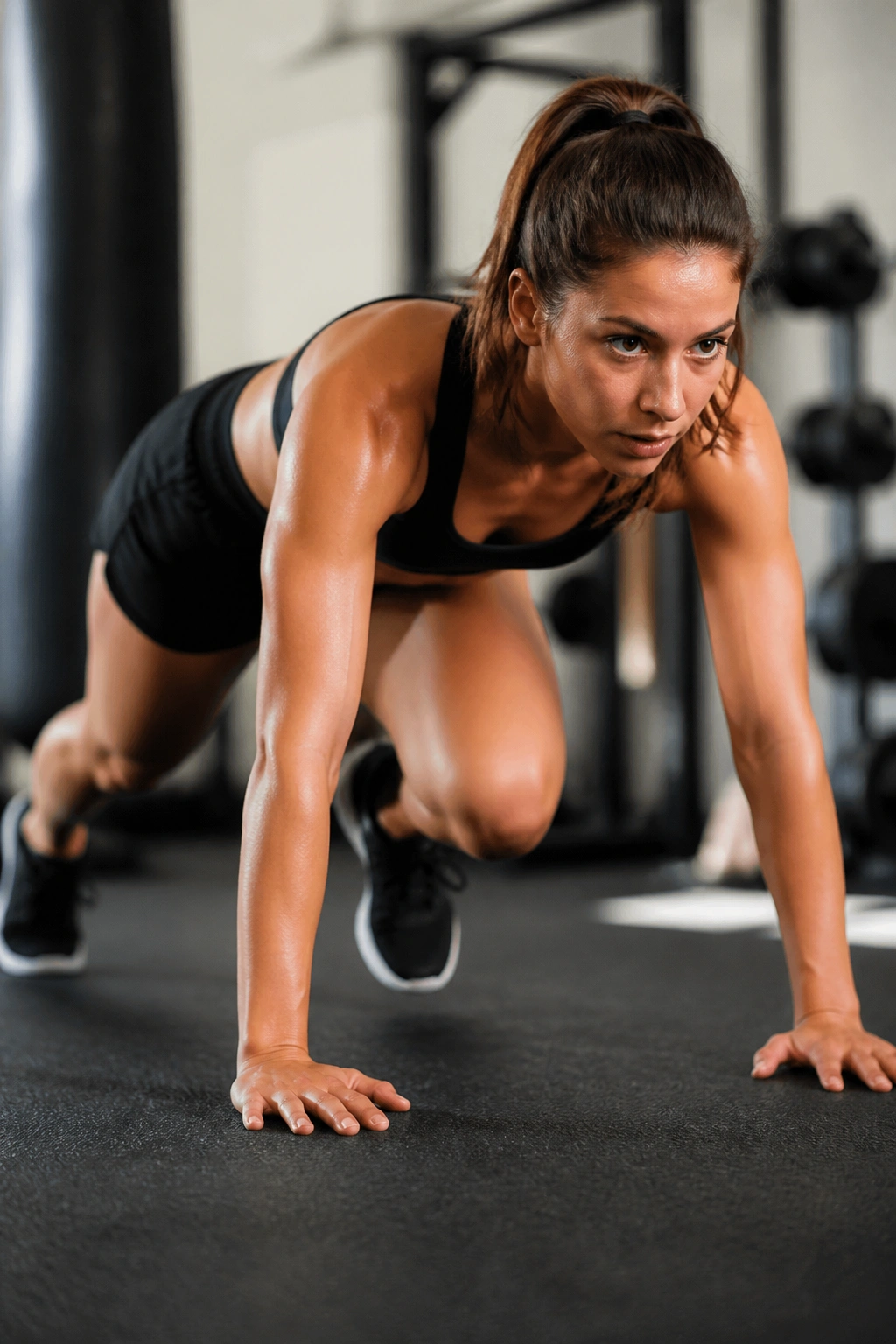
Sometimes, your kickboxing needs to be broken up by pure bodyweight exercises to truly max out the calorie burn. This is a classic “hybrid” training method. You are using the punching to spike the heart rate and the bodyweight moves to force muscle failure.
The Mix
Every time you finish a 3-minute round of shadowboxing, immediately drop and do 10 burpees or 20 mountain climbers. The transition needs to be instant. This keeps your heart rate elevated through the rest periods, which is where the real cardiovascular gains are made.
Why Use This
This mimics the unpredictability of a real fight. You are training your body to transition from explosive striking to explosive movement without losing your composure. It builds a different kind of stamina—the ability to perform complex tasks when you are out of breath.
11. Heavy Bag Power Rounds
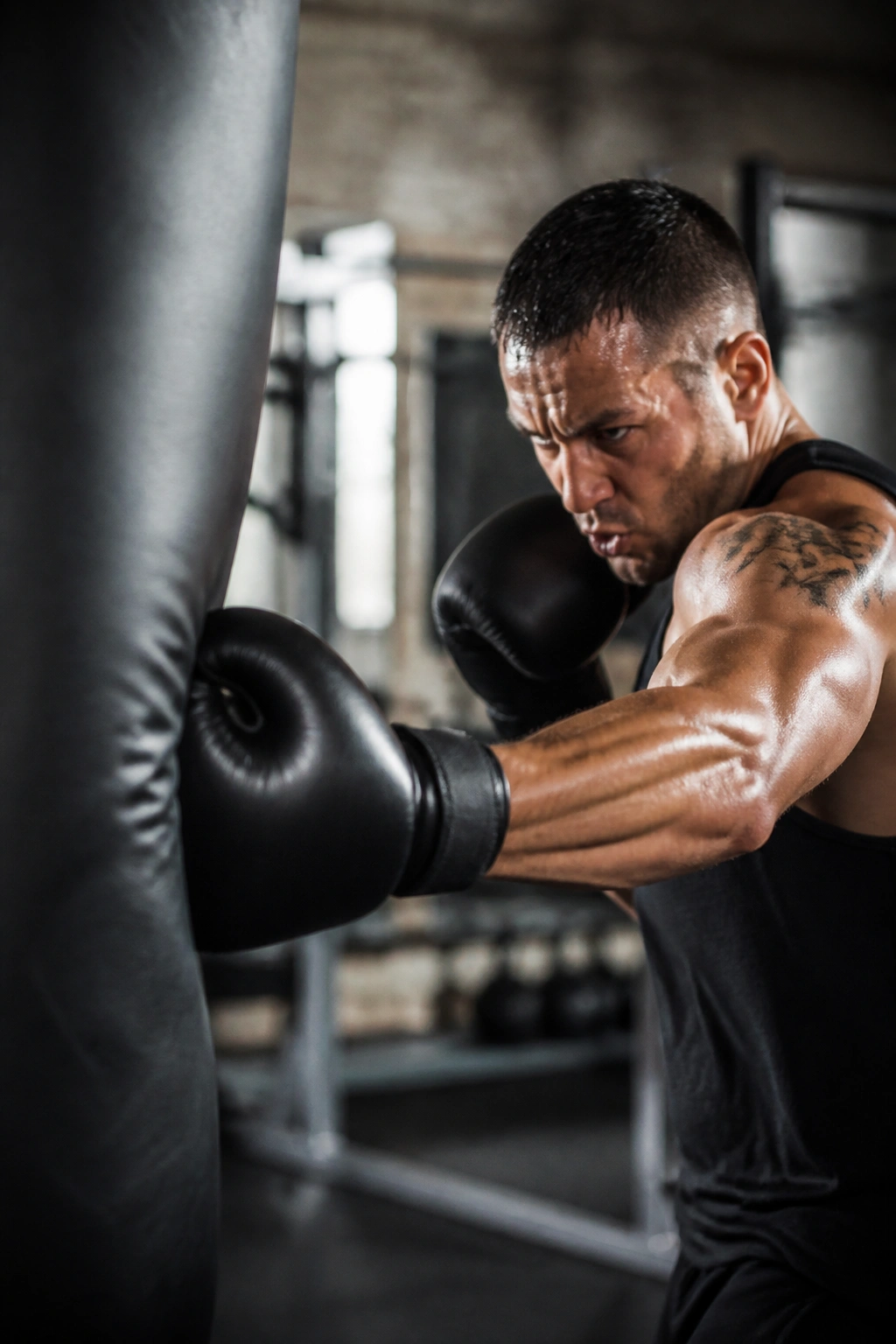
If you have access to a heavy bag, use it. Shadowboxing is great for speed and form, but hitting a solid object provides resistance that you simply cannot get from punching air. This resistance creates a “force-back” that your body must stabilize against.
The Force-Back Principle
When you hit a heavy bag, your muscles have to contract harder to stabilize your arm upon impact. This extra contraction is where the strength-building happens. It is the closest thing to weightlifting in a cardio environment.
Technique Note
Do not push the bag; snap your punches into it. Think about punching through the bag, not just at the surface. If you push, you lose speed and energy. Your fist should make contact, deliver the energy, and then recoil immediately. If the bag is swinging wildly, you are pushing it. Aim for a crisp “pop.”
12. Agility Ladder Kickboxing
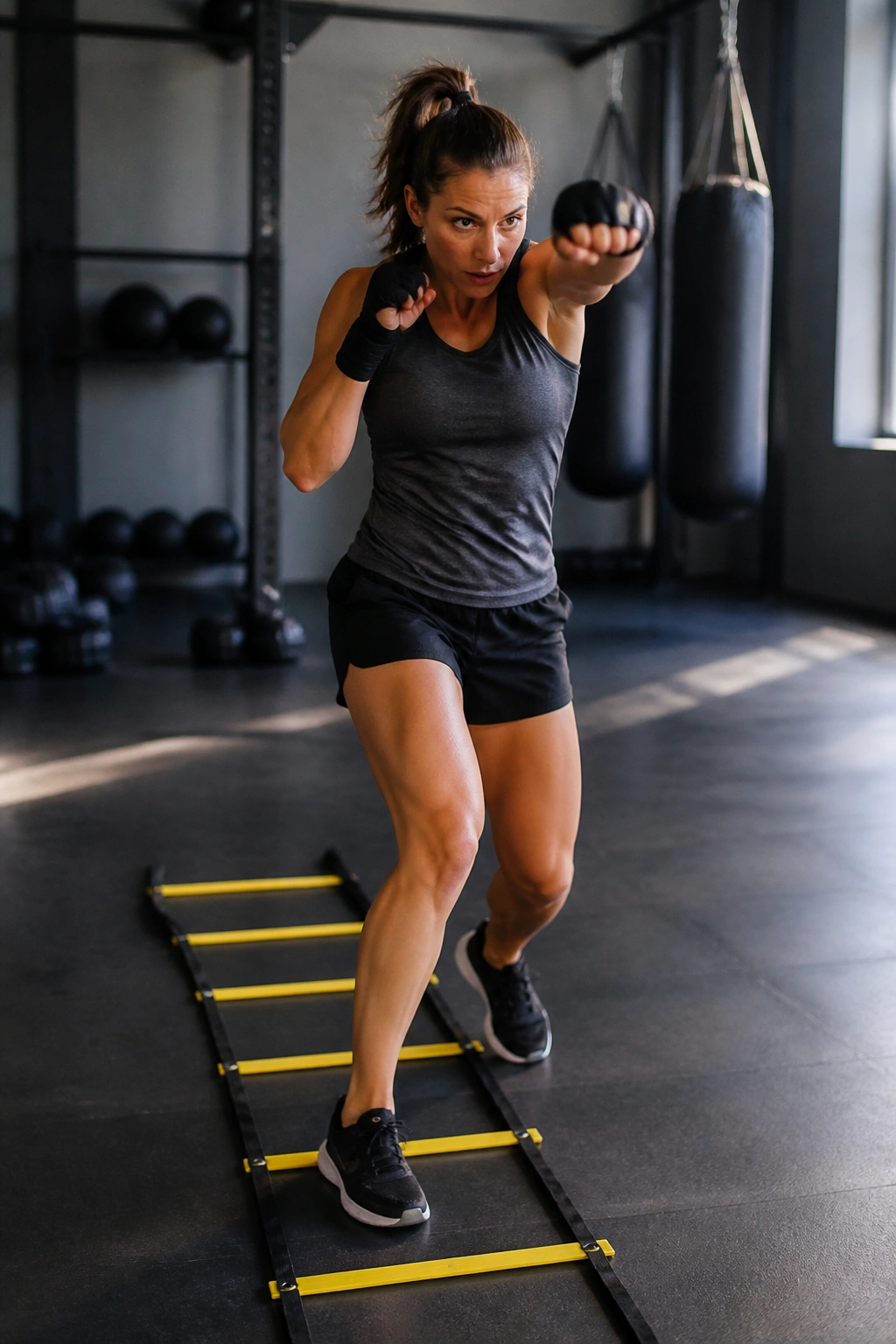
If you have an agility ladder (or just use tape on the floor), this is an elite-level workout. You are combining footwork drills with punching. This forces your brain to coordinate your feet and hands simultaneously, which burns an immense amount of cognitive and physical energy.
Feet First
Step into the squares with your boxing stance. Practice “in-and-out” footwork—two steps in, two steps out. Add punches to the rhythm. Every time your feet hit the floor, you should be throwing a punch.
The Challenge
Start slow. The goal is coordination, not speed. Once you get the rhythm, try to increase the pace. If you trip over your feet, slow down. This drill is frustrating at first, but that frustration means your brain is building new neural pathways. That kind of mental effort is calorie-intensive.
13. The Ladder (1-to-10 Count)
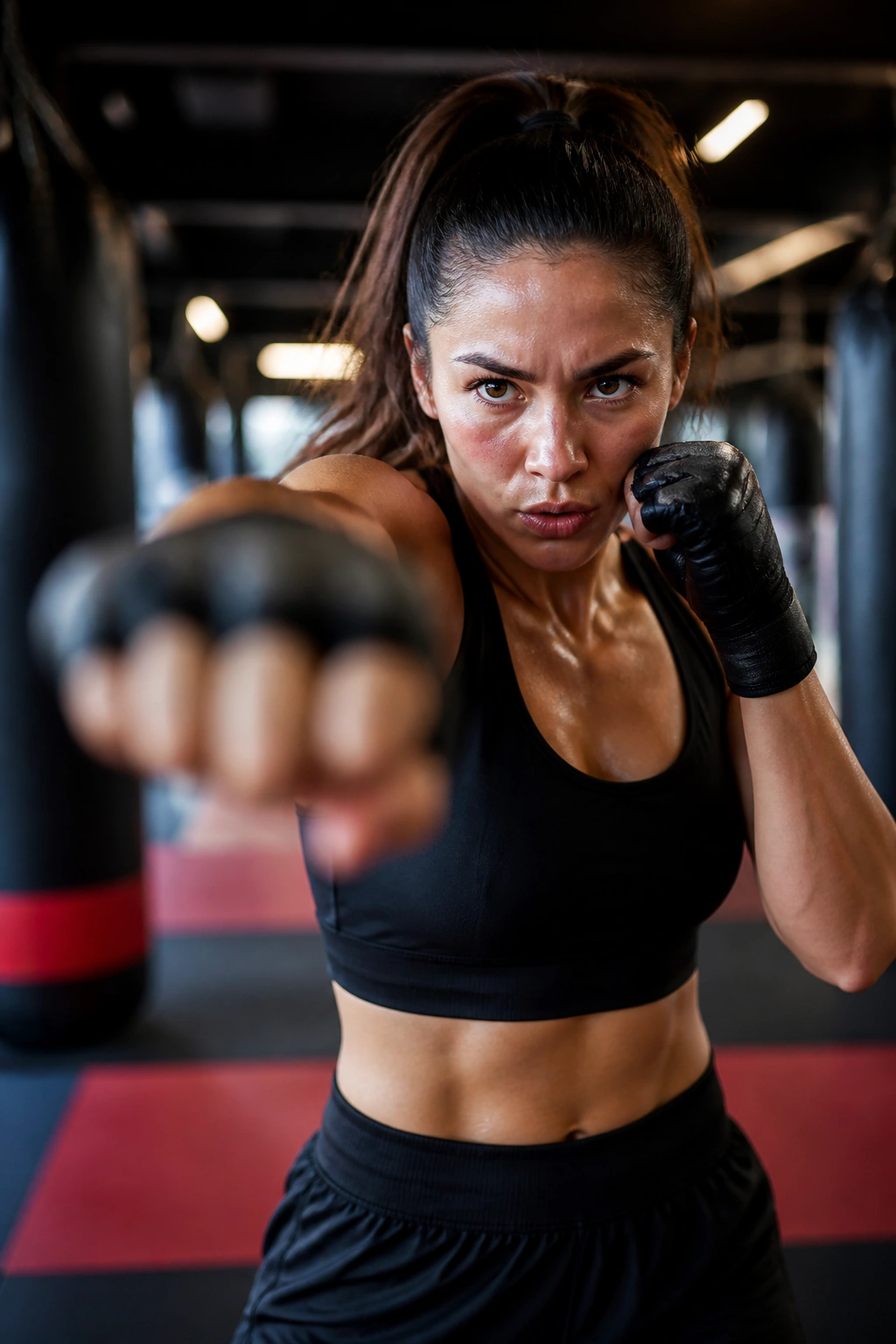
This is a volume-based drill that tests your endurance to the absolute limit. You start with 1 rep of each movement, then 2, then 3, all the way up to 10. The movements are: Jab, Cross, Hook, Uppercut.
Tracking the Count
You are doing 1 jab, 1 cross, 1 hook, 1 uppercut. Then 2 jabs, 2 crosses, 2 hooks, 2 uppercuts. By the time you get to 10, you are doing 40 punches in a single set without rest. This is a massive endurance test.
Pacing
Do not go too fast at the beginning. The first few rounds will feel easy. The trap is burning out before you get to the 7 or 8 mark. Manage your breathing. Breathe out on every punch. If you hold your breath, you will be toast by the time you reach the 6-rep round.
14. Tabata Kickboxing
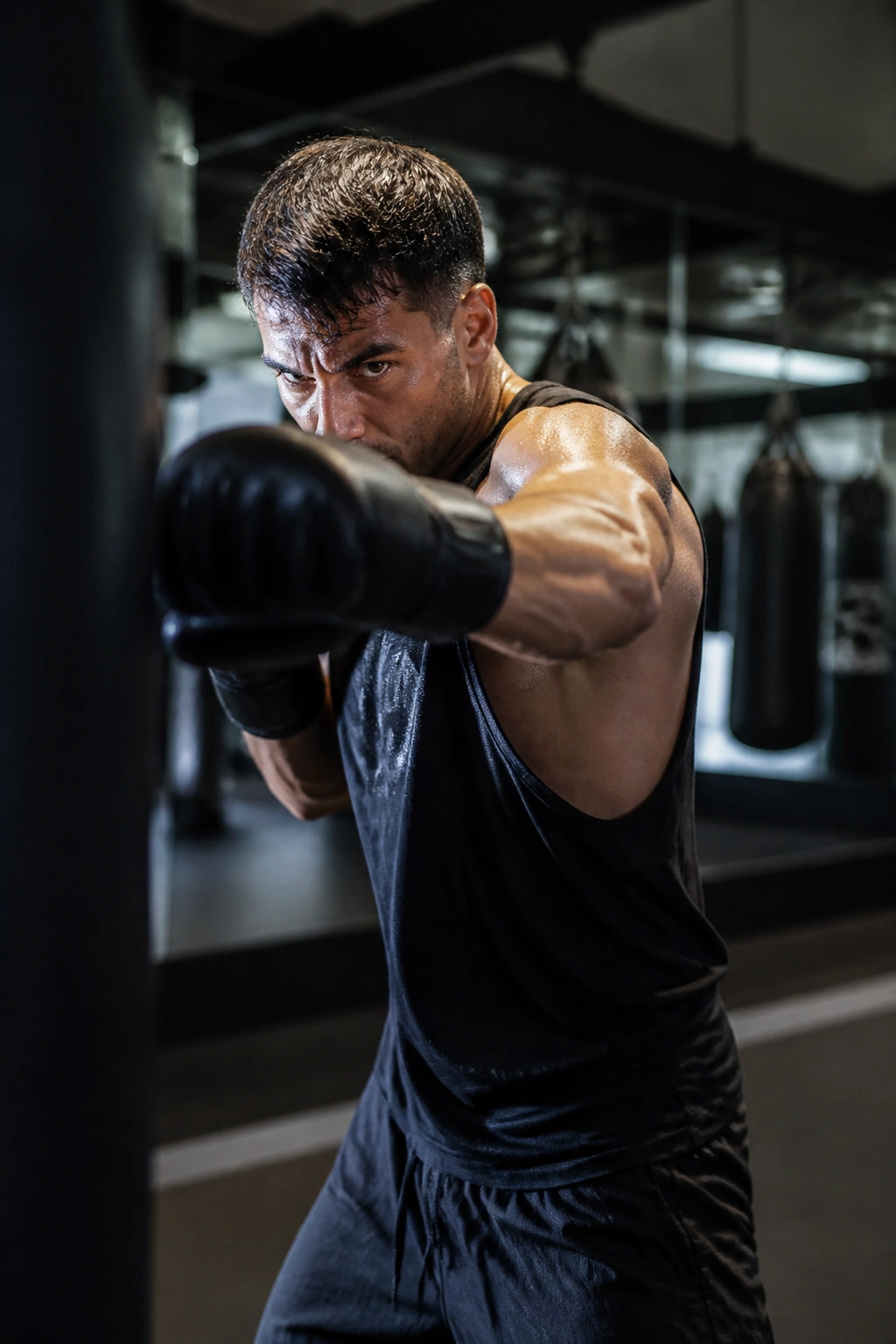
Tabata is a specific protocol: 20 seconds of work followed by 10 seconds of rest. It is arguably the most efficient way to burn calories because it keeps your heart rate high while allowing just enough rest to keep your power output high.
Selecting Your Move
For each Tabata block, pick one movement. For example, for four minutes, do nothing but roundhouse kicks. It sounds simple, but your legs will be shaking by the third minute. Then, switch to a new movement for the next four-minute block.
Mental Check
Tabata is brutal because it feels like you never truly rest. The 10 seconds go by in a blink. The key is to commit entirely to the 20 seconds. Do not hold back. If you are not exhausted after the 20 seconds, you didn’t work hard enough.
15. Core-Engagement Kicks
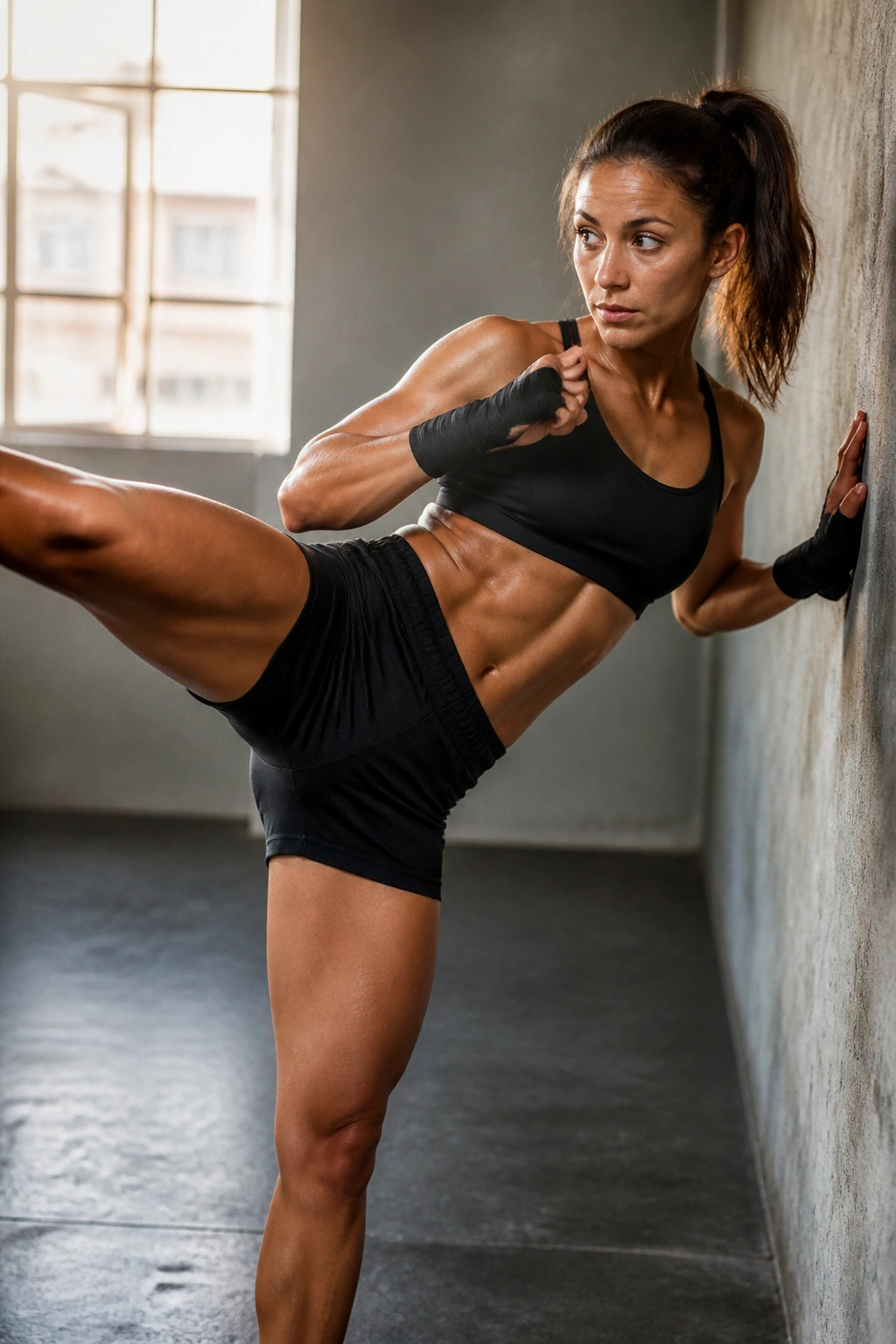
This drill is about control, not power. Stand next to a wall if you need balance. Slowly lift your leg into a sidekick chamber, extend your leg, hold it for three seconds, and then retract it slowly.
The Muscle Burn
This is an isometric hold. Isometric exercises build stability and strength in the hips and abs in a way that explosive kicking does not. By holding the extension, you are forcing the muscles in your thigh and core to stay fully contracted for an extended period.
Practical Application
Do 10 of these slow-motion kicks per leg. You will notice your supporting leg starts to burn just as much as the kicking leg. This is perfect for building the structural integrity needed to prevent injuries when you go back to full-speed kicking.
16. Endurance Round-Robins

Endurance is the hallmark of a conditioned fighter. This drill involves long, uninterrupted periods of low-intensity, high-volume striking. Forget about maximum power. Think about consistency.
Keeping the Pace
You are aiming for 5 to 10 minutes of non-stop punching. You might keep a light jab going for 30 seconds, then switch to hooks for 30 seconds, then crosses. You are changing the angle and the muscles used, but you never stop the movement.
Why This Works
This builds capillary density in the muscles, which helps you recover faster during high-intensity intervals. It teaches your body to operate efficiently while tired. When you have a solid endurance base, your high-intensity days become much more effective because you have the stamina to actually execute the movements correctly.
17. Plyometric Kickboxing
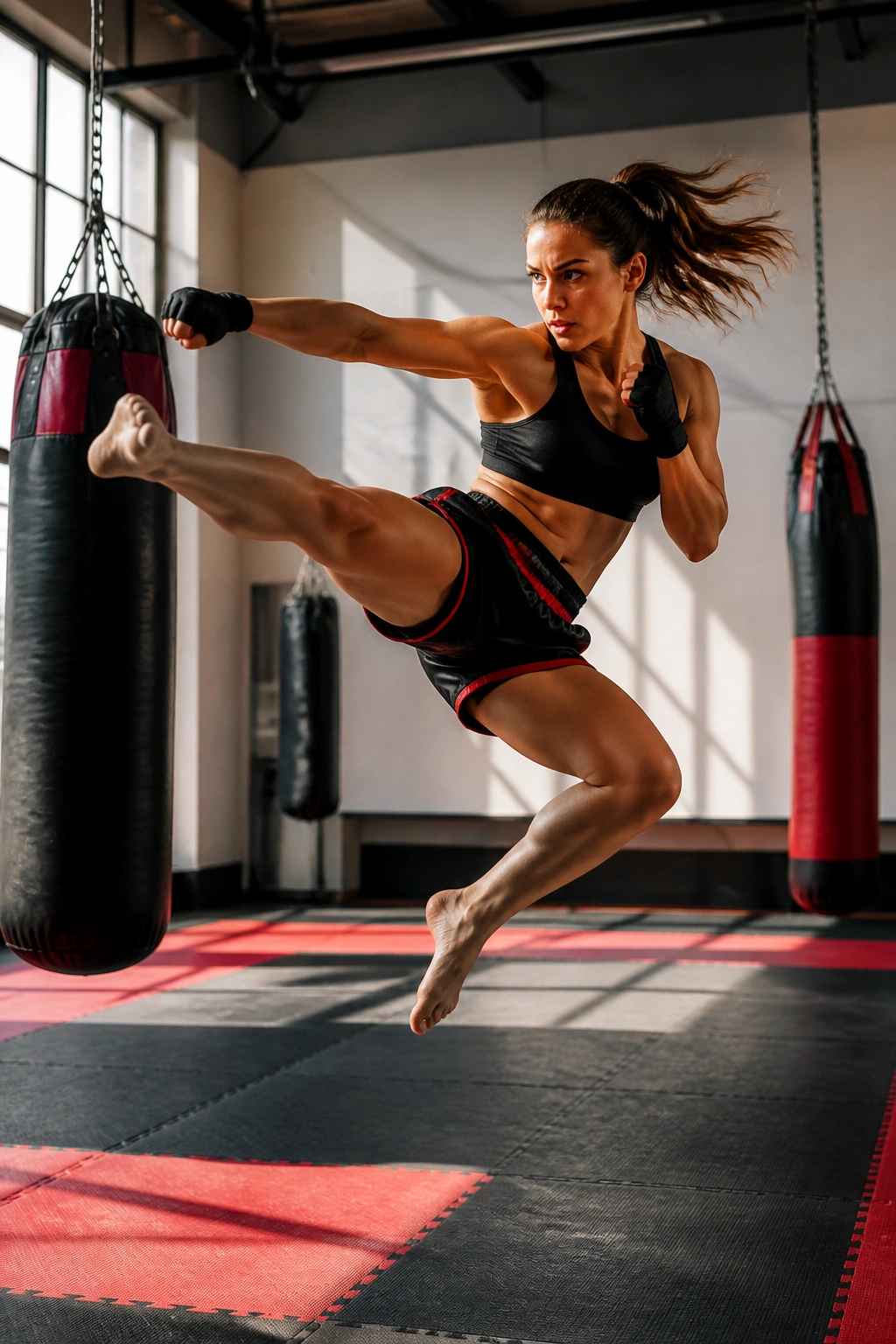
Plyometrics are explosive jumps. Adding them to kickboxing turns a cardio workout into a power-building session. The most common is the “jump switch” kick, where you switch your stance in the air and land with the opposite leg ready to strike.
Power Production
This drill is all about force production. You have to generate enough power to lift your entire body off the ground. That requires your glutes and hamstrings to fire instantly.
Safety First
Land softly. Do not lock your knees when you come down. Think of your legs as springs. If you land with heavy, flat feet, you will put unnecessary stress on your joints. Use your calves and quads to absorb the impact. If you feel shaky, take a break—plyometrics are taxing on the central nervous system.
18. The Finisher

The “Finisher” is a concept, not a specific move. It is the final two minutes of your workout, where you empty the tank. You have already done all the technical work. Now, you just move.
The Objective
Give everything you have left. If you have any gas in the tank, you aren’t doing the finisher right. Combine everything: fast punches, kicks, sprawls, weaving. Make it messy if you have to, just keep the intensity at maximum.
Why End This Way
Ending with a high-intensity burst forces your body to adapt. It is a psychological victory, too. Leaving the gym knowing you didn’t leave a single ounce of effort on the mat builds a kind of confidence that carries over into the rest of your day.
19. Slow-Motion Resistance
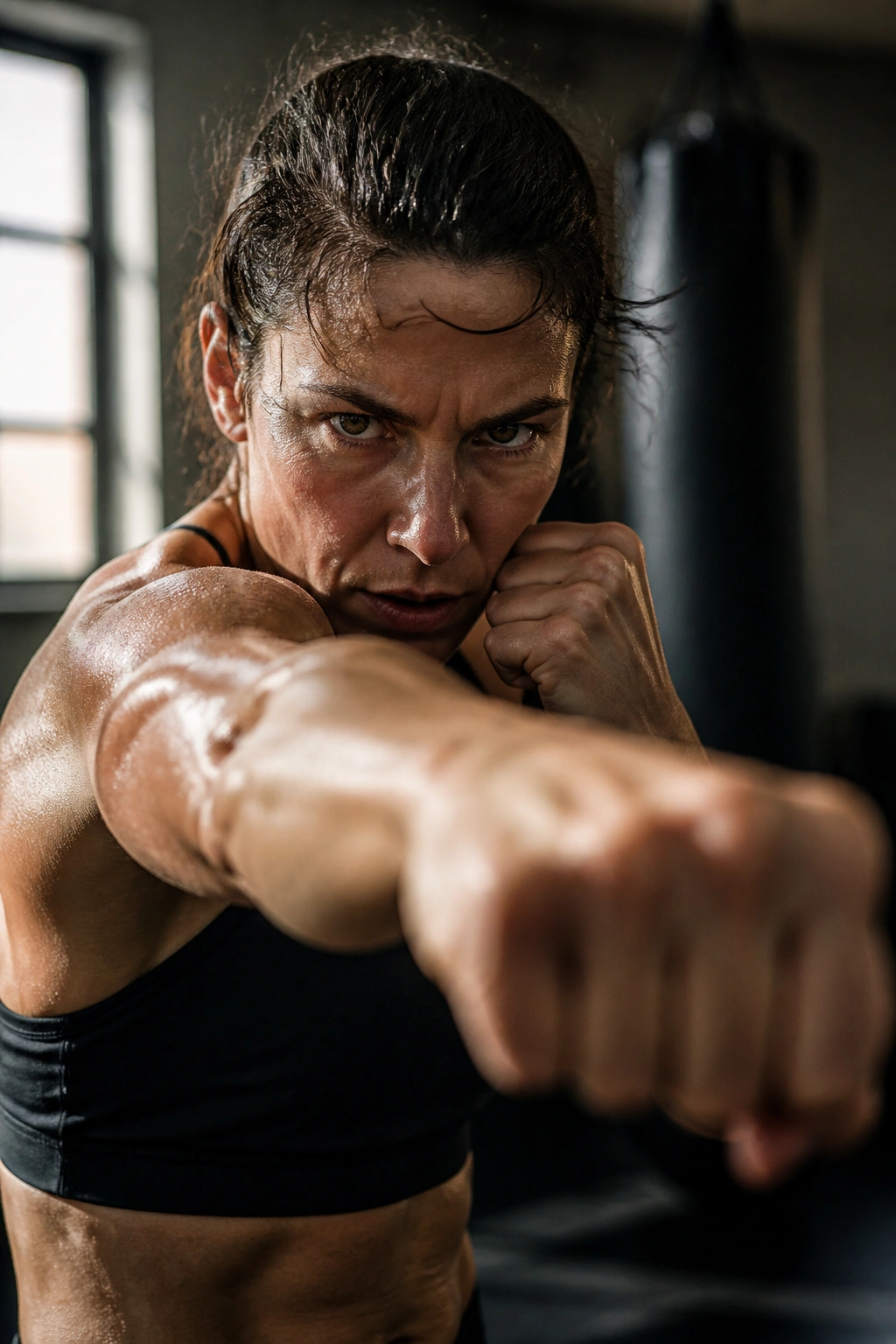
This sounds counterintuitive, but punching in slow motion with tension is incredibly hard. Imagine you are punching through water or thick mud. Squeeze your muscles for the entire duration of the punch.
Developing Mind-Muscle Connection
This technique forces you to feel exactly which muscles are activating. You will feel your back muscles engaging to pull the punch, your chest engaging to push it, and your core engaging to stabilize the movement.
Why Use This
It allows you to clean up your technique. When you are going fast, it is easy to “cheat” and use momentum. When you go slow, there is nowhere to hide. If your form breaks down, you will know immediately. Use this as a warm-up or a technique-refinement session.
20. Active Recovery Flows
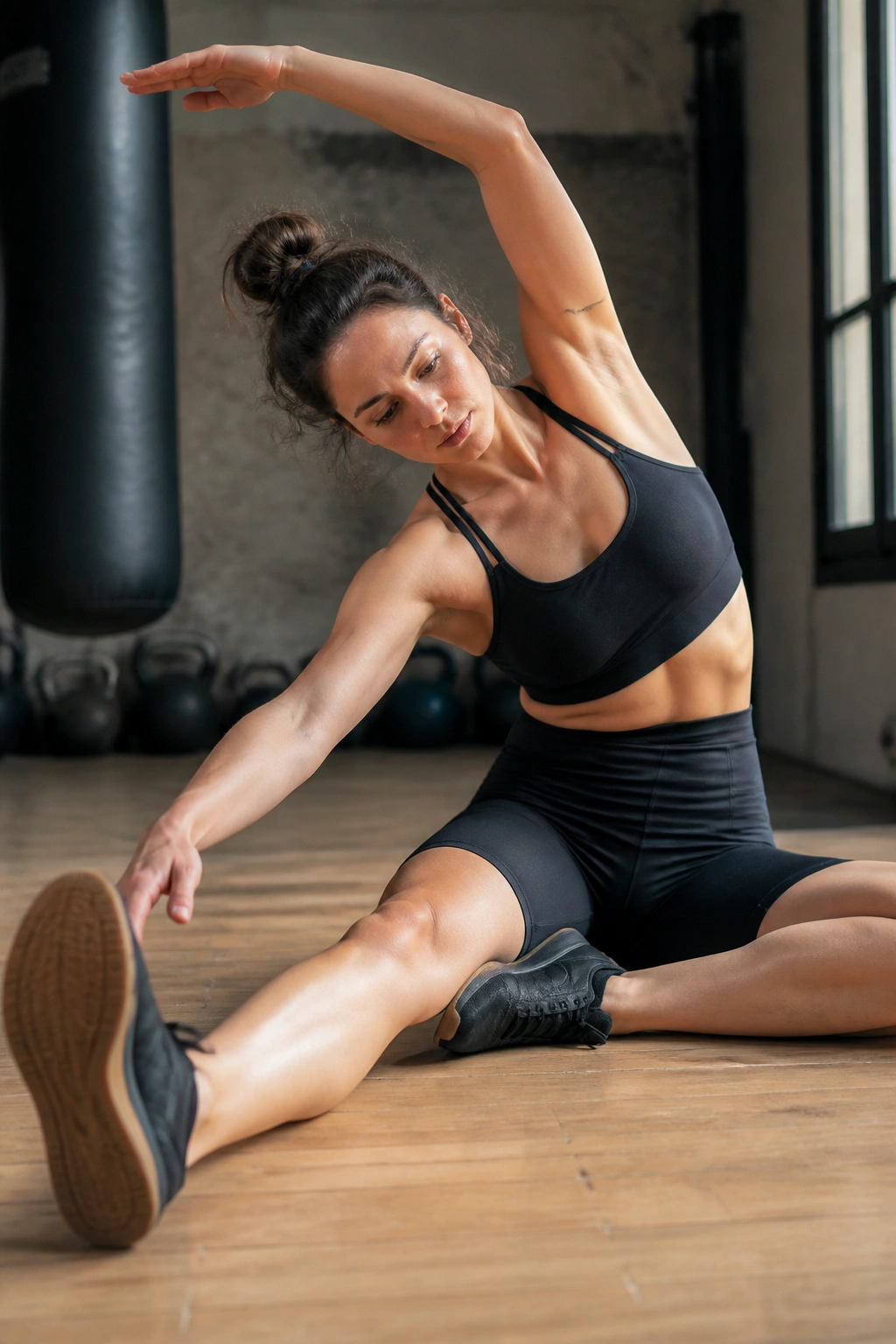
Some days, your body needs to move, but it cannot handle another high-intensity session. That is where active recovery comes in. This isn’t about burning calories; it is about keeping the joints mobile and the muscles loose.
The Focus
Go through the motions of your kicks and punches with zero force. Focus on the range of motion. Can you get your knee higher? Can you reach further? Keep your movements fluid and graceful.
Why It Matters
Rest is part of the training. If you never have low-intensity days, you will eventually burn out or get injured. Active recovery allows you to practice the mechanics without the tax. It keeps your nervous system primed and your body prepared for the next high-intensity workout.
Getting the Most Out of Your Training
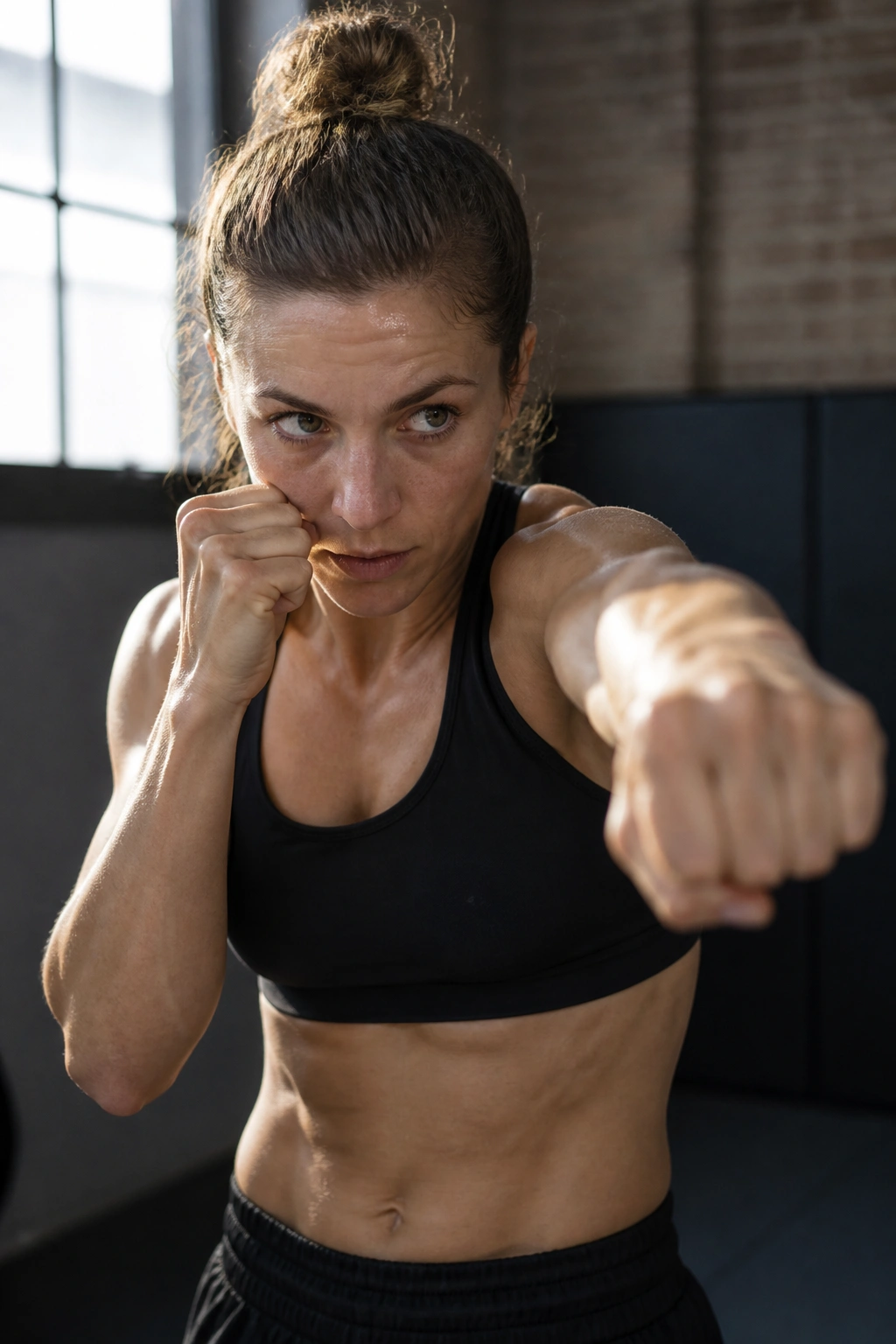
Cardio kickboxing is a skill as much as it is a fitness method. If you treat it like a chore, you will see it as one. But if you treat it as a craft—something to be studied, refined, and mastered—it becomes one of the most rewarding ways to transform your fitness. The calorie burn, as impressive as it can be, is ultimately a byproduct of moving your body with purpose and power.
Listen to your body. There is a difference between the “good” burn of muscle fatigue and the “bad” sharp pain of a joint issue. If something hurts in a way that feels wrong, stop. Adjust your stance. Change the angle. The beauty of this training is its versatility; you can always tweak the variables to protect yourself while still getting a world-class workout.
Stay consistent, not perfect. You do not need to do every one of these twenty drills every time you hit the gym. Pick three or four that you enjoy, or that address the areas you need to improve, and weave them into your routine. Over time, you will find that the movements become second nature, allowing you to focus less on the technique and more on the intensity. That is when the real changes begin to happen.
