



The best thigh challenge workouts for women do not start with endless squat jumps. They start with smart angles, enough time under tension, and a little respect for the inner thigh, which tends to be ignored until it starts shaking halfway through set two.
You cannot spot-reduce fat off one area with a magic move. You can, though, build the quads, hamstrings, glutes, and adductors in a way that makes the whole leg look firmer, feel stronger, and handle stairs like they’re no big deal. That’s the real payoff.
A solid thigh session should leave you warm, a little wobbly, and still able to walk out of the room without looking dramatic. If your knees are sensitive, the angle of your feet, the depth of the squat, and the pace of the lowering phase matter more than the number of reps.
A quick warm-up helps more than people want to admit. March in place for 60 seconds, circle your hips, do 10 bodyweight hinges, then roll your ankles. Simple. Boring. Effective.
1. Sumo Squat Ladder for Thigh Challenge Days
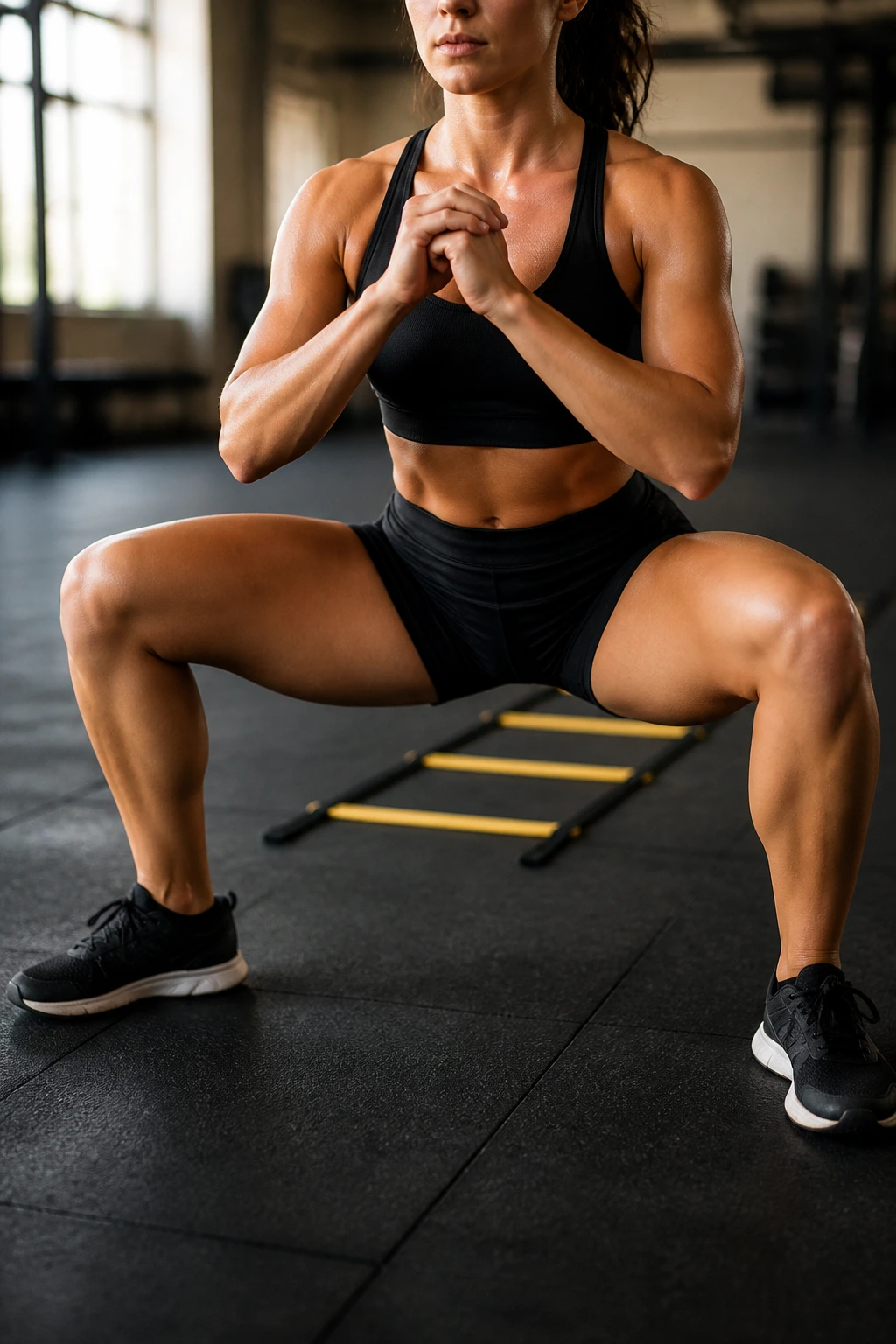
Wide-stance squats earn their place fast. They pull the inner thighs into the job instead of letting the quads do all the talking, and they make you slow down enough to notice whether your knees are tracking cleanly over your toes.
Start with your feet wider than shoulder-width, toes turned out about 20 to 30 degrees. Do 12 sumo squats, hold the bottom for 5 seconds on the last rep, then stand and rest for 20 seconds. Next round, do 10 reps. Then 8. Finish with 6 reps and 10 tiny pulses at the bottom. Three rounds is plenty.
What to Feel
- Pressure in the heels and the outer edge of the foot
- A stretch across the inner thighs on the way down
- Your knees pushing out slightly, not collapsing inward
- A slow burn across the front of the thighs by the second round
Pro tip: keep your chest tall, but do not over-arch your lower back. That mistake shows up fast on sumo squats, and it turns a thigh move into a back compensation move.
2. Reverse Lunge + Knee Drive
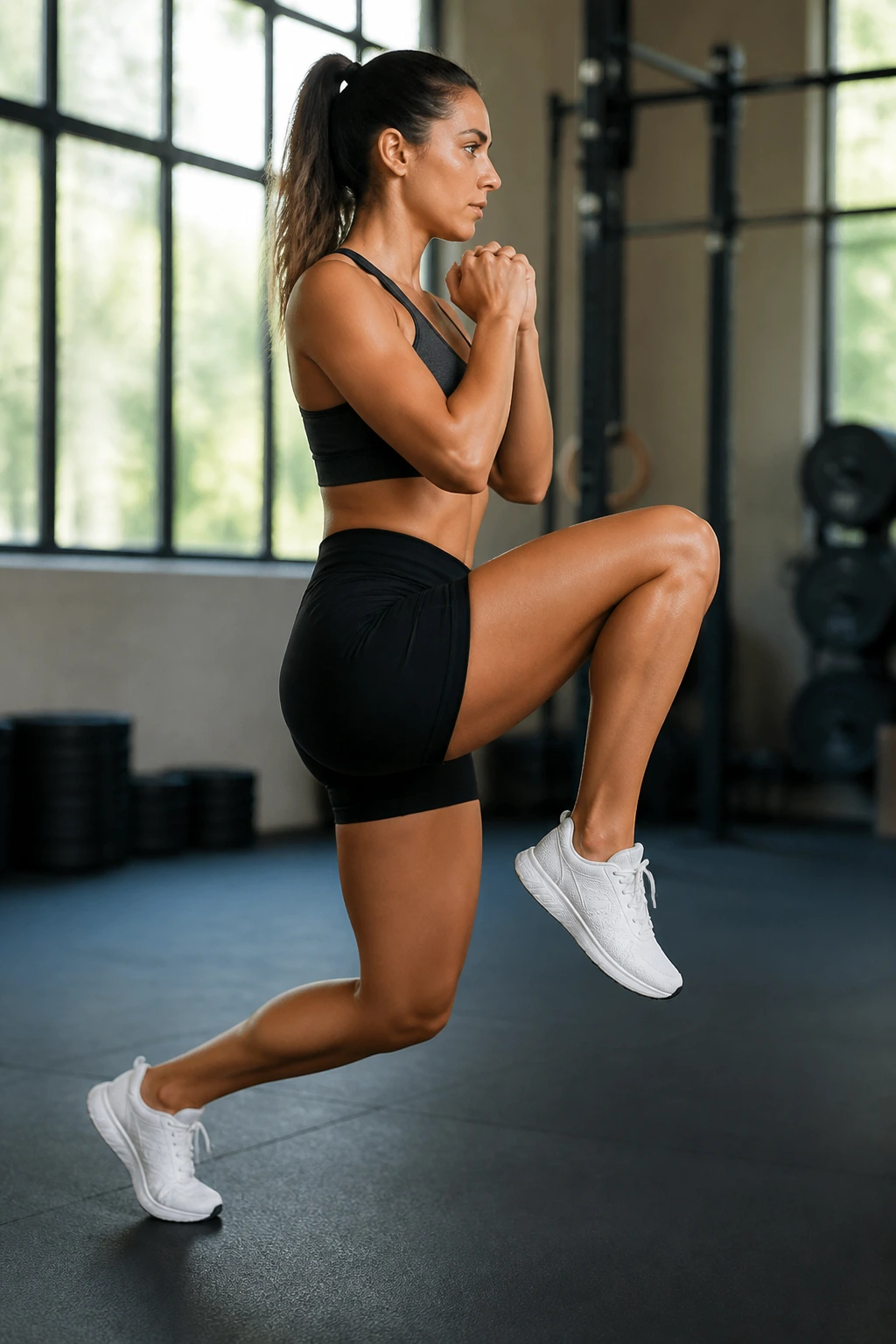
Why does the reverse lunge feel kinder than the forward lunge for so many people? Because stepping back usually gives you a little more control, and control is what saves sloppy knees and wobbly hips.
Do 10 reverse lunges on the right, then 10 on the left. At the top of each rep, drive the knee up to hip height and pause for one second. Rest for 30 seconds. Repeat for 3 rounds. That knee drive adds balance work, but it also makes the front leg do more honest work through the quad and glute.
A lot of people rush lunges and treat them like cardio. Don’t. Slow the lowering phase to about 2 seconds, keep the front foot flat, and think about dropping straight down instead of lunging forward. Your front thigh should feel loaded before your toes even want to push off.
If your balance is shaky, lightly touch a wall with one hand. That’s not cheating. That’s training smart.
3. Side Lunge Sweep
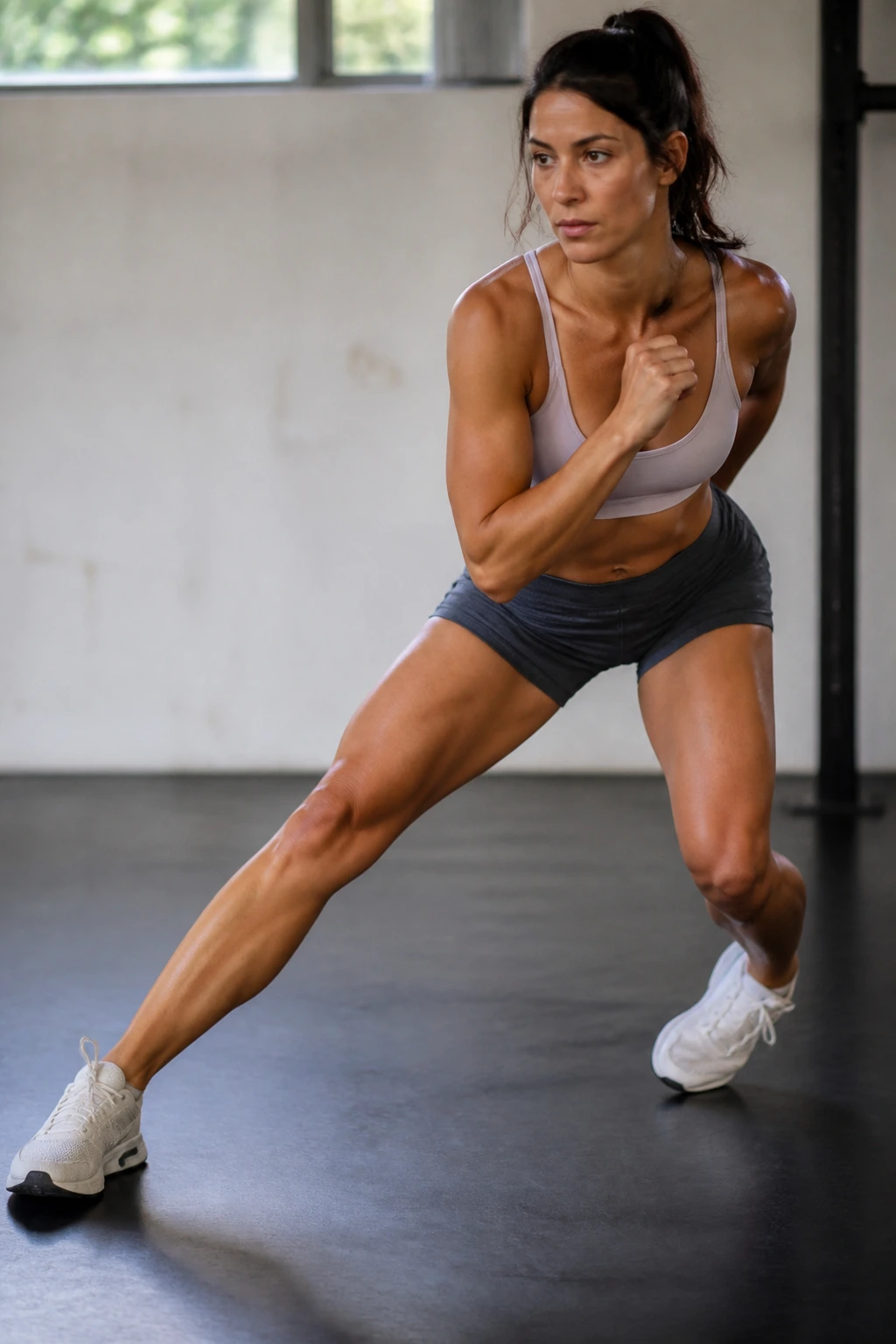
If the inside of your thighs always feels like the forgotten part of leg day, side lunges fix that in a hurry. They also wake up the hips in a way straight-ahead moves simply do not.
Step out to the right, bend the right knee, and send your hips back while the left leg stays long. Push the floor away, return to center, then sweep the same leg behind you into a soft curtsy-style reach before standing tall. Do 8 reps on each side for 3 rounds. The sweep adds a little more range and asks the inner thigh to stabilize the body on the way back up.
Keep It Honest
- Keep the working foot planted flat
- Let the straight leg stay straight, not locked hard
- Move the hips back first, then bend the knee
- Stop short of a depth that makes the lower back twist
This one feels awkward the first time. Fine. Awkward often means new muscles are getting involved, and that’s half the point.
4. Wall Sit with Marches
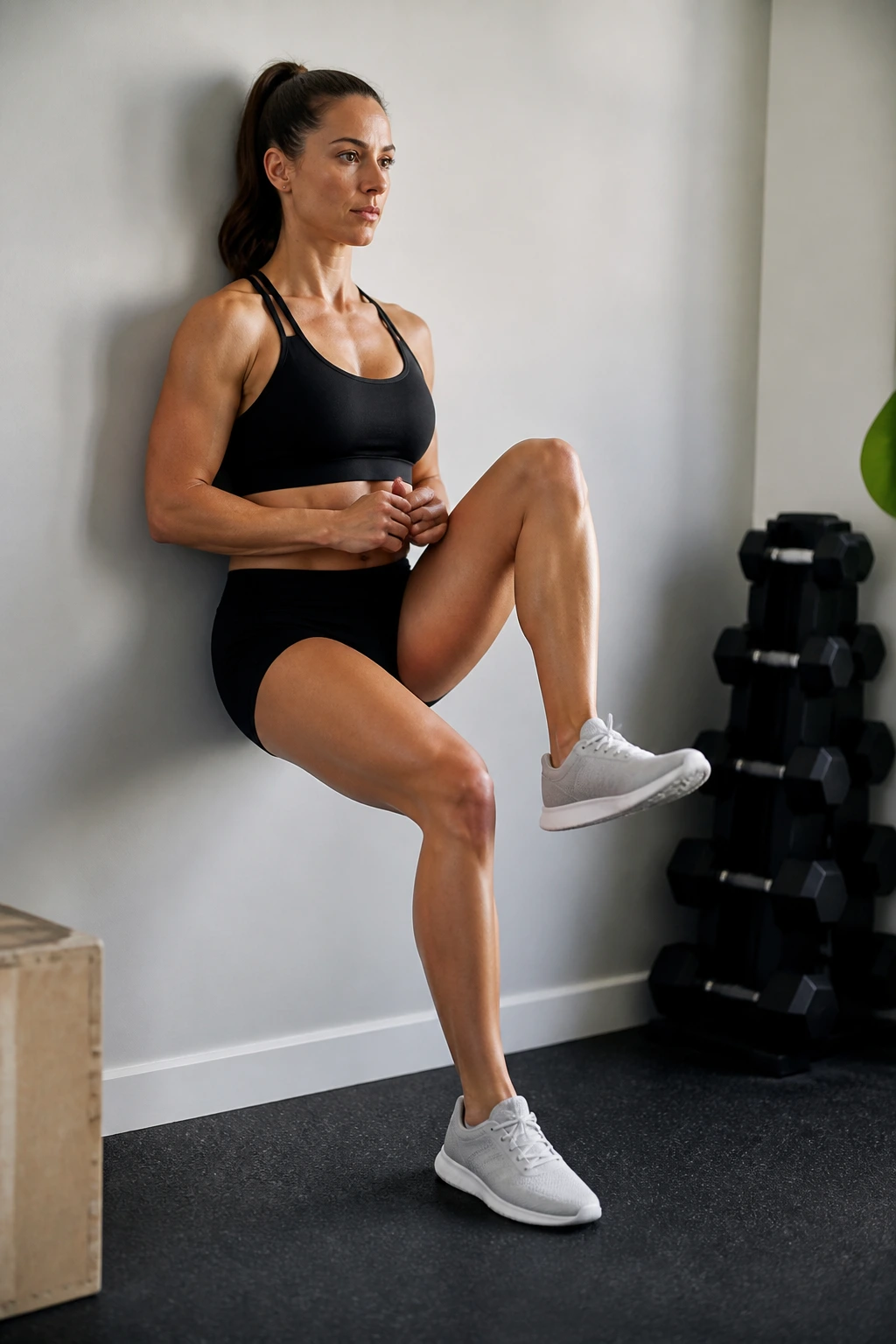
A wall sit looks easy until your quads start sending complaint letters. Add marching, and the whole thing gets much less polite.
Sit against a wall with your knees bent around 90 degrees, feet hip-width apart, and your lower back pressed into the wall. Hold for 30 seconds. Then march one foot up a few inches, lower it, and alternate for 10 slow marches. Rest for 20 to 30 seconds. Do 4 rounds.
Why the March Matters
The hold alone burns the front of the thighs. The march makes your hips stabilize while the quads stay under tension, which is where the ugly-but-useful part happens. Your legs should feel heavy by the end. Heavy is good here.
If 90 degrees is too much, slide your back up the wall a little higher and take some pressure off the knees. If you want more work, hold a dumbbell at chest height or place a small pillow between your knees and squeeze gently during the hold.
No bouncing. No slouching. Just sit there and let the thighs complain.
5. Glute Bridge with a Pillow Squeeze
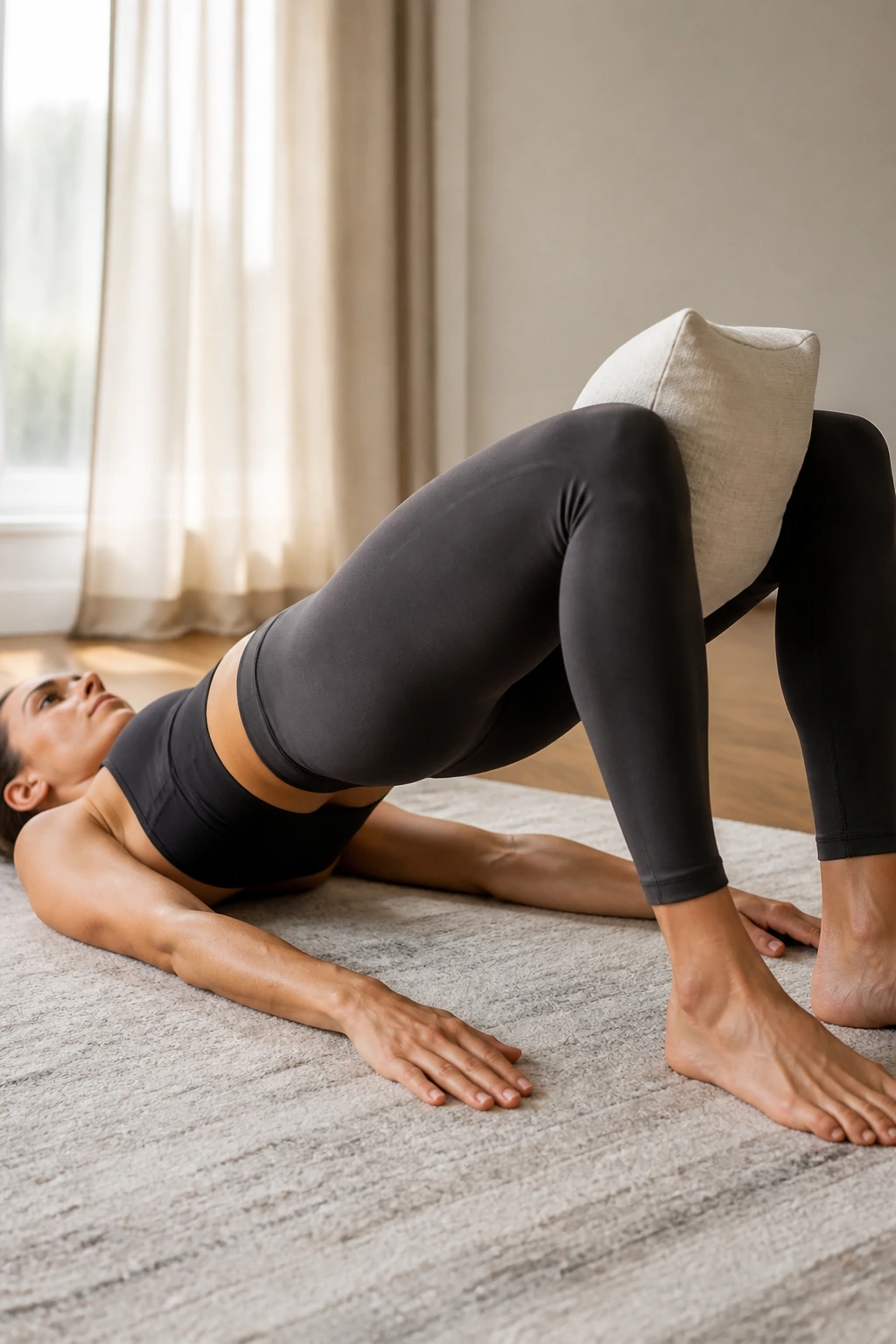
The easiest way to wake up the inner thighs is to put them to work while the hips lift. That’s what makes this one such a sneaky little gem.
Lie on your back with your knees bent and feet flat. Place a pillow, yoga block, or folded towel between your knees. Squeeze it lightly as you lift into a glute bridge, then lower with control. Do 15 reps for 3 sets, holding the top for 2 seconds each time. On the last set, add 10 short pulses at the top.
The squeeze keeps the adductors active without turning the move into a clench-fest. Keep your ribs down, and do not arch your back to get higher. You want the lift to come from the glutes and the back of the thighs, not from flaring the spine.
This works well as a finisher after lunges or squats. It also suits people who want thigh work without a lot of impact. Quiet on the outside. Annoying on the inside.
6. Curtsy Lunge Pulse Burn
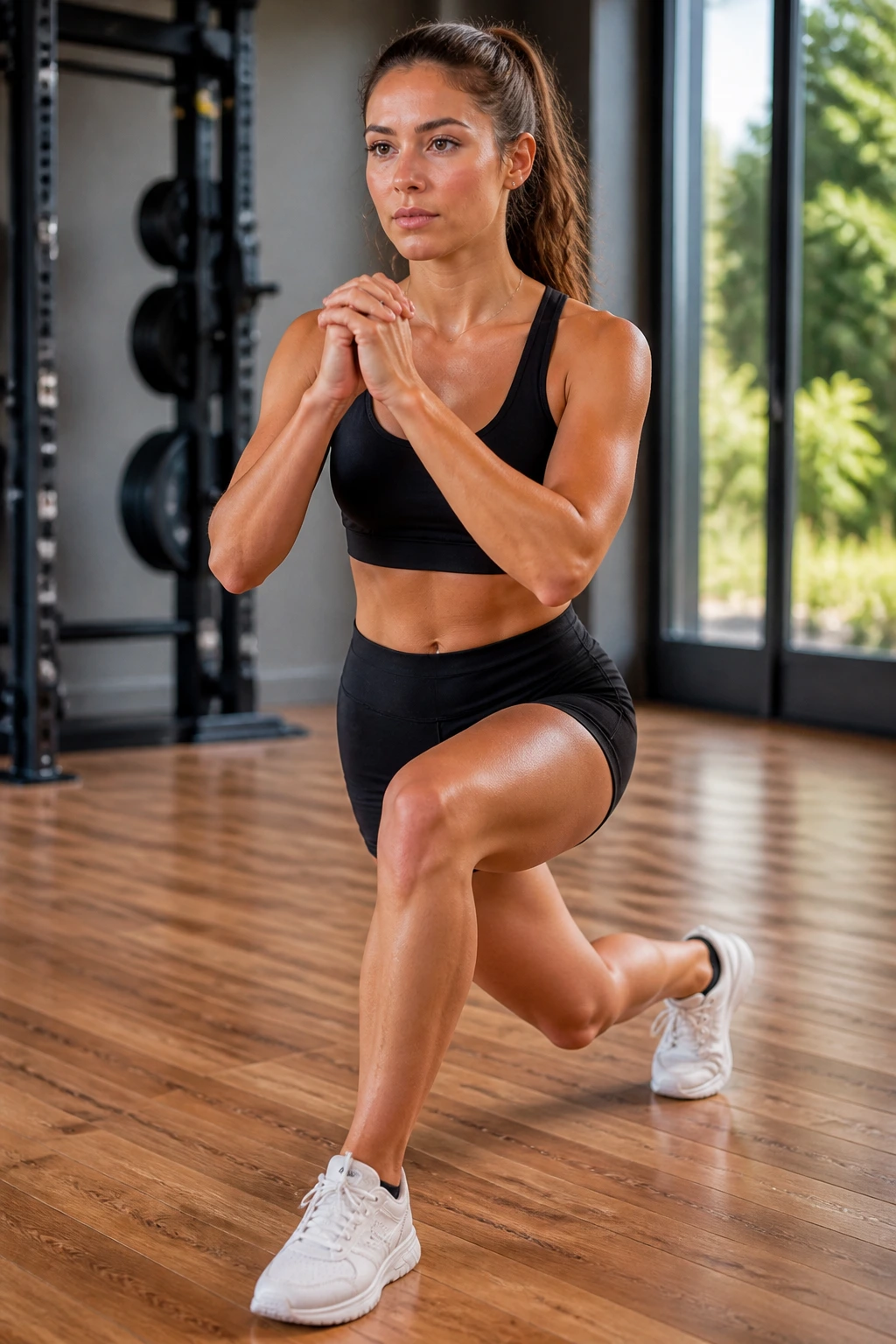
Eight clean reps and eight tiny pulses can feel nastier than 20 sloppy lunges. Curtsy lunges have that effect when you do them with control instead of speed.
Step one leg behind and slightly across the other, lowering into a shallow lunge. Stand halfway, then pulse down three times before returning to start. Do 8 full reps and 8 pulses on each side for 3 rounds. Keep the front knee steady and the torso upright.
What to Watch For
- The front knee should track over the middle toes
- The back leg crosses behind, but not so far that the hips twist
- The range should feel workable, not pinchy
- A shallow curtsy is better than a deep, ugly one
Some knees hate this pattern, and that is worth respecting. If the crossing angle feels off, shorten the step behind or swap in a standard reverse lunge. Nobody gets extra credit for grinding through a move that lights up the joint instead of the muscle.
When it works, though, the outer thigh and glute area light up fast. The inner thigh also has to stabilize the body on the way up, which makes the whole move far more useful than it first looks.
7. Split Squat Isometric Hold
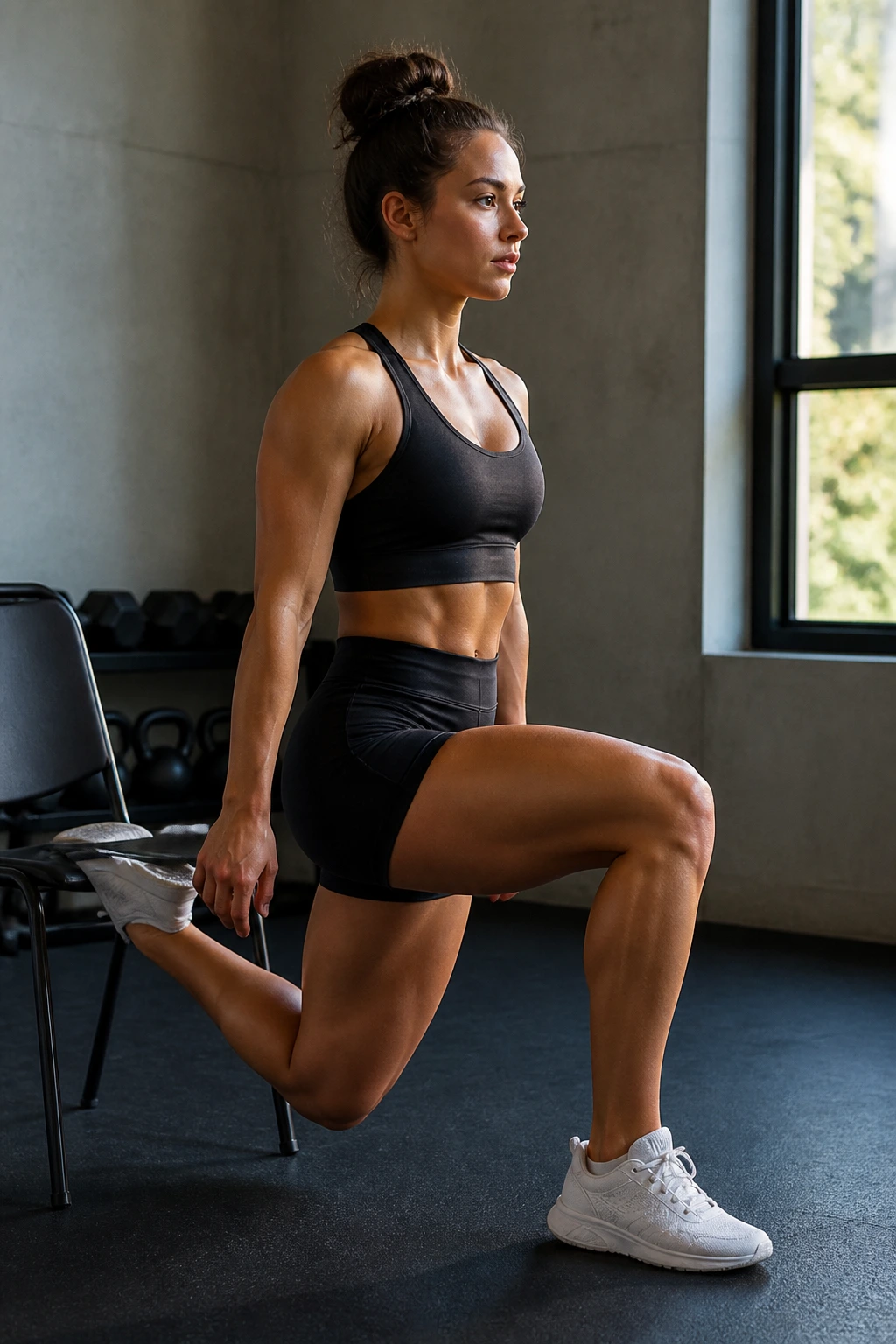
Set your feet, sink halfway down, and stop moving. That’s the whole story, and it’s still brutal in the best possible way.
Take a split stance with one foot forward and the other back. Lower until both knees are bent, then hold for 20 to 30 seconds. After the hold, do 6 controlled split squats on each side. Rest for 30 seconds and repeat for 3 rounds.
Why the Hold Matters
An isometric hold pins the thigh under load without the bounce people usually cheat with. The front leg gets a steady quad burn, while the back leg works as a stabilizer instead of a passenger. That steadiness matters if your form falls apart during fast reps.
Keep your front heel planted and your torso tall. If balance is tricky, stand next to a wall or use a chair for a fingertip touch. If your back knee complains, shorten the stance a bit and stay higher.
This is one of those workouts that looks plain on paper and feels rude in practice. I mean that in a good way.
8. Skater Hops for Lateral Thighs

The first good skater hop feels like your body catches itself mid-fall and turns it into power. That’s the thrill, and the thigh burn comes right after.
Start on one leg, jump laterally to the other side, and land softly with the opposite leg sweeping behind you. Keep the chest slightly forward and the landing quiet. Work for 30 seconds, rest for 20 seconds, and repeat for 8 rounds. If jumping is too much, do the same pattern as a quick step-behind instead.
Quick Details
- Land with a bent knee, not a stiff leg
- Use your arms to help balance
- Keep the hips level instead of rocking side to side
- Choose a smaller hop if your ankles feel loose
The outer thigh and glute medius have to stabilize hard here. That makes skater hops a strong choice when you want something more athletic than plain squats. They also spike the heart rate, which is handy when the workout needs a cardio edge.
No need to leap across the room. Small, sharp jumps are enough.
9. Step-Up with a Slow Lower
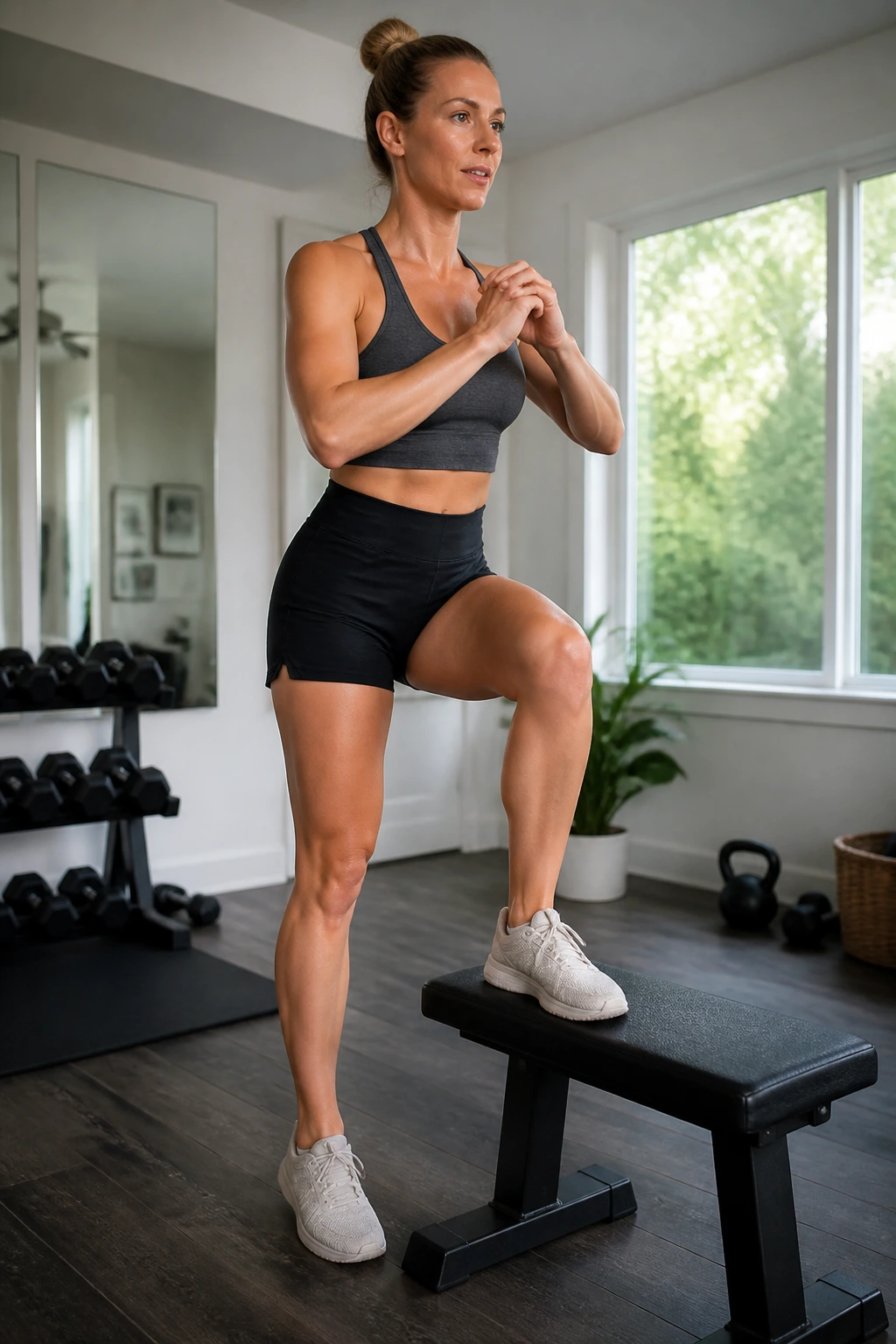
Unlike a squat, a step-up lets one leg do the honest lifting while the other rests. That makes it one of the cleanest ways to build thigh strength without endless repetition.
Use a sturdy step, bench, or low chair. Step up with the right foot, drive through the whole foot to stand tall, then lower for a slow count of 3. Do 8 to 10 reps on each leg for 4 rounds. Keep the working knee pointed forward and avoid pushing off hard with the back leg.
The slow lowering phase matters more than people think. That’s where the thigh has to brake your body weight, and braking is what builds control. If you rush down, you miss half the benefit.
Start with a lower step than your ego wants. Seriously. A knee-high step looks impressive until the pelvis starts tilting and the form falls apart. A box around shin height is usually enough for most people.
This one is excellent for home workouts because you only need one piece of stable furniture and a bit of patience.
10. Frog Pumps for a Thigh Challenge Burnout
If your hips get tired before your legs, frog pumps are a nice little reset that still keeps the lower body working. They’re not flashy. That’s part of the appeal.
Lie on your back, bring the soles of your feet together, and let your knees fall open. Press the bottoms of your feet together, tuck your pelvis slightly, and pump the hips up and down for 25 reps. Rest for 15 seconds, then do 20 reps, then finish with 10 fast pulses at the top. Two or three rounds is enough.
The position hits the glutes hard, but the adductors stay active too because your legs are turned out and your inner thighs are bracing the shape. It’s a smart finisher after lunges, squats, or step-ups. You can also use it on days when jumping sounds terrible.
Keep the movement small. High hips are not the goal. A strong squeeze at the top is. If your lower back starts doing the work, lower the range and tighten the ribs.
11. Romanian Deadlift plus Calf Raise
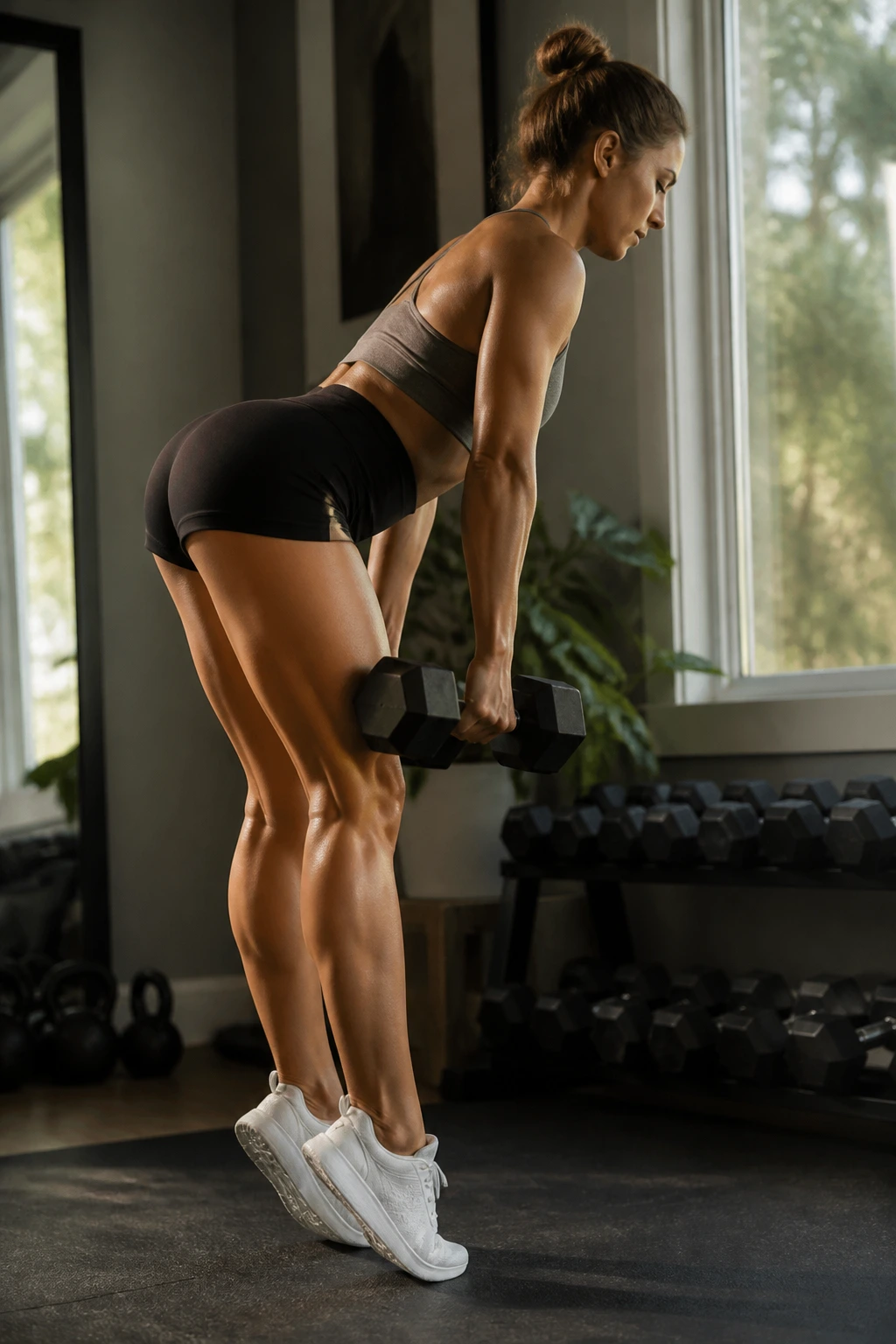
Why talk about the back of the leg in a thigh plan? Because thighs are not only front-thigh business, and strong hamstrings change how everything feels from hip to knee.
Hold a pair of dumbbells at your sides or one heavier dumbbell in front. Hinge at the hips with a slight bend in the knees, send the hips back, and lower until you feel a firm stretch in the hamstrings. Stand back up, then rise onto your toes for a calf raise. Do 10 to 12 reps for 3 sets.
Where the Stretch Should Live
The stretch should sit high in the hamstrings, not in the lower back. If you feel your spine rounding, stop the descent earlier. If the weight drifts away from your legs, bring it closer.
The calf raise at the top is not an afterthought. It adds lower-leg work and keeps the whole lower chain awake. That matters in a thigh challenge because strong legs are rarely isolated; they work together or they don’t work well at all.
Move slowly on the way down. The slow hinge builds more than speed ever will.
12. Prisoner Squat Tempo
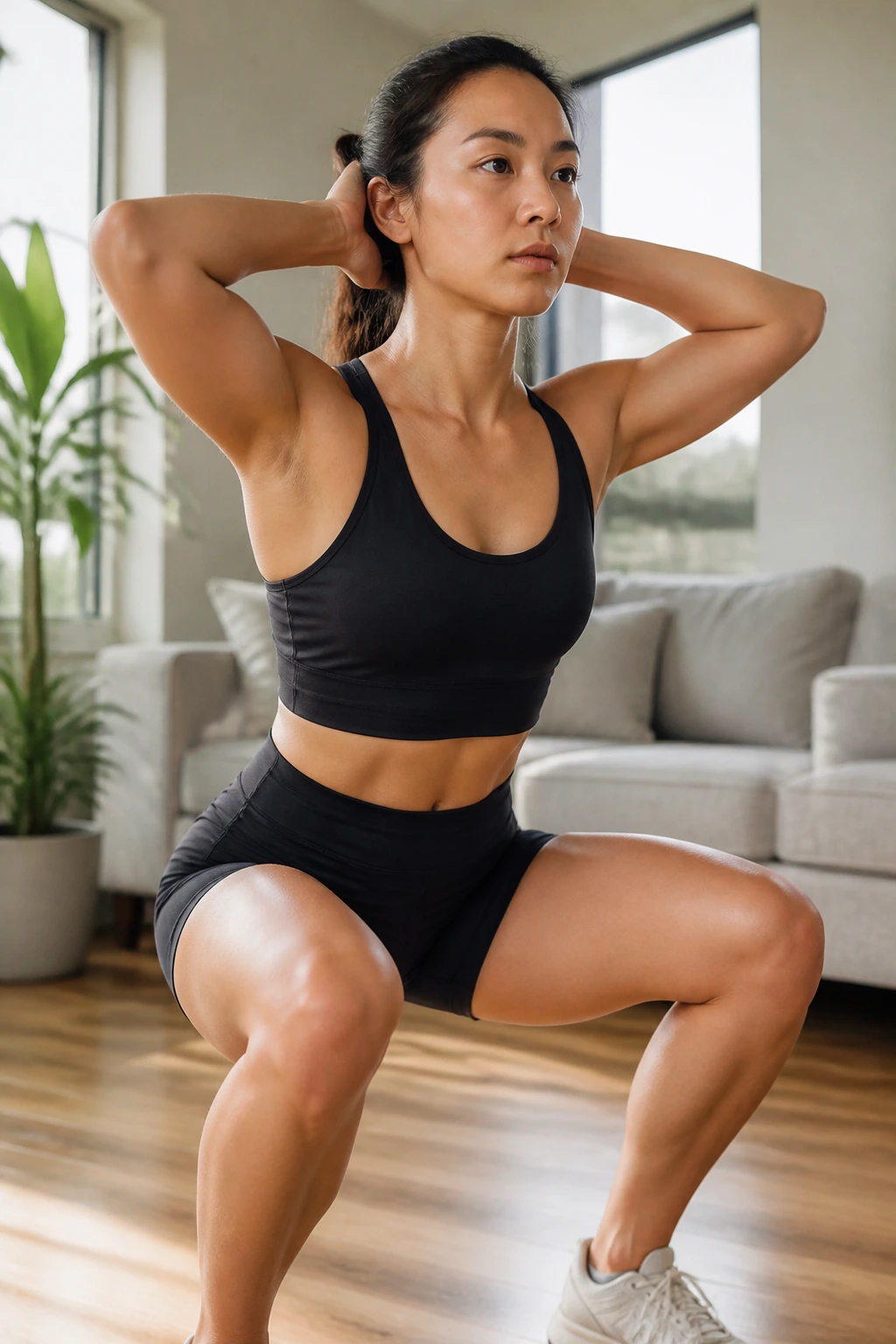
Fast squats are fun. Slow squats build thighs.
Stand with your hands behind your head, elbows wide, and feet about shoulder-width apart. Lower for a count of 3, pause for 1 count at the bottom, then rise for 1 count. Do 12 reps for 4 sets. Rest for 45 seconds. Keep the chest open and the ribs stacked over the pelvis.
The hands-behind-head position stops you from dumping the torso forward. That makes the quads work harder, which is exactly what you want in a thigh-focused session. The pause at the bottom removes momentum, so the legs have to own the lift instead of bouncing through it.
If your heels lift, widen the stance a little or reduce the depth. If the lower back feels crowded, don’t chase the deepest squat in the room. A cleaner half-squat beats a messy deep one every time.
This is one of my favorite “simple, but mean” moves. No equipment. No drama. Plenty of burn.
13. Mini-Band Lateral Walk Circuit
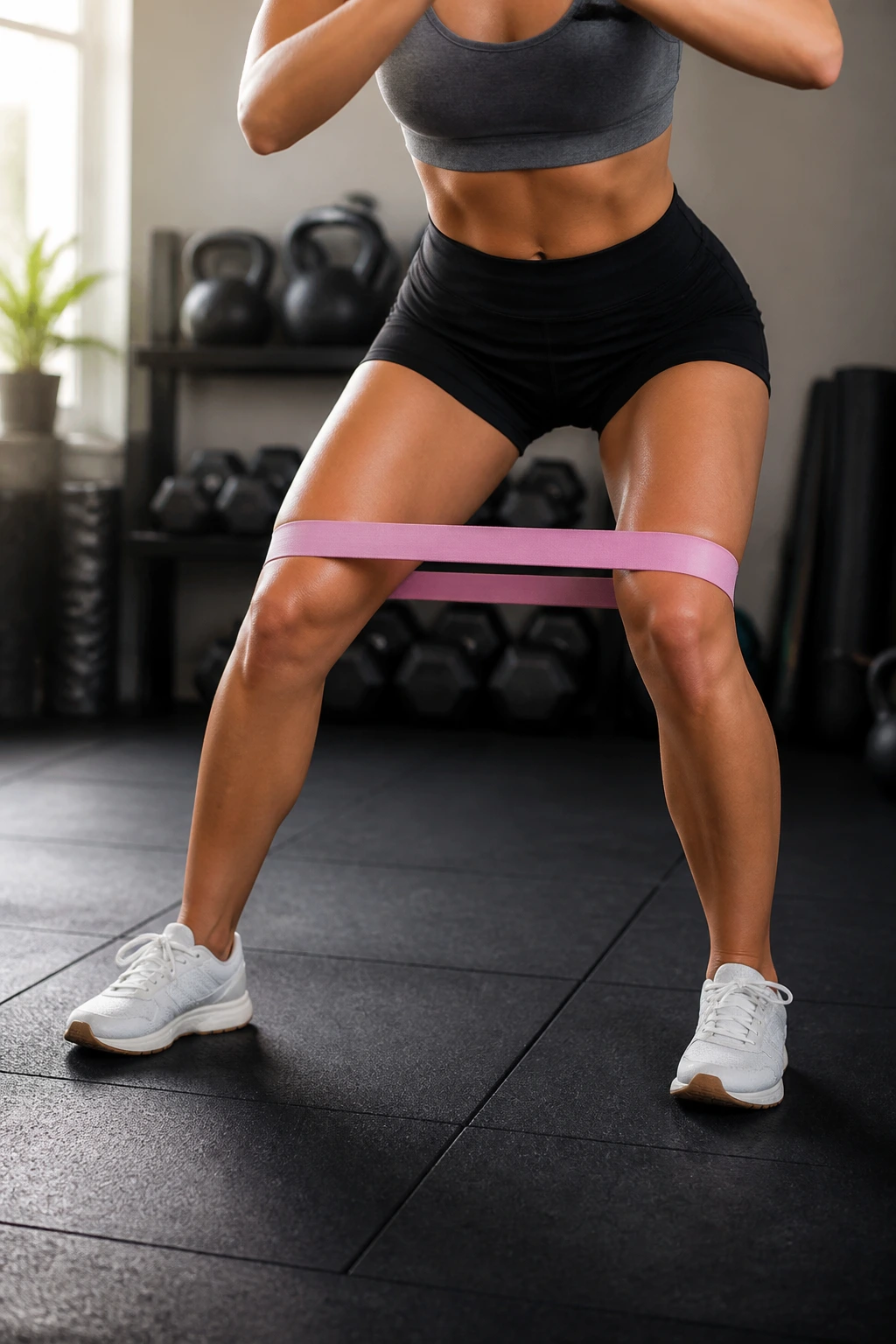
Put a band above the knees and take 10 steps right. Then 10 steps left. That sounds easy right up until your hips start lighting up and the thighs stop pretending.
Add the band just above the knees or around the ankles if you want a harder version. Stay in a shallow squat, keep the toes forward, and move one foot at a time instead of dragging the trail leg. After the side steps, do 12 banded squats and 20 small squat pulses. Repeat the whole circuit for 3 rounds.
Tiny Form Checks
- Keep the knees pressed gently outward
- Don’t sway your torso side to side
- Stay low enough to feel the legs, not the lower back
- Use a lighter band if the knees collapse inward
This circuit is small, but it’s mean in a clean way. The outer thighs and hip stabilizers have to work to keep the pelvis from wobbling. That can make your whole leg feel more connected, which helps the bigger lifts later.
A lot of people rush band work. Don’t. Slow steps make the band worth wearing.
14. Single-Leg Bridge March
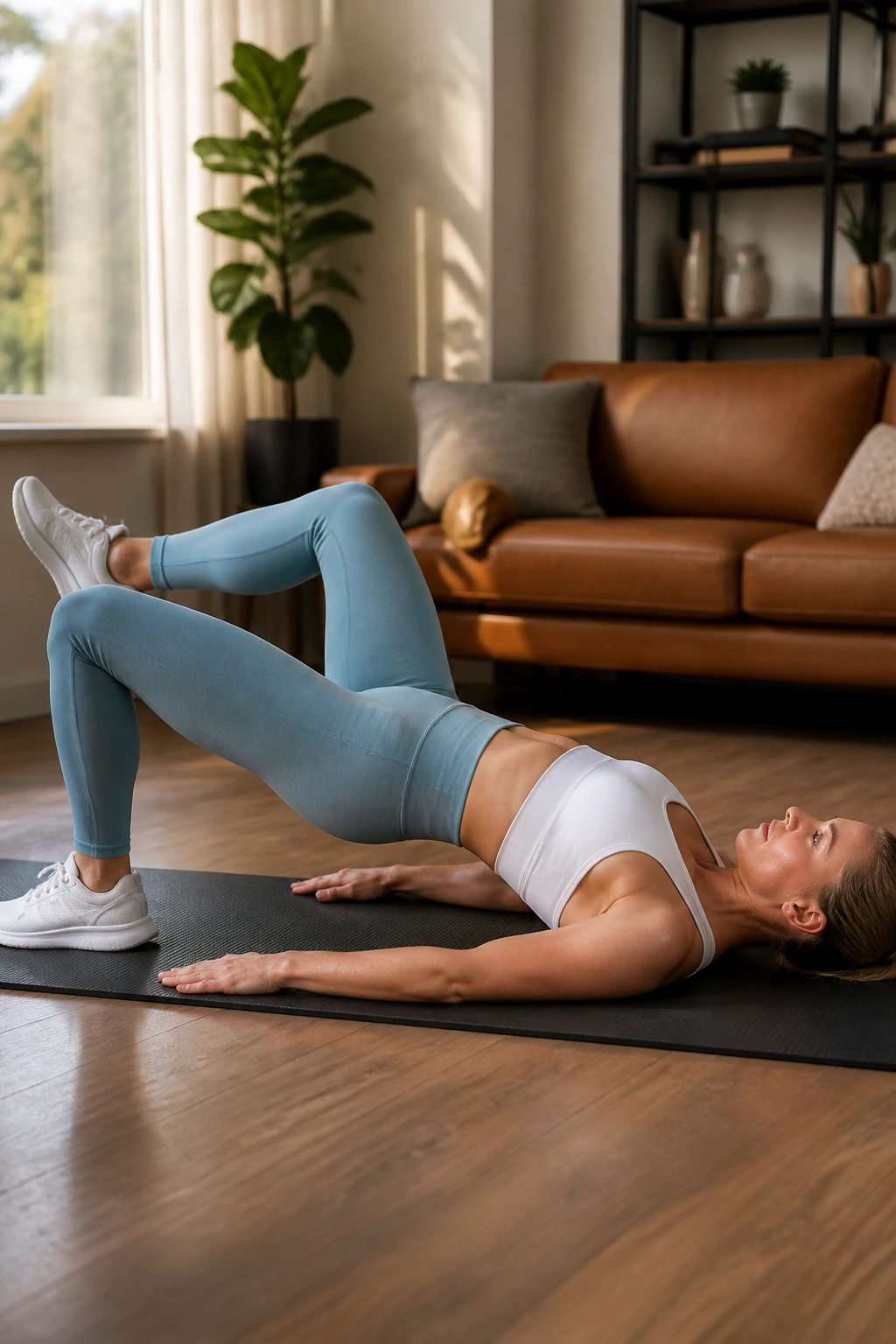
On the floor, one hip will try to tilt and cheat. That’s where the work lives.
Start in a glute bridge with both feet planted. Lift one foot a few inches off the floor, then lower it and switch sides, keeping the hips level the whole time. Do 8 marches per side, then hold the bridge for 20 seconds. Repeat for 3 sets. If that’s too much, keep both feet down and just hold the top position longer.
The single-leg march asks the hamstrings and thighs to stabilize one side of the pelvis at a time. It also exposes side-to-side differences fast. If one side shakes more, that’s useful information, not a flaw.
Keep the movement slow enough that your hips do not rock. A wobble here means the body found a shortcut, and shortcuts are exactly what we’re trying to remove.
This one works well on recovery days too. You still train, but you leave the floor feeling less battered than you would after jumps or heavy lunges.
15. Cossack Squat Flow
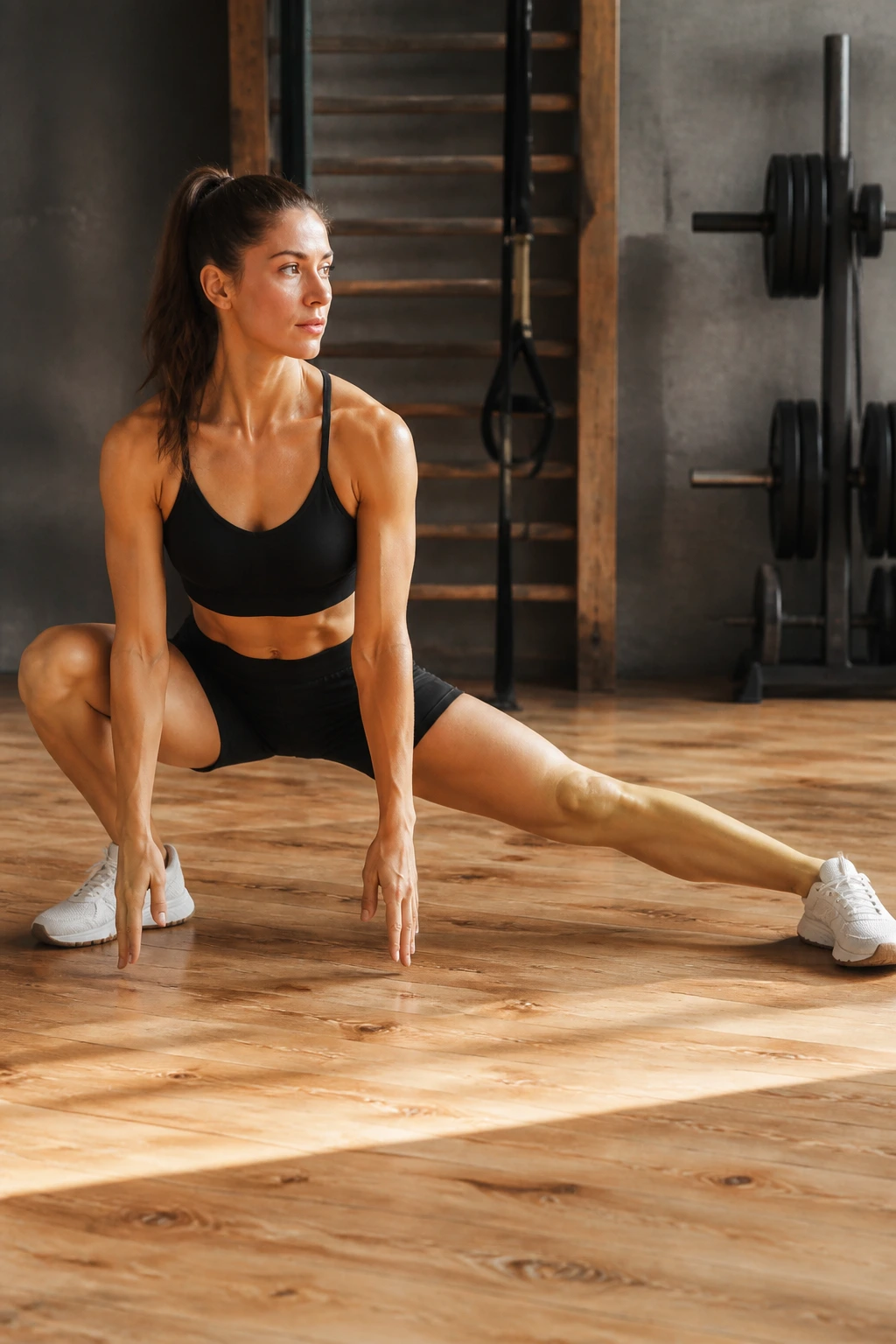
Need more inner-thigh work without jumping? The Cossack squat is the move. It looks a little strange the first time, then it becomes one of those exercises you keep reaching for.
Step wide, shift your weight to one side, and sink into that leg while the other leg stays straighter. Keep the chest lifted, sit the hips back, and move through a range you can own. Do 6 reps each side for 2 to 3 rounds. If you want a flow instead of straight reps, add a pause at the bottom for 2 seconds.
How to Scale It
- Stay higher if the ankle mobility is limited
- Hold onto a wall or post for balance
- Keep the straight leg’s foot flat if possible
- Reduce the depth if the groin feels pinchy
The beauty here is the blend of strength and mobility. Your thighs get loaded, then lengthened, then loaded again from a different angle. That’s a nice change from straight-up-and-down work.
Don’t force the deepest squat you’ve ever seen on video. A smooth Cossack with control is worth far more than a dramatic one that collapses.
16. Chair Squat to Toe Raise
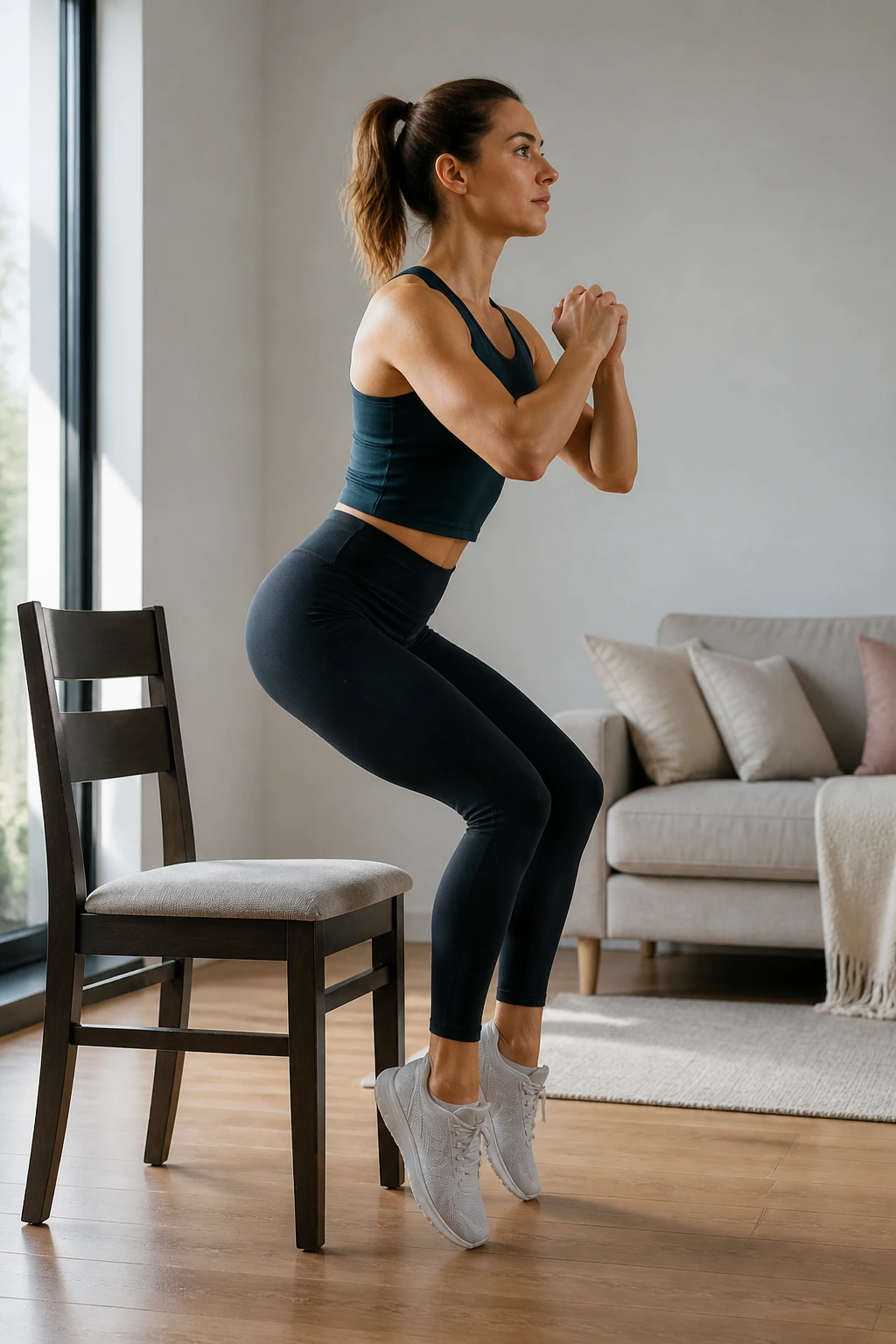
A chair squat earns its keep when your knees want a calmer day. It gives you a target, takes away some guesswork, and still makes the thighs work hard.
Stand in front of a chair, lower until you lightly touch the seat, then stand back up and finish by rising onto your toes. Do 10 reps for 3 sets. Keep the chest tall and the knees tracking forward, not caving inward. The toe raise adds a small calf burn and gives the lower leg some attention too.
The chair keeps depth consistent, which is helpful if your squat pattern changes from rep to rep. It also cuts down on the temptation to dive too low and lose position. That’s the part people rarely admit: a little structure often makes the workout harder, not easier.
If the seat is low, stack a cushion on it. If it’s too high, choose a lower chair. Small setup changes make a big difference in how the thighs feel the next morning.
A clean chair squat is underrated. Plain. Practical. Effective.
17. Heels-Elevated Goblet Squat
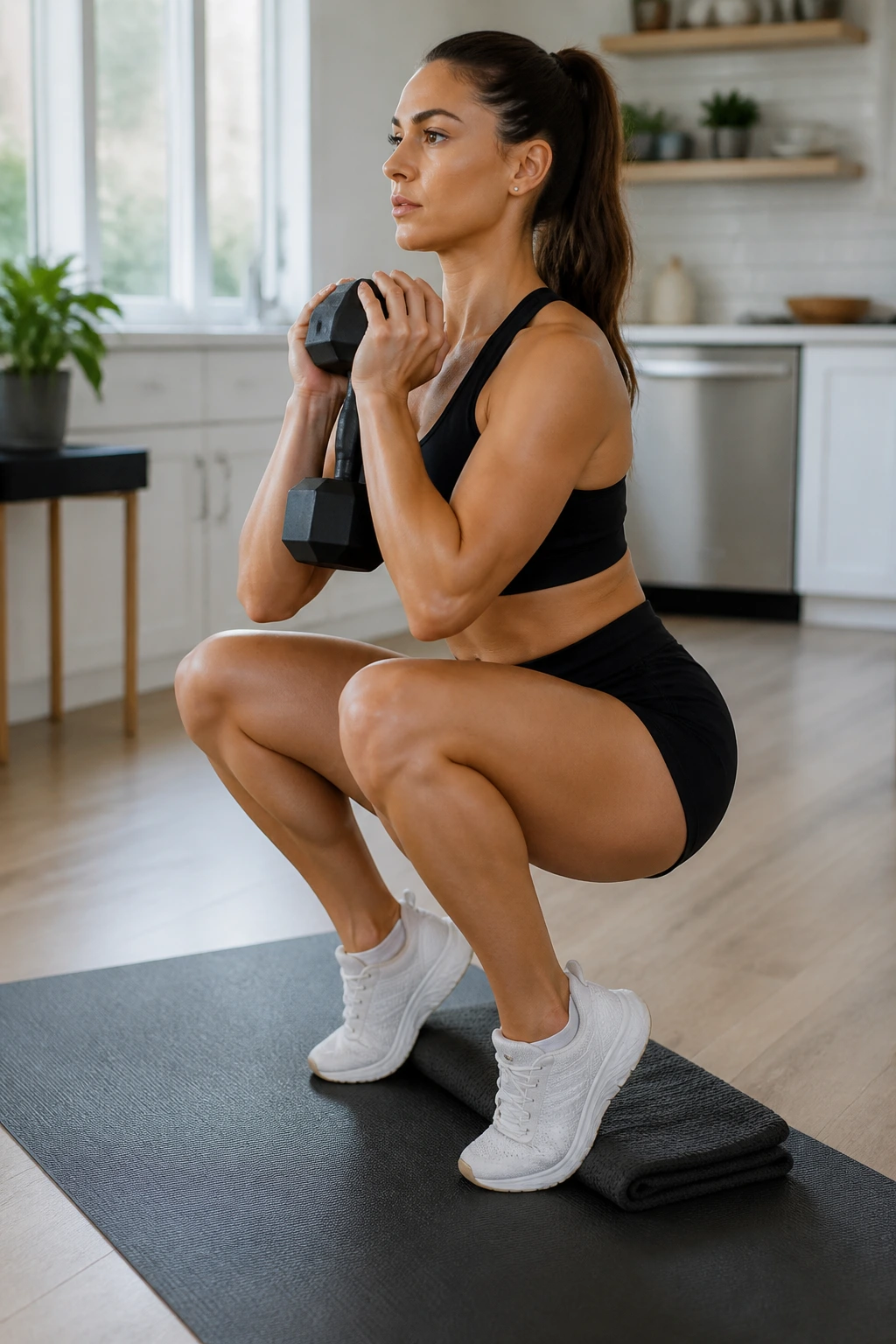
A small heel lift can change everything. Suddenly the quads have more to do, and the ankles stop fighting for extra range.
Place your heels on a folded towel, small plate, or slant wedge. Hold one dumbbell at chest height, then squat down for 8 to 12 reps across 3 sets. Pause for 2 seconds at the bottom of each rep if you want the thighs to work harder. Keep the elbows down and the chest proud.
The heel lift shifts the center of gravity forward a little, which often helps people stay upright. That means more demand on the front of the thighs and less strain on the lower back for many lifters. It is not magic. It is geometry.
Use a light to moderate weight first. If the heels wobble, fix the setup before worrying about load. The dumbbell should make the move tougher, not messier.
This one is a strong fit when you want a quad-heavy session without endless split squats.
18. Mountain Climber Hover Hold
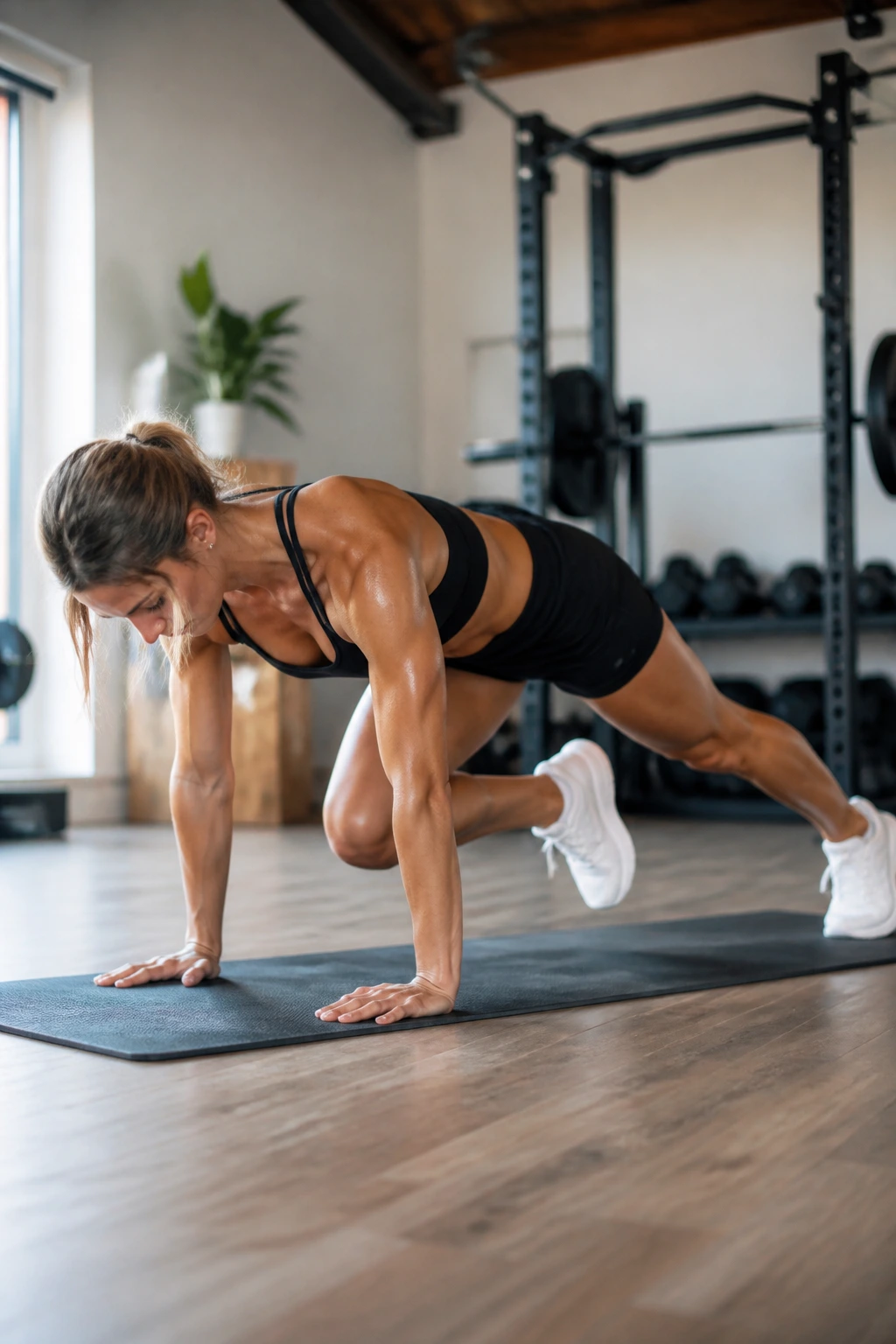
Want thighs and core working at the same time? Put your body in a hover and make it earn every inch.
Start in a high plank, then bring one knee toward the chest and switch legs in a controlled mountain climber pattern. First, hold the plank for 20 seconds. Then do 20 slow climbers. Rest for 20 seconds. Repeat for 4 rounds. If high impact bothers you, step one foot in at a time instead of jumping.
How to Keep the Hips Level
- Press the floor away with both hands
- Keep the shoulders over the wrists
- Avoid bouncing the hips up and down
- Shorten the range if the lower back tightens
The thigh work comes from the hip flexors and stabilizers trying to keep the legs moving without letting the pelvis sag. It is sneaky. You feel the core first, then the thighs start complaining.
The hover hold before the climbers matters. It puts the body under tension before the movement gets faster. That makes the whole set feel more controlled and less like random flailing.
19. Pulse Lunge Pyramid
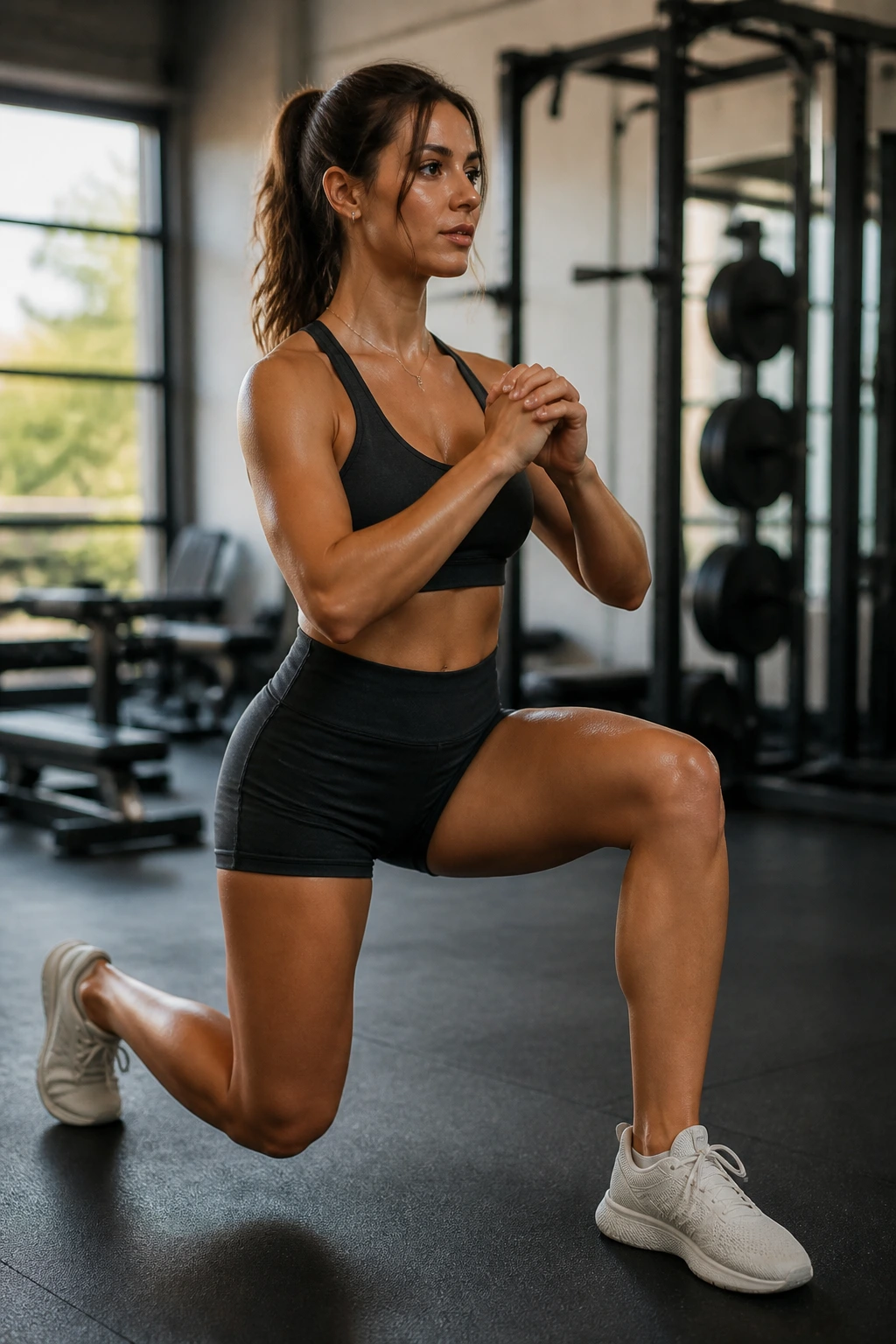
A normal lunge is clean. A pulse lunge is petty.
Take a regular forward or reverse lunge and do 6 full reps on each side. Then stay low and pulse 6 times. Stand, shake it out for 15 seconds, and repeat with 8 full reps plus 8 pulses. Finish with 10 full reps plus 10 pulses if your form still holds together. That’s one pyramid. Two rounds is enough for most people.
The reason this works is simple: the pulse keeps tension where you want it, right in the thigh, without giving the legs much room to coast. It also forces the stabilizers to stay awake after the larger reps start to fatigue you. That’s when the workout gets interesting.
If your knees get cranky with forward lunges, switch to reverse lunges. Same idea. Less irritation for a lot of people. Keep the torso steady and the front heel planted through the whole set.
This is the one I’d choose when I want a short workout that still feels honest.
20. The Ten-Minute Thigh Challenge Ladder
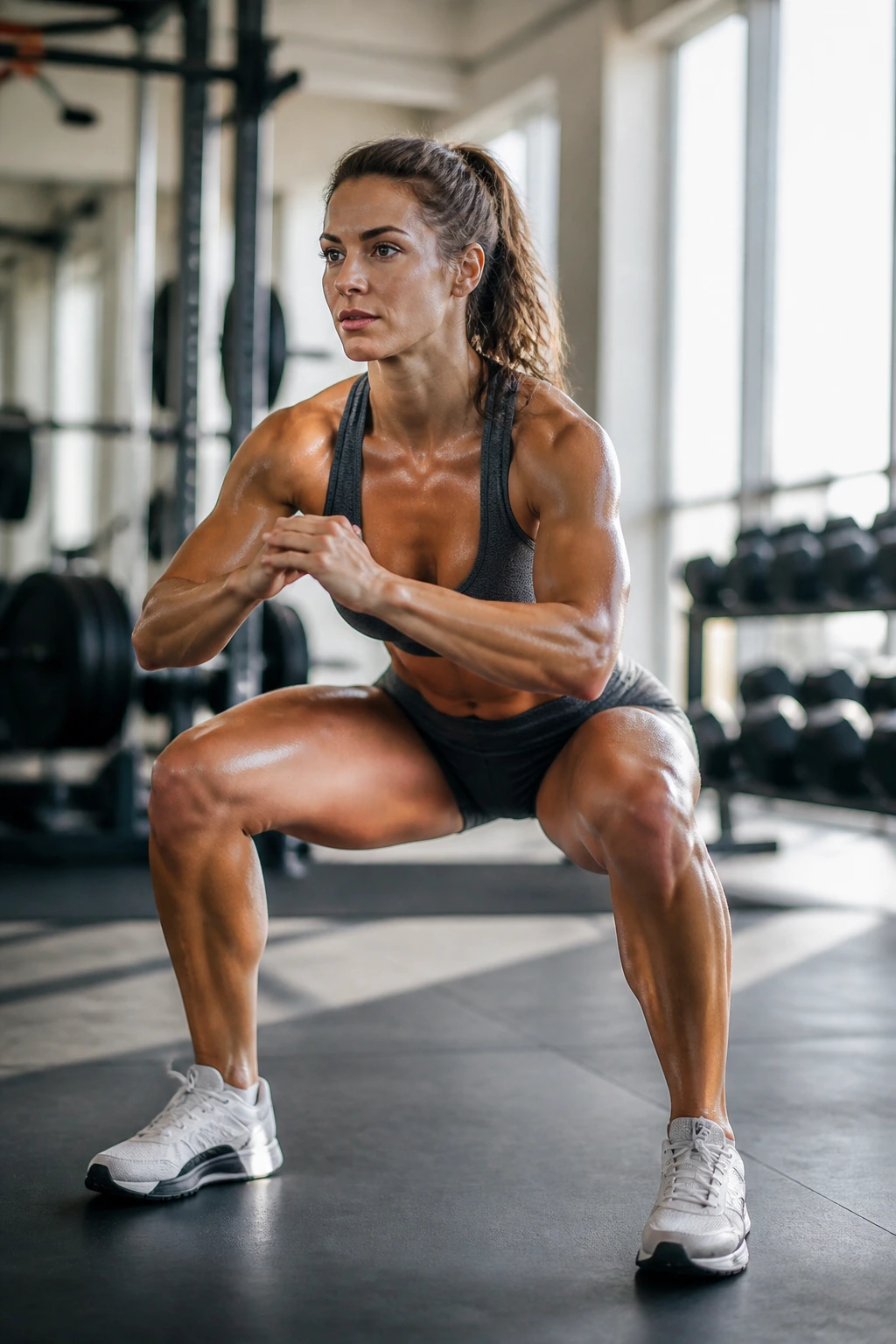
If you want one repeatable finisher, this is the one to keep. It is simple enough to remember without looking at your phone, and harsh enough to make your legs notice.
Do the following as a circuit, then repeat it once after a 60-second rest:
- 20 bodyweight squats
- 16 reverse lunges total
- 12 side lunges total
- 10 glute bridges with a 2-second squeeze
- 20-second wall sit
- 8 skater steps each side
Move at a steady pace, but do not let the reps get messy. The squats warm the thighs, the lunges load one leg at a time, the side lunges hit the inner thighs, and the wall sit finishes the quads with almost rude efficiency.
This is a useful option on days when motivation is thin and you still want the lower body to do real work. No fancy setup. No long explanation. Just a solid ten minutes and a bit of grit.
Do it cleanly, twice, and stop before form turns to junk. That’s the whole trick.
