



Ten minutes can do more for your core than an hour of sloppy crunches.
These ten minute ab workout routines for women are built for the space between everything else — between meetings, between school runs, between the walk you managed and the shower you still need. They are short on purpose. Short does not mean light, though. If you do them with real control, your midsection will know the difference.
A good core routine should make your trunk work like a trunk. That means your ribs stay stacked, your pelvis stays quiet, and your lower back does not steal the whole job. Crunches have their place, sure, but they are only one tool. Dead bugs, planks, side planks, standing knee drives, and anti-rotation holds often do more for actual strength because they force your abs to stabilize while the rest of you moves.
No fancy gear. No circus moves. Just enough variety to keep the work honest.
Pick the style that fits your day, and start with the first one if you want the cleanest, easiest place to begin.
1. The 40/20 Starter Circuit for Women Who Want a Clean Core Burn
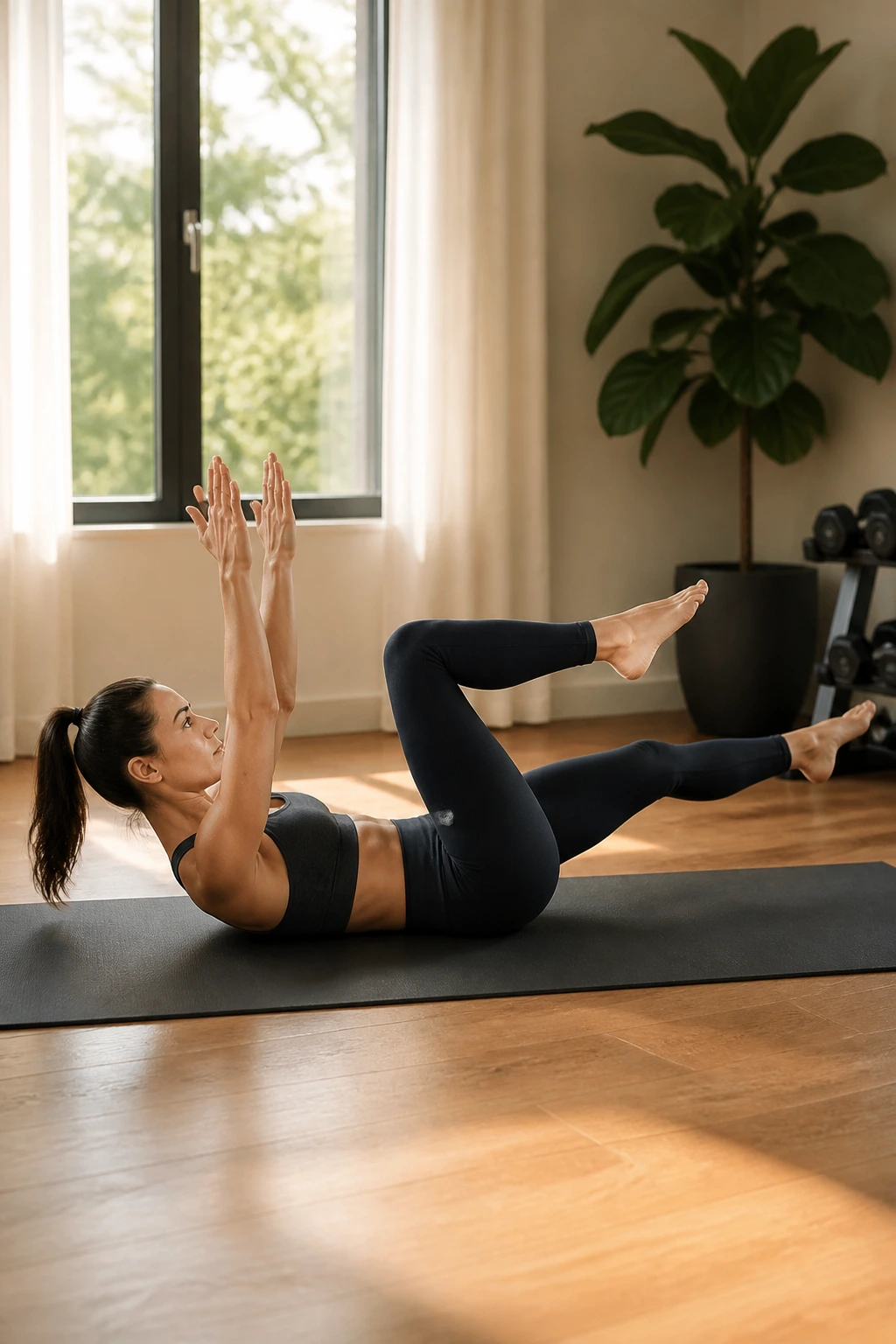
If your usual ab work leaves your neck tired and your stomach confused, this is the reset. It uses slow, controlled moves that make your core brace without turning the whole thing into a rush. That matters. Fast reps can feel productive, but control is what trains the deep muscles that hold you together when you stand, bend, and lift.
How to Run It
- 40 seconds dead bug
- 20 seconds rest
- 40 seconds heel taps
- 20 seconds rest
- 40 seconds forearm plank
- 20 seconds rest
- 40 seconds bird dog
- 20 seconds rest
- 40 seconds plank shoulder taps
- 20 seconds rest
Repeat the full circuit once.
Dead bugs and bird dogs sound tame until you do them well. Then they get sneaky. Keep your lower back lightly pressed toward the floor during the floor moves, and move your limbs slower than you think you need to. If your ribs pop up, you’re losing the point of the exercise.
Best cue: exhale as the arm or leg moves away from center. That tiny breath reset keeps the abs engaged without making you hold your breath like a nervous lifter.
2. The Standing Knee-Drive Core Drill
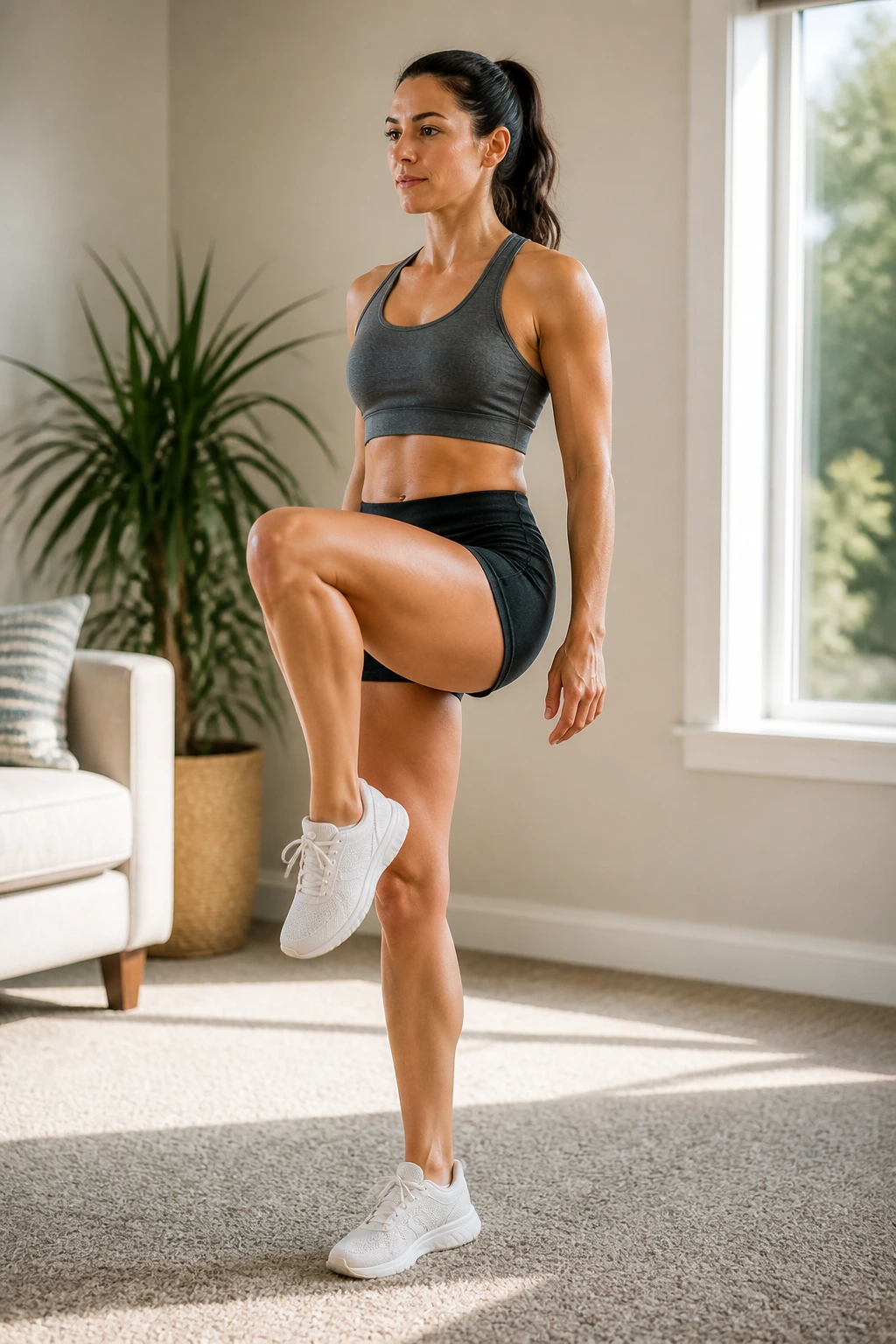
Who says ab work has to happen on the floor? Standing core work is one of my favorite options for days when your hips feel stiff, your back feels cranky, or you just cannot face another minute on a mat. It still asks for a brace, but it also wakes up your balance, which is half the battle for a strong midsection.
Start with marching knee drives, then move into cross-body reaches, standing side crunches, and slow squat holds with alternating knee lifts. You want to feel the torso stay tall while the lower body does the busy work. That tall posture is not decoration. It is the exercise.
The nice part is that this format fits almost anywhere. A patch of carpet. A hotel corner. A spot by the kitchen counter while dinner finishes. If your workout window is tiny, this one fills it without turning your floor into a wrestling match.
Keep the pace brisk but not sloppy. A rushed standing routine turns into flailing fast. A controlled one makes your abs and hips talk to each other, which is the whole point.
3. Pilates Floor Flow That Feels Smooth, Not Sloppy
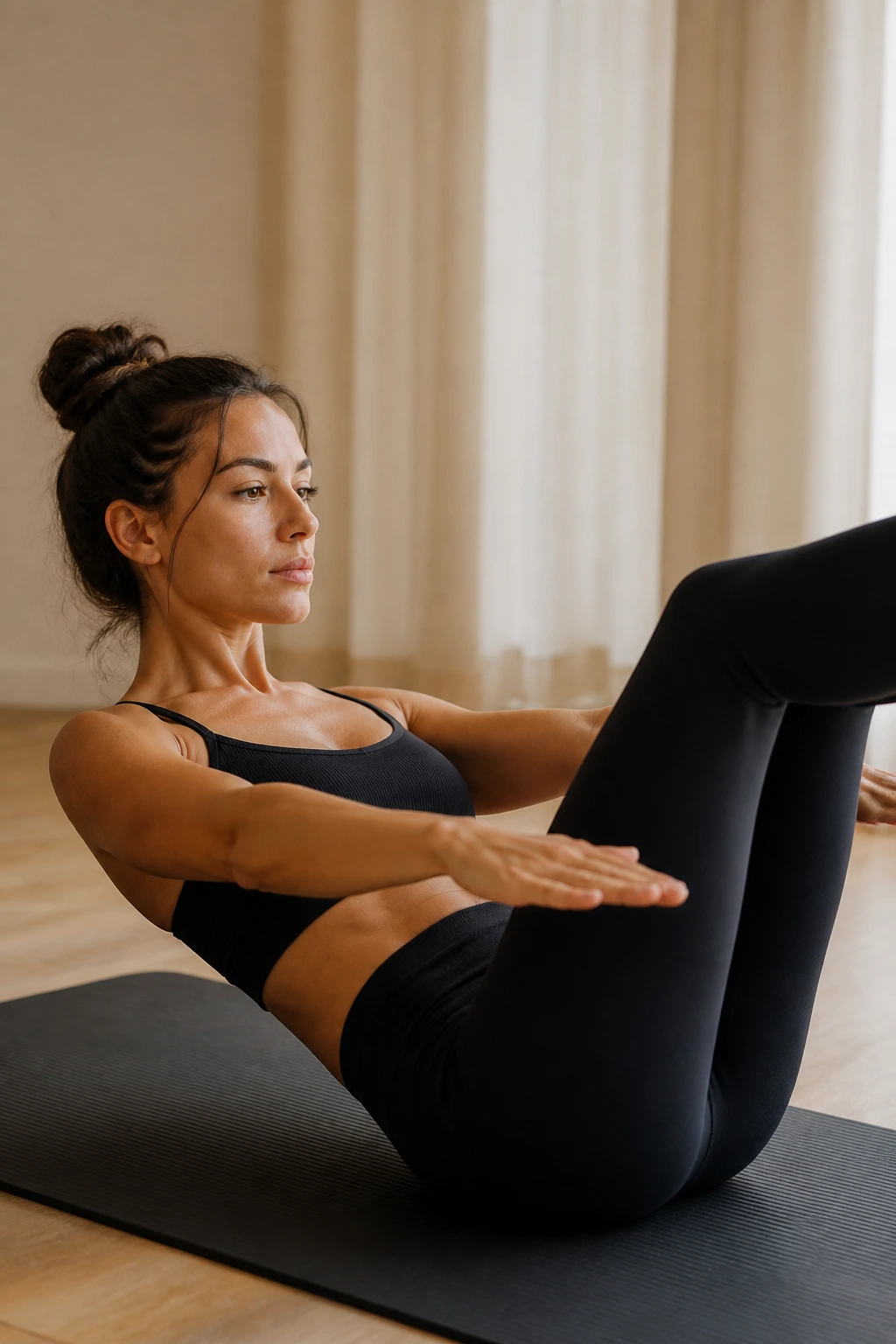
Picture a mat, a quiet room, and no desire to jump. That is where this one shines. Pilates-style ab work uses small, precise motions, and those tiny motions can light up your core faster than giant crunches because they keep tension on the muscles the whole time.
The Sequence
- 1 minute hundred hold with arm pulses
- 1 minute tabletop toe taps
- 1 minute single-leg stretch
- 1 minute double-leg reach
- 1 minute scissors
- Repeat once
Keep your lower back heavy on the mat. If it starts arching, bend your knees more or shorten the lever. That is not cheating. That is smart training.
This routine feels especially good if you like a cleaner, calmer burn rather than a sweaty mess. Your breathing matters here too. A steady inhale through the nose and a sharp exhale on the effort will help the abs keep doing their job instead of letting the hip flexors run the show. That little detail changes everything.
4. Reverse Crunches and Toe Taps for Lower-Ab Control
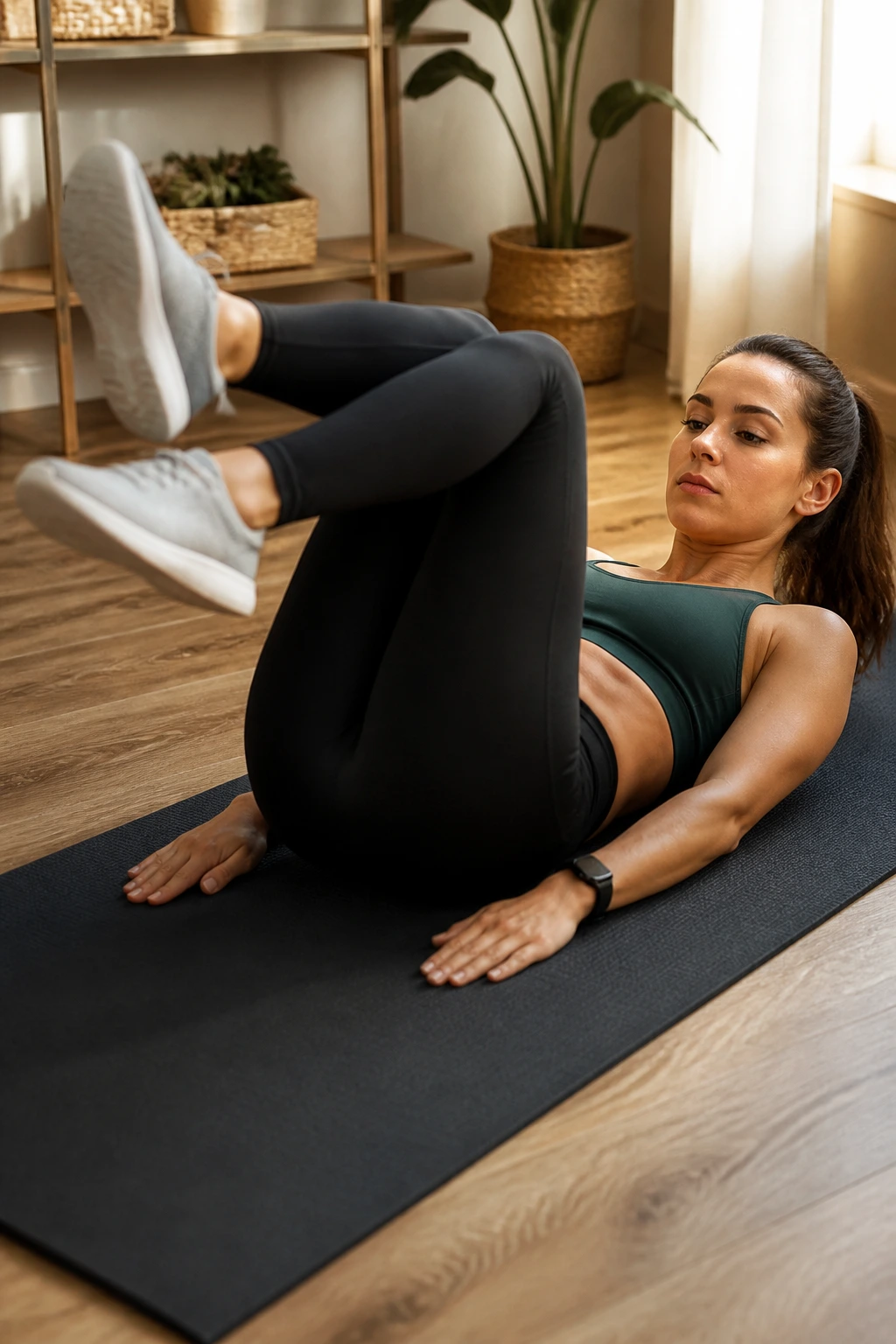
Why do so many lower-ab routines miss the mark? Usually because the legs are moving while the trunk is along for the ride. This session fixes that by pairing curl-up work with dead-center control. It is simple, but it is not soft.
Form Check
- Press the lower back into the mat before each rep.
- Lift the hips only a little on reverse crunches.
- Stop the toe tap before your back arches.
- Exhale on the lift, not after it.
- Keep the chin gently tucked.
Use reverse crunches, bent-knee toe taps, dead bug heel lowers, and a short plank hold to finish. Two rounds of 40 seconds on, 20 seconds off will eat the full ten minutes in a good way.
The mistake people make here is swinging the legs down fast. That turns the move into momentum training. Slow it down. Pause at the top for half a second and make the abs own the return. You should feel the work around the lower belly and the front of the hips, but the lower back should stay quiet.
5. Slow Holds That Build Real Core Strength
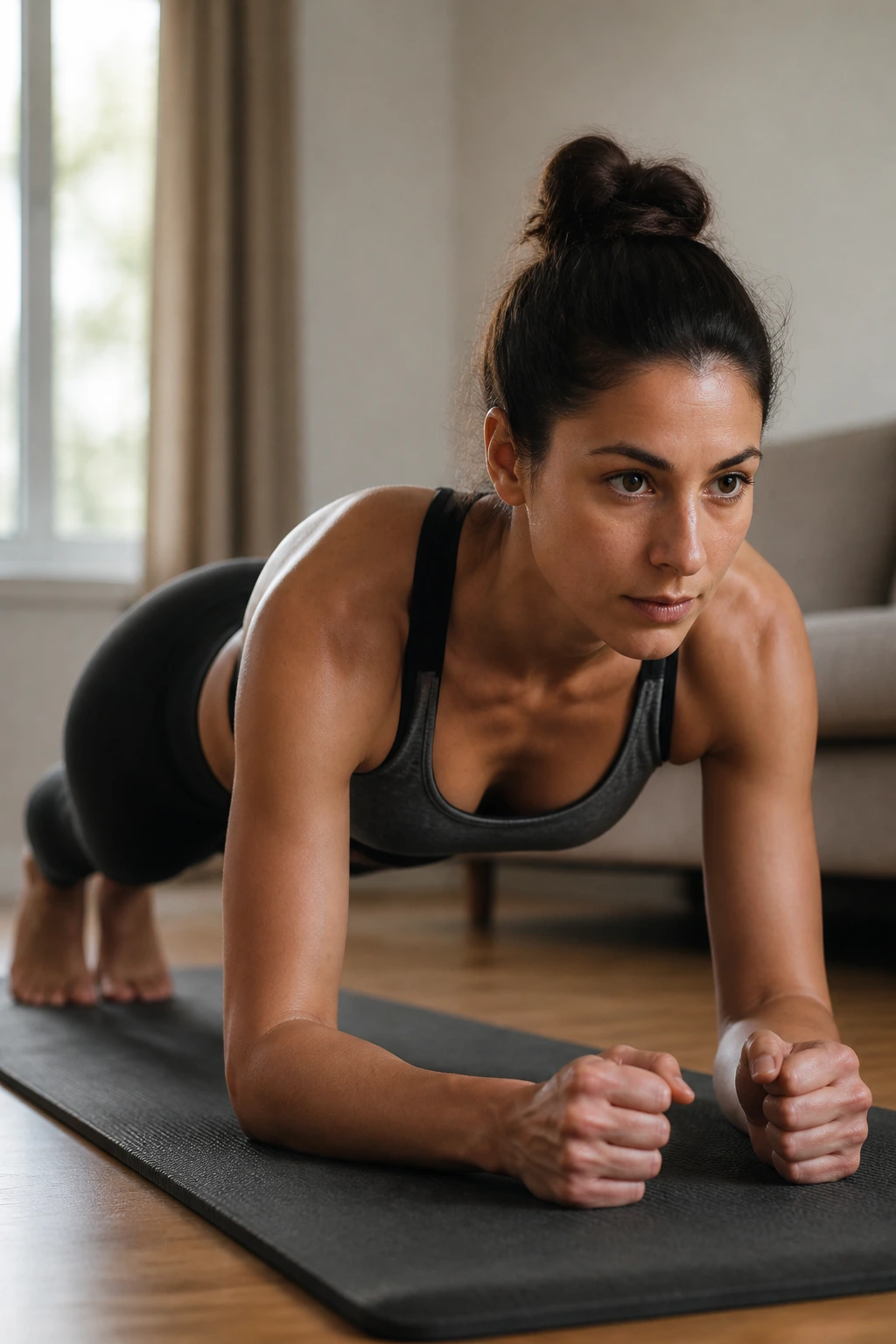
Slow is underrated. People think a good ab workout has to leave you panting like you sprinted stairs, but long holds tell a different story. They expose every wobble, every cheat, every habit your body has picked up from sitting too much or rushing through exercises.
Try a dead bug hold, a hollow-body hold, a forearm plank, a side plank, and a bird dog pause. Hold each one for 20 to 30 seconds, then take 10 to 15 seconds to reset. Run the sequence twice. Ten minutes, done.
The value here is not the burn alone. It is the shape. Your body learns what stacked ribs and a tucked pelvis feel like, and that carries over to lifting groceries, carrying a child, or bracing on a heavier lower-body workout. If you train lower body with any seriousness, this kind of work pays rent.
No drama. No crunch marathon. Just tension held in the right place for long enough to matter.
6. Oblique Rotation Work That Beats Endless Side Bends
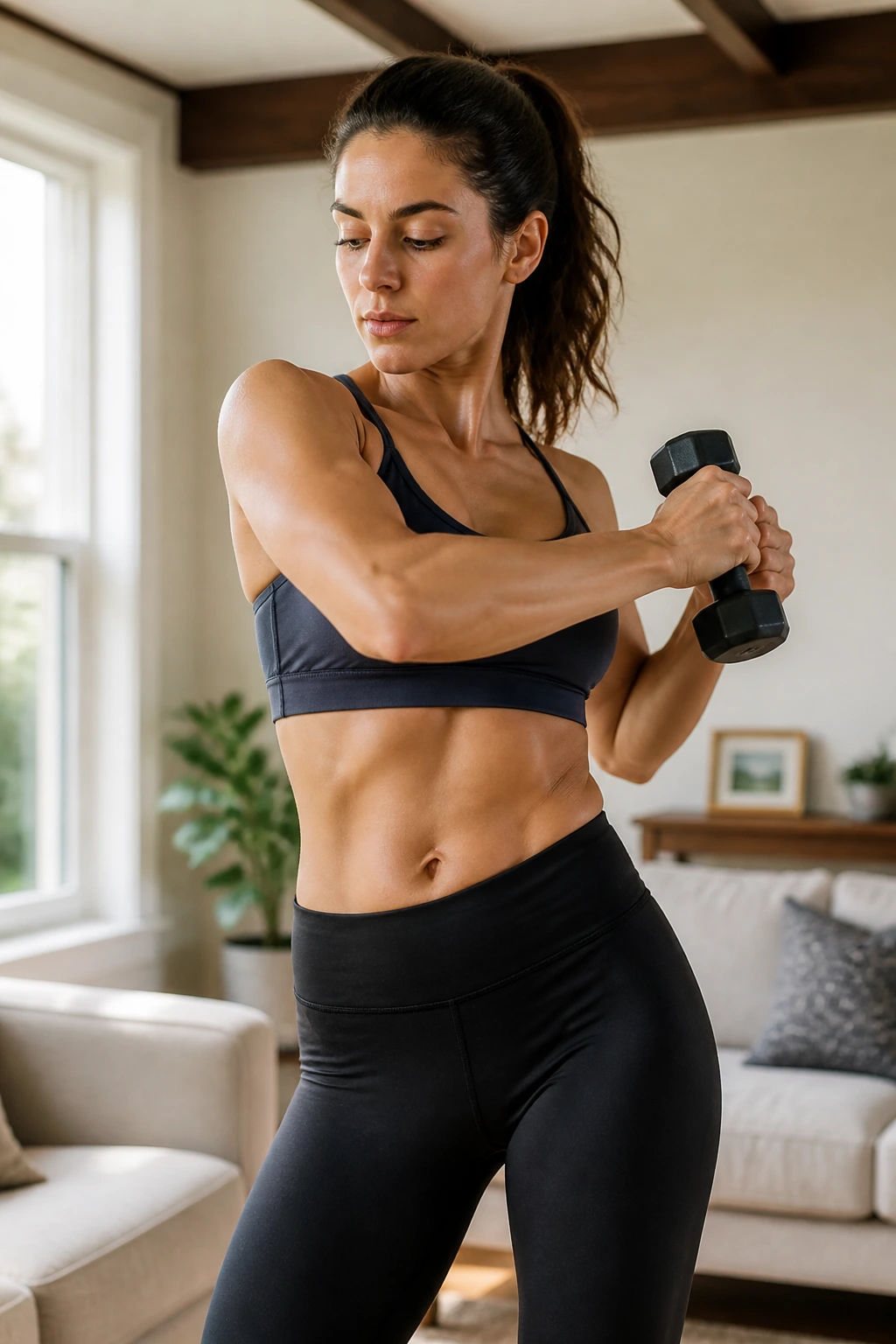
Unlike endless side bends, rotation work teaches the torso to twist and then stop. That sounds small, but it is a big deal. Your obliques are not just there to carve shape at the waist; they help resist awkward twisting when you reach, turn, lift, or catch yourself off balance.
Use standing woodchops, cross-body mountain climbers, side plank reach-throughs, seated twists with the feet planted, and diagonal knee drives. Keep each move crisp. If your shoulders are doing all the rotating, you are missing the real job.
This routine is best for women who want a stronger midsection without making every session feel like a crunch festival. It also pairs well with running or lifting because both ask your torso to stay steady while your limbs move.
The watch-out: do not yank through the twist. A good oblique session feels controlled at the edges, not whipped around the center. If your lower back complains, shorten the range and slow down. That tiny change usually fixes more than people expect.
7. The Low-Back Friendly Deep Core Reset
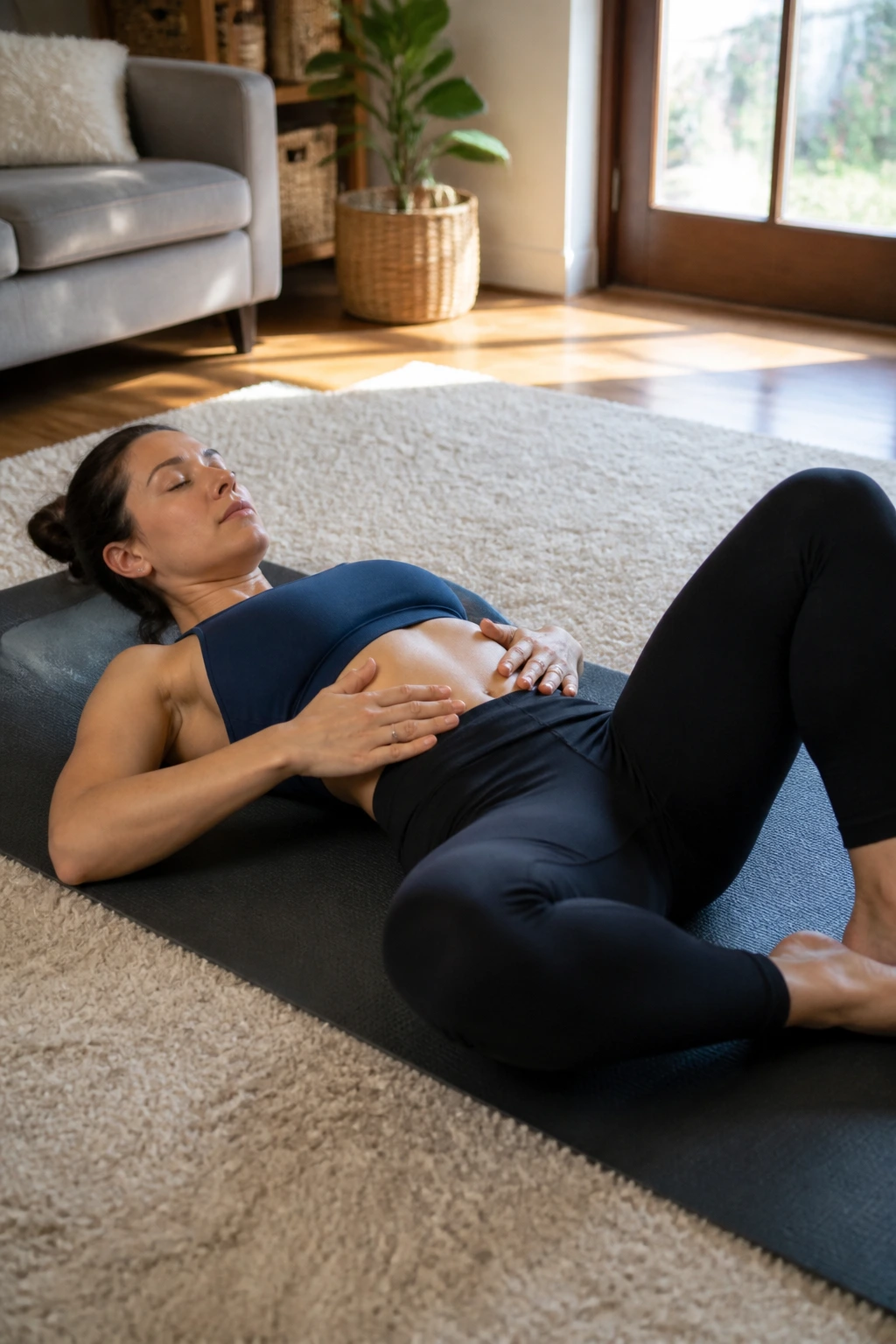
Some days your abs are fine and your back is not. On those days, the answer is not to push harder. It is to ask for more control and less range.
Start with 90/90 breathing on your back, then move to heel slides, dead bug toe taps, glute bridges with a slow exhale, and a wall plank or countertop plank to finish. The whole idea is to keep the ribs from flaring and the pelvis from tipping forward. That is the deep-core game.
A lot of people skip these quieter drills because they do not look intense. Bad call. They are often the first step toward better form in everything else. If your abs never learned how to brace without arching your back, even a basic plank can feel wrong. This fixes that.
Keep the movements tiny and the breathing steady. If you feel your back instead of your center, make the lever shorter or take one step back in difficulty. That is how this kind of work stays useful instead of annoying.
8. Slider Core Moves With a Towel or Socks
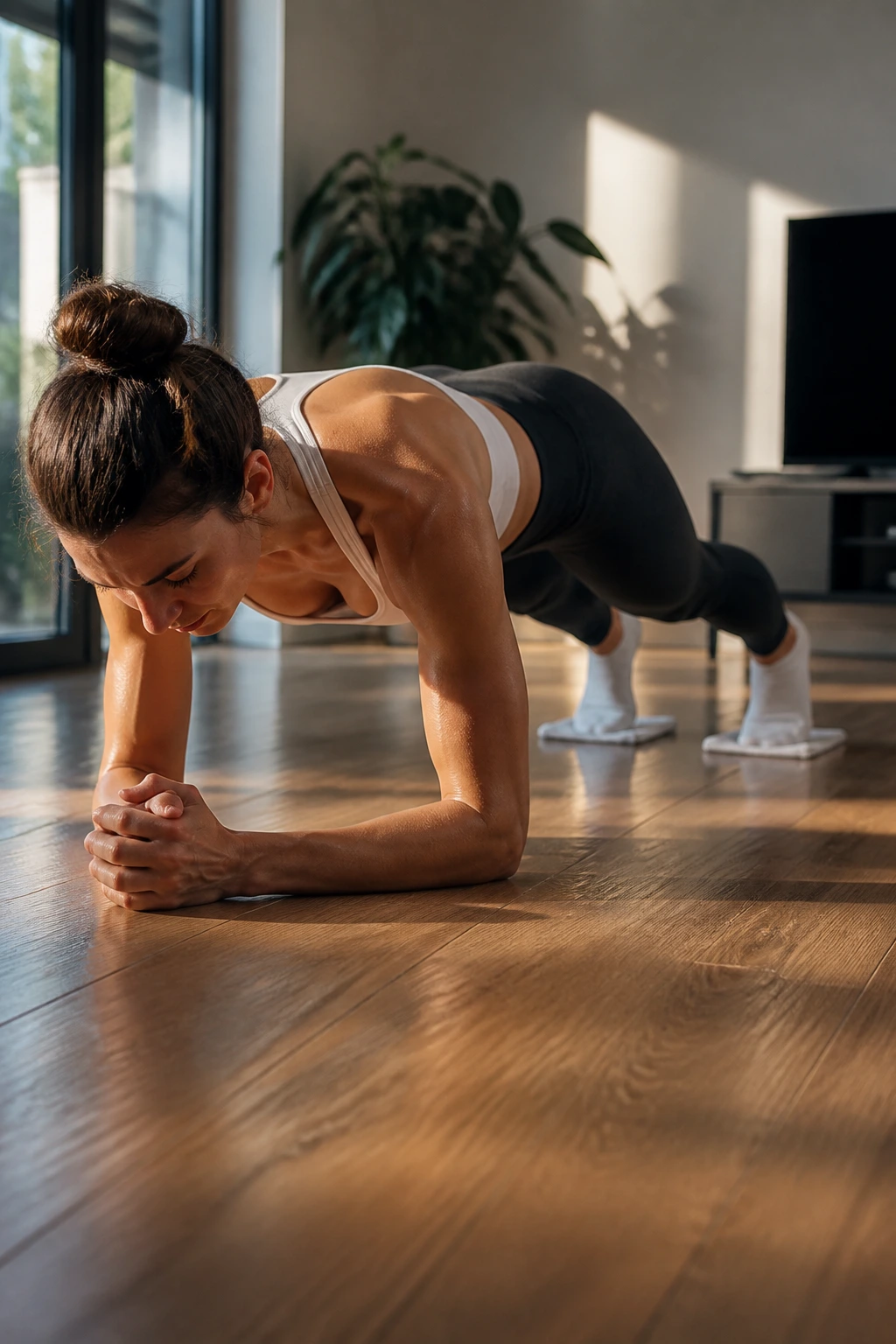
Got a slick floor and a towel? That is enough. Slider work is brutal in a very honest way because it makes your core fight to keep your hips from wandering all over the place.
How to Keep It Honest
- Keep your hips level the whole time.
- Move slower than you think you need to.
- Shorten the range if your lower back arches.
- Stop the set the second your shoulders start shrugging.
- Use socks on a smooth floor or towels on hardwood.
A simple ten-minute version can run like this: plank body saw, mountain climber slides, pike pulls, bear crawl hold, and sliding knee tucks. Forty seconds on, twenty seconds off, twice through. That is plenty.
These moves hit the abs because they ask them to stop motion, not just make motion. That is why they feel so different from floor crunches. You will know it worked when your center feels tired in a clean, workmanlike way, not in a crampy, sloppy one. If the floor is too slick, widen your stance a little. Easy fix.
9. The No-Crunch Plank Ladder
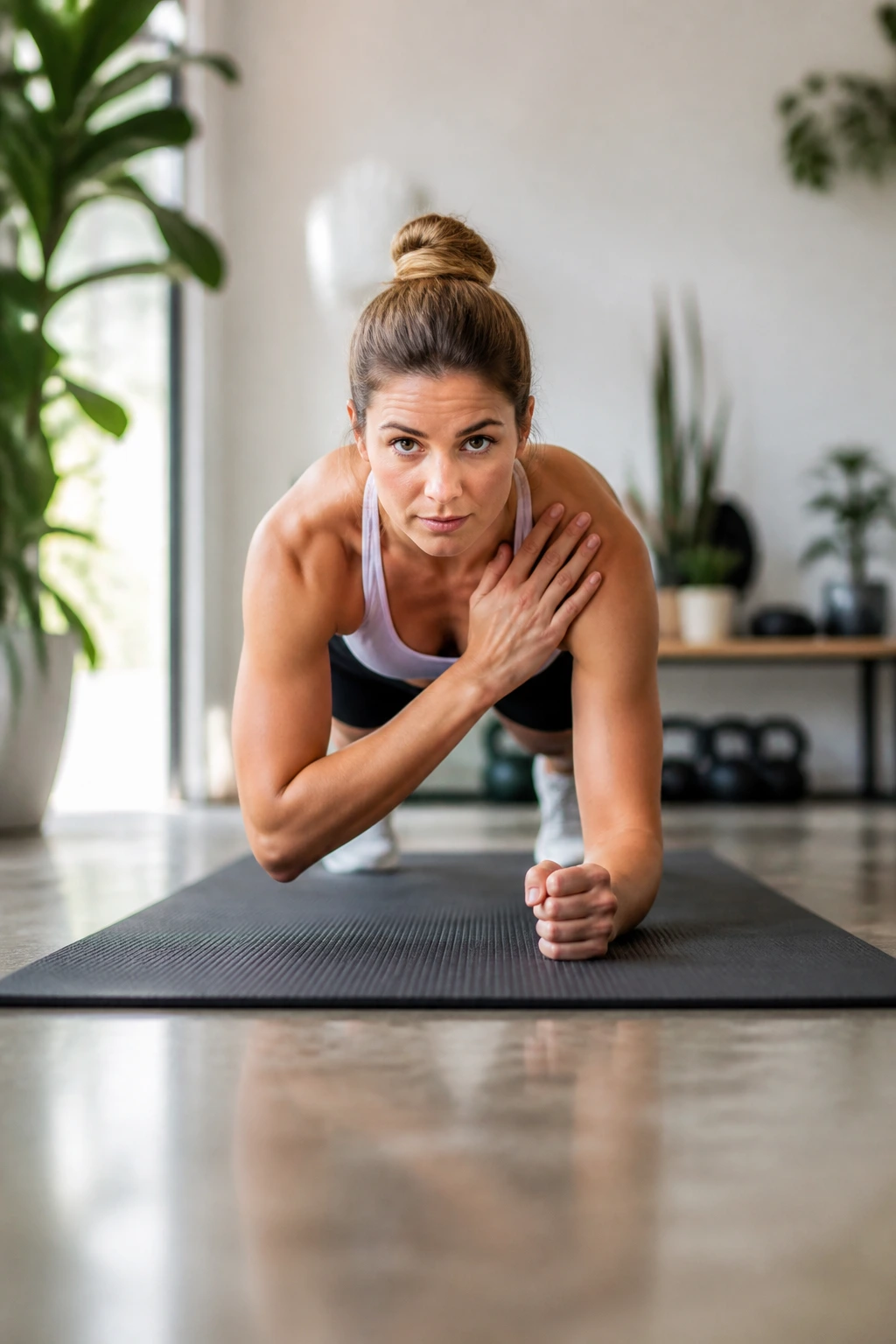
Planks get a bad rap because people rush them and then pretend the shaking means form is fine. It is not. A plank done well is quiet, hard, and sneaky.
Build a ladder like this: 30 seconds forearm plank, 20 seconds shoulder taps, 30 seconds side plank on the right, 20 seconds side plank reach, 30 seconds side plank on the left, 20 seconds rest. Repeat the ladder once. That is a full ten minutes if you include the tiny breaks.
What makes this work is anti-extension and anti-rotation. Fancy words, simple job: keep your spine from sagging and keep your torso from twisting when your limbs move. That skill matters far beyond ab day.
If regular crunches leave you bored, this is a cleaner use of your time. It is also one of the best short routines for anyone who lifts weights, because it teaches bracing under load without needing a barbell in the room. Keep your glutes lightly squeezed, your neck long, and your eyes on one spot.
10. A 10-Minute Ab Workout for Women After Cardio

After a walk, ride, or treadmill session, your body is already warm, which makes this the easiest time to get good core work done. You do not need a separate long setup. You just need a clean sequence and enough discipline to stay controlled when your heart rate is up.
Use 45 seconds of work and 15 seconds of rest for five moves, then repeat the set once. A good lineup is mountain climbers, bicycle crunches done slowly, standing knee drives, plank step-outs, and dead bugs. The key is not speed. The key is that your torso stays steady while your limbs do the moving.
This is a nice option for women who want a short finish after cardio without turning the whole session into chaos. It feels athletic, but it still has structure. If the bicycle crunch starts pulling on your neck, keep one hand lightly behind the head and slow the legs down. Fast legs with a sloppy trunk are a waste of time.
One small note: if you are already fried from cardio, skip the jumpy version of any move. A controlled step-out beats a frantic jack every time.
11. The One-Dumbbell Core Circuit
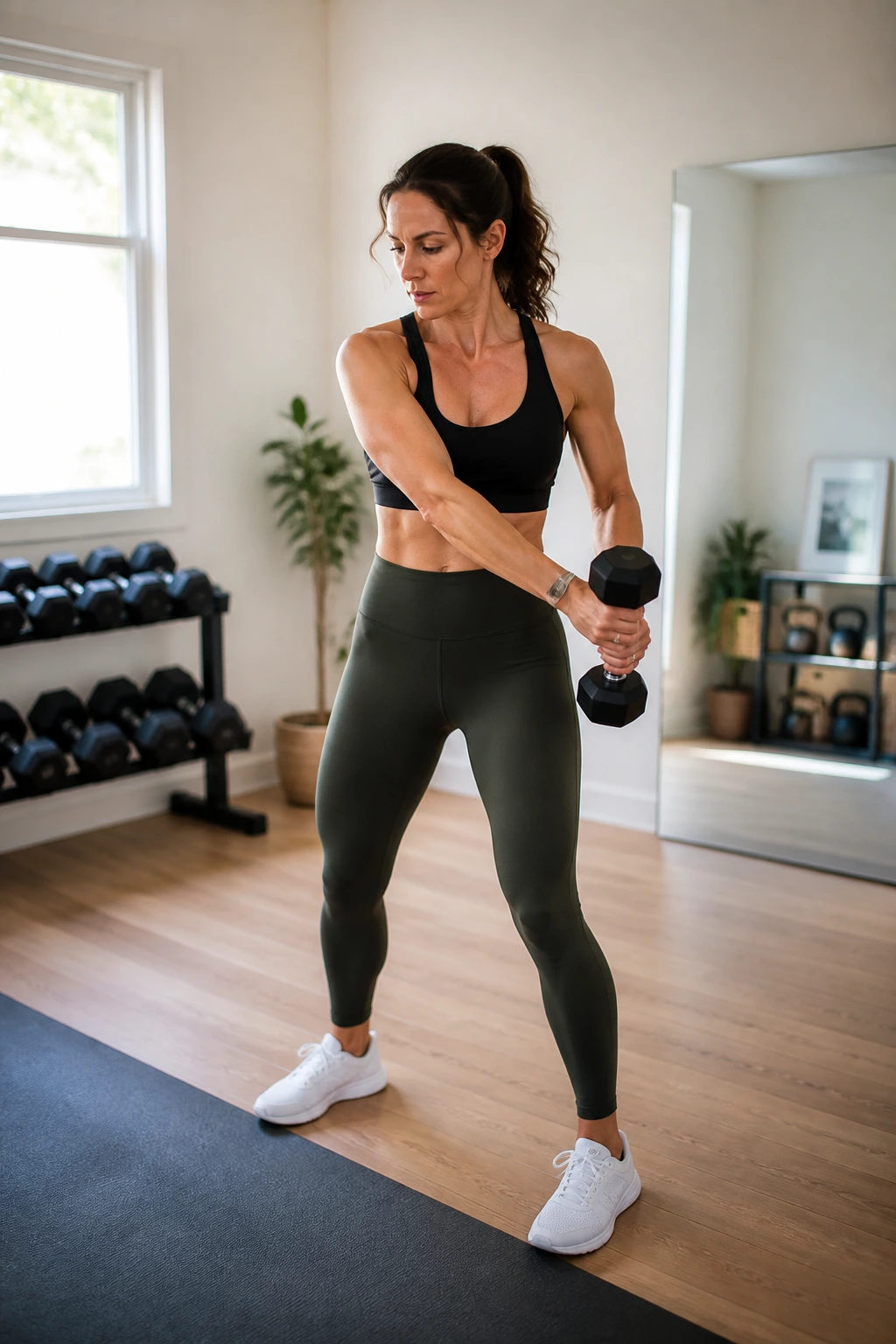
Bodyweight is enough most days. A single dumbbell makes the core work harder because it forces your trunk to resist uneven load, and that is a very real-life skill. Carrying groceries in one hand proves the point fast.
The Moves
- Suitcase march on the right side
- Suitcase march on the left side
- Half-kneeling dumbbell press with a brace
- Standing woodchop
- Offset dead bug with the dumbbell held over the chest
Run each move for 45 seconds, rest 15 seconds, then repeat the whole circuit. A light to moderate dumbbell is enough. Too heavy, and the exercise stops being about your abs and starts being about surviving the set.
Keep your ribs down when the weight goes overhead or across the body. That is where people tend to arch and pretend it is strength. It is not. Real control looks calmer than that.
This routine is especially good if you already train legs or upper body and want core work that carries over. It also teaches you to stay square while one side is loaded. That skill matters more than people admit.
12. The Tiny-Space Hotel Room Routine
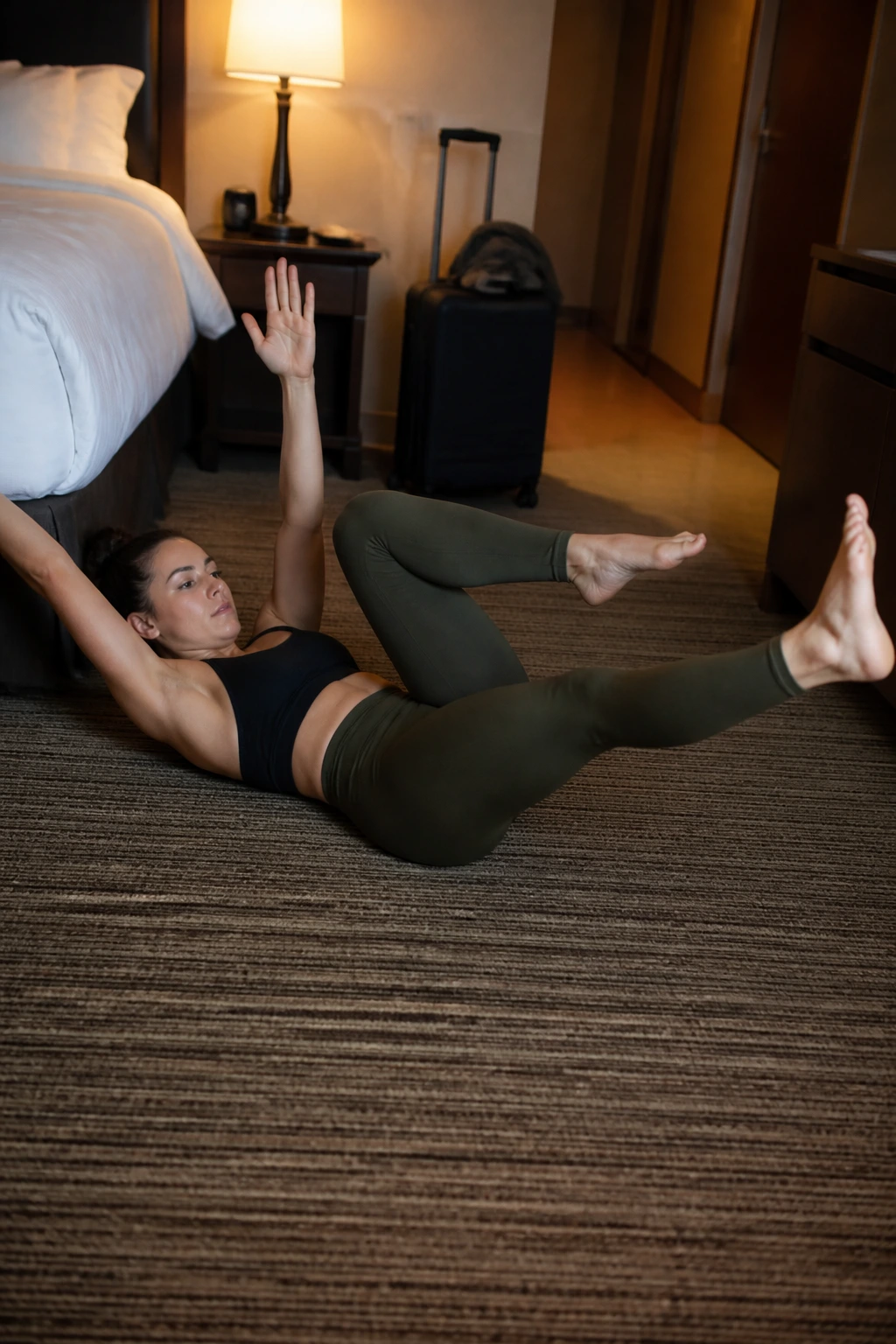
A hotel room, a rug, and no desire to wake the people in the next room. That is the whole mood here. This routine uses small floor moves and a tiny amount of space, so there is no excuse to skip core work when you are away from home.
A simple sequence is dead bug, heel taps, side plank, bird dog, and hollow hold. Thirty to forty seconds per move, little rests in between, then one more round. If the floor is rough, slide a towel under your back. If the carpet is thick, keep the range short so your hips do not sink.
The real win is consistency. Travel tends to blow up routines because everything feels unfamiliar. A familiar ten-minute core block solves that fast. You already know the moves. You do not need a perfect setup.
Keep it boring in the best way. Same mat, same timing, same five moves. That steadiness is what lets you come back home without feeling like your body fell off a cliff.
13. Banded Core and Glute Combo
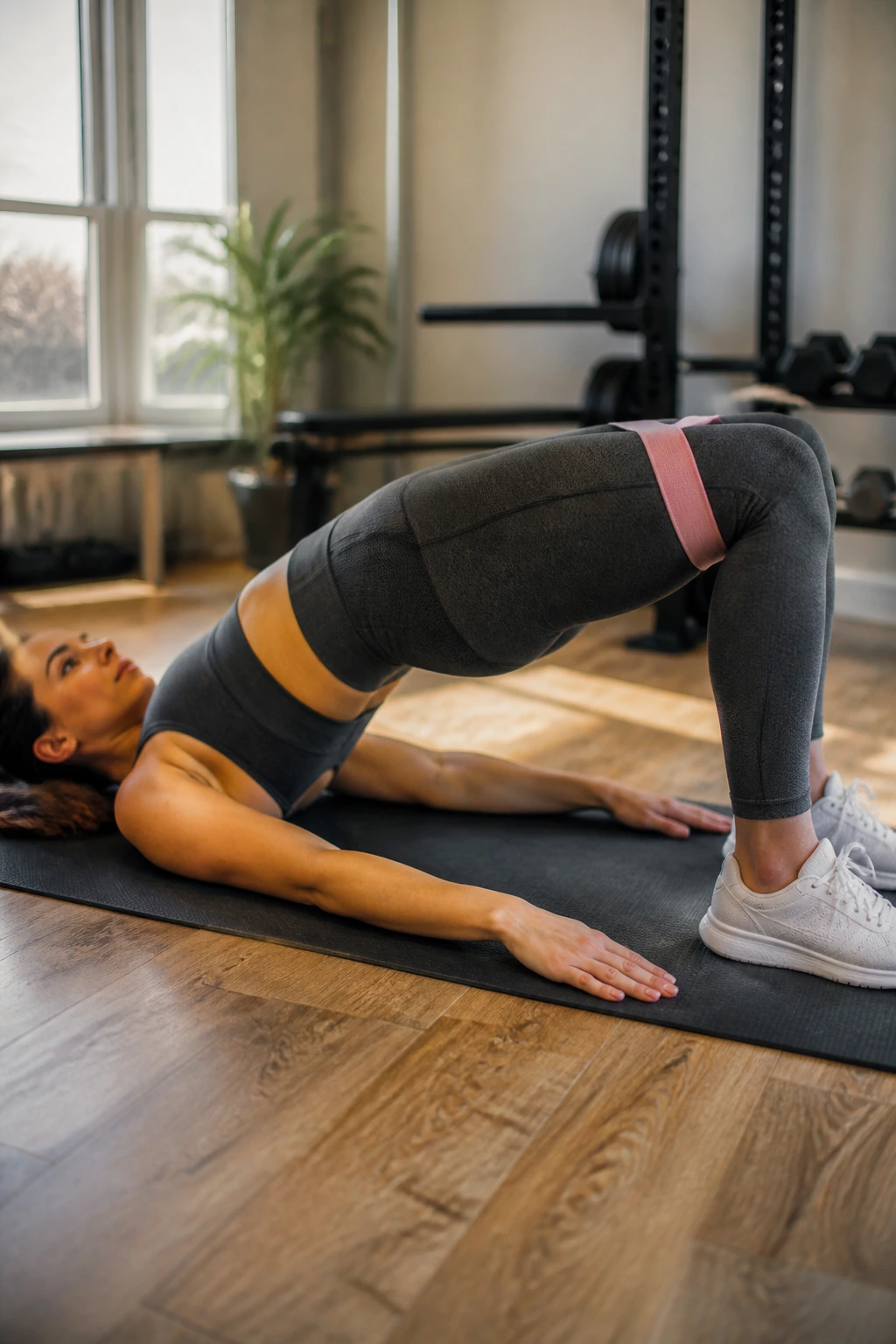
The core and glutes are a package deal more often than people think. If the glutes stay asleep, the lower back often picks up the slack, and that makes ab work feel weirdly unstable. A mini band helps wake up the whole chain.
The Circuit
- Banded glute bridge, 45 seconds
- Dead bug with a band pull, 45 seconds
- Standing band press-out, 45 seconds
- Side-step with a brace, 45 seconds
- Half-kneeling band chop, 45 seconds
Rest 15 seconds between moves, then repeat once.
The best part of this routine is how it changes your posture. Your hips feel more organized, your ribs stay quieter, and the core does not have to fight alone. That matters if you spend a lot of time sitting or if you feel your lower back take over during other workouts.
Do not crank the band so hard that your form falls apart. A little tension is enough. If your shoulders start lifting or your stomach starts pushing out, reduce the resistance and clean up the movement first.
14. The Gentle Deep Core Rebuild
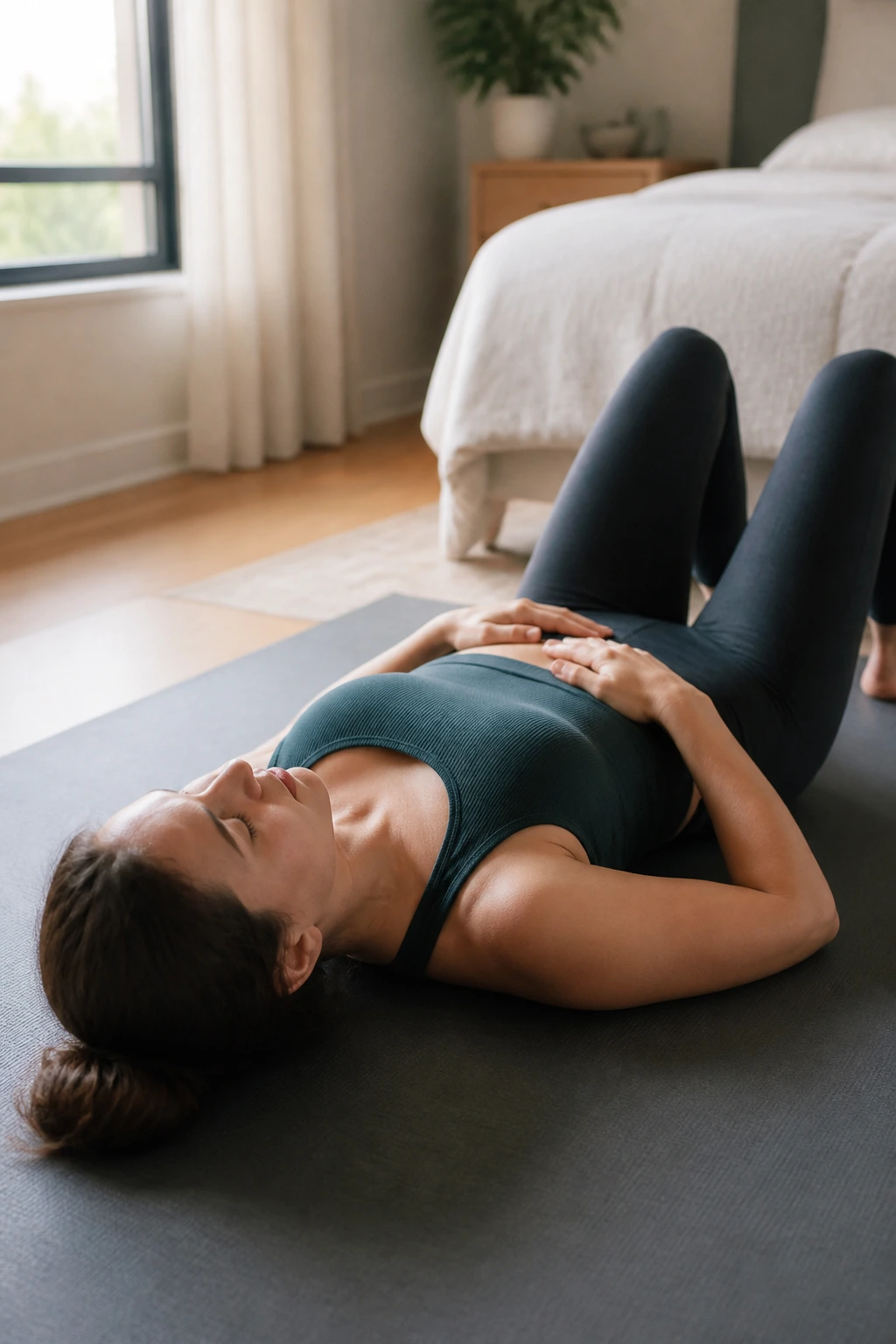
There are days when your body wants a hard session. There are also days when it wants to remember how to brace without strain. This one is for the second kind of day.
Start with slow breathing on your back, then move into heel slides, marching bridges, a very light dead bug, and a wall plank. Keep everything small and tidy. You are not chasing a burn here. You are rebuilding the pattern.
That pattern matters if you are returning after a break, a stretch of travel, or a week where nothing felt coordinated. It also helps if your core work has felt too aggressive and your lower back has been letting you know about it. Less range, more control. That swap can save a lot of frustration.
If a medical professional has told you to hold off on certain exercises, follow that advice first. Otherwise, use this as the quietest entry point in the list. It is not flashy. It does not need to be. A steady, gentle core routine is often the one people end up keeping.
15. Anti-Rotation Work That Stops the Wobble
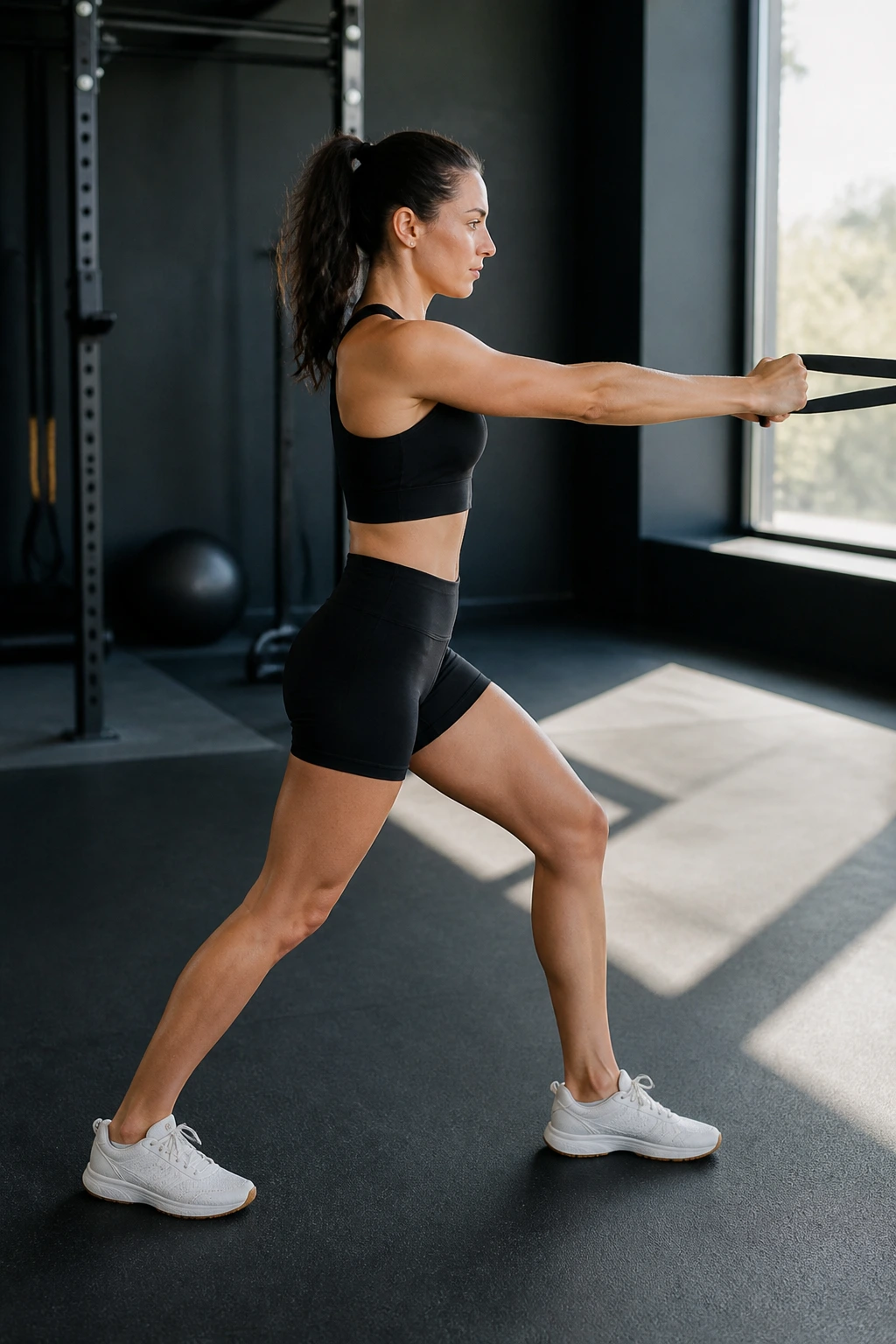
Why do some ab workouts feel stable even while your arms and legs move? Because they train your torso not to twist when it wants to. That is anti-rotation, and it shows up everywhere from carrying a child on one hip to pulling a suitcase through an airport.
What to Feel
- Your hips stay level.
- Your ribs stay stacked over your pelvis.
- Your shoulder blades stay quiet.
- Your breath stays smooth.
- Your movement looks smaller than you expect.
Use staggered-stance reaches, plank shoulder taps, bird dog pauses, suitcase holds, and side plank lifts. A ten-minute version can run forty seconds on, twenty seconds off, twice through. It sounds plain. It isn’t. The challenge is keeping the torso clean while the limbs create distraction.
This is one of the best core styles for women who lift, run, or do a lot of carrying in daily life. That includes errands, kids, bags, and boxes. Real life is full of one-sided load, and anti-rotation work trains you for exactly that.
16. The 10-Minute EMOM That Keeps You Honest
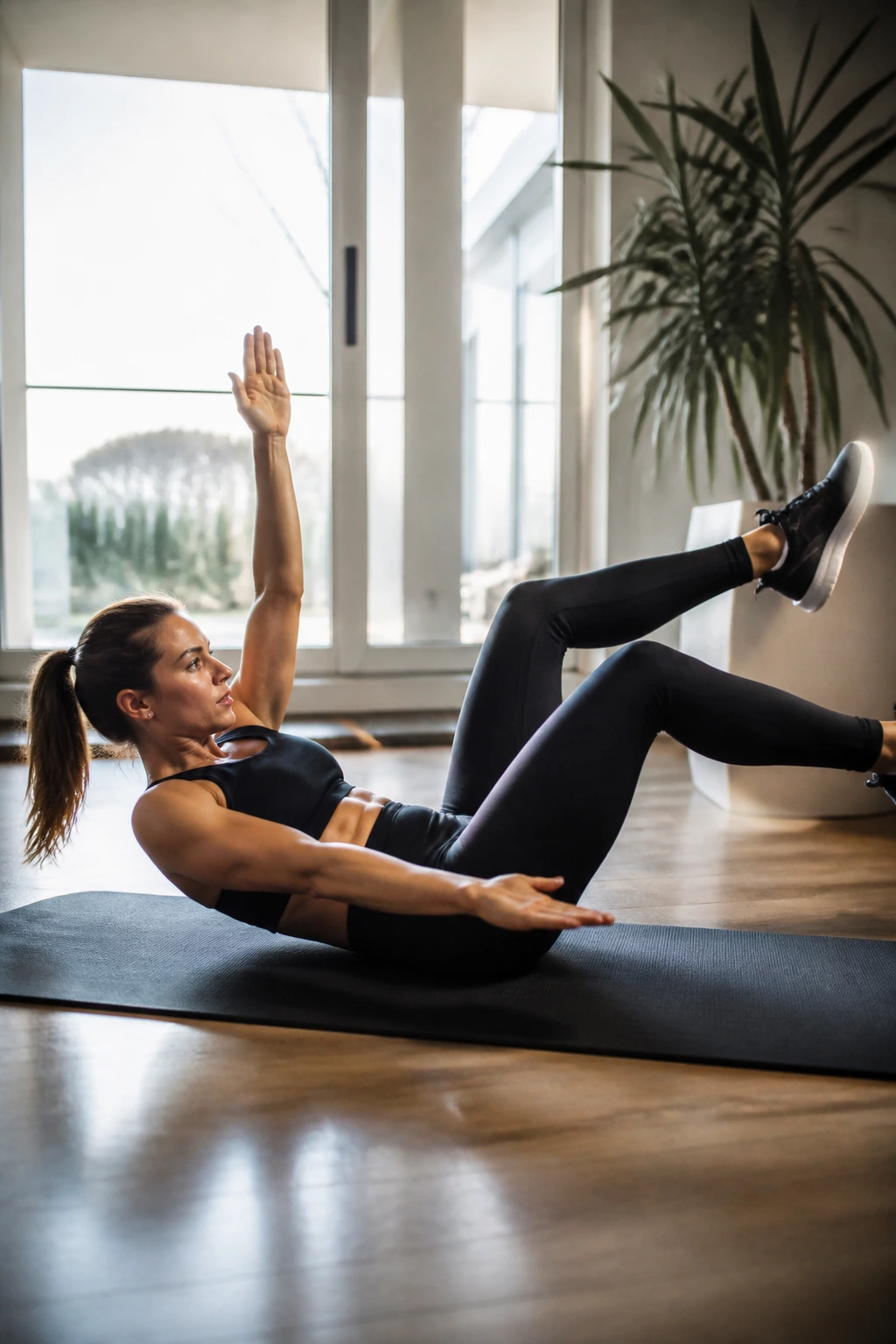
EMOM means every minute on the minute. You do the assigned work at the top of the minute, then rest for whatever time is left. Simple format. Honest format.
Set a timer for five minutes, run these moves, then repeat the whole block once:
- Minute 1: 12 dead bugs
- Minute 2: 20 mountain climbers per side
- Minute 3: 12 reverse crunches
- Minute 4: 20 shoulder taps
- Minute 5: 30-second hollow hold
The rest of each minute is your recovery. If you finish in 25 seconds, you get 35 seconds off. If you rush and finish in 15, that is a sign to slow down and do better reps.
EMOMs work because they keep you from wandering. You cannot coast and you cannot overthink. You do the work, breathe, and move on. That structure is useful on days when motivation is low and you want the workout to make decisions for you.
17. Side-Body Work for Obliques and Posture
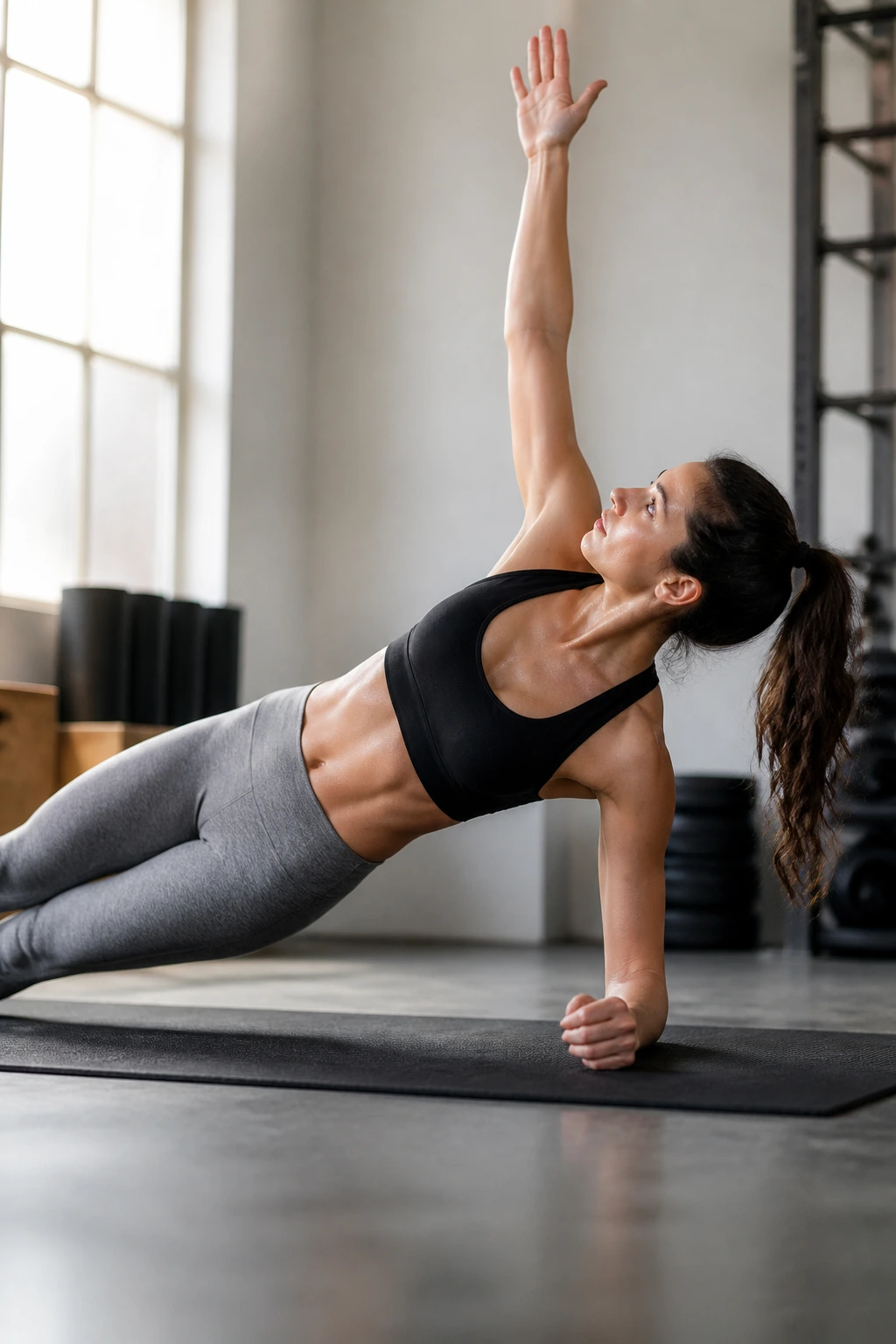
If one side of your torso feels lazy, this is the routine that wakes it up. Side-body work is not only about a slimmer look at the waist. It also helps you stay upright when you carry something awkward or shift weight from one leg to the other.
Try side planks, standing side reaches, cross-body knee drives, windmill reaches, and slow bicycle pulses. Keep the movement small enough that you can feel your waistline pull in without your lower back pinching.
This kind of session works nicely after a lower-body workout because it asks the torso to stay organized while the hips are already a little tired. That combo reveals weak spots fast. Annoying? Sure. Useful? Definitely.
A good cue here is to imagine the rib cage and pelvis moving as one unit. When they start separating, the exercise gets sloppy. If you want more challenge, hold the top position for two beats instead of chasing more speed. That tiny pause does more than another ten rushed reps.
18. Core Plus Mobility for a Better Finish
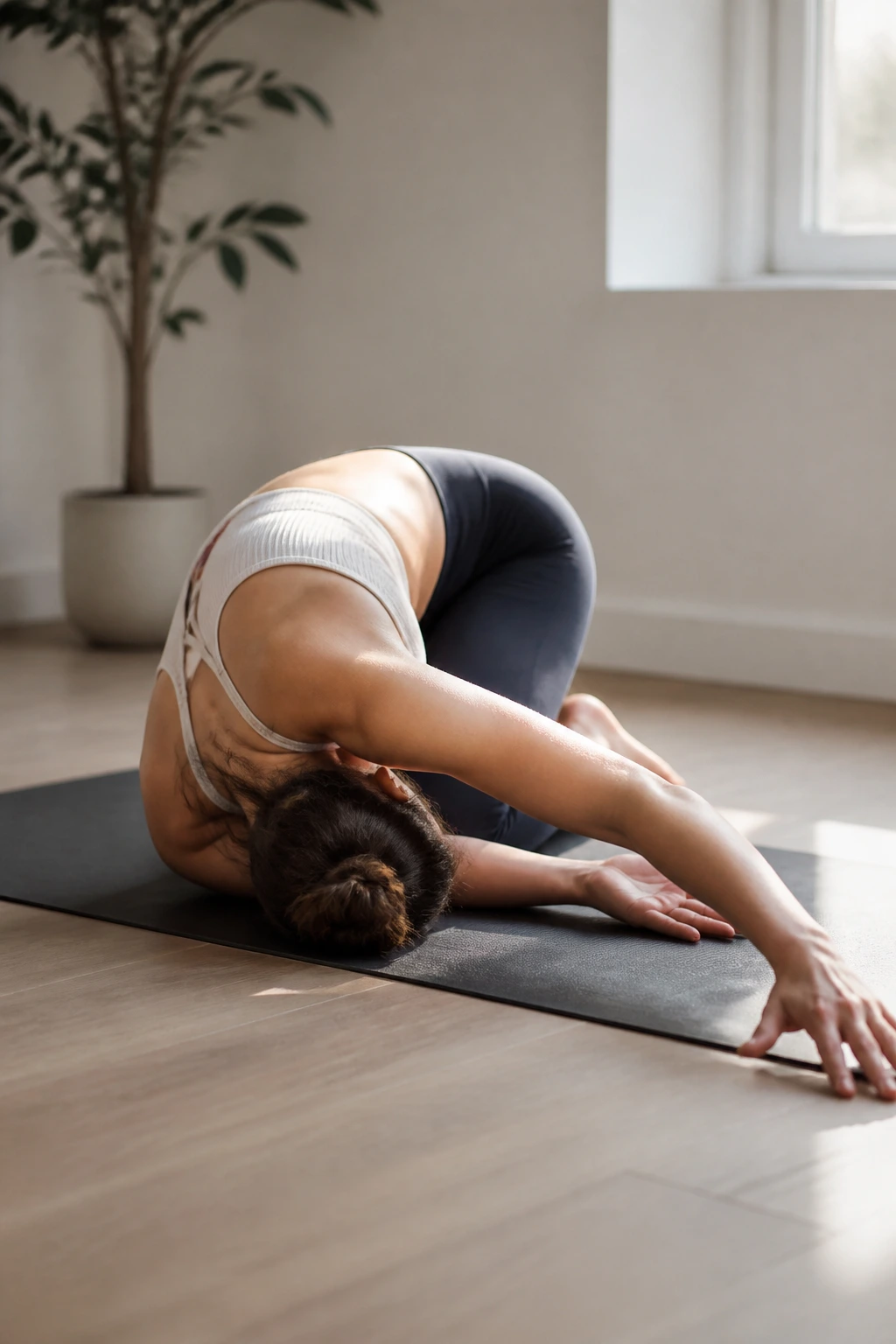
Core work does not have to feel like a punishment. Sometimes the smarter move is to blend it with mobility so your body leaves the mat feeling looser instead of braced and cranky.
Start with cat-cow, then add thread-the-needle reaches, dead bug holds, kneeling hip flexor stretches with a light brace, and a short side plank. The reason this works is simple: tight hips and stiff ribs make ab work feel harder than it needs to. Loosen those pieces a bit, and the core can do its job without fighting every joint nearby.
This routine is especially nice after a long day of sitting or after a workout that left your lower body heavy. It is not a sweat session. It is a reset. That difference matters.
Keep the transitions slow. The move from mobility into core work should feel smooth, not like someone switched gears with a hammer. If your breathing is calm by the end, the session did its job.
19. Athlete-Style Core Work for Runners, Lifters, and Busy Bodies

Crunches are not the whole story. If you run, lift, dance, carry bags, or spend your week doing a bit of everything, your core needs to brace, shift, and resist while the rest of you keeps moving.
Use bear plank shoulder taps, plank reaches, hollow holds, single-leg lowers, and side plank stars. Run forty seconds of work, twenty seconds of rest, twice through. The bear plank and hollow hold do a lot of heavy lifting here because they demand total-body control, not just a curling motion.
This is the routine I reach for when a standard ab session feels too small for the rest of the week’s training. It pairs well with strength work because it trains the body to stay tight under movement. That is a skill, not a burn.
If you want more challenge, slow the lowering phase on each leg move. Three seconds down is enough to expose a weak link. Faster than that, and the reps can get fuzzy.
20. A 10-Minute Core Reset for Women on Off Days
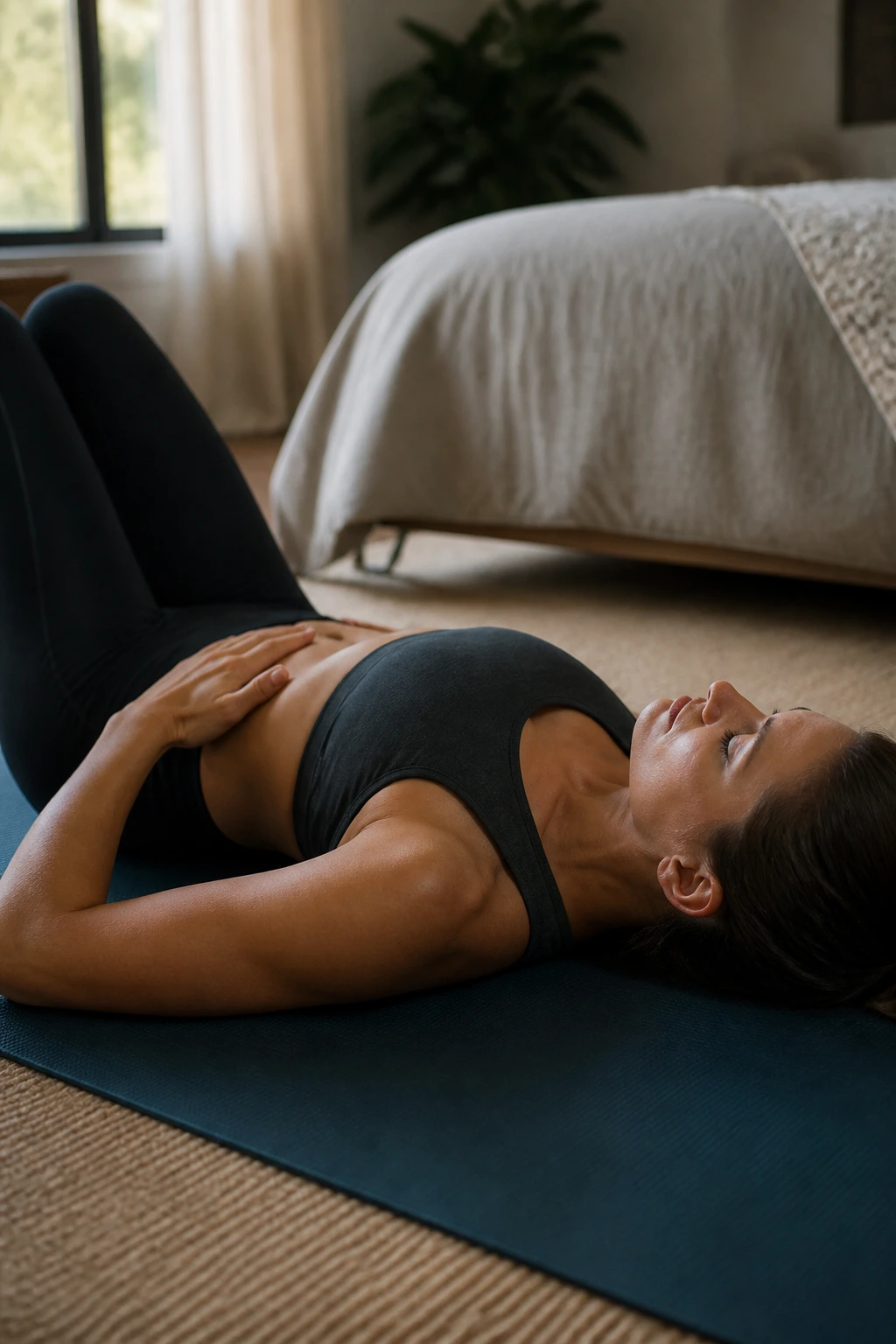
Some of the best ab work happens on the quiet days. Not the sweaty ones. Not the loud ones. The calm, almost boring sessions that keep your core awake without draining you.
Use two minutes of breathing and pelvic positioning on your back, two minutes of heel slides, two minutes of dead bug variations, two minutes of wall planks, and two minutes of side-lying knee lifts or gentle side planks. Keep the whole thing soft around the edges and crisp in the center. That balance is the point.
This is the routine to keep close when your schedule is messy, your energy is low, or you want a short core session before bed instead of one more intense thing in your face. It does not ask for much, but it still reminds your body how to brace well.
A strong midsection likes repetition more than drama. Use the harder sessions when you want a challenge, and keep one calm ten-minute reset in your back pocket for the days when clean work beats hard work.
