



A good set of superset workouts for women at the gym solves a very specific problem: you want real work, but you do not want to spend half the session standing around waiting for a rack, a bench, or a cable station.
Two exercises back-to-back. Then a rest. That’s the whole idea, and it works because it keeps the pace up without turning strength training into random cardio. When the pairing is smart, you get more done in less time, your focus stays tighter, and the session feels less like a slow drift around the floor.
The part people miss is balance. A squat followed by a hinge makes sense. A press followed by a row makes sense. A heavy lower-body move followed by a smaller accessory move usually makes sense too. Pairing two exercises that smash the same muscles too hard, though, can wreck form fast. That’s when the workout starts looking busy instead of useful.
So the pairings below lean on a simple rule: make the second exercise support the first one, not sabotage it. Some are built for glutes and legs, some for upper-body strength, and a few are there for the days when you want to leave the gym sweaty, done, and still able to walk down stairs normally.
1. Goblet Squat and Dumbbell Romanian Deadlift
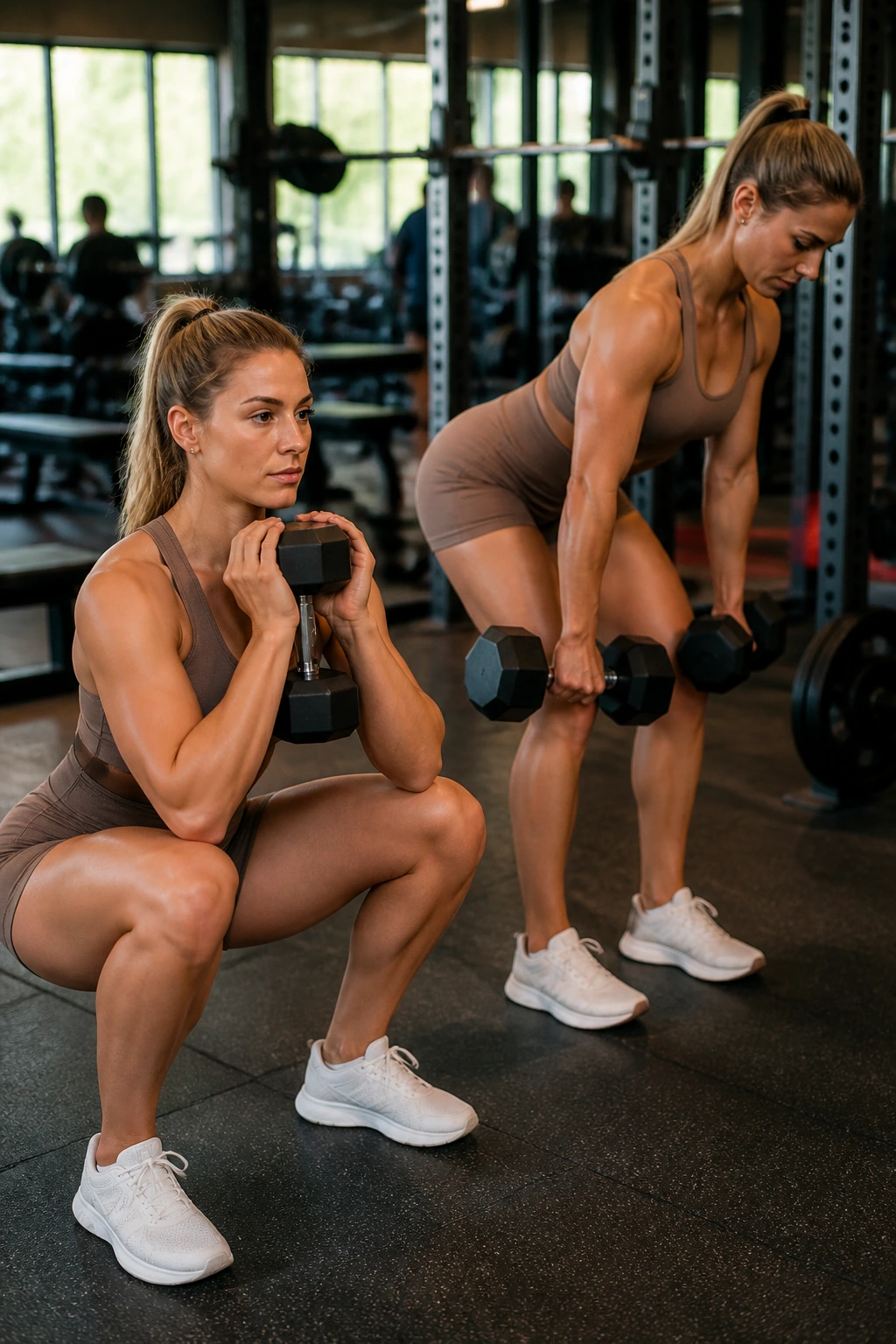
This is the lower-body superset I’d hand to almost anyone who wants a strong, practical base. The goblet squat hits quads and glutes with a vertical pattern, then the dumbbell Romanian deadlift brings hamstrings and glutes in from the hinge side. The combination feels clean. No circus tricks. Just honest work.
Run it like this: 3 to 4 rounds of 8 to 10 goblet squats and 8 to 10 Romanian deadlifts. Use a load that leaves about 2 reps in reserve on round one. If your torso starts folding like a lawn chair, the dumbbells are too heavy.
How to run it
- Hold the dumbbell at chest height and keep your elbows tucked.
- Sit down between your heels on the squat; do not dive forward.
- On the RDL, slide your hips back and stop when you feel the hamstrings load up.
- Rest 60 to 75 seconds after both moves.
Tip: If your lower back takes over on the RDL, shorten the range and keep the dumbbells just below the knees at first. You’ll still get plenty of work.
2. Walking Lunge and Leg Curl
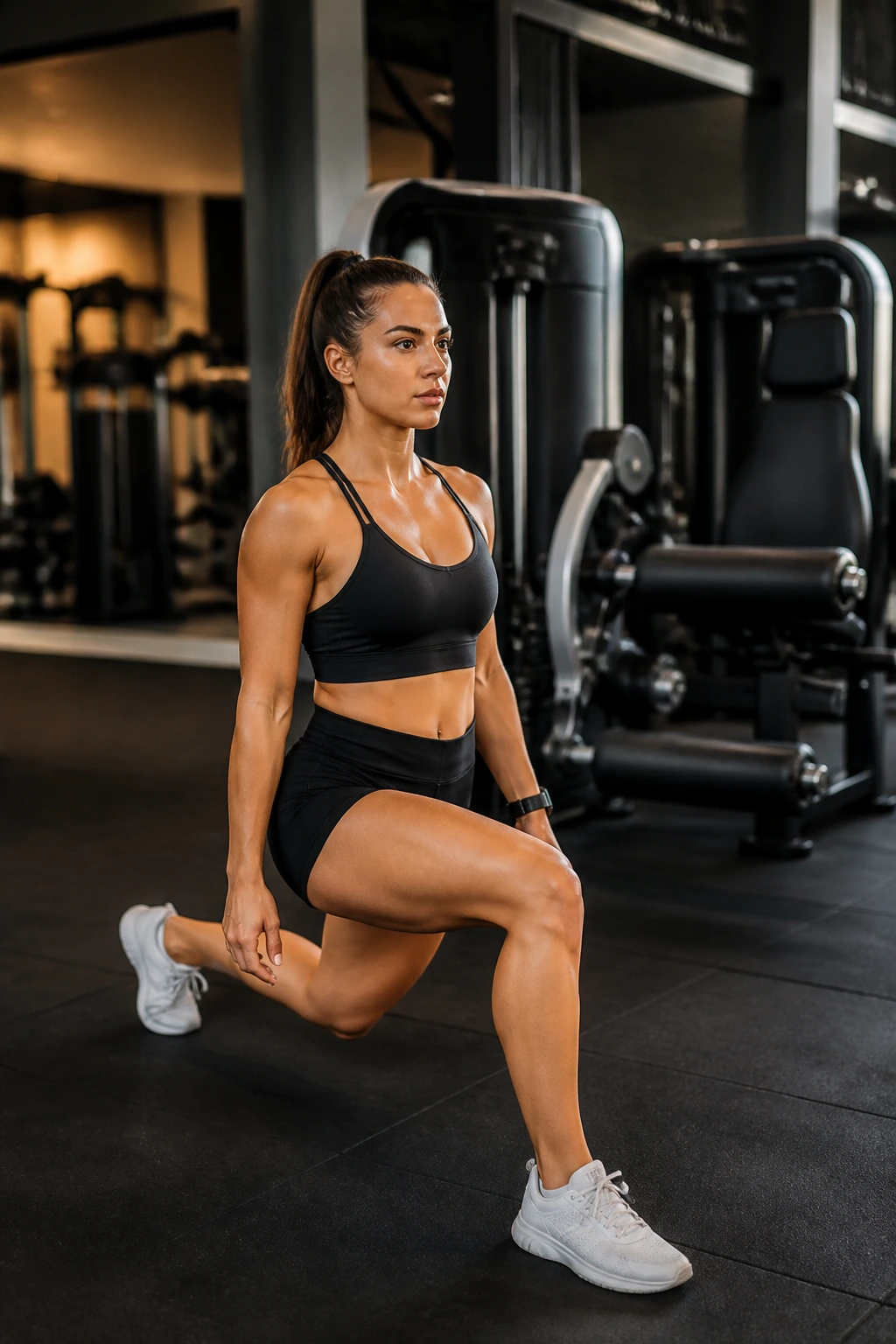
Walking lunges have a way of exposing everything. Balance, control, hip strength, even your patience. Pair them with leg curls and you get a superset that lights up the back of the leg without needing a crazy amount of load.
Do 10 to 12 walking lunges per leg and 12 to 15 leg curls for 3 rounds. Machine curls are the easiest option here, but a stability ball curl or lying leg curl works too. The lunge taxes the whole lower body; the curl finishes the hamstrings in a more targeted way.
The trick is keeping the lunge steps the same length every rep. Short steps turn it into a quad-dominant grind. Longer steps shift more work to glutes and hamstrings. Pick one and keep it consistent.
One more thing. Don’t rush the walking part just because the gym floor is open. Clean reps matter more than speed here.
3. Hip Thrust and Cable Glute Kickback
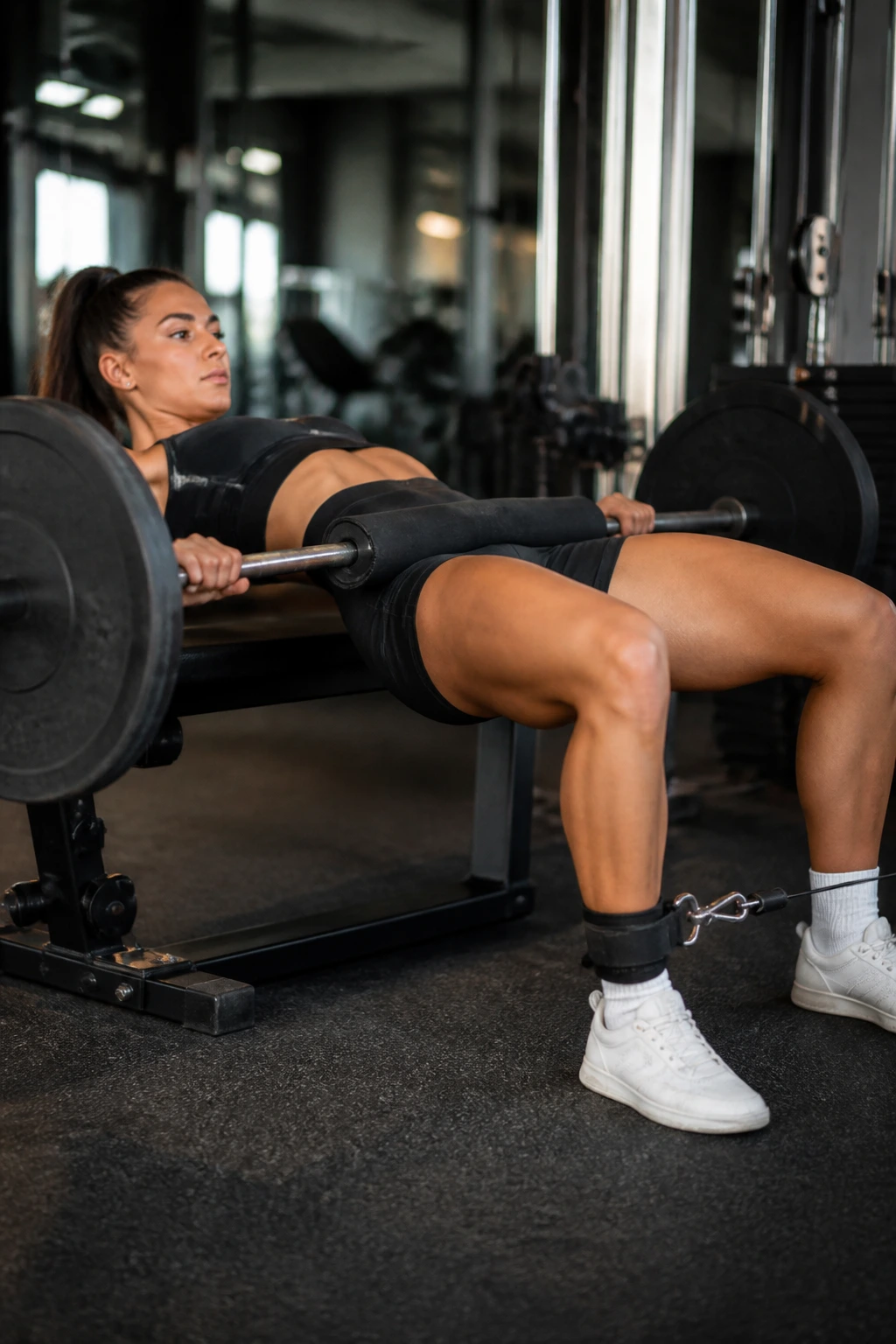
If glute growth is a real goal, this pairing earns a place in the rotation. The hip thrust gives you the heavy overload, and the cable kickback lets you finish the job with a cleaner squeeze and less spinal fatigue. That matters more than people admit.
A strong setup is 4 rounds of 8 to 12 hip thrusts followed by 12 to 15 cable kickbacks per side. Keep the hip thrust honest: ribs down, chin tucked slightly, and a full lockout at the top without over-arching. On the kickback, move the leg through a controlled arc, not a swinging kick like you’re kicking a door open.
Glute growth details
- Put your upper back on a bench that lands around mid-scapula.
- Use a pad on the bar. Always.
- Pause for 1 full second at the top of each thrust.
- Keep the cable ankle strap light enough that you can feel the glute instead of the lower back.
Tip: If you can’t feel the kickback in your glutes, lean your torso forward a little more and slow the rep down. The burn should show up in the right place, not in your hip flexors.
4. Leg Press and Leg Extension
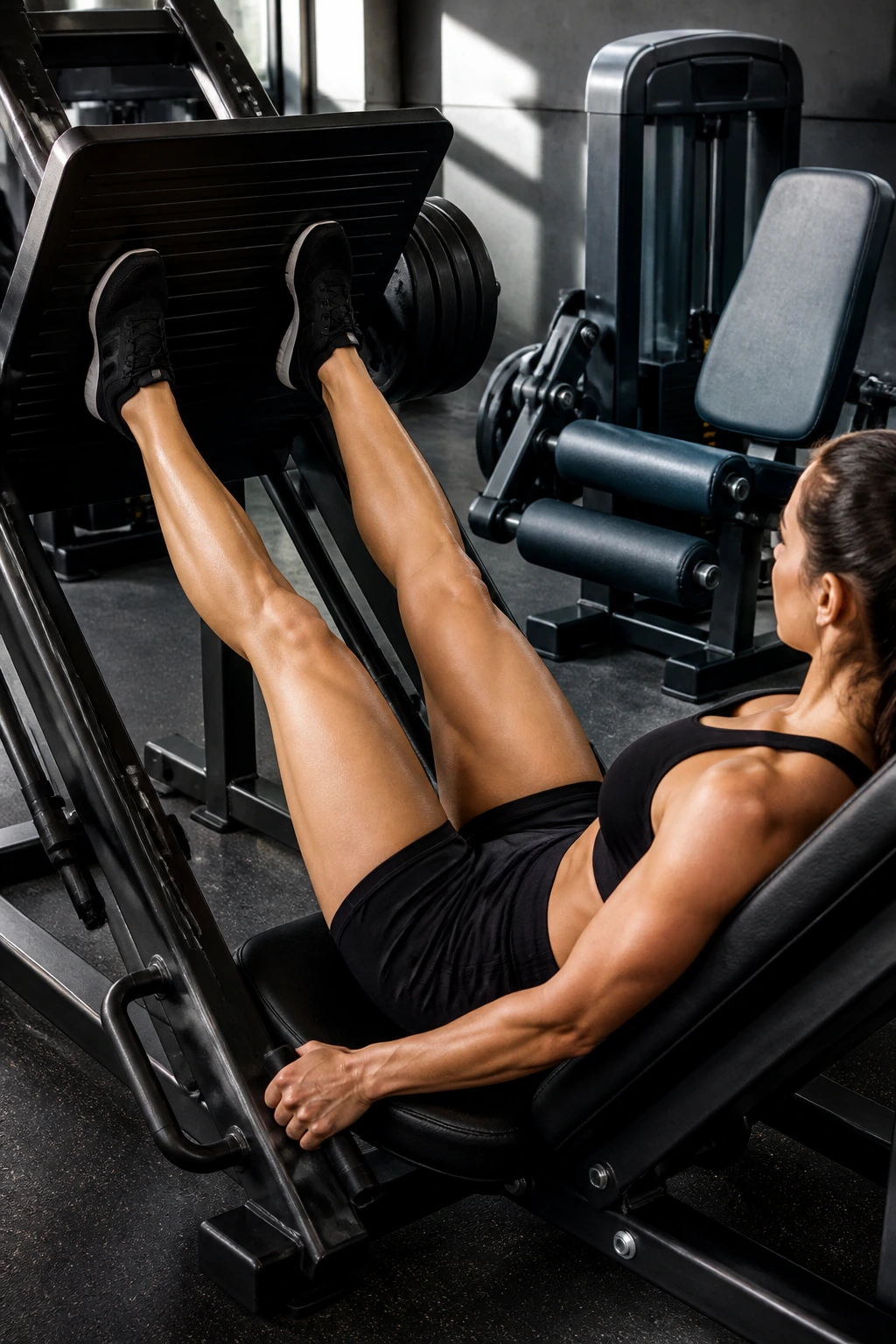
Want a quad day that actually feels like a quad day? This is it. The leg press gives you a big compound load, and the leg extension finishes with direct tension right where the thigh does its prettiest work.
Use 3 or 4 rounds of 10 to 12 leg press reps and 12 to 15 leg extensions. Set your feet a little lower on the platform if you want more quad bias, but keep your heels planted. On the extension, stop just short of a hard snap at the top. You want tension, not knee drama.
The machines make this pairing easy to manage, which is part of the appeal. You can move from one to the other without a long reset, and the fatigue stays local instead of turning into a full-body panic.
What to watch for
- Don’t let your hips curl off the leg press seat.
- Keep your knees tracking with your toes.
- Use a smooth tempo on the extension: 2 seconds up, 2 seconds down.
- Rest 45 to 60 seconds after the pair.
Bold truth: If your legs shake on the last few reps, that’s fine. If your lower back starts barking, shorten the range and fix the setup.
5. Dumbbell Bench Press and Seated Cable Row
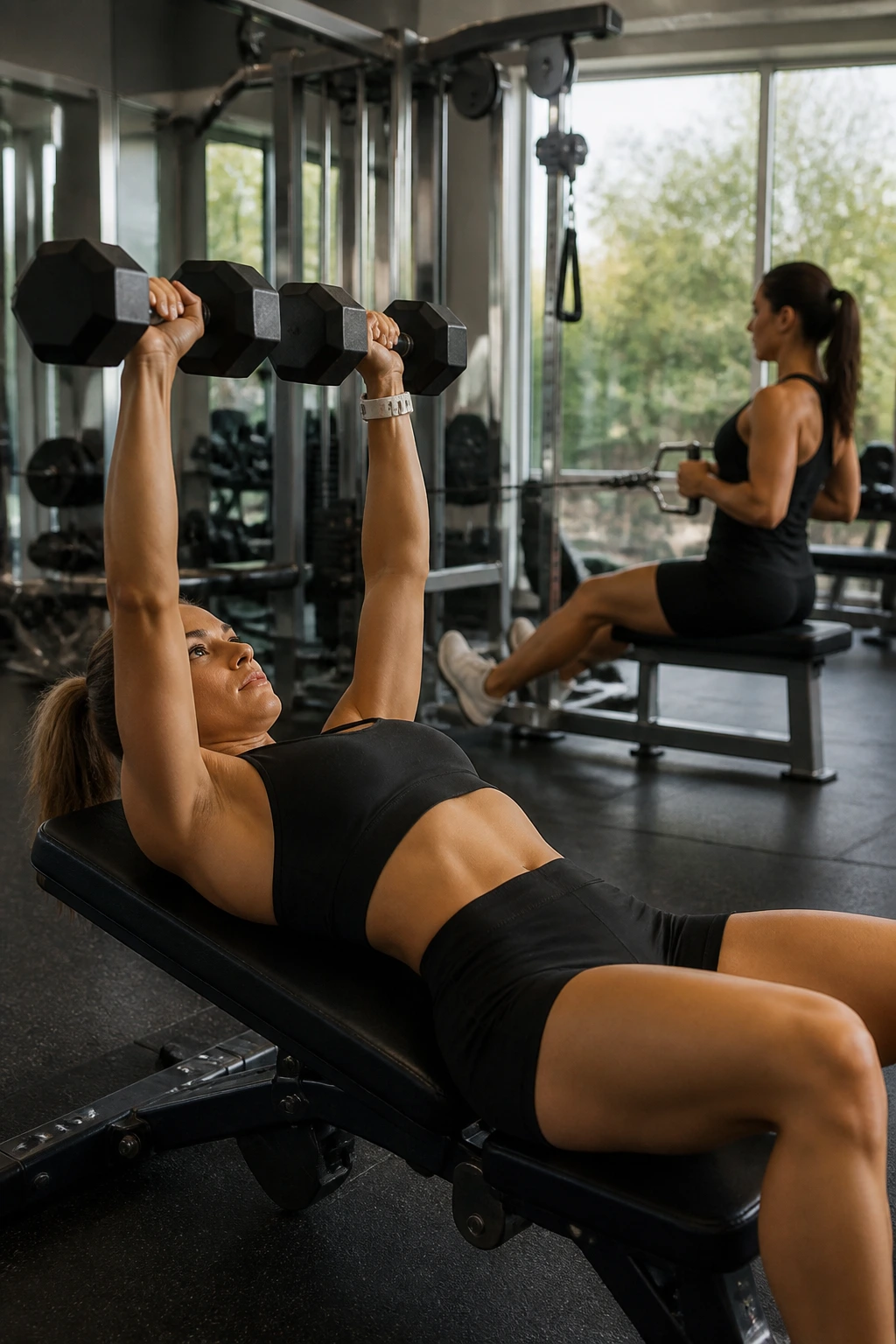
Upper-body balance matters, and this pairing gets it right. The dumbbell bench press pushes the chest, front delts, and triceps. The seated cable row pulls the shoulders back and keeps your upper back from getting lazy. That push-pull balance is one of the cleanest ways to train.
Do 3 to 4 rounds of 6 to 10 dumbbell bench reps and 8 to 12 cable rows. I like a neutral grip on the dumbbells for most people because it usually feels friendlier on the shoulders. For the row, pull the handle toward the lower ribs, not your neck.
Set the bench and row
- Keep your feet flat and tight on the floor.
- Lower the dumbbells under control until your upper arms touch the bench line.
- On the row, think “elbows back,” not “hands back.”
- Rest 60 to 90 seconds after both exercises.
This one is useful if you spend a lot of time doing leg work and want an upper-body session that doesn’t chew up your joints. It also just feels good when the weights are matched well. Clean reps. Solid tension. No nonsense.
6. Incline Dumbbell Press and Lat Pulldown
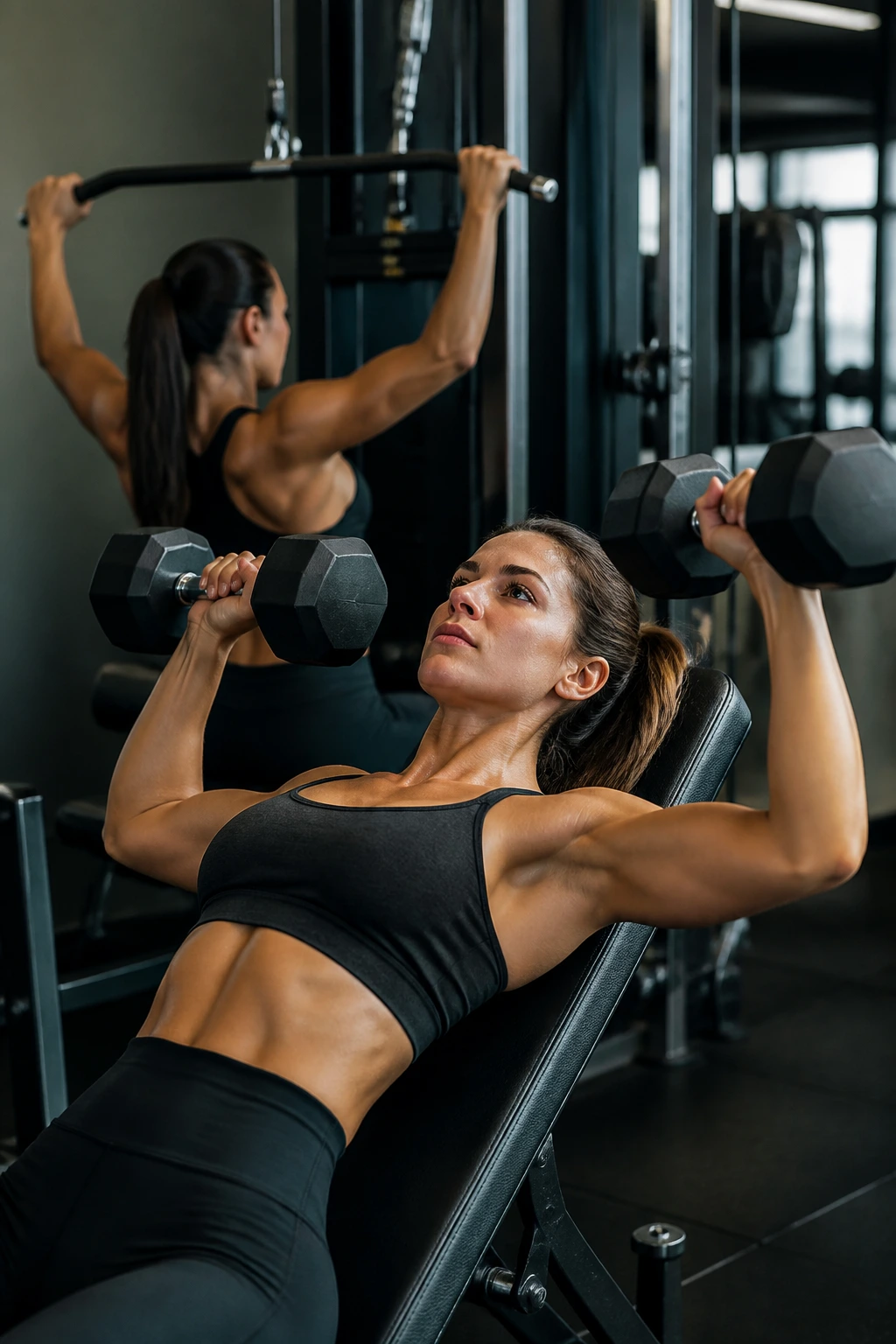
This pairing gives the upper body a slightly different shape than flat pressing and rows. The incline dumbbell press hits the upper chest and shoulders from a better angle, while the lat pulldown brings the back into the session without forcing a lot of setup.
A bench angle of about 30 degrees is usually enough. Steeper than that and the movement starts turning into a shoulder press. Run 3 rounds of 8 to 10 incline presses and 8 to 12 pulldowns. Keep the pulldown strict. If you need to throw your body backward to move the handle, the stack is too heavy.
The nice thing here is that the two movements don’t fight each other much. You can keep moving, keep your heart rate up, and still use enough load to make strength changes over time.
And yes, this is one of those pairings that tends to make posture feel better after a few weeks. Not magic. Just more pulling than most people do on a normal chest day.
7. Shoulder Press and Face Pull
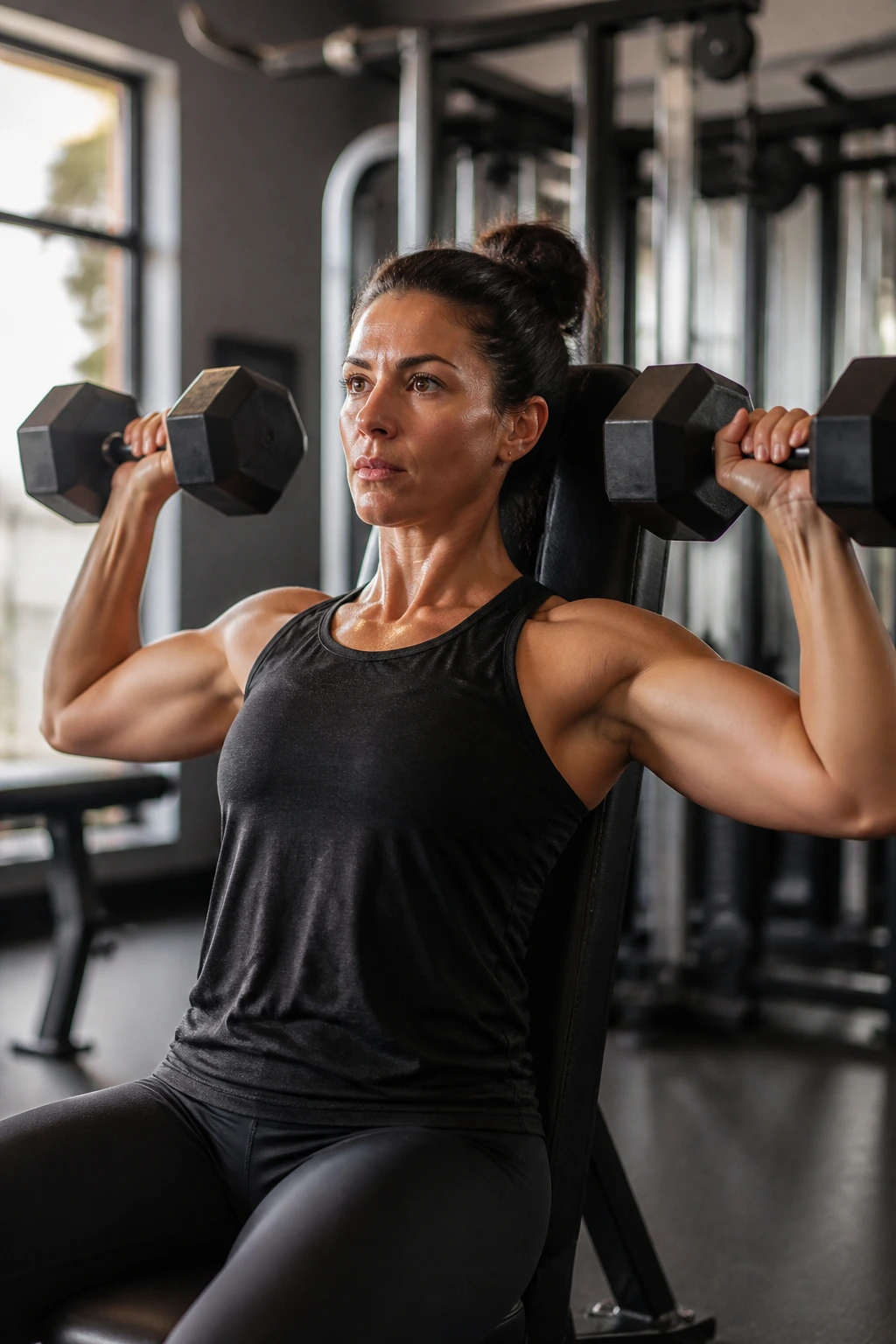
A lot of shoulder work gets ruined by ego. People go too heavy on presses, skip the rear delts, then wonder why everything feels cranky. Pairing a shoulder press with a face pull fixes part of that mess.
Use 3 rounds of 6 to 10 overhead presses and 12 to 15 face pulls. Press in a way that keeps your ribs from flaring hard. On the face pull, aim the rope toward your eyes or forehead and finish with elbows high and hands apart.
Why it feels different
The press gives you the overload. The face pull gives you the control work that the shoulder joint quietly needs. Together, they create a session that feels athletic instead of sloppy.
- Use a seated press if standing makes you lean back too much.
- Pull the rope apart at the end of the face pull.
- Keep the weight light enough that your neck stays relaxed.
- Rest 45 to 75 seconds between rounds.
Tip: If you feel the press in your lower back, lower the weight and reset your stance before you keep going. The goal is not to turn it into a standing backbend.
8. Lateral Raise and Rear Delt Fly
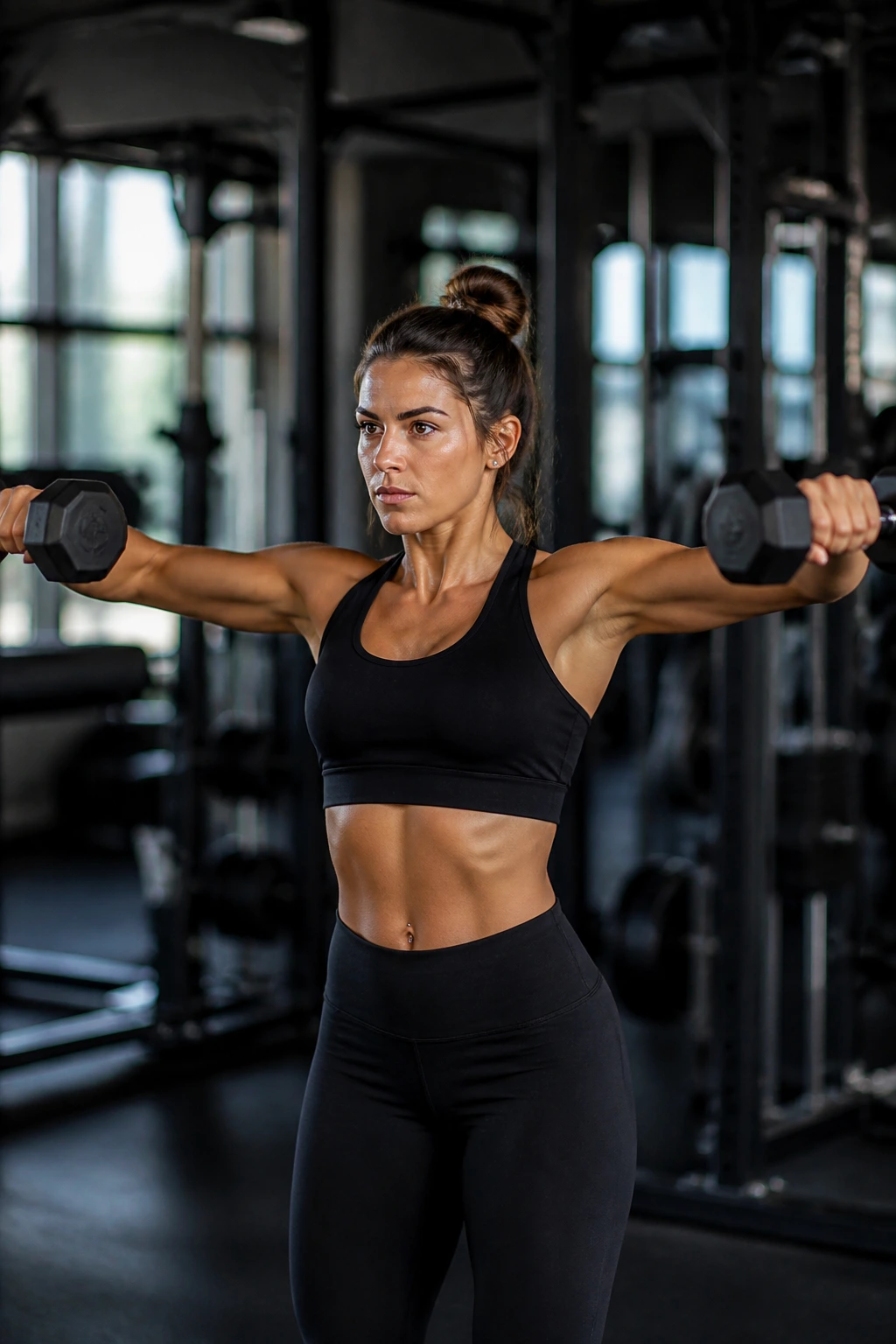
This is one of those pairings that looks small on paper and then humbles you in the mirror. Lateral raises train the side delts. Rear delt flyes train the back of the shoulder. Together, they build the part of the shoulder that gives the upper body a more complete shape.
Go with 3 to 4 rounds of 12 to 15 lateral raises and 12 to 15 rear delt flyes. Keep the weights modest. A lot of people grab dumbbells that are too heavy and spend the whole set swinging their torso around like they’re trying to start a lawn mower.
The rep speed matters here. Use a slow lift and a controlled lower. The burn should show up in the shoulders, not in the traps taking over everything.
Small detail, big difference: stop the lateral raise when the arms are roughly parallel to the floor. You do not need to hike them any higher for the set to count.
9. Biceps Curl and Rope Triceps Pressdown
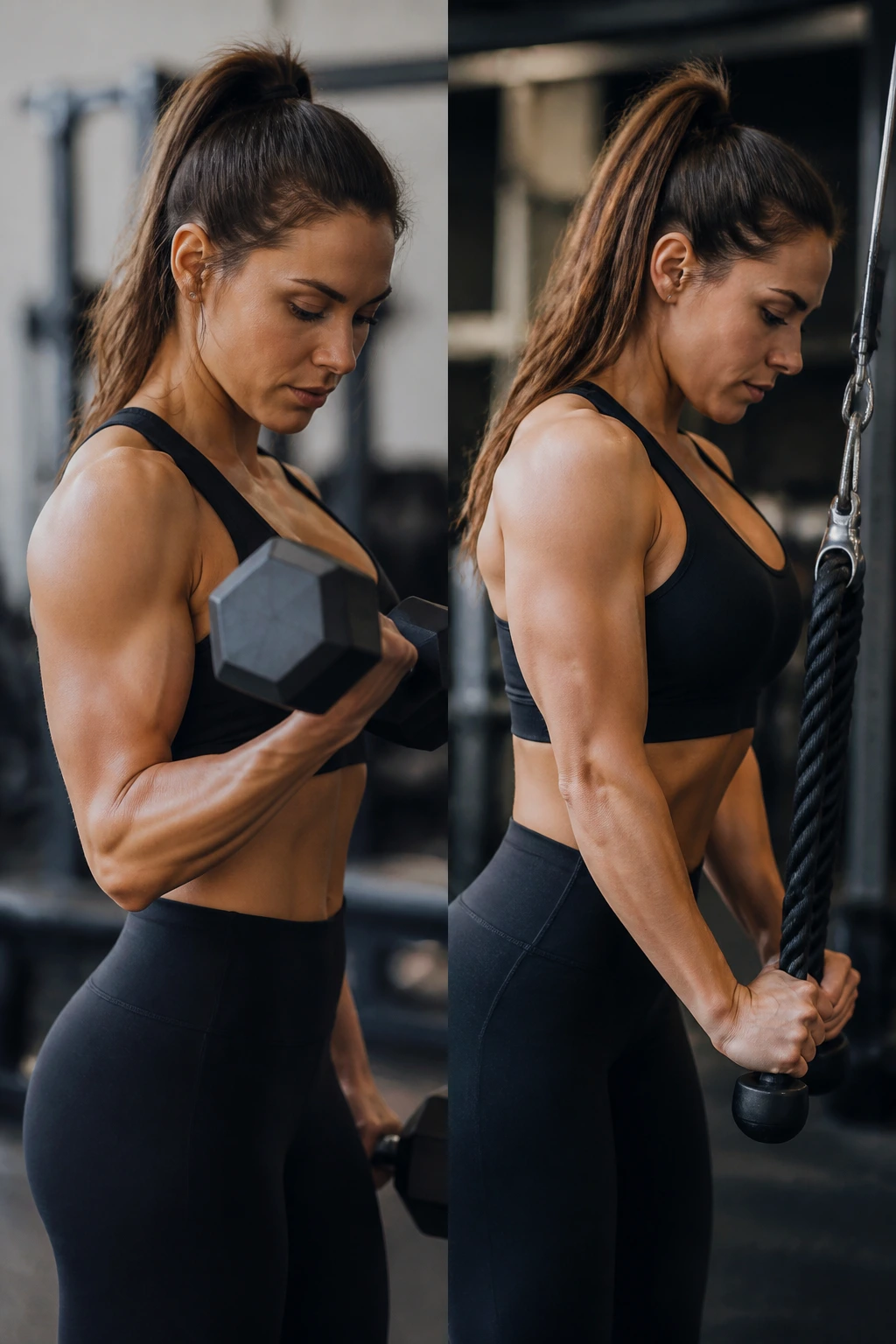
Arm day does not have to be complicated. Sometimes you just want a clean, efficient superset that makes your sleeves fit a little tighter and doesn’t take much setup. This is that pairing.
Do 3 or 4 rounds of 10 to 12 curls and 10 to 12 triceps pressdowns. Dumbbells, cables, or an EZ bar all work for the curls. For the pressdown, a rope is my favorite because it lets the triceps finish with a full contraction at the bottom.
The main mistake is turning the curl into a back exercise. If your shoulders roll forward and your hips start swaying, the weight is too heavy. Same with the pressdown: keep the elbows pinned and let the forearms do the work.
- Use a light squeeze at the top of each curl.
- Split the rope apart at the bottom of the pressdown.
- Rest 30 to 45 seconds after both exercises.
Short, simple, effective. Sometimes that’s enough.
10. Assisted Pull-Up and Dead Bug
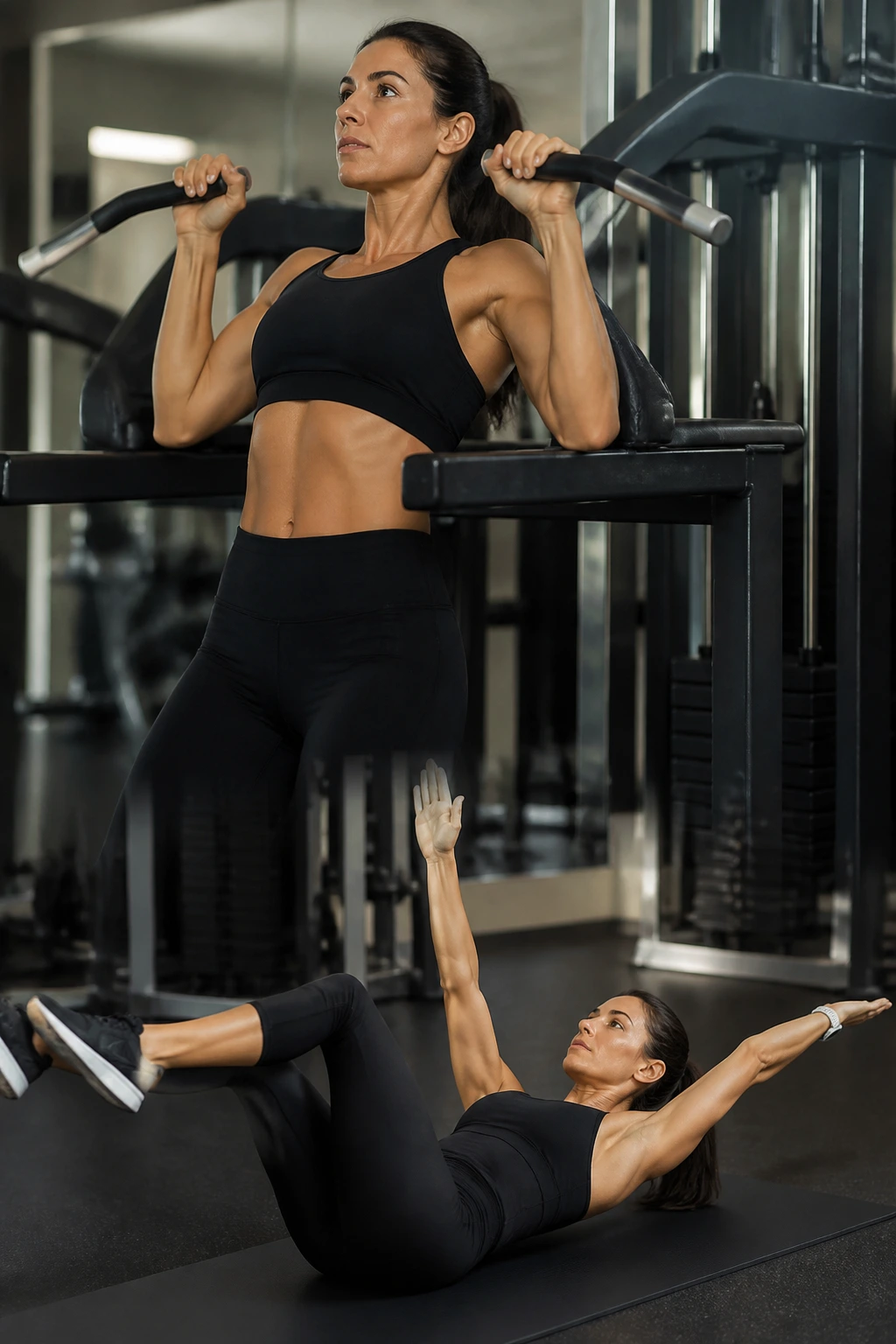
A strong back and a stable core go together better than most gym routines admit. The assisted pull-up builds vertical pulling strength, while the dead bug teaches you not to let your ribs flare and your lower back wobble when your arms and legs are moving.
Try 3 rounds of 6 to 8 assisted pull-ups and 8 to 10 dead bugs per side. On the pull-up, use just enough assistance to keep the motion smooth. On the dead bug, press your lower back into the floor and move slowly enough that you can keep that position the whole time.
Why it works
The pull-up trains the lats, upper back, and grip. The dead bug adds a quiet kind of core control that carries into almost everything else — squats, hinges, overhead work, even carrying groceries.
You do not need to rush this pairing. In fact, rushing usually ruins it.
- Keep your chin neutral on pull-ups.
- Exhale on the dead bug as the opposite arm and leg extend.
- Use a flat bench or mat with enough space for the arms to move.
- Rest 60 seconds between rounds.
11. Deadlift and Hanging Knee Raise
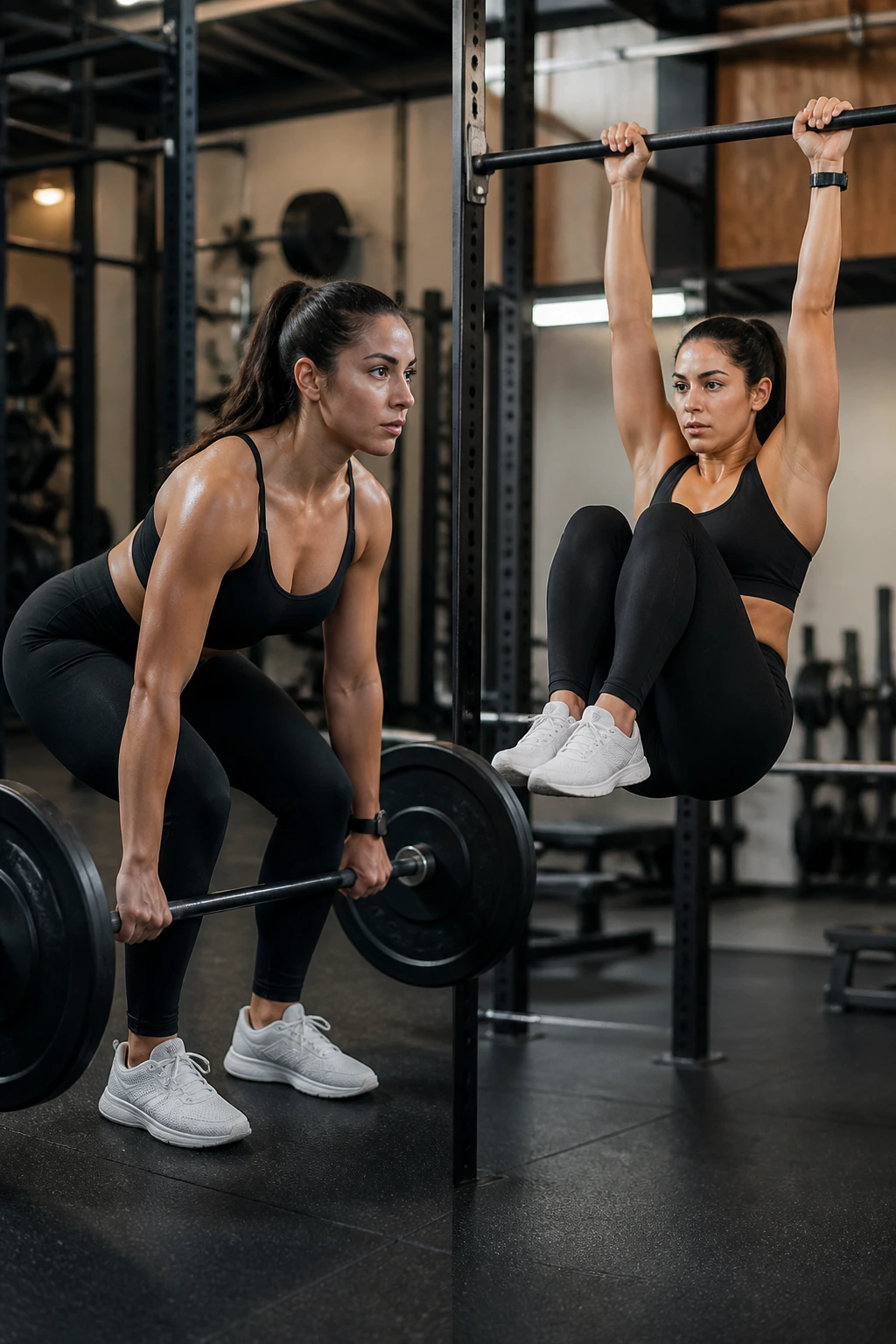
This one is for days when you want to train hard and keep things honest. A deadlift is demanding enough on its own, and a hanging knee raise brings the core in without needing another machine. The pairing is compact, direct, and a little bit brutal in a good way.
Use 3 rounds of 5 to 6 deadlifts and 8 to 12 hanging knee raises. If your deadlift is barbell-based, keep the reps low and crisp. If your setup is a dumbbell or trap-bar deadlift, the same idea applies: perfect reps, no sloppy tugging from the floor.
The knee raise should not swing. If your body is bouncing all over the place, slow down and pause between reps. You want the lower abs doing work, not momentum doing the talking.
Practical note: This pairing is better when your form is already solid. If the deadlift is still new to you, use a lighter hinge pattern first and save the hanging work for later.
12. Bulgarian Split Squat and Calf Raise
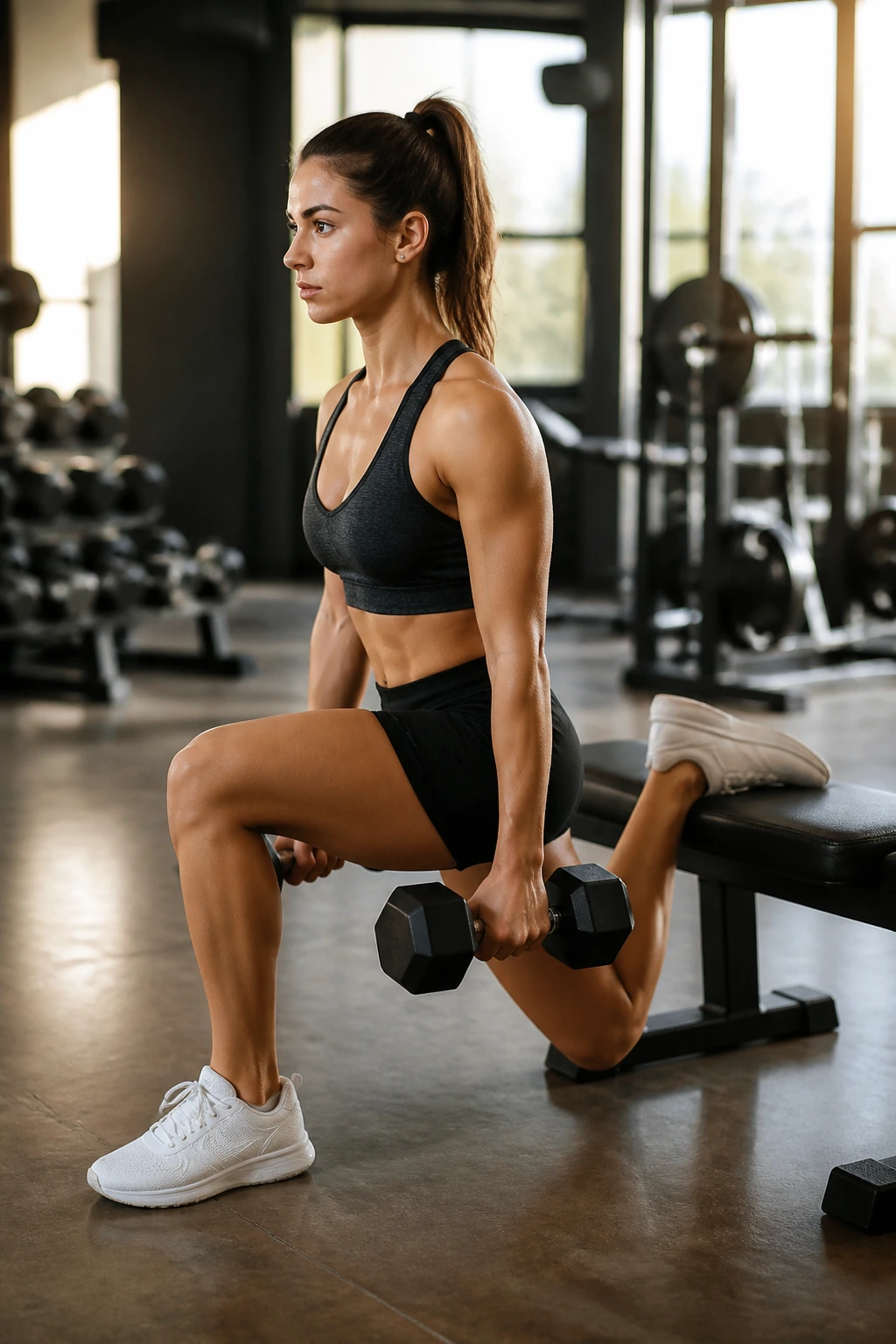
The Bulgarian split squat is a test of patience more than anything else. It finds weak spots fast. Pair it with calf raises, and you get a lower-body superset that covers the thigh, glute, ankle, and balance work without needing much room.
Run 3 to 4 rounds of 8 to 10 split squats per leg and 15 to 20 calf raises. Hold dumbbells if bodyweight feels too easy, but don’t rush the setup. Your back foot should rest on a bench that’s stable, not one that wobbles when you glance at it.
The front foot does the real job. Keep the whole foot down, descend under control, and let the front knee travel naturally over the toes. That part scares people for no reason. A clean split squat often looks more forward than they expect.
- Slight forward torso lean is fine.
- Calf raises should finish with a hard squeeze at the top.
- Rest 45 to 75 seconds after both exercises.
This pairing looks simple. It is not simple. That’s why it works.
13. Step-Up and Cable Hip Abduction
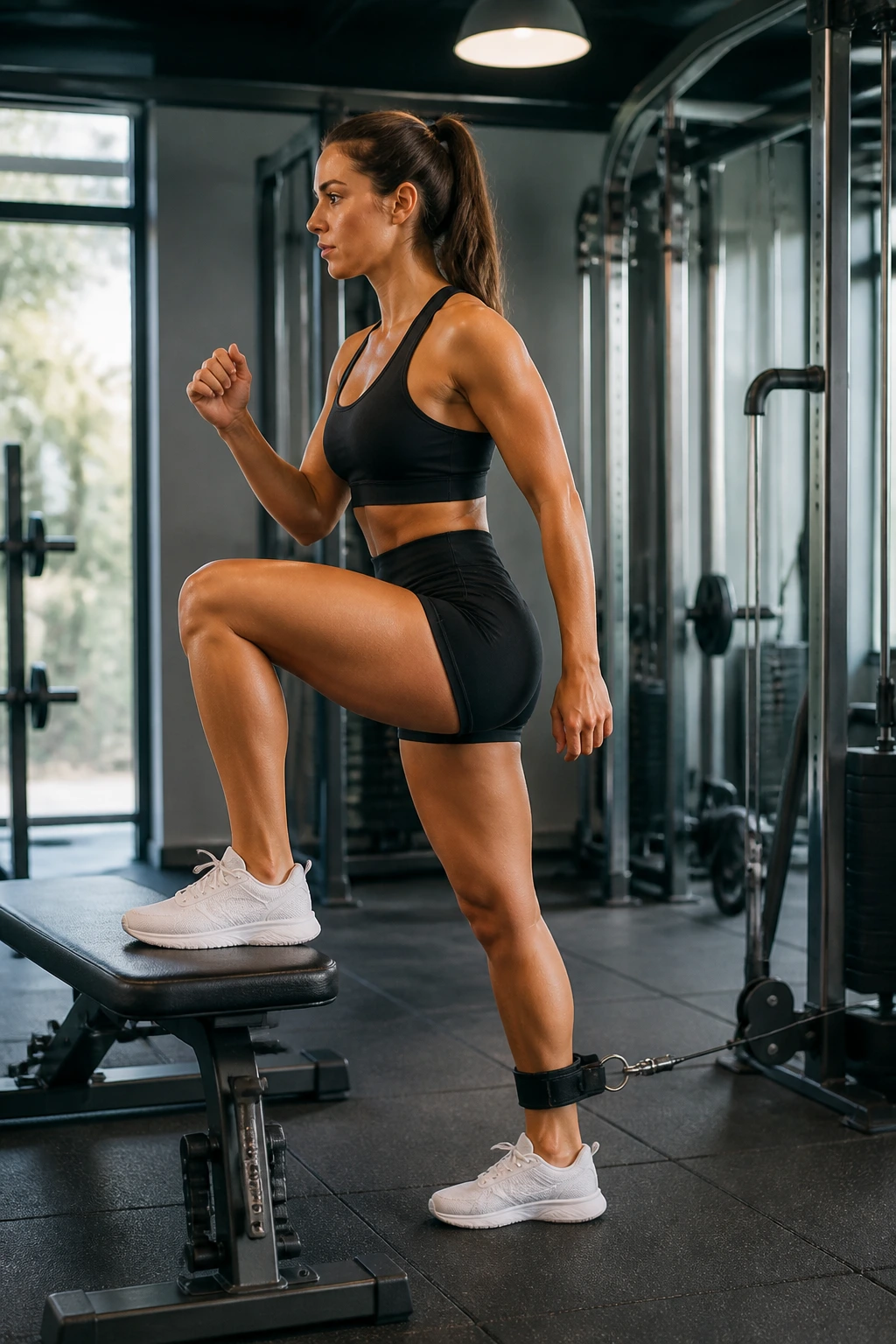
If one side of your lower body always feels a little wobbly, this is the pair to keep around. Step-ups train single-leg strength in a way that transfers well to real life, and cable hip abductions wake up the glute medius, which helps with pelvic control and knee tracking.
A good target is 3 rounds of 8 reps per leg on step-ups and 12 to 15 abductions per side. Use a box or bench height that lands just below knee level. Higher is not automatically better. If you have to launch yourself off the back leg, the box is too tall.
The box height rule
Start lower than you think you need. The goal is clean force production, not a circus climb.
The cable abduction should be quiet and controlled. No torso swing. No foot flinging. Just a clean move out to the side, a brief hold, and a controlled return.
Tip: If your balance on step-ups is shaky, hold a dumbbell in the hand opposite the working leg. It gives the hips a little more to do and usually feels steadier too.
14. Hack Squat and Frog Pump
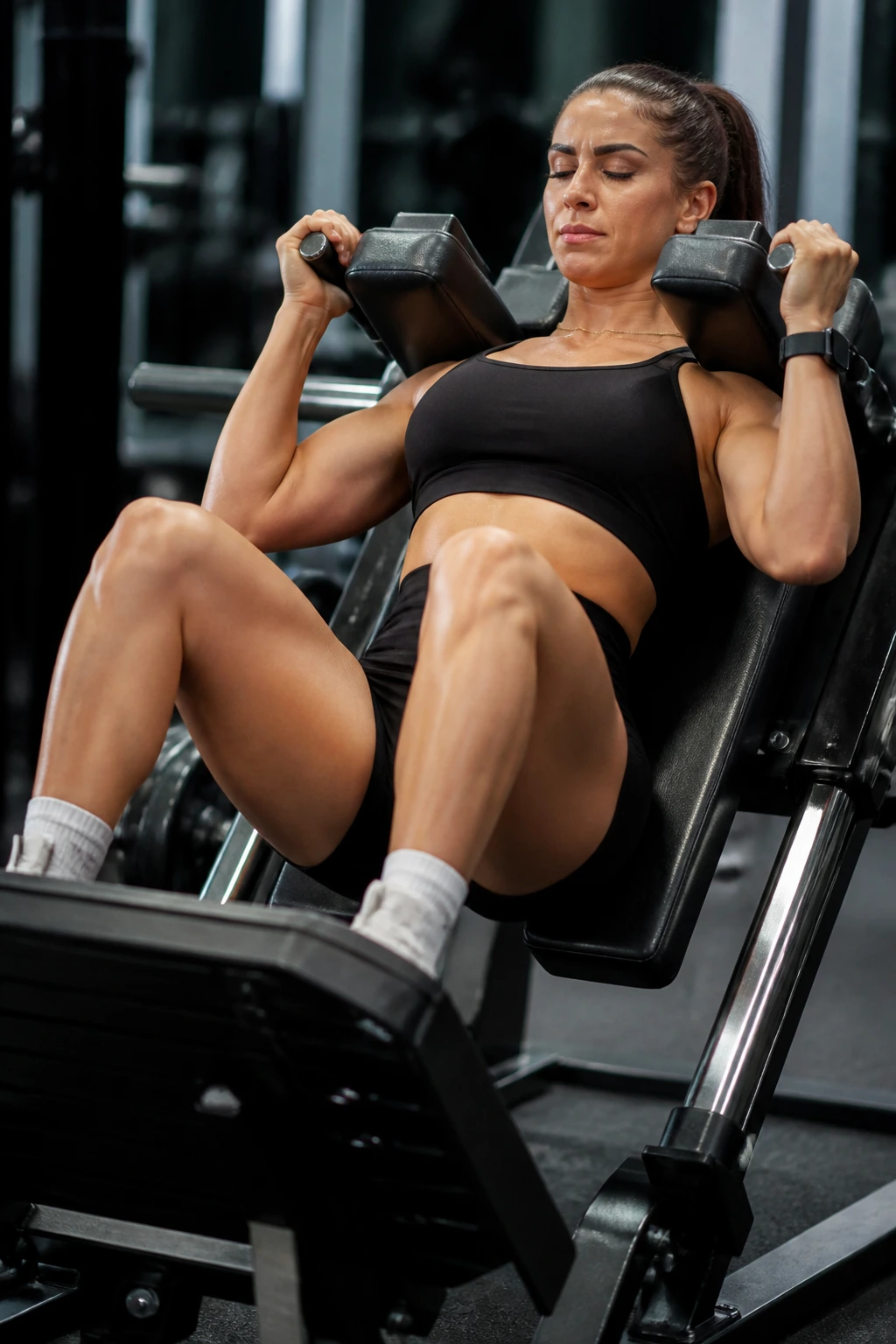
You do not need a fancy setup to get a savage leg session. A hack squat and frog pumps will do the job with much less drama than people expect. The hack squat gives you the heavy knee-dominant work, and the frog pump finishes the glutes with a short range that burns fast.
Try 3 rounds of 8 to 12 hack squats and 20 to 25 frog pumps. Keep the hack squat under control on the way down and drive through the whole foot on the way up. The frog pump is simple: feet together, knees open, hips lift, squeeze, repeat.
This pairing is sneaky because the second move looks easy right up until rep 12. Then the burn shows up and stays. That’s the point.
- Keep the hack squat depth where you can stay braced.
- Use bodyweight or a light plate for frog pumps.
- Rest 60 seconds between rounds.
If your gym has a hack squat machine, use it. It’s one of the few machines that earns its floor space.
15. Kettlebell Swing and Push-Up
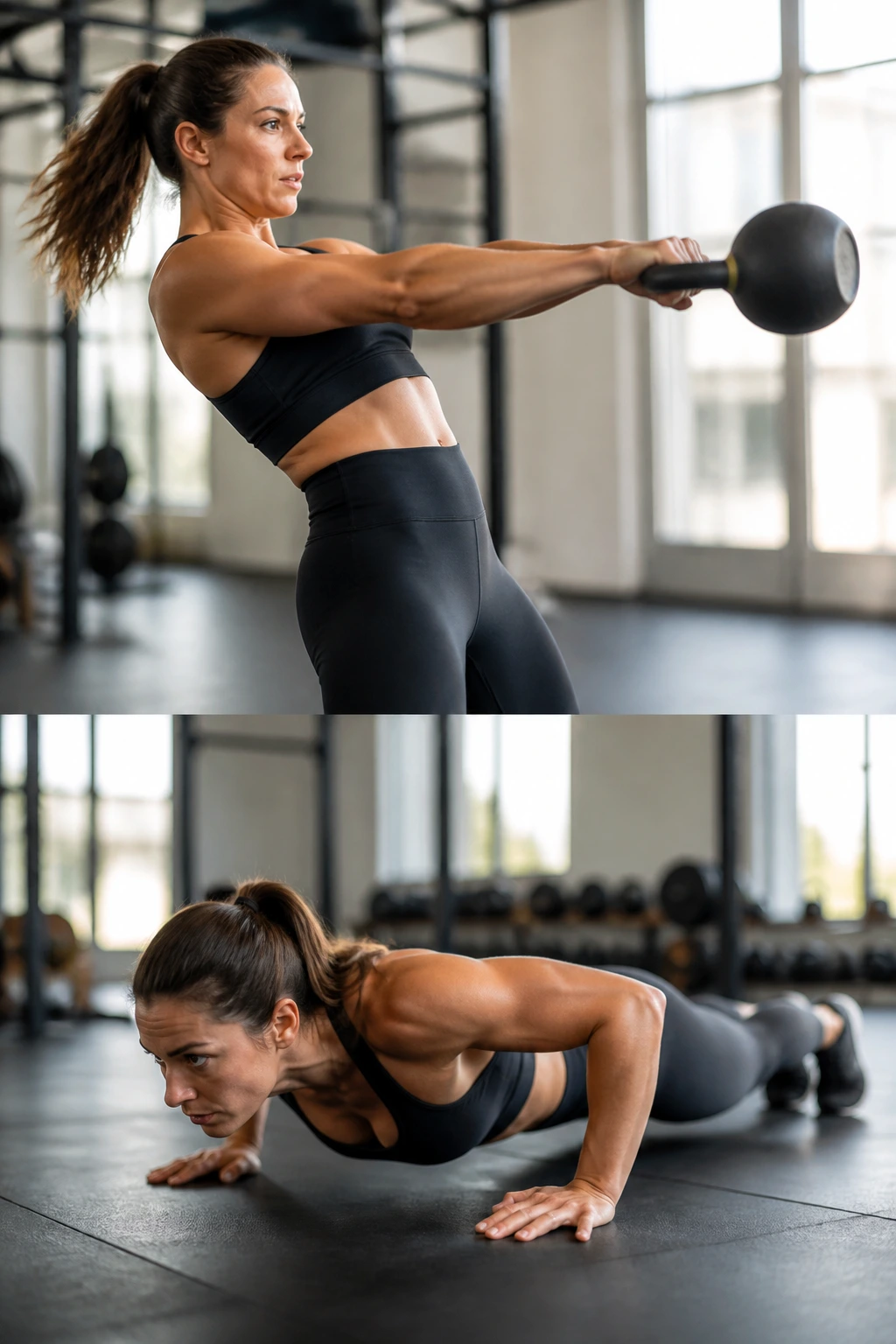
This pairing has a different feel. It’s more athletic, more breathy, and a little less like classic bodybuilding. The kettlebell swing trains hip snap and power. The push-up hits the chest, shoulders, and triceps without needing a bench.
Run 3 to 5 rounds of 15 kettlebell swings and 8 to 15 push-ups. If full push-ups are a stretch, put your hands on a bench or Smith bar and keep the body line straight. On the swing, the bell should float because of hip drive, not because your arms are yanking it up.
The best part is how little setup this needs. One kettlebell, one floor space, one pair of hands.
What to feel
Your glutes should fire hard on the swing. Your chest and triceps should get the push-up work. If your lower back is the thing screaming, the swing is too squatty and your hinge needs cleanup.
This is a good pairing when you want a session that raises your heart rate without turning into random conditioning fluff. Clean reps. Fast rest. Back to it.
16. Landmine Press and One-Arm Row
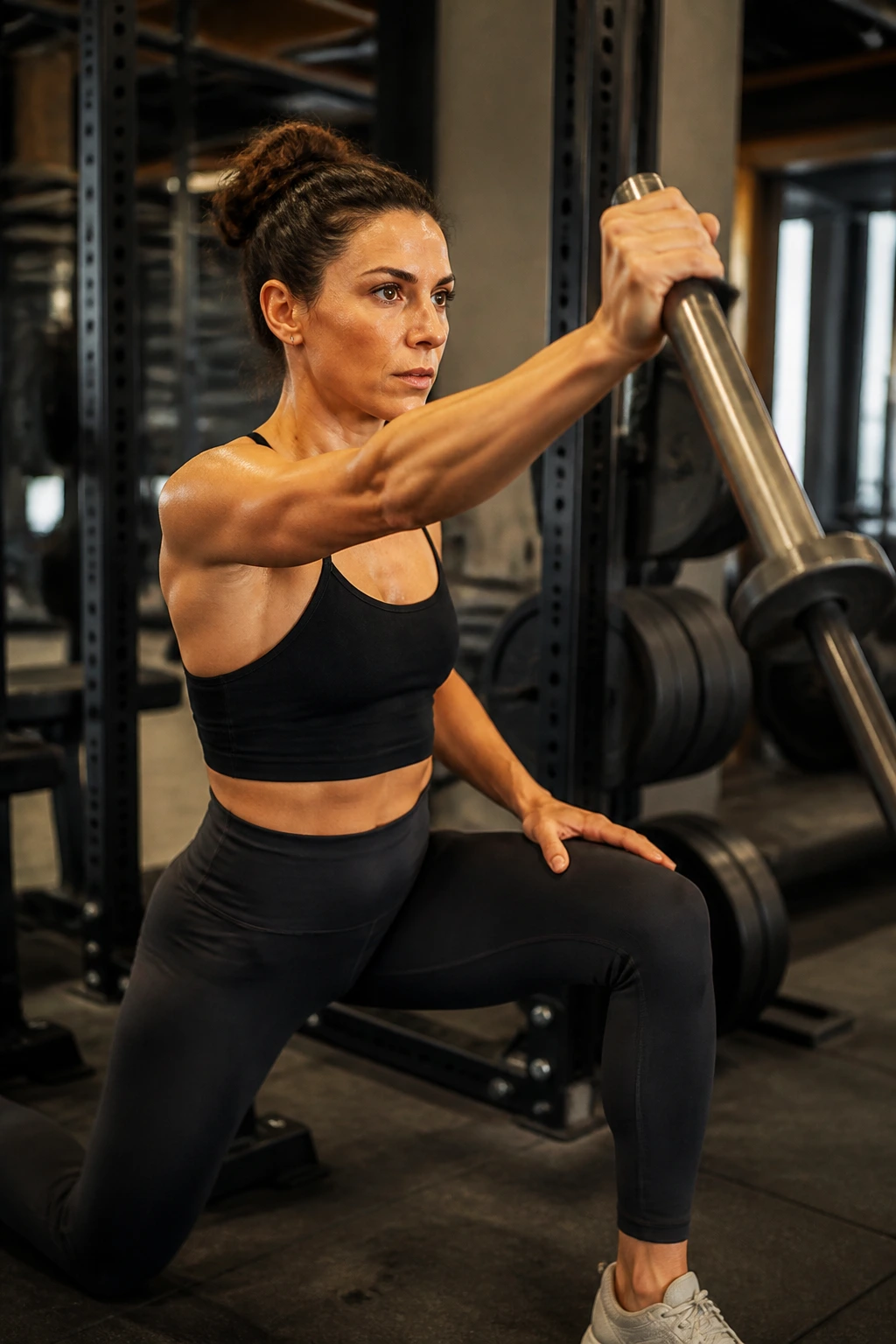
A landmine press is one of those exercises that feels easier on the shoulders than a strict overhead press, and that’s a big reason it deserves a spot here. Pair it with a one-arm row and you get a push-pull setup that works well for strength, symmetry, and shoulder comfort.
Do 3 rounds of 8 to 10 landmine presses per side and 10 to 12 one-arm rows per side. Half-kneeling is my favorite position for the press because it locks the hips down and keeps the torso from leaning into the rep. On the row, let the shoulder blade move a little at the bottom, then drive the elbow back.
Half-kneeling setup
- Put the working knee down on a mat.
- Brace the front foot flat.
- Squeeze the glute on the kneeling side.
- Press up and slightly forward, not straight overhead.
The landmine path is forgiving, but that does not mean sloppy. Keep the ribs stacked and the press smooth. The row should feel strong, not jerky.
Good pairing, honest pairing. This one usually feels better than people expect, which is probably why it sticks.
17. Sled Push and Farmer Carry
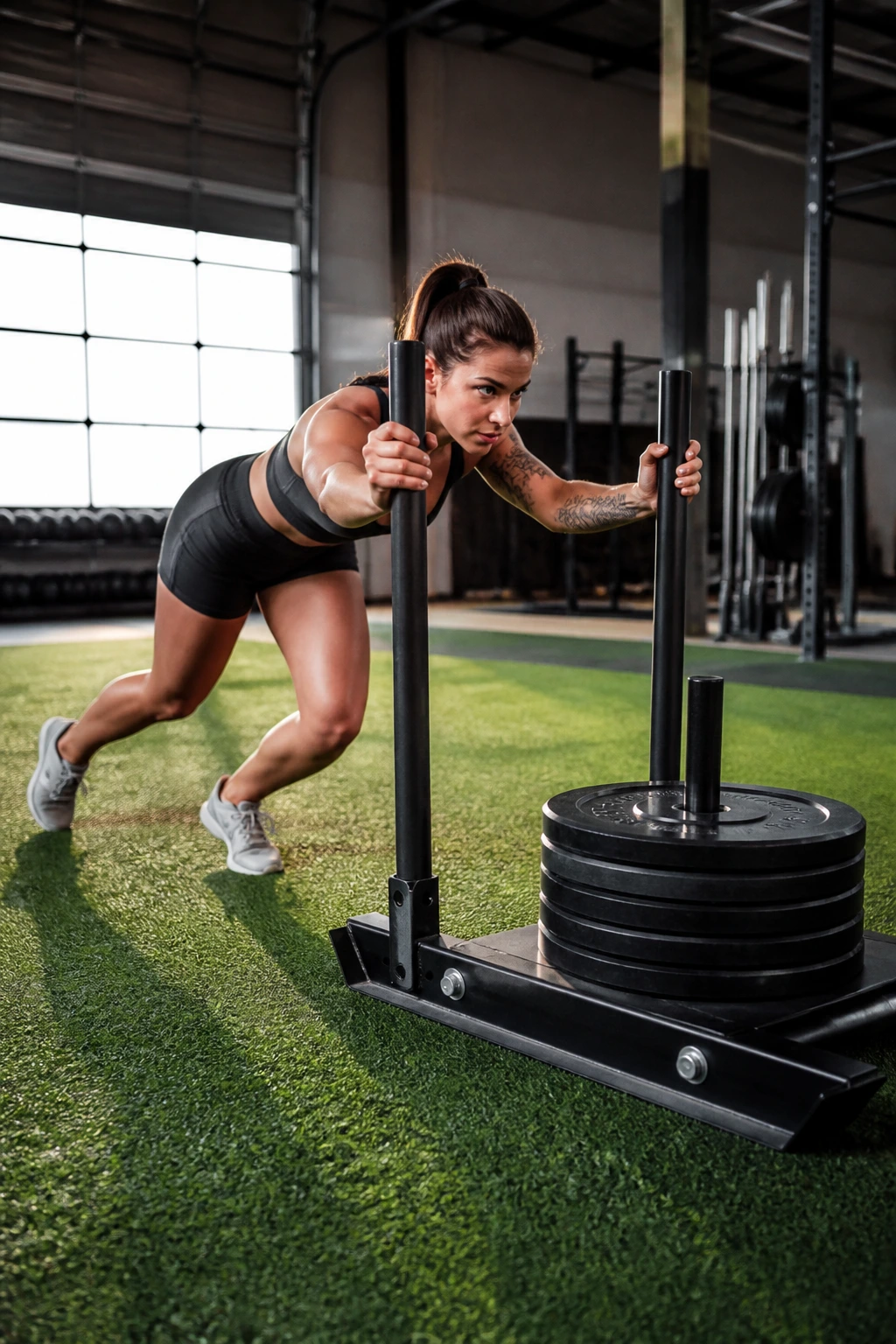
If your gym has a sled and some open turf, use them. This pairing is simple, hard, and weirdly satisfying. The sled push builds leg drive and conditioning, while the farmer carry trains grip, posture, and the kind of full-body stiffness that makes other lifts feel steadier.
Aim for 4 to 6 rounds of 20 to 30 yards of sled push followed by 30 to 40 yards of farmer carry. Keep the sled load heavy enough that you’re working, but not so heavy that the sled barely moves. On the carry, use dumbbells that challenge your grip without forcing you to shrug them up to your ears.
A few details matter here:
- Walk the sled with short, powerful steps.
- Keep the torso slightly forward on the push.
- On the farmer carry, stand tall and let the arms hang.
- Rest 60 to 90 seconds between rounds.
What if there’s no sled? Use a heavy incline treadmill walk for the push slot and keep the farmer carry. It’s not identical, but it still gives you the same “work hard and keep moving” feel.
18. Chest-Supported Row and Incline Push-Up
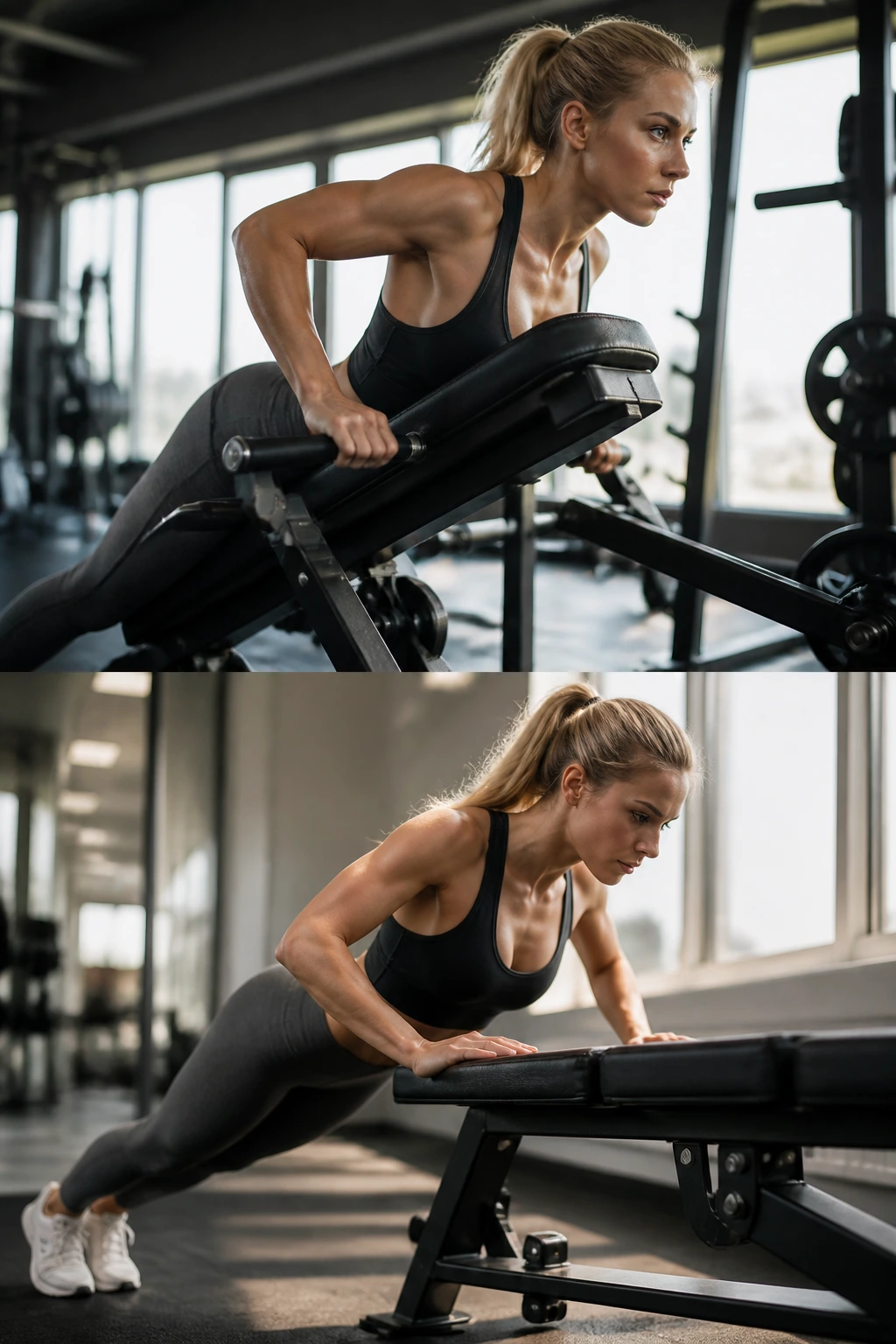
This is the low-back-friendly upper-body pairing I wish more people used. Chest-supported rows take the spine out of the equation, which means the back muscles can work without your torso trying to stabilize every rep. Add incline push-ups, and you’ve got a session that’s friendly, efficient, and easy to recover from.
Do 3 to 4 rounds of 10 to 12 chest-supported rows and 8 to 15 incline push-ups. Use a bench, incline machine, or chest-supported row setup that lets the sternum stay planted. For the push-up, set your hands on a bench or sturdy box and keep the body in one line.
The incline angle should make the push-up challenging but not ugly. If your hips sag after three reps, the surface is too low.
This pairing is a good choice when you want upper-body volume without feeding the lower back any extra work after a heavy leg day. Nice change of pace. No wasted effort.
19. Cable Squat and Woodchop
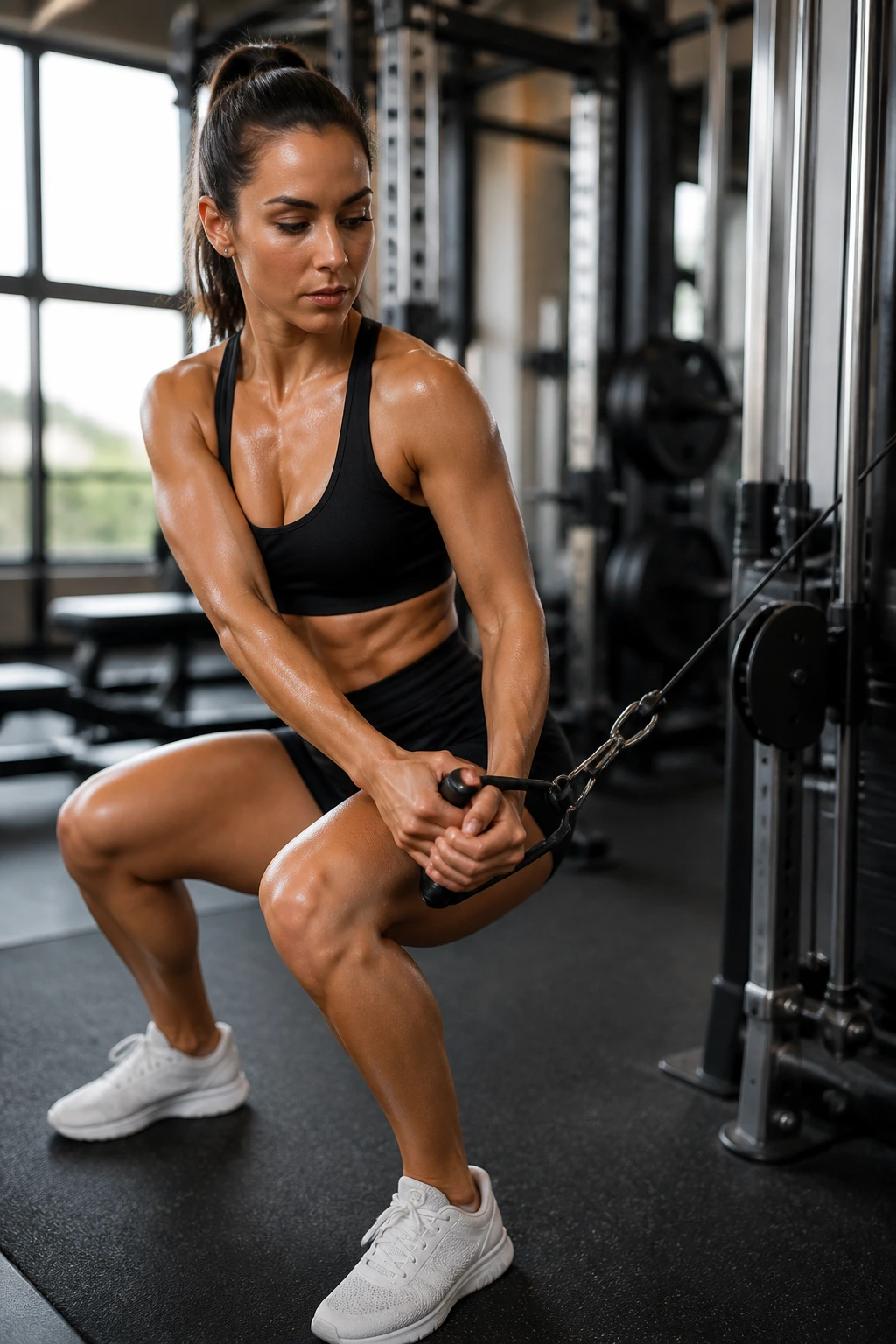
This one looks simple until you do it slowly. The cable squat gives your legs a different line of tension, and the woodchop teaches the torso to resist twisting and then control the twist when it’s supposed to move. It’s a smart pairing for core strength that carries outside the gym.
Try 3 rounds of 10 cable squats and 10 woodchops per side. Keep the cable squat upright and controlled, and don’t let the handle yank you forward. On the woodchop, rotate through the torso and hips together, then bring the movement back under control instead of snapping it.
A cable station gives you consistent tension through the whole rep, which is the part I like most here. It’s not flashy. It just works.
- Use a moderate stack weight.
- Move with a 2-second lowering phase.
- Keep the knees soft on the chop and the ribs down.
- Rest 45 to 60 seconds between rounds.
If the twist feels too aggressive, reduce the load and shorten the range first. That fixes more problems than people think.
20. Pallof Press and Side Plank
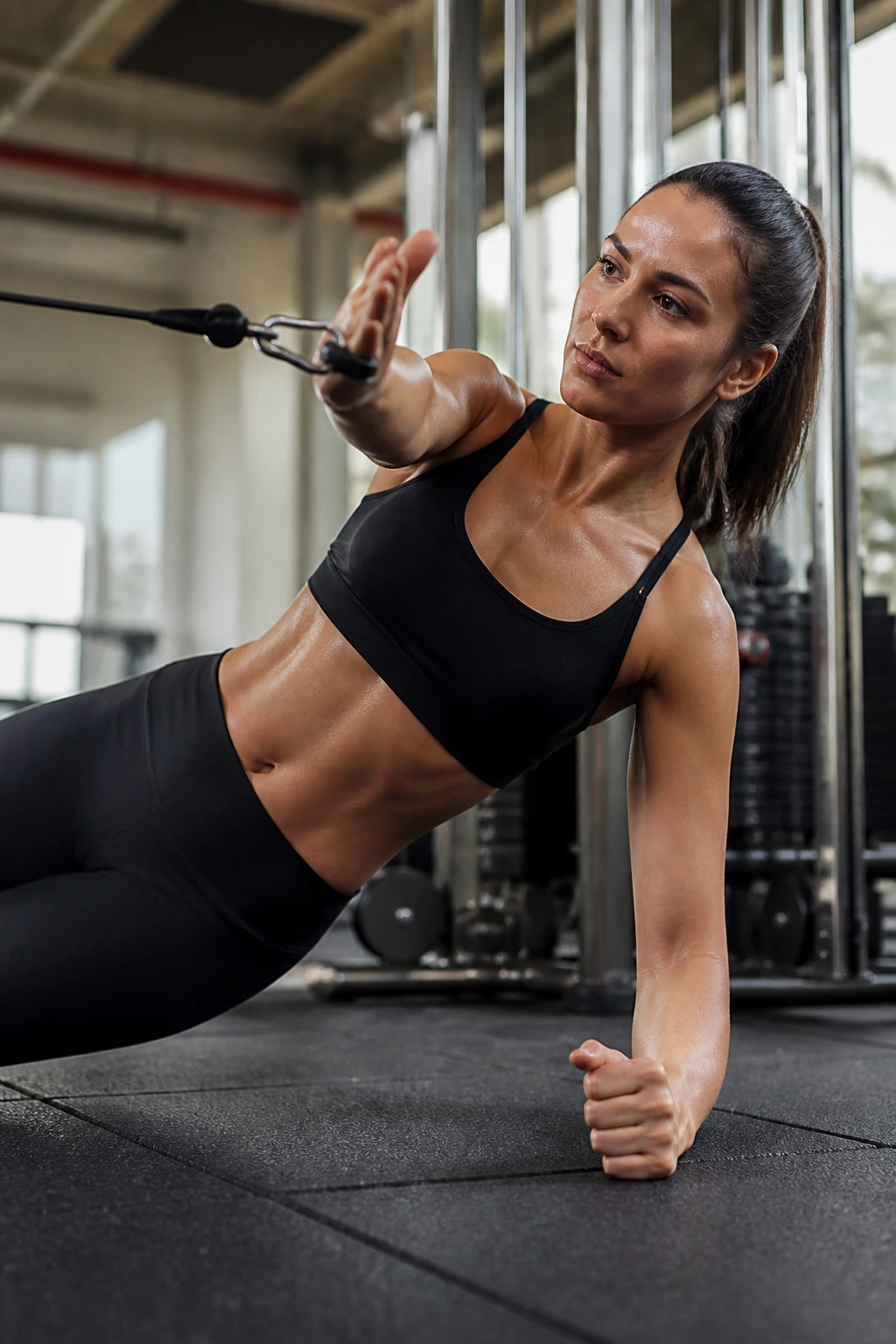
When you want a core superset that does not trash your lower back, this is the one I’d keep near the top of the list. The Pallof press teaches anti-rotation — your torso resists being pulled by the cable — and the side plank builds the side body, hip, and shoulder stability that usually gets ignored until it hurts.
Do 3 rounds of 8 to 12 Pallof presses per side and a 20 to 40 second side plank per side. Keep the cable handle at chest height and press it straight out from the sternum without letting your body twist. On the side plank, make a long line from head to heel and drop the top shoulder away from the ear.
This works well at the end of a session, especially after legs or back work, because it trains control instead of brute force. Some days you want heavy. Some days you want tight and clean. This is the second kind.
Best move: if the side plank on the hand bothers your wrist, drop to the forearm. Same idea. Less irritation.
Pick three or four of these pairings and run them hard for a few weeks. That’s usually enough to make the gym feel less random and a lot more productive.
