



Two-week workout challenges are short enough to fit into a messy schedule and long enough to make your body notice the work. Two weeks won’t rebuild everything, but it can change how you breathe on stairs, how your clothes sit, and how your muscles feel when you wake up.
That’s the part people miss. The best short challenge is not the one that looks the hardest on paper. It’s the one you can repeat for 14 days without wrecking your joints, losing interest, or turning the whole thing into a punishment ritual. Simple wins. Almost always.
If you want quick results, the trick is picking a challenge that matches your real life: your equipment, your stress level, your knees, your schedule, and your patience. Chase all the goals at once and the plan usually falls apart by day four. Pick one lane and the body tends to respond.
The fifteen options below cover strength, conditioning, fat-loss-friendly movement, recovery, and a few hybrid styles that sit in the middle. Some are loud and sweaty. Some are quiet and deceptively hard. All of them can be run for 14 days without needing a month-long prep phase, which is half the battle anyway.
1. Two-Week Bodyweight EMOM Challenge

EMOM training is brutally honest. If you only have 12 minutes, it still asks for 12 honest minutes.
“Every minute on the minute” means you do the reps, then rest for whatever time is left in that minute. It sounds mild until you’re three rounds in and your breathing starts getting choppy. The beauty here is density: you get a lot of work done fast, and you don’t waste time wandering between sets.
A good bodyweight EMOM for two weeks usually has 4 to 5 moves: squats, push-ups, reverse lunges, plank work, and a cardio burst like mountain climbers or jumping jacks. Keep the reps low enough that you finish each minute with 15 to 25 seconds of rest. If you’re gasping so hard that your form falls apart, the reps are too high.
Why it works
The challenge feels short, but the minutes add up fast. You’re training strength, heart rate, and consistency in the same session, which is exactly why it works so well for people who keep saying they “don’t have time.”
A simple 14-day setup looks like this:
- Days 1, 3, 5: 12-minute EMOM
- Days 2, 4: brisk walk or easy mobility
- Day 6: 14-minute EMOM
- Day 7: rest
- Repeat the pattern in week two, adding 1 to 2 reps per movement or 2 minutes to the total session
Pro tip: keep one exercise per minute on the clock. Mixed-minutes get messy fast, and messy EMOMs turn into frantic cardio with bad reps.
2. Daily Steps and Mobility Challenge

Why do some people feel better after two weeks of walking, while others only feel tired? Because steps are not the whole story.
A daily steps-and-mobility challenge is the one I like for people who are already stressed, stiff, or burned out from hard training. It’s boring on purpose. You walk enough to keep the body moving, then you spend 8 to 12 minutes opening the ankles, hips, upper back, and shoulders. That combo is sneaky. Your posture usually feels better before your conditioning does.
The walking target can be 8,000, 10,000, or 12,000 steps, depending on your starting point. Don’t pick a number that turns your day into a scavenger hunt. Pick one you can hit with a lunch walk, a few phone-call laps, and a bit of evening movement.
How to set up the day
- Walk 20 to 30 minutes after one meal
- Take a 10-minute mobility break once a day
- Keep the pace brisk enough that talking is easy, but singing would be weird
- Use the same walking shoes most days; blister drama is pointless
Mobility pieces that actually matter
- 90/90 hip switches
- calf raises on a step
- thoracic rotations on all fours
- wall slides
- couch stretch, 45 to 60 seconds per side
Simple. Effective. If you want a plan that helps recovery instead of beating you up, this one earns its place.
3. Tabata Sprint Challenge

The first time you run a true Tabata block, the clock feels wrong. Twenty seconds is tiny until your lungs disagree.
Tabata is built around 20 seconds hard, 10 seconds easy, repeated for 8 rounds. That gives you 4 minutes of work in a single block, which is short enough to stay focused and nasty enough to raise your heart rate fast. You can do it on a bike, rower, treadmill, jump rope, or even with bodyweight moves like squat jumps if your knees are happy.
The mistake people make is turning every interval into a near-death scramble. Don’t. You want the hard parts to be hard, but still controlled. If your speed drops off a cliff after round three, you started too hot.
Keep the work intervals honest
- Use 1 exercise per block
- Do 2 or 3 blocks per session
- Rest 2 to 3 minutes between blocks
- Run the challenge 3 days per week, not 6
A smart two-week pattern is two Tabata sessions in week one, then three in week two if recovery feels fine. That gives your body a reason to adapt without making your calves feel like cooked noodles.
Tabata is not the easiest choice. It is a sharp one. Big difference.
4. Two-Week Dumbbell Strength Challenge
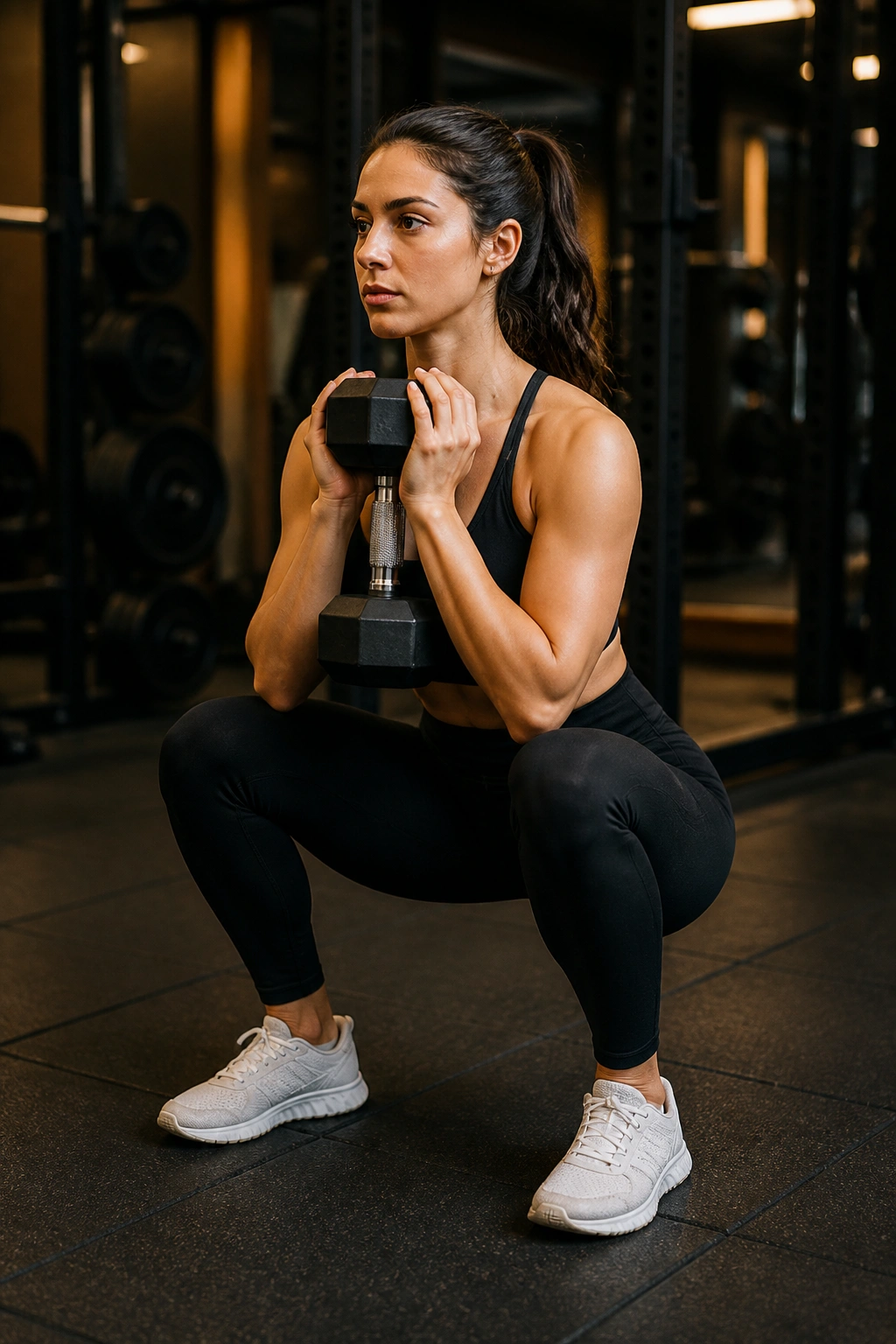
Two weeks is not too short for strength. It’s too short for sloppy programming.
This is the challenge I’d pick for someone who wants a visible change in how their body feels under load. Dumbbells give you enough resistance to build muscle and enough flexibility to train at home or in a small gym. The key is repetition with small progress, not random workouts pulled from five different fitness accounts.
A clean setup uses 4 sessions each week: squat pattern, hinge pattern, push, pull, and one carry or core move. Keep the reps in the 6 to 12 range for most lifts, and add either 1 rep or a little weight when the set feels smooth. If your last rep looks like a rescue mission, stay where you are.
A simple four-day split
- Day 1: goblet squat, dumbbell press, one-arm row, plank
- Day 2: Romanian deadlift, split squat, overhead press, suitcase carry
- Day 3: repeat Day 1 with a small load bump
- Day 4: repeat Day 2, or use a shorter circuit if fatigue is high
You don’t need endless exercise variety here. You need clean reps, decent sleep, and enough food to recover.
The payoff is real: a tighter feeling in the shoulders, stronger legs, and less wobble when you pick things up off the floor.
5. Resistance Band Burn Challenge
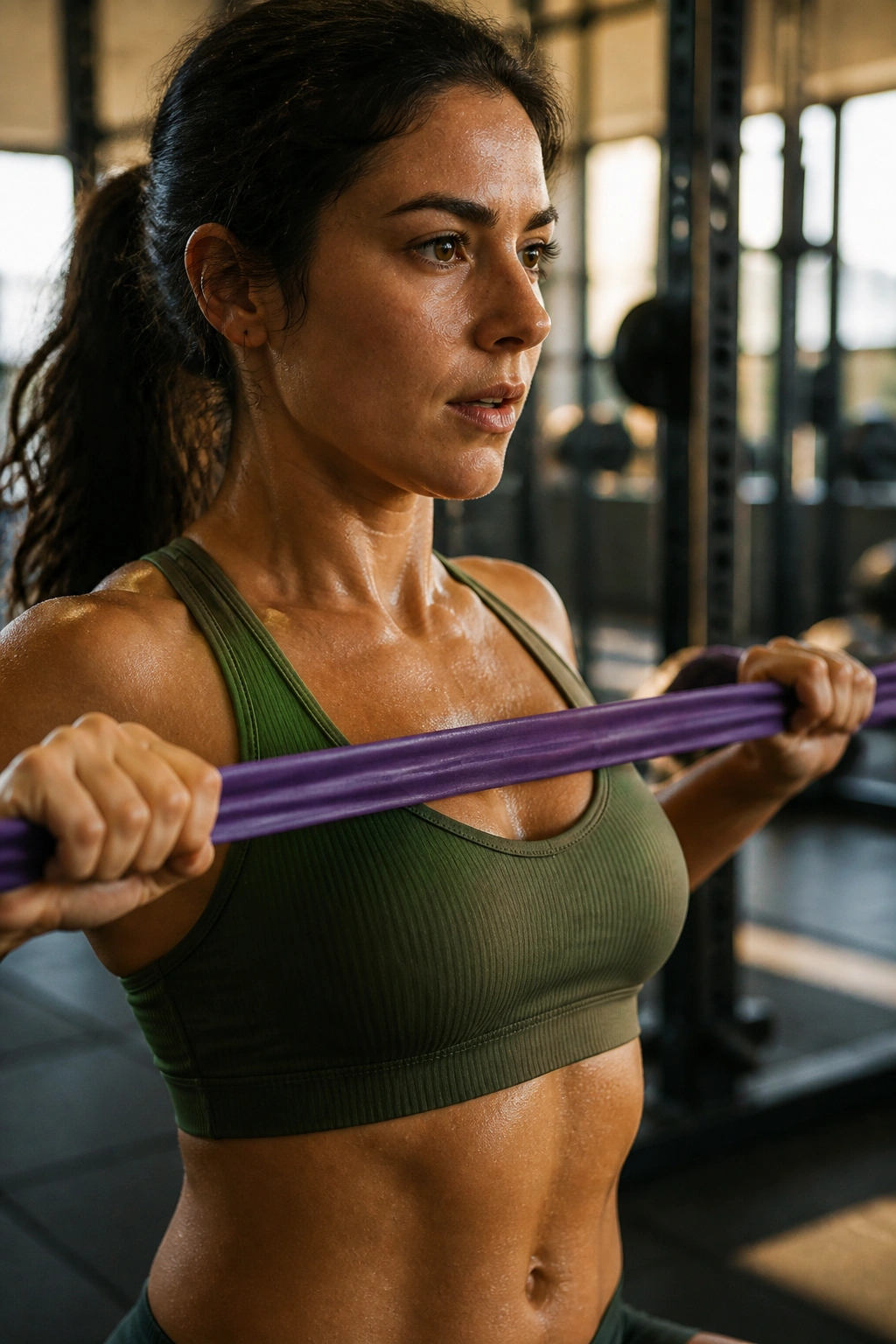
Unlike dumbbells, bands get harder at the end of the movement. That matters more than people think.
A resistance band challenge is the right move when your joints feel cranky, your space is tiny, or your travel bag is doing more work than your gym membership. Bands are cheap, quiet, and annoying in the best way. They force control. If you rush the reps, they snap back and make you pay for it.
This challenge works best as 3 full-body sessions per week with higher reps and short rests. That means 12 to 20 reps on most moves, with a slow lowering phase and a 1-second squeeze at the hardest point. Think of it as tension work, not hero work.
What the band does well
- Rows for upper-back strength
- Presses for shoulders and chest
- Squats and lateral walks for glutes
- Pull-aparts for posture
- Hip bridges for the backside
A lot of people underestimate band work because it doesn’t look dramatic. Bad call. If you’re trying to keep training going while your schedule is ugly, bands are one of the easiest ways to stay consistent without needing a full gym setup.
6. Core and Posture Reset Challenge
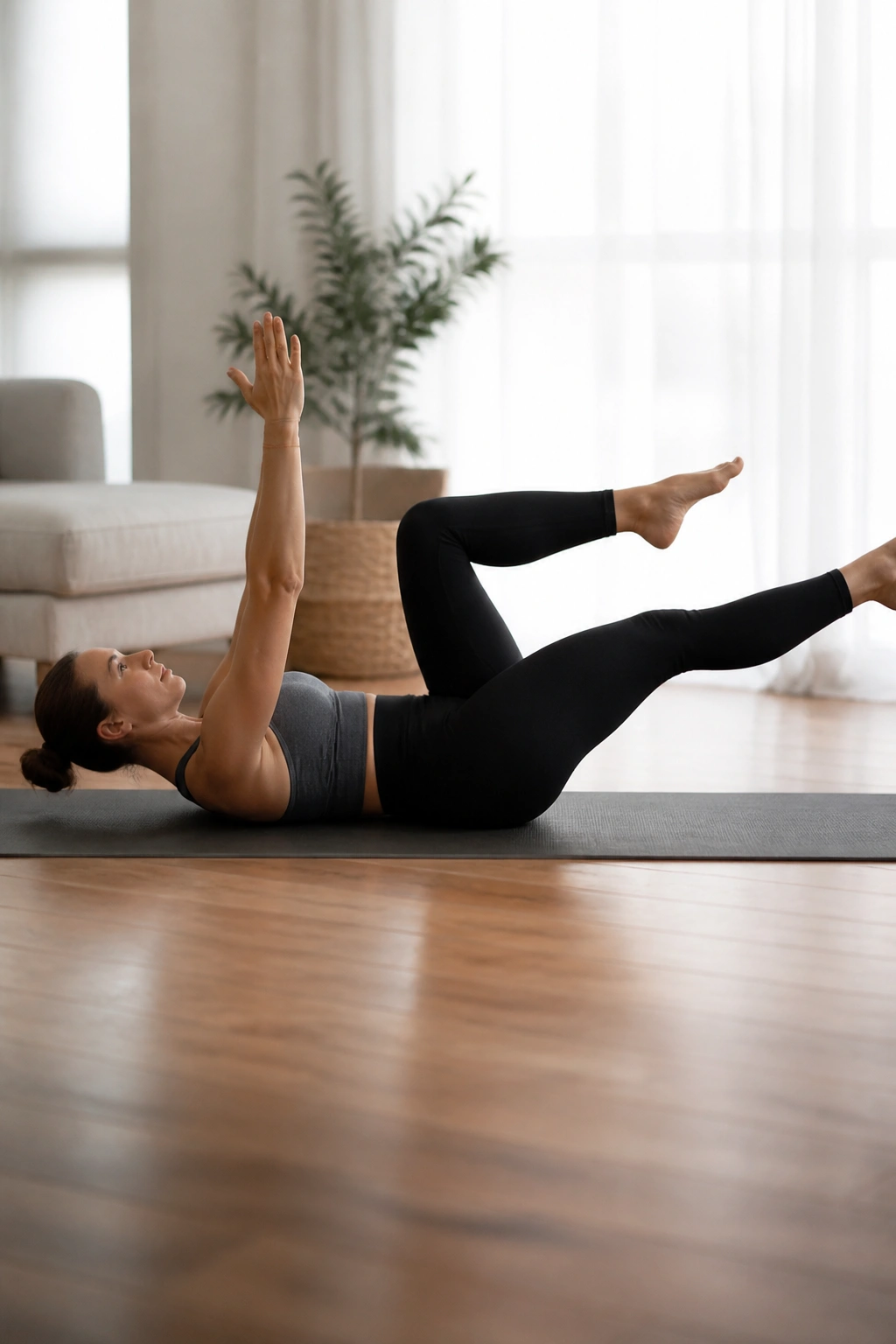
Crunches are not a fix for a desk that eats your spine all day.
That sounds blunt because it is. If your lower back gets sore, your hips feel tight, and your ribs flare up when you stand, you need a challenge that teaches your trunk to hold shape under load. A core-and-posture reset is less about vanity and more about making your body feel organized again.
A smart version runs for 14 days with 10 to 15 minutes a day of core control work, plus 2 short strength sessions that involve carries, rows, or split squats. You want bracing, breathing, and alignment. Not endless sit-ups.
The movements that earn their keep
- Dead bug, slow and controlled
- Side plank, 20 to 40 seconds per side
- Bird dog with a pause at full reach
- Farmer carry or suitcase carry
- Wall slides for the upper back
Do the reps slowly enough that your ribs stay down and your hips don’t twist around to cheat. That’s the whole point. If you rush through the work, you train speed. If you hold the position, you train control.
One quiet benefit: better posture often makes other workouts feel better too.
7. Stair-Climb Power Challenge

Find one flight of stairs and it suddenly looks rude.
Stair work is one of those old-school tools that refuses to go away because it works. It raises your heart rate fast, lights up the glutes and quads, and doesn’t need fancy gear. If you’ve got a decent stairwell, you’ve got a workout.
The simple version is 6 to 10 rounds of hard climbs with a full walk down for recovery. Keep the first few rounds controlled. Don’t blast the stairs like you’re late for a train. You want repeatable power, not one heroic climb followed by a meltdown on the landing.
A clean stair session
- Warm up with 5 minutes of walking
- Climb hard for 20 to 40 seconds
- Walk down slowly
- Rest at the bottom if breathing stays ragged
- Repeat for 10 to 15 minutes total
Use shoes with decent grip, and don’t treat stair rails like a crutch unless you need balance. If your knees complain sharply, shorten the interval or switch to fast step-ups on a sturdy box. No workout is worth a stupid injury.
This challenge is rough in a very honest way. You know exactly what you’re paying for.
8. Kettlebell Swing Conditioning Challenge
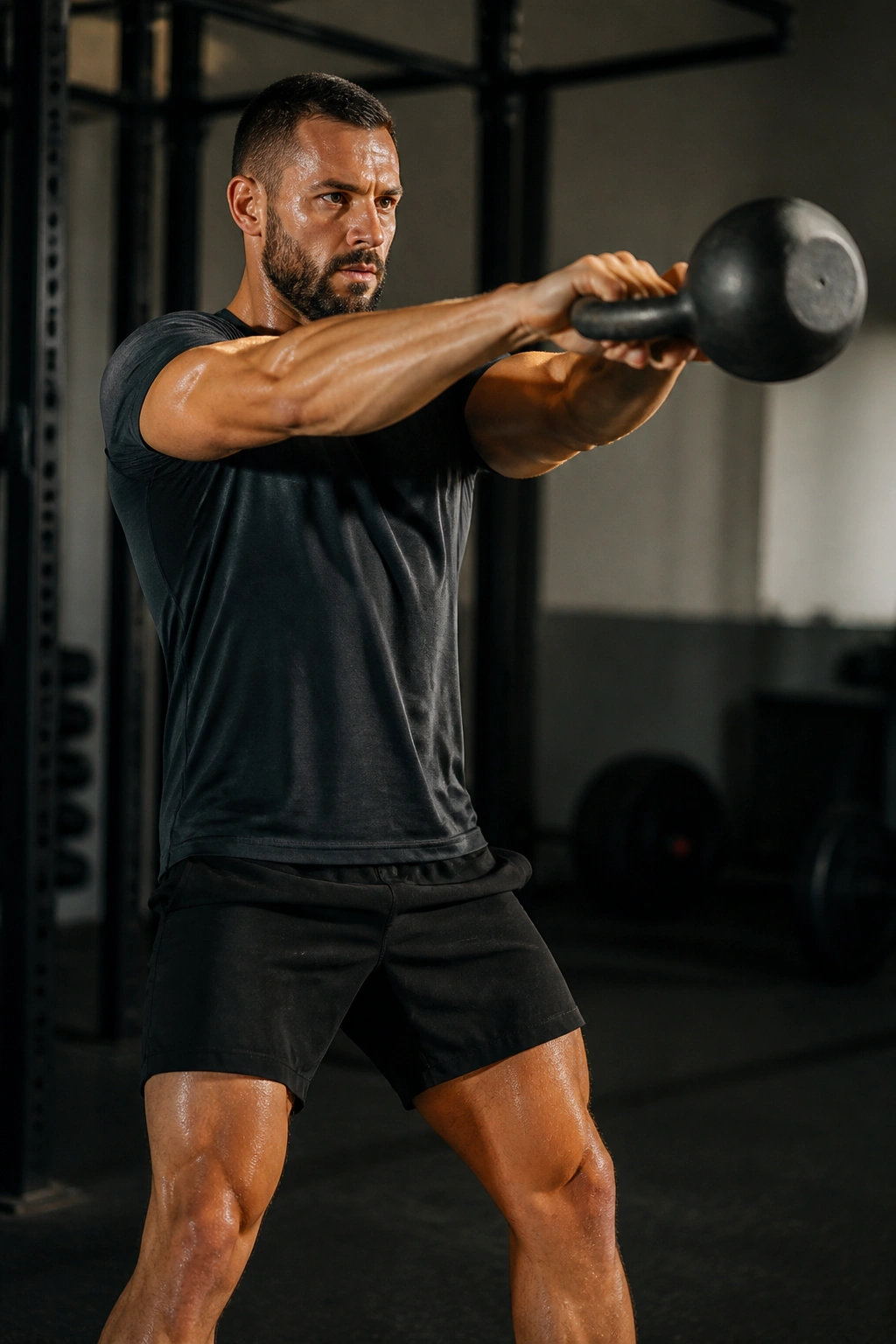
Why do kettlebells get so much love from people who train for speed and power? Because one good swing can do a lot in very little time.
The swing challenge is a hinge-driven plan, which means the hips do the work and the arms mostly guide the bell. That matters. If you squat the swing, it turns into a weird front raise with better marketing. The real move feels snappy, like a hard snap of the hips followed by a clean float of the bell.
A two-week kettlebell challenge usually mixes swings with goblet squats, presses, and carries. Keep the sessions short, around 15 to 20 minutes, and stop a set before your lower back starts talking too much. That’s a useful line: once the swing turns into a back exercise, the technique has drifted.
What the 14 days can look like
- Day 1: 10 sets of 10 swings, resting 45 to 60 seconds
- Day 3: goblet squat, swing, carry circuit
- Day 5: 5 rounds of 15 swings and 5 presses per side
- Repeat the same pattern in week two with slightly cleaner pacing or a small load bump
The people who do best here are the ones who care about form more than volume. Crisp reps beat sloppy hero sets every time.
9. Push-Pull Upper-Body Challenge

A push-pull challenge gives your shoulders a chance to stay sane while your upper body gets stronger.
That’s the main difference between this and the usual chest-and-arms obsession. When you pair pushing movements with pulling movements, you keep the shoulder blades working both ways. The result is better balance, less cranky posture, and usually a stronger-looking upper body by the end of two weeks.
Pick moves you can load or scale easily: push-ups, dumbbell presses, rows, band pull-aparts, assisted pull-ups, and maybe dips if your shoulders tolerate them. The goal is not to wreck yourself on day one. The goal is to repeat quality work across 14 days.
The pairing that works
- Push-up plus one-arm row
- Dumbbell press plus chest-supported row
- Overhead press plus band pull-apart
- Assisted pull-up plus incline push-up
Run 3 or 4 rounds per session, resting 60 to 90 seconds between rounds. If your pulling work is weak, start there and let it set the pace. Most people rush the push and neglect the pull. That’s how shoulders get grumpy later.
A small rule helps here: every pressing set should be matched with a pulling set. Keep it honest.
10. Run-Walk Interval Challenge

A run-walk challenge looks too easy on paper. Then minute three arrives.
This is one of the smartest two-week workout challenges for people who want better conditioning without launching straight into full runs. The run sections stay short enough to manage, the walk sections keep your form from falling apart, and the whole thing teaches your body to tolerate repeated effort. That matters more than trying to “prove” you can run nonstop on day one.
Start with a flat route and a pace where you could still speak a short sentence. Week one might be 1 minute running, 2 minutes walking, repeated 6 times. Week two can move to 90 seconds running, 90 seconds walking. If that feels smooth, you can stretch one or two run segments to 2 minutes.
A clean 2-week ladder
- Sessions 1 to 3: 1 min run / 2 min walk x 6
- Sessions 4 to 6: 90 sec run / 90 sec walk x 6
- Sessions 7 to 10: 2 min run / 1 min walk x 5
- Walk for 5 minutes before and after
If your shins or knees start to bark, back off and keep the same ratio for a few more sessions. There’s no medal for forcing it. Better to finish two weeks feeling capable than limping around the neighborhood.
11. Lower-Body Glute and Leg Builder
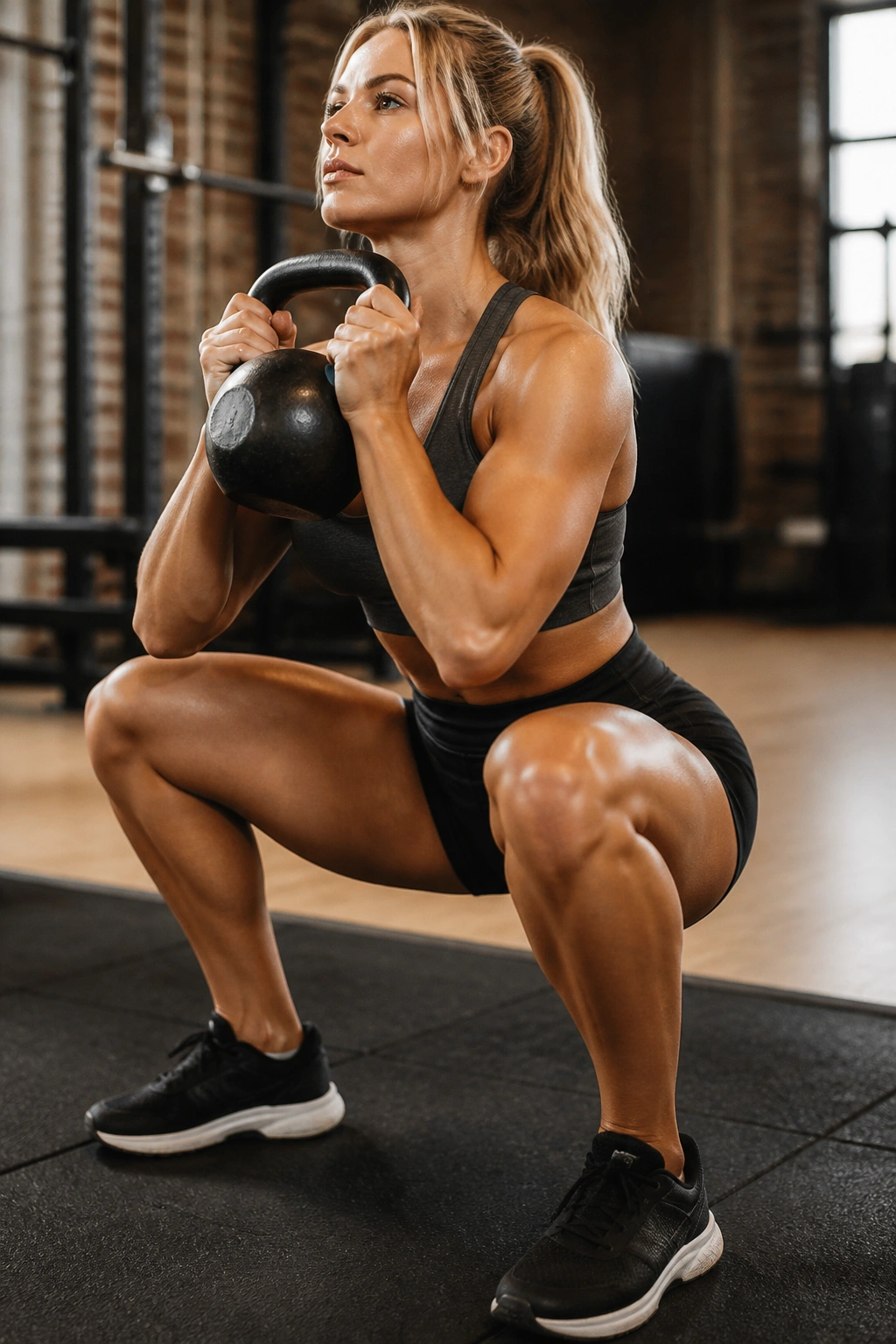
If your legs are the part you want to wake up fast, give them real work and stop pretending calf raises alone are enough.
A lower-body challenge built around squats, hinges, lunges, step-ups, and glute bridges can change how your whole body feels in two weeks. Legs hold a lot of muscle, so they also drive a decent amount of fatigue and training stimulus. That’s one reason these sessions can feel harder than their length suggests.
The cleanest version uses 3 lower-body workouts each week and a couple of easy walks on off days. You don’t need to annihilate your legs every session. You need to hit them often enough that they adapt. The glute work helps with hip stability, and the hinge work keeps the backside awake instead of letting your quads do all the shouting.
Core movements for the two weeks
- Goblet squat or front squat
- Romanian deadlift
- Walking lunge or split squat
- Step-up
- Glute bridge or hip thrust
- Standing calf raise
Keep most sets in the 8 to 12 rep range. On the final set of one movement, add a short pause at the bottom or top. That tiny change makes a bigger difference than people expect.
Short challenge, big leg soreness. Fair warning.
12. Rowing or Air Bike Challenge
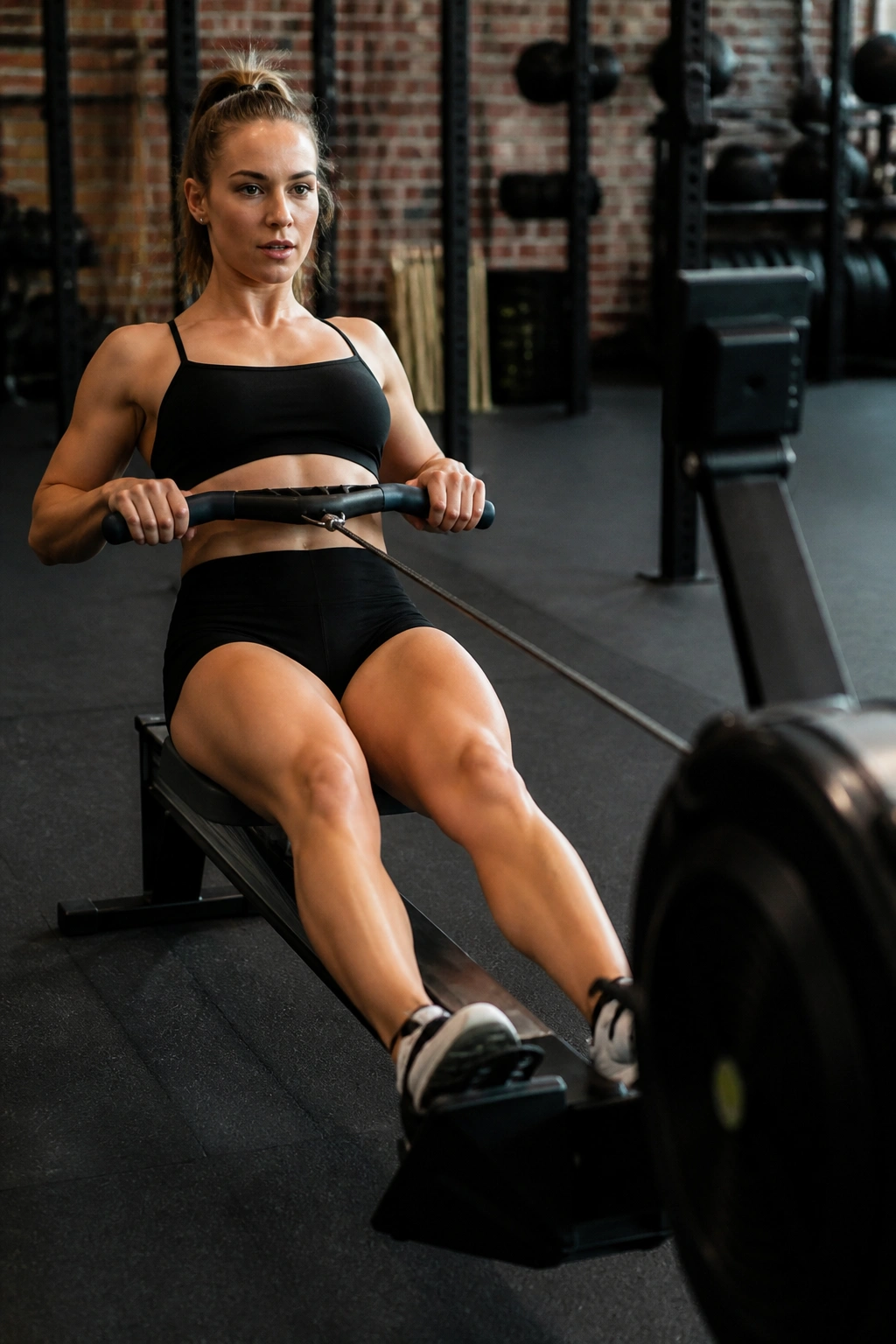
Do you want hard conditioning without pounding your joints into the floor? Use a rower or air bike.
These machines are excellent for short challenges because they give you measurable output. You can track distance, watts, calories, or rounds, and that makes progress easy to see over 14 days. They also spread the work across the body, so the legs, back, and lungs all get a say.
A good two-week machine challenge usually mixes hard intervals and easy recovery days. You might do 5 x 250 meters on the rower, or 6 x 30 seconds hard and 90 seconds easy on the bike. Keep the first session a little too easy. That sounds strange, but it pays off. If you blast day one, day three gets ugly.
How to pace it
- Warm up for 5 minutes
- Pick one hard interval format and keep it for both weeks
- Rest long enough to keep form clean
- Leave one or two reps in the tank on every block
The air bike is a little meaner on the lungs. The rower asks more from the back and the legs. Pick the one your body tolerates best and stay there for the full challenge instead of bouncing around between machines like a bored tourist.
13. Yoga-Strength Recovery Challenge
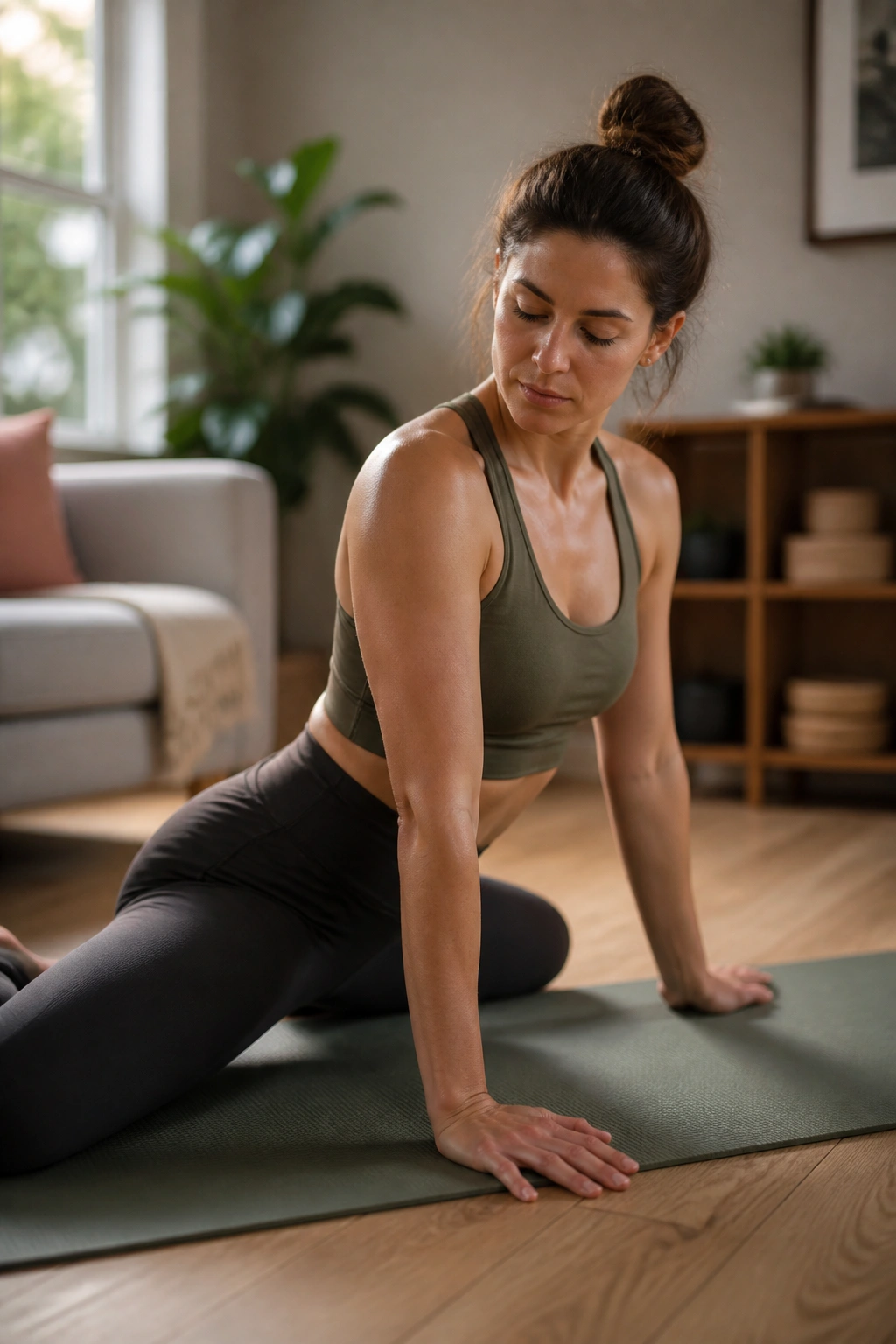
Not every two-week challenge has to leave you drenched.
That sounds like a soft take until you realize how many people are already doing too much. If your sleep is thin, your shoulders are tight, and your nervous system feels fried, a yoga-strength recovery challenge can make you feel better faster than a hard interval block. It still counts. Maybe more than the flashy stuff, honestly.
The shape is simple: 20 to 30 minutes of mobility-driven yoga flow on some days, plus 10 to 15 minutes of light strength on others. You’re trying to move the spine, hips, and shoulders through ranges they usually avoid, while keeping enough tension in the muscles to remind them how to work.
How to blend the pieces
- Flow through cat-cow, downward dog, low lunge, and thoracic rotation
- Add bodyweight squats, incline push-ups, and glute bridges
- Use slow nasal breathing for the last 2 to 3 minutes
- Keep the pace smooth, not sleepy
This challenge is a sneaky good reset after a hard block of training or a long spell of sitting. The results can show up as less stiffness, better sleep, and easier movement during the day. That’s a win, even if it doesn’t look dramatic in a mirror photo.
14. Hotel Room No-Equipment Challenge
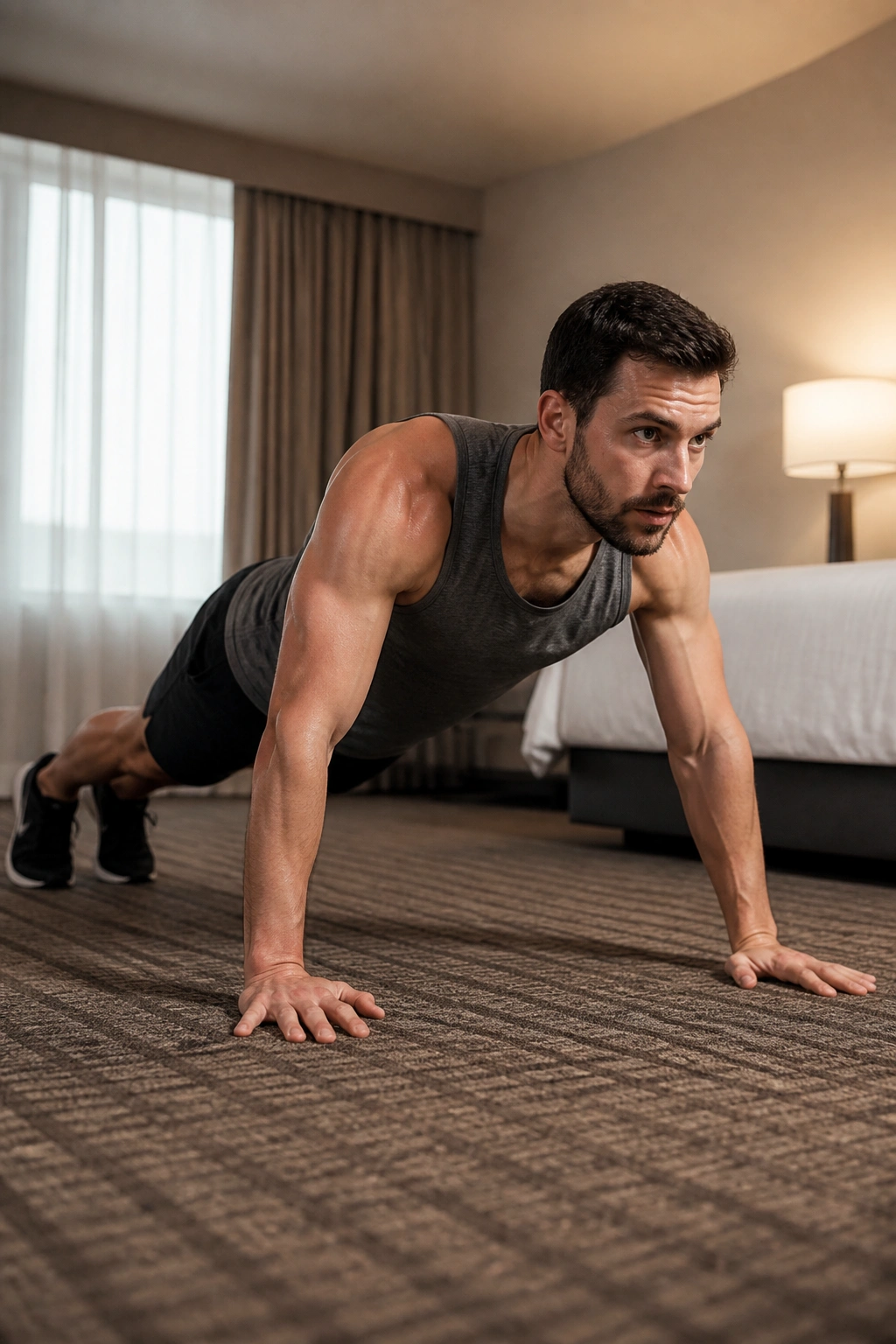
Travel ruins routines fast unless your plan is built for imperfect spaces.
A hotel room challenge is one of my favorites because it strips the whole thing down to the part that matters: can you still train when the room is small, the floor is carpeted, and the only gear is a towel and maybe a backpack? If the answer is yes, you’ve got a real habit, not a fantasy setup.
Use bodyweight moves, short rests, and quiet exercise choices. Nobody needs a jumping jack symphony at 6 a.m. A 15-minute circuit can do the job if you stay focused. The main idea is to keep the sessions simple enough that packing, flights, and odd food schedules don’t knock them off the rails.
The no-equipment circuit
- 10 squats
- 8 to 15 push-ups
- 10 reverse lunges per leg
- 20-second plank
- 12 glute bridges
- Rest 45 seconds
Run 4 to 6 rounds, depending on how much time you have. If push-ups are too easy, slow the lowering phase to 3 seconds. If they’re too hard, use the desk, bed edge, or a wall. That kind of adjustment keeps the challenge alive without turning it into a struggle session.
If you travel often, this one can save your streak.
15. Two-Week Mixed-Modal Performance Challenge
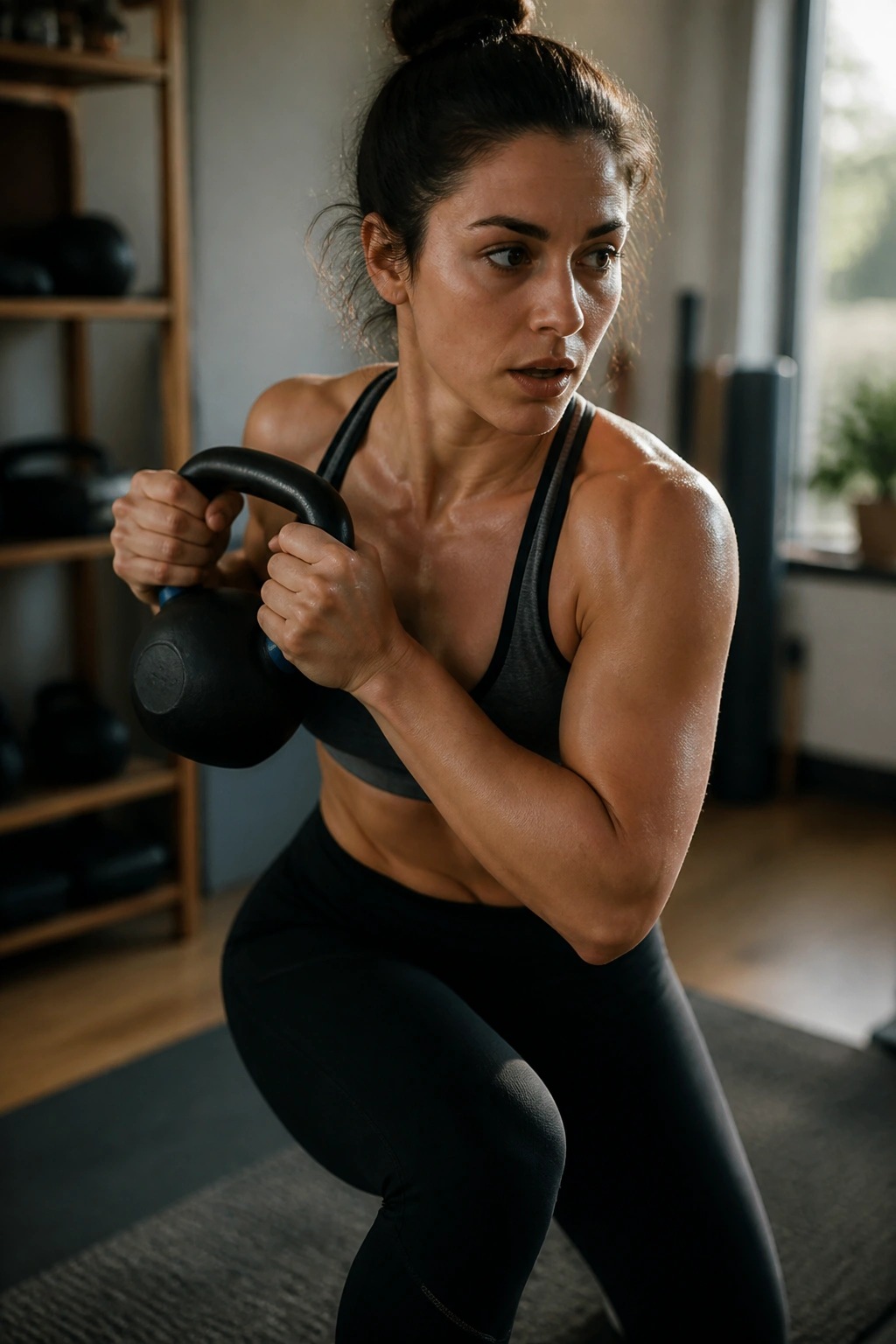
If you want one challenge that feels balanced, this is the closest thing to it.
A mixed-modal plan blends strength, conditioning, and a bit of mobility so you don’t end the two weeks lopsided. I like it for people who get bored easily or for anyone who wants quick results without sacrificing all the things that keep the body moving well. It asks for enough variety to stay interesting, but not so much variety that you spend the whole challenge starting over.
The structure can be as simple as five training days and two easier days each week. One day is strength-heavy, one is interval-heavy, one is a lower-body or upper-body focus, one is a short circuit day, and one is a mobility or walk day. The nice part is that it keeps the body guessing just enough to adapt without creating chaos.
What the week can look like
- Day 1: full-body strength
- Day 2: bike, rower, or run intervals
- Day 3: walk and mobility
- Day 4: mixed circuit with bodyweight or dumbbells
- Day 5: lower-body or upper-body focus
- Day 6: easy movement
- Day 7: rest or a long walk
The people who do well with this style are the ones who like a bit of everything but don’t want to program their own sessions from scratch. The challenge rewards consistency, not perfection. If one day gets messy, you just keep going the next day instead of trying to “make up” for it with extra punishment.
Pick the challenge that fits your equipment, your knees, your attention span, and your worst day, not your best one. That’s where the real result lives.
