



A good superset is not just two exercises glued together. Superset workouts for men at the gym work best when the pairing has a reason to exist: save time, keep the session moving, or let one muscle rest while another does the work.
The sloppy version is easy to spot. A guy hammers two heavy lifts back to back, breathes like he just sprinted up stairs, then wonders why the second movement looks like a fight with the equipment. That is not smart training. That is just fatigue with a timer.
The better version has shape. Bench with rows. Squats with hamstring work. Presses with pulldowns. Heavy first, cleaner second. Rest after the pair, not after every rep, and keep enough control that the last set still looks like training instead of a bar fight.
That approach can build size, strength, and work capacity without turning the gym into a three-hour project. It also keeps you honest. Supersets punish sloppy form fast, and that is a good thing if your goal is better lifting, not just more sweating.
1. Flat Bench Press and Chest-Supported Row
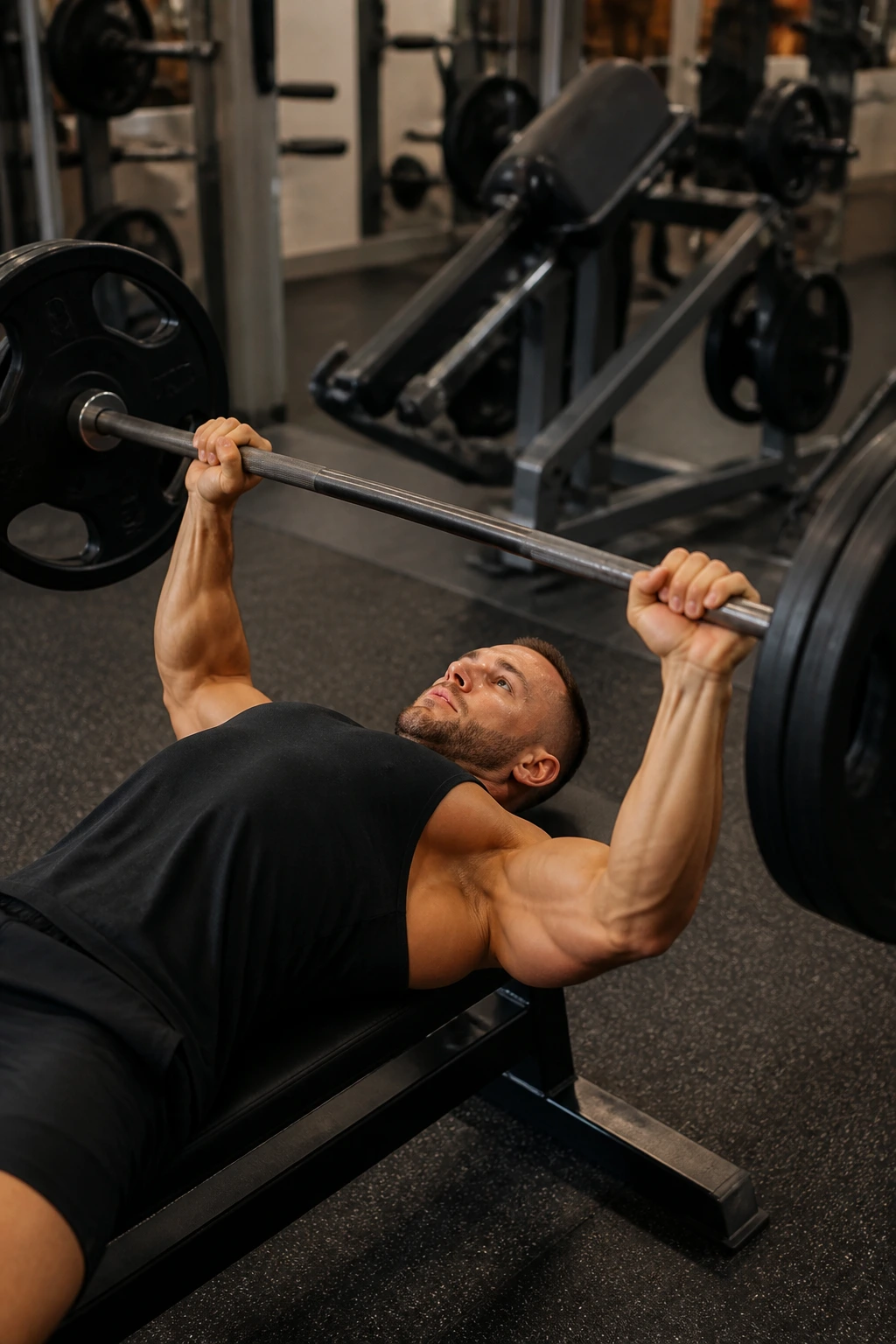
This is the old reliable pairing. Flat bench press and chest-supported row give you a clean push-pull setup, and your shoulders usually feel better when your pressing gets matched with real rowing work. If a man wants a stronger upper body without letting his shoulders roll forward, this is a very sane place to start.
Why It Works
The bench trains chest, front delts, and triceps. The row balances that by hitting the mid-back, rear delts, and lats. You also get a little break for the pressing muscles while you row, which means you can keep the quality high for more rounds.
Run 4 sets of 5 to 8 bench reps and 4 sets of 8 to 10 row reps. Rest 75 to 120 seconds after the row, then go back to the bench. Keep the row strict. If your torso starts bouncing, the set is done.
- Best for: size, upper-body strength, and shoulder balance
- Use: a chest-supported bench, incline bench, or machine row if the lower back is tired
- Avoid: turning the row into a deadlift
Small tip: keep the bench grip just outside shoulder width. Too wide gets cranky fast.
2. Incline Dumbbell Press and Pull-Up
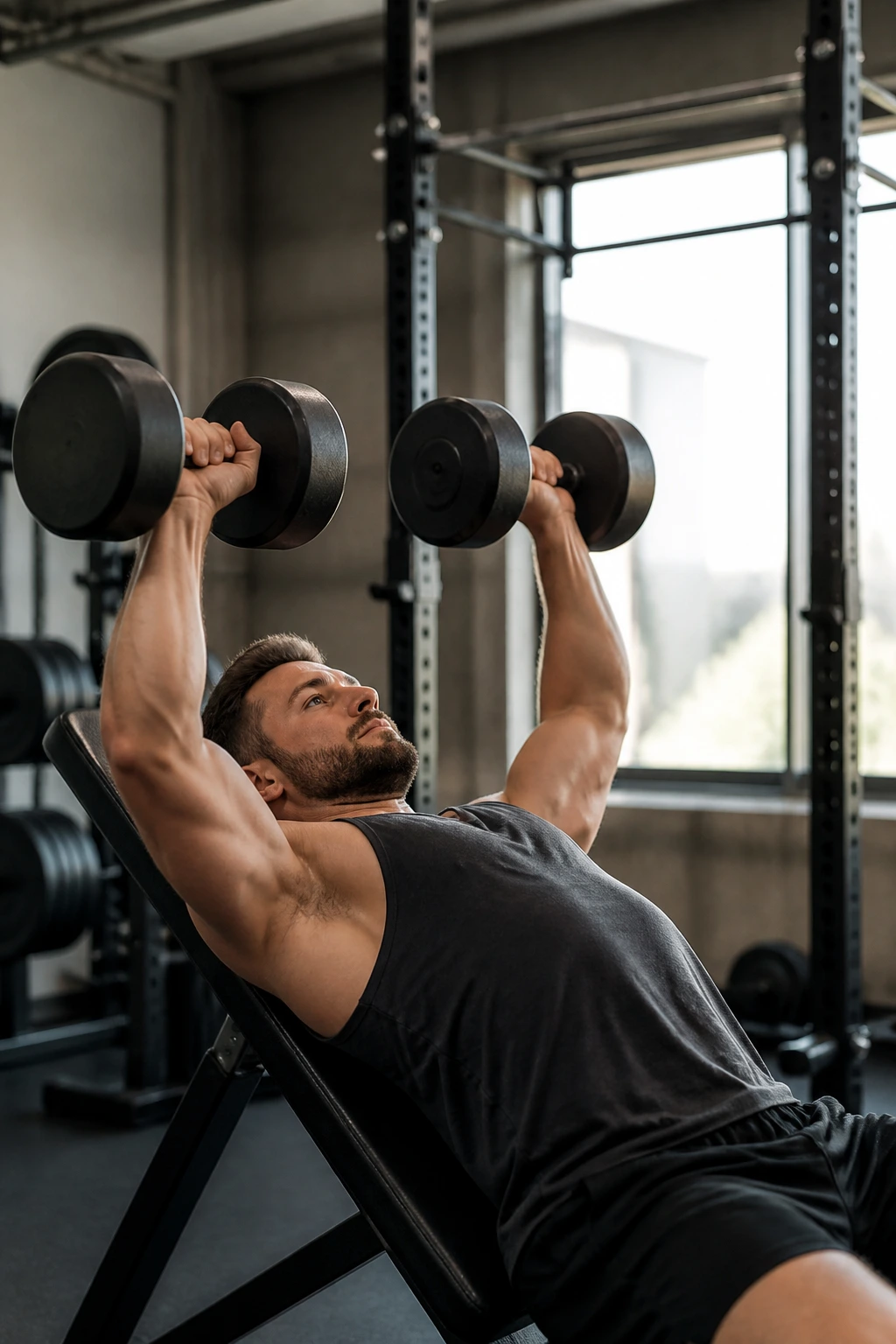
Why does this pairing work so well? Because incline dumbbell press and pull-up hit the upper body from opposite sides without fighting each other. The incline press fills out the upper chest and front delts, while pull-ups bring in lats and upper-back width. The combo feels athletic, not muddy.
I like this one for guys who want a torso that looks thick from the front and broad from the back. Dumbbells also force each arm to do its own work, which helps when one side likes to cheat a little. Pull-ups, meanwhile, keep you honest in a way cable work never quite does.
How to Run It
Do 3 to 5 rounds. Use 6 to 10 reps on the press and 5 to 8 clean pull-ups. If bodyweight pull-ups are not there yet, use an assisted machine or band and keep the movement smooth.
One thing matters here: do not chase failure on the very first round. Leave 1 to 2 reps in reserve on both movements, especially if you still have back or arm work later. That keeps the pair productive instead of draining.
3. Back Squat and Lying Leg Curl
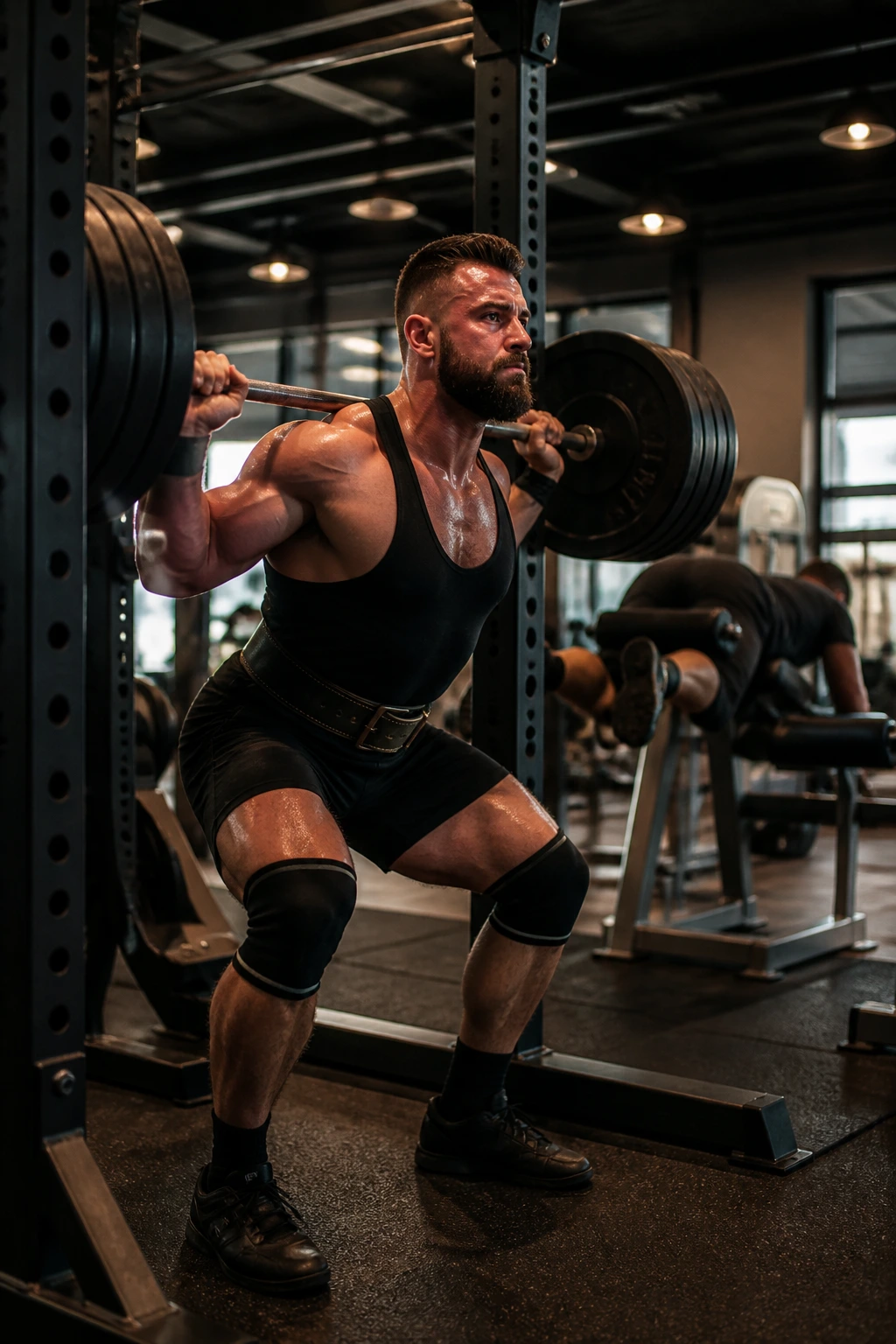
Leg day gets interesting when you stop pretending every lower-body move has to be a max effort. Back squat and lying leg curl is a smart pairing because the squat loads the quads, glutes, and trunk, while the curl gives the hamstrings direct work without asking your lower back to carry the whole session.
What Makes It Different
A lot of lifters squat hard and then never touch a leg curl. Bad trade. The hamstrings matter for knee health, sprinting power, and keeping the back side of the legs from looking flat. This pair fixes that gap without making the workout feel scattered.
Try 4 rounds with 4 to 6 squat reps and 10 to 12 curl reps. Rest a full 90 to 150 seconds after the curl if the squat is heavy. If you are newer to the gym, keep the squat crisp and leave the grind sets for another day.
- Good choice when: you want strength plus size
- Better if: you have a stable rack and a decent leg curl machine
- Watch for: knees caving in on the squat when the curl starts fatiguing your legs
That last part sneaks up on people. Fast.
4. Romanian Deadlift and Ab Wheel Rollout
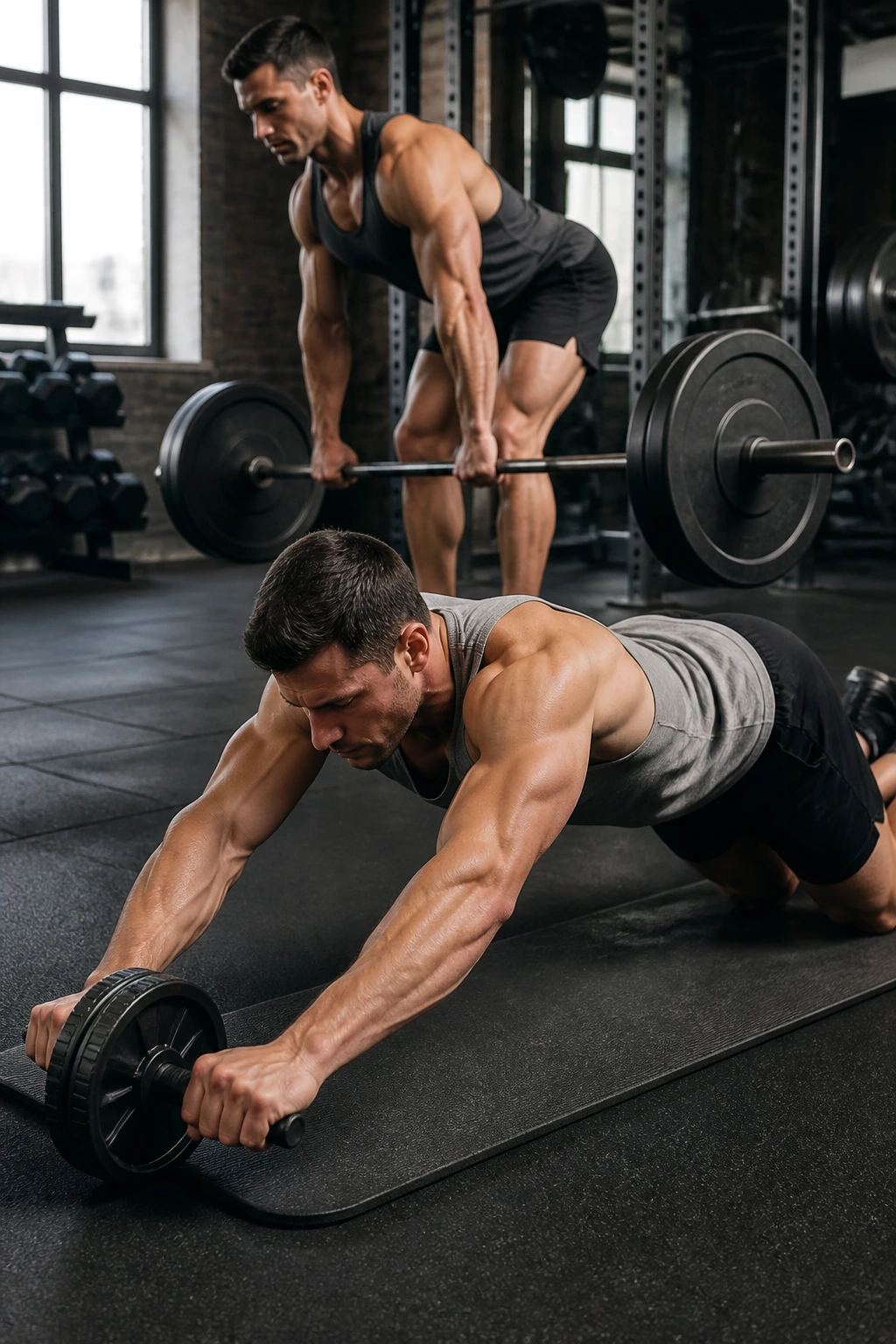
A lot of guys train the front side of the body and forget that the back side has to hold the whole mess together. Romanian deadlift and ab wheel rollout fixes that in a hurry. One works the hamstrings, glutes, and spinal erectors. The other asks your core to stop lying to you.
The deadlift variation should feel like a hinge, not a squat. Hips back, shins fairly vertical, soft knees, bar close. Then the ab wheel comes in and makes the midsection do real work instead of cosmetic work. If your lower back arches hard on the rollout, shorten the range. That is not a failure; it is a correction.
What to Watch For
Use 3 to 4 sets of 6 to 8 RDL reps and 6 to 10 rollout reps. Keep the ab wheel slow. If your stomach drops and your hips sag, the set is over.
This pairing is excellent for men who want better posture under load. It also carries over to squats and rows more than people expect. Strong hamstrings and a trunk that can resist extension make almost everything else cleaner.
5. Standing Overhead Press and Lat Pulldown
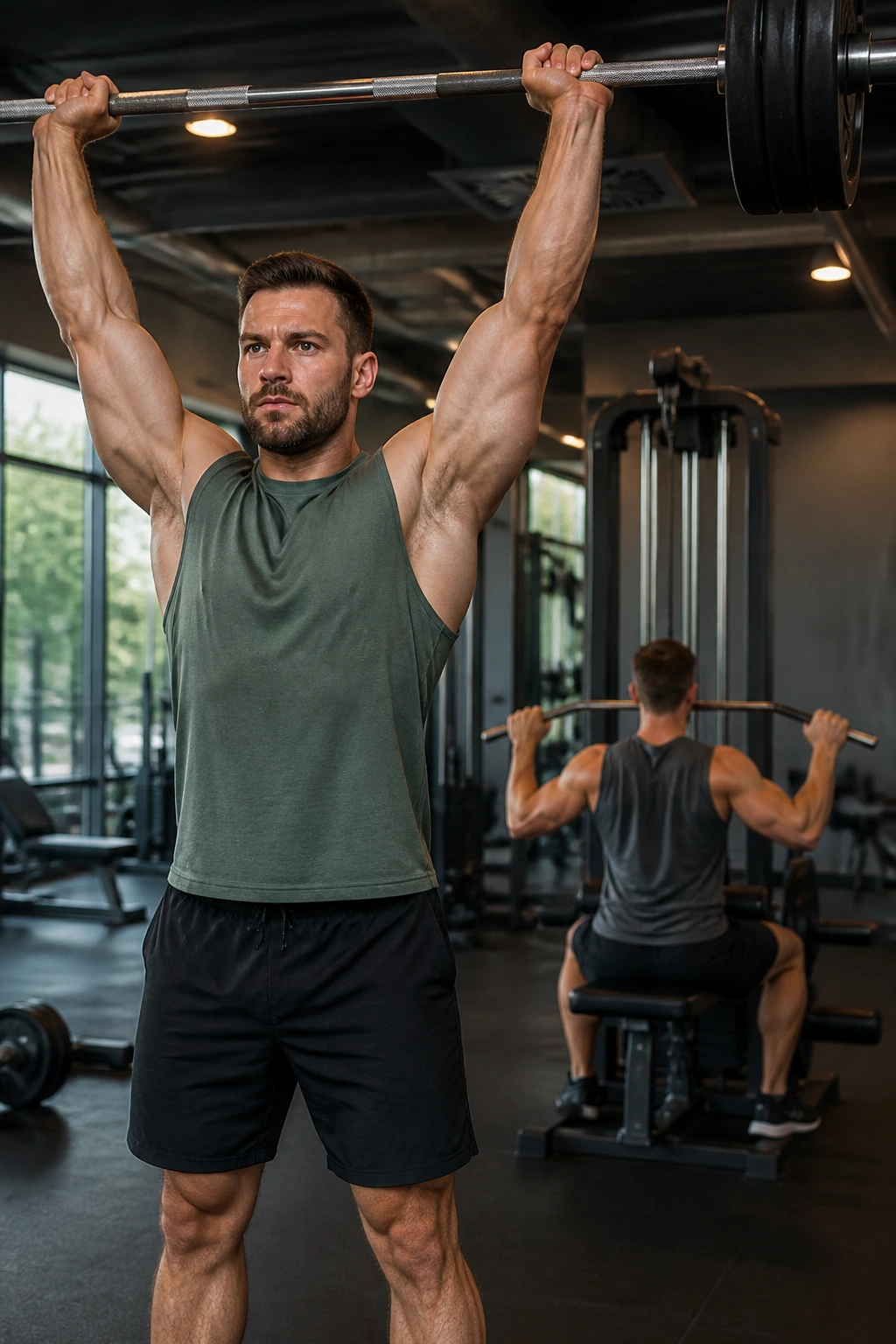
Standing overhead press and lat pulldown is a simple vertical push-pull pair that earns its keep fast. The press builds shoulders, triceps, and upper chest stability. The pulldown brings the lats in and gives the shoulders a better frame to sit in.
How to Use It
Use 4 sets of 5 to 8 reps on the press and 8 to 12 reps on the pulldown. Keep the torso tight on the press. No weird lean-back contest. On the pulldown, pull the bar to the upper chest and pause for a beat so the lats actually do the work.
The reason I like this one is blunt: it lets you train shoulder strength without beating up the joints as badly as some other overhead work. If strict barbell presses bug your lower back, swap in seated dumbbells or a machine press and keep the pulldown.
A small warning: do not turn the pulldown into a half-rep shrug. That ruins the point.
6. Dumbbell Lateral Raise and Face Pull
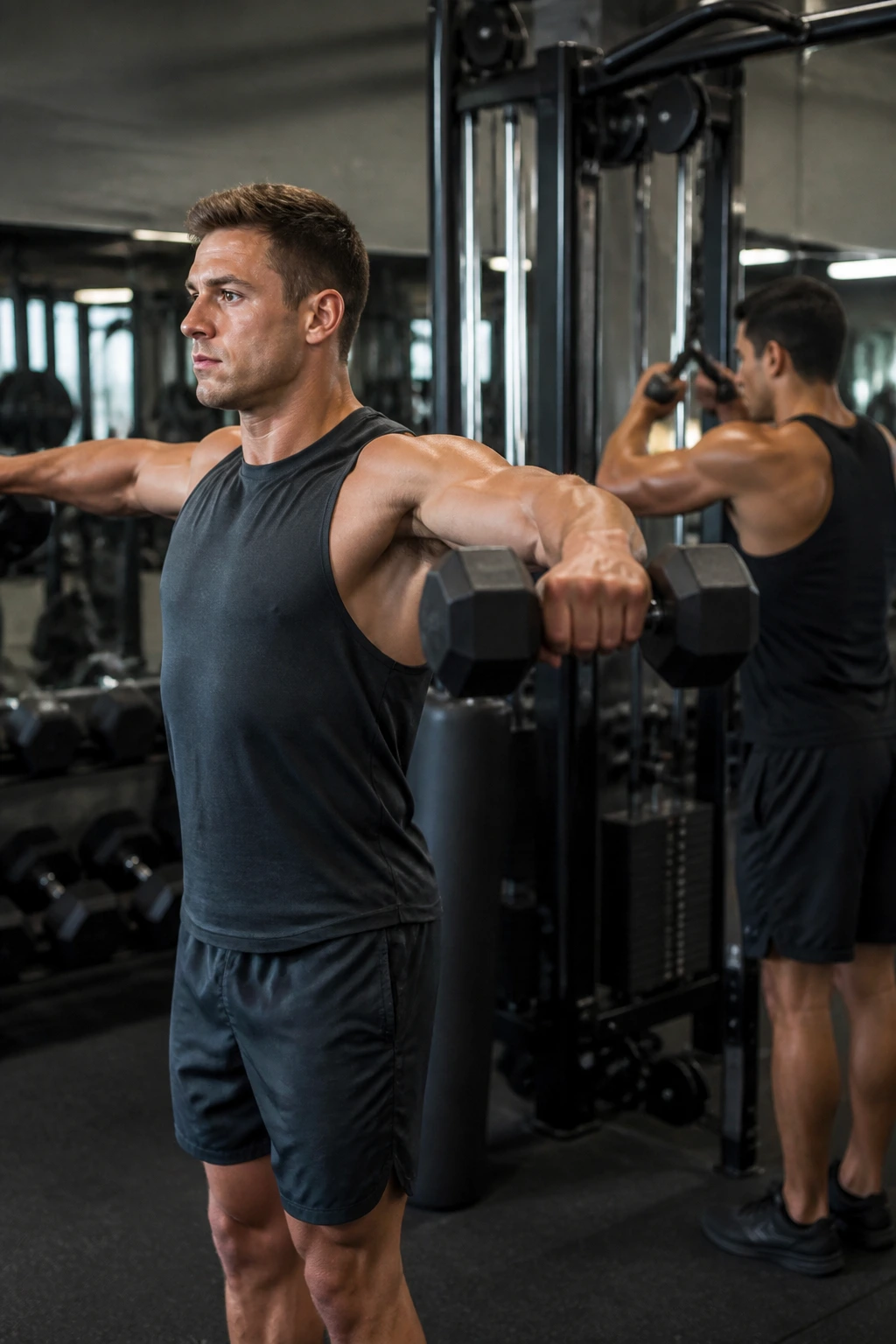
This is a shoulder-health superset with a vanity payoff. Dumbbell lateral raise and face pull hit the side delts and rear delts, which are the parts that make shoulders look broad instead of just press-heavy. A lot of men press enough but never build these smaller pieces. The result is a front-loaded look that does not age well.
The lateral raise should be light enough that you can keep the arms slightly bent and the shoulders down. The face pull needs a rope and a little patience. Pull toward the nose or forehead, flare the elbows, and finish with the upper back squeezed. No yanking.
Why I Like It
Use 3 to 4 rounds of 12 to 15 lateral raises and 12 to 20 face pulls. Short rest works fine here — about 45 to 60 seconds after the pair. This is not a power block. It is a clean pump and posture block.
If your shoulders live in a desk-chair posture during the day, this pair helps more than another random chest machine ever will.
7. Close-Grip Bench Press and Rope Pushdown
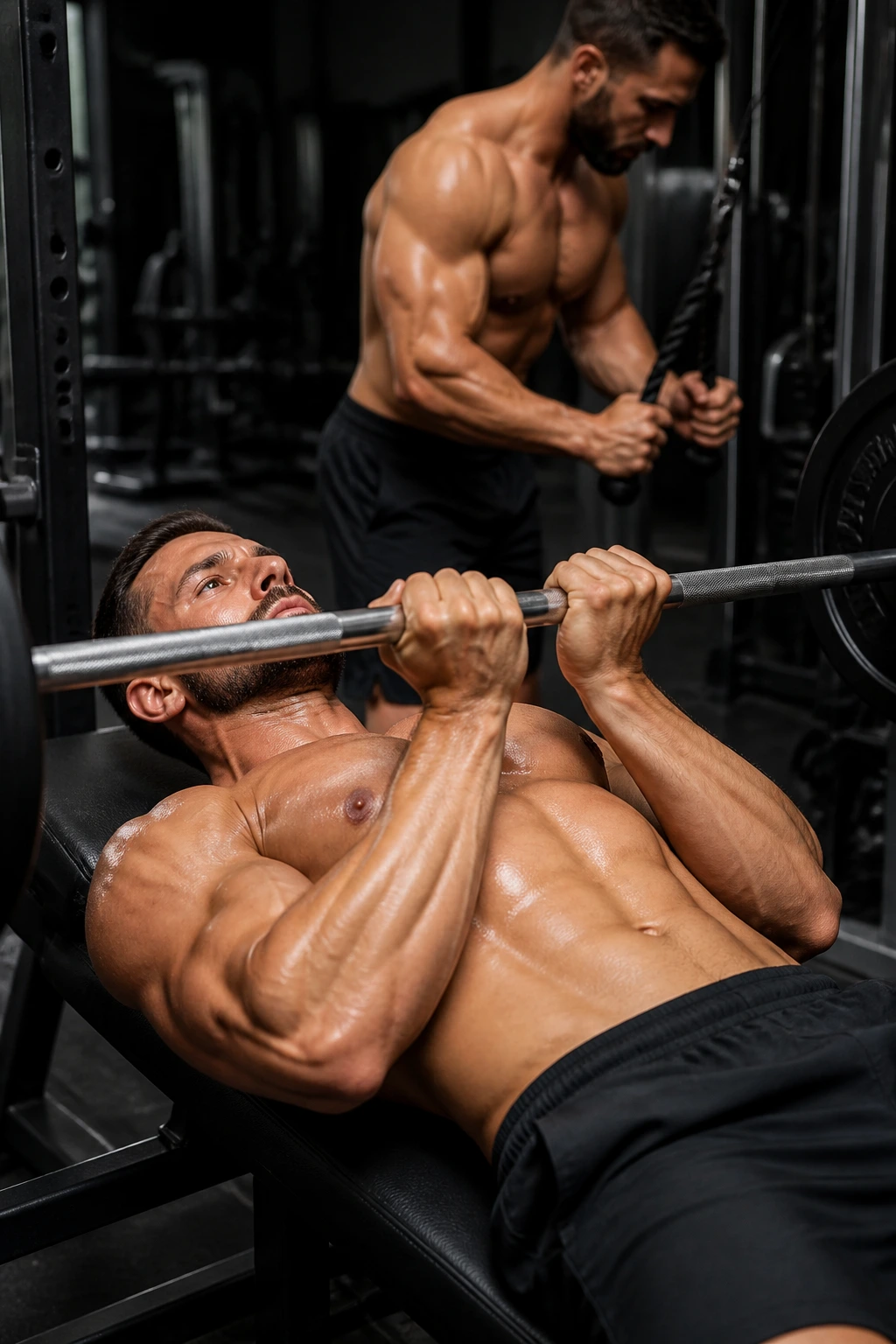
Some arm work is fluff. Some is not. Close-grip bench press and rope pushdown gives you one heavy triceps builder and one cleaner burnout move, which is a useful mix if you want thicker upper arms and a stronger lockout on pressing work.
Close-grip bench should not be so narrow that your wrists hate you. Think a grip just inside shoulder width. Lower the bar under control, keep the elbows tucked a bit, and drive hard. Then move to the rope pushdown and split the rope at the bottom. That little flare matters.
Load and Rest
Do 4 sets of 6 to 8 close-grip reps and 10 to 15 pushdown reps. Rest 60 to 90 seconds after the rope. If elbows are cranky, lighten the bench a touch and keep the pushdown smooth.
- Best for: pressing strength and triceps size
- Better if: your regular bench stalls near the top
- Skip the ego: if the bench turns into a shoulder press, the setup is off
This is a meat-and-potatoes superset. Nothing flashy. It works.
8. EZ-Bar Curl and Reverse Curl
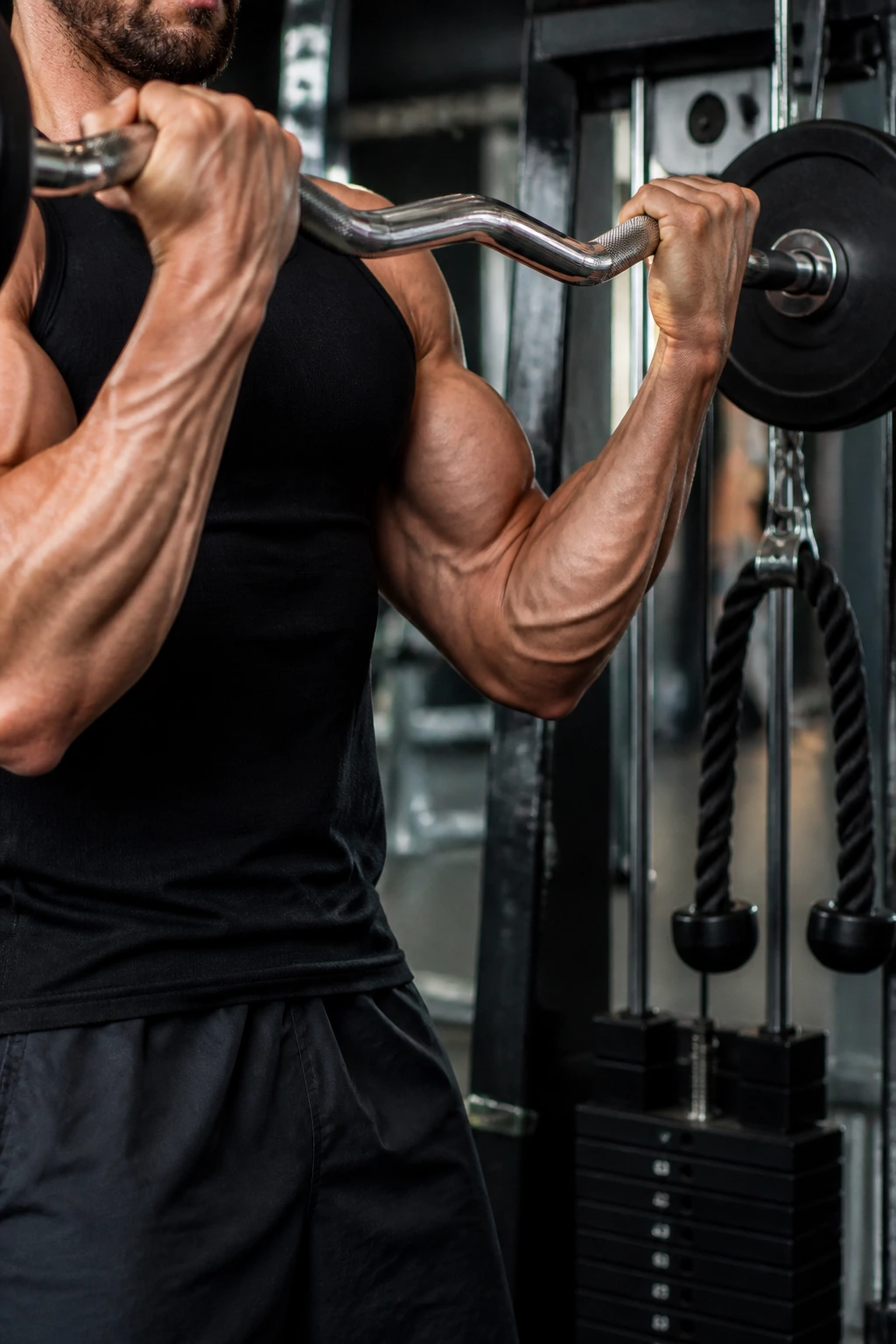
If you only do standard curls, your arms can look oddly unfinished. EZ-bar curl and reverse curl hit the biceps, brachialis, and forearms in a way that gives the upper arm more thickness from the side. That extra density shows up fast in short sleeves.
The EZ-bar curl is the heavier movement. Keep the elbows pinned, don’t swing, and stop the bar around upper-chest height. The reverse curl is the quieter partner, and that is fine. Palms down, wrists straight, lighter load than you think. It burns the forearms in a good way.
What to Expect
Use 3 to 4 sets of 8 to 10 curl reps and 10 to 12 reverse curl reps. Rest around 60 seconds after the pair. The reverse curl will feel awkward for the first set or two. That is normal.
This pairing is especially useful if your biceps get a lot of work from rows and pull-ups but your forearms still look thin. It fills the gap without needing five different curl variations.
9. Walking Lunge and Standing Calf Raise
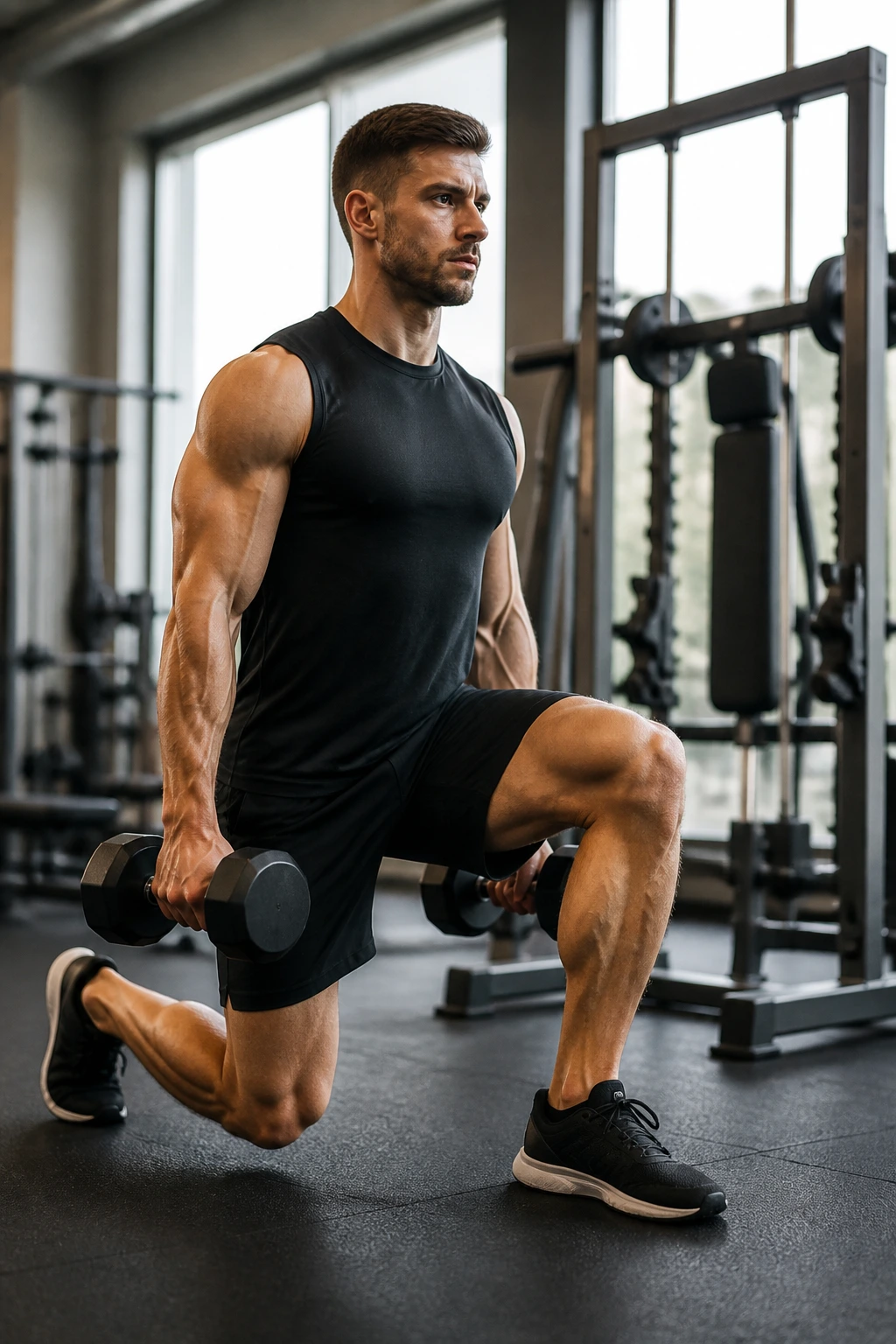
Leg training does not have to be all barbell work and heavy breathing. Walking lunge and standing calf raise is a brutally practical pairing for guys who want better single-leg control and calves that stop disappearing when the jeans go on.
The walking lunge asks each leg to work on its own. That exposes side-to-side differences fast, which is useful even if it is a little humbling. The calf raise is the quieter half of the workout, but it matters. Pause at the bottom, rise all the way up, and do not bounce like you are in a hurry.
A Useful Setup
Try 3 rounds of 10 to 14 lunges per leg and 12 to 20 calf raises. Rest 60 to 90 seconds after the calf work. If balance gets messy, shorten the stride and slow the descent.
One sentence on form. Keep the front foot planted.
That tiny detail keeps the lunge honest and saves the knees from a sloppy landing.
10. Leg Press and Seated Leg Curl
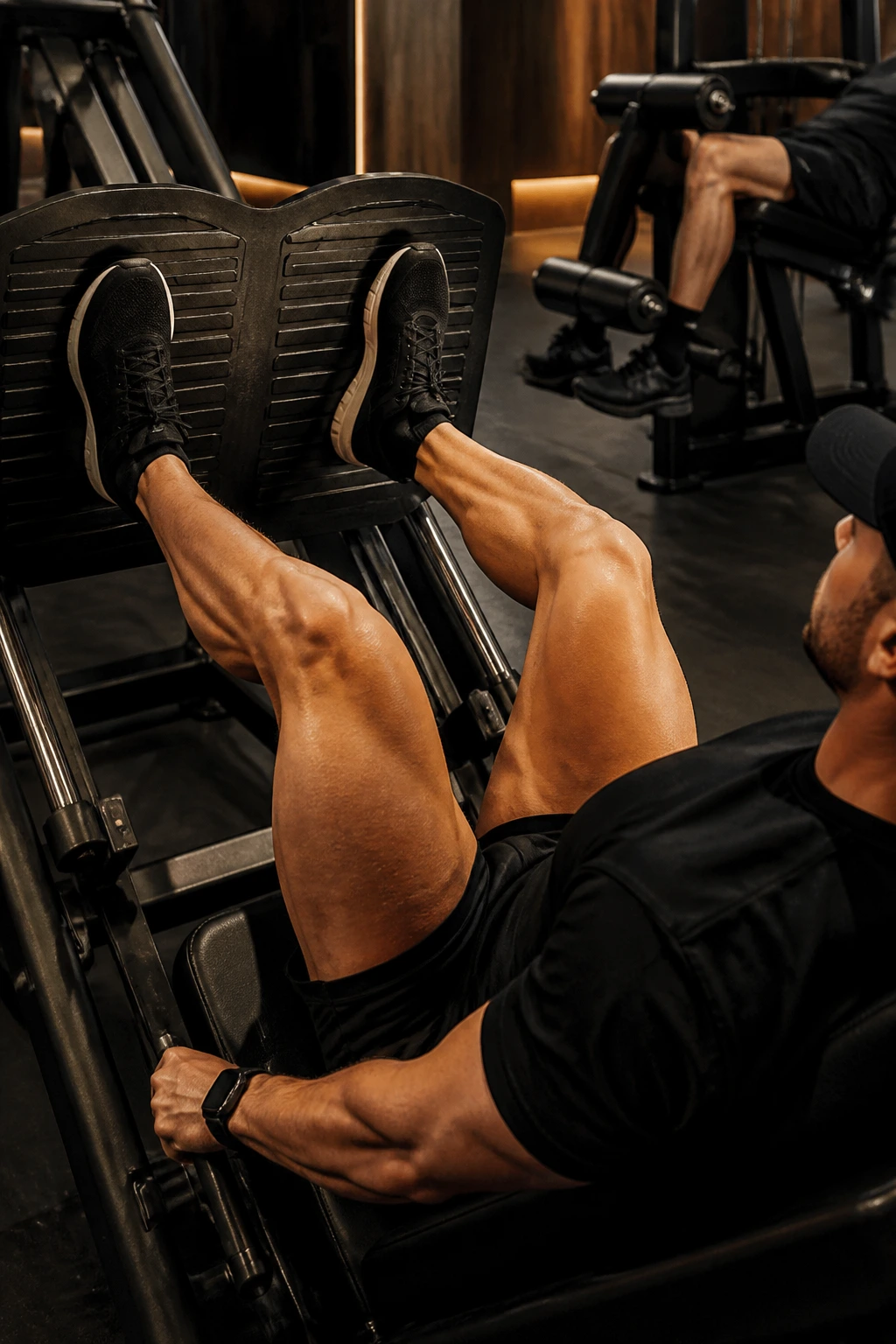
Leg press and seated leg curl is one of the cleanest machine-based supersets in the gym. I like it for men who want lower-body volume without the technical tax of a full squat session. The leg press lets you pile on quad work safely. The seated curl locks in hamstring tension and is often easier on the hips than the lying version.
This pair is also good when the gym is busy. One station. One small move. Less waiting around.
How to Run It Well
Use 4 rounds of 10 to 15 leg press reps and 10 to 15 seated curl reps. Put your feet a little lower on the platform if you want more quad bias. Push through the full foot, not just the toes. On the curl, control the negative for 2 to 3 seconds.
I would use this pair on a day when you want leg growth but your lower back is tired, beat up, or already loaded from another lift. It still creates real work. It just does it with less drama.
11. Dips and Chin-Ups
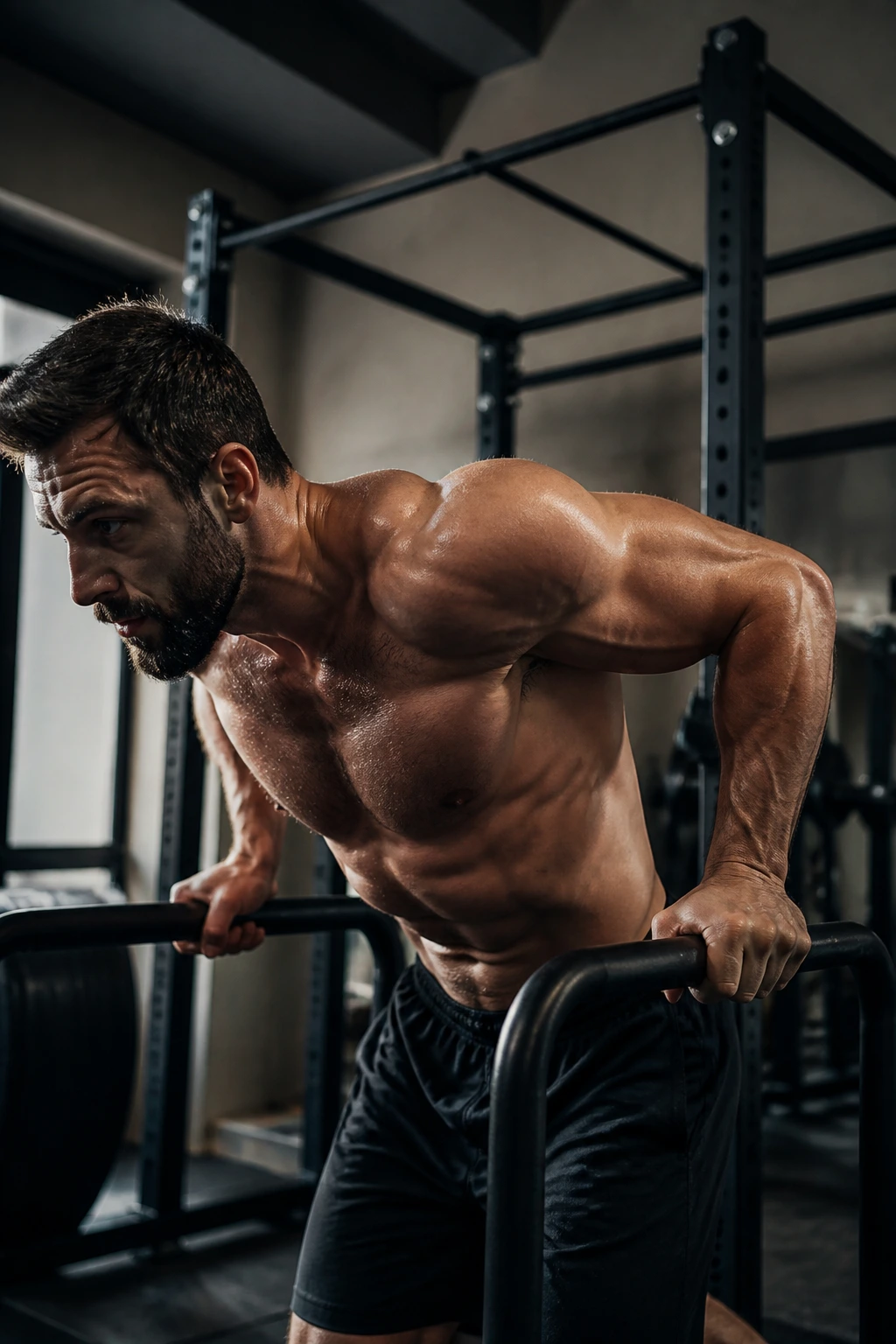
This one feels old-school because it is old-school. Dips and chin-ups are hard, simple, and honest. They build a lot of upper-body size without needing a pile of accessories, and they punish weak points fast enough to keep your ego from wandering.
Dips load the chest, triceps, and front delts. Chin-ups bring the lats and biceps into the picture. Together, they cover a ton of real estate. If bodyweight strength is not there yet, use assistance on either movement rather than turning the reps into sloppy half-versions.
How to Use It
Do 3 to 5 rounds of 6 to 10 dips and 4 to 8 chin-ups. Rest 90 seconds after the chin-ups if both are hard. Keep the dip depth controlled; shoulders should not dive into a bad position just to chase a deeper rep.
Good sign: your last rep looks almost the same as your first.
Bad sign: your chin-up becomes a neck crane.
That is a tiny distinction, but it matters.
12. Single-Arm Cable Row and Cable Fly
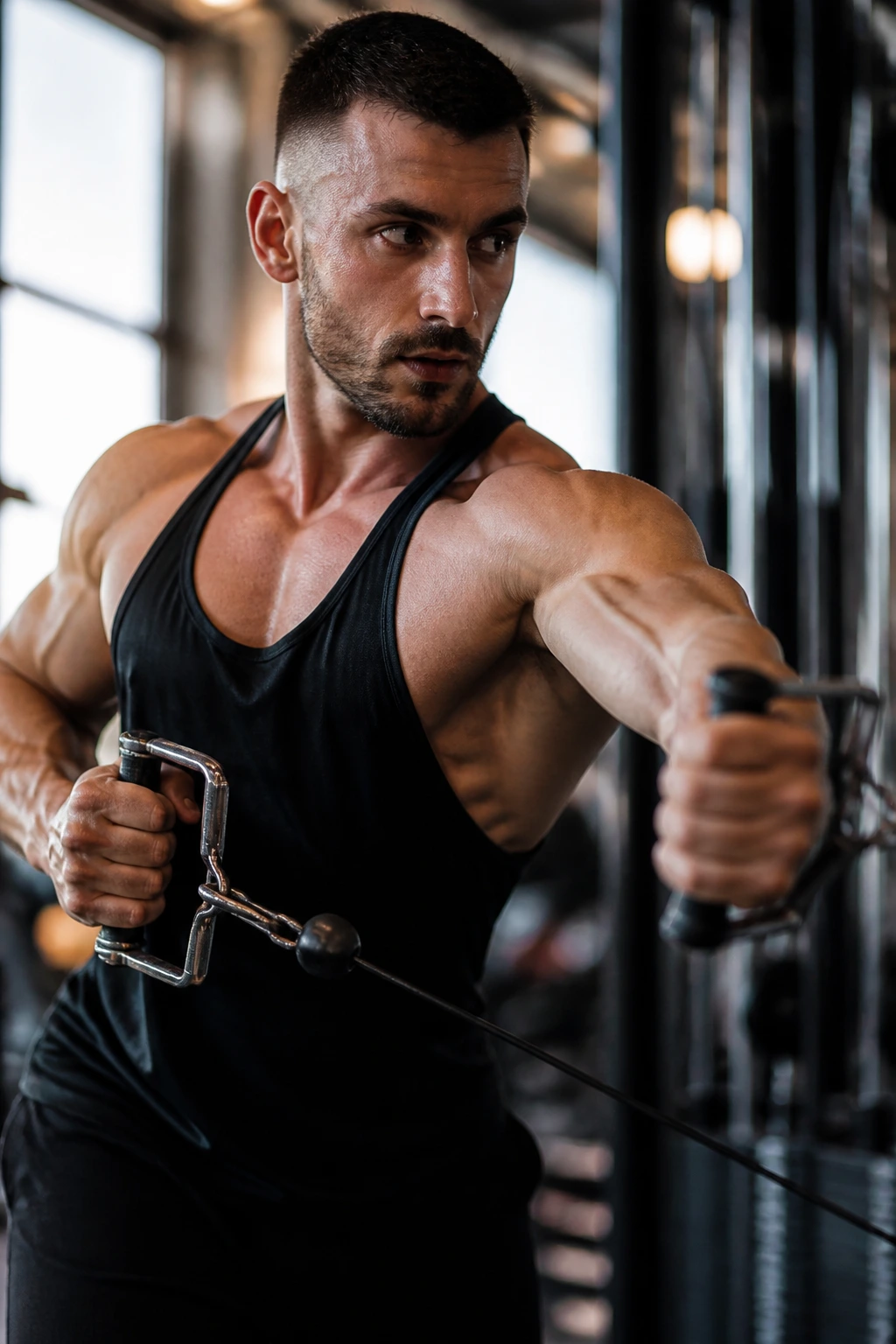
Cables are useful when you want tension without beating up the joints. Single-arm cable row and cable fly is a nice upper-body superset for that reason alone. One arm rows while the other side gets a little more rest, and the cable fly keeps chest tension where dumbbells sometimes lose it at the top.
The single-arm row is the better half for fixing side-to-side differences. Pull the elbow toward the hip, not the shoulder. The fly should stay soft in the elbow, with a small bend held the whole time. If the shoulder joint is doing the heavy lifting, the range is too big.
Quick Notes
Use 3 to 4 rounds of 10 to 12 rows per side and 12 to 15 fly reps. Keep rest short, around 45 to 75 seconds after the fly. The cable setup makes this one easy to scale up or down depending on the day.
It is a nice option when the free-weight area is packed. Also when your shoulders want a break from heavy bar work. That happens more than people admit.
13. Hip Thrust and Glute-Ham Raise
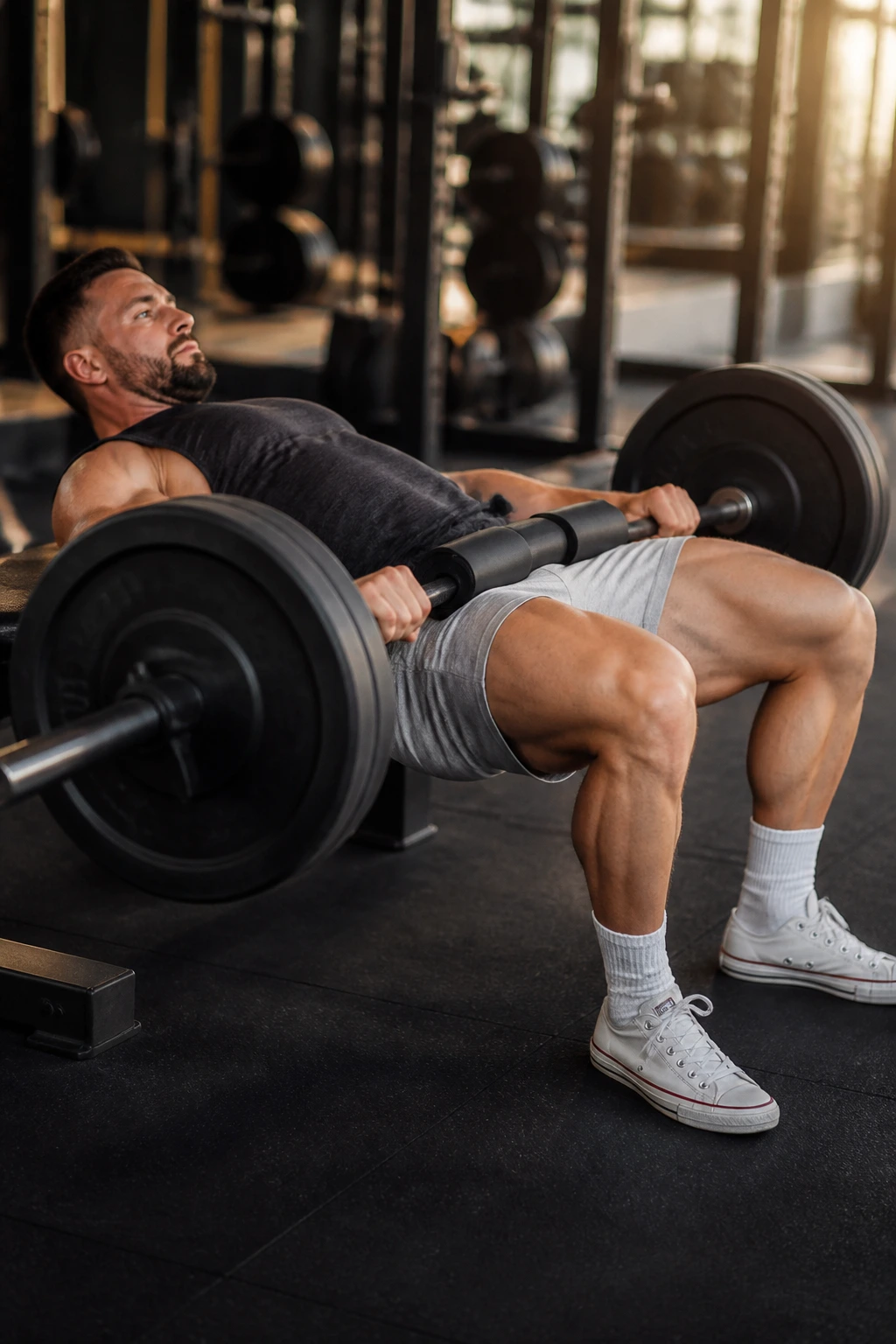
If the goal is posterior-chain size without loading the spine harder than necessary, hip thrust and glute-ham raise is a very strong pairing. The hip thrust isolates the glutes in a way that is hard to fake. The glute-ham raise brings in hamstrings and lower-back control, and the two together build a back side that actually works.
The thrust should end with the hips fully extended and the ribs down. No over-arching. The glute-ham raise is rougher than it looks, so keep the movement honest and use assistance if needed. A band or a lighter setup is better than flailing through ugly reps.
A Clean Format
Do 4 rounds of 8 to 12 hip thrust reps and 6 to 10 glute-ham reps. Rest 90 seconds after the second movement. If the glute-ham machine is not available, a stability-ball leg curl can fill in, though it is a little less brutal.
This pair is one of my favorites for men who squat and deadlift but still feel like the glutes are undercooked. The direct work changes that fast.
14. Landmine Press and One-Arm Dumbbell Row
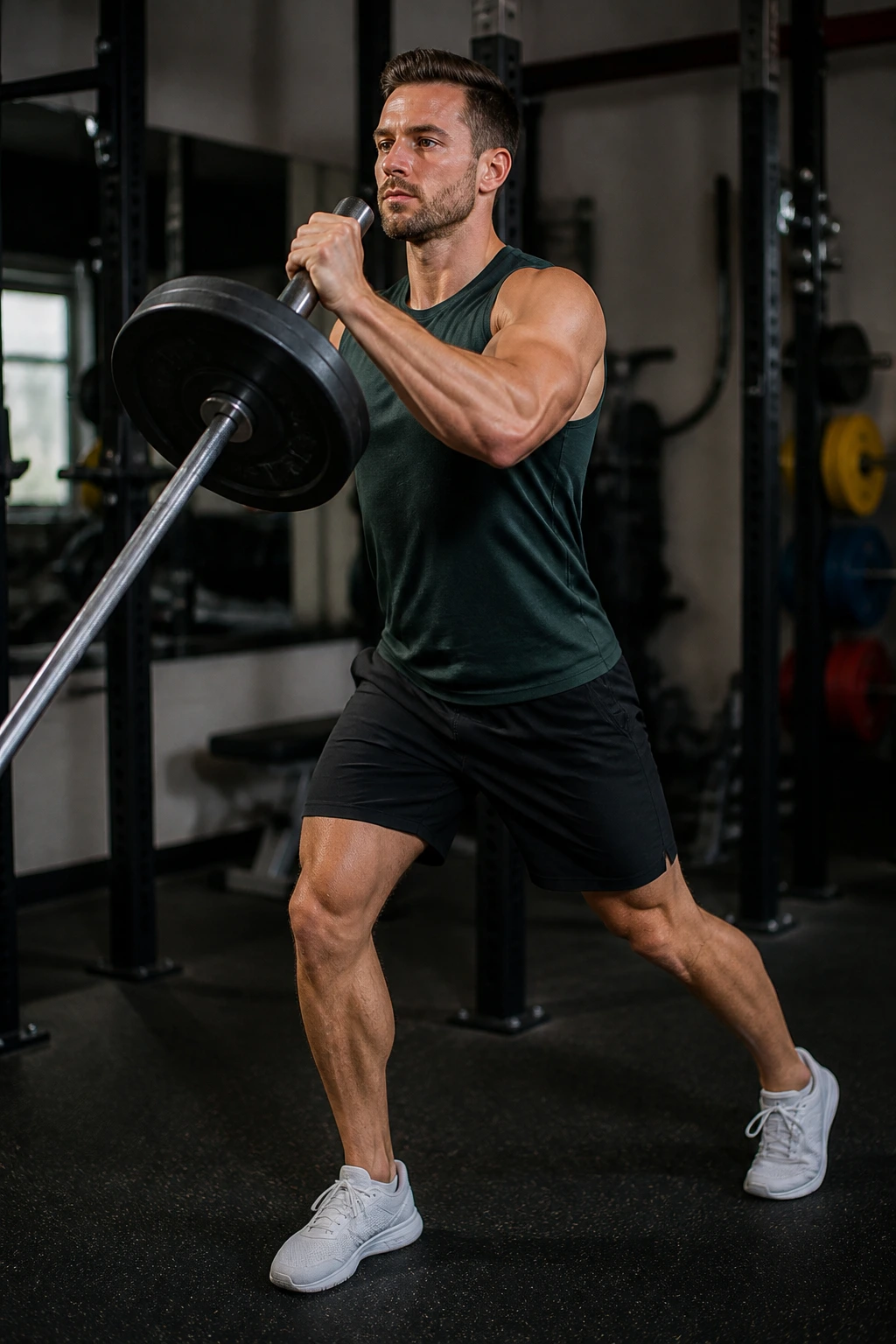
Not every shoulder session needs to feel like a military test. Landmine press and one-arm dumbbell row is kinder on the joints and still builds a strong upper body. The landmine angle takes some stress off the shoulder compared with strict overhead pressing, while the one-arm row keeps the back doing its share.
Why It Stands Out
This combo works well for lifters who want a press that does not beat up the lower back. The one-arm row also forces your torso to resist twisting, which is a nice bonus. That small anti-rotation demand shows up more than you would think in real training.
Try 3 to 4 sets of 8 to 10 landmine reps per side and 8 to 12 rows per side. Keep the row tight to the body. On the press, drive up and slightly forward, then let the shoulder blade move naturally.
Best for: lifters with cranky shoulders, long arms, or a busy back day
Less ideal for: someone chasing maximal overhead strength
I’d still keep this in the rotation. It earns space.
15. Push-Up and Kettlebell Swing
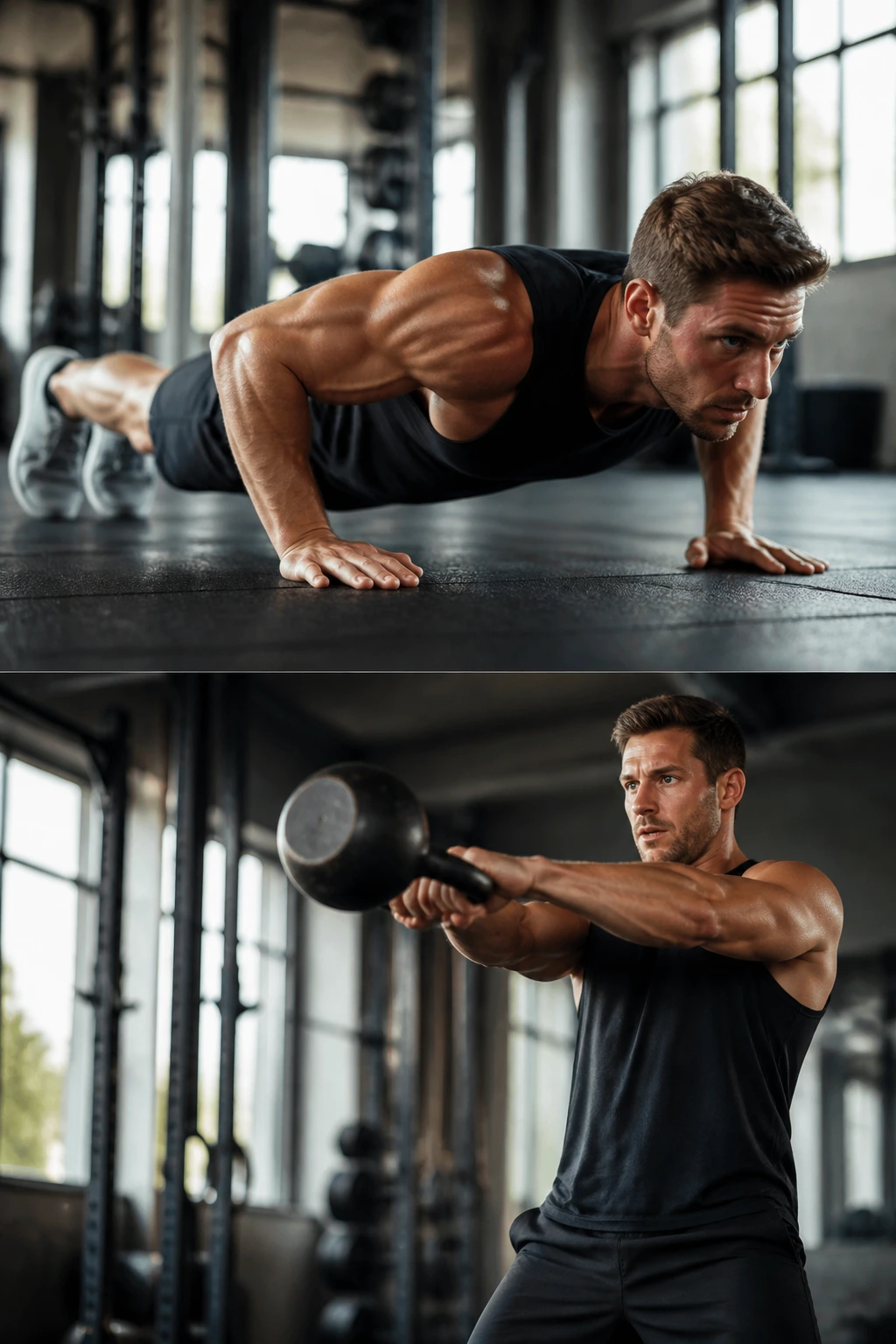
This is where the session gets faster and a little meaner. Push-up and kettlebell swing is a density pair that raises the heart rate while still training muscle. Push-ups hammer the chest, triceps, and core. Swings hit the hips, glutes, and conditioning.
The push-up should be clean enough that the body stays in one line. If your hips sag, shorten the set. The kettlebell swing is a hinge, not a squat. Snap the hips, let the bell float, and do not lift it with the arms like a front raise from hell.
How to Program It
Use 4 to 6 rounds of 12 to 20 push-ups and 15 to 25 swings. Rest 60 to 90 seconds after the swings. If the goal is fat loss or conditioning, keep the rest tighter. If the goal is muscle, slow the pace a bit and keep the reps cleaner.
This pair is useful when time is short but you still want to feel like you trained. It is also one of the better finishers on the list.
16. Hack Squat and Hanging Knee Raise
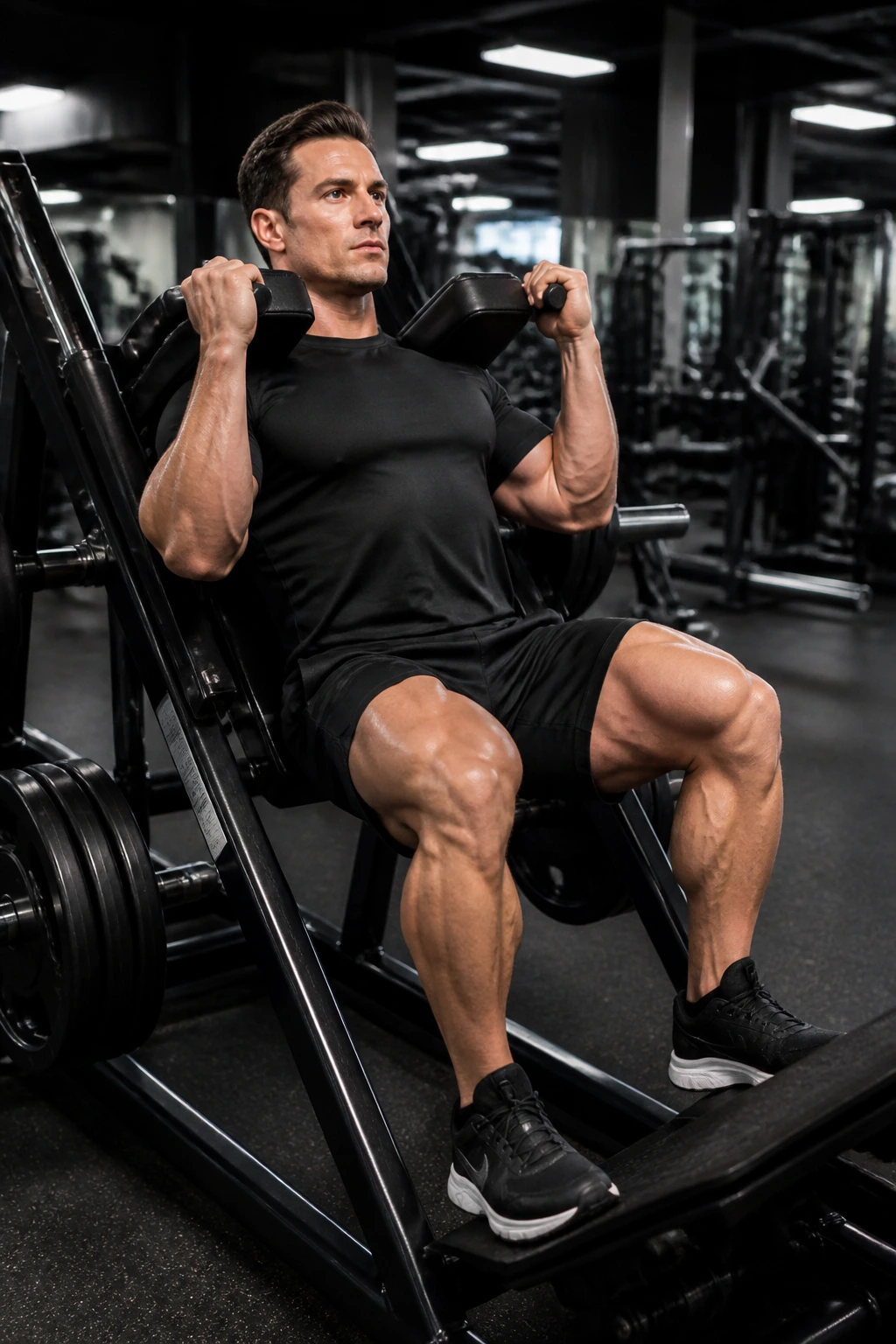
Hack squat and hanging knee raise is a neat lower-body and core pair because the machine takes balance out of the squat, which lets the quads work hard, and the hanging knee raise teaches the trunk to stay controlled while the hips move. It is a nice setup when you want leg volume without another barbell day.
The hack squat should be deep enough that the quads light up but not so deep that the pelvis tucks under hard. On the knee raise, think about curling the pelvis up, not just lifting the knees. That tiny cue changes the exercise a lot.
What to Keep in Mind
Use 4 sets of 8 to 12 hack squat reps and 10 to 15 knee raises. Rest 60 to 90 seconds after the core work. The machine keeps the lower body honest, but the core movement still needs control.
If hanging work bothers your grip, use captain’s chair knee raises. Same idea. Easier to hold. Less of a circus.
17. Pendlay Row and Incline Dumbbell Curl
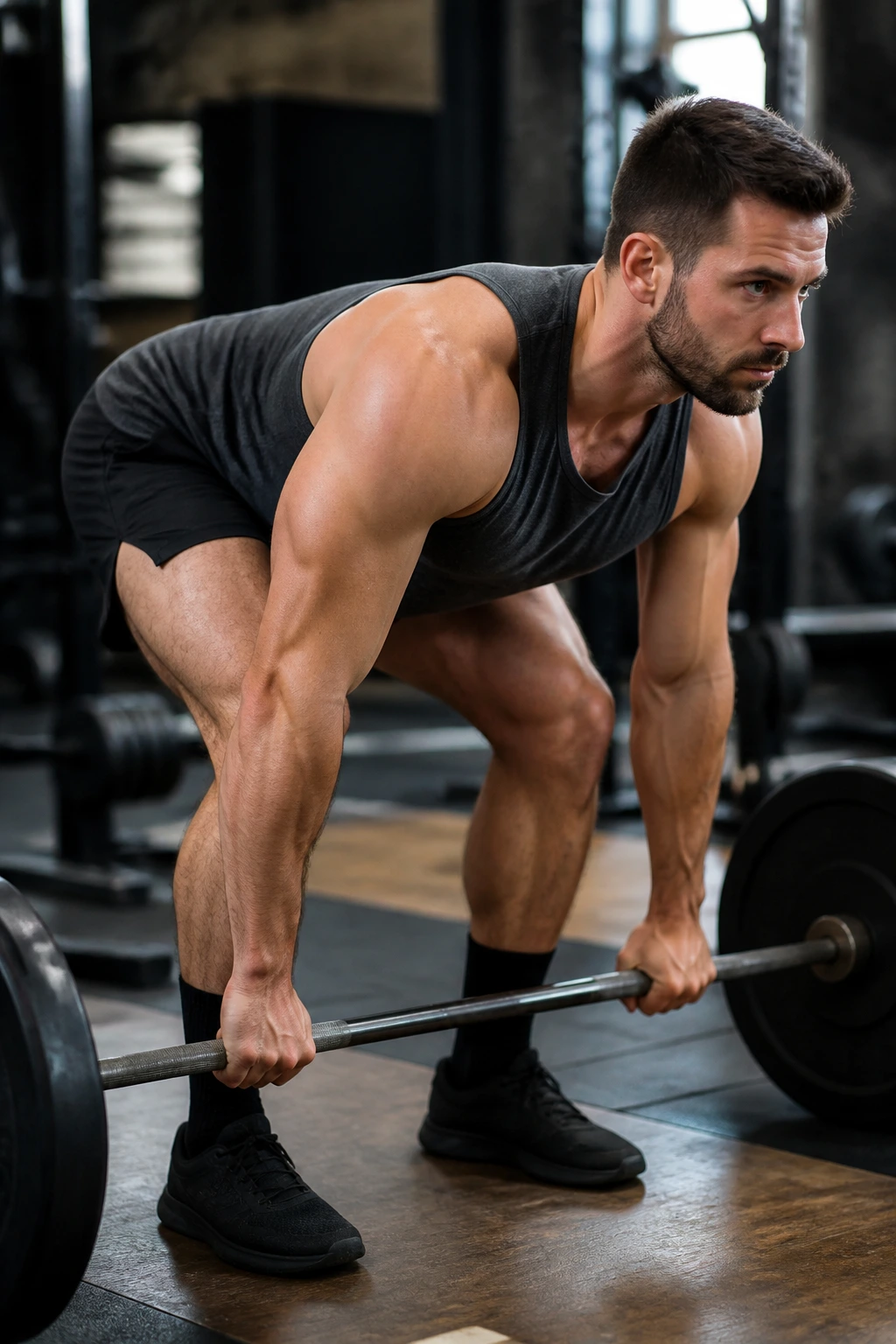
Some back and biceps pairings feel repetitive. Pendlay row and incline dumbbell curl does not. The Pendlay row starts from the floor and forces a dead-stop rep each time, which makes the back work from a clean position. The incline curl stretches the biceps under load, and that stretch is the part most people miss.
The Detail That Matters
Keep the row strict and explosive from the floor, then reset each rep. If the torso turns into a cheat device, lower the weight. On the incline curl, let the arms hang back a little and avoid drifting the elbows forward too soon. That stretch at the bottom is where the set gets useful.
Use 4 rounds of 6 to 8 row reps and 8 to 12 curl reps. Rest 75 to 90 seconds after the curl.
This is a good pair for men who want a thicker back and a fuller arm look without living on machines. It has some bite to it. Good.
18. Seated Dumbbell Shoulder Press and Rear Delt Machine Fly
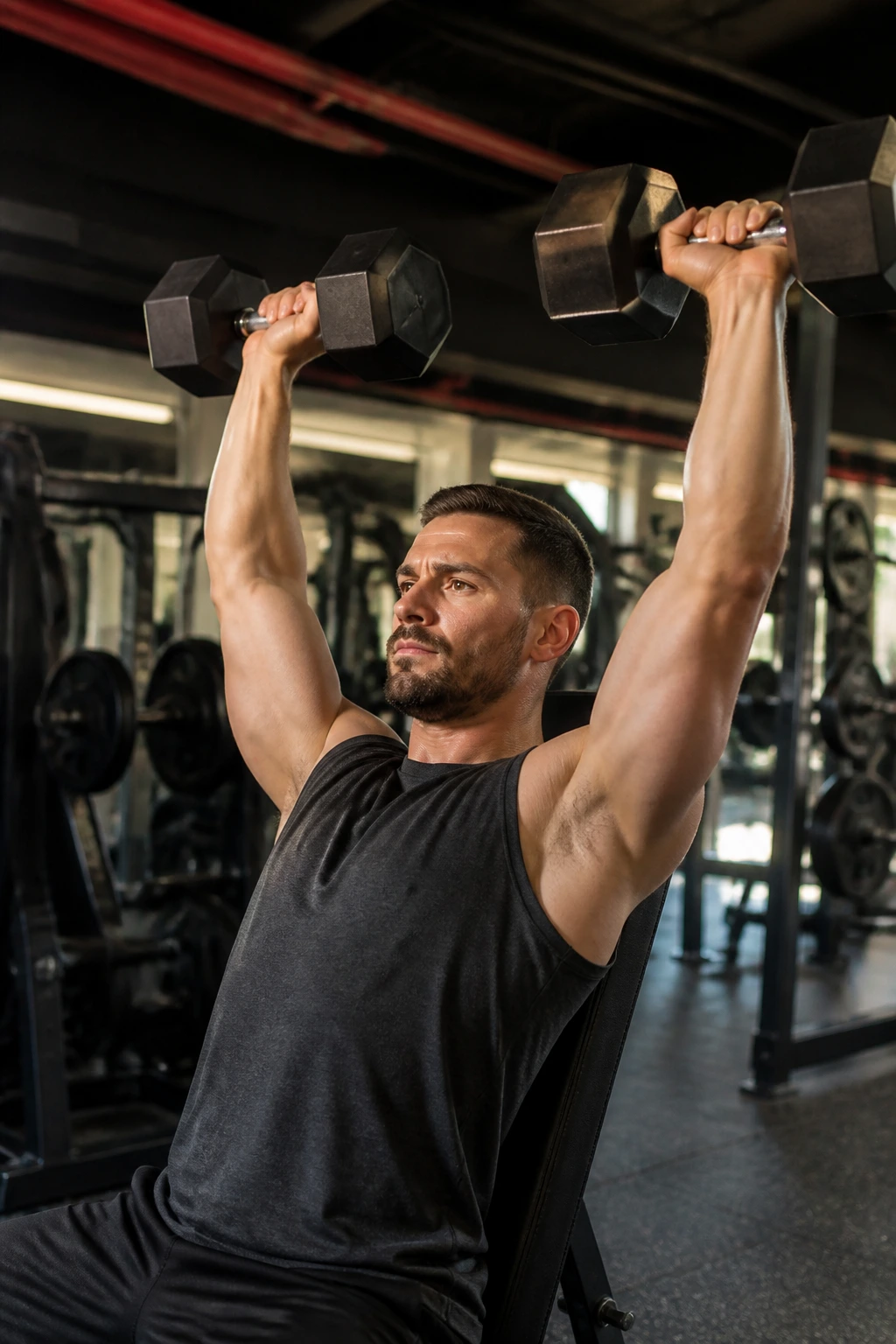
Shoulders are not built by front raises alone, and they are definitely not built by pressing every week while ignoring the back half of the joint. Seated dumbbell shoulder press and rear delt machine fly makes a more balanced shoulder session. The press gives you strength. The rear delt fly keeps the shoulder from looking and feeling front-heavy.
The seated position removes some lower-back cheating, which I like here. Press the dumbbells up with control, then lower them all the way to a comfortable depth. On the machine fly, keep the chest pinned and drive the elbows out wide. No shrugging.
Simple Structure
Do 3 to 4 sets of 8 to 10 press reps and 12 to 15 rear delt fly reps. Rest 60 to 90 seconds after the fly. If the rear delt machine is taken, cable reverse flyes work fine.
I would rather see a man do this pair well than load up on another sloppy overhead barbell variation. The shoulders usually thank you later.
19. Smith Machine Split Squat and Cable Pallof Press
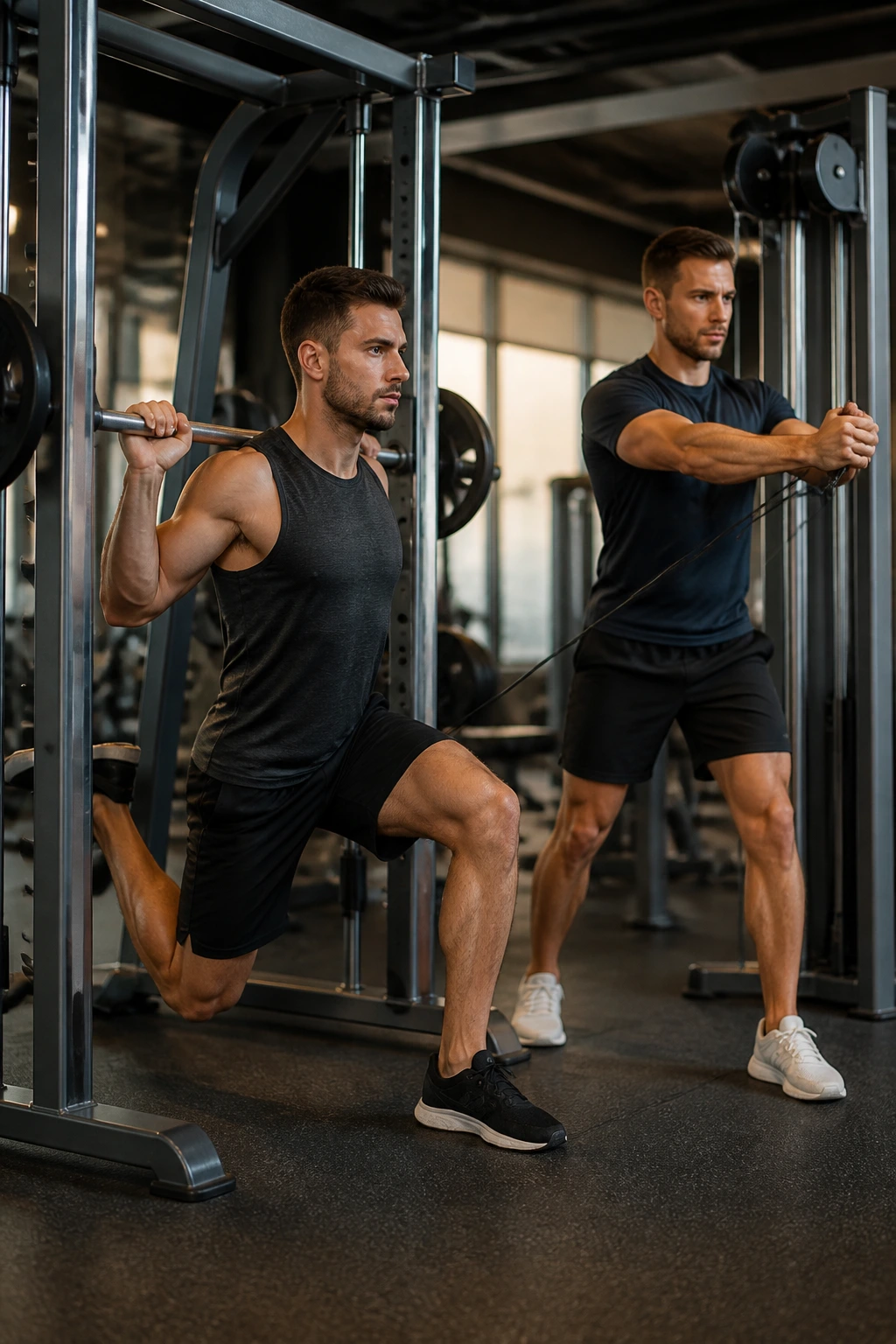
This pairing looks a little less macho than a barbell-only setup, and that is exactly why I like it. Smith machine split squat and cable Pallof press trains single-leg strength and anti-rotation core control without asking for perfect balance first. That makes the work cleaner and easier to push.
The split squat should feel long and controlled. Keep the front foot planted and the torso fairly upright. The Pallof press is the anti-rotation piece, so you are resisting the cable rather than chasing a big movement. Hold the arms out for a second or two and let the core do its job.
Best Use
Try 3 rounds of 8 to 10 split squats per leg and 10 to 12 Pallof presses per side. Rest 60 to 75 seconds after the core work. This is a strong option for athletes, but it is also useful for anyone who wants better control in squats, deadlifts, and lunges.
I use this kind of pairing when I want leg work that does not trash the lower back before the week is done.
20. Farmer’s Carry and Sled Push
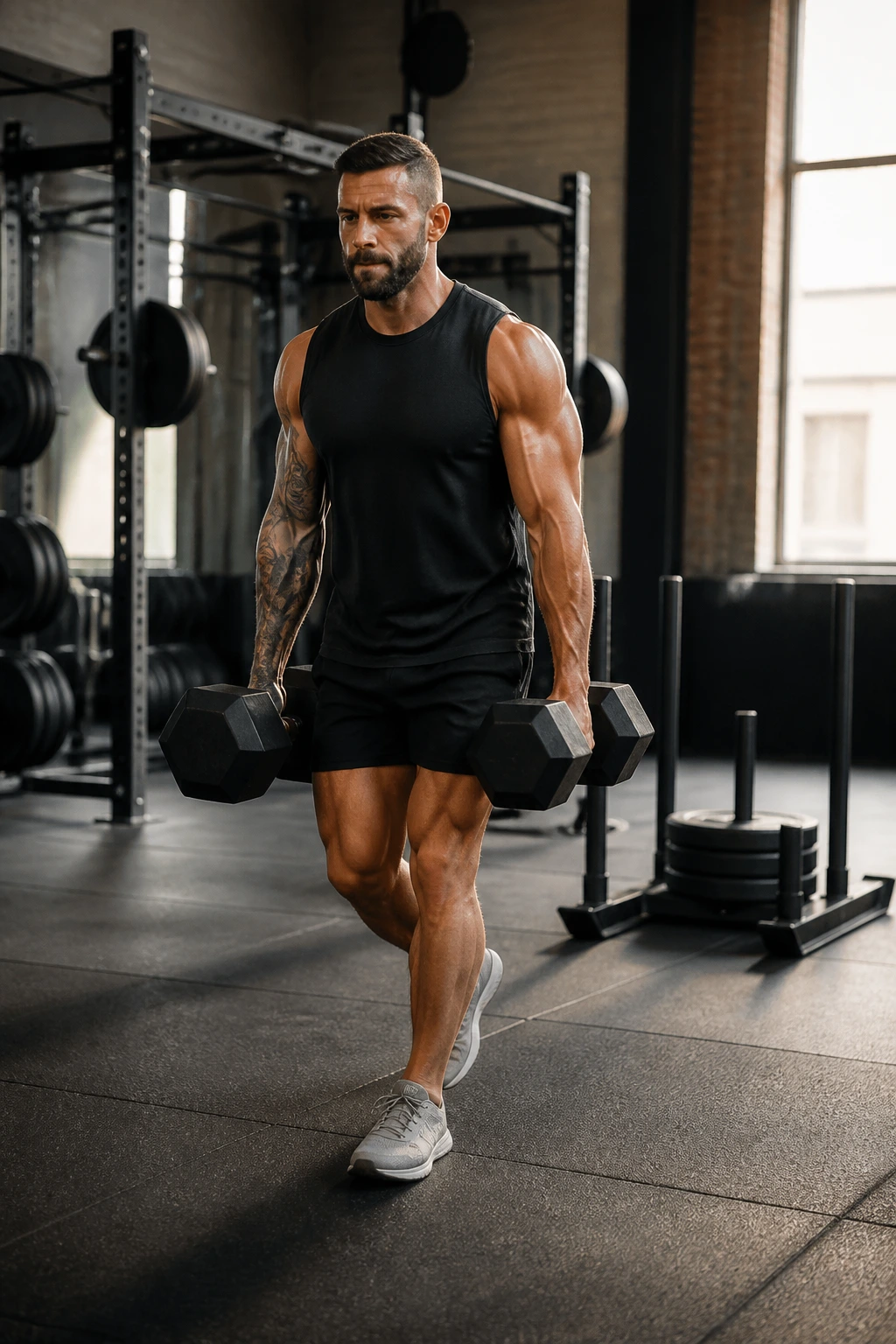
This is the finish that makes people check the time on the wall. Farmer’s carry and sled push is a conditioning superset that builds grip, traps, legs, and lungs all at once. It is not subtle. It is also one of the most practical pairings in the whole list.
The farmer’s carry teaches you to hold heavy weight and keep walking without turning into a pile of bad posture. The sled push lets you drive hard through the legs with almost no eccentric stress, which is one reason it feels brutal without always leaving you as wrecked as squats do. That matters if you still have life outside the gym.
How to Run It
Use 4 to 6 rounds of 30 to 40 meters of farmer’s carries and 20 to 30 meters of sled pushes. Rest 60 to 120 seconds depending on how heavy the load is. If your gym uses time instead of distance, work for 20 to 30 seconds each.
- Best for: finishing a leg day or full-body day
- Good if: you want conditioning without endless treadmill work
- Watch for: shrugging the carries so hard that your neck takes over
Hard? Yes. Worth it? Also yes.
