



The first stretch of the day does not need a mat, and it definitely does not need a heroic burst of discipline before coffee. Bed yoga routines for lazy mornings work because the mattress does half the stabilizing for you, which means you can wake up your back, hips, shoulders, and ribs without wrestling gravity before you’re ready.
That matters more than people think. Most morning stiffness is not some dramatic problem; it’s just what happens when you stay in one shape for hours and then ask your body to move like a person who has been awake for half an hour instead of half a second.
The best moves in bed are boring in the nicest way. Small. Controlled. Easy to repeat. A little ankle movement, a gentle twist, a few breaths that actually reach the sides of your ribs — that sort of thing. If you try to force a deep stretch first thing, your body usually answers with a shrug and a complaint.
Start with the simplest wake-up first. The rest gets easier once the joints stop feeling glued together.
1. Knee-to-Chest Wake-Up
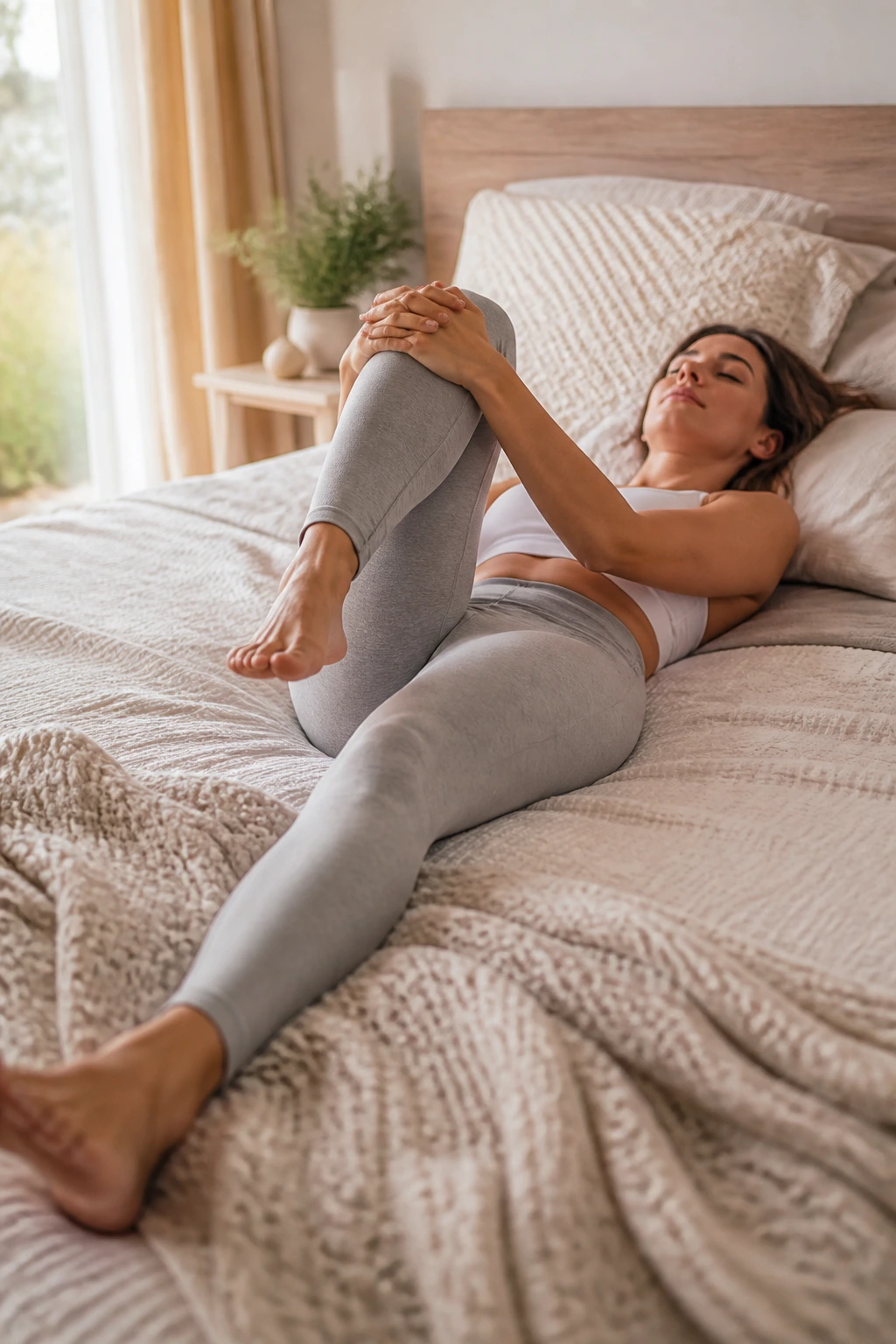
One knee at a time is usually enough to tell your lower back that the day has started. This is the move I reach for when the first thing I feel is stiffness around the sacrum, not real pain — just that dull, sleepy, locked-up feeling.
How to Do It
Lie on your back and draw one knee toward your chest, holding behind the thigh or over the shin. Keep the other leg long if that feels good, or bend it with the foot resting on the bed if your low back prefers support. Take 3 slow breaths here, then switch sides.
If you want to make it a little more useful, use a tiny pull on the exhale and then soften the grip on the inhale. That gives the stretch a pulse without turning it into a tug-of-war. Do not yank the knee hard; morning joints like a warm invitation, not a demand.
- Hold each side for 15 to 30 seconds
- Keep both shoulders heavy
- Let the lower belly stay soft
- Stop short of any sharp pinch in the hip crease
Best tip: keep the knee slightly to the outside of the ribs if a straight-in pull feels cramped. That angle is kinder to the back and usually lands better first thing.
2. Ankle Rolls and Toe Splays
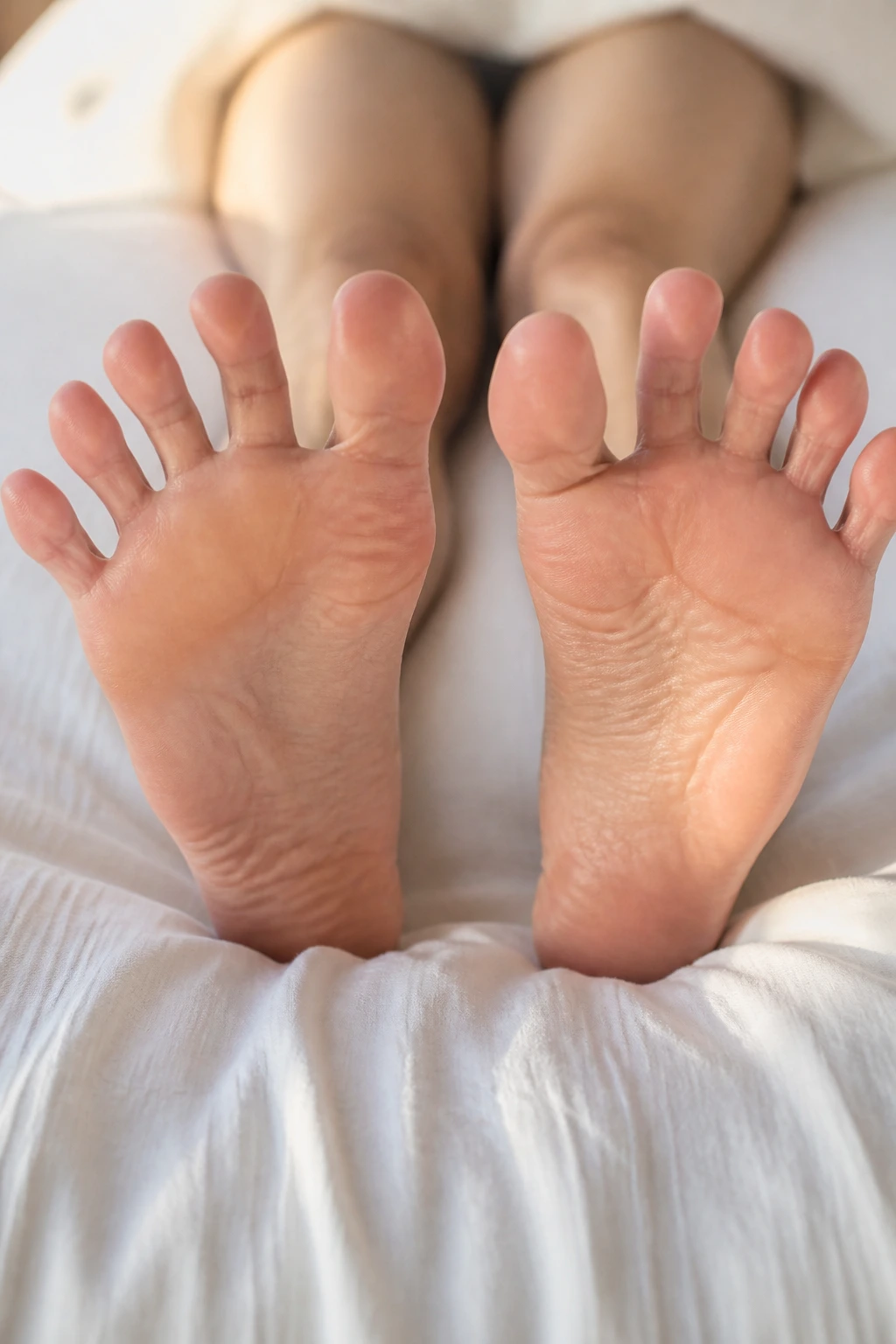
Your ankles are often the first thing that feels stiff after sleep. People forget about them because they’re small and quiet, but they do a lot of work when you stand, walk, and balance. Wake them up early and the rest of the body tends to follow with less resistance.
Sit or lie however you like and make slow circles with each ankle, 5 times each direction. Then point and flex both feet 10 times, and finish by spreading your toes wide for a few breaths. That last part feels silly. It also helps your feet stop behaving like little clenched fists.
The move is not about range. It’s about signal. A few clean circles tell your calves, shins, and feet that they do not need to stay in sleep mode for the first half of the morning.
Do both sides before you sit all the way up. Simple. Fast. Useful.
3. Cat-Cow on the Mattress
Why does cat-cow feel so good before breakfast? Because it gives your spine two directions to move in right away, and most morning backs are desperate for that. You are not trying to make a huge arch or a dramatic round shape. You are just reminding the vertebrae that they still have options.
Why It Works
If your mattress is firm enough, come onto hands and knees and place your wrists under your shoulders, knees under hips. Inhale as you let the belly drop and the chest widen. Exhale as you round the upper back and gently press the floor — or mattress — away. Keep the motion small. The soft surface already changes the game.
How to Get More Out of It
- Move with the breath, not against it
- Keep your neck long
- Let the pelvis rock only as much as feels easy
- Stop after 5 to 8 rounds if your wrists or knees start protesting
If the bed is too squishy, do a seated version against the headboard instead. Same idea. Less wobble. Sometimes that is the better call, and honestly, I prefer it on softer mattresses.
4. Supine Figure-Four Hip Release
If one hip always wakes up with that half-stuck feeling, this is the move to pick. It opens the outer hip and glute without asking you to sit cross-legged on the edge of the bed like you have your life together.
Put one ankle across the opposite thigh, just above the knee, then keep the bottom foot planted or let that leg stay long. Pull the supporting thigh toward you until you feel a stretch in the outer hip, not a squeeze in the knee. Flex the crossed foot. That one detail makes the stretch feel cleaner.
A lot of people push this too hard and end up irritating the knee joint. Don’t. The shape should feel like a release, not a test. Three to five steady breaths on each side is usually enough to change the tone in the hips.
- Support the head with a small pillow if needed
- Keep the sacrum heavy on the bed
- Ease out if the knee feels pinched
- Use less pull than you think you need
This one is quietly excellent when your mornings begin with tight hips and a low back that does not want to negotiate.
5. Pelvic Tilts for a Quiet Lower Back
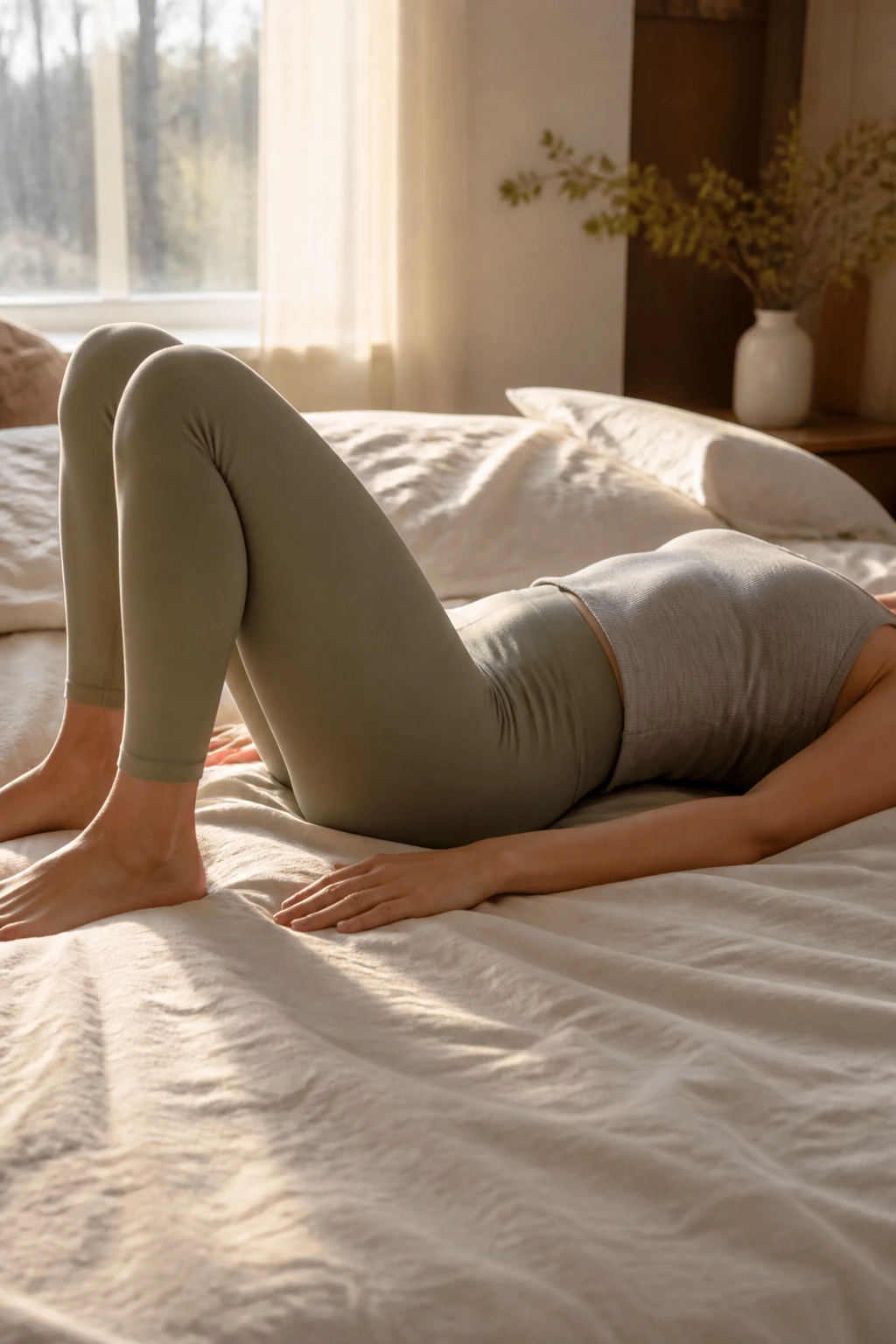
Pelvic tilts look tiny. They are. That is the point. A slow tilt against the mattress can wake the deepest part of your core without making you feel like you’ve started a workout before you’ve even found your socks.
Lie on your back with your knees bent and feet grounded. On the exhale, gently flatten the low back toward the bed by tipping the pelvis back. On the inhale, release that tilt until there’s a small natural space under the waist again. You are not trying to force the spine flat; you’re just finding movement in a place that has been still for hours.
I like 8 to 10 repetitions here, done slowly enough that you can feel the change. If your lower back feels pinchy, reduce the range. If it feels good, keep the motion almost comically small. Big effort is not the goal.
One clean breath. One small shift. That’s enough.
The whole thing tends to settle the nervous system too, which is a nice bonus when you’re still halfway asleep and not interested in being “productive” yet.
6. Thread-the-Needle Shoulder Release
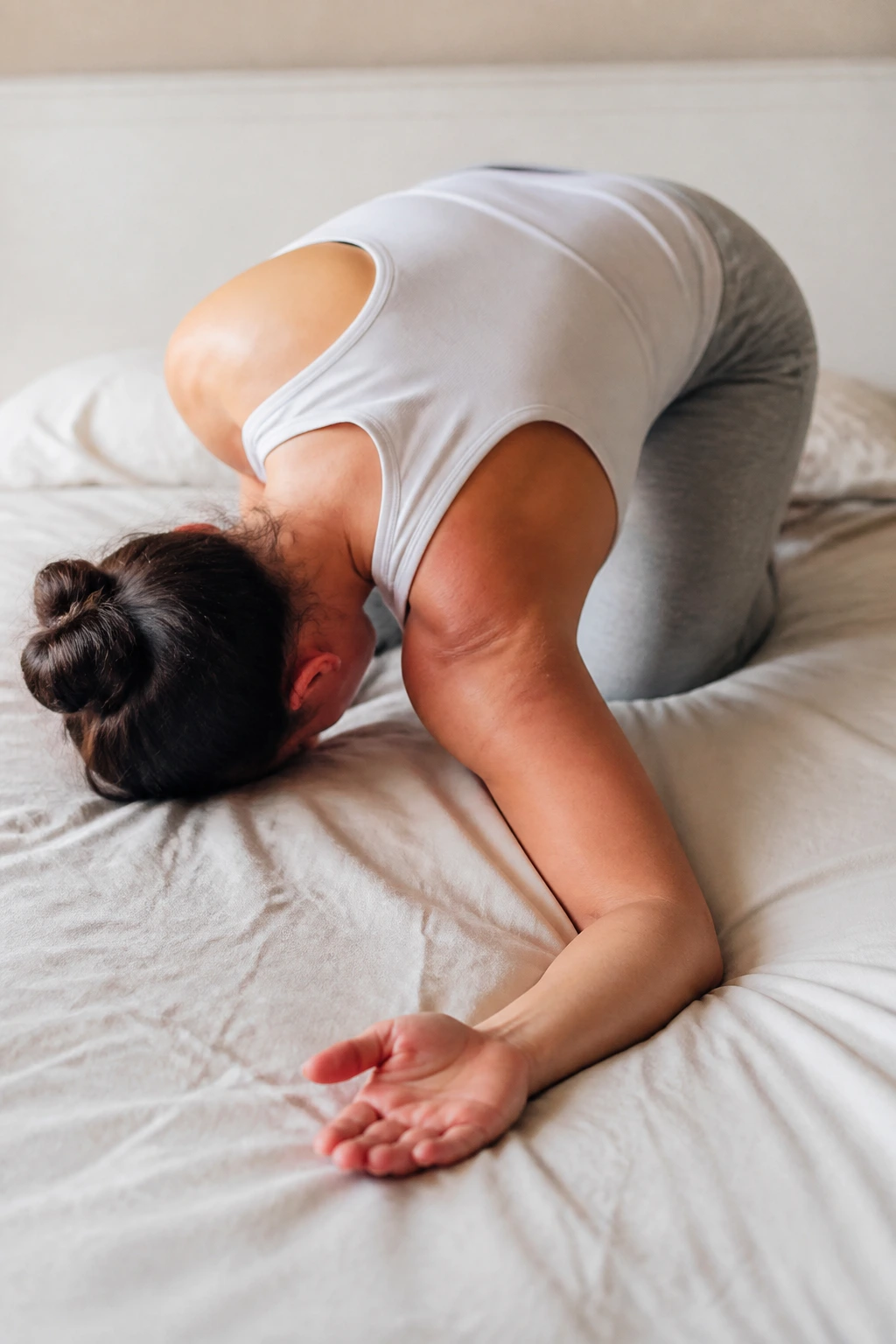
Thread-the-needle is quieter than a big twist and kinder to the upper back than a dramatic reach overhead. If you wake up with neck tension, tight shoulders, or the kind of upper-back stiffness that makes turning your head feel chunky, this is the move I’d choose first.
What Makes It Different
Come to hands and knees or stay low on forearms if that feels better. Slide one arm under the other, palm up, and let the side of the shoulder and head rest on the bed. The stretch lands across the upper back, rear shoulder, and sometimes even down between the shoulder blades. Unlike a full spinal twist, this one lets the lower back stay out of the fight.
Who Should Use It
- People who sleep with shoulders bunched up
- Anyone who feels tight between the shoulder blades
- Folks who want upper-body relief without deep hip work
- Anyone with a firm-enough mattress to support the shape
Stay for 3 to 5 breaths, then switch sides. If the neck feels jammed, place a pillow or folded blanket under the head. That tiny adjustment matters more than people admit. Shoulders love support first thing in the morning.
7. Seated Side Bend Against the Headboard
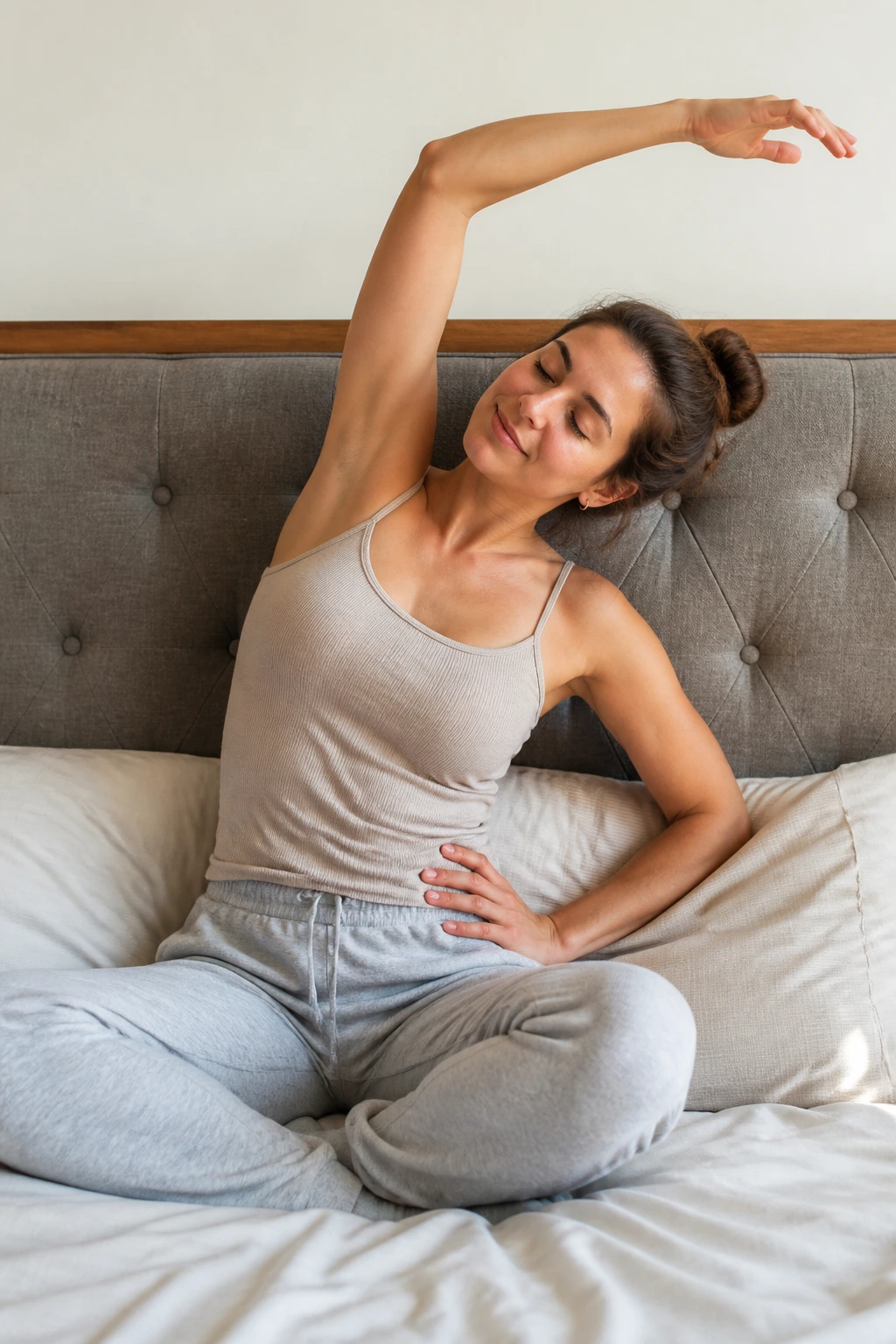
The headboard turns this into a real lazy-morning stretch. You can stay upright, keep the hips grounded on the bed, and still reach the side body in a way that feels open without being fussy.
Sit tall with your back near the headboard or a stacked pillow setup. Drop one hand beside the hip and reach the other arm overhead, then lean just a little toward the grounded hand. The stretch should land along the ribs, waist, and maybe the outer hip on the lifted side. If the shoulder creeps up toward the ear, lower the arm angle.
Where to Place Your Hands
- Grounded hand presses lightly into the mattress
- Top arm reaches in a long line, not behind you
- Chin stays level instead of tipping forward
- Both sitting bones stay heavy
What to Watch For
If your lower back starts to pinch, reduce the lean and think longer through the side body instead of deeper toward the bed. That small shift usually helps. The point is to breathe into the ribs and wake up the spaces that get compressed when you sleep curled up.
It feels modest. It works.
8. Bent-Knee Happy Baby
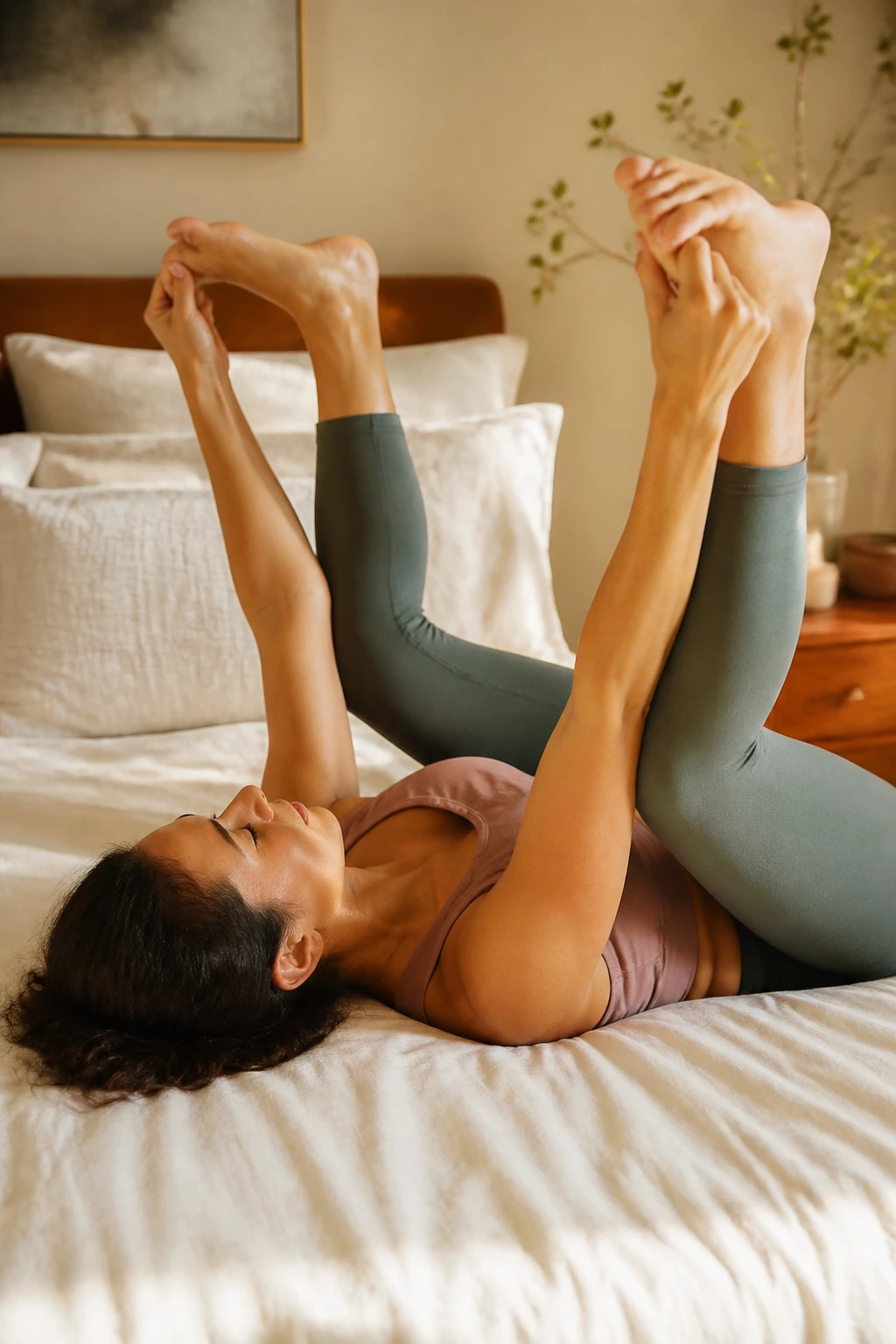
Happy Baby gets more useful when you bend the knees a little. The full expression you see in photos can be a lot first thing in the morning, especially if hamstrings feel tight or your low back has not decided to be friendly yet.
Lie on your back, bend both knees, and hold the outer edges of the feet or the backs of the thighs. Let the knees open wide, but keep them soft and supported. The stretch should be in the inner thighs and hips, not a battle in the groin. If the grip on the feet feels awkward, use the thighs instead. Much better.
This version is nice because it gives the hips room without demanding a huge range. You can rock gently side to side if that feels comforting, but don’t bounce. Morning joints like steady pressure, not little jerks.
One breath in. One breath out. That’s usually enough to tell whether the pose is helping or whether you need to back it off a notch.
9. Towel-Assisted Hamstring Stretch
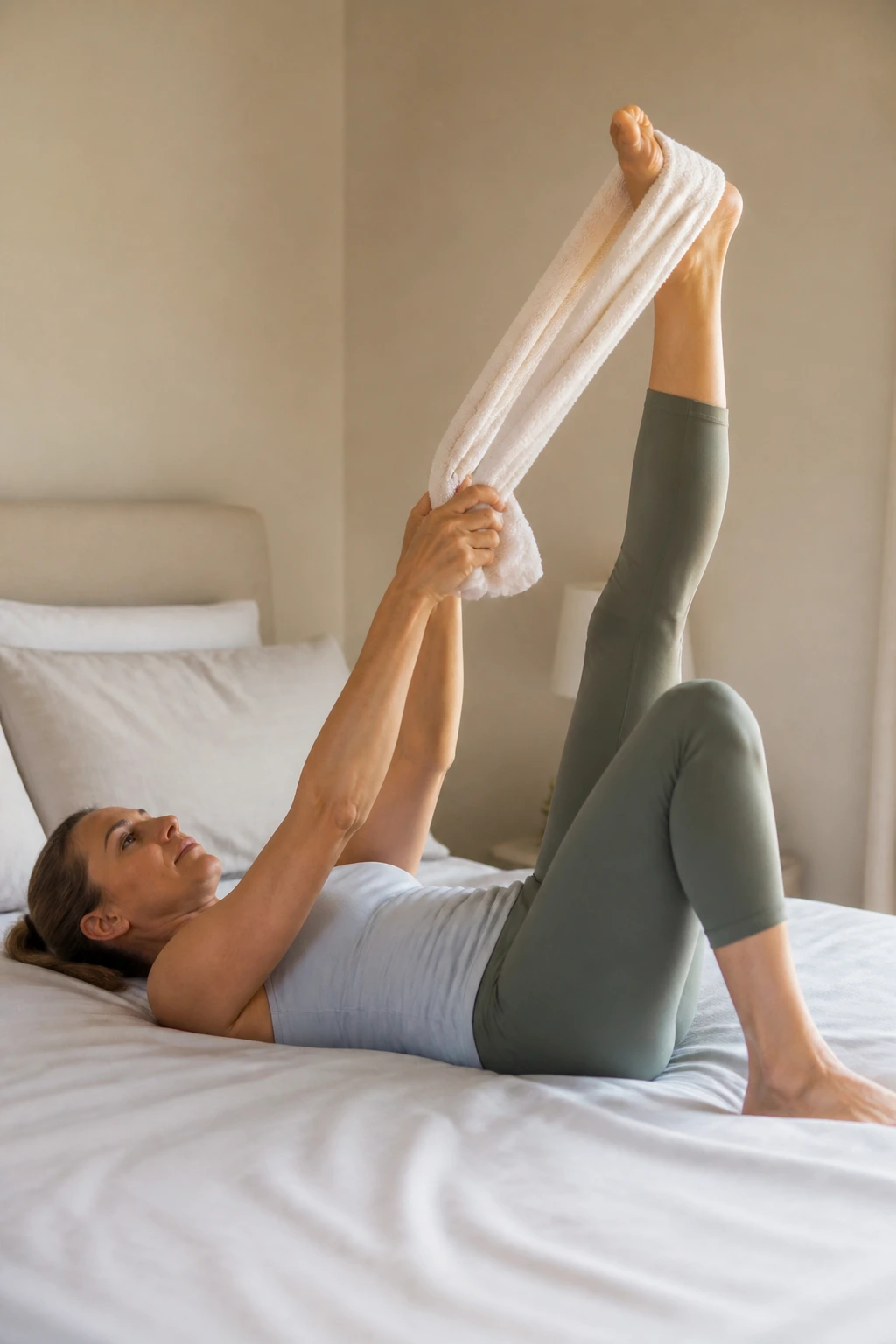
Need hamstring work without that face-that-says-no feeling? Use a towel or scarf. It gives you control, which is the whole trick with bed yoga routines for lazy mornings: the props do some of the work so your body doesn’t have to argue with itself.
Set It Up
Lie on your back and loop a towel around the ball of one foot. Keep the other knee bent or the opposite leg long, whichever protects the lower back better. Slowly extend the lifted leg until you feel the back of the thigh open. Stop before the stretch moves behind the knee. That’s usually too much.
What to Feel
- A clear pull through the hamstring belly
- No sharpness in the knee
- No lifting of the shoulders
- A steady exhale that helps the leg soften
Hold for 20 to 30 seconds, then switch. If you’re tight, do a second round on each side. If the towel makes you pull too hard, shorten your grip and keep the leg lower. The stretch should feel useful, not bossy.
10. Pillow-Supported Supine Twist
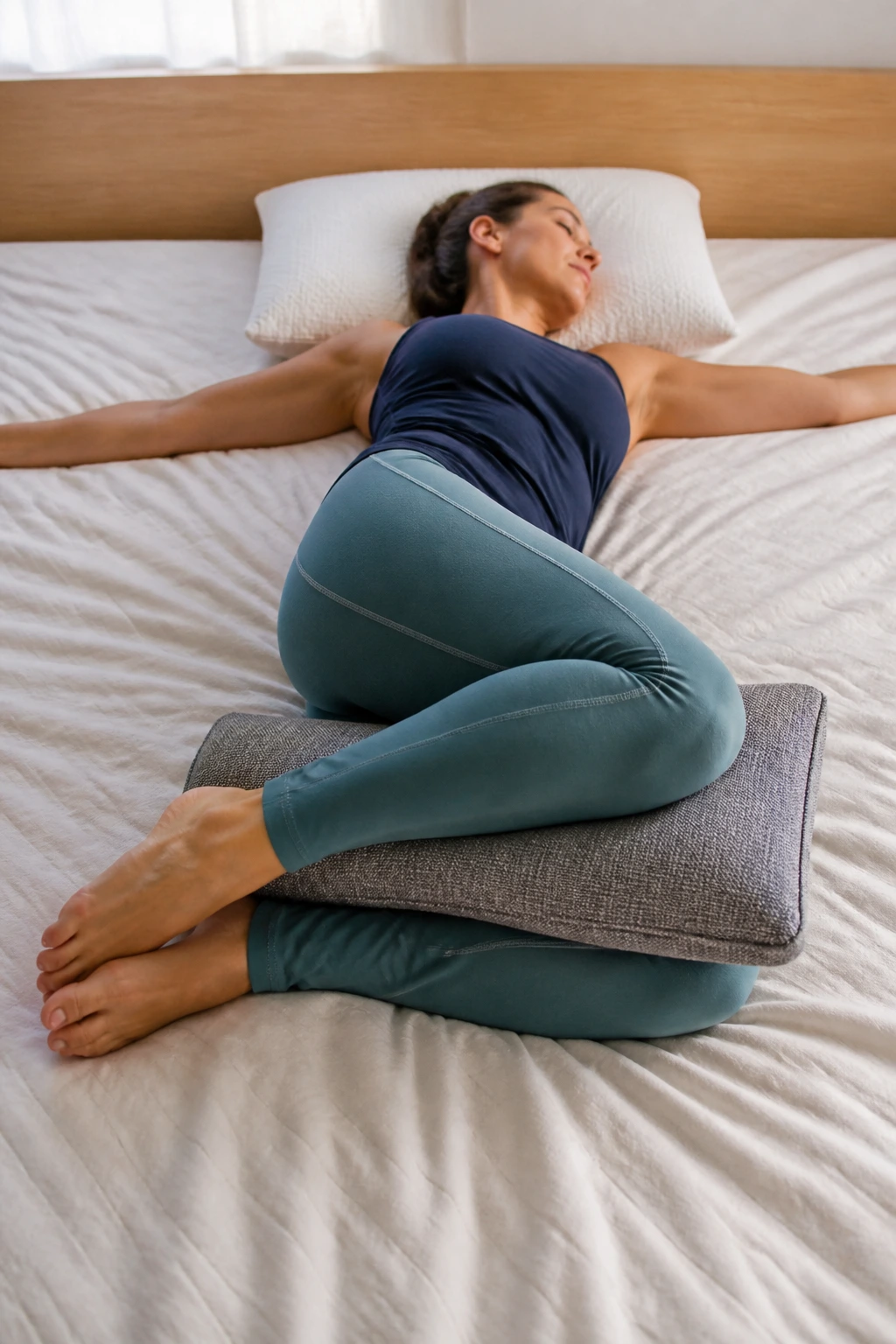
Twists are where bed yoga earns its keep. The pillow support makes the whole thing less aggressive, which matters when you’re trying to wake up the spine rather than wring it out.
Drop both knees to one side and place a pillow or folded blanket under them so the lower back doesn’t twist all the way to the mattress. Keep both shoulders down if possible. Let the gaze go in the opposite direction only if the neck feels calm. Do not force the top knee toward the bed; gravity can handle enough on its own.
- Put support under the knees, not just the ankles
- Keep the breath slow and low
- Stay for 3 to 5 breaths per side
- Use less rotation if the low back feels grumpy
A good twist feels like the ribs are expanding on the top side while the lower back quietly lets go. If it feels like a crank, it’s too much. Small is better first thing.
11. Pillow-Supported Child’s Pose
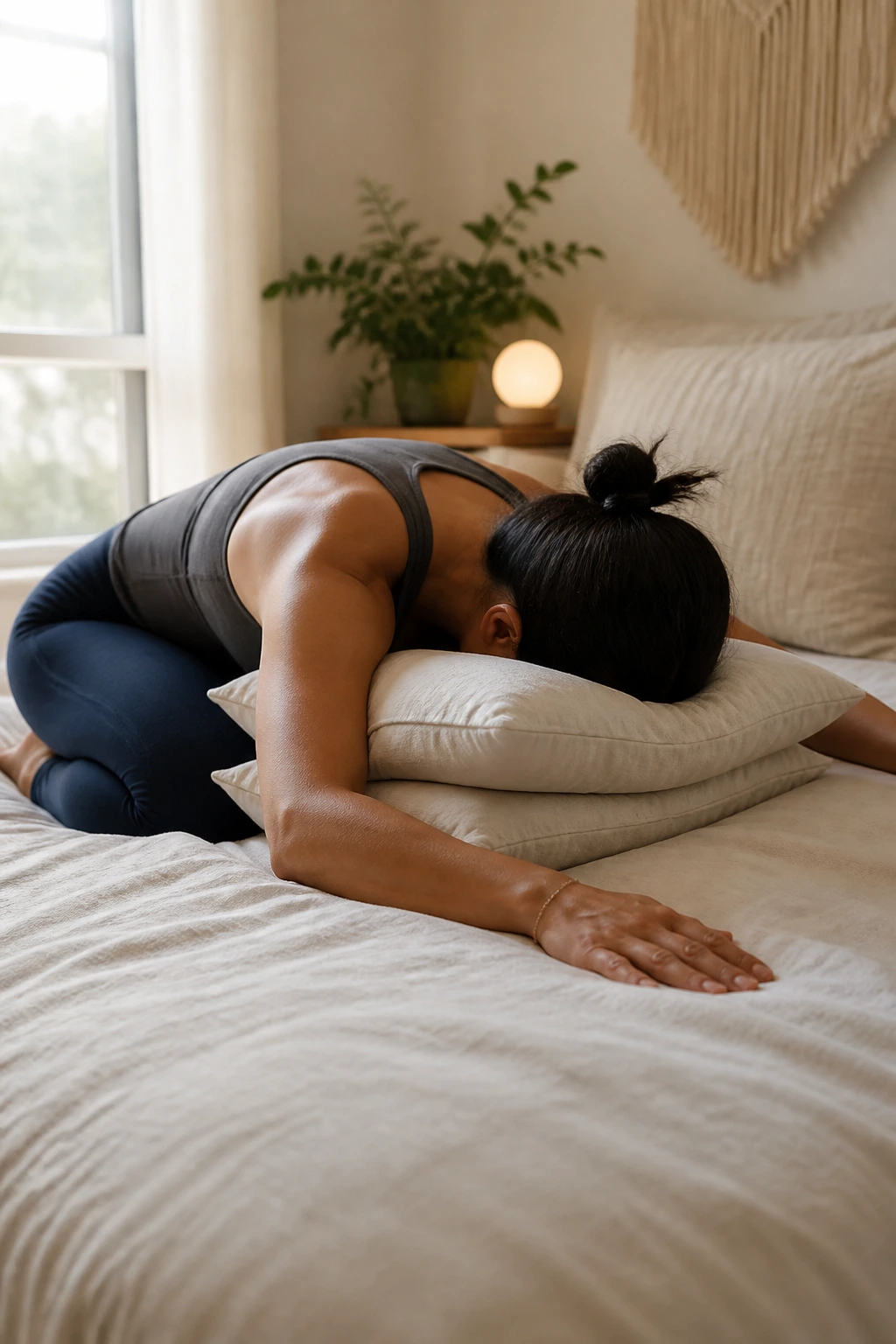
Can Child’s Pose work in bed? Yes, if you cheat with pillows, and there is no reason not to cheat here. The bed already gives you softness; the pillow stack just makes the shape more honest and less awkward.
Kneel on the mattress if it’s firm enough, then fold forward over a couple of pillows so your chest and forehead can rest without strain. Let the knees drift wide if your hips prefer space. If the hips stay high, that’s fine too. You are not trying to “get the pose right”. You’re trying to let the back of the body exhale.
Best Setup
- Two pillows under the chest and forehead
- Knees wide for easier hip release
- Arms reaching forward or folded beside the body
- A slow exhale that feels longer than the inhale
This is especially nice if your upper back feels tired from sleeping curled up. The support means you can actually stay there long enough to relax.
12. Glute Squeeze and Release
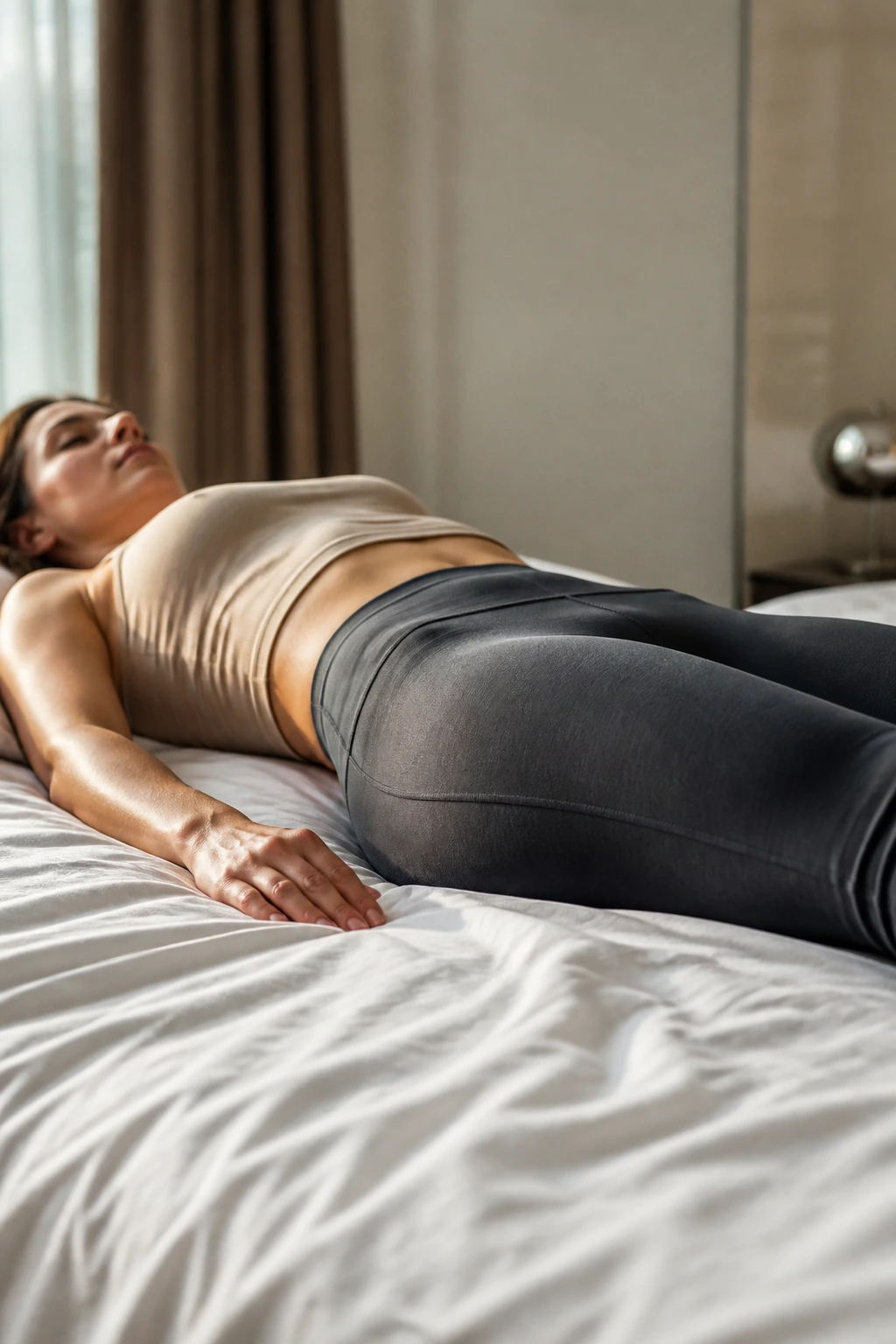
Your glutes probably fell asleep too. Not in the dramatic sense — just in the “we haven’t been asked to do anything yet” sense. A few squeeze-and-release reps wake the posterior chain without any stretching at all, which is useful on mornings when you want movement but not effort.
Lie on your back with your legs long or bent. Squeeze both glutes for 3 seconds, then let them fully soften. Repeat 8 to 10 times. That is the whole thing. Tiny and dull? Perfect.
The mistake is turning it into a full-body clench. Don’t recruit your jaw, shoulders, or hands. Keep the effort local. If your hamstrings cramp, back off the squeeze intensity. You want activation, not a tiny charley horse in disguise.
This move is a little goofy, and I think that’s part of why it works. It gives the body a wake-up signal without asking the brain to gear up for a real workout.
13. Gentle Neck Nods and Shoulder Releases
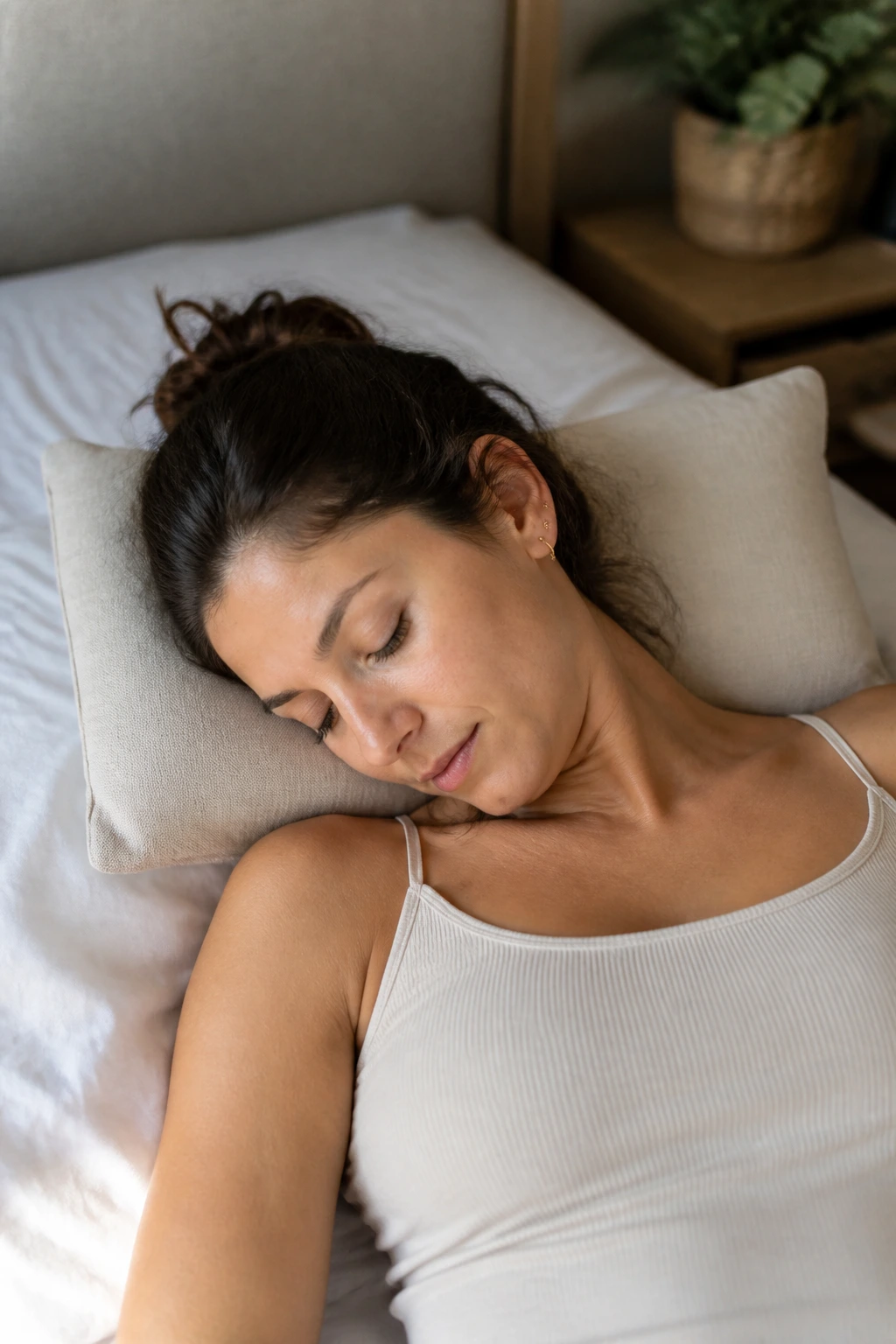
Skip the full neck roll. Those big circles can feel sloppy, and for plenty of people they make the neck crankier instead of looser. Small nods and side bends are cleaner, safer, and more useful first thing in the morning.
Lie on your back with a thin pillow or folded towel under the head. Nod the chin slightly toward the chest, then lift it back to neutral. After that, let one ear drift a little toward the same-side shoulder, but keep the motion light. The range should feel almost too small. That usually means it’s right.
A Simple Pattern
- 3 chin nods
- 3 ear-to-shoulder releases on each side
- 5 seconds of resting between sides
- Shoulders staying heavy and quiet
If you wake with a stiff neck, this is the one to keep very gentle. The neck likes precision more than enthusiasm, and mornings are not the time to get ambitious.
14. Butterfly Legs in Bed
Butterfly in bed is easier than butterfly on the floor, and that alone makes it worth keeping. The mattress supports the pelvis, so the hips can open without the usual fuss about balance or posture.
Bring the soles of the feet together and let the knees fall apart. If the stretch feels too deep, slide pillows under each thigh. That changes everything. You do not need the knees to touch the bed. You only need enough opening to feel the inner thighs soften.
This version tends to feel best for people who wake up with tight groins or hips that do not like sudden wide shapes. It’s also a nice one after side sleeping, when the top leg has been folded awkwardly for hours and everything feels a little compressed.
Hold for 4 to 6 breaths and let the exhale do more of the work than the hands. That part matters. The pose should settle, not force.
15. Supine Arm Reach and Side-Body Lengthen
If your chest feels closed, a side-body reach does more than a dozen tiny shoulder circles. It opens the line from fingers to ribs to hip, and that line gets shortened a lot during sleep, especially if you curl your arms in toward your body.
Lie on your back and stretch both arms overhead, then reach one arm a little higher while keeping the opposite side long. You should feel the ribs widen and the space under the armpit lengthen. Do not jam the lower back into the mattress. Let the stretch happen in the sides, not in a forced arch.
A nice version of this is to point the toes away at the same time. The whole body gets long, but not strained. One side at a time works best if you want a clearer sensation, though both sides overhead can feel wonderful after a rough sleep.
Breathe into the side ribs for 3 slow breaths. That’s plenty.
16. Side-Lying Breath Reset
What if you do not want to stretch much at all? Fine. Side-lying breath work still counts, and on some mornings it’s the smartest thing you can do.
Lie on one side with a pillow under the head and another between the knees if that helps the spine stack better. Put one hand on the belly and the other on the lower ribs. Inhale through the nose for 4 counts, then exhale for 6 counts. Keep it steady for 5 rounds. The exhale should feel longer than the inhale; that’s the useful part.
How to Set the Position
- Neck long, chin slightly tucked
- Knees bent enough to feel supported
- Shoulders stacked or nearly stacked
- Hands resting, not pressing
This is less about flexibility and more about changing the morning mood in the body. If you wake up braced or restless, this gives the ribs a chance to move without any extra drama. Quiet helps.
17. Small Bridge Lift on a Firm Mattress
A small bridge on a firm mattress wakes the back of the body without turning your bedroom into a gym. I like it when the glutes feel flat, the hamstrings feel sleepy, and the lower back needs a little organized support.
Lie on your back with your knees bent and feet hip-width apart. Press through the heels and lift the pelvis only 2 to 4 inches — no need for a high bridge here. Pause for 2 breaths, then lower slowly until the sacrum touches down again. If the low back pinches, make the lift smaller or skip it.
- Keep knees tracking forward
- Squeeze the glutes lightly at the top
- Ribcage stays down
- Neck stays relaxed on the bed
This version is less about strength and more about reminding the hips how to support the pelvis. That may sound simple. It is. Simple is useful first thing.
18. Marching Feet and Gentle Core Brace
Tiny marches count. Lift one foot an inch off the bed, set it back down, then switch sides. Keep the pelvis steady and the movement boring. That last part matters more than it sounds, because the point is to wake up the deep core without making your body brace for a full workout.
You can do this with knees bent and feet planted if lifting the feet feels weird. The goal is to notice whether the waist wants to arch or the pelvis wants to rock. If it does, reduce the height and slow the pace. Smaller is usually better than harder.
This move pairs well with a long exhale, because the breath helps the lower belly stay engaged without clenching. Three to five rounds per side is enough. If you keep going and lose control, you’ve gone past the sweet spot.
Useful. Subtle. Not flashy.
19. Full-Body Reach and Yawn Reset
Some mornings the whole body wants one long, lazy pull. Not a workout. A stretch that feels like the bed is still holding half of you while the other half wakes up.
Lie long, reach both arms overhead, and lengthen the legs in the opposite direction. Point and flex the feet once or twice. Open the mouth if a yawn comes. Let it come. Do not rush the exhale. The release matters more than the reach.
This is the one I like at the end of a slow bed sequence, when the room is still quiet and the muscles have already stopped complaining. The long line from fingertips to heels wakes the front body, but the real benefit is the reset in the nervous system. You feel less folded in on yourself.
A few breaths here, then let the limbs go heavy again. There’s no rush to sit up.
20. A Five-Minute Bed Yoga Flow for Lazy Mornings
If you only want one routine, make it short enough that you’ll actually do it. Five minutes is plenty. You do not need all twenty moves every morning, and honestly, most people do better with a small repeatable flow than with a giant menu of options.
A Simple Sequence
- Start with 5 ankle circles each direction on both sides.
- Add 3 knee-to-chest breaths per side.
- Move into 4 rounds of cat-cow if your mattress supports it, or do a seated spine wave against the headboard.
- Finish with 3 breaths of a pillow-supported twist on each side.
- End with one full-body reach and yawn before sitting up.
Keep the whole thing light. If one move feels cranky, swap it for another. A lazy morning routine should feel like a slow door opening, not a boot camp audition. The best routine is the one you’ll repeat tomorrow.
Some days that flow is enough to loosen the hips and shoulders before you even leave the bed. Other days it just keeps the stiffness from settling in. Either way, the day starts softer, and the rest can wait.
