



A good standing arms and abs workout at home should leave your shoulders warm, your waist tight, and your floor untouched.
That sounds almost too simple, but there’s a reason standing work keeps getting people back on their feet after a bad run with crunches, planks, and anything that makes the wrists complain. When you stay upright, your trunk has to organize the whole show — ribs, hips, shoulders, breathing, balance — and that changes the feel of even basic arm movements.
I like standing work for another reason: it fits real life. A small living room, a quiet corner of the kitchen, a few light dumbbells, maybe a water bottle if that’s all you’ve got. No mat. No rolling around. No long setup that makes you talk yourself out of starting.
The trick is not to swing your arms and call it exercise. Good standing core work has shape. Your ribs stay stacked over your hips, your shoulders stay away from your ears, and the movement happens with enough control that your abs have to do their share. That’s where the burn lives. Keep that in mind as you move through the list below.
1. Standing Arms and Abs Warm-Up March
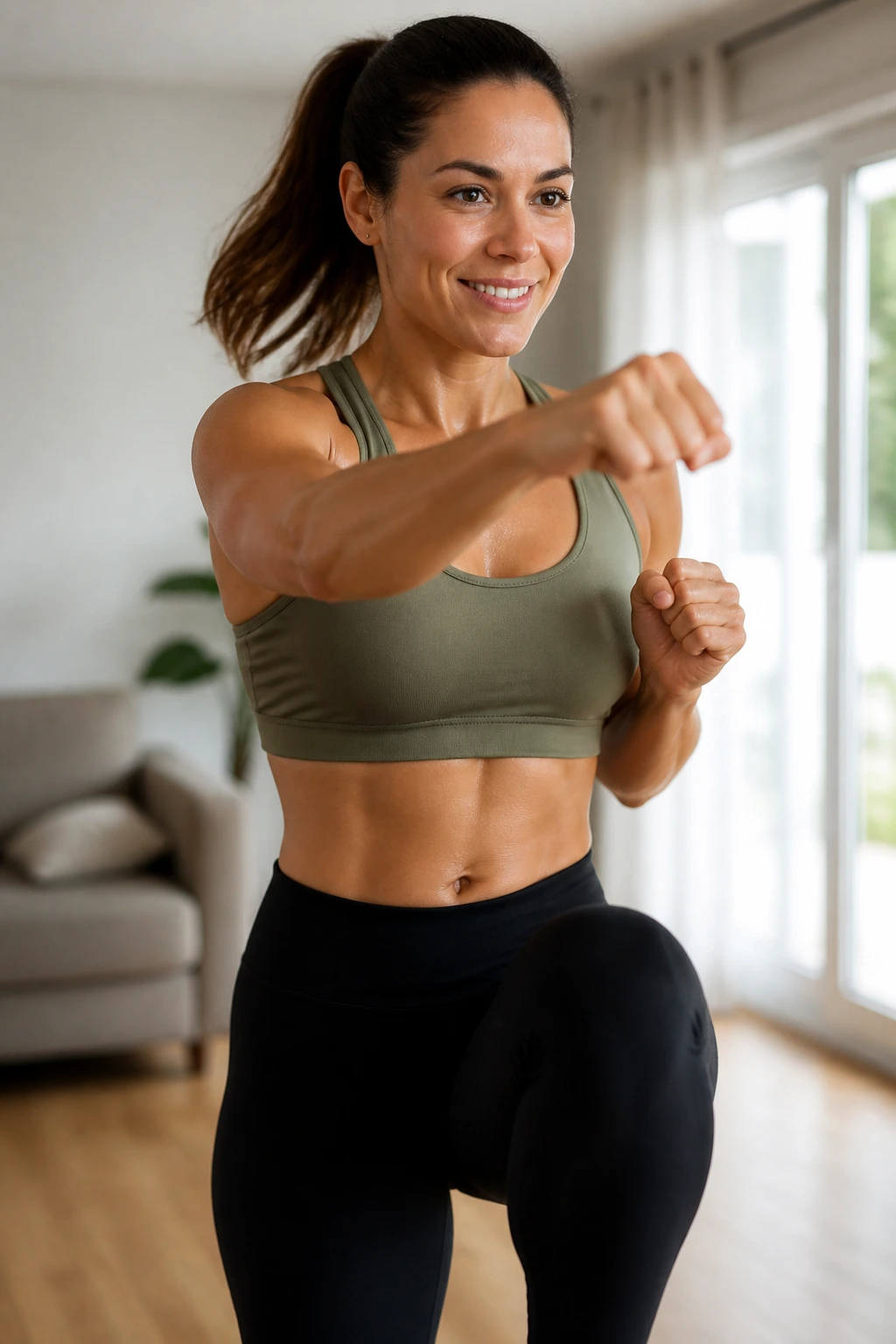
Start here if your body feels stiff, sleepy, or a little stubborn. A marching warm-up with light punches wakes up your shoulders and gets your abs bracing before the harder moves show up. It’s simple, but it’s not lazy.
Why It Works
March in place with your knees lifting to a comfortable height, and punch forward at chest level as each foot rises. The arms create the rhythm; the core keeps you from rocking side to side like a loose shopping cart. That’s the part most people miss.
- March for 30 to 45 seconds.
- Keep your fists at chin or chest height, not up near your face.
- Punch forward with a soft elbow, then bring the hand straight back.
- Stay tall through the crown of your head and keep your ribs from flaring.
Tip: If your lower back starts to arch, slow the march and shorten the punches. Less drama, more control.
2. Cross-Body Jab-Cross Combo
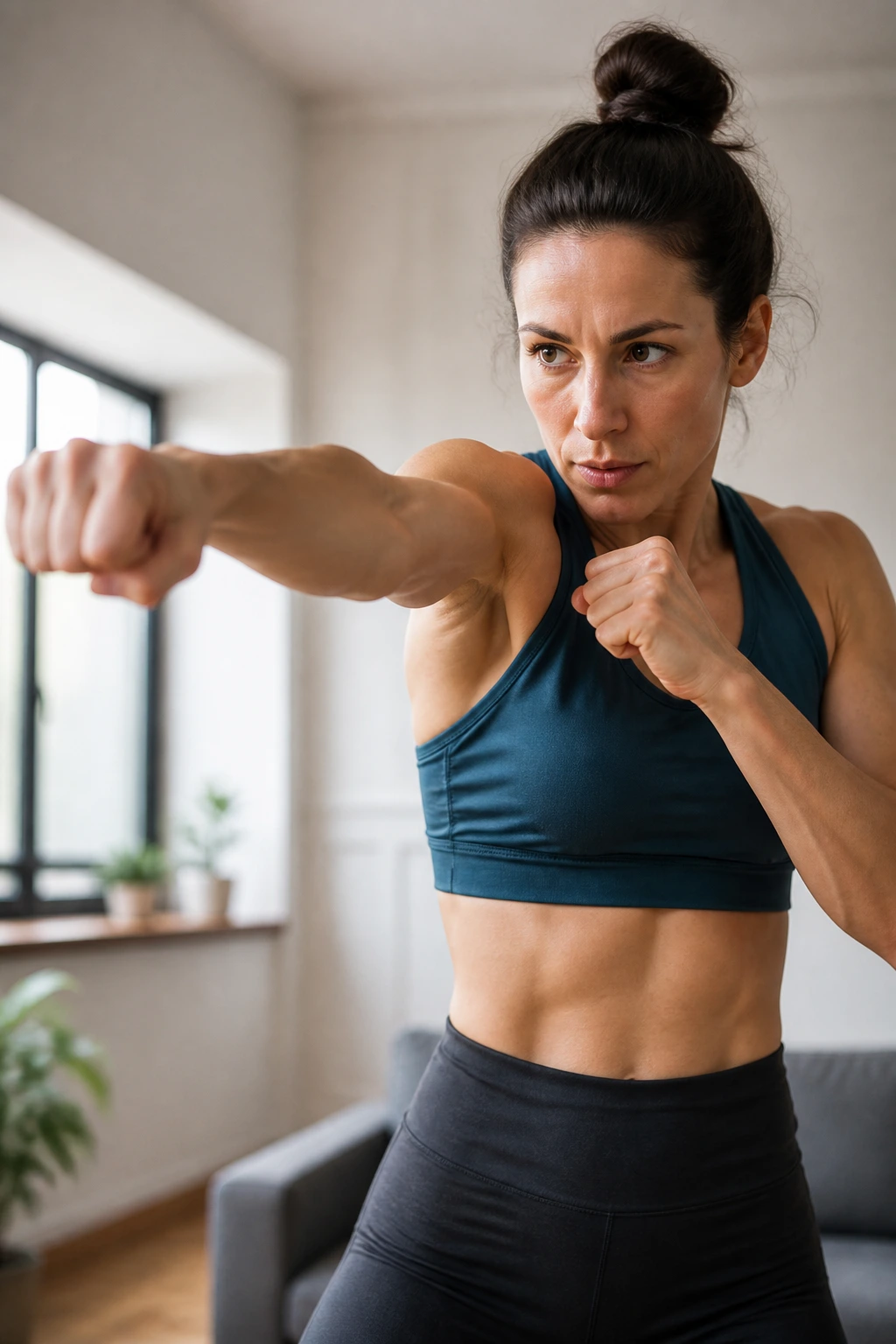
This one looks easy until you do it for a full minute. Straight punches force your torso to resist rotation, and that steady fight between motion and control is where the abs start talking back.
Throw a jab with the lead arm, then a cross with the back arm, turning your torso just enough to move with the punches, not so much that you spin out of control. Keep your feet light and your shoulders relaxed. You want clean lines, not a wild flail.
I use this move when I want a standing cardio burst that doesn’t feel like a dance routine. Forty seconds on, 20 seconds off is a good starting point. If you want more shoulder work, slow the punches down and hold the end range for a split second before snapping back to guard.
Keep the chin slightly tucked. That little detail matters.
3. Standing Knee-to-Elbow Crunches
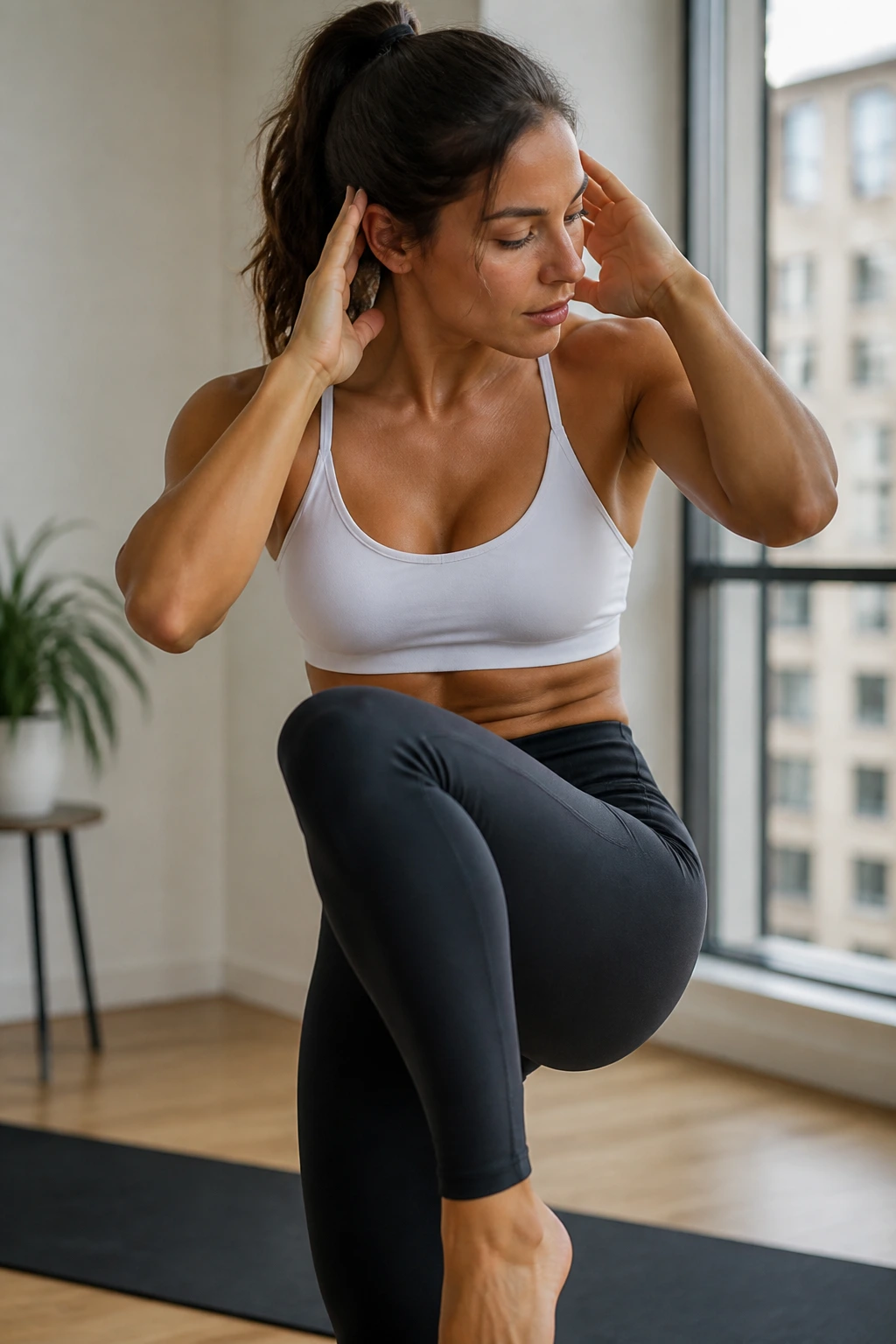
Want a standing move that feels a bit like a bicycle crunch without getting down on the floor? This is the one. It hits the front of the core, the side abs, and the hip flexors in one tidy package.
Lift one knee and bring the opposite elbow down toward it as you crunch through the waist. Do not collapse your chest. The upper body stays proud while the rib cage folds just enough to meet the knee. Balance will wobble a little at first. That is normal.
How to Use It
Aim for 10 to 12 reps per side at a steady pace. If you feel your neck tightening, lower the elbow target and keep your hands light behind the head or crossed at the chest. The move should come from the torso, not from yanking your head forward.
A slow exhale at the top helps more than people think.
4. Overhead Reach and Side Bend
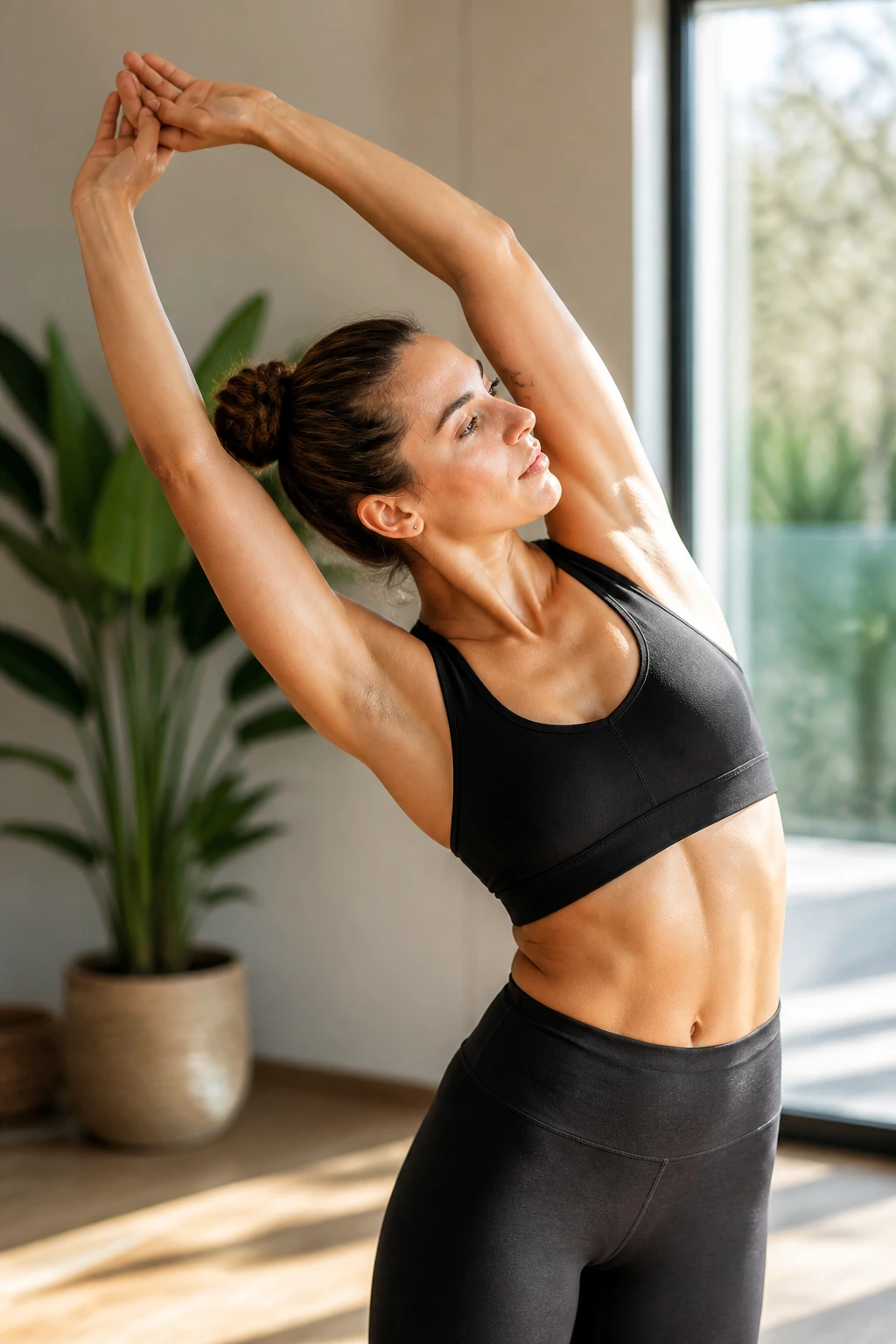
There’s a reason this old-school move sticks around. When your arms go overhead and your torso bends to one side, the entire side line of the body has to lengthen, then work to pull you back upright.
Stand with feet hip-width apart and reach both arms overhead. Then bend to one side, keeping the shoulders relaxed and the movement smooth. If you want more resistance, hold a light dumbbell in the top hand. One five-pound weight is plenty for most people; this is not the place to show off.
- Do 8 to 10 bends per side.
- Keep both feet planted.
- Bend from the waist, not from the neck.
- Reach long before you tilt.
The real point is control. If you rush it, the move turns into a sloppy sway. Slow it down and you’ll feel the side abs switch on much faster.
5. Standing Woodchops
A good woodchop feels like slicing through thick air. The movement is diagonal, forceful, and controlled, and it wakes up the obliques in a way that straight-up crunches never quite do.
Start with your hands high on one side, as if you’re holding an invisible axe over your shoulder. Pull the hands diagonally across the body toward the opposite hip, then return with control. A dumbbell, medicine ball, or even a filled water bottle works here. I prefer a light load and a slower tempo, because the torso has to earn the twist instead of borrowing momentum from the arms.
Keep your hips mostly facing forward. You want rotation through the trunk, but you do not need to spin all the way around like you’re trying to catch a breeze. Eight to 12 reps per side is enough if you stay honest with the range.
Breathing helps. Exhale as the hands travel down.
6. Hook Punch Rotations
Hook punches are not the same as straight punches. A jab shoots forward; a hook turns the torso and asks the side body to keep up. That bent elbow changes the line of force and gives the obliques a different job.
Bring one elbow up to shoulder height, then swing the forearm across the front of your body in a compact arc. The punch should land at shoulder level, not way out in front of you. Smaller is better here. If your arm turns into a windmill, the abs stop helping and the shoulders start cheating.
This is a smart move when your shoulders are tired but you still want a sharp standing core drill. Try three rounds of 20 seconds per side, with 15 to 20 seconds of rest between rounds. It is short, punchy, and oddly draining when done right.
I like it more than big swaying twists. Cleaner. Harder. Better.
7. Biceps Curl March
If your curls feel like an arm-only move, you’re leaving half the work on the table. A marching curl makes the core stabilize while the biceps do their job, and that tiny extra demand changes the whole exercise.
Keep the Rib Cage Honest
Hold a pair of light dumbbells or two water bottles at your sides. Curl one arm as the opposite knee lifts, then switch. The marching leg helps prevent you from leaning back and stealing the work with your lower back. If you’ve ever curled a weight and noticed your hips drifting forward, this fixes that fast.
- Use 2 to 8 pounds per hand to start.
- Do 8 to 12 curls per side.
- Keep elbows close to the ribs.
- March slowly enough that your torso stays steady.
If you have to sway, the weight is too heavy. That’s the whole test right there.
8. Overhead Press with Alternating Knee Drive
If you want one move that lights up shoulders and abs at the same time, this is the one I reach for first. The overhead press creates upward work; the knee drive makes the core stop the body from tipping backward.
Press two light dumbbells overhead, or press one at a time if your shoulders prefer that. As the arms finish the press, lift one knee to hip height, then lower and switch sides. The trick is to keep the lower ribs from popping forward when the hands go up. That arch in the low back steals the whole point.
A small range is fine. In fact, it’s usually better. Six to eight presses per side is plenty when the knee drive is clean and the body stays stacked. If overhead motion bothers your shoulders, press only to eye level and keep the elbows slightly in front of you.
One clean rep beats three sloppy ones.
9. Triceps Kickbacks in a Hip Hinge
This is the move I’d choose for the back of the arms when I want something quiet and useful at the same time. No jumping. No floor work. Just a hip hinge, a flat back, and a precise elbow extension that wakes up the triceps.
Hinge forward a little, soften the knees, and pin the elbows close to your sides. Extend the forearms straight back until the arms are almost locked, then return under control. The upper arm should stay still. If it swings, the triceps don’t get the message.
A kitchen counter or sturdy chair can help if balance feels off. Rest one hand on it while you work the other arm. Twelve to 15 reps per side is a solid range here. Go lighter than you think you need; kickbacks fall apart fast when the weight gets bossy.
The burn shows up late. That’s normal.
10. Arm Circles with a Locked-In Core
Why do tiny arm circles make your stomach work so hard? Because the shoulders are doing the moving while the torso tries not to wobble, and that demand spreads lower than people expect.
Lift both arms out to shoulder height and draw small circles, first forward and then backward. Keep the circles tight enough that the movement feels precise, not sloppy. If the arms drift above shoulder height, the neck often takes over. If the circles get too big, the lower back starts to arch. Neither helps.
How to Make the Burn Count
- Use no weight or very light hand weights.
- Do 15 to 20 circles forward and the same backward.
- Keep the chest quiet and the jaw loose.
- Bend the knees slightly so the body stays rooted.
A one-pound weight can be enough. No joke. Bigger is not better here.
11. Reverse Fly Squeeze
Most people turn reverse flies into a neck exercise. That’s a shame, because the move can do so much more when the hinge is clean and the squeeze comes from the upper back.
Bend forward with a flat spine, palms facing each other, and sweep the arms out to the sides until the shoulder blades draw together. Hold for a second, then lower slowly. The abs have to brace hard to keep the torso from folding, which is why this shows up in standing arms and abs workouts at home more often than people expect.
Use 8 to 12 controlled reps. Keep the elbows softly bent and the shoulders away from the ears. If you feel it mostly in the traps, your hands are probably lifting too high. Bring the arms down a touch and focus on spreading the chest wide before the squeeze.
Slow lowering makes this move meaner. I mean that in a good way.
12. Front Raise Hold and March
If you want your abs to do more than they seem to, hold the arms at shoulder height while the legs keep moving. That tiny pause turns a plain front raise into a test of balance and trunk control.
Raise both arms straight in front of you until they’re level with the floor, then hold that position while you march in place for 10 to 20 steps. Lower, breathe, and repeat. The shoulders will feel it, but the core has to stop the body from tipping backward as the legs keep changing sides.
A few quick rules help:
- Use light weights, around 1 to 5 pounds.
- Keep the wrists neutral.
- Don’t let the ribs flare.
- Stop before the shoulders shrug up.
I like this one because it looks harmless. Then your midsection starts negotiating.
13. Lateral Raise and Oblique Crunch
A side bend tells the body to fold. A lateral raise plus oblique crunch asks it to stay tall, lift, and then compress in one clean line. That difference matters.
Stand with a light weight in one hand, raise that arm out to the side, and bring the same-side knee up toward the elbow on the crunch. The standing leg has to stabilize while the side body shortens and the shoulder works in a narrow range. It feels coordinated when it’s done right; it feels chaotic when the weight is too heavy.
Try 8 to 10 reps per side with a slow return to the start. I’d rather see a tiny, clean lift than a huge one that drags the shoulder up toward the ear. If your torso starts leaning away from the working side, drop the load and shorten the movement.
This one is sneaky. It looks light. It isn’t.
14. Prayer Press Isometric
You can make a move feel harder without moving much at all. The prayer press proves it.
Bring your palms together at chest height, elbows lifted but relaxed, and press the hands hard into each other for 20 to 30 seconds. Then march in place, or lift one knee at a time, while keeping that pressure going. The chest, shoulders, and deep core all have to stay on line while the body tries to shift.
What to Watch For
- Keep the shoulders down.
- Press the palms evenly, not with one hand winning.
- Breathe through the hold; don’t lock up your jaw.
- Stop if the neck tightens.
This is a good finisher when your arms are tired but you still want the abs to stay involved. Isometrics can feel boring at first. Then the clock keeps running and the burn starts creeping up your forearms.
15. Speed Skaters with Punches
When the workout starts to feel flat, lateral footwork wakes it up fast. Skater steps bring the heart rate up; the punches keep the upper body from drifting along for the ride.
Step one leg behind the other in a side-to-side skater pattern, then throw a cross-body punch or hook as you land. The torso rotates a little with each step, which means the obliques keep working while the legs do their part. You don’t need big jumps. Small, quick steps work fine and are easier on the knees.
- Work for 20 to 40 seconds.
- Keep the landing soft.
- Punch across the body, not straight down.
- Stay low enough to feel the legs, but tall enough to keep the spine long.
This is the move that turns a quiet standing routine into a sweaty one.
16. Standing Bicycle Crunches
Can you get a bicycle-crunch feeling without lying on the floor? Yes. And it’s better for people who hate getting down and back up ten times in a row.
Bring one elbow toward the opposite knee, then switch sides in a smooth alternating rhythm. The classic mistake is rushing the knee and forgetting the torso. Don’t do that. The waist should turn and fold slightly so the elbow and knee meet because the abs are driving the motion, not because the leg is flinging itself upward.
Form Cue That Helps
Think “slow twist, quick return.” The twist should be visible, but not sloppy. Try 10 to 12 reps per side or a full 30-second interval if you want more of a cardio feel. If the balance gets shaky, widen your stance a little and shorten the knee lift. That usually fixes it fast.
This one works well between heavier arm moves. It keeps the core awake while the shoulders get a break.
17. Heel Tap and Reach
You do not need explosive moves to feel your side abs. Slow heel taps with a long reach can do the job when the body stays honest.
Stand with feet a little wider than hips, reach one arm overhead, and tip that same side down toward the heel on the opposite side. Alternate. The body creates a long diagonal line first, then folds through the waist just enough to tap. If you rush, the movement turns into a half-hearted side lean. If you slow down, the obliques have to work for the return.
The nice part is how forgiving it is. Eight to 10 taps per side is enough for many people, especially if the reach stays active and the standing leg remains grounded. Keep your chest open on the way up, and don’t let the head chase the floor. That’s a common mess-up.
This one looks mild. It isn’t mild at all when done with control.
18. Halo Circles Around the Head
Hold one dumbbell by the bell, or use a light weighted object with a safe grip, and trace a slow circle around the head. That halo path asks the shoulders to move while the trunk refuses to lean and the abs stay quietly on duty.
The move can feel awkward for the first few reps. That’s normal. The circle should stay close to the head, not drift far out in front like you’re drawing a giant lopsided ring in the air. A small, tidy path is safer and far more effective.
What to Watch For
- Use 5 to 10 pounds at most unless you’ve built up to more.
- Keep the elbows soft.
- Stop if the lower back arches.
- Circle both directions for 5 to 8 reps each way.
I like halos for posture and shoulder control. They’re especially useful on days when your upper back feels sleepy and your core needs a quiet challenge.
19. Cross-Body Uppercut Combo
Uppercuts hit a different line than hooks. The punch rises from low to high, and that upward path makes the torso brace in a way that feels sharp and athletic.
Start with one hand near the opposite hip, then drive the elbow up and across the body in an uppercut motion while the same-side knee stays grounded. The torso rotates just enough to keep the strike alive, but the hips don’t need to whirl around. Think compact, not dramatic. If you’ve ever shadowboxed in a doorway, you already know the feel.
Try 30 seconds per side and keep the tempo brisk. The abs will work hard to stop the body from over-rotating on the upward drive. If your shoulders are getting the whole job, slow the hands down and pull the elbows in tighter.
This is a good one when you want a little aggression in the session. Clean aggression. Controlled. Useful.
20. Five-Move Standing Finisher
You do not need to do all 20 moves in one session. Some days you want a short finish that hits the arms and abs without a long setup, and that’s where a compact circuit earns its keep.
Use this as a six-minute finisher:
- 30 seconds march-and-punch warm-up
- 30 seconds knee-to-elbow crunches
- 30 seconds standing woodchops
- 30 seconds front raise hold and march
- 30 seconds speed skaters with punches
- 30 seconds rest
- Repeat the circuit two times
Keep the reps clean and the transitions quick. If your shoulders are getting fried, swap the front raise hold for arm circles. If your legs are tired, replace the skaters with prayer presses and keep the core work steady.
The best standing core work is the kind you can actually repeat tomorrow. Not flashy. Not complicated. Just a few moves, done with enough control that your body has to pay attention.
And that’s the part I’d trust most: pick four or five of these, stay strict with the form, and let the burn build instead of chasing speed. The moves that look small are often the ones that hit hardest when you slow them down.
