



Leg day often has a reputation for being the most physically demanding session of the week, and for good reason. When you commit to a serious lower-body routine, you aren’t just targeting one muscle; you are taxing your entire central nervous system. You feel it in your glutes, your hamstrings, your quads, and even your core. If you want legs that are not only powerful but also functional for everyday life, you need to stop obsessing over leg extension machines and get back to the fundamentals: squats and lunges.
These movements mimic how we actually move as human beings. We squat to sit in chairs, we lunge to step over obstacles, and we hinge to pick things up off the floor. When you isolate these patterns with weight, you build structural integrity that carries over into every other aspect of your fitness. It is about loading these natural movement patterns to create stimulus, growth, and stability.
This is not a list of random exercises you might find on a generic fitness blog. These are tactical approaches to leg training. Some focus on heavy mechanical tension, others on metabolic stress, and some on fixing the imbalances that keep you from reaching your true potential.
1. The Goblet Squat Foundation
If you cannot master a goblet squat, you have no business putting a heavy barbell on your back. This movement acts as a filter for your technique. By holding a weight—a kettlebell or dumbbell—against your chest, you create a counterbalance that forces your torso to stay upright. If you hunch forward, the weight will pull you out of position immediately.
Why This Matters for Beginners and Pros Alike
Many people struggle with “butt wink,” that rounding of the lower back at the bottom of a squat. The goblet squat eliminates this by acting as a natural tether. Your elbows should aim to track inside your knees as you descend. This interaction between elbow and knee ensures you push your knees out, which activates the glutes and protects the knee joint from collapsing inward.
- Sample Protocol: Perform 4 sets of 12 repetitions with a moderate weight.
- The Focus: Sink your hips until your elbows touch the inside of your thighs. Pause for two seconds in that bottom position to cement your balance.
2. Walking Lunge Endurance
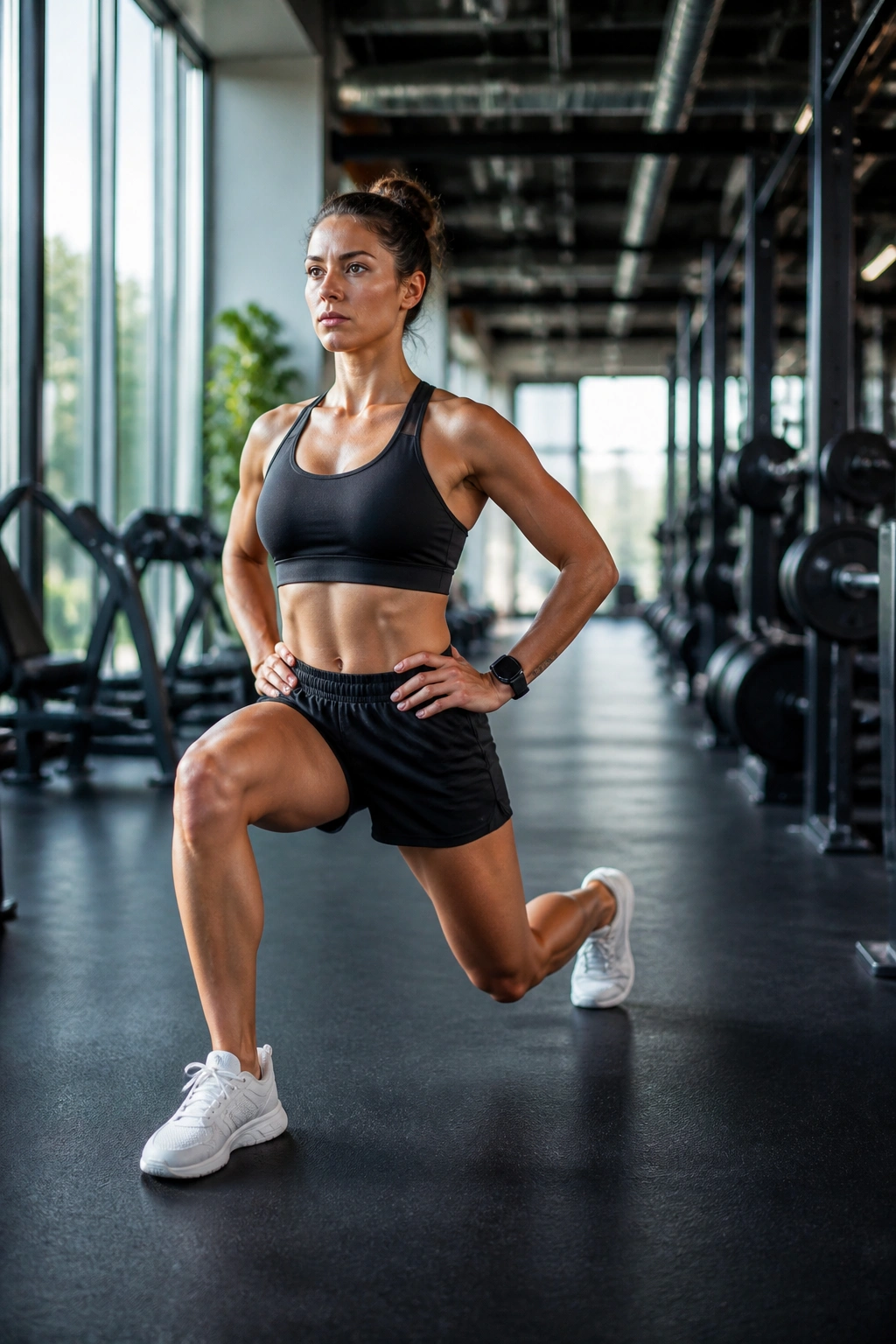
Walking lunges are often treated as a cardio-finisher, but they are a high-level strength tool if you load them properly. The key difference between a casual walking lunge and a strength-building one is the stride length and the control. Most people rush these, taking short, choppy steps that prioritize speed over muscle recruitment.
Fixing Your Stride
When you step out, do not just drop your back knee to the floor. You want to aim for a stride that places your front shin perpendicular to the floor at the bottom of the movement. If your front knee tracks too far over your toes, you are shifting the load primarily onto the knee joint. If you keep the shin vertical, the glute and quad take the brunt of the load.
- Sample Protocol: Aim for 3 sets of 20 total steps (10 per leg).
- The Pro Tip: Keep your torso vertical. If you lean forward, you turn this into a glute-biased exercise. If you stay upright, you hammer the quads.
3. Bulgarian Split Squat Mastery
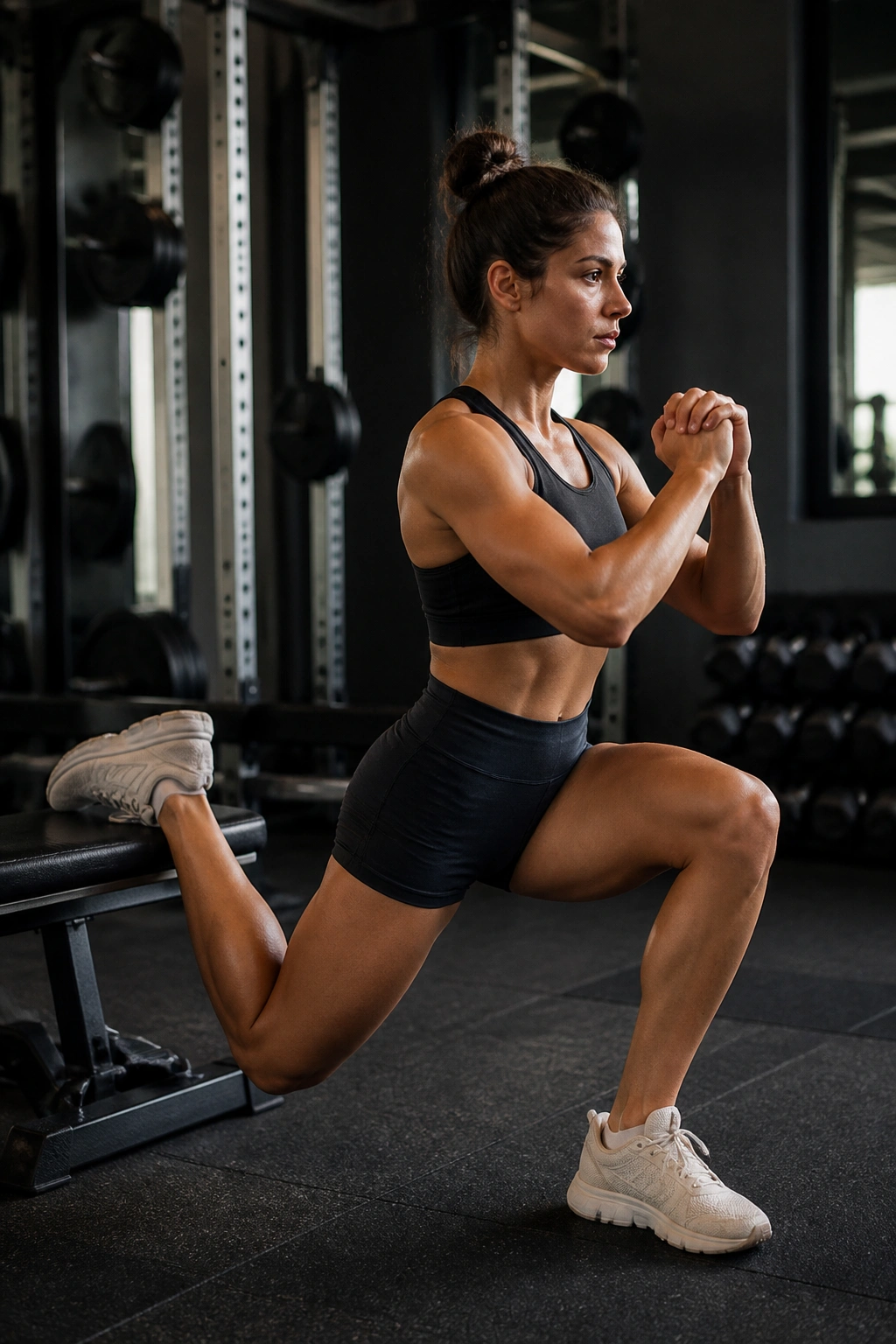
There is a reason this movement is often called the “Bulgarian nightmare.” It is a unilateral exercise that exposes every single weakness you have in your hips and core. By elevating your rear foot, you remove the possibility of using your back leg to help with the lift. You are isolated on one side, which forces your stabilizer muscles—specifically the glute medius—to work double time.
The Balancing Act
The biggest mistake people make here is foot placement. If you are too close to the bench, your knee will scream in pain. If you are too far, you will feel a massive stretch in the hip flexor of the back leg but lose the quad tension on the front. Find that sweet spot where, at the bottom, your front thigh is parallel to the ground and your shin is vertical.
- Sample Protocol: 3 sets of 8 to 10 repetitions per leg.
- The Challenge: Hold a dumbbell in the hand opposite to your front leg. This creates an anti-rotation demand that forces your core to engage to keep you from tipping over.
4. Sumo Squat for Inner Thigh Activation
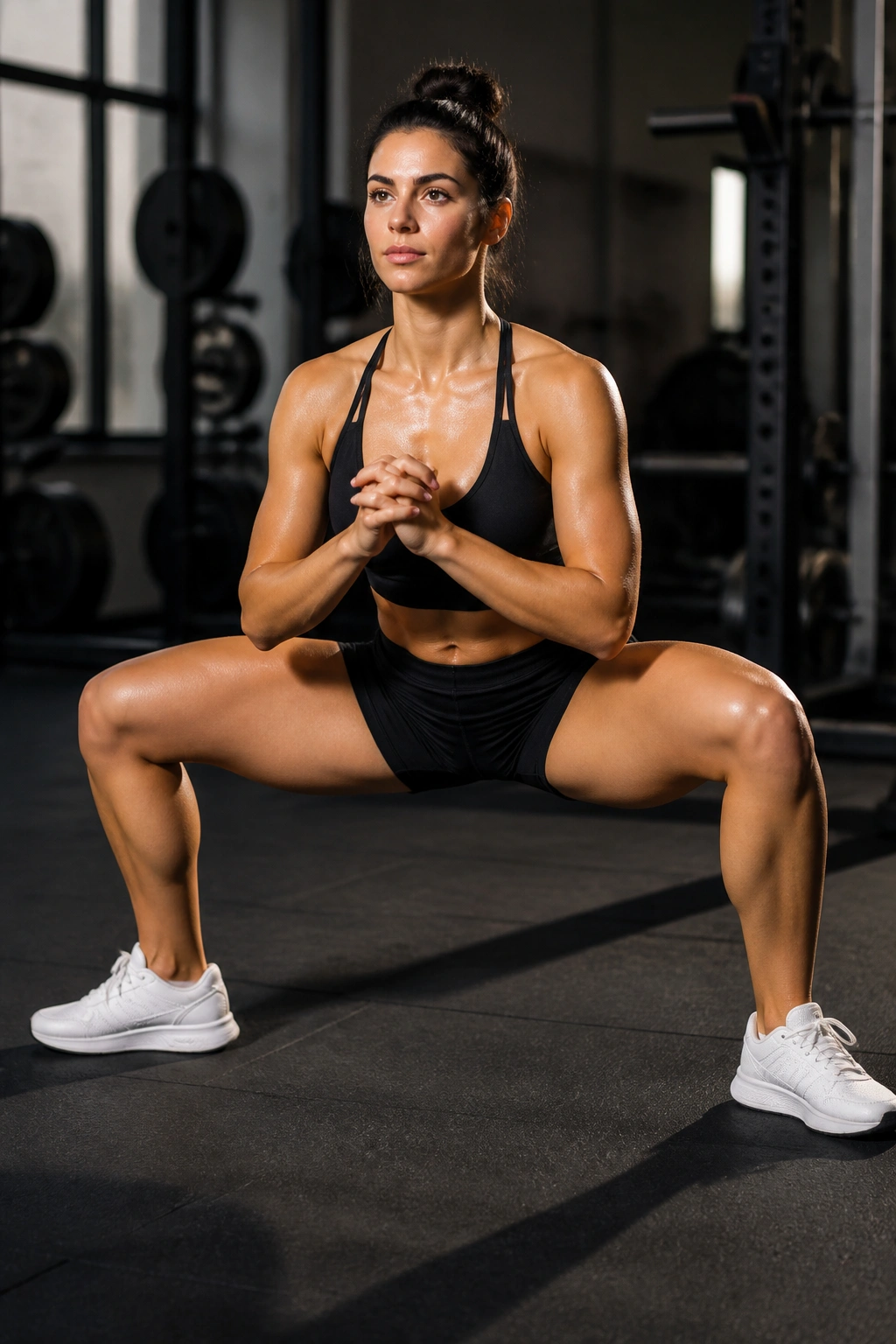
The sumo squat is about wideness. By taking a stance significantly wider than shoulder-width and pointing your toes outward, you shift the mechanical tension away from the front of the quads and toward the adductors—the inner thigh muscles. These muscles are often neglected in standard squat variations, leading to a gap in your leg development.
How to Execute Properly
Because your stance is wide, your depth will naturally be shallower than a regular squat. Do not try to force your hips to the floor. Stop when you feel a deep stretch in your inner thighs. Ensure your knees are tracking directly over your toes. If your knees collapse inward, you are putting your ligaments at risk.
- Sample Protocol: 4 sets of 15 repetitions with a slow, controlled tempo.
- The Focus: Think about pushing the floor away with your entire foot, rather than just your heels.
5. Reverse Lunge Stability
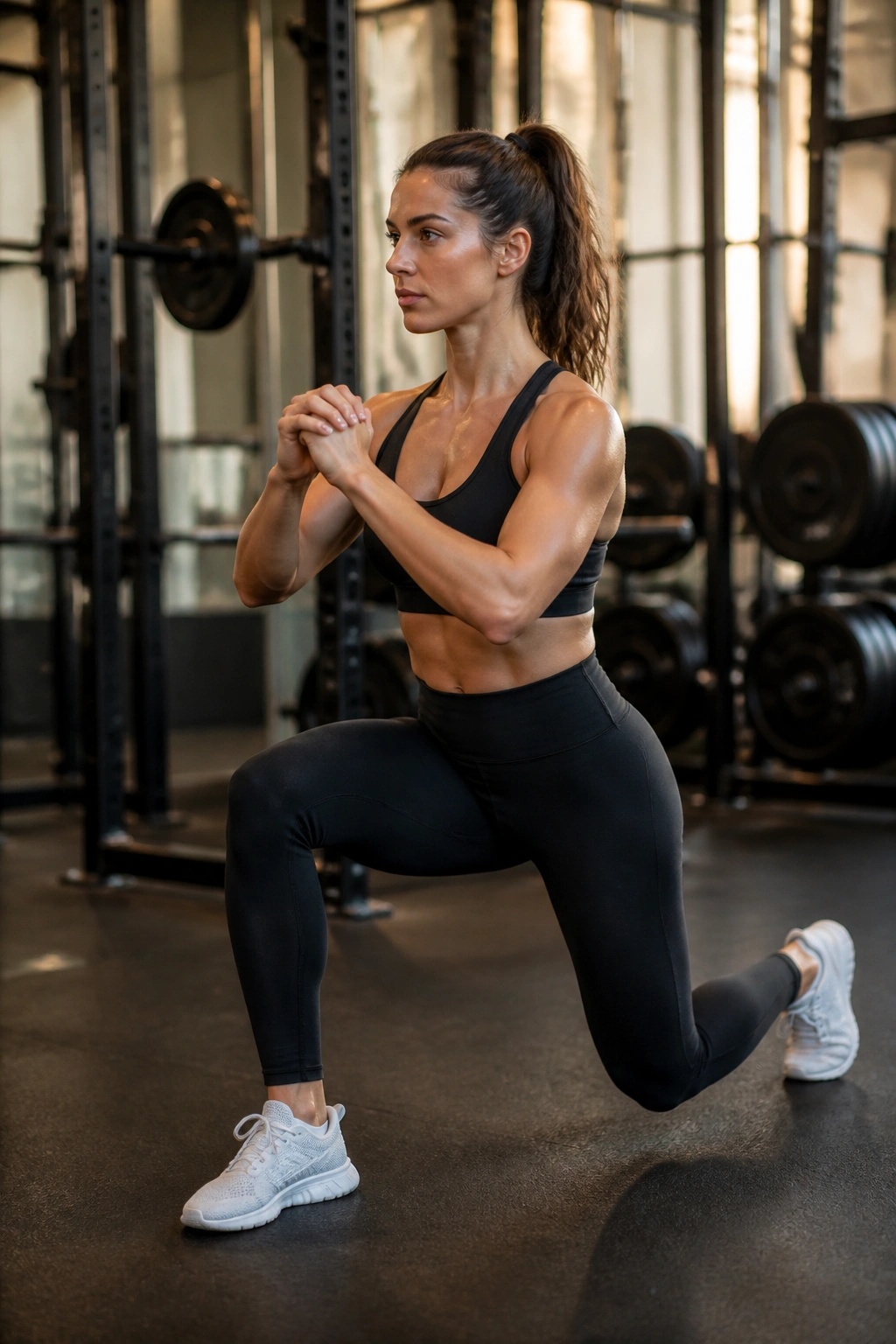
If the walking lunge is for endurance, the reverse lunge is for knee health and stability. Because you are stepping backward, your front leg remains planted and stable throughout the entire set. This removes the “dynamic braking” force that occurs during forward lunges, which is often what causes knee discomfort for many people.
Creating a Strong Anchor
Reverse lunges allow you to load more weight than any other lunge variation. Because you aren’t moving through space, you don’t have to worry about catching your balance as much. You can focus entirely on the drive—pushing through the mid-foot of your front leg to return to the starting position.
- Sample Protocol: 3 sets of 8 reps per leg with heavy dumbbells.
- The Detail: Keep your core braced as if someone is about to punch you in the stomach. This creates the rigidity needed to push back up from the bottom.
6. Jump Squat Power
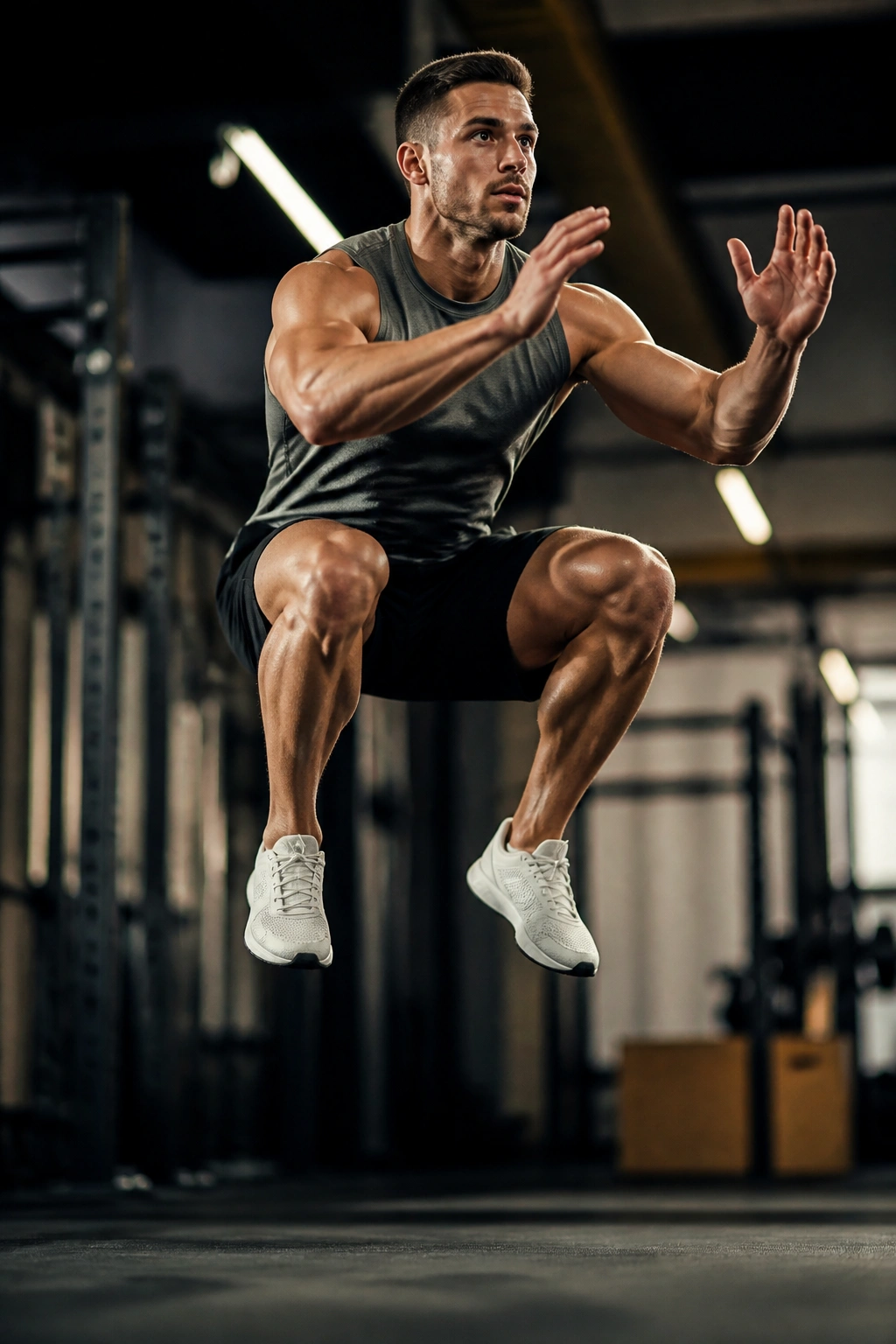
Sometimes, you need to train your muscles to produce force quickly. That is where the jump squat comes in. This is not about how high you jump; it is about the explosive extension of your hips and knees. It teaches your nervous system to fire your muscle fibers in unison, a skill that translates into heavier lifts in your strength sessions.
Landing Mechanics
The landing is where most people get it wrong. You must land softly, absorbing the impact through your muscles, not your joints. Think of your legs as shock absorbers. Transition immediately from the landing into the next squat. If you have to pause for a second to regain your balance, your fatigue is too high or your control is too low.
- Sample Protocol: 4 sets of 6 explosive reps.
- The Rule: If you cannot land quietly, stop jumping. The noise of your feet hitting the floor is a signal that your joints are taking the impact rather than your muscles.
7. Lateral Lunge Plane Movement
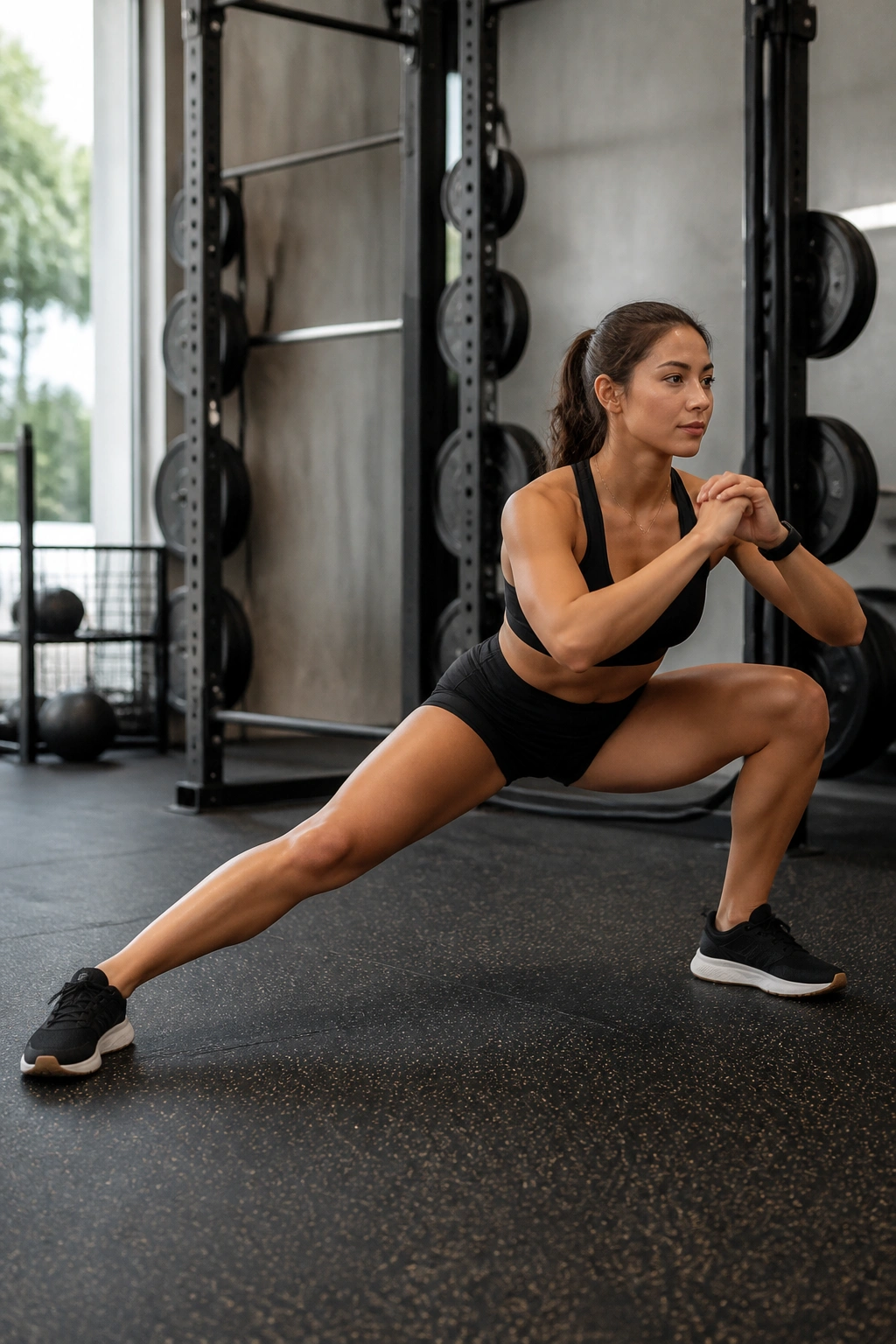
We spend almost all of our time moving forward and backward. The lateral lunge forces you into the frontal plane—side-to-side. This is crucial for athletic performance and knee stability. When you step to the side, you stretch the adductors and activate the glutes in a way that standard squats never touch.
Avoiding the Trap
Do not treat this as a “side lunge” where you just bend one knee. You must push your hips back and keep your stationary leg perfectly straight. Your foot should remain flat on the floor. If your heel comes up, you have lost your center of gravity.
- Sample Protocol: 3 sets of 10 reps per side.
- The Tip: Focus on driving your hips backward, not just sideways. It should feel like a squat, just performed in a different direction.
8. Pistol Squat Progression
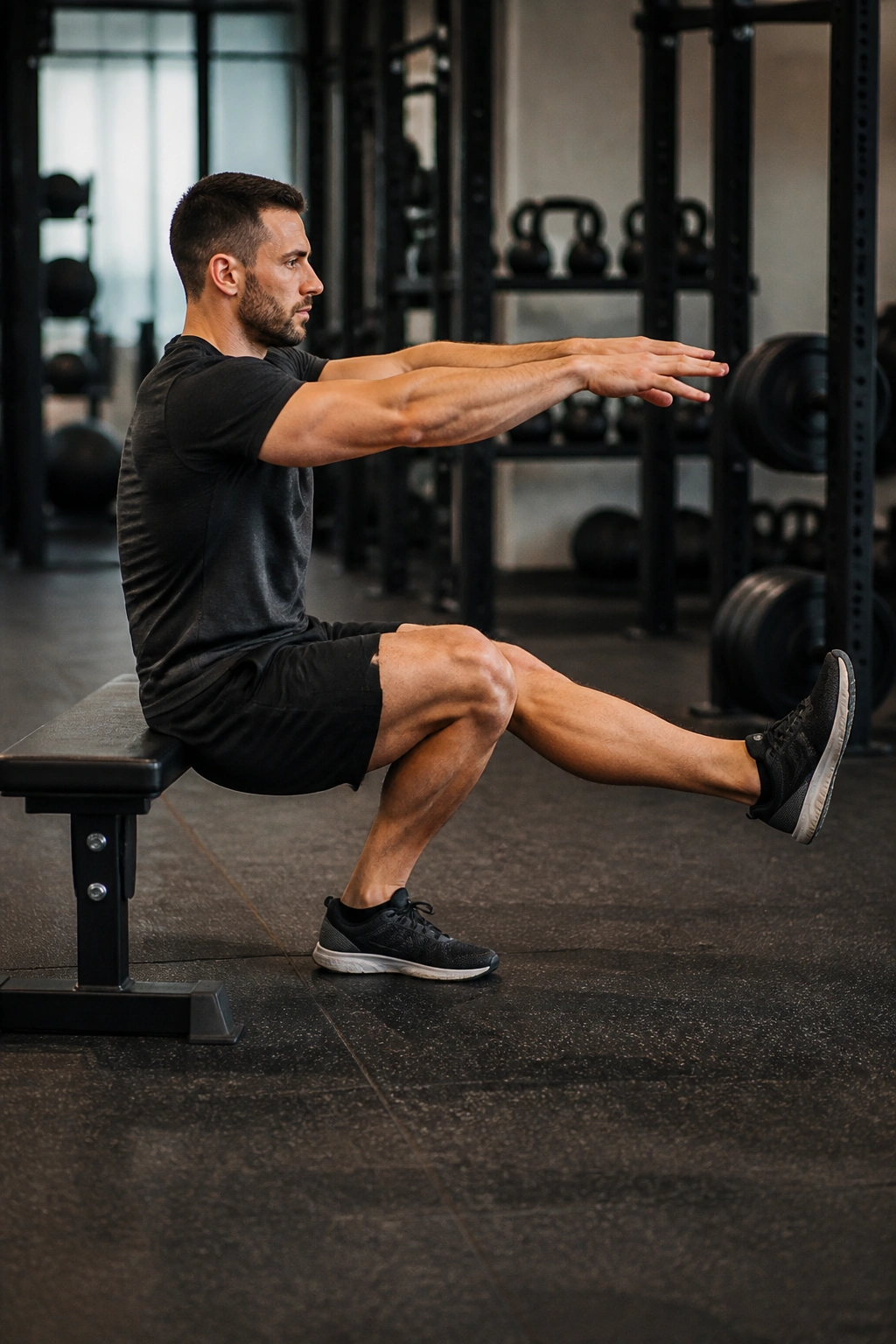
The pistol squat is the ultimate test of single-leg strength and mobility. It requires an incredible amount of ankle dorsiflexion and core stability. If your ankles are stiff, you won’t be able to stay flat-footed. If your core is weak, you will tilt sideways. This isn’t just a leg exercise; it’s a full-body coordination challenge.
Scaling the Difficulty
If you can’t do a full pistol squat yet, don’t worry. Start by doing them onto a bench. Lower yourself slowly, sit down, and then stand back up. As you get stronger, lower the bench until you are doing them to a box, and eventually, to the floor.
- Sample Protocol: 3 sets of 5 reps per leg (or as many as you can control).
- The Secret: Keep your non-working leg straight out in front of you. Squeeze your quad on that extended leg to keep it stiff; it acts as a counterbalance.
9. Curtsy Lunge Dynamics
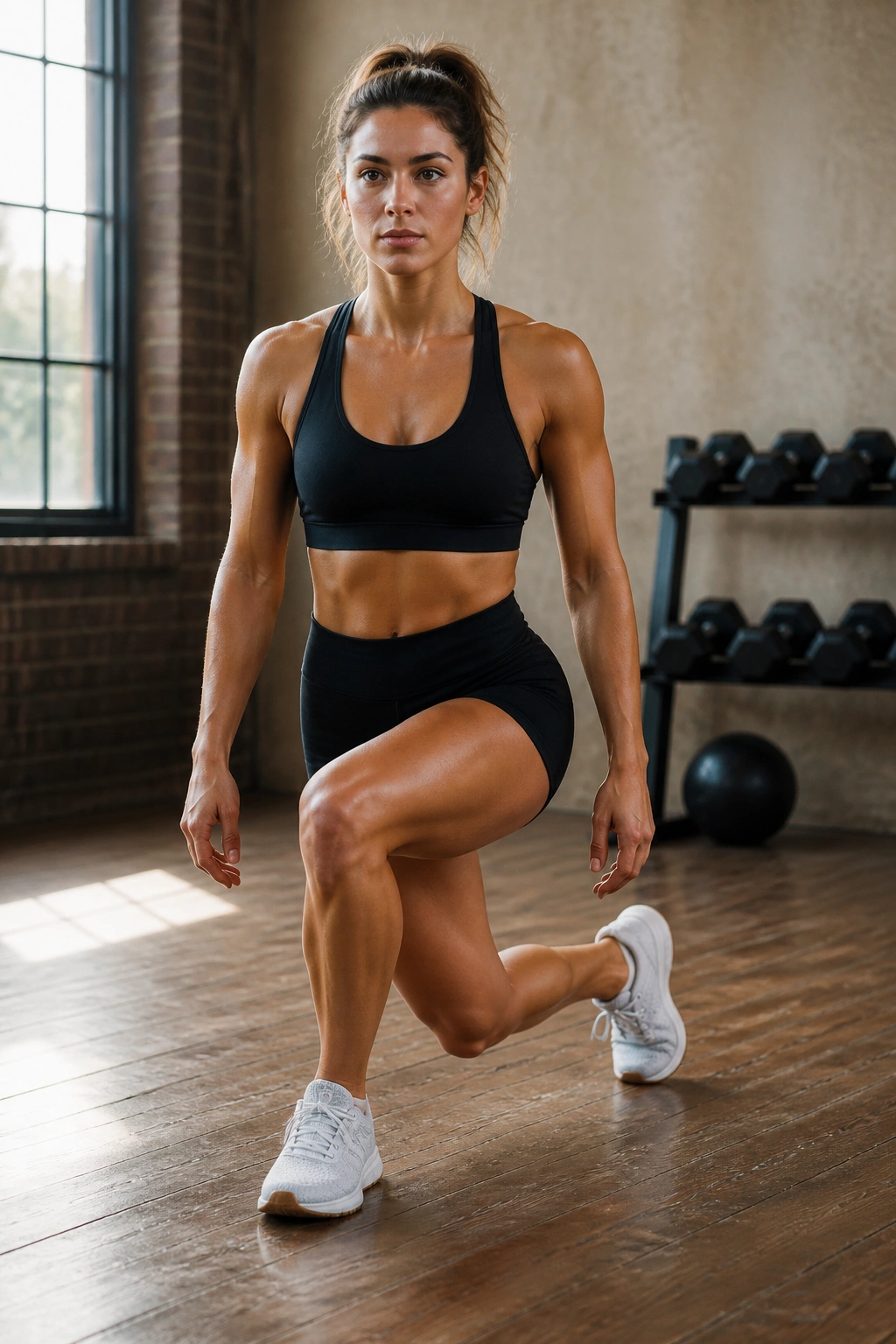
The curtsy lunge—where you step one leg behind the other at an angle—might look odd, but it hits the glute medius and minimus harder than almost any other movement. These are the muscles on the side of your hip responsible for pelvic stability. When you walk, these muscles are what keep your hips from dropping side-to-side.
Precision Over Weight
You do not need heavy weights for this. A pair of 15-pound dumbbells is often more than enough. The challenge is in the control of the hip. You are trying to move your body through an awkward range of motion. Focus on keeping your hips square to the front. If you rotate your hips with your legs, you lose the glute isolation.
- Sample Protocol: 3 sets of 12 reps per leg.
- The Visualization: Imagine you are stepping back into a small box positioned behind your opposite foot.
10. Box Squat Mechanics
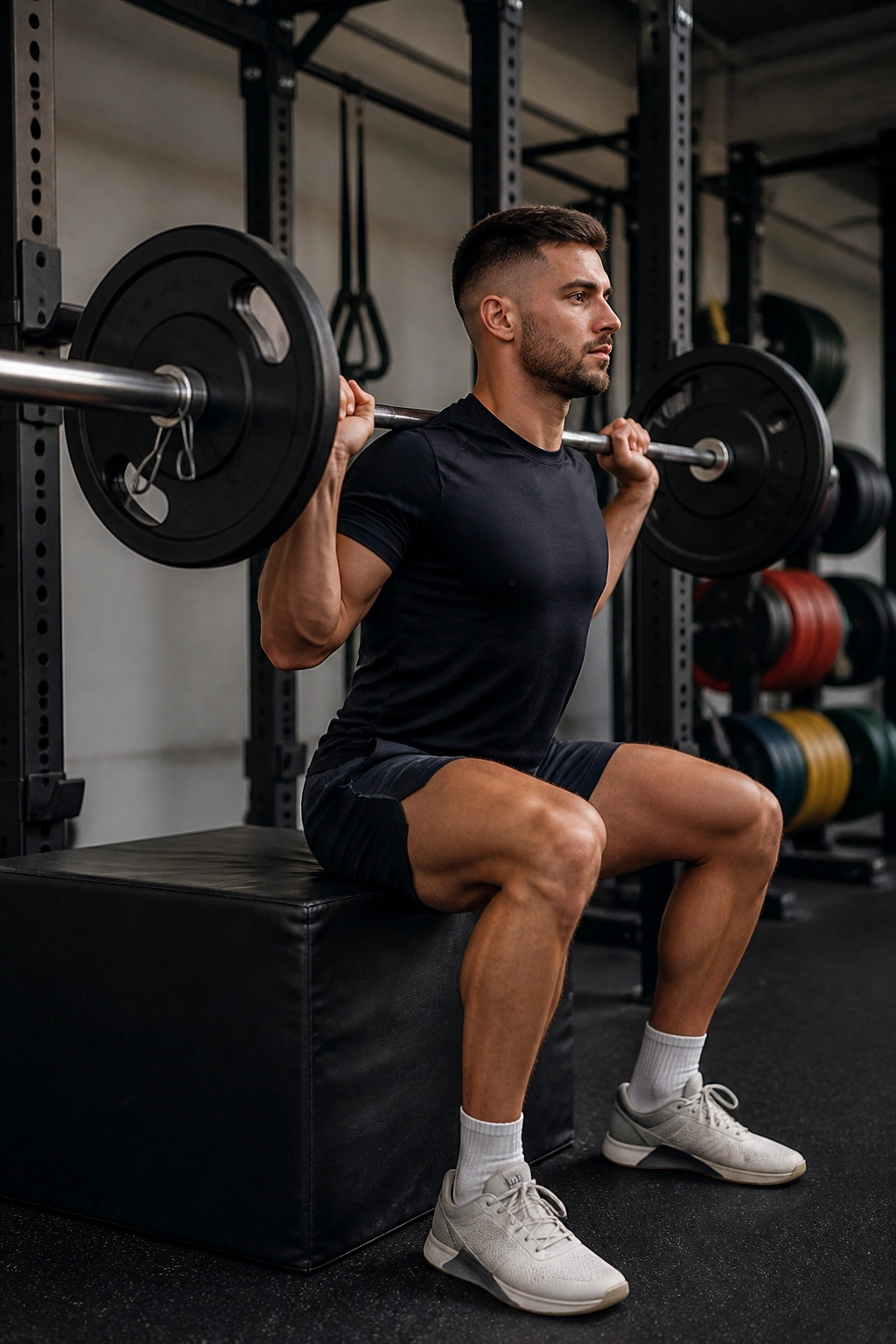
Box squats are the gold standard for teaching proper squat depth and posterior chain engagement. By placing a box (or a bench) behind you, you have a physical target that tells you exactly how low to go. It forces you to sit back rather than squat down, which shifts the emphasis to your hamstrings and glutes.
The Pause Factor
Crucially, you should pause on the box. You aren’t just tapping it; you are sitting on it. This kills the “stretch reflex” of your muscles, meaning you have to generate all your force from a dead stop. This builds massive explosive power and helps you identify weak points in your squat drive.
- Sample Protocol: 5 sets of 5 heavy reps.
- The Instruction: Keep your shins vertical. If your knees come forward while you are on the box, you are squatting, not sitting back.
11. Overhead Squat Mobility
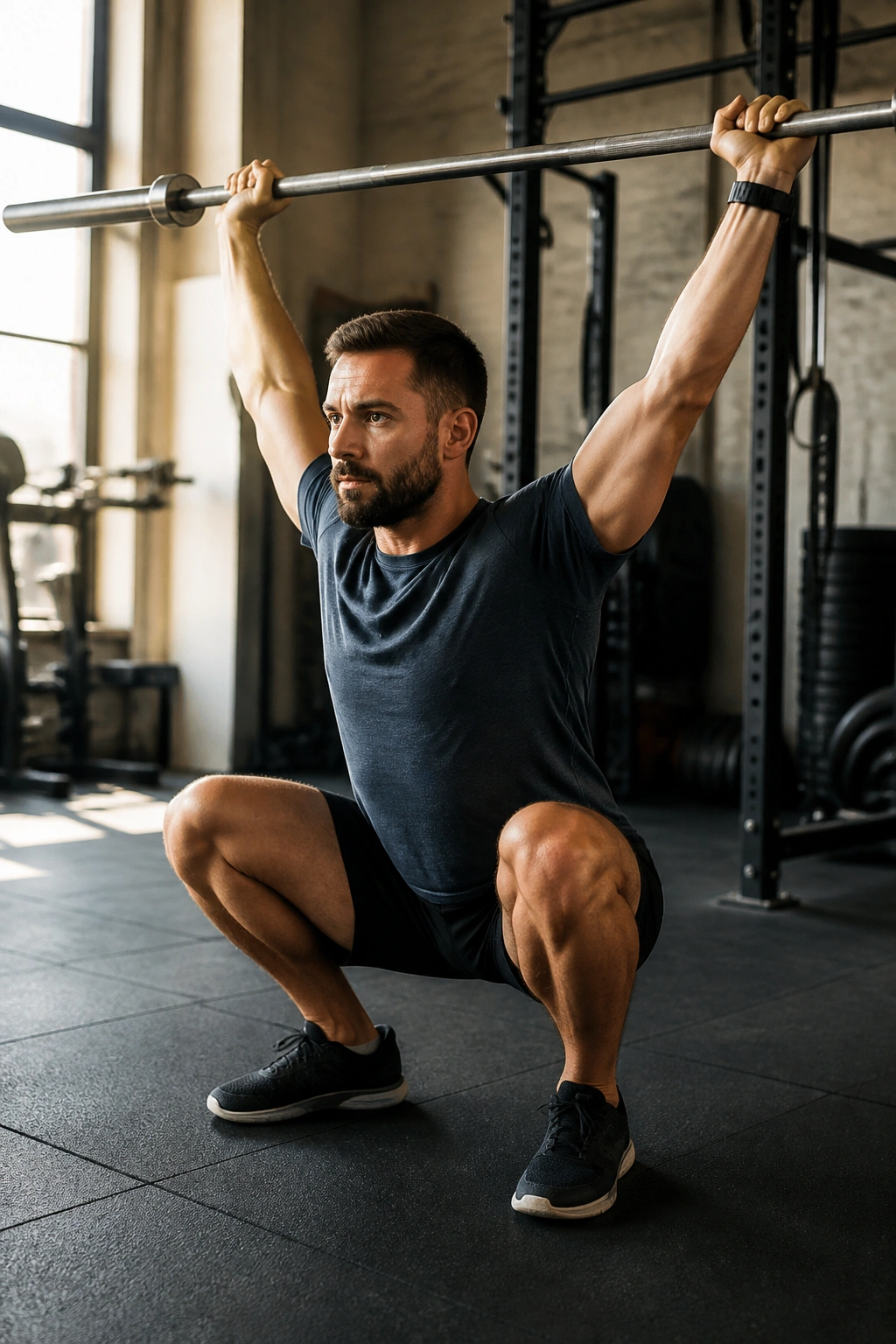
If you want to know if you have good mobility, try an overhead squat. Holding a bar or dumbbells over your head forces your thoracic spine (upper back) to extend and your shoulders to stabilize. You cannot cheat this movement. If your mobility is limited, you will either fall backward or your chest will collapse.
Why It Builds Elite Legs
Because you are locked into a rigid position, you have to find a perfect squat path. You learn how to keep your feet planted, your chest tall, and your knees tracking perfectly. It is the most technically demanding squat variation, but it builds a level of control that makes every other squat feel easy.
- Sample Protocol: 3 sets of 8 reps using a light, empty bar or PVC pipe.
- The Warning: Do not attempt this with heavy weight until you can do 15 reps with perfect form using a broomstick.
12. Front Rack Lunge Intensity
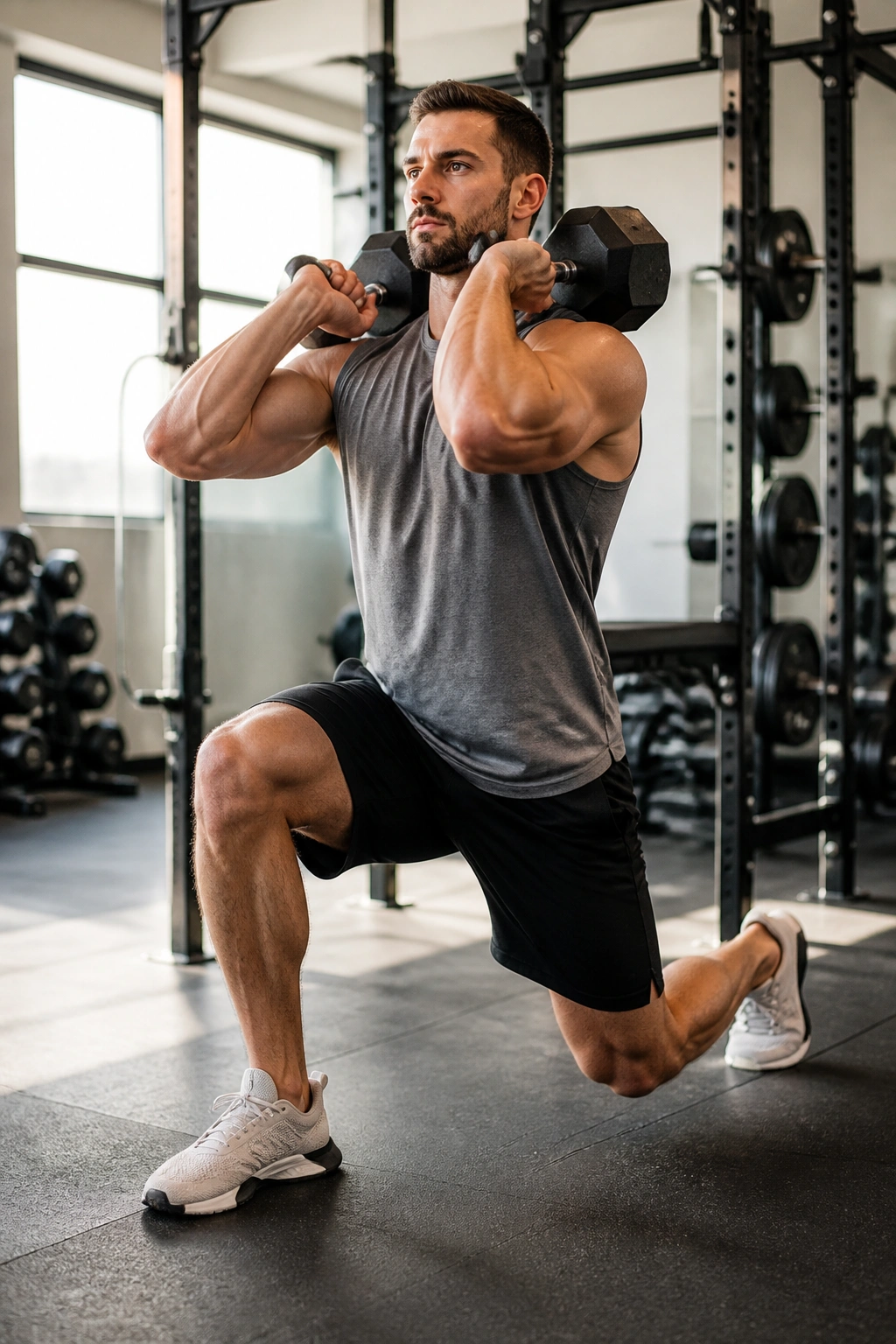
Adding a front rack position—holding dumbbells or a barbell at your shoulders—to a lunge changes everything. It forces an upright torso, preventing the common “leaning forward” mistake that takes the work off your quads. This position also demands significant upper-back strength just to keep the weight from pulling you forward.
Managing the Load
This is not a movement for maximal weight. It is for maximal stimulus. Because your upper back will likely fail before your legs do, focus on slowing down the tempo. A three-second descent into the lunge will make a light weight feel incredibly heavy.
- Sample Protocol: 3 sets of 10 reps per leg.
- The Cue: Keep your elbows high. If they drop, the weight will dump forward and ruin your posture.
13. Isometric Squat Holds
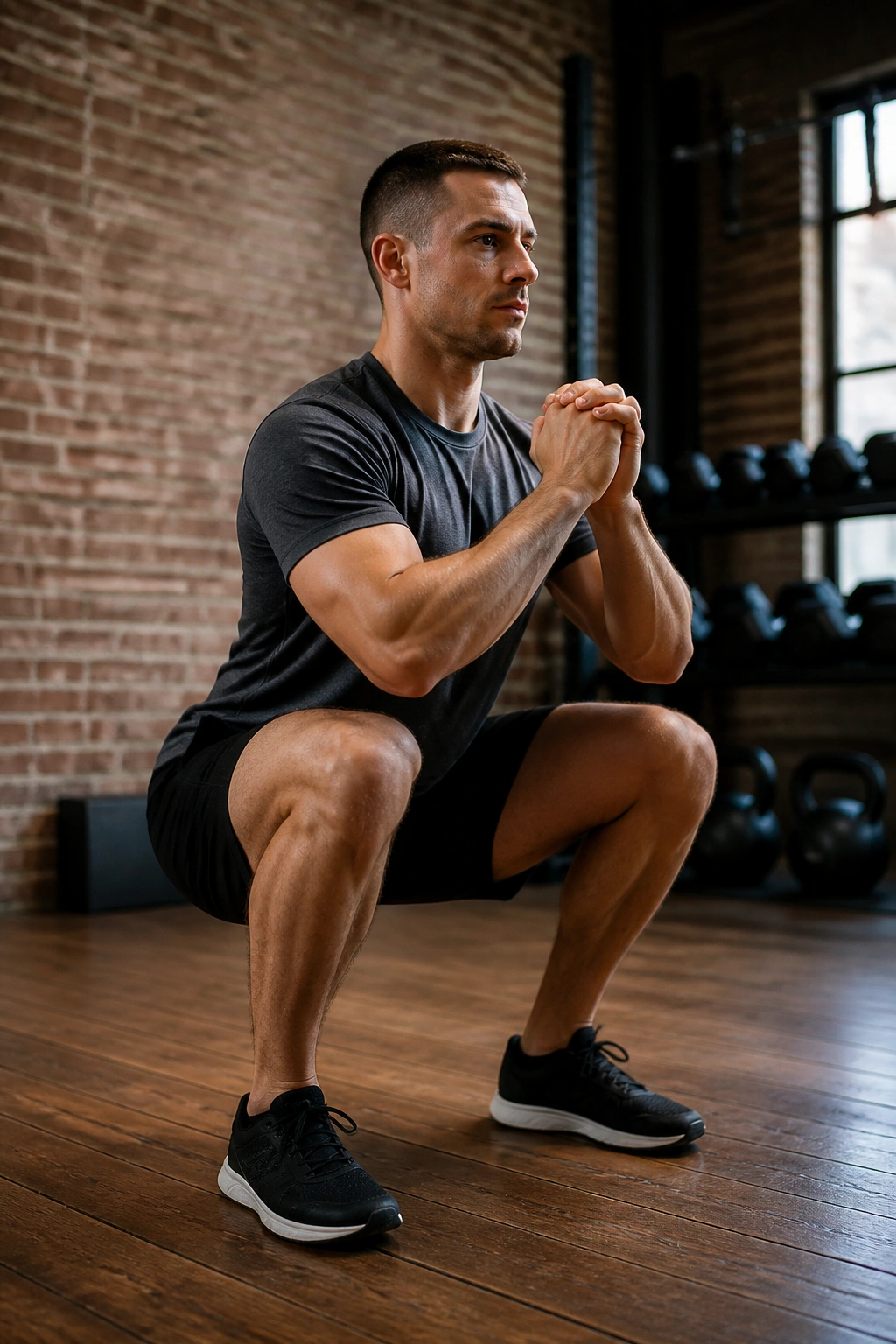
Sometimes, moving isn’t the best way to get stronger. Isometric holds—holding a position under tension—can recruit muscle fibers that are difficult to access through dynamic movement. They also build mental toughness. Sitting in a squat hold for 45 seconds is as much a test of willpower as it is a test of leg strength.
The Value of Time Under Tension
You can do these against a wall or in a free-standing squat. Free-standing is harder. Find your squat depth, sit there, and don’t move. You will feel your quads begin to shake. That shaking is a sign that your muscle fibers are working at max capacity.
- Sample Protocol: 3 rounds of 45-second holds.
- The Technique: Don’t hold your breath. Breathe through the discomfort. Keep your chest up and your weight distributed across the whole foot.
14. Deficit Reverse Lunge Range
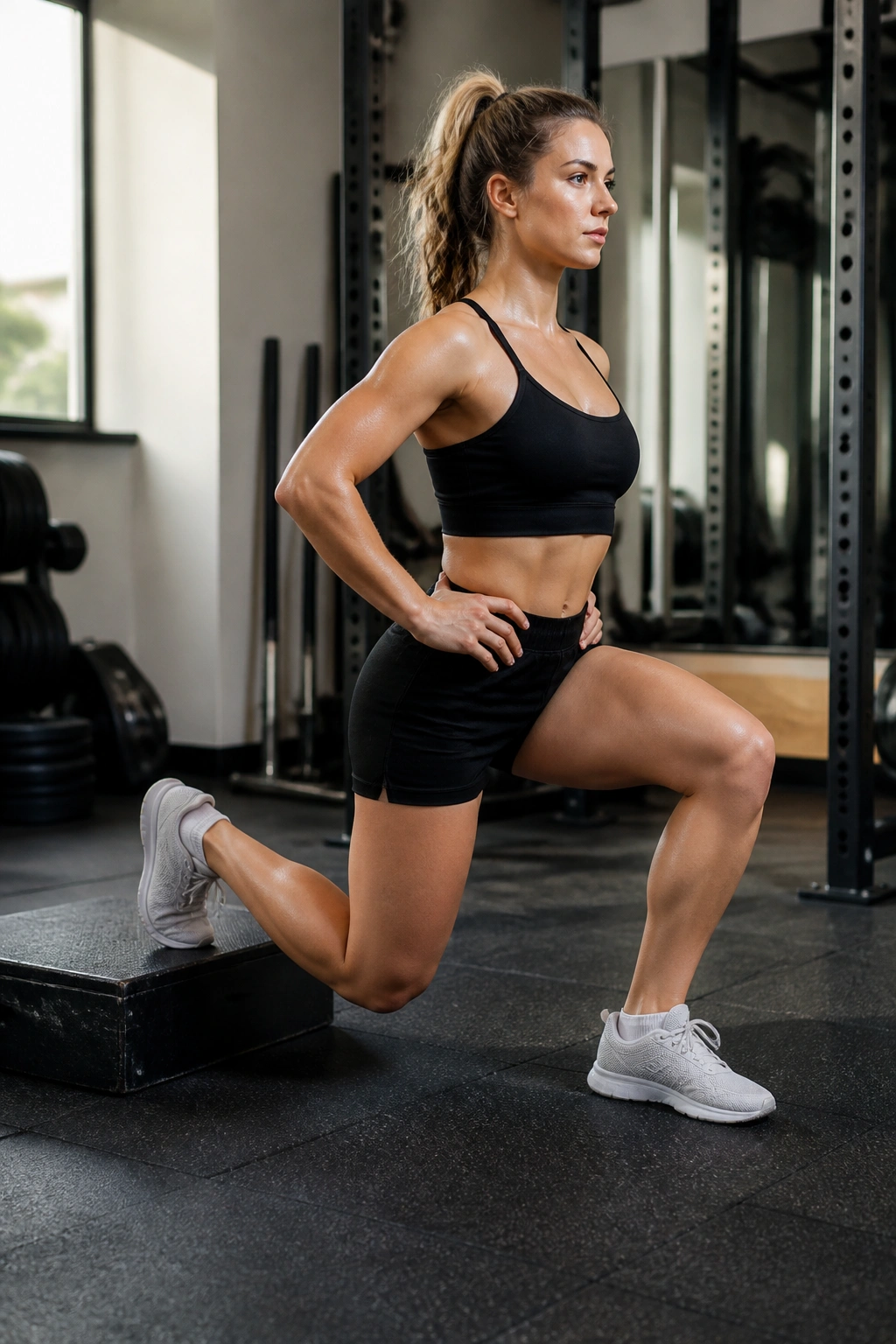
If you want to stretch your hips and glutes, increase your range of motion by standing on a small platform or a weight plate. The deficit reverse lunge allows you to drop your back knee lower than your front foot, creating a massive stretch in the hip flexor and glute of the front leg.
Safety First
Because you are dropping into a deeper position, the bottom phase of this movement can be tricky. Ensure you have the mobility to handle the extra depth. If you feel pinching in your hip, reduce the height of your deficit. You want a stretch in the muscle, not a pinch in the joint.
- Sample Protocol: 3 sets of 10 reps per leg.
- The Benefit: This extra range of motion builds strength in the end-range position, which is where most athletic injuries happen.
15. Pause Squat Tempo
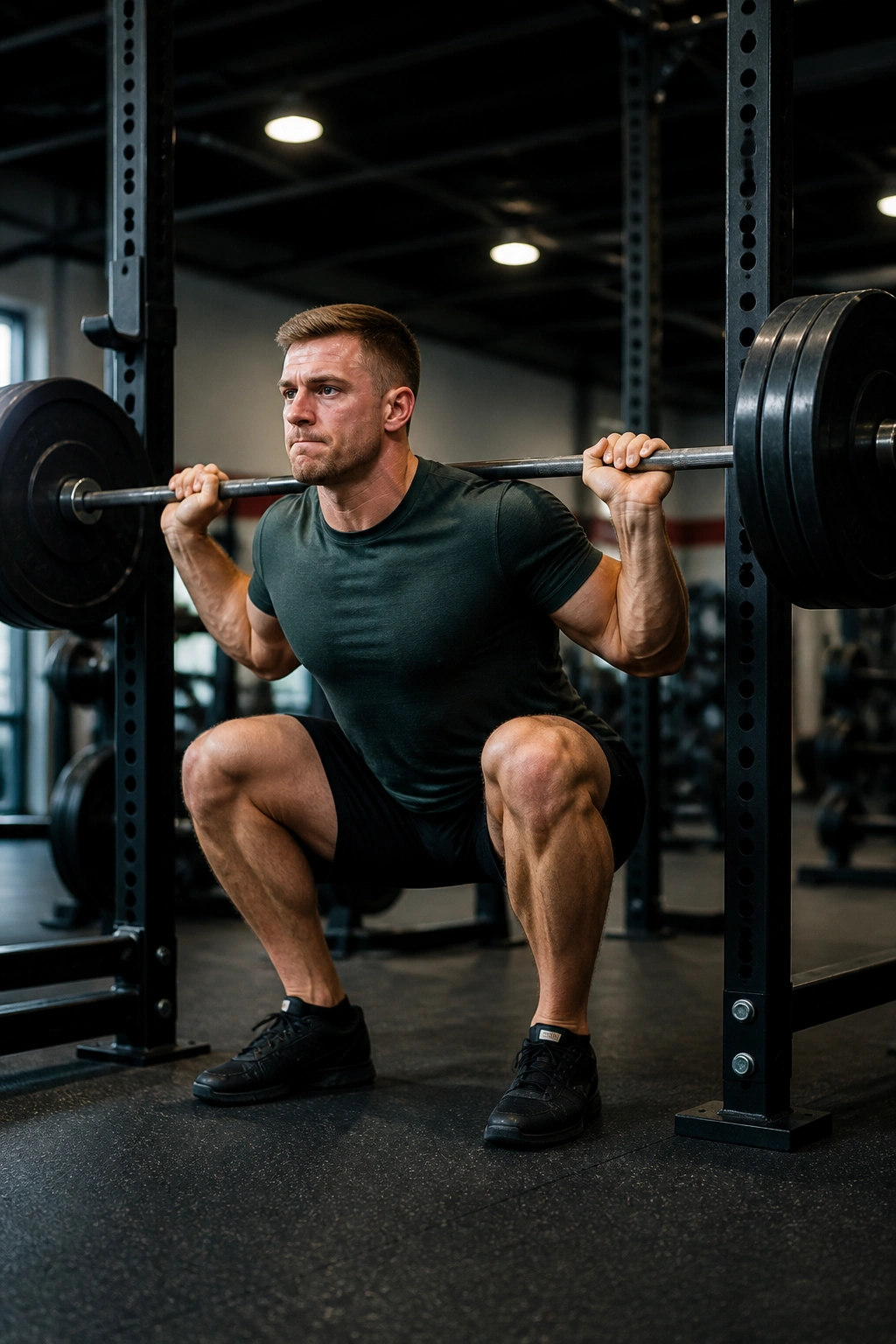
Tempo is an underutilized variable in leg training. A pause squat—where you stop for 2-3 seconds at the bottom—strips away your ability to use momentum to bounce out of the hole. It forces you to maintain full body tension throughout the transition from the descent to the ascent.
Developing Bottom-End Strength
Many people can squat heavy weight because they are strong at the top or because they have a powerful bounce. But can you generate power when you are stationary at the bottom? The pause squat answers that. It turns your legs into springs.
- Sample Protocol: 4 sets of 5 reps with a 3-second hold.
- The Detail: Do not relax at the bottom. Keep your abs braced and your glutes tight. If you relax, you lose the safety of the brace.
16. Weighted Step-Back Lunge
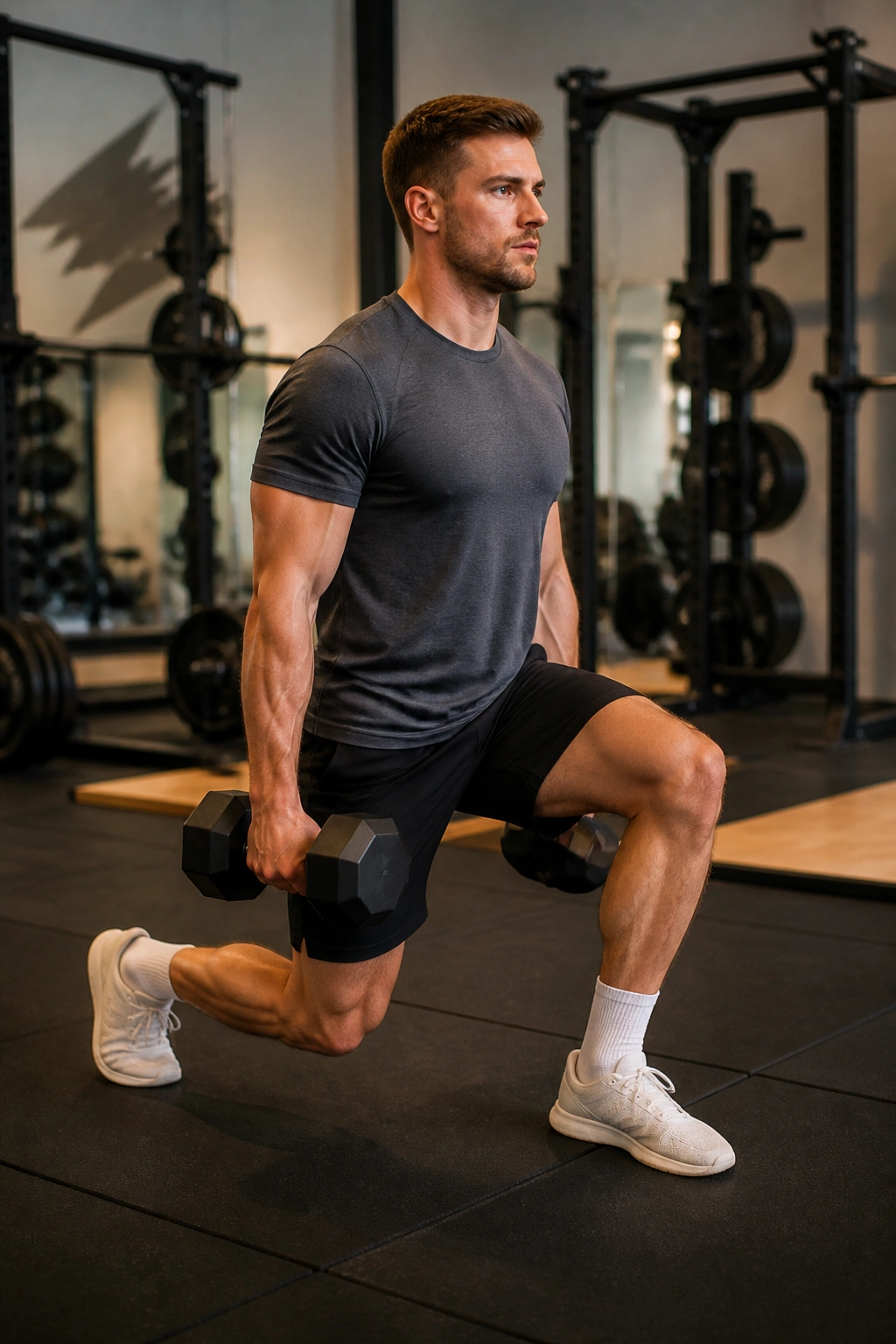
This variation emphasizes the posterior chain more than the forward lunge. By stepping back and keeping a slight forward lean in the torso, you bias the glutes and hamstrings. It’s an effective way to train the back of the leg without needing the heavy spinal loading of a deadlift.
Finding the Rhythm
The “step-back” must be intentional. Do not just kick your leg back; you are placing it back. Your front leg is the worker. As you step back, think about driving your front heel into the ground. That connection is what drives the movement.
- Sample Protocol: 3 sets of 12 reps per leg.
- The Tip: Keep your back straight. Even with the forward lean, your spine must remain neutral. If you are curling your back to lean forward, stop immediately.
17. Zercher Squat Core Focus
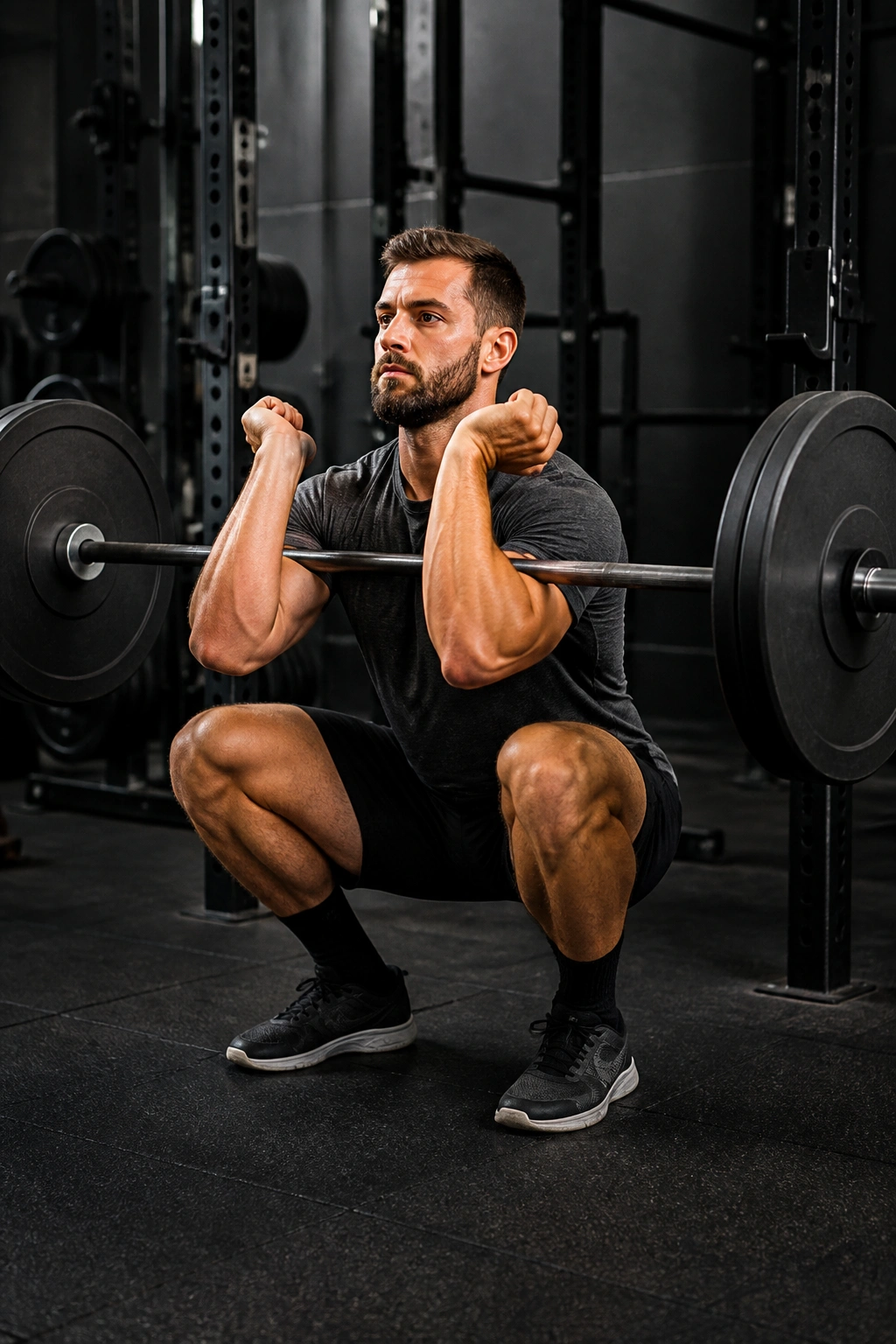
The Zercher squat is the “blue-collar” king of squats. You hold the barbell in the crooks of your elbows, against your chest. This position forces an upright posture and creates massive demand on your biceps, forearms, and mid-back. It is uncomfortable, it is difficult, and it is arguably one of the most effective movements for core and leg integration.
The Pain-to-Gain Ratio
Yes, the bar will dig into your elbows. That is part of the territory. Wrap a towel around the bar if you need to, but learn to embrace the discomfort. This lift forces you to keep your core braced to support the weight, meaning your abs will get a workout alongside your quads.
- Sample Protocol: 3 sets of 6 to 8 heavy reps.
- The Focus: Push your elbows into your knees as you descend. It ensures you maintain the space needed for the bar to sit comfortably.
18. Lunge-to-Squat Complex
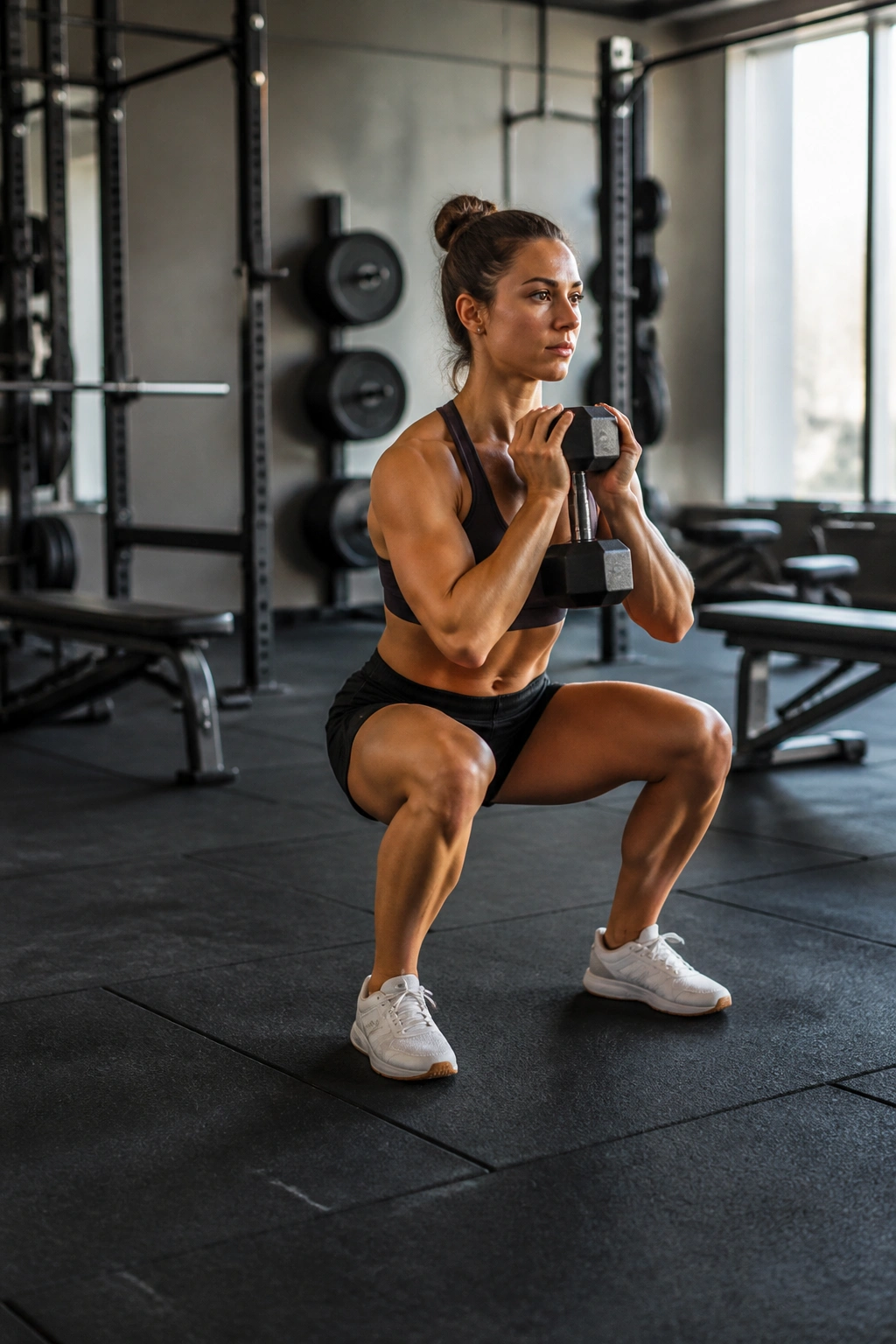
If you want a finisher that leaves your legs feeling like lead, the lunge-to-squat complex is your answer. You perform a set of reverse lunges, immediately transition into a set of goblet squats, and then repeat. It combines the unilateral benefits of the lunge with the bilateral power of the squat.
Managing Fatigue
This is a metabolic conditioning tool. You are not trying to set a one-rep max here. You are trying to keep the blood flowing into the muscles for an extended period. The fatigue will be high, and your heart rate will skyrocket. That is the goal.
- Sample Protocol: Perform 8 reverse lunges per leg, followed immediately by 12 goblet squats. That is one round. Do 3 to 4 rounds with minimal rest.
- The Takeaway: Keep your form strict. As you get tired, your ego will want to rush. Don’t. Control the movement even when your lungs are burning.
Final Thoughts
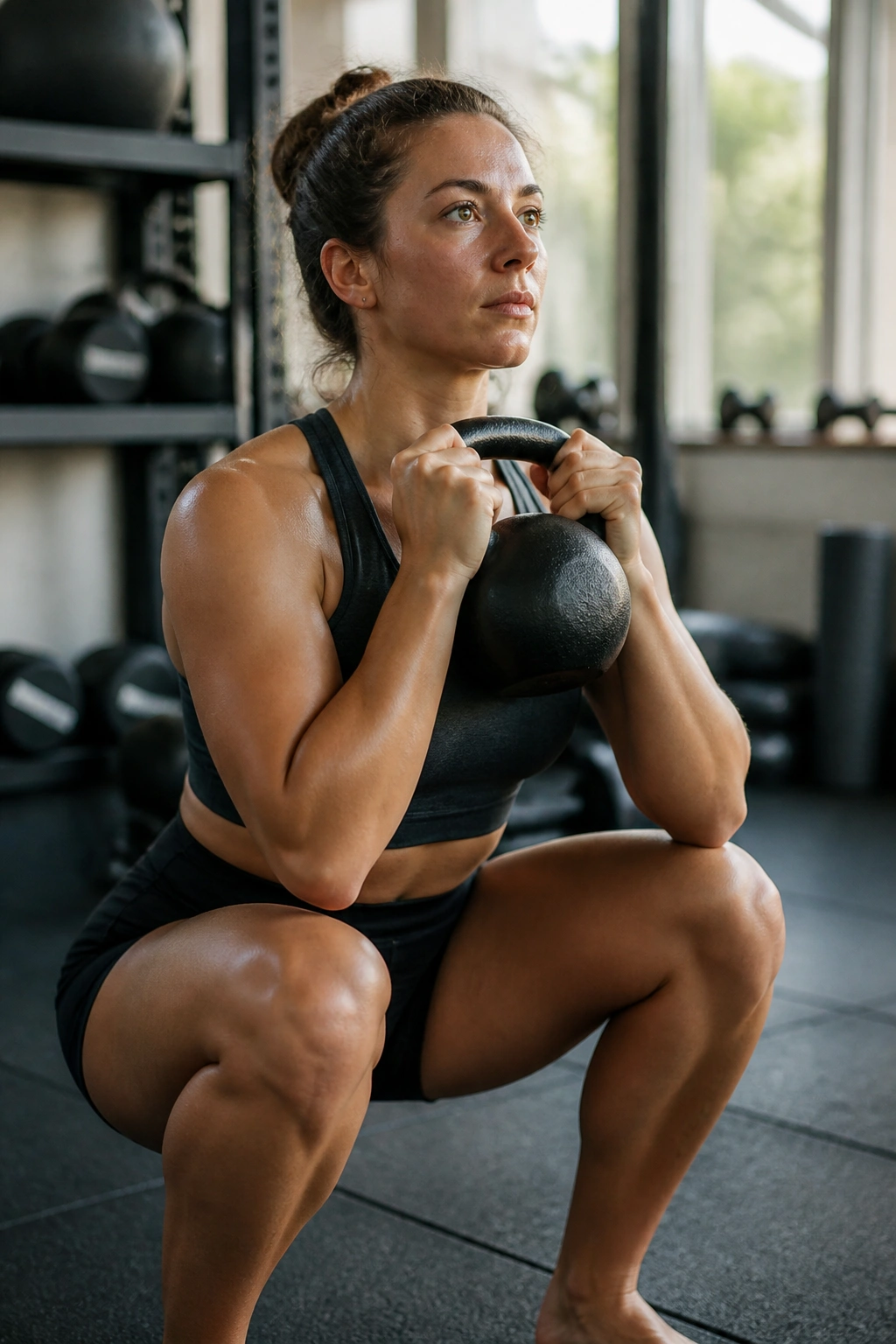
Building stronger legs isn’t about finding the “perfect” exercise; it is about finding the exercises that work for your body and then progressively challenging them. Whether you gravitate toward the mechanical intensity of a heavy box squat or the metabolic burn of a lunge-to-squat complex, consistency is the only factor that truly matters.
Stop looking for the newest machine or the flashiest gimmick. Your legs respond to heavy loads, controlled tempos, and deliberate movement patterns. Pick two or three of these variations, master them over the next few months, and you will see the kind of development that carries over from the gym floor into your daily life. The burn is temporary, but the strength you build is permanent.
