



The squat is arguably the most essential movement in human physiology. You sit down, you stand up. You do it every day to get out of a chair, to pick up groceries, or to hop into your car. But when you start treating the squat as a tool for glute development and leg strength, that simple movement becomes complex, nuanced, and incredibly demanding. If you have been stuck in a cycle of doing the same back squats for the same three sets of ten, you are likely hitting a plateau—not just in weight, but in muscle stimulation.
Your glutes are powerful, complex muscles. They respond to load, sure, but they also respond to different angles of tension, varying ranges of motion, and specific tempo changes. Relying solely on standard barbell squats limits the growth potential of your posterior chain. When you vary the movement, you force your stabilizing muscles to fire in new ways and keep the larger muscle groups guessing.
These twenty challenges are designed to force growth, improve your mobility, and finally bring some variety to your lower body days. You do not need to do them all at once. Pick one or two to integrate into your training blocks. If you want to see actual, tangible changes in your glute definition, you have to be willing to change how you move. Let’s look at the ways you can reshape your training, one rep at a time.
1. Goblet Squat Hold
Most people rush the squat, using momentum to bounce out of the bottom position. A Goblet Squat Hold eliminates that advantage entirely. By holding a kettlebell or dumbbell close to your chest, you force your thoracic spine into an upright position and create a counterbalance that keeps you honest.
Why It Works for Glute Activation
When you hold weight in front of you, your center of gravity shifts. You are forced to push your hips back further to maintain balance. This increased hip hinge engages the glutes immediately. It creates a “bottom-up” tension that is hard to replicate with a barbell resting on your traps.
The Challenge Protocol
- Select a moderate weight—something you can hold for 60 seconds without your arms failing.
- Lower into the squat until your thighs are at least parallel to the floor.
- Hold this bottom position for 30 to 60 seconds.
- Drive up through your heels, squeezing your glutes at the very top.
- Pro tip: Do not let your knees collapse inward. Keep them tracking over your toes the entire time.
2. Pause Squat
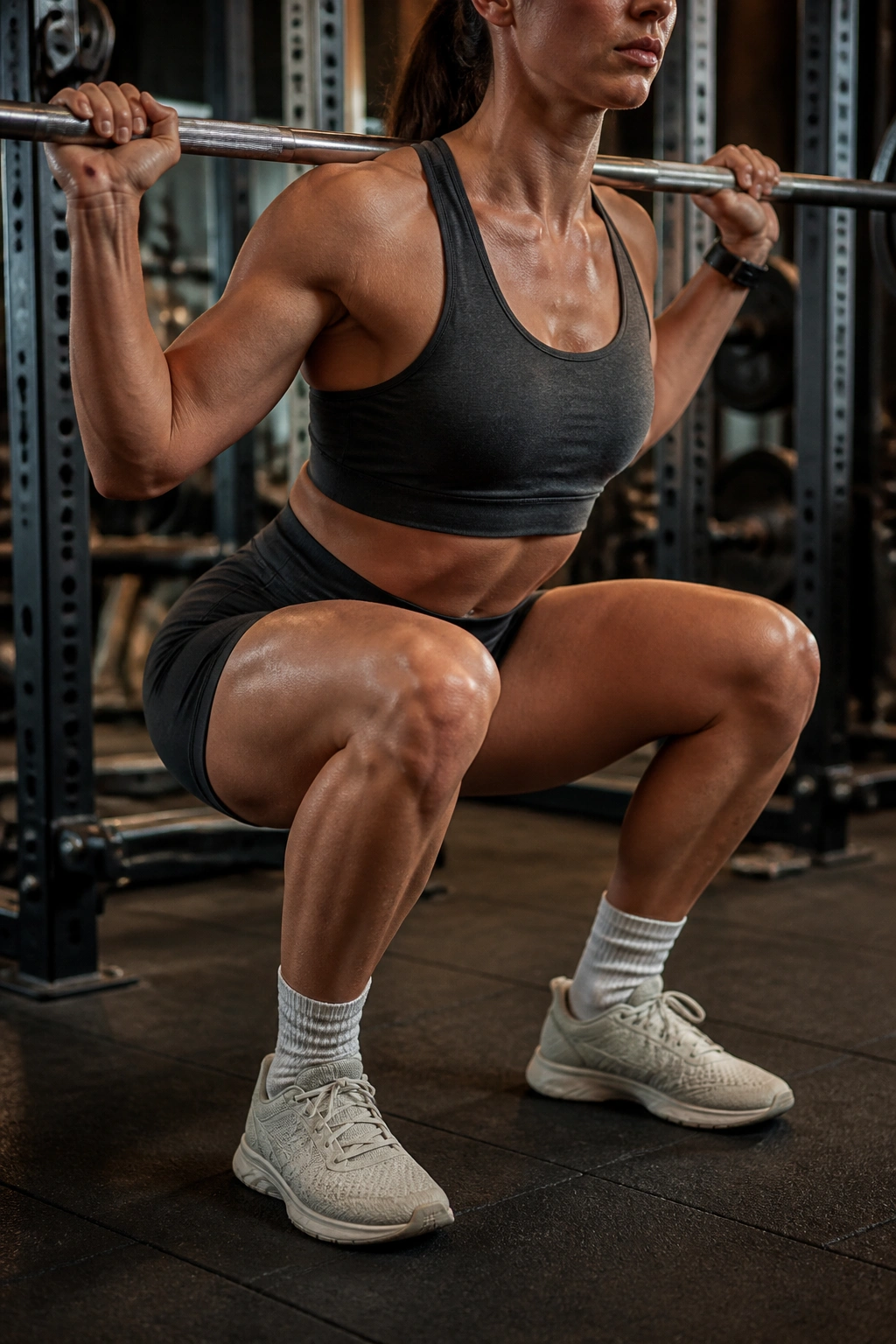
The “bounce” is the enemy of muscle growth. It is a kinetic energy release that helps you move heavier weight, but it takes the tension off your muscles at the most critical point of the lift. A pause squat forces you to kill that energy.
Executing the Pause
You need to descend with total control. When you reach the bottom of your squat, stop. Do not move. Hold that position for a full two seconds. Feel the stretch in your hamstrings and the tension in your glutes. Then, drive upward.
Why This Hurts (In a Good Way)
You will have to drop your training weight by about 20 to 30 percent. If you usually squat 200 pounds, drop to 150. Your ego might take a hit, but your glutes will get the work they are craving. The forced stability required at the bottom strengthens the tendons and recruits more muscle fibers than a standard rep.
3. Tempo Squat
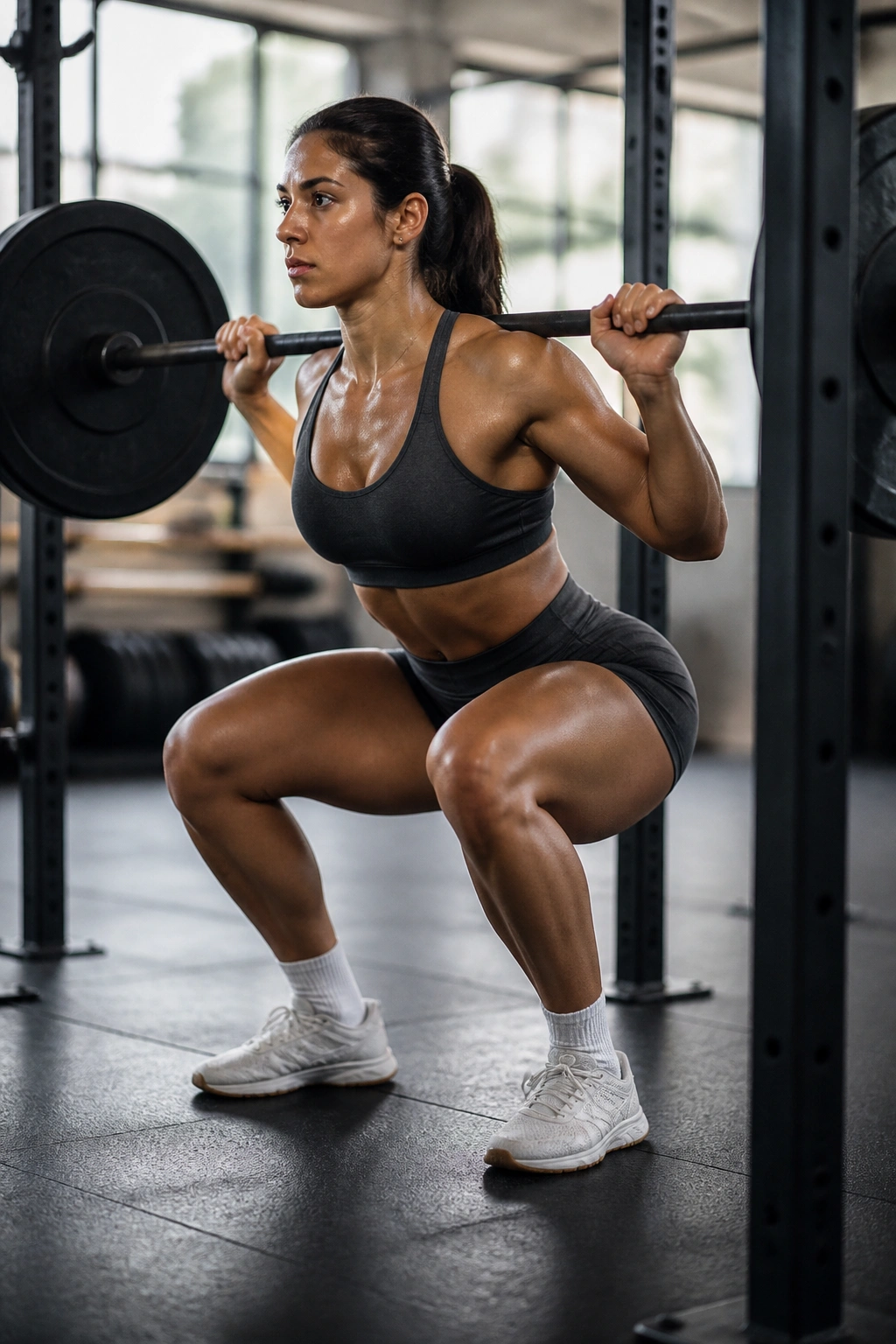
Tempo training is about time under tension. You have probably heard the term, but have you actually applied it to your squats? Most lifters drop fast and stand up fast. That is a mistake if you want defined, powerful glutes.
Controlling the Descent
For a tempo squat, you will use a three-second eccentric phase. That means counting “one-thousand-one, one-thousand-two, one-thousand-three” as you lower your hips. This slow descent forces you to maintain constant muscular engagement. You cannot just flop into the bottom position.
The Outcome
By stretching the muscle under load for three seconds, you create more micro-tears in the muscle fibers, which leads to hypertrophy—growth. Focus on feeling your glutes lengthening during that three-second descent. If you aren’t feeling your glutes working by the two-second mark, push your hips back slightly more.
4. Bulgarian Split Squat
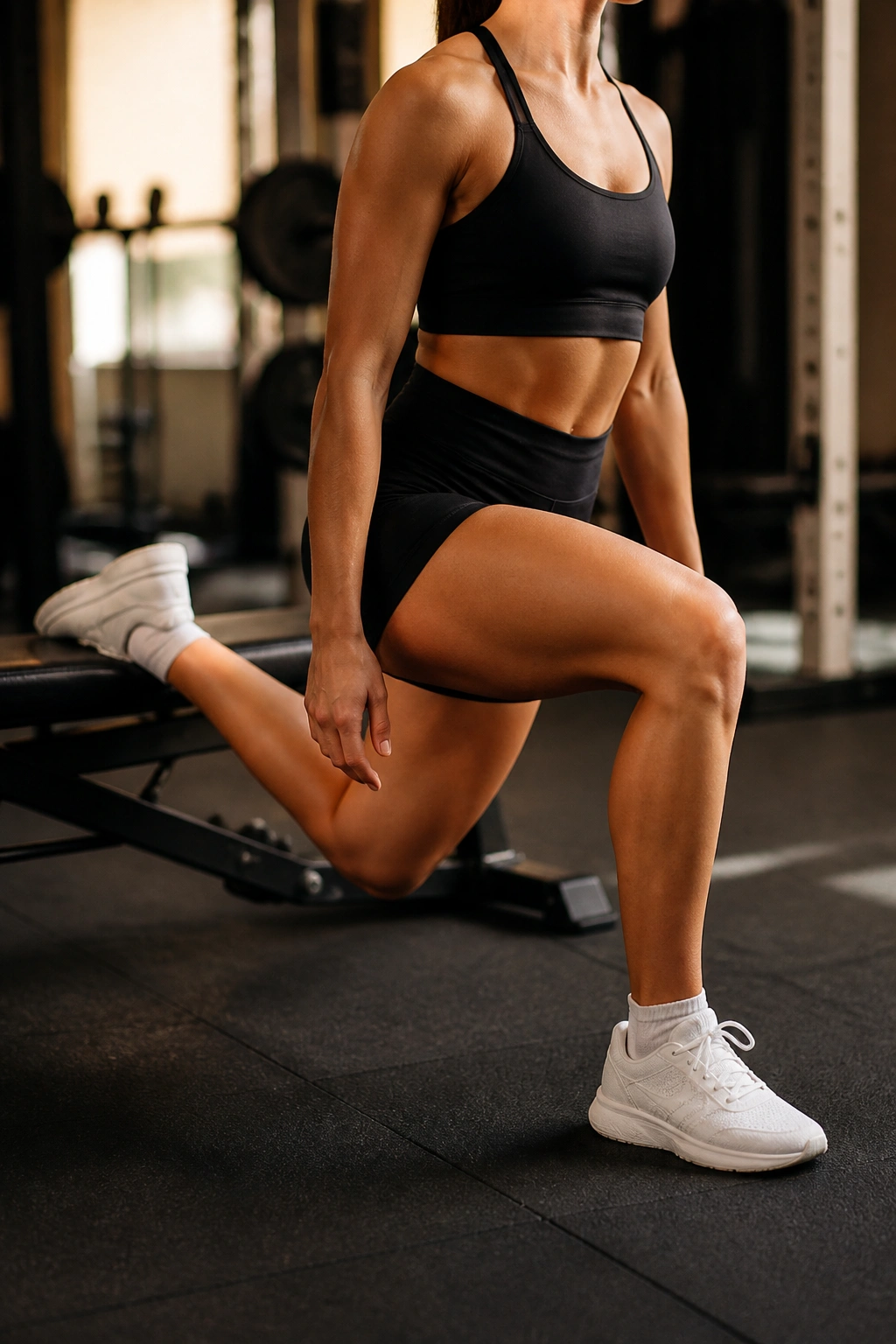
Many people hate this exercise, and that is usually the first sign that they should be doing it. It is a single-leg movement, which exposes any imbalances between your left and right sides. If one glute is slightly weaker, the Bulgarian Split Squat will find it.
Setting Up Correctly
Find a bench or a sturdy box. Place the top of your back foot on it. Step your front foot out far enough that when you lower your hips, your front knee does not track excessively over your toes. If your front knee is hitting your toes, take a longer stride.
Why This Is Essential
It is arguably the best isolation move for the glutes that still allows for heavy loading. You can hold dumbbells, a barbell, or even a sandbag. Because it is a unilateral movement, you are forced to stabilize your pelvis, which activates the glute medius—a crucial muscle for that “full” look on the side of the glute.
5. Sumo Squat
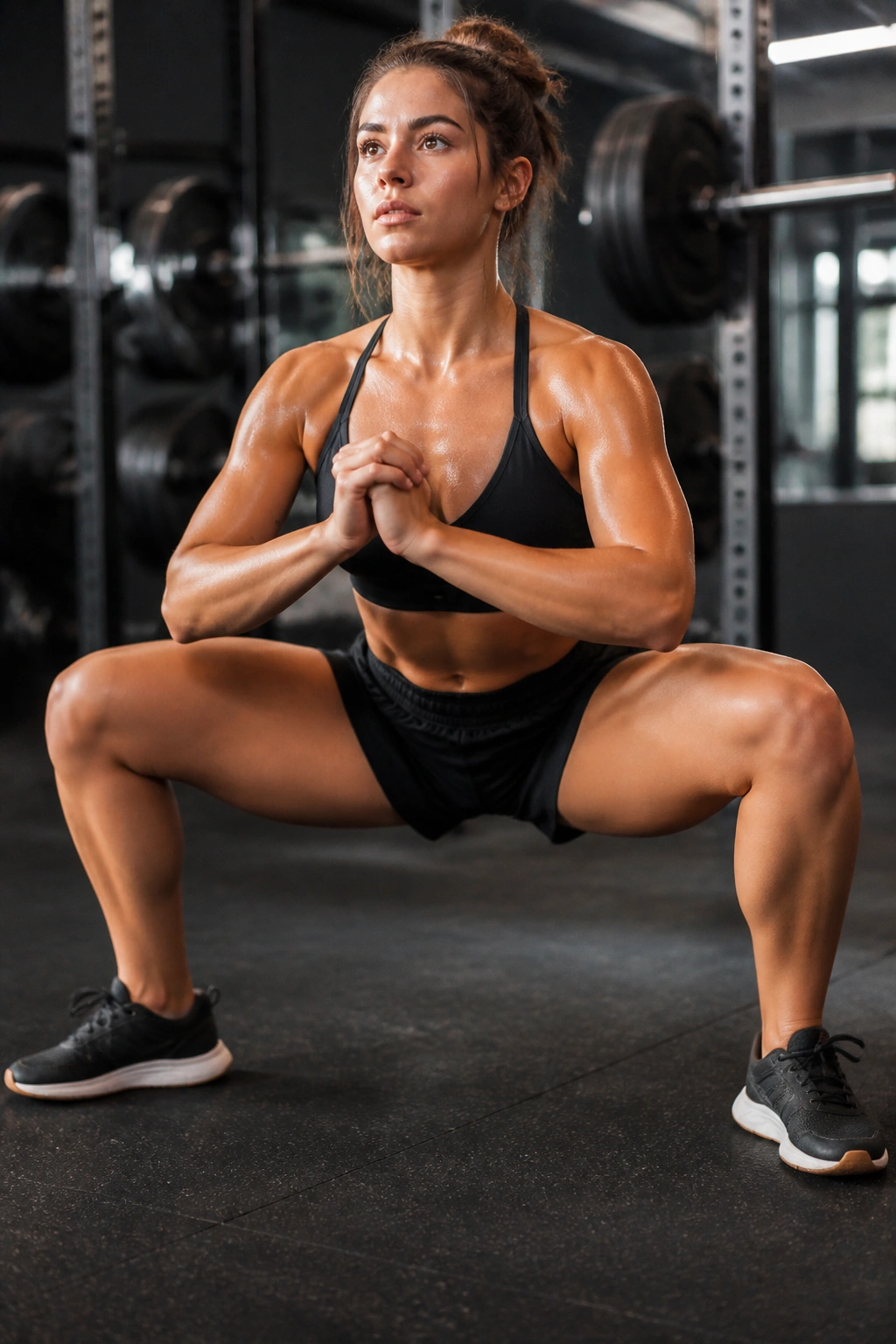
The Sumo Squat isn’t just for powerlifters. By taking a wider stance and pointing your toes out, you change the line of pull on your legs. This position puts significant emphasis on the adductors and the inner glute fibers.
Mechanics for Success
Stand with your feet wider than shoulder-width. Point your toes outward at roughly 45 degrees. When you squat, the goal is to drive your knees out in the direction of your toes. Do not let them cave in.
The Focus Area
Because of the width, your glutes have to work harder to maintain hip stability. You might find you cannot squat as deep as you can with a narrow stance, and that is perfectly okay. Focus on the squeeze at the top rather than the depth at the bottom.
6. Cossack Squat
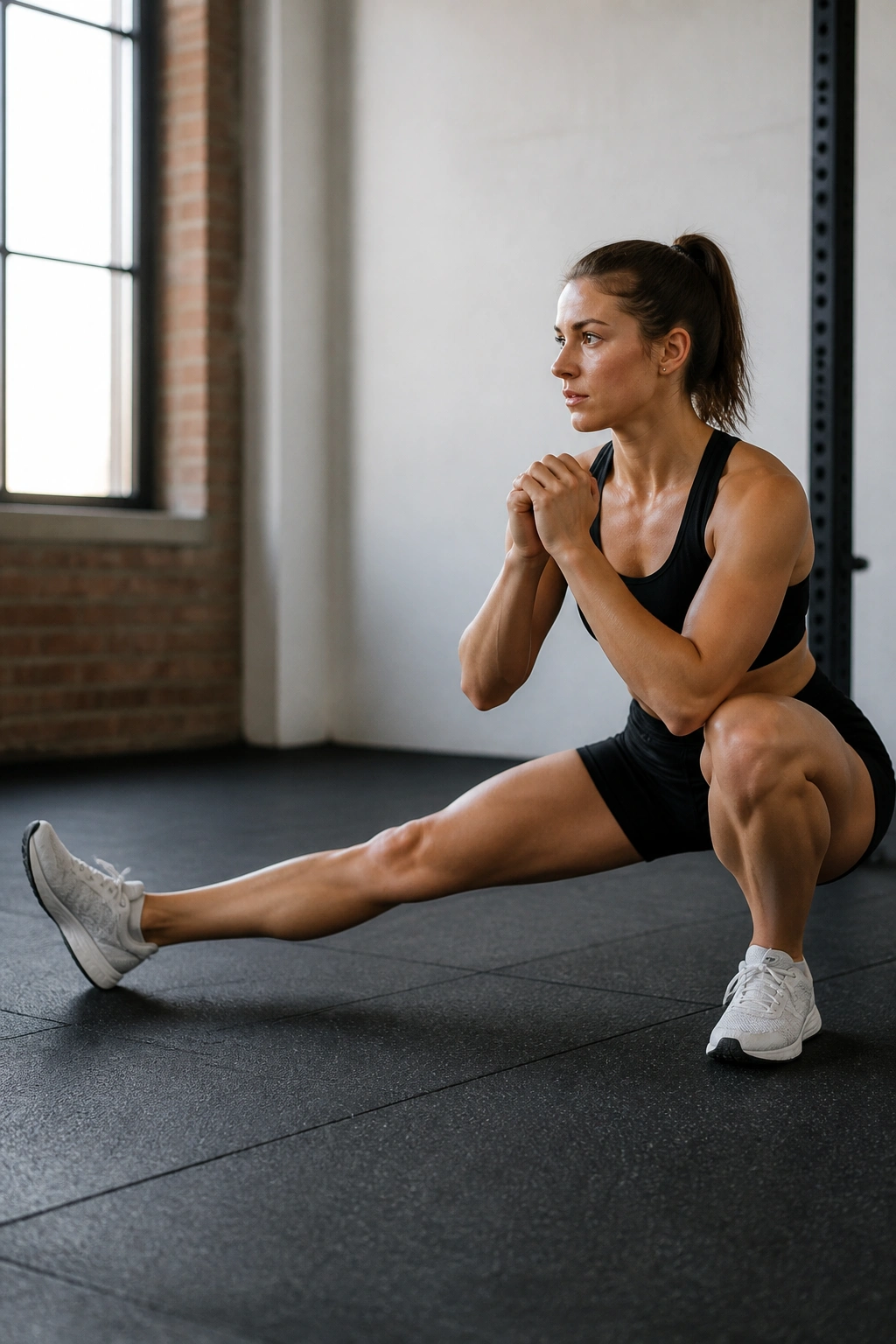
We spend almost all of our time moving forward and backward in the gym. The Cossack squat forces you to move laterally. This plane of motion is rarely trained, which is a major missed opportunity for glute and hip development.
How to Perform the Movement
Start with a very wide stance. Shift your weight to your right side, bending your right knee while keeping your left leg completely straight. Sink as low as you can. Your right glute should be doing almost all the work to push you back to the center. Then, switch to the left side.
Why It Matters
This is a mobility challenge just as much as a strength challenge. It forces your hips to open up in a deep range of motion. You will likely feel this in your inner thighs and deep within the glute complex. It is awkward at first, but it is one of the most effective ways to build functional hip strength.
7. Box Squat
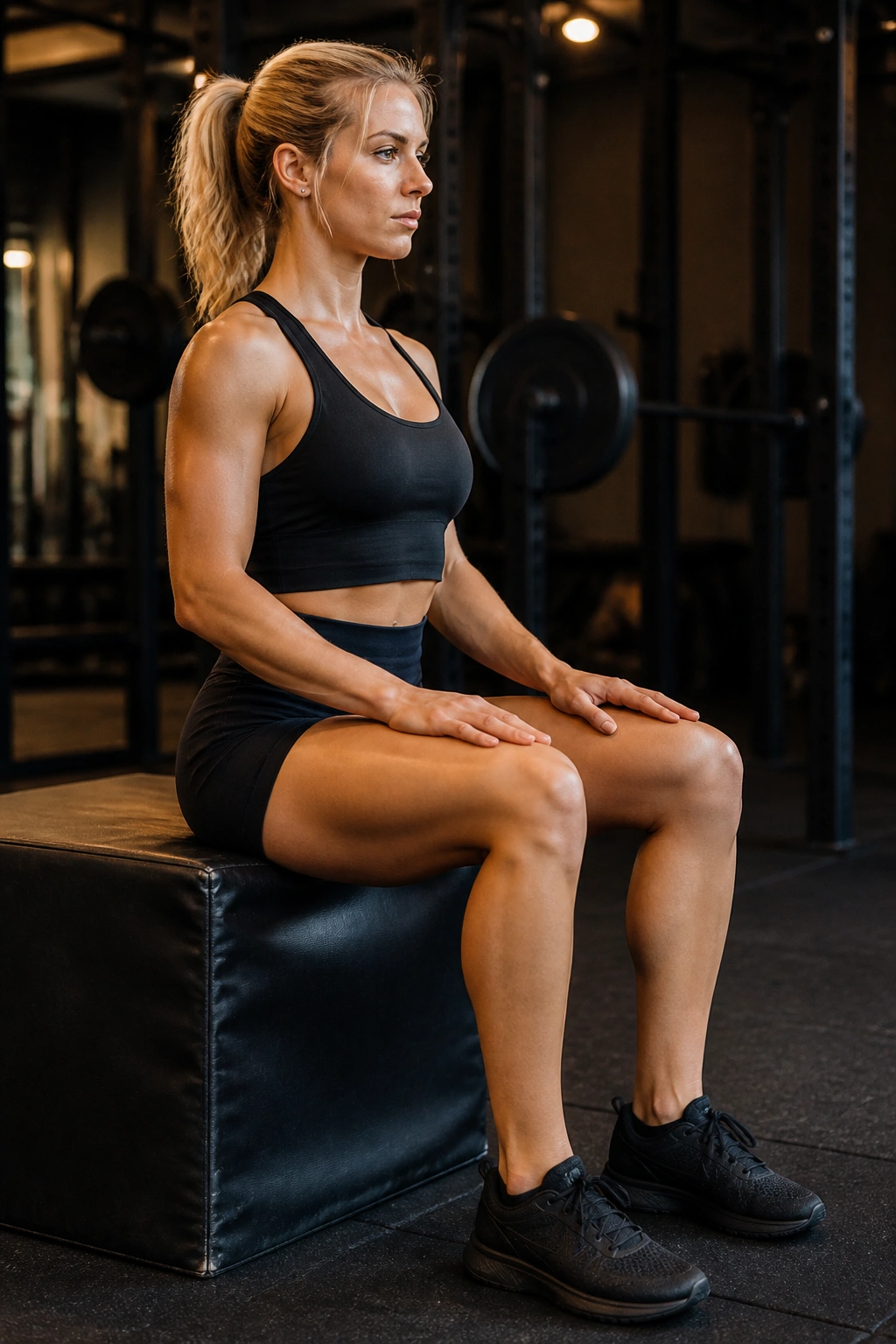
A box squat is the perfect tool for learning how to use your posterior chain. By sitting down onto a box, you remove the guesswork of “how deep should I go?” It also allows you to break the movement into two distinct parts: the descent and the ascent.
The Technique
Place a box or bench behind you at a height that puts your thighs parallel to the ground. Sit back onto the box, keeping your shins vertical. Do not just flop onto it; control the descent. Once your glutes make contact, pause for a split second, then explode upward.
Benefits for Glutes
The pause at the bottom forces you to lose all elastic energy. To get off the box, your glutes and hamstrings have to do all the heavy lifting. It removes the quads’ ability to take over the movement, making it a pure posterior chain builder.
8. Zercher Squat
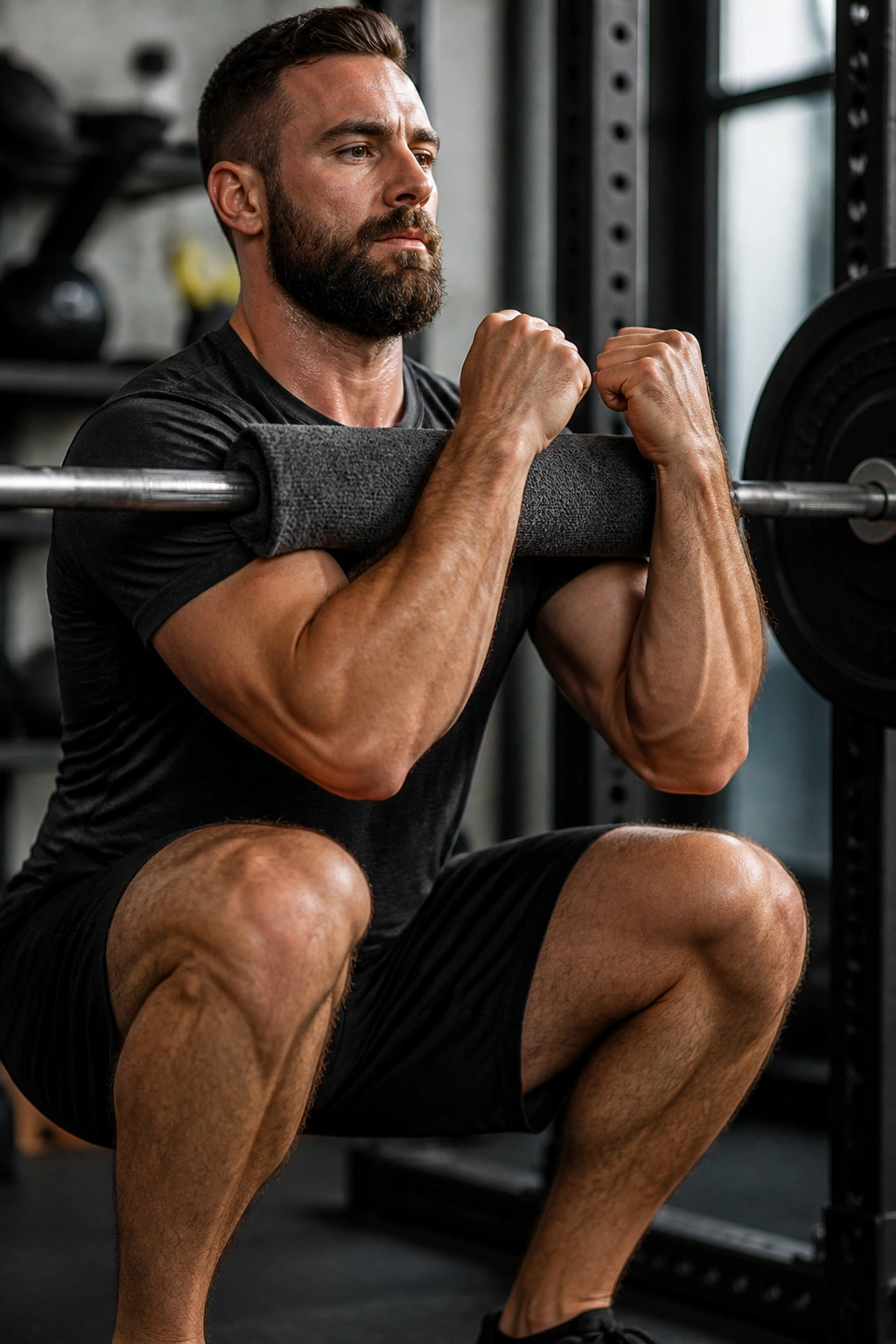
If you want to build a rock-solid core along with your glutes, the Zercher squat is your answer. You hold the barbell in the crooks of your elbows, tucked against your chest. It feels heavy, it looks intense, and it works incredibly well.
Holding the Weight
It will be uncomfortable. If you don’t have a pad, wrap a towel around the bar. That pressure against your biceps is normal. Once you have the bar in your elbows, keep your chest up and your back tight.
Impact on the Posterior Chain
Because the weight is loaded in front of you, your body naturally wants to tip forward. Your lower back and glutes must work overtime to keep you upright. It is a fantastic variation for those who have back pain with traditional back squats, as it removes the vertical compression on your spine.
9. Pistol Squat
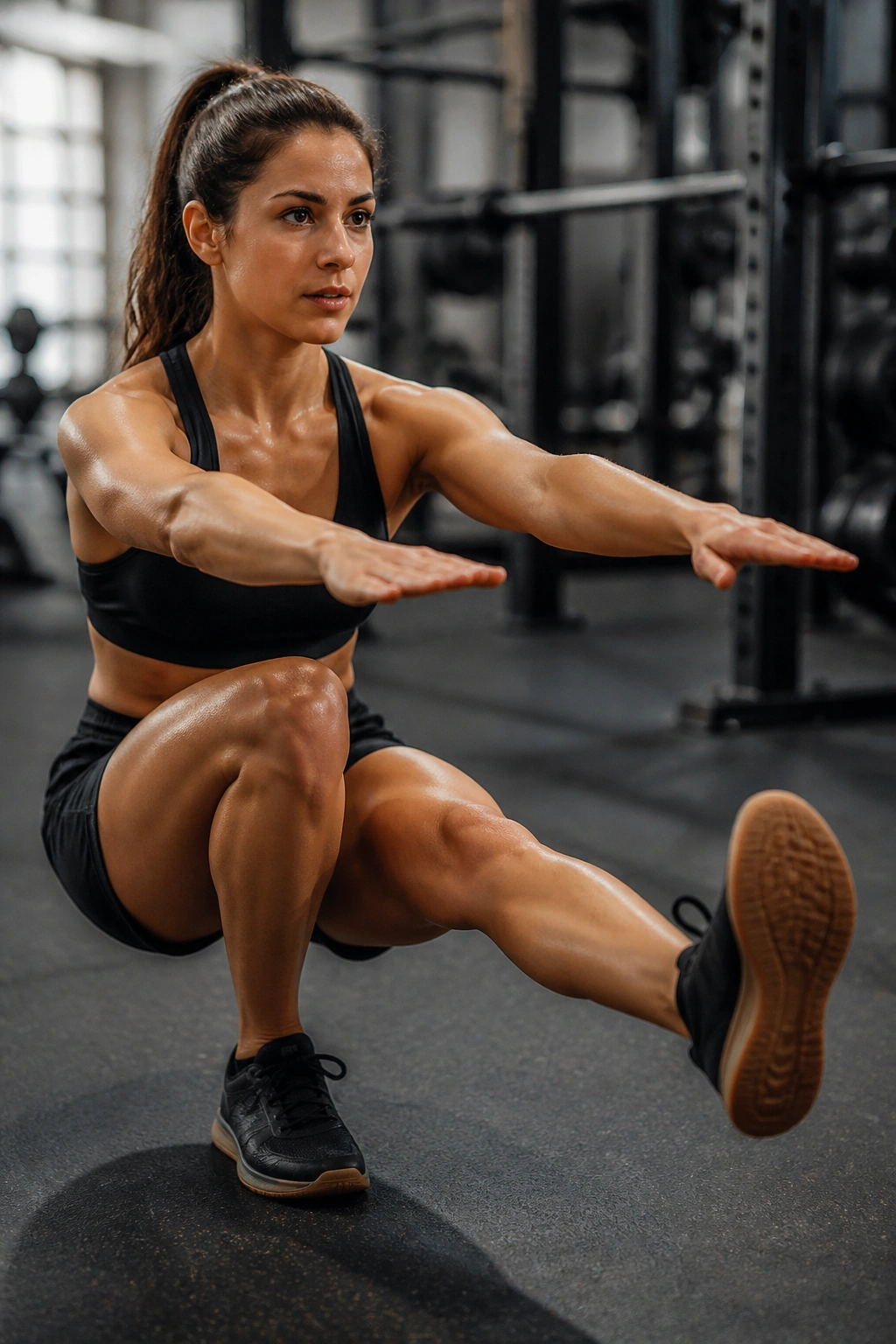
The pistol squat is the gold standard of bodyweight leg strength. It is a one-legged squat where your other leg is extended straight out in front of you. This is not just a strength exercise; it is a balance and coordination challenge that requires significant glute stability.
Scaling the Difficulty
If you cannot do a full pistol squat yet, do not worry. Hold onto a doorway or a rack for balance. Lower yourself slowly, keeping the non-working leg straight. As you get stronger, use less and less assistance until you are doing them completely unassisted.
Why It Builds Definition
When you squat on one leg, your glute medius has to work overtime to keep your pelvis level. This is the muscle responsible for the curve on the side of your hip. Pistol squats create intense localized fatigue in the glutes, which is the primary driver for hypertrophy.
10. 1.5 Rep Squats
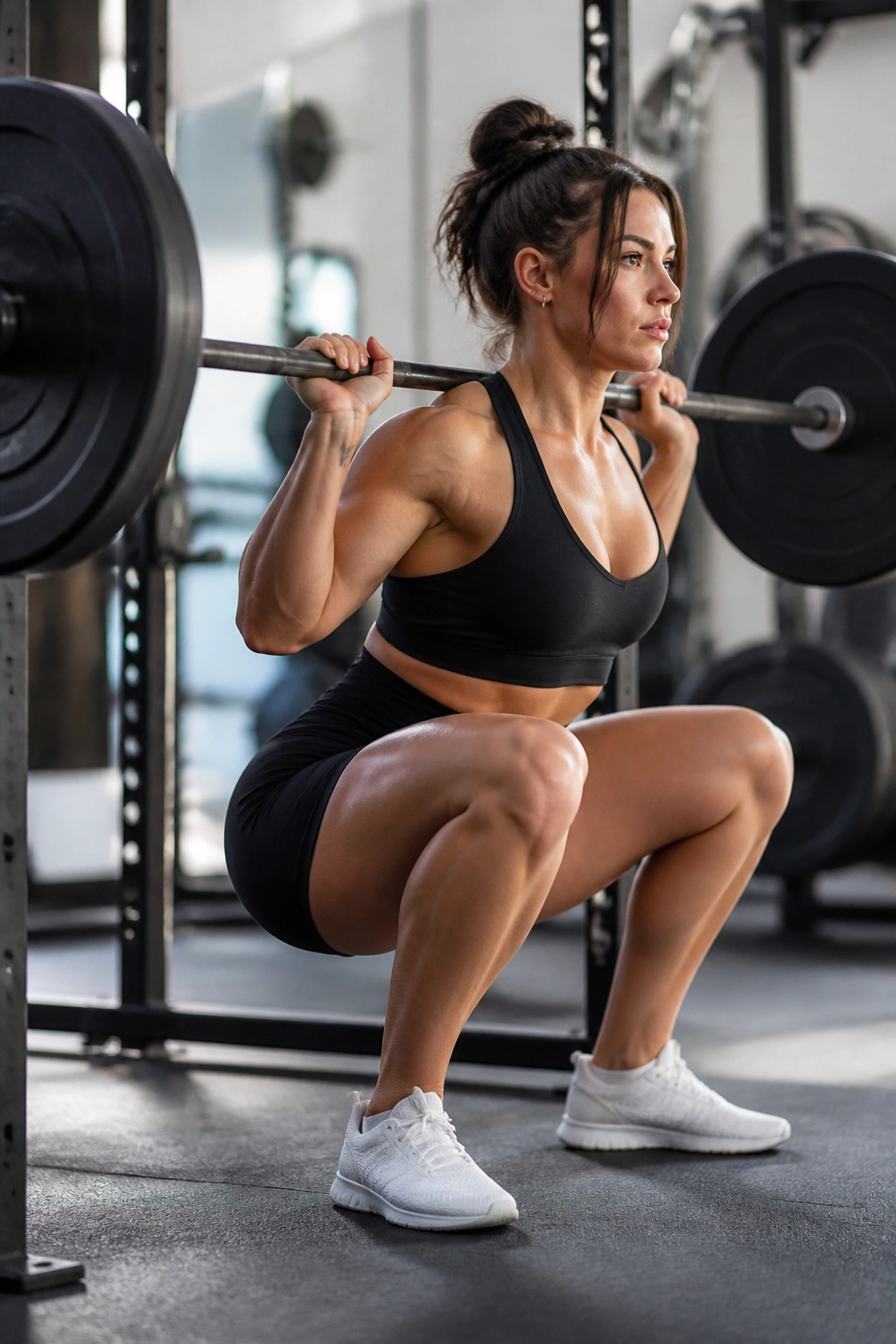
This variation is a recipe for glute growth. It adds a “pulse” to the bottom of the rep, ensuring you spend extra time in the most challenging part of the range of motion. It is deceptively simple but incredibly punishing.
The Execution
Lower into a full squat. Come up halfway—only until your knees are slightly bent. Lower back down to the bottom position. Then, stand all the way up. That counts as one repetition.
Why the Extra Half-Rep?
You are essentially doing two bottom-range squats for every full rep. This keeps the tension strictly on the glutes and quads, preventing you from resting at the top. The burn starts early, and by the end of a set of ten, your glutes will feel like they are on fire.
11. Banded Squats
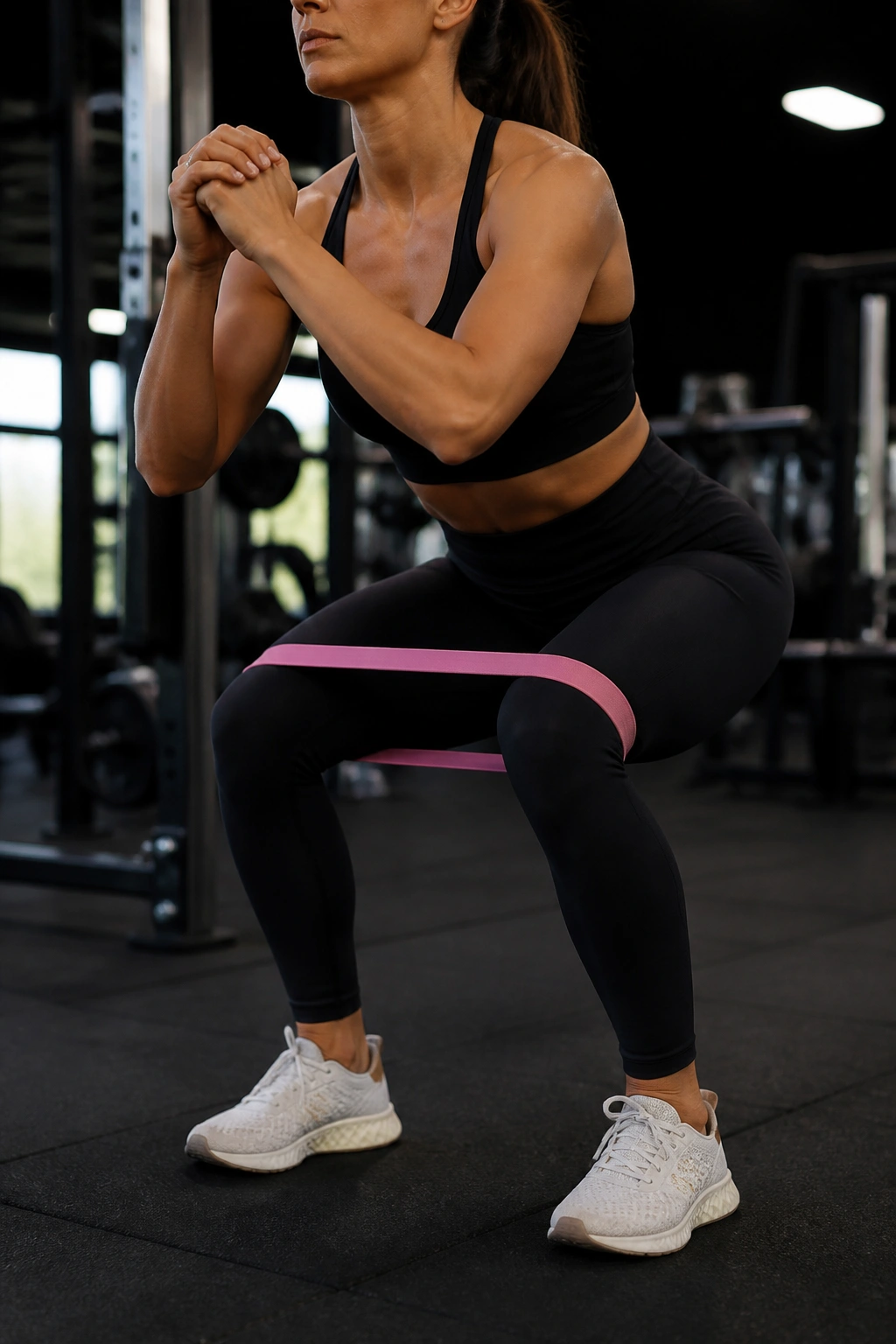
Adding a resistance band to your squats is a simple way to increase “glute activation.” Place a mini-band just above your knees. As you squat, the band will constantly try to pull your knees inward. Your glutes have to fight that tension by pushing your knees out.
The Feedback Loop
This is excellent for people who struggle with knee caving. The band provides immediate physical feedback. If your knees collapse, the band loses tension. You have to actively push your knees against the band throughout the entire rep.
Creating New Stimulus
You do not need heavy weight for this to work. In fact, bodyweight banded squats can be exhausting if you do enough reps. Focus on the external rotation of your hips. Imagine you are trying to “spread the floor” apart with your feet.
12. Prisoner Squat
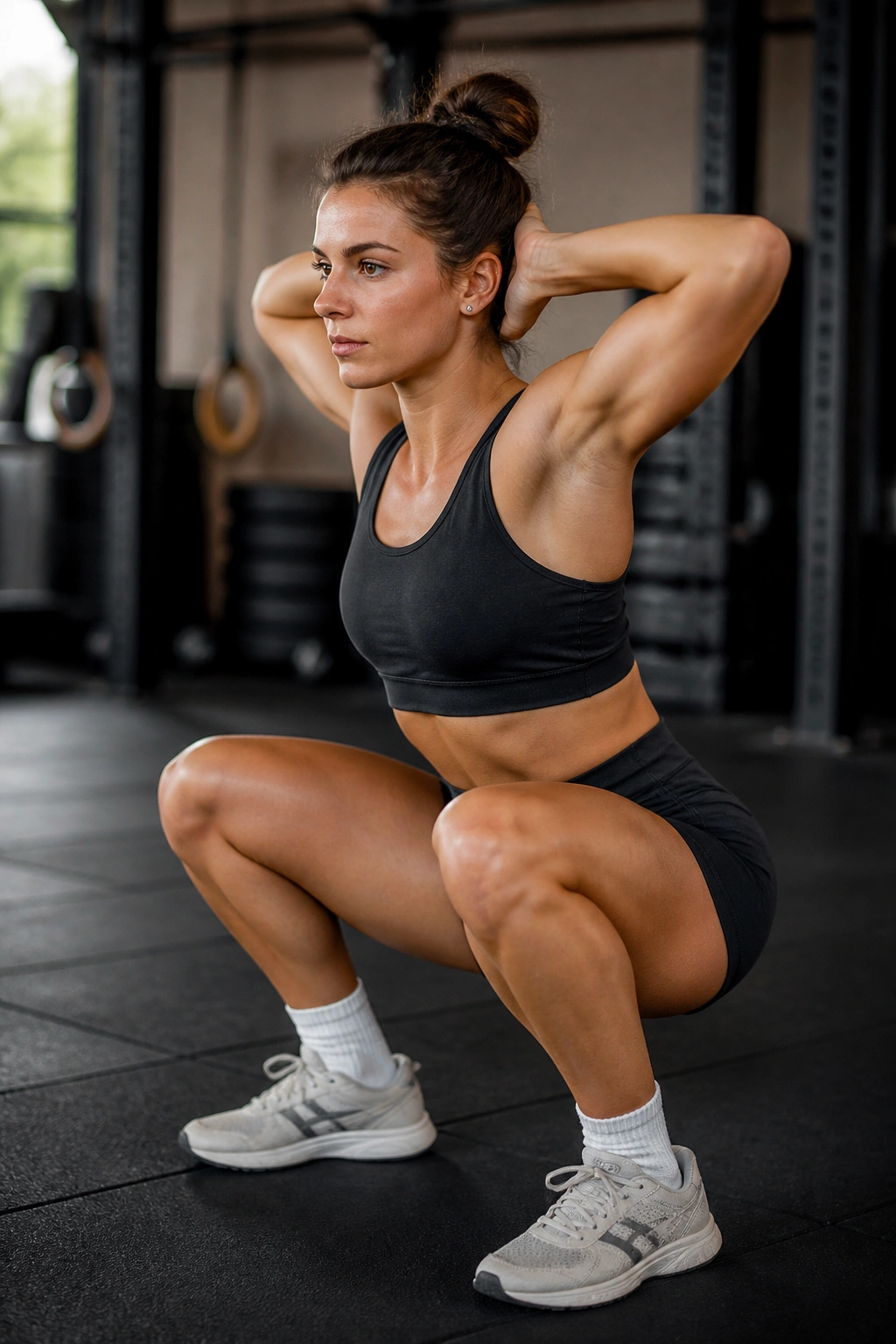
The name sounds aggressive, but the movement is about posture and thoracic mobility. Interlace your fingers behind your head and pull your elbows back. This position forces your chest to stay upright, which changes the leverage of the squat.
Why Keep the Chest Up?
By keeping your hands behind your head, you cannot lean forward. This forces your hips to sit back, making the squat more glute-dominant than a standard forward-leaning squat. It also prevents you from “cheating” the range of motion.
The Bonus
This variation acts as a chest and shoulder opener. If you spend your day hunched over a desk, this exercise will feel like a relief for your upper body while simultaneously torching your lower body.
13. Wall Sit + Squat Combo
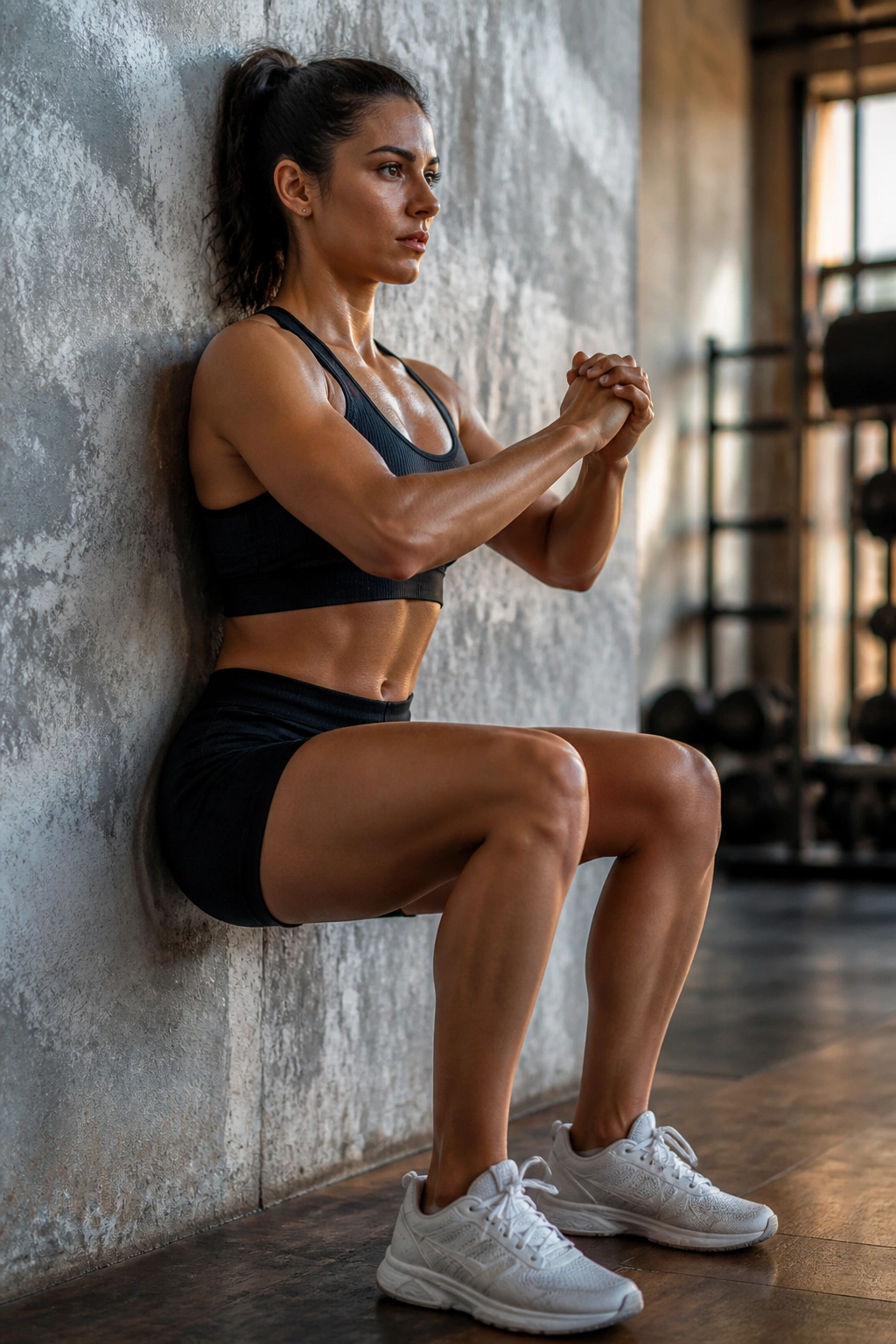
Endurance is a vital, yet often ignored, component of glute training. Sometimes, you need to flush the legs with blood and build lactic acid tolerance. This combination uses a static hold followed by dynamic movement.
The Protocol
Hold a wall sit for 30 seconds. Without resting, immediately perform 15 bodyweight squats. Repeat this cycle 3 times without any break between the wall sit and the squats.
Why It Works
The wall sit pre-exhausts your quads and glutes. By the time you start the squats, your muscles are already fatigued. This forces your body to recruit secondary fibers to finish the reps, which is a great way to break through a muscle-growth plateau.
14. Hindu Squat
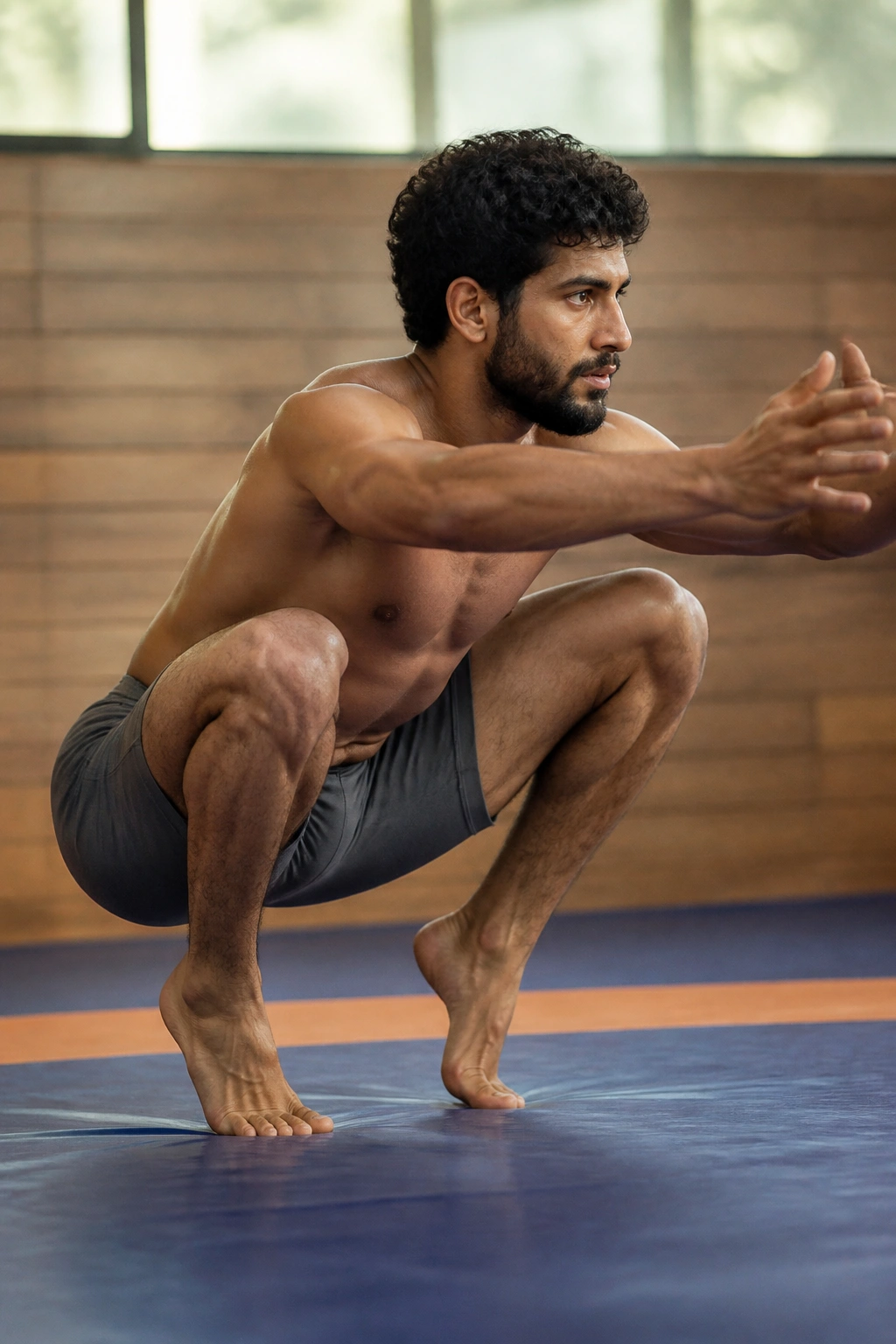
This is a traditional movement used by wrestlers for centuries. Unlike a standard squat where you keep your heels flat, a Hindu squat involves rising onto your toes as you descend. It is fluid, continuous, and rhythmic.
Mastering the Rhythm
This isn’t about heavy weight; it’s about high volume. Your heels should lift off the ground as you sink down, and your knees should drive forward. It creates a massive range of motion for the ankles and knees.
Muscle Engagement
Because your knees drive forward and you are balanced on your toes, this shifts the load heavily to the quads and the lower glute ties. It is a fantastic “finisher” exercise to do at the end of a workout to burn out the remaining energy in your legs.
15. Jump Squat
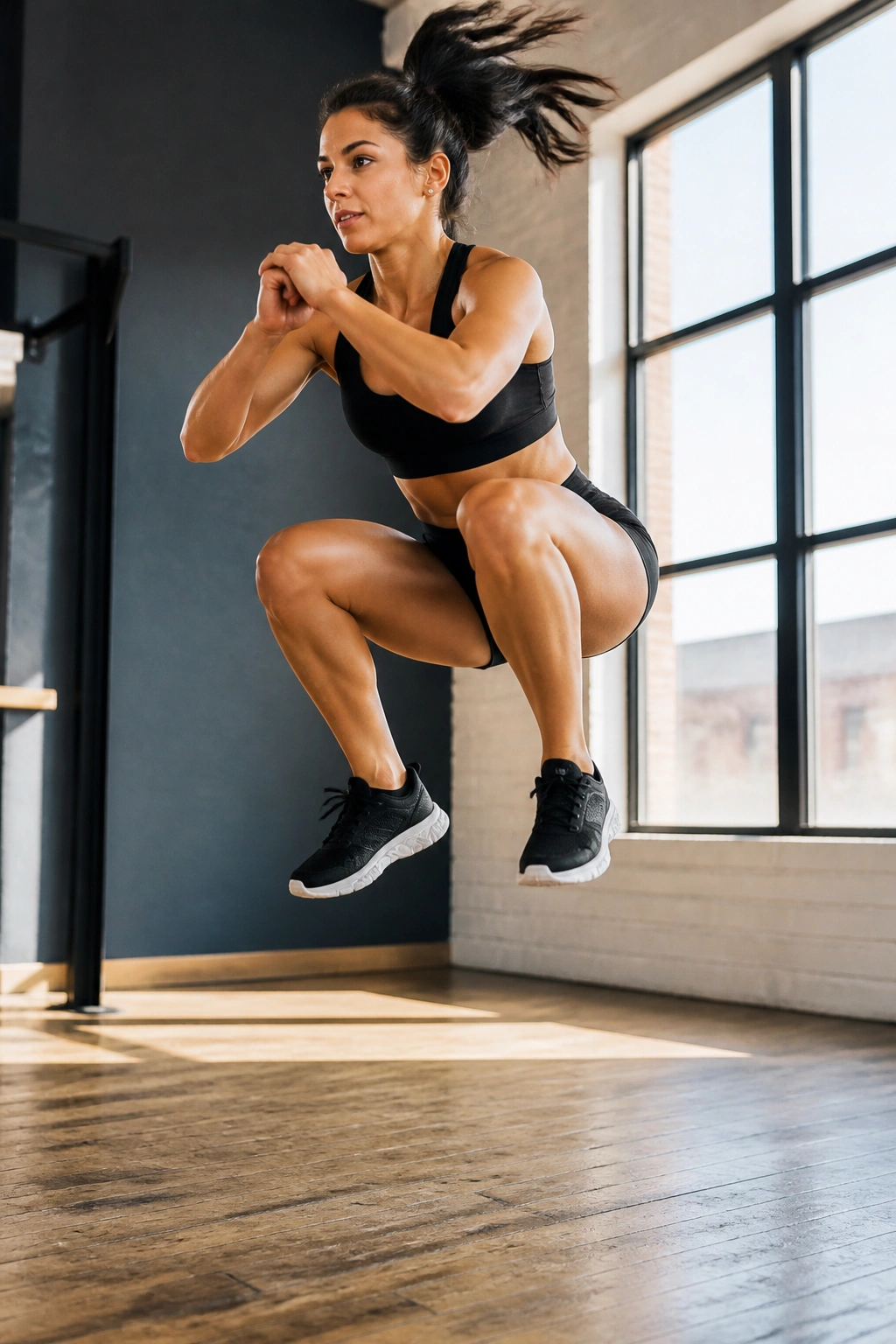
Explosive power is a key aspect of strong, defined glutes. You need to train your muscles to produce force quickly. Jump squats train the “fast-twitch” muscle fibers, which are the ones that have the most potential for growth.
How to Do It Safely
Squat down to a comfortable depth, then explode upward, leaving the ground. Land softly on the balls of your feet, immediately absorbing the impact by going right back into the next squat. Do not pause at the top.
Safety Warning
If you have sensitive knees or ankles, keep the jumps small. You do not need to leap three feet into the air to get the benefits. Focus on the intent of the jump—the speed of the ascent—rather than the height.
16. Heel-Elevated Squat
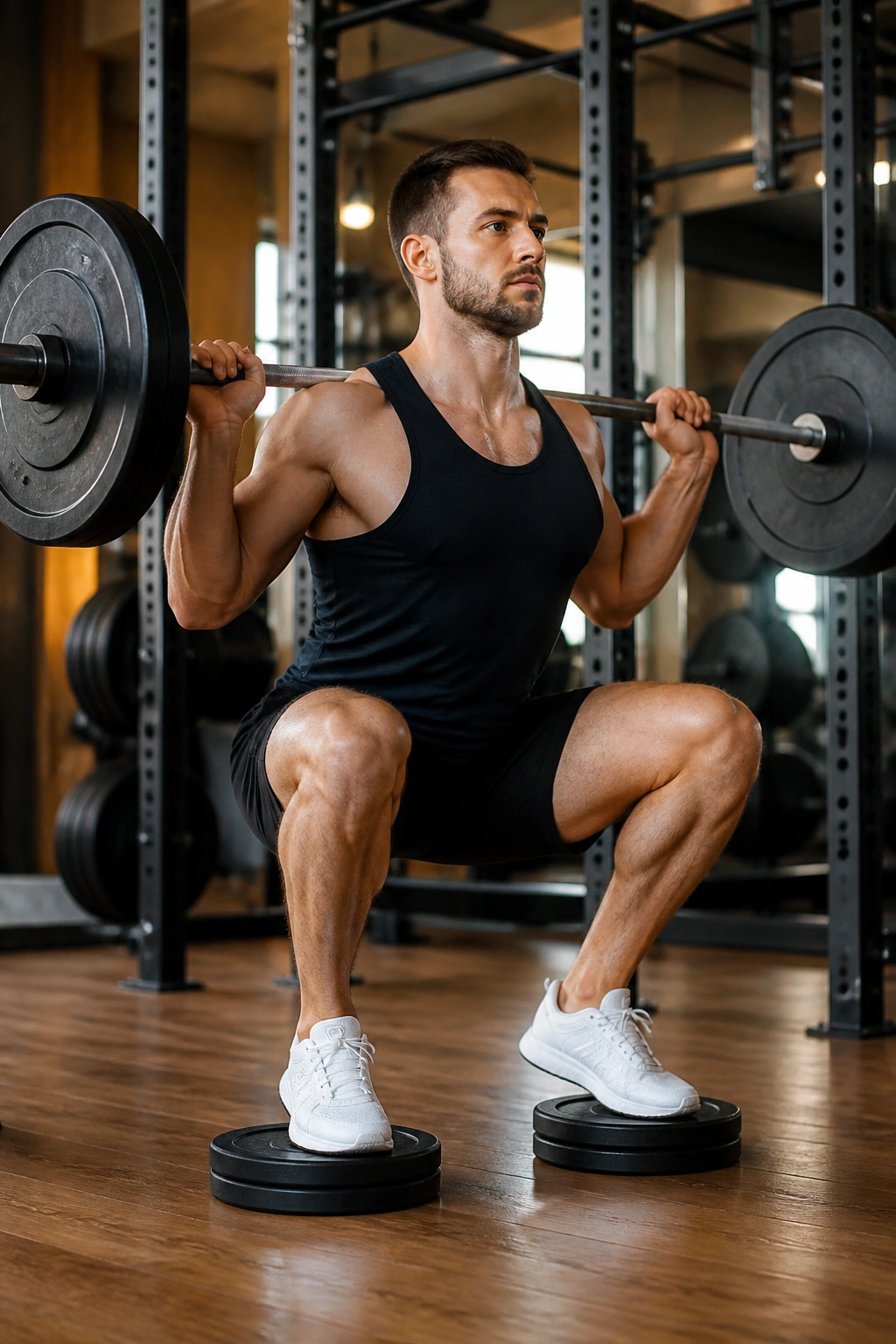
If you struggle to hit depth or if you feel your glutes aren’t working as much as your back, elevate your heels. You can put two small weight plates under your heels. This simple change shifts your center of mass.
Why It Changes Everything
By raising your heels, you allow your knees to track forward more easily, which lets your torso stay upright. This upright position is the key to deep glute and quad activation. You will notice immediately that you can sit lower without your back rounding.
The Result
This is the gold standard for quad and glute isolation. It removes the stress from the lower back and places it squarely on the legs. It’s perfect for bodybuilders or anyone wanting to focus purely on leg aesthetics.
17. Jefferson Squat
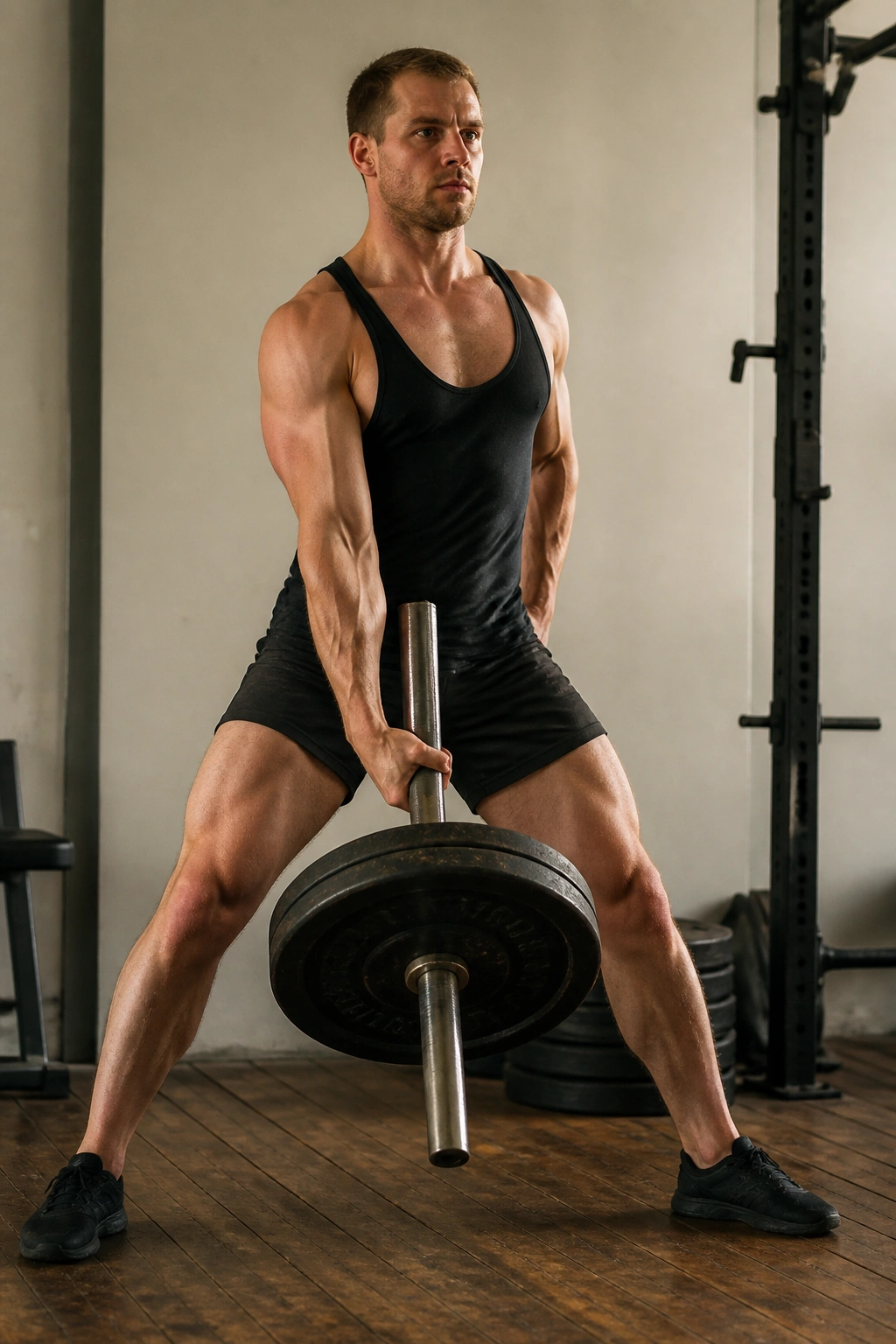
This is a vintage lift that has largely fallen out of favor, but it is excellent for hitting the glutes from a different angle. You stand over the barbell, with the bar between your legs, and grip it with one hand in front and one behind.
The Setup
Stand so the bar is running directly between your feet. Squat down to grab the bar. One hand will be palm-up in front, the other palm-down behind. Stand up, keeping the weight centered.
Unique Benefits
Because the weight is directly under your center of gravity, it mimics a deadlift and a squat simultaneously. It forces your glutes to work from a stretched position at the start. It also challenges your core stability in a way that regular squats simply don’t.
18. Kang Squat
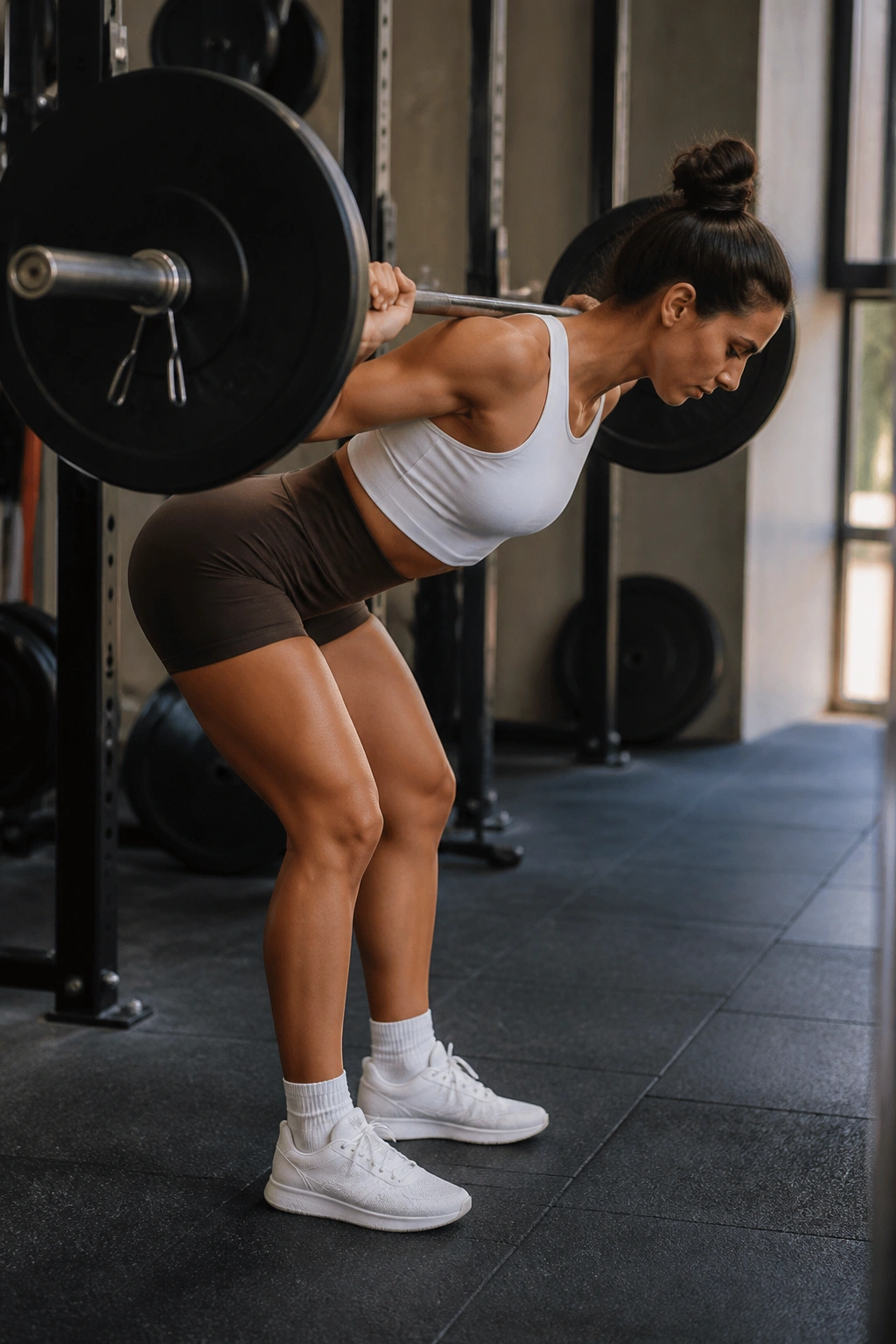
The Kang squat is a hybrid exercise that combines a good morning with a back squat. It is a fantastic tool for warming up the posterior chain and teaching yourself to hinge at the hips before you squat.
The Sequence
With a light bar on your back, perform a good morning (hinge at the hips with straight legs) until your torso is parallel to the ground. From that position, drop your hips into a squat. Then, stand up.
Why It’s Effective
Most people struggle to separate their hip hinge from their squat. This exercise forces you to realize that a good squat starts with a hinge. It wakes up the hamstrings and glutes before you get into the heavy stuff.
19. Sissy Squat
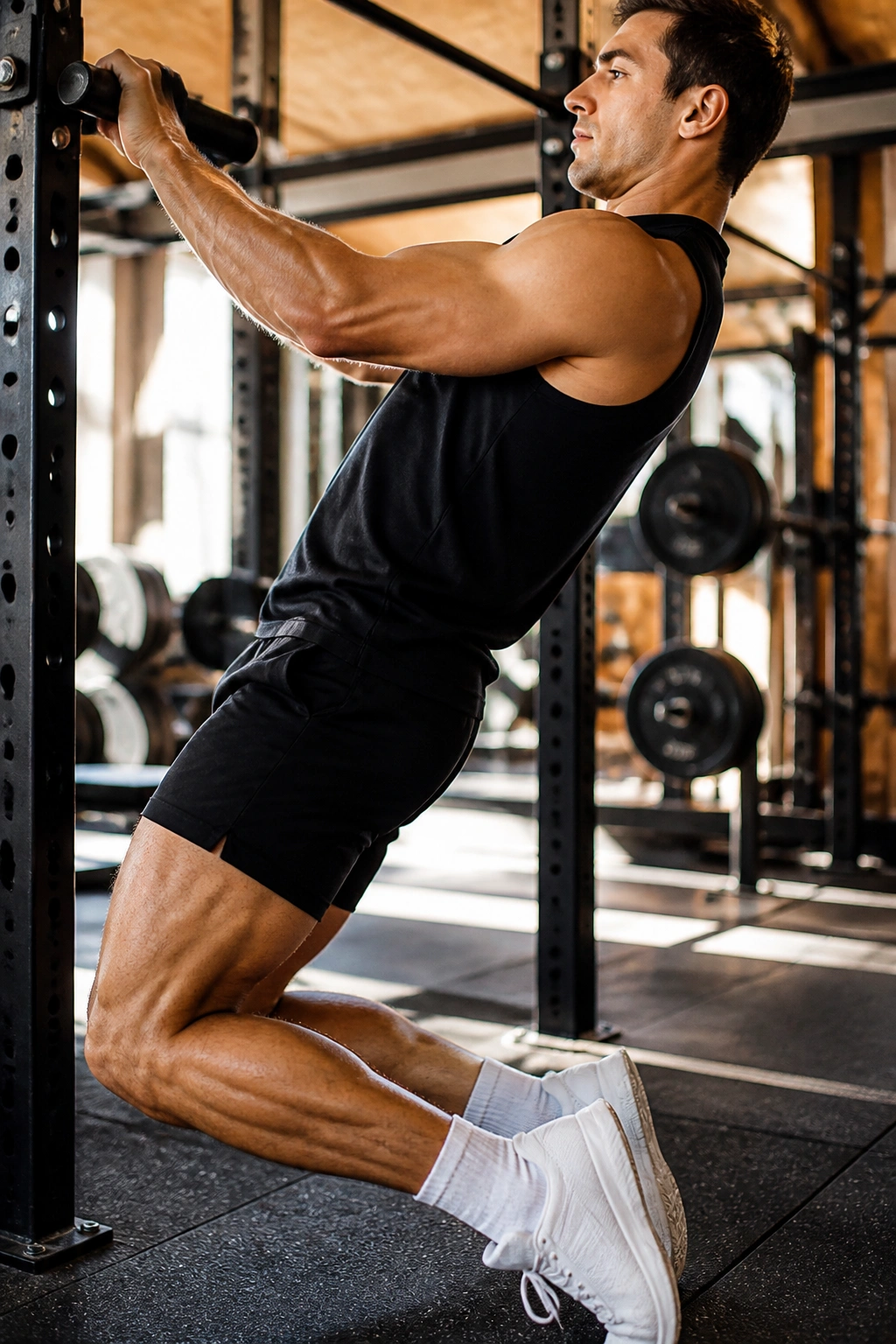
The sissy squat is an old-school move that looks impossible until you learn the trick. You lean backward as you squat, balancing on your toes. It is the ultimate test of knee stability and quad-glute isolation.
The Technique
Grab onto a rack for support. Rise onto your toes. As you bend your knees, push them forward and lean your entire torso backward. Go down as far as you can while maintaining the straight line from your head to your knees.
Why Do It?
It isolates the legs completely. Because your torso leans back, there is zero stress on your spine. It is pure muscular tension. Do not try to load this with heavy weights initially—your body weight will be more than enough to make your legs shake.
20. The “Death by Squat” Pyramid
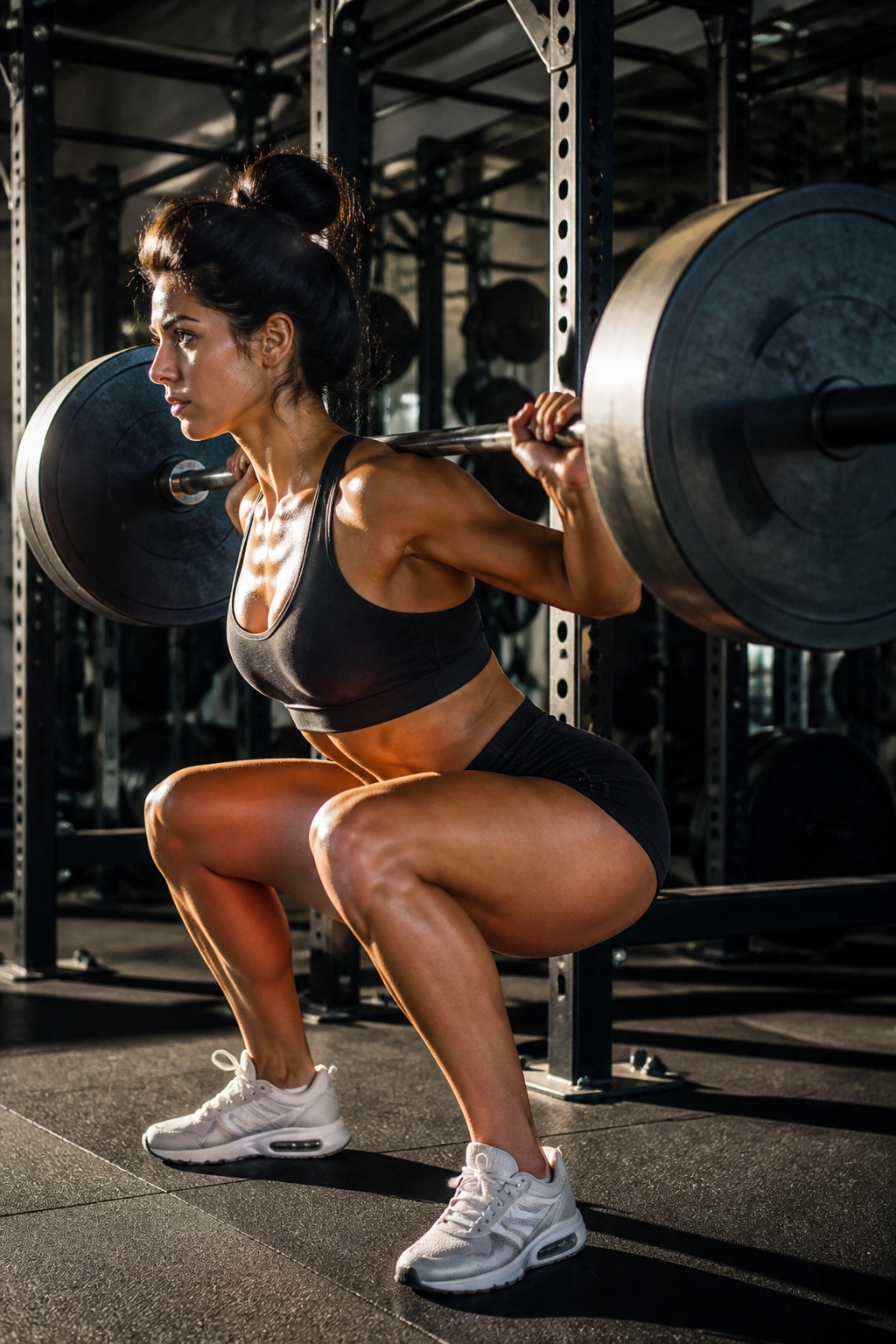
Sometimes, you need a challenge that is purely mental. A pyramid workout forces you to accumulate volume quickly, which leads to massive metabolic stress—a key component of muscle hypertrophy.
The Protocol
Perform 1 squat, then rest for 10 seconds. Perform 2 squats, then rest for 10 seconds. Perform 3 squats, then rest for 10 seconds. Continue this until you cannot perform the required number of reps with perfect form.
The Goal
This isn’t about using heavy weight. It is about the total volume. By the time you reach the higher rep ranges, your glutes will be burning so intensely that you will be forced to use perfect form just to survive the set. This is a great way to finish a leg session when you are feeling unmotivated.
The Bottom Line
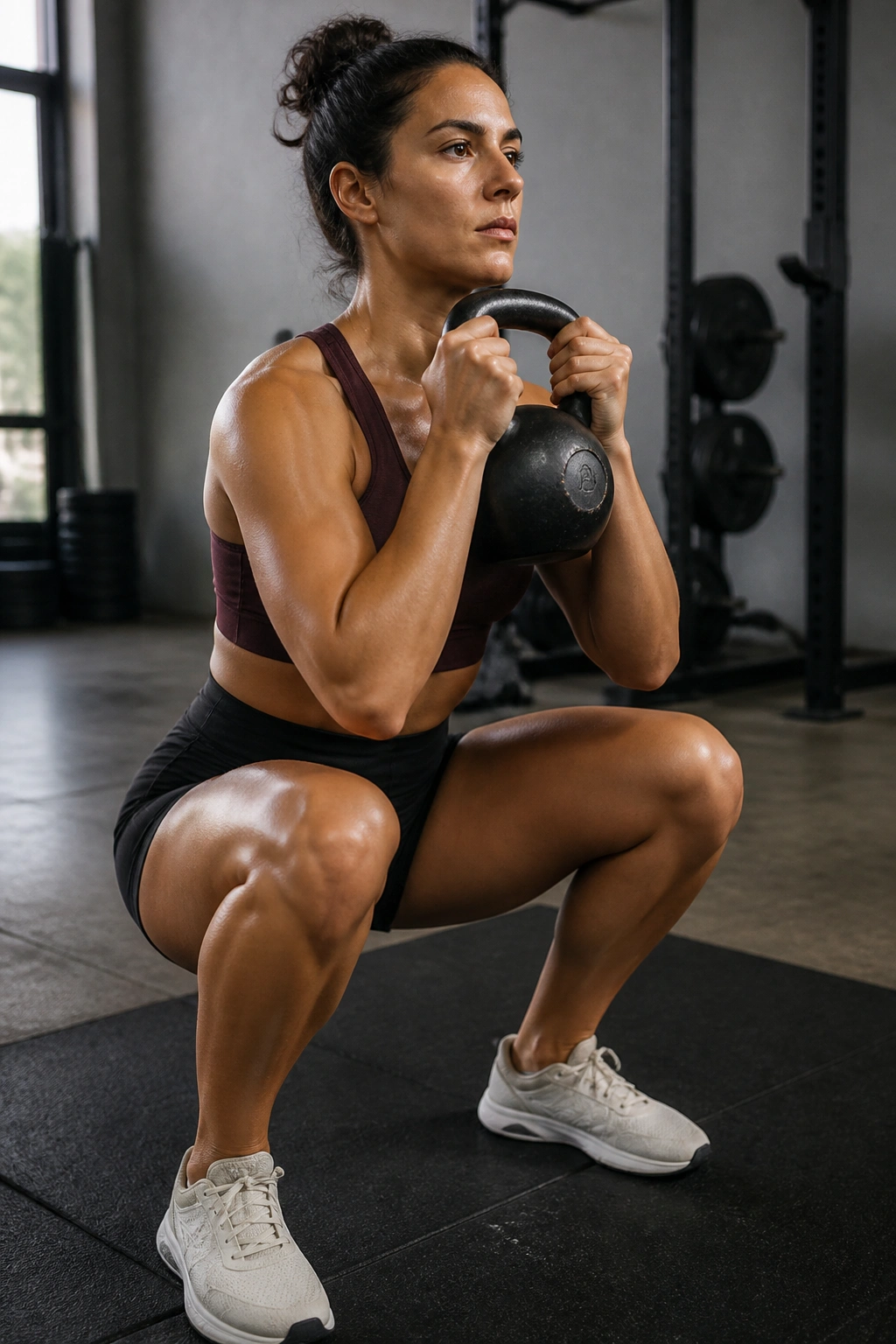
Building stronger, more defined glutes is rarely about finding that one “perfect” exercise. It is about variety, consistency, and the willingness to step out of your comfort zone. If you have been doing the same movements for months, your body has adapted. It is efficient, and efficiency is the enemy of growth.
Take these challenges and weave them into your routine. Swap out your regular squats for pause squats for a few weeks. Try the Bulgarian Split Squats on your next leg day. The key is not to do all twenty at once—that is a recipe for burnout—but to treat them as tools in your kit.
Listen to your body. If a movement causes sharp pain, stop and adjust your form or pick a different variation. Strength training is a long game. The goal is to keep showing up, keep challenging your muscles in new ways, and keep building the foundation for a stronger, more capable body. You have the list; now go do the work.
