



Leg day often gets a bad reputation. People tend to skip it, fearing the post-workout soreness or the dreaded “jelly leg” feeling that makes climbing stairs an ordeal for the next 48 hours. But if you are chasing the look of toned, sculpted legs, you cannot simply rely on cardio. You have to put your muscles under tension. You have to ask them to do hard work.
Building muscle in the thighs—the quads, hamstrings, and adductors—is the only way to achieve that firm, defined appearance. It is not about doing a thousand reps with light weights or chasing the feeling of “burning” calories. It is about progressive overload, focusing on the quality of your movement, and picking exercises that actually challenge the muscle fibers.
When you train your legs, you are not just working for aesthetic gains. You are building structural support for your entire body. Strong thighs mean more stable knees, a healthier lower back, and a better baseline of metabolic health. Stop worrying about looking like a bodybuilder. You aren’t going to accidentally wake up with massive legs overnight. What you will get, however, is a pair of legs that look capable, lean, and strong.
1. Goblet Squats
Most people start their journey into leg training with the standard air squat, but the goblet squat is where the real growth starts. By holding a weight against your chest, you force your torso to remain upright, which shifts the emphasis directly onto the quadriceps rather than the lower back. It is one of the most effective ways to learn proper squat mechanics without needing a heavy barbell across your shoulders.
Why This Move Is Superior
The front-loaded nature of the goblet squat acts as a counterbalance. If you try to lean forward too much—a common mistake—the weight will pull you out of position. This provides instant, tangible feedback about your form. You are either staying upright and working the target muscles, or you are losing your balance.
Execution Tips for Maximum Gains
- Choose a kettlebell or dumbbell that feels challenging but allows you to maintain a slow, 3-second descent.
- Keep your elbows tucked inside your knees as you squat down to ensure a wide enough stance.
- Focus on driving your heels into the floor, not your toes, when you push back up to the starting position.
Pro tip: Do not rush the bottom of the movement. Pause for a full second at the lowest point to eliminate any momentum and force your legs to do the lifting from a dead stop.
2. Bulgarian Split Squats
There is a reason this exercise is universally dreaded by anyone who takes leg training seriously. The Bulgarian split squat is the ultimate test of unilateral strength. By elevating your rear foot, you isolate one leg at a time, removing the ability for your stronger leg to compensate for the weaker one. This is the fastest route to addressing muscle imbalances between your left and right sides.
The setup is where most people fail. If your front foot is too close to the bench, you will put too much strain on your knee. If it is too far, you will feel it mostly in your hip flexors. Find the sweet spot where your front shin remains nearly vertical when you reach the bottom of the lunge.
When you are deep into a set of 12 reps, your stabilizing muscles will start to quiver. That is the point of the exercise. Embrace the shake. It is a sign that your glute medius and adductors are working overtime to keep you upright. If you cannot maintain your balance, hold onto a sturdy object like a squat rack or a wall for stability, but try to use that support only to keep your balance, not to assist in lifting the weight.
3. Romanian Deadlifts (RDLs)
If you want sculpted legs, you have to prioritize the back of your thighs. The Romanian deadlift is not a back exercise; it is a posterior chain masterclass. Unlike a conventional deadlift, you do not let the bar touch the floor. You descend only until you feel a deep, intense stretch in your hamstrings, then you hinge back up.
The hinge is everything. Imagine your hips are a door hinge. To start the movement, push your hips straight back toward the wall behind you. Keep the bar or the dumbbells glued to your shins the entire way down. If the weight drifts away from your body, your lower back takes the load, and your hamstrings get a free pass—which is exactly what we want to avoid.
Common Mistakes
- Rounding the upper back to get closer to the ground.
- Bending the knees too much, which turns it into a squat.
- Looking up at a mirror, which strains the neck; keep your gaze a few feet in front of you.
Your hamstrings are responsible for knee flexion and hip extension. By loading them in the lengthened position, you are signaling to your body that it needs to reinforce those tissues. That stretch at the bottom is where the magic happens. Do not cut it short just to lift more weight.
4. Sumo Squats
The wide stance of a sumo squat changes the game for your inner thighs. By turning your toes out slightly and taking a wider-than-shoulder-width stance, you place a greater demand on the adductors—the muscles that run along the inside of your thighs. This is one of the few movements that effectively targets that specific area while still engaging the quads.
Anatomy of the Move
When you widen your stance, you change the lever arms of your femur. This forces your adductor magnus to work significantly harder to stabilize the pelvis and initiate the ascent. It is a fantastic variation to include if you feel like your outer quads are doing all the work in standard squats.
How to Execute
- Use a kettlebell or a single heavy dumbbell held between your legs.
- Keep your chest high and your back flat.
- Drop your hips straight down, ensuring your knees track in line with your toes.
Warning: If your knees cave inward during the rep, your stance is too wide or the weight is too heavy. Pull your feet in an inch and focus on pushing your knees outward, as if you are trying to spread the floor apart with your feet.
5. Reverse Lunges
While forward lunges can sometimes be tough on the knees due to the deceleration required, the reverse lunge is much more joint-friendly. Stepping backward allows you to maintain a stable, vertical shin on your front leg, which keeps the pressure on your muscles rather than your kneecap. It is a staple for a reason.
Think of your front leg as the pillar. When you step back, keep 90% of your weight on that lead foot. The back foot is just a kickstand for balance. Many people try to distribute their weight evenly between both legs, but if you do that, you are essentially halving the effectiveness of the exercise for your lead quad.
Because this move requires significant balance, it also recruits the core. You have to stabilize your spine against the weight you are holding. If you are just starting, go bodyweight. Once you master the rhythm, add dumbbells in your hands. Do not worry about the weight; focus on the control of the step back.
6. Curtsy Lunges
The curtsy lunge is an often-overlooked movement that hits the side of the glutes and the upper portion of the inner thighs. By crossing your back leg behind the front one, you shift the center of gravity and create a diagonal loading pattern. This mimics natural rotational movements that we often lack in standard gym routines.
Why This Works
The curtsy lunge places the gluteus medius under a unique stretch that a standard lunge simply cannot provide. This muscle is vital for pelvic stability and is often weak in people who sit for long periods. Strengthening it can help alleviate hip pain and improve the overall shape of the upper leg.
Tips for Success
- Keep your hips facing forward throughout the movement.
- Do not let your front knee collapse inward; keep it aligned over your ankle.
- Move slowly. This is not a plyometric jump; it is a controlled strength exercise.
It feels a bit awkward the first time you try it. That is perfectly normal. It takes a few sets to get used to the coordination, but once you do, you will feel the muscles in your hips firing in ways they never have before.
7. Side (Lateral) Lunges
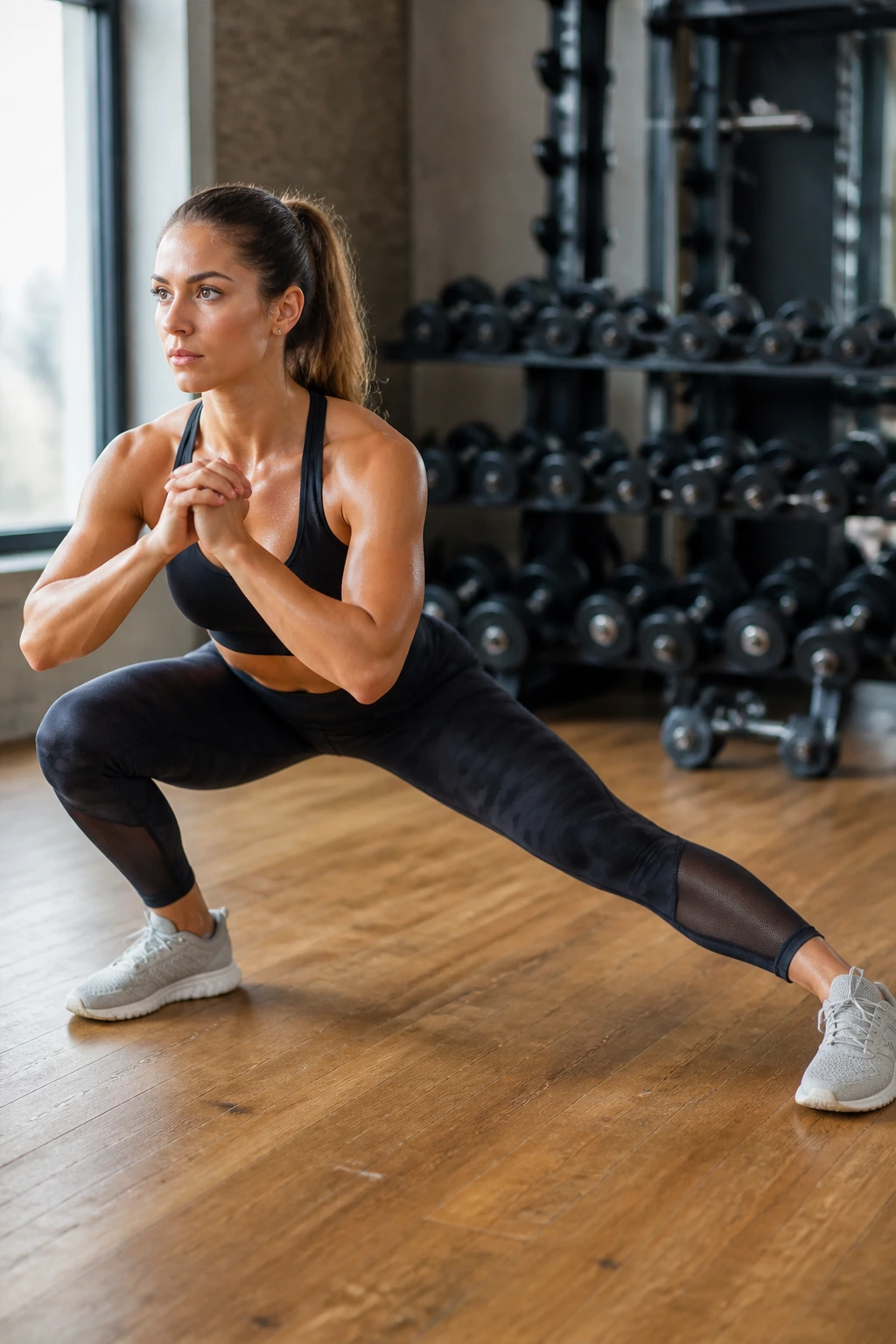
Most of our daily movement happens in the sagittal plane—meaning we move forward and backward. But our bodies are built to move laterally, too. Side lunges are essential for balancing out the strength in your legs and hitting the inner and outer thigh muscles that are neglected by forward-moving exercises.
Building the Lateral Strength
To perform this correctly, step wide to the side and push your hips back as if you are trying to sit on a chair placed to your side. Keep the other leg perfectly straight. The foot that is planted should remain flat on the floor the entire time. Do not let your heel lift off the ground.
Correcting the Form
- The bent knee should stay behind the toes.
- Your torso will naturally lean forward, but keep your chest up.
- Focus on the push-off. Use your planted leg to powerfully drive yourself back to center.
If you find this difficult, perform it with bodyweight first. It requires a fair amount of hip mobility. If you feel tight, spend a few minutes opening up your hips before you start your set.
8. Cossack Squats
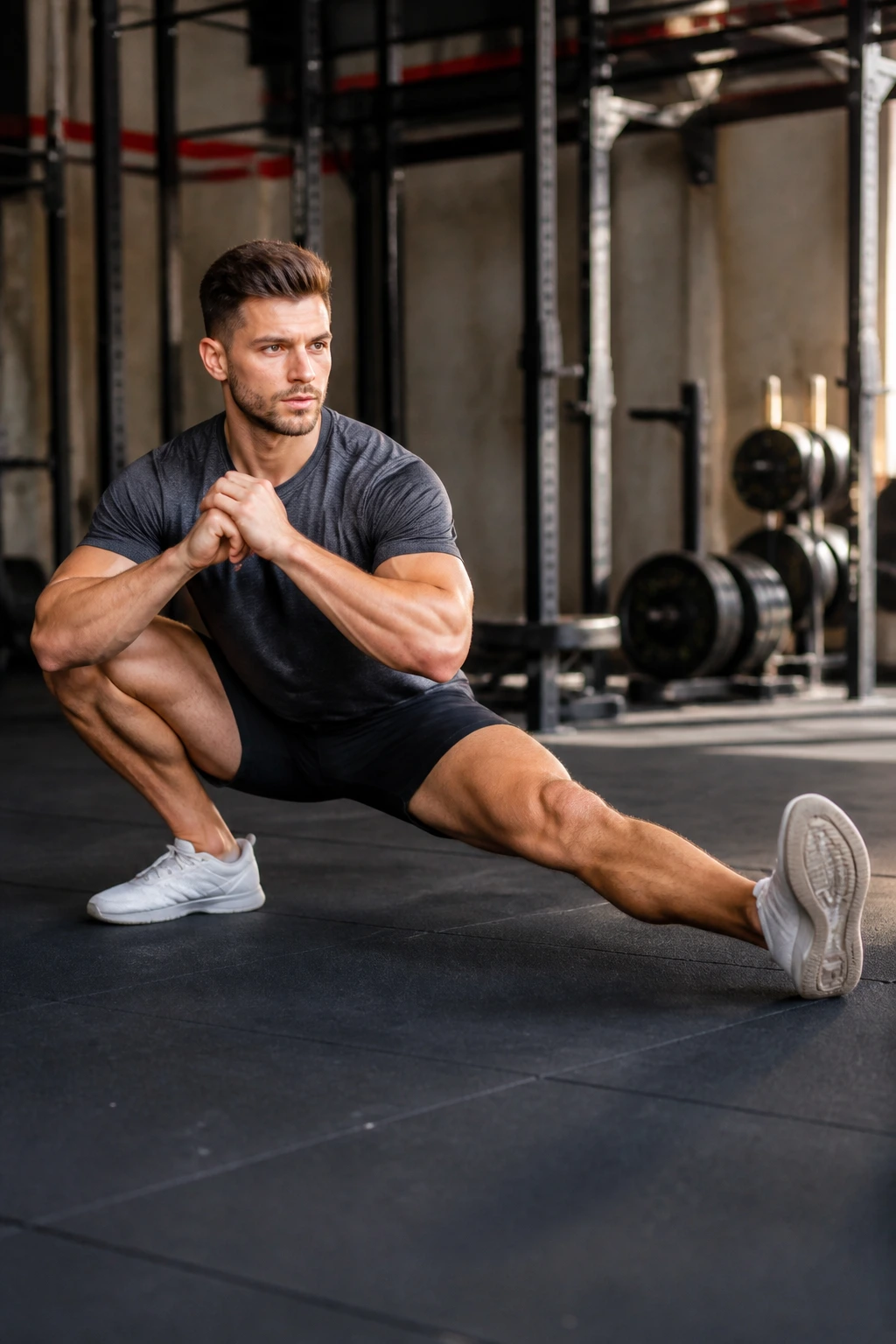
Cossack squats are essentially a deep, side-to-side lunge that requires serious mobility. This is an advanced move. It requires you to drop down into a full, deep squat on one leg while keeping the other leg extended straight out with the heel on the floor and the toe pointed up toward the ceiling.
This exercise is a true test of strength and flexibility combined. It forces your hips, ankles, and knees to work through a massive range of motion. If you have been struggling to get depth in your standard squats, the Cossack squat might just be the mobility drill that unlocks your potential.
Start by going only as deep as you can comfortably handle. Do not force your body into a position it is not ready for. Over time, as your hips open up, you will find yourself sinking lower and lower. It is one of the most effective ways to build “athletic” legs—legs that are not just strong, but also capable and fluid in their movement.
9. Leg Press
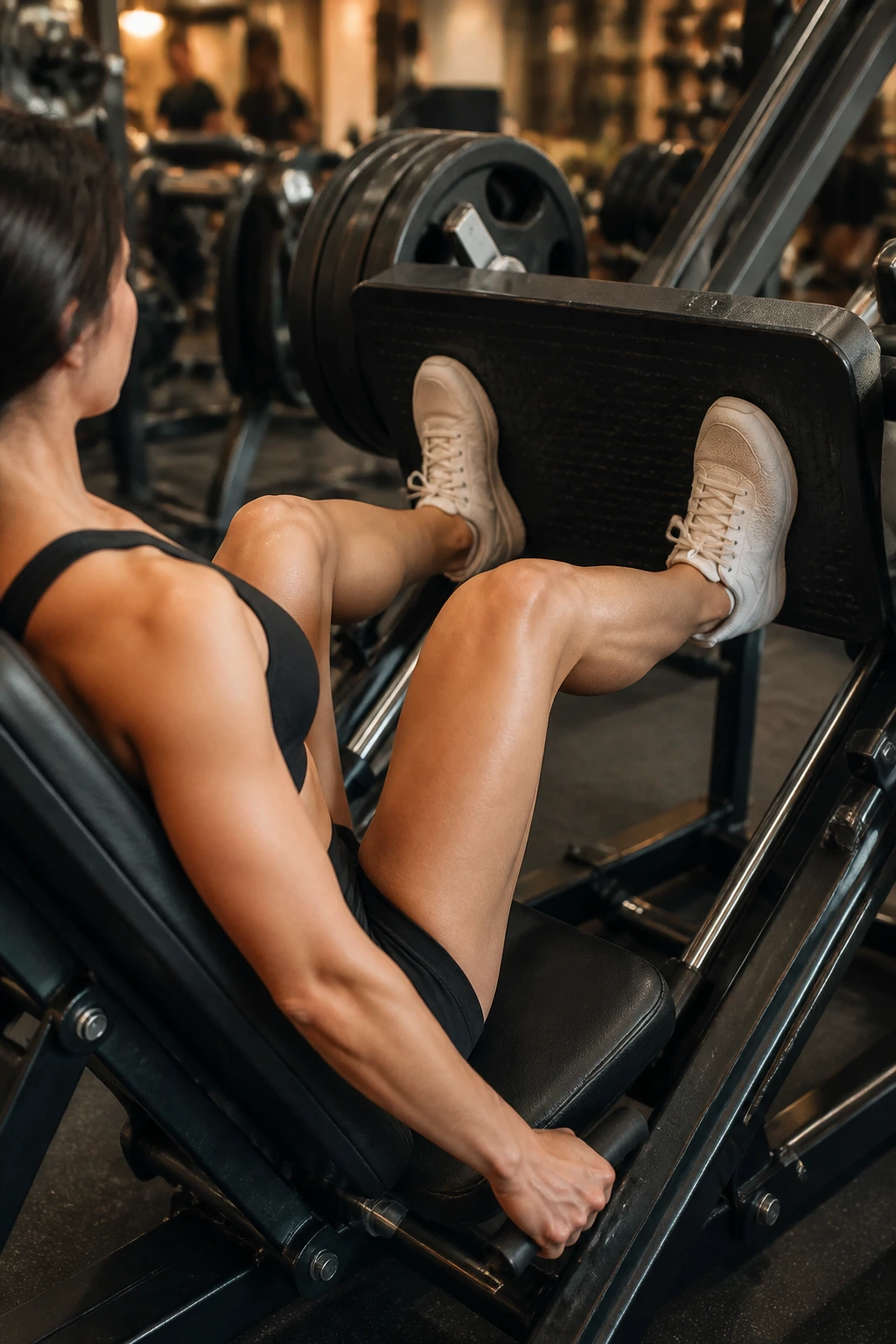
There is a lot of debate about the leg press, but when used correctly, it is a powerhouse for quad hypertrophy. The key is in the foot placement. If you place your feet low on the platform, you shift the load toward your quads. If you place them high, you get more hamstring and glute involvement.
Avoid the temptation to lock your knees at the top. The moment your knees lock out, the tension leaves your muscles and shifts entirely onto your joints. That is exactly what we want to avoid. You want to keep the muscles under constant tension, from the moment you start the rep to the moment you finish.
Control the eccentric—the lowering phase. Too many people load up the machine and let the weight drop fast, relying on the safety catch to stop them. That is a waste of a set. Take 2 to 3 seconds to lower the platform. You will find that you have to use less weight, but the muscle stimulation will be significantly higher.
10. Leg Extension
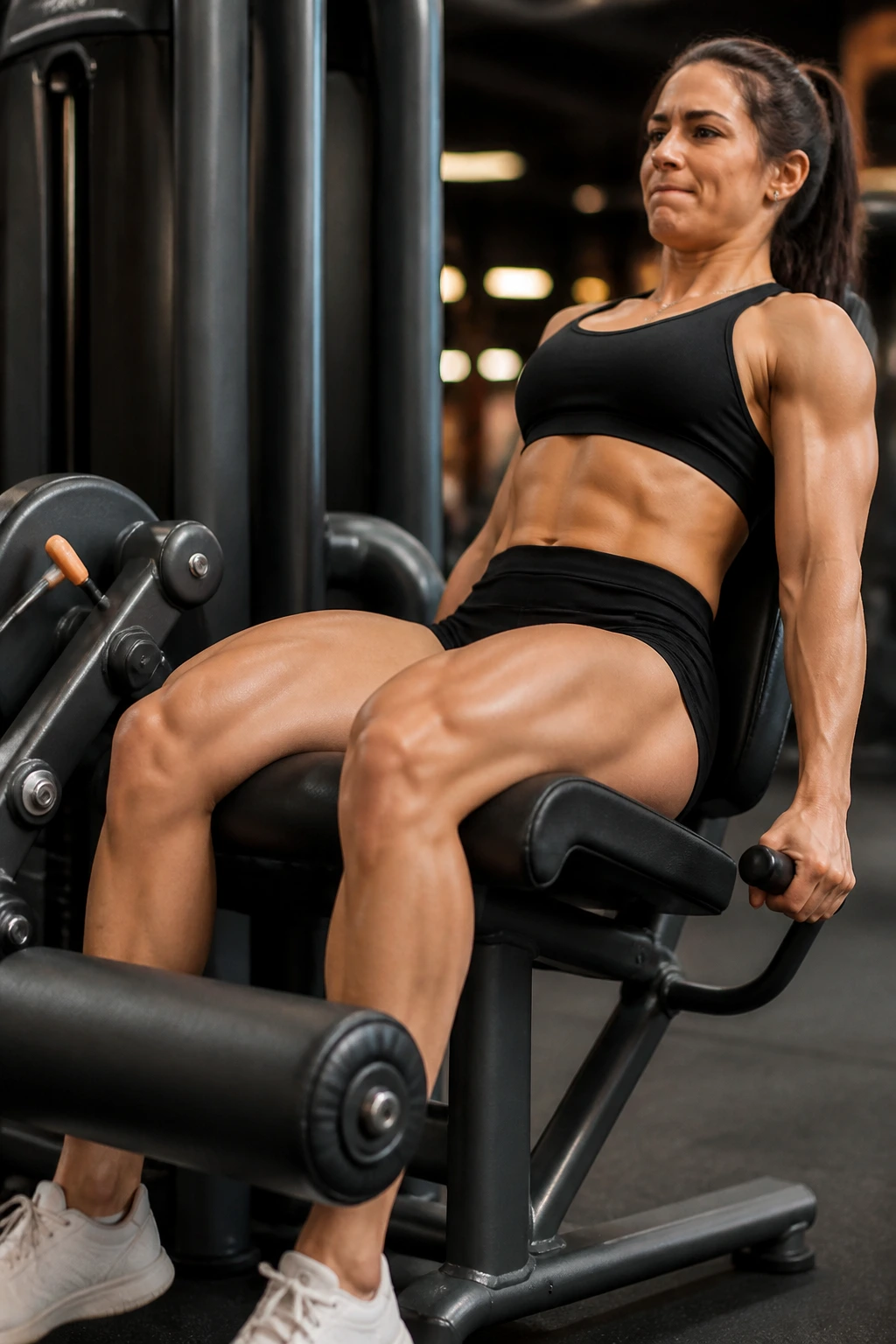
The leg extension is the only movement in this list that truly isolates the quadriceps. Because your hips are fixed, you can focus entirely on the knee extension, which is the primary function of the quads. This is perfect for finishing off a workout when your stabilizer muscles are too fatigued for heavier compound lifts.
The Science of Isolation
The rectus femoris—one of the four quad muscles—is the only one that crosses both the hip and the knee. By sitting in a leg extension machine, you put the quad in a position where it can be fully shortened and lengthened. It is one of the best ways to get that deep, “defined” look in the quad sweep.
Crucial Execution Tips
- Adjust the back pad so your knee joint aligns perfectly with the machine’s pivot point.
- Keep your back pressed firmly against the pad; do not let yourself slide forward.
- Squeeze your quads at the top for a full second. That peak contraction is where the work happens.
If you have knee issues, use a lighter weight and focus on a higher rep range, like 15 to 20 reps. It’s safer and provides an incredible pump.
11. Lying Leg Curls
Hamstrings are often the missing link in leg development. If your quads are overdeveloped compared to your hamstrings, you risk knee issues and an imbalance in your silhouette. The lying leg curl machine is the best way to directly target the hamstrings by isolating the knee flexion function.
Ensure that the pad is resting just above your heels, not on your calves. If the pad is too low, you lose leverage. If it is too high, it might slip. Once you are locked in, focus on driving your heels toward your glutes. Do not let your hips rise off the bench. If your hips are popping up, you are using your back to cheat the weight up. Keep your pelvis glued to the seat.
This is a movement where “time under tension” is everything. Do not swing the weight. If you cannot control the return phase, the weight is too heavy. The negative portion—lowering the weight back to the start—should be just as slow and deliberate as the pull.
12. Glute Bridges
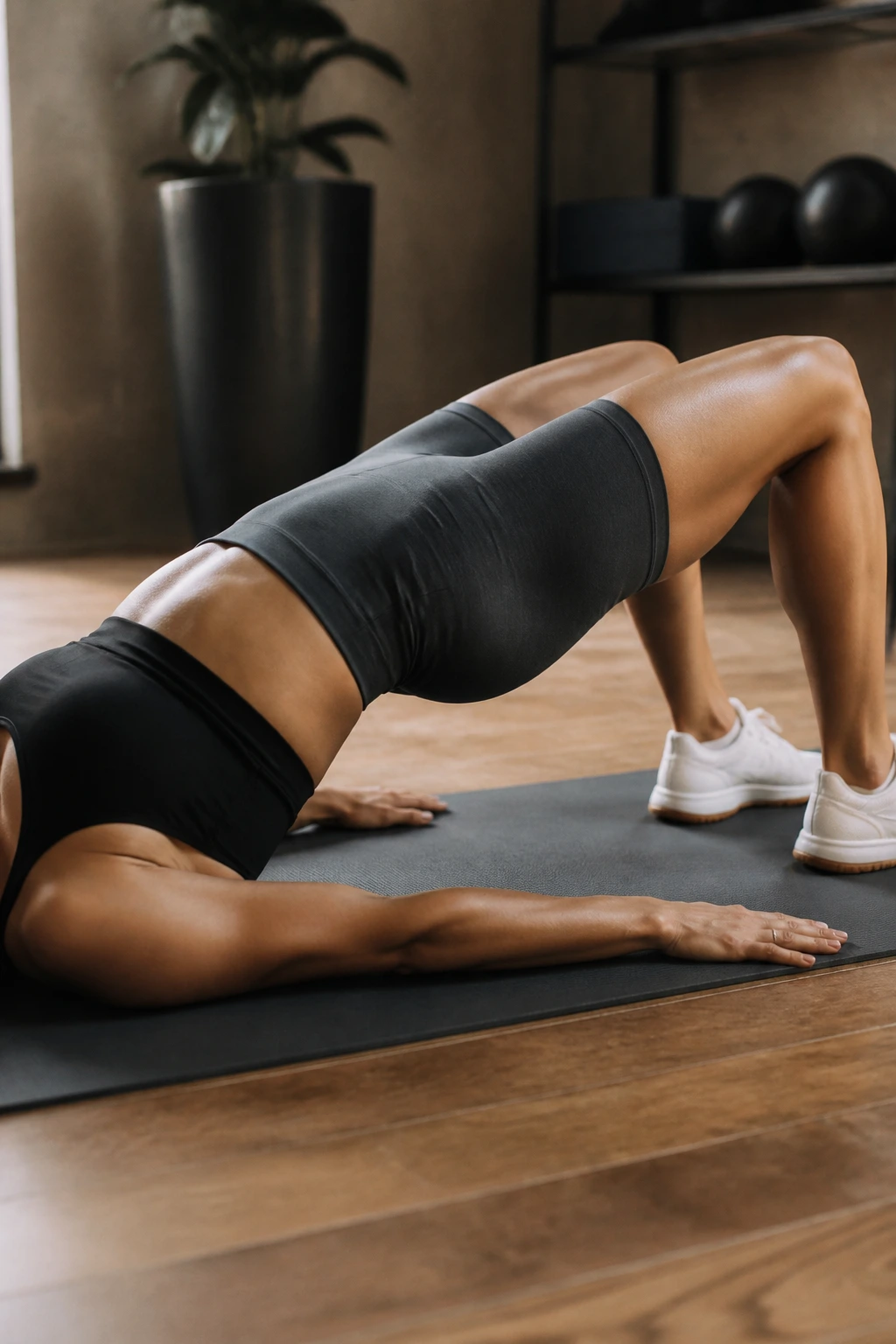
While the name implies a glute focus, a properly executed glute bridge is a major player in thigh development, especially the hamstrings. By driving through your heels, you engage the posterior chain, which supports the thighs. It is a foundational movement that teaches you to use your hips correctly.
Perfecting the Bridge
Lie on your back with your feet flat, hip-width apart. As you lift your hips, visualize driving your heels down and slightly back, as if you are trying to drag the floor toward your head. This cues the hamstrings to fire more aggressively.
Add Intensity
- Use a resistance band around your knees to force them outward, which engages the outer glutes.
- Perform them with a single leg for a more intense unilateral challenge.
- Place a dumbbell across your hips for added resistance.
Do not overextend your lower back at the top. You want your spine to remain neutral, using your hips to drive the lift. Squeezing your core throughout the movement keeps your spine safe and your hips in the right position.
13. Step-Ups
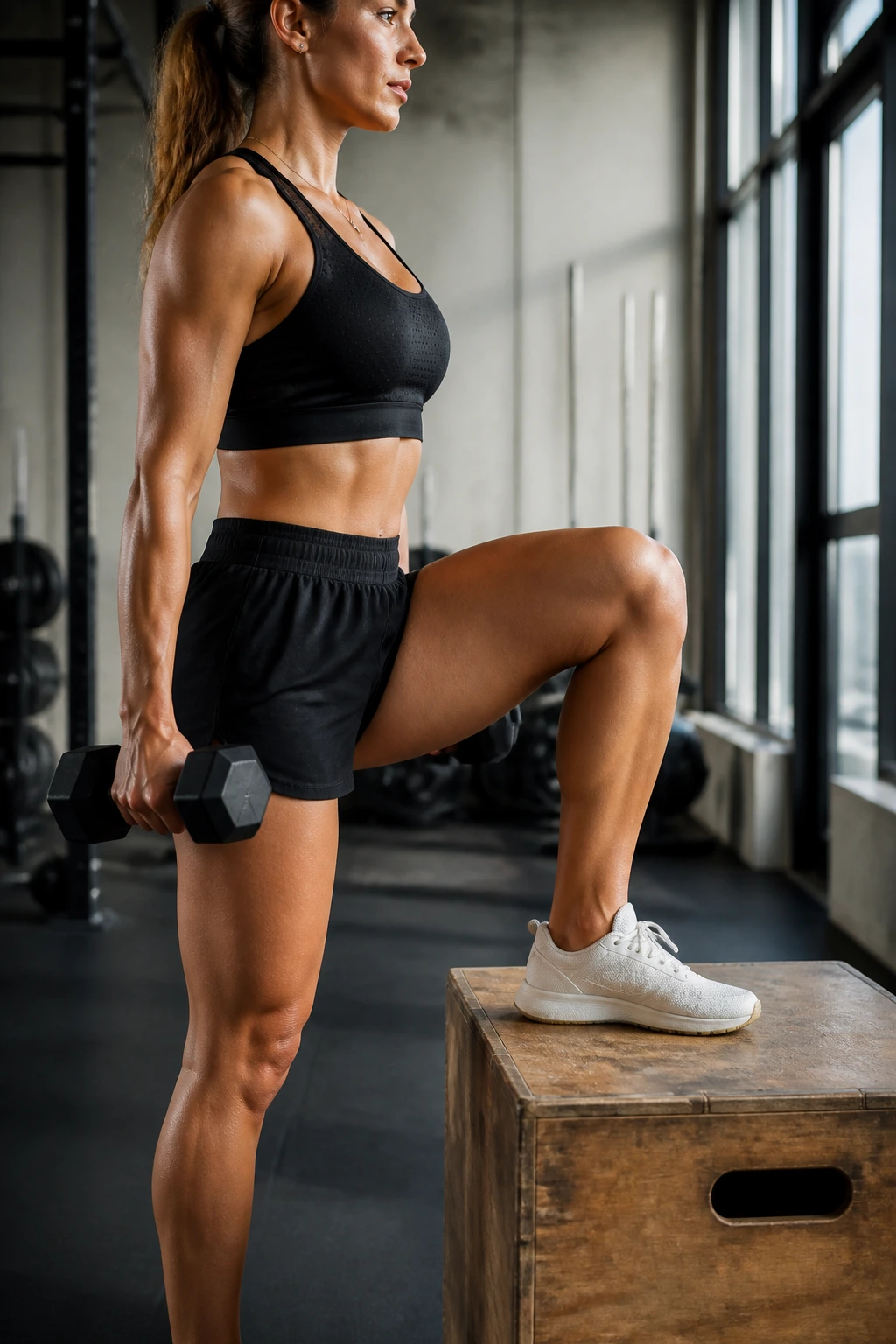
Step-ups are the most functional leg exercise you can do. You are literally training your body to climb, which is a movement you do every single day. The trick is to avoid using your back foot to push off the ground. If you are hopping off the floor to get up, you are cheating yourself out of the work.
Find a box or a bench that puts your knee at about a 90-degree angle when your foot is placed on top. If the step is too high, your hip will rotate, and you will lose the focus on the quad. Keep the torso vertical—leaning too far forward turns it into a glute dominant move, which is fine, but it takes the focus away from the thigh.
To make it harder, hold dumbbells in your hands. But keep the movement slow. The hardest part is the descent. Lower yourself back to the floor with control, do not just drop down. The eccentric control on the way down is where a lot of the strength building occurs.
14. Wall Sits
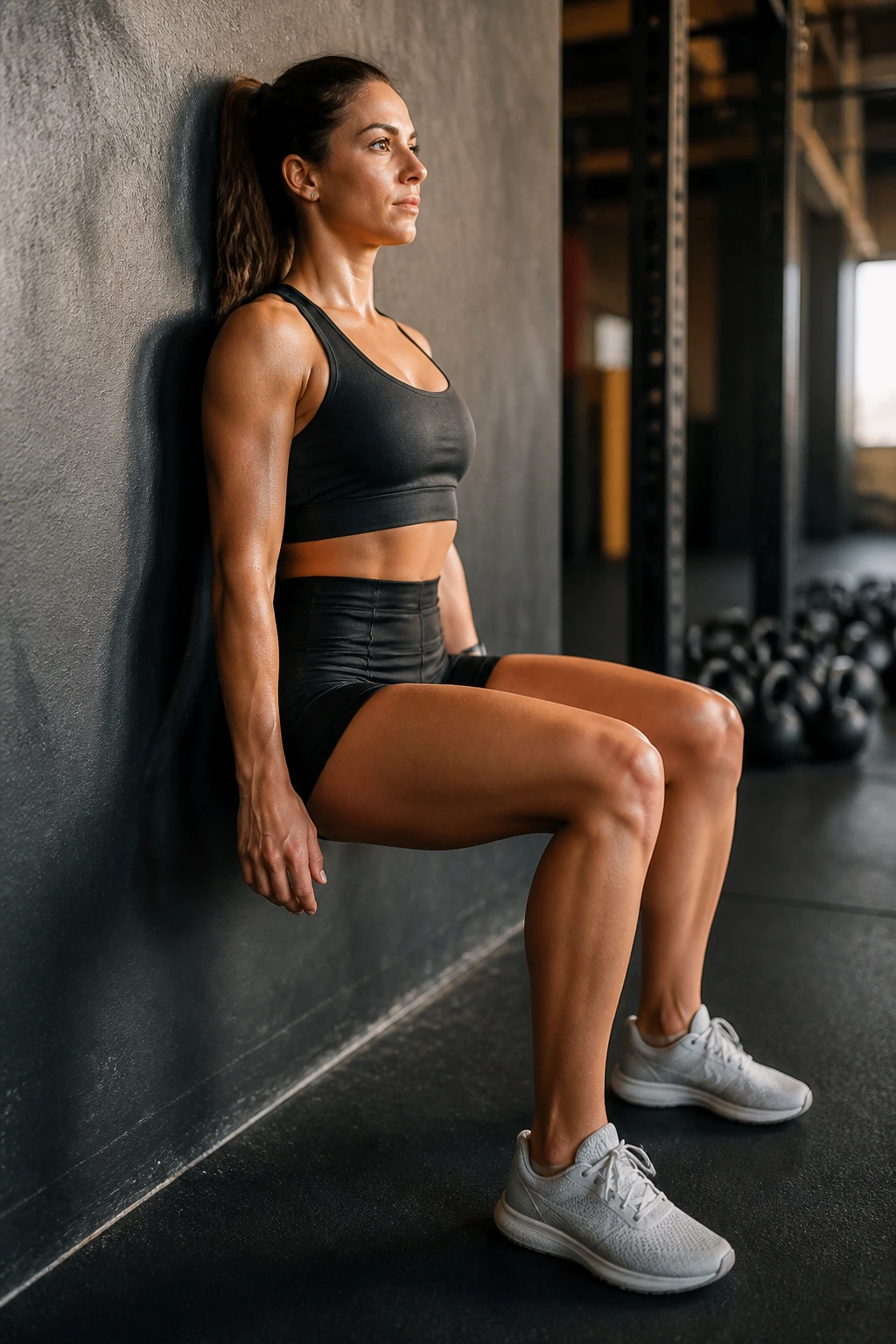
Sometimes the simplest exercises are the most brutal. The wall sit is an isometric exercise, meaning your muscles are working, but they are not moving through a range of motion. This builds incredible endurance in the quadriceps and helps stabilize the knee joint.
The goal here is simple: get into a squat position against a wall and hold it. Keep your feet flat on the floor, about shoulder-width apart. Your thighs should be parallel to the floor, forming a 90-degree angle at the knees. Press your lower back firmly into the wall.
If you want to make it harder, place a dumbbell on your thighs or hold one out in front of you with straight arms. But honestly? If you hold a proper wall sit for 60 to 90 seconds, you will not need any extra weight. Your quads will be burning by the end of the first minute. It’s a great finisher for any leg workout.
15. Sumo Deadlifts
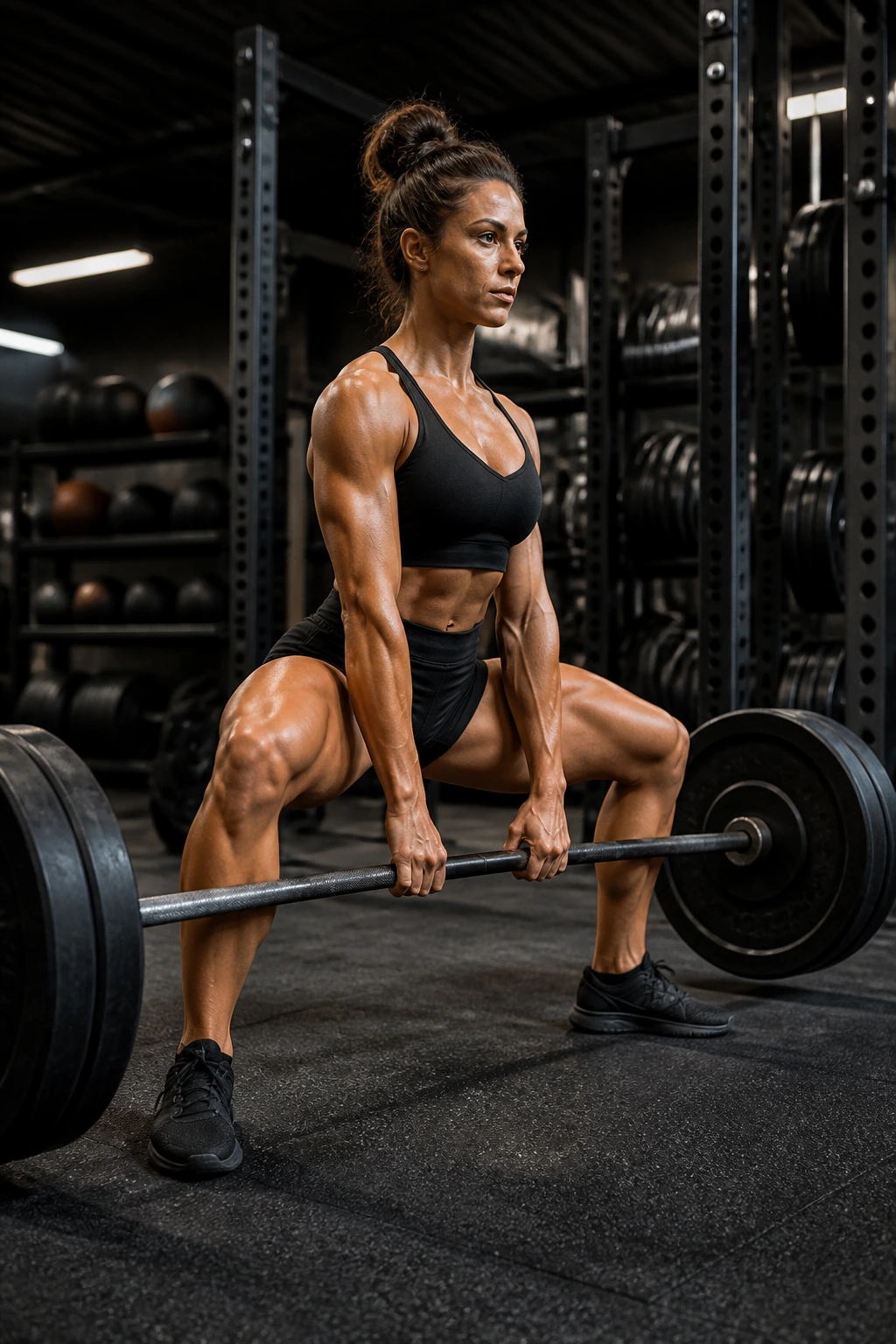
The sumo deadlift is the king of hip-dominant leg movements. With a wide stance, you reduce the distance the bar has to travel and allow for a more upright torso, which minimizes lower back stress. It is a fantastic way to overload the legs with heavy weight while keeping the spine protected.
Unlike the conventional deadlift, where the focus is often on the back, the sumo variation relies heavily on the quads to initiate the pull. You have to push the floor away. Think of it as a leg press from the floor. Your quads provide the initial drive, and your hips and glutes lock out the movement at the top.
Safety First
- Keep your shins as vertical as possible.
- Ensure your knees track out over your toes; never let them cave in.
- Grip the bar inside your knees.
If you have short arms, this might feel awkward at first. It takes practice to find the right grip width that allows you to start the pull without having to hunch over.
16. Pistol Squats
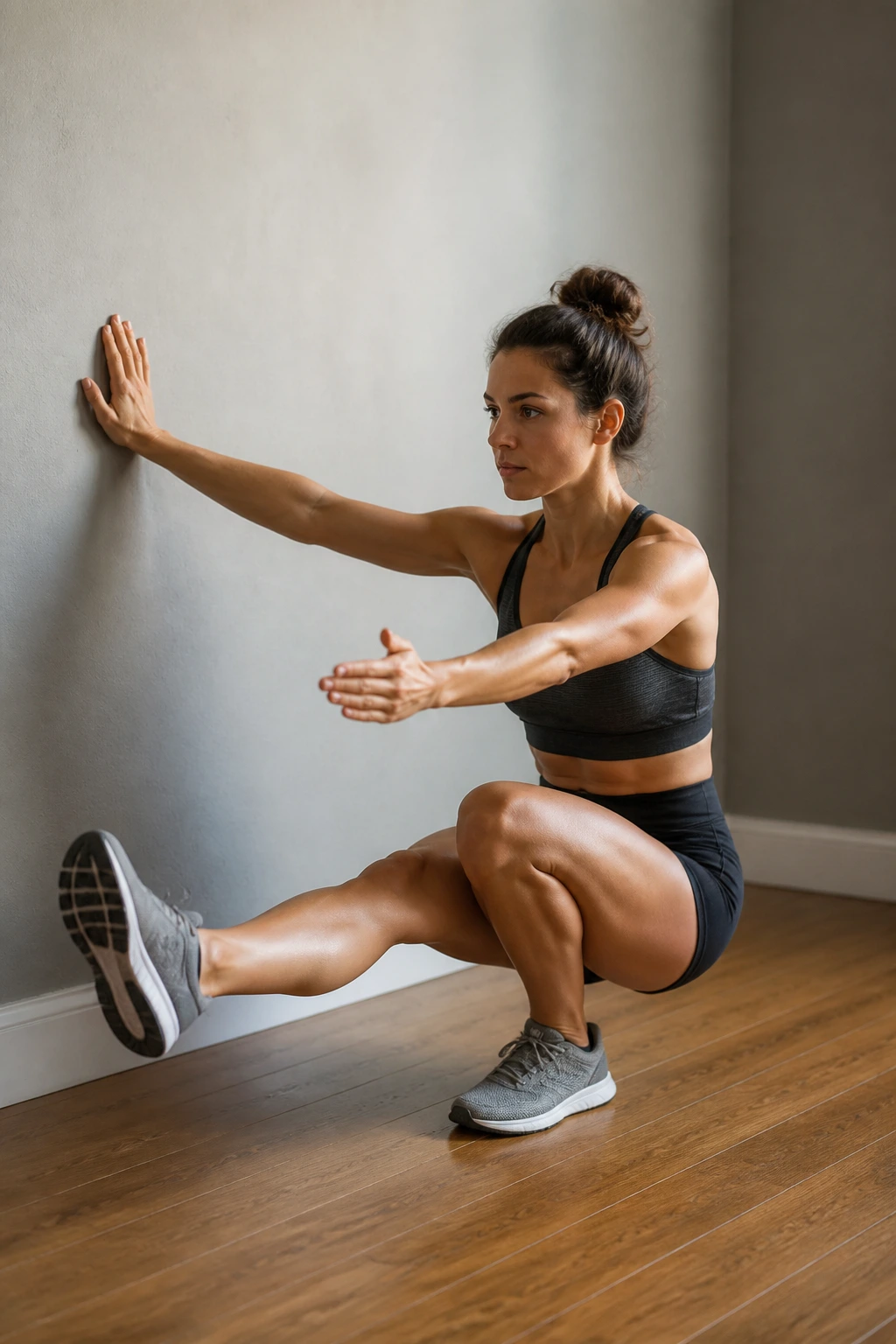
The pistol squat is the ultimate bodyweight leg challenge. If you can perform a clean, controlled pistol squat—a one-legged squat with the other leg extended out in front of you—you have already mastered body control and leg strength. It is an advanced movement, so do not feel discouraged if you cannot do it immediately.
You can work up to this by using a pole or a wall for balance, or by standing on a slightly elevated surface so your non-working leg has room to hang down. As you get stronger, try to lower yourself onto a chair or bench, then gradually decrease the height of the bench until you are going all the way down to the floor.
This move requires immense ankle mobility. If your heel lifts off the ground, your ankle is too tight. Work on your ankle dorsiflexion by stretching your calves regularly. This move builds legs that are balanced, stable, and incredibly strong.
17. Cable Abduction and Adduction
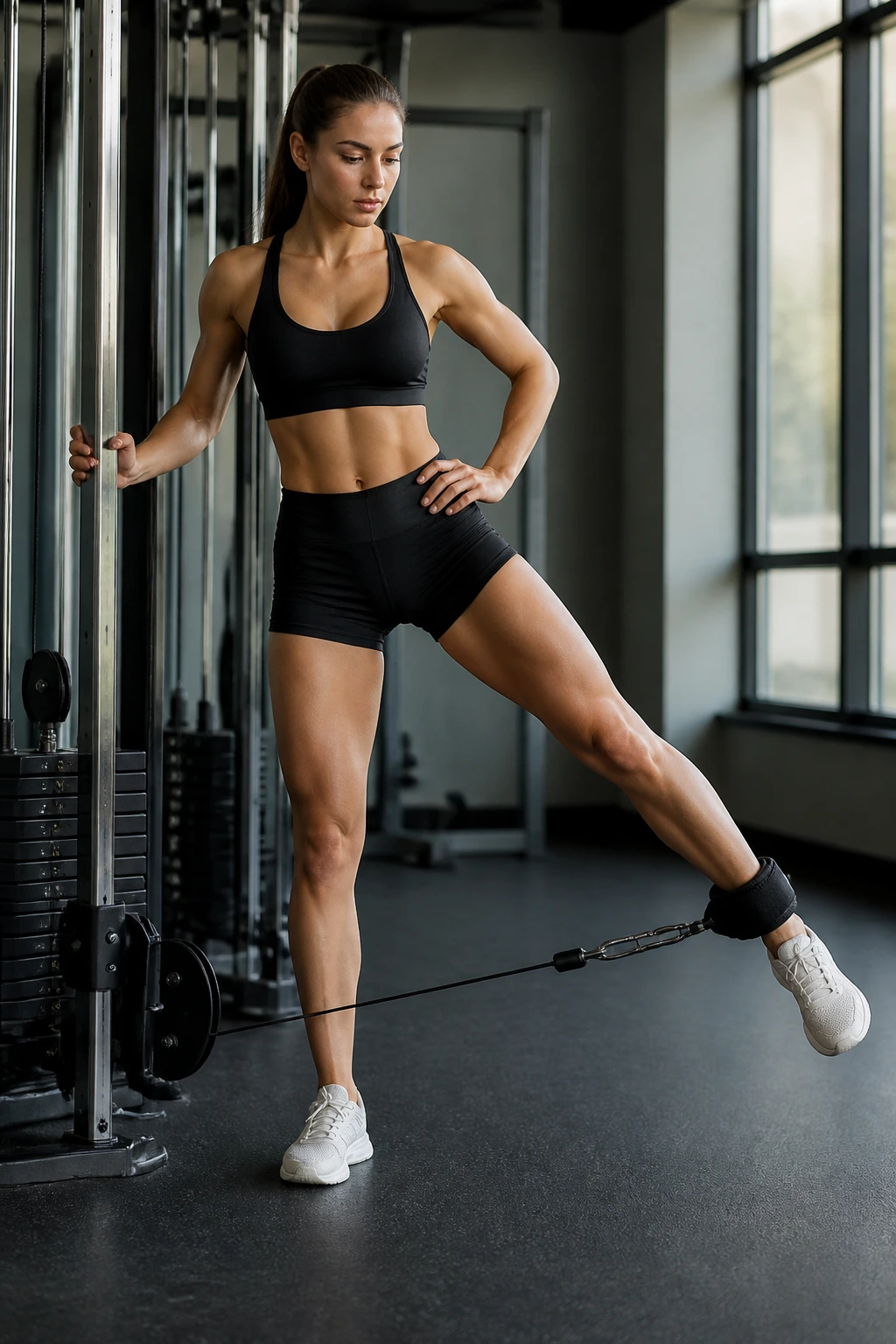
While most gym-goers focus on the big compound lifts, the small muscles on the inside and outside of the thighs deserve attention. The cable machine is perfect for this. By attaching a strap to your ankle, you can perform controlled movements that target the adductors (inner) and abductors (outer).
These muscles are what provide that “sculpted” look when you are wearing shorts or athletic wear. They support your hips and prevent knee valgus, which is when your knees collapse inward. Training these small muscles doesn’t just make your legs look better; it makes them more resilient against injury.
Focus on slow, steady reps. Use the cable to create constant resistance throughout the entire range of motion. You don’t need heavy weight here—in fact, lighter weight with a pause at the peak of the contraction usually yields much better results.
18. Jump Squats
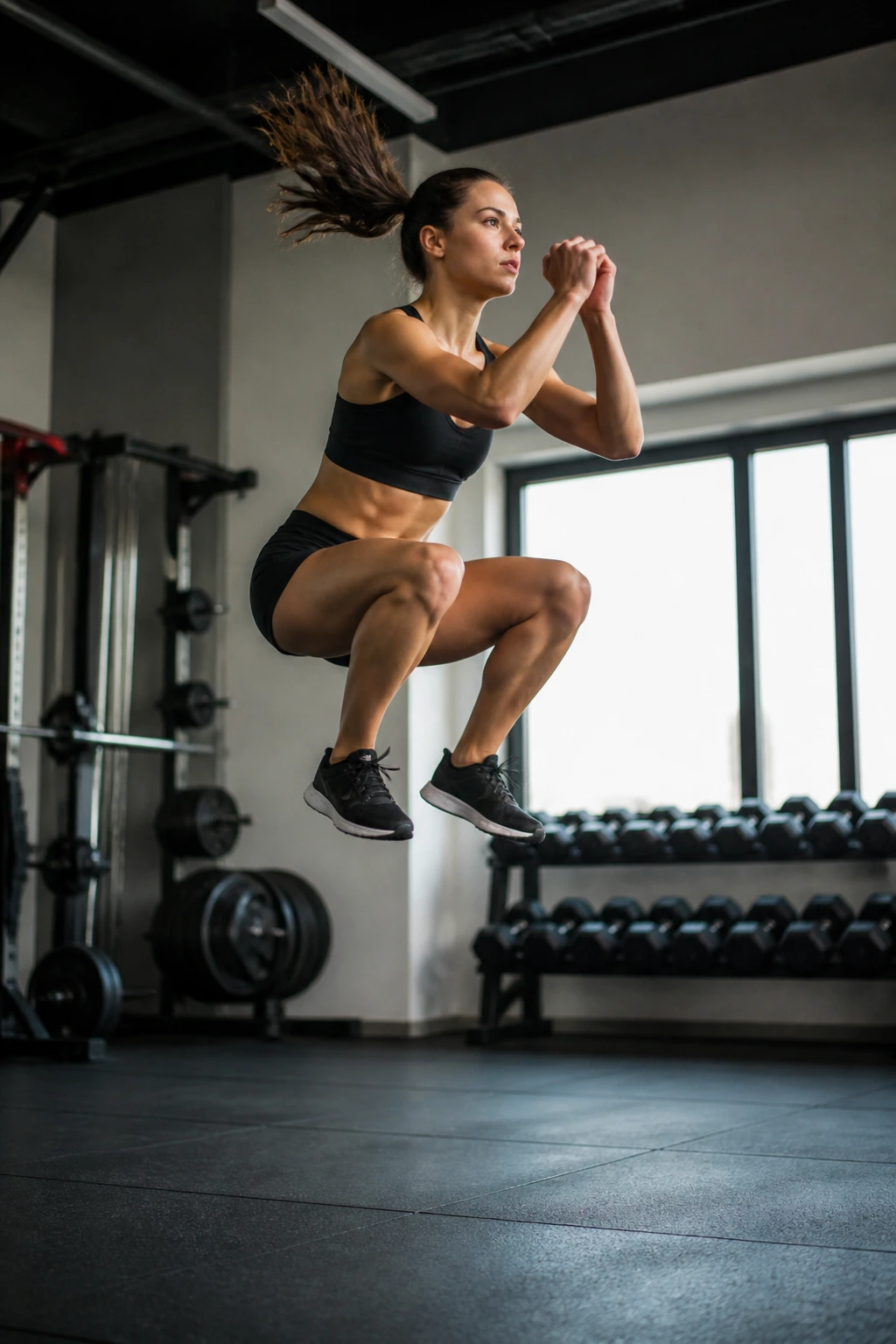
We have covered strength and endurance, but power is the final piece of the puzzle. Jump squats are a plyometric movement that trains your fast-twitch muscle fibers. These fibers are the ones responsible for explosive strength and are often the ones that add that “pop” to your leg development.
When you land, focus on absorbing the shock through your legs. Do not land on straight knees. Bend your knees, hips, and ankles to cushion the impact. If you find your joints hurting, stop the jumps and stick to controlled squats. You do not need to jump high to get the benefit; it is about the explosive effort on the way up and the controlled landing on the way down.
Why This is the Perfect Finisher
This movement spikes your heart rate, forces your core to engage, and empties your remaining fuel stores. It is the perfect end to a heavy leg session. Keep the reps low—5 to 10 explosive jumps per set—to ensure quality. If your form breaks down because you are tired, the set is over.
Final Thoughts
Sculpting your thighs is a marathon, not a sprint. You are not going to see permanent changes after one workout, regardless of how intense it feels. The consistency of showing up, week after week, and challenging your muscles with progressive weight or better control is what builds the shape you are looking for.
Focus on the mind-muscle connection. If you are doing a set of lunges but not feeling it in your quads, stop. Adjust your foot position. Slow down the movement. Find where the muscle is working. Once you learn how to make the muscles work, you will stop chasing weights and start chasing the burn—that is when the real transformation happens.
