



Most people turn floor ab exercises into a race. They pump out fast reps, fling their legs around, and then wonder why their neck, hip flexors, and lower back are doing all the work.
That’s the trap. Floor work looks easy because you’re not loading a machine or holding a dumbbell, but the floor is brutally honest. The second your ribs flare or your low back arches, the movement changes, and your abs stop being the main event.
The good stuff happens when the motion is small, controlled, and a little bit annoying. That’s where your rectus abdominis, obliques, and deep core muscles start doing their actual job: stabilizing your torso while your limbs move.
I kept these floor ab exercises in a useful order, from friendly to hard-edged. Start with the first few if you want clean form and a smarter burn, then move up once you can keep your lower back quiet and your breathing steady.
1. Dead Bug
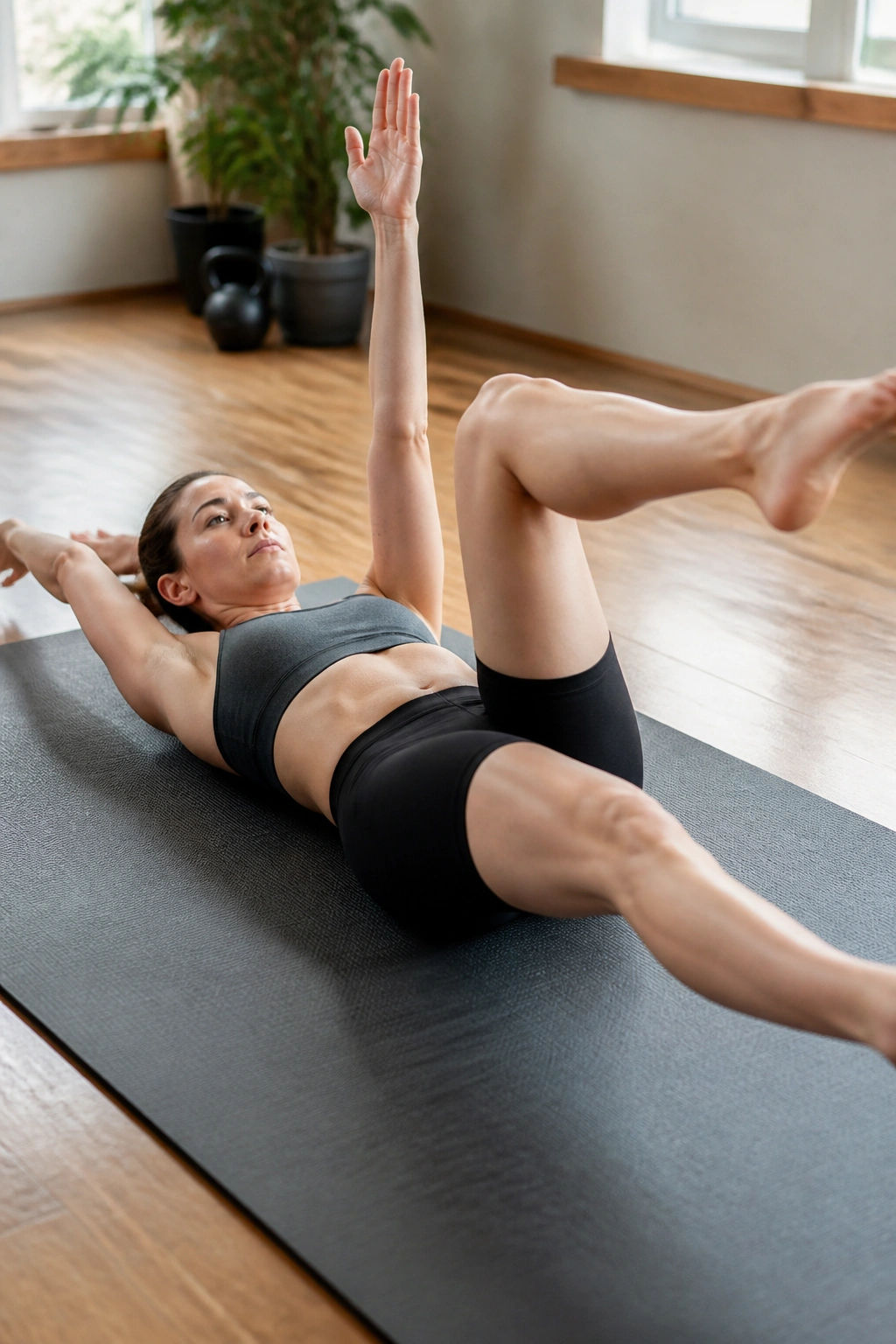
The dead bug is one of those exercises that looks almost too simple until you try to keep your back glued to the floor. That’s the point. Your abs aren’t just curling your torso here; they’re stopping your spine from arching while your opposite arm and leg move away from center.
Why It Belongs at the Top
If you want floor ab exercises that teach control before chaos, this is the place to start. Dead bugs are a classic anti-extension move, which is a fancy way of saying they train you not to let your low back pop off the floor.
Start with bent knees and arms straight up. Lower one heel toward the floor while the opposite arm reaches overhead, then return and switch sides. Slow is better than smooth here. Smooth can hide cheating.
What Good Form Feels Like
- Your low back stays heavy.
- Your ribs stay down.
- Your neck stays relaxed.
- The moving leg stops before your back arches.
Pro tip: Exhale as the arm and leg extend. That little breath cue helps flatten the rib cage and usually makes the whole move cleaner.
If you can do 6 to 8 reps per side with perfect control, you’re already doing more useful work than a rushed set of 20.
2. Heel Taps
Heel taps are the kind of exercise that fools people in the best way. The range of motion is tiny, but the abs light up fast when you keep your rib cage from flaring and your lower back from shrugging off the floor.
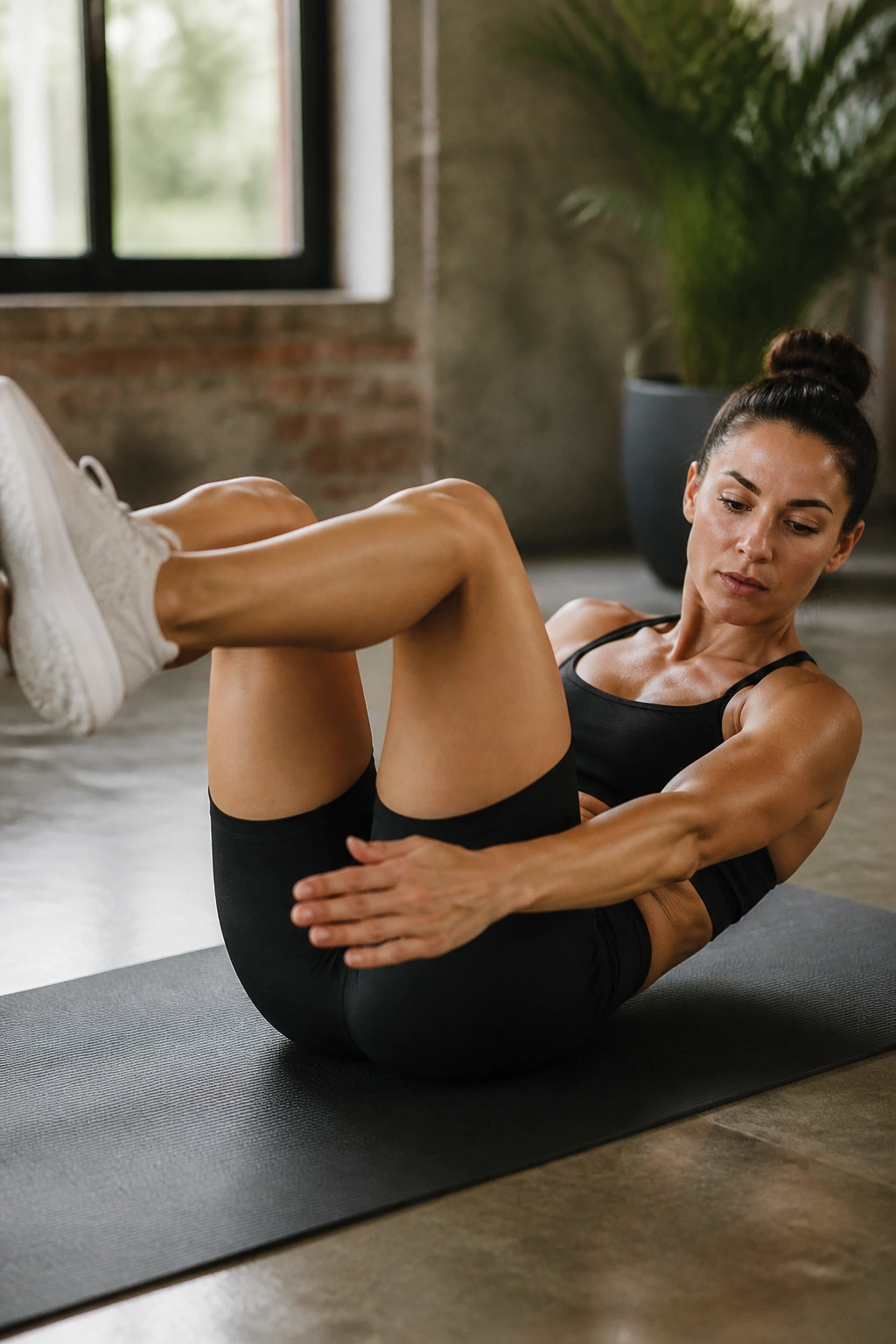
Lie on your back with your knees bent and feet lifted. Reach one hand at a time toward the same-side heel, alternating sides in a steady rhythm. Don’t chase speed. A fast heel tap turns into a sloppy side bend, and that’s not the goal.
The trick is to keep your shoulders slightly curled off the mat without yanking on your neck. Your torso should feel like it’s held in one piece, not flopping from side to side.
A clean set of 12 to 20 total taps usually works well. If your hip flexors start barking, shorten the range and focus on keeping the movement controlled. That tiny adjustment makes a big difference.
3. Bird Dog
Bird dog is not flashy. Good. It doesn’t need to be. This move teaches your core to resist rotation, which matters more than people think when they’re trying to build a midsection that actually holds up in real life.
Why It Earns a Spot
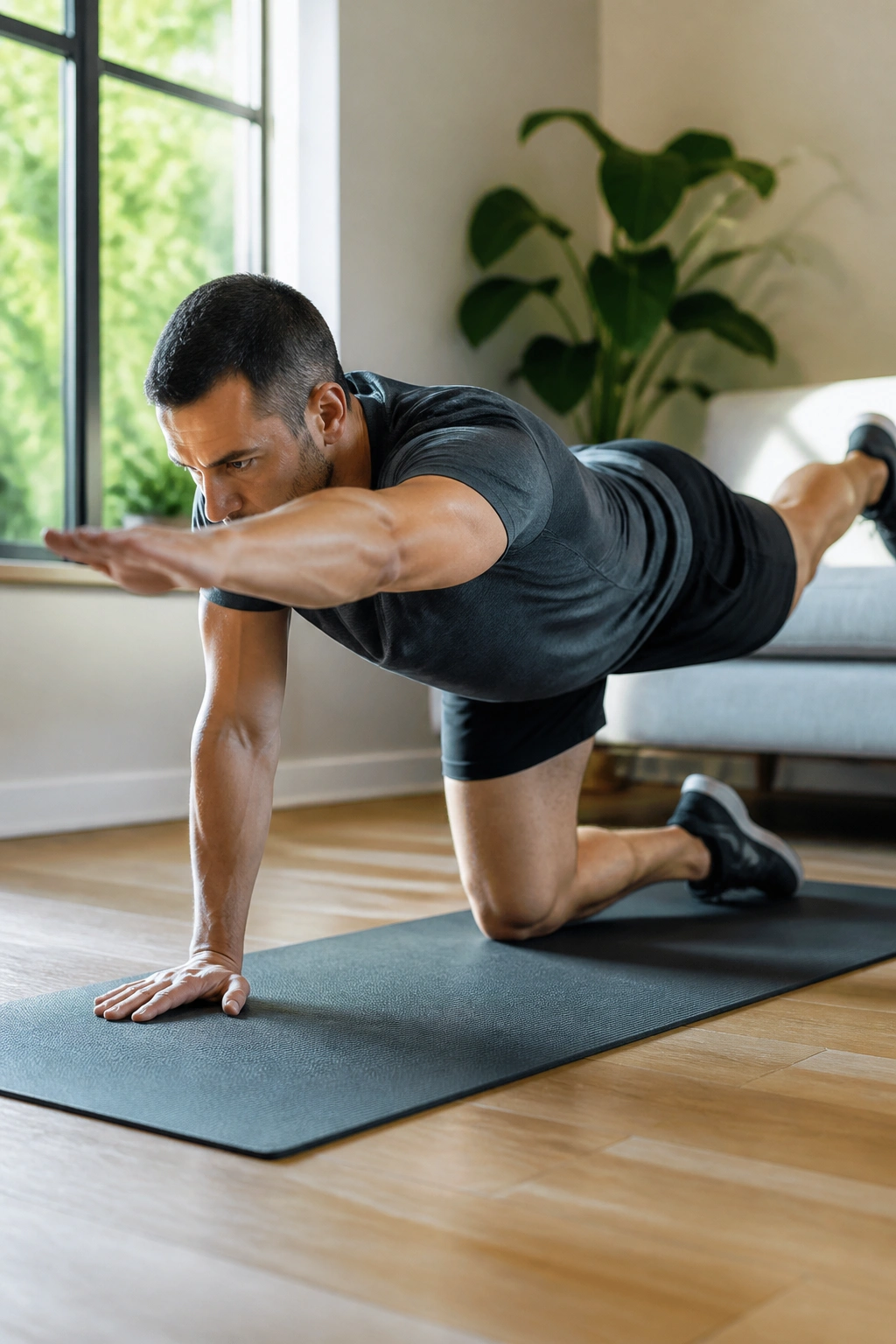
Get on all fours with hands under shoulders and knees under hips. Extend one leg straight back and the opposite arm forward, then pause before switching sides. The goal is not height. The goal is a square pelvis.
If one hip twists open every time you reach, the exercise gets messy fast. Keep your back flat, press the floor away with your hands, and move as if you’re balancing a glass of water on your low back. That image sounds a little silly, but it works.
Clean Cues Worth Remembering
- Reach long, not high.
- Hold each rep for 2 seconds.
- Keep your chin tucked a bit.
- Breathe out before the extension.
Bird dog makes a strong warm-up on days when your lower back feels stiff. It also pairs well with crunch-style moves because it teaches control in the opposite direction. That balance matters.
4. Reverse Crunch
Reverse crunches are where a lot of people finally feel their lower abs, but only if they stop throwing their legs around. The movement should come from curling the pelvis up, not from swinging the feet toward your face.
Lie flat with knees bent and shins roughly parallel to the floor. Exhale, then curl your tailbone slightly off the mat as your knees move toward your chest. Think small lift, not huge slam.
What Makes This Different
Unlike a standard crunch, the reverse crunch asks your abs to roll the pelvis, which is often a better target for people who say they “never feel their lower abs.” You probably will feel this in your hip flexors too if you move too fast. That’s normal at first.
How to Keep It Honest
- Keep the motion short.
- Pause at the top for 1 second.
- Lower with control until your low back touches down again.
- Stop if you start kicking the ceiling with your knees.
Do 8 to 12 slow reps. If that feels too easy, straighten the legs a little more. If your back starts to arch, bend the knees more and make the lever shorter. Simple fix. Big payoff.
5. Basic Curl-Up
The basic curl-up gets ignored because it’s old-school. That’s a mistake. A well-done curl-up is one of the cleanest floor ab exercises for the front of the torso, especially if you keep the motion modest and avoid the giant sit-up swing.
Set one knee bent and one leg straight, or keep both knees bent if that feels better on your low back. Curl your shoulders a few inches off the floor, hold for a beat, and lower under control. You do not need to sit all the way up. In fact, you probably shouldn’t.
This move works best when you think about the ribs closing toward the pelvis. Not the chin reaching forward. Not the elbows yanking. Just a small, hard contraction through the middle.
One smooth set of 10 to 15 reps is enough for most people. If your neck gets sore, keep one hand lightly behind the head and look at the ceiling. That tiny change can save the whole set.
6. Bicycle Crunch
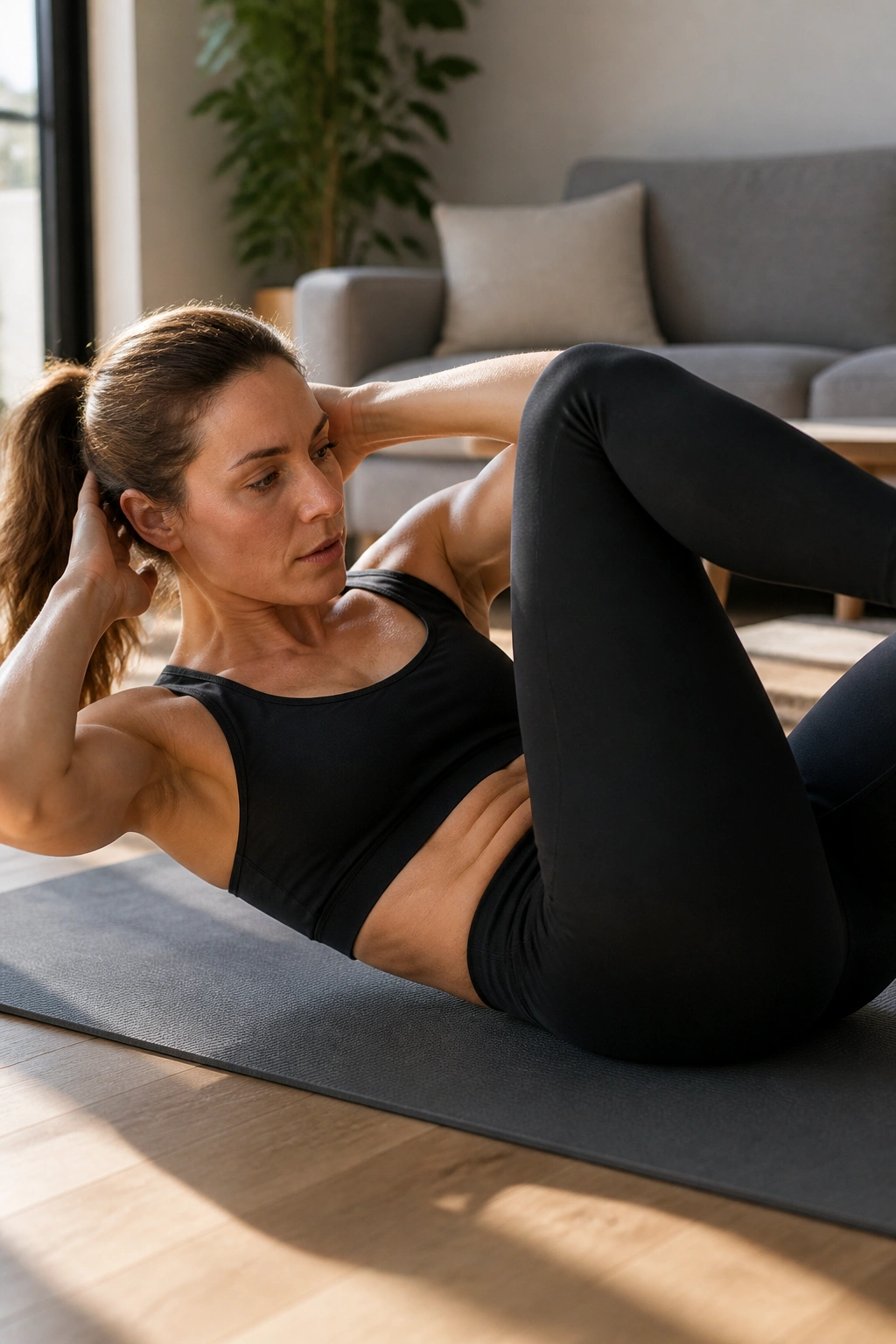
Bicycle crunches are either excellent or a mess. There’s not much middle ground. Done slowly, they hit the obliques and upper abs with a lot more honesty than the frantic version most people have seen in gym class.
The problem is speed. People turn this into a bicycle pedal race, yank on the neck, and twist from the elbows instead of the rib cage. That’s a waste of good work.
What To Do Instead
Lie on your back, lift both shoulders slightly, and bring one elbow toward the opposite knee while the other leg extends. Then switch sides with control. The extended leg should hover low enough to make the abs work, but not so low that your back arches.
A clean rep feels deliberate. The torso rotates, but the movement stays compact. The closer your pace is to a steady march than a sprint, the better the result.
A Few Things That Matter
- Keep the knees moving in a controlled path.
- Keep the chin off the chest.
- Exhale on each twist.
- Stop the set when the form gets sloppy.
I’d rather see 8 crisp reps per side than 30 rushed ones. The burn is not the goal. The burn is a side effect.
7. Toe Reach Crunch
Toe reach crunches are one of the few floor ab exercises that make people slow down once they realize how high their shoulders don’t need to come. The move is short, and that’s a good thing. You’re trying to shorten the distance between ribs and pelvis, not perform a gymnastics routine.
Lie on your back with legs pointed up, knees soft if needed. Reach both hands toward your toes by lifting the shoulder blades off the floor and curling the chest slightly forward. Then lower with control until your upper back touches down again.
The neck often gets blamed here, but the real issue is usually overreaching. If your hands are flying way past your knees and your low back pops up, the set is too aggressive. Shrink the range and keep the movement crisp.
This one works well in sets of 10 to 15. It also pairs nicely with reverse crunches, since one targets the upper part of the trunk while the other asks the pelvis to curl.
8. Side Plank Hip Lift
Side plank hip lifts bring the obliques into the picture fast. They also wake up the muscles along the side of the hips, which matters more than people think when they want a trunk that stays steady instead of wobbling.
Where You Should Feel It
Set up in a side plank from your forearm and the edge of one foot. Lower your hip toward the floor, then lift it back up a few inches. Don’t chase height. Chase a straight line from head to heel.
If the shoulder gets cranky, drop the bottom knee. That makes the exercise more manageable without turning it into a different movement entirely.
Good Cues Make This Move Better
- Keep your top hand on your hip or reaching up.
- Press the forearm hard into the mat.
- Move the pelvis straight up and down.
- Keep the neck long.
Do 8 to 12 lifts per side. It’s a small motion, but the side of your waist will notice. So will your glutes, which is one reason this exercise tends to feel more useful than a hundred sloppy twists.
9. Plank Shoulder Tap
Plank shoulder taps are sneaky. They look like a basic plank drill until your hips start doing little side-to-side dances. The abs have to fight that shift, and that’s where the work lives.
Get into a high plank with feet a little wider than hip-width. Tap one shoulder with the opposite hand, then switch. The narrower your stance, the harder the move gets, but don’t narrow it so much that you wobble like a shopping cart with one bad wheel.
The whole point is to keep the pelvis quiet. If your hips rock hard every time a hand leaves the floor, slow down and widen your feet. Speed hides problems here.
A set of 10 to 20 taps total is plenty. Clean body position matters more than volume. A neat tap is useful; a desperate slap is not.
10. Flutter Kick
Flutter kicks are a favorite because they feel simple and look harmless. Then they start burning, and people discover how much their low abs hate being ignored.
Lie on your back and lift both legs a few inches off the floor. Kick one leg up a little while the other drops a little, keeping the motion small and steady. The lower your legs go, the harder the exercise gets — but only go as low as you can without your back arching off the mat.
How Small Is Small
Smaller than most people think. A big, splashing flutter kick usually shifts the load into the hip flexors and lower back. A tight, controlled kick keeps the tension where it belongs.
Useful Details to Watch
- Press your hands under your hips if needed.
- Keep the chin neutral.
- Keep the kicks even.
- Stop before your low back starts lifting.
Try 20 to 30 seconds at first. If that feels easy, go to 40. This one is less about raw strength and more about holding form while the clock keeps running.
11. Scissor Kick
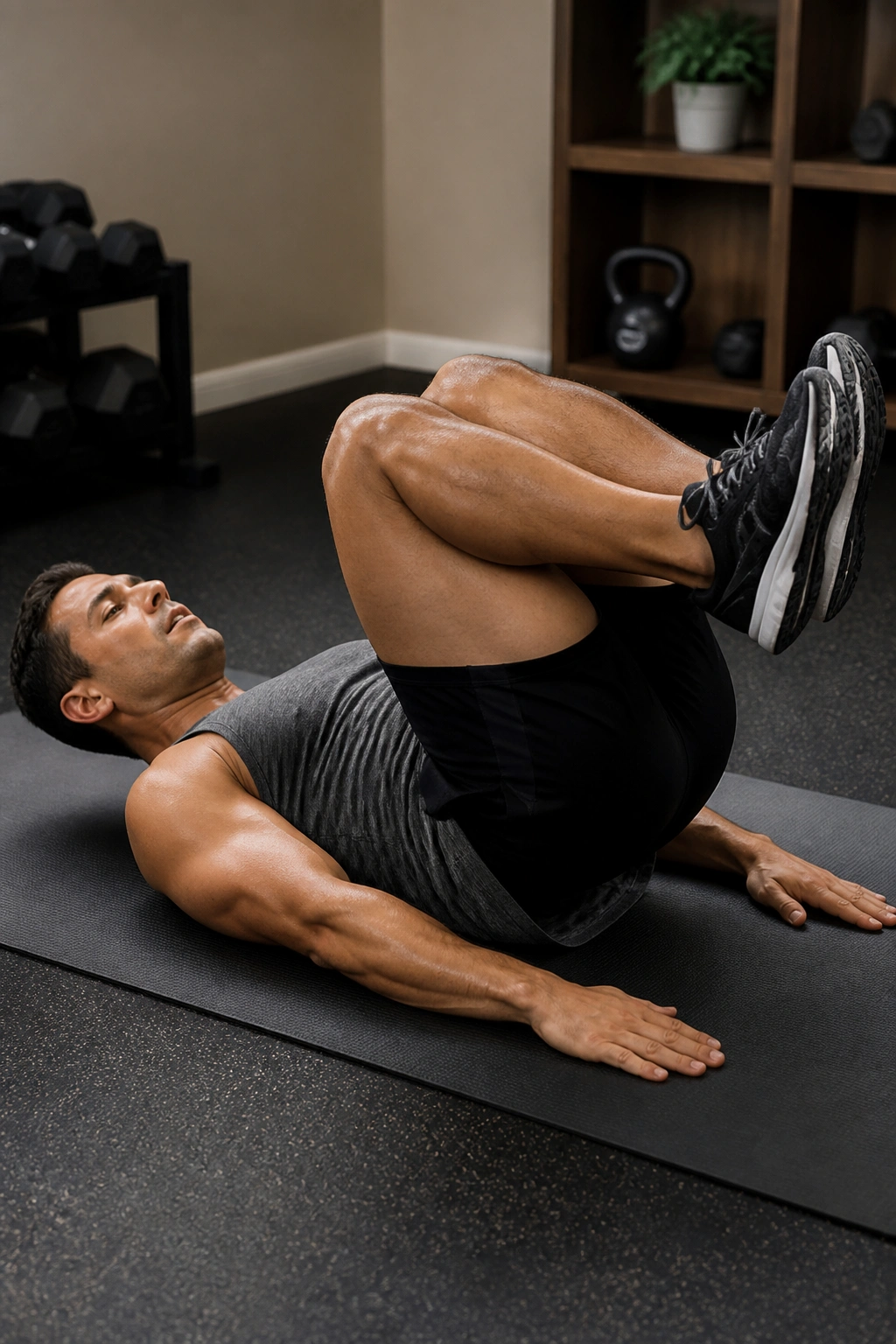
Scissor kicks are close cousins of flutter kicks, but the split-leg position gives them a slightly different feel. You get more stretch through the front of the hip, and the abs have to work harder to keep the torso from tipping.
Lift both legs off the floor, then cross one over the other in a slow, alternating pattern. The range should stay modest. If the legs open too wide, the movement stops feeling like core work and starts becoming a flexibility drill.
One reason this exercise gets messy is breathing. People hold their breath, then wonder why their midsection tires out so fast. Keep the breath moving. Short exhales help more than you’d expect.
I like these as a short finisher: 15 to 20 seconds, rest, then repeat once or twice. That’s enough to make the abs speak up without trashing the lower back.
12. Straight Leg Raise
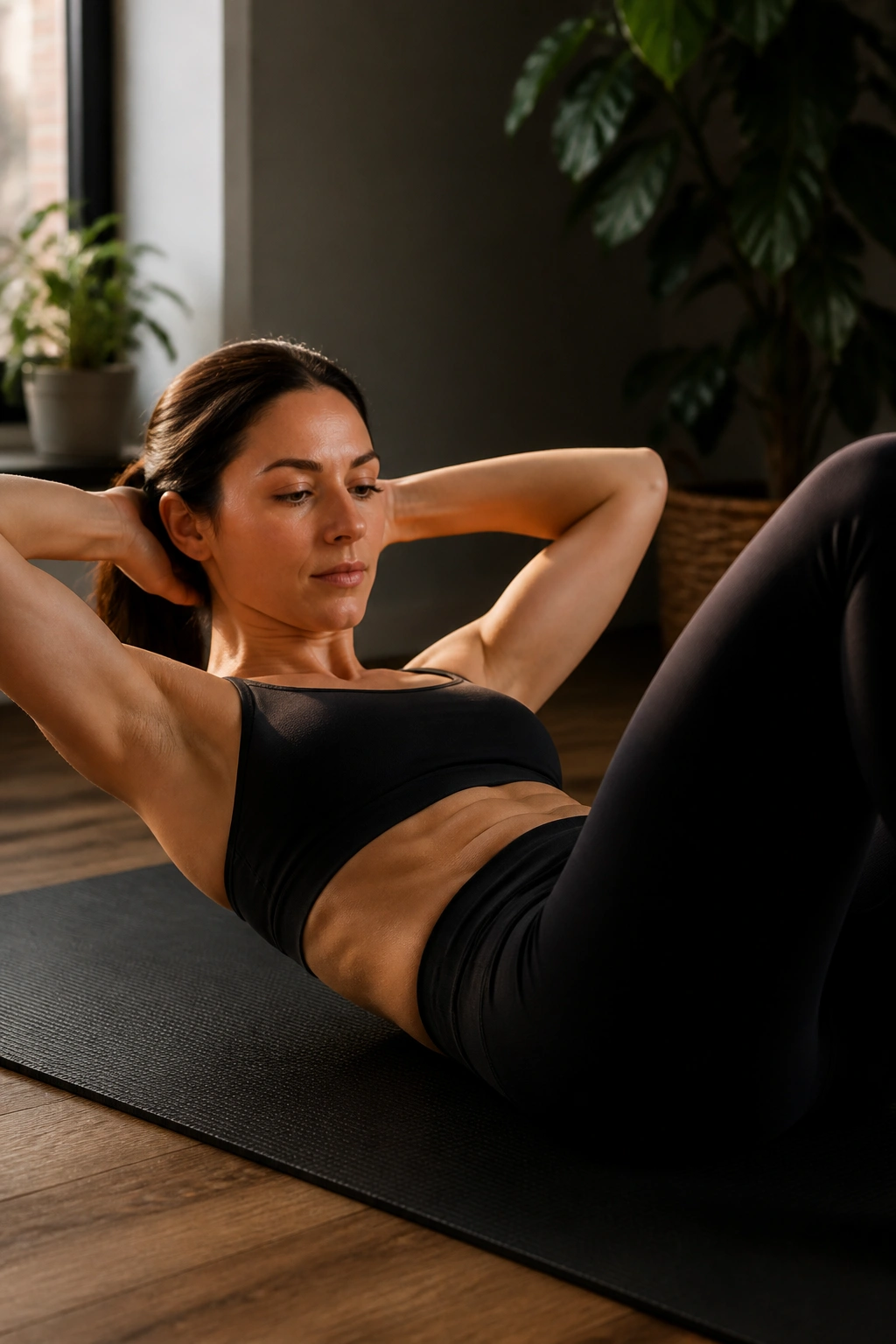
Straight leg raises are brutally honest. If your abs can’t hold the pelvis still, your low back will tell you immediately. That’s why this move is so useful and so easy to mess up.
Start flat on your back with both legs straight. Raise them toward the ceiling, then lower them slowly until the point just before your lower back arches. That stopping point matters. Past that line, the exercise turns into a back-arching contest you do not want to win.
What Makes It Work
The abs should control the lowering phase. Not the hip flexors, not momentum, not a quick drop. If your hamstrings are tight, bend the knees a little. That shortens the lever and often makes the whole thing cleaner.
Quick Setup Notes
- Hands can go by your sides or under the pelvis.
- Keep the feet relaxed.
- Lower for 3 seconds if you want more challenge.
- Stop if you feel pinching in the low back.
Do 6 to 10 reps and pay attention to the bottom position. That’s where the exercise gets real.
13. Hollow Body Hold
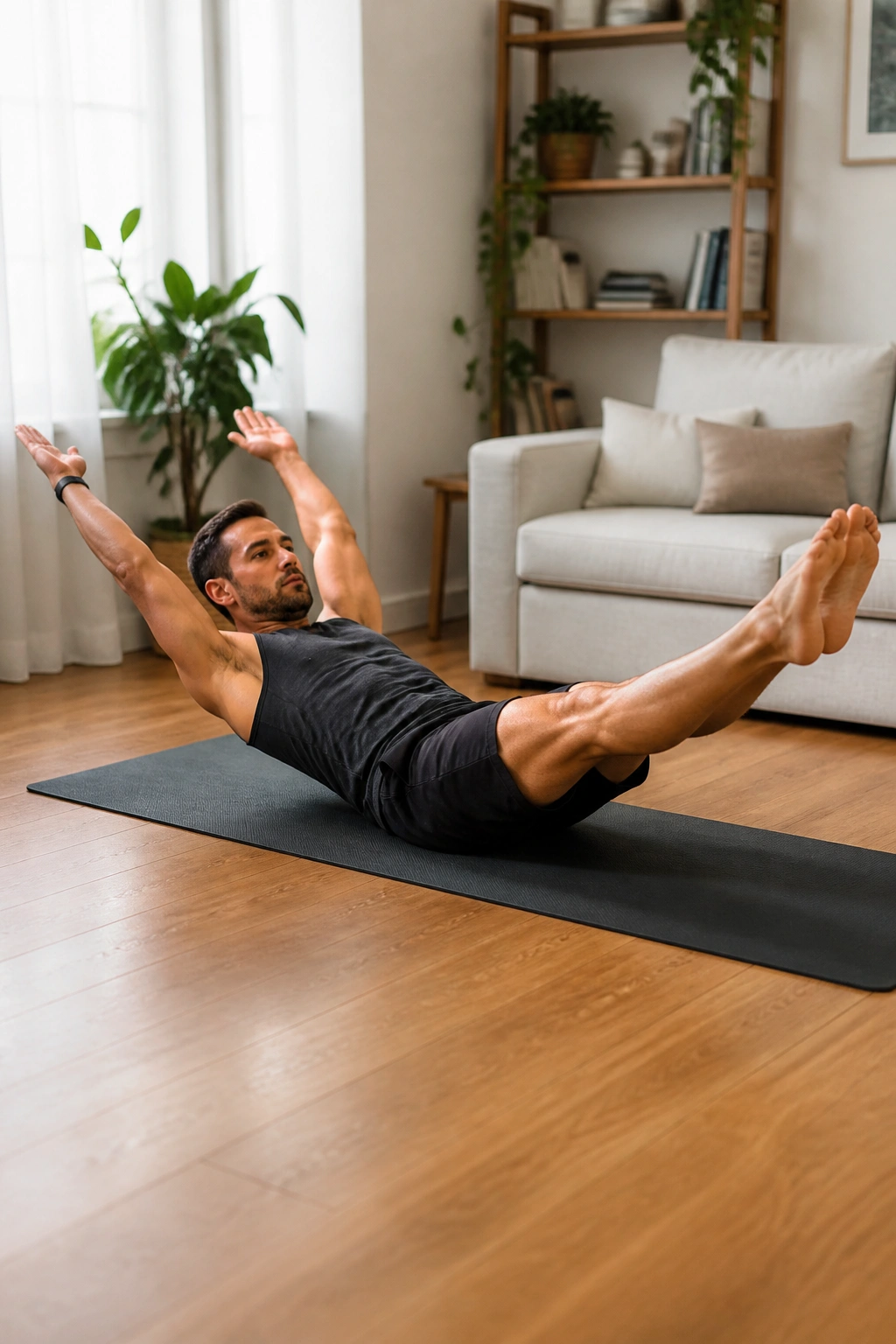
The hollow body hold is one of the toughest floor ab exercises on this list, and it earns the pain honestly. If you’ve ever watched a gymnast hold a shape that looks almost impossible to keep, this is part of that world.
Lie on your back, press your lower back into the floor, and lift your shoulders and legs a few inches. Arms can reach overhead if you’re strong enough, or stay by your sides if you’re building up. The body should feel like a shallow banana shape, but with the low back still pinned down.
That pinned-back feeling is everything. Lose it, and the exercise becomes a hip-flexor parade. Keep it, and your abs have to work hard just to let you breathe.
Short holds beat heroic suffering. Start with 10 to 20 seconds. If you can keep the shape longer without shaking apart, add time later. If your back lifts, tuck the knees slightly and make the shape easier.
14. Mountain Climber
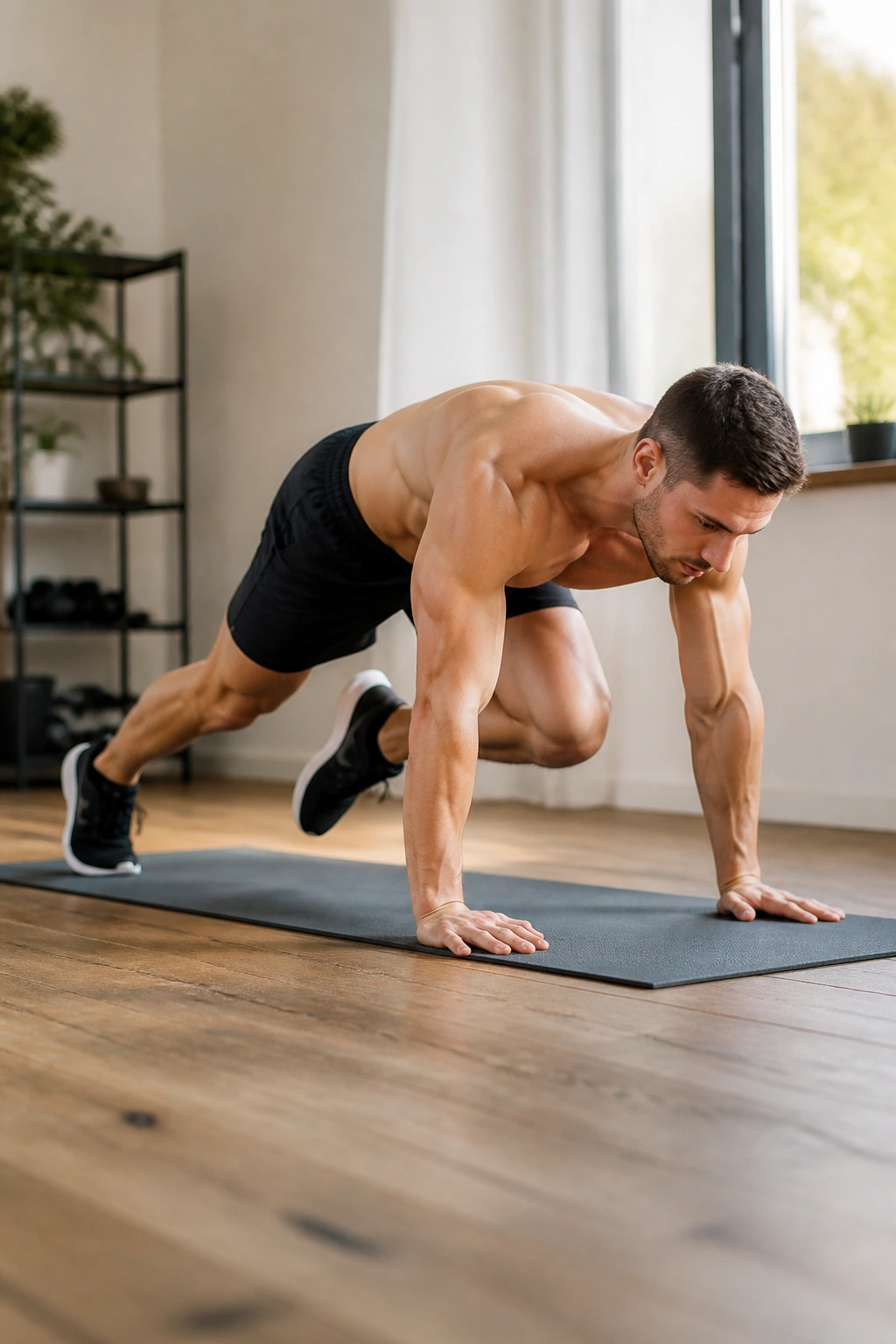
Mountain climbers get filed under cardio far too often. Sure, they raise your heart rate. But done slowly and with control, they also challenge the abs to stop your torso from bouncing and twisting all over the place.
Set up in a plank and drive one knee toward your chest, then switch sides. The key word is drive, not fling. If your shoulders drift forward and your hips jump up and down like popcorn, the set has gone off the rails.
Why Slow Beats Fast Here
A slower pace gives your core time to do the job. You can feel the ribs stay tucked and the pelvis stay steady. Fast climbers can be fine as a conditioning tool, but they are not the cleanest ab exercise if the goal is midsection control.
What To Aim For
- Keep the shoulders stacked over the wrists.
- Land each foot softly.
- Keep the core braced.
- Use 20 to 30 seconds, not 2 sloppy minutes.
This is a nice last-round exercise when you want the abs to stay tight while the whole body is breathing hard.
15. V-Up
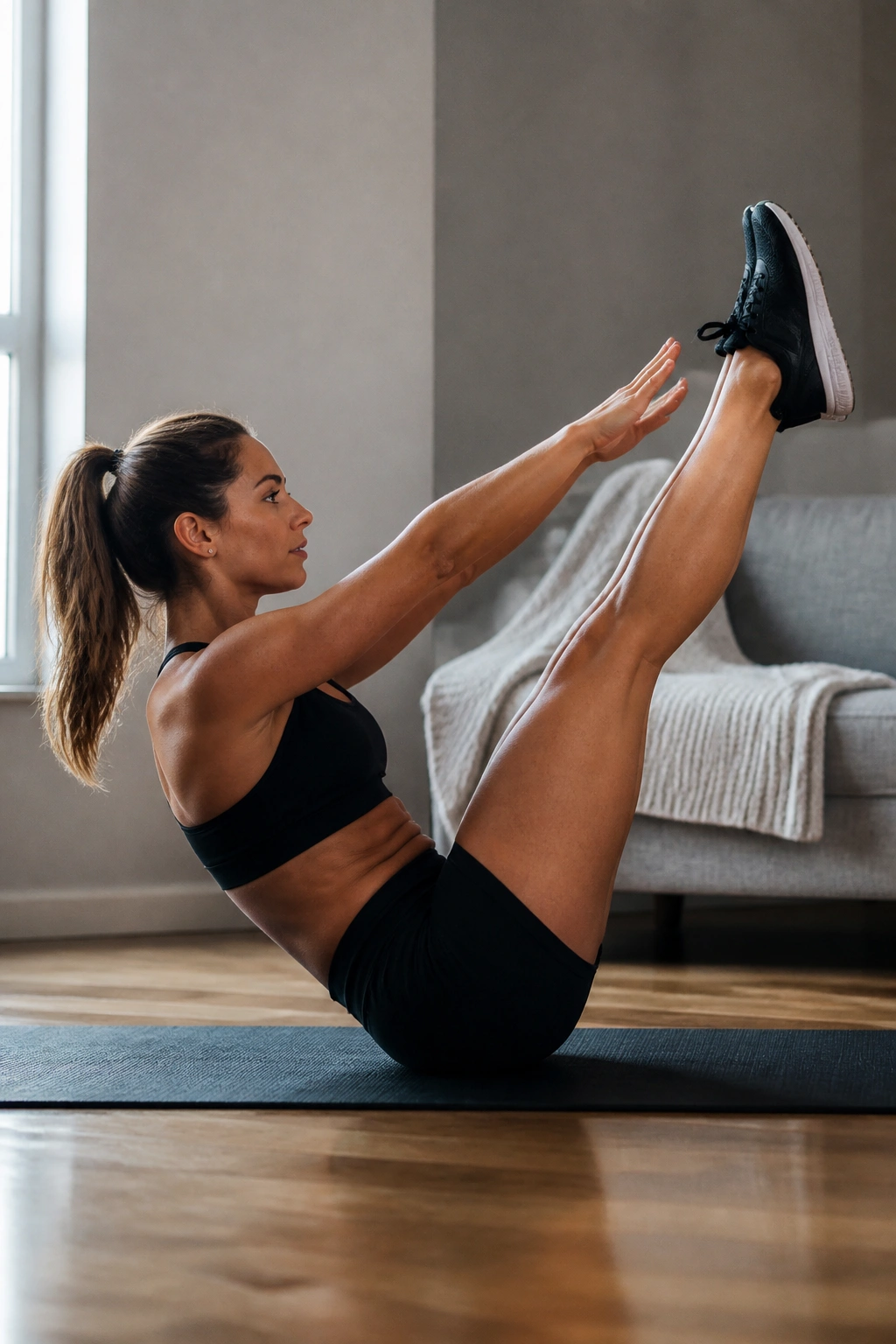
V-ups are the move people brag about and then quietly scale back when no one’s looking. Fair enough. They’re demanding, and they ask your abs to shorten hard while your body folds like a clean hinge.
Start flat on your back with arms overhead and legs straight. Lift the chest and legs at the same time, reaching the hands toward the feet. Then lower slowly, one piece at a time. If you have to bend the knees a little, do it. A cleaner rep with bent knees beats a sloppy straight-leg version every time.
This exercise hits the front of the torso fast, but it also exposes weak control. If you slam down on the way back, the set stops being useful. If your lower back aches, shorten the range and keep the movement smaller.
A set of 5 to 10 reps is plenty for most people. Nice and hard. No drama. The challenge is to stay tight all the way through the last inch of the lowering phase, which is where most people relax and lose the point of the whole thing.
If you only have time for three moves, choose one stability drill, one crunch pattern, and one leg-lift variation. Dead bug, reverse crunch, and hollow hold is a solid trio. Clean reps beat long lists, and your abs care more about control than how many exercises you can cram into a workout.
