



Standing ab exercises are the rare core moves that feel useful outside the gym. A good one makes you brace, twist, or resist a pull without yanking on your neck or folding your spine into a pretzel.
Floor crunches still have a place. So do planks. But standing work asks the abs to keep you steady while the arms and legs keep moving, which is closer to how your body behaves when you carry groceries, climb stairs, reach into an overhead cabinet, or catch yourself mid-step. Visible abs still depend on body fat, but stronger standing core work changes the way the whole trunk holds itself.
The cue I come back to most is plain and boring: ribs stacked over pelvis, soft knees, exhale through the hard part. If your low back is doing the work, the movement is too big, the load is too heavy, or both.
Pick the cleanest version first. Then earn the harder one.
1. Standing Cross-Body Knee Drive
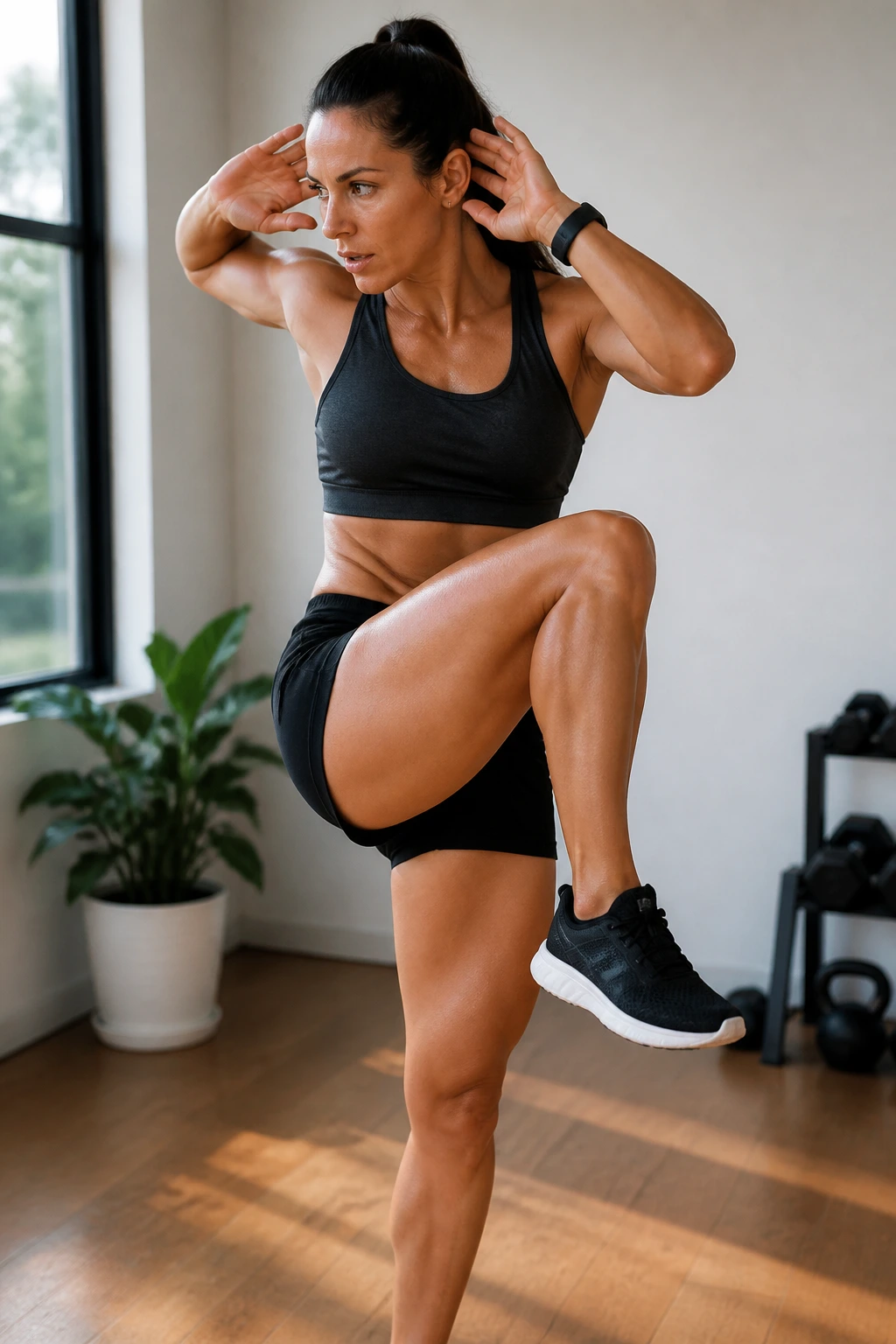
Marching one knee across your body looks simple until you try to keep your torso honest. That little cross-body path asks the obliques to fire while your standing leg stays quiet, and that is where the exercise starts paying off.
Keep your chest tall and think about bringing the knee toward the opposite elbow line without collapsing forward. A tiny pause at the top helps more than swinging fast. Control beats height here, every time.
- Drive the knee up on an exhale.
- Keep the standing foot rooted.
- Lower the leg slowly, not with a drop.
- If balance is shaky, hover a hand near a wall.
A lot of people turn this into a sloppy knee fling. Don’t. The goal is to feel the abs switch on, not to see how high the knee can fly. Ten to 12 reps per side is enough to make this honest.
2. Standing Oblique Crunch
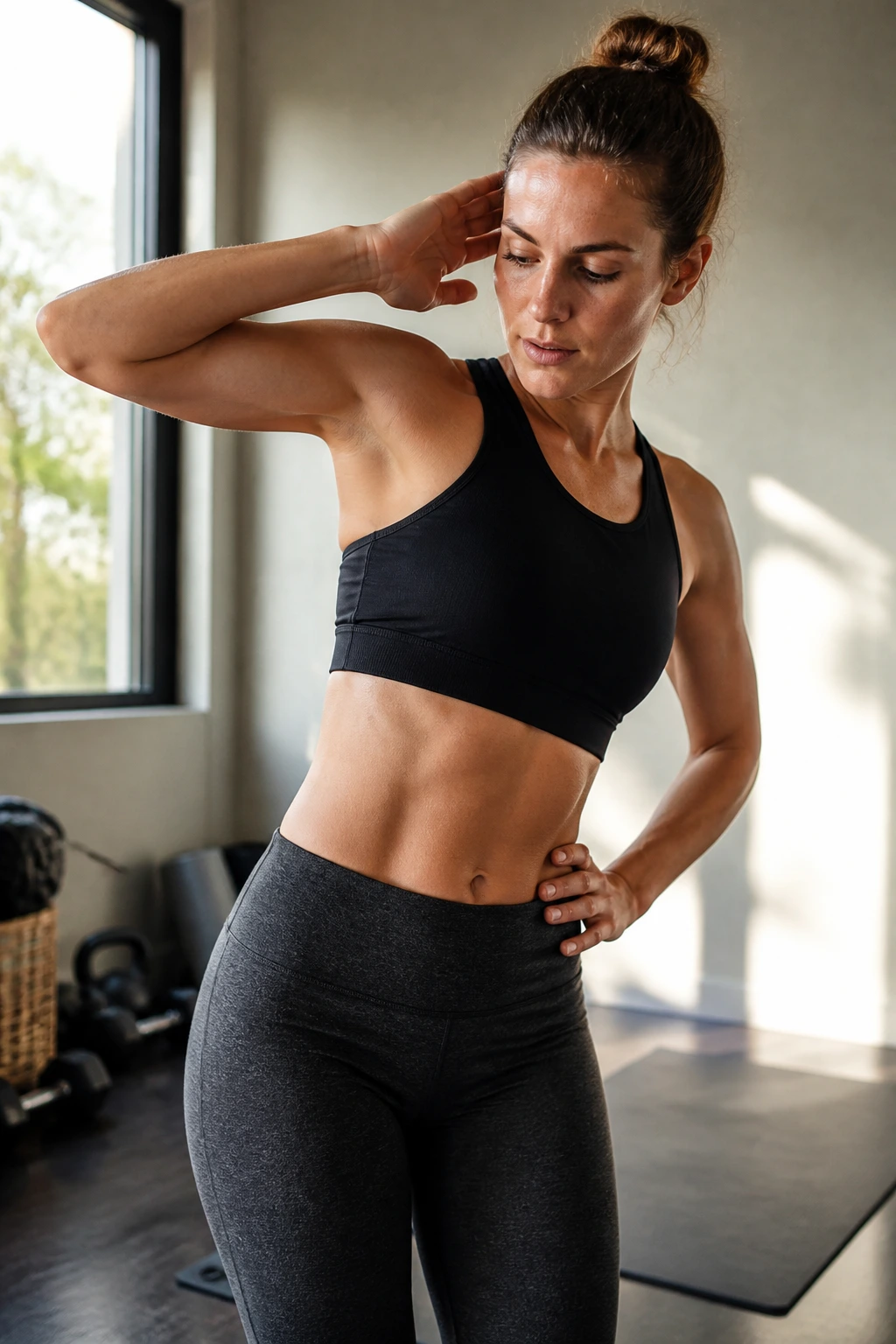
Want a move that finds the side abs fast? This one does, and it does it without much drama. You stand tall, bring one elbow toward the same-side hip, and shorten the waist on one side while the other side stays long.
The trick is to bend sideways, not forward. If your chest starts dropping toward the floor, the movement turns into a shruggy mess and the obliques stop doing the job you wanted them to do.
How to keep it clean
- Keep one hand lightly behind your head or across your chest.
- Slide the ribs toward the hip on the working side.
- Return to full height between reps.
- Use 12 to 15 controlled reps per side.
This is one of those exercises that burns more than it looks like it should. Good. It’s a clean burn when you do it right. If your neck gets cranky, lower the pace and stop yanking on your head.
3. Standing Side Bend With Dumbbell
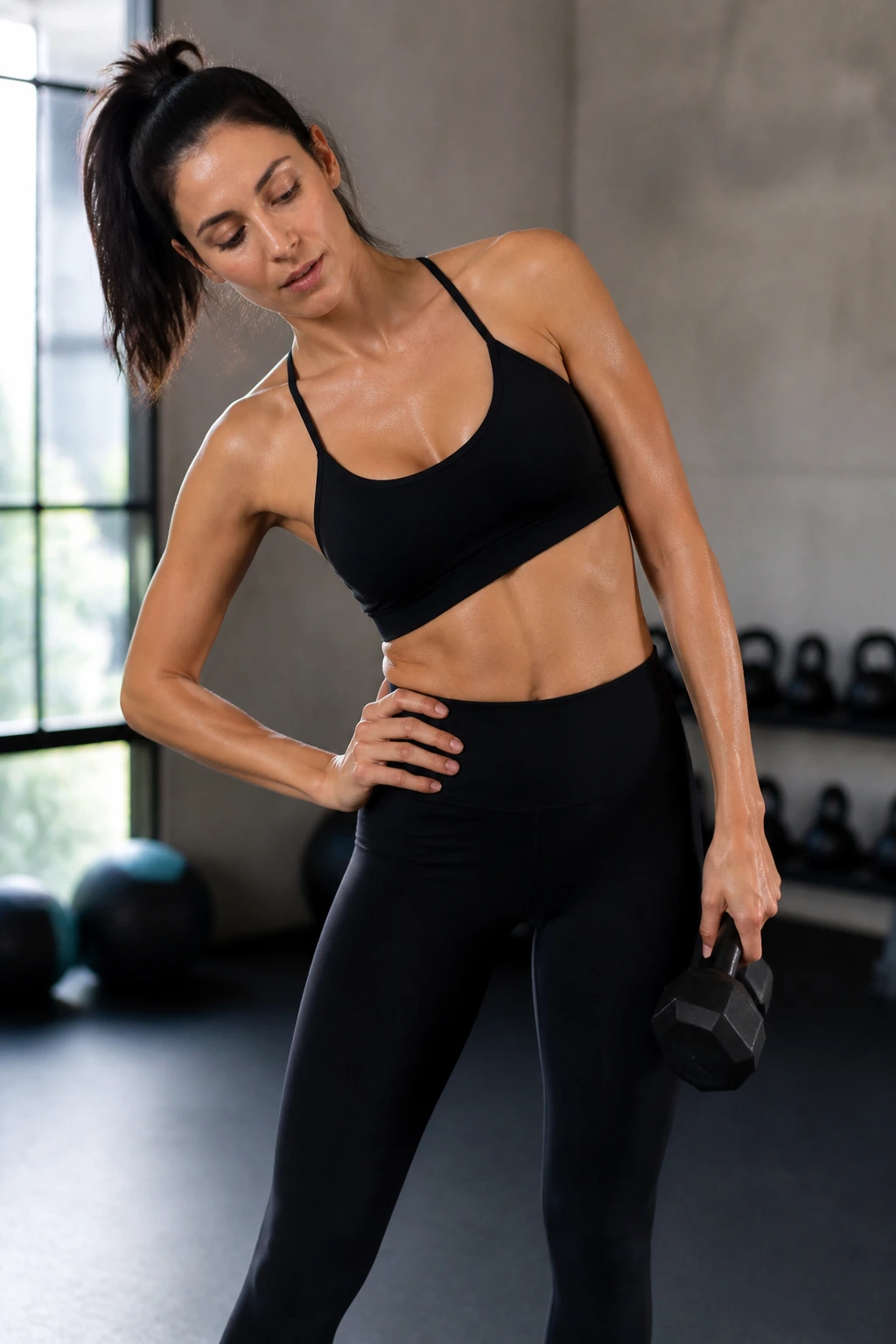
The side bend is only simple until you load it. A light dumbbell in one hand turns this into a direct challenge for the obliques and the muscles that keep your pelvis level.
Use less weight than you think. Five to 15 pounds is plenty for most people, and heavier is not automatically better. If the weight pulls you so far to one side that you have to whip yourself back upright, the set is already lost.
What makes it different
A loaded side bend teaches the trunk to resist a sideways collapse. That matters more than people think, because the abs are not only there for flexion; they also keep you from folding when life tilts you.
How to use it
- Hold the weight in one hand.
- Keep the other hand at your side or on your hip.
- Bend only as far as you can return from smoothly.
- Stop when you feel the stretch at the side of the waist, not a pinch in the low back.
Eight to 12 reps per side is a good starting point. Slow down on the way back up. That part does a lot of the work.
4. Standing Torso Rotation
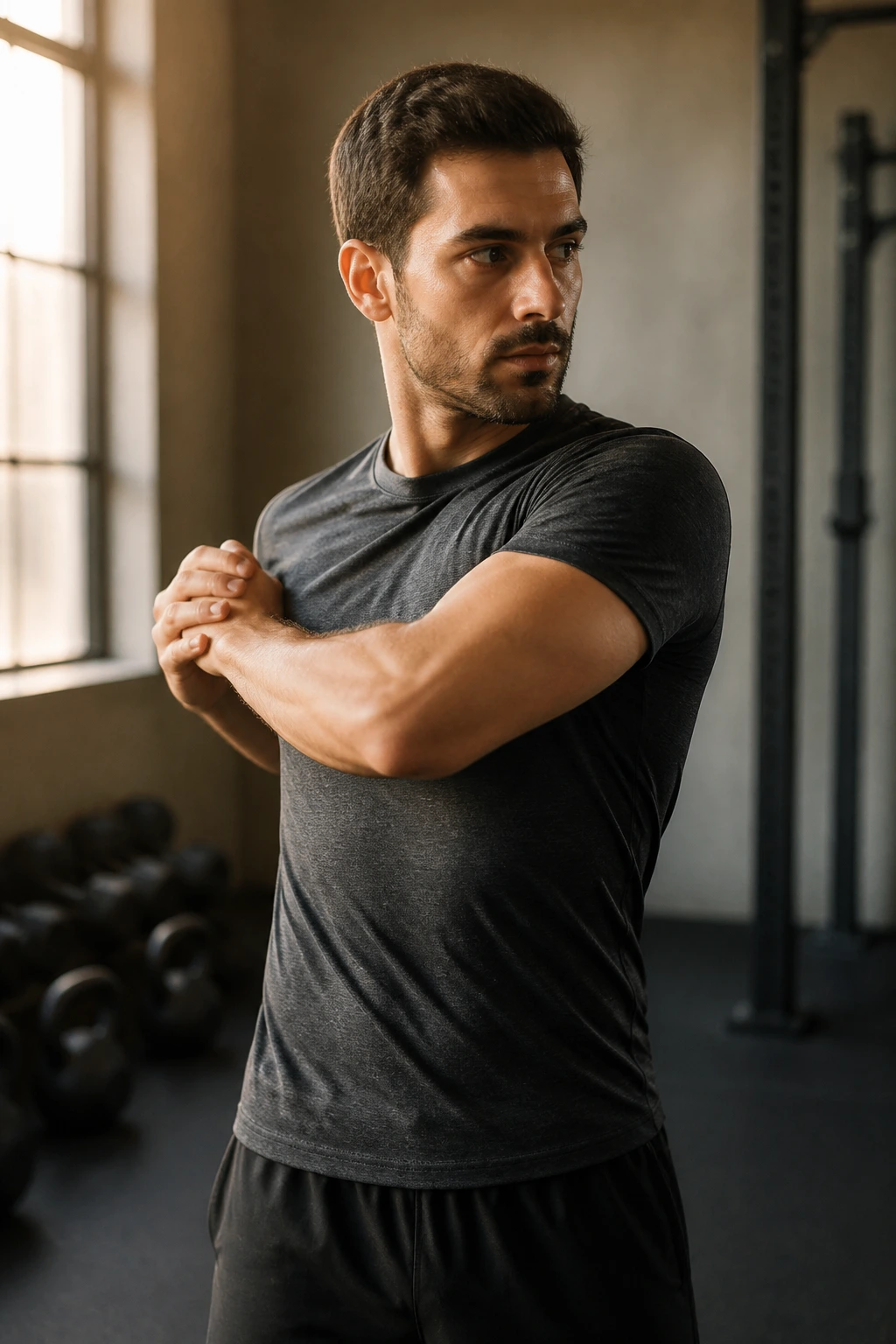
Can you train abs with a twist and still keep it useful? Yes, if the twist comes from the rib cage and not from wild hip spinning. That’s the whole game.
Stand with your feet about hip-width apart, soften the knees, and rotate your shoulders from side to side while keeping the pelvis mostly quiet. This is not a dance move. It’s a controlled turn through the trunk.
The clean version feels smooth, almost small. If your knees buckle inward or your heels fly around, the range is too wide. Rotate just far enough to feel the obliques wake up, then come back to center with control.
Try 12 to 20 slow rotations. You can keep your hands at chest height or hold a light plate in front of you. I like this one as a warm-up because it wakes up the trunk without chewing up your energy.
5. Standing Wood Chop
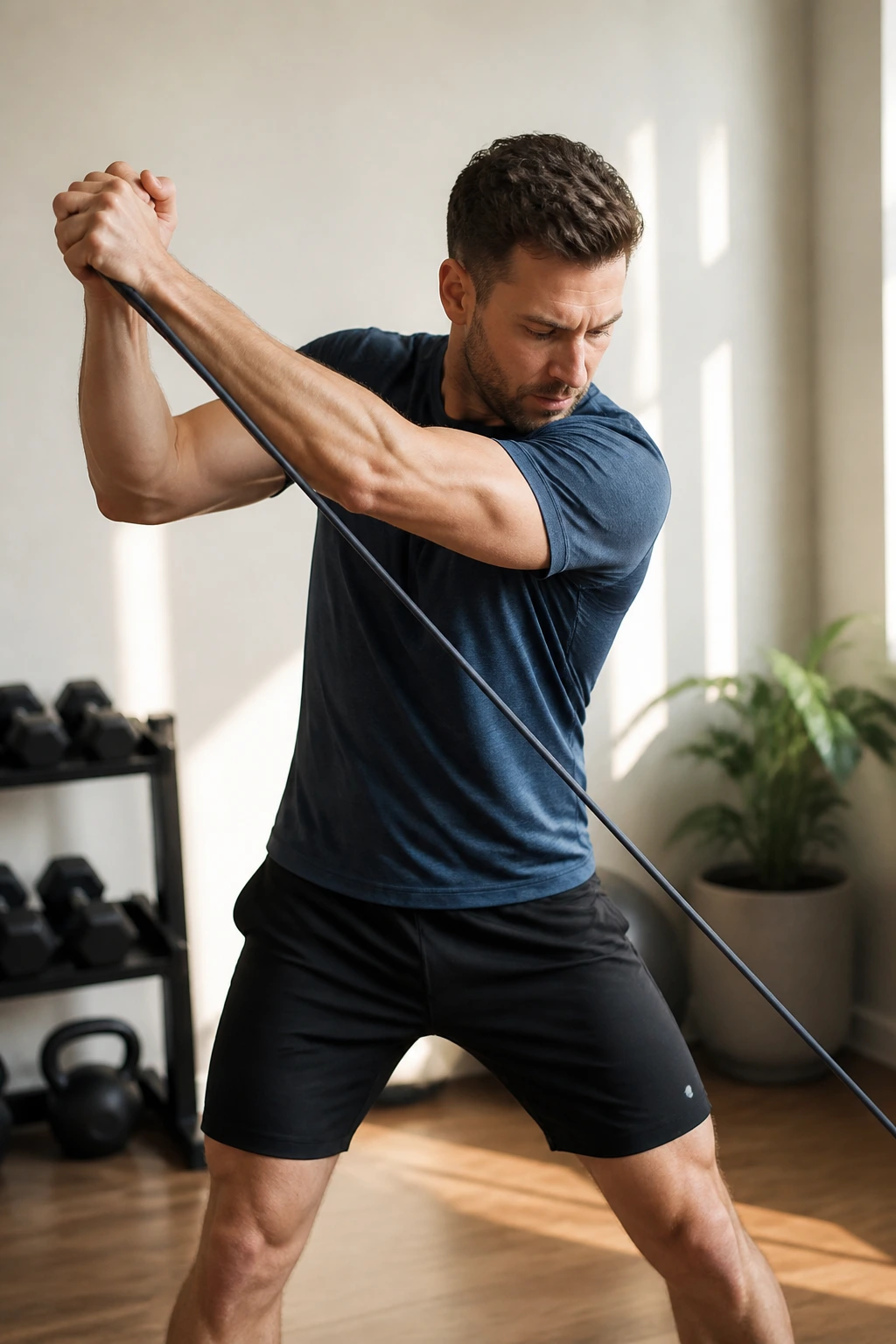
Grab a band, cable, or even a single dumbbell and stand tall. The wood chop is one of the best standing ab exercises because it trains the body to move on a diagonal, which is how a lot of real movement happens.
Pull from high to low, or low to high, and let the ribs and hips coordinate without turning the whole thing into an arm exercise. The arms guide the line. The core controls it.
Where to feel it
- Obliques on the side of the torso
- Upper abs near the rib cage
- Glutes on the side that helps stabilize
- A long exhale at the finish
The biggest mistake is twisting through the knees and letting the back foot spin like a loose door hinge. Keep the feet planted enough that the trunk has to do the hard work. Eight to 12 reps per side is usually enough.
This one feels athletic in a way some ab moves do not. It has shape, tension, and a clear finish.
6. Reverse Wood Chop
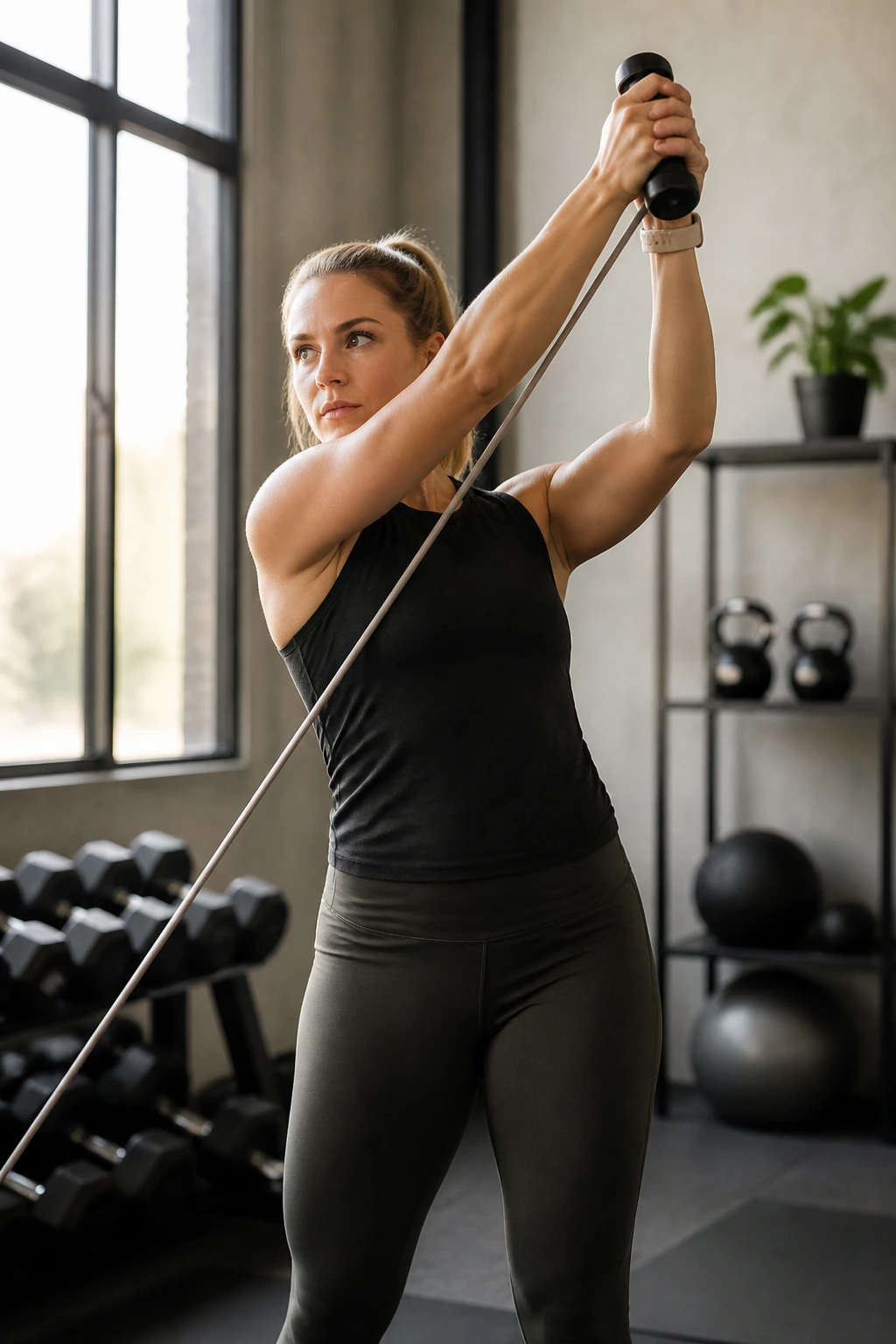
The reverse chop feels backward for a reason. You start low and drive the hands upward across the body, which changes the line of pull and gives the front of the torso a different job.
Use a band anchored low or a light dumbbell held with both hands. Rotate through the trunk as the arms travel up and across, but don’t let the ribs flare open at the top. That rib flare is the sneaky cheat. It makes the move look bigger while the abs do less.
A good rep feels like you are lifting through the whole midsection, then stacking the ribs back over the hips at the finish. The movement should stay smooth, not jerky.
Eight to 12 reps per side works well. If your lower back arches, shrink the range and slow the hands down. This is one of those exercises that gets cleaner the slower you do it.
7. Standing Knee Raise Hold
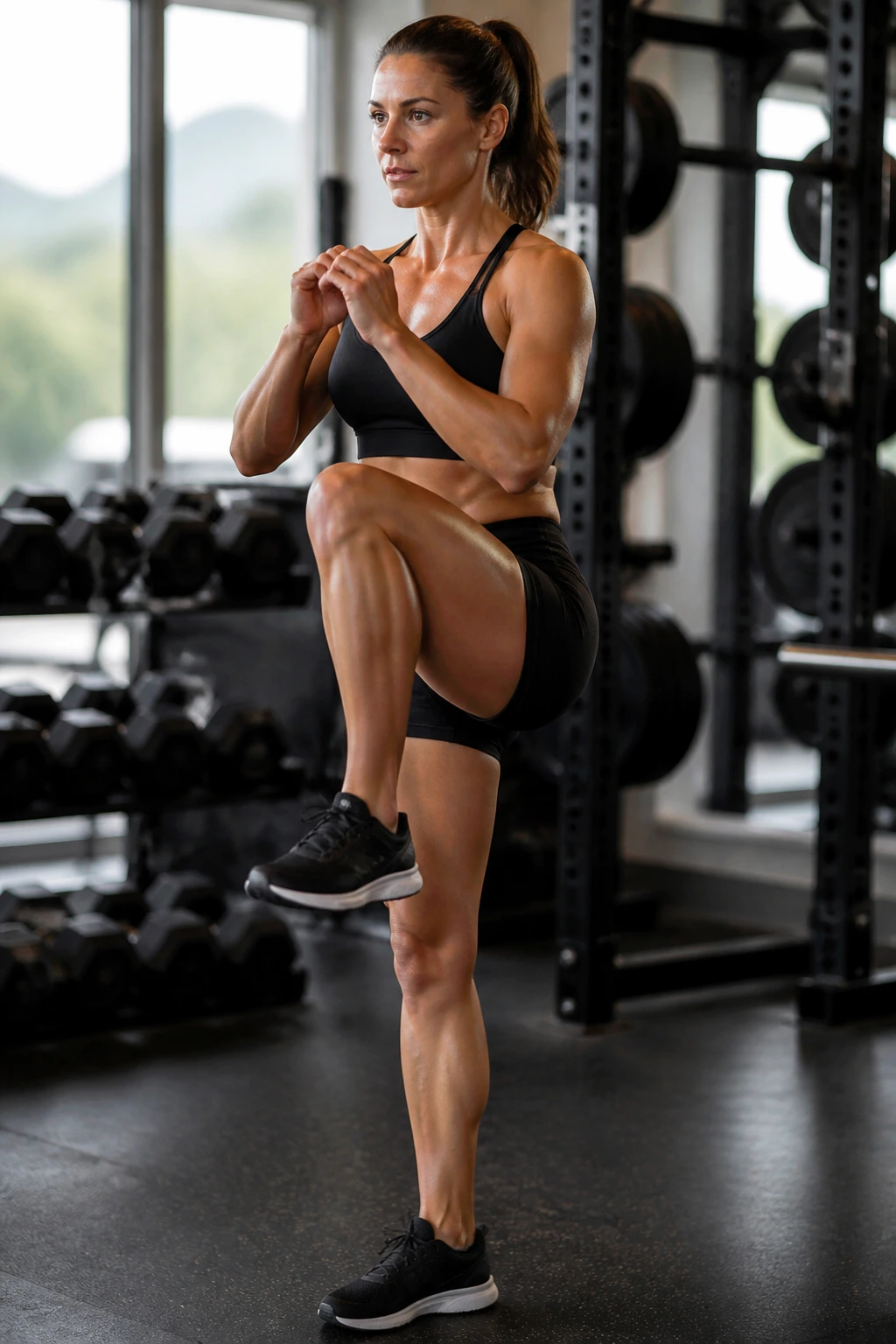
A knee raise with a pause is far less flashy than a fast march, and that’s exactly why it works. The hold at the top forces the abs to stop the torso from wobbling while the lifted leg hangs in space.
Raise one knee to about hip height and hold it for two or three seconds before lowering. The standing leg should feel solid, with the glute lightly on and the foot gripping the floor without clawing. If you sway, the pause is too long or the range is too high.
A one-sentence rule helps here. Stay tall, then freeze.
Do 8 to 10 reps per side, or keep alternating for 20 to 30 seconds. Once that feels easy, add a small dumbbell in the opposite hand or lift both arms overhead. Either change makes the brace job harder in a very honest way.
8. Standing Knee-to-Elbow Crunch
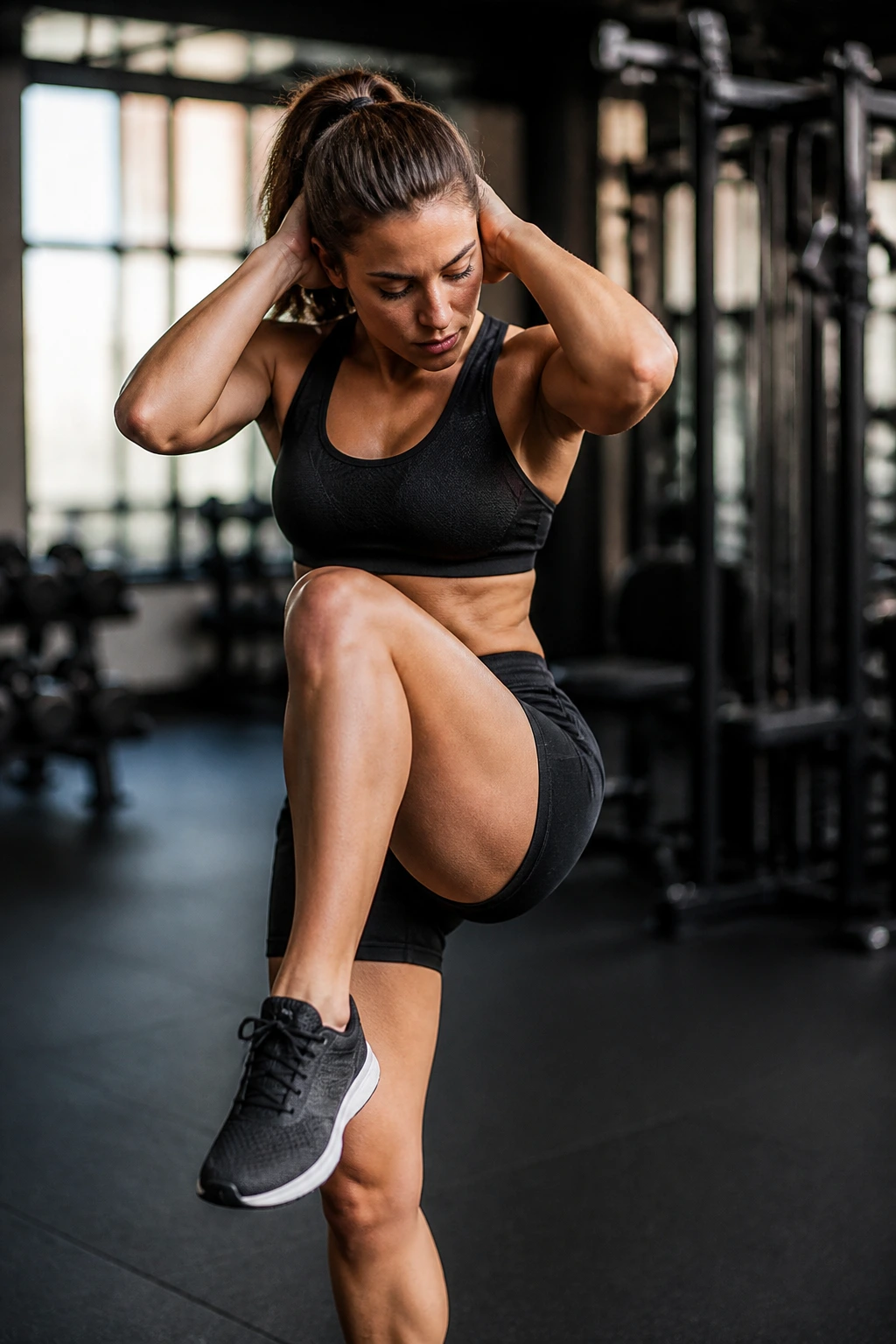
Bring the knee and elbow toward each other, and keep the movement tight enough that the abs do the work instead of the hips flinging around. This is the standing version of a crunch, which means the front of the trunk has to shorten on purpose.
The best reps are slow. Pull the knee up, fold the upper body just enough to meet it, then return to a tall neutral stance before the next rep. If you rush, you’ll end up doing a weird little stumble instead of an ab exercise.
Clean cues
- Exhale as knee and elbow come together.
- Keep the shoulders relaxed.
- Don’t yank the head forward.
- Reset fully before the next rep.
This move is a little more direct than the cross-body knee drive from the first section. I like it when I want front-of-the-torso flexion without lying down on a mat. Eight to 12 reps per side is a nice range.
9. Standing Bicycle Crunch
Nope. You do not need to fling the elbow at the knee like you’re trying to win a speed contest.
The standing bicycle crunch works best when it feels almost compact. Bring one knee up while the opposite elbow travels across, then switch sides in a steady rhythm. The torso rotates, the obliques kick in, and balance gets involved without turning the exercise into chaos.
The clean version
- Keep the movement small enough to stay upright.
- Reach the elbow across, not down.
- Extend the opposite leg long, but not locked.
- Keep the head and neck out of it.
Ten to 16 alternating reps is plenty. If the whole upper body starts leaning side to side like a washing machine, the pace is too fast. Slow down and clean up the path.
This one is good for coordination, too. The body has to find timing, which is part of the reason it feels tougher than a basic knee drive.
10. Standing Punch-and-Twist
Boxing energy belongs in core work more often than people think. A crisp punch across the body creates a fast rotation demand, and the abs have to stop the trunk from over-rotating.
You can do this with bodyweight or with very light dumbbells, though I usually prefer bodyweight first. Keep the fists near the chin, punch across the body, and let the torso follow just enough to stay natural. The motion should feel snappy, not wild.
One short burst can do a lot. Twenty to 30 seconds per side is a good start, or alternate punches for 30 to 45 seconds total. If the shoulders start creeping up to your ears, shake them loose and reset. Tension in the neck is a bad trade.
This is a nice finisher when you want the abs working and the heart rate climbing a little.
11. Standing March With Brace
The core job here is to stay boring. Alternate marching knees up while the trunk refuses to bounce, lean, or twist.
It sounds easy because the movement pattern is tiny. It isn’t. The abs have to hold the whole torso steady while the hips move under them, and that teaches control in a way that fancier-looking drills sometimes miss.
Make the march slower than your instinct says. Each knee lift should have a clear start, a brief hold, and a controlled lower. If you want more challenge, keep the arms overhead or hold a light weight at your sides.
Thirty to 45 seconds is a good window. Keep the reps smooth. A sloppy march is just cardio with bad posture.
12. Standing Overhead Reach Hold
Arms overhead change everything. The second your hands go up, the ribs want to flare and the low back wants to arch, which makes this a sneaky core drill instead of a shoulder stretch.
Stand tall, reach both arms overhead, and keep the rib cage from popping forward. You should feel your abs working to hold the torso in place while you breathe normally. That breathing part matters. If you hold your breath, the whole thing gets harder in the wrong way.
I like this one as a reset between harder moves. It tells you fast whether your trunk can stay stacked. If it can’t, shorten the hold or bend the elbows a little.
Twenty to 30 seconds is enough. If your lower back starts to pinch, lower the arms six inches and try again.
13. Standing Overhead March
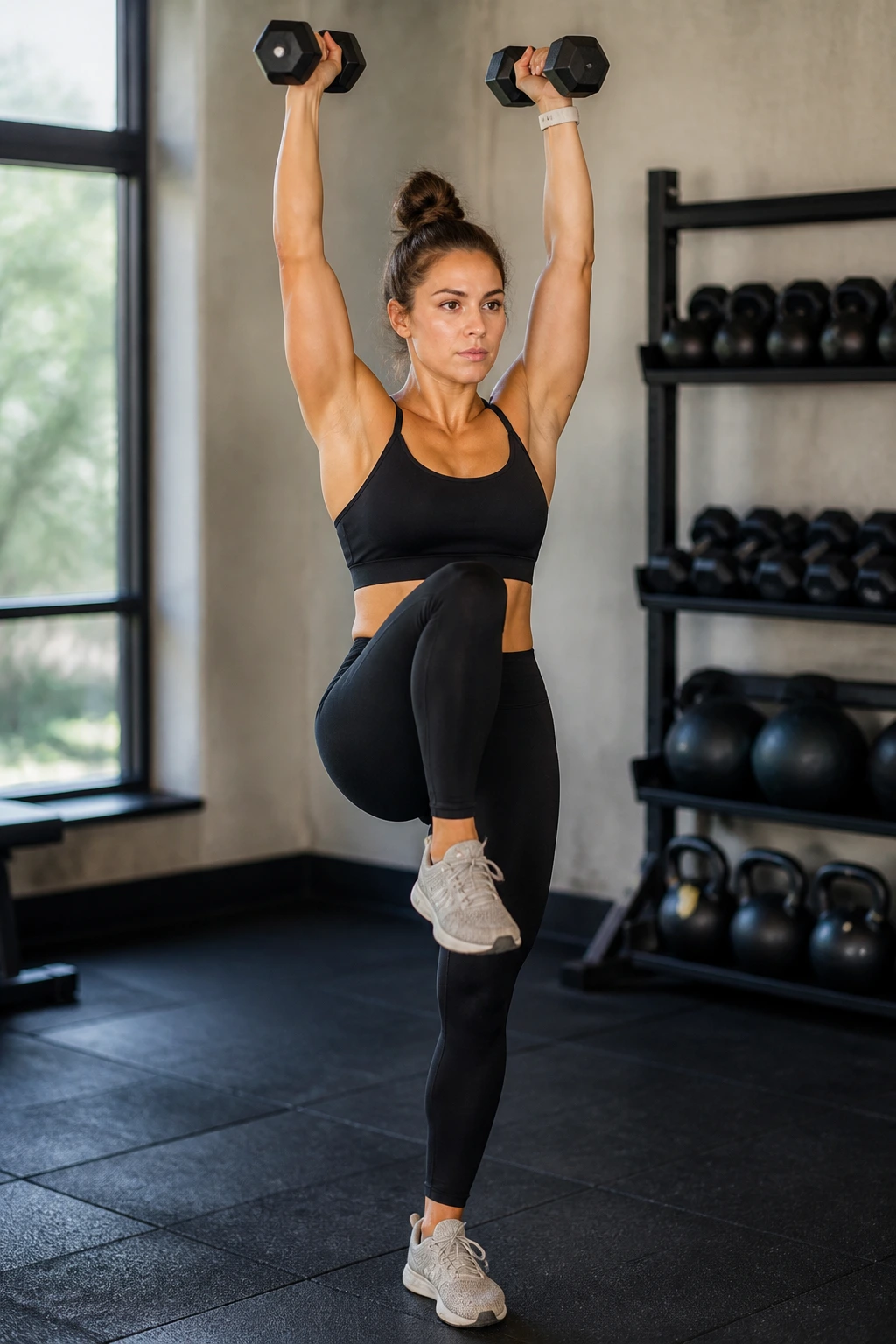
Add a dumbbell to the overhead hold and the march turns honest fast. Each lifted knee tries to pull the pelvis out of line while the shoulders keep the weight steady above you.
Use light weights. Five to 10 pounds in each hand is plenty for many people, and sometimes even less is smarter. The goal is not to show off a press. The goal is to keep the whole frame from wobbling while you move one leg at a time.
What to watch
- Ribs staying down
- Shoulders not shrugging
- Neck staying long
- Each step landing quietly
March for 10 to 20 total steps, or 8 to 10 per side. If the weight makes you arch, lean, or stomp, drop it. A cleaner set with lighter dumbbells beats a sloppy set with heavy ones every time.
14. Pallof Press
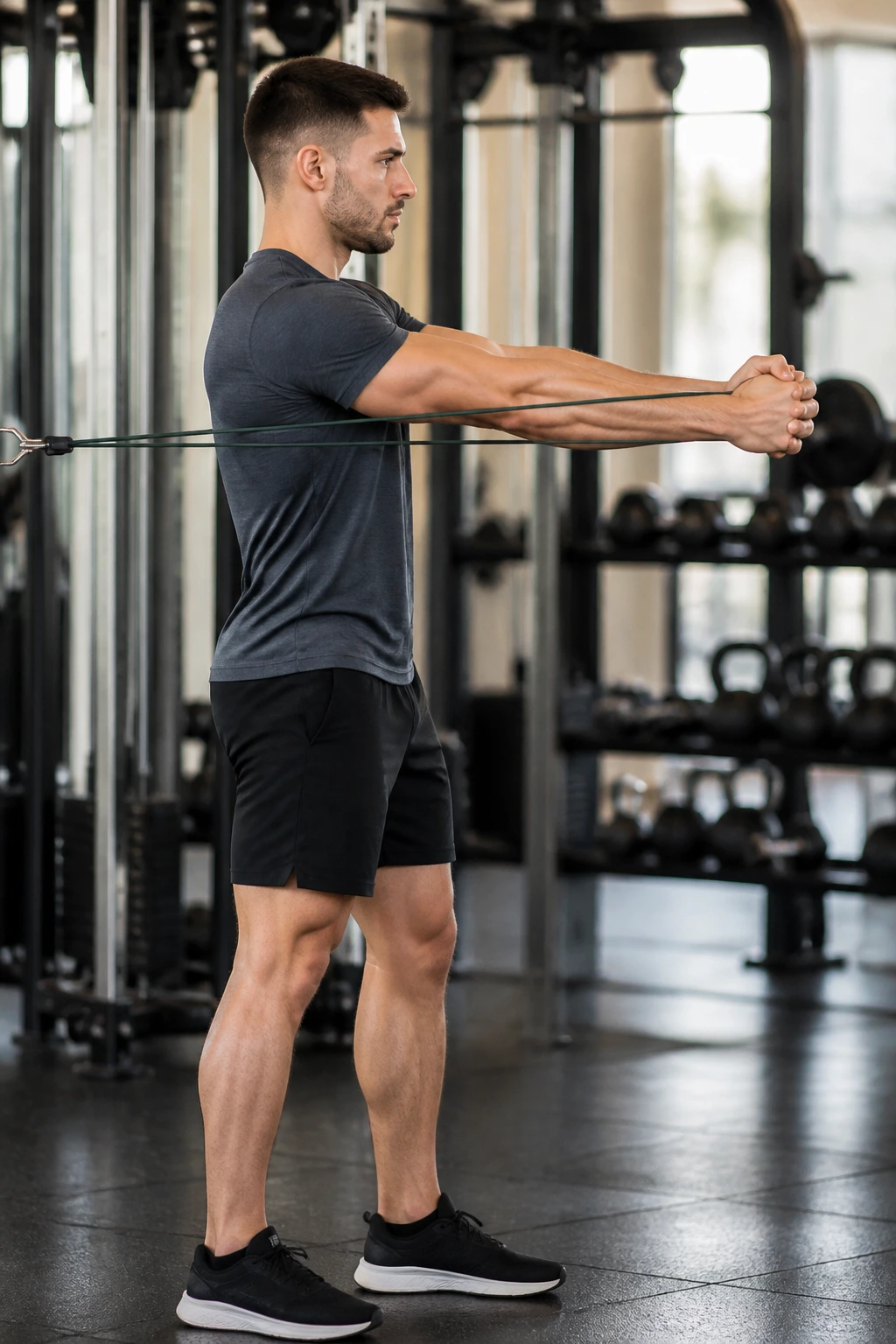
The Pallof press is the one people ignore until they feel how brutally honest it is. Stand sideways to a band or cable, press the handle straight out in front of your chest, and resist the twist that wants to pull you toward the anchor.
That little anti-rotation fight is gold. The abs, obliques, and deep core muscles have to brace without moving much at all, which is a different skill than crunching or twisting. It looks quiet. It is not easy.
Why I keep coming back to it
- It scales well for beginners and advanced lifters.
- It shows torso leaks fast.
- It pairs well with carries and chops.
- It teaches the ribs and pelvis to stay stacked.
Hold the press for one to two seconds at full extension, then return. Eight to 12 reps each side works well. If you shake a little, good. If you rotate, the band is too heavy or you stepped too far away.
15. Pallof Press With Step-Out
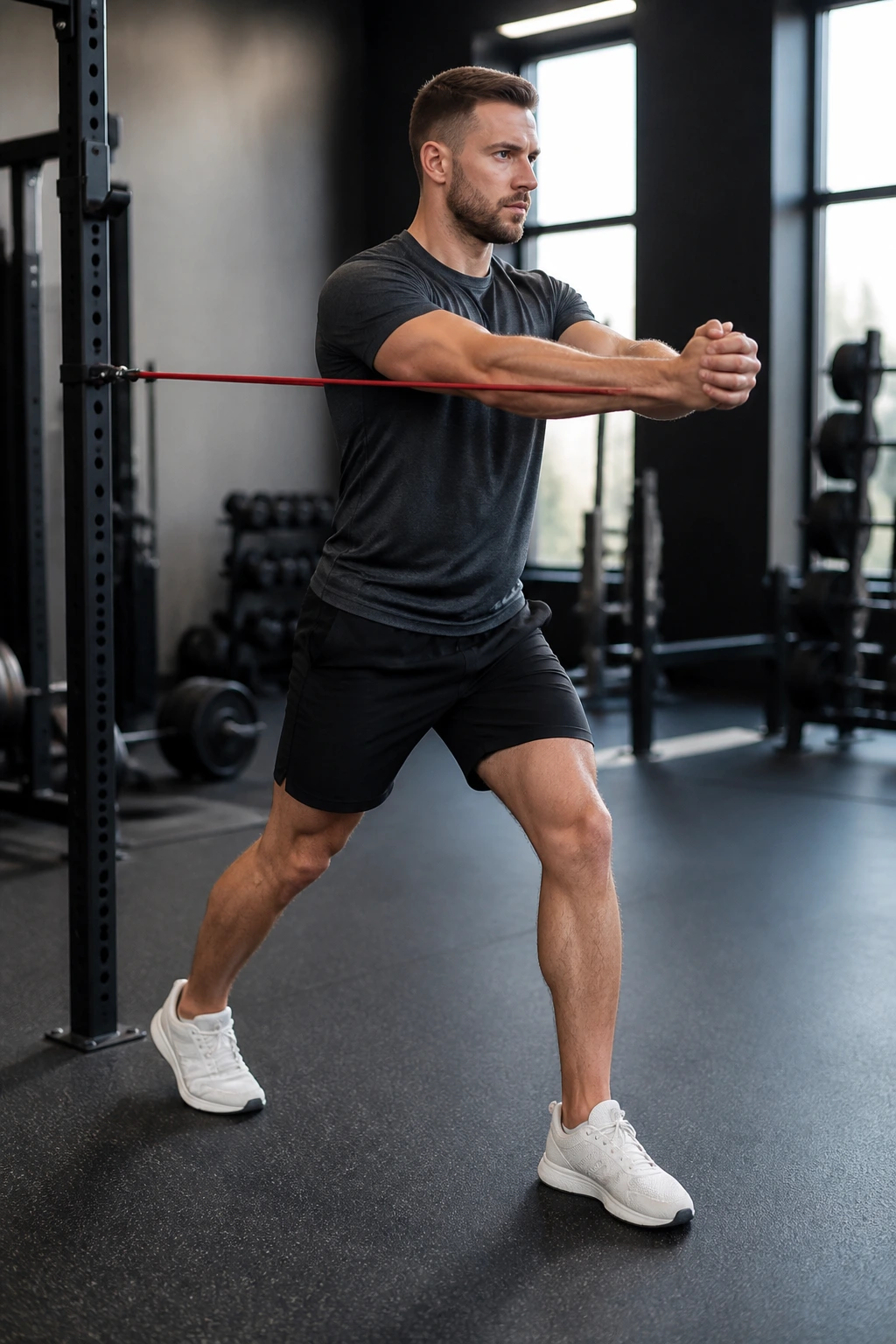
Step farther from the anchor and the whole drill changes. The band pulls harder, your feet have to keep you from drifting, and the core has to stay organized while the base of support shifts.
This is the move for people who already own the basic Pallof press. If the first version looks clean and stable, this one adds just enough chaos to make the brace work harder without turning it into a circus.
Press the band straight out, step one foot away from the anchor, hold for a beat, then step back in with control. Keep the pelvis level and the shoulders square. If the band is jerking you around, step closer and cut the tension.
Six to eight step-outs per side is a solid range. More tension is not the point. Better control is.
16. Suitcase Carry
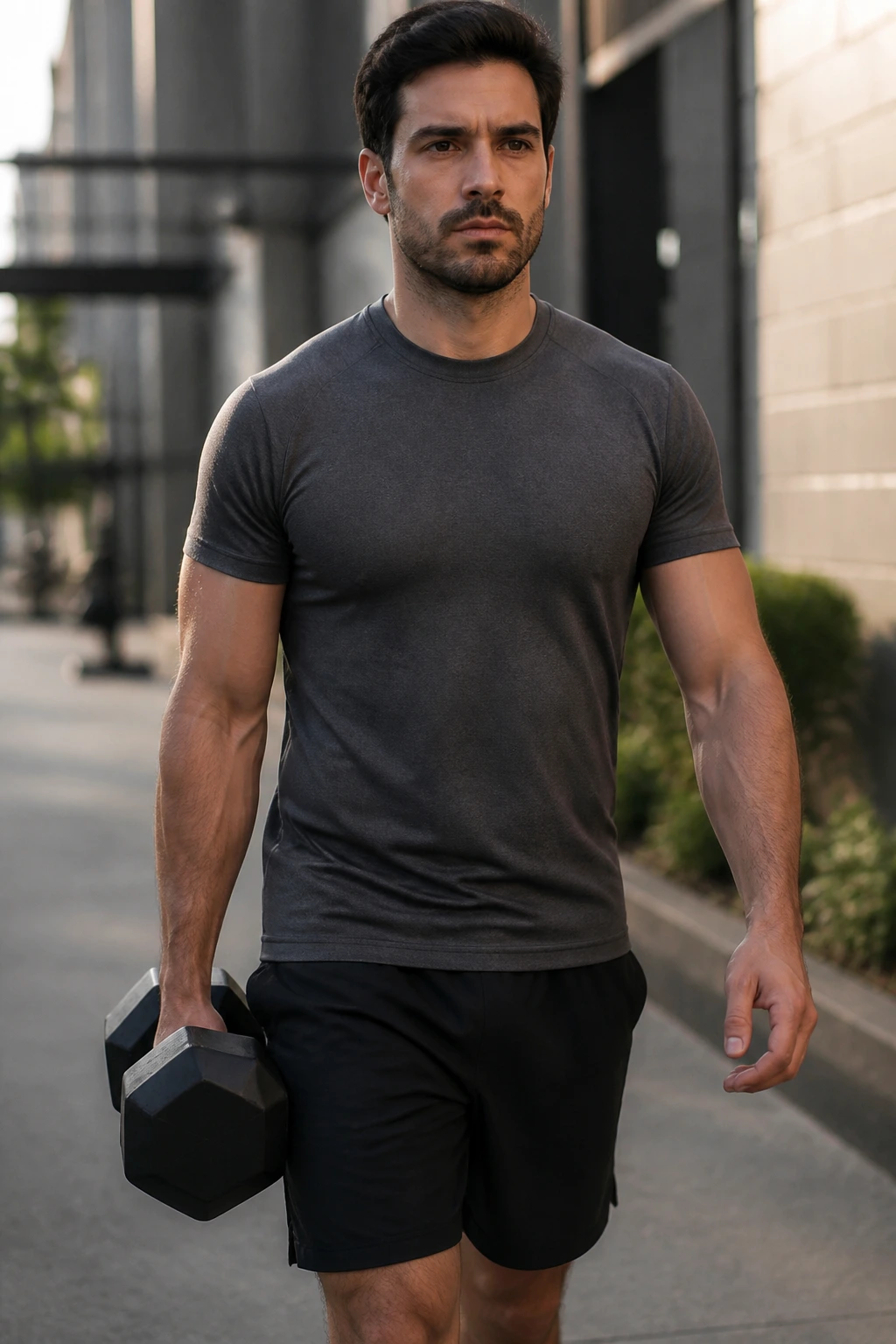
A suitcase carry is a sneaky core test. Hold one heavy dumbbell or kettlebell at your side and walk like you mean it while the body fights the urge to lean toward the weight.
That sideways pull lights up the obliques and the deep stabilizers around the spine. It also exposes cheating fast. If you lean, shrug, or hurry, the exercise stops being a carry and turns into a messy stroll.
Simple setup
- Hold the weight close to your leg.
- Keep your ribs stacked and your chin level.
- Walk for 20 to 40 steps.
- Switch sides and repeat.
A good set feels heavy in the grip and demanding in the waist. That’s normal. If your torso tilts, the weight is too much or the walk is too long. I like this one more than people expect because it’s blunt. It tells the truth right away.
17. Standing Toe Touch Reach
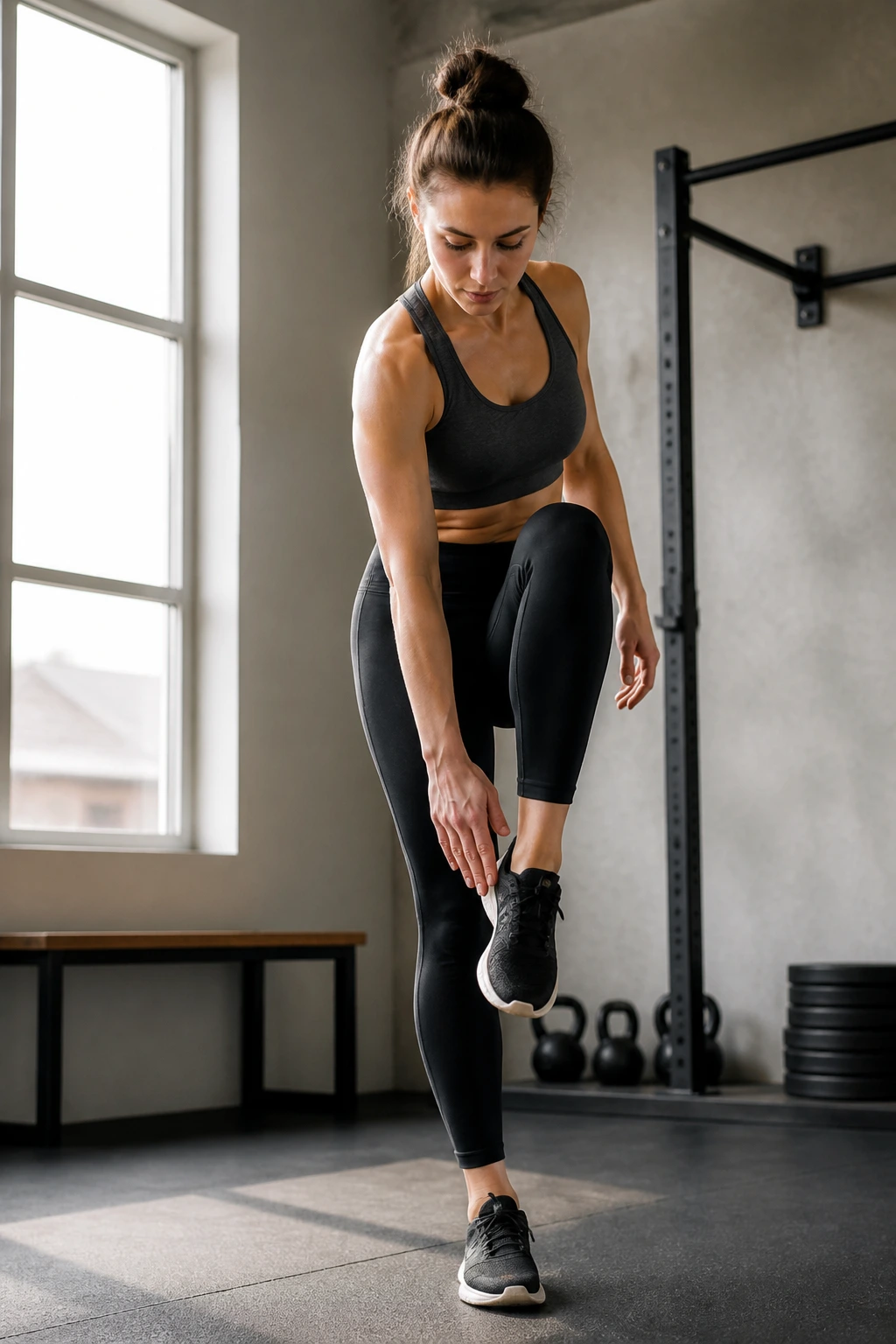
Toe touches are not just hamstring stretches when you do them with control. Standing on one leg while you reach toward the opposite foot forces the abs to keep the spine organized as the leg lifts and the body tips forward.
The key is to hinge, not collapse. Keep the standing leg soft, reach long through the crown of the head, and use the free hand to meet the lifted foot or shin. If your back rounds hard, the move is turning into a loose fold.
Slow it down enough to feel the balance challenge. Eight to 10 reps per side is a good start. If your hamstrings are tight, reach toward the shin instead of the toe. That is not a downgrade. It is just cleaner.
This works well in a warm-up because it opens the back line while the core stays switched on.
18. Standing Skater Reach
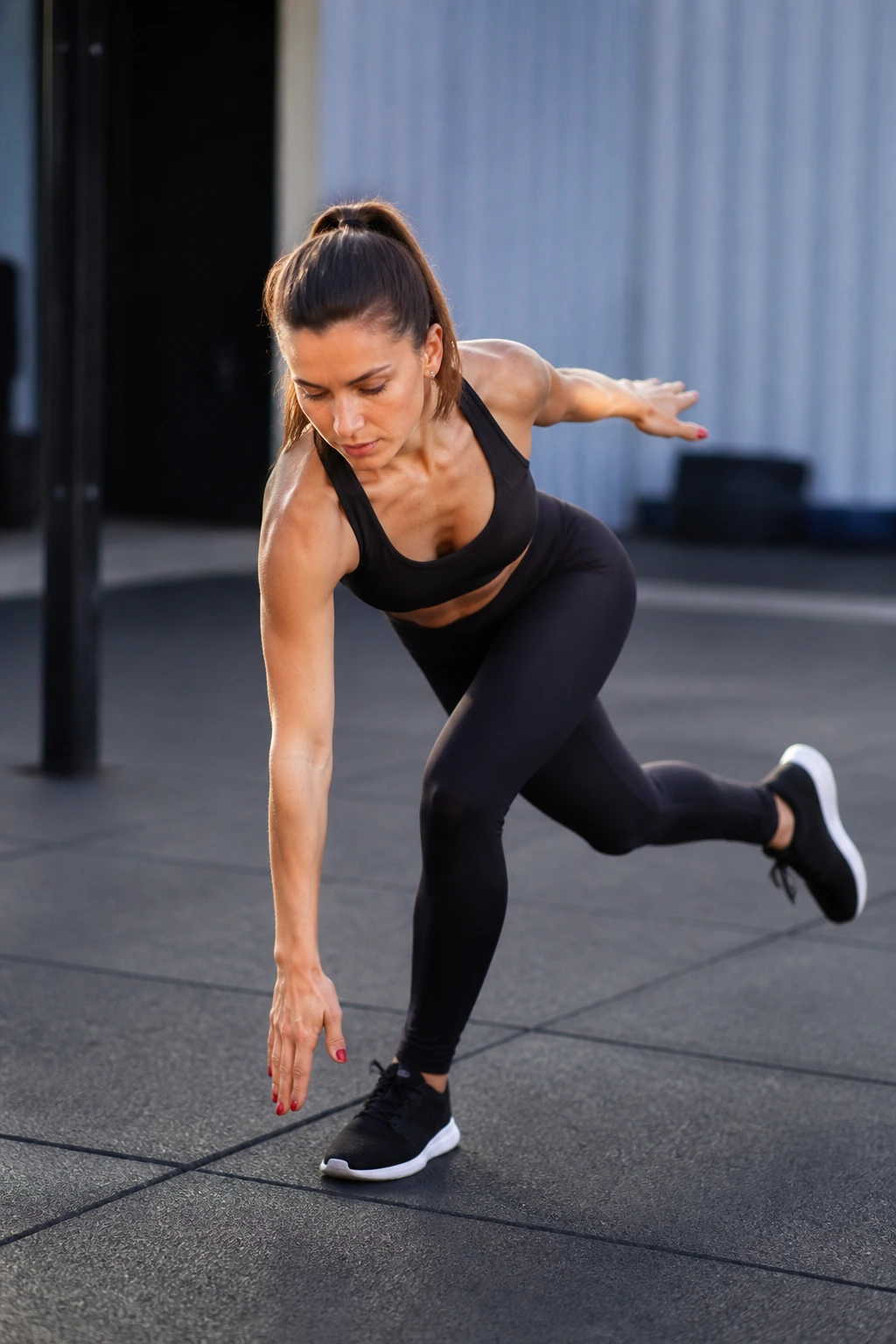
Skater reaches reward control, not speed. Step laterally, let the free leg sweep behind or across, and reach the opposite hand toward the planted foot or shin as the hips hinge.
The obliques, glutes, and balance muscles all get dragged into the job. It feels athletic without needing impact, which makes it a strong finisher when the midsection is already warm and awake.
How to make it count
- Push the hips back on each reach.
- Keep the chest long, not collapsed.
- Pause for one beat at the bottom.
- Drive up through the standing foot.
Use 8 to 12 reps per side. If you want more load, hold a light dumbbell in the reaching hand. If the movement turns into a side fall, shorten the range and slow down. Clean reps make the difference here.
Final Thoughts
Standing core work is often better than it looks. The exercises above train the abs to brace, resist, and move in ways that carry over to the rest of the day, which is a lot more useful than chasing a burn for its own sake.
If I were putting together a quick session, I’d pick one flexion move, one rotation move, one anti-rotation move, and one carry. That gives you four different jobs for the trunk without beating up the neck or turning the workout into a floor marathon.
Start light. Go slower than you think. And if the low back starts taking over, shrink the range and clean up the rep. That’s usually where the real work lives.
