



Most people gravitate toward the barbell rack when they want to pack on mass. It makes sense, right? You can load up hundreds of pounds, stand under the bar, and grind out heavy sets. But here is the reality of the situation: muscle fiber recruitment does not care if the weight is on a bar or in your hands. In fact, training with dumbbells can force you to deal with stabilization challenges that a barbell simply ignores. When you hold a dumbbell in each hand—or even just one—your core has to work overtime to keep you upright and centered. Your stabilizer muscles fire continuously throughout the movement, creating a level of mechanical tension that often leads to better hypertrophy in the long run.
The other massive advantage of dumbbell training is the freedom of movement. A barbell locks your wrists and shoulders into a fixed position. Dumbbells allow your joints to find their natural path. You can tweak your foot stance, adjust your grip, and change your angle to emphasize the quads, hamstrings, or glutes depending on where you feel the stretch the most. If you have been stuck on a plateau, the switch to dumbbell-only compound movements might be the exact change your nervous system needs to wake up and start growing again. We are going to go through 18 movements that will hit every part of your lower body, focusing on mass-building mechanics.
1. Goblet Squats
The goblet squat is arguably the best starting point for anyone looking to build serious leg mass using only dumbbells. It forces an upright torso, which shifts the emphasis away from the lower back and directly onto the quadriceps. You are essentially front-loading the resistance, which makes it impossible to ‘good morning’ the weight up like you might on a heavy barbell squat.
Mechanics for Growth
Hold a single heavy dumbbell against your chest like a chalice. Keep your elbows tucked in. As you descend, your elbows should track toward the inside of your knees. This cues your hips to open up and allows you to reach a depth that effectively stretches the quads under load.
Why It Builds Mass
- Constant tension on the quads throughout the entire range of motion.
- Forces deep hip flexion, which recruits more muscle fibers.
- Eliminates the tendency to lean forward, ensuring the quads do the heavy lifting.
Pro tip: Do not just drop into the squat. Control the descent for a full three seconds. The eccentric portion of the lift is where the muscle tearing happens, which is the precursor to growth.
2. Dumbbell Romanian Deadlifts
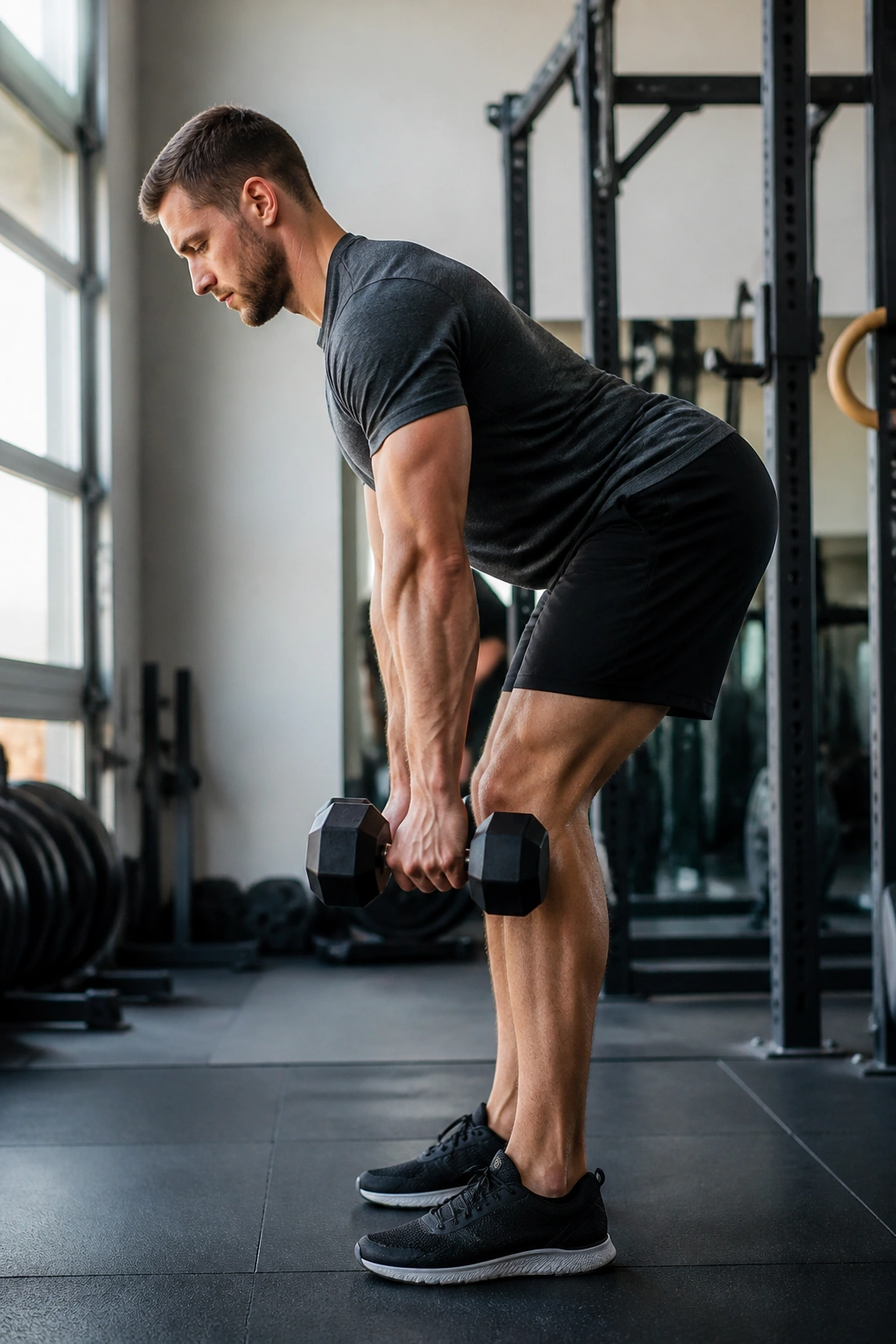
If you want to grow your hamstrings, you need to master the hinge. The dumbbell Romanian Deadlift (RDL) is superior to the barbell version for many people because you can keep the weights closer to your center of gravity. This reduces the sheer force on your lumbar spine while keeping the tension squarely on your hamstrings and glutes.
Perfecting the Hinge
Stand with feet hip-width apart, knees slightly bent but locked in position. Push your hips back as if you are trying to touch a wall behind you with your glutes. Lower the dumbbells until you feel a deep, intense stretch in your hamstrings. Return to standing by driving your hips forward.
Common Pitfalls
Most people try to squat the weight down rather than hinging. If your knees bend more as you go lower, you are turning a hinge into a squat. Keep those knees static. Think of your upper body as a seesaw; as the chest goes down, the hips go back. That’s it.
The sensation: You should feel like your hamstrings are about to snap like a rubber band at the bottom. If you feel it in your lower back, you are likely letting the weights drift too far forward. Keep them grazing your shins.
3. Dumbbell Walking Lunges
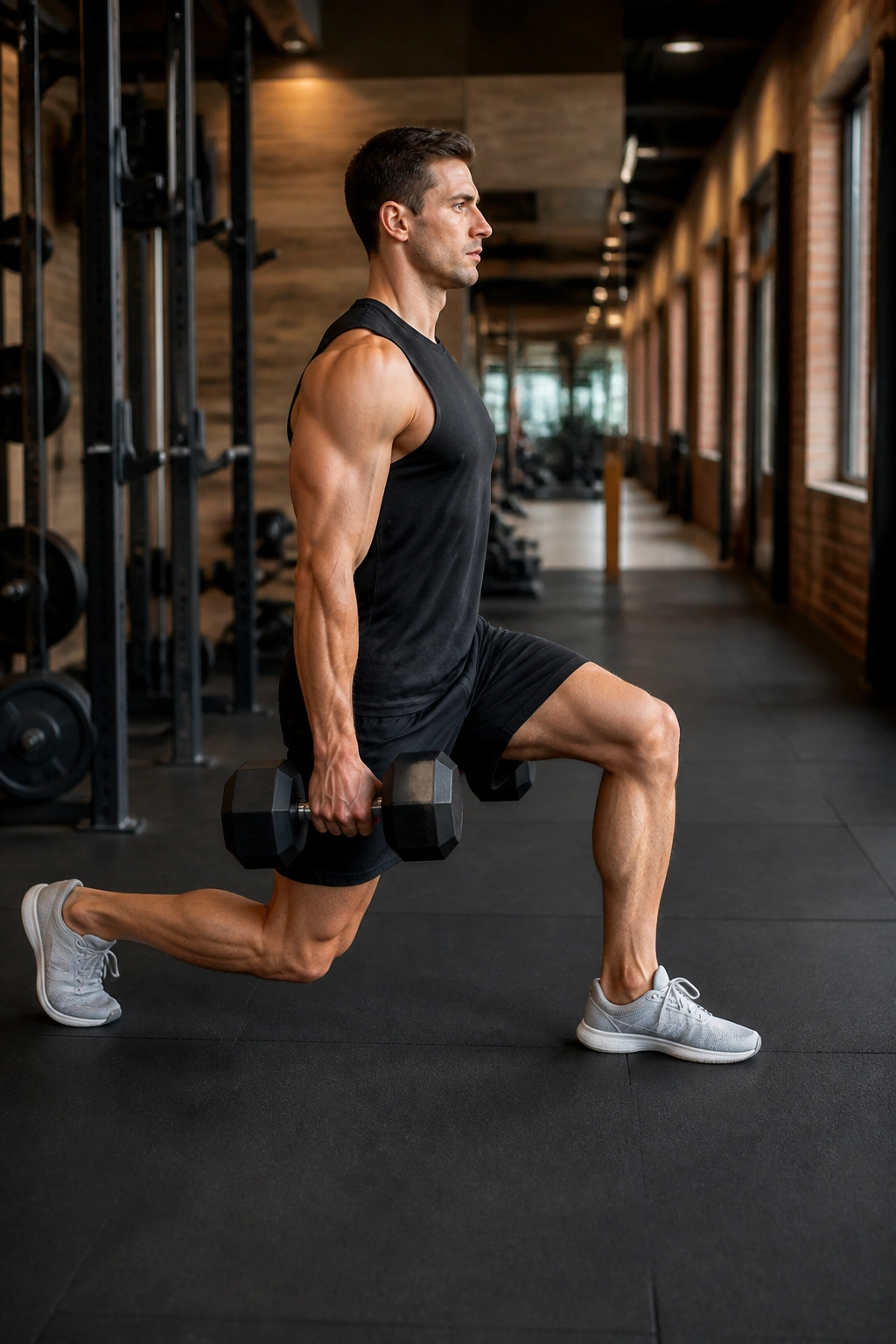
Walking lunges are the king of unilateral leg training. They demand coordination, core strength, and pure quad endurance. When you add a pair of heavy dumbbells, you turn a standard movement into a massive hypertrophy stimulus. The trick here is to take long enough strides that you hit the glutes, or shorter strides to keep the work focused on the quads.
Execution for Mass
Hold the dumbbells at your sides with a neutral grip. Keep your chest up and your shoulders back. When you step forward, drop your back knee until it is an inch off the floor. Do not let your front knee cave inward. This creates a massive demand on the adductors and the outer sweep of the quad.
The Intensity Factor
Because this is a continuous, alternating movement, you never get a break. Your legs are under constant tension for the entire set. If you are training for mass, do not just count reps. Aim for time under tension. Try to keep your legs moving for 45 to 60 seconds. You will feel the burn in your quads and glutes that standard squats often miss.
4. Bulgarian Split Squats
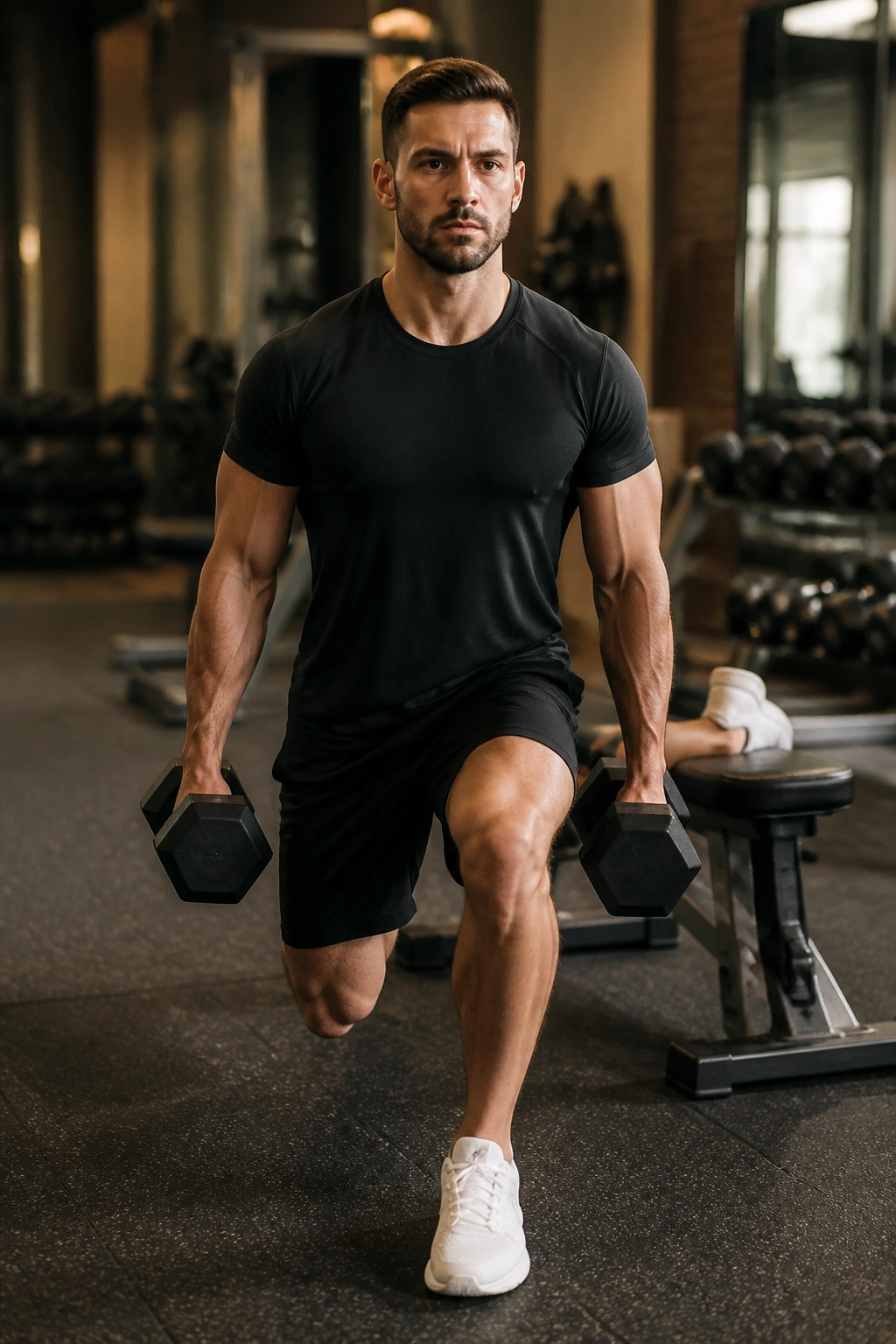
There is a reason people call these the “bulgarian split squat of death.” They are notoriously difficult, but they are unmatched for building leg mass without putting your spine under heavy compressive loads. You isolate one leg at a time, which allows you to really focus on the mind-muscle connection.
Setting Up the Foot
Place your back foot on a bench, couch, or sturdy chair. Step your front foot out far enough so that when you descend, your front shin stays vertical. This is crucial for quad isolation. If your knee drifts way over your toe, you are working the joint, not the muscle.
Why They Work
- Increases the range of motion for the front leg.
- Forces you to stabilize with your core, recruiting more muscle fibers.
- Prevents your dominant leg from compensating for your weaker leg.
Crucial detail: Keep the dumbbells at your sides. If you want more glute involvement, lean your torso forward slightly while keeping your back straight. If you want quad emphasis, stay upright.
5. Dumbbell Sumo Deadlifts
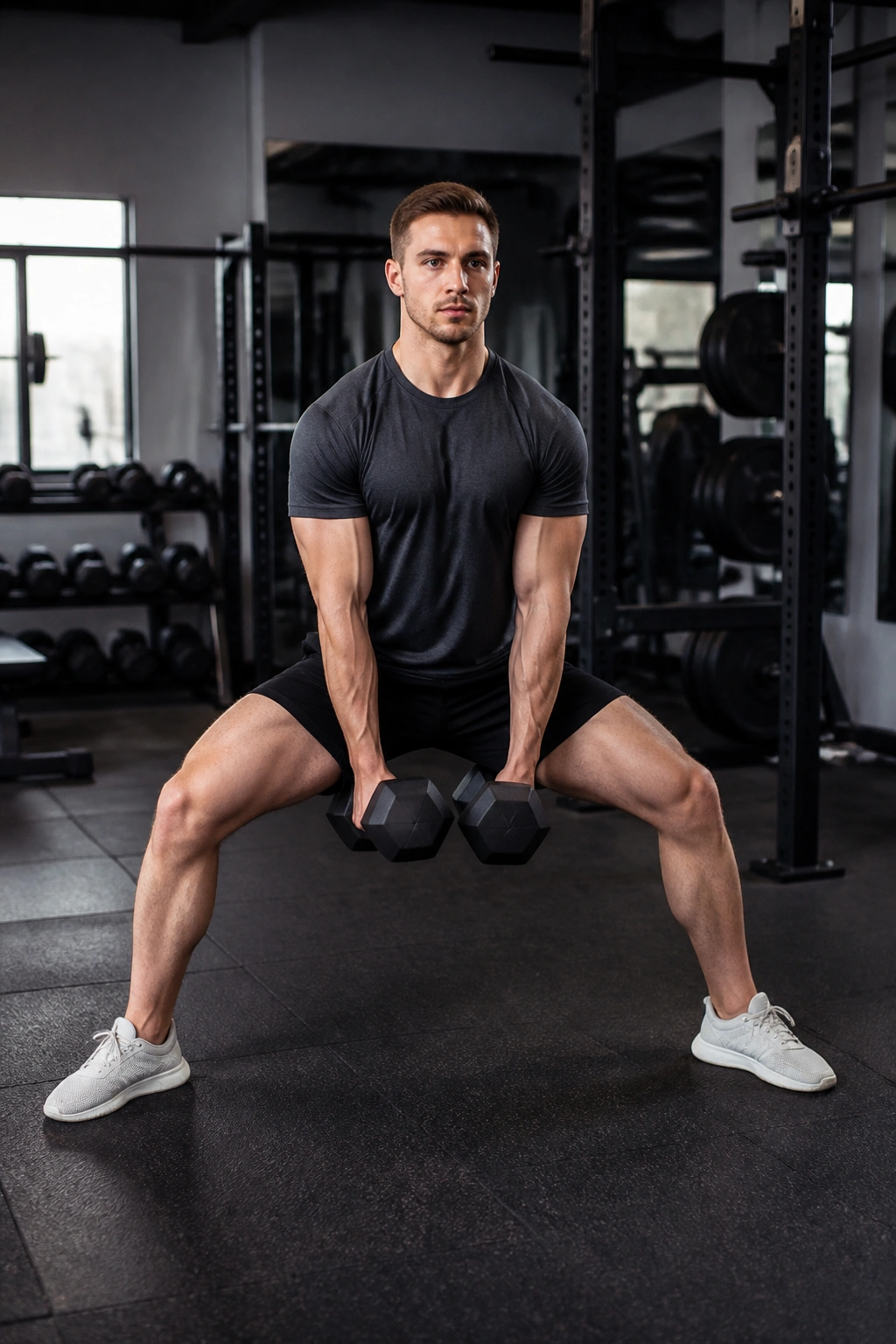
The sumo stance changes the geometry of the deadlift. By taking a wide stance and pointing your toes out, you shift the load onto the inner thighs (adductors) and the glutes. It is a fantastic mass-builder for the legs that doesn’t rely on the back muscles as much as a conventional deadlift.
Finding the Stance
Set your feet wider than shoulder-width apart. Hold one or two dumbbells between your legs. When you descend, your knees should track directly over your toes. If your knees cave in, you need to narrow your stance or improve your hip mobility.
Focus on the Pull
Unlike a standard deadlift where you pull from the floor, a sumo deadlift allows you to keep a more vertical torso. Think of it as a push, not a pull. Drive your feet through the floor as if you are trying to spread the gym mats apart. This “floor spreading” cue is what lights up the glutes and thighs.
6. Dumbbell Step-Ups
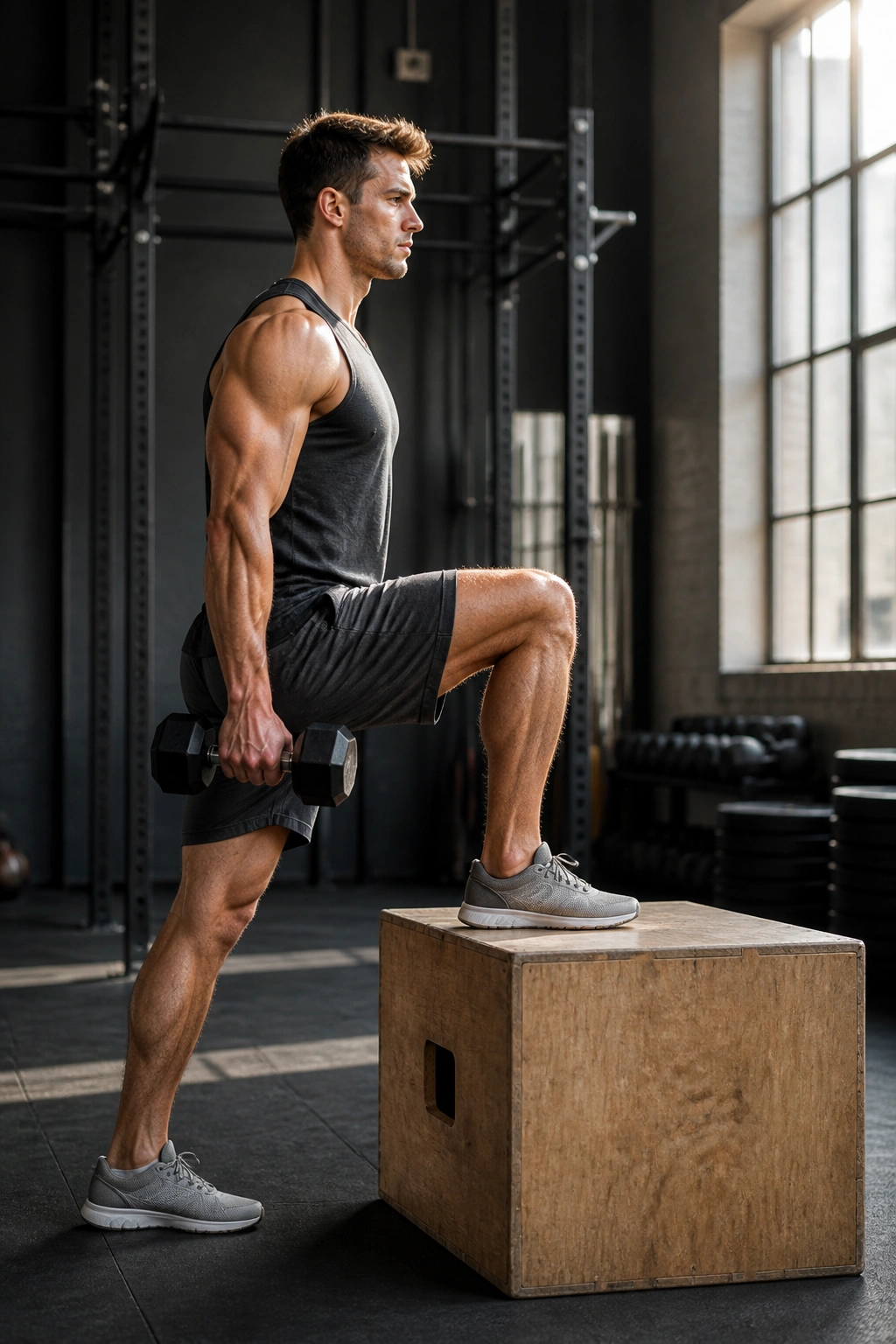
Step-ups are the most underrated leg movement in the gym. They are functional, they build incredible power, and they allow you to load up heavy dumbbells without needing the balance required for lunges. If you want to grow your quads and glutes, this is a non-negotiable addition to your routine.
Selecting the Right Height
The box or bench height matters. If it is too high, your hip will rotate, and you will lose stability. Aim for a height where your thigh is parallel to the floor when your foot is on the box. This ensures the knee joint stays in a safe, productive range.
Mastering the Descent
The ascent is only half the battle. The eccentric, or the way down, is where the growth happens. Lower your body under control. Do not just let gravity drop you. Fight the descent. This slow lowering phase is the secret weapon for building thicker, fuller quads.
7. Dumbbell Side Lunges (Lateral Lunges)
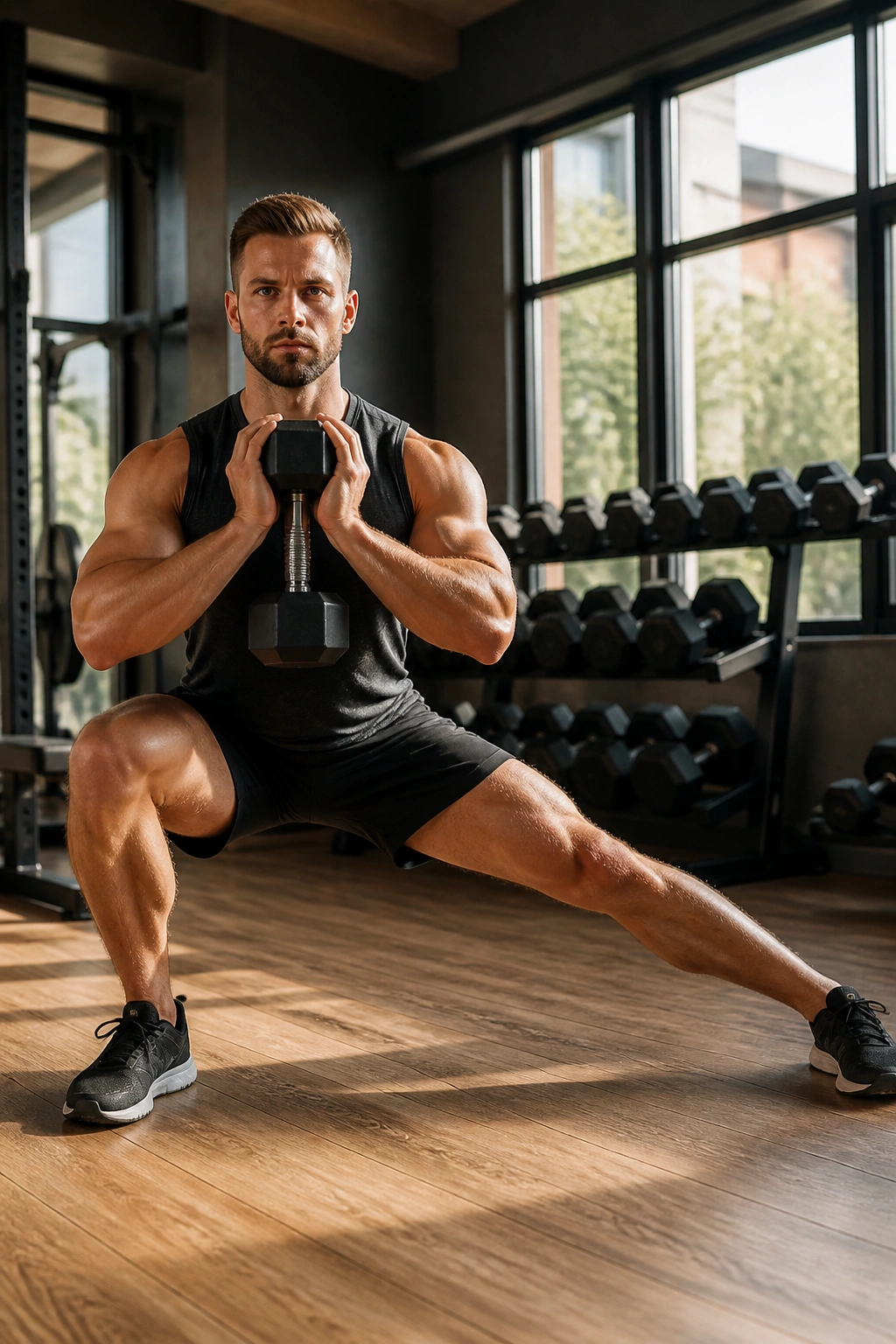
We spend most of our time moving forward and backward in the gym. Side lunges hit the frontal plane, which is essential for developing the inner and outer sweep of the thighs. If your quads look flat from the front, it is likely because you are ignoring lateral movements.
Getting the Movement Right
Take a wide step to the side. Keep your planted leg straight, and bend the knee of the lunging leg. Push your hips back as you descend. Hold the dumbbells in a goblet position or at your sides—goblet is usually better for maintaining an upright chest.
Why You Need Them
- Hits the adductors, which are often underdeveloped.
- Improves hip mobility, which carries over to your heavy squat performance.
- Challenges your stabilizer muscles in ways that forward-back movements simply cannot.
Quick tip: Keep your toes pointed straight ahead, not outward. This forces the muscles around the hip and knee to work harder to maintain stability.
8. Dumbbell Glute Bridges
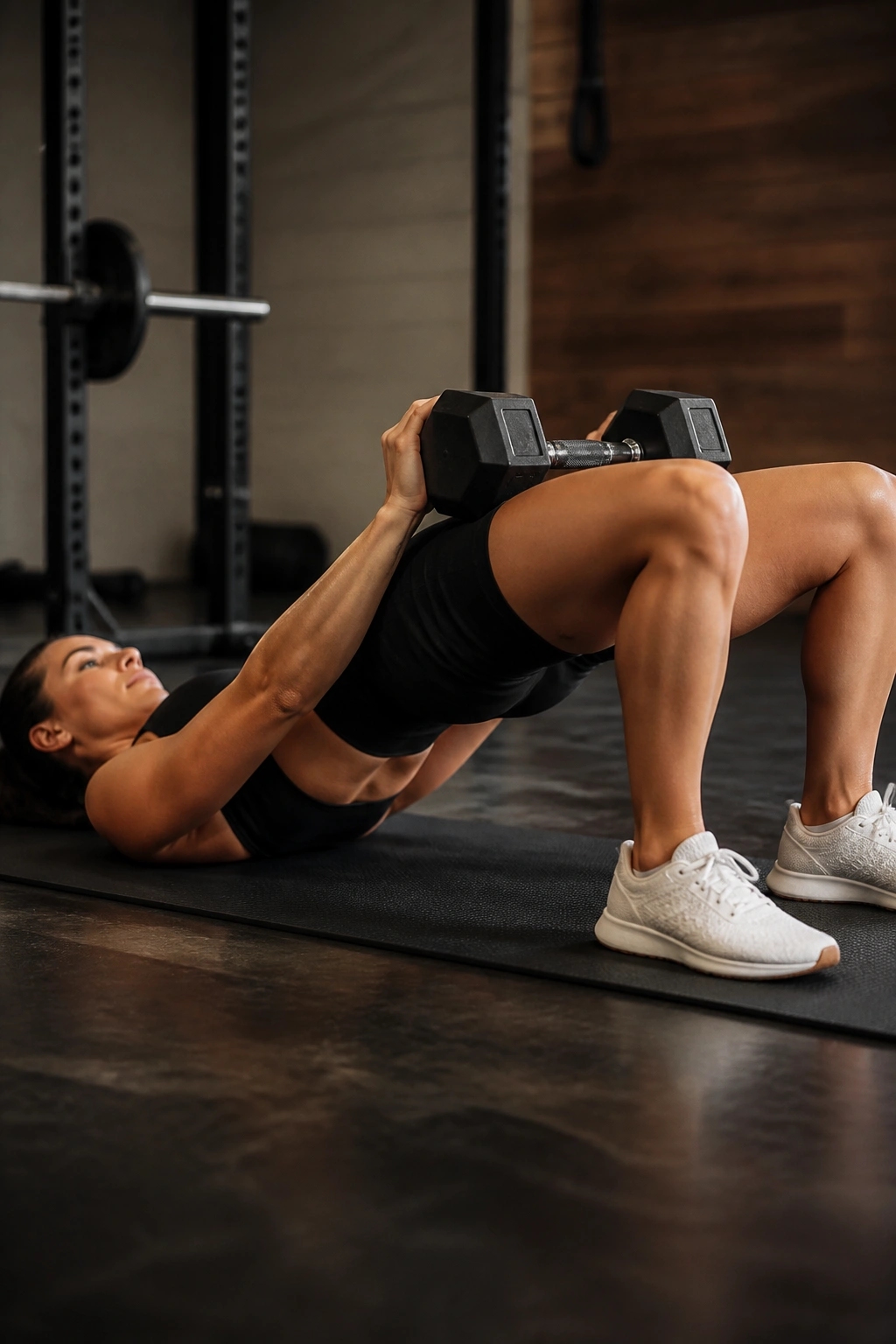
While the focus here is “leg exercises,” you cannot ignore the glutes if you want a complete lower body. The dumbbell glute bridge (or hip thrust) is the king of posterior chain isolation. Unlike a barbell, which can be awkward to set up, you can easily hold a heavy dumbbell across your hips.
The Setup
Lie on your back, knees bent, feet flat on the floor. Place a heavy dumbbell horizontally across your pelvic bone. Use a pad or a folded towel if the dumbbell digs into your hips—comfort is key to lifting heavy.
Maximizing Recruitment
Drive through your heels to lift your hips toward the ceiling. At the top of the movement, squeeze your glutes as hard as you possibly can. Hold that squeeze for a one-second pause. Do not overarch your lower back; all the movement should come from the hips.
9. Dumbbell Cossack Squats
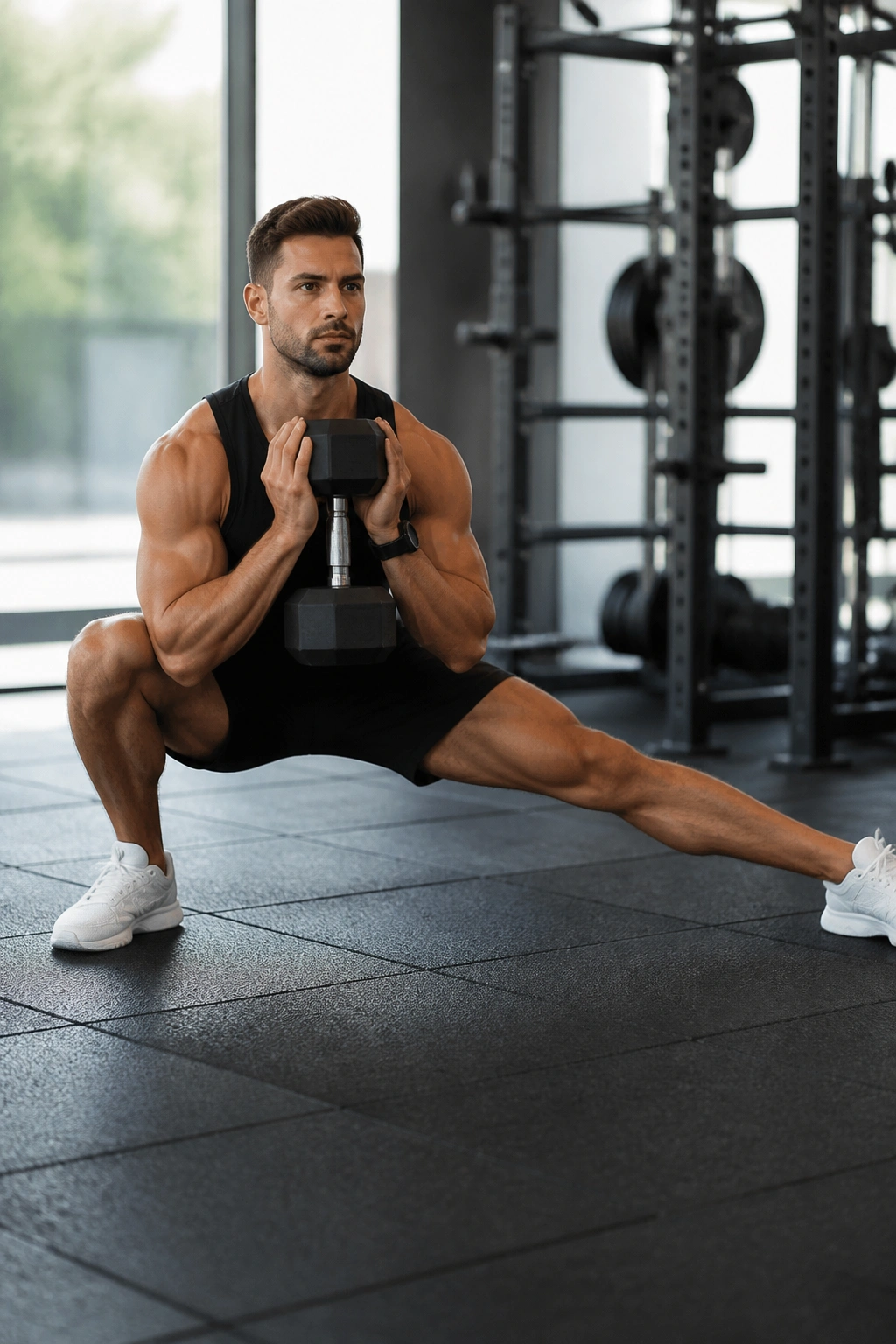
This is essentially a side lunge taken to the absolute extreme. It requires more flexibility, but the results in terms of leg strength and mass are significant. It is a deep, unilateral movement that forces the quads and glutes to work from a very deep, stretched position.
How to Execute
Start in a very wide stance. Shift your weight to one side, squatting down as deep as you can while keeping the other leg perfectly straight with the heel planted. The dumbbell should be held in a goblet position to act as a counterweight.
The Benefit of Depth
Because you are getting so low, you are hitting muscle fibers that are rarely activated in standard squats. The stretch at the bottom of a Cossack squat is intense. It builds strength through a range of motion that most people avoid, which is exactly why it is so effective for hypertrophy.
10. Dumbbell Split Squats (Static)
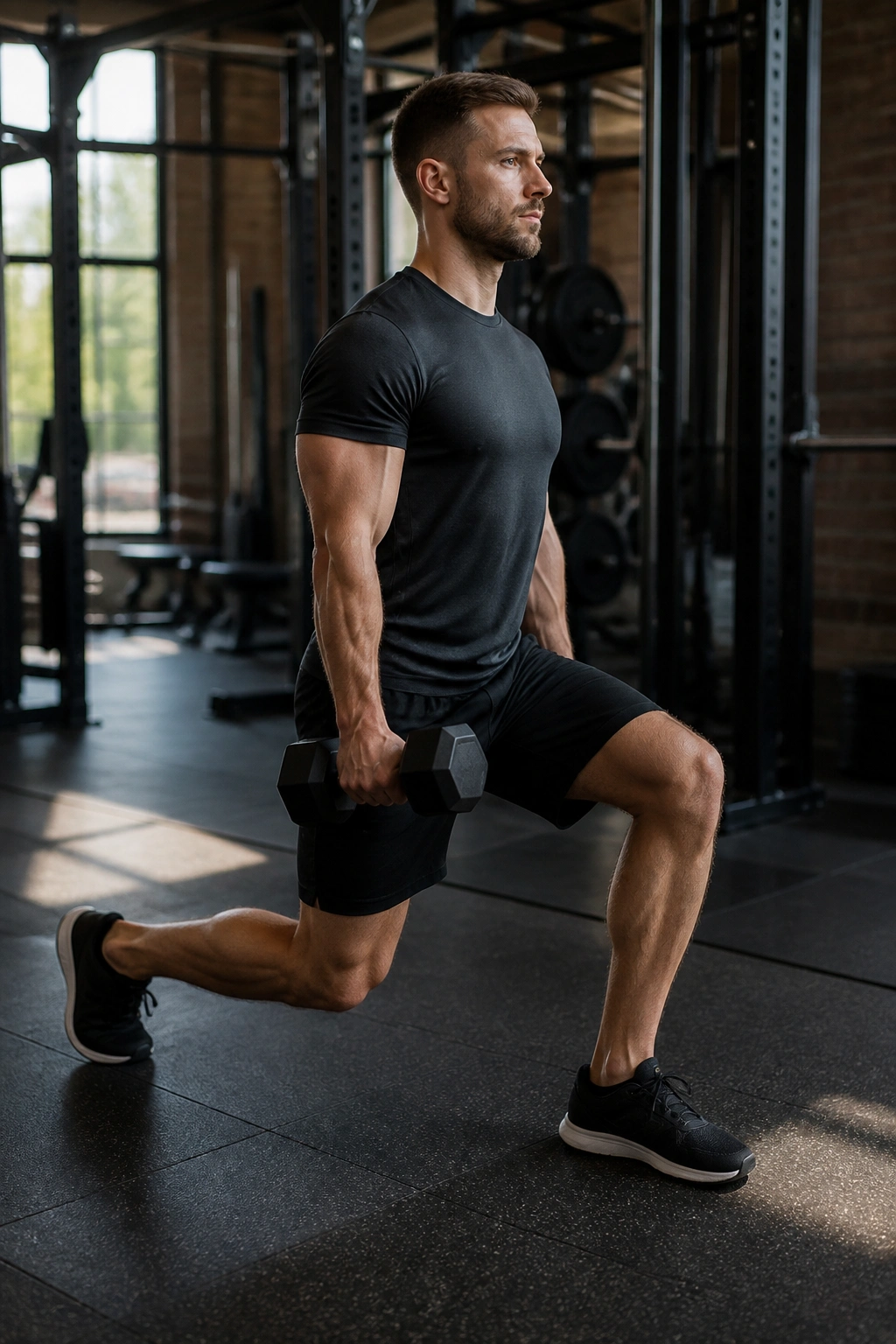
Unlike the Bulgarian split squat where your back foot is elevated, the static split squat keeps both feet on the floor. This provides a more stable base, allowing you to focus purely on the quad burn without worrying about balance.
Positioning
Stand in a split stance, one foot forward, one foot back. Drop your back knee straight down. Your weight should be distributed about 80/20 in favor of the front leg. Keep your torso completely vertical.
Building Volume
Because this is more stable than the Bulgarian version, you can usually handle more volume here. Try high-rep sets—think 15 to 20 reps—to really flood the quads with blood. The pump you get from static split squats is incredible, and that metabolic stress is a huge driver for muscle growth.
11. Dumbbell Single-Leg Romanian Deadlifts
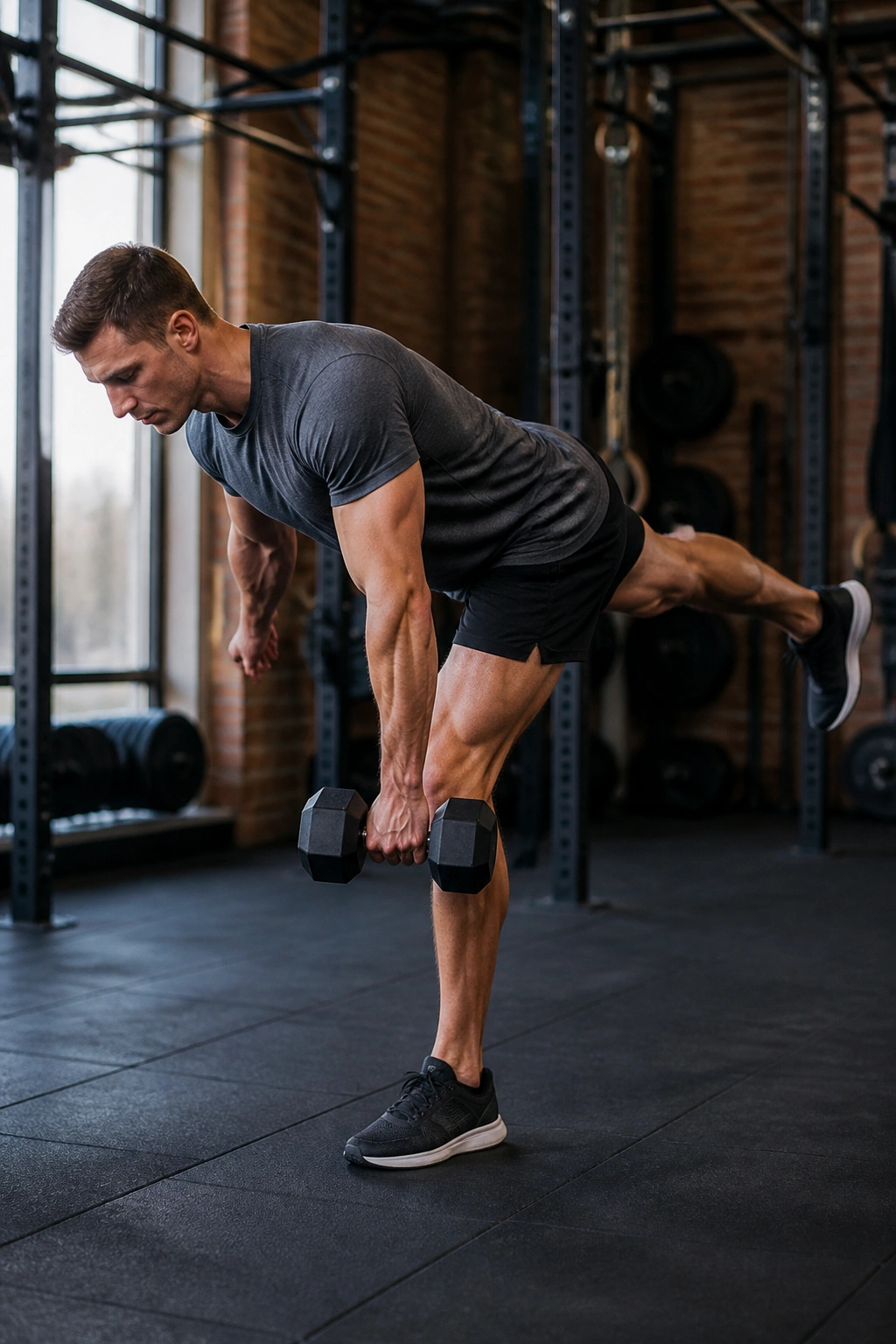
If the standard RDL builds the hamstrings, the single-leg RDL builds them and teaches them to stabilize. This exercise is fantastic because it highlights any imbalances between your left and right sides. You will quickly find that one leg is stronger than the other.
Finding Balance
Hold a dumbbell in the hand opposite to the working leg. This helps with balance. Hinge at the hips, reaching the free hand toward the floor while extending the non-working leg straight back behind you. Keep your back flat.
The Focus
Do not worry about the weight. Worry about the stability. You want to feel a deep stretch in the hamstring of the planted leg. If you wobble, reset. The act of stabilizing is building the tiny, deep muscles that protect your knees and hips, providing a solid foundation for your heavier compound lifts.
12. Dumbbell Reverse Lunges
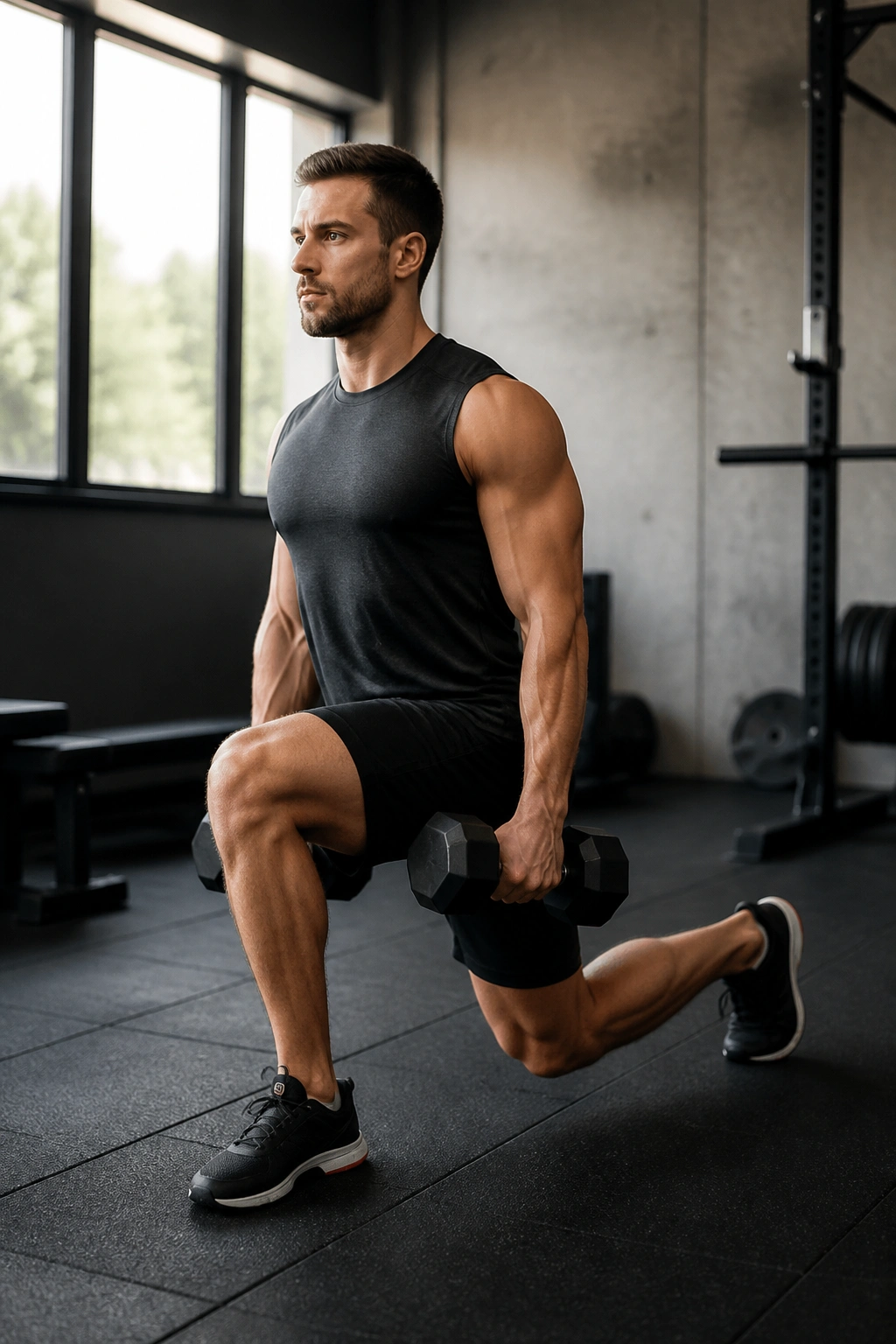
Many people struggle with knee pain during forward lunges. The reverse lunge is the solution. It places significantly less stress on the knee joint because the shin stays more vertical and the momentum is going backward, which is naturally easier for the body to control.
Why They Are Superior
You can safely go heavier with reverse lunges than with forward lunges. Because you are pushing back to the starting position, you are using the glute and quad of the front leg to propel yourself backward. It is a very athletic, natural motion.
The Technique
Take a long step backward. Ensure your front foot remains firmly planted. Keep your front shin vertical. As you return to the start, push through the heel of the front foot. Keep your core tight to prevent your torso from swaying.
13. Dumbbell Box Squats
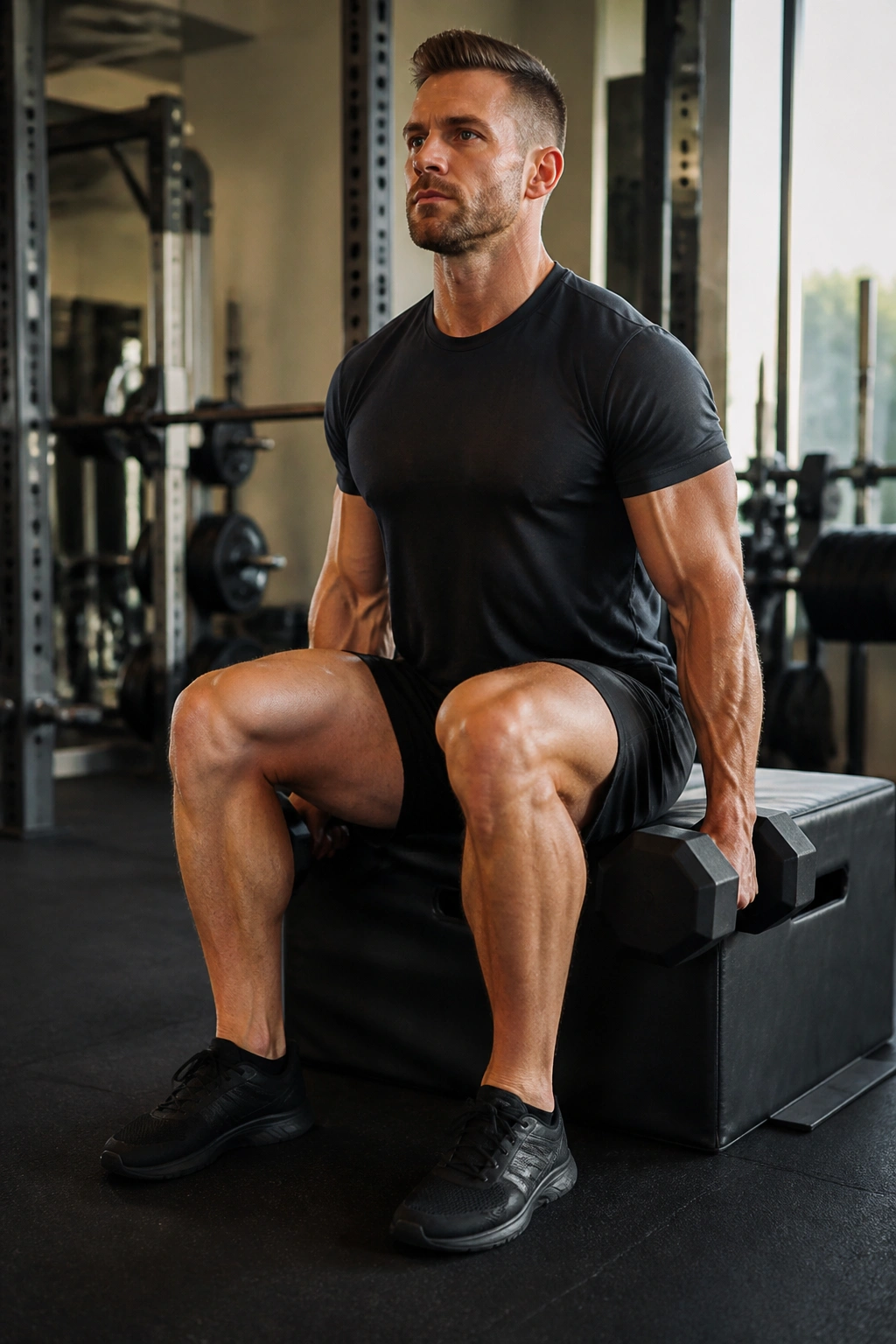
Box squats are a powerlifter’s secret weapon, and you can adapt them perfectly with dumbbells. By squatting to a box or bench, you break the eccentric-concentric chain. You are not bouncing out of the hole; you are sitting, pausing, and exploding up.
Breaking Momentum
Lower yourself onto the box under control. Let your glutes make contact, pause for one second to kill all the momentum, then drive back up. This forced pause eliminates the stretch reflex, which means your muscles have to do all the work from a dead stop.
Muscle Activation
The pause forces your quads and glutes to work significantly harder than they would in a continuous rep. It also teaches you to keep your core engaged at the very bottom of the squat, where you are weakest. It is a humbling exercise that builds immense strength.
14. Dumbbell Thrusters
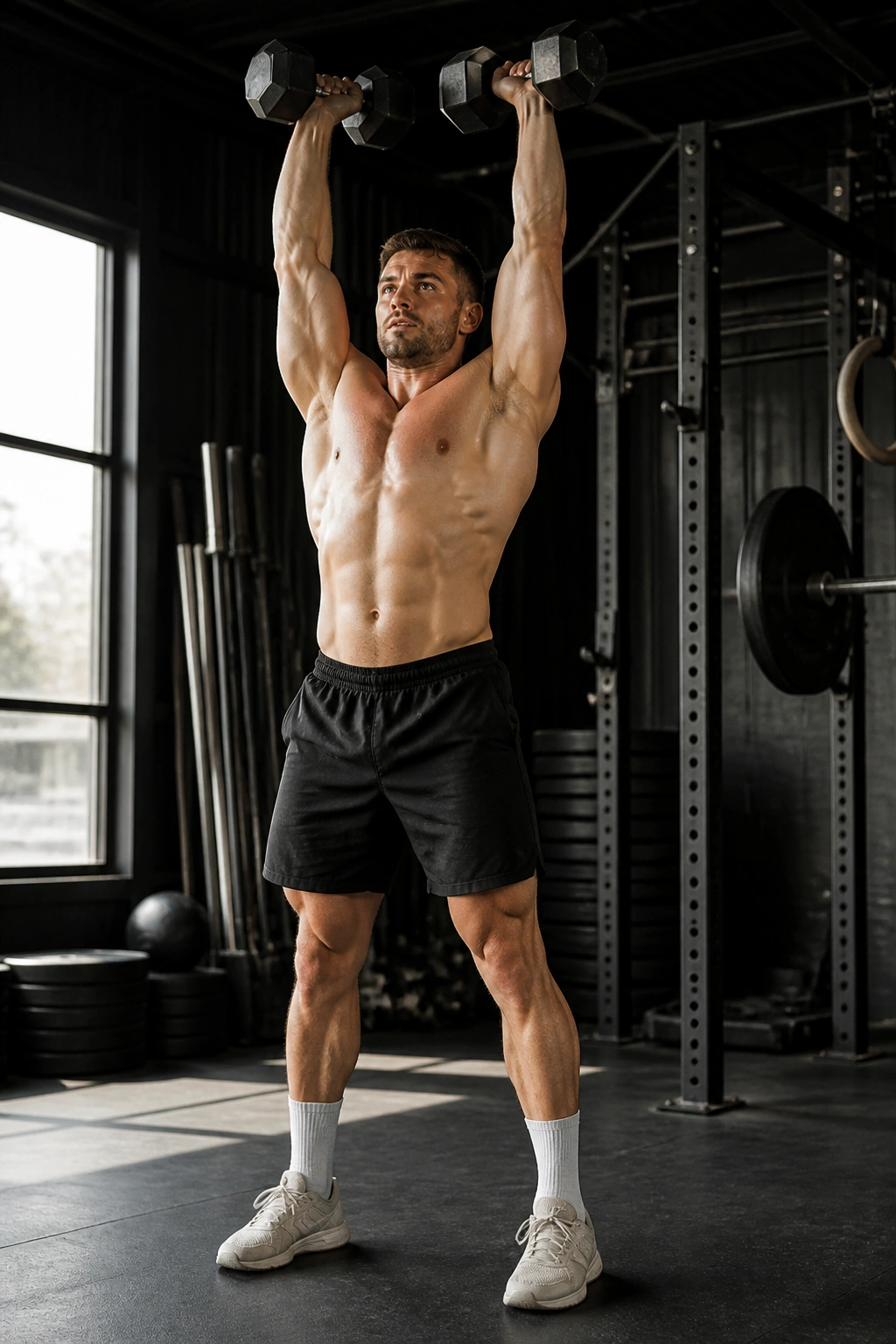
Thrusters are a full-body movement that happens to be one of the best for building leg mass because they combine a squat with an overhead press. They skyrocket your heart rate and force your legs to generate power under fatigue.
The Compound Effect
Squat down with the dumbbells at your shoulders. As you stand up, use that leg power to drive the weights overhead. The quads are providing the explosive power for the entire movement.
Why They Build Mass
The metabolic demand is extreme. You are combining a high-intensity leg movement with upper-body work, which forces your cardiovascular system to adapt. Stronger, larger legs are often the result of this kind of total-body conditioning, as the body is forced to build more muscle to support the intense work capacity required.
15. Dumbbell Curtsy Lunges
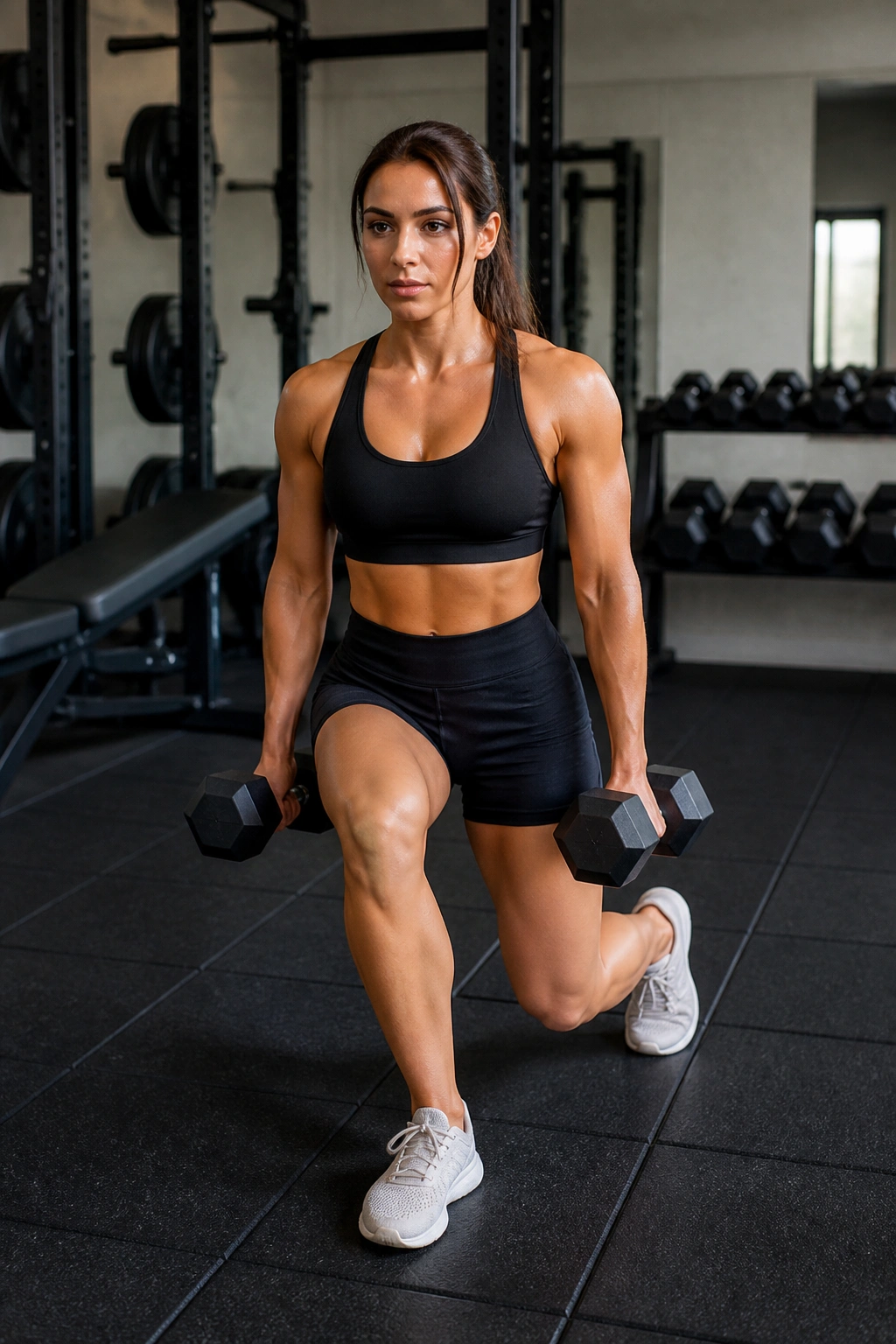
Don’t let the name fool you. Curtsy lunges are brutal on the glutes, specifically the glute medius—the muscle responsible for hip stability and the “shelf” look. By crossing your leg behind your front leg, you change the angle of pull on the hip.
The Mechanics
Step back and across your body. Keep your hips facing forward. Drop into the lunge. You should feel a deep stretch and engagement in the outside of your hip and glute.
Why They Fit
Most leg workouts ignore the hip stabilizers. When you strengthen the glute medius, you actually allow yourself to squat heavier and lunge with more stability. It is the missing link for a lot of people who have strong quads but weak hips.
16. Dumbbell Jefferson Squats
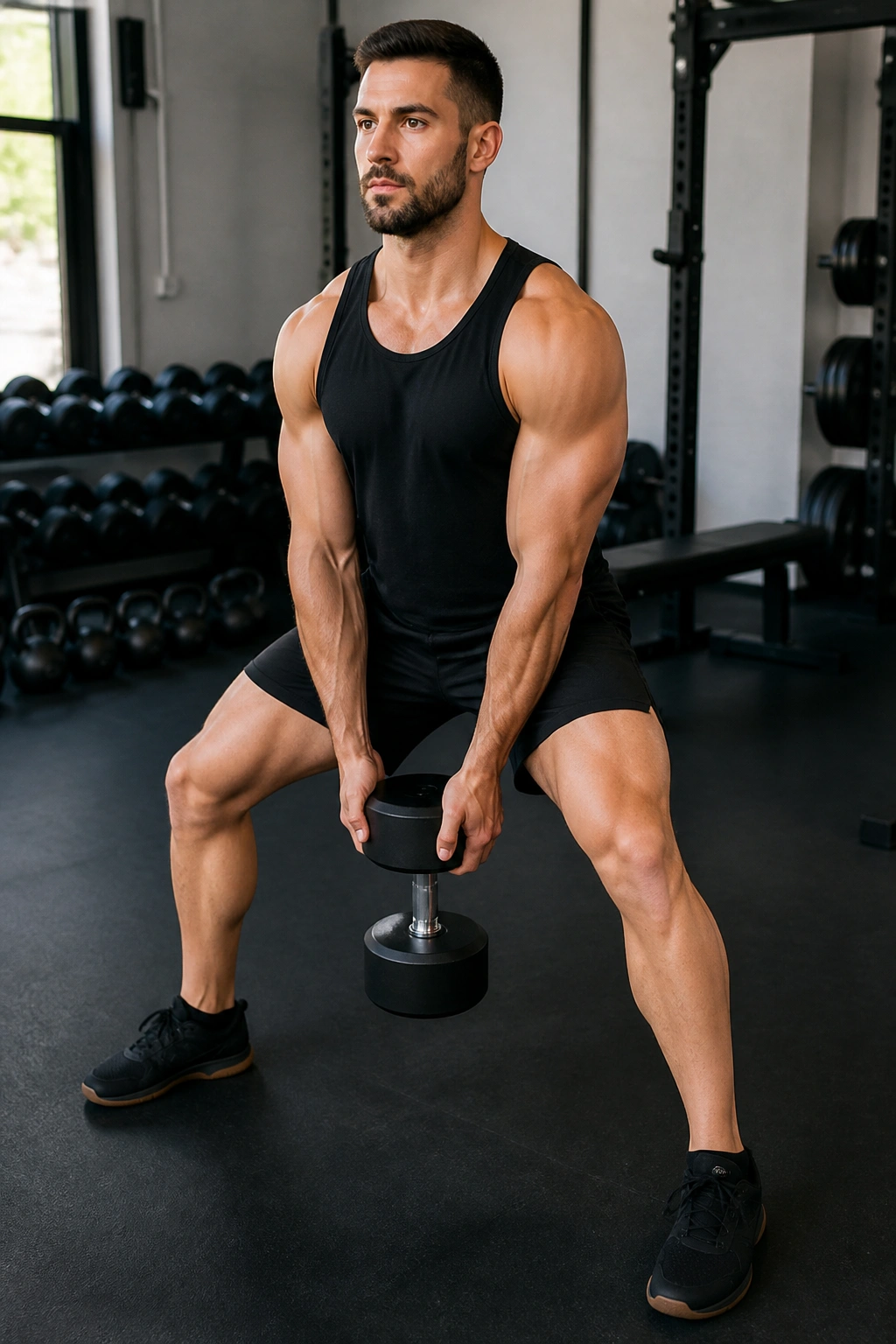
This is a classic, old-school exercise that rarely gets seen in modern gyms. You stand over a dumbbell, straddling it, and pull it up from between your legs. It is a mix of a squat and a deadlift, and it hits the quads and glutes from a completely unique angle.
Setting Up
Straddle the dumbbell. Reach down and grab it with both hands. Your chest should be up. Squat down and pull the weight up as you stand. It feels a bit awkward at first, but once you find your rhythm, it is a monster for leg development.
The Rotation
Because the weight is between your legs, you are forced to keep your torso perfectly vertical to avoid smacking your knees. It is excellent for those who struggle with forward-leaning in traditional squats. It forces you to stay upright, which shifts the load entirely to the quads and glutes.
17. Dumbbell Suitcase Squats
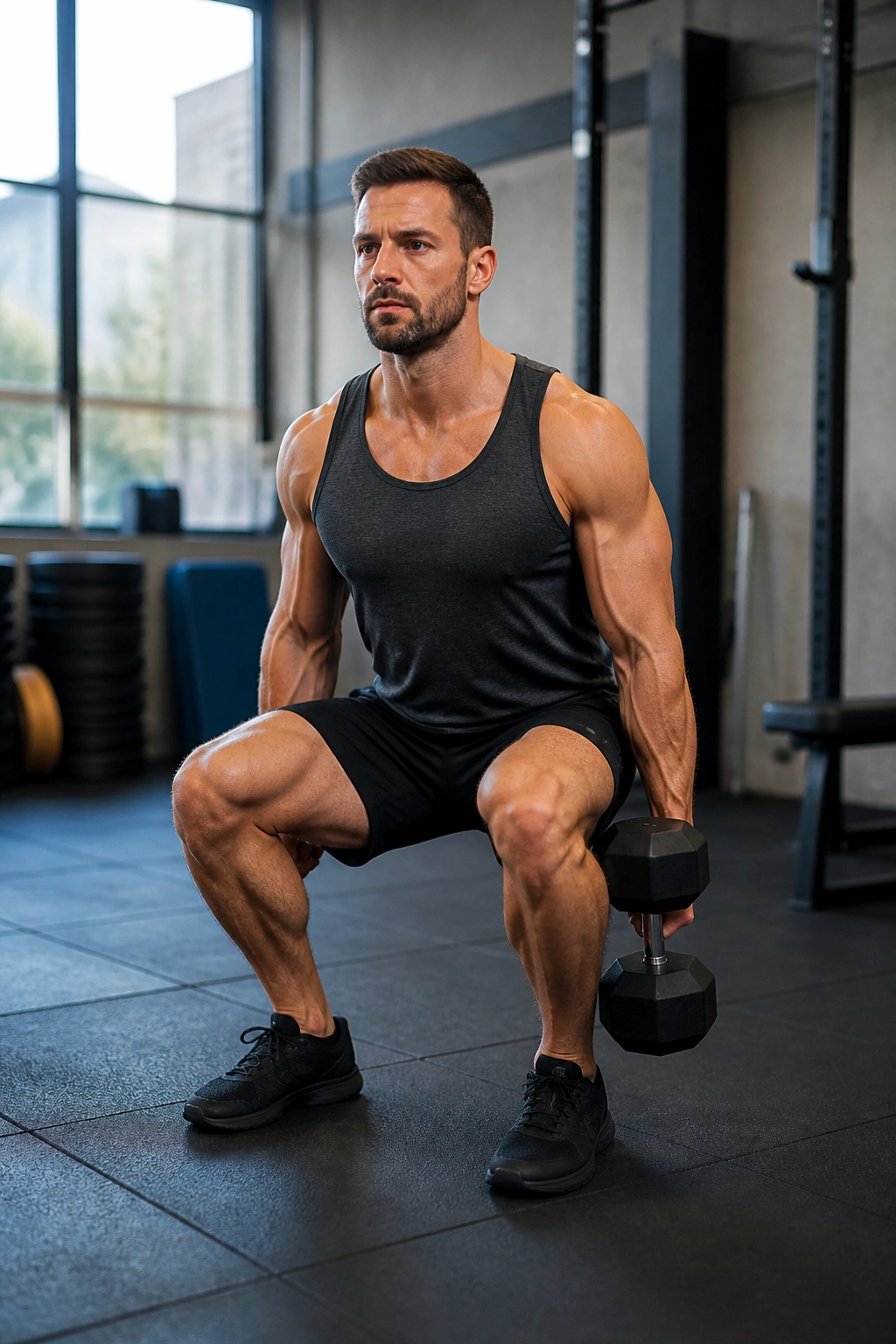
A suitcase squat involves holding a dumbbell in only one hand. This creates a massive lateral imbalance. Your core has to fight to keep you from leaning toward the side with the weight. This is “anti-lateral flexion” training, and it is incredible for your stability.
The Core Connection
Your obliques and deep core muscles will fire to keep your spine straight while your legs do the squatting. It is essentially a squat and a core workout rolled into one. You will find that you cannot go as heavy as a two-dumbbell squat, but the stimulation to the legs is different—it is more focused on stability and control.
The Imbalance
Switch hands halfway through your set to ensure even development. The instability forces you to move slower and with more precision, which is always a plus for hypertrophy. Never underestimate the power of asymmetric loading to fix imbalances.
18. Dumbbell Hack Squats
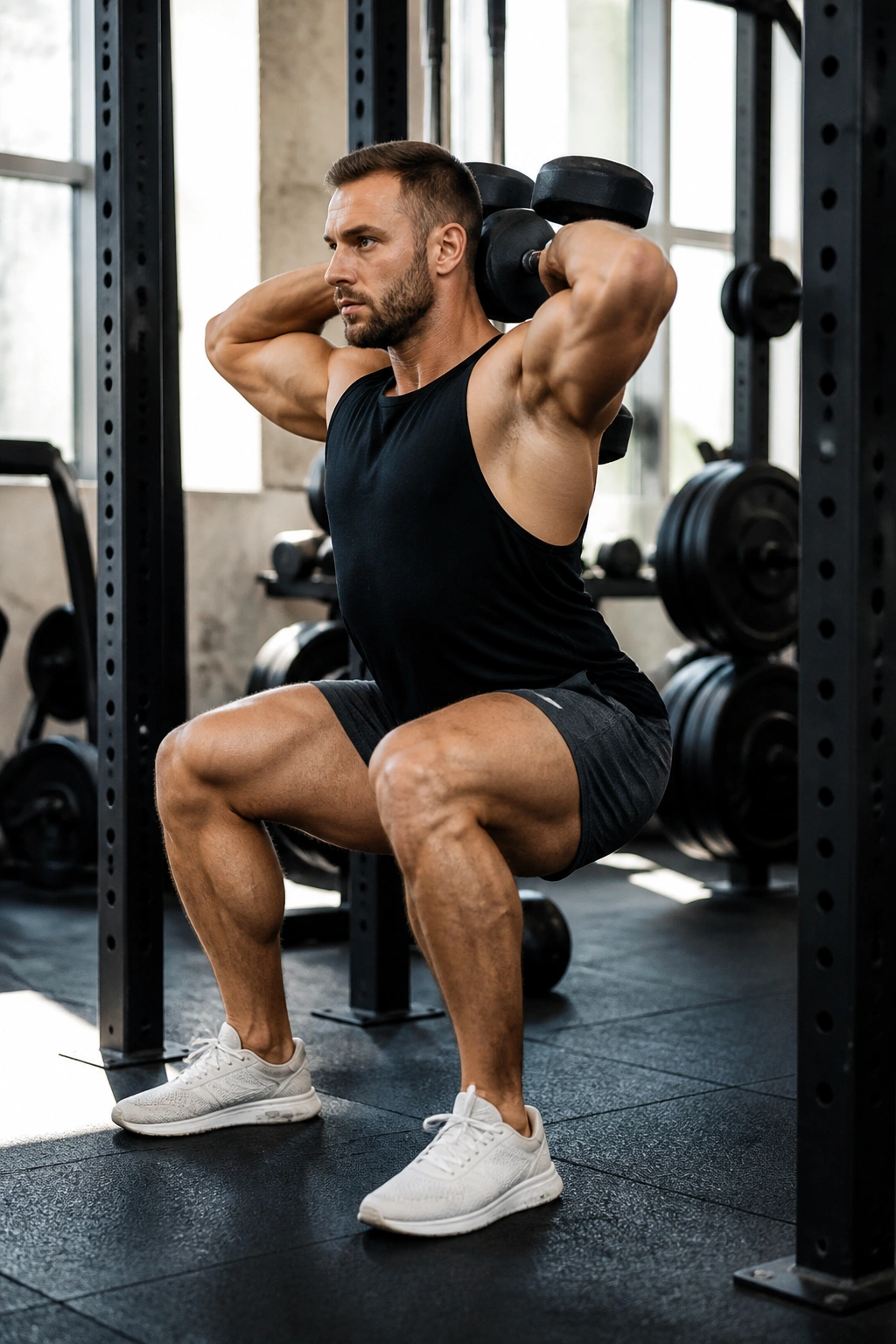
No, you do not need a machine to do hack squats. You can replicate the movement pattern with dumbbells held behind your back. This shifts your center of gravity forward, which forces the quads to work through a massive range of motion.
The Positioning
Hold the dumbbells behind your heels. Keep your chest up and your heels slightly elevated if you have the mobility. As you squat, your knees will travel far forward, which is exactly what we want for quad isolation.
Why It Works
By keeping the weight behind you, you are essentially mimicking the fixed path of a hack squat machine. It targets the teardrop muscle (vastus medialis) of the quad specifically. If you want legs that look like they have serious separation, this is the movement that will get you there.
Final Thoughts
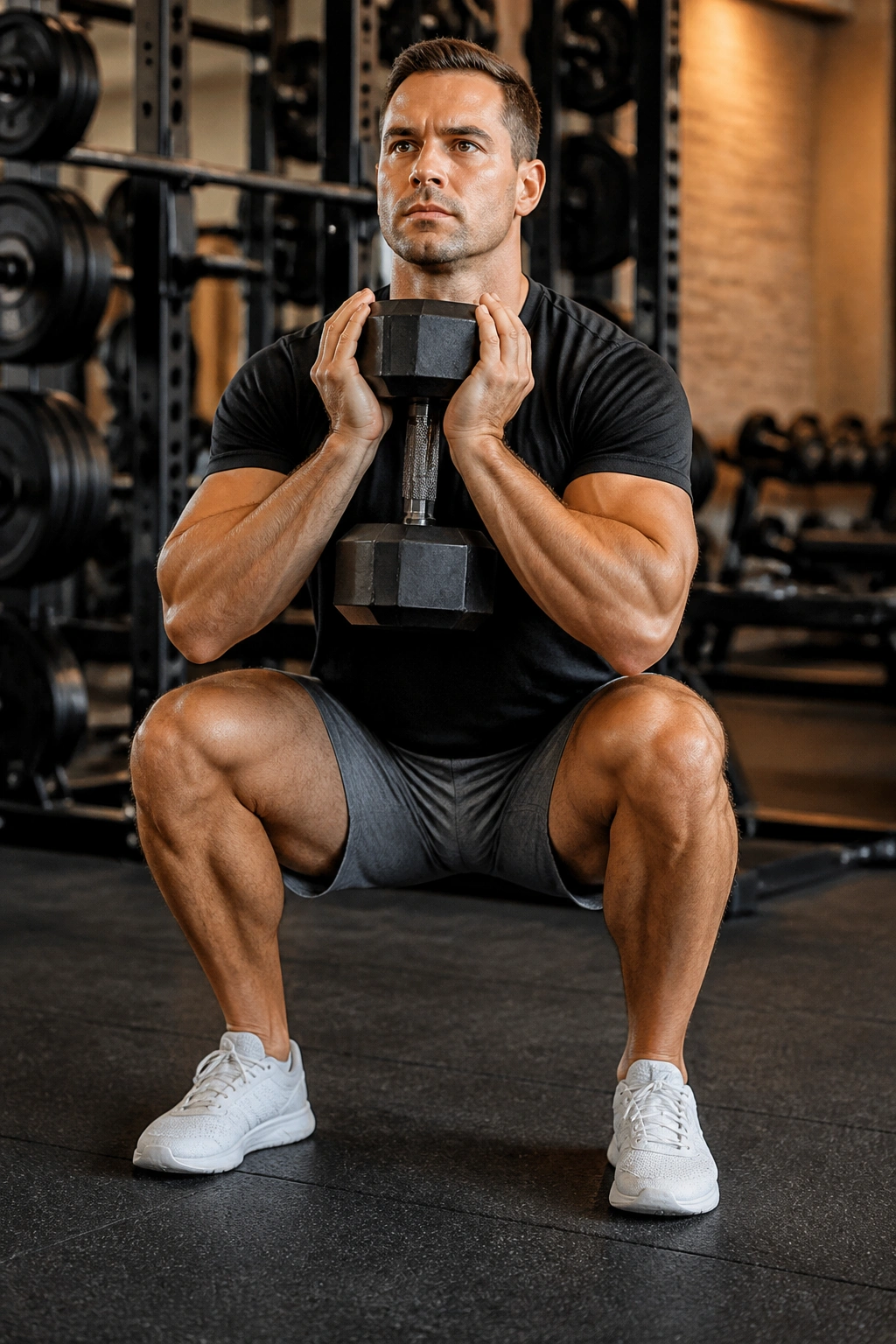
Building leg mass with dumbbells is not about how much weight you can move; it is about how much tension you can put on the muscle. You have more freedom to adjust your form, find the angles that work for your specific anatomy, and really focus on the mind-muscle connection. Forget about what the person at the squat rack is doing with the barbell. That is their workout. Focus on yours.
The most important takeaway here is consistency. A program that utilizes these movements—rotated strategically throughout your training weeks—will yield better results than a program that relies on heavy, ego-driven lifts that compromise your form. Take your time, master the movement patterns described above, and focus on the feeling of the muscle fibers lengthening and contracting under the weight. Your legs will grow, but only if you give them a reason to. Put in the effort, stay disciplined with your tempo, and the mass will follow.
