



A spare room, a timer, and a little stubbornness can carry a home workout farther than a basement full of machines. That’s the honest appeal of boot camp workouts at home: they feel hard enough to matter, but they do not need much more than floor space, a sturdy chair, and maybe a backpack if you want to get fancy.
The format works because it keeps you moving. Short rests stop your heart rate from fully settling, and that mix of strength, cardio, and core work is what makes boot camp sessions feel so efficient. You finish sweaty, breathing hard, and a little surprised at how much got done in 20 or 30 minutes.
There’s also a practical bonus that people don’t talk about enough. Home boot camp training is easier to repeat, and repetition is where results come from. Not flash. Not perfect equipment. Repetition.
The trick is choosing sessions that actually fit the space you have and the joints you’re working with. Some days that means burpees and mountain climbers. Other days it means squats, push-ups, and marches in place so you can train hard without waking the whole house. The best home boot camp routines meet you where you are and still leave no doubt that you trained.
1. The 20-Minute Bodyweight Cardio Circuit
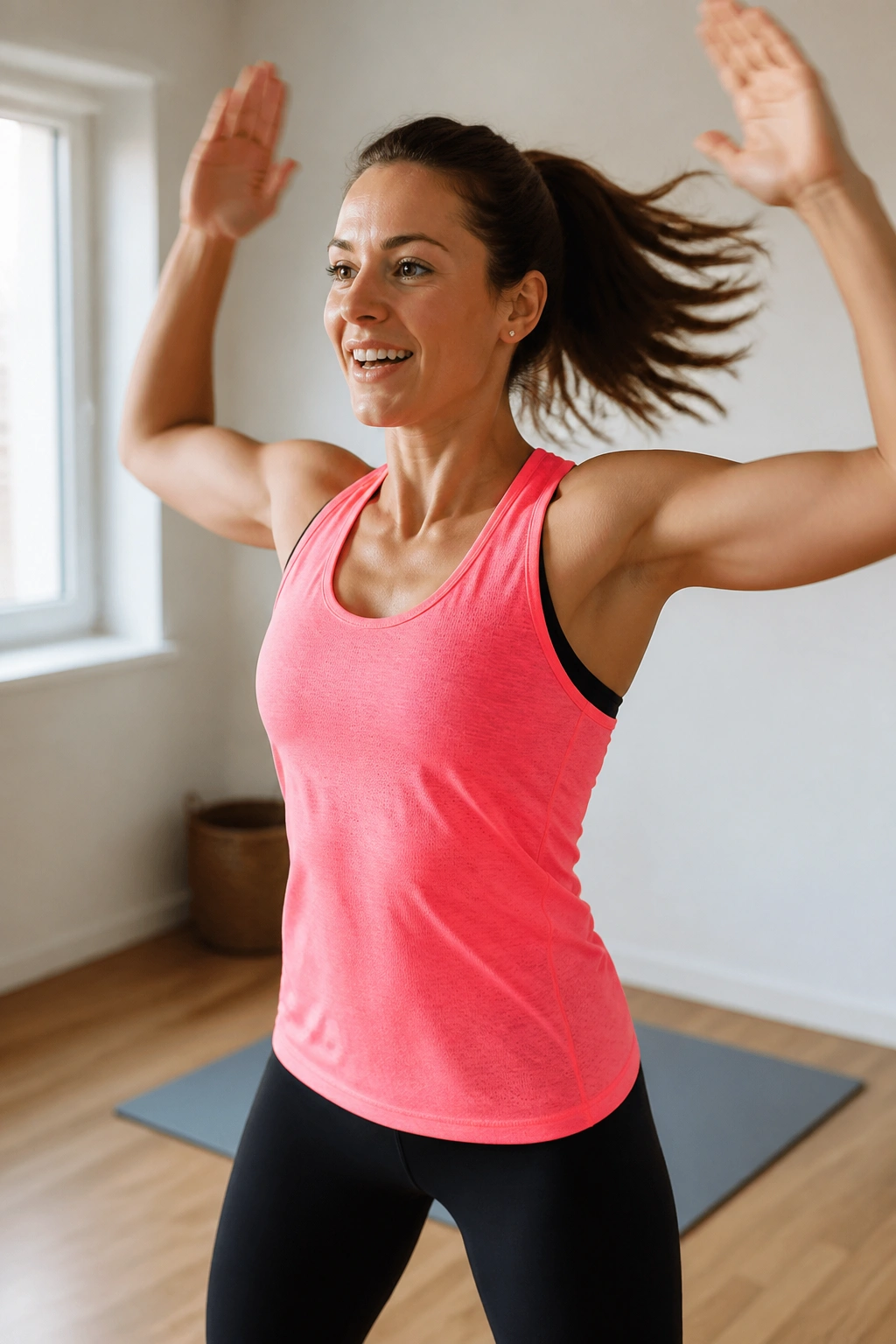
This is the one I reach for when I want a no-excuses sweat session. No gear, no setup, no fiddling around. Just a timer and enough room to take a few steps in each direction.
Run this as 40 seconds on, 20 seconds off for 4 rounds:
- Jumping jacks
- Air squats
- High knees
- Push-ups
- Alternating reverse lunges
Why It Works
The pacing matters as much as the moves. Forty seconds gives you enough time to raise your heart rate, but the 20-second pause keeps the whole thing honest. If you move with purpose, this turns into a full-body conditioning session fast.
Use the first round to find your rhythm. By round three, your legs will feel warm and your breathing will start to bite a little. That is the point.
If jumping bothers your knees or downstairs neighbors, swap jumping jacks for step jacks and high knees for a fast march. Same structure. Less noise.
Best move here: keep the squats controlled on the way down and quick on the way up. That small change makes the circuit feel much more athletic without turning it into chaos.
2. Tabata Bursts That Fit in a Small Space
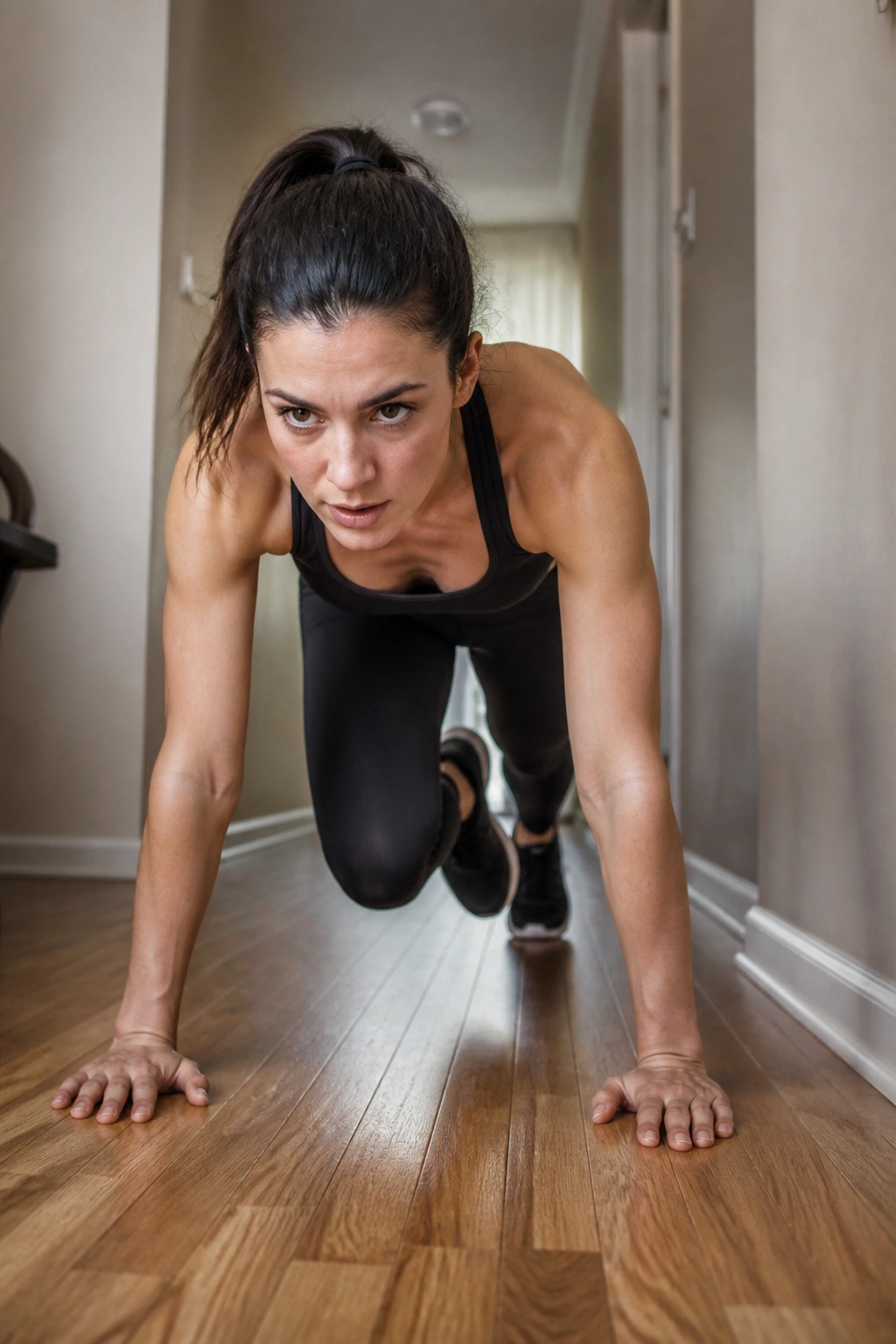
Tabata gets thrown around a lot, but the classic format is simple: 20 seconds all-out, 10 seconds rest, repeated for 8 rounds. The short work window makes it perfect for a hallway, a garage, or the narrow strip of floor between your couch and the wall.
Pick one move and stay with it for the whole block. That’s the part people mess up. They keep changing exercises and lose the punch.
Good choices:
- Squat jumps
- Mountain climbers
- Shadow boxing
- Skater steps
- Burpees, if you enjoy suffering in a noble way
If you want more total work, do two Tabata blocks back to back with a 2-minute break between them. One block can be lower-body focused, the next upper-body or cardio focused. Keep your form sharp for the first 4 rounds, because the last 4 get ugly fast.
Tabata feels short on paper. It does not feel short in your lungs.
3. The Squat Ladder for Legs That Actually Burn
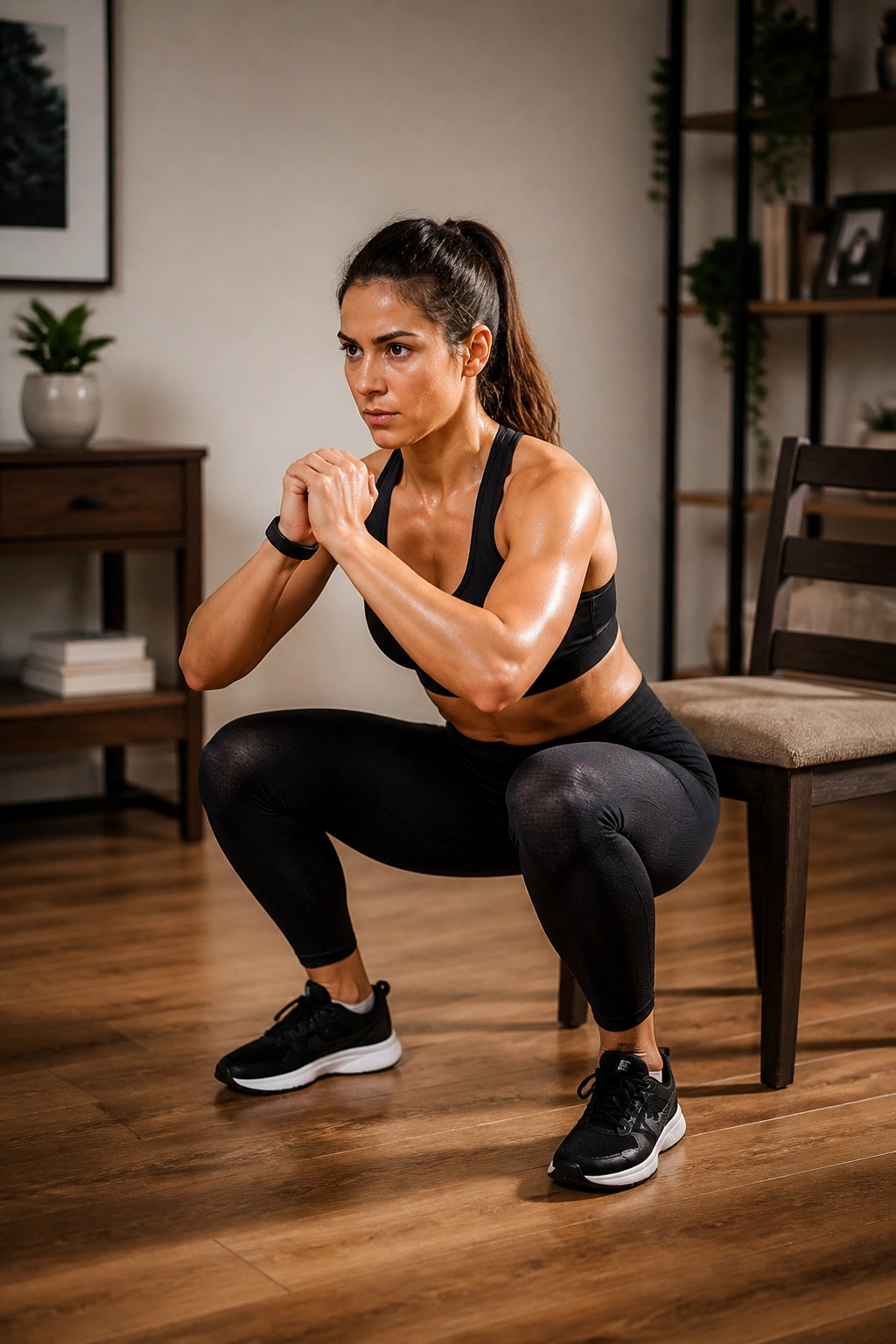
Squats are boring until they aren’t. A ladder changes the feel completely because you can see the numbers climb, and that little bit of structure makes your brain cooperate even when your thighs start complaining.
Try this pattern:
1 squat, rest 15 seconds
2 squats, rest 15 seconds
3 squats, rest 15 seconds
Keep climbing until you hit 10, then come back down.
How to Make It Hurt in a Useful Way
Use a slow lower on every rep. Count 3 seconds down, 1 second up if your bodyweight squats feel too easy. That turns a simple leg drill into a much more useful one, because the muscles stay under tension longer.
A chair can help if your form gets sloppy. Tap the chair lightly, then stand back up. Don’t dump your weight into it. That usually kills the point of the drill and makes the movement too easy.
If you want a deeper burn, hold the bottom of the squat for 2 seconds on every third rep. Small pause. Big difference.
This is one of those home boot camp workouts that looks mild from across the room and feels completely different once your legs are halfway through the ladder.
4. Push-Up Pyramids for Chest, Shoulders, and Triceps
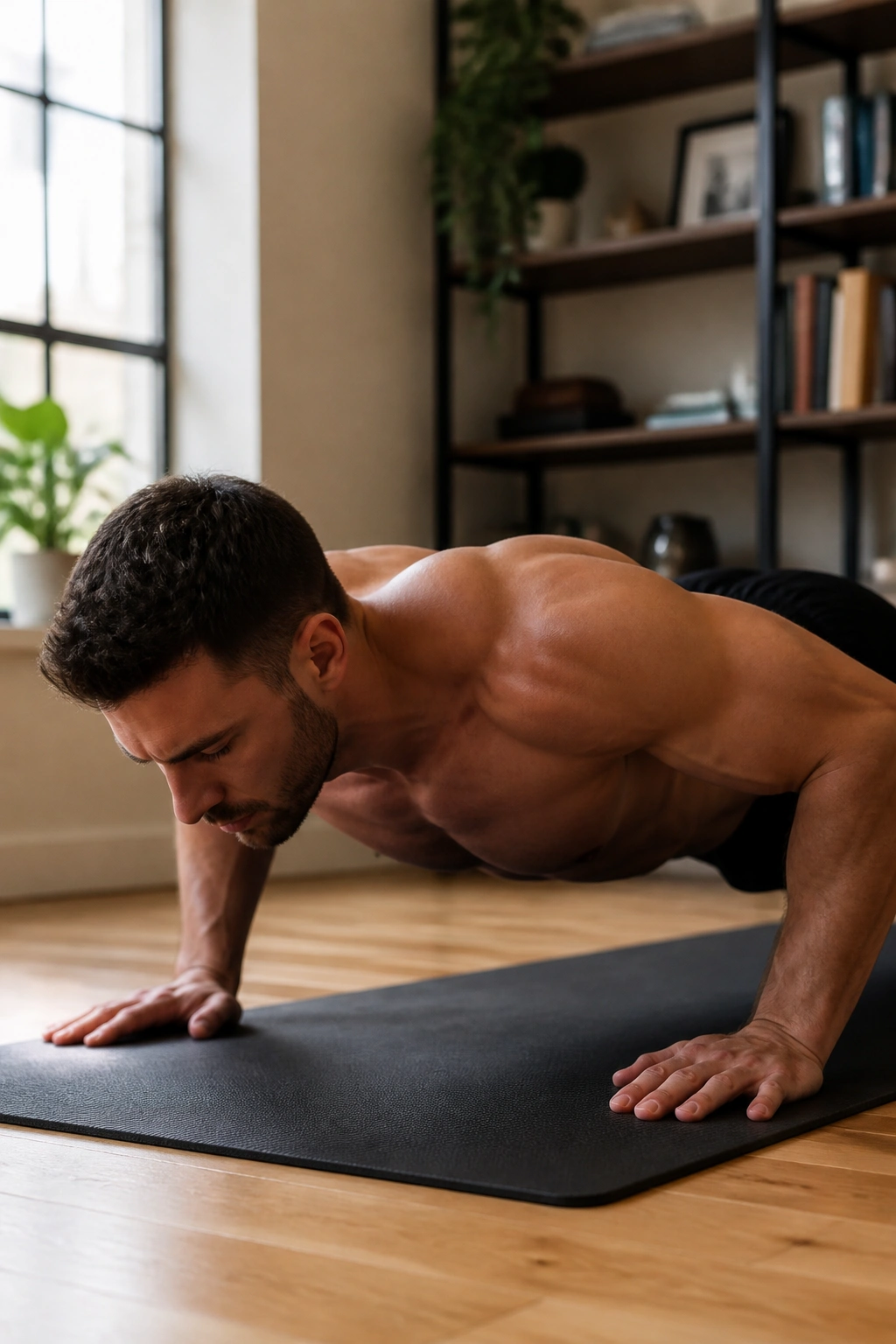
Push-up pyramids are sneaky. They look neat and organized, and then your arms begin to tremble somewhere around the middle, which is where the real work lives.
Start with 2 push-ups, rest 20 seconds, then 4, 6, 8, and 10 if you can hold form. Then come back down: 8, 6, 4, 2. If that’s too much, cap the top at 6 or 8 and call it a win.
What Makes It Different
A pyramid gives you a built-in warm-up. The early sets prepare your wrists, chest, and shoulders before the bigger sets arrive. That’s useful, because a sloppy first set of push-ups tends to haunt the rest of the workout.
Use your best version of the push-up. Full push-ups are fine. Knee push-ups are fine. Incline push-ups with hands on a couch or bench are fine too. The goal is not to impress your reflection. The goal is to keep the line from shoulders to hips solid and press with control.
If your lower back sags, shorten the range or raise your hands. A prettier push-up is not a better push-up if your body is leaking energy everywhere.
5. Burpee and Mountain Climber Combo
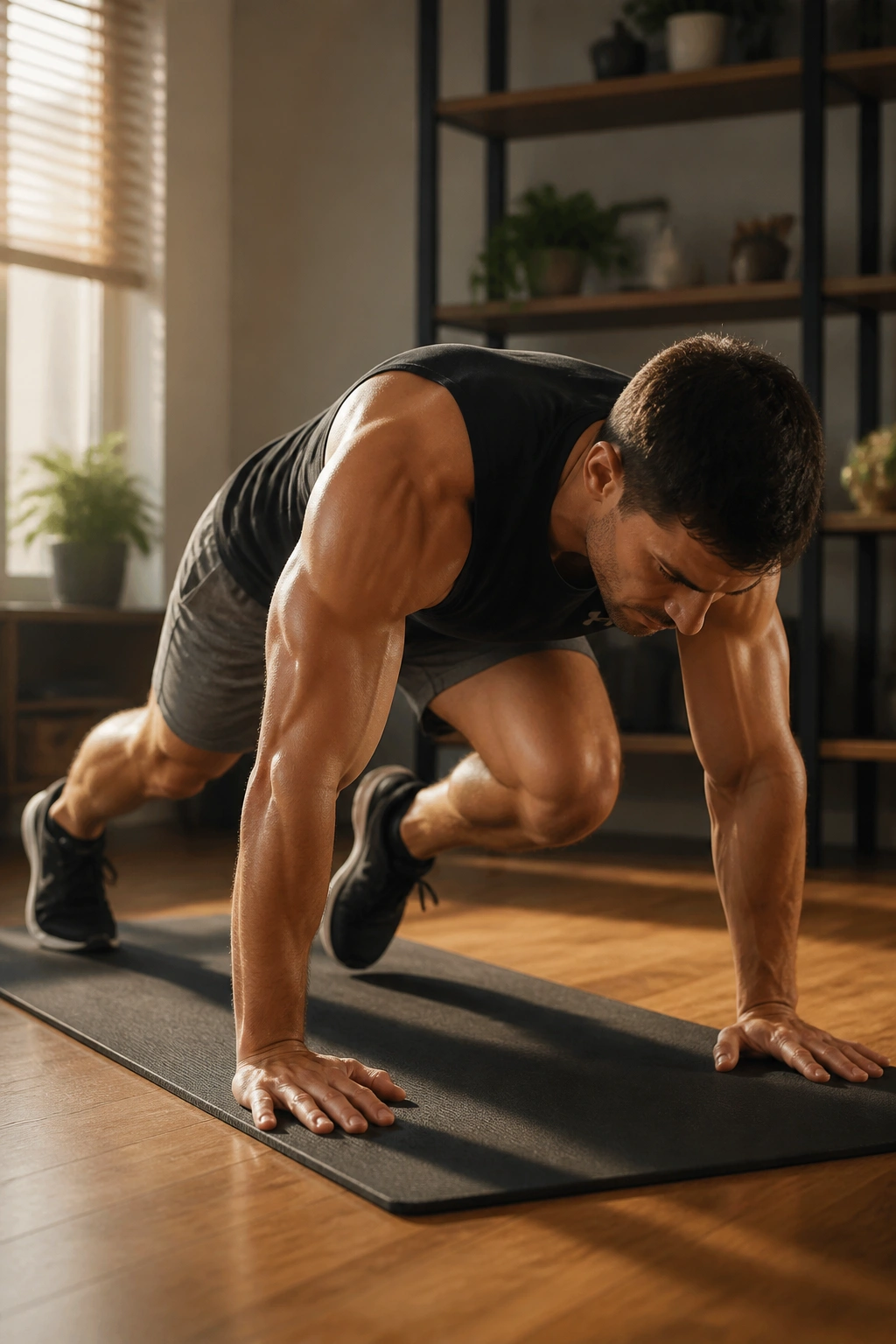
This one is blunt. It hits hard, it gets noisy, and it leaves very little room for ego. Good.
Do 6 burpees, then 20 mountain climbers per side, then rest 45 seconds. Repeat for 4 to 6 rounds depending on how much regret you want in your life that day.
Burpees are the engine here. Mountain climbers keep the heart rate up while asking the core to stay honest. Together, they make a brutally efficient conditioning pair.
A clean burpee matters more than a fast one. Step back instead of jumping back if you need to. Stand up tall at the top. Land softly when you jump if you’re doing the full version. That one detail saves your joints from a lot of annoying noise.
Mountain climbers should look like fast, controlled knee drives, not a frantic slide across the floor. If your hips are bouncing all over the place, slow down a notch and tighten your middle.
This is not a workout for timid effort. It rewards clean movement and a little nerve.
6. Lower-Body EMOM With a Chair
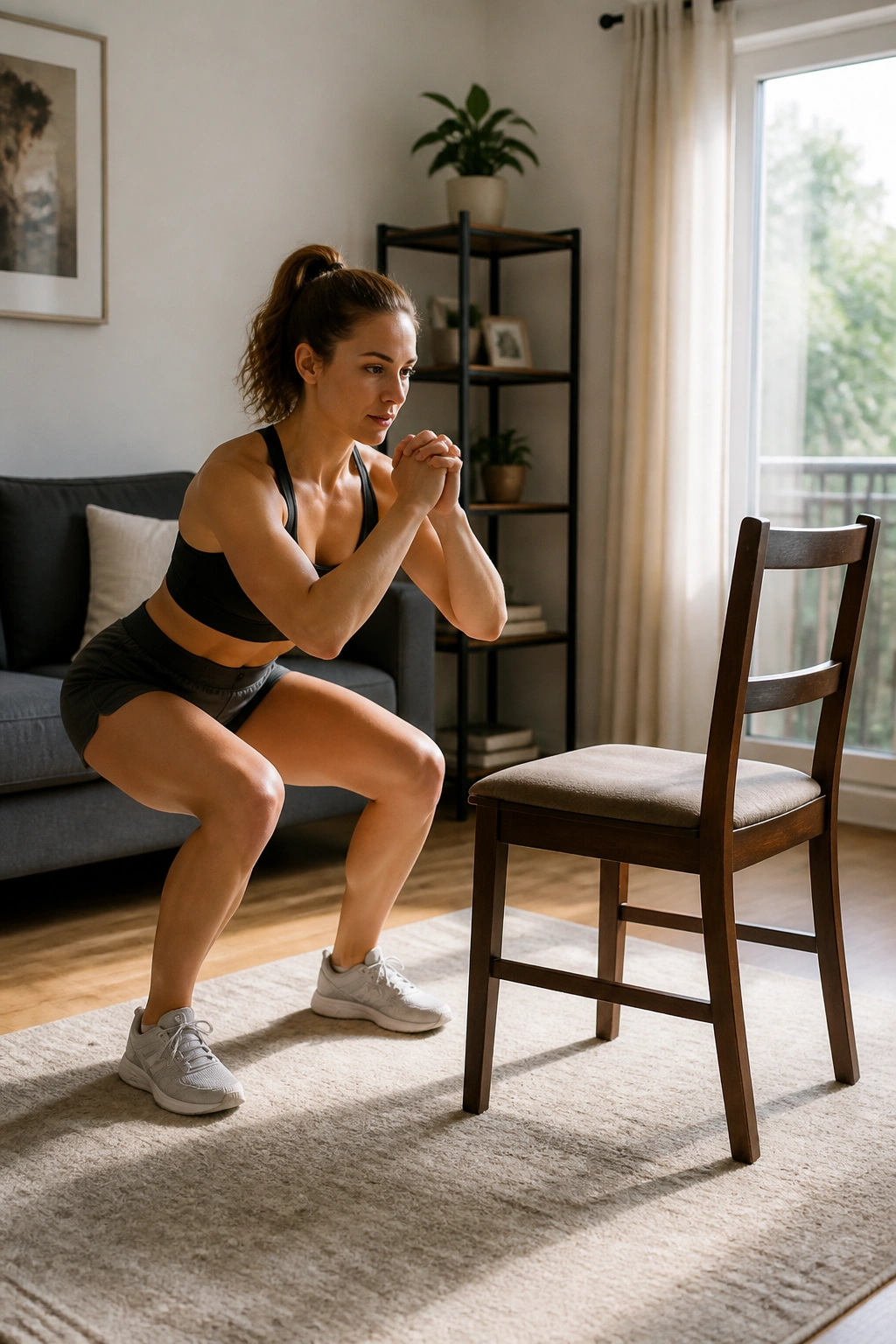
EMOM means every minute on the minute. You do the work at the start of the minute, then rest for whatever time is left. It sounds tidy because it is tidy, and that’s part of the appeal.
Set a timer for 10 to 15 minutes. Every minute, complete:
- 12 chair squats
- 10 alternating step-ups
- 12 reverse lunges, 6 each side
Why I Like It More Than Random Leg Work
The timer keeps you from wandering. There’s no drifting between exercises, no long phone break, no “I’ll start again in a minute” nonsense. You either finish the work inside the minute or you don’t, and that feedback is useful.
A sturdy chair or bench is enough for step-ups. Use a surface that doesn’t wobble. If it slides, stop and fix that before you start. Falls are a terrible training plan.
Keep the step-ups smooth. Drive through the heel of the working leg and avoid pushing off too hard with the back foot. The goal is to make one leg do the job.
When the minute starts feeling too short, lower the reps by 2 and keep the pace crisp. Better to stay consistent than to grind until your form falls apart.
7. Upper-Body Circuit Using a Backpack
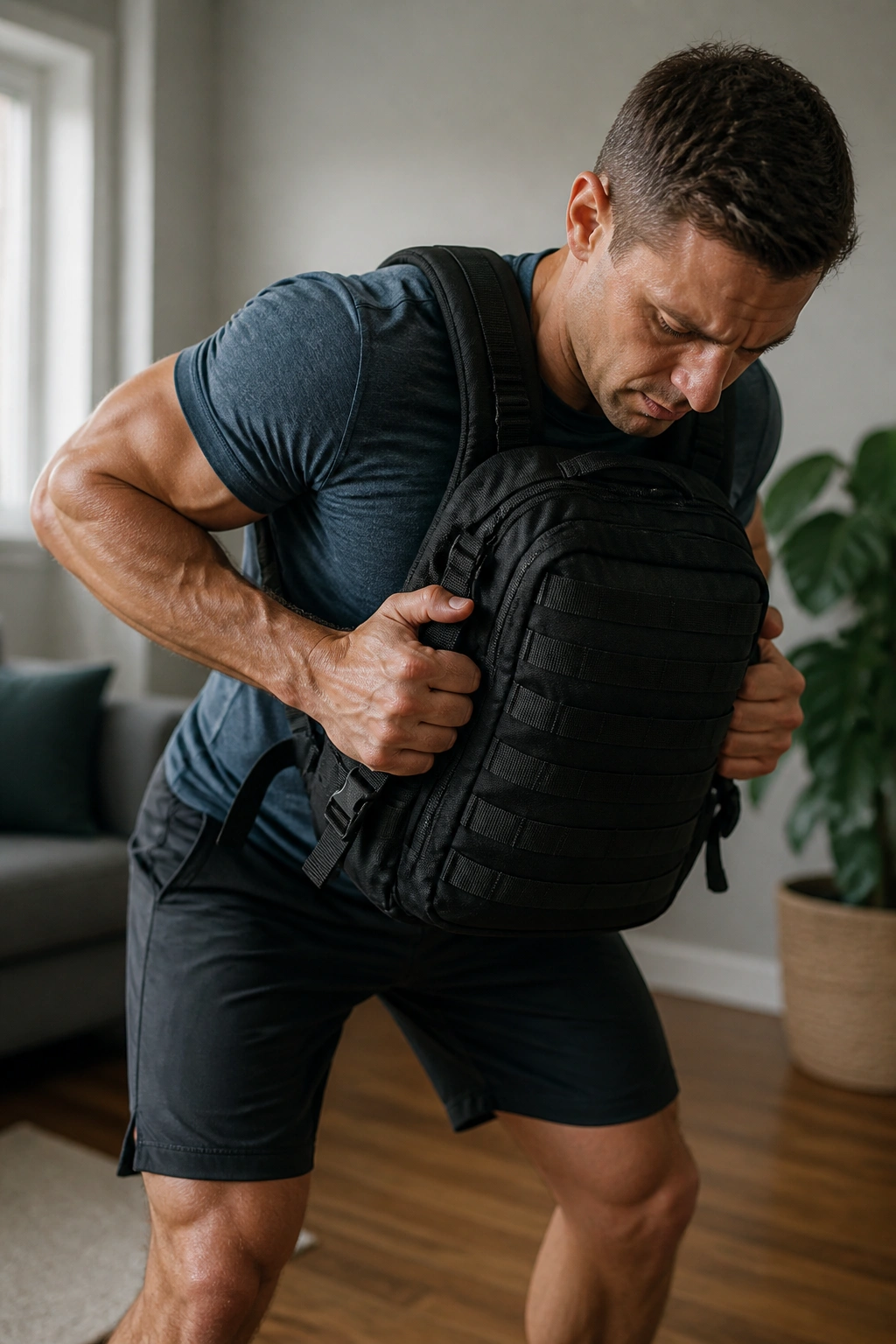
A backpack can be a pretty decent home gym if you load it well. Not glamorous. Very useful.
Fill it with books, water bottles, or canned goods, then run this circuit for 3 to 5 rounds:
- 12 bent-over backpack rows
- 10 overhead presses
- 8 to 12 push-ups
- 12 backpack curls
- 30 seconds plank hold
What Makes This Worth Doing
Most home boot camp workouts lean hard into legs and cardio. This one gives your upper body some real attention without needing dumbbells. Rows help your back, presses wake up your shoulders, and curls are simply nice to have when you’ve got the load already in hand.
Keep the backpack close to your body on rows. Pull your elbows back, pause for a beat at the top, then lower slowly. That pause is where the work is.
If the backpack feels awkward overhead, lighten it. A bad press with a too-heavy bag just turns into a neck shrug with extra steps.
Use the plank as the cleanup set. By the time you reach it, your core should feel like it has already been drafted into the workout. That’s a good sign.
8. Core Crusher on a Mat
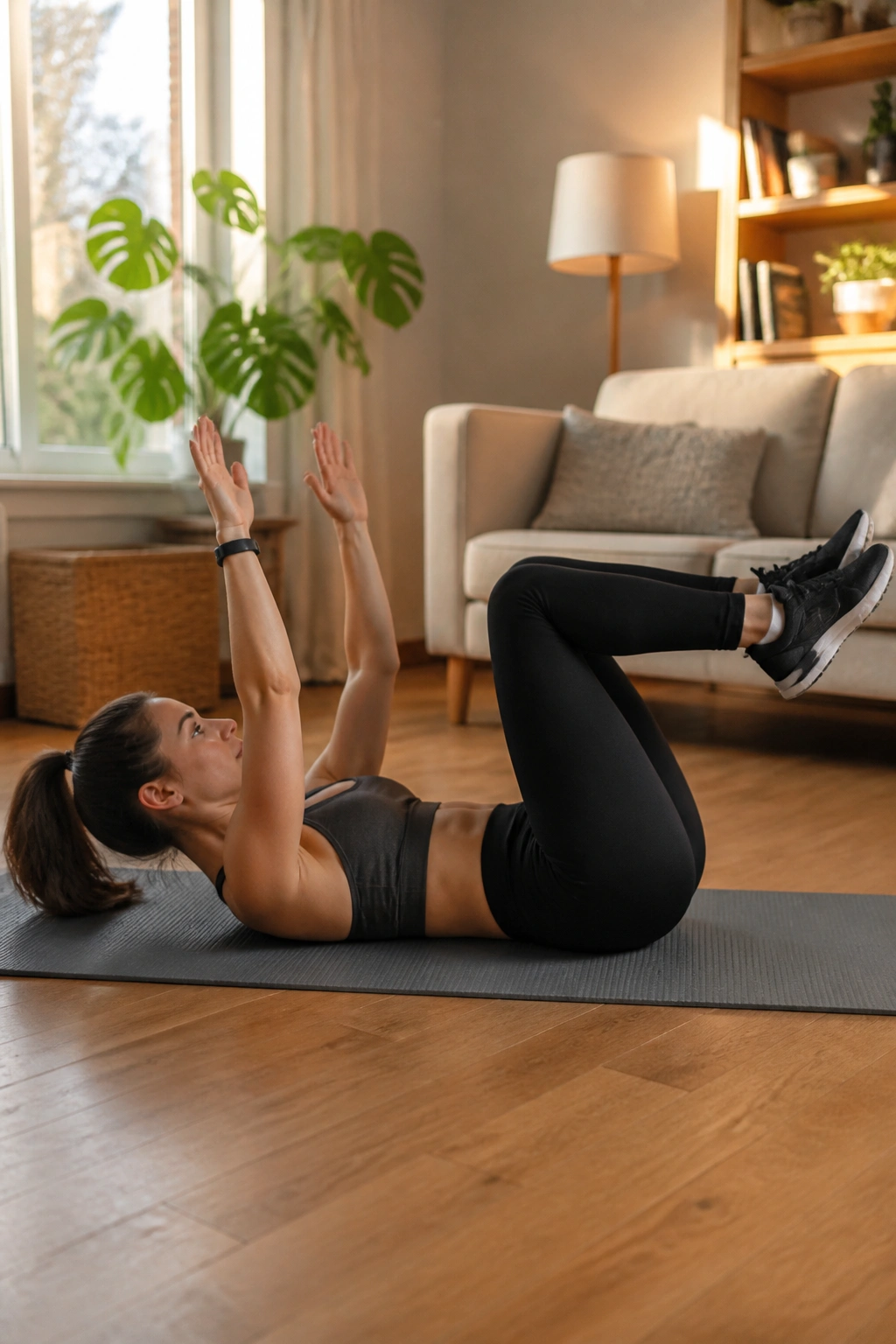
A hard core session at home should feel precise, not sloppy. You want tension, not random flailing. A mat helps, though a folded towel works in a pinch.
Try this sequence:
- 20 dead bugs
- 15 bicycle crunches per side
- 30-second hollow hold
- 20 flutter kicks
- 15 reverse crunches
The Part People Get Wrong
Core work is not just about squeezing harder. It’s about keeping your lower back from arching off the floor when it should stay quiet. That matters more than how many reps you get through.
Dead bugs are the smartest move in the bunch. Slow them down. Reach opposite arm and leg long, then return with control. If your back pops up, shorten the range.
Hollow holds look easy until the clock starts. Bend your knees if needed. Seriously. A bent-knee hollow hold done well beats a straight-leg version done badly.
This is a lower-impact option for days when jumping feels like too much. It still leaves your middle tired, which is the whole point.
9. Stair Climber Intervals
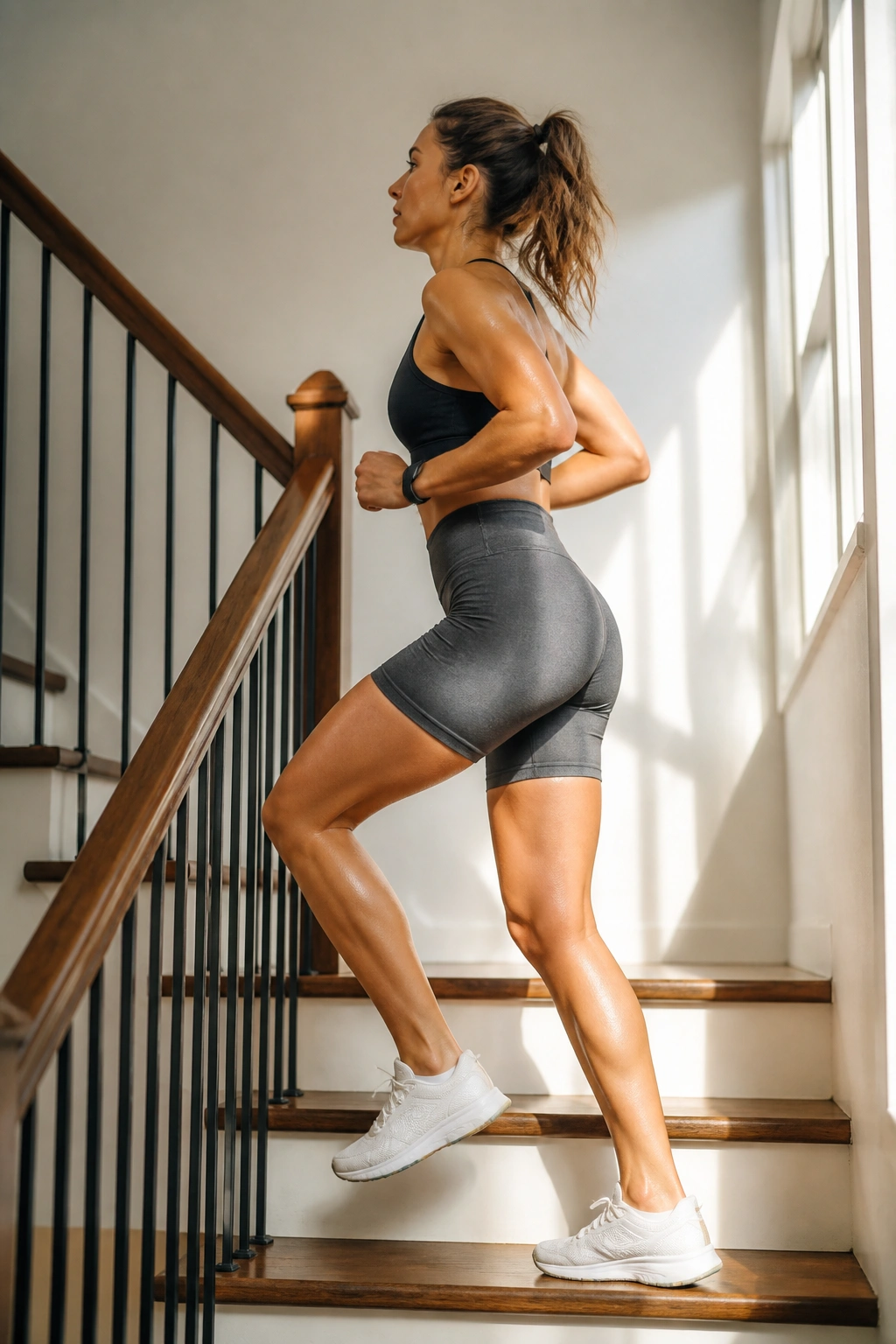
If you have a staircase, you already own one of the better pieces of cardio equipment around. It’s simple, it’s free, and it will tell the truth about your conditioning in a hurry.
Do 10 rounds of:
- Walk or jog up the stairs for 20 to 30 seconds
- Walk down slowly for recovery
- Rest 20 seconds at the bottom if needed
Use the stairs for power, not speed. Drive through the whole foot as you climb. Keep your chest up and your steps controlled so you don’t start huffing your way into bad mechanics.
If your stairs are narrow or steep, go one step at a time. If they’re broad and gentle, you can add a light jog. Either way, the descent should stay calm. Rushing down stairs is a great way to annoy a knee.
A stair session feels different from floor cardio. The burn lands in your glutes and calves faster than you expect, and the breathing gets sharp sooner than a lot of people like. Which is exactly why it works.
10. Shadow Boxing Rounds for Cardio and Coordination

Shadow boxing is one of the most underrated home workouts because it does more than get your heart rate up. It makes you think while you move, and that changes the whole session.
Set a timer for 3-minute rounds with 1 minute rest. Do 4 to 6 rounds and rotate through combinations like:
- Jab-cross
- Jab-cross-hook
- Jab-cross-slip-cross
- Jab-hook-cross-knee
What Makes It Feel So Different
You are not throwing lazy air punches. Hands return to guard, feet stay light, and your hips rotate enough to make the movement feel alive. That’s where the workout comes from.
A round can be skill-focused, cardio-focused, or both. If you want more sweat, move around the room and punch while stepping. If you want more control, slow down and make every punch crisp.
A mirror helps, but it is not required. What matters is staying tall through the torso and keeping your shoulders from climbing up by your ears.
Shadow boxing is also quieter than burpees, which matters more than people admit. Not every workout needs to sound like furniture is being dragged across the floor.
11. Plyometric Ladder for Explosive Power
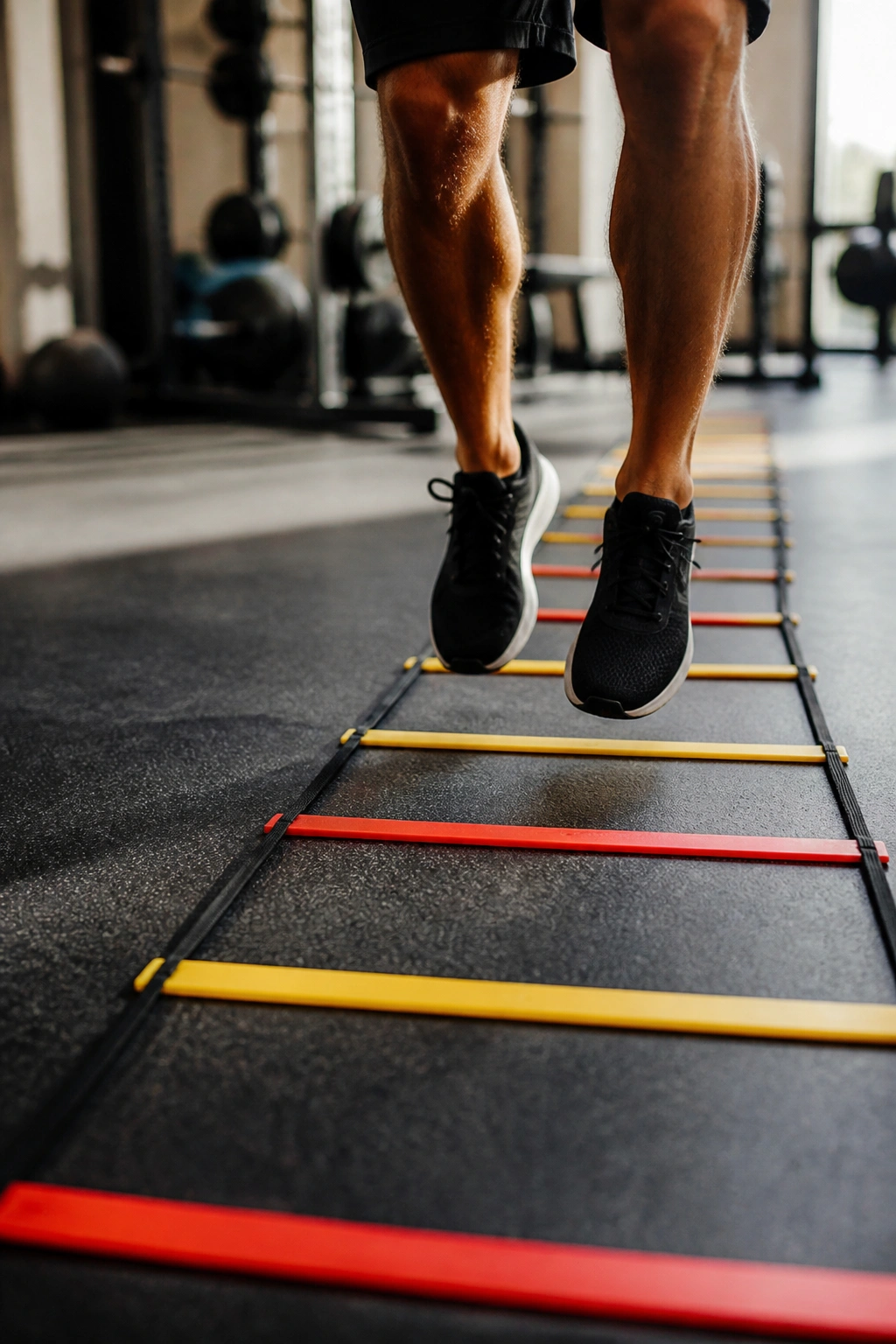
Plyometrics are basically jump training with purpose. They train your legs to push off the floor fast, and when they’re done well, they make every other lower-body drill feel a little sharper.
Use this ladder:
- 5 squat jumps
- 10 skater hops
- 15 tuck jumps or high knee drives
- Rest 60 to 90 seconds
- Repeat 4 rounds
How to Keep It Safe
Land softly. That’s the whole sermon.
Your knees should track over your toes, not cave inward. If your landings sound loud, you’re dropping too hard. Bend your knees more and shorten the jump height until the impact quiets down.
Skater hops are a useful swap if tuck jumps feel like too much. They still train side-to-side power, but they’re easier to manage in a small space.
This is a better fit for people who already move fairly well and want a little more athletic pop in their home boot camp workouts. If your ankles or knees are cranky, keep the jumps low or move to step-based versions.
12. Full-Body AMRAP Challenge
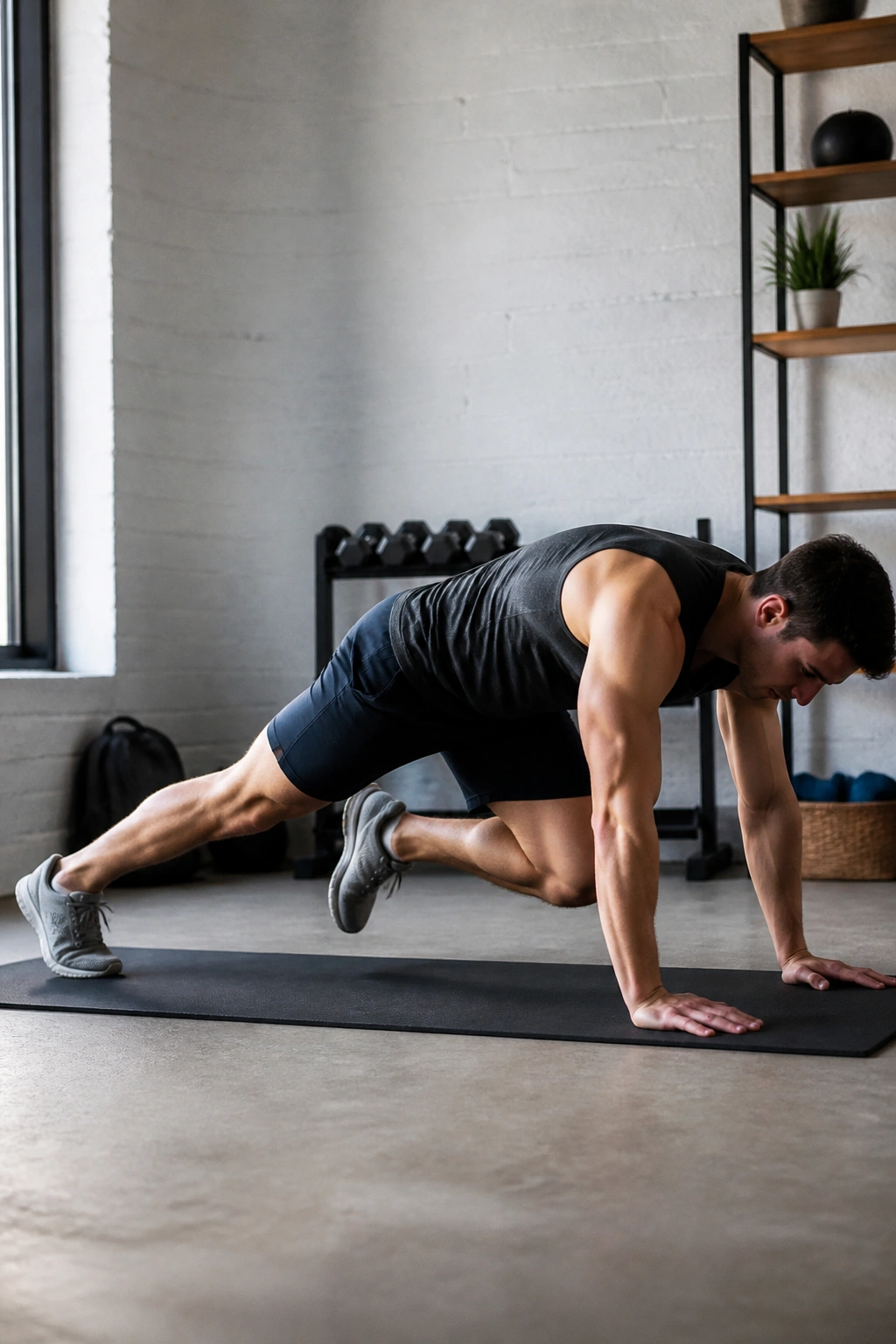
AMRAP means as many rounds as possible within a set time. It sounds intense because it is intense, but it’s also strangely straightforward. You do the circuit, watch the clock, and keep going.
Try 15 minutes of:
- 10 air squats
- 8 push-ups
- 12 alternating lunges
- 10 mountain climbers per side
- 20-second plank
AMRAP works because it gives you freedom inside a box. You choose the pace, but the clock is still in charge. That keeps the effort honest without forcing a rigid rest schedule.
Do not sprint the first three minutes and crater halfway through. That’s the classic mistake. Start at a pace you can hold, then nudge the speed up after you know what the round feels like.
A round should be tidy. If you’re gasping so hard that your form turns loose, the output is too high. Back off a little, then keep moving.
13. Lunge Walk and Split-Squat Series
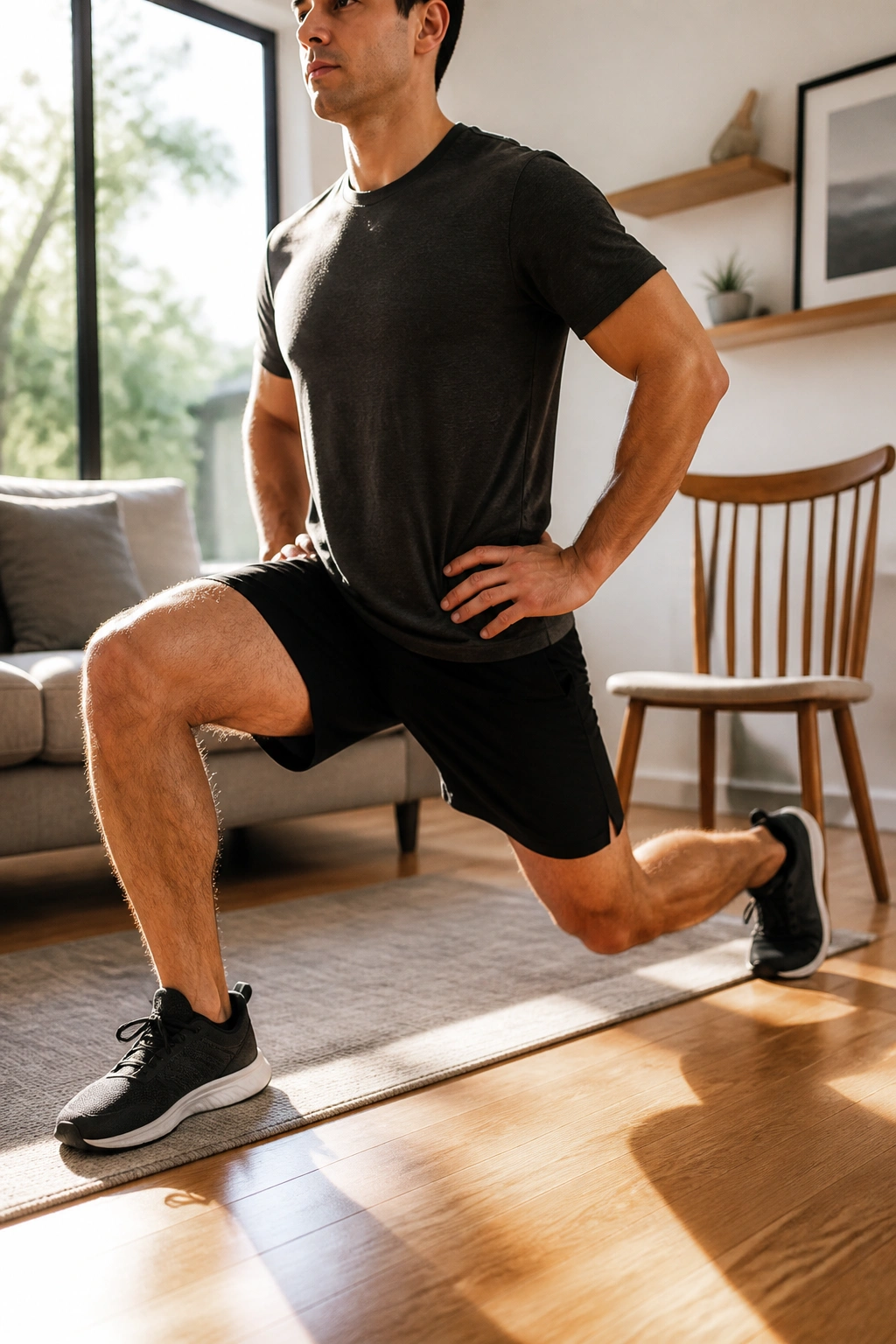
This one hits the legs from angles people often skip. Forward lunges, reverse lunges, and split squats all ask for balance, hip control, and patience. The burn sneaks in, then stays.
Run this sequence for 3 rounds:
- 12 walking lunges across the room
- 10 reverse lunges per side
- 30 seconds split squat hold per side
- 8 pulse reps at the bottom per side
Why It Hits So Deep
Split squats are brutally honest. One leg works, the other one stays back, and there’s nowhere to hide. That makes them excellent for building control around the hips and knees.
Use a wall or chair for balance if needed. That is not cheating. That is smart training. A little support can help you keep the front foot flat and the torso tall.
The pulse reps are the ugly little finishers. Tiny movement. Big burn. They’re perfect once the main reps are done and your quads are already talking back.
If you want a more athletic version, hold a backpack at your chest. The added load changes the feel fast, especially on the walking lunges.
14. Towel Slider Hamstring Workout
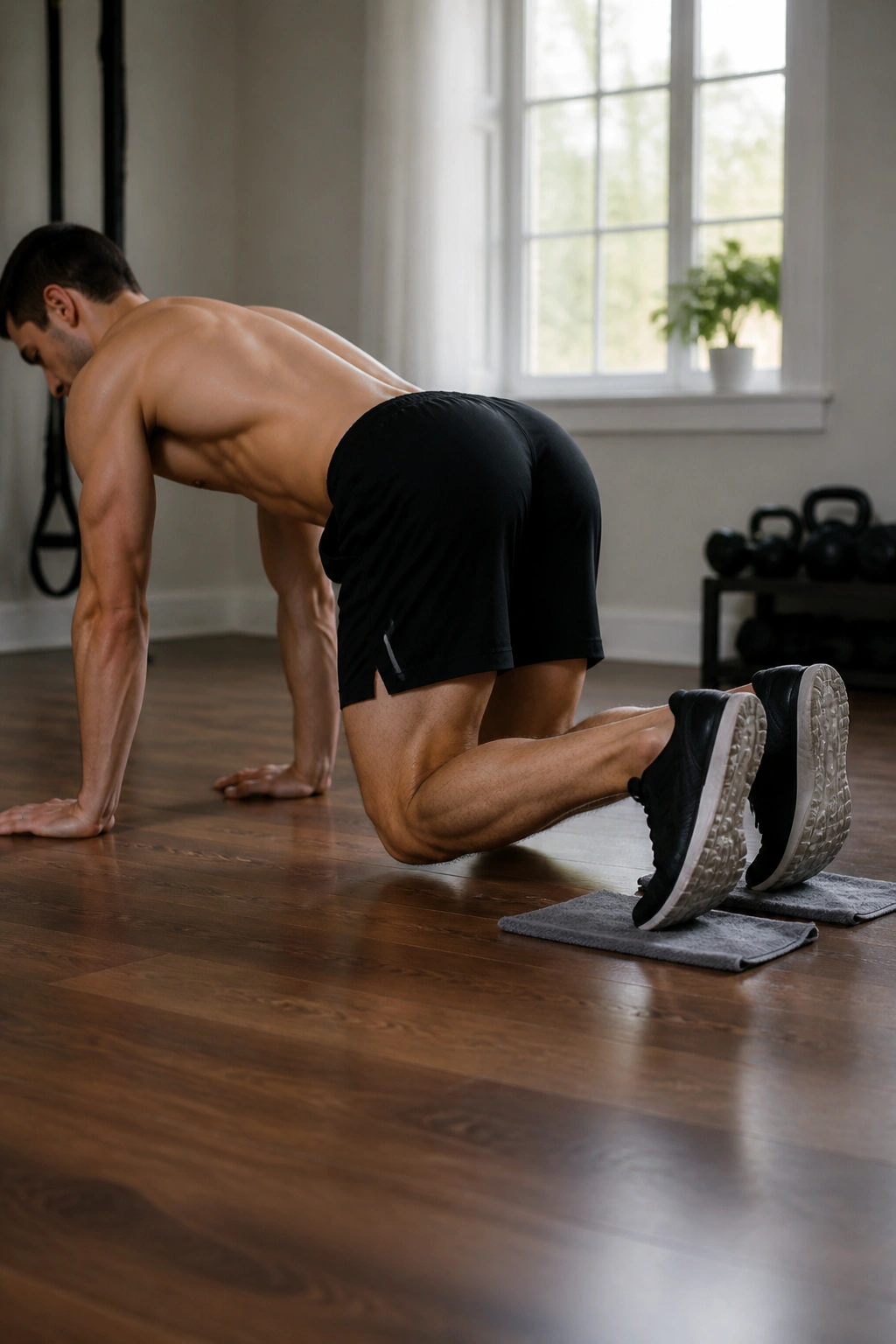
A towel on a smooth floor can turn into a nasty hamstring workout. You slide one or both heels along the floor and your legs have to control every inch of it. Simple setup. Serious sting.
Try this:
- 10 hamstring curls
- 8 sliding reverse lunges per side
- 20-second slider plank
- 10 glute bridge slides
What Makes It Special
The sliding part keeps tension on the hamstrings the whole time. There’s no bouncing, and no easy way to fake the motion. If your floor is too rough, use socks on a smooth surface instead.
Keep your hips lifted on the curls. If they drop, the movement gets easier and less useful. Your goal is a long, controlled pull in and out.
This is a great low-equipment option when you want to train the back of the legs without jumps or heavy weight. It also wakes up glutes in a way that a lot of bodyweight routines miss.
And yes, you will feel it the next day.
15. Resistance Band Burn Session
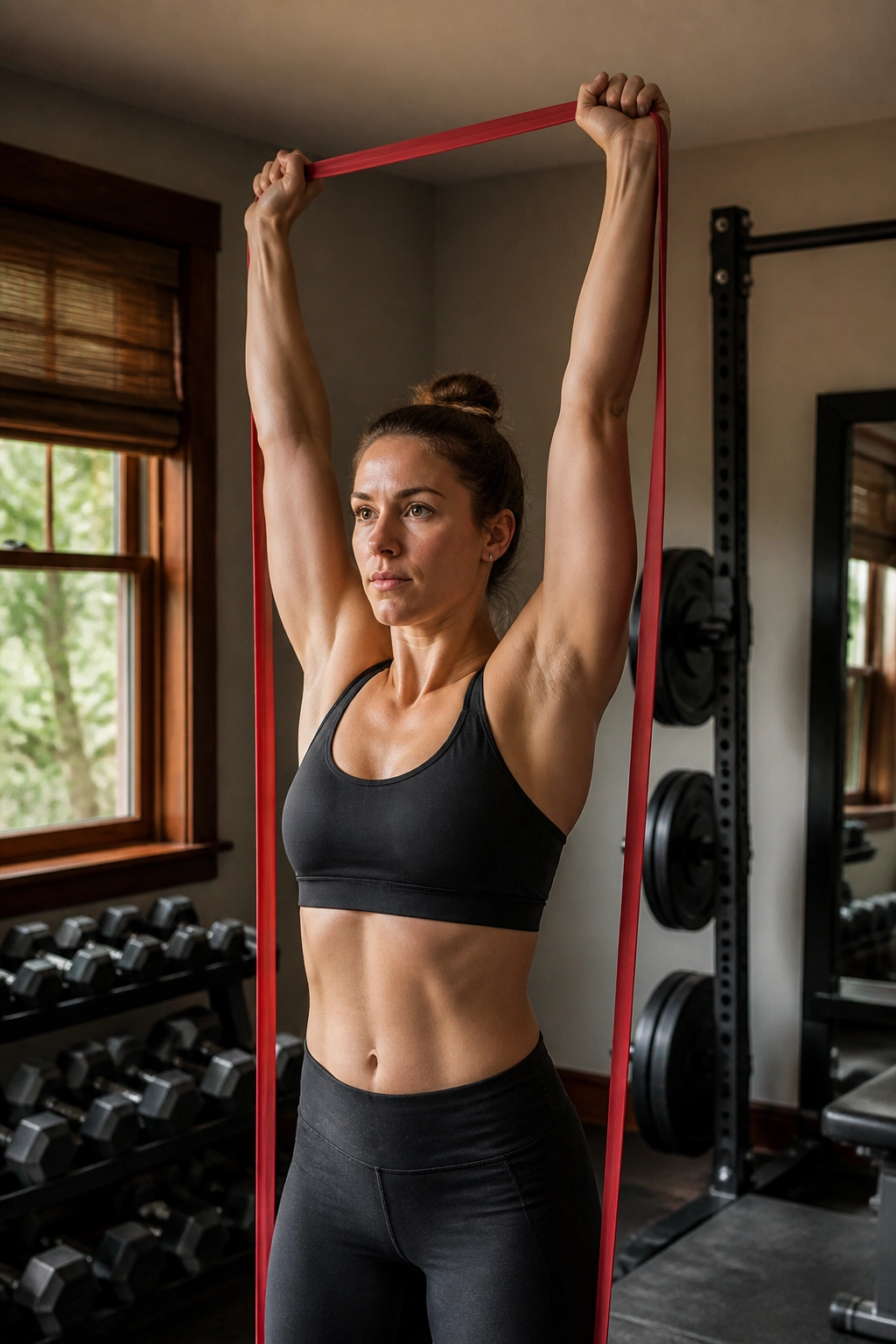
A resistance band opens up a lot of home workout options without taking over the room. A single loop band or long band with handles can give you enough resistance for a solid boot camp session.
Try 4 rounds of:
- 15 band rows
- 12 banded squats
- 12 overhead presses
- 15 lateral band walks each way
- 20-second band pull-apart hold
Why Bands Earn Their Place
Bands load the muscles differently from weights. The tension increases as the band stretches, which means the end of the movement often feels tougher than the start. That can be a useful change if your body has gotten too used to the same bodyweight circuit.
Keep the band under control. If it snaps back, the resistance is too much or your grip is sloppy. Both are fixable.
The lateral band walks are the sleeper move here. They look small. They are not small. Hips and glutes pick up the work fast, especially if you keep your toes pointed forward and stay low.
This is one of the better boot camp workouts at home for people who want strength work without relying on heavy equipment.
16. Backpack Carry and March Circuit
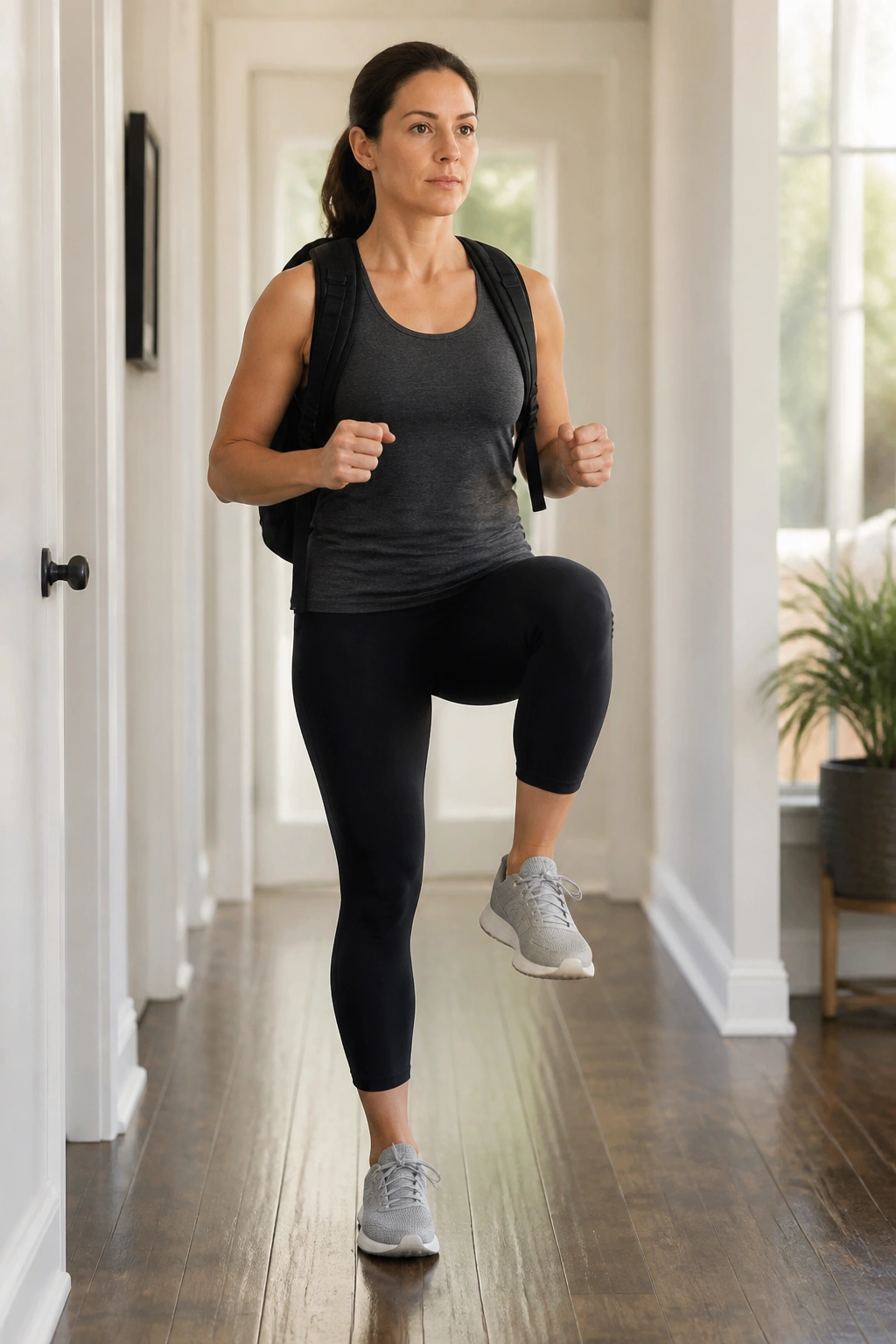
Carries are underrated because they feel plain. No drama. Just work. But carrying load while you walk or march demands more from your grip, core, and posture than people expect.
Load a backpack or grab two heavy grocery bags and move through this sequence:
- 30 seconds farmer carry or suitcase carry
- 30 seconds marching in place
- 12 goblet squats with the backpack
- 30 seconds suitcase hold per side
- 10 bent-over rows
A Better Way to Think About Carry Work
The goal is not to slump through the room looking heroic. The goal is to stay tall, ribs down, shoulders quiet, and abs tight while the weight tries to pull you forward. That is real training.
If you use one bag, switch sides halfway through. That one-sided load is great for the obliques, but it also reveals how much your body wants to lean. Good. You can fix that.
I like this session on days when jumping feels like too much but I still want a workout that feels sturdy and useful. It has a different texture from the usual cardio blast. More grounded. Less frantic.
You may not look dramatic doing it. Your middle will still know.
17. Deck of Cards Boot Camp Game
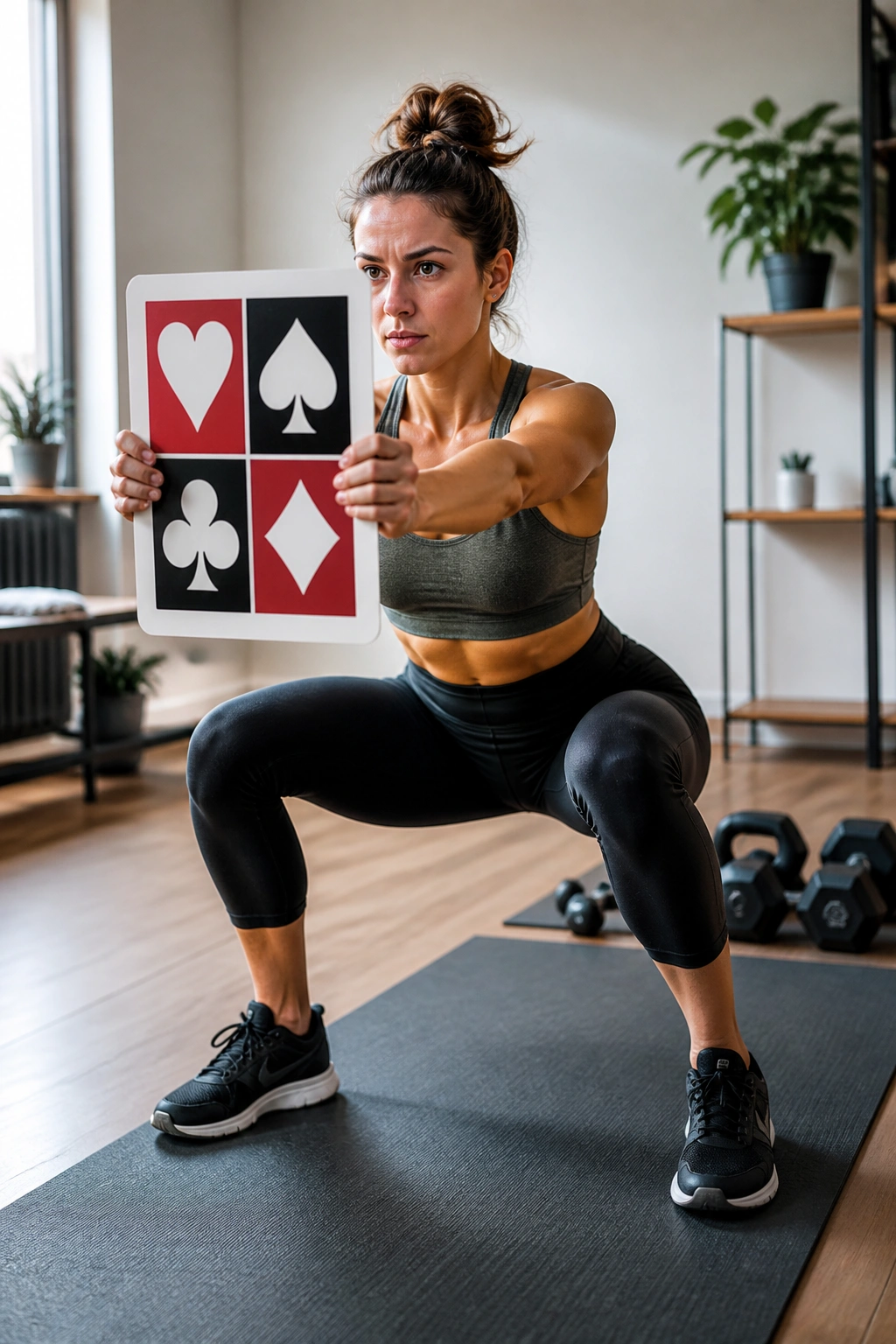
This is the most playful workout in the bunch, and that is part of its charm. A regular deck of cards decides the reps, which takes the planning out of your hands and keeps the session a little unpredictable.
Assign these moves:
- Hearts = squats
- Spades = push-ups
- Diamonds = lunges
- Clubs = mountain climbers
- Aces = 30-second plank
Face cards can equal 10 reps. Jokers, if you use them, can be a 1-minute cardio blast.
Why It Works Better Than It Sounds
The randomness stops you from pacing too neatly. You can’t coast because you don’t know what’s coming next, and that keeps the effort honest.
It also breaks the boredom trap. A lot of home boot camp workouts fail because the mind gets tired before the body does. This one keeps the brain busy enough to stay in the game.
If you want more structure, set a rule that every card is doubled after the halfway point. That ramps the volume without requiring a new plan. Or keep the deck half-sized and move faster through it.
Use this on days when you want sweat and variety without staring at a stopwatch for half an hour.
18. The Low-Impact Quiet Floor Finisher
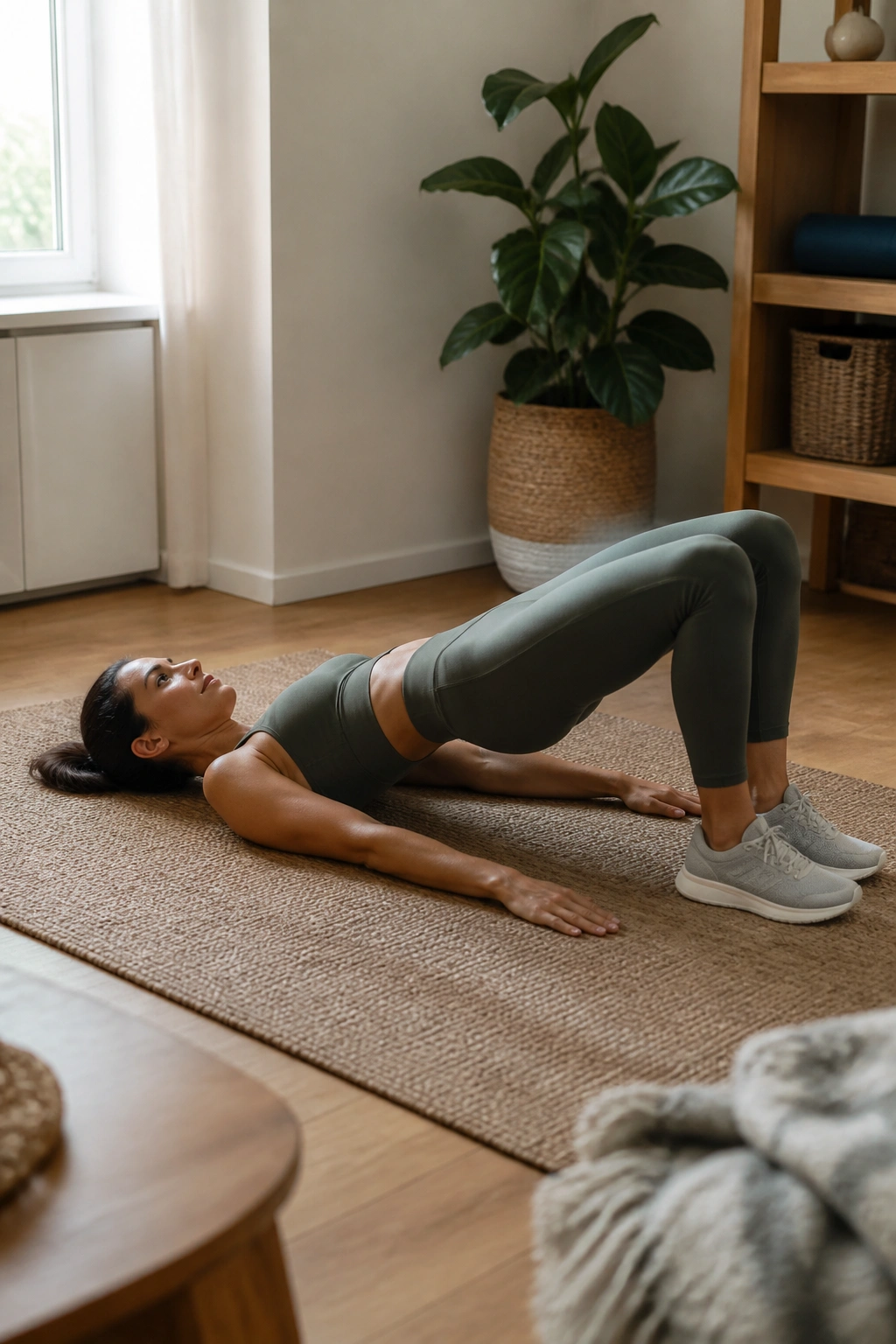
Not every hard workout needs jumping, slamming, or stomping. Some of the best home sessions are the quiet ones, especially if you share walls, floors, or a schedule with other people.
Run this 12-minute finisher in 40-second work blocks with 20 seconds rest:
- Step-back squats
- Incline push-ups on a couch or counter
- Standing knee drives
- Glute bridges
- Dead bugs
- Fast marches in place
Why I Keep Coming Back to It
Because it works on tired days. That’s the truth of it.
This kind of session keeps the body moving without the impact spike that comes with burpees or jump squats. The step-back squat still loads the legs. Incline push-ups still challenge the chest and shoulders. Dead bugs still make your core do real work. Nothing is wasted here.
It’s also a smart way to finish a harder training day. If you already did a tougher circuit earlier, this can serve as a cooldown that still feels productive. That matters more than it gets credit for. Some days you need to feel trained, not trashed.
Keep the pace brisk, but not frantic. The best version of this finisher leaves you warm, breathing harder than you’d expect, and ready to walk away without needing to collapse on the floor. That’s a nice place to land, and it makes home boot camp training easier to repeat tomorrow.
