



Work out at home routines are only worth keeping if they fit a real day: a small patch of floor, a chair you trust, and a timer that won’t scare the neighbors. Fancy equipment helps sometimes, sure, but it is not the thing that makes a routine usable. Usable means you can do it when you are sleepy, short on time, or halfway between two other tasks.
A lot of home workouts fail for a boring reason. They ask for too much setup. Ten minutes of moving furniture and hunting for a band can kill the whole mood. The better routines use what is already there: bodyweight, a backpack, a stair, a towel, a sturdy chair, a mat if you have one. No drama.
The smartest weekly base usually mixes strength, cardio, mobility, and recovery. Public-health guidance tends to circle the same idea from a few directions: move regularly, get your heart rate up often enough to matter, and keep your muscles under tension a few times a week. That mix is easy to ignore when you think every workout has to be long or brutal. It does not.
Some of the routines below are quiet and joint-friendly. Some are sweaty and rude. A few are the kind you keep on hand for low-energy days, because those days are not going anywhere. Start with the one that matches your floor space and your mood, then make it harder once the moves feel automatic.
1. The 10-Minute Full-Body Wake-Up
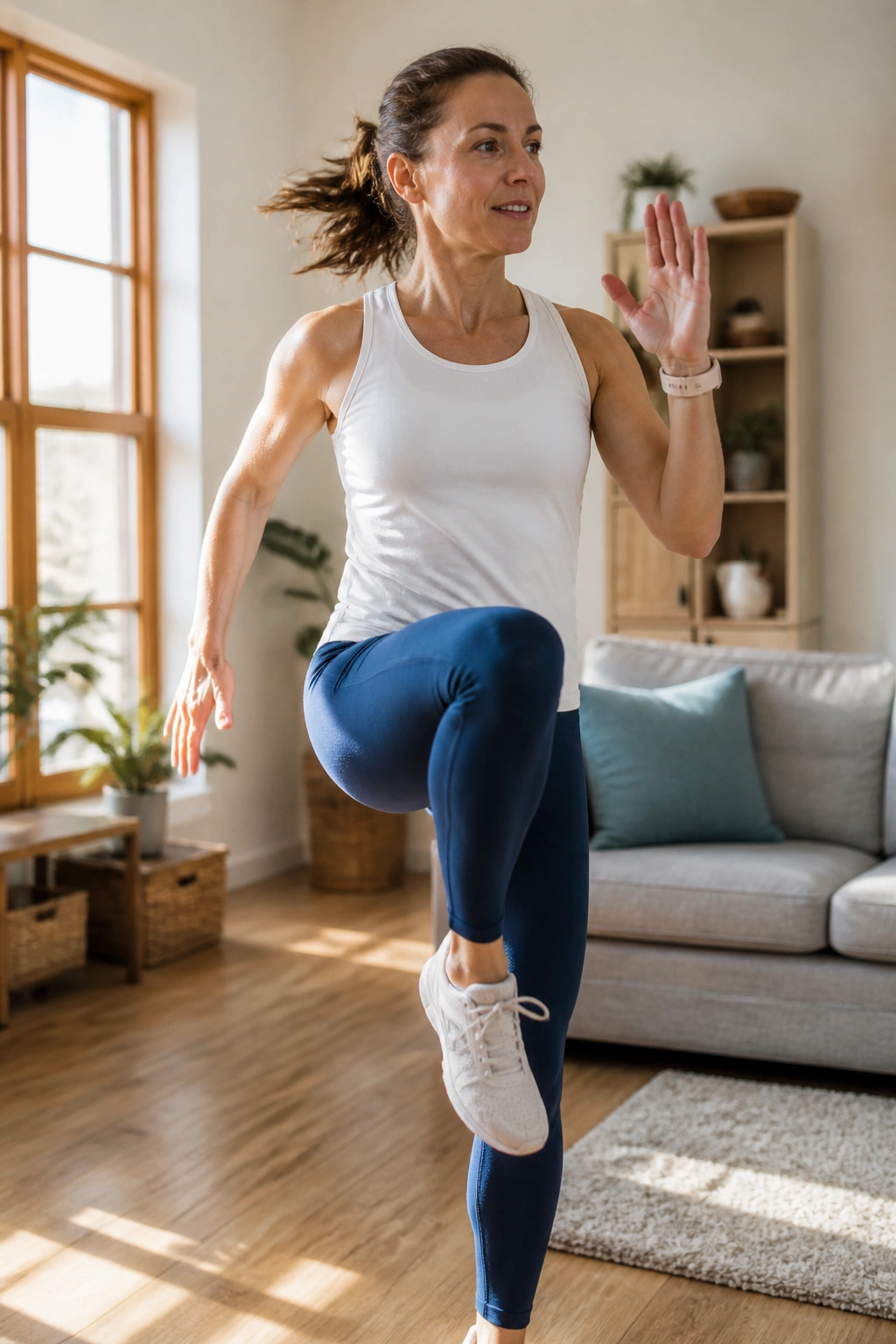
Ten minutes can change the tone of the whole day. This is the routine I like when the body feels stiff, the shoulders are rounded, and the idea of a “real” workout sounds like too much. It is short enough to stop excuses from growing teeth, but it still wakes up the legs, core, chest, and hips in one pass.
Do two rounds of these moves: 30 seconds of marching with big arm swings, 30 seconds of air squats, 30 seconds of incline push-ups on a counter or wall, 30 seconds of dead bugs, 30 seconds of glute bridges, and 30 seconds of a plank hold or high plank shoulder taps. Rest for 15 to 20 seconds between moves if you need it. If your breathing picks up by the second round, the routine is doing its job.
That is the point. Not destruction. Not a hero moment. Just enough work to make standing, sitting, and moving around feel better.
If you are new to exercise, keep the squats shallow and the push-ups on a wall. If you are stronger, slow the lowering phase on each rep to make the same 10 minutes feel a lot harder.
2. The No-Jump Cardio Ladder
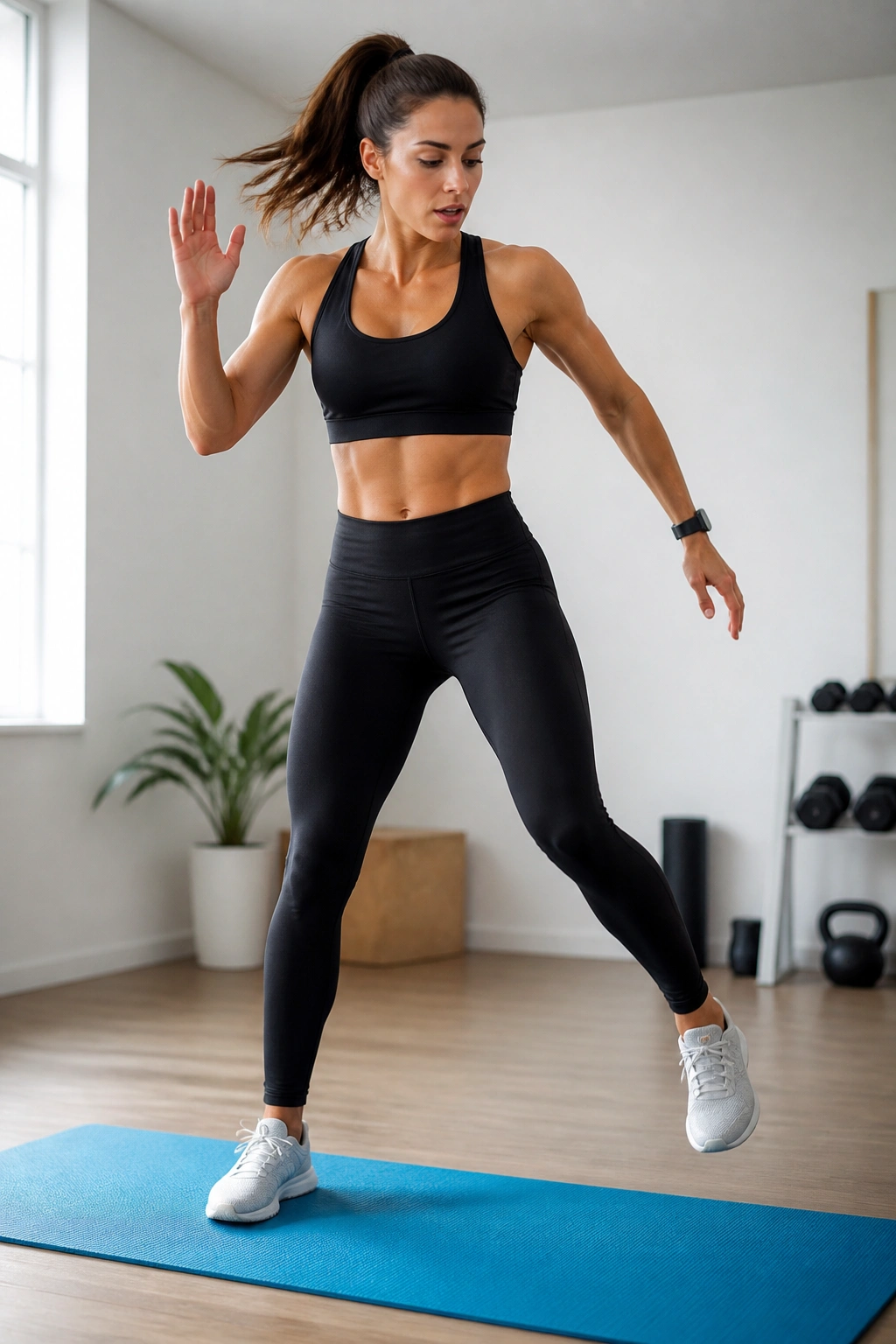
Need sweat without pounding the floor? This is the one. It keeps your heart rate up without the jumping that rattles floors, knees, or downstairs neighbors, and it works because the effort climbs in a way your body can feel almost immediately.
How the ladder works
Start with 20 seconds of step jacks, then 30 seconds of mountain climbers, 40 seconds of skater steps, and 50 seconds of squat-to-reach. Rest for 40 seconds. Then walk the ladder back down: 40, 30, 20. One full round is enough for a quick day. Two rounds feels more serious.
- Step jacks: keep one foot down at all times.
- Mountain climbers: drive the knees under the torso, not way out in front.
- Skater steps: step wide and touch the floor lightly.
- Squat-to-reach: stand tall at the top and reach overhead hard.
Easy way to scale it
Move faster only after the rhythm feels smooth. If you are a beginner, turn every jump into a step. If you are already fit, hold a light backpack or dumbbells during the squat-to-reach and the skater steps.
The ladder format is nice because it never lets you get lazy for long. Each block gets a little tougher, then it backs off. That keeps you moving without turning the whole thing into a lung-burn contest.
3. The Chair-Assisted Strength Circuit
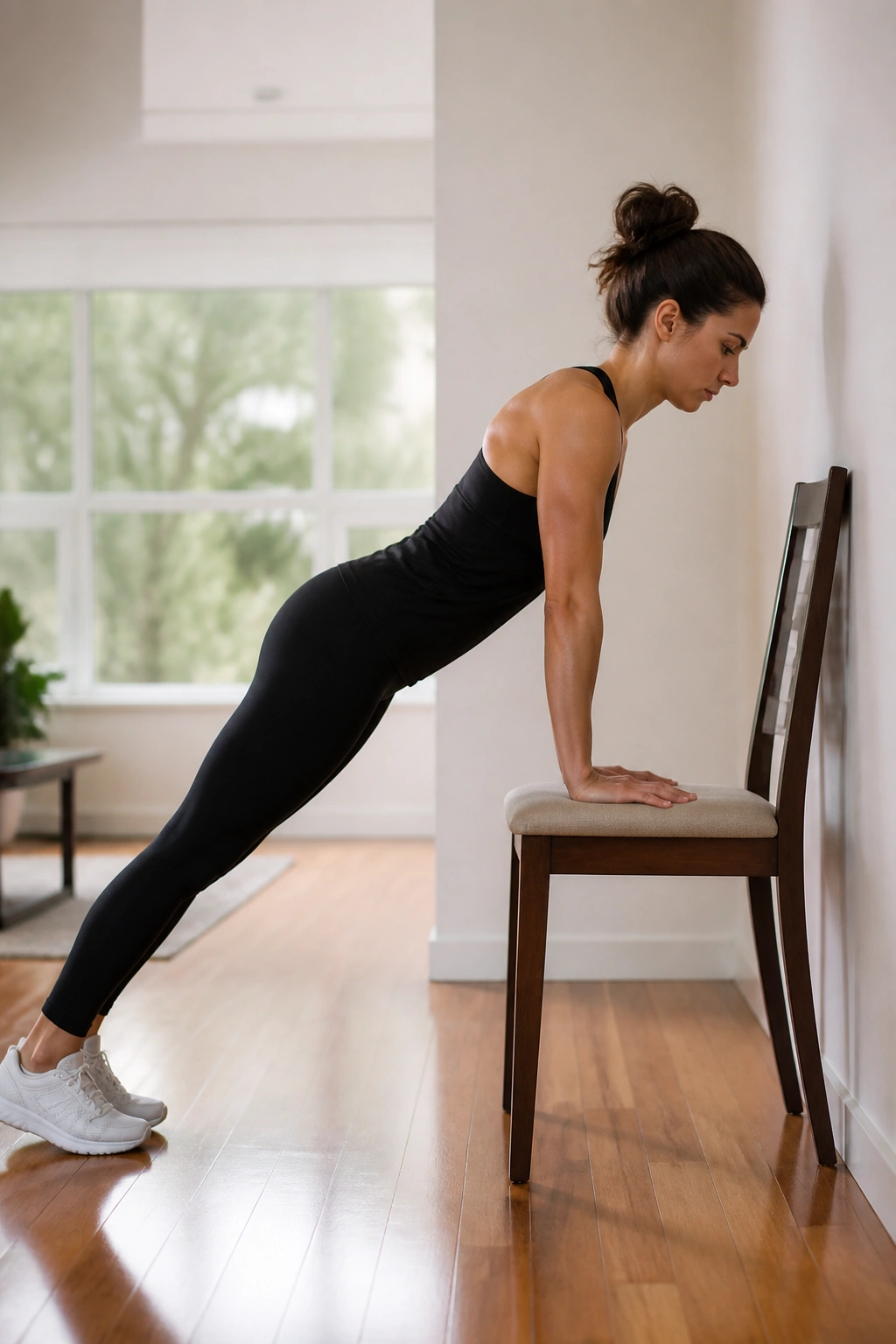
A sturdy chair is not glamorous. It is useful. That matters more. If you are building confidence, coming back from a break, or just want a home workout that feels steady instead of wild, the chair becomes a very good training tool.
Make the chair earn its keep
Use a chair that does not slide. Put it against a wall if needed. Then run this circuit for 3 rounds:
- 10 sit-to-stands
- 8 incline push-ups with hands on the chair
- 8 supported split squats per leg
- 12 seated knee lifts per side
- 20-second wall sit
Take 30 to 45 seconds between exercises. The chair lets you control depth, balance, and speed without guessing. It also makes the whole session feel less intimidating, which sounds small until you have a day when motivation is thin.
If the split squats feel shaky, keep one hand on the chair back. If the push-ups are easy, lower the hand placement to a bench or a lower surface. Never use a wobbly chair. That is not a workout adjustment. That is a bad plan.
This is one of the better work out at home routines for beginners because it teaches the body how to squat, press, and lunge without asking for perfect balance on day one.
4. The EMOM Bodyweight Strength Set
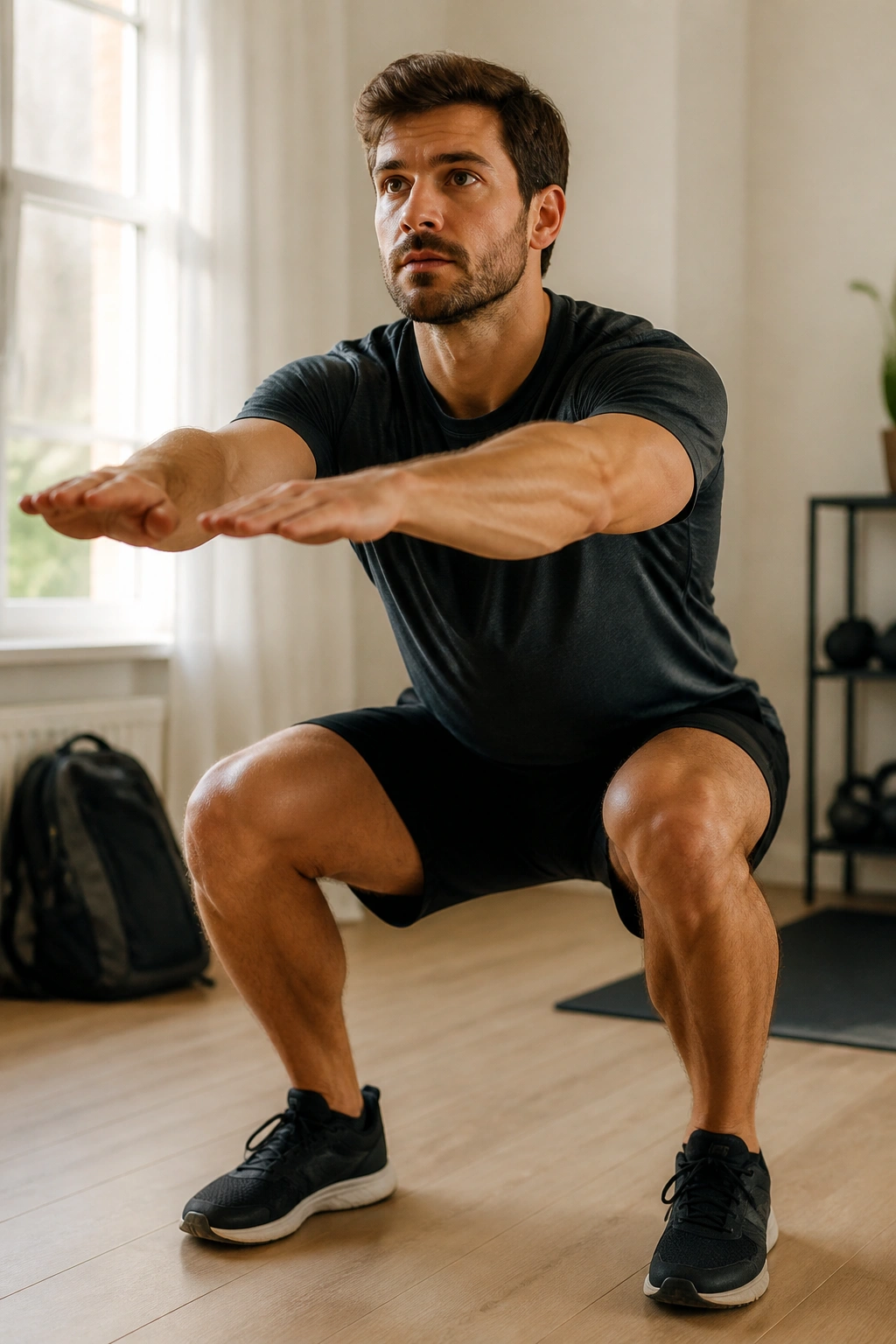
EMOM sounds technical. It is not. It means “every minute on the minute,” and the format is useful because it gives you a hard stop and a clear pace. No wandering. No endless guessing about rest.
Pick four moves and repeat them for 12 minutes. Minute one: 12 squats. Minute two: 8 push-ups, modified if needed. Minute three: 10 alternating lunges per leg. Minute four: 20 mountain climbers per side. Then start over. If you finish a minute with 15 or 20 seconds left, rest. If you finish with 2 seconds left, cut the reps next time.
That little pressure changes the feel of the session. You move with purpose, but you are not sprinting blindly. The clock keeps you honest. It also teaches pacing, which a lot of home workout plans forget to mention.
A beginner can cut the reps in half and still get a solid session. An advanced person can add a slow lowering phase, which turns basic bodyweight work into something a lot more demanding than it looks on paper.
5. Work Out at Home Lower-Body Circuit
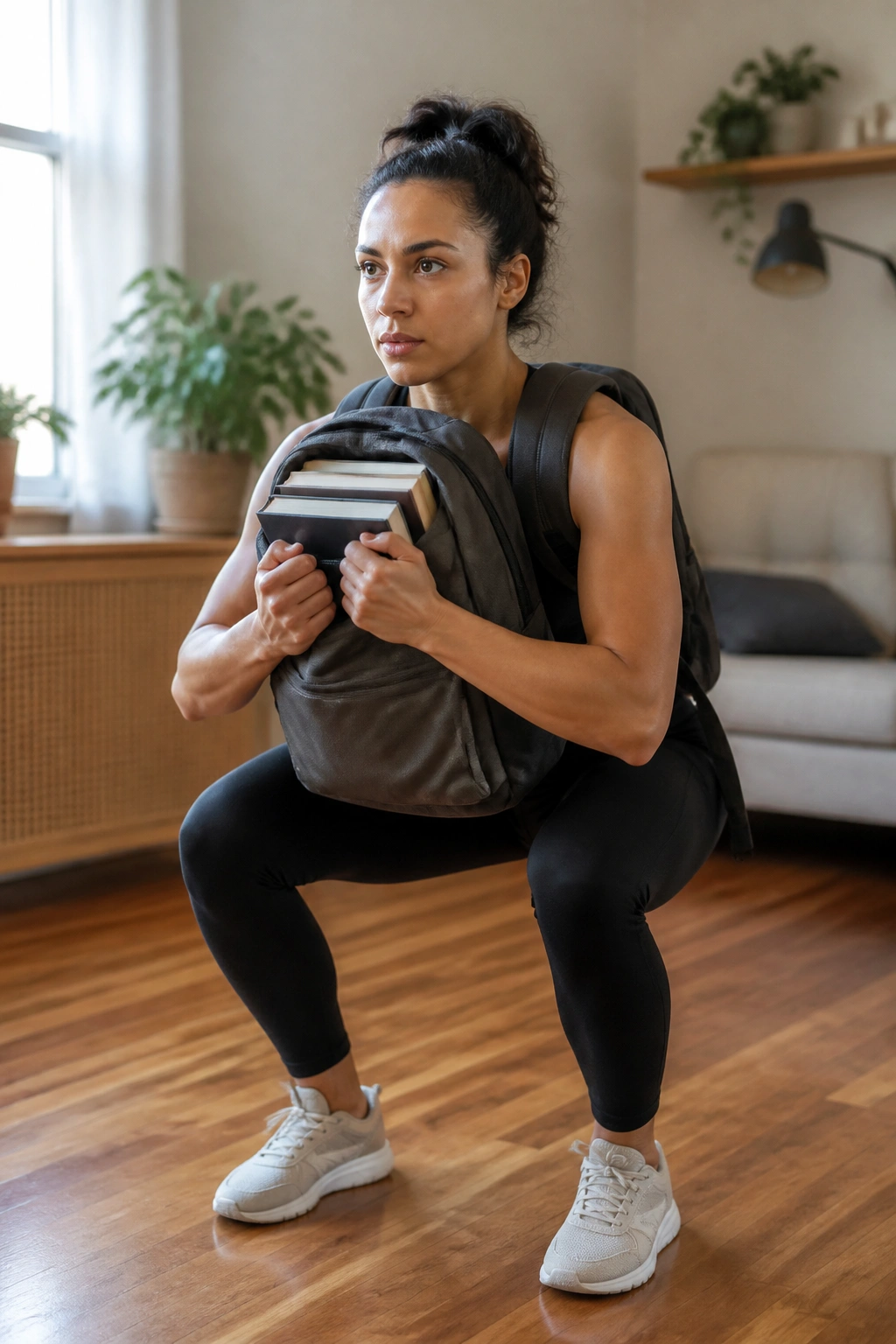
A backpack can beat a fancy dumbbell set if you know how to use it. This lower-body circuit leans on that idea. Load the backpack with books or water bottles, hug it to your chest, and you have a crude but effective training tool.
Run 3 to 4 rounds of these moves:
- 10 backpack goblet squats
- 10 Romanian deadlifts
- 8 reverse lunges per leg
- 12 glute bridges
- 10 lateral lunges per side
Rest for 45 to 60 seconds between rounds. Use a slow lowering phase on the squats and deadlifts. Two or three seconds down is enough to make lighter weight feel serious.
The legs respond well to simple work done well. You do not need complicated choreography. You need tension, range of motion, and enough reps to make the muscles pay attention. A backpack also gives you room to grow. Add a book, then another one, then another. Small changes stack up.
If your knees are touchy, shorten the lunge step and keep the shin more upright. If you want a tougher version, pause for one second at the bottom of every squat.
6. The Backpack Upper-Body Strength Circuit
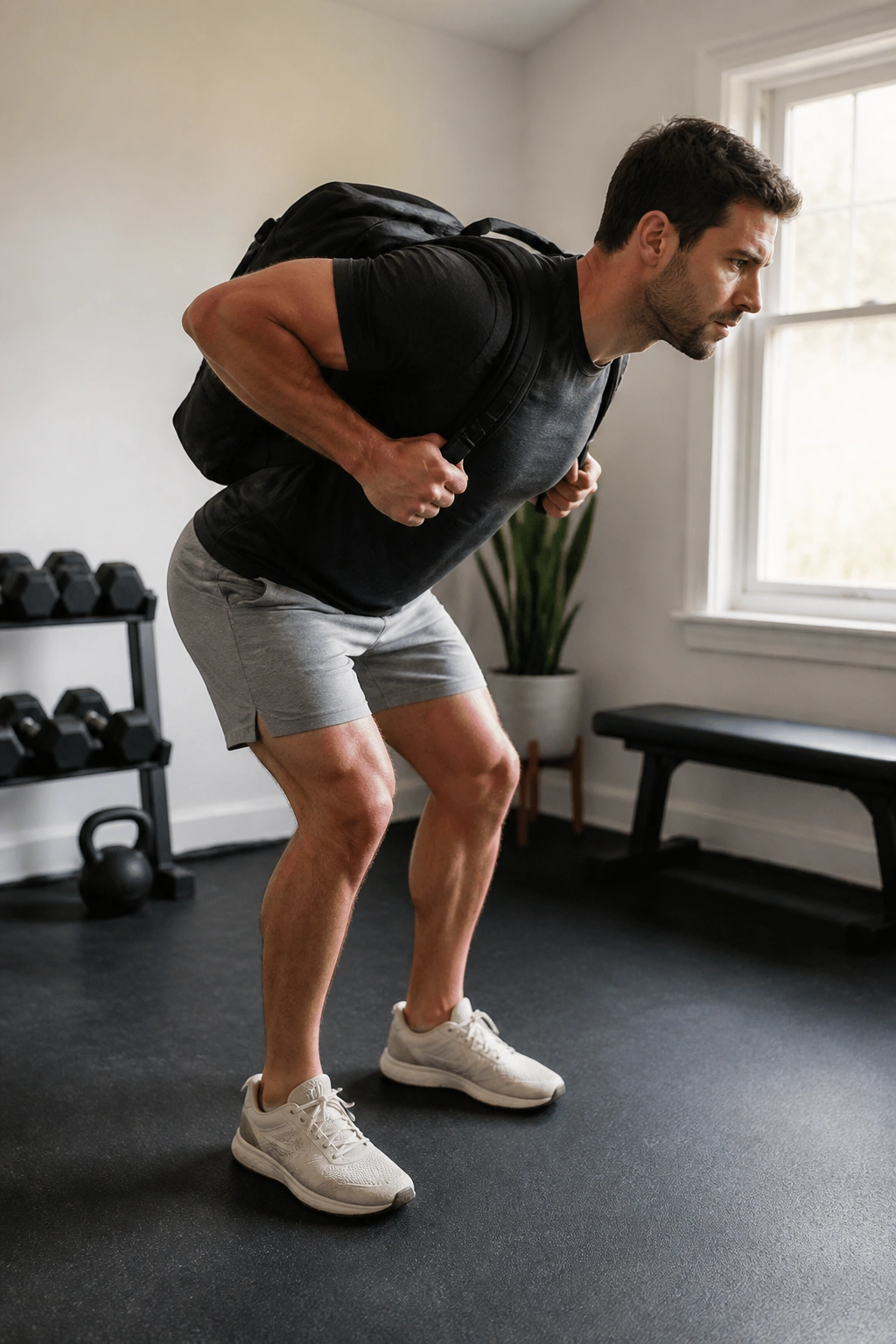
Rows matter. A lot. People chase push-ups and forget that the back needs work too, especially if you sit at a desk or slouch on the couch between workouts. This routine puts pulling, pressing, and shoulder control in the same room.
Pack, hinge, pull
Hold the backpack by the top handle or side straps and do 3 rounds of:
- 12 bent-over rows
- 10 floor presses
- 8 pike push-ups or incline push-ups
- 12 backpack curls
- 20-second hollow hold
The bent-over row should feel like the upper back is doing the work, not the lower back. Hinge at the hips, keep the neck long, and pull the bag toward the ribs. Floor presses are useful because the floor limits the range a little, which keeps the shoulders from wandering into ugly positions.
A light backpack can still be effective if you slow the tempo and stop shrugging. A heavier backpack works if you can keep the torso braced. That is the line. Good form first, more load second.
If your wrists hate floor work, do the presses from a bench or a firm couch edge. If pike push-ups feel too steep, raise your hands on a chair. Small changes keep the session usable.
7. The Core Stability and Anti-Rotation Routine
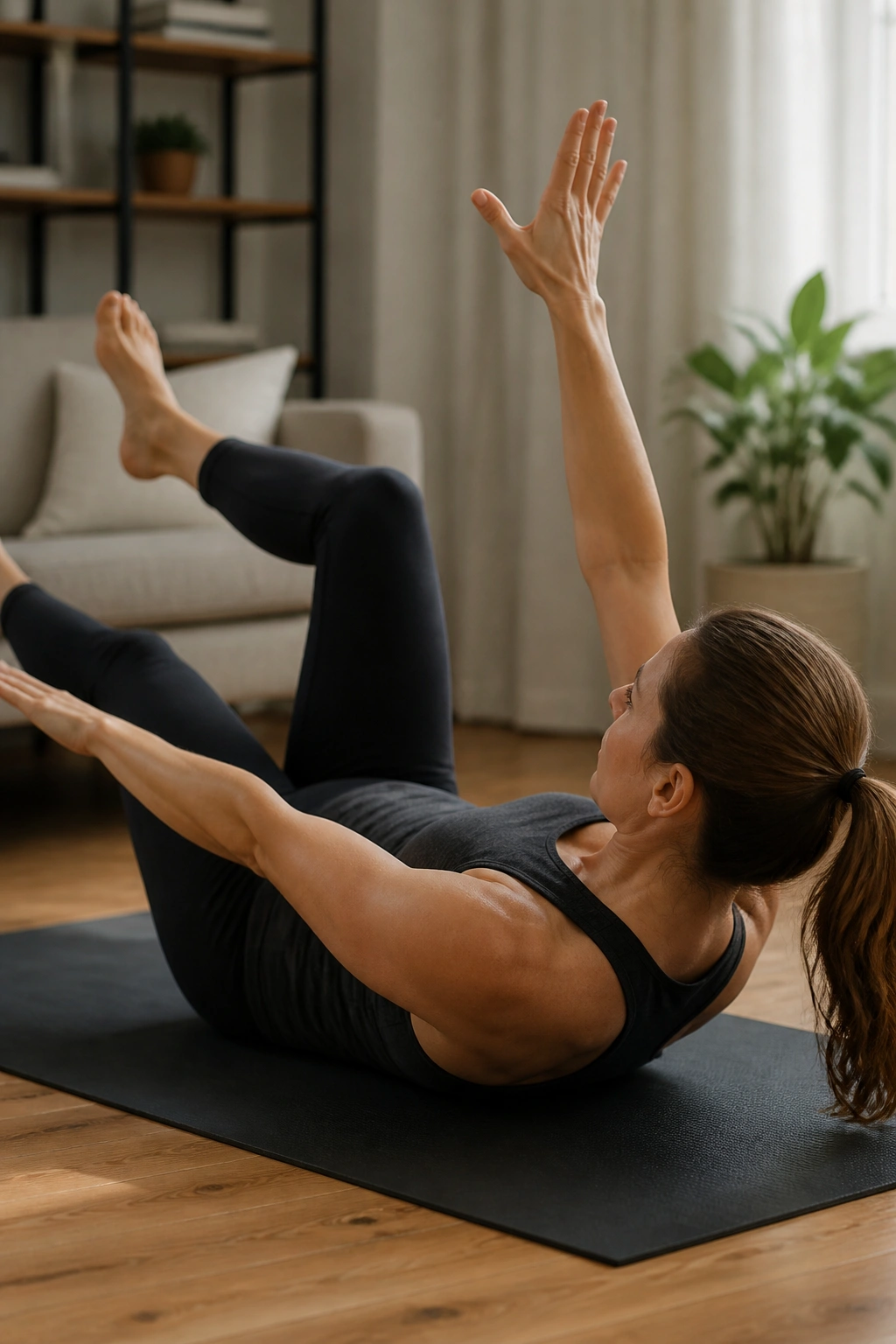
Core work is not only about crunches. A stronger middle helps you brace, carry, twist, and resist movement when the rest of the body wants to wobble. That is why anti-rotation work earns its place in home workouts.
What to focus on
Do 2 to 3 rounds of this sequence:
- 8 dead bugs per side
- 8 bird dogs per side
- 20-second side plank per side
- 10 slow glute bridge marches
- 20-second hollow hold
The trick is not speed. The trick is staying still where you should stay still. On dead bugs, your lower back should stay close to the floor. On side planks, the body should feel like one long line instead of a bent mess. On bird dogs, reach long without dumping weight into the low back.
If you want more challenge, hold a backpack over your chest during the hollow hold or extend the side plank to 30 seconds. If your back starts arching, stop pretending the set is still good.
What the wobble means
A little shaking is normal. Wobbling through the whole rep is not. The goal is control, not just fatigue.
8. The Mobility Reset for Hips, Back, and Shoulders
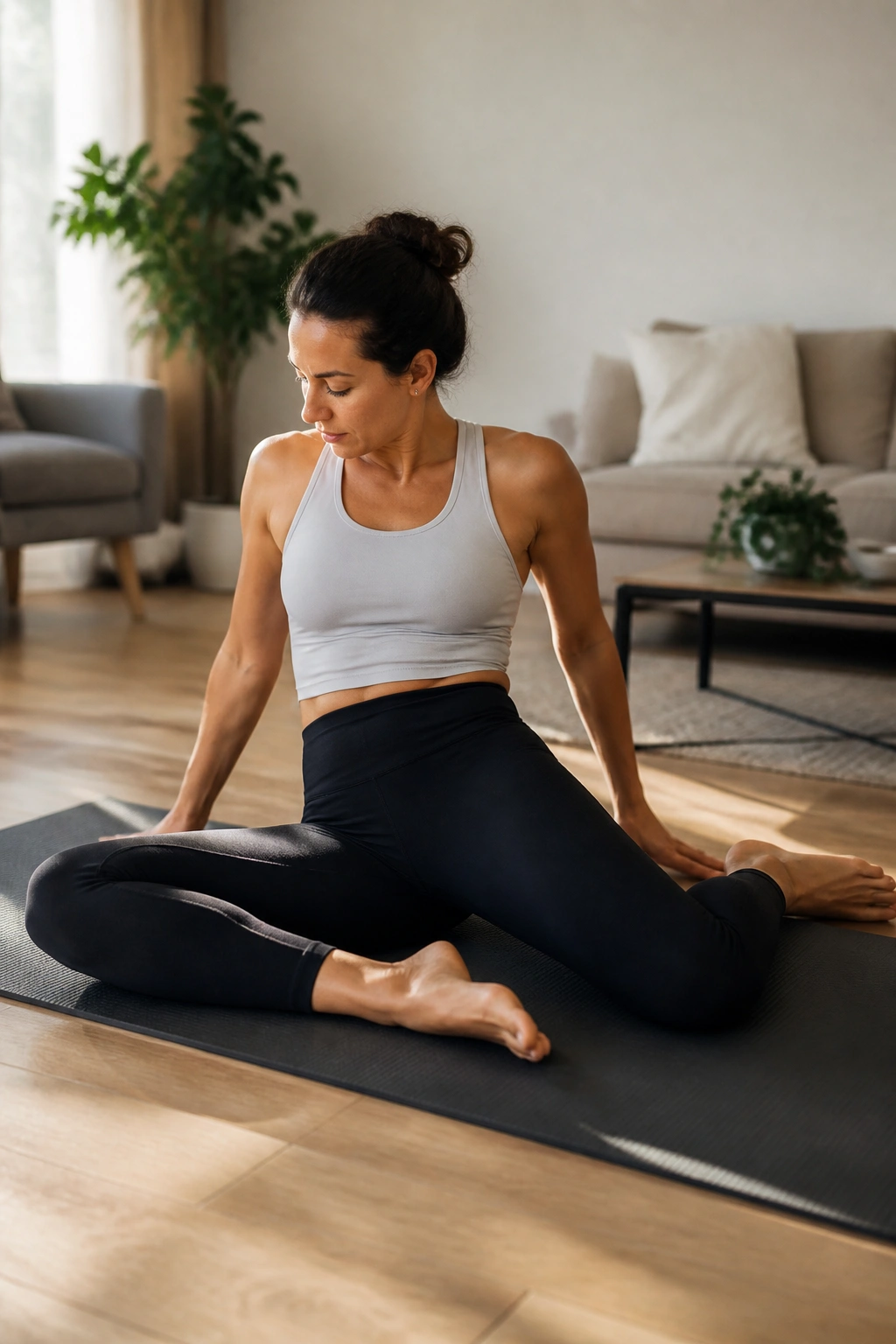
Tight hips feel like rusty hinges. Tight shoulders feel like you borrowed somebody else’s jacket. This is the routine for both. It works after long sitting, after harder strength days, or on the kind of morning when your body needs to move before it can really wake up.
Start with cat-cow for 6 slow breaths. Then move into 90/90 hip switches for 8 reps per side, a world’s greatest stretch for 4 reps per side, thoracic rotations on the floor for 6 reps per side, and a couch stretch or kneeling hip-flexor stretch for 30 to 45 seconds per side. Finish with shoulder circles and a doorway chest stretch if the front of the body feels tight.
None of this needs to look dramatic. It should feel smooth. Maybe a little awkward at first. That is fine. The body likes repetition here more than force.
A good mobility session leaves you looser without making you sleepy. If you breathe slowly through the stretch and keep the joints moving in a controlled way, the session starts to feel less like “stretching” and more like getting your body back from the day.
9. The Shadowboxing Rounds
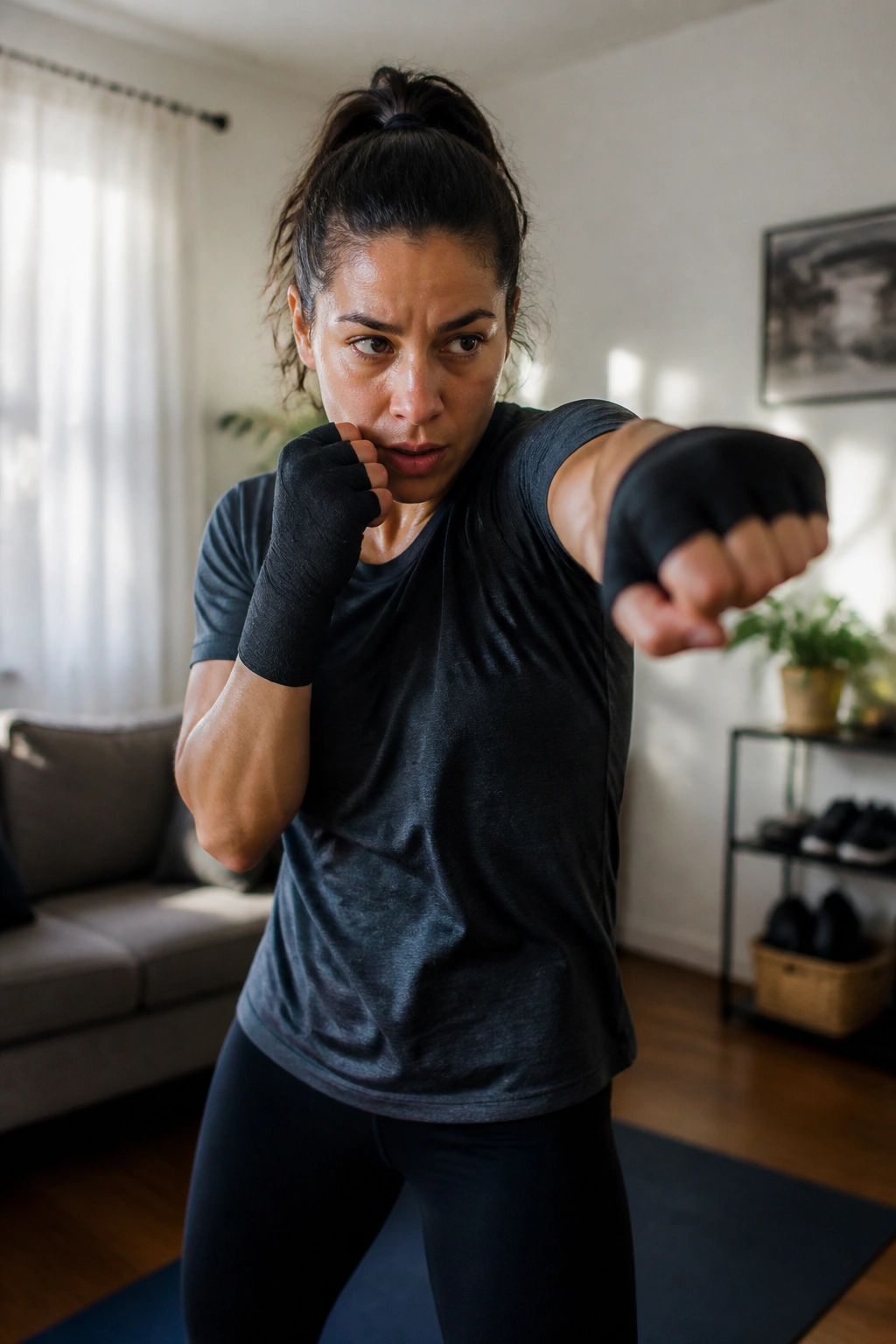
A pair of hands, a little floor space, and 10 minutes can turn into a very real conditioning session. Shadowboxing is one of my favorite work out at home routines because it sneaks cardio, coordination, and footwork into the same package.
Round one can be simple jab-cross combinations. Round two adds slips. Round three adds hooks. Round four works on stepping in and out. Keep each round to 2 minutes with 1 minute of easy walking or shaking out the arms between rounds. If you want a longer session, run 5 or 6 rounds.
Your shoulders will tell you when your hands are drifting. Your calves will tell you when the footwork gets sloppy. Good shadowboxing feels light and sharp, not frantic. The punches should snap, then return to guard. No wild swinging. That wastes energy and beats up the elbows.
Footwork matters more than speed
A small step to the left or right can make the session feel completely different. Try moving after every combination. That simple habit keeps the workout from turning into arm flailing.
If you are new to this, slow everything down and stay tall. If you already box or kickbox, add head movement and angle changes. The room gets small fast.
10. Work Out at Home With Resistance Bands
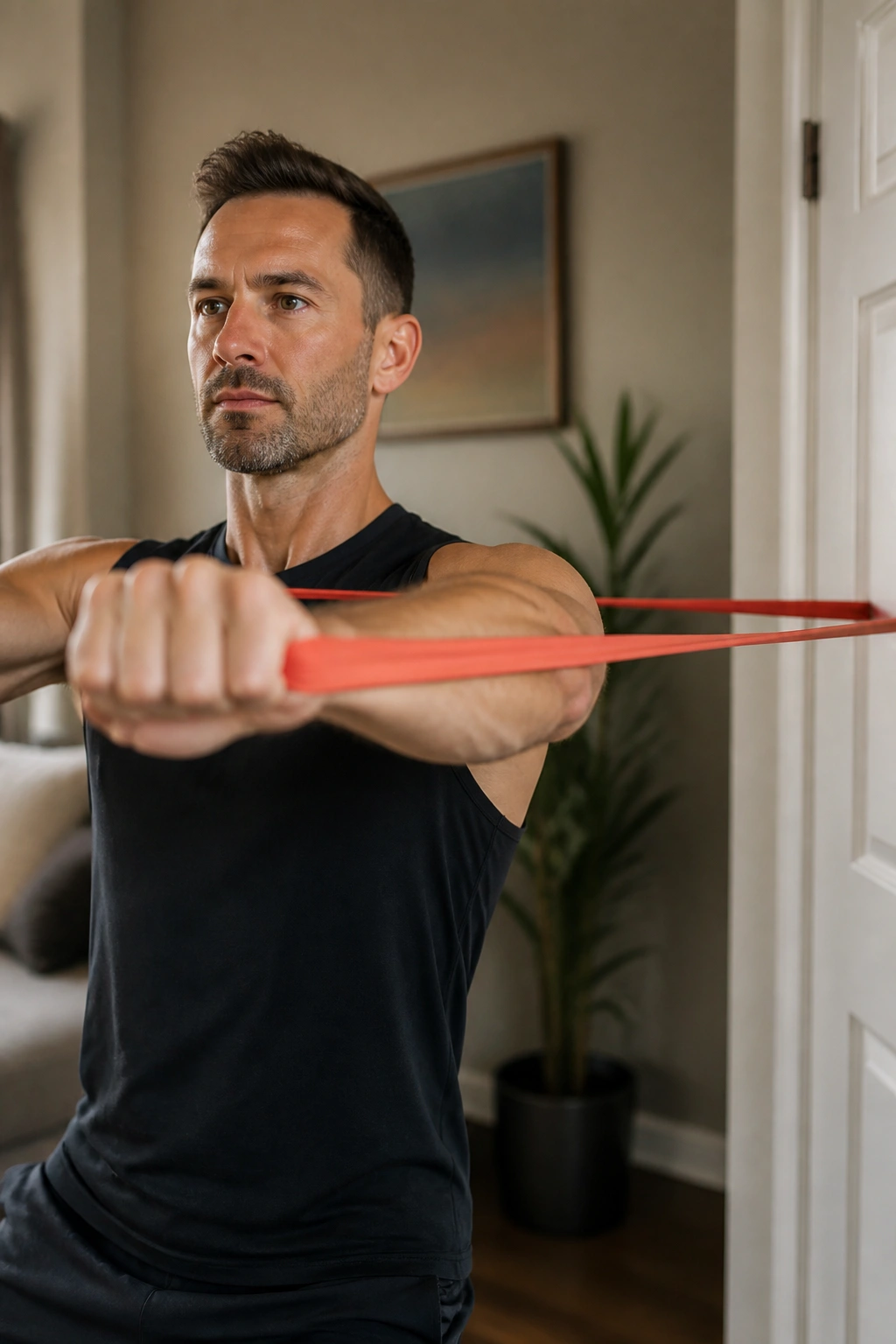
Bands are useful in a way that surprises people the first time they use them well. They are light to store, easy to pack, and awkward in the exact way that makes muscles work hard. A loop band and a long band can cover more ground than they look like they should.
Run this circuit for 3 rounds:
- 15 band squats
- 12 band rows
- 12 band chest presses
- 15 band pull-aparts
- 12 lateral band steps each way
Keep the tension honest. If the band snaps around with no resistance, it is too light. If the form falls apart by rep six, it is too heavy. The sweet spot is the band that makes the last few reps slower without turning ugly.
The pull-aparts are a nice fix for rounded shoulders. The lateral steps wake up the glutes in a way bodyweight alone sometimes misses. And the rows help balance out all the pushing most people already do during daily life.
If you only buy one piece of gear for home training, bands are hard to beat. They are not magic. They are simply useful, and that is a better trait.
11. The Stair Workout for Small Spaces
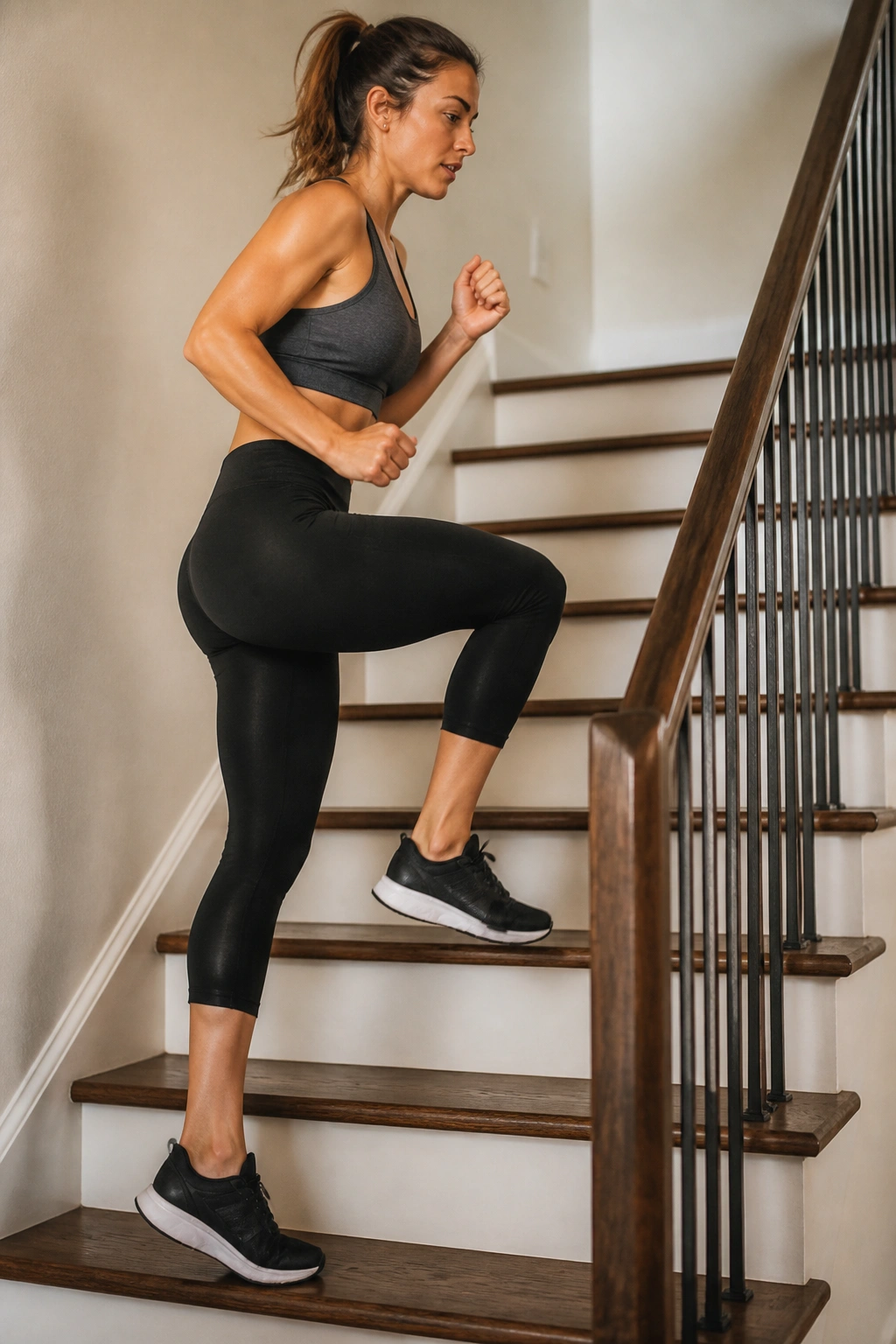
Stairs are brutally honest. They ask for leg drive, balance, and a little lung power all at once. If you have a safe set at home or in your building, you can build a short, sharp session without much room.
Try this for 10 to 15 minutes:
- 30 seconds of stair climbs
- 30 seconds of step-ups on one step
- 30 seconds of calf raises on a step
- 30 seconds of side steps up and down
- 1 minute of easy walking
Repeat the cycle 2 to 4 times. Hold the railing if you need it. Wear shoes with some grip. Dry stairs matter. Slippery surfaces and rushed feet do not mix well.
The best part of stair work is how quickly it wakes up the legs. The worst part is also how quickly it wakes up the legs. That is why pacing matters. If you charge too hard in the first round, the rest of the session turns into a survival march.
For beginners, keep the stepping slow and skip the side steps. For advanced trainees, carry a backpack or go two steps at a time on the climbs. The session scales cleanly either way.
12. The Yoga-Strength Hybrid Flow
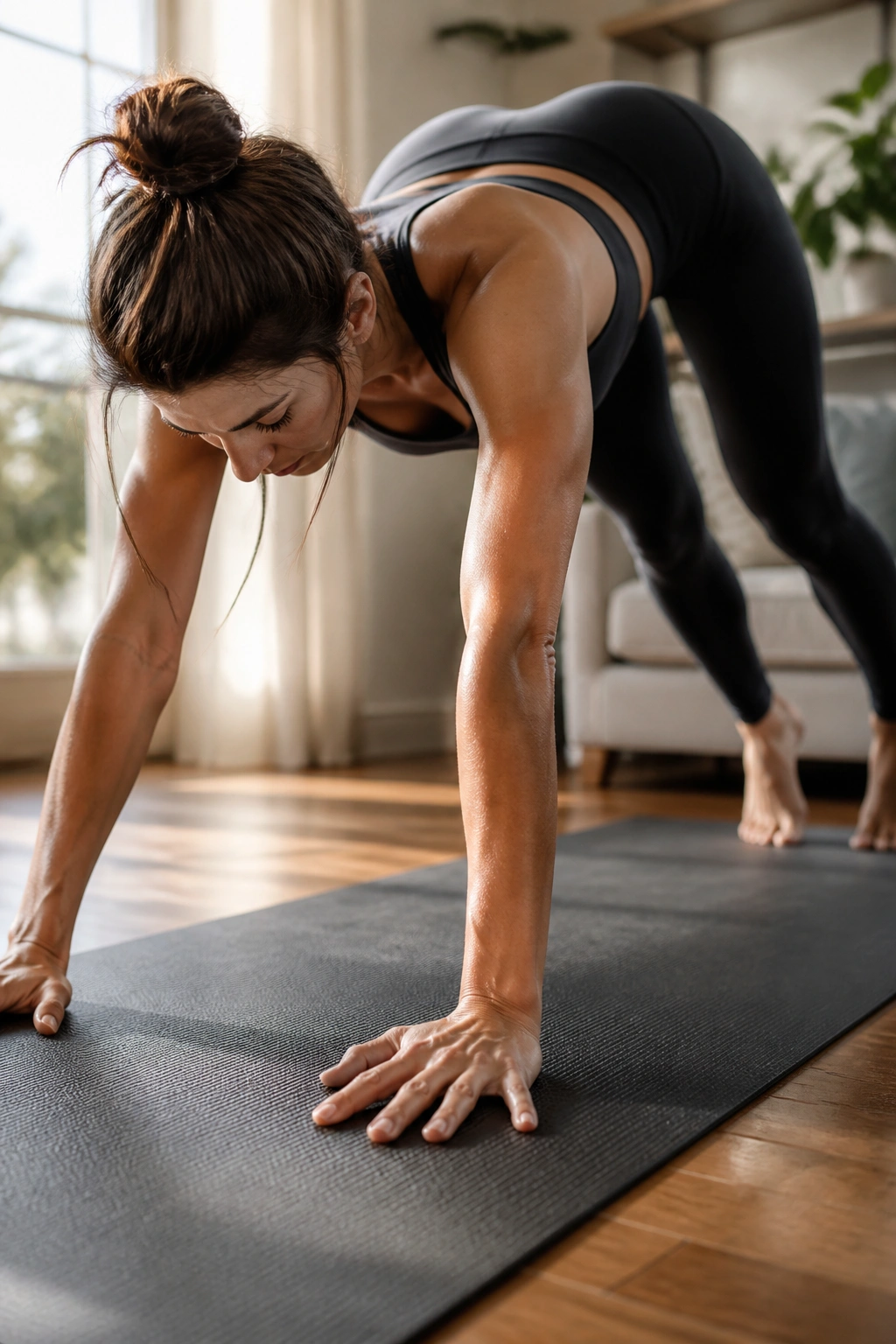
Can a yoga flow count as strength work? Sometimes, yes. Especially when the poses hold long enough to make the legs shake and the shoulders complain a little. This version keeps the calm breathing of yoga but adds enough load to count as a real workout.
Move through sun salutations, a low lunge, warrior II, reverse warrior, plank to downward dog, chair pose, and a standing balance hold. Stay in each pose for 3 to 5 breaths instead of rushing through. Run the full flow 2 to 4 times.
The nice thing here is that the session hits more than one need. Hips open. Arms support body weight. The heart rate climbs without jumps or sprints. It suits people who want to move hard without feeling beaten up afterward.
Where the strength sneaks in
Chair pose teaches the legs to hold. Plank and downward dog teach the shoulders to bear weight. Warrior II teaches the hips to stay steady while the legs work. That is enough to matter.
If balance is rough, keep the back foot light and use a wall. If the flow feels too easy, add a slower tempo and pause for one full breath in the hardest pose. That little pause changes everything.
13. The Pyramid Interval Session
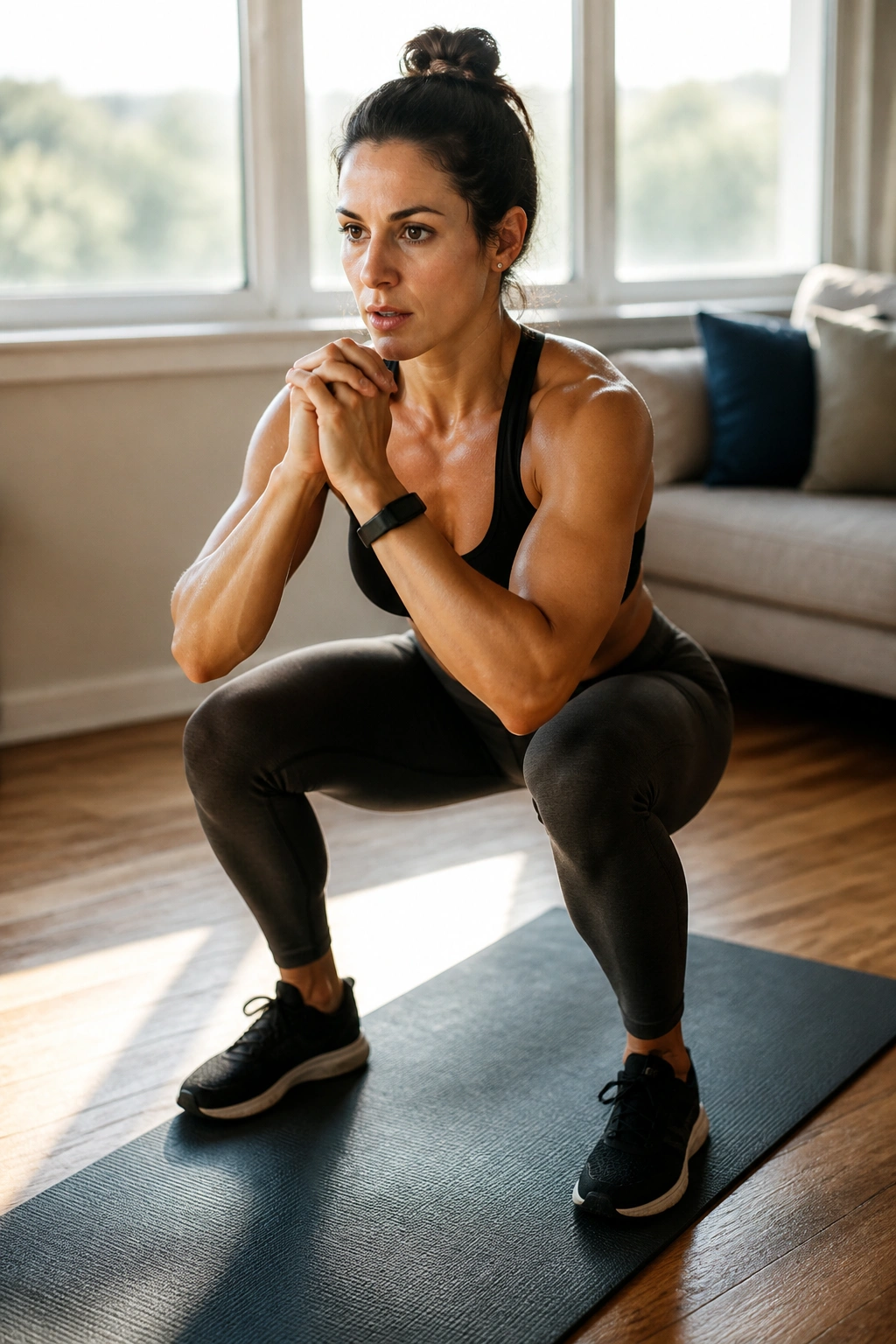
Pyramids are good for people who hate flat, predictable work. The effort rises, then falls, and the body has to keep adjusting. That makes the workout feel alive instead of mechanical.
Use a simple 10-20-30-40-30-20-10 second format. Pick three moves, such as squats, push-ups, and high knees or marching. Do 10 seconds of the first move, 20 of the second, 30 of the third, and keep climbing. Then come back down the other side. Rest 30 to 45 seconds after the full pyramid.
The pattern forces pacing. You cannot sprint every segment and expect to survive the full ladder with good form. You have to save a little, then spend a little, then save again. That skill carries over to a lot of home workout plans.
How to scale the climb
Beginners can shorten the pyramid to 10-15-20-15-10. Stronger people can use dumbbells or a backpack, or keep the rest shorter between climbs.
The thing I like most here is the rhythm. It feels organized without becoming boring. That is rare enough to be worth keeping.
14. The Glute Bridge and Hamstring Routine
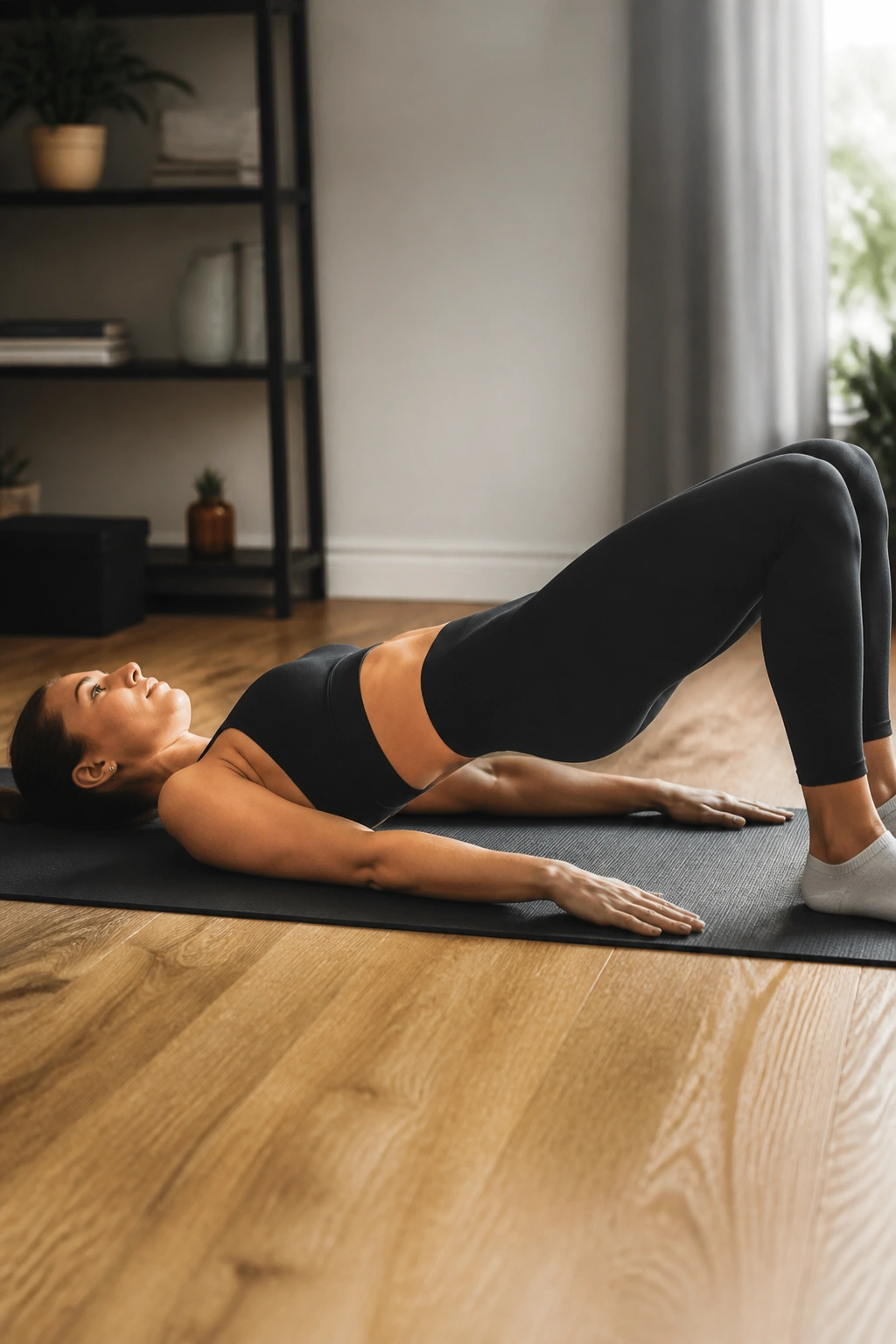
Hamstrings are easy to forget until they start feeling tight on stairs or stiff after sitting. This routine puts them front and center, along with the glutes that should be doing more of the work anyway.
Start with 15 glute bridges, then 10 single-leg bridges per side, 8 hamstring walkouts, 10 towel sliders if you have a smooth floor, and 20-second bridge holds. Run 3 rounds.
A towel under the heels works well on tile or hardwood. Socks help. Carpet makes sliders less smooth, so you may need to stick with walkouts or single-leg work. The movement should feel controlled, not jerky. If the hips drop fast, the hamstrings lose the point of the exercise.
The bridge hold is a small pain in the right place. You should feel the glutes grab hard and the low back stay quiet. If the low back takes over, shorten the range and reset.
This is a good routine when you want lower-body work without squats dominating everything. It also pairs well with a brisk walk afterward. The legs tend to appreciate that.
15. The Apartment-Friendly Low-Impact HIIT Set
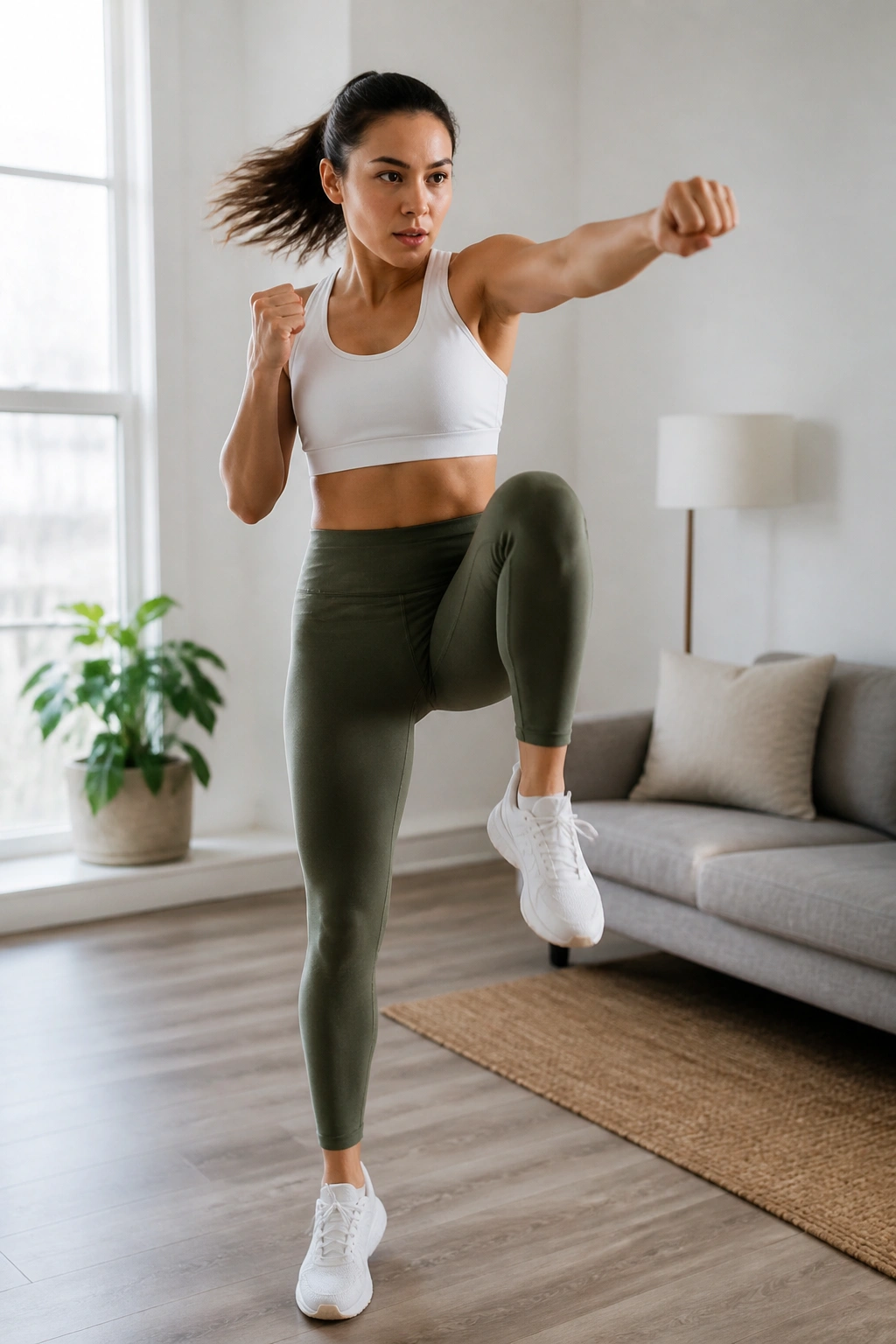
Low-impact does not mean easy. It only means you are not bouncing all over the place while your heart rate climbs. That distinction matters if you live upstairs, share walls, or simply do not want your knees to take a beating.
Use 40 seconds on, 20 seconds off for 8 to 12 minutes. Rotate through fast marches with punches, squat-to-reach, step-back lunges, plank shoulder taps, and skater steps without the jump. Keep the movement crisp. Keep the transitions short.
The workout gets hard because you never fully settle. The punches add upper-body drive. The squat-to-reach opens and closes the body in a way that keeps the pace moving. The lunges make the legs work without the thud of repeated jumping.
If you want more challenge, raise the knees higher on the march and slow the lowering phase on the lunges. If your floor space is tight, stay in one spot and use punches, marches, and bodyweight squats. The routine still works. It just gets smaller.
16. The Single-Leg Balance and Stability Routine
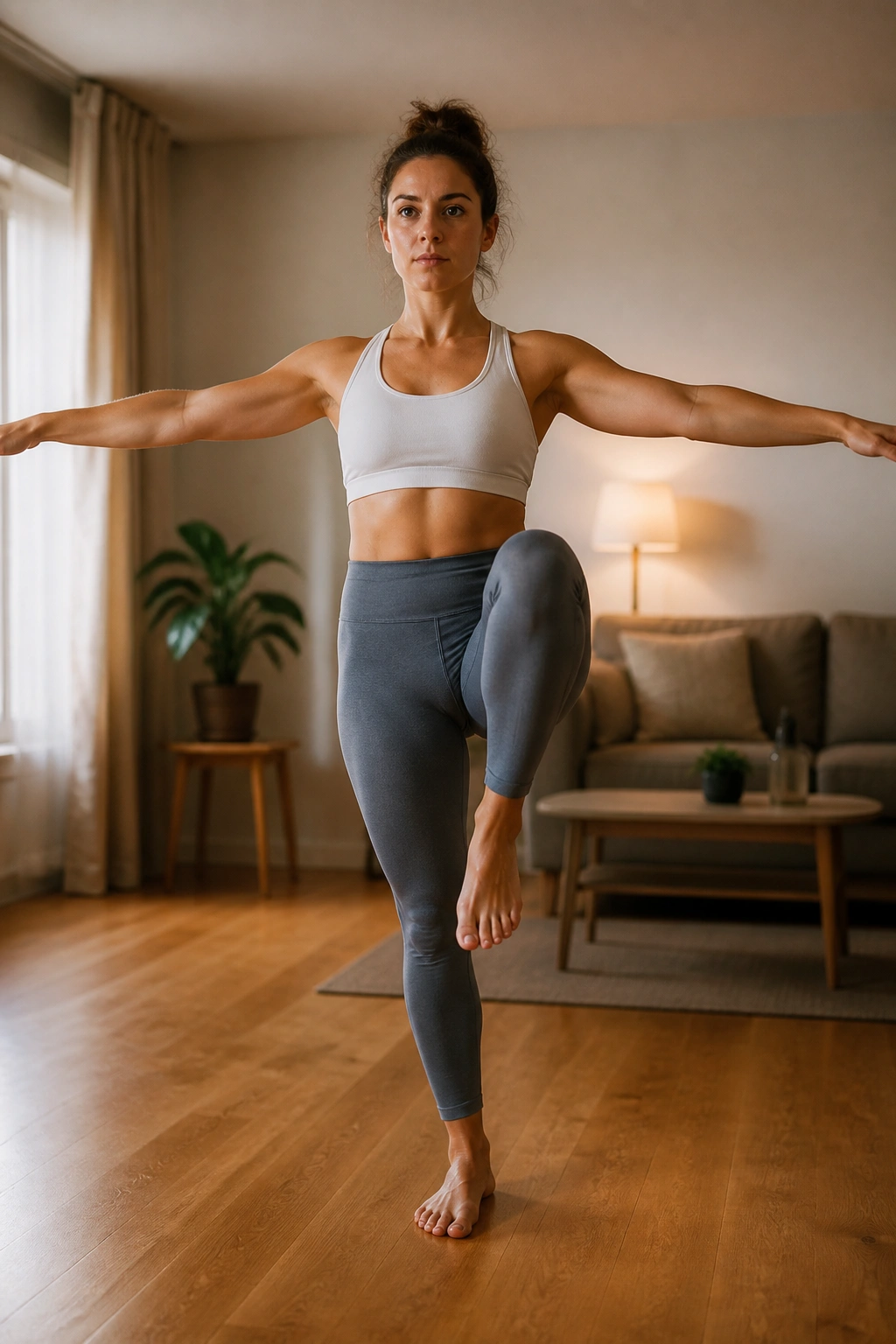
One leg at a time exposes every wobble. That sounds annoying, and it can be, but it is also useful. Balance work builds ankle strength, hip control, and the kind of coordination that makes the rest of your training feel cleaner.
Try this sequence for 2 to 3 rounds:
- 8 split squats per leg
- 8 single-leg Romanian deadlifts per leg
- 10 lateral step-downs per leg
- 12 single-leg calf raises per leg
- 20-second knee drive hold per side
Move slowly. That matters more here than almost anywhere else. If you rush, the body cheats by swinging, twisting, and throwing weight around. If you go slow, the small stabilizers wake up and do their jobs.
A backpack can add load to the RDLs and split squats. A wall can help on the knee drive hold. Both are useful. Neither is a crutch. They let you keep the exercise honest.
This is a smart routine if you sit a lot, run a lot, or just want your lower body to feel more steady on stairs and uneven ground. The payoff is subtle at first, then obvious when you stop tripping over small stuff.
17. The Tabata Without Jumps Session
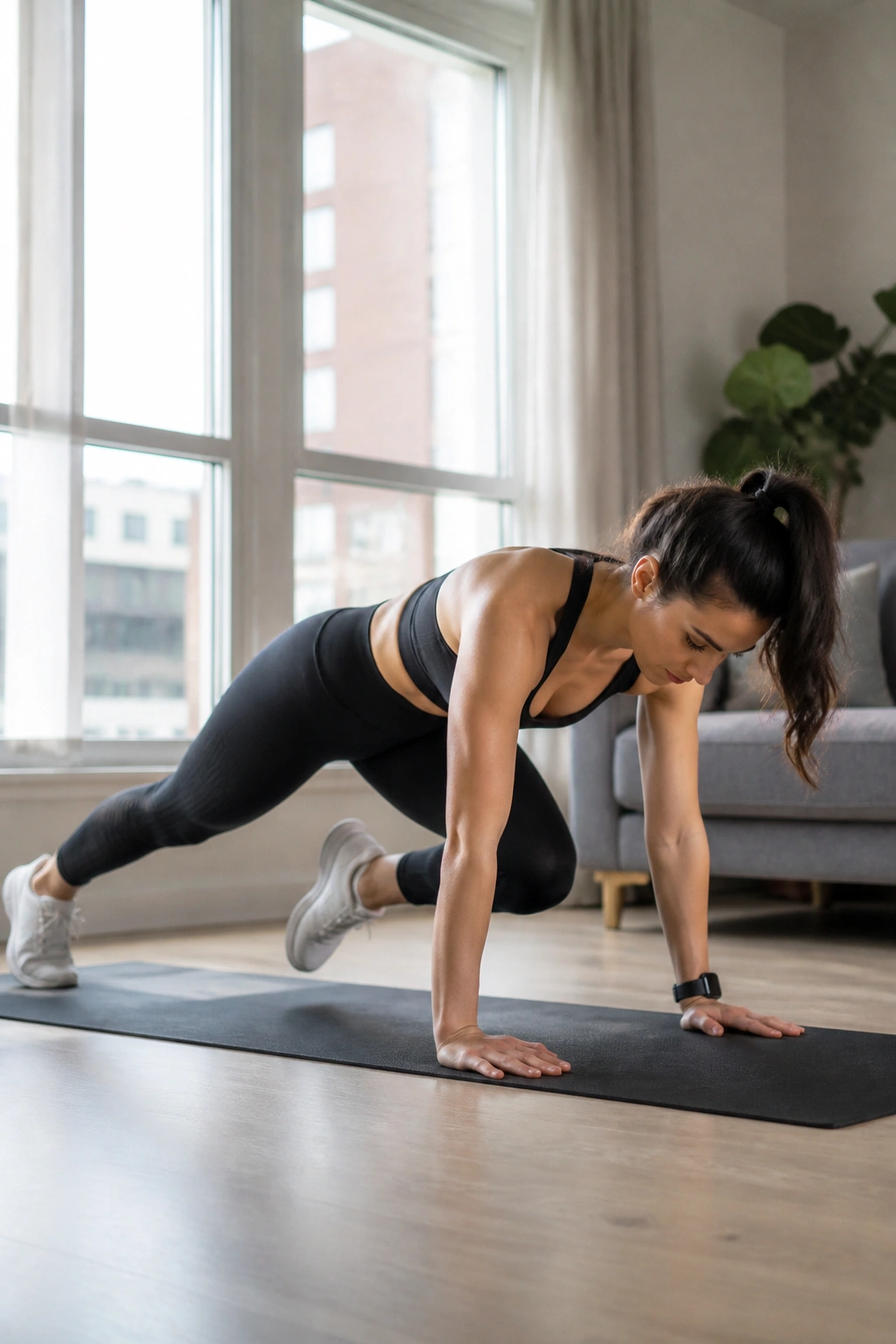
Tabata is short and rude in the best way. The classic format is 20 seconds of hard work, 10 seconds of rest, repeated for 8 rounds. Two moves are enough. Four if you want a longer block. Keep the exercise choices simple, because complicated movements fall apart fast when the rest is that short.
A clean setup is 8 rounds of squat-to-knee-drive, then 8 rounds of mountain climbers or fast marching punches. Another option is incline push-ups and skater steps. The key is picking moves you can do fast without turning sloppy.
What to watch
If your breathing is fine but the form is messy, the pace is too high. If the pace is perfect but the effort feels mild, the move is too easy. That little balance is the whole point.
Tabata works well at home because it respects time. Four minutes sounds tiny until you finish it. Then it sounds fair. If you want more, rest for 90 seconds and repeat one more block. If not, stop there and call it a clean win.
18. The Eccentric Strength Workout
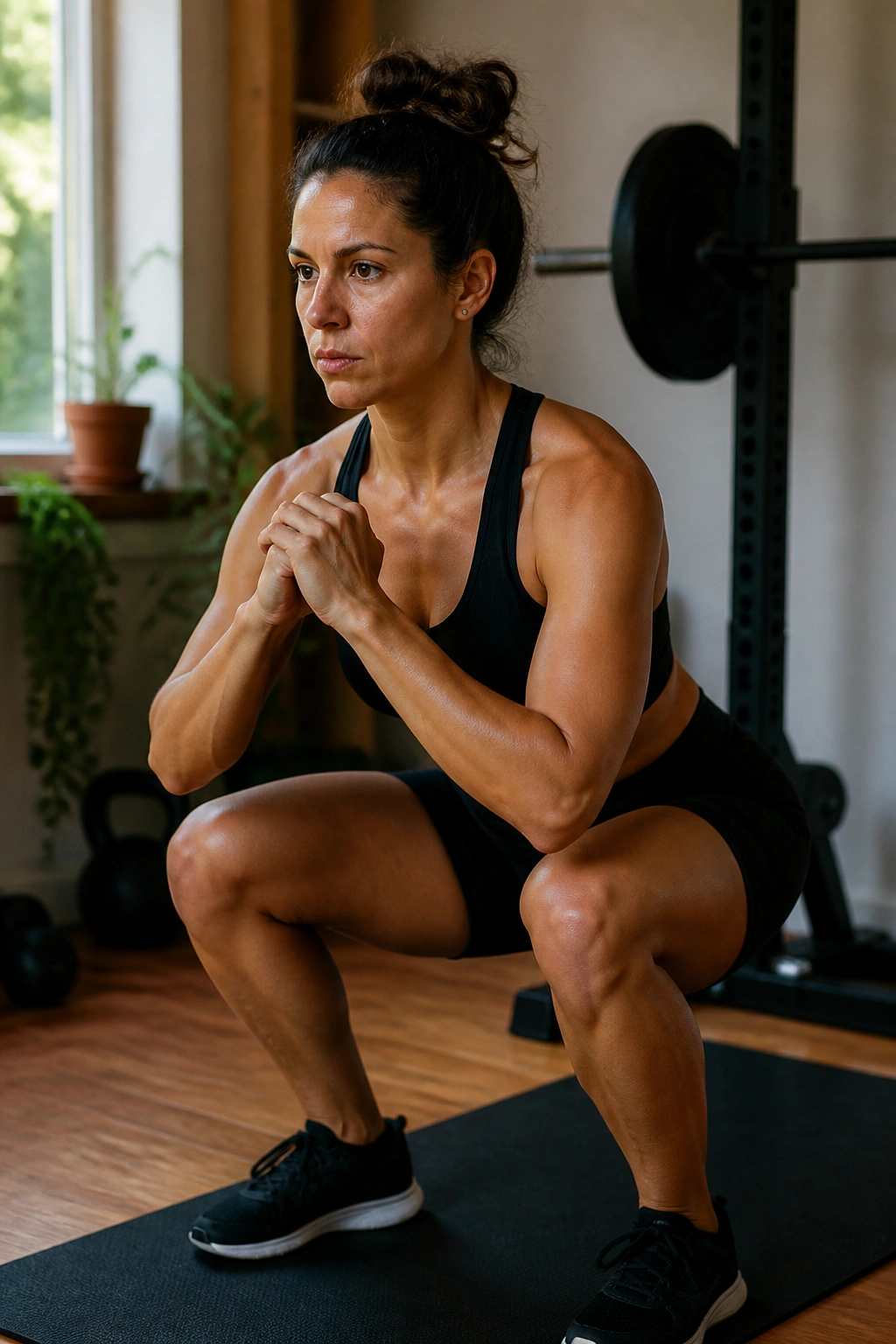
Slow lowering is underused. People love the part of the rep where they stand up and forget that the lowering phase does a lot of work too. Eccentric training fixes that by making the down phase deliberate.
Use a 3-to-5-second lowering count on squats, push-ups, split squats, calf raises, and rows. Do 8 to 10 reps of each move for 3 rounds. Rise at a normal pace. Pause for a beat at the bottom if the joint positions stay clean.
The muscles will feel this even with light load. A slow push-up with a 4-second descent can humble someone who breezes through fast reps. Same with a squat. Same with a lunge. The technique is simple, but the demand is not.
This routine is one of the best ways to make bodyweight training harder without adding junk volume. You do not need to chase endless reps if the tempo is honest. That said, your form has to stay solid. If the shoulders cave or the knees wobble, shorten the range and reset.
19. The Recovery Day Walk and Stretch Routine
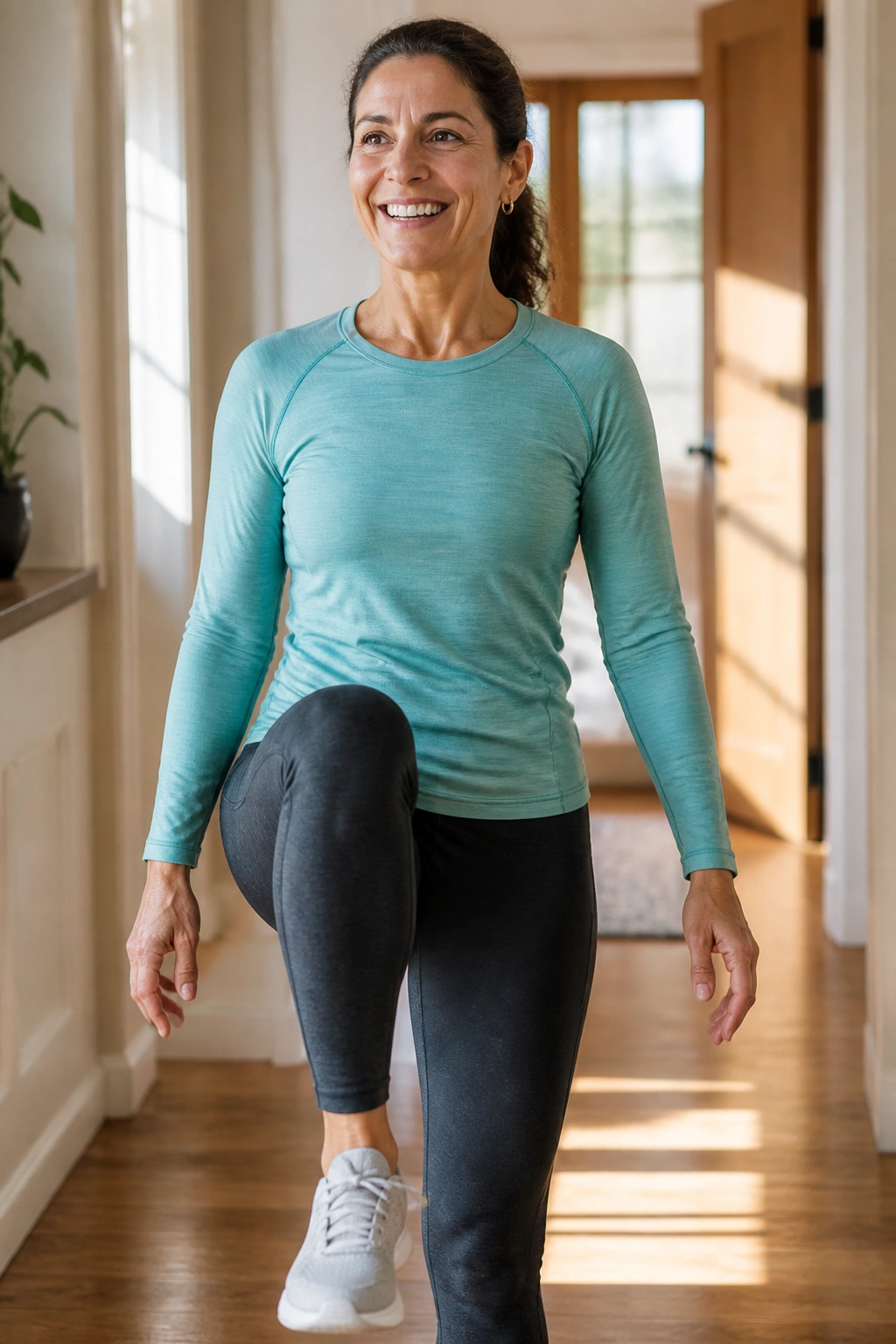
Recovery is not a cop-out. It is part of the schedule. The best home workout plans include a day that gives the joints some room, gets blood moving, and leaves you looser than you started.
Walk in place, loop around the house, or move up and down a hallway for 8 to 15 minutes. Then stretch the calves, hip flexors, chest, hamstrings, and upper back for 20 to 30 seconds each. Add deep nasal breathing if you want the session to feel calmer. Foam rolling can fit here too, if you own one and it does not annoy you.
The point is not to make this a fake hard day. Keep it easy enough that you can talk through it. The work happens in the consistency, not the sweat.
- 10 minutes of easy walking
- 30 seconds calf stretch per side
- 30 seconds hip-flexor stretch per side
- 30 seconds chest stretch per side
- 30 seconds hamstring stretch per side
If you trained hard the day before, this can be the most useful thing you do. Boring? Maybe. Effective? Usually, yes.
20. The Mix-and-Match Finish
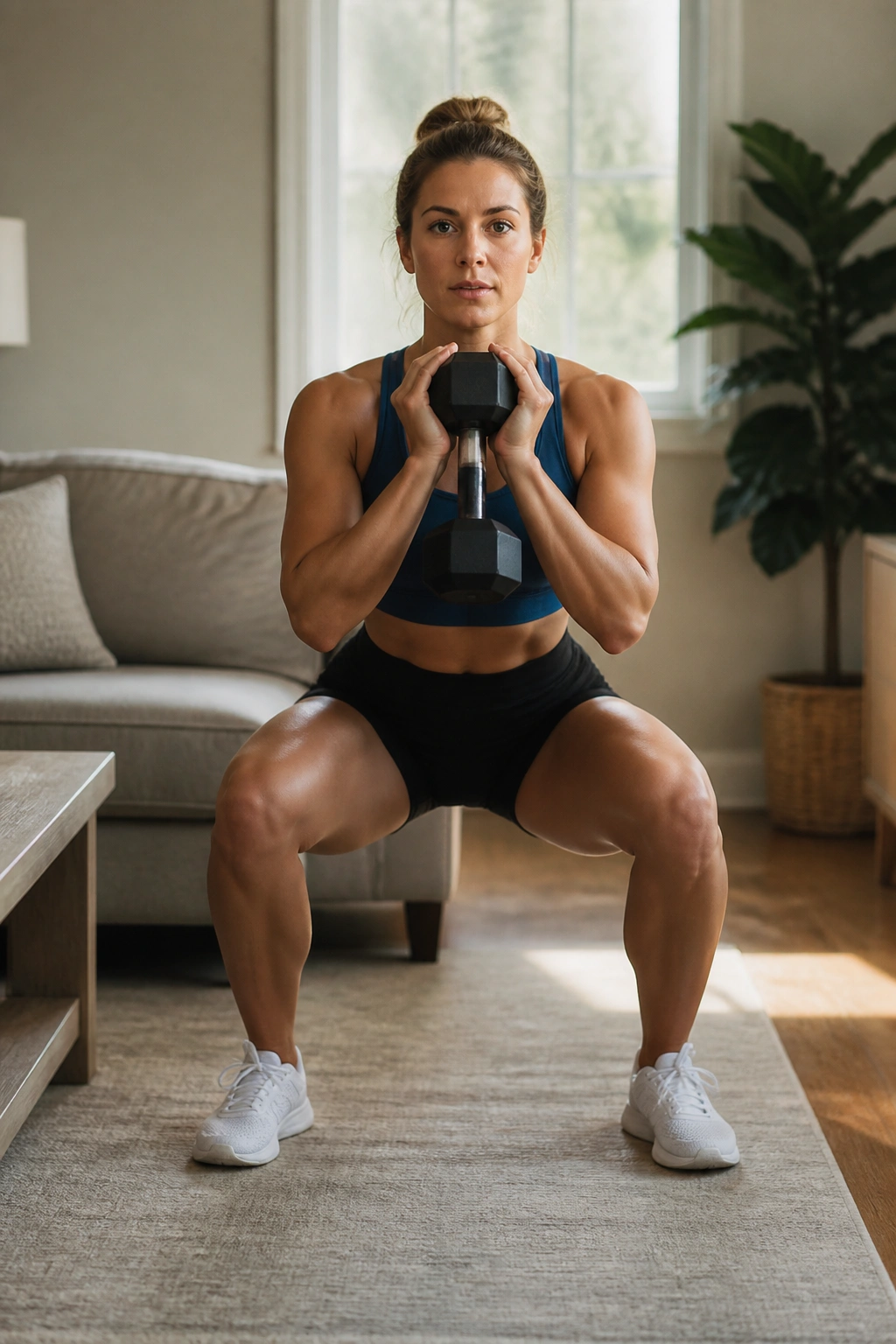
A simple rotation keeps boredom down. It also keeps home training flexible, which matters when your space, energy, and schedule keep changing. This is the routine I’d keep if I wanted one template that could handle beginner, intermediate, and tougher days without much thinking.
Pick one move from each group:
- Squat: air squat, goblet squat, chair squat
- Hinge: glute bridge, Romanian deadlift, single-leg RDL
- Push: wall push-up, incline push-up, floor push-up
- Pull: band row, backpack row, towel row if safely anchored
- Core: dead bug, side plank, hollow hold
- Cardio: marching, step jacks, shadowboxing
Do 30 seconds on each move, rest 15 seconds between exercises, and complete 2 to 4 rounds. Beginners should stay with the easiest version in each group and keep the rest generous. More advanced people can trim the rest and use slower reps.
The beauty here is that you can change one or two pieces and get a different workout without starting from scratch. That makes it easier to stay consistent, and consistency is the part that actually matters when you work out at home. Keep a few versions saved, shuffle them when you get bored, and stop waiting for the perfect day to train.
