



If your hips feel welded shut after a ride, don’t blame your bike fit first. A lot of cyclists simply never train the parts that keep the pedals smooth: the deep abdominals, the side glutes, the ribs, and the muscles that stop your pelvis from tipping forward and dumping all the work into your lower back.
Pilates exercises for cyclists at home do something plain but useful. They teach control in positions cyclists actually live in — bent at the hips, rounded through the upper back, and balanced on one leg at a time. That matters on climbs, in sprints, and on those long rides where your form starts to fray before your fitness does.
No fancy gear is needed. A mat helps. A pillow or folded towel helps more than people admit. A loop band is nice, but not essential. What matters is learning how to hold your trunk steady while your legs move, because that’s where a lot of riding efficiency quietly disappears.
Start with the first move, because it sounds simple and it isn’t. The body can be a bit rude about weak spots.
1. The Hundred
The Hundred is the classic Pilates wake-up call, and cyclists usually feel it exactly where they need to: across the front of the ribs, deep in the abdominals, and in the breathing muscles that get lazy when you’re hunched over the bars. It’s not flashy. That’s the point.
Lie on your back with your knees bent, or extend your legs if your low back stays quiet. Lift your head and shoulders just enough to feel your ribs knit down. Then pump your arms in small, crisp beats while you breathe in for five counts and out for five counts. If your neck starts shouting, lower your head. No prize for suffering.
Why It Helps On The Bike
A rider who can breathe without flaring the ribs usually holds posture better late in a ride. That means less sagging through the midsection and less wasted movement when the legs are turning over.
- Keep the lower back heavy on the mat.
- Make the arm pumps small and fast, not wild.
- Stop at 50 or 100 pumps, or earlier if the neck tightens.
- Use bent knees if straight legs pull the pelvis out of position.
One honest tip: if you can’t keep the pelvis still, bend the knees and keep going. That version is far more useful than a fancy shape with sloppy control.
2. Pelvic Curl
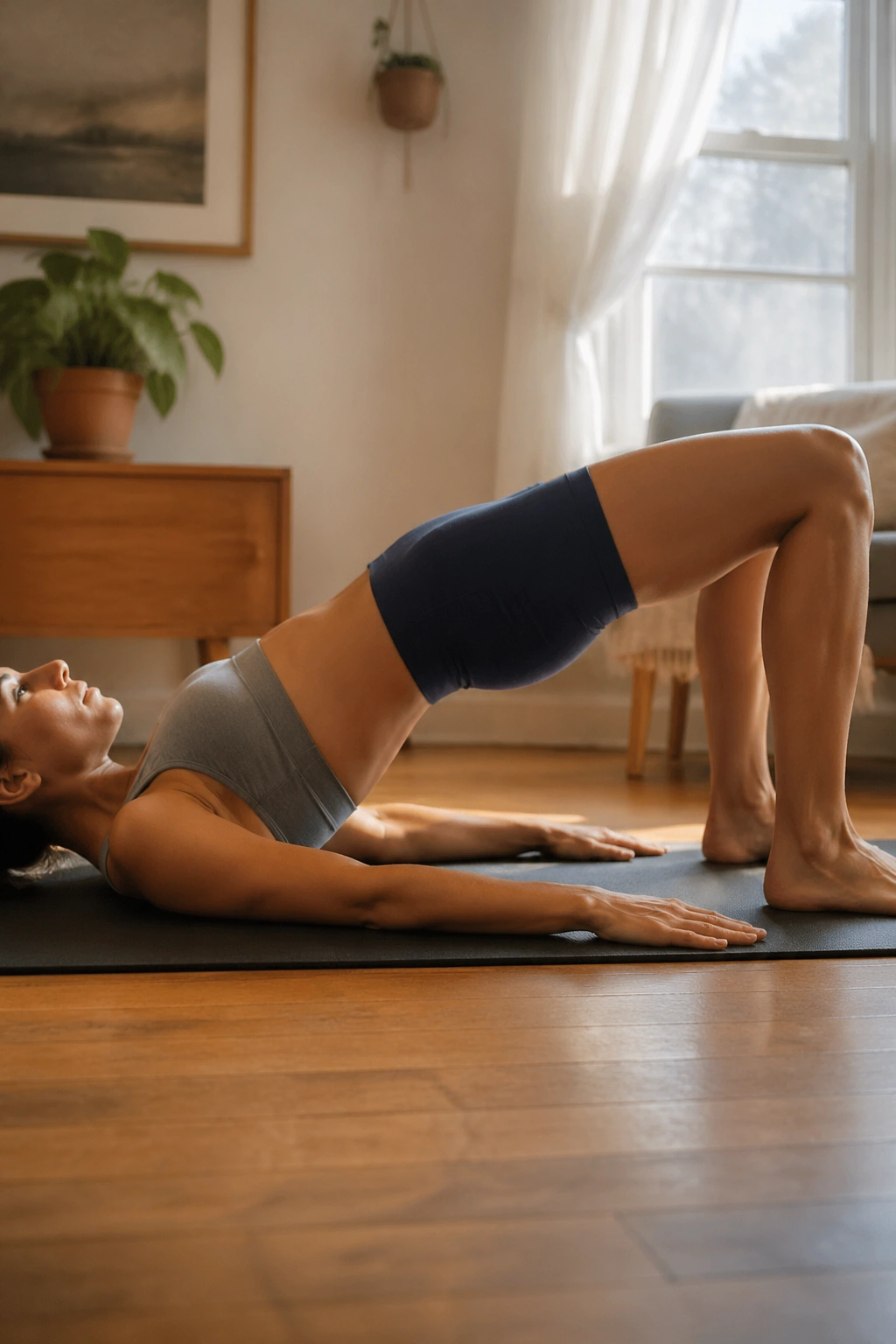
The pelvic curl looks almost too basic, which is why people rush past it. That’s a mistake. For cyclists, it can feel like switching on the glutes after hours of hip flexion, and it gives the spine a clean little unpacking that a hard ride rarely offers.
Lie on your back with your feet hip-width apart and your knees bent. Press through the heels, tilt the pelvis, and peel the spine off the floor one segment at a time until you reach a bridge. Then lower slowly, upper back first, ribs next, pelvis last. The descent matters as much as the lift.
What to Watch For
Do not shove the hips up so high that the ribs pop open. That turns the move into a lower-back arch contest, and your glutes lose the job they were supposed to do.
A better version feels like the hamstrings and glutes sharing the work, with the front of the hips staying soft. Hold the top for 2 to 3 breaths if you want more time under tension, or add a single-leg hover only if the pelvis stays level.
One more thing. If your feet cramp, move them a little closer to the seat.
3. Chest Lift
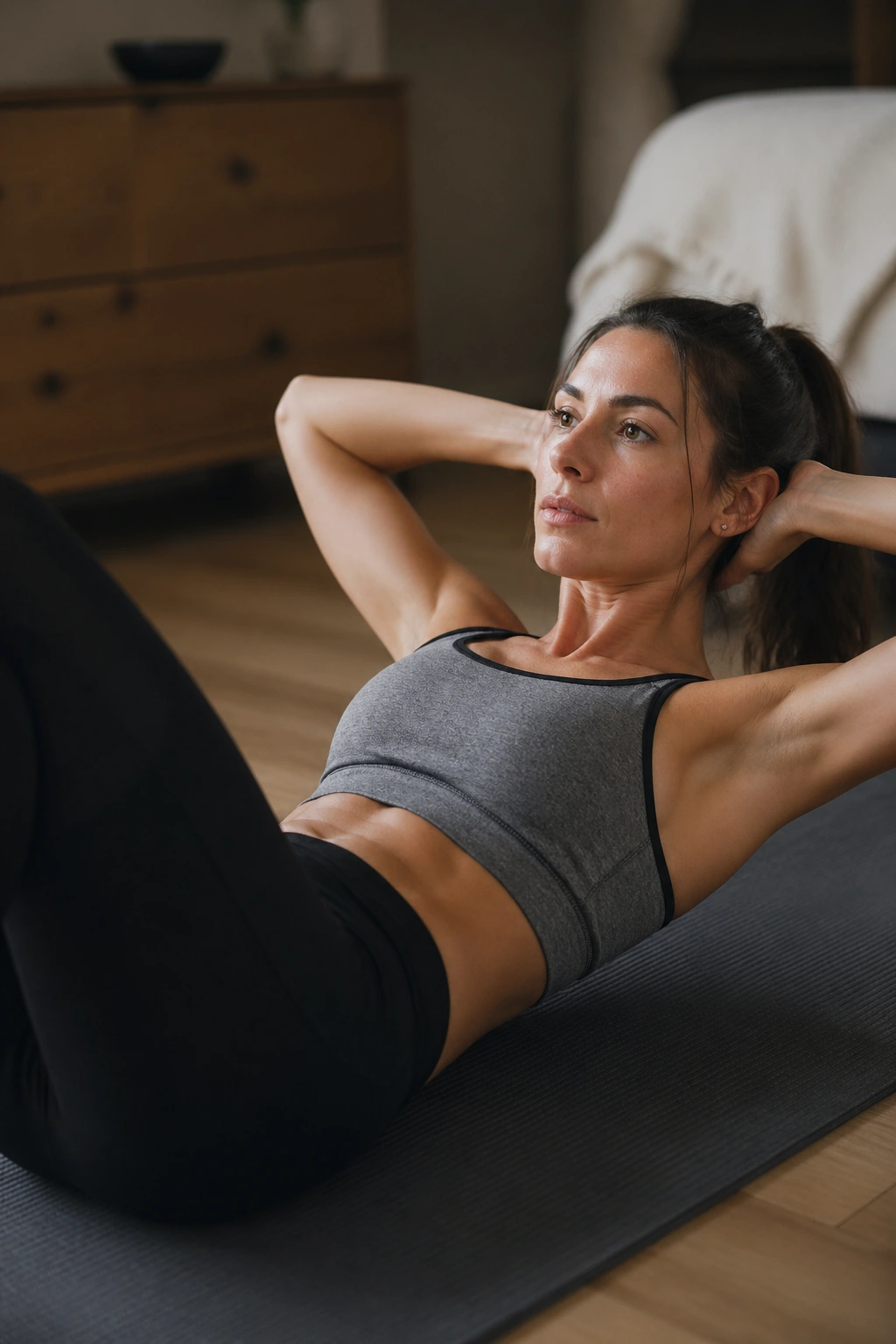
Why does a tiny curl of the upper body matter so much? Because cyclists spend a lot of time with the chest collapsed and the head reaching forward, and that shape gets baked into the midsection if you never challenge it.
For the chest lift, lie on your back with knees bent, hands lightly behind the head, and elbows open. Exhale, nod the chin, and lift the shoulder blades just off the mat. The movement is small. If it turns into a sit-up, you’ve gone too far.
Keep the pelvis quiet and the lower ribs heavy. You should feel the front of the abs doing the work, not the neck. If your neck starts to strain, look at the ceiling a little more and relax the elbows.
Do Not Yank the Head
A common mistake is pulling the head forward with the hands. That makes the neck do the job the abdominals should own.
Try 6 to 10 slow reps, pausing at the top for a breath. A folded towel under the head can help if your neck is stiff from riding. This is one of those exercises that looks tiny and feels honest. Good. It should.
4. Single-Leg Stretch
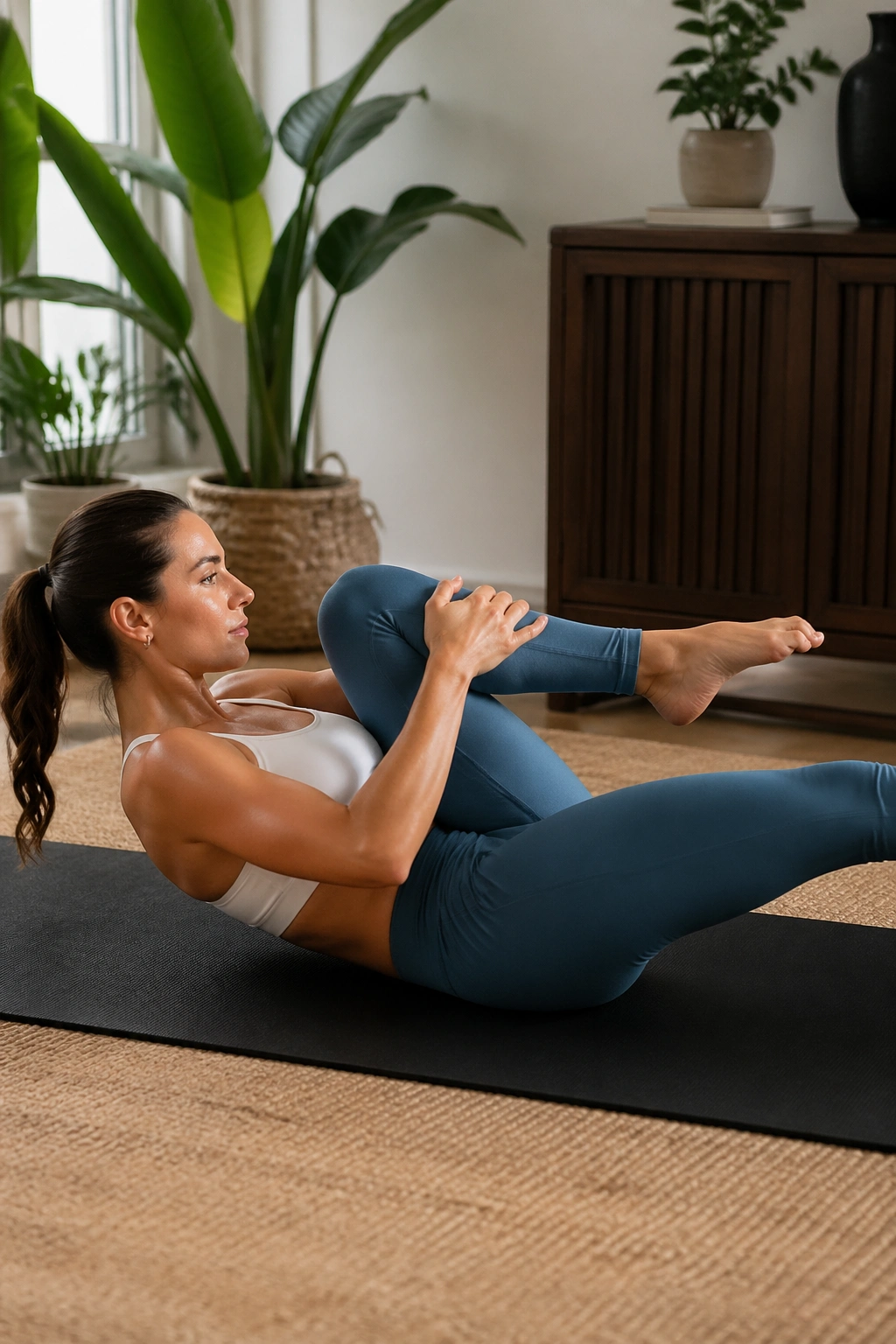
The single-leg stretch is sneaky. It teaches you to keep the pelvis steady while one leg moves, which is exactly the sort of control cyclists need when one side of the pedal stroke tries to wander off its line.
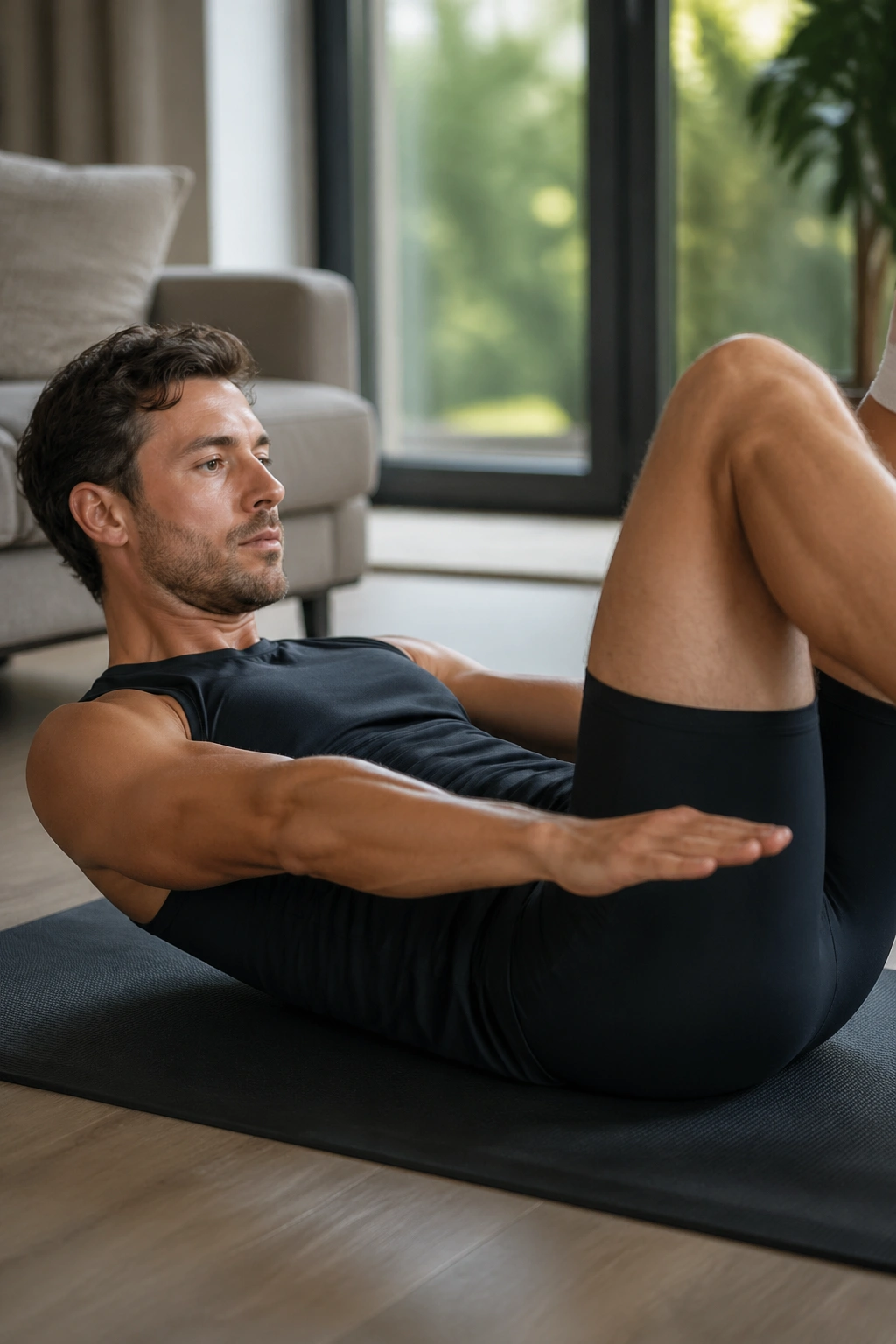
Start in a chest-lift position. Pull one knee toward the chest while the other leg reaches out low and long. Switch legs in a smooth rhythm, keeping the torso lifted and the lower back anchored. Move slowly enough that you can stop the pelvis from rocking.
A fast version is tempting. Skip it. The point is not speed; the point is quiet hips.
How to Keep It Useful
- Keep the outstretched leg lower if your back can handle it.
- Keep it higher if your low back starts to arch.
- Exhale on the switch to help the ribs stay down.
- Use 8 to 12 switches per side, or a full minute at a controlled pace.
Cyclists often feel this one in the deepest part of the core, not the surface abs. That’s a good sign. If your hip flexors start gripping hard, shorten the range and reset.
5. Double-Leg Stretch
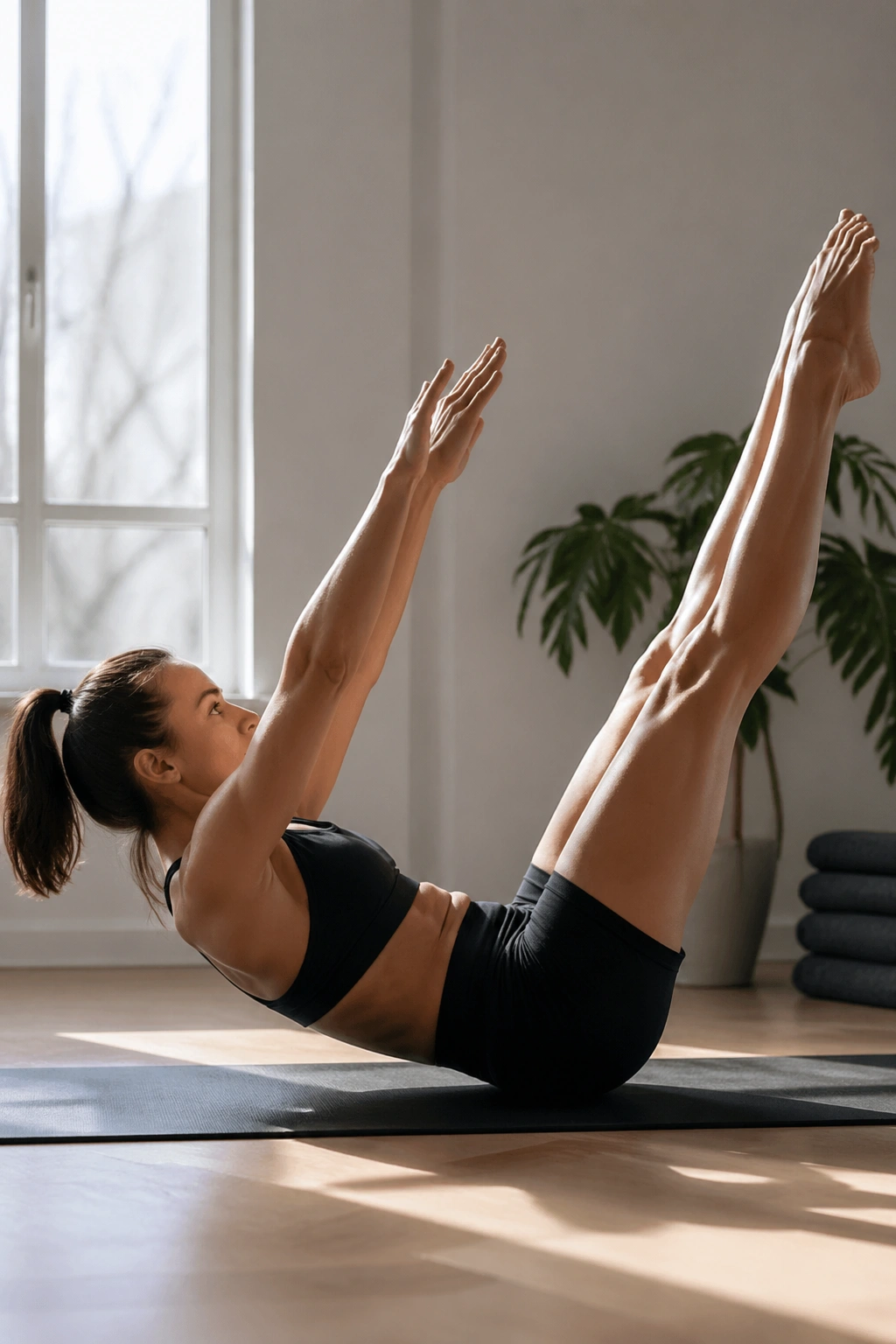
The double-leg stretch looks simple on paper and gets messy fast in real life. Both legs move away from the body at the same time, which means the trunk has to work harder to stop the low back from peeling off the mat like tape.
Begin curled up with knees in. Reach the arms overhead and the legs long in one coordinated exhale, then circle the arms around as the knees come back in. The spine stays heavy. The ribs stay knit. If the lower back pops up, the range is too big.
This one is worth keeping in a cyclist’s home routine because it trains bracing without stiffness. That matters on rough roads, when the body has to absorb bumps without folding in half.
Lower Back Check
If you feel this exercise mainly in the hip flexors, bring the legs higher. If your neck complains, lower the head or keep it down for the first few rounds.
Try 6 to 8 controlled reps. The movement should look smooth and feel a little demanding, not frantic. A tiny range done well beats a large range done badly every time.
6. Criss-Cross
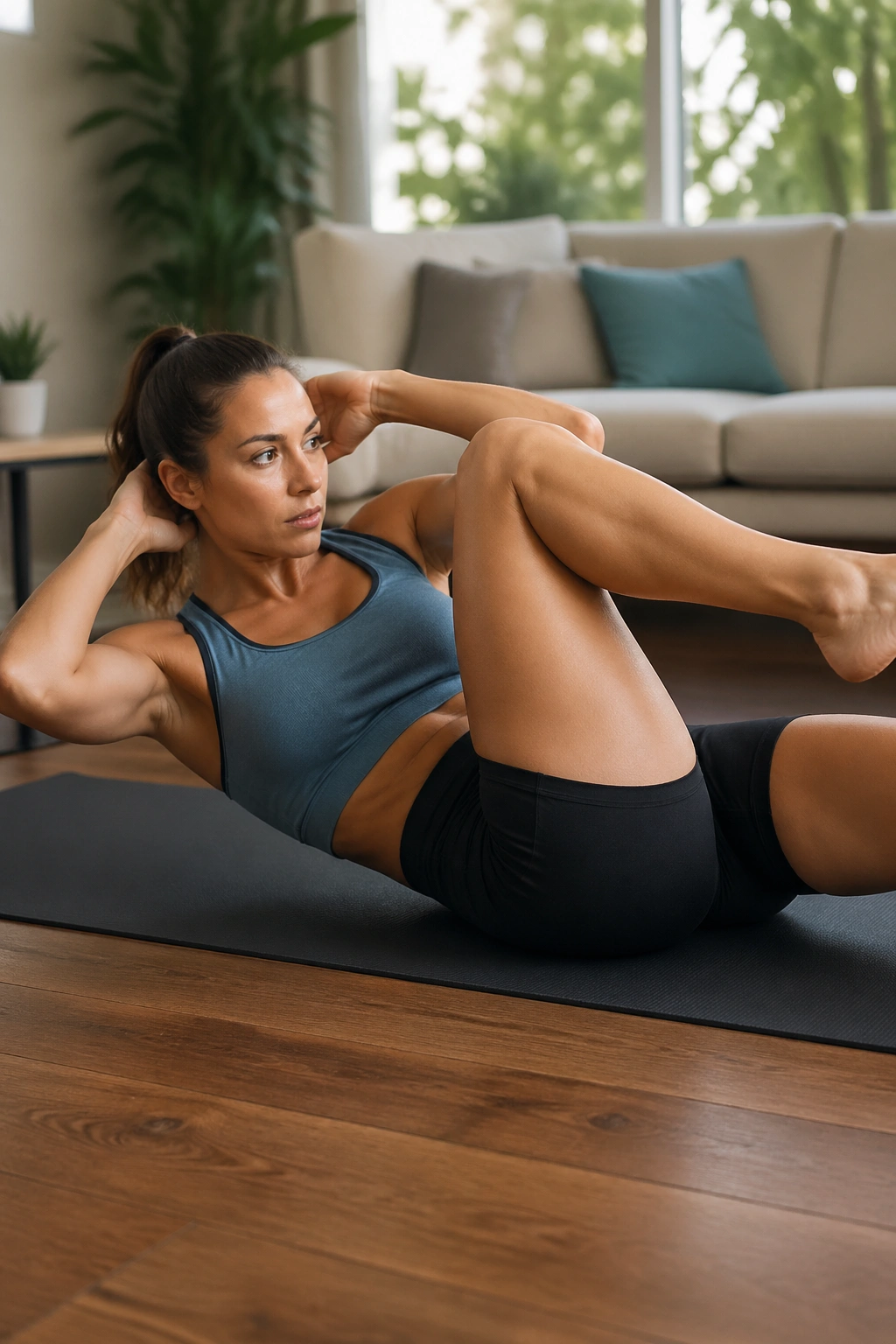
Criss-cross gives cyclists something straight-ahead riding rarely does: spinal rotation under control. That is useful for posture, balance, and the awkward little compensations that happen when you keep turning one way and loading one side more than the other.
From a chest-lift position, bring one knee in and rotate the opposite shoulder toward it while the other leg extends long. Switch sides with a steady rhythm. The twist comes from the ribs and upper torso, not from yanking the elbow across the room.
You want the pelvis stable while the upper body works. That split job is what makes the exercise valuable. It teaches the trunk to stay organized even when the limbs are doing different things.
A lot of riders rush the cross-body reach and lose the shape. That’s fine if you’re chasing sweat. It’s not fine if you’re chasing better control.
Keep 8 to 10 total switches at first. If your neck gets tired before your abs do, slow down and reduce the twist.
7. Spine Twist
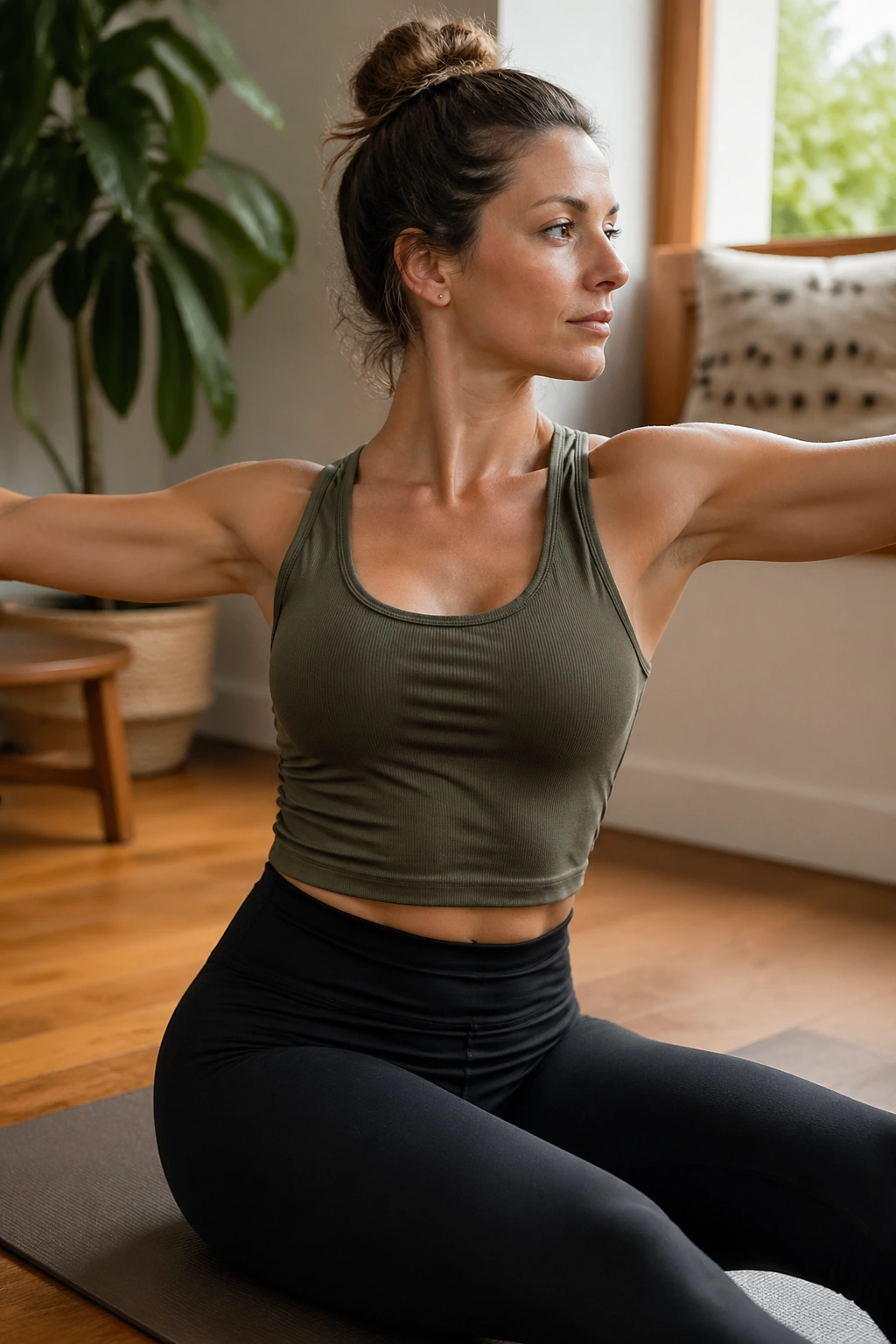
Sitting tall after a long ride feels almost unnatural at first, which is exactly why spine twist belongs here. It reminds the upper back that it can rotate without collapsing, and it trains the kind of upright support that makes breathing feel less cramped.
Sit with your legs long and a little wider than hip-width, or cross-legged if your hamstrings are stiff. Reach your arms out at shoulder height, grow tall through the crown of the head, and rotate from the waist and ribs while keeping the hips grounded. Exhale as you turn. Inhale to center.
How to Get the Most From It
Think about turning the rib cage around a still pelvis. That mental image helps more than muscling the arms across.
- Keep the shoulders down, not shrugged.
- Sit on a folded towel if the pelvis tucks under.
- Make each turn small enough to stay tall.
- Stop before the lower back starts to complain.
This is one of the gentler Pilates exercises for cyclists at home, but don’t confuse gentle with pointless. A few clean rotations can wake up a stiff back better than a long, sloppy stretch.
8. Side-Lying Leg Lifts
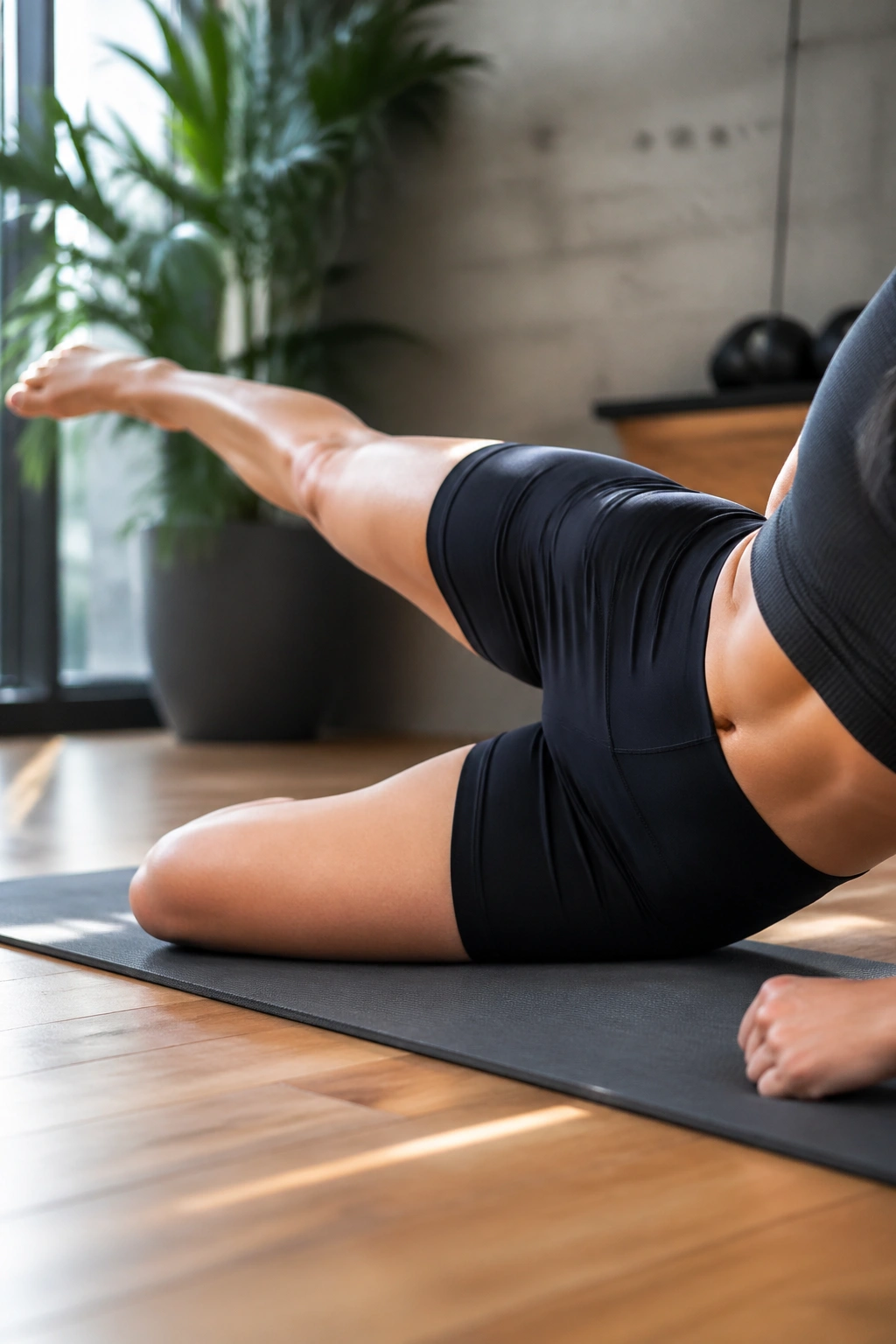
Side-lying leg lifts hit the outer hip, and that matters because cyclists lean on the glute medius more than they think. That muscle helps stabilize the pelvis when one leg is down and the other is up. Without it, the hips wobble and the knees drift.
Lie on one side with the bottom knee bent for support. Stack the hips, reach the top leg long, and lift it a small distance without rolling backward. Lower with control. The movement is small enough that people often underestimate it, then wince on rep six.
What the Standing Version Misses
Standing hip work can be useful, but side-lying lifts remove the balance noise. You get a cleaner read on the muscle that’s actually doing the job.
- Turn the top toes slightly forward if the front hip grabs.
- Keep the waist long; do not crunch into the bottom side.
- Use 10 to 15 lifts per side.
- Add a 2-second hold at the top if you want more challenge.
If you feel the hip flexor more than the side butt, lower the leg a little and slow the descent. Small corrections matter here.
9. Clamshells
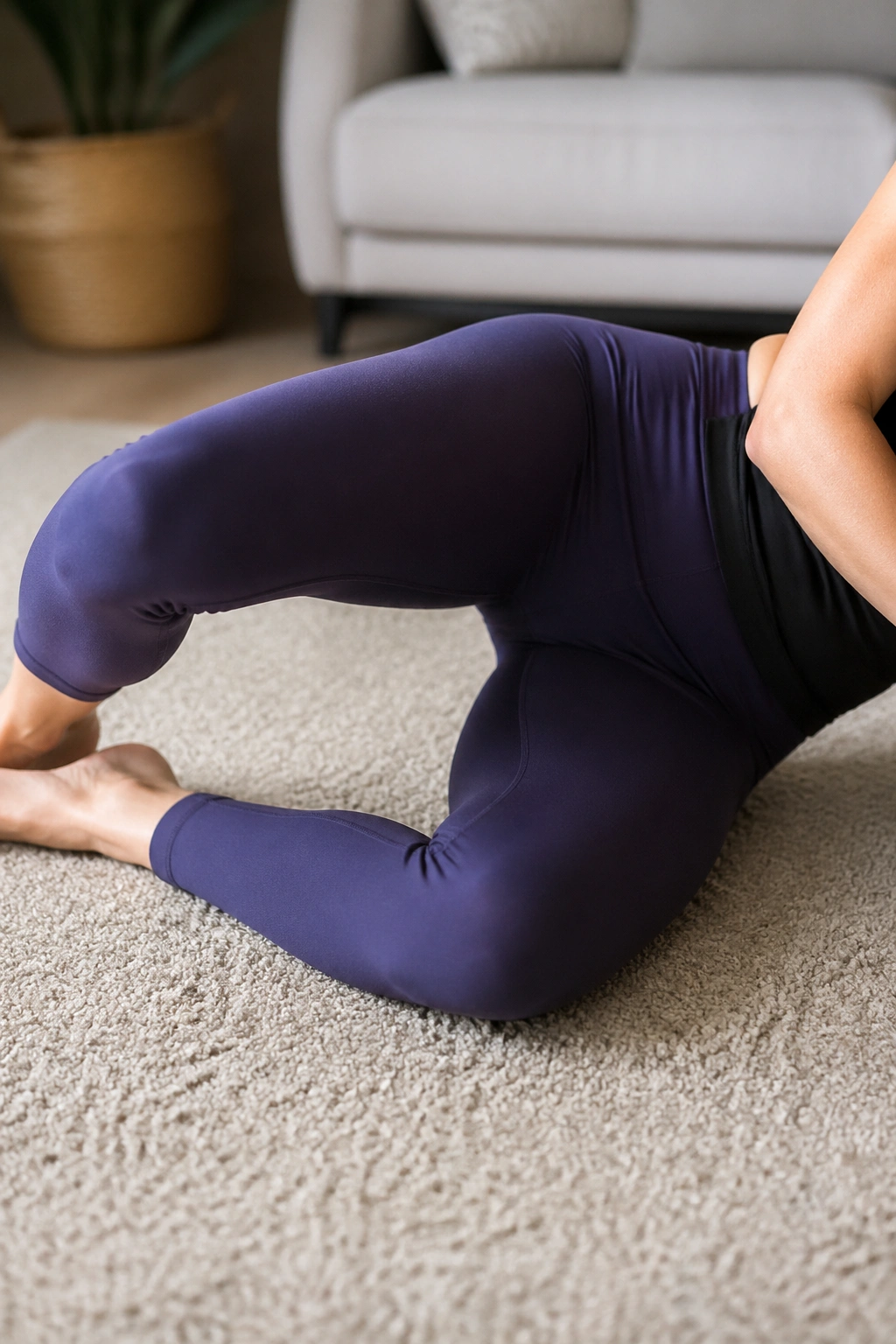
Clamshells are boring in the best possible way. They isolate the outer hip without asking the spine to help, which is useful after long rides where everything above the waist wants to take over.
Lie on your side with knees bent and feet together. Keeping the pelvis stacked, open the top knee like a clamshell while the feet stay touching. Pause, then close slowly. The movement should come from the hip, not from rolling the whole body backward.
A miniband around the knees adds load, but don’t reach for the band too soon. Clean bodyweight reps are usually better than ugly band reps.
This exercise helps cyclists because the glutes on the side of the hip are part of what keeps the pelvis level while you pedal. When they’re sluggish, the knees can track poorly and the low back often picks up the slack. Not glamorous. Very real.
Do 12 to 20 reps per side. A slow tempo — say 2 seconds open, 2 seconds close — keeps the work where it belongs.
10. Swimming
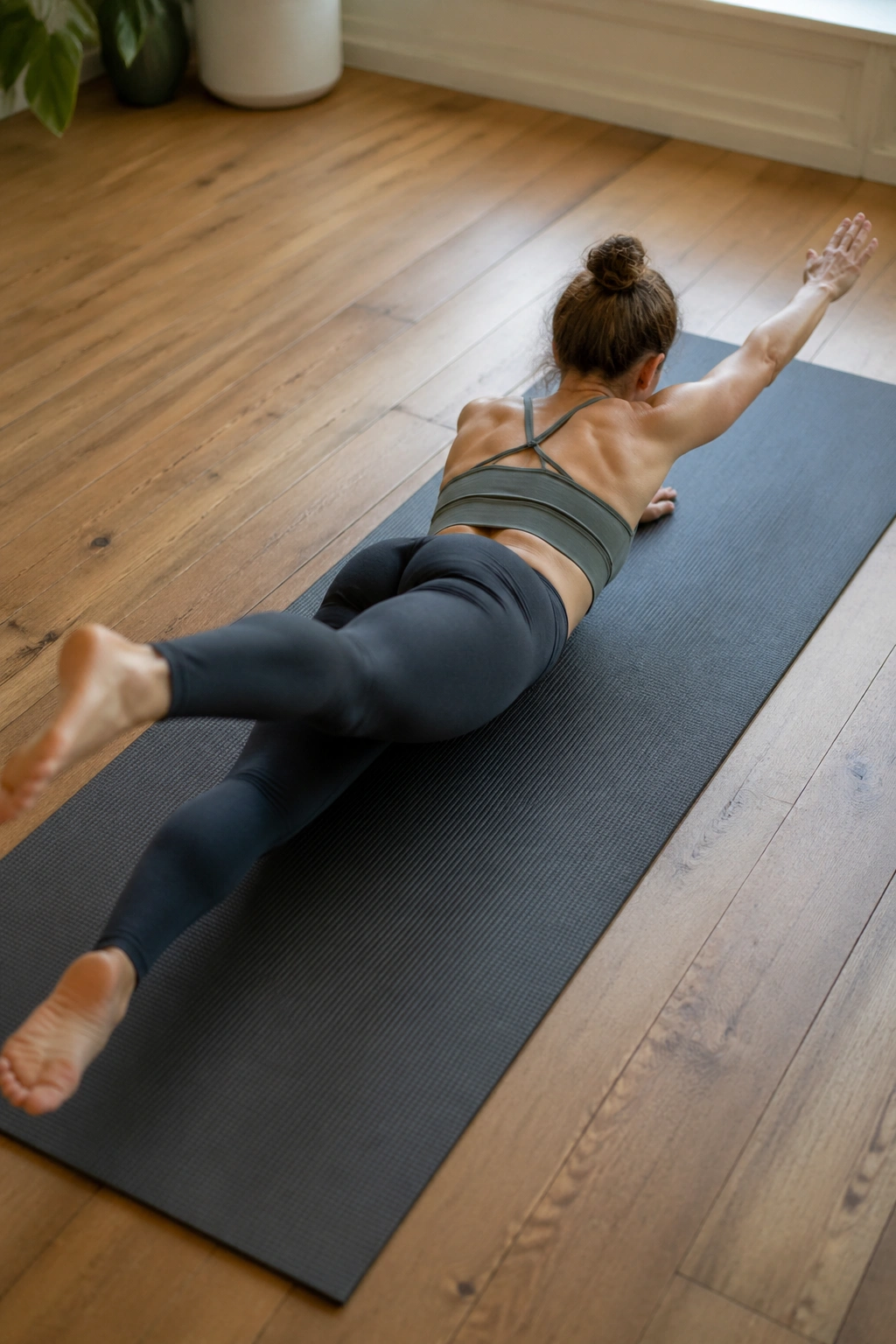
Swimming is one of those Pilates moves that looks graceful and feels a bit like a small struggle. Perfect for cyclists, honestly. It trains the back body — glutes, hamstrings, spinal muscles, and shoulders — while asking you to keep breathing and keep your shape.
Lie face down with the forehead on the mat or on your hands. Lift opposite arm and leg, then switch sides in a fluttering pattern. The motion stays light and quick, almost buoyant. You’re not trying to arch as high as possible. You’re trying to extend the limbs without jamming the low back.
Keep the Neck Out of It
If your neck gets cranky, lower the forehead to the mat and make the lift smaller. That alone can change the whole exercise.
A few useful cues:
- Reach long, not up.
- Keep the pubic bone heavy.
- Kick from the glutes, not the low back.
- Breathe in for 4 counts, out for 4 counts.
Cyclists who sit a lot often enjoy this one because it opens the front of the body while waking up the posterior chain. It’s a tidy antidote to the riding position.
11. Forearm Plank
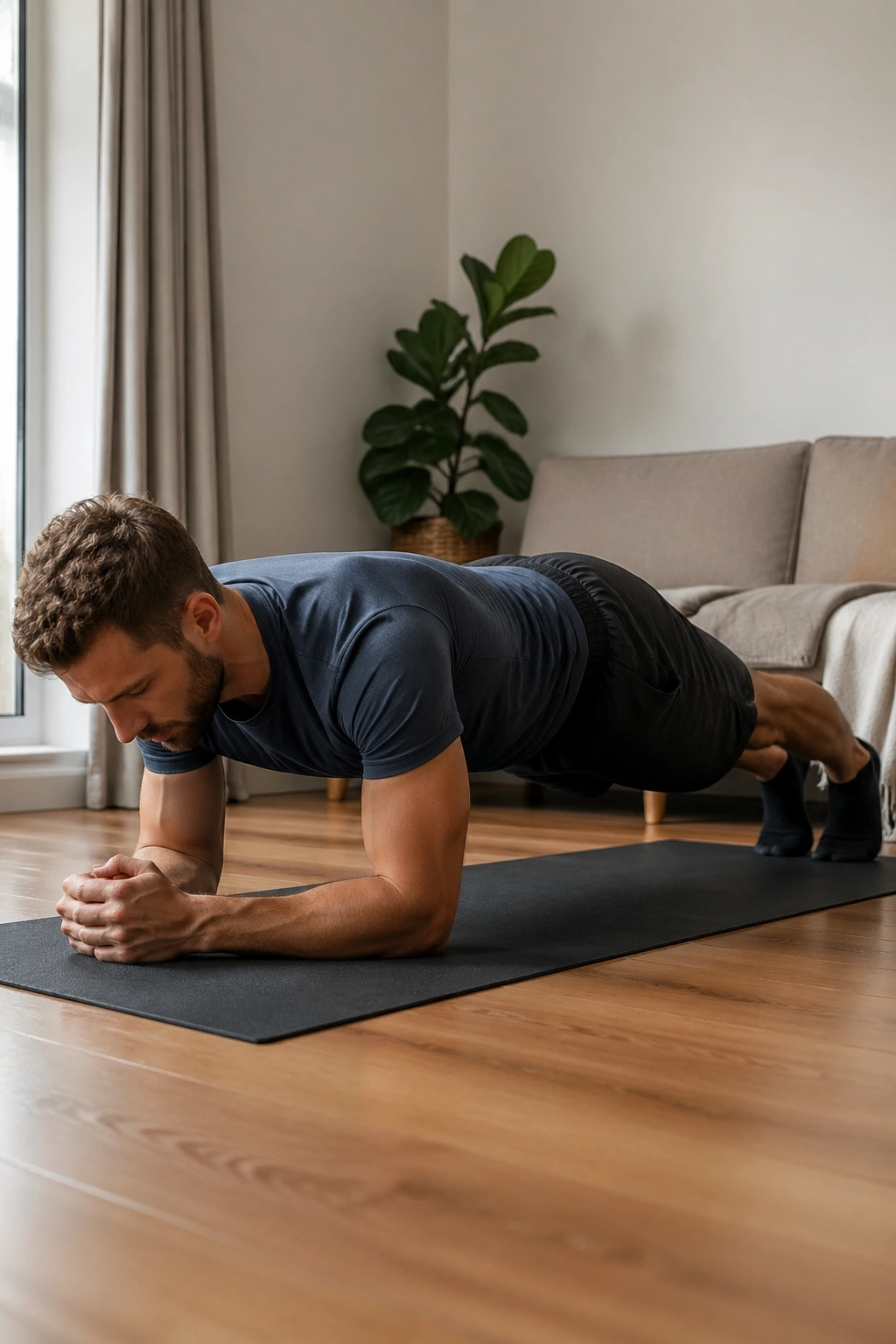
A forearm plank is blunt. It tells you very quickly whether your trunk can stay still while your body bears load, and cyclists need that skill more than they usually admit.
Set the elbows under the shoulders, step the feet back, and form a straight line from head to heels. Press the floor away and hold steady while breathing through the ribs, not the neck. If your low back sags, end the hold and reset. Don’t negotiate with a collapsing plank.
Where Cyclists Go Wrong
The most common error is holding the breath until the shoulders shake. That only creates tension, not control.
Use these checks:
- Squeeze the glutes lightly.
- Pull the ribs in without rounding hard.
- Keep the neck long, eyes on the floor.
- Start with 15 to 30 seconds and build from there.
If the full plank feels too hard, drop the knees and keep the same body line from head to knees. That version still matters. It still teaches the trunk to brace under load.
12. Side Plank
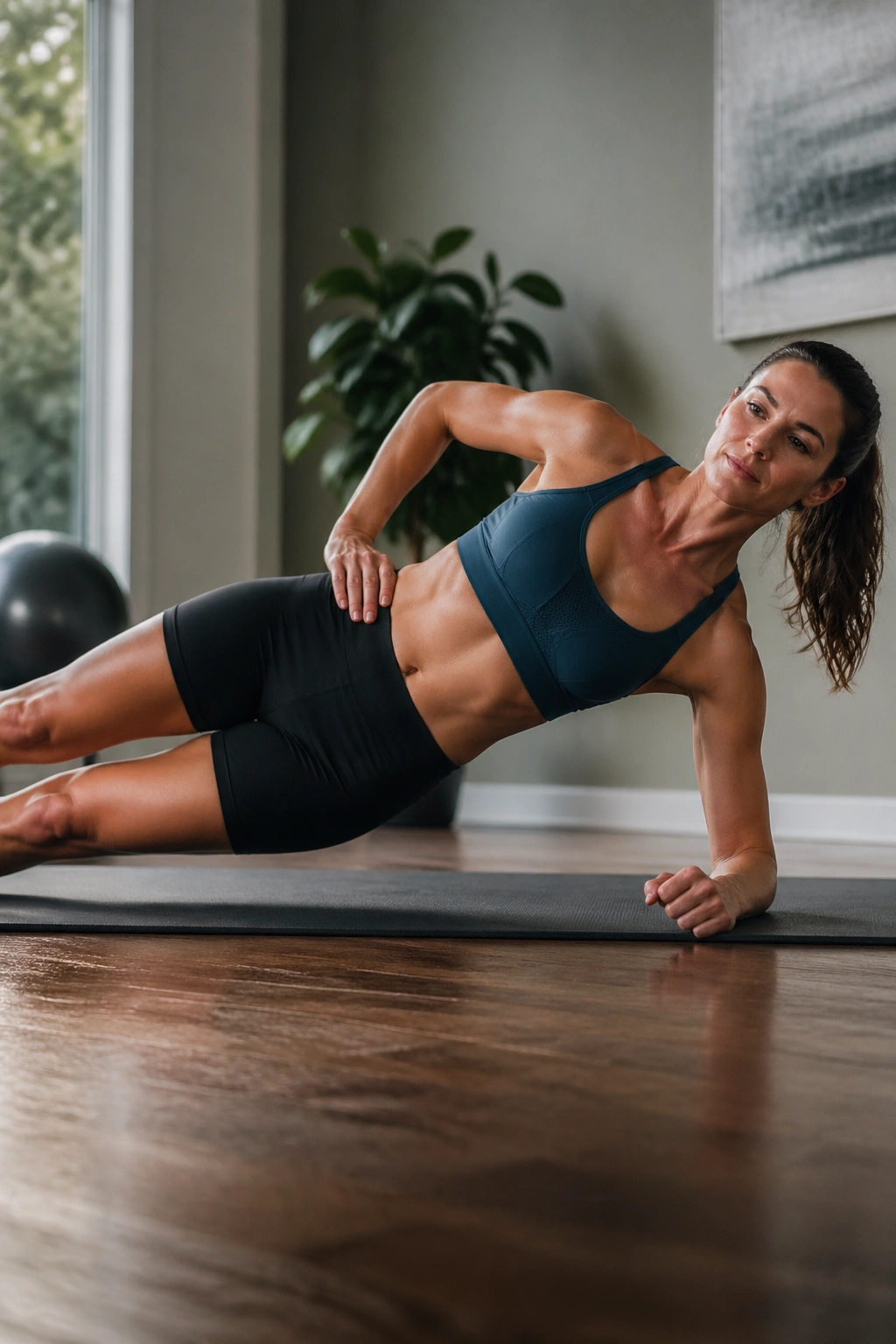
The side plank matters because cycling is not a symmetrical sport, no matter how straight your bike looks. One side is always taking a slightly different angle, and the side body has to keep you from folding.
Set the elbow under the shoulder and stack the feet or stagger them for more stability. Lift the hips and hold the line. You should feel the obliques, the side glute, and the shoulder working together. If the neck or top shoulder dominates, drop the lower knee and rebuild the shape from there.
Unlike the front plank, the side plank asks the body to resist lateral collapse. That’s the useful part. It trains the muscles that stop your pelvis from dropping when one leg is carrying the load.
Try 15 to 20 seconds per side at first. Then build. A clean, short hold beats a sloppy long one, and it usually feels better in the lower back too.
One small detail: keep the top hip slightly forward. That keeps the body from twisting open and cheating the line.
13. Bird Dog
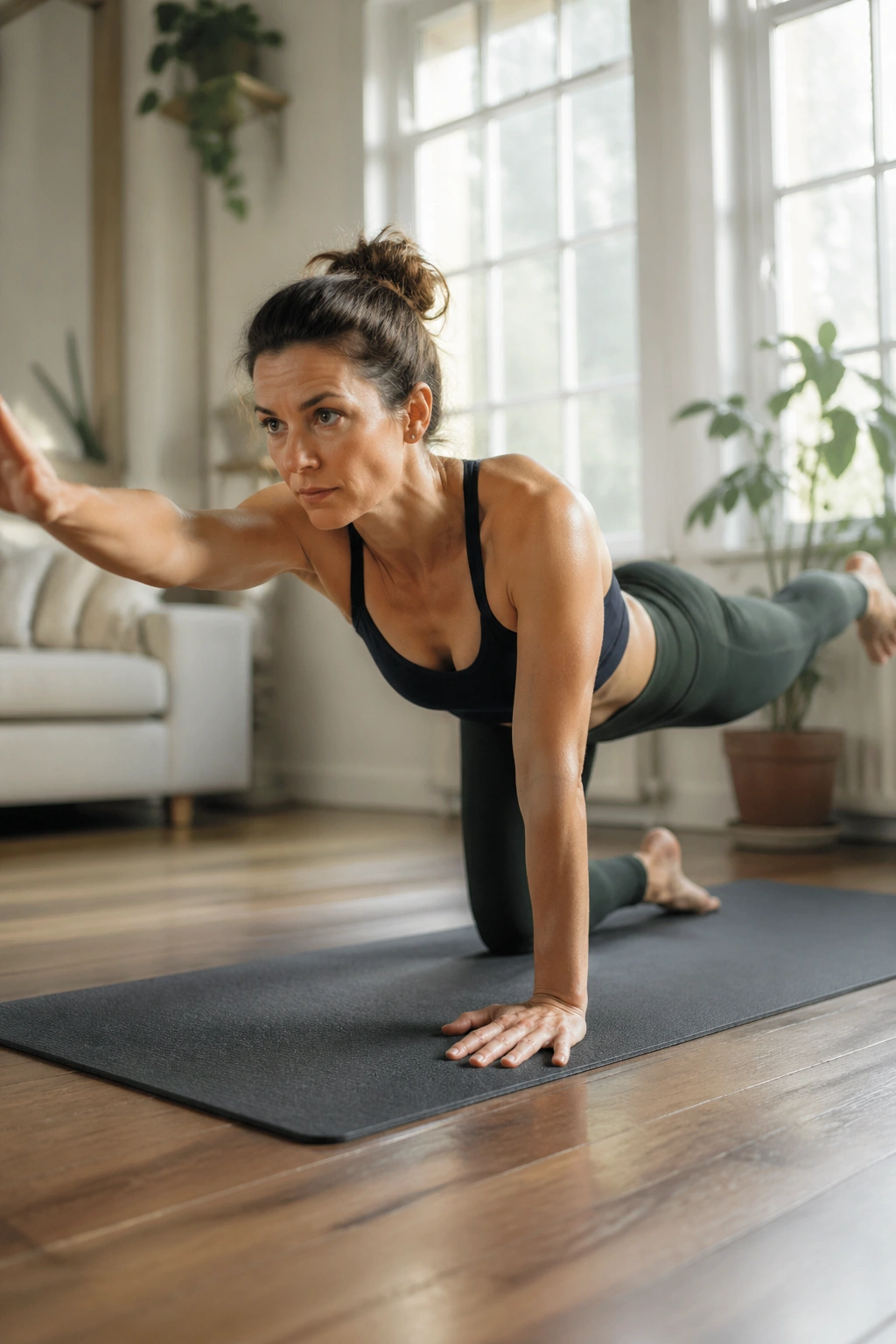
Bird dog is a control exercise disguised as a simple balance move. On paper, it looks easy. In practice, it exposes every little wobble in the trunk, which is exactly why cyclists should care.
Start on hands and knees with the wrists under the shoulders and knees under the hips. Reach one leg back and the opposite arm forward until both are long, not high. Hold for a breath, then return with no thump. Switch sides.
Make It Feel Like Balance, Not a Backbend
A lot of people throw the leg up too high and arch the lower back. That turns the move into a spine dump. Keep the pelvis level and think about length instead.
- Reach through the heel, not the toes.
- Keep the belly gently lifted.
- Move slowly enough to stop swaying.
- Use a cushion under the knees if the floor is hard.
This is a smart at-home drill for cyclists because it links the shoulder girdle to the opposite hip. That cross-body control shows up in posture, steering, and the general ability to stay composed when fatigue starts to spread.
14. Leg Circles
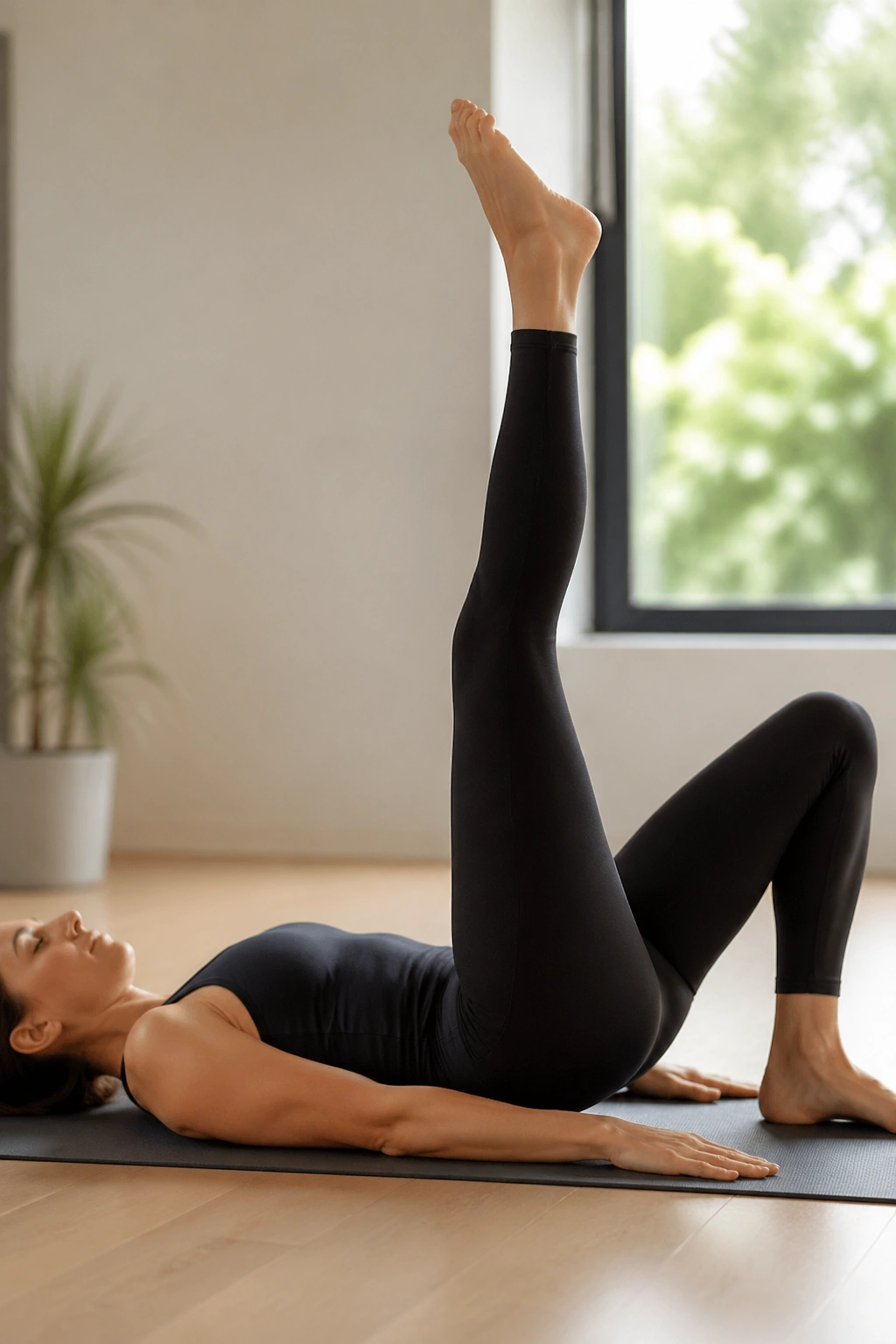
Leg circles look like mobility work, but they’re more than that. They ask one leg to move while the pelvis stays steady, and that’s a very cyclist problem to solve. One leg drives while the rest of you tries not to flop around.
Lie on your back with one leg extended toward the ceiling and the other bent or long on the floor. Circle the lifted leg across the body, down, out, and back to center. Keep the circle small enough that the hips stay quiet. The floor leg should feel like a stabilizer, not an afterthought.
If the pelvis rocks, the circle is too large. Shrink it. Most people do better with a dinner-plate-sized circle than a hula-hoop one.
A few points worth remembering:
- Keep both sides of the waist long.
- Reverse direction after 5 to 8 circles.
- Point and flex the foot only if it helps you feel the line better.
- Stop if the hip pinches in the front.
Leg circles are useful for cyclists because they give the hip joint movement without slop. That combination matters when you want mobility and control in the same package.
15. Mermaid Stretch
Mermaid is the one that lets the body exhale a little. After all the core work and single-leg control, this side-bending stretch feels like the ribs are finally getting space again, which cyclists often need after being folded over a bar position for too long.
Sit with your legs folded to one side or in a comfortable seated position, one hand on the floor and the opposite arm reaching overhead. Bend gently away from the grounded hand, then rotate the chest slightly to open the top side of the ribs. Breathe into the stretch for 2 to 4 slow breaths before coming back.
It is not a dramatic move. Good. You do not need drama at the end of a ride or a Pilates session.
This stretch helps when the sides of the torso feel tight, the shoulders are rounded, or the low back wants a break without getting yanked. Keep it smooth, keep it easy, and let the breath do the work.
Try it after the harder exercises in this list, or after a ride when your upper body feels locked in one shape. A minute on each side can change how the rest of the evening feels — not magically, not overnight, just enough to make the body feel less pinched.
If you want the simplest home routine from this list, pair three core moves — The Hundred, Single-Leg Stretch, and Forearm Plank — with two hip exercises — Side-Lying Leg Lifts and Clamshells — then finish with Mermaid. That small circuit is enough to matter, and it fits in a living room without turning your floor into a gym.
