



Most progressive overload workouts for women fail for a boring reason: they never get measurably harder.
The same dumbbells. The same ten reps. The same rest time. Then people wonder why nothing changes. Muscle does not care that the workout felt “hard enough” in the moment. It cares whether the challenge moved in a real, trackable way — more load, more reps, more sets, slower lowering, cleaner range, or less rest.
That’s the part most people miss. You do not need to reinvent your routine every time you walk into the gym. You need a few solid movement patterns, enough patience to repeat them, and the willingness to nudge the work upward before your body gets too comfortable.
Keep a notebook. Seriously. If you cannot tell me what you lifted last time, you are guessing, and guessing is a terrible way to build stronger legs, glutes, back, and shoulders.
1. Goblet Squat Ladder
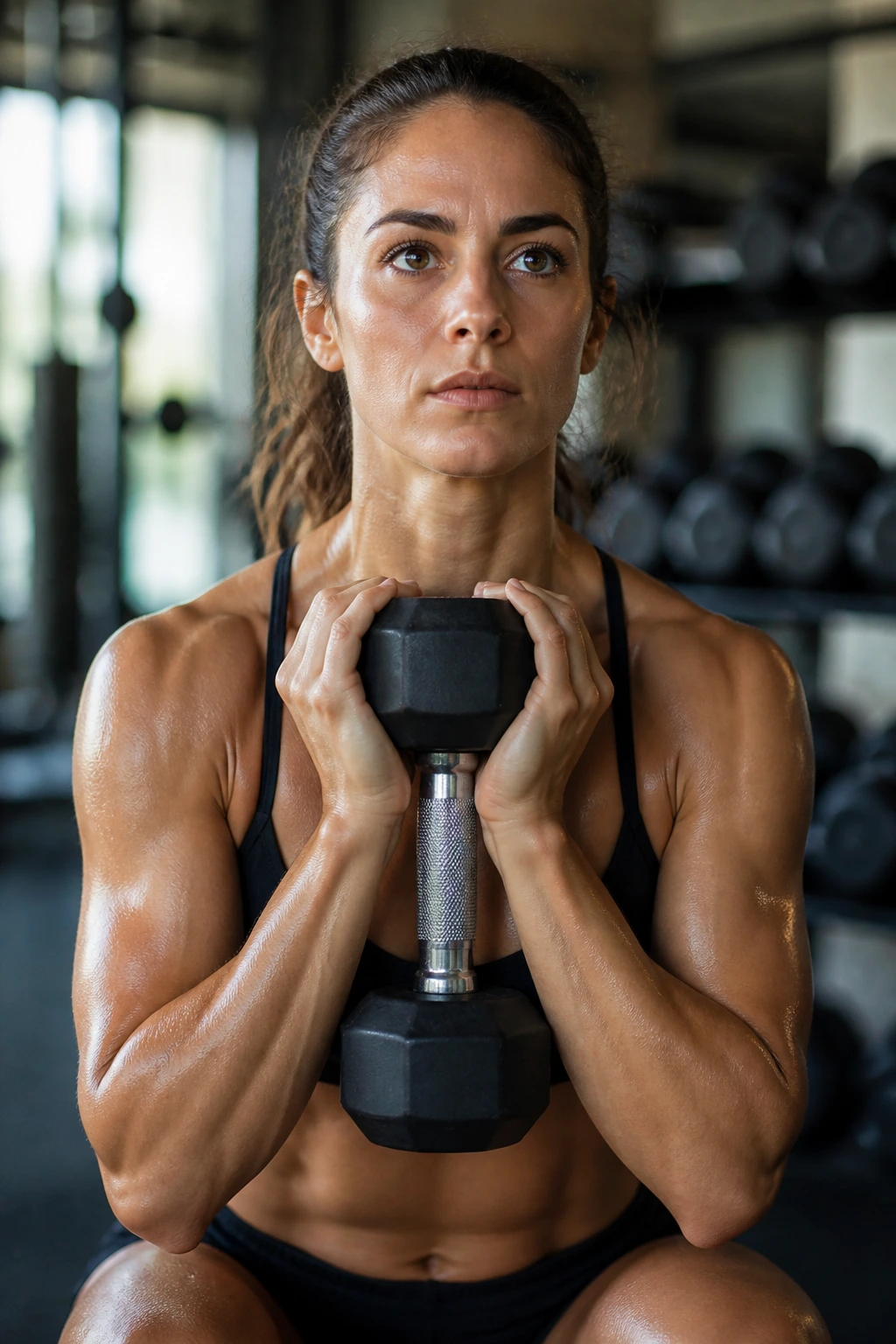
The goblet squat is where a lot of women should start when they want a strength move that teaches good positions fast. One dumbbell held at the chest keeps your torso honest, your core braced, and your depth easy to see in the mirror. It also gives you a clean way to add load without turning the lift into a circus.
How to Progress It
Start with 3 sets of 8 reps using a weight that leaves about 2 reps in reserve. When you can hit 3 sets of 12 with the same depth and no wobble, move up by 5 to 10 pounds on the dumbbell and go back to 8 reps. That simple ladder works because it rewards control before ego.
A few things matter here. Keep your elbows pointed down and slightly inside your knees, not flared out like you’re trying to pose for a photo. Let the knees travel forward if your ankles allow it. And get all the way down, or close to it, with your heels still planted.
Best cue: drive the floor apart on the way up. It sounds odd. It works.
2. Romanian Deadlift With a Slow Lower
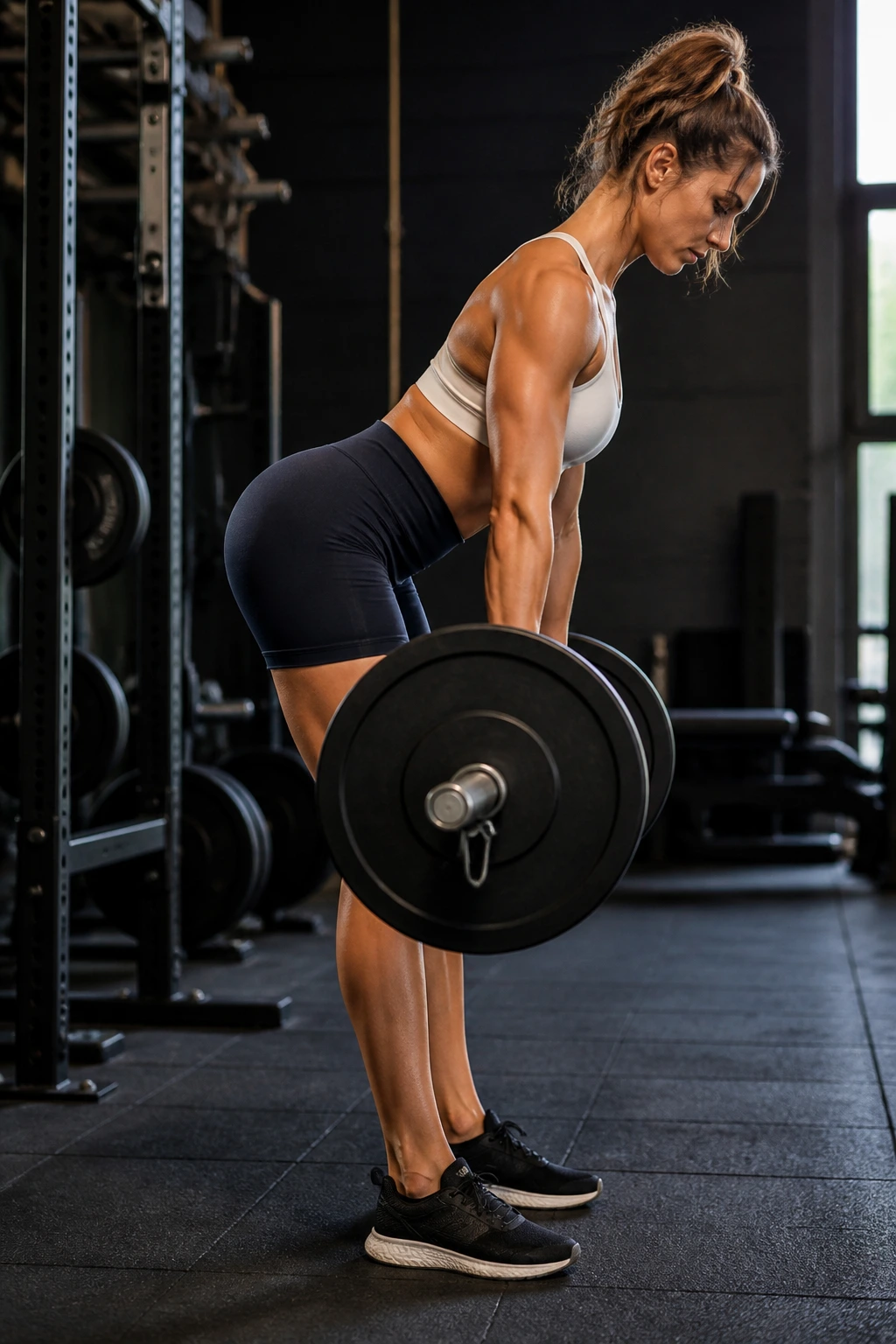
Why does the Romanian deadlift show up in so many good lower-body plans? Because it trains the hamstrings and glutes in a way that most other lifts do not.
The magic is in the hinge. You push your hips back, keep a soft knee bend, and lower the bar or dumbbells along your thighs until you feel a strong stretch behind the legs. If you rush the bottom, it becomes a back exercise. If you keep the ribs down and the spine long, it turns into one of the best posterior-chain builders around.
How to Use It
What to Watch For
- Use 3 sets of 6 to 10 reps.
- Lower for 3 full seconds.
- Stop the descent when your back would round, not when your ego says you should go lower.
- Add 5 pounds per hand or 5 to 10 pounds on the bar once you can hit the top end cleanly.
A slow eccentric makes the lift feel harder without forcing a huge jump in load. That matters when your hamstrings are the weak link and your lower back likes to take over.
3. Barbell Hip Thrust Pause Sets
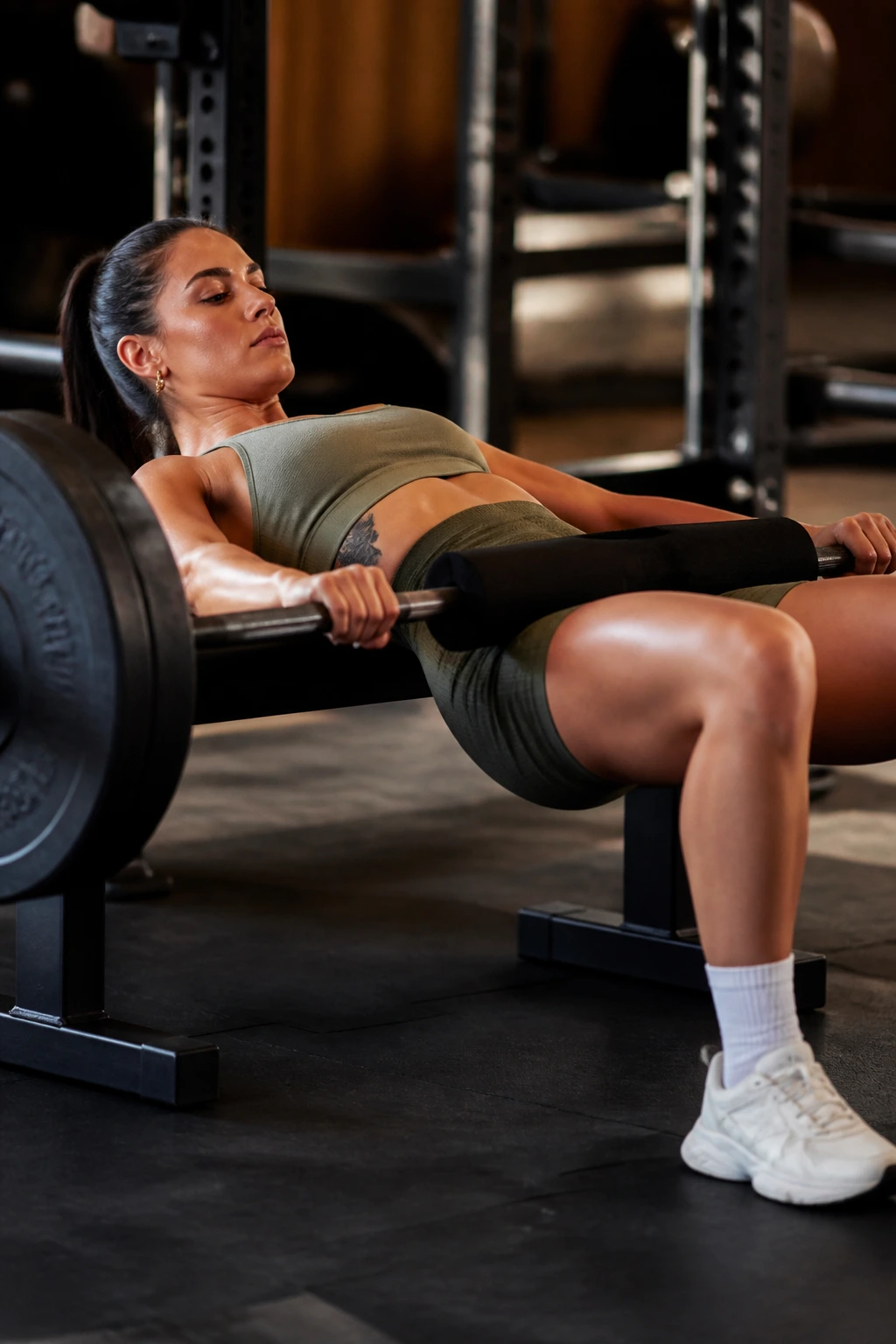
The first time you do a true hip thrust with a hard pause at the top, you usually realize your glutes have been freeloading less than you thought. The setup looks simple. Bench behind you, bar across the hips, feet planted, chin tucked. Then you drive up until the hips are level with the torso and hold for a beat.
That hold changes everything. Without it, people bounce through the top and steal work from the glutes. With it, the muscles have to finish the rep instead of the momentum.
Use 4 sets of 8 to 12 reps and pause 1 to 2 seconds at the top of every rep. When you can hit 12 with the same pause and no lower-back arching, add 10 to 20 pounds. Small jumps are fine here because the lift tolerates them well.
A flat back matters more than a big shrug at the top. And yes, you should feel this in your glutes, not in your neck.
4. Dumbbell Bench Press Volume Builder
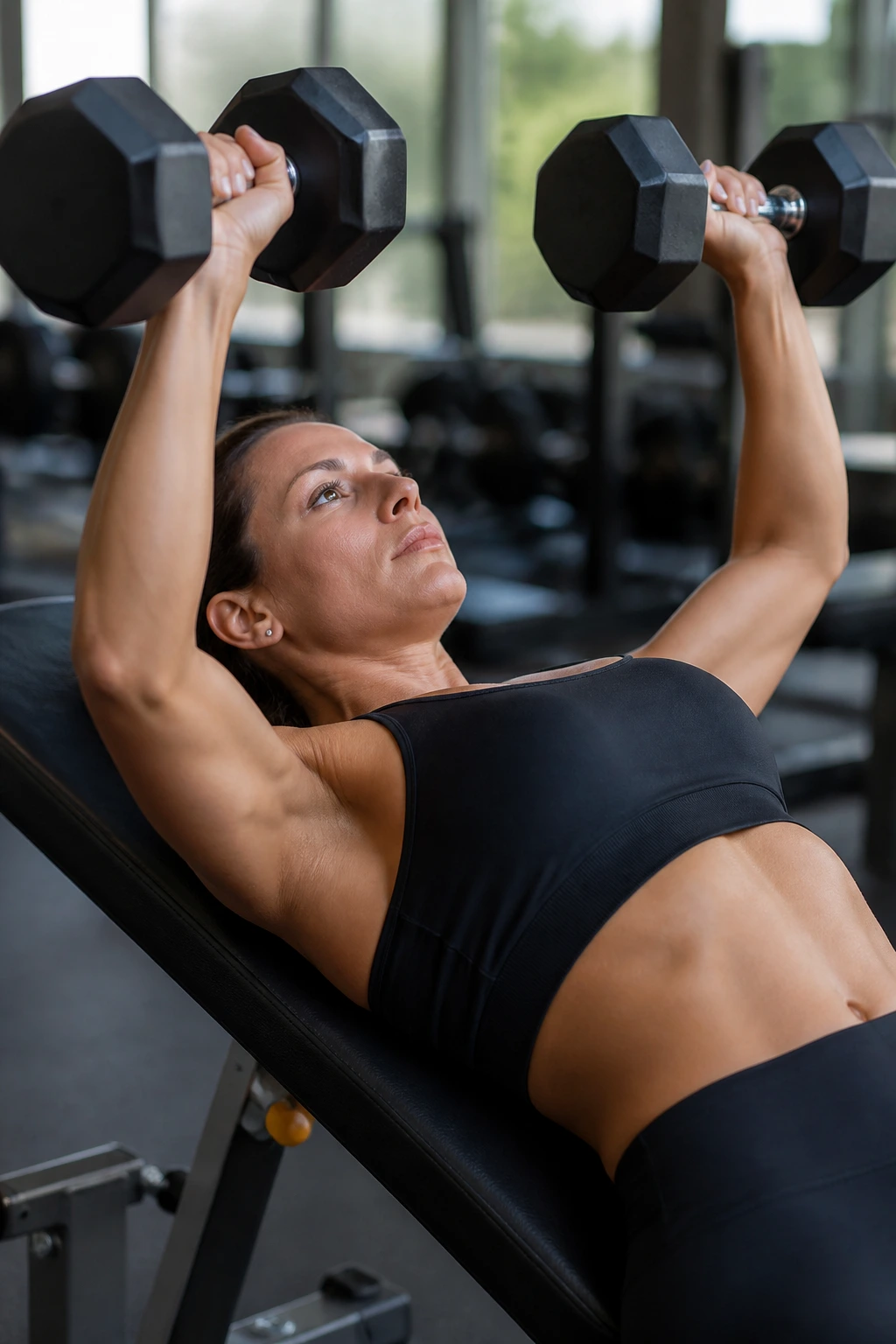
A dumbbell bench press is usually friendlier than a barbell bench for women who want upper-body strength without feeling pinned to one path. The dumbbells let each arm work on its own, which helps expose side-to-side differences fast. You also get a little more range of motion at the bottom, which many lifters feel in the chest in a good way.
Why It Works Better Than Chasing Heavy Singles
You do not need max-effort grinding to grow your chest and triceps. 3 or 4 sets of 8 to 10 reps is enough to make steady progress if the reps stay tidy. Lower the bells under control for 2 seconds, tap the upper arms lightly near chest level, then press up without slamming the weights together.
Once you can own 10 reps across all sets, move up by the smallest dumbbell jump available. That may be 2.5 pounds per hand in some gyms, and that is plenty.
A slight incline can help if flat pressing irritates your shoulders. Keep the bench angle modest. Too steep and it turns into a shoulder press with a weird costume.
5. One-Arm Dumbbell Row Density Block
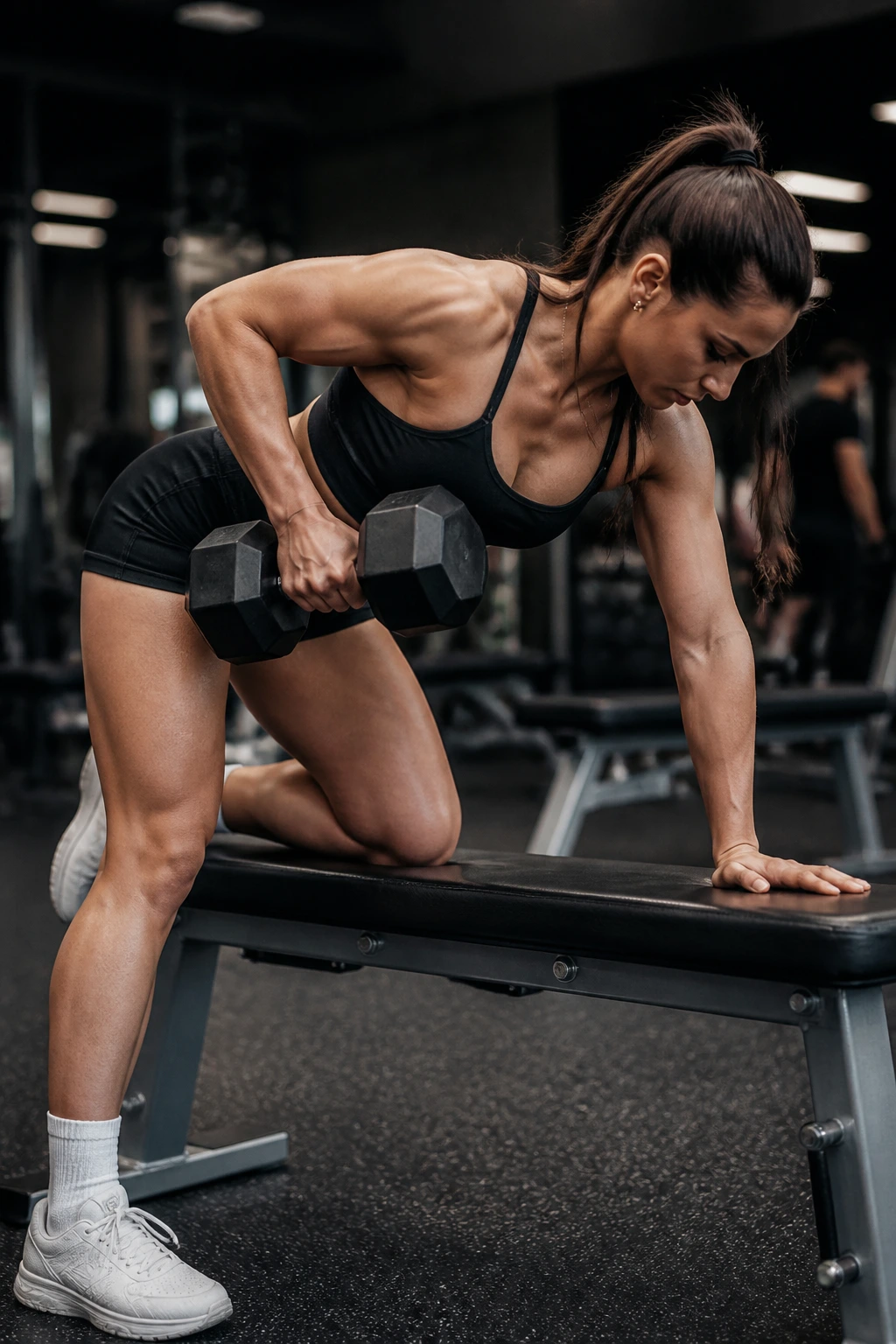
One-arm rows are one of those ugly-great exercises that pay rent for a long time. They build the lats, upper back, and rear delts, but they also teach you not to twist every time something gets heavy. That alone is worth the price of admission.
Here’s how I like to run them: 4 sets of 10 to 12 reps per side, with one hand and one knee braced on a bench. Pull the dumbbell toward your hip, not your shoulder, and hold the top for 1 second. If your torso spins open like a door, the weight is too heavy.
The row gets better when you slow down the lowering phase. Let the arm reach long at the bottom without dumping the shoulder forward. You should feel a stretch under the armpit and a clean pull through the back.
Heavy enough is the point. But clean is non-negotiable.
6. Rear-Foot-Elevated Split Squat
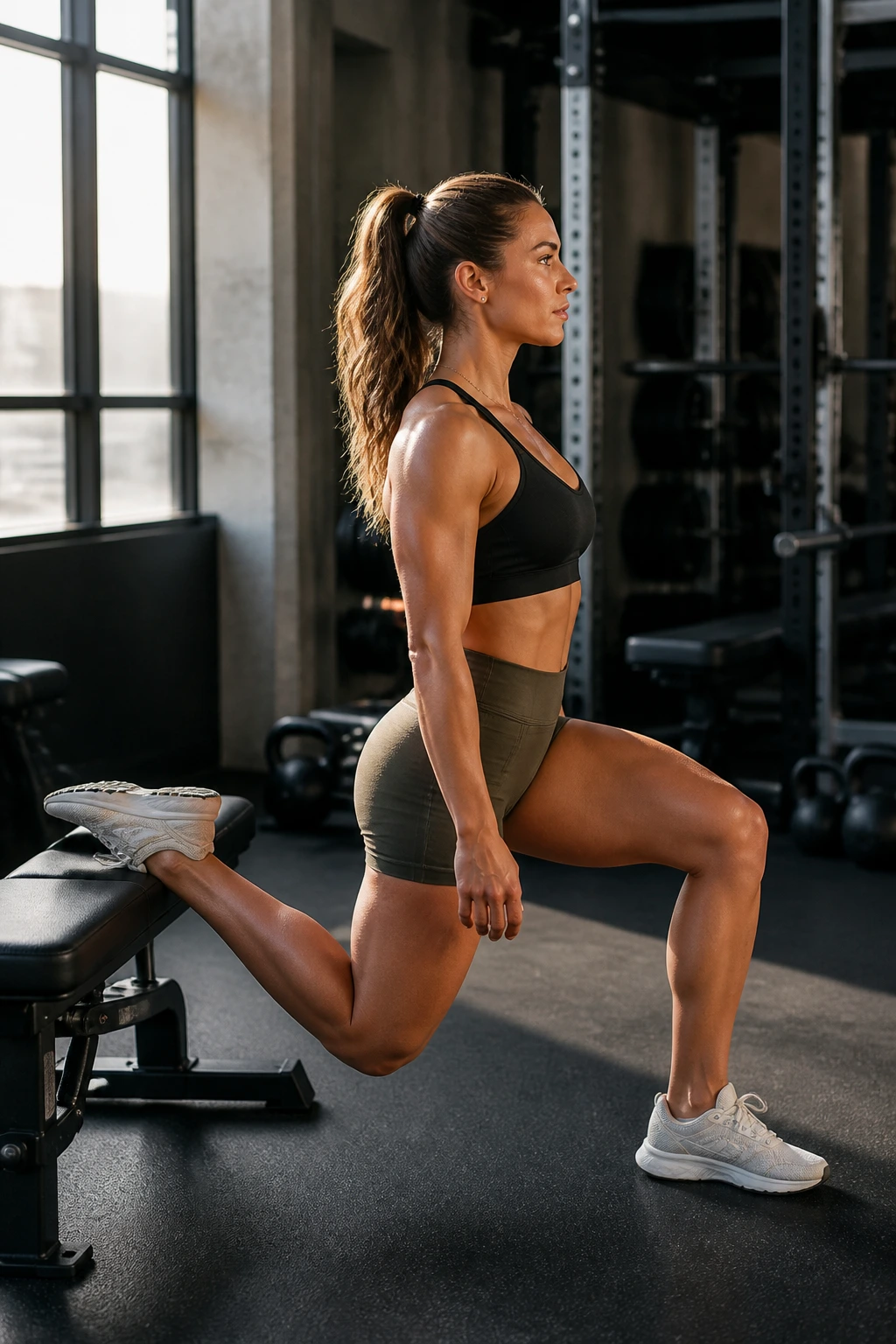
Ever notice how one leg can be much less dramatic than the other? The rear-foot-elevated split squat solves that quickly.
This move is brutal in the best way. One foot stays on the floor, the back foot rests on a bench, and your front leg does most of the work. It lights up the quads and glutes, and it exposes balance issues that bilateral lifts can hide for months.
How to Make It Harder Without Ruining It
Start with 3 sets of 8 reps per leg. Use bodyweight first if your balance is shaky. Then add dumbbells once you can keep your front heel down and your torso tall. If you want more challenge, add depth before you add load. That is the cleaner path.
A long step usually biases the glute a bit more. A slightly shorter step hits the quad harder. Neither is magic. Both are useful.
Quick Form Notes
- Keep the front knee tracking over the middle toes.
- Descend under control; do not drop.
- Push through the whole foot, not just the toes.
- Stop the set when balance breaks, even if the rep count says you have more left.
7. Lat Pulldown or Assisted Pull-Up Progression
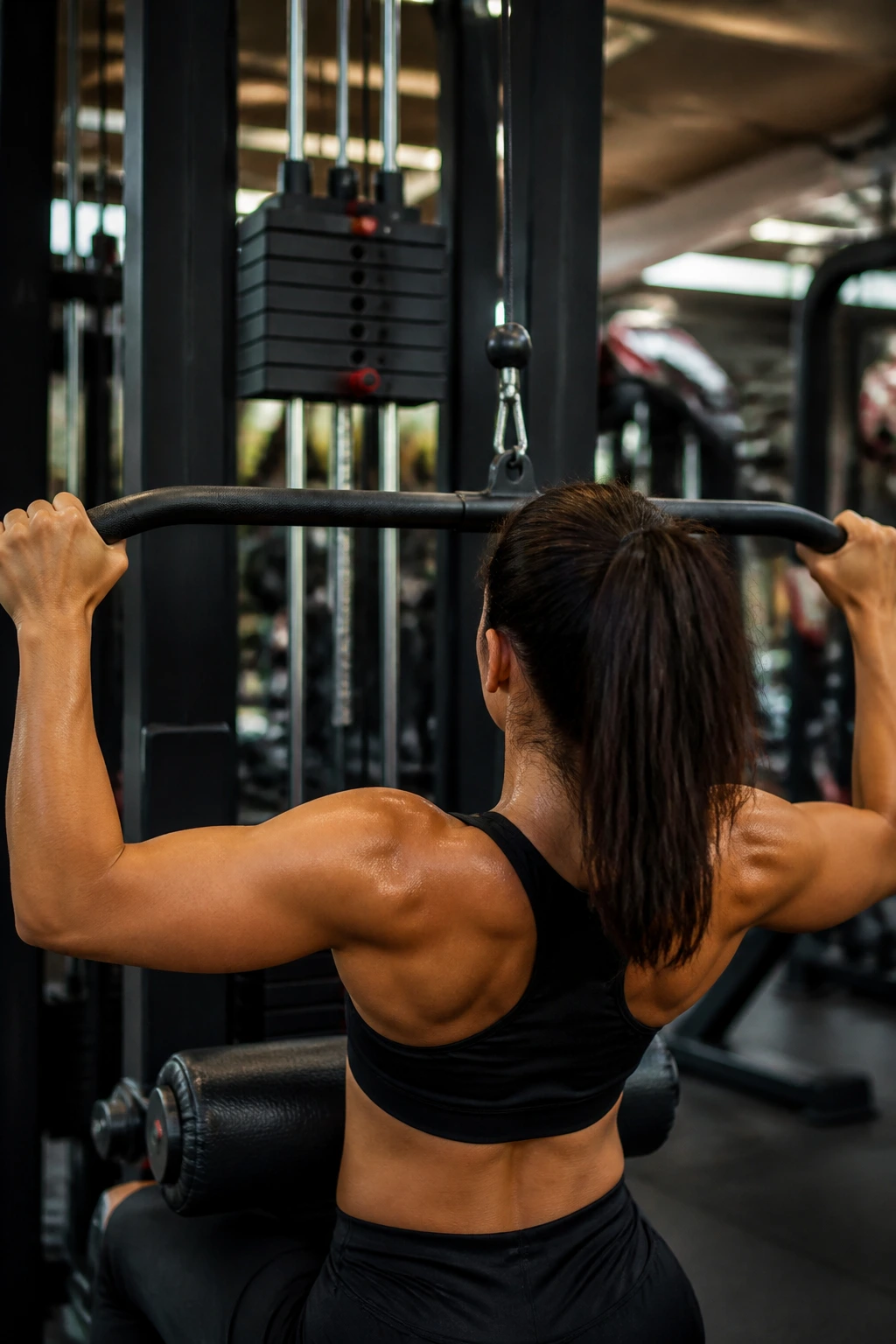
If you want stronger back work without waiting around for your first full pull-up, the lat pulldown is a smart place to live for a while. It lets you train vertical pulling with very clear progression. Same goes for an assisted pull-up machine if your gym has one.
Use 4 sets of 6 to 10 reps. Pull the bar to the top of your chest, pause for a moment, then lower with control for 3 seconds. If you use an assisted pull-up machine, reduce the assistance in tiny steps. If you use a pulldown, add a small plate once you can own the top end of the rep range.
A Useful Rule
If your shoulders creep toward your ears, the set is already sloppier than it looks. Reset. Pull the shoulder blades down first, then bend the elbows.
This lift tends to reward patience. A cleaner rep with a little less weight beats a heaved rep every time.
8. Standing Overhead Press
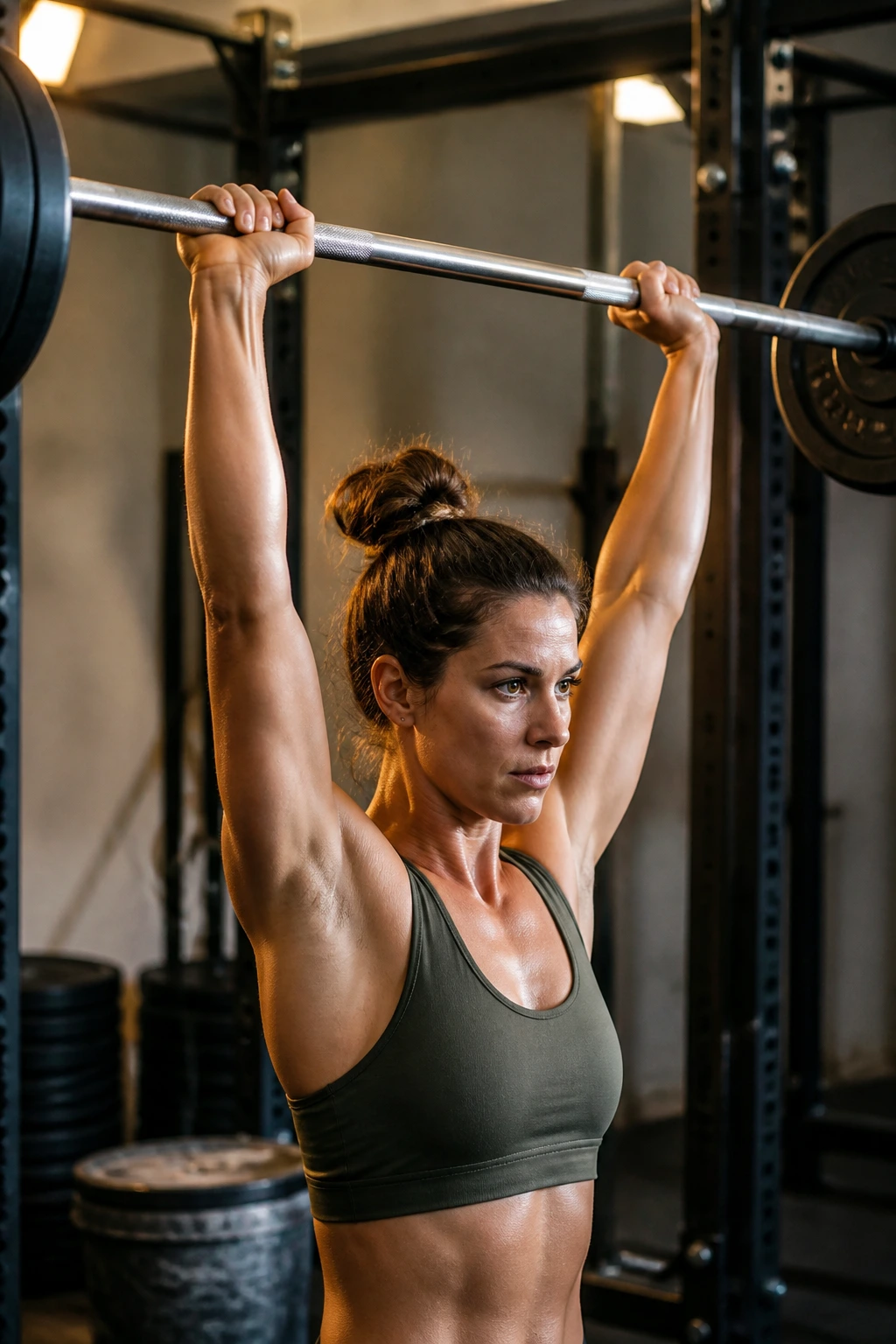
The standing overhead press is not flashy. Good. Flashy lifts are overrated anyway.
Pressing a barbell or dumbbells overhead teaches your shoulders to work with your core instead of against it. That makes the exercise useful for more than just bigger delts. It also forces your glutes and abs to do some quiet work so you do not turn into a leaning tower halfway through the set.
Microloading Makes This Lift Tick
Use 3 to 5 sets of 5 to 8 reps. The lower rep range matters here because overhead pressing gets technical fast. Add 1 to 2.5 pounds per side when possible. Big jumps usually cause form to wobble before the muscles are actually ready.
The bar should travel close to your face on the way up. Then move your head slightly forward under the bar at the top. That part feels strange until it doesn’t.
A lot of lifters stall here because they never respect the small jumps. Do not be that person.
9. Leg Press Pyramid
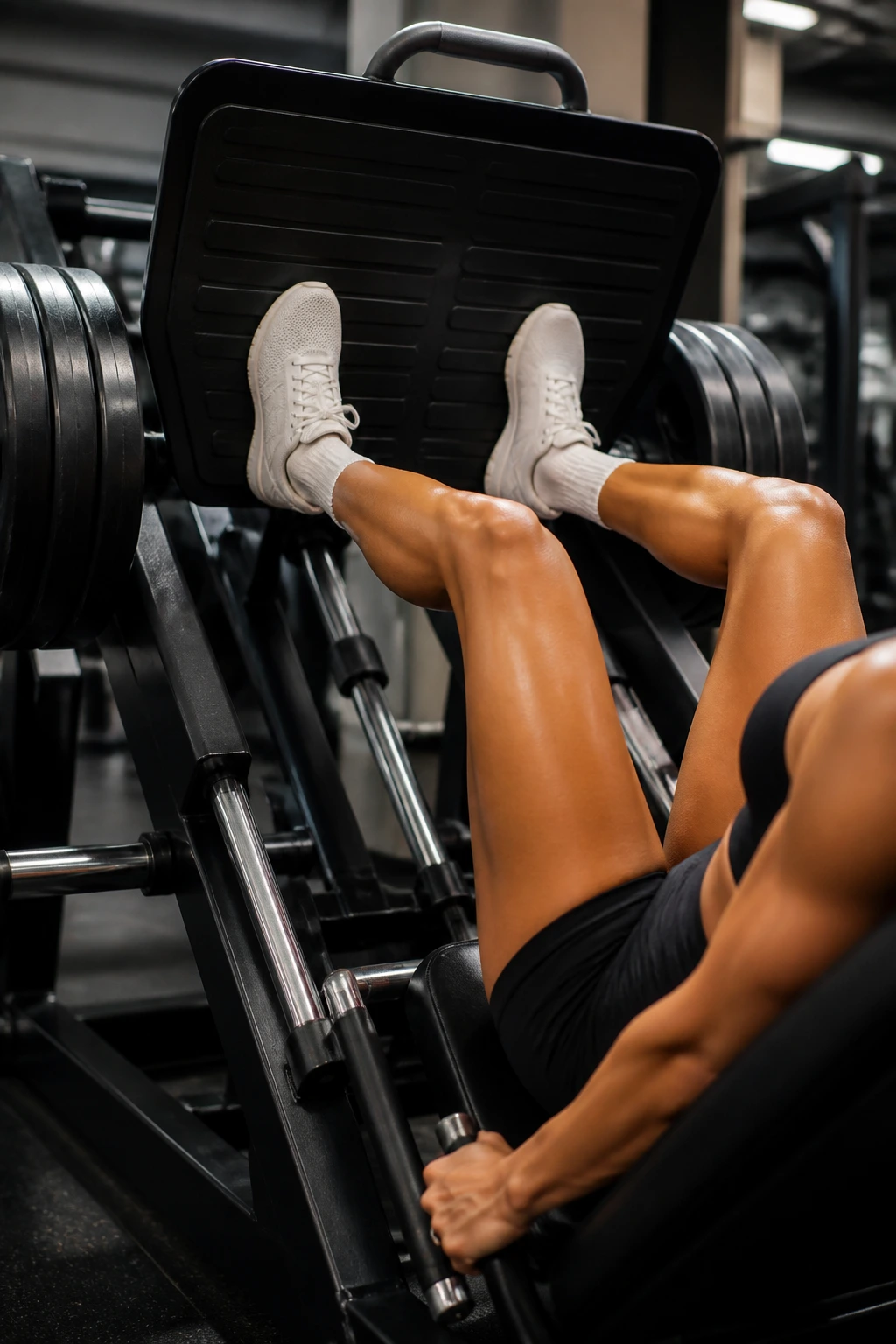
The leg press is not a lazy squat substitute. Used well, it is a blunt, efficient way to push quad and glute volume hard without the same balance demands as free squats.
The pyramid setup works well for progressive overload. Try 12 reps, then 10, then 8, then 6 with a little more load each set. The goal is not to stack plates like you’re building a shrine. The goal is to make each set slightly harder while the depth stays the same.
Why I Like It for Lower-Body Growth
It’s easier to keep the legs honest here than on some other machines. The sled doesn’t care about your mood. If the knees cave or the hips peel off the pad, the set gets messy fast.
- Feet a little higher bias the glutes more.
- Feet a little lower usually hit the quads harder.
- A slow lower makes the whole machine feel heavier.
- Full depth beats ego-loaded half reps.
If your lower back starts rounding at the bottom, shorten the range a touch and keep the pelvis planted.
10. Push-Up Progression
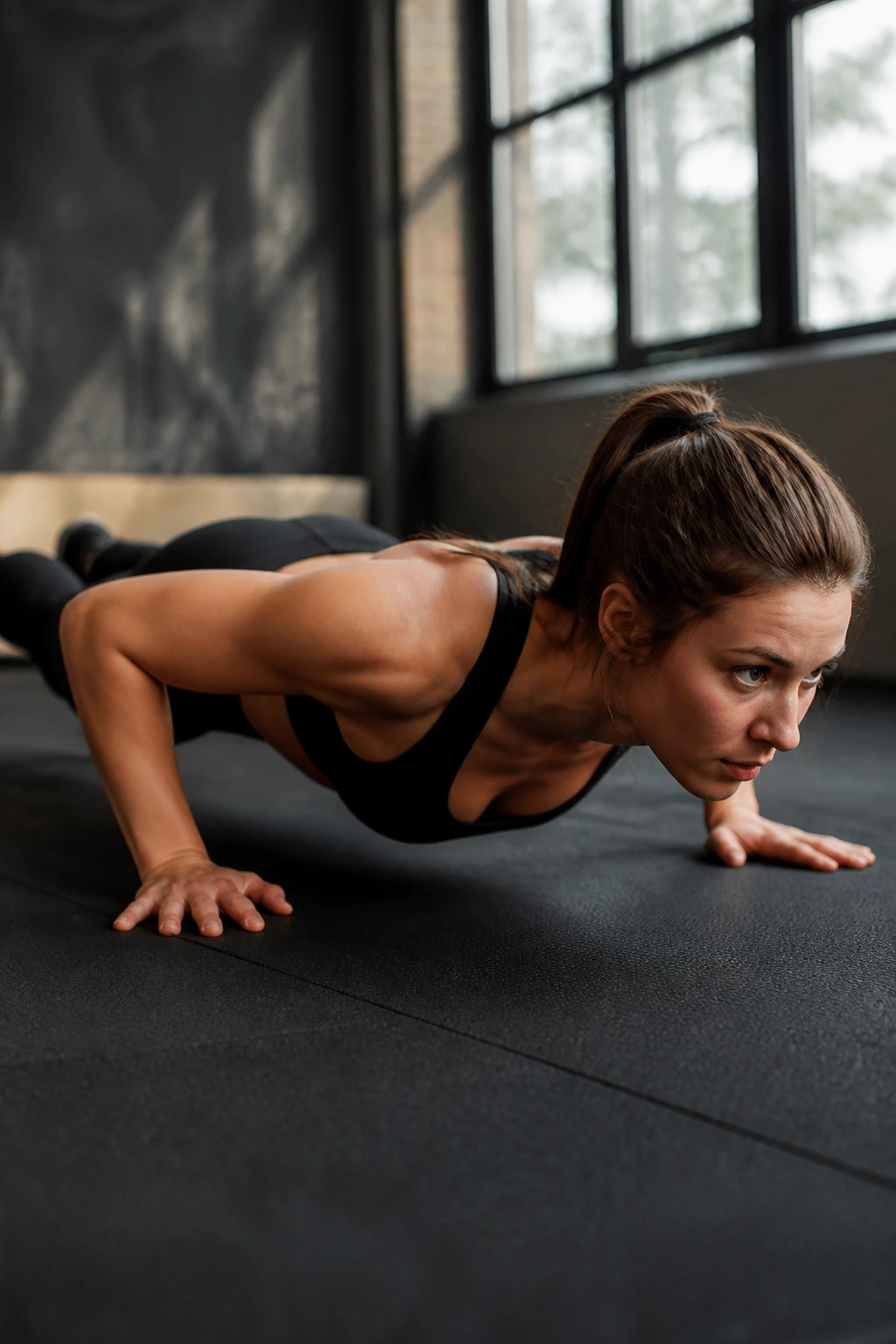
Push-ups are one of the cleanest bodyweight strength tests you can own. They build the chest, shoulders, triceps, and core in one shot, and they travel well. No gym required. No excuses needed.
Start where you can earn the reps. That may be wall push-ups, hands on a bench, hands on a sturdy box, or full floor push-ups. The progression is simple: first you add reps, then you lower the incline, then you add load or elevate the feet.
One of the biggest mistakes is rushing to the floor before the body is ready. That usually turns the lower back into a hammock and the neck into a tense mess. A better rep looks boring from the outside. The body stays in one line. The chest touches or nearly touches. The elbows bend at a sensible angle, not flared like airplane wings.
A good target: 3 sets of 6 to 15 reps depending on the variation. Once you can hit the top of the range, make the angle harder.
11. Conventional Deadlift Practice
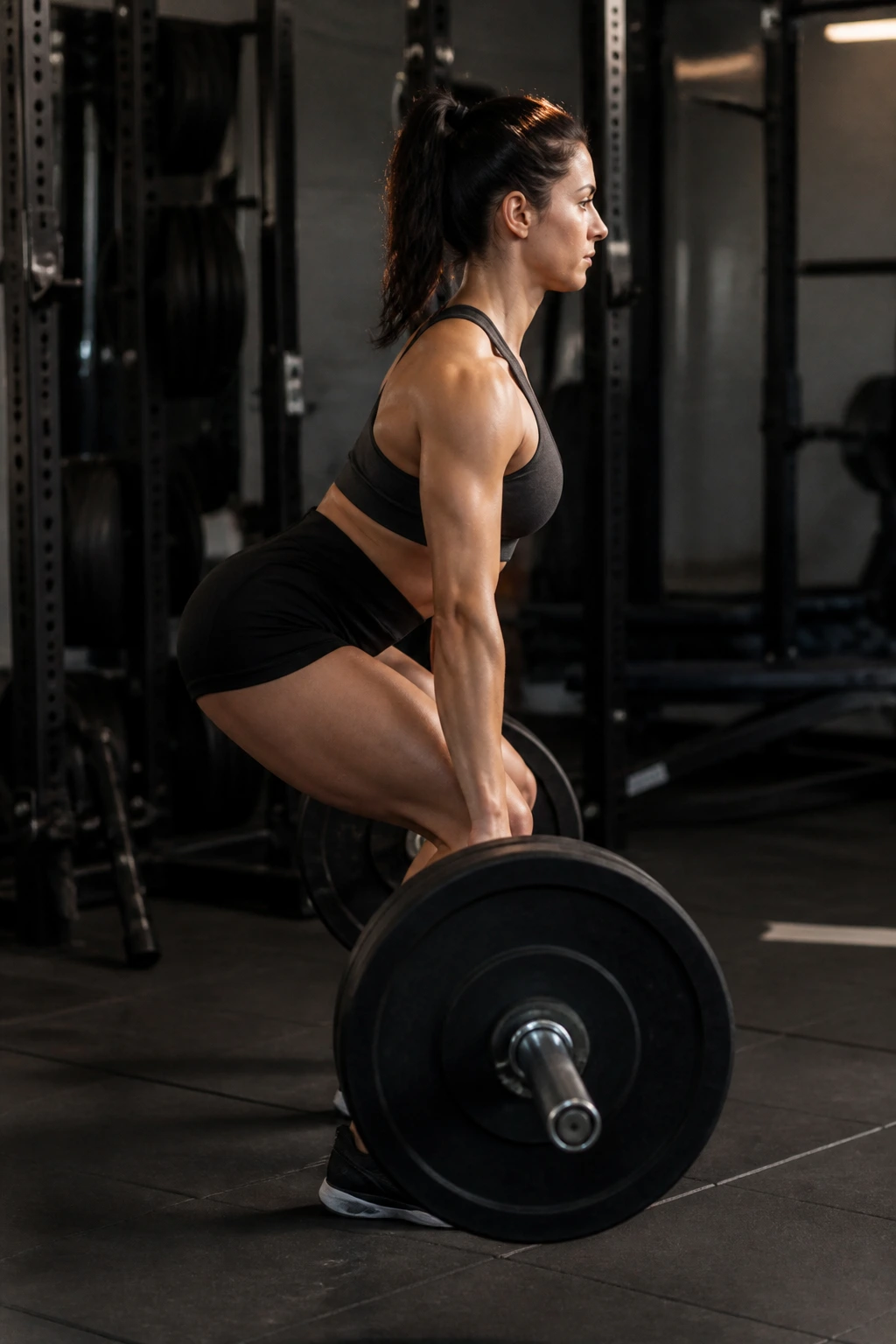
Deadlifts can be excellent. They can also get sloppy fast if the setup is lazy or the load jumps too quickly.
The conventional deadlift rewards a crisp brace and a bar path that stays close to the legs. Set your feet under the bar, grip it, pull the slack out, then drive the floor away. The first inch should feel deliberate, not yanked. If your hips shoot up and your chest collapses, the bar is already winning.
I like lower rep sets here because the movement gets noisy when fatigue piles up. 4 sets of 3 to 5 reps is enough for most lifters who want strength without grinding themselves into dust. Add a small plate when all reps look nearly identical from the side.
This is not a move to chase for a burn. It is a move to chase for shape, tension, and a clean lockout.
12. Walking Lunge Volume Block
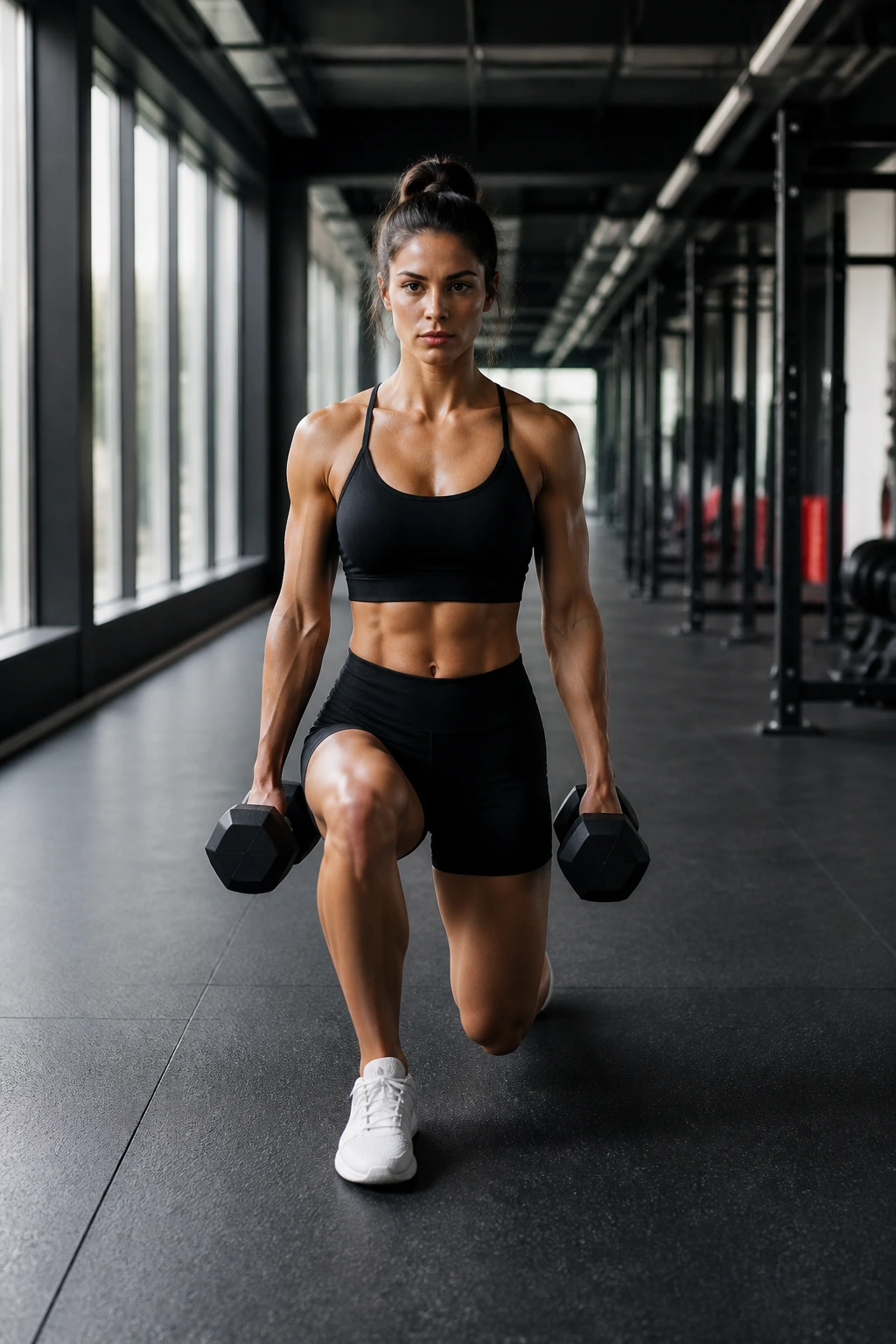
Walking lunges look harmless right up until your legs stop agreeing with each other. Then they become honest.
This is one of the best ways to build single-leg strength, work the glutes and quads, and add a bit of conditioning at the same time. Keep the steps long enough that the front shin can stay fairly vertical if you want more glute work. Shorter steps push the knee forward more and light up the quad.
How to Overload It
Use 2 to 4 rounds of 20 to 30 total steps. Hold dumbbells once bodyweight stops being enough. Then progress by adding load, adding distance, or slowing the lowering phase. That last part is underrated. A controlled lunge with 2-second lowers can feel harder than a sloppy heavy one.
What to Watch For
- Front heel stays down.
- Back knee touches softly or nearly touches.
- Torso stays tall, not folded over.
- Steps stay the same length on both sides.
If you wobble every third step, cut the distance and clean it up.
13. Cable Glute Kickback
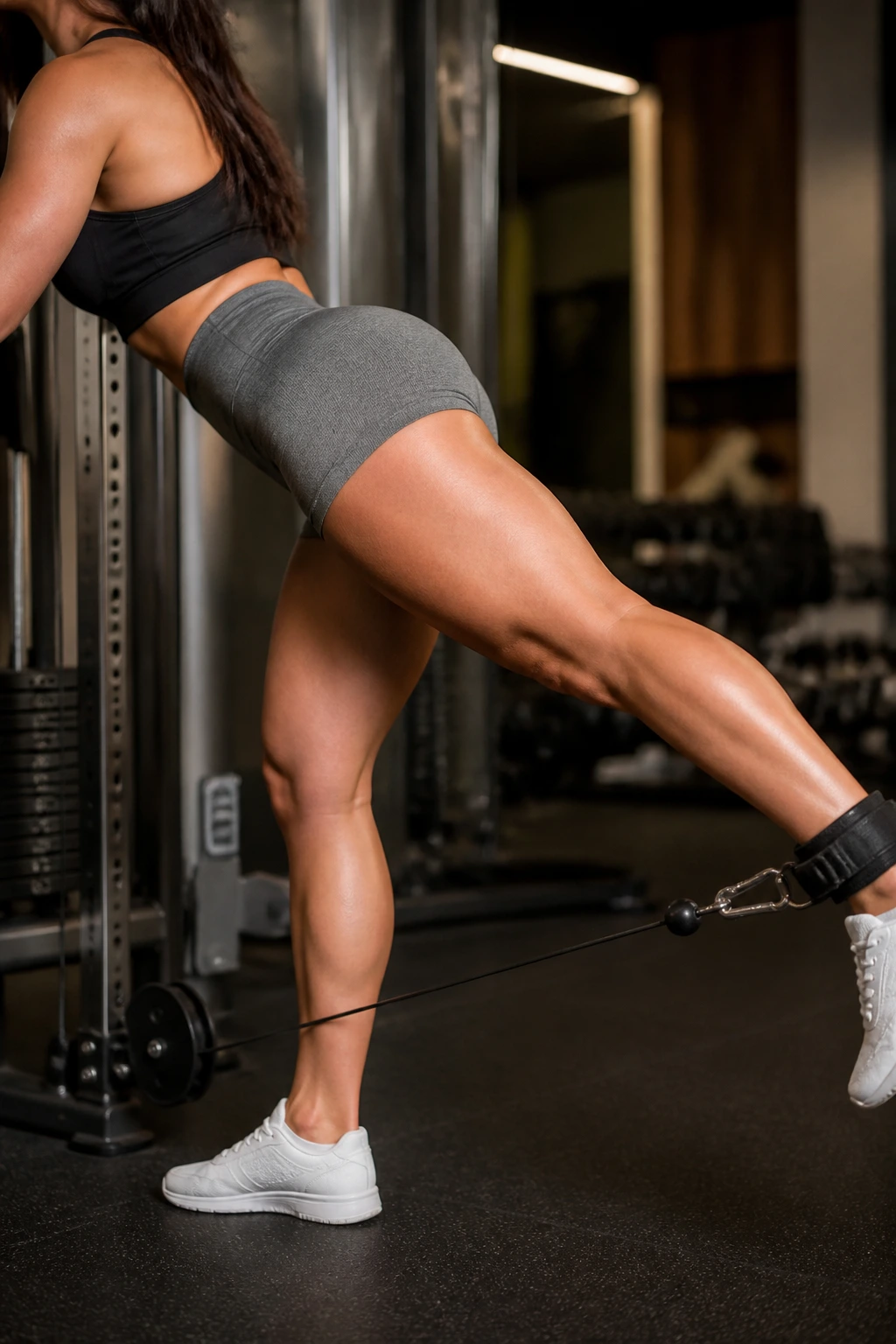
A cable glute kickback is not a main lift. It is a finishing tool, and a useful one when you use it with enough discipline to keep the lower back out of the game.
Set the cable low, loop the ankle strap, and kick back slightly and up without arching your ribs into the ceiling. The movement is small. That is the point. You want the glute to squeeze, not the spine to swing.
3 sets of 12 to 20 reps works well here. Add small weight jumps, or slow the top pause to 2 seconds, before you start piling on plates. The cable stack does not care if you think you are strong. It cares whether the target muscle is doing the work.
Use this after squats, hinges, or split squats if glutes are a focus. It is especially handy when you want extra volume without wrecking your joints.
14. Incline Dumbbell Press
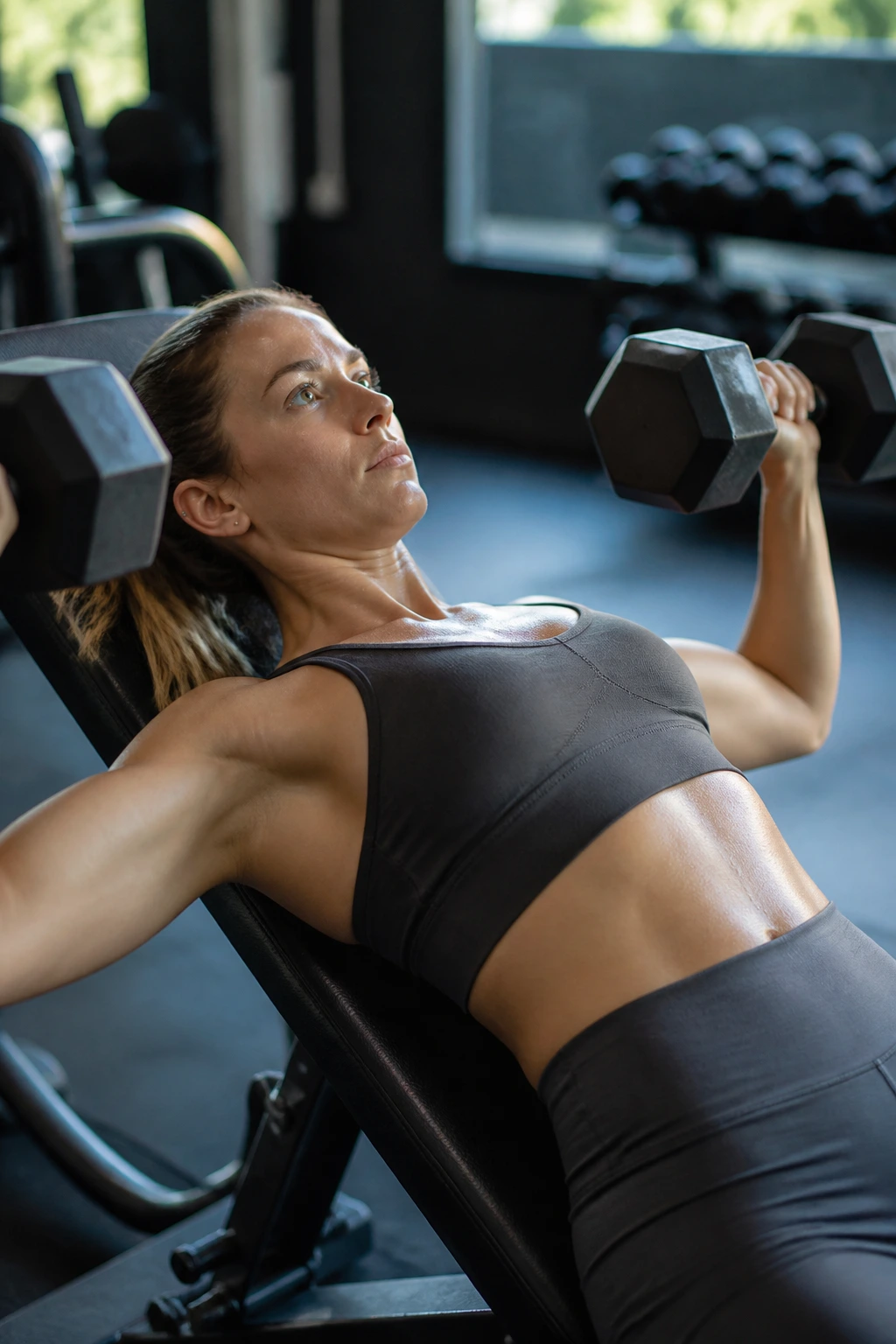
Why choose an incline press over a flat one? Because a slight angle shifts more work to the upper chest and front delts, and that can make the upper body look and feel more balanced.
Keep the bench angle modest. Around 30 degrees is enough for most people. Too steep, and the movement starts to feel like a shoulder press. Use dumbbells so each side has to earn its own path. That usually feels better on the shoulders too.
A Simple Progression That Works
Start with 3 or 4 sets of 8 to 12 reps. Lower the dumbbells until the upper arms are just below parallel or a touch deeper if your shoulders allow it. Once you can hit 12 with stable wrists and no bouncing, increase the weight a little and drop back to 8.
A good press feels smooth off the chest and steady near the top. If the last third of the rep turns into a shrug, the load has passed the useful point.
15. Seated Cable Row
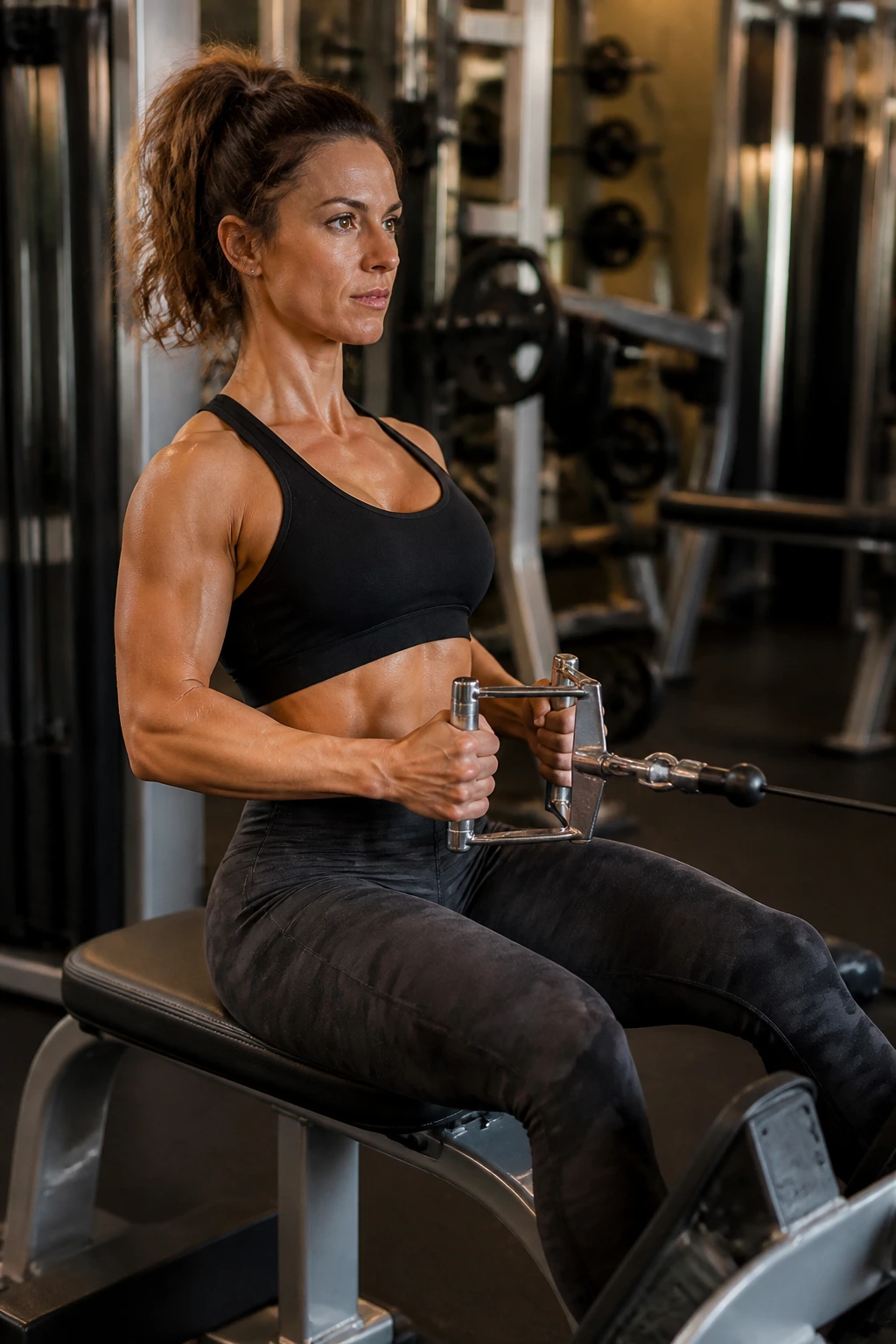
The seated cable row is one of those lifts that sneaks up on you. The first few reps feel normal. Then the shoulder blades start working, the mid-back tightens, and suddenly posture looks a little less slumped when you walk away from the machine.
Sit tall, brace your feet, and pull the handle toward the lower ribs or upper stomach depending on the attachment. Keep the chest proud without flaring the ribs. Let the shoulders reach forward a little at the start, then row back with control. That forward stretch is part of the lift, not a mistake.
Use 4 sets of 8 to 12 reps. Add weight only when the handle path stays clean and the torso doesn’t rock back to steal reps. A one-second squeeze at the finish helps more than people think. You do not need a dramatic lean-back. You need honest back work.
This one is great if your weekly plan needs more pulling volume than your chin-up work can give you.
16. Step-Up Overload Session
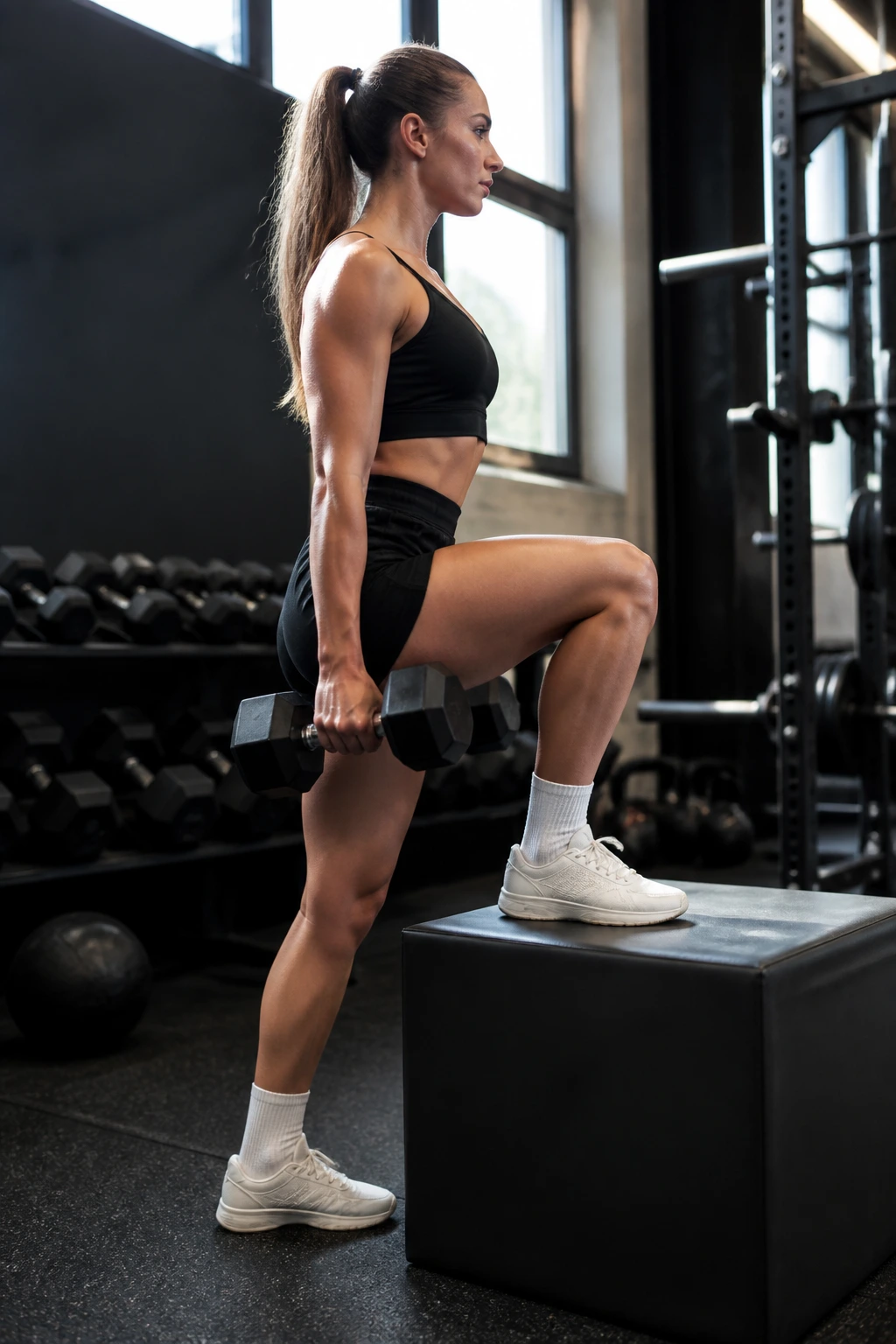
A step-up looks almost too simple to matter. Then you do ten good reps per leg and your balance, quads, and glutes have opinions.
Pick a box or bench height that lets your working thigh get close to parallel without making the drive leg do a weird hop. The front foot should stay fully planted on the box. Push through that whole foot and stand tall at the top before stepping back down under control.
Box Height Matters More Than Most People Admit
Too low, and the lift turns into a small leg press. Too high, and your pelvis starts twisting to survive. A medium height, often around 12 to 18 inches depending on body size, gives you the best mix of strength and control.
Use 3 sets of 8 to 10 reps per leg with dumbbells once bodyweight feels easy. Add a pause on top if you want more control. Or slow the lowering phase to 3 seconds. Both options make the same movement harder without turning it into a balance circus.
17. Kettlebell Swing Power Circuit
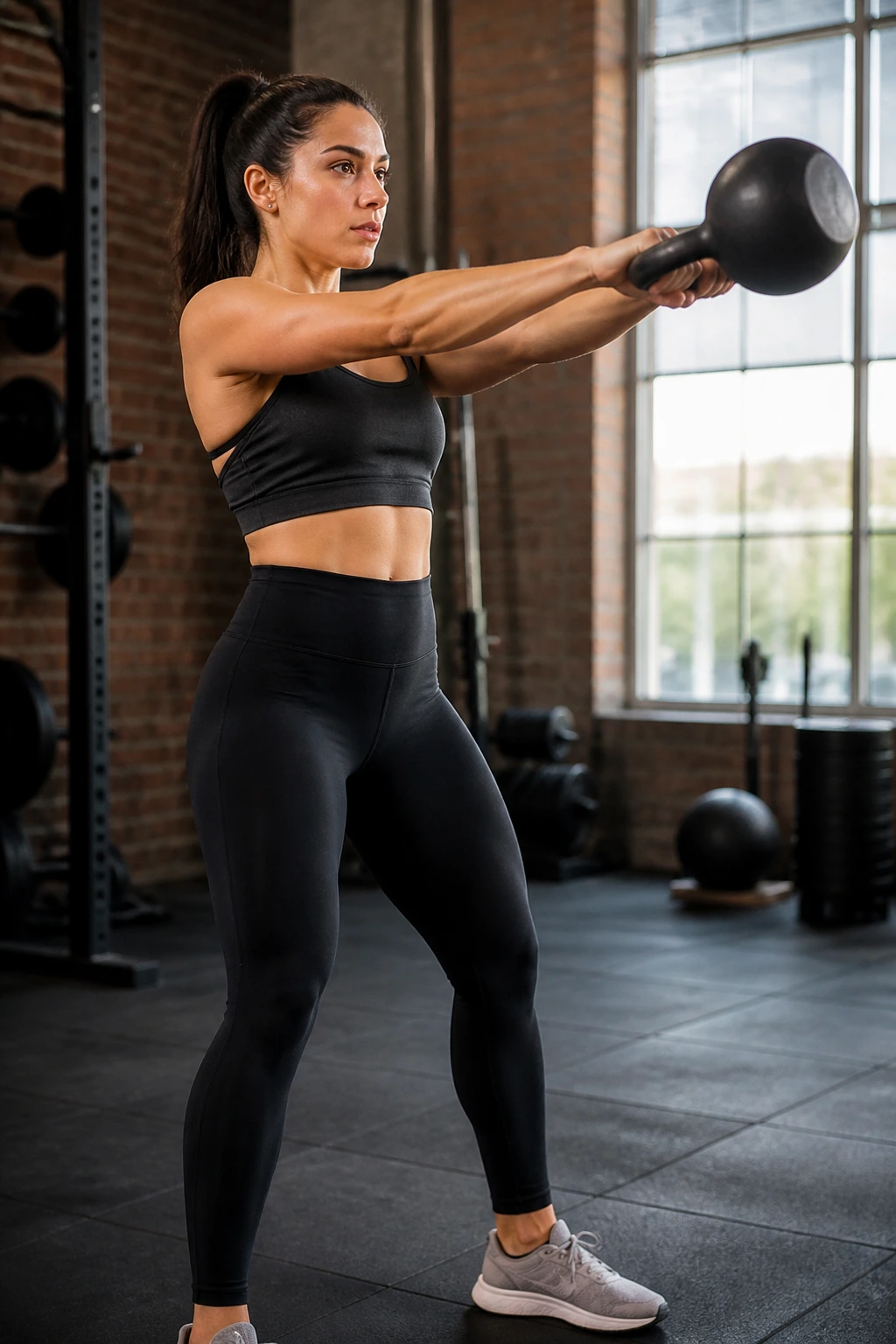
Kettlebell swings are for hinge power and conditioning, not for flinging your back around and hoping for the best.
The movement is a snap, not a squat. Hips drive the bell forward, glutes lock it out, and the bell floats because momentum is doing the heavy lifting. If you feel it mostly in your shoulders, the bell is probably too light or the hinge is too soft.
How to Run It
Try 10 sets of 10 reps on a timer with 45 to 60 seconds between sets. Or use an EMOM style — every minute on the minute — for 10 minutes if your technique stays sharp. Increase the kettlebell weight only when the snap remains crisp and the bell never drifts into a front raise.
A swing should feel powerful and clean. Not frantic.
What to Feel
- Hamstrings load on the back swing.
- Glutes finish the rep.
- The bell floats at chest height.
- Your spine stays quiet the whole time.
If your lower back gets pumped before your glutes do, stop and reset the hinge.
18. Front Squat Builder
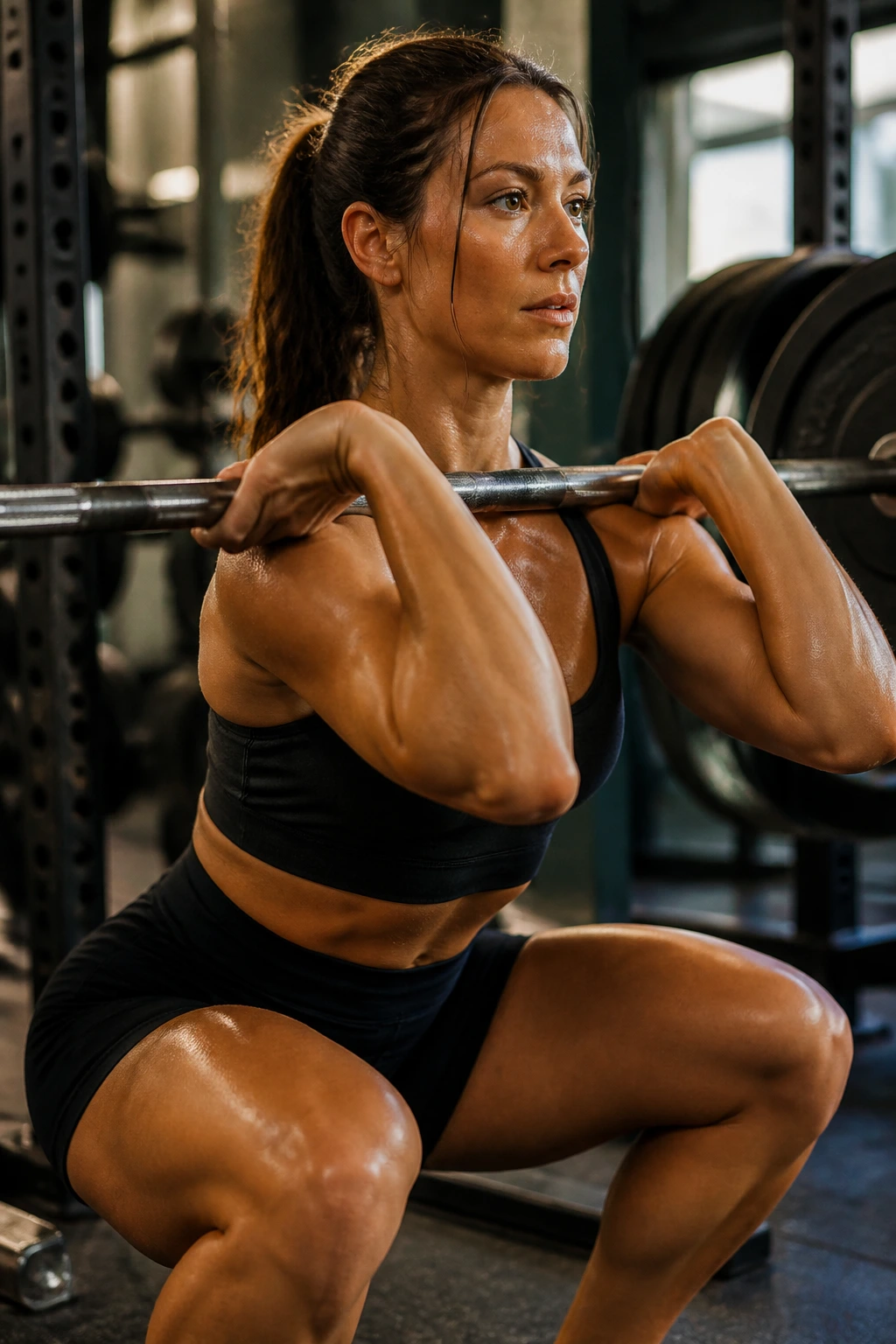
Front squats are harder than they look, which is exactly why they work so well. The front rack position forces an upright torso, and that demand pushes the quads hard while still making the trunk earn its keep.
The bar sits on the front of the shoulders, not in the hands. Elbows stay high. Chest stays tall. If the elbows drop, the whole rep gets shaky. That posture challenge is a feature, not a flaw.
Strong Rule, Small Jumps
Use 5 sets of 5 reps or 4 sets of 6 if you want a little more volume. Add small weight increases only when the bar path stays centered over the mid-foot and the upper back does not fold. Front squats respond well to patience and slightly smaller jumps than back squats.
They are brutal in a clean way. If your quads are the weak point, this lift will find out fast.
19. Anti-Rotation Core Workout
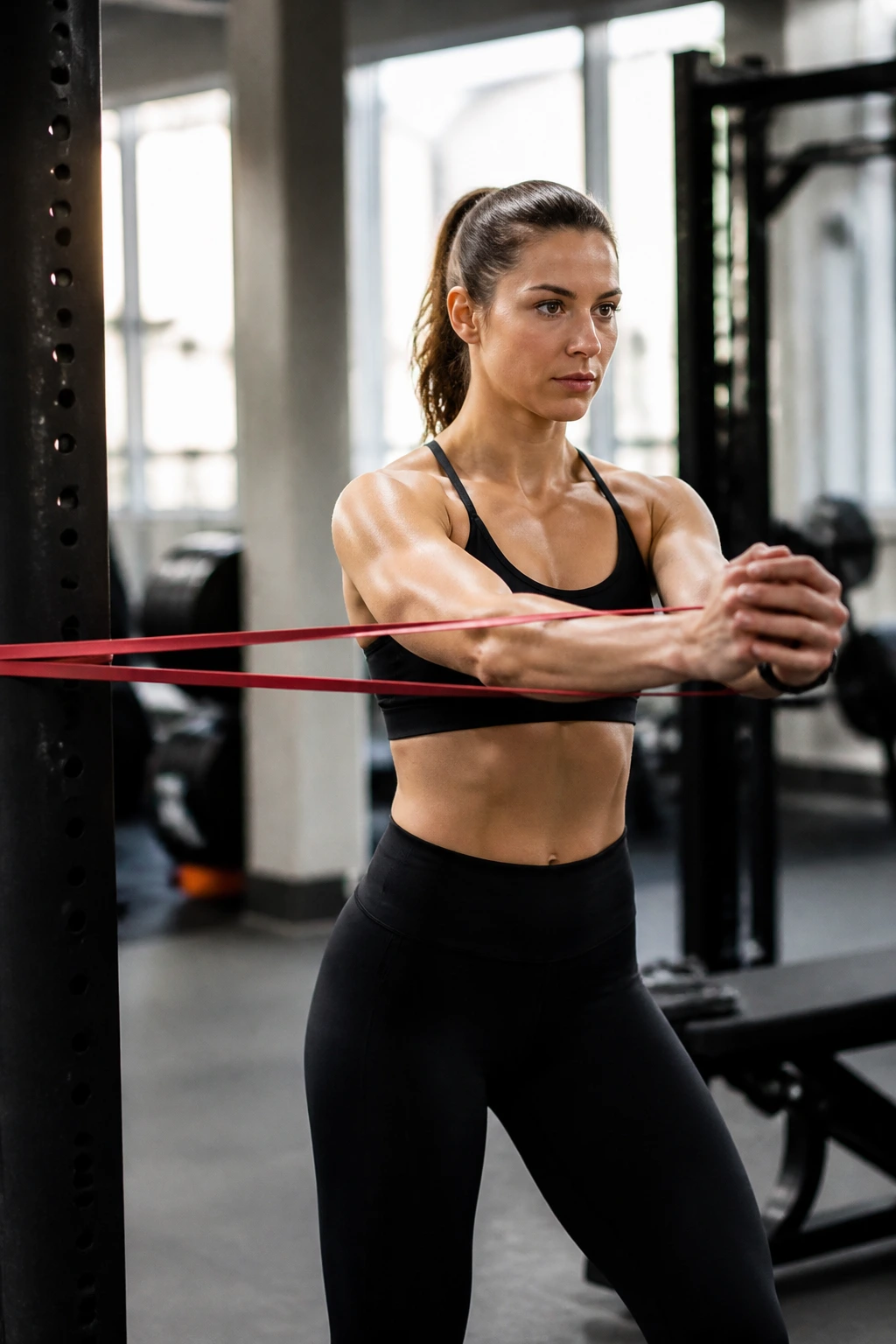
Crunches have their place. They are not the whole story, though, and they are not the story most lifters actually need.
A stronger core usually means better ability to resist movement: resisting extension, resisting side bend, resisting twist. That is where the anti-rotation work comes in. Think Pallof presses, suitcase carries, dead bugs, and side planks. The point is not to chase a burn for the sake of it. The point is to keep the torso steady while the limbs move.
A Simple Core Circuit
- Pallof press: 3 sets of 10 to 12 reps per side
- Suitcase carry: 3 walks of 30 to 40 yards per side
- Dead bug: 3 sets of 6 to 8 reps per side
- Side plank: 2 holds of 20 to 40 seconds per side
Progress by adding load, slowing the motion, or extending the hold time. If your lower back starts arching during dead bugs or your shoulder collapses during side planks, the set is done. Clean tension beats sloppy endurance every time.
20. Full-Body Split for Steady Growth
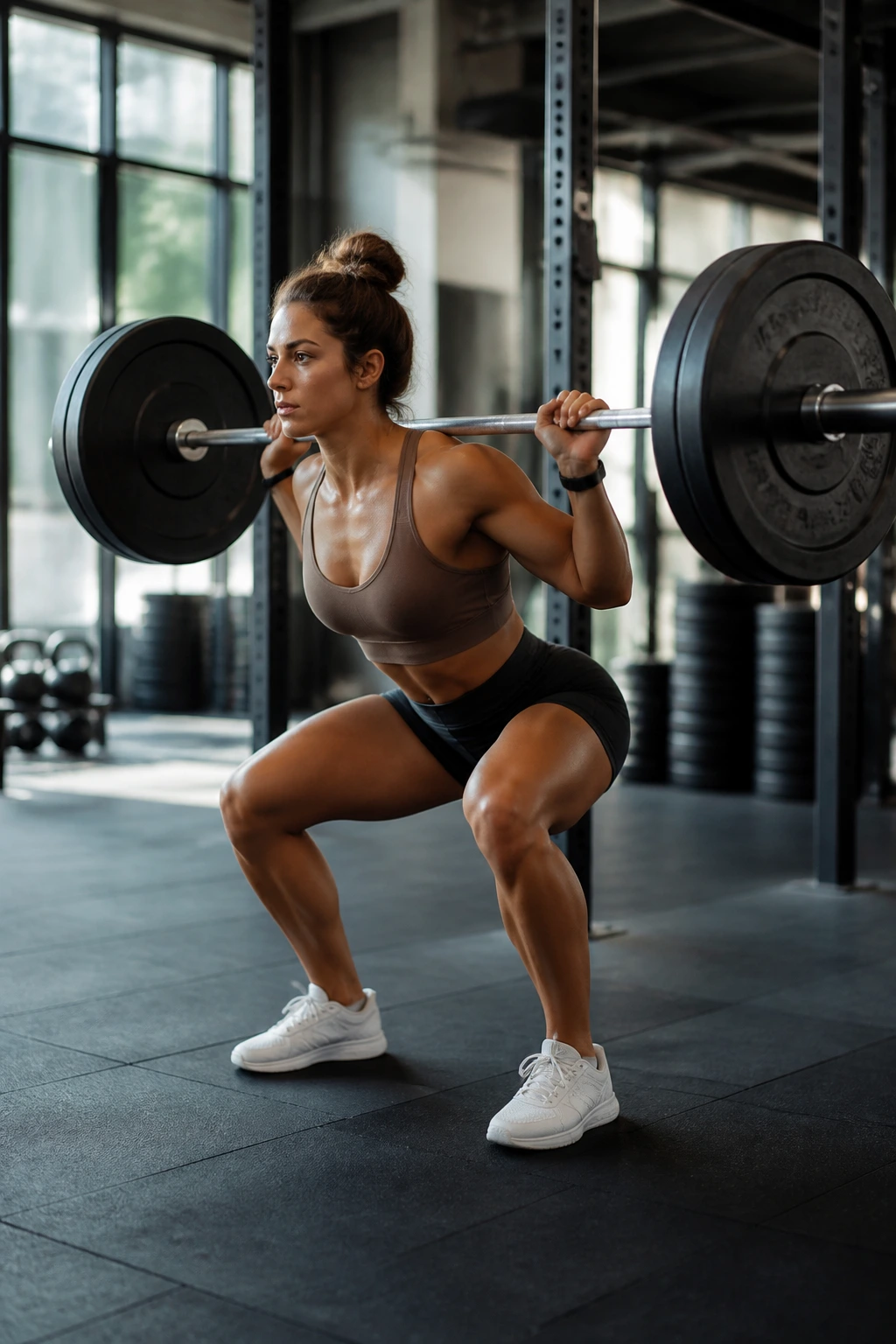
A full-body split is the easiest way to keep progressive overload moving when life is busy and recovery matters. You train the big patterns often enough to improve them, but not so much that every session feels like a fight.
A clean version looks like this: one squat pattern, one hinge, one push, one pull, and one single-leg move across the week. You can build it around the exercises above and rotate the emphasis. One session might lean lower body. The next can push upper body harder. The third can be a little lighter and cleaner, which keeps the whole plan from turning into a weekly demolition derby.
A useful pattern is 3 sessions per cycle. Use 3 to 4 sets on each main lift, stay in a rep range like 6 to 12, and add either a rep or a small amount of weight when the top of the range feels controlled. When progress stalls, do not panic and rewrite the whole thing. Drop one set, clean up the form, and push again.
The best plans are not loud. They are repeatable. And repeatable wins more often than flashy ever does.
If you want, I can also turn these 20 workouts into a 4-week women’s progressive overload plan with exact training days, sets, reps, and rest times.
