



Supersets are not a shortcut. They’re a way to make upper-body training tighter, harder, and a lot less wasteful.
If you keep doing one bench set, staring at your phone, then wandering over for a curl, you’ll still get tired — but you won’t always get much stronger. The better approach is to pair movements that respect each other: press with pull, heavy with moderate, compound with isolation when the goal is a sharp pump. Done right, the second exercise actually helps the first one by keeping your joints warm and your session honest.
There’s a catch. Random supersets can turn into sloppy cardio with dumbbells. That’s not the game. For real muscle, the load still matters, the rep quality still matters, and you still need enough rest to keep the next round worth doing. Use the pairs below with that in mind: choose weights that leave 1 to 2 clean reps in reserve on big lifts, and don’t be afraid to rest 60 to 120 seconds between rounds when the work gets heavy.
Pick one pair as the main block, or stack two or three into a full upper-body session. Either way, these 18 setups cover chest, back, shoulders, arms, and all the little stabilizers that make the big lifts look better.
1. Dumbbell Bench Press + Chest-Supported Row
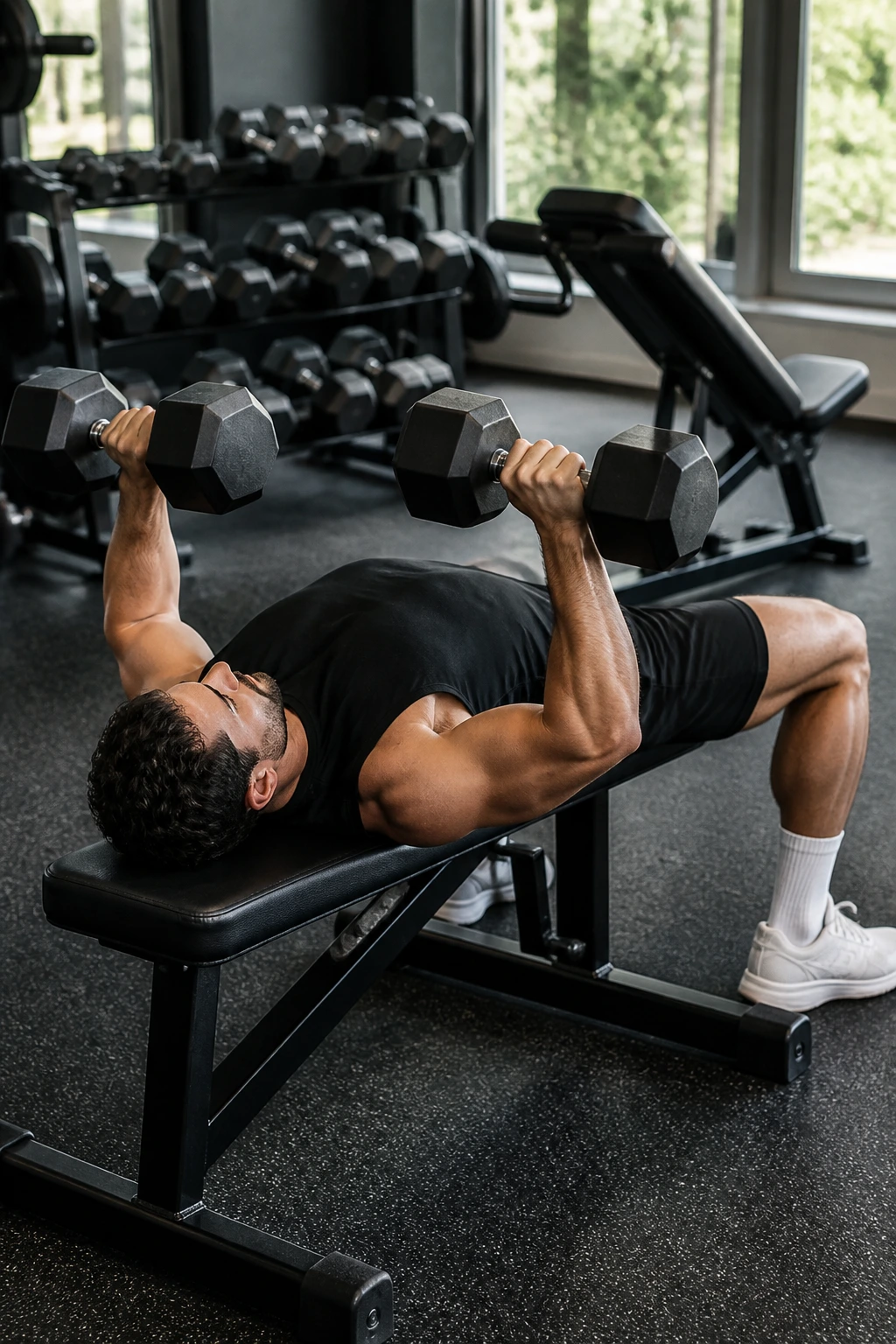
This is the kind of superset that makes immediate sense once you’ve done it a few times. Your chest gets the pressing work it wants, your upper back keeps the shoulder girdle from getting cranky, and the whole setup feels balanced instead of brute-force heavy.
How to run it
- 4 rounds
- Dumbbell bench press: 6 to 10 reps
- Chest-supported row: 8 to 12 reps
- Rest: 75 to 90 seconds after each round
Use a bench set at zero to 30 degrees for the row so your lower back can stay out of the fight. On the press, lower the dumbbells until your elbows are just below the bench line, then drive them up without bouncing the weights together. On the row, pause for a half-second when the dumbbells touch your sides. That little pause matters.
I like this pairing for lifters who want size without feeling beat up afterward. It gives you a solid chest stimulus, but it also keeps your shoulders from drifting forward under fatigue. Your posture will thank you. So will your joints.
2. Incline Dumbbell Press + Lat Pulldown
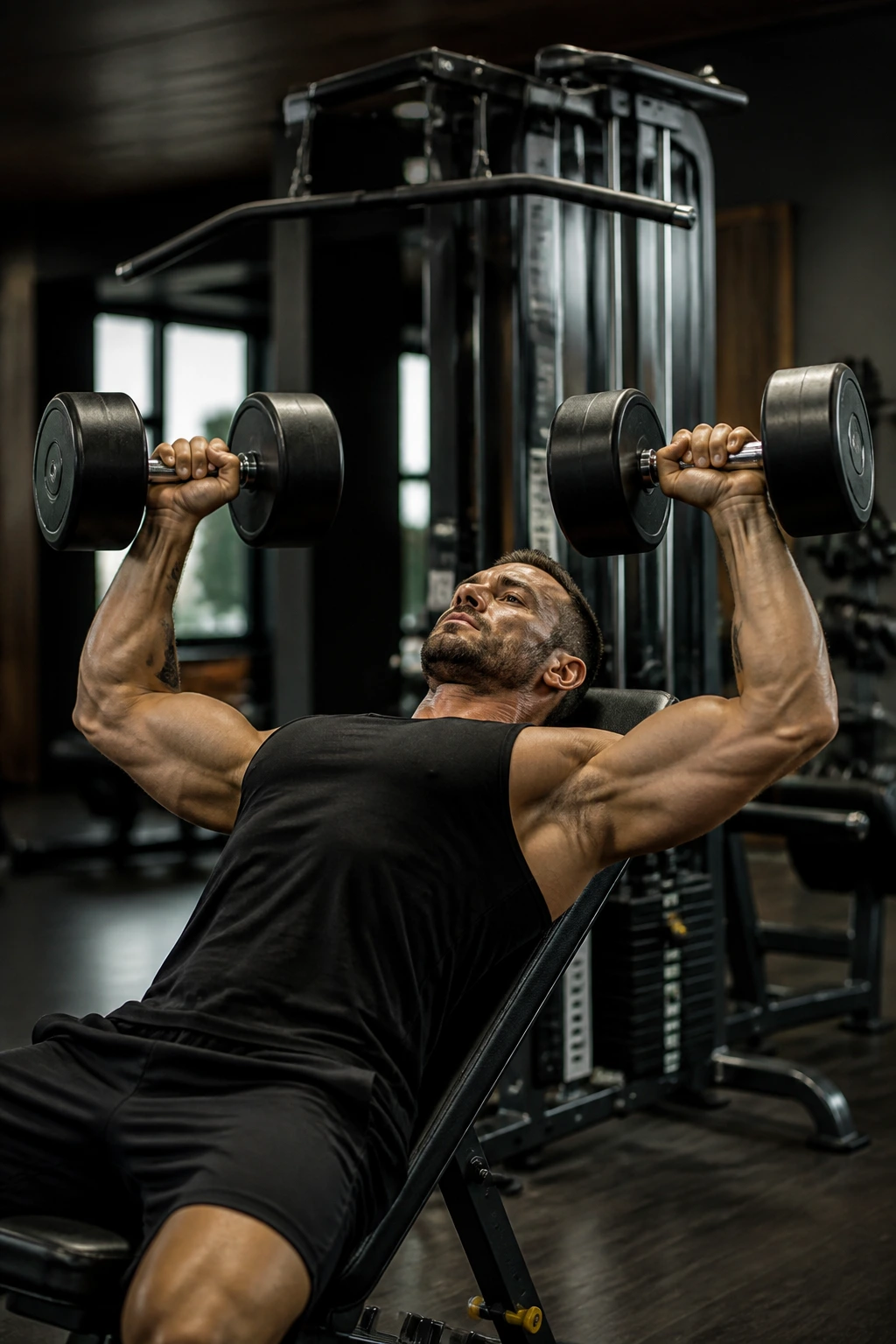
Upper chest and lats belong together more often than people think. The incline press hits the clavicular part of the chest, while the pulldown loads the lats through a full stretch and gives your scapulae a clean move up and down.
Set the bench at 20 to 30 degrees. Higher than that and the front delts take over; lower than that and it starts to feel like a flat press with a gimmick. Keep the dumbbells moving in a smooth arc, and don’t turn the pulldown into a fast yank behind the neck. Pull to the upper chest, squeeze for a beat, then let the bar rise until your arms are nearly straight.
3 to 4 rounds of 8 to 12 reps works well here. Rest about 60 to 75 seconds between rounds. That’s enough to keep the effort high without turning the session into a nap.
3. Standing Overhead Press + Pull-Up
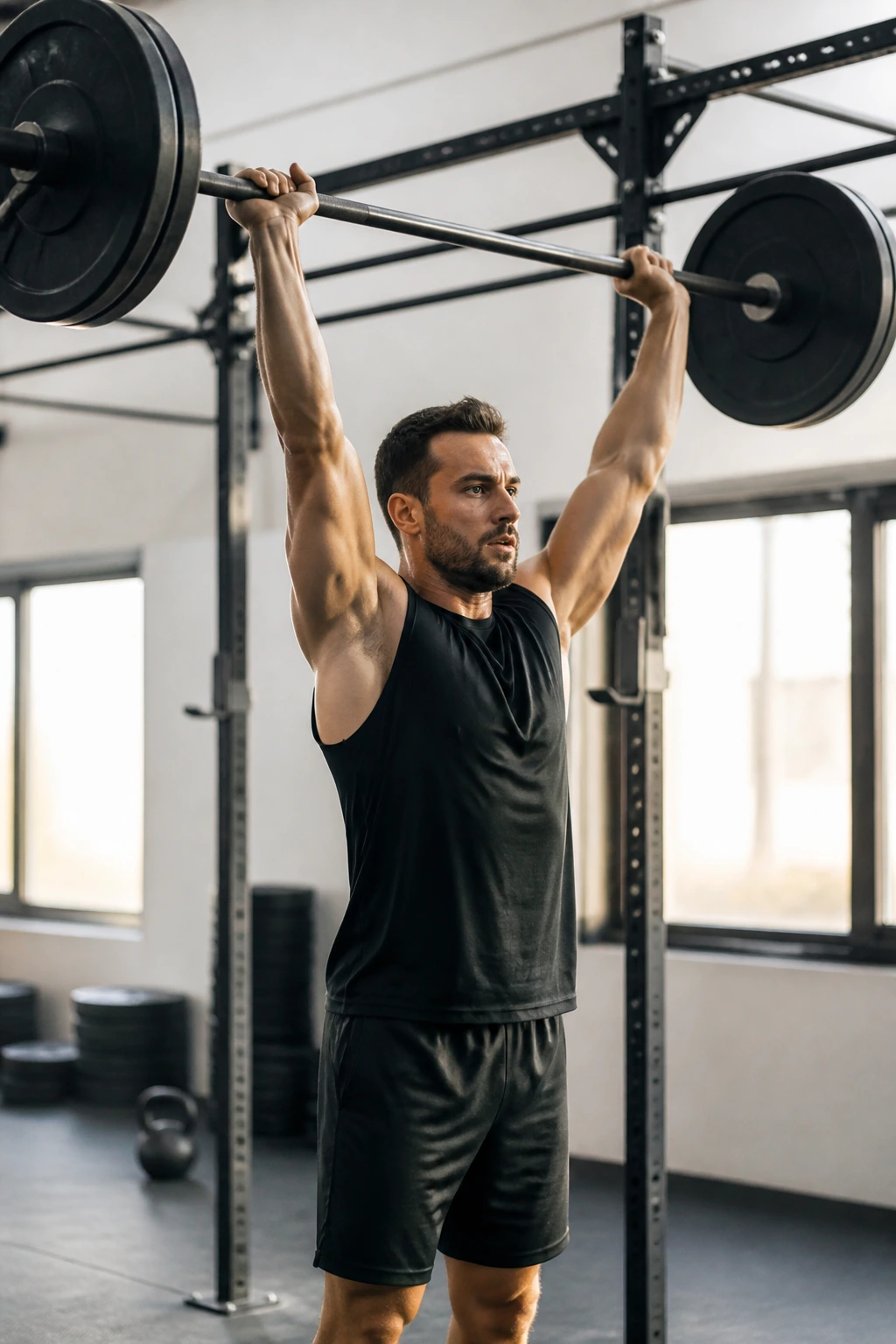
Want a superset that tells the truth? Use this one.
The overhead press and the pull-up both expose weak links fast. If your core is loose, the press wobbles. If your lats and scapular control are weak, the pull-up gets ugly by rep three. There’s nowhere to hide, which is why it works so well for strength and muscle at the same time.
Technique notes
- Overhead press: 4 to 6 reps
- Pull-up: 5 to 8 reps
- Rounds: 4 to 5
- Rest: 90 to 120 seconds
Keep the bar path close on the press and avoid over-arching your lower back just to sneak the weight overhead. On pull-ups, start from a dead hang if your shoulders tolerate it, then pull your chest toward the bar instead of just trying to get your chin over it.
This pair is demanding. Good. That’s the point. Use it early in the workout, not as a tired finisher after your arms are already cooked.
4. Weighted Dip + Chin-Up
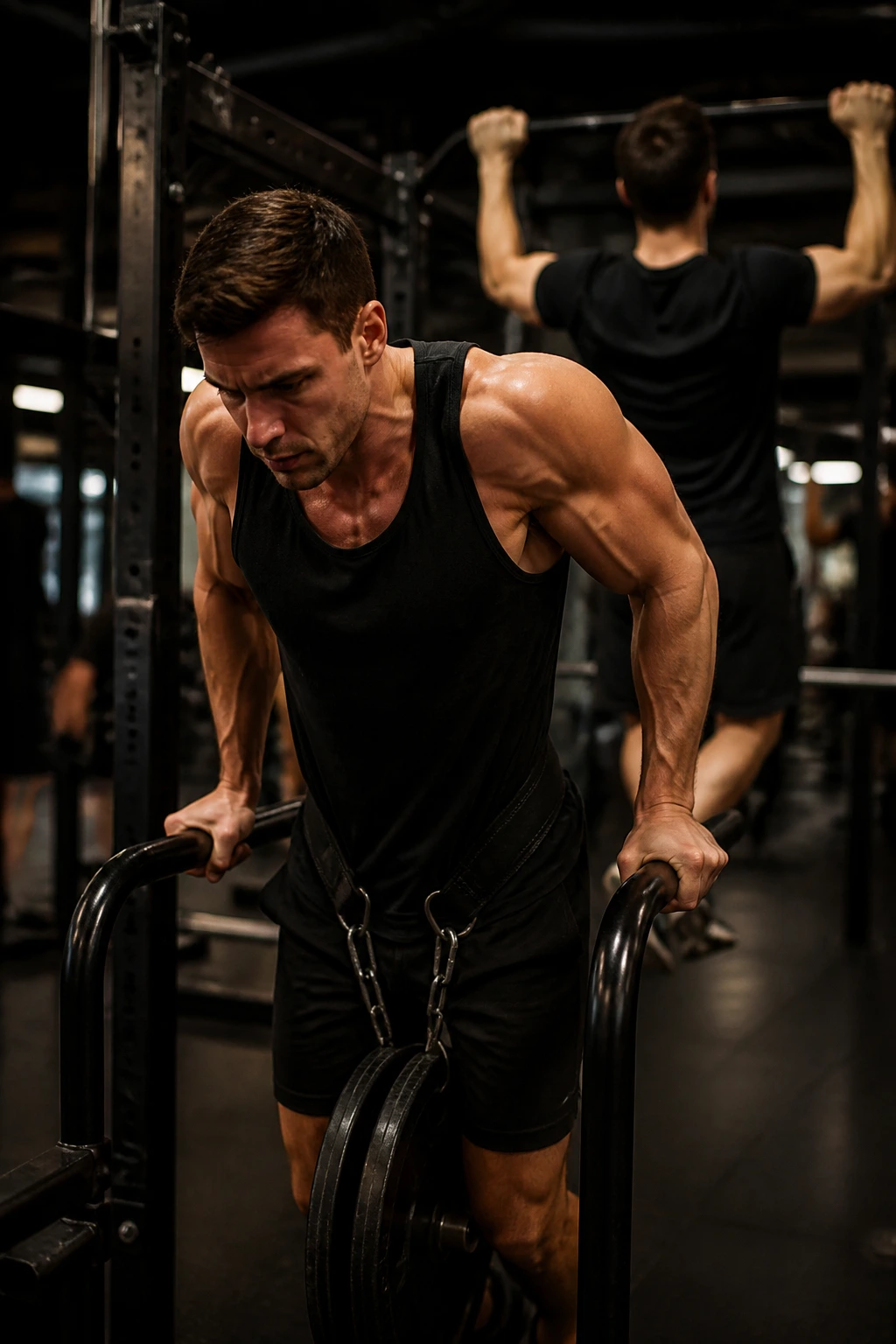
Dips and chin-ups are old-school for a reason. They’re heavy, simple, and brutally effective when your technique is clean. The dip leans into chest and triceps; the chin-up shifts more toward lats and biceps. Together, they cover a lot of upper-body real estate without needing machines or clever angles.
If your shoulders like dips, lean forward a little and let your elbows travel naturally. If they don’t, don’t force it. Use assisted dips, rings, or a dip machine and keep the range controlled. The chin-up should start from a full hang or close to it, with the ribs down and the legs quiet.
I’d keep this to 3 or 4 rounds of 6 to 8 reps on each movement. Once you can hit the top of that range with bodyweight, add a small load rather than chasing ugly reps.
5. Close-Grip Bench Press + Barbell Curl
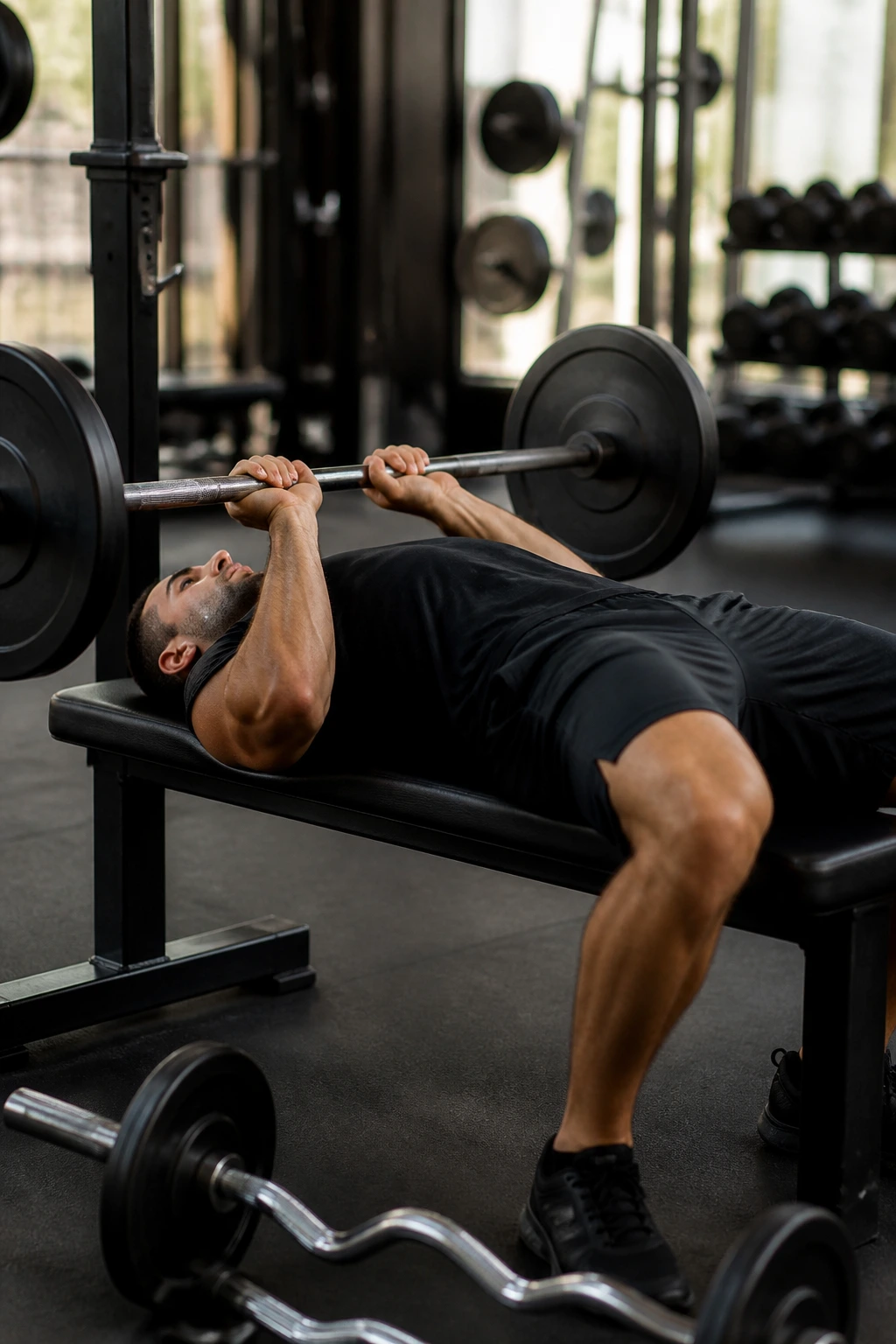
This is an arm-builder with a point. The close-grip bench loads the triceps hard, while the barbell curl gives the biceps a straightforward overload pattern that is hard to beat when you want size.
Why it works
The triceps and biceps don’t work in isolation during the rest of your training week. They support every press and pull. Pairing them here lets you hammer both sides of the elbow joint in one block, and that usually feels better than blasting triceps alone until your elbows start talking back.
Keep the grip about shoulder width. Too narrow and your wrists get angry for no reason. On the curl, keep your elbows just in front of your ribs and avoid the full-body heave that turns a set of curls into a lower-back event.
Do 4 rounds of 6 to 10 reps on each lift. Rest 60 to 75 seconds between rounds. If you want a little more arm focus, add one back-off round with lighter weight and 12 to 15 reps.
6. Push-Up + Inverted Row
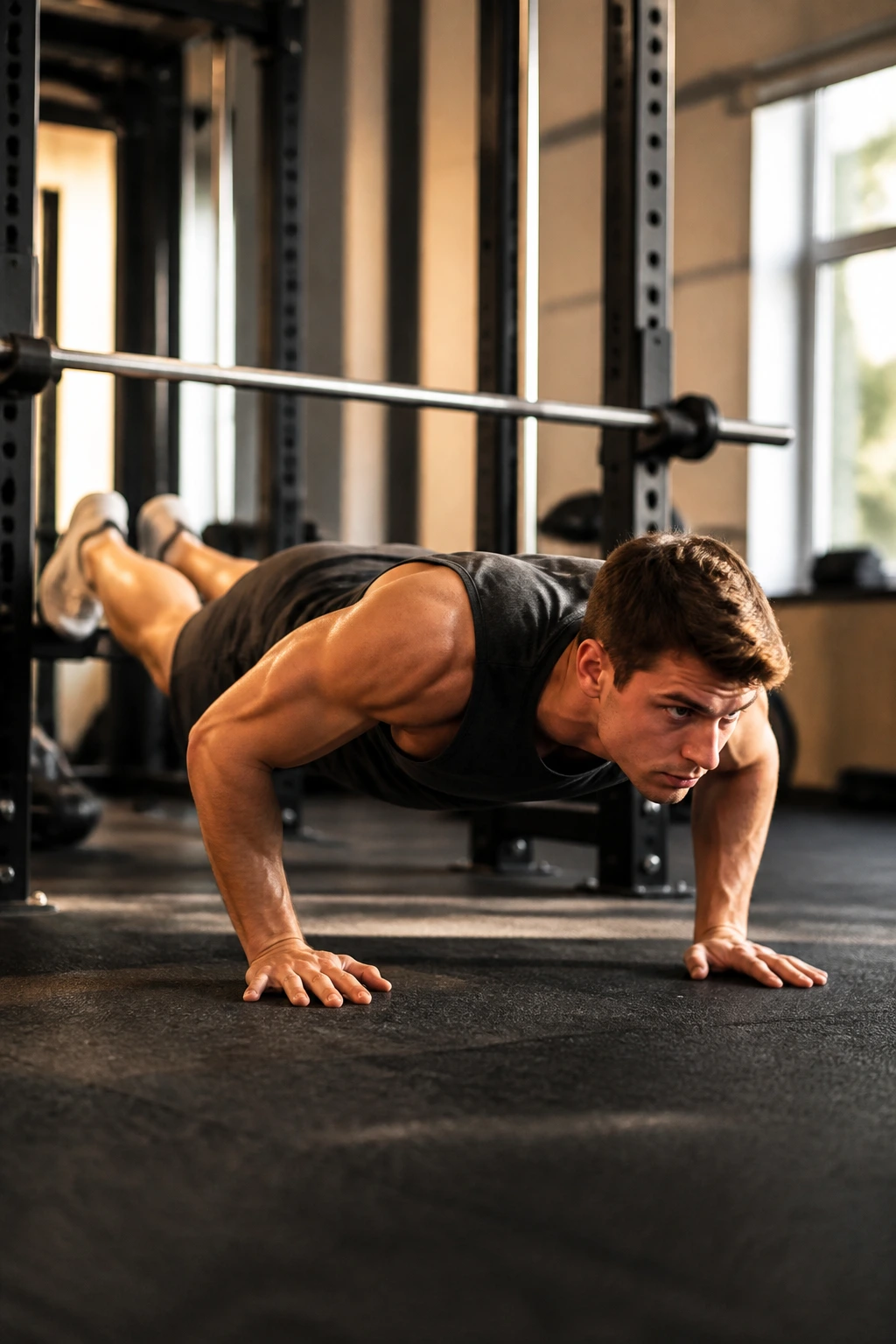
No rack? No problem.
This pairing is plain, cheap, and far more useful than a lot of fancy gym work. Push-ups hit the chest, triceps, and front delts. Inverted rows hit the mid-back, rear delts, and biceps. Together, they make an excellent home-gym superset or a low-fatigue finisher after your main lifts.
Make the push-up harder by elevating your feet, adding a vest, or slowing the lowering phase to 3 seconds down. Make the row harder by lowering the bar, walking your feet farther forward, or pausing at the top until your shoulder blades feel pinned together. If your body line sags, you’ve gone too far.
Use 3 to 5 rounds of 12 to 20 reps. That high rep range is not a cop-out here. It’s the right tool. Your joints get less cranky, your pump gets better, and your form usually stays cleaner than it does with sloppy heavy pressing.
7. Landmine Press + One-Arm Cable Row
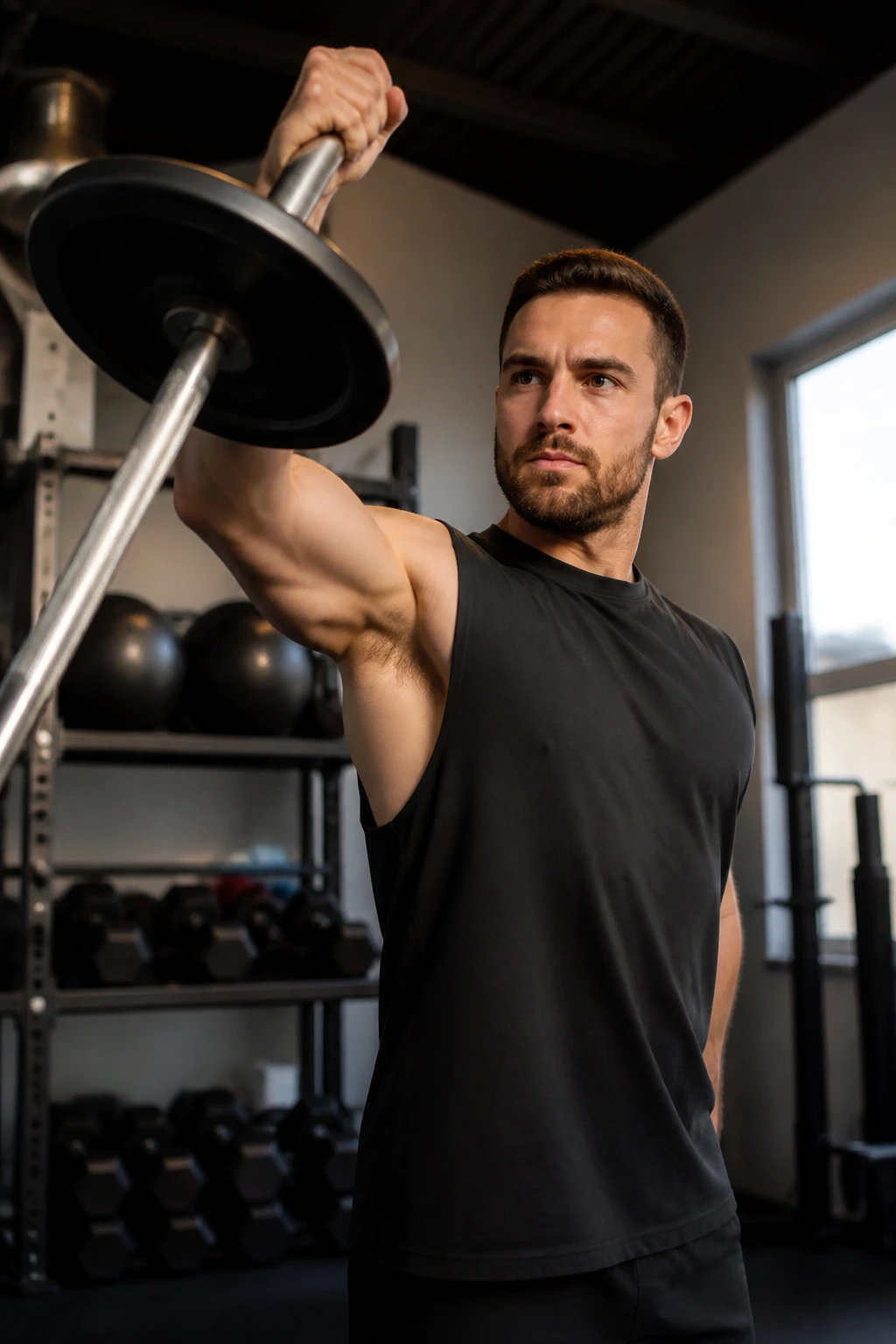
Shoulders that dislike straight overhead work often tolerate the landmine press just fine. The arc is friendlier, the grip is neutral enough for most people, and the press still lets you load the front and side delts in a way that feels strong rather than awkward.
The one-arm cable row balances that nicely. Unilateral work makes you honest. You can’t twist your torso and pretend it’s fine. Your ribs stay stacked, your shoulder blade has to move cleanly, and you get a little anti-rotation work for free.
Why this helps cranky shoulders
- The landmine path is less aggressive than a vertical press.
- The cable row gives constant tension through the whole pull.
- Both sides work separately, so side-to-side leaks show up fast.
Run 3 or 4 rounds of 8 to 12 reps per side. Keep the cable handle close to your body on the row and finish with your elbow just behind your torso, not way out into some dramatic back squeeze that your joints don’t need.
8. Machine Chest Press + Seated Cable Row
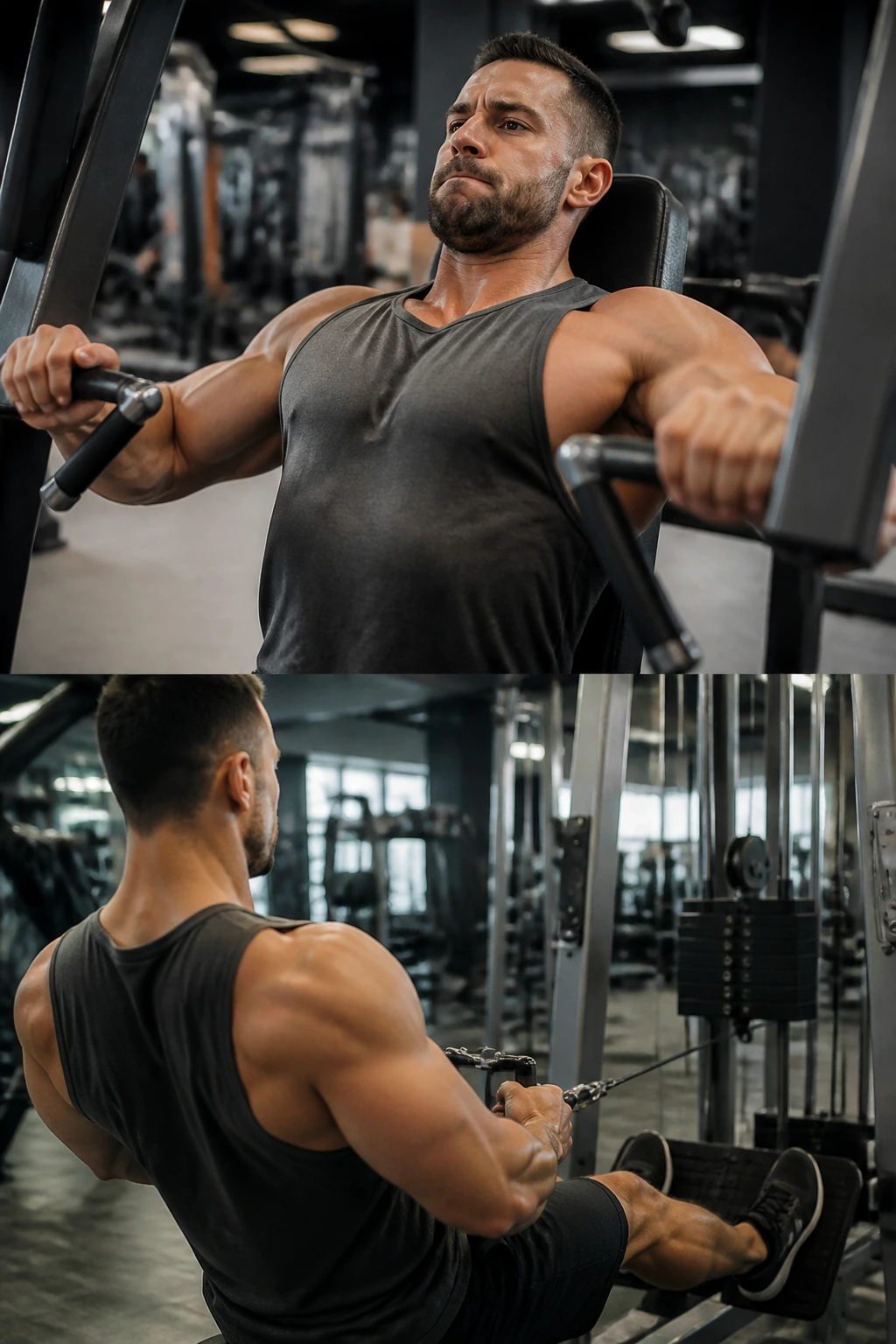
There’s a reason this pairing shows up in serious hypertrophy training. Machines take out a lot of the balance noise, which means you can push closer to failure without wondering whether your stabilizers are the thing giving out first.
The machine chest press lets you chase tension through a stable path. The seated cable row does the same for your back, with the bonus that you can adjust the handle and grip to fit how your shoulders feel that day. Neutral grip, wide grip, close grip — all of them can work if the movement stays smooth.
Use 10 to 15 reps on both exercises and keep the rest to 45 to 60 seconds between rounds. The goal here is not raw strength. It’s that dense, skin-tight muscle fatigue that makes you count down the final few reps.
This is a very good day-two or day-three chest/back block when you want quality work without needing a spotter.
9. Arnold Press + Face Pull
The Arnold press is not magical. It is, however, a clever way to get the front and side delts working through a longer path than a plain dumbbell press. Pair it with face pulls and you get a shoulder session that feels balanced instead of lopsided.
What to watch for
- Keep the Arnold press smooth. No heaving.
- Rotate the palms only as much as your shoulders tolerate.
- Pull the face rope to forehead height, not chest height.
- Finish the face pull with elbows high and thumbs back.
I’d use 3 rounds of 10 to 12 reps on each movement. If the presses start to turn into a grind, the weight is too heavy. Same with face pulls. They should look crisp. Not wild. Not bouncy.
This superset is a good fit for people who spend a lot of time pressing but not enough time training the back side of the shoulders. You can feel the difference in posture after a few sessions, and your pressing often looks cleaner too.
10. Dumbbell Flye + Straight-Arm Pulldown
Both of these moves are stretch-based, and both reward control over ego. That’s why they work.
The dumbbell flye loads the chest in a long range, but only if you keep a soft bend in the elbows and lower the weights until the pecs are stretched, not the shoulders. The straight-arm pulldown does something similar for the lats, letting you feel the arms stay long while the torso stays still. It’s a sneaky good pairing for mind-muscle connection.
Use 10 to 15 reps for each exercise, with a slower lowering phase of 2 to 3 seconds. If you rush the descent, the whole point gets lost. A set of flyes with sloppy depth usually turns into shoulder irritation fast.
I’d put this toward the middle or end of a session, after your main presses and rows are already done. It’s a muscle-building accessory block, not your headline act.
11. Skull Crusher + Hammer Curl
This one is simple, and that’s part of the appeal. Skull crushers hit the triceps hard through elbow extension, and hammer curls load the brachialis and brachioradialis, which helps the upper arm look thicker from the side.
The main mistake with skull crushers is letting the elbows drift all over the place. Keep your upper arms mostly fixed, lower the bar or dumbbells toward the forehead or slightly behind it, and stop the rep before your elbows feel like they’re being pried apart. On hammer curls, keep the palms facing each other and raise the dumbbells without swinging them up with your hips.
3 to 4 rounds of 8 to 12 reps is a strong range here. If your elbows get irritated, swap the straight bar for an EZ-bar or dumbbells. That tiny change often makes a big difference.
This is one of my favorite arm supersets when a session needs a hard finish but not a lot of complicated setup.
12. Cable Crossover + Single-Arm Dumbbell Row
This pairing gives you two things a lot of lifters need more of: constant tension on the chest and cleaner unilateral work for the back.
Cable crossovers are better than many people think when they’re done with a controlled arc and a real pause in the shortened position. Don’t fling the handles together. Bring your hands in front of your sternum, squeeze for a second, then let the chest open back up under control. The one-arm dumbbell row should happen with your torso braced and your shoulder reaching slightly forward at the bottom before you pull.
That setup lets each side work without a ton of cheating. It’s also a solid choice if one lat or one pec tends to take over.
Run 3 or 4 rounds of 10 to 15 reps per side. Moderate rest is enough. You’re chasing quality fatigue here, not a max-effort battle with the floor.
13. Incline Dumbbell Curl + Rope Pressdown
If you want a straightforward arm pump that actually grows something, this is an easy one to keep in rotation. The incline curl puts the biceps under a deep stretch, and the rope pressdown lets the triceps finish with a hard lockout and a good squeeze.
How to get more out of it
Start the incline bench around 45 degrees. Too steep and you lose some of the stretch; too shallow and the setup gets awkward. Let the dumbbells hang long at the bottom of the curl for a brief pause before you drive them up. On pressdowns, separate the rope at the bottom and keep your upper arms pinned near your sides.
I’d stay in the 10 to 15 rep range and use 30 to 45 seconds between rounds. This is one of the few places where a shorter rest really works, because the point is to flood the arms with tension and make them work through a clean range.
It’s not flashy. It doesn’t need to be.
14. Z-Press + Rear-Delt Row
The Z-press is rude. That’s the best way I can put it.
Sitting on the floor with your legs straight out strips away the chance to lean back and fake the press with your lower body. Your core has to stay on, your shoulders have to do the work, and the whole thing becomes a very honest test of overhead strength. Pair that with a rear-delt row and you get a shoulder block that covers both the pressing side and the back side of the joint.
A useful caution
If your hips and hamstrings are tight, the Z-press can feel harder than it needs to. That does not mean it’s wrong. It just means you should start lighter than your ego wants and build from there. If the floor position bothers your lower back, use a seated dumbbell press with no back support instead.
Do 3 rounds of 6 to 10 reps on each exercise. Keep the rear-delt row strict, with elbows flared and the pull aimed toward the upper chest or collarbone area. No shrugging. No yanking.
15. Pec Deck + Dumbbell Pullover
This is a chest-and-ribcage-feel pairing, and I mean that in the best possible way. The pec deck fixes the movement path so you can really squeeze the chest without worrying about balance. The dumbbell pullover adds a long stretch through the lats, serratus, and upper chest line.
The pullover is not magic. It will not magically expand your rib cage. But it does give you a long, controlled upper-body stretch that many lifters never train well. Use a dumbbell you can lower behind your head without losing your shoulder position, and stop when the stretch gets deep but still feels safe.
Use 3 or 4 rounds of 10 to 12 reps. Slow down the lowering phase. A sloppy pullover usually just turns into a shoulder crank, and that is not the point at all.
I like this superset after a heavier chest day because it finishes the job without demanding much from the nervous system.
16. Push Press + Pull-Up
This is the most explosive pairing in the list, and it should be treated that way. The push press lets you use a little leg drive to move serious weight overhead. The pull-up balances it with vertical pulling strength and enough strict upper-back work to keep the whole session from becoming all power and no control.
Use it like this
- Push press: 4 to 6 reps
- Pull-up: 4 to 6 reps
- Rounds: 4 to 5
- Rest: 90 to 120 seconds
Do the push press with a clean dip and drive, not a sloppy knee bend. The bar should leave your shoulders because your legs transferred force, not because you threw your whole body backward. On pull-ups, keep the reps strict; kipping turns this into something else entirely.
This is a good first superset on a day when you want to feel strong. It is not a burnout block. It is a high-output block, and there’s a difference.
17. Floor Press + One-Arm Dumbbell Row
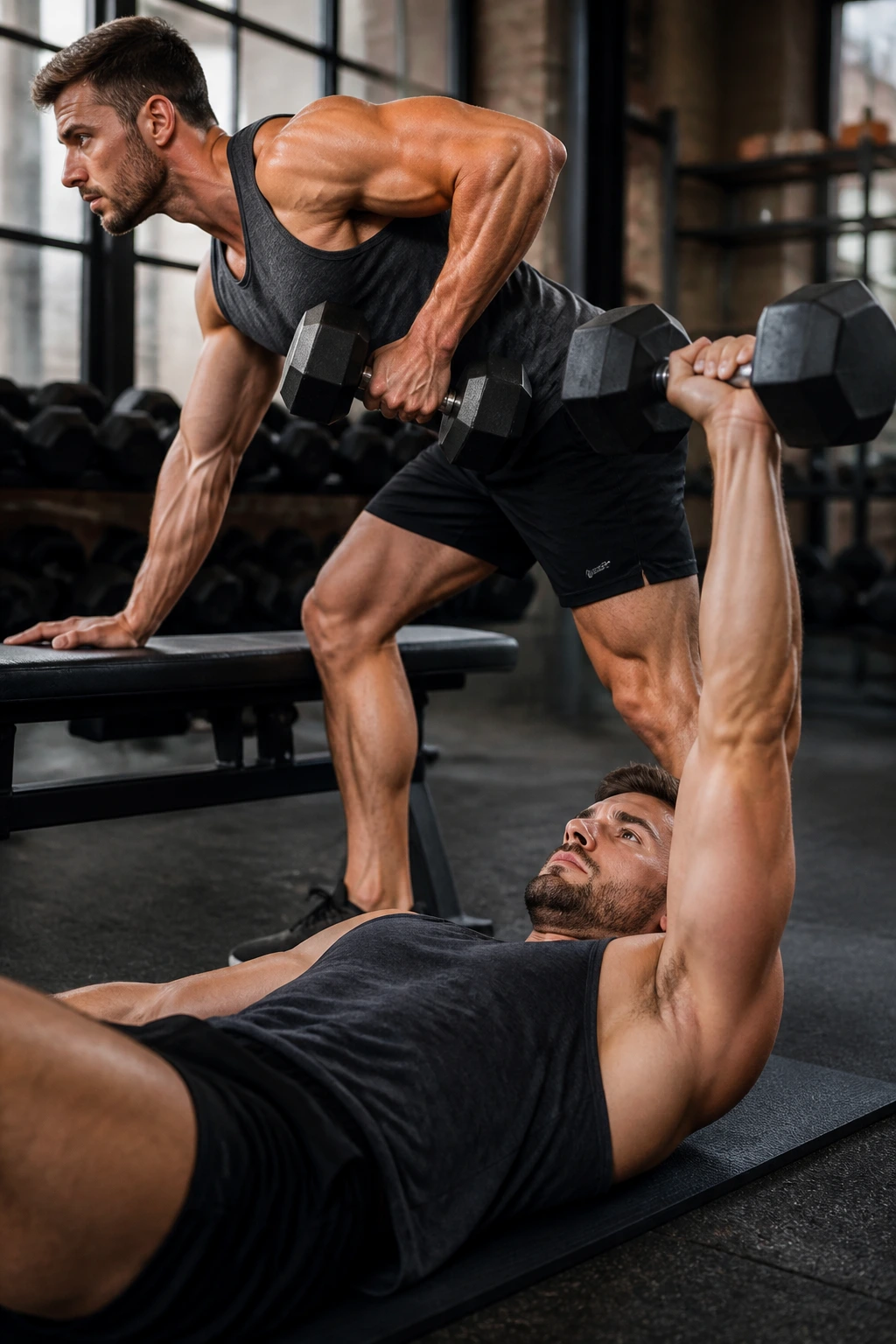
The floor press is an underrated choice for lifters whose shoulders hate deep bench ranges. Because the elbows stop on the floor, you get a slightly shorter motion and a very solid triceps emphasis near lockout. Pair that with a one-arm dumbbell row and you have a sturdy, joint-friendly upper-body superset that still pushes hard.
The row should stay strict. Brace your free hand on a bench, let the working arm hang long at the bottom, then pull the dumbbell toward your hip. A lot of people row toward the chest out of habit, but toward the hip is often better for lat involvement.
Run 3 to 4 rounds of 6 to 10 reps on each move. If your wrists or shoulders get irritated on the floor press, try dumbbells and keep a neutral grip. That small change can make the setup feel much better.
It’s practical, effective, and easy to recover from. That matters more than people like to admit.
18. Lateral Raise + Chest-Supported Rear-Delt Flye
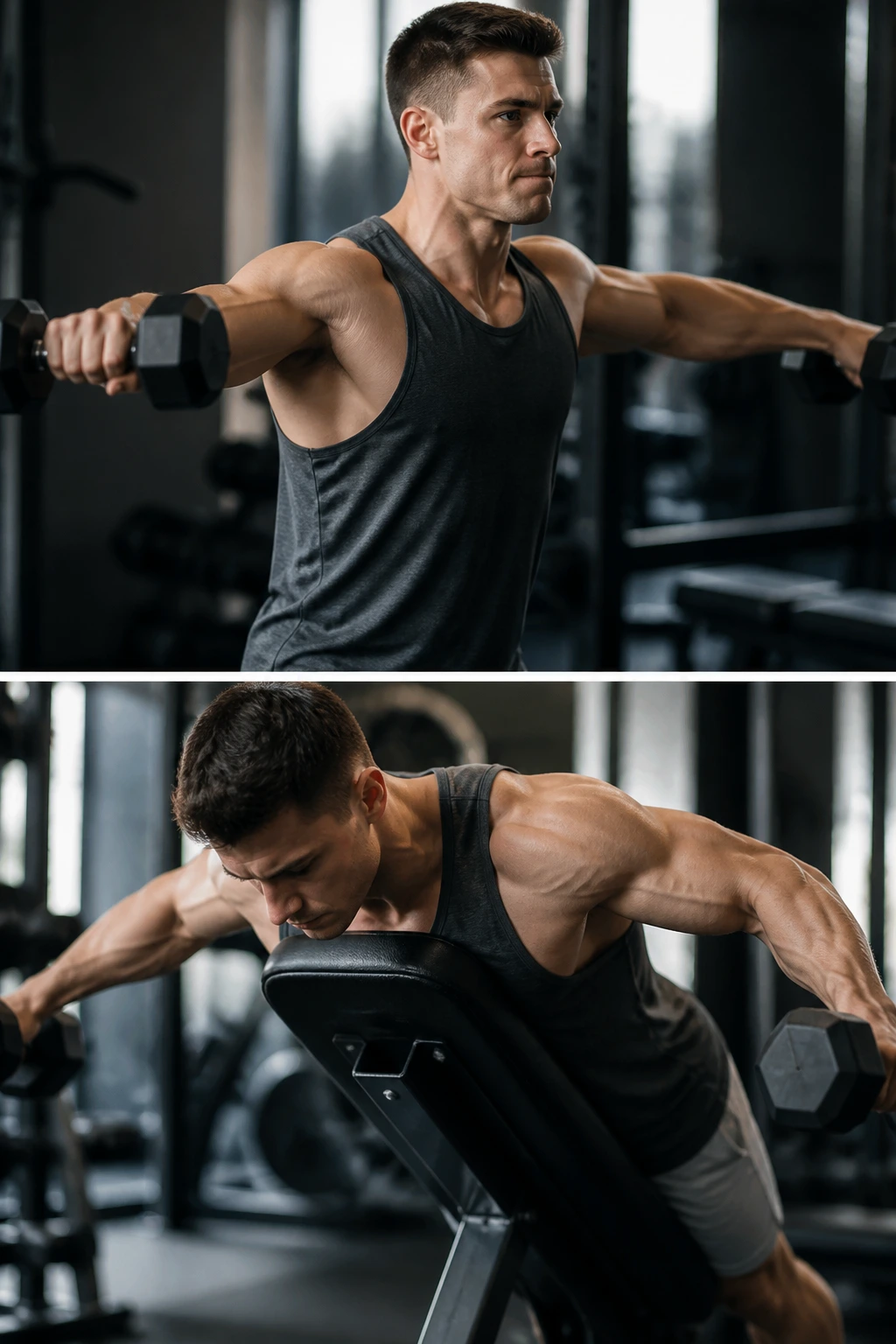
If you want shoulders that look wider from the front and better from the side, this is a clean finishing superset. Lateral raises hit the side delts, and chest-supported rear-delt flyes hit the back of the shoulders without letting the lower back cheat for them.
The biggest mistake on lateral raises is going too heavy and turning the set into a shrug with bent elbows. Keep the dumbbells light enough that you can raise them with control, stop around shoulder height, and lower them slowly. On rear-delt flyes, keep the chest pinned to the pad and let the elbows lead the motion.
Why it’s a smart finisher
- Both moves are low-fatigue compared with presses and pull-ups.
- They respond well to 12 to 20 reps.
- Short rest keeps the shoulders under steady tension.
- The pump is real, and it usually shows.
Do 3 to 5 rounds with 30 to 45 seconds of rest. Burn is part of the job here. If your form gets sloppy, cut the weight before you cut the range.
Final Thoughts
The best upper-body supersets are not random pairings slapped together to save time. They respect the way pressing and pulling share space in the shoulder joint, and they let you train harder without turning the session into a mess.
If you want more muscle, start with the heavier pairs first — bench and row, overhead press and pull-up, dip and chin-up. Then finish with the cleaner isolation work when your joints are warm and your focus is narrower. That order matters more than most people think.
The simplest rule is still the best one: keep the movement quality high, keep the loading honest, and let each pair earn its place. That’s how supersets stop being a trick and start looking like real training.
