



By the third trimester, the wrong workout can feel louder than the right one. Your center of gravity shifts, your ribs may flare, and a move that used to feel easy can suddenly make your pelvis complain before you’re even halfway through the set.
Prenatal workouts for the third trimester work best when they feel steady, supported, and a little boring in the best possible way. No heroics. The point is to keep strength, protect mobility, support circulation, and leave the room feeling more put together than when you walked in.
If your clinician has cleared exercise for your pregnancy, the usual third-trimester rules are plain: keep the effort moderate, keep breathing, avoid overheating, and skip anything that makes you dizzy, crampy, or pressure-heavy. A lot of people do well with a talk test and a target effort around 4 to 6 out of 10. You should be able to speak in short sentences. If not, back off.
A few things belong on the bench. Long flat-on-your-back work if it makes you lightheaded, hard jumping, fast twisting, deep breath-holding, and anything that creates coning down the midline of your belly are all worth treating with caution. Bleeding, leaking fluid, regular contractions, chest pain, severe headache, calf pain, or reduced fetal movement are not “push through it” moments.
Most of the movements below use a wall, a chair, a mat, a resistance band, or a ball. Nothing fancy. That’s part of the charm, honestly. Third-trimester training gets better when it respects the body you actually have, not the one in a generic fitness clip.
1. Wall Squats for Third-Trimester Leg Strength
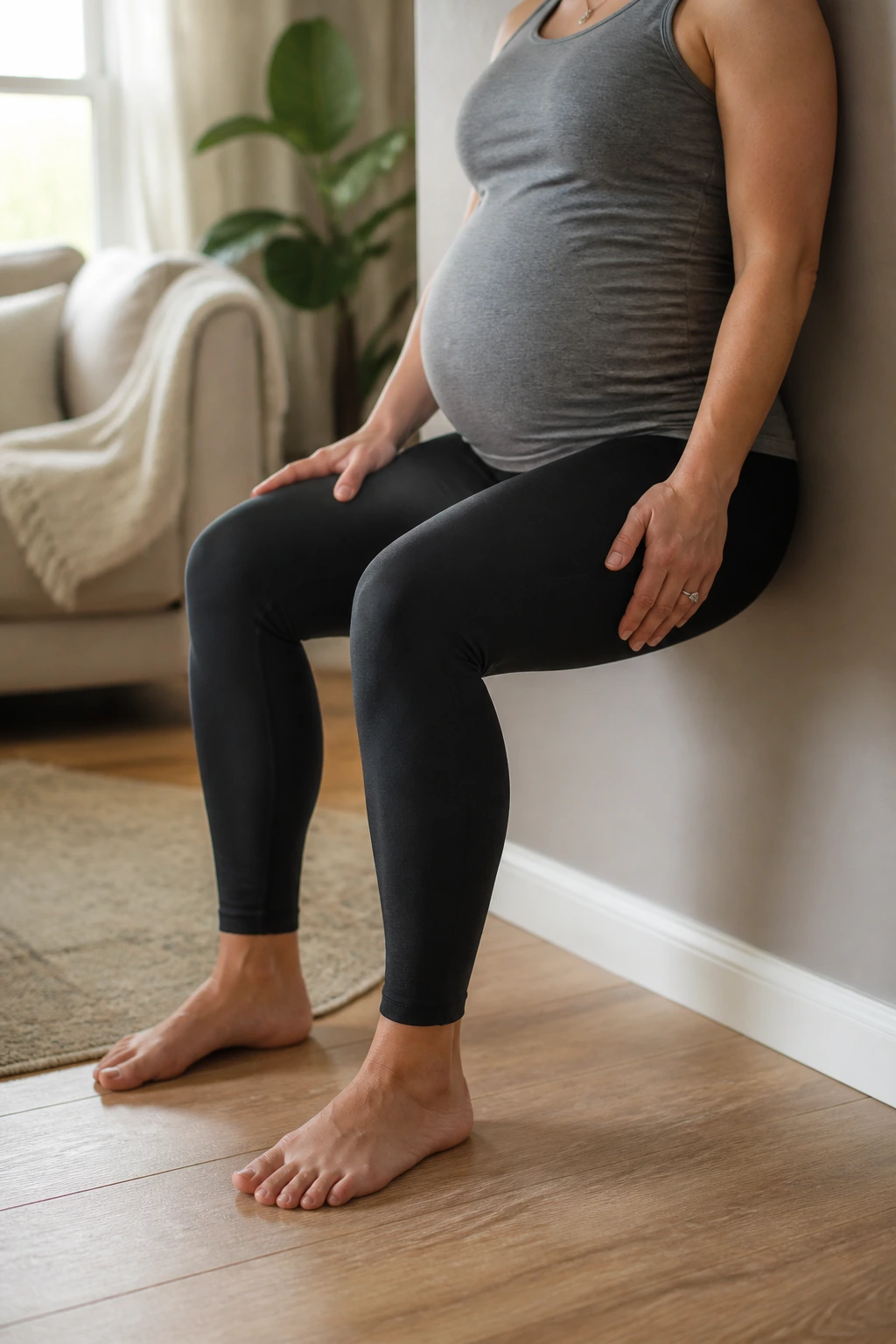
Wall squats are one of the few leg moves that can still feel dependable when your balance starts to wobble. They give you the load of a squat without asking you to manage a lot of body sway, and that matters more than people admit.
They also train the same muscles you use to get out of the car, stand from a low couch, or lower yourself into a chair without doing that awkward half-grab on the armrest. Keep the range small if you need to. Deep is not the goal here.
How to Set It Up
- Stand with your back against a wall or with a yoga ball between your lower back and the wall.
- Walk your feet 12 to 18 inches forward.
- Lower only until your thighs feel loaded but not pinched.
- Exhale as you rise, and keep your knees tracking over your middle toes.
- Do 8 to 12 reps for 2 rounds.
Tip: If you feel pressure low in the pelvis, shorten the depth before you shorten the workout. That tiny adjustment often makes the difference between helpful and irritating.
2. Side Steps With a Mini-Band
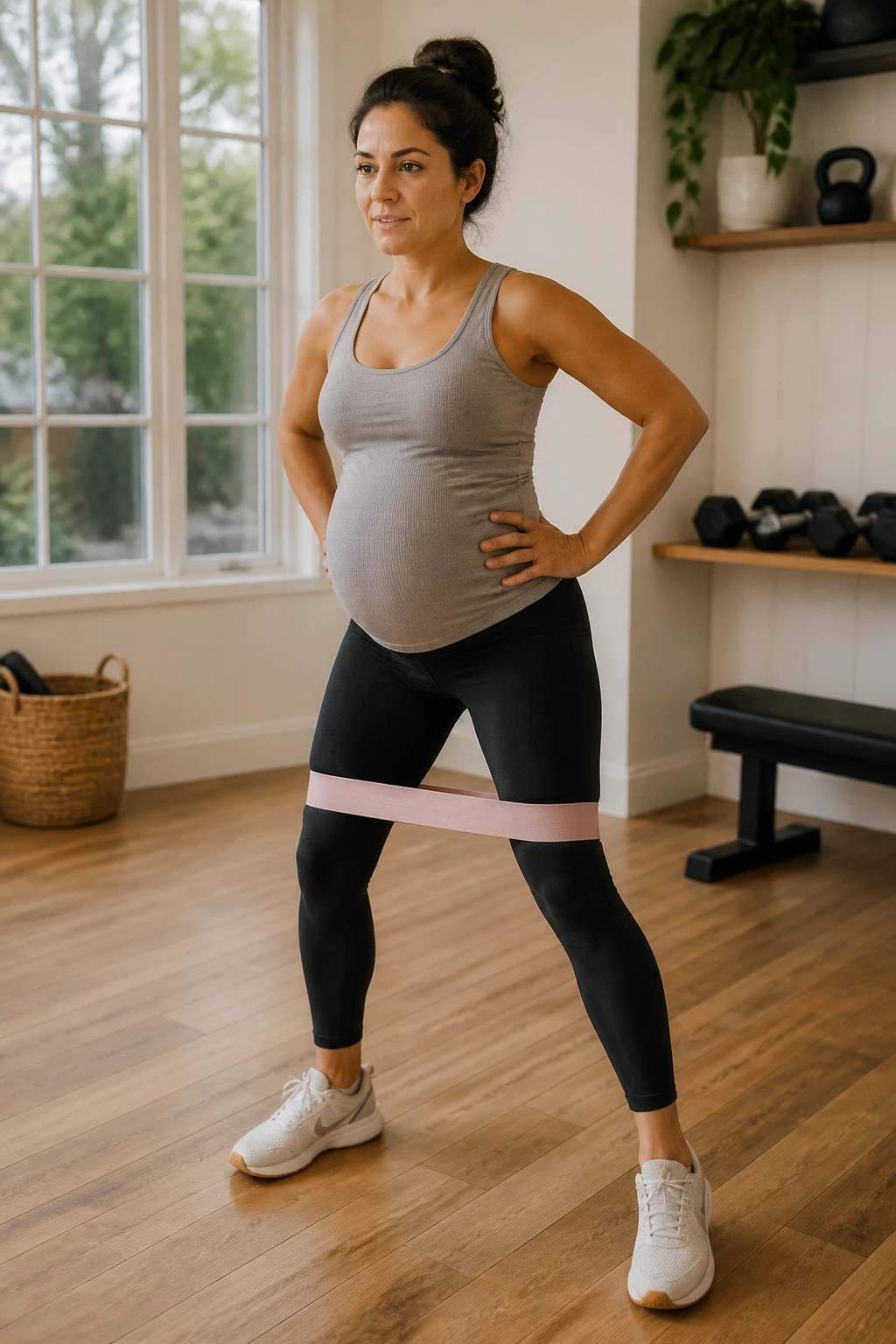
Why do tiny side steps matter this much? Because the muscles on the outside of the hips do a lot of quiet work when your pelvis feels heavy and your gait starts to change.
A mini-band above the knees is the easiest version. Put it at the ankles if you want more challenge, but honestly, above the knees is enough for most third-trimester bodies. The move looks mild. It is not mild to the glutes.
What to Feel
Your torso should stay almost still. If your upper body rocks side to side, the band is probably too heavy or the stance is too narrow.
- Take 8 to 10 steps to the right, then the same to the left.
- Keep a soft bend in the knees.
- Press out gently against the band, not with a jerk.
- Stop before your feet start dragging.
Do two or three passes, and don’t race it. Slow side work is sneaky-good for hip stability.
3. Cat-Cow on Hands and Knees
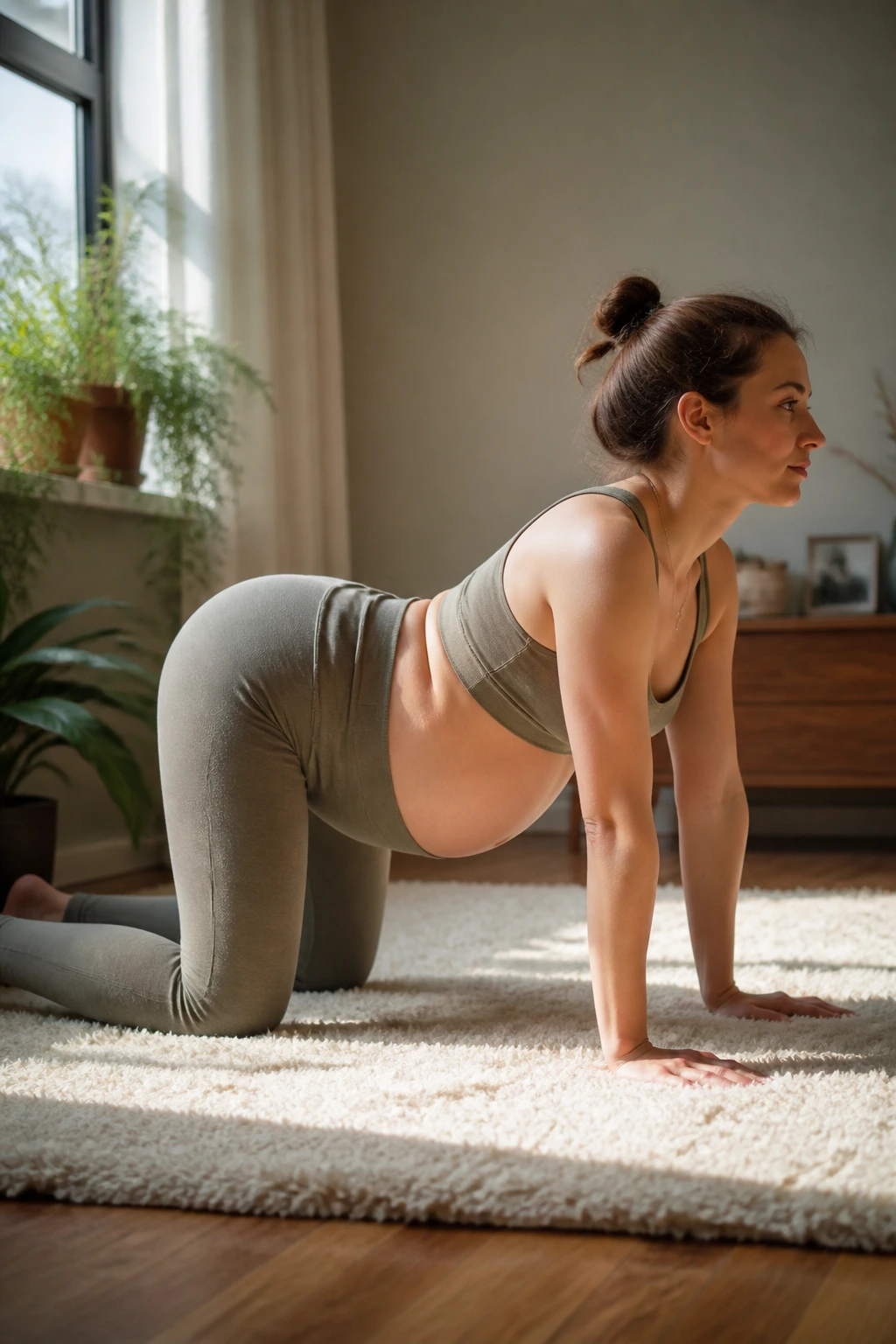
Cat-cow is the move I reach for when the low back feels glued together. It gives the spine some motion without demanding strength, and it usually feels kinder than trying to stretch a sore back into submission.
In the third trimester, this one can be gold for rib mobility too. Inhale and let the chest soften forward. Exhale and round the back gently, almost as if you’re making space between each rib. Go slow.
No drama. No forcing.
If your wrists hate bearing weight, make fists or place your forearms on a bench or the edge of the couch. If your knees need padding, pile on a folded towel. That’s not cheating; that’s smart setup.
Try 6 to 10 slow rounds, then pause and notice how your back feels when you stand. A little looser is the point.
4. Supported Bird Dog
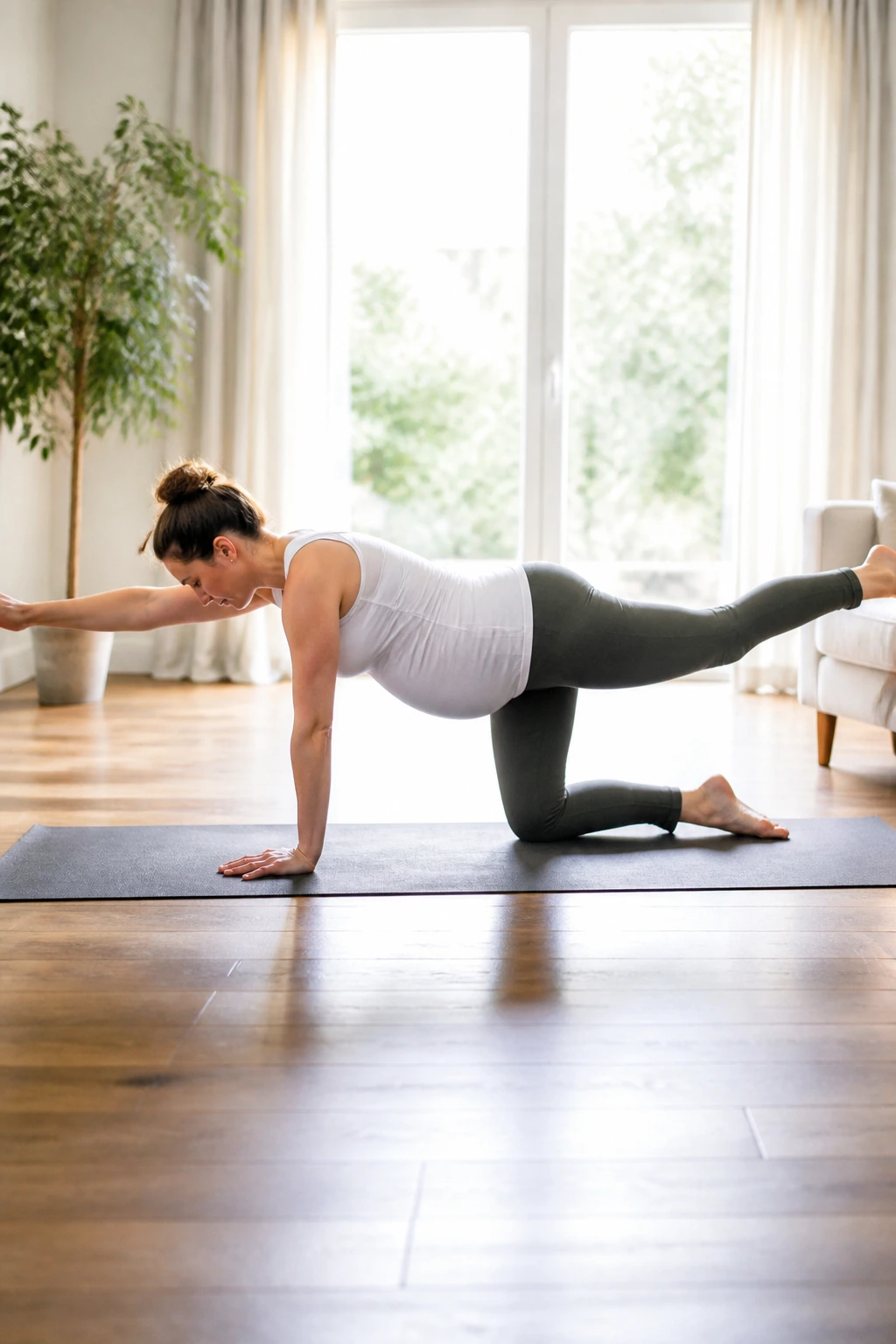
The bird dog looks simple until you try it with a belly in front of you and a pelvis that wants to drift. Then it becomes a very honest exercise.
It trains the deep muscles that keep your trunk steady while your arms and legs move. That matters for lifting groceries, carrying a toddler, or just walking without feeling like your lower back is doing all the work.
Keep It Honest
- Start on hands and knees with hands under shoulders and knees under hips.
- Reach one leg back until it feels long, not high.
- Add the opposite arm only if the first part feels stable.
- Keep your hips level and your ribs soft.
- Hold for 2 to 3 seconds before switching sides.
If the full version feels wobbly, do leg-only reps first. Then arm-only. Then, maybe, both together. No prize for rushing the combo.
One clean rep beats five sloppy ones.
5. Seated Rows for Posture and Upper-Back Strength
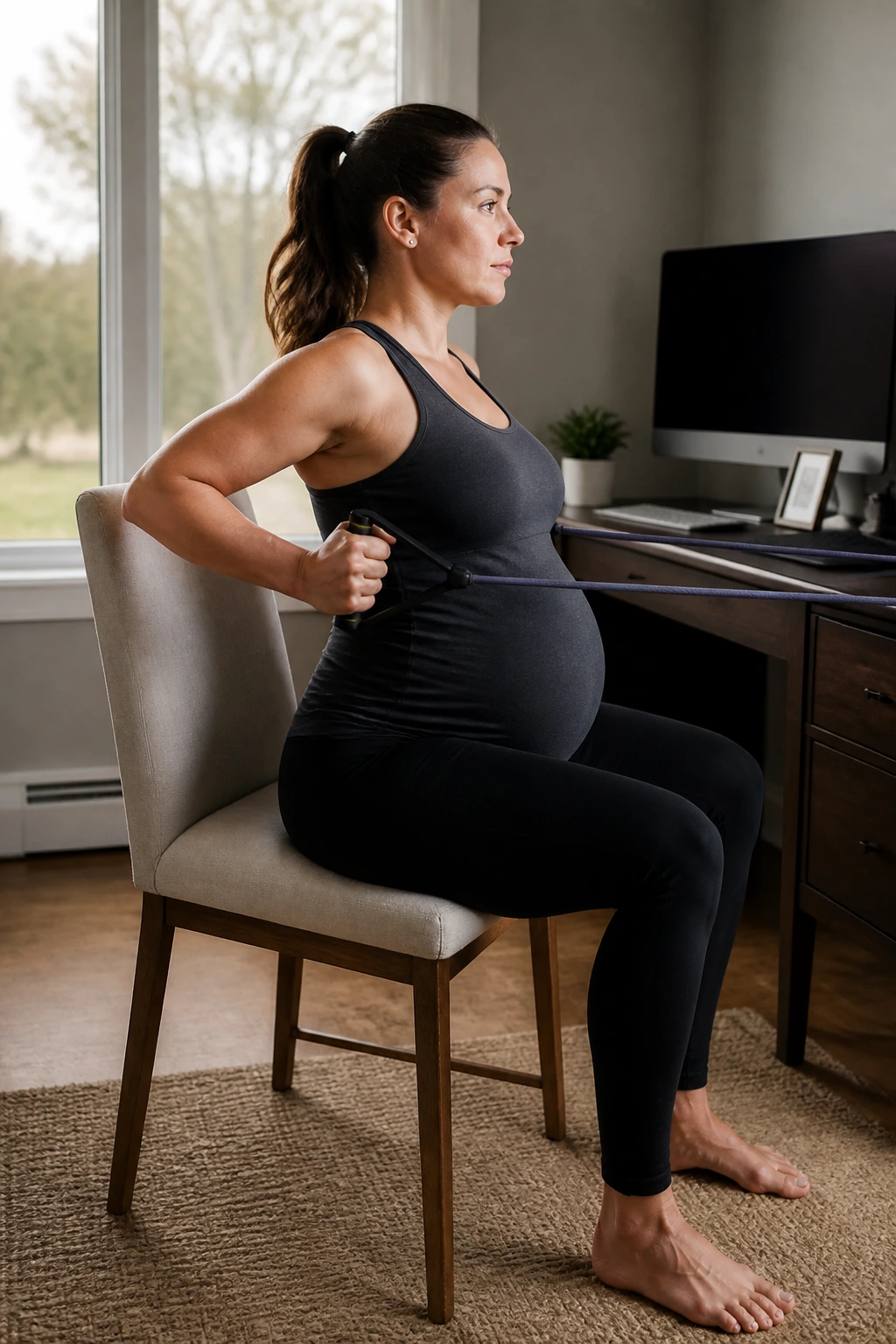
If your shoulders keep creeping up toward your ears, rows belong in your routine. Pregnancy changes posture in a way people rarely warn you about properly, and the upper back often ends up doing extra work just to keep you upright.
A seated row can be done with a resistance band around your feet or a pair of light dumbbells while you hinge a few inches forward from a chair. Pull the elbows back, squeeze between the shoulder blades, and release with control.
Why This One Pays Off
The movement helps balance all the front-loading that happens as your belly grows. It also makes standing and carrying feel less effortful, especially late in the day when your back starts to talk.
- Aim for 10 to 12 reps.
- Keep the neck long.
- Avoid yanking the weight.
- Pause for a beat at the back of the pull.
If your lower back objects, sit taller and reduce the hinge. That usually fixes the problem fast.
6. Wall Push-Ups
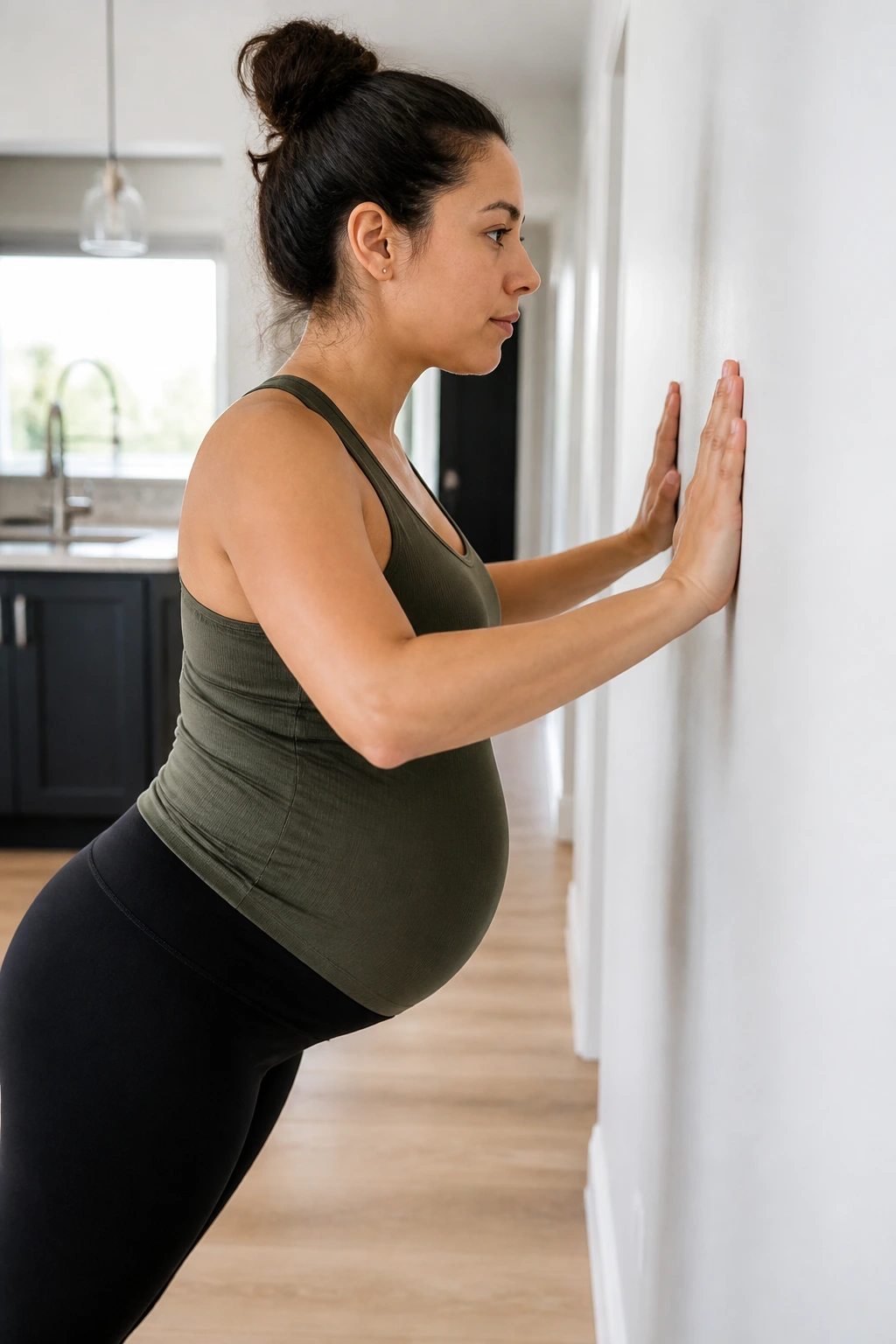
Wall push-ups are not a downgrade. They’re the version that lets you keep pressing without flattening your lower back or fighting your balance.
That matters in the third trimester, because floor push-ups can turn into a messy mix of pressure, breath-holding, and awkward midsection tension. The wall keeps things simple. You still train the chest, shoulders, and triceps, but with a whole lot less fuss.
Stand a little farther from the wall if you want more challenge, closer if you want less. Hands at chest height is the usual setup. Lower with control, stop when your nose or chest is a few inches from the wall, then press away.
You should feel the work in the arms and chest, not in your neck.
If your wrists are tender, widen your hand position a bit. Small adjustment. Big difference.
7. Side-Lying Clamshells
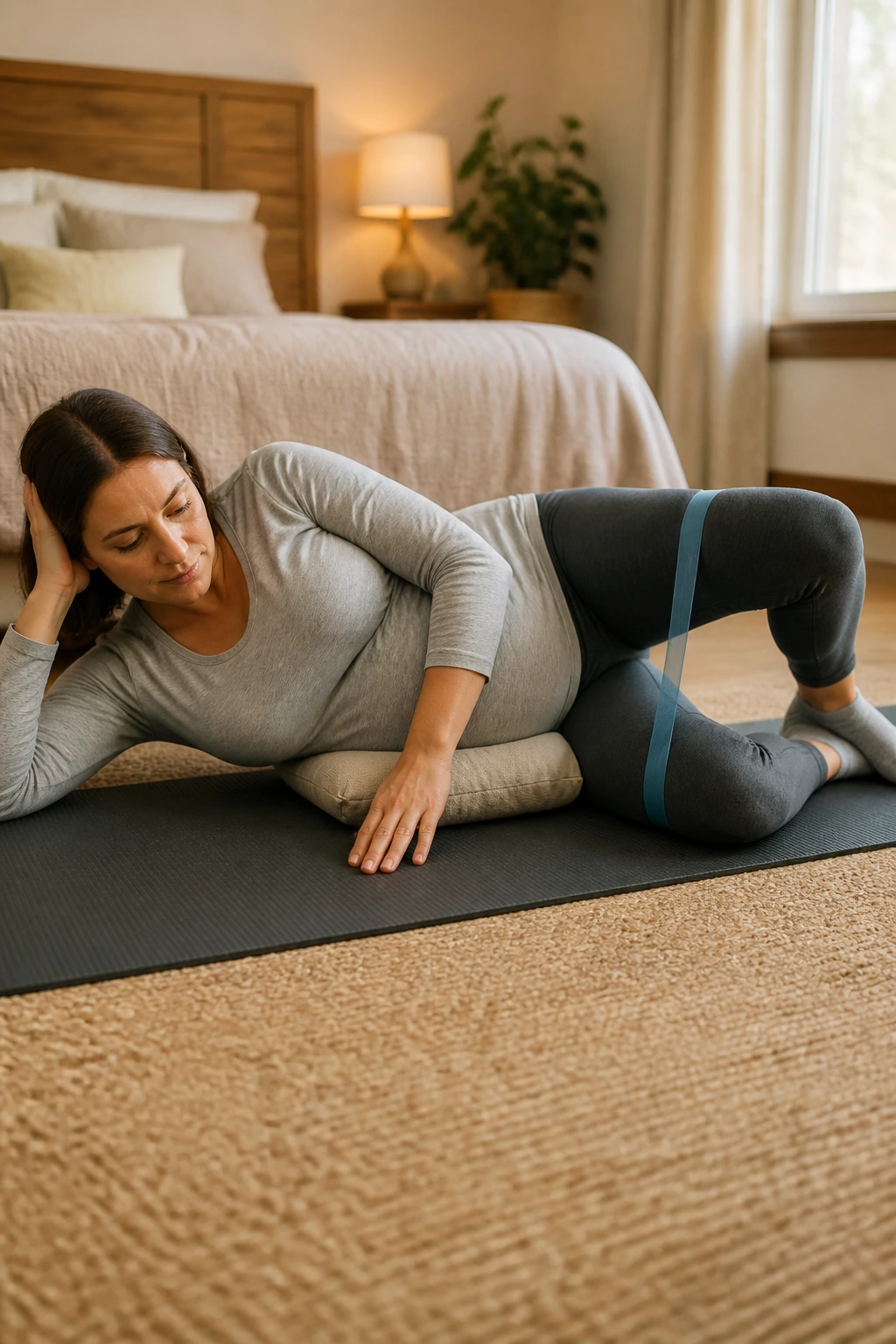
If one hip keeps grumbling while you walk, clamshells are worth your time. They hit the glute medius, which helps steady the pelvis when each step asks one side of the body to carry more of the load.
Lie on your side with knees bent and feet stacked. Keep the hips stacked too. Open the top knee like a clamshell, but don’t roll the pelvis backward to cheat the range. That part matters.
A pillow under the belly or between the knees can make the position feel better, especially later in pregnancy when side-lying starts to feel a little more technical than it should. Do 12 to 15 reps per side.
If bodyweight is easy, add a mini-band above the knees. If that makes the front of the hip pinch, remove the band and keep the cleaner version. Simple wins here.
8. Supported Split Squats for Balance and Leg Strength
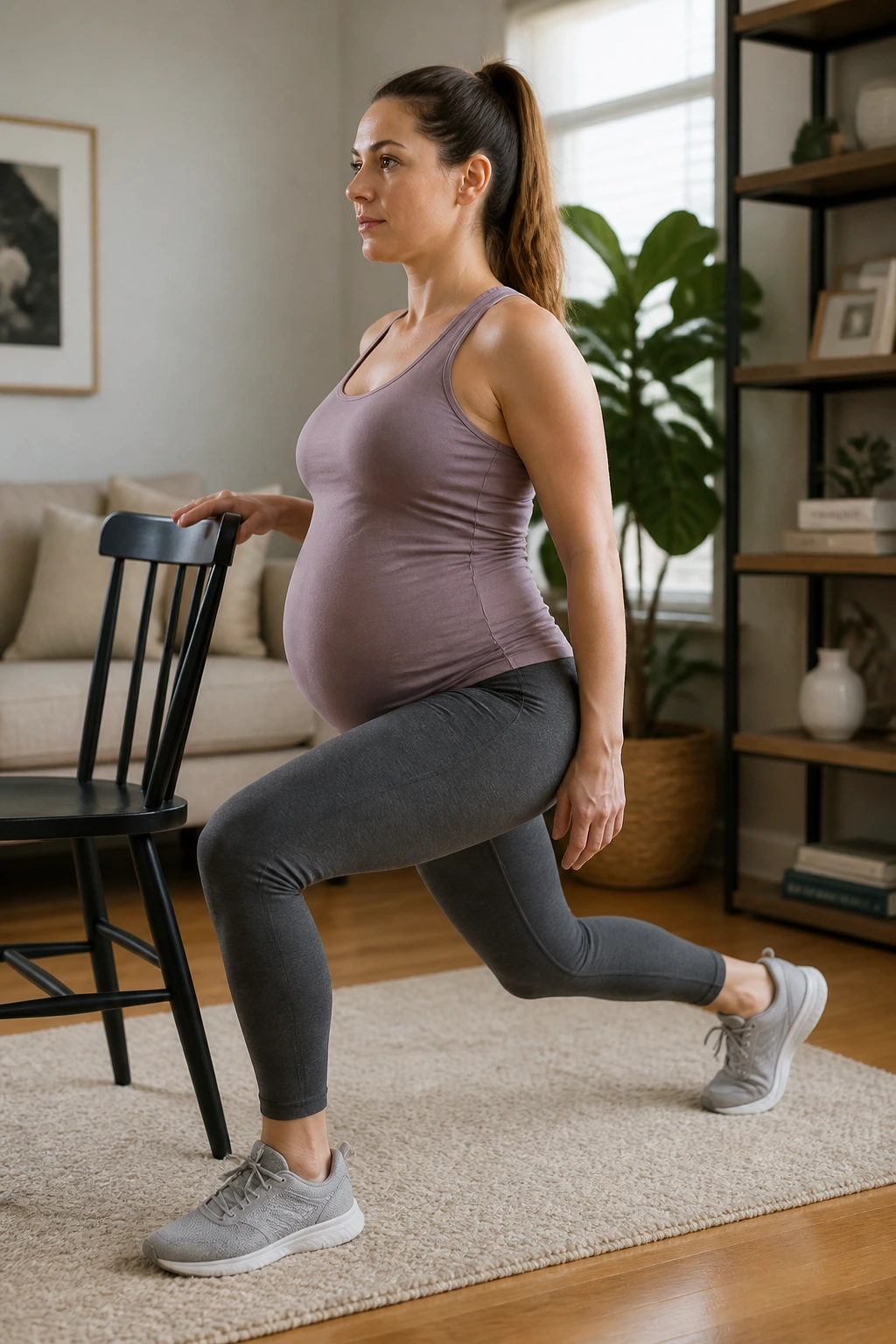
Need single-leg strength without the wobble of a lunge? This is the move.
A supported split squat lets you hold a wall, chair, or countertop while training one leg at a time. The support does two things: it keeps you safer, and it lets you focus on the leg work instead of the balance problem.
How to Make It Feel Better
Take a shorter stance than you would in a gym lunge. Keep the front foot flat, the back heel lifted, and the torso tall. Drop straight down a few inches, then press through the front foot to stand.
- Do 6 to 8 reps per side.
- Keep the range small if your pelvis feels tender.
- Use a chair or wall with one hand.
- Slow the lowering phase. That’s where the work is.
If your groin or pubic bone feels cranky, shorten the stance before you quit the move entirely. That little change often keeps it useful.
9. Standing Hip Hinges With a Wall Cue
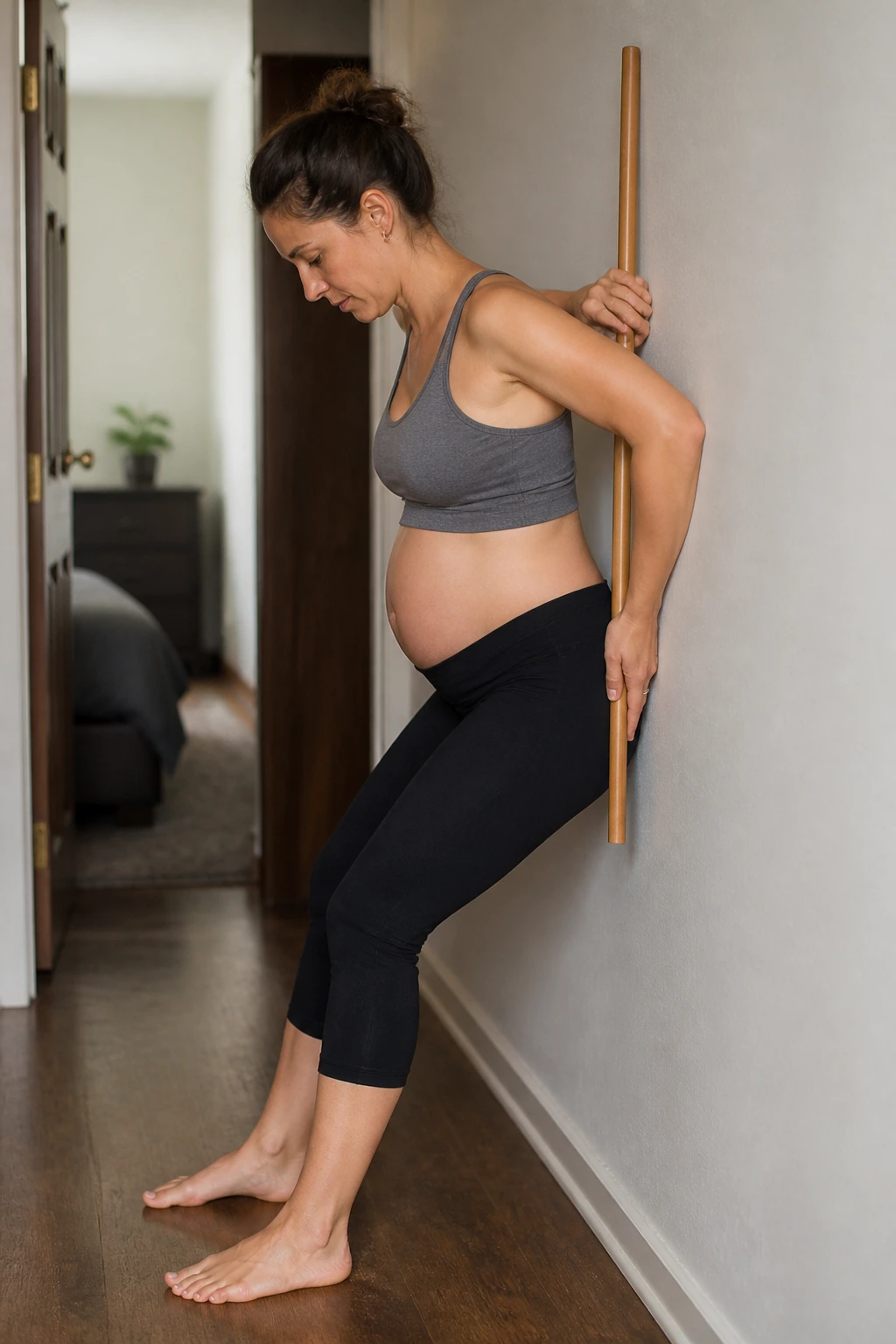
Pick up a laundry basket the same way you’d practice a good hip hinge: hips back, chest long, weight close. That pattern is worth rehearsing before the baby arrives, because it shows up everywhere in real life.
Stand a few inches from a wall with your back toward it. Push your hips back until they tap the wall, then come forward again. Soft knees. Neutral spine. No collapse through the chest.
A dowel held along the head, upper back, and tailbone can help if you’re a visual learner. If all three points stay in touch, the hinge is cleaner.
- Do 8 to 10 slow reps.
- Keep the weight light, or skip weight entirely.
- Stop if you feel pulling in the low back.
- Exhale as you come back up.
This is one of those unglamorous moves that earns its keep later.
10. Low Step-Ups
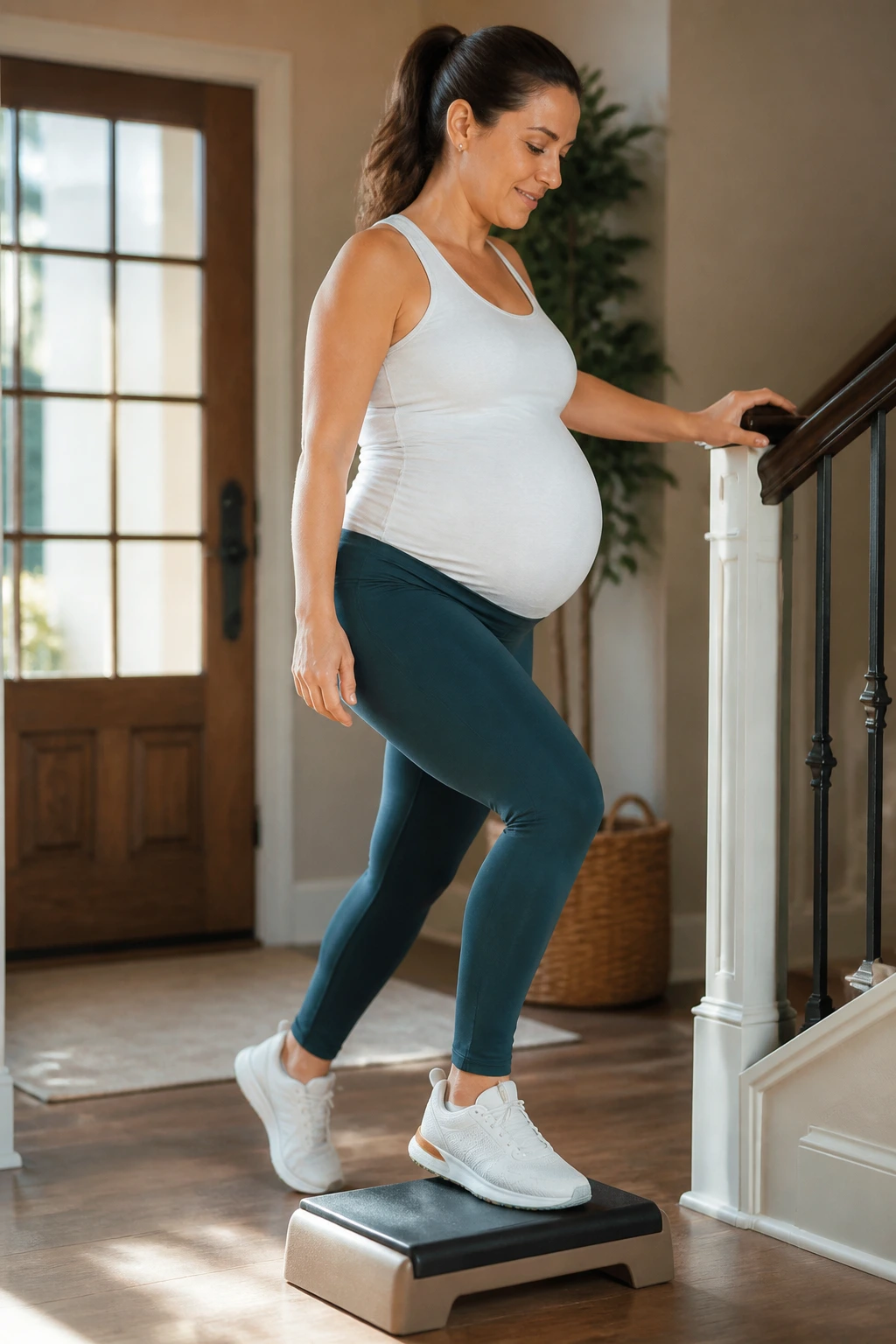
Step-ups are sneaky. They train the exact muscles you need for stairs, curbs, car seats, and every low thing your life still insists on having.
Choose a platform that is low enough to feel stable—think one step, a thick aerobic platform, or the bottom stair. Hold a rail or wall with one hand if balance feels a little off. Step up with control, stand tall, then step down slowly.
The lowering phase matters more than people think. It teaches your hips and thighs to absorb load instead of dumping it into your knees.
- Work for 8 reps on each side.
- Keep your chest stacked over your hips.
- Use a lower step if you feel pelvic pressure.
- Move one foot at a time rather than hopping.
If you catch yourself rushing, slow down. Step-ups get much better when they stop looking like cardio.
11. Marching Intervals in Place
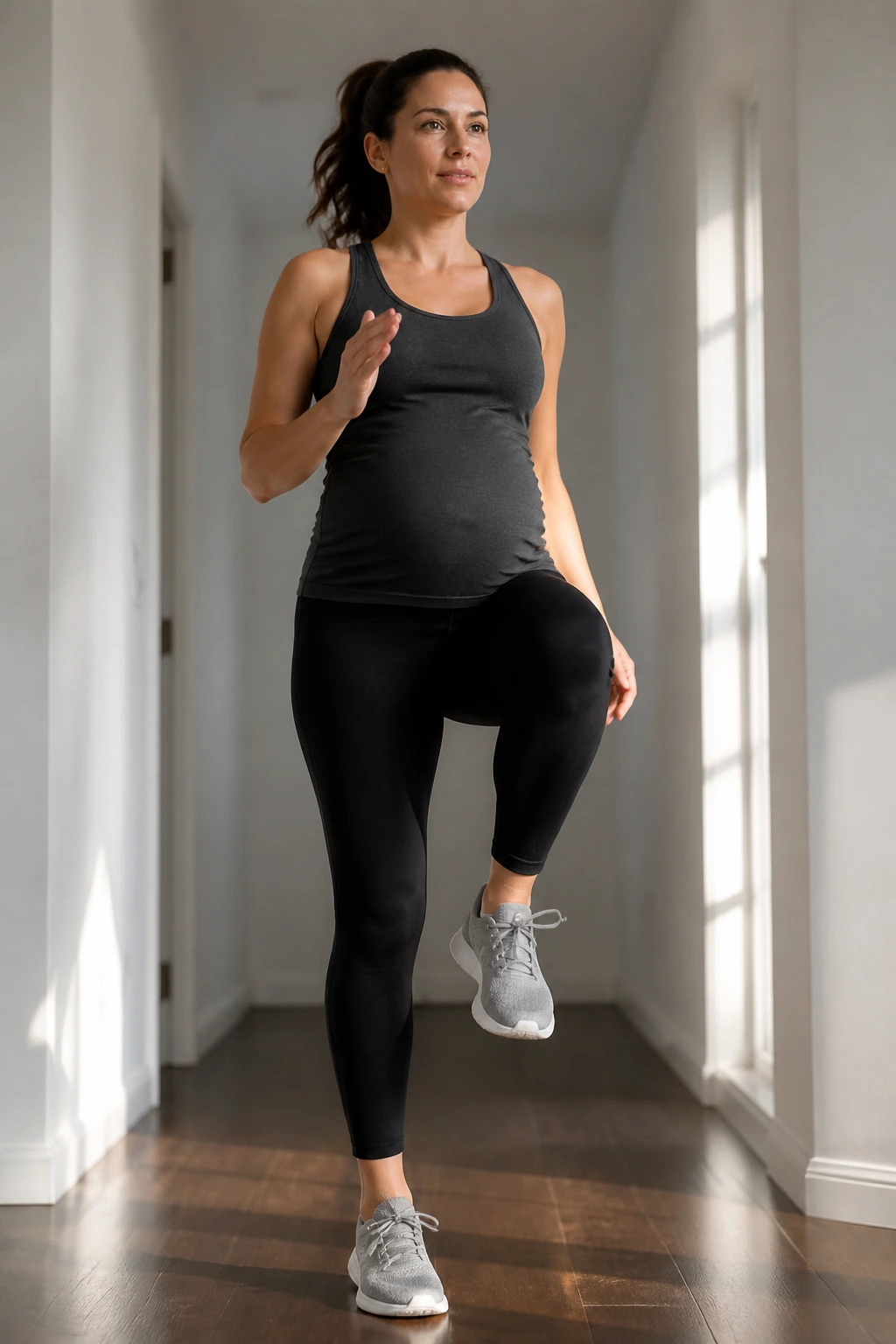
No equipment. No excuses. A hallway works, a living room works, a spot beside the kitchen counter works.
Marching in place is a good third-trimester cardio option when walking outside feels like too much prep or too much weather. Lift one knee at a time, swing the arms naturally, and keep the pace steady enough that you can still talk.
Easy Ways to Structure It
- March for 30 seconds, rest for 30 seconds.
- Or march for 1 minute, then walk slowly around the room for 1 minute.
- Repeat for 8 to 12 minutes.
- Keep your shoulders loose.
If you want more challenge, lift the knees a little higher. If your pelvic floor feels heavy, make the steps smaller and slower. That’s not backing off; that’s adjusting.
12. Calf Raises and Ankle Mobility
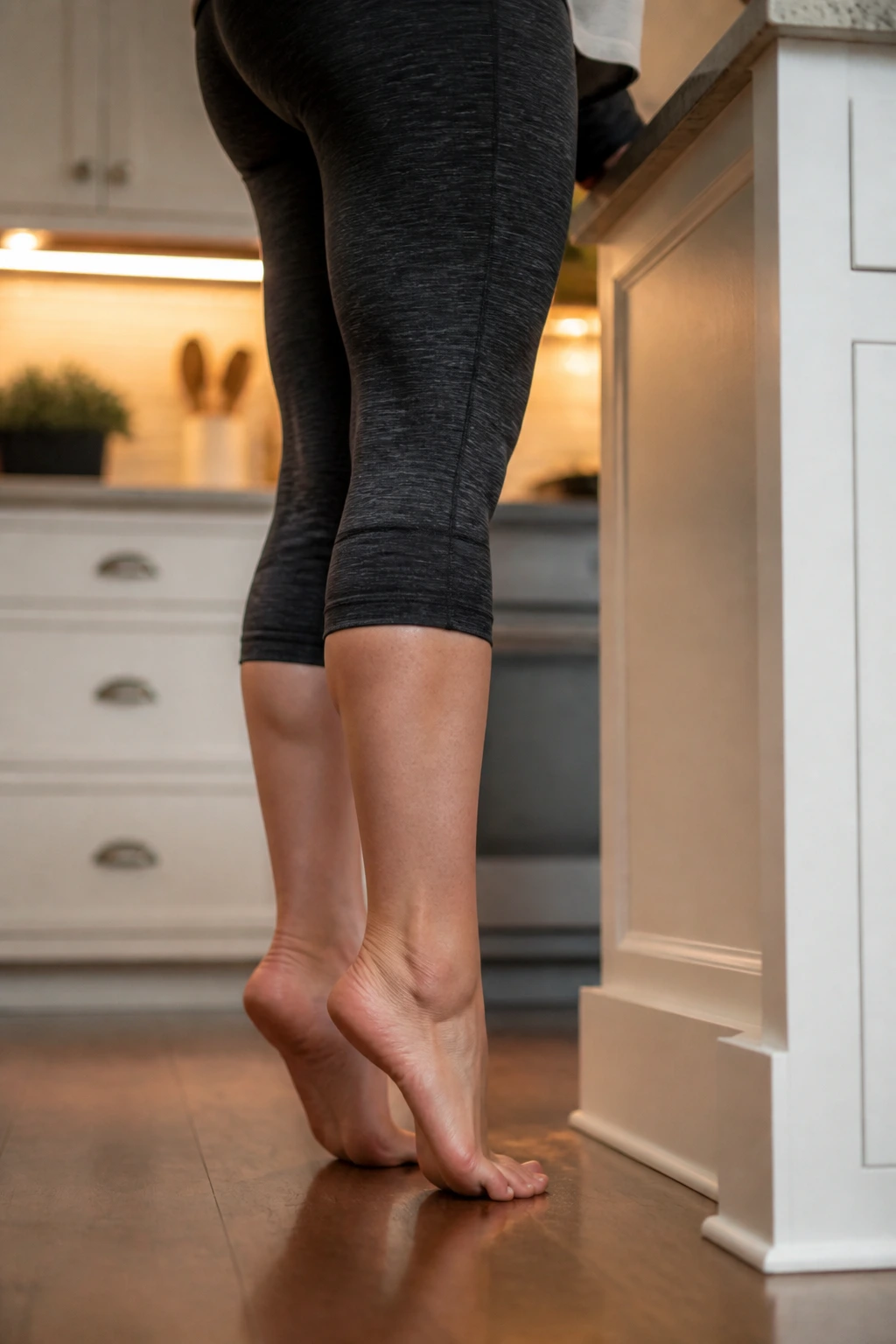
Your feet will notice this one. So will your lower legs, especially if swelling, standing, or a lot of sitting has made your ankles feel stiff and oddly boxed in.
Hold a chair or counter, rise onto the balls of your feet, pause for a second, then lower slowly. After that, add ankle circles and toe lifts. It looks almost too easy. It isn’t, not if you spend a long day on your feet.
Try this small circuit:
- 15 calf raises
- 10 toe lifts
- 10 ankle circles each direction
Do one round in the morning and one later in the day if swelling is a thing for you. The lower legs tend to like regular attention more than heroic sessions.
13. Fitball Circles and Pelvic Mobility
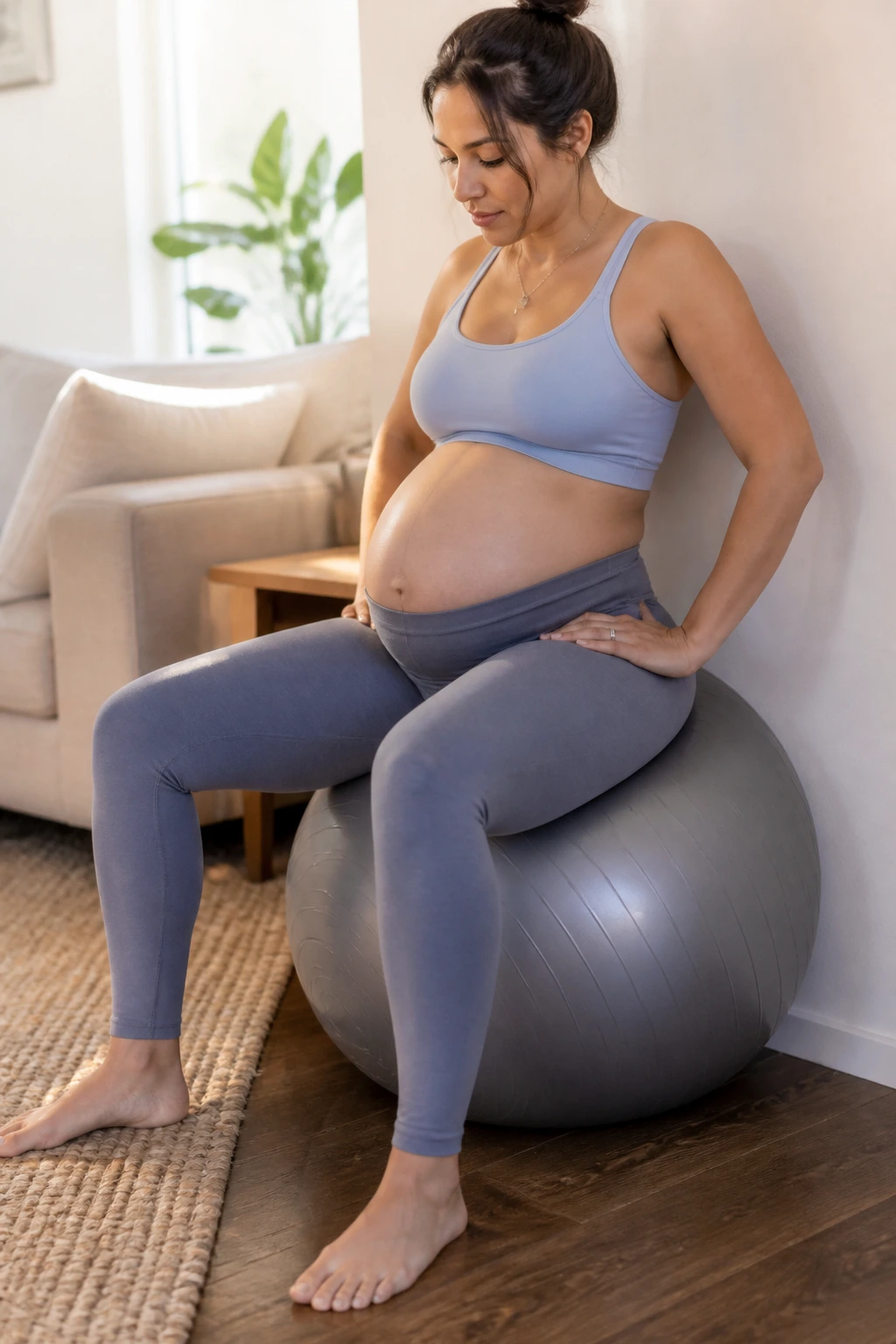
Got a birth ball collecting dust in the corner? Use it.
Sitting on a fitball gives you gentle movement without much impact, and it can feel like a relief on days when standing is annoying and lying down is worse. The trick is to keep the circles small. Big ones turn into a circus act fast.
Sit tall, feet wide enough to feel stable, then make tiny circles with the pelvis. Switch direction after 30 to 45 seconds. You can also rock side to side or do a subtle forward-back tilt.
Keep It Safe
- Keep both feet flat.
- Place the ball against a wall if balance feels sketchy.
- Stay upright through the chest.
- Stop if the motion makes you queasy or pinchy.
This is one of those moves that works best when you almost underdo it.
14. Prenatal Yoga Side Stretch Flow
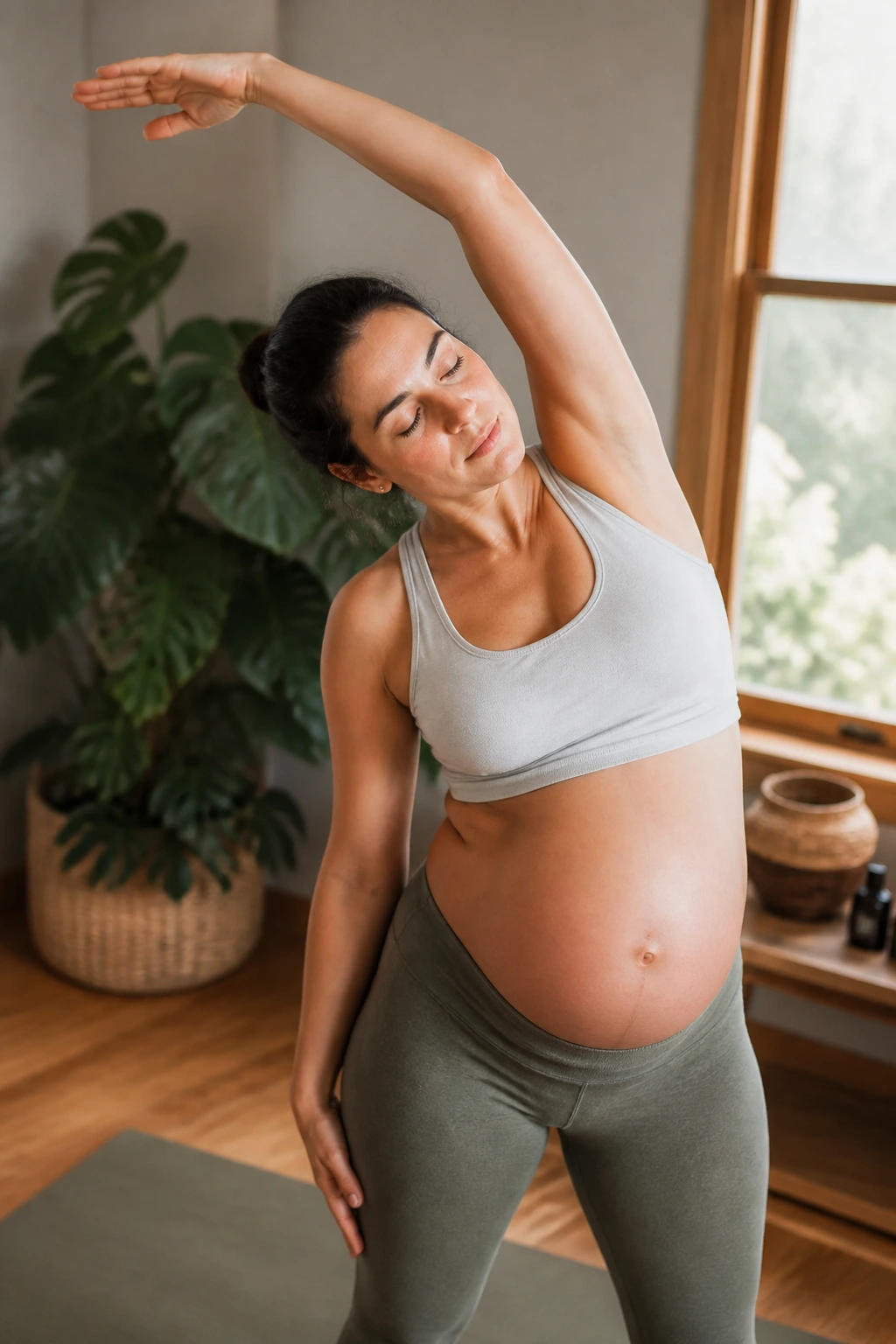
Some days the body wants length more than strength. This is the day for a soft flow that opens the sides of the ribs, eases the waist, and stops just short of anything twisty or intense.
A simple sequence works well: stand tall, raise one arm overhead, lean gently to the opposite side, switch sides, then move into a wide-knee child’s pose if it feels good for your belly and knees. A half-lunge with hands on a chair can come next.
No hot room. No deep binds. No contortion stuff.
Use slow breaths and let the ribs expand sideways. That space can feel surprisingly good when your bra band and belly have been arguing with each other all day. If child’s pose feels cramped, skip it and stay with the standing side reach.
15. Diaphragmatic Breathing and Pelvic Floor Drop

This is the workout people skip, then wish they hadn’t.
Diaphragmatic breathing trains the rib cage, the diaphragm, and the pelvic floor to move together instead of acting like they’re in separate rooms. That coordination matters in pregnancy, labor prep, and plain old comfort. It’s also one of the few things you can do on a tired day without needing a single piece of gear.
How to Practice It
- Sit upright or lie on your side.
- Place one hand on the ribs and one on the belly.
- Inhale through the nose for 4 counts, letting the ribs widen.
- Exhale slowly through the mouth for 6 counts.
- Think about the pelvic floor softening on the inhale, not clenching.
Do 5 breaths for 3 rounds.
If you already carry a lot of pelvic-floor tension, keep the focus on the breathing and relaxation rather than any active squeeze. The release matters.
16. Upright Stationary Bike Sessions
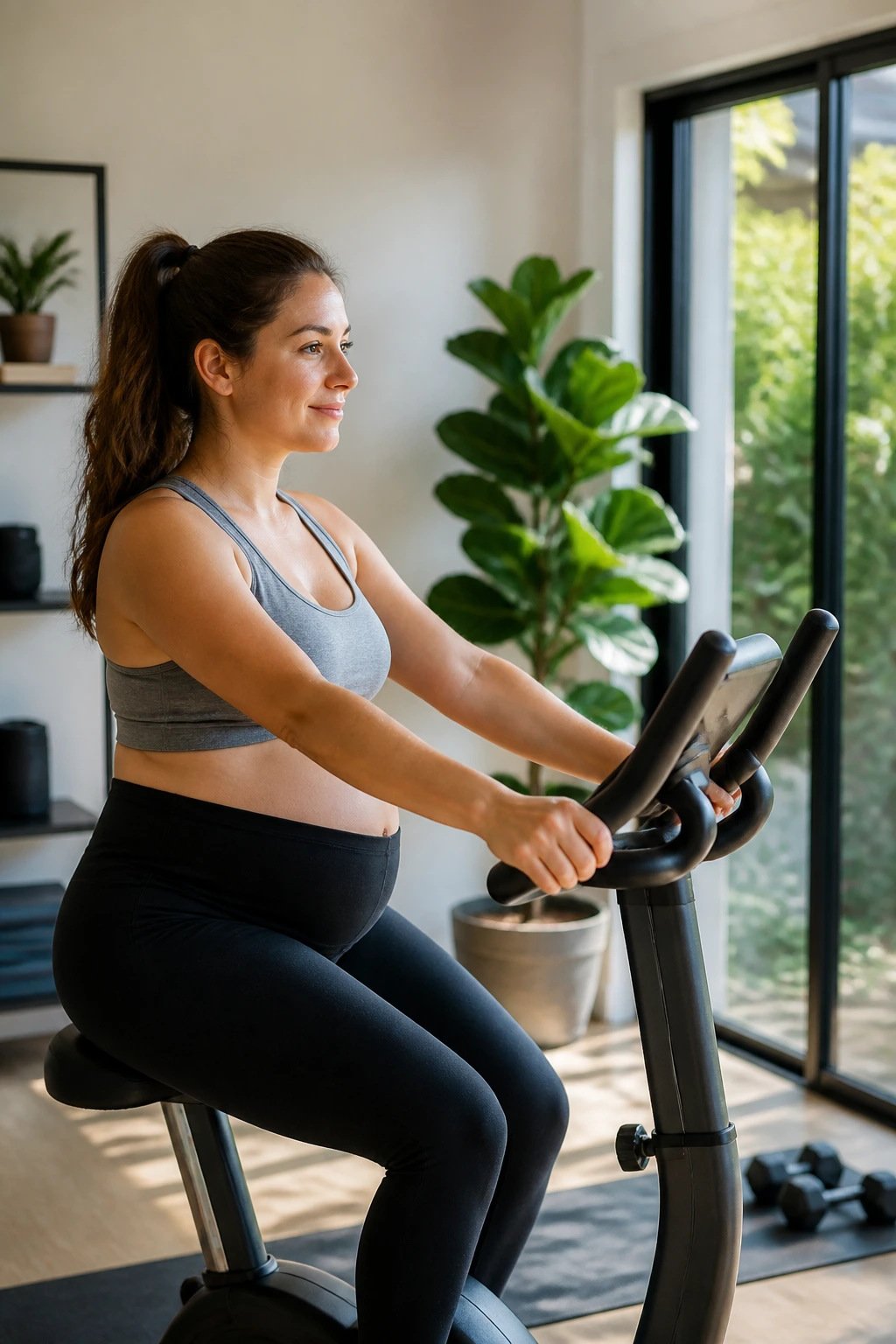
A bike can be a gift in the third trimester, especially when walking feels fine at first and then suddenly feels long. The seated position supports your weight, and the motion is steady enough to keep your heart rate up without a lot of impact.
Set the seat high enough that your knees stay slightly bent at the bottom of the pedal stroke. Keep the handlebars close enough that you’re not curling your spine forward. If your belly touches the bars or you feel compressed, the setup is wrong.
Aim for 10 to 20 minutes at an easy-to-moderate pace. A light sweat is fine. Breathless and strained is not.
If your pelvis feels okay, keep the cadence smooth. If you get bouncing or rocking, lower the resistance and shorten the session.
17. Water Walking or Aquatic Aerobics
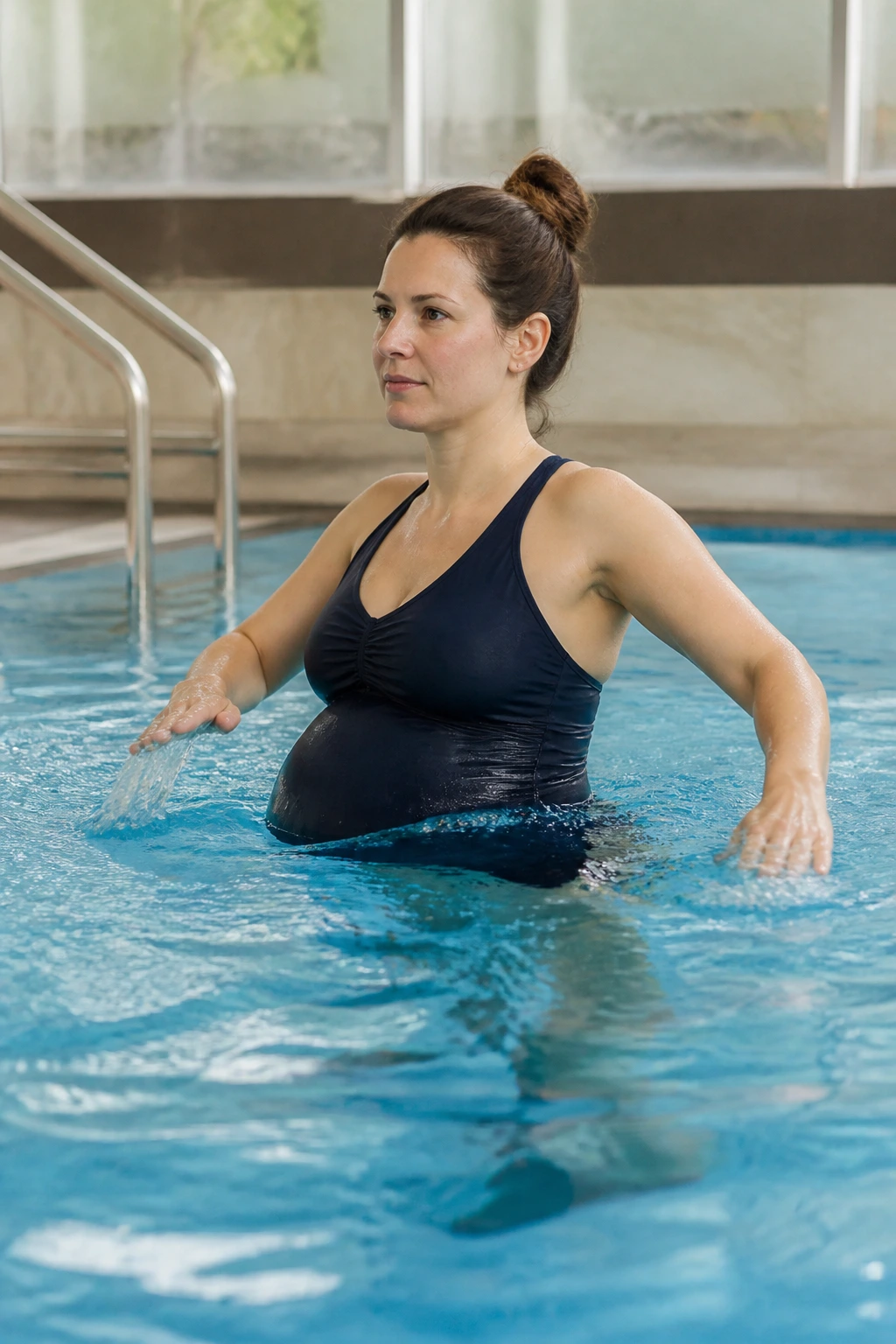
The pool changes the whole equation.
Water takes load off the joints, supports the belly, and can make movement feel possible on a day when land-based exercise feels clunky. It also helps some people with swelling, because the water pressure itself feels like a gentle hug around the lower legs.
Walk forward, then sideways, then backward if the pool space allows. You can add gentle arm sweeps or leg lifts, but keep the motions controlled. The goal is steady work, not splashy chaos.
- Spend 15 to 30 minutes in the water.
- Stay near a rail or shallow area if balance is shaky.
- Move slowly on wet surfaces outside the pool.
- Exit with care; slick decks are rude.
If you have access to a warm, comfortable pool, this one can be a favorite.
18. Band Pull-Aparts and Wall Angels
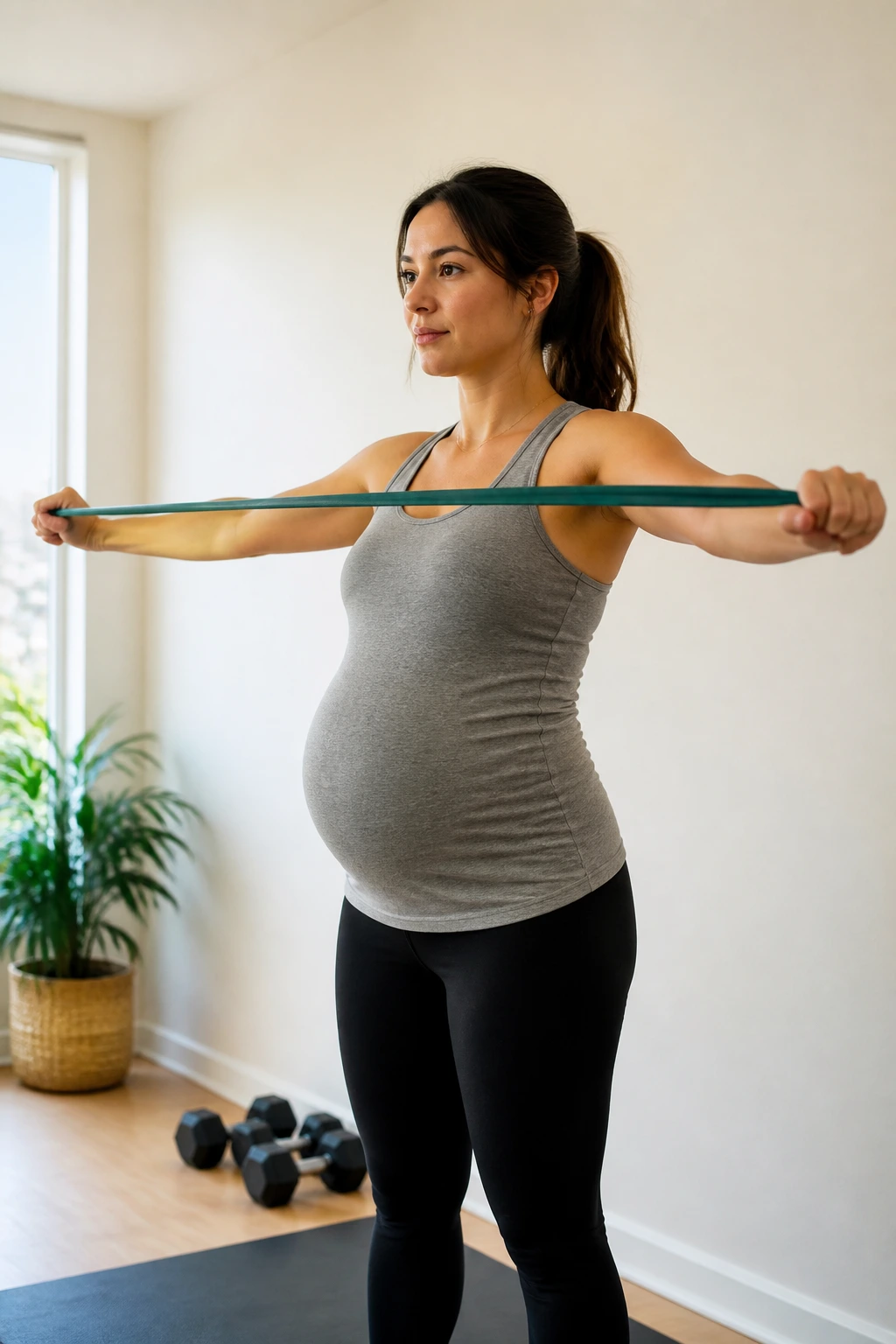
Upper-back work gets ignored because it looks small. The shoulders know better.
Band pull-aparts and wall angels help counter the rounded, forward-pulled posture that can show up when the belly grows and the upper body starts compensating. They’re not flashy. They do not need to be.
For band pull-aparts, hold a light band at chest height and pull it apart until the shoulder blades come together gently. For wall angels, stand with your back against the wall and slide the arms up and down only as far as you can keep the ribs from flaring.
Keep the motion clean, not big.
A good dose is 10 to 15 reps of each. If your back arches hard during wall angels, the range is too large. Shrink it. The smaller version usually works better anyway.
19. Elevated Dumbbell Deadlifts for Posterior-Chain Strength
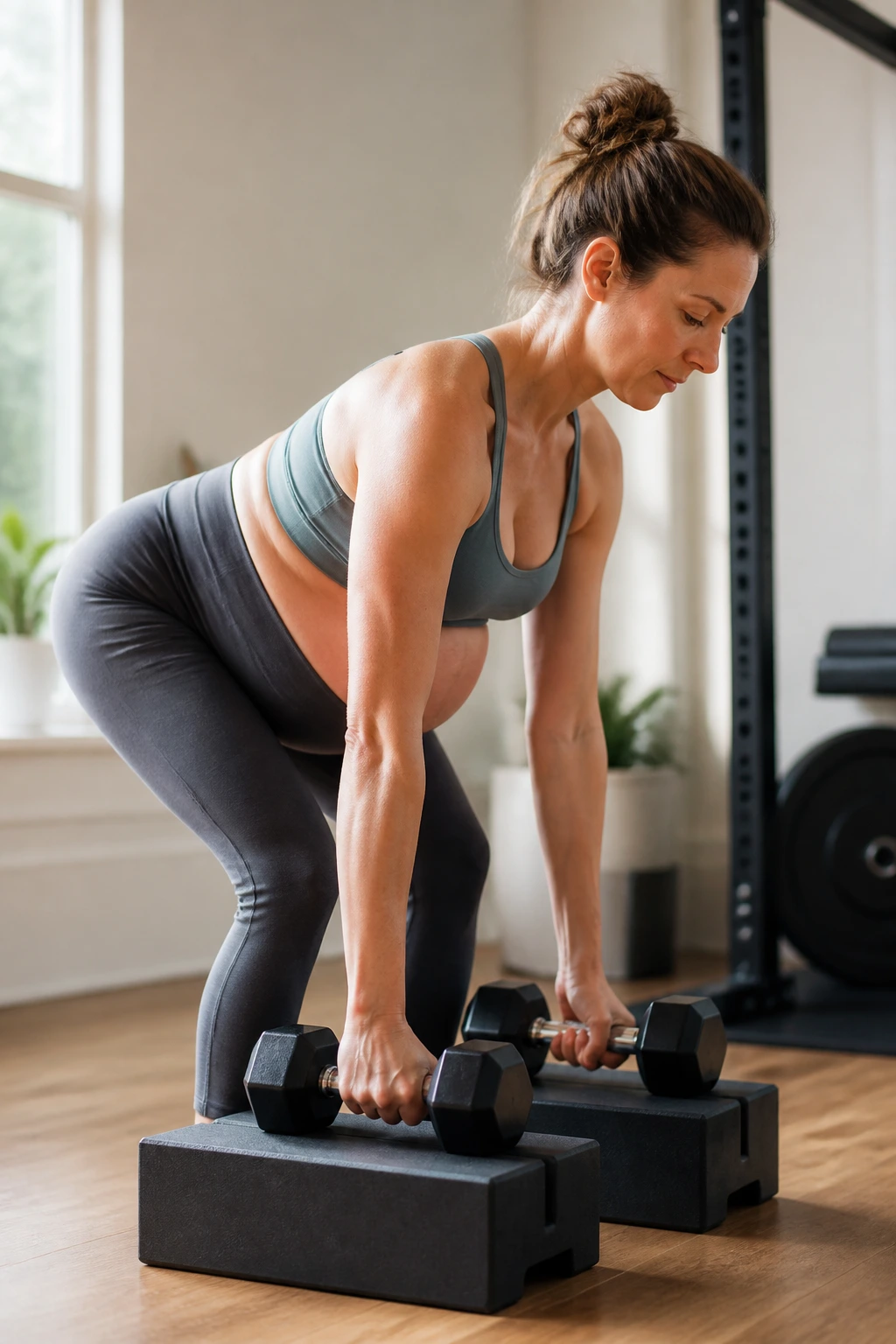
Want a strength move that still feels like it belongs in real life? Deadlifts do that.
Use light dumbbells set on blocks, books, or a low bench so you don’t have to reach too far to start. Hinge at the hips, keep the spine long, grab the weights, and stand by driving the floor away. Lower with control. The motion should feel like a strong hip hinge, not a back lift.
What to Watch For
- Keep the weights close to the legs.
- Avoid rounding through the upper back.
- Stop if your belly feels pressed or unsupported.
- Use a very light load and 6 to 8 reps if you’re new to the pattern.
The posterior chain matters more in pregnancy than many people expect. Glutes and hamstrings help with stairs, posture, and the slow grind of daily movement. This move earns its place.
20. Farmer Carry Walks for Third-Trimester Posture
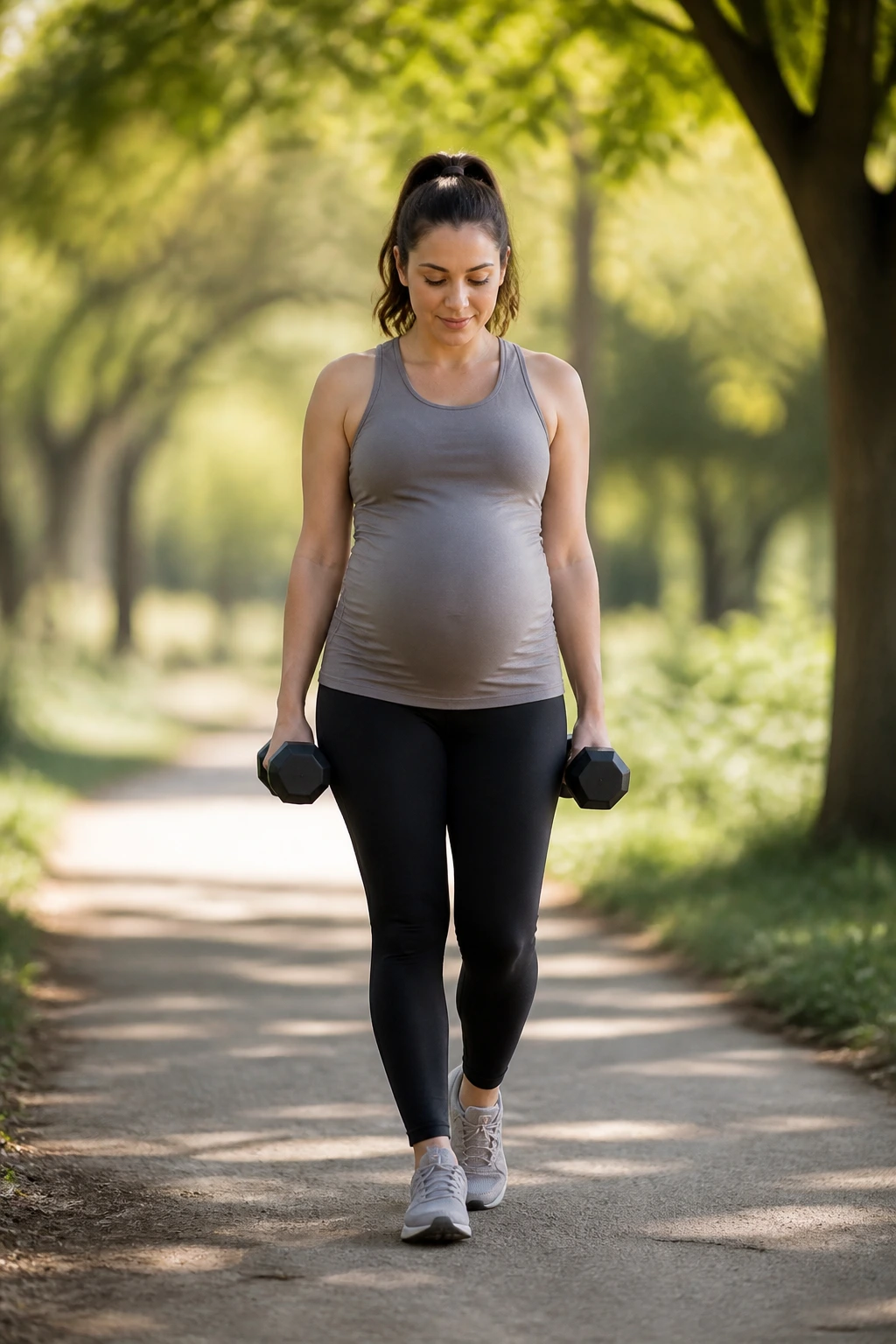
Carrying light weights while you walk is more useful than half the fancy ab work people do.
Farmer carries train grip, posture, and trunk control at the same time. They also feel almost suspiciously practical, which is part of why I like them. If carrying groceries, laundry, or a diaper bag is part of your life, this movement makes sense.
Pick up two light dumbbells or kettlebells and walk slowly for 20 to 40 seconds. Stand tall, keep the ribs stacked over the pelvis, and let the shoulders stay down. If a two-sided carry feels fine, keep it. If not, use one weight at a time and switch sides.
- Try 2 to 4 rounds.
- Keep the steps small and smooth.
- Stop before your grip gets sloppy.
- If your hands swell, use lighter weights and shorter carries.
It’s a simple move. It also happens to be a good one.
Final Thoughts
The best third-trimester routine usually looks less dramatic than people expect. A leg move, an upper-back move, one bit of cardio, one mobility drill, and something that helps you breathe well is enough for a lot of days.
You do not need to crush yourself to stay strong. You need workouts that respect the way the body changes when the belly gets bigger, the joints get looser, and the margin for nonsense gets smaller.
If a session leaves you feeling compressed, breathless, or shaky, that’s useful information. Pick the chair, the wall, the band, the pool, or the bike that makes the work feel steady again, then keep going from there.
