



The oven is full, the table is crowded, and the only open floor space in the house might be the patch of rug by the sofa. That is exactly where holiday workouts at home earn their keep. You do not need a perfect setup. You need a little room, a timer, and enough nerve to start before your brain talks you out of it.
I like this kind of training because it solves the real holiday problem: not laziness, not lack of discipline, just chaos. Travel, rich meals, bad sleep, odd schedules, kids underfoot, relatives in the kitchen, rain on the walk you planned to take — it all adds up. A home workout gives you a clean answer when your day has none.
The best part is that home workouts do not have to be long to matter. Ten minutes can wake up your legs. Fifteen minutes can leave you breathing hard. A short mobility session can fix that awful stiff-neck feeling you get after too much couch time and too many hours hunched over a phone.
Pick the option that fits the day you actually have. Some days call for a sweat session, some days call for a lower-impact reset, and some days need a fast little circuit that gets you moving before the rest of the house notices. Start with the simplest one and build from there.
1. 10-Minute Bodyweight Reset
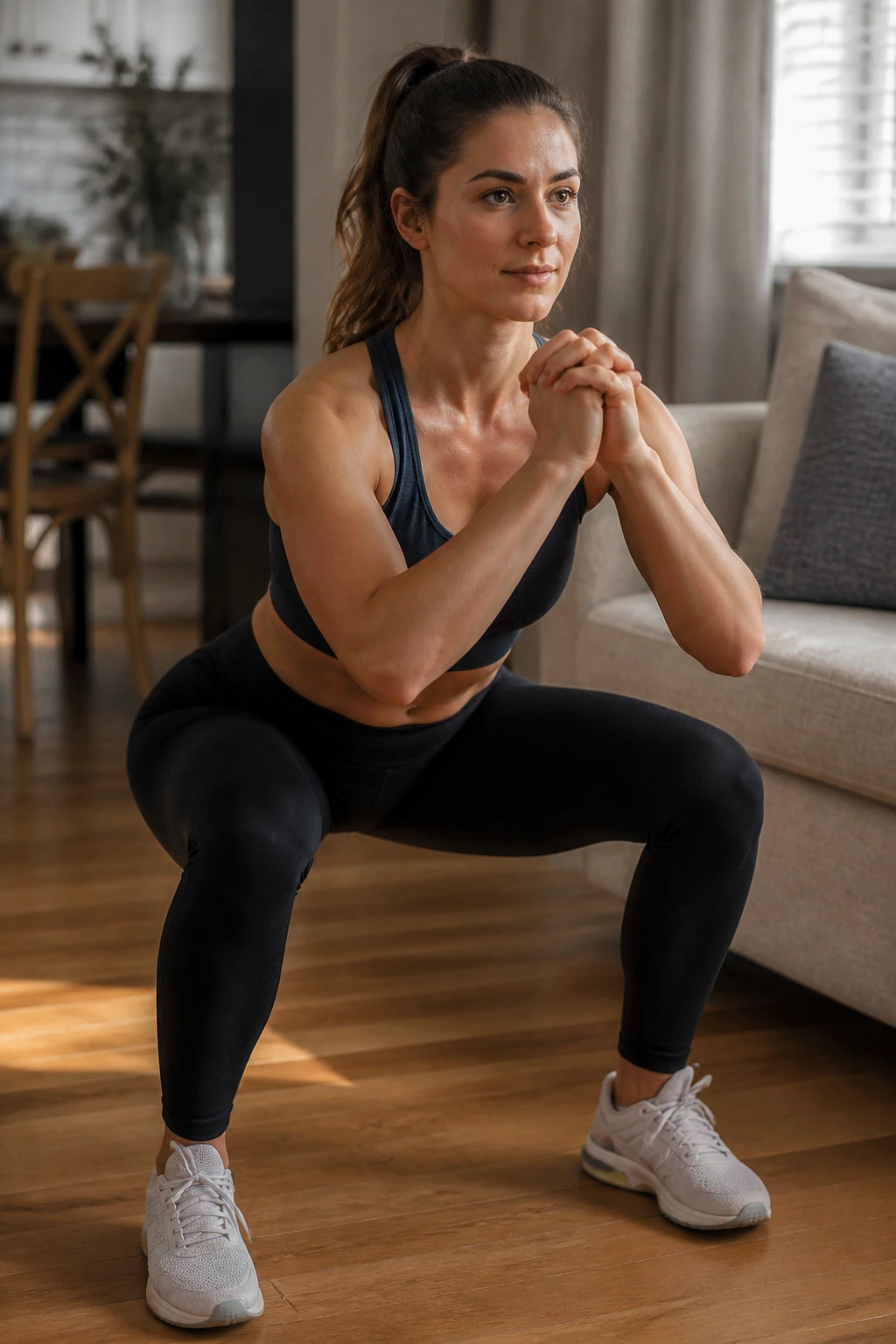
A ten-minute reset is the workout I reach for when the day feels tangled. It is small enough to do between tasks, but not so tiny that it feels pointless. Two rounds of basic bodyweight moves can wake up your legs, your core, and your mood fast.
Why It Works
The trick here is not fancy exercise selection. It is pace. You move from one move to the next with almost no dead time, so your heart rate climbs while your muscles get a clean, simple wake-up call.
A solid version looks like this: 30 seconds of squats, 30 seconds of incline push-ups on the sofa, 30 seconds of reverse lunges, 30 seconds of plank shoulder taps, then repeat the whole circuit once. If you want a slightly harder version, rest only 15 seconds between moves. That little change matters more than people expect.
Keep the moves clean. No rushing through sloppy reps. Ten honest minutes beat twenty messy ones.
Quick setup tips:
- Put a timer on before you start.
- Keep water nearby.
- Use the edge of a couch, bed, or sturdy chair for the push-up.
- Stop each set while you still have form.
Best use: right after waking up, before dinner, or any time you feel yourself sinking into the sofa for too long.
2. Silent Cardio March Intervals
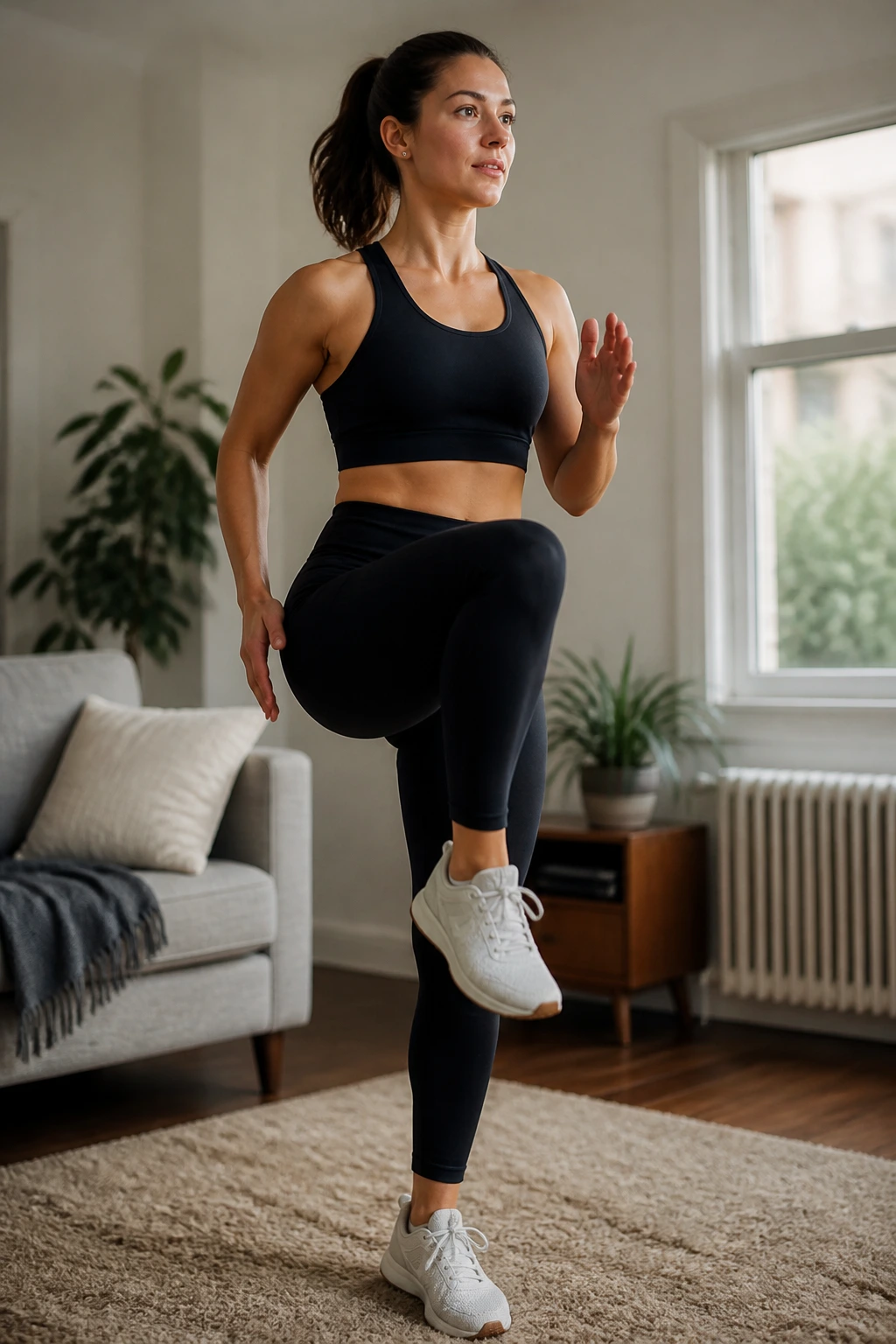
No, you do not need jumping to get winded. Silent cardio can leave your legs hot and your breathing up without shaking the floor or making the neighbors hate you.
This one is ideal for apartments, sleeping kids, or thin walls. March in place with purpose for 40 seconds, then take 20 seconds to breathe and shake out your arms. Repeat for 8 to 12 rounds. Bring your knees higher on every third round, and swing the arms harder than you think you need to. That arm drive is not decorative. It helps.
I like to mix in step jacks, heel digs, fast feet, and side steps so the rhythm changes and your mind stays awake. You can keep the whole thing low impact and still feel it in your calves and hips by the end.
What to Watch For
Do not turn this into a lazy stroll. The point is quick footwork and steady effort. Your shoulders should stay relaxed, your steps should land softly, and your breathing should settle during the rest window before climbing again.
3. Chair Squat and Reach Circuit
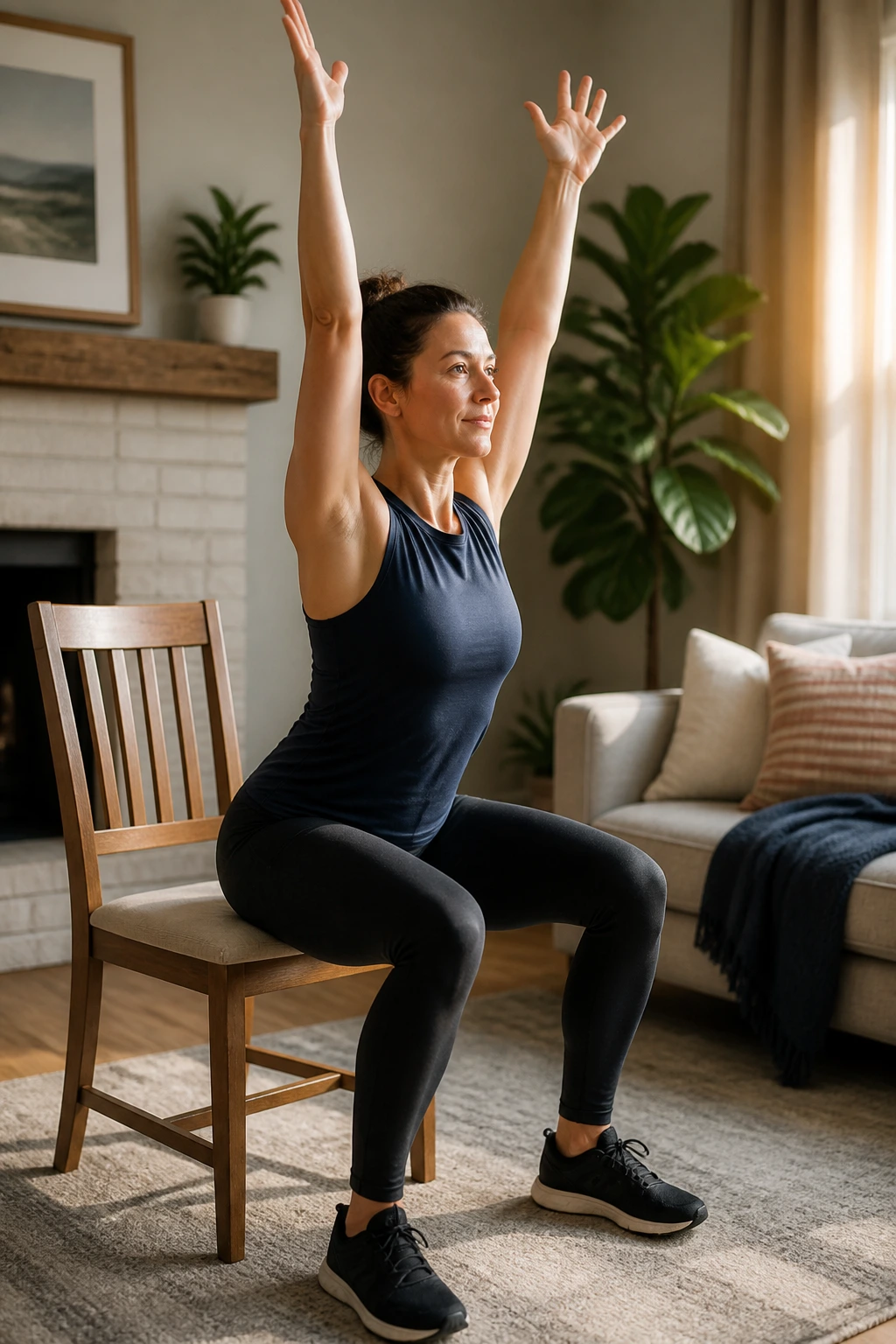
Why does a chair work so well? Because it gives you a target. That little target makes squats less vague and far more honest.
Sit down lightly, stand up under control, and reach both arms overhead at the top. That reach opens the chest and keeps the movement from feeling like plain old leg day. Do 3 sets of 10 to 15 reps, resting 30 to 45 seconds between sets. If you want more challenge, pause for 2 seconds just above the chair before standing.
How to Use the Chair Safely
Use a chair that does not slide. A dining chair on a rug can work, but test it first. If the seat is too low, place a folded towel on top so the sit-to-stand stays smooth and your hips do not collapse at the bottom.
A few cues help a lot:
- Keep your feet flat.
- Press through the middle of the foot, not just the toes.
- Stand all the way up.
- Reach long overhead without shrugging your ears up.
This one looks easy. Then the third set happens.
4. Stair Power Sets
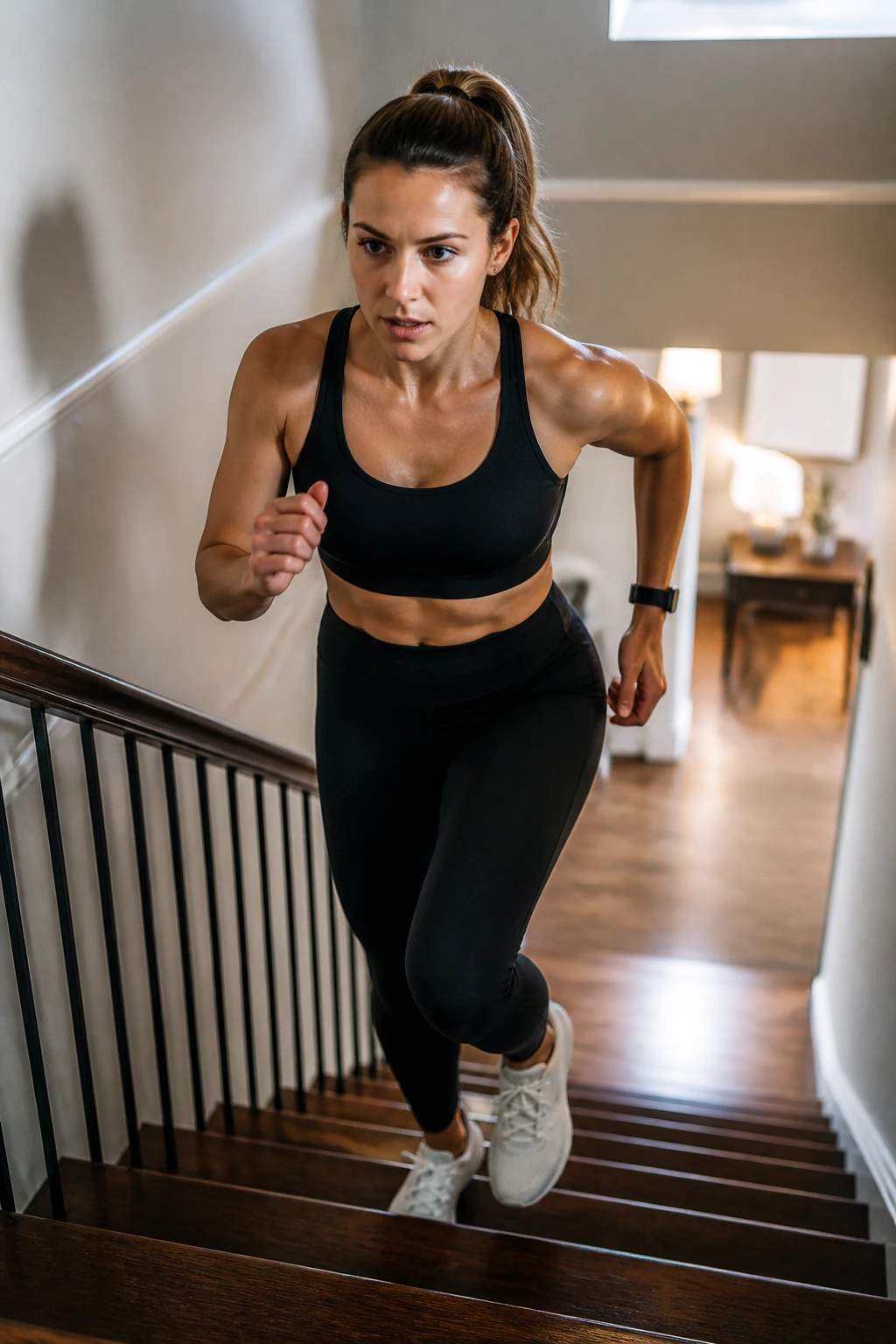
If you have stairs, you have a workout tool. That sounds almost too simple, which is usually a sign that it works.
Walk or power-step up one flight, come back down slowly, and repeat for 6 to 10 rounds. For a harder set, take the stairs two at a time on the way up while keeping the descent controlled. If your knees are fussy, stay with one step at a time and shorten the session. There is no prize for reckless stair climbing.
I like this workout because it feels like real-world effort. You are not just exercising in place. You are practicing something your body understands: drive up, control down, repeat. Your glutes and calves do the main work, and your breathing climbs fast if you keep the pace honest.
Use the railing when you need it. That is not cheating. That is good sense.
5. Push-Up and Plank Ladder
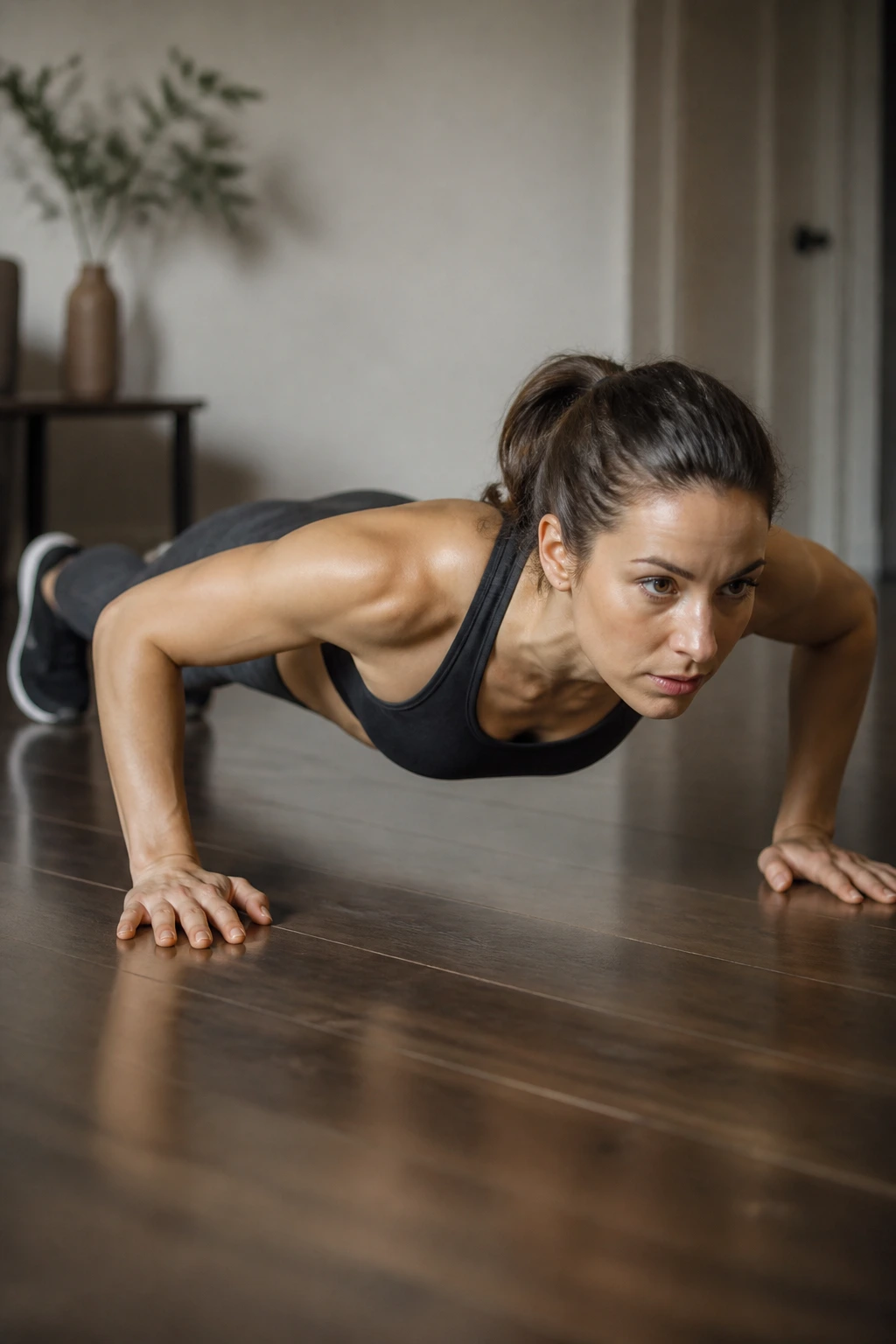
This one is plain, and I mean that as a compliment. Good ladders are boring on paper and satisfying in practice.
Start with 1 push-up and a 10-second plank hold. Then do 2 push-ups and a 15-second plank. Keep climbing to 3, 4, and 5 reps, then walk it back down if you still have gas. If full push-ups are too much, use a countertop, sofa edge, or knees. The ladder still works.
The beauty here is that the numbers guide the effort for you. No guessing. No staring at the floor wondering whether you did enough. You know exactly where you are because the reps tell the story.
I prefer a slow lower on the push-ups — around 2 to 3 seconds down — because it keeps the work in the chest and triceps instead of turning into a half-dropped flop. The plank holds should feel steady, not frantic. Tight abs. Quiet hips. Breathe.
6. Towel Slider Hamstring Drill
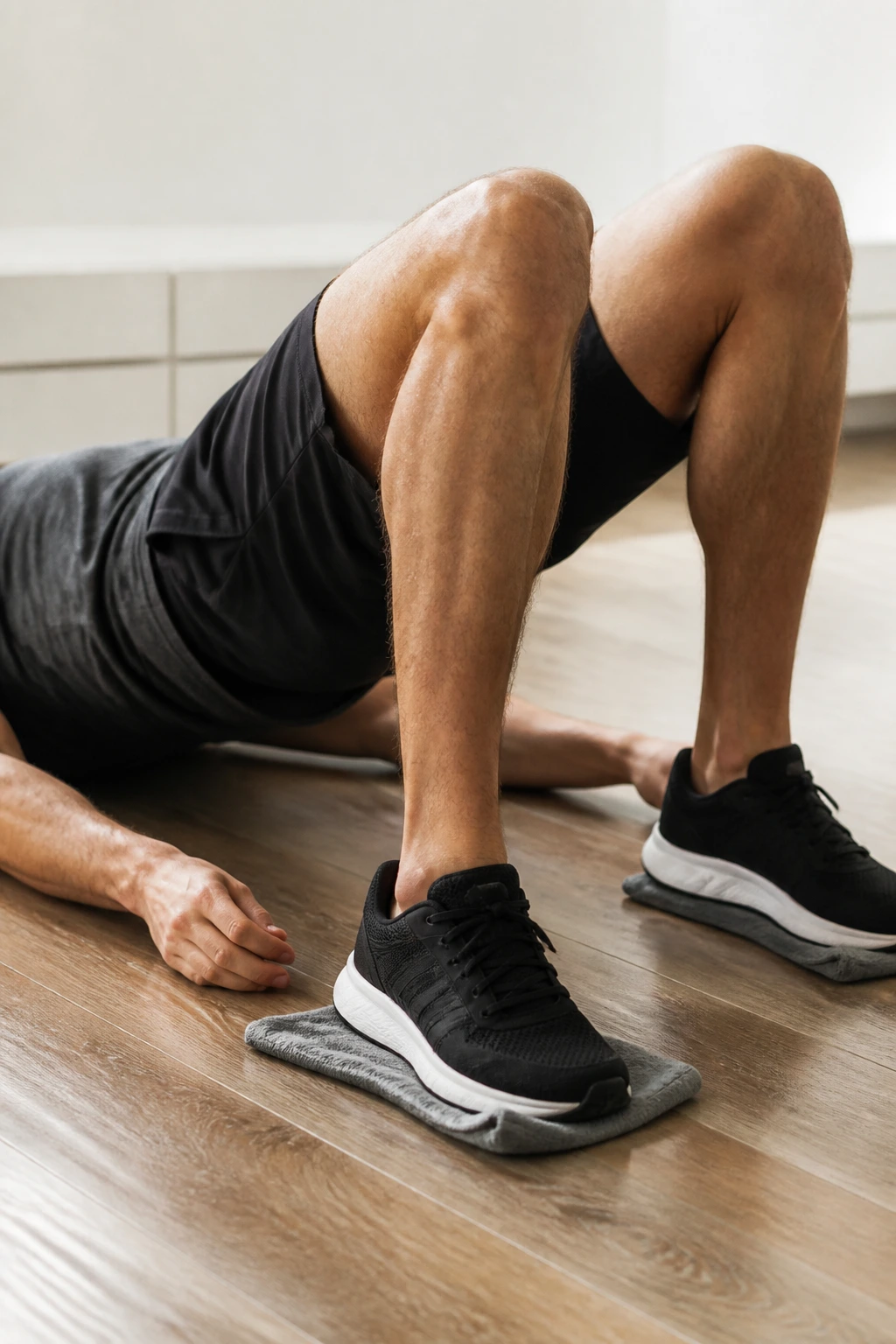
A towel on a smooth floor can do more than mop up a spill. It can make your hamstrings earn their keep.
Put both heels on the towels, lie on your back, and bridge your hips up. From there, slide the feet away until your legs nearly straighten, then pull them back under you. Do 3 sets of 8 to 12 reps. If that full version is too spicy, keep the hips lower and shorten the slide.
What Makes It Different
Unlike simple curls or bridges, the slider version forces your hamstrings to work while your hips stay lifted. That combination lights up the back of the legs in a way that feels sneaky at first and memorable by rep six.
A few details matter:
- Use a floor that lets the towels glide without snagging.
- Keep your rib cage down so your lower back does not arch.
- Move slowly on the return.
- Stop if your heels start slipping in a way that feels unsafe.
If you only do one floor-based hamstring move this holiday, make it this one. It is cheap, odd-looking, and excellent.
7. Resistance Band Glute Bridge Series
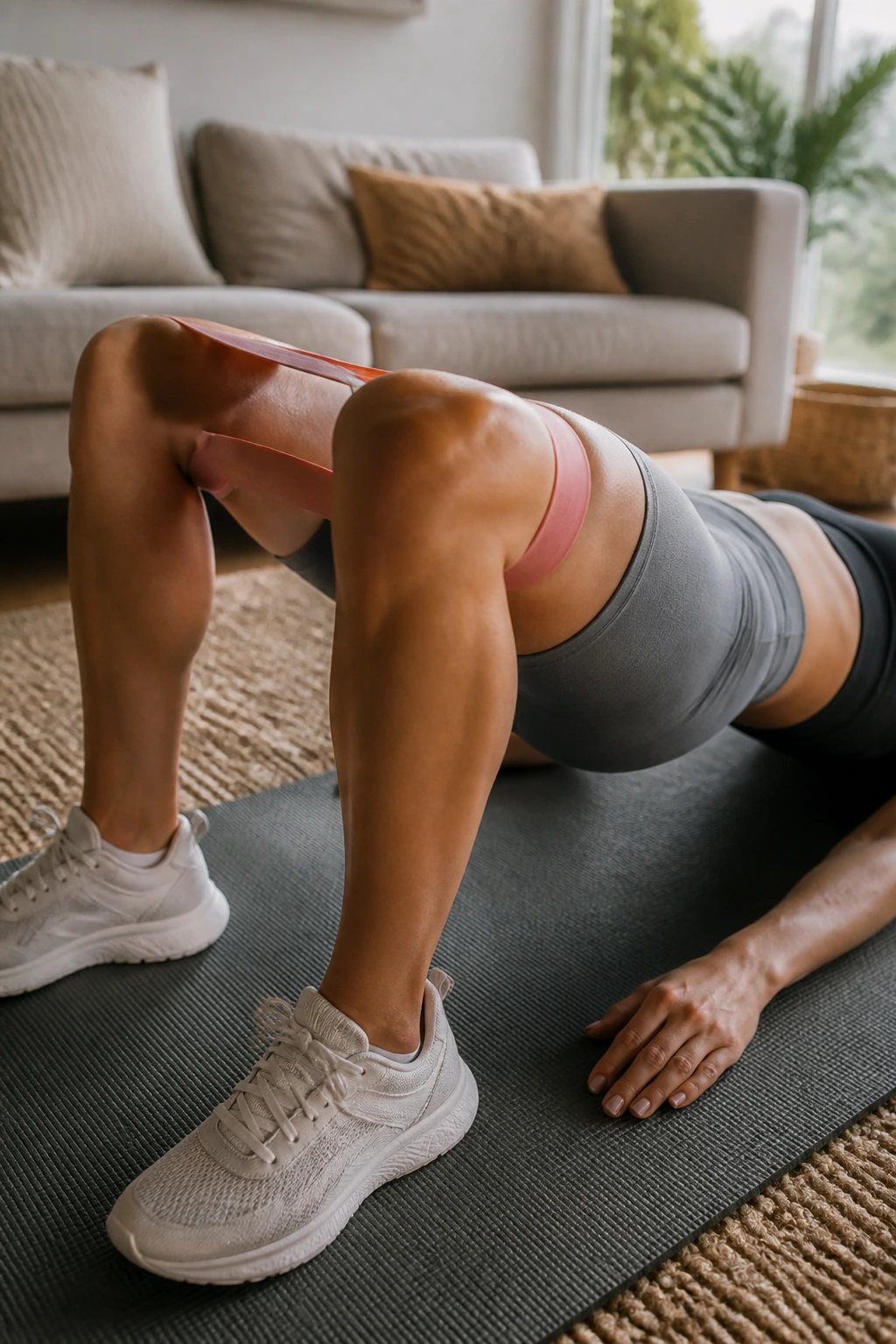
If you own one mini band, you can make bridges far more annoying in the best way. That little loop changes the whole feeling of the exercise.
Place the band just above your knees, lie on your back, and drive through your heels into a bridge. Hold the top for 2 seconds, press the knees slightly outward against the band, and lower under control. Do 3 rounds of 12 to 15 reps. If your glutes tend to sleep through bridges, add a 10-second hold on the last rep of each round.
I like to pair regular bridges with abduction bridges — same movement, but the knees push out harder against the band. The outer hips wake up fast, and that usually makes the whole back side of the body feel more stable.
A quick rule: if you feel the movement mostly in your lower back, lower your hips and tuck your pelvis a little. The burn should land in the glutes, not your spine.
8. Shadow Boxing Rounds
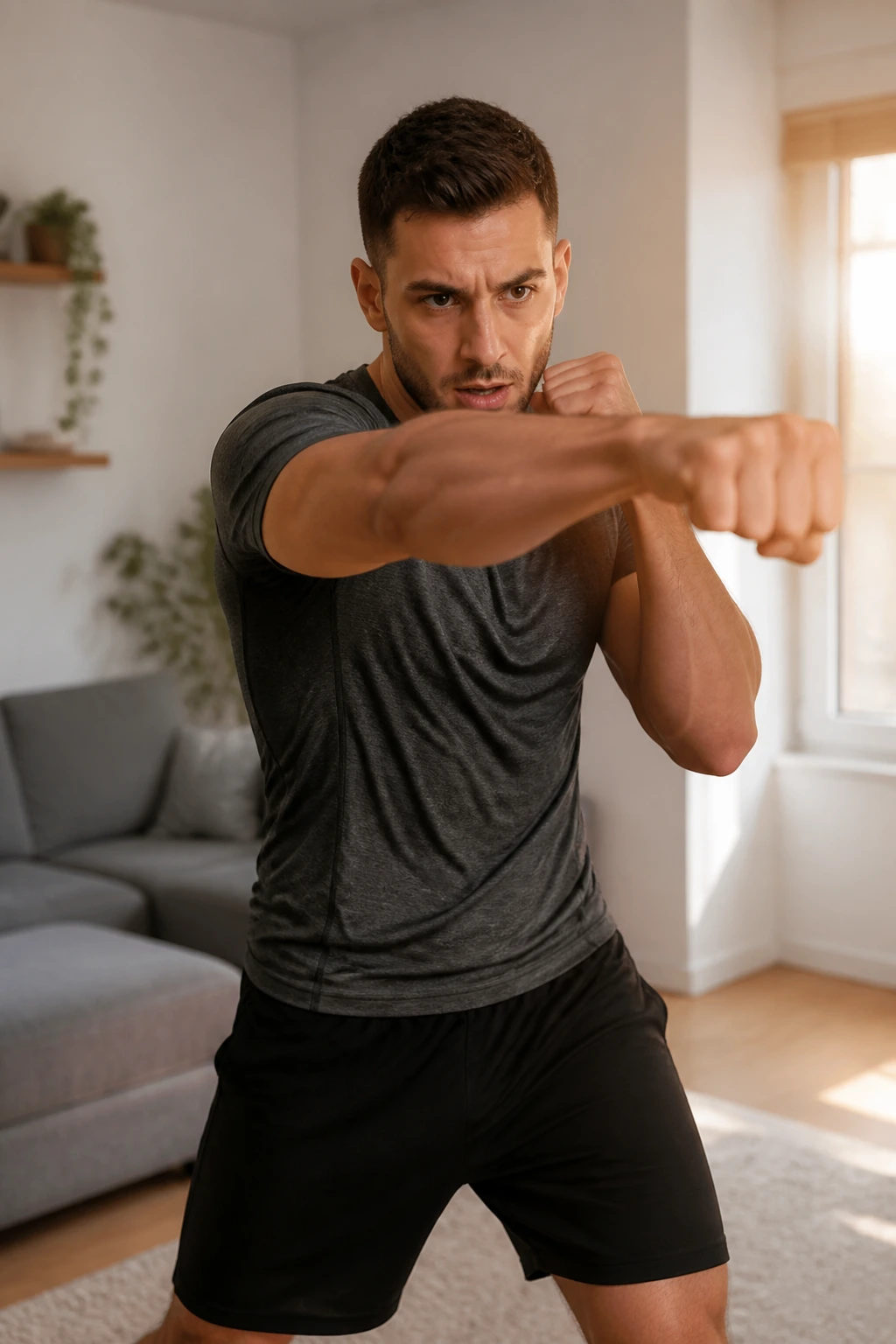
Three rounds of shadow boxing can feel more intense than people expect. And you do not need gloves, bag work, or any setup beyond enough room to turn your shoulders.
Set a timer for 2 minutes on, 1 minute off, and move through basic punches: jab, cross, hook, uppercut. Keep your hands up, rotate through the hips, and stay light on the balls of your feet. You are not trying to look slick. You are trying to move cleanly and keep the rhythm alive.
The best thing about shadow boxing is how fast the time goes. The second round usually feels sharper than the first because your body finally wakes up. By the third, your shoulders know they have done something useful.
Stay smooth. Wild punching turns sloppy fast and makes the shoulders tire out before the legs do. Short combinations work better than random flailing.
9. Yoga Flow for Tight Hips
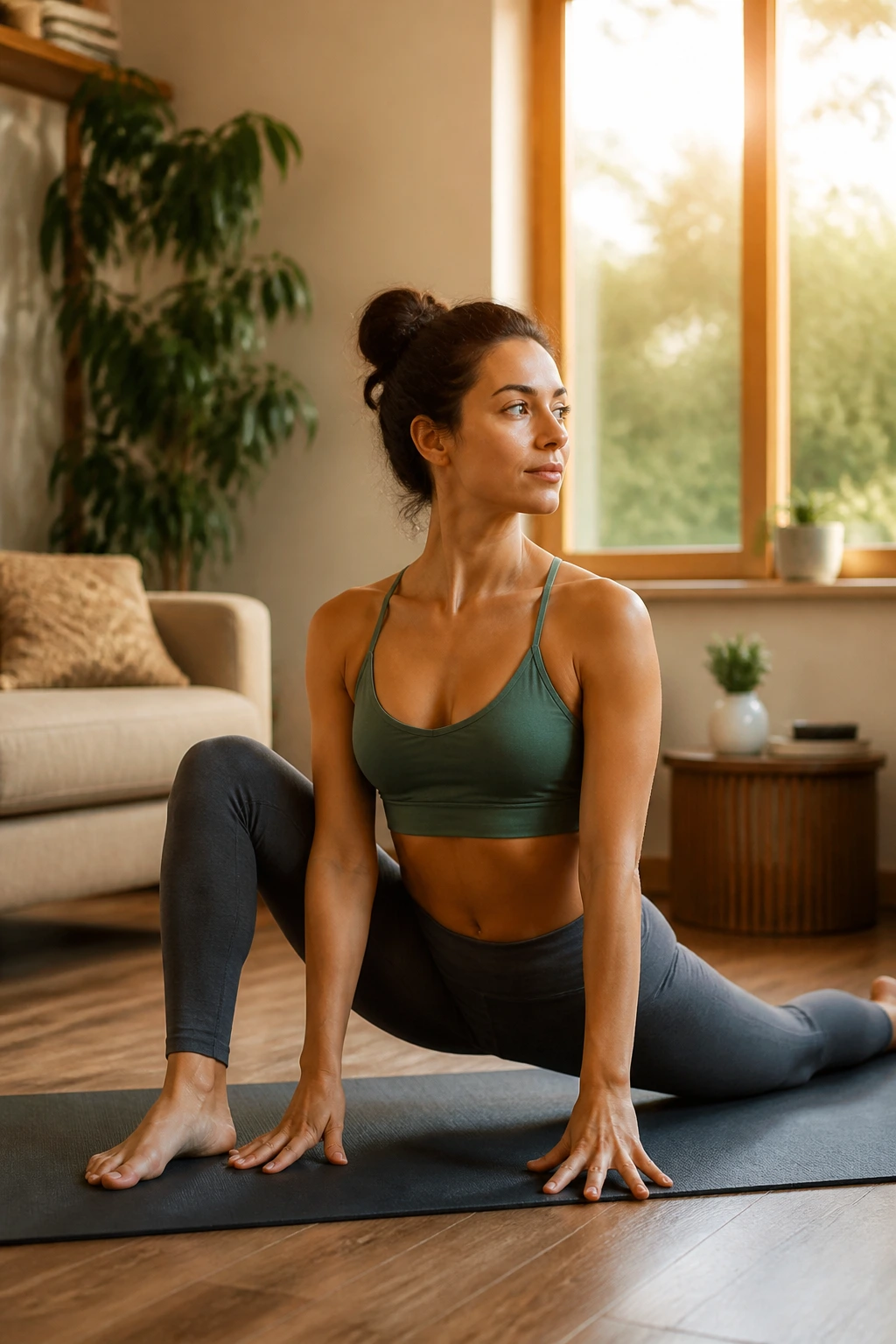
Why do hips get so stubborn after travel, sofa time, and too many meals? Because they hate being parked in one position for hours. A short yoga flow fixes that better than most people give it credit for.
Start with a low lunge on each side, hold for 30 to 45 seconds, then shift into half split, pigeon or figure-four, and a slow forward fold. Move like you have somewhere to be, but not a rush. Two rounds through the sequence is enough for most days.
How to Move Without Forcing Anything
The goal is not depth. It is release. If a pose feels pinchy in the knee or sharp in the hip, back off an inch or two. That tiny adjustment usually changes everything.
A few good cues:
- Keep breathing through the nose if you can.
- Let the exhale get longer than the inhale.
- Use a folded blanket under the back knee.
- Stay for the parts that feel tight, then move on before the stretch turns angry.
This is one of those holiday workouts that works even when you are not in the mood for “exercise.” It feels more like maintenance, and honestly, that is part of why it gets done.
10. Mobility Sequence for Neck and Shoulders
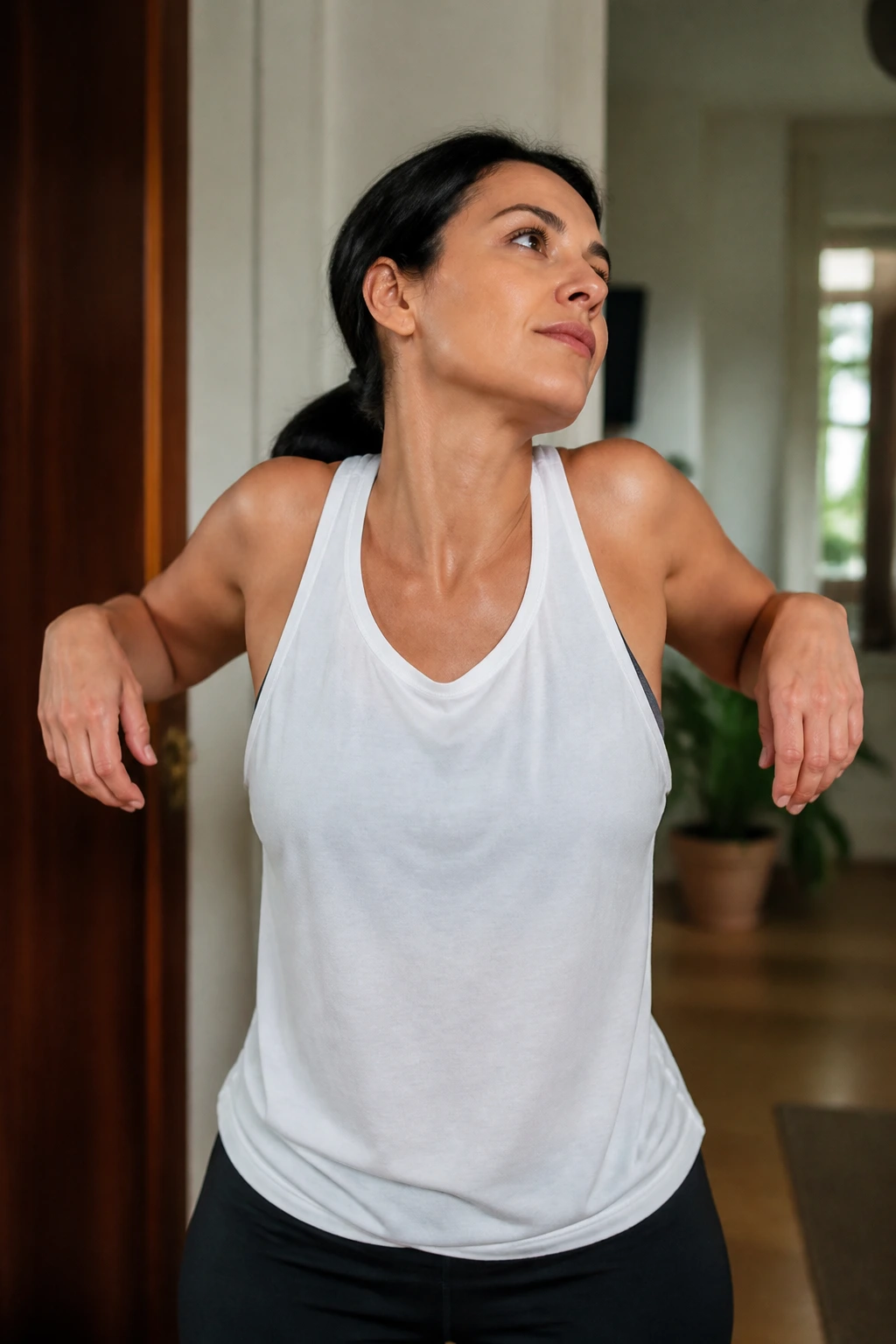
Your upper back knows when you have spent too long looking down at a phone or twisting to help with cooking, wrapping, or carrying bags. The neck gets stiff. The shoulders creep toward your ears. The whole thing feels crunchy.
Spend 8 minutes on chin tucks, shoulder circles, wall angels, thoracic rotations, and doorway chest stretches. Move slowly enough that you can feel the tight spots change shape. That matters more than speed.
A Simple Order That Works
Start with 5 slow chin tucks, holding each one for 3 seconds. Then do 10 shoulder circles backward, not forward, because the backward motion tends to open the chest better. Follow that with 8 wall angels if your wall space allows it. Finish with 5 thoracic rotations per side and a 30-second chest stretch in a doorway.
The feeling you want is loose, not limp. A little warmth through the upper back is a good sign. Numb is not.
11. Backpack Strength Circuit
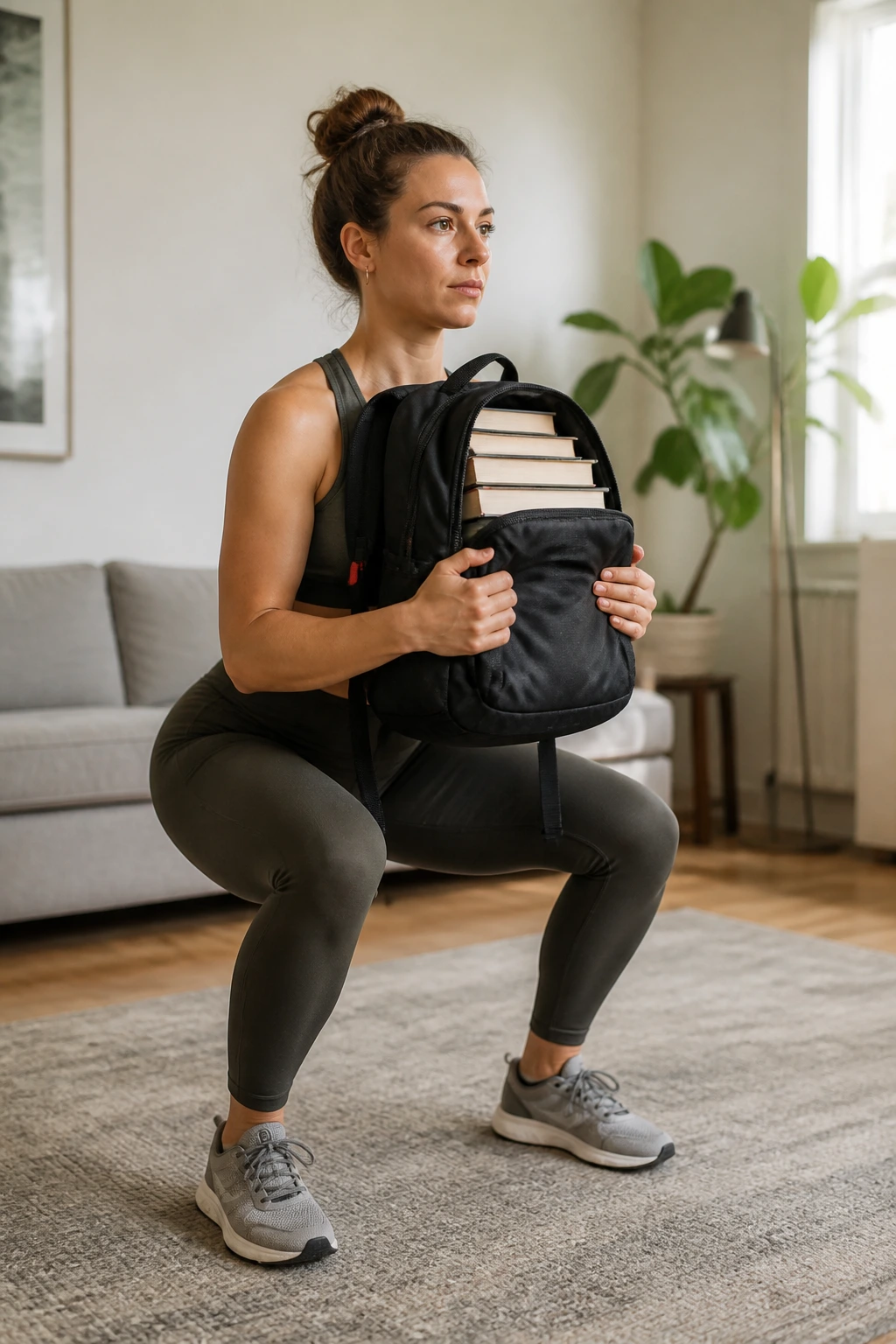
A backpack full of books is not glamorous. It is also one of the most practical pieces of home workout equipment around.
Load it with 2 to 6 heavy books, zip it shut, and use it for goblet squats, bent-over rows, reverse lunges, and deadlift-style hinges. Keep the pack close to your body, and check the straps before every set. A loose zipper in the middle of a row is a mess nobody asked for.
I use this kind of improvised weight when I want a real strength feel without hunting for dumbbells. Three rounds of 10 squats, 10 rows, 8 lunges per side, and 12 hinges gives you enough work to feel awake without wrecking your whole day.
The best part is how adjustable it is. Add a towel inside to stop the load from shifting. Use a second bag if one gets awkward. Keep the spine long, and the hips back on hinges. Simple fixes, better results.
12. Low-Impact Cardio EMOM
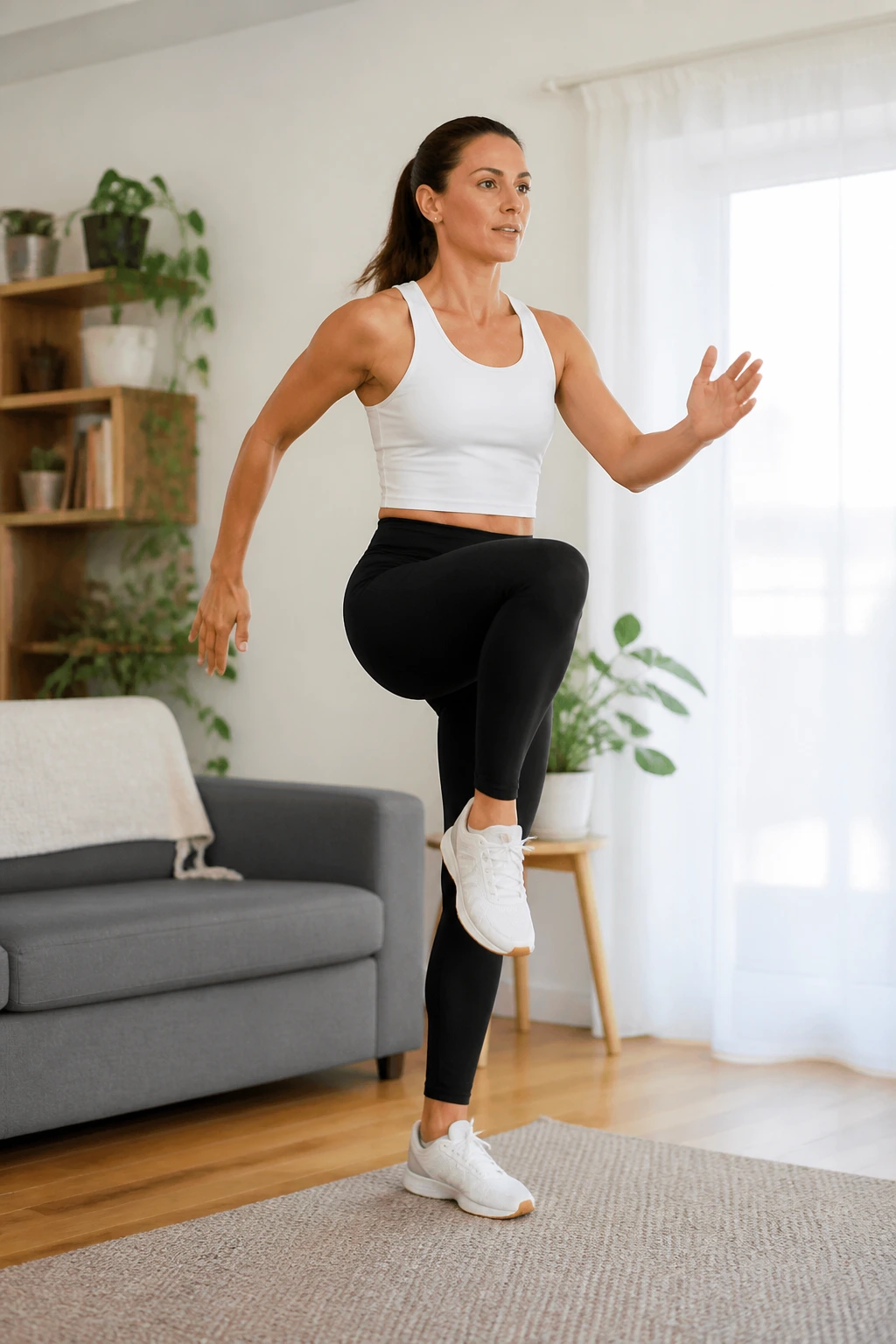
EMOM means every minute on the minute. The idea is simple: work at the start of each minute, rest with whatever time is left.
Pick 4 moves and run them for 10 to 16 minutes total. A clean setup looks like this: minute 1, march fast with arm swings; minute 2, step jacks; minute 3, squat to calf raise; minute 4, alternating knee drives. Repeat the cycle. If the work takes you 35 seconds, you get 25 seconds to breathe before the next round starts.
How to Keep the Pace Honest
Do not sprint the first minute and die in the third. That ruins EMOM work. Aim for a pace you can repeat without bargaining with the clock.
A few useful details:
- Keep transitions short.
- Use low-impact versions if your joints prefer them.
- If you finish early, stand tall and breathe instead of adding random extra reps.
- Stop the set if form gets sloppy from fatigue.
It feels structured in a good way. You always know what is coming next.
13. Family-Friendly Partner Workout
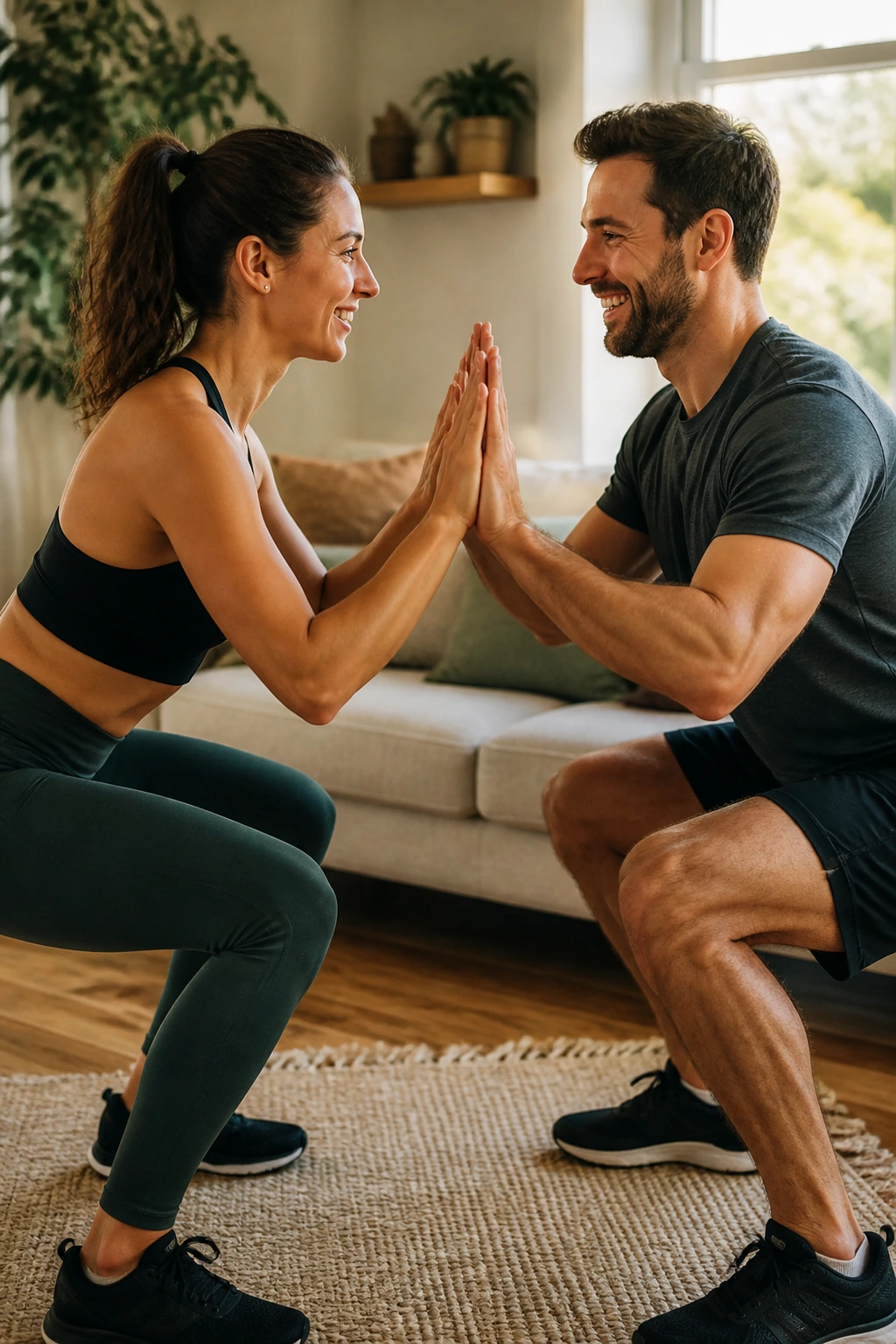
A workout with other people can be better than a solo grind if you keep it simple enough. I know. That is not the usual holiday mood, but it works.
Pair up for mirror squats, plank high-fives, seated wall sits, or passing a pillow or soft ball side to side while holding a dead-bug position. The point is not to compete. It is to keep moving while the room stays lively. Kids can join in, and that alone changes the energy of the whole thing.
Keep It Light
Use rounds of 30 seconds on, 30 seconds off so nobody gets bored or overcooked. Let one person count while the other moves, then swap. That tiny role change keeps things from feeling like a chore.
A few good moves:
- Squat and reach together.
- Standing march with opposite hand taps.
- Wall sit challenge for 20 to 30 seconds.
- Carry a bag of holiday cards or a light basket across the room and back.
It should feel playful, not competitive. If someone is laughing too hard to keep count, that is fine.
14. Core Burn on the Living Room Floor
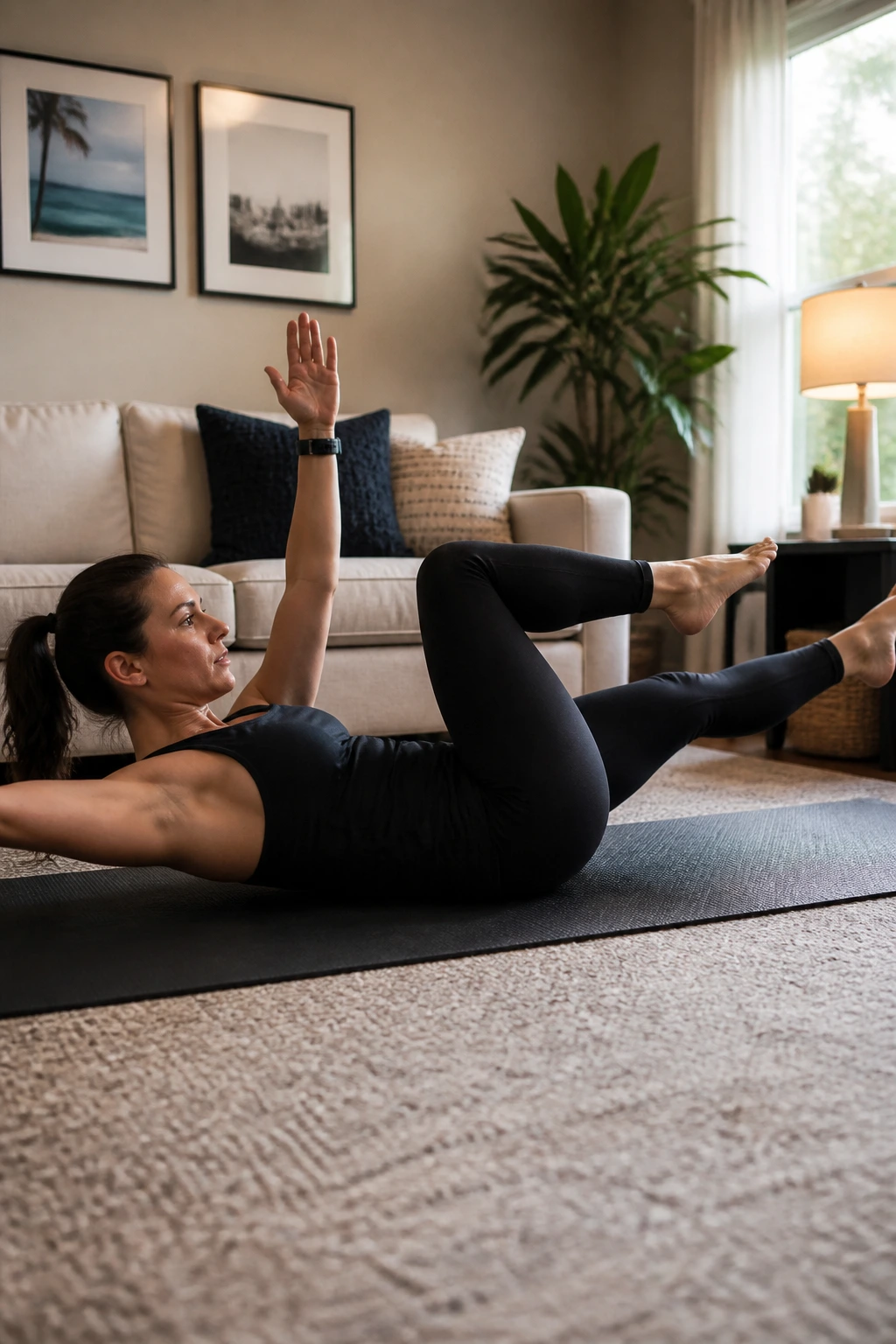
Core work gets better when it is slower than you want it to be. Fast reps usually hide bad form. Slower reps expose everything.
A clean floor session can be dead bugs, bird dogs, reverse crunches, and a hollow hold or plank hold. Spend 20 to 40 seconds on each move, rest briefly, and repeat for 3 rounds. Your low back should stay calm. If it starts arching, shorten the lever or reduce the range.
What You Should Feel
Dead bugs should feel like control, not chaos. Bird dogs should feel long, with one arm and one leg reaching away from the center. Reverse crunches should curl the tailbone up, not whip the legs around. The plank should feel like a solid shelf, not a collapse waiting to happen.
I’d rather see a short, steady core block done well than a giant list of reps done badly. The body remembers control. So does the lower back.
15. Split Squat Leg Day
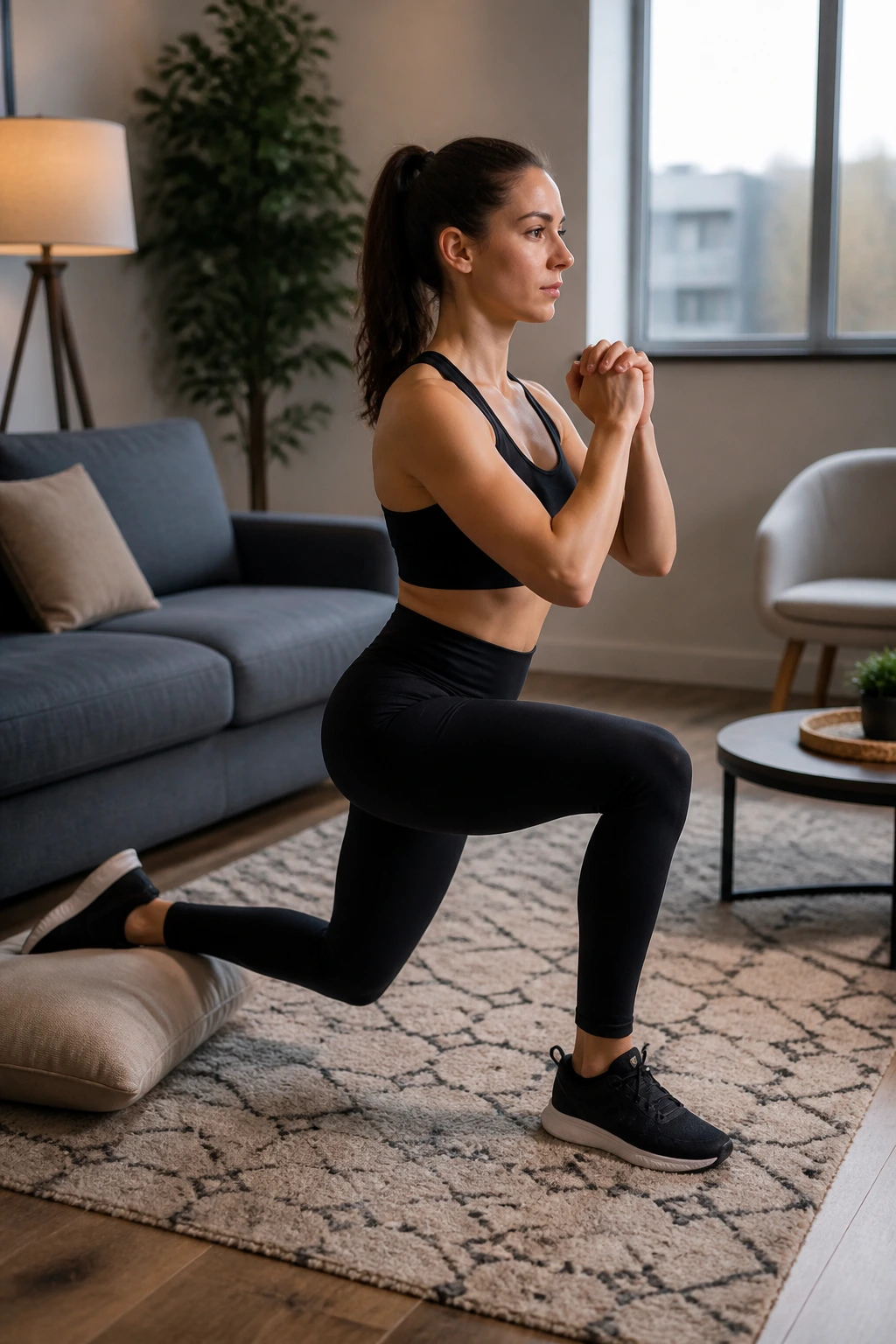
The best leg workout at home might be the one that looks plain until you try it. Split squats are rude like that.
Set one foot behind you on the floor or a low cushion, lower straight down for 8 to 12 reps per side, and take 3 seconds on the way down if you want more burn. Keep the front heel planted and the torso tall. Three sets is enough for most people. Two sets will still wake you up.
This move hits the quads, glutes, and balance all at once. It also shows you which side is doing more of the work, because one leg usually complains first. That is useful information.
A good cue: imagine dropping your back knee toward the floor rather than lunging forward. Forward drift steals the work. A straight-down path keeps the load where it belongs.
16. Upper-Body Wall and Counter Session
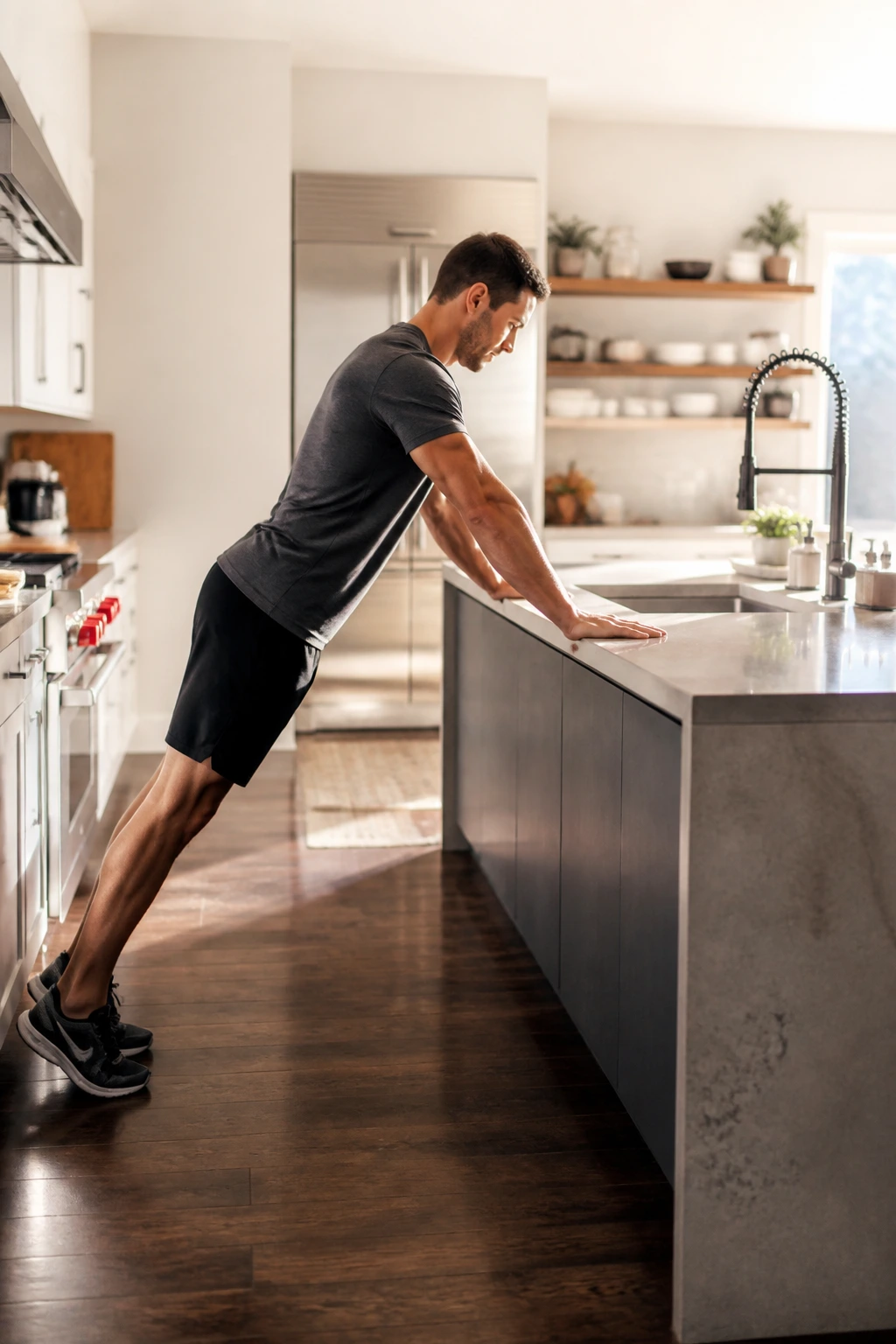
Not every good workout needs the floor. Some days your back, knees, or energy level say no to getting down and up repeatedly. Fine. Use the wall and the counter.
Try counter push-ups, wall slides, incline pike holds, and standing band rows if you have a band. Do 3 rounds of 10 to 15 reps on the push-ups and rows, and 20 to 30 seconds on the holds. The angle from the counter is easier on the wrists and shoulders than the floor, but it still asks for work.
I like this session because it feels practical. You are standing in a normal room doing useful movement, not setting up a full gym. That makes it easier to repeat when the holiday schedule gets messy.
Keep your body in a straight line on the push-ups. If your hips sag, raise the surface. If your shoulders pinch, shorten the range. Small changes fix a lot.
17. Recovery Walk and Stretch Combo
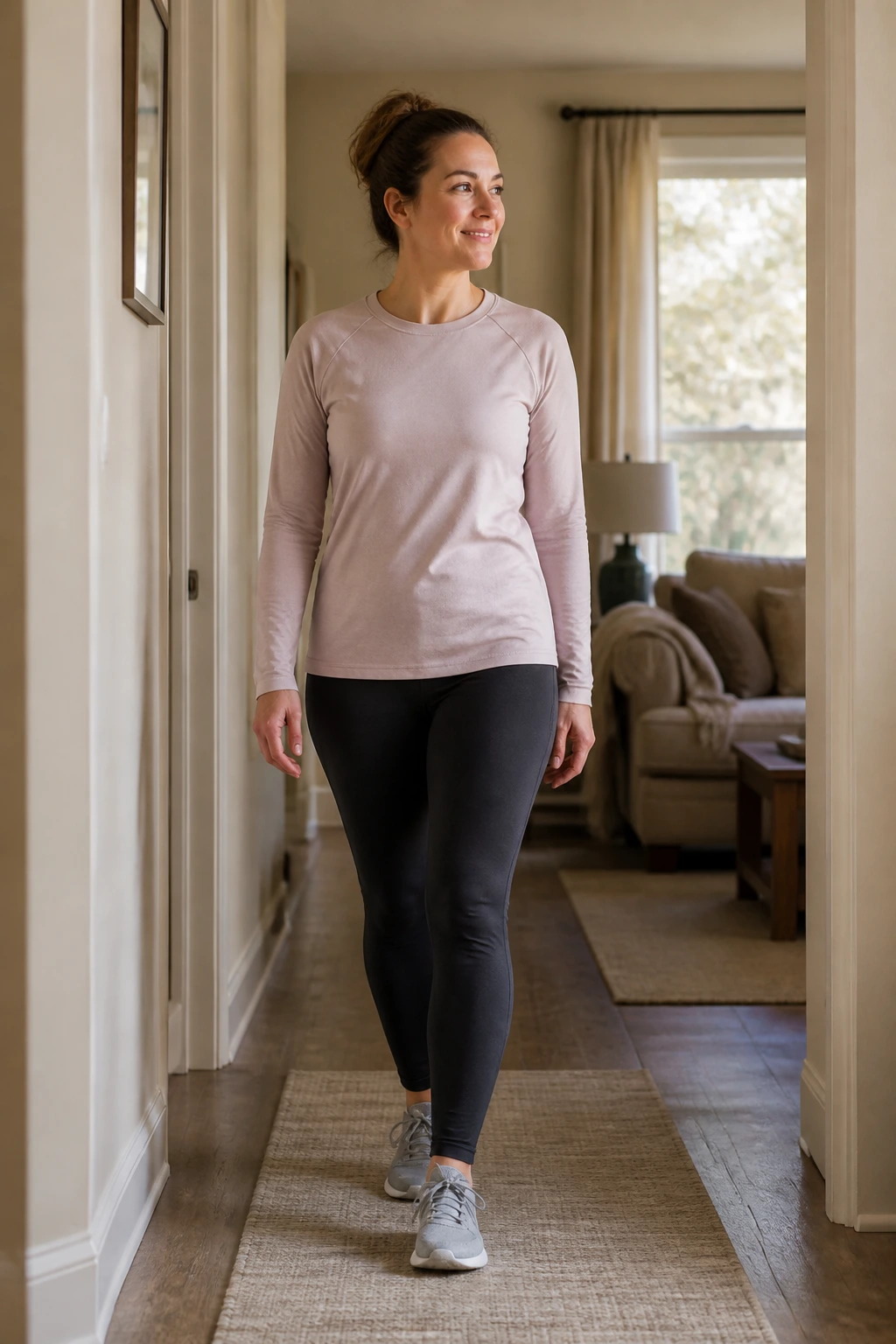
Sometimes the smartest holiday workout is the one that takes the edge off instead of trying to impress anyone. A recovery walk, even if it happens indoors, can do that.
Walk around the house, march in place, or pace the hallway for 10 to 20 minutes. Keep the pace easy enough that you can speak in full sentences. Then spend 5 minutes on calves, hips, and chest. A gentle stretch after light movement usually feels better than forcing a stretch while cold.
A simple order works well:
- 1 minute of calf raises
- 30 seconds of standing quad stretch per side
- 30 seconds of chest opening against a wall
- 30 seconds of side bends per side
- 1 minute of slow breathing
This is not a punishment workout. It is the one that helps you feel human again after a heavy meal, a rough sleep, or too much sitting.
18. Tabata Without Jumping
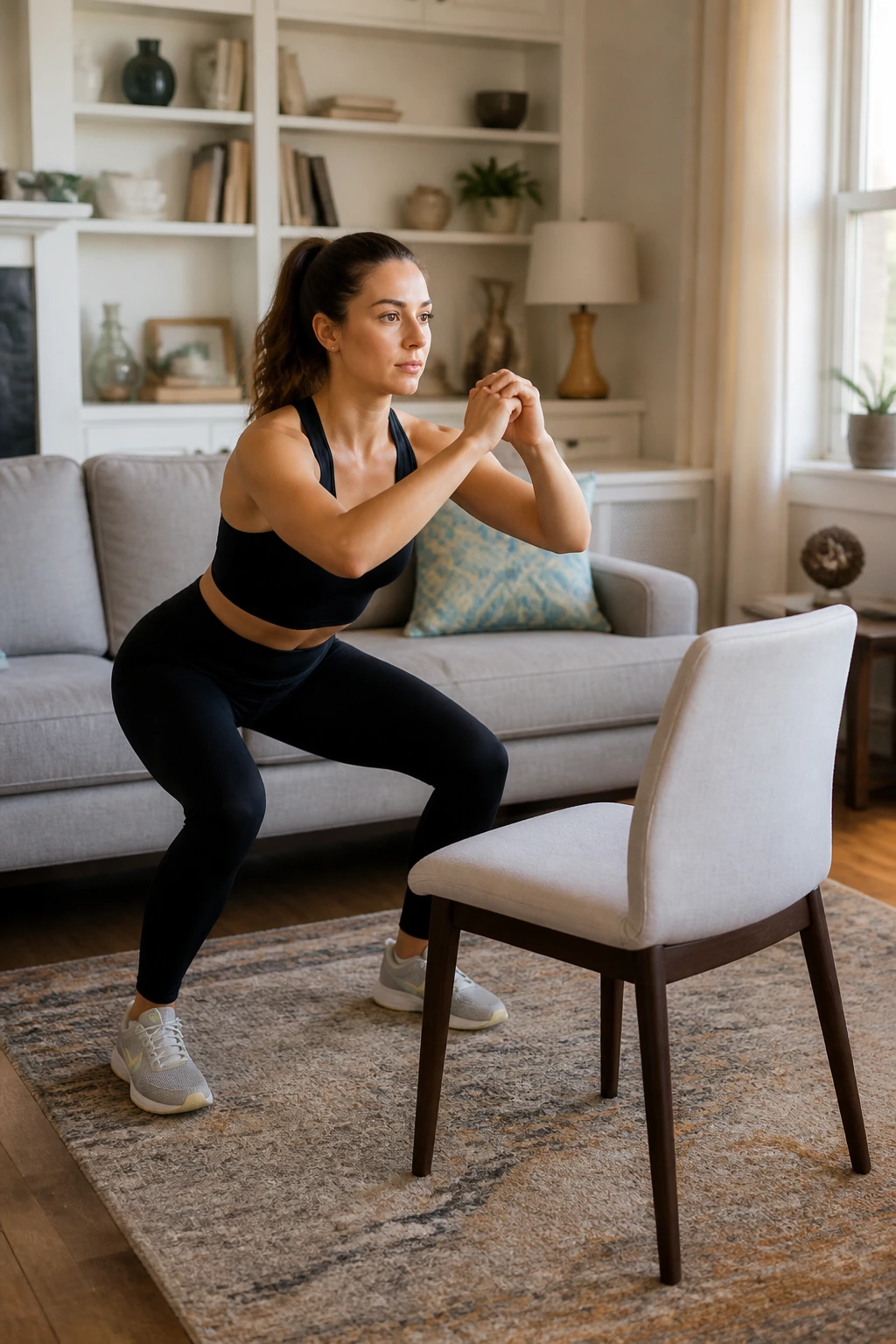
Tabata gets tossed around a lot, but the core idea is straightforward: 20 seconds of work, 10 seconds of rest, repeated for 8 rounds. That adds up fast.
You can do it without jumping. Use fast squats to a chair, alternating punches, step jacks, or mountain climbers with hands on a couch. Pick one move per round or alternate two moves across the block. A whole Tabata set lasts only 4 minutes, but it can feel much longer when you keep the effort honest.
How to Pace It
Do not try to win the first two rounds. You will pay for that later. Aim for a repeatable pace that lets you keep the same shape through round 8.
A useful setup:
- Round 1–2: moderate speed
- Round 3–5: steady push
- Round 6–8: finish hard without breaking form
One block is enough on a busy day. Two blocks, with a minute or two between, is plenty for most people. More is not always better when the week is already full.
19. Full-Body AMRAP Sweat Session
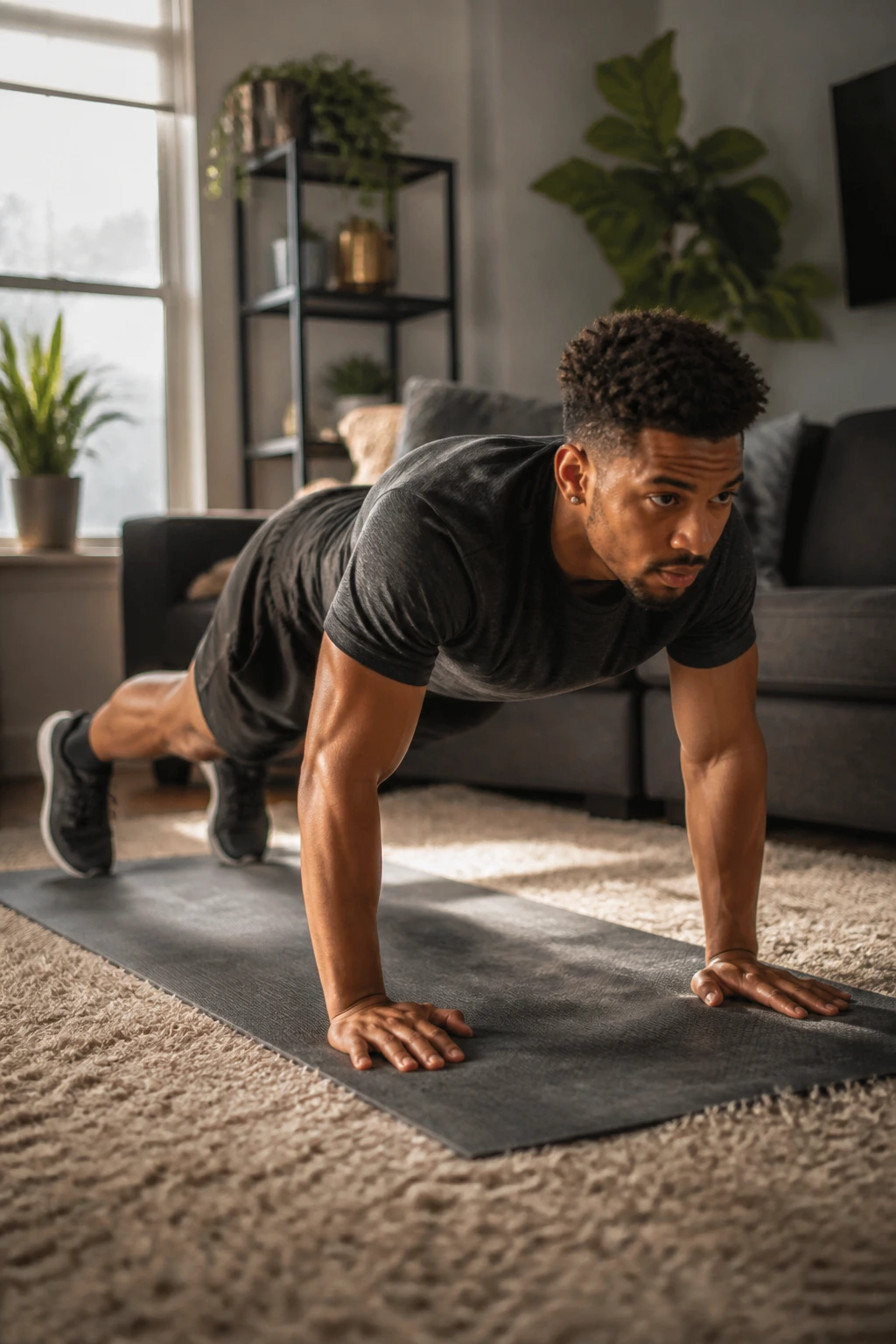
What if you have one decent block of time and want the most work possible from it? AMRAP is the answer. It means as many rounds as possible in a set window.
Set a timer for 12 to 20 minutes and cycle through 8 squats, 6 push-ups, 10 reverse lunges per side, 12 mountain climbers per side, and a 20-second plank. Move steadily, not frantically. The goal is repeatable work, not a red-faced sprint that dies after six minutes.
How To Set the Clock
Pick a pace that lets you keep moving without standing around gasping. If your first round takes 2 minutes, that is fine. If it takes 4, that is fine too. The workout is doing its job if the pace stays honest.
A few useful rules:
- Keep rests short and intentional.
- Use incline push-ups if form gets ugly.
- Cut the reps before the quality drops off.
- Note your total rounds if you want a simple way to track progress next time.
AMRAPs work well when you want a clear finish line and a little friendly pressure from the timer.
20. Emergency Holiday Saver Workout
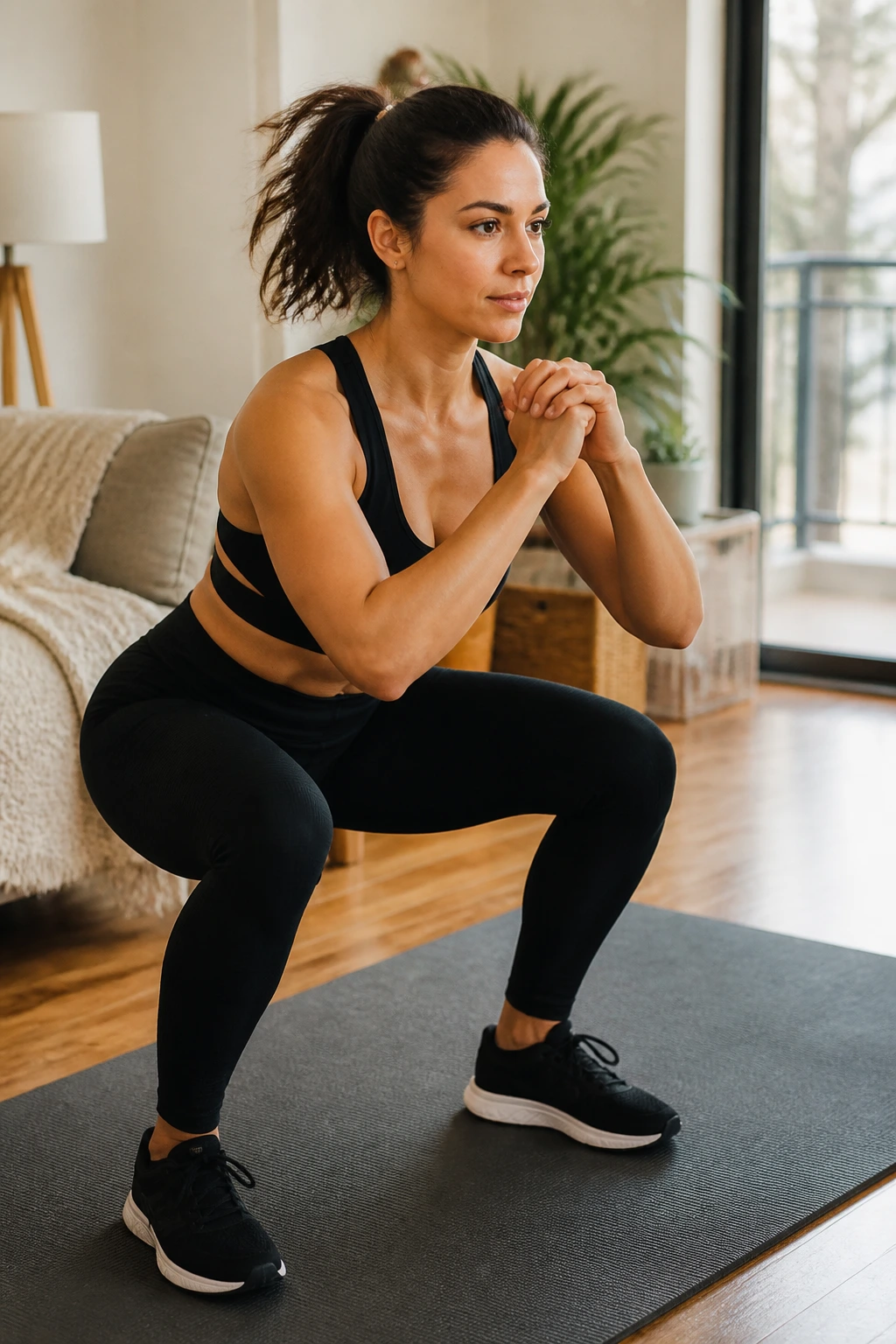
Some days need a workout that feels almost absurdly small. That is not a weakness. That is survival.
Do 30 seconds each of squats, marching, incline push-ups, glute bridges, and plank holds. Rest 15 seconds between moves, repeat once, and you are done in about 5 to 7 minutes. If you have a little more time, add a second round. If not, stop after one and move on with your day.
This is the workout I would keep in my back pocket for the messy moments: guests arriving early, dinner running late, your energy sinking, or your brain trying to negotiate a full skip. It gives you a clean win with almost no setup.
Keep a mat, a timer, and maybe a resistance band in one obvious spot. Visible tools get used. Hidden tools get ignored. That sounds minor, but it changes whether a workout happens at all.
Final Thoughts
Holiday workouts at home work best when they are easy to start and hard to overthink. Small sessions are not a watered-down version of “real” training. They are the version that survives an odd schedule, a full kitchen, and a house full of noise.
The strongest move is the one you will repeat tomorrow. Maybe that is a 10-minute reset, maybe it is stair sets, maybe it is the emergency five-minute save when the day goes sideways. Keep one sweat session and one mobility session within reach, and the whole season feels a lot less like a pause.
A mat in sight helps. So does a timer that does not live in a drawer.
