



By the third trimester, a leg workout can feel less like a fitness routine and more like a negotiation with gravity. Your balance has changed, your hips may feel looser, and even a simple stair climb can ask more of your quads, glutes, and calves than it used to.
That is normal.
The goal now is not to chase exhaustion or finish drenched in sweat. The goal is to keep your lower body strong enough for the very ordinary things that start feeling less ordinary: standing up from a low couch, getting in and out of a car, carrying groceries, climbing a flight of stairs, and walking without feeling like your legs are made of wet sand. The American College of Obstetricians and Gynecologists has long pointed to about 150 minutes of moderate activity a week for uncomplicated pregnancies, and the old talk test still makes sense here: you should be able to speak in full sentences while you work.
A few guardrails matter. Avoid breath-holding. Use a chair, counter, or wall whenever you need it. Skip anything that creates sharp pelvic pain, dizziness, bleeding, fluid leakage, regular tightening, or a one-sided calf issue. If your clinician has given you specific restrictions, those come first. No workout is worth arguing with your body over.
What follows is a practical set of pregnancy leg workouts for third trimester days when you want something safe, steady, and actually useful. Start with the easiest move, and build from there.
1. Chair-Supported Squats for Pregnancy Leg Workouts in the Third Trimester
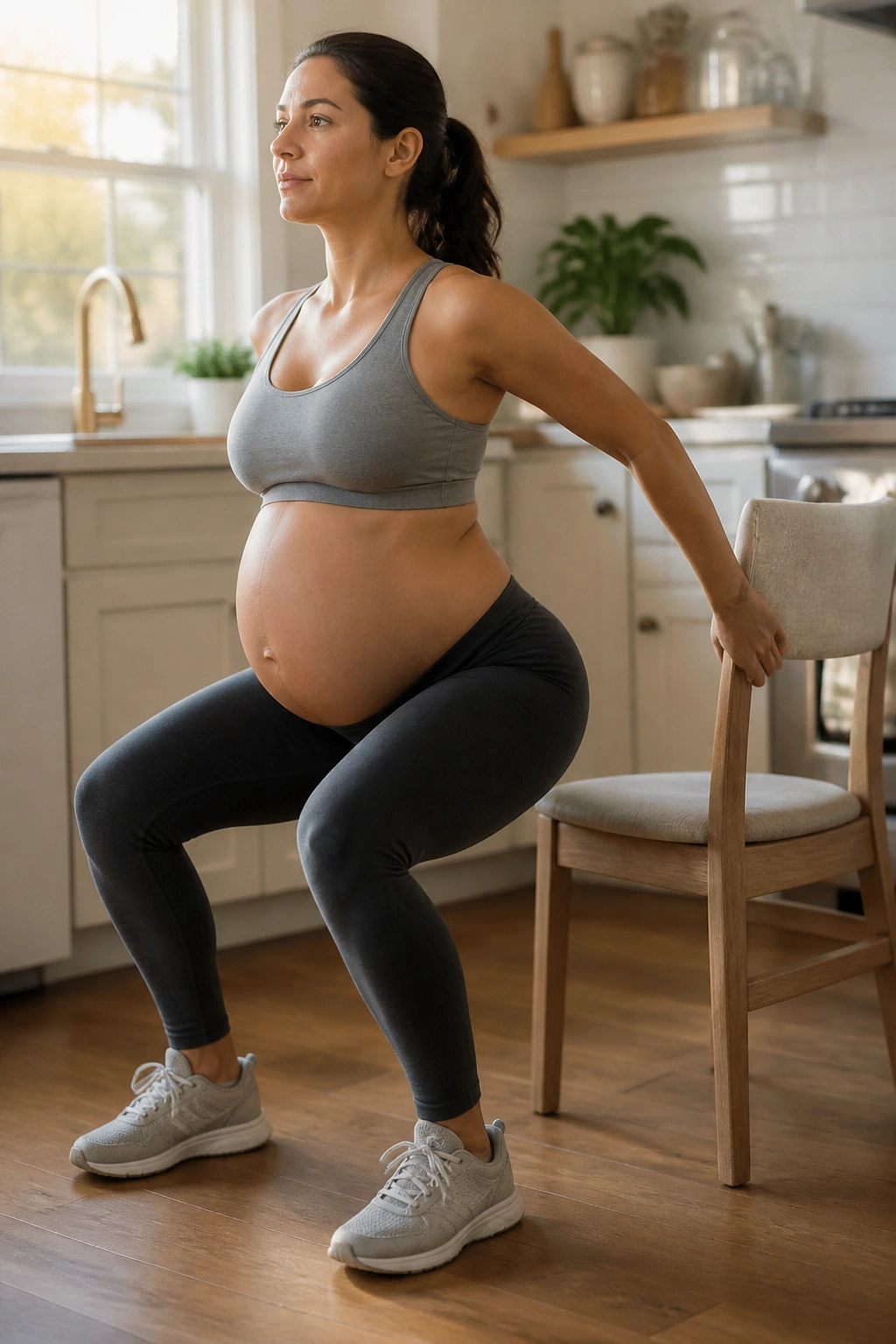
A chair squat is the move I trust when balance feels a little off. It gives you the squat pattern without asking you to sink lower than you want, and that matters when your belly is pulling your posture forward and your feet are doing extra work just to keep you upright.
Think of it as a strong sit-to-stand practice. Your quads and glutes do the work, but so do the little stabilizers around your hips and ankles. That transfer shows up later when you get off a bed, a toilet, or a low patio chair without using your hands like grappling hooks.
How to Set Up the Chair Version
- Place a sturdy chair behind you and stand with feet about hip-width apart.
- Lower slowly until your hips lightly touch the chair, then stand back up through your heels.
- Keep your chest lifted and your knees tracking over the middle toes.
- Use 2 to 3 sets of 8 to 12 reps, with 30 to 60 seconds of rest.
One good rule: stop the descent the moment your pelvis starts to tuck hard or your belly feels cramped against your thighs.
A lot of people make this harder than it needs to be. You do not need a deep squat here. You need a clean one.
2. Countertop Calf Raises for Tired Ankles and Heavy Legs
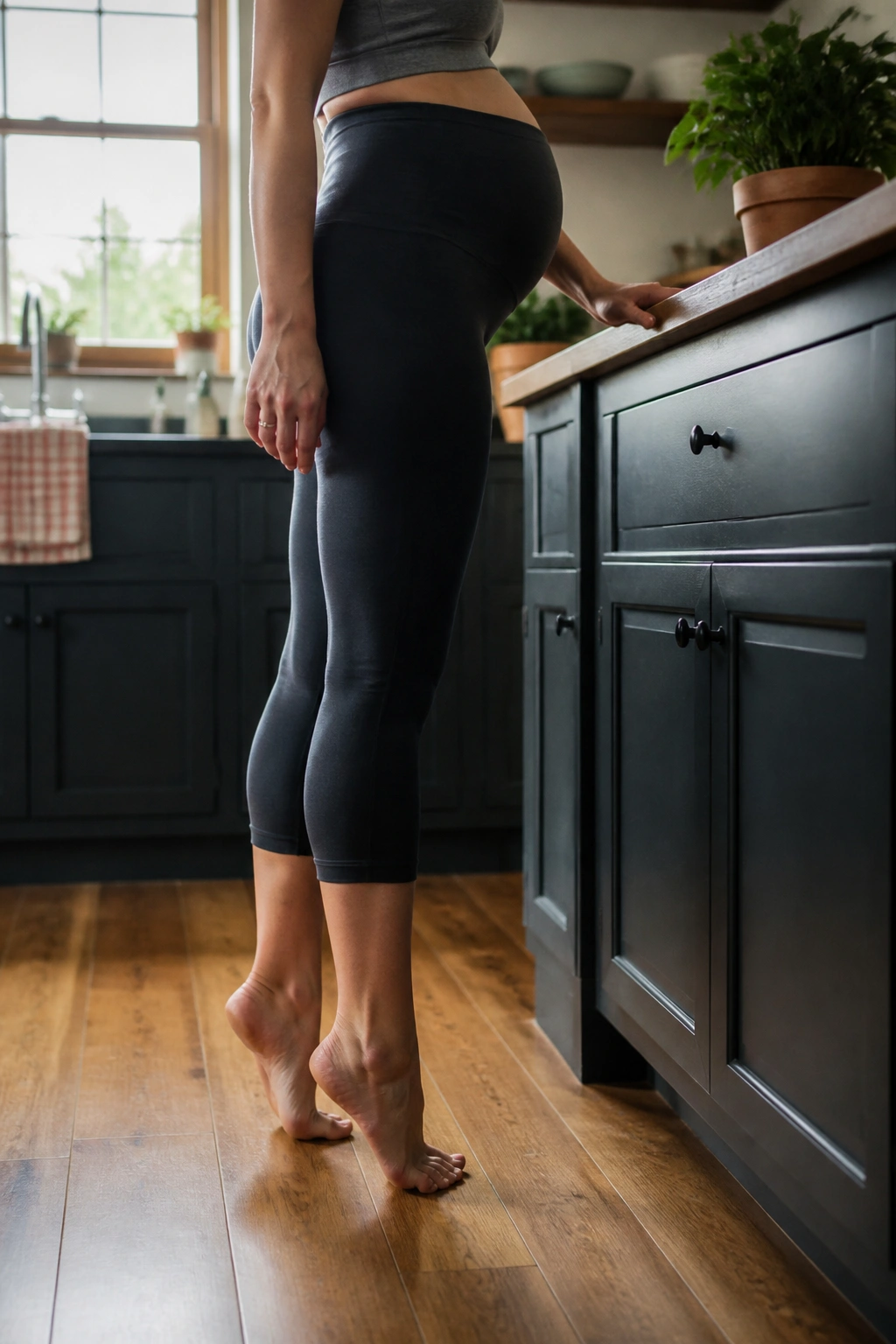
Calf raises are small, and that’s exactly why they’re worth doing. They train the lower leg without jarring your joints, and they give your feet and ankles a little reset after a day of standing, walking, or hanging around in one spot too long.
There’s also a practical side to this move that gets missed. Your calves help pump blood back up the leg, so when pregnancy makes your lower half feel swollen or sluggish, a slow set of raises can feel like it wakes the whole chain up. It is not a cure for swelling, and I would not promise that, but it often feels better than doing nothing.
Stand near a counter, sink, or wall. Rise onto the balls of your feet for a two-count, pause at the top, then lower with control for another two-count. Try 2 to 3 sets of 15 to 20 reps. If your feet cramp, shorten the range and keep the movement smooth. If one side feels weaker, slow down even more instead of rushing to match the stronger side.
Tiny movement. Good return.
3. Side-Lying Clamshells That Wake Up the Outer Hips
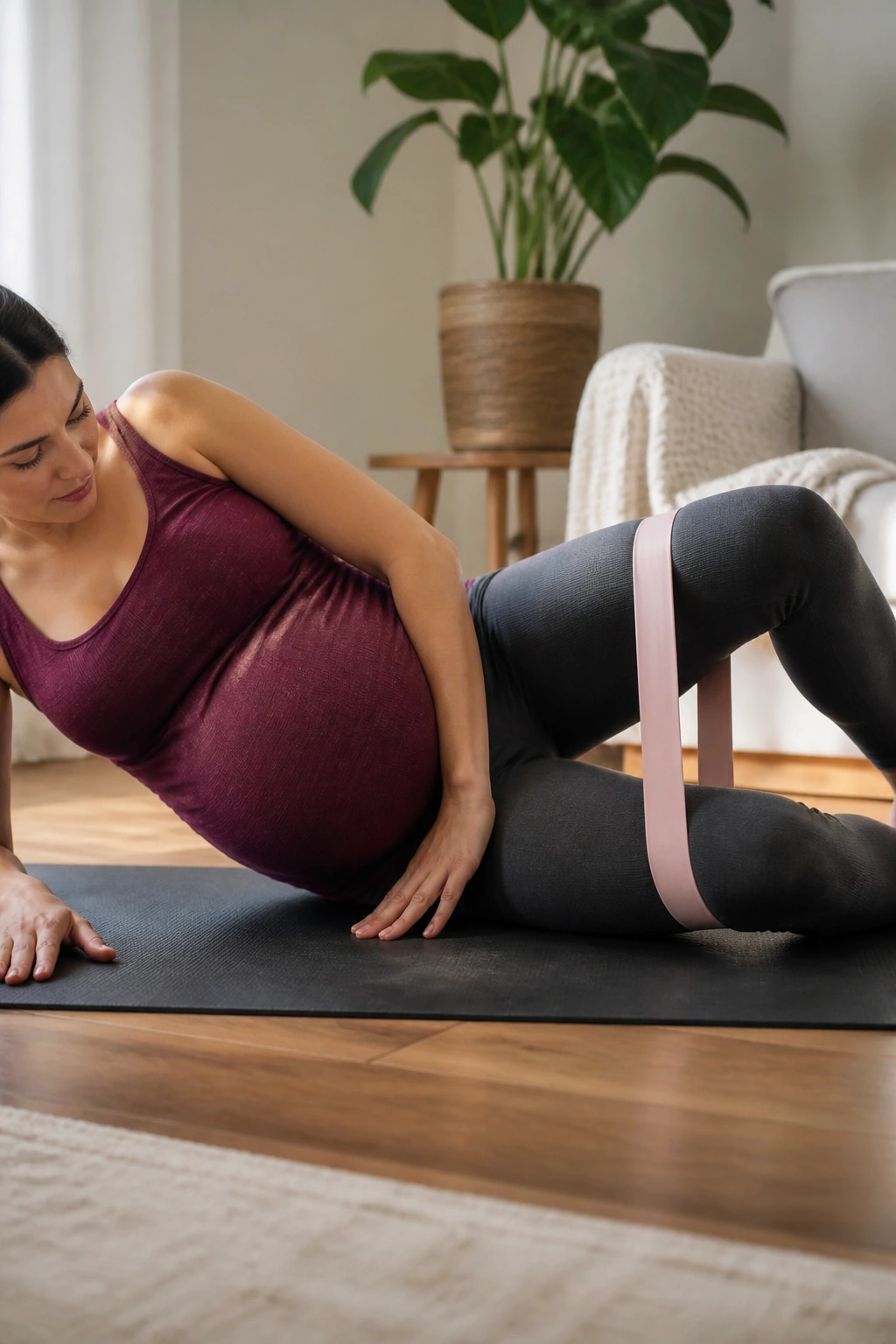
Why do clamshells keep showing up in prenatal plans? Because the outer hip muscles do a lot more than people think. They help keep your pelvis steadier when you walk, turn, step sideways, or stand on one leg for two seconds while your other foot hunts for a shoe.
When the third trimester makes your center of gravity shift forward, that side-to-side stability matters. A weak or sleepy glute med can leave you feeling wobbly, and sometimes that wobble shows up as a low-back ache or a hip that complains after a longer walk.
How to Do It
- Lie on your side with knees bent and feet stacked.
- Keep your hips stacked like you’re balancing two plates.
- Open the top knee a few inches without rolling your pelvis backward.
- Use 12 to 15 reps per side, and add a light mini-band above the knees if it feels good.
Watch the lower back. If you feel it arching or twisting, the range is too big.
This one should feel controlled, not wild. If it turns into a torso roll, reset and make the motion smaller.
4. Low Step-Ups for Stair-Climbing Confidence
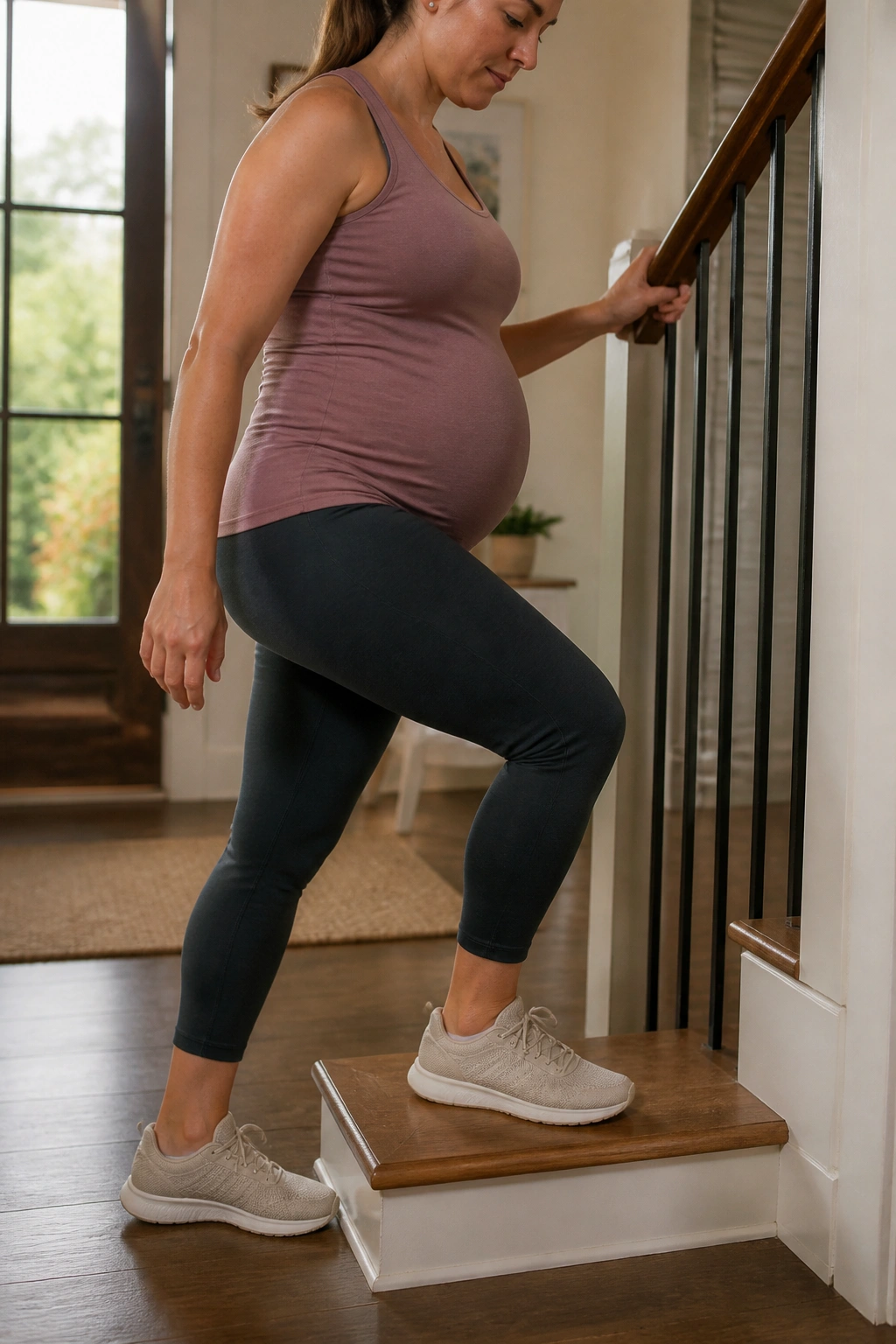
Picture the last three steps into your house after a grocery run. That’s the exact pattern step-ups train, and I love them for that reason alone.
They are honest. The movement is simple, but it shows you where the weak link is on any given day. If your quad tires fast, you’ll know. If your balance is shaky, you’ll know. If your glutes are doing their job, you’ll feel that too, usually on the way down the first time you try them.
Use a low step, around 4 to 6 inches if that feels friendly. Hold a railing, wall, or countertop with one hand. Step up with one foot, press through the whole foot, bring the other foot up, then step back down with control. Try 2 sets of 6 to 10 reps on each leg. If a higher step tempts you, don’t. The third trimester is not the time for showing off on stairs.
Quick Cues That Help
- Keep your torso tall.
- Push through the heel and midfoot.
- Move slowly on the way down.
- Stop before your pelvis starts to tip.
That down step is where people get sloppy. Don’t rush it.
5. Banded Lateral Walks to Keep the Hips Honest
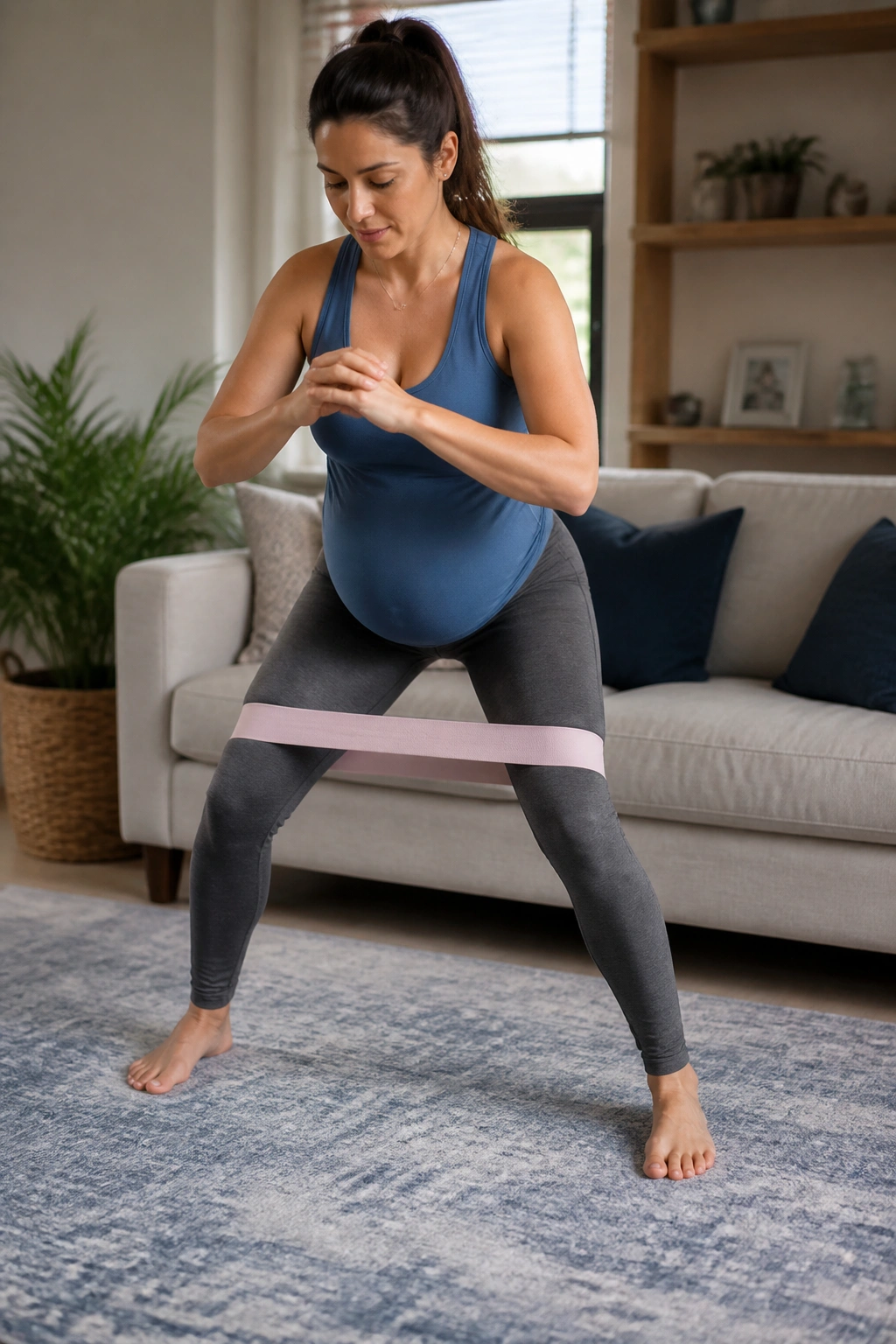
These burn in a sneaky way.
Banded lateral walks look almost too easy, which is part of their charm. You’re standing, stepping side to side, and pretending nothing special is happening. Meanwhile, your outer hips are working hard enough to matter, especially if the extra belly weight has made your gait feel a little wider and less stable.
Use a mini-band above the knees if you want a milder version, or around the ankles if that feels fine and your balance is solid. Bend your knees slightly, hinge your hips back a touch, and take 8 to 12 small steps to one side, then 8 to 12 back. Keep your toes mostly pointed forward. If the band pulls your knees inward, the band is too strong or your stance is too narrow.
Small steps win. Huge side-shuffles usually turn into trunk sway, and that steals the work from the hips. The move should feel like steady pressure on the outer seat, not like you’re trying to outrun the band.
6. Sumo Squats With a Wide Stance and a Slow Lower
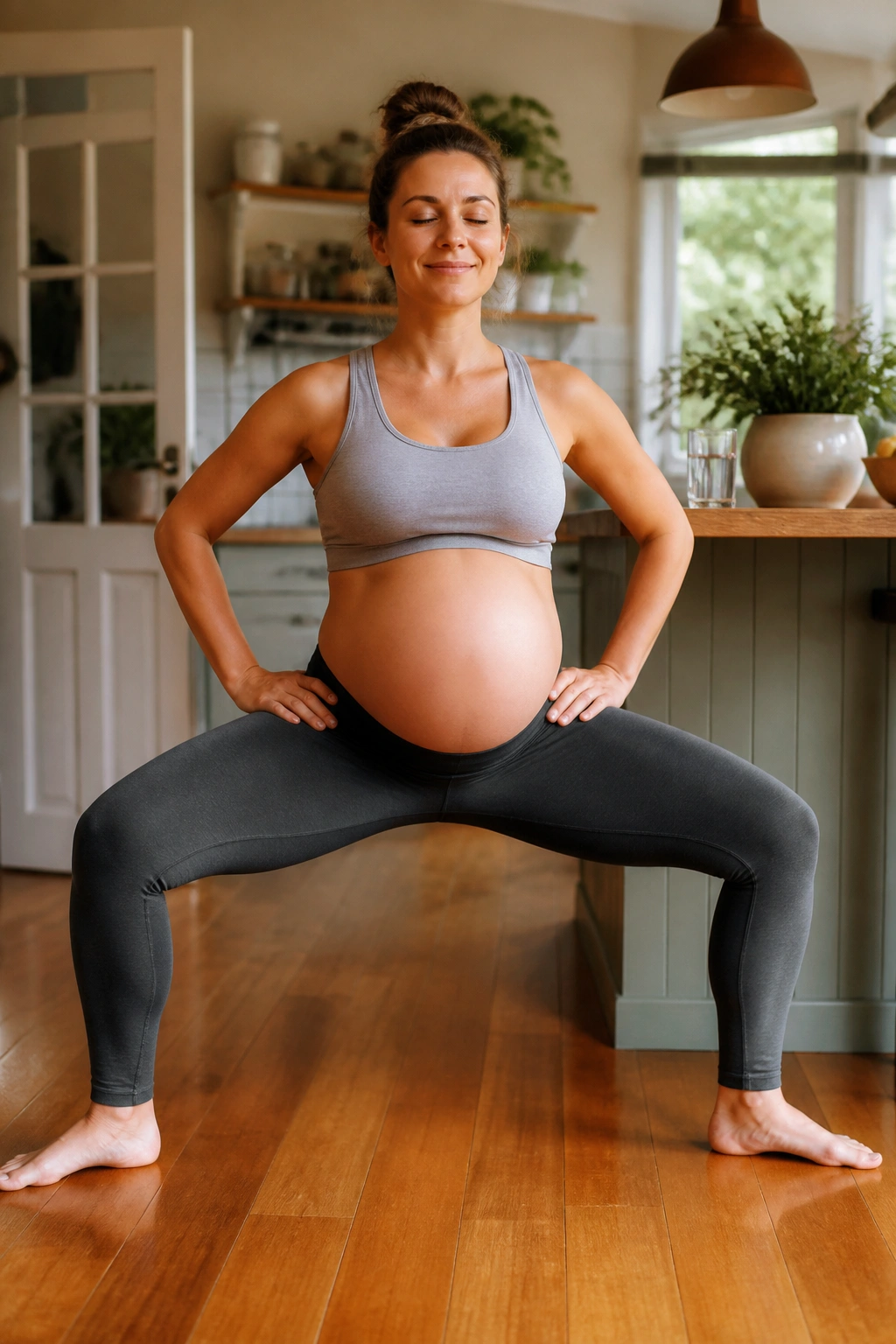
Unlike a narrow squat, the sumo version lets you keep your chest a little more upright and often feels kinder when the belly has started to claim more space. That wider stance can also be friendlier if a deep bend at the hips feels cramped.
Stand with feet wider than your hips, toes turned out only as far as is comfortable. Lower for a count of three, pause for one beat at the bottom, then stand back up by driving the floor away. Try 2 to 3 sets of 8 to 12 reps. If you want a little more support, hold the back of a chair or one countertop edge with one hand.
Best Cue
Spread the floor.
That little cue helps you press the knees out in line with the toes without collapsing inward. If your inner thighs feel cranky or your pelvis feels tugged, reduce the depth first. A shallow sumo squat that feels clean is better than a deep one that turns into a groin stretch you did not ask for.
7. Standing Hamstring Curls for the Back of the Thigh
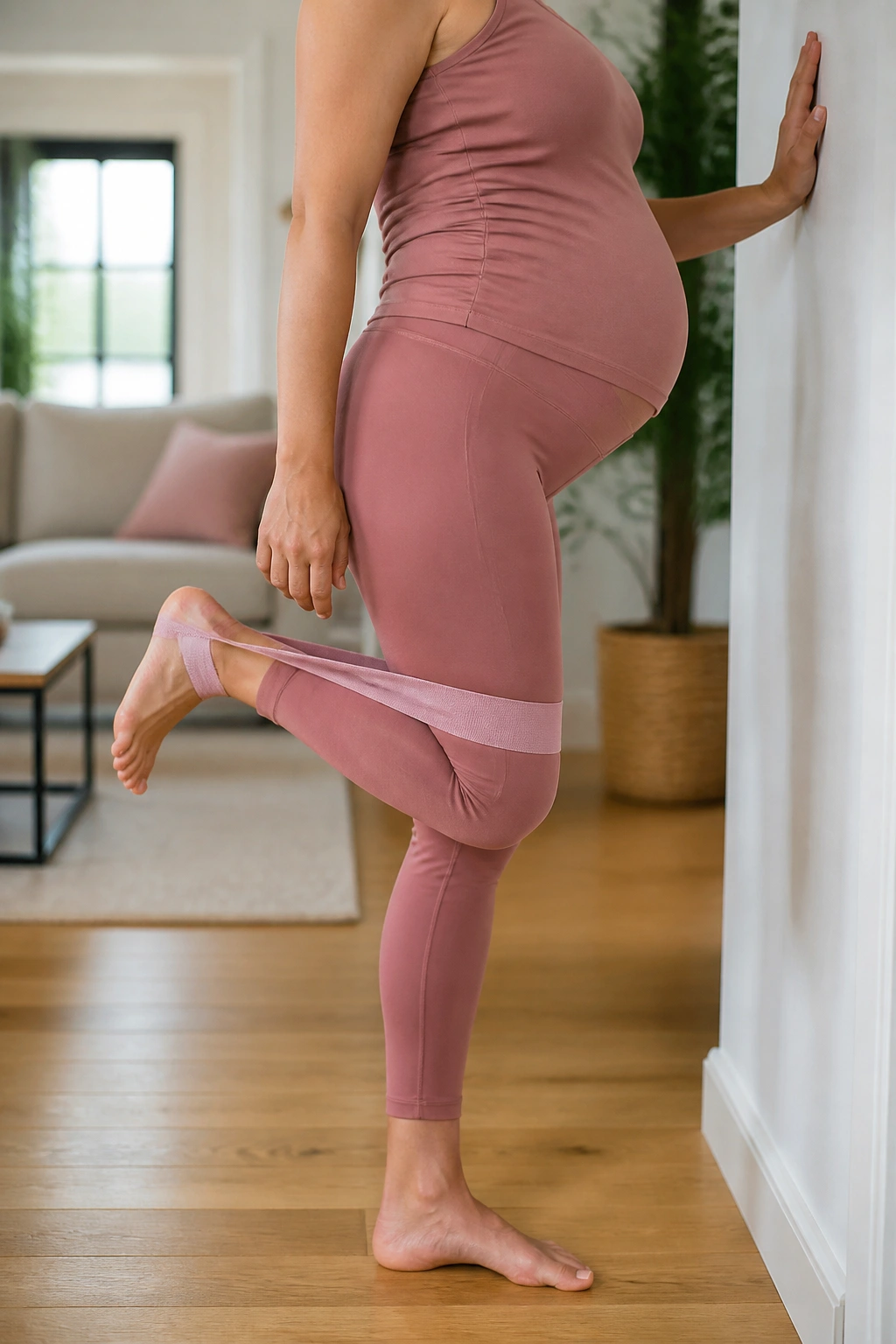
The back of the thigh gets lazy fast when most of your day is spent sitting, standing, or moving in short bursts. Standing hamstring curls wake that area up without asking you to lie on your back or put much load through the joints.
Why They Matter
Hamstrings help with hip extension, which sounds technical until you remember what it feels like to climb stairs, stand from a chair, or walk uphill. In late pregnancy, those everyday tasks ask more of your posterior chain than they did before.
How to Keep Form
- Stand tall with one hand on a wall or counter.
- Bend one knee and draw the heel toward the glute.
- Keep the thigh pointing straight down.
- Use 12 to 15 reps per side, then switch.
If you want more resistance, loop a light band around the ankles. I would keep the band light. Heavy resistance tends to make people arch their backs or kick the foot too far behind them, and neither is the point. You want a clean curl, a brief squeeze, and a controlled return to standing. That’s enough.
8. Wall Sits With a Ball Between the Knees
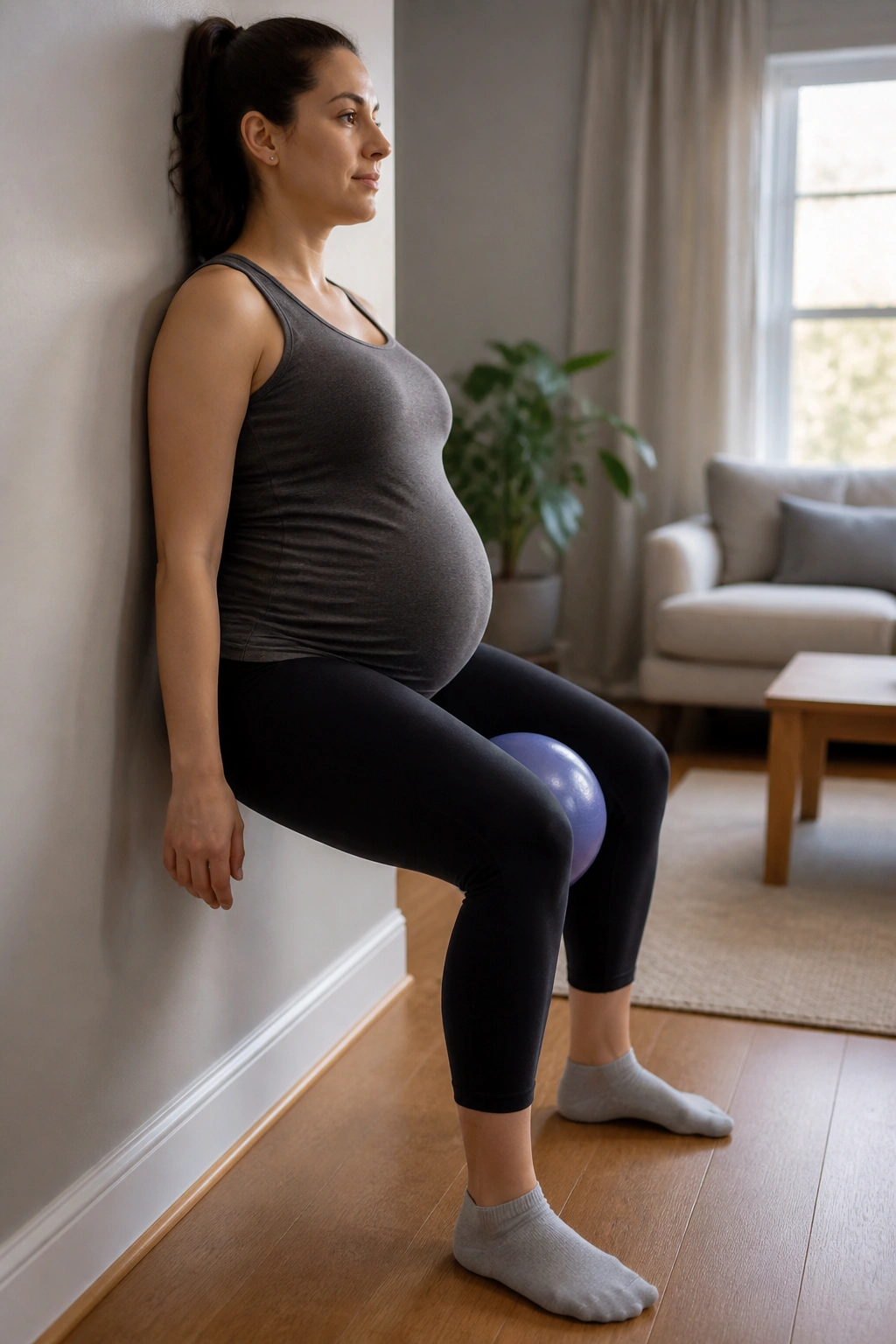
Wall sits are boring and useful. That is the nicest thing I can say about them, and I mean it as praise.
They build quad endurance without the up-and-down motion that can get tiring when you are already carrying extra weight through your frame. Add a small ball or folded pillow between the knees, and you also bring the inner thighs into the conversation. Just do not force a deep bend. A short hold is more useful than a heroic squat angle that leaves you wincing when you stand.
Slide your back down the wall only until your thighs are somewhere between a quarter squat and a half squat. Press gently into the ball, breathe steadily, and hold for 15 to 30 seconds. Rest, then repeat 2 to 4 times. If your knees ache, rise higher. If your pelvis feels heavy or pressured, come out sooner.
No breath-holding. Ever.
People love to brace hard during wall sits. In pregnancy, that habit can backfire. Keep the ribs soft, exhale on purpose, and treat the hold like a strength drill, not a punishment.
9. Supported Reverse Lunges for Pregnancy Leg Workouts in the Third Trimester
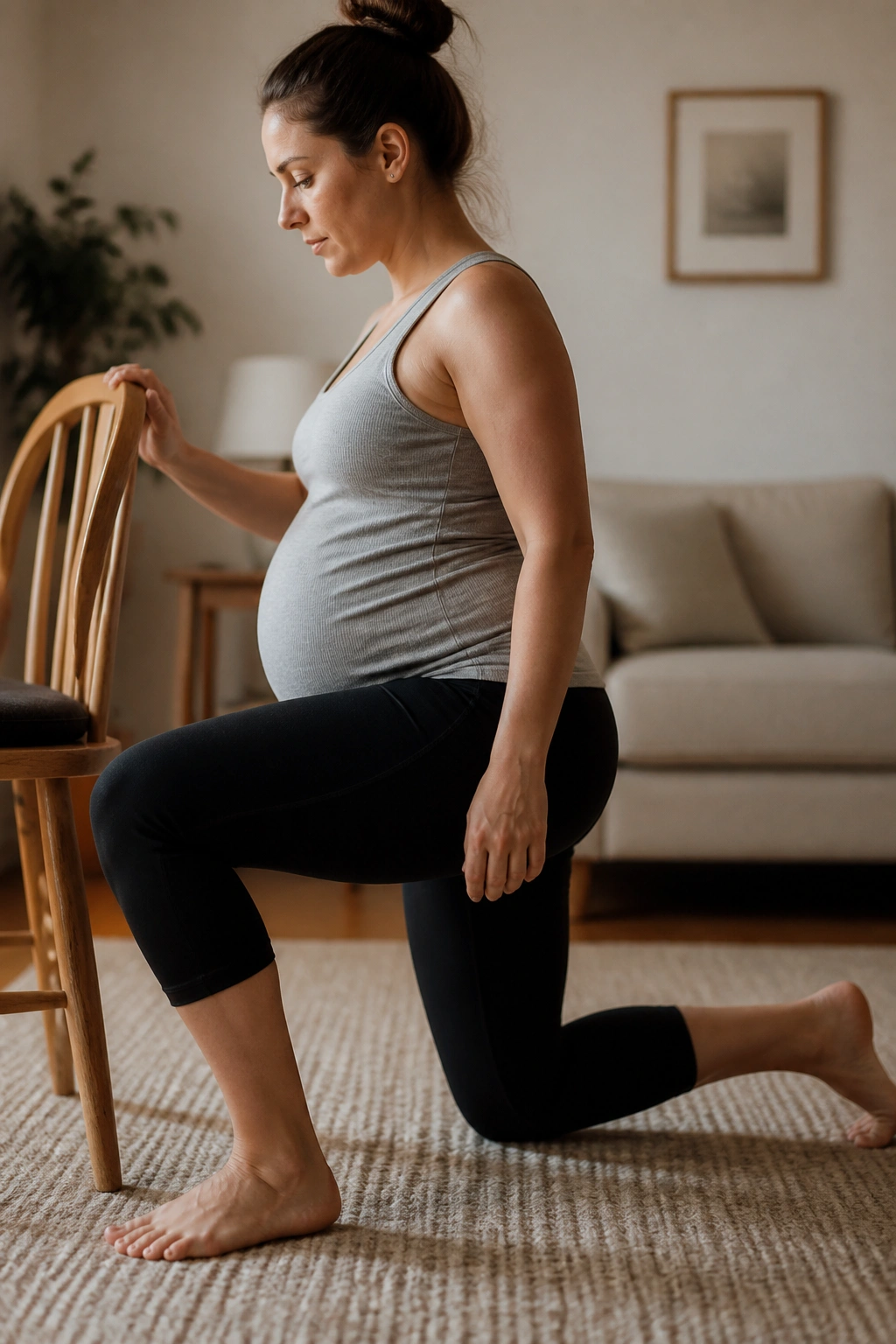
Can lunges still work late in pregnancy? Yes, but I want the reverse version and I want support nearby.
A reverse lunge asks you to step back instead of forward, which usually feels more controlled when your balance is shifting and your front foot wants to stay planted. It also gives the front leg a good dose of quad and glute work without forcing a huge forward lean. Hold a chair or counter with one hand and keep the range short. You do not need to sink deep.
Keep the Range Short
- Step one foot back just far enough to bend both knees a little.
- Keep most of your weight in the front heel.
- Lower until the back knee points toward the floor, not past it.
- Do 5 to 8 reps per side, then switch.
If you feel pubic bone pain, pelvic heaviness, or a sharp pinch in the groin, shorten the stance or swap this move for chair squats. There is no prize for pushing through a movement that hates your pelvis. The reverse lunge should feel stable and tidy, not like a wobbly compromise.
10. Seated Marches for Days When Balance Feels Off
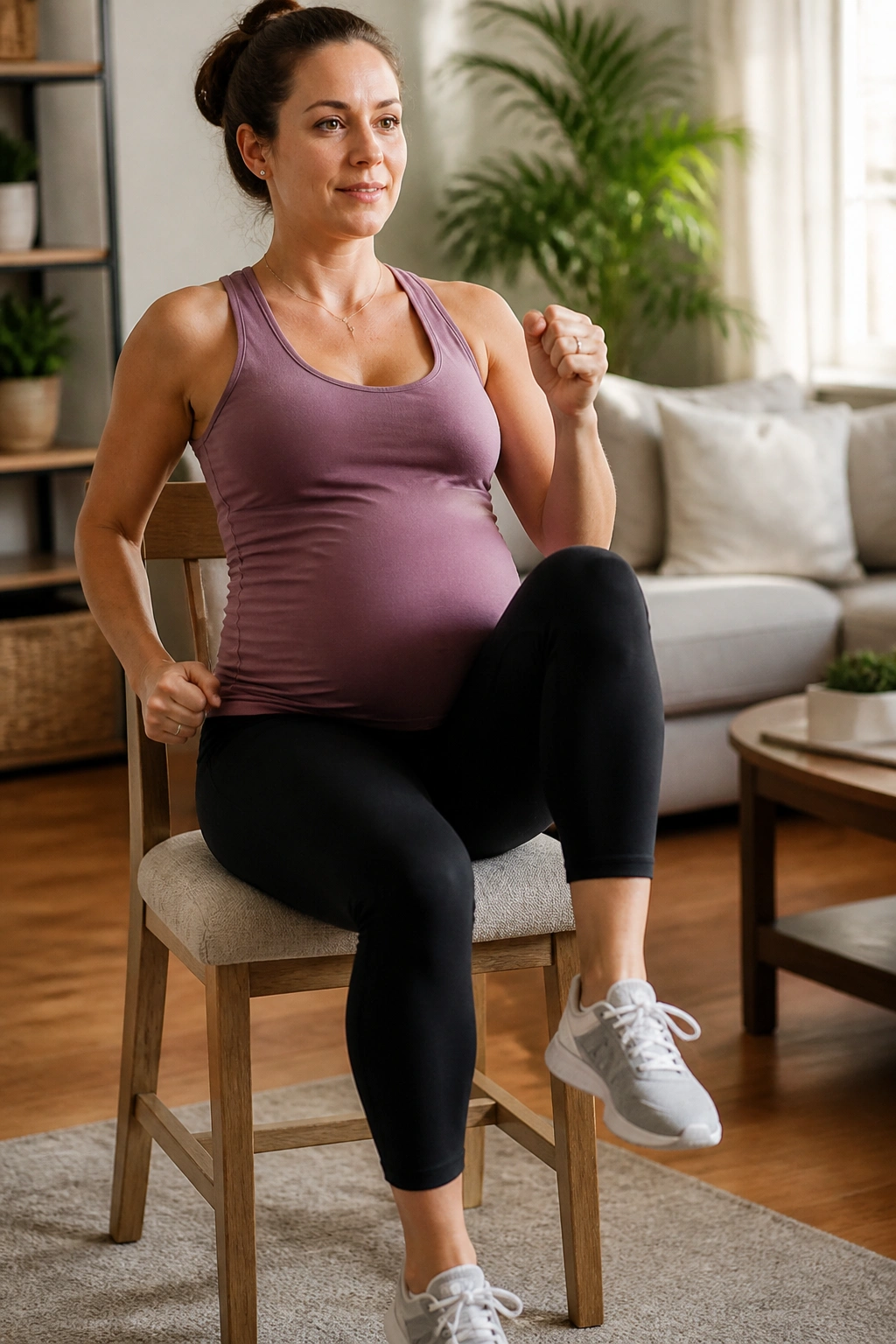
There are days when standing on one leg is a terrible idea. On those days, seated marches are the sensible choice, and I say that with full respect.
Sit tall on a sturdy chair with both feet flat. Lift one knee a few inches, lower it, then lift the other. Keep the trunk upright and avoid slumping into the backrest. Try 20 to 30 total marches, broken into short sets if your hip flexors complain. If you want to make it a little more active, move your arms in a brisk walking rhythm.
This is not flashy work. It is useful work.
Seated marches keep the hip flexors, lower abs, and quads engaged without loading your balance system. They are a good pick for bad-weather days, long work stretches, or afternoons when your feet feel too puffy for standing drills. If your lower back starts to arch, sit a little taller and shrink the knee lift. The movement should stay light and smooth.
11. Side-Lying Inner-Thigh Lifts for the Muscles Nobody Thinks About
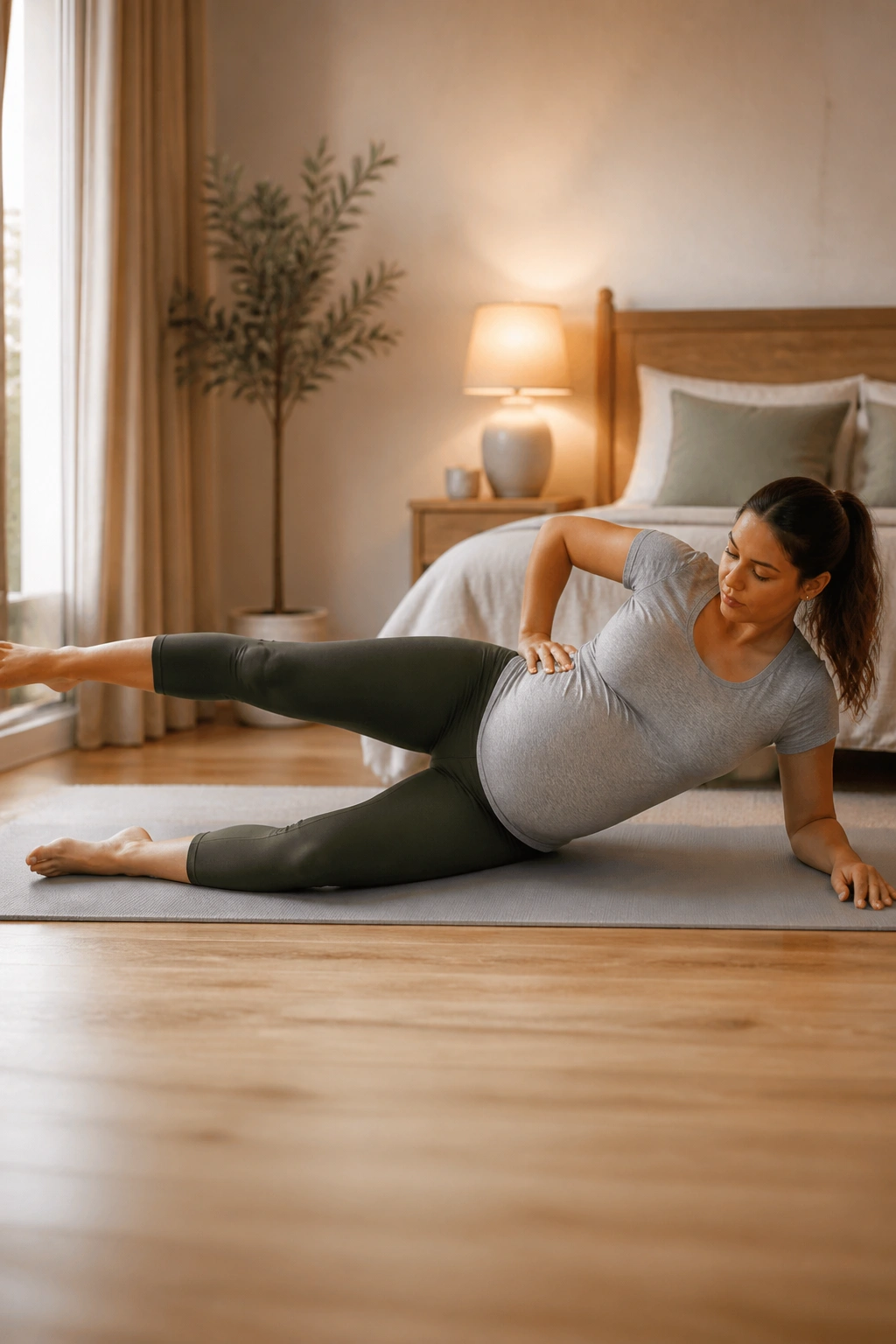
Inner-thigh work does not get much attention, which is strange because those muscles help with pelvic stability and with the kind of controlled leg movement that matters every day. Getting out of a car, stepping over a tub edge, standing from a low seat — all of it asks the adductors to do more than people think.
Lie on your side with the bottom leg straight and the top leg bent in front of you for support. Lift the bottom leg a few inches off the floor, then lower it slowly. Use 12 to 15 reps per side. If lying flat on one side makes your rib cage or hip feel cranky, place a folded blanket under your waist or do fewer reps. That tiny bit of padding can make the exercise feel far cleaner.
This is a quiet exercise. Good. Quiet is fine.
If you catch yourself swinging the leg up, the range is too ambitious. Keep it small, keep the toes facing forward, and make the lowering phase slow enough that you can feel the inner thigh working all the way back down.
12. Supported Single-Leg Balance Taps
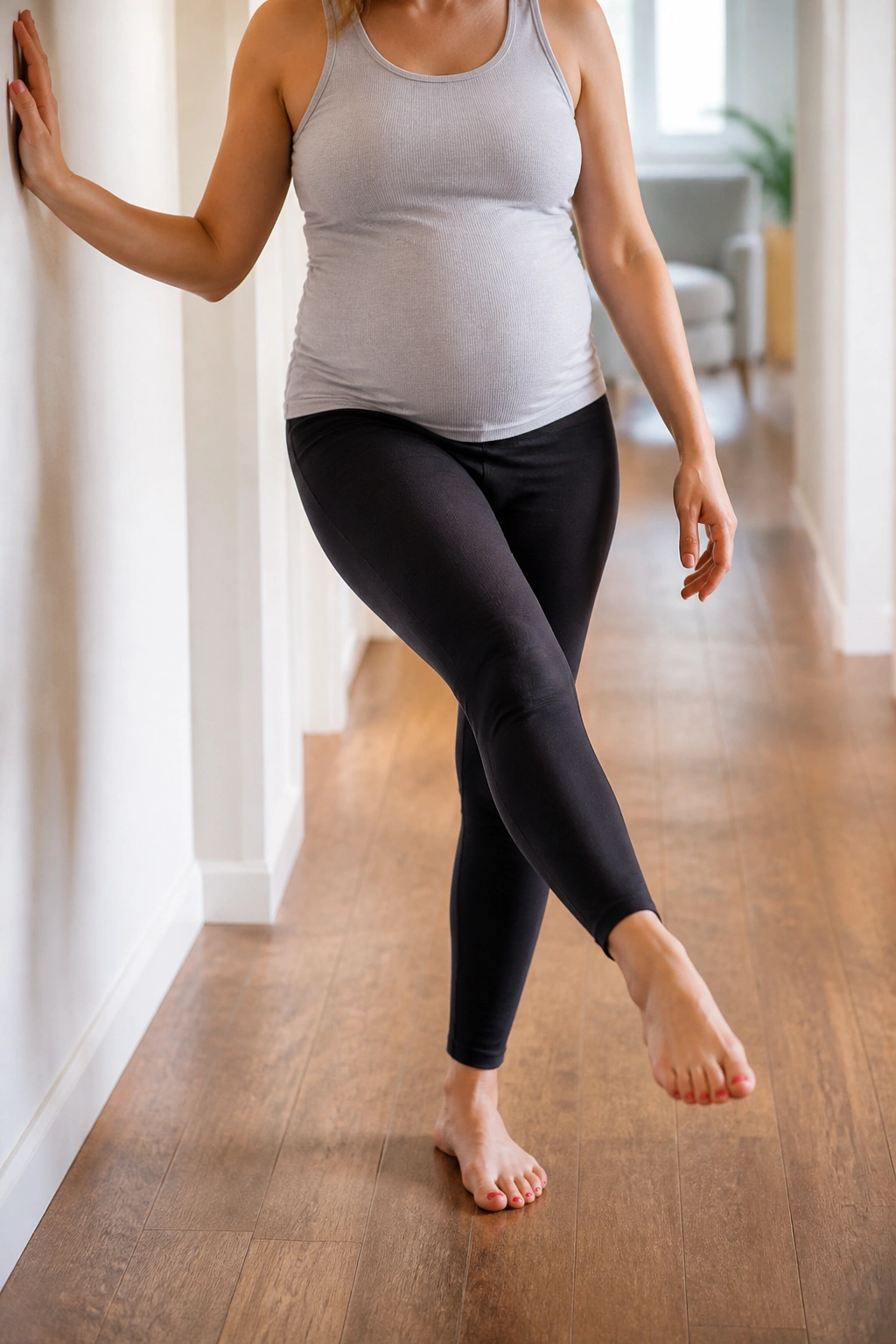
Single-leg balance work in the third trimester does not need to be dramatic. A tap is enough. A full hold with eyes fixed on one spot is useful too, but taps give you a little movement while keeping the risk lower.
Stand beside a wall or sturdy chair, lightly touching it with one hand. Shift weight onto one leg, then tap the free foot forward, to the side, and behind you. That forward-side-back pattern wakes up the standing leg, the glute on that side, and the little muscles around the ankle. Do 5 rounds on each side, or around 15 taps total per leg.
What to Keep Steady
- Keep the standing knee soft, not locked.
- Keep your pelvis level.
- Keep the tap light, almost like a toe brush.
- Fix your eyes on one point in front of you.
Unlike a full balance pose, this version gives you room to wobble a little without making the wobble the whole point. That is the sweet spot. If you feel unstable, hold the support more firmly and make the taps shorter.
13. All-Fours Kickbacks for Glutes Without the Back Strain
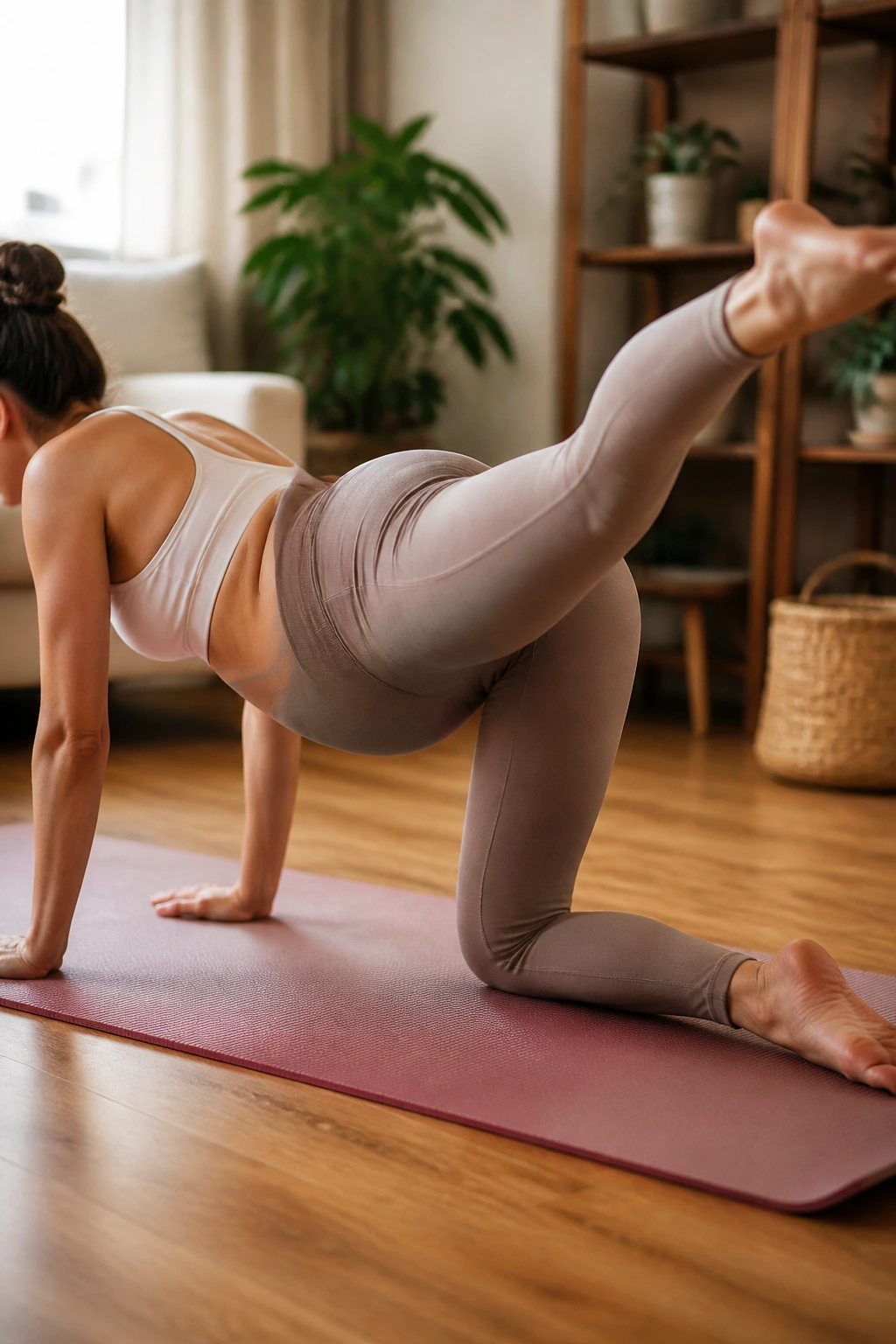
If standing work makes your feet tired, hands-and-knees kickbacks can be a welcome change. They let you train the glutes without loading your spine much, and they usually feel kinder than anything that asks you to brace hard through the belly.
A Small Range Is Enough
Get on all fours with hands under shoulders and knees under hips. Keep your spine long, then press one heel back and up a few inches until you feel the glute tighten. Lower with control. Use 10 to 15 reps per side, and pad your knees if the floor is unforgiving.
If your wrists hate this position, make fists or drop to your forearms. If your back starts to arch, the leg is going too high. The kickback should come from the hip, not from a twist through the lower back. A smaller, cleaner rep is better than a bigger one that turns your torso into a seesaw.
A lot of people like to rush this movement. Don’t. Pause for a half second at the top and keep the rest of the body still.
14. Lateral Lunges With a Short Reach
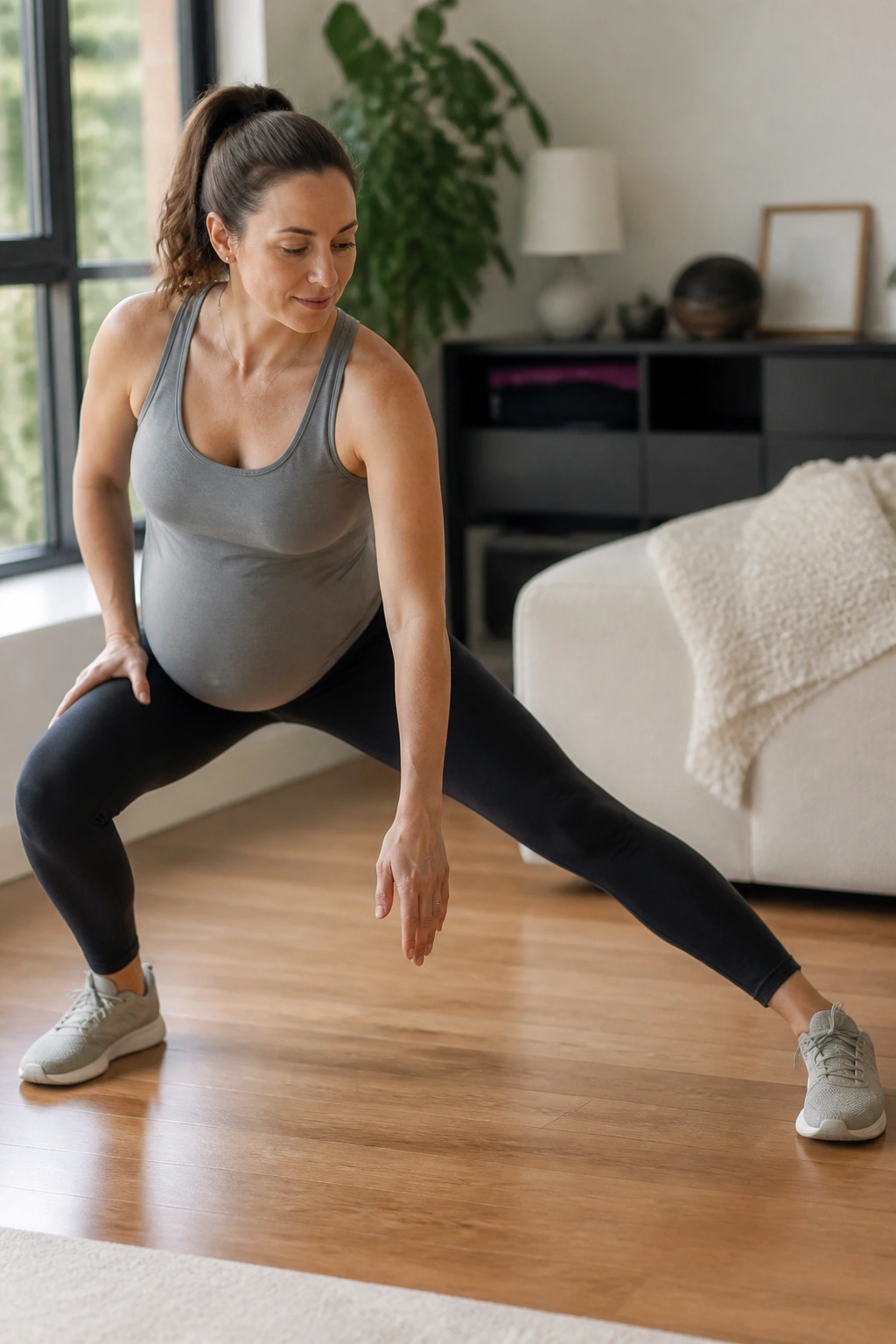
Side-to-side strength matters more than people think. It shows up when you step around a toy, slide into a car seat, or shift your weight while carrying something awkward in one hand. Lateral lunges train that side pattern directly.
Take a wide step to one side, bend that knee a little, and keep the other leg straighter. Sit back into the hip on the bent-knee side, then push back to center. Hold a wall or counter if the balance feels sketchy. Use 8 to 10 reps per side, and keep the range modest. You are not chasing depth here.
The best version of this move feels like a clean shift of weight, not a deep side squat. If your inner thigh on the straight leg feels a mild stretch, that is one thing. If your pelvis feels pulled or pinched, shorten the step. The third trimester often rewards smaller ranges and cleaner control more than bigger motions ever do.
15. Seated Band Abductions That Burn Without Jarring
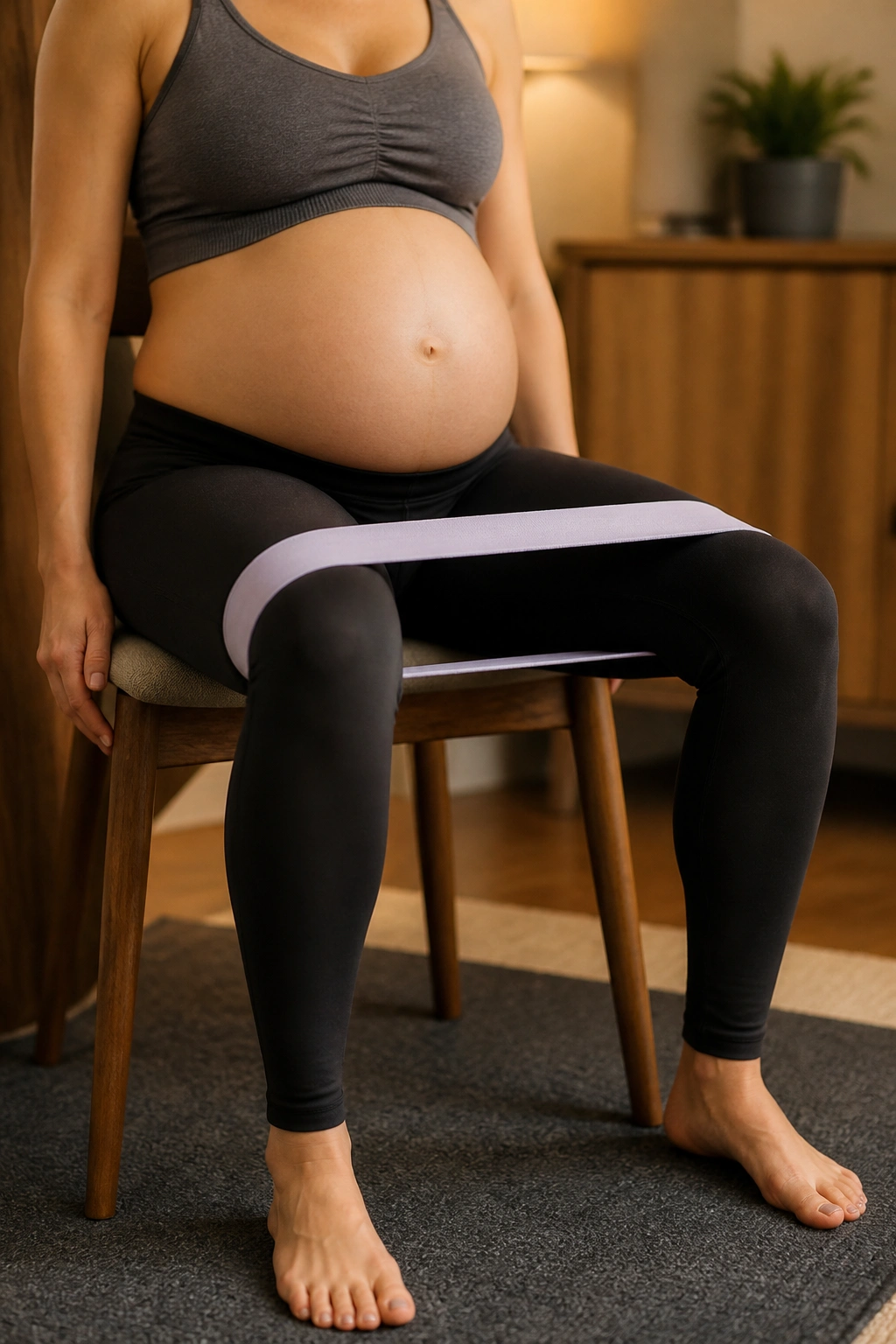
Need a lower-body move that lets your back rest for a minute? Seated band abductions are a good answer. They hit the outer hips and glutes while keeping you grounded in a chair, which is a welcome change when standing drills start to feel like too much.
Sit toward the front of a sturdy chair with a light mini-band above your knees. Press the knees apart, hold for a beat, then let them come back in with control. Use 12 to 20 reps, and keep your feet planted. If the band is too strong, move to a lighter one before you start fighting it with your torso.
Best Way to Load It
- Put the band above the knees for an easier version.
- Move it lower only if the knees and hips feel fine.
- Add a two-second pause when the knees are open.
- Keep the chest tall instead of leaning back.
The beauty here is the lack of drama. It is a simple burn, which is often exactly what prenatal leg work needs.
16. Split Squat Holds With a Chair Nearby
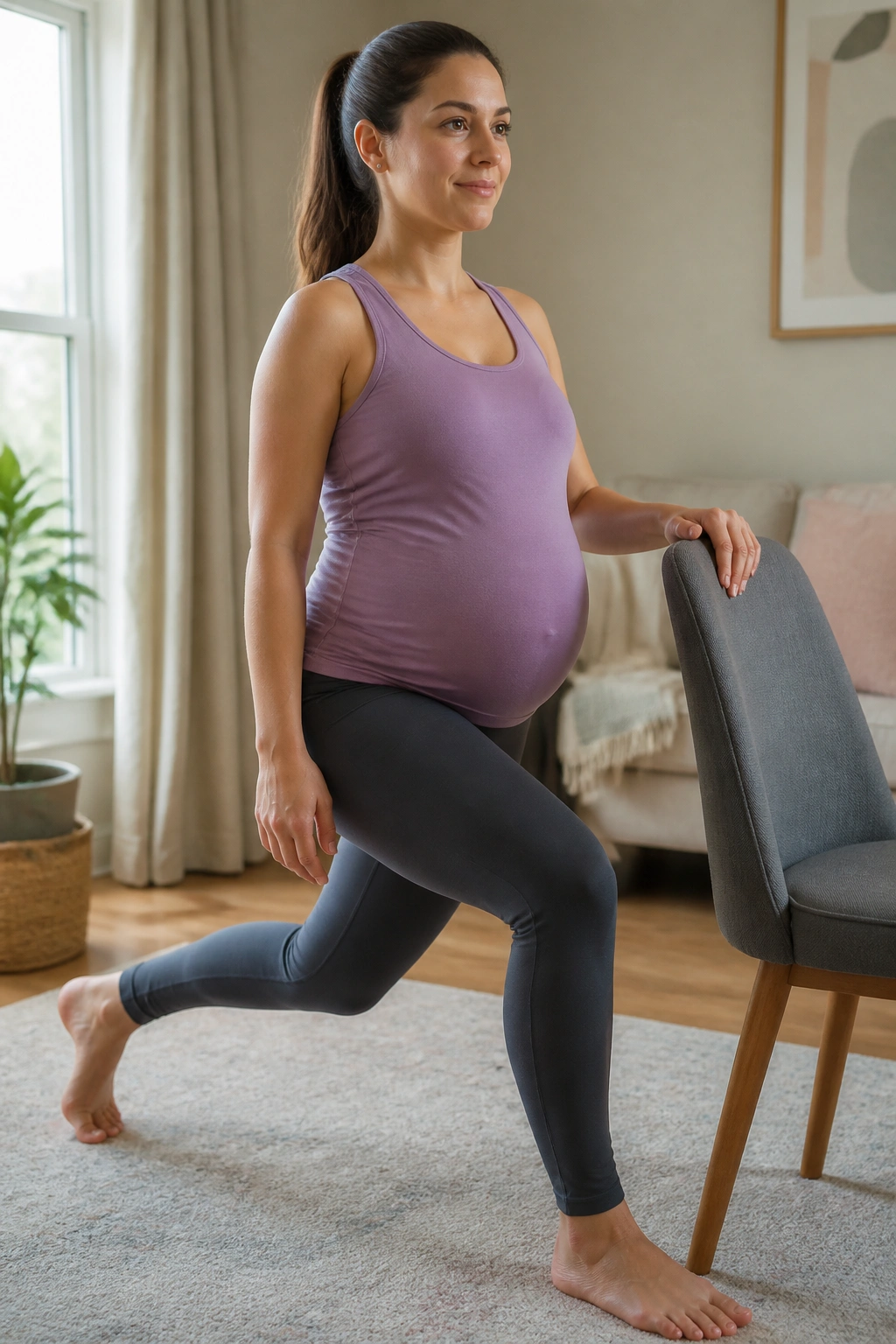
The hold is often easier than the full lunge, and that matters more than people think. A split squat hold lets you load the front leg, glute, and inner thigh without needing to repeat the step over and over, which can be handy if your balance feels fine for a few seconds and then starts to fade.
Place one foot forward and one back in a short stance. Hold a chair with one hand, bend both knees slightly, and keep your torso upright. Hold for 15 to 25 seconds, then switch sides. If you want less load, stay high. If you want a bit more, sink only an inch or two lower.
The back heel can stay lifted or lightly grounded, depending on what feels stable. What you do not want is a long, wobbly stance that yanks on the pelvis. If pubic bone discomfort shows up, shorten the stance immediately. The move should feel like steady work in the front leg, not a tug-of-war between your hips.
17. Standing Hip Abduction Pulses at the Counter
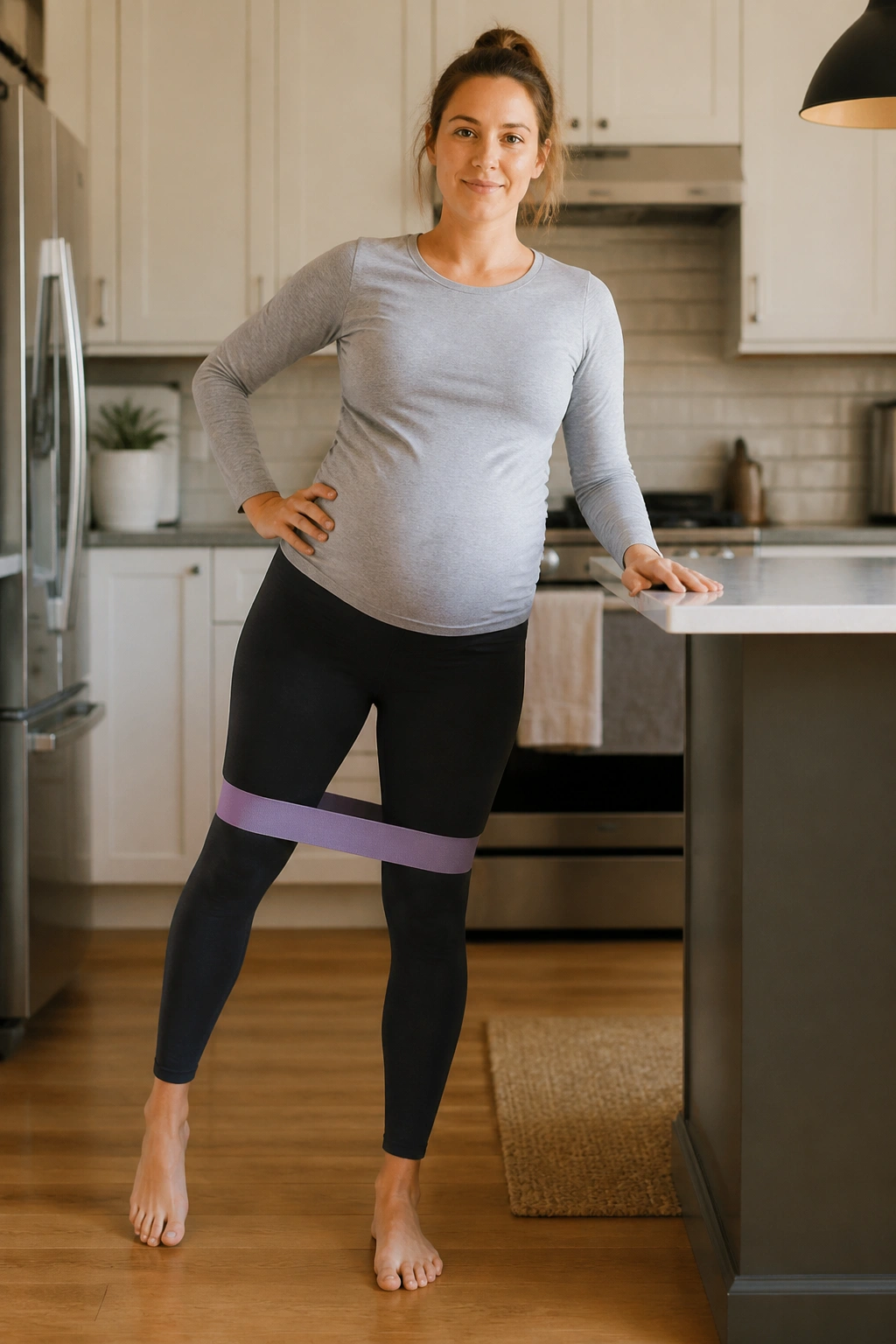
Standing hip abduction pulses are one of those exercises that looks tiny and feels bigger than it should. That makes them useful. You move one leg out to the side a few inches at a time, and the outer hip has to stay awake while the rest of you stays calm.
Stand beside a counter with one hand resting lightly on it. Shift weight onto one leg, then lift the other leg out to the side in small pulses. Keep the toes forward or slightly turned down, and avoid leaning your trunk the opposite way to cheat the range. Use 12 to 15 pulses per side, then switch.
If your standing foot starts to feel unstable, widen your base. If your lower back joins the party, the leg is probably going too high. This one should stay neat. You should feel the side of the butt and the outer hip, not your waist doing emergency repairs. A tiny pulse is enough.
18. Mini Squat Pulses for a Short, Spicy Finisher
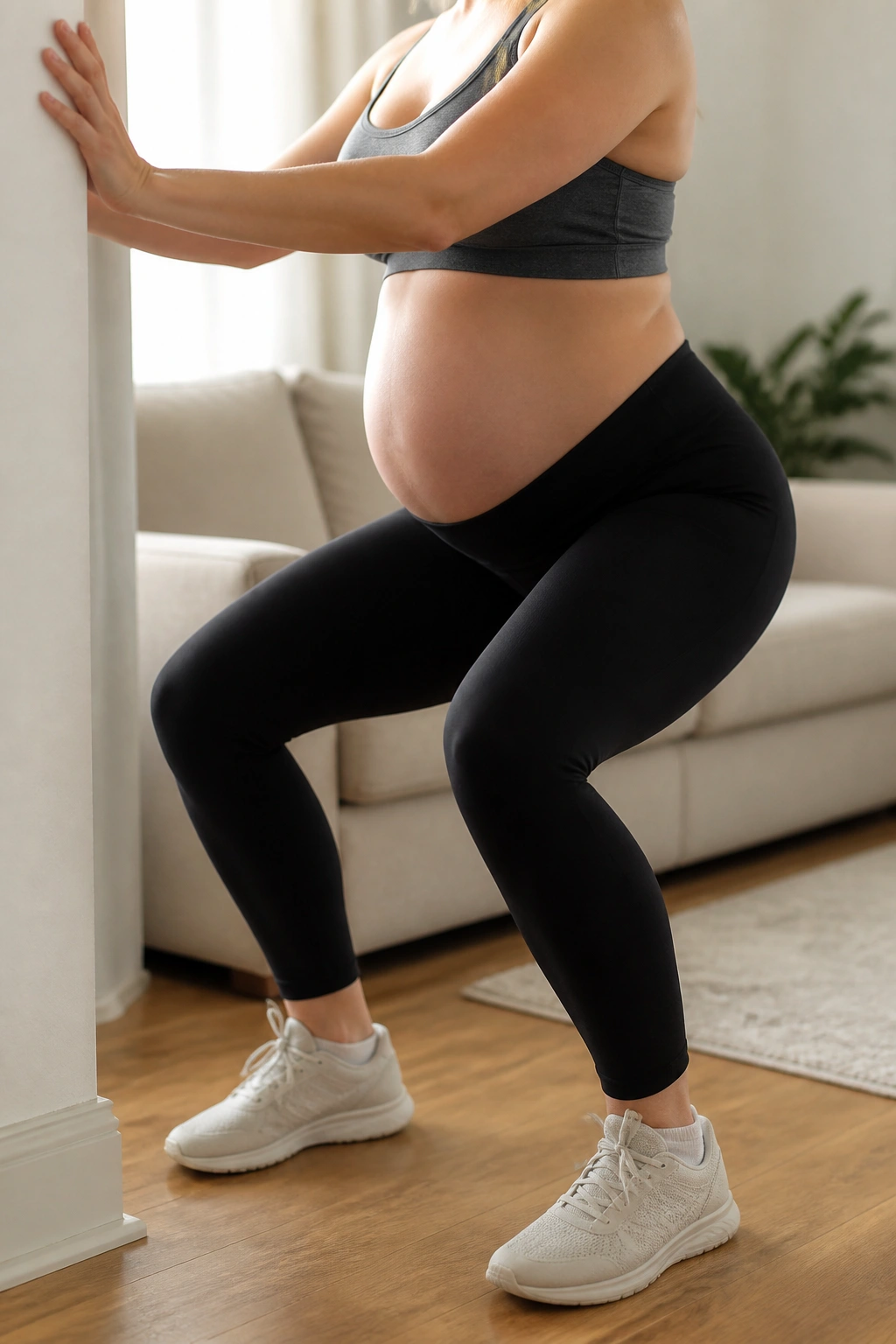
Compared with full squats, mini squat pulses are a smaller deal, and that is why they work well as a finisher. You stay in a shallow squat, hold onto support if needed, and pulse up and down a couple of inches for a short burst.
Use this one after your main work, not as the whole workout. Ten to 20 pulses is plenty. Keep the knees tracking forward, the chest open, and the heels planted. If you feel the pelvis getting heavy or the knees complaining, stand back up and call it done. There is no value in grinding through a spicy finish that turns sour halfway through.
This move can be a nice way to get a little quad and glute burn without deep bending. It also pairs well with slower exercises earlier in the session, because the range is tiny and the load feels manageable. If you like a more athletic feel, this is the one that gives it to you without turning the workout into a balancing act.
19. Seated Hamstring Curls With a Band
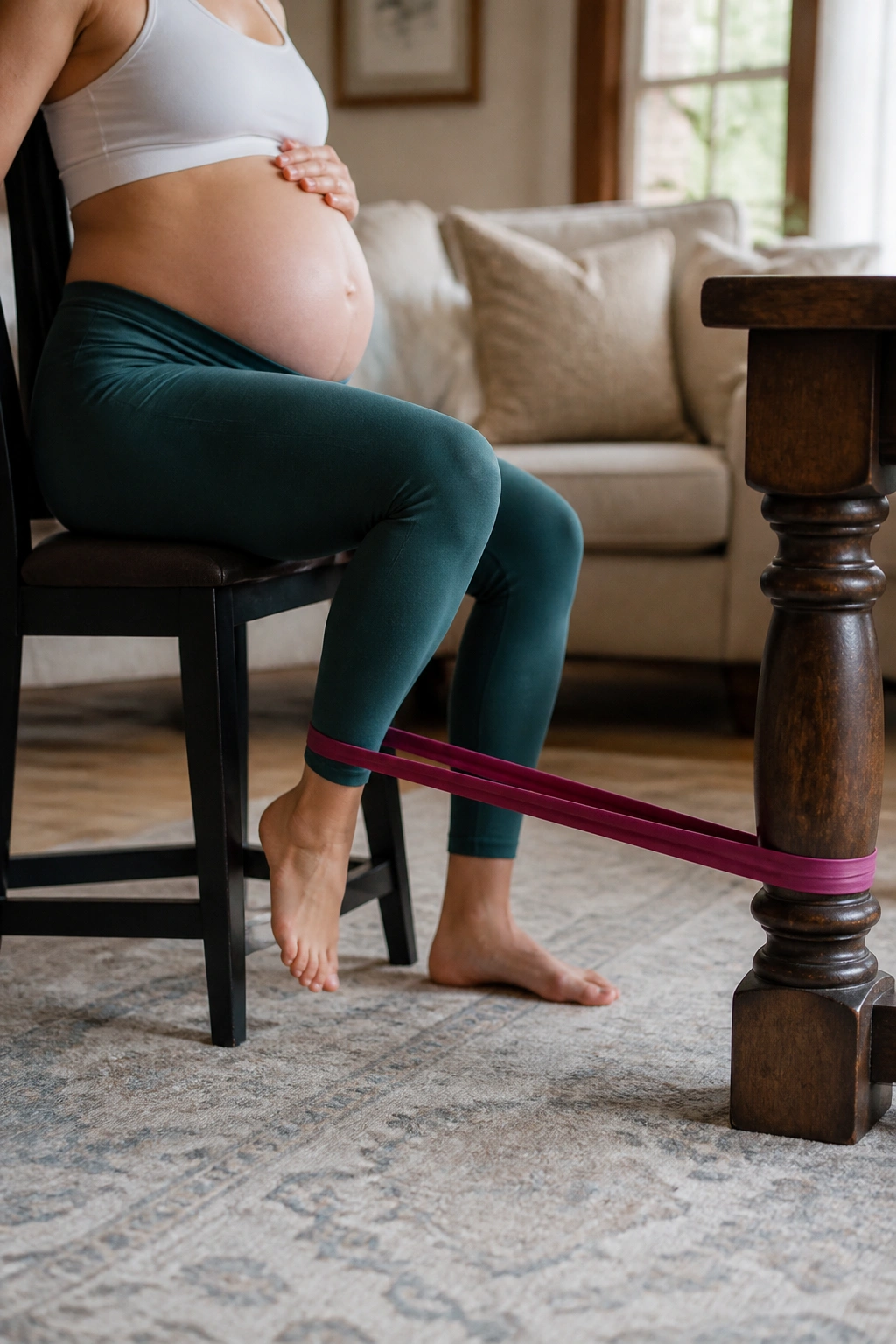
Hamstring curls are usually thought of as a standing move, but seated curls work well when your legs need a break from balance. The seated version is especially handy if your feet are tired, your lower back is sensitive, or you just want to keep the work focused and simple.
How to Anchor the Band
- Sit near the front edge of a sturdy chair.
- Loop a resistance band around one heel and anchor the other end to a heavy table leg, another chair, or a secure low object in front of you.
- Pull the heel back under the chair, pause for one count, and return slowly.
- Use 12 to 15 reps per leg.
Keep the knee pointed forward and avoid jerking the band. If the anchor feels slippery, stop and reset it before you keep going. A sloppy setup is the fastest way to make a small exercise annoying.
The hamstring should feel the work as the heel pulls back, and you should feel a gentle return on the way forward. That slow return matters. It keeps the movement honest and makes the exercise more useful than a quick tug ever would.
20. Ankle Pumps and Toe Taps to Finish a Pregnancy Leg Workout
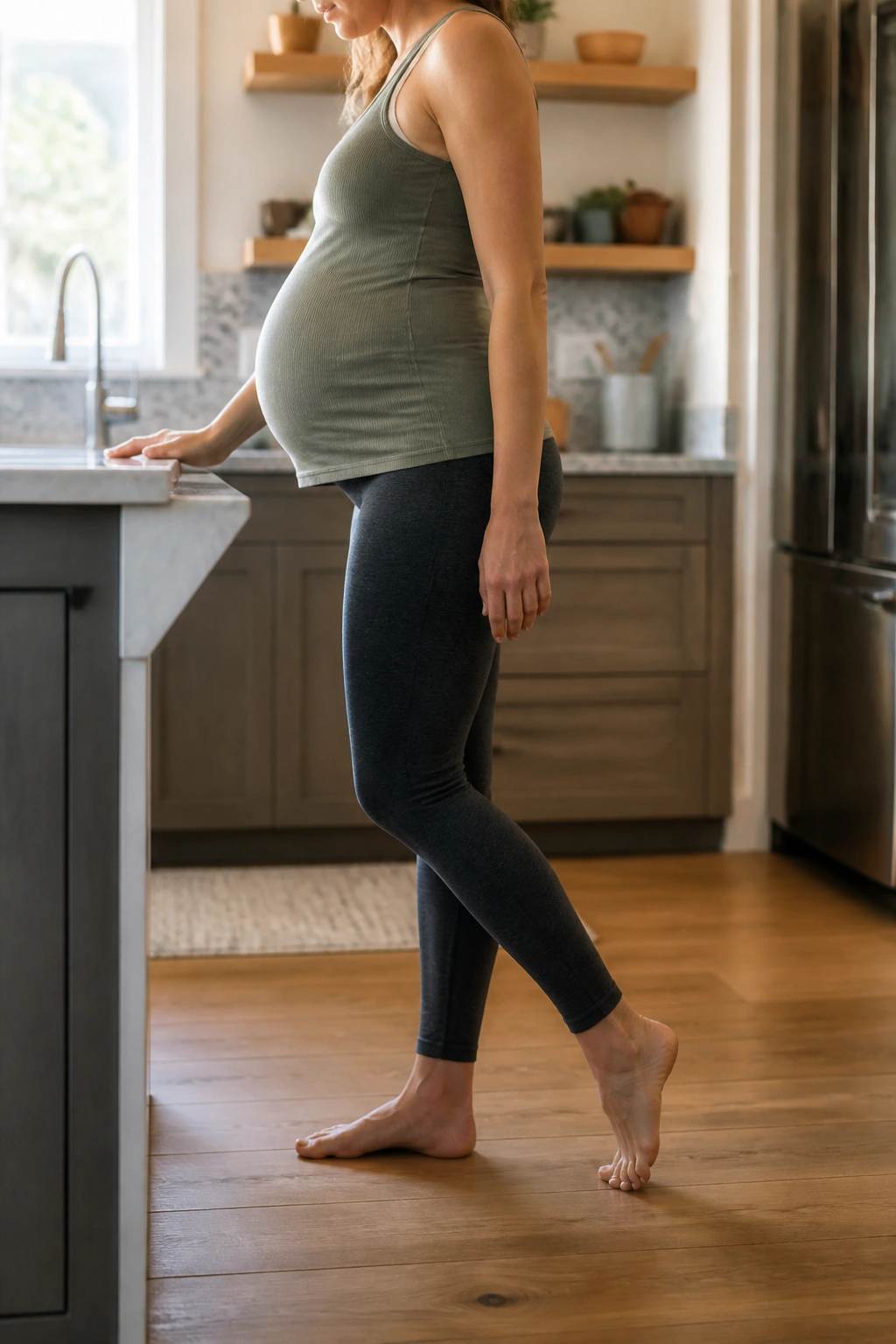
The last move is the least flashy, and I like it that way. Ankle pumps and toe taps bring the lower leg back to life after all the standing, squatting, and stepping. They are easy to do seated, easy to do standing with support, and easy to keep for the days when your body wants something lighter.
Sit in a chair or stand at the counter. For ankle pumps, pull the toes up toward the shins, then point them away. For toe taps, lift the forefoot a few inches and tap it down with control. Try 20 pumps per foot and 20 toe taps per side, or keep going for a minute if that feels better. The whole point is circulation, mobility, and a gentle finish.
If your calves feel tight after the earlier exercises, this is a good place to slow the breathing down too. A long exhale and a few easy ankle circles can make your legs feel less welded in place. A good prenatal lower-body session should leave you steadier when you walk away, not flattened. If you can still move through the kitchen without thinking about your legs, you probably picked the right mix.
