



A good pregnancy workout video should leave you feeling looser, not flattened. That sounds obvious, but plenty of follow-along sessions miss the mark. They either go so gentle that they barely warm you up, or they sneak in moves that ask for more balance, more breath-holding, and more abdominal bracing than a pregnant body wants to give.
The sweet spot is steady, moderate work. A common benchmark used in obstetric exercise guidance is about 150 minutes of moderate activity per week for an uncomplicated pregnancy, and that can come from walking, strength work, yoga, Pilates, dance, or mobility flows. The trick is choosing videos that respect how pregnancy changes your joints, your center of gravity, and your breathing. That little pause — the one where you can still talk in full sentences — matters.
Sweat is fine. Chasing exhaustion is not. If a workout video leaves you dizzy, causes pain, makes your belly dome hard and sharp, or brings on bleeding, fluid leakage, contractions, or chest pain, stop and get medical advice. That’s not me being dramatic. It’s just the boring part nobody likes to mention, and it matters more than fancy programming.
So here are 20 pregnancy workout videos worth trying, with the good, the fussy, and the stuff I’d skip.
1. A 10-Minute Prenatal Walking Warm-Up

Walking videos are the easiest place to start because they do a simple job well. They get your blood moving, wake up stiff hips, and don’t ask your balance to do acrobatics before breakfast.
What to look for
A good walking warm-up video should include marches, side steps, gentle arm swings, and slow direction changes. The pace should feel like you’re walking briskly through a grocery store, not racing to catch a train. You should be able to talk without huffing through every sentence.
- Low step height, no hops
- Soft knees, especially if your pelvis feels loose
- Short arm ranges if your ribs are sore
- A clear cue to keep breathing steadily
The best versions are a little boring, honestly, and that’s the point. They prep the body without draining it. If you wake up stiff, puffy, or sleepy, this is the video I’d choose first.
2. Low-Impact March Cardio with Side Steps
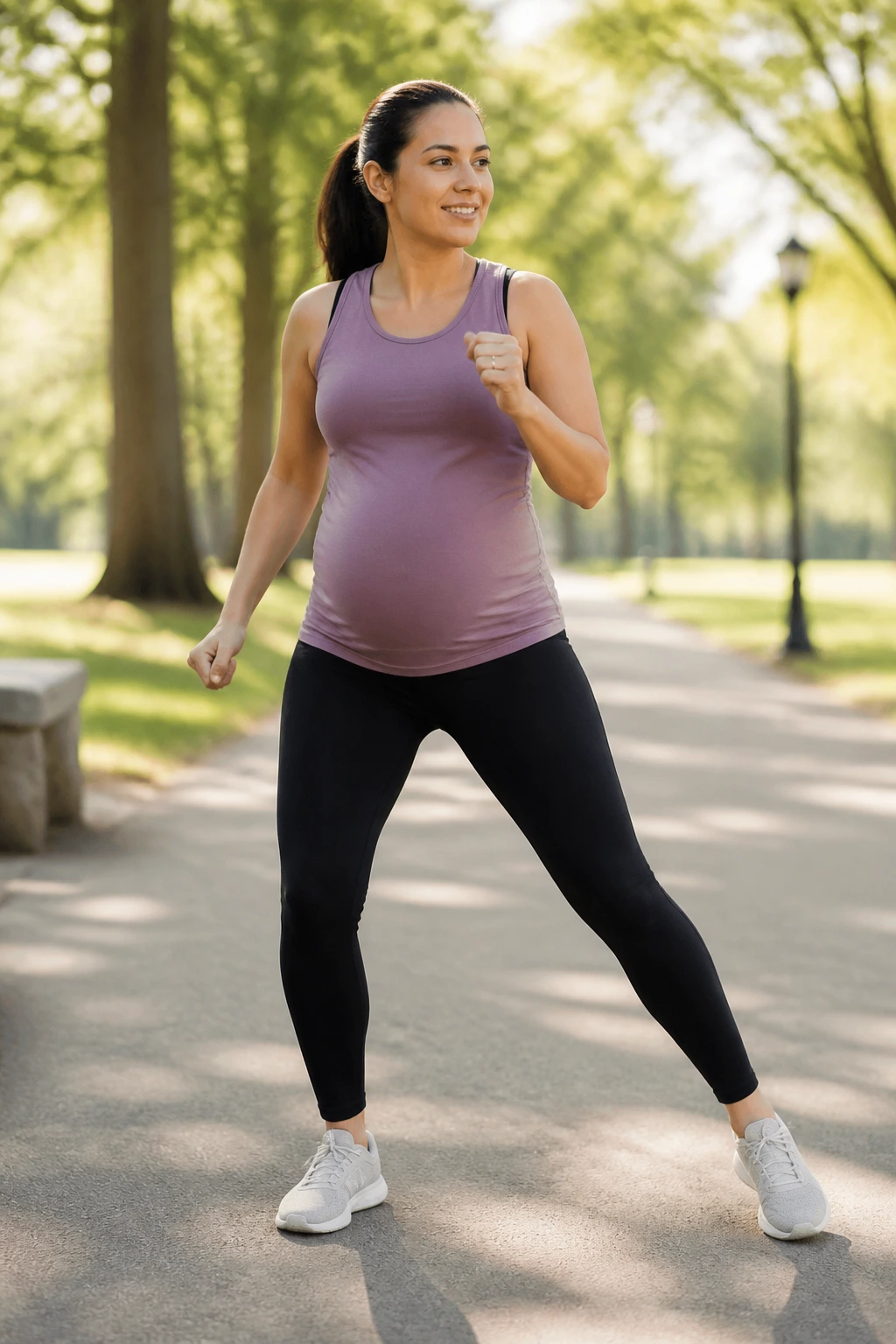
You do not need jumping to get your heart rate up. A march-based cardio video can feel surprisingly lively when the music is decent and the transitions move cleanly from one pattern to the next.
What makes this style work is repetition. March, step-touch, knee lift, grapevine, then repeat. The moves stay close to the floor, so you’re not constantly bracing for landings. That matters more than people think once your joints start feeling a little slippery.
I like these videos for days when walking feels too slow but high impact feels like a bad idea. They give you enough rhythm to feel awake without making your pelvic floor take a beating. If the instructor keeps saying “push harder” every thirty seconds, I’d move on. A better cue is effort around 4 to 6 out of 10 — warm, a little out of breath, still in control.
3. Prenatal Yoga for Tight Hips and a Stiff Back
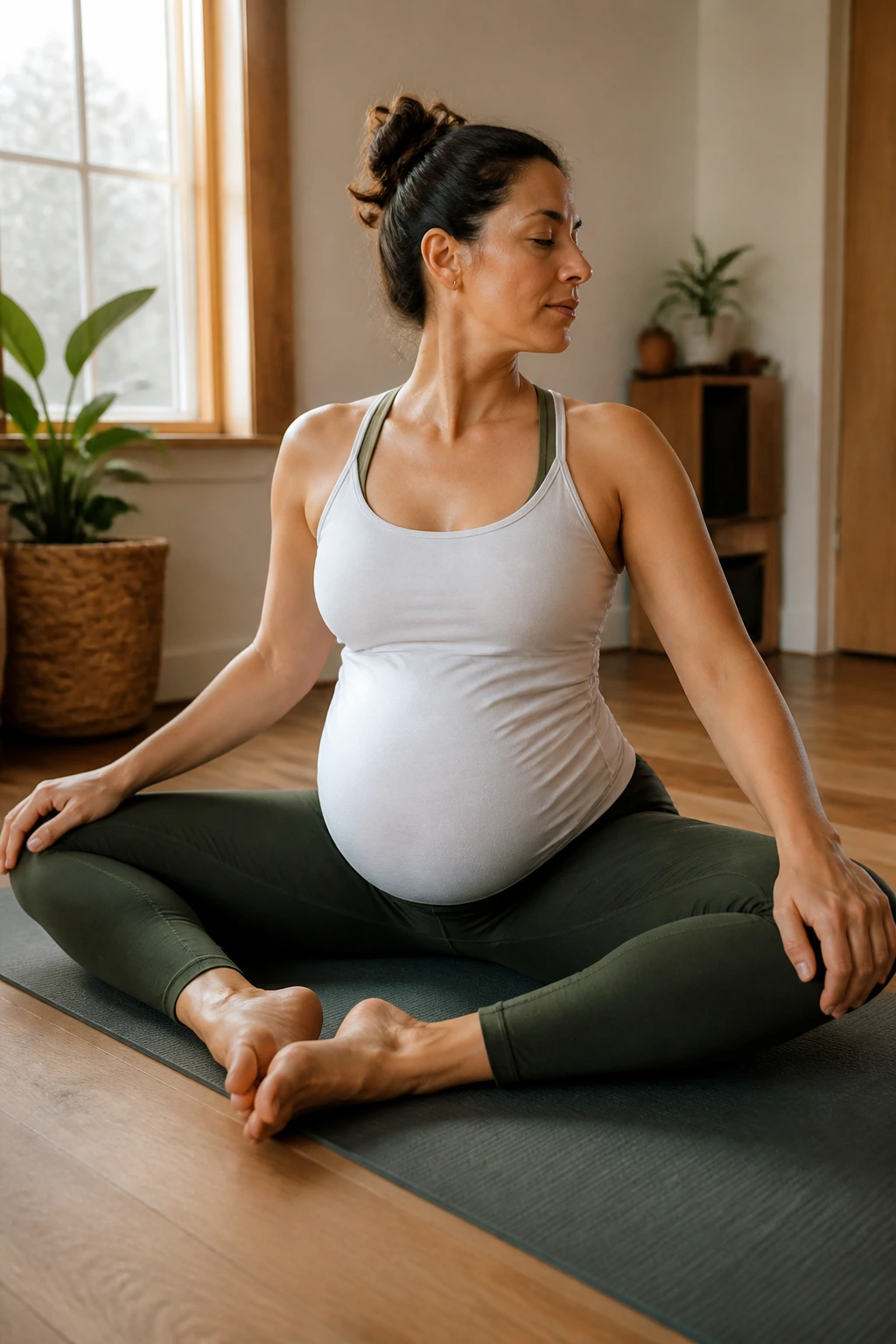
Why do some yoga videos feel wonderful and others feel weirdly wrong during pregnancy? Usually it comes down to pace, posing, and how much they ask you to sink into end ranges.
What a good prenatal yoga video does
It gives you room. Not just physically, but mentally too. Good prenatal yoga tends to use wide-knee stances, supported side stretches, gentle hip openers, and breathing cues that slow your system down. The best instructors also give modifications before you need them, which saves you from playing catch-up on the mat.
What I’d skip
- Deep twists that compress the belly
- Long belly-down holds
- Anything that makes your lower back pinch
- Fast transitions from floor to standing
A smart yoga video should leave your hips warm and your spine less cranky. If you’ve been sitting all day, this is one of the nicest ways to come back to your body without going straight into workout mode. It feels like relief first and exercise second, which is exactly why it works.
4. Standing Strength with Squats and Wall Support
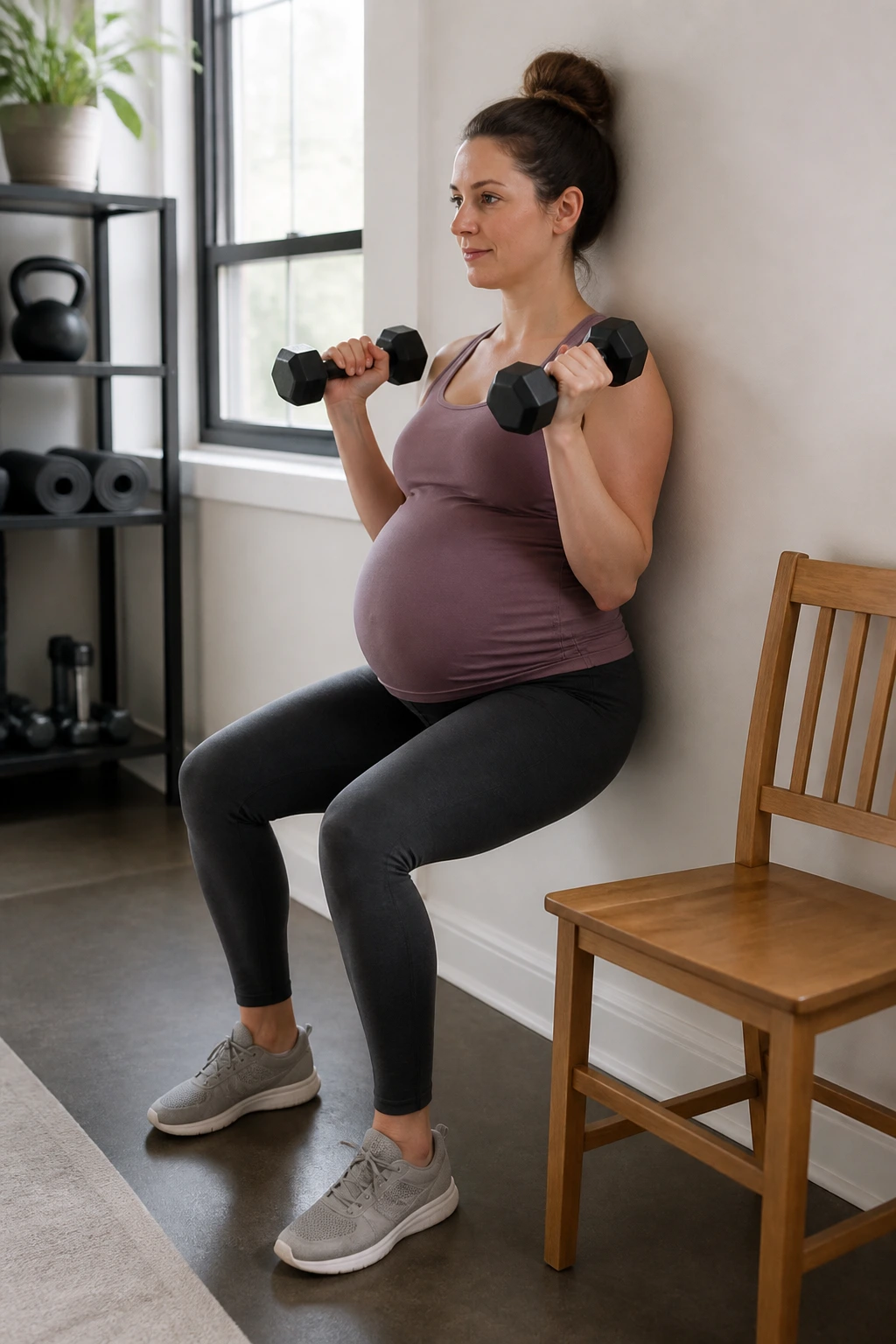
Standing strength videos are the ones I reach for when I want my legs and glutes to actually do some work. They’re also easier to follow on days when getting down to the floor feels like a negotiation.
The good ones lean on chair squats, supported hip hinges, calf raises, standing rows, and wall push-ups. Nothing fancy. Nothing that makes you wonder whether you need circus balance for prenatal fitness. A wall, a sturdy chair, and light dumbbells are often enough.
A quick reality check
Pregnancy strength work should feel deliberate, not heroic. If your form starts sliding, the video is too hard or the pace is too fast. I’d rather see eight clean squats with a controlled exhale than twenty rushed reps with a wobble at the bottom.
This style is also one of the best choices for anyone whose back aches after too much sitting. Standing work opens the hips, wakes up the glutes, and reminds your core to help without clenching like a fist.
5. Floor-Based Glute and Hip Work
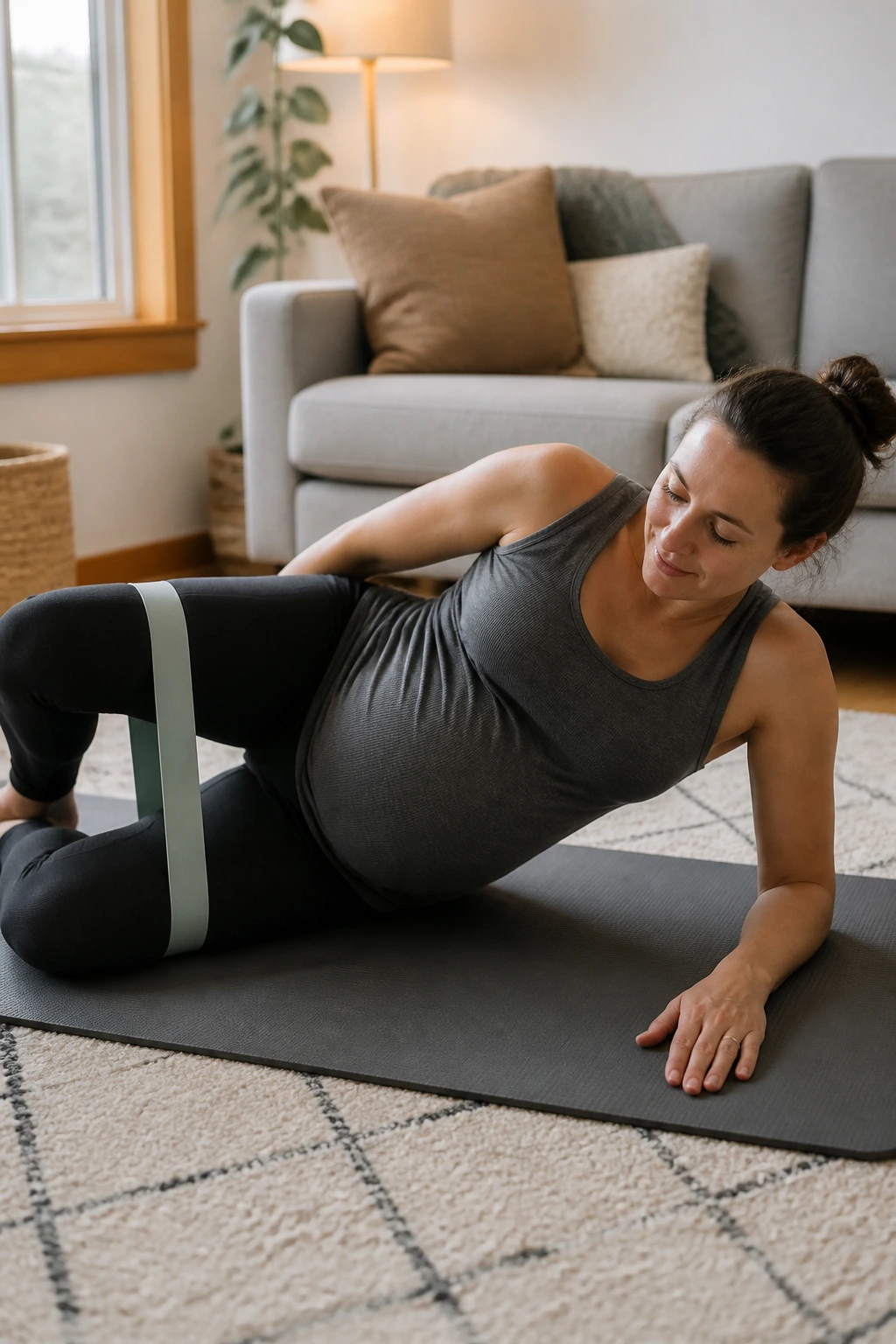
Some days, the floor is your friend. That’s especially true if your hips feel unstable or your lower back has started to complain after every long walk.
A floor-based video usually includes side-lying clamshells, fire hydrants, bird dog, quadruped kickbacks, and supported bridges. Those moves can look tame on screen and still leave your outer hips on fire. That’s not a bad thing. It just means the muscles that hold your pelvis steady are finally paying attention.
If lying flat feels off, choose a version that keeps you propped on your side or hands-and-knees. You do not need to force bridge work if it makes you dizzy or uncomfortable. A sensible instructor will offer alternatives without making a big speech about it, which I appreciate.
These videos are especially useful later in the day, when your gait starts feeling loose and your pelvis feels like it wants more support. They’re quiet, but they matter.
6. Upper-Body Posture Reset with Light Dumbbells
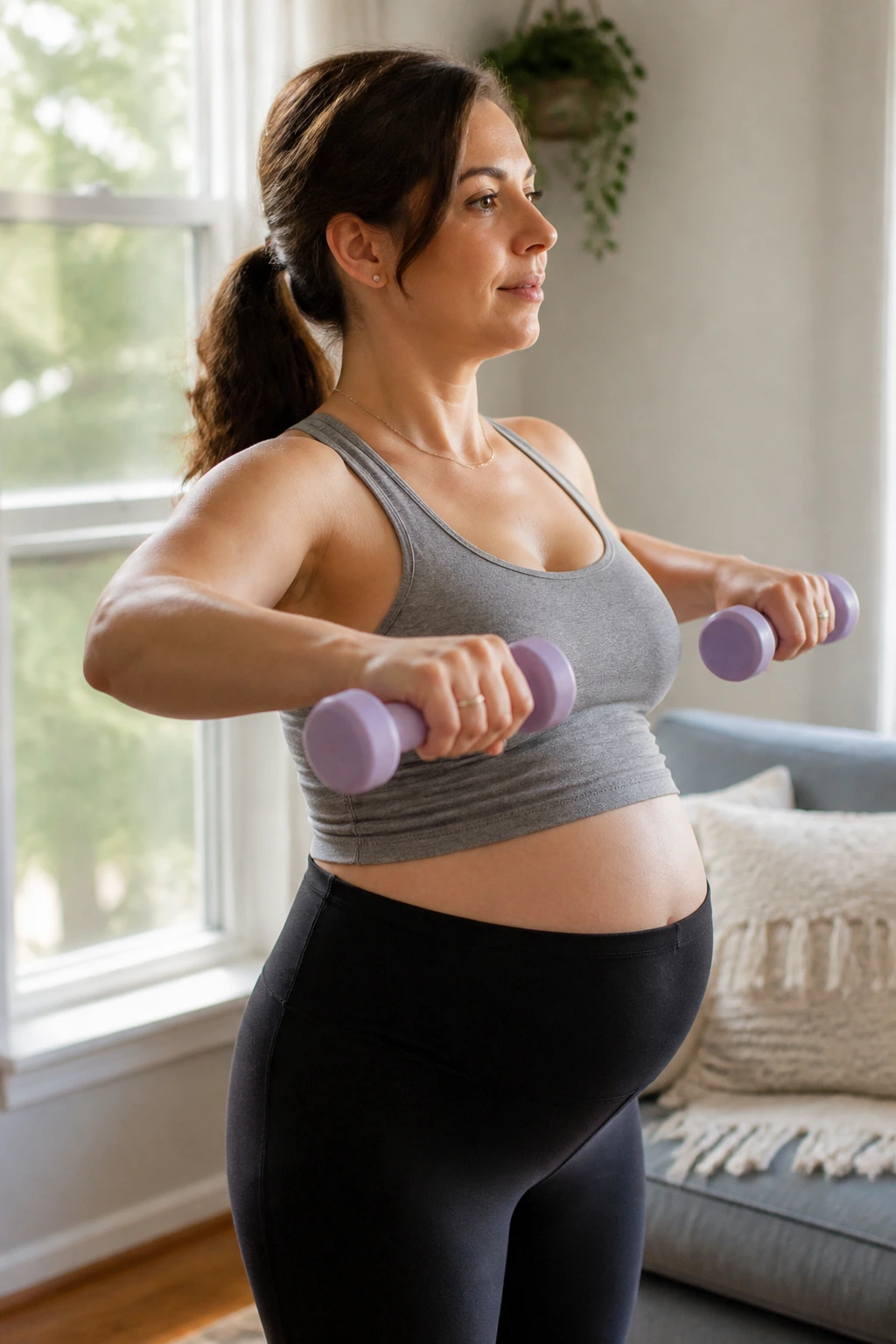
Most people think prenatal workouts should focus on the belly and legs. Then the shoulders creep forward, the upper back gets tight, and suddenly you’re rubbing your neck after every meal. Annoying, right?
Upper-body posture videos fix that by giving attention to rows, reverse flys, biceps curls, lateral raises, and wall angels with light weights. And I do mean light. Two to five pounds is enough for a lot of people, especially if the video uses slow tempo and short holds.
Why this style stands out
It’s not about getting shredded arms. It’s about making carrying, lifting, and breastfeeding positions feel less brutal later on. A good video will cue you to keep your ribs soft, shoulders down, and neck relaxed. That sounds tiny. It isn’t.
If a class turns into constant overhead pressing, I’d pass. A prenatal upper-body session should feel like your posture got a tune-up, not like you were punished for having shoulders.
7. Pelvic Floor and Deep Core Breathing

Can a workout video be slow and still matter? Absolutely. In pregnancy, breathing work is one of the most useful things you can do, and it often gets treated like an afterthought.
A good pelvic floor and core-breathing video will teach inhale-to-expand, exhale-to-gently lift, and relaxed ribs. You’re not trying to lock your abs down like armor. You’re learning how to coordinate pressure. That distinction is huge.
How it should feel
- Breath moves low and wide
- Belly softens on the inhale
- Exhale feels longer than the inhale
- No straining, no bracing, no gripping
I like these videos for days when exercise feels intimidating. They’re short, but they give you a skill you can use in other workouts too. If you can pair an exhale with effort on a squat or a row, everything else tends to feel cleaner.
8. Mobility Flow for a Stiff Lower Back
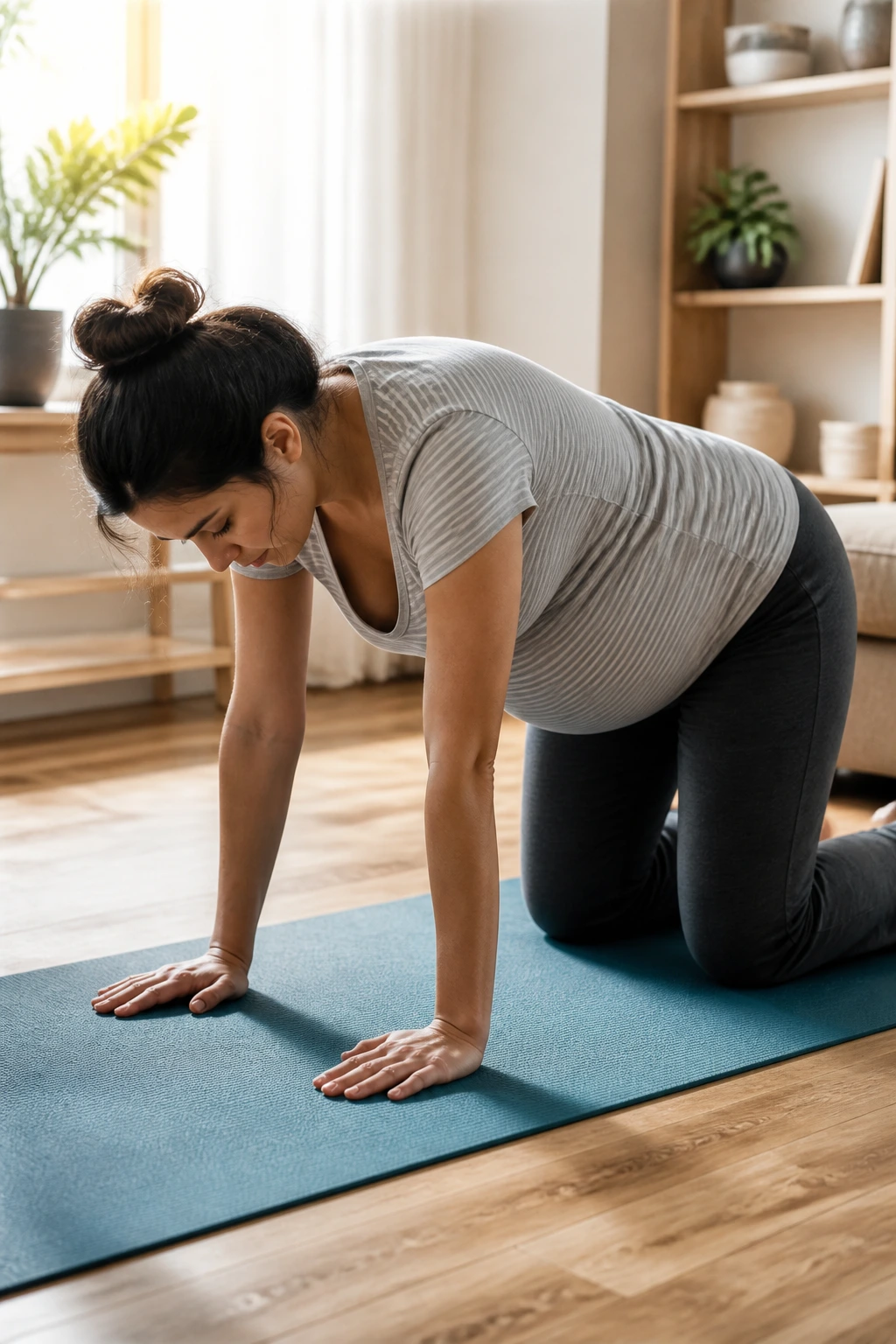
A stiff lower back in pregnancy usually wants movement, not a heroic stretch. The best mobility videos understand that and keep the work gentle, angled, and brief.
Look for a flow built around cat-cow, hip circles, standing side bends, supported lunges, and slow spinal waves. The video should spend time getting you out of one fixed shape and into another. That’s the part that helps. You’re feeding motion to irritated tissue, not forcing a big stretch into it.
If the teacher talks about “opening” the back by cranking into deeper extension, I’d be cautious. A happier lower back usually responds better to small, repeated motions. Even ten minutes can make a difference if the sequence is smart.
This is one of those videos I’d use after a long desk session or a day of errands. It doesn’t need to be sweaty to earn its place.
9. Barre-Inspired Leg Burn Without the Jumping
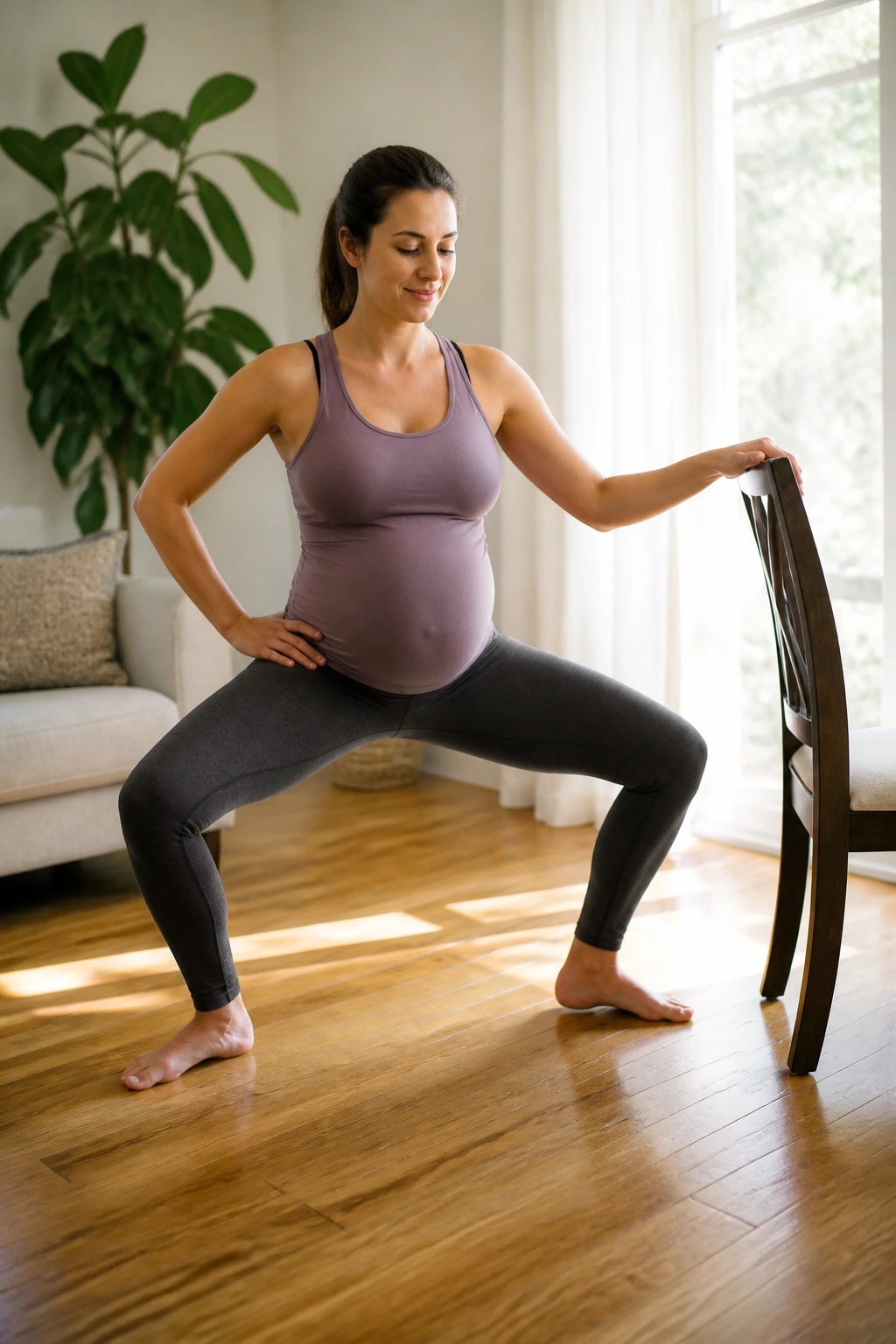
Barre videos can be sneaky. They look dainty, then twenty seconds later your thighs are trembling and you’re wondering why a tiny pulse hurts so much.
What makes prenatal-friendly barre work is the use of small range pulses, supported plies, leg lifts, calf work, and isometric holds with a chair or wall nearby. The tempo stays controlled. The feet stay planted enough that balance doesn’t become the main event.
Small details that matter
- Keep one hand on support when needed
- Use a smaller turnout than a classic barre class
- Skip fast jumps and fast pivots
- Take the burn in short sets, not endless ones
I love this style for people who like feeling their legs work. It gives you that “I did something” sensation without pounding the joints. If the video asks you to stay on your toes for long stretches and your feet hate it, choose another one. Barely anybody needs that extra drama.
10. Prenatal Pilates for Core Control
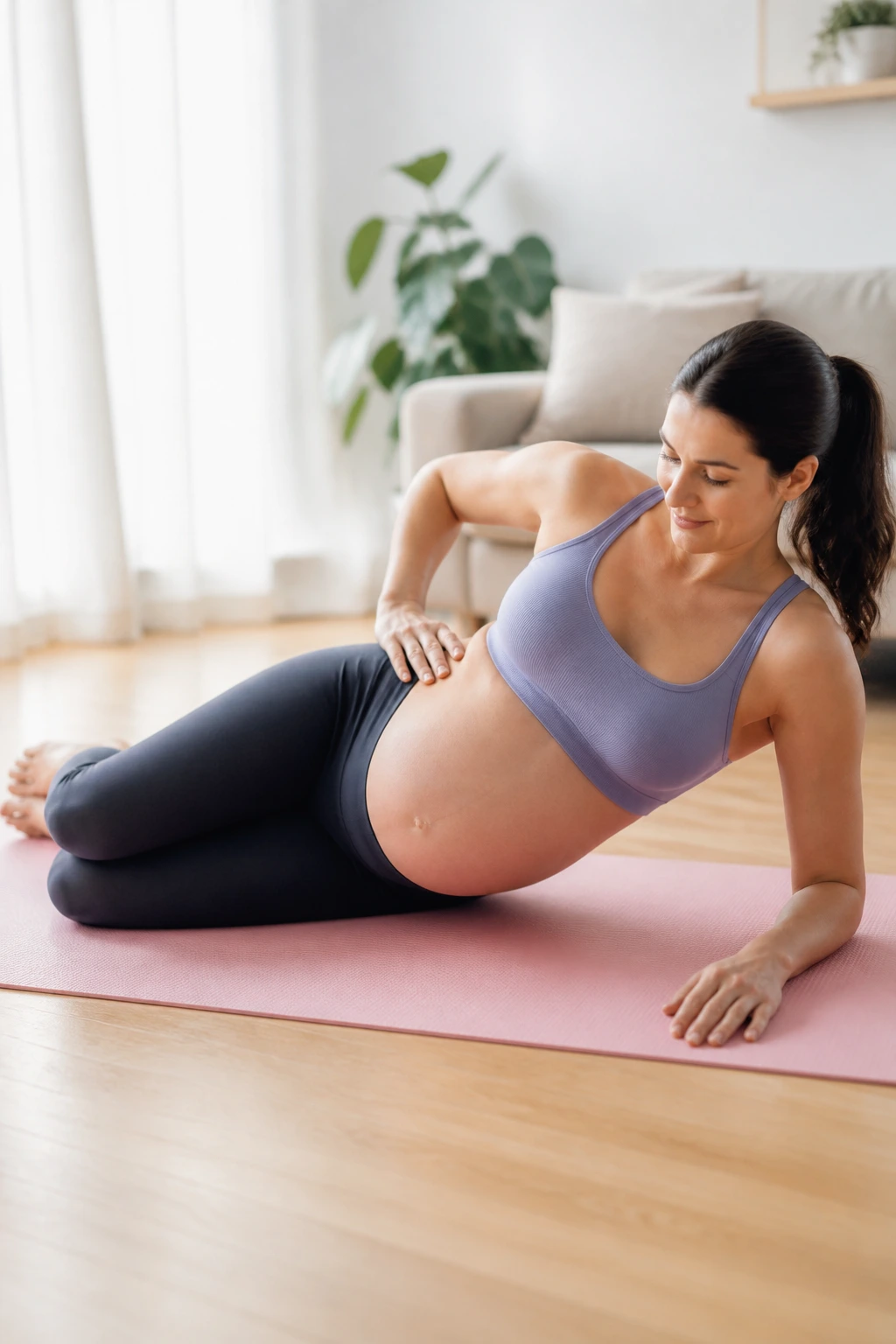
Pilates can be brilliant during pregnancy when it respects pressure management. It can also be a mess if the instructor treats the belly like it’s a problem to flatten. That’s not the point.
A good prenatal Pilates video focuses on side-lying work, seated stability, four-point kneeling, glute activation, and exhale-based core control. It should make you feel organized through the middle, not sucked in. I’m picky about that because a lot of regular Pilates content sneaks in moves that encourage doming or over-bracing.
What to watch for
If you see the belly bulging sharply down the midline during an exercise, that’s a sign to reduce the range or stop that move. A thoughtful instructor will mention this without making it weird. They may also swap crunches for dead bug variations, standing work, or quadruped stability drills.
This style is especially useful if you miss the feeling of training your core but don’t want old-school ab work. It’s quiet, precise, and far more useful than endless reps that look hard and do very little.
11. Gentle Dance Cardio
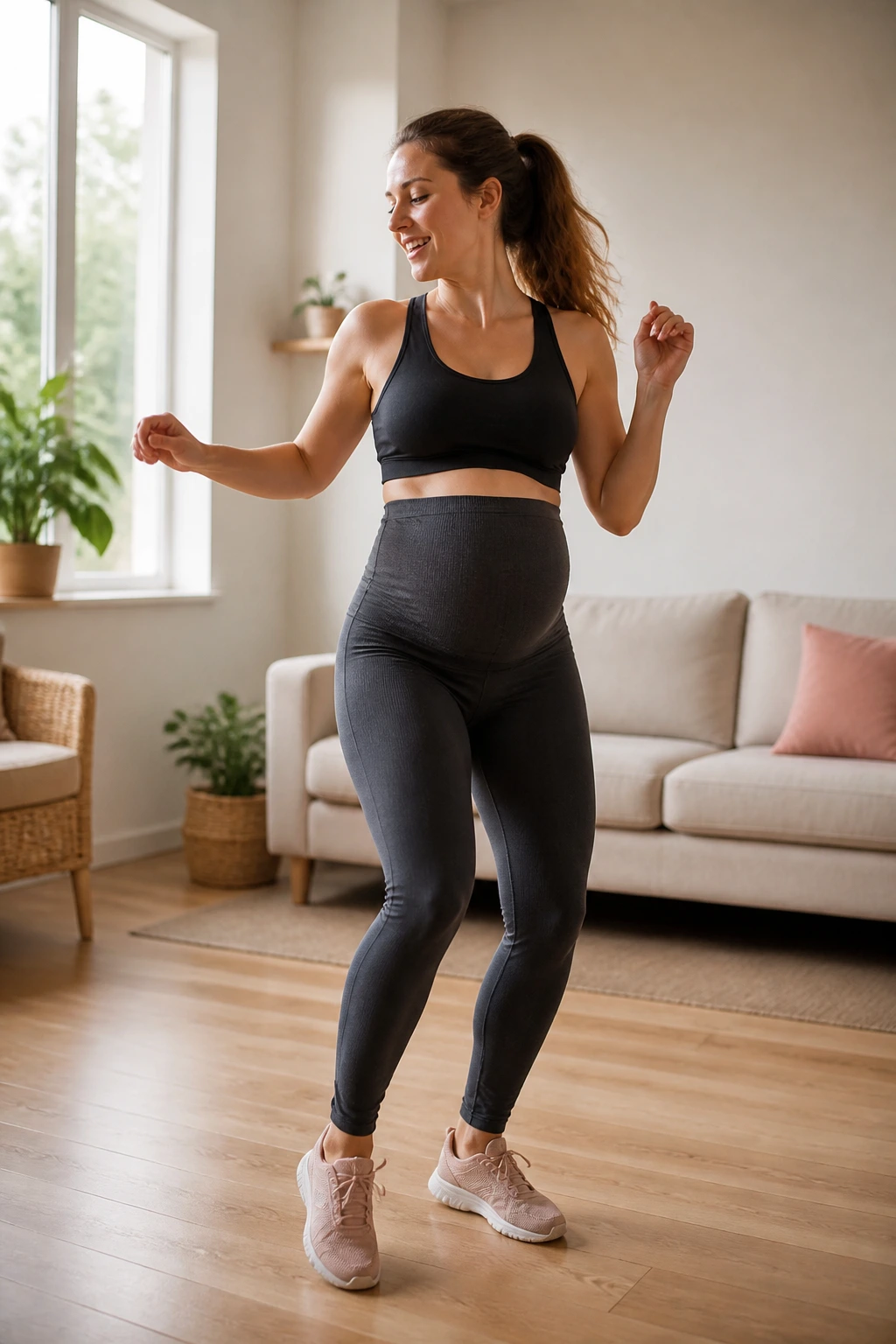
Dance videos are underrated. The right one can lift your mood fast, and pregnancy often makes that worth as much as the physical workout.
I’m talking about step-touch routines, easy turns, arm patterns, and simple choreography that repeats enough for you to catch on. No jumping, no frantic floor changes, no “surprise burpees” nonsense. Just enough rhythm to make you feel like a person again.
The magic here is that dance often hides the effort. You’re moving continuously, but it doesn’t feel clinical. That helps on low-motivation days when a standard workout title sounds like a chore. If you enjoy music, this may be the easiest video to stick with.
Choose the versions where the instructor gives low-impact options without making you hunt for them. If one foot feels unstable, keep the step narrower and skip the spins. That’s not playing it safe. That’s playing it smart.
12. Stretch-and-Recover Evening Routines

Evening stretch videos are the ones I trust when the body feels heavy and a little resentful. The goal is not to work hard. The goal is to come down a notch.
A good recovery video uses slow neck rolls, shoulder circles, side-lying stretches, hip openers, and long exhales. The room should feel calmer by the end. The stretch should feel like release, not punishment. If your face is tight during the whole thing, the instructor has missed the assignment.
One reason these videos matter is that pregnancy can turn a normal day into a long list of tiny aches. Ankles swell. Ribs feel compressed. The lower back gets impatient. A ten-minute recovery session gives the nervous system a chance to stop bracing for a minute.
I like these most before bed, when your body wants something soft and your mind wants fewer decisions. Keep a pillow nearby. Use it.
13. Stability Ball Prenatal Workouts
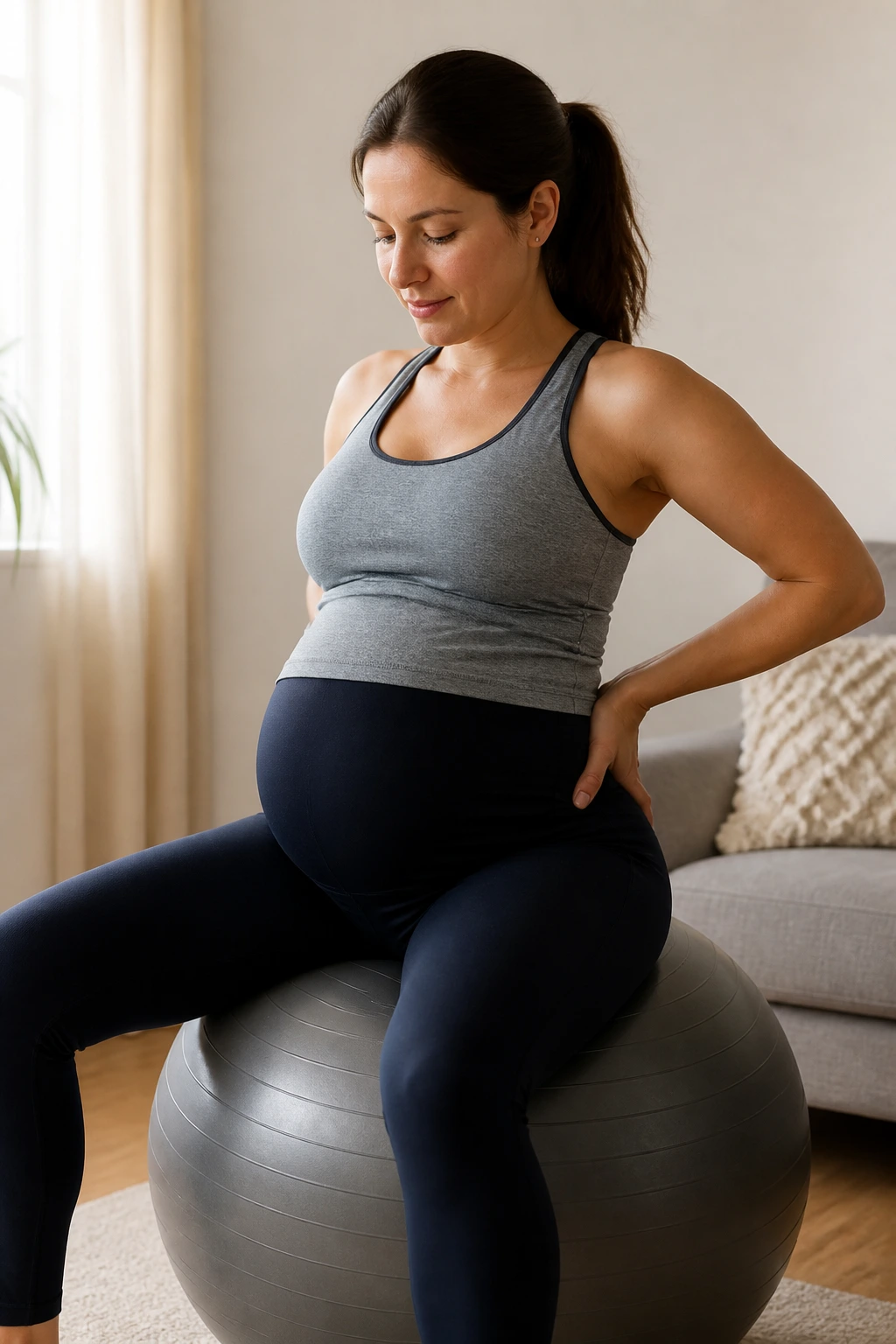
A stability ball earns its keep in pregnancy. It gives you support, a little bounce, and a place to sit when your pelvis has had enough of the couch.
The best ball-based videos use pelvic tilts, seated marches, wall squats with the ball, gentle hip circles, and supported arm work. You don’t need a giant sweaty session to make it worthwhile. Just sitting on the ball and moving with control can wake up the trunk in a nice way.
A few practical things to check
- Your knees should sit near hip height when you’re seated
- The ball should feel firm, not squishy
- Keep it close to a wall for extra support
- Avoid quick bouncing if your pelvic floor feels sensitive
I like this format because it changes pressure without creating more stress. It’s also one of the easiest ways to get a little movement in if floor work feels annoying that day. The ball does half the balancing for you, which is a gift.
14. Resistance Band Lower-Body Sessions
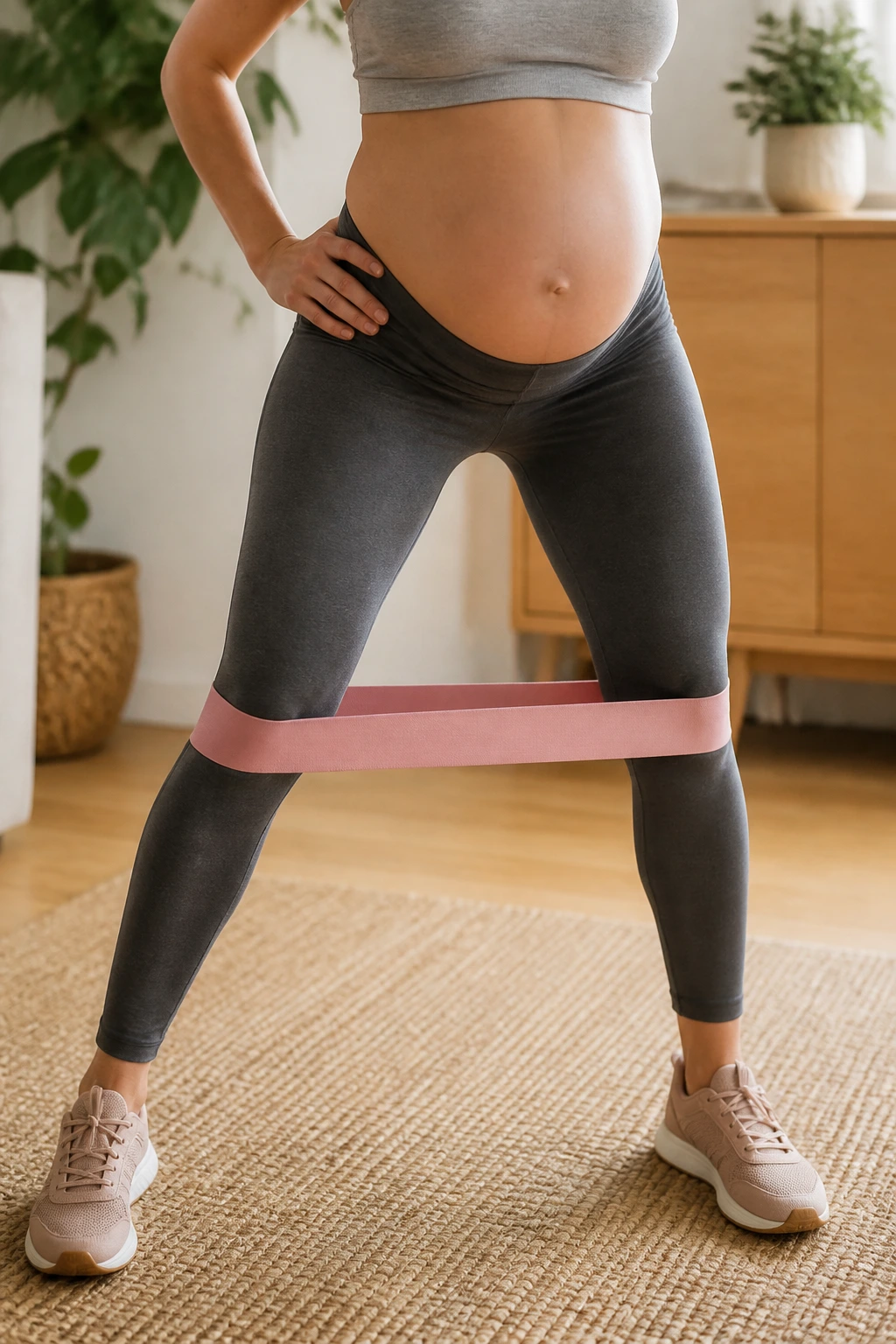
Resistance bands are one of the cheapest ways to make a prenatal workout feel more serious without adding a lot of load. And yes, they burn. Deceptively so.
Look for videos that use lateral walks, monster walks, seated abductions, standing kickbacks, and mini squat holds with a loop band above the knees or around the ankles. Start with a light band. Heavier isn’t better if your form falls apart in the first set.
How to tell if the video is well built
- The instructor names the band placement clearly
- There are standing options if the floor work feels awkward
- Sets are short enough to keep your stance clean
- There’s no rush to “power through” the burn
Band sessions are especially good for glute medius work, the side-butt muscles that help steady your pelvis when you walk. That’s not glamour exercise. It’s useful exercise, and pregnancy loves useful.
15. Low-Back Relief Sequences for Long Sitting Days
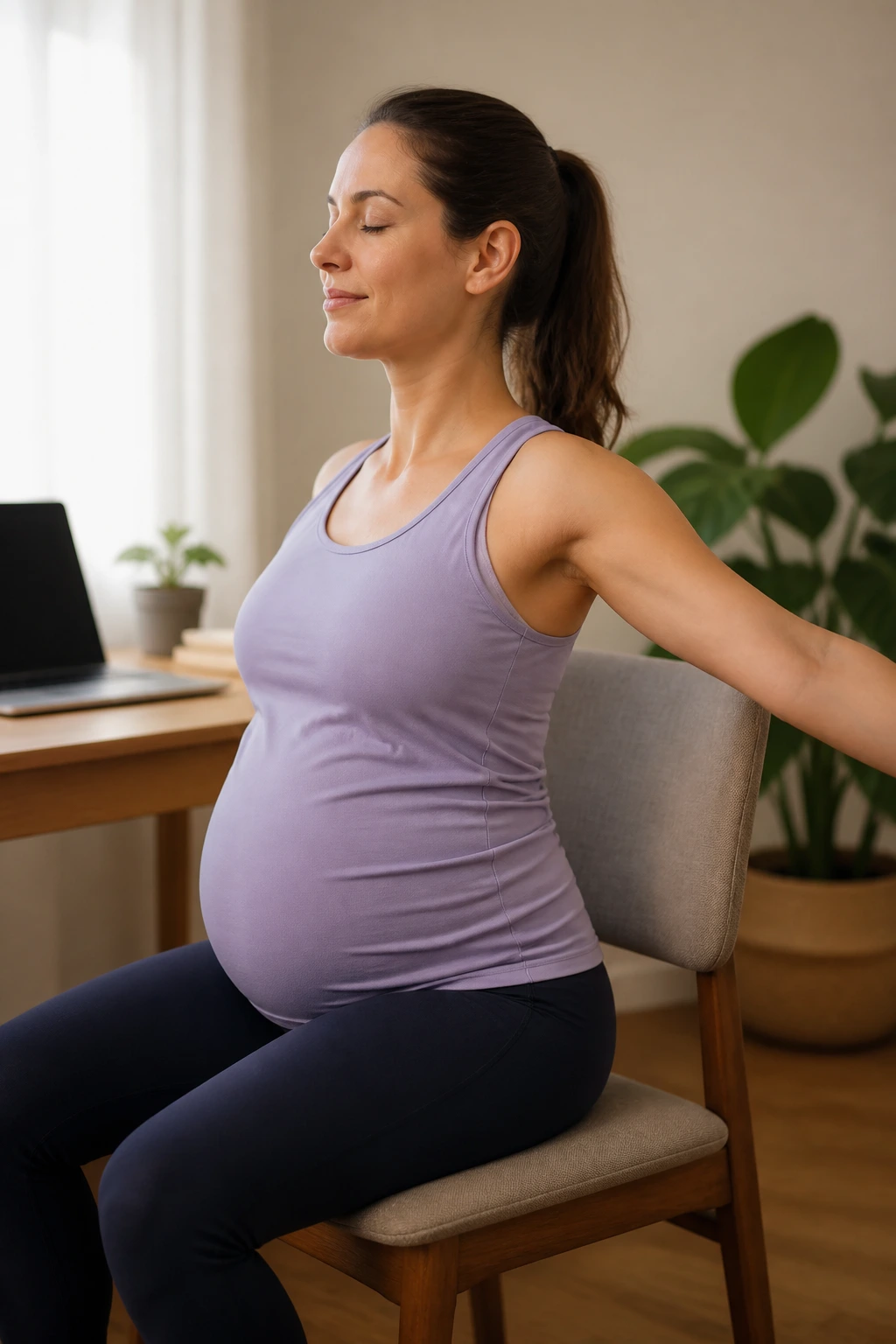
A long sitting day can leave your back feeling like a bent paper clip. The fix is usually movement, not more sitting in a different chair.
These relief videos often blend hip flexor stretches, supported squats, chest openers, pelvic tilts, and standing hamstring hinges. The aim is to undo the locked-up positions you’ve been stuck in. If you’ve been at a desk, in a car, or on the couch too long, this style feels like it meets you where you are.
What I like about them
They usually don’t demand perfect form. They ask for attention. That’s a good trade. A small hip flexor stretch held for twenty to thirty seconds can do more than a dramatic pose you can’t tolerate anyway.
If your back pain is sharp, one-sided, or not easing with movement, that’s a different story. But for the ordinary tight, grumpy, overworked kind of back pain, this is a solid choice. It’s a reset, not a performance.
16. Ankle, Calf, and Foot Mobility Videos
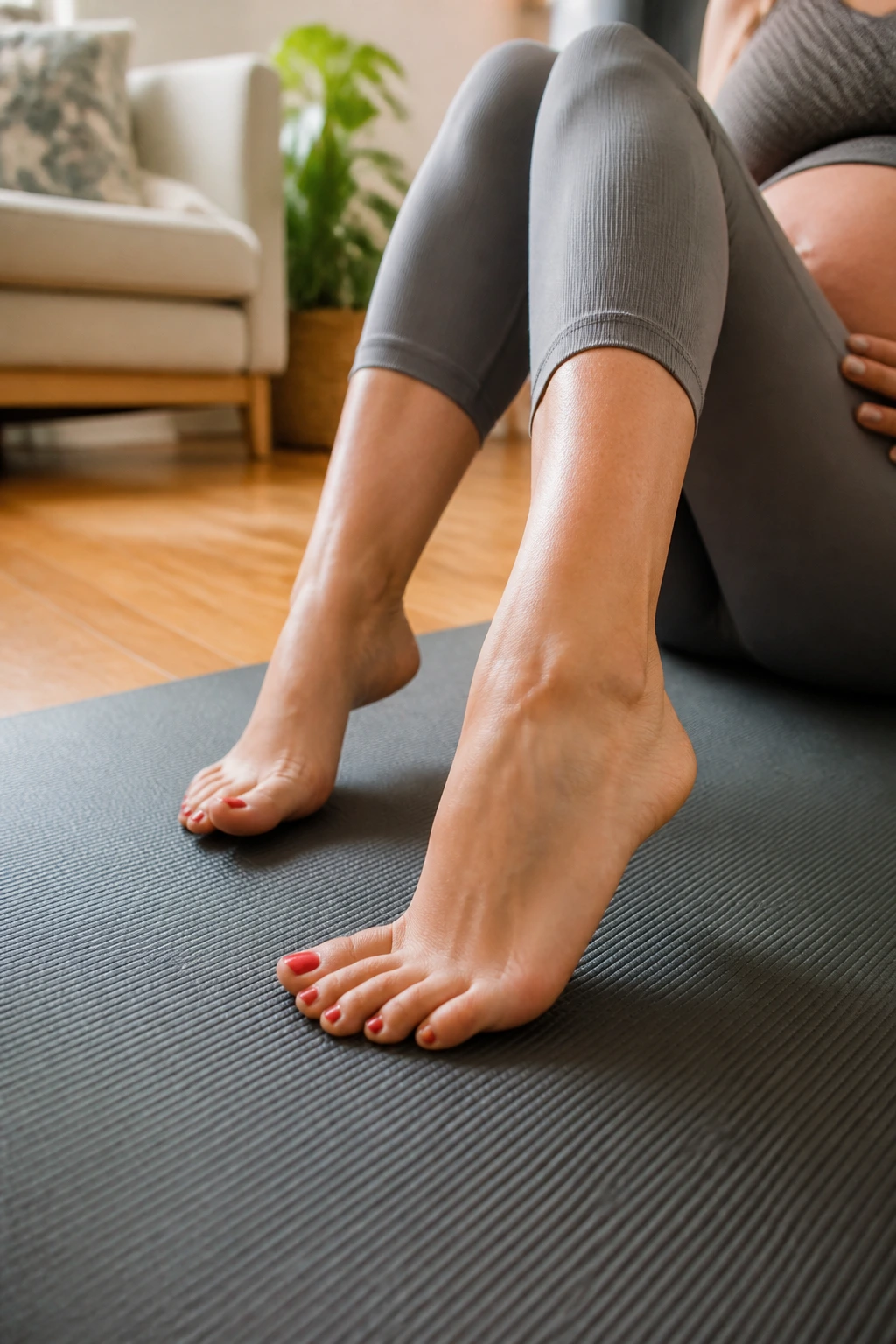
Pregnancy feet can be rude. Swelling, cramping, and arch fatigue show up like uninvited guests and stay too long.
A foot-and-ankle video tackles that with ankle circles, heel raises, toe spreads, calf stretches, and foot rolling using a ball or frozen water bottle. It sounds tiny, yet it can change how the whole lower body feels when you stand up again. That matters more than people expect.
A few moves worth keeping
- 10 ankle circles each direction
- 15 slow heel raises
- 10 toe spreads and curls
- 30-second calf stretch per side
I like this type of video after a walk or when shoes start feeling tighter than they should. It’s a small investment that pays off fast. No, it’s not glamorous. It is the sort of thing your body notices an hour later when the feet feel less angry.
17. Full-Body Circuits with Built-In Rest
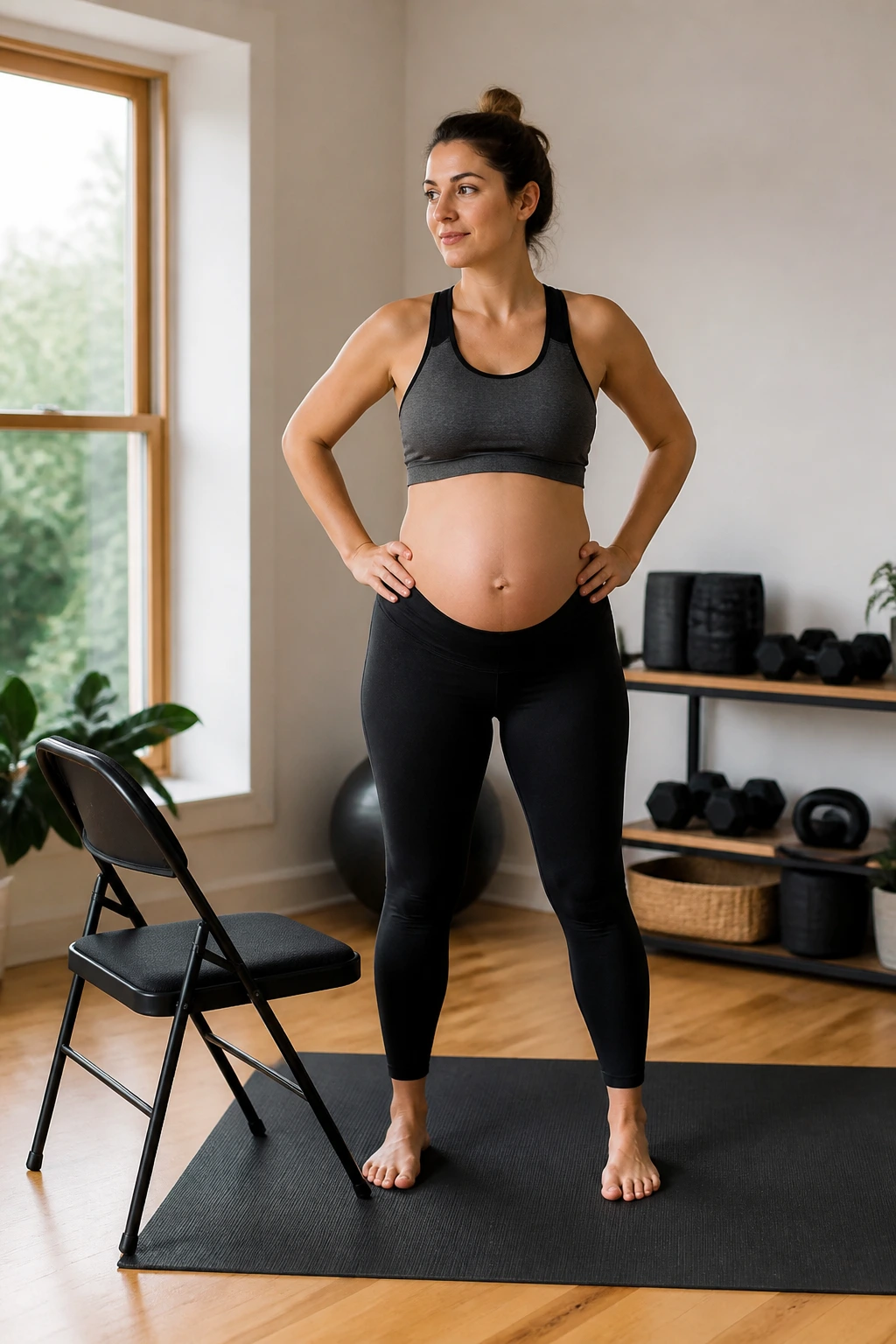
Some days call for a little of everything: a push, a pull, a squat, a march, then a pause. That’s where a full-body circuit video fits in.
Good prenatal circuit videos use short work intervals, generous rest, and simple moves like squat to chair, row with dumbbells or bands, incline push-ups, side steps, and supported hinges. The session should feel structured, not chaotic. I’d much rather see 30 seconds on, 30 seconds off than a frantic nonstop flow with no space to breathe.
Why this format works
It gives you a stronger workout without asking your body to recover from a marathon. Pregnancy often changes how fast your heart rate climbs, so those little rest pockets are not laziness. They’re design.
If you want a simple rule, look for a video where you finish feeling worked but not wrecked. That’s the sweet spot. Anything above that is probably trying too hard.
18. Hotel-Room Prenatal Workouts
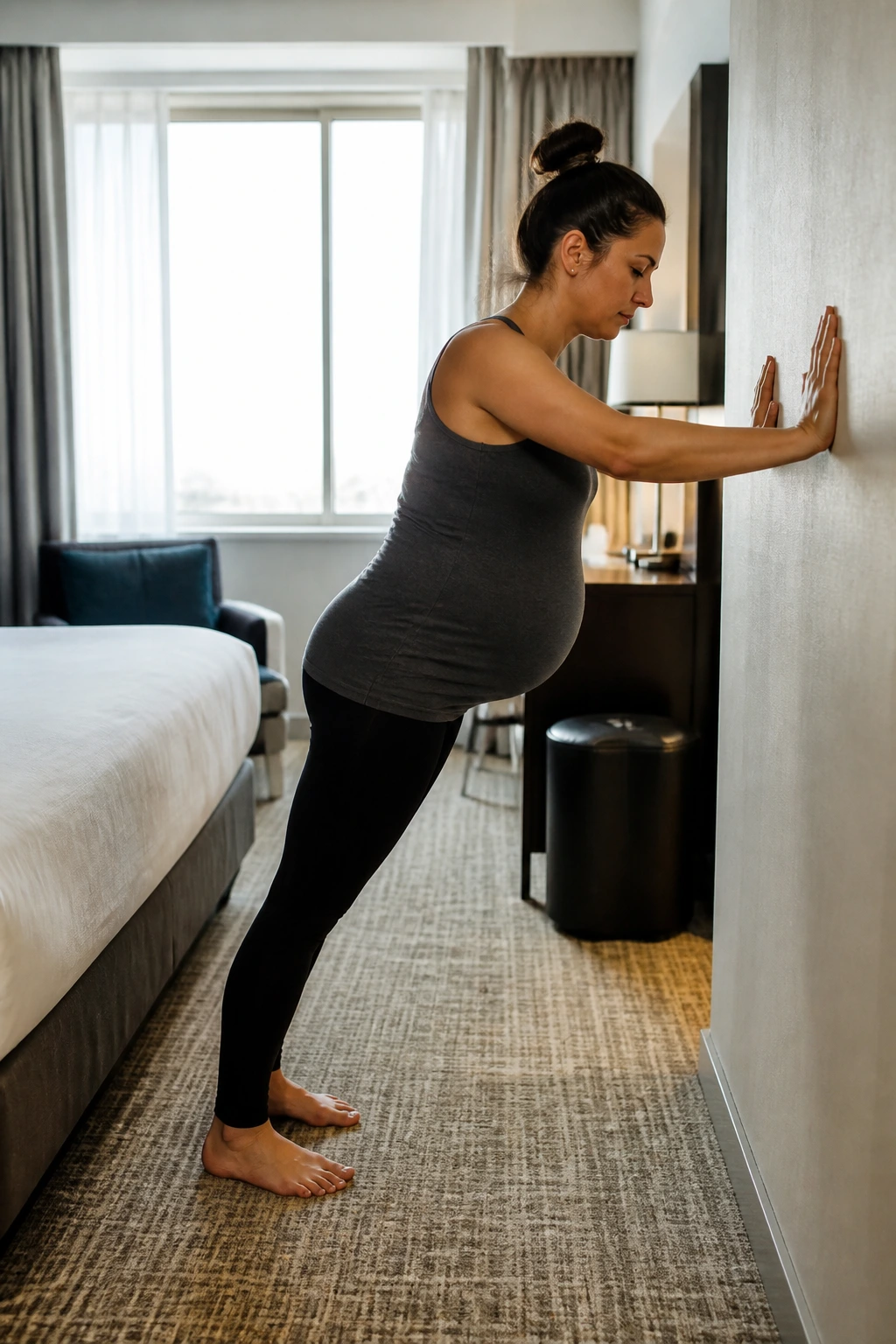
Travel changes everything. You may have limited space, awkward carpet, and a bed that swallows half the room. That’s fine. A good hotel-room video knows how to work around it.
The best versions rely on marches, wall push-ups, chair squats, standing rows with a band, glute kicks, and calf raises. No equipment? Still workable. A water bottle can act as a light weight, and the wall becomes your best friend. I’m not kidding.
This kind of video is useful because it strips the workout down to what matters. You don’t need a fancy setup to keep your body from going stiff on the road. You just need a plan that respects the space you actually have.
I also like these videos for messy home days. Sometimes the living room isn’t clean, the kids are loud, and the mat never got unrolled. A no-equipment session removes the excuse without turning into a circus.
19. Partner-Assisted Mobility and Support Work
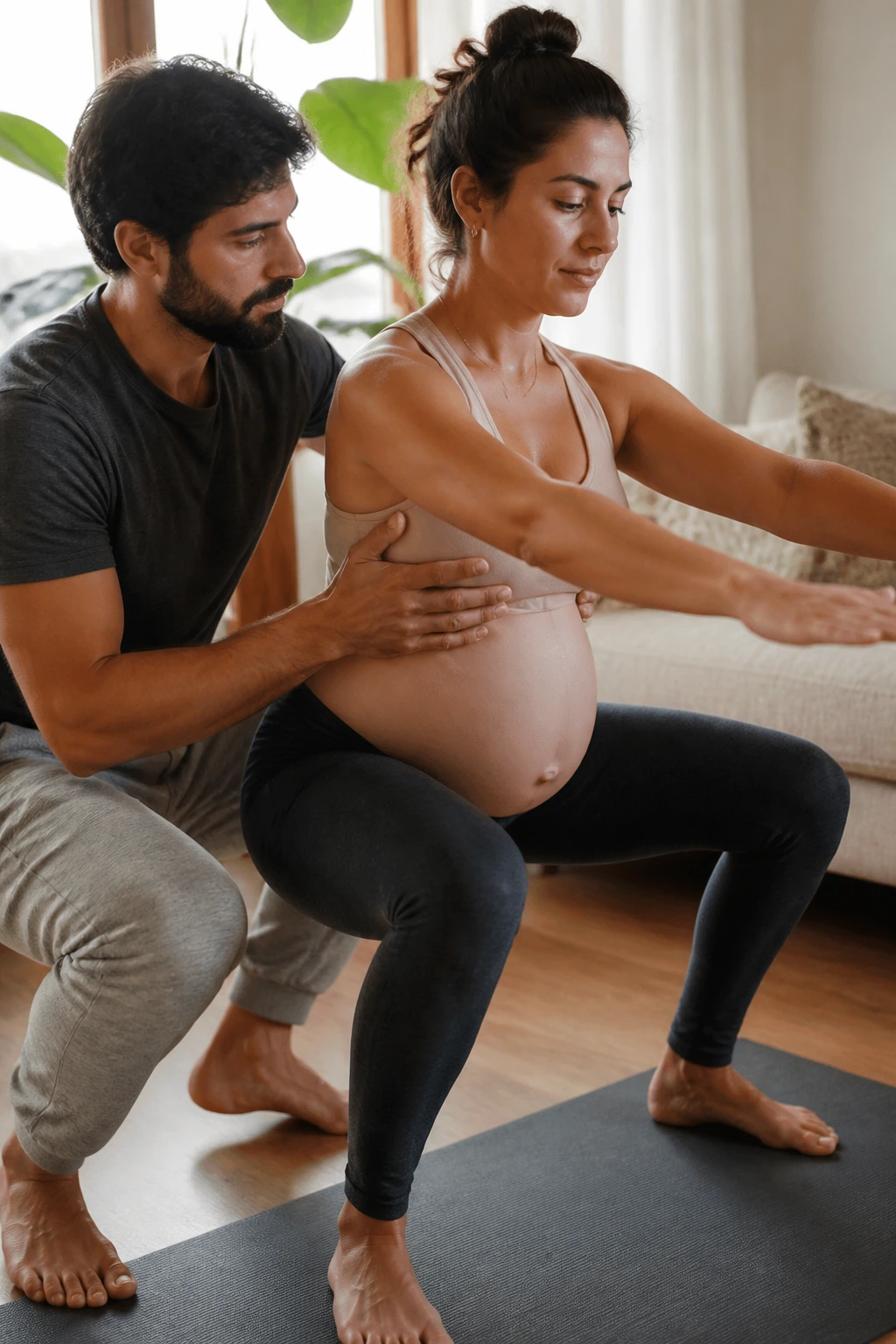
A partner-assisted video can feel awkward if it’s too cheesy, and surprisingly useful if it stays practical. The good ones are about support, not performance.
Think counterbalance squats, assisted hip stretches, shoulder releases, supported lunges, and gentle back rub or ball pressure where appropriate. The partner is there to help you feel steady, not to force a deeper stretch than your body wants. That distinction matters. A stretch pushed too far can backfire fast.
What makes it worthwhile
- Better balance during standing work
- Easier access to tight spots between the shoulder blades
- More willingness to slow down and breathe
- A built-in reminder not to rush
This format is a nice choice for couples who want to be involved in the process without pretending they’re in a boot camp. Keep the pressure light, communicate clearly, and skip anything that feels like a wrestling match. That’s not helpful, and it’s not the point.
20. Restorative Finish

A restorative finish is the video I’d want at the end of a long day, especially if my back, hips, or feet had been acting up. It should feel soft from the first minute.
Look for supported side-lying rest, pillow props, long exhale breathing, neck release, and a few easy ankle or wrist circles. If lying flat bothers you, use a wedge, sit up against the couch, or stay on your side. There’s no prize for making yourself uncomfortable.
The best ending videos don’t ask for effort you don’t have. They create a landing spot. That might mean ten minutes of quiet stretching, or it might mean five minutes where you breathe, reach your arms overhead, and stop before anything gets tight. Either way, it gives the nervous system a chance to unclench.
If a workout video leaves you calmer, a little warmer, and more able to move without groaning when you stand up, keep it in your rotation. That’s usually the one worth pressing play on again.
