



Plank workout variations are where core training gets honest. A plain plank can tell you a lot, but the moment you change the angle, the load, or the amount of wobble, your abs stop hiding behind momentum and start doing their actual job.
A clean plank holds up under fatigue. A sloppy one just teaches your lower back to complain.
That’s why the small details matter so much. Ribs down, glutes on, neck long, hips level — those four cues sound simple, and they are, but they separate a useful hold from a time-waster. The moves below aren’t random tricks. Each one asks your core to handle a different kind of pressure: resisting extension, resisting rotation, keeping the pelvis steady, or holding tension when the shoulders and hips get tired.
Start with the plain versions. They’ll show you exactly what your body is doing.
1. Forearm Plank
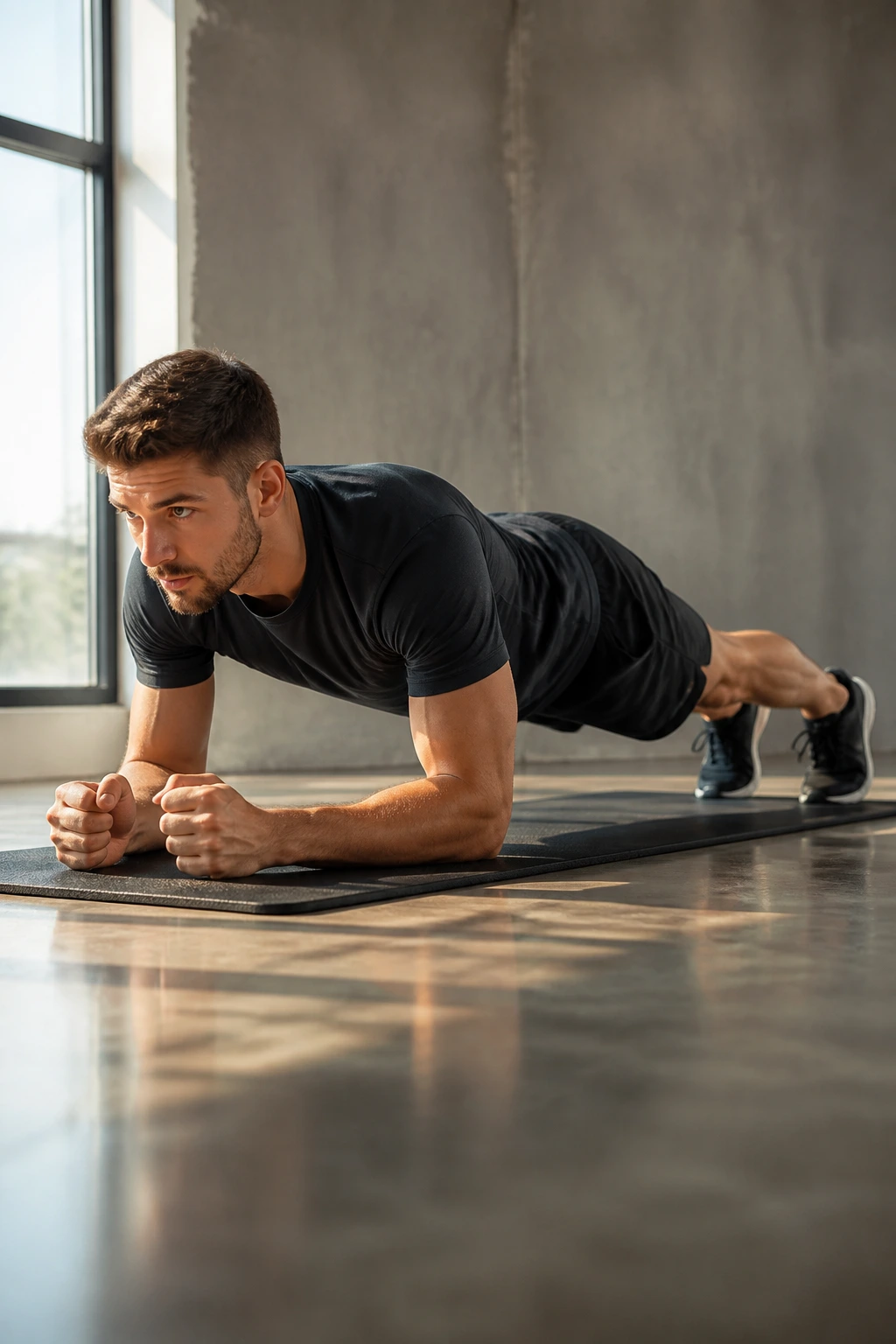
The forearm plank is the plain white T-shirt of core work. Not flashy. Not complicated. And still hard if you do it properly.
Why It Works
The forearm position shortens the lever a little, which makes it easier to learn the real skill: bracing without sagging. Elbows under shoulders, forearms heavy on the floor, toes tucked, and the whole body locked into one line. If your hips drop or your ribs flare, you feel it fast.
A good hold usually lives in the 20- to 45-second range. Longer is not always better. Once form goes, you’re mostly practicing compensation, and that’s a lousy habit to build.
- Keep your elbows directly under your shoulders.
- Squeeze your glutes as if you’re trying to pinch a coin between your cheeks.
- Push the floor away slightly so your upper back does not collapse.
- Breathe through your nose if you can, but do not let the belly soften.
Bold tip: Stop the set the second your lower back starts to take over. That is the rep.
2. High Plank on Straight Arms
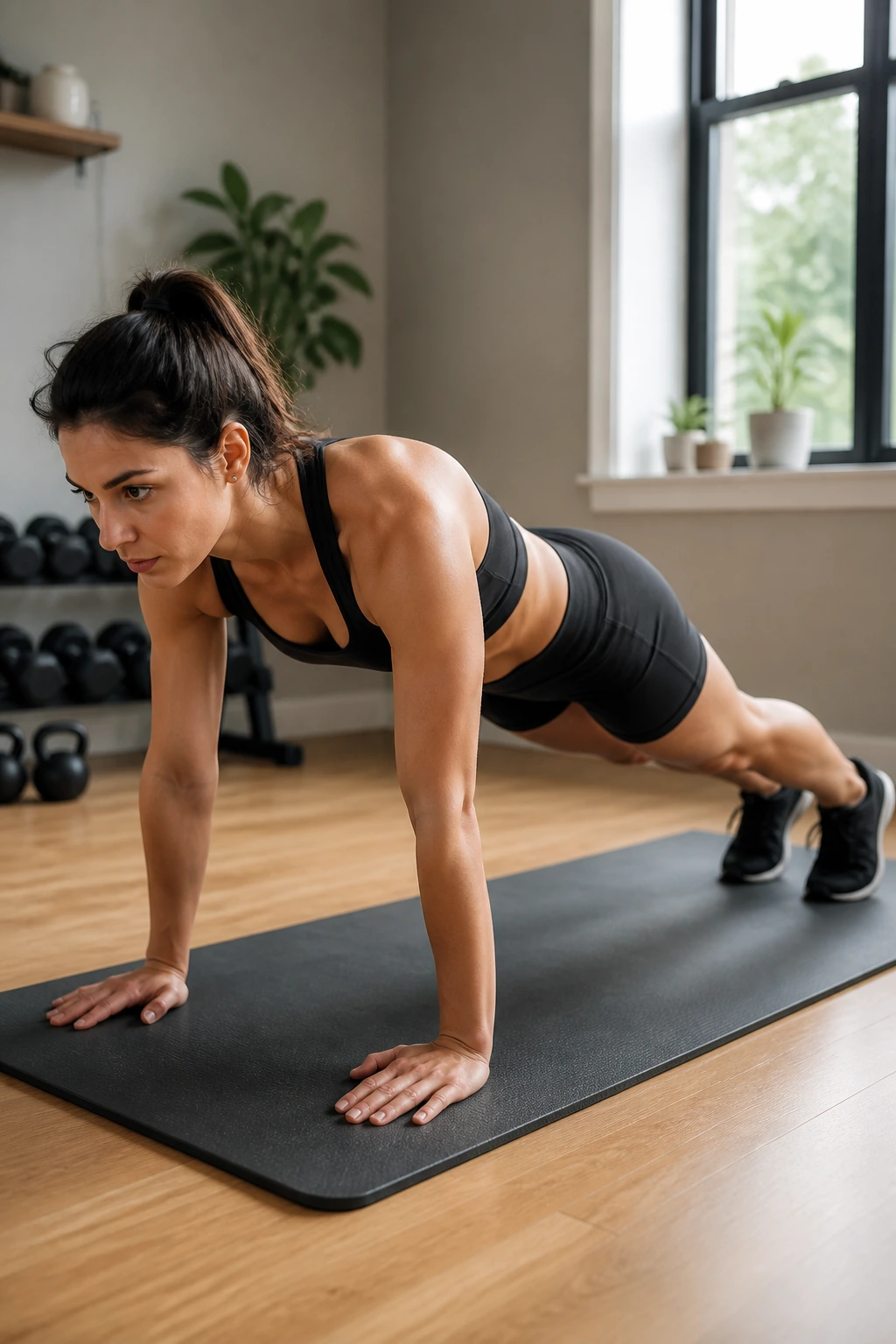
If your wrists can handle it, the high plank exposes sloppy core control fast. There’s nowhere to hide when your arms are locked out and your shoulders are stacked directly over your hands.
The straight-arm version asks for more from the shoulders and serratus anterior, which are the muscles that help keep your shoulder blades stable. That matters because a wobbly upper body usually drags the whole midsection with it. Press your hands into the floor, spread your fingers, and keep your neck long instead of cranking your chin forward.
This is a good plank for warm-ups, push-up prep, or any time you want to connect upper-body position with core tension. Hold it for 15 to 30 seconds if you’re learning it. If your hips look like a hammock, shorten the hold and clean up the line.
One small cue helps more than people expect: push the floor away. It wakes up the upper back and makes the whole shape feel tighter.
3. Side Plank
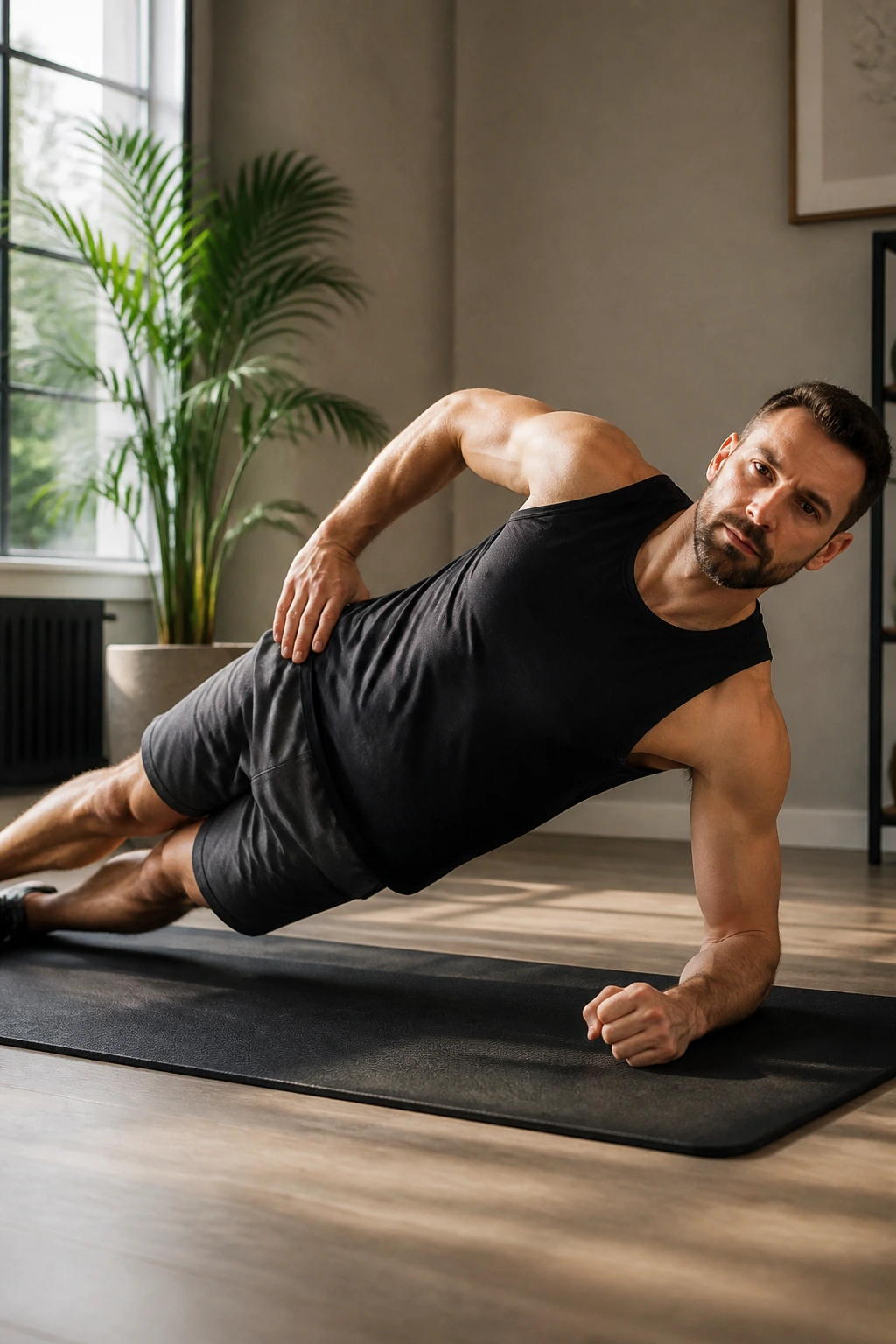
Why does a side plank feel harder than a front plank after ten seconds? Because your obliques can’t coast. They have to hold your torso up against gravity, and gravity is rude.
The side plank trains the muscles along the side of your body — the obliques, the quadratus lumborum, even the glute medius if you keep your hip stacked. That makes it one of the better moves for anyone who wants stronger abs that do more than crunch. Set your elbow under your shoulder, lift the hips, and make sure your chest doesn’t rotate toward the floor.
How to Use It
Start with 15 to 20 seconds per side if the full version is new. If that’s too much, drop the bottom knee and keep the top leg straight. That half version still teaches alignment, and it gives you a clean path into the harder hold later.
The biggest mistake is letting the top shoulder creep forward. Keep both shoulders stacked, even if it feels awkward at first. Awkward is fine. Sloppy is not.
4. Side Plank Hip Dips
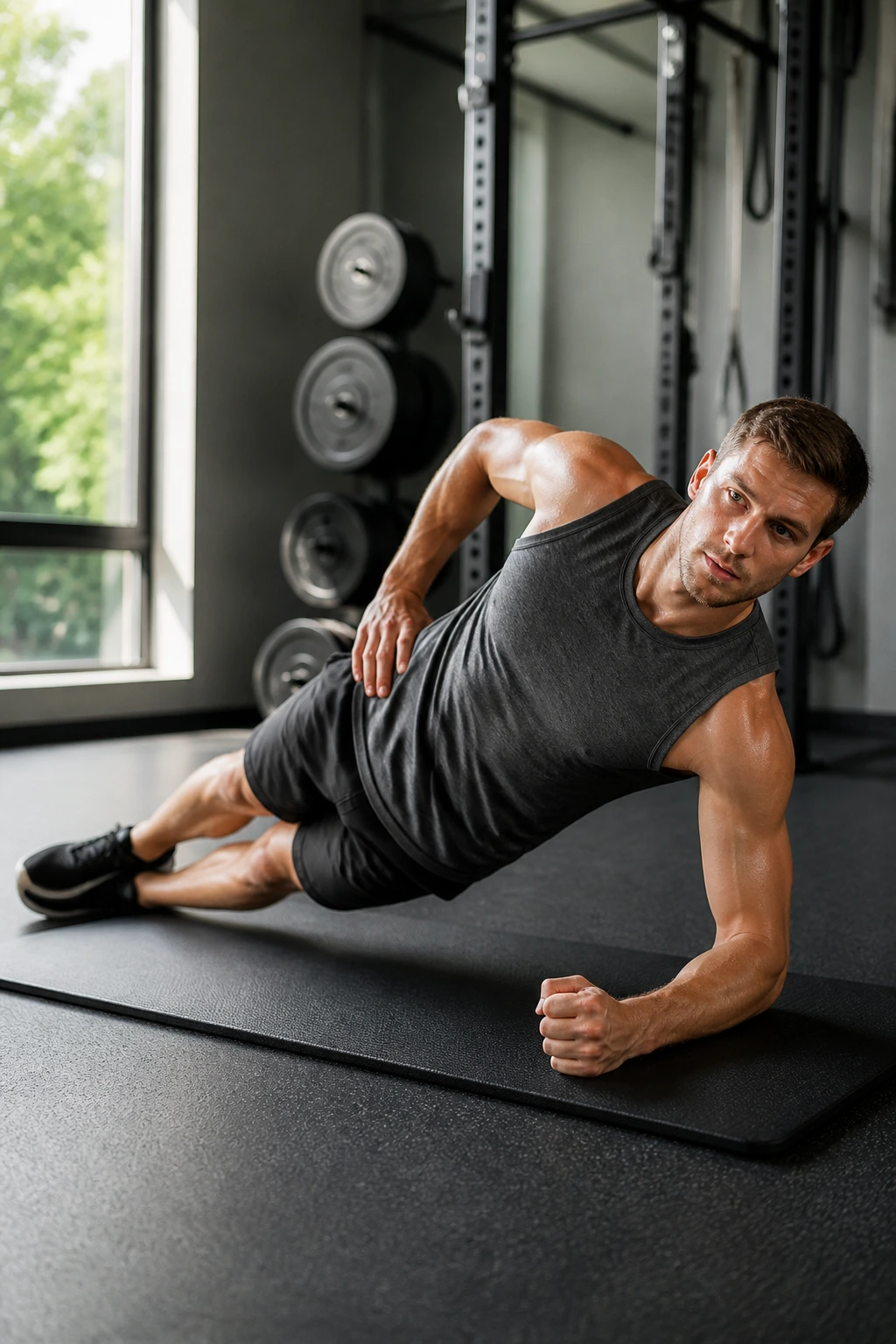
The first few reps look harmless. Then the obliques start talking back.
Side plank hip dips add movement to the side plank, which means your core has to control both the hold and the lowering phase. Drop the hips a few inches, then lift them back to a straight line. That tiny range is enough. You do not need to crash down and heave yourself back up like you’re moving furniture.
Keep the shoulder packed and the chest open. If the top shoulder rolls forward, the whole rep gets messy. Aim for 8 to 12 controlled dips per side, or use a 20-second work window and see how many clean reps you can get without turning it into a shrug-fest.
- Lower only until you feel the side body stretch.
- Lift until the body returns to a straight line.
- Move slowly enough that the hips do not swing.
- Stop if the neck starts to strain.
Small movement. Big burn. That’s the whole deal.
5. Plank Shoulder Taps
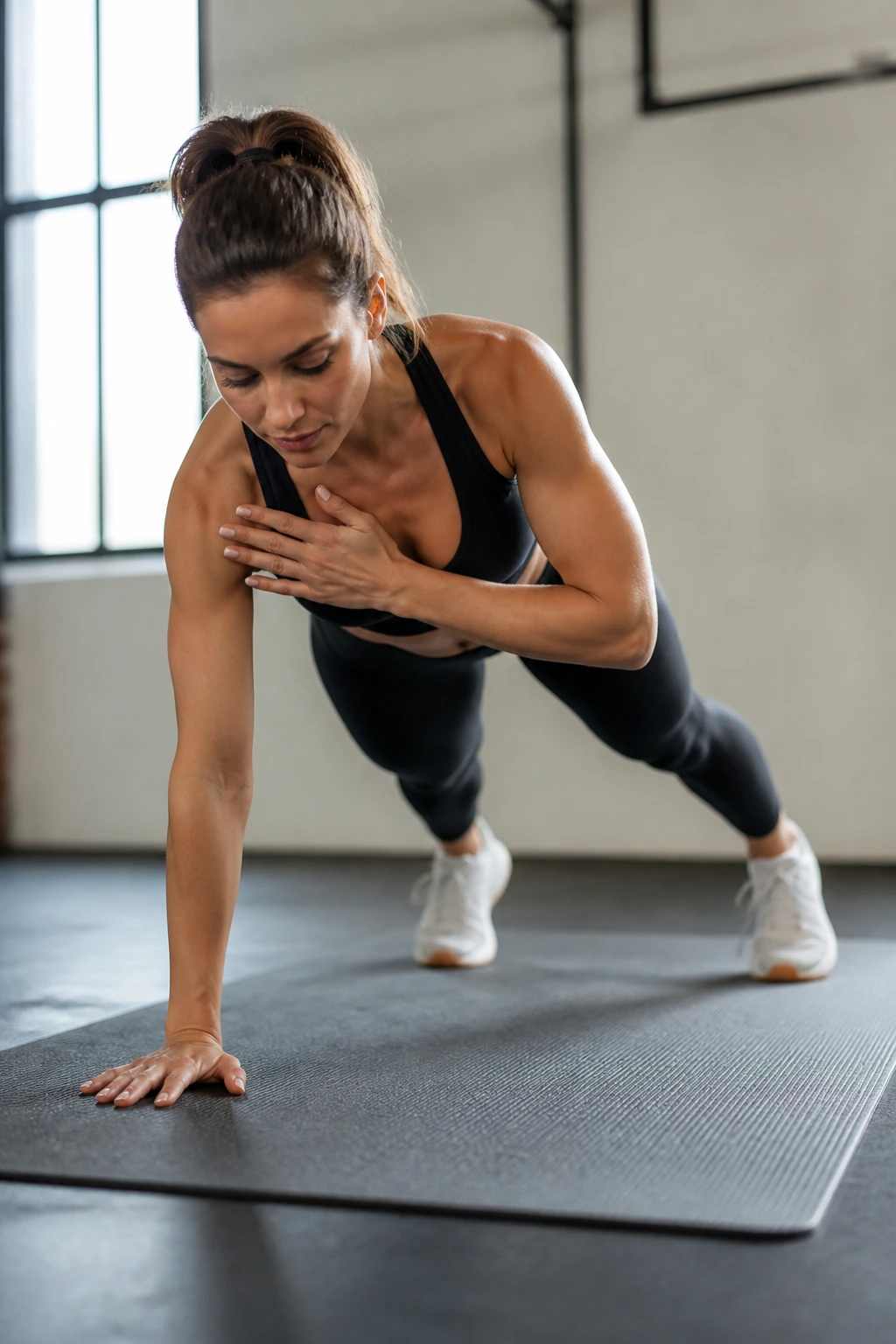
Quick taps are a lie. The point here is not to slap your shoulder and race through reps. The point is to keep your torso from twisting while one arm leaves the floor.
That makes shoulder taps a clean anti-rotation drill. Set up in a high plank, widen your feet a little, and tap one shoulder with the opposite hand without letting the hips drift from side to side. If your body sways like a shopping cart with one bad wheel, slow down. Or widen your stance more. The move should look calm even when it feels annoying.
I like this one for people who already know how to hold a plank and want something a little more demanding without jumping straight to advanced gear. Ten to twenty total taps is a solid start. You can also count 6 to 8 taps per side and keep the tempo deliberate.
The hard part is not the tap. It’s the stillness between taps.
6. Plank Up-Downs
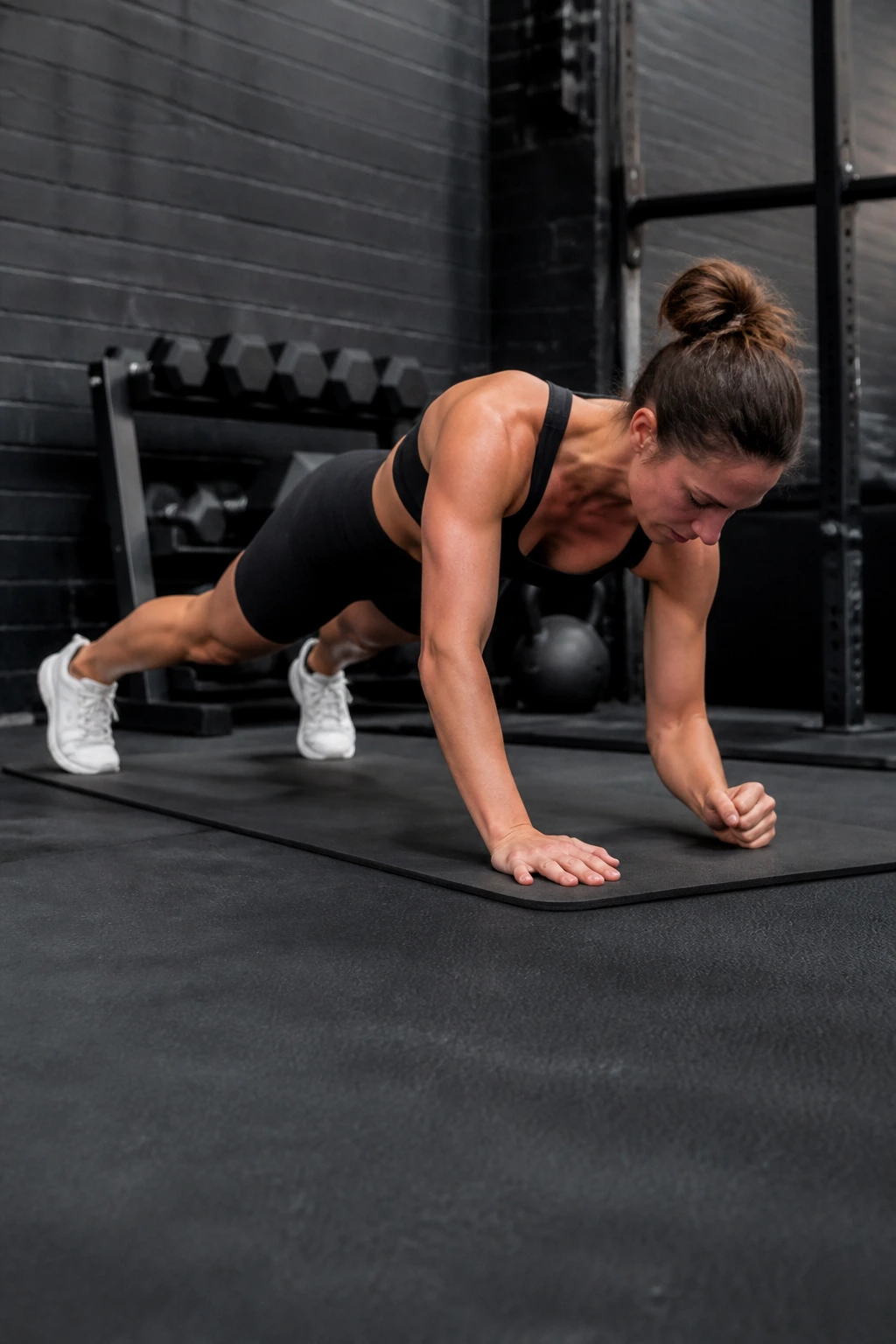
Unlike shoulder taps, up-downs ask your core and triceps to keep the whole body from wobbling while you switch between forearms and straight arms. That makes them a little more taxing, and a little more useful if you want your plank work to carry over into push-ups.
Start in a forearm plank. Press one hand to the floor, then the other, rising into a high plank. Lower back down one arm at a time. Keep the hips as level as you can and make the feet a touch wider than shoulder width if needed. The wider base is not cheating; it’s form control.
This variation is especially good when you want a bit of shoulder endurance with your abs work. Six to ten clean reps is enough for most people. If you lose the line after rep four, that’s your sign to slow the pace or shorten the set.
It’s a grind. That’s the point.
7. Knee-to-Elbow Plank
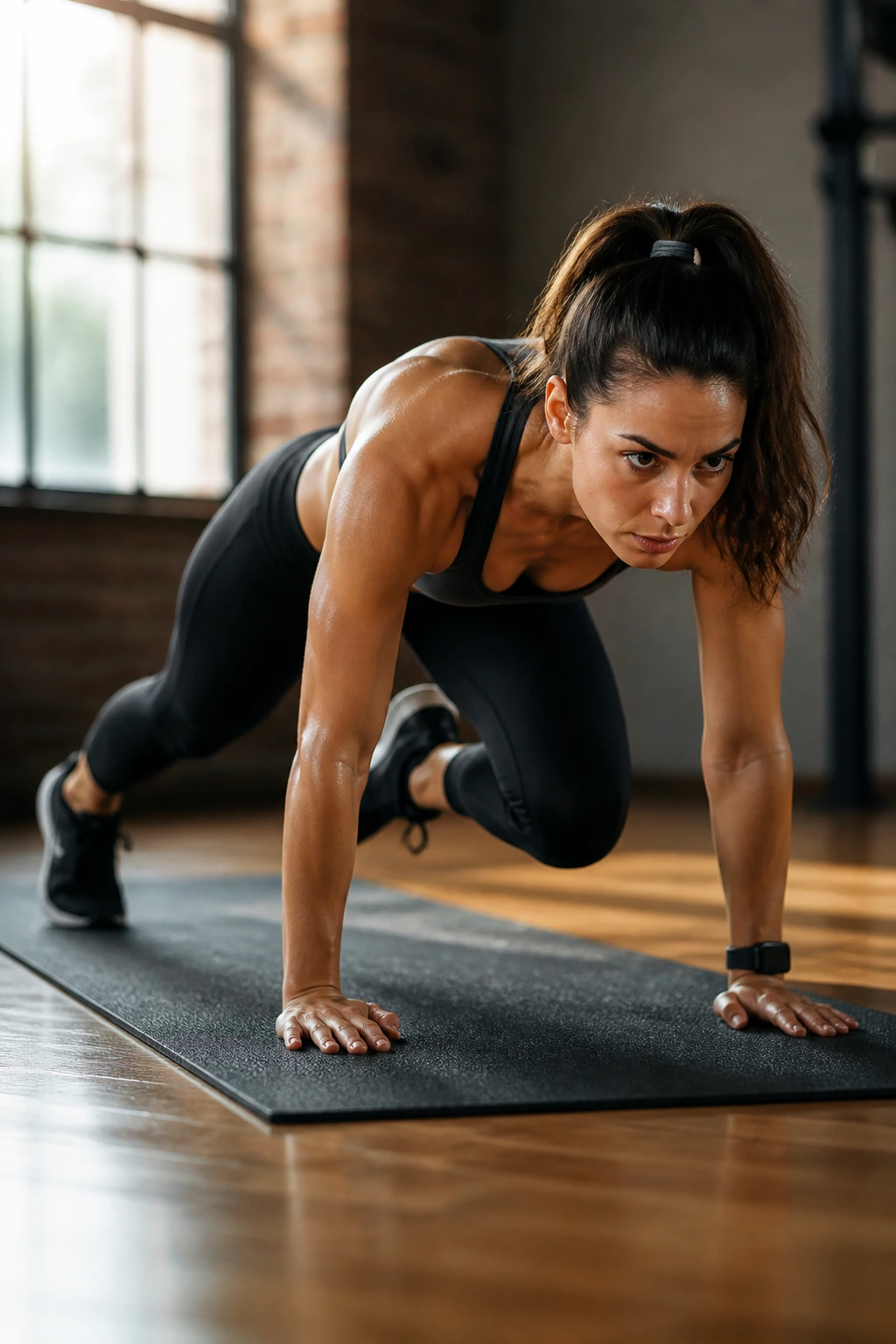
This one looks like a slow mountain climber and feels like a crunch that learned patience.
Why It Works
Driving one knee toward the opposite elbow brings the rib cage and pelvis closer together, which lights up the abs in a way a static hold cannot. The movement is small, but the control demand is big. Keep the opposite leg long, brace before each drive, and avoid twisting the shoulders to chase the knee.
The best reps happen when the torso barely moves. You’re not trying to fold in half. You’re trying to keep the plank shape intact while one knee sneaks forward just enough to challenge the core.
Quick Form Notes
- Start in a high plank with hands under shoulders.
- Bring one knee toward the opposite elbow.
- Pause for half a second at the top.
- Extend back to the starting line without bouncing.
Pro tip: Exhale as the knee comes in. That little breath cue helps the abs tighten without making the neck and shoulders do all the work.
8. Plank Jacks
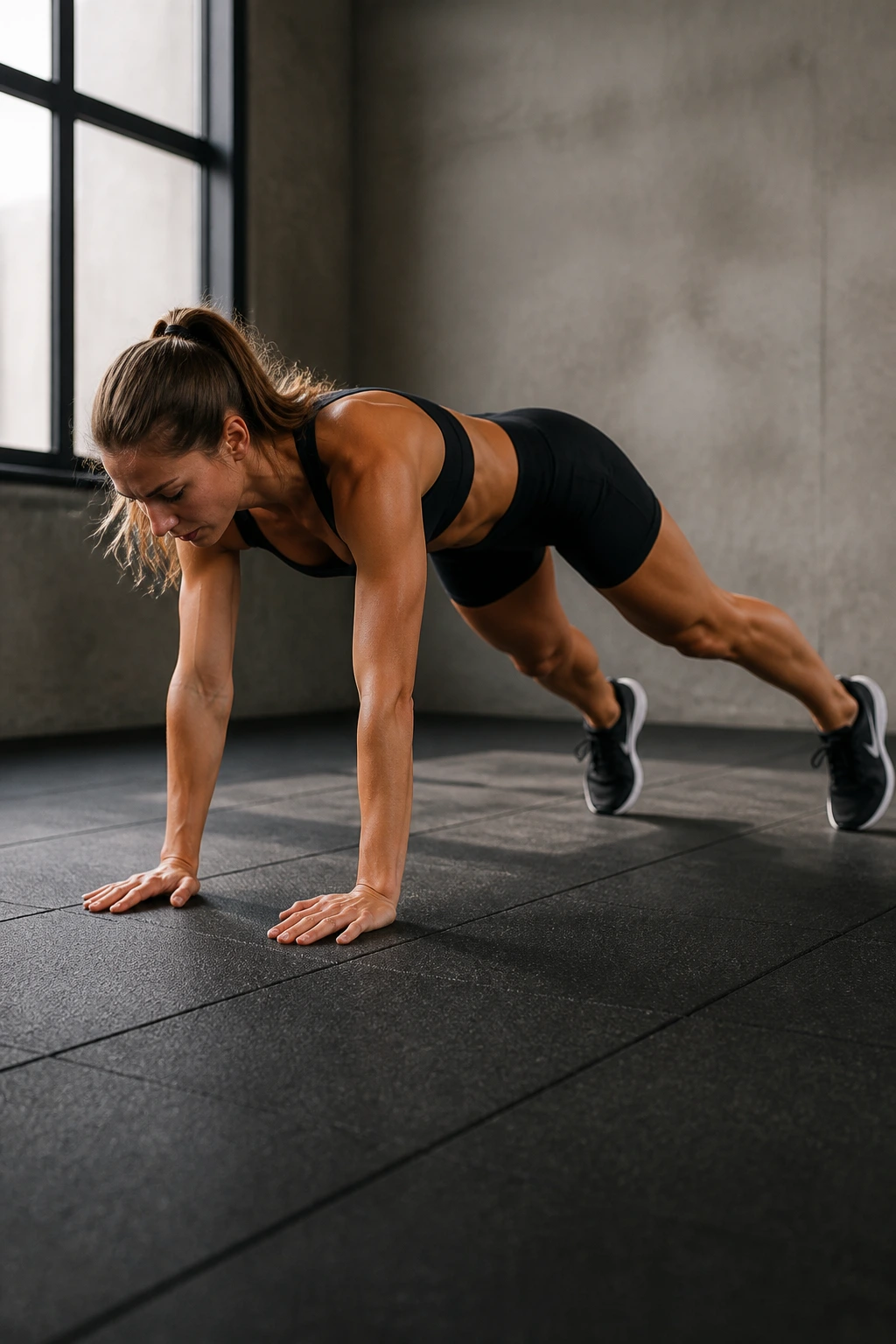
Plank jacks turn a calm hold into a short burst of work. That matters if you want your abs to stay on while your heart rate climbs a little.
From a high plank, jump the feet out and back in, keeping the torso as quiet as possible. The jump should be small. If your hips bounce high each time, the body is leaking tension and the abs are doing less than they should. Step the feet out one at a time if impact or control is a problem. That version still works.
I like plank jacks because they punish lazy bracing. A set of 10 to 20 reps is usually enough to make the point. The shoulders start to warm up, the breathing gets faster, and the midsection has to stay organized under a bit of chaos.
If your ankles or wrists dislike the impact, skip the jump and step. Good training does not need to be loud.
9. Long-Lever Plank
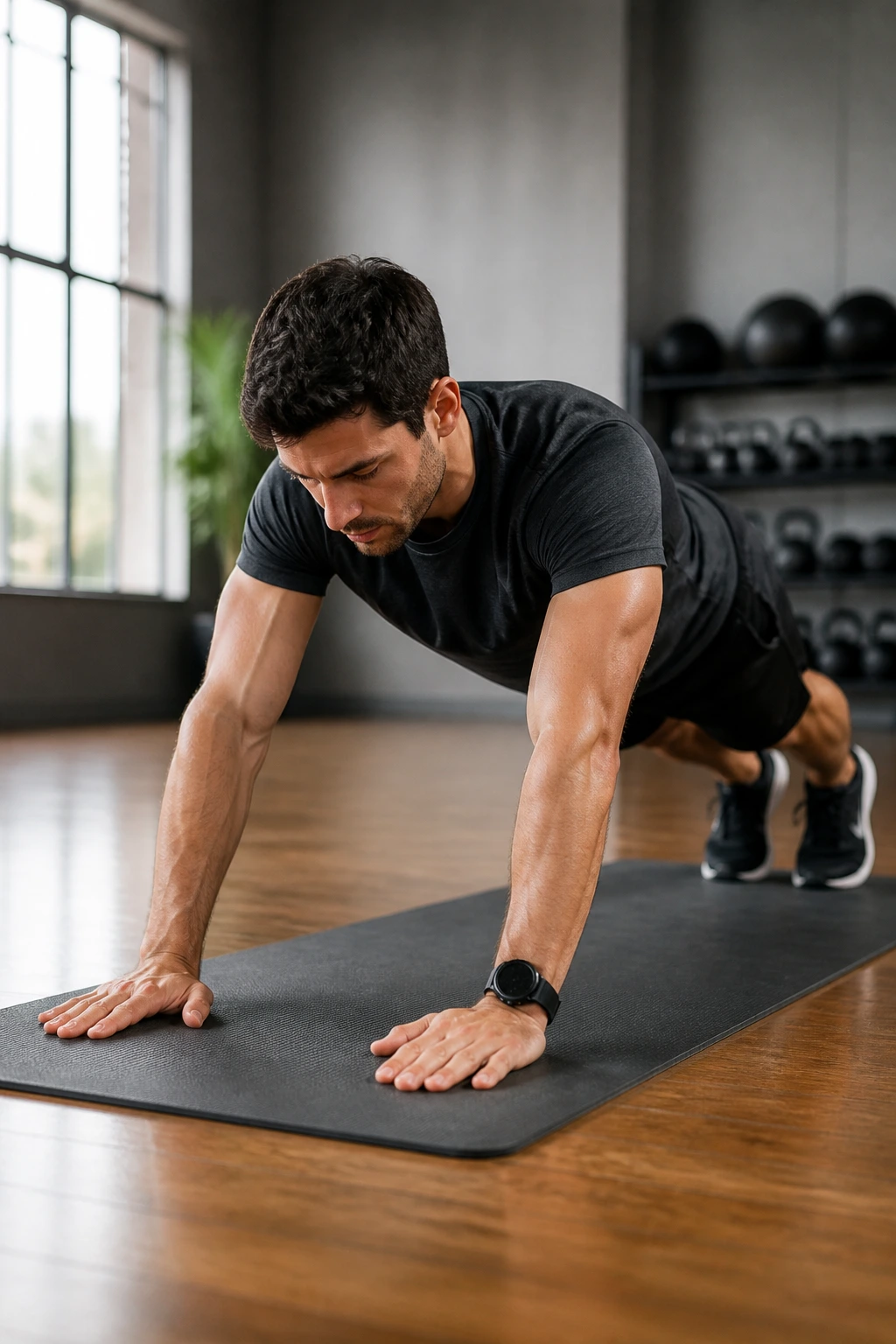
Want more work without chasing a longer hold? Extend the lever.
A long-lever plank places your hands or elbows a few inches farther forward than a standard plank position. That tiny shift makes the body work harder to keep the ribs from dropping toward the floor. It’s a simple change, but the load jumps fast because the core has to fight more extension torque.
This is a smart option once a regular plank feels too easy but you’re not ready for weighted work. Start with 10 to 20 seconds and keep your lower back honest. If the pelvis dumps forward, shorten the range or go back to the basic version for a bit longer.
How to Use It
Try it after your normal plank work, not before. You want the regular hold to set your shape, then the long-lever version to stress it. That order tends to work better than the other way around.
And yes, it can feel unfair. That’s normal.
10. Reverse Plank
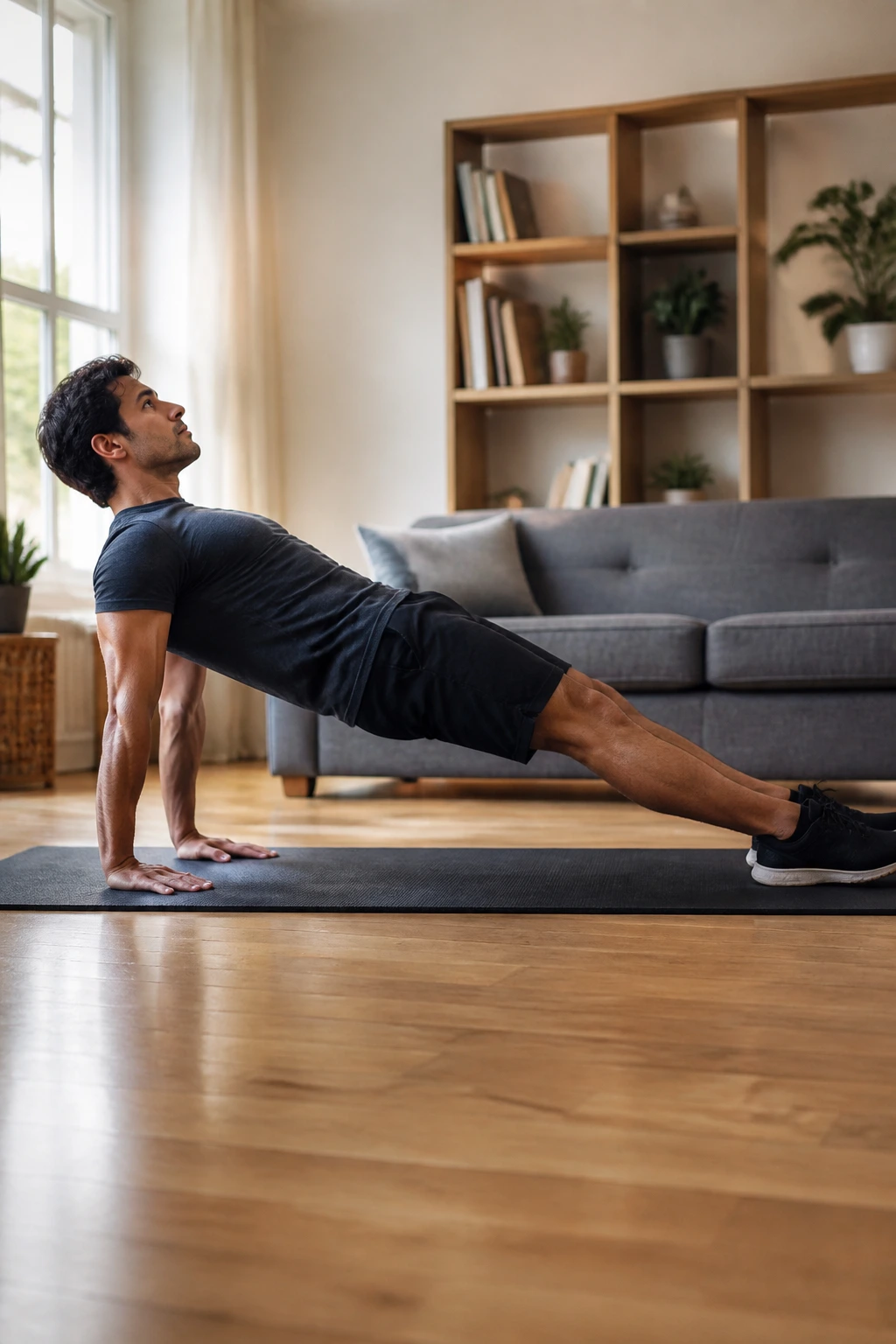
You sit at a desk all day, your hips get sticky, and the reverse plank reminds the front of your body that it exists.
This is the backside version of the classic hold. Hands go behind you, fingers can point toward your feet or slightly out, chest opens, and the hips lift until the body forms a straight line from shoulders to ankles. The glutes and hamstrings do a lot of the heavy lifting here, but the abs still have to brace hard to keep the pelvis from sagging.
- Place your hands a few inches behind your hips.
- Press through your palms and heels.
- Lift the hips until the torso is long and firm.
- Keep the chin slightly tucked so the neck stays neutral.
A reverse plank is useful when your core routine needs balance. Too much front-side work and not enough posterior chain work can leave people feeling stiff. Hold this one for 15 to 30 seconds, and don’t be surprised if your shoulders notice it too.
11. RKC Plank
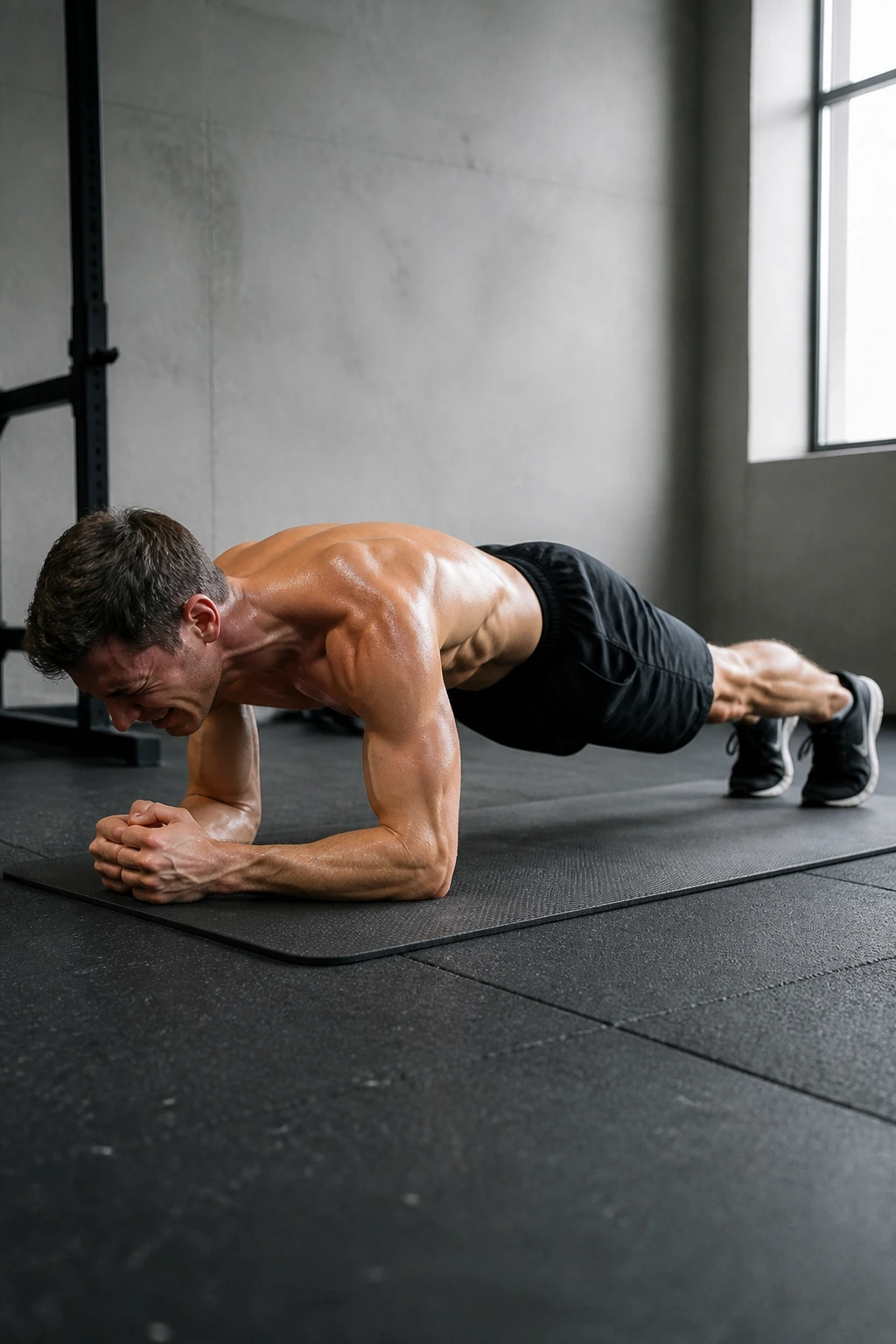
The RKC plank is short, ugly, and brutally effective. That is a compliment.
Instead of trying to hold forever, you create a massive amount of tension for a short time. Pull the elbows toward the toes without actually moving them, squeeze the glutes, tuck the pelvis slightly, and brace hard enough to make the whole body shake. If the shake starts after two seconds, good. You’re awake.
This is not a long-duration plank. Five to ten seconds can be plenty. The idea is to train maximal tension, not endurance. Breathe shallowly behind the brace. Do not let the ribs flare just because you want another second on the clock.
A lot of people hate this variation the first time they try it. Fair. It feels intense in a way that’s hard to fake. But if you want abs that can lock in under load, this one earns its place fast.
12. Bear Plank Hover
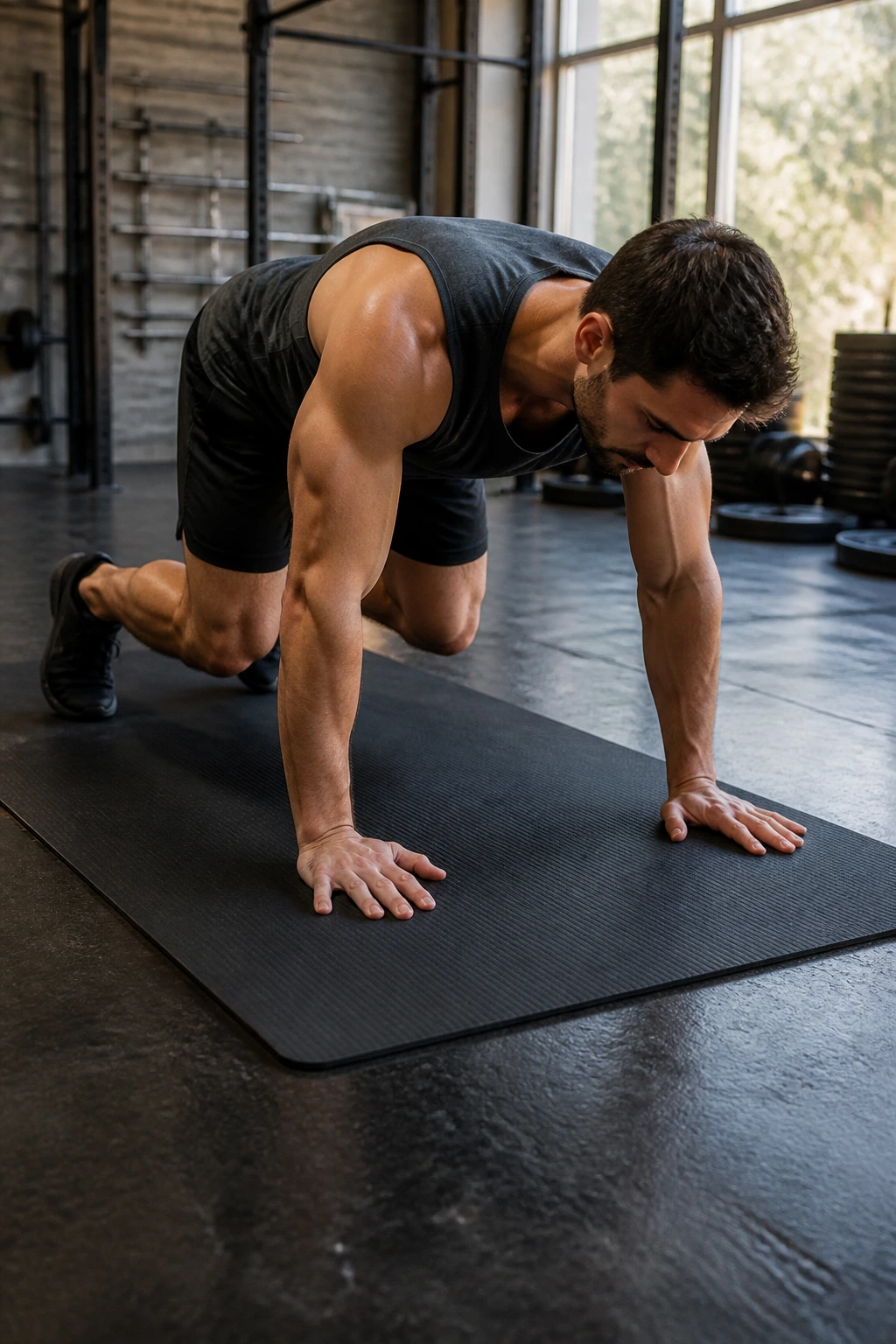
Unlike a full plank, the bear hover keeps the knees an inch or two off the floor and makes every mistake louder. That little change turns the drill into a fierce test of control.
Set your hands under your shoulders and your knees under your hips, then lift the knees just enough to clear the ground. The back stays flat, the hips stay level, and the feet stay tucked. Because the knees are hovering, the abs have to work hard to keep the spine from arching. There’s less room for drift. Less room for laziness too.
I like this move for people who need core strength without full-body momentum. It teaches tension with a clear endpoint: 10 to 20 seconds of clean hovering is plenty. If the wrists get cranky, shift the weight slightly forward through the fingertips and keep the elbows soft, not locked.
It’s a small shape. It feels much bigger than it looks.
13. Bird-Dog Plank
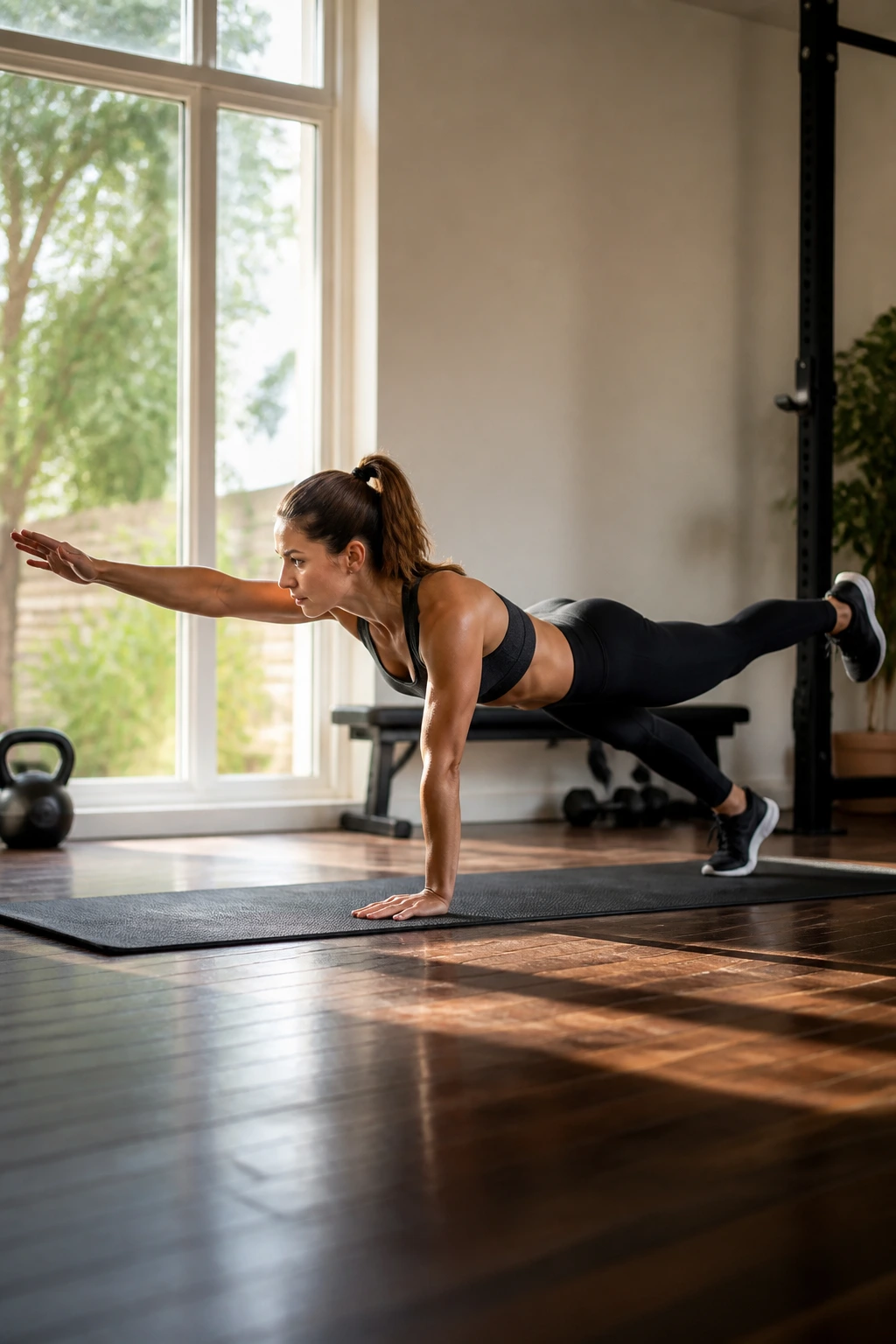
One arm and one leg leave the floor, and the whole torso has to behave.
Why It Works
The bird-dog plank adds a reach without letting the pelvis spin open. That makes it one of the better anti-rotation drills you can do on the floor. From a high plank or bear hover, extend one arm forward and the opposite leg back. Keep the hips square to the floor and move slowly enough that nothing else shifts.
The hard part is the stillness. If the lower back arches or the ribs flare, shorten the reach. A few inches of clean extension are better than a dramatic reach that turns into a wobble.
Quick Form Notes
- Hold the plank shape before you move anything.
- Reach one arm and the opposite leg long.
- Pause for one beat.
- Return without letting the torso twist.
Best cue: Imagine a glass of water on your lower back. If it spills, the set is done.
14. Body Saw Plank
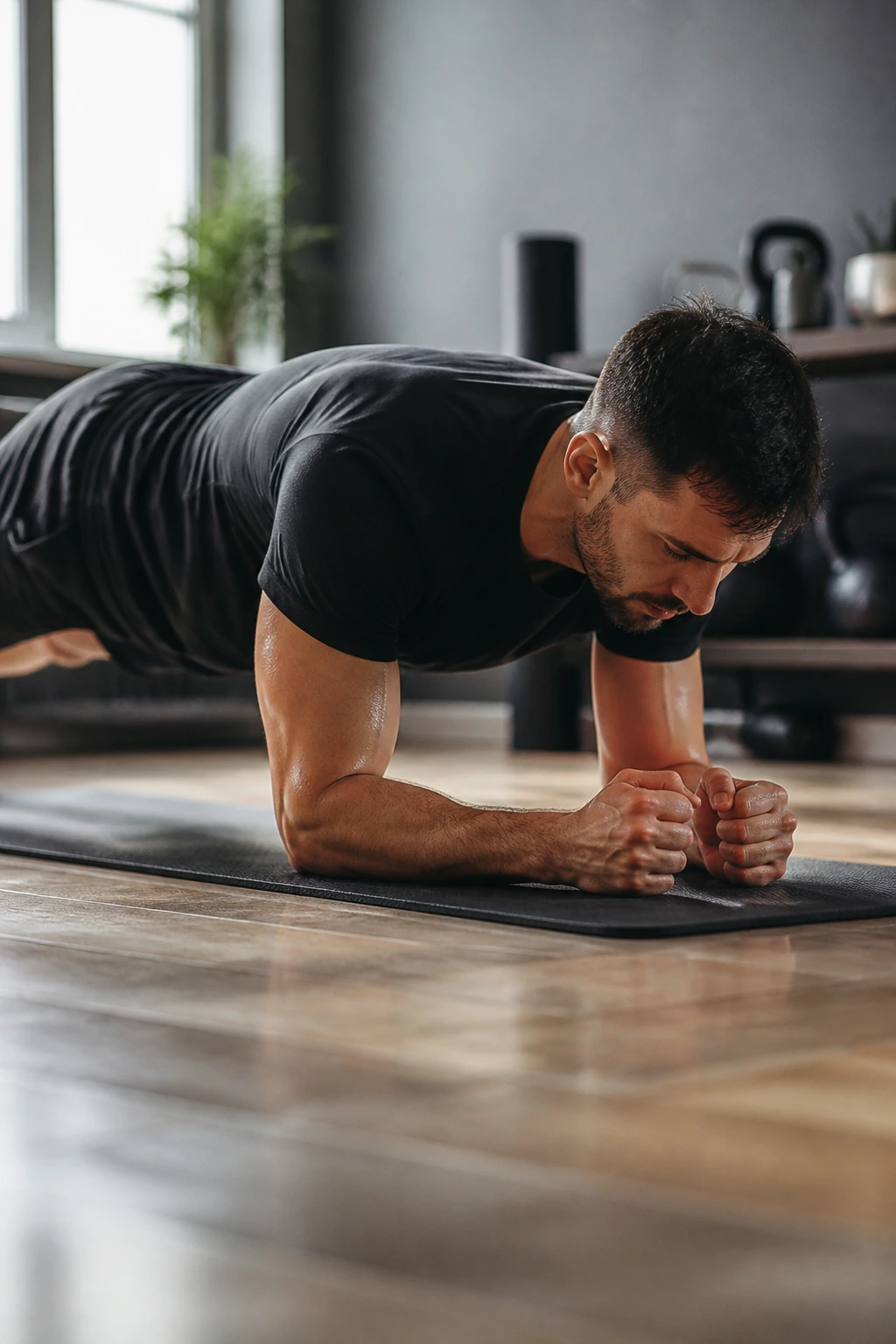
The body saw is mean in a good way. It looks calm. It is not calm.
Using sliders, towels, or even socks on a smooth floor, you start in a forearm plank and move the body a few inches forward and back. That shift increases the challenge to the abs because the core has to keep the ribs and pelvis locked while the leverage changes. Tiny range, big demand.
The rule here is simple: don’t over-slide. A small rock forward and back is enough. If the low back starts to pinch or the shoulders shrug up near your ears, the range is too large or the brace is too loose. Six to twelve slow rocks can be plenty.
This variation gets useful fast for people who already own a decent plank but want more work without adding a lot of complexity. It’s also sneaky. The first two reps feel fine. The next four tell the truth.
15. Stability Ball Stir-the-Pot
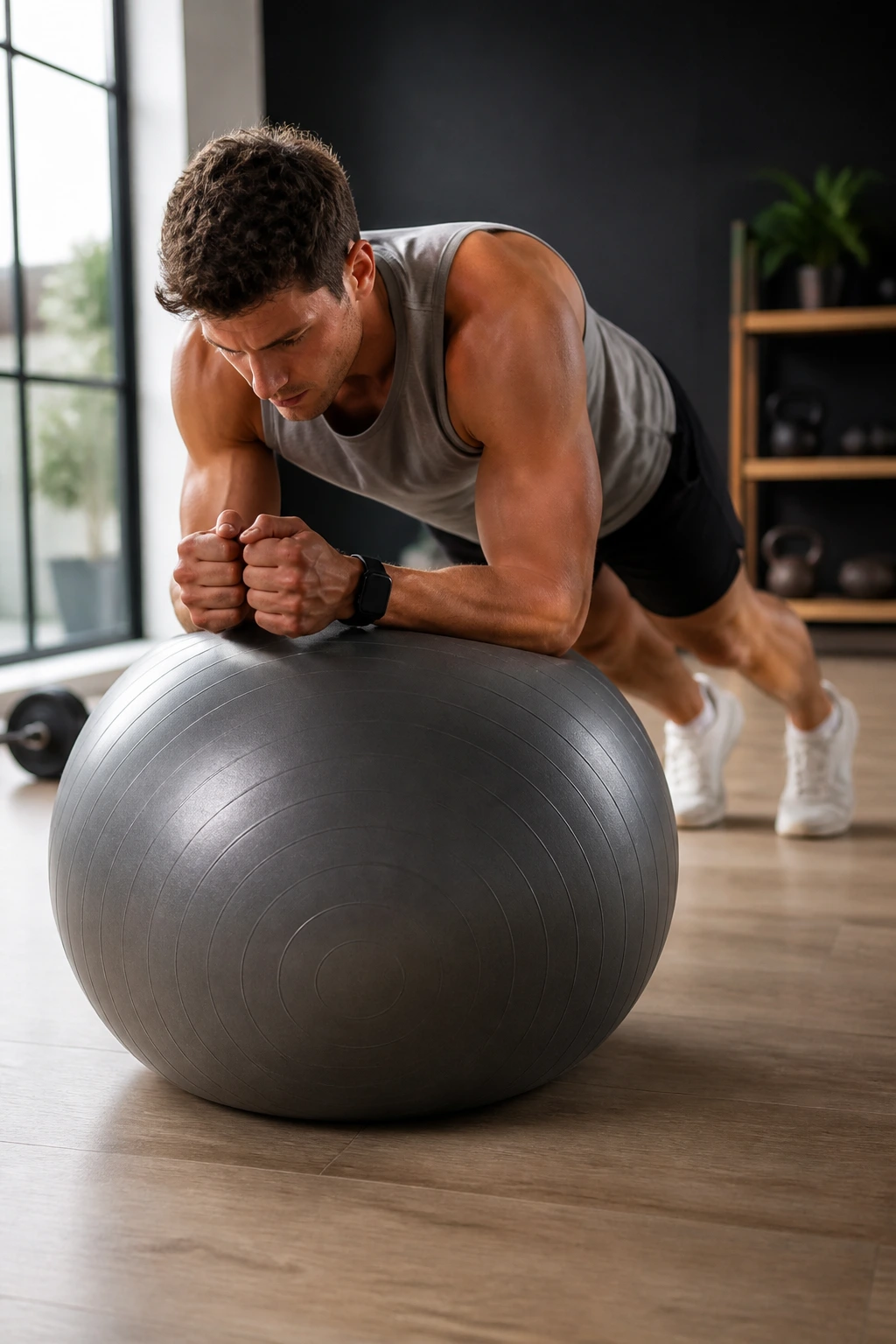
Why do small circles on a ball feel so expensive? Because the ball never stops asking your core to recover.
Set your forearms on a stability ball, walk your feet back, and hold a plank while you make tiny circles with your elbows. The movement might be only 3 to 6 inches wide, and that’s perfect. Bigger circles usually mean worse form. The abdominals, shoulders, and deep stabilizers all have to cooperate to keep the torso steady while the ball rolls under you.
How to Use It
Begin with 3 circles each direction and see if the rib cage stays tucked. If your lower back arches, make the circle smaller or widen your feet. A wider stance gives you a calmer base while you learn the motion.
This is one of those drills that looks almost playful until the third round. Then it gets serious. Use it when you want a plank variation that feels different from floor work without leaving the core family.
16. Single-Leg Plank
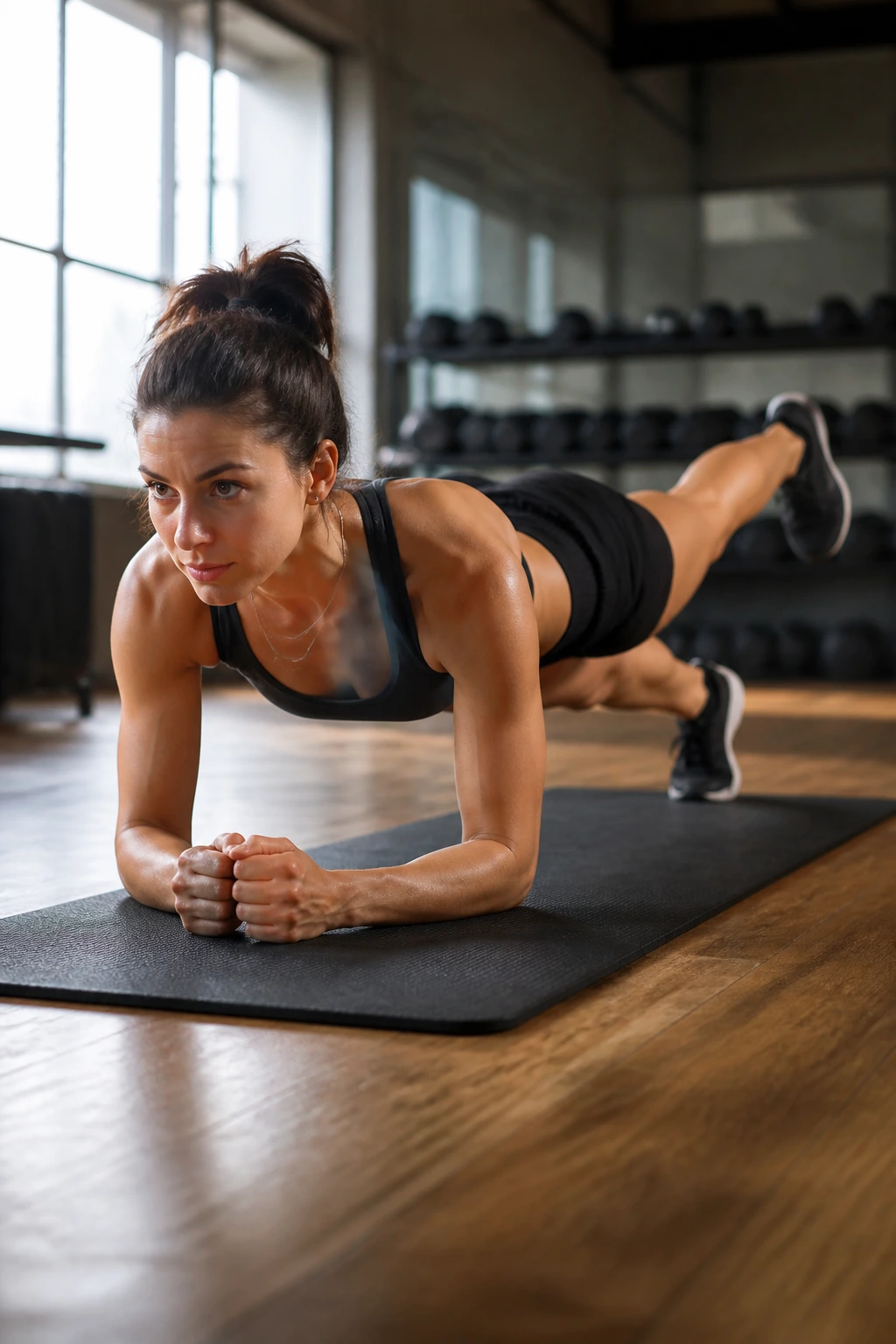
Lift one foot an inch and the wobble starts. That is the whole lesson.
A single-leg plank removes a point of contact, which forces the trunk and glutes to work harder to keep the pelvis level. You can do it in a forearm plank or a high plank. Either way, the lifted leg should stay long and only come up a few inches. No wild kicks. No back arching. Just enough lift to make balance matter.
- Keep the standing foot firmly planted.
- Raise one leg without rotating the hips.
- Hold the torso still for 10 to 20 seconds.
- Switch sides before the form gets shaky.
The downside is simple: if you rush it, the lower back takes over. That’s why a small lift is better than a dramatic one. The goal is stability, not drama.
17. Plank Reach
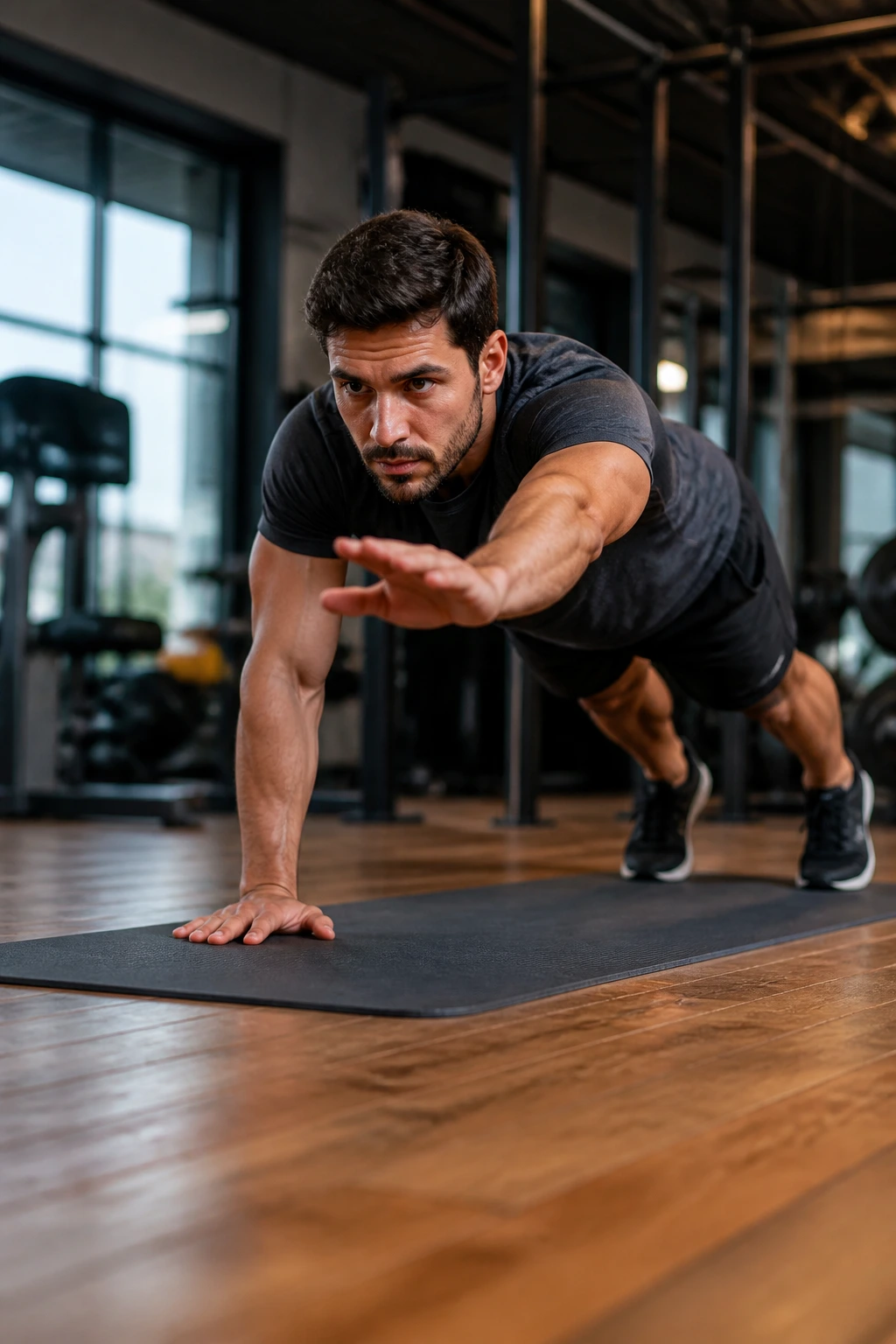
A plank reach looks easy until the arm extends and the torso starts negotiating with gravity.
Set up in a high plank with the feet a little wider than hips. Reach one arm forward, about 6 to 10 inches, then bring it back under the shoulder without letting the body shift. The farther the hand reaches, the harder the anti-rotation demand gets. Too far, though, and the hips twist. So keep the reach modest at first.
The beauty of this variation is that it trains control through a slightly different path than shoulder taps. Instead of touching the body, the arm leaves the base and forces the opposite side of the trunk to lock in. It’s a clean way to build abs that hold steady during reaching, throwing, and pressing.
A set of 6 to 8 reaches per side is plenty. If you can keep the pelvis quiet, move the hand a little farther on the next set. If you can’t, stay smaller. That’s the honest version.
18. Spider-Man Plank
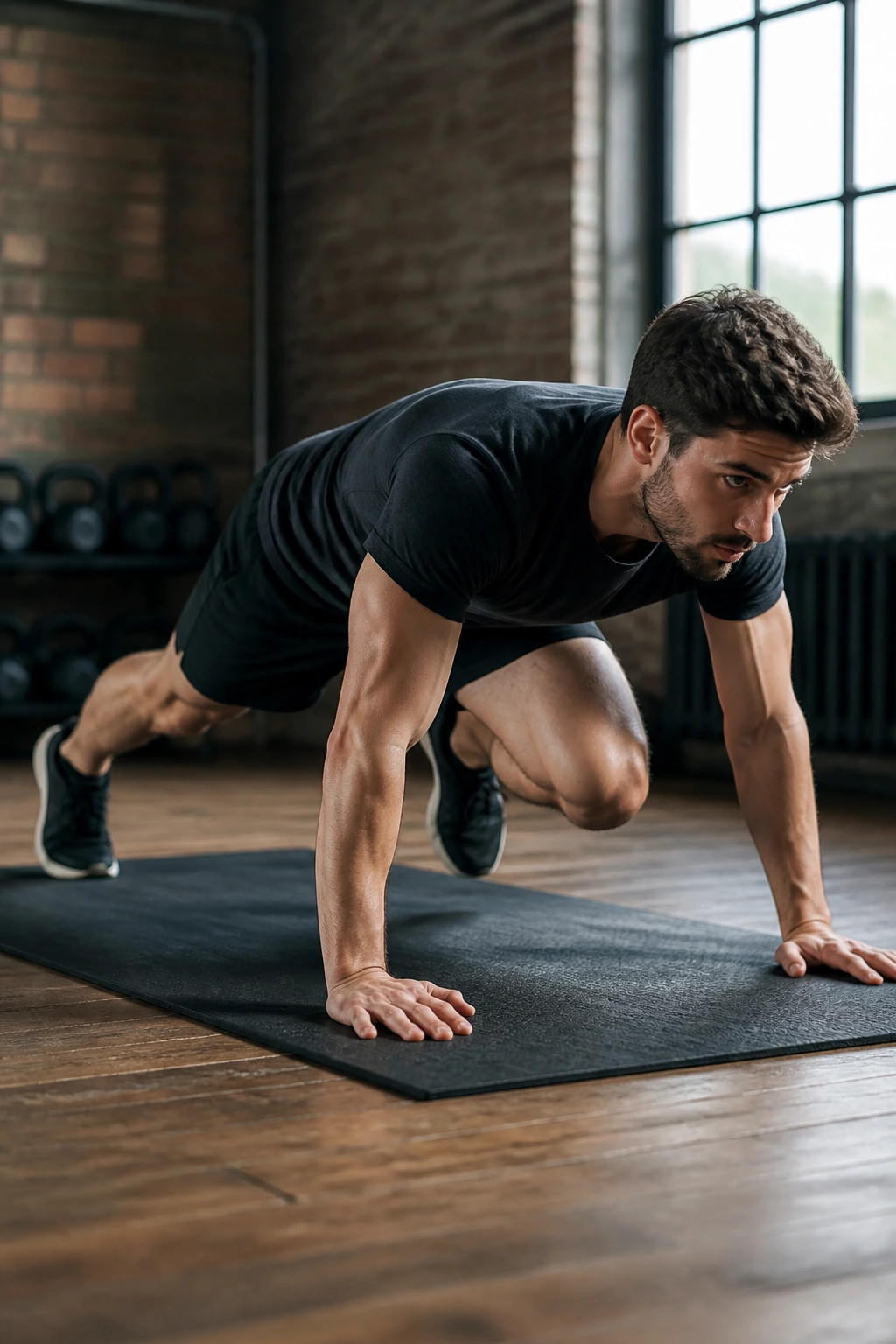
Unlike the knee-to-elbow version, this one drives the knee outside the same-side elbow and loads hip flexion harder. It also asks for a little more trunk control than it looks like from across the room.
From a high plank, bring one knee up and out toward the elbow on the same side, then return to the start without swinging the hips. The knee track is the point. You’re not just flexing the hip; you’re opening it while the torso stays mostly square. That makes the obliques work hard and gives the hips a little mobility work at the same time.
This variation is good when you want movement without turning the drill into cardio chaos. Keep the pace measured. Five to eight reps per side is enough for most people. If the shoulders drift or the low back sags, slow down and shorten the range.
It’s a good one. Messy reps tend to show up fast, which is exactly why it earns its spot.
19. Weighted Plank
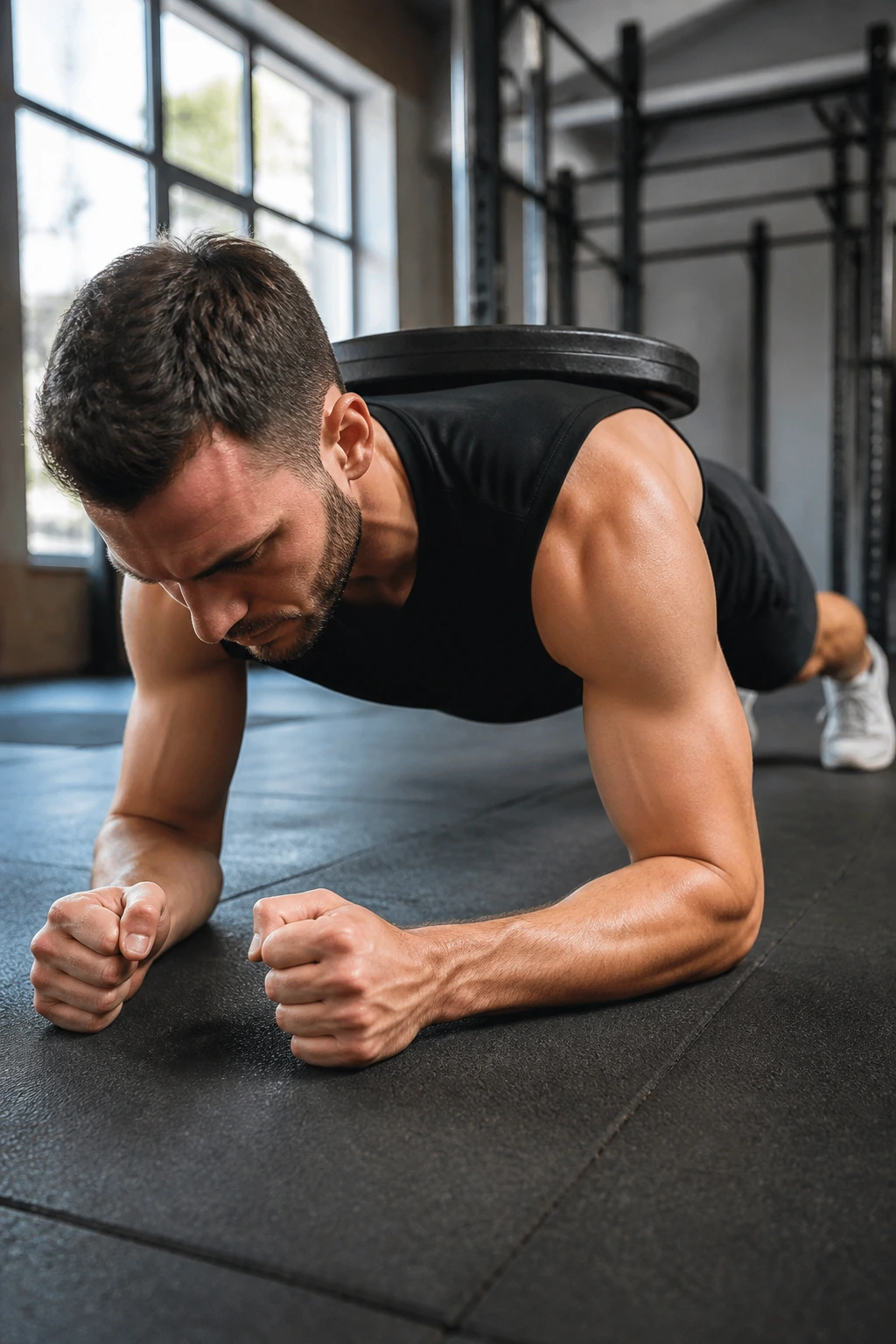
A small plate changes the mood fast.
Why It Works
Add a light plate, sandbag, or other steady weight across the upper back, and the core has to resist more extension force. That means the abs, glutes, and upper back all have to stay switched on while the load tries to tip the pelvis forward. The weight does not need to be heavy. In fact, too much load usually ruins the line before it adds much value.
Start with something modest — 5 to 20 pounds is enough for many people, depending on strength and body size. Use a clean plank first. If the basic hold is already shaky, skip the weight and keep practicing the unweighted version.
Quick Form Notes
- Place the load high on the upper back, not on the lower spine.
- Ask a spotter to help if the weight is awkward.
- Hold the ribs down and the glutes tight.
- Stop the set the moment the load shifts.
Best use: Short holds of 10 to 30 seconds. Long sets with sloppy form are a waste of time.
20. TRX Plank
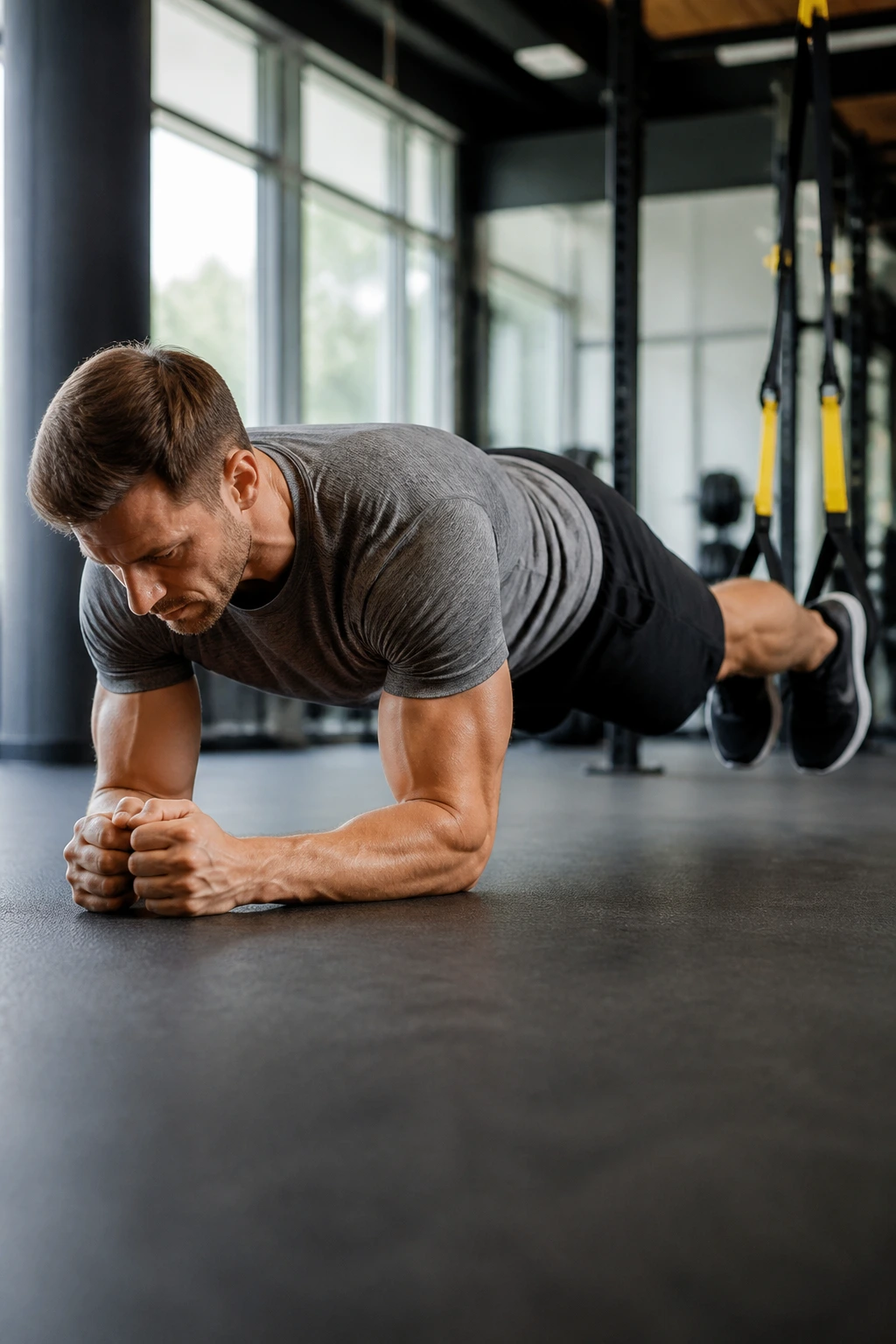
Suspension straps turn a basic plank into a moving target. That alone makes the TRX version worth a look if you want your abs to work harder without loading the spine.
Put the feet in the straps and hold a plank on the floor with the body straight, or keep the forearms on the floor while the legs hang in suspension depending on the setup you have available. Either way, the instability makes every small mistake louder. The hips want to swing. The shoulders want to shrug. The core has to keep both ends organized at once.
A short set is enough here. 10 to 20 seconds can feel like plenty, especially when the straps start drifting. Keep the movement quiet and avoid turning it into a leg swing. If the setup is too unstable for clean form, step back to floor planks and come back later.
This is the kind of variation that rewards control more than bravado. The straps do not care how tough you feel. They care whether you can stay in line.
Final Thoughts
The smartest way to use plank workout variations is not to cram all twenty into one session. Pick four or five that cover different jobs: one static hold, one anti-rotation move, one side-focused drill, and one harder version that forces a real brace.
Short, clean sets beat long, sloppy ones almost every time. A 20-second plank with perfect tension usually does more for strong abs than a 90-second hold where the lower back has already taken over.
If your wrists, shoulders, or lower back get cranky, change the setup before you quit the exercise. Smaller ranges, wider stances, and shorter holds fix more problems than most people expect. That’s the part people skip when they chase harder options too early.
