



A toned look is built under load, not under the glow of a mirror selfie. If your sessions leave you sweaty but the dumbbells never get heavier, you’re decorating fatigue, not building muscle.
Defined tone comes from two things working together: enough resistance to make muscle grow, and enough workout density to keep the session honest. That usually means compound lifts, short but sane rests, and a plan that does not waste half an hour on random fluff. Endless crunches and tiny front raises do not do the heavy lifting people think they do.
The smartest lean muscle workouts feel solid, not frantic. You finish tired, maybe a little pumped, but also stronger than when you walked in — and that part matters more than the burn most people chase. The first workout below is the simplest place to start if you want the body to look firmer without turning every session into a marathon.
1. Lean Muscle Dumbbell Ladder Full-Body Burn

A ladder sounds tame. It isn’t.
This setup works because you keep the same four moves, then walk the reps down in steps: 10, 8, 6, 4. That keeps the pace moving while still giving each muscle group enough work to grow. The first round feels manageable, the middle round starts to bite, and the last round demands clean form or it all falls apart. That’s exactly the point.
How the Ladder Works
Start with one goblet squat, one dumbbell floor press, one-arm row per side, and a Romanian deadlift. Use a load that makes the first two rounds feel smooth and the last round feel earned. If you can breeze through all four rounds while chatting, it’s too light.
- 10 goblet squats
- 10 dumbbell floor presses
- 10 one-arm rows per side
- 10 Romanian deadlifts
- Rest 45 to 60 seconds
- Repeat for 8, 6, then 4 reps
Best tip: stop one rep before your hinge turns sloppy. If your lower back starts doing the work your hamstrings should be doing, the session has gone off the rails.
I like this one for people who want a full-body stimulus without needing five machines and a prayer. It fits a home gym, a crowded commercial gym, or that corner of the room where one pair of adjustable dumbbells lives. Clean, direct, effective. That’s the appeal.
2. Upper-Lower Split for Defined Tone

If you want muscle without feeling wrecked for two days, an upper-lower split earns its keep.
You train the upper body on one day and the lower body on another, which gives you enough volume to build shape without cramming everything into one draining marathon. A simple version uses four training days: upper, lower, rest, upper, lower. That rhythm gives you room to push the main lifts while keeping recovery sane.
The upper day can start with a press, move to a row, then finish with shoulders and arms. The lower day should open with a squat or hinge, then a single-leg move, then calves and core. Keep the first lift in the 5 to 8 rep range, then shift into 8 to 12 reps for the rest.
I prefer this split when the goal is visible muscle without sloppy fatigue. You get enough weekly work to create shape in the chest, back, shoulders, quads, and glutes, but you’re not pounding the same tissue every day. That usually means better sessions and fewer junk reps.
Progress matters here. Add 2.5 to 5 pounds when the top of the rep range feels solid, or add one clean rep per set before you increase the load. Boring? Maybe. Effective? Absolutely.
3. Push-Pull Superset Workout
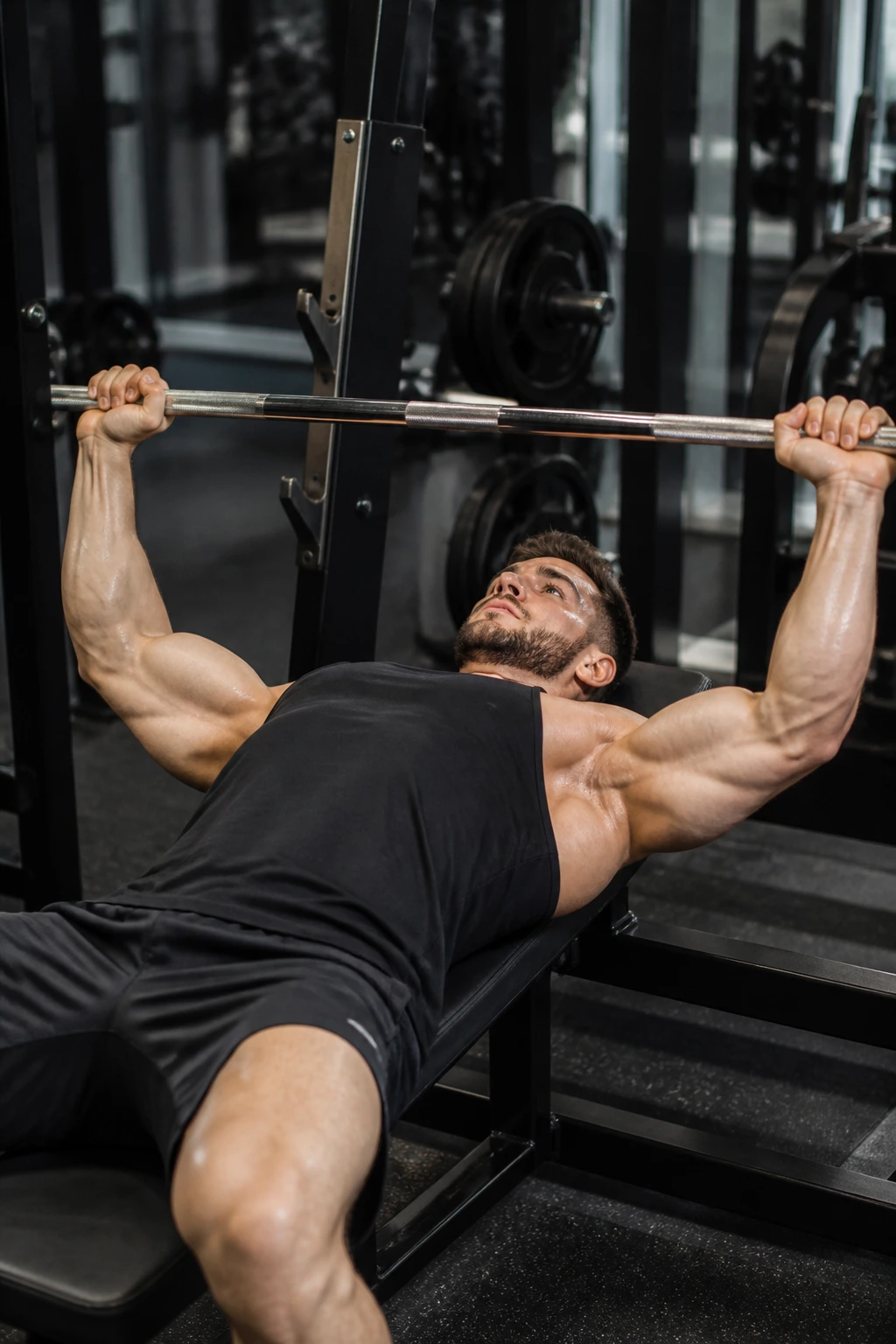
Why pair a press with a row? Because your shoulders usually like it better.
When you match a pushing move with a pulling move, you keep the upper body balanced and you save time without turning the workout into chaos. A set of bench presses followed by rows lets one side work while the other side recovers. That keeps the pace tight and the joints happier than a long block of nothing but pressing.
The Pairings I Trust
- Bench press paired with chest-supported row
- Overhead press paired with lat pulldown
- Incline dumbbell press paired with cable row
- Push-up paired with face pull
Run each pair for 3 to 4 rounds, 8 to 12 reps on the main lift and 10 to 15 on the smaller one. Rest 45 to 75 seconds after each superset, not between the two exercises. That rhythm matters. It keeps the session moving while still leaving enough energy to keep the presses crisp.
This is one of those lean muscle workouts that looks simple and still sneaks up on you. By the last pair, your chest feels full, your upper back is lit up, and your breathing is doing more than you expected. That’s a useful kind of hard.
4. Goblet Squat and Row Density Day

If all you have is one pair of dumbbells and a small patch of floor, density work becomes the move.
Set a timer for 20 minutes and keep cycling through the same four exercises with clean form. The goal is not to sprint. The goal is to do more good work in the same window without letting the reps fall apart. That’s how this session builds muscle and still leaves you feeling athletic instead of flattened.
The pattern is simple: 8 goblet squats, 10 rows, 8 reverse lunges per leg, then a 30-second plank. Rest only as long as you need to keep the next round sharp. Some people will get six rounds. Some will get four and change. Either is fine if the quality stays high.
- Goblet squat: 8 reps
- One-arm dumbbell row: 10 reps per side
- Reverse lunge: 8 reps per leg
- Plank: 30 seconds
What I like here is the honesty of it. You can’t fake a 20-minute density block. Either the dumbbells are moving well, or they aren’t. And if they aren’t, you know exactly what to fix next time — too heavy, too fast, or too much rest.
5. Kettlebell Complex for Lean Muscle
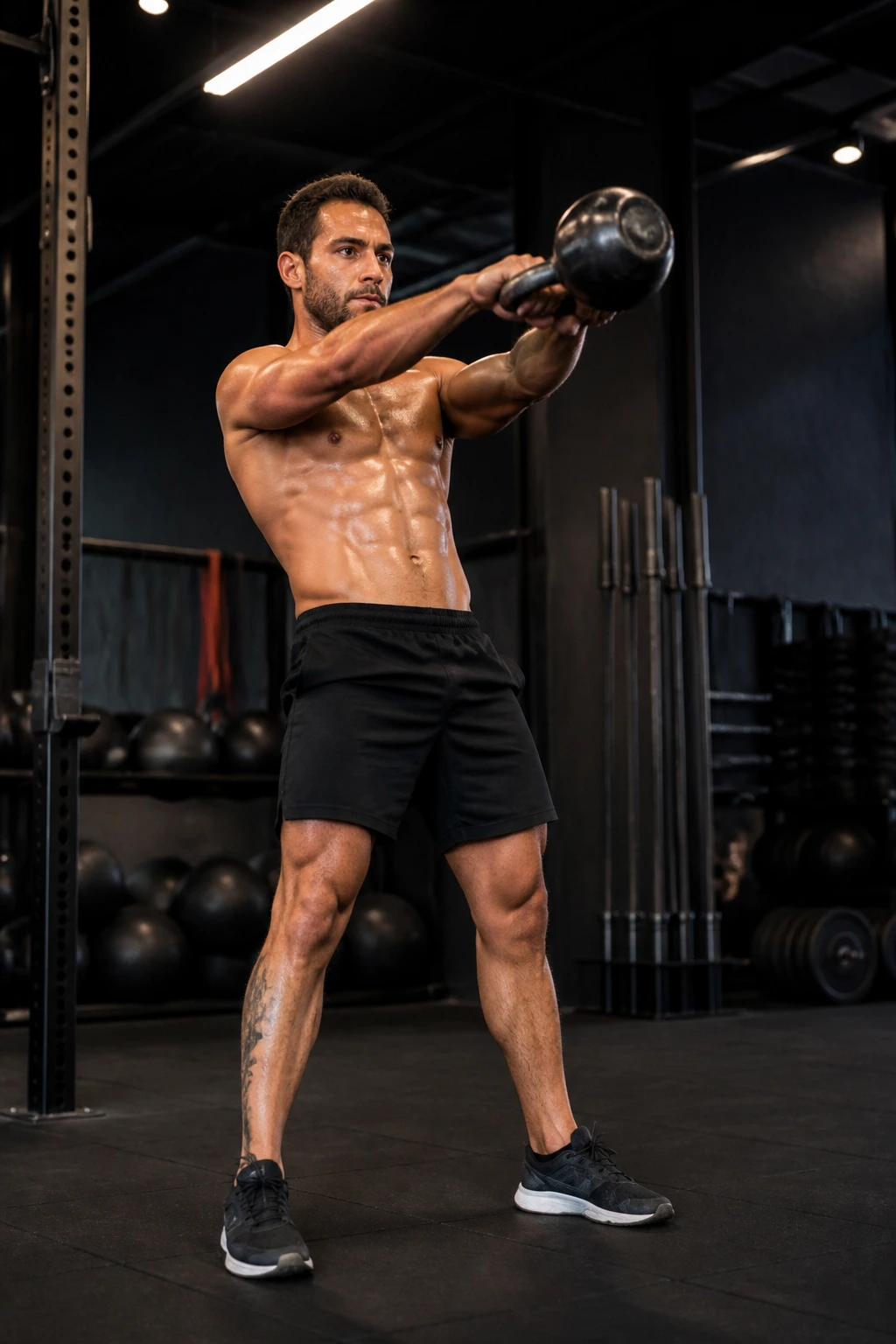
A kettlebell complex has a way of exposing sloppy form fast.
You don’t put the bell down between moves, so every transition has to be clean. That’s what makes it such a good lean muscle workout. The muscles keep working, the heart rate climbs, and the grip gets tired in that deep, annoying way that tells you the work is real. It also teaches control under fatigue, which most people could use more of.
A solid version looks like this: 6 deadlifts, 6 cleans, 6 front squats, 6 presses per side, then 12 swings. Rest 90 seconds and repeat for 4 or 5 rounds. Use a kettlebell you can press cleanly overhead without leaning back or letting the shoulder drift forward.
The first half should feel smooth and deliberate. The swings at the end change the tone of the session, and you’ll notice your breathing before your legs quit. That’s normal. The bell should feel like it’s pulling you into better posture, not making you fold in half.
This is a strong choice for people who want a tight, athletic look and hate stale, machine-heavy workouts. It builds shoulders, legs, glutes, and upper back in one block. Little session. Big output.
6. Tempo-Training Lower Body Session

A heavier bar is not the only way to make legs grow.
Slowing the lowering phase can make a 30-pound dumbbell feel like it owes you money. Tempo work strips out momentum, which means the muscle has to do the job instead of bouncing through the rep. That is a very different kind of challenge, and it’s especially useful if your legs usually take over from your glutes or if your knees prefer a more controlled pace.
Use a 3-1-2 tempo on split squats, Romanian deadlifts, step-ups, and hip thrusts. That means three seconds down, one-second pause, two seconds up. Keep the sets at 3 or 4 rounds of 8 to 10 reps, with 60 seconds of rest. The burn shows up fast.
Where Tempo Helps Most
- Split squats when your balance is shaky
- Romanian deadlifts when you rush the hinge
- Step-ups when one leg dominates the other
- Hip thrusts when you want glutes to do more than your lower back
I reach for this style when someone wants lean muscle workouts that make lighter equipment feel serious. It’s also a smart option when you want to spare the joints a little while still getting a clear training effect. Slow is not soft. Slow is honest.
7. Pull-Up and Press EMOM

This one looks easy on paper. Your breathing says otherwise.
EMOM means every minute on the minute, and it works beautifully for lean muscle because it keeps the clock in charge. You start a set at the top of each minute, finish the reps, then rest for whatever time is left. That built-in rest keeps quality high, but not so high that you drift into sloppiness.
The Minute-by-Minute Setup
- Minute 1: 4 to 6 pull-ups or assisted pull-ups
- Minute 2: 6 dumbbell push presses
- Minute 3: 4 to 6 chin-ups or lat pulldowns
- Minute 4: 6 dumbbell overhead presses
Repeat that block for 2 to 3 cycles. If strict pull-ups are too much, use a band or swap in a pulldown with a controlled pause at the bottom. Keep the reps a little below failure. That part matters. EMOMs punish ego fast.
The press-pull rhythm keeps the upper body balanced and gives the shoulders enough variety to stay engaged. You’ll get back, arms, and delts all in one shot, and the timer prevents you from drifting into endless rest breaks. Clean work. No drama.
8. Unilateral Leg and Glute Builder

Split squats fix a lot of the sloppy strength gaps that two-legged work hides.
When each leg has to work on its own, the weak side can’t hide behind the strong one. You feel it right away. The rear-foot-elevated split squat usually lights up the front leg in a way that surprises people, and the single-leg Romanian deadlift makes balance part of the job instead of an afterthought. That’s useful if you want a more even look through the legs and hips.
Run 3 to 4 sets of 8 to 10 reps per side on Bulgarian split squats, single-leg RDLs, step-ups, and lateral lunges. Rest 45 to 60 seconds between sides if you need to, or alternate legs to keep the pace moving. The wobble at the start is normal. The collapse into ugly form is not.
The best part is how much shape these movements can build with relatively modest load. A dumbbell that feels light on a goblet squat can feel serious the moment one foot leaves the floor. That’s one of the reasons unilateral work belongs in any serious plan for lean muscle and defined tone.
9. Chest-Back Antagonist Circuit

What if the smartest chest day also trains your back as hard as your press?
That’s the logic behind antagonist circuits. You pair muscles that do opposite jobs, so one side works while the other recovers. The result is a cleaner workout, less wasted time, and a shoulder position that usually feels better than a day built around pressing alone. I’m not interested in chest days that leave the upper back asleep.
The Pairings I’d Use
- Incline dumbbell press with seated cable row
- Flat dumbbell press with reverse fly
- Push-up with band pull-apart
- Pec deck with wide-grip pulldown
Use 3 rounds of each pair, 8 to 12 reps on the press and 10 to 15 on the pull. Rest after the pair, not between the two moves. Keep the reps controlled and the range of motion full. If the shoulders roll forward on the press, the load is too heavy or the setup is off.
This style works well for people who want muscle with a bit of posture insurance built in. You finish with a pump in the chest and upper back, but also with the shoulder girdle feeling organized instead of beat up. That’s a better trade than just hammering one side.
10. Bodyweight-and-Band Muscle Circuit

Travel bag. Small room. Not much else.
That’s where bands start to earn their space. A good band circuit can still challenge the chest, back, legs, and core without needing a rack, a bench, or a big patch of floor. The trick is to keep tension continuous and avoid the lazy habit of rushing through the easy part of the rep.
Try 4 rounds of push-ups, banded squats, band rows, glute bridges, and dead bugs. Aim for 12 to 15 reps on the first four and 8 to 10 on the dead bugs per side. Rest 30 to 45 seconds between exercises if needed. If the band is too light, step farther out or double it. Easy fix.
The nice thing about bands is the tension climbs as you near the top of the movement. That changes the feel of the set in a way bodyweight alone can’t always match. You don’t need much gear to make this useful. You do need to keep the reps clean.
11. Barbell Strength Plus Finisher

A barbell day gives you the heavy foundation. The finisher gives it shape.
Start with one main lift — front squat, deadlift, bench press, or barbell row — and work it for 4 to 5 sets of 4 to 6 reps. Keep the rest a full 90 to 120 seconds so the big lift stays strong. That’s where the muscle-building signal starts. The finisher comes after, once the main work is done and you’re not pretending to be fresh anymore.
A simple finisher can be three rounds of 10 kettlebell swings, 10 push-ups, and 200 meters on a rower or a hard 30-second bike push. It should feel demanding, but not sloppy. If the barbell work was clean, the finisher should leave you tired without wrecking your mechanics.
I like this structure for people who want actual strength plus a little breathing room for conditioning. Heavy work builds the frame. The short finisher keeps the session from turning stale. That mix tends to suit the “lean and defined” goal better than one-note lifting does.
12. Incline Bench and Shoulder Shape Day

Flat bench gets the headlines. Incline work does more of the quiet shape-building.
Set the bench at about 30 to 45 degrees and the upper chest and front delts do more of the job. That angle matters. Too low and it turns into another flat press. Too high and you drift into a shoulder exercise that cheats the chest. The middle ground is where the good stuff lives.
This is a useful day if the upper chest looks flat in a T-shirt or if the front of the shoulder needs more structure. Start with incline dumbbell press for 3 to 4 sets of 8 to 10, then move to lateral raises, landmine presses, and cable flyes. Keep the raises strict and the flyes slow. Fast reps turn into noise fast.
The best version of this workout feels tight and precise. You should get a deep stretch on the pressing work and a strong top-end squeeze on the raises and flyes. If you want the upper body to look cleaner from the front, this is one of the better ways to spend an hour.
13. Back, Biceps, and Carry Workout

A good back day shouldn’t end with your arms doing all the bragging.
The back needs rows, pulldowns, and pull-ups, but it also needs loaded carries if you want the upper body to look dense. Carries make the traps, grip, and core work together in a way that looks and feels different from machine work. The result is less fluff, more substance.
The Core Pieces
- Pull-ups or lat pulldowns for 3 sets of 6 to 10
- Chest-supported rows for 3 sets of 8 to 12
- Single-arm cable rows for 2 to 3 sets of 10 each side
- Hammer curls for 3 sets of 10 to 12
- Farmer carries for 3 rounds of 30 to 40 meters
Keep the rows strict and let the elbows travel back, not up. On the carries, stand tall and resist the urge to lean side to side. The dumbbells should feel heavy enough to make your forearms wake up by the halfway point.
This is a strong option if you want the upper body to look thicker from behind and more solid through the arms. It also pairs well with chest days because the pull work supports the shoulders and helps keep pressing volume from running wild.
14. Core-Loaded Total-Body Conditioning

If your core work never makes you brace hard, it’s missing the point.
The real job of the core is not endless crunching. It’s holding the torso steady while the limbs move. That means anti-extension, anti-rotation, and anti-side-bend work deserve just as much attention as flexion. Suitcase carries, Pallof presses, dead bugs, and front-loaded squats all make the trunk earn its keep.
Try 3 to 4 rounds of front-loaded squat, Pallof press, suitcase carry, dead bug, and bear crawl. Use 8 to 10 reps on the squat and press, 20 to 30 meters on the carry, and 6 to 8 slow reps per side on the dead bug. The bear crawl can be 20 to 30 seconds. No rush.
One good tell: if you can keep talking casually through the whole round, the load is probably too low. The trunk should feel engaged, not flopped over. This kind of session supports the look most people call “defined” because it builds a stronger midsection without pretending that one exercise can carve out a shape by itself.
15. Cable-Tension Finisher for Defined Tone
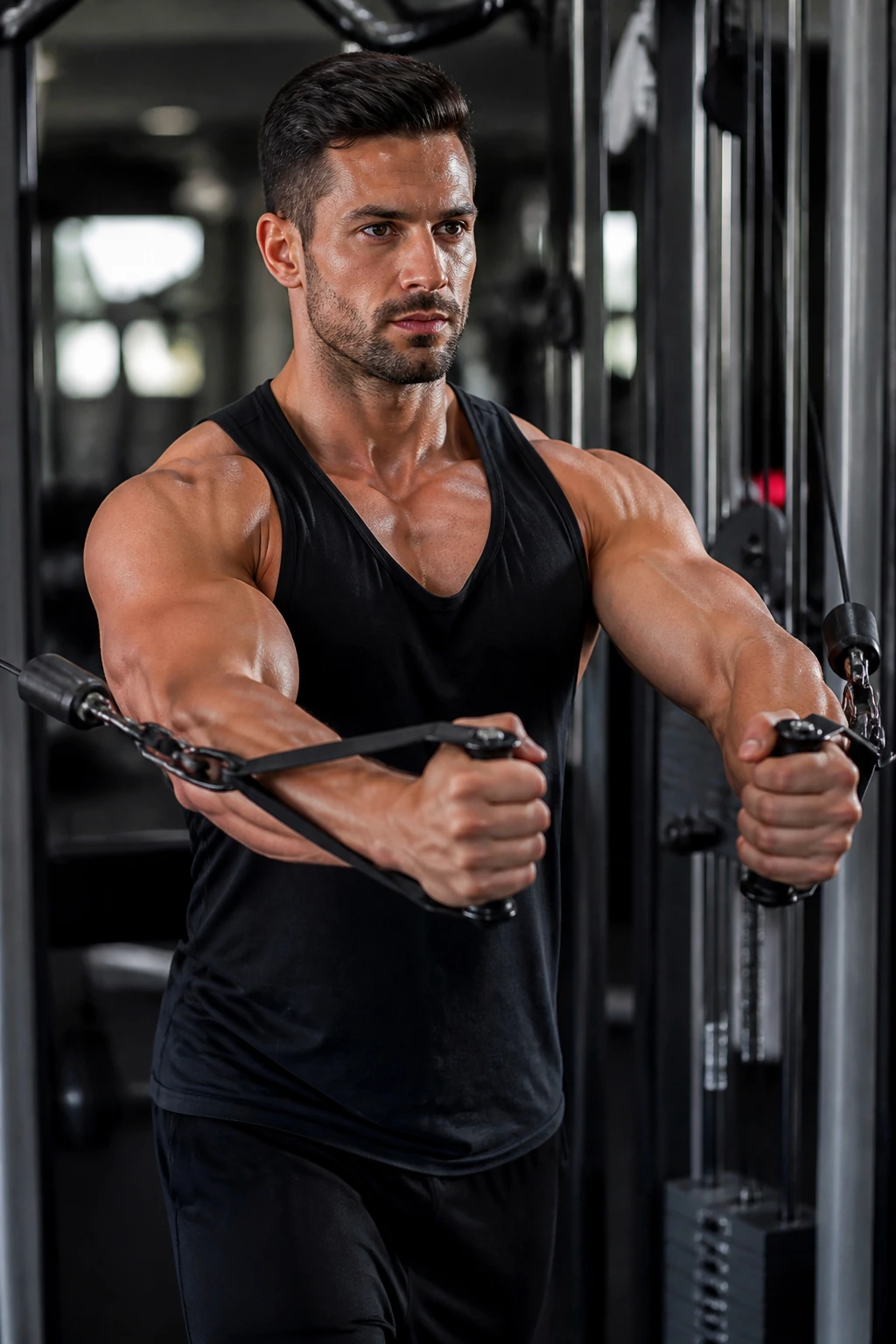
Why do cables feel so clean? Because the tension stays on the muscle through most of the movement, and that makes every rep count.
Cable work is a nice finish when you want a hard session without the clang of heavy free weights. It’s especially useful for chest, shoulders, back, and arms because the line of pull stays predictable and the joints usually get along with it. That doesn’t mean it’s easy. It means the work is honest in a quieter way.
A Simple 25-Minute Setup
- Cable squat: 3 sets of 12
- Standing cable chest press: 3 sets of 10 to 12
- Straight-arm pulldown: 3 sets of 12 to 15
- Rope triceps pressdown: 3 sets of 12 to 15
- Cable curl: 3 sets of 12 to 15
- Face pull: 2 sets of 15
Rest 30 to 45 seconds between sets. Keep the motion smooth and stop the set when the weight stack starts to yank your shoulders out of position. That little rule saves a lot of bad reps.
If you want one workout to keep around when the body feels a little beaten up but you still want to train hard, this is the one. Plain, controlled, no nonsense. And that’s usually what the best lean muscle workouts look like when you strip away the noise.
