



Pregnancy workout plans work best when they feel almost boring. A brisk walk, a set of goblet squats, a few band rows — that kind of session usually beats a heroic one that leaves you wrecked for the rest of the day.
The trick is to keep strength moving in the background. Pregnancy changes balance, breathing, joint feel, and energy in ways that can make a favorite workout suddenly feel wrong. A plan that once seemed easy may turn awkward fast, especially when sleep is patchy and your center of gravity starts to drift.
A good benchmark is still pretty simple: you should be able to talk in short sentences while you move, and you should finish feeling worked, not emptied out. The American College of Obstetricians and Gynecologists has long supported moderate exercise in uncomplicated pregnancies, and that usually means about 150 minutes a week spread across walking, lifting, cycling, swimming, or whatever your body tolerates best. That number is useful, but honestly, consistency matters more than heroics.
No breath-holding. No grinding through sharp pain. And no award for doing the hardest version of everything.
If you have been told to limit activity, or if you notice bleeding, dizziness, chest pain, fluid leakage, calf swelling, or contractions that do not settle, stop and get medical advice. The best plan is the one that fits the pregnancy you actually have, not the one you wish you had. The next sections lean hard on repeatable, low-drama sessions that keep strength steady without demanding a full-on training identity.
1. The 20-Minute Walk-and-Mobility Loop
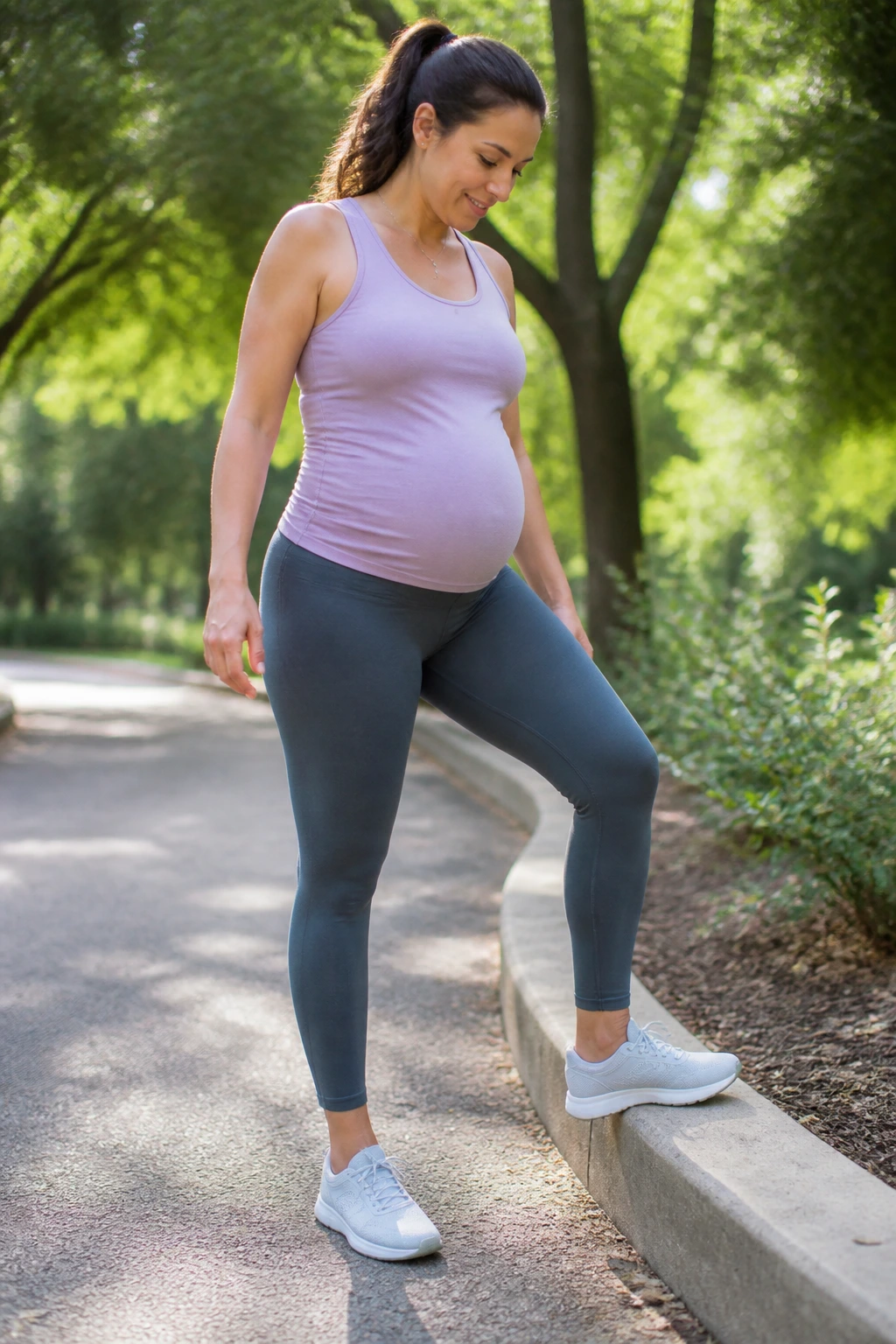
A simple walk can do more for you than a fancy circuit on a tired day. When the hips feel stiff and your lower back has that dull, nagging pull, a steady loop of walking plus a little mobility often makes the whole body feel more usable again.
Start with 5 minutes of easy walking, then pick up the pace for another 5 minutes at a brisk but conversational speed. Finish with 10 minutes of mobility work at the curb, by a wall, or on a yoga mat if you prefer. Think ankle circles, hip circles, calf raises, wall slides, and slow torso rotations that stay comfortable.
No equipment. No setup. That matters more than people admit. A workout you can start in 60 seconds is a workout you’ll repeat on the days that count.
I like this one for mornings, after long sitting stretches, and for the weird space between “I should move” and “I do not have the patience for a full session.” It keeps your legs honest, warms the joints, and gives your breathing a chance to settle before you do anything harder.
2. Dumbbell Squats, Rows, and Hip Hinge Circuits
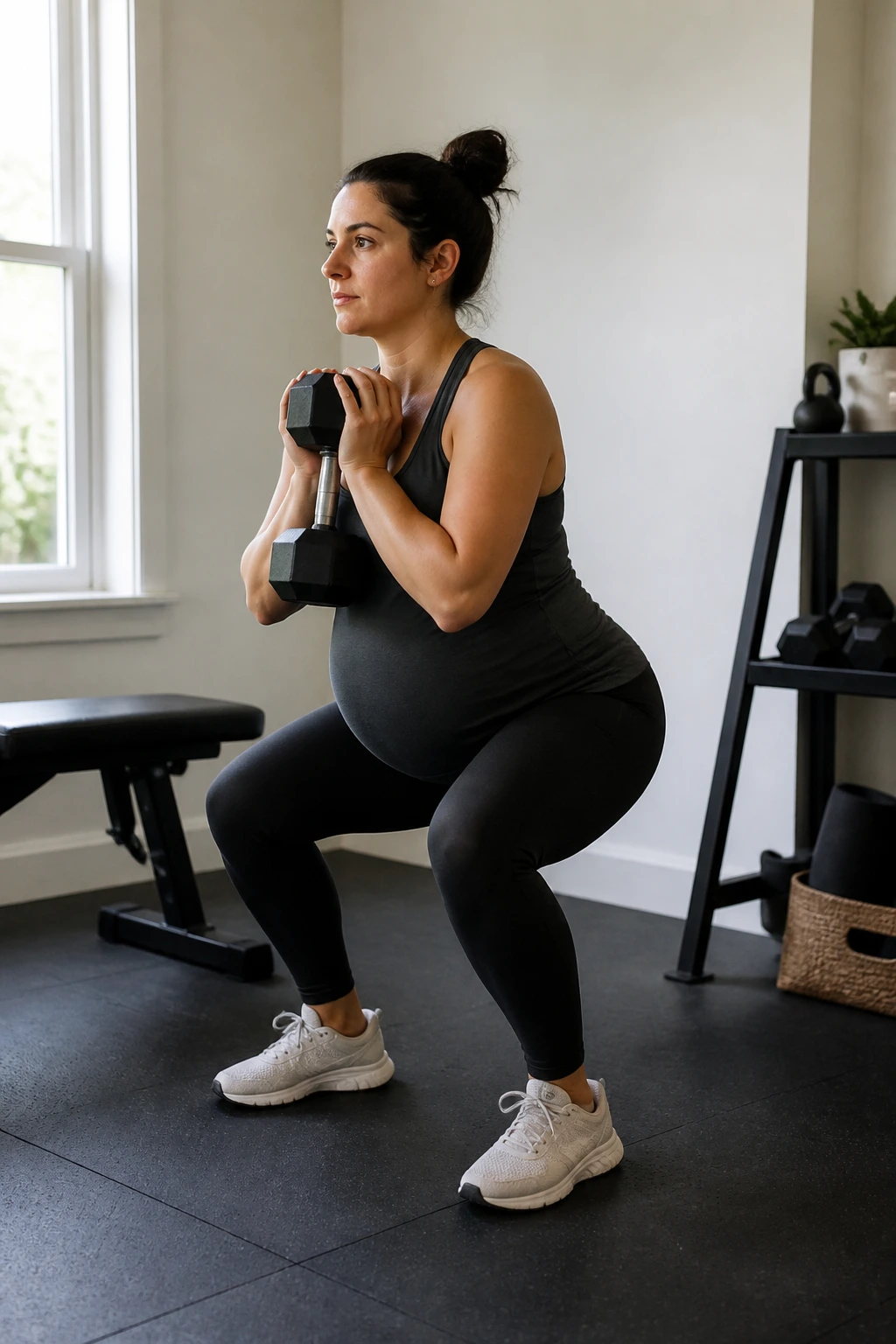
Why start a strength plan with dumbbells instead of a fancier routine? Because basic moves still do the heavy lifting, and pregnancy is not the moment to get cute with programming.
A simple circuit that holds up
- 8 goblet squats with a light to moderate dumbbell
- 8 one-arm rows per side, using a bench or sturdy chair for support
- 8 Romanian deadlifts with two dumbbells, or one kettlebell if that feels cleaner
- 10 wall push-ups or incline push-ups on a counter
Do 2 to 3 rounds, resting 45 to 60 seconds between exercises. Keep the weight at a level where the last 2 reps feel honest but controlled. If your breath starts to get ragged, slow the tempo before you add more load.
What to watch for
Your spine should stay long, and your ribs should not flare wildly on the way up. Exhale as you stand, row, or press. That little breath cue is boring in the best way, because it stops you from bracing too hard and turning every rep into a wrestling match.
This is one of the best pregnancy workout plans if you want strength without a long gym session. It covers legs, back, chest, and hamstrings in under half an hour, which is about the right amount of ambition for many days.
3. The Resistance-Band Back and Glute Reset
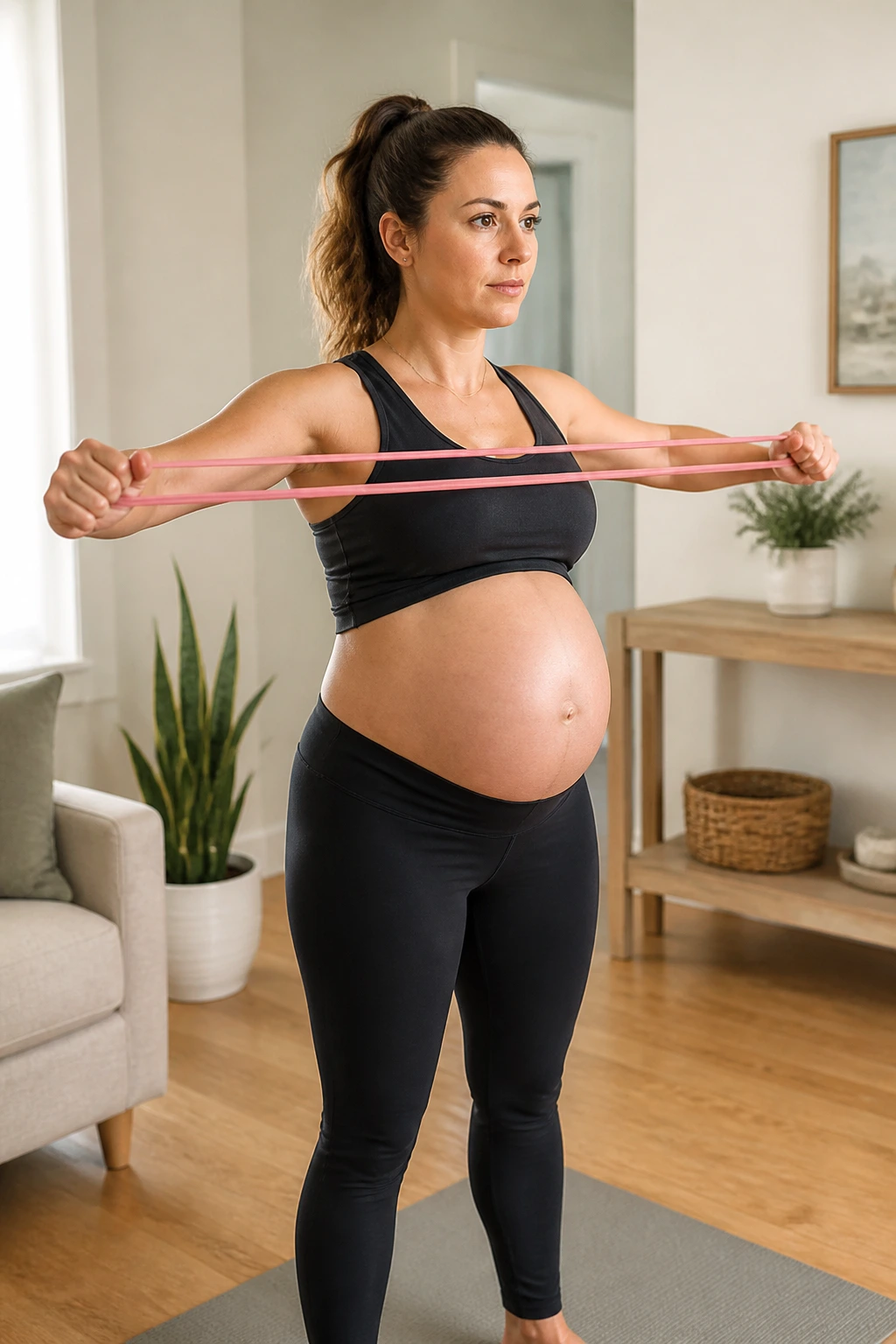
If you spend half the day sitting, standing, or carrying a bag that somehow weighs 11 pounds, your back and glutes usually notice before you do. A resistance-band session can clean up that tired, collapsed feeling fast.
What it looks like
- 15 band pull-aparts
- 12 lateral band steps to each side
- 12 standing kickbacks per leg
- 10 seated or anchored band rows
- 8 slow mini-squats with the band above the knees
Use a light band first. Seriously. Most people buy a band that is too hard, then turn the whole thing into a shrugging contest with their shoulders and low back.
The goal is clean tension, not drama. Your glutes should wake up, your upper back should feel like it has found its posture again, and your hips should feel a little less sticky when you finish. If floor work feels awkward, keep everything standing. That is not a downgrade; it is a smart swap.
I reach for this kind of routine on the days when energy is low but I still want that small sense of strength returning to the body. It is quiet work. Good work, too.
4. Pregnancy Workout Plans for the First Trimester
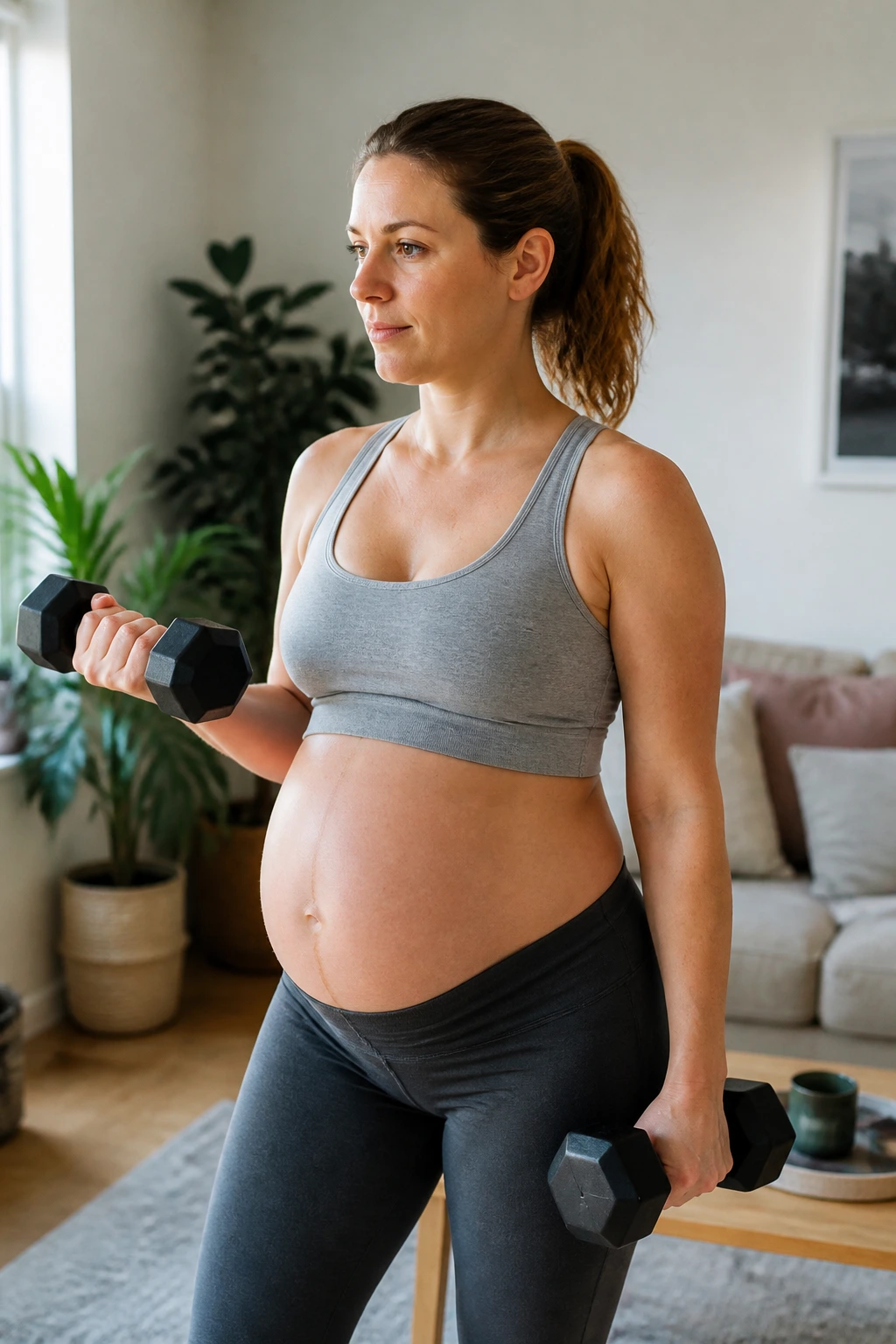
The first trimester can be a strange time to train because the outside world may not see much change while your body is quietly doing a huge amount of work. Fatigue, nausea, and surprise aversions can make a normal routine feel strangely fragile.
That is why a first-trimester plan should be a little smaller than you think it “should” be. Two strength days, two walks, and one easy mobility session is plenty for many people. One 20-minute dumbbell circuit and one 25-minute brisk walk can hold the line without asking for perfect energy.
Keep the sessions short enough that you do not dread them. That matters. Dread kills consistency faster than bad weather or a missed day ever will.
A simple weekly rhythm could look like this: a strength day on Monday, a walk on Tuesday, another strength day on Thursday, and two lighter movement days around them. If morning nausea is fierce, train later. If afternoon fatigue hits like a wall, shorten the sessions and stop trying to “push through.” There is no gold star for that.
5. The Side-Lying and Incline Floor Strength Day
Floor crunches are not the star here. For a lot of pregnant bodies, especially once the belly starts to change shape, side-lying and incline positions feel more stable, more useful, and less irritating than lying flat and chasing an old ab routine.
That is the whole appeal of this plan. You still get strength work, but you get it in positions that support the rib cage, hips, and pelvis better than a bunch of repeated flexion.
Best moves for this setup
- Side-lying clamshells, 12 reps per side
- Incline push-ups on a bench or counter, 8 to 10 reps
- Seated overhead press with light dumbbells, 8 to 10 reps
- Bird dogs with hands on a bench, 6 slow reps per side
The incline makes the upper body work feel clean, and the side-lying work keeps the hips active without forcing you into a bunch of floor transitions. If lying flat makes you dizzy or uncomfortable, skip it. No debate needed.
This is one of those pregnancy workout plans that looks modest on paper and then sneaks up on you. By the time you finish, your trunk feels organized again, which is a nice way to go through the rest of the day.
6. Water-Walking and Swim Laps for Heavy Legs
The pool feels different from land. Your legs get a break from carrying full body weight, your feet stop yelling, and the water gives just enough resistance to make even easy movement count.
This plan is ideal when swelling, heat, or general heaviness make land cardio feel annoying. You are not trying to smash intervals in the pool. You are trying to move with a little more ease and a lot less pounding.
A pool session that actually works
- 5 minutes of easy walking in chest-deep water
- 4 lengths of relaxed freestyle or backstroke
- 2 minutes of walking with big arm swings
- 4 more lengths, or 8 to 10 minutes of water jogging
- 5 minutes of slow walking to finish
Keep the effort around a 4 to 6 out of 10. If you wear yourself out in the first ten minutes, the water stops feeling helpful and starts feeling like another place to recover from. That is the wrong outcome.
I love this option for days when feet feel puffy and the back wants a truce. Pool work is not flashy. It is just unusually kind to a pregnancy body that has been doing a lot.
7. Standing Upper-Body Strength Without the Drama
Upper-body work gets ignored fast during pregnancy, and then one day the car seat, the grocery bags, or the laundry basket becomes a small grudge match. That is usually when people remember how useful shoulders, upper back, and arms actually are.
A standing plan keeps you out of awkward floor positions and lets you train while your balance is still decent. Rows, presses, and raises done cleanly will hold up better than ten random exercises chosen because they looked “prenatal” on a screen.
A clean upper-body circuit
- 10 bent-over or supported rows
- 8 overhead presses with light dumbbells
- 10 lateral raises, if they feel fine on your shoulders
- 12 band face pulls or pull-aparts
- 20 to 30 seconds of suitcase carry per side
Rest about 30 to 45 seconds between moves. Stay tall through the torso and avoid shrugging the weights up into your neck. Your shoulders should work, not your traps taking over everything.
I like this plan because it makes daily life feel easier in a way you can actually notice. Reaching, lifting, carrying, and opening things all get a bit less annoying when the upper body has stayed awake.
8. Breath, Pelvic Floor, and Deep-Core Practice
Why spend workout time on breathing? Because the midsection is doing a different job during pregnancy, and a few minutes of focused breathing can make strength work feel smoother everywhere else.
This is not about squeezing the pelvic floor all day like a nervous habit. It is about learning when to relax, when to gently engage, and how to keep pressure from stacking in the wrong place. That difference matters more than a lot of people think.
What the session feels like
- 5 slow 360-degree breaths, letting the ribs expand in all directions
- 5 pelvic floor relax-and-lift cycles, not hard clenches
- 6 standing marches with a long exhale on each knee lift
- 6 side-lying or seated reach-backs to wake up the deeper trunk muscles
Take 10 minutes. That’s enough. If you turn it into a heroic core workout, you miss the point and probably make the whole thing less useful.
A lot of pregnancy workout plans skip this layer and go straight to cardio or weights. I think that is a mistake. If your breathing and pressure control are better, the rest of your movement tends to feel less messy.
9. Short Interval Cardio on a Bike or Elliptical
A bike or elliptical can be the calm middle ground between a walk and a hard conditioning workout. You get heart rate work, but you do not need to think about balance, foot impact, or getting too hot too fast.
Use intervals that feel sustainable. One minute at a moderate pace, followed by two minutes easy, repeated 6 to 8 times, is more than enough for most days. The work interval should feel brisk. Not panicked.
One nice thing about this setup: you can stop without feeling like the session has fallen apart. That matters when fatigue is unpredictable. Two rounds of 10 minutes can beat one stubborn 30-minute grind.
If walking makes your pelvis feel heavy or your feet feel beat up, this is a good trade. If the bike seat starts to feel irritating, shorten the session and stand up for a few easy minutes before you wrap. Small changes help more than forcing the issue.
10. The Kettlebell Hinge and Carry Plan
Unlike squats alone, a hinge-and-carry session trains the backside of the body and the trunk at the same time. That makes it one of the more efficient pregnancy workout plans if you still want a real strength stimulus without a long gym visit.
Hinge
- 8 kettlebell deadlifts from the floor or from a raised block
- 8 Romanian deadlifts
- 8 supported split-stance hinges per side
Use a kettlebell that lets you stay smooth, not strained. A weight that looks “light” on paper can still feel demanding once your center of mass shifts.
Carry
- 20 to 30 seconds of suitcase carries on the right side
- 20 to 30 seconds on the left side
- 2 rounds total, walking slowly and staying tall
The carry should feel like a quiet test of posture. If you find yourself leaning, shorten the distance and lighten the weight. Pressure, not pride, should guide the load.
I like this plan because it translates into real life fast. Picking things up, walking with groceries, staying upright in a long line — all of that gets easier when the hinge pattern stays sharp.
11. The Stroller Walk With a Bodyweight Finisher
A stroller can turn an ordinary walk into a session that feels a little more complete. You get the rhythm of walking, then you break it up with a few bodyweight stops that wake up legs, arms, and core control.
This is a smart choice for parents who do not want to carve out a formal gym window. The baby is already part of the logistics, so use the logistics.
After 10 minutes of brisk walking, stop for 8 sit-to-stands from a bench, 8 wall push-ups, and 10 calf raises. Walk another 10 minutes, then repeat the short finisher one more time if it feels good. Keep the pace smooth and the push-ups elevated enough that your form stays clean.
Short stop-start sessions add up. They do. And they are easier to repeat than a workout that only works on the perfect day.
The best part is how normal it feels. There is no need to gear up for a full training session when a stroller loop and a few smart movements can carry the day.
12. Pregnancy Workout Plans for Hotel Rooms and Travel Days
A hotel room is enough. A chair, a wall, and a resistance band can cover the basics when travel throws your schedule sideways.
I keep this one embarrassingly simple because travel already comes with enough friction. You do not need to hunt for equipment or build a polished routine. You need a plan that can be done in 15 to 20 minutes, with tired legs and weird sleep, and still leave you feeling more normal.
Start with 10 chair squats, 10 wall push-ups, 12 band rows if you packed one, and 10 standing calf raises. Repeat the circuit 2 times. If the room is tiny, march in place for 2 minutes between rounds and call it done.
One short sentence matters here. Keep moving.
That might look too easy from the outside, but travel days do not reward overtraining. They reward consistency, lower stress, and the kind of session that keeps your body from stiffening up in a seat for six hours.
13. Prenatal Yoga Flows That Actually Build Strength
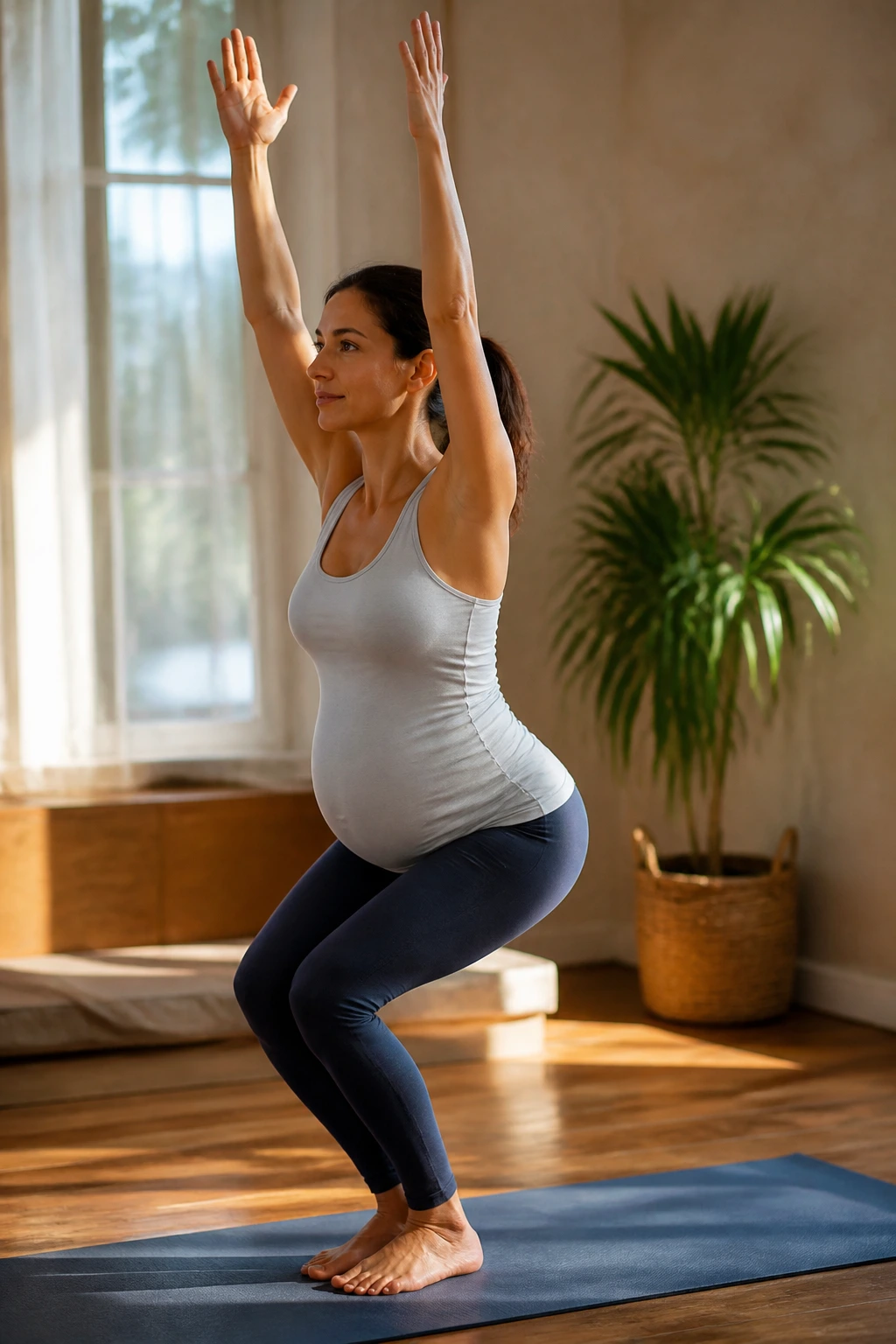
Can yoga build strength, or is it only stretching? It can absolutely build strength when you use it for holds, controlled transitions, and standing shapes that ask the legs and trunk to do some work.
The pose choice matters. Long, floppy stretches are not the goal. You want positions that make the legs, hips, and upper back stay active without creating weird strain through the belly or joints.
The poses that earn their keep
- Chair pose, held for 3 slow breaths
- Warrior I and II, with a shorter stance if needed
- Supported side angle, with the forearm on the thigh
- Cat-cow for spinal movement, done slowly
- Tree pose with a wall nearby for balance
Skip any pose that feels pinchy, unstable, or like it forces you to hold your breath. A smaller shape is usually the smarter shape. Deep twists, especially if they feel crowded, are not where the strength benefit lives.
Yoga works well for people who want strength with a little more breathing room. That breathing room is not a luxury. It is part of the point.
14. Anti-Rotation Core Work for a Wobbly Midsection
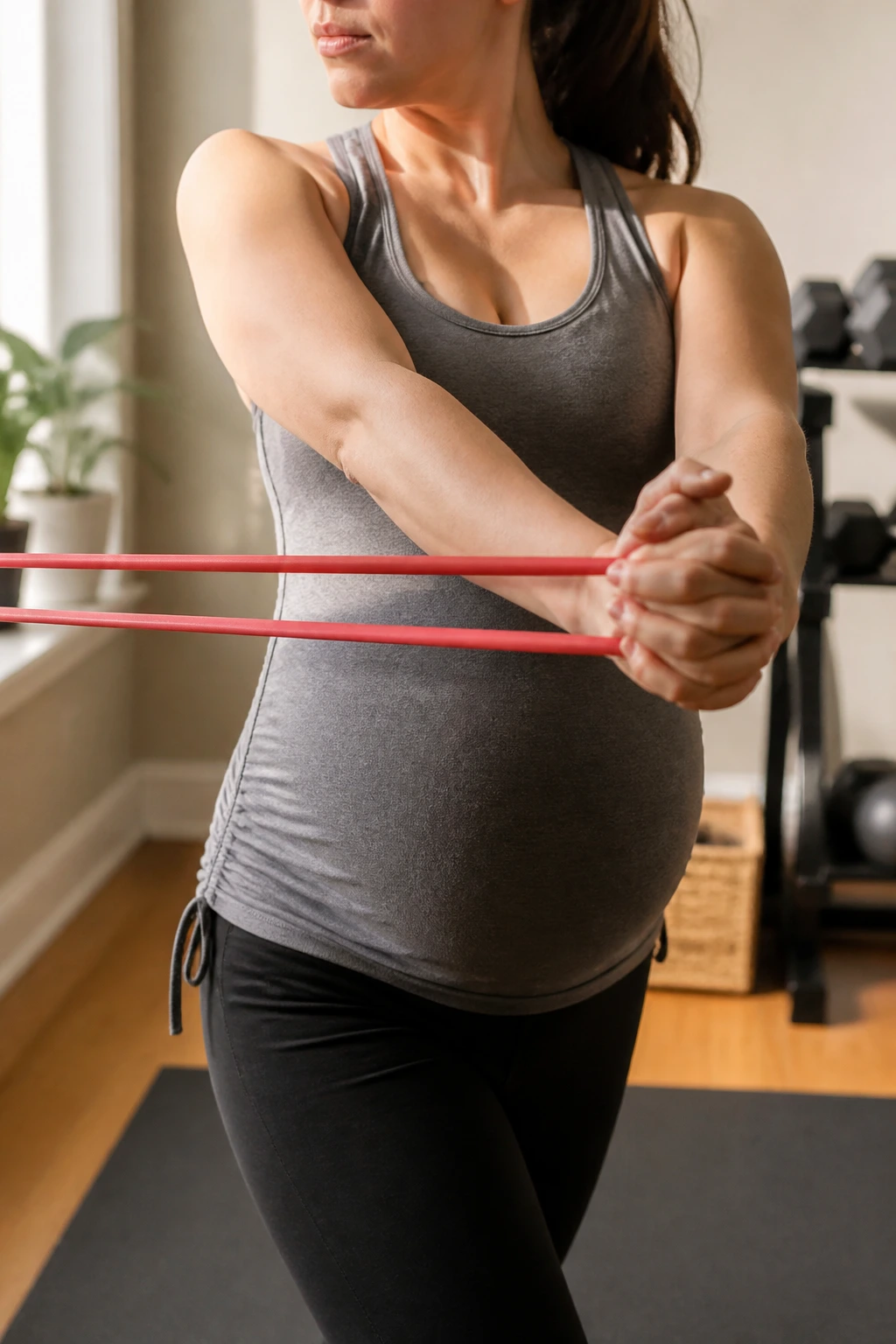
Your core during pregnancy is not about flattening anything. It is about keeping your trunk from twisting, collapsing, or dumping pressure into the wrong places.
That is why anti-rotation work earns a spot in any serious pregnancy workout plan. It teaches the torso to stay organized while the arms or legs move, which is exactly the skill you keep using in daily life.
Better core choices than endless crunches
- Pallof press with a band, 8 reps per side
- Suitcase carry, 20 seconds per side
- Bird dog, 6 slow reps per side
- Standing march with a band around the feet or hands, 8 reps per side
This is different from old-school ab work because the goal is resistance, not repeated spinal curling. You are teaching the body to hold steady while load shifts. That feels less dramatic, and it is more useful.
I’d rather see a pregnant person do two clean sets of these moves than ten minutes of frantic floor work. The floor work often looks busier than it is. These moves usually do more.
15. Treadmill Incline Walking for Easy Cardio
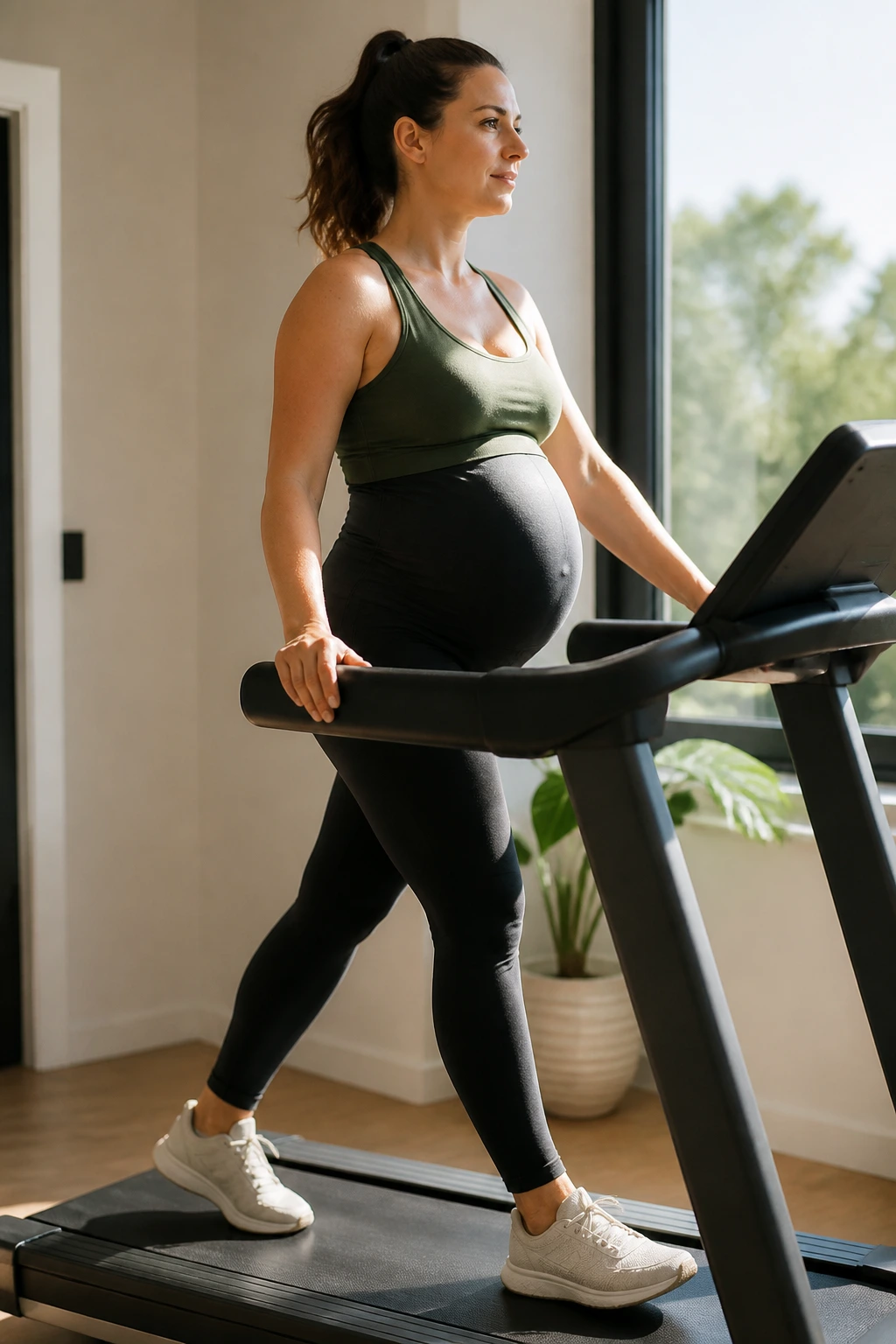
A 3 percent incline changes the whole feel of a walk. It wakes up the glutes, raises the heart rate a bit, and keeps the session interesting without turning it into a hill-climb punishment test.
Use a treadmill if weather, balance, or foot fatigue make outdoor walking less appealing. Hold the rails lightly if you need to, but do not hang on them. That tends to collapse posture and steal the work from your legs.
A simple 20-minute treadmill session
- 5 minutes at a flat, easy pace
- 10 minutes at 3 to 5 percent incline
- 3 minutes back at flat pace
- 2 minutes easy cool-down
If the incline feels too aggressive, drop it to 1 or 2 percent and keep the walking time. The shape of the session matters less than the fact that you finish with your breathing settled and your legs awake.
I like this one on days when outside walking feels monotonous. A slight hill keeps the mind engaged. That matters more than people admit.
16. Two 10-Minute Sessions Instead of One Long One
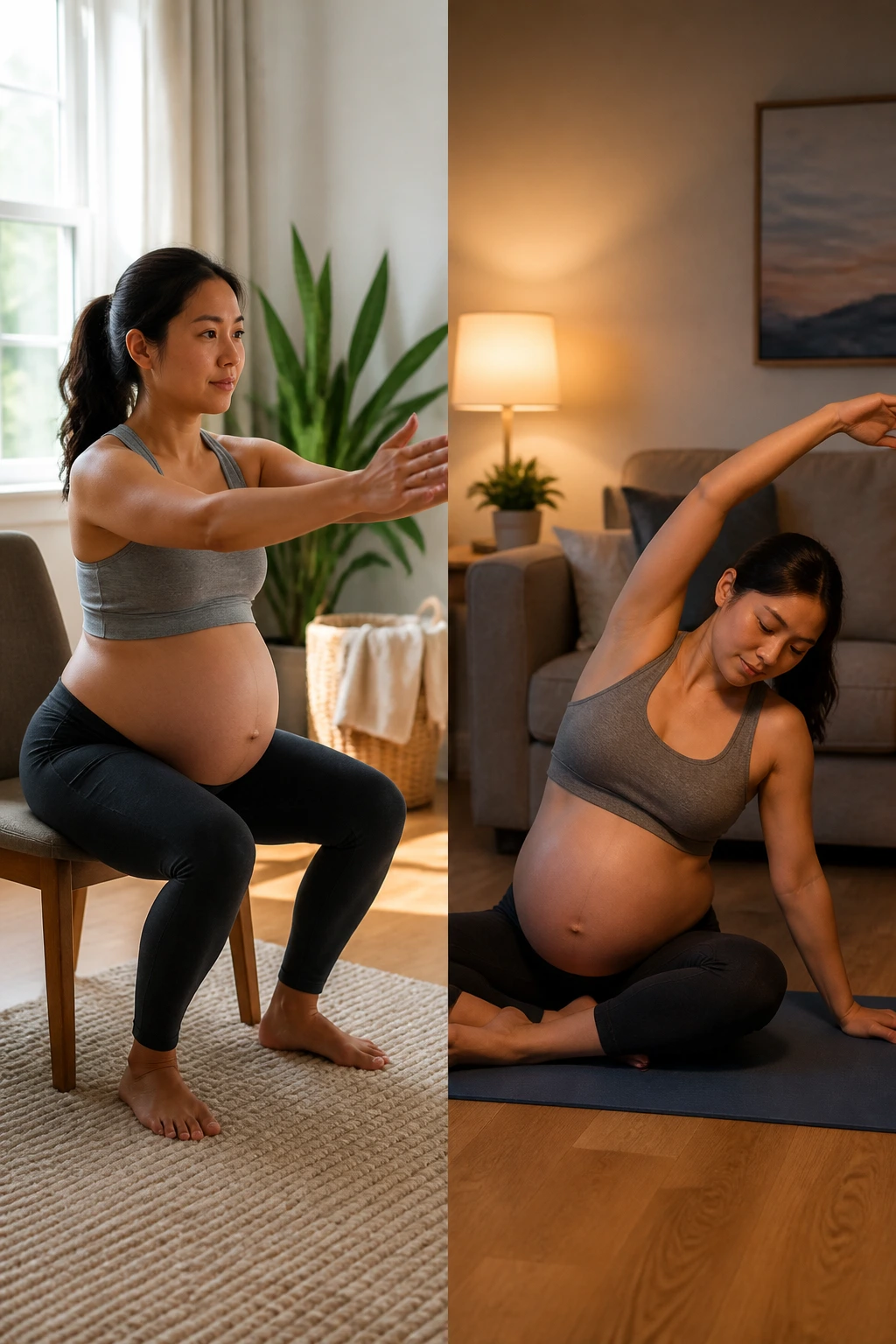
Some pregnancy workout plans fall apart because they ask for one uninterrupted chunk of time. Two shorter sessions can work better, especially when energy comes in little waves instead of one neat block.
Morning
- 5 minutes of brisk walking or marching
- 10 sit-to-stands
- 8 rows with a band
- 5 slow hip hinges
Evening
- 5 minutes of mobility
- 8 incline push-ups
- 10 calf raises
- 5 deep breaths with rib expansion
You do not need both sessions to feel intense. One of them can be almost comically easy. The win is total movement across the day, not proving a point in one go.
This split format is especially useful when nausea, back ache, or work schedules make longer sessions unrealistic. It feels less like “fitting in exercise” and more like giving the body two useful check-ins. That is a better habit anyway.
17. Partner-Supported Stability Work
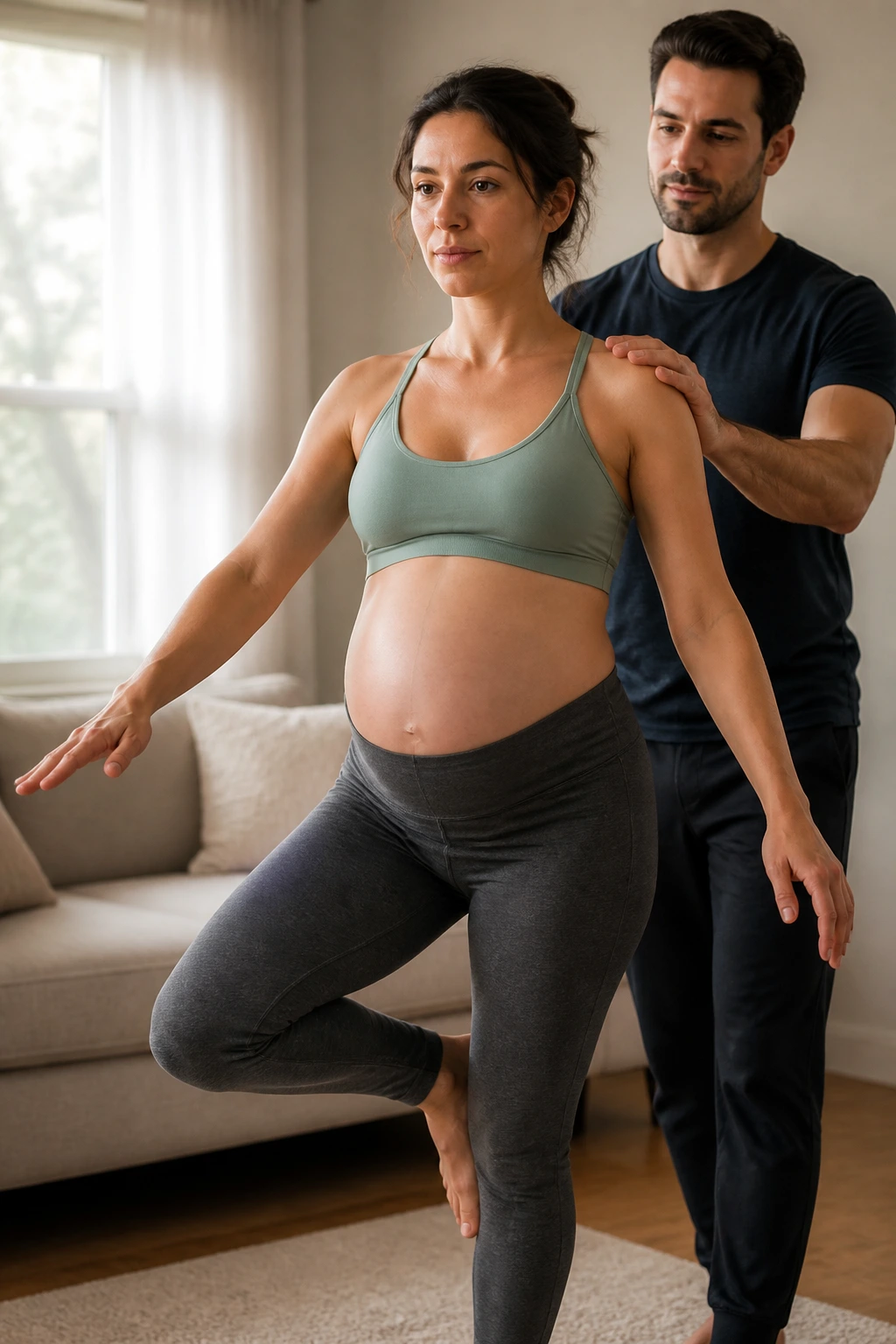
If you have someone nearby who can help with setup, spotting, or simple support, use it. A partner, friend, or even a steady wall can make balance work feel far less clunky.
I first started liking this style because it takes the pressure off single-leg exercises. You still train stability, but you do not have to white-knuckle every rep.
A partner-assisted sequence
- Supported step-ups on a low step, 6 reps per side
- One-hand suitcase carry while the other hand rests lightly on a wall, 20 seconds per side
- Band row with the partner holding the band, 10 reps
- Split-stance hold, 3 slow breaths per side
The support should help you feel stable, not lazy. If you are just leaning into someone and not working, the move is too easy. Adjust the angle or load until you feel your own legs and trunk doing the job.
This is a nice one for people who feel a little uneasy on balance work as pregnancy progresses. You do not need to stop training stability. You just need a smarter setup.
18. Chair-Based Strength for the Tired Day
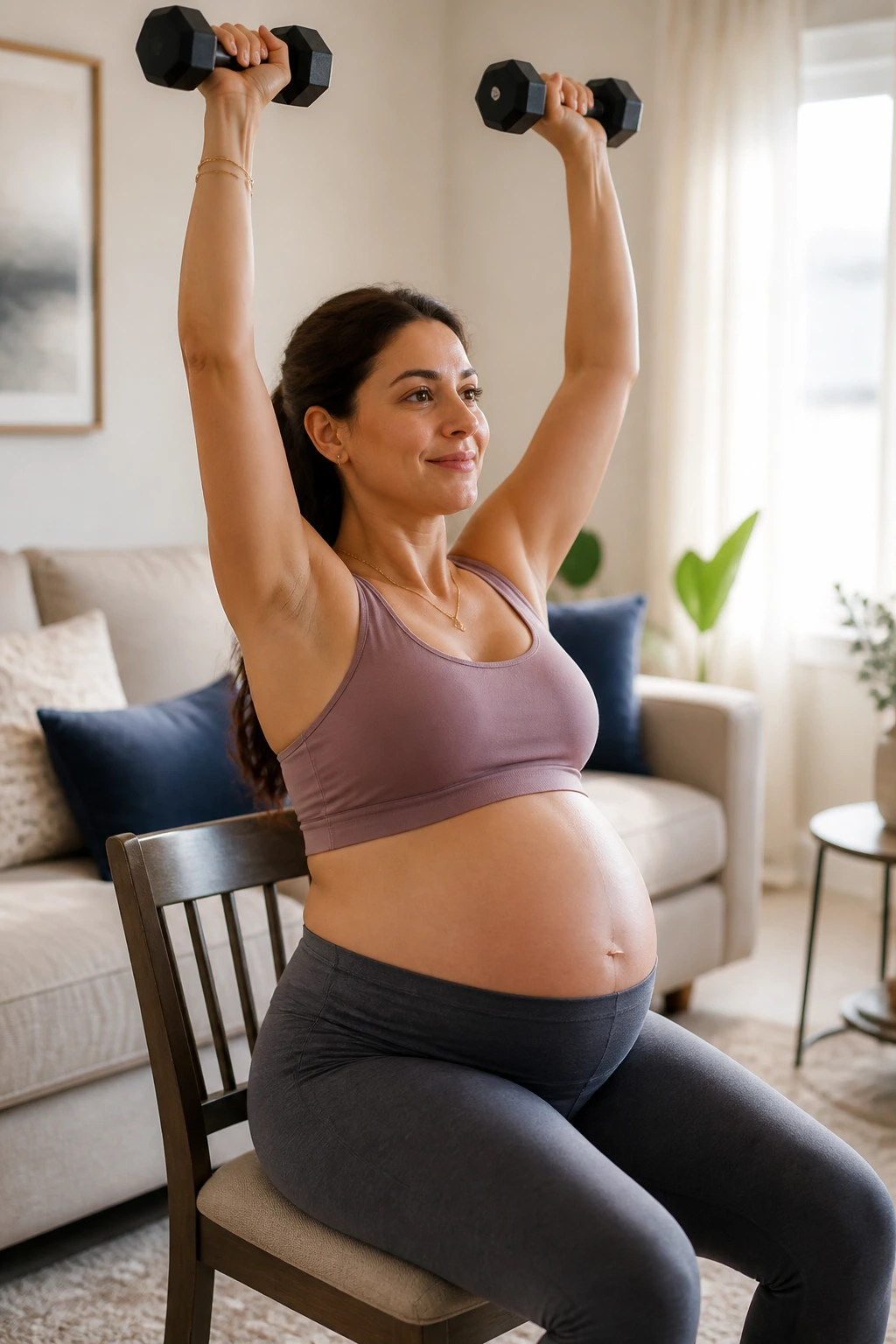
What if your body says “not today” but you still want to keep the habit alive? Use a chair. Honest answer: some days that is the right answer.
Chair-based work is not a consolation prize. It is a real plan for tired legs, sore feet, or afternoons when standing longer than ten minutes sounds rude.
A chair circuit that holds together
- 10 sit-to-stands from a firm chair
- 10 seated or standing overhead presses with light dumbbells
- 12 seated marches, alternating legs
- 10 seated band pull-aparts
- 12 calf raises while holding the chair back
Do 2 rounds. Rest as long as you need between moves. If you feel steady, shorten the rest a little. If you feel dragged out, lengthen it. The point is to keep the body engaged without asking for more than it can give.
This is one of the best quiet pregnancy workout plans because it respects fatigue without letting the week turn into a full stop. Boring? A little. Useful? Absolutely.
19. Pregnancy Workout Plans for a Missed-Week Comeback
Missing a week does not erase strength. It just means your body had a week of different priorities, and pregnancy has a way of doing that to everyone at some point.
The comeback plan should feel smaller than your ego wants it to be. Start with one walk, one light full-body session, and one mobility day. That is enough to remind your system what movement feels like again.
On the first strength day back, use about 70 percent of the load or range you were using before the break. Stop each set with 2 or 3 reps left in the tank. If anything feels unusually shaky, shorten the session instead of trying to “make up” for lost time.
A simple reset might look like this: 15-minute walk on day one, 20-minute dumbbell circuit on day three, 10 minutes of mobility on day five. That’s it. No punishment round.
If you were off because of illness, travel, or a medical reason, respect the reason. The point is to come back cleanly, not to prove you never needed a pause.
20. The Recovery Walk and Reset Session
Recovery days are part of the plan. Not a failure. Not a cheat. Just part of the rhythm that keeps the rest of the week from turning stiff and stubborn.
A 15-minute easy walk, followed by 5 minutes of breathing and gentle hip mobility, can do a lot when your body feels heavy or slightly cranky. Keep the pace so easy that your shoulders drop on their own. That is the real target.
One short sentence matters here. Slow counts.
If you want a little structure, add ankle rolls, slow neck turns, and a few supported side bends with one hand on a wall. Then stop. No need to squeeze strength out of every day. The body is already doing a big job, and sometimes the smartest workout is the one that leaves room for dinner, sleep, and another decent day tomorrow.
