



The first trimester can make a simple squat feel strangely expensive. Your energy may come and go, your balance can feel a little off, and the wrong leg move can leave your hips grumbling for the rest of the day. Pregnancy leg workouts for first trimester do not need to be intense to be useful.
What you want is steadier legs, happier hips, better circulation, and enough strength to keep stairs, walking, and standing up from the floor from feeling like a chore. You also want workouts that respect the reality of early pregnancy: fatigue, nausea, a slightly different center of gravity, and days when your body wants a shorter session, not a tougher one.
The sweet spot is usually boring in the best way. A chair, a wall, a loop band, a pair of light dumbbells, and a little patience can go a long way.
If you have bleeding, sharp pelvic pain, dizziness, fluid leakage, a high-risk pregnancy, or a clinician has told you to avoid exercise, get personal medical advice first. For everyone else, the rule is simpler than people make it sound: keep the effort moderate, keep the movement controlled, and stop if something feels wrong. The moves below are built to do exactly that.
1. Chair Squats to a Stable Box
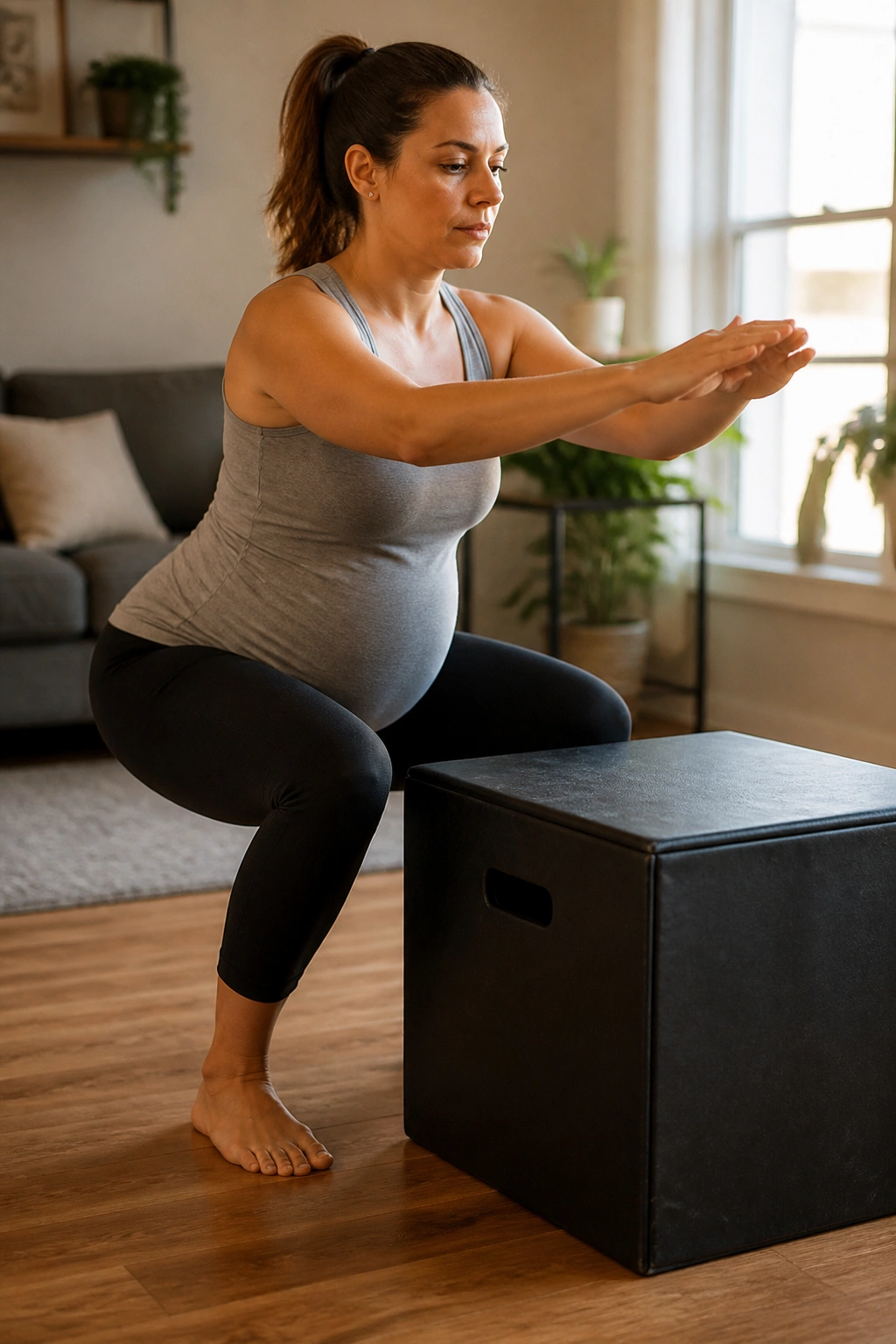
Chair squats are the safest-feeling place to start because the chair gives your hips a clear target. No guessing. No bouncing. Just sit back, tap the seat, and stand.
Why the Chair Helps
A box or chair squat keeps your range honest, which matters when your legs feel a little different from one day to the next. It also teaches the glutes to share the work instead of dumping everything into the knees.
Aim for 2 to 3 sets of 8 to 12 reps. Keep your feet about hip-width apart, toes slightly turned out, and pause for a second on the chair before driving back up. If the descent feels shaky, lower more slowly — three seconds down is plenty.
- Use a sturdy chair that does not slide.
- Keep your chest tall, not flared.
- Let your knees track in line with your toes.
- Stop when your glutes touch the seat, not when you collapse into it.
Best cue: sit back, not straight down. That tiny shift makes the movement feel much friendlier on the front of the knees.
2. Supported Bodyweight Squats at the Counter
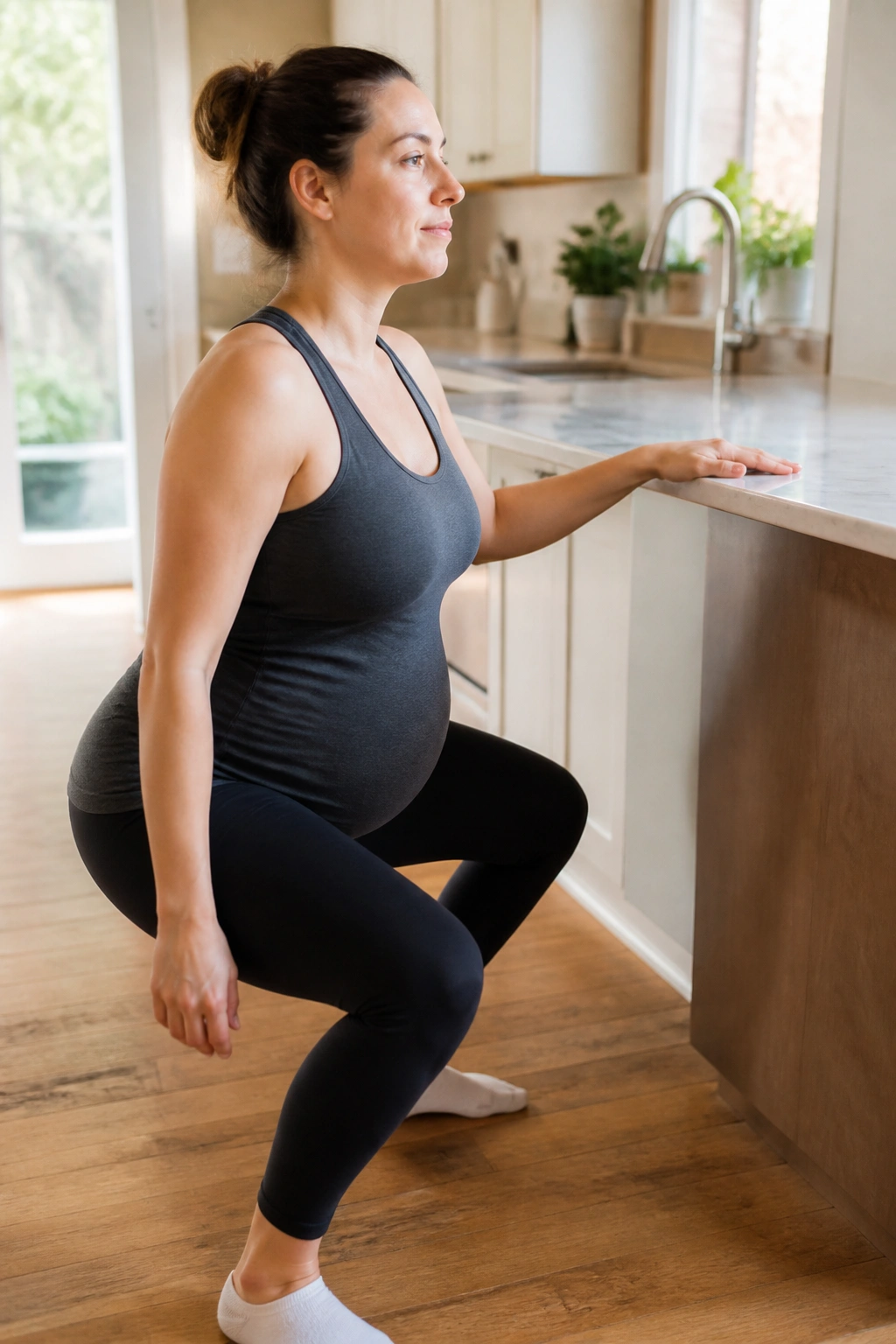
If plain squats feel wobbly, one hand on a counter changes everything. That small bit of support can turn a nervous rep into a clean one, especially on days when balance feels a little off.
Hold the counter lightly with one hand and squat to a depth that still lets you breathe normally. Most people do well with 2 to 4 sets of 6 to 10 slow reps, stopping before the last rep turns ugly. The support is there to steady you, not to drag you through the motion.
The nice part is how quickly this feels usable. You can stand in the kitchen, do a set, sip some water, and move on with your day. It is not glamorous. It works.
If your knees drift inward, think about spreading the floor apart with your feet. That little mental cue often cleans things up better than a thousand complicated form tips.
3. Sumo Squats With a Wider Stance
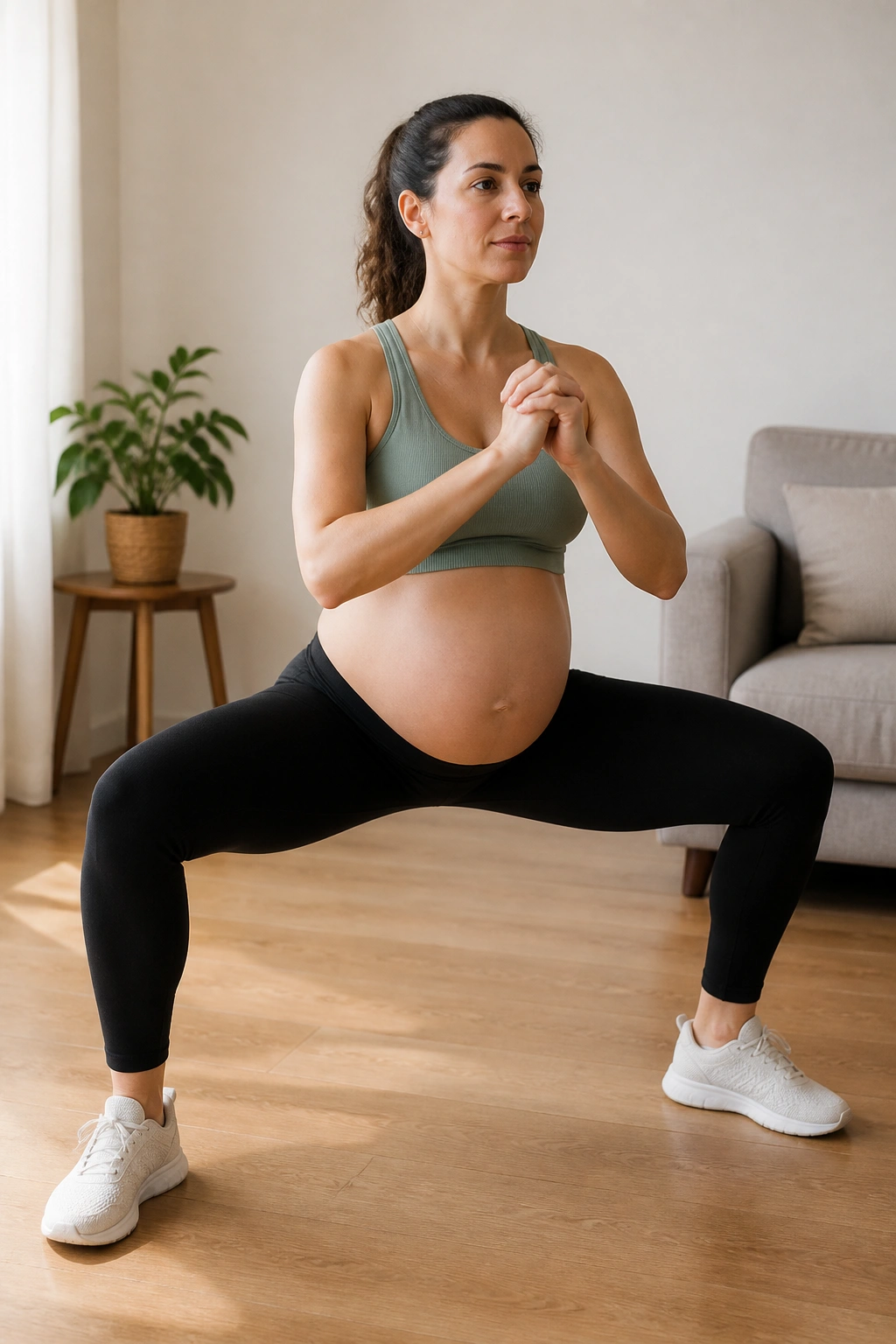
Picture a wide stance, toes turned out a little, and your inner thighs waking up on the way down. That is the sumo squat, and it tends to feel different enough from a regular squat that your body notices the change fast.
What Makes It Different
The wider stance shifts more work into the inner thighs and glutes, and a lot of pregnant bodies like that because it feels stable without being stiff. Keep the range smooth. You do not need a deep squat to get a useful one.
A good starting point is 2 to 3 sets of 10 to 12 reps. If you want load, hold one light dumbbell at your chest or use a kettlebell with both hands. The weight should make the movement feel more deliberate, not like a grind.
- Feet a little wider than shoulders.
- Toes turned out about 20 to 30 degrees.
- Knees track over the toes.
- Chest stays tall, rib cage calm.
Small tip: if your lower back starts doing the work, your stance is probably too wide or your weight is too heavy. Narrow either one and the squat usually cleans itself up.
4. Split Squat Holds for Steady Quad Work
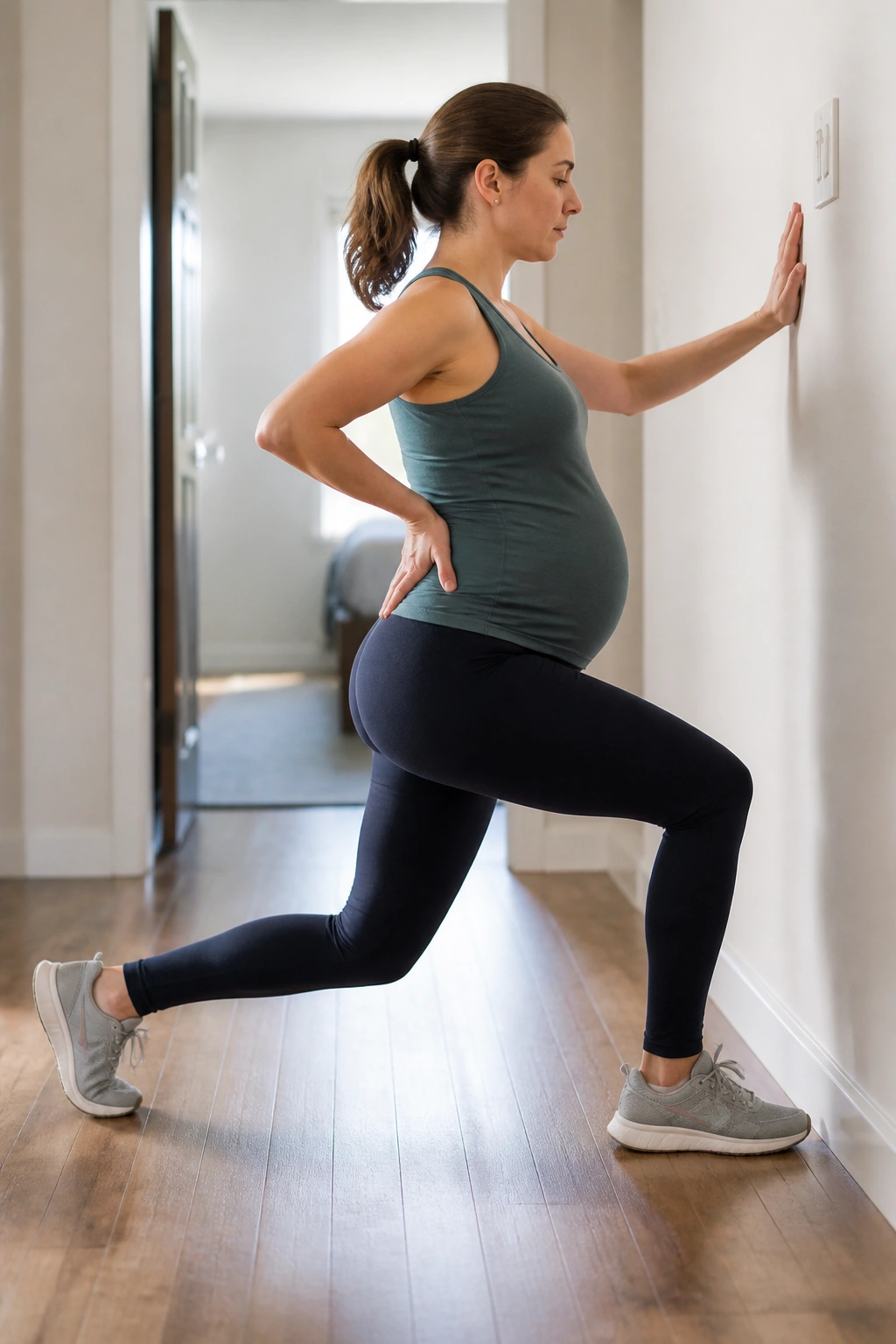
Unlike moving lunges, split squat holds let both feet stay planted. That matters when your balance feels unpredictable or when you want leg work without a lot of movement.
Set up in a split stance, hold onto a wall or chair with one hand, and lower a few inches until both knees bend comfortably. Hold there for 15 to 30 seconds per side, or do 6 to 8 slow pulses if static holds feel better. The front leg should do most of the work, but the back leg still helps.
This one is honest. Your quads will know they were invited. The burn builds quickly, though not in a dramatic way — more like a steady reminder that your legs are still doing useful jobs.
If your pelvis feels cranky, shorten the stance. If your front knee complains, move the front foot a little farther forward. Tiny adjustments matter here.
5. Reverse Lunges With a Short Step Back
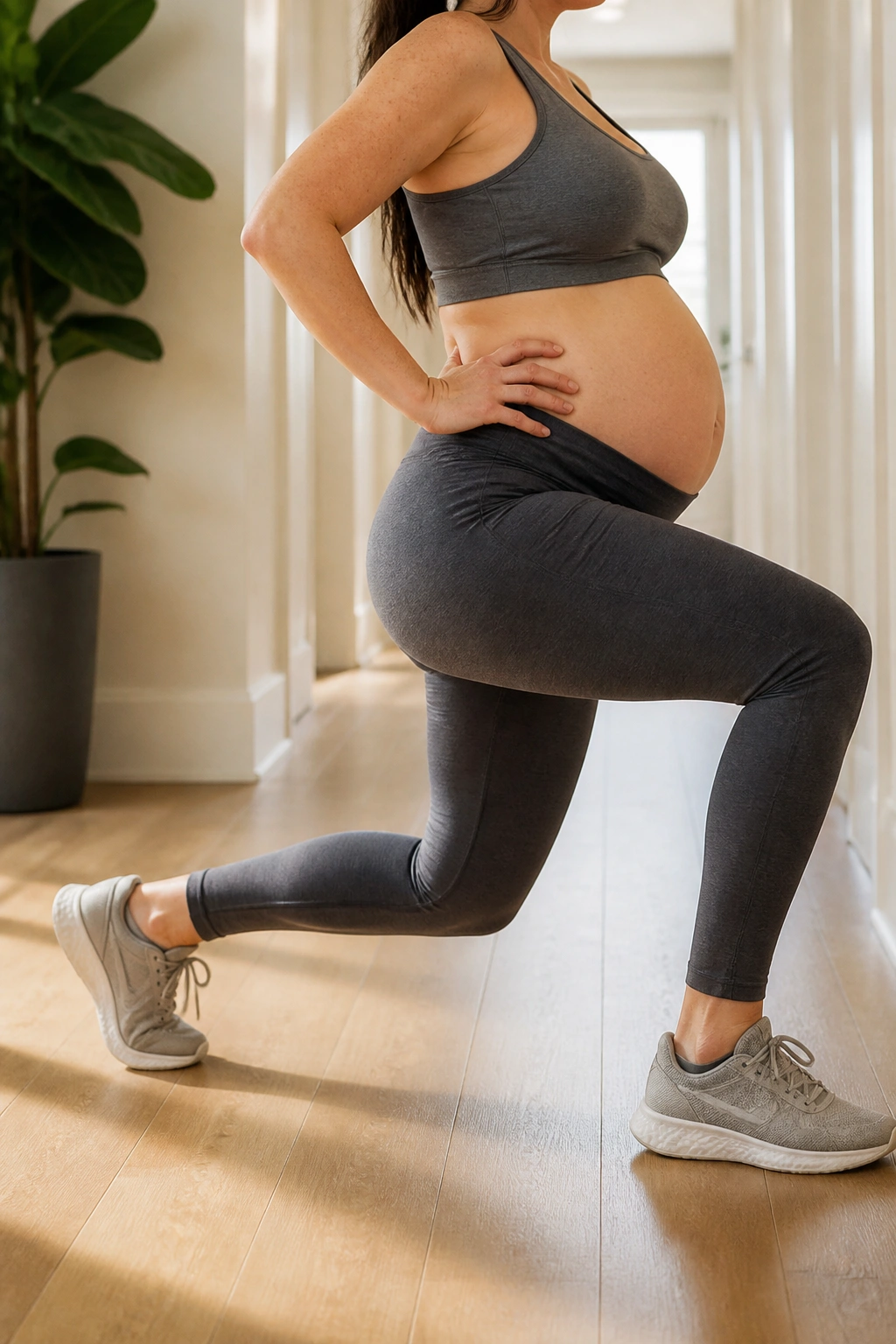
Reverse lunges are kinder than forward lunges for a lot of pregnant exercisers because the step back gives you more control. You are not throwing your body forward and hoping for the best.
Take a short step back, drop the back knee partway toward the floor, then press through the front heel to come up. Keep the motion smooth and small. 2 to 3 sets of 6 to 8 reps per side is enough to matter, especially if you are moving slowly.
The back step should feel like a quiet tap, not a leap. That little distinction keeps the movement controlled and helps you stay balanced. If your torso starts leaning all over the place, use a wall or countertop with one hand and make the rep smaller.
Reverse lunges are good on days when you want a bit more challenge than a squat but do not want to be fighting gravity. They ask for focus, which is part of why they work.
6. Step-Ups on a Low Sturdy Surface
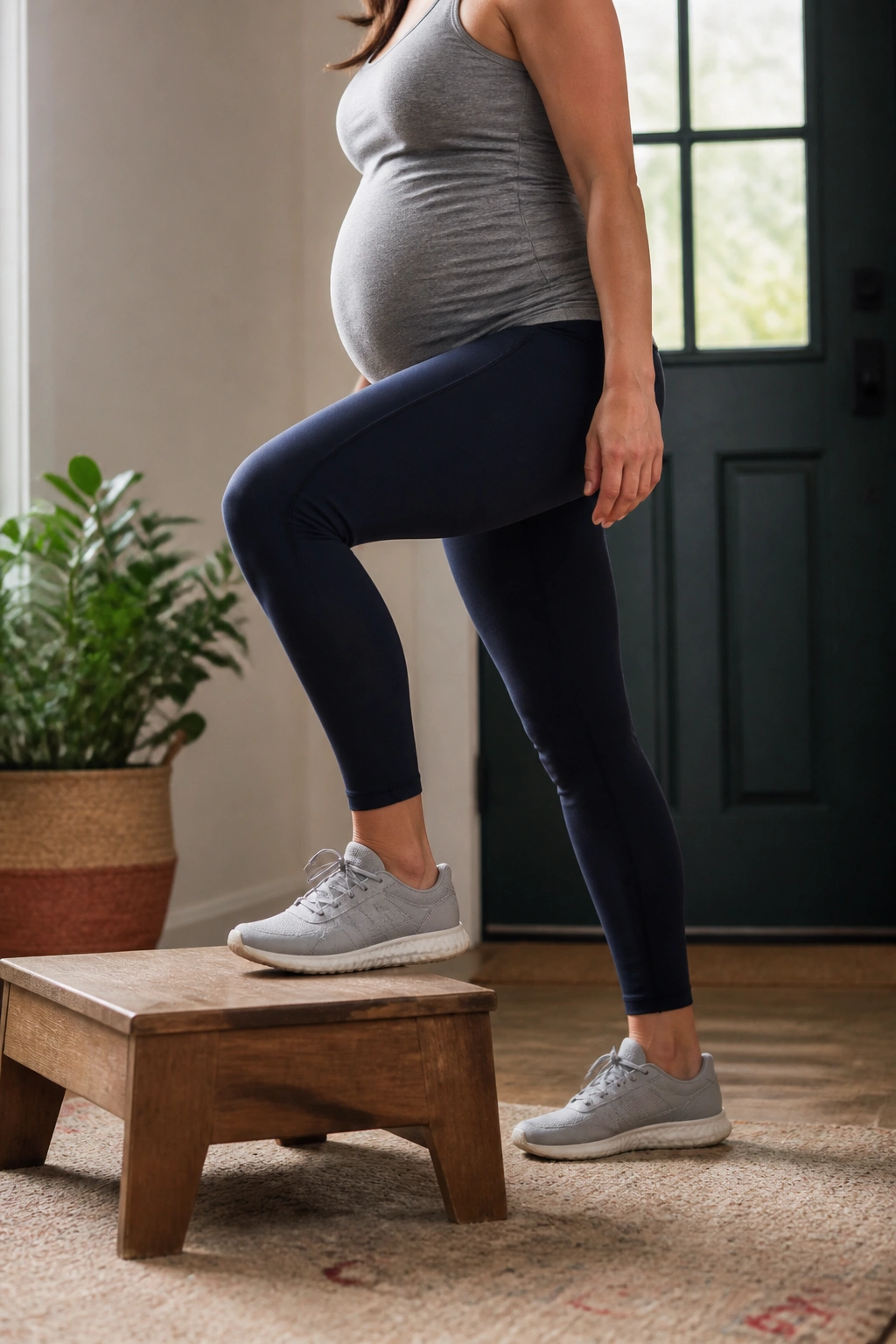
Why do step-ups show up in so many lower-body plans? Because life keeps asking you to climb stairs, and your legs might as well practice something useful.
How to Keep Them Clean
Use a step, low bench, or a thick aerobic platform that does not wobble. Step all the way onto it with one foot, press through the whole foot, and bring the other leg up with control. Then step back down slowly instead of dropping off.
A lower box is better than a heroic one. 6 to 8 inches is plenty for many people. Work for 2 to 3 sets of 8 reps per side and keep the movement crisp.
If you feel your hip hiking up or your torso tipping too far forward, the step is too high. Lower it. The move should feel like a strong walk up a single stair, not a mountaineering event.
7. Wall Sits That Build Quiet Endurance
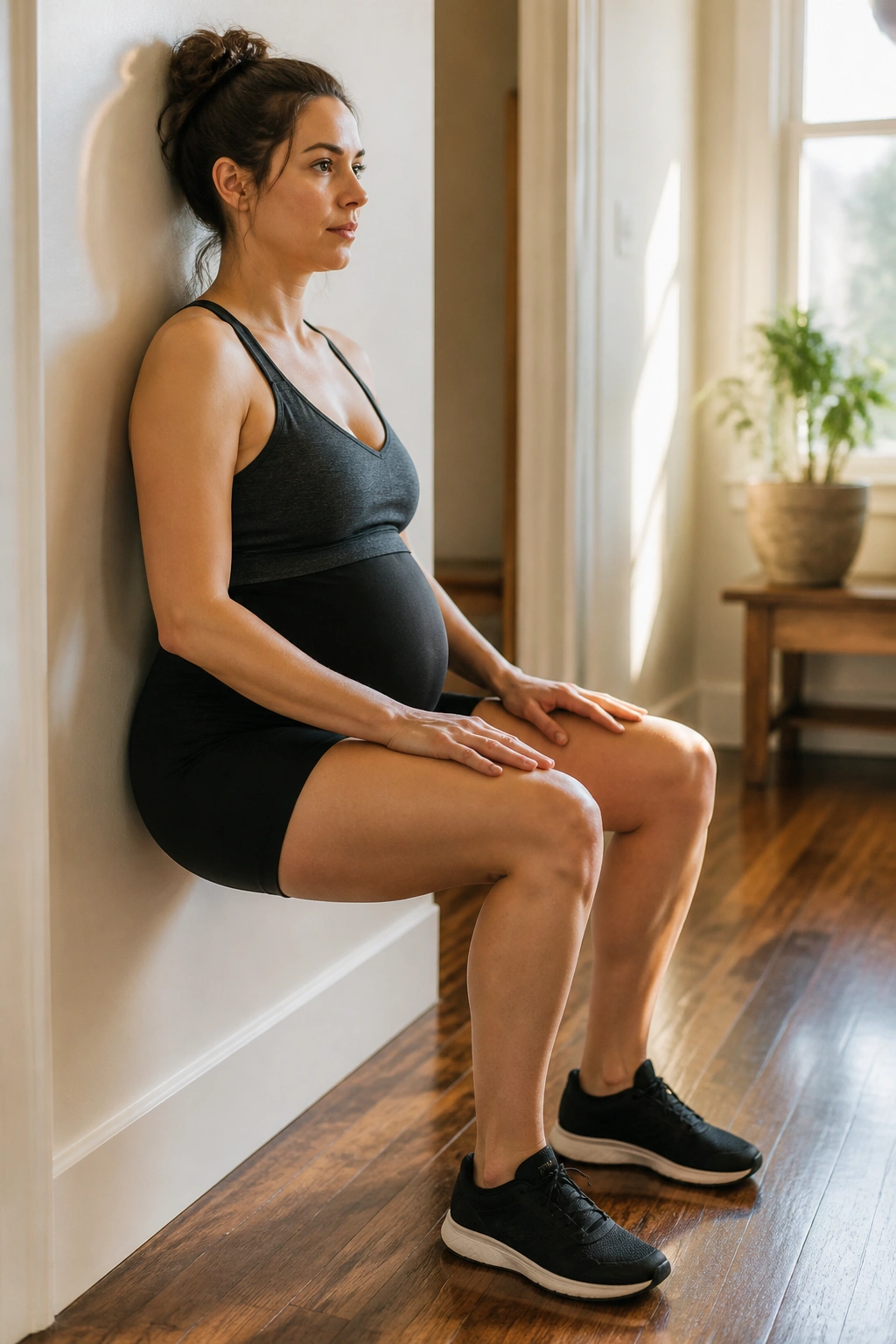
Wall sits are boring. That is exactly why I like them.
What to Feel
Slide your back down a wall until your thighs are roughly parallel to the floor, or stop higher if that is where your knees feel good. Hold for 20 to 45 seconds, breathe normally, and keep your weight spread through both feet. The wall does the balance work; your quads do the rest.
You will notice the burn in the front of the thighs first. After that, the glutes start helping more than you might expect. That steady isometric load can feel nice when you want leg work without repeated up-and-down motion.
- Keep your knees roughly over your ankles.
- Avoid holding your breath.
- Place a small ball or folded towel behind your lower back if the wall feels too flat.
- Stop if your knees ache in the joint, not just in the muscle.
Good rule: the hold should feel challenging, not punishing. If you have to grimace to make it through 15 seconds, you went too low.
8. Glute Bridges on the Floor
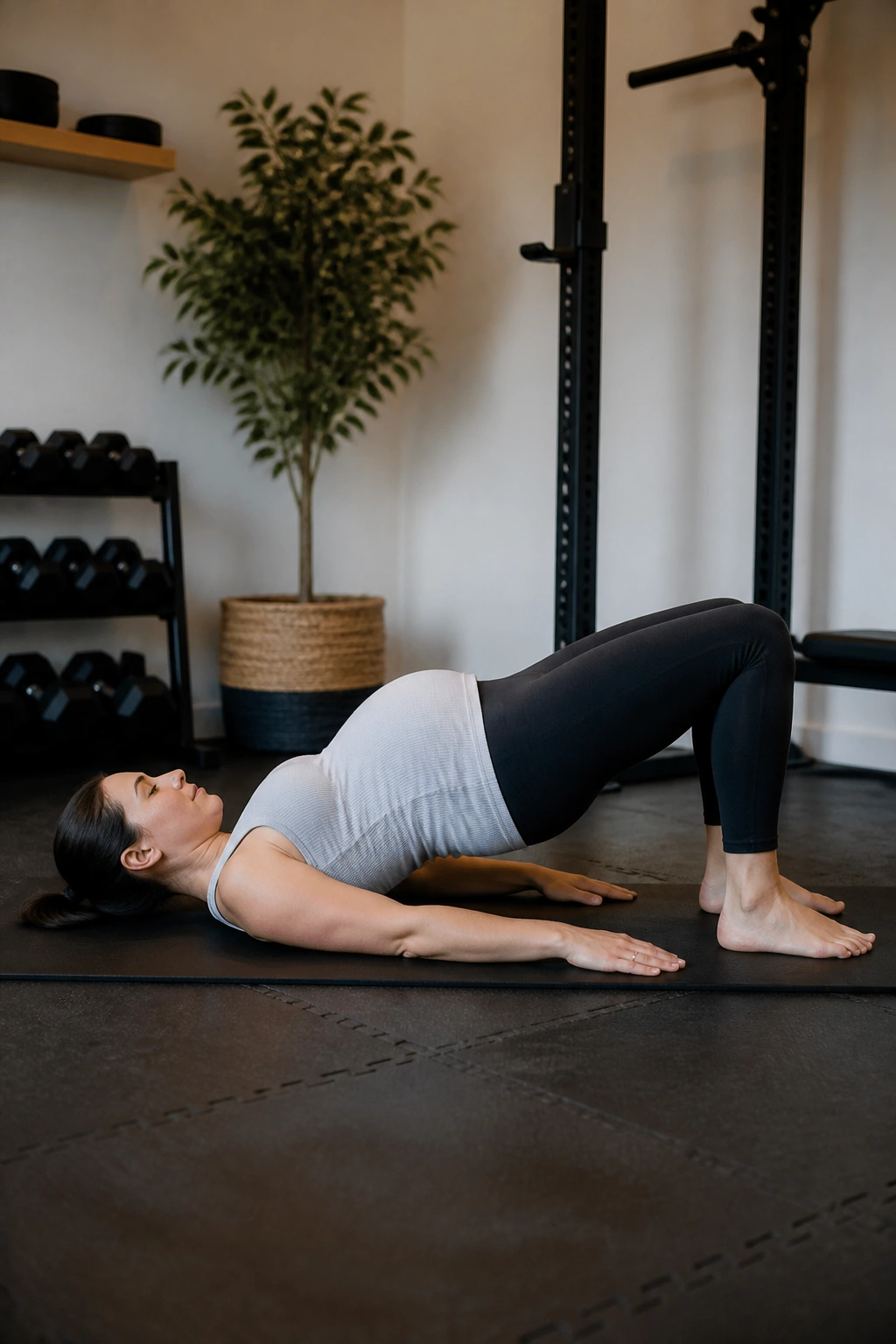
Glute bridges can wake up sleepy hips fast. They are simple, but simple does not mean useless.
Lie on your back with knees bent, feet flat, and heels close enough that your fingertips can almost brush them. Exhale as you lift your hips, squeeze the glutes at the top, and lower with control. 2 to 3 sets of 10 to 15 reps usually hits the sweet spot.
The key is the top position. You want the hips lifted enough to feel the glutes, not so high that your lower back takes over. Think about ribs gently softening down as the hips rise. That tiny adjustment keeps the work where it belongs.
If lying flat makes you dizzy or nauseated, prop your upper back on a couple of pillows or skip the move for the day. Pregnancy is not the time to be loyal to an exercise that makes you feel strange.
9. Side-Lying Clamshells for Outer-Hip Support
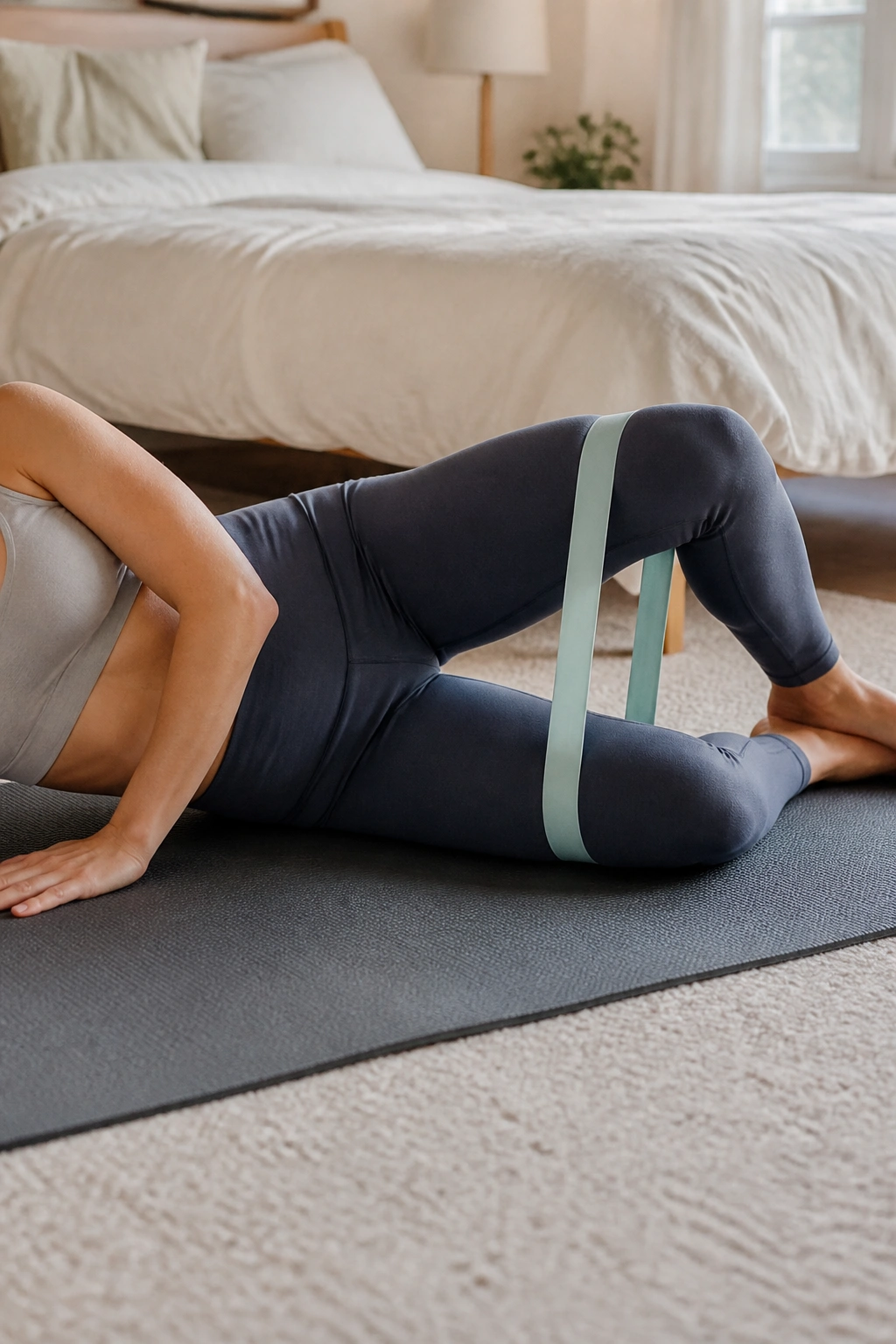
If the outside of your hips feels sleepy, clamshells are the nudge that wakes them up. They are quiet, controlled, and strangely effective when done with care.
Lie on one side, knees bent, heels together, and open the top knee without rolling your pelvis backward. A light loop band above the knees can make the set feel more useful, but bodyweight works fine. Try 12 to 15 reps per side for 2 to 3 rounds.
The Mechanics Behind It
Clamshells target the smaller hip rotators that help keep your pelvis steady when you walk, climb stairs, or stand on one leg. That matters more than people think, especially when your body starts shifting its balance around.
- Keep your feet touching.
- Open only as far as you can without twisting back.
- Pause for one second at the top.
- Lower slowly; do not flop the knee shut.
The burn should live high on the outer glute, not in the front of the hip. If you feel the front of the thigh taking over, reset your angle and make the opening smaller.
10. Side-Lying Leg Raises for Glute Medius Strength
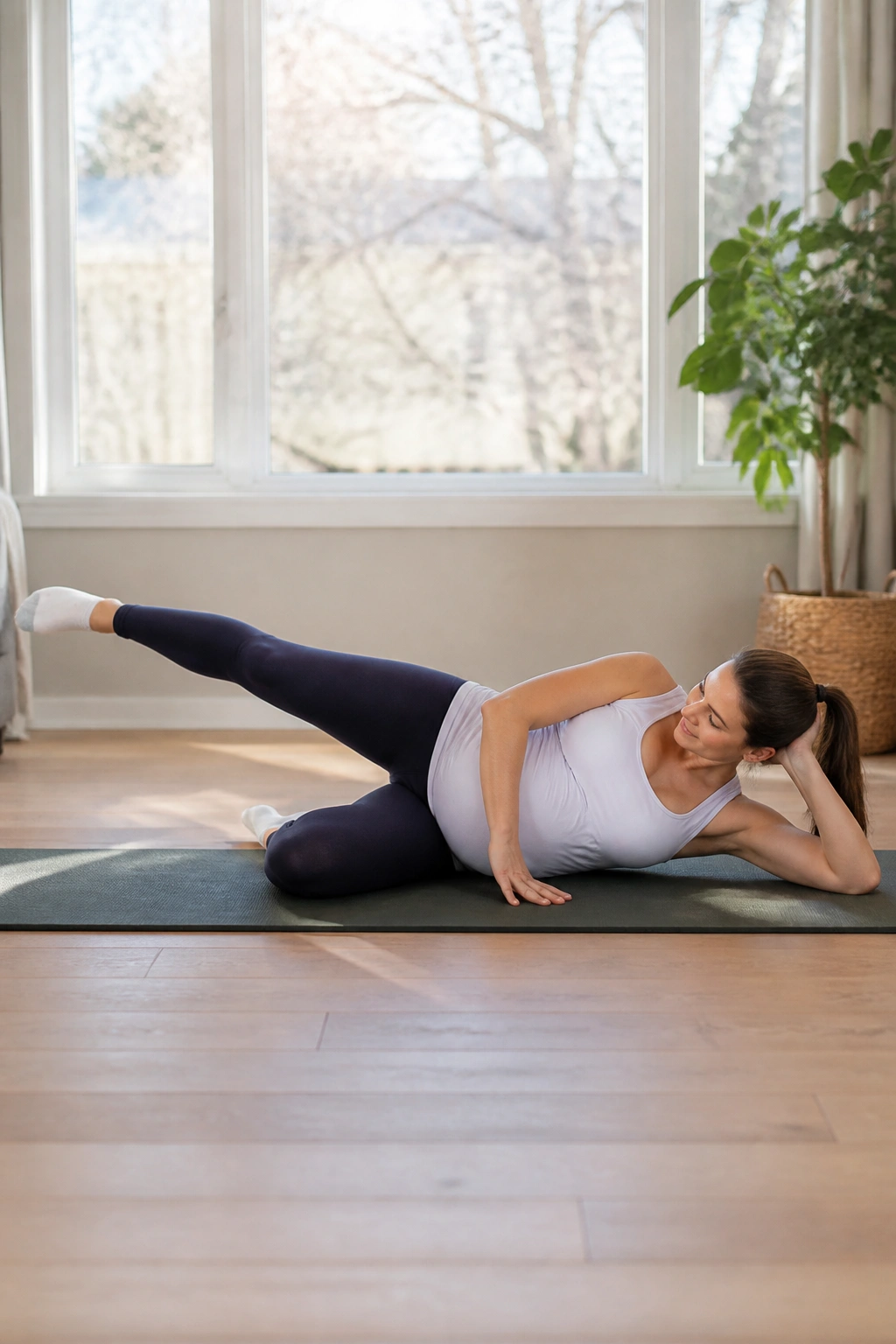
Compared with clamshells, side-lying leg raises reach a little farther down the outer hip and thigh. They feel cleaner, more direct, and a bit less cramped if you dislike bent-knee floor work.
Lie on your side with the bottom leg bent for support and the top leg straight. Turn the top toes slightly toward the floor, then lift that leg in a small arc until you feel the outer hip switch on. 10 to 15 reps per side is enough to start, and you can add a loop band around the thighs if bodyweight gets easy.
Who likes this move most? People who want slow, tidy work and do not mind being on the floor for a few minutes. It is also a nice choice if you want leg training without much spinal loading or balance demand.
Keep the lift modest. Bigger is not better here. A small, clean raise beats a giant swing every time.
11. Lateral Band Walks for Outer Hips and Glutes
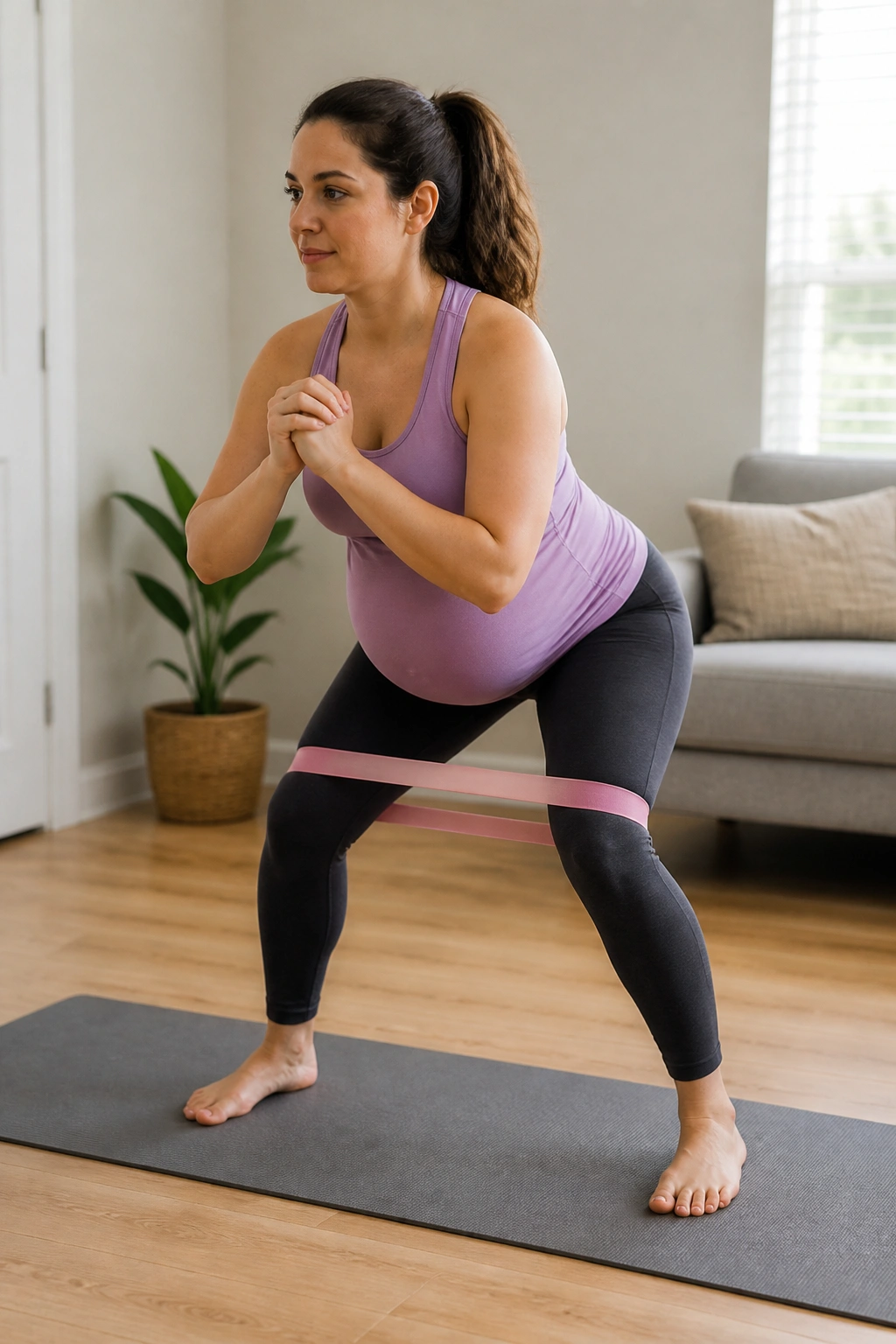
Lateral band walks look almost too easy until the side of your hips starts talking back. Then you realize they are doing a lot more than they seem.
Place a loop band above the knees or around the ankles, soften the knees, and take small steps side to side while keeping tension on the band the whole time. 8 to 12 steps each way for 2 to 3 rounds is usually enough. Stay low, but do not sink into a squat so deep that your form falls apart.
A common mistake is dragging the trailing foot. Try to keep both feet active. The stepping leg should move with purpose, and the trailing leg should resist the band instead of collapsing inward.
One short note. Do not rush this.
A slow band walk lights up the hips in a way that carries over to walking and standing, which is a nice trade for such a small move.
12. Standing Hamstring Curls With a Band
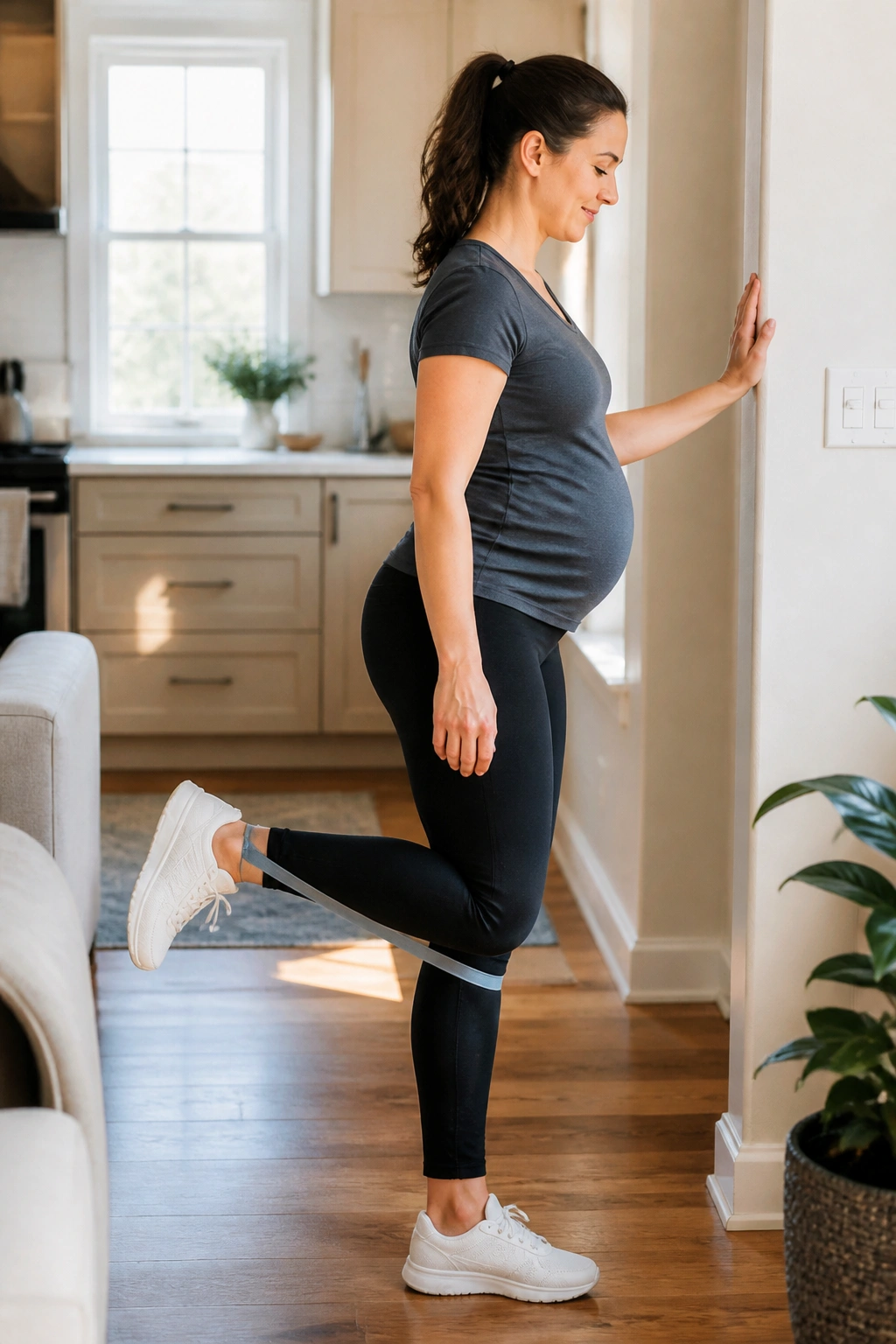
Why does a tiny heel-to-butt curl deserve a spot? Because hamstrings get ignored until they start feeling tight every time you stand up.
Attach a light band low behind you, loop it around one ankle, and curl the heel toward the glute without swinging the thigh. You can also do this with no band at all and focus on the squeeze. Try 10 to 15 reps per leg for 2 to 3 sets.
How to Use It
Keep the standing leg soft, not locked. Hold a wall or countertop if you need balance help, and think about moving from the knee rather than throwing the whole leg back. The hamstring should do the work; your lower back should stay quiet.
This move is a nice add-on after squats or lunges because it hits a different part of the back chain. If you sit for long stretches, it can also feel good simply because it opens up a muscle that has been on autopilot.
13. Romanian Deadlifts With Light Dumbbells
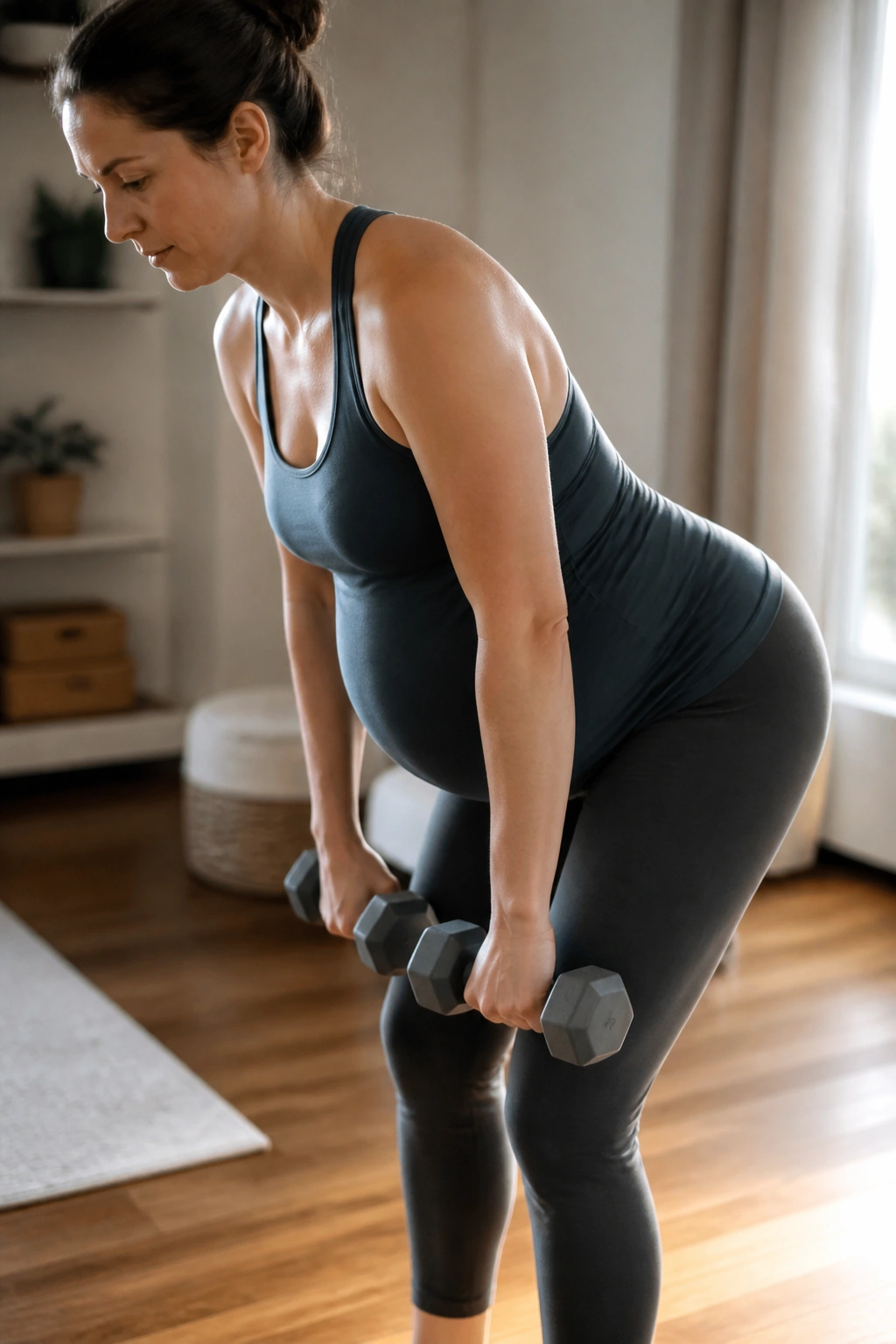
Romanian deadlifts are one of the best ways to teach your hips to hinge instead of fold at the waist. That skill matters when you are lifting laundry baskets, bags, or a toddler who insists on being carried halfway across the house.
The Hinge You Want
Stand tall with soft knees, dumbbells in front of your thighs, and send your hips back as the weights slide down the front of your legs. Stop when you feel a stretch in the hamstrings, then stand by squeezing the glutes and pressing the floor away. 8 to 10 reps for 2 to 3 sets is plenty.
The back stays long and calm. If the dumbbells drift away from your body, the move gets harder and your lower back has to work more than it should. Keep the weights close, almost brushing the thighs.
- Use light dumbbells first.
- Keep the neck neutral.
- Lower only as far as your hamstrings allow.
- Exhale as you stand.
Best cue: hips back, chest steady. That pairing keeps the movement honest.
14. Calf Raises for Ankles, Balance, and Standing Endurance
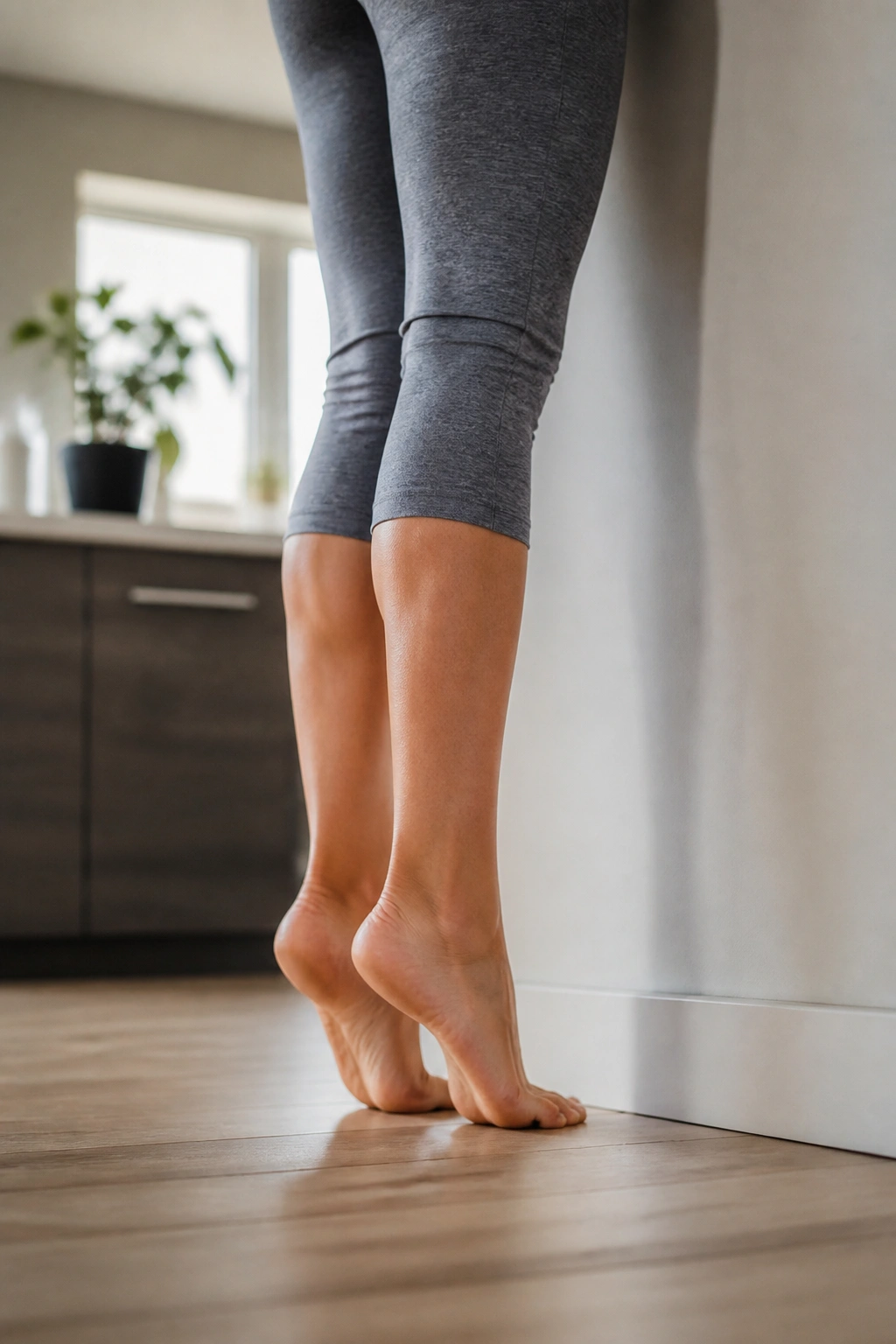
Calf raises are underrated. They make standing, walking, and stair climbing feel smoother, and they take almost no setup.
Stand near a wall or countertop, rise onto the balls of your feet, pause for a beat at the top, and lower slowly until your heels kiss the floor again. Try 12 to 20 reps for 2 to 4 sets. Straight-knee calf raises hit the larger calf muscle, while a slight knee bend shifts a bit more work lower down.
You can do them with both feet together, one foot at a time, or on a step if that feels stable. I like the floor version best for first trimester because it keeps the movement simple and the risk low.
If your calves cramp, shorten the top hold and drink some water. A crampy calf is not a sign to push harder. It is a sign to back off a little.
15. Tibialis Raises Against the Wall
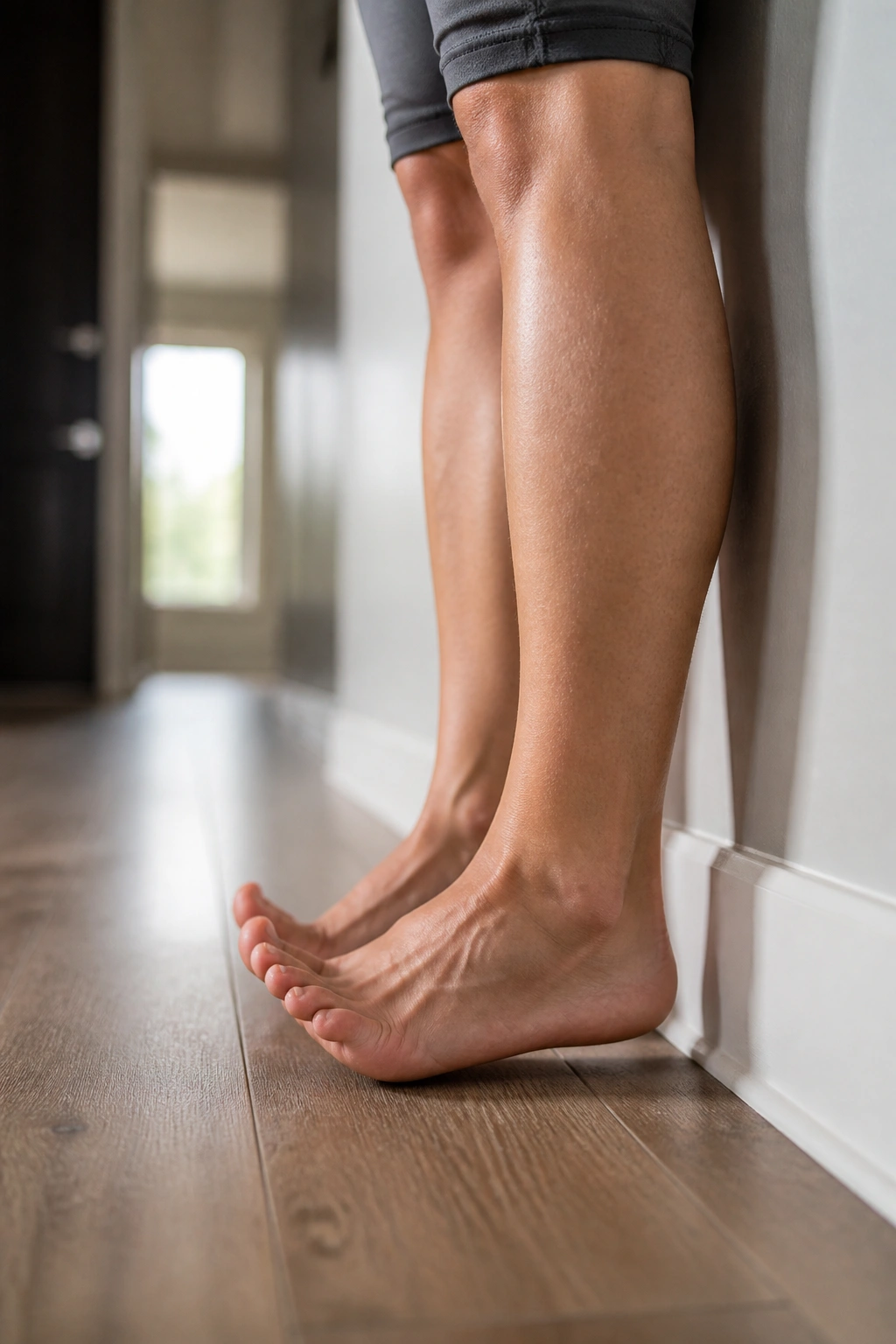
Shin work sounds minor until your lower legs start feeling tired from regular walking. Then it becomes the quiet fix nobody talks about enough.
Stand with your back against a wall and your feet a short step away. Keep your heels on the floor, lift your toes toward your shins, and lower them again with control. 15 to 20 reps for 2 to 3 sets is a good starting point.
What This Hits
The tibialis sits along the front of the shin and helps control your foot as it lands. That matters for balance, gait, and the weird little fatigue that can creep into the lower legs during pregnancy.
- Keep the movement small and clean.
- Do not rock your hips.
- Keep your heels heavy.
- Move slowly enough to feel the front of the shins working.
It is not flashy. It is useful. Sometimes that is the better deal.
16. Side Lunges With a Shallow Reach
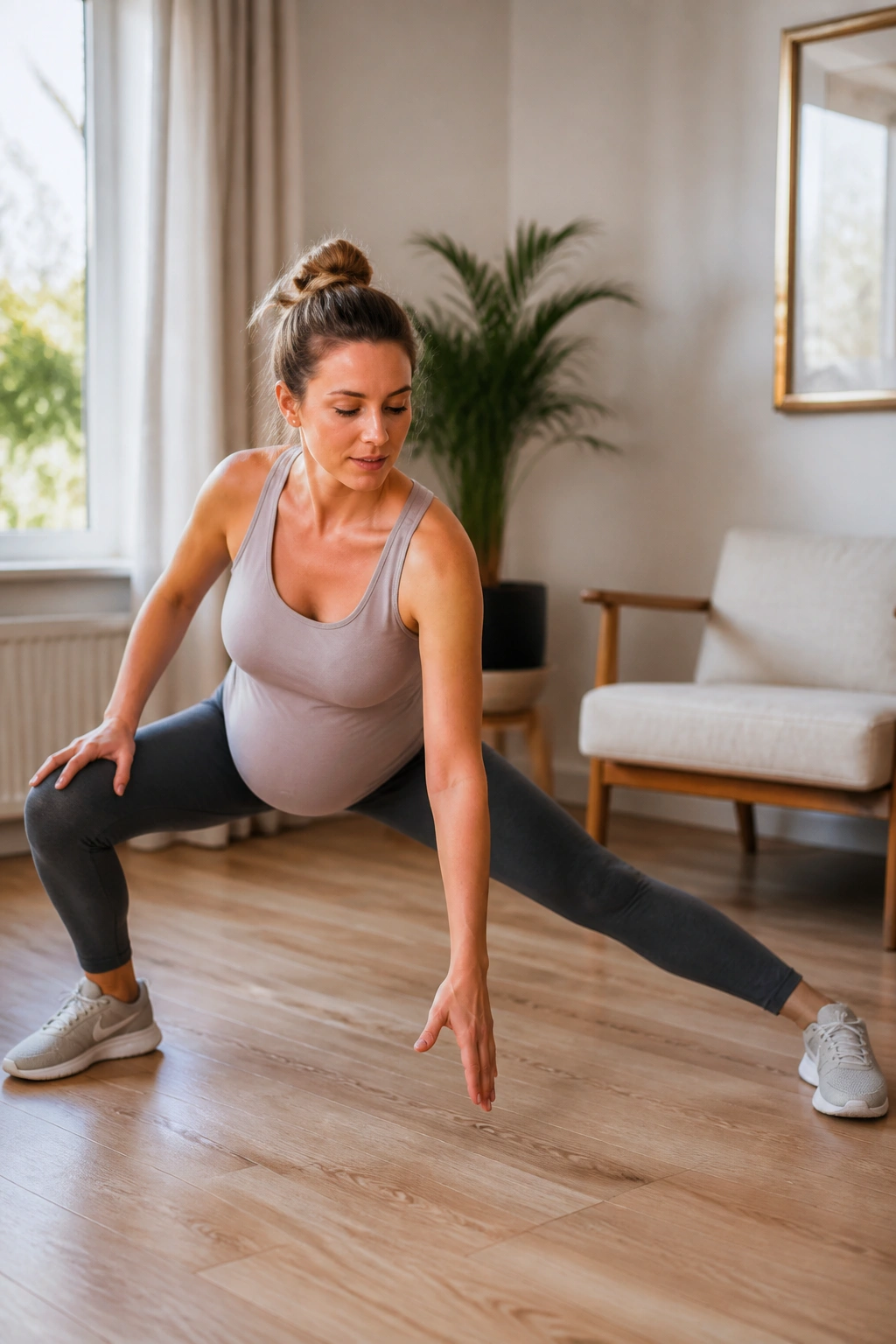
Side lunges feel different from squats because they make one leg work while the other leg learns to support and lengthen. That change can wake up the inner thighs in a way the usual straight-ahead moves do not.
Step out to the side, sit your hips back a little, and keep the other leg mostly straight as you return to center. Start shallow. 6 to 8 reps per side is enough if you are moving with care, and holding a wall with one hand is smart until the pattern feels familiar.
Compared with sumo squats, side lunges ask for more lateral control and a little more balance. They are a better fit if you want movement across different planes, not just up and down. They are less friendly if your groin feels tight or if your balance is having a rough day.
My take: keep the reach small and clean. A modest side lunge done well beats a deep one that twists your pelvis.
17. Single-Leg Hinge Reach With Support
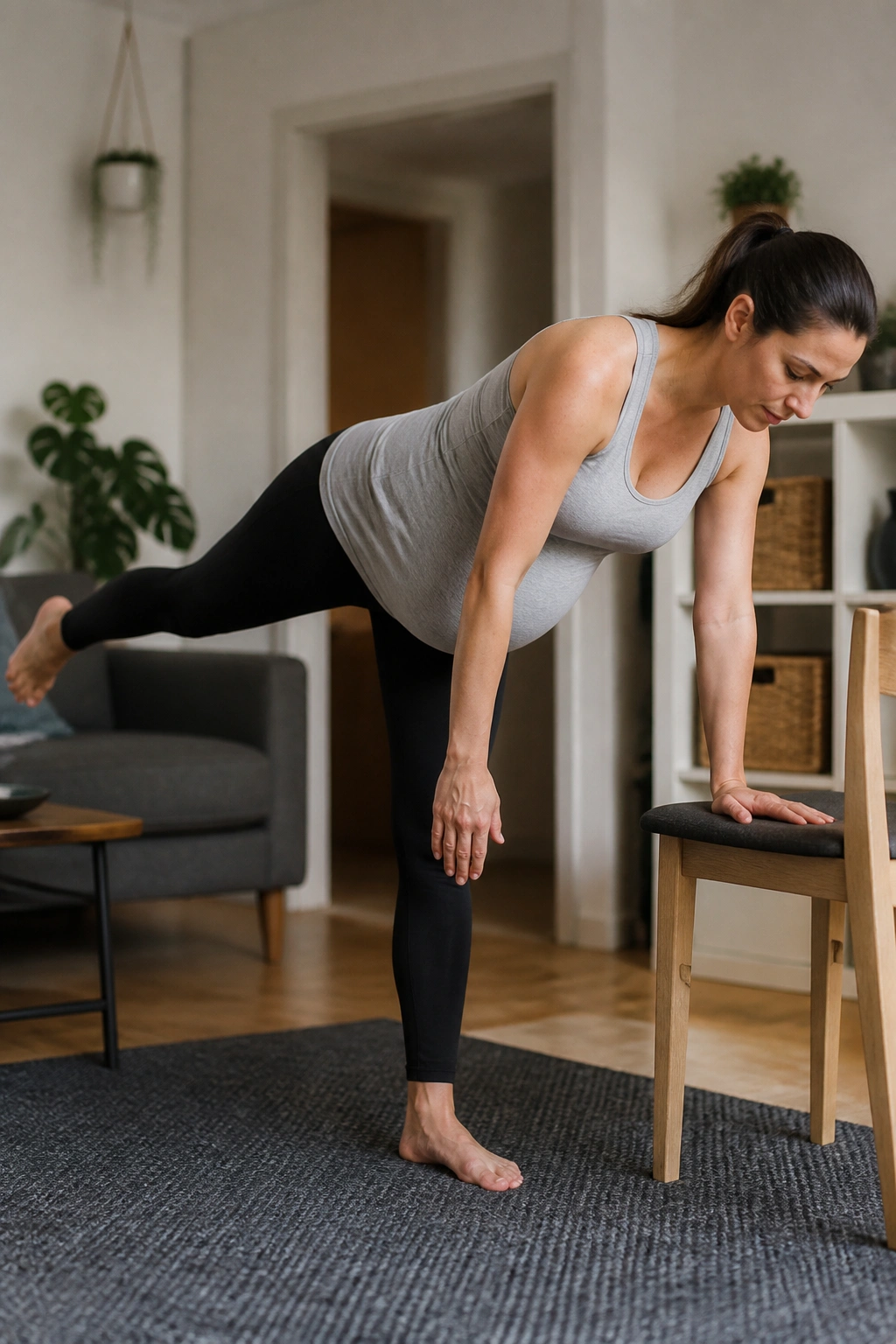
A single-leg hinge reach is the move that teaches balance without demanding circus-level stability. You stand on one leg, hinge at the hips, and reach the free leg back while keeping the standing knee softly bent.
Use a wall or chair with one hand if you need it. That is not cheating. It is smart. The working leg should feel the glute and hamstring, while the standing foot learns to stay planted and calm. 5 to 8 reps per side is a good start because fatigue can sneak up fast on one-leg work.
This move is especially helpful if your gait feels a bit different or your hips get cranky after long walks. You are training coordination as much as strength, and the two are not separate in real life. People love to split them apart; your body does not.
Move slowly. If you speed through it, the point gets lost.
18. Fire Hydrants on a Mat
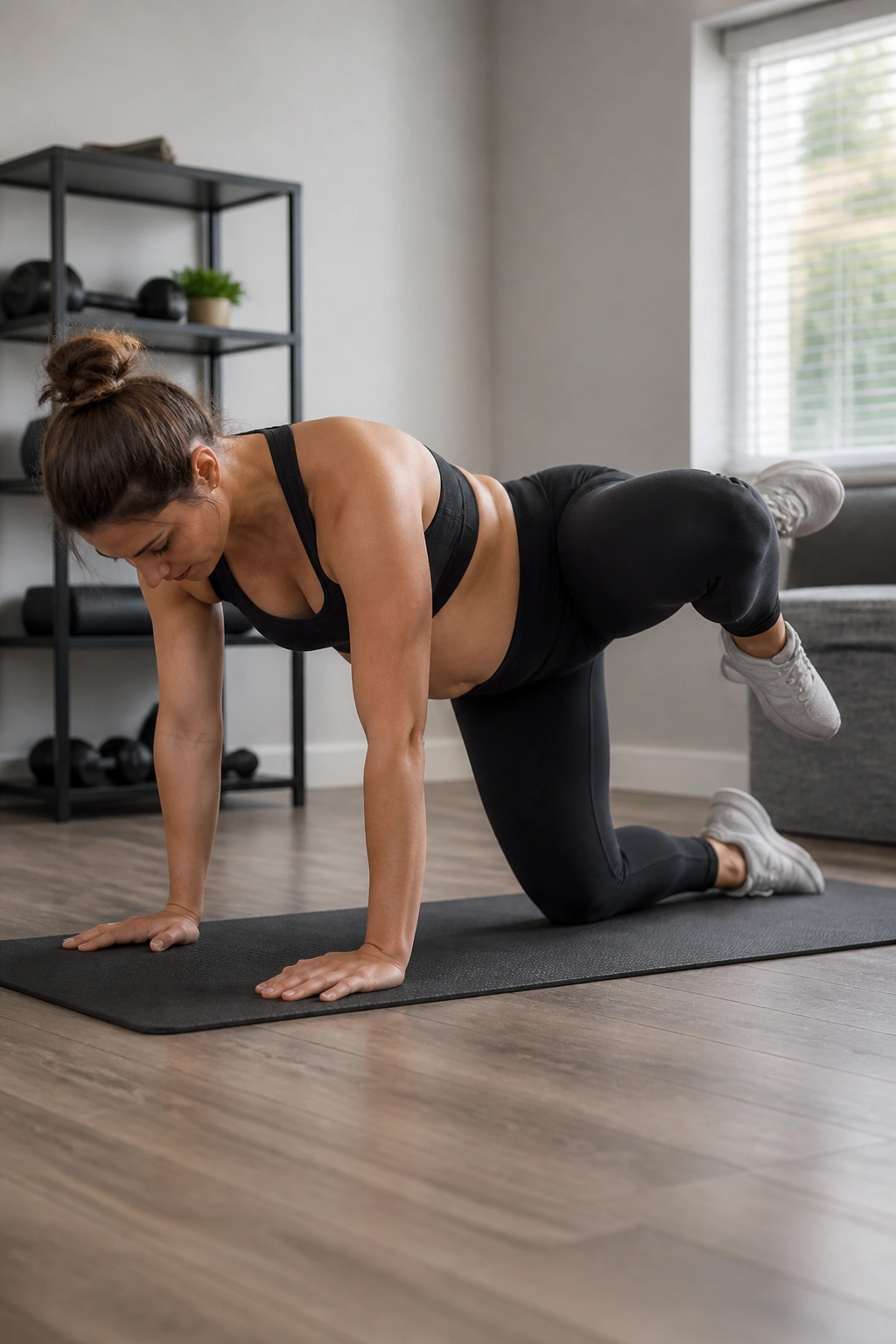
Why do fire hydrants matter? Because they train the hips from an angle most leg exercises skip, and that can be a relief when side-to-side stability matters.
How to Keep Them Comfortable
Get on hands and knees on a folded mat or blanket. Lift one knee out to the side without twisting your trunk, pause, and lower with control. 10 to 15 reps per side for 2 to 3 sets works well. A light band above the knees can make the set more demanding, but bodyweight is enough.
If kneeling bothers your knees or wrists, skip this one or prop yourself on yoga blocks. No exercise is worth making a joint angry just to say you did it.
The clean version feels like the hip moves and the spine stays quiet. That is the standard here. If your lower back starts to swing or you have to lean to one side, make the lift smaller and slower.
19. Frog Pumps for a Fast Glute Burn
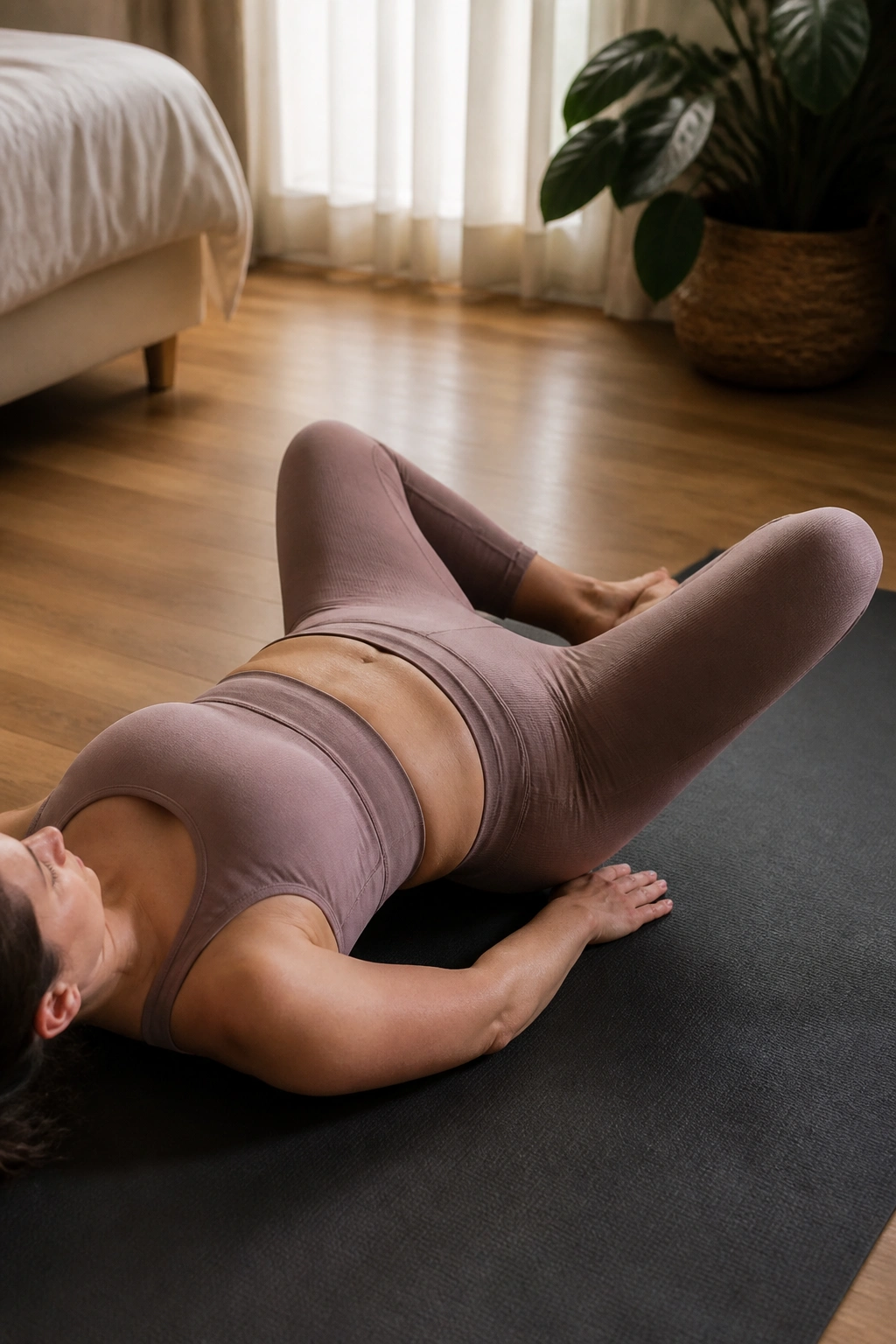
Frog pumps are tiny, and that is the point. The range is short, the setup is easy, and the glute burn sneaks up faster than people expect.
Lie on your back with the soles of your feet together, knees open like a diamond shape, and press the hips up in short, controlled pulses. 20 to 25 reps for 2 to 3 sets is enough to make the glutes light up without a lot of wear and tear. You can place a small pad under your head if that feels better.
Quick Facts
- Great when you want glute work with low setup.
- Best done slowly, not as a bounce.
- Keep the ribs soft and the neck relaxed.
- Stop if lying flat makes you dizzy or queasy.
Best tip: think of squeezing the glutes at the top rather than thrusting the hips as high as possible. The muscle work is better, and your lower back tends to stay happier.
20. Seated Leg Extensions With a Band
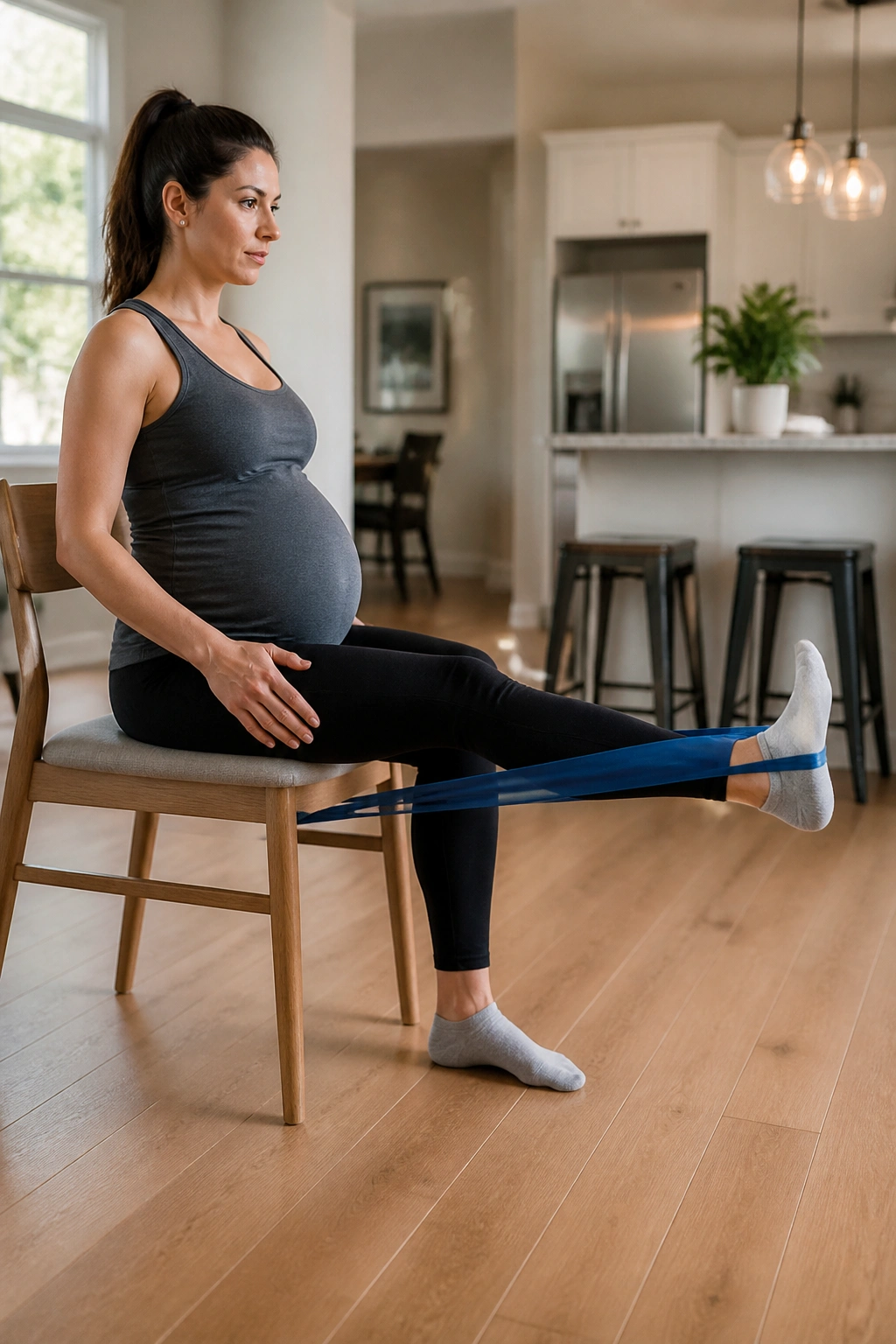
Seated leg extensions are the move I reach for when the day is flat, energy is low, and I still want the legs to do something useful. A chair, a loop band, and a few clean reps can be enough.
Sit tall, loop the band around one ankle and a sturdy anchor behind you, then extend the knee until the leg is straight and the quad firms up. Lower slowly. 12 to 15 reps per side for 2 to 3 rounds gives a tidy amount of work without much fuss.
This one is especially nice if standing work feels like too much or if your back wants a break. It is not glamorous, and that is part of the appeal. You can do it while waiting for water to boil, between meetings, or after a short walk when your legs need something light but focused.
If your knee clicks but does not hurt, keep the movement small and controlled. If it hurts, skip it. Pain is not the price of staying active. A steady, moderate session is plenty on its own, and the best pregnancy leg workouts are the ones that leave you feeling better when you stand up from the chair than when you sat down.
