



Most beginner leg days fail for a boring reason: people load the bar before they can control the movement. A clean squat, a steady lunge, and a hinge that doesn’t round your back beat a messy pile of heavy reps every time. If your knees wobble, your lower back tightens, or your glutes never seem to wake up, the fix is usually simpler than it sounds.
Beginners do not need ten flashy variations. They need movements that teach balance, build muscle, and let the right muscles do their share before the weight gets serious. The best leg day exercises for beginners also happen to scale well, so a bodyweight squat can turn into a goblet squat, a lunge can become a split squat with dumbbells, and a bridge can grow into a loaded hip thrust without forcing you to relearn the whole pattern.
The sweet spot is control. You want exercises you can do with clean range of motion, stable feet, and no rush at the bottom. That sounds basic, but it is where a lot of training goes off the rails—half reps, bouncing off joints, and so much speed that the target muscles never get a real turn.
Start with movements you can repeat well. The weight can come later.
1. Bodyweight Box Squat
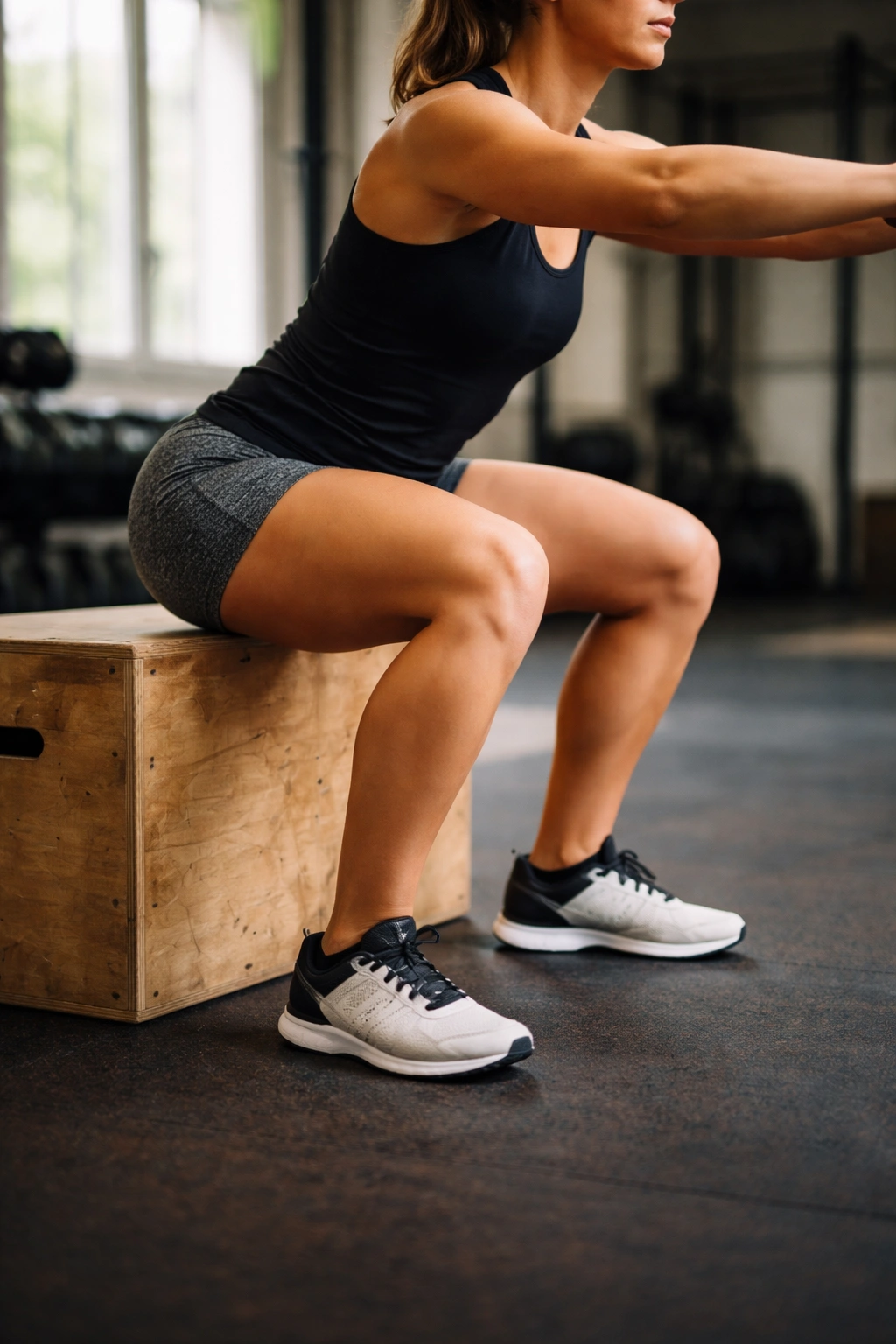
A box squat is boring in the best way. It teaches the squat pattern without making you guess where the bottom should be, and that matters more than people admit. Beginners often drop too fast, sit too deep, or chase depth they cannot control yet. A box or bench gives you a clear target.
Why It Works
The box squat teaches three useful things at once: how to sit back, how to keep your feet planted, and how to stand up without collapsing forward. That makes it one of the cleanest first exercises for a beginner leg day workout. It is also easy to scale. Raise the box if mobility is limited. Lower it later if the movement feels solid.
A sturdy chair, bench, or box works fine. Aim for a height where your thighs are close to parallel to the floor when you touch down. If the seat is so low that your knees cave or your lower back rounds, it is too low for learning. Too low is not more honest. It is just messier.
How to Do It Well
- Stand with your feet about shoulder-width apart.
- Keep your chest tall and your ribs stacked over your hips.
- Sit back until you lightly touch the box.
- Pause for a split second.
- Drive through your whole foot to stand back up.
That last part matters. Do not plop onto the box. Touch it and rise. The movement should look smooth, not like you gave up halfway down.
What Usually Goes Wrong
The biggest problem is falling backward and then rocking forward to stand up. Another common mistake is letting the knees cave inward as soon as the descent starts. Both usually mean the stance is off or the box is too low. Fix the setup before you blame your legs.
A one-sentence truth: if the squat looks ugly without weight, adding a dumbbell will not make it prettier. Get the pattern clean first.
2. Goblet Squat
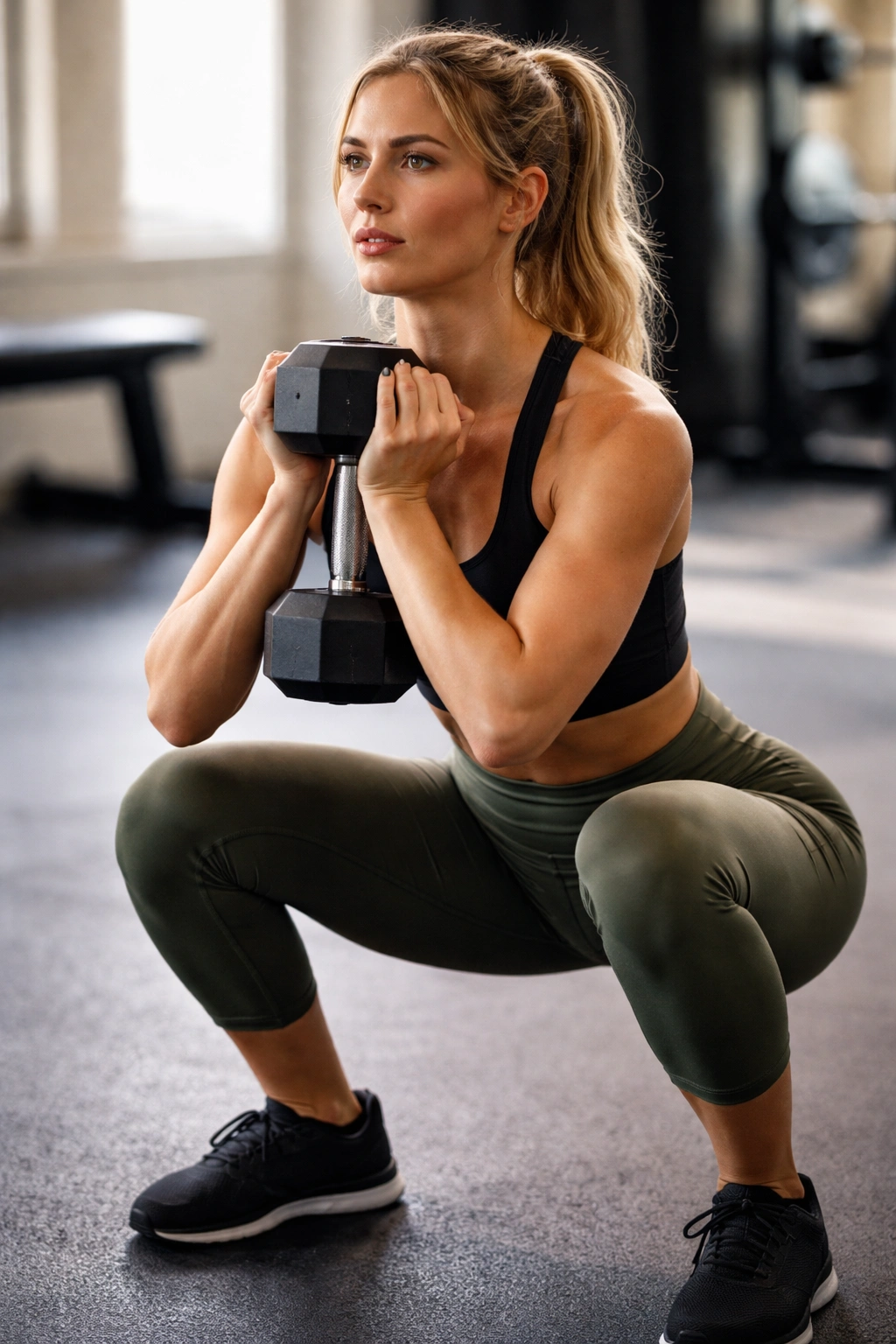
Once the box squat feels controlled, the goblet squat is the natural next step. It keeps the squat pattern familiar, but the front-loaded weight gives you a little more feedback. Hold a dumbbell or kettlebell against your chest and the torso has to stay upright. That makes the exercise teach posture as much as strength.
The goblet squat is a favorite of mine for beginners because it gives you a built-in cue. If the weight drifts away from your chest, or your elbows collapse, the form usually starts to slip. You can feel the problem fast. That kind of feedback is gold when you are still learning.
What to Feel
Your feet should stay heavy and flat. Your quads will work, sure, but you should also feel your glutes helping as you stand. The descent ought to feel controlled, with a small pause near the bottom if you can manage it cleanly. No bouncing.
A Simple Setup That Works
- Hold one dumbbell vertically by one end, close to your sternum.
- Keep your elbows pointed down, not flared out like chicken wings.
- Brace your stomach before you lower.
- Squat between your knees, not forward onto your toes.
- Stand by pushing the floor away, not by yanking your chest upward.
If the weight pulls your chest down, it is too heavy. That is the easy test. Drop the load and keep the movement crisp.
Where Beginners Go Off Track
People love to chase depth and forget control. That usually leads to heels lifting, knees diving inward, or the lower back rounding just before the bottom. A goblet squat should feel tidy. If you need to cut the depth by a few inches to keep your torso stacked, do that without guilt.
I also like this movement because it scales forever. Start with a 10- or 15-pound dumbbell. Later, move to a heavier kettlebell, then a barbell front squat if you ever want to, but you do not need to rush that. Right now the job is simpler: learn to squat well and feel strong doing it.
3. Reverse Lunge
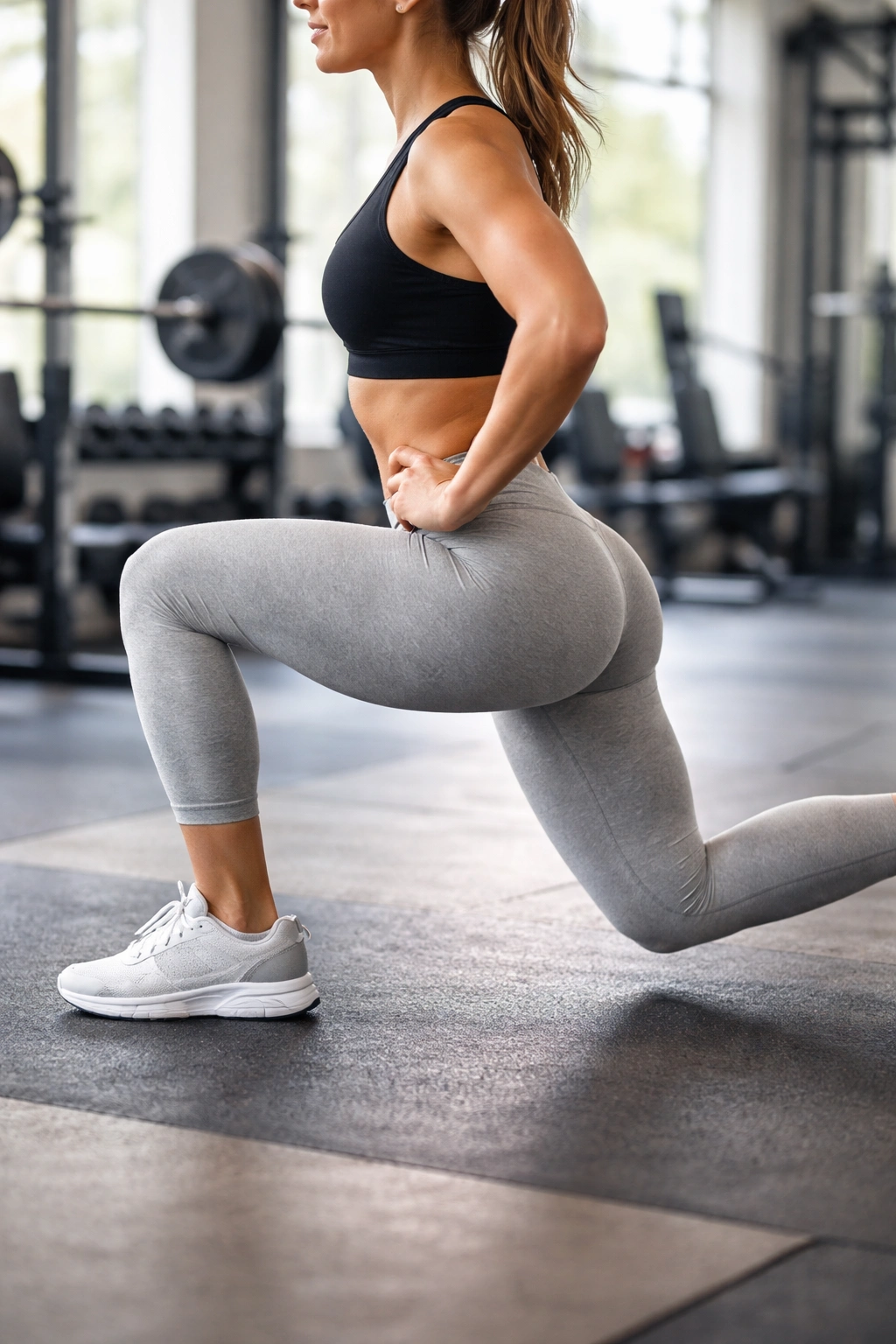
Why start by stepping backward instead of forward? Because reverse lunges usually feel friendlier on the knees and balance system. The front foot stays planted, which gives beginners a little more control and a little less chaos. That matters on leg day, especially if the room still feels wobbly when you train one leg at a time.
I usually pick reverse lunges before forward lunges for new lifters. Forward lunges can be fine, but they demand more precision from the first step. Reverse lunges let you find the stance first, then sink down in a calmer way.
How to Set It Up
Take a normal standing stance, then step one leg back about 18 to 24 inches. Lower straight down until both knees bend, with the front shin roughly vertical and the back knee hovering just above the floor. Then push through the front foot to stand back up.
A Few Details That Help
- Keep most of your weight in the front leg.
- Let the back heel rise naturally.
- Keep the front knee tracking over the middle toes.
- Use a small torso lean if it helps balance.
- Start with bodyweight before adding dumbbells.
The movement should feel like a lunge, not a split leap. Slow is your friend here. If you rush the step back, your balance gets messy and the front knee often takes over.
What It Trains
Reverse lunges hit the quads and glutes hard, but they also show you where side-to-side weakness lives. One leg may feel steady while the other wobbles like it is new to the job. That is normal. It is also useful.
A lot of people try to fix wobble by widening the stance wildly. That usually does not help. Better to shorten the step, slow the descent, and keep the front foot glued down. Control beats drama every time.
4. Step-Up
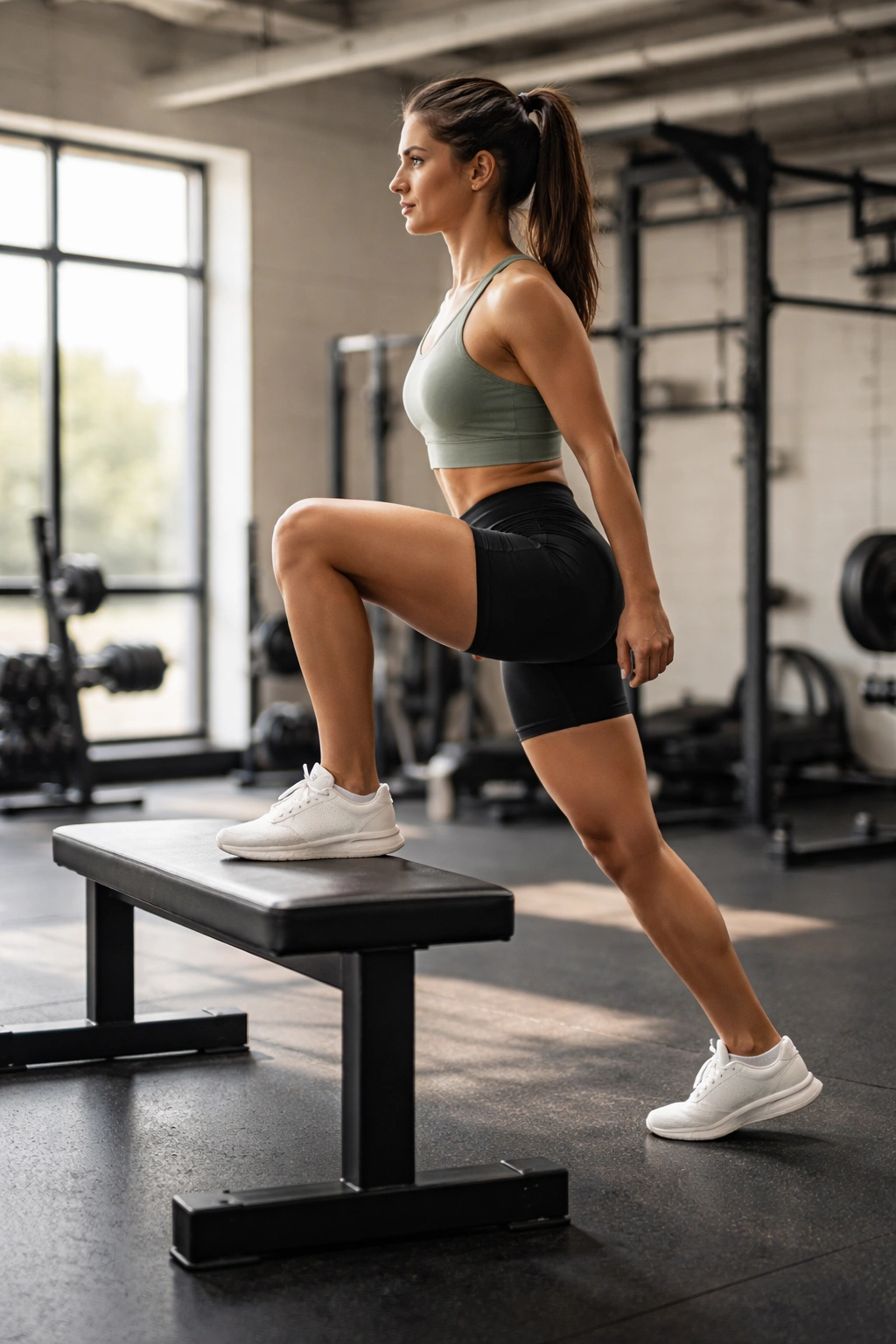
A low step does a lot of work for almost no drama. That is why step-ups belong on a beginner leg day. You do not need a huge box or a gym circus platform. A stable bench, aerobic step, or low plyo box can be enough, as long as the surface does not slide and the height stays reasonable.
Step-ups are sneaky. They look simple from the outside, then the working leg starts burning and the balance demands show up fast. The beauty is that they teach a clean push through one leg while the other leg mostly stays out of the way.
Choose the Right Height
Start low. Around mid-shin to just below knee height works for most beginners. If the box is so tall that you have to hunch, jump, or yank yourself up, it is too high. A lower step gives you better control and a better chance to feel the glutes do the work.
How to Do It
- Put your whole foot on the step.
- Lean forward a little from the hips.
- Drive through the standing leg.
- Bring the trailing leg up without pushing off it.
- Lower under control.
What the Reps Should Feel Like
The standing leg should do the real job. The back leg is there for balance and a small assist, not a full kick-off. If you keep launching yourself with the trail leg, you are turning the exercise into a hop. That is not the goal.
The box should not boss you around. If your form falls apart, lower the step and make the repetition cleaner. That one change usually fixes more than people expect.
Best Uses
Step-ups are excellent when you want quad and glute work without lying on a bench or loading a bar. They also work well later in a session when your squat pattern is already warmed up and you want a single-leg exercise that still feels practical. Use them for 2 or 3 sets of 8 to 10 reps per side and keep the pace steady.
5. Romanian Deadlift
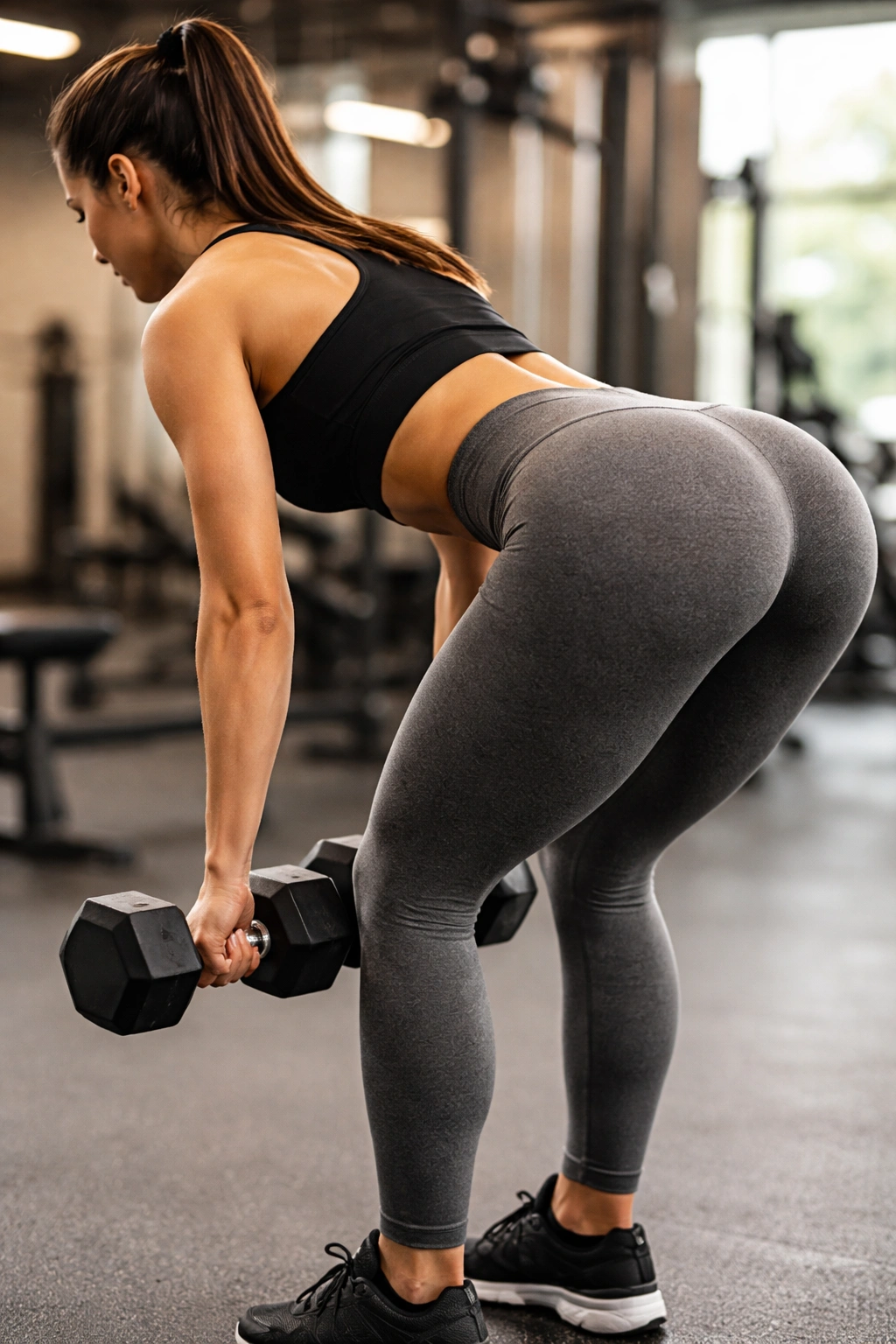
Your hamstrings need a hinge, not another squat. That is the whole reason the Romanian deadlift earns a place on a beginner leg day. It teaches you to move the hips back while keeping the spine steady, and that skill shows up everywhere—from picking things up safely to building stronger glutes and hamstrings.
A lot of beginners bend their knees too much and turn the movement into a squat with dumbbells. The RDL is different. The knees stay slightly soft, the hips travel backward, and the load stays close to the body.
What the Movement Should Look Like
Hold a pair of dumbbells in front of your thighs. Unlock the knees a little. Push the hips back as the torso tips forward, and let the weights slide down the legs. Stop when you feel a solid stretch in the back of the thighs and your back still feels flat.
Then stand tall by driving the hips forward. Not by leaning back. Just stand up and squeeze the glutes at the top.
Useful Cues
- Keep the dumbbells close to your legs.
- Let the shins stay almost vertical.
- Stop the descent when the hamstrings say enough.
- Keep the neck neutral and the chest long.
- Move slowly on the way down.
You do not need to touch the floor. You do not need a giant range of motion. You need a clean hinge and a strong finish.
Common Errors
The two big ones are rounding the lower back and letting the weights drift away from the legs. Both make the exercise feel harder in the wrong place. If your lower back is doing most of the work, the load is too heavy or the hinge pattern is off.
One short rule: if the stretch disappears from your hamstrings, you have gone past your usable range. Stop there and build from that point.
6. Glute Bridge
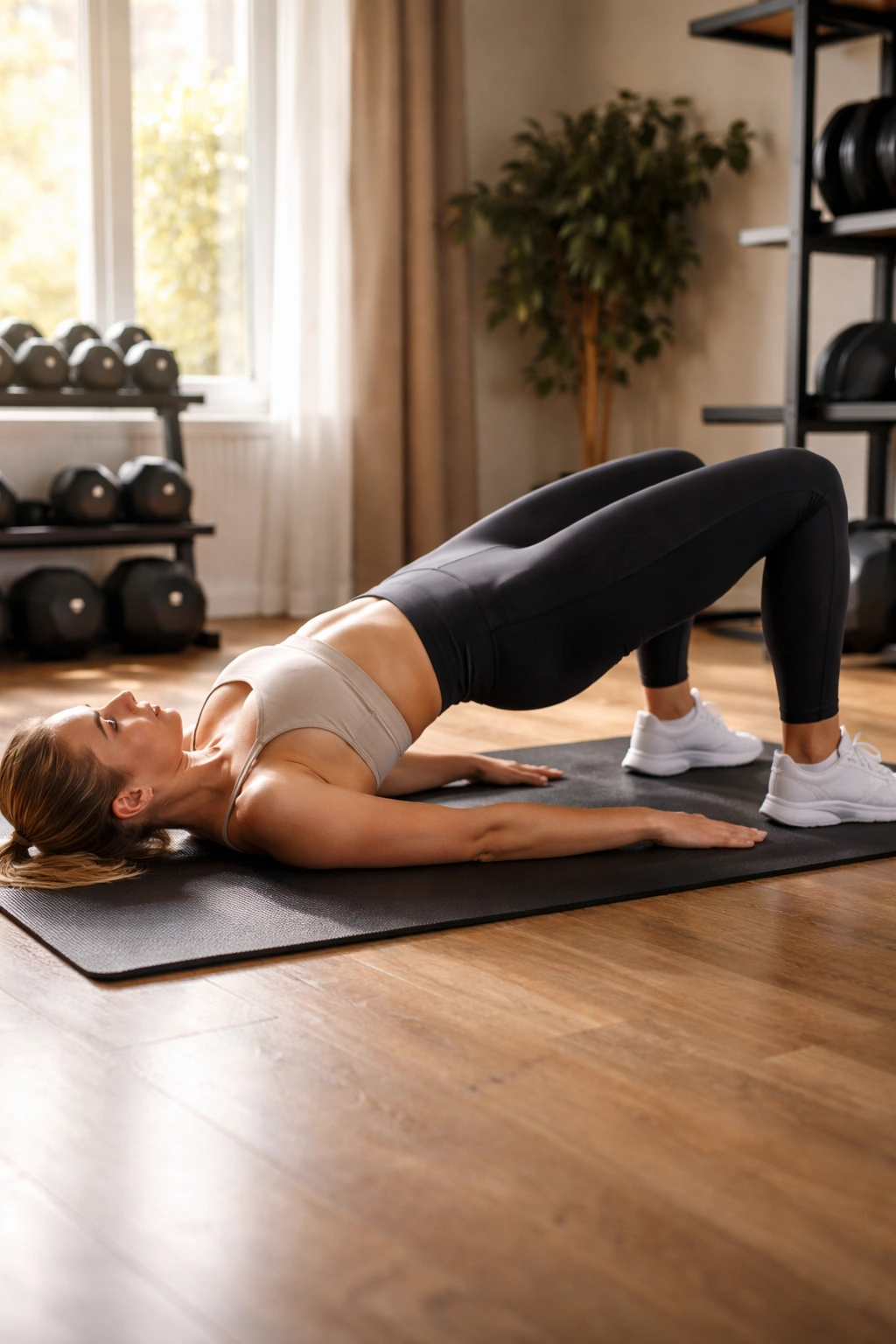
On the floor, the glute bridge feels almost too simple. Then you hit the top and realize how much your hips have been ignoring their job. That is why I like it for beginners. There is no balance problem to solve, no bar to stabilize, no big learning curve. You just lie down, plant your feet, and drive the hips up.
The glute bridge is also useful because it teaches a very specific thing: how to extend the hips without over-arching the lower back. A lot of new lifters have never done that cleanly. This exercise gives them a chance.
Set-Up That Works
Lie on your back with your knees bent and your feet flat. Place your heels far enough away that your shins are close to vertical at the top. Arms can rest on the floor by your sides. Before you lift, gently tuck the pelvis so your lower back does not start the rep already arched.
Then press through your heels and raise the hips until your body makes a straight line from shoulders to knees.
The Top Position Matters
Hold the top for a second or two. Feel the glutes tighten. If the movement turns into a lower-back squeeze, lower the height a bit and reset. The bridge should feel like the hips are doing the work, not the spine.
Good Beginner Variations
- Bodyweight bridge for form practice
- Dumbbell bridge across the hips for extra load
- Single-leg bridge for later, once both sides feel even
- Feet-elevated bridge if you want a little more range of motion
I like to see beginners do 2 to 4 sets of 10 to 15 reps. Enough to feel the glutes work, not so many that the lower back starts making decisions for you.
Boring exercise, useful result. That is the category this one belongs in.
7. Split Squat
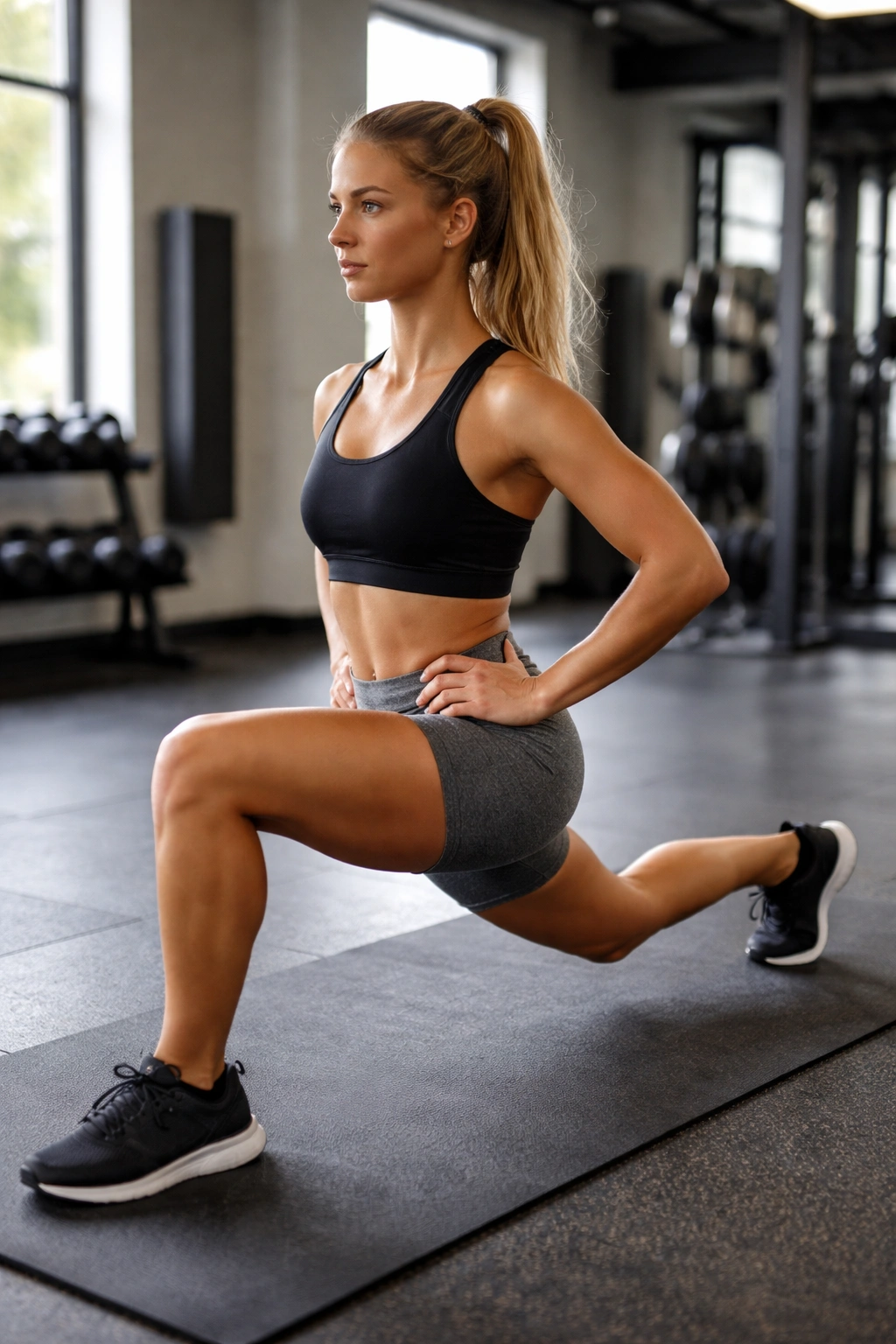
Want one leg to work harder without turning the room into a balance act? Use a split squat. It looks a little like a lunge, but the feet stay planted in one position. That makes it easier to repeat, easier to control, and easier to load once the body gets used to the pattern.
Split squats are one of the best beginner leg exercises if you want stronger quads and glutes without moving around the gym. They also expose left-right differences fast. One side may sink lower or stand stronger, and that gives you real information instead of guesswork.
Why It Feels Different From a Lunge
With a reverse lunge, the legs move apart and then come back together each rep. With a split squat, you set the stance once and work from there. That little change takes some of the balance demand out of the equation and lets the working leg do more of the heavy lifting.
How to Set It Up
- Take one foot forward and one foot back.
- Keep the front foot flat.
- Stay on the ball of the back foot.
- Lower straight down.
- Drive back up through the front leg.
A short stance usually makes the front quad work harder. A longer stance shifts a little more to the glute. You do not need to obsess over that on day one, but it helps to know why the exercise feels different when you adjust your feet by a few inches.
What Beginners Should Watch
The front knee should travel in a line with the toes, not cave inward. The torso can lean a little, which often helps keep balance and makes the movement feel more natural. And if the rear leg burns, that is fine. Annoying, but fine.
I like to hold onto a rack or wall for the first few sessions if balance is shaky. That small support can keep the reps honest. You are training the legs, not auditioning for a tightrope act.
8. Leg Press
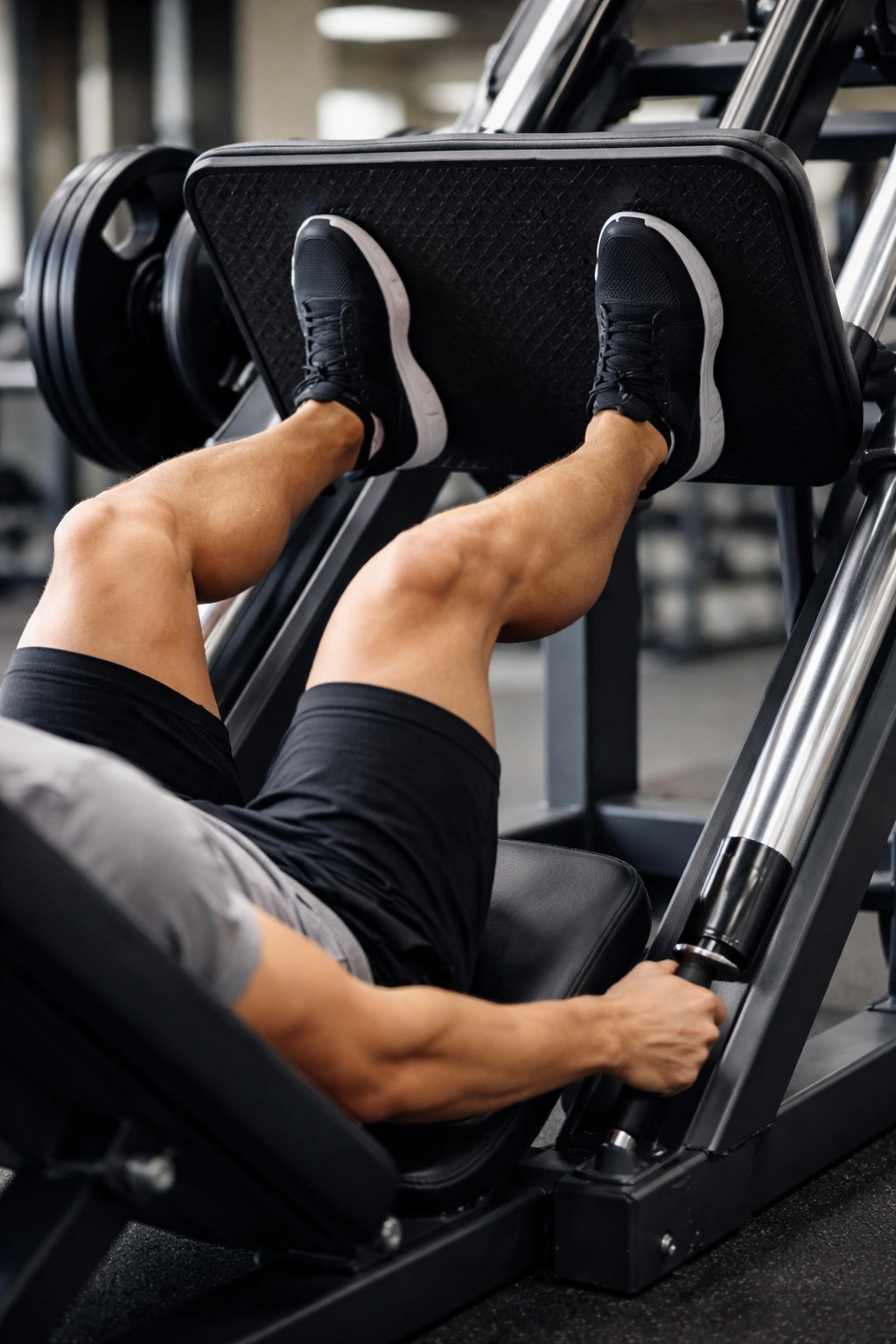
The leg press is not cheating. It is a machine that lets you push hard while your back gets a break. For beginners, that can be a huge win. You still train the quads, glutes, and hamstrings, but the machine gives you a fixed path and some guardrails while you build confidence.
People sometimes act like machine work is lesser work. I disagree. If the machine lets you keep the movement smooth, control the depth, and train hard without a mess of compensations, that is useful training. Plain and simple.
Set the Seat First
Before you load anything, sit in the machine and place your feet on the platform. Your lower back should stay in contact with the pad throughout the rep. If your hips tuck under at the bottom, the seat is too deep or your range is too large.
A good starting point is feet about shoulder-width apart and high enough on the platform that your knees can bend without the heels lifting.
Press With Control
- Lower the sled until your thighs approach your torso.
- Stop before your lower back rounds.
- Press through the midfoot and heel.
- Finish the rep without snapping the knees hard into lockout.
- Keep the motion smooth from start to finish.
Foot Placement Basics
A slightly lower foot position tends to feel more quad-heavy. A slightly higher position usually shifts more work toward the glutes and hamstrings. That can be useful, but beginners do not need to chase every tiny angle change right away. Set the feet in a comfortable middle position and learn the movement first.
If your knees hurt, stop and fix the setup. The sled should not force you into a deep tuck or a sloppy bottom position. Lower the weight, shorten the range a little, and make the reps cleaner.
For beginners, this is a good place to build confidence with heavier leg work. The machine keeps the path steady. You bring the effort.
9. Hamstring Curl
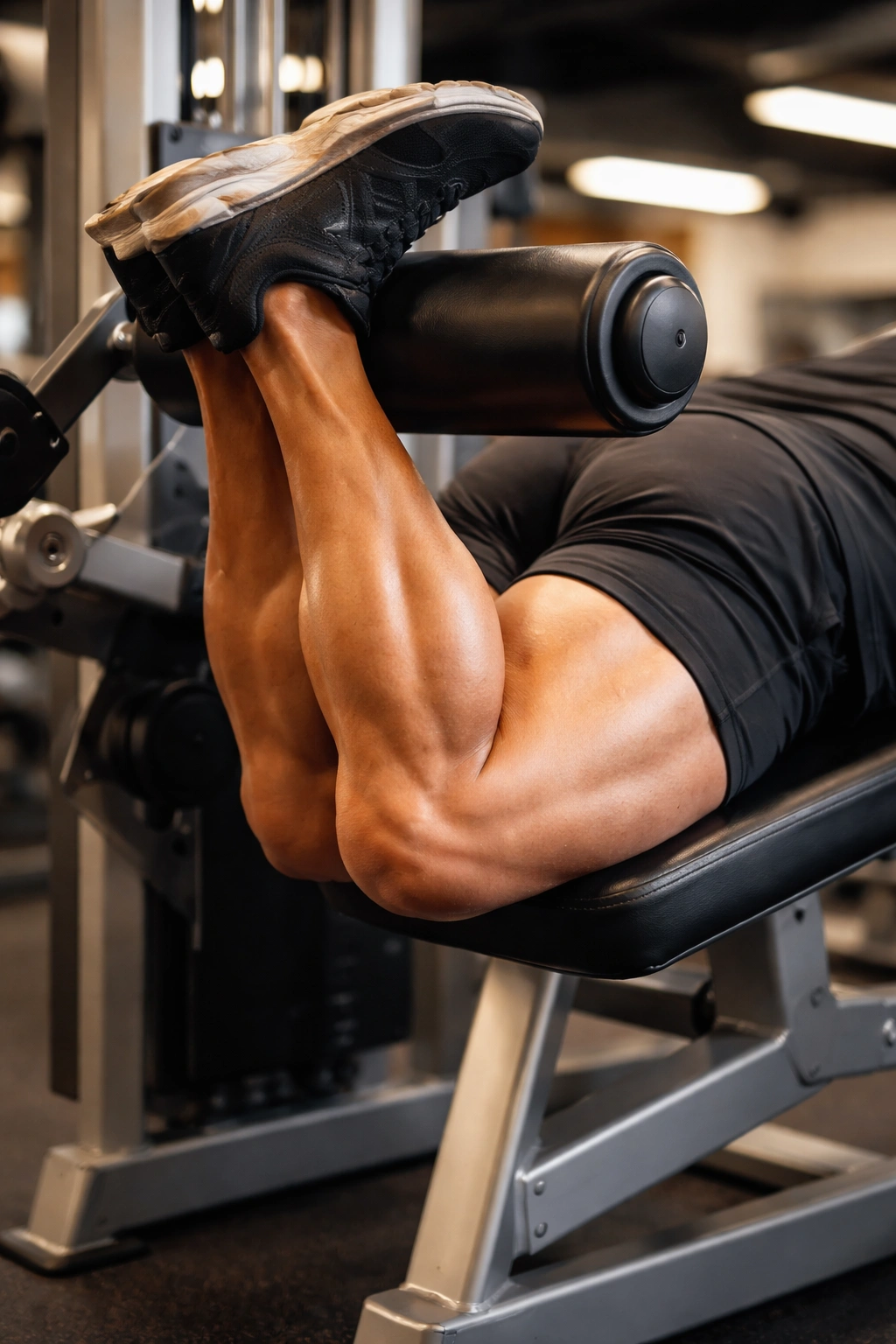
Most beginners can feel their quads fast. Hamstrings are sneakier. That is one reason the hamstring curl deserves a spot on a balanced leg day. It gives the back of the thigh direct work without asking you to balance, hinge, or squat at the same time.
Whether the machine is seated or lying down, the rule is the same: bend the knee against resistance, then lower the weight under control. Simple movement. Harder than it looks.
What to Look For
The pad should sit just above the heel or lower calf, depending on the machine. Your hips need to stay down and steady. If your butt lifts or your lower back arches hard, the stack is probably too heavy.
The curl itself should feel smooth. Pull the pad in, squeeze the hamstrings for a moment, and lower slowly enough that the weight does not slam back into place.
Helpful Cues
- Keep the hips pinned to the pad.
- Curl through a full range you can control.
- Pause briefly at the top.
- Lower for about 2 or 3 seconds.
- Stop if the motion turns jerky.
Why It Matters
Hamstrings help with knee control and balance the work that the quads do on squats, lunges, and step-ups. If you skip them for too long, the front of the legs can take over everything and leave the back side undertrained. That is a common beginner mistake.
A clean set of hamstring curls often feels tighter and more focused than big compound lifts. That is the point. Not every leg exercise has to be dramatic.
If the stack is banging, the weight is too high. There is no prize for making the machine sound angry.
10. Standing Calf Raise
Calves look simple until you try to train them well. Then the details show up fast. A standing calf raise works the gastrocnemius, the larger calf muscle that crosses the knee, and it does best with a full stretch and a controlled squeeze. Half reps on calf work are a waste of time. The muscle is too small and too stubborn for that.
You can do standing calf raises on a machine, on a step with dumbbells, or even with bodyweight if that is what you have. The setup matters less than the execution. Full range, pause, control, repeat.
The Three Details That Matter Most
- Lower the heels slowly until you feel a stretch at the bottom.
- Pause for a second on the top and squeeze hard.
- Do not bounce from rep to rep.
That bottom stretch is the part people rush. They rise, drop, and bounce like they are trying to get the set over with. The calf muscle does not love that. It tends to respond better when you make the full range honest.
A Clean Beginner Version
Stand with the balls of your feet on a step or platform and let your heels hang off the edge. Hold onto a wall or rail if you need balance. Rise onto your toes, pause, and lower until the heels dip below the level of the step. Keep the ankles moving smoothly.
How to Program It
Calves usually handle higher reps well. Try 3 to 4 sets of 12 to 20 reps with a deliberate tempo. If the last few reps are sloppy, stop a little earlier and make the next set cleaner. That is better than grinding out ugly reps with no real stretch.
If you want a simple beginner leg day, this is a smart place to end. One squat pattern. One hinge. One single-leg move. One machine exercise. Calves. That lineup covers a lot more ground than a random mix of hard-looking exercises that nobody can repeat with good form. And that matters more than chasing novelty.
Simple is fine. Boring, even. Boring is usually where good form lives.
