



Power yoga workouts have a funny way of looking calm right up until your lungs start negotiating for mercy. The pace is brisk, the holds are honest, and the sweat shows up fast enough to make the mat slippery if you’ve gotten lazy with your setup.
That is the whole charm. You’re not just moving through pretty shapes. You’re stacking strength, balance, and heat in the same session, which is why power yoga can feel more demanding than it looks from across the room.
I like this style of practice for one simple reason: it rewards attention. A rushed chaturanga feels weak. A lazy Warrior II turns into a wobble. A sloppy plank turns into a shoulder complaint. The good versions are clean, controlled, and hard in the way that makes you stand up a little straighter afterward.
A grippy mat helps. So does a room with enough space to step back without clipping a coffee table. The twenty power yoga workouts below each stress a different part of the body or a different kind of stamina, so you can pick the one that fits your mood instead of forcing yourself into the same old flow.
1. Power Yoga Sun Salutation Sprint
This is the fastest way to get warm without feeling like you’re just bouncing around. Sun salutations are the backbone of a lot of power yoga workouts because they stack movement, breath, and coordination from the first minute. Done with intention, they wake up your shoulders, legs, and core before your brain has time to wander.
How to Run It
- Move through 3 rounds of Sun Salutation A with a 4-count inhale and exhale pattern.
- Add 2 rounds of Sun Salutation B, keeping Chair Pose for 3 breaths each time.
- Step or jump back, but keep the landing quiet.
- Finish with Downward Dog for 5 breaths and a long forward fold.
Your goal is not speed for its own sake. It’s rhythm. If the breath gets ragged, slow the transitions down a notch and keep the shapes clean. I’d rather see a crisp step-back than a messy jump-back any day.
Best cue: press the floor away in Plank and let the exhale carry you through Chaturanga without dumping into the shoulders.
2. Warrior II Thigh Burn Flow
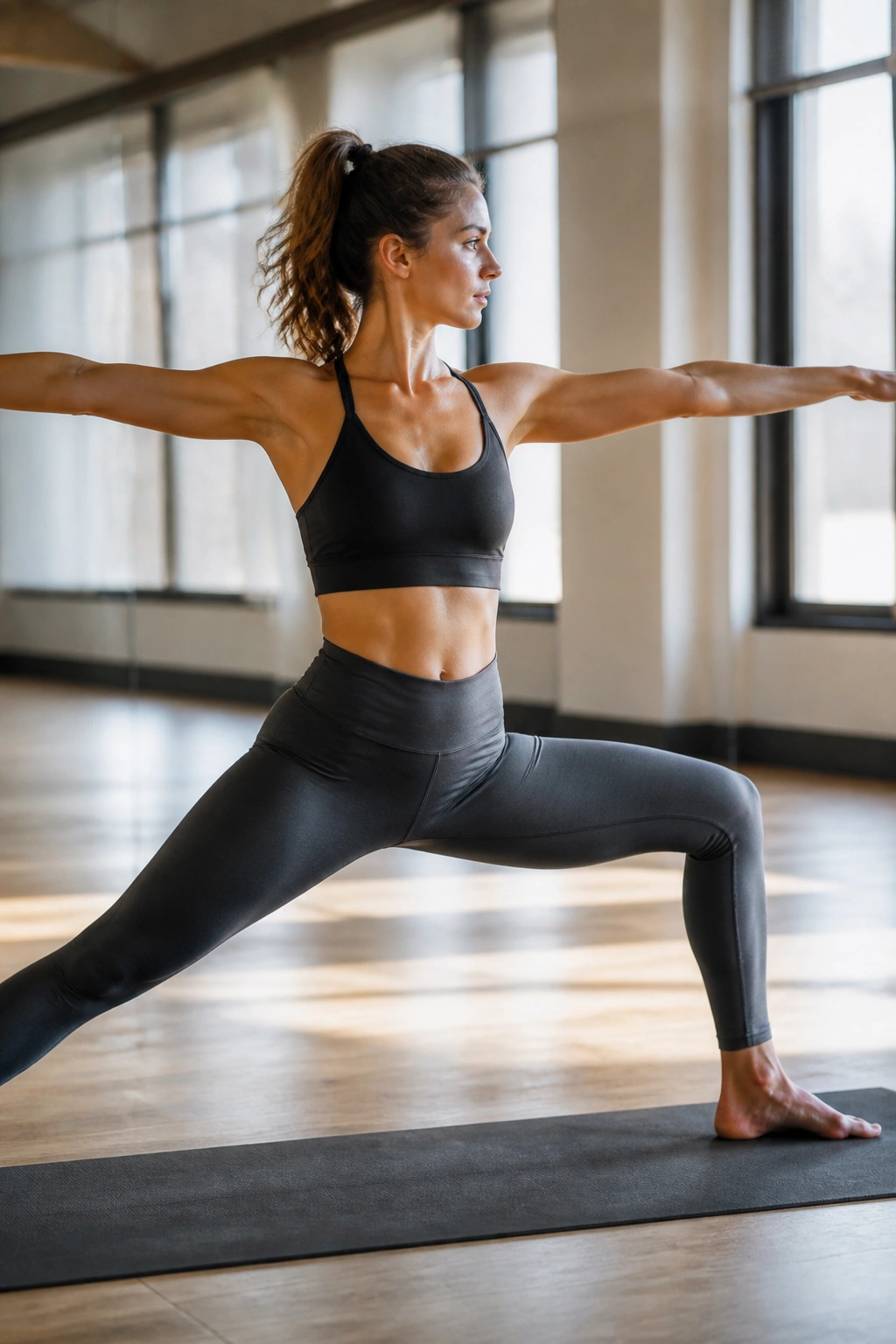
Want a lower-body burner that doesn’t feel like a random leg workout in yoga clothes? This is the one. Warrior II, Reverse Warrior, Side Angle, and Crescent Lunge can make your thighs shake in a very direct, very honest way.
The trick is to stay in the legs instead of hanging out in the joints. Keep the front knee tracking over the second or third toe, root the back heel down hard, and let the outer edge of the back foot do some work. If your front leg burns after 30 seconds, that’s normal. If your knee hurts, that’s a setup problem, not a toughness problem.
Run 3 rounds on each side, holding each pose for 5 breaths. Add a small pulse in Warrior II if you want more heat, but keep it tiny. Huge pulses turn into wobbly dancing, and the legs don’t get the same clean load.
This flow works well when you want strength without floor work. It also leaves your hips and ankles feeling more awake than fried, which matters if you still need to walk up stairs after class.
3. Chaturanga and Side Plank Strength Builder
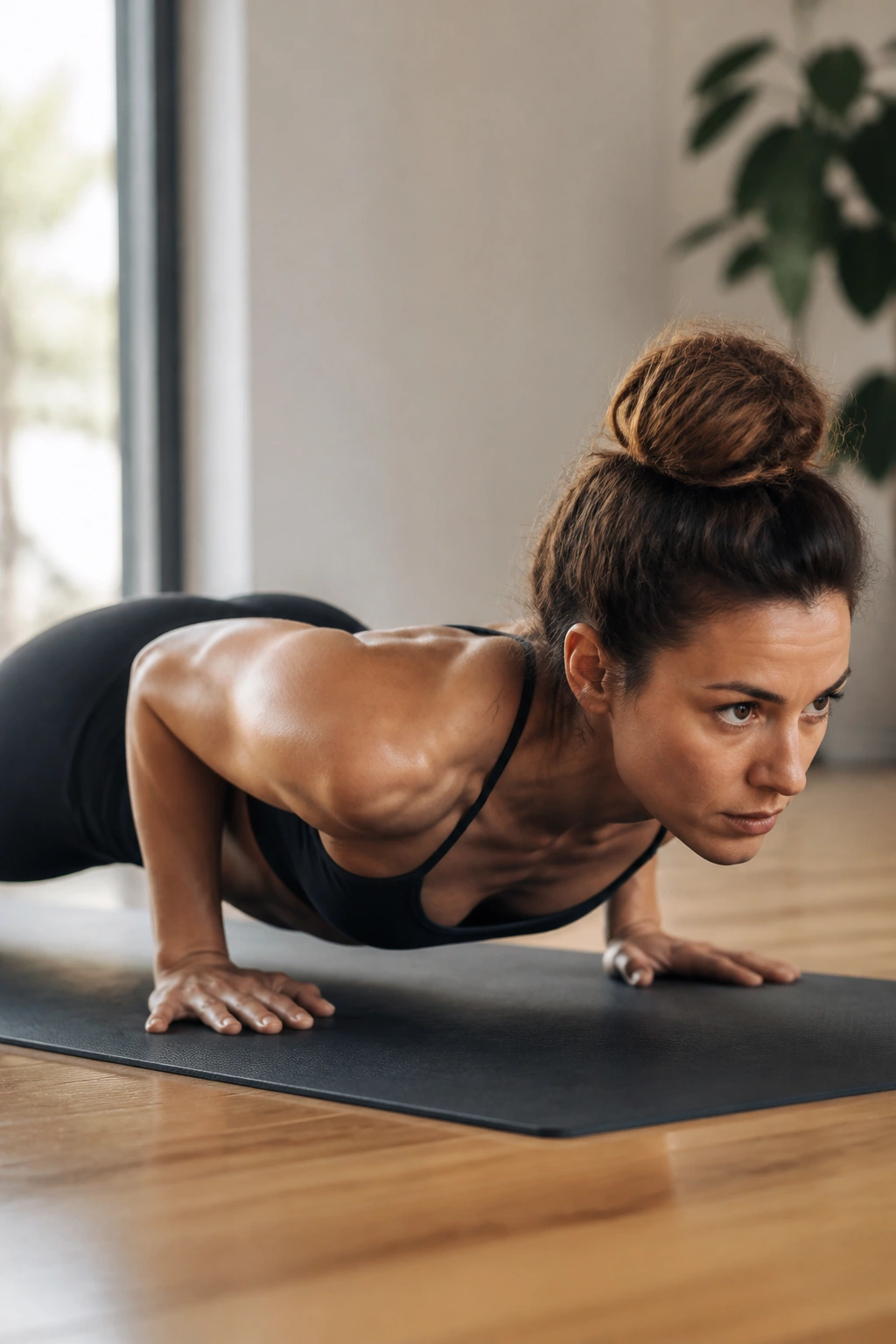
If your shoulders give up before your lungs do, this is the sequence that tells the truth. Chaturanga, Side Plank, Forearm Side Plank, and Plank hold together a really useful kind of upper-body strength: not just pushing power, but control as you lower and stabilize.
Start with 4 slow rounds. Lower from Plank to Chaturanga on a 3-count exhale, pause with elbows near the ribs, then come through Upward Dog or Cobra. From there, roll onto one side for Side Plank, holding 3 to 5 breaths. If full Side Plank feels spicy in the wrist or shoulder, drop the bottom knee. Still hard. Still useful.
What to Watch For
- Elbows should stay close, not flare wide.
- Chest reaches forward, not straight down.
- The neck stays long.
- The bottom hip in Side Plank does not sag.
A lot of people rush these shapes because they look simple. They aren’t. Slow them down and they start acting like real strength training.
4. Boat Pose Core Blast
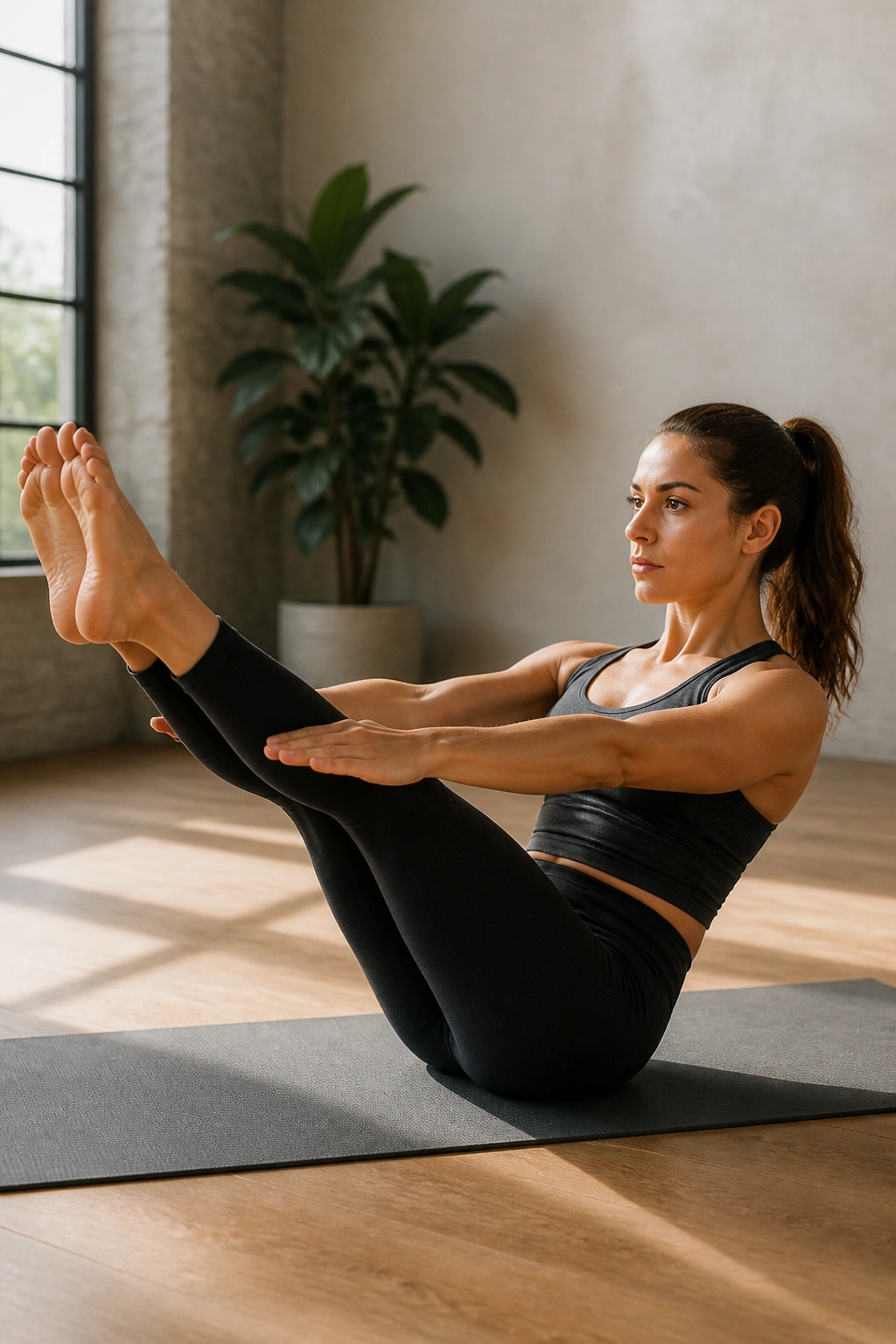
Boat pose gets better when you stop chasing a fancy shape. A lot of people think core work in yoga is all about looking tidy. It’s not. The useful part is the steady tension that keeps your spine long while your hip flexors and deep abs do actual work.
Set up with 5 rounds of Boat Pose, holding each round for 20 to 30 seconds. Lower halfway to Low Boat on the next round, then come back up. After that, add seated twists or toe taps if you want to make the core work harder without turning the whole thing into chaos.
Short rests matter here. Ten to fifteen seconds is enough. Any longer and the heat drops. Any shorter and form starts leaking, which is usually when the low back gets involved and starts complaining.
A cleaner version looks like this: sit tall, lift the chest first, then bring the shins up. If your back rounds immediately, keep the feet lower. The body learns more from good tension than from bad heroics.
5. Glute and Hamstring Ladder Flow
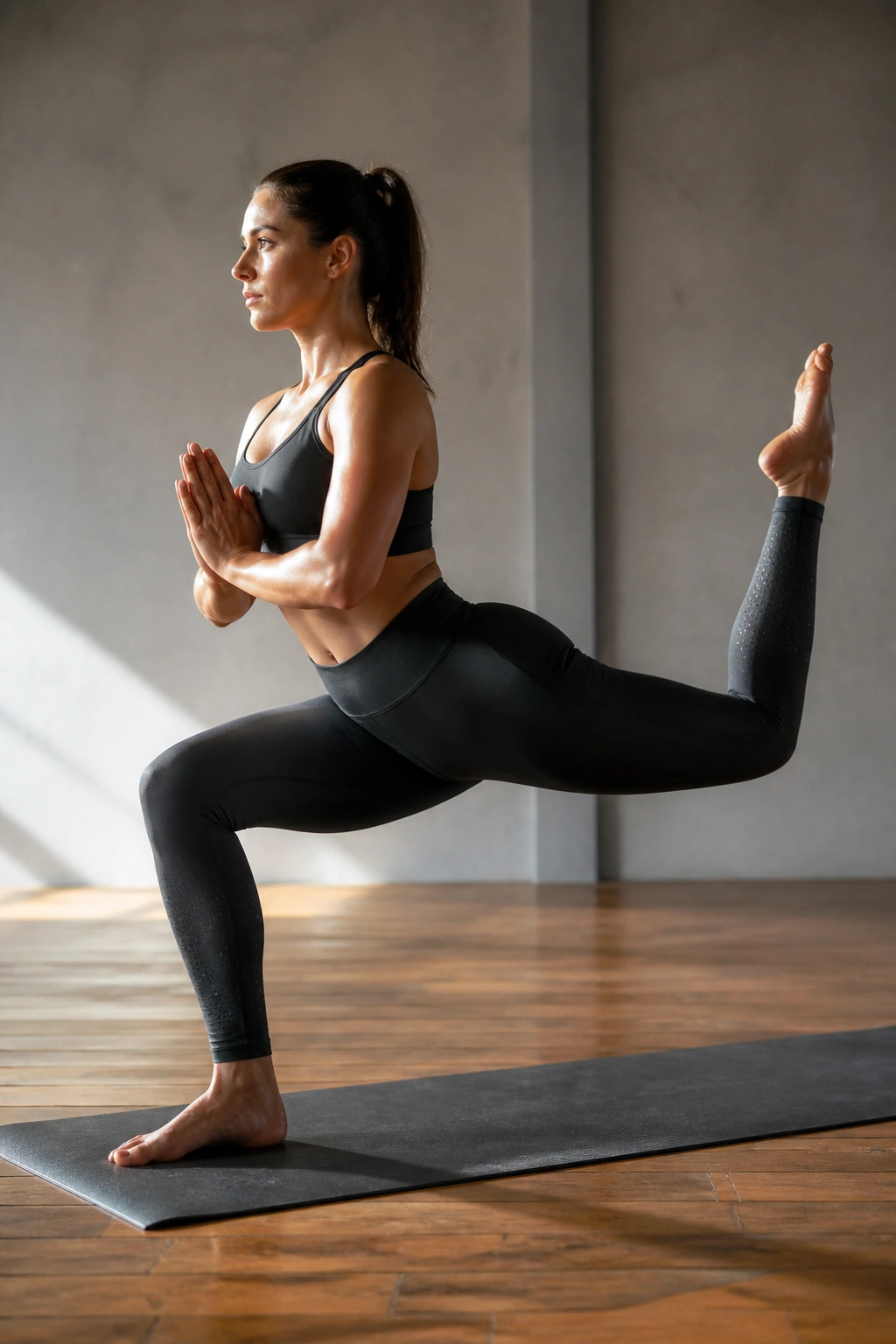
Unlike a cardio-heavy vinyasa, this one asks for patience. The glutes and hamstrings do their best work when the movement is controlled and the transitions are slow enough for you to feel where the load lives.
Build the ladder with Crescent Lunge, Half Split, Pyramid Pose, and Warrior III. Hold each pose for 3 to 5 breaths, then move to the next shape without collapsing out of the standing leg. The back leg in Crescent should feel active, not sleepy. In Half Split, keep the hips squared as much as your body allows, and don’t yank yourself into depth just because the pose is named like a stretch.
This is a smart session for runners, cyclists, and anyone who sits for long hours. The hamstrings often feel tighter than they are because the glutes have gone a bit lazy. A few strong rounds of this flow can wake them up without needing a giant hamstring stretch.
If you want more heat, repeat the ladder twice on each side. That usually does the trick.
6. Standing Balance Sweat Set
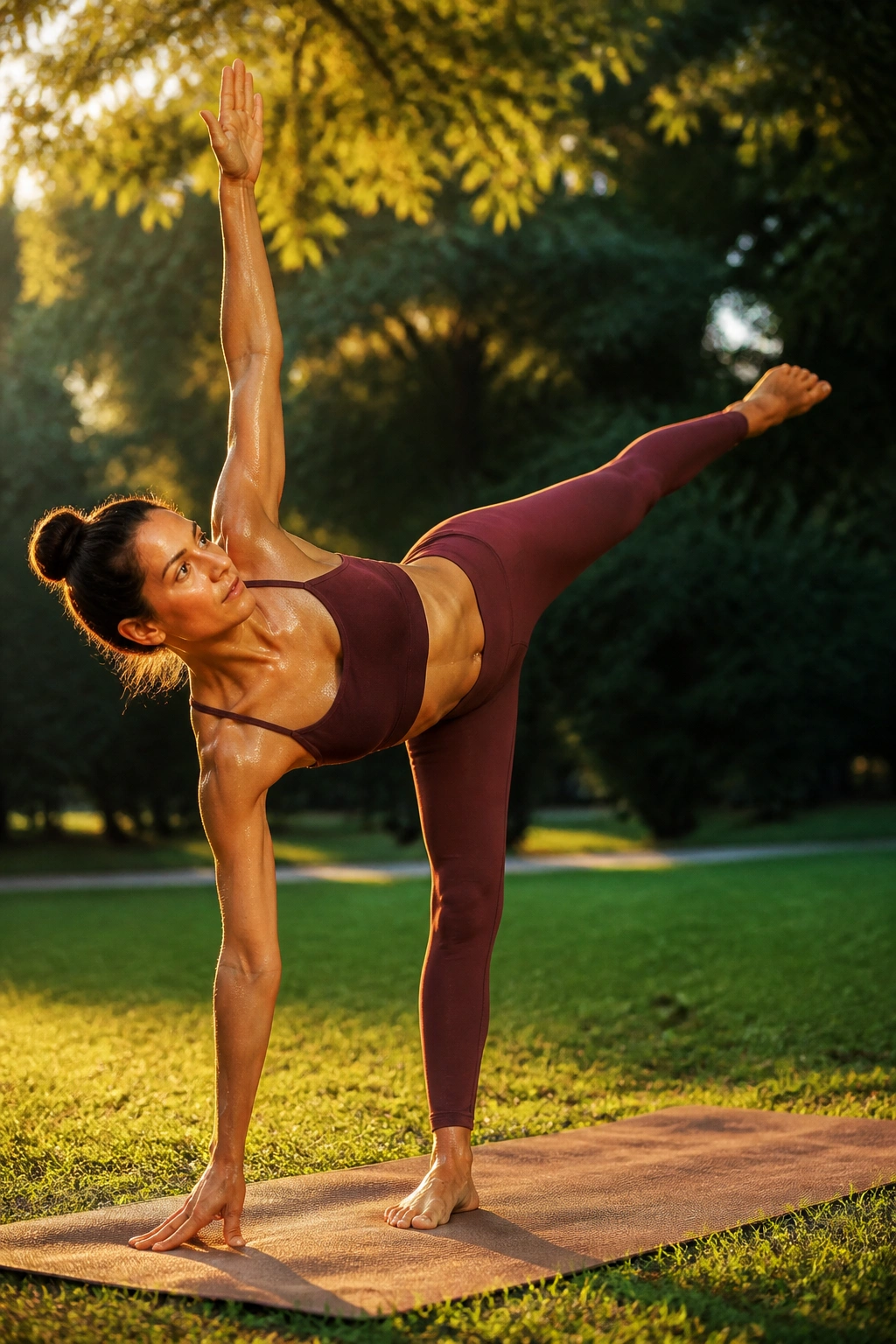
Tree Pose sounds gentle until your ankle starts wobbling and your standing foot tries to make new plans. Standing balance work brings a sneaky kind of heat because every tiny correction costs energy. You never get to coast.
Move through Tree, Eagle, Dancer, Half Moon, and Standing Hand-to-Big-Toe Pose on each side. Hold each balance for 4 to 6 breaths, then switch. If you need the wall, use it. That is not cheating. It’s smart practice.
The interesting part is how quickly the work spreads upward. A shaky foot affects the knee. The knee affects the hip. The hip affects the waist and then the shoulders. Suddenly you’re doing full-body stabilization without a single jump.
Tree Pose is a good place to start. Keep the lifted foot below the knee if your hip feels cranky. Eagle wraps the body into a tight knot and asks you to breathe anyway. Half Moon opens the standing hip and lights up the outer thigh. Dancer gives you back-chain work and a small dose of drama.
One clean round on each side can feel harder than a sloppy ten-minute flow.
7. Revolved Lunge and Twist Flow
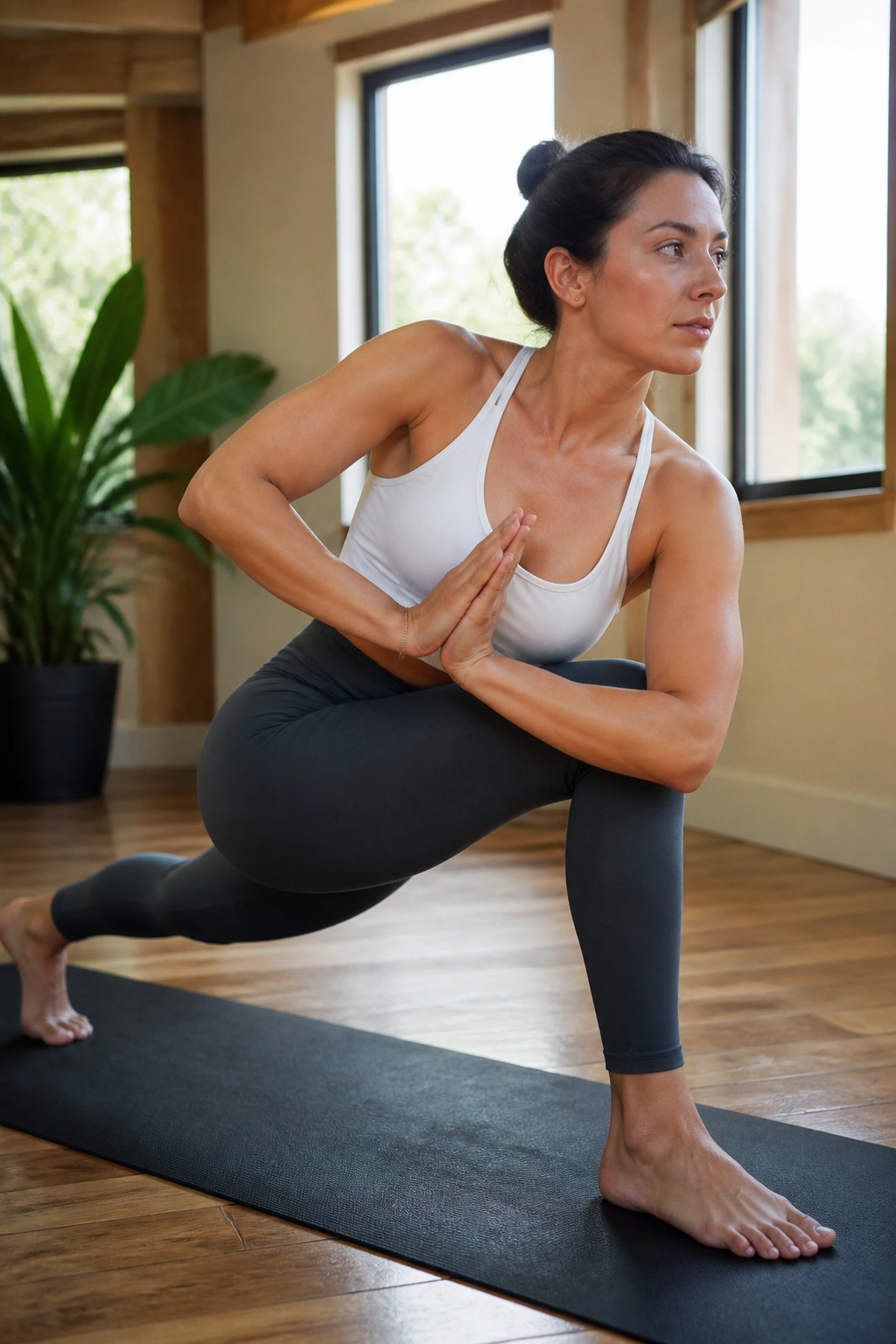
Why does twisting feel so tiring? Because a strong twist is never just a spinal twist. It asks the legs, the ribs, and the obliques to hold their own while the torso rotates over a stable base.
Start in Low Lunge, move into Crescent Twist, then step back to Plank and repeat on the other side. Add Revolved Chair if you want more leg work, and finish with a twisted Lizard for a lower, spicier version. Keep the twist active instead of hanging on your knee or collapsing into the floor.
How to Use It
Do 2 to 4 rounds per side, spending 3 breaths in each twist and 1 breath in each transition. If your balance falls apart, widen the stance a little. A broader base often gives you a cleaner twist than trying to force depth.
The nice thing about this flow is the way it wakes up the midsection without cranking on the neck. Keep the gaze soft, the collarbones wide, and the back knee lifted if you want more intensity. Drop the knee if the hips are tight. Both versions work.
8. Chair Pose Pulse Circuit
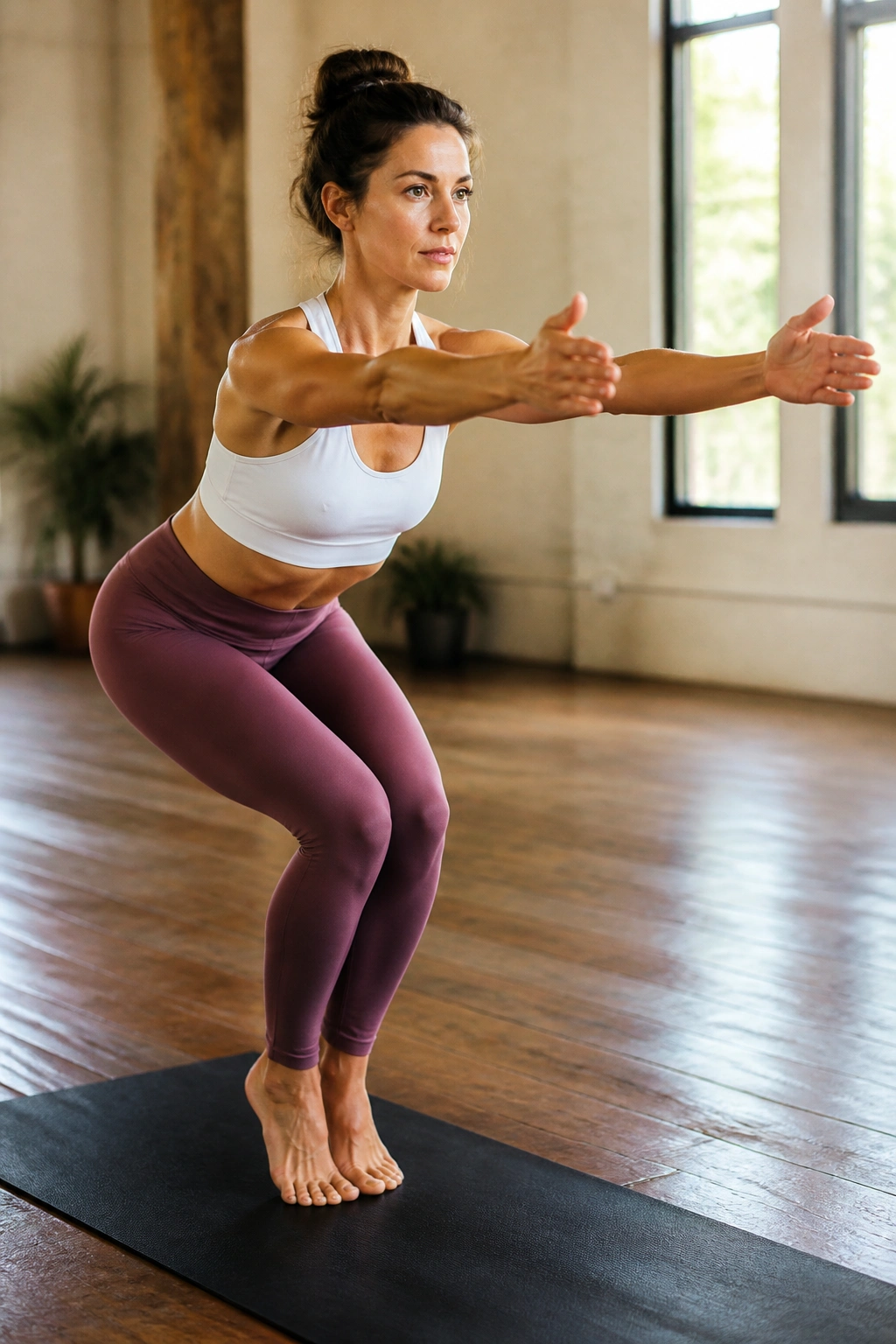
You know the moment. Thighs start buzzing, heels want to lift, and your face says, “I had better be getting something out of this.” Good. Chair Pose deserves a place in any power yoga workout because it turns bodyweight into a slow burn without needing a lot of space.
Set up a 4-minute circuit: Chair Pose hold, tiny pulses, Chair with heel lifts, and a forward fold reset. Repeat the circuit twice. Keep the knees tracking forward, not caving inward, and spread the toes wide so the arches stay awake.
- Hold Chair for 30 seconds.
- Pulse 10 times with a one-inch range.
- Lift and lower the heels 8 times.
- Fold forward for 3 breaths.
The pulses should be small enough that you could still talk, if you had to. Big bouncy pulses turn the pose into a balance mess. Small pulses keep the load where it belongs: thighs, glutes, and the upper back that has to keep you from folding in half.
Chair Pose has a reputation for being boring. It only feels boring when it’s done softly.
9. Hip-Opening Power Flow
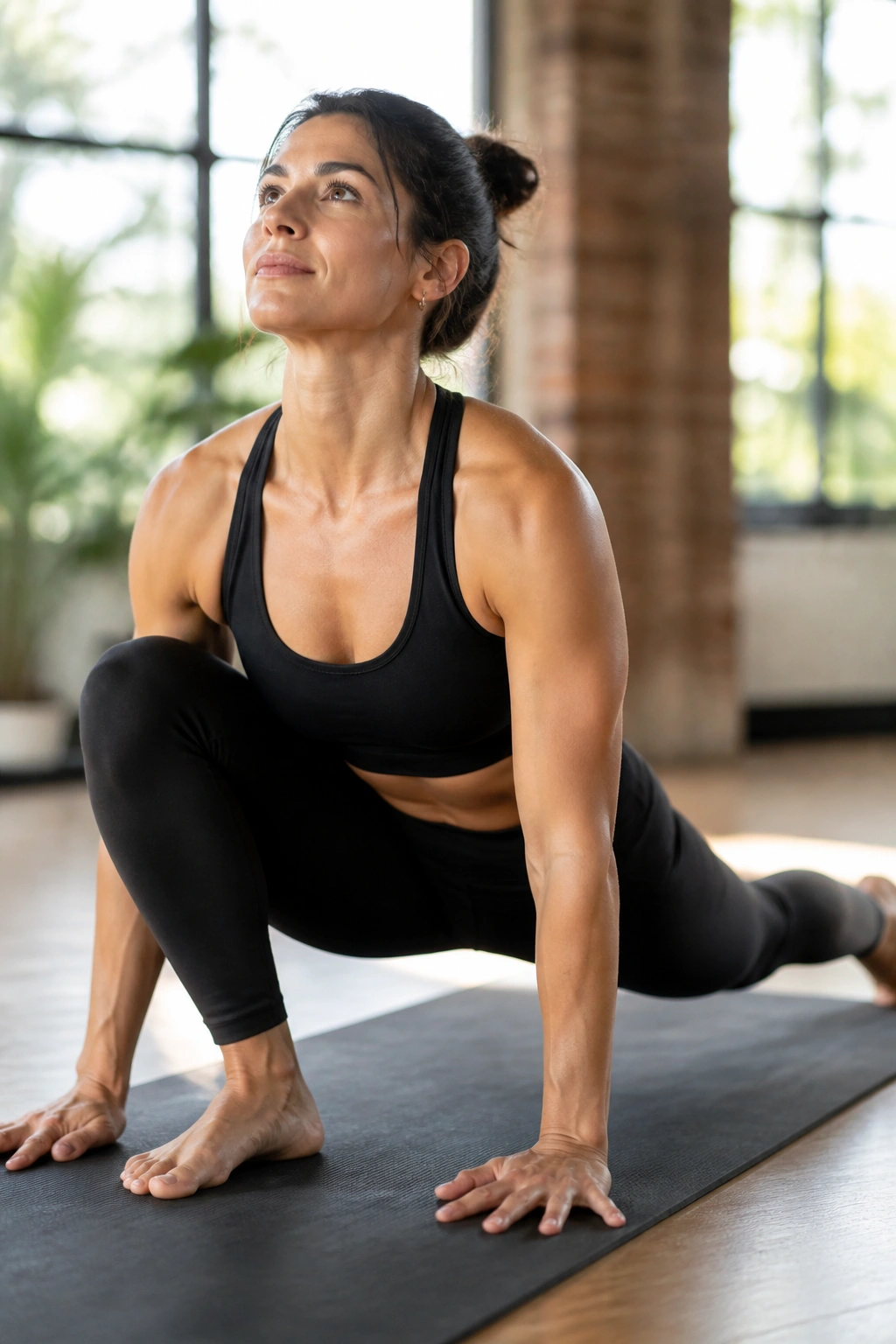
Hips open better when they have to work a little. Passive stretching can feel nice, but active holds usually do more for strength, especially if your hips get tight from sitting, running, or biking.
This flow moves through Lizard, Pigeon, Bound Angle, and Frog, but none of them should be floppy. Keep the muscles lightly on. In Lizard, press the floor away and keep the back leg awake. In Pigeon, stay lifted through the chest rather than sinking into the front hip like a sack of flour. Bound Angle is nicer when you sit tall and gently press the knees away with the elbows. Frog? Keep it short unless your hips already know the pose well.
Three rounds is plenty. Hold each shape for 5 to 8 breaths, then walk out before the joints get lazy. That active quality matters. It’s what makes the sequence feel like strength work instead of just a long stretch.
I like this flow after a hard week of sitting. It changes the way the hips feel when you stand up from a chair, which is a small thing until you notice it every hour.
10. Back-Body Chain Builder
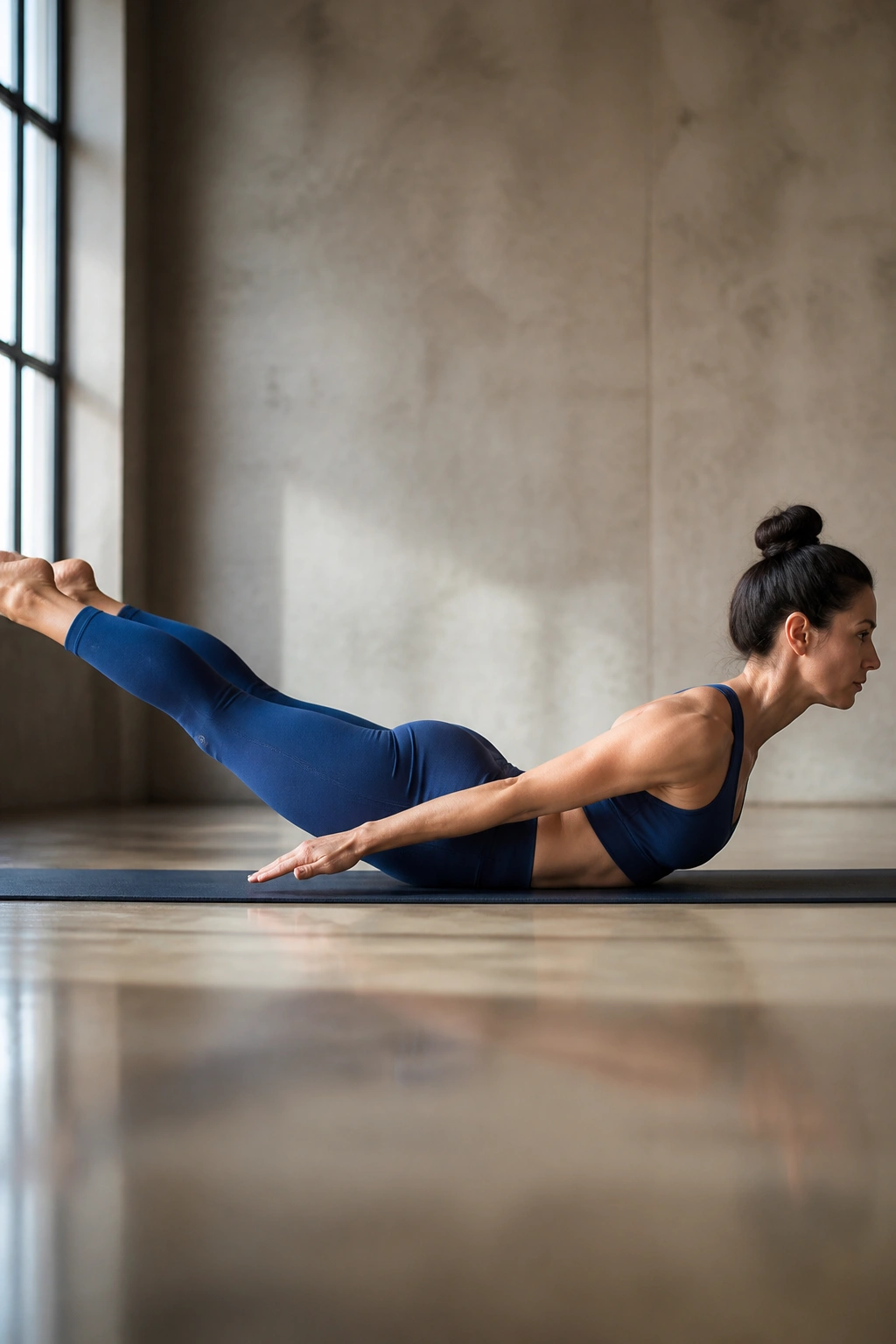
Most people spend too much time training the front of the body. This sequence fixes some of that. Cobra, Locust, Bow, and Bridge Pose light up the back of the legs, the glutes, the spinal muscles, and the rear shoulders in a way that feels very different from push-up style work.
The standout move here is Locust. Lift the chest and legs just enough to feel the back line engage, then lower with control. No flinging. No craning the neck. If the low back pinches, lower less and widen the feet a bit. Bridge Pose finishes the job by teaching the glutes to support the pelvis without cramping the hamstrings.
This workout is a strong choice for anyone who lives at a desk. The posture reset is real, but the bigger payoff is how the body learns to extend without dumping into the lower spine.
Do 3 sets of the sequence, holding each pose for 4 breaths. Rest on the belly between rounds. Short rests keep the body warm and the work honest.
11. Side Body Sculpt Flow
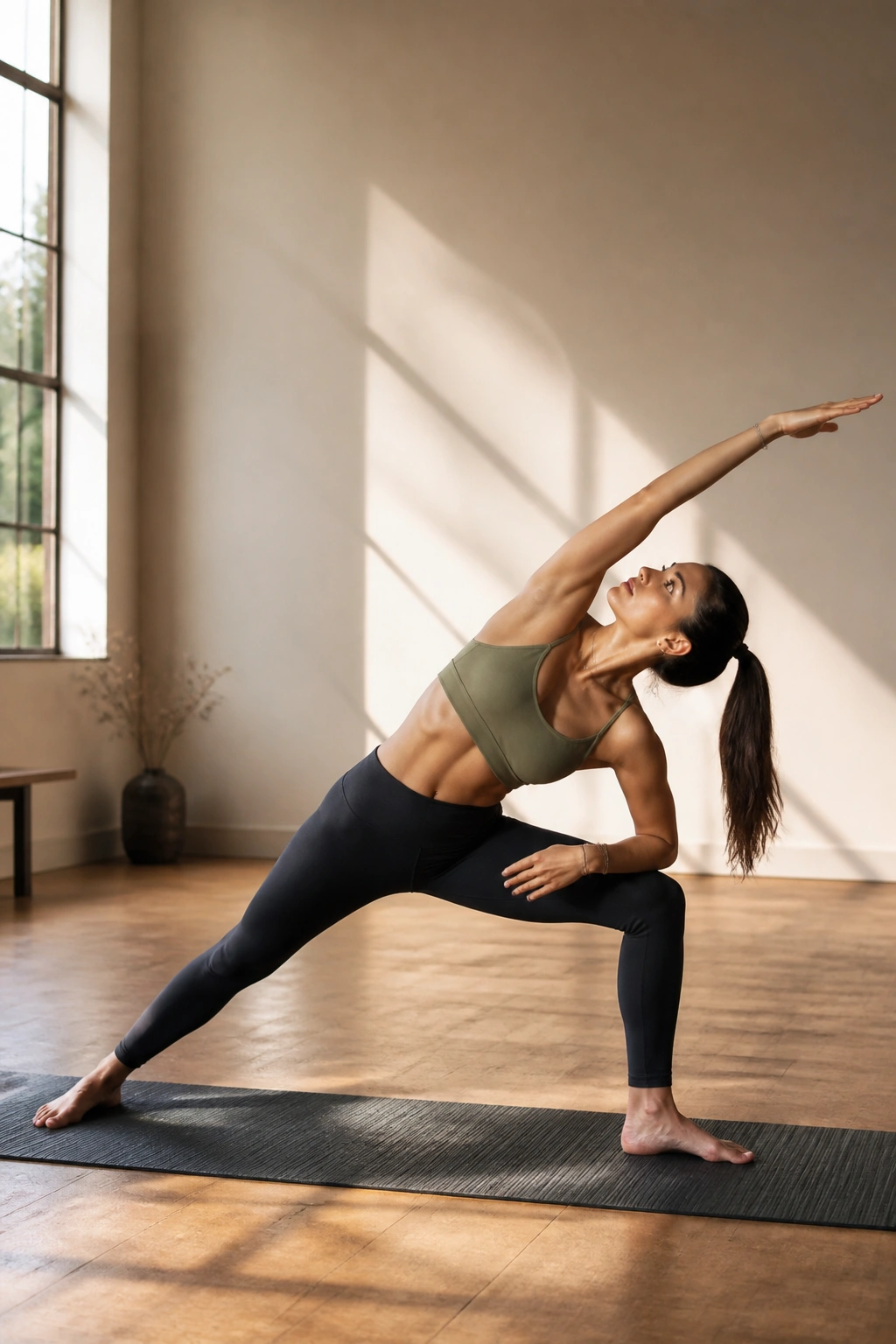
Side body work is underrated. The obliques, lats, and outer hips matter when you twist, balance, reach overhead, or simply stay upright without feeling creaky. This flow uses Gate Pose, Triangle, Extended Side Angle, and Side Plank to put those lines to work.
Keep the upper body long. That’s the whole game. If you crunch toward the floor in Triangle, you lose the side-body line and the pose becomes a hamstring stretch with a tilted chest. If you stack in Side Plank but collapse through the waist, the shoulder has to carry too much.
I like this sequence because it gives the body a clean shape to organize around. One side feels long. The other side feels loaded. That contrast is where the strength shows up.
Move slowly and breathe into the ribcage. Hold each pose for 3 to 5 breaths, then switch sides. If the wrist gets tired in Side Plank, drop the bottom knee and keep going. The line still counts.
A side-body flow can look soft. It is not soft.
12. Slow-Motion Power Yoga Flow
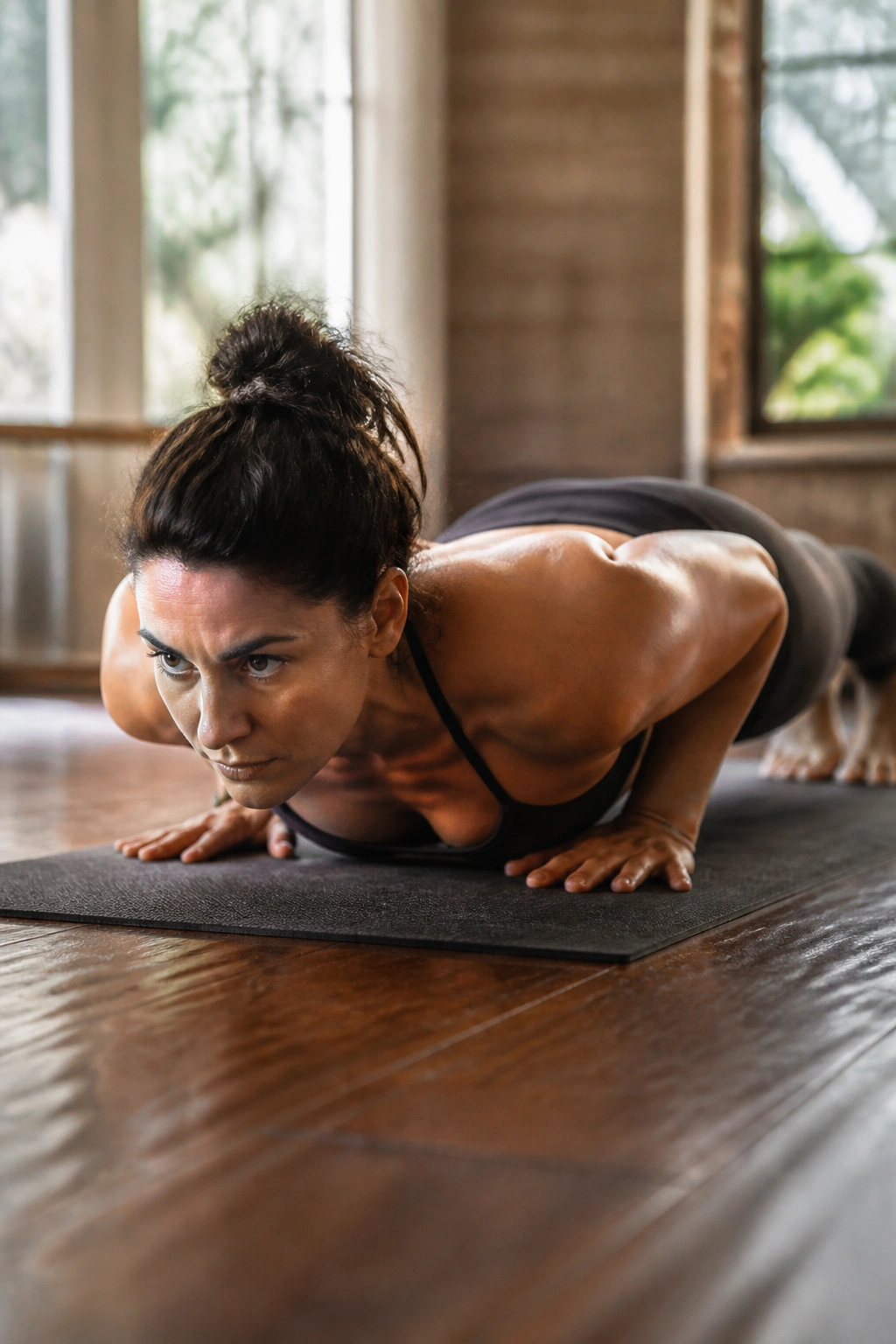
Can a slower flow still make you sweat? Absolutely. In some ways, it works better because the muscles never get a break from the tension. A five-count lowering phase in Chaturanga or a slow step-through from Down Dog can burn more than a fast, flashy sequence that never really lands.
How to Slow It Down Without Going Cold
Use 5-count descents from Plank to Chaturanga, then pause for 2 breaths before moving into Cobra or Upward Dog. Step one foot forward at a time instead of hopping. Hold High Lunge, Warrior II, and Reverse Warrior for longer than feels comfortable. Not painful. Just long enough to force attention.
- Lower to Chaturanga over 5 slow counts.
- Hold each standing shape for 4 breaths.
- Move between sides without rushing.
- Keep the exhale longer than the inhale when fatigue sets in.
The result is a workout that feels more controlled and somehow more demanding. Slower movement exposes weak spots in the shoulders, wrists, and hips faster than speed does. That can be annoying. It is also useful.
13. High-Lunge Endurance Circuit
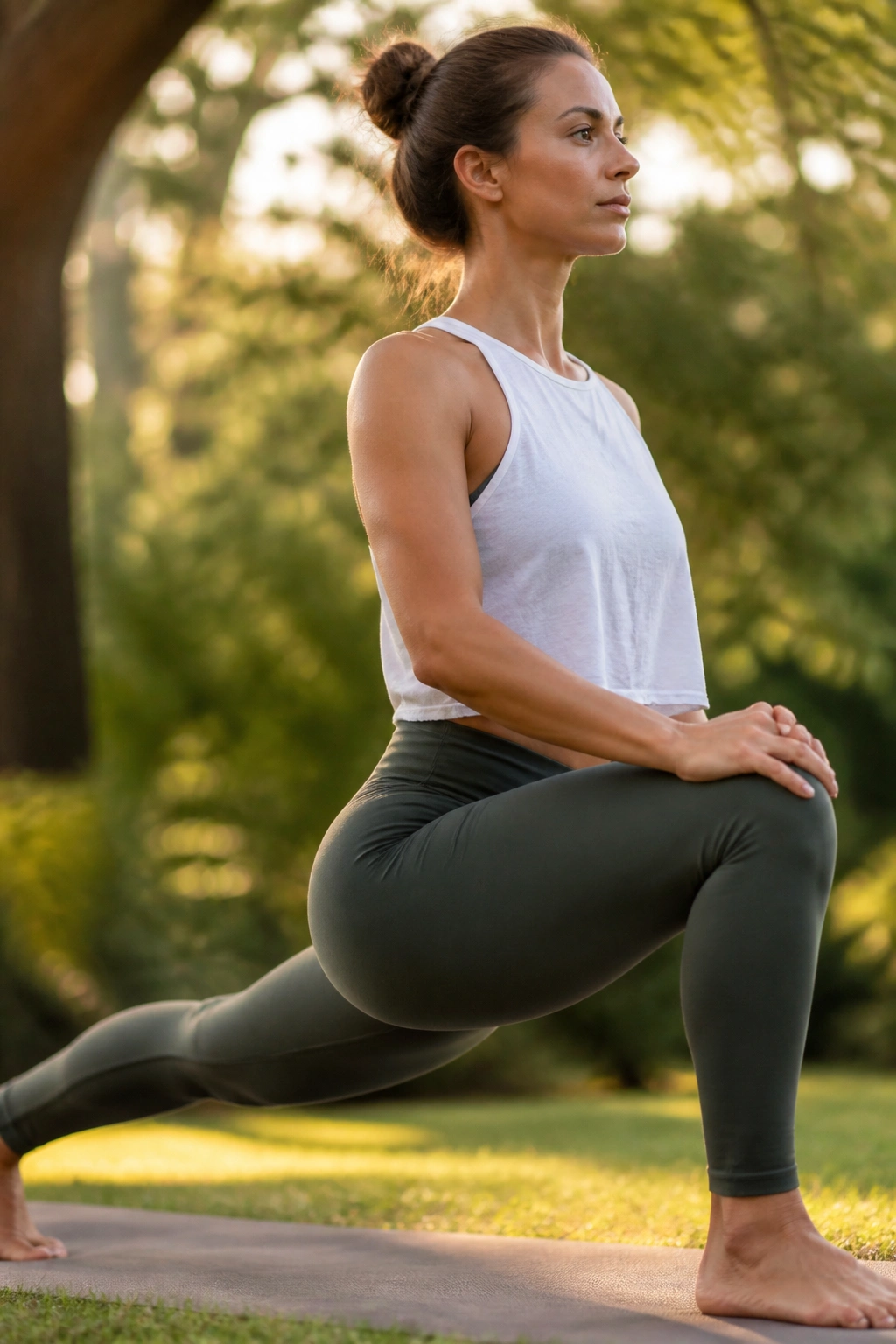
At some point, everyone doing power yoga hits the same thought: “Why does this feel like a leg day?” High Lunge is the answer. It looks tidy, but it burns because your front leg is supporting load while your back leg keeps reaching for the floor that it never quite gets to touch.
Cycle through High Lunge, Crescent Twist, Knee Drive, and Warrior III Arms. Do 45 seconds per shape, then switch sides. Keep the torso tall and resist the urge to lean forward every time the thigh starts shaking. Shaking is part of the deal.
Here’s what matters most:
- Front heel stays heavy.
- Back heel reaches long.
- Knee drives stay controlled, not flung.
- Shoulders stay away from the ears.
This circuit is handy when you want a sweatier session without a lot of floor time. It also builds the kind of leg endurance that helps in longer flows, where your thighs have to keep answering the bell over and over.
14. Forearm Plank and Dolphin Sequence
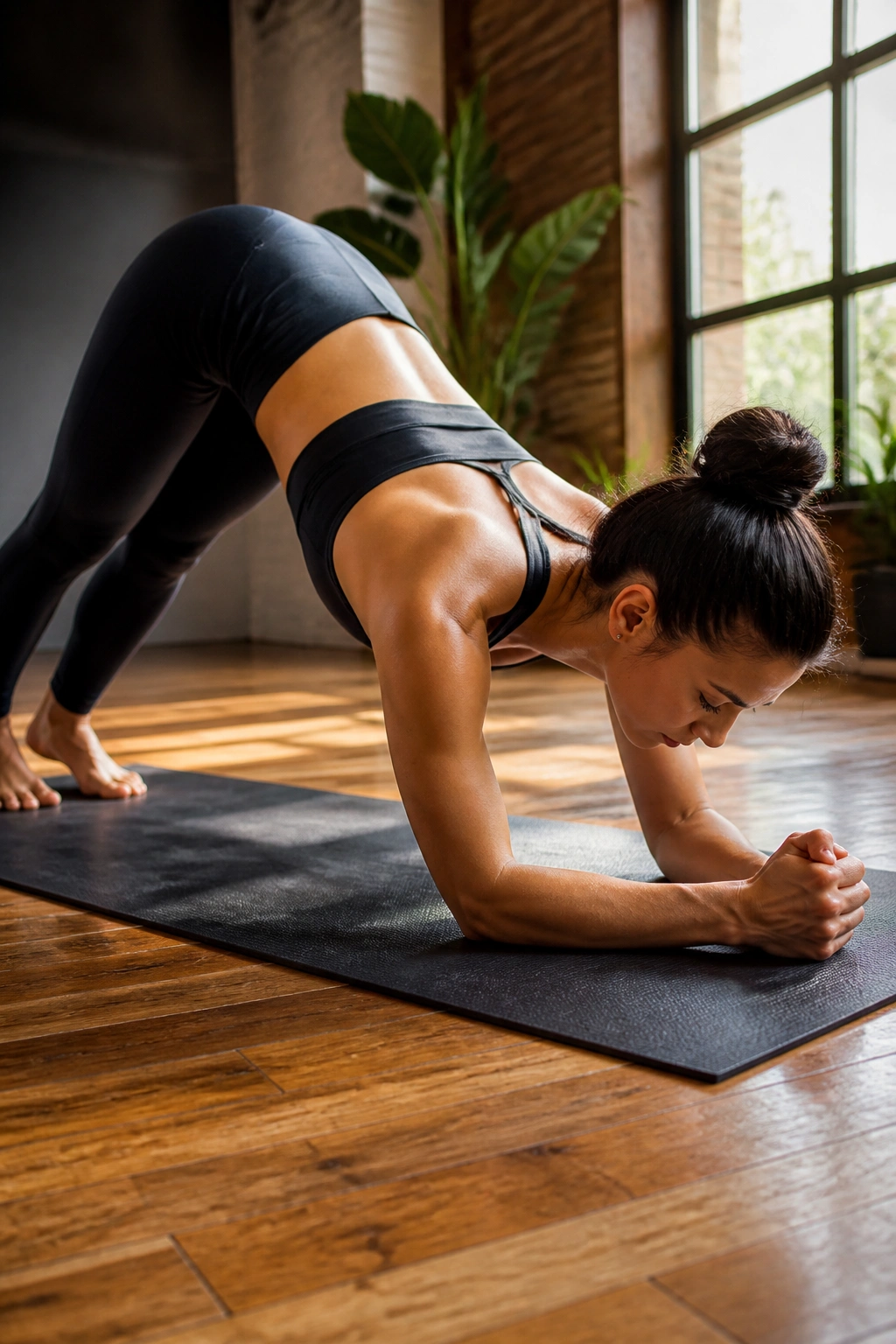
Forearm work belongs in power yoga more often than it gets credit for. It spares the wrists a little while still asking the shoulders, core, and upper back to carry real weight. Dolphin Pose, Forearm Plank, and Forearm Side Plank are a hard trio, and they do not flatter sloppy form.
Start with 30 seconds in Forearm Plank, then walk the feet in and out in Dolphin for 8 to 10 reps. Finish with 20 seconds per side in Forearm Side Plank. If the lower back sags, widen the feet. If the shoulders shrug, push the floor away harder. Small corrections matter.
This sequence is especially useful if regular Plank has started to feel stale or if the wrists are a little cranky. It also teaches shoulder stability in a different angle, which helps when you later return to full Plank or Chaturanga.
A strong Dolphin feels heavy in the shoulders and surprisingly alive through the belly. That’s the target. Not grace. Work.
15. Pyramid and Triangle Strength Flow
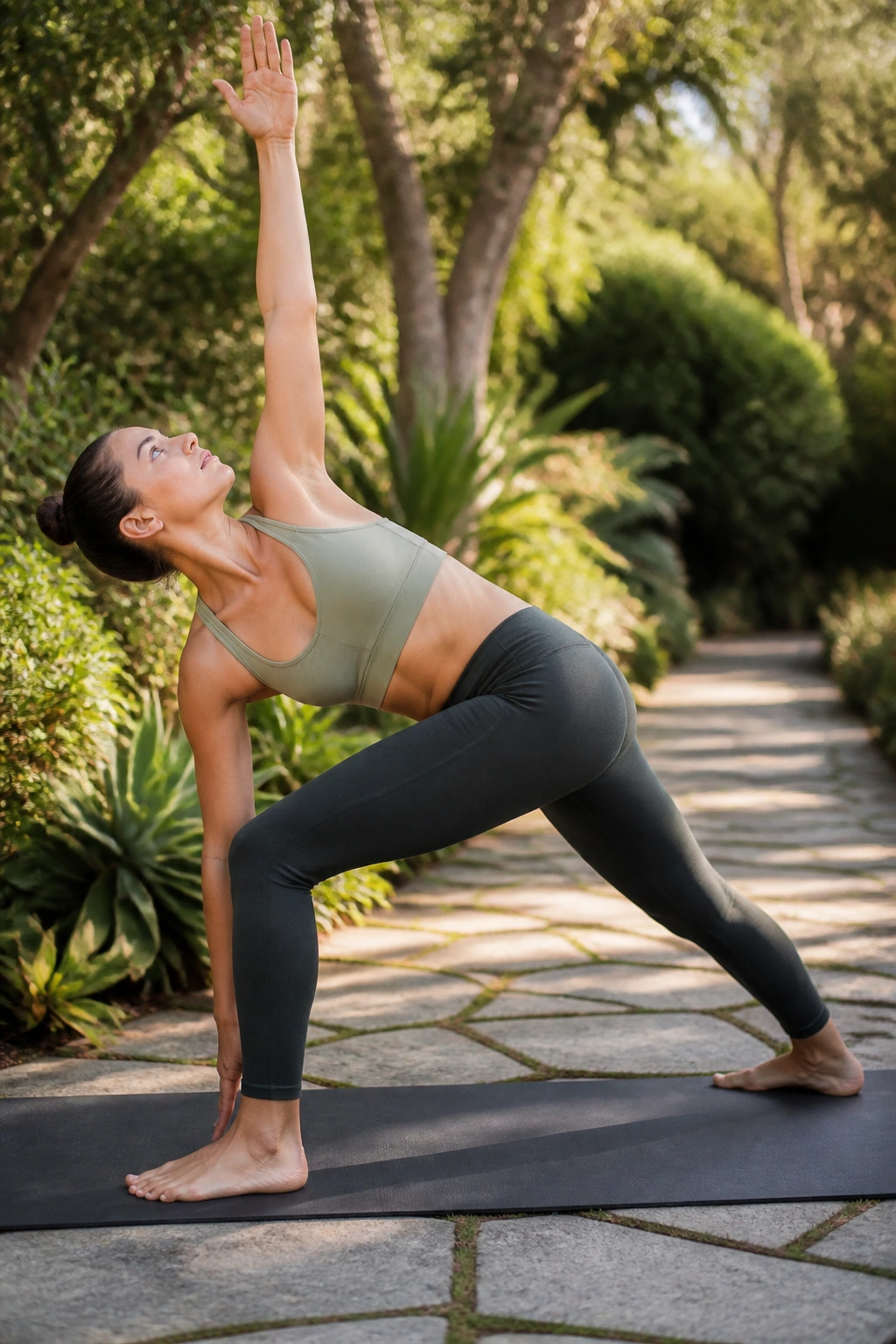
Pyramid and Triangle look like stretch poses, but they can become real strength work if you keep the legs active and the torso disciplined. That’s the difference between hanging out in the shape and using it.
Unlike a straight hamstring stretch, this flow keeps the back leg and the standing hip online. Move from Half Split to Pyramid to Triangle to Revolved Triangle, holding each for 4 breaths. Keep a micro-bend in the front knee when the hamstrings tug too hard. Straight legs are not worth losing form for.
This one is a good fit for people who want a quieter workout that still makes the body work hard. The pace is slower, but the load is sneaky. The standing leg has to stabilize, the inner thighs have to organize, and the side body has to keep reaching.
I’d recommend it on days when you want strength without a lot of jumping. It feels elegant, but it’s not gentle if you stay honest.
16. Small-Space No-Jump Power Yoga
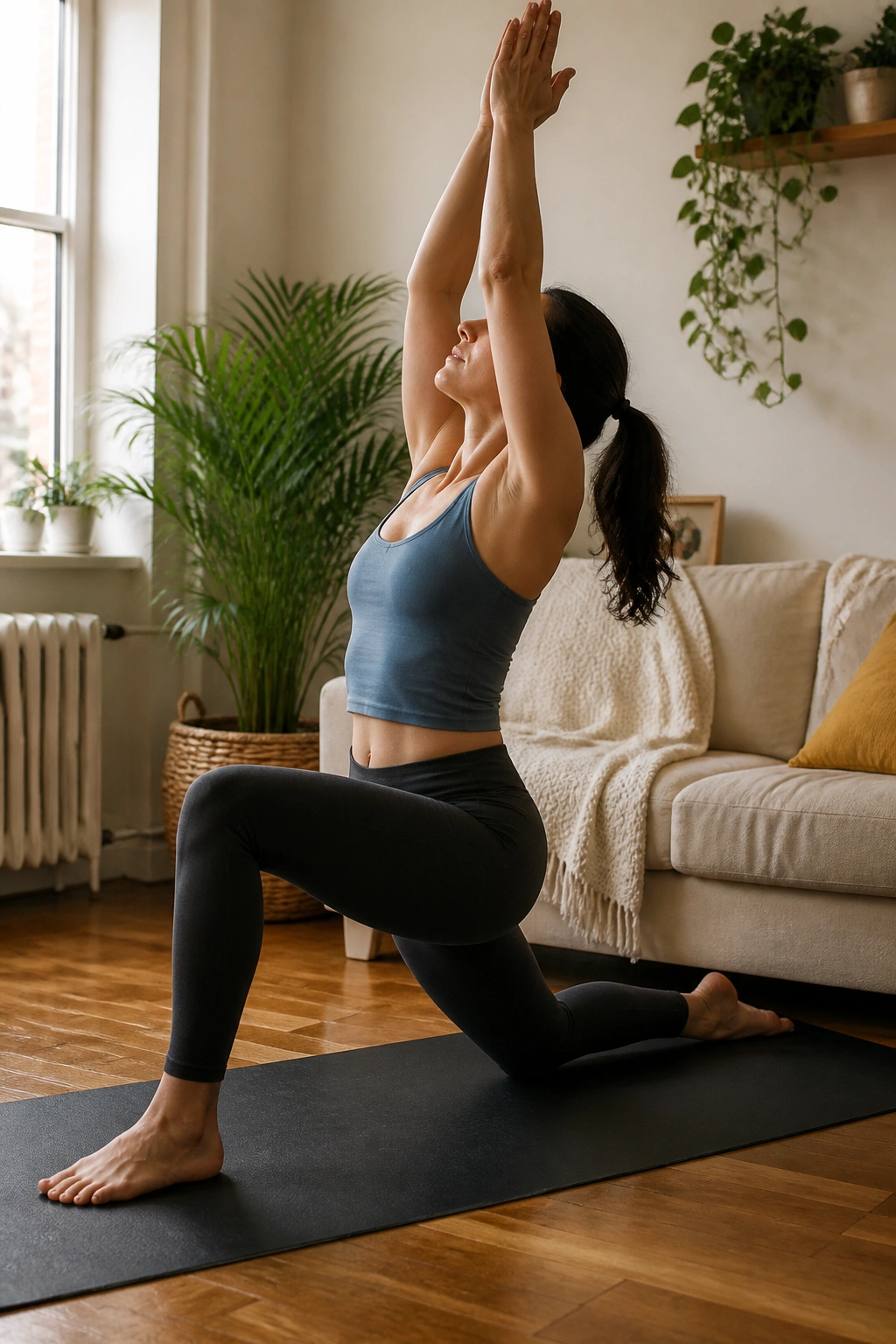
Hotel room. Tiny apartment. Shared living room with someone watching a show on the couch. This is the flow for that. No jumps, no big arm sweeps, no need to fling yourself across the mat and hope for the best.
Use a step-back vinyasa from standing, keep transitions tight, and stay mostly on one half of the mat. Crescent Lunge, Low Lunge, Half Split, Plank, Cobra, and Chair Pose can do plenty of damage without a single leap. The sweaty part comes from repetition and steady pace, not from clutter.
I like this style because it removes the excuse that you “need a proper studio” to train hard. You don’t. You need enough room to put your hands down and enough attention to stay clean in the shapes. That’s it.
Keep the sequence short and repeat it 4 times. In a smaller space, the control has to be better, which often makes the workout feel cleaner too. Fewer moving parts. More honest work.
17. Block-Assisted Strength Flow
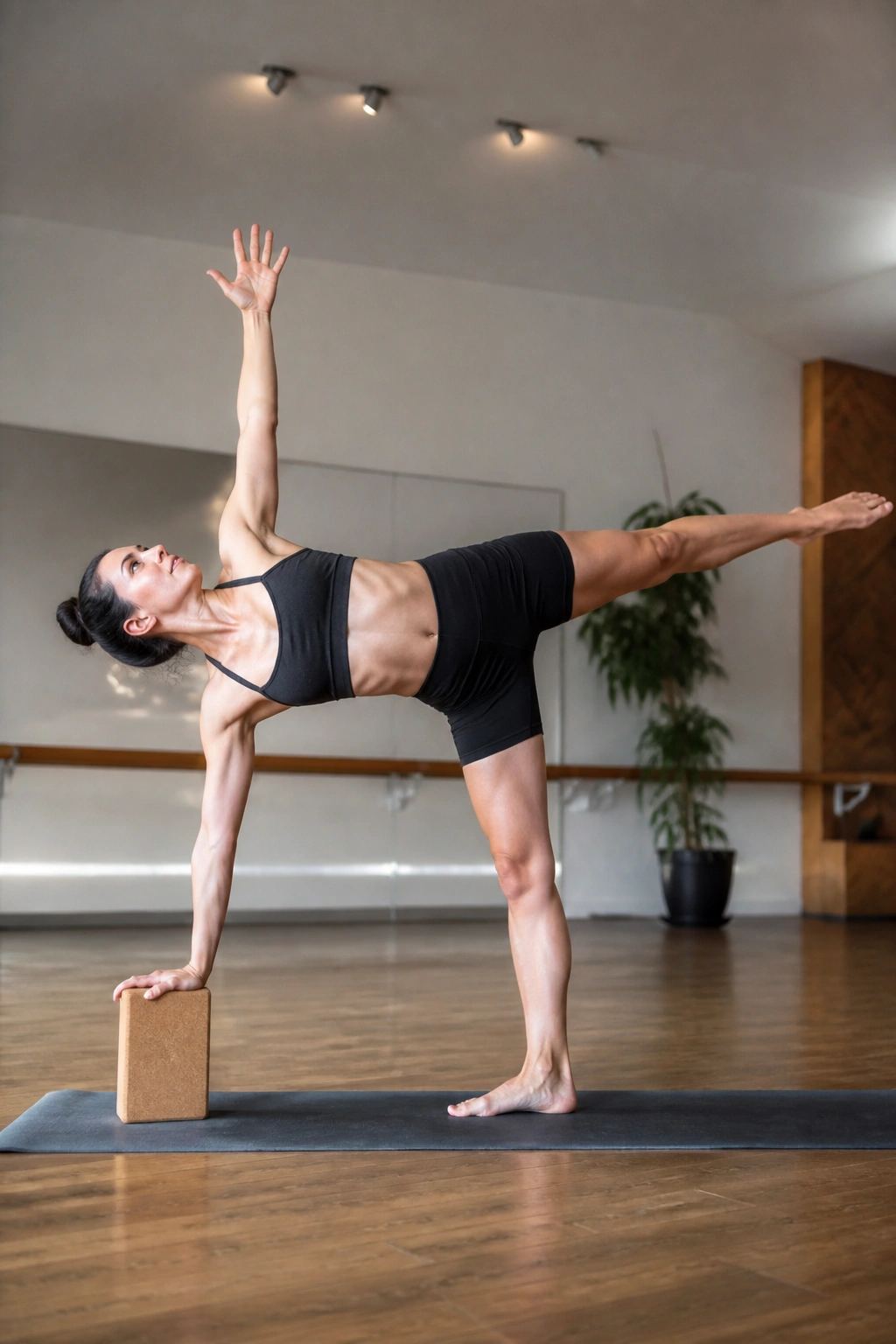
Do yoga blocks make a workout easier? Sometimes. But easier is not the same as weaker. Used well, blocks let you stay in better alignment, which means the right muscles can do the job without the joints taking over.
Set one block under each hand in Half Moon, Triangle, and Low Lunge Twist. Keep the block at the height that lets your spine stay long and your chest open. If the blocks are too low, you’ll fold and lose the work. Too high, and the pose can feel awkward. Find the middle ground.
Where the Blocks Help Most
- In Triangle, they give the ribs room to open.
- In Half Moon, they help the standing hip stay stacked.
- In Lunge, they keep the torso from collapsing into the front thigh.
Use the blocks for 2 full rounds on each side, then try one round without them. That comparison tells you a lot about your current range and control. I like that kind of feedback. It’s plain, and it’s useful.
18. Mobility-First Power Yoga Reset
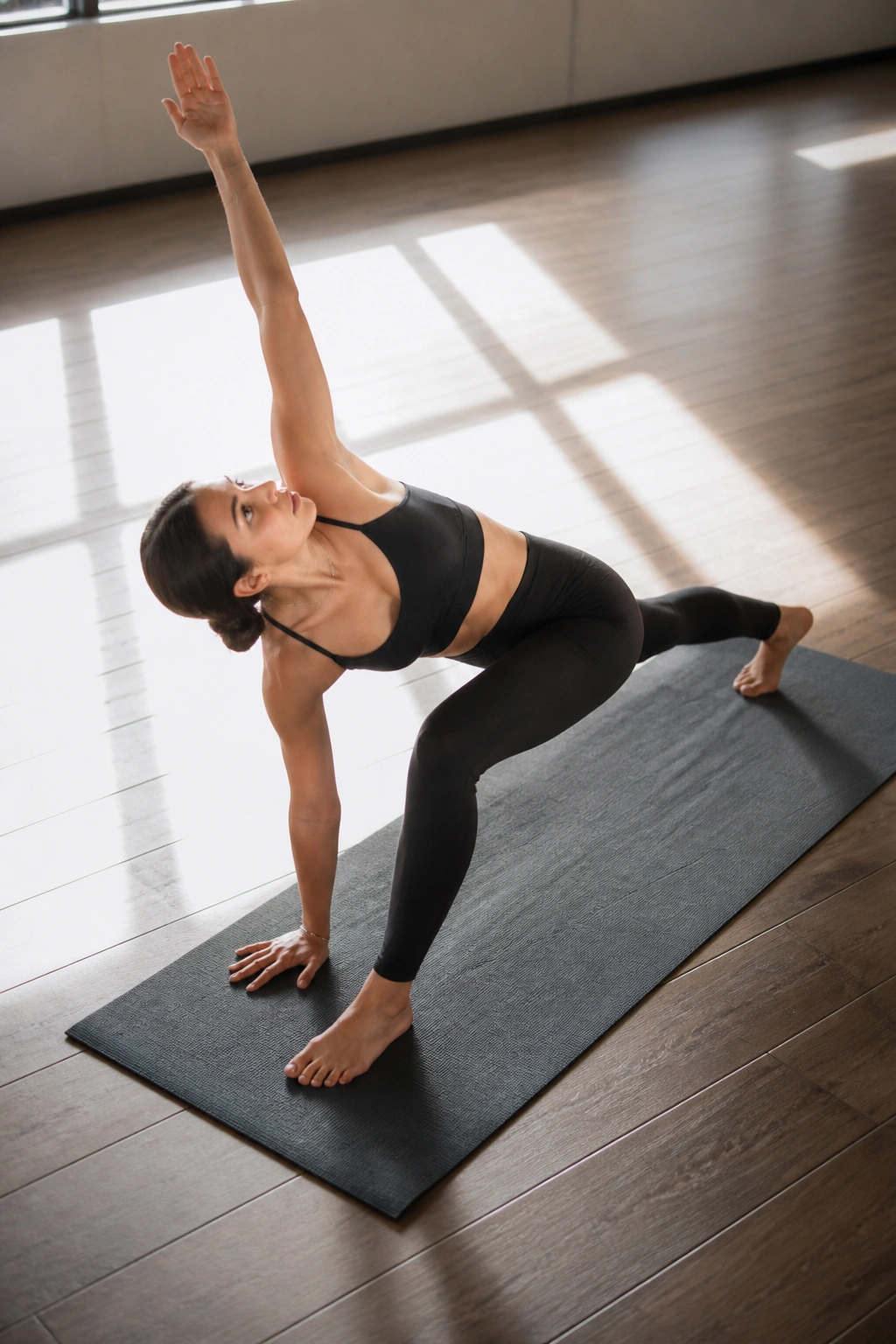
If your body feels stiff before the workout even starts, pushy strength work can backfire. This flow keeps the power-yoga feel but gives the joints a little extra room to breathe. Think of it as a strength session with smarter edges.
Start with Cat-Cow, World’s Greatest Stretch, Low Lunge with a side bend, and Cossack-style side shifts. Keep the movement slow enough that you can feel where the tight spots live. Then add a few stronger shapes — Chair, Warrior II, Side Angle — once the body has opened a little.
The goal is not to become loose and floppy. It’s to move better under load. A hip that opens smoothly in a low lunge usually behaves better when you ask it to stabilize in Warrior III later. That’s the connection.
If you sit all day, this is one of the more honest power yoga workouts you can do. It gives you sweat, but it also gives you a better feeling on the next stand-up from your chair. That matters more than people admit.
19. Breath-Led Interval Flow
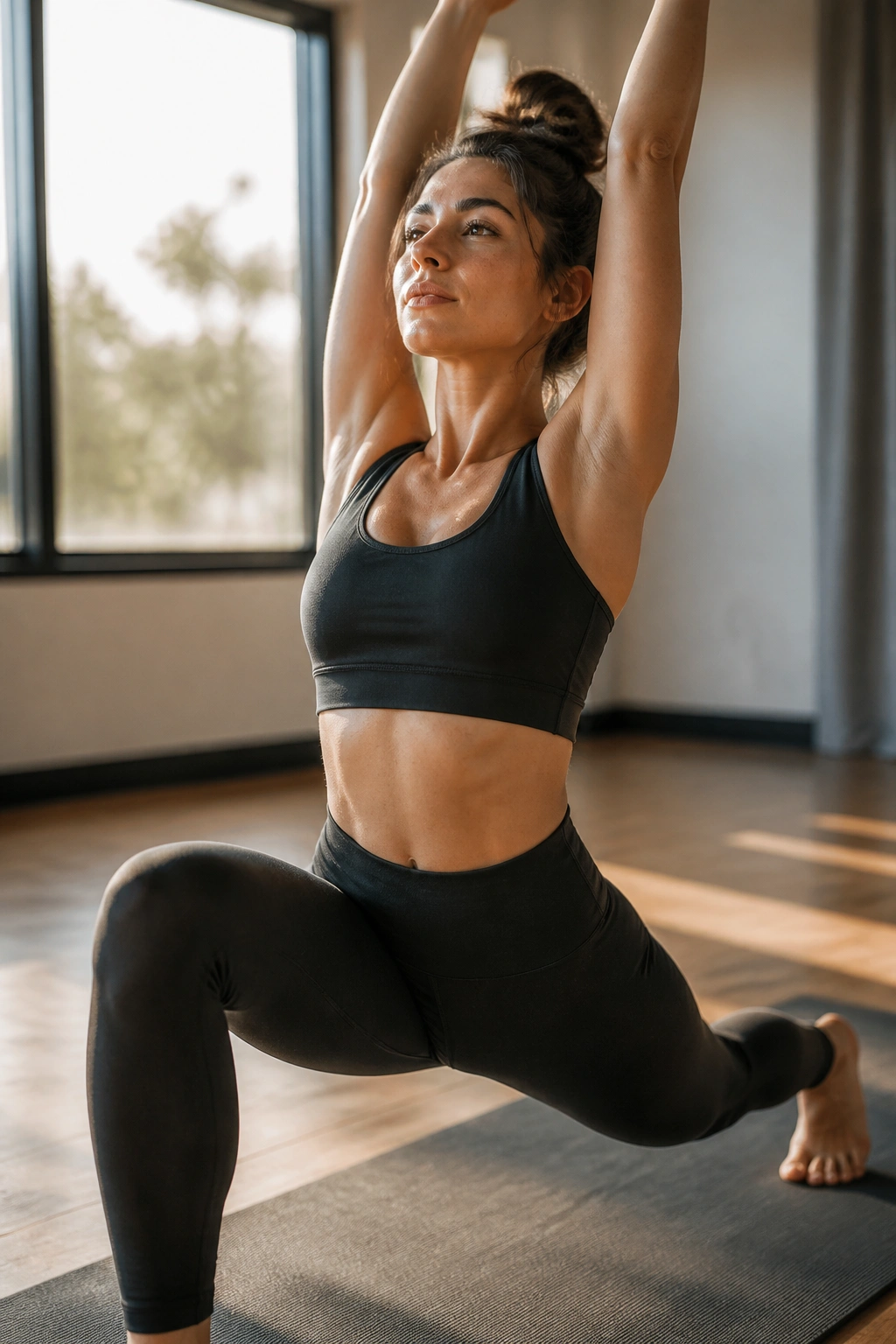
Short intervals keep the heat high and the mind honest. If you like the feel of timed workouts, this one scratches the itch without losing the yoga shape. Each hold is tied to breath counts, which keeps you from drifting into random gym-style effort.
Work in 40-second blocks: Chair Pose, Plank, Crescent Lunge, Side Plank, and Boat Pose. Then take 20 seconds to reset and switch sides or move to the next shape. Keep the exhale long when the heart rate climbs. That one small habit helps more than people expect.
This format works because there’s no dead time. You settle into a pose, the body learns the load, and then the next shape arrives before your attention goes soft. The flow feels athletic, but it still has a yoga spine to it.
Use it when you want a session that looks and feels structured. No guessing. No wandering around the mat. Just a clean interval rhythm and enough variety to keep the workout from going flat.
20. Full-Body Power Yoga Test Piece
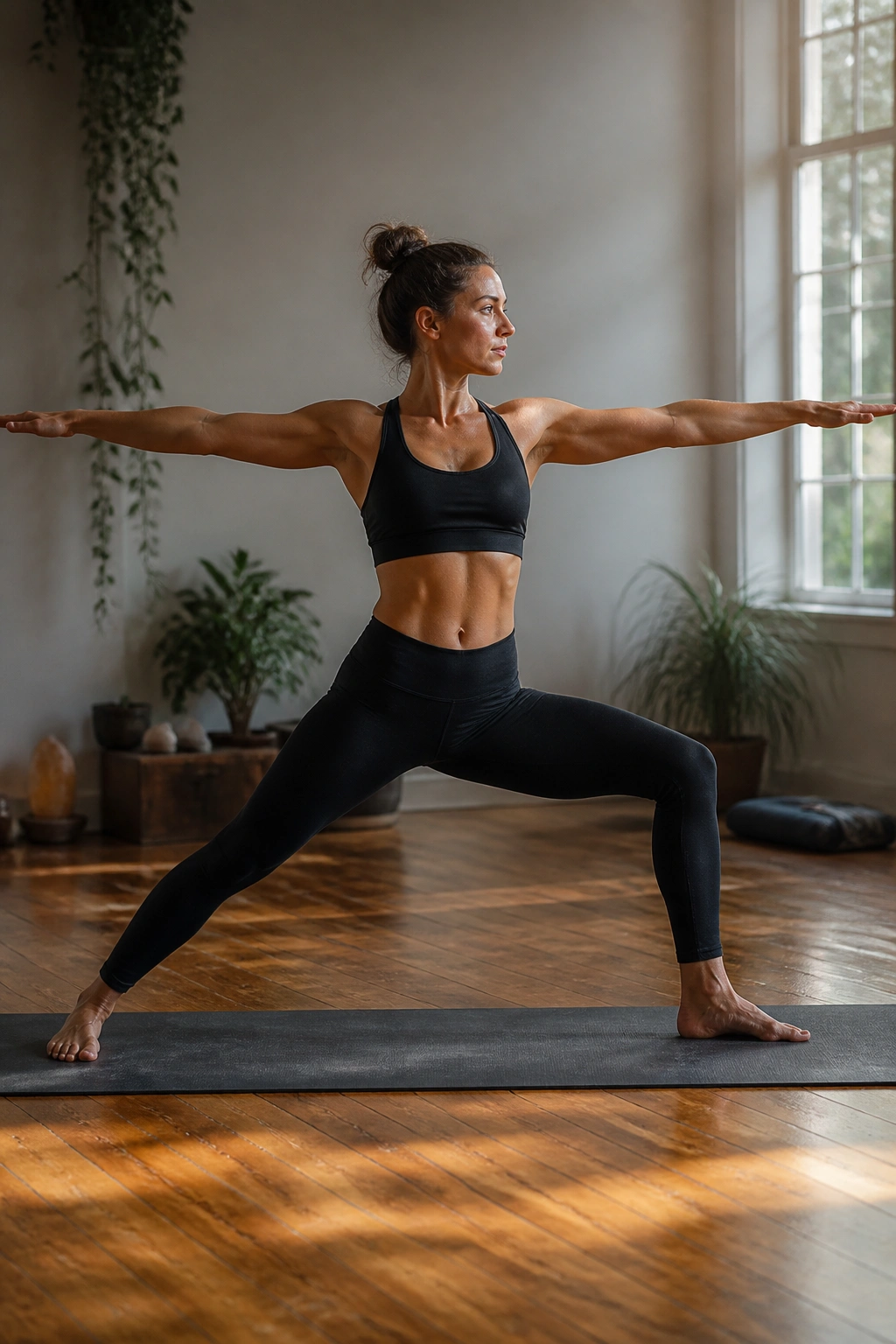
If you want one workout that tells the truth about your current strength, this is it. It starts simple, turns mean in the middle, and ends with enough fatigue to expose every place where you like to cheat.
Move from Sun Salutation A into Chair Pose, then into Warrior II, Reverse Warrior, Side Plank, Boat Pose, Dolphin, and Bridge Pose. Keep the transitions smooth and the rest short. One round on each side is enough for a hard day. Two rounds will test your patience.
This is the flow I’d pick when I want a full-body session without wandering through a dozen random poses. The legs have to hold. The arms have to push. The core has to stop you from folding. Even the feet get a vote.
Finish with a long forward fold and a few slow breaths lying down. You’ll know the workout worked if your breath is loud and your shoulders feel warm all the way down to the upper ribs. That’s a good sign. A sweaty mat usually is.
Final Thoughts
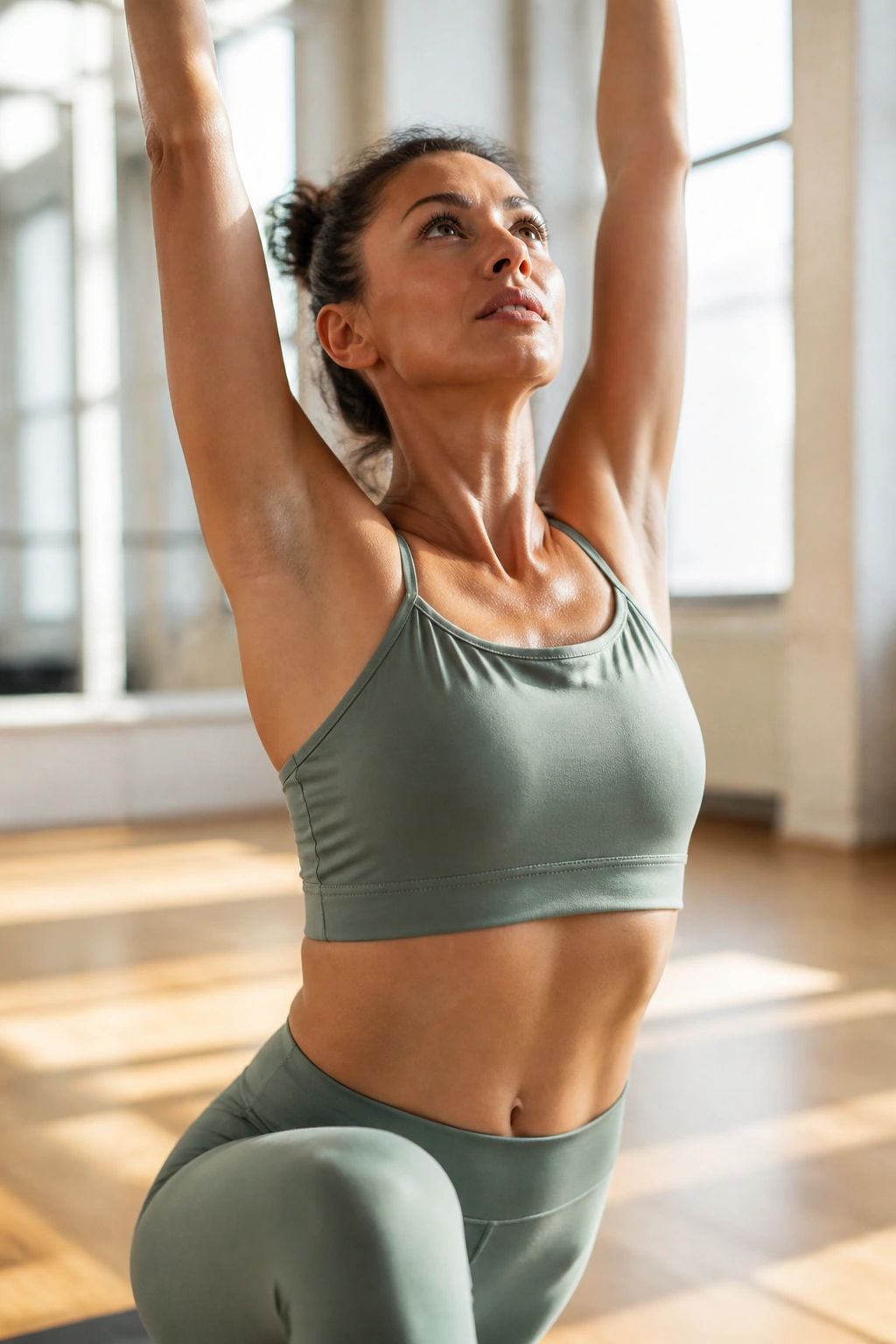
Power yoga works best when it stays specific. A clean Chaturanga, a steady Warrior II, a controlled Boat Pose — those shapes build more than heat. They build the kind of strength you can feel in the way you stand, walk, and carry yourself after the mat is rolled up.
Mix the sessions based on what your body needs that day. Pick one that hits the legs, another that steadies the shoulders, and another that slows your breathing down enough to sharpen your focus. That mix keeps power yoga from turning into a predictable routine, which is where a lot of people lose interest.
And if a workout feels a little too easy, slow it down before you make it bigger. That usually fixes the problem.
