



Forty-five minutes is enough to train hard. It is also enough time to waste half the session wandering between racks, fiddling with playlists, and talking yourself into one more warm-up set you do not need.
A good forty-five minute full body workout has a clear job: hit a squat or lunge, a hinge, a push, a pull, and some core or carry work before the clock runs out. That mix keeps the session moving and makes the whole body do something useful, not just the parts that like attention.
The nice part is that you do not need a perfect gym setup to make this work. A pair of dumbbells, a barbell, a kettlebell, or even a patch of floor and a timer can carry a session if the order is smart and the rest periods are honest. The workout should feel focused, not rushed.
Pick the one that fits your equipment and your mood. Some days call for heavy sets and longer rests. Other days need a harder pace and less thinking.
1. Dumbbell Strength Builder for Small Gyms
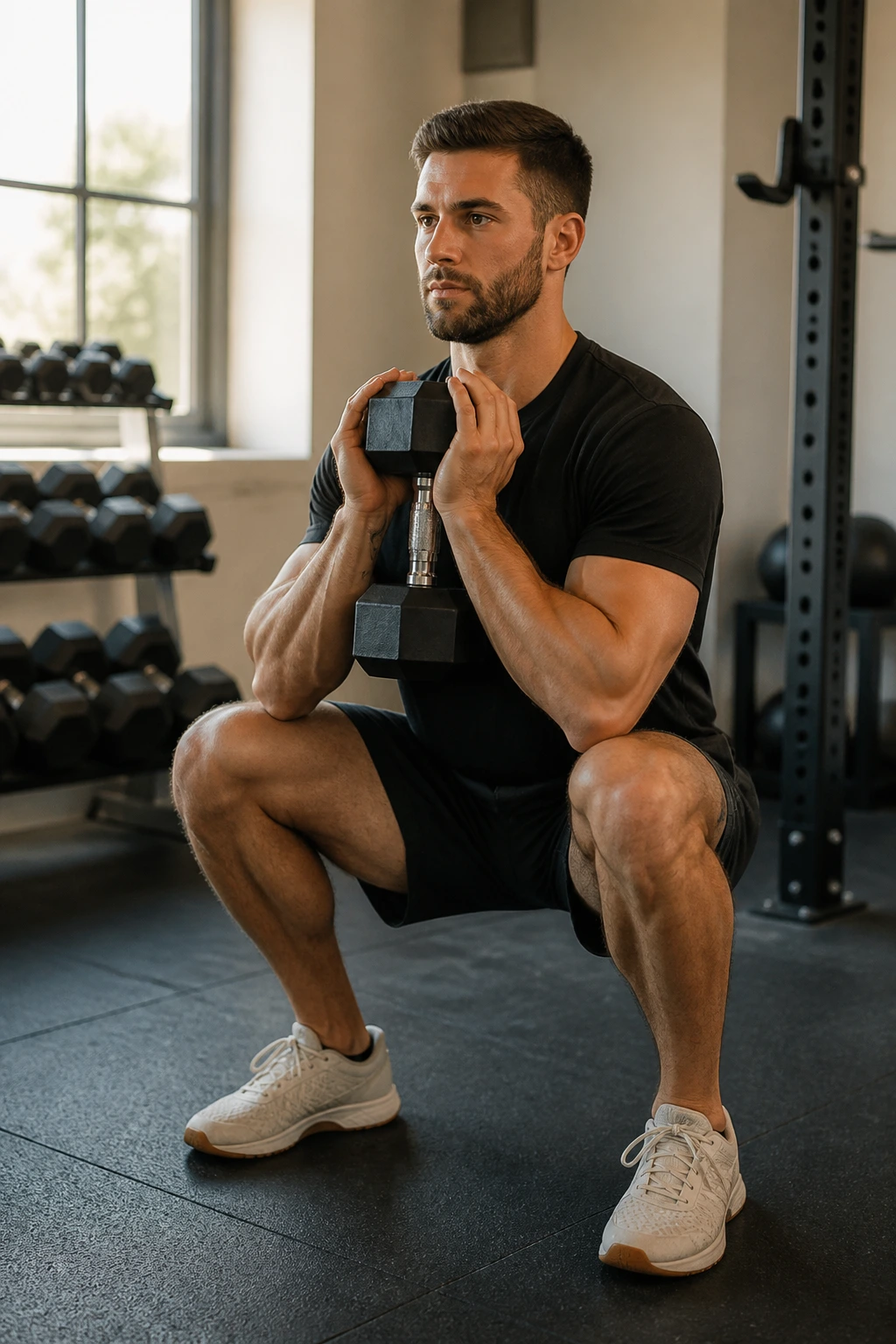
A pair of dumbbells can do more than people give them credit for. If you only have one rack of weights and forty-five minutes, this is a clean, no-drama way to train the whole body.
Start with a quick 5-minute warm-up: bodyweight squats, arm circles, hip hinges, and a short plank hold. Then move into 4 rounds of 8 goblet squats, 8 one-arm rows per side, 8 floor presses, and 10 Romanian deadlifts. Rest about 45 to 60 seconds between exercises, not five minutes. That little pause is enough to keep your form crisp without turning the workout into a coffee break.
Why this one works
The goblet squat and Romanian deadlift cover the lower body in two different ways. One is knee-dominant, one is hip-dominant, and that split matters if you want a balanced session. Rows and floor presses take care of the upper body without needing a bench. Nice and simple.
Finish with 2 rounds of 30-second farmer carries and 8 dead bugs per side. The carry loads your grip, upper back, and trunk all at once. The dead bug settles the whole thing down so you leave with control, not chaos.
Best fit: home gyms, hotel gyms, and crowded commercial gyms where the benches are all taken.
2. Barbell Strength Session for People Who Want Real Load
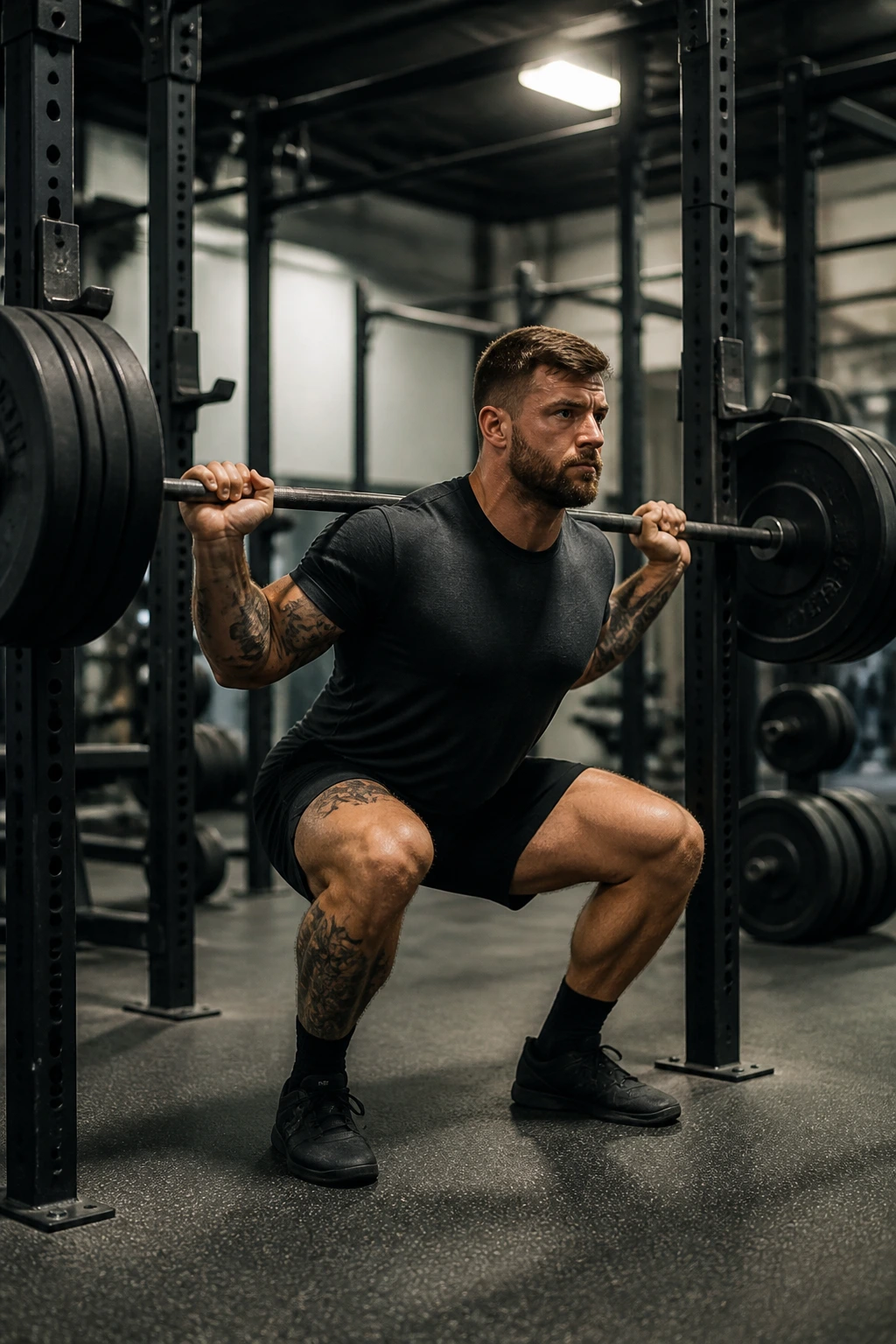
A barbell is still the fastest way to make a forty-five minute full body workout feel serious. You load once, brace hard, and get on with it.
Use the first 10 minutes for warm-up sets on your squat. Then run 5 sets of 5 back squats, 4 sets of 6 bench presses, and 4 sets of 6 barbell rows. Keep the rest at about 90 seconds after the squat sets and 60 to 75 seconds after the bench and row pair. If you move with purpose, the whole session stays inside the clock.
The reason this setup works is that it covers the big movement patterns without making you chase a dozen small exercises. Squat gives you legs and trunk. Bench covers the push. Rows clean up the pull. If you have gas left, add 2 sets of 8 hanging knee raises or front planks for 30 to 45 seconds.
Heavy barbell work does ask more of your technique, though. If your squat depth gets weird or your lower back starts doing the job of your glutes, lower the weight and clean that up first. A pretty ugly grind is not a badge of honor.
3. Kettlebell Complex With Carry Finisher
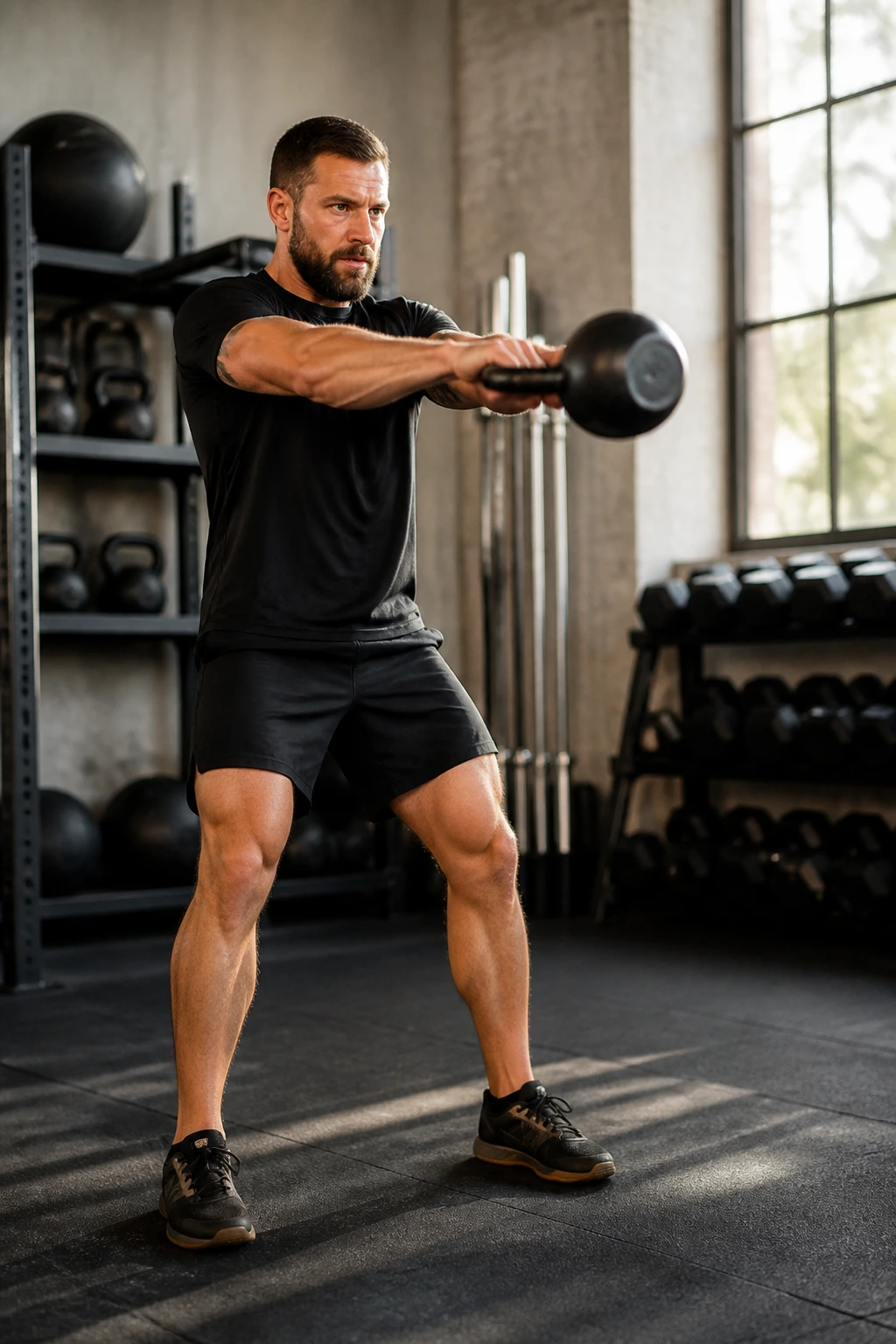
Can one kettlebell carry a full session? Yes, and it’s a lot less gimmicky than it sounds. Kettlebells are good at making you move from the hips, not just the arms, which is why they fit a forty-five minute full body workout so well.
Why Kettlebells Fit a 45-Minute Window
Use 5 minutes for hip openers, halos, and bodyweight hinges. Then set a timer for 20 minutes and cycle through 6 swings, 5 cleans per side, 4 front squats per side, and 3 presses per side. Move steadily. Do not turn every rep into a heroic event.
How to Get the Most From It
After the main complex, take 3 rounds of 30-meter suitcase carries per side and 8 reverse crunches. The suitcase carry hits the obliques and grip in a way that feels honest. One side always wants to cheat a little. That is part of the point.
If your shoulders are sensitive, swap the press for a rack hold. If your lower back is sensitive, cut the swing reps in half and focus on a cleaner hinge. A kettlebell workout should feel snappy, not sloppy.
4. Bodyweight Circuit for Hotel Rooms and Living Rooms
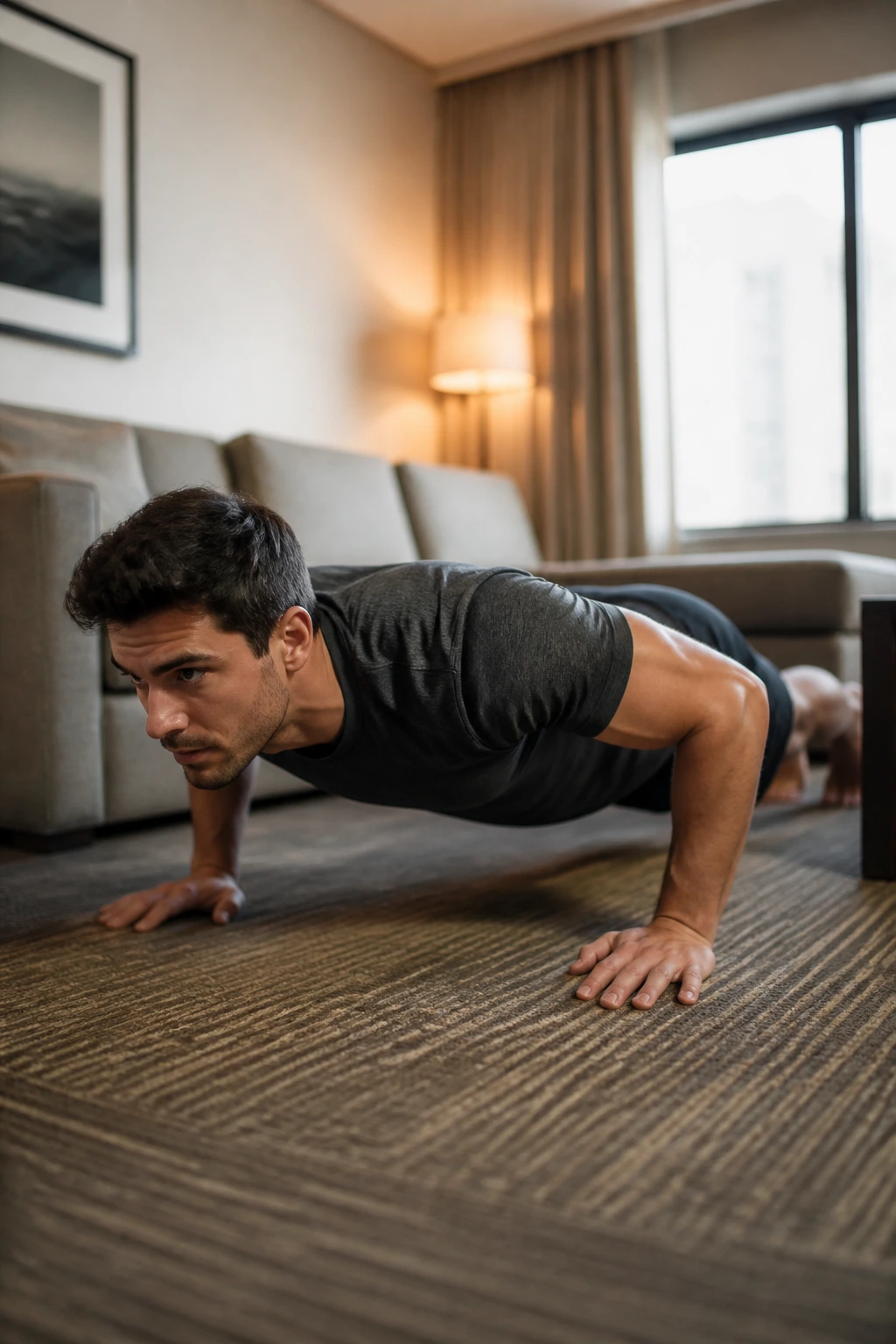
A tiny space can still hold a real workout. No equipment means no excuses, but also no need to overcomplicate anything.
This one works best as 5 rounds of 40 seconds on, 20 seconds off. Use push-ups, reverse lunges, squat jumps or regular air squats, mountain climbers, and forearm planks. If jumping bugs your knees, keep it low impact and stay with squats and lunges.
The pace matters here. You want the breathing to climb, but the movement should stay tidy. When your hips start dropping in the plank or your lunges turn into awkward half-steps, slow down for the next round. That is smarter than forcing ugly reps just because the timer is still ticking.
Add 5 minutes at the end for slow walking, hip flexor stretches, and shoulder circles. That sounds boring. It also keeps your legs from feeling like concrete stairs the next morning.
Best fit: travel days, home workouts, and anyone who wants to sweat without setting up a whole gym.
5. Dumbbell Hypertrophy Day That Still Fits the Clock
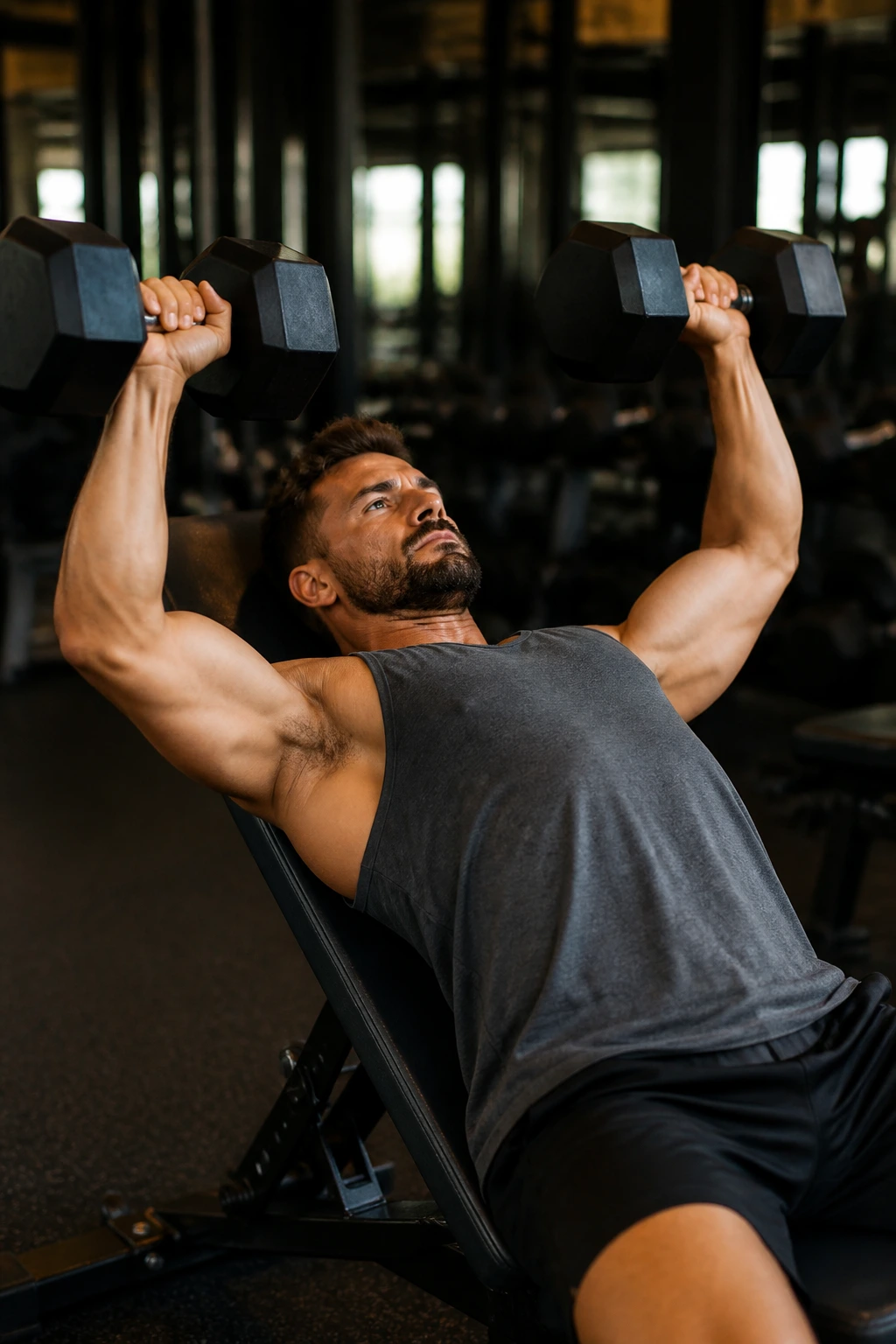
Muscle-building sessions do not need to sprawl across the day. If you keep the rests tight and the exercise order sharp, dumbbells can pack a lot into forty-five minutes.
Start with 3 supersets. Pair incline dumbbell presses with chest-supported rows for 10 to 12 reps each, then pair goblet squats with Romanian deadlifts for 8 to 10 reps each, then finish with seated shoulder presses and walking lunges for 8 reps per side. Rest about 60 seconds after each pair.
The lift selection matters more than the fancy details. Press and row together, then squat and hinge together, then finish with one overhead movement and one single-leg movement. That keeps the whole body working while each muscle gets enough focus to grow. If your last two reps feel slow and a little grindy, that is fine. If your lower back takes over on every set, the load is too heavy.
End with 2 sets of 12 to 15 curls or triceps extensions if you want a little arm work. Not required. Nice if you care about it. Skip it if you do not.
6. Low-Impact Full Body Workout for Sore Knees and Busy Legs
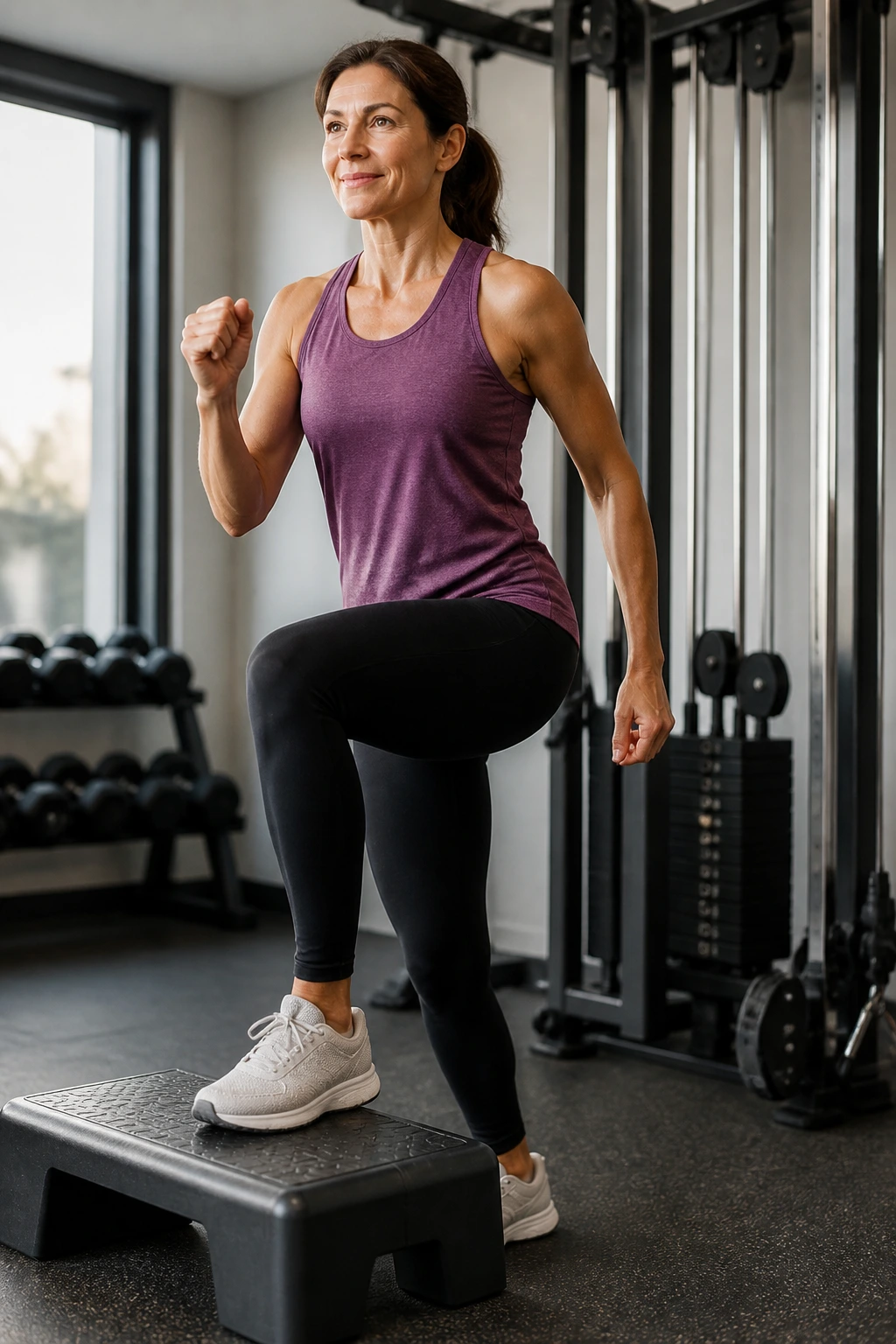
If your joints are grumpy, the answer is not to stop training. It is to stop bouncing around like every session has to feel like a boot camp clip.
This workout swaps jumping for steady effort. Use sled pushes, step-ups, cable rows, landmine presses, and bike intervals. A simple structure works well: 10 minutes of warm-up, 15 minutes of strength work, 10 minutes of conditioning, and 10 minutes for carries and core. The whole thing still lands in the same time window, but the stress feels smoother.
What Makes It Different
Sled pushes load the legs without the hard landing that comes with running or jump squats. Step-ups build single-leg strength with less joint noise than a lot of plyo work. The landmine press is a good shoulder choice because the angle is friendlier than a straight overhead press for many people.
This is the workout I’d reach for after a heavy lower-body day or on a week where sleep has been mediocre. Hard does not have to mean punishing. There’s a difference, and your knees know it.
7. Unilateral Stability Workout That Fixes Side-to-Side Imbalances
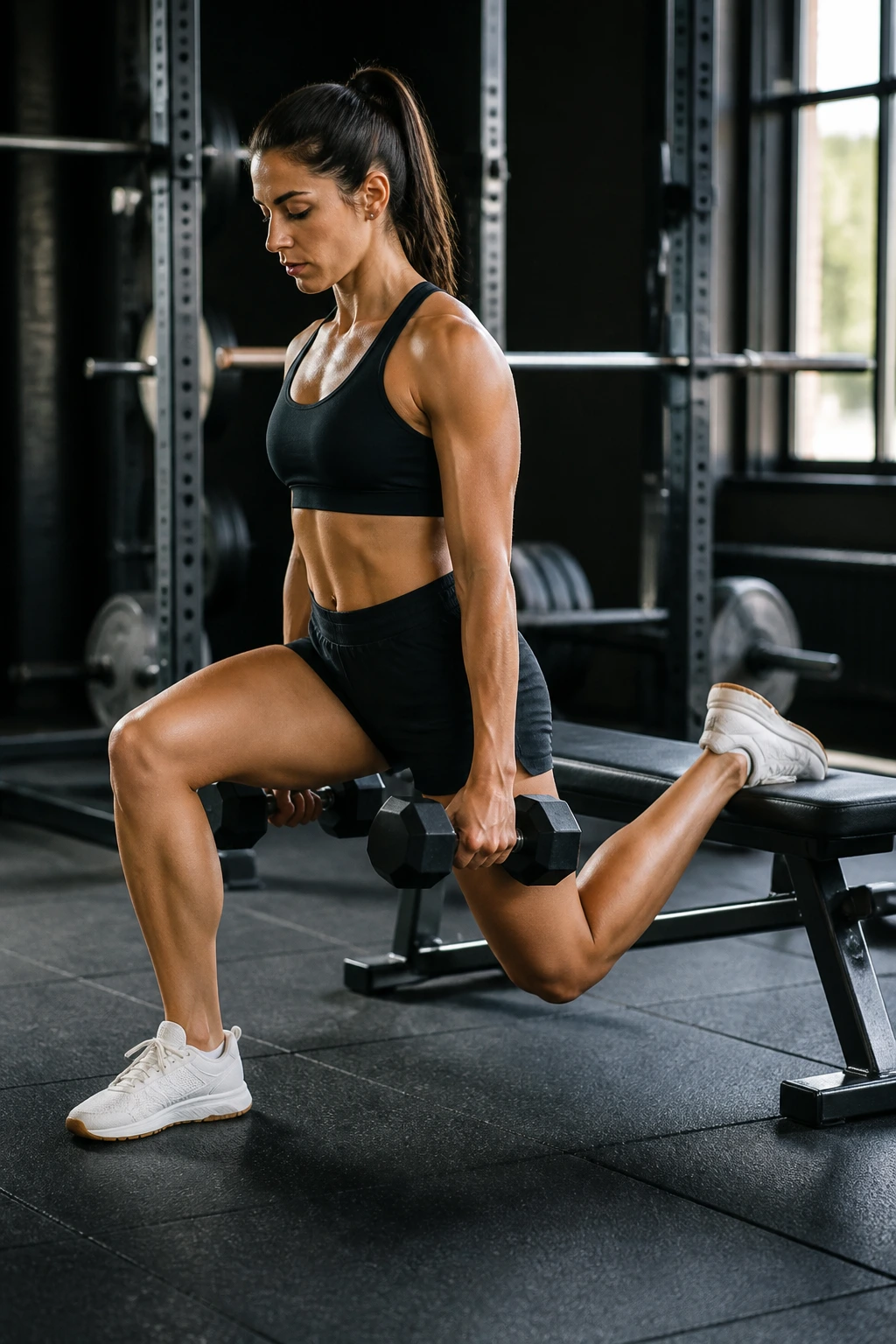
Balance work gets boring fast. That is usually a good sign, because boring exercises are often the ones that show you where the weak side lives.
Warm-Up
Spend 6 minutes on split squats, glute bridges, and shoulder taps. Keep the reps slow enough that you can tell whether your left side feels different from your right. Most people notice something within the first minute.
Main Work
Run 3 rounds of 8 rear-foot-elevated split squats per side, 8 single-arm presses per side, 8 single-leg Romanian deadlifts per side, and 30-second suitcase carries per side. Rest about 45 seconds between movements. The order helps: legs first, then push, then hinge, then carry.
How to Scale It
If the rear-foot-elevated split squat is too much, switch to a regular split squat and keep the torso upright. If the single-leg deadlift feels wobbly, use one hand on a wall or rack for balance. That is not cheating. It is how you build the skill before you load it.
Finish with 1 to 2 rounds of Pallof presses. Your torso should stay quiet while the band tries to twist you. That little fight is the good part.
8. EMOM Density Workout When You Want Sweat Without Sloppy Reps
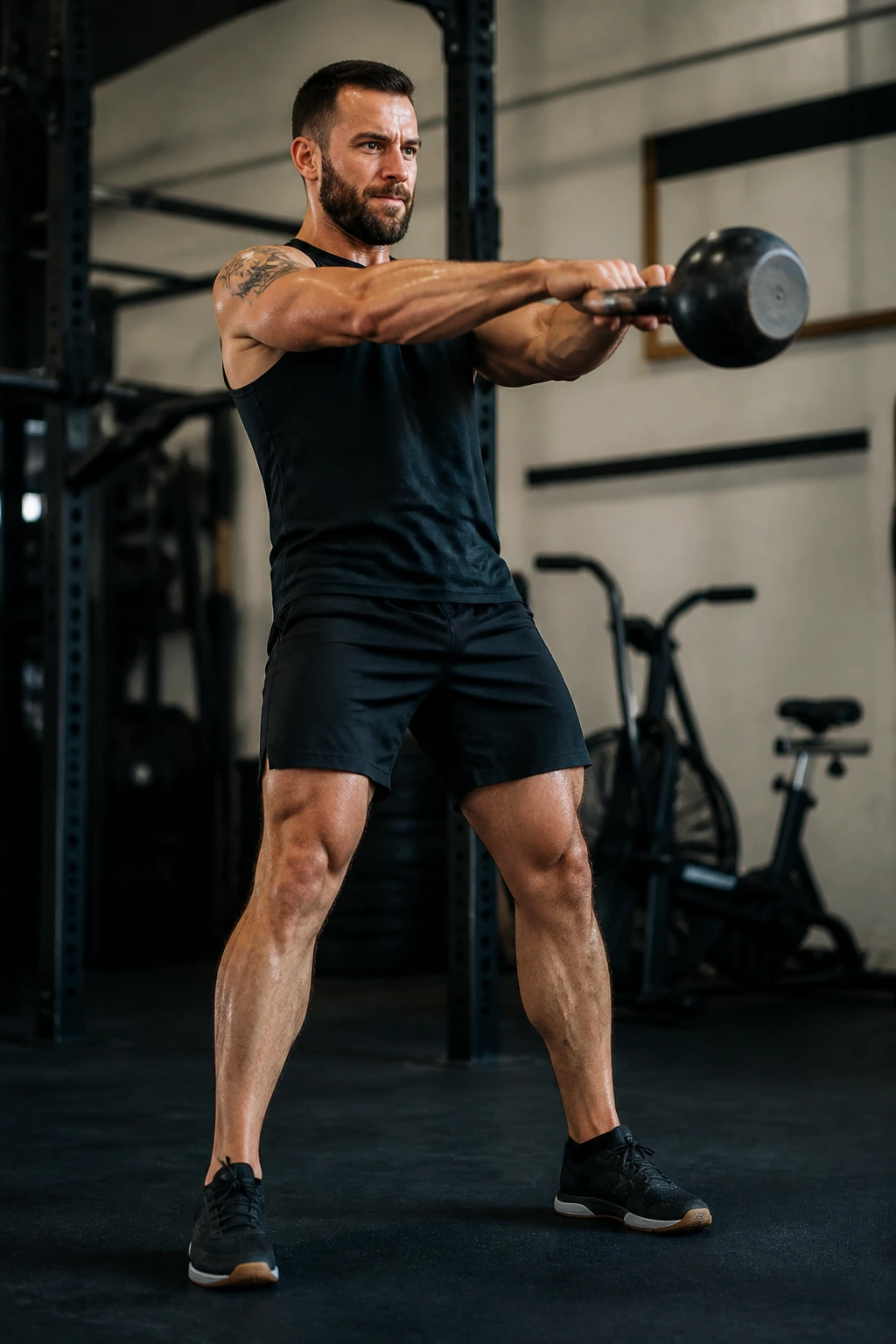
A timer changes the mood of a gym session. Every minute on the minute means you start a movement, finish your reps, then rest with whatever time is left in that minute.
Use 5 minutes to warm up, then run 5 stations for 15 minutes total. One minute: 10 kettlebell swings. Next minute: 8 push-ups. Next: 10 goblet squats. Then 8 rows per side. Then 30 seconds of plank. Repeat that cycle three times.
The trick is not to sprint the first round and hate yourself by the third. Leave enough time in each minute to breathe before the next station starts. If a set takes 45 seconds, the workout becomes a panic session. If it takes 20 to 30 seconds, you get density without chaos.
After the EMOM block, add 10 minutes of light carries or bike work, then 5 to 8 minutes of stretching. That makes the session feel complete instead of chopped off.
9. Athletic Conditioning Circuit With Sleds, Bike Sprints, and Core Work
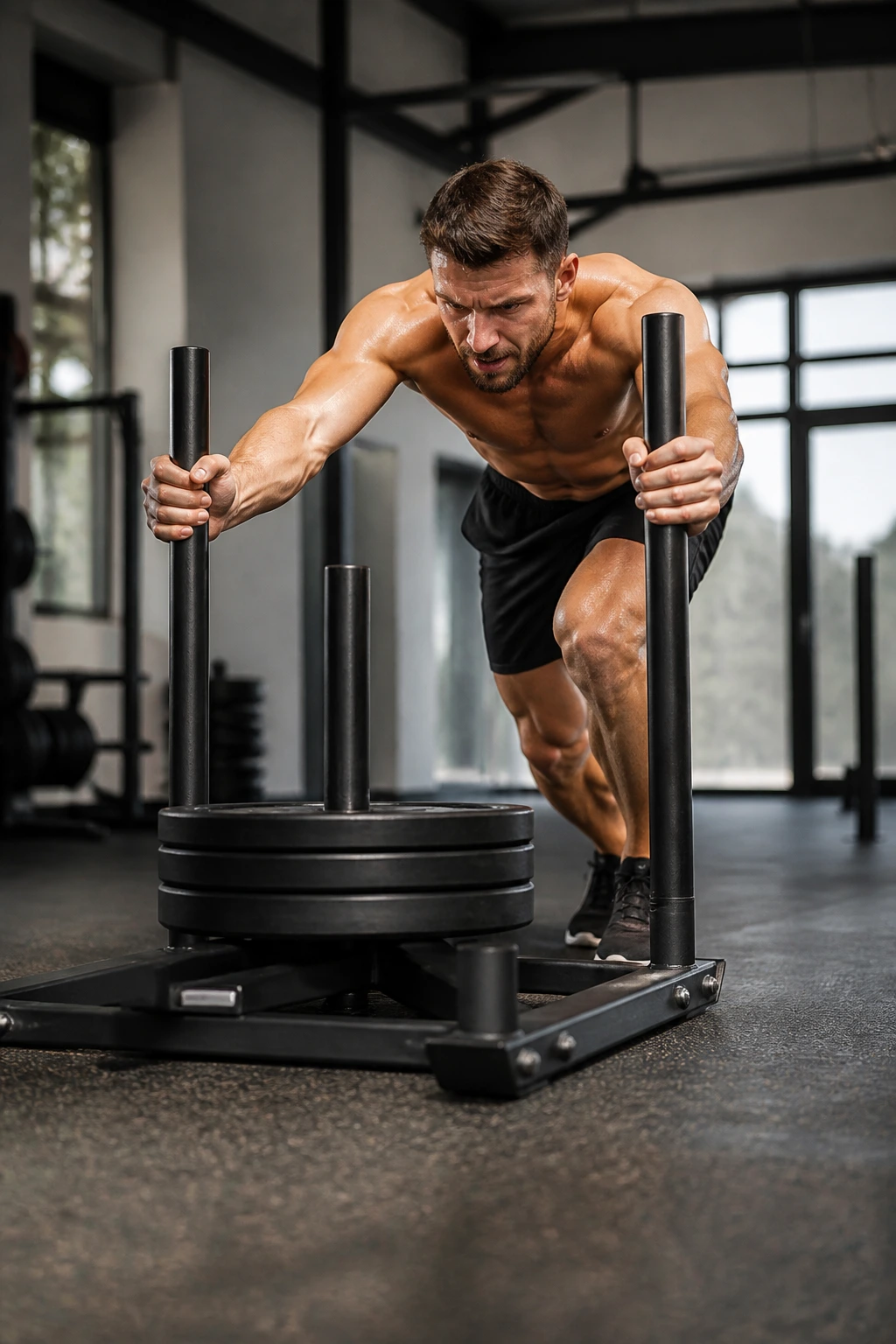
Can conditioning and full-body strength live in the same forty-five minutes? Absolutely, if you stop pretending the goal is to keep every rep pretty. Athletic sessions should feel fast, but not random.
Use a 3-part circuit. Start with sled drags or prowler pushes for 6 minutes, then move to rower or bike sprints for 8 minutes using 20 seconds hard, 40 seconds easy, then finish with medicine ball slams, alternating step-back lunges, and hanging knee raises for 3 rounds. Rest just long enough to keep your breathing under control.
What makes this kind of session work is the blend. The sled and bike push the heart rate. The lunges and slams keep the body loaded. The knee raises stop the whole thing from turning into a leg-only grind. If you only chase sweat, you miss the point. If you only chase strength, the conditioning part gets too soft.
This one is best when you want to leave the gym feeling springy, not flattened.
10. Beginner Full Body Starter With Clear Form Cues
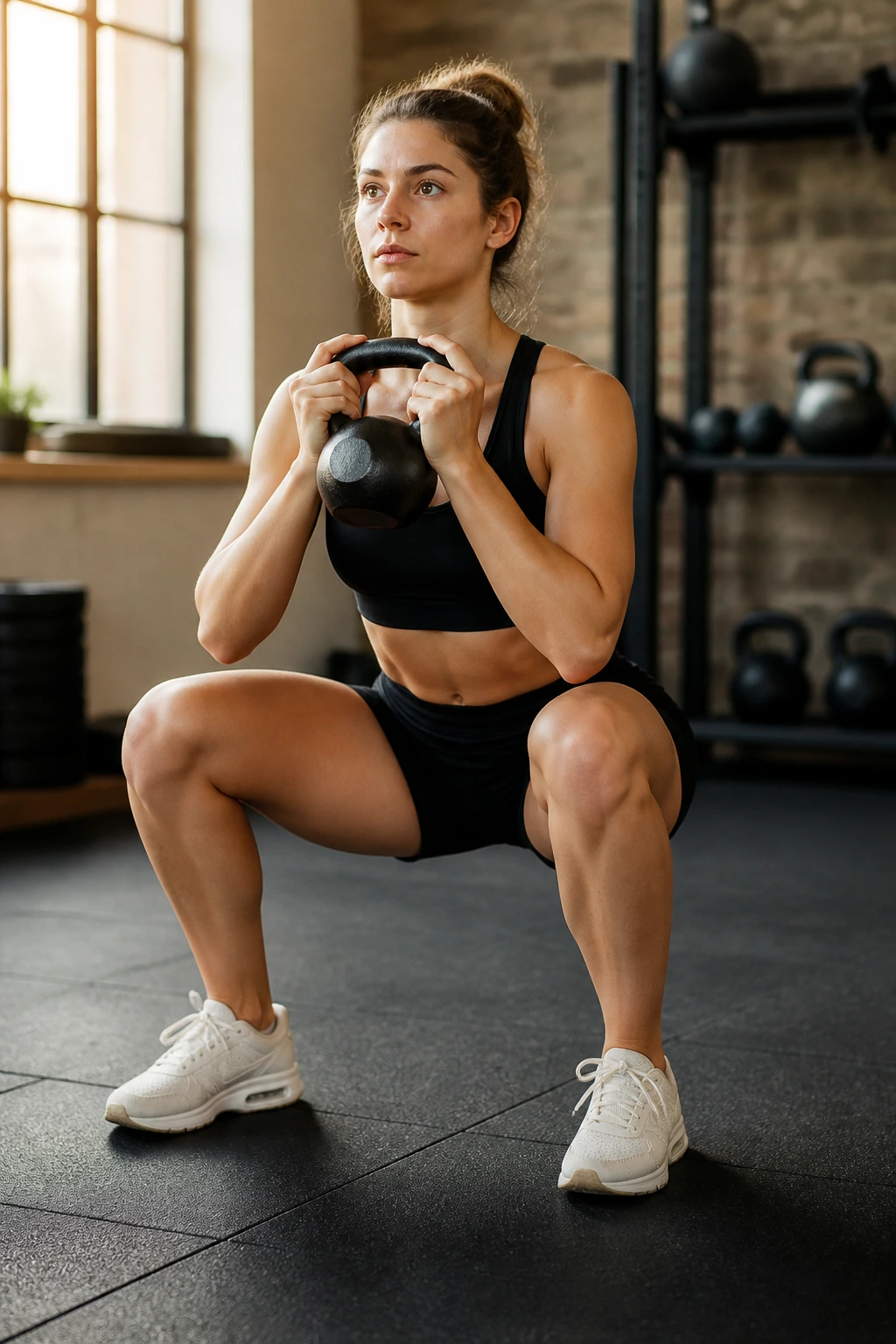
A beginner session should feel teachable, not intimidating. That means fewer exercises, fewer moving parts, and more repetition of the same good patterns.
Start with 5 minutes of marching, arm circles, and chair squats. Then do 2 to 3 rounds of 8 goblet squats, 8 incline push-ups, 10 band rows, 8 kettlebell or dumbbell deadlifts, and 20-second side planks per side. Rest about 60 to 90 seconds between rounds so the form stays clean.
What to Watch For
- Keep the goblet squat chest tall and knees tracking over the toes.
- On push-ups, use a bench or wall if you need to.
- Pull the band row to the lower ribs, not the neck.
- In the deadlift, push the hips back until you feel the hamstrings load up.
- On side planks, squeeze the glutes and keep the ribs from flaring.
That level of detail matters because beginners usually need one or two cues, not twelve. The workout should end with a little energy left in the tank, not a rescue mission. If the session feels too easy, add one round before you add a pile of weight.
11. Machine-Based Full Body Day for Crowded Gyms
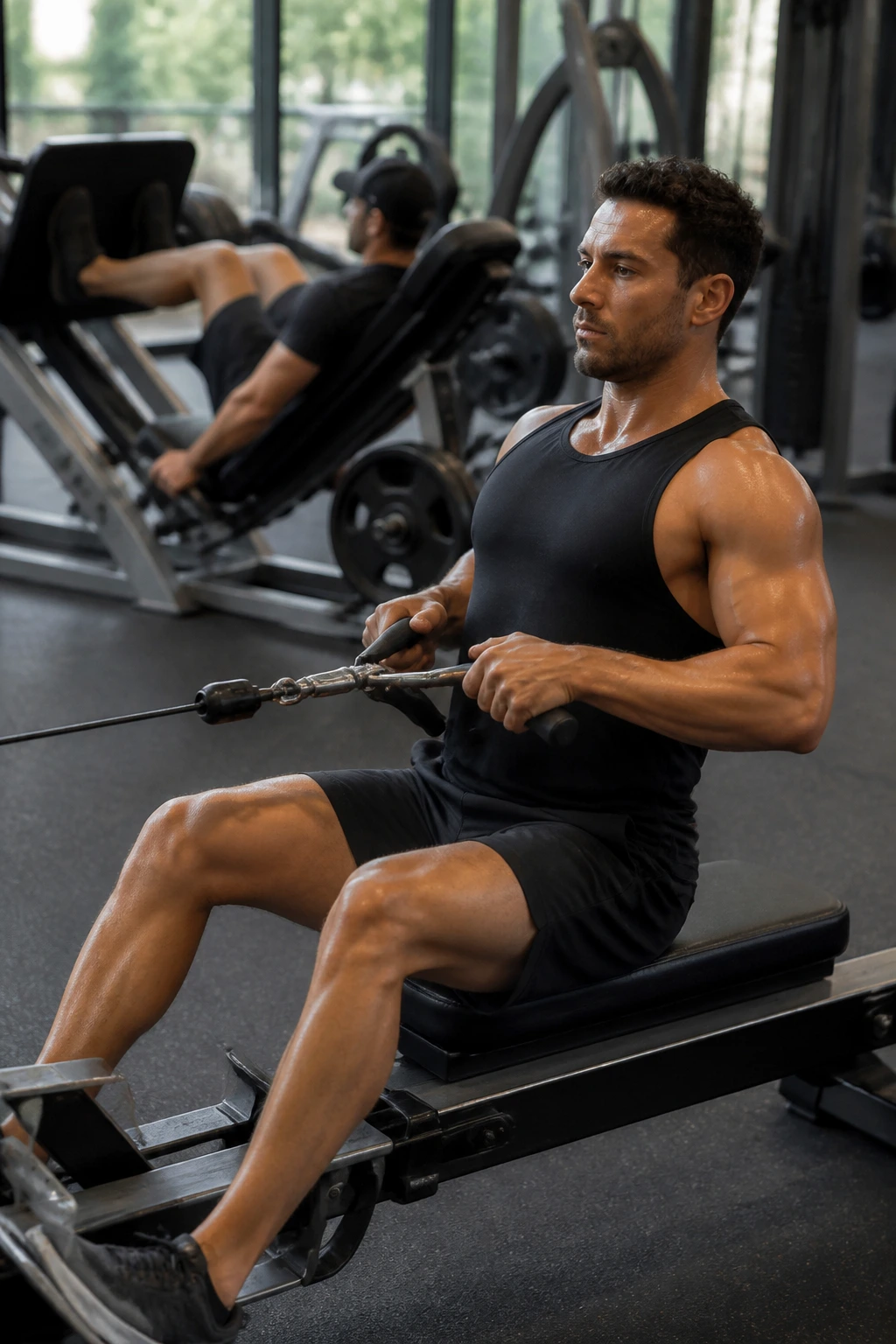
Crowded gym floor? No problem. Machines can do a lot of the work for you when the free-weight area looks like rush hour.
Start with a leg press, then move to a seated chest press, a lat pulldown, a lying leg curl, and a cable row. Use 3 sets of 10 to 12 reps for each, with 45 to 60 seconds of rest. That setup is quiet, predictable, and surprisingly effective when you want a full body workout without fussing over setup.
The machine path is especially useful for beginners or anyone coming back after time off. It cuts down the balance demands and lets you focus on the actual muscle working. You still need to choose weights that make the last few reps honest. A machine does not save you from poor effort; it just removes some of the noise.
If there’s time left, add 2 sets of cable chops and 2 sets of calf raises. Those two do not feel glamorous, and that is fine. They round out the session in a way most people skip.
12. Power-and-Conditioning Session With Med Balls and Push Presses
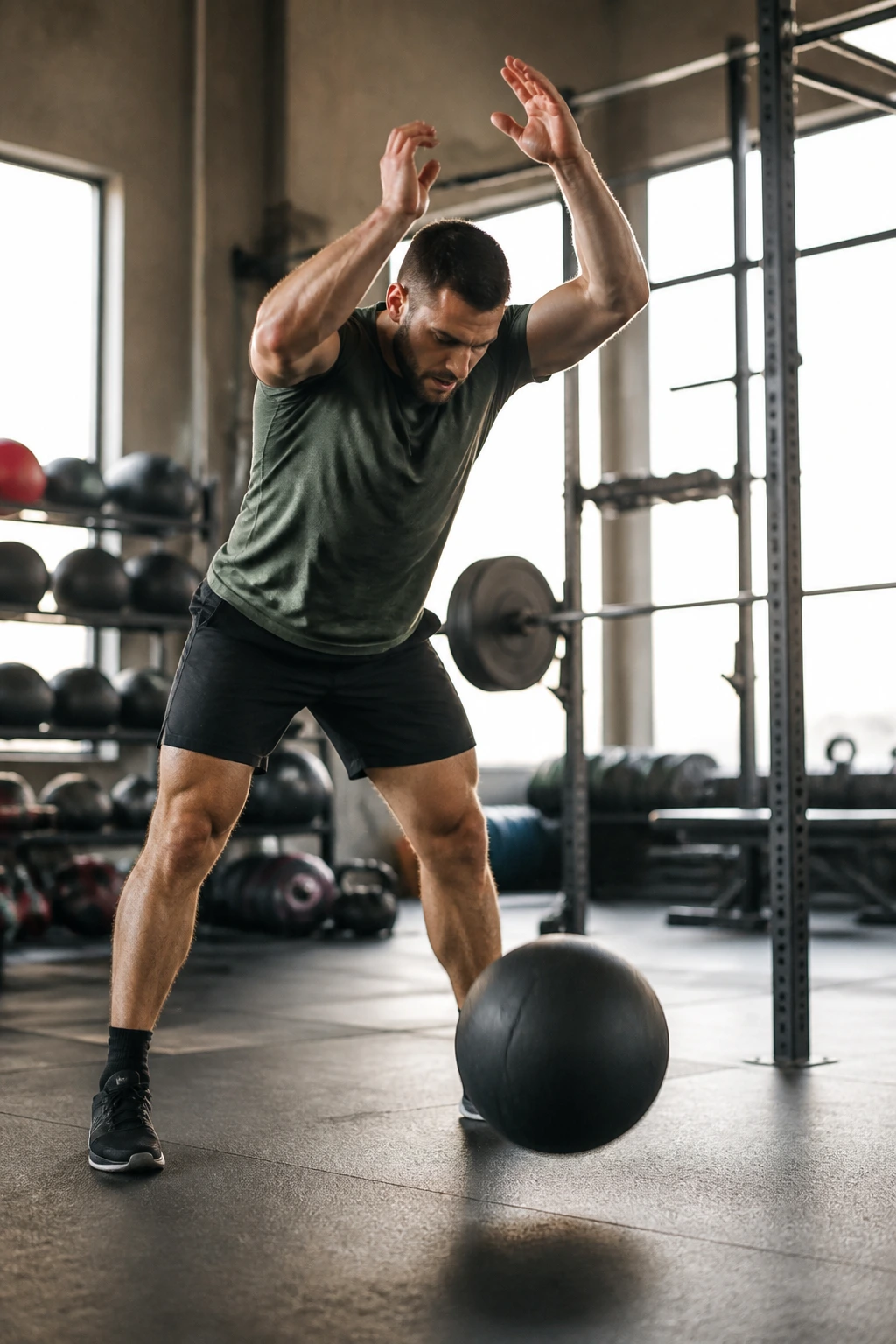
Power sessions work best when the reps stay crisp. Once speed turns into grinding, the whole point starts to leak out of the workout.
Use medicine ball throws, push presses, box step-ups, and rowing intervals. A clean format is 4 rounds of 5 med ball slams, 5 push presses, 8 step-ups per side, and 250 meters on the rower. Rest 60 to 90 seconds between rounds. The slams wake up the torso, the push press trains force from the legs through the arms, and the step-ups keep the lower body honest.
A workout like this does two jobs at once. It builds power, because the movements are explosive. It also taxes the lungs, because the rest is controlled rather than endless. That makes it a good choice when you want athletic work instead of a slow strength day.
If you do not have a med ball, swap in kettlebell swings or fast band punches. Not identical, but close enough to keep the spirit of the session.
13. Carry-Heavy Full Body Workout for Grip and Posture
Carries are the glue. They hold a session together better than people expect, and they punish bad posture in a way that is hard to fake your way through.
Why Carries Belong in Full Body Work
Use front rack carries, suitcase carries, and farmer carries across a 45-minute block. Start with 3 rounds of 6 front squats, 6 push presses, and 30 meters of farmer carries. Then move into 3 rounds of 8 one-arm rows per side, 8 reverse lunges per side, and 30 meters of suitcase carries per side. Finish with a 2-minute loaded march if you still have gas.
How to Scale It
Choose a load that forces your hands to work but still lets you keep your ribs down. If you lean hard to one side on suitcase carries, the weight is too heavy or the distance is too long. If your grip fails before your legs do, cut the distance to 15 meters and build from there.
The nice thing about carry work is that it makes the whole body line up. Feet, hips, trunk, shoulders — all of it has to cooperate. That makes this one of the quieter ways to get stronger, and probably one of the more underrated ones too.
14. Core-Focused Full Body Session That Trains More Than Abs
Most core workouts do too much crunching and not enough resisting. A useful core is the thing that keeps your torso steady while your arms and legs go do their jobs.
Start with dead bugs, then move to half-kneeling cable chops, offset goblet squats, side planks, and Turkish get-up progressions. Run 3 rounds with 8 to 10 reps on the strength moves and 20 to 30 seconds on the holds. Rest 45 seconds between exercises. The session stays full body because the lower body still has to drive the squat and get-up while the trunk keeps everything from folding.
This style of workout is a good choice if your back gets cranky during heavy lifting or if you want more control through the middle of the body. It is not a flashy session. Fine. Flashy is overrated when the goal is staying strong under load.
Keep the movements slow enough that you can feel where your ribs are, where your pelvis is, and whether you’re twisting when you should be still. That awareness carries over into almost every other lift.
15. Minimal-Equipment Home Workout With One Band and One Dumbbell
A one-band, one-dumbbell workout is the kind of thing that saves a week when life gets messy. You do not need a giant setup to train hard for forty-five minutes.
Run this as 5 rounds of 8 goblet squats, 8 band rows, 8 dumbbell floor presses, 8 band-resisted good mornings, and 20 mountain climbers per side. Rest 30 to 45 seconds between exercises and 60 seconds between rounds. If the dumbbell is light, slow the lowering phase to 3 seconds on each rep. That tiny change makes a cheap weight feel much heavier.
A Useful Way to Think About It
- Squat: lower body and trunk.
- Row: upper back.
- Floor press: chest and triceps.
- Good morning: hinge pattern.
- Mountain climbers: finish the session with some heat.
That pattern keeps the workout balanced even when the equipment is bare-bones. It also makes the session easy to repeat, which matters more than people admit. A plan you can do twice a week with no friction beats a fancy workout you only touch once.
If you want a harder version, finish with a 2-minute carry march around the room holding the dumbbell on one side, then switch hands halfway through. Simple. Nasty in the best way.
Final Thoughts
The best forty-five minute full body workout is the one that stays honest about time. Once the clock starts, every move should have a reason, and every rest should earn its place.
Heavy barbell work, dumbbells, kettlebells, bodyweight circuits, and machine days can all fit the same window. The real difference is how cleanly you move from one pattern to the next.
If your sessions keep drifting long, set a timer and write the plan on paper before you start. That small bit of discipline changes everything.
