



Cardio Tabata workouts at home can wreck your lungs in eight minutes if you do them honestly. That’s the whole appeal. No commute. No machines. No complicated setup. Just a timer, a little floor space, and enough grit to keep moving when your brain starts asking for a break after round three.
The classic Tabata format is brutally simple: 20 seconds of hard work, 10 seconds of rest, repeated 8 times. That sounds almost too short to matter, which is exactly why it works so well. Eight minutes can feel like a decent warm-up or a tiny emergency, depending on the move you choose and how much you’re willing to give.
Home workouts live or die on practicality. If a move needs a huge room, expensive gear, or a level of coordination you only have on your best day, it gets skipped. The workouts below are built for real spaces — a living room, a hallway, a garage, a spot beside the couch — and they lean on bodyweight cardio, clean technique, and honest pacing.
One more thing. Hard does not mean sloppy. If your form falls apart, scale the move down, keep the timer, and keep breathing. That’s a smarter workout than turning every round into a mess.
1. Cardio Tabata Jumping Jacks for Tight Rooms
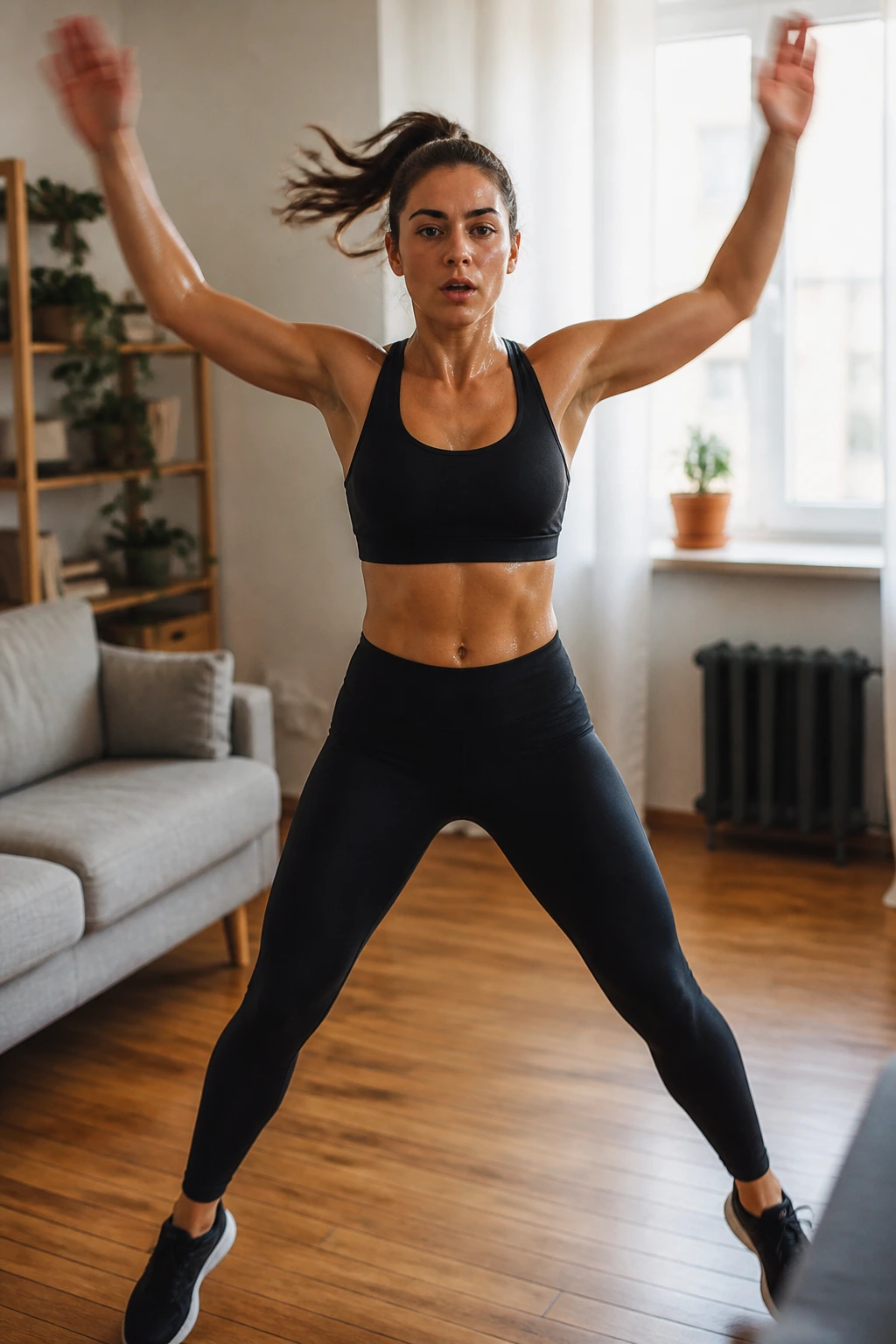
Jumping jacks are the blunt instrument of cardio, and I mean that as a compliment. They get the heart rate up fast, they need almost no setup, and they’re easy to scale when your living room is the size of a postage stamp.
Do 20 seconds of jacks, 10 seconds of rest, for 8 rounds. If you want more bite, alternate standard jumping jacks with seal jacks — arms out in front and back instead of overhead. The change keeps your shoulders awake and stops the round from feeling stale.
How to Run It
- Round 1-2: standard jumping jacks.
- Round 3-4: seal jacks.
- Round 5-6: cross jacks, where one foot crosses slightly in front on the way in.
- Round 7-8: step jacks if you want less impact.
Don’t chase height. A crisp, quick jack with soft landings beats a giant sloppy jump every time. If your sneakers are loud enough to annoy the people below you, keep the feet lower and faster.
A nice detail here: jacks warm the whole body without locking you into a single plane of motion. That’s useful when you’re starting from cold and want a workout that feels honest but not reckless.
2. High-Knee Sprint Intervals
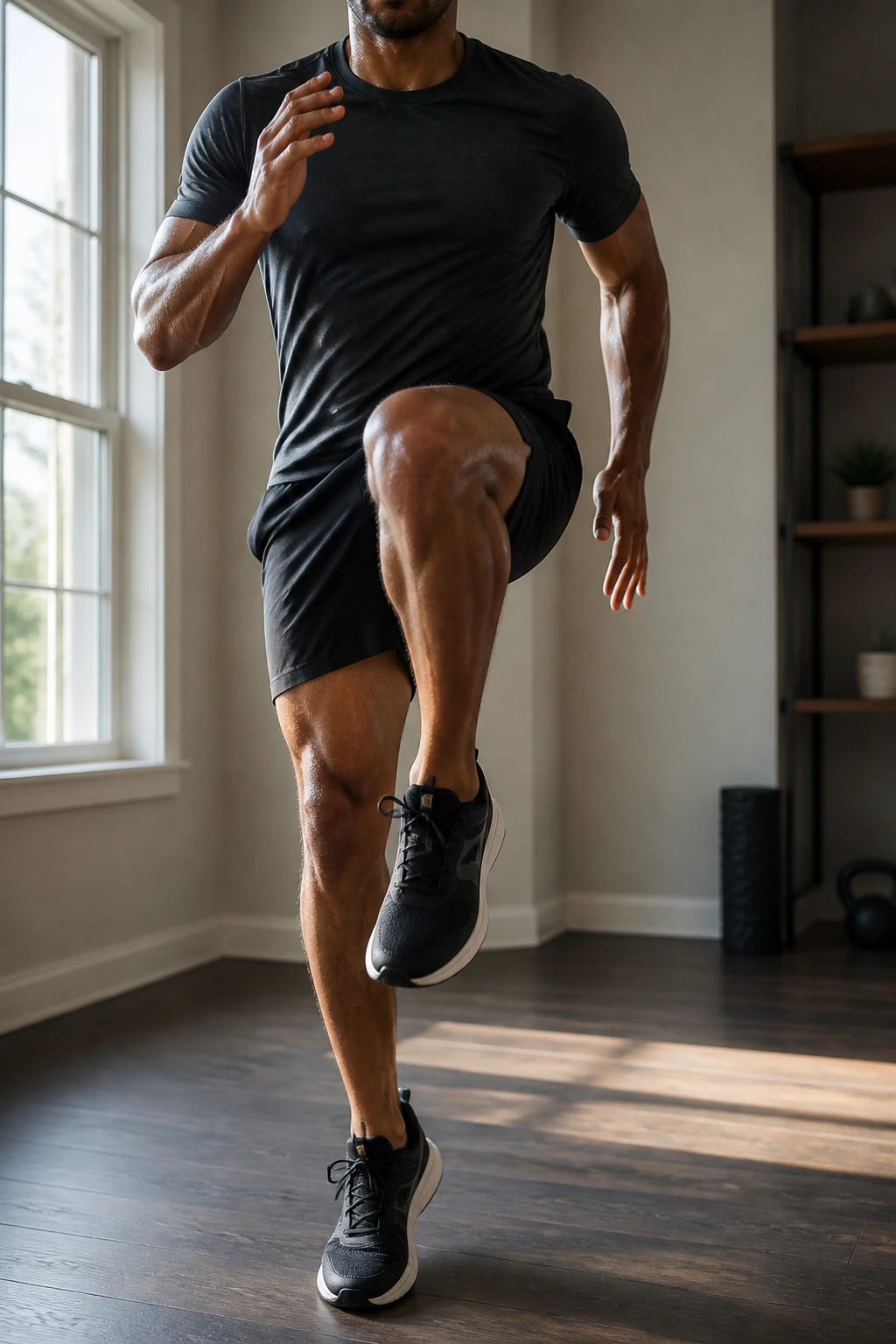
Why do high knees feel harder than they look? Because they punish laziness almost immediately. If you let the knees drift low or the arms go dead, the whole thing turns into awkward marching.
Stand tall, drive one knee up while the opposite arm punches forward, and switch fast for 20 seconds. Rest for 10 seconds. Repeat 8 rounds. The trick is to keep your torso stacked and your foot strike light, almost like you’re bouncing off a hot floor.
If you want more intensity, bring the knees up to hip height. If you want less impact, turn it into a fast march with a hard arm swing. Both versions still count. The timer doesn’t care how fancy you look.
Your breathing will tell you a lot here. If your shoulders creep toward your ears, slow down and reset the posture. If your feet start slapping the floor, you’re probably overstriding. Shorter steps, quicker rhythm. That’s the cleaner version.
This one is especially good when you need a home cardio blast that doesn’t require much space. You can do it beside a bed, next to a counter, or in the one clear patch of floor that somehow always exists near the doorway.
3. Squat Jack Burner
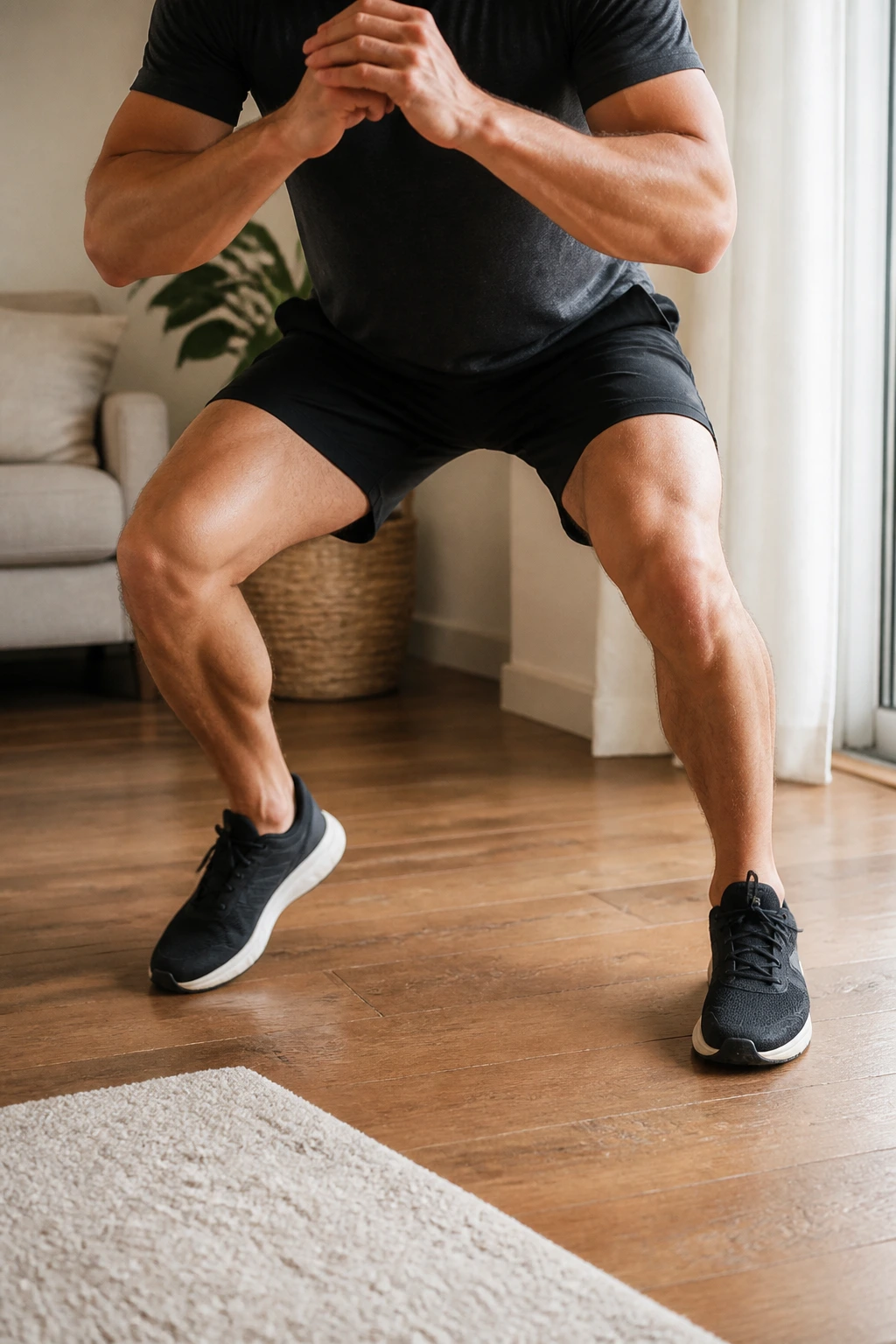
Squat jacks look tame for about three seconds. Then your quads start complaining.
Drop into a quarter squat, keep the chest up, and hop the feet out and in while staying low. Do it for 20 seconds, rest for 10, and repeat 8 times. The magic is in staying low the whole time. If you stand up between reps, you’ve turned it into a different workout.
What Makes It Hard
- Your legs never get a full break.
- The landing is slightly loaded, so the thighs stay under tension.
- The heart rate climbs because the movement uses both speed and muscle.
If your knees don’t love repeated jumping, take the hop out and step the feet side to side while holding the squat. It’s not as spicy, but it still burns.
One small cue matters a lot: knees track in line with toes. If they cave inward, the move gets sloppy fast and your lower body starts taking hits it doesn’t need. Stay small and controlled.
I like this one for people who want a leg-focused Tabata without dropping straight into burpees. It’s mean, but in a tidy way.
4. Mountain Climber Speed Set
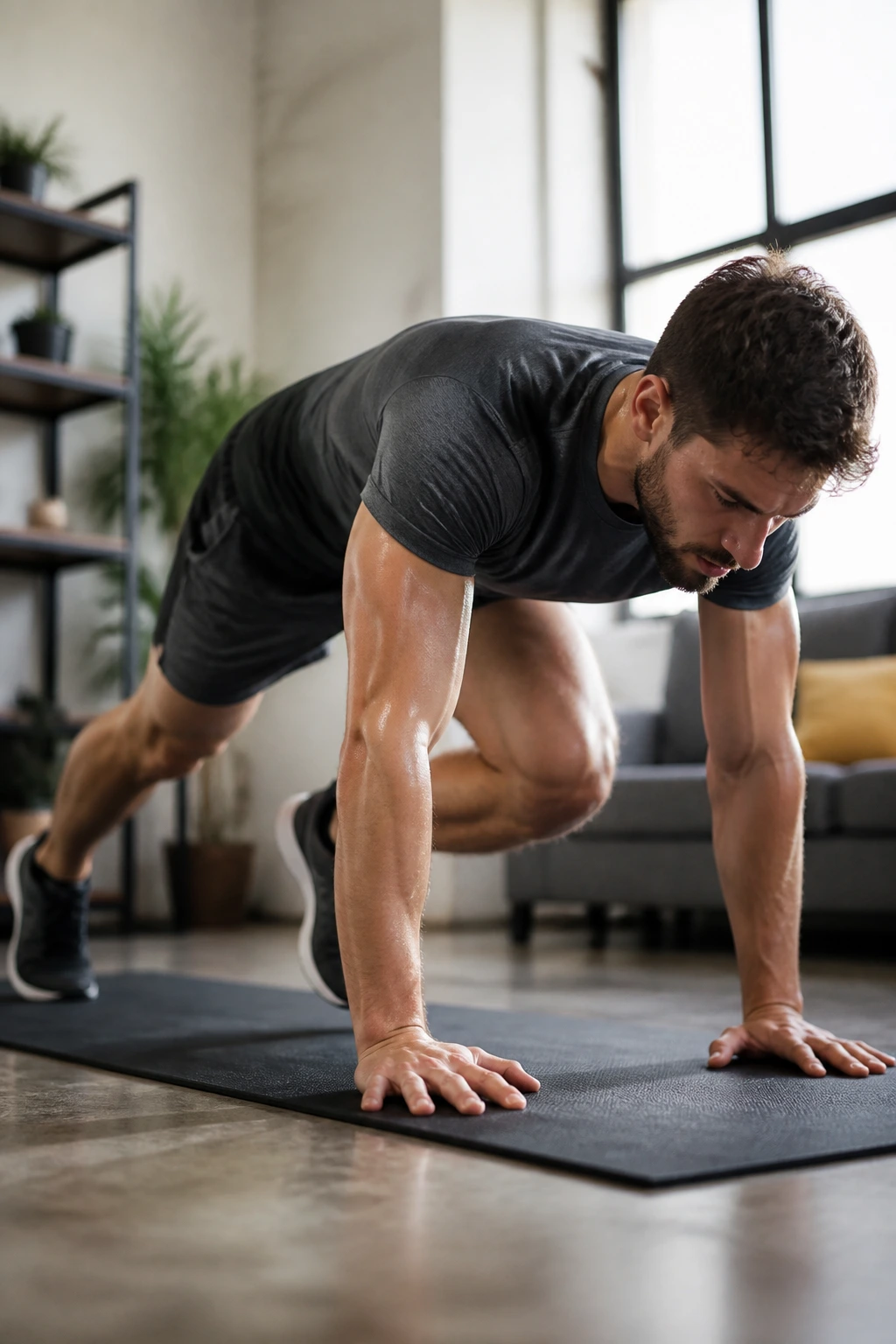
If you’ve got a mat, a rug, and a bit of floor, mountain climbers are the workout that always shows up sweaty. They’re simple on paper. Hands down, knees drive in. In practice, they can light up your shoulders, core, and lungs at the same time.
Set your hands under your shoulders, brace your midsection, and drive one knee toward your chest, then switch quickly. Run 20 seconds on, 10 seconds off, for 8 rounds. If the pace gets wild and your hips start bouncing like a loose table, slow down for a second and clean it up.
What to Watch
- Keep your shoulders stacked over your wrists.
- Don’t let the hips rise too high.
- Pull the knee in with purpose, not panic.
- Breathe out sharply on the drive.
A cross-body version works well too. Bring each knee toward the opposite elbow. That small twist makes the core do more work, and it changes the feel enough that the last few rounds don’t blur together.
A folded towel under the hands helps if your wrists get cranky. Cheap fix. Worth it. This is one of those moves that rewards control far more than frenzy. Fast is good. Messy is not.
5. Skater Hop Lateral Drive
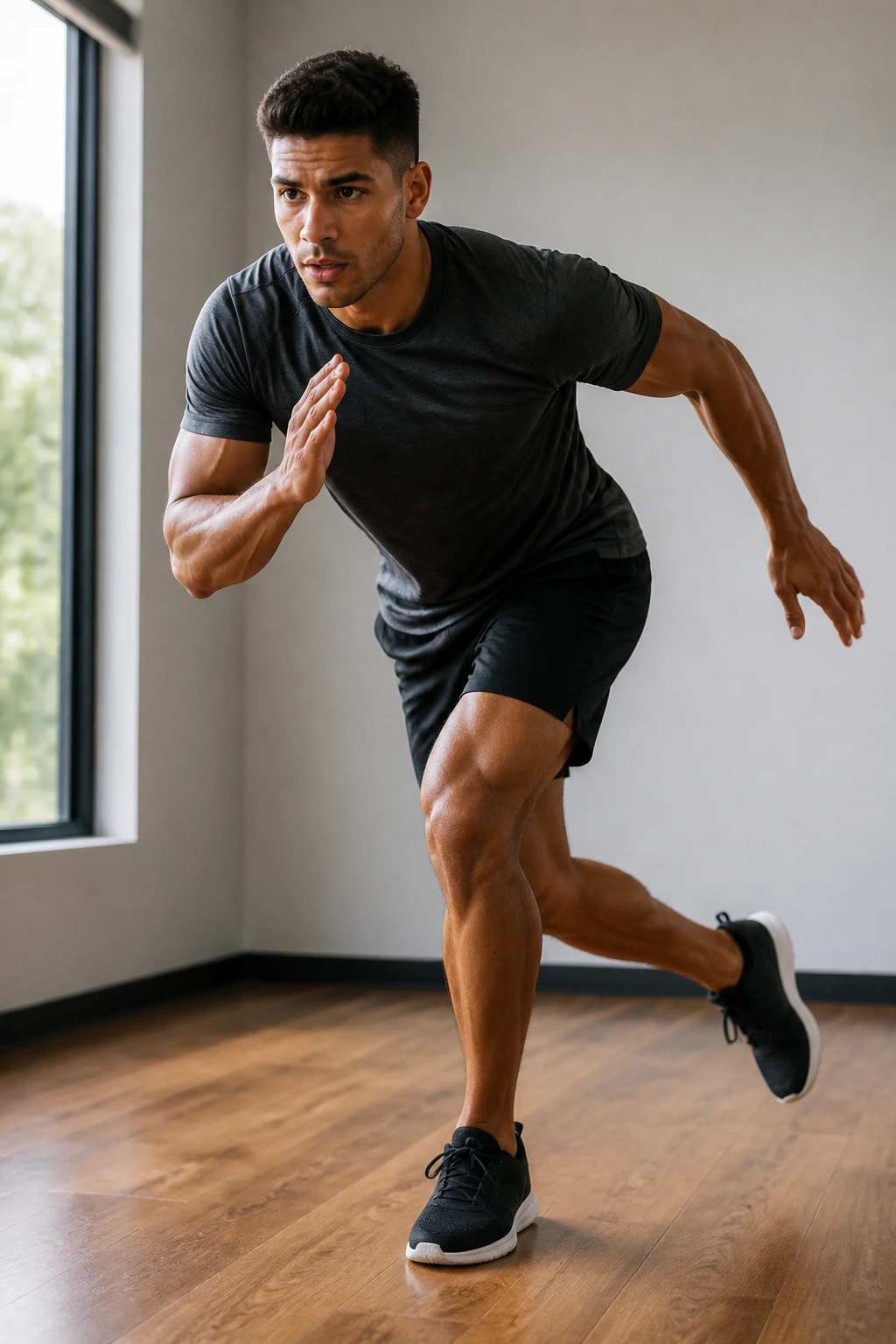
Side-to-side work saves your hips from getting bored. That’s why skater hops earn a place in so many home Tabata sessions. They hit the glutes, the outer legs, and the lungs, and they break up all the straight-ahead pounding that comes from high knees and burpees.
Start on one leg, leap laterally, and land softly on the other side while the back leg sweeps behind you. Stay low enough that you feel your glutes working on the landing. 20 seconds hard, 10 seconds easy, 8 rounds.
The landing matters more than the leap. Stick the move for a beat before bouncing off again. If you’re crashing into each hop, the knees and ankles take the hit. If you’re controlling it, the whole drill feels cleaner and tougher.
A low-impact version is easy: step side to side and reach the opposite hand toward the floor. No jump, same side-to-side load. If you’re in a place where noise matters, that’s the smarter choice.
I like this drill because it feels athletic without needing any equipment at all. It’s also a good reminder that cardio doesn’t have to be straight-line, mindless, or boring.
6. Shadow Boxing Cardio Rounds
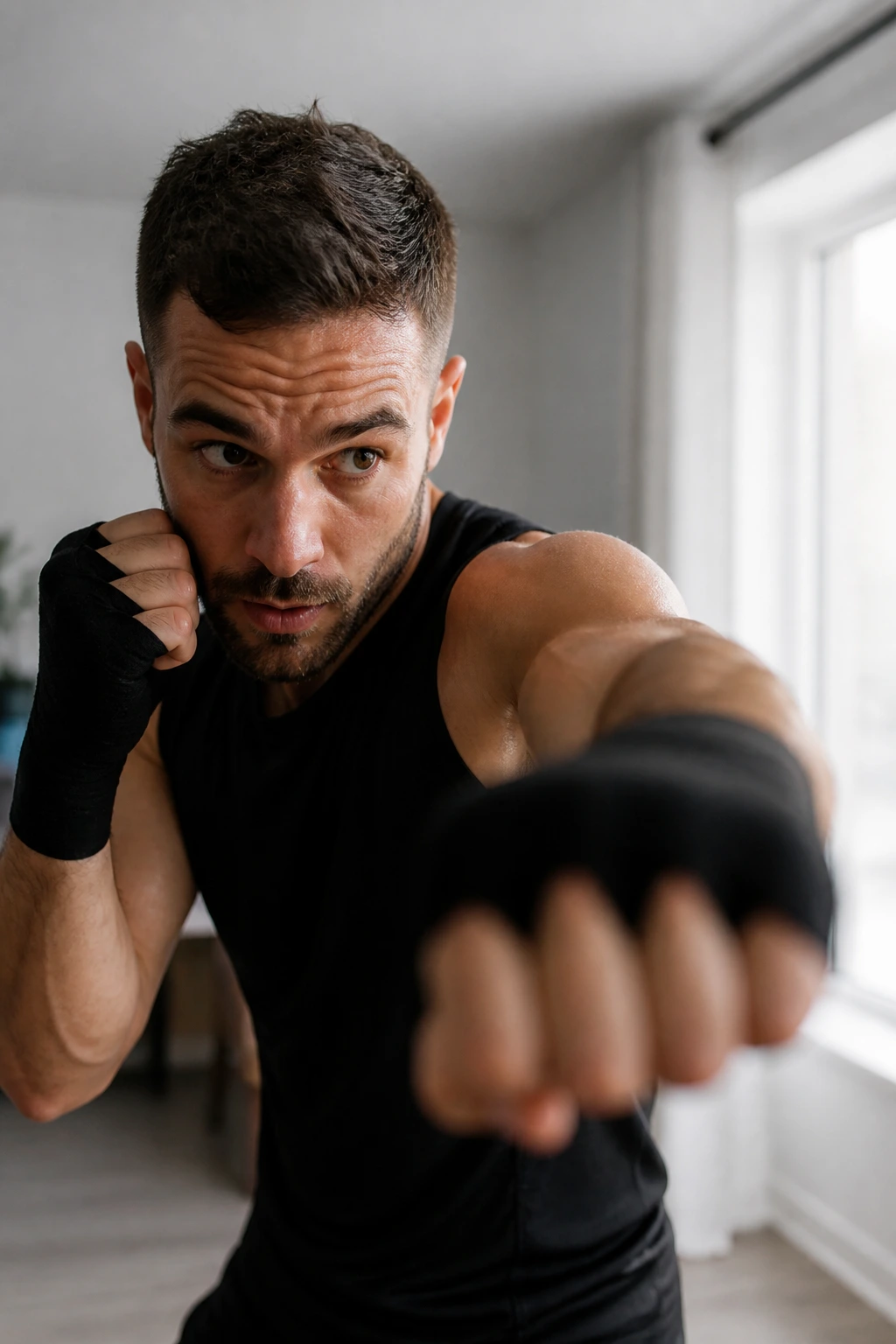
Unlike jumping drills, shadow boxing gives your knees a break while still making your breathing ugly. That’s a trade I’ll take most days, especially if the floor is hard or the neighbors are already awake.
Stand in a light boxing stance and throw clean combinations for 20 seconds. Rest 10 seconds. Repeat 8 rounds. Start with jabs and crosses, then work in hooks, uppercuts, and quick slips. The point is not to become a boxer. The point is to keep moving with purpose.
Three Combos to Cycle Through
- Jab-cross-jab.
- Jab-cross-hook.
- Uppercut-uppercut-slip-cross.
Keep your fists returning to your face, not drifting down to your ribs like dead weights. Turn the hips a little on each punch. Small rotation. Not a full spin. If you’re huffing and puffing, good. If your shoulders are tense and your neck is tight, loosen your grip and shorten the punches.
This is a sneaky-good cardio option because the rhythm changes without breaking the Tabata structure. You can spend one round on fast hands, the next on footwork, and the next on hard body shots. It stays fresh. It also spares your shins.
7. Burpee Step-Back Tabata
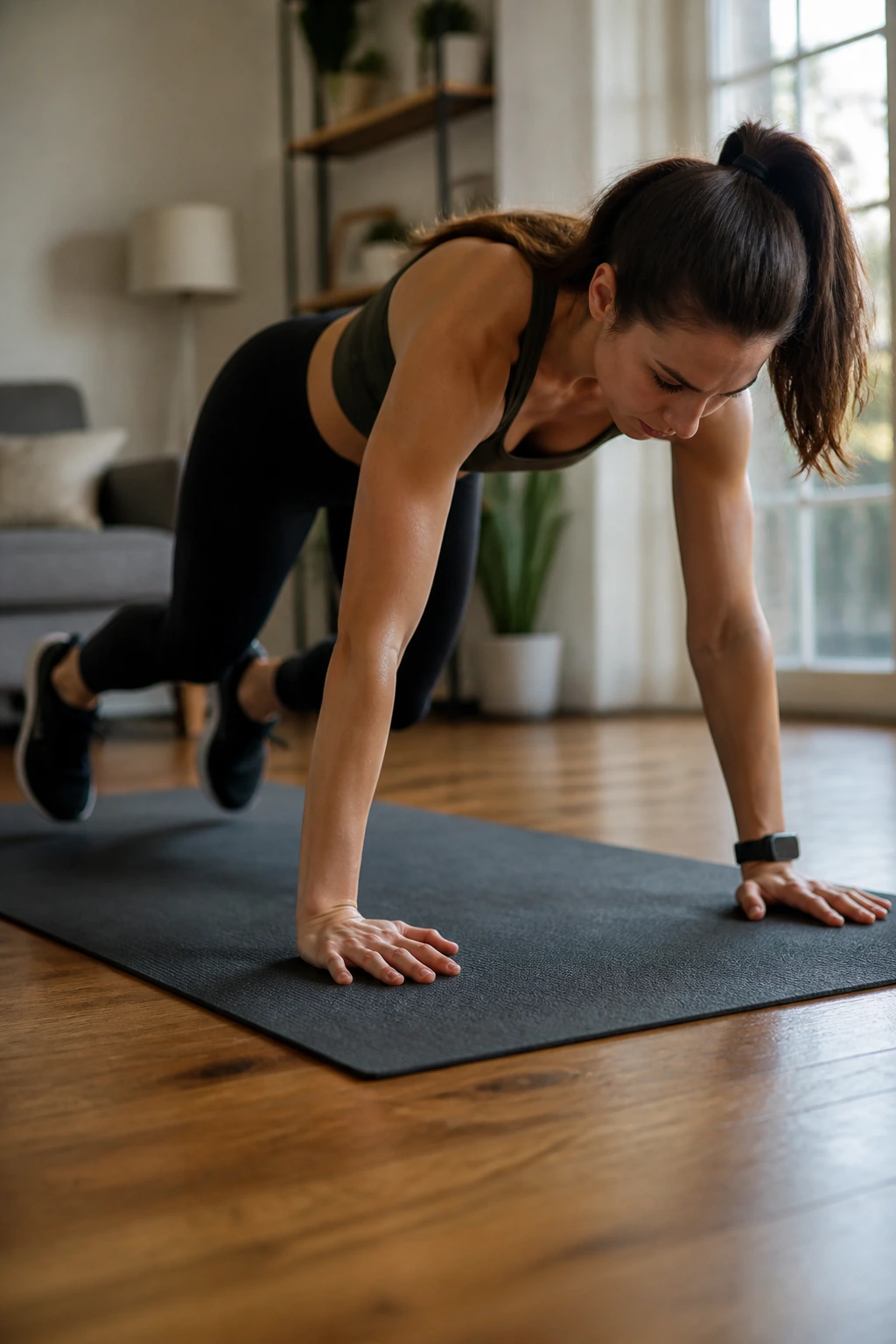
Burpees earn their bad reputation. They ask a lot, and they ask it quickly.
The cleanest home version starts standing, folds down to the floor, steps the feet back into a plank, steps them forward again, and stands up fast. Do that for 20 seconds and rest for 10 seconds. Repeat for 8 rounds. If you want more impact, add a jump at the top. If you want less, keep everything stepped.
Pick Your Version
- Beginner: step back, step forward, stand tall.
- Middle ground: step back, jump forward, rise fast.
- Harder: add a jump at the top.
- Hardest: add a push-up between the plank and the return.
The mistake people make is collapsing into the floor and then muscling back up with a rounded spine. That’s not efficiency. That’s a mess. Hinge at the hips, keep the core on, and plant the hands with intent.
Burpees are best when you’re rested enough to keep them crisp. If your form turns ugly by round three, swap to the step-back version and stay there. It still counts. It still hurts.
8. Fast Feet and Overhead Reach Drill
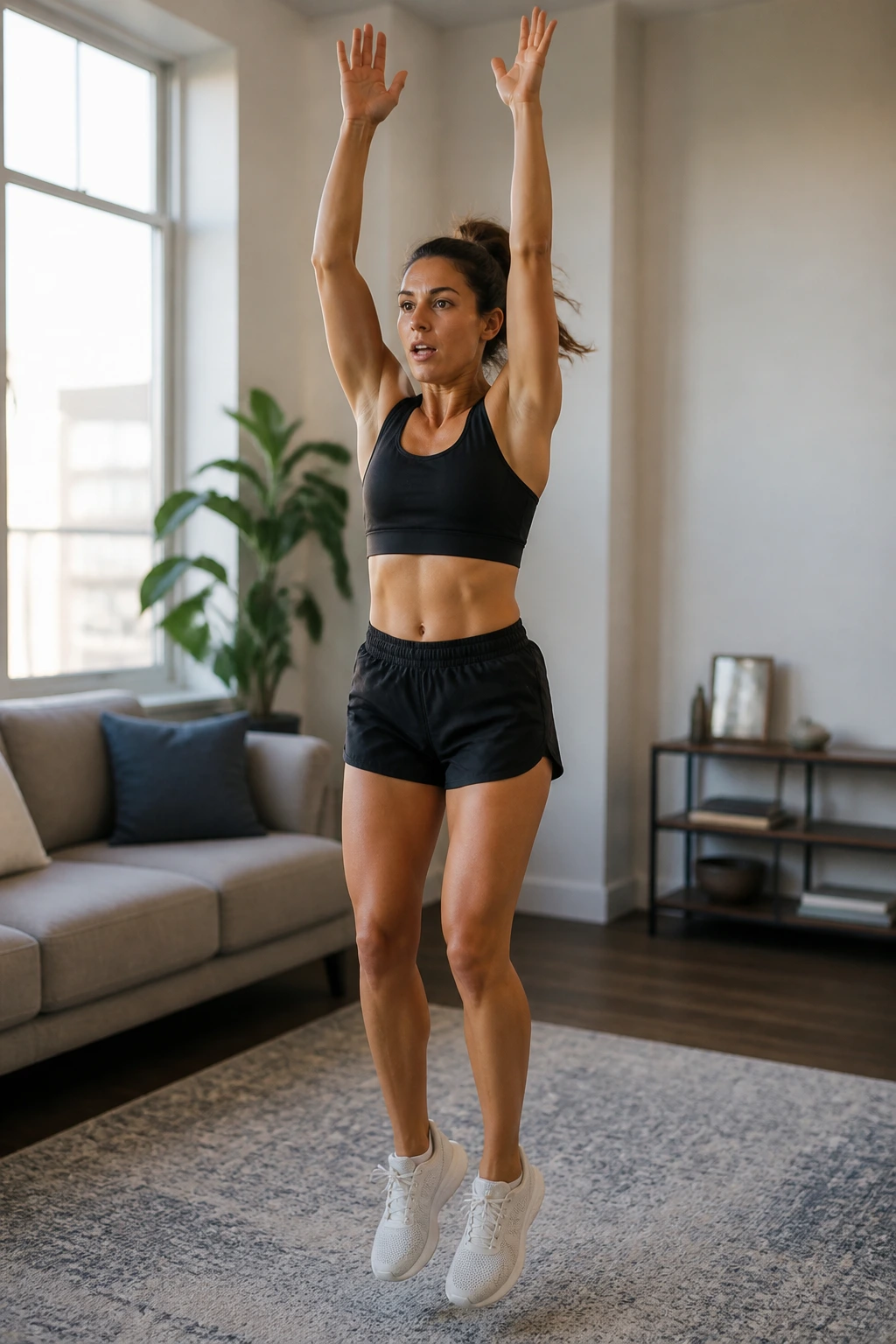
Need something quiet enough for an apartment? Fast feet and overhead reach is a sneaky answer. It looks almost too easy until round five shows up and your breathing starts to go sideways.
Stay on the balls of your feet and take tiny, quick steps in place for 20 seconds. Every few steps, reach both arms overhead and pull them back down hard, like you’re trying to wake up your ribs. Rest for 10 seconds, then go again for 8 rounds.
This works because the feet never settle. There’s no long glide, no full rest between strides, nothing to coast on. The overhead reach opens the chest and gives the shoulders a job, which helps keep the whole body involved instead of turning the drill into a lazy bounce.
Keep the knees soft. Keep the core braced. That’s the whole game.
A nice side effect: this one is easy to slot into a cramped space without moving furniture around. If you’ve got a few feet of floor and a decent timer, you’re set.
9. Reverse Lunge Knee-Drive Circuit
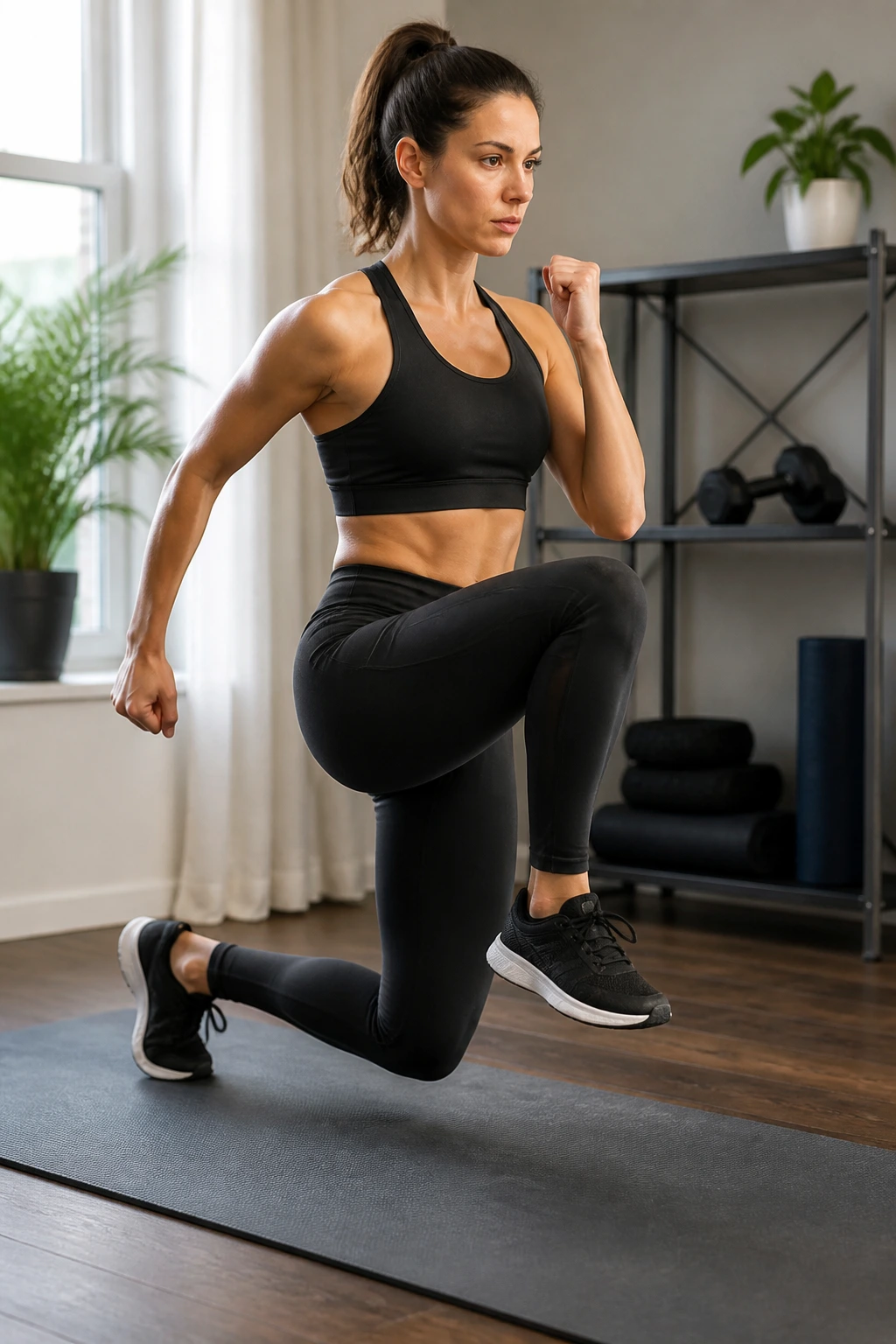
When your balance starts slipping, reverse lunge knee drives are the kind of cardio that sneaks up on you. They look slower than jumps, but the leg work adds up fast.
Step one foot back into a reverse lunge, push through the front heel, and drive the back knee up as you stand. Switch legs each rep. Run 20 seconds on, 10 seconds off, 8 rounds. Keep the torso tall and the front knee tracking over the foot, not caving in.
Cleaner Form, Less Wobble
- Step back far enough to keep the front shin comfortable.
- Drive up through the front heel.
- Finish each rep with the standing leg tall.
- Use a knee lift, not a wild hop.
If you want more cardio, add a tiny hop as the knee drives up. If you want less impact, take the hop out and move with speed instead. The knee drive itself is enough to keep the heart rate climbing.
This is one of the best picks when you want a lower-noise Tabata that still makes the legs work. It’s steady, a little sneaky, and far less boring than a plain lunge hold.
10. Plank Jack Plus Shoulder Tap
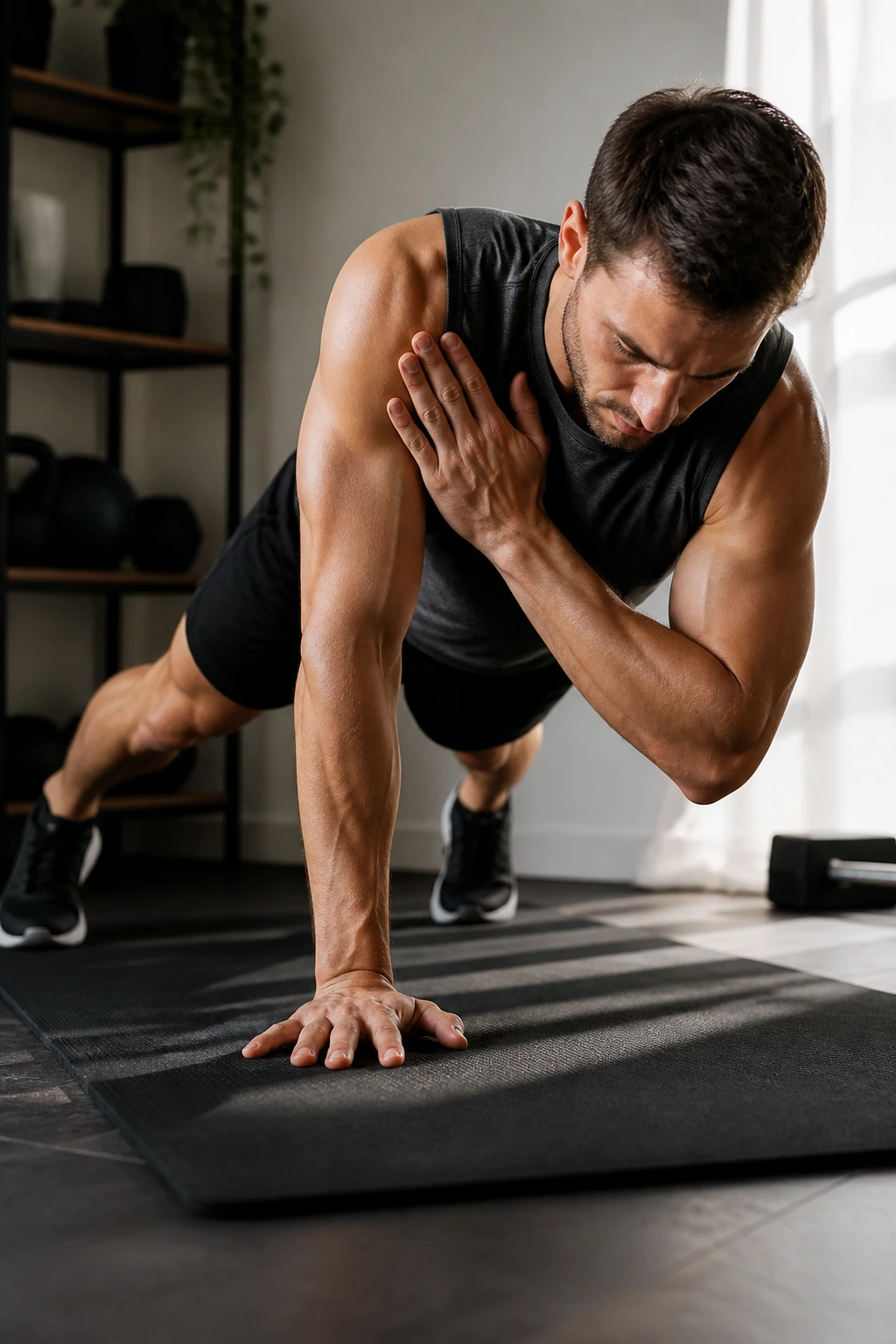
Planks are not boring when you turn them into moving planks. Add a jack, then a shoulder tap, and the whole thing wakes up fast.
Set up in a strong high plank. Jump the feet out and in like a jack, then tap one shoulder with the opposite hand. Keep alternating. Do that for 20 seconds, rest 10 seconds, repeat 8 rounds. If your hips swing side to side, slow the taps down. Speed means nothing if the plank shape falls apart.
What to Watch
- Hands under shoulders, not ahead of them.
- Hips level with the floor.
- Feet land quietly.
- Core stays tight during the tap.
This one hits the shoulders, midsection, and hips all at once. It also exposes weakness fast, which is useful even if it feels rude. A lot of people rush the shoulder taps and forget the jack part, or the other way around. Don’t. Both pieces matter.
If your wrists are sensitive, do the taps from a higher surface like a sturdy bench or couch edge. Same timer. Easier angle. Smarter choice.
11. Frogger Squat Thrusts
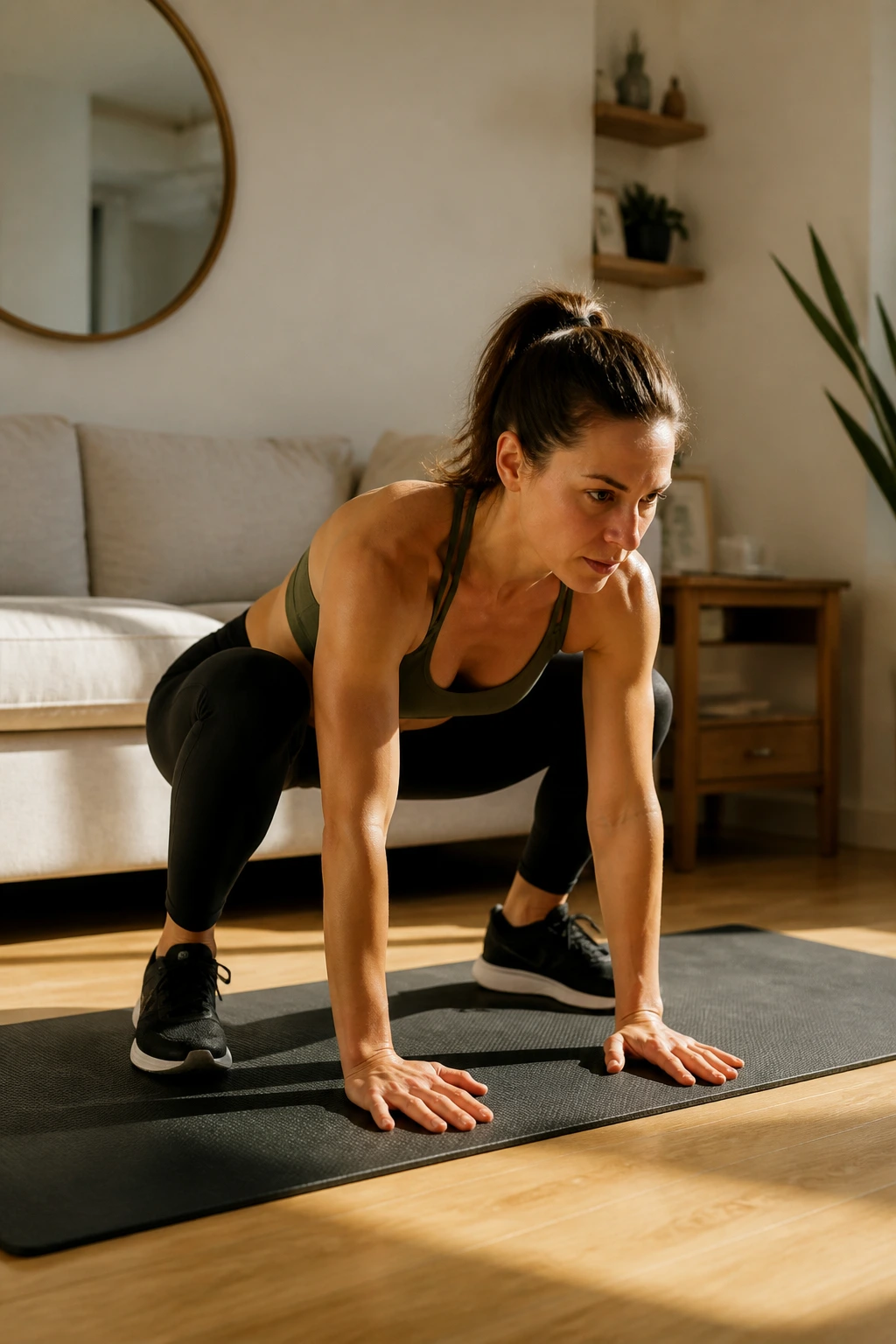
Frogger squat thrusts are ugly in the best way. They look like four moves jammed together because, honestly, they are.
Start in a deep squat with your hands inside your feet. Jump or step the feet back into a plank, then spring them back toward the hands and stand. Keep the pace honest for 20 seconds, rest for 10, and repeat for 8 rounds. The move becomes a cardio engine because it forces repeated changes from low to high.
Why They Spike the Heart Rate
- You keep moving between levels.
- The core has to brace during the plank.
- The legs have to absorb the return to the squat.
If jumping in and out of the squat feels rough, step both feet back and forward instead. That version is kinder to the joints and still works the lungs. If you’re more advanced, add a small hop when you return to standing.
A lot of people rush the squat position and lose balance on the way back up. Plant the hands well, land the feet under the body, and stand with control. It’s a small detail, but it keeps the move from turning into a flop.
12. Split Jump Power Rounds
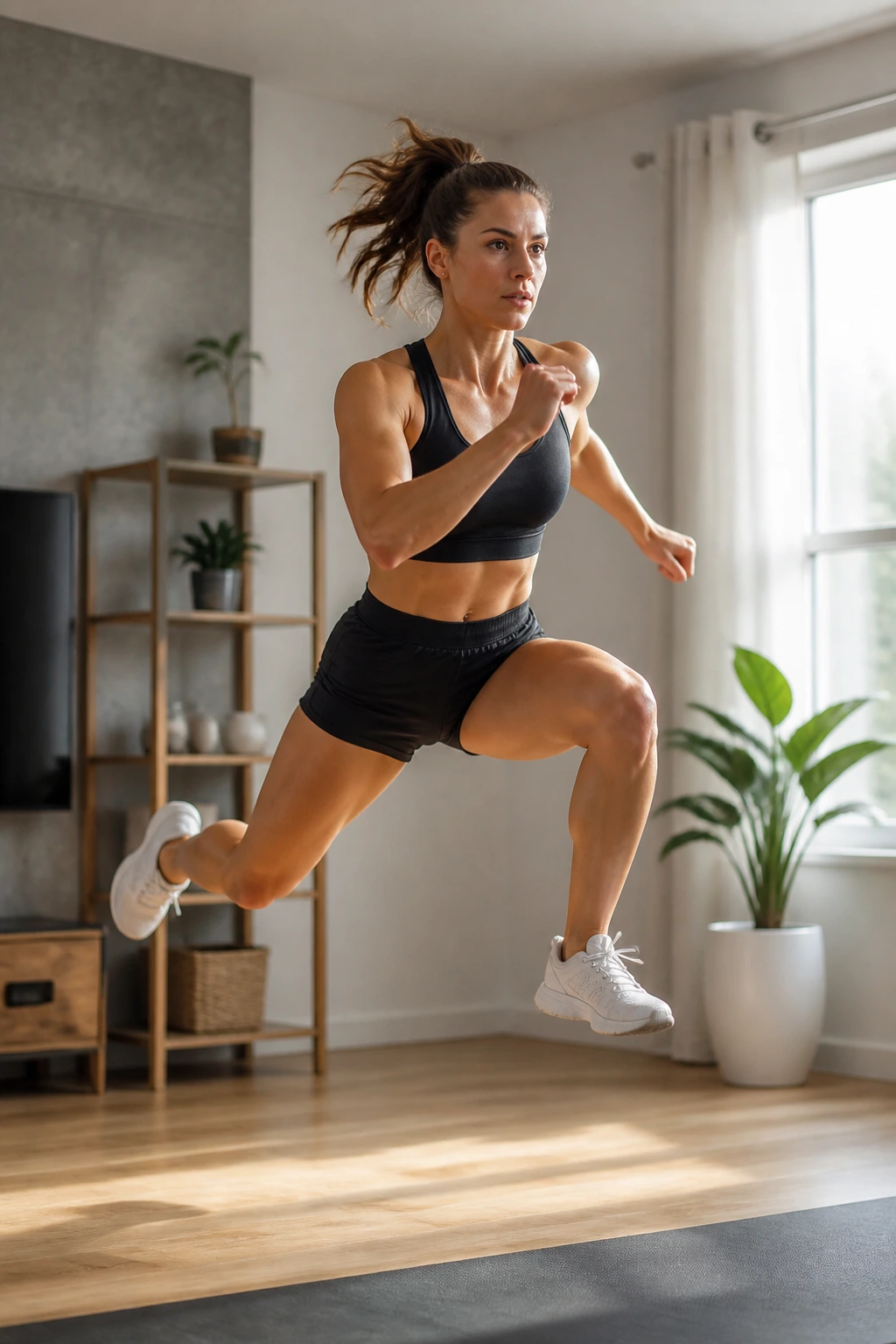
Split jumps hit the legs differently than squat jumps. Instead of blasting straight up, you switch between lunge positions, which gives the quads and glutes a different kind of sting.
Start in a split stance, drop into a shallow lunge, and jump to switch legs in the air. Keep the torso tall and the landing soft. 20 seconds of work, 10 seconds of rest, 8 rounds. If you need less impact, turn the jump into a quick step switch and keep the rhythm moving.
The front knee should stay roughly over the ankle when you land. If it shoots too far forward, shorten the stance. If the back heel is slamming down hard, lighten the landing and stay springy through the feet.
This is a good one when you want cardio that still feels athletic. It has a little bounce, a little control, and enough leg fatigue to make the last few rounds matter. No fancy setup. Just repetition and patience.
13. Bear Crawl Cardio Combo
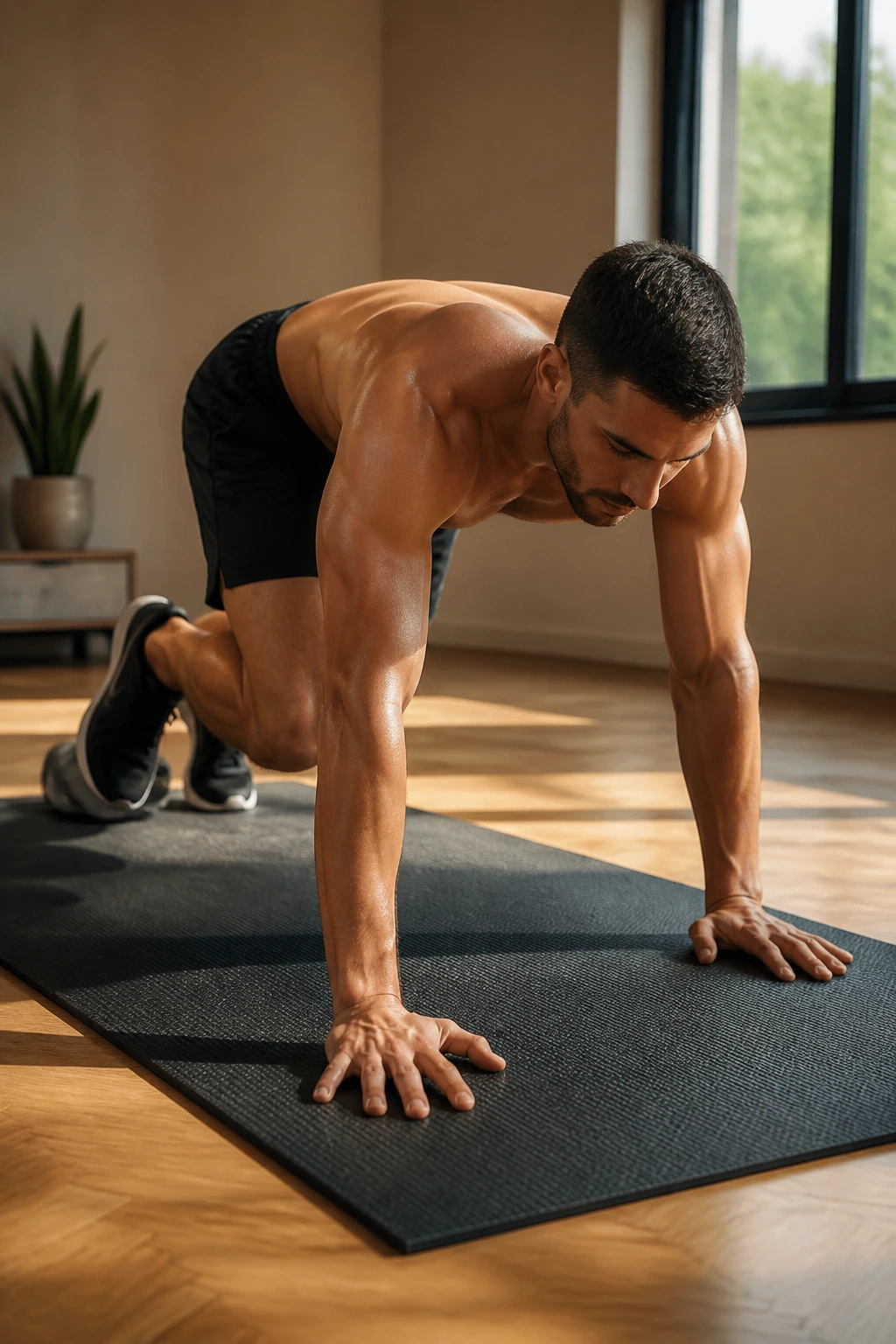
Bear crawls sound harmless until your shoulders start tingling. Then you remember that moving close to the floor is its own kind of nasty.
Come into a bear position with hands under shoulders, knees hovering just off the floor, and hips level. Crawl forward three to five steps, then backward three to five steps, and keep that pattern going for 20 seconds. Rest for 10 seconds. Repeat for 8 rounds.
The Parts People Rush
- Keeping the knees too high.
- Letting the hips twist side to side.
- Rushing backward steps without control.
- Forgetting to breathe and holding tension in the neck.
The short crawl distances matter. If you try to cover too much floor, the shape breaks and the low back takes over. Small, controlled steps keep the core busy and the shoulders honest.
If the floor is rough, use a mat. If the floor is slippery, stop and fix that first. This move is excellent on a good surface and annoying on a bad one. Don’t fight the room. Make the room work for you.
14. Invisible Jump Rope Intervals
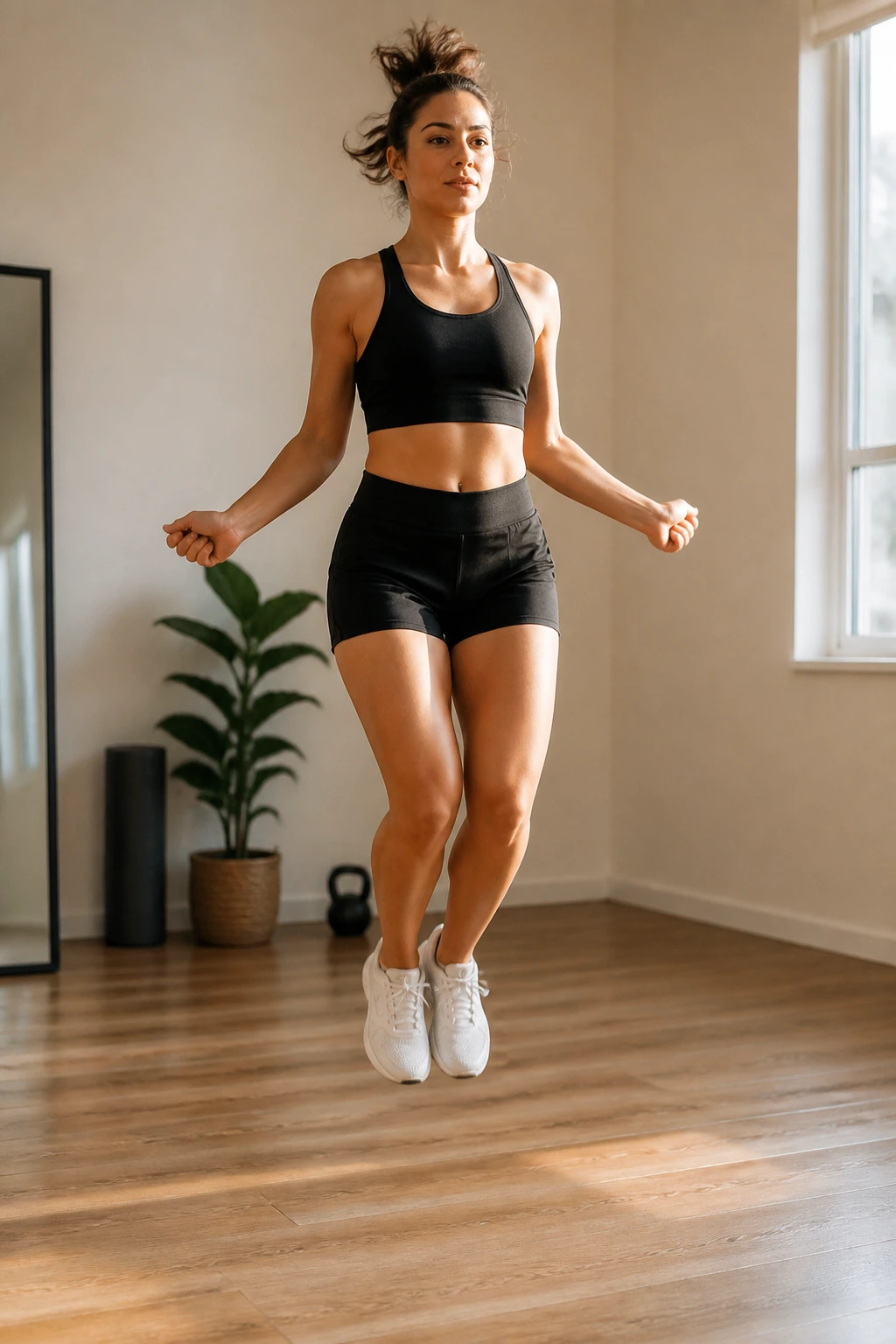
Missing a jump rope? Don’t. Use air. It sounds silly, then it starts to burn.
Pretend the rope is there and bounce lightly from foot to foot for 20 seconds. Keep your elbows near your sides and let the wrists make the tiny turning motion. Rest for 10 seconds. Repeat 8 rounds. You can use a boxer step, a two-foot bounce, or alternating feet to change the feel.
How to Keep the Rhythm
- Stay on the balls of your feet.
- Keep the jumps small.
- Land softly, almost quietly.
- Let the ankles do the work, not the knees.
What makes this one useful is the rhythm. People can get sloppy with cardio when there’s nothing in their hands and no object to follow. Pretending the rope is there keeps the cadence tight and the feet moving.
You can also cross the hands in front of the body for a round or two if you want a little coordination work. It’s not about looking smooth. It’s about keeping the bounce alive until the buzzer.
15. Lateral Shuffle Touches
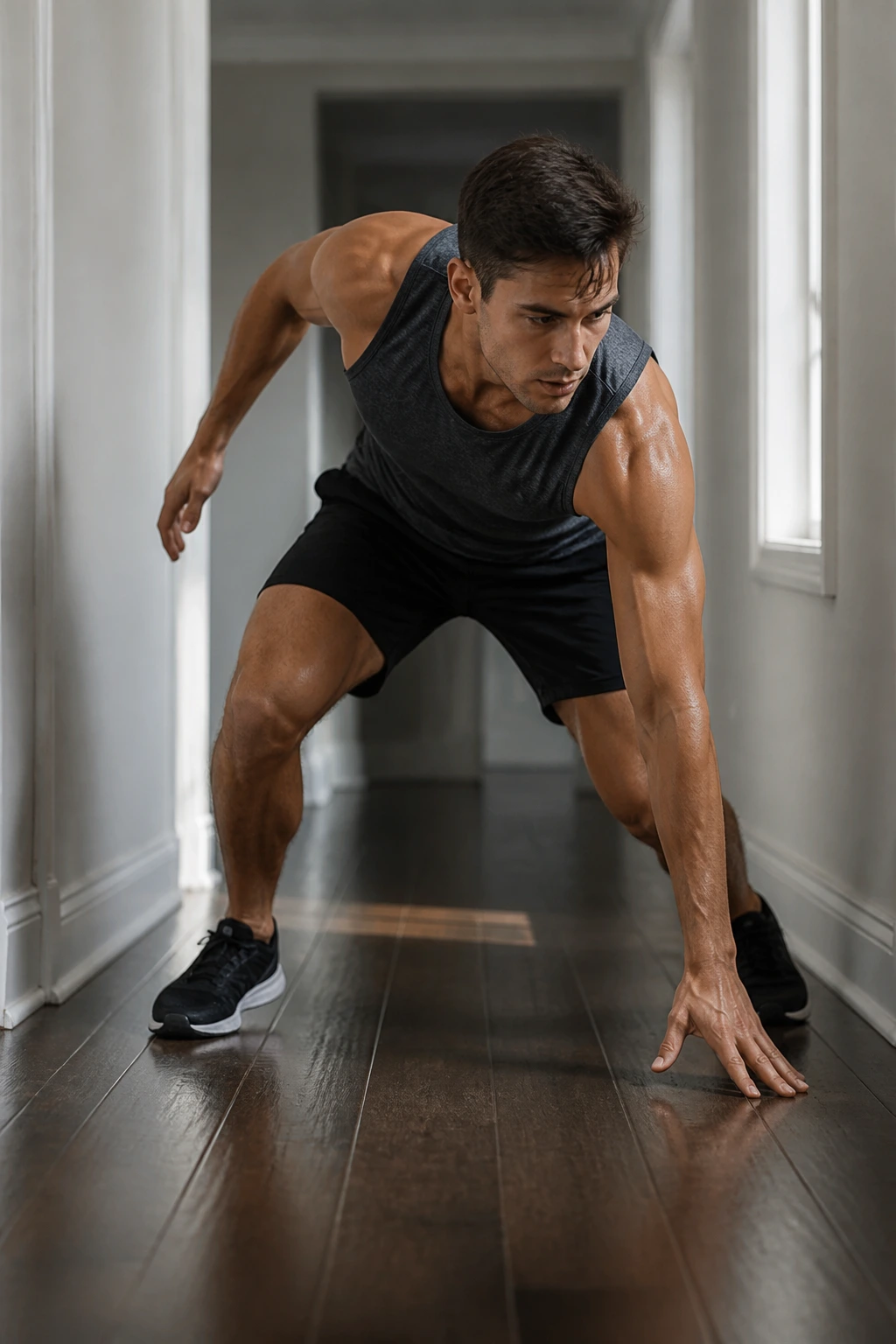
If you’ve ever tried to stay quiet while someone sleeps in the next room, lateral shuffles are your friend. They can be fast without sounding like a stampede.
Take three quick steps to the right, touch the floor or a cone, then shuffle back to the left and touch again. Keep the chest lifted and the knees bent just enough to stay springy. Work for 20 seconds, rest for 10 seconds, repeat 8 rounds.
The nice part is the setup. You don’t need much space. A hallway works. A living room works. Even a narrow strip beside the sofa works if you’re willing to stay compact.
A stronger version adds a touch near the floor on every change of direction. A quieter version stays upright and focuses on quick feet. Both make the lungs work. The touch just adds a little more leg load and a little more intention.
This drill feels especially good if your normal cardio has been all forward motion. Sideways movement wakes up muscles that spend too much time asleep.
16. Cross-Body Climber Sprint
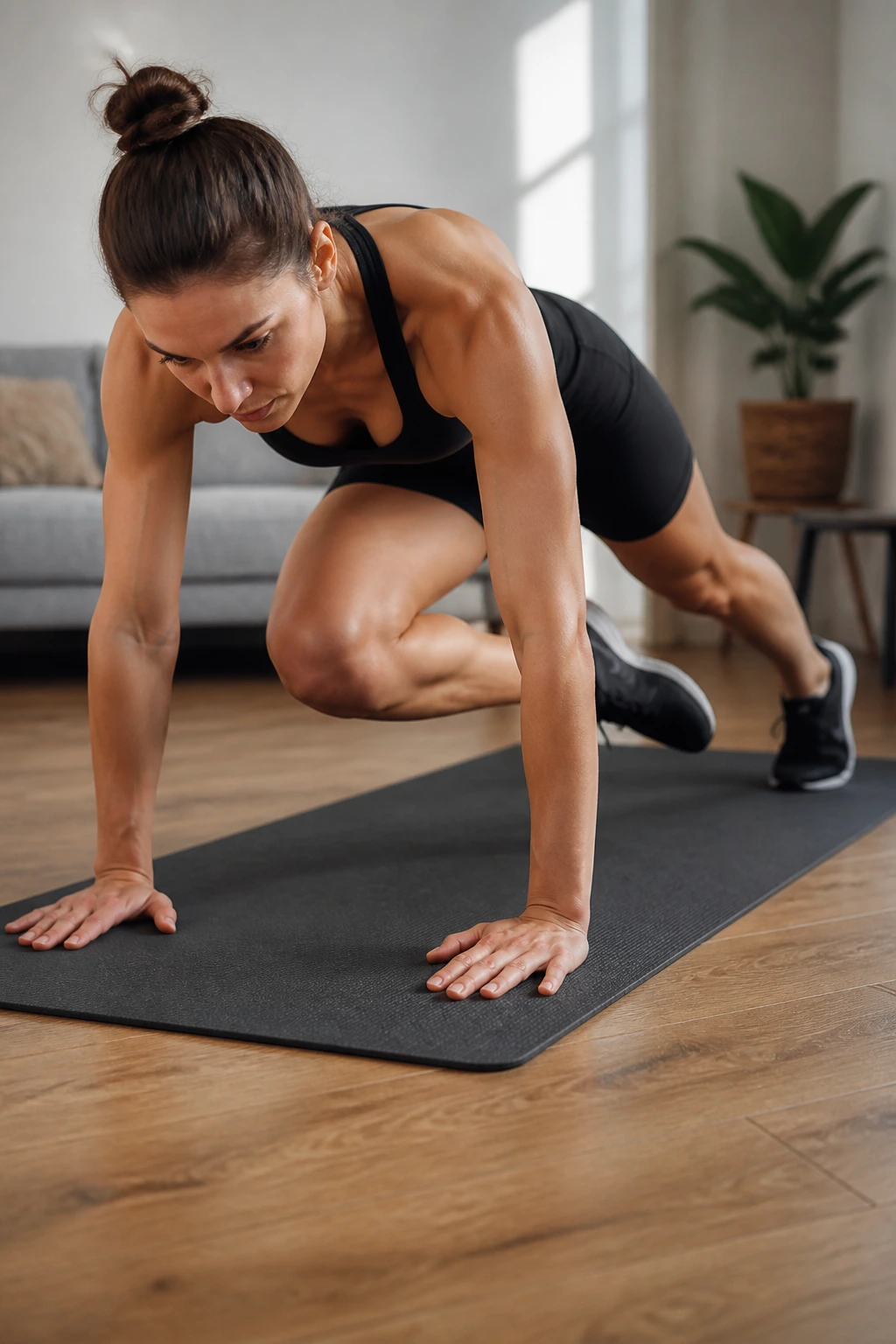
Cross-body climbers are where the core starts complaining. They ask for a little rotation, a little speed, and a lot of honesty.
Set up in a high plank and drive each knee toward the opposite elbow. Keep the hips low and the shoulders steady. Go hard for 20 seconds, rest for 10 seconds, and repeat 8 rounds. If you want a simpler version, switch to straight mountain climbers for the first four rounds and cross-body work for the last four.
One sentence says it best: don’t crane your neck. Keep the eyes on the floor a few feet ahead of the hands and let the torso do the work. If your elbows lock and your shoulders pinch, reset the plank before restarting the sprint.
This is a strong choice when you want cardio with a core bias. It isn’t flashy. It just works. And by the end of the fourth round, you’ll know exactly where your midsection lives.
17. Tuck Jump Power Bursts
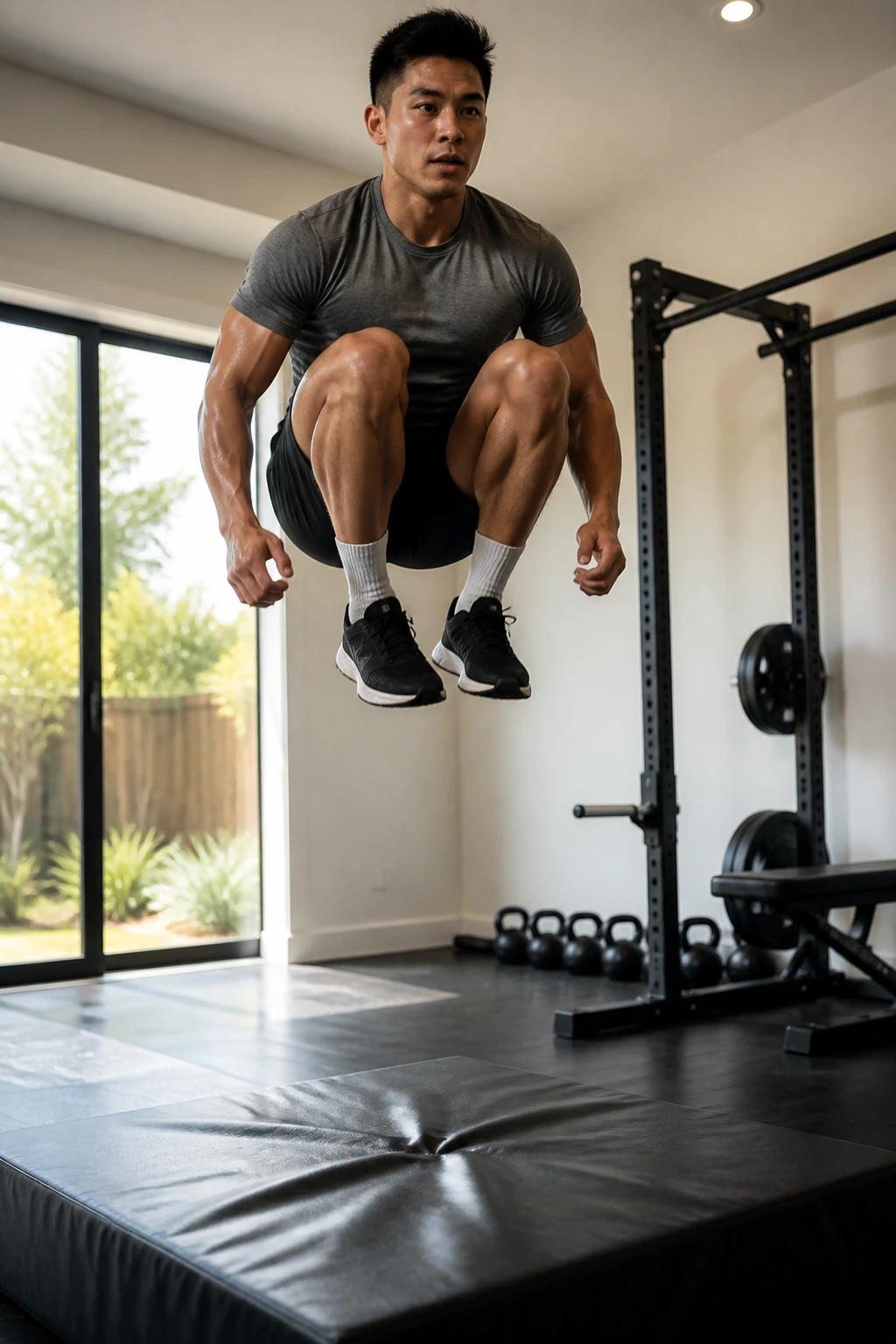
Tuck jumps are not for messing around. If you want a real heart-rate spike in a short window, they’ll give it to you fast.
From standing, dip slightly and jump up while bringing the knees toward the chest. Land softly, reset, and repeat for 20 seconds. Rest 10 seconds. Do 8 rounds only if your landing stays clean. If you’re newer to plyometrics, keep the knees lower and turn them into squat jumps instead.
Easier Options
- Small squat jump with no knee tuck.
- Alternating knee lift with a tiny hop.
- Fast squat-to-stand without leaving the floor.
The key here is the landing. If you slap the floor with straight legs, the drill turns from productive to punishing. Bend the knees, use the hips, and keep the rebound under control.
I wouldn’t make this the first move in a workout unless you’re already warm. It’s better as a later-round challenge after the joints and ankles have had a few minutes to wake up.
18. Curtsy Lunge Drive
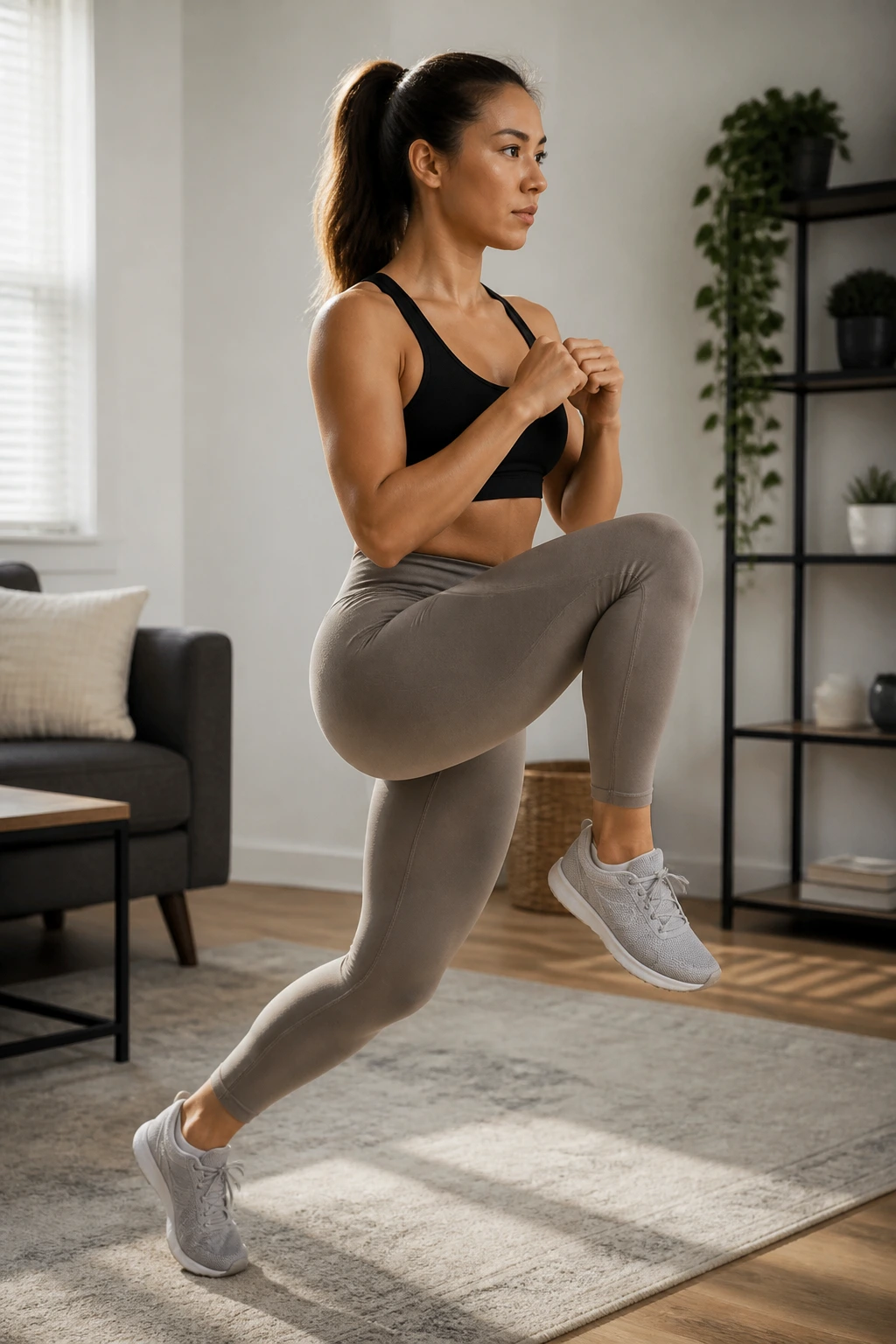
Curtsy lunge drives are the move you pull out when you want side glutes and lungs to work at the same time. The diagonal step changes the angle just enough to make the legs feel new again.
Step one leg behind and across the other into a curtsy lunge, then drive back to standing and lift the same knee up. Keep the torso tall and the front foot planted well. Run it for 20 seconds, rest for 10, repeat 8 rounds.
The diagonal part matters. Don’t let the back knee swing so far behind you that the stance turns awkward. And don’t twist the front knee inward. The front leg should feel stable, not wobbly.
If you want less impact, remove the knee drive and just flow from curtsy to stand. If your knees are sensitive to the cross-behind position, skip this one. There’s no prize for forcing a move your body clearly dislikes.
This drill looks calm from across the room. Close up, it’s a different story.
19. Crawl-Out Pop-Up Set
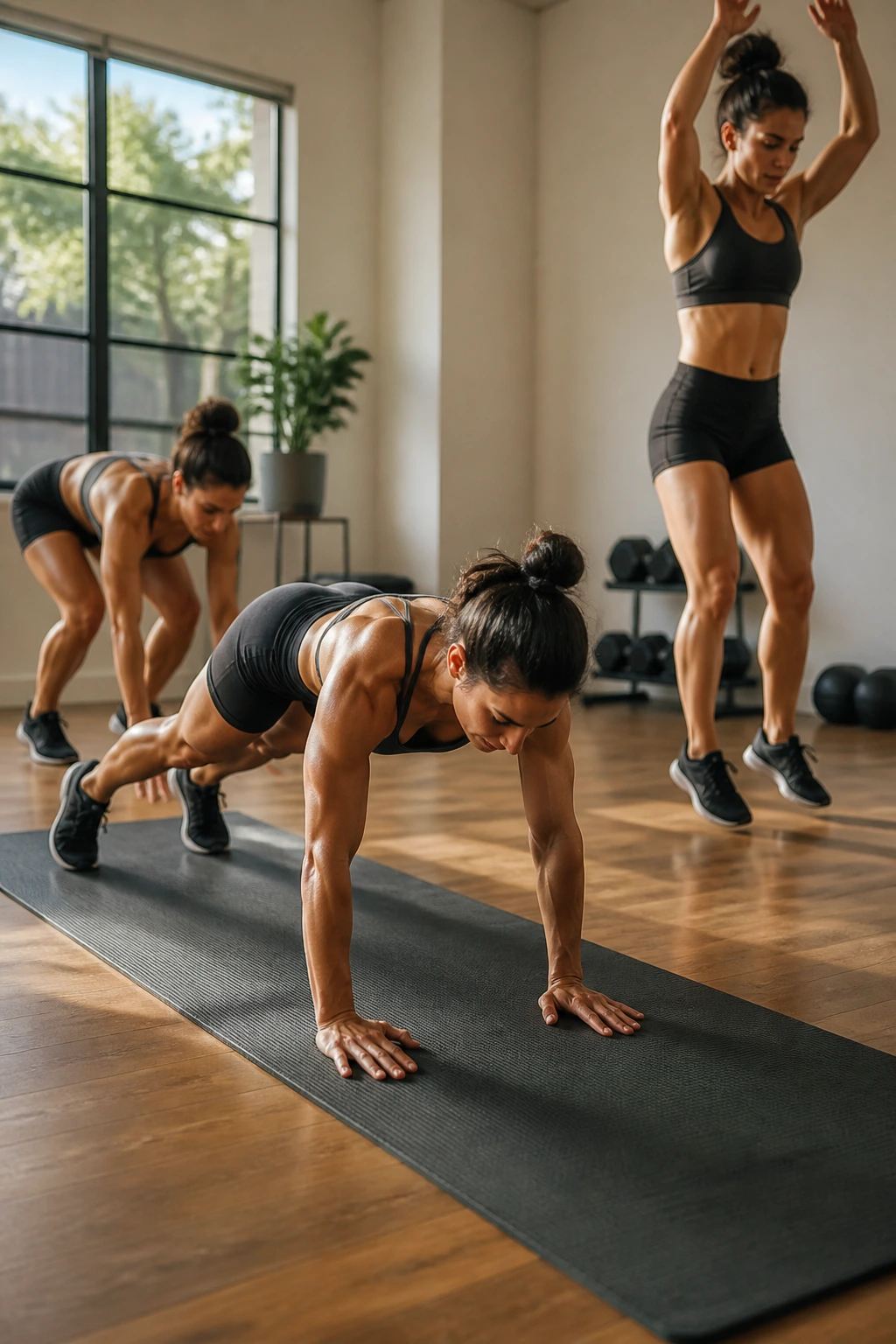
Crawl-out pop-ups feel like five exercises hiding in one. They start with a fold, drop into a plank, and end with a quick return to standing.
Stand tall, hinge down, place the hands on the floor, walk them out to a plank, then walk or hop the feet back toward the hands and stand up fast. Do that for 20 seconds, rest for 10 seconds, and repeat 8 rounds. If you want more challenge, add a push-up in the plank. If you want less, move one foot at a time.
Why It Earns a Place in Tabata
- The hinge warms the back side of the body.
- The walkout adds upper-body load.
- The pop-up spikes the heart rate.
- The repeated level changes keep the drill from feeling flat.
The one thing to protect is the lower back. Keep the core on during the walkout, and don’t let the belly drop toward the floor. If the floor is slippery, slow the return instead of trying to hop your feet in and risk a slip.
This is a strong all-around option when you want one move that feels like a full-body sweep. It’s not subtle. That’s the point.
20. Cardio Tabata Apartment Finale
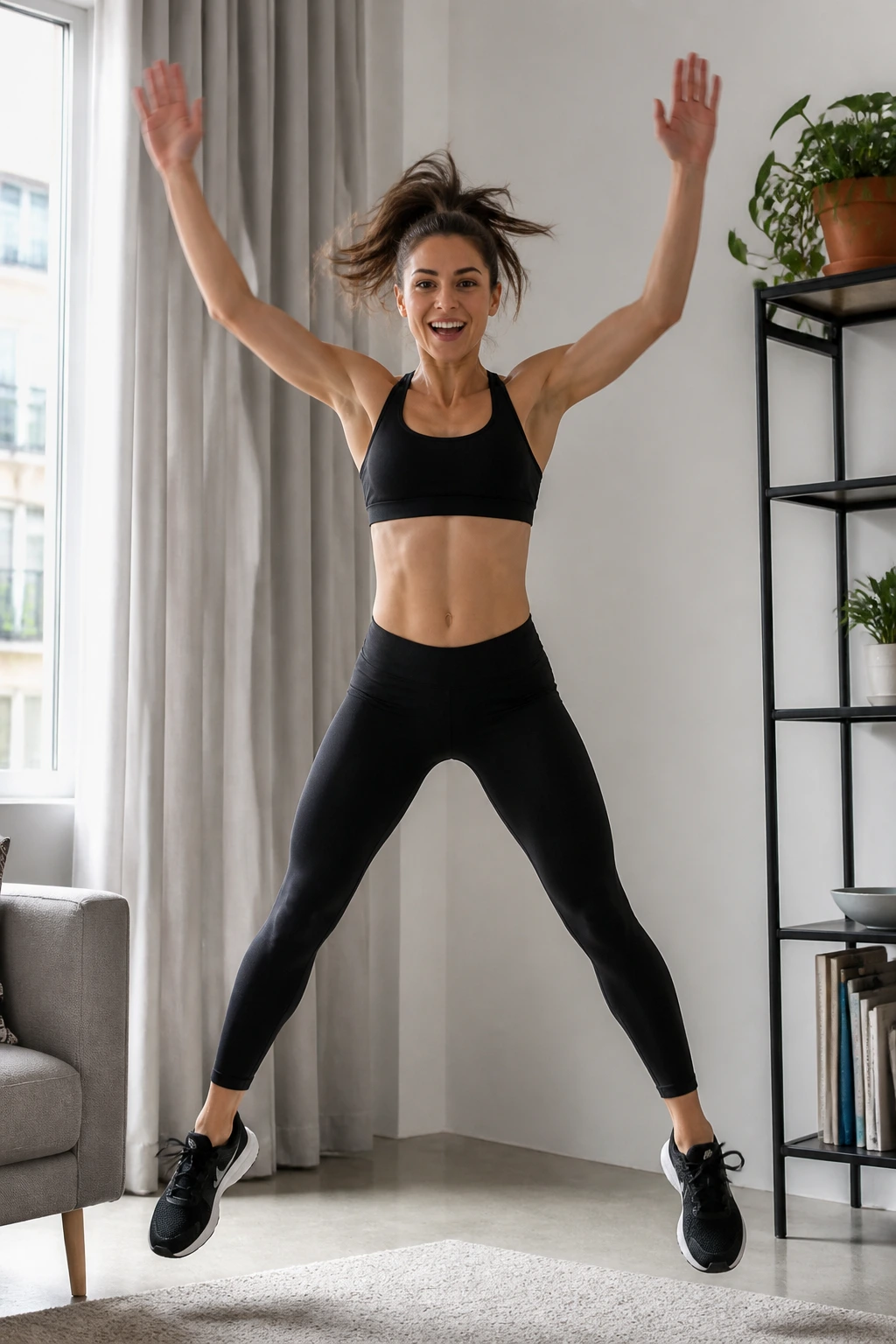
Want one Tabata that does not let you coast? Put four moves together and repeat them twice. It’s a cleaner way to finish than trying to invent a brand-new move when you’re already tired.
Use 20 seconds on, 10 seconds off, and cycle through this order:
- Rounds 1-2: jumping jacks.
- Rounds 3-4: skater hops or step-behinds.
- Rounds 5-6: shadow boxing.
- Rounds 7-8: mountain climbers.
That gives you one block that hits the legs, one that wakes up the hips, one that keeps the upper body busy, and one that drags the core back into the fight. Repeat the whole sequence once if you want an 8-minute finisher.
The smartest version of this workout is the one you can repeat with clean form. So if your skaters are getting noisy, switch them to step-touches. If your climbers fall apart, slow the pace and keep the knees driving. If your boxing gets lazy, shorten the combos and sharpen the punches.
This is the one I’d pick for the end of the week, the end of a long day, or the moment you want a no-excuses cardio block without thinking too hard. Simple. Mean. Done.
Final Thoughts
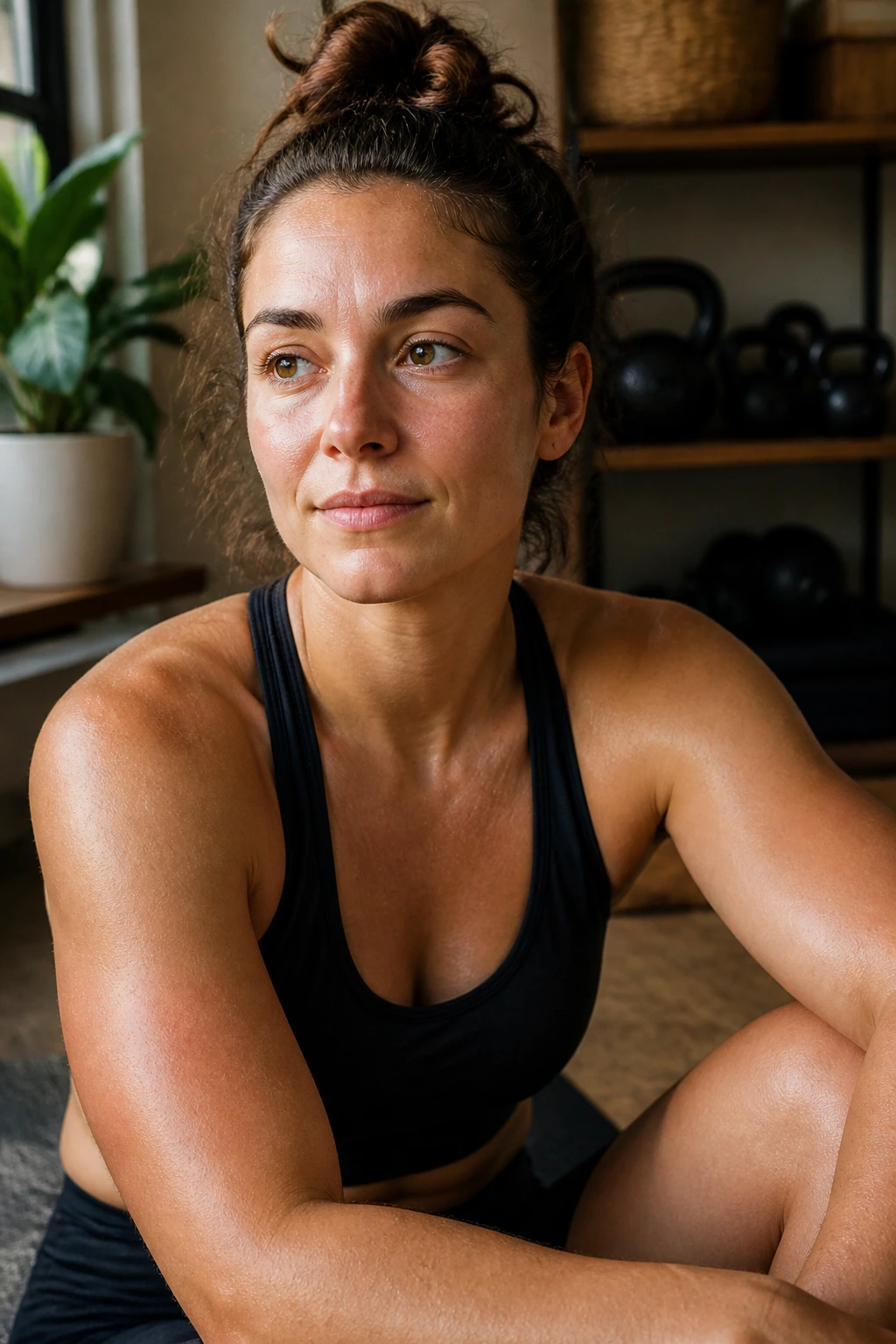
The best Tabata plan at home is the one you’ll actually hit with a timer running. Some days that means jumping around like the floor owes you money. Other days it means quieter work — shadow boxing, fast feet, crawl-outs, or a step-back version that keeps your joints happier.
Pick one workout that fits your space and mood, then commit to the full 20-seconds-on, 10-seconds-off rhythm. That tiny rest is part of the deal. If you cheat it, the whole thing gets mushy fast.
A small practical tip: set up your mat, towel, and timer before you start. Once the first round begins, you do not want to stop and hunt for anything. That little bit of prep keeps the workout sharp, and sharp is what Tabata does best.
