



Your squat rack does not have to live in the garage for you to keep training hard.
At home workouts for women who lift can do a lot more than keep you “busy” between gym days. When they’re built around squats, hinges, presses, rows, and carries, they can maintain muscle, keep your joints honest, and save your sanity on days when the gym is not happening.
Progress just looks a little different at home. One more rep, a slower lower, a cleaner pause, or a heavier backpack counts; so does cutting the rest time from 90 seconds to 60 without turning the session into chaos.
No barbells? Fine.
What usually goes wrong is not effort. It’s programming. People chase sweat, skip pulling work, rush through lower-body training, and somehow end up doing three different ab circuits with no real leg stimulus. That gets old fast.
The better home sessions feel like trimmed-down lifting days. A pair of dumbbells, one band, a sturdy chair, and a little structure can cover a surprising amount of ground, especially when you already know how to brace, hinge, and move with purpose.
1. The Goblet Squat and Romanian Deadlift Day
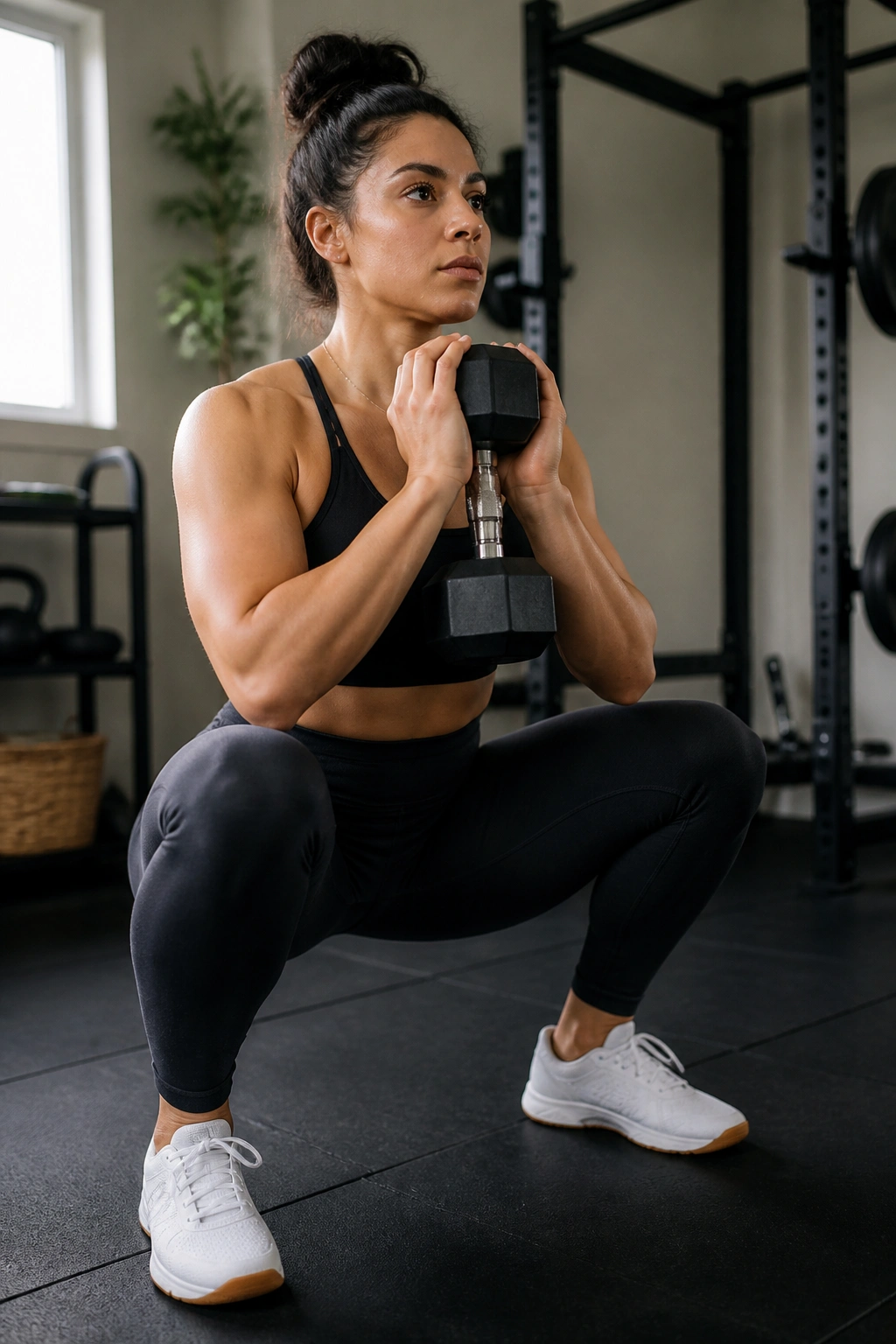
Your legs do not need a barbell to work hard.
Load one dumbbell or kettlebell at chest height and pair a squat with a hinge. That combo hits quads, glutes, hamstrings, and the bracing work that keeps a lower-body session from turning into a floppy cardio drill.
How to run it
- Goblet squat: 4 sets of 6 to 8 reps
- Romanian deadlift: 4 sets of 8 to 10 reps
- Reverse lunge: 3 sets of 8 reps per side
- Dead bug: 3 sets of 8 reps per side
- Rest: 60 to 90 seconds between rounds
Use a load that makes the last two reps of each set slow but clean. If you can crank out 12 goblet squats without your torso tipping forward, the dumbbell is too light.
Pro tip: Pause for one full second at the bottom of each squat. That tiny pause cleans up depth fast.
2. A Floor Press and One-Arm Row Session
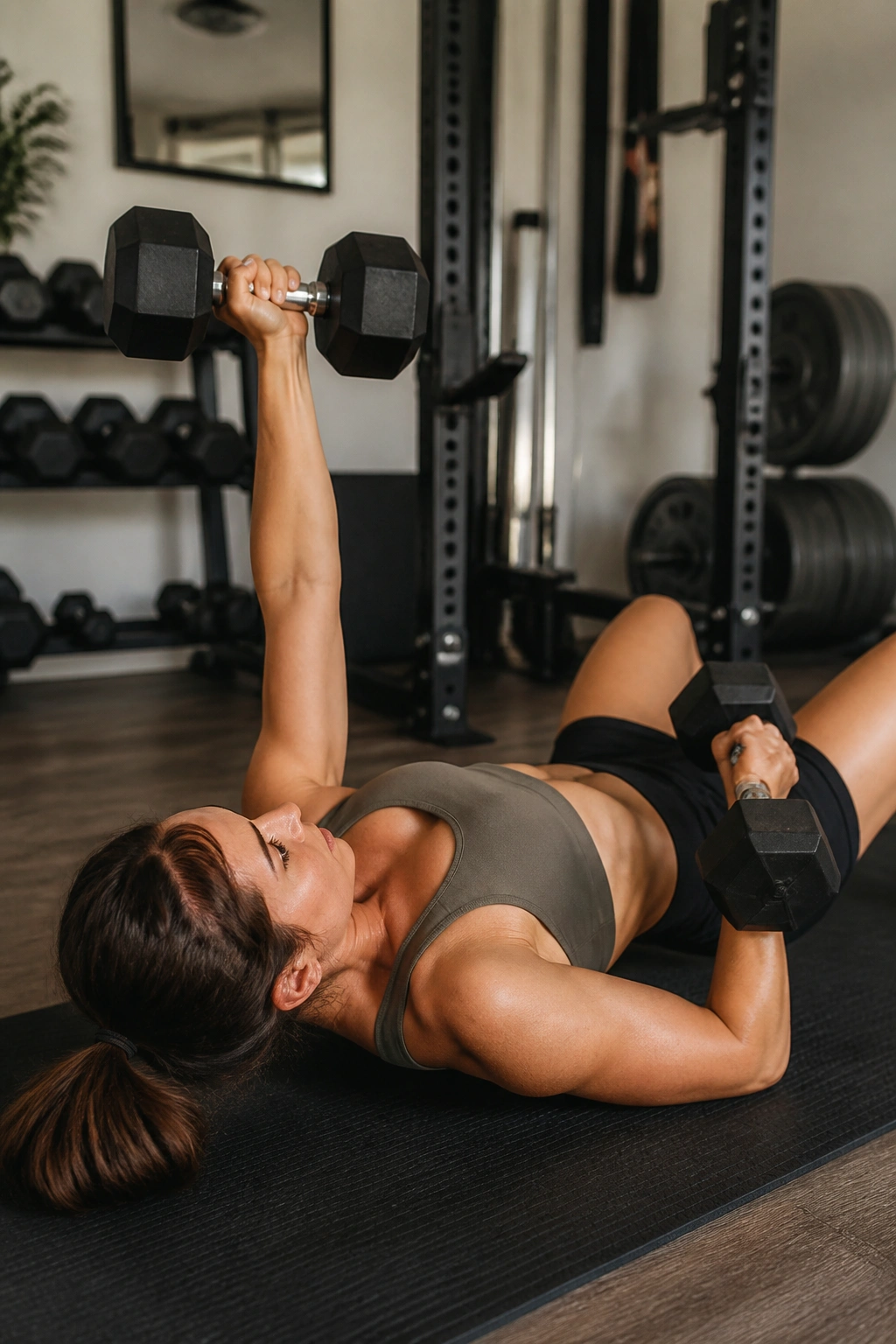
Upper-body home training works best when push and pull show up together.
The floor press is one of my favorite home options because it gives your shoulders a break from deep range pressing while still letting you push heavy enough to matter. Pair it with a one-arm row and you get chest, triceps, lats, and upper-back work in a format that does not need a bench at all.
That matters more than people think. A lot of home programs forget rows, then wonder why the shoulders start feeling cranky.
- Floor press: 4 sets of 8 reps
- One-arm dumbbell row: 4 sets of 10 reps per side
- Push-up: 3 sets of 6 to 12 reps
- Rear-delt fly: 3 sets of 12 to 15 reps
- Rest: 45 to 75 seconds
The row should finish with your shoulder blade moving back and down, not shrugged up near your ear. Keep your ribs stacked while you press, too. Flared ribs make the floor press feel like a lower-back exercise, and that is not the goal.
3. The Split Squat Ladder That Smokes Your Quads
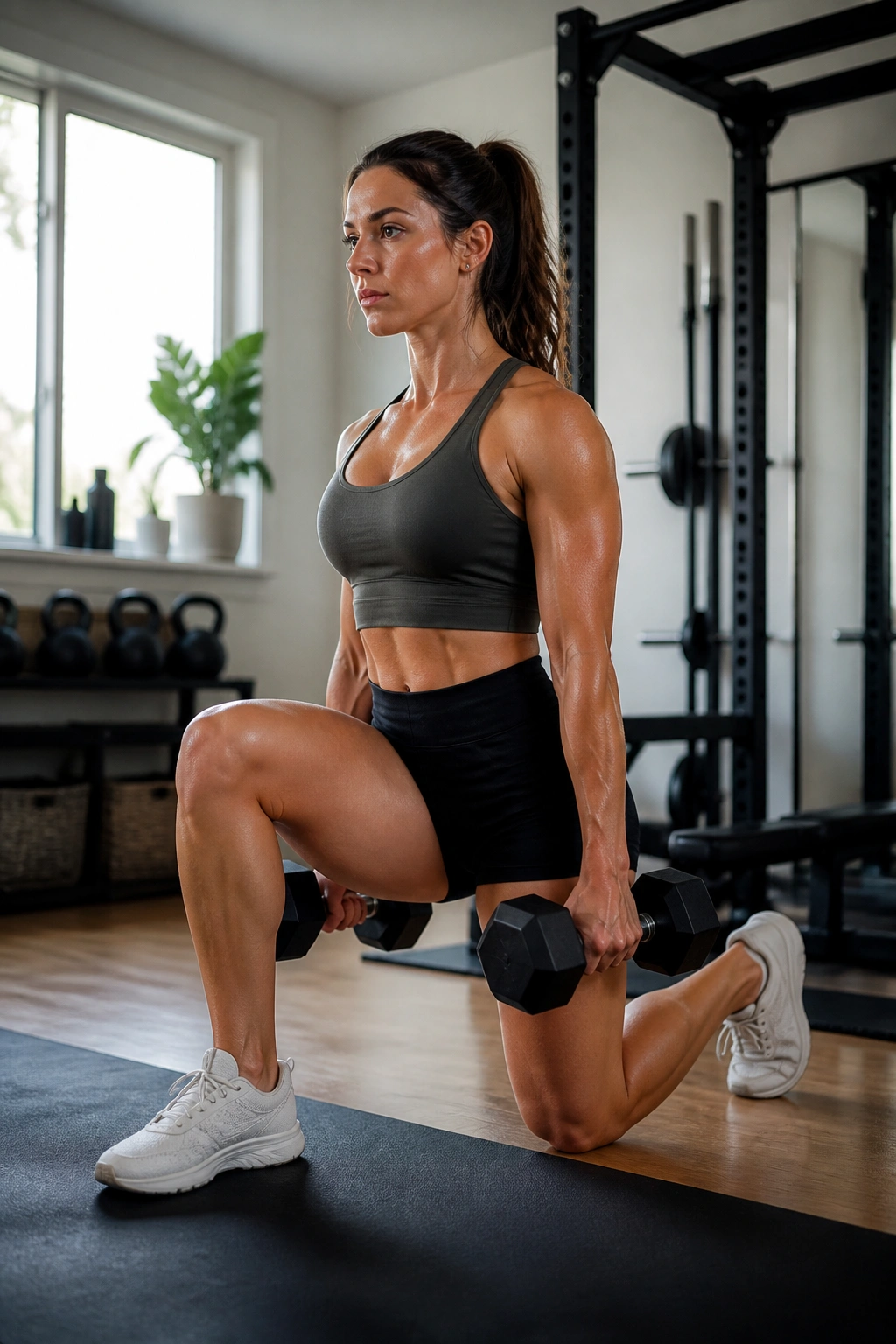
A split-squat ladder is mean in the best way.
Start with 1 rep per side, then 2, then 3, all the way up to 5. If you want more work, come back down the ladder. It looks easy on paper and then your quads start talking back around round three.
Why it works
The ladder format keeps tension climbing without forcing you to hold the same weight and same rep target forever. It is also kinder on balance than high-rep walking lunges, which can get sloppy fast in a small room with a coffee table nearby.
What to watch
- Keep your front foot flat
- Let the back knee travel down, not forward
- Hold a wall lightly if balance is the issue
- Use dumbbells only after bodyweight stays clean
If your knee caves in on the way up, shorten the rep count and slow the descent. Two controlled reps beat five messy ones.
4. The Couch Hip Thrust Workout
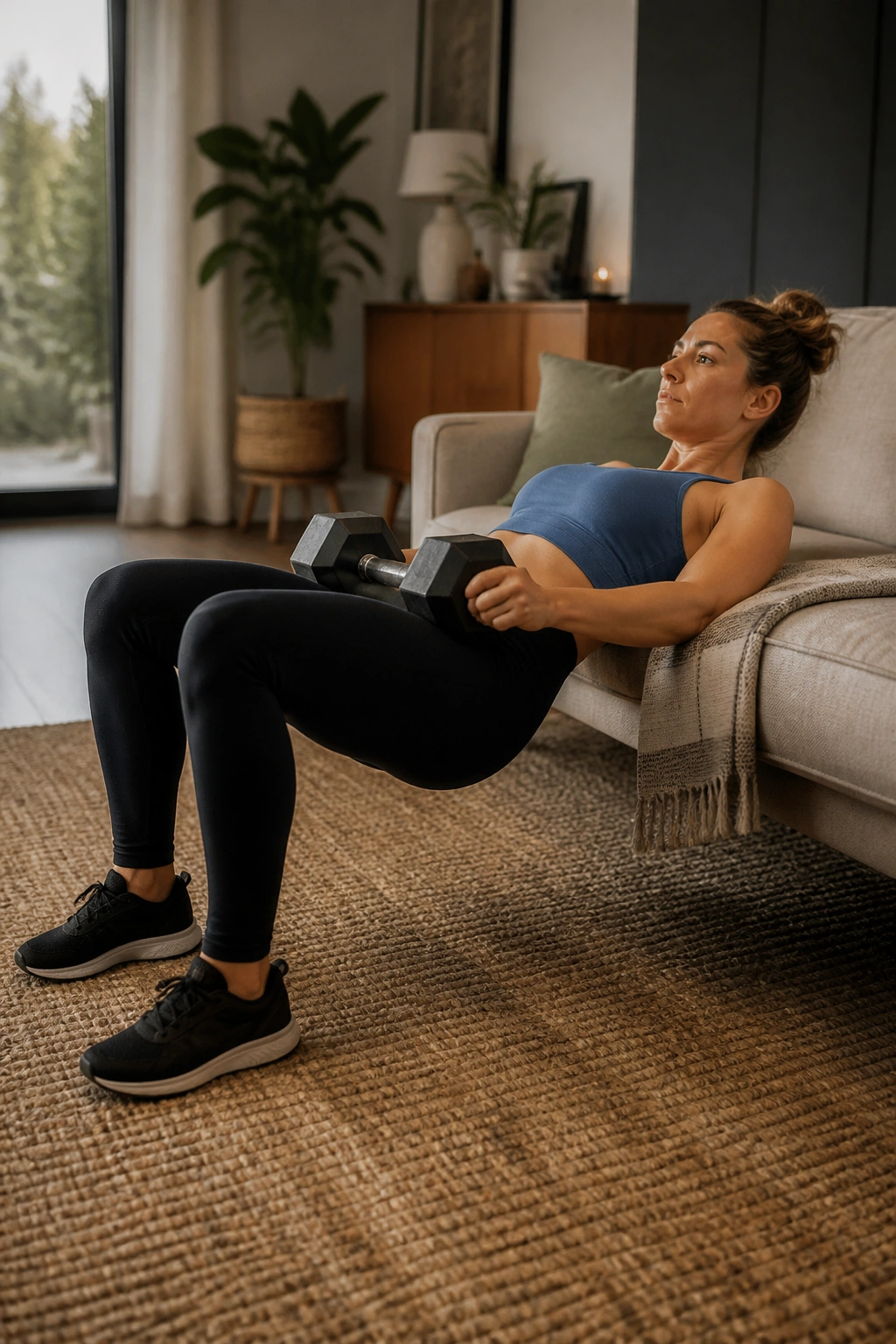
If the couch does not slide, use it.
Hip thrusts at home are brutally effective because they let you load the glutes hard without asking your spine to carry the whole session. Put your upper back on the edge of a couch, set a dumbbell or backpack across your hips, and drive through your heels until your torso is parallel with the floor.
This is one of the best home workouts for women who lift when glutes are the priority and you want to keep the movement heavy-ish without a barbell.
- Hip thrust: 4 sets of 10 to 12 reps
- Glute bridge: 3 sets of 15 reps
- Frog pumps: 2 sets of 25 reps
- Top-position hold: 2 rounds of 20 seconds
A folded towel between the weight and your hips makes the set more bearable. It does not need to be fancy. It needs to be stable.
5. Band-Only Back Day
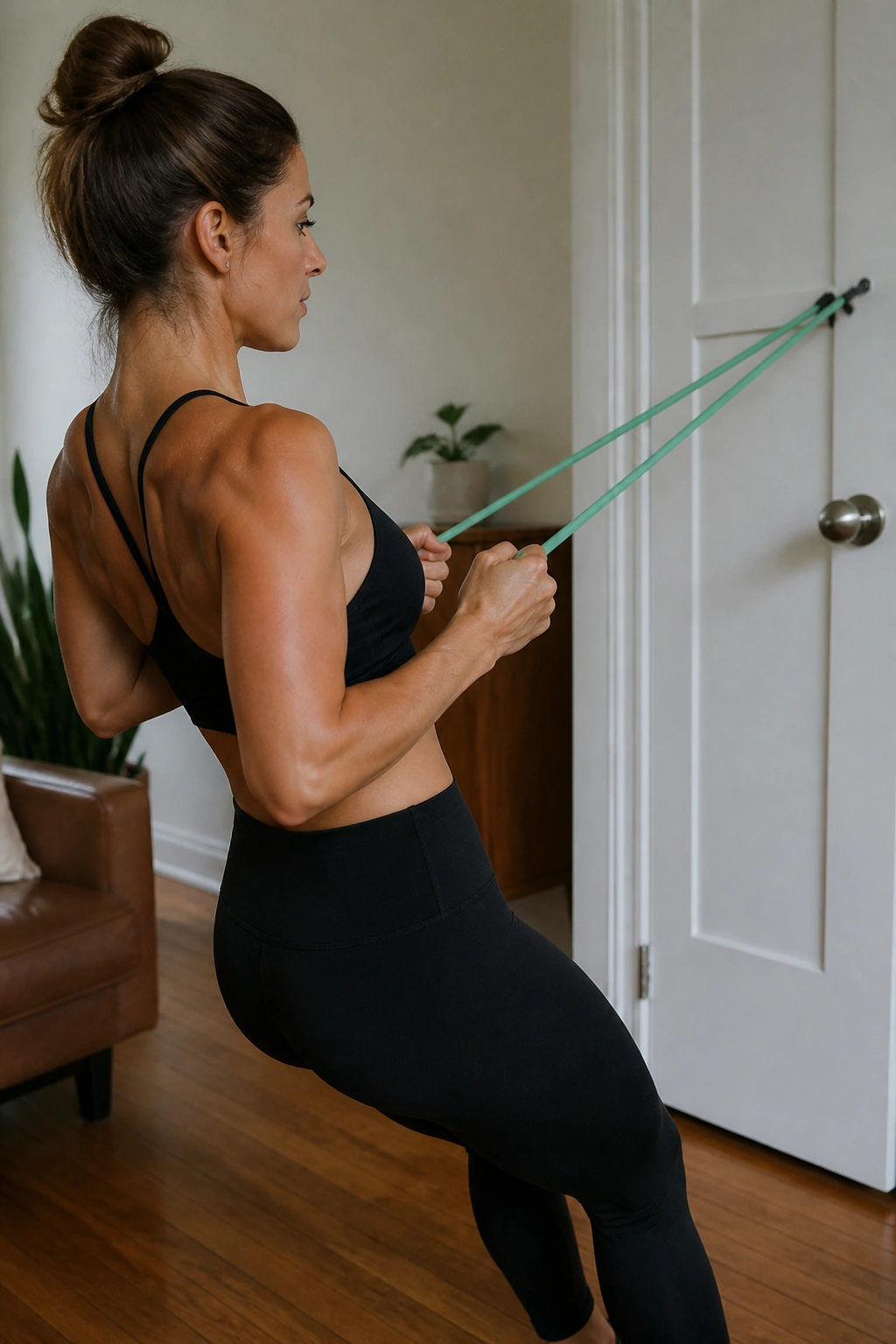
Bands are not second-rate back training.
A good door anchor, a medium-heavy loop band, and a little patience can give you a back day that is plenty hard. Rows, pulldowns, face pulls, and pull-aparts all work well here, and they’re useful if you travel or share a tiny space where dumbbells are not always an option.
How to structure it
- Seated or anchored row: 4 sets of 15 reps
- Lat pulldown: 4 sets of 12 reps
- Face pull: 3 sets of 15 reps
- Pull-apart: 3 sets of 20 reps
- Band curl: 2 sets of 15 reps
Keep the reps smooth and controlled. Bands punish sloppy speed. If the last five reps turn into a shrug, the band is probably too light or your setup is too loose.
A good back session leaves your upper back warm, not your elbows irritated.
6. Shoulder Day With Push-Ups and Pike Presses
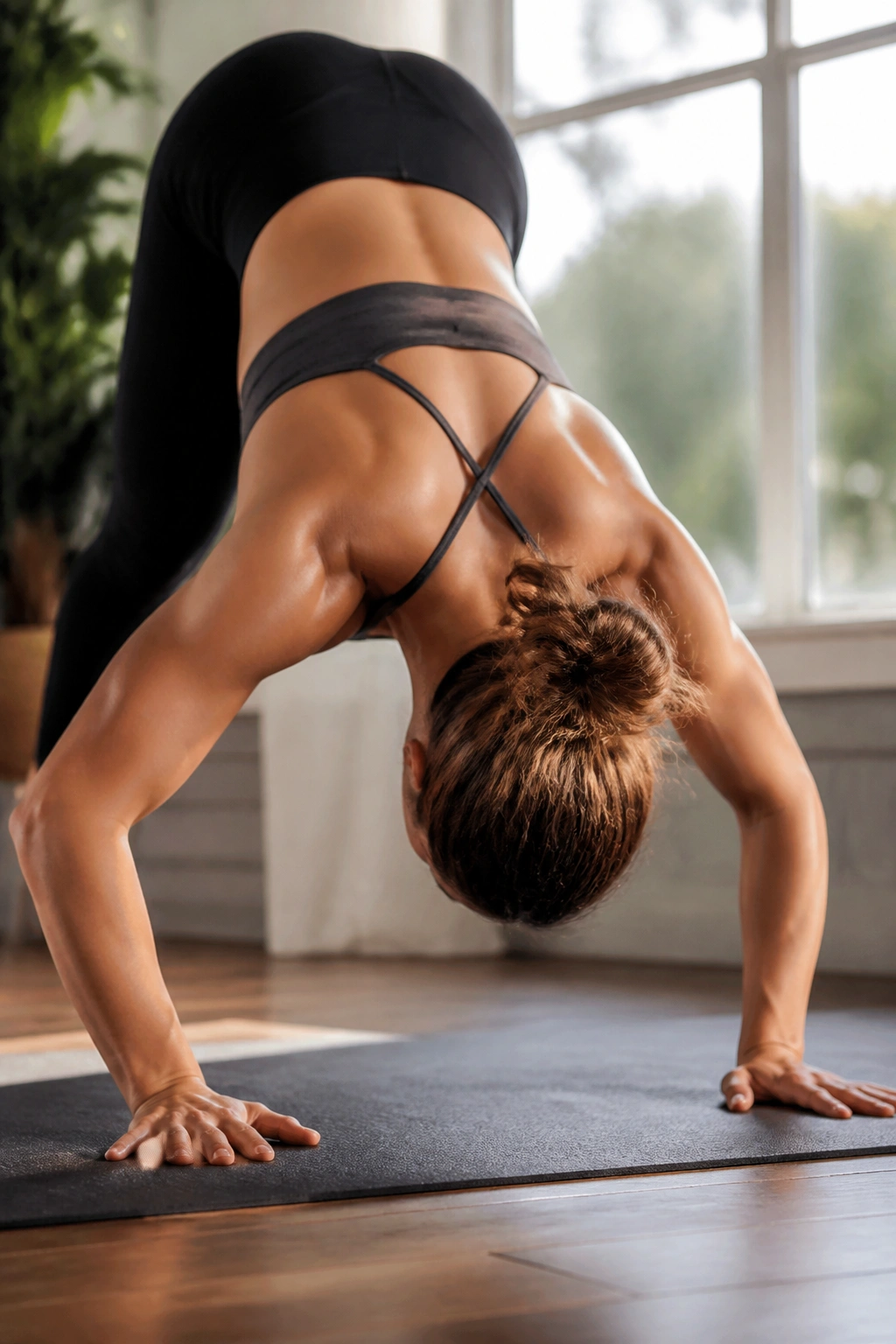
Home shoulder training gets interesting fast because you can’t hide behind machine settings.
A strong shoulder session at home should include one vertical press, one horizontal push, and one smaller isolation move. Pike push-ups, dumbbell overhead presses, lateral raises, and close-grip push-ups cover that pretty well. Keep your ribs tucked and your neck relaxed, or the whole thing turns into a weird trap workout.
How to scale the press
If a floor pike push-up feels too steep, put your hands on a sturdy chair or countertop. If dumbbell overhead presses make you lean back, go lighter and slow the lowering phase to 3 seconds.
Try this:
- Pike push-up: 4 sets of 5 to 8 reps
- Dumbbell overhead press: 4 sets of 6 to 8 reps
- Lateral raise: 3 sets of 12 to 15 reps
- Close-grip push-up: 3 sets of 6 to 12 reps
Short rests keep the shoulders honest. Long rests make the session feel easier than it should.
7. Hamstring Sliders on a Hardwood Floor
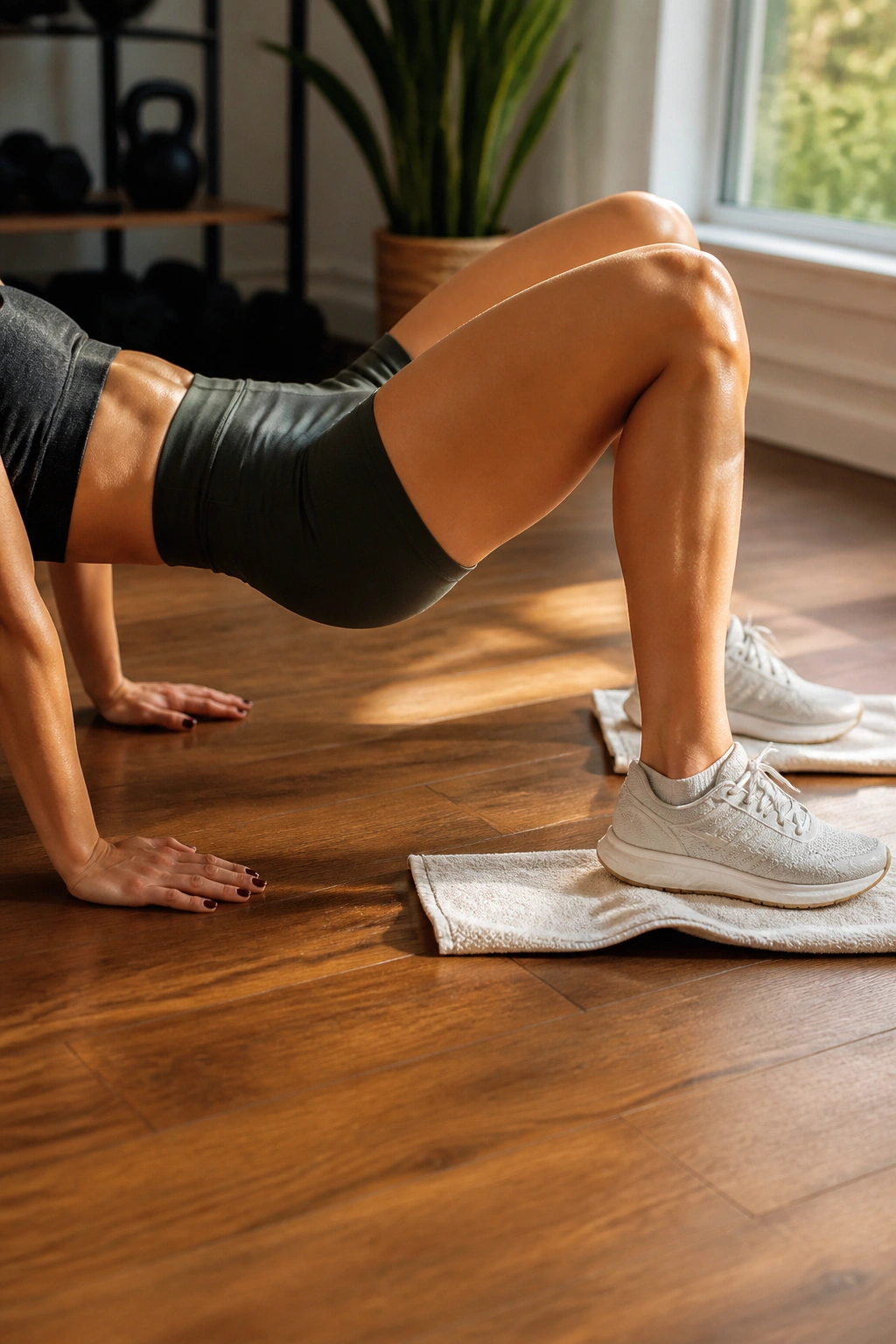
A pair of towels can make your hamstrings curse you.
Slide board, hardwood floor, tile, whatever you have — if the surface lets your feet glide, you can build a serious hamstring workout. Start with both heels on towels, lift into a glute bridge, then slide the feet out until your legs are nearly straight before pulling them back in.
This is one of those home workouts that looks too simple to matter until rep eight. Then everything changes.
- Double-leg slider curl: 4 sets of 8 to 10 reps
- Single-leg slider curl: 3 sets of 6 reps per side
- Glute bridge hold: 3 sets of 25 seconds
- Dumbbell Romanian deadlift: 3 sets of 10 reps
Keep your hips high on the way out. If they drop, the hamstrings get a break and the low back starts helping too much. No thanks.
8. Carry Work for Bracing and Grip
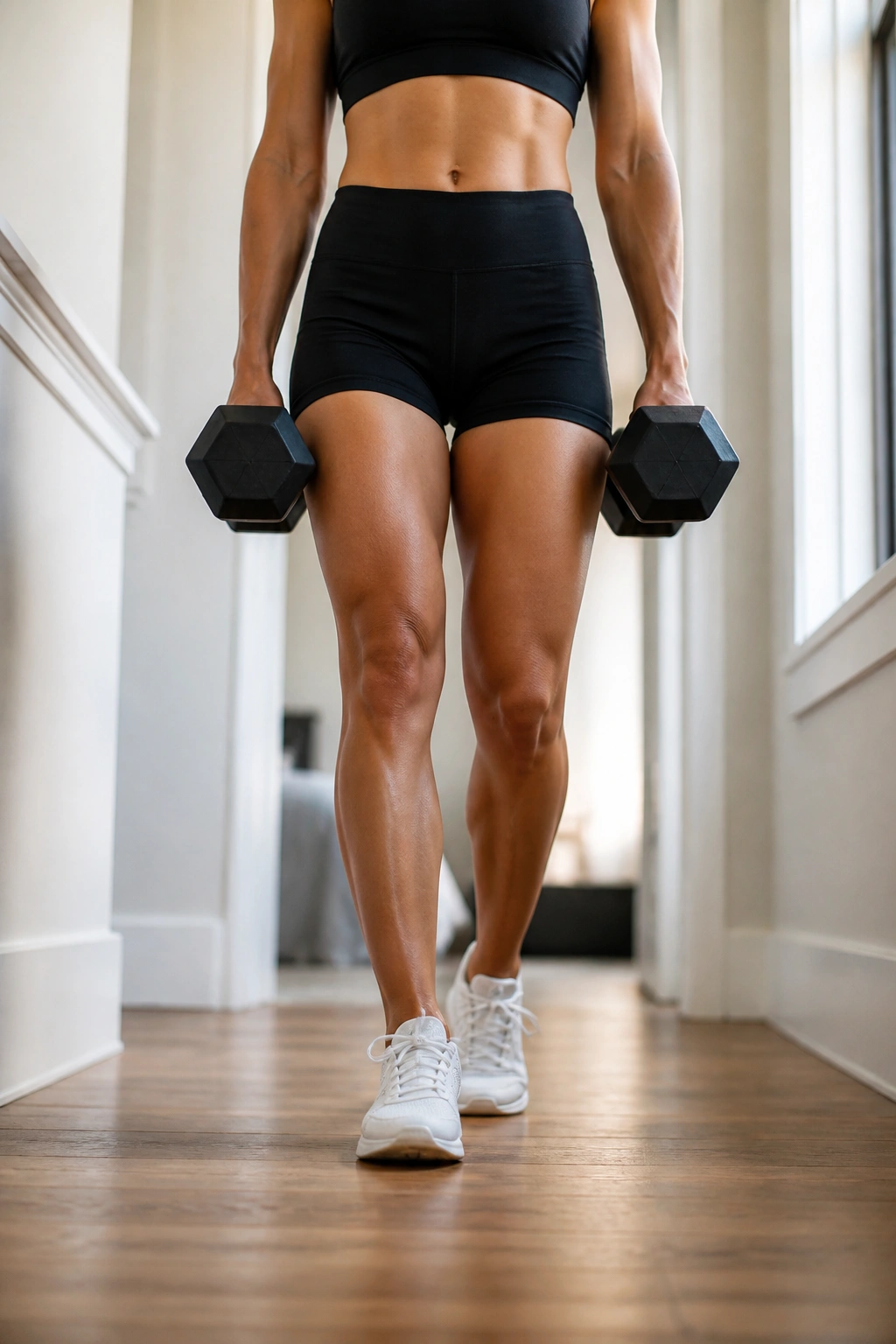
Need something that feels like lifting, even in a quiet room? Carry heavy stuff.
Farmer carries, suitcase carries, and front-rack carries hit your grip, trunk, obliques, and breathing in a way that floor work never quite matches. A pair of dumbbells, two grocery bags loaded with books, or one heavy kettlebell can do the job.
What to carry
- Farmer carry: 4 rounds of 30 to 45 seconds
- Suitcase carry: 3 rounds of 30 seconds per side
- Front-rack march: 3 rounds of 20 steps
- Side plank: 2 rounds of 20 to 30 seconds per side
Walk slow. Stay tall. Do not lean away from the load on suitcase carries; that defeats the whole point.
This is one of the cleanest ways to train core strength at home without doing a single crunch.
9. Tempo Day With Slow Eccentrics
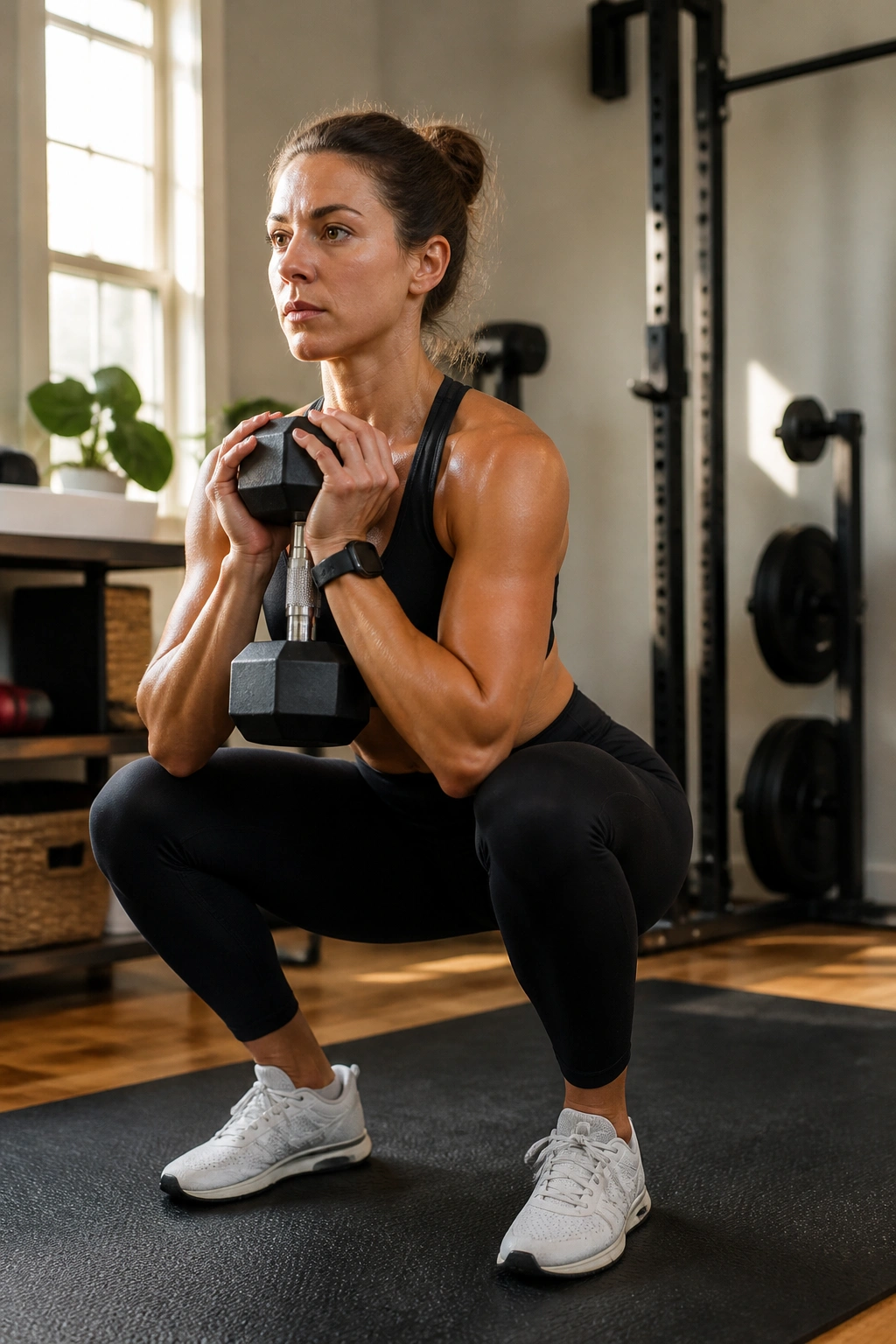
Light weights feel heavy when you stop rushing.
Tempo training is the home lifter’s best friend when the dumbbells are a little too small to make you sweat at first glance. A 3-second lower, a 1-second pause, and a smooth drive up will make a medium load feel much more serious.
A simple tempo template
- Goblet squat: 3 sets of 8 reps with a 3-second lower
- Dumbbell floor press: 3 sets of 8 reps with a 2-second lower
- Romanian deadlift: 3 sets of 10 reps with a 3-second lower
- One-arm row: 3 sets of 10 reps per side with a 1-second squeeze
Count out loud if you need to. Seriously.
Tempo work is especially useful in deload weeks or on days when your joints want less impact but your head still wants a real lift. It is not flashy. It works.
10. Step-Up and Stair Work
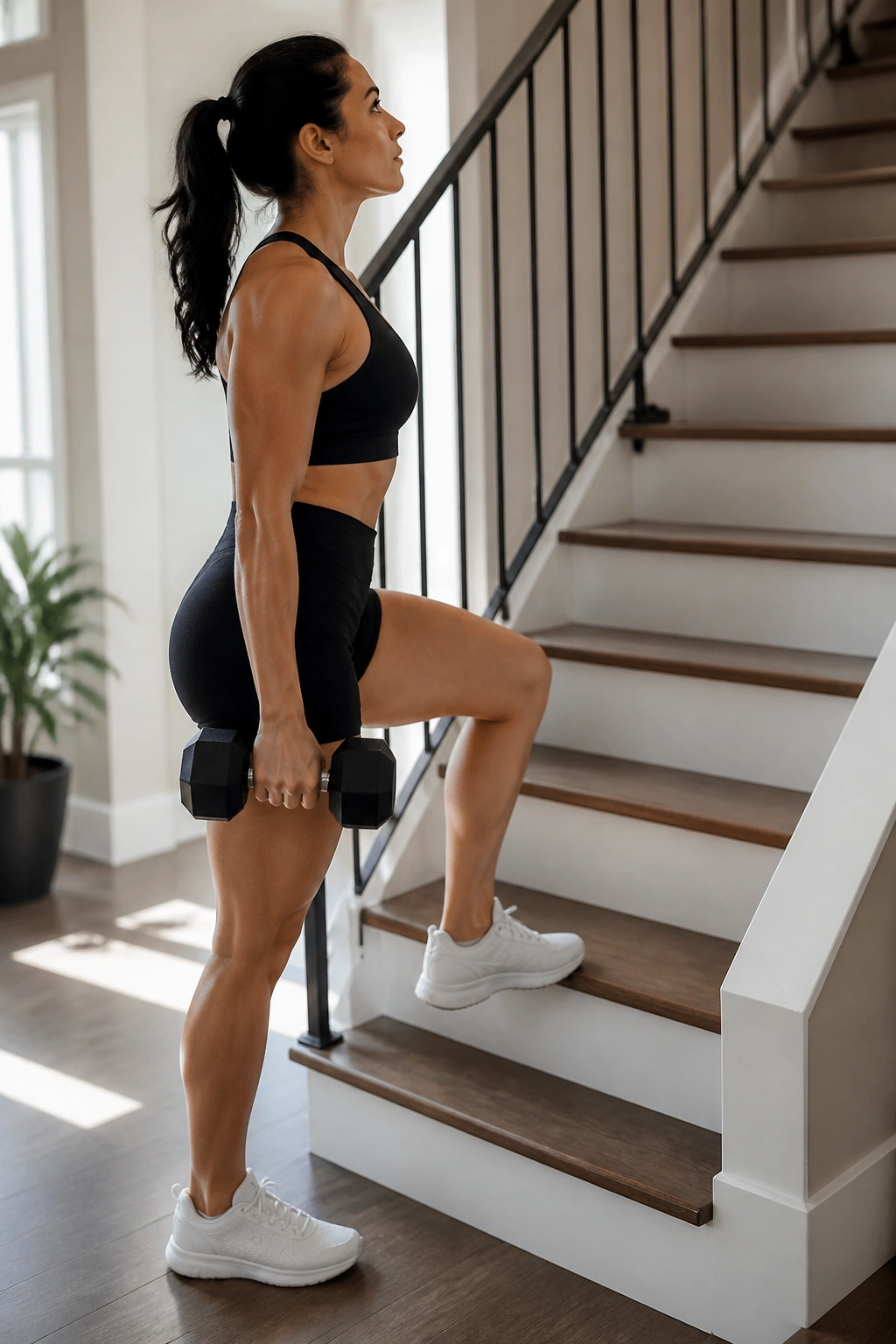
A staircase turns into a decent leg day faster than most people expect.
Step-ups are money for glutes and quads, and they’re easy to adjust by changing the height of the step or adding dumbbells. Pair them with lateral lunges and calf raises, and you have a lower-body session that covers the front, side, and lower leg without needing much space.
Try this:
- Step-up: 4 sets of 8 reps per side
- Lateral lunge: 3 sets of 8 reps per side
- Calf raise: 4 sets of 15 to 20 reps
- Wall sit: 2 rounds of 30 to 45 seconds
Keep your whole foot on the step. If the heel hangs off, the balance gets ugly and the push-off gets sloppy. Use the first rep or two to find your groove, then drive through the working leg.
11. EMOM Dumbbell Complex
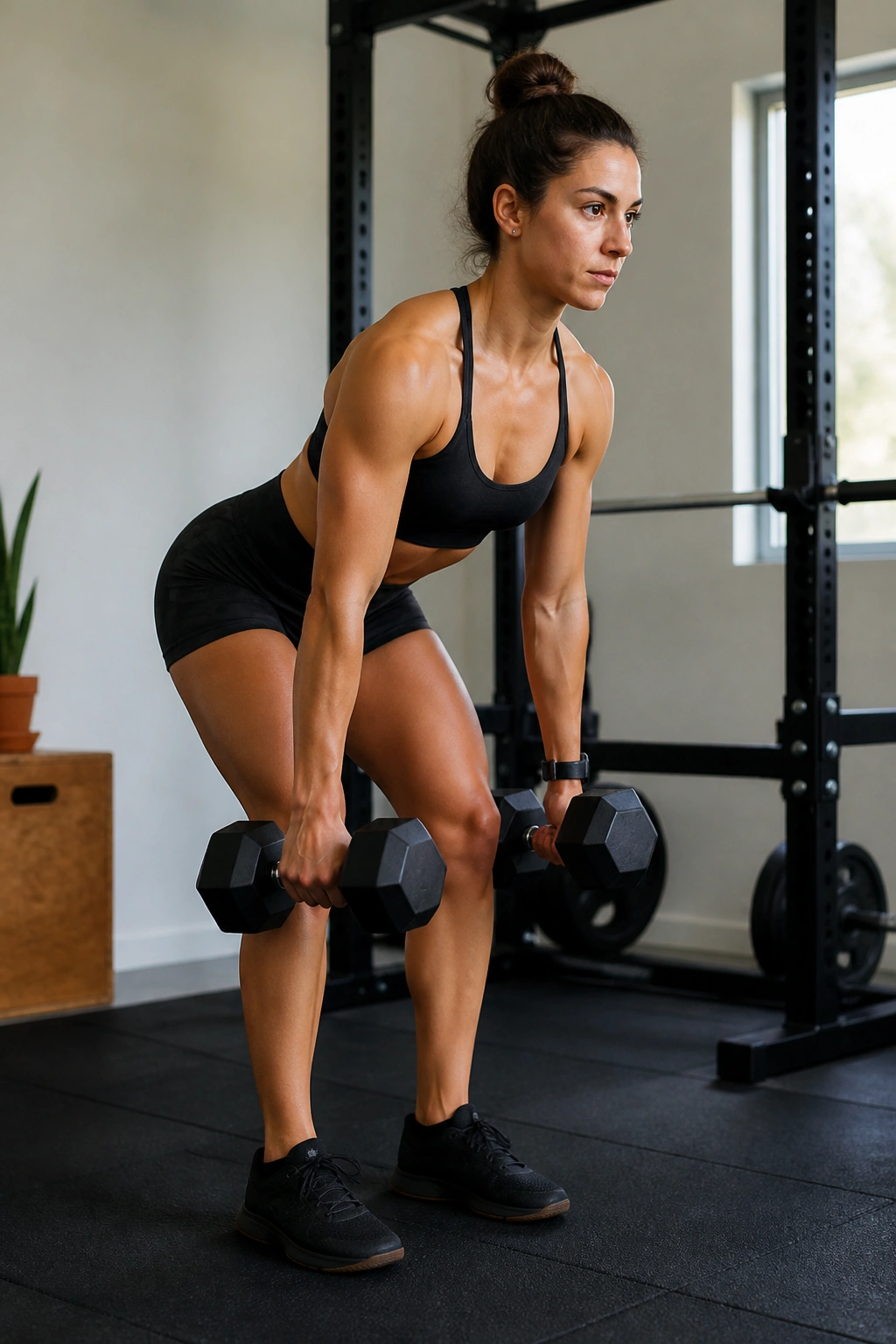
A 12-minute EMOM can leave you more smoked than a 40-minute wander through random exercises.
EMOM means “every minute on the minute.” You start the work at the top of each minute, finish the reps, and rest for whatever time remains before the next minute starts. It is simple, a little ruthless, and perfect for home training when you want a built-in clock.
Sample EMOM
- Minute 1: 6 dumbbell deadlifts
- Minute 2: 6 dumbbell cleans
- Minute 3: 6 front squats
- Minute 4: 6 push presses
Repeat for 3 total rounds.
Pick a load you can move crisply for all 12 minutes. If you have to grind the first round, it is too heavy. The point is repeatable quality, not survival mode.
This works well on days when you want strength and conditioning wrapped together without turning your living room into a boot camp.
12. AMRAP Circuit When You Want a Sweat Session
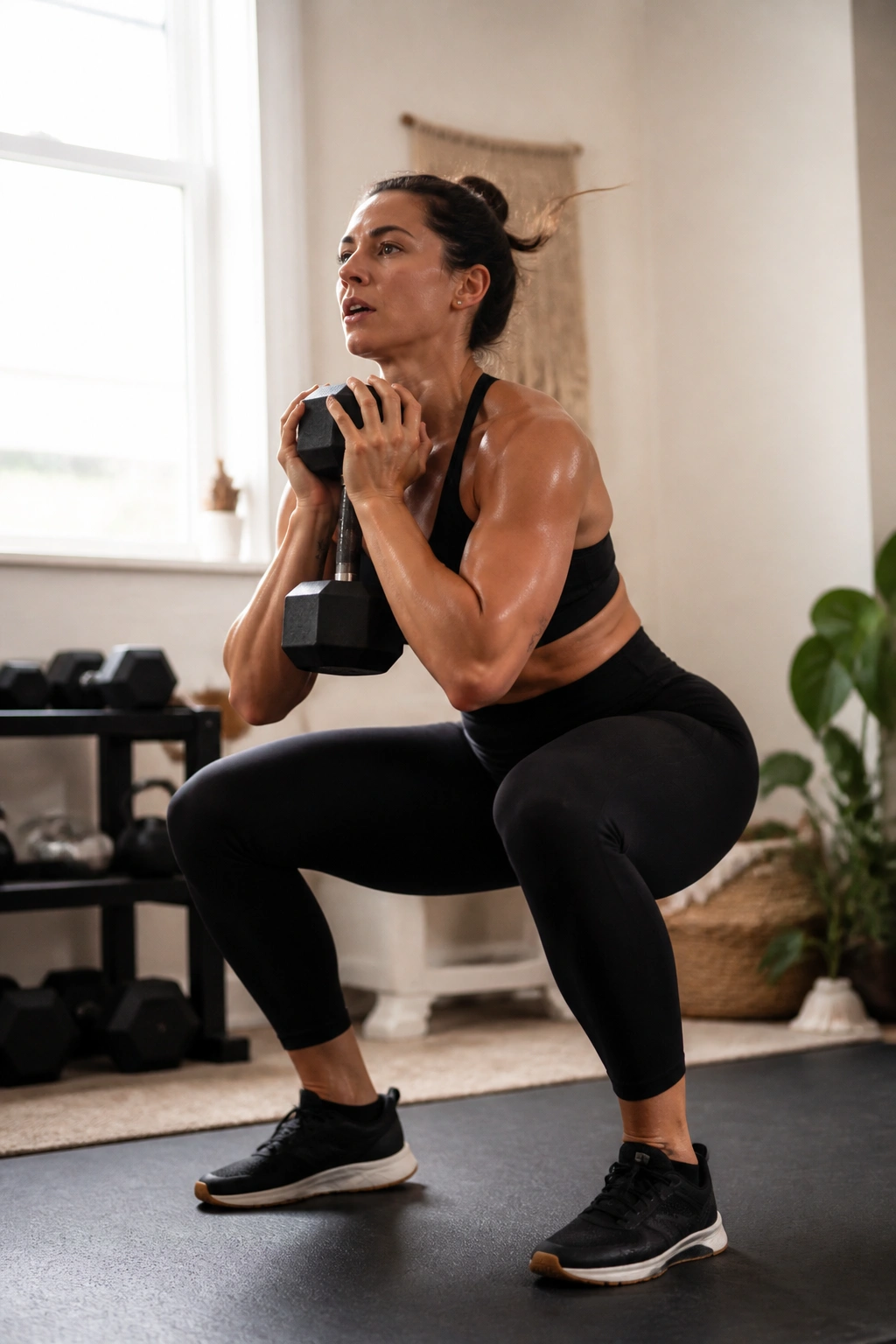
Some days call for pace, not perfection.
AMRAP means “as many rounds as possible” in a set time. For lifters, the trick is to keep the movements grounded in strength patterns so the session still feels useful. A 12- to 15-minute AMRAP with squats, pushes, rows, and a core move gives you a lot of work without much setup.
- 8 goblet squats
- 8 push-ups
- 10 dumbbell rows, total
- 12 glute bridges
- 20 mountain climbers, total
Move briskly, but keep your reps clean. If your push-ups turn into half-reps or your squats lose depth, slow down for the next round. Add a round the next time, or keep the same time and use a slightly heavier weight.
That is the home version of progressive overload. It counts.
13. Mobility and Activation Day
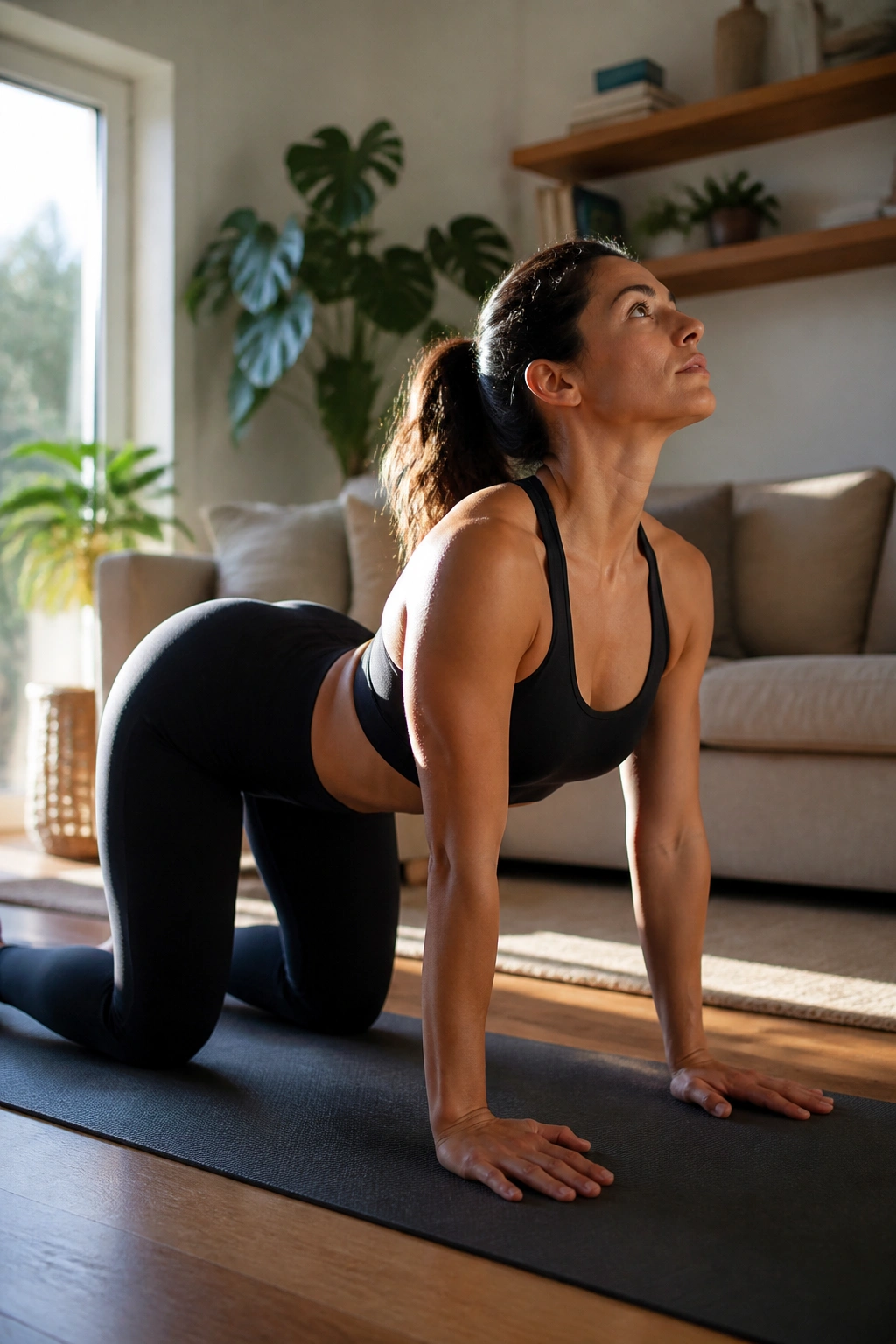
What if your body feels flat instead of lazy?
That is usually a sign you need movement, not punishment. A short mobility and activation session can wake up hips, shoulders, and your mid-back without draining you before the real lifts later in the week.
A useful 15-minute flow
- Cat-cow: 6 slow reps
- 90/90 hip switches: 8 reps per side
- Glute bridge: 2 sets of 12
- Band walk: 2 sets of 12 steps each way
- Scap push-up: 2 sets of 10
- Deep squat hold: 2 rounds of 30 seconds
Better warm-up, better reps.
This is not a “rest day” in the lazy sense. It is the kind of session that makes your next squat or press feel smoother because your joints remember where they are supposed to go.
14. Single-Leg Hinge and Balance Day
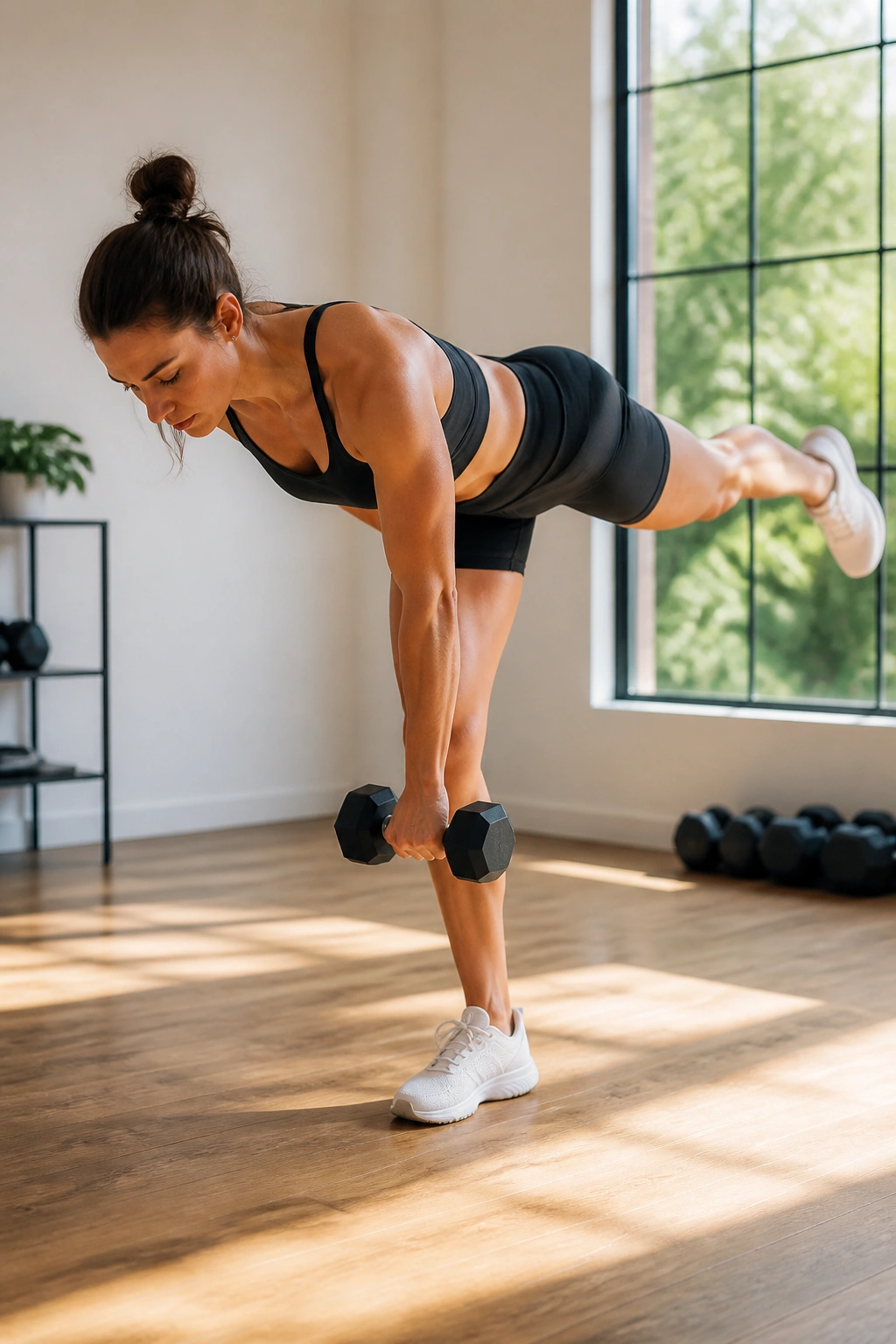
Most home setups hide asymmetries until you put one foot in the air.
Single-leg work exposes everything. A kickstand RDL, a true single-leg RDL, and a split squat will tell you which side is stronger, which hip is tighter, and whether your balance is actually decent or just gym-decent. That is useful information, even if it feels annoying in the moment.
What to feel
- Hips stay square
- Front foot grips the floor
- Back leg works, but does not swing
- The weight stays close to the body
Use this sequence:
- Kickstand RDL: 3 sets of 8 reps per side
- Single-leg RDL: 3 sets of 6 reps per side
- Rear-foot-elevated split squat: 3 sets of 8 reps per side
- Single-leg glute bridge: 2 sets of 12 reps per side
If balance is rough, keep one fingertip on a wall. That is not cheating. That is making the set usable.
15. Upper-Body Pump Day
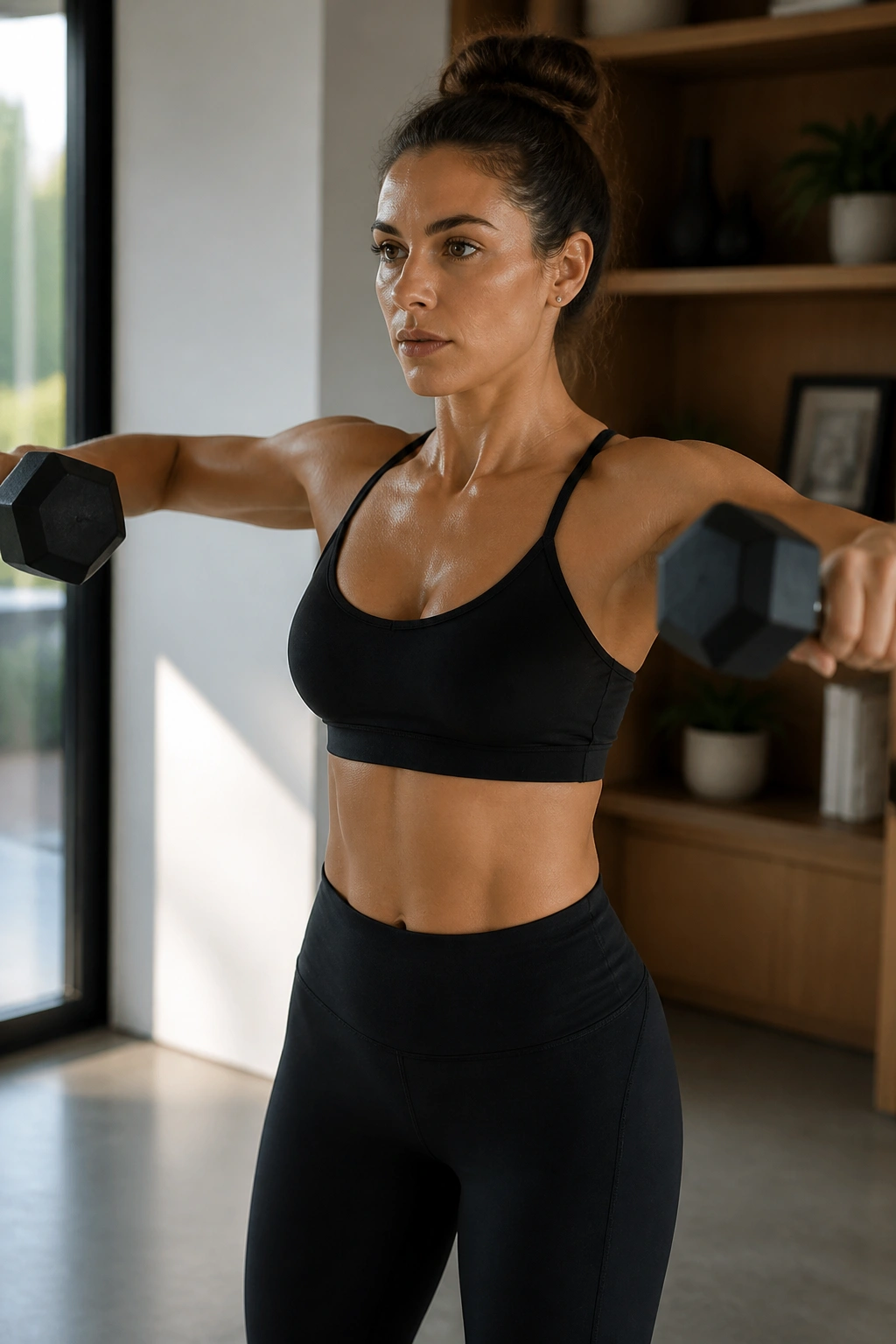
A light-dumbbell pump day is not a downgrade.
It is armor for the joints, a decent way to get blood moving, and a nice answer to the “my legs are fried but I still want to train” problem. Use light to moderate weights, short rests, and enough total reps to make the muscles feel full by the end.
A simple setup
- Lateral raise: 4 sets of 15 reps
- Rear-delt fly: 4 sets of 15 reps
- Hammer curl: 3 sets of 12 reps
- Overhead triceps extension: 3 sets of 12 reps
- Incline push-up: 3 sets of 10 reps
The key is not to race through it. Keep the last 3 reps of each set controlled, especially on raises where swinging can turn into neck tension. If you want a little more challenge, add a 10-second hold at the top of the last set.
This is the kind of workout that makes your shoulders look awake by dinner.
16. Lower-Body Pause Reps
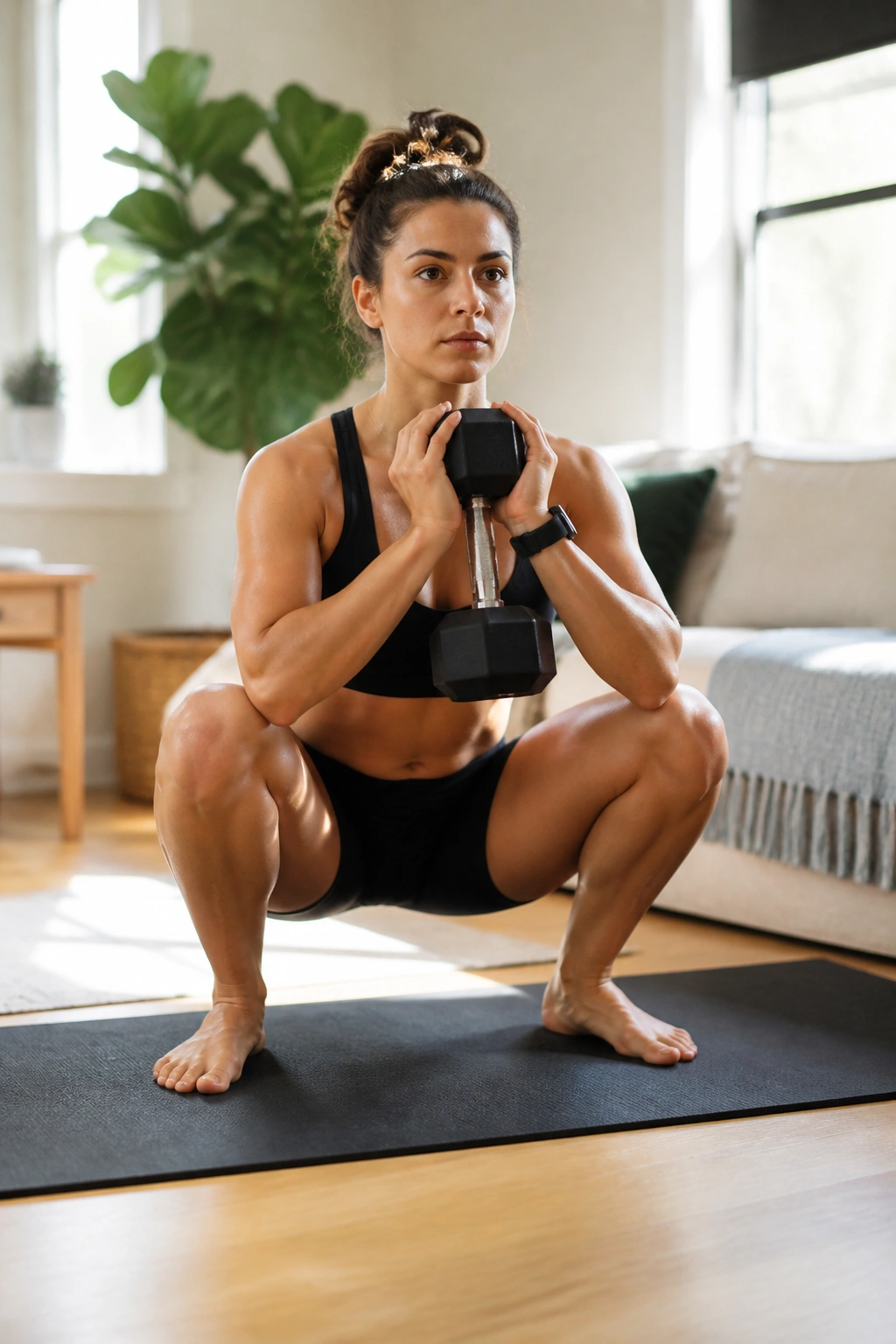
Fast reps hide weak positions.
Pause reps expose them. A 2-second pause at the bottom of a squat or split squat forces you to stay tight where most people get sloppy. At home, that is a great use of lighter loads because the pause makes the set harder without needing a bigger dumbbell.
- Goblet squat with 2-second pause: 4 sets of 6 reps
- Split squat with 2-second pause: 3 sets of 8 reps per side
- Romanian deadlift with pause below the knee: 3 sets of 8 reps
- Wall sit: 2 rounds of 45 seconds
This style is useful if your barbell squat pattern needs work or if you want to keep your legs honest during a week when you cannot load them heavy. The pause should feel controlled, not relaxed. Stay braced the whole time.
If the position falls apart in the pause, the weight is too heavy. That part is annoyingly simple.
17. Chest, Triceps, and Scap Stability Workout
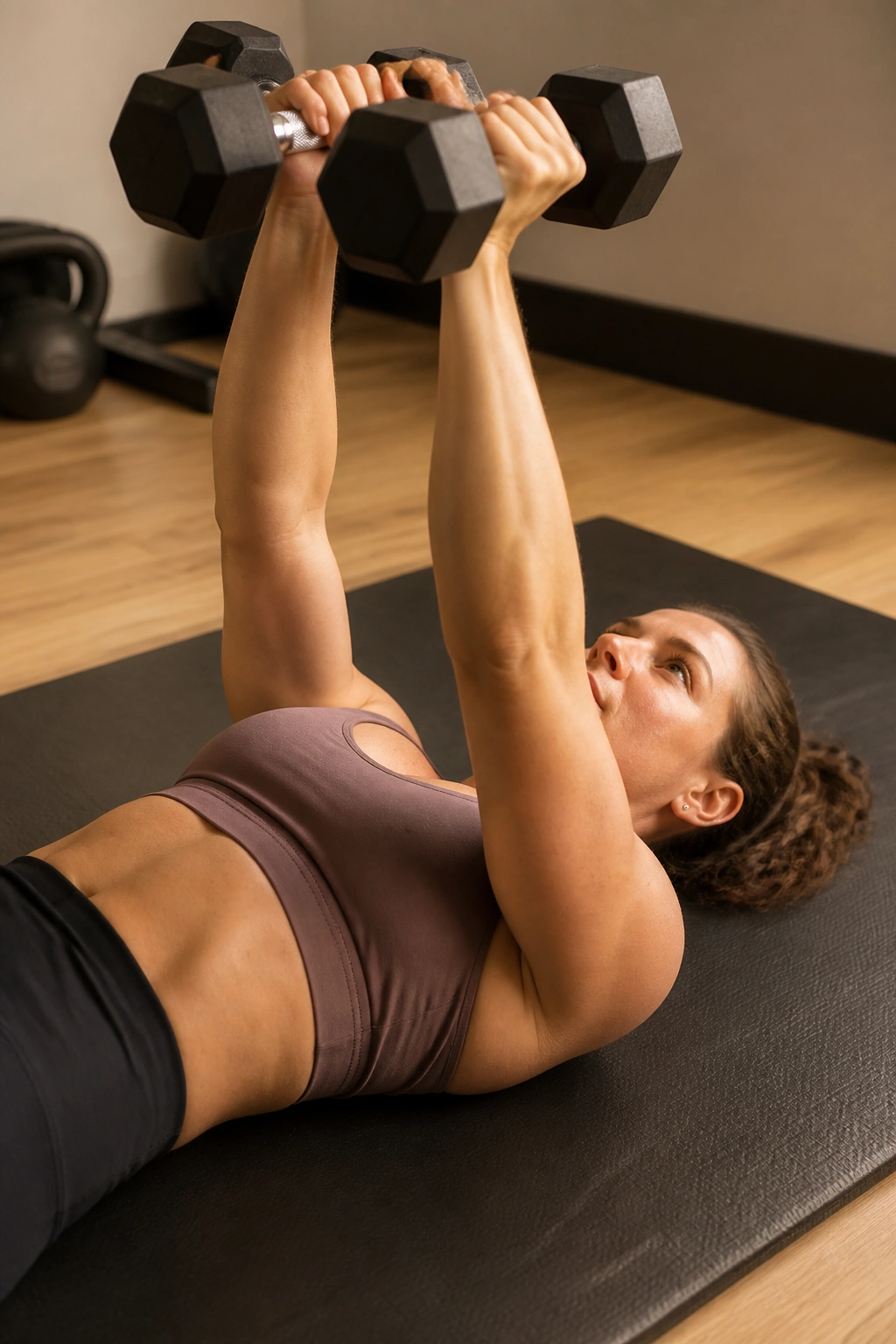
A pressing day at home should do more than fry your triceps.
You want pressing strength, yes, but you also want the shoulder blade to move well. That means pairing close-grip presses or push-ups with scapular work and a little upper-back support so your shoulders do not feel wrecked after every session.
Try this:
- Close-grip floor press: 4 sets of 8 reps
- Incline push-up: 3 sets of 10 to 12 reps
- Dumbbell squeeze press: 3 sets of 10 reps
- Scap push-up: 3 sets of 12 reps
- Y-T-W raise on the floor: 2 sets of 6 each letter
The squeeze press is underrated. Press two dumbbells together as you move them, and the chest has to work harder to keep the bells pinned in. It feels awkward for about a minute, then it gets useful.
This is a smart choice when normal bench pressing is not available and you still want your pressing muscles to stay sharp.
18. Outer-Hip and Glute Medius Day
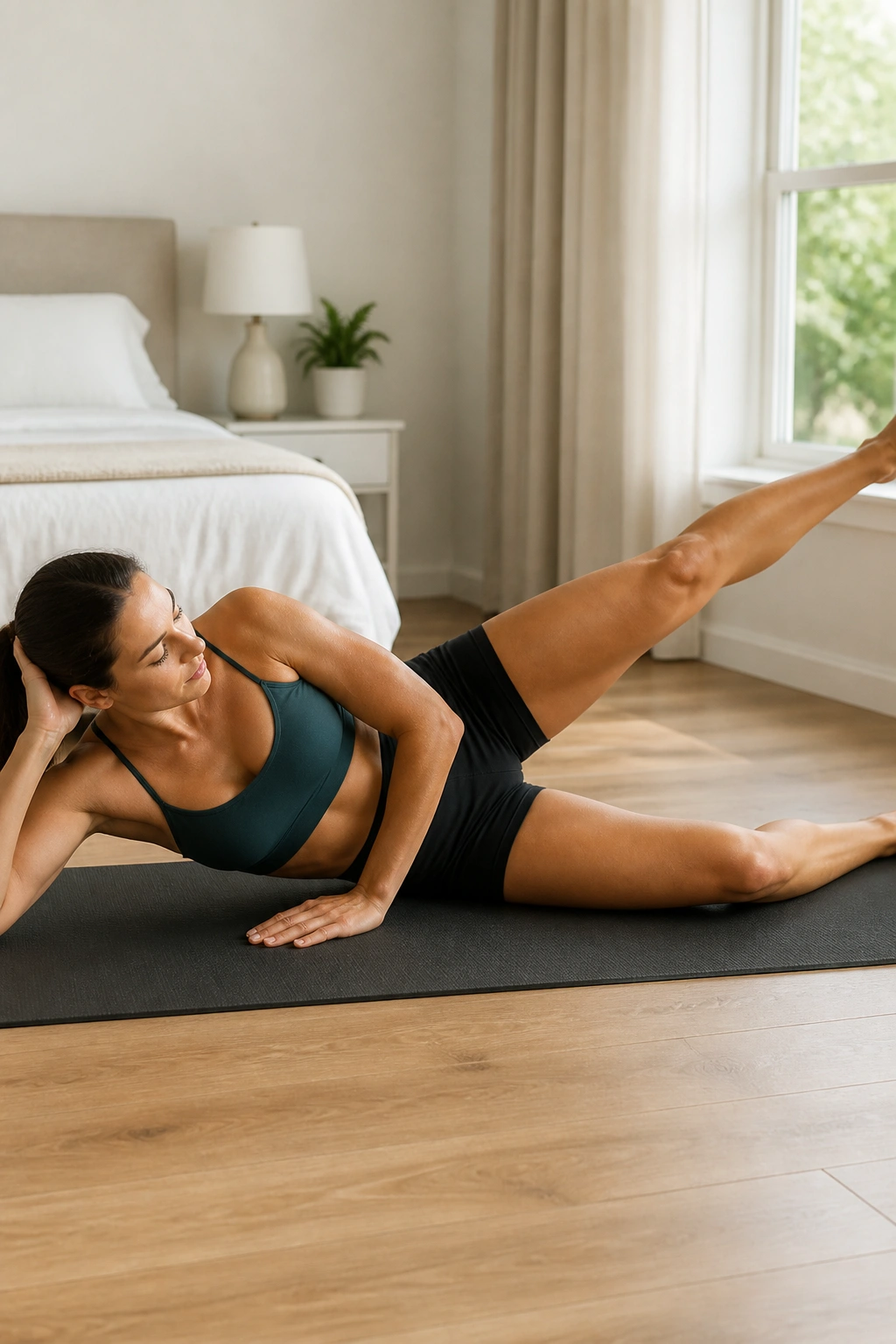
Why do some lifters keep getting sloppy knees on squats and lunges?
Often, the outer hip is asleep. The glute medius helps keep the pelvis level and the knee from drifting inward. You do not need a fancy machine to train it; a band, a step, and a floor are enough.
What this session looks like
- Side-lying leg raise: 3 sets of 12 reps per side
- Banded lateral walk: 3 sets of 10 steps each way
- Lateral step-down: 3 sets of 8 reps per side
- Clamshell: 2 sets of 15 reps per side
- Side plank: 2 rounds of 20 to 30 seconds per side
Do not rush the side-lying work. If your hip flexors take over, the outer hip never gets a proper job. Keep the toes slightly down and move the leg with control.
This workout is not glamorous. It is useful, and the payoff shows up later when your split squats feel steadier.
19. Travel Day No-Equipment Workout
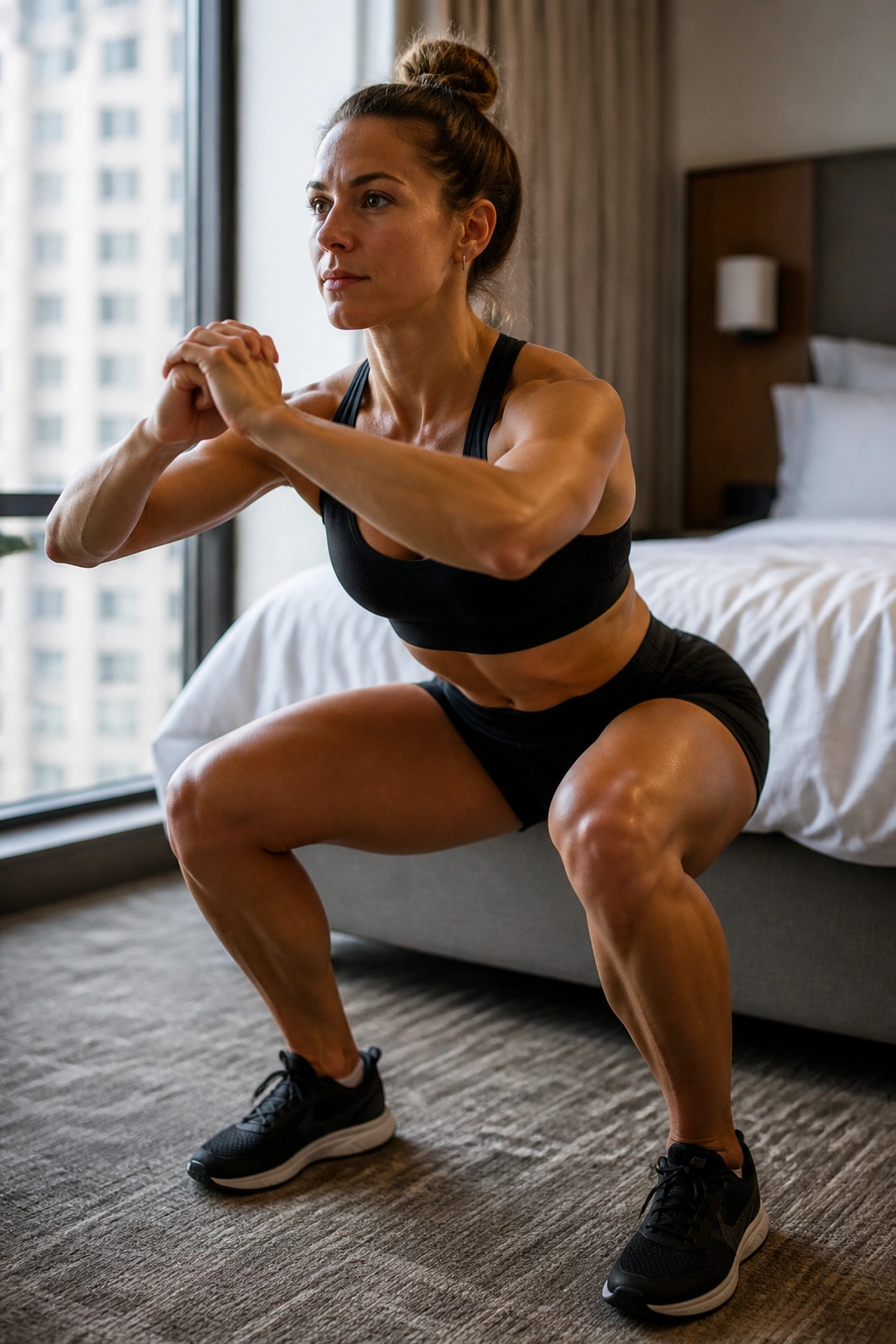
Hotel room. Strange bed. No gear. Still no excuse.
When you are away from home, the best workout is the one you can finish without needing to rearrange the room. Bodyweight split squats, push-ups, planks, and slow hinges can keep your patterning intact until real equipment is back in front of you.
- Air squat with 3-second lower: 3 sets of 15 reps
- Reverse lunge: 3 sets of 10 reps per side
- Push-up: 3 sets of 6 to 12 reps
- Single-leg RDL reach: 3 sets of 8 reps per side
- Plank shoulder tap: 3 sets of 20 taps total
If noise matters, skip jumps and keep the pace steady. If space is tiny, do the entire thing in one spot and just cycle the movements. The point is to leave the body better than you found it, not to turn a hotel floor into a circus.
This one is a sanity saver.
20. The 20-Minute Full-Body Finish
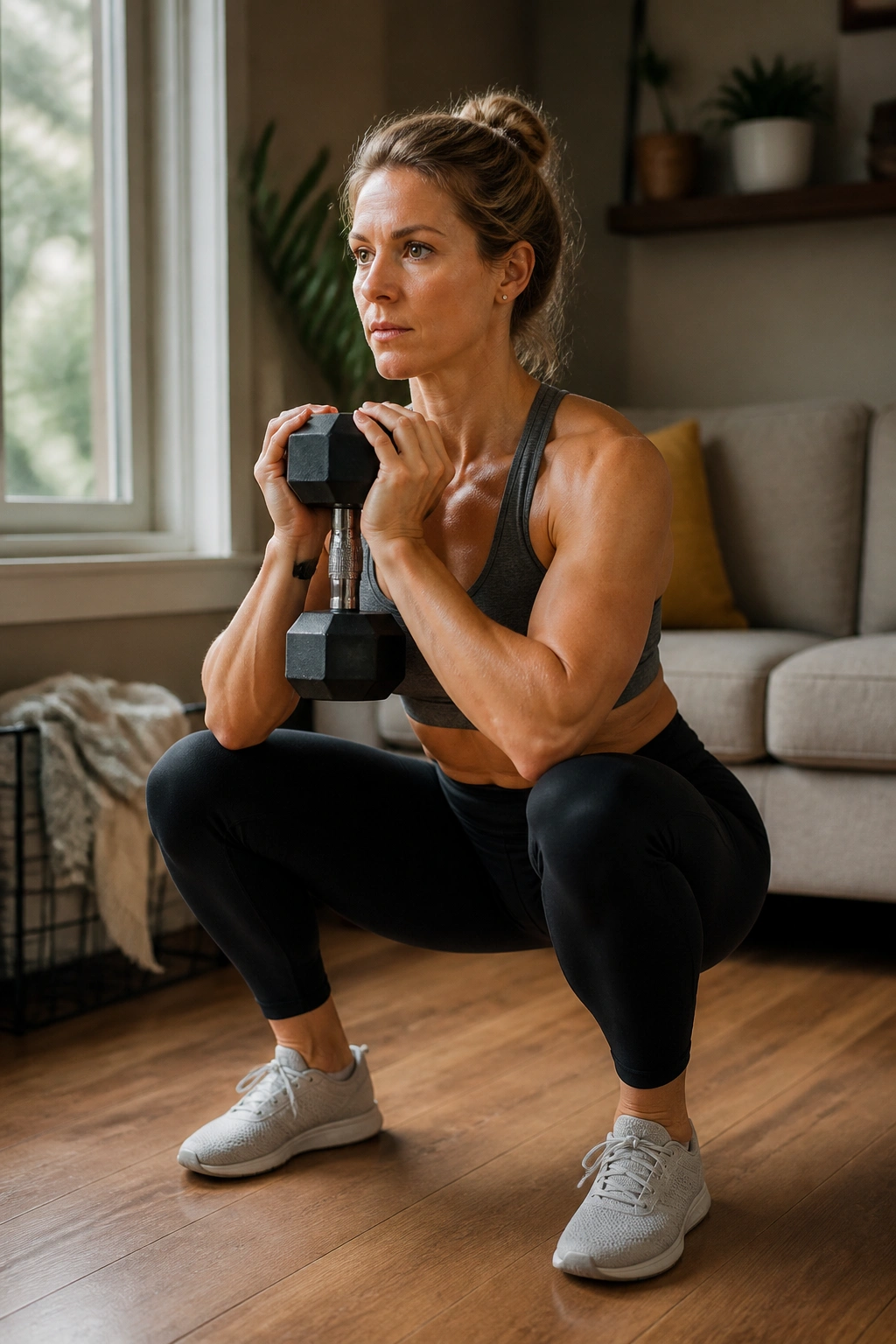
Some days you want a workout that gets the job done and gets out of the way.
Set a timer for 20 minutes and cycle through the same five moves as many quality rounds as you can. Keep the weights moderate, the rests short, and the standards high. If your form starts falling apart, stop the round early and recover for 30 seconds before you go again.
- 8 goblet squats
- 8 dumbbell floor presses
- 10 Romanian deadlifts
- 8 one-arm rows per side
- 8 dead bugs per side
That is enough to feel like lifting. It is also enough to keep your training rhythm alive when the week gets messy.
Keep a pair of dumbbells and a band somewhere you can reach them fast. When the setup is easy, the session happens more often, and that matters more than having the “perfect” home gym.
