



Defined arms do not come from mindless curling. They come from bicep workouts that keep the elbow honest, the wrist stacked, and the muscle under tension long enough for the work to matter.
If your arm day has been one straight-bar curl after another, your biceps have probably figured out the pattern already. A little variety changes the line of pull, the stretch, and the way fatigue shows up, and that matters more than people want to admit. Definition is partly about having enough muscle to show, and partly about how cleanly that muscle is trained.
The biceps also have a habit of stealing credit they do not fully deserve. The brachialis sits underneath and helps push the upper arm outward, while the brachioradialis gives the forearm that thicker look near the elbow. Train only one slice of the arm and the whole thing looks flatter than it should.
Good arm work feels crisp. The last rep should slow down, the forearm should start to light up, and your shoulders should stay mostly quiet. That’s the feel we’re after.
1. Standing Barbell Curl
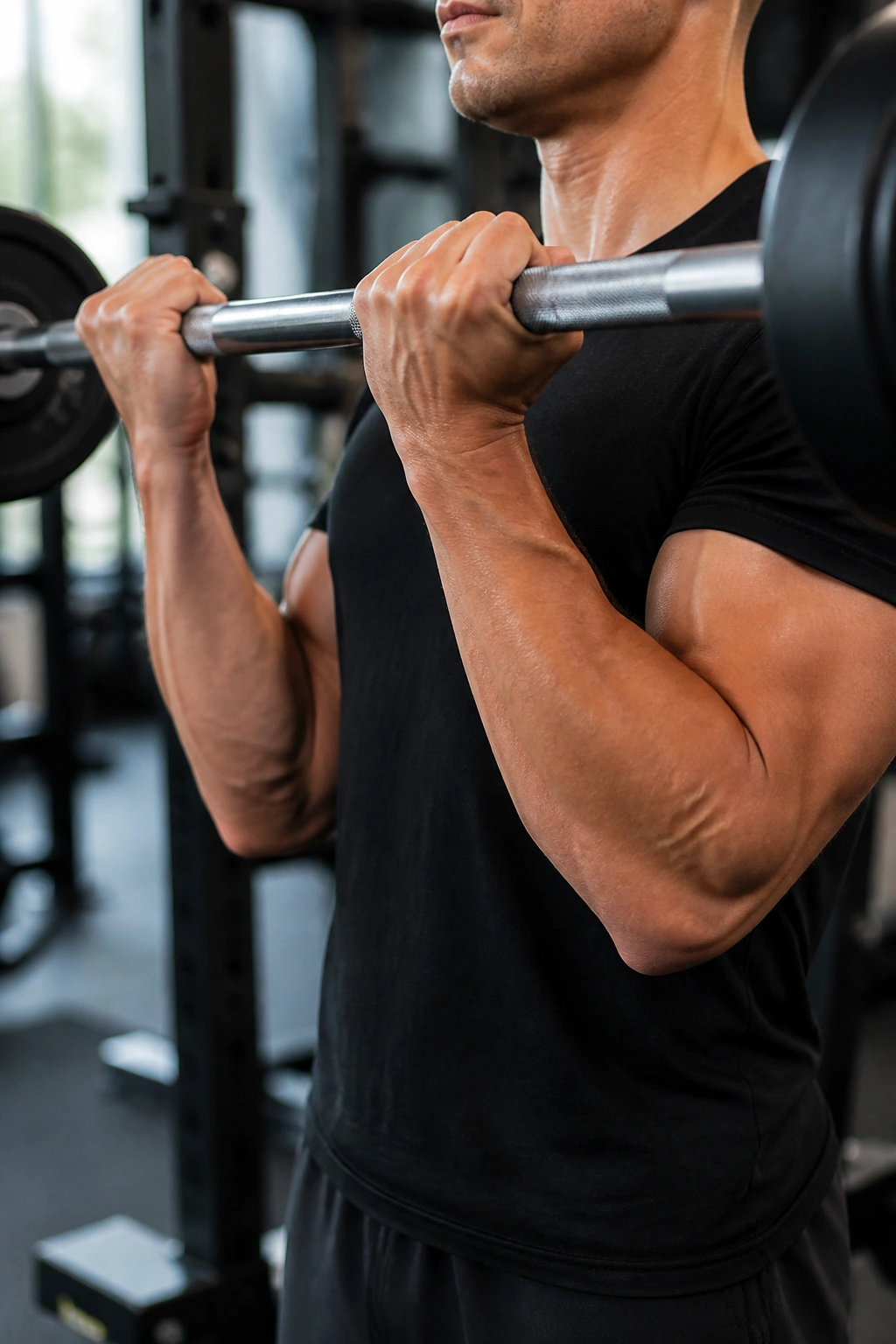
The standing barbell curl still earns its place because it lets you load both arms the same way and track progress without guessing. It’s the cleanest option when you want a simple strength-builder that doesn’t need much setup.
Why It Still Works
Keep your feet about hip-width apart, brace your glutes, and let the bar travel in a straight line without turning the set into a hip swing. Elbows stay close to your sides, and the bar should stop near the top of the chest or upper abdomen, not drift into some wild heave where your lower back does half the work.
- Use a shoulder-width grip.
- Lower the bar for 2 to 4 seconds.
- Stop just before your elbows slam hard into lockout.
- Aim for 6 to 10 reps when the goal is strength and size.
A lot of lifters rush this one because the bar feels familiar. Don’t. The barbell curl gets far more honest when you slow the lowering phase and keep the torso still. That little pause at the top matters too. It keeps the biceps from handing off the work to your front delts.
My blunt opinion: if your barbell curls look like miniature deadlifts, the load is too heavy.
2. Alternating Dumbbell Curl

One arm at a time exposes the truth fast. If your right side always finishes first or your left side keeps drifting inward, the alternating dumbbell curl will show it immediately.
The nice part is the control. You can supinate the hand as the dumbbell rises, turning the palm slightly upward at the top so the biceps finishes the rep hard. That small turn does more than most people think, especially when the rep starts from a dead hang near the thigh.
A clean version looks like this: stand tall, curl one arm while the other stays quiet, then switch sides without bouncing your shoulders. Do not twist your whole body just to move a heavier dumbbell. That shortcut steals tension and turns the set into a balance drill.
This is one of my favorite choices for 8 to 12 reps per arm because it’s simple, hard to cheat, and easy to pair with a heavier barbell movement. It also works well when you want to leave the gym with your arms pumped but your elbows not annoyed.
3. Hammer Curl
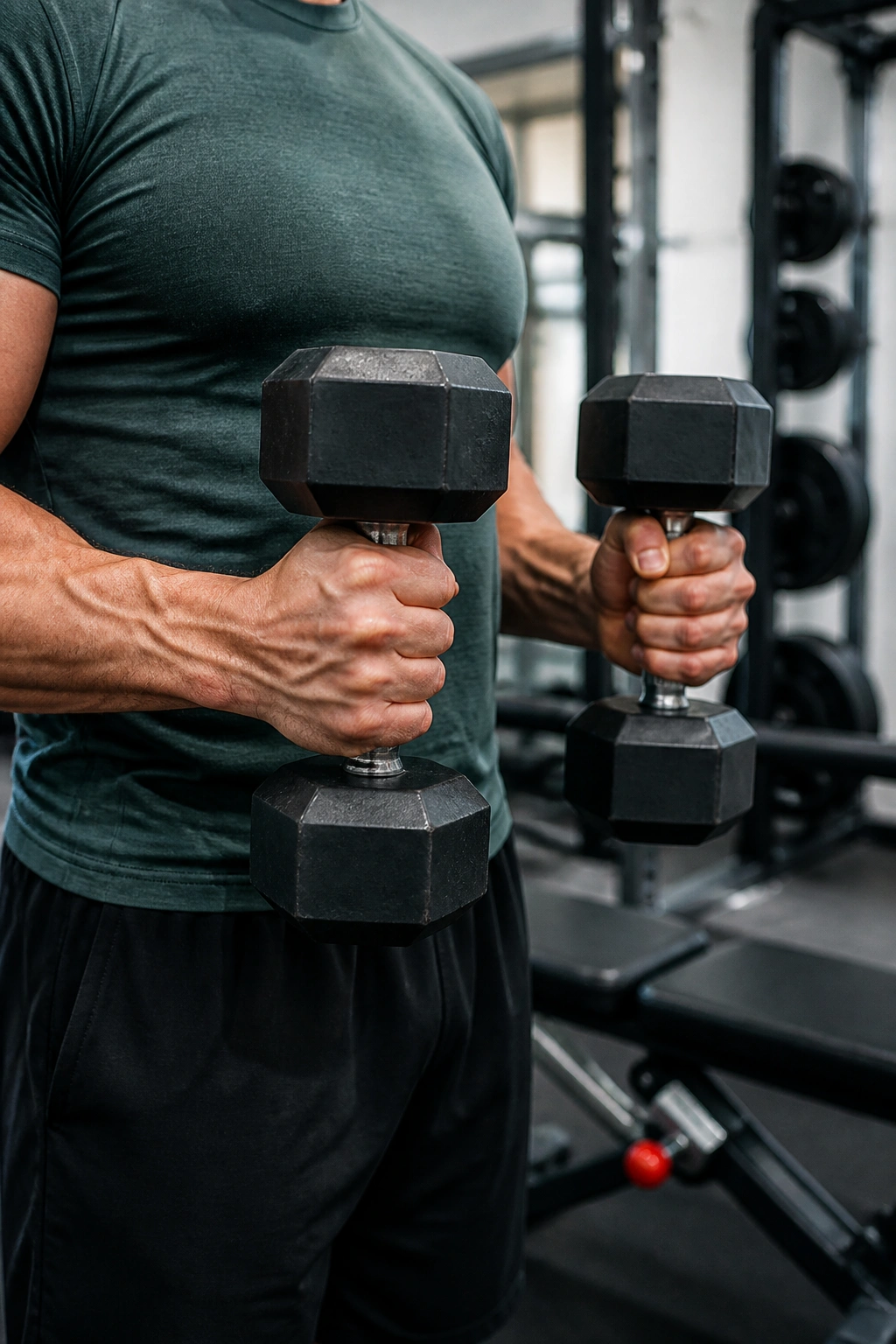
Why do hammer curls show up in almost every solid arm routine? Because they thicken the arm in a way straight curls can’t really copy. The neutral grip changes the load enough to hit the brachialis and brachioradialis more directly, and that helps the upper arm look fuller from the side.
How to Use It
Hold the dumbbells like you’re carrying a pair of buckets. No fancy wrist turn. No dramatic shoulder shrug.
- Keep the palms facing inward.
- Curl without letting the elbows drift far in front of the body.
- Lower under control for 2 to 3 seconds.
- Use 8 to 12 reps for most working sets.
Hammer curls are also easier on a lot of lifters’ wrists and elbows. That matters. If supinated curls have been leaving your elbows cranky, this is often the first movement I’d keep in the rotation. It gives you hard work without the same joint complaint.
A small detail: the top half of the hammer curl should not turn into a shrug. If your traps are joining the party, the weight is probably too much.
4. Incline Dumbbell Curl
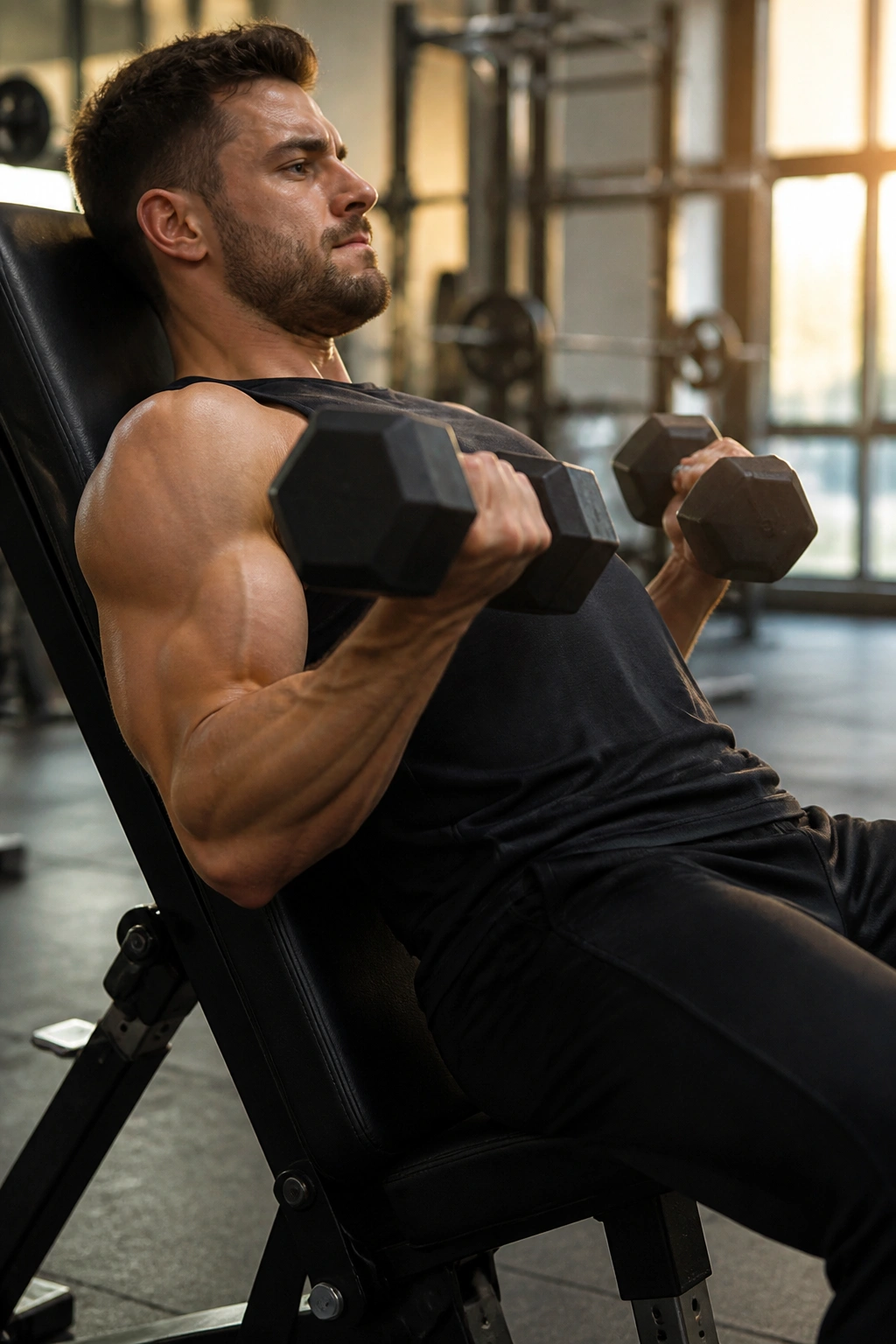
Sit back on an incline bench and let your arms hang behind your torso for a second. That stretch is the whole point, and it’s why incline curls feel so different from standing curls.
The biceps, especially the long head, get loaded hard in the lower position. That’s the part many lifters skip because it feels less comfortable than curling from a standing start. Uncomfortable is not the same as bad. Sometimes it just means the muscle is actually doing work.
Set the bench around 45 to 60 degrees, let the shoulders stay down, and keep the upper arms mostly still. Curl up without throwing the dumbbells toward the front of the shoulder. On the way down, slow it down. The lowering phase is where this movement earns its keep.
A simple cue helps here: imagine your elbows are pinned to the bench angle, not floating around looking for help. If they drift forward too much, you lose the stretch and turn the movement into a sloppy front-raise hybrid.
Use 10 to 15 reps. It’s one of the best bicep workouts for a deep, honest burn.
5. Preacher Curl
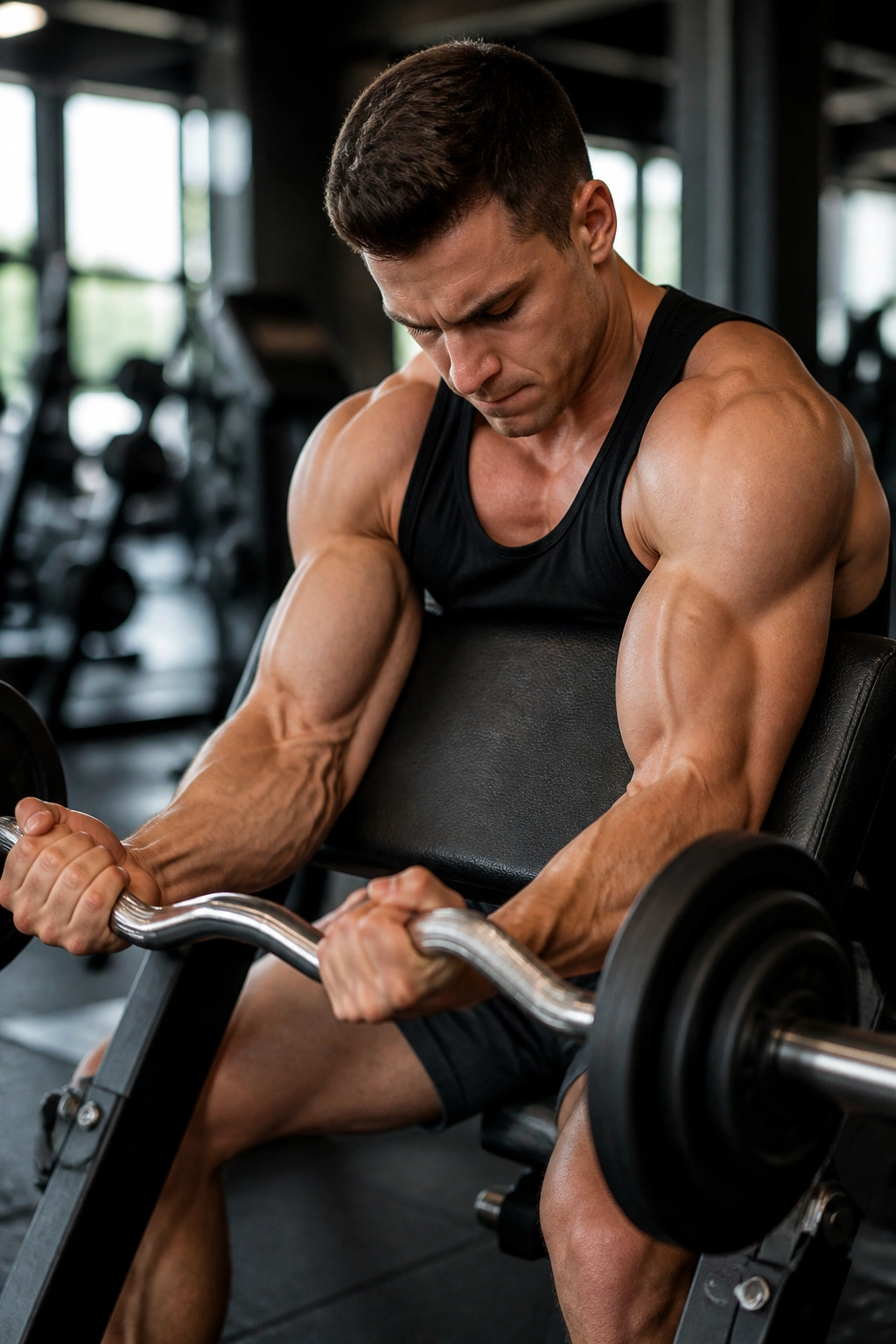
Preacher curls are unforgiving, and that’s why they work. The pad locks your upper arm in place, so you can’t fake the rep with body English once fatigue kicks in.
That fixed position makes the bottom of the movement tricky. If you drop too fast and bounce off the pad, the tendon and elbow take a beating, and the biceps lose tension for a split second that matters. I like a controlled start, a steady curl up, and a return that stops short of any hard slam at the bottom.
Use either an EZ-bar or dumbbells, depending on what your elbows like better. The key is the same: smooth reps, no shoulder roll, no wrist collapse. The pad is there to remove cheating, not to punish you.
If you want a strict movement that makes every rep count, preacher curls belong in the plan. They’re especially useful after heavier work, when the goal shifts from moving load to making the muscle do the work cleanly. Not glamorous. Effective.
6. EZ-Bar Curl
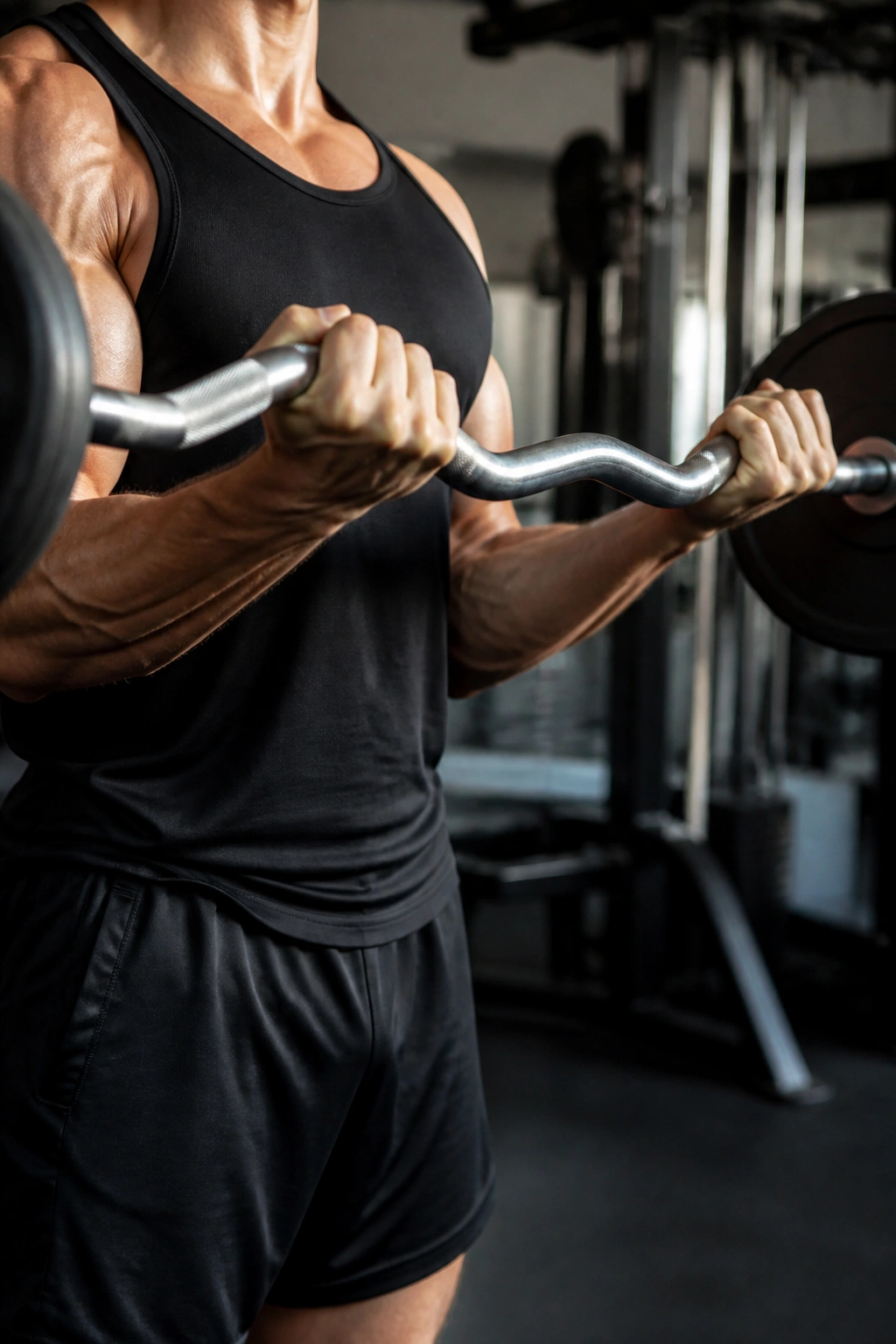
The EZ-bar gives your wrists a friendlier angle than a straight bar, and that alone is enough reason to keep it around. Some lifters can hammer straight-bar curls for years. Others feel their wrists complain on rep two. The EZ-bar solves that without turning the exercise into something else.
The grip angle also changes how the biceps and forearms share the work. You can usually go a little harder for a little longer because the joint position feels less cramped. That makes it a smart option for volume days or for people who want to train arms hard without a lot of drama in the elbow joint.
A clean rep still matters. Keep the ribs down, curl without tossing the bar upward, and lower until the elbows are nearly straight. If you shorten the range to protect the wrists, fine. If you shorten it because the load is too heavy, that’s a different problem.
This is one of those movements that looks ordinary but quietly gets a lot done. Boring? Maybe. Useful? Absolutely.
7. Cable Curl
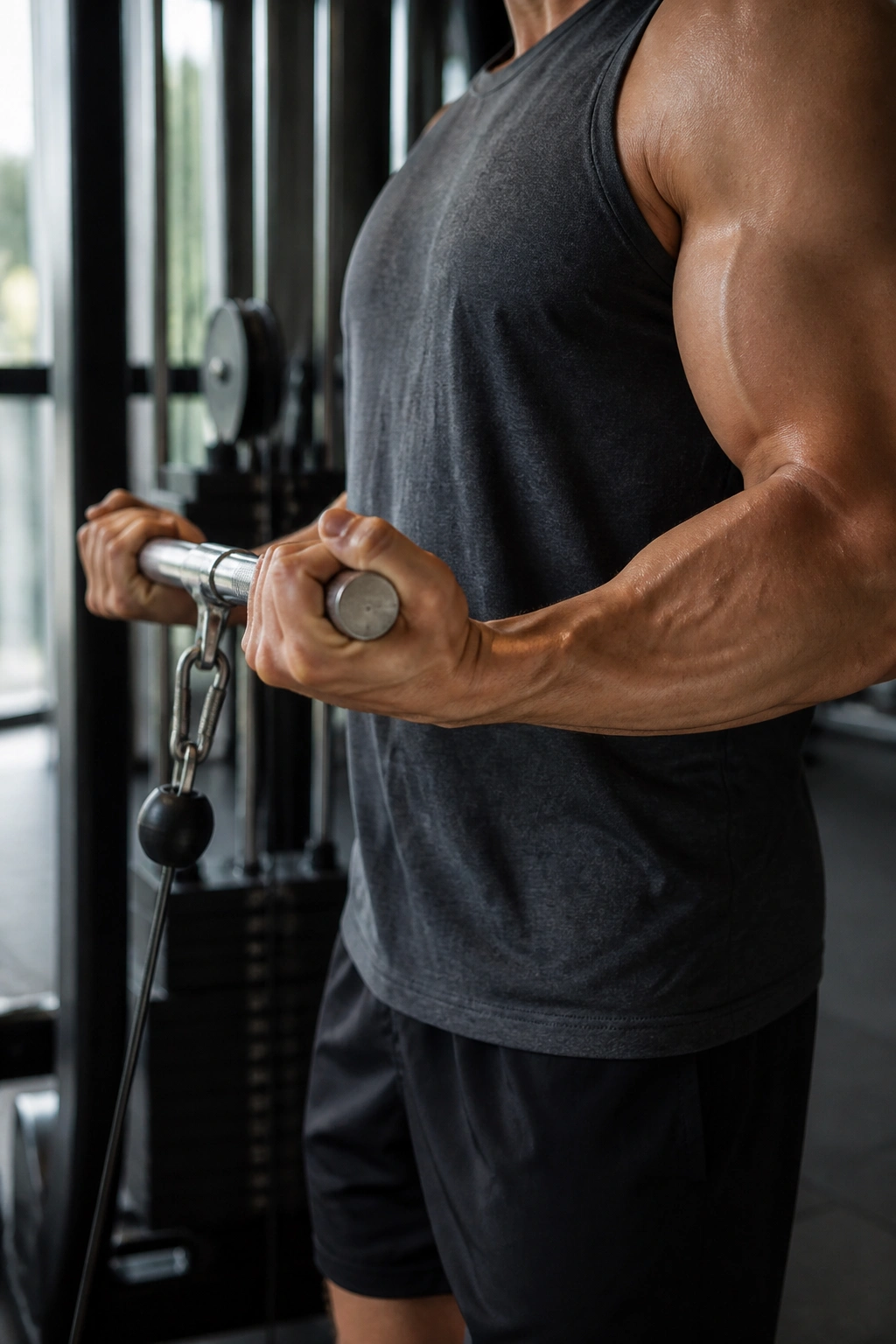
The cable never gives you a free rep. That’s the charm.
With dumbbells, tension changes a bit through the range. With a cable, the line of pull stays honest from the bottom to the top, which means the biceps have to keep working even when the rep gets easy-looking. That constant pull is why cable curls feel so different from free weights.
Setup That Actually Helps
Stand far enough from the stack that the weight doesn’t touch down between reps. Use a straight bar, EZ attachment, or single handles, depending on what feels best on your wrists and shoulders. Keep the shoulders quiet and let the elbows be the hinge.
- Use 10 to 15 reps for most sets.
- Pause for 1 second at the top.
- Lower slowly and keep tension on the cable.
- Step back a little farther if the stack bottoms out early.
Cable curls are terrific as a finishing move because they let you chase a clean pump without needing huge loads. They’re also useful when you want your arm training to feel more controlled and less joint-jarring than heavy barbell work.
A small warning: don’t lean back to “find” the resistance. Move your feet instead. That trick saves the set.
8. Concentration Curl
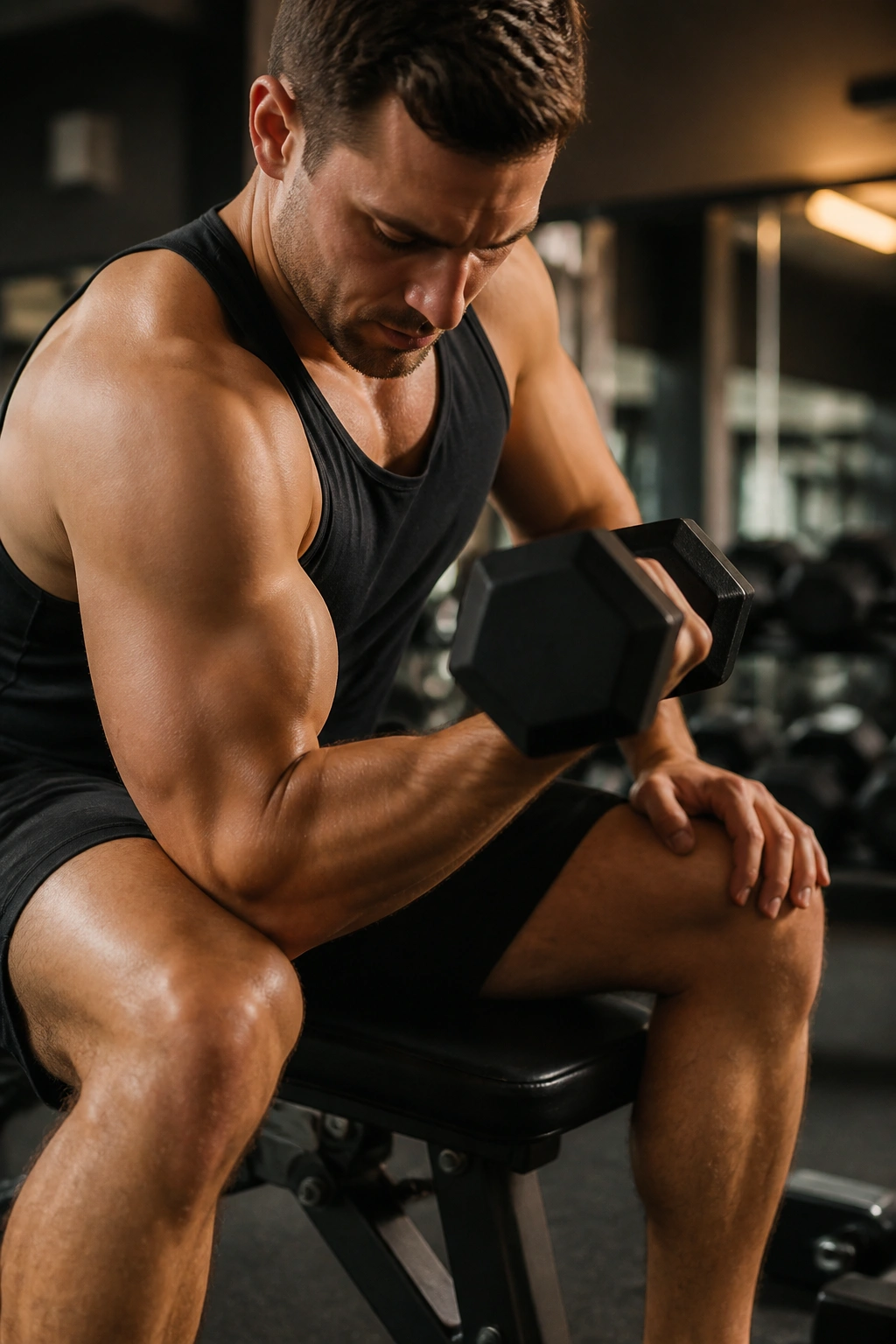
Why does a tiny seated curl feel so mean? Because it strips away everything extra.
Sit down, plant your elbow on the inside of your thigh, and curl one dumbbell slowly with no shoulder swing and no torso help. The whole setup is narrow, almost awkward, and that’s exactly why the movement works. There’s nowhere for the body to hide.
The concentration curl is a pure focus exercise. You can squeeze the top hard, lower under control, and make a light dumbbell feel much heavier than it looks. The peak contraction matters here more than ego weight ever will.
How to Get the Most From It
Use a moderate load and aim for 10 to 15 reps. Hold the top for a full second. Lower until the arm is almost straight, then come back up without whipping the wrist.
This is a favorite when one side is lagging behind the other, or when you want to finish a workout with a strict movement that makes the biceps scream a little. It’s not fancy. It’s just honest.
9. Reverse Curl
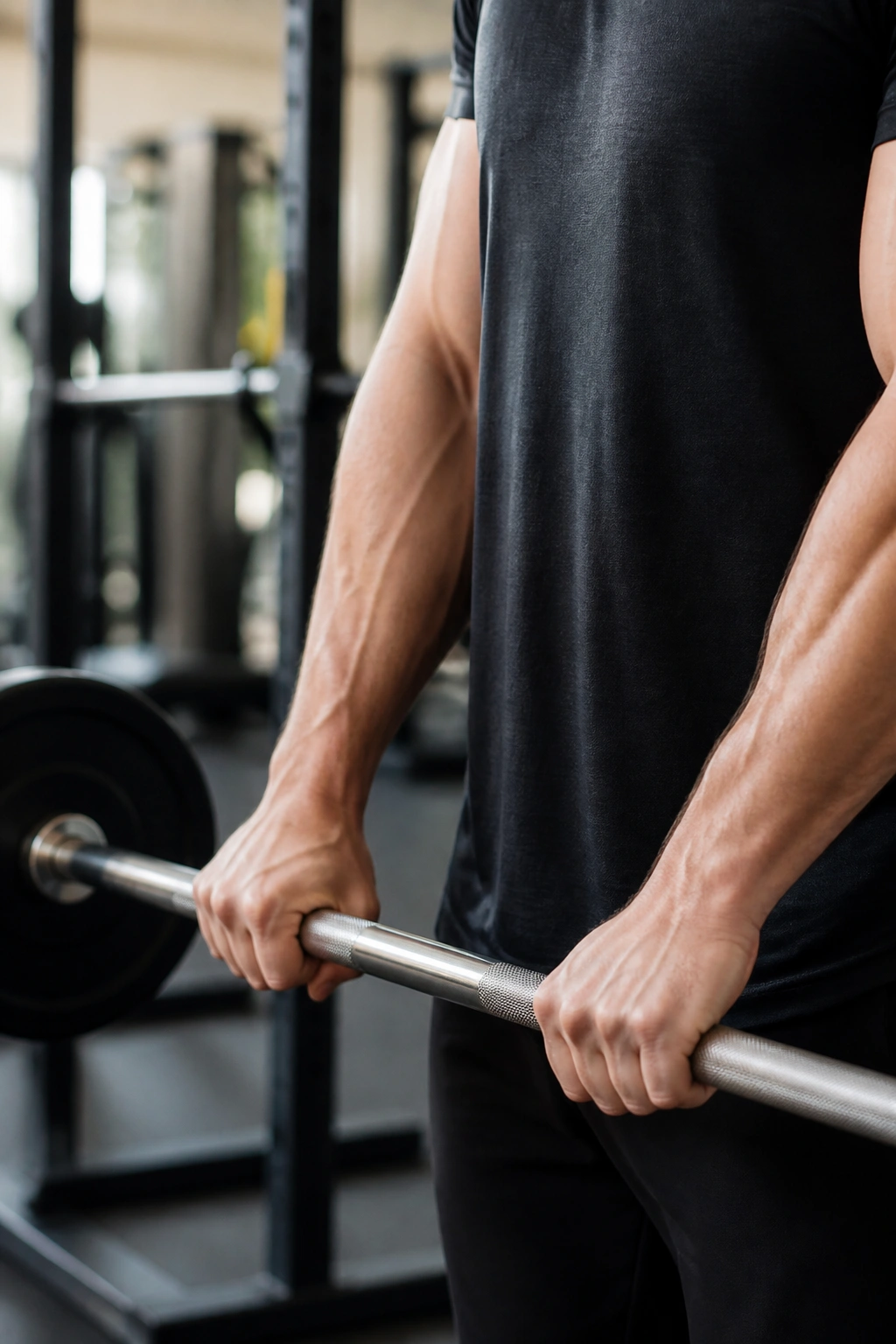
This is not a vanity curl. The reverse curl uses a pronated grip, so your palms face down and the forearms work harder while the brachialis takes on more of the load.
That grip changes the whole feel of the movement. The biceps still help, but they are no longer the star of every inch of the rep. Instead, you get more lower-arm work and more thickness around the upper forearm, which does a lot for the look of the arm from the side.
Keep the wrists straight. That part matters more than people think. If the wrist folds back, the forearm takes a beating in a bad way and the load stops feeling clean. Use less weight than you would for a standard curl. No shame in that.
I like reverse curls for 10 to 15 reps after one heavier curl pattern. They’re especially handy if your arm training has become too biceps-only and the forearms need some attention. That extra thickness near the elbow changes the whole outline of the arm.
10. Chin-Up
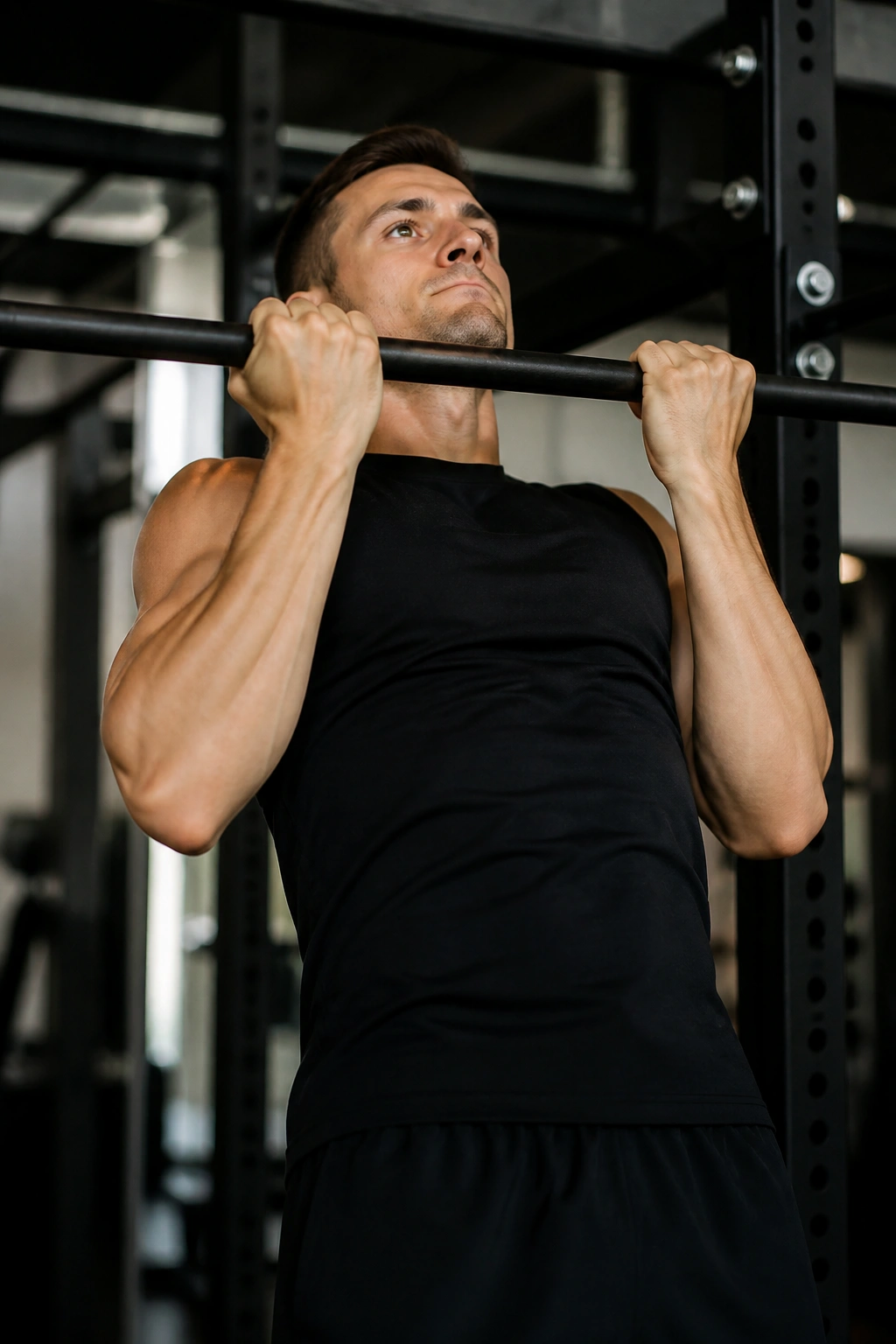
If you want biceps and back work in the same rep, the chin-up is hard to beat. The underhand grip lets the biceps contribute more than they do in a pull-up, and the whole movement has enough load to keep things serious.
Start from a dead hang or near-dead hang, then pull with the chest rising and the shoulders staying packed down. Do not crane the neck to get your chin over the bar. That habit turns a clean rep into a neck stretch with a little elbow flexion attached.
A few points worth repeating:
- Use a shoulder-width underhand grip.
- Keep the core tight so the legs don’t swing.
- Pull until the chin clears the bar or the chest gets close.
- Add weight once you can manage 8 clean reps.
Chin-ups are one of the few bodyweight moves that can keep paying off for a long time. Once standard reps get easy, a small weight belt or dumbbell between the feet changes the game. They also force the biceps to work in a way that curls never fully copy.
11. Spider Curl
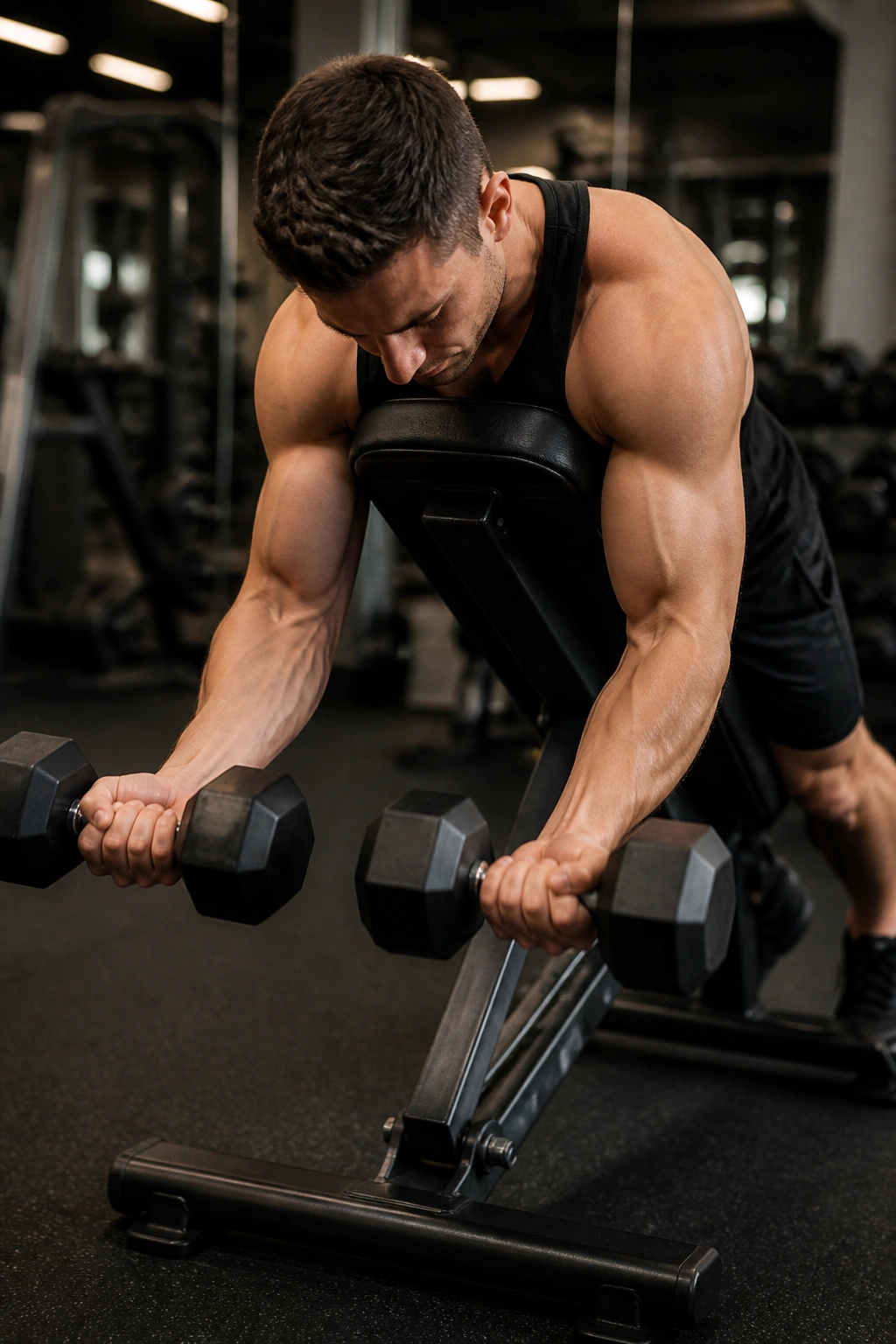
Lie face down on an incline bench and hang your arms straight toward the floor. The position feels strange at first, then brutally direct.
Spider curls take away the usual cheating options. The chest is supported, the torso stays still, and the biceps get left alone to finish the job. That makes the top contraction feel sharp, almost cramped, which is exactly what many lifters want from a strict arm movement.
What Makes It Different
Unlike a standing curl, the spider curl keeps your body from adding any hidden help. Unlike a preacher curl, the angle shifts the tension a little more toward the top and middle of the rep. That makes it a smart choice when you want a cleaner squeeze without losing the control you get from a bench-supported setup.
Use 10 to 12 reps and pause for a beat near the top. Don’t fling the dumbbells. Don’t arch the lower back. Just curl, squeeze, and lower with care.
This one is a sleeper. It doesn’t look dramatic. It works anyway.
12. Zottman Curl
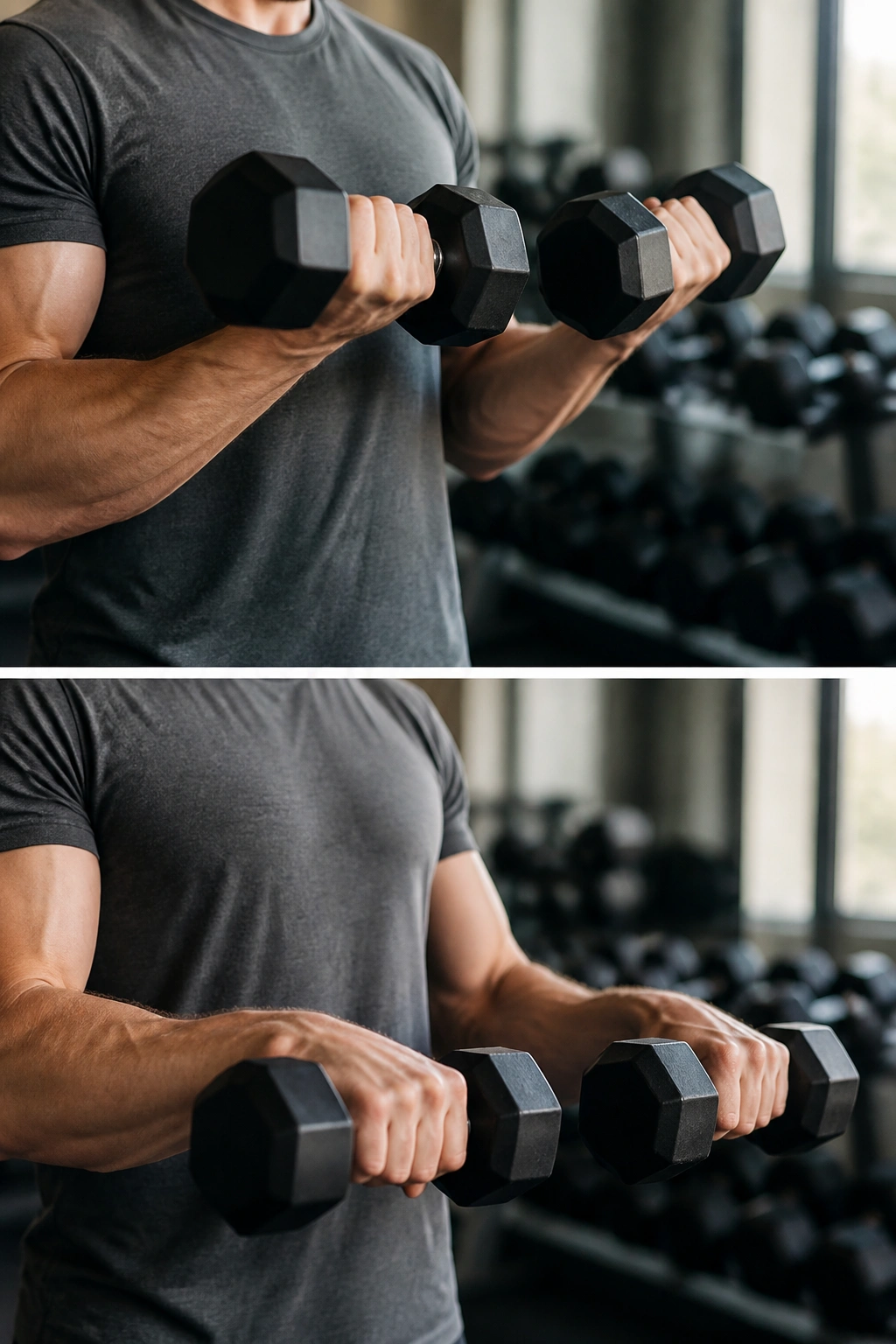
Curl up one way, lower another. That’s the whole trick, and it’s a useful one.
On the way up, the palms face forward like a normal dumbbell curl. At the top, rotate the hands so the palms face down, then lower under control. That switch loads the biceps on the concentric phase and makes the forearms work hard on the eccentric phase. It’s a sneaky little two-for-one.
The Zottman curl is best done with lighter dumbbells than your ego wants. The rotation slows the rep, and the lowering phase gets awkward fast if the weight is too ambitious. Light to moderate load is the point here.
How to Use It
- Curl up with a supinated grip.
- Rotate at the top.
- Lower slowly with a pronated grip.
- Use 8 to 12 reps.
I like this movement when an arm day needs a little more forearm involvement without adding a separate exercise. It’s also a nice change of pace if your usual curl menu has gone stale.
13. Cross-Body Hammer Curl
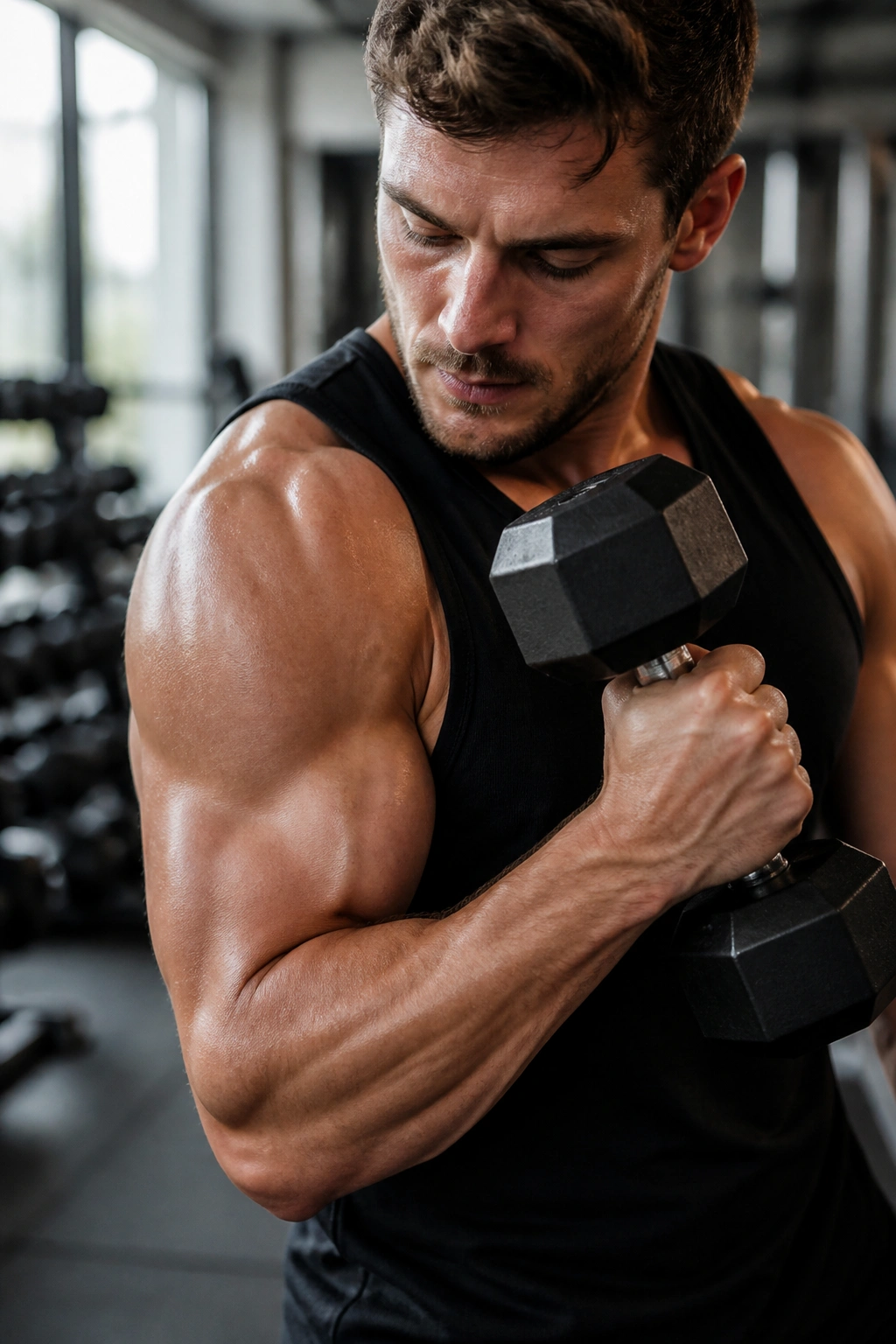
This version builds the side of the arm that people forget until it starts getting sore.
Instead of curling straight up, bring the dumbbell from the outside of the thigh toward the opposite shoulder. That cross-body path changes the angle a bit and keeps the arm working hard through a slightly different line of pull. The brachialis and brachioradialis still do a lot of the heavy lifting, which is why this movement helps the arm look thicker from the side.
There’s a practical bonus too: some lifters find it easier on the wrist than a fully supinated curl, and the cross-body path can feel more natural when the elbow wants a break from straight-up curling. That does not mean you can swing the weight. It just means the rep path gives you a little more room to work cleanly.
Use 10 to 12 reps per arm and keep the torso stable. If the shoulder starts following the dumbbell across the body, the load is too heavy. Simple as that.
14. Bayesian Cable Curl
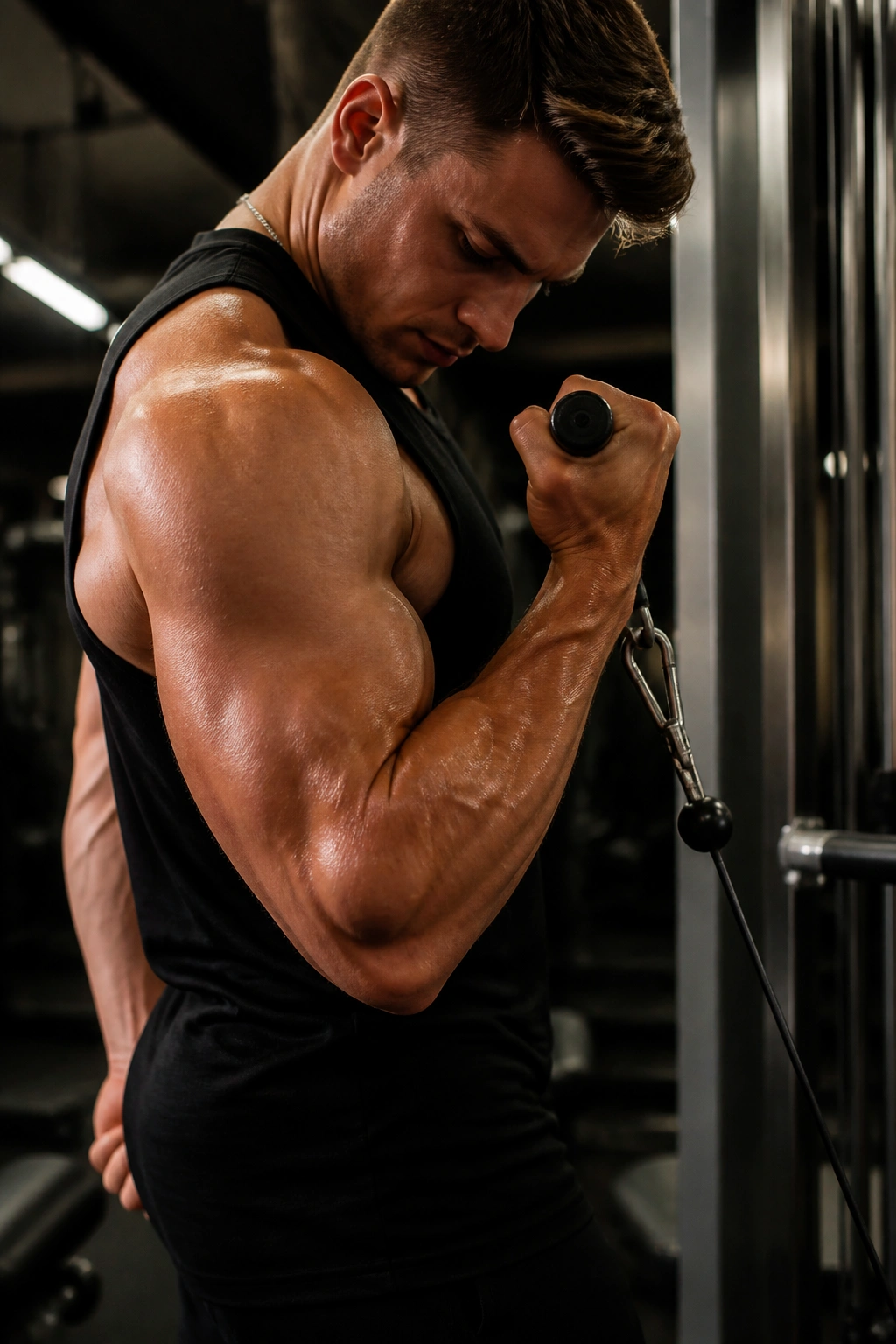
What happens when the cable sits behind you instead of in front? You get a loaded stretch right where many biceps workouts miss.
Set a low pulley behind your body, step forward, and let the working arm drift slightly behind the torso at the bottom. That position stretches the long head of the biceps more than a standard front-facing cable curl does. It feels different right away. Deeper, in a good way.
The line of pull stays awkward if you rush it, so slow down the first half of the rep. Let the arm open at the bottom, then curl through the middle and squeeze near the top. The bottom position is the selling point here, not the ego load.
A clean setup looks like this:
- Cable anchored low and behind you.
- Working elbow a little behind the body at the start.
- Neutral or supinated handle, depending on what feels good.
- 10 to 15 controlled reps.
This is one of my favorite cable variations for people who want more stretch-focused arm work without abandoning strict form.
15. Drag Curl
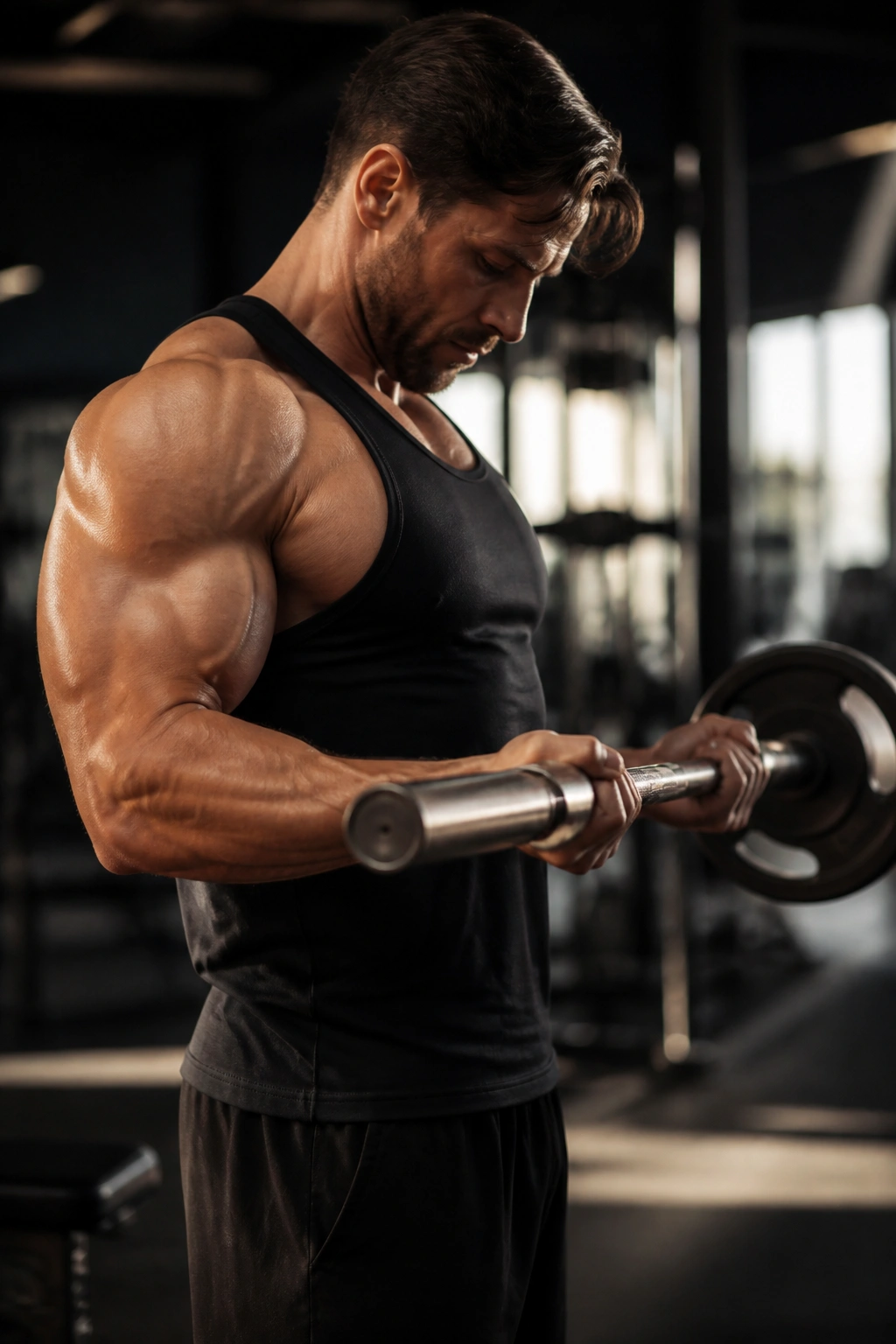
A drag curl looks odd the first time you see it. That awkwardness is part of the appeal.
Instead of swinging the bar in a front arc, you keep it close to the torso and let the elbows drift back as the bar rises. The bar “drags” up the shirt line instead of floating out in front of you. That reduces the front-delt assist and keeps the line of pull a little more direct on the biceps.
The load should stay moderate. If you go too heavy, the whole thing turns into a half-shrug and a lower-back battle. Keep the bar close and let the elbows move back, not the ribs forward.
This movement feels best for 8 to 10 reps, and it often works well after a heavier curl because it shifts the stress in a fresh way. Some lifters love it because it gives the biceps a hard squeeze without the same wrist crank a straight curl can bring. Others hate how strange it feels. Both reactions make sense.
16. High Cable Curl
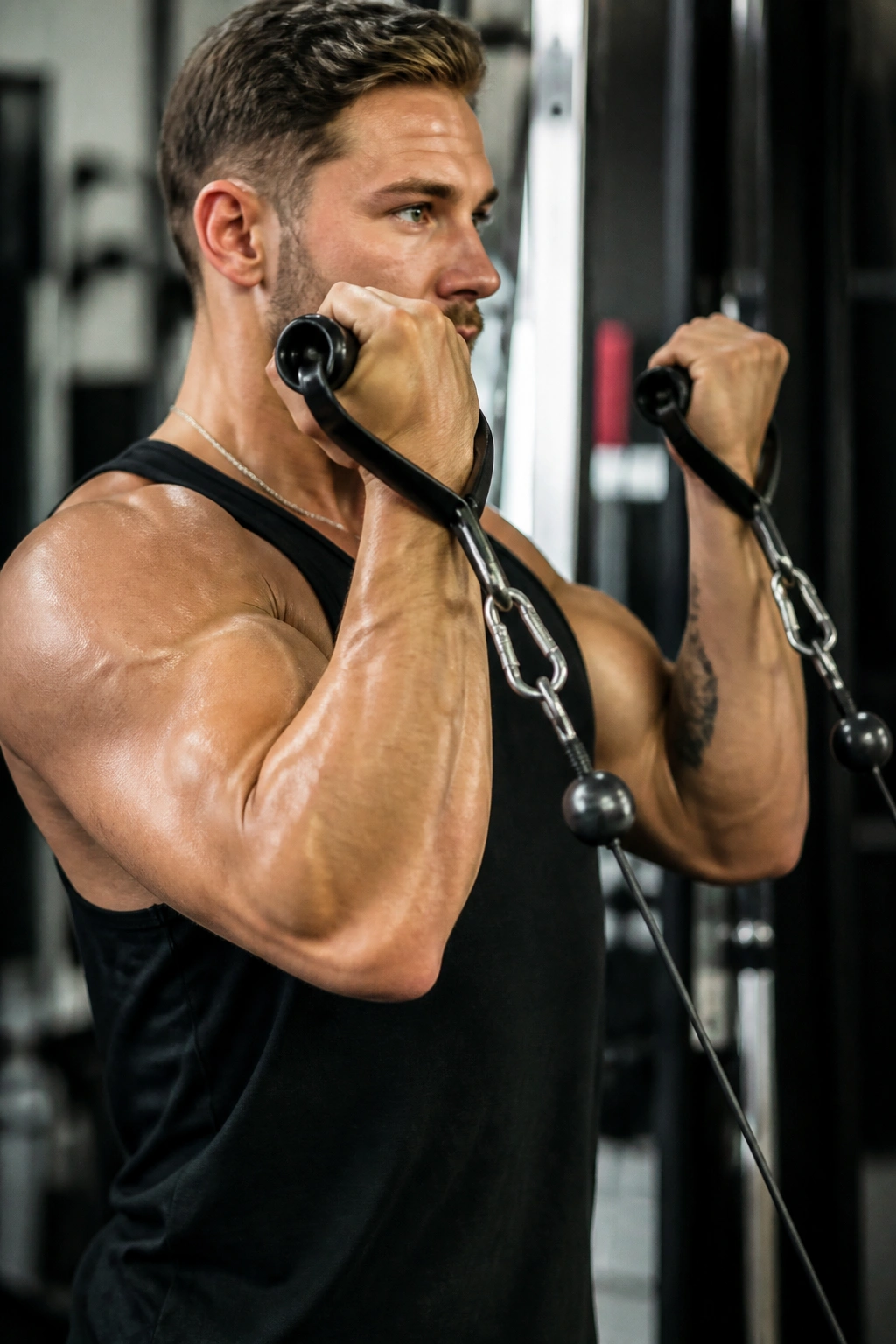
This is the one I reach for when I want a hard squeeze without loading huge weights.
Set the cable handles high, bring your arms up so the elbows are slightly elevated, and curl with the cables pulling from above. That changes the tension curve and makes the shortened position feel nasty in a good way. The top half of the curl gets all the attention, which can be a nice break if your arm work has been all stretch and no squeeze.
Because the resistance stays there near the top, you do not need much load. A clean rep with a hard pause often beats a sloppy heavy set. Control the ribs too. If they flare, you’ve turned a curl into a standing back extension.
Use 12 to 20 reps and keep the motion smooth. This is a pump move, not a power move. It belongs near the end of a session, when the biceps are warm and the goal is to finish the job without wrecking the elbows.
17. 21s Curl
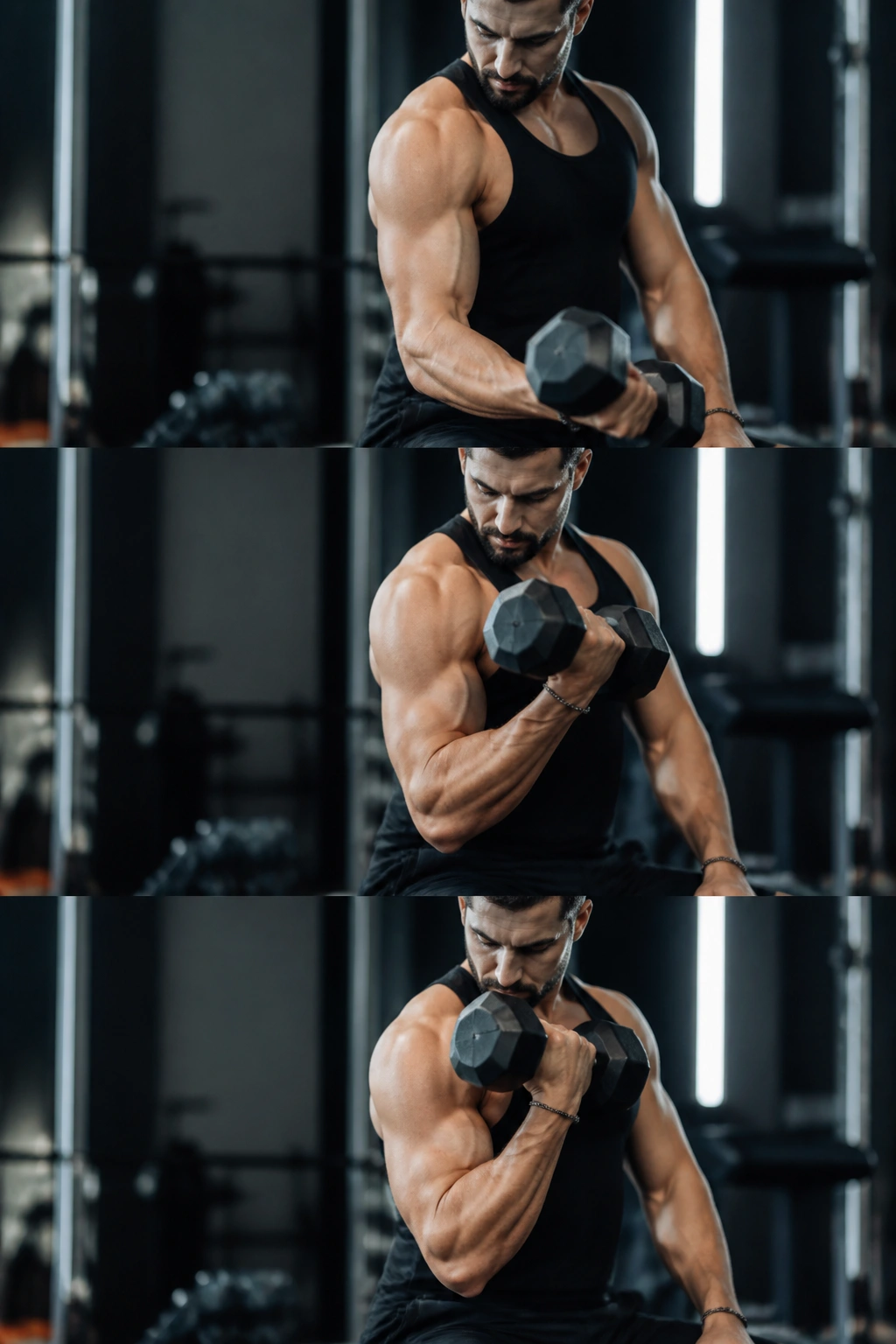
Seven bottom-half reps, seven top-half reps, seven full reps. That’s the formula, and it’s still miserable in the way good finishers should be.
The first seven reps build fatigue in the lower range, where a lot of lifters cheat a little. The next seven live in the upper range, where the squeeze takes over. Then the full reps arrive with tired arms and make every inch feel heavier than it should. It’s a smart little stress test.
How to Run It
Use a weight you could normally curl for maybe 10 to 12 controlled reps, then break the set into the three parts. Do not start too heavy. That ruins the sequence fast.
- 7 reps from the bottom to halfway up.
- 7 reps from halfway up to the top.
- 7 full-range reps.
21s work best as a finisher. They are not a warm-up, and they are not the place for sloppy ego lifting. If form starts collapsing halfway through the second block, lower the weight next time and keep the rep quality high. The burn is the point. The mess is not.
18. Isometric Curl Hold
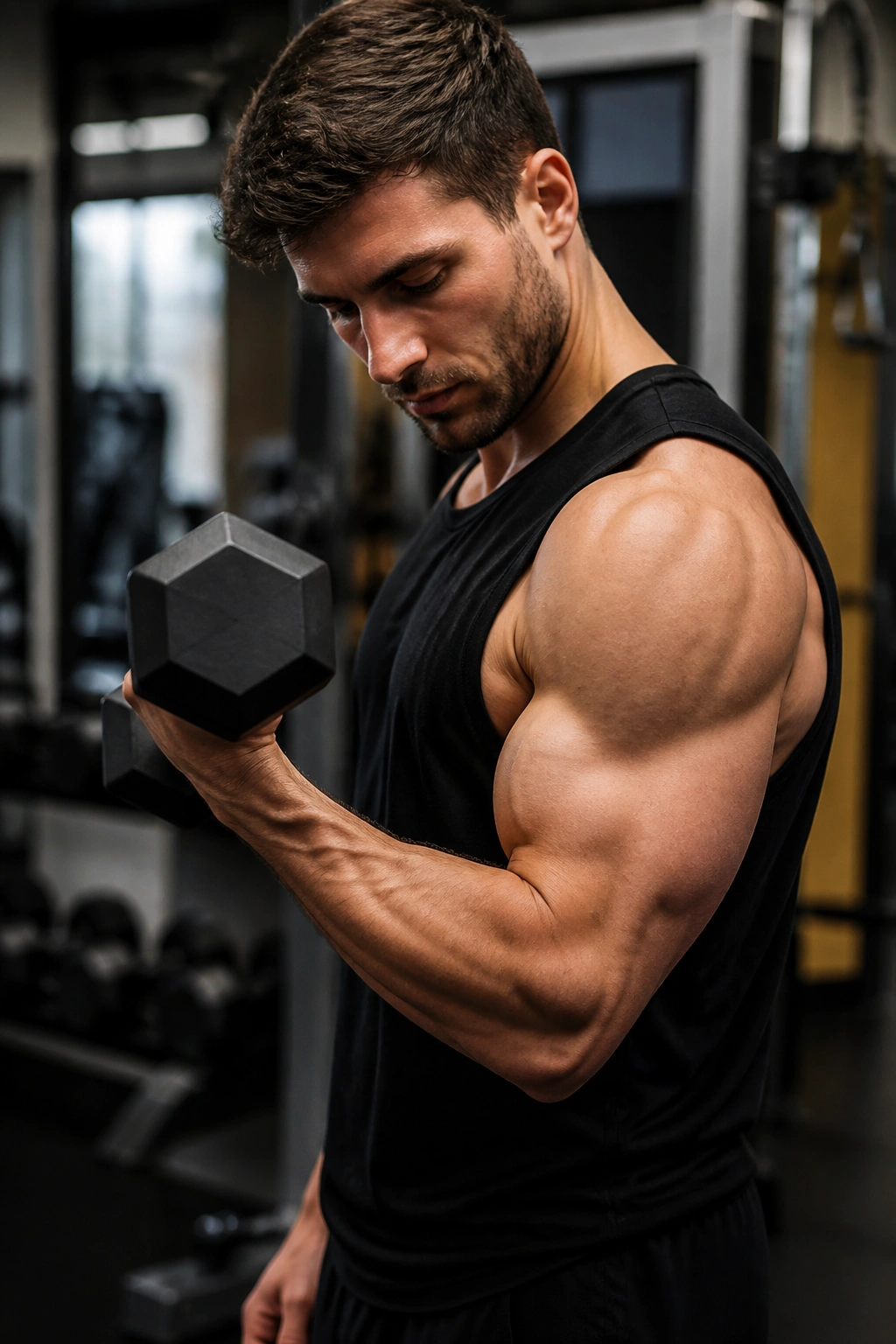
Can holding a curl build stronger arms? Yes. When the position is chosen well and the hold is long enough, the biceps and supporting muscles have to keep producing force without the relief of motion.
A good version uses a dumbbell, cable, or bar held at about 90 degrees of elbow bend for 20 to 40 seconds. You can also use a second hold near the top if you want a shorter, nastier squeeze. The muscle should shake a little. That’s normal. The shoulder should stay quiet. That part matters more than the burn.
Where It Fits in Training
- Use it after your main curl work.
- Hold at mid-range for the longest challenge.
- Keep the wrist neutral.
- Stop the set when the elbow position starts drifting.
Isometrics are useful when the joints want a break from constant movement but the arms still need work. They’re also a sneaky good finisher on days when heavy reps have already happened and you want one last dose of tension without another full set of curls.
They do not feel glamorous. They do feel honest.
Final Thoughts
Strong, defined arms usually come from a simple mix: one heavy curl pattern, one stretch-focused movement, one neutral-grip or forearm-heavy option, and one finisher that keeps tension honest. You do not need all 18 in a single session. Frankly, that would be a mess.
A smarter move is to pick 3 to 5 bicep workouts per week, spread the stress around, and keep the reps clean enough that the biceps—not your hips, shoulders, or wrists—do the work. If you want a straight answer on where to start, I’d choose incline curls, chin-ups, hammer curls, and either cable curls or preacher curls. That combination covers stretch, load, thickness, and control without wasting time.
Definition still depends on body composition, but the muscle has to be there first. Train the arm from different angles, stay strict, and let the last few reps get hard. That’s usually where the good stuff starts showing up.
