



Pilates workouts for beginners losing weight can look almost too controlled when you first see them. No jumping. No frantic pace. No sweaty boot-camp instructor barking at you. Then you hold a tabletop position for 25 seconds, add one slow toe tap, and your abs start trembling like they just got bad news.
That’s the part people miss. Beginner Pilates can be one of the smartest ways to start moving when your joints are cranky, your core is weak, or you’ve spent a long stretch sitting more than you’d like to admit. A good Pilates session won’t out-burn a hard run minute for minute, but it can help you build the things that make weight loss more doable: consistency, muscle endurance, better posture, smoother movement, and enough confidence to keep showing up.
And yes, showing up matters more than the heroic workout you do once and never repeat. Most beginners don’t fail because they picked the “wrong” fat-loss method. They fail because the plan hurts, bores them, or asks too much too soon. Pilates gets around that by giving you structure without punishment. You can work hard on a mat in a small living room, with no machine, no loud playlist, and no impact pounding through your knees.
There’s also a technical side here that’s worth respecting. The difference between a chest lift that trains your abs and one that yanks on your neck comes down to rib position, breath, and how high you curl — not how dramatic it looks. Same with bridges, leg lowers, planks, side kicks. Small changes. Big payoff. Start there, and the workouts below stop feeling “easy” in a hurry.
How Pilates Helps Beginners Burn More Calories Over Time
Pilates works best for weight loss when you stop expecting it to act like punishment cardio. That sounds blunt, because it is.
Weight loss comes from a calorie deficit, but your workouts still matter. Pilates helps by building lean muscle, improving body control, and making other movement easier to do well. When your hips and core get stronger, walking feels lighter, stairs feel less annoying, and longer sessions stop feeling like a fight. That spillover matters more than people think.
Research on Pilates programs often uses 2 to 3 sessions per week for 45 to 60 minutes, sometimes alongside food changes or added walking. The pattern is consistent enough to learn from: regular practice can help waist size, strength, and body composition, especially in beginners who were not training much before. Pilates is not magic. It is a useful tool.
A few things Pilates does well:
- Raises muscular demand without impact, which helps if jumping or running makes your joints complain.
- Builds core and glute strength, so your posture and daily movement improve.
- Keeps beginners in the game, which is half the battle with fat loss.
- Pairs well with walking, and that combination is more practical than most flashy workout plans.
No spot reduction, though. You can strengthen your waist, lower abs, thighs, and glutes with Pilates, but you do not melt fat from one body part by targeting it. Bodies do not bargain that way.
A Weekly Beginner Plan That Makes These Workouts Work
Start with 4 Pilates sessions per week. That’s enough to build momentum without turning exercise into a second job.
Use this kind of split:
- 2 shorter sessions of 10 to 15 minutes
- 1 moderate session of 20 minutes
- 1 slightly tougher session of 20 to 30 minutes
- Walk on most days, even if it’s only 20 minutes at a brisk pace
If you’re brand new, pick workouts 1, 3, 6, and 16 first. Run them for two weeks. Then bring in 4, 11, and 18. After that, start mixing the tougher ones like 14, 19, and 20. A lot of beginners improve faster when they repeat the same few sessions long enough to learn the moves instead of chasing novelty every day.
Use an effort level of 4 to 6 out of 10 for most sessions. One or two workouts can climb to a 7 out of 10, where your muscles shake and your breathing deepens but you can still keep control. If your lower back starts taking over, or your neck feels pinched, dial the move back. Pilates should feel demanding. It should not feel sloppy.
Grab a mat, a folded towel, a wall, and maybe a pillow. That’s enough.
1. Core Breathing and Pelvic Tilt Reset
This is the workout I’d hand to almost any beginner on day one. It looks tame. It isn’t.
Lie on your back with your knees bent and feet flat, hip-width apart. Spend 2 minutes practicing lateral breathing: inhale into your ribs, exhale through pursed lips, and feel your ribs soften down. Then move into 10 pelvic tilts, 10 heel slides per side, and 8 dead-bug arm reaches per side. Finish with cat-cow for 60 seconds and a child’s pose hold for 30 seconds.
Why this one works
Beginners often rush past breathing because it seems boring. Bad move. When you learn how to exhale and lightly brace, your abs finally start doing their job instead of handing everything off to your hip flexors and lower back. That alone can change how every later workout feels.
Quick layout
- 2 minutes rib breathing on your back
- 10 slow pelvic tilts
- 10 heel slides on the right, 10 on the left
- 8 dead-bug arm reaches per side
- 60 seconds cat-cow
- 30 seconds child’s pose
Best use: do this before breakfast or before a walk when your body feels stiff and your back wants to arch.
2. Marching Tabletop Starter Circuit
If you can hold tabletop with calm breathing, you are already doing more work than most beginners realize.
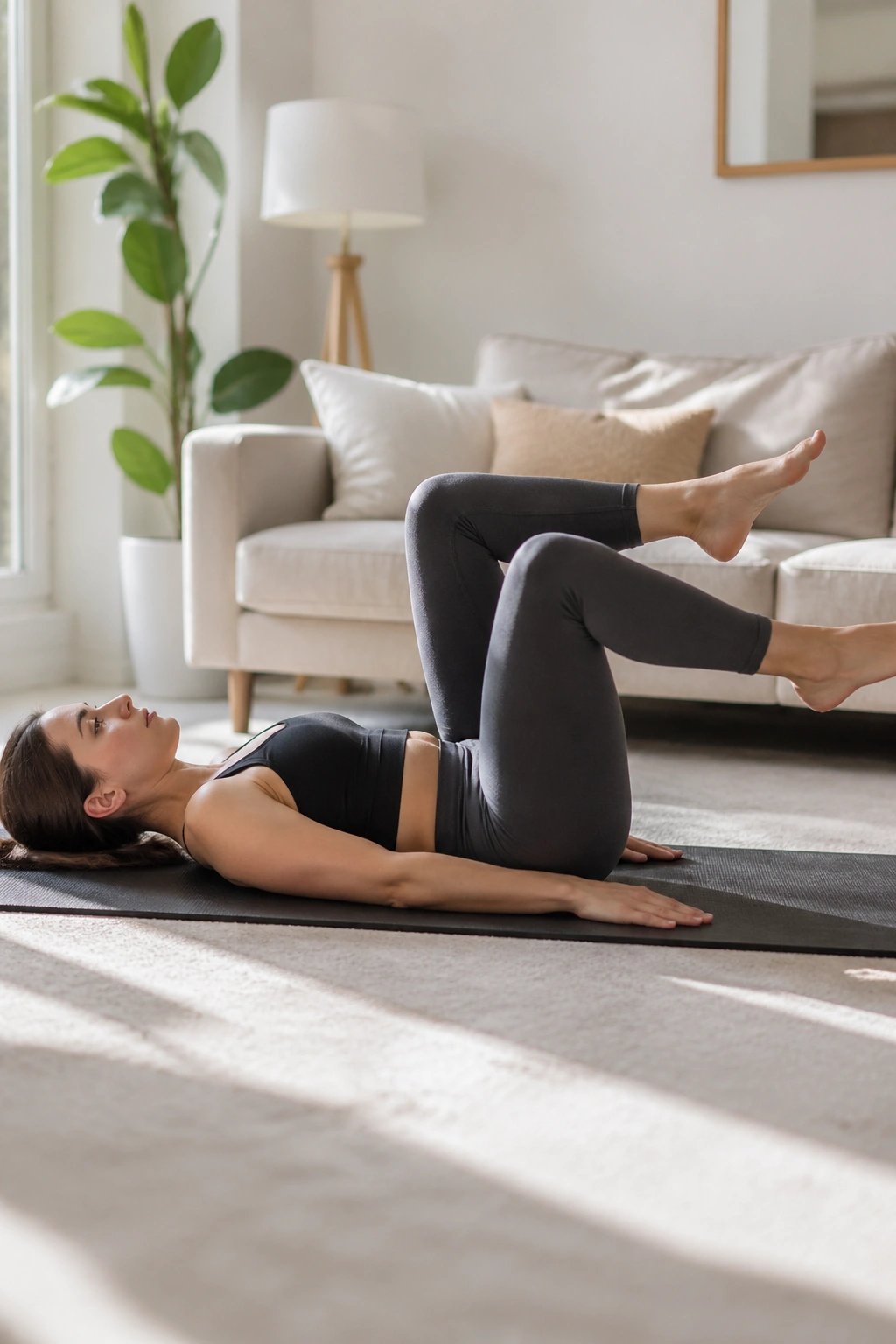
Set up on your back with your knees bent. Lift one leg into tabletop, then the other, keeping your knees above your hips. Hold for 10 seconds, lower down, and repeat 3 times. After that, do 10 alternating tabletop marches, 10 bent-knee toe taps per side, and 8 chest lifts with your hands supporting your head.
The trick is not range. The trick is keeping your ribs from popping up while your pelvis stays steady. When that control slips, the move stops being a core exercise and turns into a hip-flexor tug-of-war.
Run the whole circuit 2 to 3 rounds with 30 seconds of rest between rounds. You’ll get a clean beginner ab session without the frantic pace that usually makes form fall apart.
Neck tension is the usual snag here. If your neck takes over during chest lifts, reduce the curl height and think about lifting your breastbone toward your knees rather than yanking your head forward. Small curl. Slow exhale. Better rep.
3. Glute Bridge Fat-Burning Flow
Why does a bridge belong in a weight-loss Pilates plan? Because weak glutes make everything else harder — walking faster, climbing stairs, even holding your posture when you get tired.
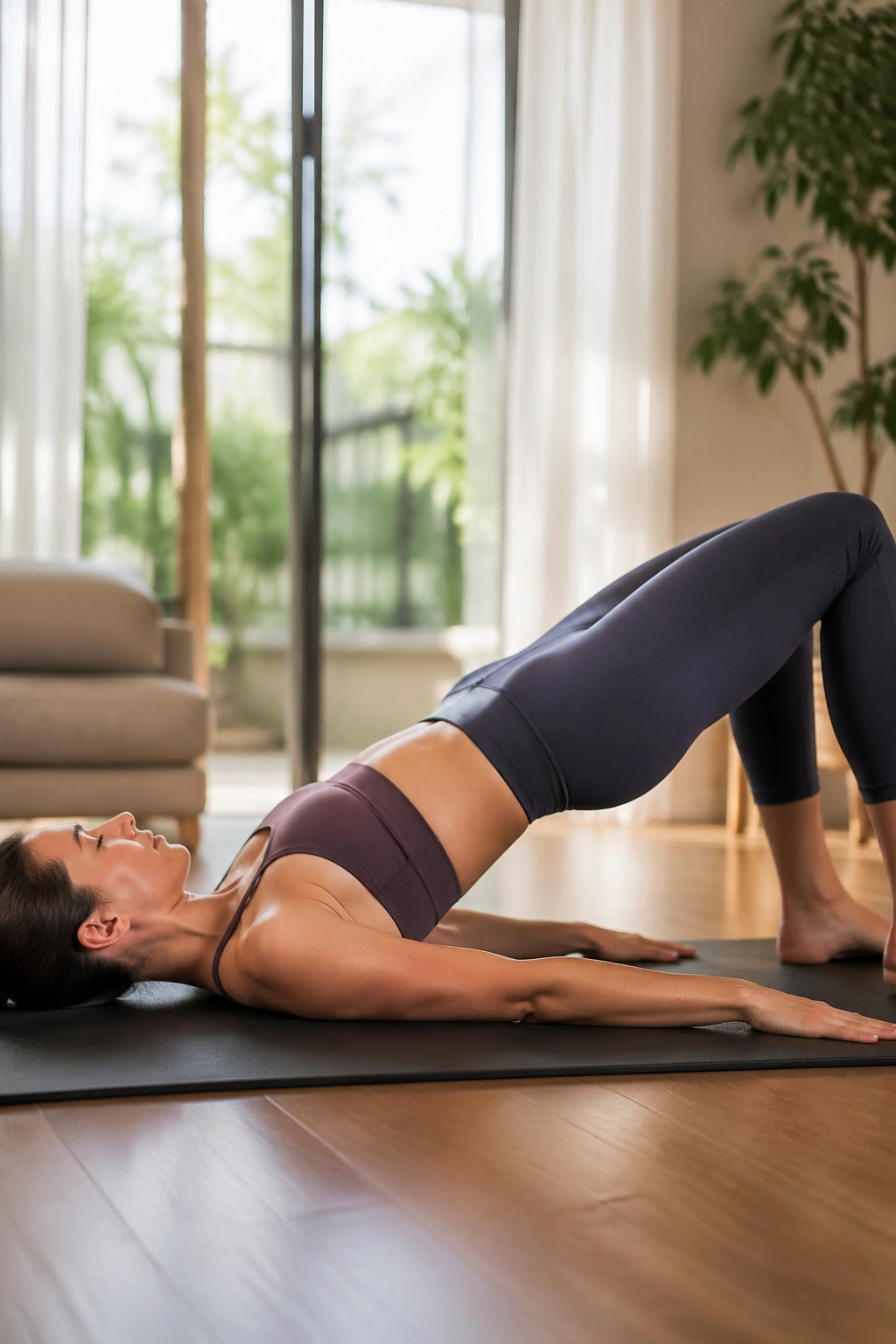
Start with 12 pelvic curls, peeling your spine off the mat one vertebra at a time. On the next round, hold the top and do 10 glute squeezes. Then add 8 bridge marches per side without letting your hips rock. Finish with 20 small bridge pulses and a 30-second hold at the top.
What to watch for
Your feet should be close enough that your fingertips can brush your heels. Push through your whole foot, not only your toes. At the top, your ribs should stay soft instead of flaring up like you’re trying to make the bridge look bigger than it is.
Session structure
- 12 pelvic curls
- 10 glute squeezes at the top
- 8 marching reps per side
- 20 pulses
- 30-second hold
- Rest 30 to 45 seconds
- Repeat 2 rounds
A clean bridge series lights up the back of your body fast. That matters, because beginners often live in their quads and lower back without realizing it.
4. Modified Hundred With Toe Taps
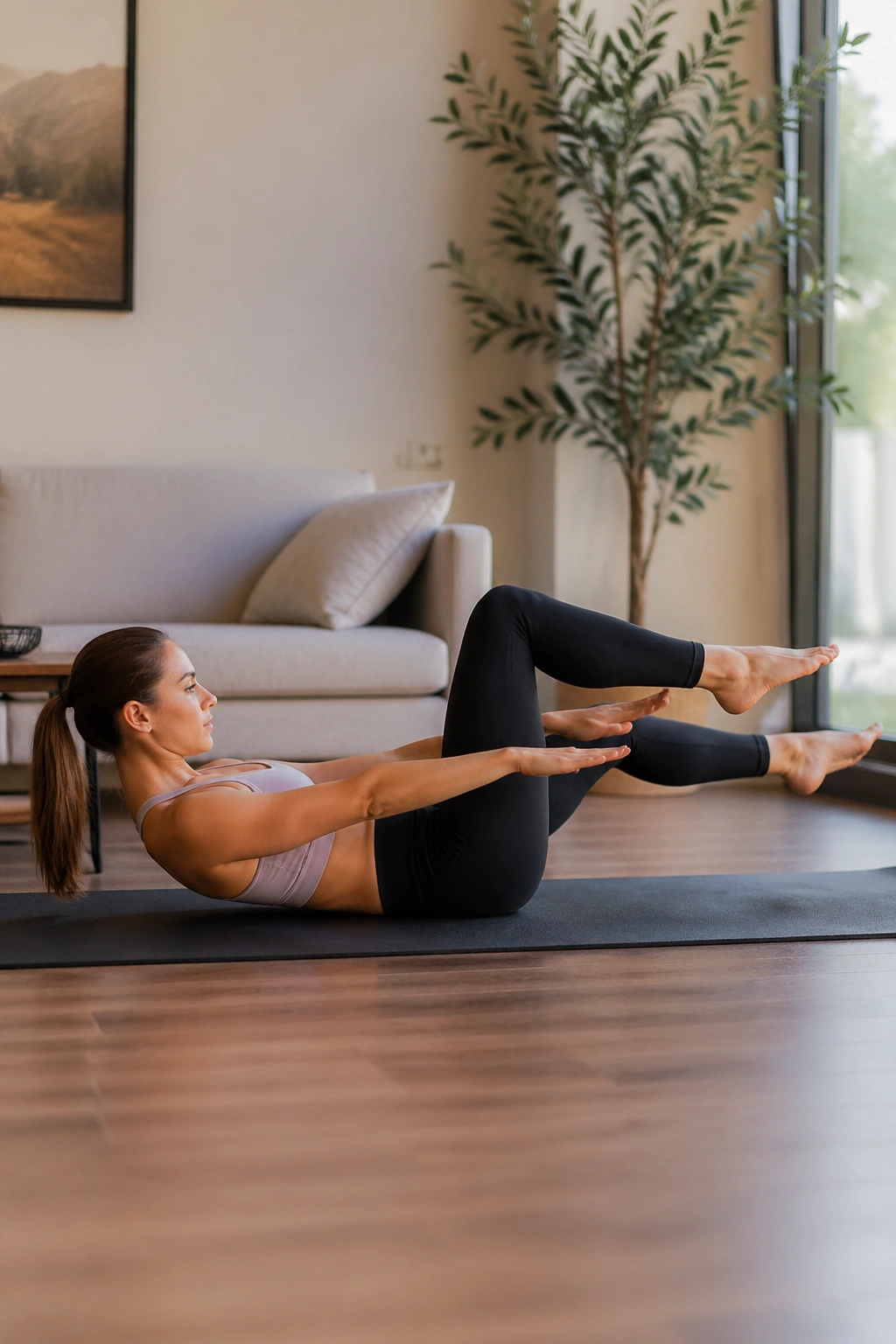
Picture this: you hear “The Hundred,” lift your head too high, hold your breath, and wonder why Pilates people act like neck strain is normal. It isn’t. The beginner version should feel sharp in your abs, not angry in your throat.
Start on your back. Keep your feet planted first. Lift your head and shoulders into a low chest lift, reach your arms long by your sides, and pump your arms for 5 breaths in and 5 breaths out for 5 rounds. Rest. Then bring your legs to tabletop and repeat for 5 more rounds if you can keep your back from arching.
After the arm pumps, go right into 10 slow toe taps per side. Exhale as the toe lowers. Inhale to bring it back.
- Set your ribs down before you lift.
- Curl only until your shoulder blades barely clear the mat.
- Keep the arm pumps small and quick.
- Lower your head the second your neck starts doing all the work.
This one raises your breathing rate more than people expect. Pair it with a brisk 15-minute walk, and you’ve got a beginner-friendly fat-loss combo that doesn’t trash your joints.
5. Side-Lying Leg Series for Hips, Thighs, and Waist
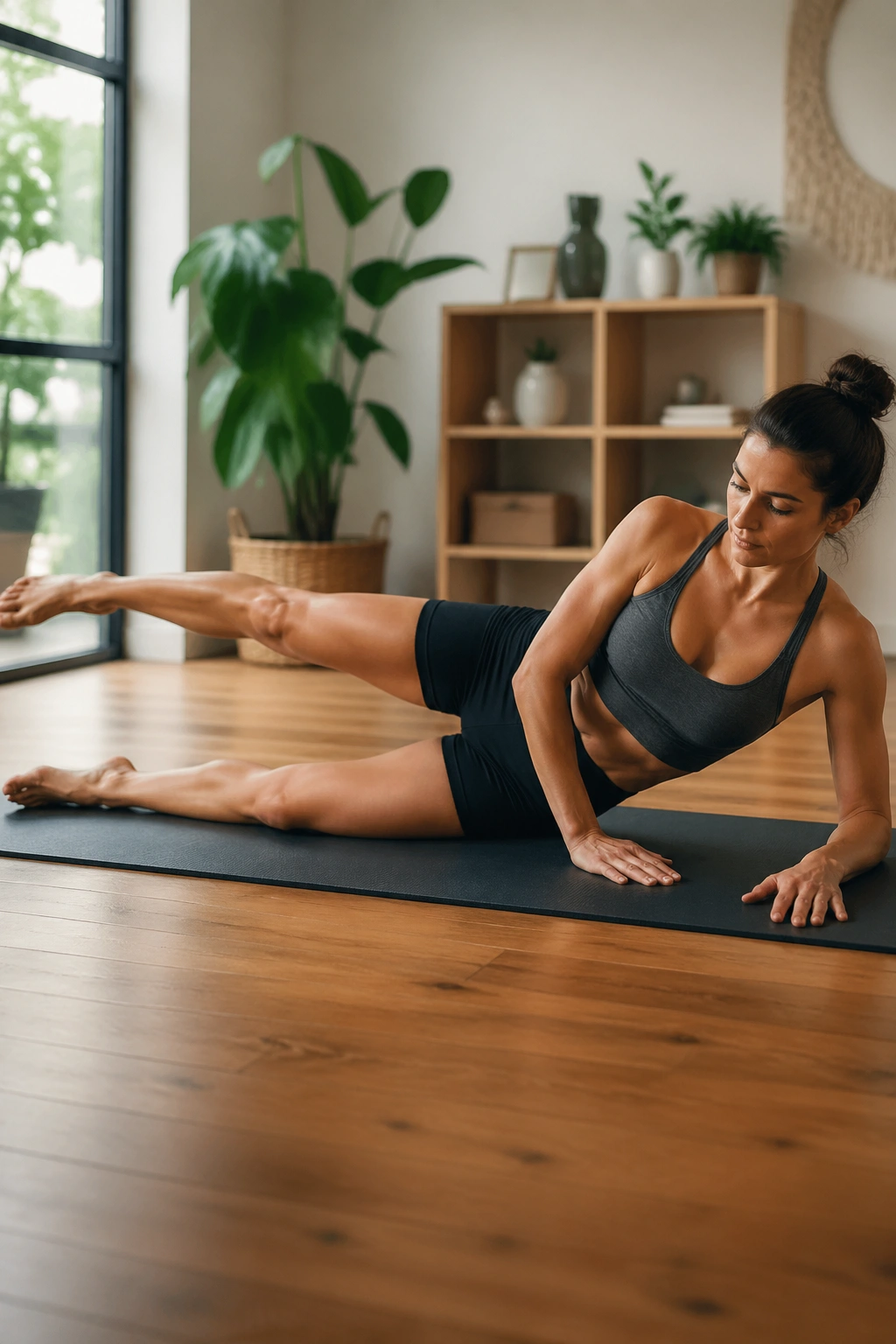
Side-lying work looks elegant in photos. On the mat, it’s a different story. Your outer hip starts burning, your waist has to lift away from the floor, and suddenly one straight leg feels like it weighs 40 pounds.
Lie on your side with your bottom arm extended or your head supported on your hand. Stack your hips, straighten your top leg, and point your foot. Do 12 front-and-back kicks, 10 leg lifts, 8 circles each direction, and 15 small pulses at hip height. Then bend both knees and finish with 15 clamshells. Switch sides.
There’s a sneaky weight-loss angle here. Strong side glutes and hip stabilizers make walking, hiking, and standing workouts easier to do with solid form. They also help beginners stop wobbling through squats and lunges. That means more movement, more often, with less irritation in the knees.
Keep your top hip stacked over the bottom one. If your torso rolls backward, you’ve lost the point of the exercise. And if your lower waist collapses into the mat, slide your hand there and keep a little pocket of space.
No drama. No big range. Just clean work.
6. Standing Pilates Posture Flow
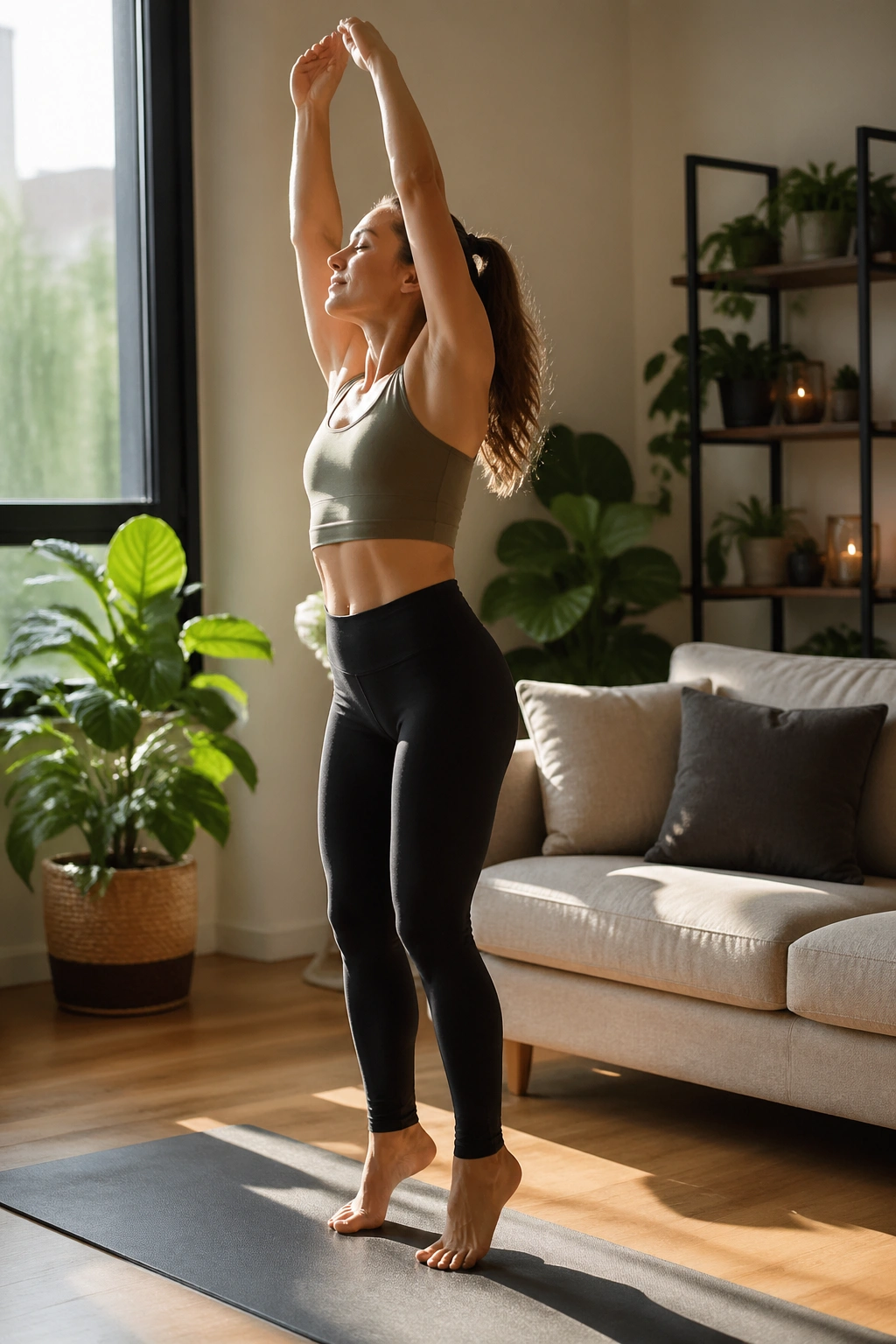
Unlike mat sessions that ask you to get on the floor right away, this standing flow is great when you feel stiff, heavy, or unmotivated. You can do it in sneakers next to your couch.
Start with 6 roll-downs, bending your knees as much as you need. Then do 12 bodyweight squats, 12 standing knee lifts per side, 15 calf raises, and 10 standing side bends per side. Wrap up with 1 minute of brisk march-and-reach, pumping your arms overhead.
The standing format does two useful things at once. You get a Pilates-style focus on posture and control, and you also raise your heart rate enough to feel like you actually worked. For beginners who hate lying on a mat, that mix is gold.
Who gets the most out of this one?
- People with tight hips from desk work
- Anyone who feels awkward getting up and down from the floor
- Beginners who want a short workout before a walk
- Those days when motivation is hanging by a thread
Use this as a reset workout on low-energy days instead of skipping movement altogether.
7. Seated Spine and Waist Tightening Session
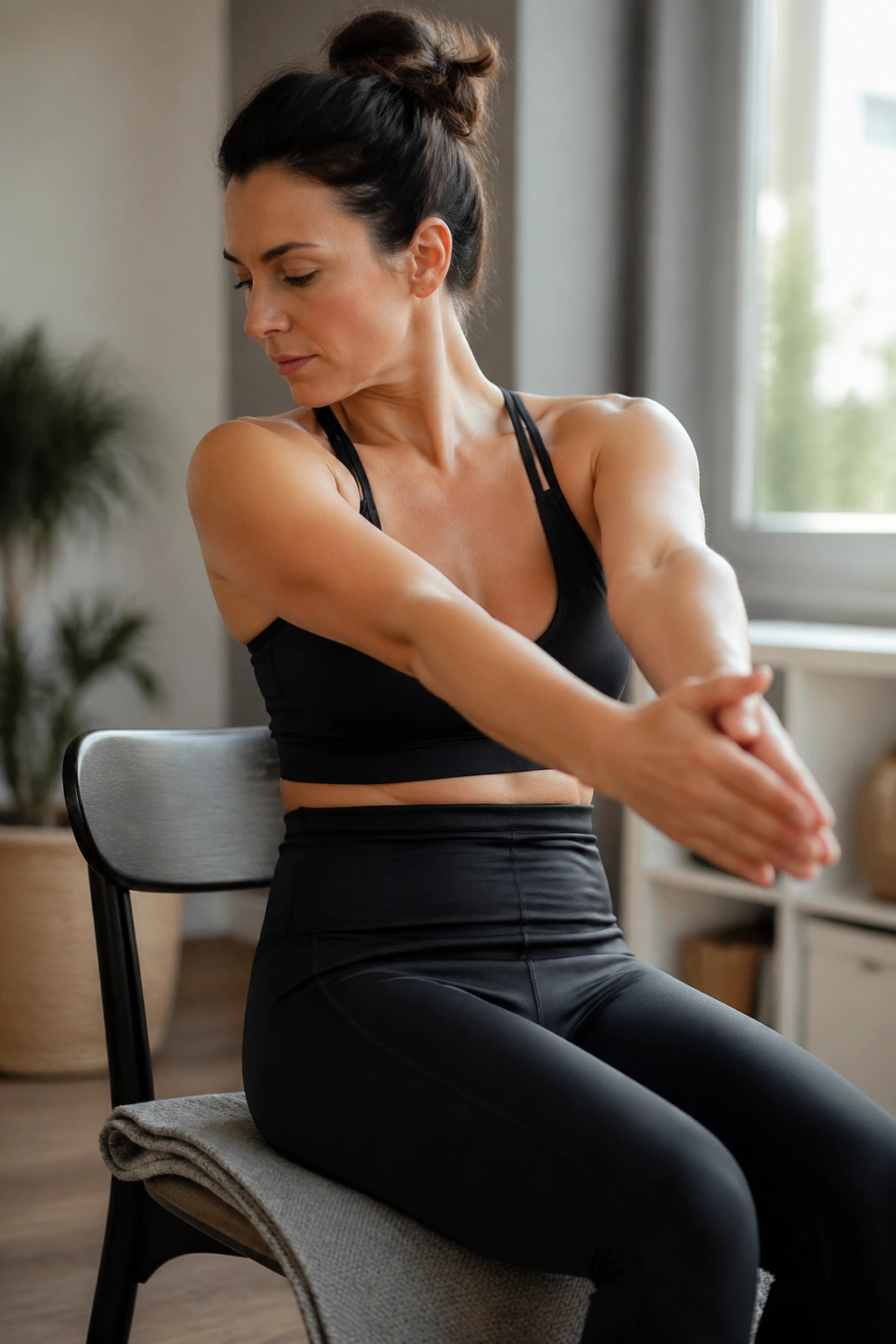
A lot of beginners think Pilates equals abs on your back. Sitting tall and moving well is harder than it looks, and this session proves it fast.
Start with tall posture
Sit with your legs extended or bent if your hamstrings pull too hard. Reach your arms forward and do 8 spine stretch forwards — exhale as you round over, inhale as you stack back up. Then add 8 half roll-backs, stopping the second you feel your lower back grip.
Add rotation
Move into a gentle Saw variation with bent knees: twist, reach toward the outside of your foot, come back up, switch sides for 6 reps each way. Finish with Mermaid side bends, 5 per side, holding each stretch for one breath at the end range.
Why it helps fat loss
No, seated twists do not burn belly fat off your waist. What they do is train trunk control, breath, and posture. When your rib cage, pelvis, and spine are working together, your standing workouts improve too. You waste less energy fighting your own form. That matters more than any gimmicky “waist whittler” label.
If sitting upright feels impossible, prop yourself on a folded blanket. A lifted seat often fixes the whole position in five seconds.
8. Bridge Ladder With Marches and Pulses
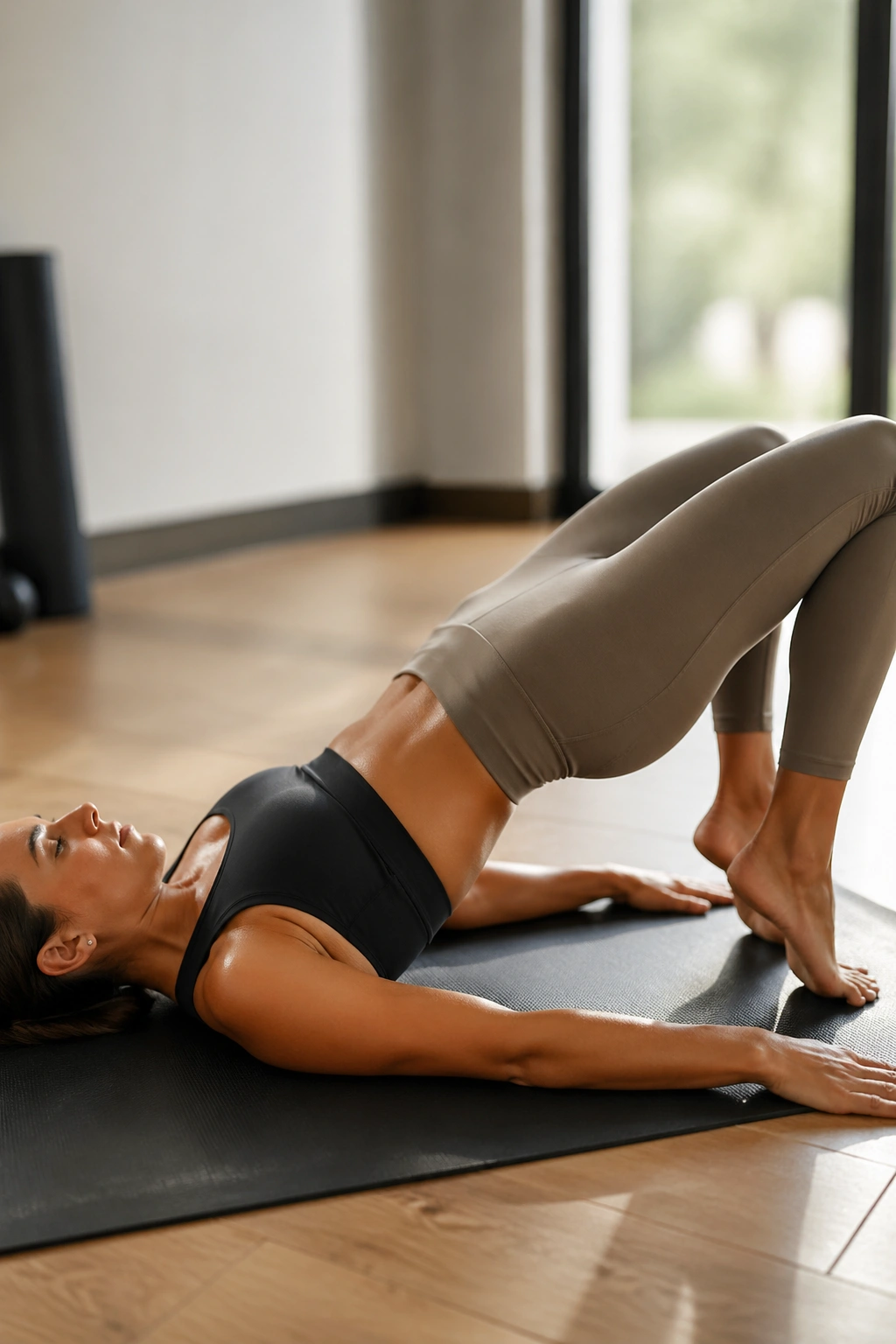
This one feels like a leg day hiding inside a Pilates workout.
Start with 8 bridges. Then stay at the top for 8 pulses. On the next set, do 8 bridges with a 3-second hold at the top. Then hold again and add 8 marches. Rest. Go back in for a second ladder if your glutes are still doing the work.
The ladder format is useful because the reps change just enough to keep you paying attention. Beginners often drift once a movement gets repetitive. Here, the focus keeps shifting — full lift, hold, pulse, march — so the muscles stay honest.
A couple of specifics matter:
- Place your feet about 8 to 12 inches from your hips
- Press your arms into the mat lightly for balance, not leverage
- Stop marching if one hip drops lower than the other
- Exhale on the hardest part of each lift
You’ll feel your hamstrings too. That’s fine. You do not want a lower-back cramp, though. If that starts creeping in, lower the bridge height and think about lengthening your knees away from your chest as you lift.
9. Dead Bug and Single-Leg Stretch Combo
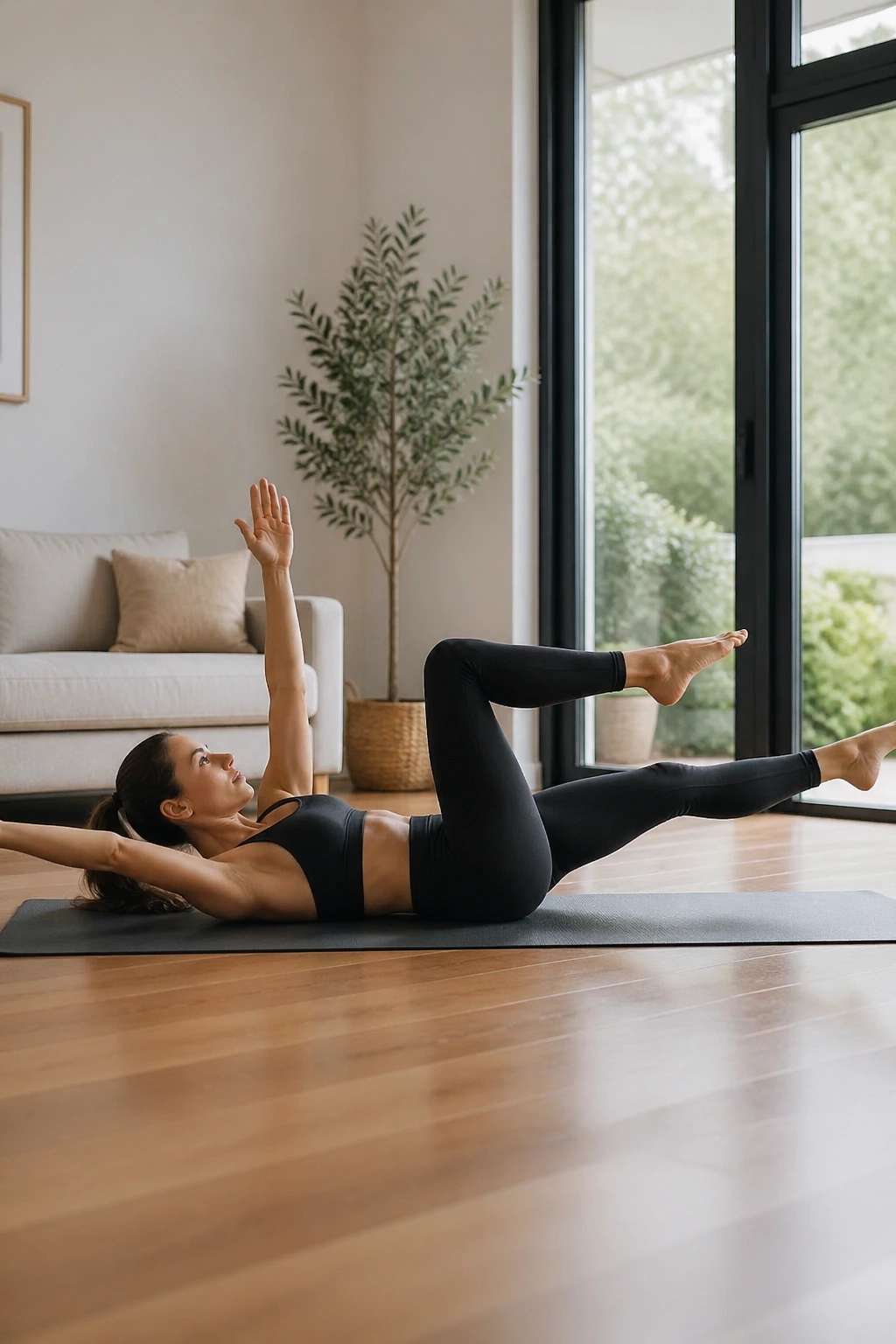
Few beginner ab workouts clean up sloppy core control better than this pair.
Set up with your lower back gently heavy on the mat — not smashed flat, just supported. Do 8 dead bugs per side, moving opposite arm and leg away from center. Rest for 20 seconds. Then move into single-leg stretch for 10 reps per side, keeping your chest lifted only if your neck can handle it.
After one round, add 8 double toe taps and 20 seconds of tabletop hold. Run the whole sequence 2 to 3 times.
The payoff here is precision. Dead bugs teach you how to move your limbs without losing your trunk. Single-leg stretch adds a faster rhythm and more abdominal demand. Put them together and you get a workout that feels athletic without being reckless.
A good rep looks boring from across the room. That’s how you know it’s working. No flinging. No jerking the knee in. No leg dropping lower than your abs can control.
If your hip flexors start shouting, shorten the range and keep your bent leg higher. There’s no prize for going low if your back arches like a hammock.
10. Squat, Roll-Down, and Reach Sweat Session
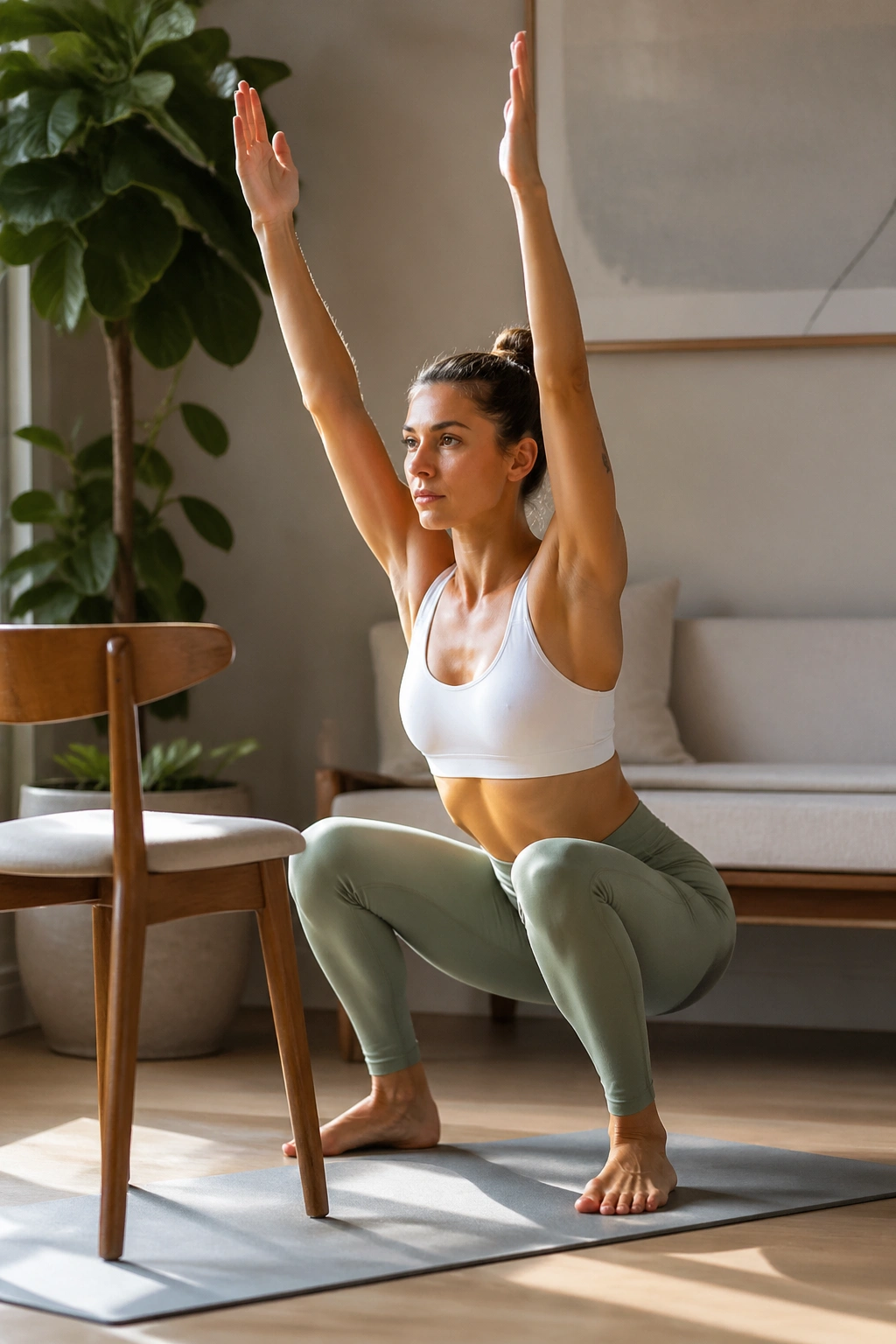
You want a little more calorie burn without leaving beginner territory? Use bigger muscles and stay on your feet longer.
Do 10 squats, then 4 slow roll-downs, walking your hands to an incline plank against a chair or couch if the floor version is too much. Stand up and go into 12 alternating reverse lunges or split squats holding a wall for support. Finish with 45 seconds of overhead march-and-reach. Rest 45 seconds. Repeat 3 rounds.
This is still Pilates flavored because the focus stays on alignment: ribs over hips, controlled breathing, and smooth transitions. It also feels more like a workout in the classic sense, which some beginners need once they’ve built a base.
The roll-down is the sneaky part. Done slowly, it turns your abs on before the standing work and gives your hamstrings a quick stretch. Done fast, it turns into a shruggy flop. Don’t do that.
Your heart rate will climb here. Not sky-high. Enough.
11. Wall Pilates Core and Thigh Session
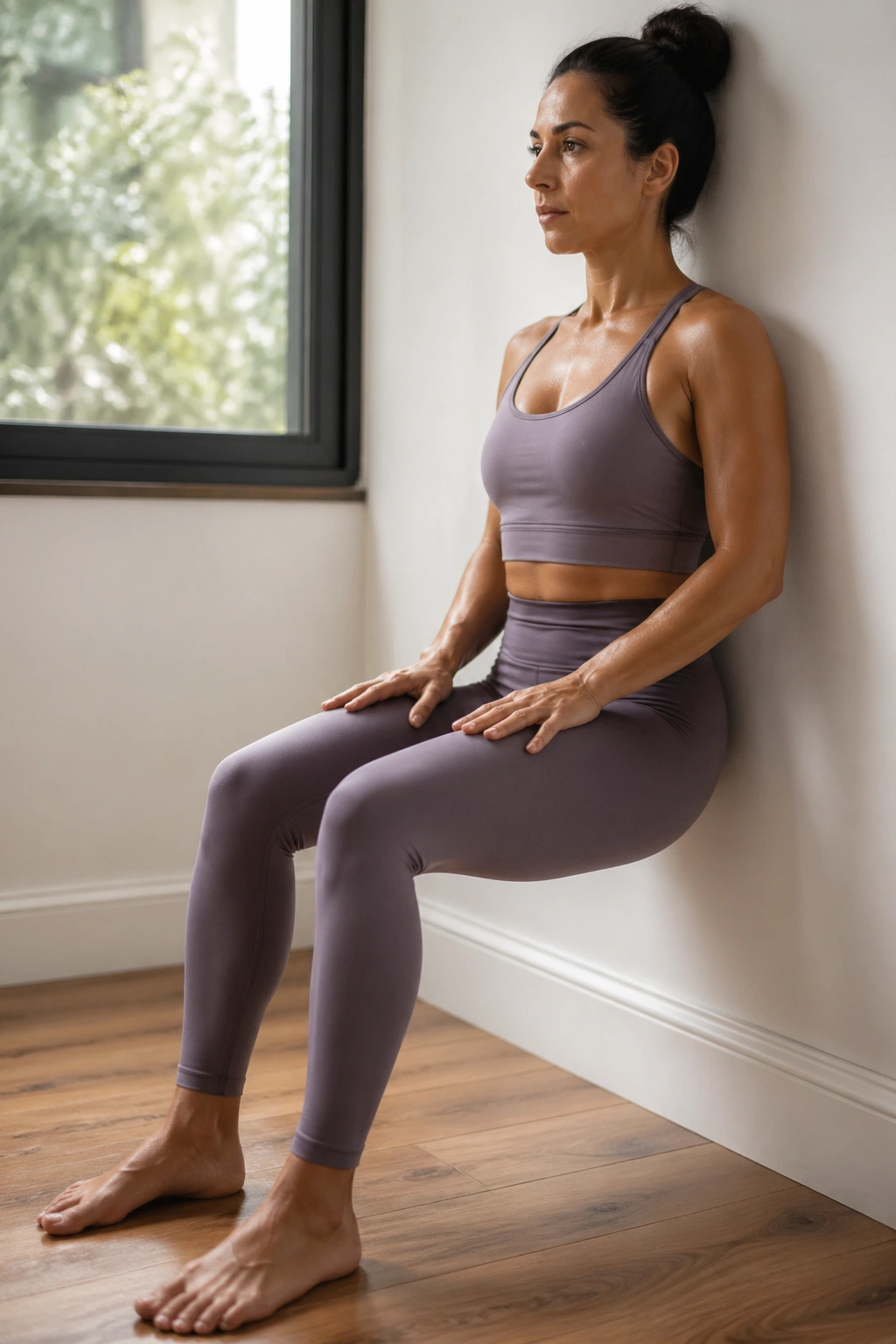
A wall gives beginners instant feedback. You can feel when your ribs jut out, when your low back overarches, when one hip twists. That’s useful.
Set up at the wall
Stand with your back against the wall, feet about 10 to 12 inches forward. Do 10 wall roll-downs, sliding only as far as your spine can stay controlled. Then sit into a 30-second wall sit.
Build the workout
After the first wall sit, add 15 wall calf raises, 10 alternating knee lifts, and 12 wall angels with your elbows and wrists gliding up and down if your shoulders allow it. Go back into another 30-second wall sit, this time adding 10 tiny pulses in the last 10 seconds.
Why beginners like it
The wall removes guesswork. You can tell right away whether your posture is stacked or messy. That makes it a smart entry point for people who feel lost on a mat and do better with a clear external cue.
If your knees get cranky in the wall sit, come up a few inches. Deeper is not better when the joint starts complaining.
12. Pillow Squeeze Inner-Thigh Circuit
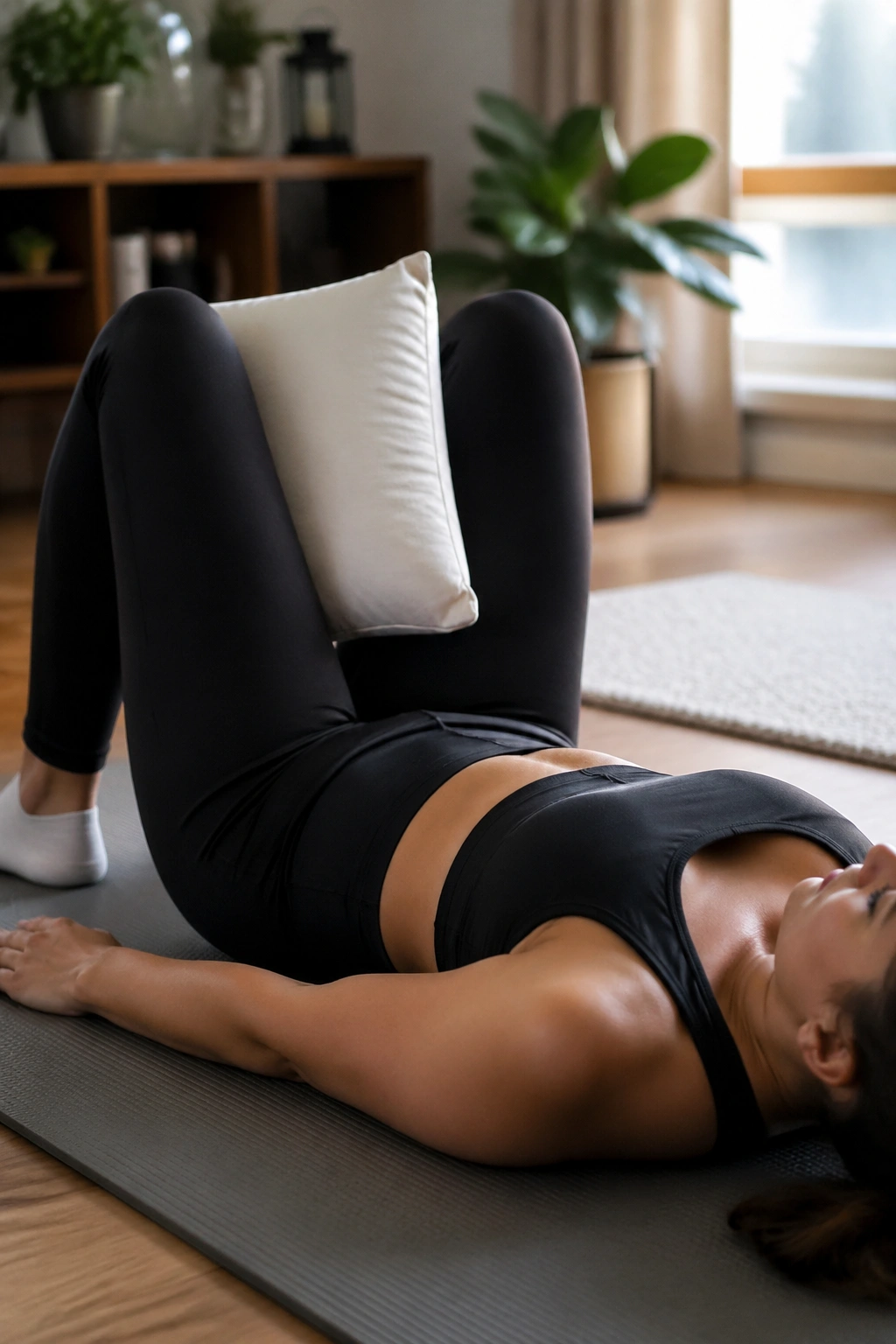
No magic prop needed. A couch pillow works.
Place the pillow between your knees and lie on your back. Start with 15 gentle squeezes while keeping your feet flat. Then lift into a bridge and do 12 bridge squeezes. Lower down, bring your legs to tabletop, and do 10 tabletop squeezes with toe taps. Finish seated with your knees bent and add 20 quick pulses into the pillow.
This circuit gives beginners a stronger sense of midline control. Squeezing inward helps some people connect their pelvic floor, deep core, and inner thighs more easily, especially when they struggle to feel abdominal work in standard mat moves.
Quick tips
- Use only about 60 to 70 percent effort on the squeeze
- If your jaw tightens, back off
- Keep your pelvis quiet during the toe taps
- Exhale on the squeeze, inhale on the release
It’s not glamorous. It is useful. And paired with bridges, toe taps, and short walking sessions, it fits nicely into a weight-loss plan built on consistency rather than spectacle.
13. Arms-and-Abs Floor Flow With Light Weights
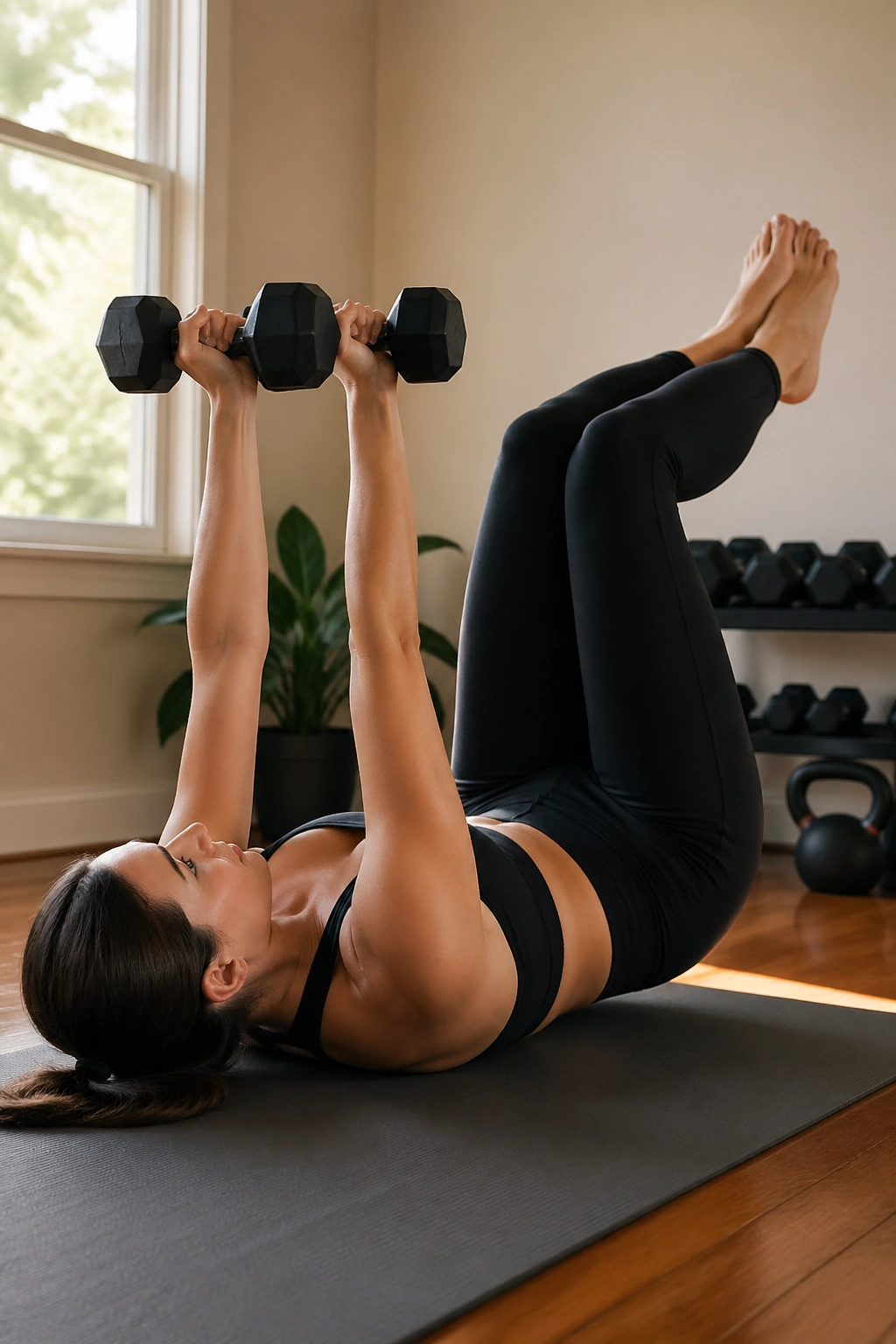
A pair of 1- to 3-pound dumbbells can wake up a beginner session fast. No weights? Water bottles are fine.
Lie on your back in a chest lift and do 20 arm pumps with the weights. Lower down. Bring your legs into tabletop and press the weights toward the ceiling for 10 chest presses. Sit up for 12 seated biceps curls, then hinge back slightly and hold while doing 12 front raises. Finish prone with 10 T-raises and 10 W-raises to hit your upper back.
The reason I like this workout is honesty. Beginner weight loss plans often ignore the upper body until later, then people wonder why planks feel miserable and posture falls apart halfway through the day. Light resistance fixes that gap without turning Pilates into a lifting session.
You’ll notice your heart rate nudge up because your arms are working while your trunk tries to stay organized. It’s a small change, but it matters.
Use lower weights than your ego wants. Shoulder work done with ribs flaring all over the place is a waste of time.
14. Plank Prep and Knee Hover Builder
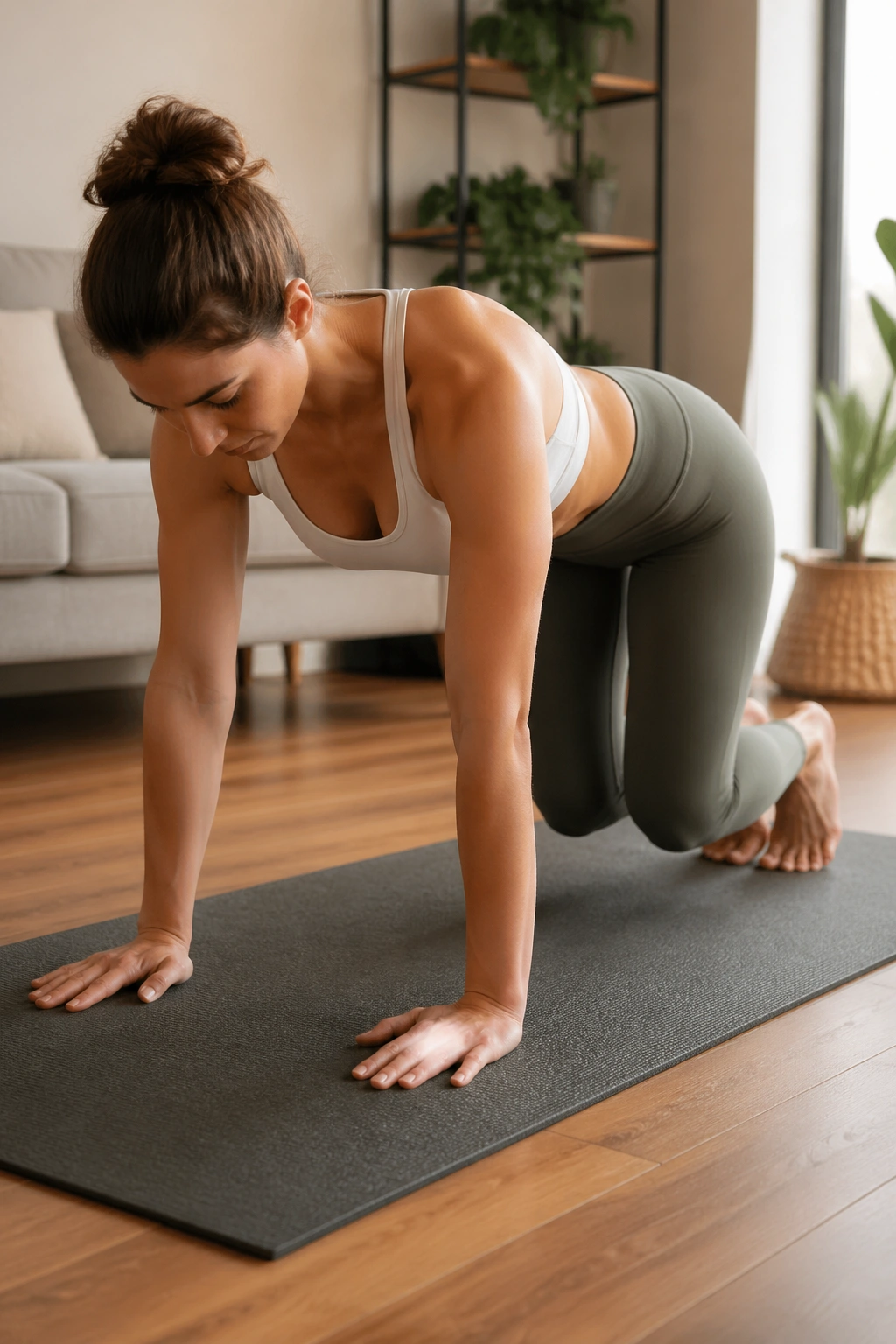
Want to work toward planks without face-planting into a full one too soon? Start here.
Begin on all fours with your wrists under your shoulders and knees under your hips. Tuck your toes and hover your knees 1 inch off the mat for 10 seconds. Lower. Repeat 5 times. After that, do 8 bird dogs per side, then 6 incline shoulder taps per side using a couch, bench, or wall. Finish with 20 seconds of forearm plank from the knees.
- Press the floor away so your upper back stays broad.
- Keep the hover tiny. Higher usually means sloppier.
- Exhale before each knee lift.
- Rest for 20 to 30 seconds between sets if your form starts unraveling.
This is one of the more demanding beginner workouts on the list, and that is the point. Weight loss training cannot stay in the comfort zone forever. A knee hover done well teaches core stiffness, shoulder stability, and breathing under load — all with low impact and almost no space needed.
15. Prone Back-Body Session for Better Posture
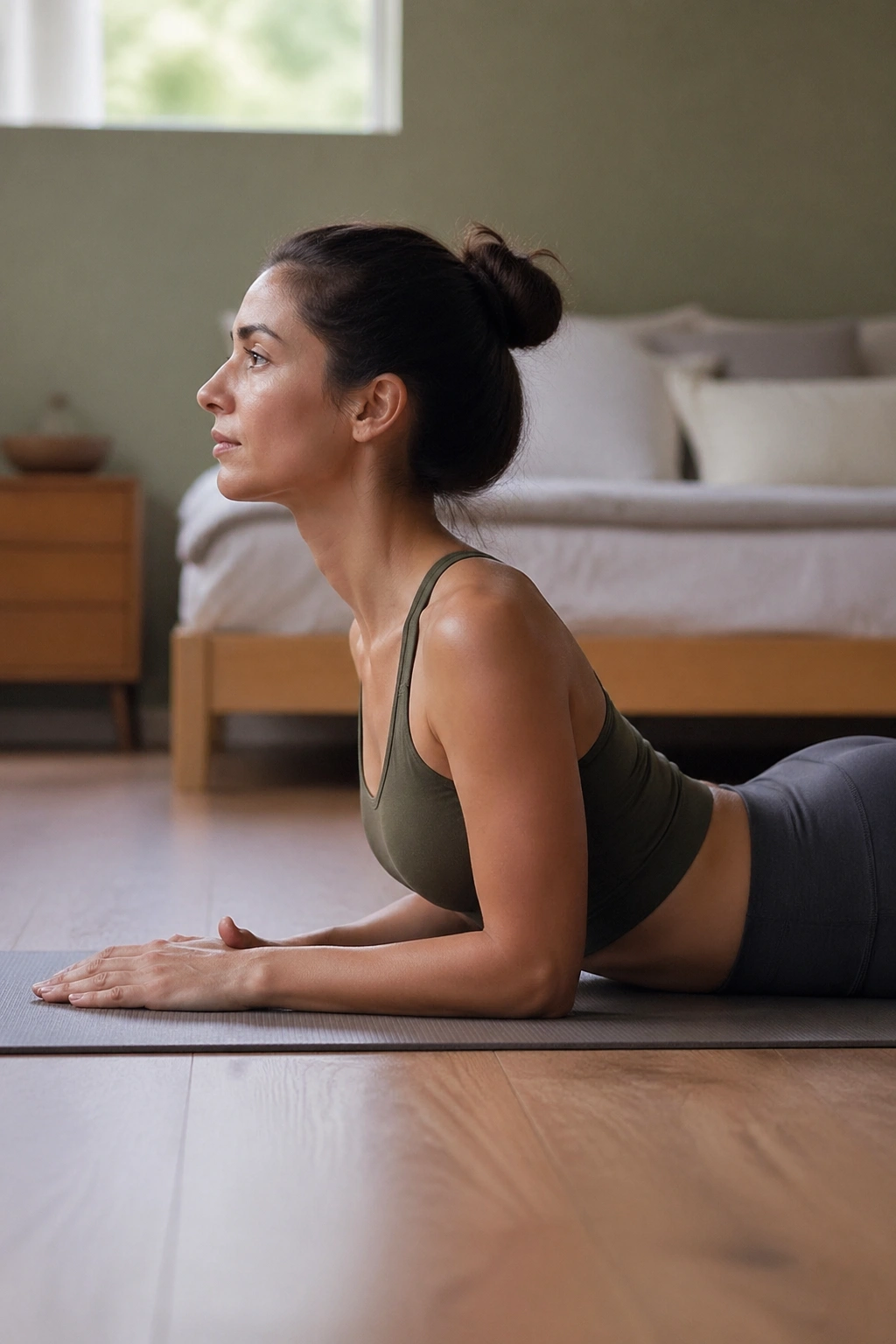
Most beginners want abs first. Fair. But if you spend your whole day folded over a phone or laptop, the muscles on the back side of your body need attention too.
Lie on your stomach with your forehead on your hands. Start with 10 glute squeezes and 10 shoulder blade pulls, drawing the blades down your back. Then lift into 8 swan preps, raising your chest a few inches while keeping your neck long. Follow with 10 darts, where your arms reach back by your sides as your chest floats up, and finish with 20 seconds of swimming arms.
The weight-loss tie-in is indirect but real. Better posture often makes standing work, walking pace, and breathing mechanics better. You feel less collapsed. Your upper back can support more movement without fatigue. Small change, big ripple effect.
A warning, though — prone work should feel muscular, not pinchy. If your lower back takes over, lower the lift height and lengthen through the crown of your head. Less range. More control. Same lesson again, because it keeps being true.
16. Gentle Cardio Pilates March-and-Reach Routine
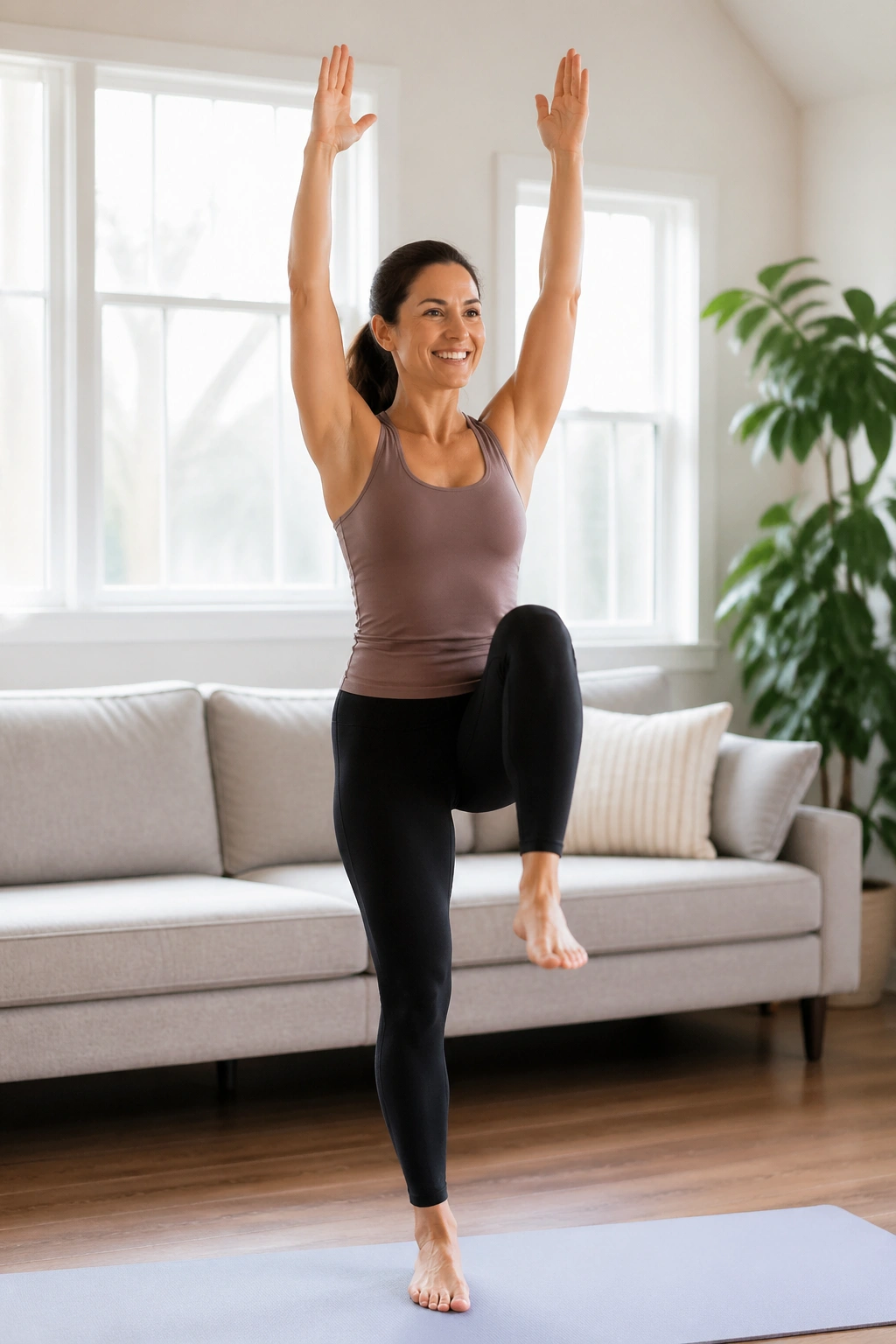
This is the workout for days when you want to move but the mat feels like too much commitment. Put on shoes, clear a patch of floor, and go.
Work for 40 seconds, rest for 20 seconds, and repeat the full list 3 times:
- Brisk march with overhead reach
- Squat to calf raise
- Alternating step-back lunges
- Standing oblique knee drives
- Fast boxer arms with soft knees
- Side step with arm sweep
You’ll feel this one in your lungs before your abs, and that’s fine. Beginners trying to lose weight often need a bridge between strict Pilates and steady-state cardio. This routine fills that gap without impact.
Stay light on your feet. Let your arms swing with intention. Keep your ribs from flaring every time your hands go overhead. The more organized your posture is, the more this feels like controlled athletic work instead of random exercise noise.
Short workouts like this are underrated. Ten or twelve focused minutes can keep your weekly movement total from collapsing when life gets crowded.
17. Lower-Ab Toe Tap and Leg-Lower Session
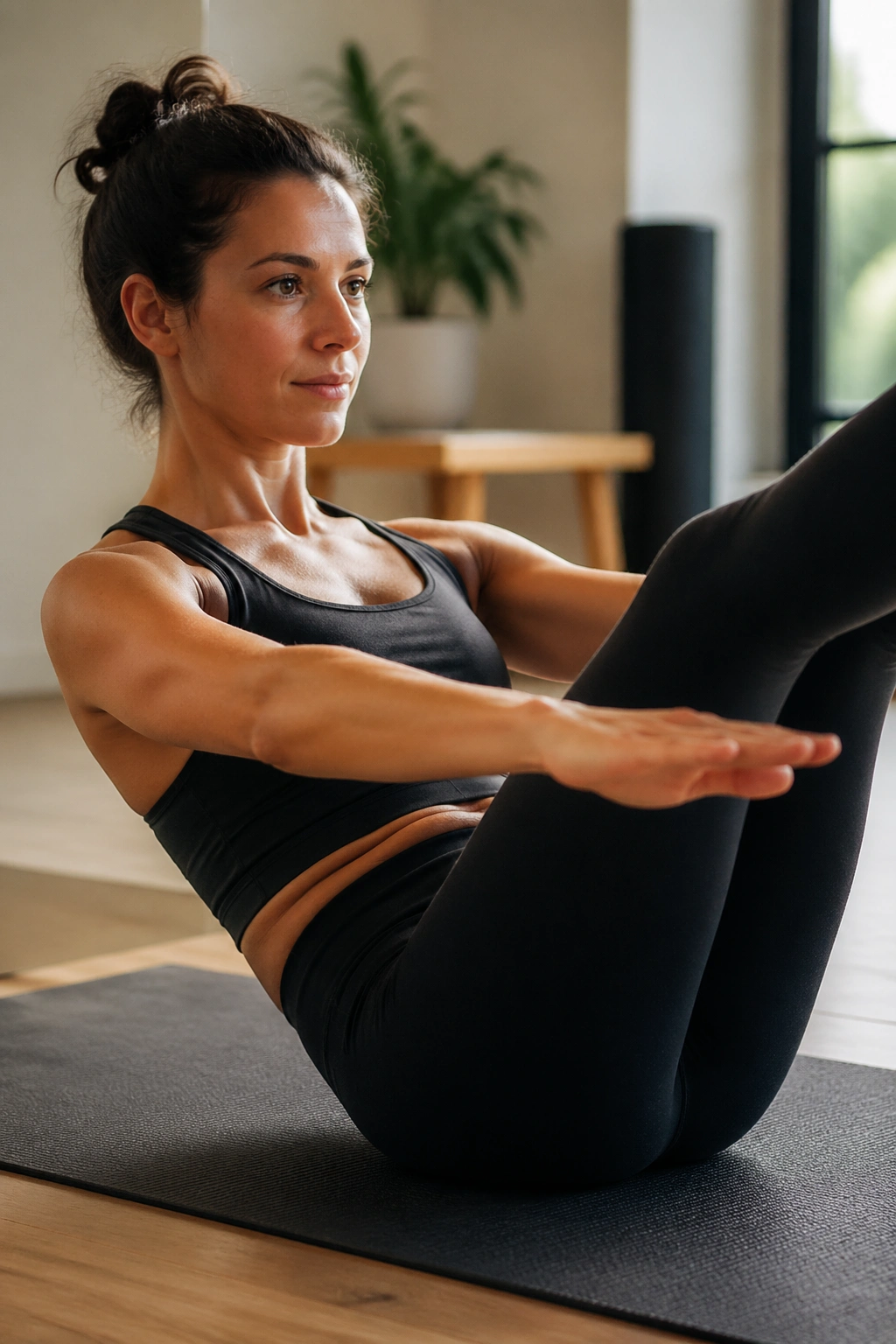
Lower abs are not a separate muscle group with their own zip code, but beginners know the feeling they mean. This session gets at it.
Phase one: build control
Do 10 heel slides per side and 10 bent-knee toe taps per side. Keep your pelvis steady and your exhale long. If your ribs lift, shorten the range.
Phase two: add challenge
Bring one leg to tabletop and keep the other foot down. Do 8 single-leg lowers per side. Then try 6 double-leg lowers with your knees bent at 90 degrees, lowering only as far as your abs can control.
Finish strong
End with 8 reverse curl preps, tipping your pelvis and lightly peeling your tailbone off the mat. The motion is tiny. Think curl, not swing.
This session is all about resisting the urge to go bigger. People throw their legs around, feel their hip flexors, and call it core work. Nope. Slow leg lowering done with your back supported is far harder than dramatic flinging.
18. Small-Space Full-Body Mat Flow
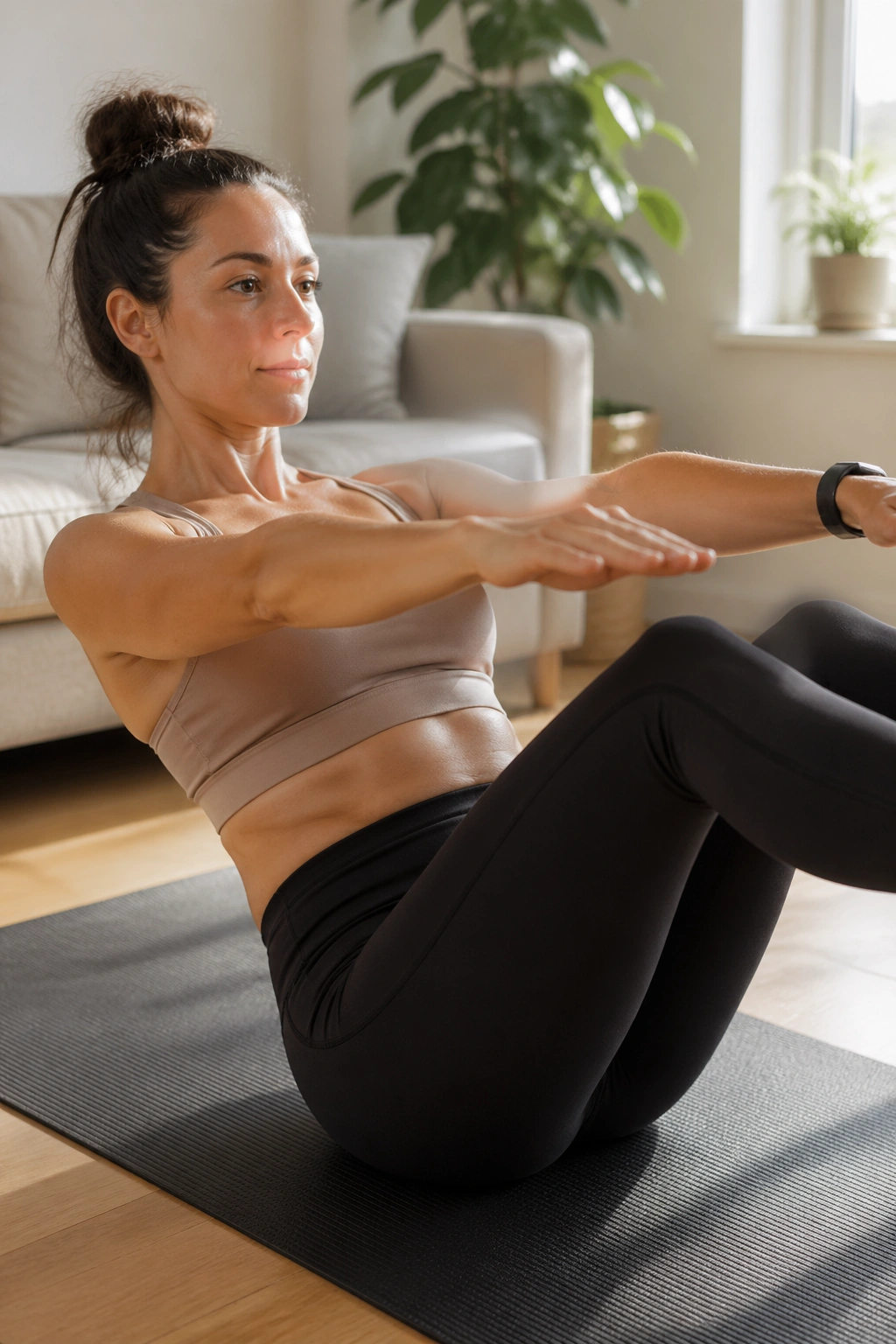
If your apartment is tight and your patience is thinner than your yoga mat, this one earns a permanent spot in rotation.
Start standing with 3 roll-downs. Come to the mat for 8 half roll-backs, 10 single-leg stretches per side, and 12 bridges. Turn to your side for 10 side kicks front and back, switch sides, then roll to your stomach for 8 swan preps. Finish kneeling with 5 mermaid stretches per side and stand back up for 1 minute of marching.
Unlike narrow-body-part routines, this flow gives you a little of everything: abs, glutes, hips, spinal extension, and enough standing work to lift the pace. It works well on busy days because setup time is almost zero.
Try this if:
- You have 15 minutes
- You want one routine instead of picking separate muscle groups
- You get bored with stationary core work
- You need a repeatable “default” workout
Done at a steady clip, this feels like a complete session rather than a collection of exercises.
19. Reformer-Inspired Towel Slider Workout
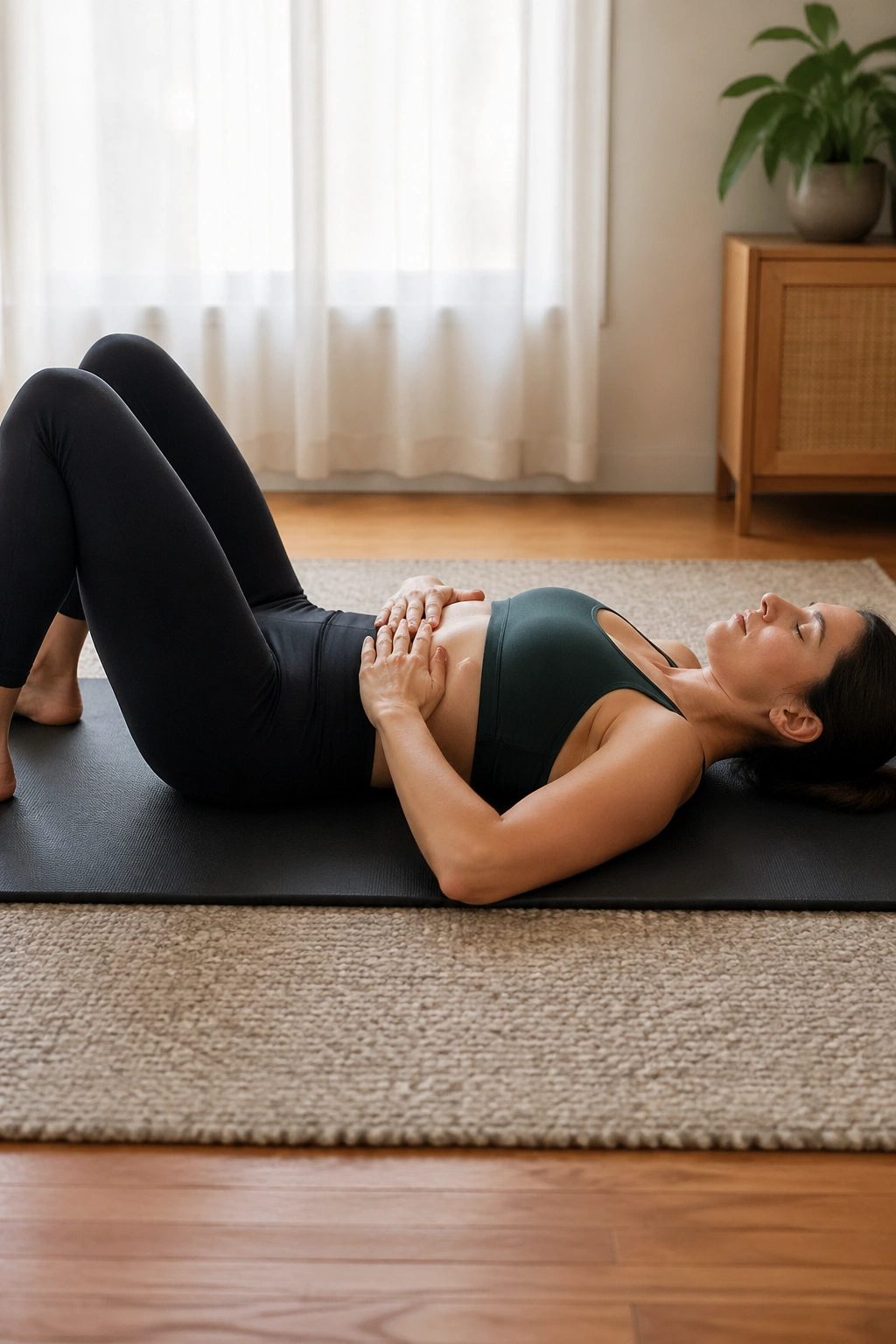
No reformer? Use two small towels on hardwood or paper plates on carpet. You can get a surprising amount of glide with cheap stuff.
Lower-body slider series
Stand tall and place one foot on a towel. Do 10 reverse slide lunges per side, keeping most of your weight in the standing leg. Then go into 10 side slides per side, pushing the sliding leg out and pulling it back with control.
Floor finish
Lie on your back with both heels on the towels. Lift into a bridge and slide your heels away for 8 hamstring curls, then hold the bridge and do 10 small out-and-in slides. Rest and repeat once more.
This workout mimics some of the smooth resistance you get on Pilates equipment, and beginners often love the feel of it. The slider adds instability, so your core has to organize your body while your legs move. That translates well to fat-loss training because bigger muscles are working, balance gets challenged, and the session stays low impact.
Wear shoes if the standing slides feel too slippery. Control beats range every time.
20. Beginner Pilates Fat-Loss Circuit
When you’re ready for one workout that feels like a real test, do this.
Set a timer for 40 seconds of work and 20 seconds of rest. Move through all six exercises, then repeat the circuit 3 rounds for a 18-minute session.
- Standing squat with overhead reach
- Bridge with pulses
- Tabletop toe taps
- Side-lying leg lifts on the right
- Side-lying leg lifts on the left
- All-fours knee hover hold or bird dog if needed
This circuit works because it alternates positions and muscle groups. You stand, lie down, roll to the side, come onto all fours. That constant change keeps boredom down and effort up without any jumping.
Do not rush the transitions so much that you lose the Pilates part of Pilates. The abs still need to brace before the legs move. Your shoulders still need to stay away from your ears. Your breath still needs to help the work instead of disappearing the second you get tired.
The first round feels manageable. The third round tells the truth.
Final Thoughts
Pick three workouts from this list and repeat them for two weeks before you start mixing in all twenty. Beginners improve faster when they practice familiar moves well, not when they sample a new routine every day and never get sharper at any of them.
If weight loss is the goal, build your week around Pilates plus walking plus meals you can repeat without overthinking. That combination is boring in the best way. It works because you can keep doing it.
One last thing. If a workout leaves you shaky in the right places, breathing hard, and still able to walk away without your joints hating you, you’re on the right track. Keep showing up, and the “easy” little Pilates moves stop looking easy fast.
