



Some mornings your body wakes up before your joints do. You swing your legs out of bed and find out, a little too quickly, that your spine still thinks it’s in storage.
That gap is where a short Pilates routine earns its keep. Morning Pilates workouts are not about sweating through a punishment session before breakfast. They’re about waking the ribs, the hips, the deep abs, and the back line in a way that feels clean instead of jarring.
I’ve always liked Pilates for mornings because it respects the fact that your body is not a machine you can slam into motion. Breath matters. Control matters. So does a little patience. The best early-day sequence usually starts with articulation, not intensity, and that first cue — soften the jaw, widen the collarbones, let the exhale do some work — changes everything.
Pick the one that matches the way your body feels today. Tight? Stiff? Sleepy? A little heavy through the hips? There’s a move for that.
1. Morning Pilates Spine Wake-Up
If your lower back feels like it slept in a bad position, start with this one. It’s a simple blend of standing roll-downs, cat-cow, and pelvic curls, and that combo wakes the spine without asking for much from your lungs or your patience.
Why It Works
The magic is in the order. Standing roll-downs get you out of your head and into your hamstrings. Cat-cow brings the rib cage and pelvis back into conversation. Pelvic curls finish the job by asking the glutes and abs to support the spine instead of hanging on it.
Try this:
- 3 standing roll-downs, moving one vertebra at a time
- 6 slow cat-cow reps on hands and knees
- 8 pelvic curls with a one-second pause at the top
Best cue: Let your exhale soften the front of your ribs. If you force the shape, the whole thing gets scratchy.
One small warning. Do not rush the first round. The first minute tells the rest of the session how to behave.
2. The Hundred Prep for a Quiet Core Start
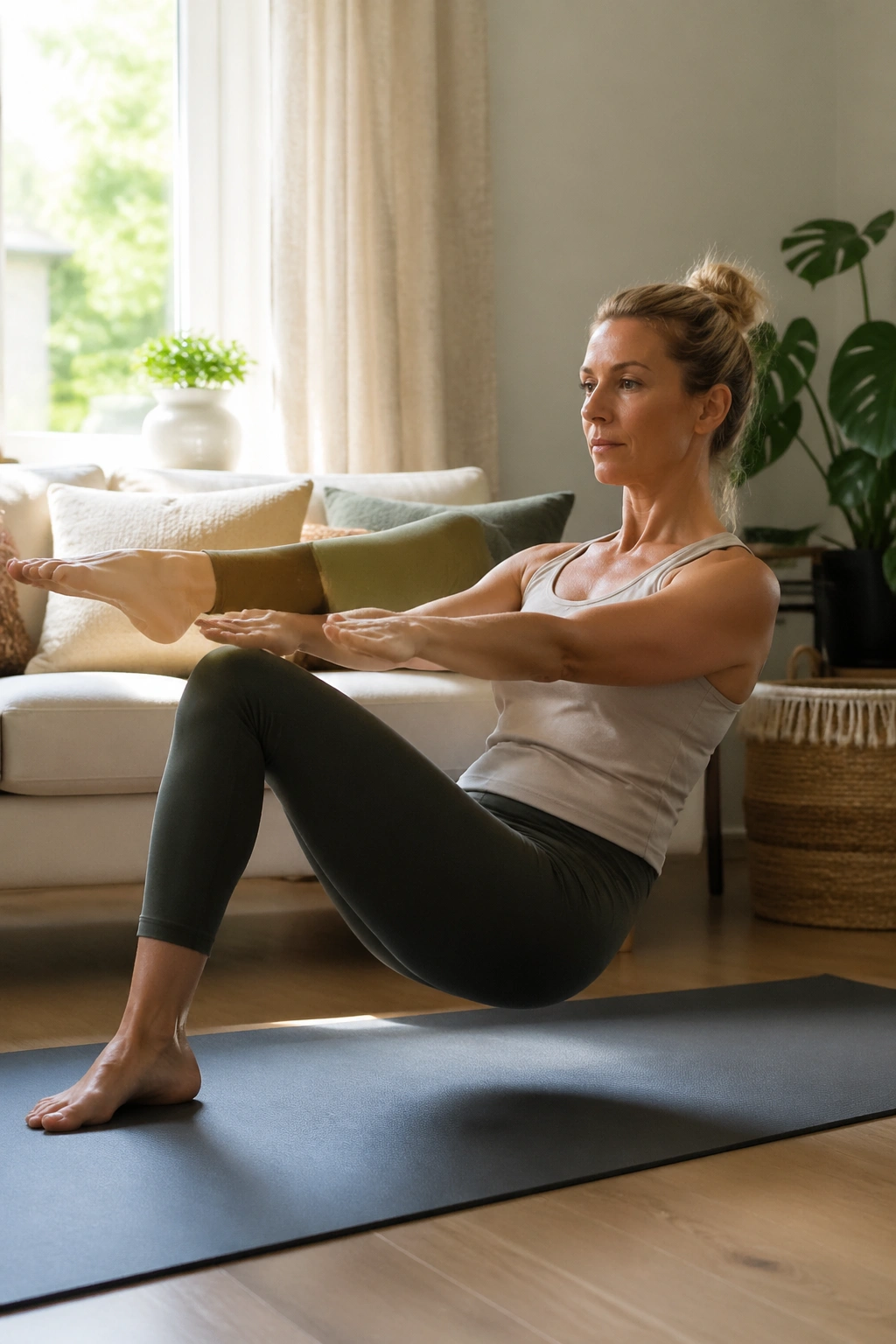
The Hundred is not a show-off move first thing in the morning. It’s a breathing drill with manners.
In this gentler prep version, you stay in tabletop or keep one foot on the floor, then pump the arms while you count your breaths. The abs should feel awake, not crushed. Your neck should feel like it has backup, not a job title.
I like this one for days when the torso feels foggy. The arms do a little work, the rib cage learns to stay wide, and the breath sets a steady pace before the rest of the routine gets busy. If your lower back likes to arch, lower one foot or both. That tiny adjustment often matters more than people want to admit.
You do not need to chase the full classical version right away. A neat, controlled prep with 20 to 30 arm pumps is enough to get the system online. Slow it down. Let the belly flatten on the exhale. Keep the shoulders away from your ears. That’s the whole point, and it’s more than enough.
3. Bridge Ladder for Glutes That Actually Wake Up
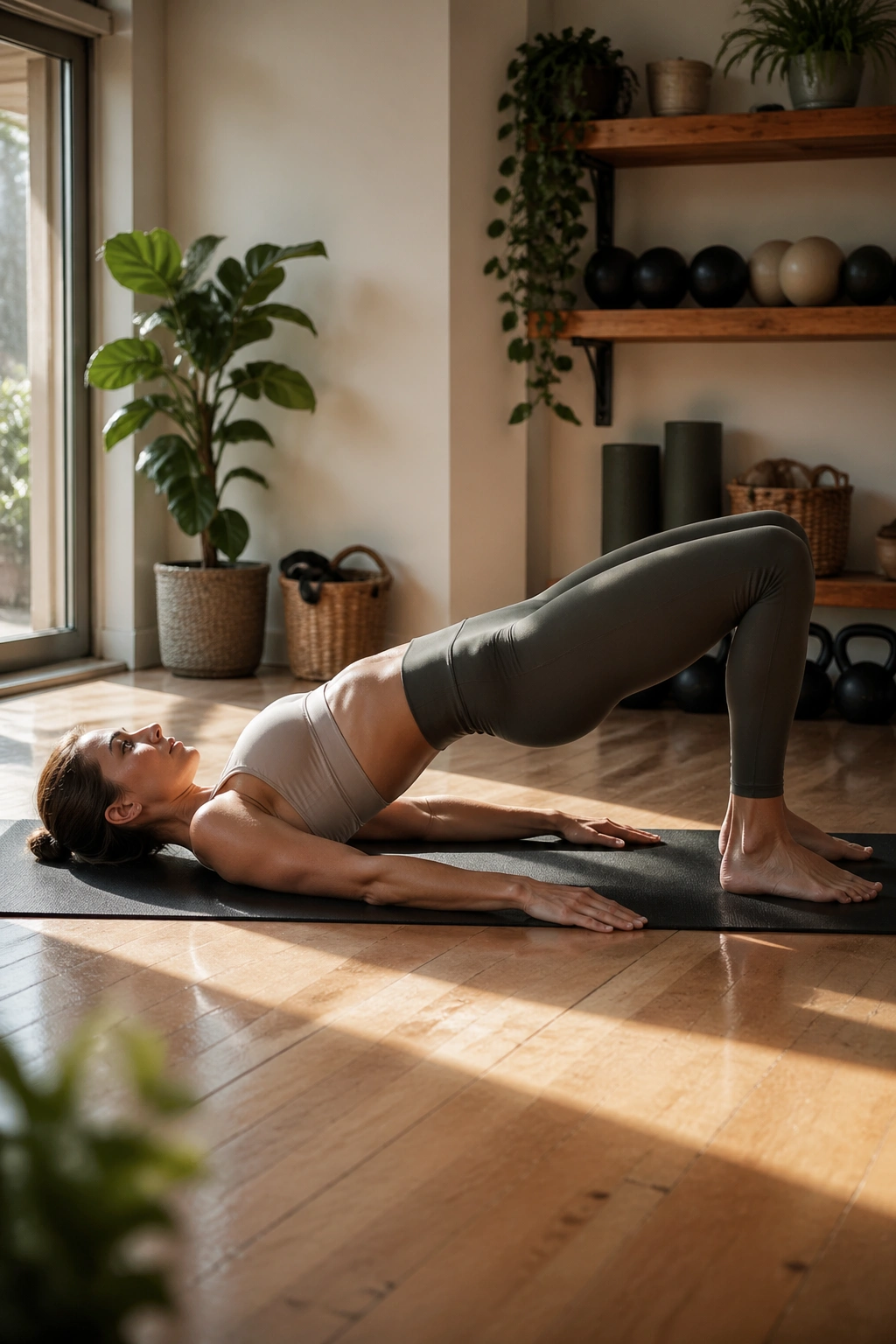
Can you wake sleepy glutes before coffee? Yes, and this is one of the better ways to do it.
A bridge ladder starts with a basic pelvic curl, then climbs into small variations: heel lifts at the top, a longer hold, maybe a march if you want more challenge. The glutes should feel warm and useful by the end, not grabbed up in a cramp. The difference is in the pace. Slow up, slow down, no flinging.
How to Use It
- 8 standard bridges
- 8 bridges with heel lifts at the top
- 3 holds of 10 seconds each
- 5 slow marches if you want a harder finish
Keep your feet about hip-width apart and press through the whole foot, not just the toes. If the hamstrings start stealing the work, bring your heels a little closer to your seat.
This one shines on mornings when your hips feel flat and your seat feels asleep. It does what a coffee buzz can’t: it reminds the pelvis that it has support.
4. Cat-Cow and Thread-the-Needle for a Stiff Upper Back
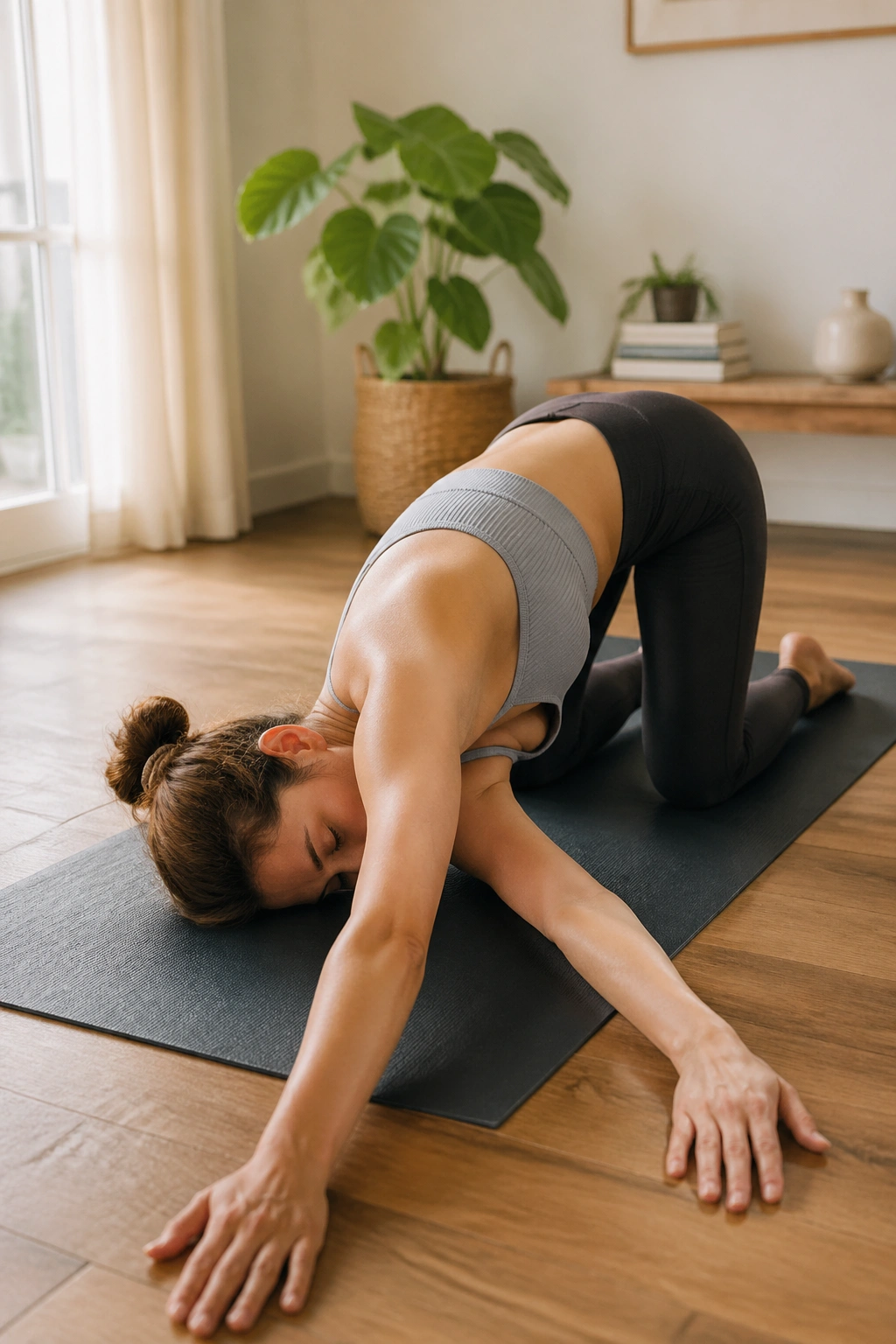
Woke up twisted? This is the section I’d reach for.
Cat-cow opens the spine in two directions, which sounds basic until you notice how much relief comes from just moving the rib cage and shoulder blades after a night of stillness. Thread-the-needle adds a clean twist through the upper back, where stiffness often hides behind the shoulders and neck. Together, they make the first few minutes feel less like a fight.
What to Notice
- The movement should come from the mid-back, not a yank through the neck.
- Your hands stay grounded, even when the chest drops.
- A tight side usually needs two extra breaths, not more force.
I like telling people to imagine their collarbones spreading wide on the inhale. That little image keeps the front of the chest from collapsing while the spine moves. If one shoulder feels louder than the other, stay there a moment longer instead of racing to the next rep.
Small, honest motion beats a big stretch that makes you brace.
5. Side-Lying Leg Series for Hips That Feel Rusty
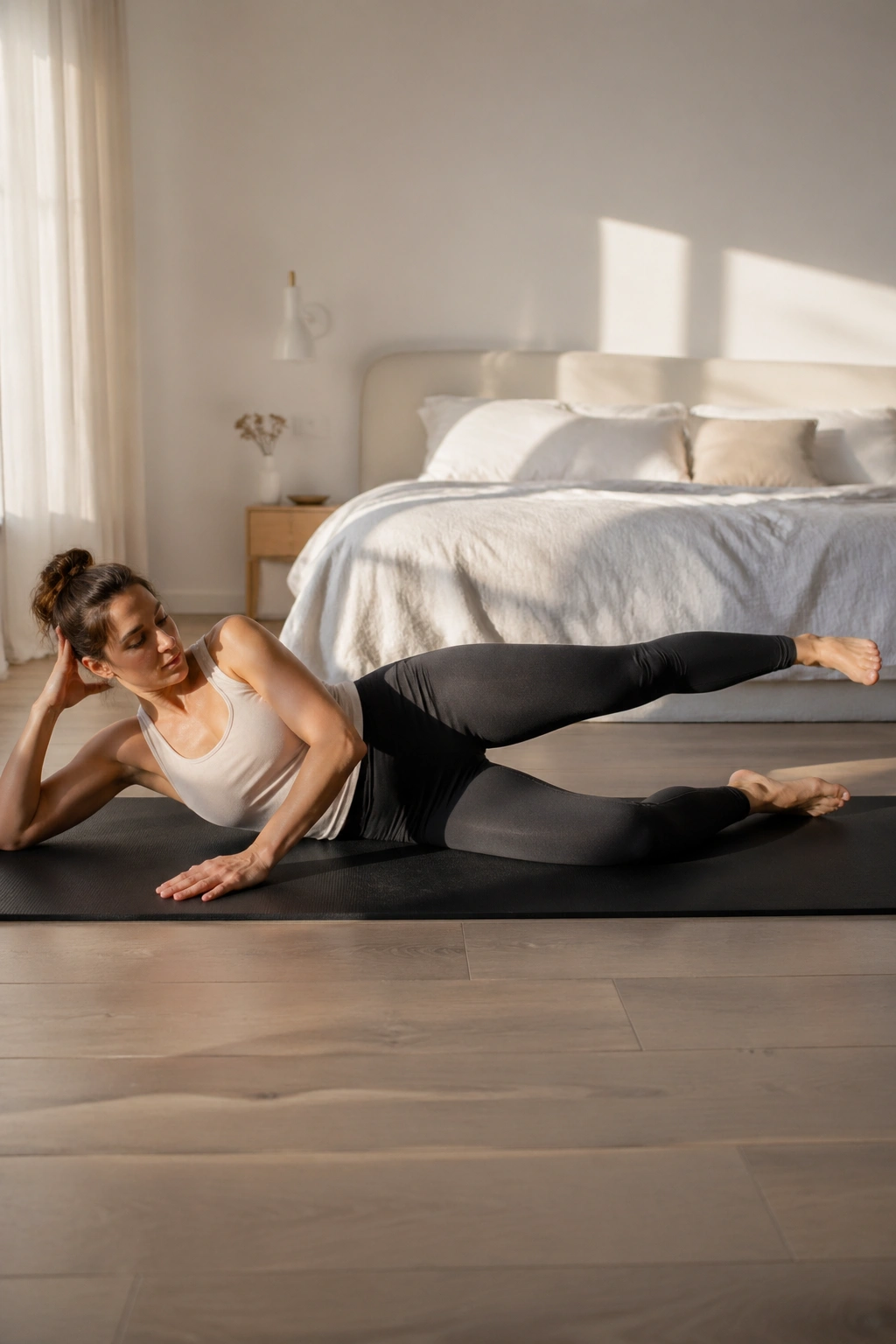
Side-lying work has a way of showing up quietly and doing real work. No drama. No jumping. Just the outer hips, the seat, and the little stabilizers around the pelvis finally getting a chance to help.
This series usually includes side kicks, leg lifts, and small circles with the top leg. The point is not height. The point is control. When the leg swings too high, the waist starts gripping and the hip loses the job. Keep the pelvis stacked, the waist long, and the range smaller than you think you need.
I love this one for desk-heavy mornings. It wakes the glute medius, which is the muscle people forget until their knees or hips start complaining on stairs.
A useful cue: press the bottom side of the waist into the mat and let the top leg travel on a smooth track, like it is moving through water. You’ll know it’s working when the outer hip feels warm and the lower back stays quiet. That’s the good stuff.
6. Single-Leg Stretch to Dead Bug Flow
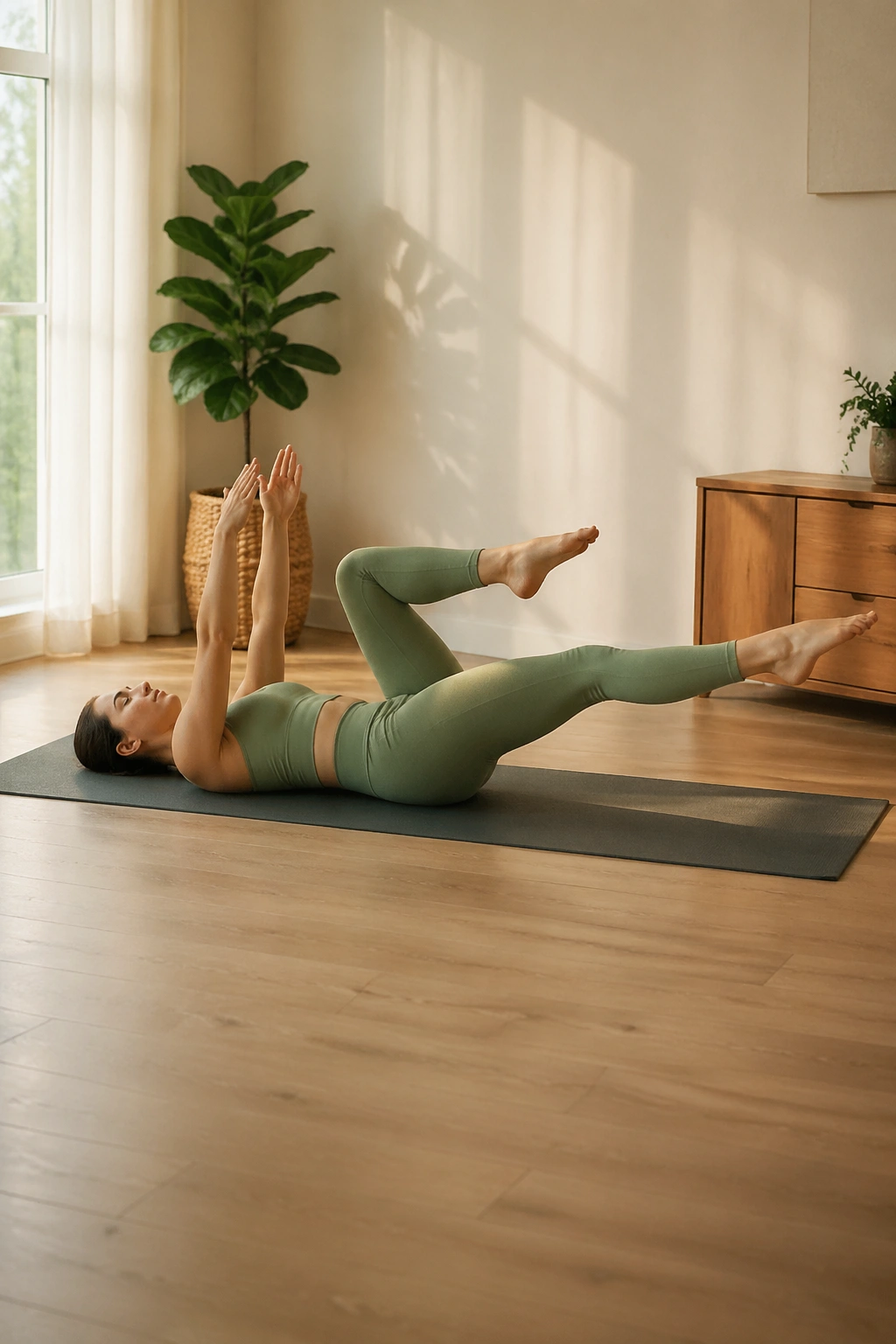
Unlike a crunch, this sequence keeps the neck quieter and the pelvis more honest. That alone makes it a smart morning choice.
Start in tabletop, then move into a slow single-leg stretch, alternating one knee in while the other leg extends. If that feels too active, turn it into a dead bug with small reaches. The abs still work. The torso still learns control. You just give the neck a break and avoid that sharp, grabby feeling that can show up early in the day.
What Makes It Different
Single-leg stretch asks for coordination, not speed. Dead bug asks for control through the ribs and pelvis at the same time. Both are useful, and both are better when you keep the movement small enough to manage.
This is a good pick if you sit a lot or if your lower back likes to arch the second your feet leave the floor. Six to eight slow switches per side is plenty. If the neck starts to feel crowded, lower the head and keep going. That is not cheating. That is smart programming.
7. Standing Roll-Down at the Wall
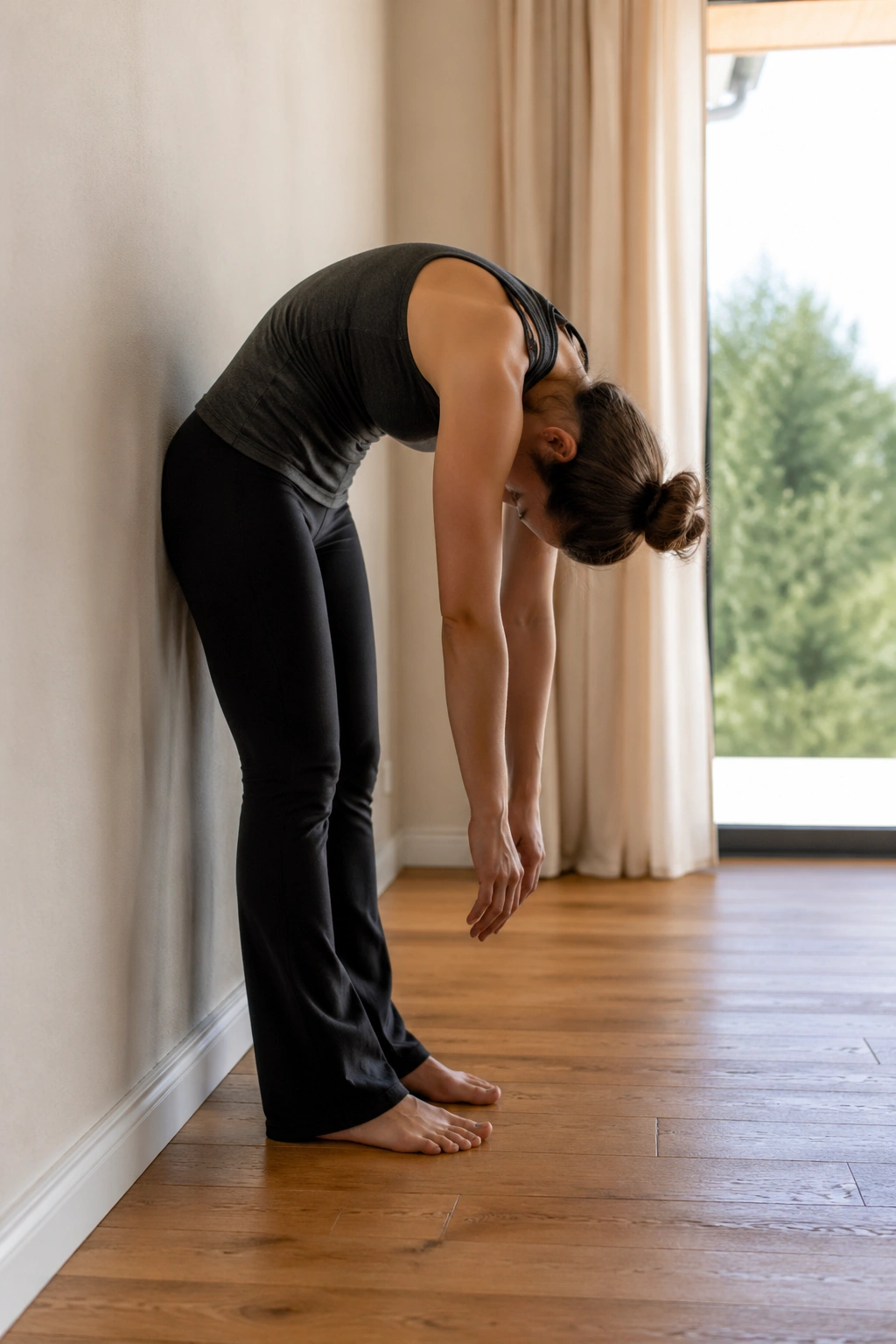
Some people do not want to start on the floor. Fair enough.
The wall version gives you the same spinal articulation as a classic roll-down, but with support under your back side if you need it. Stand a few inches away from the wall, feet hip-width, knees soft. Nod the chin, let the upper spine peel forward, and move down one segment at a time until the hands dangle toward the floor. Then reverse it just as slowly.
Quick Details
- Keep the weight centered over the middle of each foot.
- Let the knees stay bent instead of locking them.
- Pause halfway up if the hamstrings feel sharp.
This is one of those morning Pilates workouts that feels almost too simple until you realize your whole back is less bossy afterward. It’s especially useful if the mat feels like too much work before the day has really started.
And yes, it still counts. Standing work can be every bit as precise as floor work when you respect the shape.
8. Mermaid Mobility Flow for the Ribs and Waist
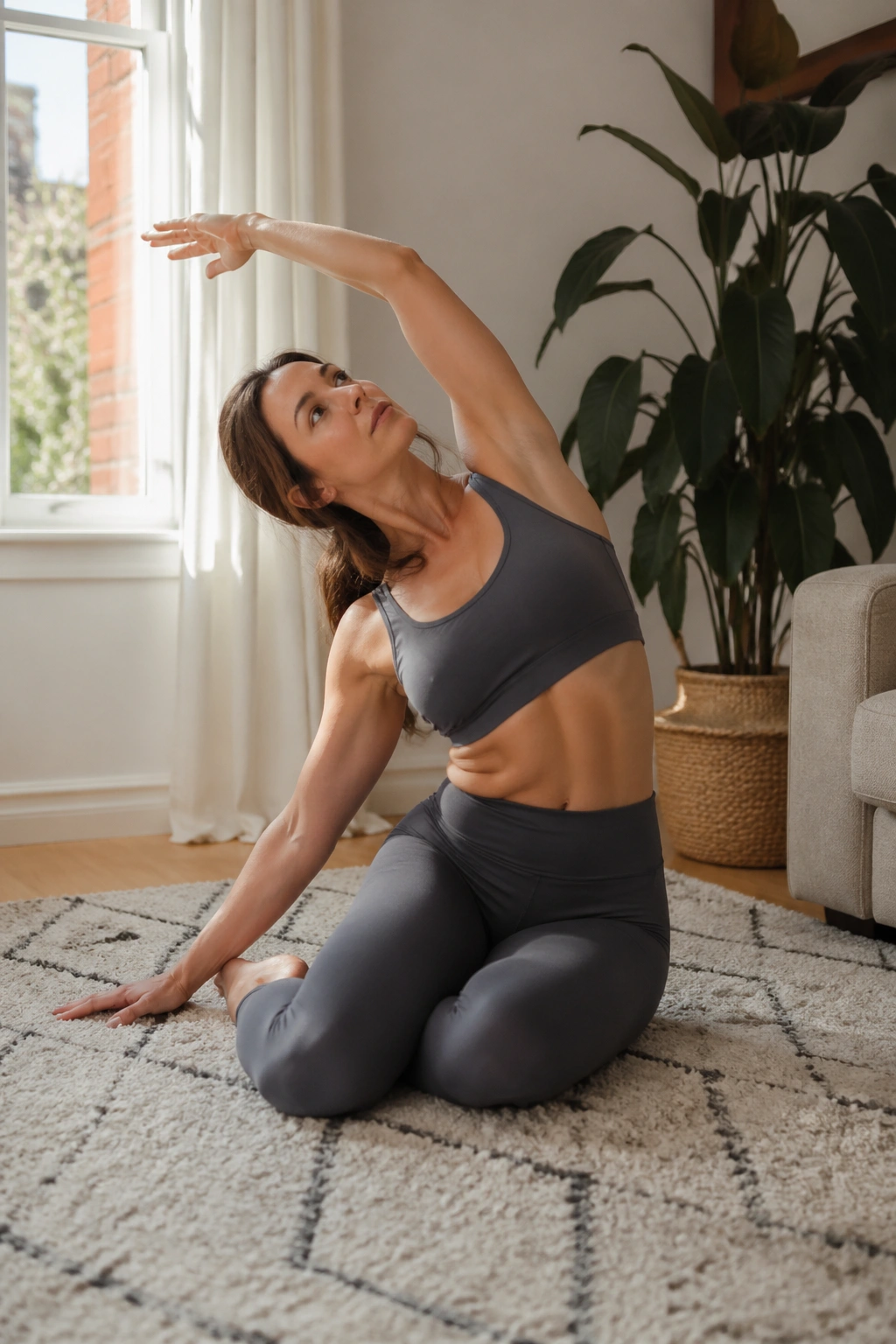
Mermaid looks gentle. It is not soft work.
The side bend asks the ribs to move, the obliques to lengthen, and the waist to stay awake while the hips stay grounded. That combination is gold in the morning, especially if you wake up feeling compressed through the sides of your torso. A lot of people only stretch forward and backward. The lateral line gets ignored. Mermaid fixes that.
Sit with both knees folded to one side, or sit on a folded towel if your hips need a little help. One arm reaches up, then over, while the other hand helps keep the seat heavy. The inhale should make space between the ribs. The exhale should let you fold a little farther without collapsing.
I like this after long stretches of sleep because it clears that tucked-up feeling along the waist. If you sit at a desk, even better. The body tends to love a side bend more than the brain expects.
9. Plank-to-Knee Hover Burst
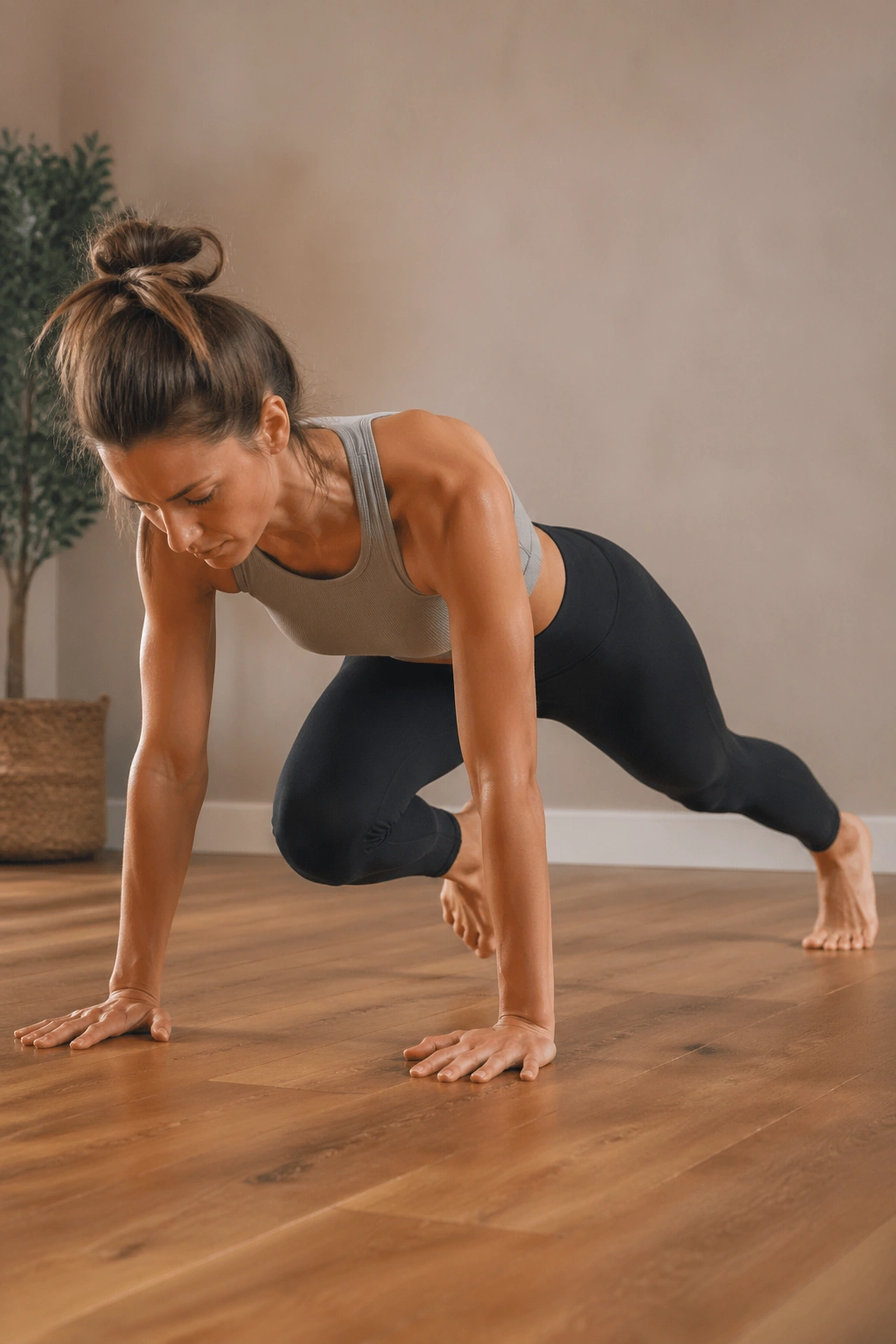
Need something that wakes you up fast without jumping? This one gets there.
A plank-to-knee hover sequence brings heat into the shoulders, abs, and thighs without any impact. Start in a solid plank, then lower one knee toward the floor by a few inches, lift it back up, and switch sides. The move sounds tiny. It is. That’s why it works.
How to Keep Your Neck Quiet
- Push the floor away through both hands.
- Spread the fingers wide, with the middle finger pointing forward.
- Keep the gaze a few inches ahead of the hands.
- Exhale before each knee hover.
If your wrists complain, drop to forearms. If the low back pinches, shorten the hover or move back to a hands-and-knees version. There’s no prize for pushing past sloppy form before breakfast.
This is a good middle-ground workout when you want a little heat but do not want to sweat through your shirt before 8 a.m.
10. Swimming for the Back Line
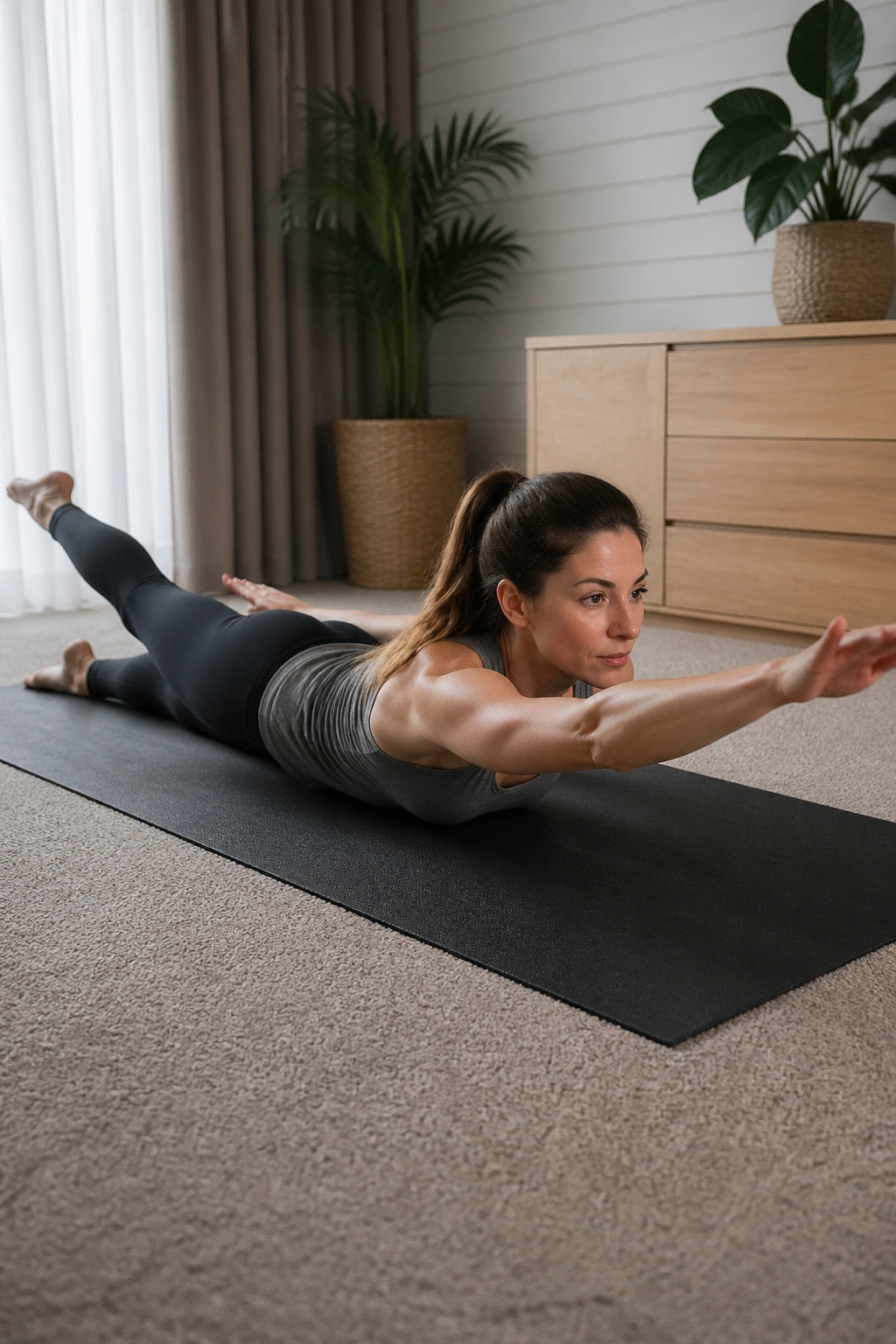
Swimming is one of my favorite early-day Pilates moves because it wakes the back side of the body without beating up the joints.
Lie face down, reach the arms long, and alternate lifting opposite arm and leg with a small, quick pulse. The lift does not need to be high. In fact, lower is often better. You want the glutes, hamstrings, and spinal muscles to work together while the neck stays long and the shoulders stay heavy.
Speed ruins it. A fast, sloppy swim turns into a low-back wiggle in about five seconds.
Take a breath every few beats if that helps you stay calm. Keep the pubic bone grounded and imagine the legs getting longer rather than higher. That cue usually keeps the lower back from taking over. If the forehead on the mat feels uncomfortable, stack your hands and rest the brow there instead. The point is to wake the posterior chain, not to suffer through a face plant.
11. Squat, Heel Lift, and Pulse Sequence
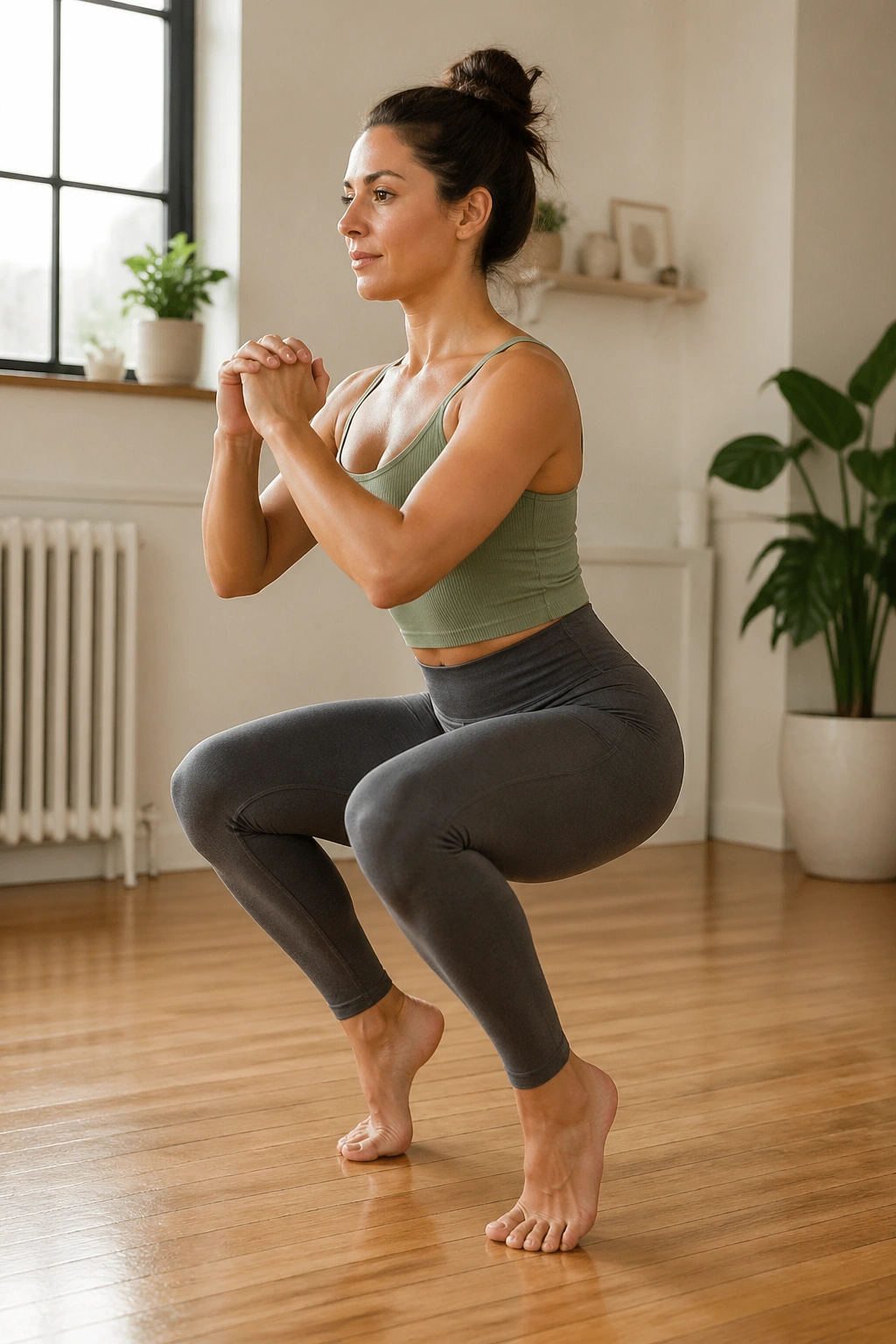
If your ankles feel rusty, start upright.
This squat sequence blends calf work, lower-body strength, and a little balance, which is a nice way to wake the whole frame without dropping straight to the floor. Sit back into a shallow squat, rise onto the balls of the feet, lower the heels, then add tiny pulses at the bottom. The movement looks simple. It is. That’s the appeal.
The Rhythm
- 6 slow bodyweight squats to a chair-like depth
- 10 heel lifts while staying tall through the spine
- 8 tiny pulses in the squat, with the knees tracking over the toes
Keep the chest lifted and the ribs relaxed. If the heels pop up early in the squat, reduce the depth until the feet stay honest. That detail matters more than trying to get lower.
This one is useful on mornings when the body feels old before the day has even begun. The calves, quads, and glutes all get a say. So do the feet, which often get ignored until they start barking at you.
12. Bent-Knee Teaser Prep for a Sharper Core
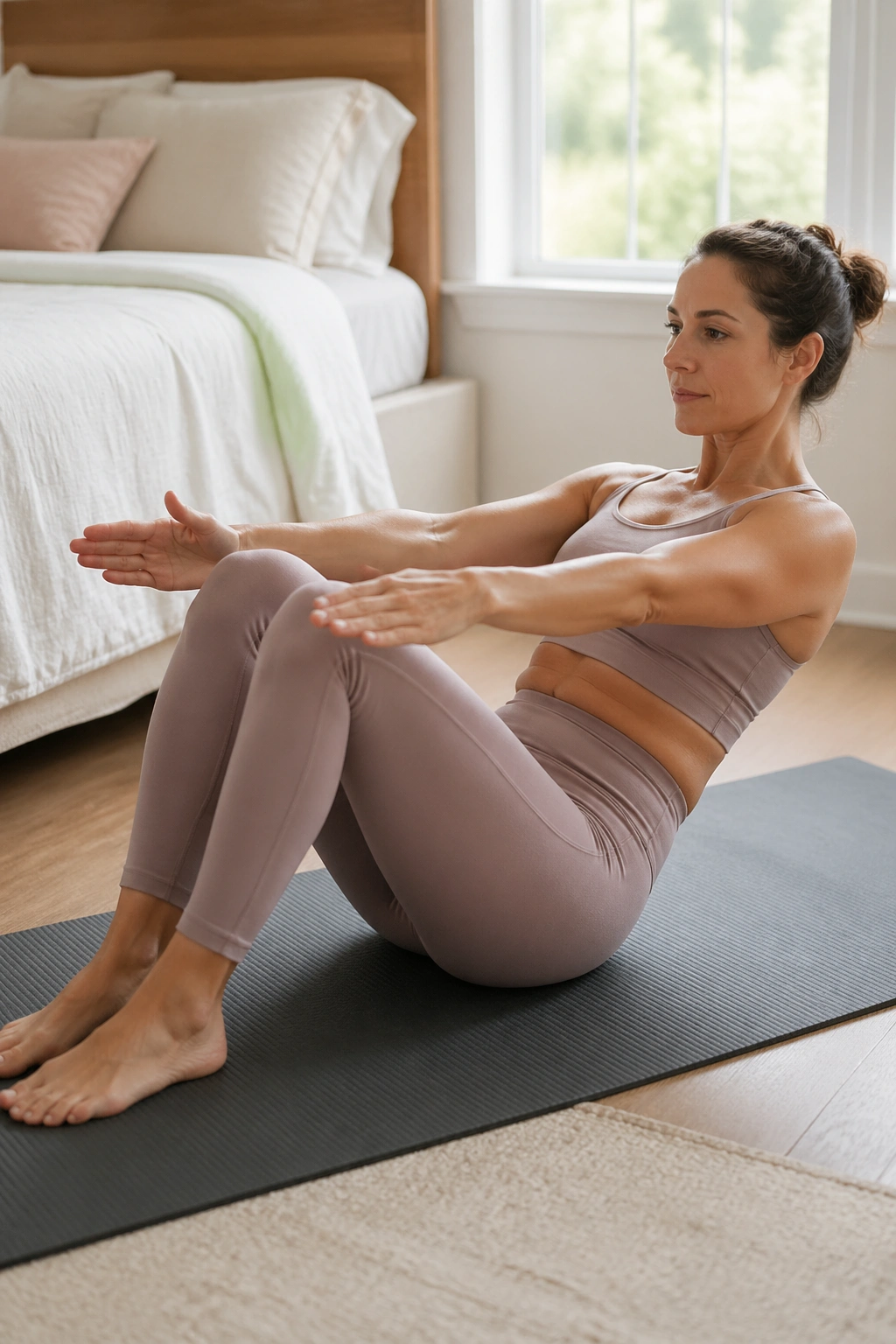
A full teaser before lunch can be a bit much. Bent-knee teaser prep is the kinder, smarter version.
Unlike the full shape, this one teaches balance and abdominal control without asking the hip flexors to do everything in one shot. You start on the mat, knees bent, feet down or in tabletop, then roll the spine back a few inches before lifting the chest to a manageable angle. The movement should feel like a controlled curl, not a yank.
Who It Suits
- People who want teaser practice without strain
- Anyone working on balance through the trunk
- Mornings when the abs feel flat but not ready for a big challenge
My preferred cue is to think of the sternum floating forward rather than the chin reaching up. That keeps the neck from getting tense and helps the ribs stay knit together.
If your lower back starts to feel unstable, stay lower. A smaller teaser prep done well teaches more than a flashy full version done badly.
13. Kneeling Arm Reach Posture Reset
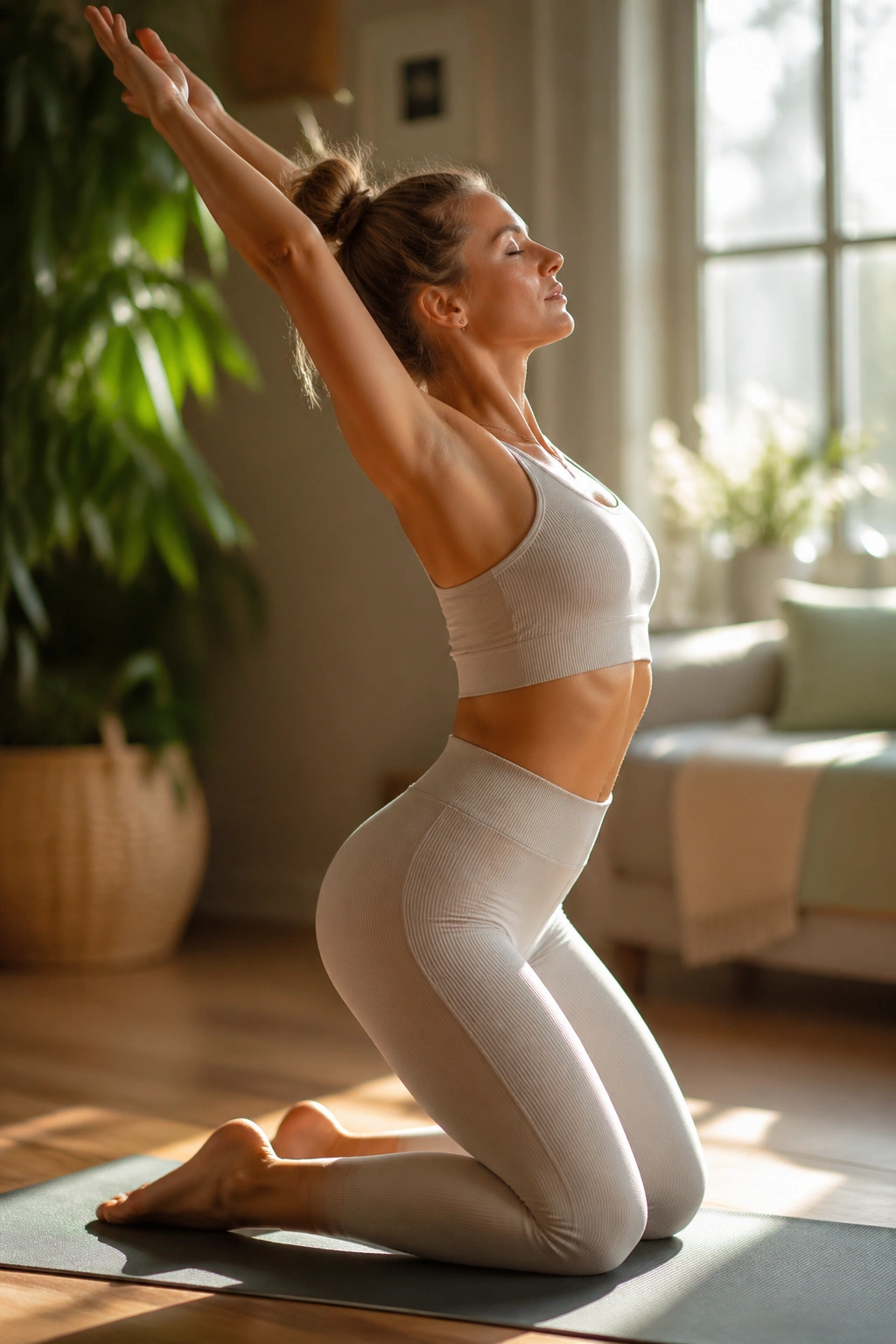
Shoulders rounded from sleep? This one opens the front of the body and gives the upper back a chance to lengthen.
Kneeling arm reaches work well on the mat or beside a wall. You settle into a tall kneel, breathe in, then reach the arms up and slightly back without flaring the ribs. The goal is to create space across the chest while the belly stays lightly engaged. That combination wakes up the postural muscles in a way that feels clean.
What to Watch For
- Don’t thrust the ribs forward.
- Keep the neck long and the chin level.
- Reach from the fingertips, not from the lower back.
I like pairing the reach with a slow exhale as the arms lower. That one cue helps the shoulders stop creeping toward the ears. If kneeling bothers your knees, put a folded towel under them or sit on a firm cushion.
This is the kind of move that feels minor in the moment and pays off for the rest of the morning.
14. Hamstring Stretch and Leg Circles
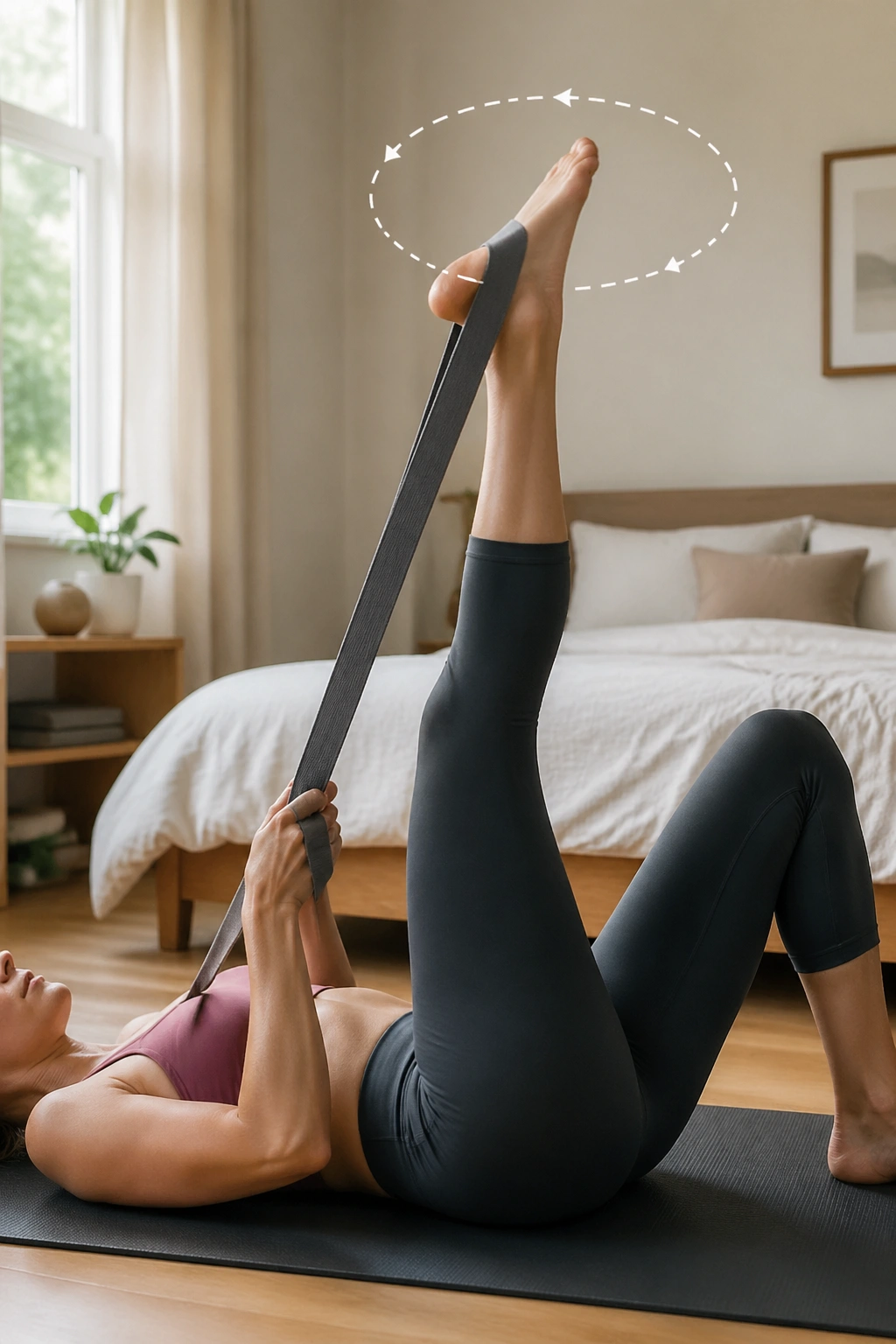
Tight hamstrings do not usually want a hard yank at 6 a.m.
A smarter version starts with one leg lifted and supported by a strap, towel, or even both hands behind the thigh. Keep the other leg bent if your back likes the extra support. Once the leg feels steady, make tiny circles, then a few pointed-and-flexed ankle pumps. That combination wakes the back of the leg without shocking it.
Best Setup
- Hold the strap with relaxed shoulders
- Keep the lifted knee slightly soft
- Circle the leg smaller than you think you should
- Switch directions after 5 slow breaths
I’ve found that cold hamstrings respond better to patience than force. A stretch that looks dramatic can feel worse than a modest one that gives the tissue a minute to soften. Breathe into the back of the thigh, let the heel float, and stop before the pelvis starts tugging out of place.
If you only do one stretch in the morning, this one is a reliable pick.
15. Inner Thigh Pillow Squeeze Series
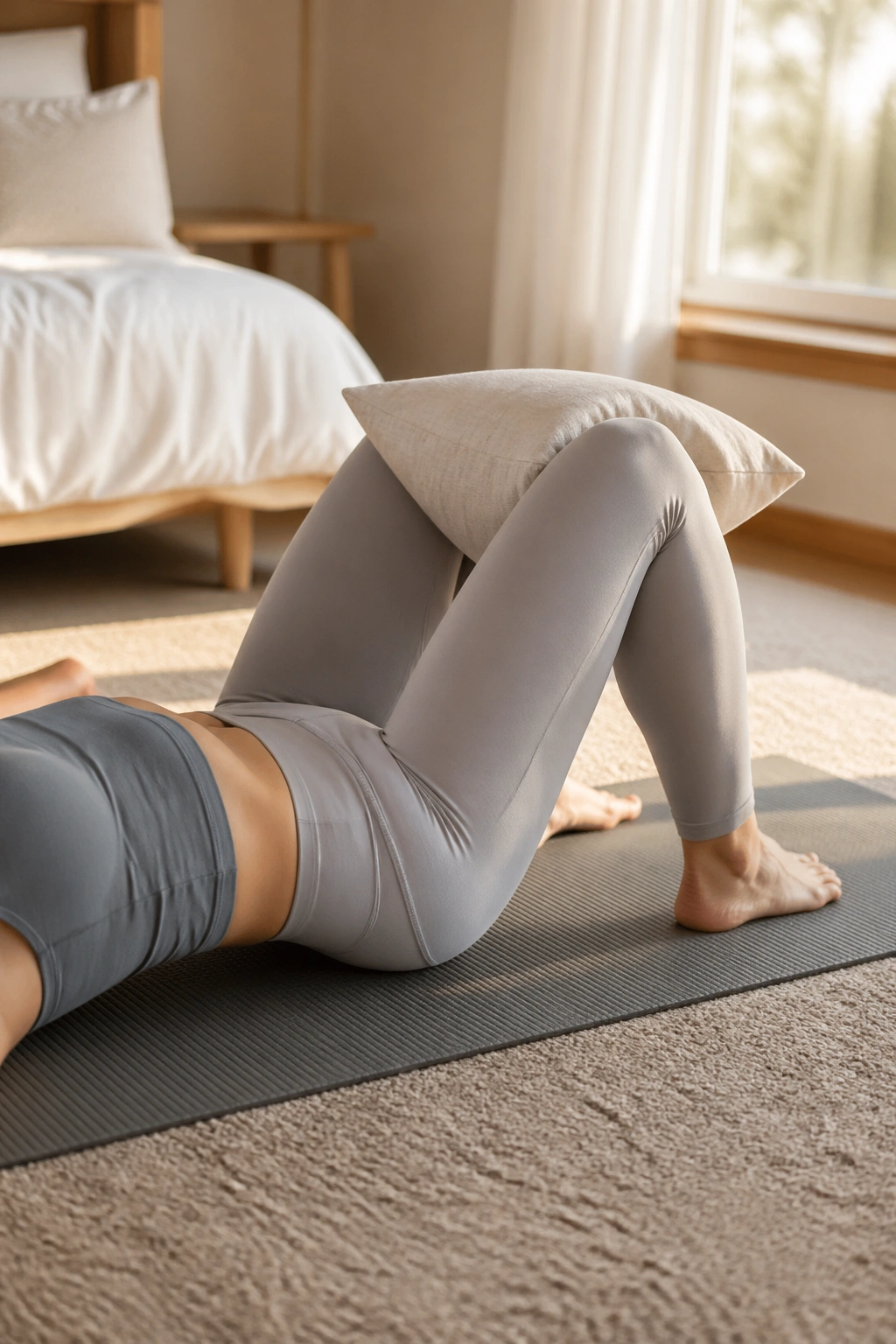
This is one of the quietest workouts on the list, and one of the sneakiest.
Place a pillow, block, or folded blanket between the knees while you lie on your back. Squeeze lightly, release, then add a pelvic tilt or a small bridge. The inner thighs respond fast, and the deep support through the pelvis often feels calming in a way that surprised me the first few times I used it. It’s not flashy. It does not need to be.
The adductors — the inner-thigh muscles — connect into the pelvis, so when they wake up, the whole center line tends to feel more organized. That can be useful on mornings when the lower body feels scattered or loose. Keep the squeeze modest. You want engagement, not a white-knuckle crush.
A good version here lasts 6 to 8 slow rounds. If you pair it with breath, the whole thing becomes a neat little reset. Small, yes. Unimportant? Not even close.
16. Saw and Spine Twist Flow
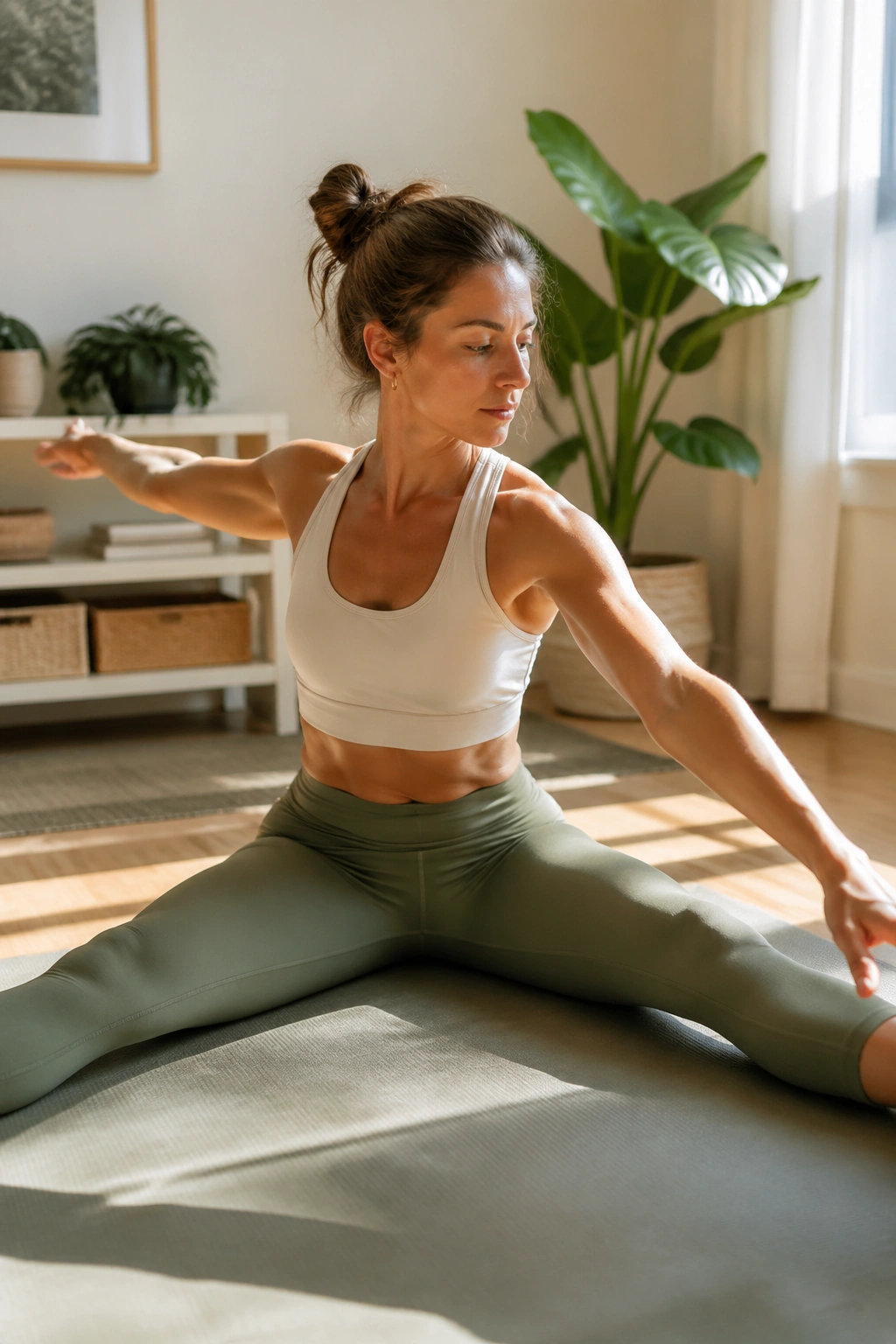
Unlike static toe touches, the Saw keeps the torso active while the hamstrings and ribs open at the same time.
Sit tall with the legs in a wide V, arms stretched out to the sides. Rotate through the torso, then reach the opposite hand toward the outside of the opposite foot. The back hand reaches away as the front hand folds forward, which creates a twist-and-lengthen effect that works nicely in the morning. You’re not just stretching. You’re asking the spine to organize itself.
How I Cue It
Take the twist first, then the fold. That order matters. If you dive straight down, the ribs collapse and the reach gets sloppy. A clean exhale helps the waist narrow a little more, and that makes the fold feel deeper without force.
This is a strong choice for people who wake up stiff through the mid-back or feel jammed between the ribs and hips. Three reaches to each side is enough. If the hamstrings are grumpy, bend the knees a little and keep going.
17. Shoulder Bridge with Marching
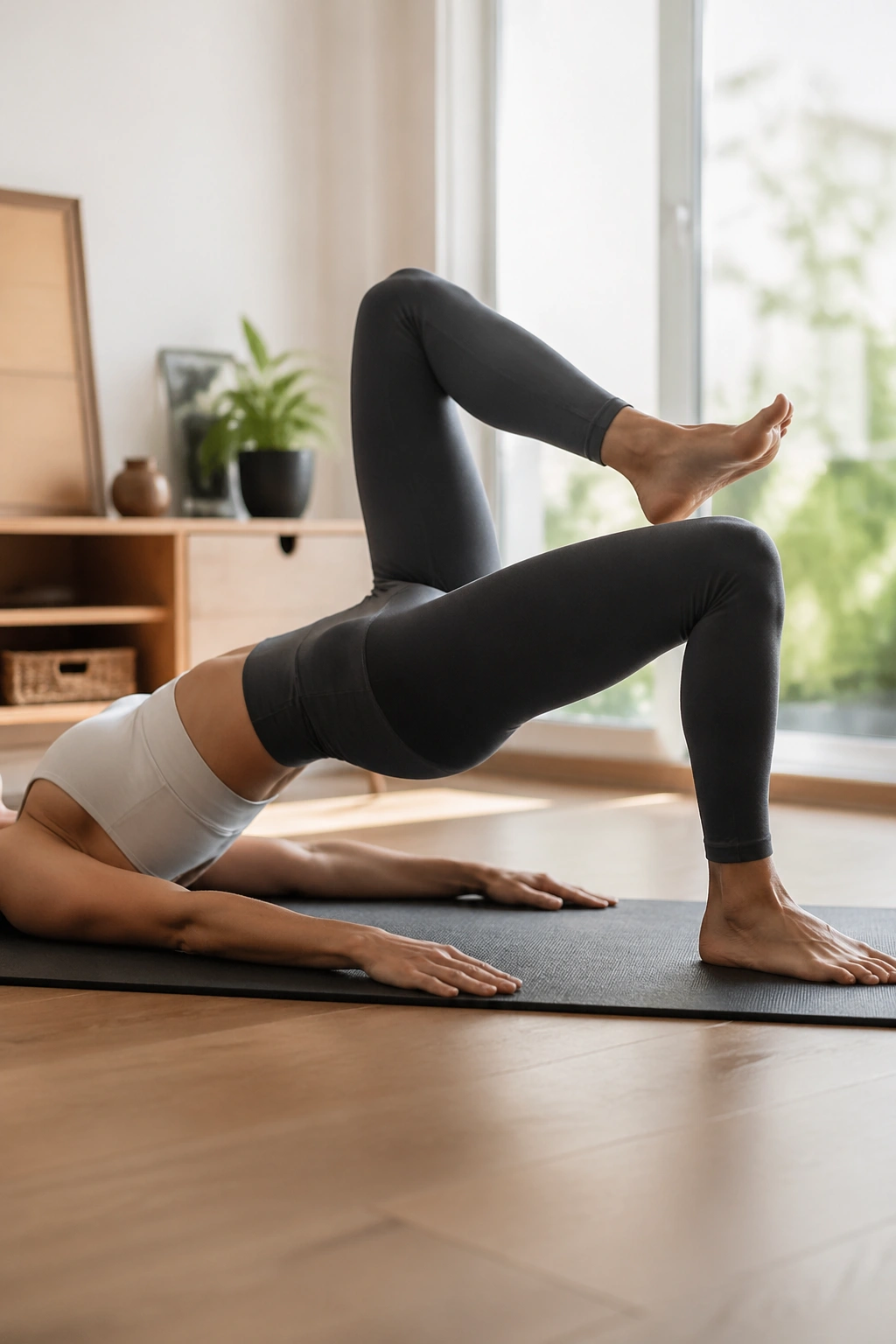
If basic glute bridges feel too easy, this is the version that tells the truth.
A marching bridge asks the pelvis to stay level while one foot lifts at a time. That means the glutes, abs, and deep stabilizers all have to cooperate. Start in a lifted bridge, hold the hips steady, then float one foot an inch or two off the mat and set it back down before switching sides. No wobble if you can help it.
The Checks That Matter
- Keep the hips square to the ceiling.
- Press through the standing heel.
- Lift the marching foot only as high as you can control.
- Stop if the lower back starts to pinch.
This move wakes up the hamstrings and glutes in a very honest way. You feel where the weak spots are fast. That can be annoying. It can also be exactly what you need before a long day of sitting.
A slow march of 4 to 6 reps per side is enough to make the bridge feel different by the end.
18. Bird Dog with Hand-Off-Knee Reach
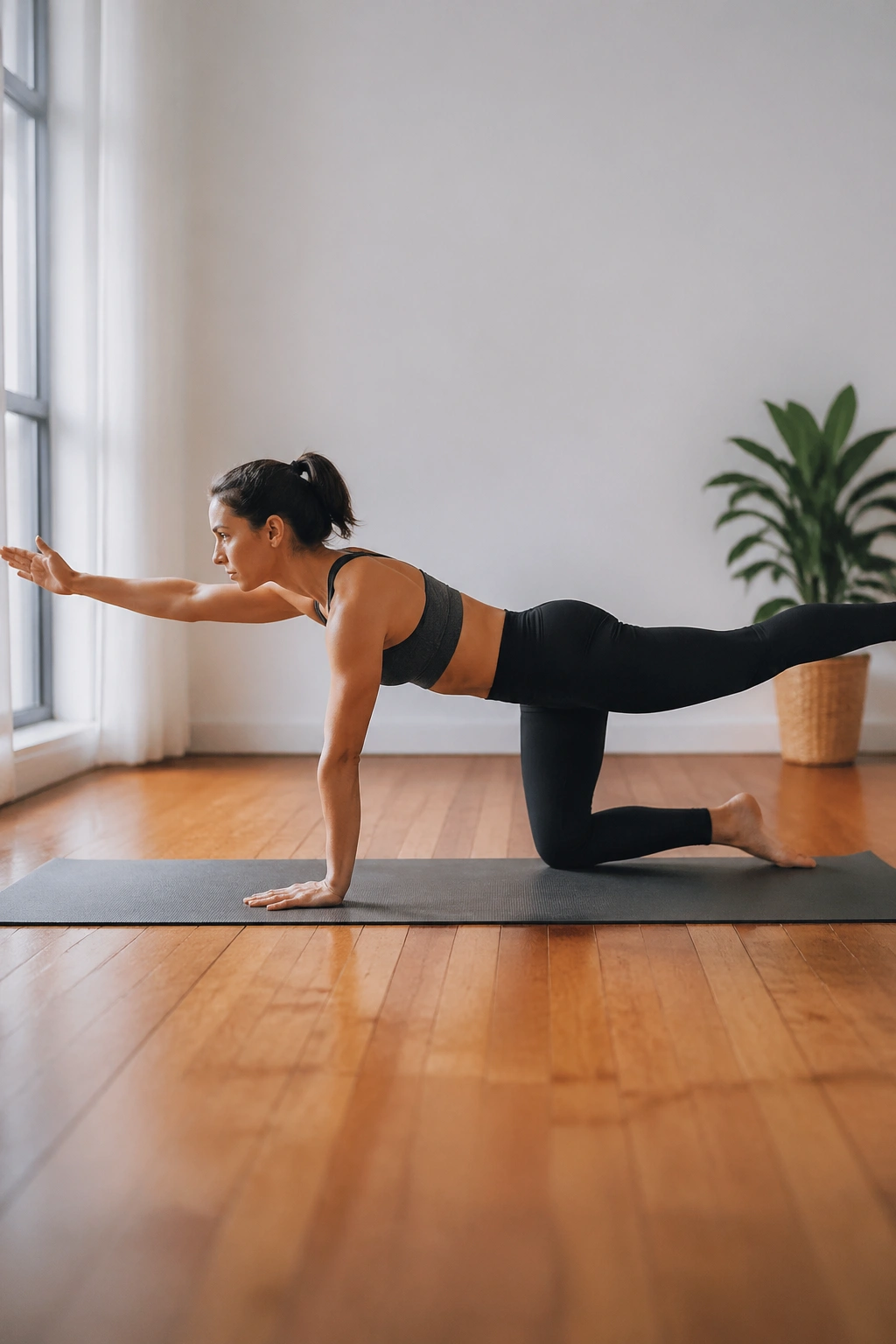
Bird dog is one of those moves that looks calmer than it feels.
Start on hands and knees, then extend opposite arm and leg with enough reach to feel length through the whole body. For a small upgrade, bring the hand and knee together under the torso before reaching back out. That hand-off-knee touch adds a tiny burst of core work without turning the drill into a circus act.
When I want something useful but not exhausting, this is where I land. It wakes the shoulders, the glutes, and the midsection in a way that feels organized. The back should stay long. The head should stay in line with the spine. If one side feels shakier, give it a slower tempo instead of more reps.
Two or three rounds of 5 slow reaches per side is enough. Quality matters a lot here. Sloppy bird dog is just flailing on the floor.
19. Low-Impact Standing Balance Flow
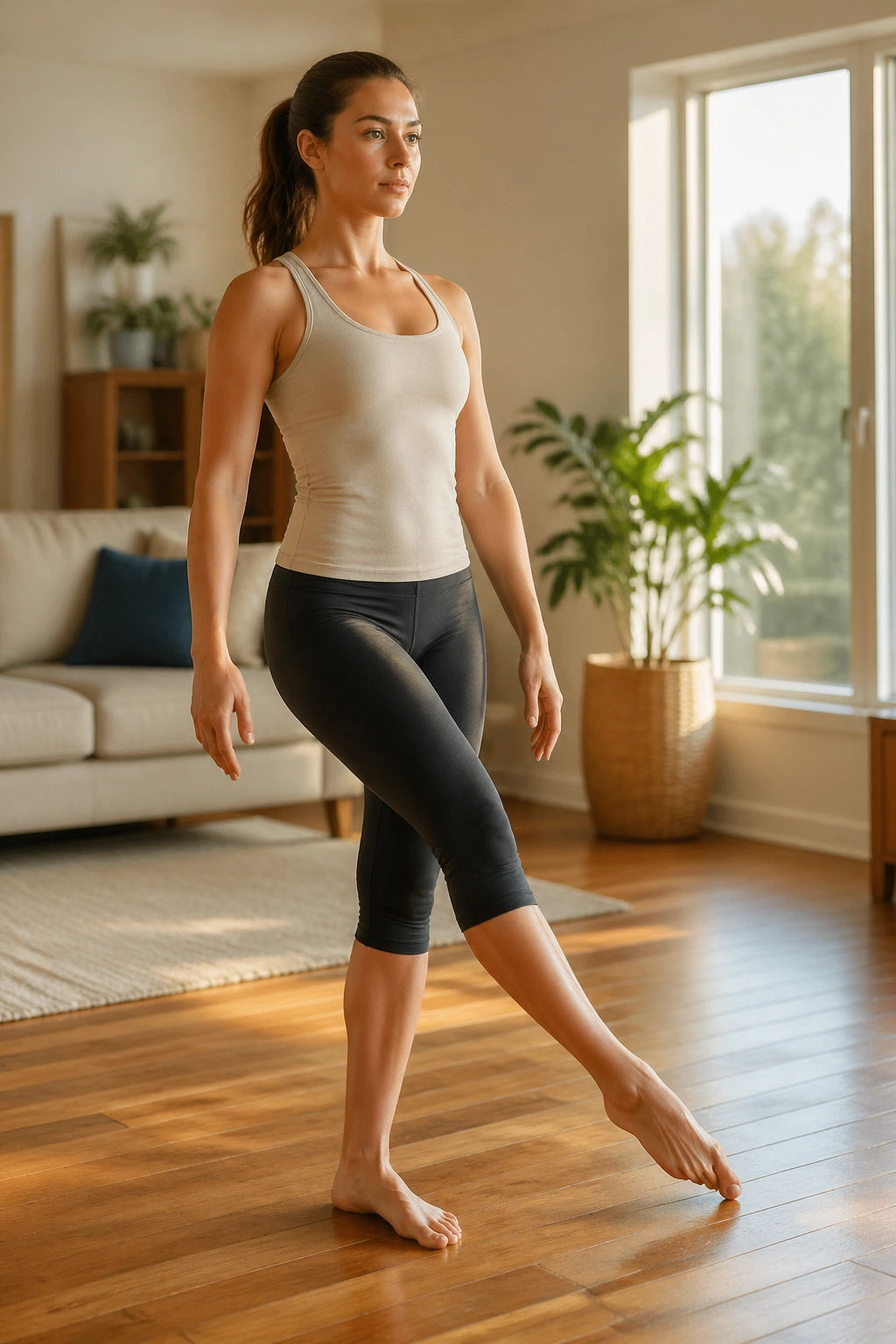
Do this barefoot if the floor is warm.
A standing balance flow can be as simple as toe taps, single-leg holds, calf raises, and a small side reach. What makes it feel like Pilates is the attention to alignment: pelvis quiet, ribs stacked, gaze steady, movement slow enough that your foot can actually do its job. Balance often gets treated like a party trick. It’s not. It’s useful.
Start by standing on one leg for 10 to 20 seconds, then tap the free foot lightly in front, to the side, and behind. Switch to calf raises, then fold into a small standing side bend. The body gets a wake-up call through the ankles, hips, and deep core all at once.
One hand on a counter is fine if you need it. That’s not a downgrade. That’s how good balance work starts for a lot of people. The goal is steadiness, not wobbling for the sake of it.
20. Full-Body Breath-Count Flow
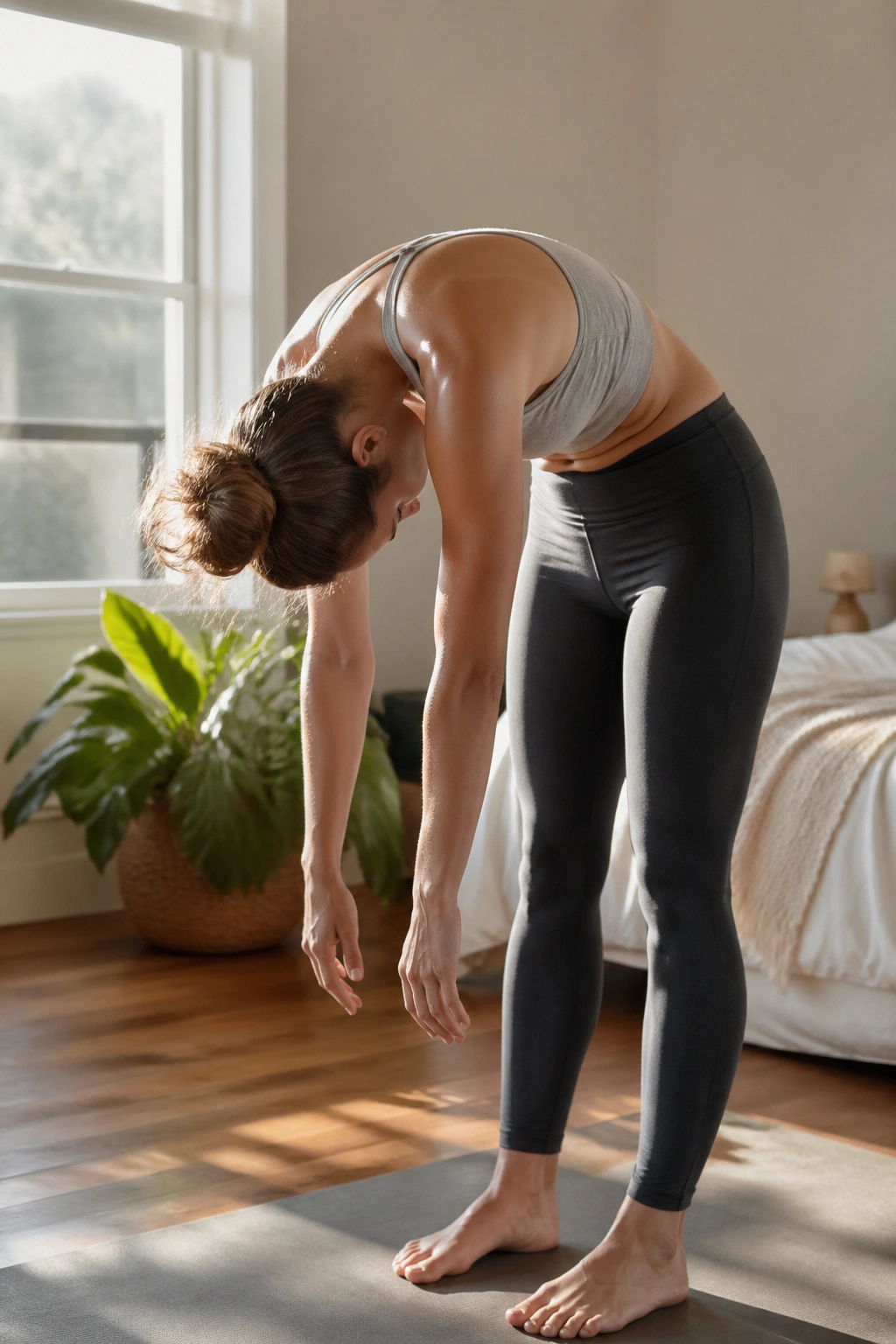
On mornings when nothing feels cooperative, this is the one I reach for.
Start with a standing roll-down, move to a few cat-cow reps, then slide into bridge work, single-leg stretch, and a side bend finish. It is a small full-body circuit that touches the spine, hips, abs, and shoulders without feeling like a performance. If you want a routine you can repeat without thinking too hard, this is a strong place to land.
A Simple Order to Follow
- 3 standing roll-downs
- 5 cat-cow cycles
- 8 pelvic curls
- 6 single-leg stretch switches per side
- 3 mermaid side bends per side
- 3 slow breaths standing tall at the end
Keep the whole thing calm. No rushing between moves. The breath count gives the sequence a little structure, and that matters when the body is still waking up. If one part of the chain feels cranky, shorten that part instead of scrapping the whole routine.
The best morning Pilates workout is the one you’ll actually repeat. Not the one that looks hardest on paper. Pick a sequence that meets you where you are, keep the range honest, and let the first few minutes do their quiet work.
