



A lot of men can brace hard for one rep, then lose their torso the moment the arms or legs move. Pilates moves for strong male cores expose that weakness fast. A bench press can hide a sloppy trunk. A Pilates mat cannot.
That matters more than most guys admit. The real core is not just the six-pack muscles in front; it’s the deep brace system around the spine, ribs, pelvis, diaphragm, and obliques. When that system works, your lifts feel cleaner, your back feels less cranky, and your rotation feels controlled instead of wild.
Men also tend to show up with the same pattern over and over: tight hip flexors, stiff upper backs, overactive glutes, and a habit of holding the breath like every rep is a max attempt. Pilates asks for the opposite. Control. Exhale. Precision. The method was built on the idea of the powerhouse, and that word still fits.
The first move is a classic for a reason. It looks simple. It is not.
1. The Hundred for a Stronger Male Core
The Hundred is where sloppy bracing gets embarrassed early. If a guy says he has a strong core but can’t keep his ribs quiet for ten breath cycles, this move tells the truth in about thirty seconds.
Why It Works
The setup is tiny, but the demand is big. Your arms pump, your legs stay fixed, and your trunk has to hold a stable shape while your breathing keeps going. That combination — load plus breath plus time — is exactly what a real core does in sport, lifting, and daily life.
A lot of men try to turn this into a neck exercise. Don’t. The work belongs low in the abdomen, around the deep trunk, not in the front of the throat. If your neck is doing most of the job, the body is cheating.
Quick Form Cues
- Start in tabletop or with legs long at a 45-degree angle if you can keep the low back heavy.
- Curl the head and shoulders up only as far as you can without jamming the chin forward.
- Pump the arms 5 counts in and 5 counts out.
- Keep the ribs from flaring open on the inhale.
- Stop if the low back starts arching off the mat.
Pro tip: If your neck complains, keep your head down and use the arm pumps with bent knees. That is not a downgrade. It is smart training.
2. Single-Leg Stretch for Rib Control
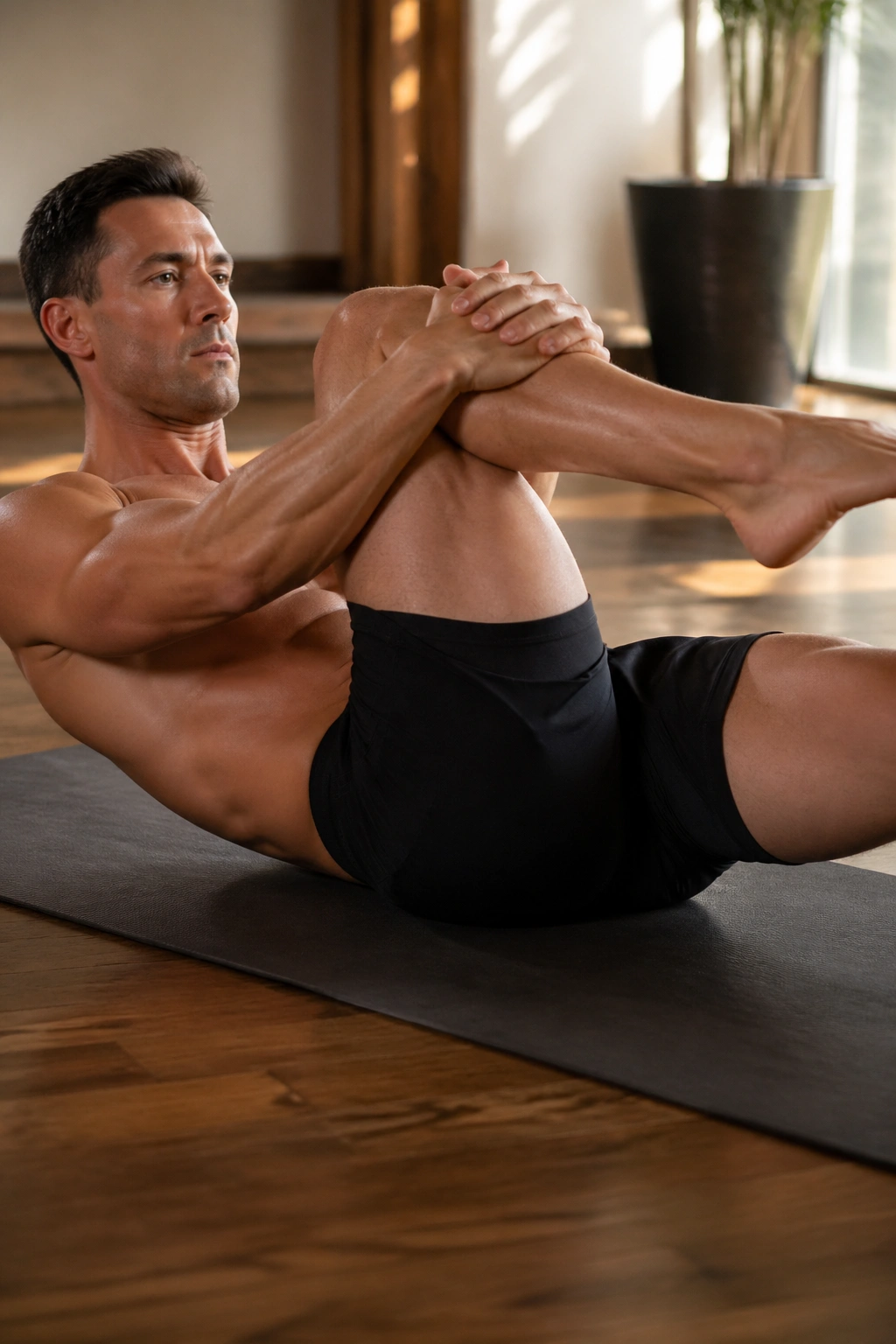
This is where a lot of gym-built cores get humbled. One leg stays close, the other reaches away, and your torso has to stay calm while the lever length changes every second.
The single-leg stretch targets the deep abs and obliques in a way crunches rarely do. You are not just squeezing forward. You are resisting twist, resisting rib flare, and resisting the urge to yank the knee with your hands like that somehow makes the move easier.
What to Feel
The lower belly should switch on before the hip flexors take over. If the front of the hip starts burning before the abs do, the legs are probably too low or the curl is too aggressive. Reduce the range and keep the breath smooth.
A good version feels controlled and a little mean. The leg that extends should be active, not lazy. The bent knee should come in with help from the torso, not from the arms pulling like hooks.
Common Mistakes
- Pulling on the knee and collapsing the chest
- Letting the lower back arch
- Letting the neck crane forward
- Moving the legs faster than the torso can hold
Slow it down. Seriously. A slower single-leg stretch usually builds more useful strength than a fast one.
3. Double-Leg Stretch Without the Low-Back Arch
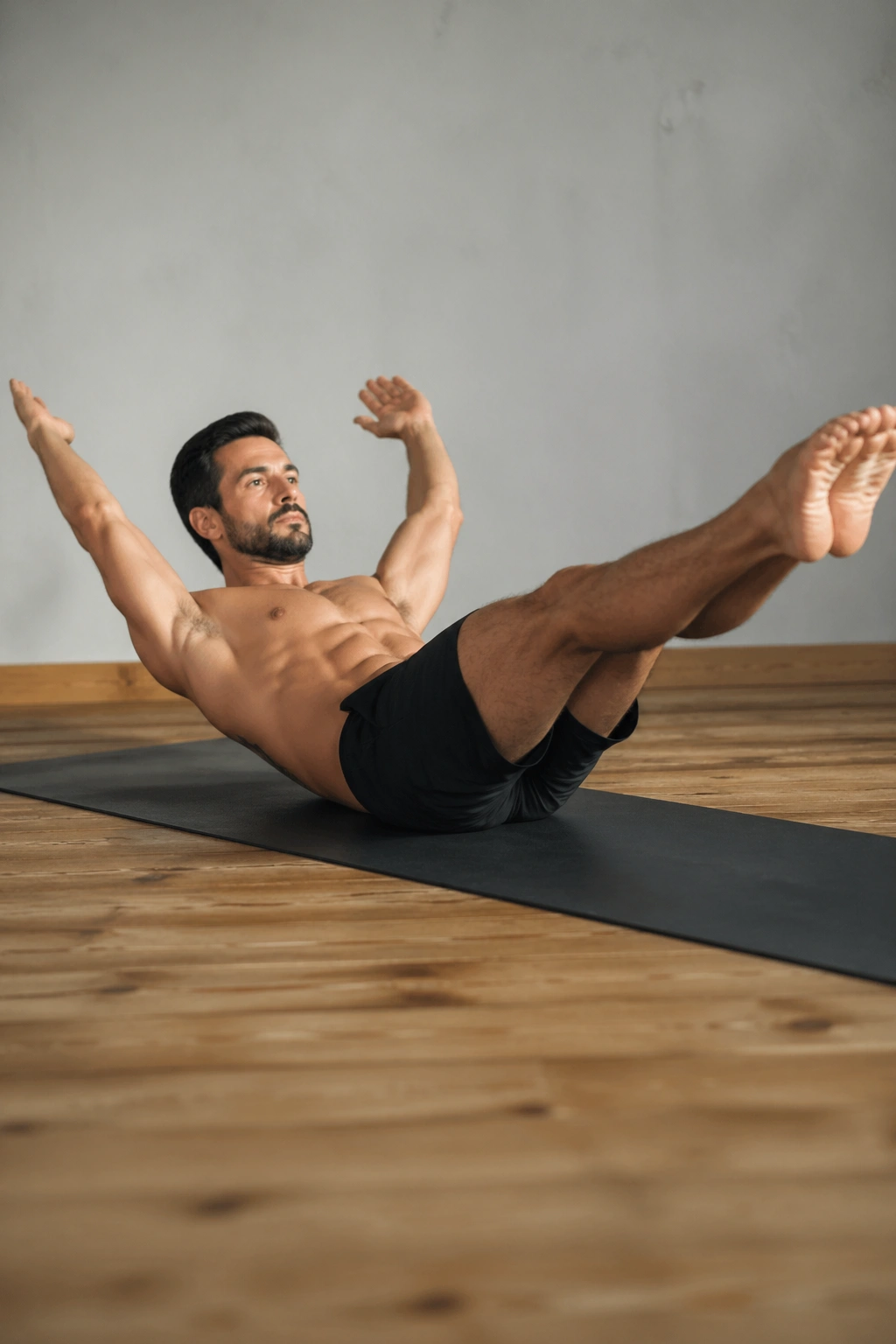
Why does this move look so easy in a demo and feel so savage after three clean reps? Because the double-leg stretch asks your abs to keep the spine steady while both legs and both arms reach away at once.
That reach is where men often lose the line. The ribs pop. The low back arches. The hips take over. Then the move turns into a flailing windshield-wiper version of itself. Not ideal.
How to Use It
Keep the knees in a little higher than your ego wants. Reach the arms back only as far as you can maintain the scoop under the ribs. Exhale as the limbs open, then circle them back in with control. The goal is not distance. The goal is shape.
What Makes It Hard
- Two limbs moving away at the same time
- Less help from the hip flexors than most guys expect
- More demand on the transverse abdominis and obliques
- A strong test of whether you can keep the pelvis quiet
If the low back lifts, shorten the reach. If the neck gets cranky, lower the head. If the movement turns jerky, slow it down by half. That usually fixes it.
4. Crisscross for Rotational Strength
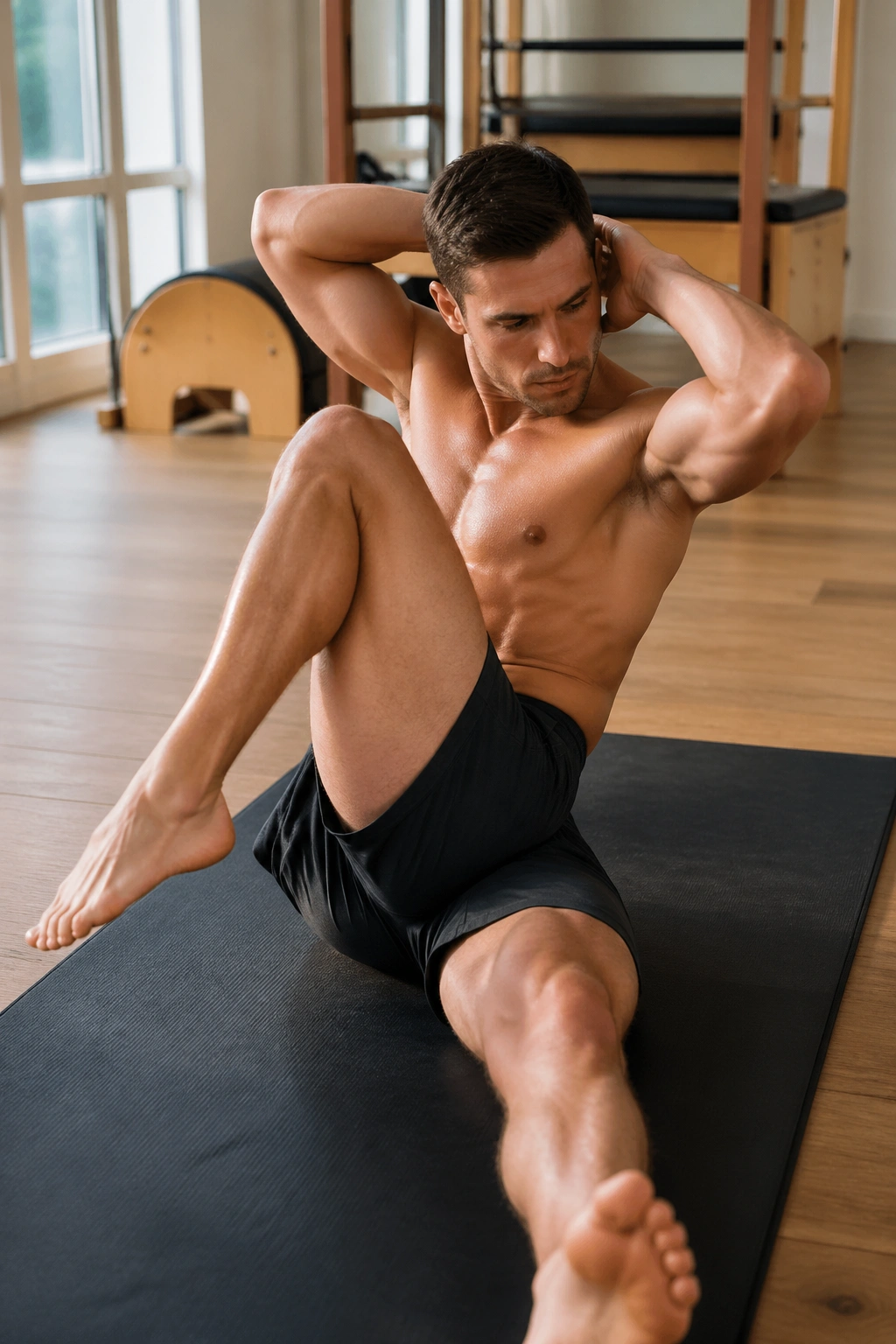
Picture a guy trying to swing a golf club, throw a punch, or rotate under load in the gym. If his trunk can’t rotate cleanly, the motion leaks into the neck, the shoulders, or the low back. Crisscross teaches the opposite.
This is not a giant bicycle crunch. The best version is tighter, cleaner, and less dramatic. The twist should come from the ribs and waist, not from tossing the elbows around like they’re doing the work for you.
Why It Matters
Crisscross is one of the clearest oblique builders in Pilates mat work. It also teaches the body to rotate while one leg reaches long, which makes the whole thing a little less comfortable and a lot more useful.
Things to Watch
- Keep the elbows wide, not welded to the head
- Rotate the ribcage toward the opposite knee
- Let the reaching leg stay long and active
- Exhale on each twist instead of holding your breath
One small rule: if your head leads the rotation, you’ve already lost some of the benefit. Keep the head supported and let the torso do the turning.
5. Roll-Up for Controlled Spinal Flexion
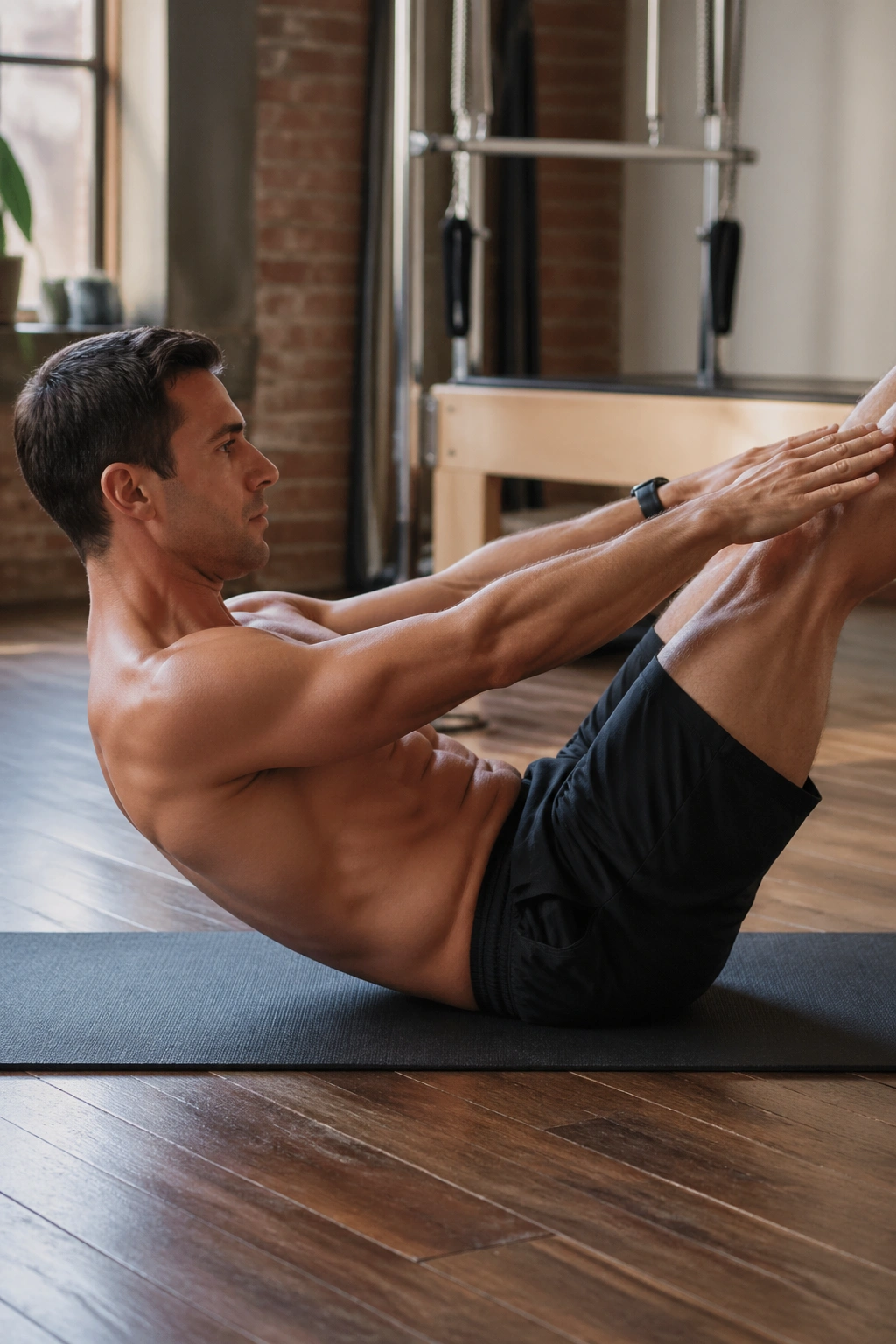
The roll-up is the move many men hate because it exposes hamstring tightness and trunk control at the same time. Crunches let you cheat through the top half. The roll-up does not.
You start flat, then peel the spine off the mat one segment at a time. That slow curl tells you whether the abs can flex the spine without snapping the hips open or yanking the shoulders forward. It also makes tight hamstrings loud. Very loud.
A clean roll-up should feel like you’re stacking vertebrae, not throwing yourself upward. The descent matters just as much. If you drop back down like a sack of gym clothes, you’re missing half the work.
If your legs pop up, bend your knees. That’s the fix most people skip.
A strap around the feet can help if the hamstrings are short, but don’t use it as a crutch to rush the movement. The best version is slow enough that you can feel each inch of the spine leaving the floor and returning to it.
6. Teaser Prep and the Real Work of Hip Flexors
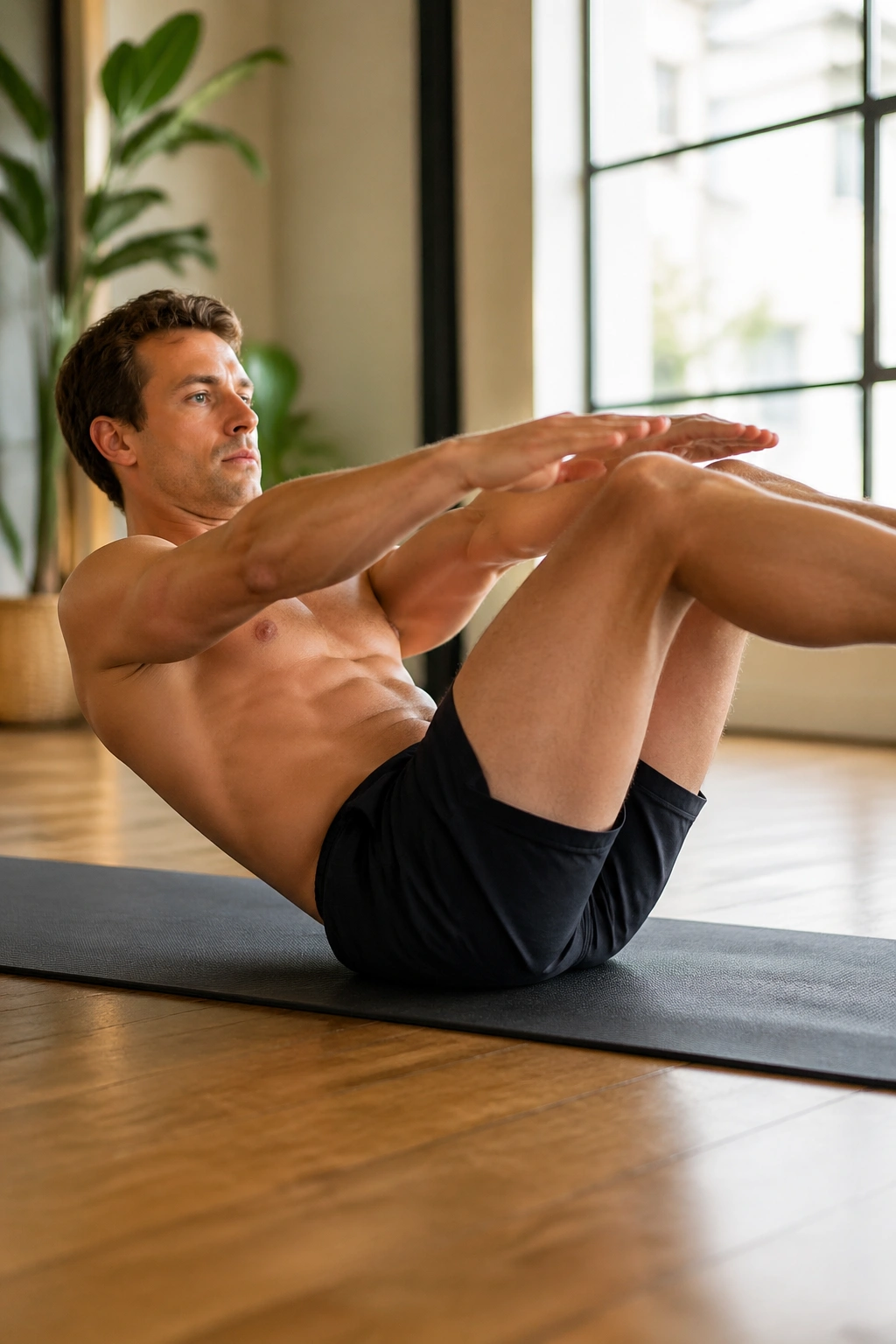
Teaser prep is where control gets exposed in a hurry. The body has to hold a V-like shape without collapsing at the hips or gripping the neck, and that takes a kind of abdominal strength that’s hard to fake.
Break It Down
Start with knees bent if you need to. Lift the chest, keep the ribs knitted down, and feel the lower abs scoop as the shins hover or extend. The moment the low back starts to strain, the range is too big. Reduce it and own the smaller shape.
The teaser family is famous for making strong people look like beginners. Good. That means it’s useful.
How to Scale It
- Hands behind the thighs for support
- One leg extended while the other stays bent
- Hold the knees in a tabletop shape instead of straightening both legs
- Keep the chest lifted without flaring the ribs
The tricky part is not the start. It’s the pause. Holding the shape for even 5 to 10 seconds tells you more than rushing through five sloppy reps ever will.
7. Saw for Obliques and Hamstring Length
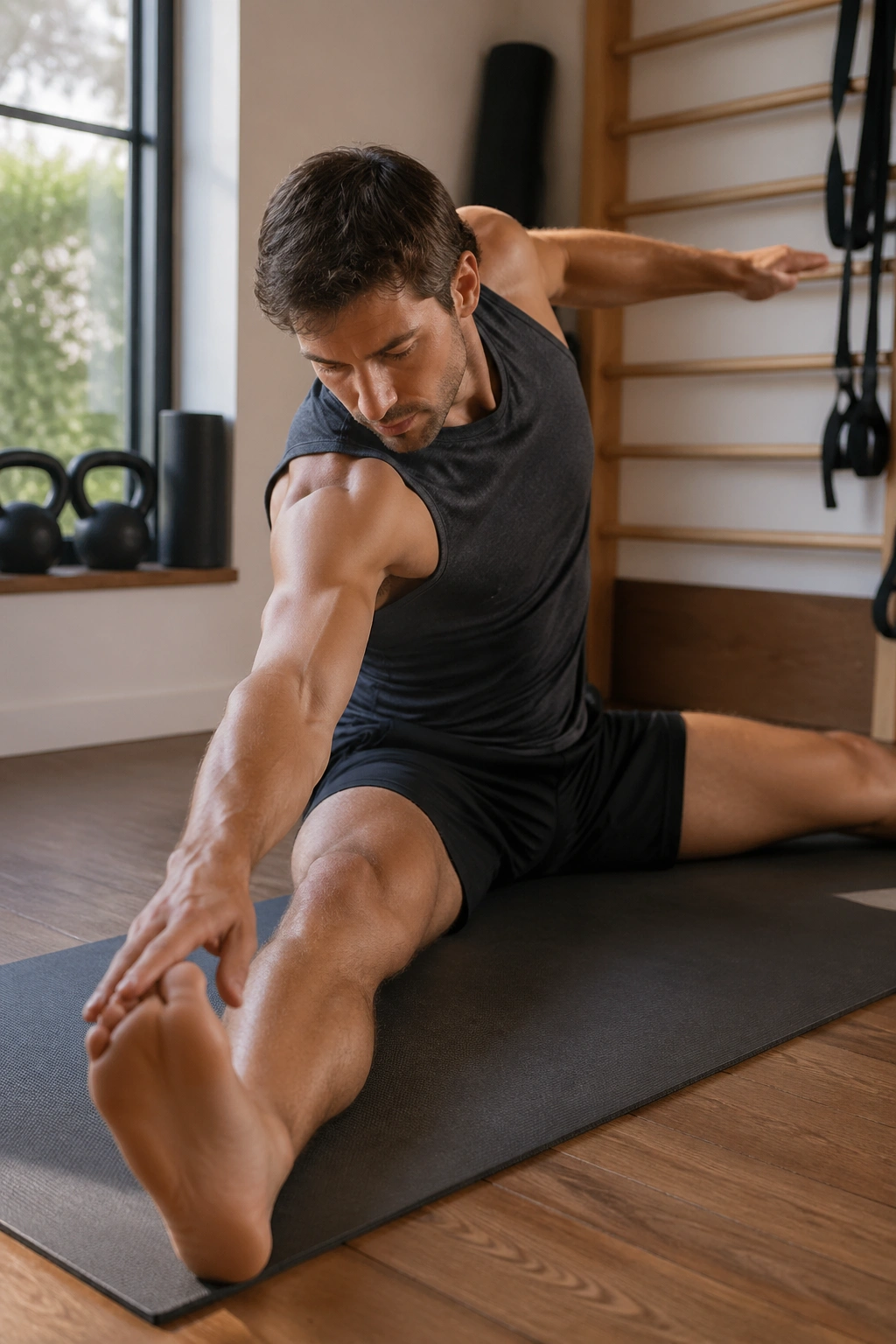
Why does a seated twist feel harder than it looks? Because the saw asks for three things at once: spinal rotation, hamstring length, and a tall spine that does not collapse when you hinge forward.
The movement starts in a long seated position with the legs open. You rotate the torso, reach the opposite hand toward the outside of the foot, and keep the ribs from twisting into a mess. That long reach changes the shape of the back line while the obliques stay awake.
How to Use It
Think of the reach as a diagonal line, not a dive. The back hand reaches behind you for balance, the front hand reaches toward the pinky toe, and the exhale helps deepen the twist. If the sit bones tip backward, sit on a folded towel or small pad.
What It Trains
- Oblique control
- Thoracic rotation
- Hamstring flexibility under load
- Spinal length without collapse
A lot of men live in a narrow, stiff torso. Saw opens that up without turning it into a loose stretch. That’s the appeal.
8. Spine Stretch Forward for a Stiff Desk Back
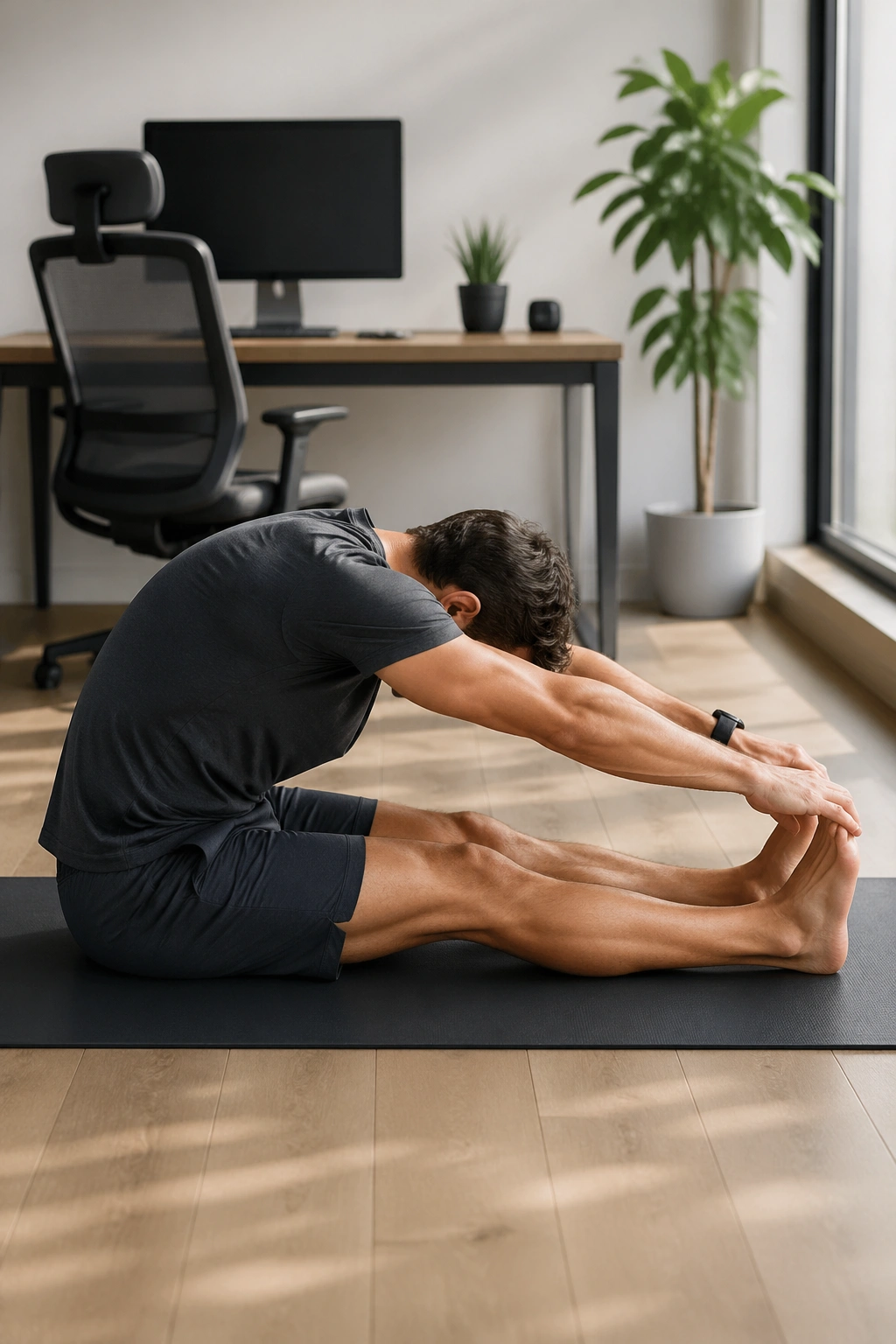
The spine stretch forward looks almost too plain to matter. Then you do it with real control and realize how much tension you’ve been carrying between the ribs and the pelvis.
Sit tall, reach the crown of the head up, then exhale and round forward one vertebra at a time. The movement is small if you do it honestly. That is the point. You are not folding from the hips and hanging there. You are teaching the spine to move segment by segment while the abs control the descent.
The back should feel long, not crushed. The breath should stay smooth, not trapped. And the hamstrings? They’ll probably grumble if you sit a lot. That’s normal.
This move is a nice reset between harder exercises because it reminds the body what length feels like. Men who lift heavy often skip that feeling entirely, then wonder why their lower back feels welded together. A few slow rounds of spine stretch forward can clean that up fast.
9. Swimming for Posterior Chain Balance
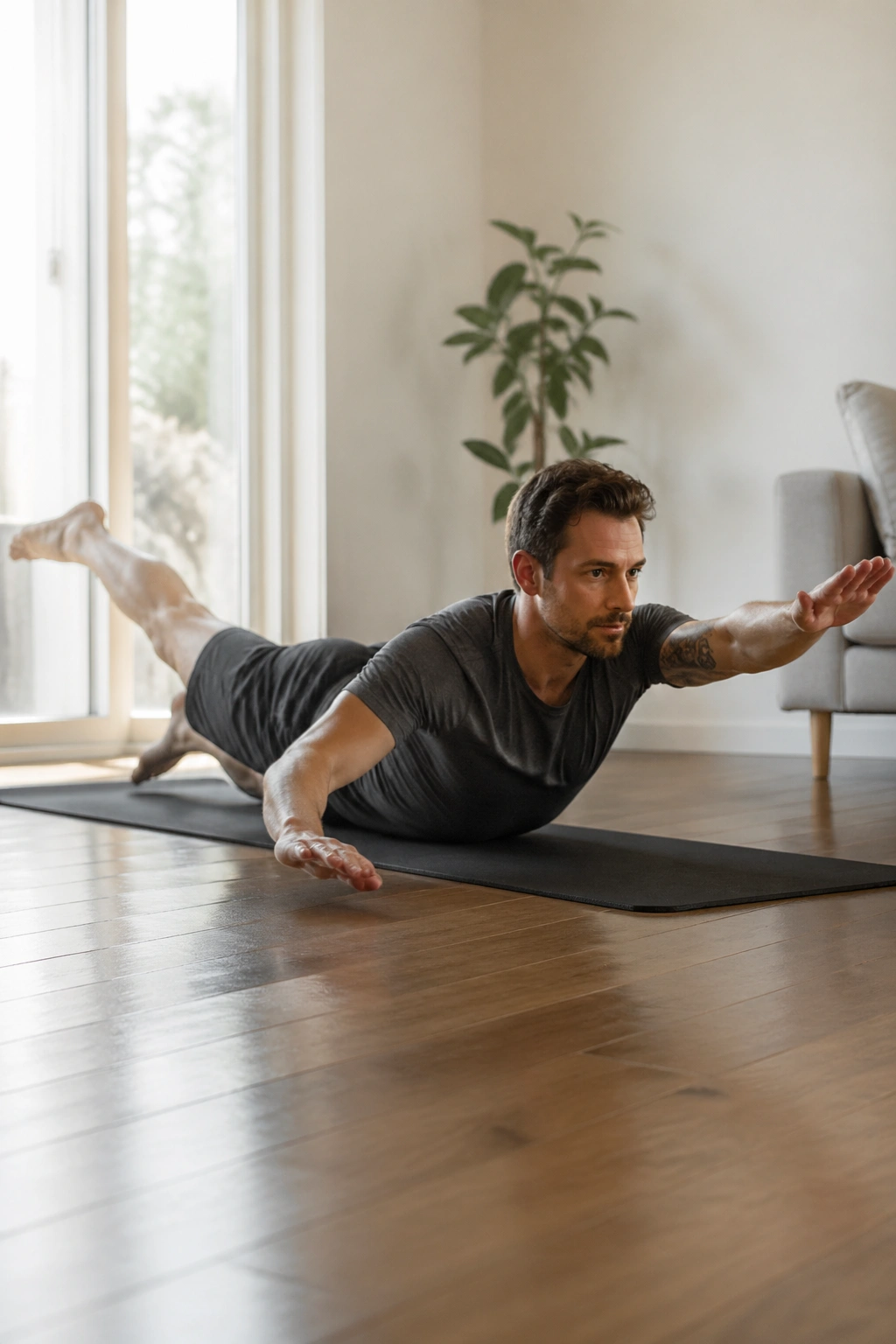
A strong front side is only half the picture. Swimming trains the back side — glutes, spinal extensors, upper back — and that matters more than most men think, especially if their training leans hard toward pressing, sitting, and front-loaded work.
Technique Check
Lie face down, lengthen the arms and legs, then lift opposite arm and leg in alternating rhythm. The movement should be small and quick, with the neck long and the pelvis heavy. If the chest heaves off the mat like a Superman pose, the low back is probably doing too much.
What to Feel
- Glutes waking up without clenching hard
- Upper back working without shrugging
- Core holding the pelvis steady
- Breath staying alive even under tension
Swimming looks airy, but it burns in a very specific way. The aim is not height. The aim is reach. Long limbs, quiet ribs, steady rhythm. That combination builds support for the rest of the mat work, and it helps balance all the front-side flexion from the earlier moves.
10. Side Plank with Top-Leg Lift for Male Obliques
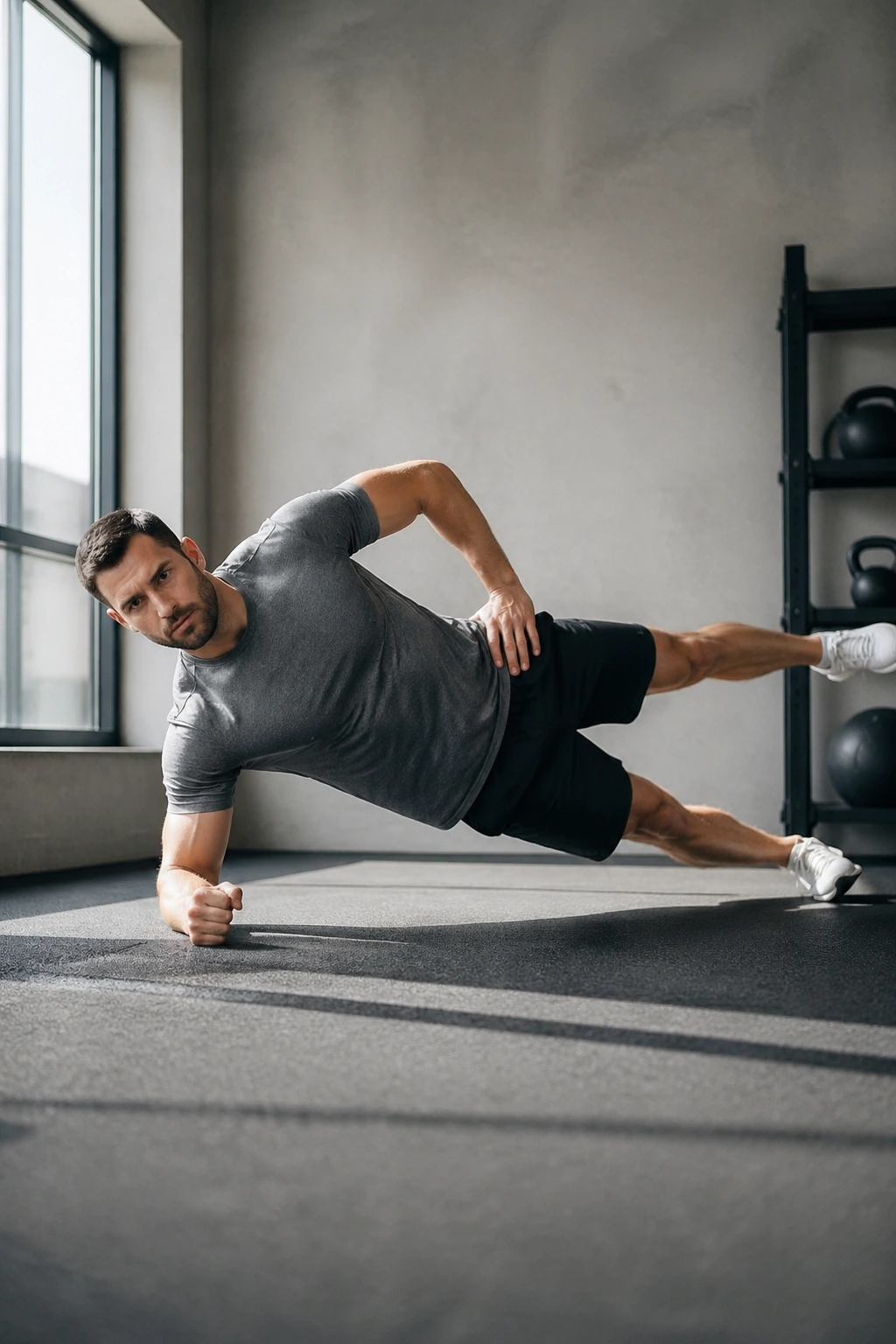
A side plank with a leg lift will tell you quickly whether your obliques, glute med, and shoulder are actually doing their jobs. If one of those pieces goes offline, the body twists or sinks, and the move gets ugly in a hurry.
What Makes It Different
Unlike a straight plank, this version asks the body to resist side-bending and hip drop while also lifting one leg away from the floor. That extra leg lift adds a sneaky amount of work to the outer hip, which is a big deal for men who spend too much time in straight-line training and not enough time controlling lateral force.
A clean side plank should feel stacked. Shoulder over wrist or elbow. Ribs over pelvis. Hips high enough that the body makes one long line.
How to Make It Honest
- Start on the forearm if full side plank is too much
- Keep the top shoulder away from the ear
- Lift the top leg only a few inches
- Stop the second the pelvis starts to roll forward
Do not rush the lift. A tiny, controlled leg raise builds more useful strength than a sloppy high kick. The small version is the one that teaches the torso to hold shape.
11. Shoulder Bridge March for Pelvic Stability
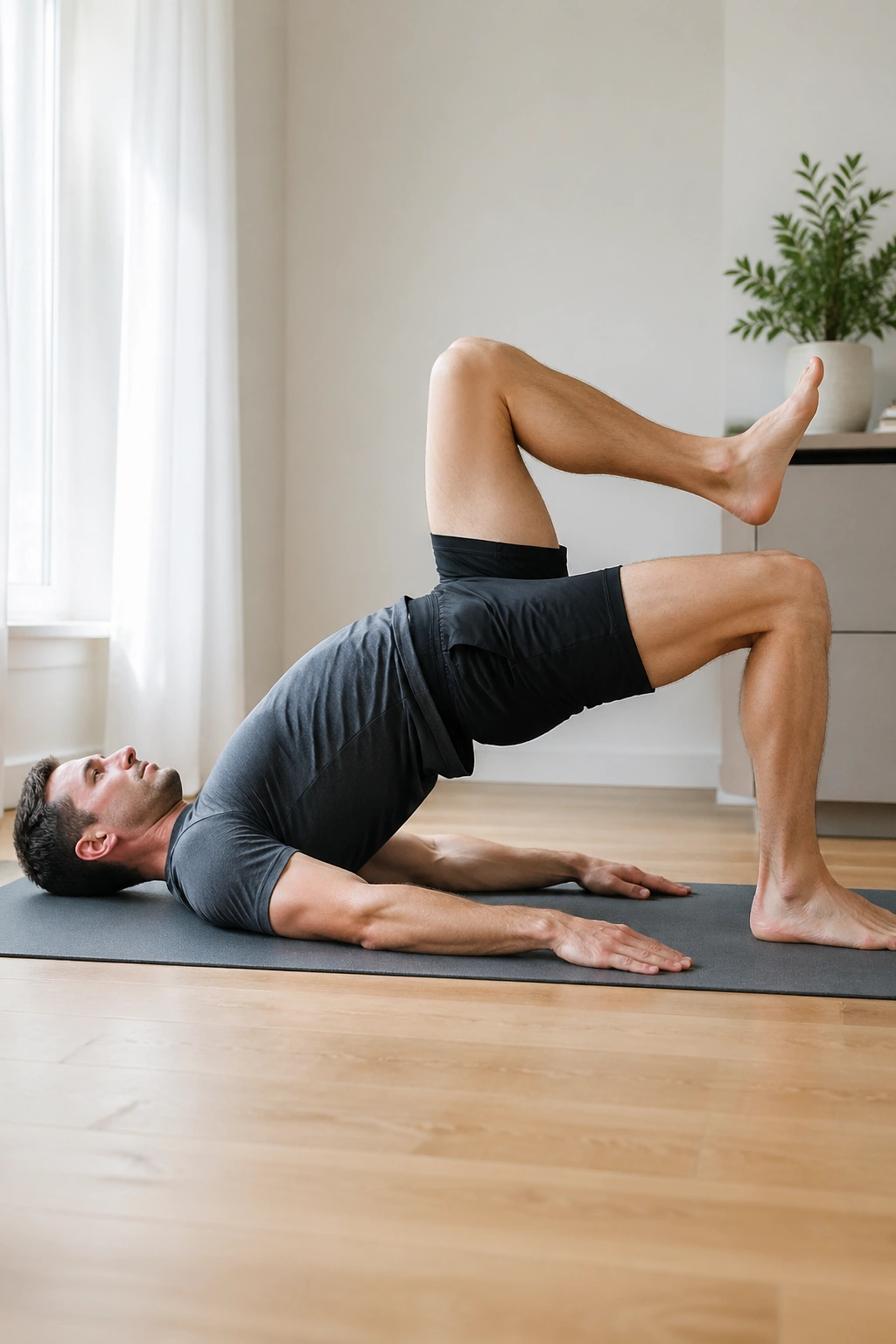
Here’s the thing: a bridge by itself is fine. A bridge with alternating marches is where the pelvis has to prove it can stay level while one leg leaves the floor.
Start in a strong bridge with the ribs down and the glutes active. Then lift one foot a few inches, set it down, and switch sides without letting the hips wobble. The challenge is less about height and more about keeping the trunk from swaying when the base of support changes.
Key Cues
- Press through the heels, not the toes
- Keep the front ribs from popping up
- Hold the pelvis steady like a full glass of water
- March slowly enough to notice each side
This move is gold for men who lift a lot, run, or cycle. It ties the glutes to the deep core and teaches the pelvis to stay quiet under motion. That translates into better squat patterns, cleaner walking mechanics, and less of that cranky low-back feeling that shows up after too much sitting.
One warning: if the bridge is too high, the back will take over. Lower it a bit. Your abs will thank you.
12. Leg Pull Front Is Not Just a Plank
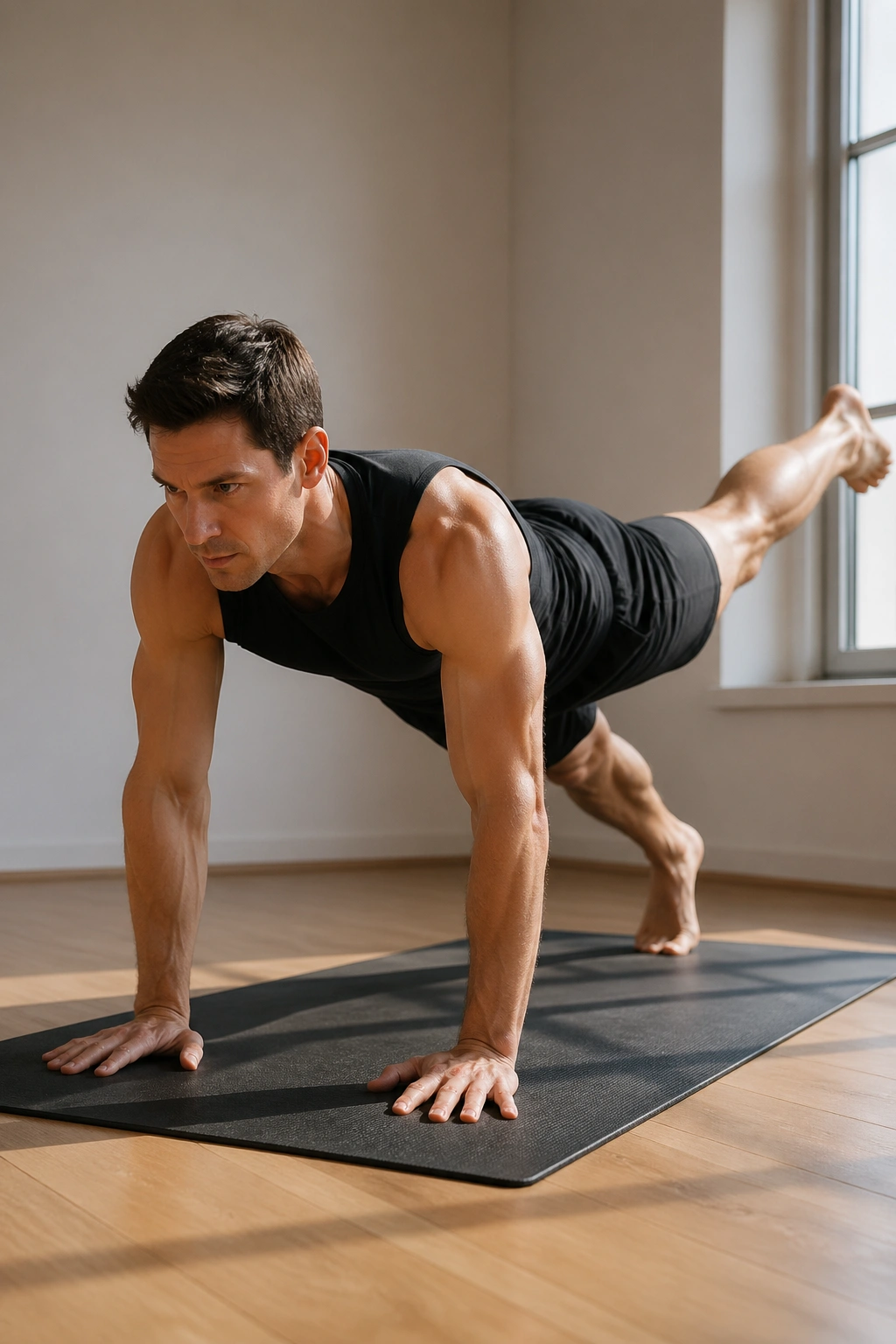
A plank is not just a plank once you start moving one leg. Leg pull front turns a familiar position into a balance test, and that shift changes everything.
What Changes
The moment one leg lifts, the body has to resist rotation, keep the shoulders steady, and stop the pelvis from tipping side to side. That is where the core earns its keep. It is also where a lot of strong men discover they were relying on brute stiffness instead of real control.
The front of the body has to stay long. The back of the body has to stay active. The face should not look like you’re being chased by something dangerous.
Who It’s Best For
- Lifters who need more anti-extension strength
- Runners who want steadier pelvis control
- Anyone whose planks turn into low-back sagging
- People who can hold a clean forearm plank for 30 seconds or more
Try 3 to 5 slow leg lifts on each side. Keep the shifts tiny. If the shoulders drift or the hips swing, hold the plank and build from there. There’s no prize for making it fancier than it needs to be.
13. Rolling Like a Ball for Control Under Load
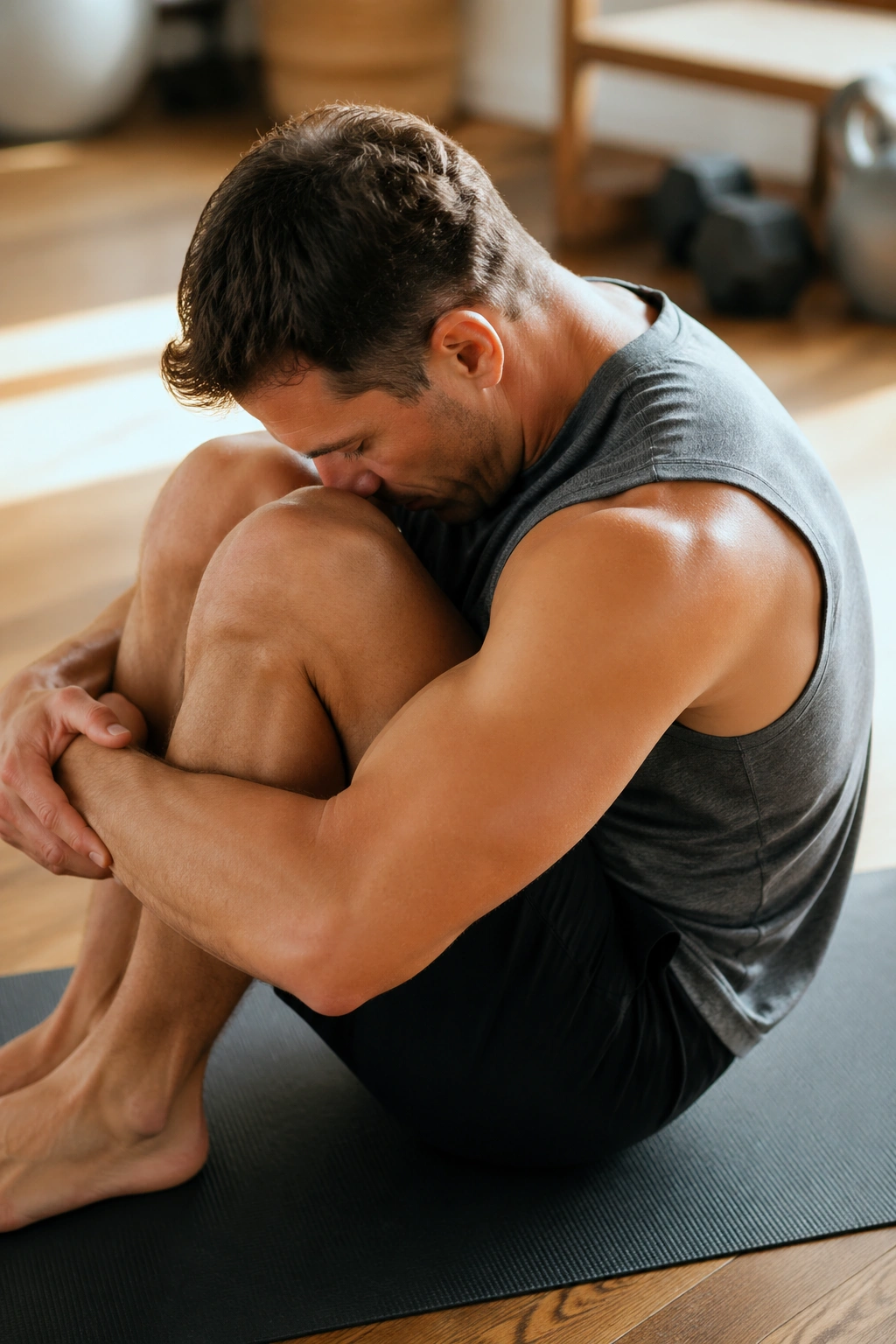
Rolling like a ball is a strange little exercise, and that’s part of why it works. You sit on the mat, round the spine, tuck close, and roll back without letting the movement become a crash. It feels playful for about five seconds, then your abs start negotiating with gravity.
Why It Helps
The body has to stay compact while balanced on the sit bones, which makes the deep abs work hard to control momentum. The round shape also feeds the back a bit of movement, which can feel oddly good if you’ve spent too many hours locked in a chair or behind a steering wheel.
What to Watch For
- Keep the chin tucked gently, not jammed
- Roll onto the upper back, not the neck
- Return to balance without throwing the feet down
- Use the abs to stop the motion, not the heels
A small round shape is better than a huge one. Huge usually turns messy. Small stays honest.
If you’ve never done it before, expect the first few reps to feel clumsy. That clumsiness is useful information. It means the body is learning how to control momentum instead of just fighting it.
14. Corkscrew for Controlled Hip Mobility
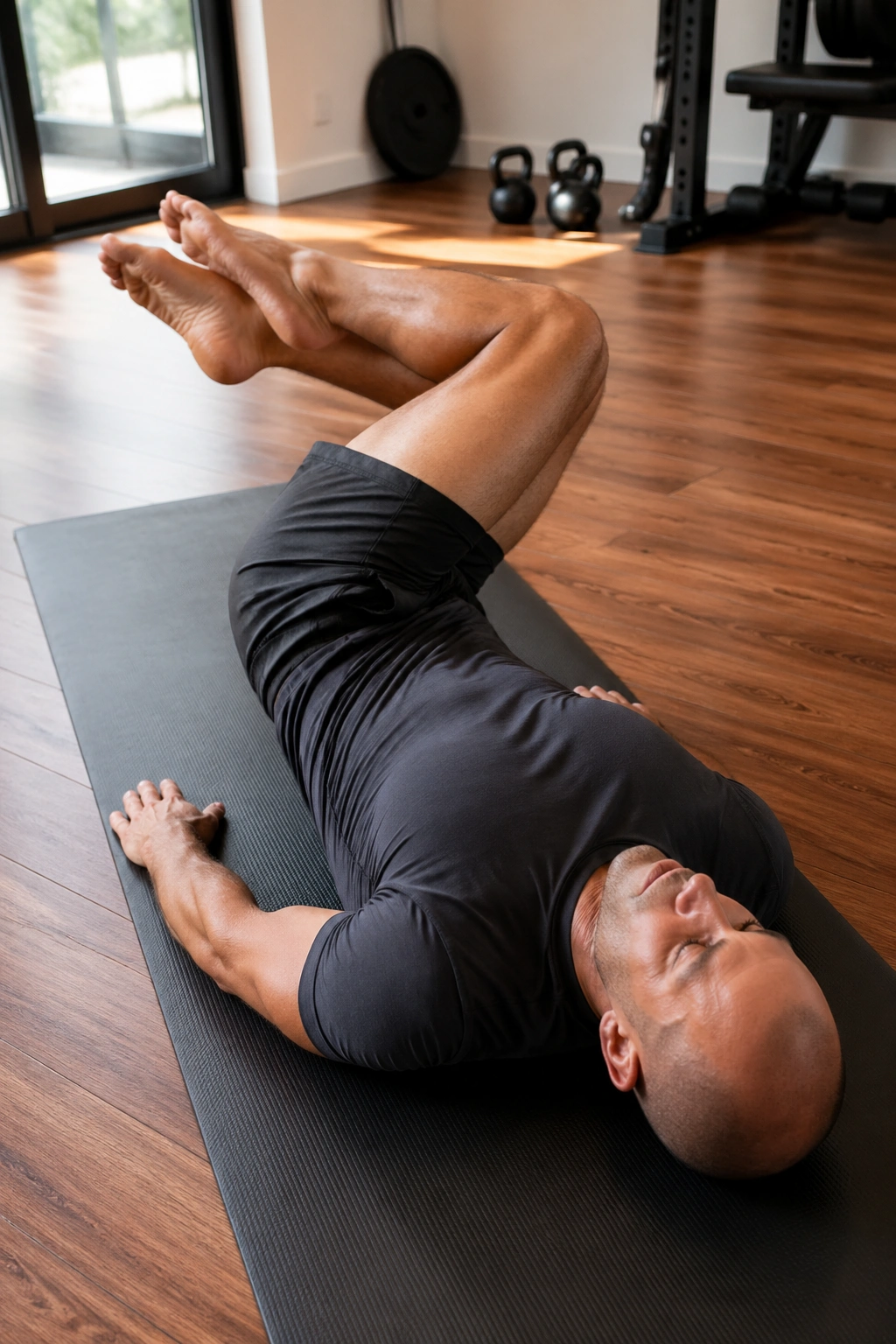
Corkscrew is the move that shows whether your core can guide the legs in a circle without the lower back getting involved. It’s a cleaner test than it looks, and a lot harder than people expect.
Unlike crunches, which mostly go straight up and down, corkscrew asks for controlled circles from the pelvis while the trunk stays anchored. That means the obliques, lower abs, and deep stabilizers have to cooperate. If the circle is too big, the low back starts complaining. If the ribs flare, the shape falls apart.
How to Keep It Clean
- Keep the shoulders heavy on the mat
- Move the legs in a small circle at first
- Let the pelvis stay controlled, not flung around
- Bend the knees if hamstrings or back tension get in the way
This is not the place to show off. Small circles are smarter than big ones. The smaller version builds the kind of control that helps in sport, lifting, and any movement where the hips and trunk have to work together without drama.
15. Double Straight Leg Lower and Lift for Harder Male Abs
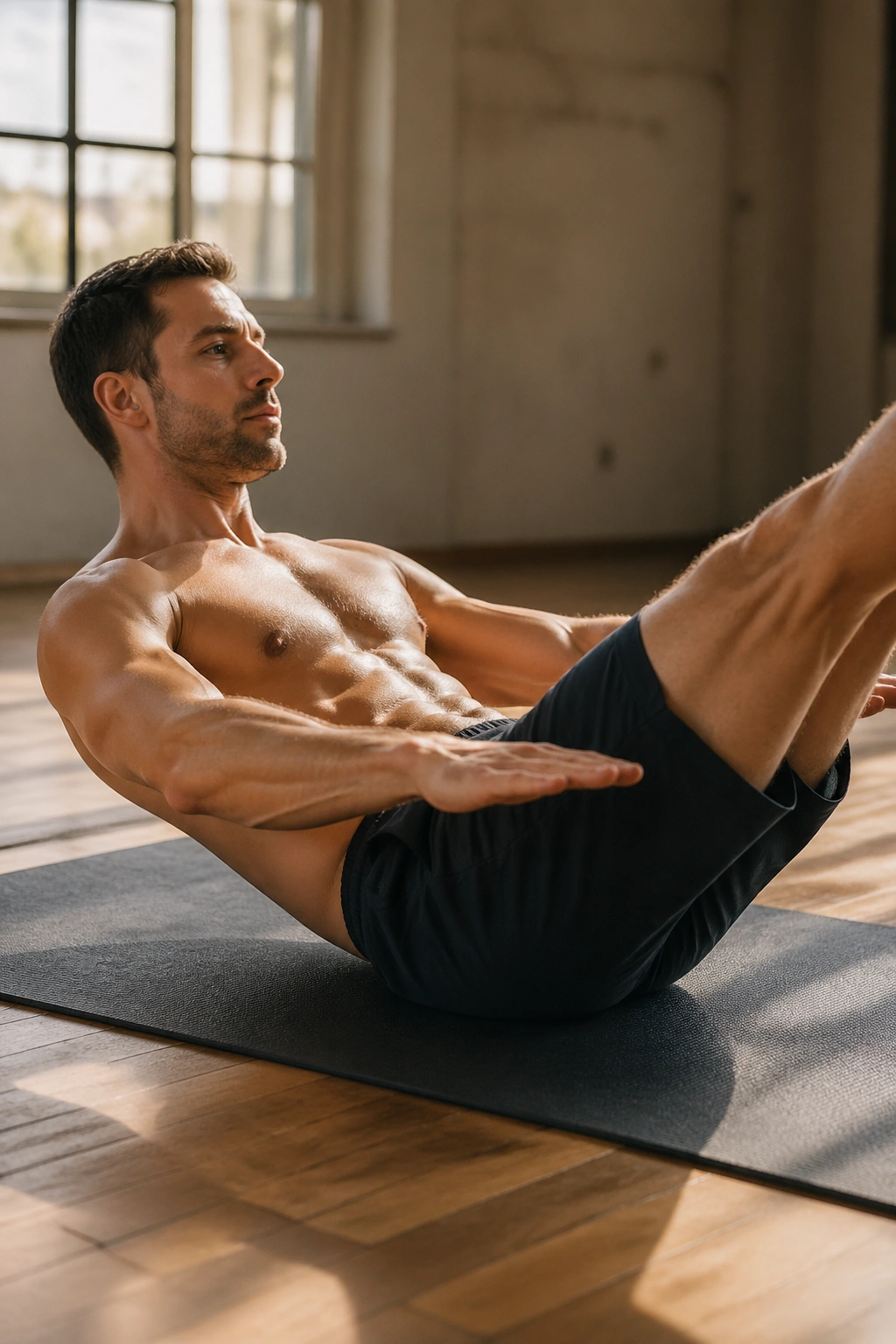
This is the move that tells you whether your lower abs are doing their job or whether your hip flexors have been stealing the show. It looks simple. Legs lift, legs lower, legs lift again. Then your torso starts to wobble if the brace is weak.
Start with the legs vertical or a little bent if needed. Lower them only as far as you can keep the low back connected to the mat. Then lift them back up without snapping the hips or arching the spine. The range can be tiny and still count.
Small range. Quiet ribs. No cheating. That’s the rule.
What Makes It Useful
- The abs have to resist the pull of the legs
- The pelvis has to stay stable under load
- The hip flexors cannot run the entire show
- The movement exposes weak control fast
If your back lifts, shorten the range. If the neck tenses, keep the head down and breathe. If the legs shake, good — that means the body is working hard enough to matter.
Finish with control, not speed. A clean double straight leg lower and lift leaves the core feeling lit up and the lower back still calm. That is the whole point, and it is a fine place to stop.
