



Some of the best Pilates moves that burn belly fat at home are the ones that look almost too calm to matter. That’s the joke, really. A quiet mat session can leave your core shaking harder than a frantic set of sloppy crunches, especially when you move with control instead of speed.
Nope, Pilates does not melt fat from one stubborn patch on your stomach. Body fat comes off the body as a whole, which is annoying, but it also means a smart home routine can help in a real, useful way: more total movement, more muscle work, better posture, and a midsection that looks tighter because it’s being held differently.
I like Pilates for this job because it’s sneaky. A move can seem gentle for the first 15 seconds, then your abs wake up, your hips start negotiating, and your breathing gets honest. That’s the sweet spot. You want enough tension to make the work count, but not so much chaos that your form falls apart after the second rep.
So, start with the one that looks easiest. It usually lies.
1. The Hundred for a Faster Core Burn
The Hundred is the move that tricks people. It looks like warm-up work, then your abs start shaking by count sixty.
Why It Earns a Spot
Lie on your back, lift your head and shoulders, and pump the arms while you keep the breath steady. That rhythmic breathing pattern is the whole point. It forces your trunk to stay braced while the arms do quick, repetitive work, which is exactly why this move shows up so often in a solid mat Pilates session.
I like the Hundred near the top of a workout because it wakes up the deep core without needing much space or any equipment. If you’re trying to build a home routine that feels efficient, this one pulls its weight fast.
- 100 arm pumps total: usually 10 strong cycles of 5-count inhale and 5-count exhale.
- Legs can stay bent in tabletop if your lower back complains.
- Lower the head if the neck starts doing the work.
- Keep the ribs heavy so you do not flare through the chest.
Pro tip: if your low back lifts off the mat, make the move smaller. Smaller is not weaker here. It’s cleaner.
2. Roll-Ups That Build Control From Rib Cage to Hips
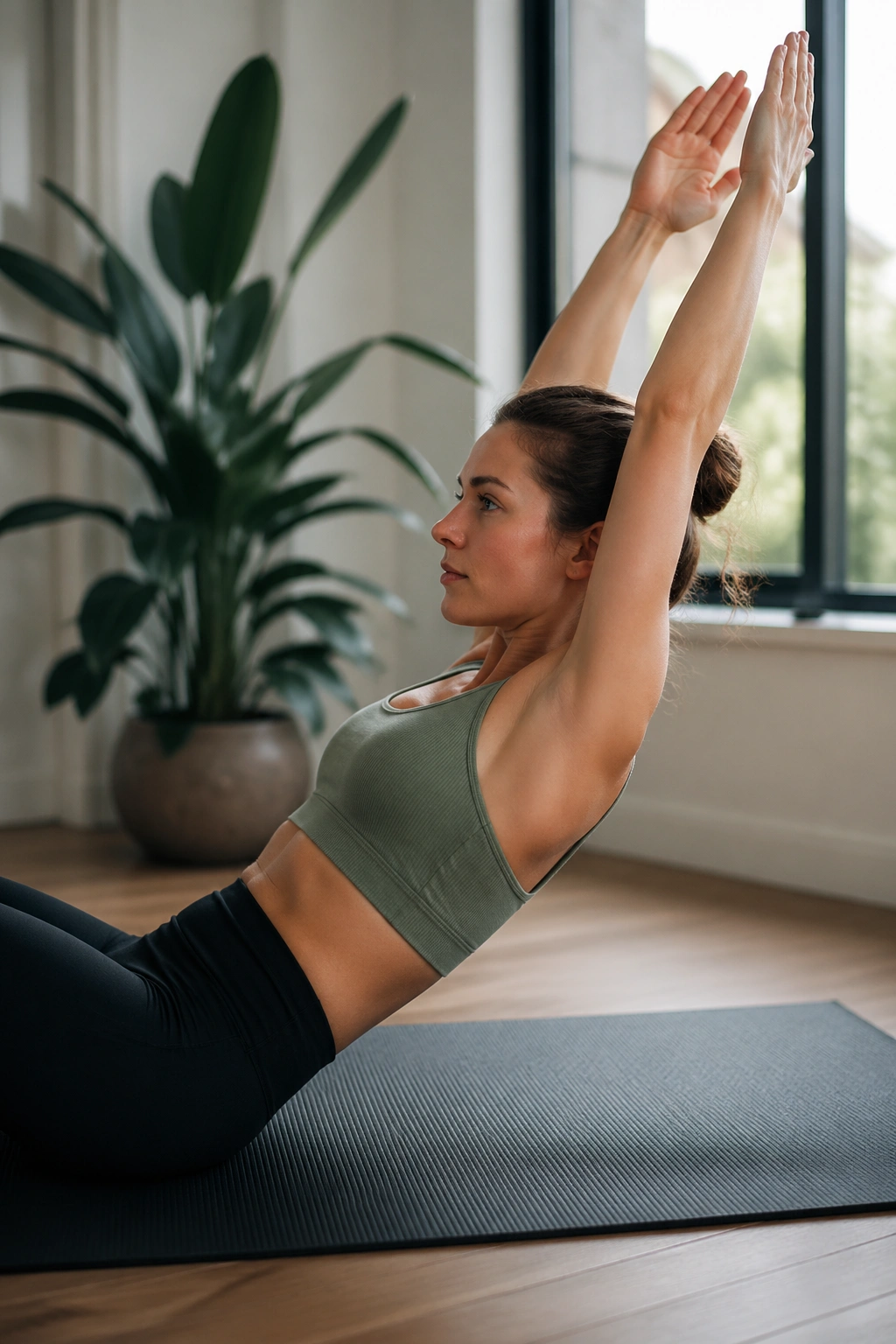
A roll-up is slow on purpose. That’s what makes it useful.
You start lying flat, reach the arms overhead, then peel yourself up one vertebra at a time until you’re seated. From there, you reverse the whole thing with control. It’s part core strength, part spinal mobility, and part patience, which is annoying if you want fast reps but excellent if you want a tighter, better-controlled midsection.
Slow is the point. If you toss your body upward, the hips and neck usually steal the work. If you move like you mean it, the abs have to stay on the job from start to finish. That long, controlled descent is where the real work happens anyway.
If your hamstrings feel tight or your lower back rounds too early, bend the knees a little. That tiny change can save the whole movement. I’d rather see a clean roll-up with bent knees than a wobbly straight-leg version that turns into a flop.
3. Single-Leg Stretch for Lower Abs That Actually Stay On
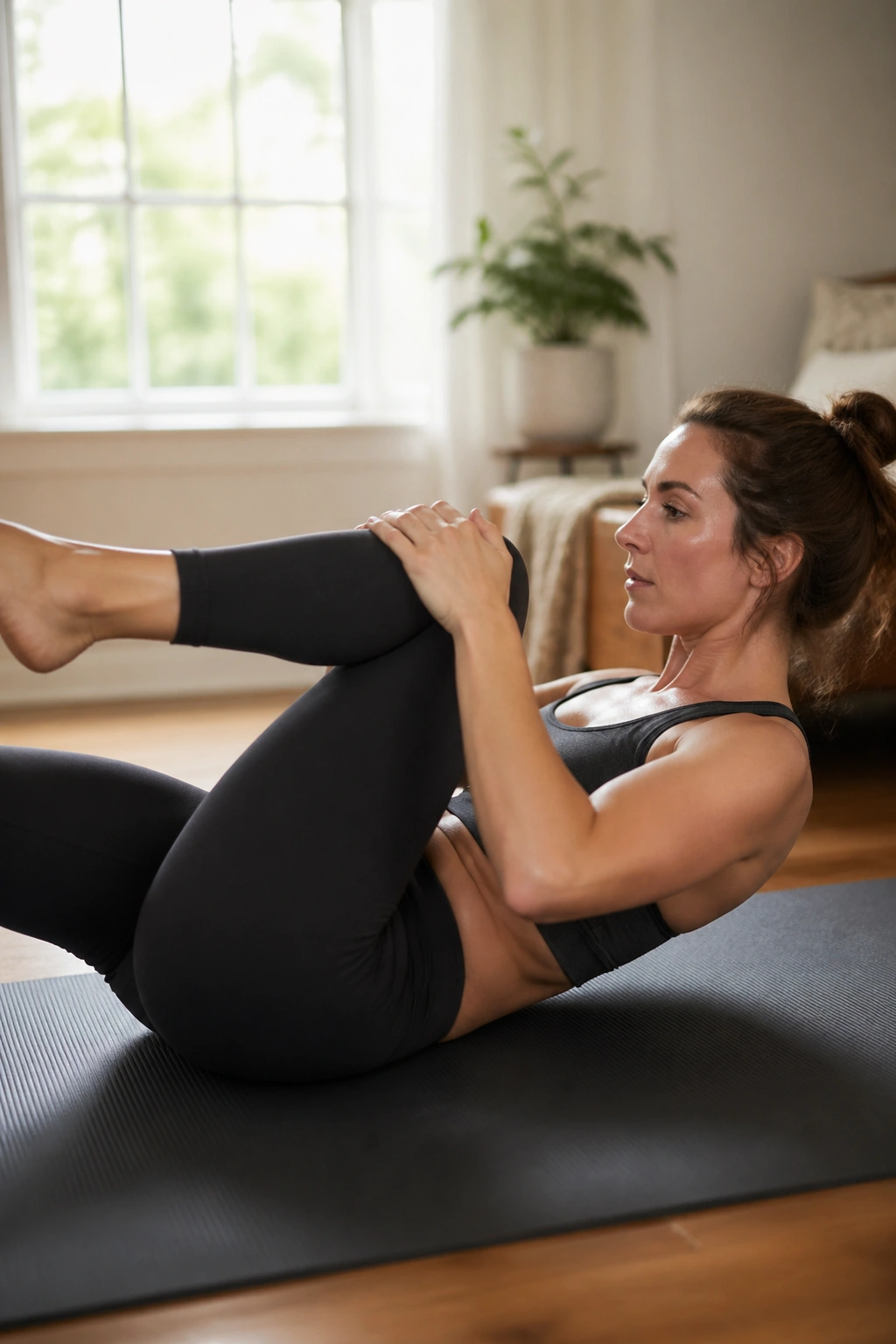
Why does a move this small burn so much? Because the legs keep changing shape while the core refuses to quit.
The single-leg stretch asks one knee to come in while the other leg reaches long, low, and controlled. Your head and shoulders stay lifted, your hands guide the switch, and your lower belly has to keep the pelvis steady instead of letting the back arch. It looks modest. It is not modest.
How to Get the Most From It
The mistake here is speed. People whip the legs through the air and call it control, but all that really does is hand the work to momentum. Slow the switch down. Breathe out as one leg extends, breathe in as you pull the next knee in, and keep the front of the ribs from popping up.
- 8 to 12 switches per side is enough for a solid set.
- Knees can stay a little higher if your back is sensitive.
- Keep the chin slightly tucked, not jammed toward the chest.
- Reach the long leg low only as far as you can hold the pelvis still.
If you feel the neck tightening, lower your shoulders for a beat and reset. That tiny pause is better than fighting through sloppy reps.
4. Double-Leg Stretch When You Want the Work to Get Real
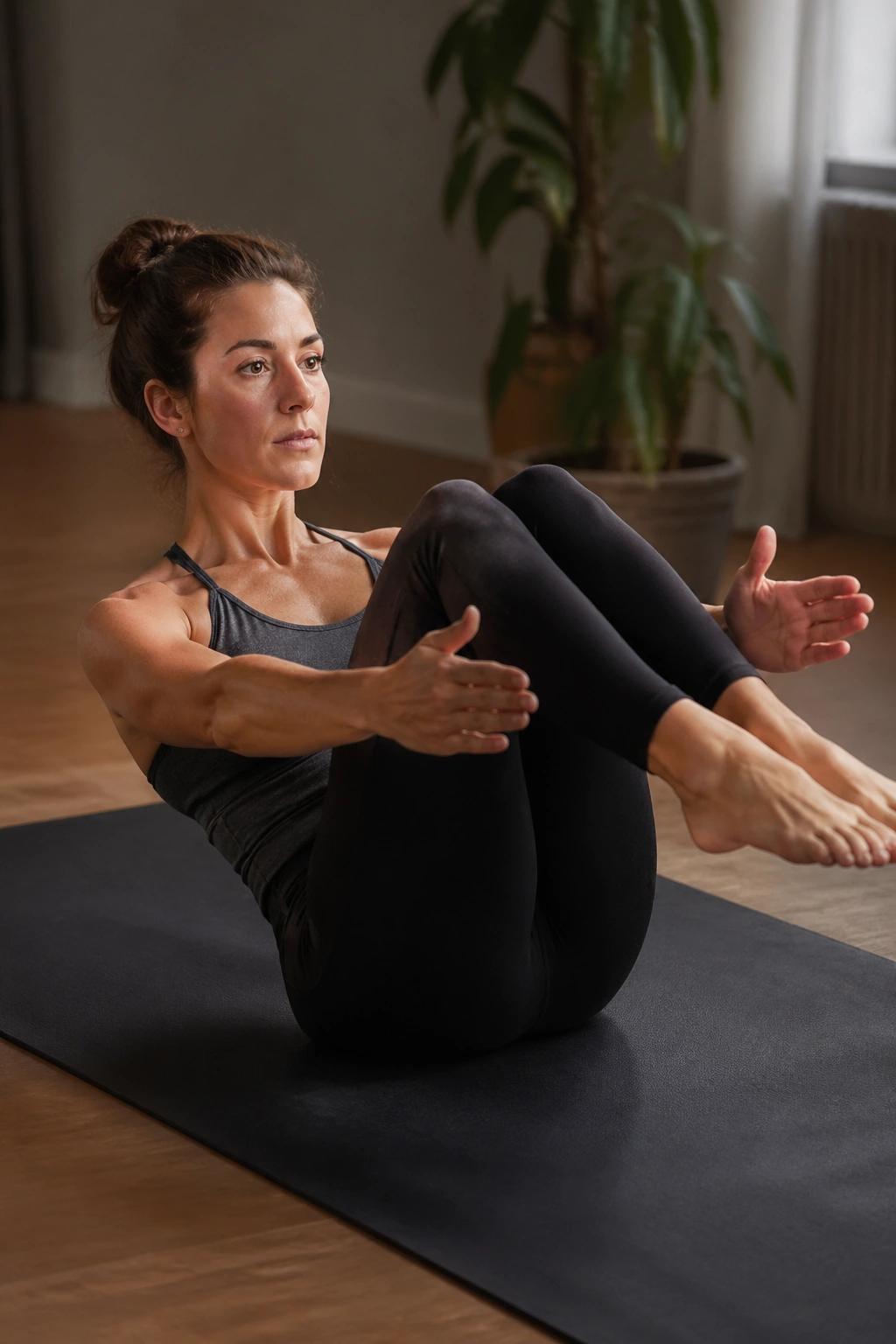
The double-leg stretch is where a lot of people meet their limit. Politely. Then all at once.
You curl up, draw both knees in, extend the arms and legs away from the center, then sweep everything back to the start. It sounds simple, and it is simple, but the lever gets longer and the abs have to work harder to stop the lower back from arching off the mat.
This is one of my favorite core moves because it punishes laziness fast. If you lose control, you know it immediately. The stomach feels that little drop in the middle, and the body has to scramble to catch up. That feedback is useful.
Try 6 to 10 clean reps instead of chasing a big number. Quality matters more here than in a lot of workout moves. If the legs go too low and the back starts lifting, shorten the range and keep the ribs down. The goal is tension, not a dramatic leg swing.
5. Criss-Cross for the Obliques Without the Neck Tug
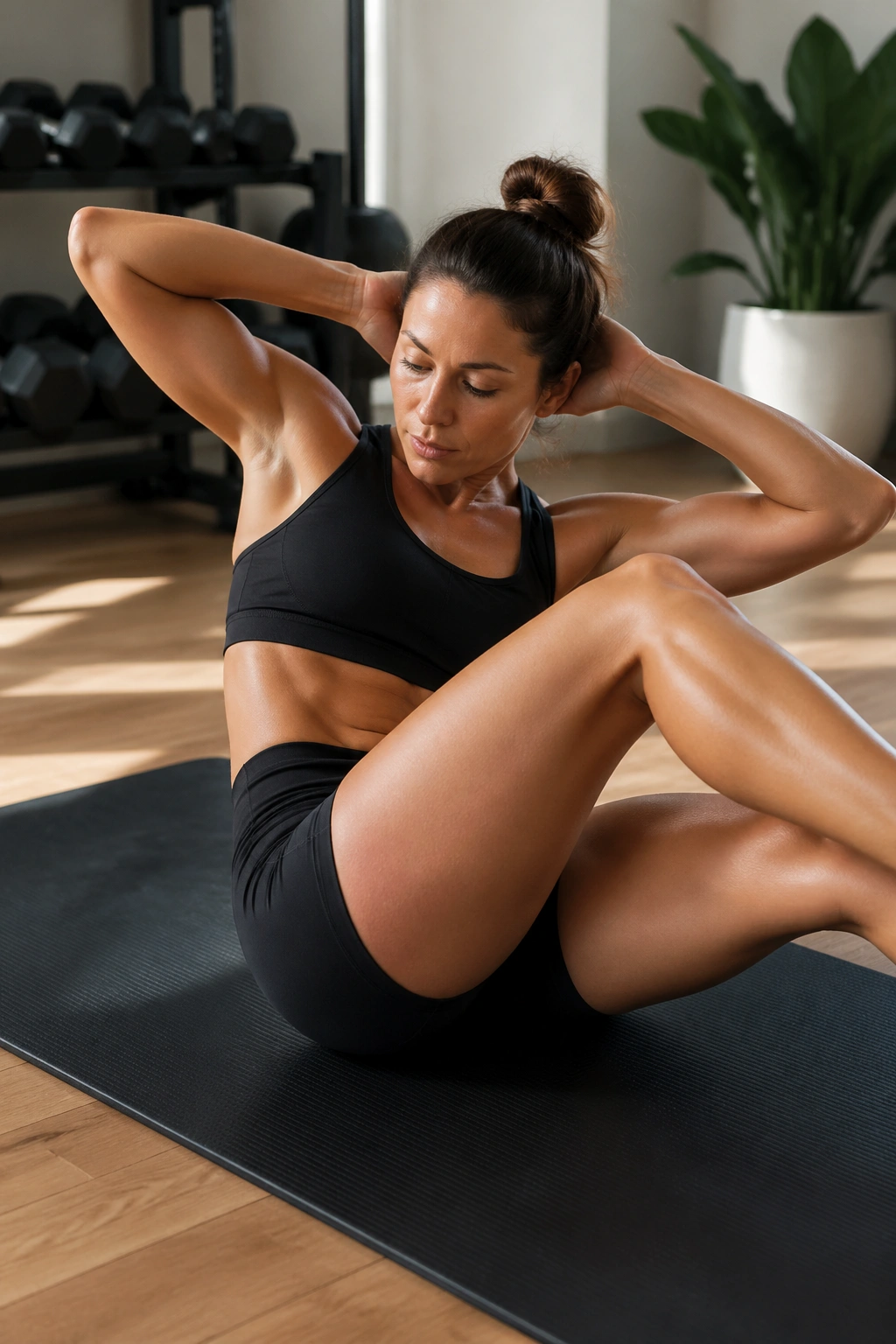
Criss-cross is the Pilates version of a bicycle crunch that remembers manners.
Instead of flinging the elbows and racing through reps, you twist the torso and let the shoulder blade lead the turn. One knee draws in, the opposite leg reaches out, and the rib cage rotates across the body. That side-body twist is gold if you want stronger obliques and a waist that looks more held together.
A lot of people overdo the neck here. Don’t. Keep the hands light behind the head, elbows open, and the eyes on the ceiling rather than yanking the chin toward the chest. The twist should come from the ribs and waist, not from cranking the neck like a stubborn jar lid.
I’d use 8 to 10 controlled reps per side. If you feel your hip flexors taking over, slow down and bring the legs a little higher. That usually brings the abs back into the conversation, which is where they belong.
6. Plank to Pike for a Bigger Calorie Burn
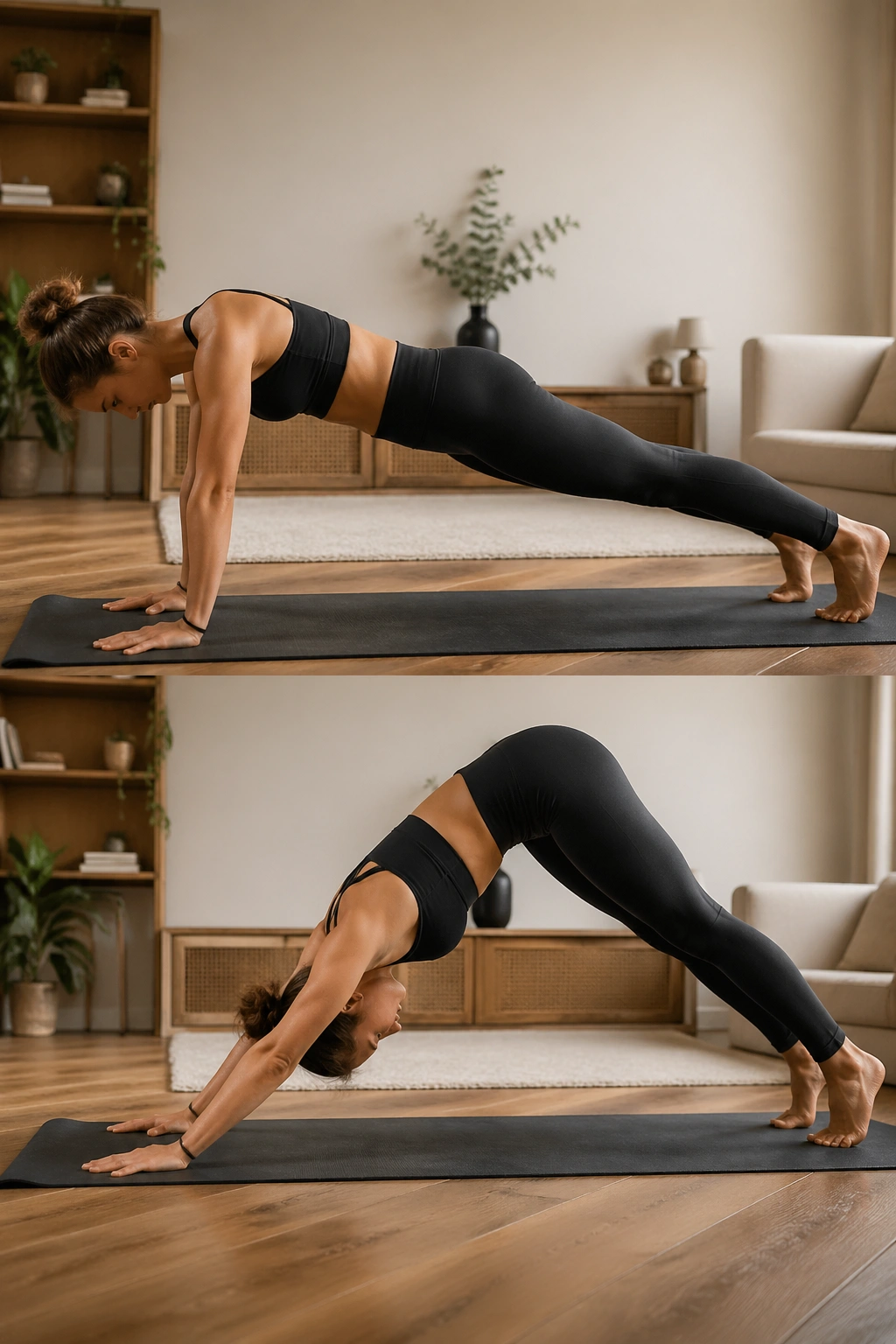
If you want a Pilates move that feels more athletic, this is one of the better ones.
From a plank, you lift the hips up and back into a pike, then return to plank with control. That shift asks for shoulder stability, upper-body strength, and a core that can hold firm while the body changes shape. It also tends to raise the heart rate more than the classic floor-only work, which makes it a smart pick when you want a little more calorie burn from a home session.
This is not the move to rush. If your hips shoot up and your ribs dump down, the abs miss the whole point. Press the floor away, keep the shoulders active, and think about length through the heels on the way back to plank.
One clean set can be 6 to 10 reps, or you can work for 20 to 30 seconds if you’re building it into a circuit. Either way, the goal is smooth motion, not a scramble.
7. Shoulder Bridge for the Back Side of the Body
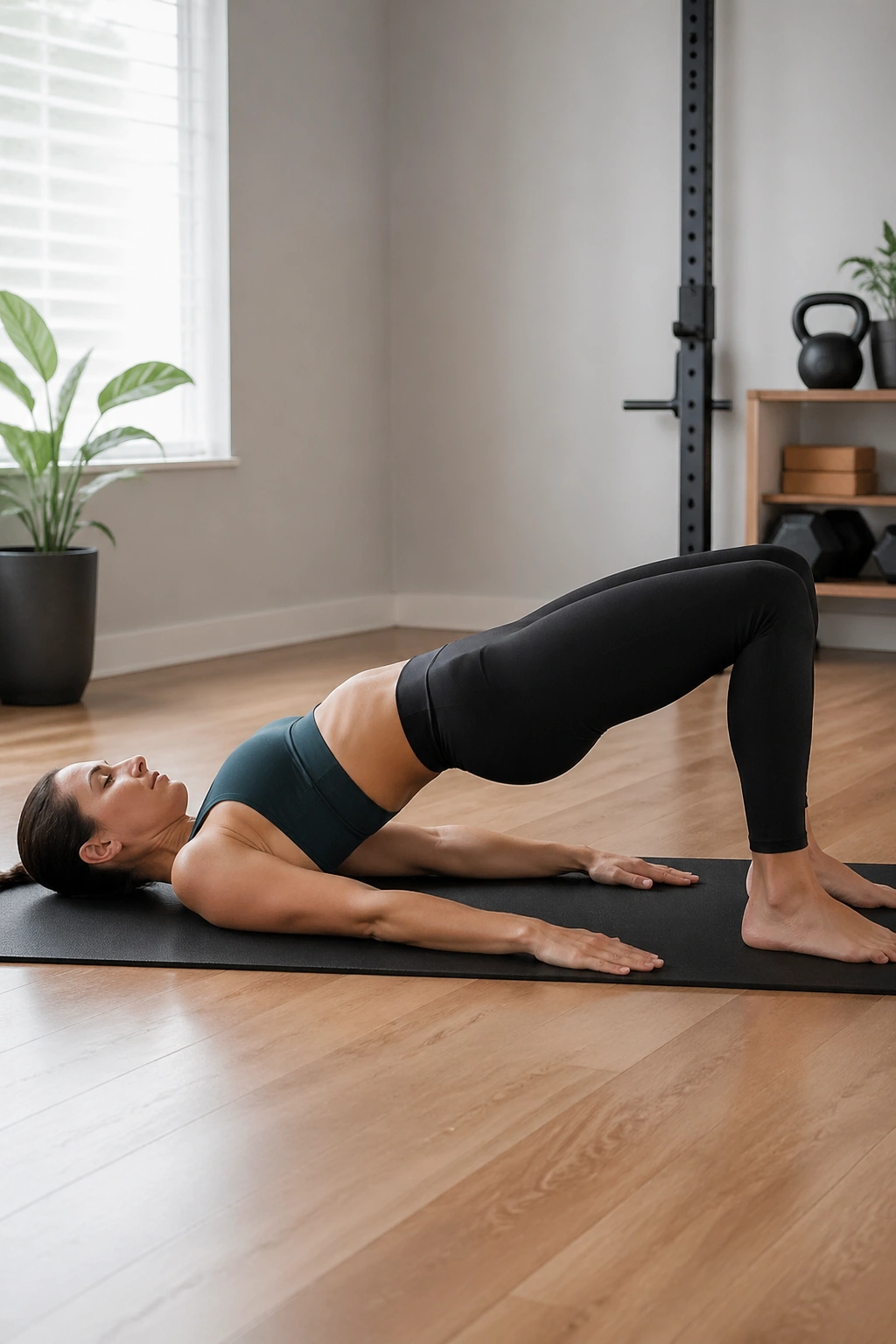
A shoulder bridge looks calm. Then the glutes light up and the pelvis starts to feel every inch of it.
You lie on your back, feet flat and hip-width apart, then peel the hips off the mat until your body forms a long line from shoulders to knees. That line matters. If you lift too high and dump the work into the lower back, the move gets sloppy fast. If you keep the ribs quiet and drive through the heels, the glutes and hamstrings take over in a good way.
Small Details That Matter
- Press evenly through both feet, not just the toes.
- Keep the knees tracking forward, not splaying out.
- Hold at the top for 2 to 3 breaths if you want more time under tension.
- Lower one vertebra at a time instead of dropping the hips.
I love bridges as a counterbalance to all the front-body work. Strong glutes help the pelvis sit better, and that can change how the whole midsection looks when you stand. Not magic. Just mechanics.
8. Side Plank With Hip Dips for the Waistline’s Side View
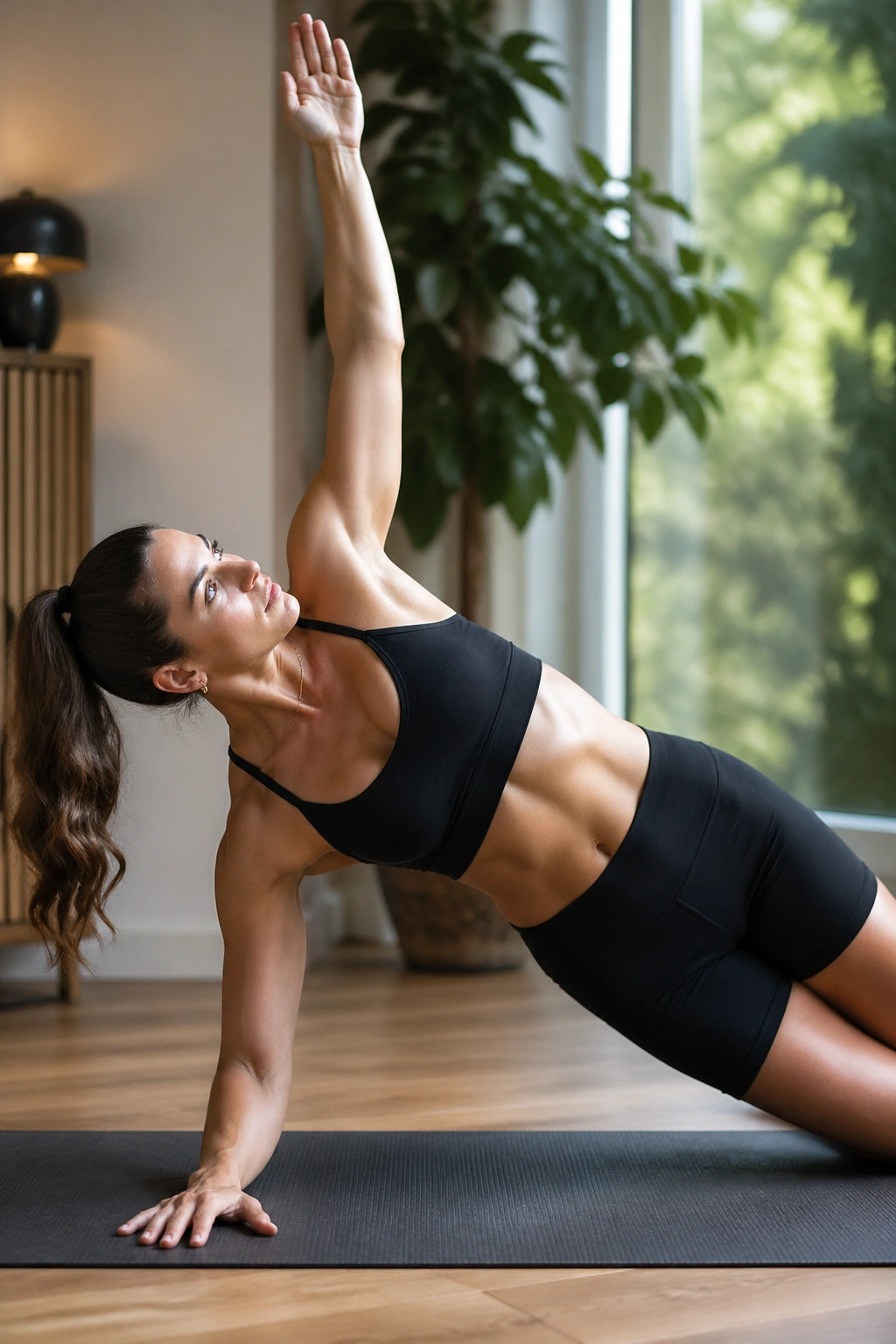
Can a side plank help with belly fat? Not directly. But it can make the middle look sharper because it trains the side body, the shoulders, and the muscles that keep your trunk from collapsing inward.
The side plank with hip dips is a little ugly in the best way. You lift into a side plank, lower the hip a few inches, then raise it back up under control. That tiny down-up motion turns a static hold into a real strength set. The obliques have to fight to keep you from folding in the middle, and the shoulder on the floor has to stay awake the whole time.
How to Use It
If a full side plank feels too spicy, drop the bottom knee to the floor. Keep the top leg long, or stack both knees for a shorter lever. Do 5 to 8 dips per side or hold the position for 20 to 30 seconds before dipping.
The move gets better when you stop thinking about how high the hip goes and start thinking about how steady the ribs stay. That’s the real job here. Clean lines. No wobble.
9. Swimming for the Back Body and a Braced Core
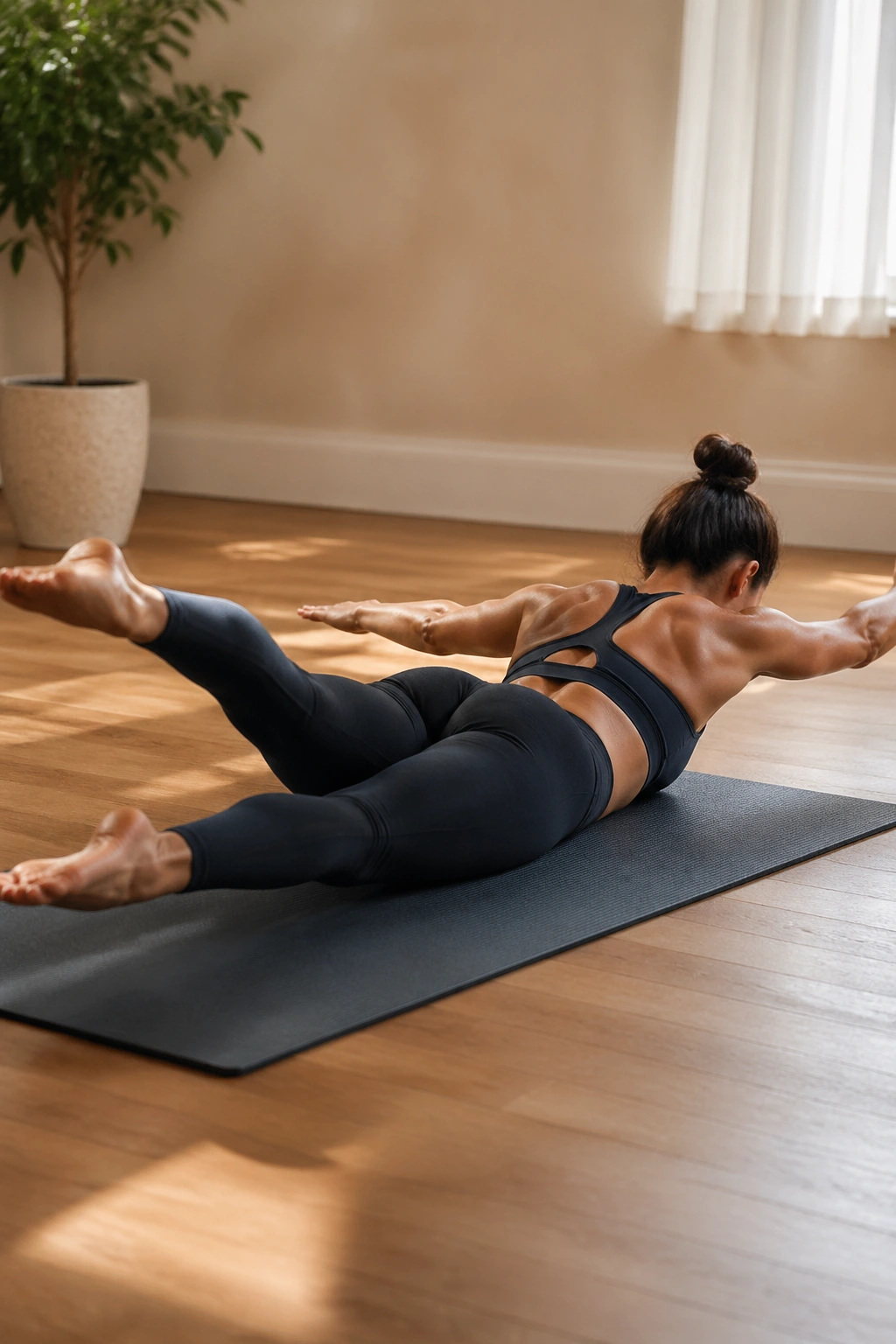
Swimming is one of those moves that looks almost gentle until your body starts to tremble.
You lie face down, reach the arms and legs long, then lift opposite arm and leg in quick, small pulses. The neck stays long, the pelvis stays heavy, and the back of the body works in a way most ab drills never ask for. That matters more than people think. A strong back side helps posture, and better posture changes how your waist looks even before you lose a pound.
I like this move because it feels like movement, not punishment. Still, it sneaks up on you. After 20 or 30 seconds, the glutes wake up, the upper back starts to work, and the lower abs have to keep the torso from tipping all over the place.
Keep the lifts small. Tiny is fine. If the chest is heaving off the mat and the legs are flying high, the lower back usually pays the price.
10. Leg Circles That Teach Your Hips Not to Wander
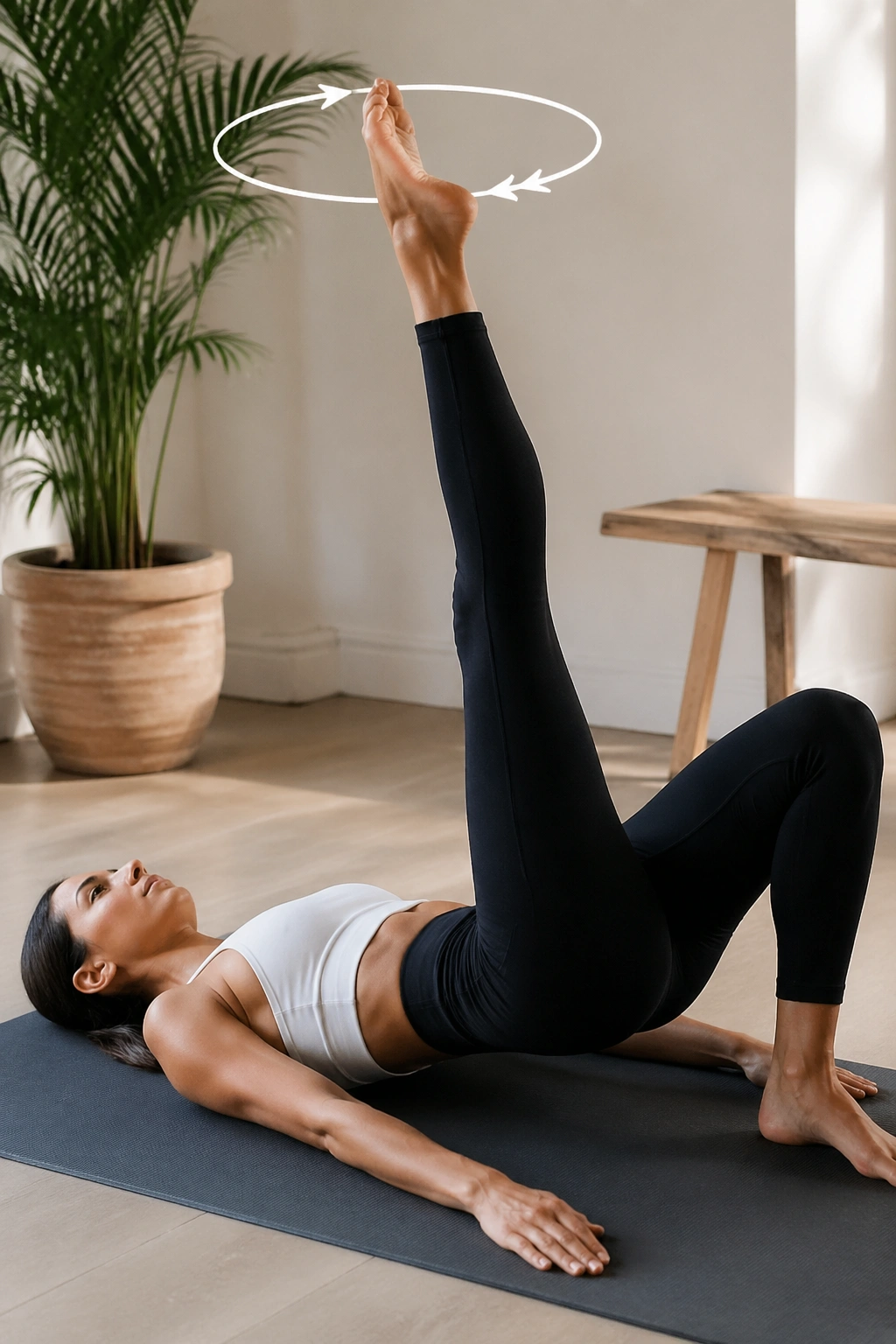
Leg circles are easy to underestimate. Then your hips start rocking and the whole thing turns into a lesson.
Lie on your back, extend one leg up toward the ceiling, and draw a slow circle from the hip. The circle does not need to be huge. In fact, it probably shouldn’t be huge. Think about the size of a dinner plate, maybe a little smaller if your pelvis likes to roll around. The standing leg and the lower abs have to stay steady while the moving leg traces the air.
What to Watch For
If the lower back arches, the circle is too big. If the opposite hip lifts off the mat, the circle is too big. If your foot cramps, pause and flex and point the ankle a few times before continuing.
- 5 circles each direction per leg is plenty to start.
- Keep the toes gently pointed or flexed, whichever feels smoother.
- Exhale through the top half of the circle to help control the descent.
- Move slowly enough to notice when the pelvis tries to wiggle.
This is not a flashy move, and that’s exactly why it works. Control beats drama here.
11. Teaser Prep When You Want a Move That Feels Serious
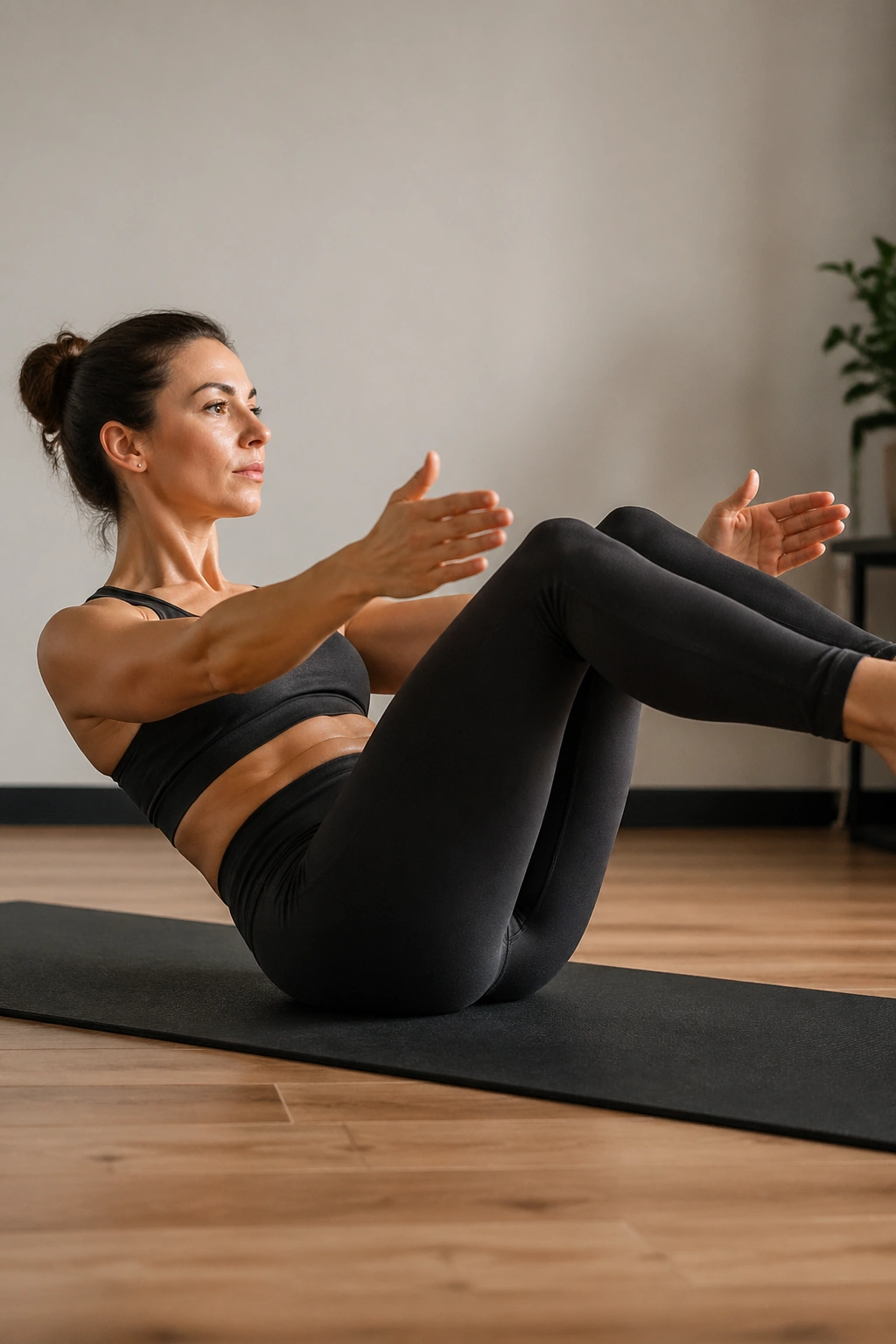
I use teaser prep when I want the session to stop being polite.
The full teaser is a hard move, and no one needs to fake mastery. Teaser prep gives you the important part without the show-off nonsense. You roll the torso up as the legs extend or stay bent, then hold the balance for a breath before lowering with control. It asks for deep abdominal strength, hip control, and a little humility.
This is one of the few Pilates moves that can expose every weak link at once. If the hip flexors take over, you feel it. If the lower back gets sloppy, you feel that too. If you rush, the body folds like a lawn chair. So go slower than your pride wants.
I like to do 4 to 6 reps with bent knees first, then try a longer-leg version only if the shape stays clean. You are looking for a controlled curl, not a flinch.
12. Saw for Rotation, Hamstrings, and a Taller Spine
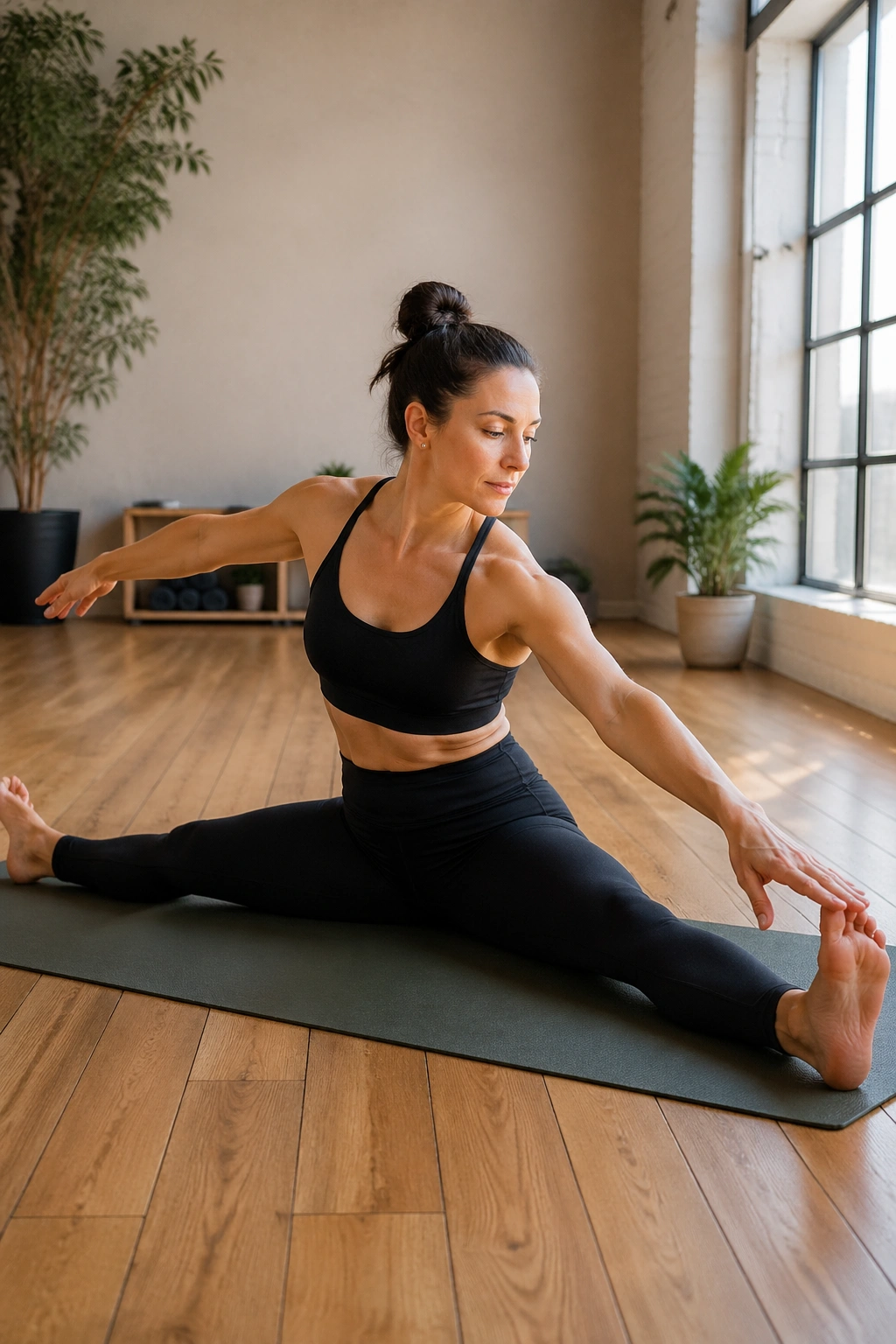
What if your waist work also opened your hamstrings? The saw does that nicely.
Sit with your legs wide, arms stretched out to the sides, then rotate the torso and reach one hand toward the opposite little toe. The reach should feel long through the spine, not like a collapse toward the floor. That twist hits the obliques, but it also asks the back line of the legs to stay honest, which is useful if your lower body tends to feel tight during floor work.
The key is to sit tall before you twist. If you round over at the start, the stretch gets messy and the core stops helping. A clean setup makes the movement feel much more like a controlled spiral than a fold-and-fling.
Try 5 to 6 reaches per side. If your hamstrings protest, bend the knees a little or sit on a folded towel. That small lift can keep the spine long enough for the twist to work.
13. Dead Bug Pilates for a Lower-Back-Friendly Core Drill
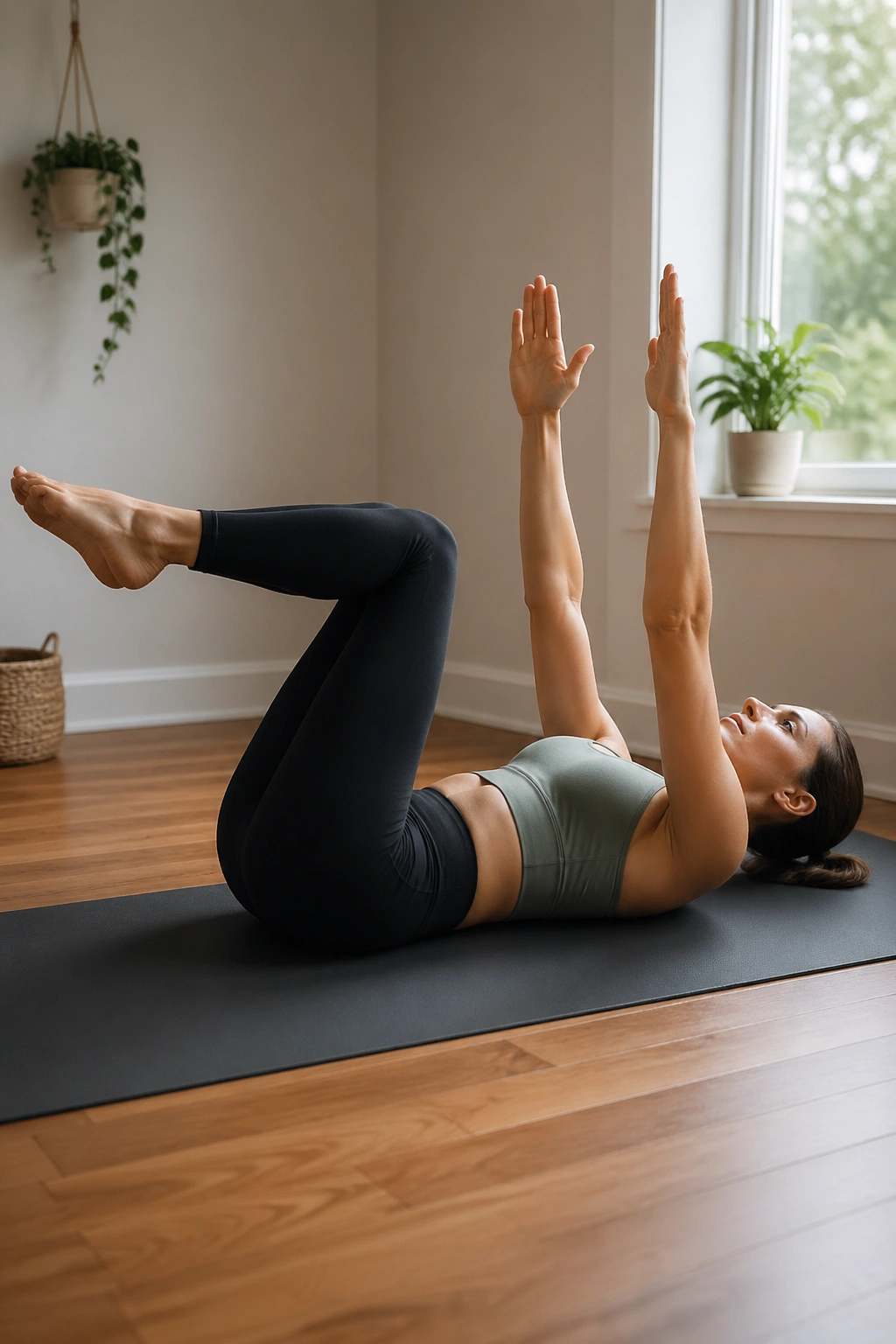
Dead bug is the move I recommend when somebody wants core work but doesn’t want their back yelling at them afterward.
You lie on your back with the legs in tabletop and the arms reaching upward. Then you lower one arm and the opposite leg away from the body while keeping the ribs from popping up and the lower back from arching. It’s a quiet drill, but it teaches one of the most important things in Pilates: how to hold your center steady while the limbs move around it.
Why It Works
The exercise trains anti-extension, which is a plain way of saying your trunk resists flattening too far or arching too much. That skill matters in almost every other move on this list. It also gives you a clear read on your control. If the back lifts, you went too low. If the neck tightens, you’re overreaching.
Use 6 to 10 reps per side and keep the lowering phase slow, about 3 seconds down. That little pause at the bottom is worth more than speed.
14. Bird-Dog Reach for a Stable Torso and Smarter Hips
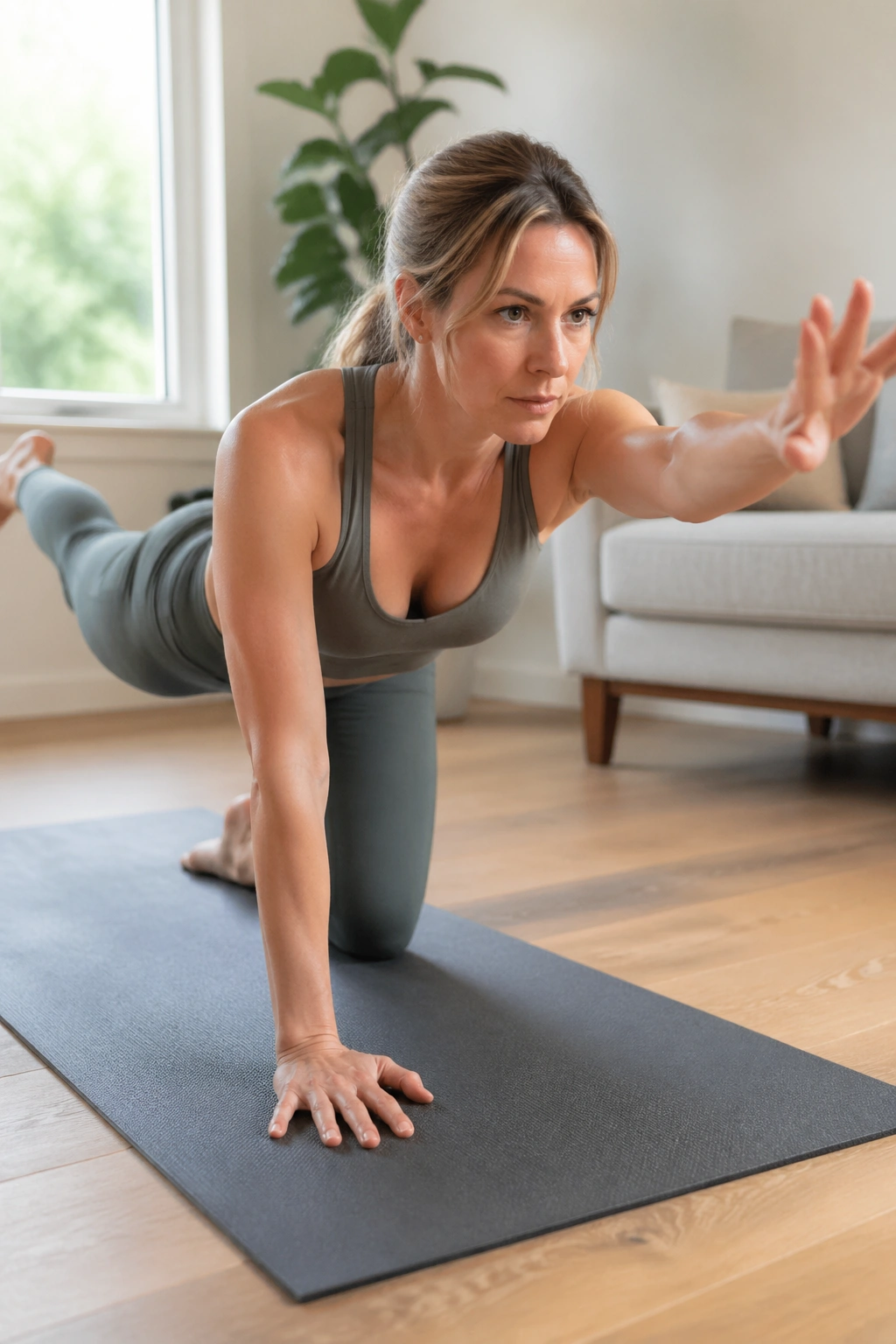
Bird-dog looks almost too easy on paper. Then the hips wobble and the story changes.
Start on all fours, extend one arm and the opposite leg, and hold long enough to prove the torso can stay square. That’s the real job. A lot of home workouts jump straight to “burn” and forget control, but bird-dog earns its place by teaching the body not to twist every time a limb leaves the floor.
Quick Cues That Help
- Wrists under shoulders, knees under hips.
- Reach long instead of lifting high.
- Pause for 2 breaths before switching sides.
- Keep the pelvis level so one hip doesn’t tilt open.
If you want a tougher version, bring the elbow and knee in under the torso, then re-extend without letting the spine sag. If that feels wobbly, go back to the simple reach. Clean bird-dogs done slowly can be far more useful than a rushed, fancy version that looks busy and does very little.
15. Single-Leg Kick for Glutes, Hamstrings, and Control
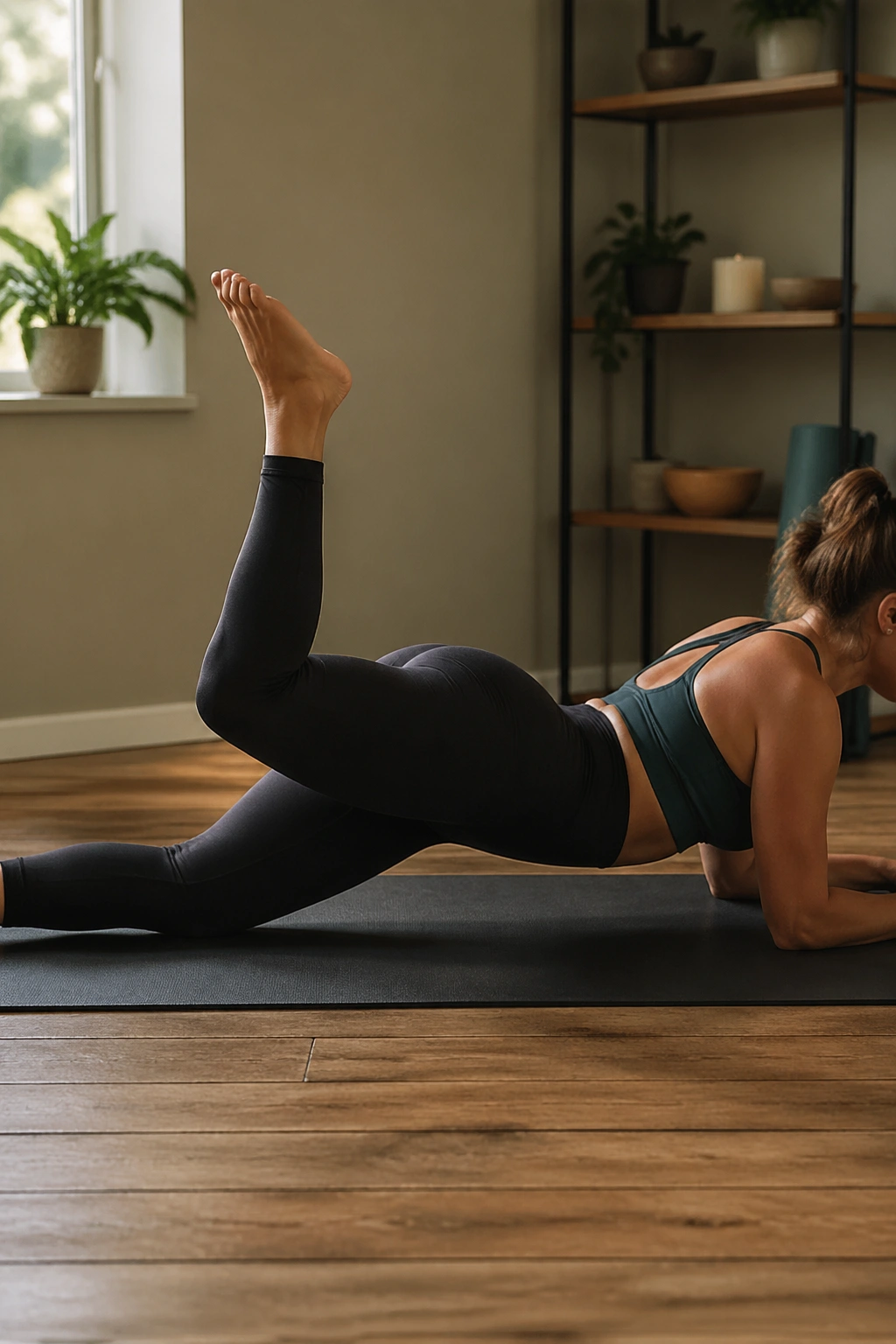
Single-leg kick is one of those mat Pilates moves that feels old-school in the best way.
You lie face down, prop up on your forearms, and kick one heel toward the glute twice before switching sides. The upper body stays lifted, the abs stay lightly braced, and the back line of the body does the work. It’s not a cardio burner in the loud sense, but it keeps the trunk engaged while the legs move, which is exactly what a lot of home routines need.
The trick is not to let the pelvis rock side to side. If your hips shift every time you kick, the lower back starts to take over. Keep the thighs long on the mat and think about length through the crown of the head. That keeps the neck from cranking upward like a bad selfie.
Try 5 to 8 kicks per side. Small, smooth, controlled. That’s the whole game.
16. Double-Leg Kick for a Stronger Back Line
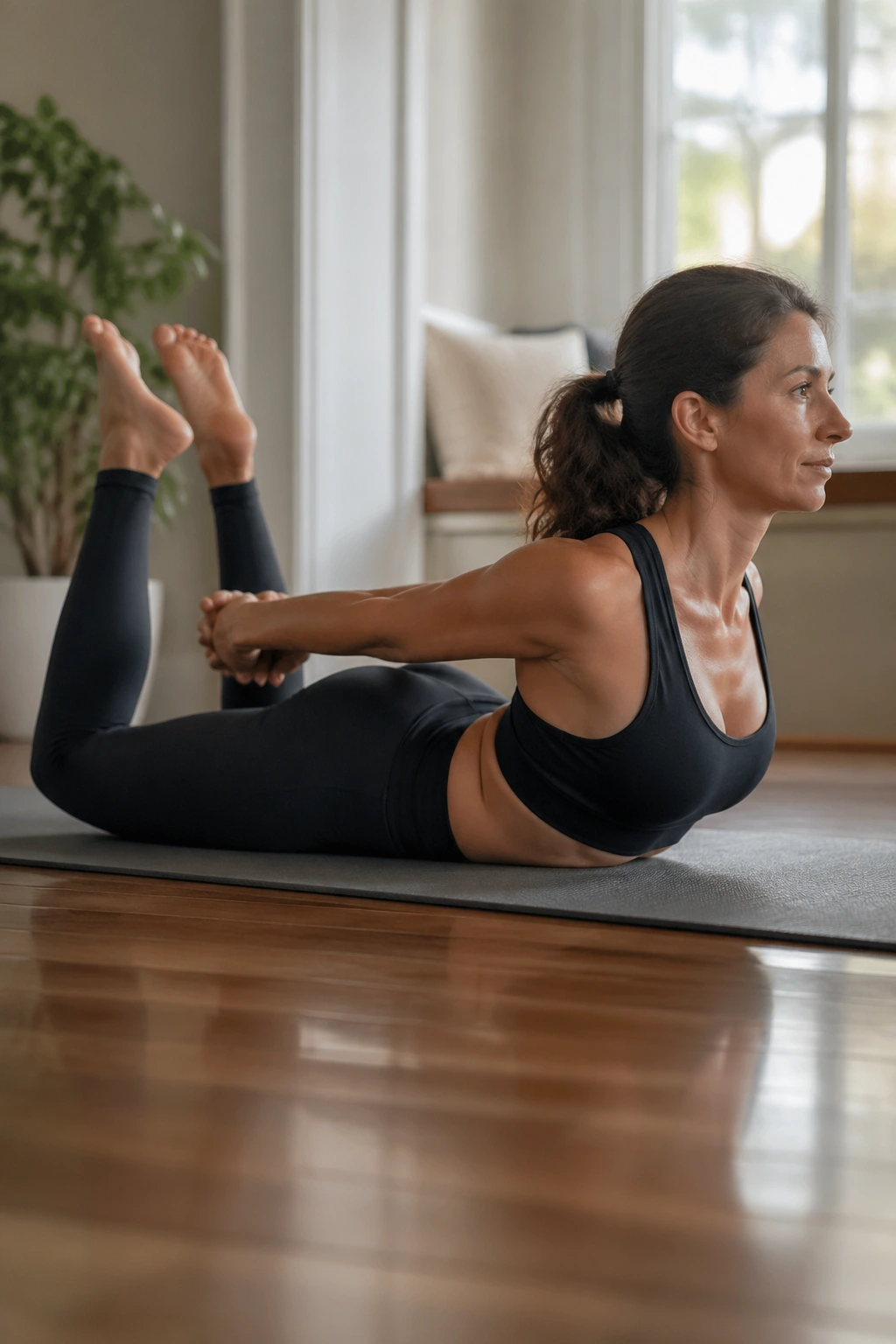
The double-leg kick is the tougher sibling of the bridge. A little less cozy. A lot more demanding.
You lie on your stomach with the head turned to one side, hands clasped behind your back, then kick both heels toward the glutes three times before stretching the arms back and lifting the chest. It trains the glutes, hamstrings, upper back, and spinal extensors in one tight package. The movement feels deliberate and maybe even a little awkward at first, which is fine. Awkward is often where the useful work lives.
Unlike bridge work, this one asks you to hold extension from the front, not just lift from the back. That changes the feel completely. The chest floats, the shoulder blades stay down, and the lower ribs try not to fling open.
Do 3 to 5 rounds per side and keep the kicks small. If the neck feels jammed, lower the lift and make the extension shorter. No prize goes to the person who overdoes it.
17. Seated Spine Twist for a Tighter, Taller Midsection
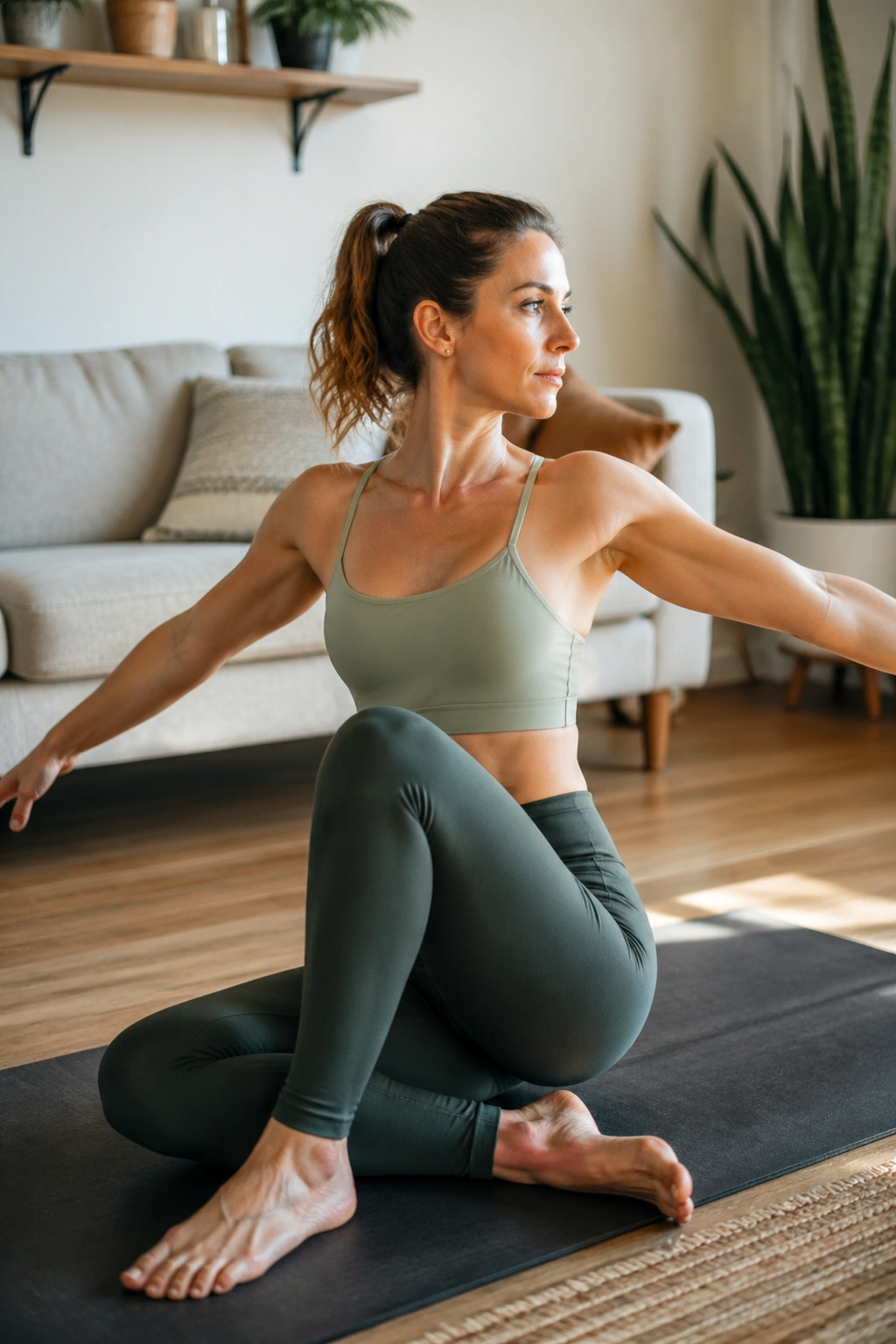
Can a seated twist do anything for your belly? Not by itself, no. But it can train the trunk to rotate cleanly, and that shows up in how you stand, reach, and move all day.
Sit tall with the legs extended or crossed, arms out at shoulder height, then rotate from the ribs rather than swinging the arms around like a coat hanger. The hips should stay rooted. The spine stays long. The breath helps you find a little more turn without collapsing the chest.
I prefer this move when the workout has started to feel too front-loaded. A seated twist gives the abs a different job. Instead of curling or bracing against extension, they stabilize while the torso rotates. That balance matters.
Try 4 to 6 twists per side and keep the pace smooth. If the shoulders creep up, pause and reset. If the lower back rounds, sit on a folded towel and try again.
18. Jackknife for a Harder Finish on the Mat
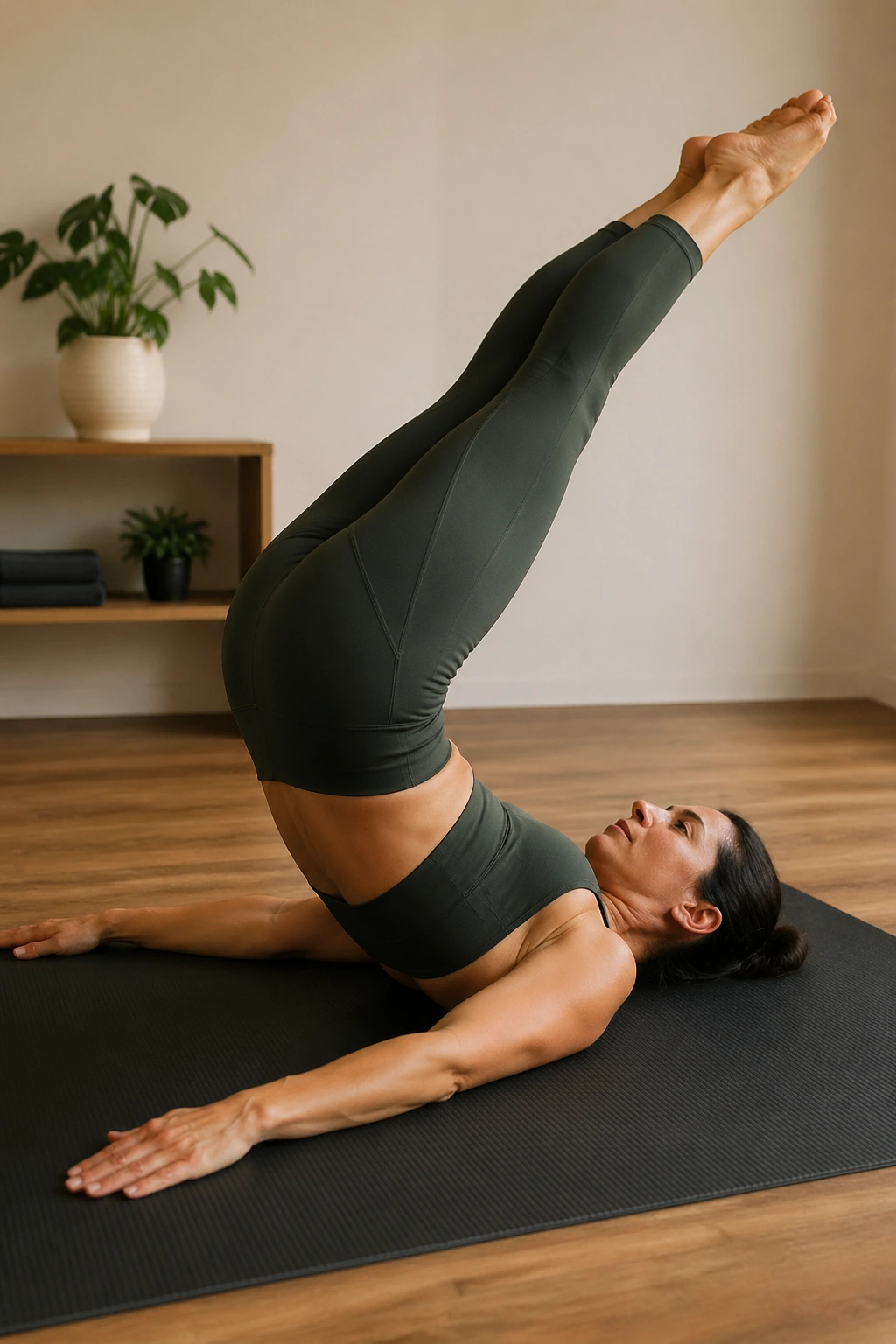
Jackknife is the move that tells the truth.
From lying down, you bring the legs overhead, lift the hips up, then lower with control. It looks elegant when it’s done well. It also demands a lot of abdominal strength and shoulder stability, which is why I only like it after the body is warm. Cold jackknifes are usually messy jackknifes.
Do not force this one if your neck feels unstable. That’s the main warning, and it matters. If the shoulders can’t stay grounded or the legs are swinging to generate momentum, go back to shoulder bridge or reverse crunch work instead. You want lift from the core, not a thrown-up motion from the legs.
A clean set is usually 3 to 5 slow reps. Keep the legs together, press the arms into the floor, and think about stacking the hips over the shoulders before lowering with control. Short range is fine. Sloppy range is not.
19. Standing Pilates Knee Drives for a Break From the Floor
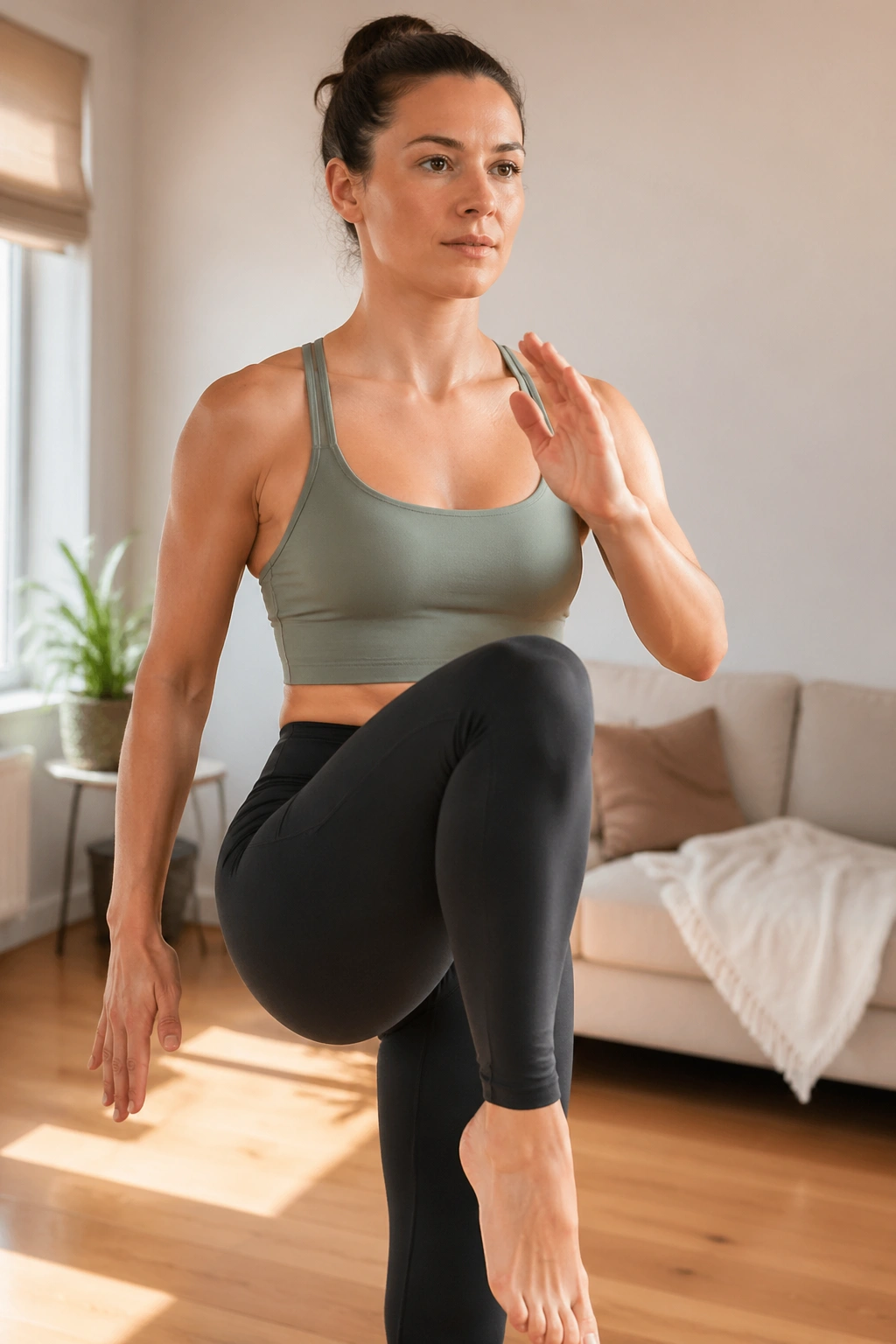
Not every good core move has to happen on a mat.
Standing knee drives bring the work upright, which is useful when you want to keep the heart rate up or give your neck a rest from floor work. Stand tall, brace the trunk, then drive one knee up while the opposite arm reaches or the torso lightly curls toward the lifted leg. The body has to balance, brace, and coordinate all at once.
This is the move I like for people who get bored lying down. It feels more athletic, and it’s easier to turn into an interval set. You can do 30 seconds per side, rest for 15 seconds, and repeat for a few rounds without needing much space at all.
A small but important detail: keep the standing hip steady. If you lean back every time the knee lifts, the abs lose their job. Tall spine, ribs stacked, quick drive. That’s enough.
20. Mountain Climbers, Pilates Style for a Harder Finish
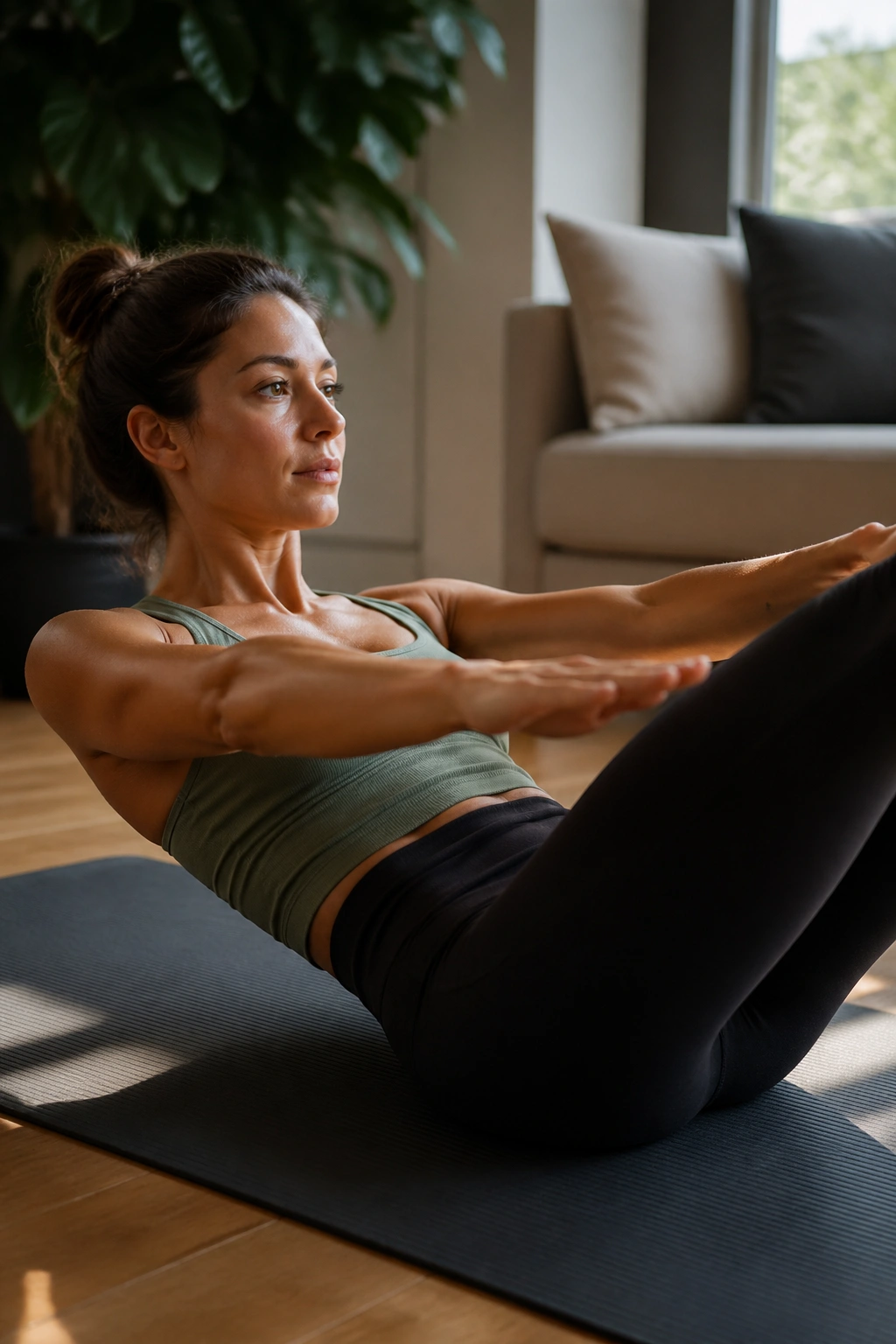
Mountain climbers are the finishers that make a Pilates session feel honest.
Use a high plank or place your hands on a sturdy couch, bench, or step if the floor version is too intense. Drive one knee toward the chest, then switch with control. The Pilates version is not a sprint. It’s a crisp, controlled knee drive that keeps the shoulders packed, the ribs tucked, and the belly working to stop the trunk from swaying.
That slower pace matters more than people think. Fast climbers can turn into a hip-swinging mess, which feels hard but does less for the core. Controlled climbers keep the work in the right place. You’ll feel the shoulders, the deep abs, and the hip flexors all at once.
If you want to build a short home routine from these moves, this is a solid place to end. Try 20 seconds of The Hundred, 8 roll-ups, 8 single-leg stretches per side, 6 double-leg stretches, and 20 seconds of mountain climbers. That mix gives you core work, some heart-rate lift, and enough variety to keep the body from checking out. No fancy equipment. No nonsense. Just a mat, some space, and a workout that actually asks something of you.
