



You know that specific sensation when you are five minutes into a barre class, your quads are trembling, your core feels like it has been set on fire, and you are sweating even though you haven’t taken a single step forward? That’s not a malfunction; it is the entire point. Most people mistake barre for a low-intensity, static practice—something akin to gentle stretching with a bit of pulse. But when you dial up the intensity and focus on the cardio element, you transform a muscle-toning session into a metabolic furnace.
The key to turning a traditional barre class into a cardiovascular workout is simple physics: leverage, speed, and range of motion. By maintaining a high heart rate through continuous, rhythmic movement and minimizing rest time, you recruit the large muscle groups of the lower body in a way that forces your cardiovascular system to work overtime. You aren’t just burning calories in the moment; you are building the kind of lean muscle tissue that keeps your metabolism humming long after you leave the studio.
It is worth noting that you do not need a professional-grade ballet barre to get this done. A sturdy kitchen counter, the back of a high-backed chair, or even a countertop will suffice. The structure matters less than the alignment. When you use a support, your goal is to use it for balance, not as a crutch to lean all your weight into. Keep your grip light, your shoulders dropped away from your ears, and your core engaged. If you are ready to stop “gently pulsing” and start actually burning, let’s get into the movements that make barre a genuine cardio challenge.
1. Plie Squat to Overhead Press
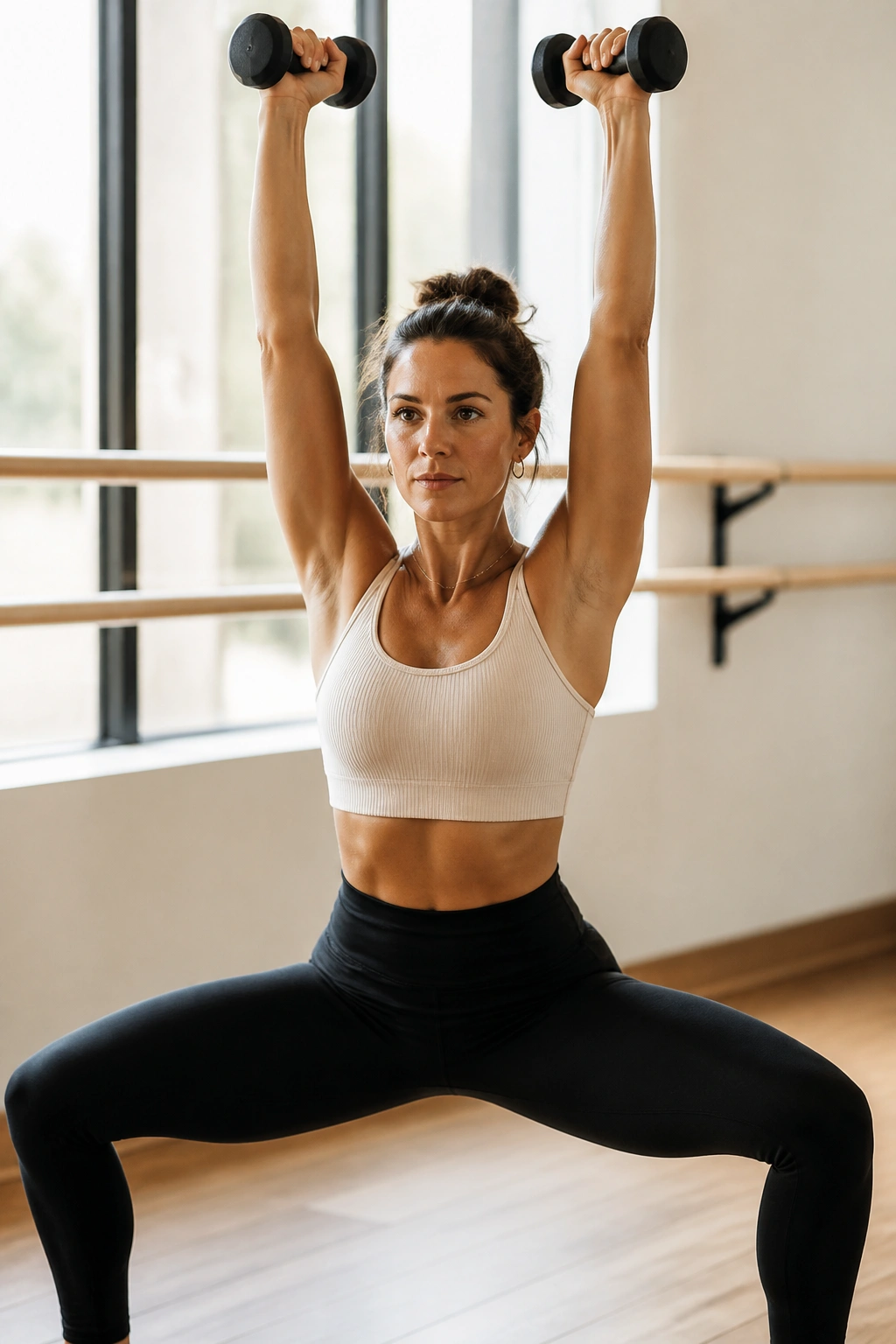
This movement is the bread and butter of barre-inspired cardio. It starts with a wide second-position squat—heels together or wide stance—and transitions into an explosive overhead reach. By syncing your leg power with your arm movement, you force your heart to pump blood across a larger distance, which spikes your heart rate almost immediately.
Form Matters More Than Speed
The biggest mistake here is rushing the squat. If you drop your hips without controlling the descent, you lose the tension in your glutes. Instead, imagine you are sliding your back down an invisible wall. As you drive up through your heels, press your arms straight overhead—holding light dumbbells (2-3 pounds) if you want to increase the intensity.
Why It Spikes Your Heart Rate
- Constant vertical oscillation forces the heart to work harder.
- Large muscle recruitment in the quads and glutes demands high oxygen flow.
- The overhead arm movement forces the heart to pump against gravity.
Pro tip: Do not lock your knees at the top of the movement. Keep a “soft” knee, which keeps the tension strictly in the muscles and off your joints.
2. Curtsy Lunge with Knee Drive
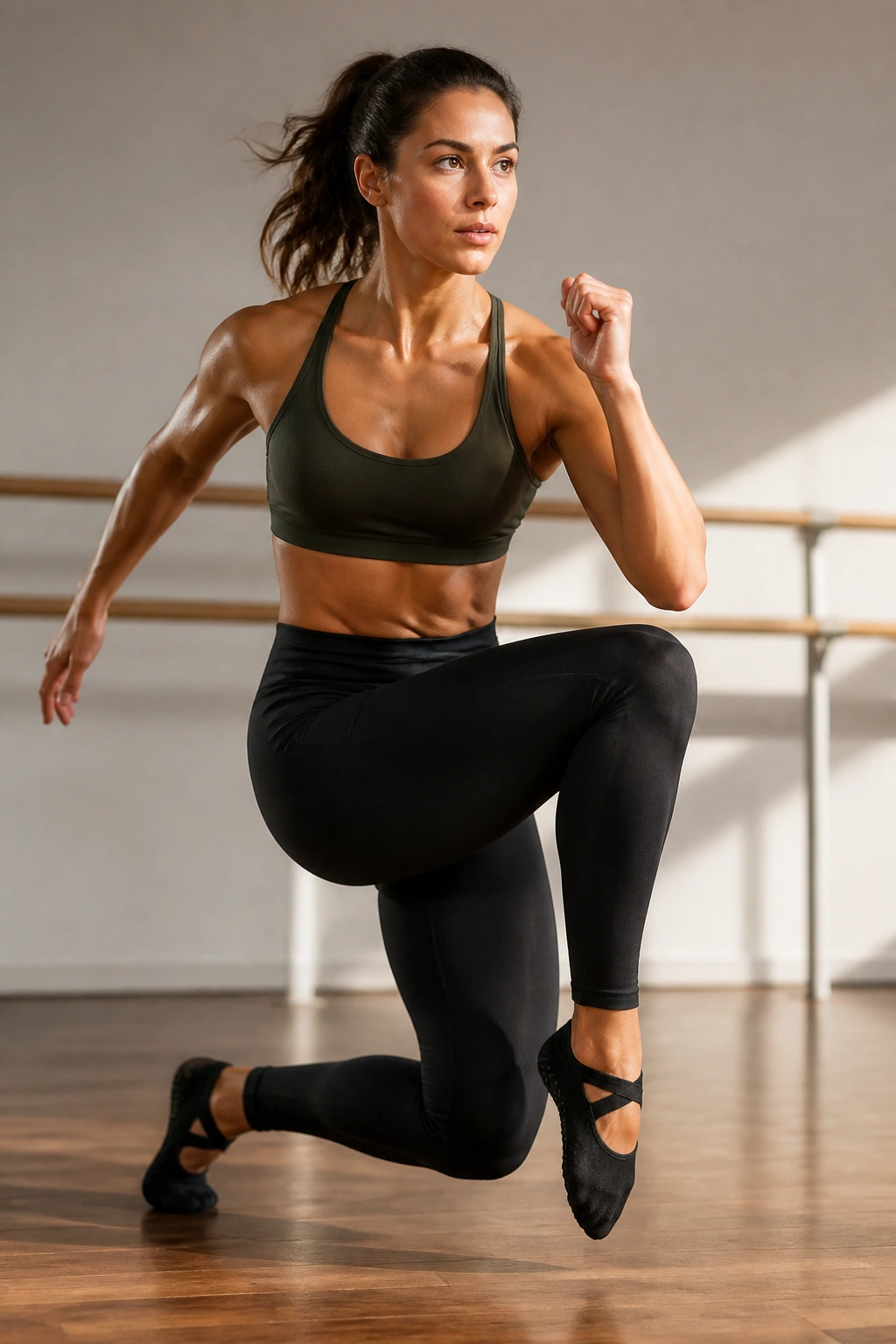
The curtsy lunge is fantastic for targeting the glute medius—that smaller muscle on the side of your hip that often gets ignored. By adding a knee drive, you turn a slow, controlled movement into a dynamic cardio exercise.
Start by stepping one leg back and behind the other into a deep lunge. As you return to the starting position, drive that same back knee up toward your chest. Use your barre or support for balance, but keep your core tight so you aren’t swaying side to side. The faster you move between the lunge and the knee drive, the more “cardio” this becomes.
This move requires significant coordination. If you find yourself losing your balance, slow the tempo down. It is better to have a steady, controlled knee drive than to flail around and lose your core engagement. You want to feel a distinct squeeze in your obliques as you pull that knee up.
3. Barre Burpees
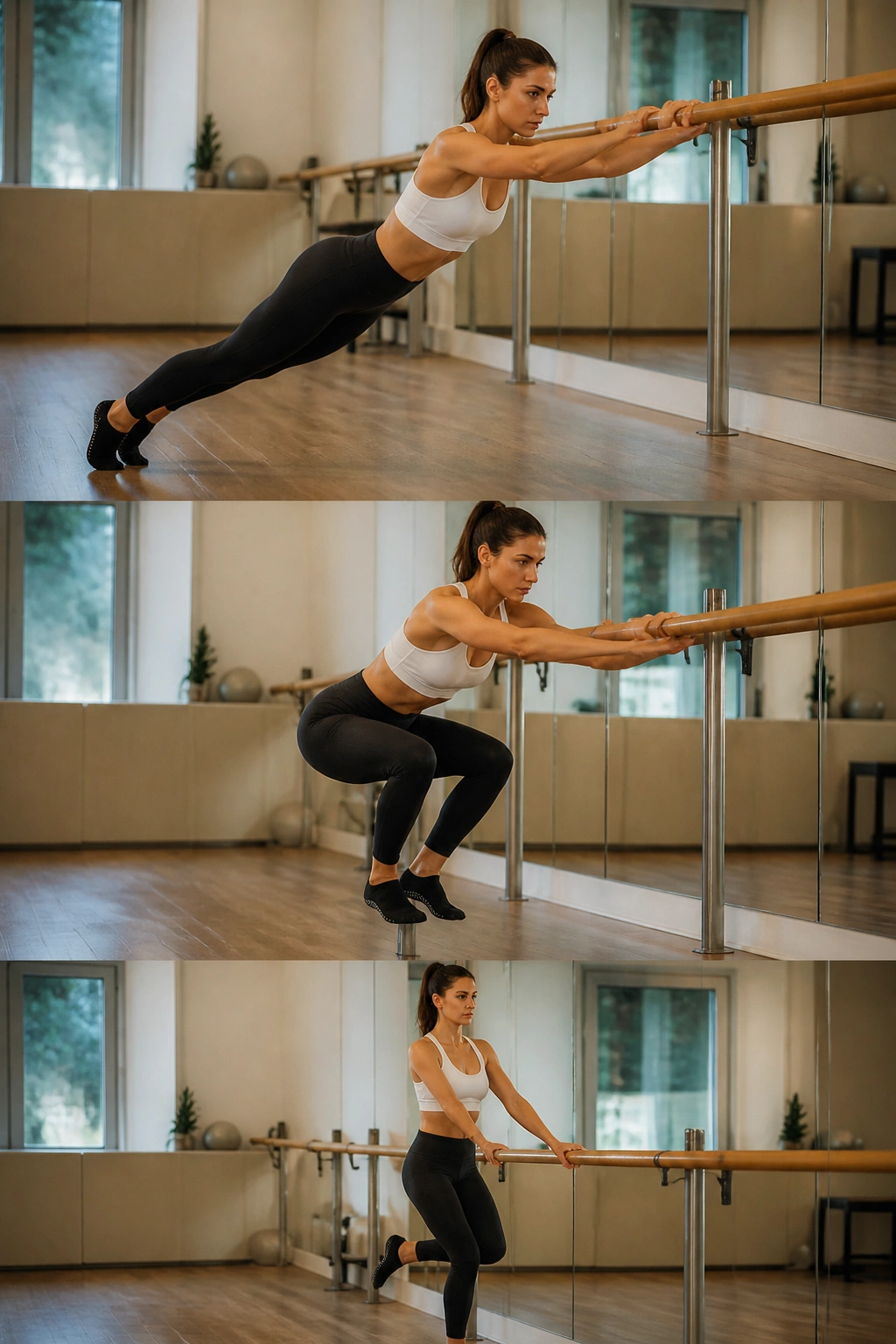
Yes, you can do a burpee at a barre. By placing your hands on the surface, you take the heavy impact off your joints while keeping your heart rate sky-high. Start by placing your hands firmly on your barre or chair, roughly shoulder-width apart.
Jump or step your feet back into a high plank position. Immediately jump or step your feet back to your hands, and stand up with a pulse in your squat. This version allows you to keep your chest lifted, which makes the movement much more accessible and keeps you in an upright position for longer.
The Breakdown
- Hands stay anchored, providing stability for the core.
- The jump back into plank targets the transverse abdominis.
- The return pulse keeps the heart rate elevated before the next rep.
Mistake to avoid: Do not let your hips sag when you jump back into the plank. If your lower back starts to arch, your core is disengaging. Keep your glutes squeezed tight throughout the entire plank phase.
4. Arabesque Pulse with Arm Swing
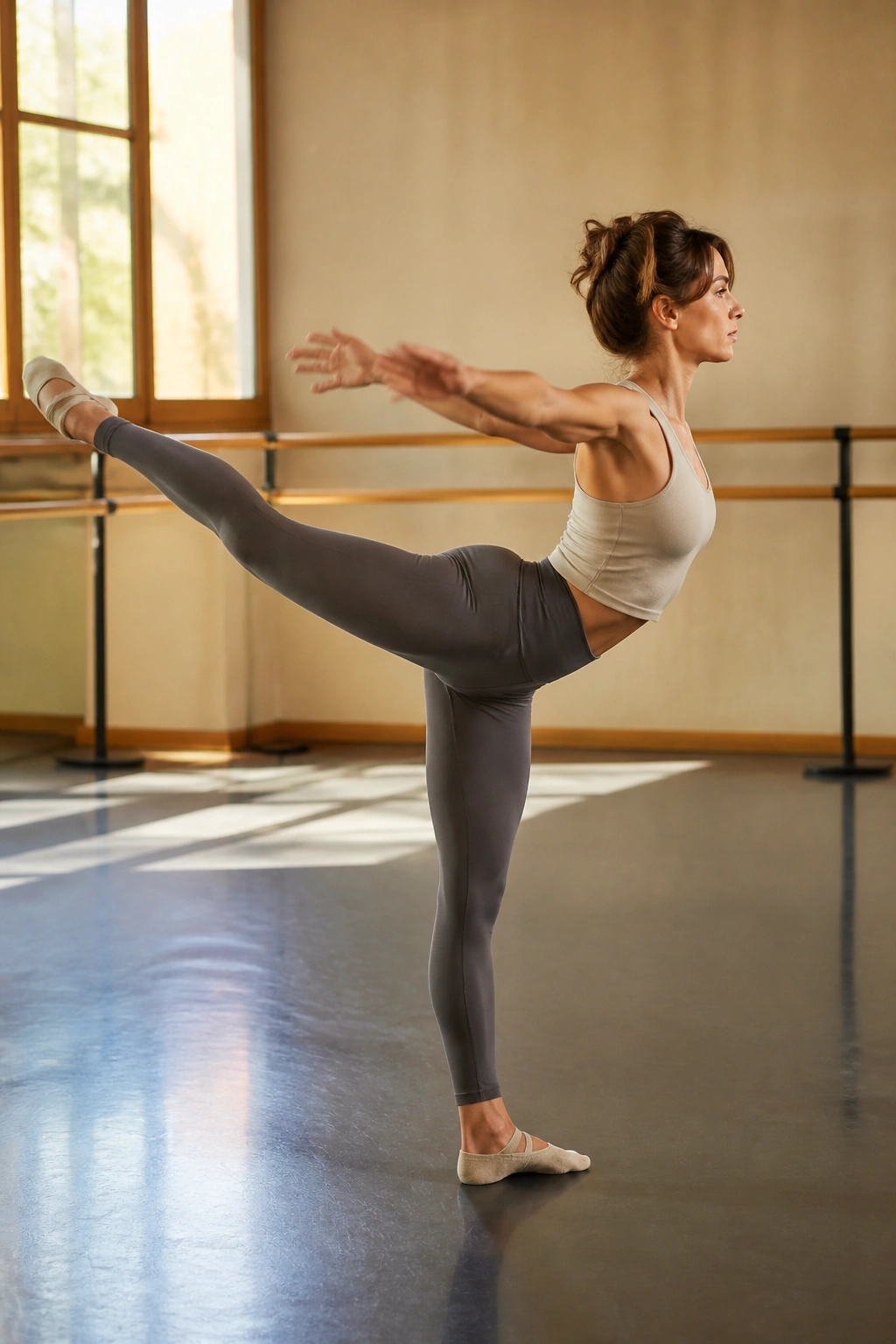
The arabesque is a classic ballet move, but when you turn it into a pulse, it becomes an endurance challenge for your hamstrings and glutes. Stand facing your barre, legs in a parallel position. Lean your torso slightly forward as you extend one leg straight back behind you.
Keep your leg lifted at hip height—or slightly higher—and pulse it up and down. To add the cardio element, swing your arms in rhythm with the leg pulse. If the leg is pulsing up, the arms are swinging forward; if the leg is pulsing down, the arms are swinging back.
This coordination challenge is exactly what keeps your brain engaged and your body working hard. If your hamstrings start to cramp, drop the leg slightly lower. The goal is a steady burn, not a sharp, stabbing pain. If the cramp persists, stop, shake it out, and rejoin the movement.
5. Weighted Second Position Jumps
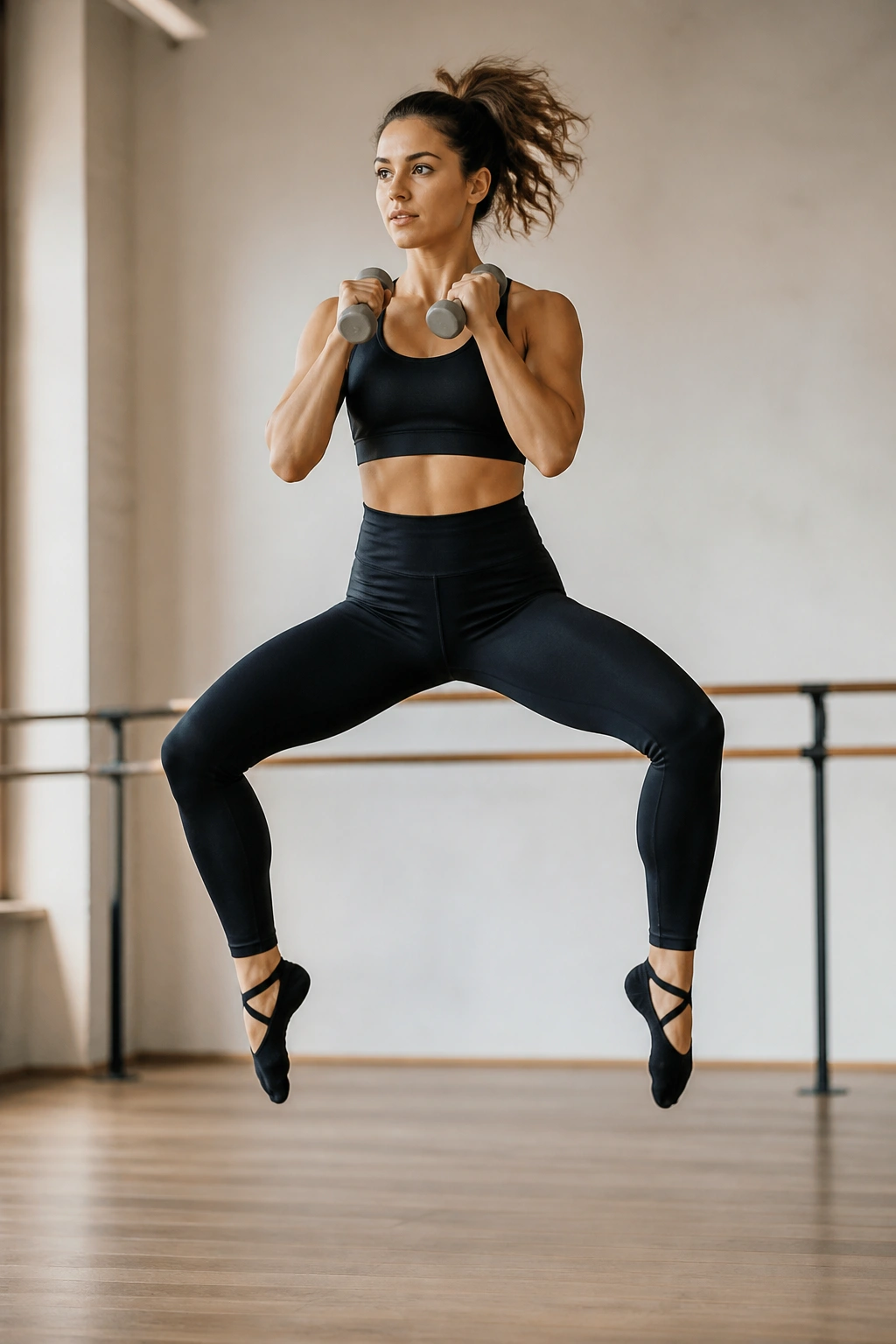
This is essentially a series of small, rhythmic hops in a second-position plie. Hold light weights in your hands, resting them near your chest or extending them out to the side for added balance.
The jump should be small—just an inch or two off the floor. The goal isn’t to get high air, but to stay light on your toes. Because you are landing in a plie squat, you are forcing your legs to absorb your body weight repeatedly.
Intensity Modifiers
- Harder: Hold slightly heavier weights (5 lbs) or sink deeper into the squat.
- Easier: Eliminate the jump and do a fast, rhythmic calf raise instead.
- Form Focus: Keep your knees tracking directly over your toes. If your knees collapse inward, you’re putting your joints at risk.
Why this works: The constant landing and springing off the floor makes this an incredible calorie burner. It is the closest thing to traditional high-impact cardio you will find in a barre workout.
6. Side Lunge with Leg Lift
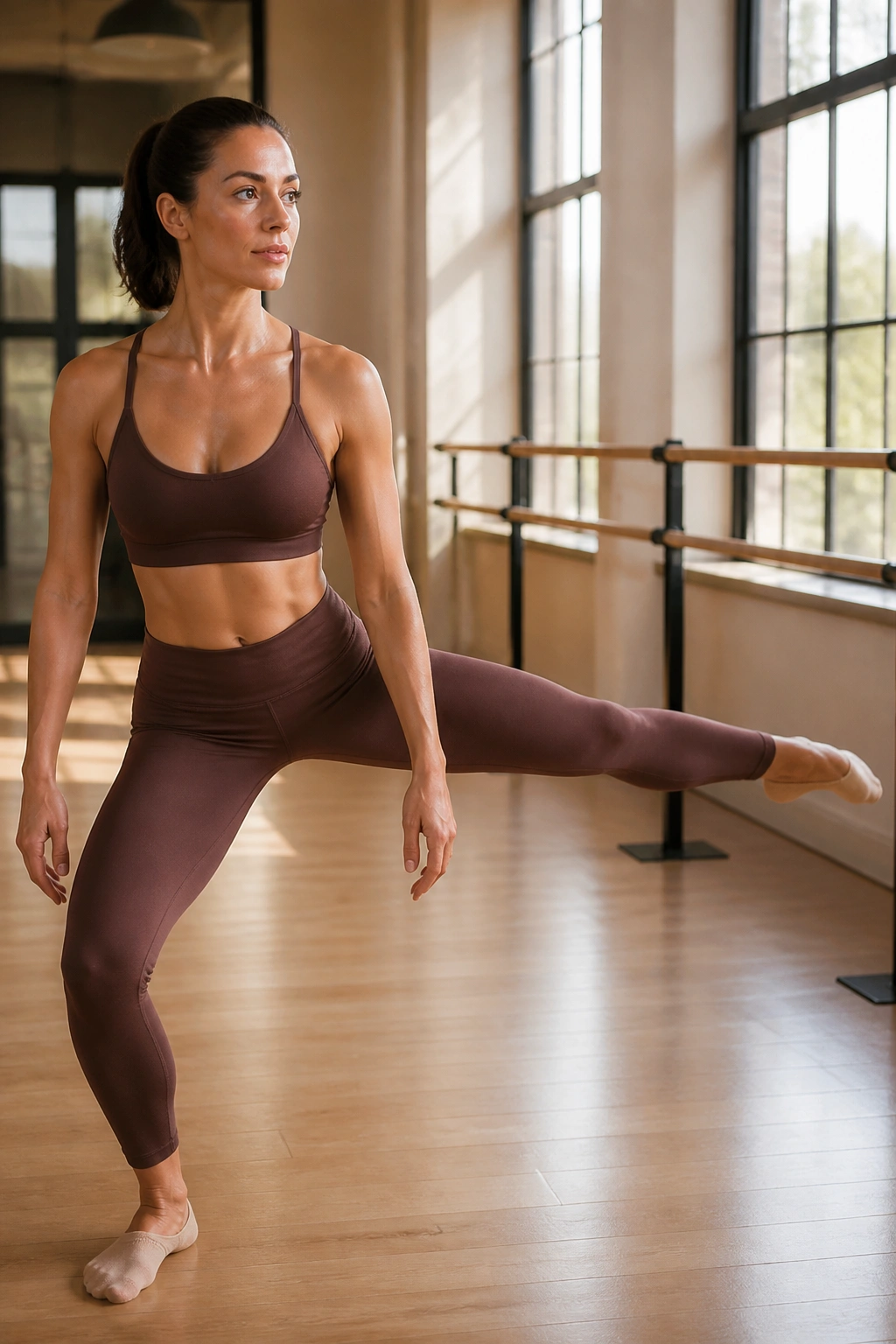
Lateral movement is often missing from standard fitness routines. A side lunge forces your body to work in a different plane of motion, which recruits the inner thighs and the glutes.
Step wide to the side, sinking into a deep lunge on one leg while keeping the other leg straight. As you push back to the center, lift the lunging leg out to the side in a lateral raise. The balance required to transition from the lunge to the lift creates instability, which forces your core to fire rapidly.
Do not rush the transition. The “cardio” part of this move comes from the speed of the step-out and the strength of the drive-up. If you move too fast, you lose your form. Find a rhythm where you can move continuously without stopping in the middle.
7. Plank-to-Pike
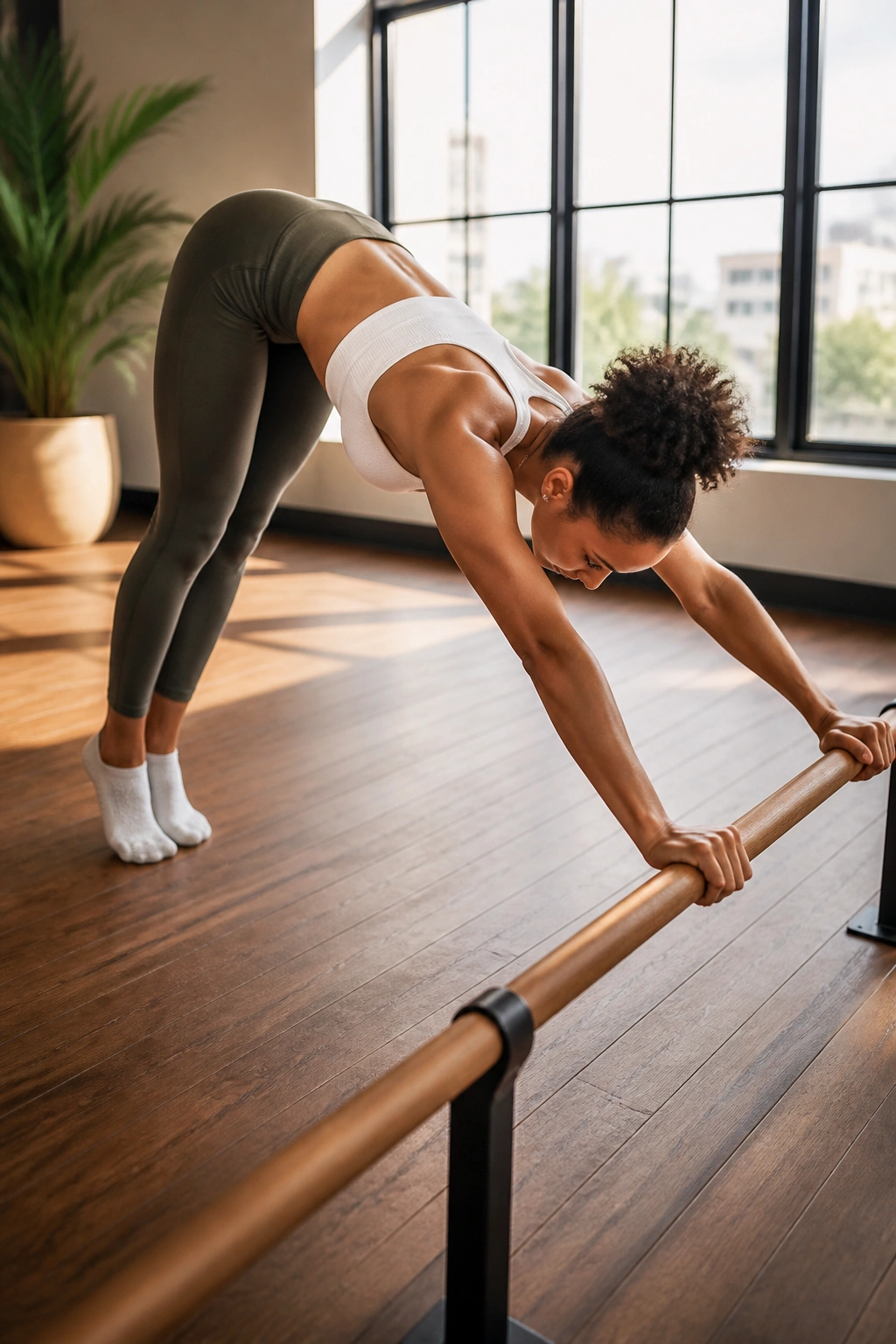
This is an active recovery move that hits the core hard while keeping the heart rate elevated. Start in a plank position with your hands on your barre or chair. Using your core, pull your hips up and back toward the ceiling, creating an inverted “V” shape.
As you return to the plank, make sure your shoulders align directly over your wrists. This constant movement between the plank and the pike forces you to stabilize your spine, which is a major cardio challenge when done for 45 to 60 seconds at a time.
Why Your Core Will Feel It
- The upward pike movement engages the lower abs.
- The plank phase forces the entire abdominal wall to hold the body rigid.
- The repetitive motion prevents the heart rate from dropping, even though it’s a “recovery” move.
8. Standing Glute Kickback
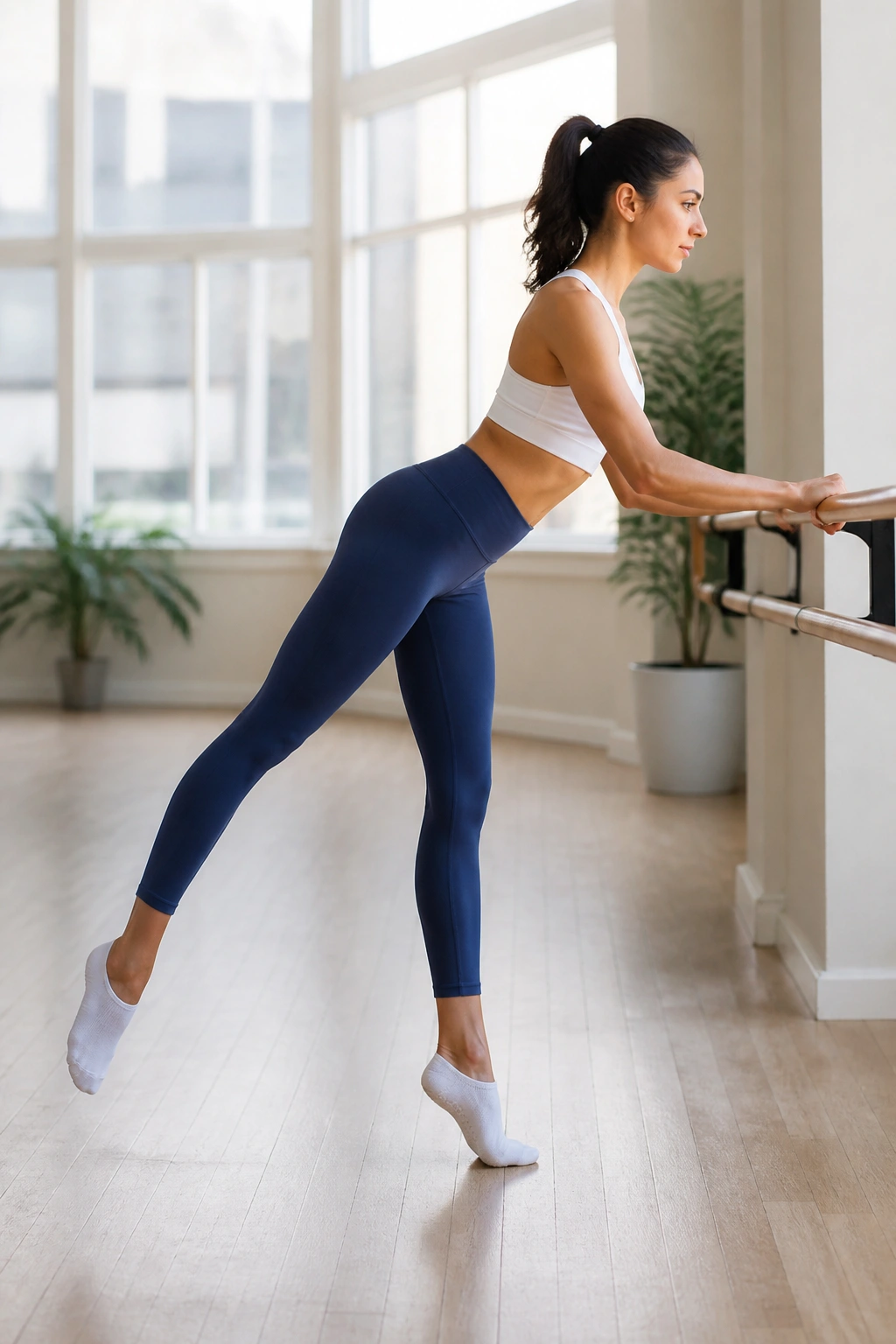
While this sounds like a strength move, it becomes a cardio drill when performed at a high tempo. Stand facing your support, legs parallel. Hinge forward slightly at the hips, keeping your back flat.
Kick one leg back, squeezing your glute at the top of the movement. The key is to keep the leg moving constantly. No pausing at the top. The moment your toe taps the floor, it kicks right back up. Do this for 30 seconds on one side before switching.
You will find that your standing leg—the one supporting you—actually gets more tired than the moving leg. That is the stabilizer muscle firing. Focus on keeping your hips square to the floor. If you let your hip rotate open, you lose the glute isolation.
9. Tabletop Fire Hydrant Variations
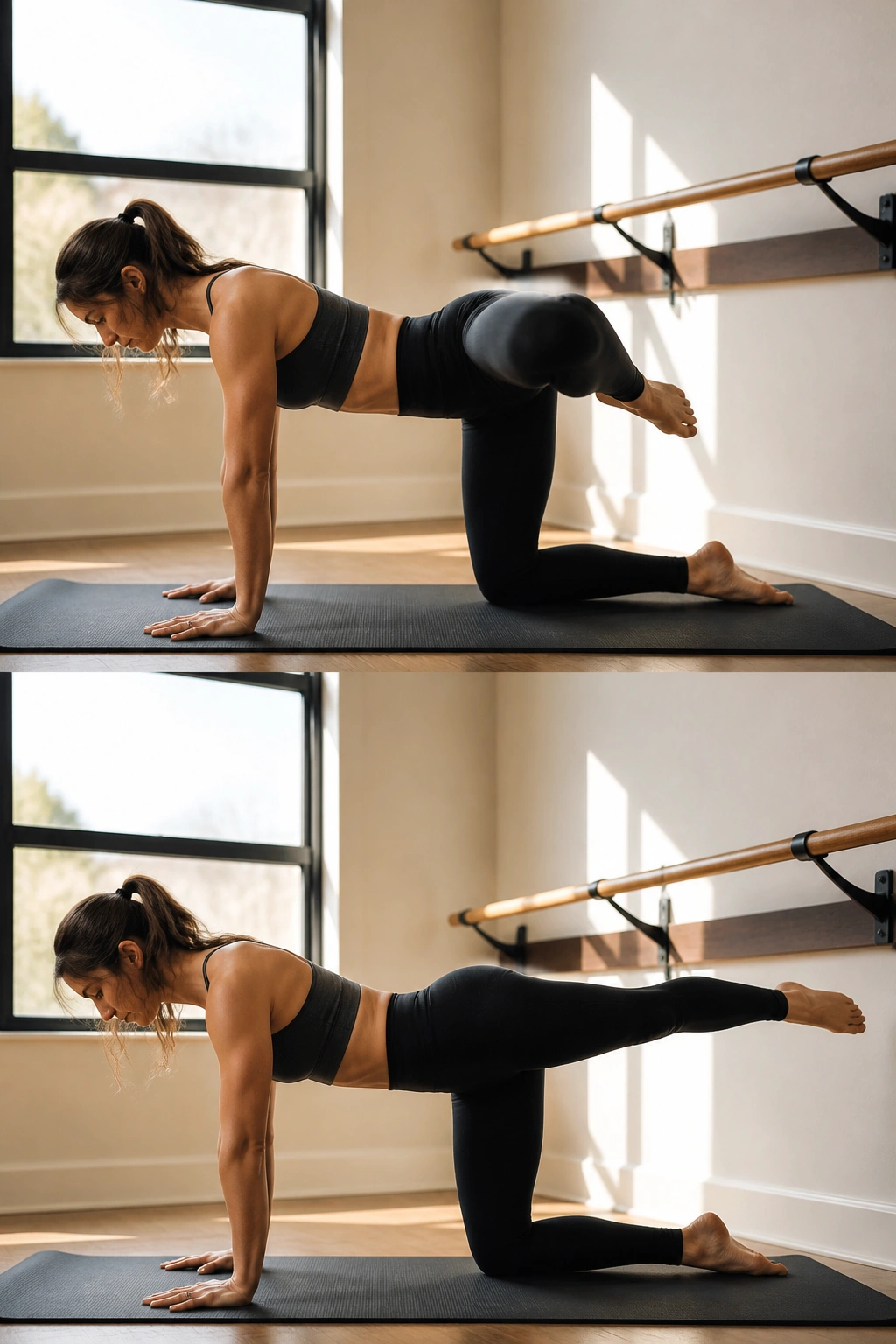
Drop to your hands and knees. If you are doing this on a mat, place your hands on the floor, but you can also do this using a low barre or couch edge for a different angle. Lift one knee out to the side, keeping it bent at a 90-degree angle.
To make it cardio, do not just hold the leg up. Pulse the knee upward, then bring it back down to a hover, then pulse again. Add a “kick” variation: lift the knee, kick the leg straight out, return the leg to bent, and lower.
Repeating this cycle for a full minute on each side will have your heart rate climbing quickly. The fire hydrant is deceptively small, but when you increase the volume of movement, it becomes an intense burner for the hip stabilizers.
10. Wide-Stance Pulse
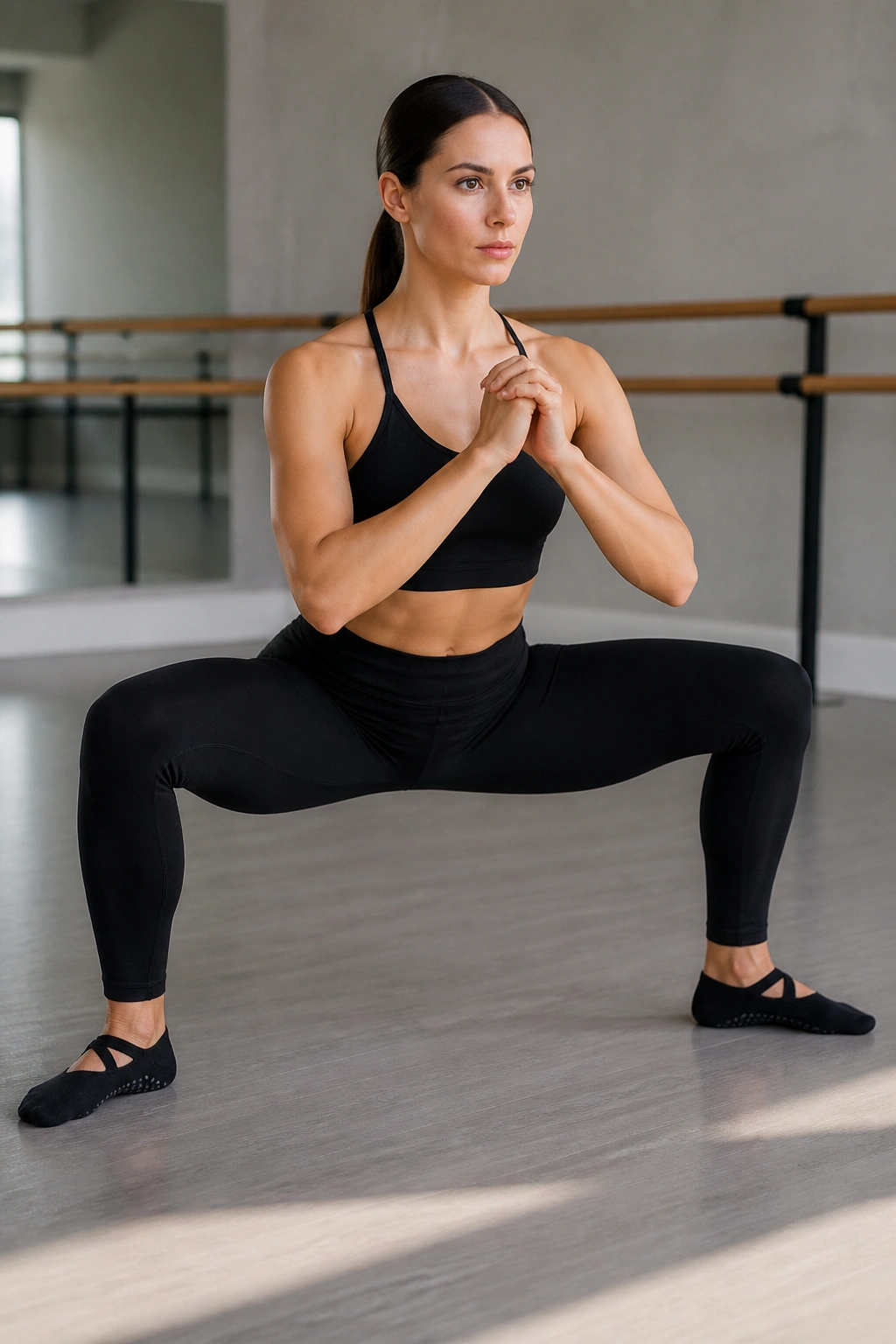
Return to a wide second-position stance, toes pointed slightly outward. Sink down into your deepest squat and hold it. Now, pulse for one inch up and one inch down.
The “cardio” here comes from the endurance. By holding the muscles in a state of constant tension for an extended period, you force your body to circulate blood and oxygen to the working quads and glutes at a rapid pace.
How to Stay in the Zone
- Keep your shoulders stacked over your hips.
- Do not let your glutes stick out behind you; keep the pelvis tucked.
- Breathe rhythmically—inhale for two pulses, exhale for two.
Warning: If you feel your breathing becoming erratic, you’ve gone too fast. Slow down the pulse to match your breath. Consistency is better than speed here.
11. Relevé Walk
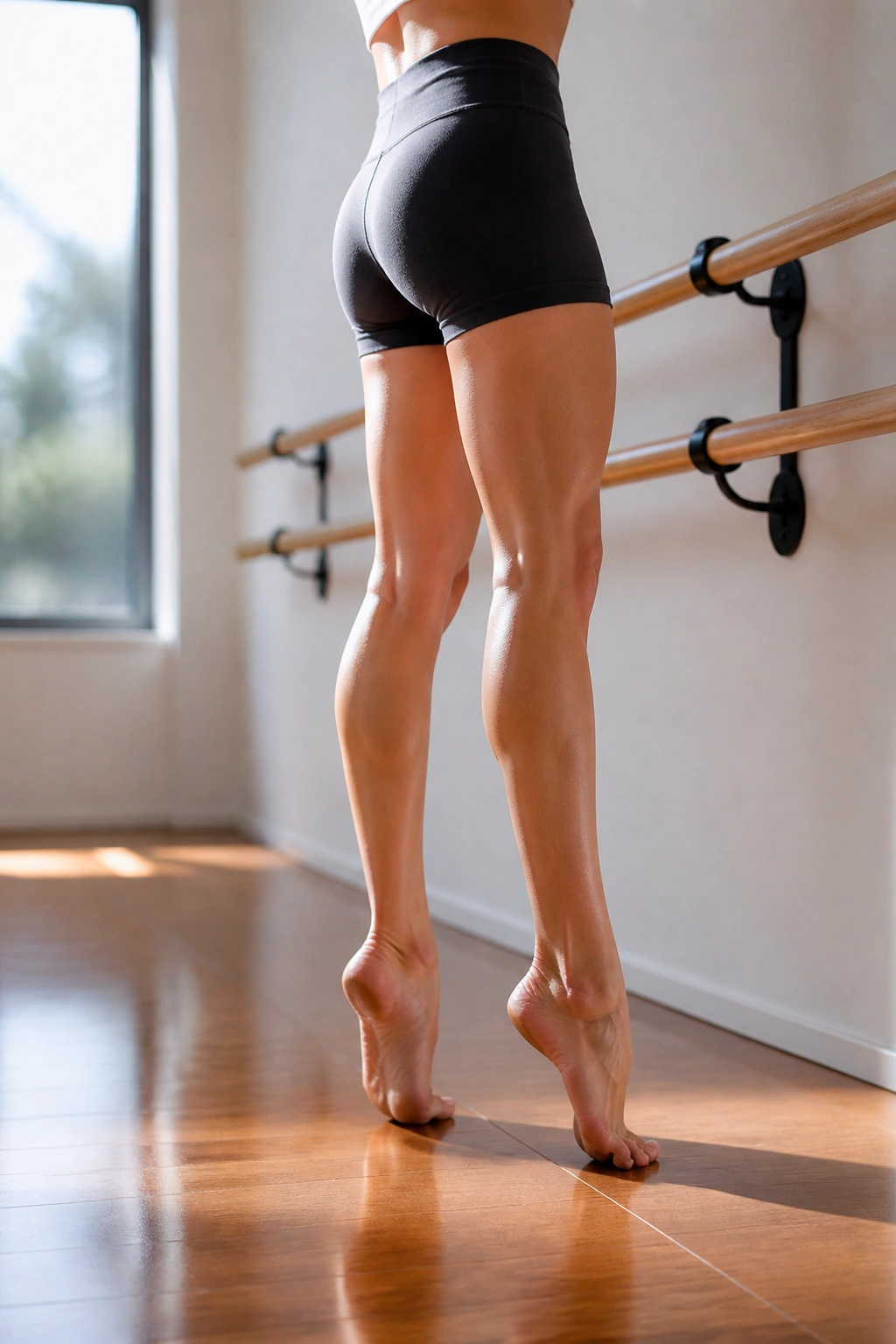
A relevé is simply a calf raise. Stand in a parallel position and lift your heels as high as possible. Keep your core tight and your chest lifted. Now, walk in place, alternating lifting your knees slightly, but keep your heels up the entire time.
It sounds simple, but try doing this for two minutes. Your calves will feel like they are on fire. The constant engagement of the stabilizing muscles in the ankle, combined with the balancing act, makes this surprisingly taxing.
This move is perfect for lengthening the muscles while working the cardiovascular system. Because your calves are working so hard, they are pumping blood back up through the body, which effectively keeps your heart rate elevated.
12. Lunge Jumps
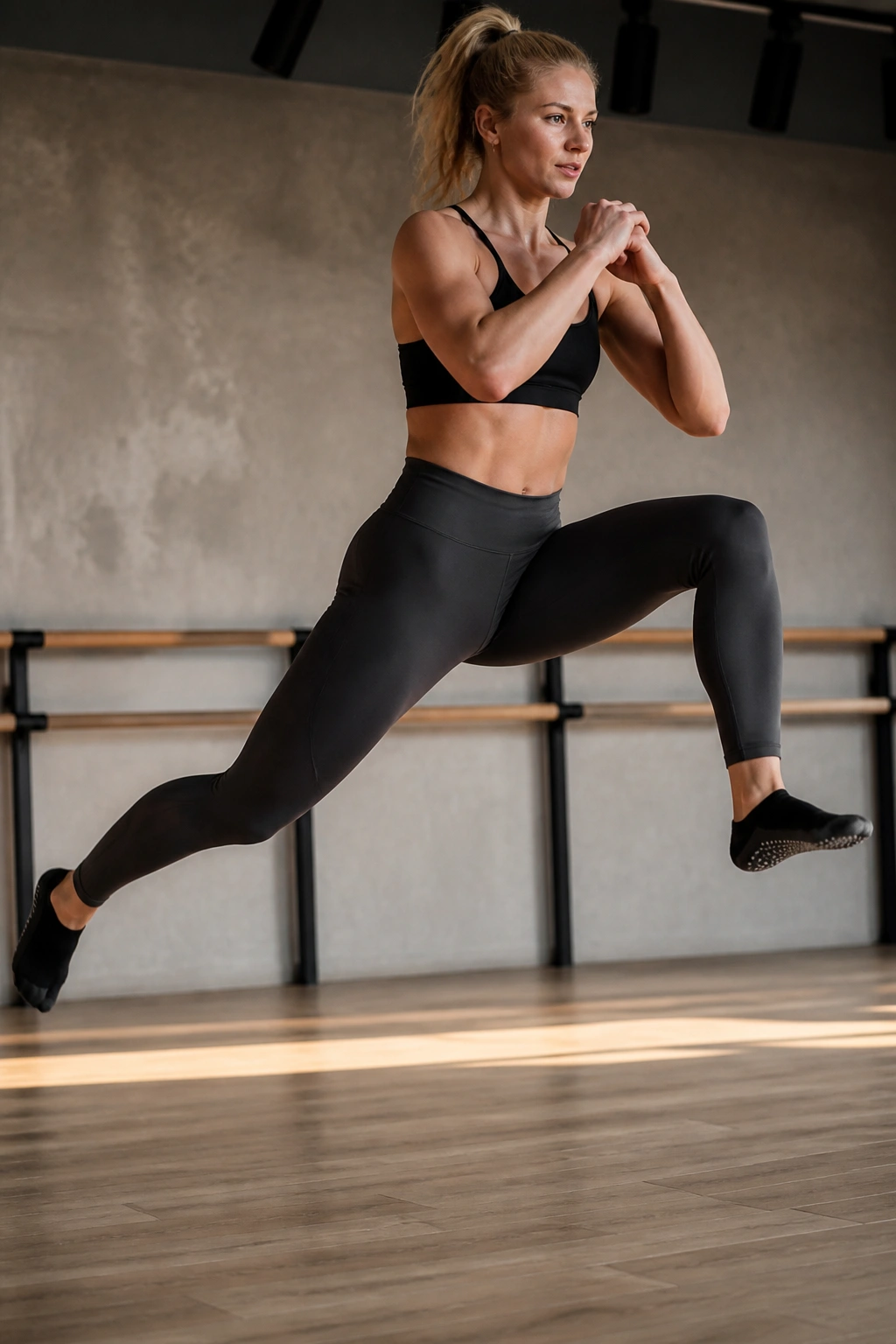
This is high-intensity interval training, barre-style. Start in a lunge position, legs split front to back. In one explosive movement, jump and switch your legs in mid-air, landing softly back into a lunge on the other side.
If jumping is too much for your knees, skip the jump. Instead, perform a “power switch”—fast-paced, rhythmic lunges where you step back and forth as quickly as you can without the leap. Both versions get the job done.
Key Performance Cues
- Land Softly: Think “ninja,” not “elephant.” If you hear your feet hitting the floor loudly, you are not engaging your core enough to absorb the shock.
- Maintain Verticality: Do not lean forward to catch your balance. Keep your torso straight up.
- Speed: Only go as fast as you can while maintaining your form.
13. Skater Hops
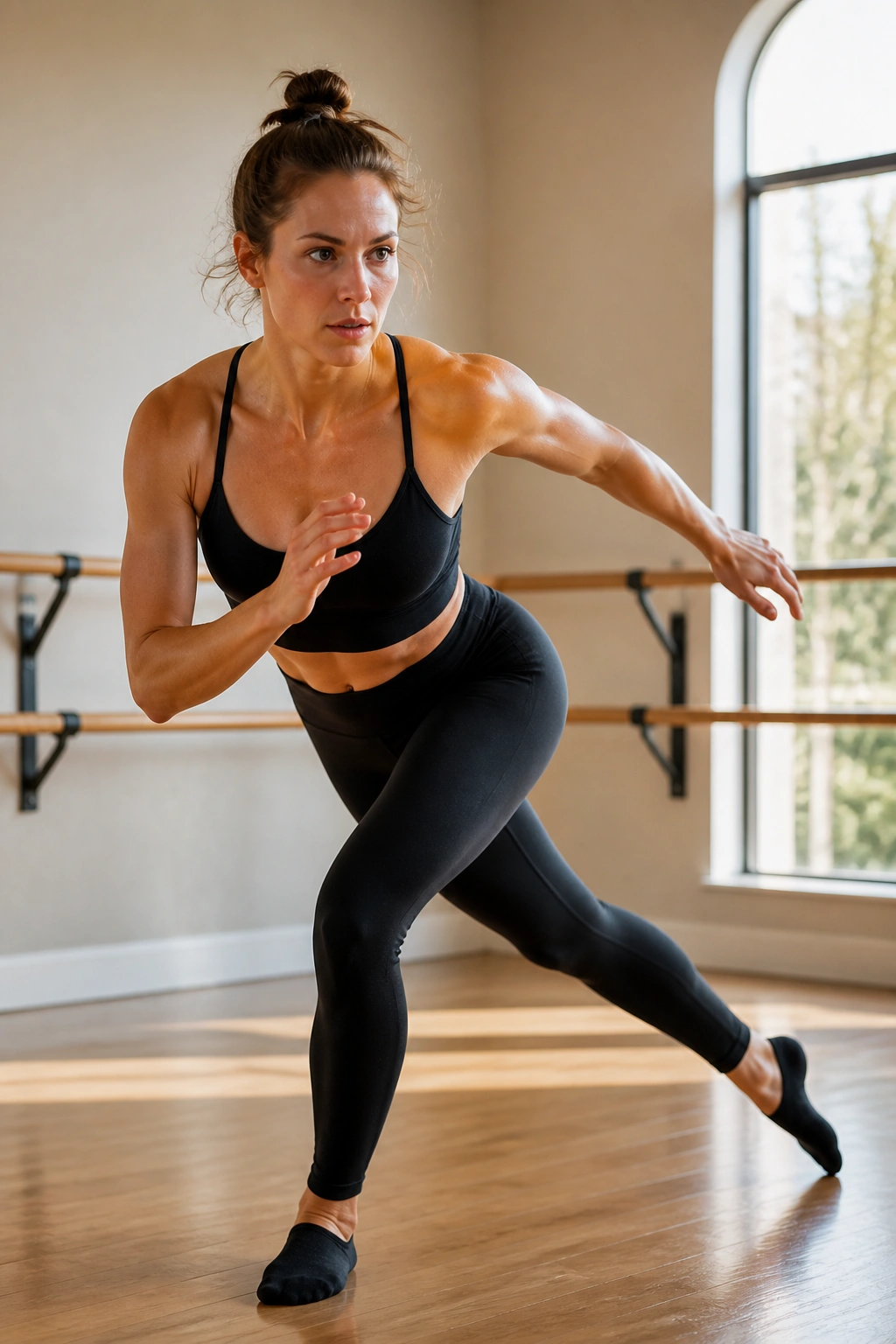
Lateral movement is crucial for agility, and skater hops are the gold standard. Start by standing on one leg. Leap to the side, landing on the other leg, and sweep the back leg behind you in a curtsy-like motion.
The wider you leap, the harder your glutes have to work to stop your momentum. Use your arms to create a rhythmic swing, which helps with balance and adds another layer of effort to the heart.
This move is incredibly effective because it forces you to decelerate and stabilize on every single rep. It is not just about the jump; it is about the landing. That eccentric loading—the moment your muscles work to stop the movement—is where a lot of the strength and cardio benefit happens.
14. Incline Push-ups
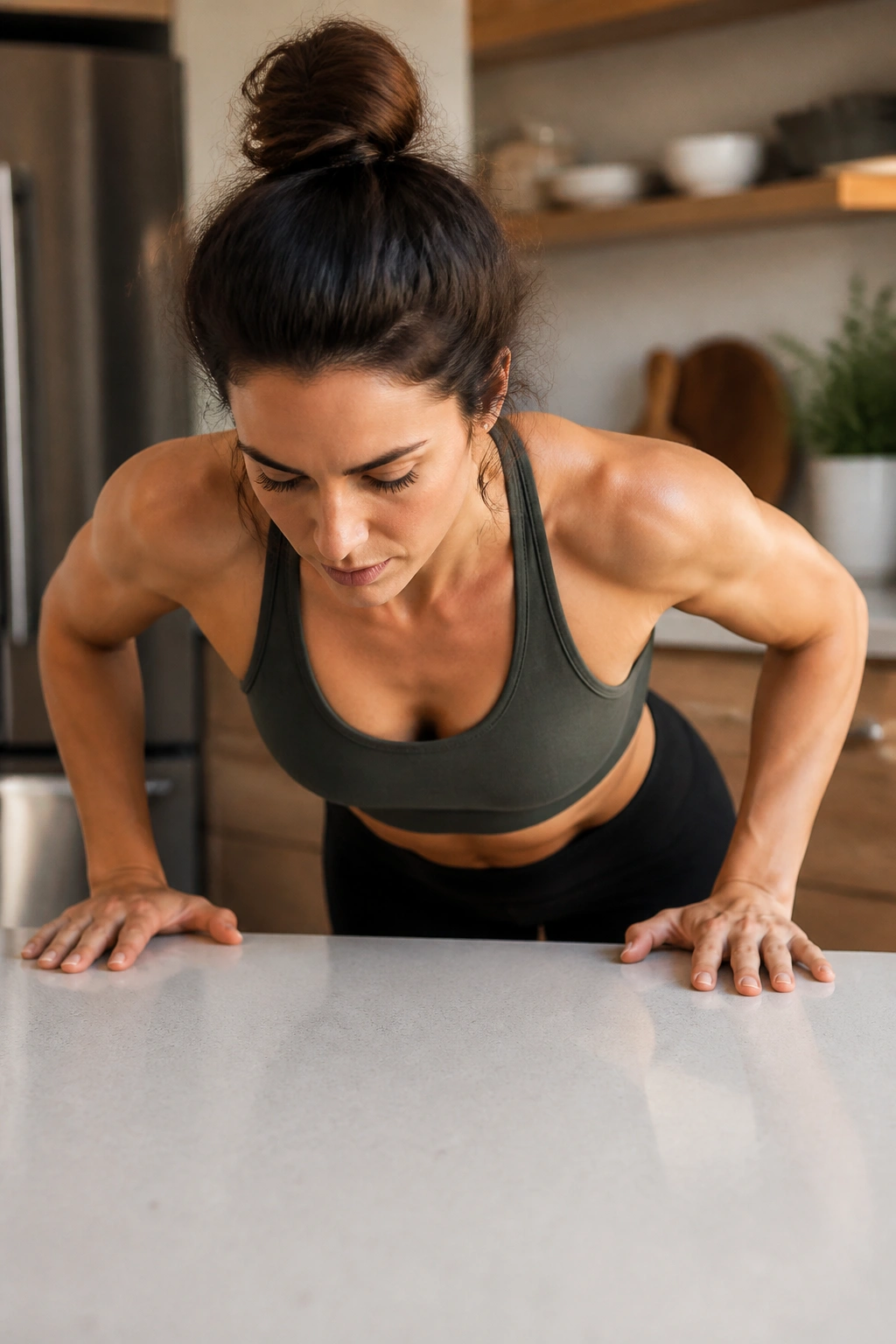
We cannot forget the upper body, but let’s keep it functional. Place your hands on the barre, a chair, or a kitchen counter. Step your feet back into a plank. Lower your chest toward the surface, keeping your elbows tucked in close to your ribs.
By doing these on an incline, you can maintain a higher volume of repetitions than you could on the floor. That volume is key for cardio. If you can knock out 30 push-ups, you are going to feel a significant spike in your heart rate.
Tips for Better Form
- Keep your elbows at a 45-degree angle.
- Don’t let your neck crane forward; keep your gaze a few feet in front of your hands.
- Squeeze your shoulder blades together at the bottom of the movement.
15. High-Knee March
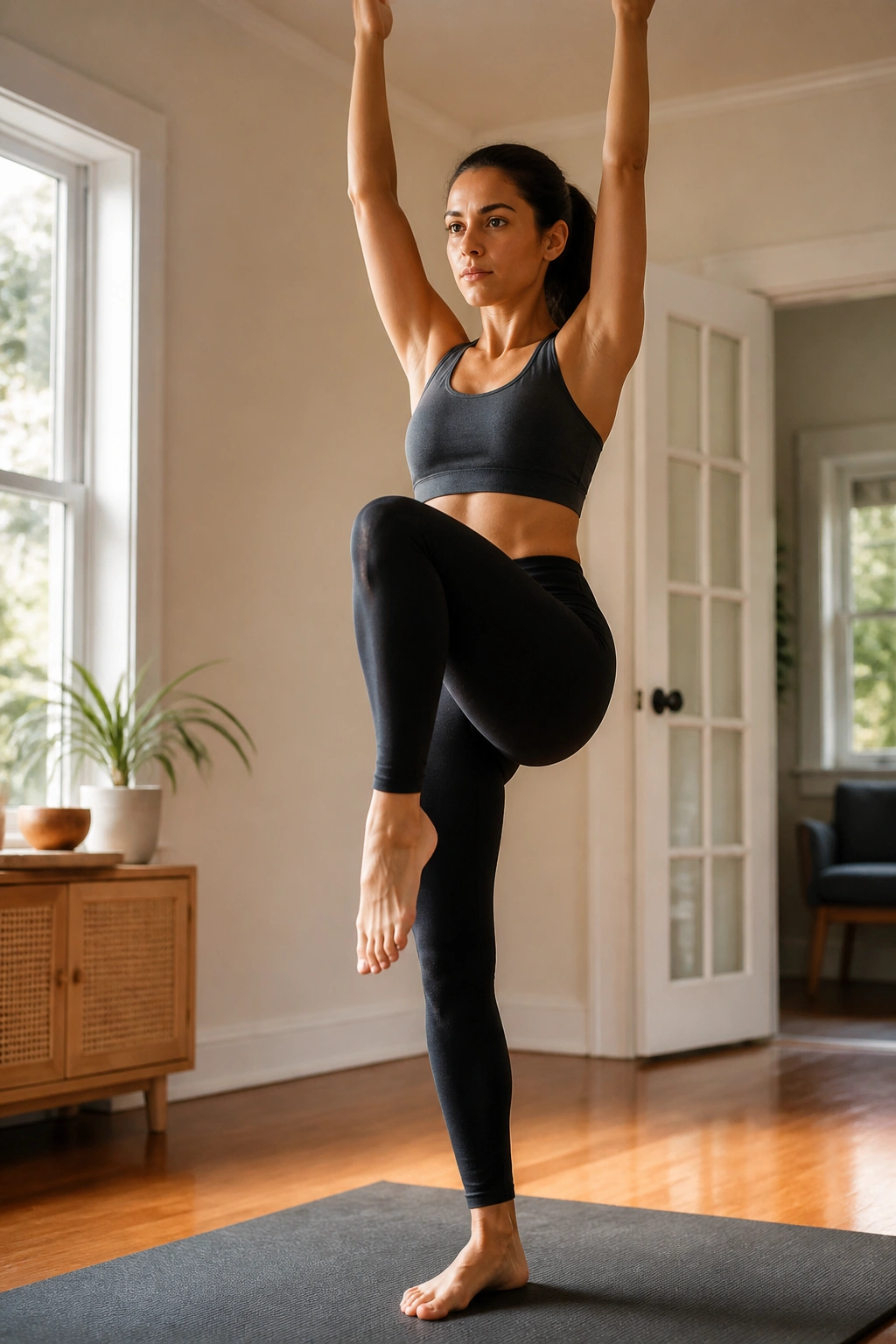
This is your final burnout move. Stand facing your support. March in place, driving your knees up to hip height with every step.
Keep your torso rock-steady. Do not let your body lean back to accommodate the knee lift. If you find your core slipping, pull your belly button in tighter. To make it a true barre move, keep your arms extended overhead or in a “second position” (out to the sides) while you march.
After doing the other 14 moves, this one will feel nearly impossible, which is exactly why it works. It forces you to finish with your heart rate at its absolute peak, ensuring you get the maximum metabolic afterburn from the session.
Final Thoughts
Barre cardio isn’t about how much weight you can lift or how fast you can run; it’s about the precision of your movement and the intensity of your focus. When you combine the small, isometric pulses that barre is famous for with dynamic, full-body movements, you create a workout that is both muscle-sculpting and heart-pumping.
Remember that progress comes from consistency. If you feel like your legs are shaking too much or your coordination is off, that is exactly where the change happens. Don’t shy away from that discomfort. Lean into it, trust your form, and keep the momentum going. You don’t need a gym membership or hours of free time to get a killer workout—just a bit of space, a support, and the drive to push through those last ten counts.
